
The shoulder is one of the smartest places to plant a lion that needs to look fierce on day one and still hold presence years later. Skin movement, sun exposure, and clothing friction change how mane detail reads over time, so size, line weight, and placement matter more than flash alone. Below are 21 shoulder-centered lion designs with exactly what to ask for at consultation, how they age, and what to wear to show them off.
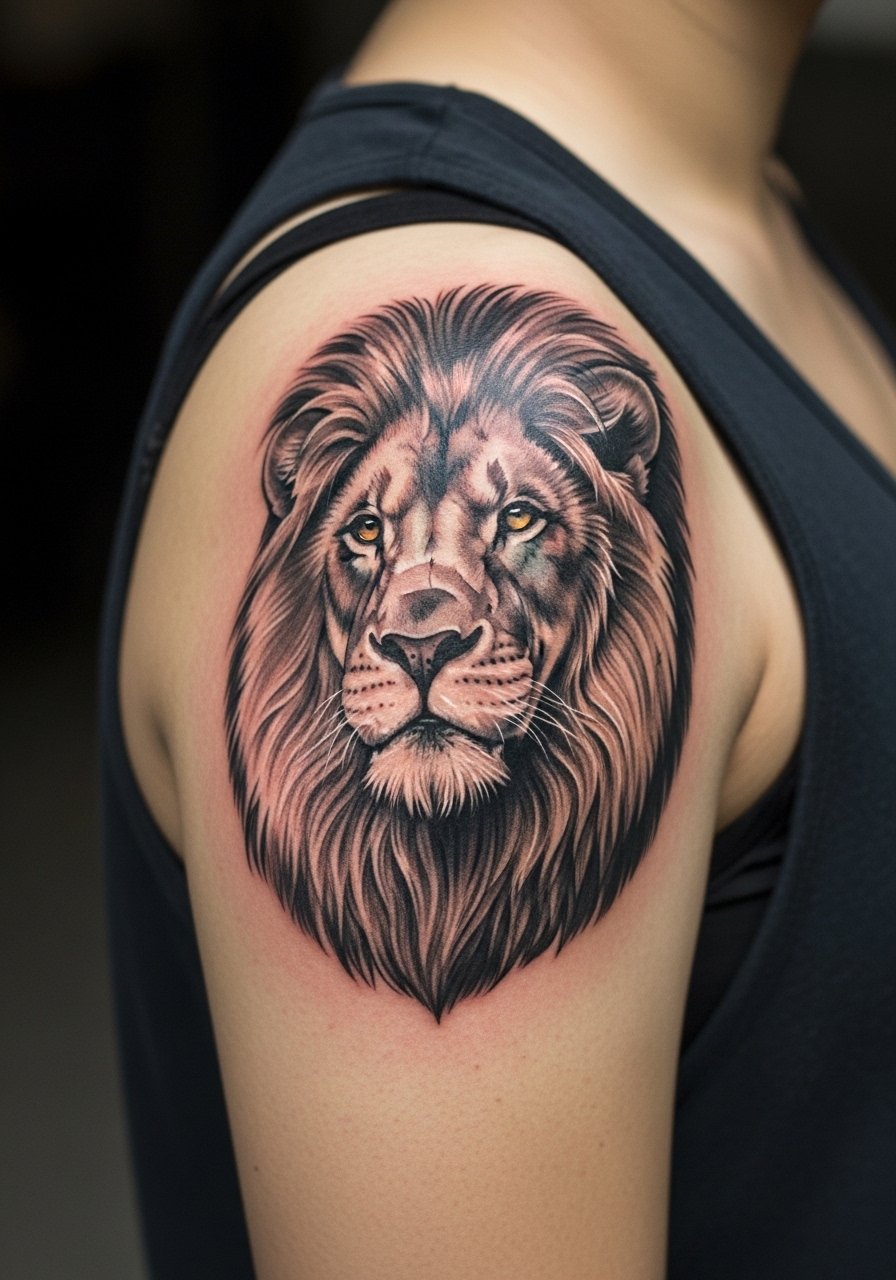
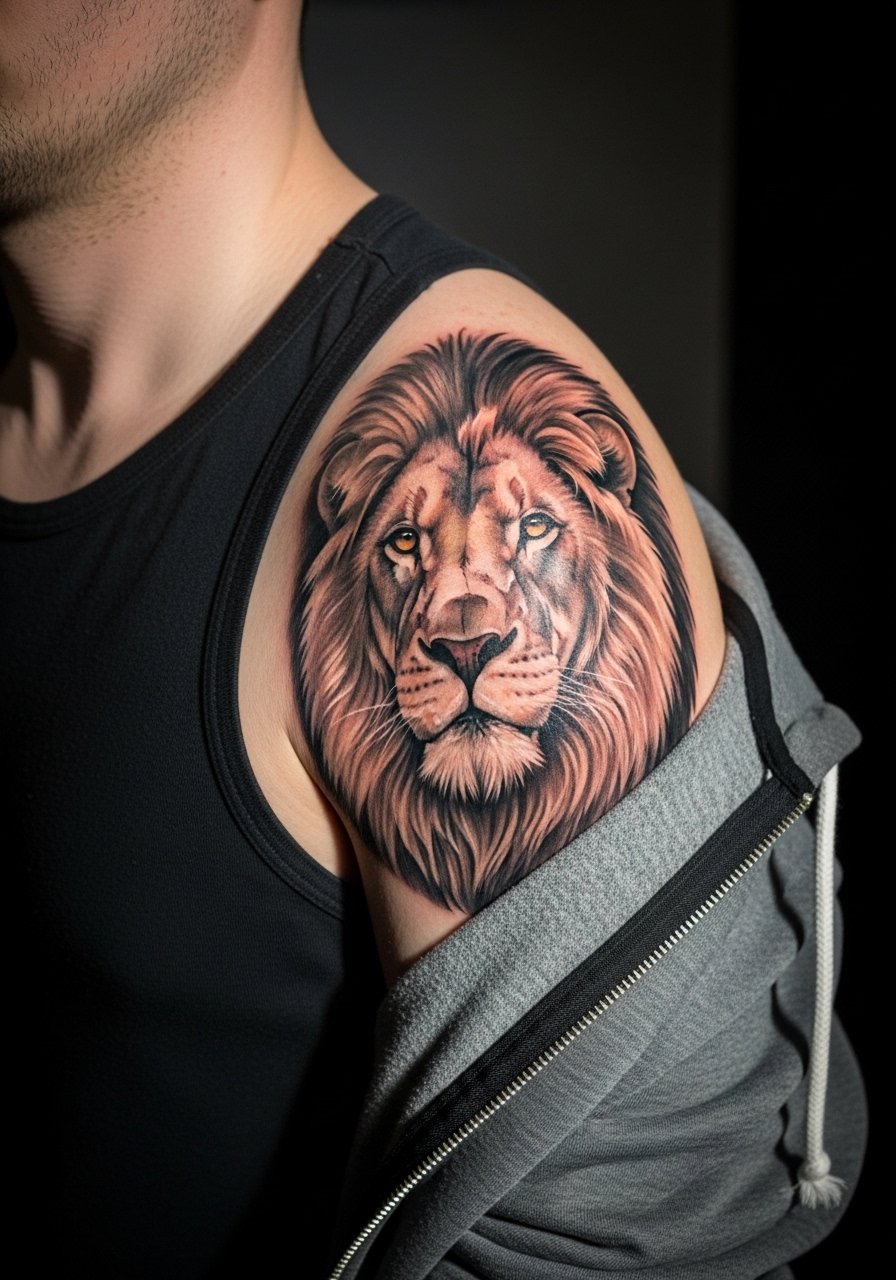
1. Realistic Lion Portrait on Shoulder Cap
I've seen realistic lion portraits over the shoulder hold up best when they are drawn slightly larger than expected. Ask your artist for slightly bolder contours around the eyes and mane so the shadow areas keep structure as the piece softens. Pain is moderate because the deltoid pads well, and a single three-hour session often gets most of the linework and shading done. A common mistake is forcing tiny facial detail into a small shoulder cap, which blurs into mush after two years. For the session wear a loose tank top so the artist can shift fabric without rubbing the stencil. Plan a touch-up at year three if you want the highlights crisp.
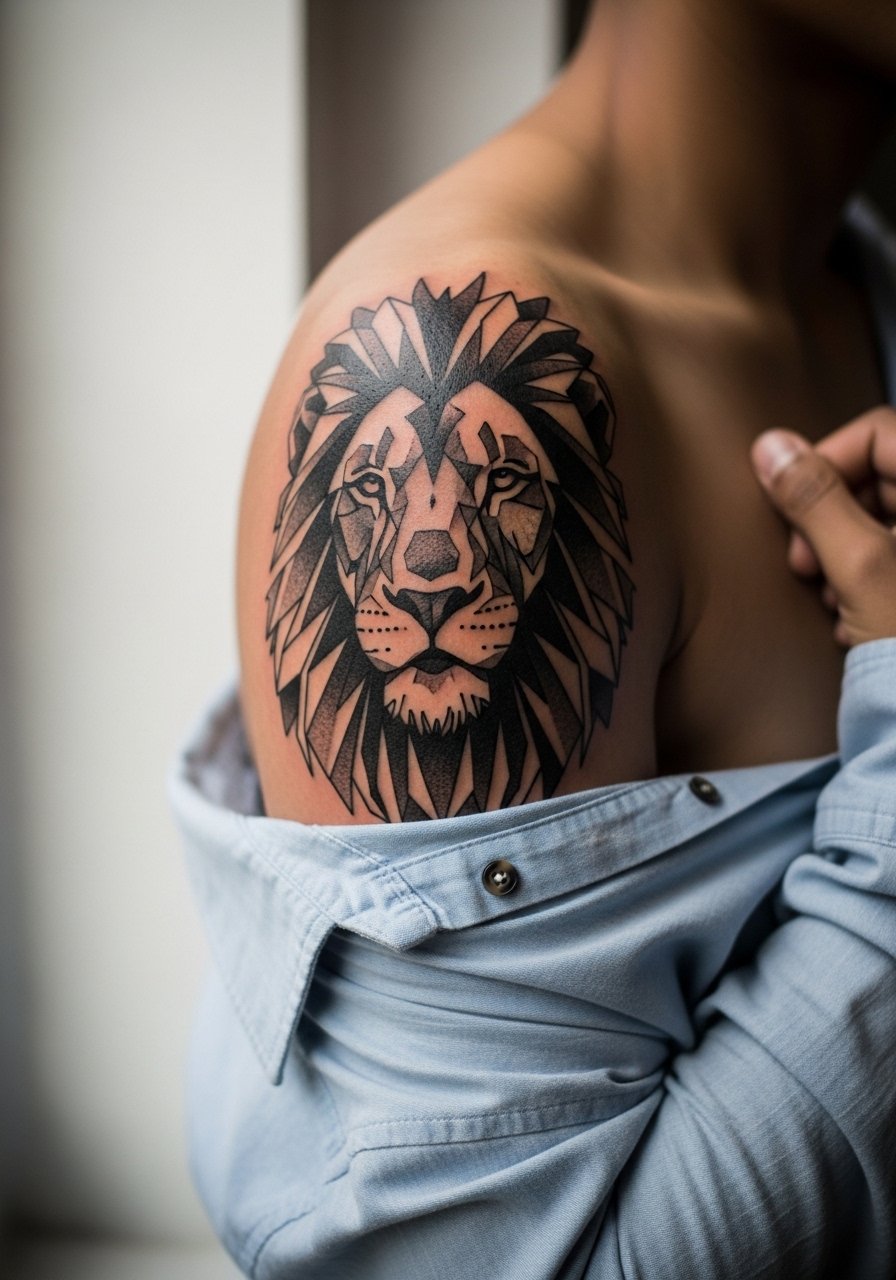
2. Blackwork Geometric Lion on Outer Shoulder
Fair warning: blackwork needs heavy saturation to stay bold on the shoulder where sun hits most. The combination of solid black fills and geometric panels frames the face and preserves contrast as color fades. Sessions run longer because filling big planes takes time and stamina. The usual error is under-saturating the black to save time, which leads to patchiness at year two. Tell your artist you want dense saturation but crisp edges, and ask about staggered sessions rather than one marathon. Pairing this with a loose button-down shirt that you can pull slightly aside makes both session access and later show-off effortless. Expect a touch-up window around year three for the solid fields.
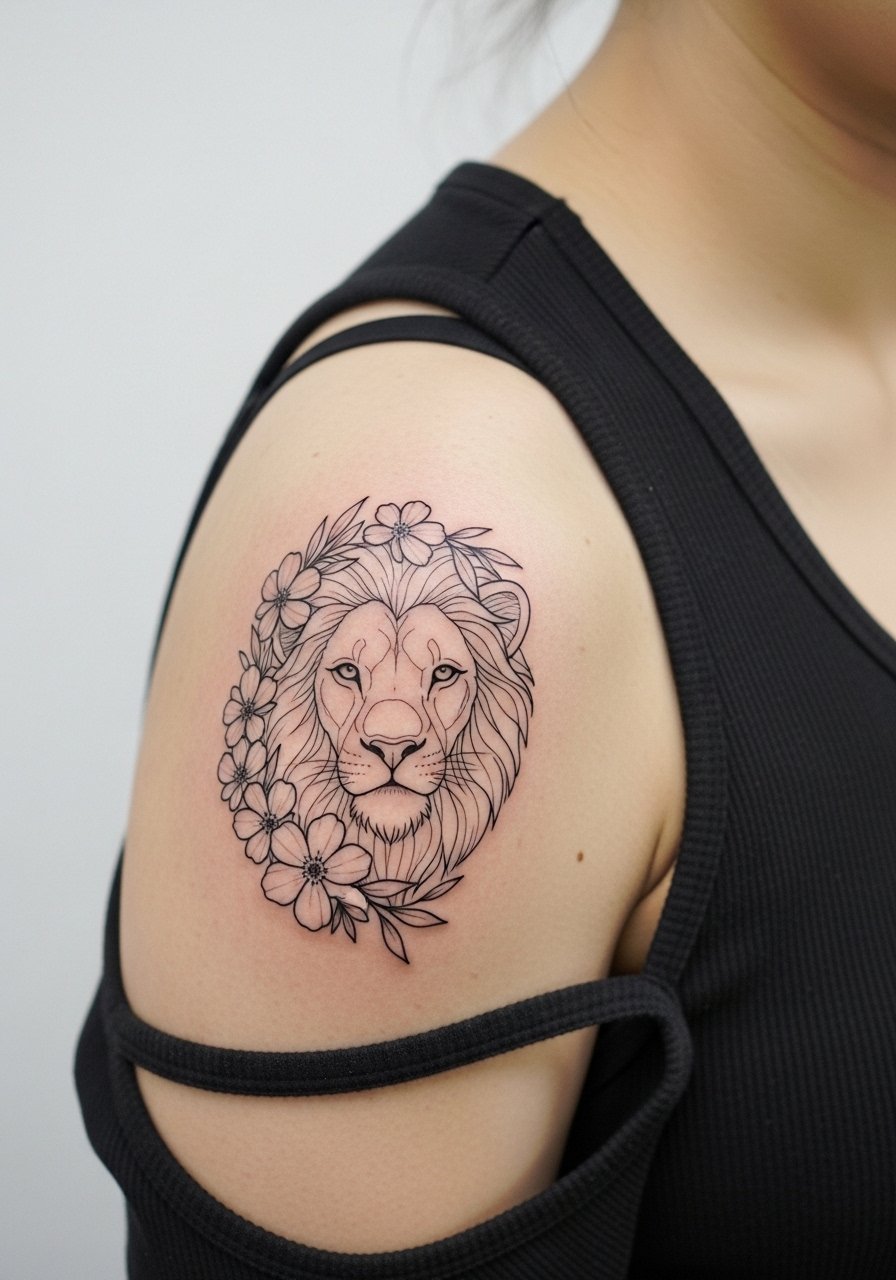
3. Fine Line Lion with Floral Mantle
Most fine line shoulder work looks delicate at first and then needs careful spacing to avoid merging. For a lion with a thin-mane treatment and floral mantle, ask for slightly thicker primary contours around the jaw and mane so the floral detail can be filigree without swallowing the face. Pain is low to moderate on the shoulder. The typical mistake is asking for ultra-fine petals pressed too close to micro facial lines. During the session wear a racerback tank so the artist can access the shoulder without fabric bunching. Expect the floral stippling to look soft at six months and more integrated by year two; plan a small touch-up for the thinnest lines by year three.
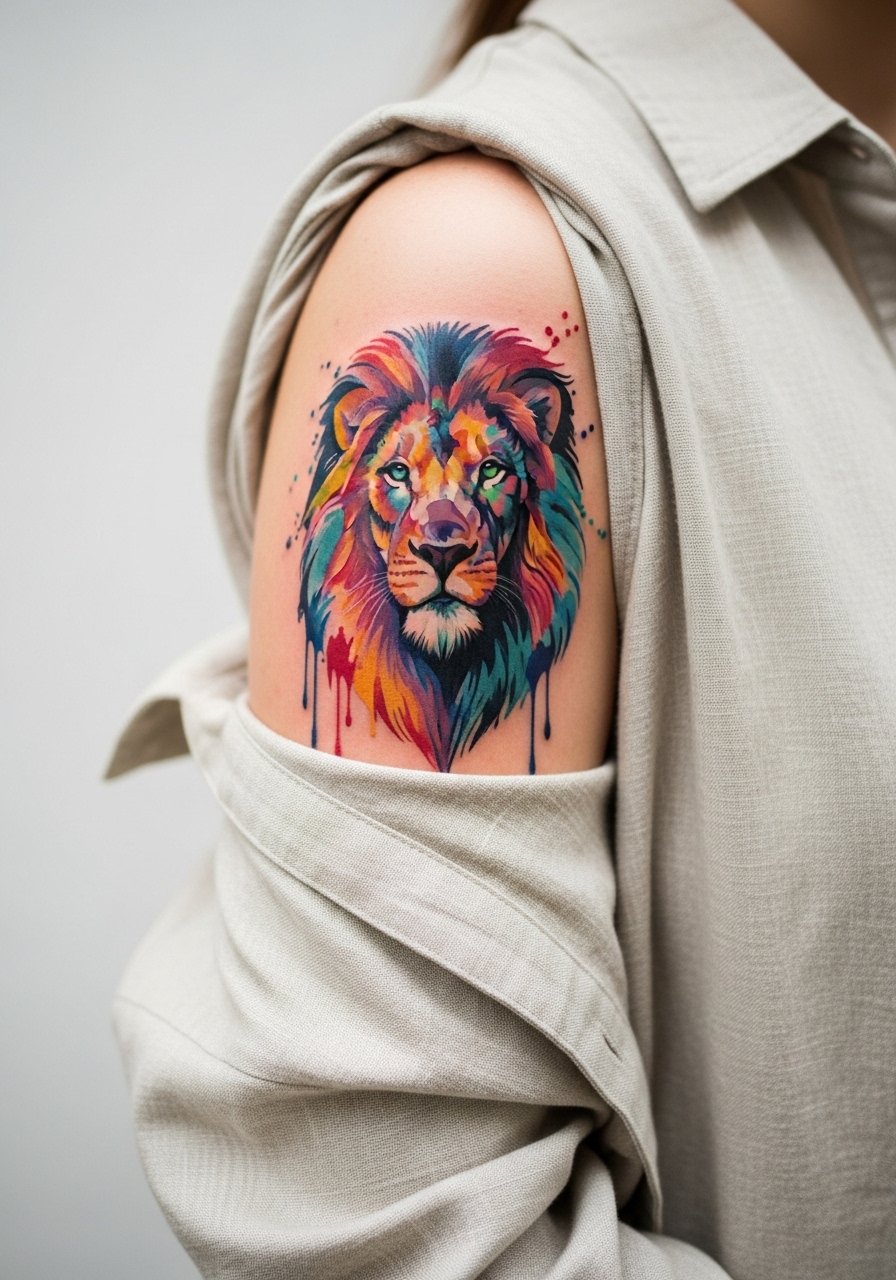
4. Watercolor Mane Splash on Outer Shoulder
There is a visual thrill to watercolor mane work on the shoulder because motion gives the color a painterly sweep. The downside is color migration and faster fading when placed where shirts rub. Ask for watercolor as accents around a stable black or gray linework core so the design keeps shape as tones soften. Sessions feel lighter because much of the work is washes rather than dense fills. Wear a loose linen shirt to the appointment so the fabric does not press on the fresh pigment. Expect the brightest blues and reds to need a refresh at year two or three, while the line core holds the composition longer.
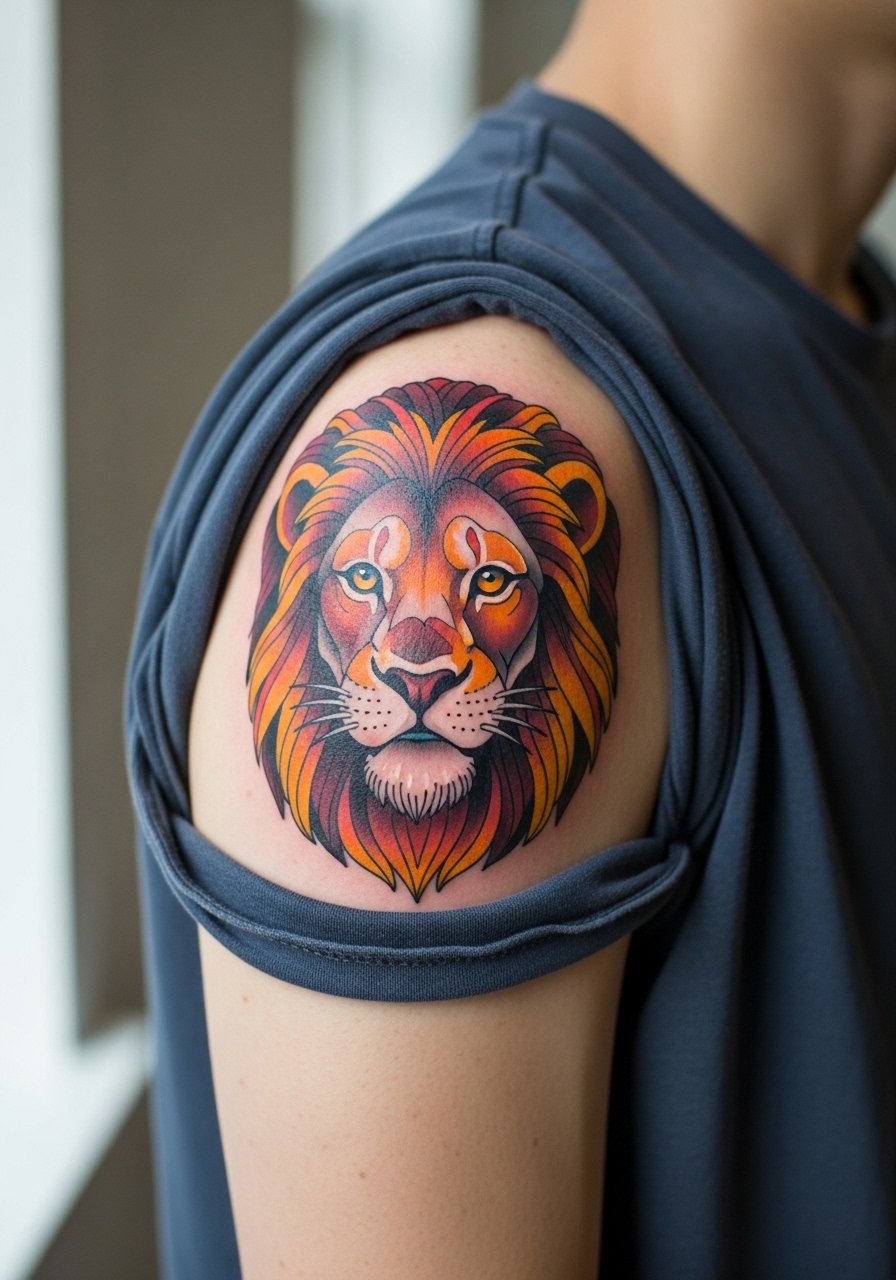
5. Neo-Traditional Lion with Bold Saturation on Cap
There is something about neo-traditional outlines and saturated fills that reads across distance, which makes this style ideal for a shoulder cap that will be seen in T-shirts. A five-hour session typically covers clean linework and layered color. The frequent mistake is over-detailing small areas; ask for simplified color planes with crisp highlights instead. Pain is moderate because the deltoid tolerates packing well. For showing off, pair the piece with rolled sleeve tees that stop just above the shoulder cap and frame the shape. The style ages predictably; expect saturation to mellow and consider a touch-up at year three to keep the hues bright.
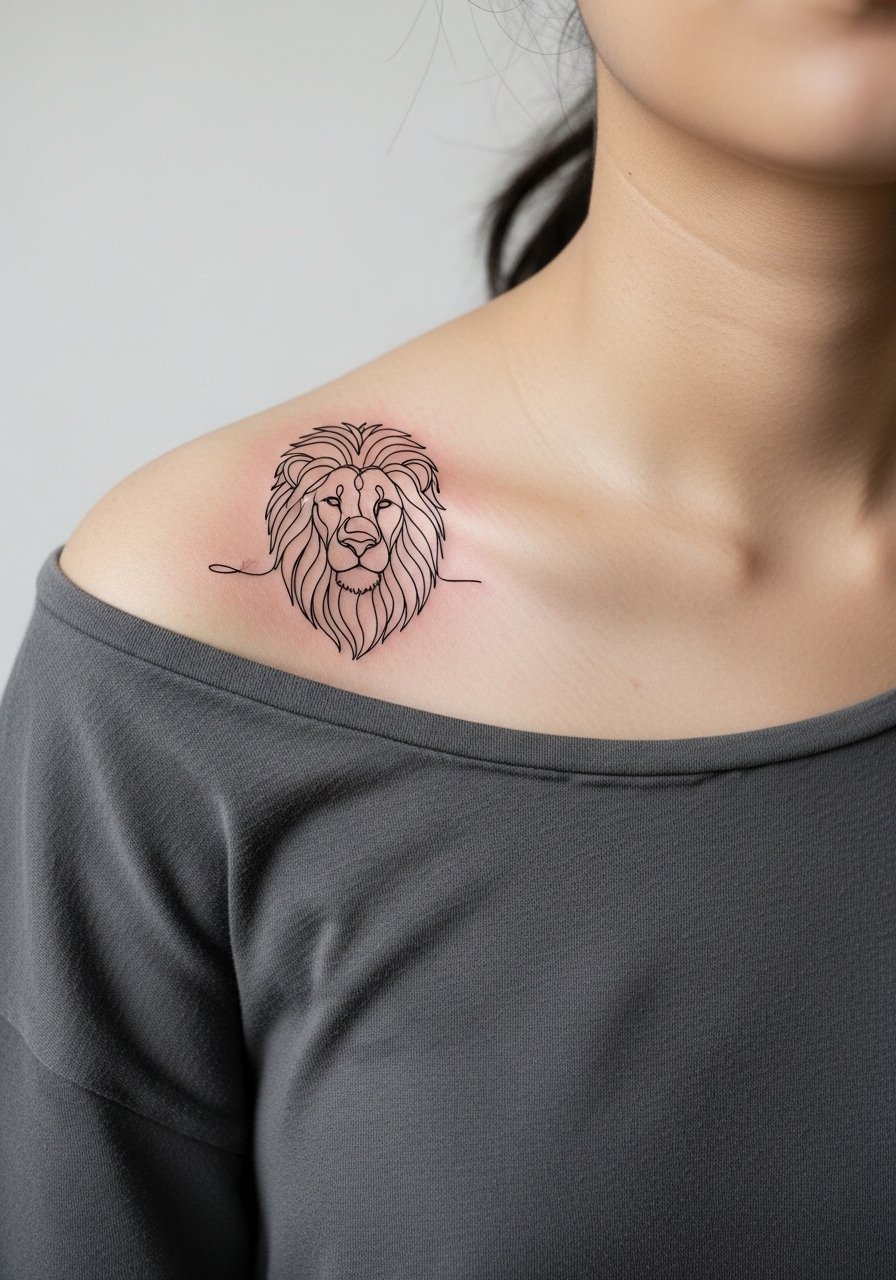
6. Minimalist Line Lion Bust on Top Shoulder
When you want the idea of a lion without heavy shading, a minimalist line bust on the top shoulder reads like jewelry. In consultation ask the artist to combine confident, single-stroke linework with a slightly heavier anchor line so the form keeps its silhouette as the thin strokes soften. Session time is short, often under two hours, and pain is mild. The common error is placing tiny strokes too close together. Wear a wide-neck tee so the artist can lower or shift fabric during the stencil check. Minimalist pieces need touch-ups sooner than heavy work, often around year two to maintain crispness.
Studio Day Picks
The upper shoulder pieces above often need different prep than collarbone or rib work, so these picks help with session comfort and early healing.
-
Stencil transfer paper kit. Helpful for the big shoulder caps above where getting the face placement dead center matters before lining.
-
Topical numbing cream. Use 45 minutes before a long color pack session to take the edge off shoulder soreness without changing line uptake.
-
Thin protective film roll. Useful for larger shoulder pieces that risk friction from straps during the first 48 hours.
-
Fragrance-free gentle body wash. Cleanses the tattooed shoulder area without irritating the healing surface after the first day.
-
Aquaphor healing ointment. A thin layer early keeps thin-line shoulders from drying into hard scabs that pull at micro detail.
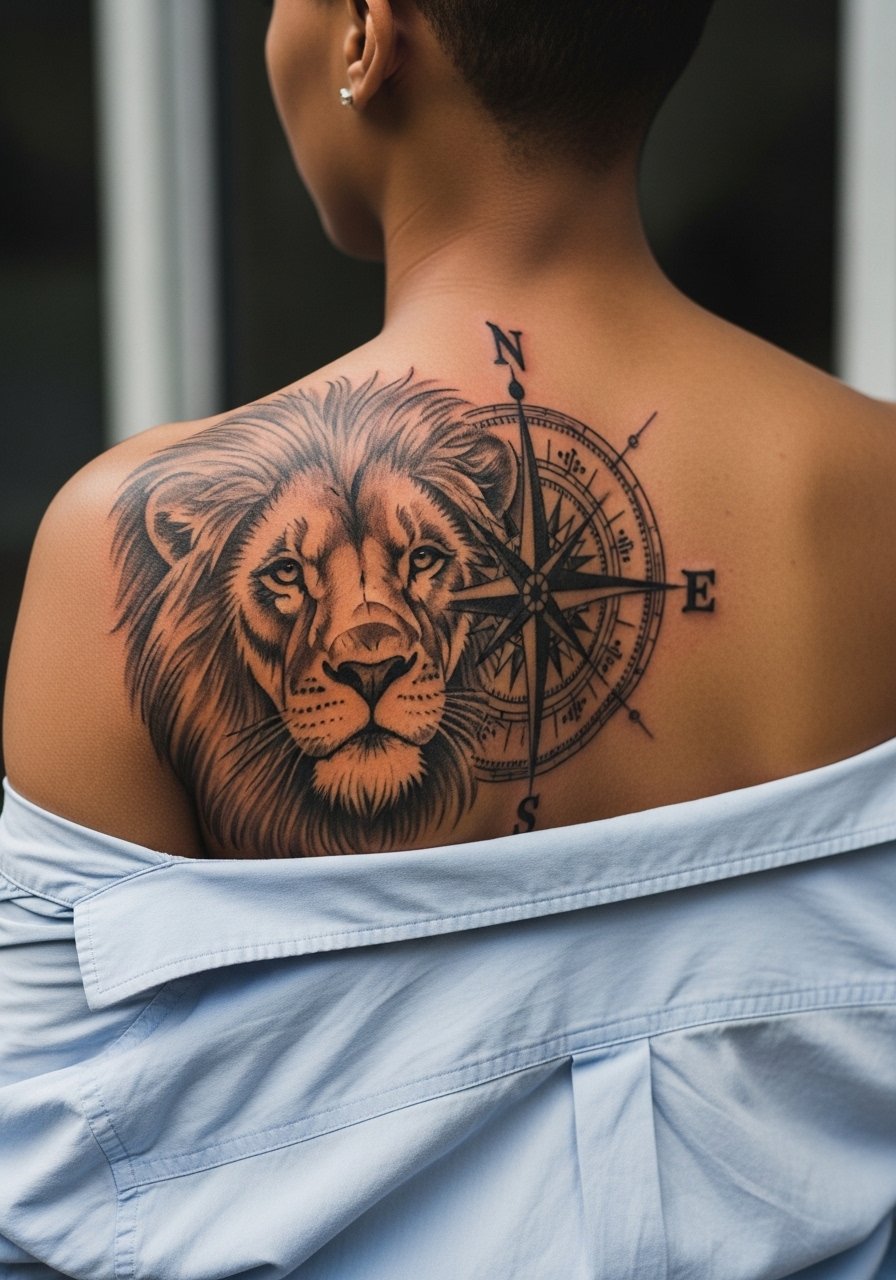
7. Lion and Compass Shoulder-Back Blend
Artists split on whether compass elements distract from a lion portrait. One camp says geometric instruments enhance composition by directing sight lines. The other camp warns that small compass ticks can merge with mane detail on a shoulder that moves. Be explicit in consultation about whether the compass is a bold anchor or a fine motif. The blend works well as a shoulder-to-back piece, and sessions are typically split across two visits. The mistake is trying to pack a delicate compass into dense mane texture. For the session wear a button-down shirt worn backwards so the artist can access both shoulder and upper back without fabric rubbing the fresh ink. Touch-ups depend on how much motion the compass area endures.
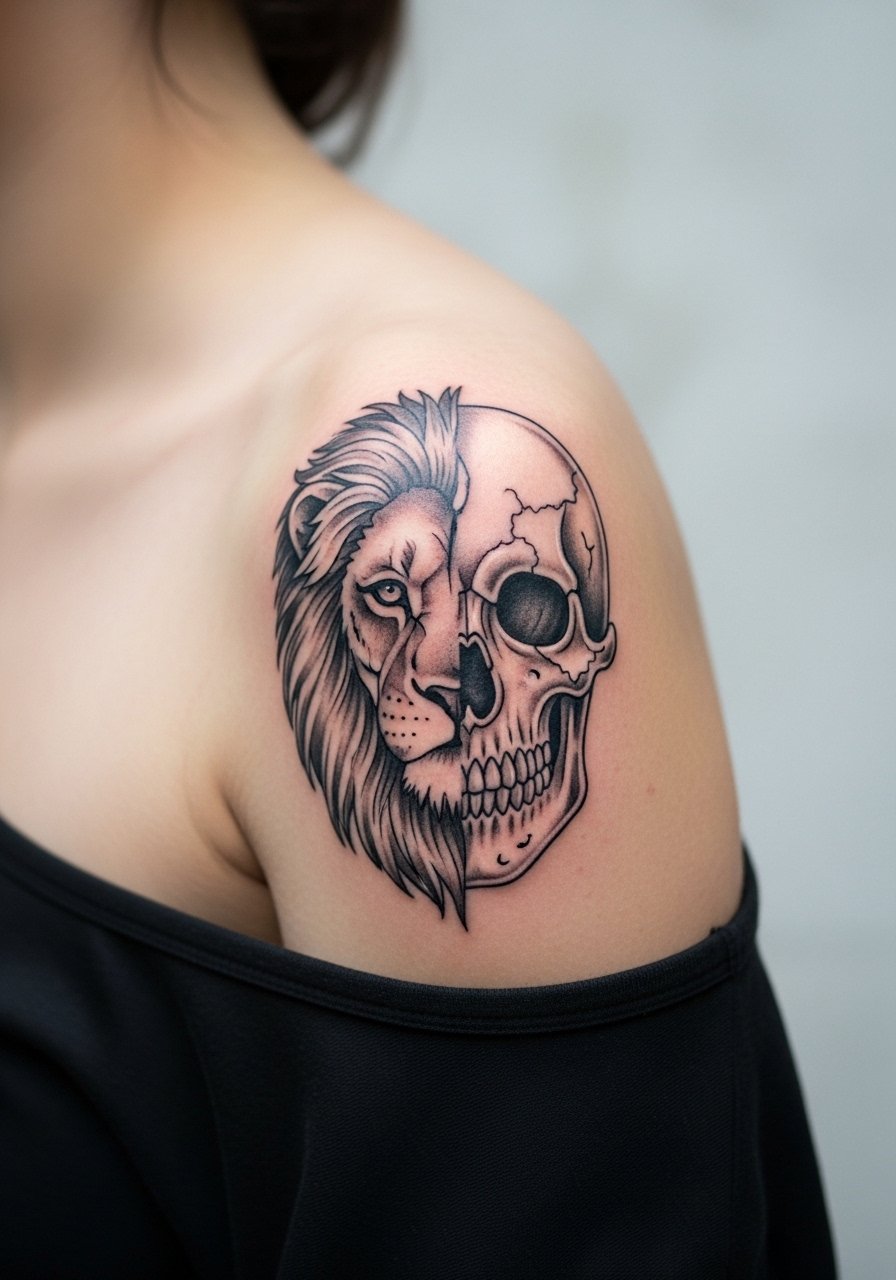
8. Half-Lion, Half-Skull Shoulder Cap
This placement feels cinematic and sits well on the rounded shoulder cap where the face aligns with the deltoid curve. When you sit with your artist bring references that show the exact break line between living side and skull side, because vague direction leads to an imbalanced composition. Expect a moderate to high pain level during dense shading in the skull region. A frequent mistake is insisting on too much tiny facial detail on the living side while the skull gets heavy blackwork, which skews focus. For post-session styling pair the piece with an off-shoulder top to expose the split motif during evenings out. Plan a touch-up for the shaded skull if the blacks look patchy at year two.
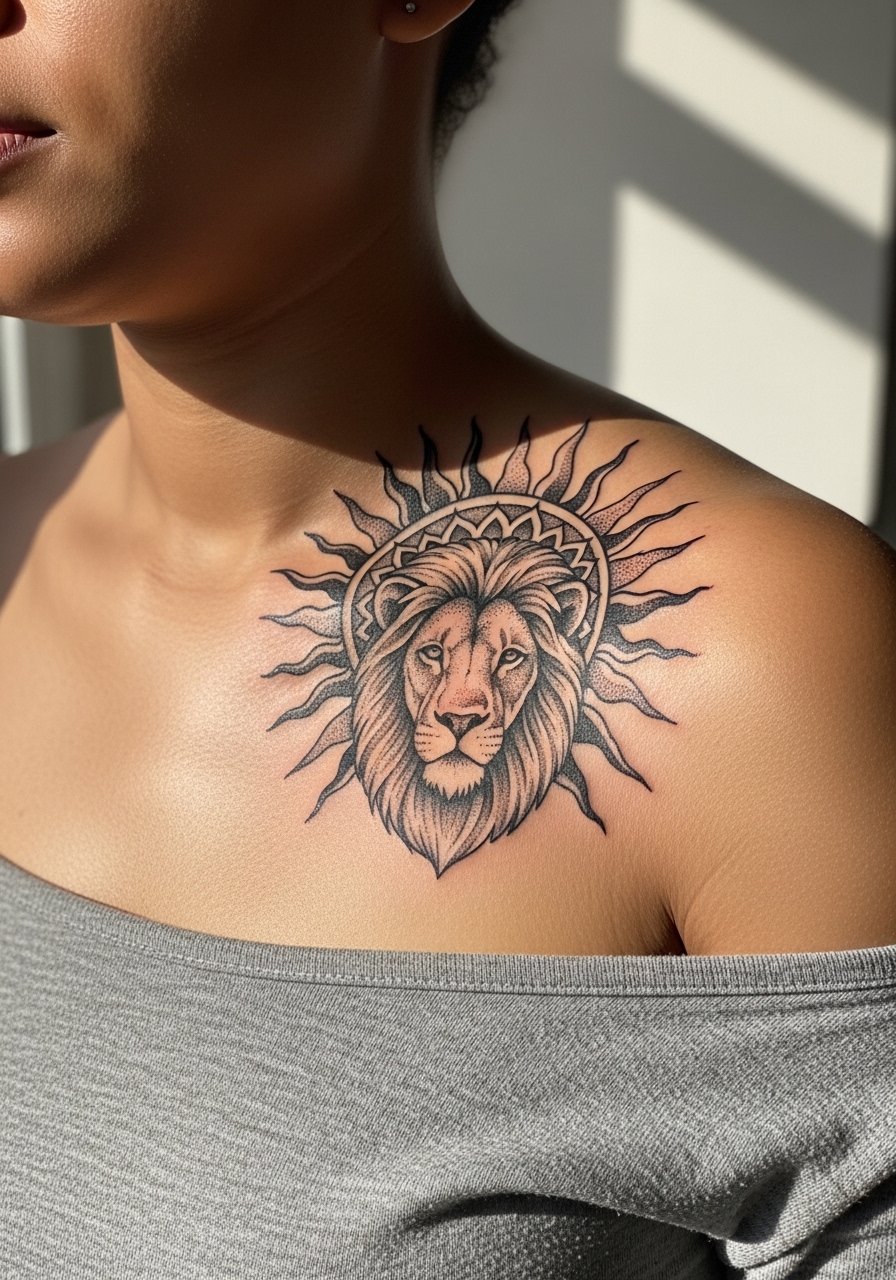
9. Mandala Sun Lion Over Collarbone-Shoulder
There's a risk when combining mandala density with a lion face near the collarbone because the collar area moves and stretches. Do not let the mandala fill press too tight against facial linework. For this collarbone-shoulder fusion ask for scaled spacing in the mandala so the outer rings read as texture rather than solid mass as they age. Sessions may take multiple sittings because of the dense dot work. Include a note about job considerations since collarbone visibility varies with wardrobe. Wear a wide-neck dress to the session so the area can be exposed without full chest exposure. Expect dotwork to soften into a grainy texture by year three and consider a precision touch-up then.
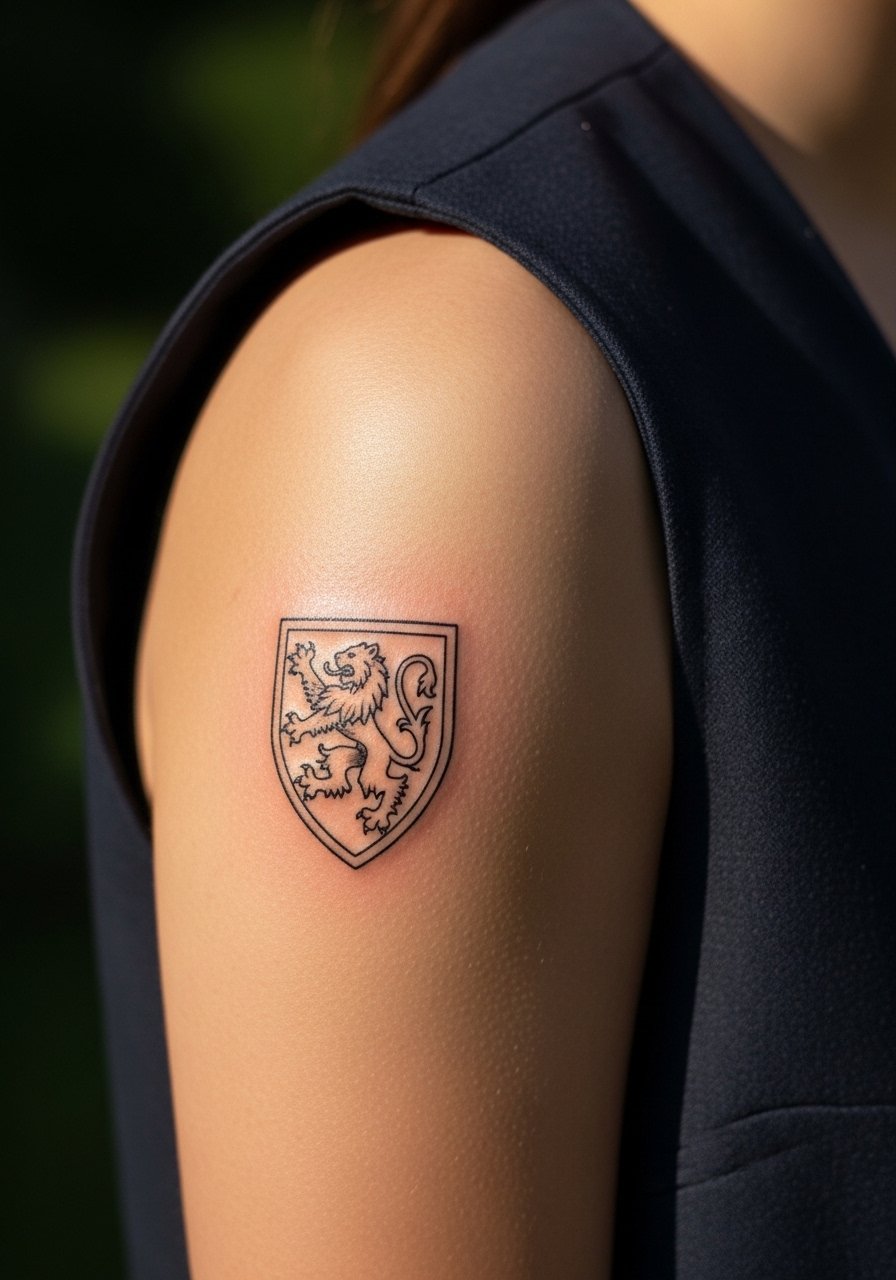
10. Small Heraldic Lion on Deltoid
Fair warning: tiny heraldic lions can morph into a blotch if placed too small on the deltoid. The deltoid offers a rounded plane that flatters compact shield work, but the trick is scale. Ask for simplified heraldic lines and a slightly larger shield than you imagine. Session time is short, often under two hours. A common mistake is overcomplicating the crest with lettering that will blur. For showing it off, a sleeveless vest puts focus on the deltoid badge while keeping the chest covered. Touch-ups are usually minor if the lines are bold enough at the start.
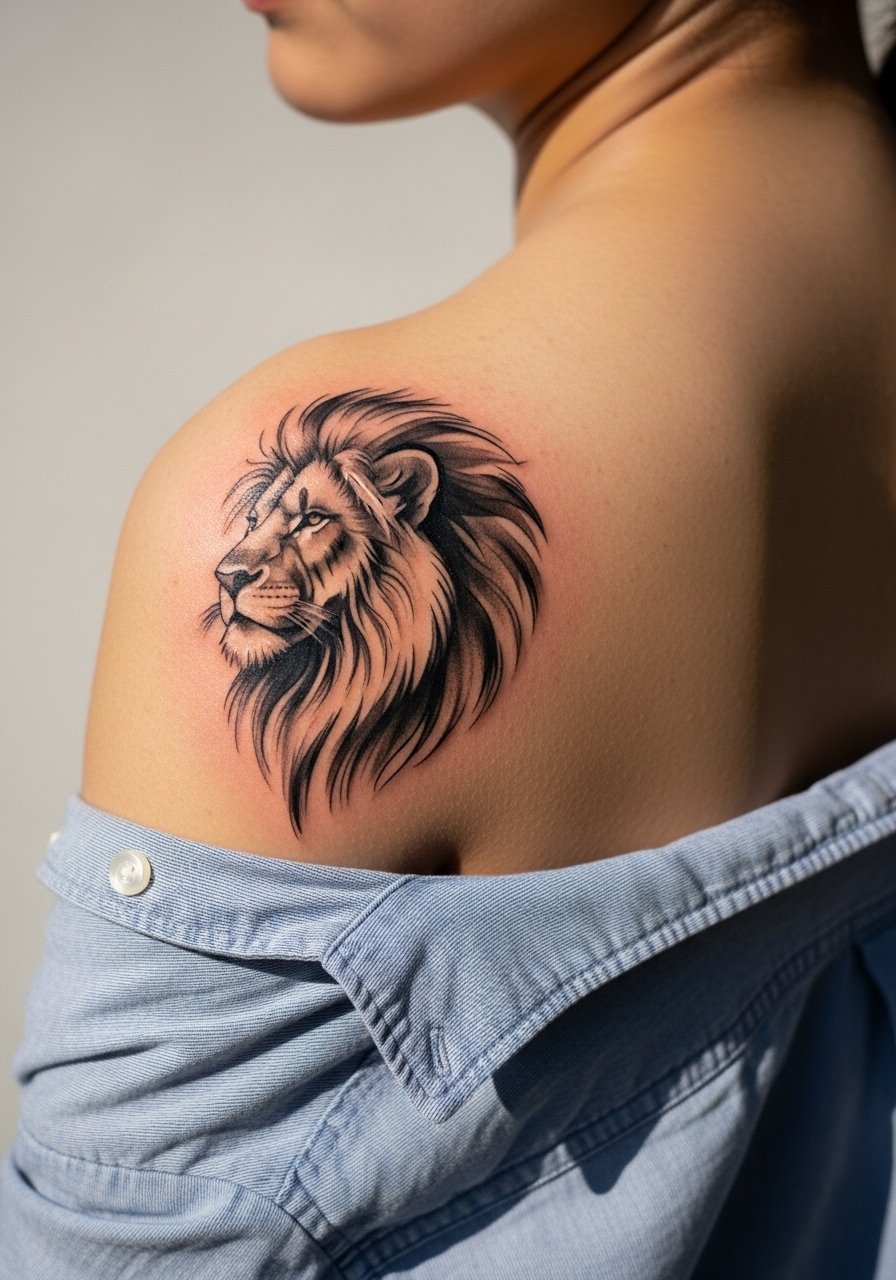
11. Abstract Brushstroke Lion on Shoulder Blade
Most abstract brushstroke lions rely on negative space to sell motion, and the shoulder blade gives a sweeping canvas that lets strokes breathe. The aging profile is forgiving because the suggestion of form tolerates softening better than tight realism. Mistakes occur when artists try to force too many strokes into a small area. Tell your artist you want confident, open strokes and a clear negative space silhouette. This placement can feel tender when leaning back in a chair, so expect moderate discomfort during longer passes. For the appointment wear a button-down shirt you can easily unbutton to expose the shoulder blade. Touch-ups are stylistic, often about reworking a stroke rather than fixing blur.
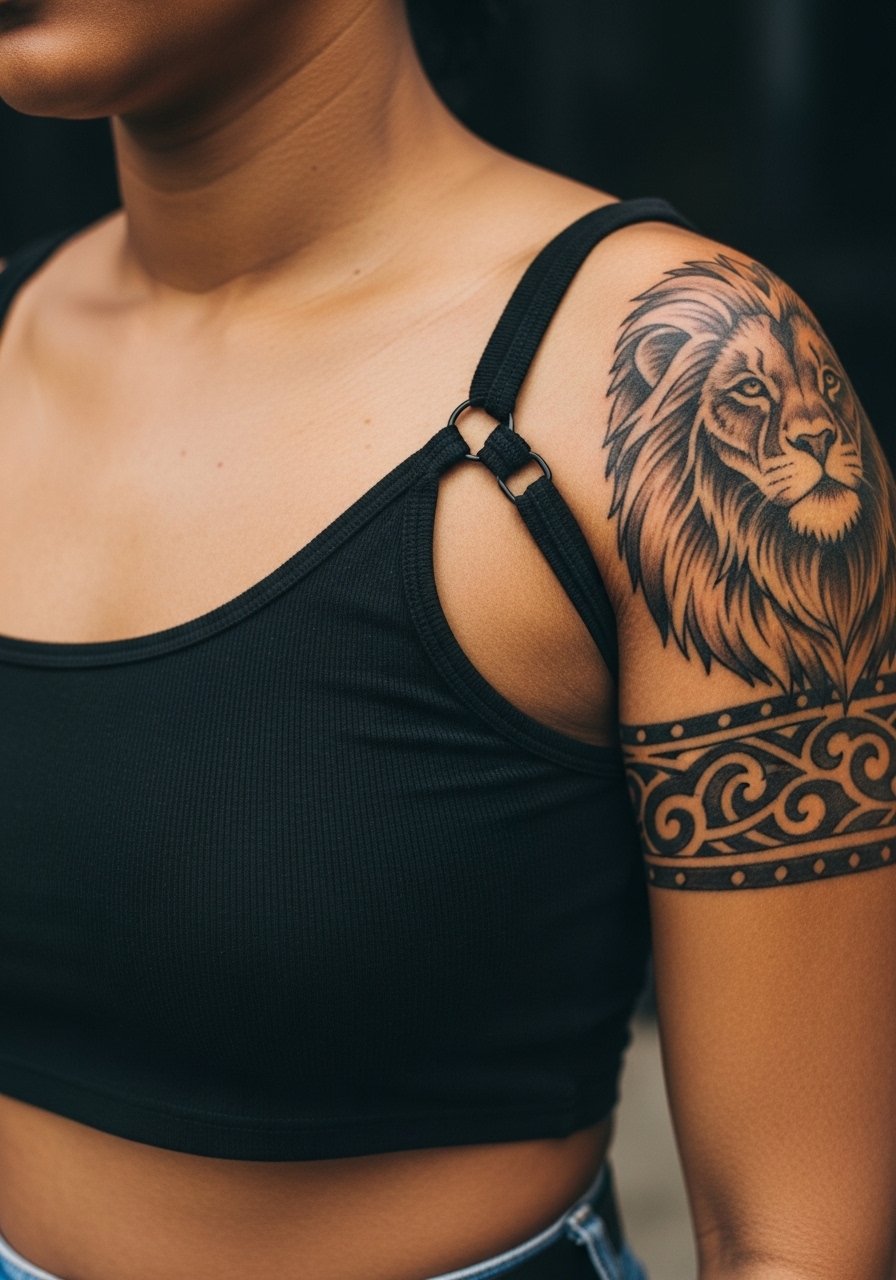
12. Tribal-Inspired Lion Shoulder Band
The visual impact of a tribal band wrapping the shoulder depends on confident negative shapes and consistent spacing. The deltoid curve lets a band hug the muscle and read like armor. Pain ranges moderate because the band follows sensitive arcs near the arm. The primary mistake is copying sacred motifs without acknowledging origins, so consider adapting patterns or asking about cultural context. During the session wear a crop tank so the artist has consistent access. Tribal bands age well when the angles are bold and not over-embellished; expect a maintenance touch-up if the edges soften by year three.
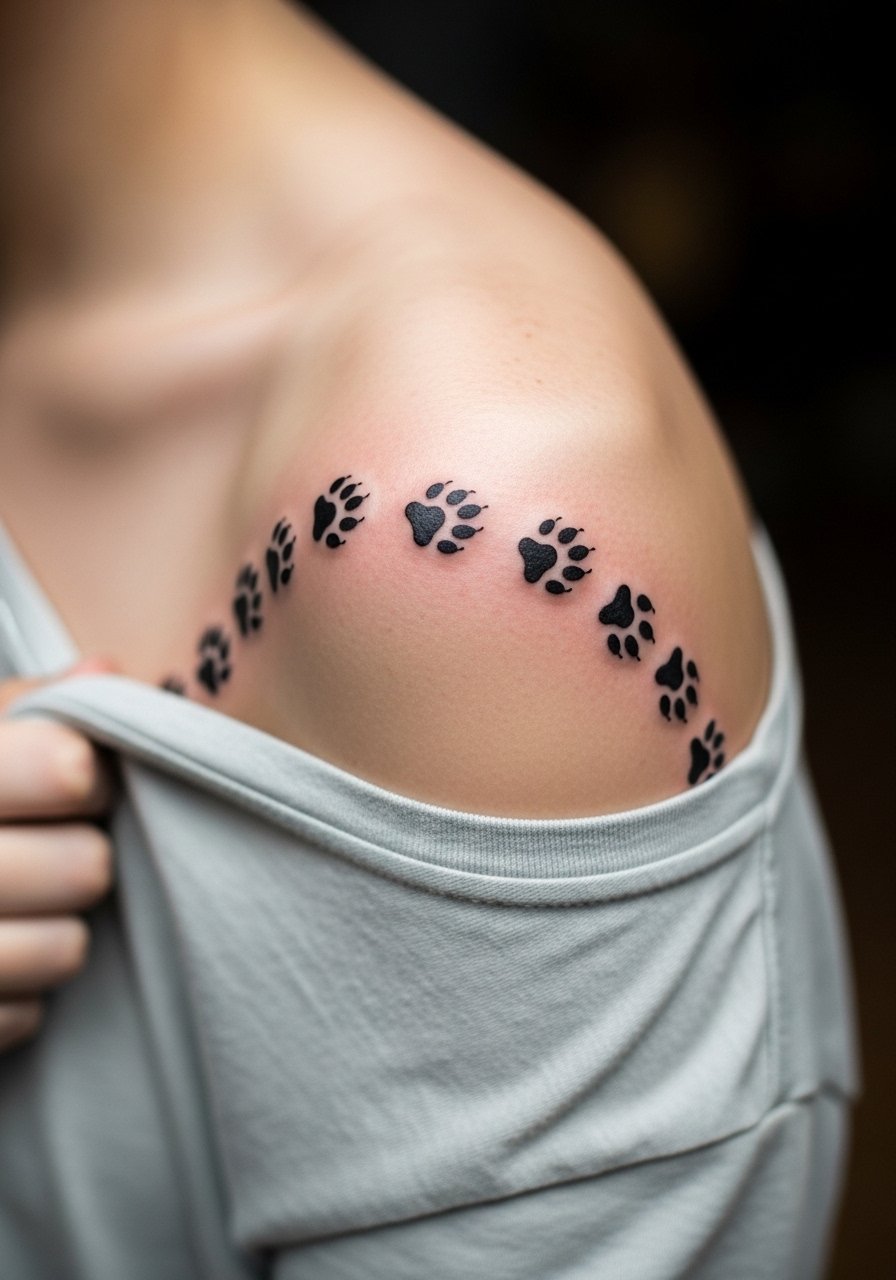
13. Lion Paw Print Cluster Along Shoulder Girdle
There is a simple charm to paw print clusters arcing across the shoulder girdle, and they age predictably if sized properly. Start with clear spacing between prints to avoid merging. A common mistake is shrinking the prints to icon size. Sessions are short, and pain is low. For showing them off casually, short-sleeve shirts work, but for the session wear a loose T-shirt you can pull aside. This design is great for someone who wants a motif that reads from a distance and will likely only need a minor refresh around year four if the smallest edges soften.
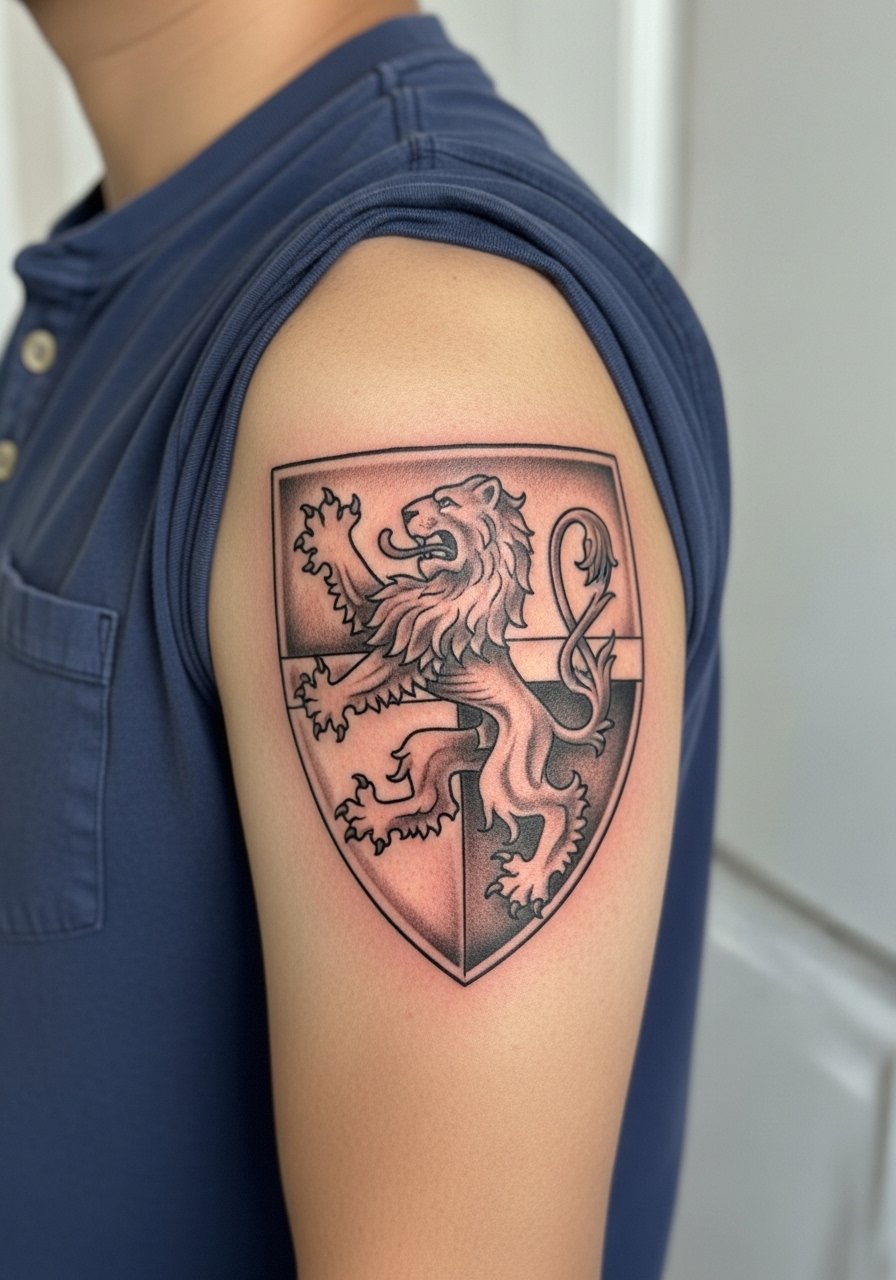
14. Heraldic Shield with Lion Over Upper Arm
When the lion sits inside a shield and dips onto the upper arm, the composition must respect the turning of the arm. Tell your artist to design the shield with enough breathing room on the shoulder edge so the shield does not distort when you raise your arm. Sessions are medium length due to contouring and shaded background. The frequent error is mapping flat references without checking the curve of the shoulder in motion. For session comfort wear a short-sleeve Henley you can shift to access the upper arm without exposing the chest. Expect a touch-up where the shield meets the shoulder after the first year if lines soften.
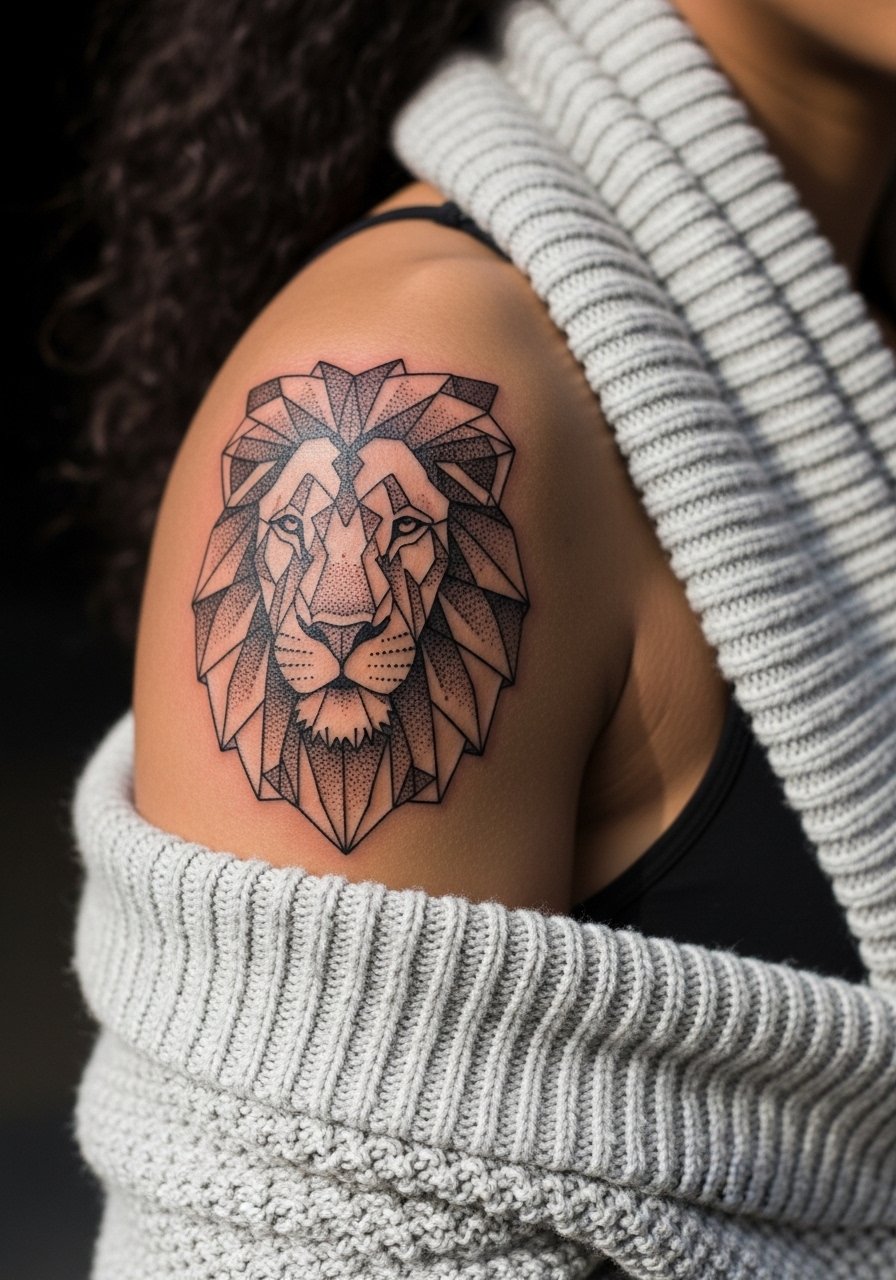
15. Geometric Dotwork Lion on Upper Shoulder
There is a tactile quality to dotwork that interacts nicely with shoulder curvature. For a geometric lion, request controlled stippling with gradual transitions rather than dense patches that can streak. Dotwork sessions can be slow and require patience but are lower on raw pain. The common mistake is concentrating stipple too tightly near edges. Wear a loose knit sweater with a wide neck to and from the studio so you can keep the area covered but exposed during the stencil check. Expect stipple to soften into texture over time; a small precision touch-up can restore crisp gradations.
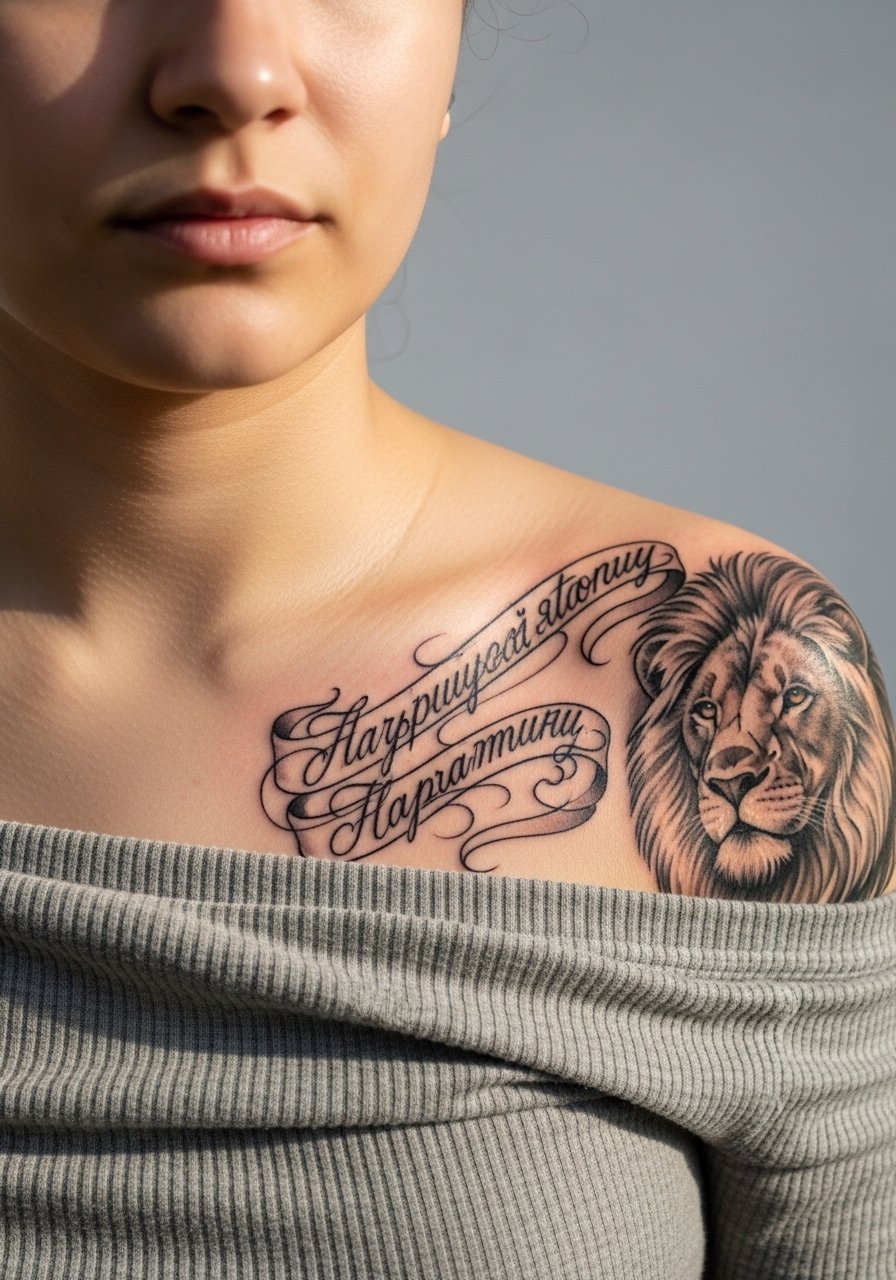
16. Scripted Banner with Lion Portrait Across Shoulder
Artists disagree on script placement over curved shoulders. One camp says banners read best when they follow muscle lines. The other warns that lettering can warp as the shoulder moves, making tight scripts illegible after a few years. Name both positions in your consultation and ask the artist to show mockups in motion. Typically the portrait sits first and the banner follows in a shorter second session. For evening show-off, a boat neck top lets the banner sit just under fabric lines neatly. Plan to rework tight scripts after a couple of years if legibility drops.
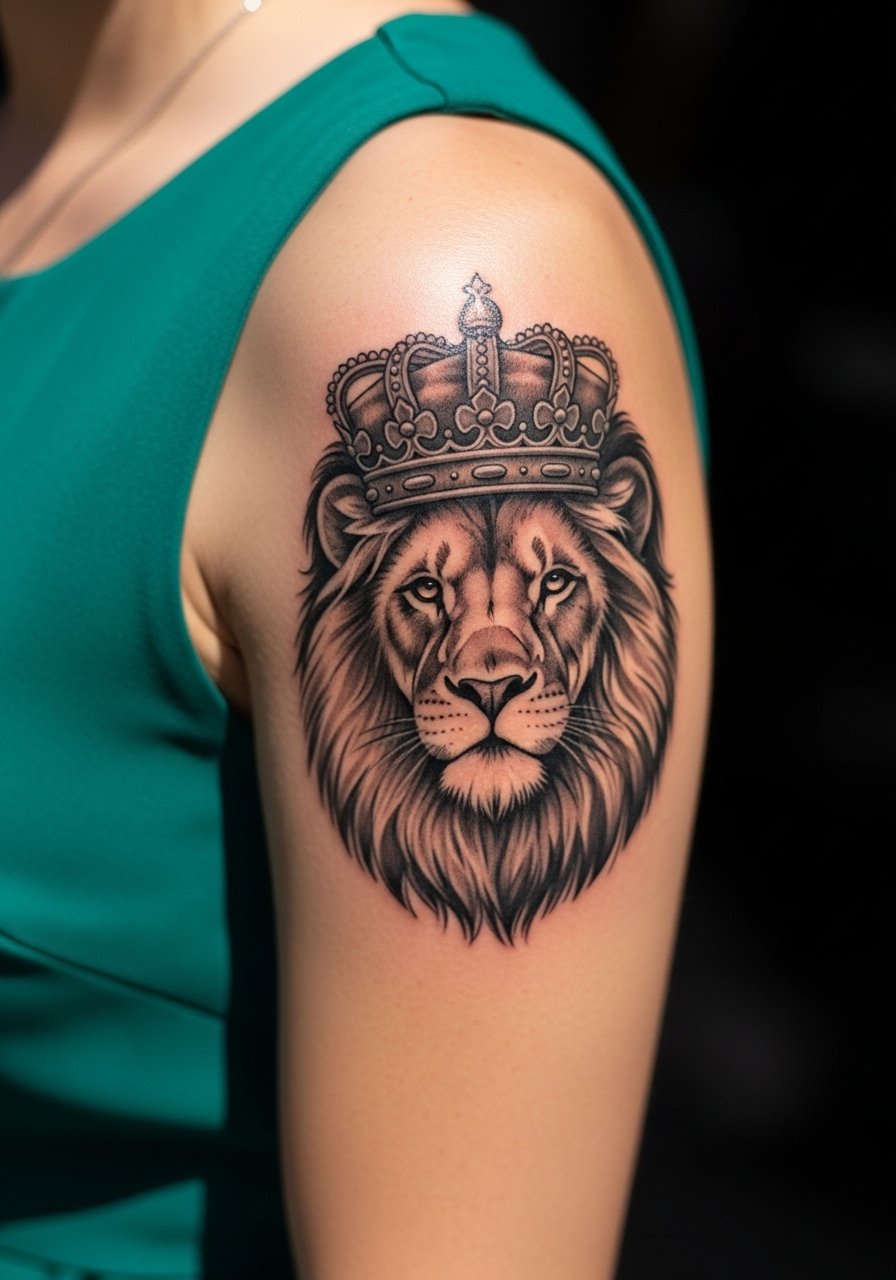
17. Lion and Crown Shoulder-to-Arm Transition
I've seen crown motifs help anchor a shoulder lion when the crown follows the shoulder-to-arm transition, keeping focus on the face. The crown can be rendered in fine detail or bold planar work; pick one to avoid visual conflict. This transition usually takes two sessions to balance line and shade across the deltoid seam. People often forget to clarify how high the crown sits on the shoulder. Wear a sleeveless dress to the appointment if you want the artist to assess how the piece will read with evening wear. Expect small touch-ups near the seam where movement is greatest.
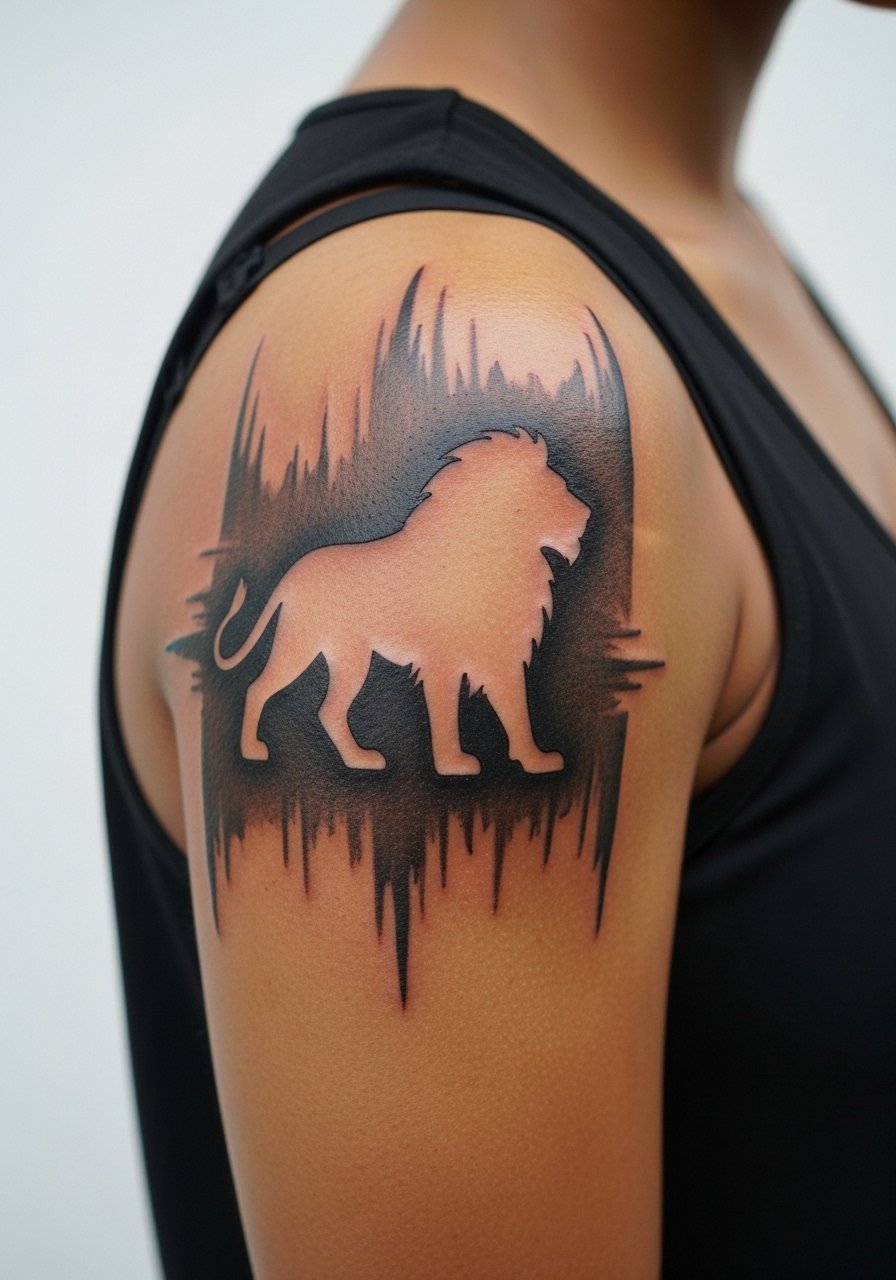
18. Negative Space Lion Silhouette on Shoulder
Fair warning: negative space silhouettes demand intentional background work so the uninked shape reads clearly as the tattoo ages. The shoulder is ideal because a clean background keeps the silhouette crisp even as edges blur a little. The main mistake is relying on very thin separating lines that do not hold up. During the consultation ask for the negative space to be isolated by at least a hairline of steady tonal work. For the session wear a tank top with wide straps that can be shifted aside smoothly. This approach ages well and often only needs a small touch-up after several years.
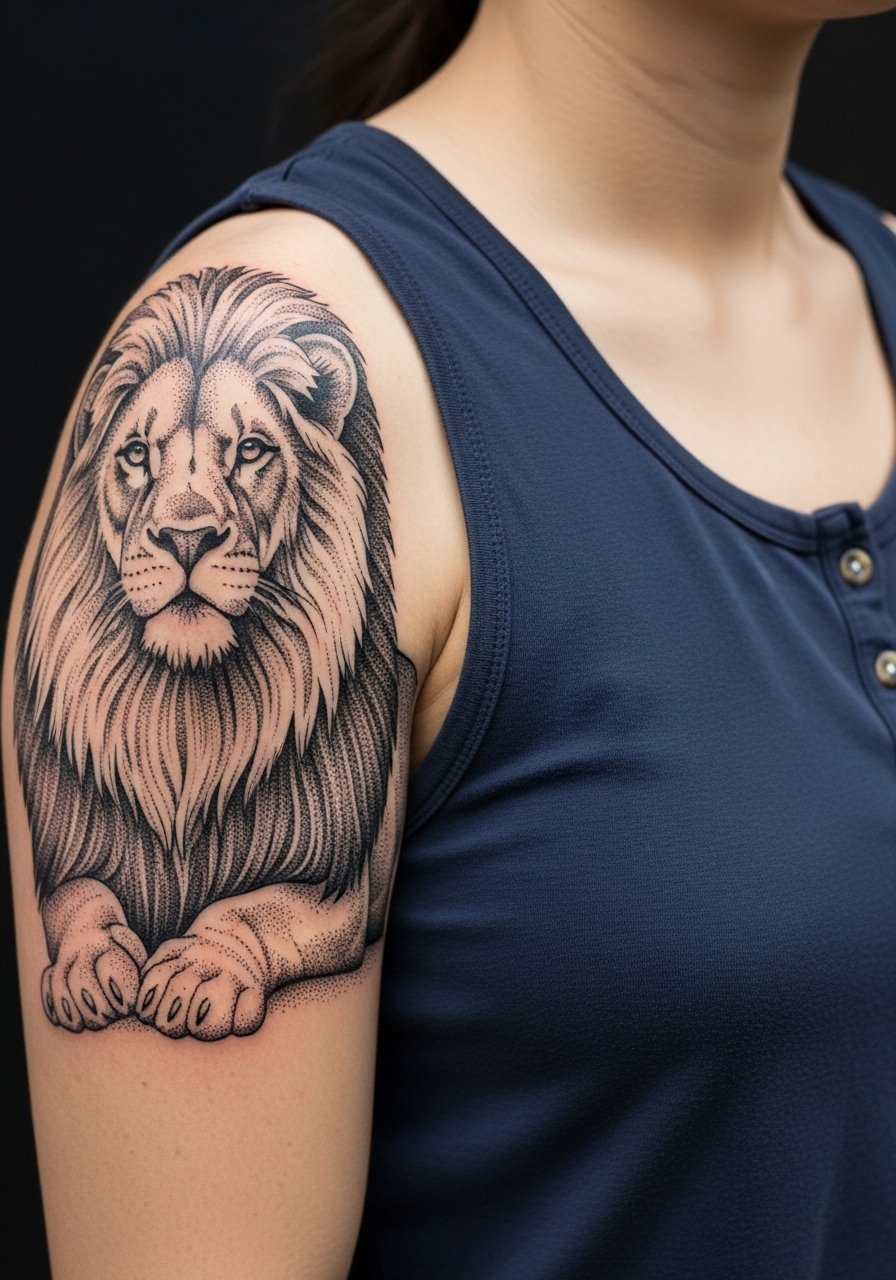
19. Stipple-Shaded Lion Three-Quarter View
Most three-quarter lion portraits on the shoulder find their strength in gradual stipple transitions that model form without harsh lines. Ask your artist to map the three-quarter angle on you while you move so the eyes don't distort when you rotate your arm. Sessions can be long due to the tiny dots. A common mistake is insisting on full photorealism at too small a scale. For practical session wear use a button-up tank so the artist can check placement and symmetry. Expect stipple to smooth into warm texture by year three, and schedule a targeted refresh if you want to maintain crisp shadow edges.
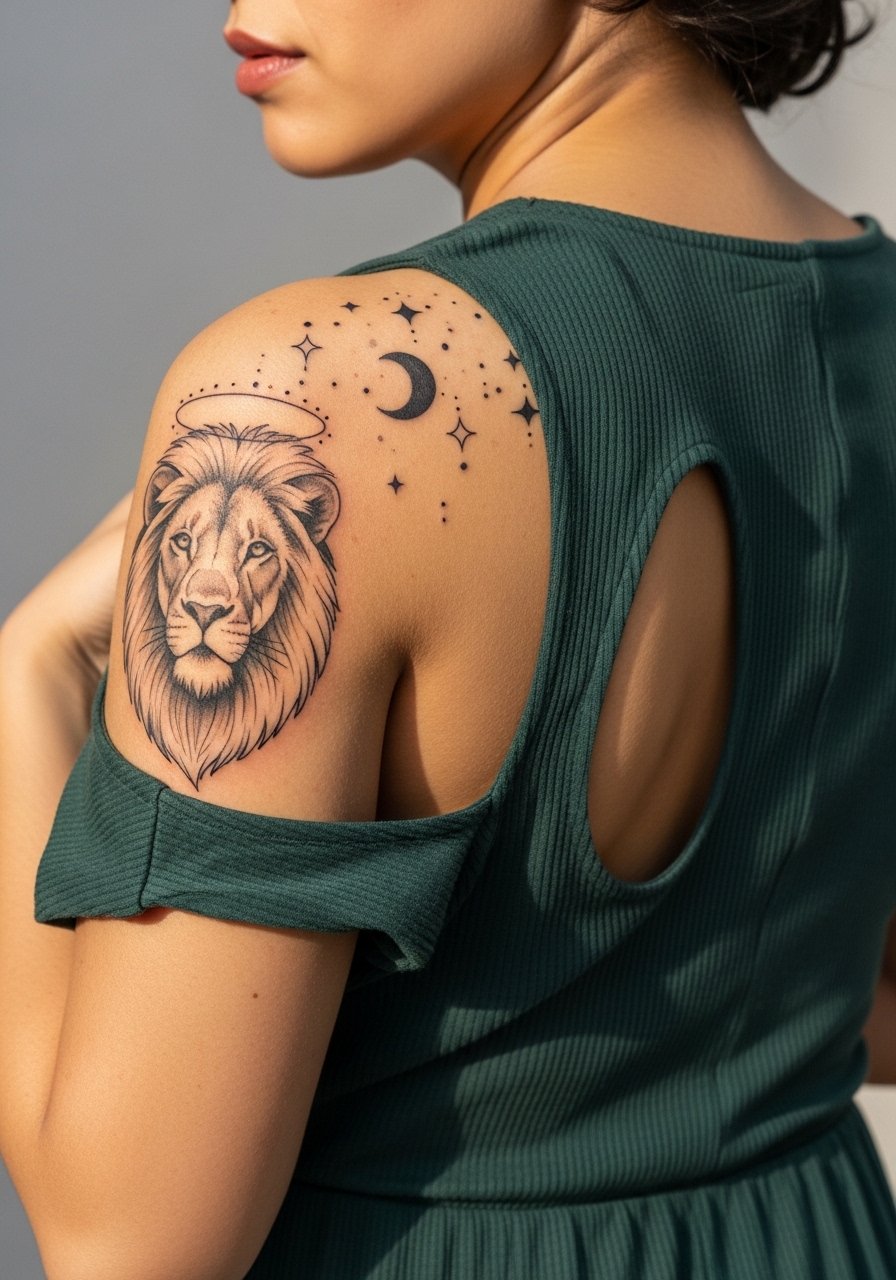
20. Lion with Celestial Elements on Shoulder Cap
There is visual drama when stars and moon motifs orbit a shoulder lion, and the rounded cap reads those elements like a halo. The design ages better if the celestial bits are bold and spaced rather than tiny pinpricks. The mistake is scattering micro-stars that blur into tone. Sessions are moderate and often split so the artist can place the celestial spacing precisely. For evening show-off pair the tattoo with an open-back midi dress that frames the shoulder cap. Expect small touch-ups on the smallest points if they soften after a couple of years.
21. Fierce Lion Full Shoulder Cap with Background
The full-shoulder cap with a background field gives the most dramatic presence and is the safest long-term bet for a lion that needs to stay bold. The background anchors the portrait so fading is less likely to read as a loss of form. Expect multiple sessions and a higher pain tolerance for extended shading sessions across the cap. A frequent mistake is underestimating how clothing straps will rub the background during healing. For the session wear a zip-up hoodie you can unzip partway to leave the shoulder exposed without tugging. Plan for a touch-up at year three to refresh the deepest shadows.
Frequently Asked Questions
Q: How much does a shoulder lion tattoo hurt compared with ribs or inner arm?
A: The shoulder usually rates lower on most pain scales than ribs or inner arm because the deltoid has more padding. Expect moderate discomfort for long shading packs, but short outlines are surprisingly manageable. Pain tolerance varies, so discuss breaks and numbing options in your consultation.
Q: Will fine line lion details blur faster on the shoulder than heavy blackwork?
A: From what I've seen, fine line elements on shoulders can lose crispness faster than dense blackwork because the skin moves and gets more sun exposure. If you want delicate detail, ask for slightly thicker primary contours and plan for touch-ups around year two to three.
Q: Can a shoulder lion be easily extended into a sleeve later on?
A: Yes, shoulders are a great starting point for extensions because they provide an anchor that reads well when the arm pieces wrap in. In the consult ask the artist to design with future seams in mind and bring sleeve inspiration so transitions are planned from the start.
Q: Are there wardrobe choices that help shoulder tattoos heal and look better long term?
A: For the session and early healing wear loose tops like a wide-neck tee or a button-down you can slide aside, because tight straps and seams rub the fresh area. For showing off later, sleeveless or open-back pieces frame the shoulder cleanly without excessive rubbing.
Q: Should I avoid certain lion styles if I work in a conservative office?
A: Visibility is the key. Small deltoid pieces tucked under a sleeve are easy to hide. Full shoulder caps or collarbone-adjacent work show more. Consider placement slightly lower on the shoulder or choose a motif that reads more abstract when partially covered if discretion matters.
