
Fine line collarbone tattoos look delicate in photos but behave differently on real skin. They can read larger than expected against bone, need careful spacing to avoid early blurring, and often require touch-ups sooner than heavier blackwork. If you want a meaningful piece that still reads clean in five years, placement, line weight, and wardrobe matter as much as the sketch. Start with these 17 collarbone ideas and what to ask for at the consult.
1. Mini Script Along the Collarbone
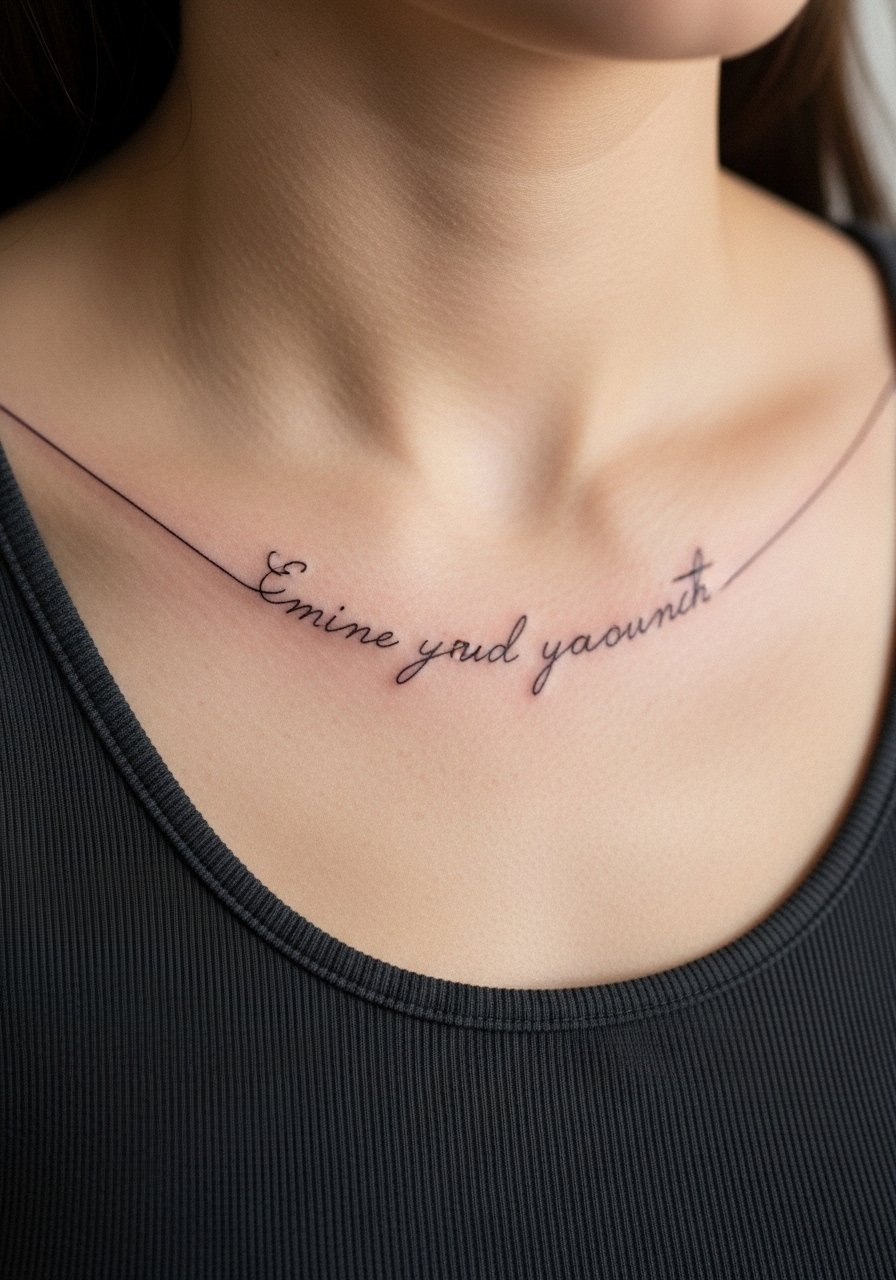
A single word or short phrase in thin script reads intimate on the collarbone. I tell people to pick letters with open counters and ask the artist for slightly heavier single-needle spacing so the letters do not merge after a year or two. Expect a short session and moderate pain over bone. Common mistakes include asking for ultra-tiny cursive and then wondering why it blurs. Say during the consult that you want legible script at arm's length and that you are okay with a subtle bolding on downstrokes. For showing it off, a thin chain pendant necklace sits above the words without crowding the linework.
2. Small Botanical Sprig Curving Over Bone
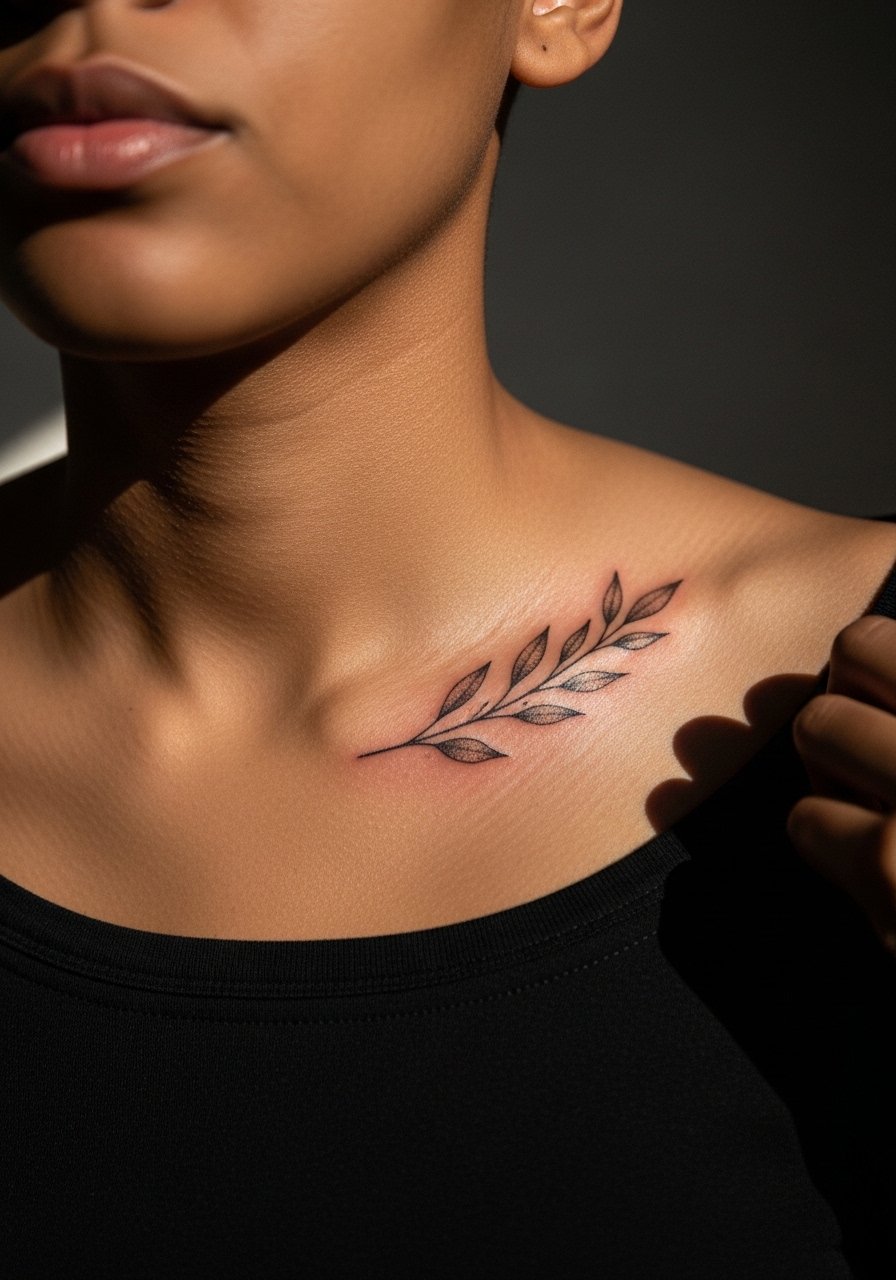
A tiny sprig with stipple shading gives a natural, meaningful nod without shouting. I recommend stipple or light whip shading instead of soft watercolor shading because stipple holds better on thin skin near bone. Tell your artist you want spacing between leaves and a slightly open stem so the negative space survives sun exposure. Expect a short session and a single touch-up around year two for most clients. Styling pairs well with off-shoulder tops. Try an off shoulder blouse that frames the sprig without covering it.
3. Tiny Constellation Cluster Along the Collarbone
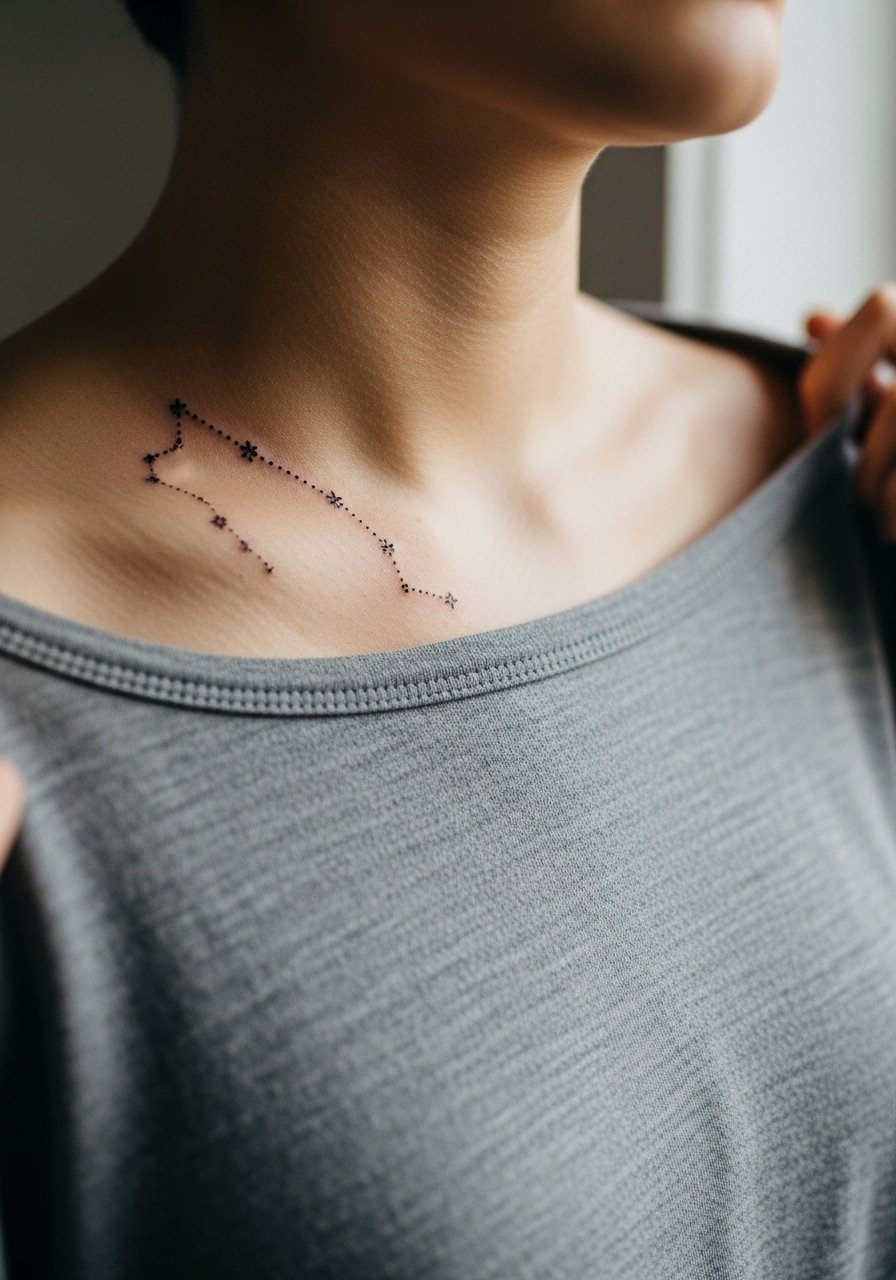
Constellation clusters read like personal maps and age predictably if the dots have room. The mistake I see is packing too many tiny dots together. Ask the artist for slightly larger dot spacing and a mix of dot sizes so the cluster keeps shape as the ink settles. Pain is a quick sharp line along bone that most clients tolerate. Expect light touch-ups at year three depending on sun exposure. For evening wear, a simple v neck slip dress showcases the cluster while keeping the neckline elegant.
4. Script with Small Symbol Accent
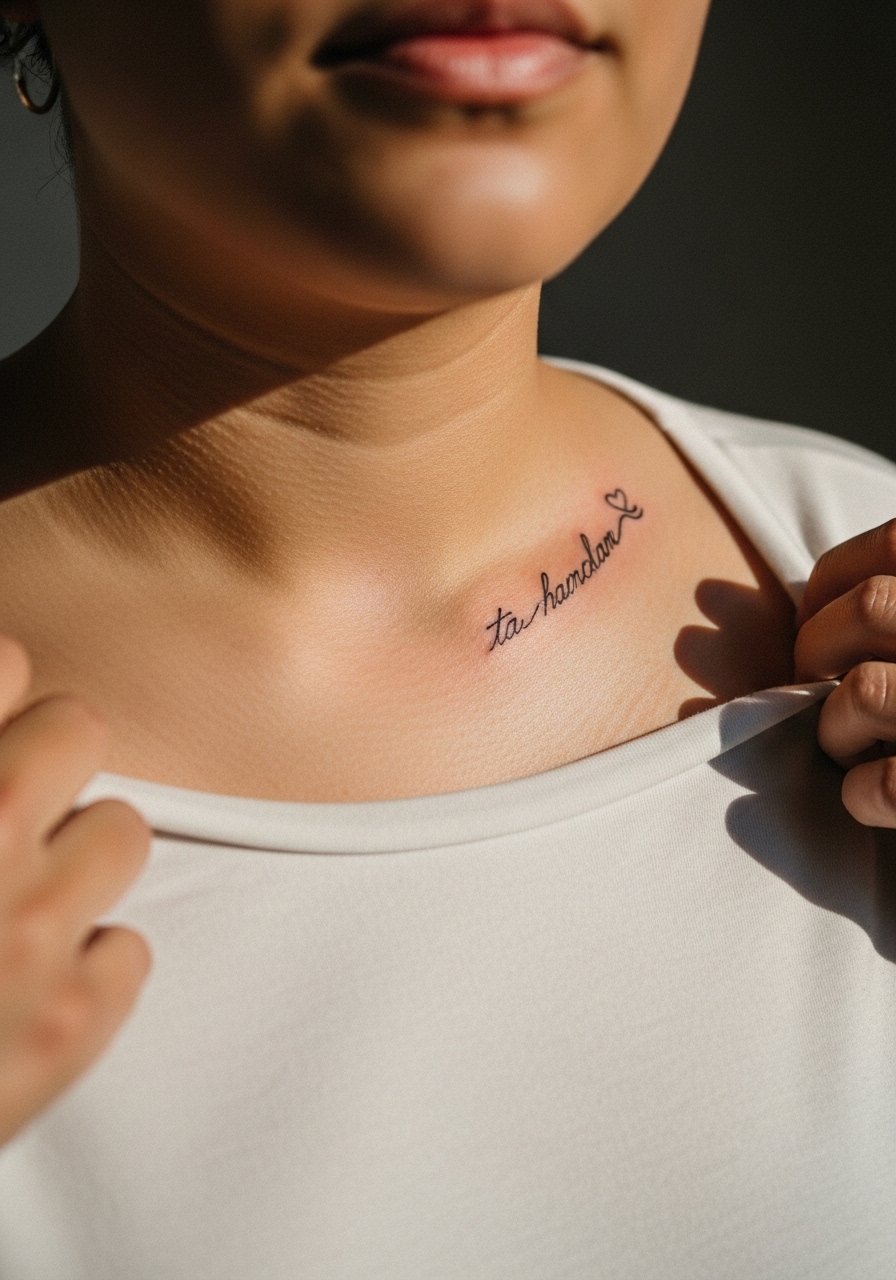
Adding a tiny symbol beside a name or phrase balances the composition when the collarbone creates a hard horizontal. Tell your artist you want the symbol scaled to the script so neither element overpowers the other. A common aging issue is the symbol filling in if it is too dense, so ask for open negative space inside the symbol. The session is short and the pain sits between sharp and dull as the needle crosses bone. If you need to hide it for work, a higher neckline covers it easily.
5. Single-Line Floral Vine Following the Collarbone
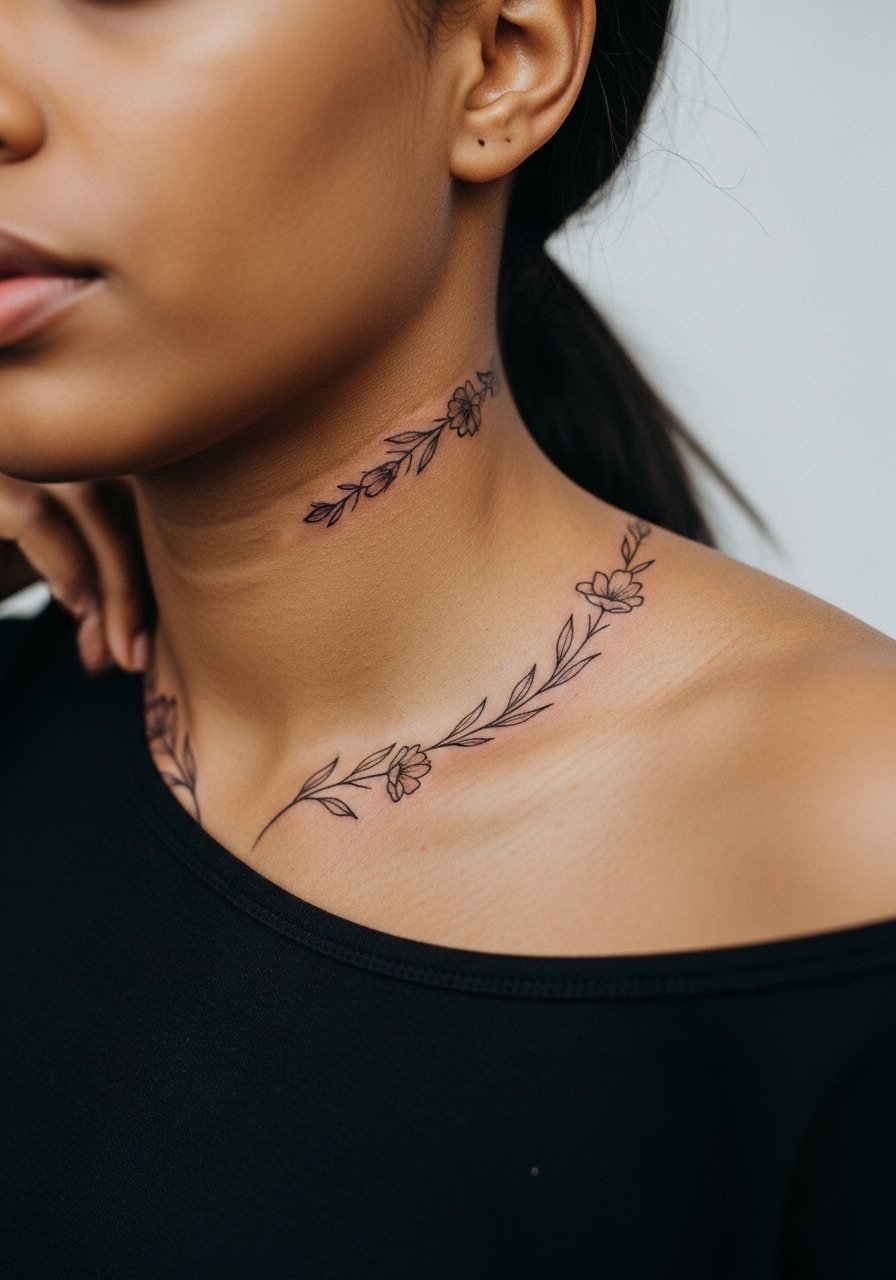
A continuous vine uses one flowing line to complement the collarbone curve. My advice is to keep each floral element open and avoid dense petal clusters that merge. During consultation, ask for a slightly bolder primary line with ultra-fine internal detail. That balance preserves the flow while resisting early blurring. Pain feels like a steady scrape over bone for most clients and session time is typically under an hour. Pair this with a scooped neck or a wrap blouse that lets the vine peek through.
6. Small Geometric Anchor Point on the Clavicle
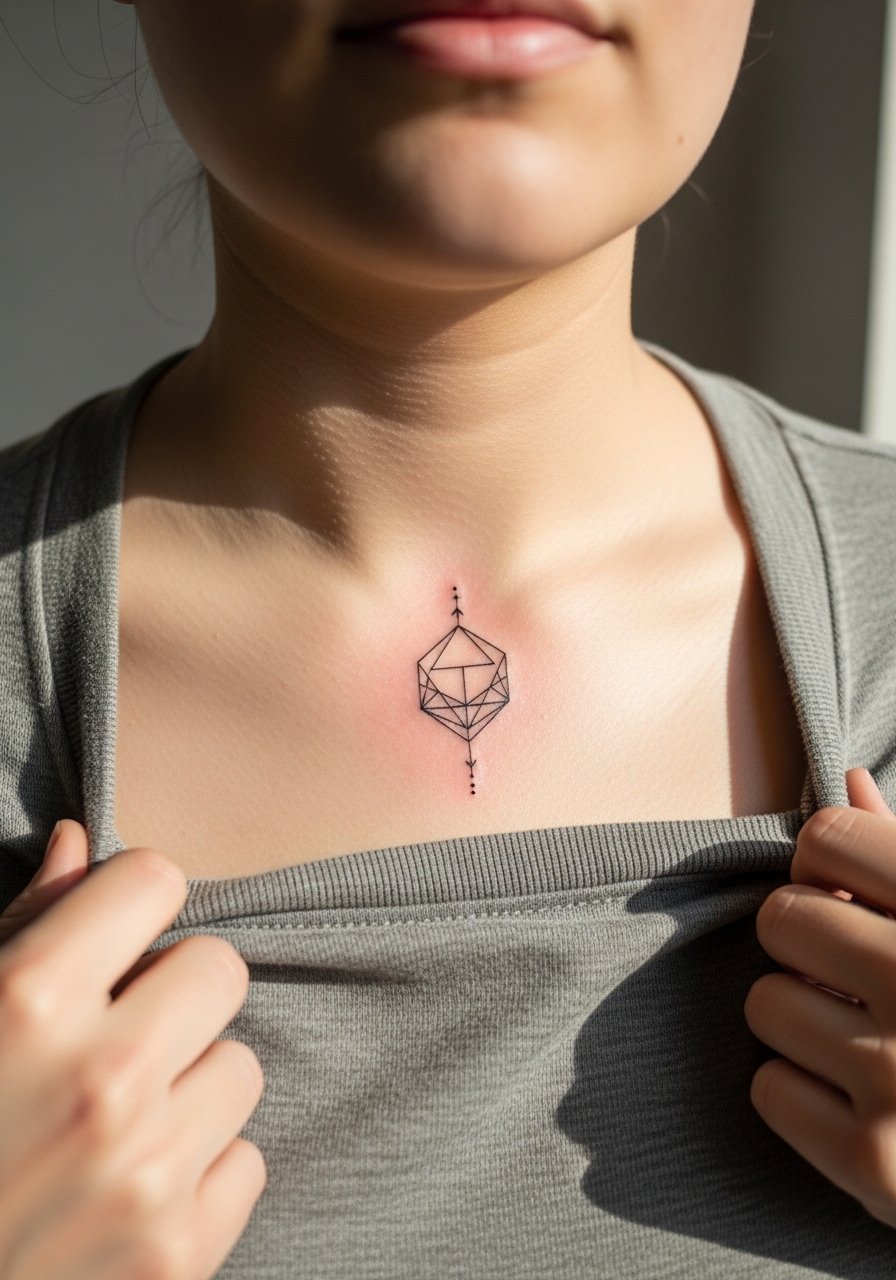
A small geometric motif sits neatly above the bone and reads modern over time if you keep line weights consistent. The frequent error is asking for too many intersecting thin lines close to bone. Request clear spacing and slightly heavier main lines so the shape remains crisp after a year. Expect a short session with noticeable vibration when the needle crosses the clavicle. For the consult, bring a photo of the exact scale you want so the artist can map it to your anatomy.
Pre-Session Essentials
The collarbone pieces above are visible and sometimes sensitive to show-off clothing and sun. A few simple items smooth the session and the first week of healing.
-
Stencil transfer paper kit. Lets you preview placement on the chest so a delicate script or vine matches the collarbone curve before the needle hits skin.
-
Topical numbing cream. Applied per instructions about 45 minutes before helps with brief sharp pain over bone without changing linework when used correctly.
-
Thin protective film roll. Keeps upper chest tattoos clean during the first days of healing and reduces friction from clothing.
-
Fragrance free gentle body wash. A mild wash prevents irritation during showers that can otherwise dull fine line saturation.
-
Aquaphor healing ointment. A thin layer in the first 48 hours helps lock in moisture for fine line work while skin starts to knit.
7. Tiny Bird Flight Perched Near the Collarbone
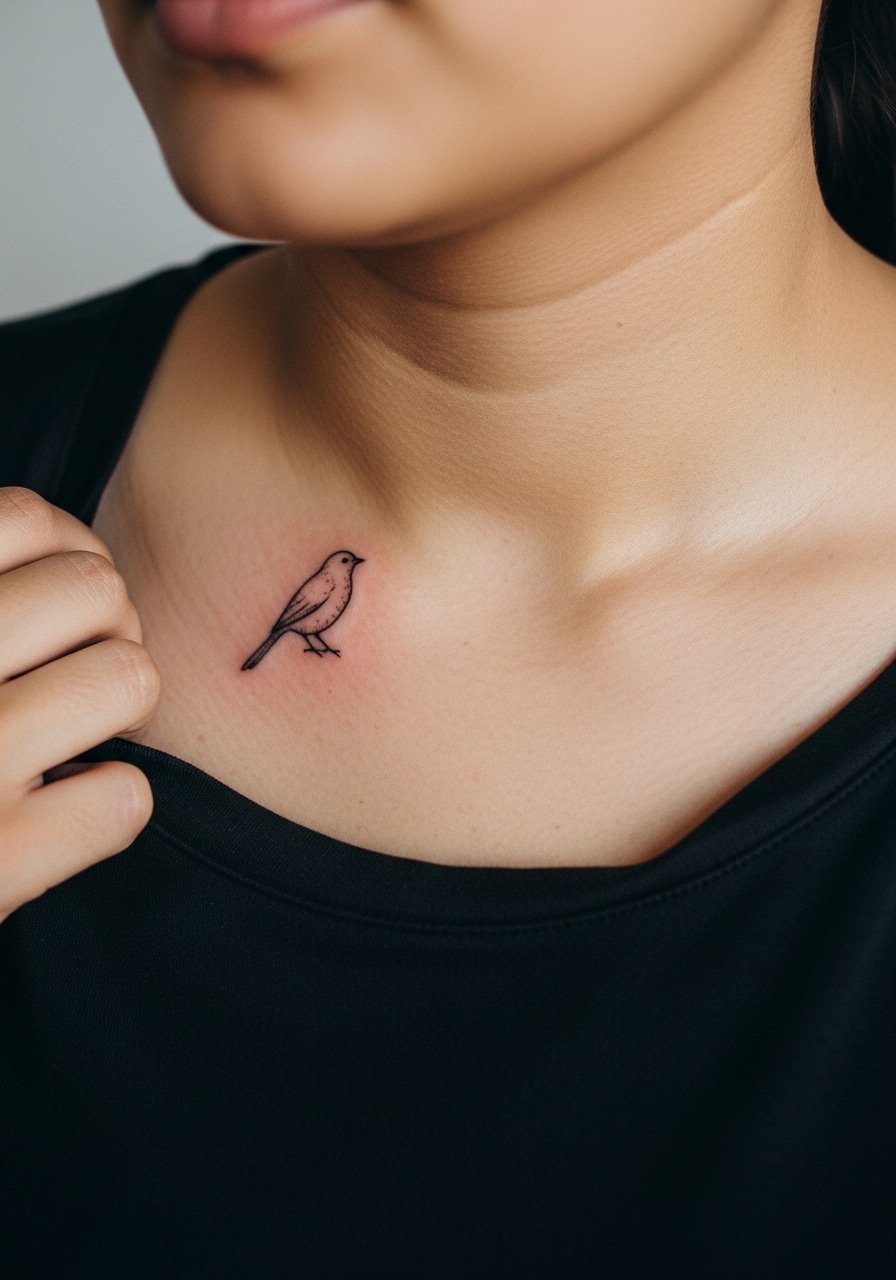
A small bird suggests movement and freedom across the collarbone. I usually advise single-stroke linework rather than filled silhouettes so the design keeps its air as it ages. During the consult, show photos of line weights you like and ask for flight direction that complements your dominant shoulder. Tattoo sessions are fast but crossing the clavicle feels more intense than nearby fleshy areas. For outfit pairing, an off shoulder sweater frames the bird without covering the wing.
8. Tiny Anchor or Compass Point for Direction
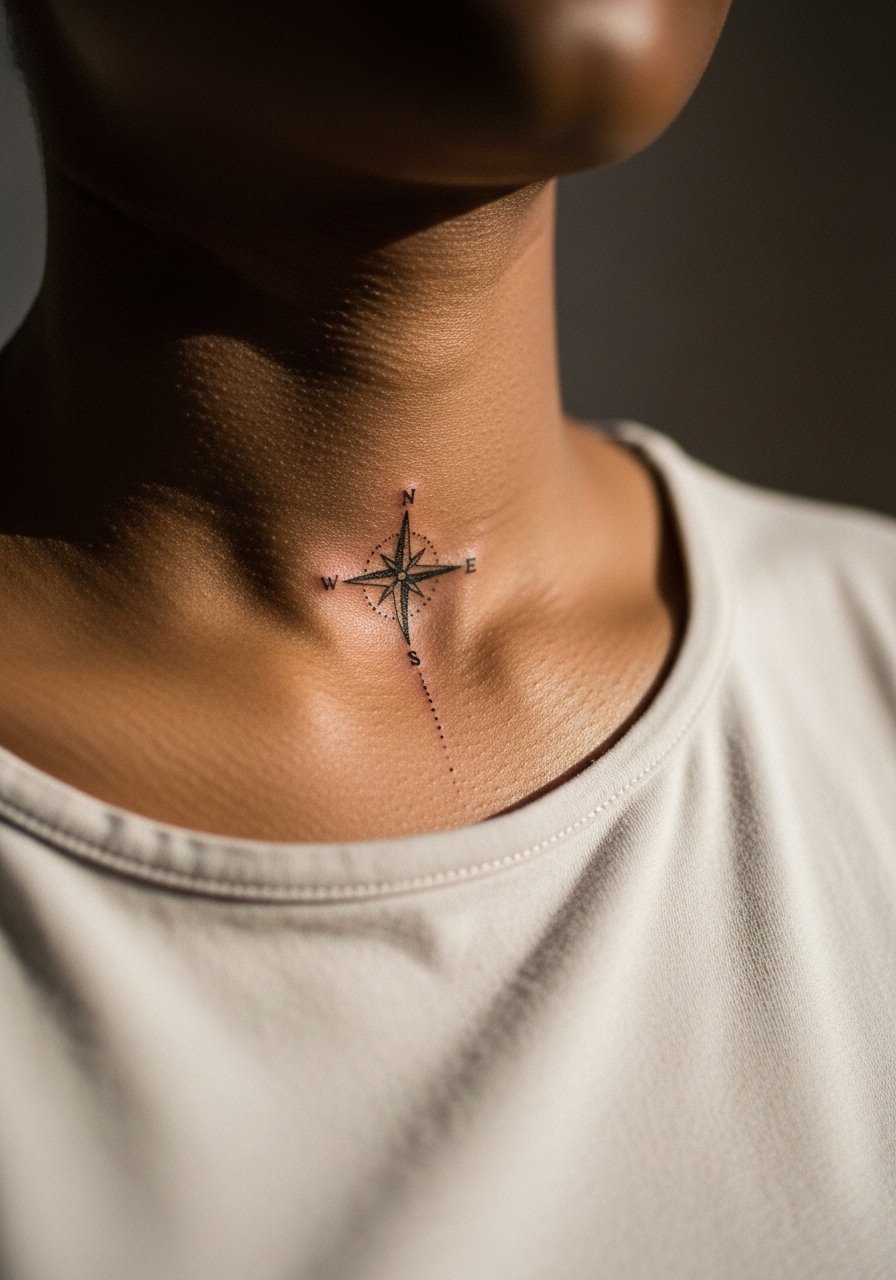
Symbols like anchors or compass points work as compact tokens of meaning. The usual mistake is packing too many tiny details into a small symbol. Ask your artist to simplify iconography so the main point reads clearly at arm's length. Expect a brief session and a likely touch-up at year two if you spend a lot of time in sun. Mention your clothing preferences in the consult so the artist can place the symbol where necklines will show it best.
9. Micro-Realism Pet Portrait Near the Collarbone
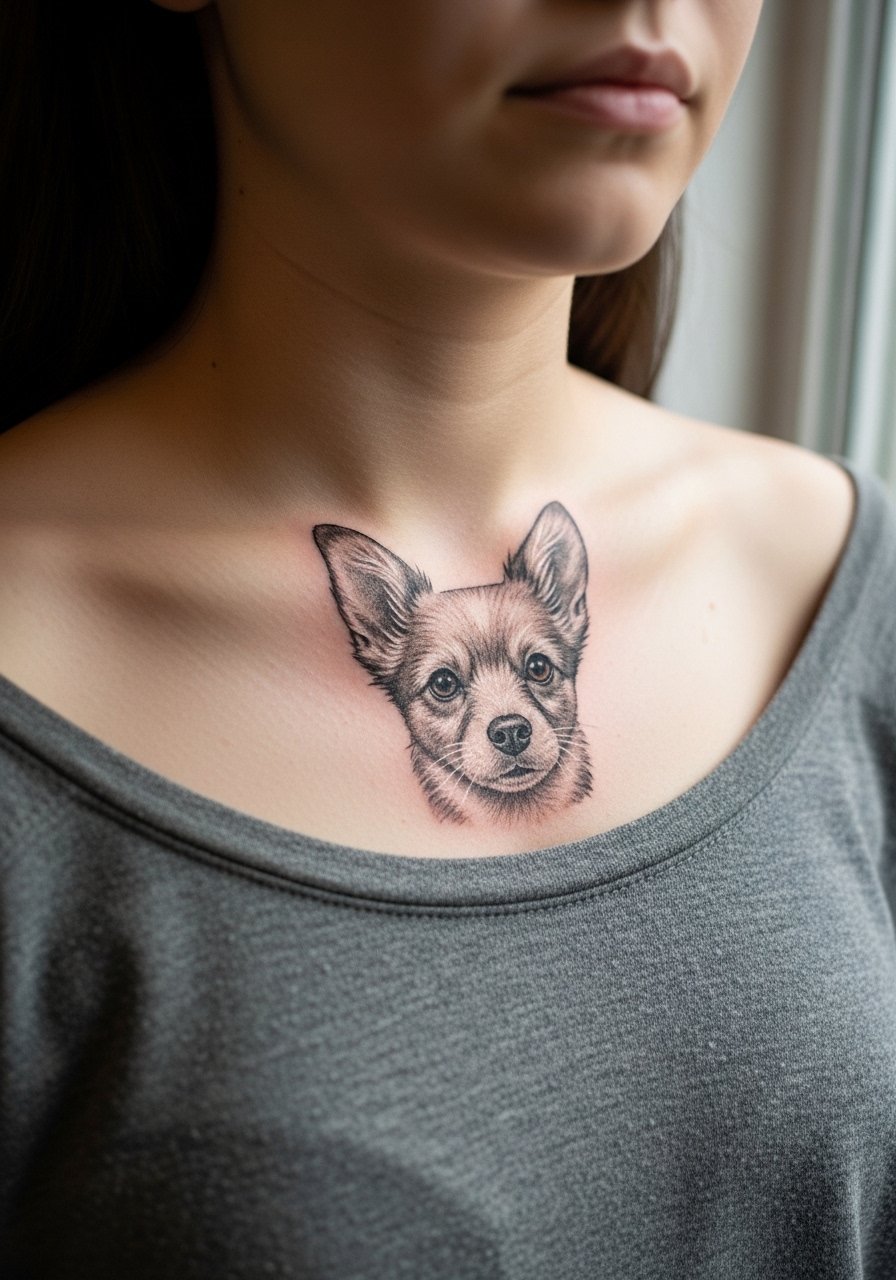
Micro-realism on the collarbone can be deeply meaningful but it has strict limitations. For a tiny portrait to hold, insist on simplified facial cues and avoid extreme detail in tiny scales. Tell the artist the most recognizable feature to preserve like eyes or a nose shape. Sessions are longer when shading is involved and pain increases near bone contact. Plan for a one to two hour session and a touch-up window around year one to refresh contrast. For evening looks, a boat neck top keeps attention centered on the portrait.
10. Thin Line Wave That Mirrors the Collarbone Curve
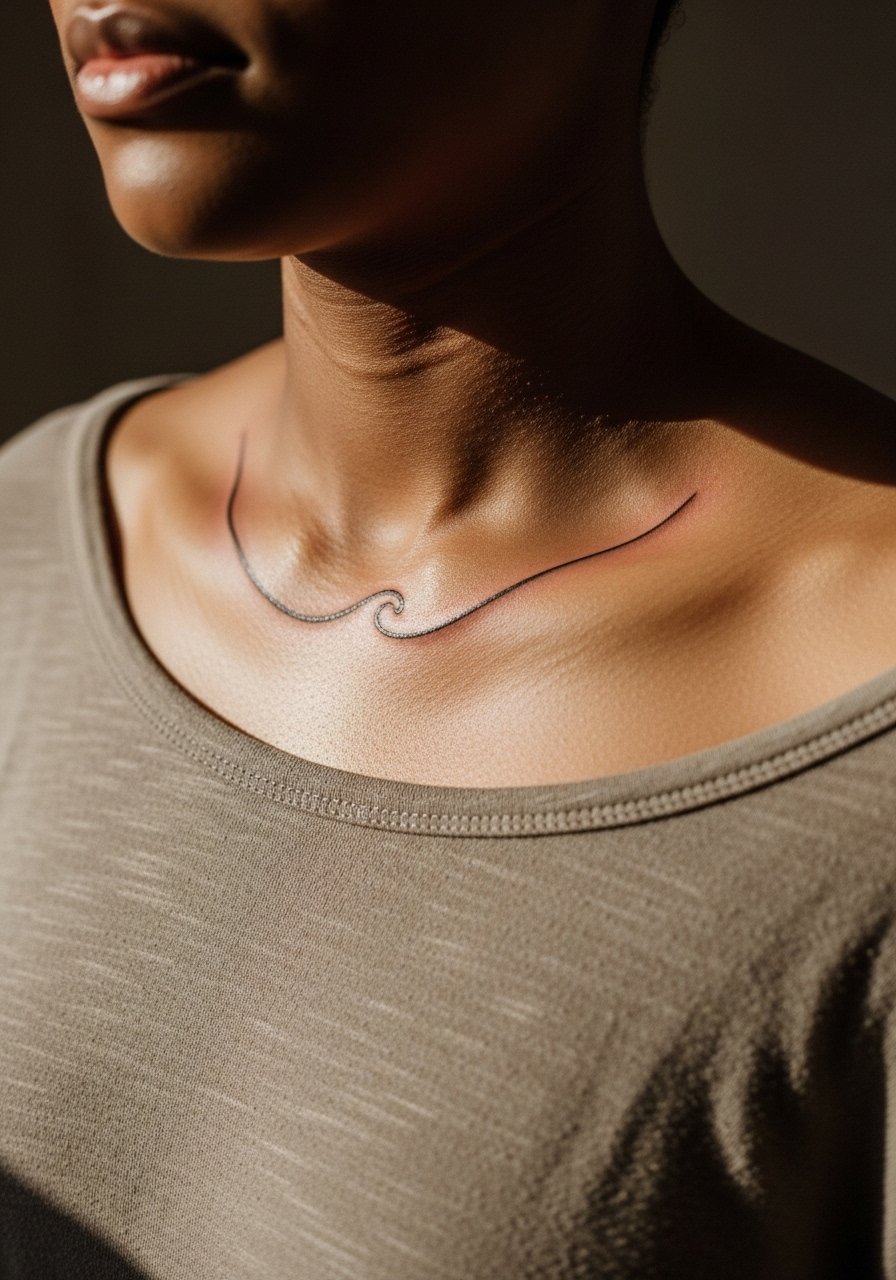
A single continuous wave echoes the bone and reads elegantly with minimal ink. The slip many make is asking for too many overlapping loops that merge as the ink settles. Request a single flowing line with slightly varied thickness so it keeps motion without bleeding into a blot. The session is short and discomfort is focused when the needle crosses the lateral end of the collarbone. This design pairs well with layered delicate chains if you want to accessorize without obscuring the line.
11. Small Mandala Petal Cluster Centered on the Collarbone
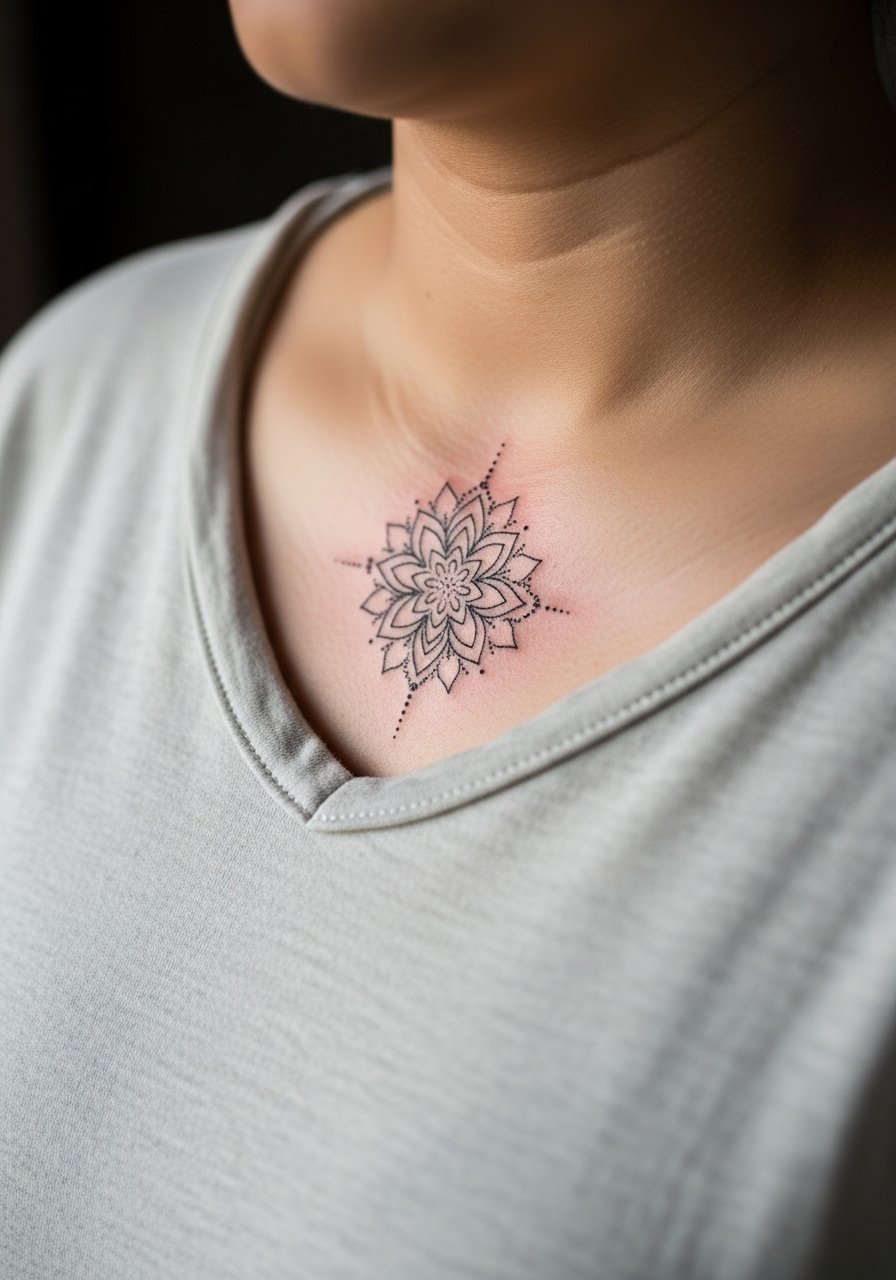
A compact mandala can symbolize balance and fit neatly along the clavicle if you avoid overly dense center work. The controversy here is visible among artists. One group says dense mandalas on thin skin blur quickly. The other group argues that with correct spacing and stipple shading the motif will hold. Ask the artist which camp they are in and to show healed examples at similar scale. Expect a longer session than a tiny script and a touch-up at year two if you are outdoors a lot. For showing it off, a low scoop silk top frames the piece with a soft finish.
12. Tiny Roman Numeral Line Along the Bone
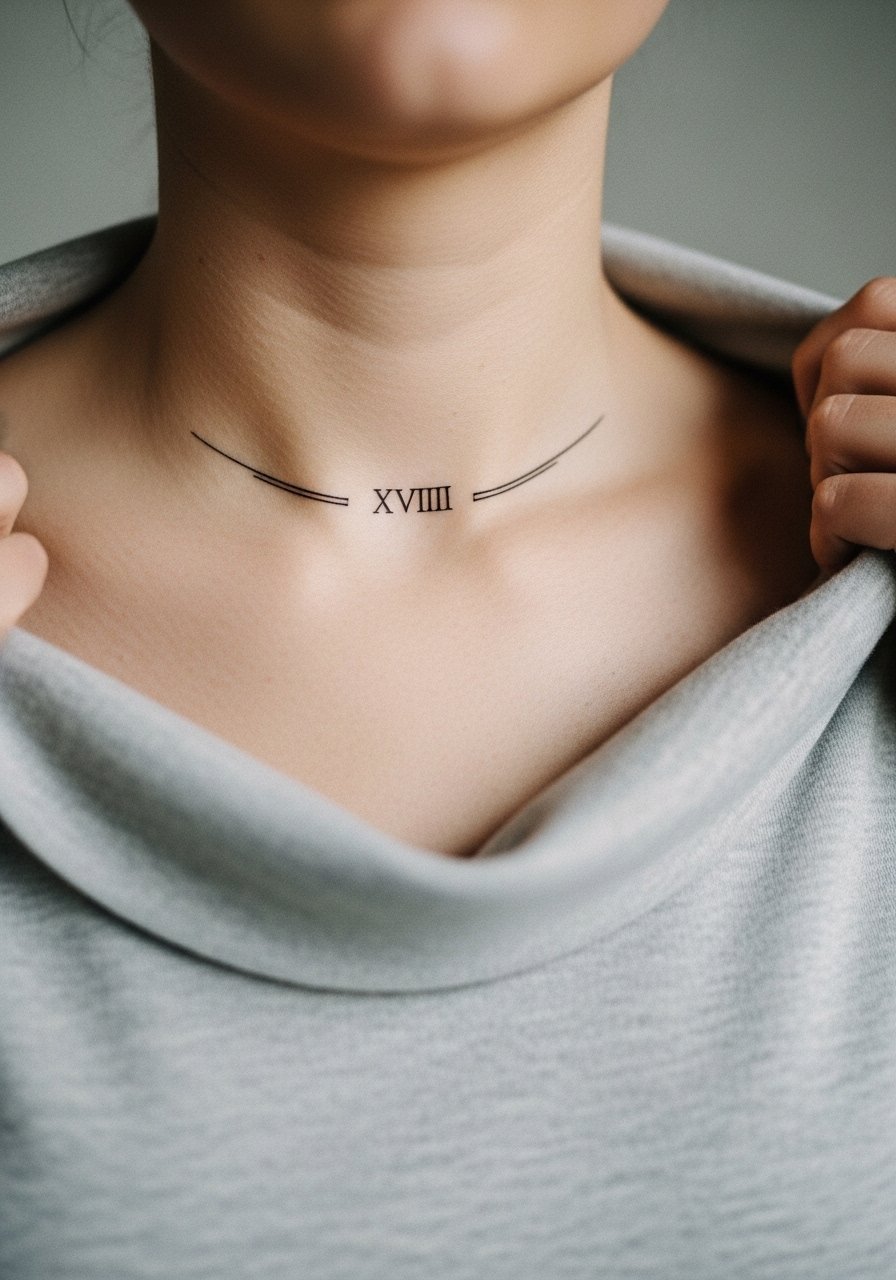
Roman numerals read like a commitment and age predictably if the numerals are scaled larger than you might initially want. The common error is squeezing complex dates into a tiny line. Ask for spacing between numerals and slightly thicker stems so the characters remain legible over time. Pain is transient and session time is minimal. If you work in a conservative field, consider the numeral size and placement so it is easy to conceal under a higher neckline.
13. Minimalist Arrow That Points Toward the Shoulder
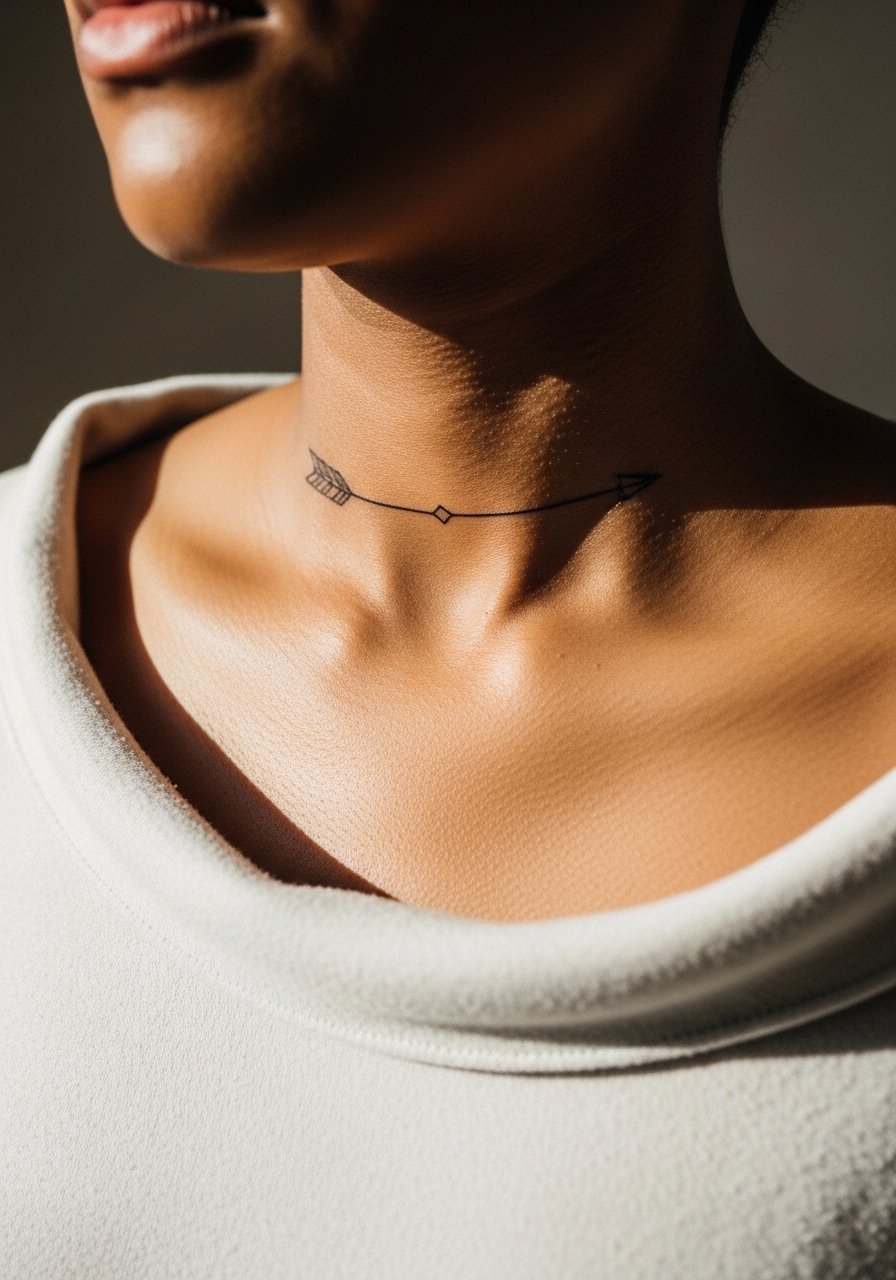
An arrow directed toward the shoulder reads directional and deliberate. My tip is to avoid tiny feathered fletches and instead ask for a simplified tail so the arrow head remains the focal point as lines soften with time. Tell your artist you want a gentle taper on the shaft for longevity. Sessions are quick and the sensation along bone is sharp but brief. For outfits, a one shoulder top highlights the arrow while keeping the other side minimal.
14. Tiny Anchor with Rope Looping Along the Bone
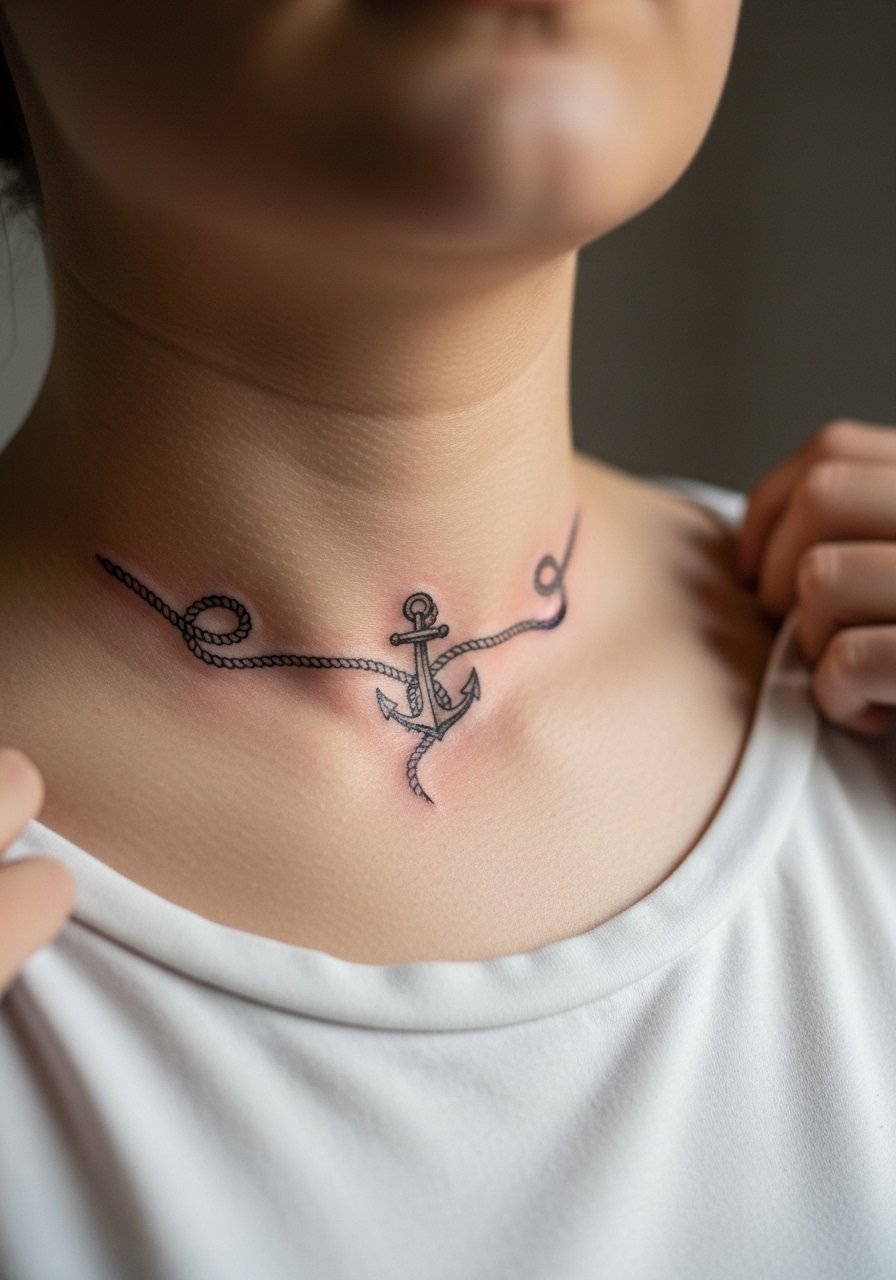
A nautical motif like an anchor with a single looping rope can be meaningful and compact if the rope has deliberate gaps. The frequent mistake is dense rope detail that fills in. Specify open spacing and lighter whip shading so the rope reads as texture rather than a solid band. Expect short session time and occasional touch-ups if you swim a lot. Placement sits well under boat necklines and layered camis.
15. Tiny Crescent Moon Nestled at the Center
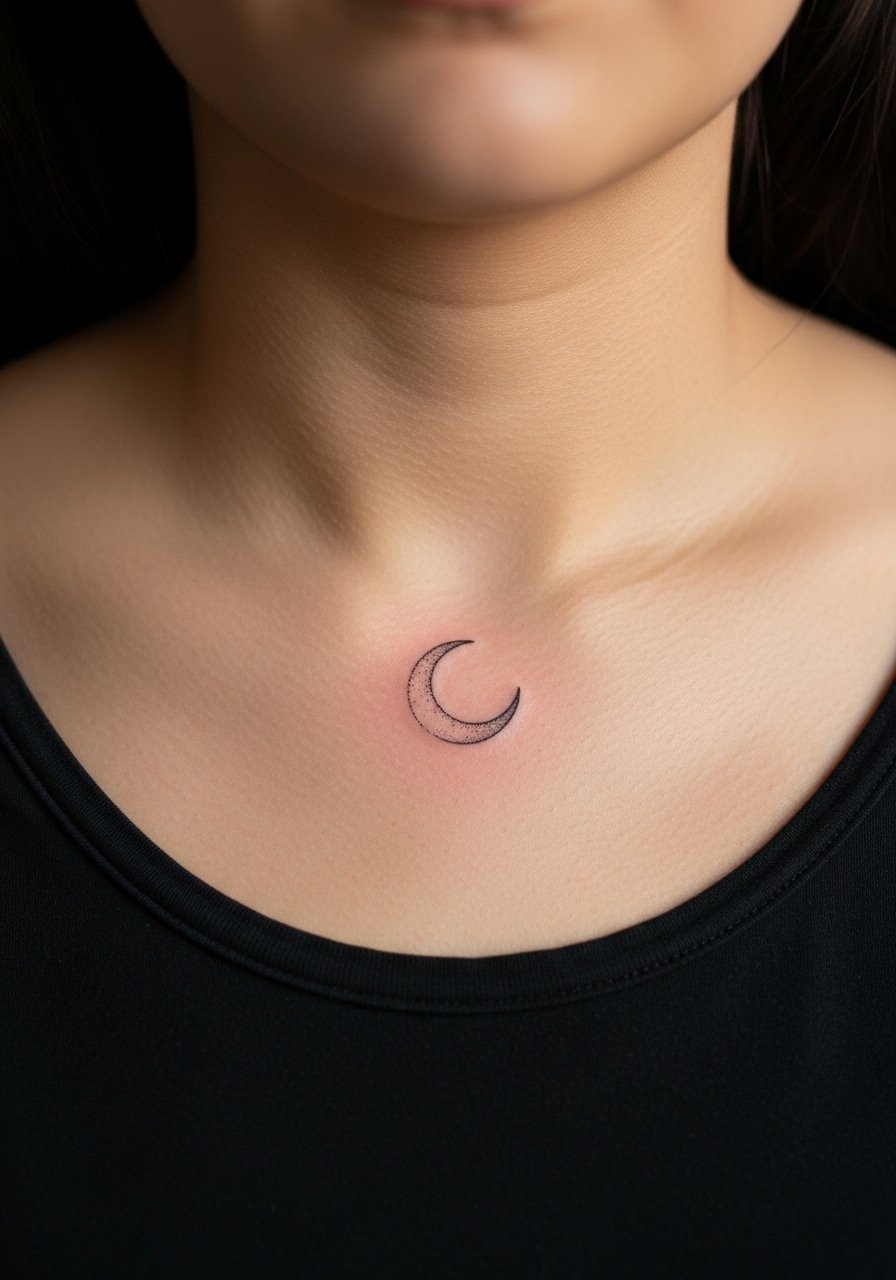
A crescent moon feels symbolic and holds well when artists leave interior negative space. The mistake is filling the crescent solidly at tiny scales. Ask for an open crescent with subtle dot shading on one edge to keep the silhouette. Pain is brief and sessions are fast. This design pairs with small pendants. A delicate pendant necklace can sit just above the moon to create a layered look.
16. Single Tiny Key or Lock Near the Collarbone
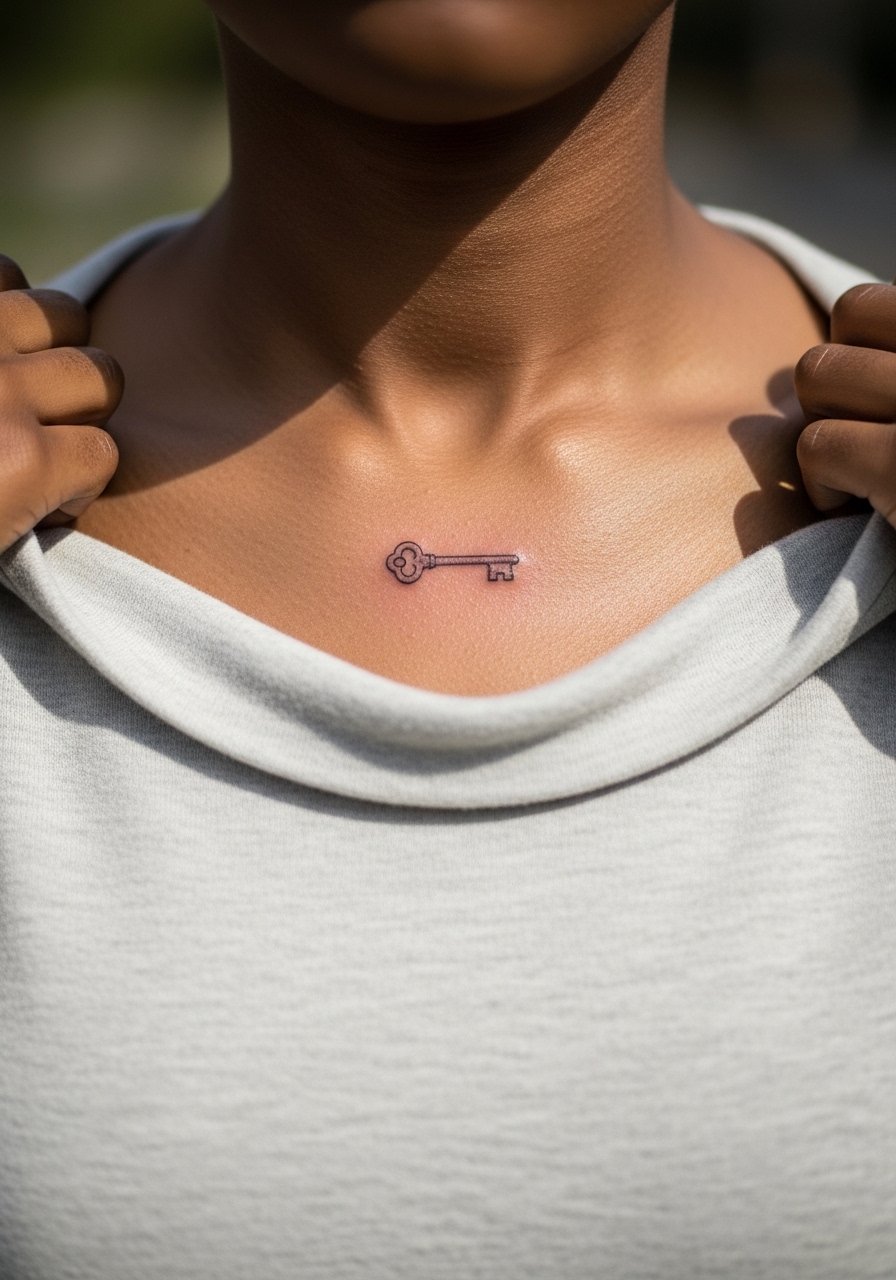
Keys and locks read as private symbolism and they work if simplified at small sizes. I advise choosing a single defining silhouette like the bow shape and asking your artist to avoid intricate filigree that will blur. Sessions are short and sensation is more sharp than dull along bone. If you want this hidden at times, request placement slightly more medial where higher necklines cover it.
17. Small Script Paired with a Tiny Star Accent
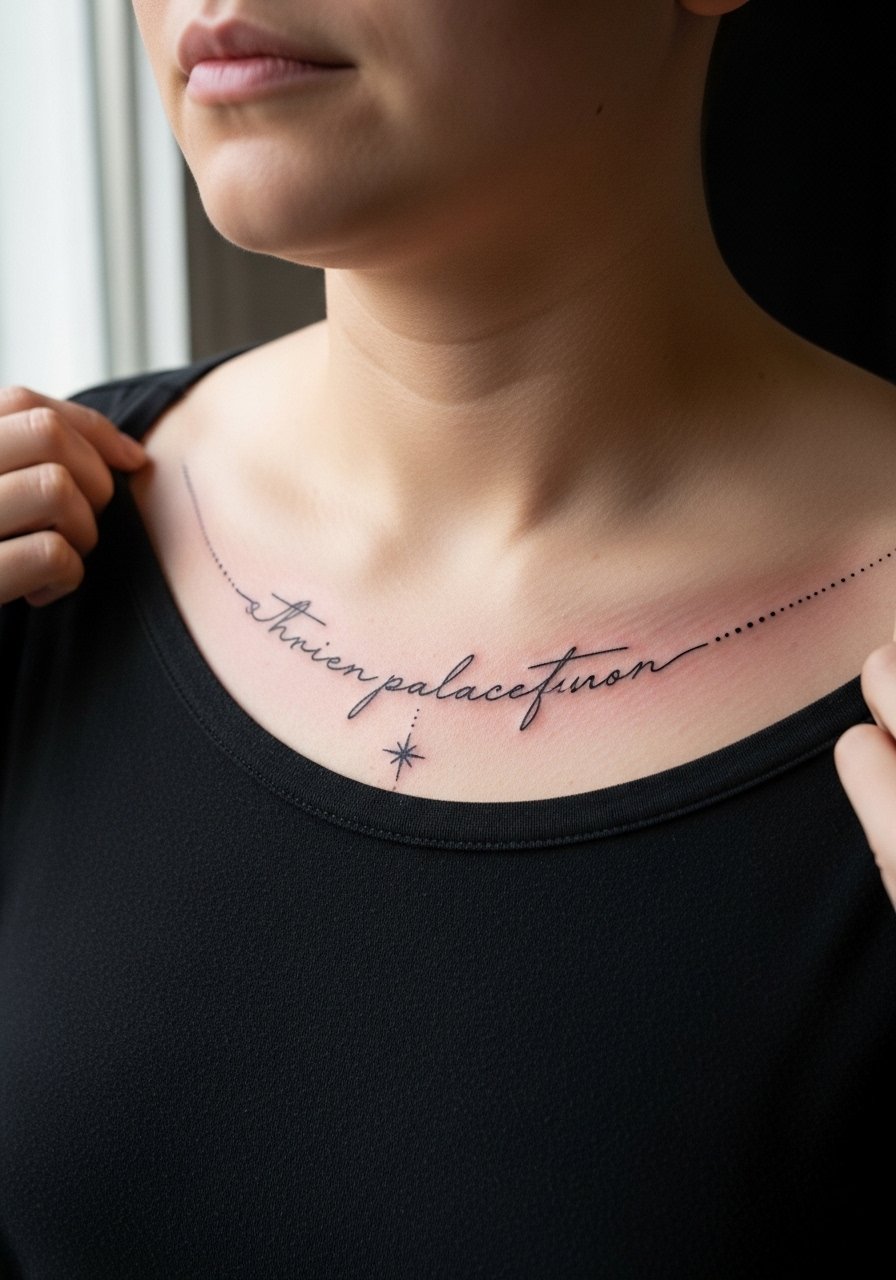
A short name or word with a tiny star balances emotional weight and visual punctuation. Tell the artist which letterforms mean the most to you and to place the star so it reads as an intentional accent rather than a filler. The usual problem is pushing the star too close to letters. Sessions are brief and a touch-up at year two is common for light scripts. For a graceful reveal, a slightly off shoulder knit top keeps both script and star visible without distraction.
Frequently Asked Questions
Q: Will a fine line script on the collarbone need touch-ups more often than a bolder design?
A: In my experience fine line scripts usually need touch-ups sooner because thin lines have less pigment to begin with. Expect touch-ups around year two to three depending on sun exposure and skin type. Ask your artist to set expectations for their specific portfolio and show healed examples at similar scale.
Q: How much does a collarbone tattoo hurt compared with a shoulder or forearm?
A: The collarbone sits over thin skin and bone, so most people describe it as sharper than a forearm but shorter in duration than a full rib session. Numbing options and breaks can help. Bring loose clothing so the artist can access the area without tugging.
Q: Are there workplace concerns with visible collarbone tattoos?
A: Some industries remain conservative so placement closer to the clavicle can be visible in many necklines. If concealability matters, choose slightly higher medial placement or plan wardrobe with higher necklines. If you need a visible option that can be hidden, discuss placement shifts with your artist.
Q: Can small symbols like moons and stars blur into dots over time?
A: They can if they are too dense or tiny. I tell people to scale symbols so the main shape has room and to request slight negative space. Stipple shading holds better than filled black at very small sizes.
Q: What should I wear to the appointment for a collarbone tattoo?
A: Wear a loose wide-neck shirt or a tank that you can pull aside without removing it. That keeps you comfortable and gives the artist clean access. A loose button-down shirt works well because you can slide it off one shoulder without full undressing.
Q: Is there a controversy about fine line work on thin skin near bone?
A: Yes, artists split into two camps. One camp says fine line on thin skin blurs quickly. The other camp believes careful spacing and correct needle depth make it hold. The right call depends on the artist's experience with similar placements and on honest before and after photos, so ask to see healed work at the scale you want.
