
Fine line watercolor red dragons read like motion on skin, but they behave differently once healed. Trends push for tiny, airy scales and soft gradients, and those choices change how the piece settles over time. Think about placement, spacing, and how saturated you want the red to be before booking. The first sections jump straight into designs that work now and keep working years from now.
1. Tiny Red Dragon on the Inner Wrist

I’ve seen tiny dragons on inner wrists fade unevenly when artists overuse diluted red washes. For this placement, ask for slightly more saturation in the main body and softer edges in the wings so the silhouette remains readable at six months and beyond. Pain on the inner wrist is moderate. Session time for a small piece is short, often under an hour, which helps if you worry about sitting still. Common mistakes include asking for too many tiny scales that blur together later. Pair this with a thin chain bracelet when you want to show it off.
2. Red Dragon Coil Around the Forearm
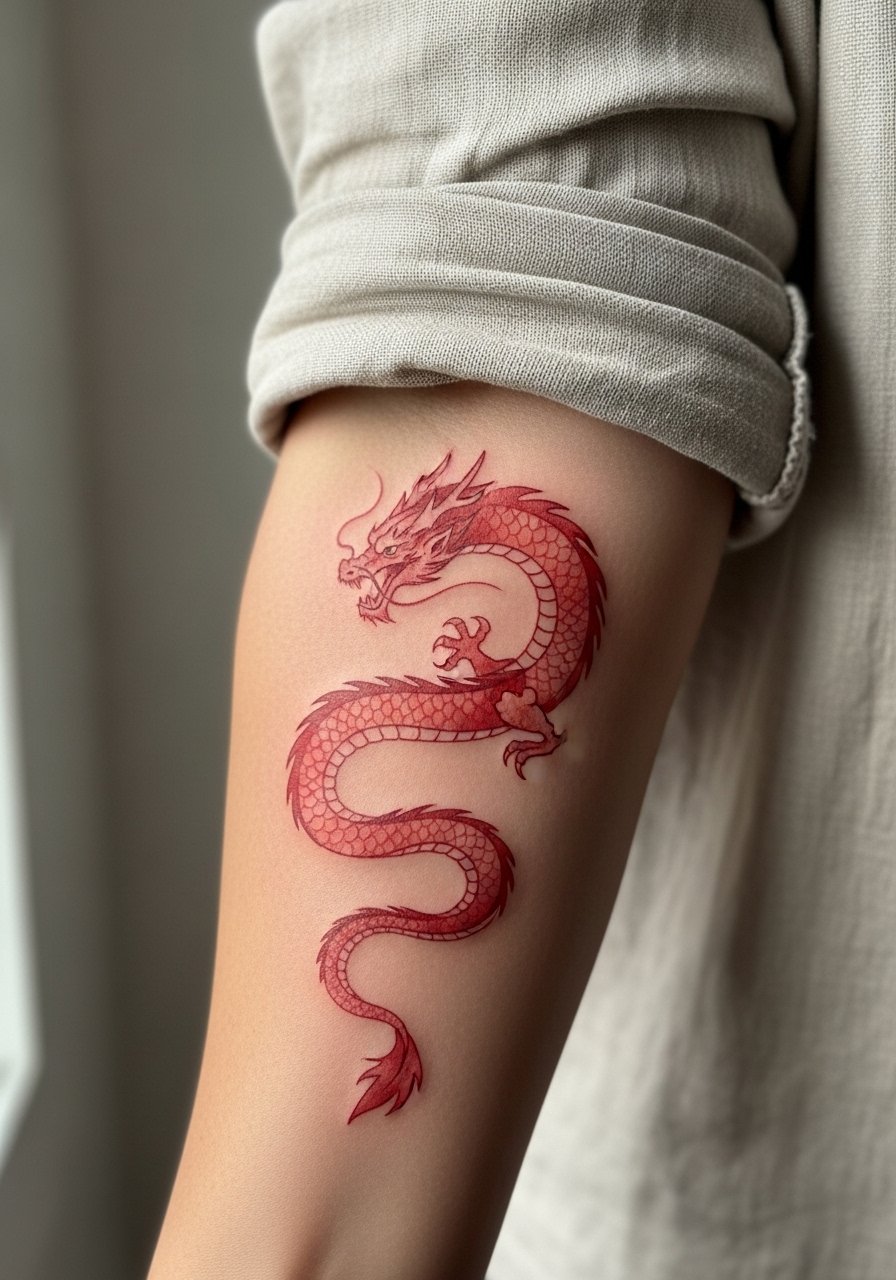
Fair warning: forearm pieces age well when linework is spaced. I recommend asking your artist for deliberate negative space between scales so the watercolor bleeds do not merge into a block over time. This placement feels like a 3 out of 10 for pain and typically takes one to two sessions depending on saturation. A common mistake is packing too many overlapping color washes. For showing it off, rolled sleeves or a rolled-up linen shirt lets the dragon read from a distance without competing with bold patterns.
3. Red Dragon Curling on the Ankle
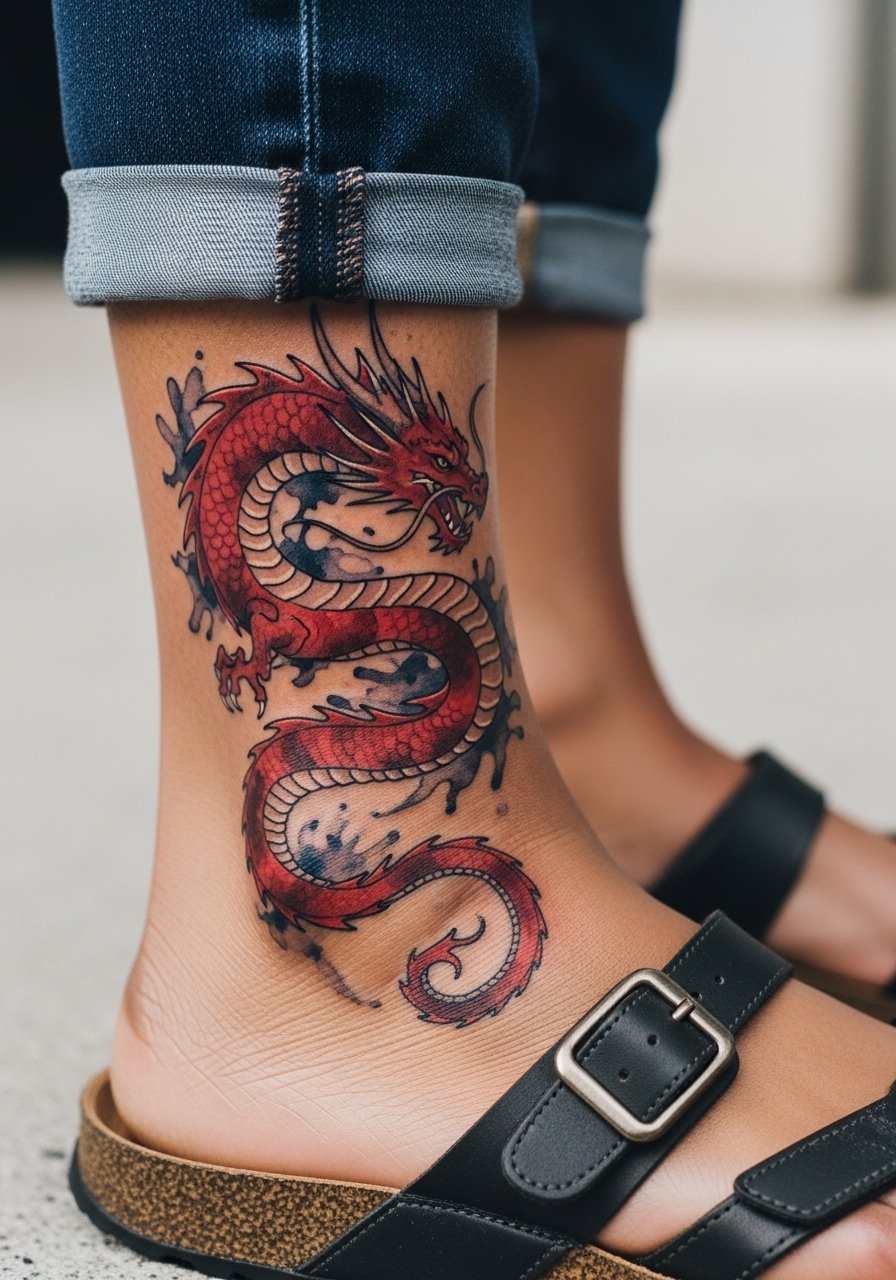
Ankle tattoos see a lot of friction from socks and shoes, so expect faster softening of the watercolor fills there. The session feels brisk but the healing window demands care because the area rubs against footwear. If you want color that lasts, request slightly higher saturation in core areas rather than thin fades across every scale. Mistakes include placing very light washes where shoes will scuff them away. For session comfort, slip into slip-on sandals so you do not press on the ankle during travel.
4. Miniature Dragon on the Side of the Finger

Visual impact is subtle with finger placements but strong in person. Fingers are high-blowout risk, and watercolor washes can break up quickly. Expect touch-ups sooner than with arm work, frequently around year one or two. The biggest mistake is asking for a detailed dragon with tiny shading on a finger. Instead, simplify the silhouette so the negative space does the work. Sessions are short and often painful because the skin is thin. Pair a neat finger piece with a minimalist ring that frames the dragon without crowding the area.
5. Shoulder Blade Watercolor Red Dragon
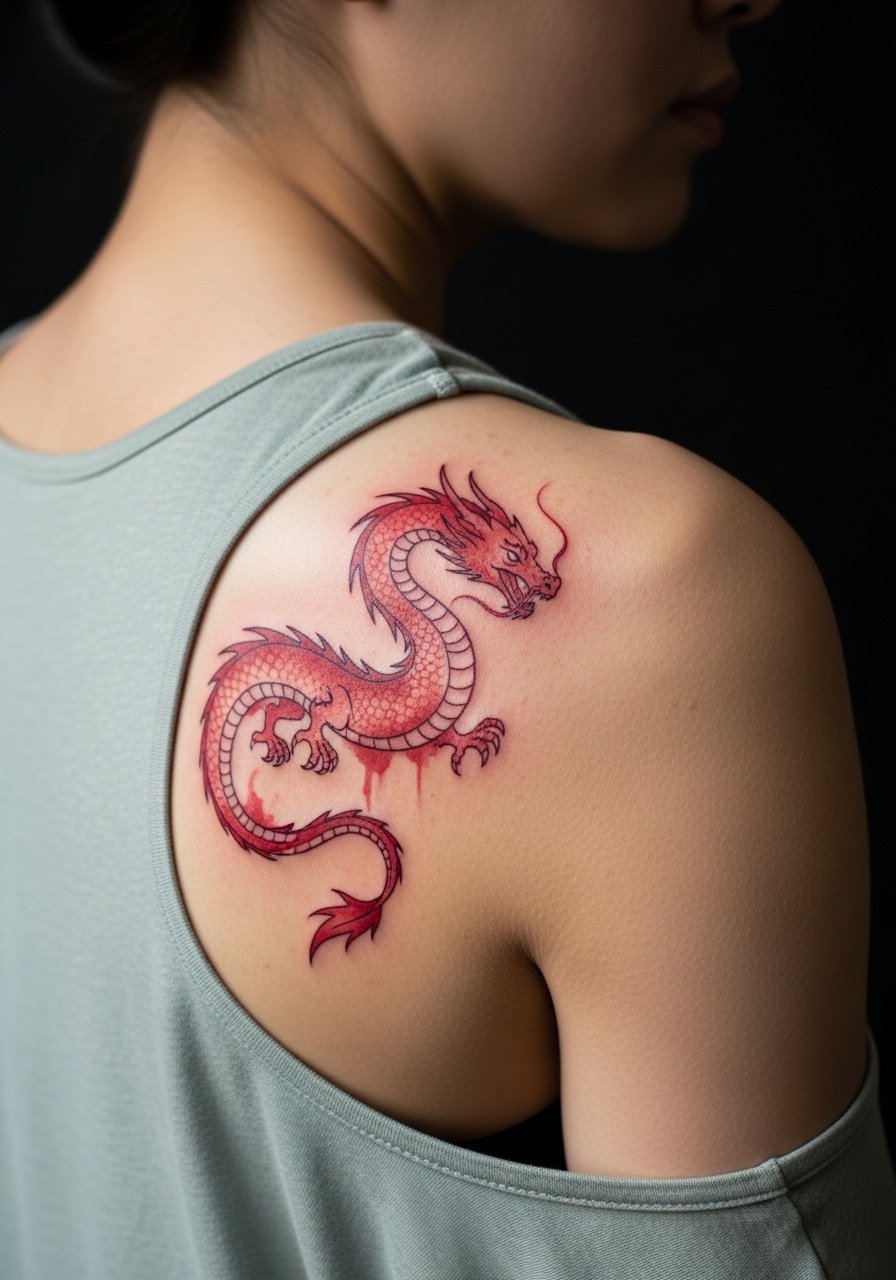
There's something about shoulder blade placement that lets watercolor spreads breathe. Most artists prefer this canvas for flowy dragons because the skin moves less during daily wear. Pain is usually mild. Larger washes hold better here than on hands or ribs. A common misstep is compressing a full-body dragon into a tiny shoulder patch. Tell your artist you want the dragon to follow the shoulder blade curve and to keep heavier saturation along the spine line for a readable focal point. For session access, wear a loose tank top so the artist can easily expose the area.
6. Red Dragon Across the Ribcage
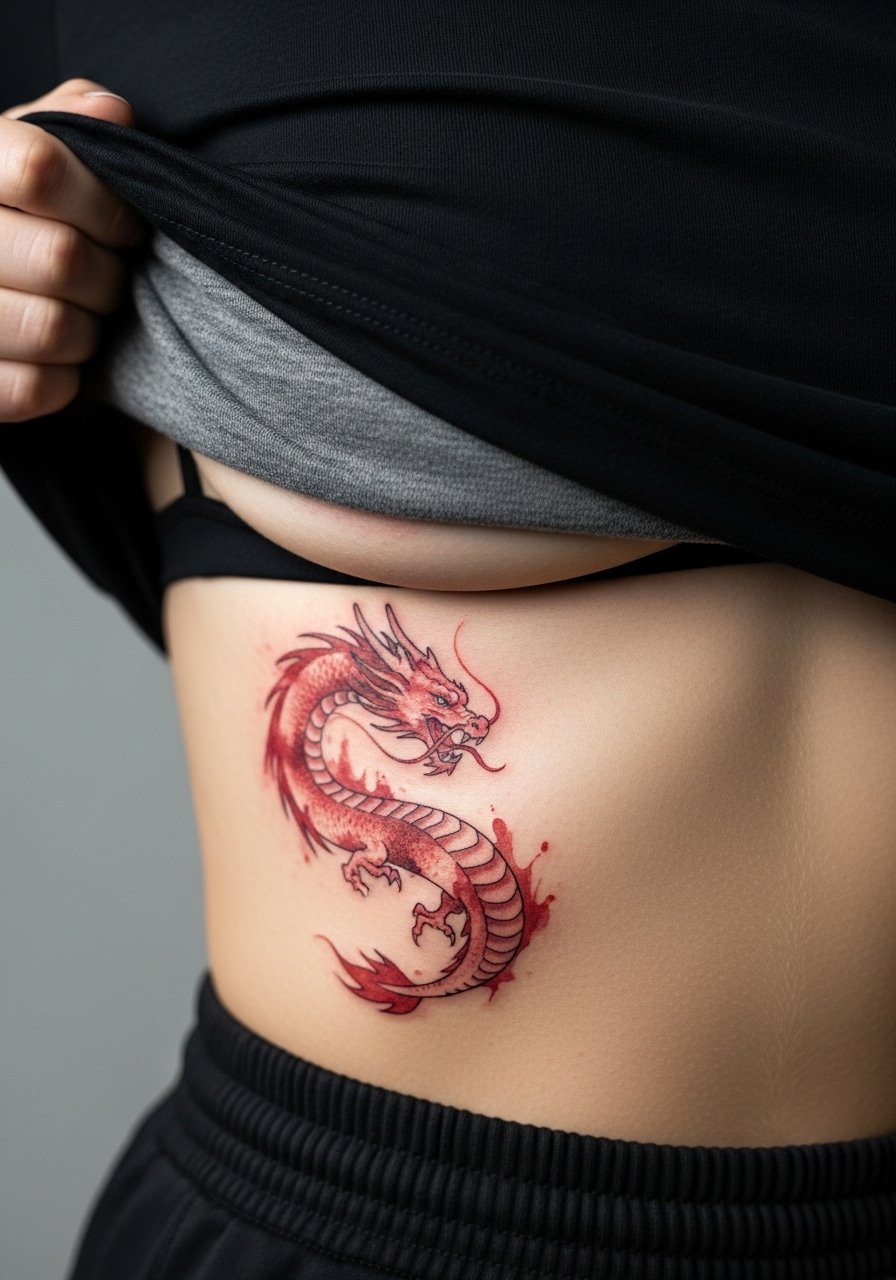
Pain warning: the ribcage is a 7 out of 10 on most pain scales. That intensity makes session planning important. Artists split on whether watercolor holds on ribs. One camp says the movement and stretch blur fine gradients within a few years. The other camp argues that with correct depth and spacing the colors can settle well. Ask where your artist stands and book shorter sessions to reduce swelling. Common aging issues include patchy fades where skin flexes most. For comfort, bring a loose zip-up hoodie you can slip off and on between passes.
Studio Day Picks
The chest, ribs, shoulder blade, wrist, and ankle ideas above all ask for different prep. These picks smooth the session and the first week of healing for those placements.
-
Stencil transfer paper kit. Lets you preview placement on skin before the needle goes down, which is helpful for the wrist and shoulder blade pieces above.
-
Topical numbing cream. Applied per the product instructions before ribcage work eases the initial minutes without affecting the artist's linework.
-
Thin protective film roll. Keeps ankle and finger pieces cleaner during the first week when friction is highest.
-
Fragrance-free body wash. Gentle cleansing matters for shoulder blade and ribcage zones where skin can be sensitive after long sessions.
-
Aquaphor healing ointment. A thin application early in the healing window helps lock in moisture for delicate watercolor fills on the forearm and wrist.
7. Long Dragon Spine Runner
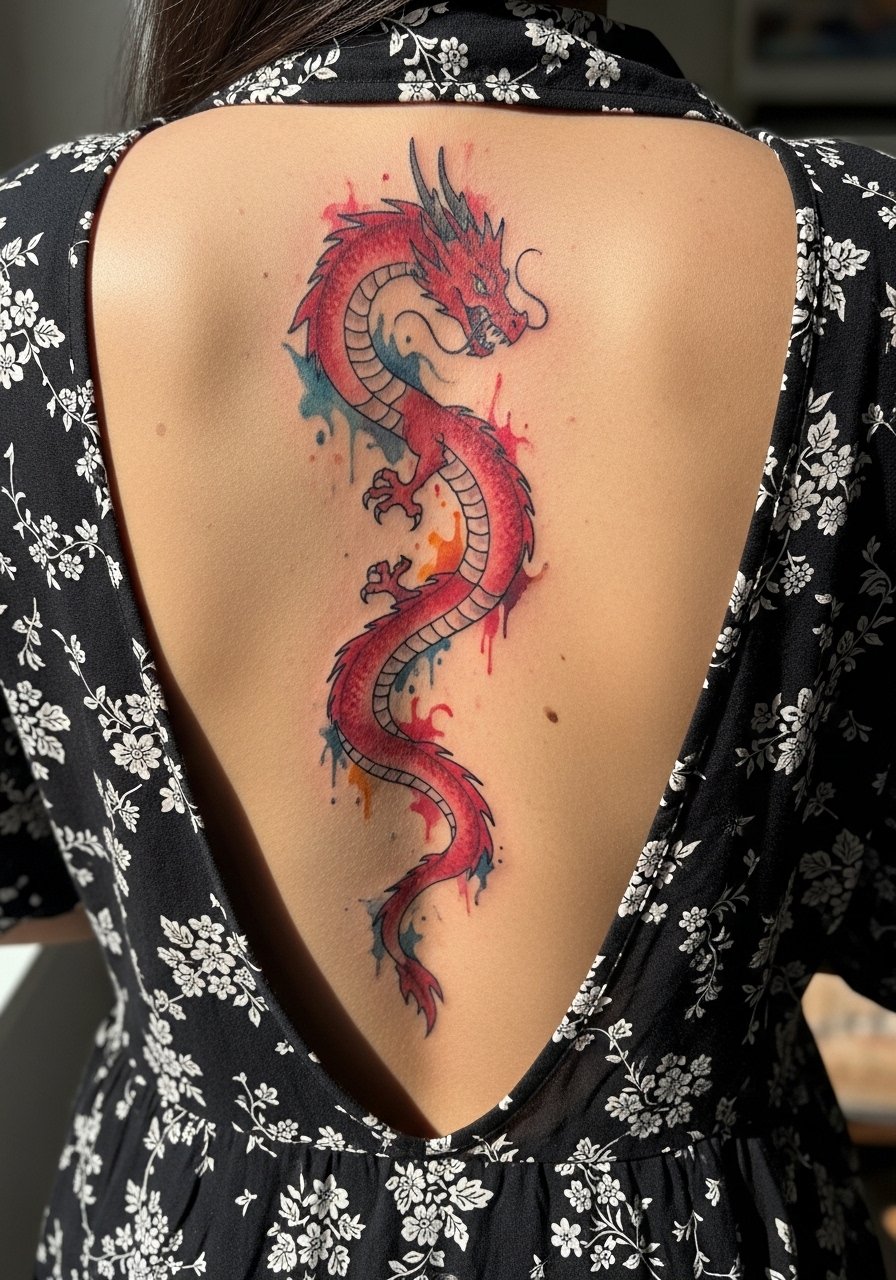
Styling lead: a spine runner looks dramatic with the right backwear. For placement safety, choose an artist comfortable with long sessions. The visual impact is major because the spine provides a straight axis for the dragon’s flow. Expect longer sessions and multiple sittings. A common mistake is making the dragon too thin for such a long run; thicker central saturation keeps the motif readable at two and five years healed. Pair the piece with an open-back midi dress when you want the tattoo to be the focal point.
8. Watercolor Dragon on the Calf
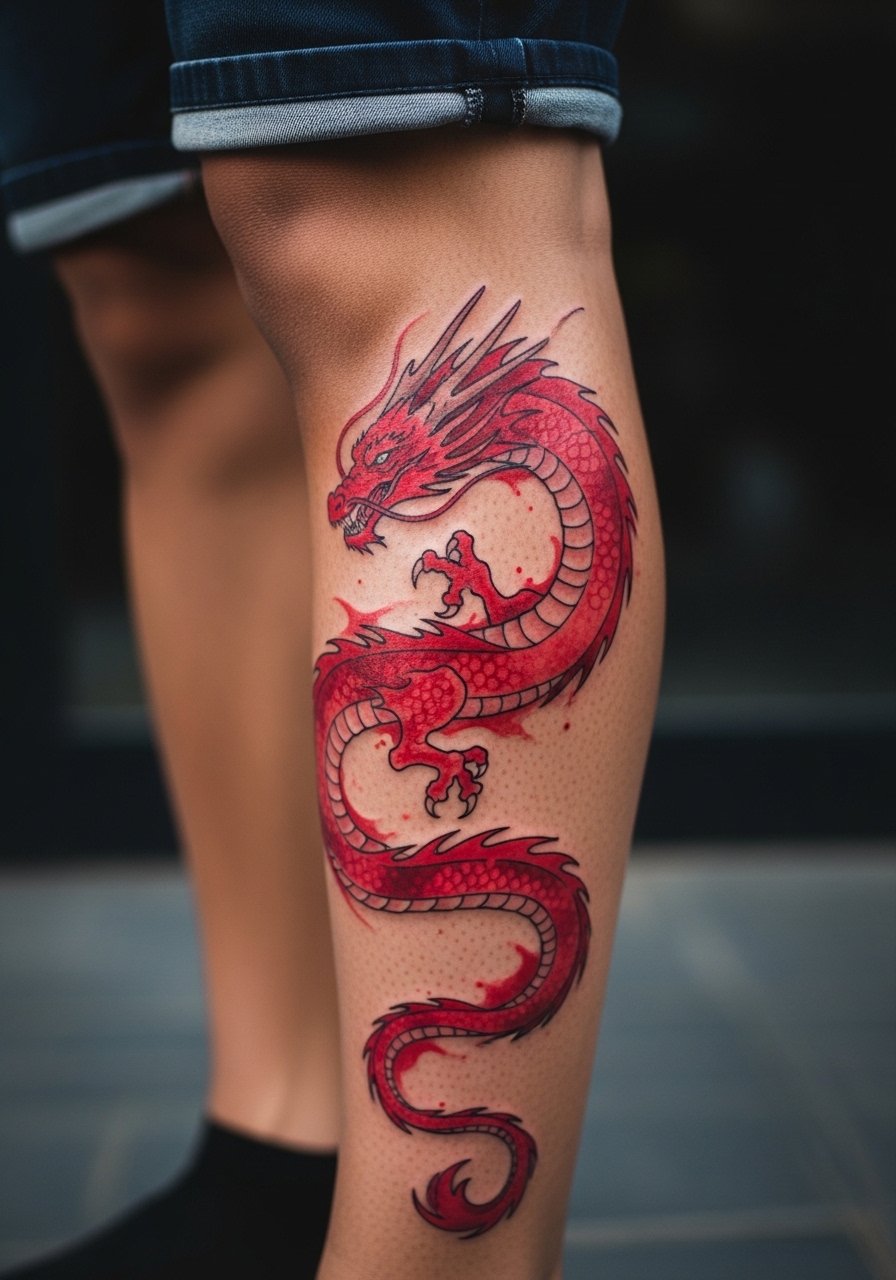
Personal observation: calf skin takes saturation well, which helps watercolor blends stay vivid longer. The area is low-friction compared with feet, so washes age more predictably. The session feels moderate and often requires a single multi-hour appointment. People sometimes ask for ultra-fine detail on the calf and then regret it when the texture softens after a year. Tell your artist you want medium-scale details and a stronger backline for definition. For casual showing, a pair of high-waisted shorts keeps the calf visible without overexposure.
9. Tiny Red Dragon Behind the Ear
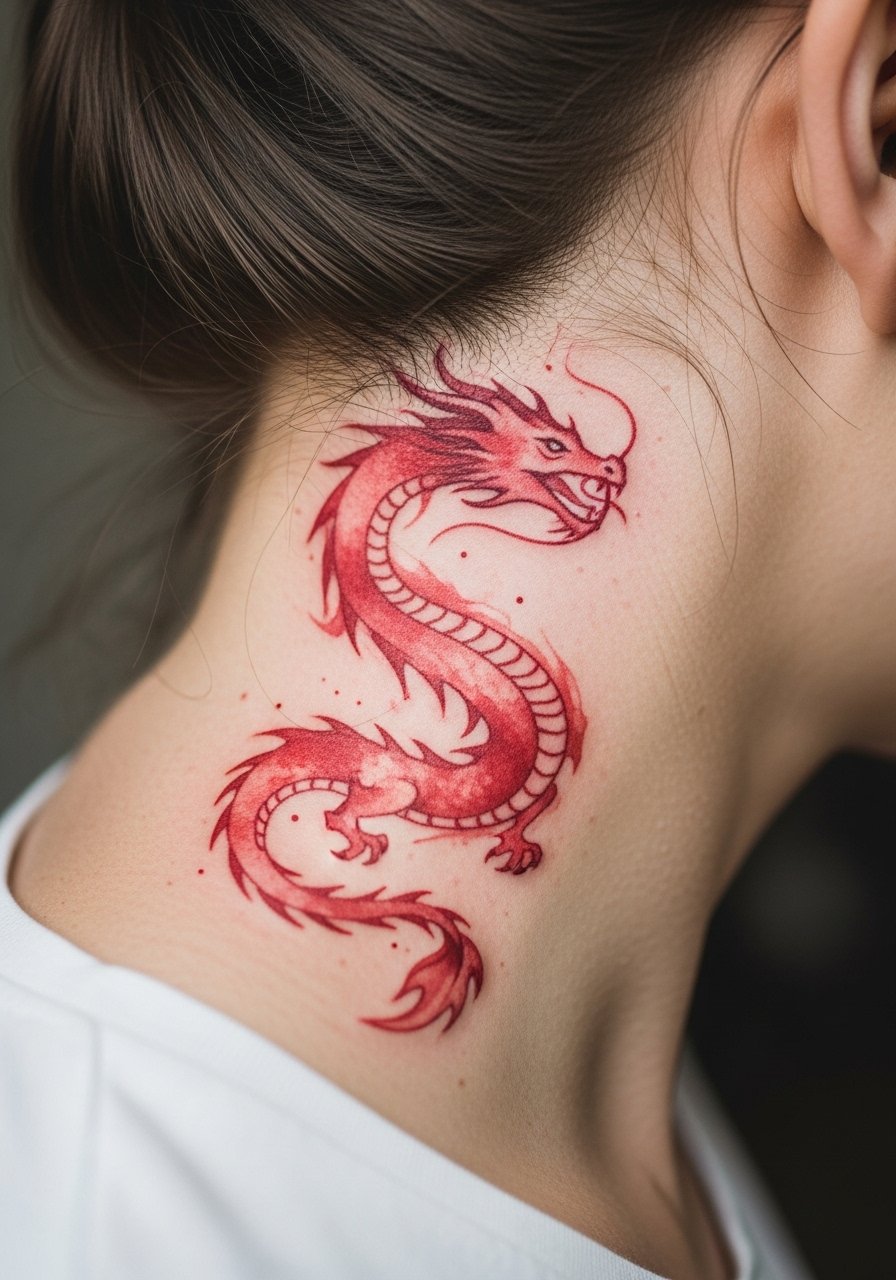
Consultation lead: behind-the-ear pieces need a clear plan for visibility and hair coverage. This placement is subtle and requires an artist skilled at small, controlled saturation. Expect a short but sharp session and faster fading from hair oil and shampoo. The mistake is asking for heavy watercolor there; keep the fill minimal and the outline readable. Also discuss touch-up timelines because small spots can disappear faster. For a discreet reveal, wear a thin chain pendant that draws attention toward the area without covering it.
10. Watercolor Red Dragon on the Thigh
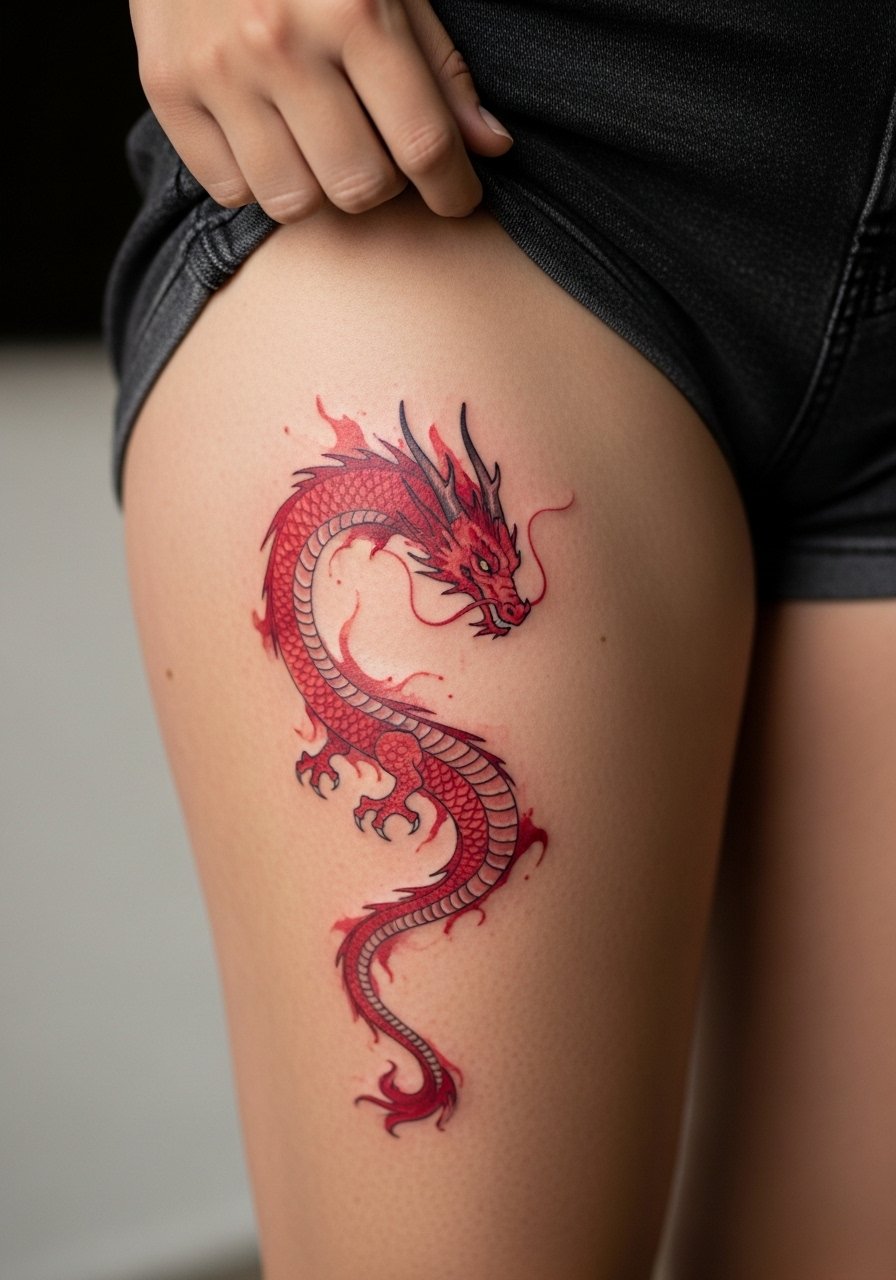
Aging and healing lead: thigh skin is forgiving, and watercolor blends often hold longer there than on hands or feet. Sessions can be comfortable because you can shift positions. The main mistake is oversaturating every scale; instead, concentrate pigment in the dragon’s spine and head so the silhouette reads at a distance. For session wear, choose a pair of high-waisted shorts that are easy to adjust so the artist can work without pinching fabric.
11. Chest Collarbone Dragon Accent
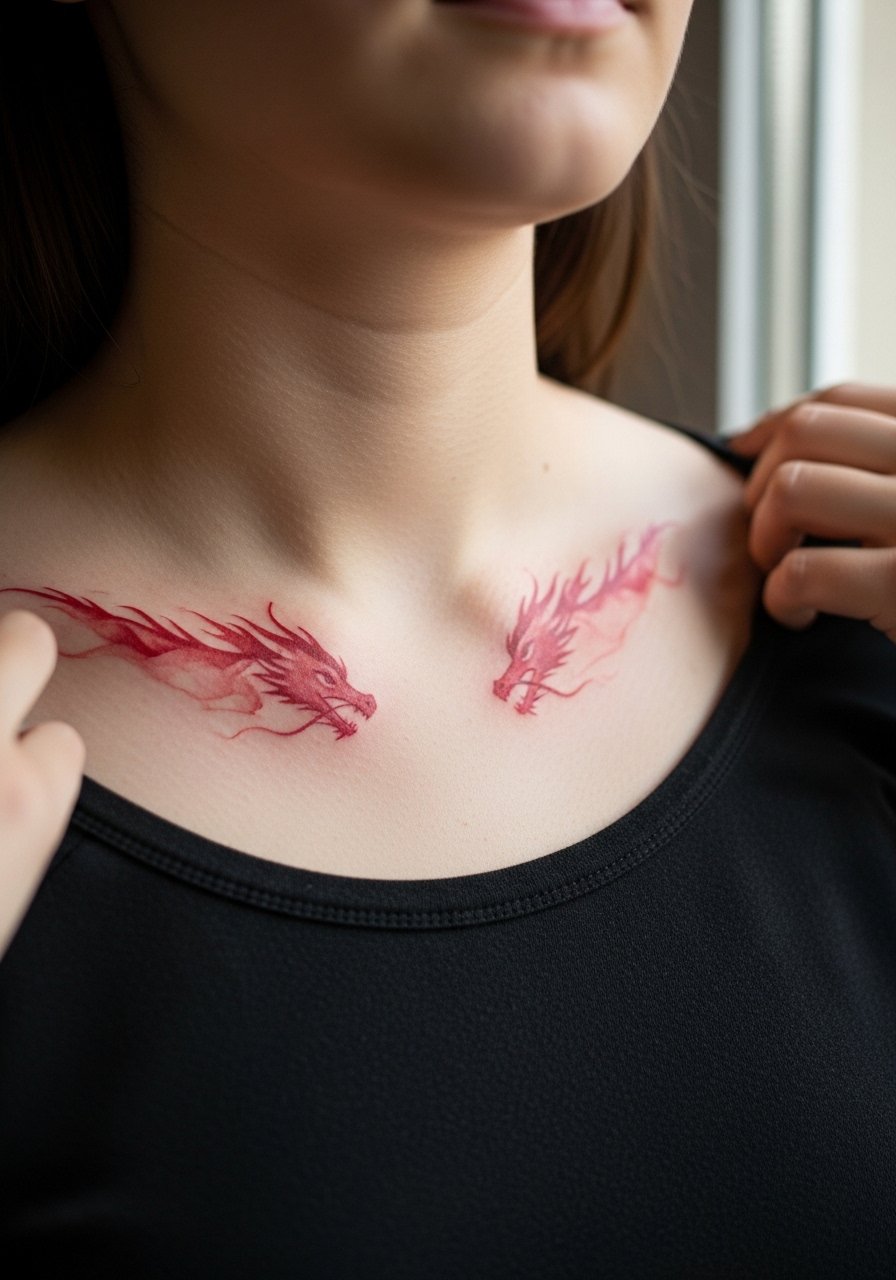
Mistake lead: one common error is crowding collarbone tattoos with heavy color that competes with jewelry. For a watercolor dragon here, keep pigment focused along the collarbone ridge and retain open skin around the head so necklaces do not obscure the piece. Pain is moderate. Small sessions allow tweaking the flow across the collarbone. Consider pairing the design with a thin pendant necklace that complements rather than covers the dragon.
12. Watercolor Dragon Sleeve Accent
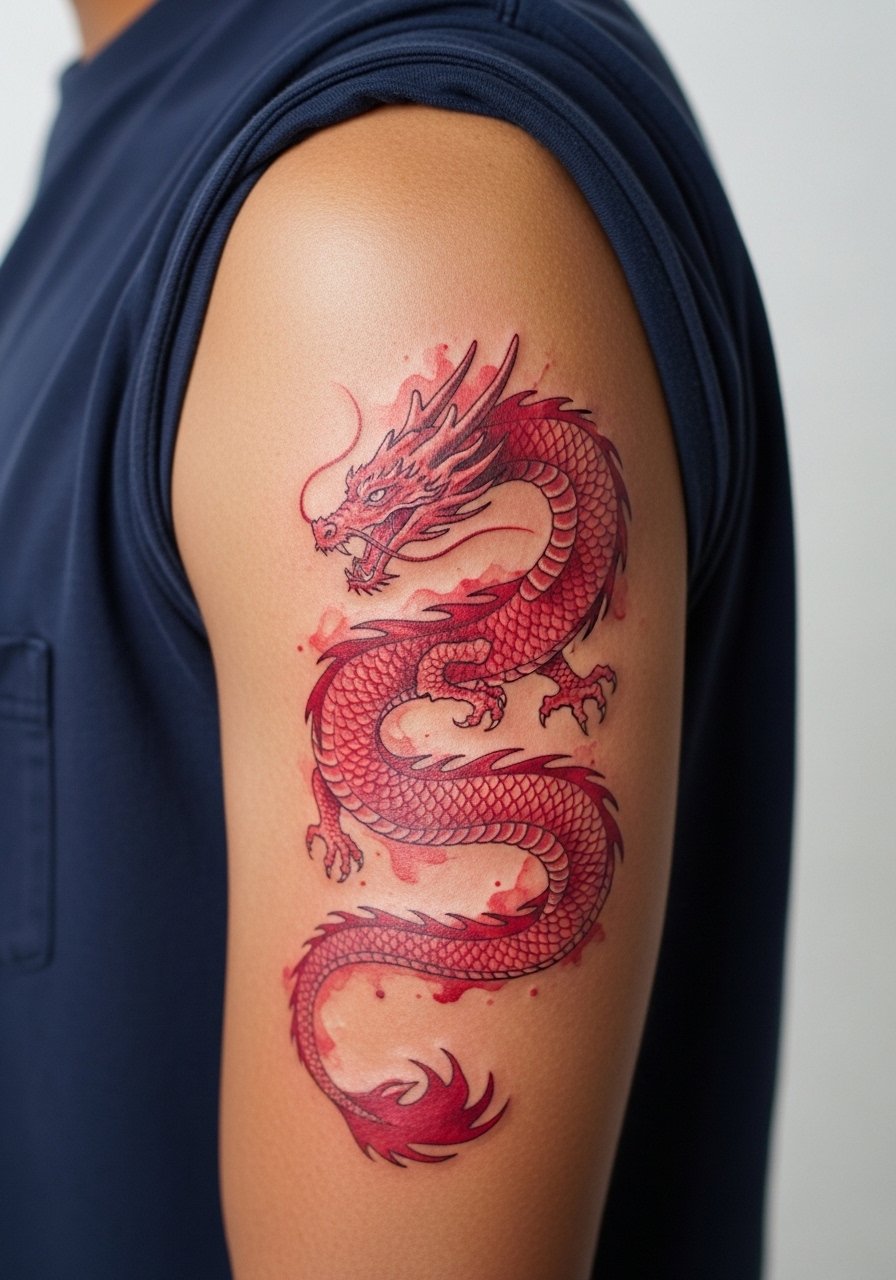
Visual impact lead: using the red dragon as an accent in a sleeve works when the artist treats it as part of a larger color story. The piece should have clear anchor points of saturation so adjacent elements do not swallow it. Expect multiple sessions and moderate pain across the arm. A mistake is converting a dragon into background wash without maintaining linework contrast. Ask your artist for stronger saturation in the dragon’s head and claws to keep it readable at year three and beyond.
13. Minimalist Red Dragon on the Sternum
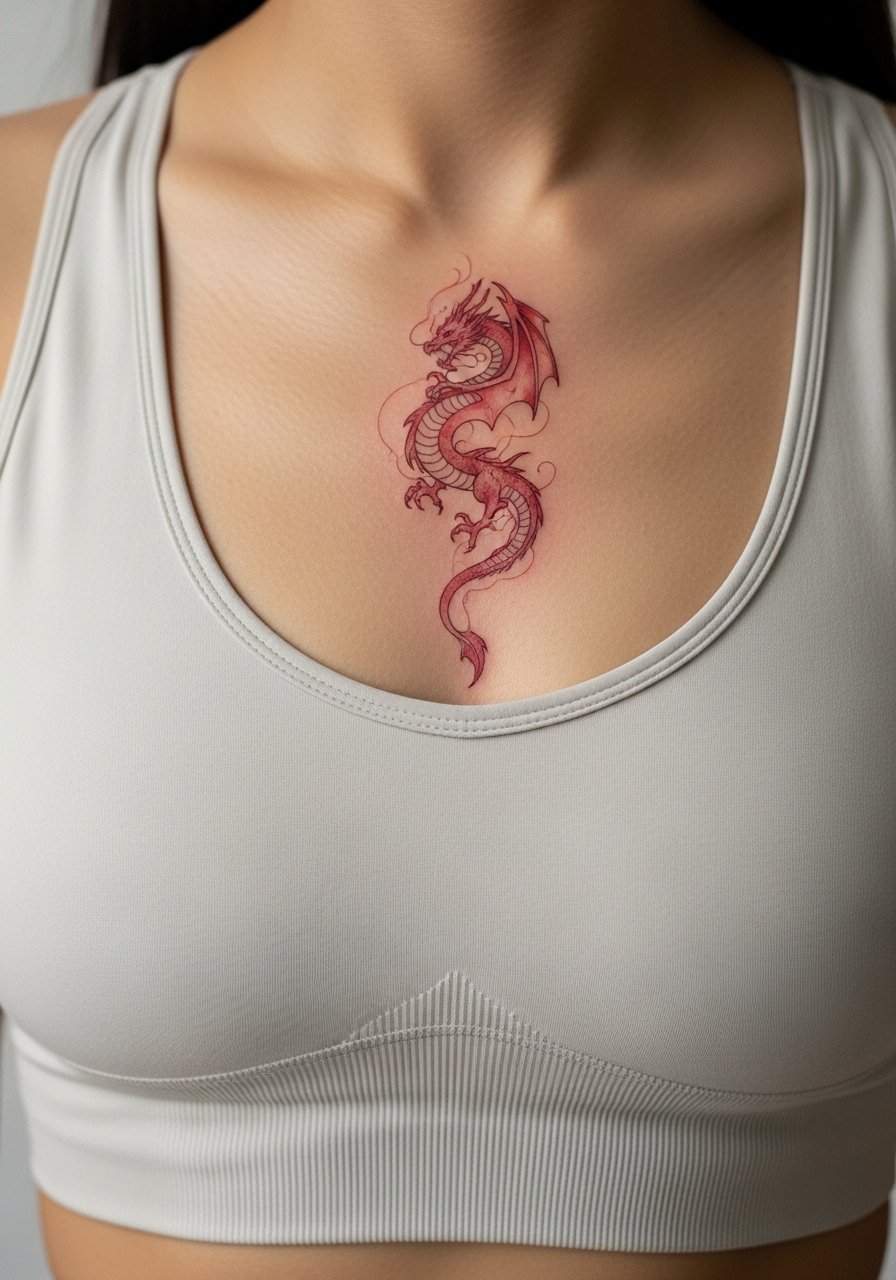
Pain warning lead: sternum tattoos are sensitive and often require breaks. Watercolor here reads intimate and bold, and the most common mistake is asking for broad washes that do not heal evenly over the sternum. Many artists will recommend smaller gradients and heavier saturation near the center to prevent patchiness. If you plan clothing around it, a fitted bandeau or sports bra works for post-session comfort and for showing the piece when you want.
14. Dragon Portrait on the Calf with Dot Work Accents
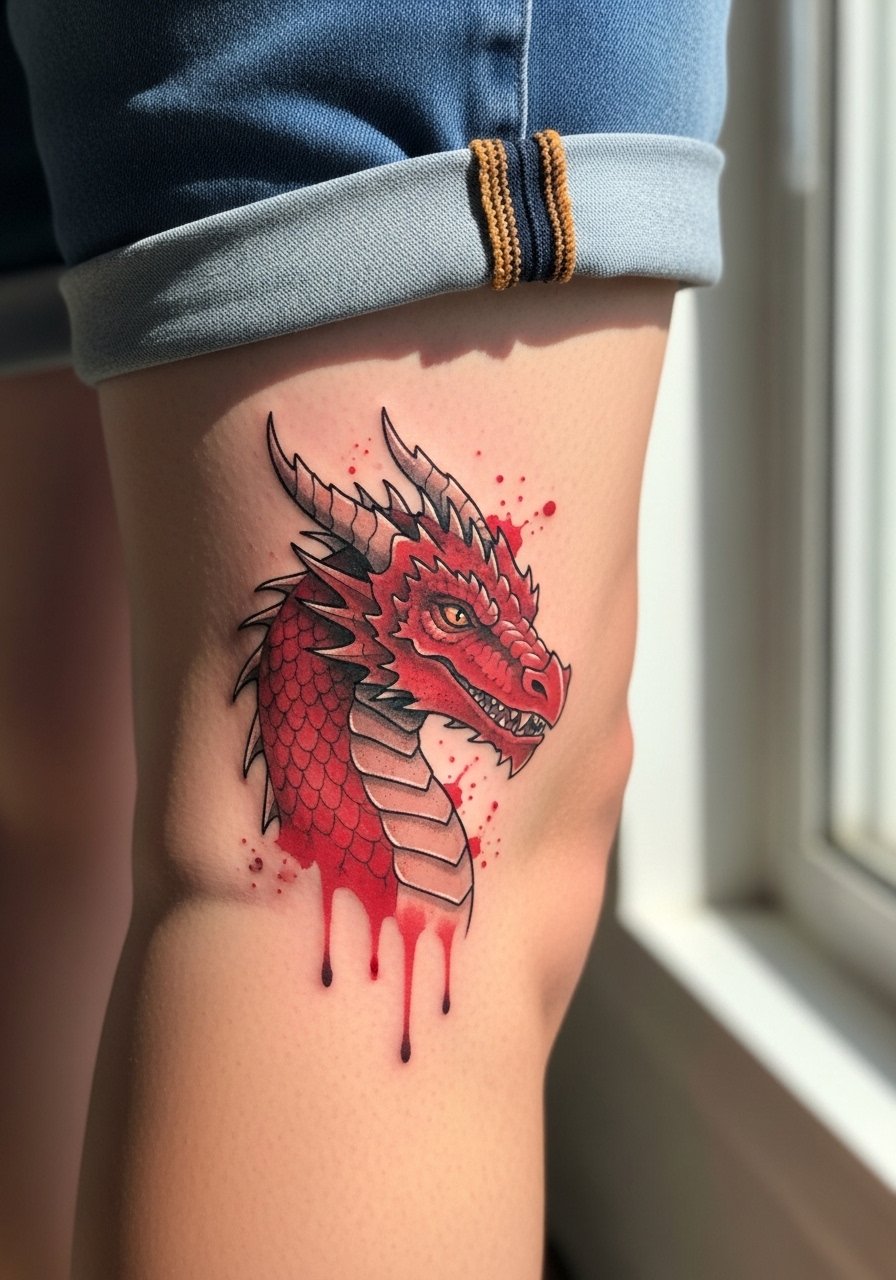
Mistake lead: adding dot work and stipple shading can help watercolor pieces hold definition, but too much stippling near delicate washes creates muddiness. For a calf portrait with dot accents, ask the artist to place stipple in shadowed zones rather than over color transitions. The session feels moderate and often fits into a single long appointment. For casual display, a pair of neutral slip-on sneakers keeps the focus on the calf without distracting patterns.
15. Small Dragon on the Side of the Foot
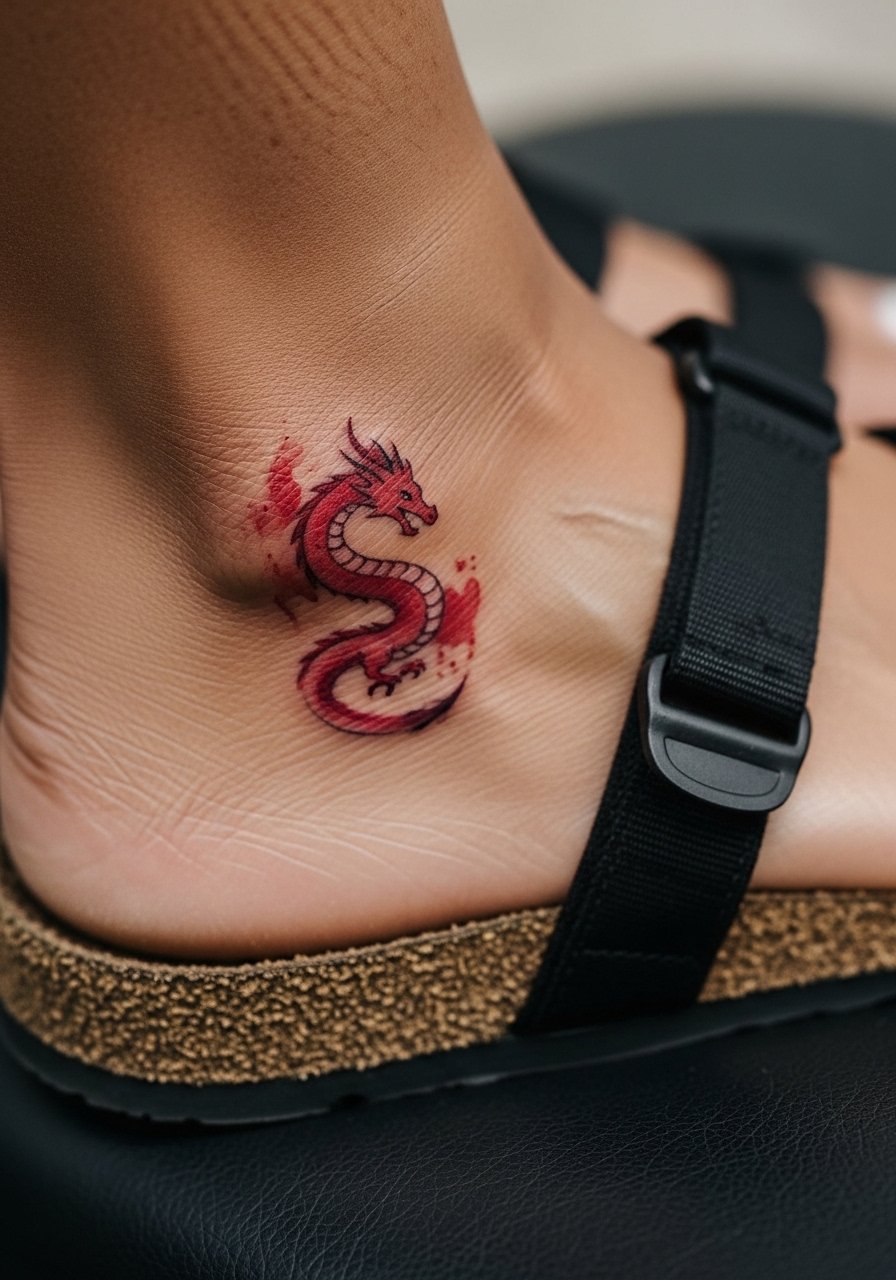
Personal observation: foot tattoos face constant wear and often need touch-ups sooner. Watercolor fades more quickly where shoes and socks rub. The session is short but painful due to thin skin. Avoid asking for heavy blends on the foot; keep the dragon compact with a clear outline. For showing the piece and protecting it in daily life, go for sandals that minimize friction and choose a simple leather sandal when you want it visible.
16. Red Dragon on the Upper Arm with Bold Backline
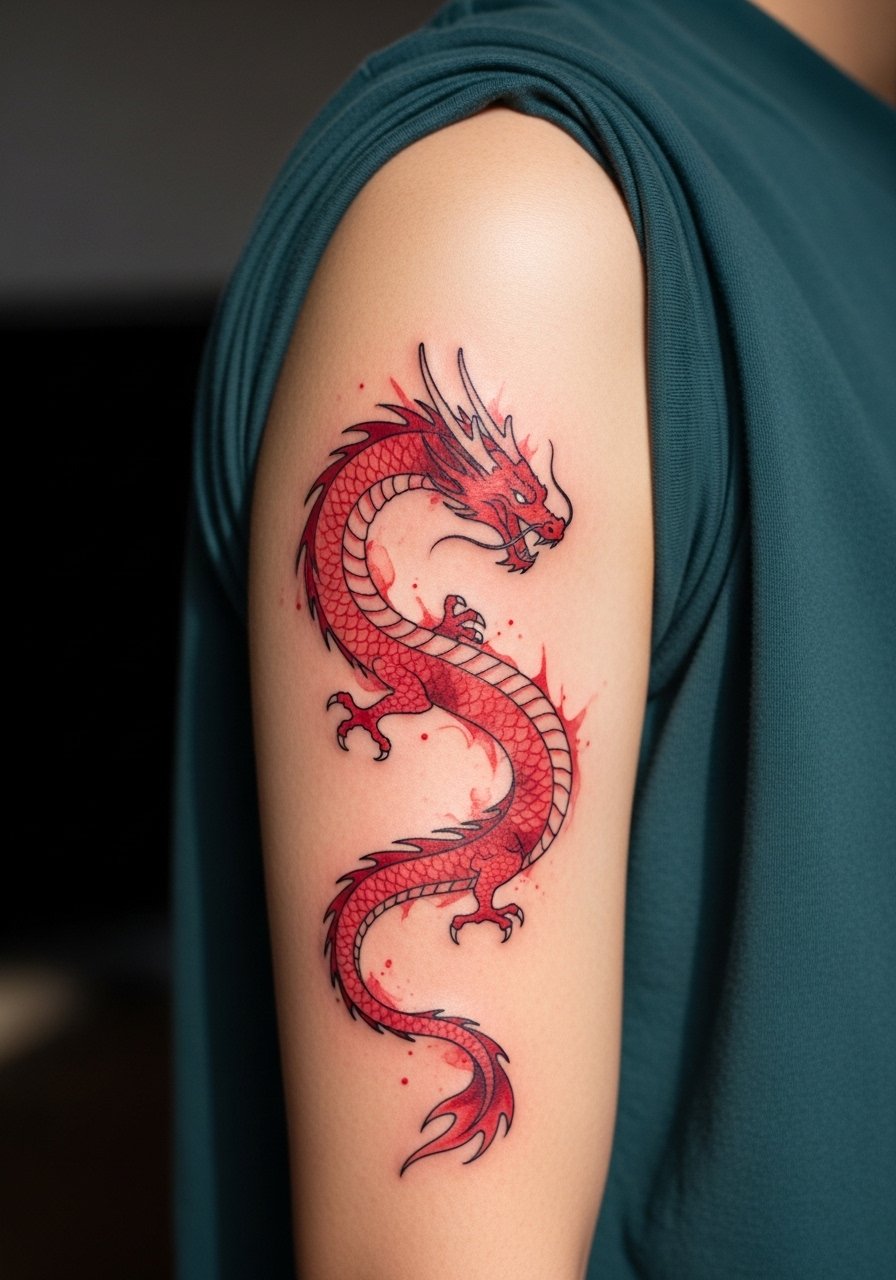
Consultation lead: when adding bold backline to a watercolor dragon, tell your artist you want anchor saturation that preserves shape as the washes soften. This approach reduces the risk of the piece turning into an amorphous red patch after a few years. Pain is mild to moderate. A common mistake is assuming watercolor alone will hold without any strong linework in the core. Pair the upper arm piece with a loose short sleeve shirt so you can show it off while keeping the skin comfortable.
17. Watercolor Dragon on the Hip
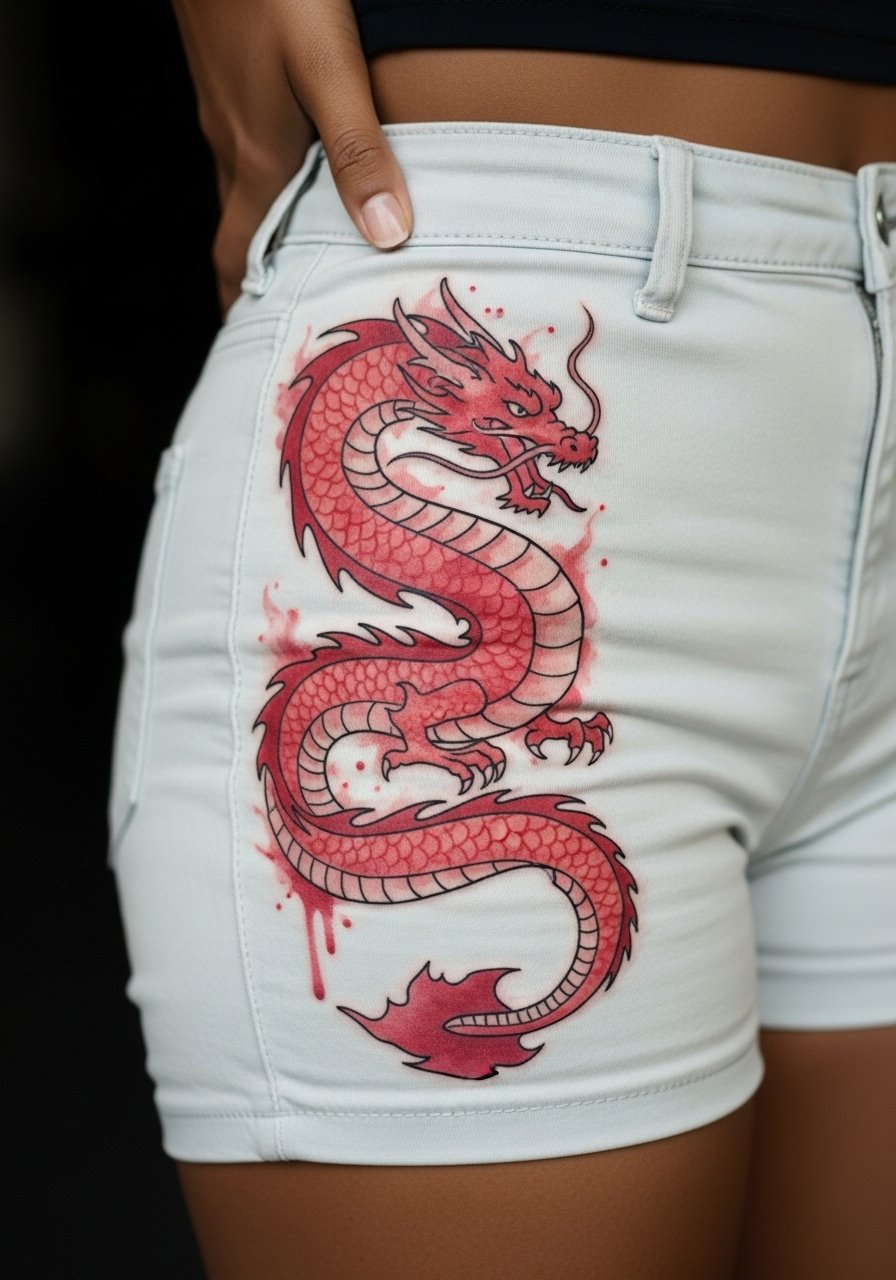
Controversy lead: hip and upper-thigh watercolor raises two camps. One says that body movement and clothing pressure cause patchy fades. The other argues that with correct placement and pigment choices the area can hold color for years. The honest approach is to plan for touch-ups and choose a flow that follows the hip curve rather than a rigid outline. Sessions are usually comfortable. For session prep, wear high-cut shorts so the artist has clean access and you avoid tight waistbands afterward.
18. Red Dragon Neck Accent
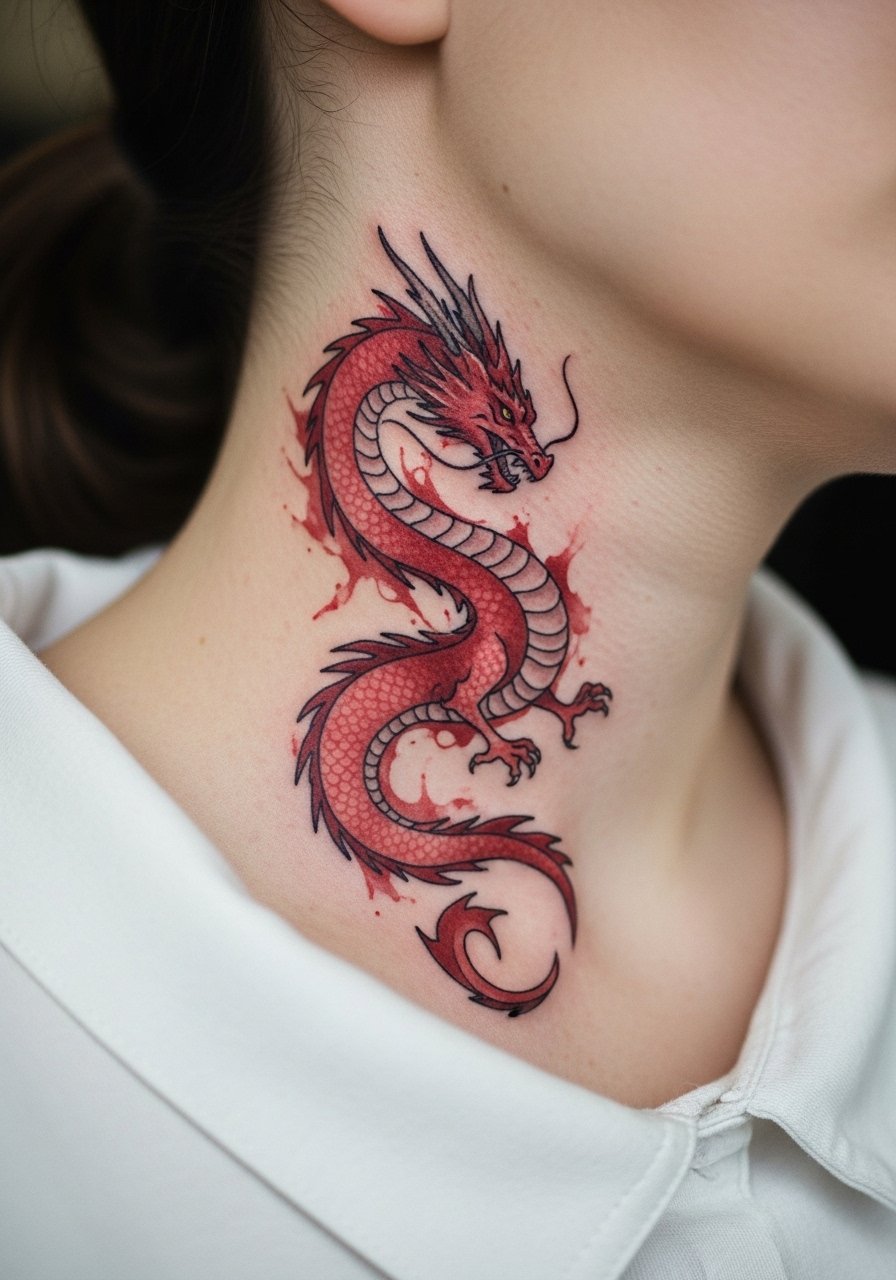
Pain warning lead: neck tattoos can be sensitive and visible, so consider career factors before booking. Watercolor there can fade faster from sun exposure and shaving. The mistake is treating neck skin like arm skin. Ask for slightly stronger saturation and a clear head silhouette so the dragon’s focal point remains sharp. Sessions are often broken into short passes. A wide-neck shirt that you can adjust makes the appointment smoother.
19. Micro-Realism Red Dragon on the Back of the Hand
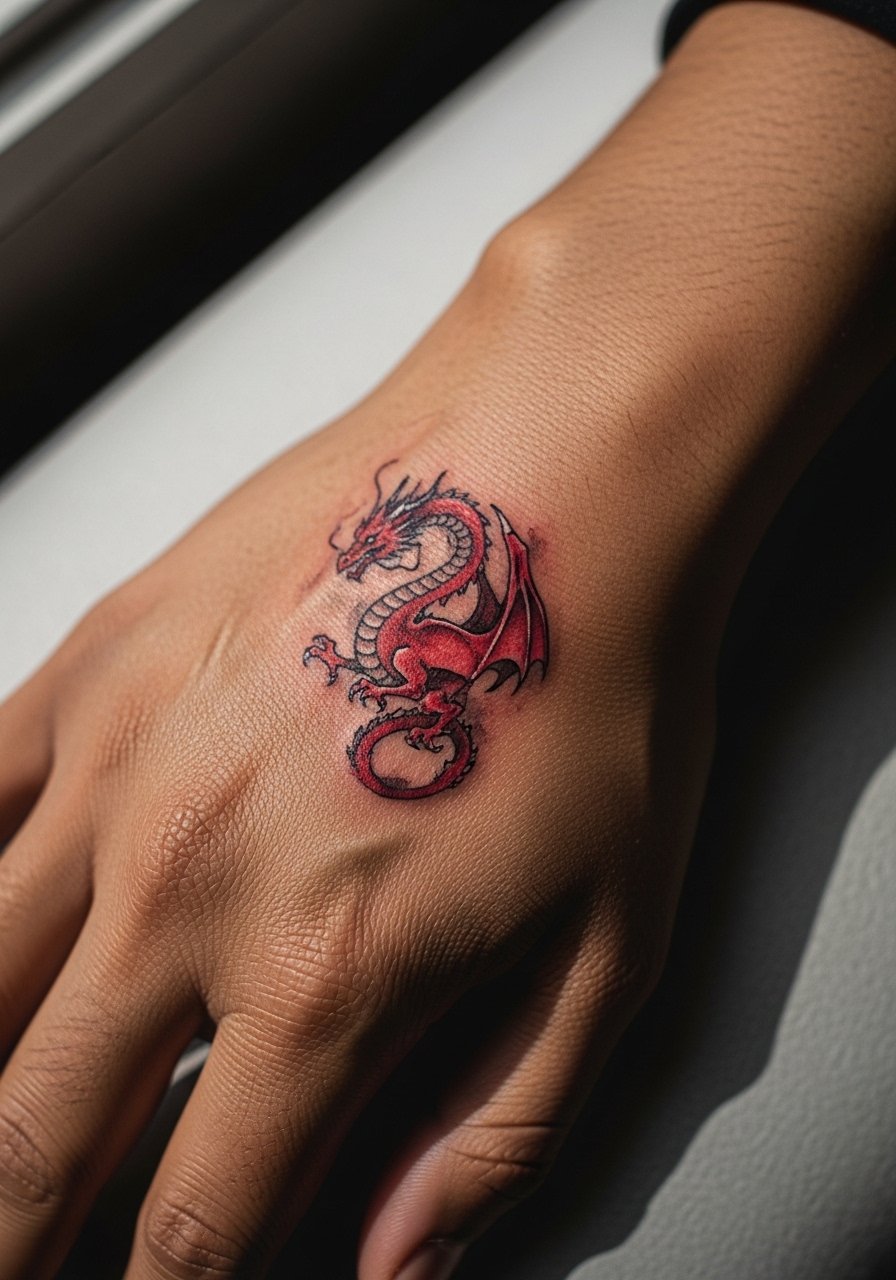
Styling lead: hand tattoos can impact professional settings, so weigh that before committing. Micro-realism on the hand is high risk for blowout and rapid softening. Artists disagree on whether heavy touch-ups make sense on hands. If you proceed, plan for yearly touch-ups and request bolder anchor points rather than feathered washes alone. For showing it off without overexposing, pair with a delicate wrist cuff that frames the piece without covering it.
20. Red Dragon Overlapping a Floral Flash

Personal observation lead: combining a red dragon with floral flash works when the artist treats the dragon as the focal element and places florals to complement rather than compete. The session often requires blending techniques like stipple shading to hold definition between textures. Common mistake is equalizing the saturation across all elements which flattens the composition over time. For casual wear, a short-sleeve linen shirt frames the work while keeping it visible.
21. Tiny Red Dragon Near the Collarbone with Script
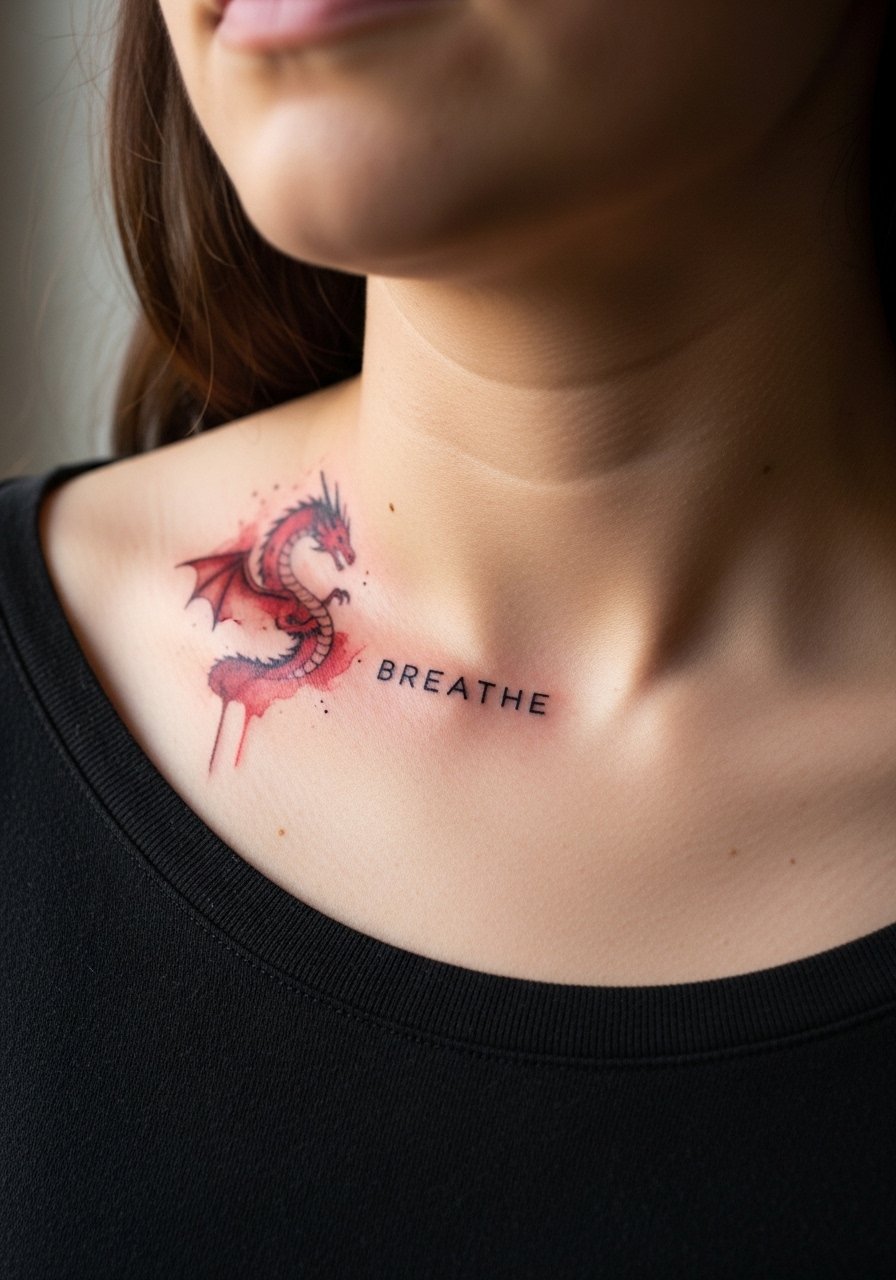
Consultation lead: when adding script, specify exact text and font. For this image include the word 'Breathe' in minimalist lowercase so the lettering renders correctly. Fine script near watercolor needs spacing to avoid blurring after healing. Sessions are short but precise. A common mistake is squeezing script directly into a wash. Tell your artist you want the lettering placed on slightly untouched skin close to the dragon to preserve clarity. Pair with a thin chain pendant that sits above without covering the script.
Frequently Asked Questions
Q: Will a watercolor red dragon need more touch-ups than traditional red ink work on the forearm?
A: It depends on saturation and placement. From what I have seen, watercolor techniques with soft gradients can require a touch-up sooner than bold traditional fills because primers and lighter washes fade faster. Ask your artist for anchor saturation in key areas so the silhouette lasts longer.
Q: Is fine line watercolor safe on the ribcage for someone who wants a detailed dragon?
A: The ribcage is sensitive and moves with breathing, which can affect fine detail. Artists split into two camps on this. One group avoids tiny fine line there for that reason. The other says careful spacing and correct depth can make it work. Have a frank conversation and consider multiple short sessions.
Q: What should I wear to the studio for an upper thigh dragon session?
A: Wear easy-to-shift clothing that exposes only the target area. For thigh work, choose loose shorts or a wrap skirt so the artist can access the space without you being uncomfortable.
Q: Do red pigments in watercolor dragons cause more allergic reactions than other colors?
A: From conversations with artists and some client experiences, red pigments can be more reactive for some people. If you have sensitive skin, request a patch test or bring it up during booking. The artist can recommend pigment options.
Q: How will a dragon tattoo look after five years if I want it to stay readable?
A: Plan for aging by asking for stronger anchors in the head, spine, or claws and keeping washes lighter in peripheral areas. Expect some softening. Sun protection, minimal friction, and periodic touch-ups help maintain readability over time.
