
Fine line and splashy color are part of the same conversation now, but they age very differently. Watercolor feathers look like movement on skin when fresh, and the difference between a graceful five-year patina and a muddy blur often comes down to placement, spacing, and how you protect the piece from sun and abrasion. Read the first idea to see a version that keeps its airy feel without softening into a wash.
1. Delicate Inner Forearm Feather with Faint Color Wash
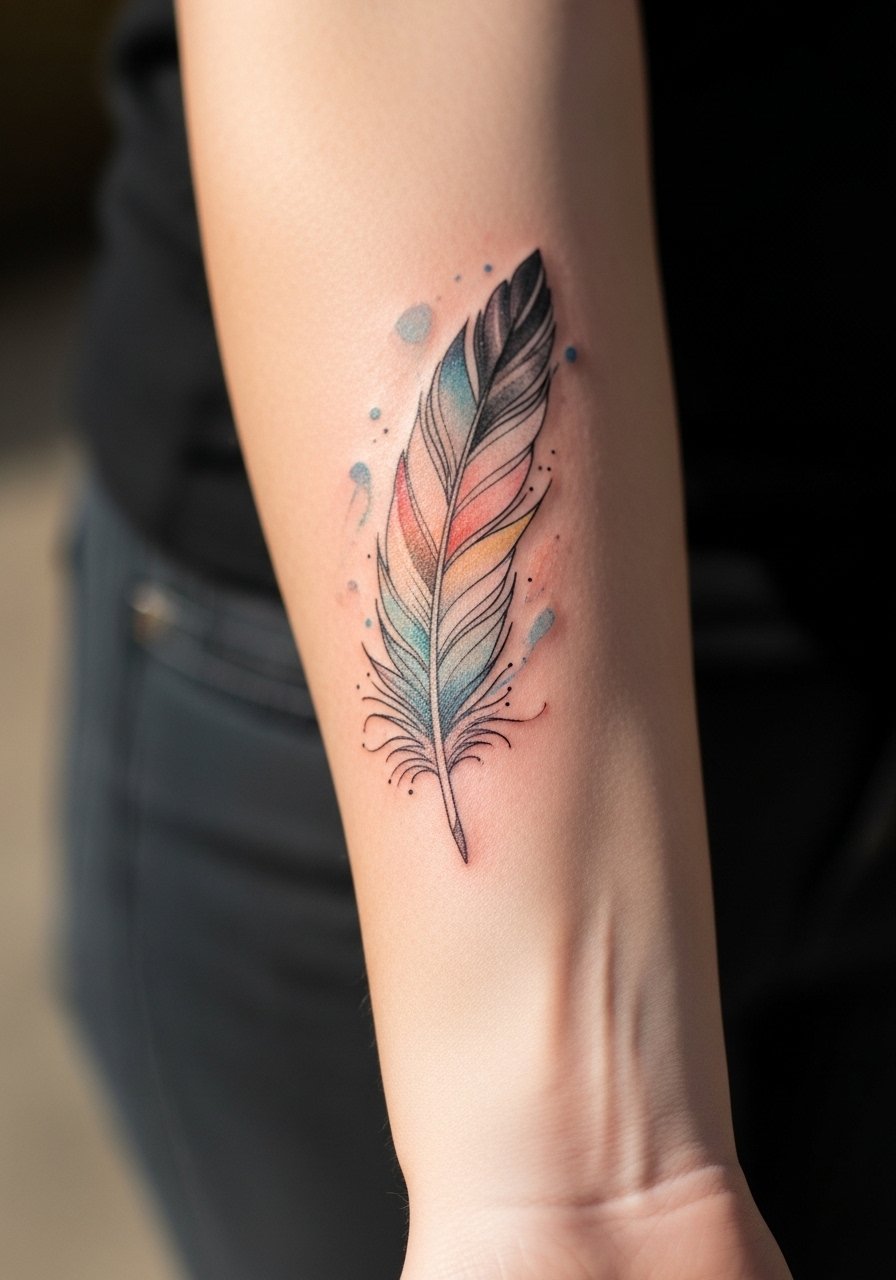
I recommend this when you want a visible piece that still reads delicate at a short distance. Ask the artist for slightly bolder main quill linework and lighter wash edges so the color has room to breathe as it heals. Common mistakes include asking for ultra-thin lines and saturated smudges that merge within two years. Expect crisp linework at six months, softer saturation at two years, and a gentle fade by five years that still shows the feather outline. Pain is low to moderate and a single session usually covers it. For showing this off, roll sleeves to a three-quarter length or wear a loose button-down shirt that frames the forearm.
2. Wrist-Edge Micro Feather, Minimalist Script Accent
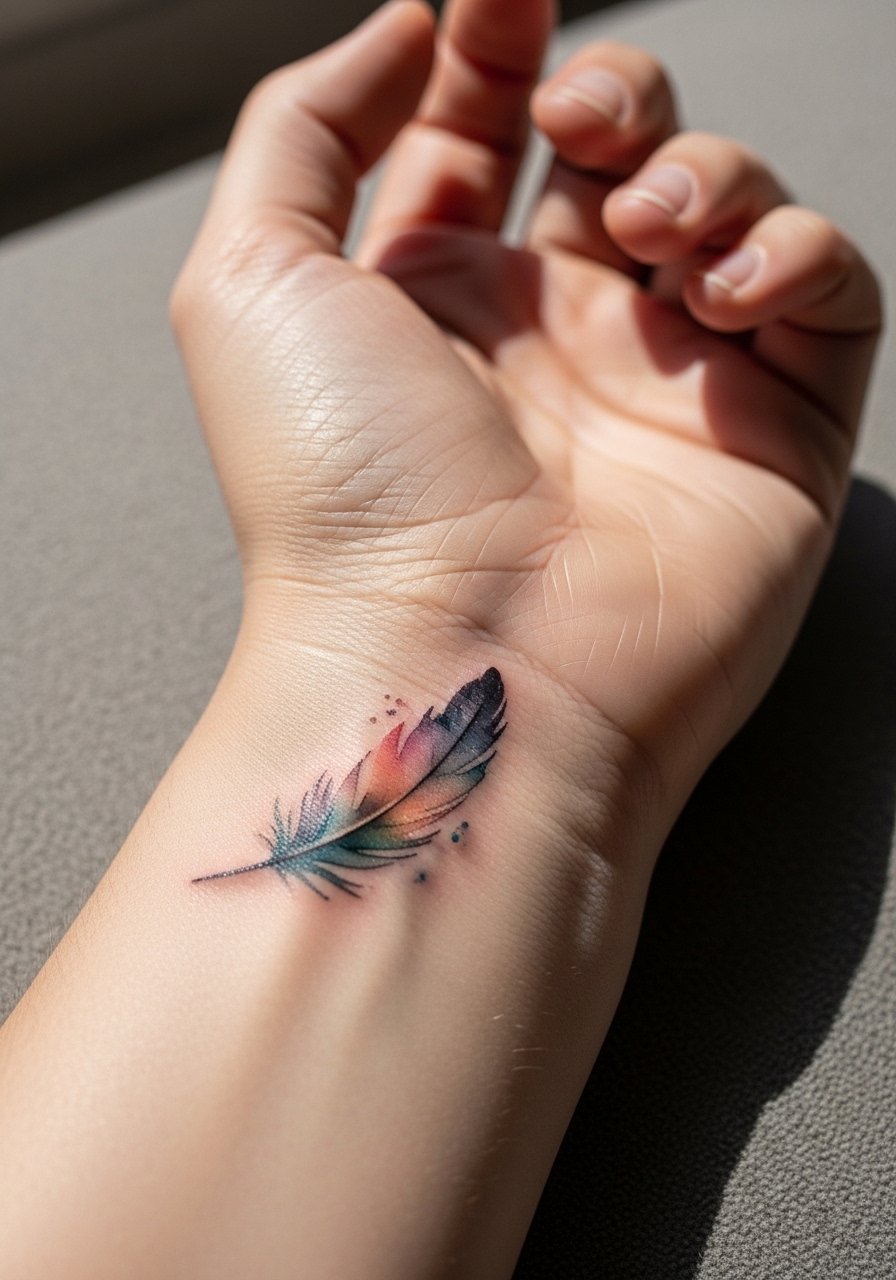
This tiny wrist placement reads personal and delicate. Tell your artist you want a slightly off-center quill and a faint wash, not saturated color, to avoid early blurring. The wrist gets friction from watches and sleeves, so thin washes often disappear first. At six months the feather should still be legible. By two years, expect some softening that a targeted touch-up can restore. The biggest mistake is requesting heavy color on such a small canvas. For session day wear, bring a thin chain bracelet to coordinate with the piece when healed.
3. Ankle Feather with Dusting of Pastel
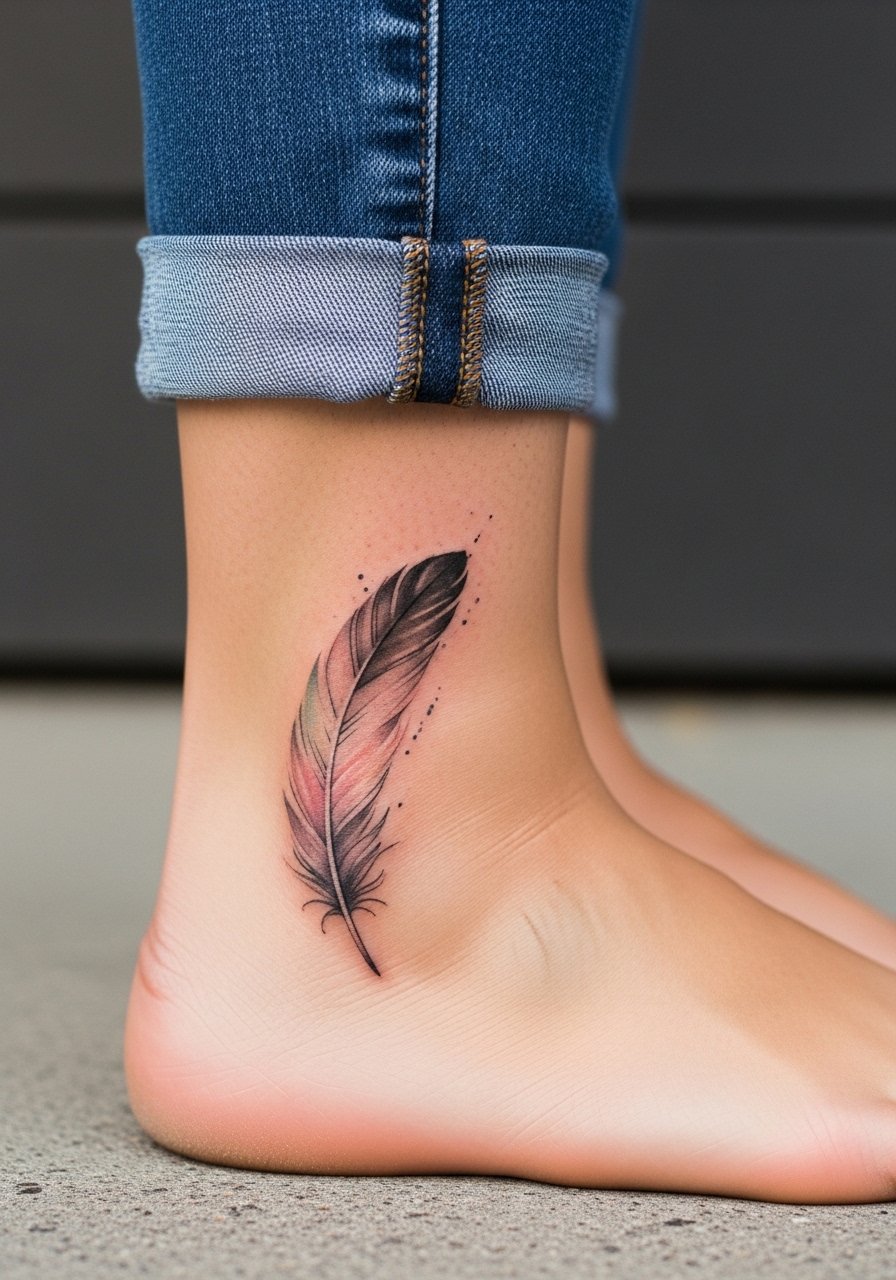
Ankle placements show movement when you walk, but they also get scuffed by socks and shoes. Ask for slightly bolder outline near the quill and loose, airy pigment at the tip. Most people see sharp detail at six months, then a more faded wash at two years if they wear closed shoes a lot. A common mistake is over-saturating the ankle on the first pass. Session pain is moderate and brief. For showing this off, wear sandals or jeans rolled up to reveal the tattoo without rubbing.
4. Collarbone Feather with Floating Color and Soft Shadow
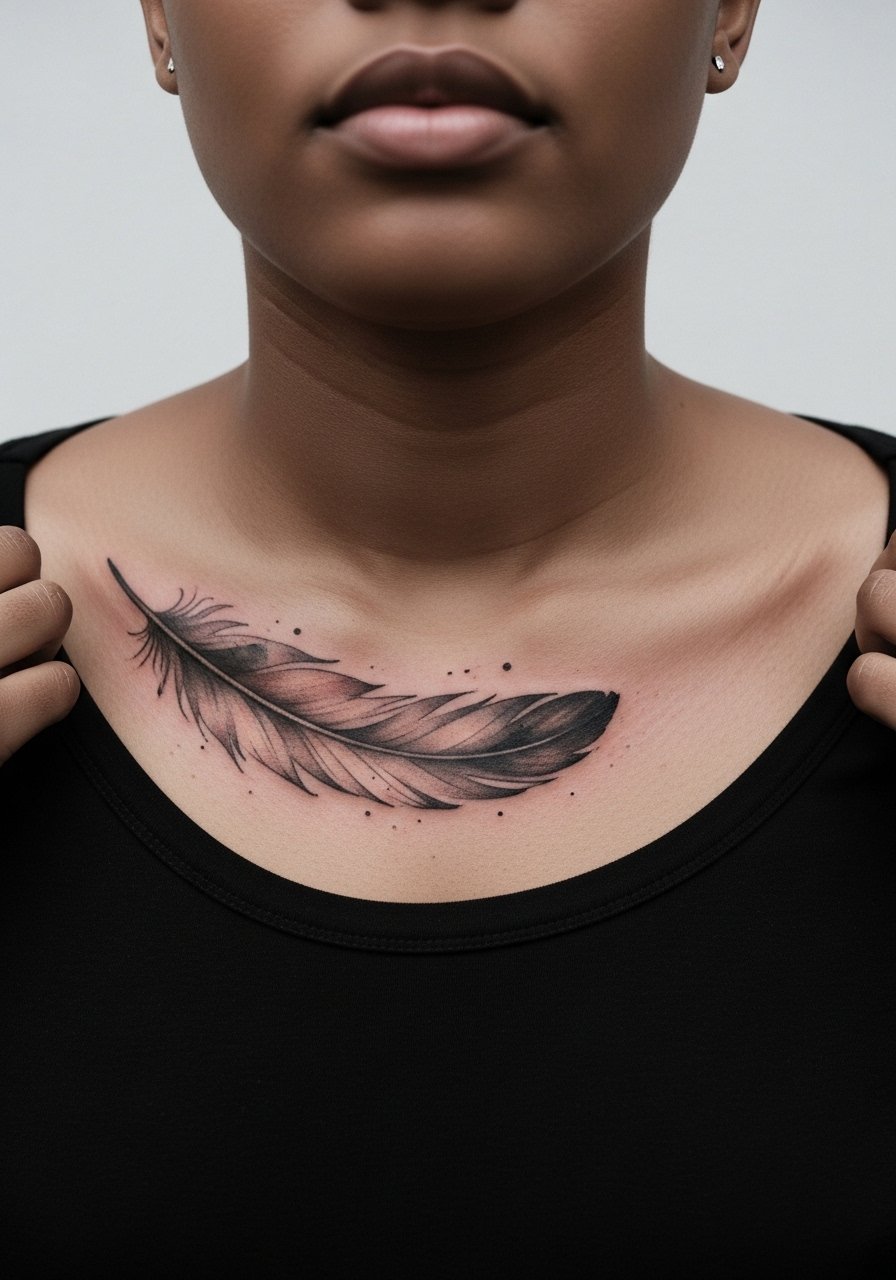
This placement reads elegant framed by clothing. Ask for a slightly asymmetric wash so the feather looks like it is lifting off the skin. The collarbone is exposed, so UV will drive faster fading. At six months the shadow should still read as depth. By two years the color needs sunscreen to maintain vibrancy. A frequent mistake is placing too much pigment across the bone, which can look patchy as it heals. It is low to moderate pain. Pair with open-neck tops or a thin chain pendant necklace that sits above the feather for evenings out.
5. Outer Bicep Feather with Stipple Shading
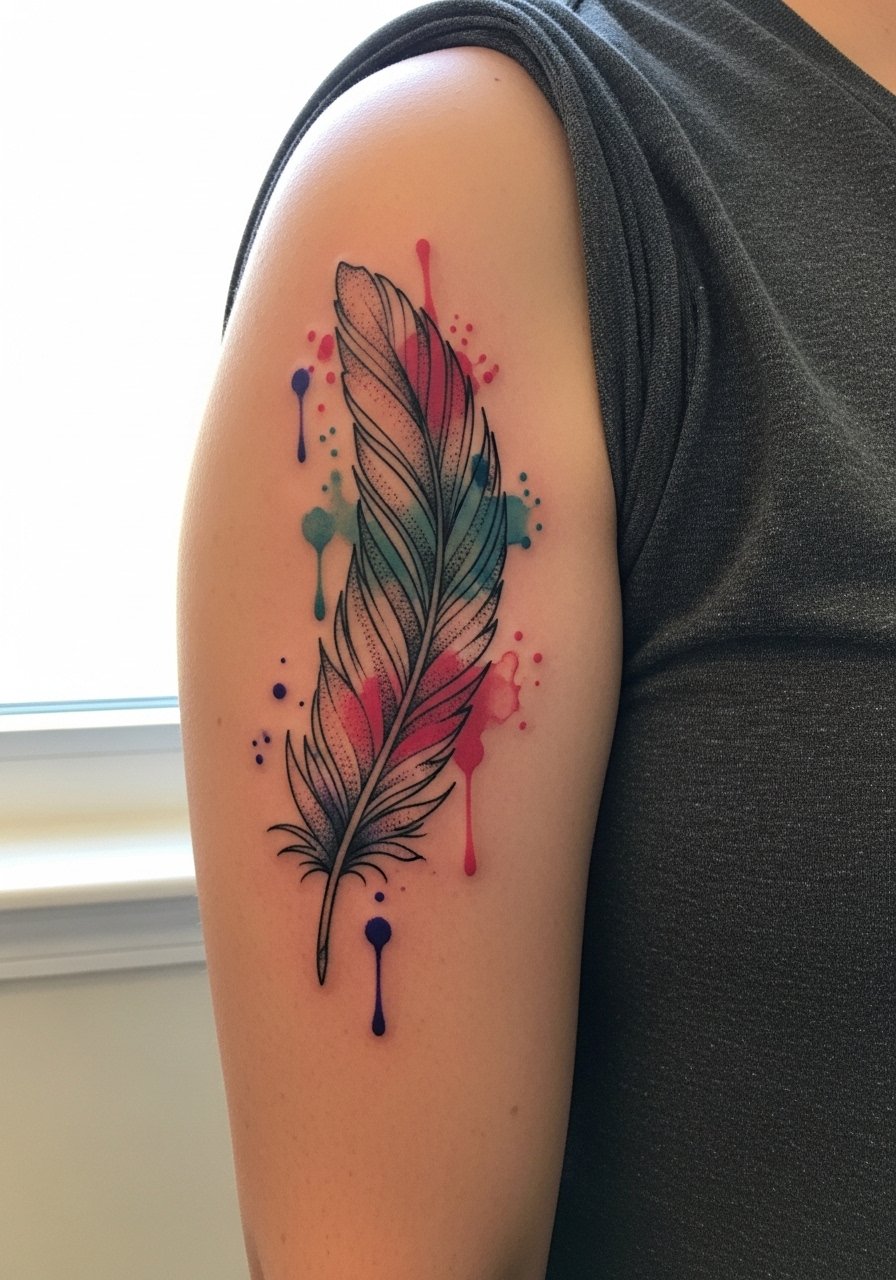
The outer bicep is forgiving for color saturation. I suggest stipple shading to give the feather texture without heavy saturation that might migrate. Tell your artist to plan for touch-up at year three, especially if you sweat heavily or work outdoors. The session feels like constant buzzing but is easier than rib or sternum work. A common mistake is packing too much color thinking biceps will hold like calves. For session day comfort, wear a loose button-down shirt you can pull aside for access.
6. Spine-Linked Feather Cluster with Gradient Watercolor
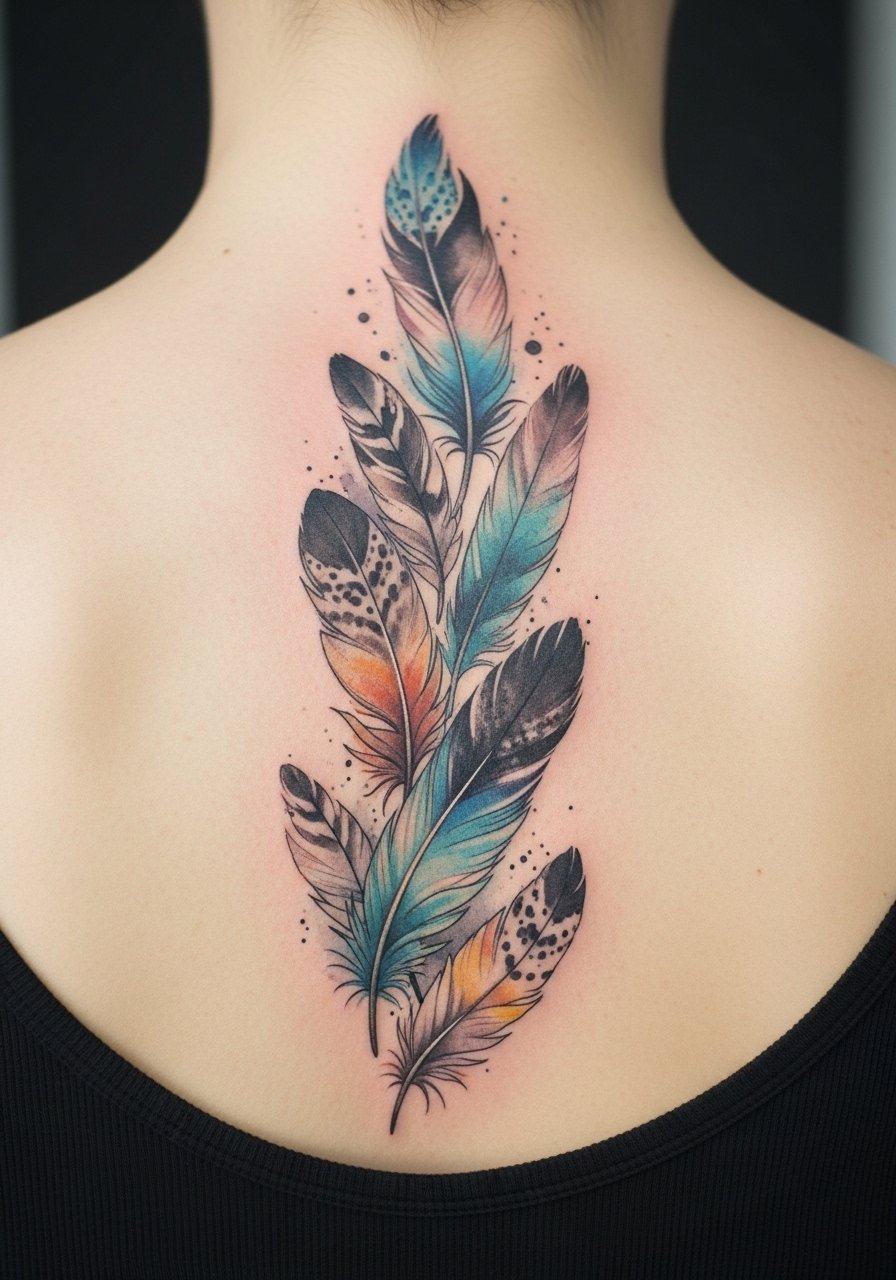
A spine placement creates cinematic flow when paired with gradient washes. The pain is moderate to high along the midline, and sessions may need to be split. Ask for space between feathers to avoid merging as the washes age. Blowout risk is lower on the back than on high-movement zones, but expect the lower feathers to fade faster due to clothing friction. A smart consultation specifies touch-up timing at year three. For evening looks, an open-back top showcases the linework without covering the washes.
Studio Day Picks
The collarbone and outer arm pieces above ask for different session prep than wrist or ankle work, and a few specific items smooth both the chair time and the first week of healing.
-
Stencil transfer paper kit. Lets you preview placement on skin for asymmetric designs like the collarbone and spine cluster.
-
Topical numbing cream. Applied per directions before the appointment eases the edge on sensitive areas like the spine and inner biceps.
-
Thin protective film roll. Keeps ankle and wrist tattoos protected during the first week of daily friction.
-
Fragrance-free gentle body wash. Cleanses healing skin without stripping delicate watercolor washes.
-
Aquaphor healing ointment. Thin layers help lock in moisture on small fine-line pieces while allowing the pigment channels to close.
7. Ribcage Feather with Light Negative Space
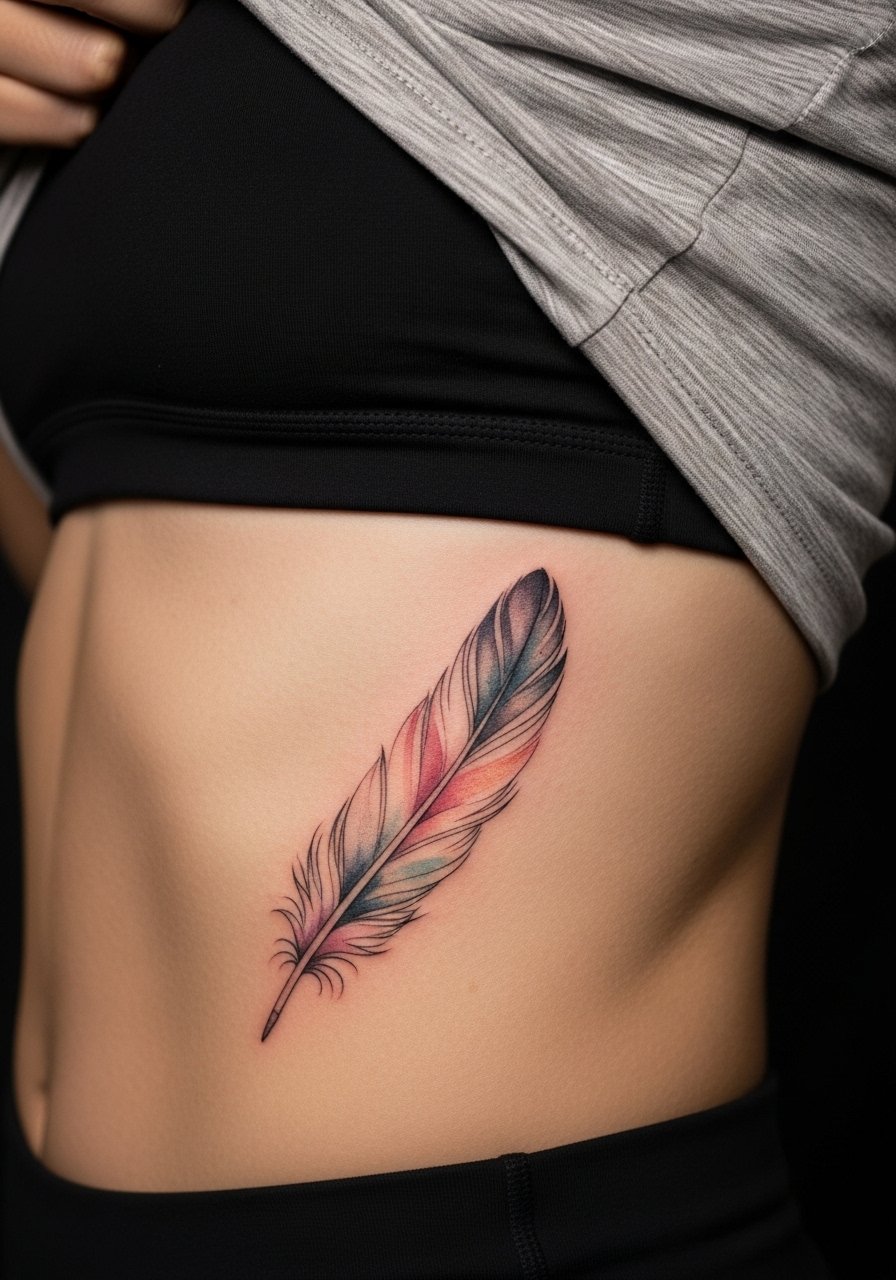
Fair warning, ribs are a high-pain placement but they make for personal, intimate pieces. Artists split on fine line on ribs. One camp says the skin stretch and movement blur thin lines within two years. The other camp says correct depth and spacing keep fine line readable. I suggest using light negative space inside the feather so the washes have breathing room. Expect crispness at six months and potential softening by year two. Common mistakes include tiny, dense linework that merges. Wear a strapless or zip hoodie to the session for access.
8. Sternum Feather Anchor with Soft Edge Color
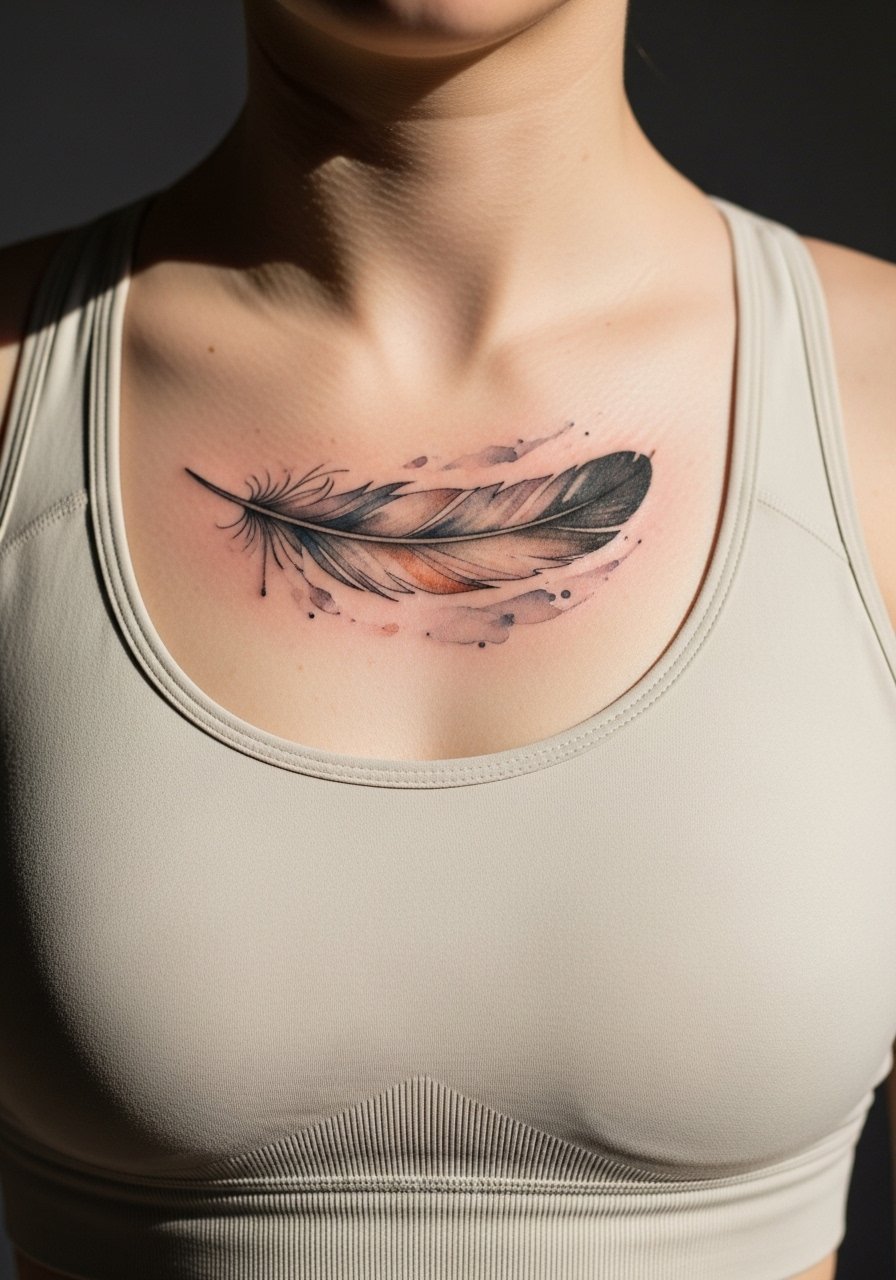
Sternum pieces age depending on how much the area moves with breathing and clothing. Session pain is moderate to high. Ask for color that fades outward rather than heavy saturation over the bone. At six months the contrast between quill and wash should hold. At two years you might want a touch-up if you wear chest-strapping garments often. A common mistake is overworking the central area, which can scar easily. For the appointment, a fitted sports bra or bandeau makes access simple and comfortable.
9. Calf Feather with Bold Color Blocking
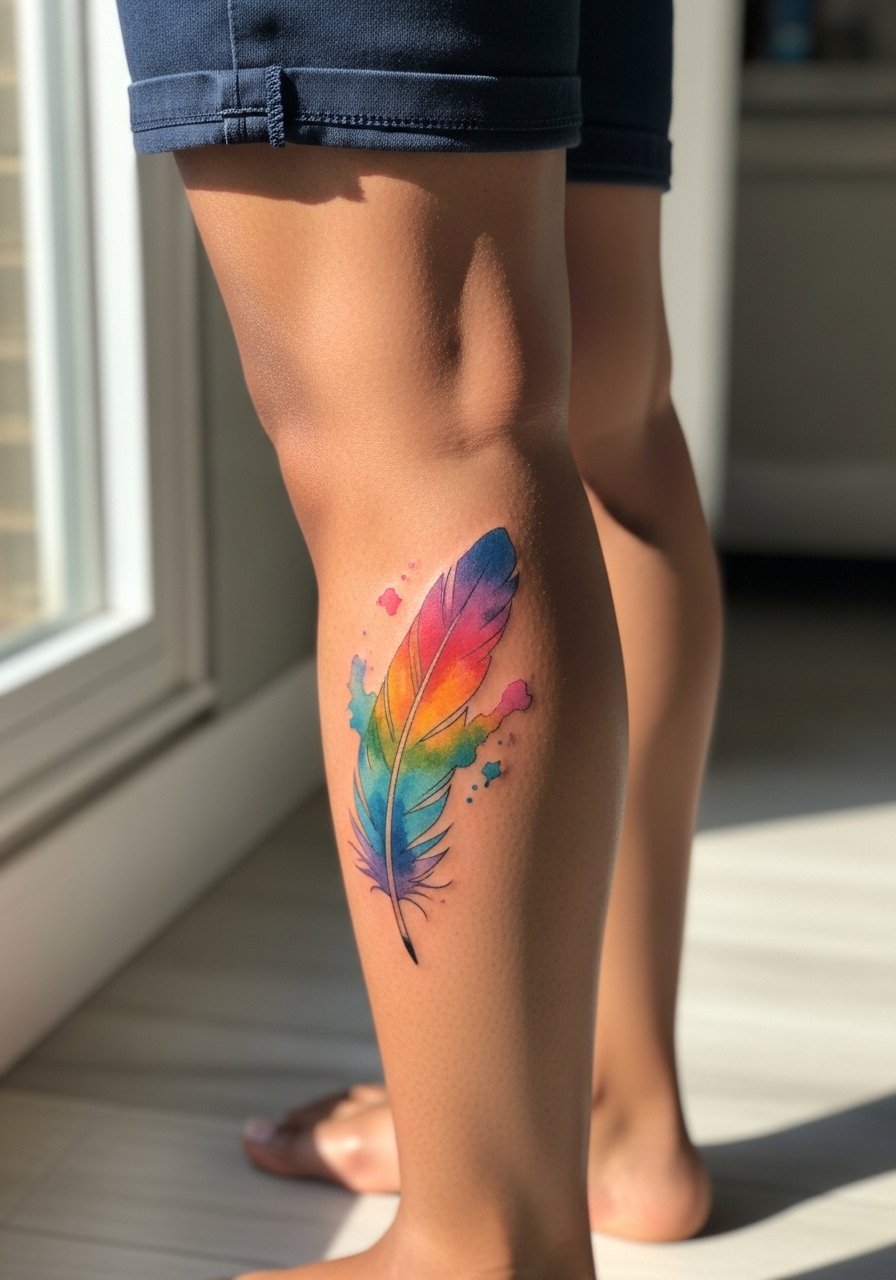
Calves can handle stronger saturation so this style keeps vibrant color without immediate blurring. Tell the artist you want bold blocks near the base and lighter tip washes for longevity. Expect the piece to look vivid at six months and hold reasonably well at two years if you avoid constant sun exposure. Common mistakes include cramming too many fine details into the narrow vertical space. The session is moderate in pain and often finished in a single visit. Pair with shorts or a loose drawstring linen pant that can be rolled up during healing.
10. Behind-the-Ear Mini Feather with Pale Tint
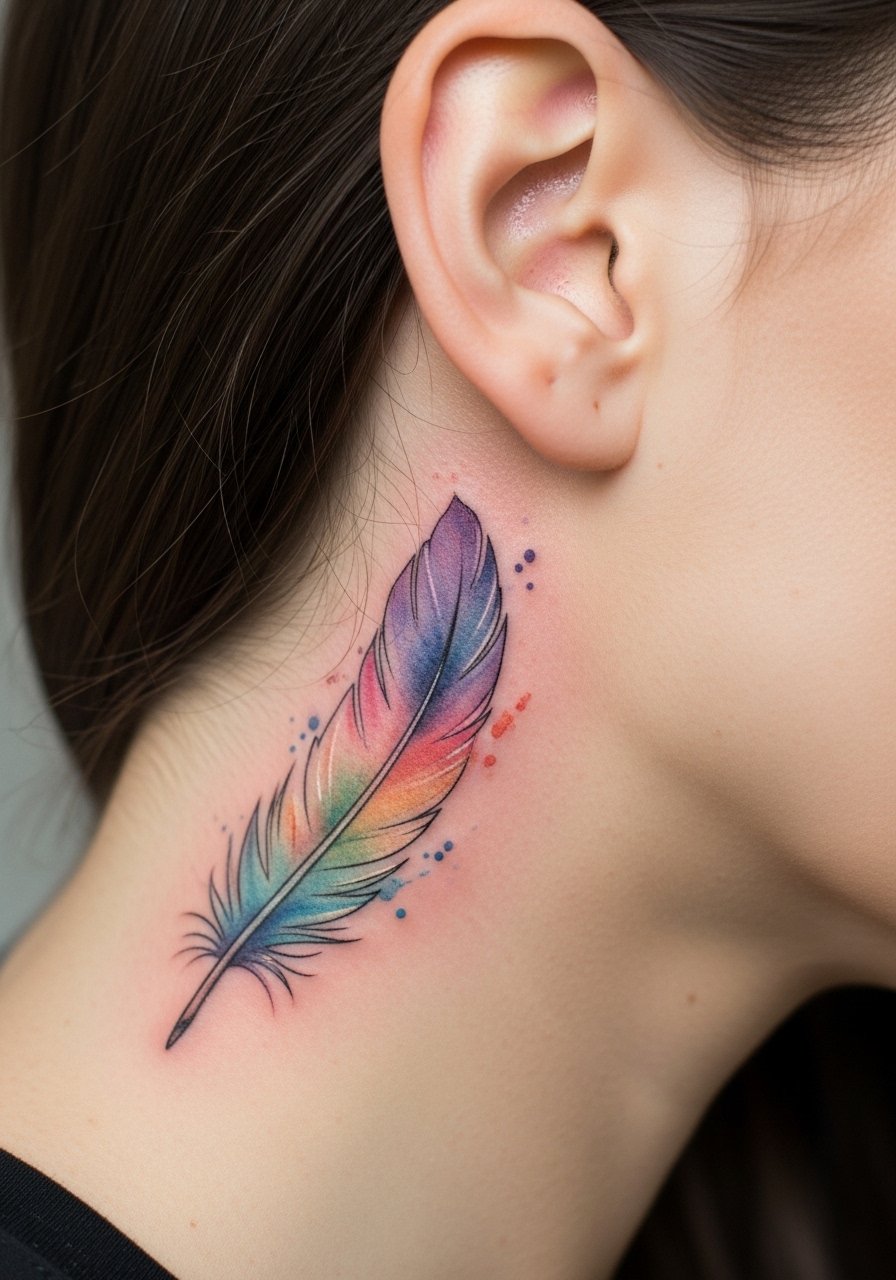
Behind-the-ear placements read private and are easy to hide with hair. Keep the tint pale and the quill slightly bolder so the silhouette survives hair oils and shampoos. At six months colors often dim substantially. By two years, many people want a refresh if they want the original pastel to return. The main mistake is asking for high saturation in such a small area. This placement needs closeness to a specialist who has reliable linework experience. Hairline care after the session is important, and you should expect a quick, low-pain appointment.
11. Finger-Side Feather in Micro Watercolor
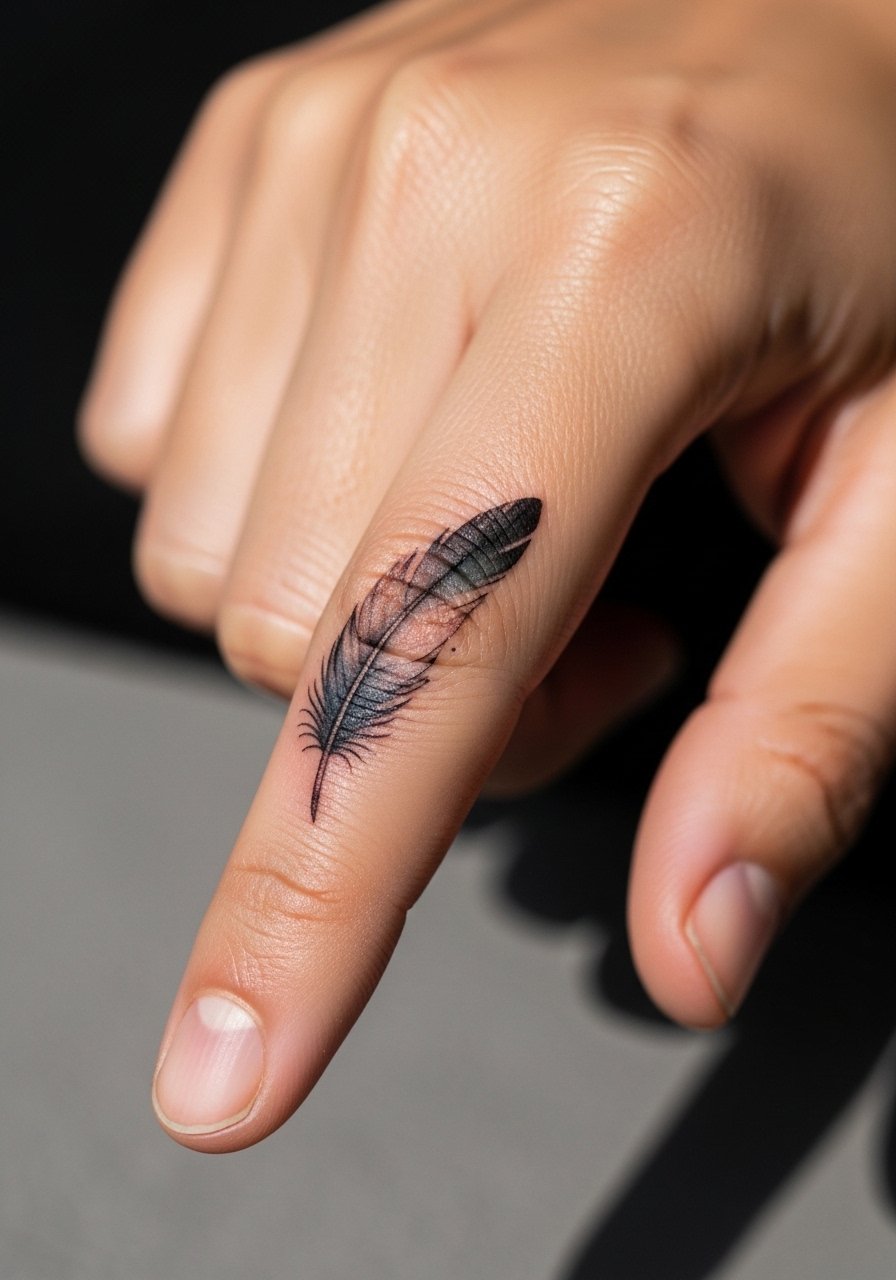
Finger tattoos live in a friction-rich zone. I recommend a micro-feather with minimal wash and a strong quill so the shape lasts through daily use. Expect clear lines at six months and significant fading by two years without touch-up. The biggest mistake is asking for saturated washes that simply cannot hold on fingers. Pain is quick and sharp. For showing the healed piece, consider stacking with a minimalist ring set that complements the scale without overcrowding.
12. Thigh Inner-Face Feather with Soft Bloom
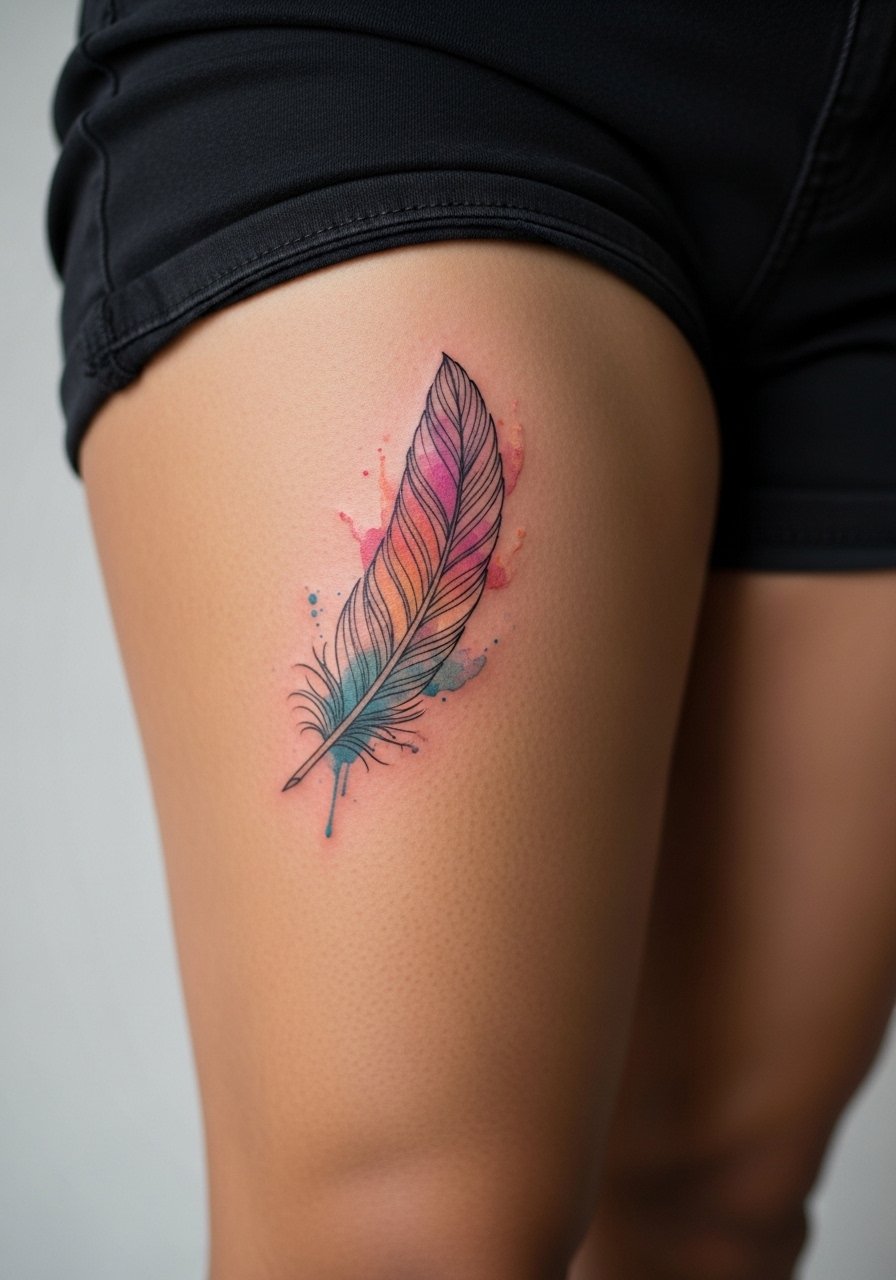
Inner thigh work gives a canvas for larger, softer watercolor blooms. Tell your artist you want the feather to breathe, and pick washes that taper widely so touch-ups are simpler. The area bruises more easily, so expect swelling the first two days and healed softness at six months. A common mistake is dense color near the pant line that rubs during healing. Session pain varies, often moderate. Wear loose shorts or a wrap skirt to the appointment for access and comfort.
13. Shoulder Blade Feather with Layered Transparencies
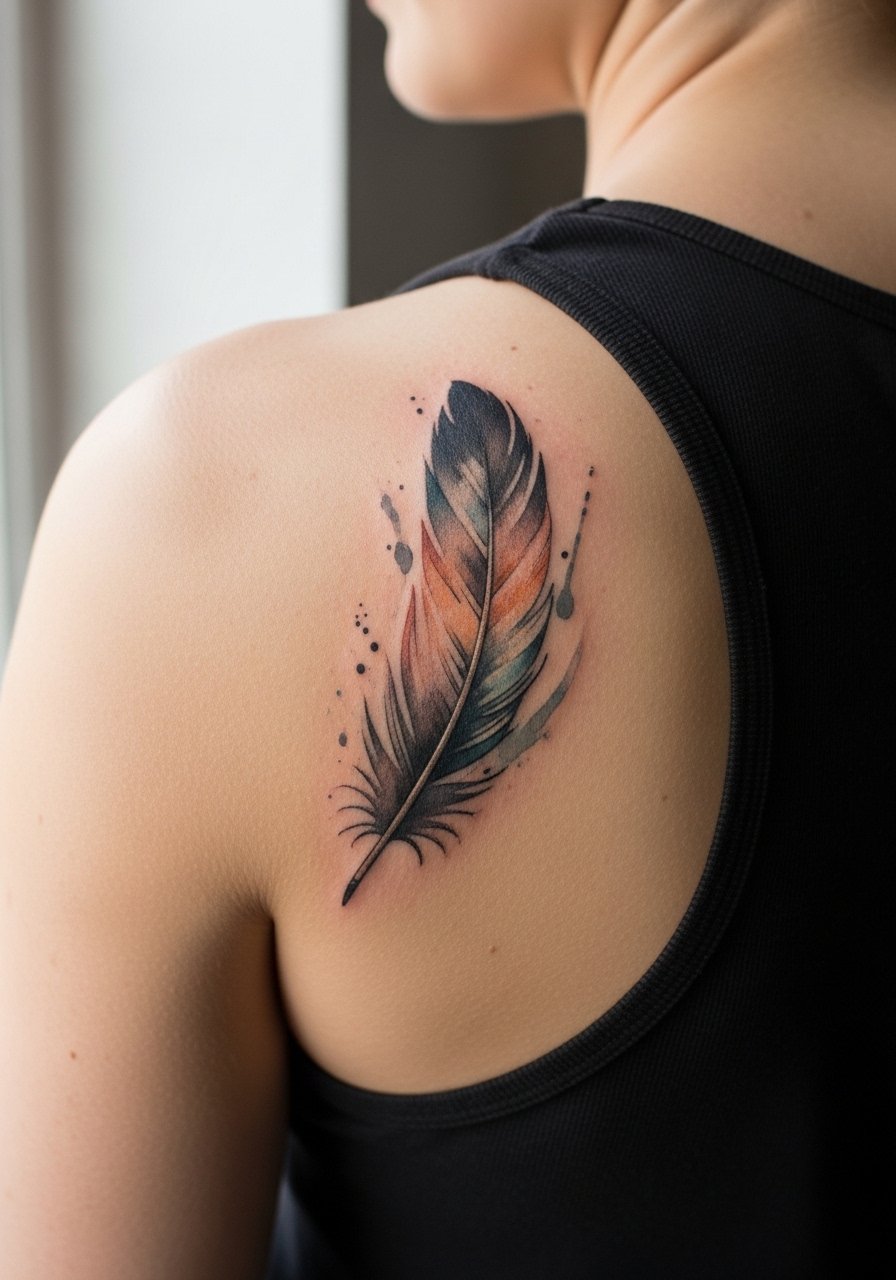
The shoulder blade is forgiving for layered watercolor effects. Ask for transparent layering rather than full coverage pigment to avoid muddying. Expect the layered look to read clearly at six months and to need less frequent touch-ups than wrists or hands. A mistake is requesting saturated fills in the uppermost layer that hide the subtle transparencies. The session is moderate pain and often comfortable. Wear a loose tank top you can slip off or tie up for access.
14. Nape Feather with Vertical Drift
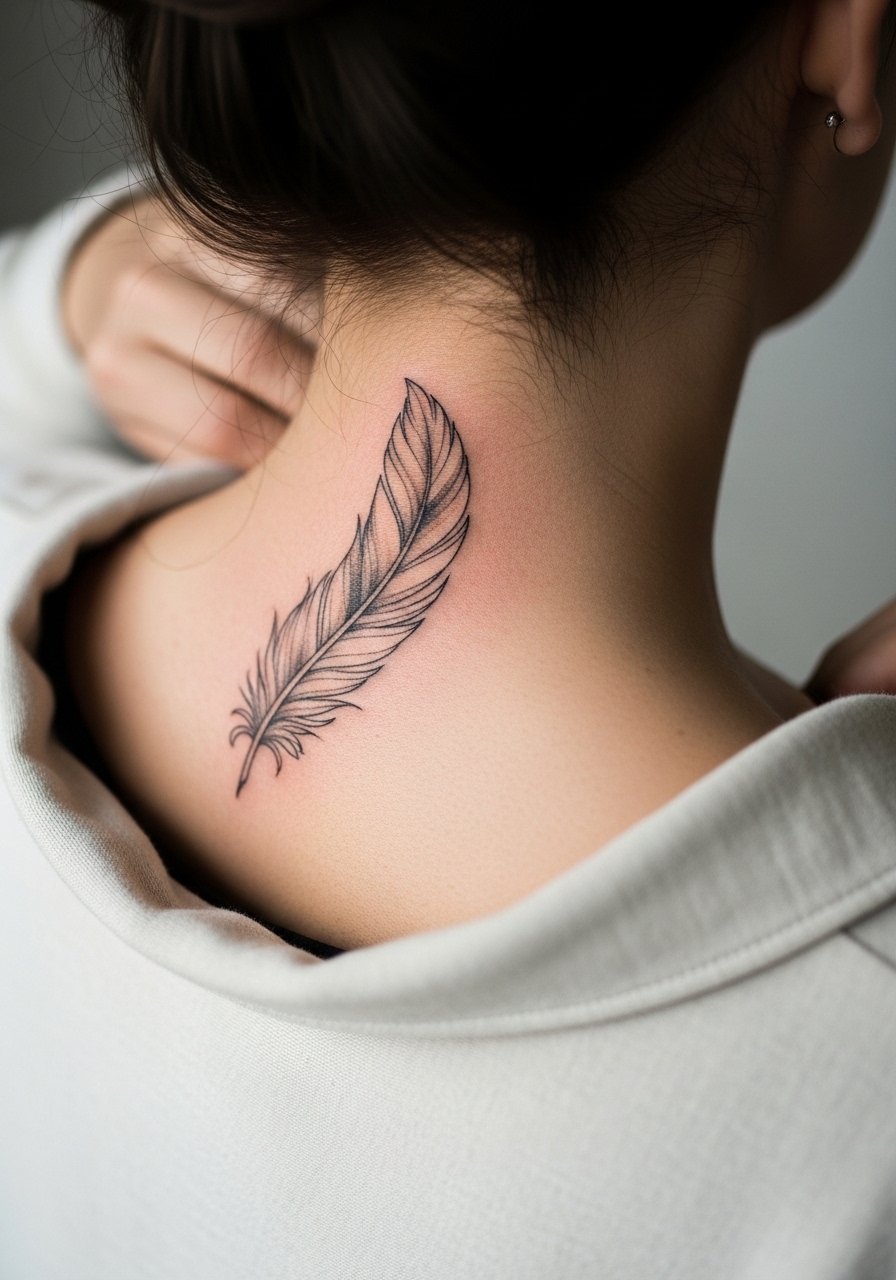
Neck pieces age differently because of constant movement and sun exposure. This vertical nape feather should have a defined quill and very light color drift that will fade gracefully. Expect crispness at six months and gradual softening by two years. Artists debate neck fine line consistently. One camp cautions about early blur from frequent motion. The other says proper placement and depth can secure longevity. Ask the artist where they stand in that debate. For the session, wear a wide-neck shirt you can move aside for clear access.
15. Lower Back Feather with Wide Watercolor Bloom
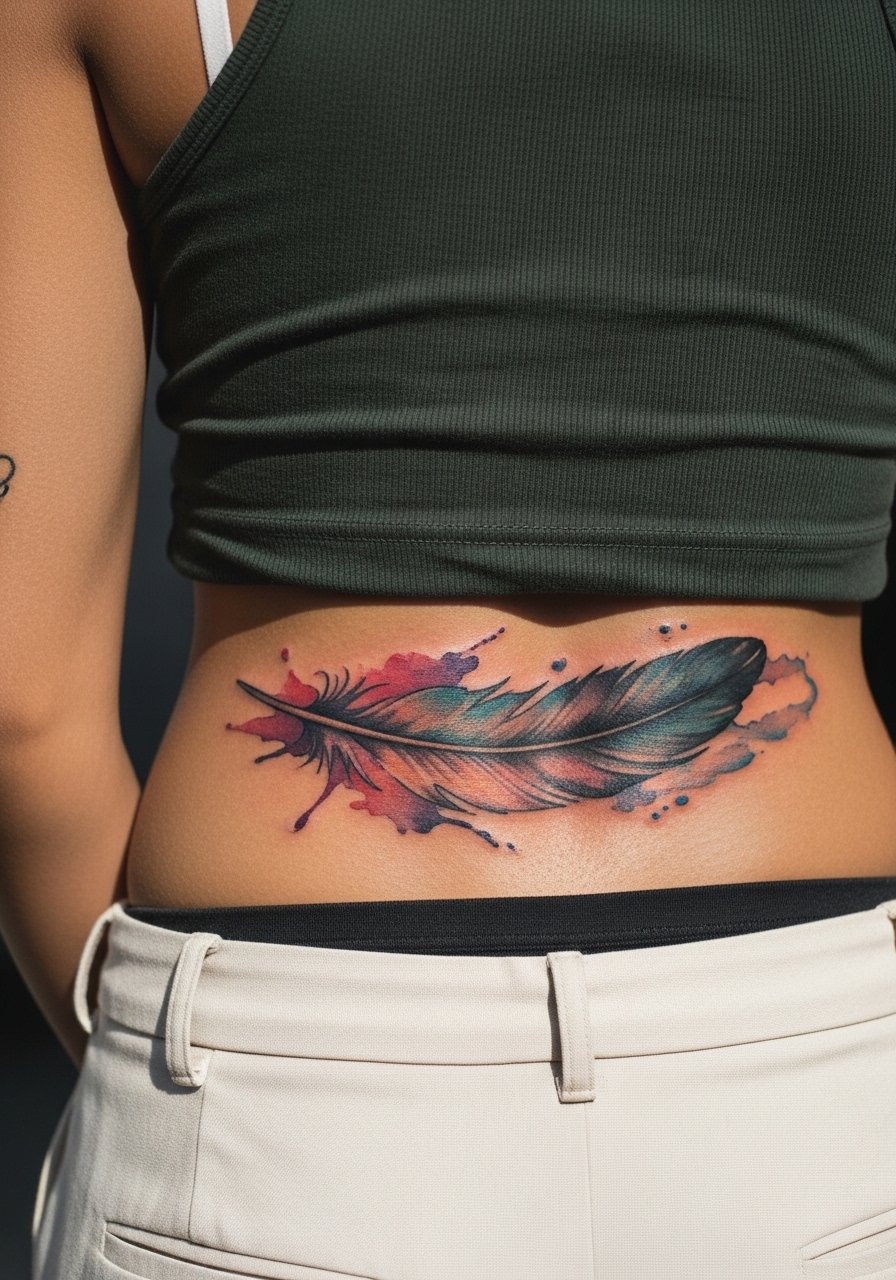
Lower back pieces let you play with wide blooms that read beautifully under casual tops. The skin here is stable so color holds better than on digits. Expect vividness at six months and decent retention at two years unless you frequently wear tight waistbands. A common mistake is placing heavy color directly under the waistband where rubbing will accelerate fading. Session pain is moderate and often tolerable. For the appointment, choose high-waisted bottoms you can lower slightly for access.
16. Foot Arch Feather with Feathered Tip
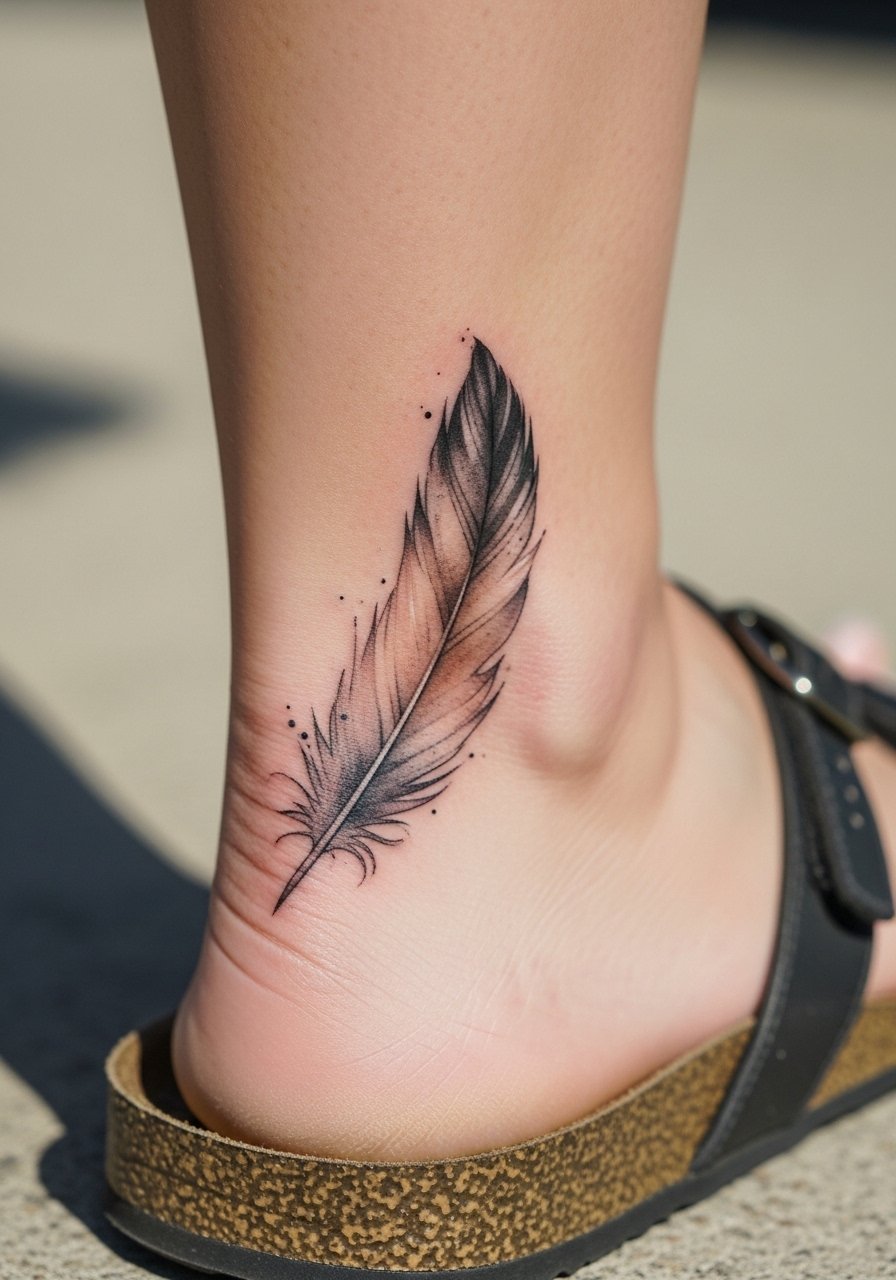
Foot tattoos live in a high-friction zone and are prone to early fading. I advise a design with a bolder quill and a very light feathered tip, so the main shape endures. The session can be uncomfortable. At six months the outline should remain visible, but by two years expect significant loss of pastel washes. The typical mistake is heavy, full-color fills on the arch. For showing off once healed, wear minimal sandals or cropped pants.
17. Full-Side Feather with Multicolor Gradient
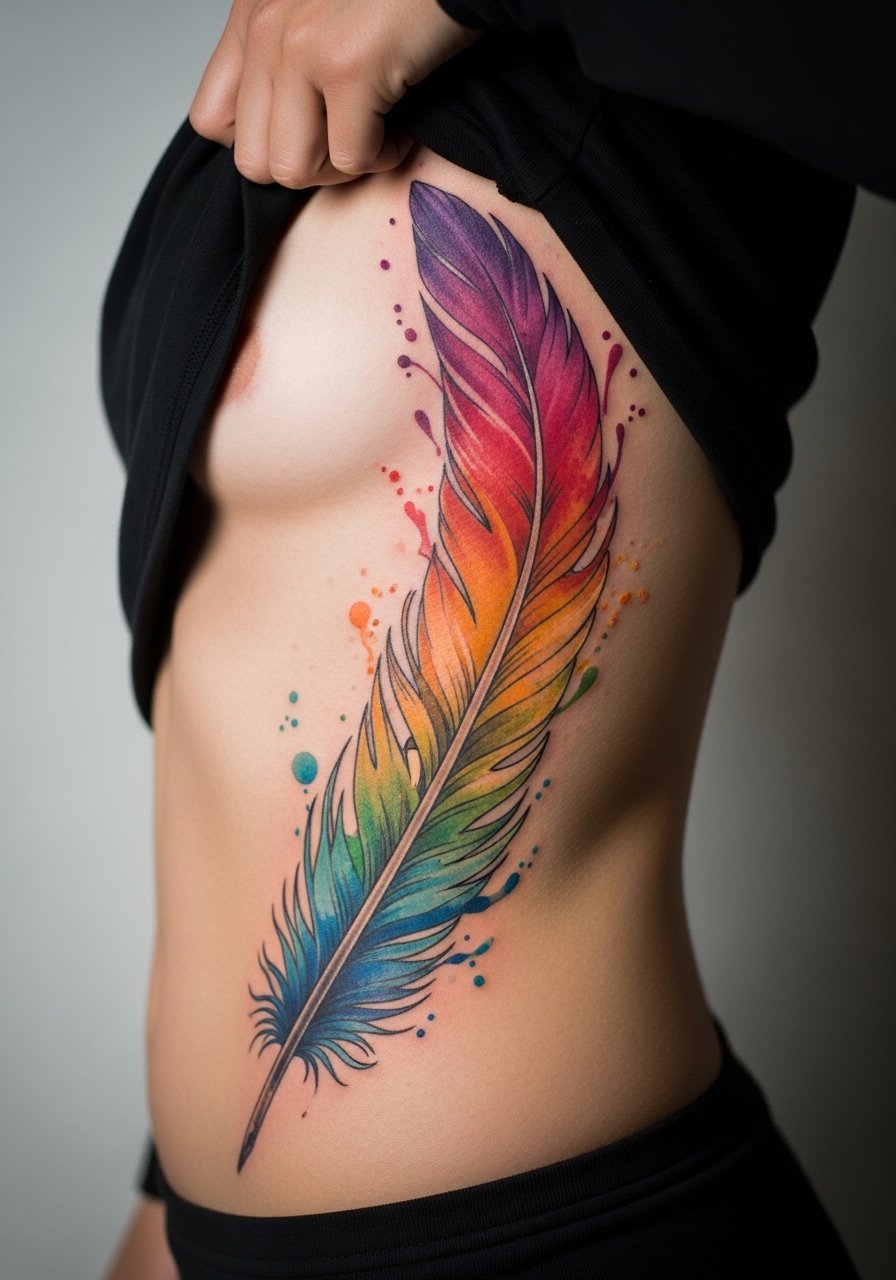
Side torso pieces take longer sessions and show dramatic gradient work well. Plan for multiple sittings and stage the color so the artist can layer gradually. Expect a strong result at six months. By two years the outer gradients will need touch-ups if frequently exposed to sun. A common mistake is compressing too many colors into a single short session. The session sits at moderate to high pain. Wear a cropped tee or zip hoodie for easy access during work.
18. Ear-Edge Feather with Micro Wash
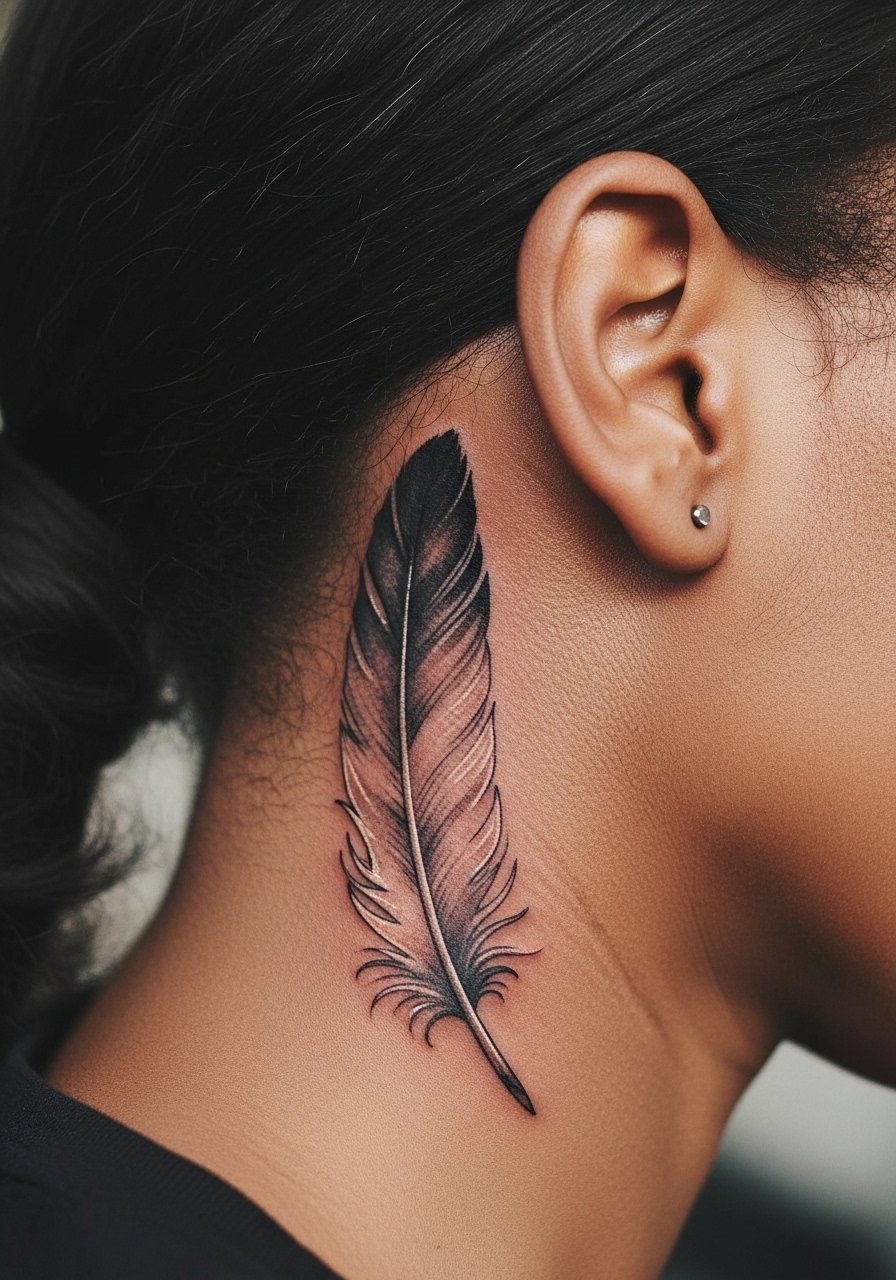
This micro placement is subtle and private. Keep the wash tiny and the quill slightly darker so the silhouette reads through hair oils and shampoo. At six months the shape should be intact. By two years expect the color to have mostly faded unless you protect the spot during hair washes. A mistake people make is asking for too much pigment near the hairline. The appointment is quick and low pain.
19. Sternum Anchor with Mirrored Side Feathers
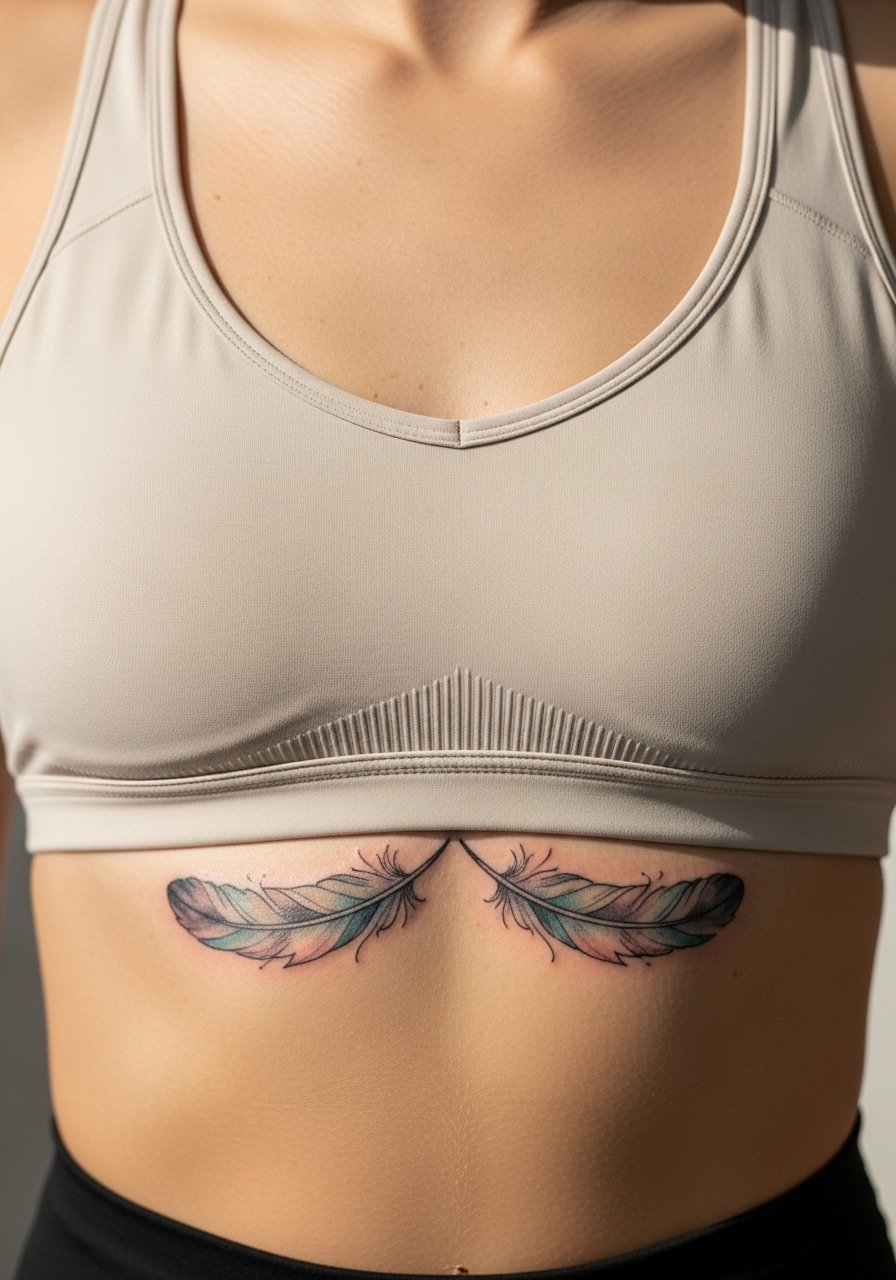
Symmetry on the sternum reads very intentional. Ask for the artist to check balance with the body in different postures before inking. The central area is prone to movement and pressure from clothing, so avoid dense saturation over the midline. Expect good detail at six months and potential softening by two years. The main mistake is assuming perfect symmetry on the stencil will translate to the skin while breathing. Sessions are moderate in pain and often split. Pack a strapless or sports bra for the appointment.
20. Shoulder Cap Feather with Metallic-Like Highlights
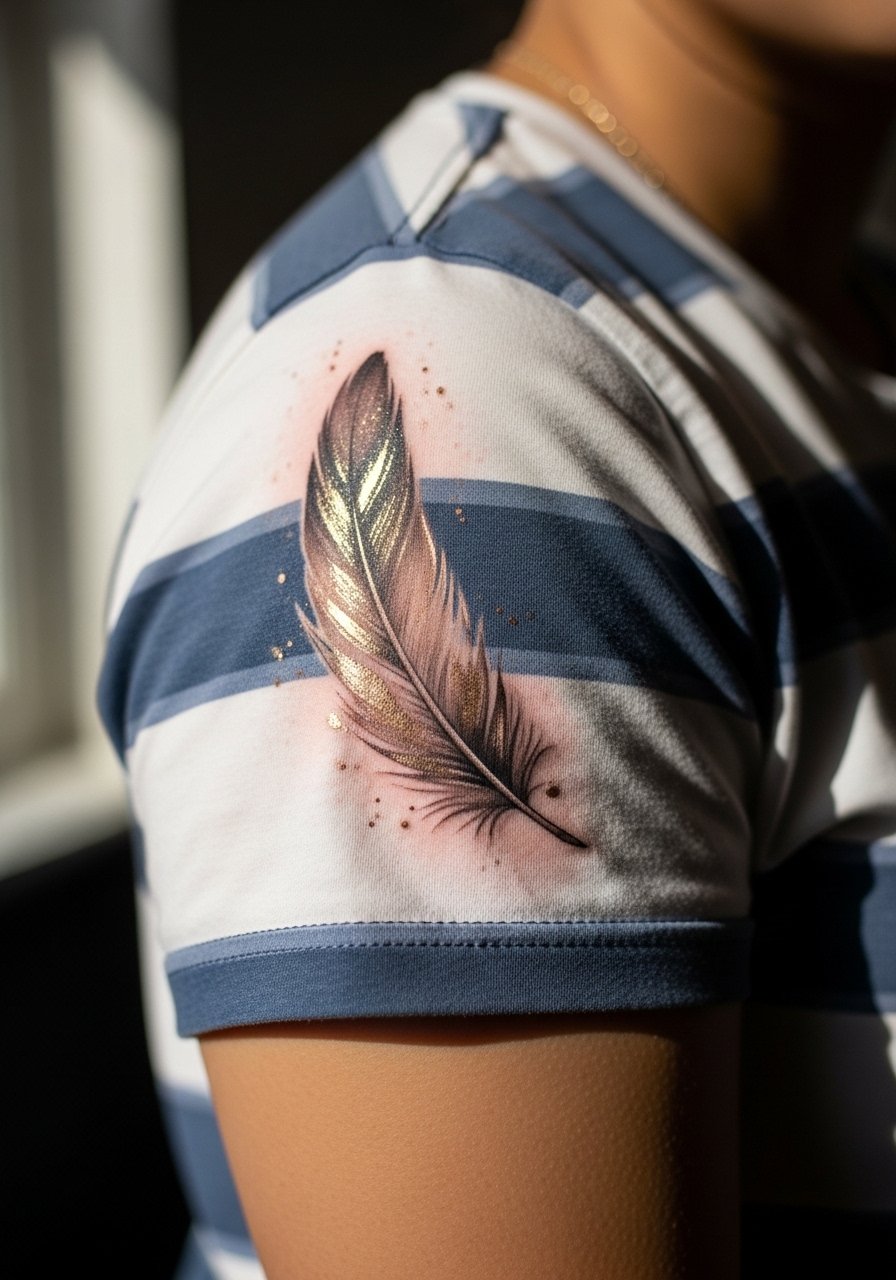
Highlights can make watercolor feel multi-dimensional, but metallics fade faster. Ask for subtle reflective tones and strong quill anchors so the piece reads in daylight. At six months highlights will still show as shimmer in the wash. By two years you may notice they are the first to go. A common mistake is asking for heavy metallic pigment expecting long-term durability. Session pain is low to moderate. For shows, wear sleeveless tops that reveal the cap.
21. Rib-Underarm Feather Accent
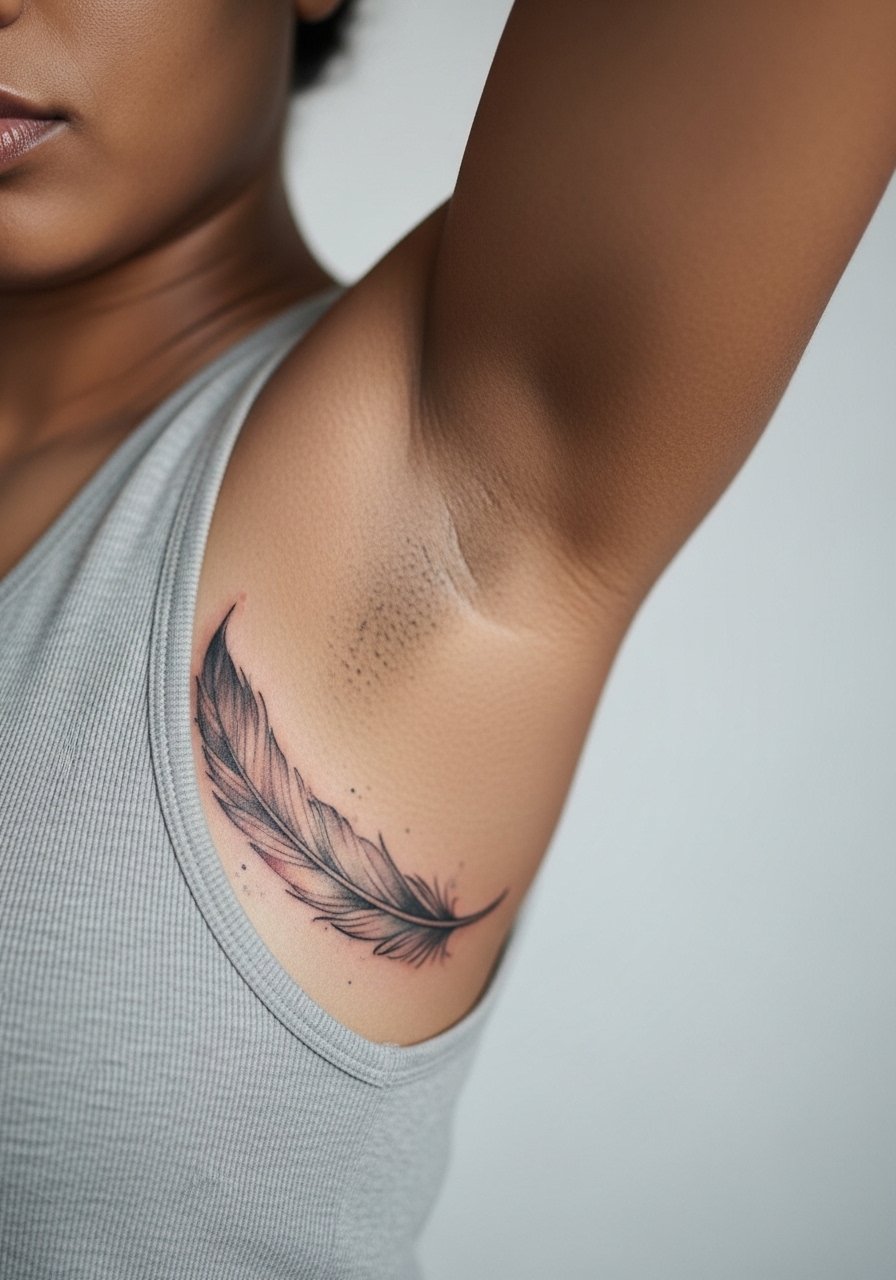
The rib-underarm juncture moves a lot so placement needs consultation. Artists disagree on fine line in this spot. One group warns of blurring and migration because of skin texture and motion. The other group says planned spacing and depth can mitigate that. If you choose this area, ask for more spacing between parallel lines and lighter washes. Expect crispness at six months and possible softening by two years. Sessions can be painful and may require breaks. Wear a loose tank top for the appointment.
22. Chest-Side Feather Flowing Toward Shoulder
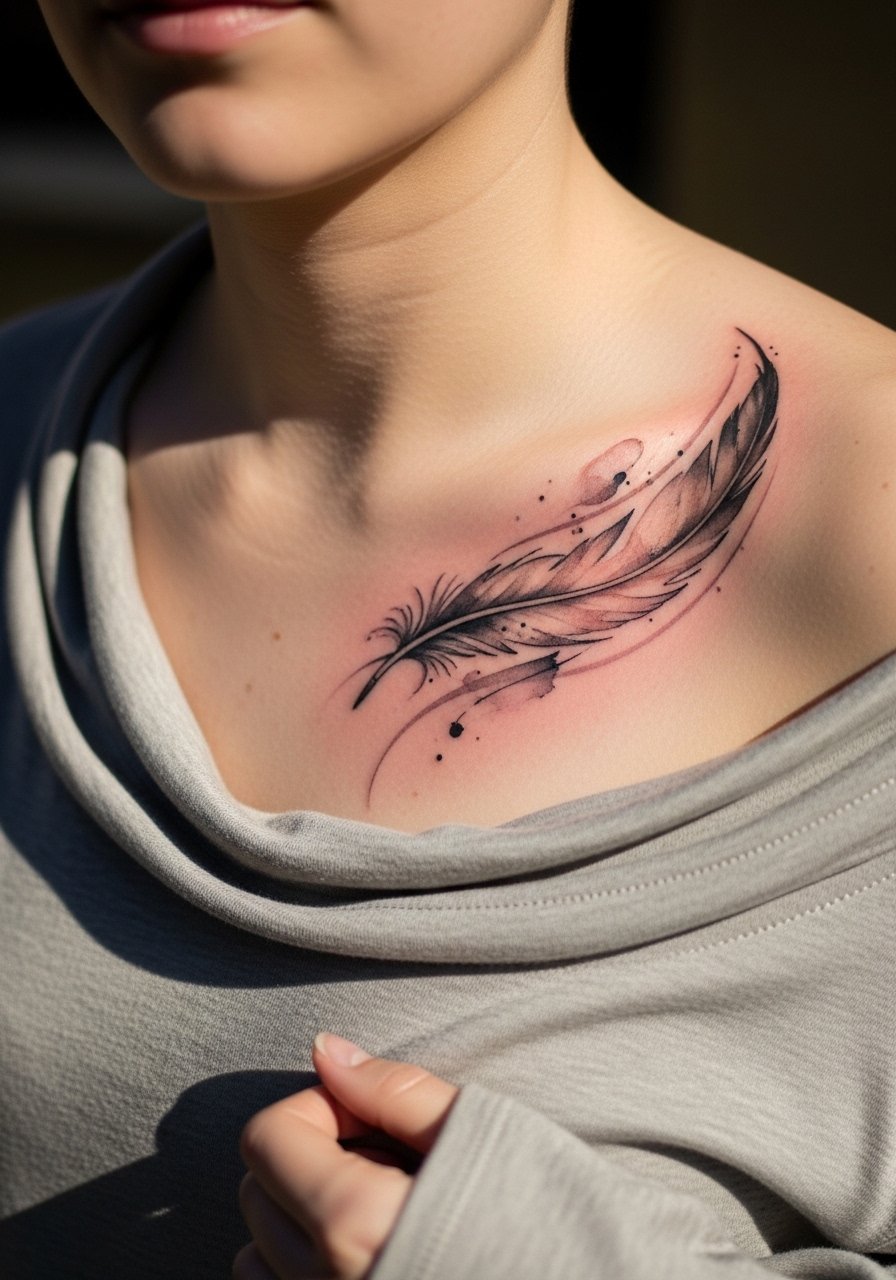
Chest-side placements show well with V-necks or open collars. Ask for the feather to taper into negative space where shirts will sit to reduce friction during healing. Expect strong initial contrast at six months and gradual fade at two years without sun protection. A mistake is placing heavy pigment under shirt edges. Session pain varies. For showing this off, pair with open-collar shirts or a v-neck blouse that frames the taper.
23. Petite Clavicle Feather with Scripted Year
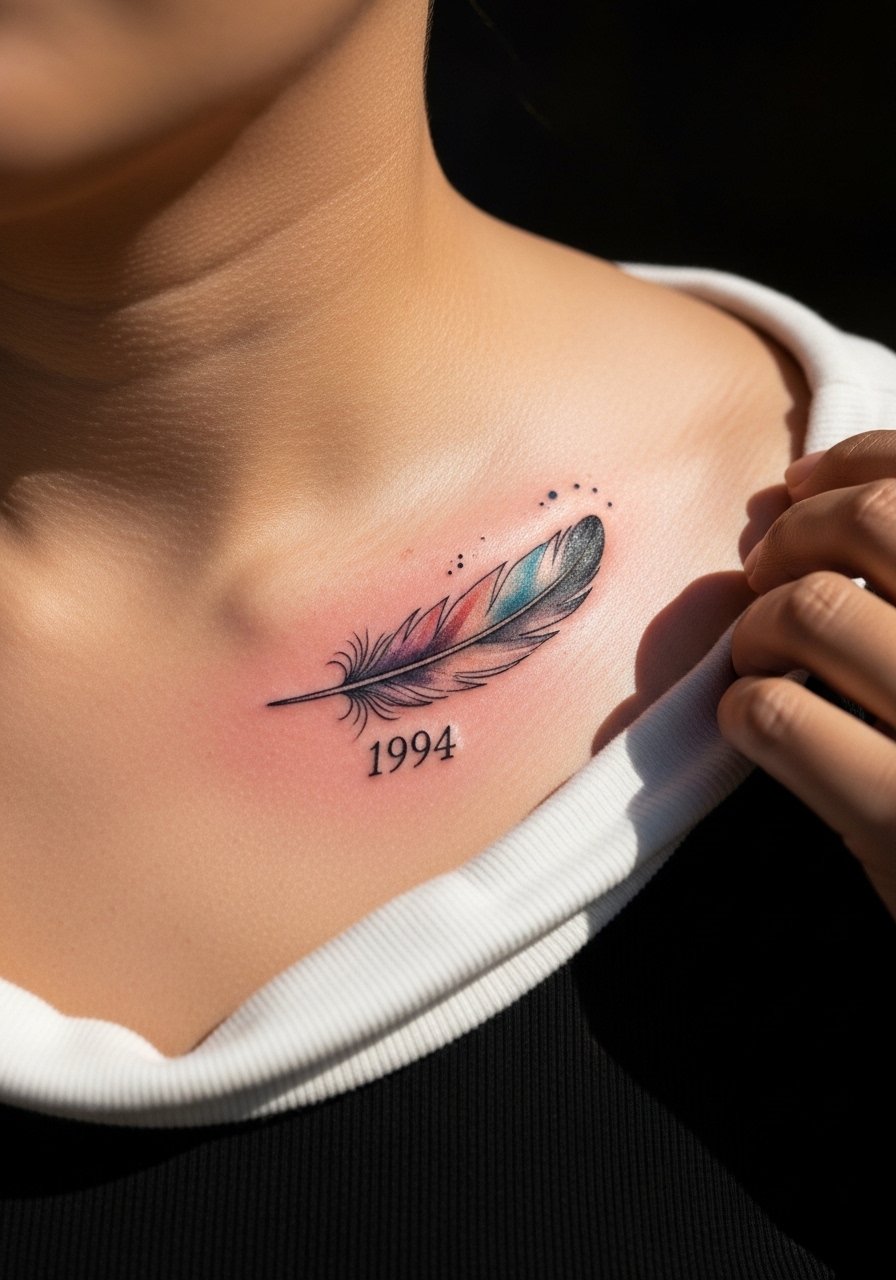
When text is part of the design, always specify the exact wording. The year under the feather anchors the piece visually. Keep the script compact and the wash airy to prevent text blur. At six months the number should still be legible. By two years very small numerals may need a touch-up. A common mistake is choosing a font too thin for long-term legibility. Session pain is low. Pair this with a thin open-neck top for evenings out.
24. Back-of-Arm Feather Cascade
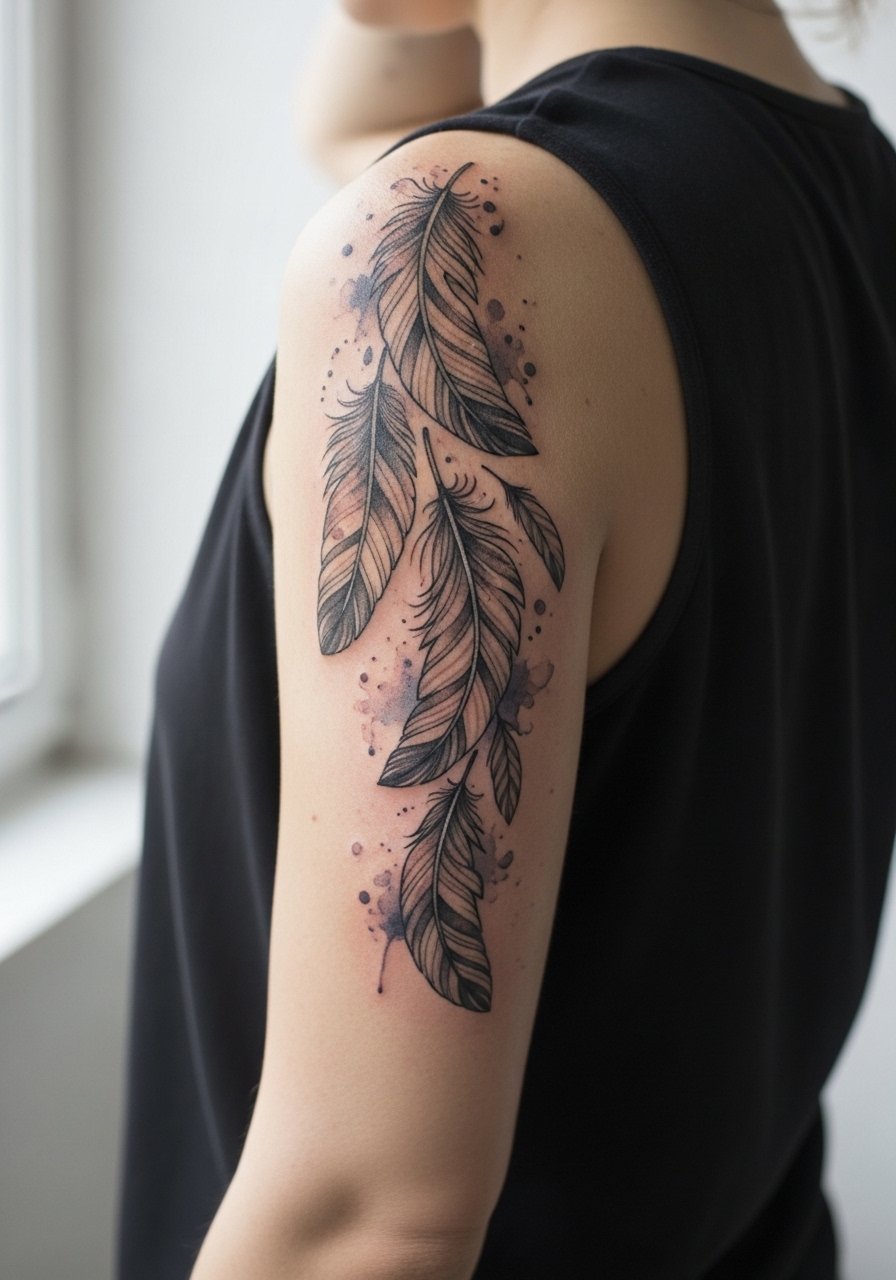
This vertical cascade moves with your arm and draws the eye. Ask for spacing between each feather to avoid merging as the washes age. The back of the arm is less friction prone than the inner side, so color holds better. Expect strong look at six months and reasonable retention at two years. Mistakes include compressing too many elements vertically. Sessions are moderate and feel like steady buzzing. Wear a sleeveless top you can easily lift or remove.
25. Micro-Realism Feather Tip Near Wrist Crease
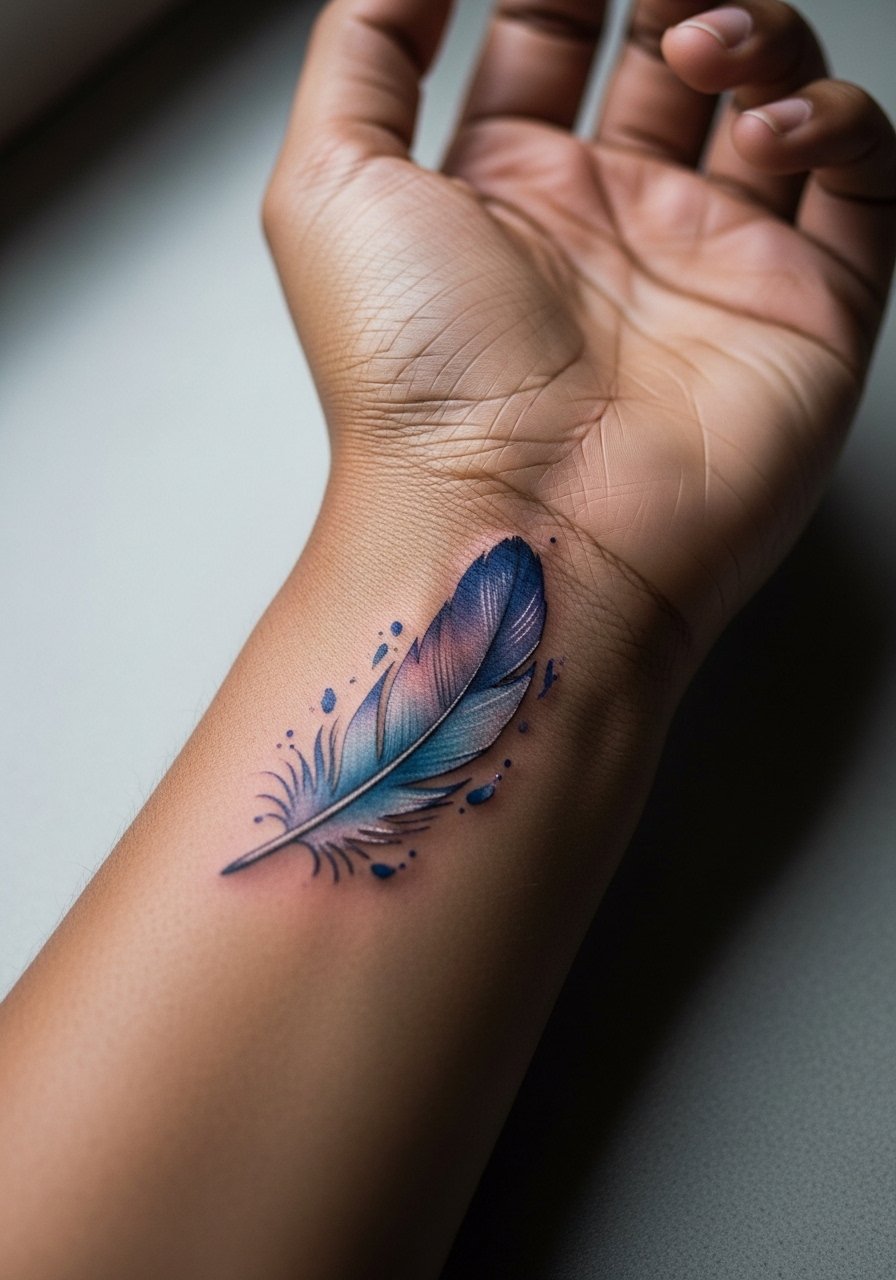
Micro-realism at the wrist requires a confident hand. I suggest slightly reinforcing the nearest quill line to preserve form as tiny washes fade. At six months the detail should be clear. At two years expect the tip wash to require a touch-up if you wash hands frequently. A common mistake is asking for too many micro strokes that blur with time. The session is short but precise. For showing off, wear dainty bracelets that float above the piece.
26. Hip Feather Curling Toward the Front
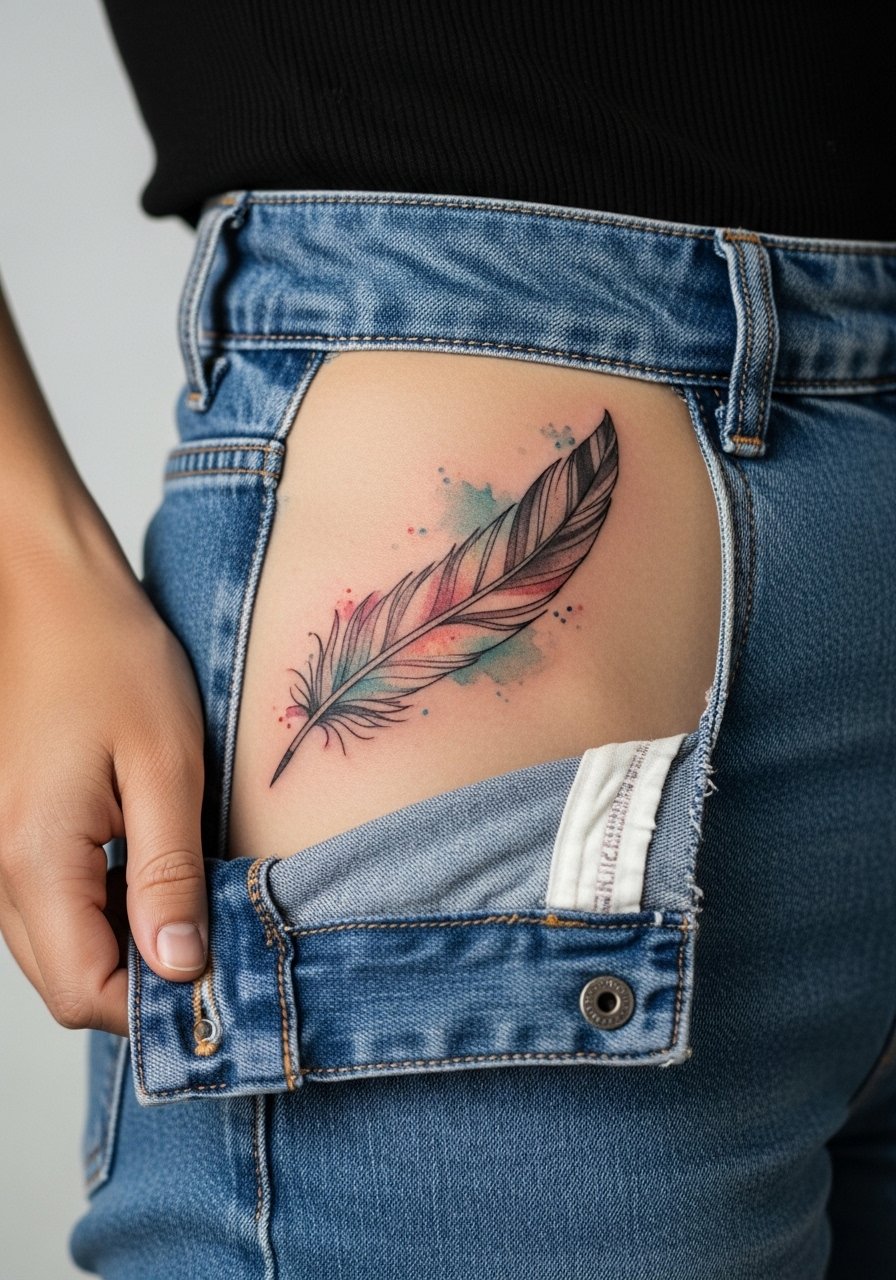
Hip placements are intimate and often hidden, which helps protect watercolor tones. Ask for the wash to sit away from the waistband to avoid abrasion during healing. At six months colors usually look soft and intentional. By two years they remain subtle if you avoid tight waistbands. The mistake is placing pigment directly where clothing will constantly rub. Session pain is moderate. Wear high-waisted bottoms that you can lower slightly for the appointment.
27. Chest-Center Feather with Radiant Halo Wash
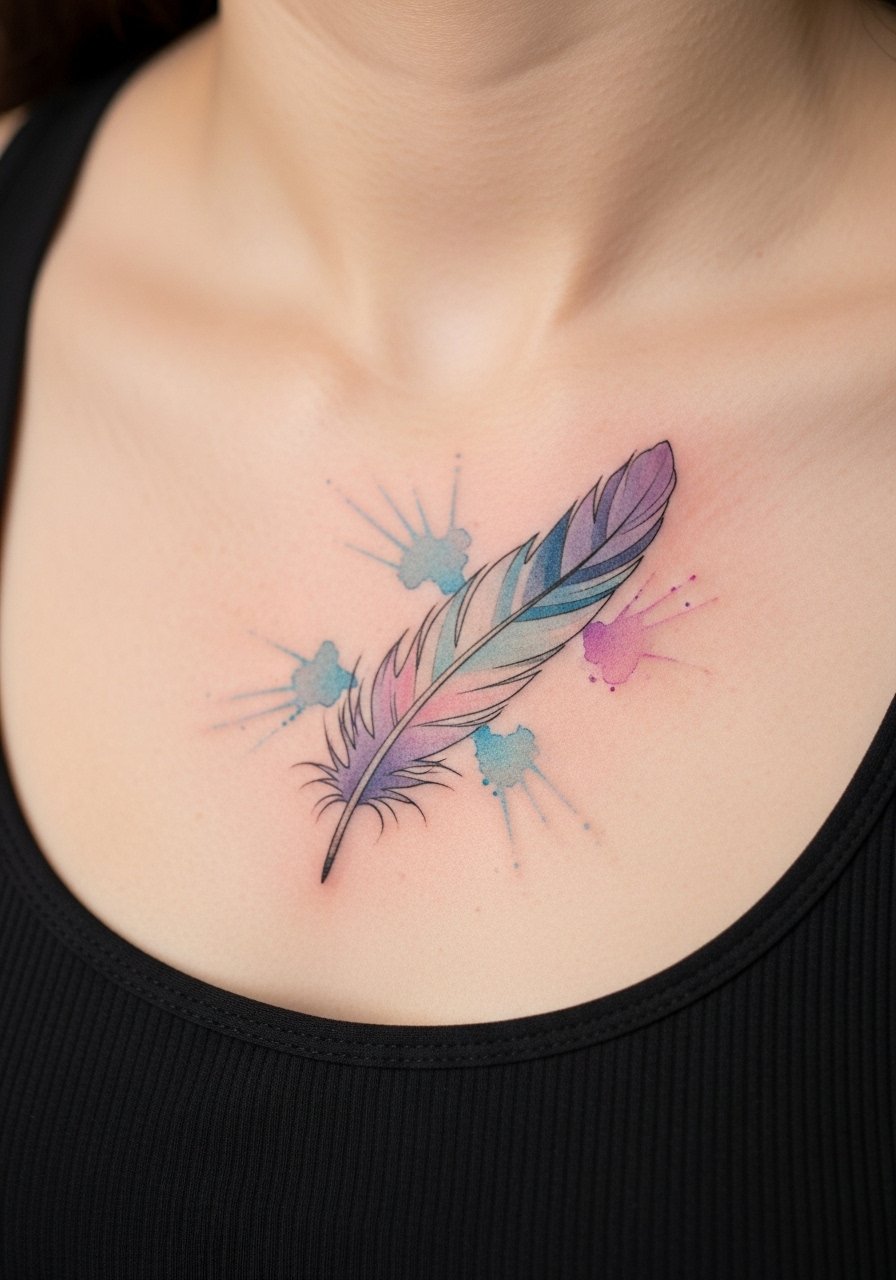
A central chest feather reads bold when paired with a halo wash. Ask for the halo to be diffuse and not edge-heavy. The chest can hold washes if they are layered gradually. Expect a vibrant look at six months and possible softening at two years if you wear tight straps over the area. A common mistake is asking for a harsh halo on the first pass. Sessions can be moderate to high in discomfort. For the appointment, a fitted sports bra or bandeau is easiest for access.
Frequently Asked Questions
Q: Will watercolor-style feathers fade faster than traditional saturated tattoos on the forearm or wrist?
A: From what I have seen, watercolor washes do fade faster than saturated traditional fills because they rely on thin pigment. Forearm pieces with stronger quill linework and lighter washes age better. Expect touch-ups sooner for wrist work, and plan on sunscreen and minimal friction to extend vibrancy.
Q: How should I prepare for a ribcage or sternum watercolor feather session to increase comfort and healing?
A: Sleep well the night before and avoid heavy alcohol or blood thinners. Wear a loose zip hoodie or a fitted sports bra that you can easily move for access. Bring snacks and expect breaks. The right clothing makes the session smoother and reduces chafing during the first days of healing.
Q: Are there styling tips to show off a collarbone or shoulder feather without overcrowding the look?
A: Keep necklines simple so the feather reads clearly. A wide-neck shirt or sleeveless dress frames collarbone pieces nicely. Layer a thin chain necklace above the feather rather than across it to avoid visual competition.
Q: If I want a multicolor gradient on my side torso feather, how many sessions should I expect?
A: Plan on multiple sessions if you want deep gradients. Artists usually build watercolor gradients in layers so pigment can settle between sittings. Spacing sessions by several weeks reduces trauma and improves color stability.
Q: Should I be concerned about getting a feather tattoo on my hand or fingers if I work in a visible profession?
A: Hand and finger tattoos are highly visible and can affect hiring in some industries. They also fade faster due to washing and friction. If visibility matters, consider placements that are easy to conceal or choose a simpler, low-color design that you can refresh less often.
