
The watercolor take on Assassin's Creed iconography reads like a motion blur from a game cutscene, and that makes it tempting to go bright and small. The reality is that watercolor pigments behave differently on skin, and placement matters more than saturation when it comes to longevity. Below are focused ideas that lean into what holds up, what to ask your artist for, and how to style or prep each placement so the design ages like you meant it to.
1. Hidden Crest on Inner Wrist
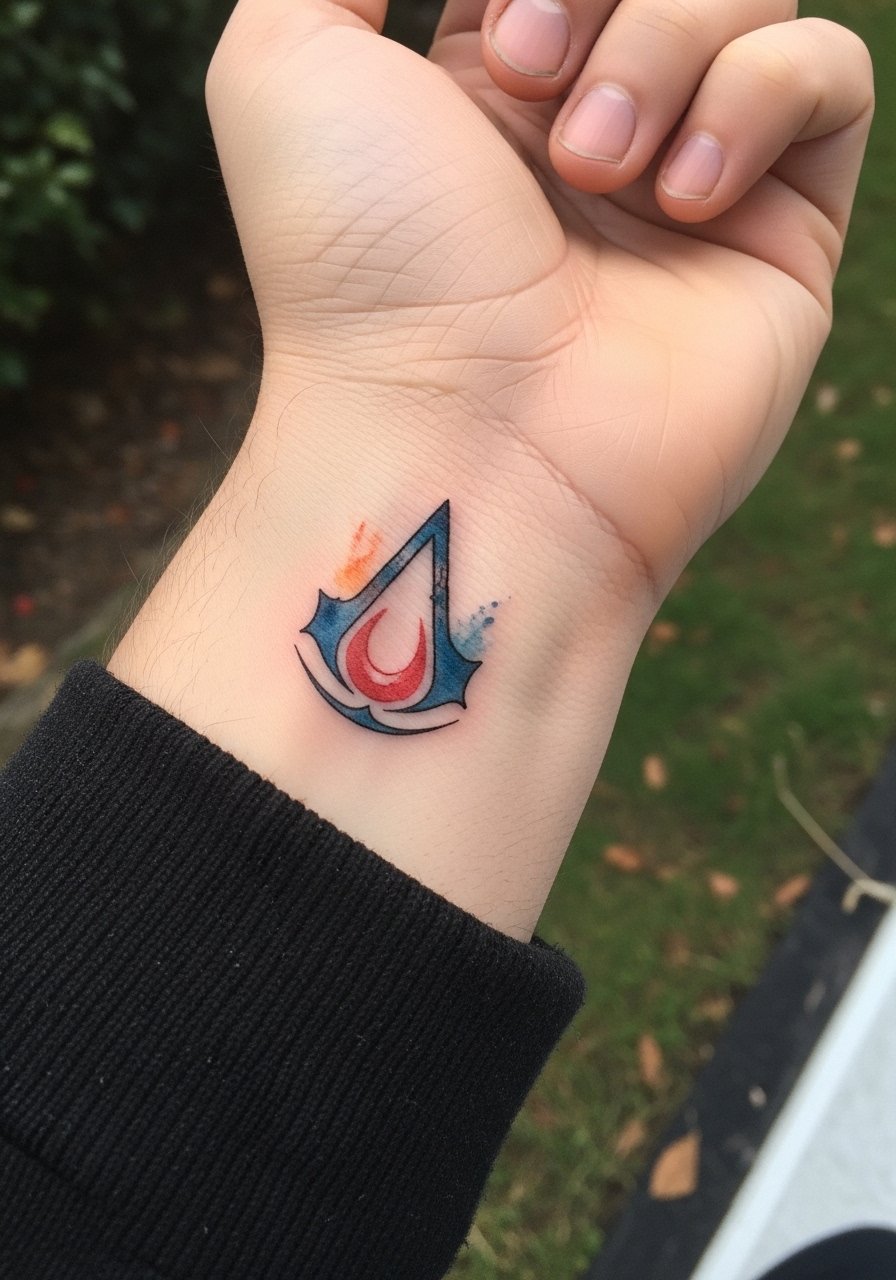
I've seen tiny wrist crests look sharp for the first year and then soften into blur because people skip spacing and overdo the wash. For this placement, ask your artist to pair a faint black outline with diluted color fills so the silhouette stays readable as saturation drifts. Pain is low to moderate for the inner wrist and sessions are short, often under an hour for a compact crest. Expect touch-ups in year two to maintain vibrancy, especially if you wash hands frequently or wear bracelets that rub the area. Styling tip for showing it off: wear a thin chain bracelet or a minimalist watch so the watercolor reads without being crowded.
2. Watercolor Eagle Burst on Upper Forearm
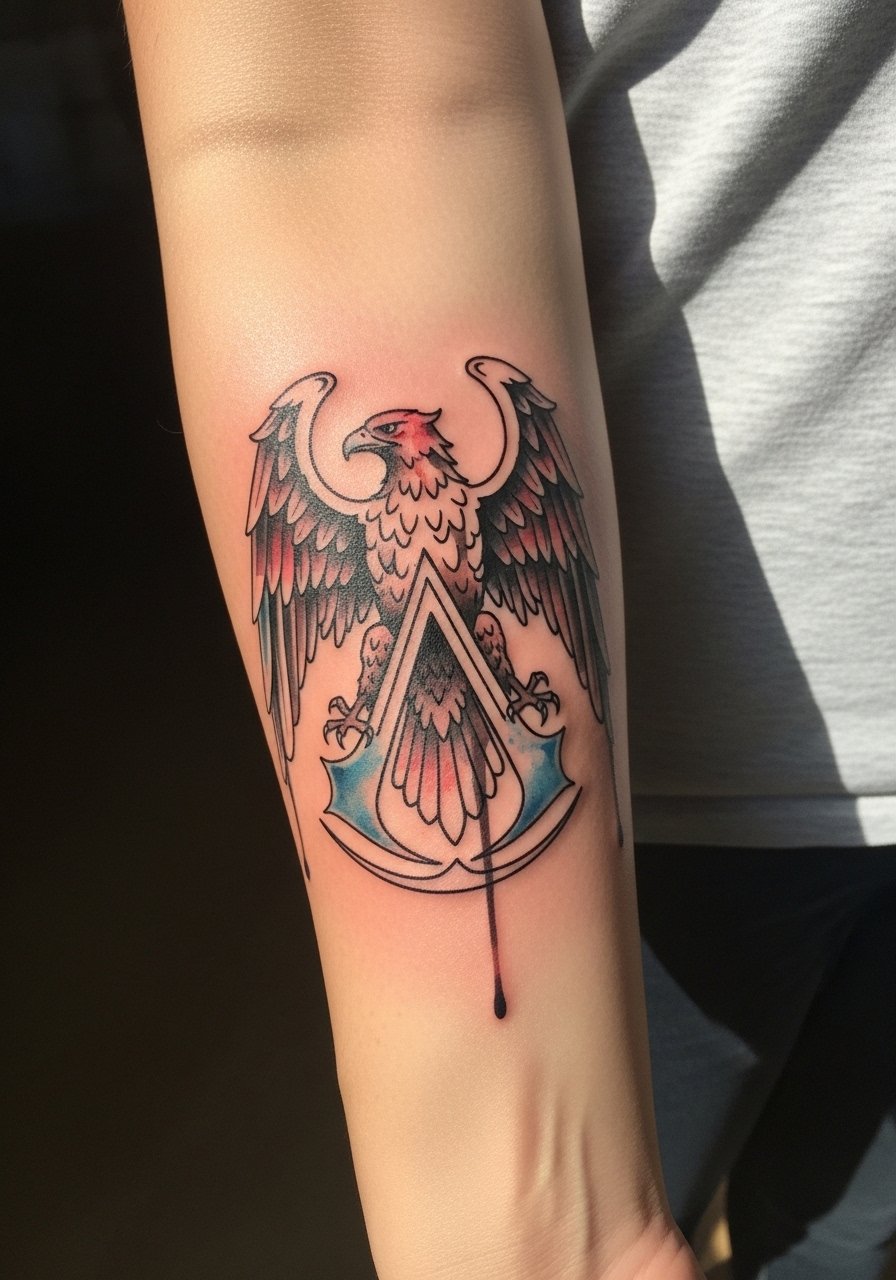
Personal observation: forearm washes tend to last better because the skin is stable and easy to protect from sun. Go for a bolder outline around the crest before the color fades into a feathered wash. Tell your artist to use stipple shading where the watercolor meets the linework to avoid abrupt bleed. Session time is usually one to two hours depending on size. Common mistake is asking for a poster-like burst that lacks a defined border, which accelerates blurring. For session wear, a short-sleeve linen shirt makes access easy while keeping you comfortable.
3. Collarbone Sigil with Soft Wash
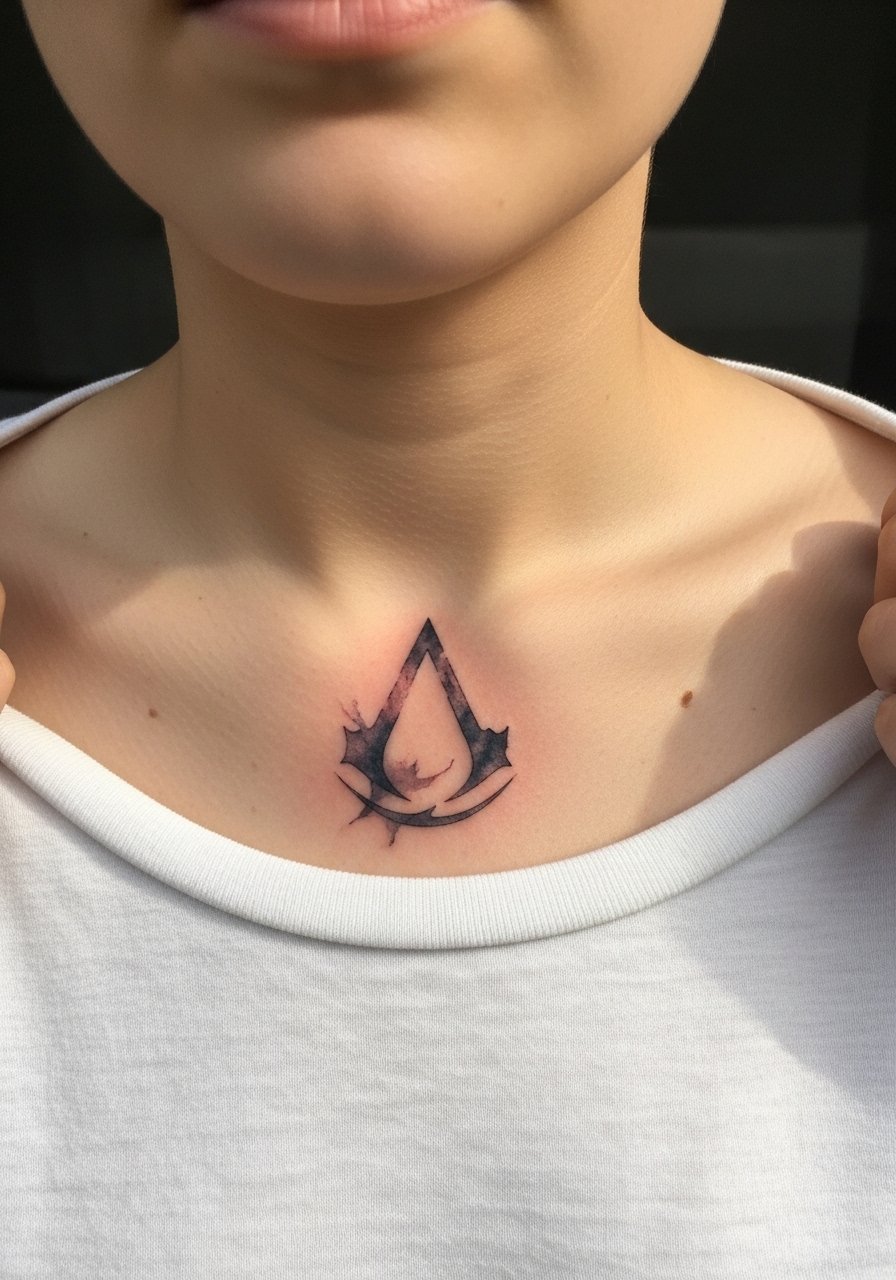
Aging lead: collarbone skin moves a lot with breathing and posture, so color can migrate in the first two years. The debate about watercolor chest pieces is direct. One camp says outlines ruin the watercolor aesthetic and prefer pure wash. The other camp argues a thin contour ensures the symbol reads for years. I recommend a thin surrounding line so the crest keeps its form when the pigment fades. Pain is moderate and sessions can be broken into shorter passes. Show-off styling pairs this with a wide-neck sweater that frames the area for evening wear.
4. Minimal Assassin Crest Behind the Ear
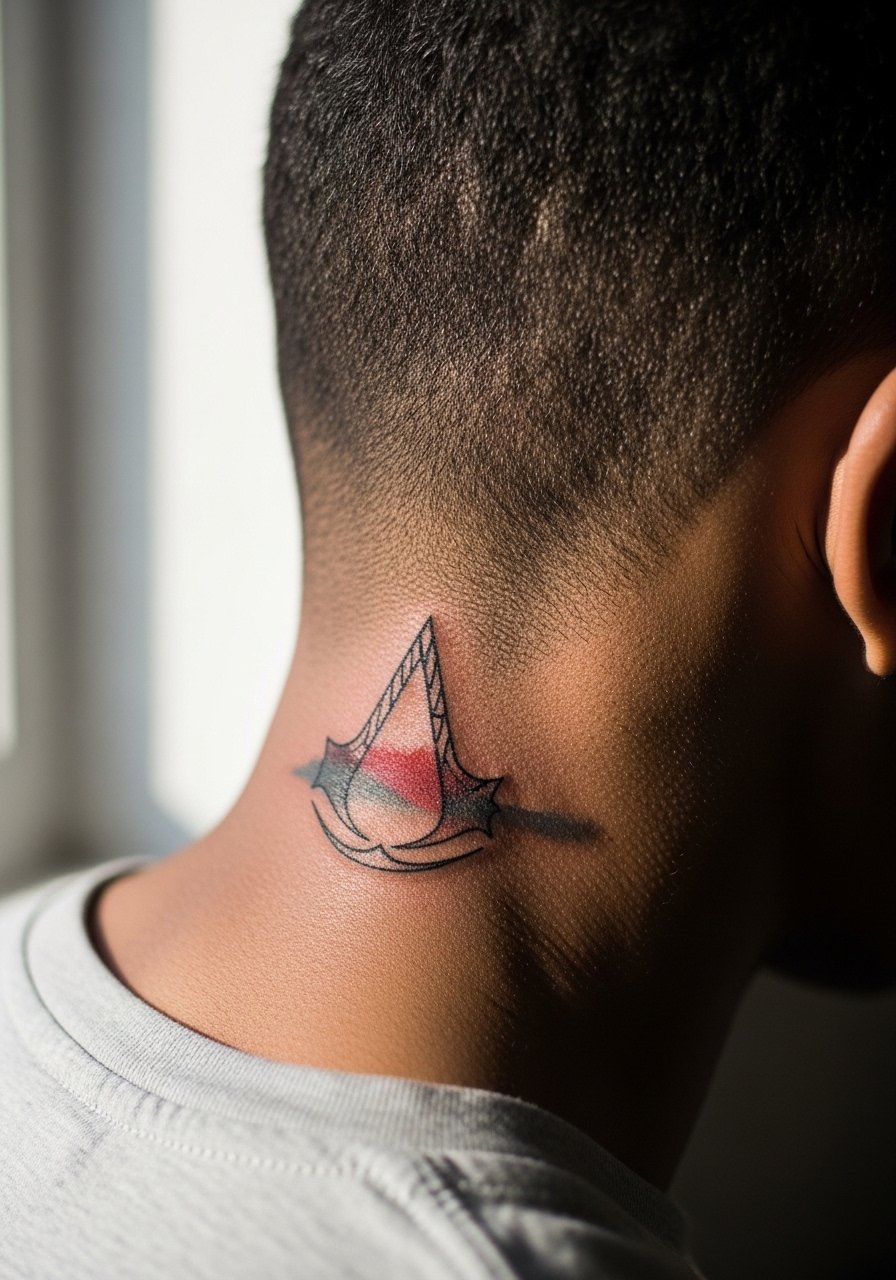
Consultation lead: when you ask for behind-ear work, have your artist place a scaled stencil on the spot and live with it for a minute before inking. The area is high risk for blowout if the needle goes too deep. Sessions are brief but the hold on pigment is less reliable than arm placements. A small wash needs careful saturation control so it does not bleed into hairline. Note on career considerations: neck-adjacent tattoos can still affect hiring in some roles, so factor that in. For the session, tuck hair behind the ear and wear an easy button-up so the artist can adjust access without tugging.
5. Watercolor Hidden Blade on Ribcage
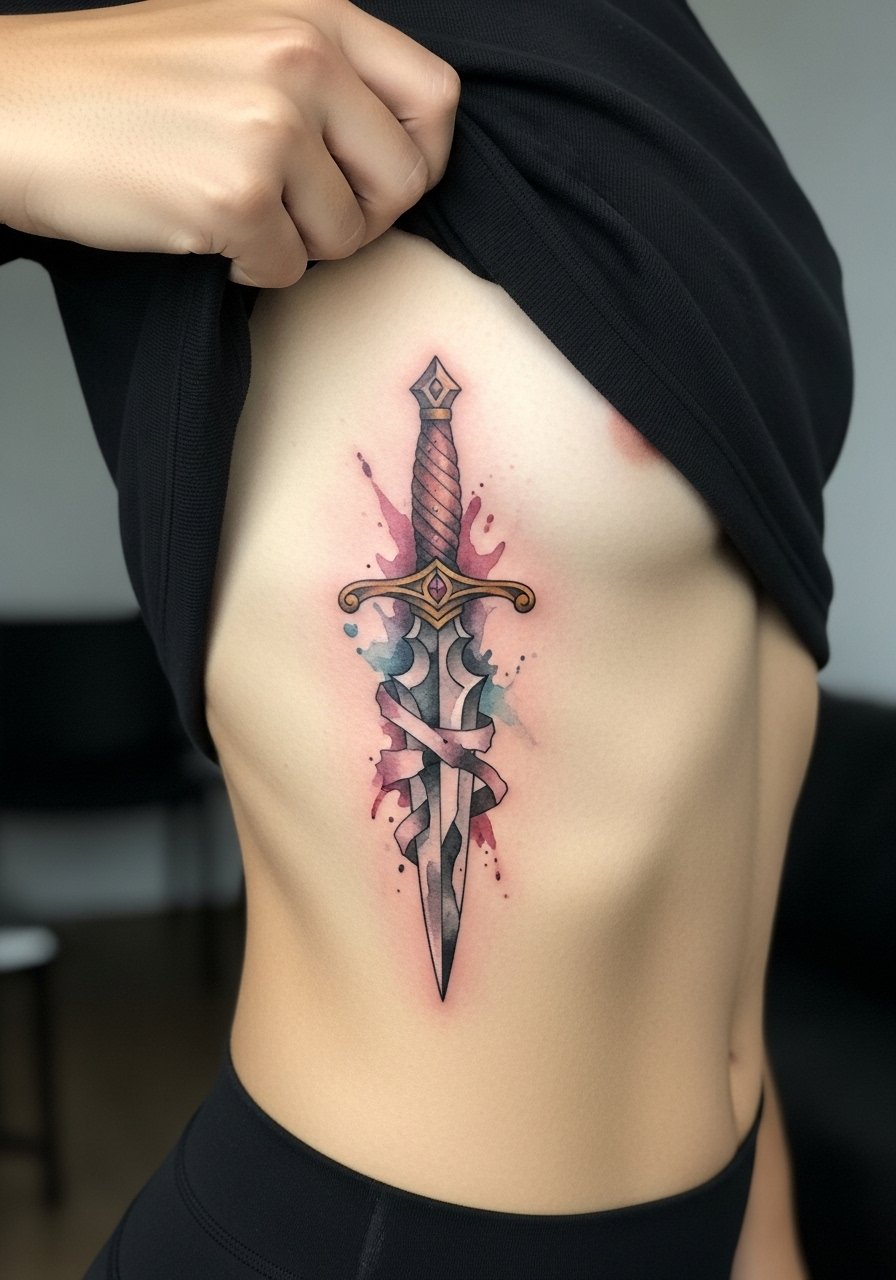
Pain warning lead: the ribcage is one of the more painful spots, generally a 7 out of 10 on common scales. The texture of ribs makes fine wash work prone to patchy saturation. Tell your artist you want layered passes rather than one heavy session, so color settles evenly. There is a real controversy here about fine line on ribs versus bold work. One group says the constant breathing and stretch blur lines quickly. The other group says careful depth and spacing can keep detail intact. Plan for a touch-up at year two. For session comfort, bring a zip-up hoodie that you can pull aside without removing and a pillow for support.
6. Sleeve Accent: Assassin Crest with Color Drips
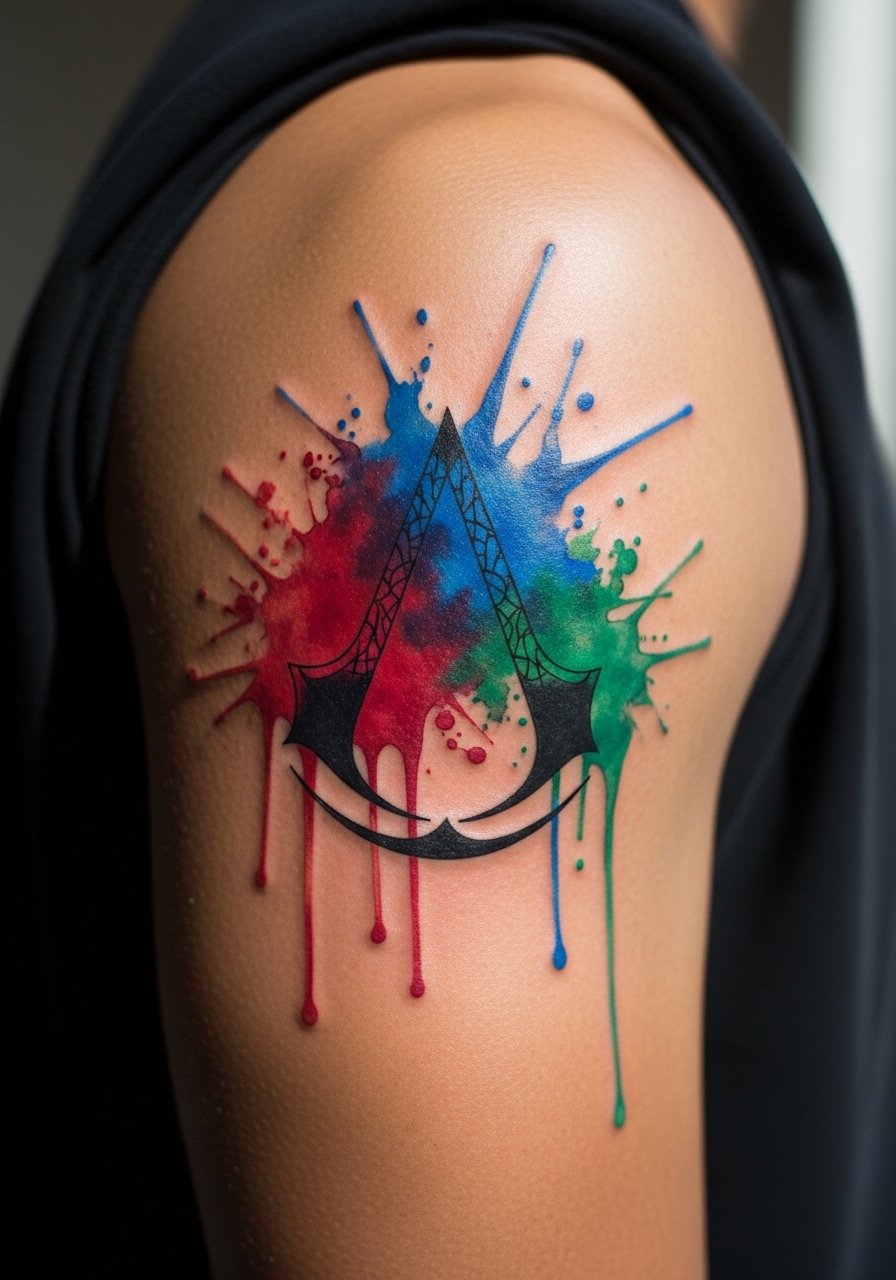
Visual impact lead: sleeve accents read best when the crest has a strong black anchor. Watercolor drips can look dynamic but they age into soft gradients. Ask for heavier saturation near the black outline and progressive feathering outward so the wash looks intentional even as it fades. Sessions vary but expect multiple passes totaling three to five hours for a half sleeve. Blowout risk is lower on upper arm than on hand or ribs, but dense washes should avoid tiny line detail that could merge. For showing it off, roll up a short-sleeve denim jacket so the arm sits naturally exposed.
Studio Day Picks
The wrist, forearm, and ribcage pieces above ask for different prep and first-week protection, so these five items smooth the appointment and the early healing window.
-
Stencil transfer paper kit. Lets you preview scale and placement on the wrist or forearm before the needle goes down, which is crucial for small crest work.
-
Topical numbing cream. Applied as recommended before ribcage sessions it reduces the edge and makes longer watercolor passes more manageable.
-
Thin protective film roll. Useful for smaller wrist and finger pieces that face constant friction from clothing and jewelry in the first week.
-
Fragrance-free gentle body wash. Cleans healing watercolor areas without adding irritation that can affect pigment retention.
-
Aquaphor healing ointment. Thin layers during the very first days lock in moisture for delicate washes without suffocating the skin.
7. Assassin Crest on Ankle with Color Splash
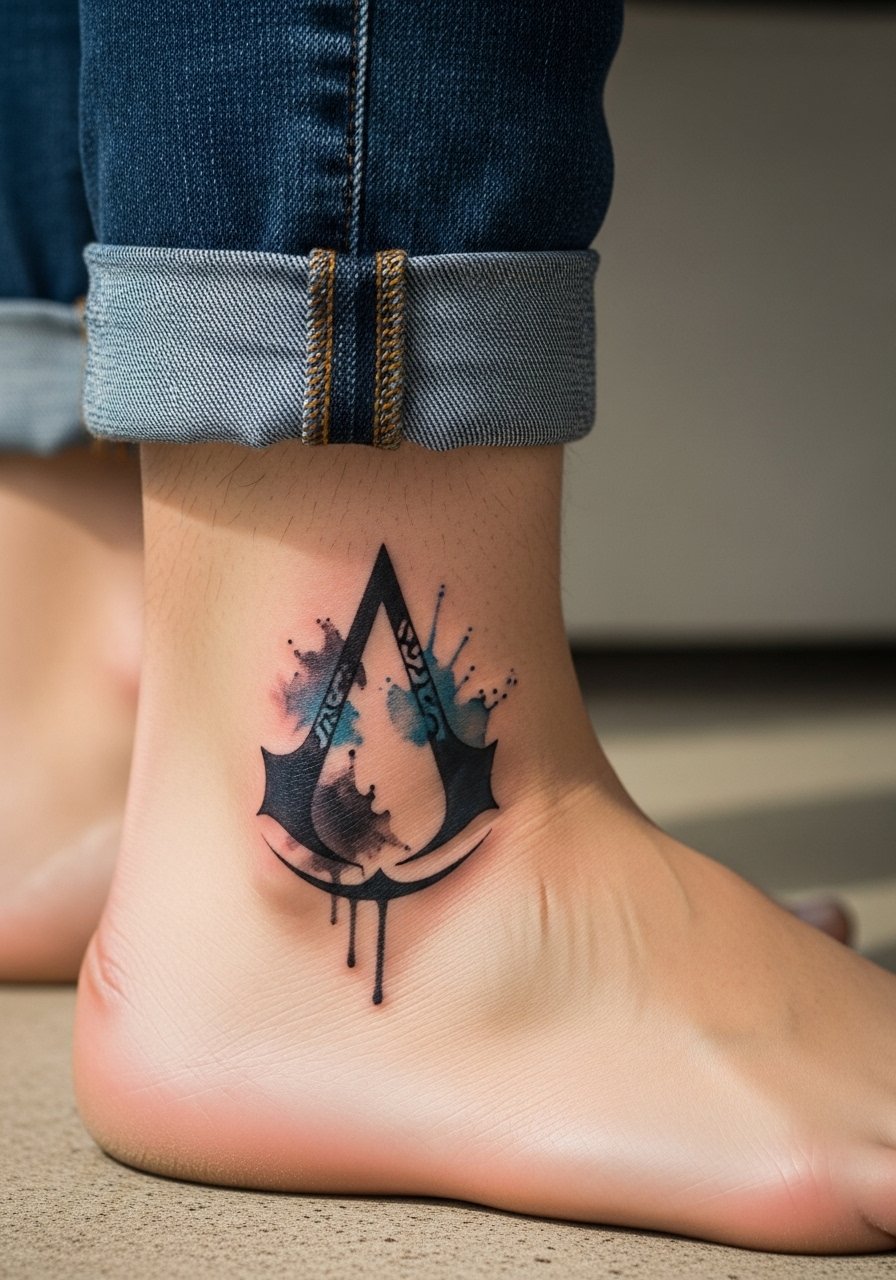
Visual impact lead: ankle pieces show well in sandals but face a lot of rubbing from socks and shoes, which speeds fading. Ask your artist to keep the darkest saturation at key contour points so the symbol remains readable even as the surrounding wash softens. Sessions are quick but may sting more near bone. Expect a touch-up at year two if you wear closed shoes often. For showing off, pair with a strappy sandal or rolled pants so the area gets air and less friction while healing.
8. Assassin Crest Over the Heart, Pale Wash
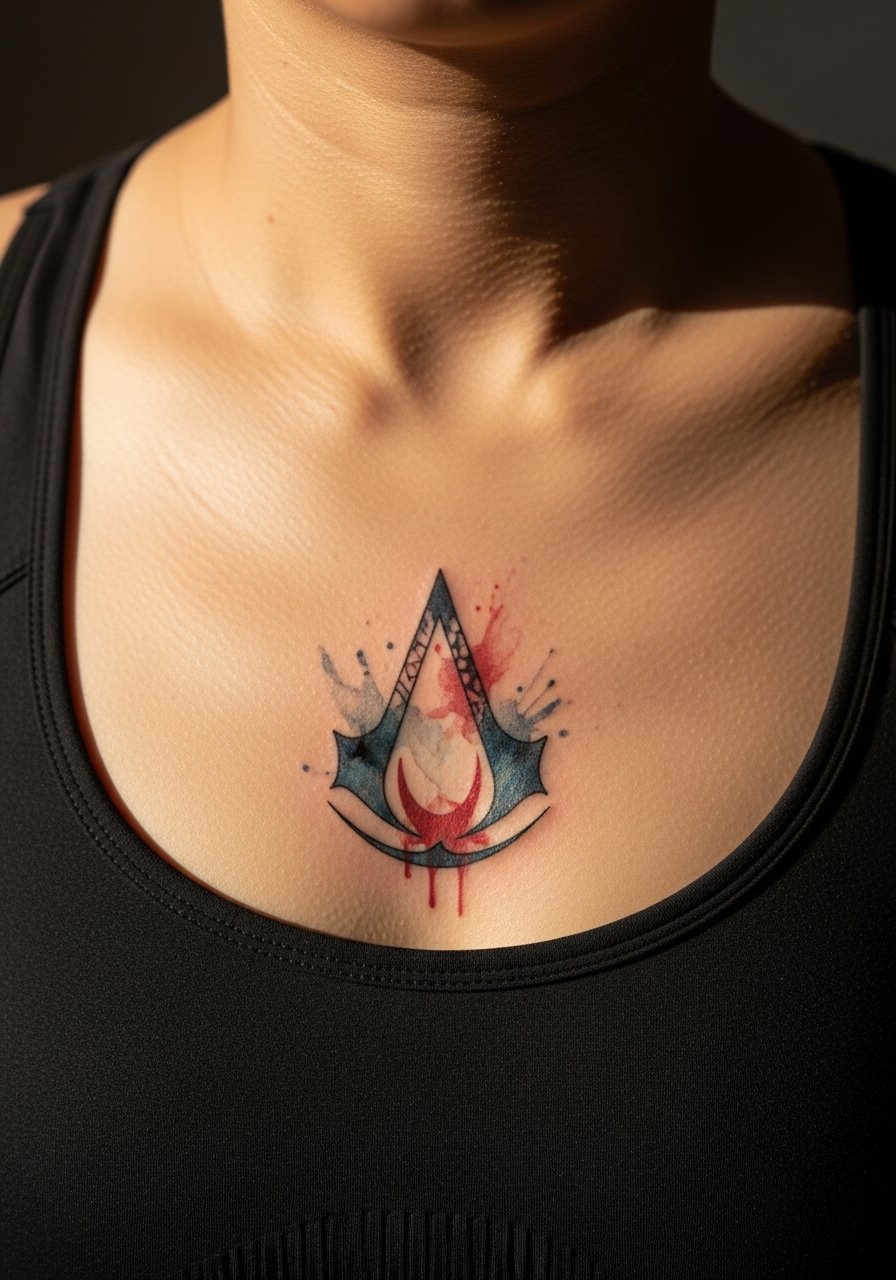
Mistake lead: pushing for a large, posterized wash over the sternum without planning for movement leads to uneven fading. The sternum area needs conservative saturation and defined focal points so the crest does not disintegrate into a color patch. Sessions here are moderately painful and often split into two shorter sittings. Make sure your artist marks breathing lines and spacing so the imagery flows with the chest. Career considerations apply for visible chest tattoos. For session comfort, choose a sports bra that you can keep on and still provide access.
9. Micro-Crest on Thumb with Tiny Wash
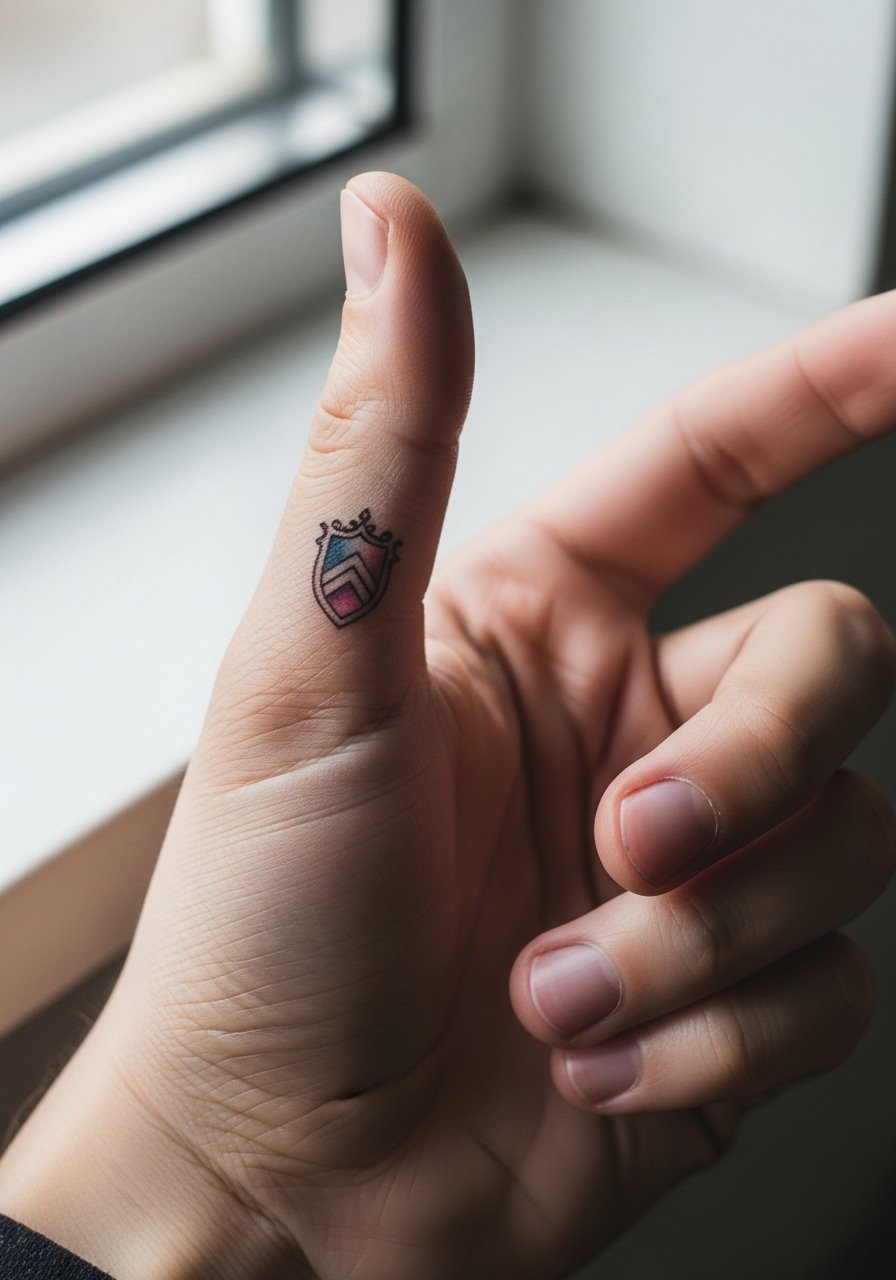
Mistake lead: fingerprint-area tattoos and thumb crests face heavy washout from frequent hand use. The main error is asking for a watercolor treatment too small for the surface. For thumbs, favor a compact black anchor with a whisper of color rather than a full wash. Session time is short but touch-ups are likely every year or two. The blowout risk and pigment loss are high due to constant hand washing. For the session, keep nails trimmed and wear a loose cuff shirt so the artist can position your hand comfortably.
10. Assassin Crest Along the Spine with Vertical Wash
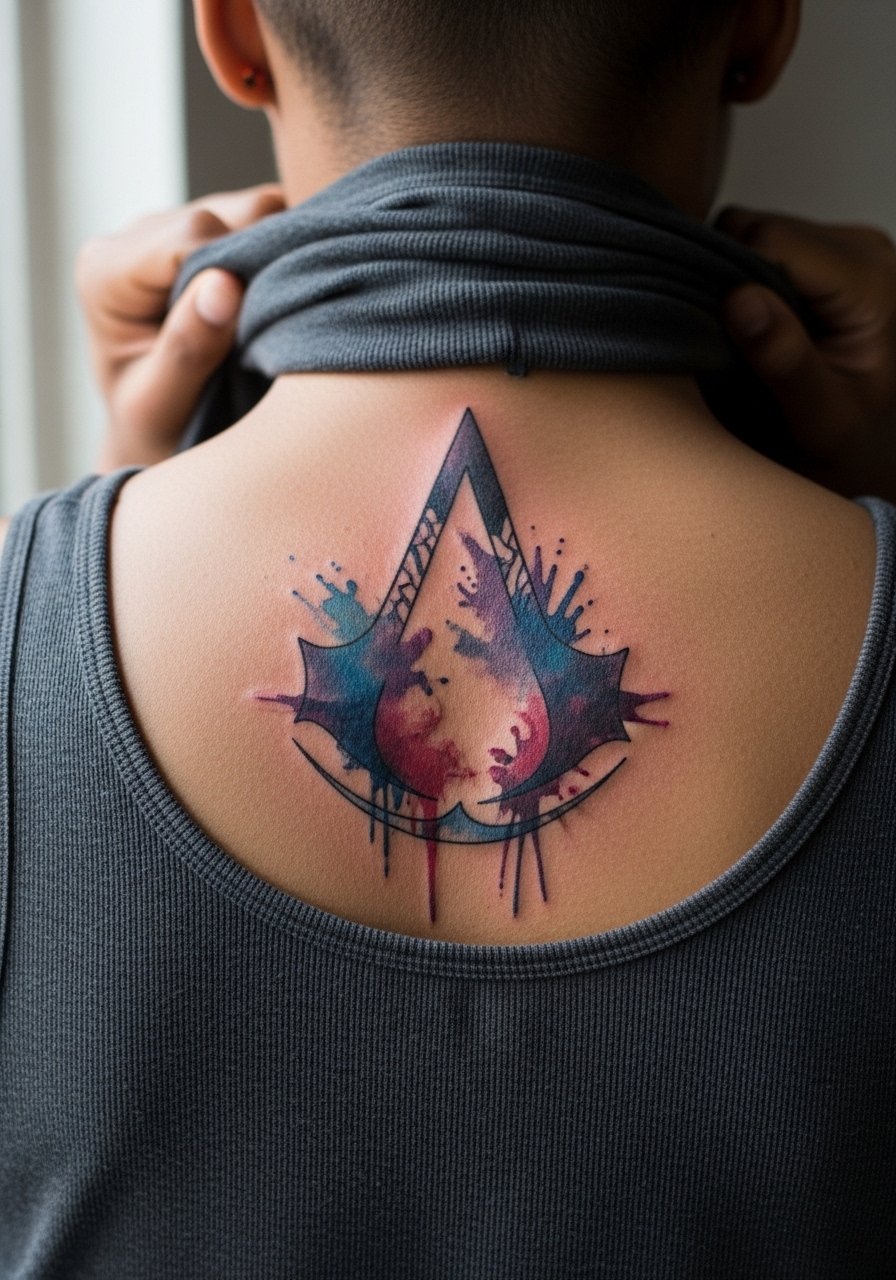
Personal observation: vertical spine placements read dramatically when combined with linear watercolor that follows the body's axis. Tell your artist to scale the crest so the negative space breathes. The spine moves and stretches, so dense dot work near vertebrae can blur. Sessions may be longer and you should expect moderate pain. A common mistake is compressing too much detail into a narrow strip which ages into a muddy line. For showing it off, open-back tops accentuate this area without exposing more than needed.
11. Assassin Crest on Calf with Painterly Edges
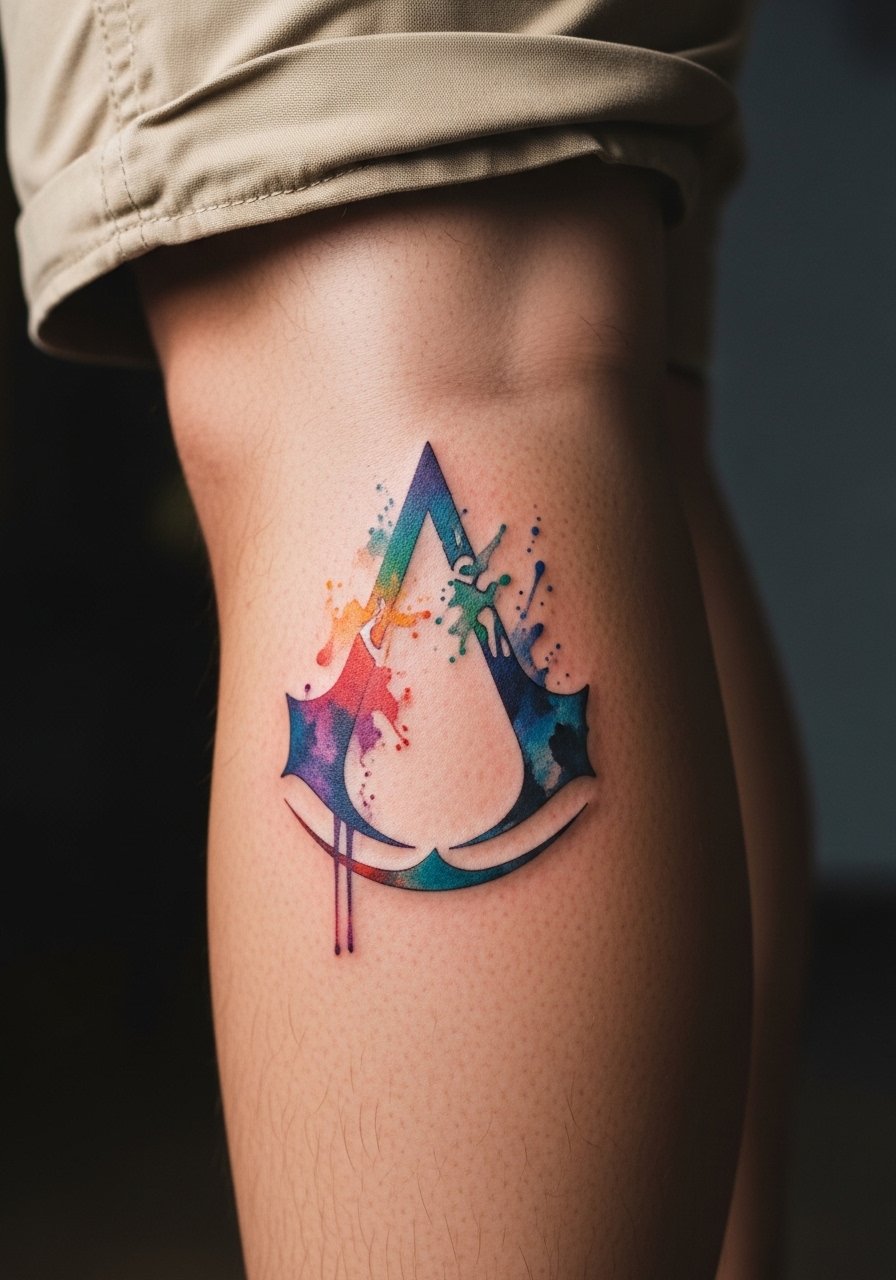
Visual impact lead: calf skin holds color well and is forgiving when it comes to watercolor washes. The biggest win is a strong black silhouette with painterly edges that can fade gracefully. Sessions are comfortable and usually two hours or less for mid-sized crests. People often make the mistake of requesting too many micro details that become indistinct after a year. For showing it off, pair with a mid-thigh shorts or a skirt so clean lines and washes are visible.
12. Tiny Crest on Finger Side, Subtle Color Halo
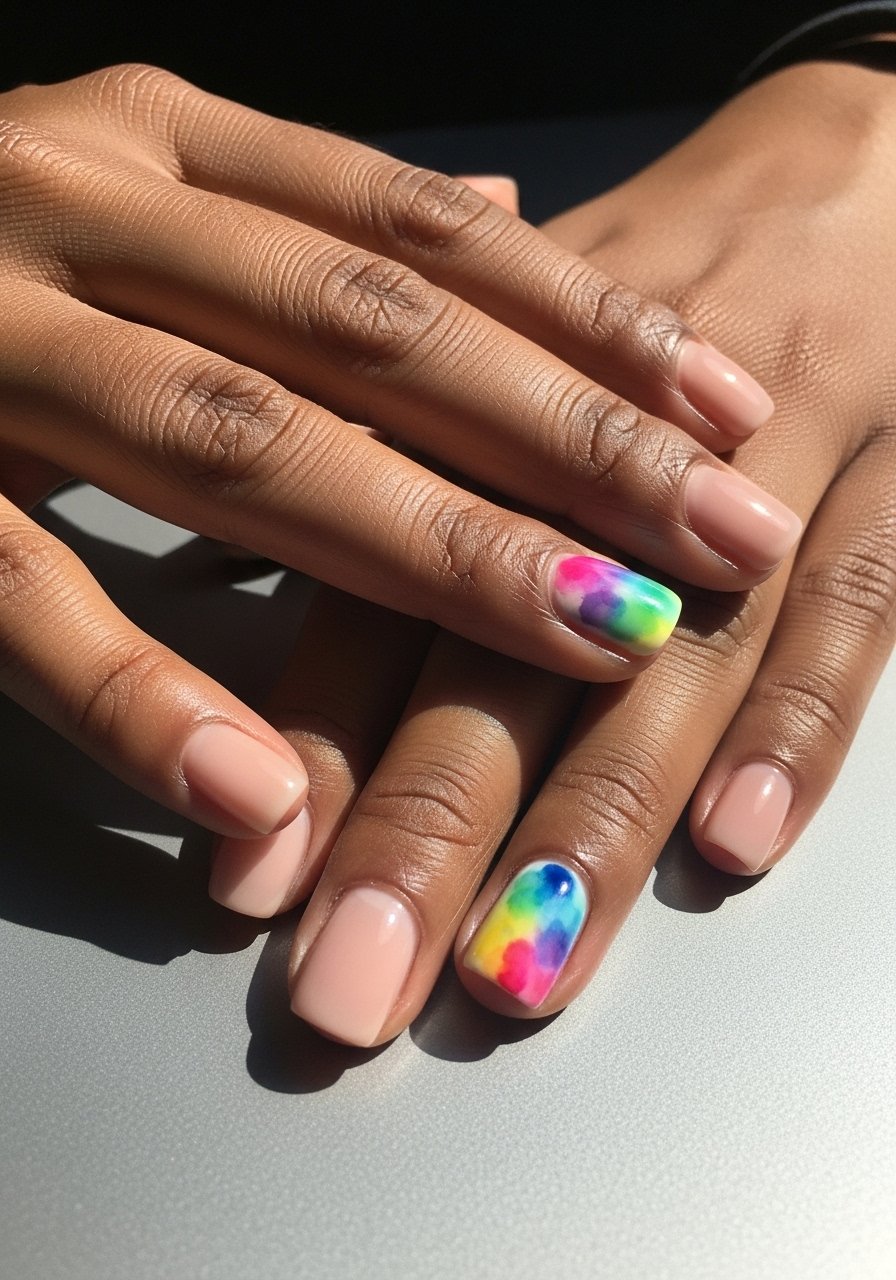
Mistake lead: finger tattoos face the highest friction and the fastest pigment loss. A common error is asking for a full watercolor halo on that thin plane. I recommend a crisp micro-outline with a faint halo of pigment applied conservatively. Sessions are quick but expect touch-ups at year one and possibly annually after that. For session prep, avoid heavy hand lotion and wear a short-sleeve tee to keep the artist's access clear.
13. Assassin Crest Over Shoulder Blade with Soft Gradient
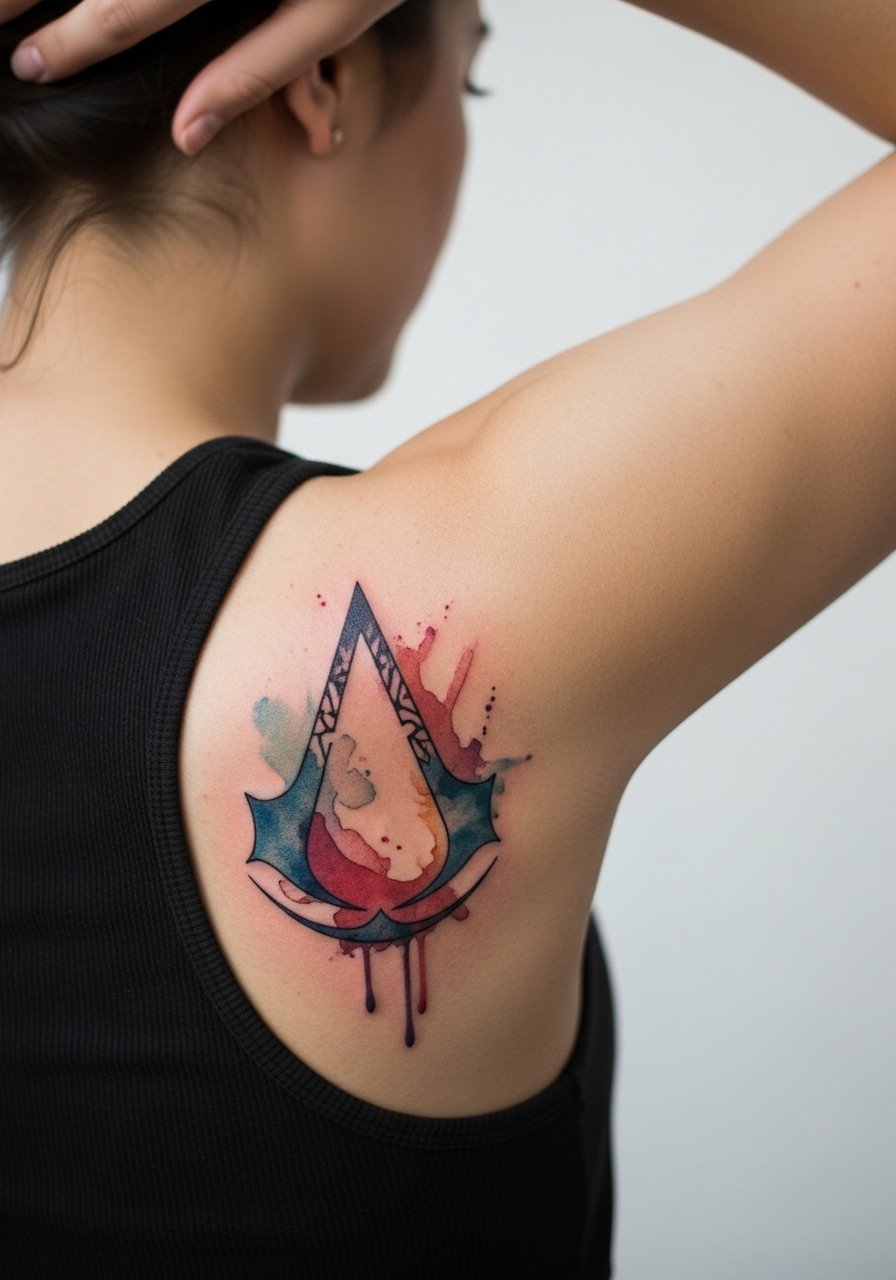
Consultation lead: shoulder blade pieces benefit from a composition that moves with the scapula. Ask your artist to map the design while you raise and lower your arm so the wash falls naturally. Sessions are moderate in pain and can be split into two passes for saturation control. The common aging issue is heavy wash pooling toward the lower edge. For session wear, a tank top that you can move without removing helps the artist access the area cleanly.
14. Assassin Crest Finger Band with Watercolor Accent
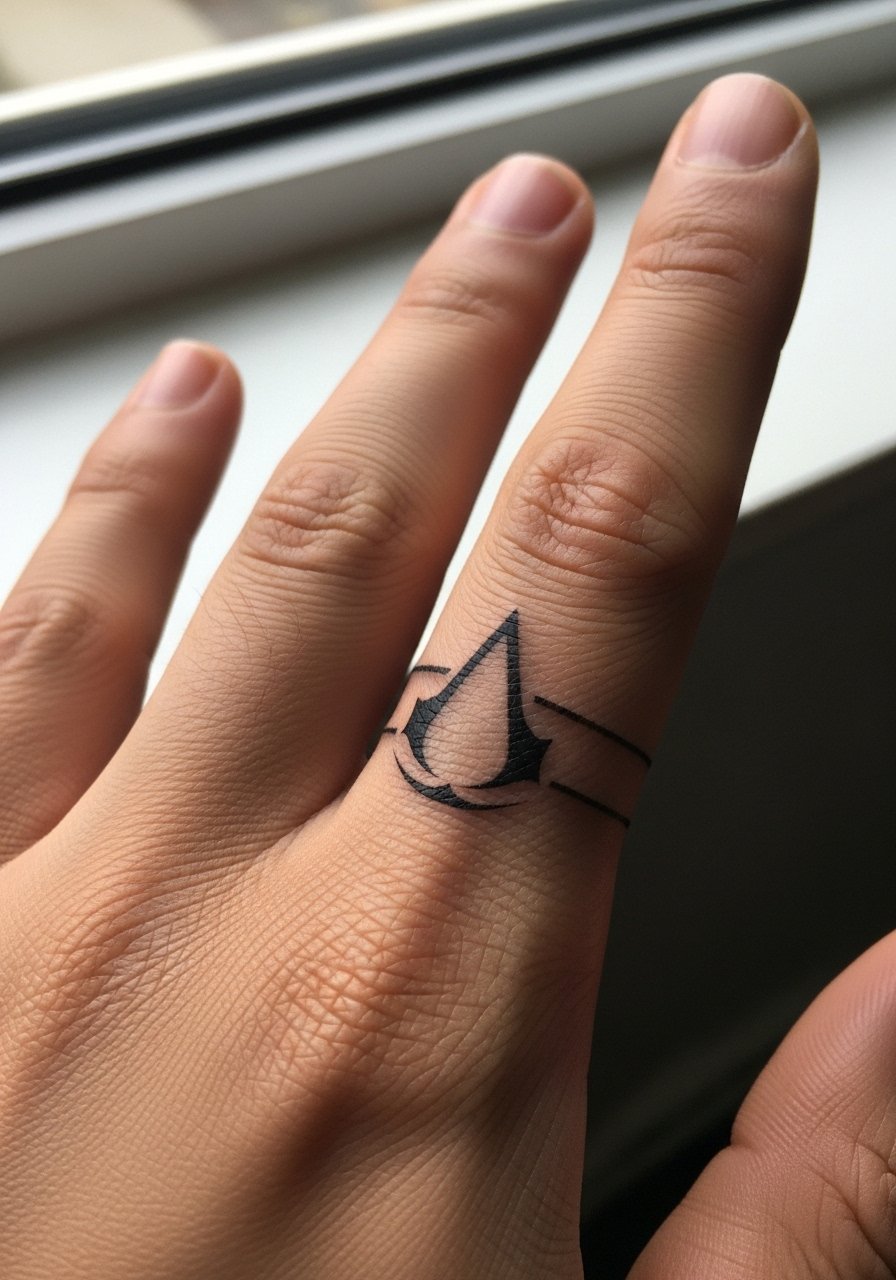
Mistake lead: ring-style tattoos on fingers get blurred by daily motion and moisture. The safe route is a narrow black band with a touch of watercolor above or below rather than a full wrap of color. Sessions are short but costly in terms of how often you will need touch-ups. Blowout risk is significant if lines are too close together. For showing it off, keep to subtle jewelry that does not rub directly on the ink.
15. Watercolor Assassin Hooded Crest on Upper Thigh
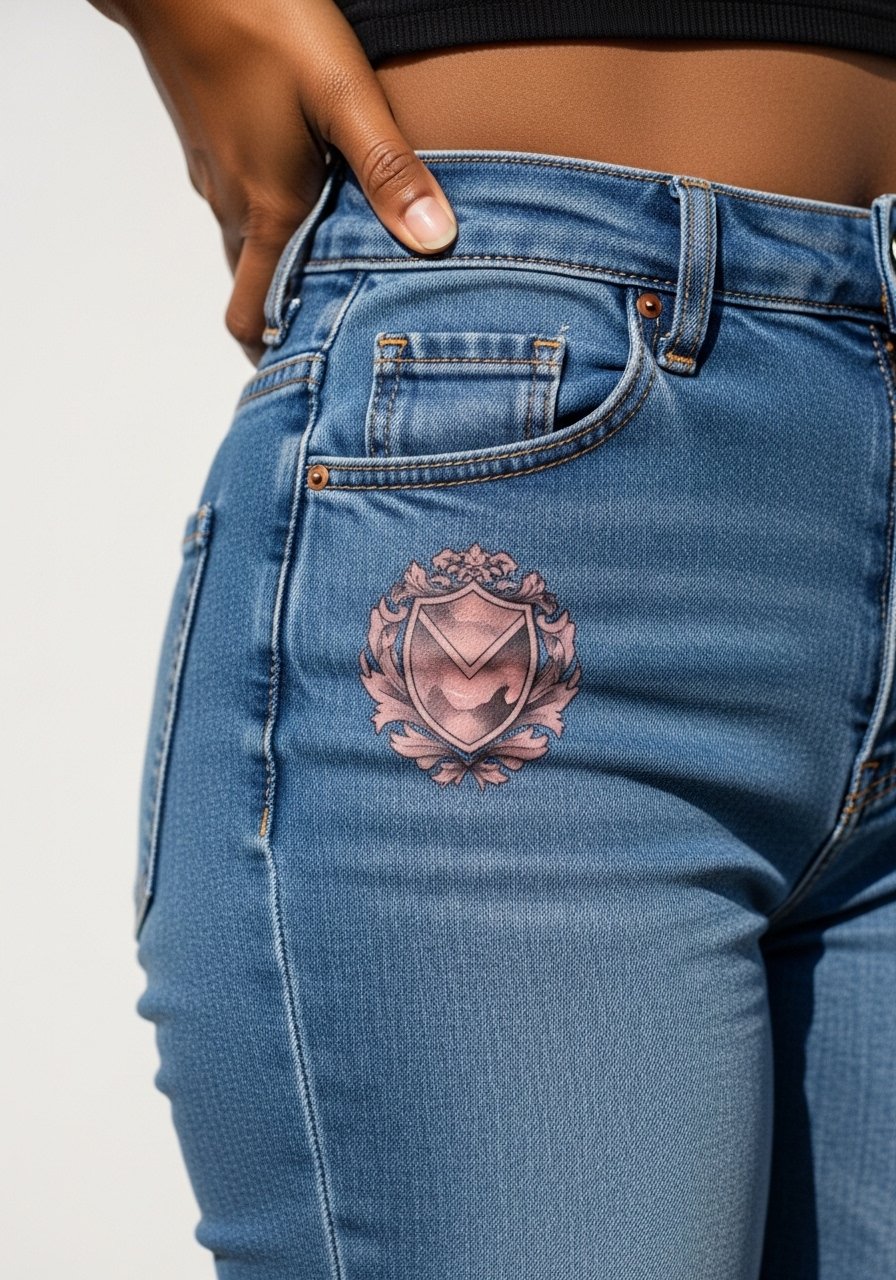
Aging lead: inner thigh and hip areas can retain color well but are subject to friction from clothing that can mute washes. The common mistake is placing too much color where fabric rubs every day. For this area, plan a margin between the design and high-friction zones and request gradual feathering at edges. Sessions feel moderate and are best split for comfort. For the session, wear high-waisted shorts you can slide down a touch to expose only the tattooed strip without being undressed.
16. Assassin Crest on Upper Arm with Watercolor Halo
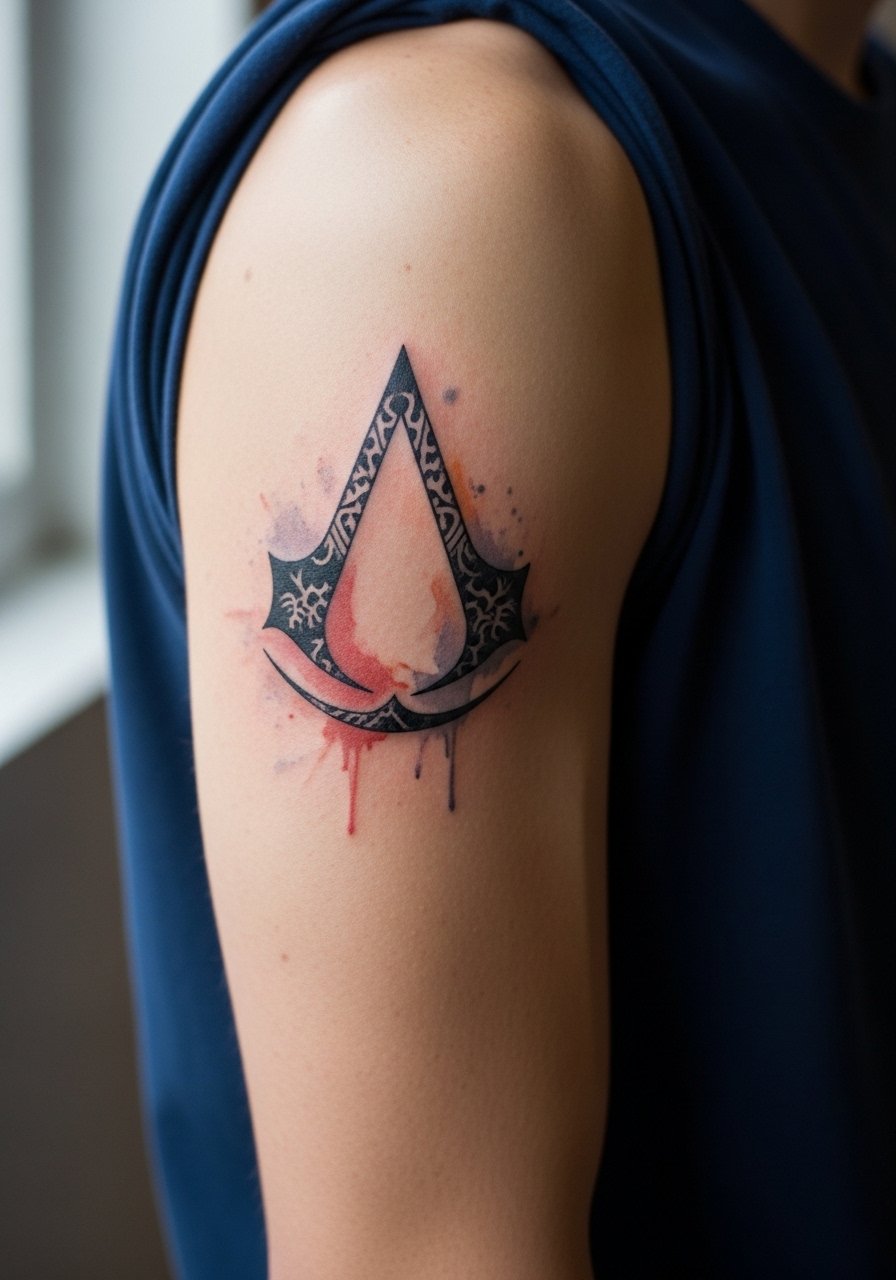
Personal observation: the outer upper arm is one of the most forgiving spots for watercolor techniques because it tolerates denser pigment and sun protection is easy. Ask for a stronger black anchor ring and gradual haloing so the wash reads from a distance and close up. Sessions are comfortable and usually under three hours for medium pieces. A common mistake is too many separate color shifts that age unevenly. To show it off casually, roll up sleeves or wear a short-sleeve tee so the piece sits exposed.
17. Assassin Crest with Sumi-Ink Wash on Calf Wrap
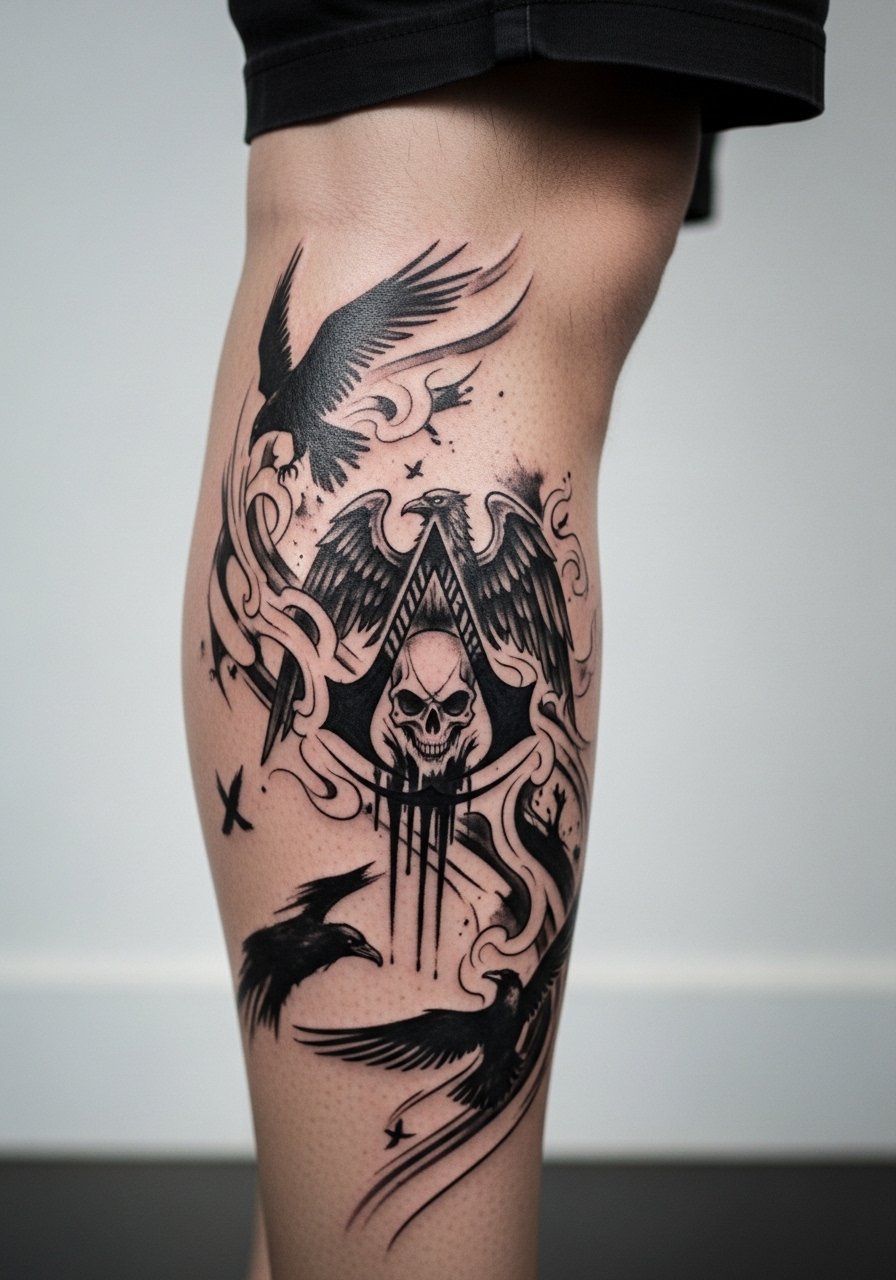
Consultation lead: a sumi-ink approach uses darker wash gradients that read longer than pastel watercolors. If longevity is your priority but you want the painterly look, ask for a monochrome wash with subtle color accents. Sessions may be longer because layering dark tones requires careful passes. The mistake to avoid is over-contrasting tiny details inside the wash that will vanish once the pigment settles. For showing it off, a pair of mid-thigh shorts or a skirt keeps the wrap visible without fuss.
Frequently Asked Questions
Q: Will a watercolor Assassin's Creed tattoo fade faster than a traditional blackwork piece?
A: From what I have seen, watercolor pigments often lose vibrancy sooner because they use diluted inks and less black anchor. A watercolor with a defined thin outline or heavier anchor points holds form longer. Expect touch-ups sooner than with saturated blackwork, especially in high-friction or sun-exposed areas.
Q: Can I get a tiny watercolor crest on my finger and expect it to last?
A: Finger placements are high maintenance. They fade and blur faster due to washing and movement. If you want longevity, aim for a micro-outline with a whisper of color rather than a full wash. Be prepared for yearly touch-ups.
Q: How should I prepare clothing-wise for a ribcage watercolor session?
A: Wear a zip-up hoodie or a top you can pull aside without removing. Layer a pillow under the lower back for comfort. Bring a loose shirt to cover the area for the trip home so the fresh ink does not rub your clothing.
Q: Do artists agree about doing watercolor without outlines for crests and symbols?
A: Artists split into two camps. One group prefers pure wash for the aesthetic and accepts that the design will fade into color fields. The other group recommends a thin outline to keep the symbol legible over time. The practical choice depends on your tolerance for touch-ups and the placement you pick.
Q: How visible should an Assassin crest be on a collarbone piece after two years?
A: Expect some softening of the wash, especially if the collarbone sees sun. A thin contour helps the crest stay readable. Touch-ups at year two are common for collarbone watercolors if you want the original contrast back.
