
Watercolor 11:11 tattoos are everywhere online right now, and the gulf between how they look fresh and how they age is wider than most beginners expect. Fading, blurry numbers, and finding artists who handle color well on medium and dark skin are common worries. Read the ideas below for looks that photograph beautifully today and practical notes to help them last for years.
1. 11:11 Angel Wing on Inner Forearm
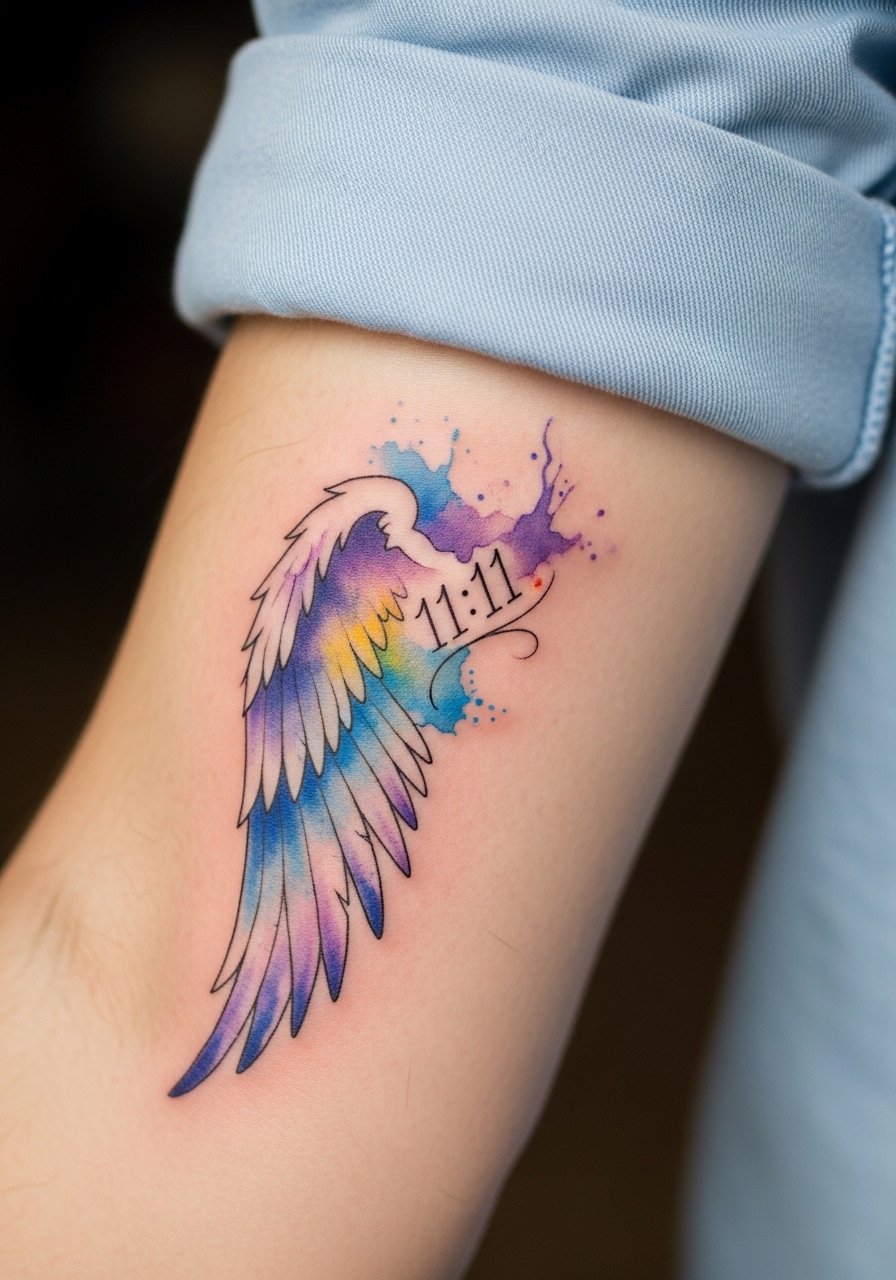
I recommend the inner forearm for this wing because the flat surface keeps watercolor washes from running into themselves during healing. Tell your artist you want a faint black base under the numbers for contrast so they remain readable after six months. A common mistake is asking for a tiny wing under two inches. Go at least three inches to keep the feather detail from merging over time. Expect a moderate pain level and one session for a small piece. For showing it off, pair with a linen button down shirt rolled at the cuff, which frames the forearm without hiding the wash.
2. 11:11 Dripping Clock on the Collarbone

Fair warning: collarbone skin is thin so the stencil reads larger on body than on screen. Ask the artist for a slightly bolder number outline so the 11:11 stays crisp after healing. There is a stylistic split about keeping this purely soft color versus adding a dark base. One camp prefers the painterly look with no black. The other camp pushes for a minimal black base to prevent premature fading. If you want the painterly effect, plan for touch-ups around year two. For evening wear, the piece pairs with an off shoulder silk top that shows the clock without competing with necklaces.
3. 11:11 Galaxy Splash on the Shoulder Blade
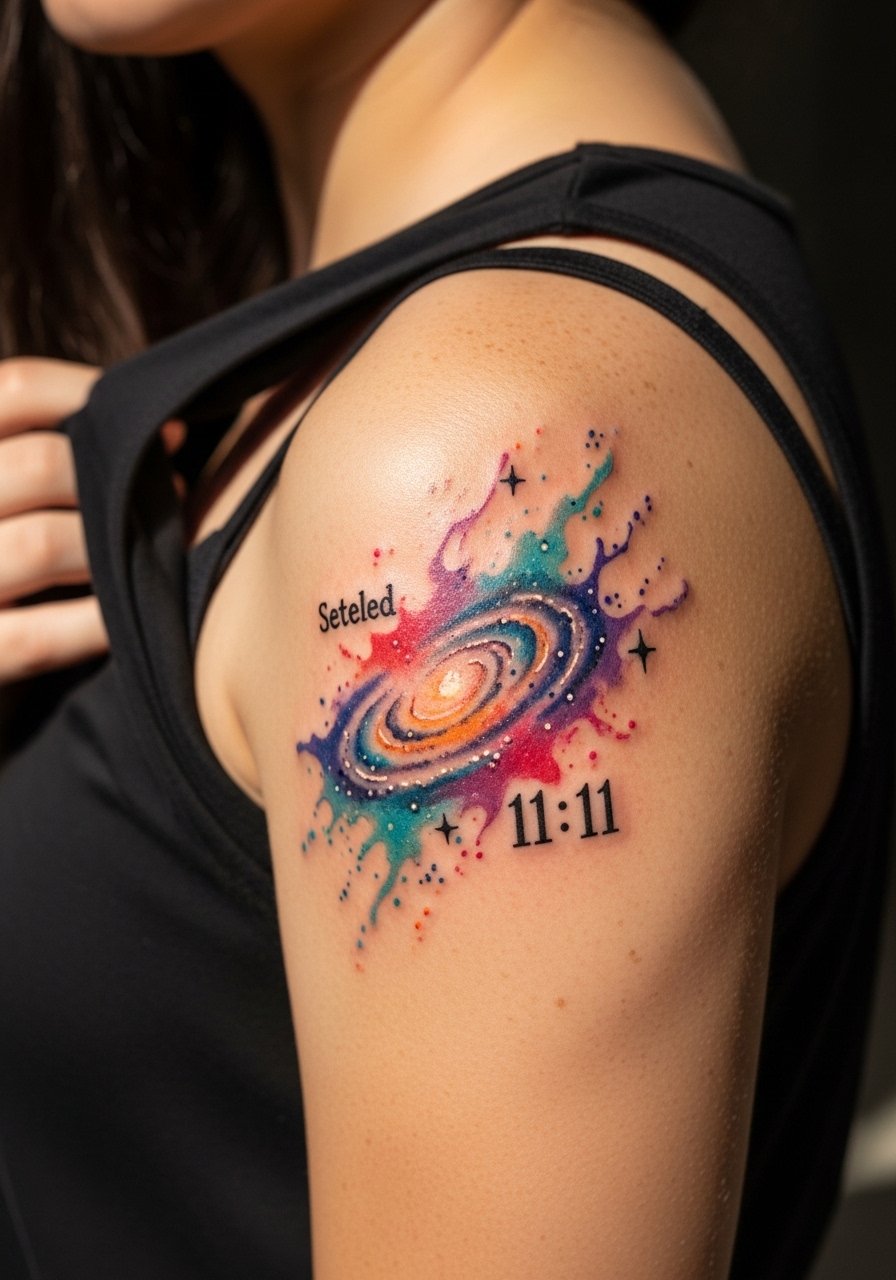
This placement photographs like a small canvas when done at about four inches across. During consultation, ask for star speckles added with white ink sparingly, and request that the artist maps dark anchor points so the numbers do not disappear into the nebula. The shoulder blade is forgiving for saturation and usually heals with low blowout risk. Session feel is relaxed because you can lie on your front. For nights out, wear a strappy tank top or backless dress to show the colors without friction from backpacks.
4. 11:11 Feather and Numbers on the Ankle
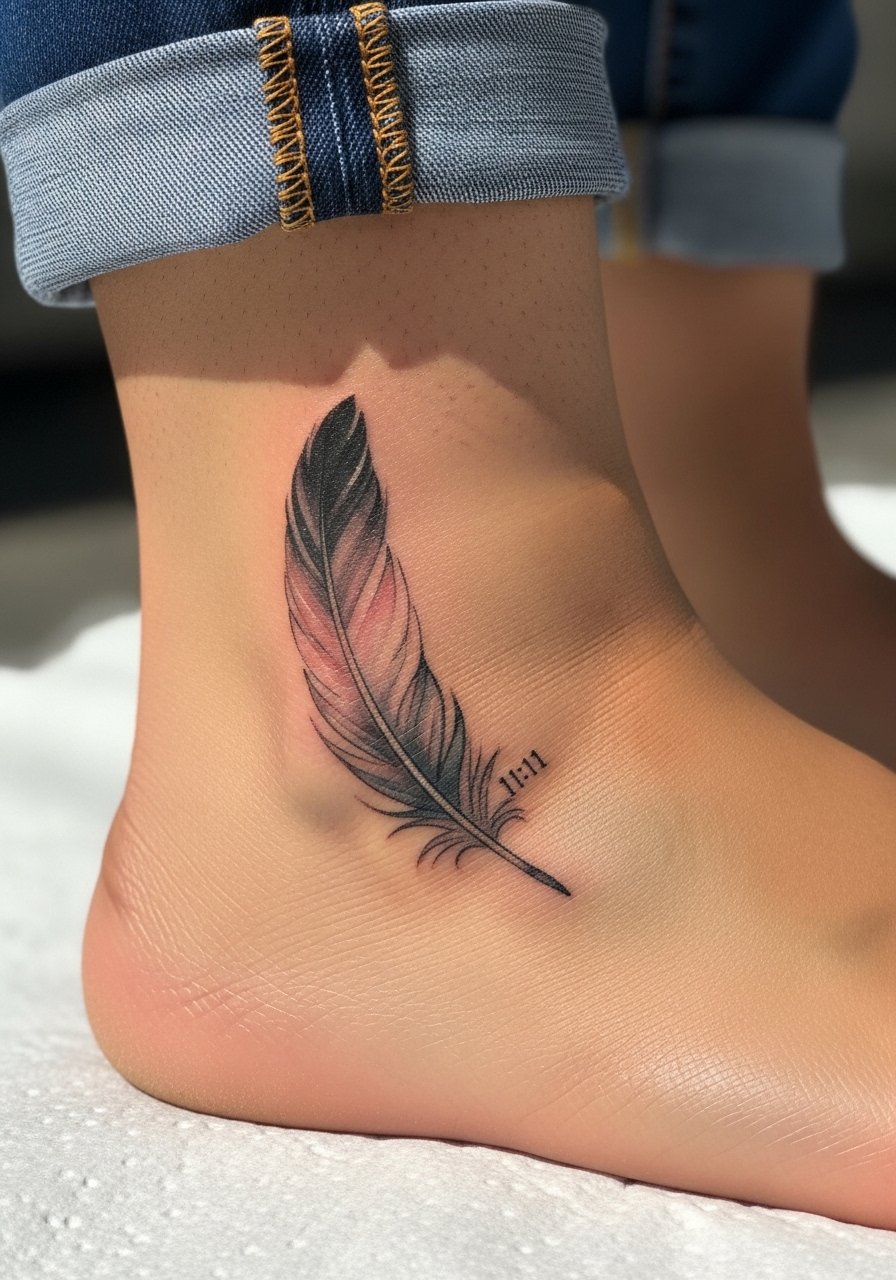
Ankle tattoos face constant rubbing from shoes and socks, so ask for a deliberate black outline around the numbers to preserve legibility. The common mistake is going too small here. If you want the feather to age clearly, keep the feather and number cluster at about three inches. Expect a sharper pain because of thin skin over bone. For summertime visibility, pair with cuffed cropped jeans or sandals that keep the area exposed without rubbing.
5. 11:11 Lotus Bloom on the Thigh

Most people underestimate how much thigh skin moves when walking. The bigger the petals and the more negative space you allow, the longer the detail holds. Tell your artist you want a light black stem to anchor the watercolor petals so the composition reads after a few years. Sessions are comfortable because you can sit or lie with little contortion. For showing off in warm weather, choose a high slit skirt that lets the bloom peek through.
6. 11:11 Heart Portal on the Inner Bicep

Expect a higher pain score on the inner bicep because the skin is softer and more sensitive. The inner bicep is great for a design that feels intimate but can be shown easily when you raise your arm. A mistake I see is asking for the numbers to be the only dark element. Instead, request subtle dark anchors around the numbers to prevent them from fading into surrounding washes. Touch-ups are common around year two for pieces with tiny numerals. If you're concerned about reading the symbolism over time, ask for the numbers to be slightly larger than they appear in most references.
Studio Day Picks
The arm and thigh pieces above need different prep and first-week care than knotty finger or ankle work, so a few practical items smooth the session and the early healing.
-
Stencil transfer paper kit. Lets you preview placement and line weight directly on skin, which is invaluable for numbers that must sit precisely.
-
Topical numbing cream. Use as directed before ankle or inner bicep sessions when sensitivity could push you to pull away.
-
Thin protective film roll. Small areas like the ankle or inner forearm rub against clothing a lot in week one. A protective film reduces friction and contamination.
-
Fragrance free gentle body wash. Cleanses healing watercolor without stripping pigment, especially useful for thigh and shoulder blade washes.
-
Aquaphor healing ointment. Thin layers in the first few days keep fine line and number edges moist without clogging pores during initial crusting.
7. 11:11 Butterfly Transformation on the Calf
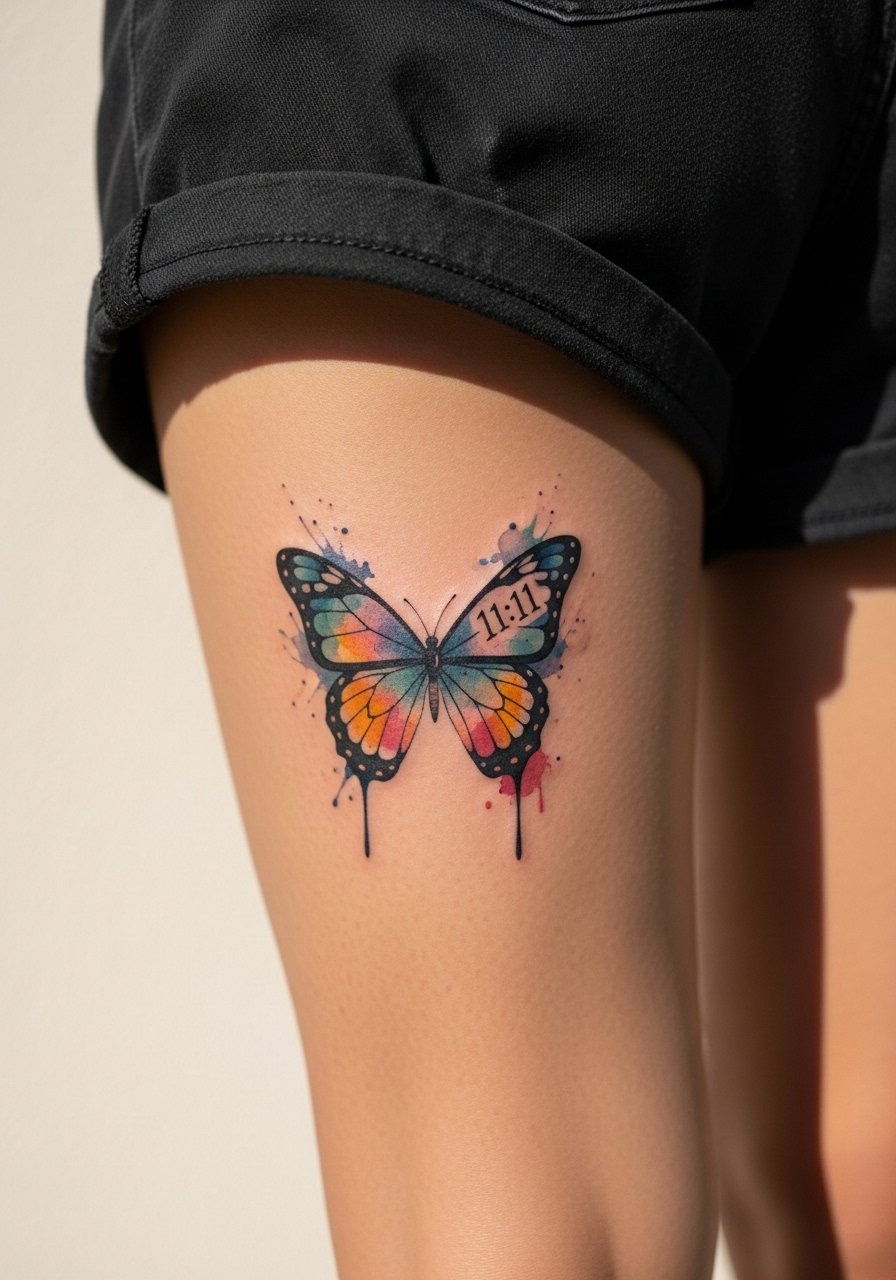
The calf is great for saturated watercolor because it tolerates heavier saturation and larger washes. Ask for a soft black base under the numbers if you want them to remain legible against vivid wing colors. A real mistake is requesting no anchor points at all when the color palette is high contrast. Expect one session for a three to four inch piece and modest pain. For casual show-off, a pair of shorts or a relaxed summer dress highlights the wings without friction.
8. 11:11 Infinity Loop Across the Collarbone
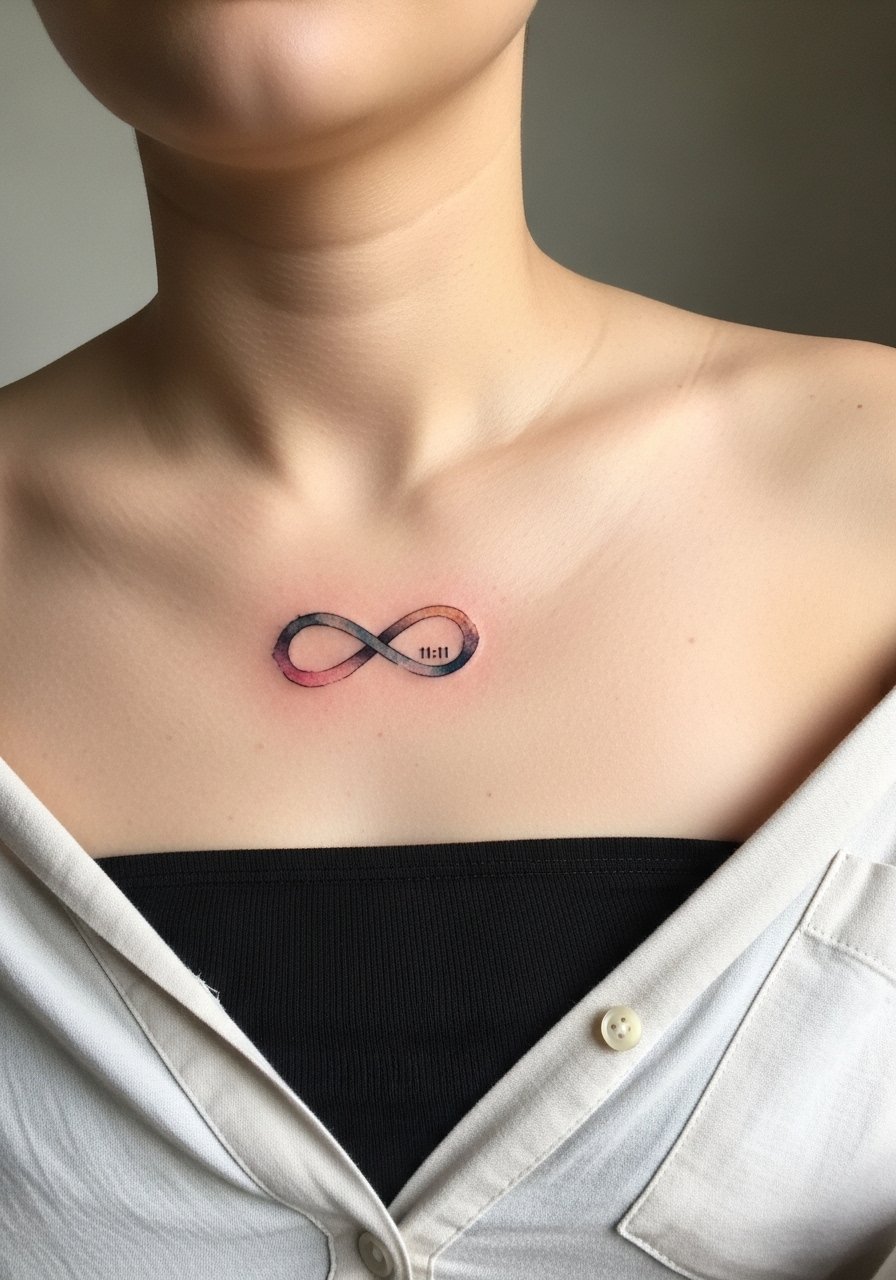
Collarbone placement makes an infinity loop read delicate and deliberate. The controversy about black base versus pure wash comes back here. If the numbers are central to the design, ask for minimal dark anchors around them. The biggest mistake is placing the loop too close to the sternum where skin movement and clothing cause faster fading. Aim for 2.5 to 3 inches wide and one neat session. Pair with a strapless bralette or open-neck top when you want it visible.
9. 11:11 Moon Phases on the Upper Back
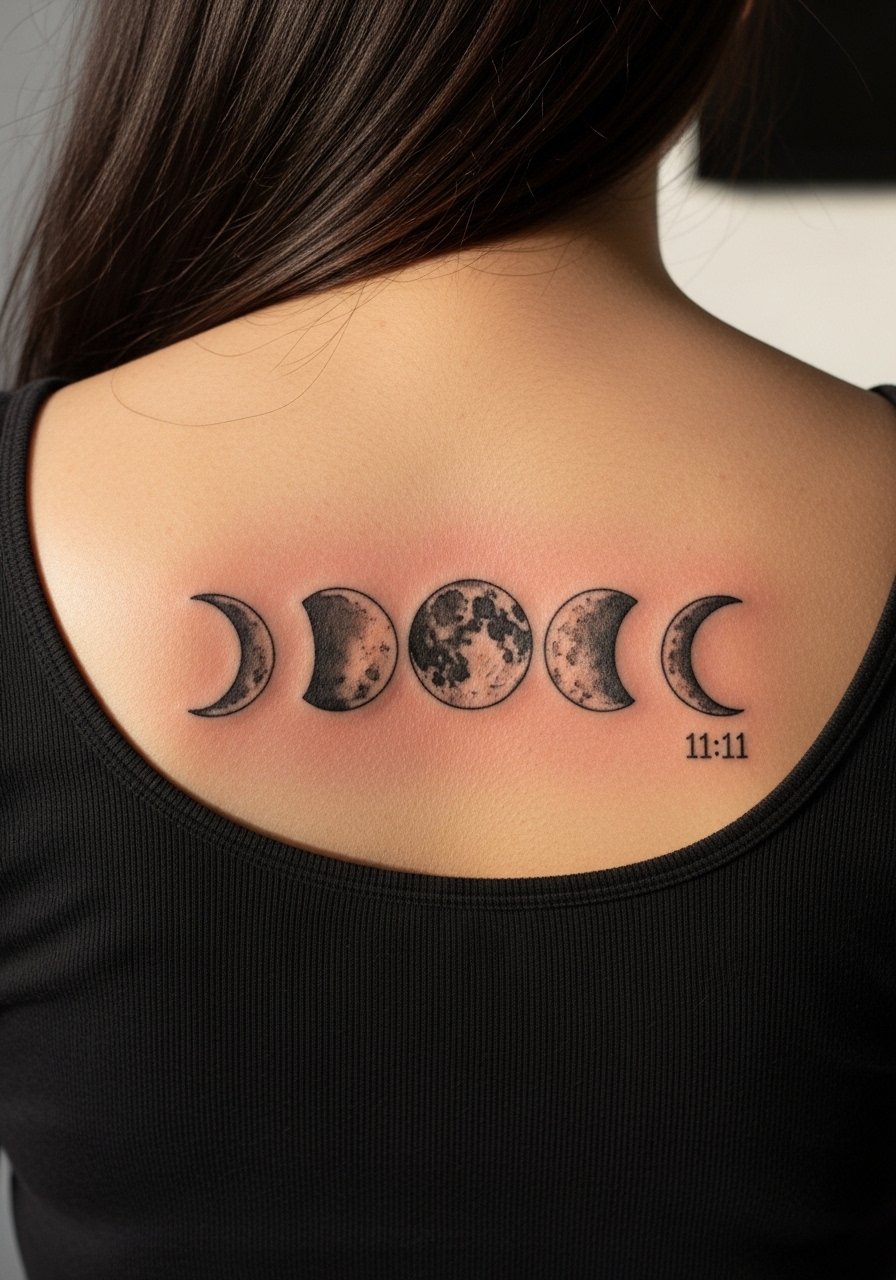
Upper back placement allows a wider layout and larger phases that age more gracefully than tiny moons on the wrist. Ask your artist to plan a black number base for the numerals if you want long-term readability. The common aging path for small lunar designs is merging into a wash. Keeping the crescents spaced and a little larger prevents that. Shoulder and back pieces heal well with low blowout risk if the artist respects depth. For sessions, wear a loose tank to expose the area comfortably.
10. 11:11 Rose Splash on the Outer Forearm
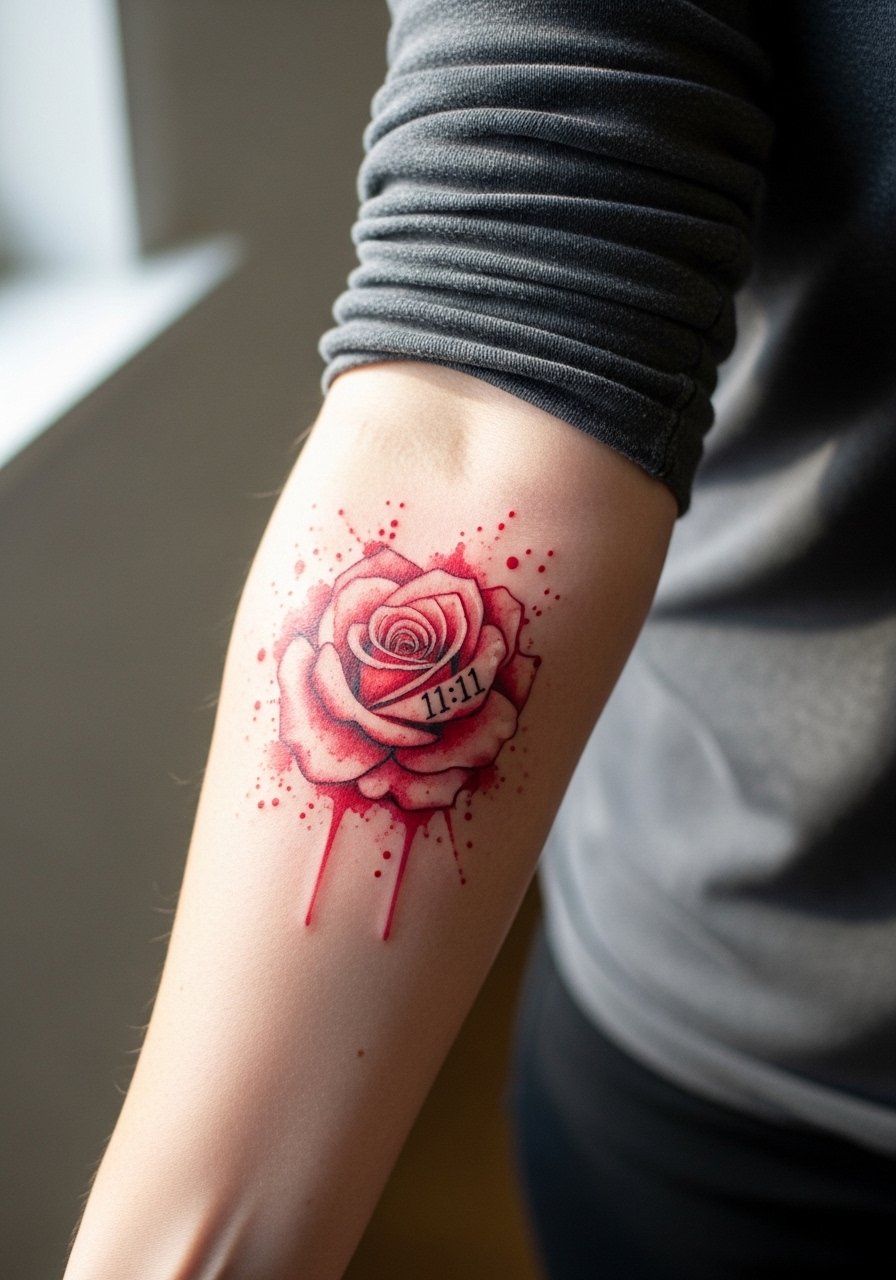
Outer forearm is one of the most visible spots and it receives a lot of sunlight. Ask your artist about UV-resistant touch-up planning and request a darker anchor around the numbers so they do not wash out. The biggest mistake is tight, high-contrast detail under two inches. For longevity, aim for three to four inches and expect a light touch-up at year two. For styling wear a fitted long sleeve tee rolled at the sleeve which frames the rose while keeping it casual.
11. 11:11 Mandala Core Down the Spine
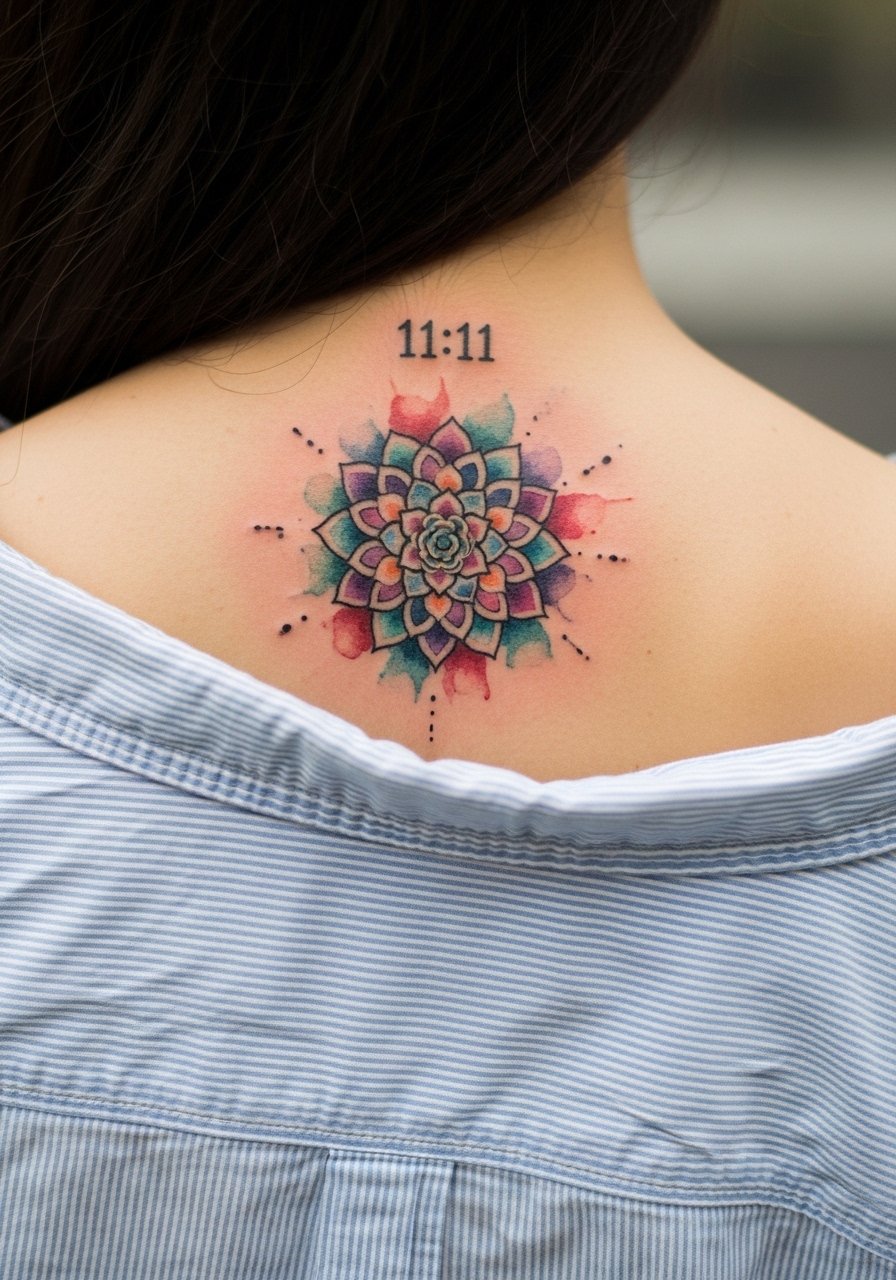
Spine work can be painful because the skin overlays bone in places. The mandala benefits from larger spacing between elements so tiny line clusters do not merge into blotches. Expect two sessions for a four to five inch mandala with color layers. The controversy about pure wash versus black base is relevant here. One camp favors bold black centers for longevity. The other camp keeps the mandala airy with minimal black. Ask your artist where they stand and look for healed portfolio examples on similar skin tones. Respect the mandala origins by avoiding direct religious iconography unless you understand the pattern's cultural context.
12. 11:11 Wave Crash Around the Ankle
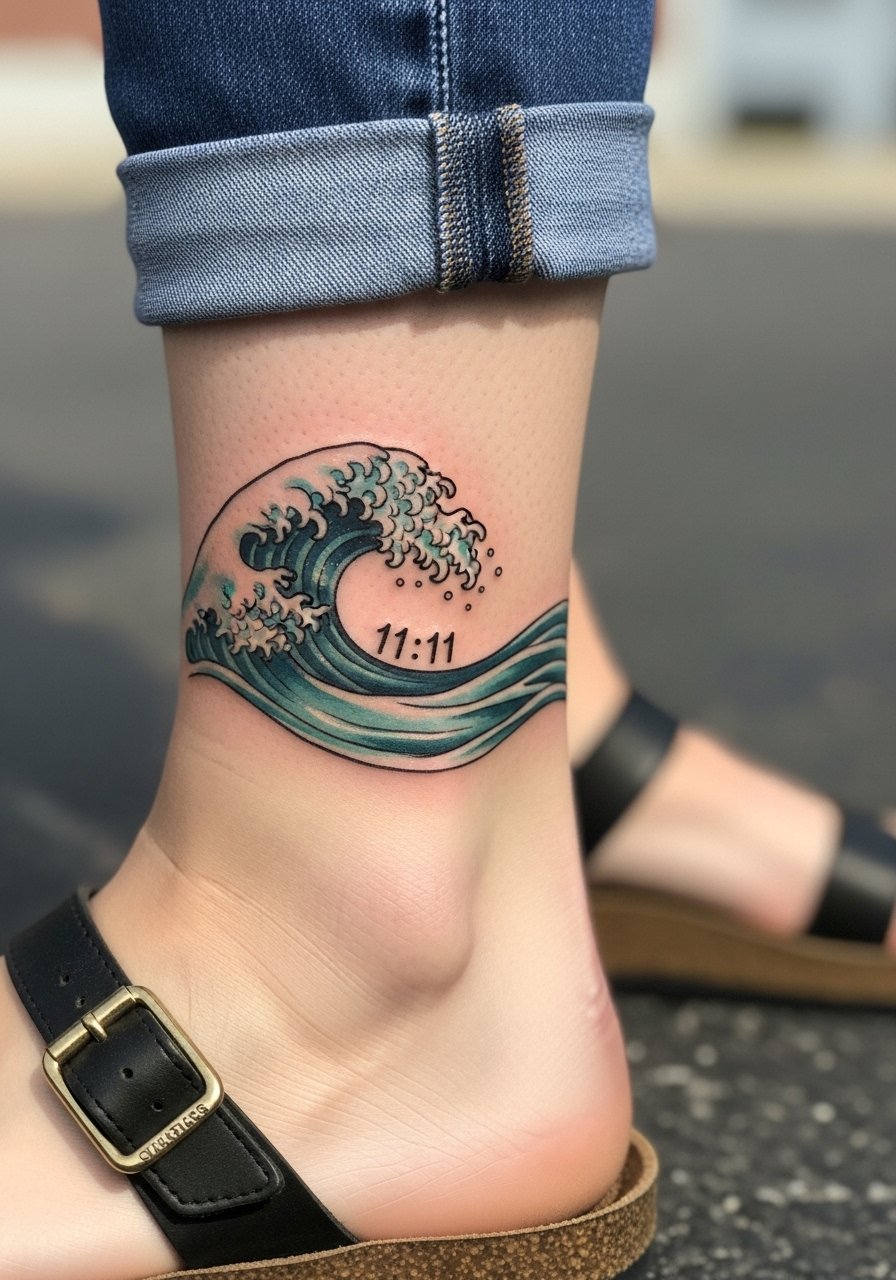
Ankle placements take constant friction. For a wave that stays readable, ask for a thin dark edge around the numbers and plan for touch-up if you walk a lot. The mistake is making the numbers the same tonal value as the wave. Keep the numerals slightly darker. Session time is short for a small ankle piece but healing requires avoiding tight socks. For summer looks, cuffed jeans or sandals keep the design visible.
13. Tiny 11:11 Wrist Script with Black Base
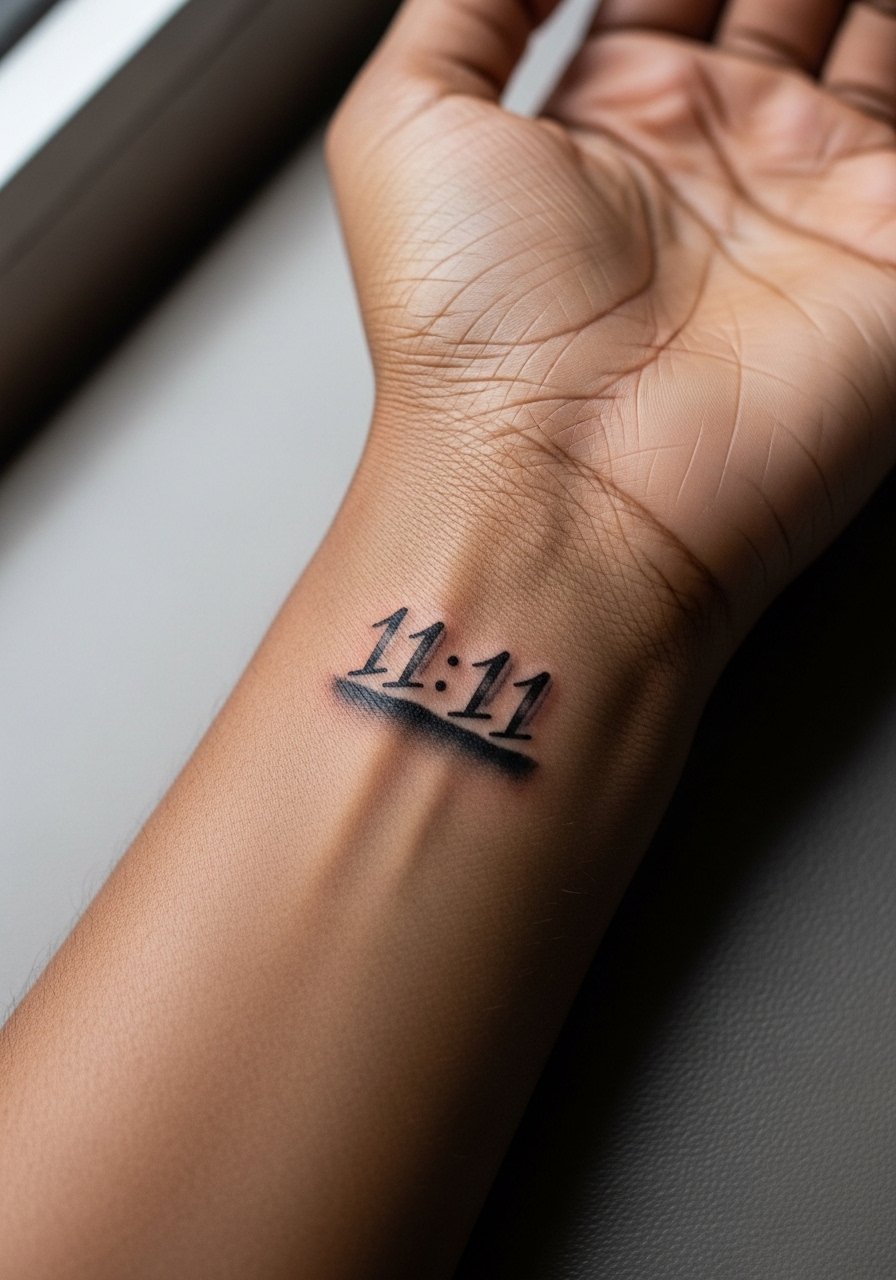
The wrist trend for tiny numerals is why the black base debate matters. One group wants pure color for the painterly look. The other group adds a minimal black base so the numbers remain legible after frequent washing and sun exposure. I recommend the hybrid approach for wrists. Ask for slightly larger numerals than your reference. Expect touch-ups by year one to three depending on sun exposure. For showing it off, layer with a thin silver chain bracelet on the opposite wrist so attention stays balanced. Use thin silver chain bracelet styling to frame the piece.
14. 11:11 Rosebud on the Calf with No Black

Some clients specifically request no black for a painterly calf piece. The downside is faster apparent fading of the numerals against bright petals. A good compromise is placing numbers near darker petal edges to preserve contrast. Calf skin tolerates saturation so the color stays lively longer than on wrists. The session is comfortable and tends to be forgiving for heavier washes. Expect lower blowout risk here than on thin-skinned areas.
15. Pre-Drawn 11:11 Flash on the Wrist for Faster Booking
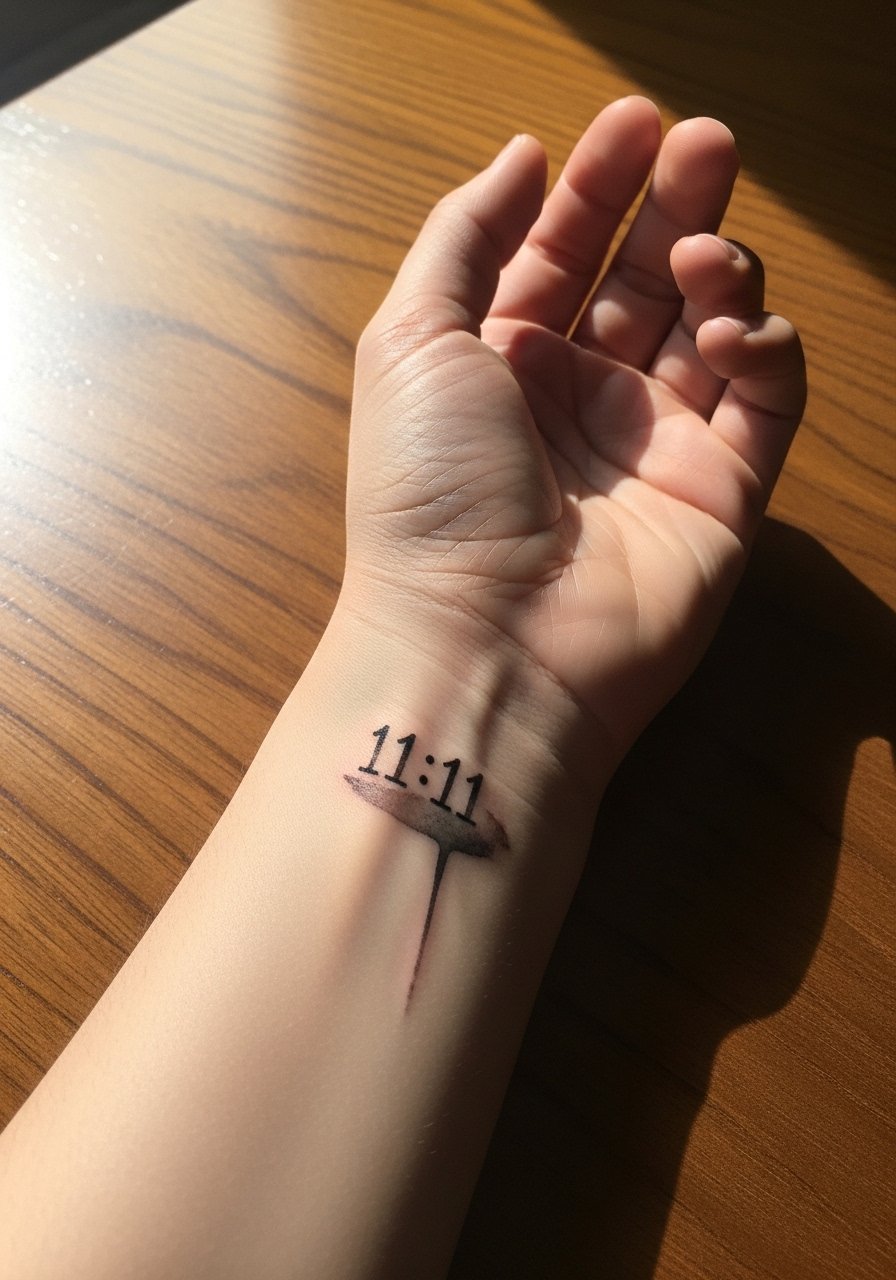
If budget or wait time worries you, pre-drawn flash designs get you inked faster and often at lower cost. The trade-off is limited customization. For a wrist flash, ask the shop if they will add a slight black base under the numbers for durability. A common mistake is assuming flash cannot be adjusted. Many artists allow small changes to size and placement. This route is ideal for first timers who want to test a 11:11 watercolor look without a long custom process.
16. 11:11 Script Across a Ribcage Bloom
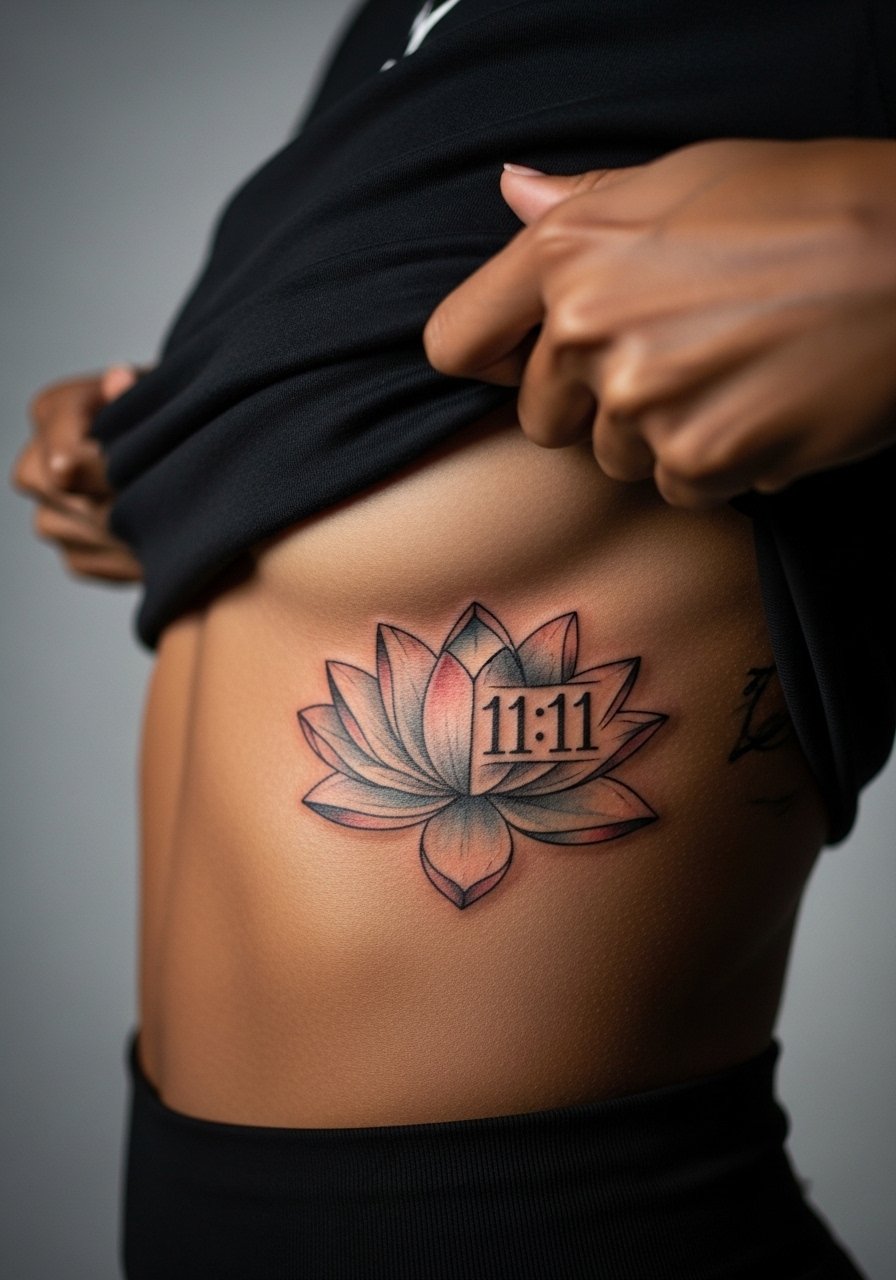
Fair warning: ribcage is one of the higher pain zones. Many still choose it for the privacy and dramatic canvas. The ribcage skin moves a lot which can blur dense linework. Avoid tight clusters of numbers here. Ask for more negative space and slightly bolder numerals that match the petal scale. Two sessions may be needed for a larger bloom. Healing requires loose clothing and patience.
17. 11:11 Mandala Wrist Band for Subtle Symmetry

A wrist mandala band can look refined if the pattern allows breathing room between shapes. The common mistake is packing too much detail into a narrow band which results in merged dots after a year. Keep motifs larger and the numerals slightly separated from dense stipple. Expect touch-ups for tight dot work by year three. For session wear, keep jewelry off and wear a sleeveless tank so the artist has uninterrupted access.
Frequently Asked Questions
Q: Will a watercolor 11:11 tattoo fade faster than traditional ink on a wrist or forearm?
A: It depends on the approach. Pure wash-only watercolor tends to soften faster on high-exposure spots like wrists. The hybrid technique that uses a minimal black base under the numbers gives much better long-term legibility while keeping the painterly look. Expect to plan for a light touch-up at year one to three depending on sun exposure.
Q: How do I find an artist who can do watercolor well on darker skin tones?
A: Look for portfolios that show healed work on similar skin tones. Search hashtags like #watercolortattoo and #1111tattoo and filter by location on directories. Ask shops for healed photos rather than fresh shots and request a short consult to see how they plan saturation and contrast for your skin.
Q: Are pre-drawn 11:11 watercolor flashes a good way to save money without sacrificing quality?
A: Yes, flash designs shorten design time and often reduce the price tag. Ask if the shop will scale the flash to a size that avoids blurring and whether they can add small anchors for the numbers. That way you get the affordability of flash with a durability boost.
Q: What should I wear to an appointment for a ribcage or collarbone watercolor piece?
A: For ribcage work, wear a cropped t-shirt or sports bra you can lift slightly. For collarbone, choose an off-shoulder or wide-neck shirt that you can pull aside. These choices let the artist access the area without you getting chilled or tugging on fabric.
Q: If I want a tiny wrist 11:11 but worry about blurring, what are my options?
A: Ask for a hybrid where the numerals have a thin black underlayer. Increase the numeral size slightly beyond what looks ideal on the screen. Also plan for yearly check-ins with your artist to see if a small touch-up will preserve clarity.
Q: Does placement change how often I should plan touch-ups for watercolor numbers?
A: Yes. High-friction and high-sun areas like wrists and ankles usually need touch-ups sooner than thigh or calf work. Inner arm and shoulder blade pieces tend to hold color longer. Expect to talk touch-up timeline with your artist during the consultation.
Q: How honest should I be in consults about how visible I want the 11:11 to be?
A: Very honest. Say whether you want the numbers to read clearly from a short distance or if you prefer them to be a subtle detail. That decision changes size, contrast, and whether a black base is recommended. Trust the healed examples in the artist portfolio more than how the stencil looks on a phone.
