
Fine line owls are everywhere on mood boards right now, but what holds up and what looks like a good idea only in photos are often two different things. Some pieces read beautifully fresh and soften into a soft haze, while others keep crisp linework for years. Below are 27 owl designs for women that blend contemporary trends with practical choices for longevity, placement, and wardrobe so you can pick a look that still pleases long after the first photo.
1. Watercolor Moonlit Owl on Inner Wrist
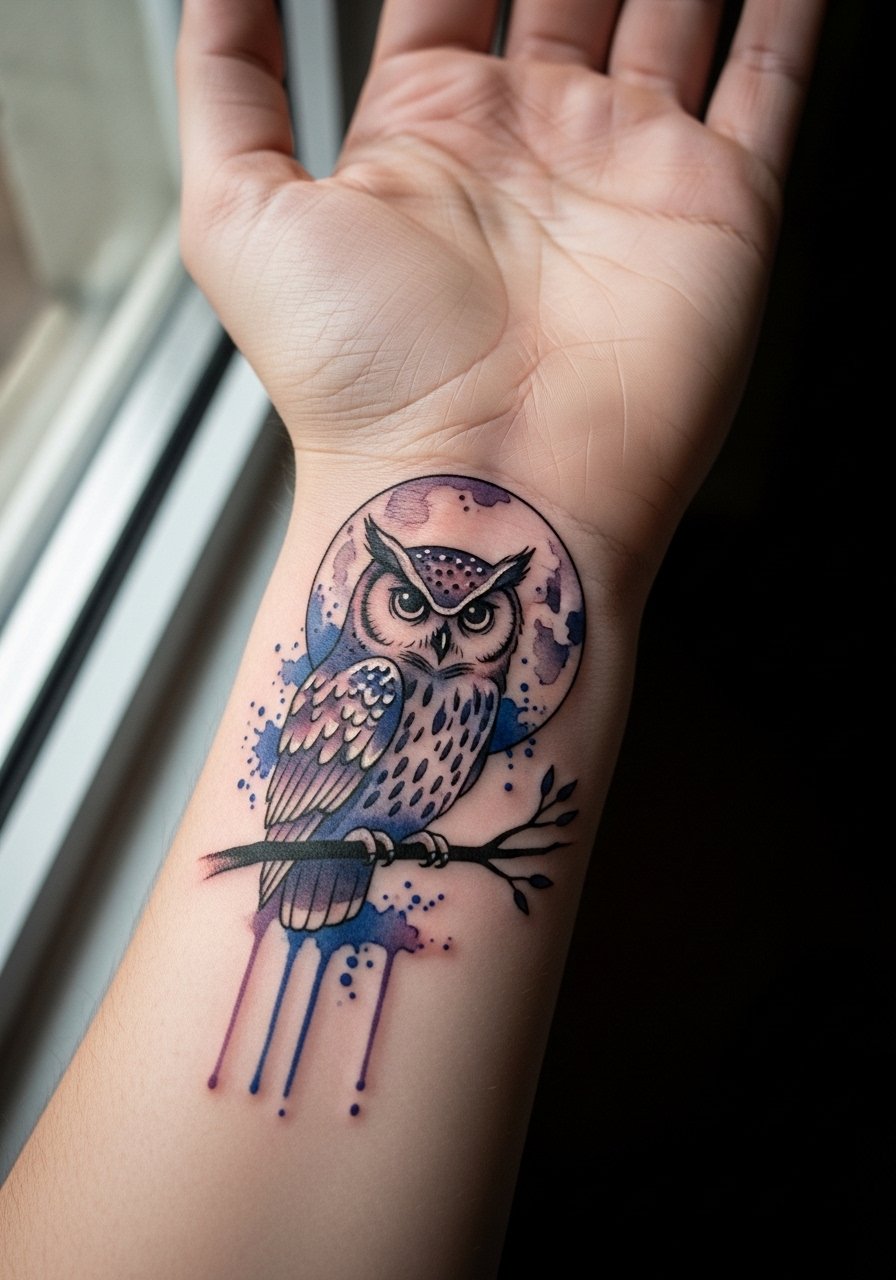
Start with this if you want color that reads like a small textile patch not a literal bird. Fair warning, wrists see a lot of rubbing from sleeves and jewelry, so ask your artist to use slightly bolder outlines and limit tiny, fragile details. The session is short, often under an hour, and the inner wrist is a 4 out of 10 for pain for most people. Six months in the washes soften, at two years the palette may lose vibrancy without a touch-up. For showing it off pair with a thin chain pendant necklace or stack delicate bracelets that do not sit directly over the ink.
2. Minimalist Outline Owl with Celestial Elements
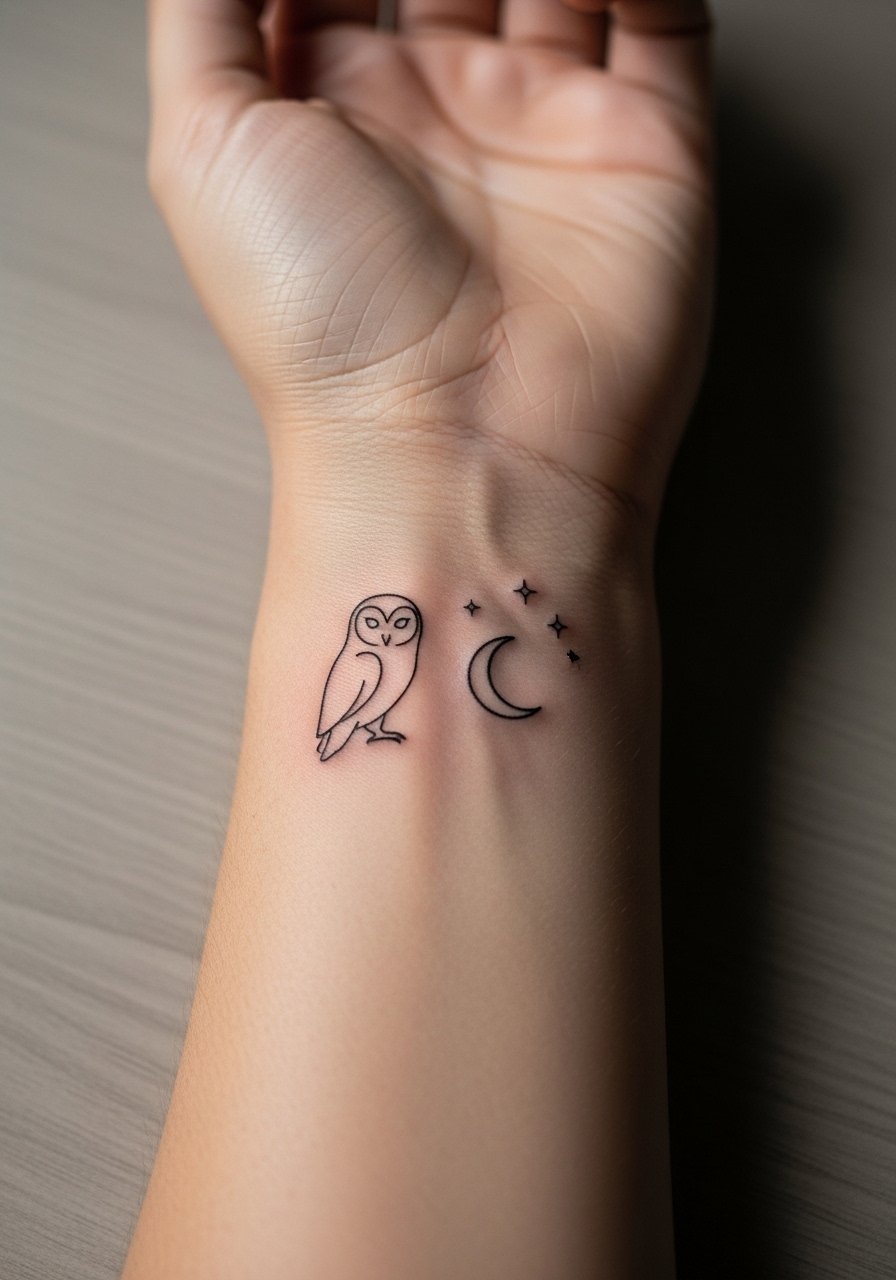
This reads instantly as an owl while staying tiny and symbolic. The outer wrist is slightly less fussy than the inner wrist and the placement works well for people testing a visible spot. The main mistake is making it too small and expecting fine detail to last. Tell your artist you want one continuous contour with balanced negative space and a small moon motif. Plan for a quick session under 45 minutes and expect possible touch-up at year two if you wear rings or bracelets that rub the area. For show-off outfits try a racerback tank when you want to keep wrist attention without heavy jewelry.
3. Fine Line Owl with Botanical Frame
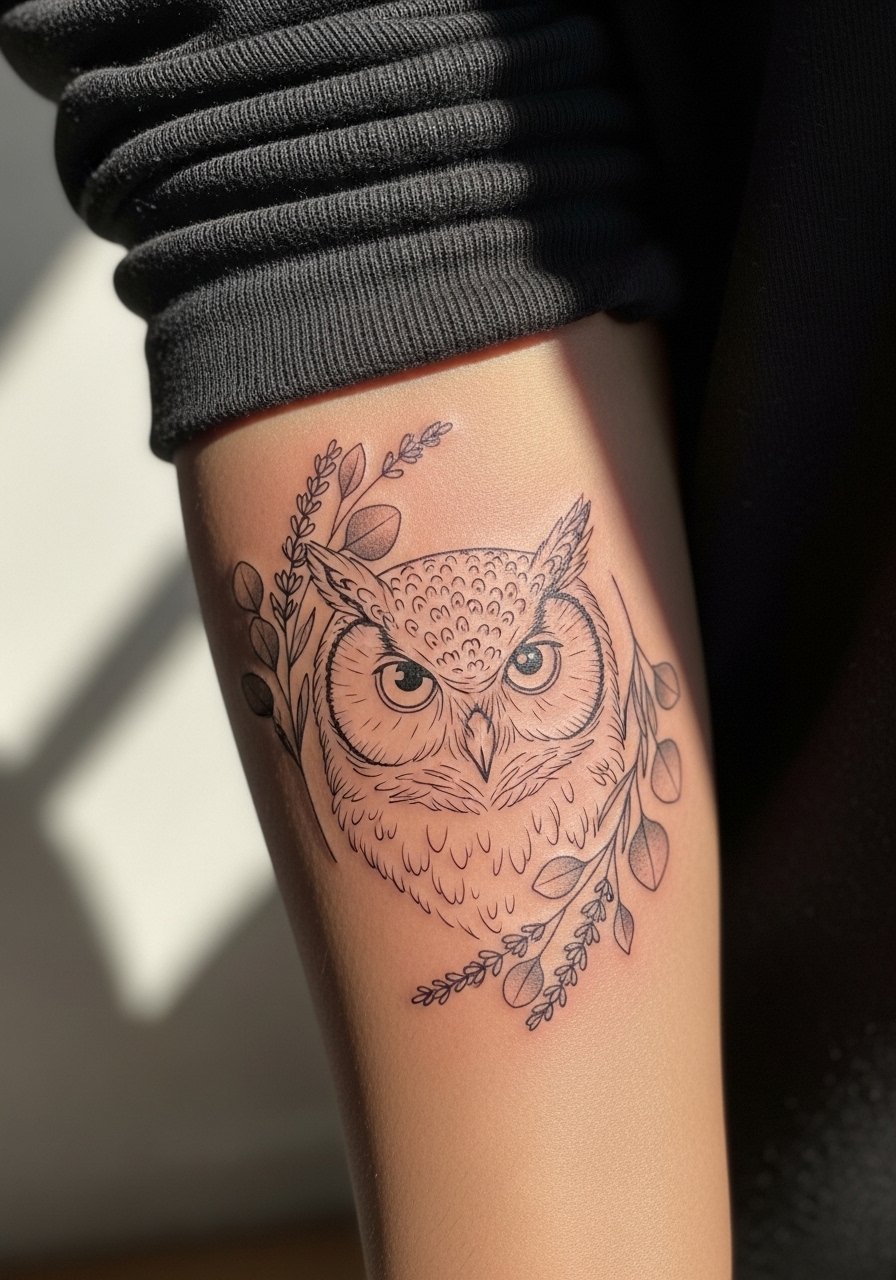
I have seen this one age well when the florals are spaced out and the owl head uses slightly heavier contour. The inner forearm is a forgiving surface with lower blowout risk and pain around 3 out of 10. During consultation ask for stipple shading and avoid dense, tiny leaves that can merge over time. At six months the lines look crisp. At two years small leaf clusters may soften, but the botanical frame helps the piece still read as an intentional composition. Pair this design with rolled-up linen shirts that keep the forearm visible and add a loose button-down shirt in cream tones to frame the linework.
4. Neo-Traditional Owl with a Crown and Script Banner
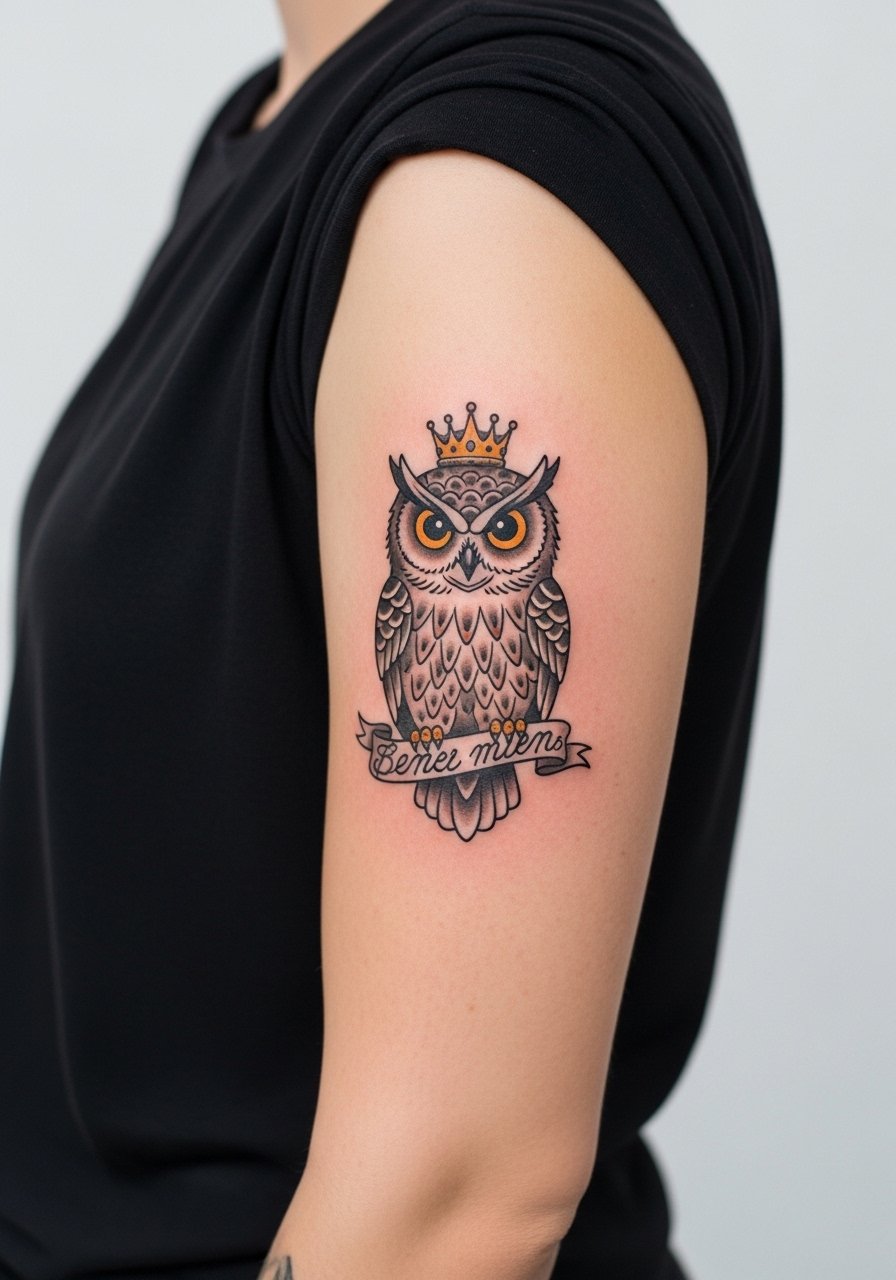
There is a timeless quality to saturated neo-traditional color and bold outlines. The upper arm tolerates saturation and heals with less fading than high-friction areas. Ask for color placement that keeps darks around the crown and selective bright accents in the eyes. The session is usually one to two hours depending on size. A common mistake is adding long script that crowds the composition. For wardrobe, an open-sleeve top or a loose button-down shirt pulled aside during the session gives clear access and looks great afterward.
5. Micro-Realism Owl with One Eye Detail
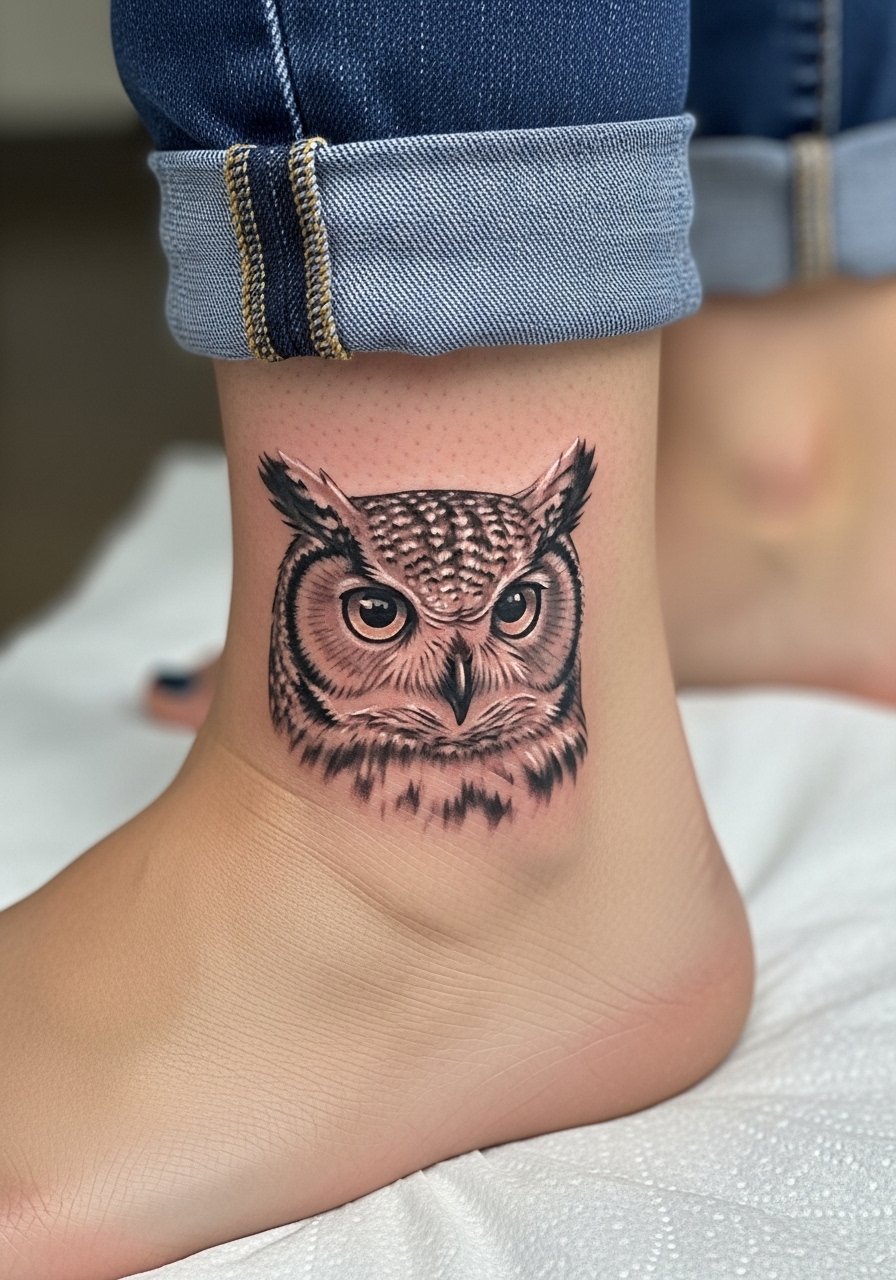
This is a portrait trick that gives a small piece dramatic focal interest. Ankle placement is intimate but visible with cropped pants. The pain is moderate and the session can run 1 to 1.5 hours because of the careful shading. The big mistake is over-detailing relative to size. Ask your artist to render one eye in full micro shading and suggest implied feathers instead of full rendering. In two years micro shading may need a subtle touch-up. For appointment ease wear jeans you can roll so the leg can be exposed without tugging.
6. Ornamental Owl with Mandala-Style Wings
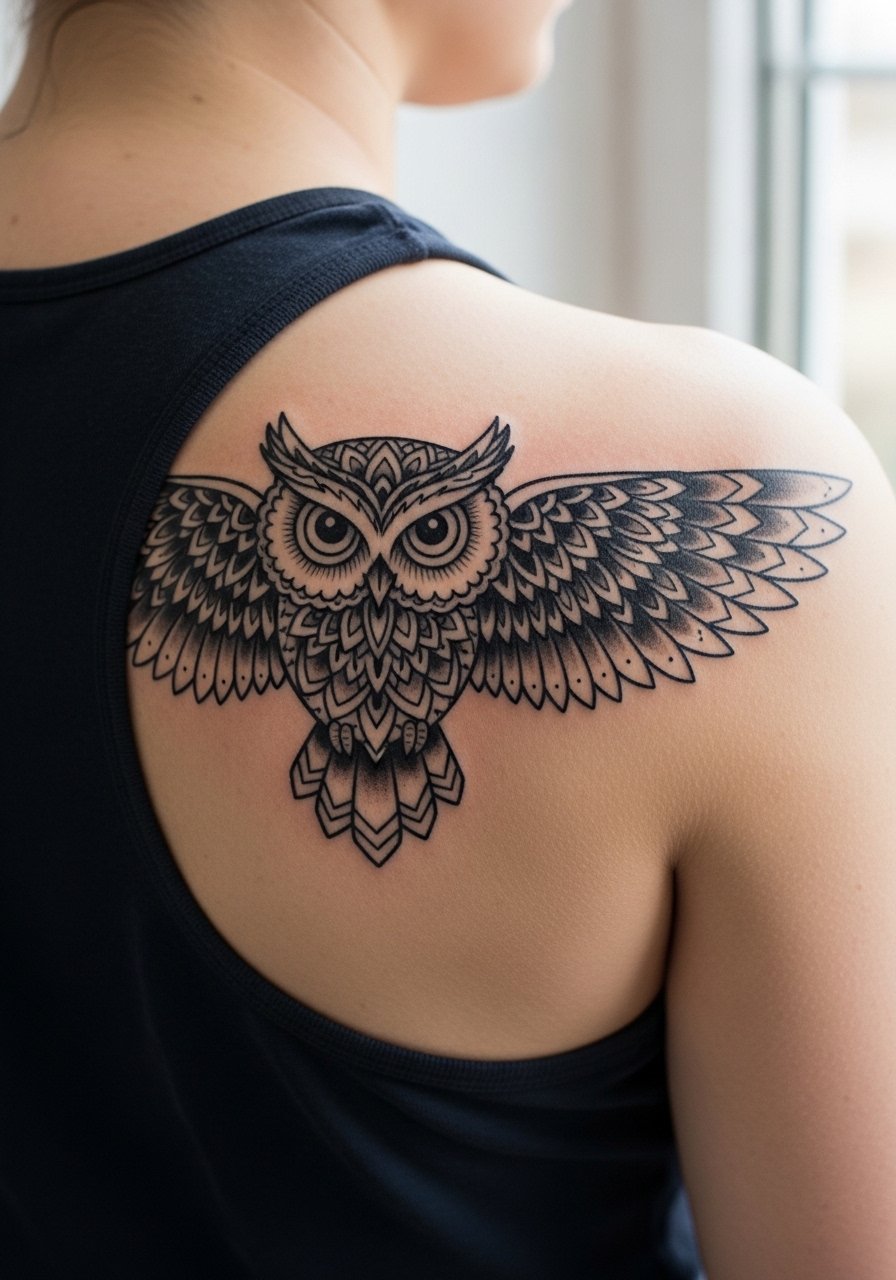
This ornamental option uses geometric fans inside the wings for strong visual rhythm. Upper back placement allows a larger scale with lower day-to-day friction. Artists often charge more for intricate dot work because it is time intensive. During consultation, ask for clear spacing between mandala fans to avoid merging over time. The controversy around mandala density matters here because tighter dot work may blur sooner under heavy friction. For session day wear choose a loose tank top you can pull aside so the artist has unobstructed access.
Pre-Session Essentials
The wrist, ankle, and upper back options above ask for different prep and first-week care, so a short kit tailored to small visible pieces and larger ornamental areas smooths the experience.
-
Stencil transfer paper kit. Lets you and the artist preview how linework sits on skin, which helps avoid awkward placement for wrist and ankle pieces.
-
Topical numbing cream. Used thirty to forty five minutes before eases sensitivity for ankle and inner forearm sessions without altering the visual reference during consultation.
-
Thin protective film roll. Helpful for wrist pieces that face constant handwashing and friction in the first week.
-
Fragrance-free body wash. Cleans the tattooed area gently during showers without irritating delicate linework that fine line styles rely on.
-
Aquaphor healing ointment. A thin layer in the first few days helps retain moisture and supports the initial settle of lines for small color and blackwork pieces.
7. Cute Cartoon Owl Nestled in a Book
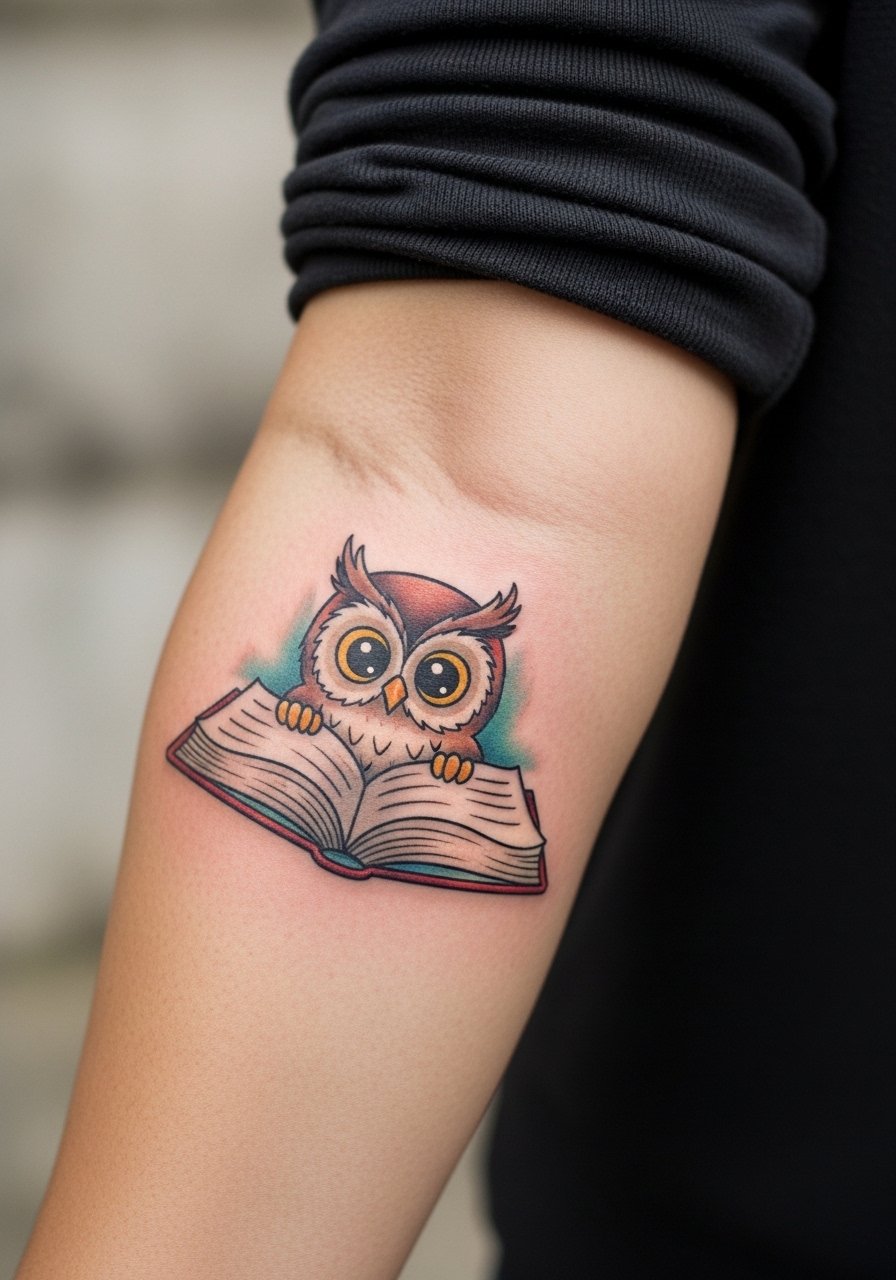
This one is ideal for book lovers who want a playful emblem rather than a symbolic piece. Inner forearm placement keeps it visible and easy to expand into a small sleeve later. The usual error is making text or tiny page lines too small. When you talk with the artist say you want bold eye shapes and simplified page edges so the owl reads at arms length. Sessions are usually under two hours and pain is low. Pair this with a casual knit or a loose drawstring linen pant that highlights the forearm when you tuck the hem or roll the sleeve.
8. Blackwork Owl with Negative Space Leaves
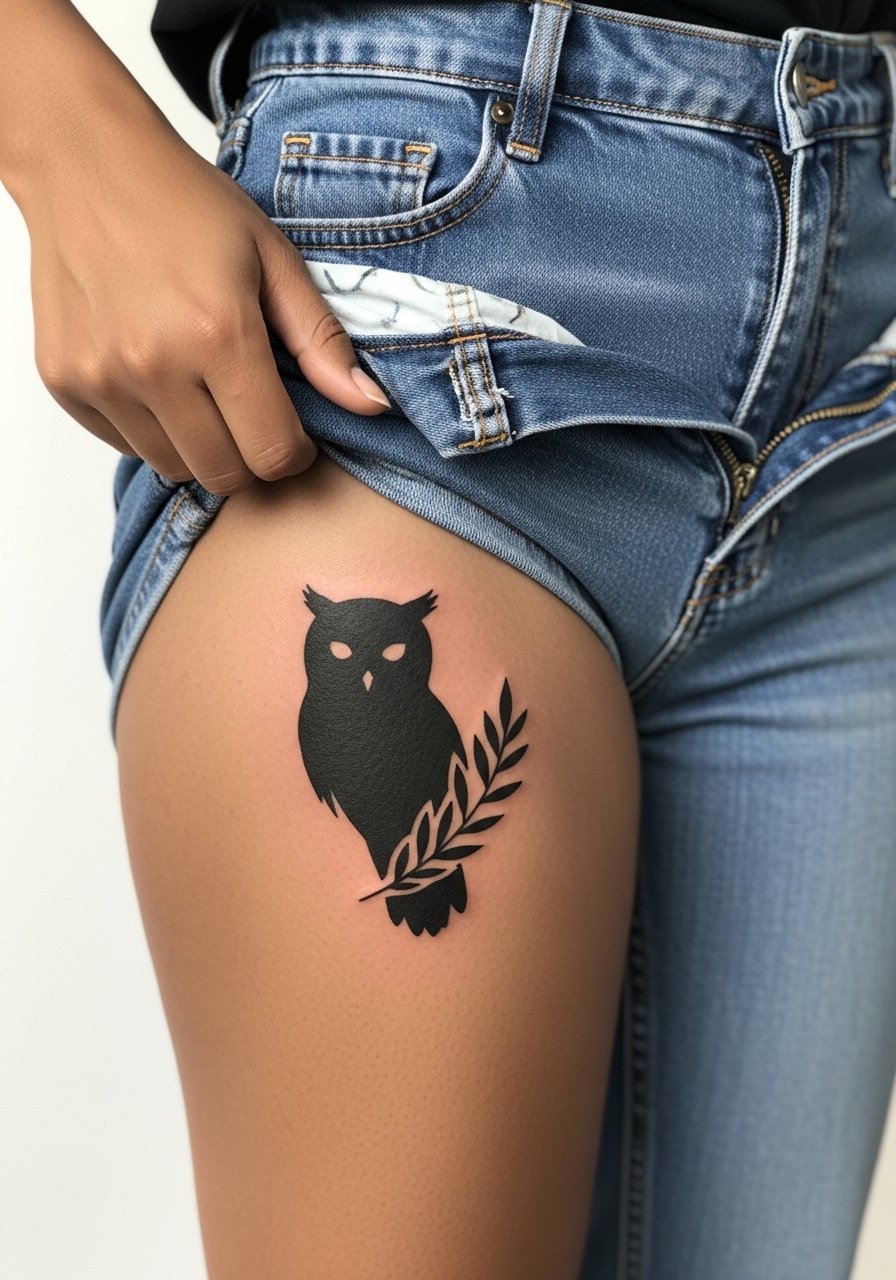
Blackwork with negative space is bold and ages into strong contrast on most skin tones. The outer thigh tolerates solid black well and has low blowout risk. The common mistake is overloading with tiny negative elements that lose definition against large fields of black. For longevity, ask for crisp negative space margins and a touch-up plan at year three. Sessions can be longer because of saturation. For showing off, high-waisted skirts or shorts with a slight hip reveal frame the negative space and keep the composition readable.
9. Ignorant-Style Owl with Tiny Quote
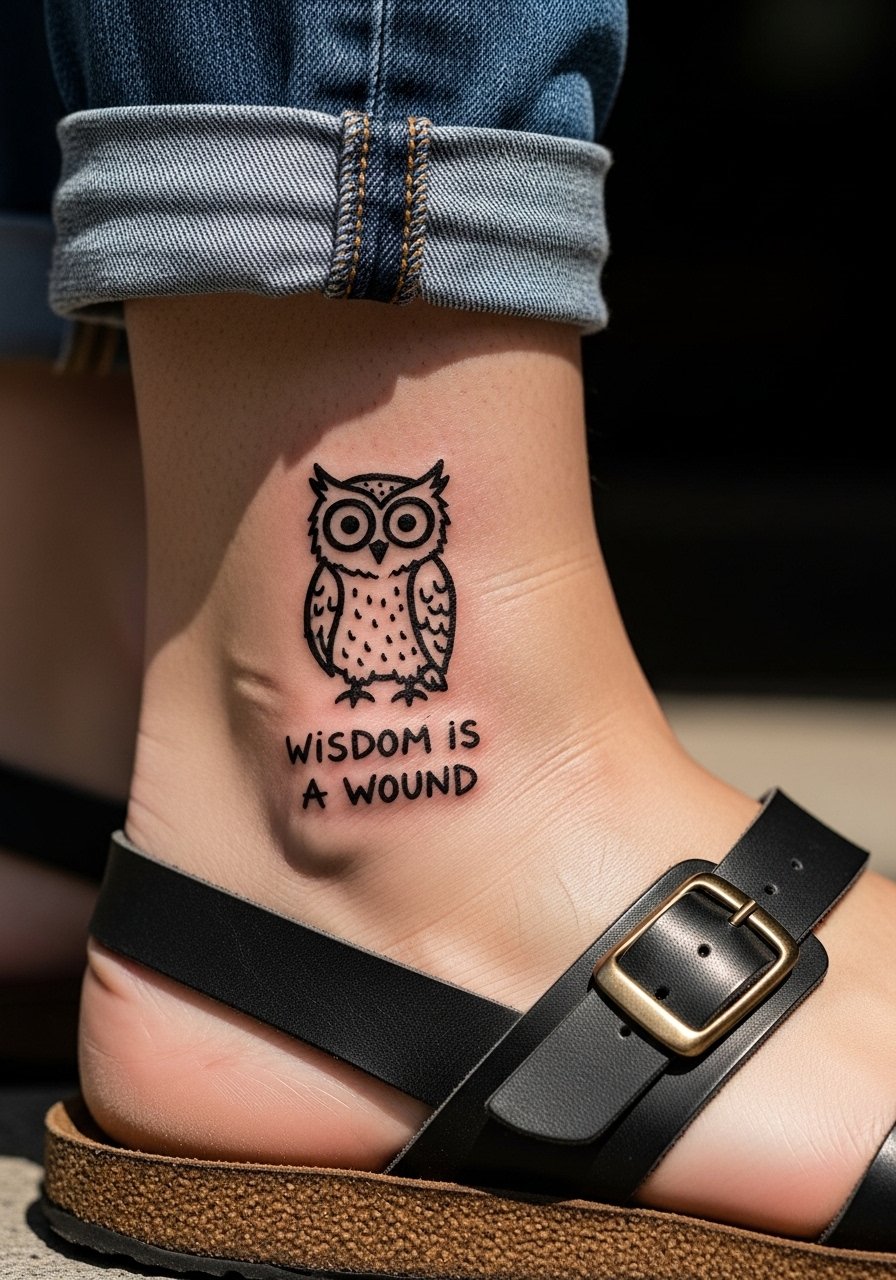
The charming, hand-drawn aesthetic is forgiving and intentionally imperfect. It suits people who want low-commitment visual personality. The ankle is tetchy for healing because of socks and shoes rubbing. Tell your artist you want loose lineweight and a short, simple phrase in all-lowercase script. The session is quick and low pain. A typical mistake is adding a long phrase that crowds the tiny drawing. For session comfort wear slip-on shoes and pack a pair of thin socks. To style it pair with low-profile sandals or a minimalist ankle strap sandal.
10. Owl Constellation with Connected Dots
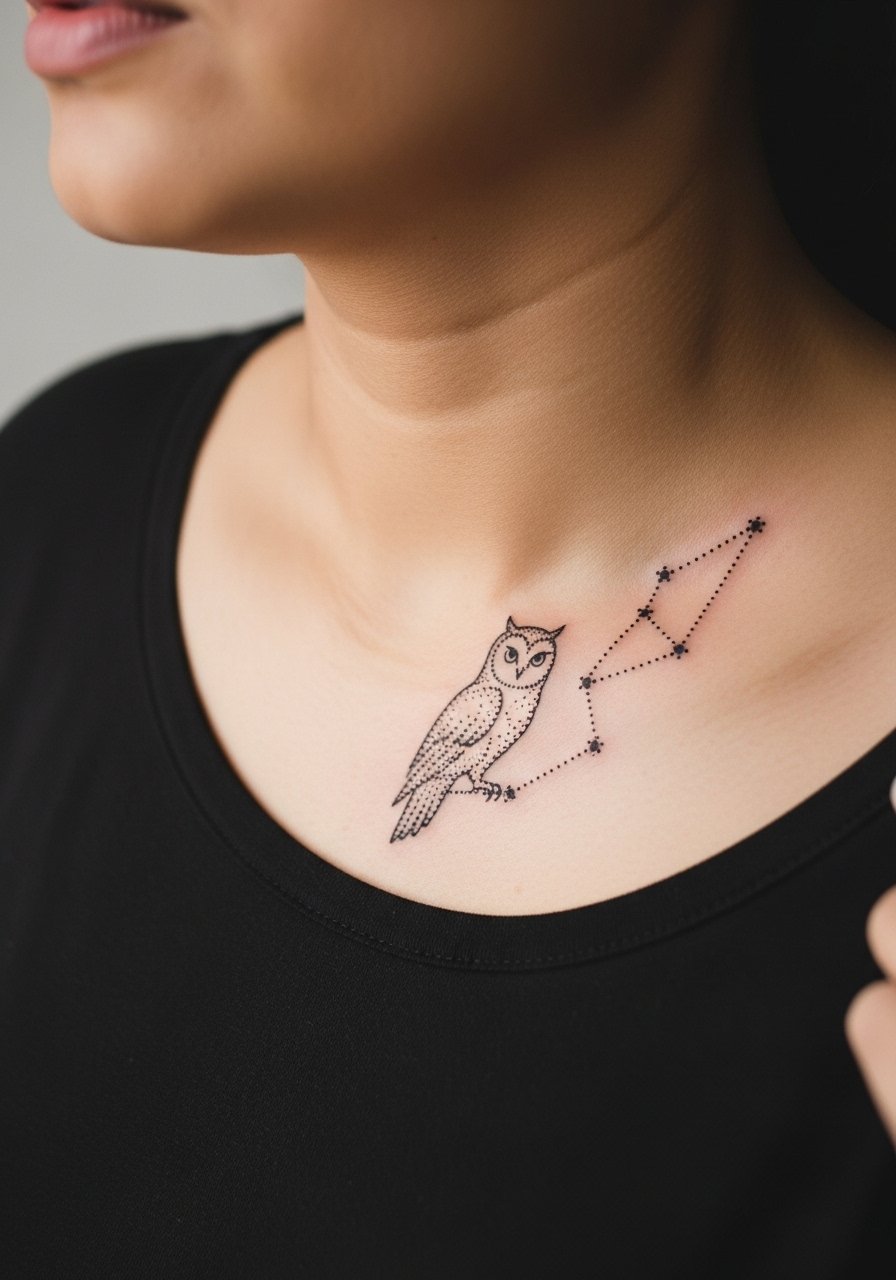
This subtle constellation works best where space allows for negative breathing room. Collarbone placement is very visible and pairs with necklaces. The dotwork technique can lose precise separation if placed too small. During consultation request deliberate spacing between stars and a slightly heavier anchor dot for the eye area. Sessions are short, usually under an hour, and pain is moderate because of the thin skin. For display pair with an open-back midi dress or a thin chain layered below the dots.
11. Watercolor Owl Spring Wreath
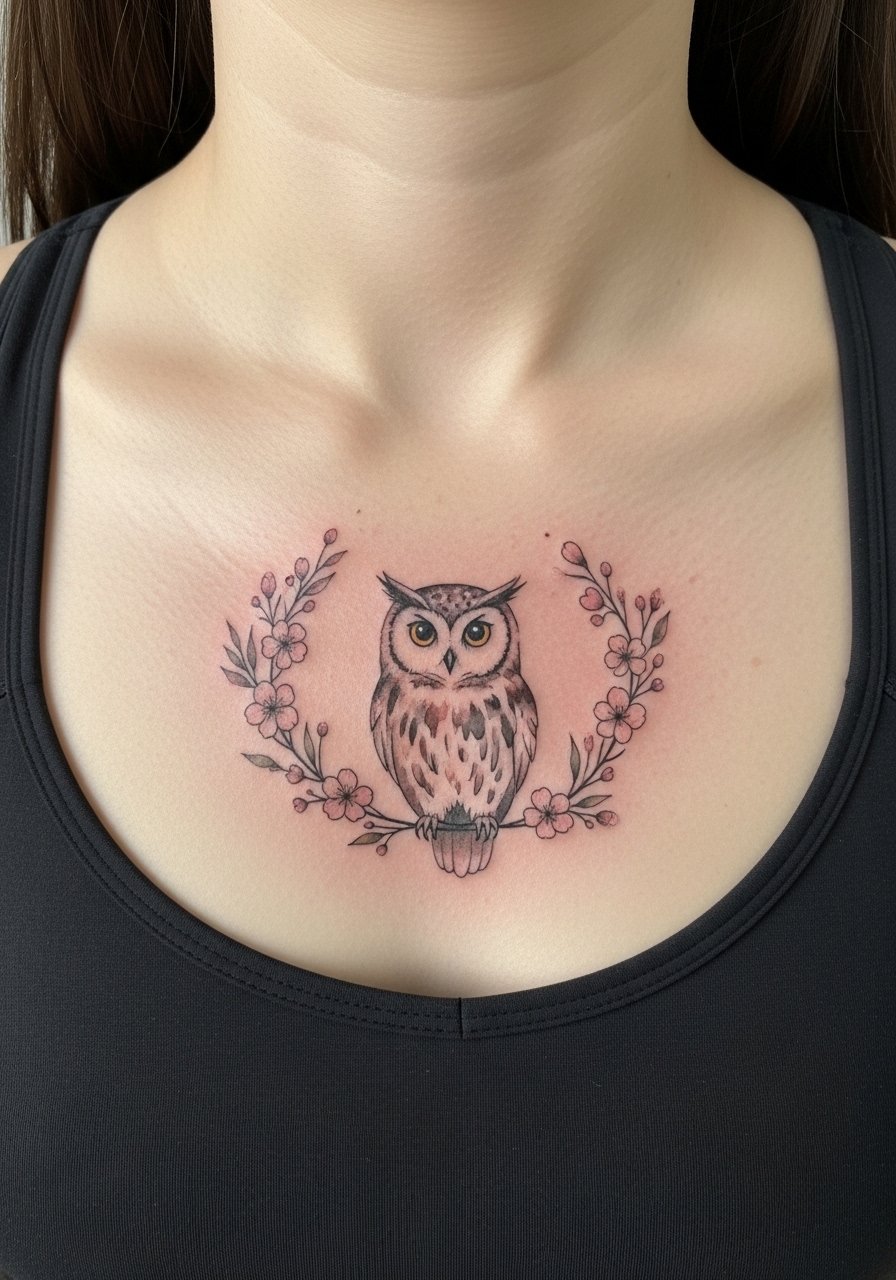
Color on the chest looks romantic and scales well for medium sizes. The sternum and upper chest are sensitive, and healing can be affected by clothing friction. A frequent mistake is pushing too many colors into a small area. Ask your artist to limit the palette to three to four hues and to anchor color with a soft black outline. Sessions may take two hours and pain is higher near the sternum. For session wear choose a fitted sports bra that gives the artist access and for outfits try open-neck tops that show the wreath tastefully.
12. Fall-Themed Owl with Leaves and Pumpkins
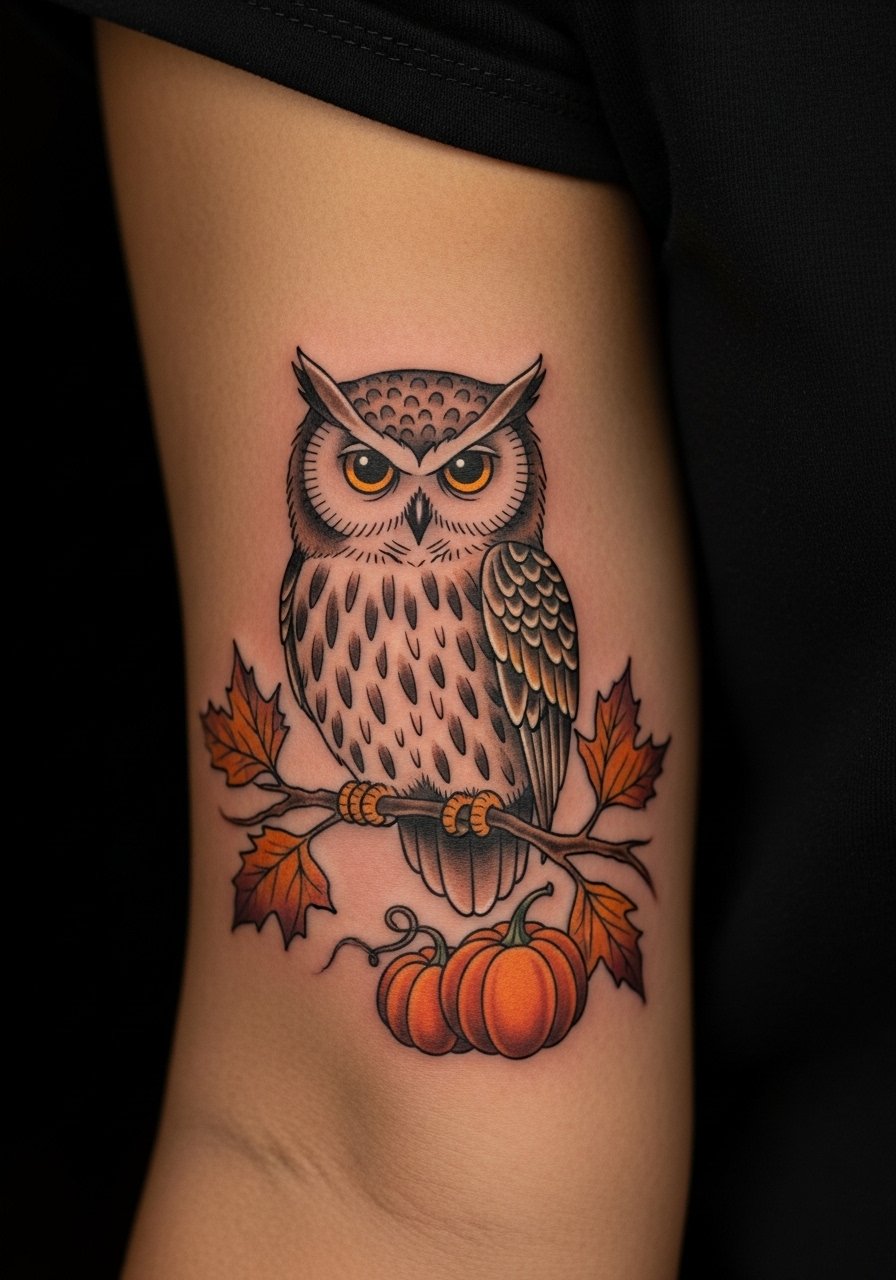
Seasonal motifs give an owl a narrative that can become part of a small collection. The outer forearm is forgiving and the warm palette holds on medium and dark skin with correct saturation. Avoid tiny pumpkin details that will blur. Tell your artist to use broad patches of warm color and to keep linework clean around the leaves. Sessions are one to two hours. Pair this piece with autumnal knits or a chunky cardigan for an intentional seasonal wardrobe.
13. Minimalist Back-of-the-Neck Owl Silhouette
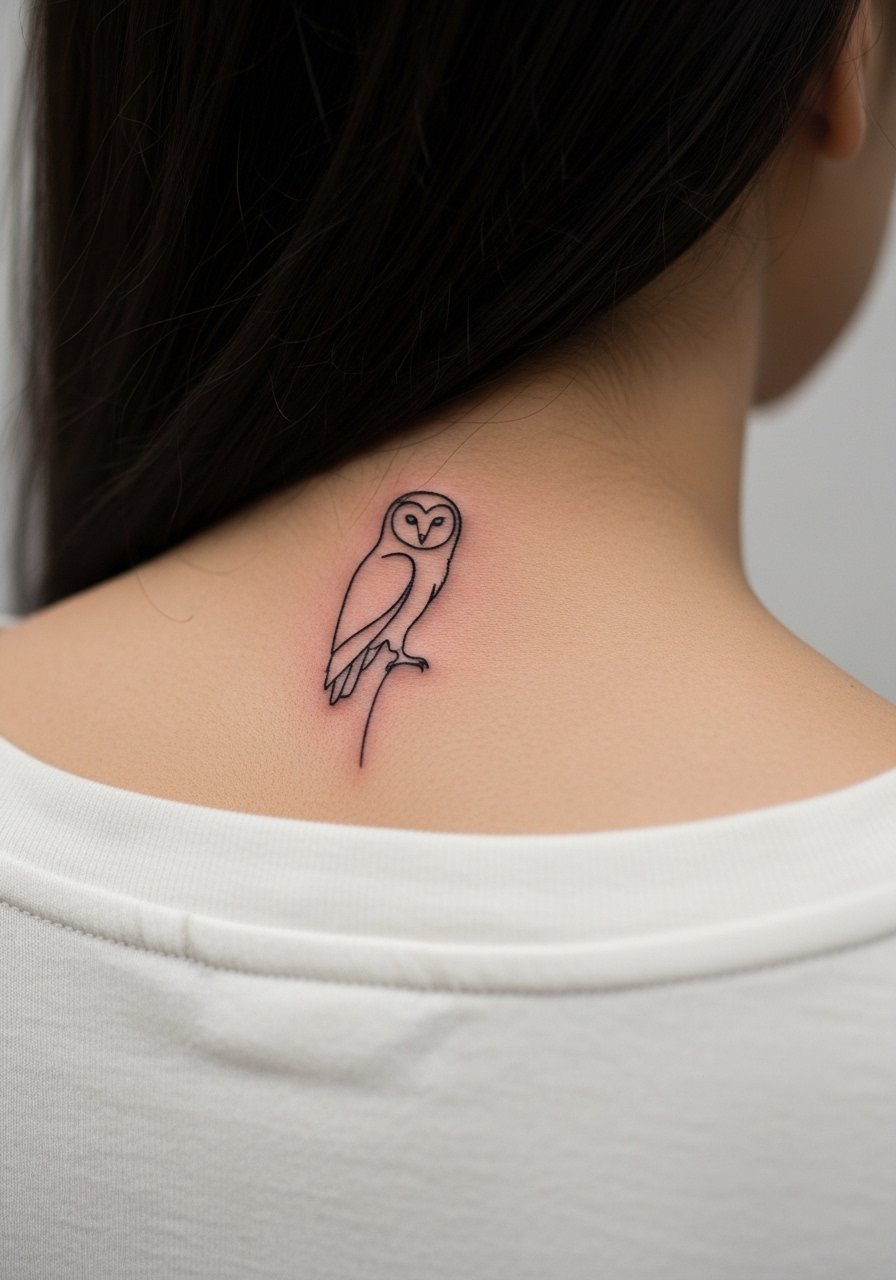
This placement is a low-visibility option for someone who wants private symbolism. The back-of-neck is discreet and shows only when hair is up. The main technical issue is scale, because too-small silhouettes can blur against skin movement. Ask for a slightly larger silhouette and minimal internal detail so the shape reads from a distance. Pain is moderate and sessions are quick. For session comfort wear a shirt with a wide neck and for showing it off consider an updo or a soft scrunchie set that keeps hair up without tight elastic pressure.
14. Fineline Owl with Poetry Fragment
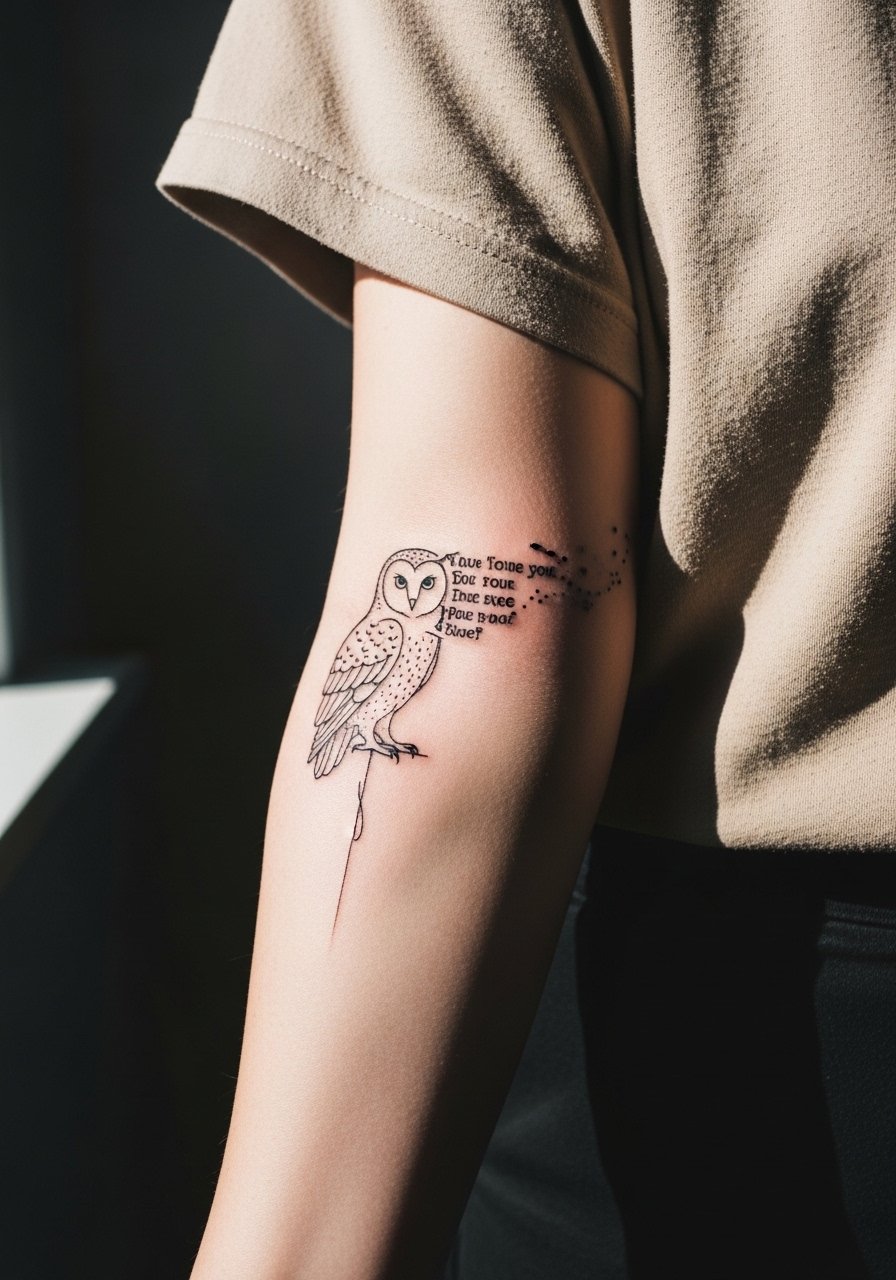
Pairing text with fineline imagery looks delicate but asks for spacing discipline. The inner forearm suits script if the lettering height is clear and the ink depth is appropriate. The debate around fine line longevity is relevant here because some artists think the script will blur faster on mobile skin areas. Name your preferred script style and ask the artist to size letters for long-term legibility. Expect touch-ups around year two to three for thin script. Style with a thin chain bracelet that sits above the poetry without covering it.
15. Ornamental Owl with Feminine Motifs
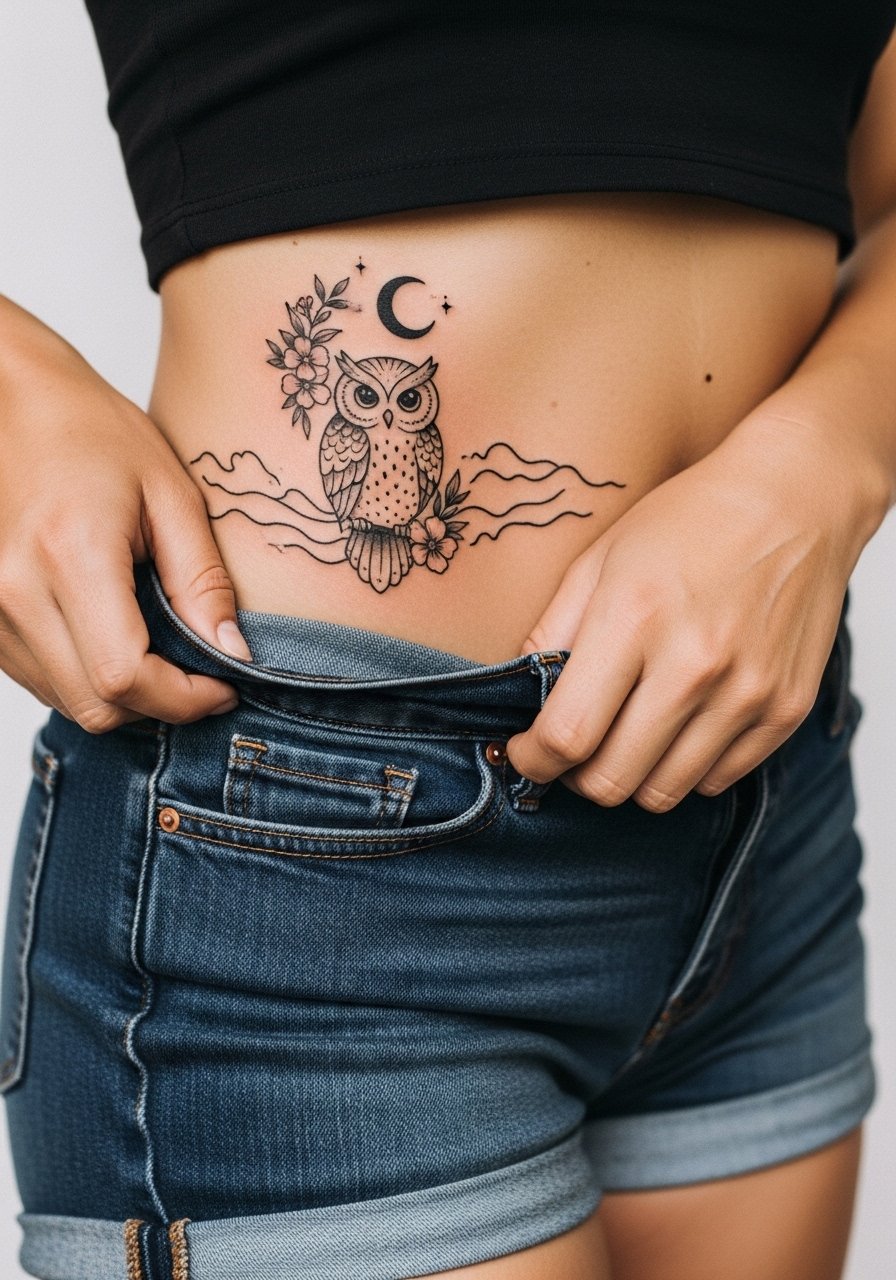
Hip placement offers privacy and an opportunity for slightly larger scale. The design blends mystical motifs in a composition that can expand into thigh pieces. A common mistake is crowding the moon and florals into a space meant for a single focal owl. Ask for clear separation and to test the layout with a temporary transfer while standing. Pain is moderate and sessions may need a second appointment for color. For the session wear high-waisted bottoms and afterward pair with high-cut shorts or skirts to show the design.
16. Geometric Owl with Mandala Chest Accent
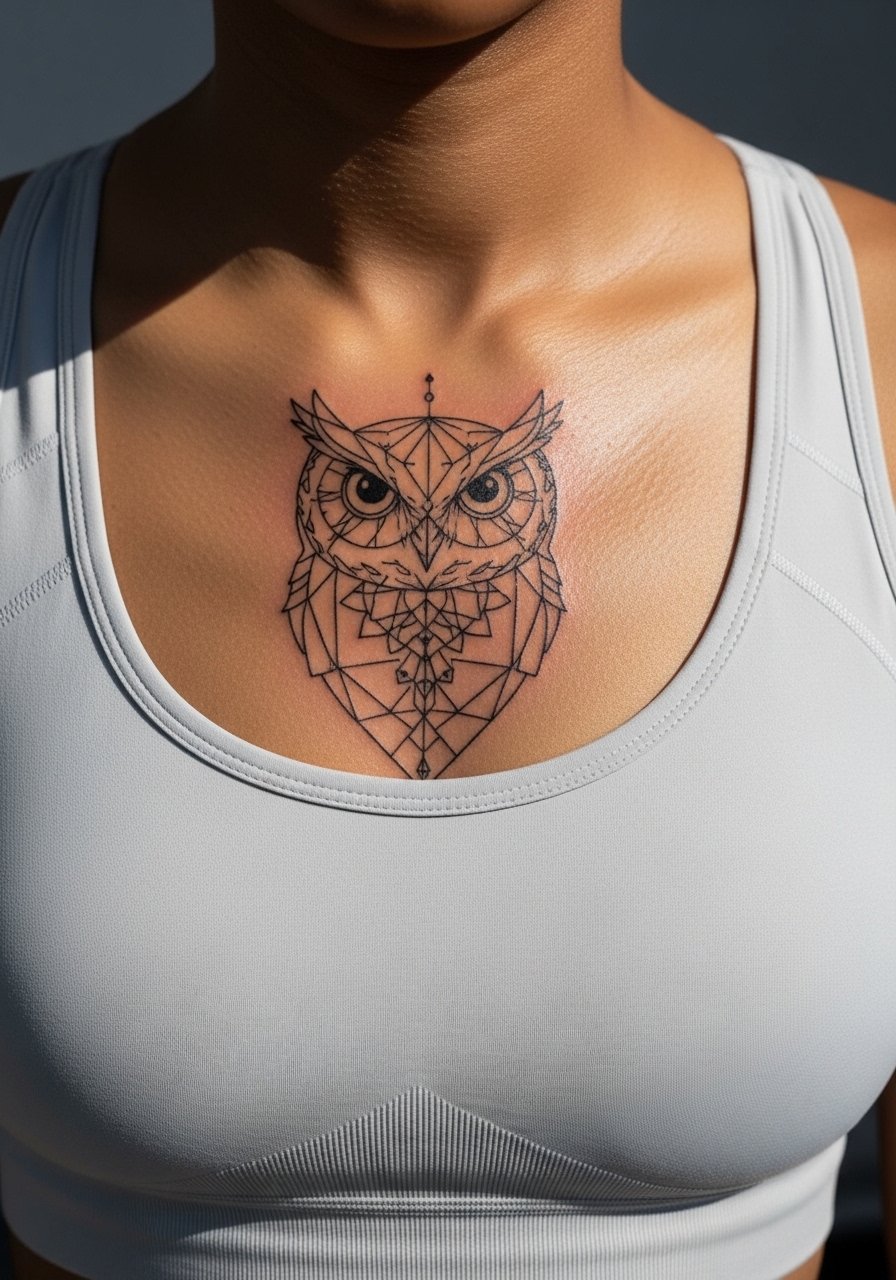
Geometric work on the sternum looks striking but is sensitive while healing. There is a debate among artists about fine detail on the chest. One side warns that thin geometry on moving skin blurs within two years. The other says careful needle depth and spacing let geometry hold. Ask the artist where they fall and request modest line weight with clear breathing room. Sessions are longer and pain higher, so prepare for breaks. For session wear a fitted sports bra and after healing pair with halter tops that show the centerpiece.
17. Tiny Owl Behind the Ear with Stars
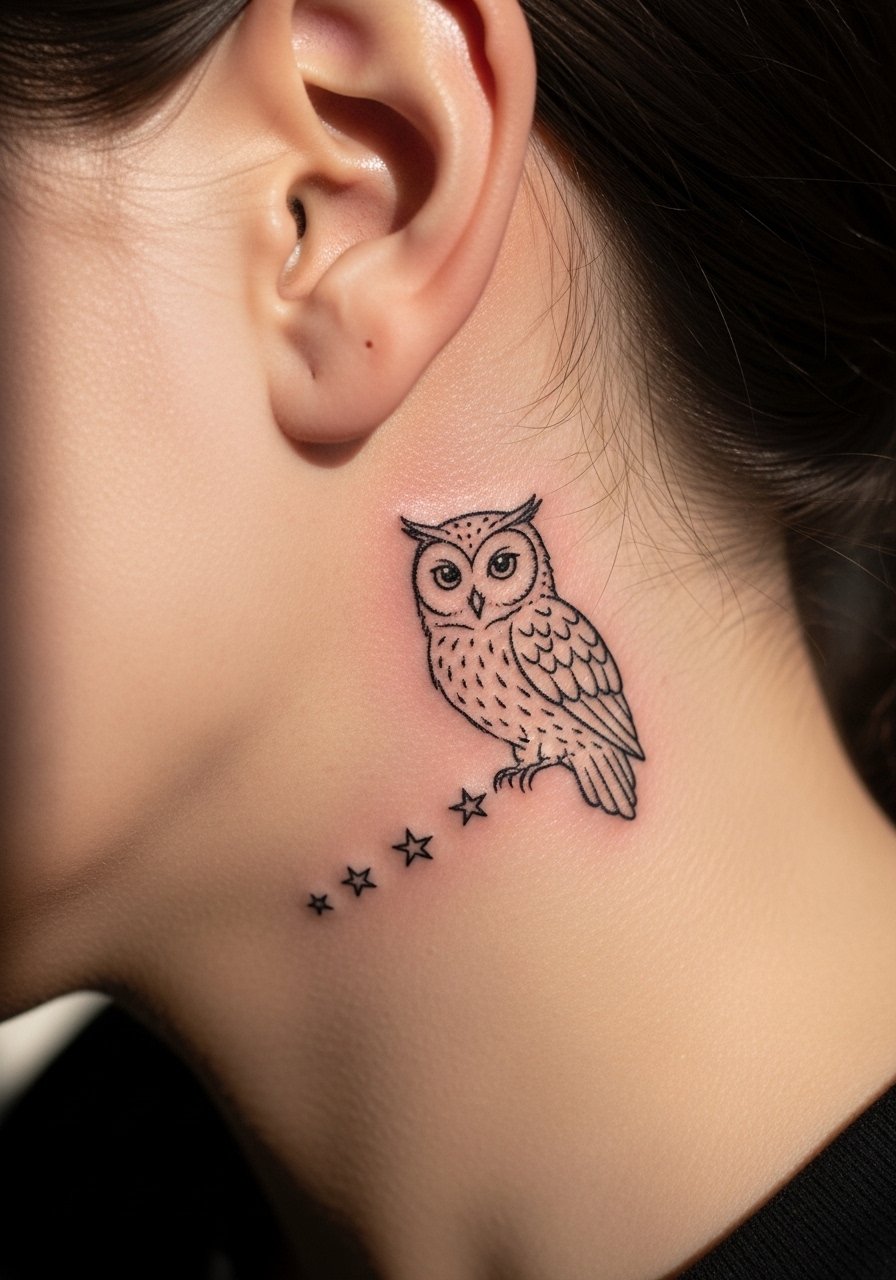
Behind-the-ear tattoos require careful framing in the stencil stage. The area has thin skin and hair can obscure the image. The frequent mistake is placing too much detail where visibility is tiny. Ask for a simplified silhouette and request to preview the transfer below the hairline. Pain is mild and the session is under thirty minutes. For session ease wear a hairstyle you can pull back and consider a thin headband set that helps keep hair away without pressure.
18. Blackwork Owl with Flame Negative Space
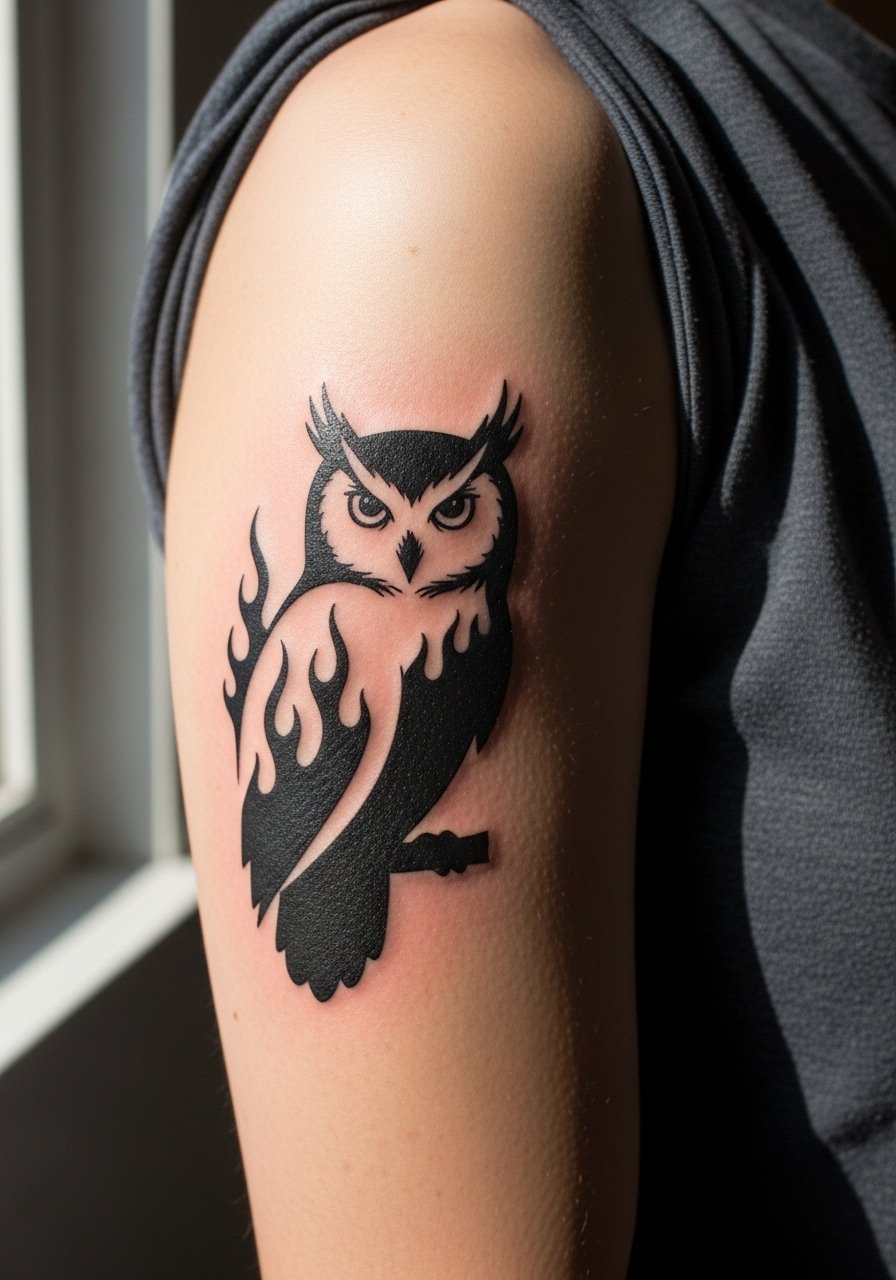
If you like bold graphic statements this one ages into a strong silhouette on most skin tones. Upper arm saturation is forgiving and can maintain contrast for years. The main mistake is packing too many fine negative shapes that disappear against large black areas. Ask for larger negative shapes and clear outlines that keep the flame effect readable. Sessions can be longer for saturation. Wear a loose short-sleeve tee to the appointment for ease and comfort.
19. Micro-Realism Perched Owl on the Ribcage
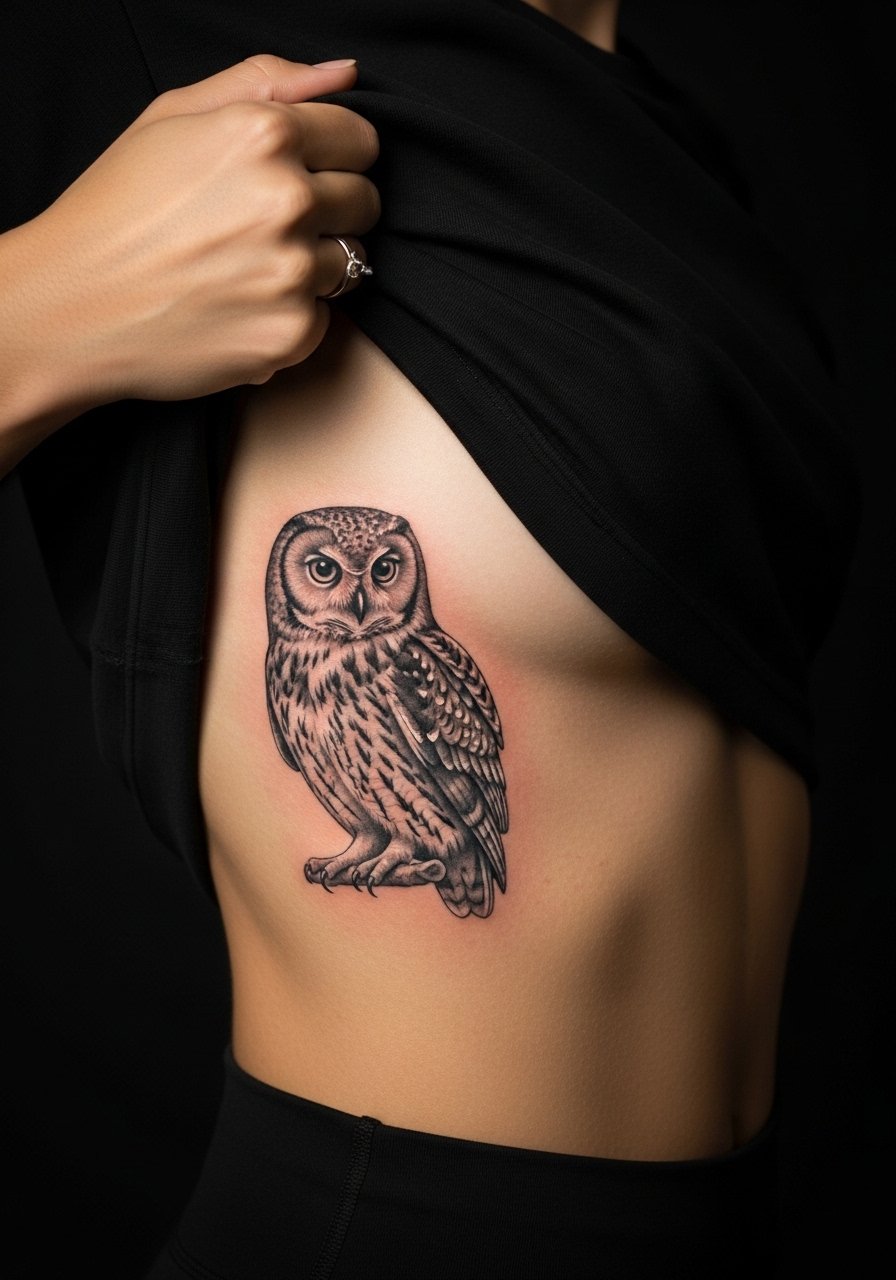
The ribcage is an expressive canvas but it reacts to breathing and movement. Artists are split on micro-realism there. One camp says the stretch and thin skin blur ultra-fine work. The other camp has had success with careful depth and spacing. If you choose this, discuss touch-up expectations and accept that the piece may need refinement after the skin settles. Pain is high and sessions may require breaks. For session wear a cropped top you can lift easily and after healing pair with open-side tops that show the profile.
20. Owl with Leafy Half-Sleeve Accent
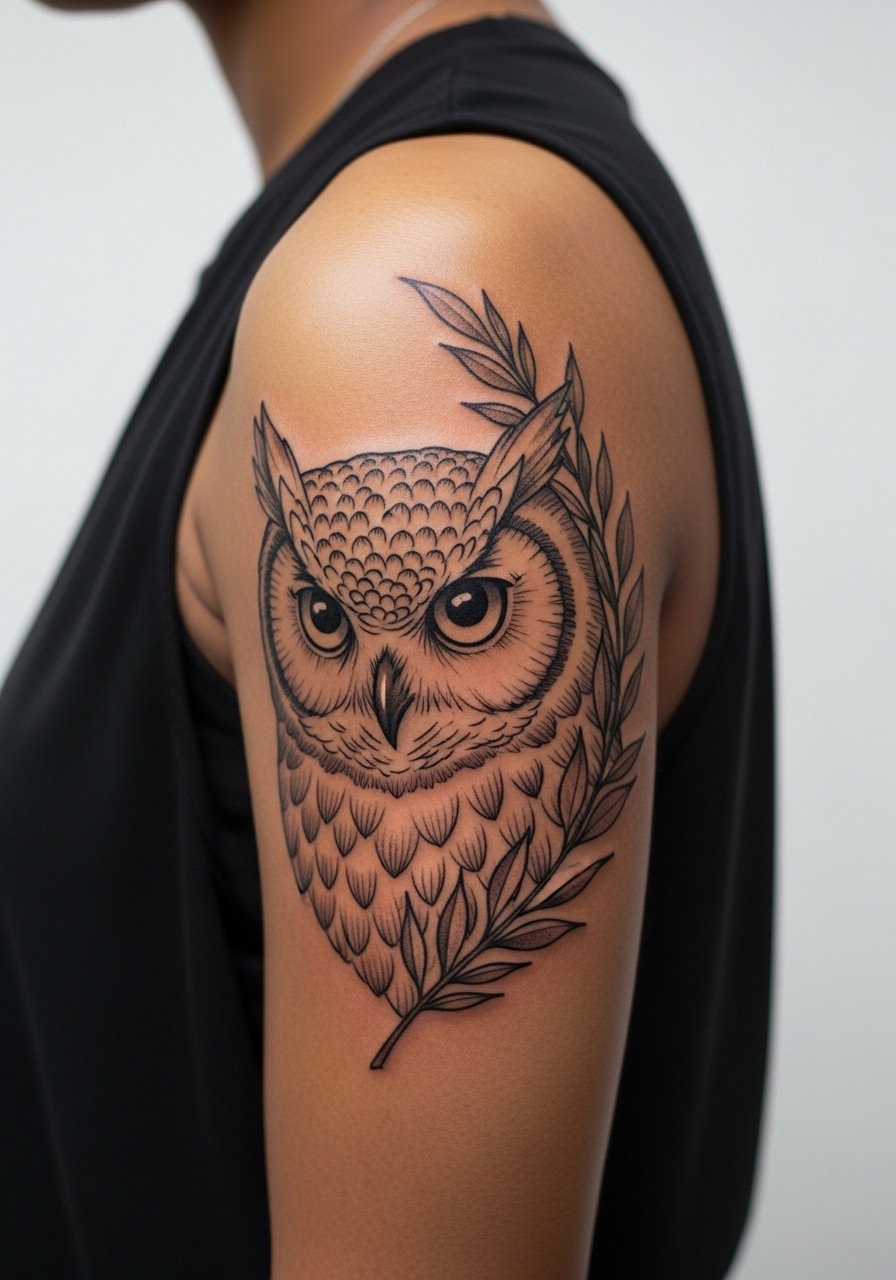
This configuration is a start to a collection that can grow into a sleeve. The leafy accents help disguise small touch-ups in years to come. Tell your artist you want the owl as an anchor and the leaves to remain simple so the design can integrate other pieces. The session time depends on coverage, often several hours or multiple sessions. For showing it off pick sleeveless dresses or a sleeveless linen top that frames the arm without competing.
21. Stipple-Shaded Owl on the Calf
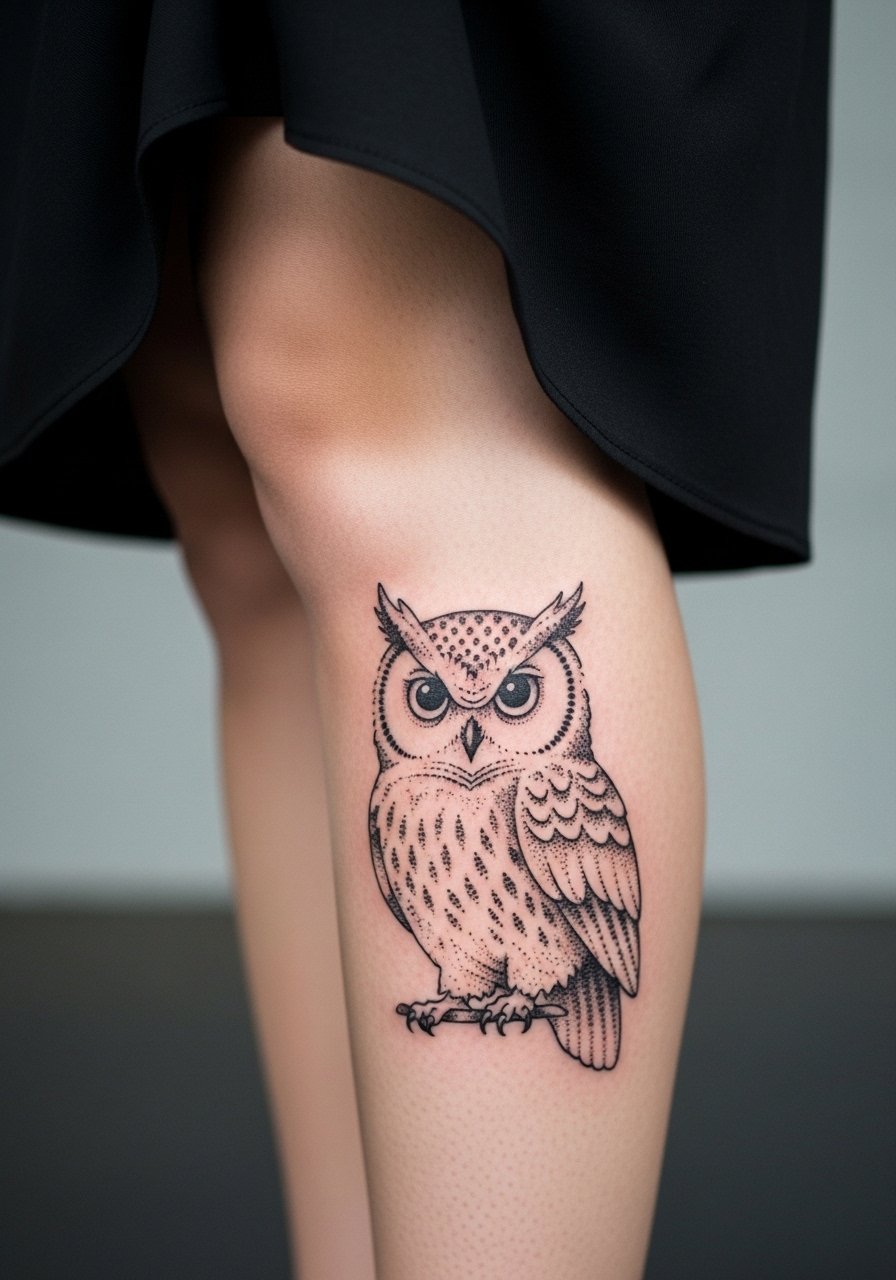
Dot work ages well on lower legs because the skin is less mobile than the torso. The calf handles stipple shading and shows scale nicely. The mistake is crowding stipple too tightly near outlines. Ask for a gradient approach that eases out toward negative space. Sessions can be longer because dot work is time intensive. For the appointment wear a skirt or loose drawstring shorts so the artist can access the calf easily.
22. Tiny Owl Finger Accent
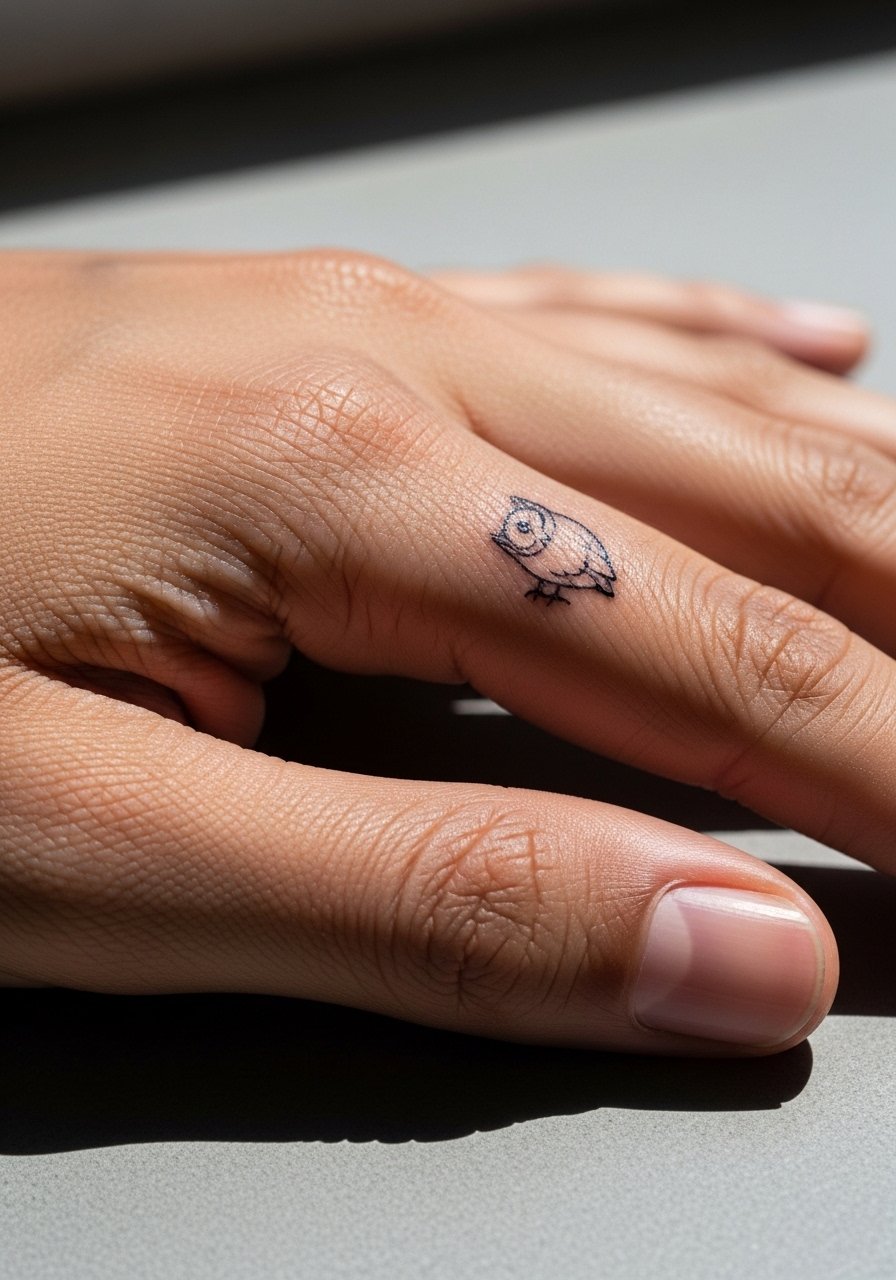
Finger tattoos are visible and fussy. They fade faster because of constant washing and cell turnover. The key is accepting that this is effectively semi-permanent and that frequent touch-ups may be needed. Make the design bold enough that the silhouette remains readable when minor fading occurs. Sessions are quick but healing requires extra caution. For showing it off choose rings that do not press directly over the ink and consider a minimal band ring set that complements the tiny owl.
23. Owl with Wave Motif on the Outer Thigh
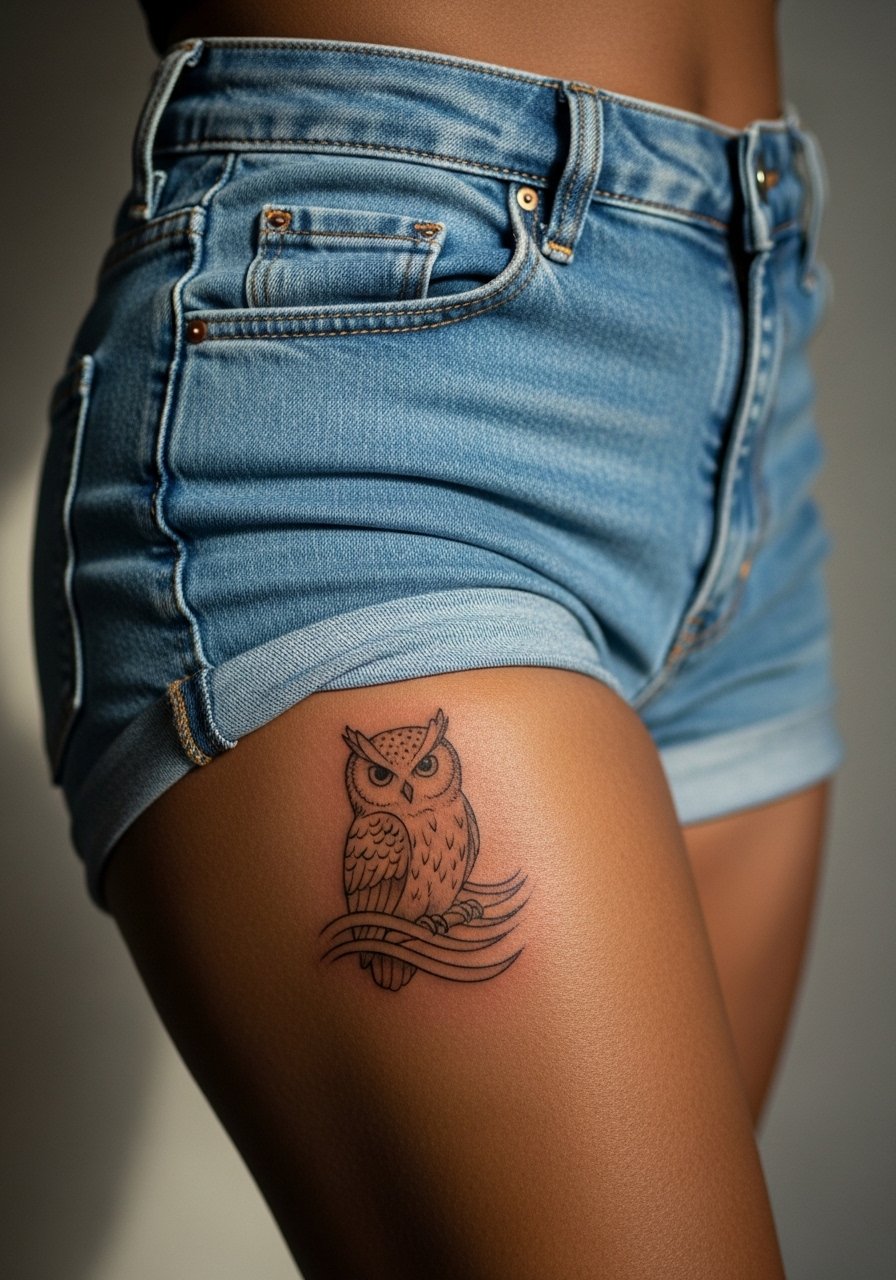
Outer thigh is a low-friction area that supports medium-scale detail and color. The wave motif gives movement to the composition and helps if you want the piece to be part of a seasonal series. Avoid cramming symbolic elements into a small footprint. For the session wear loose shorts you can shift and for aftercare consider clothing that does not rub the area. To style the piece pick high-cut swim bottoms or skirts that reveal the curve thoughtfully.
24. Watercolor Owl with Subtle Neutrals
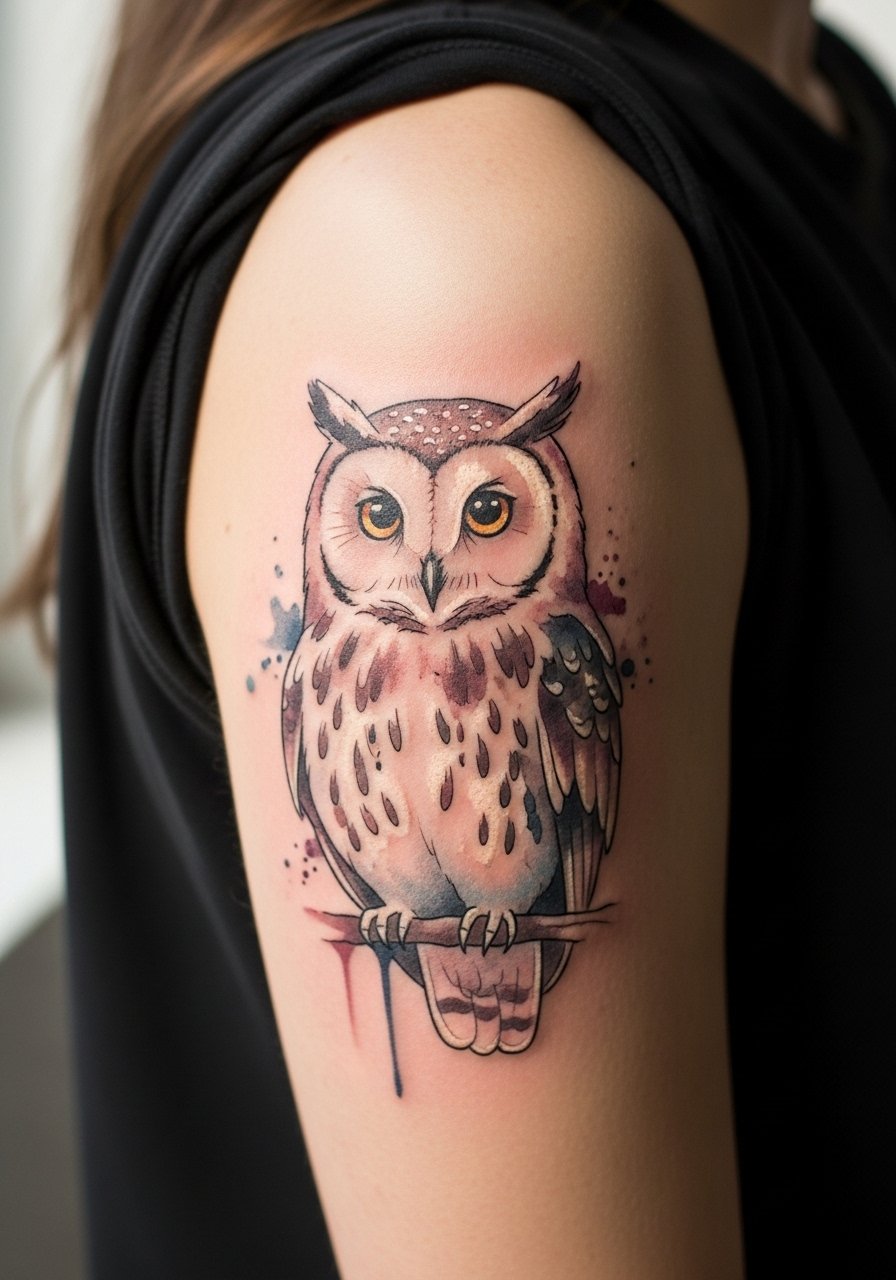
Muted palettes are trending because they read as quiet and refined. Watercolor is more fragile than bold blackwork and needs careful placement away from high-friction zones. Upper arm is a good compromise because it accepts softer washes. Ask your artist to anchor the watercolor with a thin outline to help the pigment read over time. Sessions for color can be up to two hours. For wardrobe, neutral linen tops or a beige linen shirt let the muted tones breathe.
25. Ornamental Chest Piece with Moon Phases
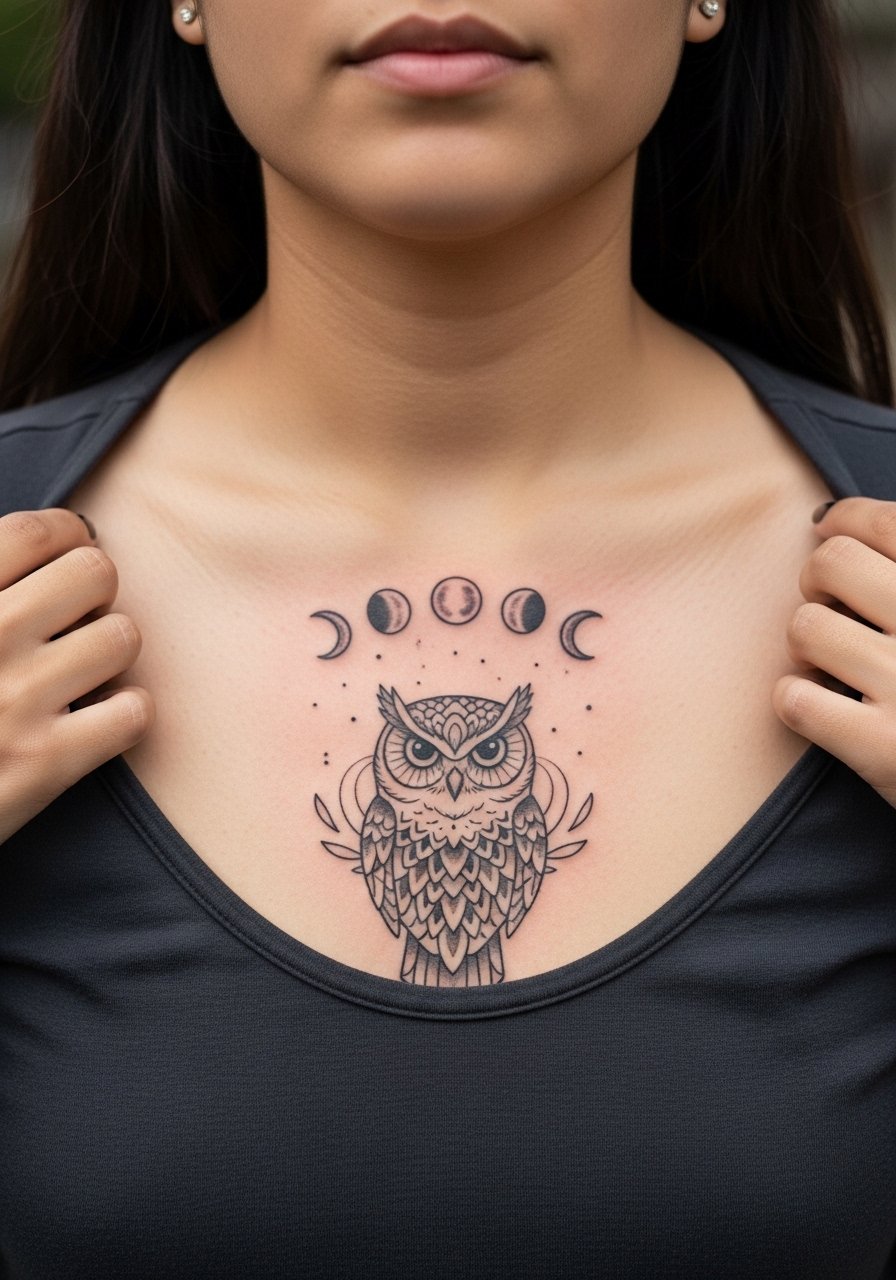
Combining an owl with moon phases fits the "feminine mysticism" aesthetic while letting the design function as a chest centerpiece. The chest moves and stretches slightly, so spacing and line weight matter. A frequent error is squeezing phases too close to the main motif. Ask for clear separation and test the transfer while standing. Pain is moderate to high depending on proximity to the sternum. For sessions wear a wide-neck shirt that can be adjusted and pair the healed design with low necklaces that do not touch the ink.
26. Single-Line Continuous Owl Across the Collarbone
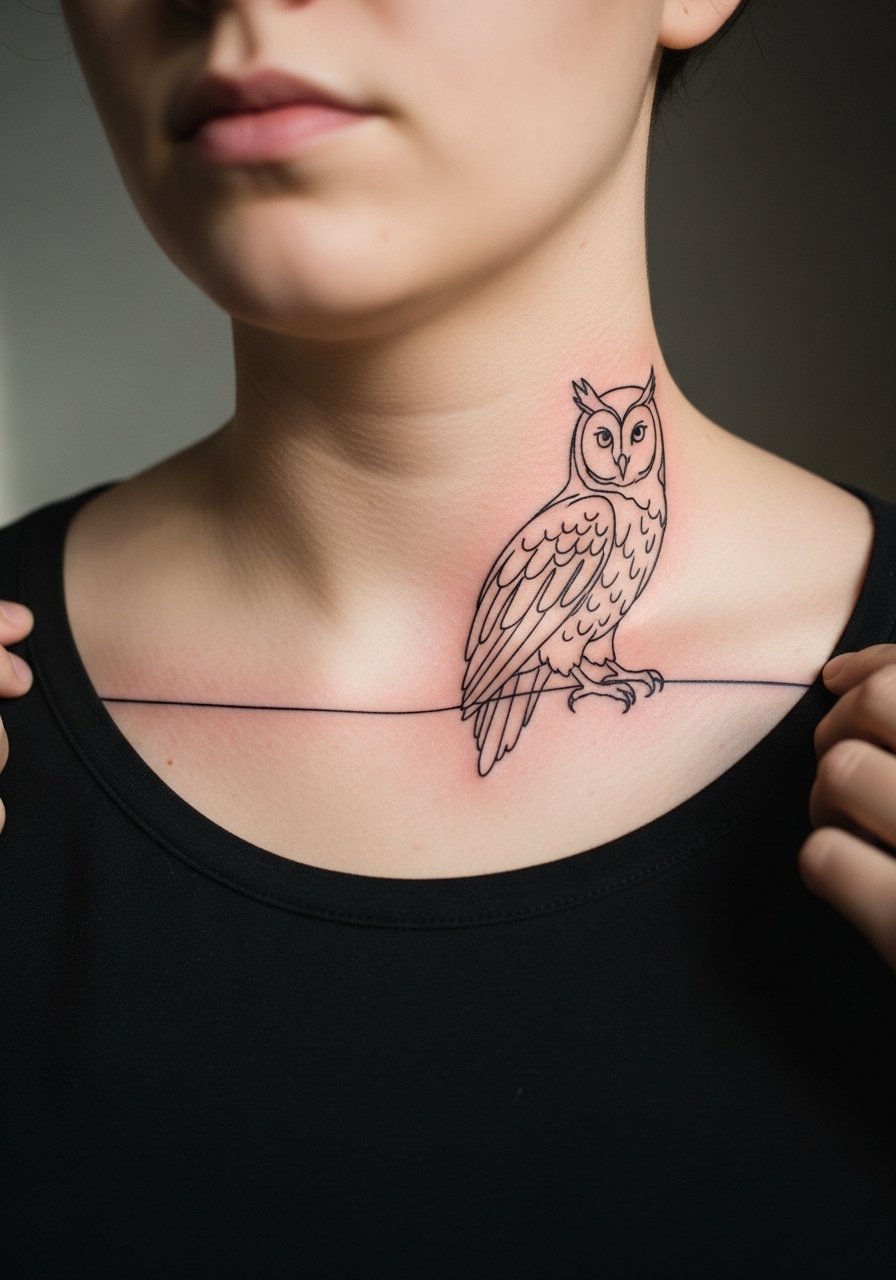
Continuous-line tattoos have an elegant motion but rely on confident linework. Collarbone placement shows well and pairs with jewelry. Make sure the continuous motion does not include too many tight curves that the needle cannot maintain at a single depth. Ask for a practice stencil and a preview on skin. Sessions are short and pain moderate because of thin skin. Pair with a thin choker necklace to draw attention to the line without covering it.
27. Owl Signature Series Starter Piece
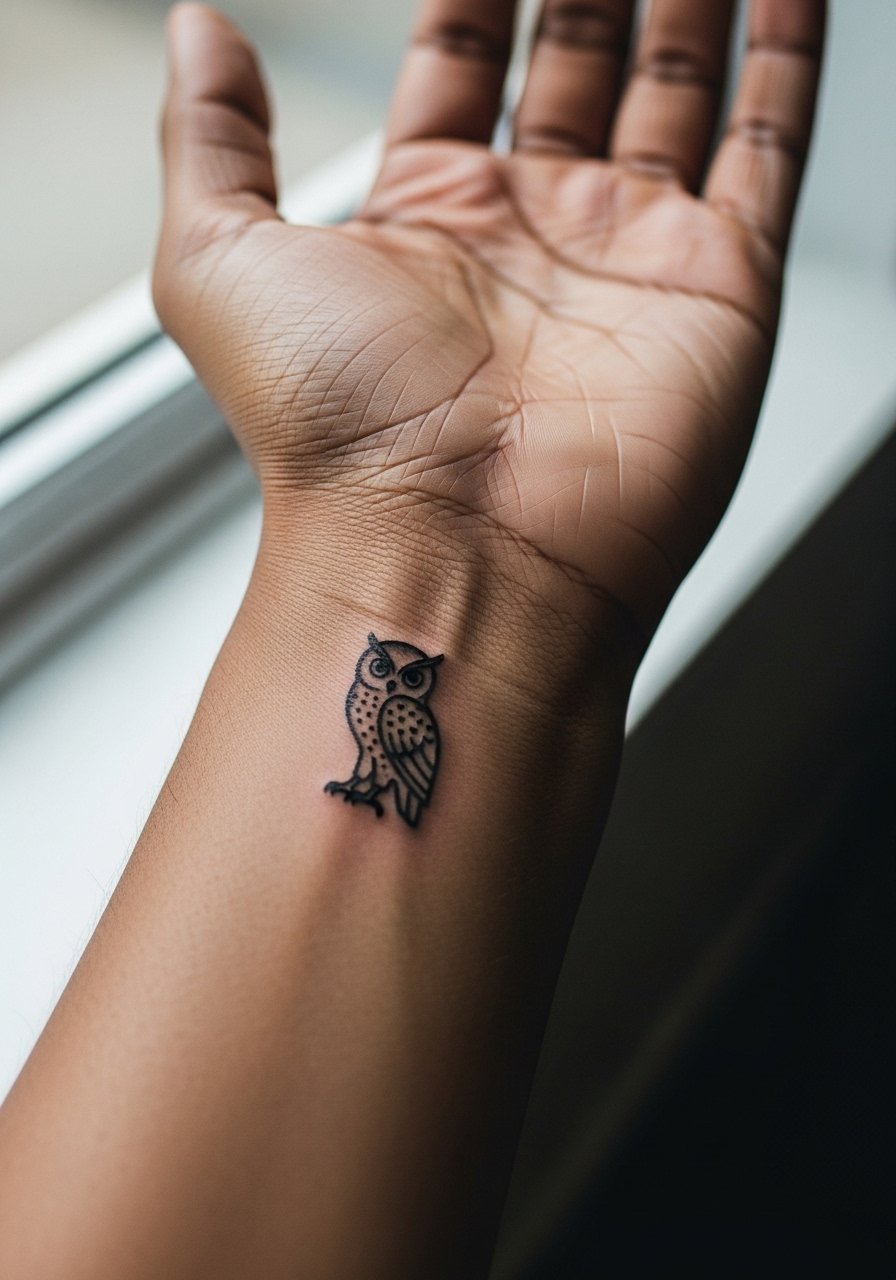
This is a strategic starter for someone planning multiple owl pieces over time. Make the first piece simple and bold enough to anchor future additions. The outer wrist is visible and easy to expand into a bracelet of motifs. The common mistake is starting with an elaborate piece that leaves no room to breathe for future work. Ask the artist to plan future expansion and to center the composition so additions can balance naturally. Sessions are quick and pain is low. For session comfort wear a button-down you can slide aside and for showing it off consider stacking thin bracelets that frame rather than cover the emblem.
Frequently Asked Questions
Q: Will fine line owl tattoos blur faster than bolder blackwork?
A: Fine line tends to soften sooner than bold blackwork, especially in areas with lots of movement or friction. Some artists say careful needle depth and spacing can make fine line last longer. If longevity matters pick slightly heavier contours or expect a touch-up around year two to three.
Q: How do I make an owl tattoo show up well on darker skin tones?
A: Choose strong contrast and clear shapes so the design reads in photos and at a distance. Solid black outlines, larger negative space, and selective color accents help. Ask to see healed photos on similar skin tones during consultation.
Q: Is Saniderm better than traditional ointment during healing?
A: The community splits into two camps. One group favors Saniderm for hands-off healing and fewer daily steps. The other group prefers traditional thin ointments because some people reported breakouts or sensitivity with occlusive film. Mention your skin type and ask your artist which method they recommend for your placement.
Q: What should I wear to a ribcage or sternum session?
A: Pick clothing that exposes the area easily and keeps you comfortable during long sessions. A fitted sports bra or a wide-neck top that can be shifted works well. For rib work bring loose lounge bottoms so the artist can access the side torso without you being cold.
Q: Are there design choices that help if I expect weight fluctuation?
A: Yes. Avoid densely packed linework across areas that stretch a lot like the lower abdomen and hips. Sides of the torso, upper arms, and outer thighs are more stable choices. Ask the artist to design with flowing lines and larger shapes so the composition shifts gracefully if your body changes.
