
Sitting in the chair with the stencil centered over the ankle is when a lot of decisions crystalize. The ankle reads small on screen, larger on skin, and the way color sits over bone changes the feel of a moth more than most people expect. These 17 takes on a traditional moth for the ankle run size, placement, and wardrobe so you can pick an idea that still looks crisp after the first touch-up.
1. Classic American Traditional Moth on Outer Ankle
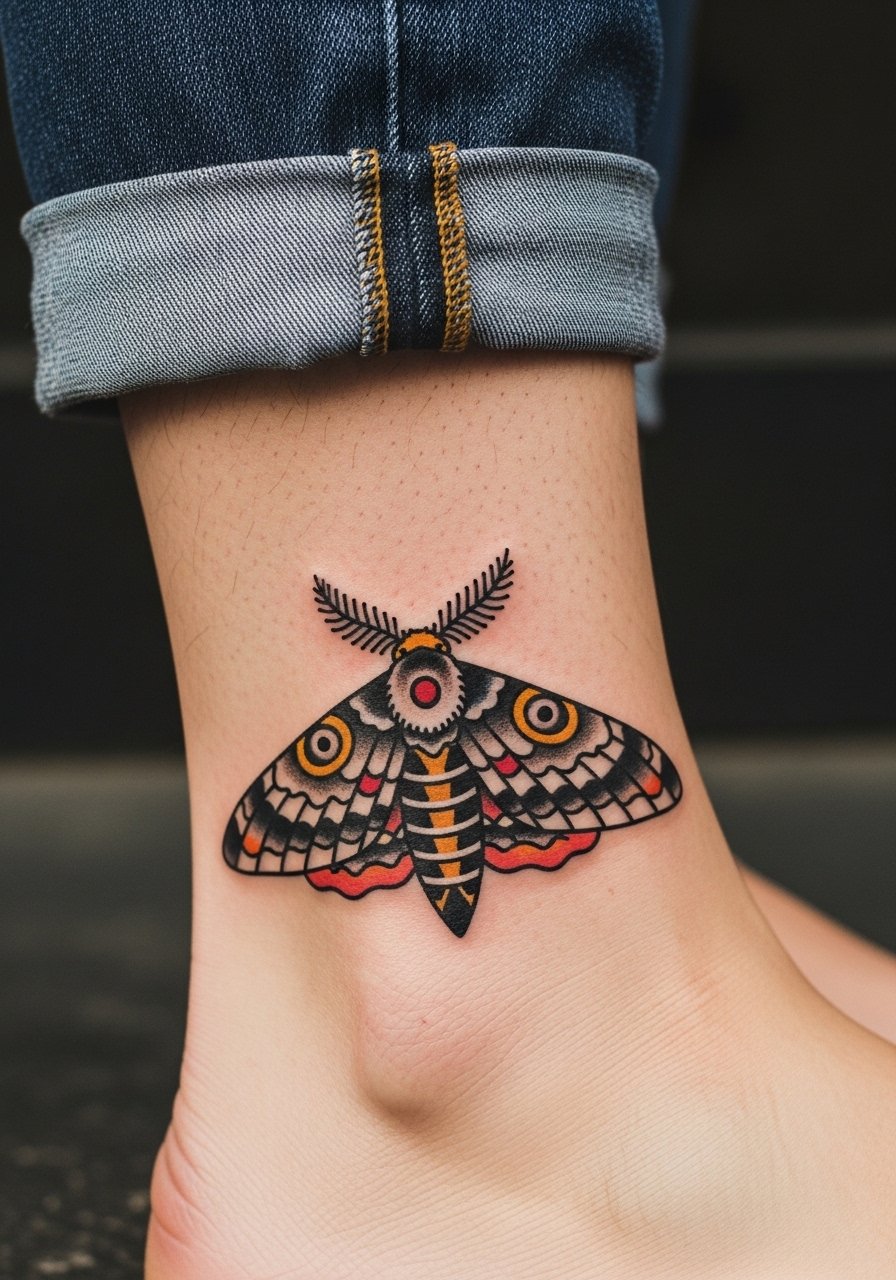
Start with the classic silhouette if you want a moth that reads like a badge. I recommend slightly larger wingspan for the outer ankle so the thick outlines and saturated fills have room. Tell your artist you want confident linework and solid saturation rather than micro detail, and ask them to show a healed reference in their portfolio. Common mistake is asking for tiny antennae and expecting them to stay crisp; those thin elements tend to blur first and may need a touch-up at year two or three. The session feels quick but can sting near the bone, expect light to moderate pain and a single short session for a traditional piece. Pair this with rolled-up jeans or low-top canvas sneakers to show it off.
2. Symmetrical Moth With Bold Headpiece on Inner Ankle
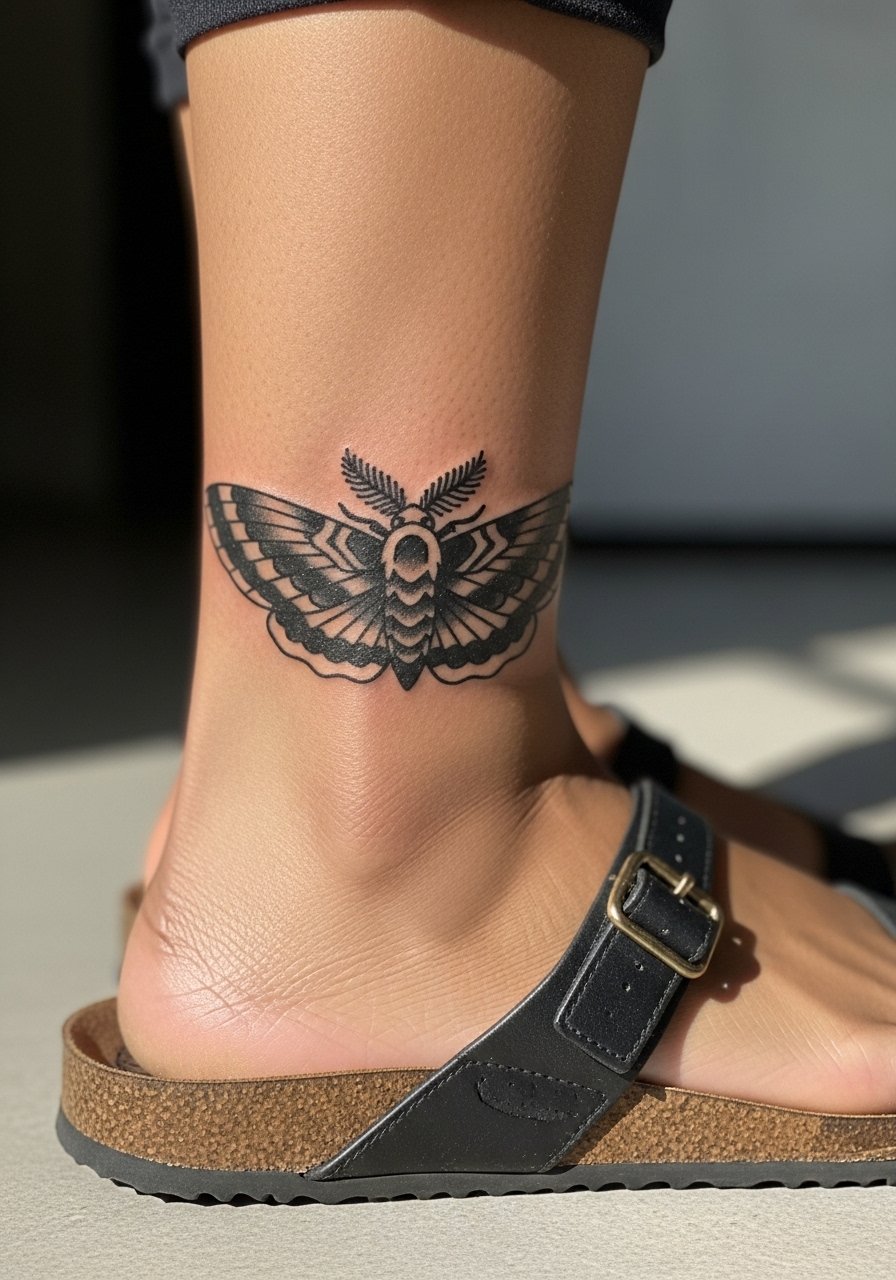
A moth that faces upward gives a centered, graphic look on the inner ankle. In consultation, emphasize mirrored linework and ask for slightly heavier head shading so the moth's face holds up as the wings soften over time. Blowout risk is lower here if lines stay bold, but the inner ankle skin moves with footwear and socks so expect a touch-up window at year two. The session is shorter than a larger calf piece but more likely to produce sharp, localized tenderness. For showing it off, sandals or cropped pants work best. Try pairing with simple leather sandals to keep attention on the design.
3. Mini Moth Over the Ankle Bone, High-Contrast Blackwork
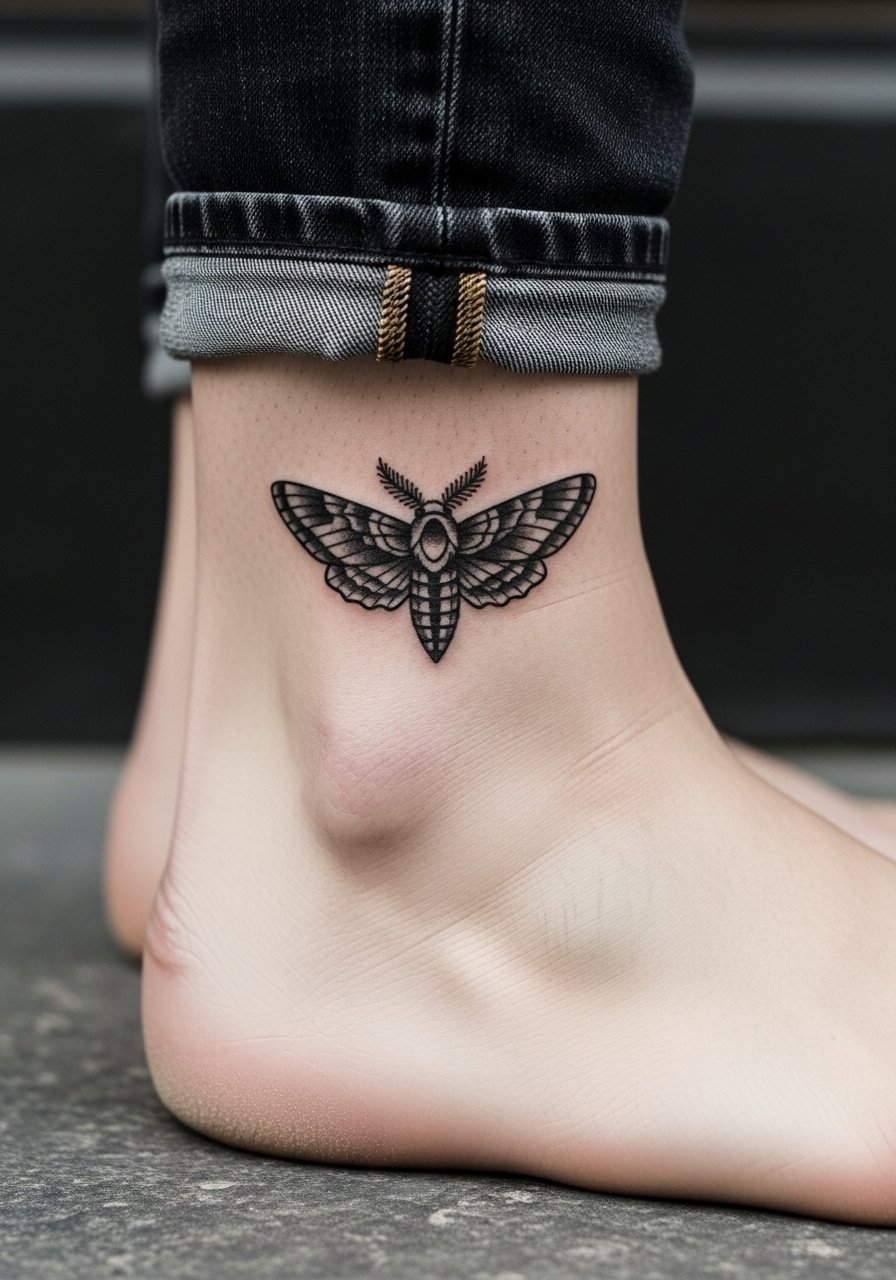
A compact blackwork moth above the ankle bone reads very graphic on first glance. One camp argues very small traditional work on the ankle blurs quickly because skin there is thin and moves with gait. The other camp says dense black saturation and slightly thicker linework prevent early blurring. If you prefer small scale, ask for bold outlines and strong fill rather than hairline detail. Expect sharper contrast at six months and minor softening by year three unless you plan a touch-up. Session time is short but expect more soreness over the bone. For session wear, slip into elastic ankle socks you can pull down so the artist has access without dragging fabric across the area.
4. Traditional Moth With Floral Anchors Around the Ankle
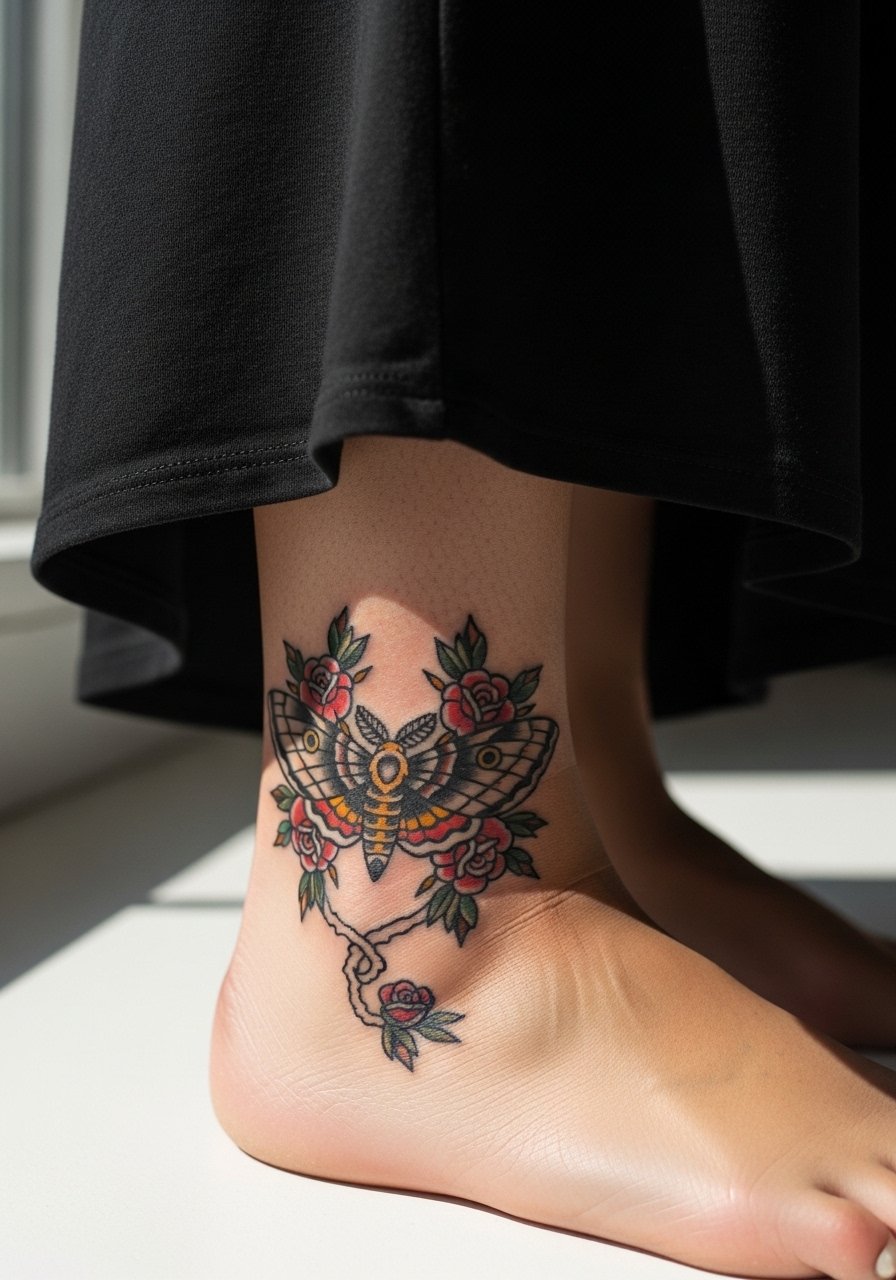
Framing a moth with small, high-contrast roses gives a classic anchor that ages predictably. Tell your artist you want the flowers to use stipple shading and minimal color overlap so the composition does not turn into a single blob over time. A common mistake is cramming too many tiny petals into a narrow band. At six months the linework will look sharp, and by year five the dense color will still read if saturation was correct. The ankle wrap means more friction from fabrics, so a touch-up at year three is realistic. Pair this design with flowing midi skirts or rolled pants that reveal the wrap when you walk.
5. Moth With Banner and Date Above the Ankle
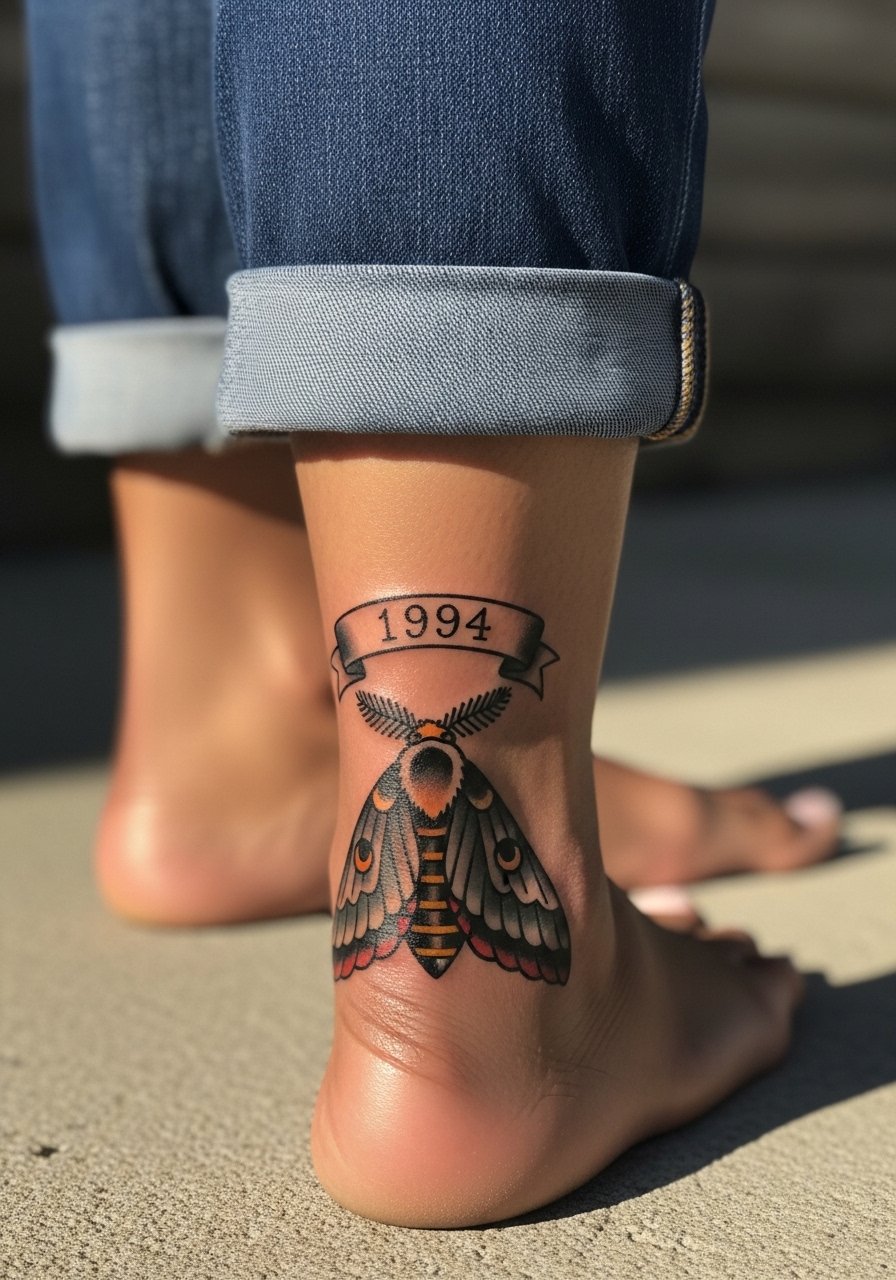
Adding a small banner gives the moth a story without changing its classic silhouette. If you include text, specify the exact characters during the consultation so stencil accuracy is clear. Lettering on ankle skin must be slightly thicker than you might expect to avoid early feathering into the surrounding skin. A mistake is asking for ultra-fine script in that zone. Expect crisp reading at six months and minor softening at two to five years depending on footwear friction. The session is brief and local pain is moderate. For showing it off at events, a low-heeled sandal draws attention to the area.
6. Color-Heavy Traditional Moth With Warm Tones
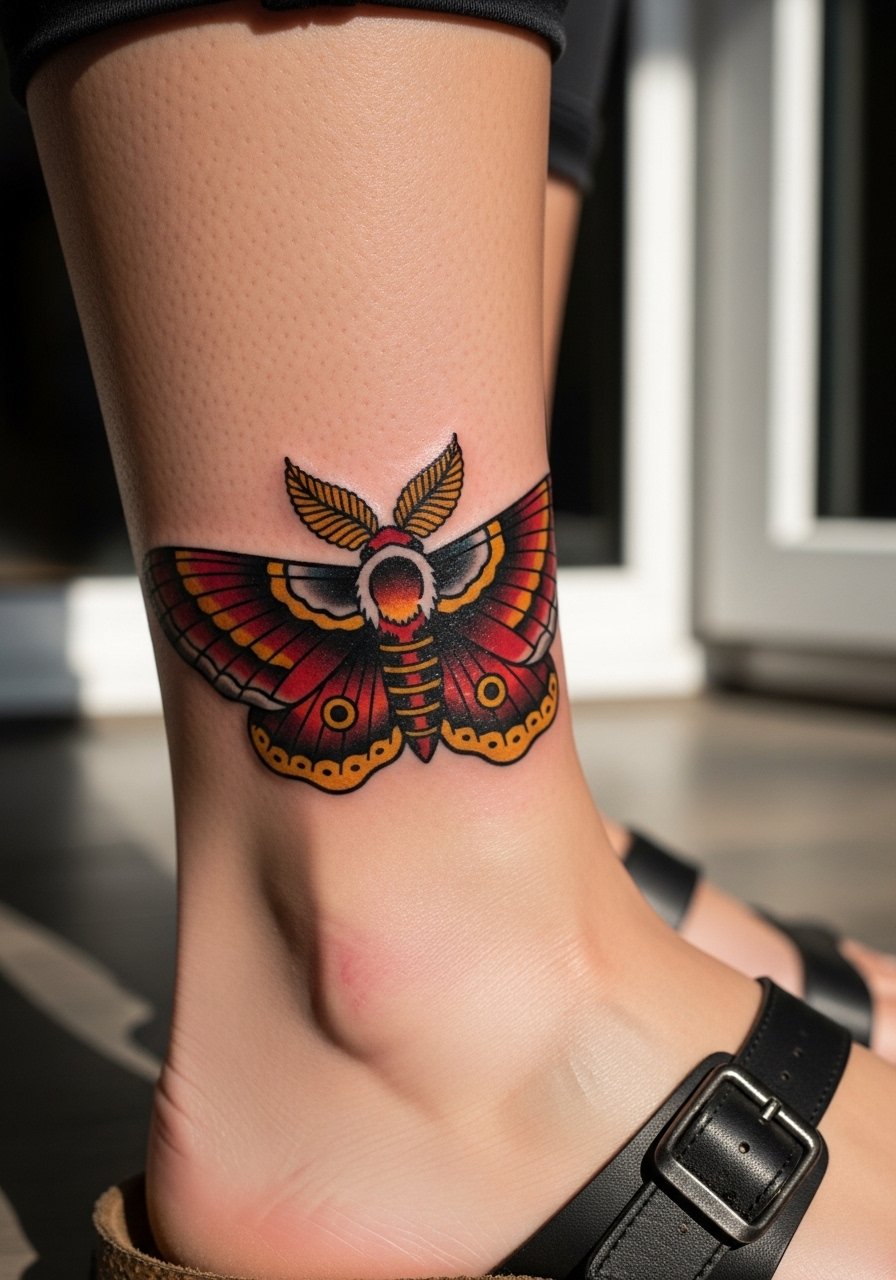
Going for saturated color transforms a simple moth into a jewel on the ankle. Tell the artist you want layered saturation and to check healed examples with similar skin tone so color choices read as intended. Common mistake is overloading complementary colors without clear black outlines, which can become muddy as pigment settles. At six months color will look vivid, and at year three expect some softening, especially in reds. Plan for a touch-up at two to four years if you want color refreshed. The session will take longer than a simple black outline due to packing color. For outfits, pair it with neutral linen shorts to let the color pop.
Pack Smart
The first six ankle ideas above span bone placement, inner ankle creases, and designs with color, so a few kit items smooth the session and the first week.
-
Stencil transfer sheets. Useful if you want to preview linework placement on the narrow ankle surface before the artist inks.
-
Disposable toe separators. Keeps sandals or foot position stable during ankle sessions and helps avoid accidental rubbing when walking out.
-
Thin protective film roll for tattoos. Protects the ankle designs from friction with socks in the first 48 hours.
-
Fragrance-free gentle body wash. Cleanses the area during showers without stripping color from freshly inked linework.
-
Aquaphor healing ointment. Thin layers in the first days keep the ankle's tight skin hydrated without suffocating the needle channels.
7. Moth Anchored by a Tiny Starburst on the Side Ankle

Placing a small starburst near the wing tip adds a vintage tattoo parlor vibe. If you want the accent to last, request slightly heavier star points rather than hairline rays. The ankle moves continuously with walking so delicate marks are the first to soften. At six months the star will look crisp; by year three expect gentle blurring and likely a touch-up timeline similar to other small ankle pieces. The session is fast and comfort varies with how close the design sits to bone. For footwear choose pieces that do not rub directly over the star during early healing.
8. Moth With Dot-Work Halo for Texture
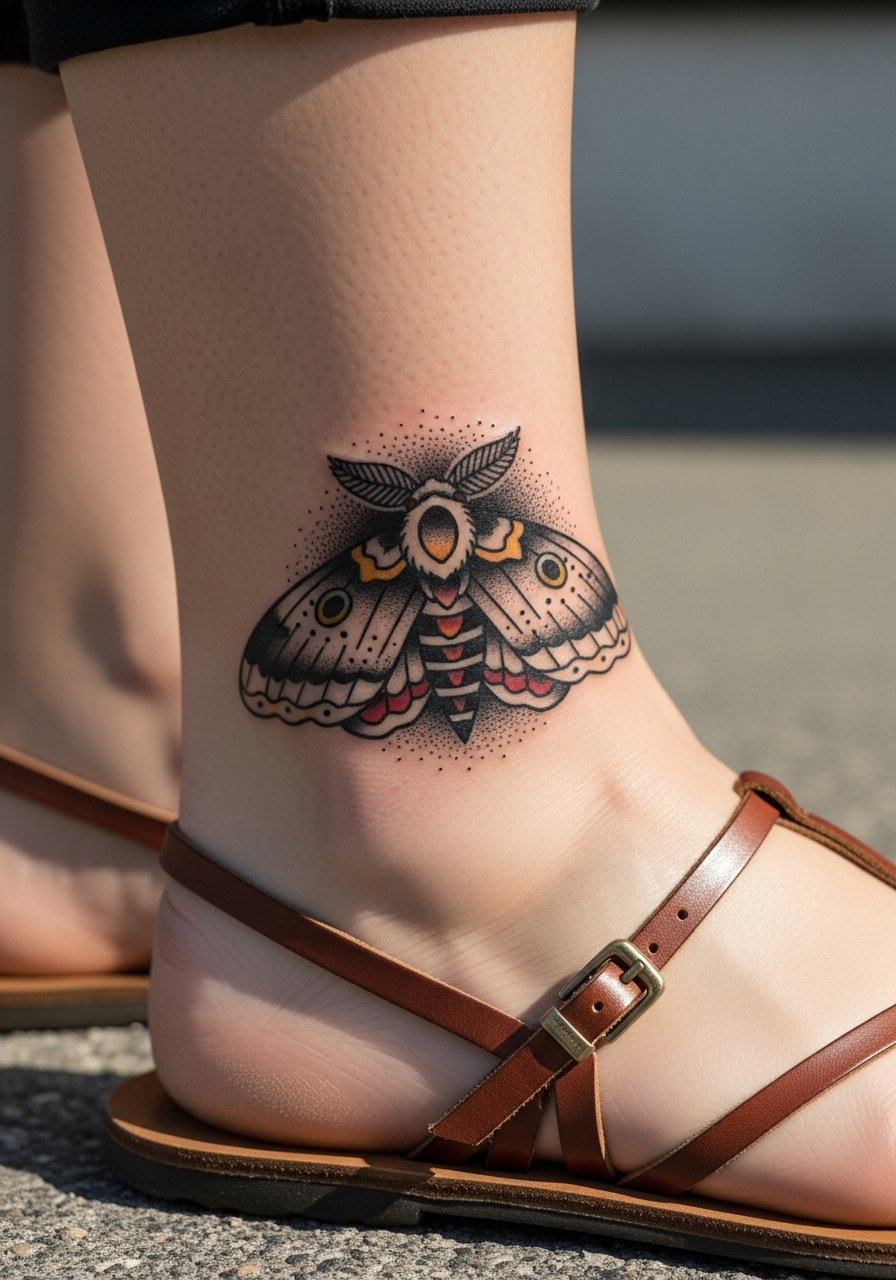
Combining traditional linework with stipple shading gives visual texture without relying on thin gradients. Ask your artist for controlled dot density and to show how their stipple looks healed on similar skin. A common error is asking for dense dot clouds too close to linework, which can fuse into a wash. Expect the stipple to retain detail at six months but to soften into a subtle halo by year four. The ankle's friction with socks affects dot clarity, so consider touch-up timing accordingly. For evenings out, pair this with open-toe sandals to keep attention on the halo detail.
9. Geometric Winged Moth With Black Outline Emphasis
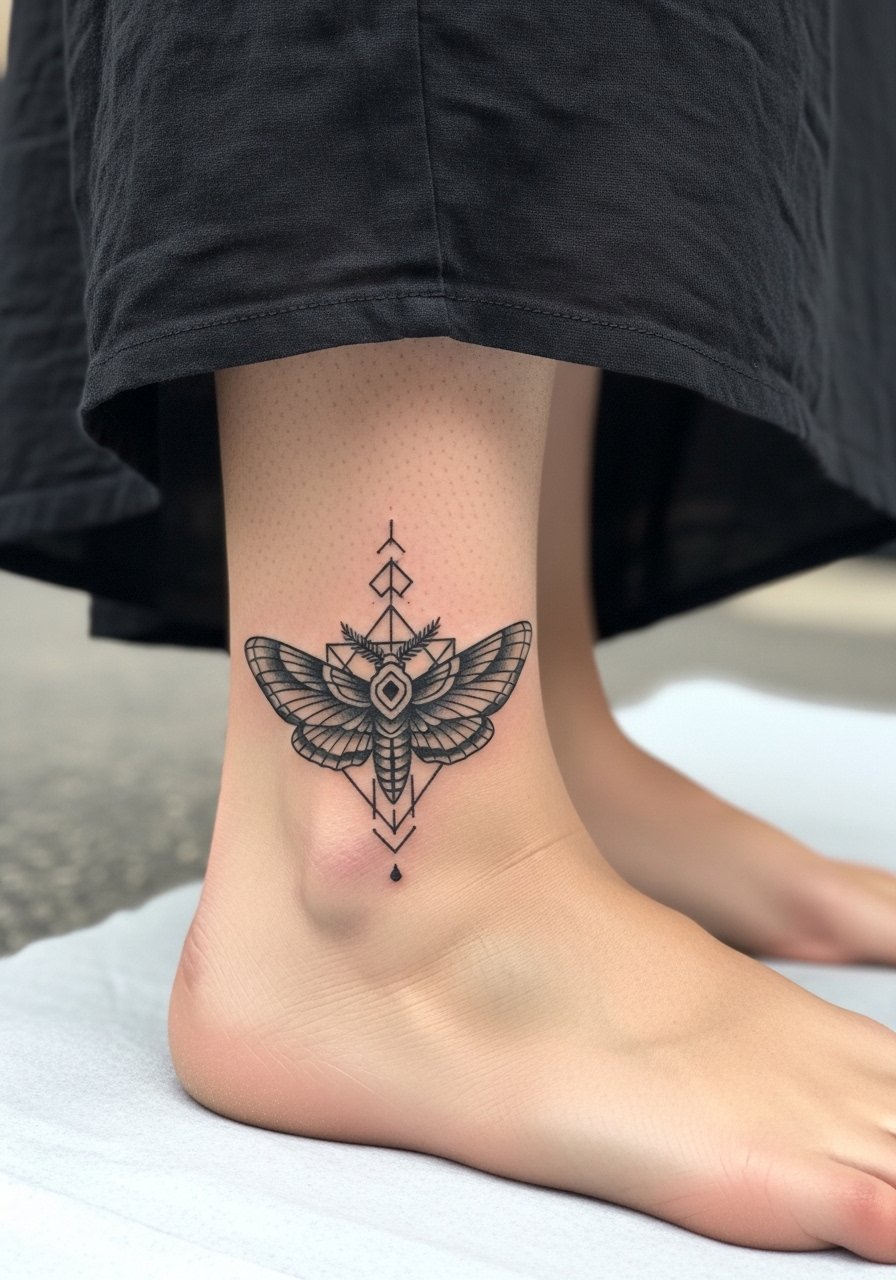
Adding geometric elements inside the wings modernizes the traditional moth. Artists split into two camps on this hybrid. One group says geometric fills need more spacing and stronger outlines to avoid merging as the skin moves. The other group argues that careful composition and negative space allow geometric patterns to age well. If you like patterning, request clear spacing between shapes and ask for the stencil to be applied in the same foot position you will wear most. That helps the geometry sit naturally. Touch-ups for internal geometry often come earlier than for plain wings.
10. Moth With Subtle Metallic Ink Accents
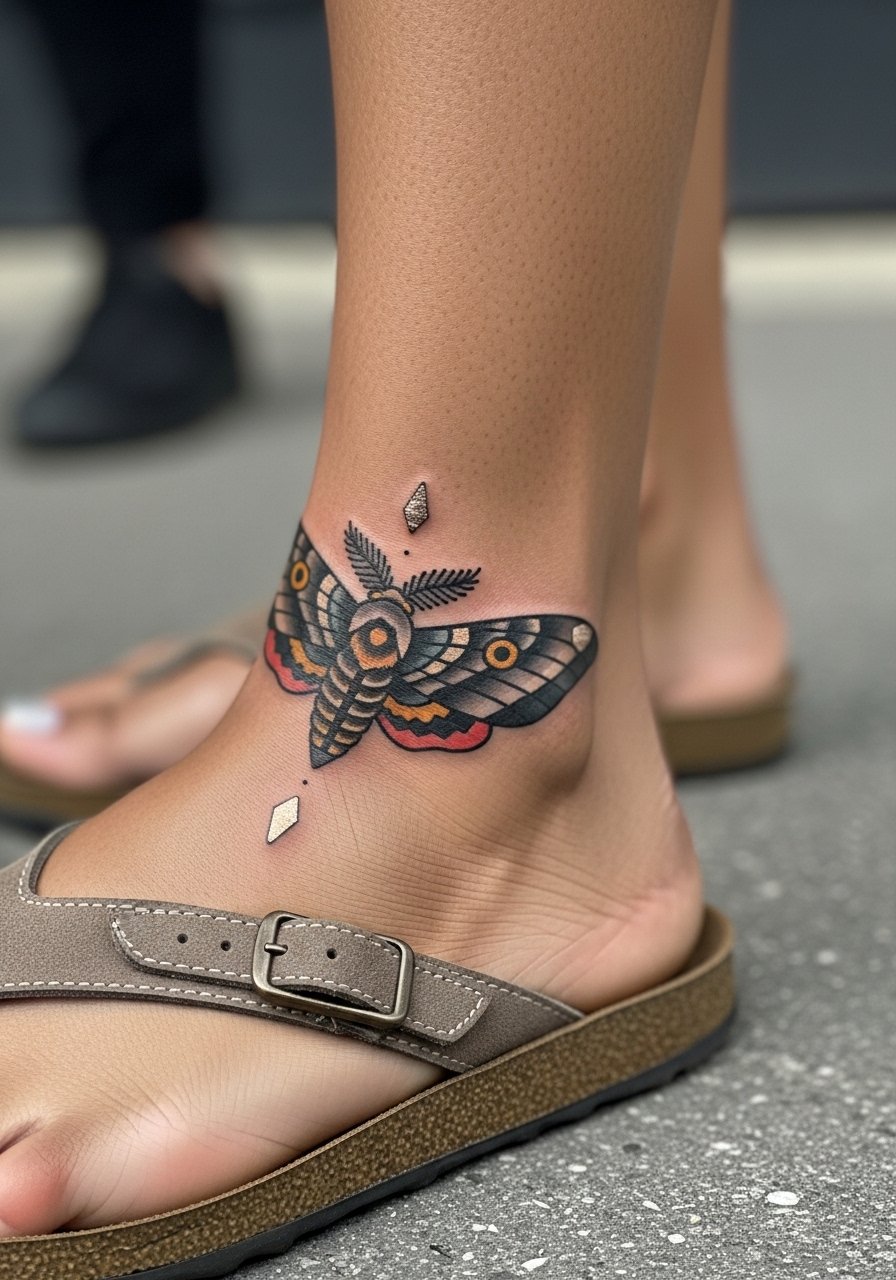
Tiny metallic accents can make a traditional moth feel modern yet classic. Tell your artist which tones you prefer and ask for healed examples because metallic inks reflect differently depending on skin tone. The mistake is asking for too much metallic area on a small ankle canvas, which can read patchy as the ink settles. Expect those accents to fade faster than solid black and to require color refreshes more often. Session time increases if the artist needs to layer metallics over saturated fields. For wearing out, pair with strappy metallic sandals that echo the ink accents.
11. Moth Perched Above a Tiny Compass on the Medial Ankle
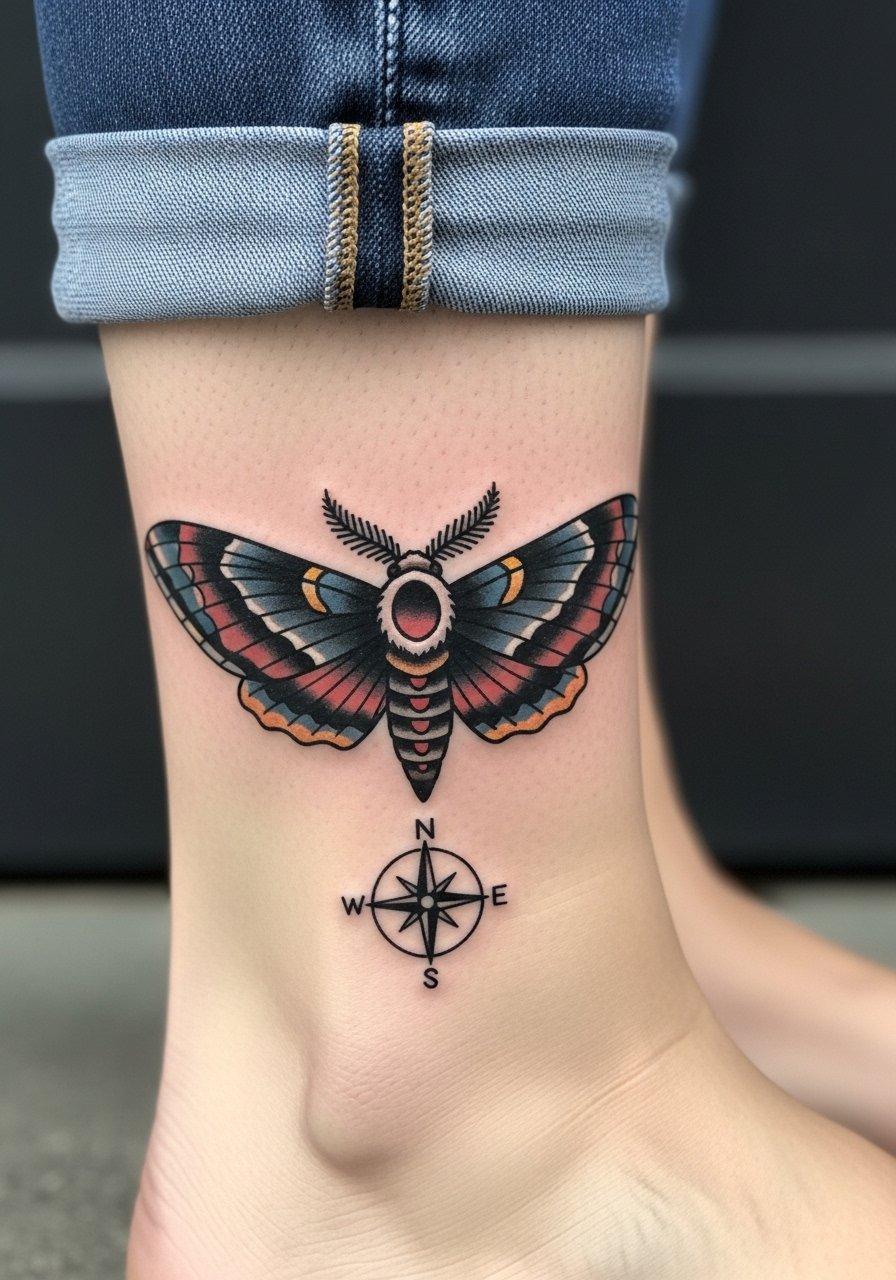
Pairing a moth with a small compass makes for a compact storytelling piece. When you request combined elements, ask the artist to prioritize clear spacing and bold outlines around the compass points so both motifs stay legible. A common error is crowding the symbols too close, which can merge after healing. At six months both motifs should read cleanly and by year three a touch-up may be needed depending on foot traffic and footwear. The session is quick but expect sensitivity over the bone. For occasion wear, slip into rolled jeans and ankle boots that leave the medial ankle visible as you move.
12. Black-and-Gray Moth With Fine Whip Shading
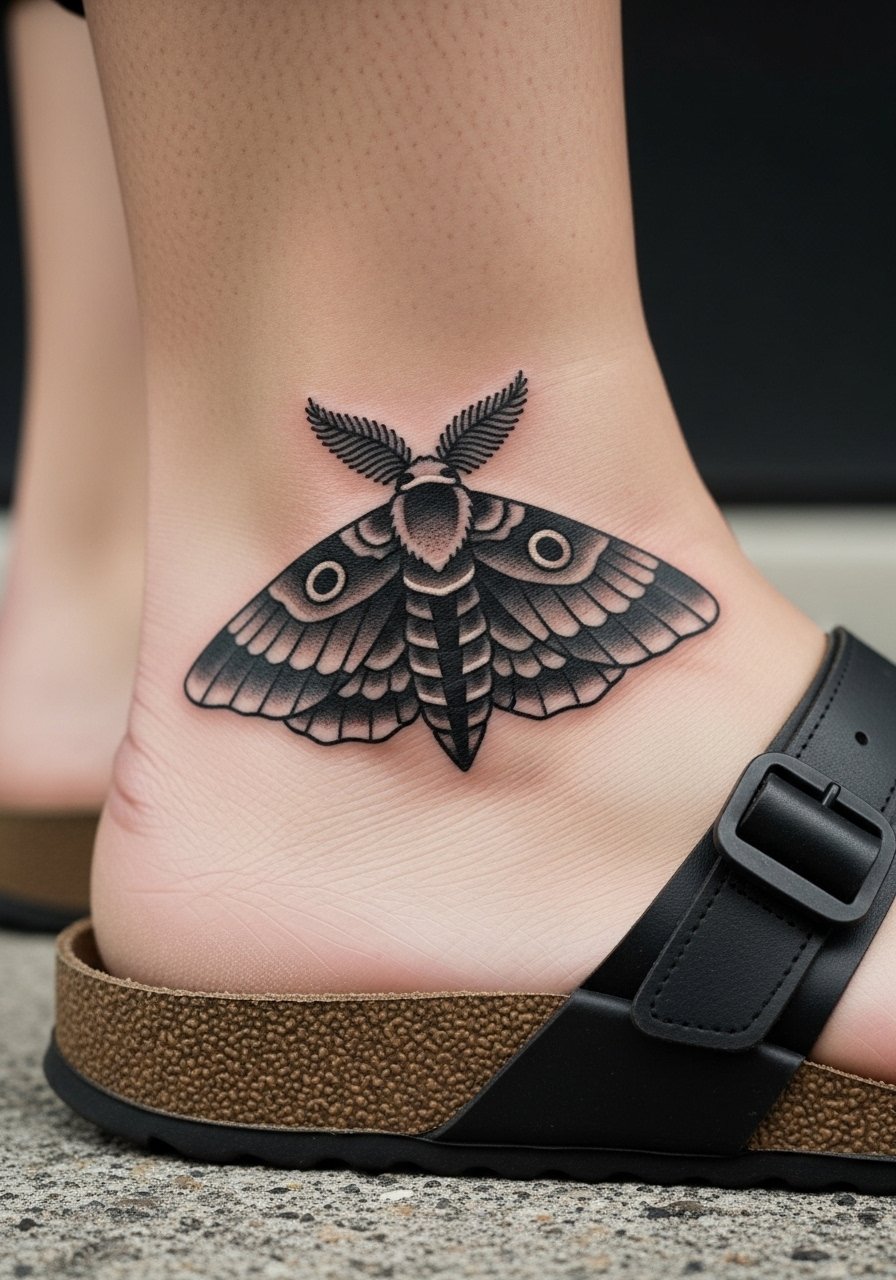
If you prefer monochrome elegance, whip shading softens traditional linework without color. In consultation, request an artist experienced in whip and stipple techniques so gradients heal evenly. The common mistake is asking for extremely fine fades packed into a tiny area, which can blur with skin movement. Expect the shading to look velvety at six months and to soften subtly by year four. Session time is moderate as shading requires careful layering. For a clean look pair it with minimal leather sandals.
13. Mirror-Pair Moths Wrapping Around the Ankle
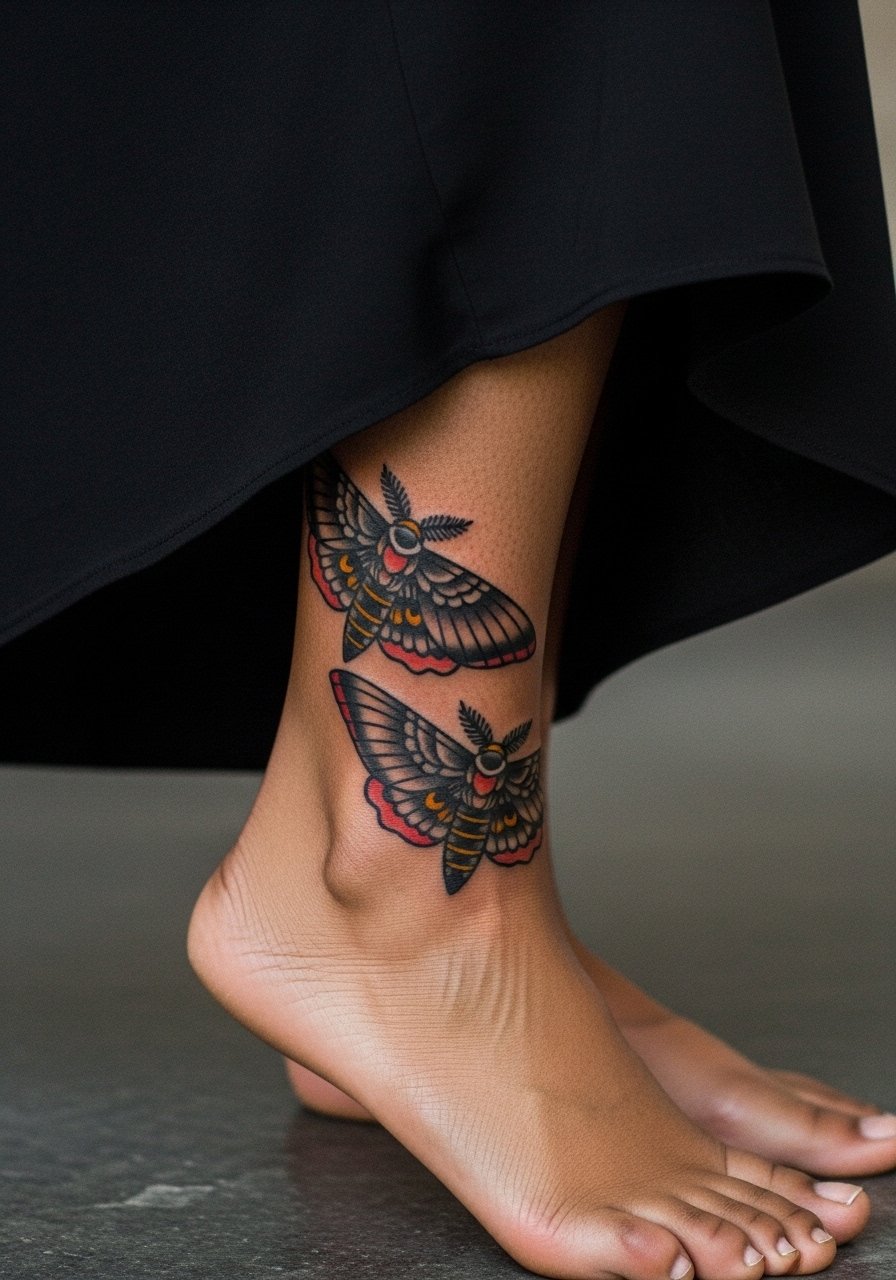
Two mirrored moths create movement around the ankle and read like a continuous band. Tell your artist you want symmetry but not exact duplication, which keeps the composition organic. The risk is uneven placement that looks off when you stand. Ask for a stencil check in your natural standing position. Mirrored designs age similarly to single moths, but friction zones can affect one side more than the other depending on how you walk. Sessions take longer since two allocations of space and detail are involved.
14. Tiny Traditional Moth Behind the Ankle Tendon
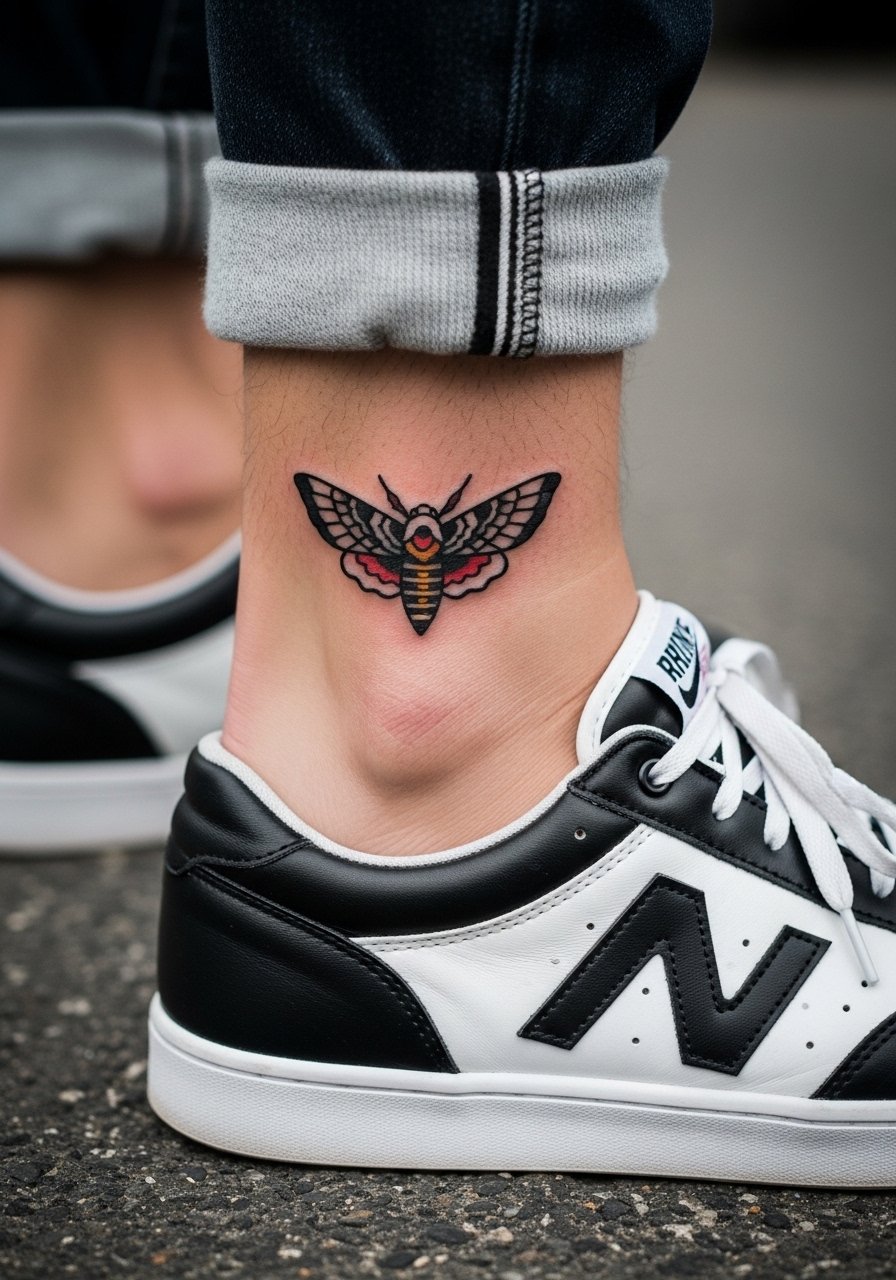
A placement behind the tendon reads discreet yet classic. Because the tendon area flexes a lot, ask for slightly thicker outlines and conservative internal detail. The controversy here is scale. Some artists advise against very fine work in that spot because motion can cause early softening. Others say a bold, compact moth holds fine with solid saturation. Expect tenderness during the session and a likely touch-up at two years if you prefer ultra-fine interior lines. For the appointment wear easy-to-remove shoes like slip-on canvas sneakers.
15. Moth With Scripted Word Along the Ankle Curve
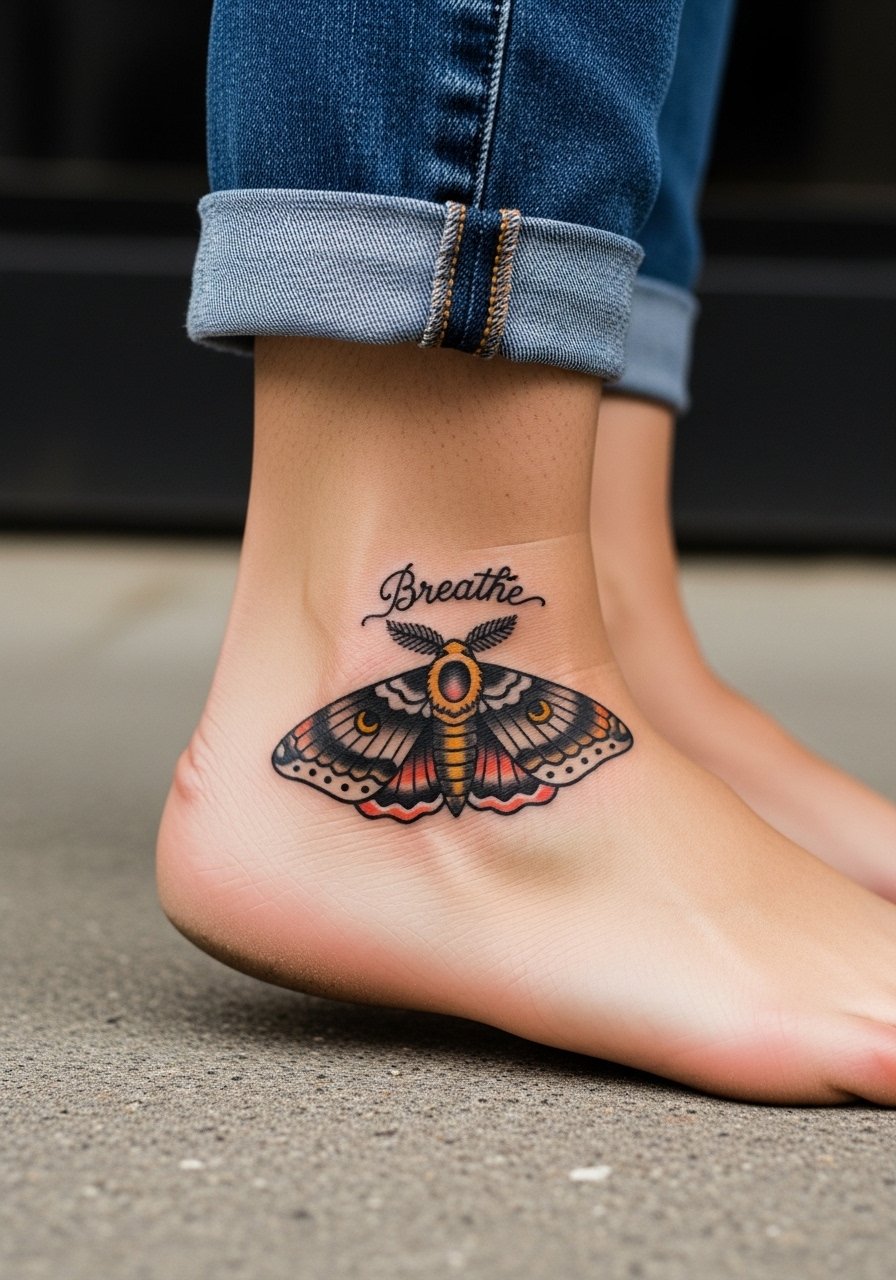
Script can complement a moth but ankle skin needs letters with slight weight to prevent feathering. Always provide exact text during your consultation. The common mistake is choosing hairline script that blurs into the skin's texture. Expect readable script at six months and potential softening at three years. The session is short and targeted. For showing the piece, ankle-baring flats or sandals work best.
16. Neo-Traditional Moth With Slight Color Fade for Vintage Feel
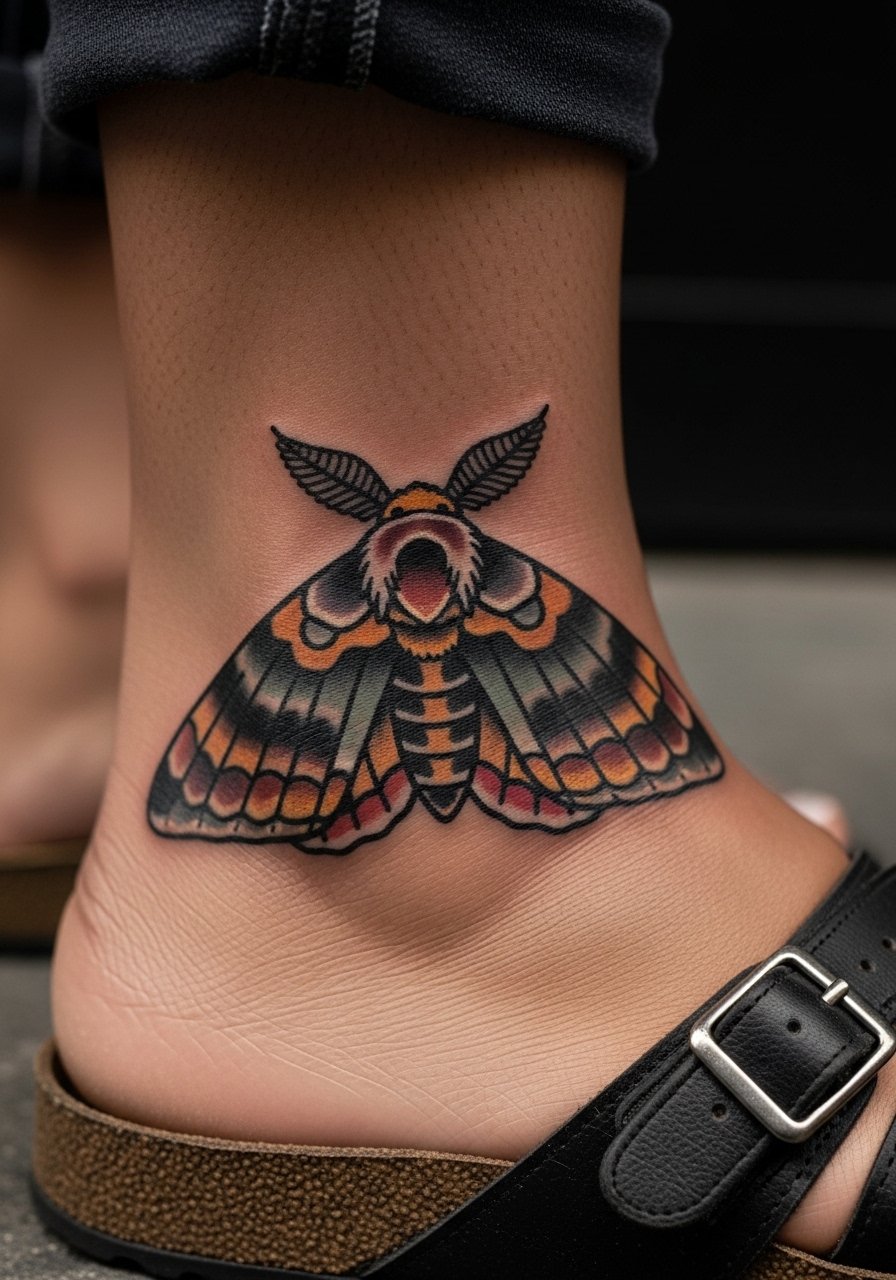
If you like a vintage look, ask for muted color choices and controlled saturation that age into a soft patina. The artist should plan color placement so the muted tones do not wash out completely as they fade. A mistake is asking for washed-out ink straight from the needle; better to pack slightly stronger color so the vintage effect emerges over time. Expect the aged look to evolve over the first few years and to require occasional touch-ups to maintain the intended palette. Session time is longer than plain black work due to layering.
17. Moth and Chain Link Anklet Composition
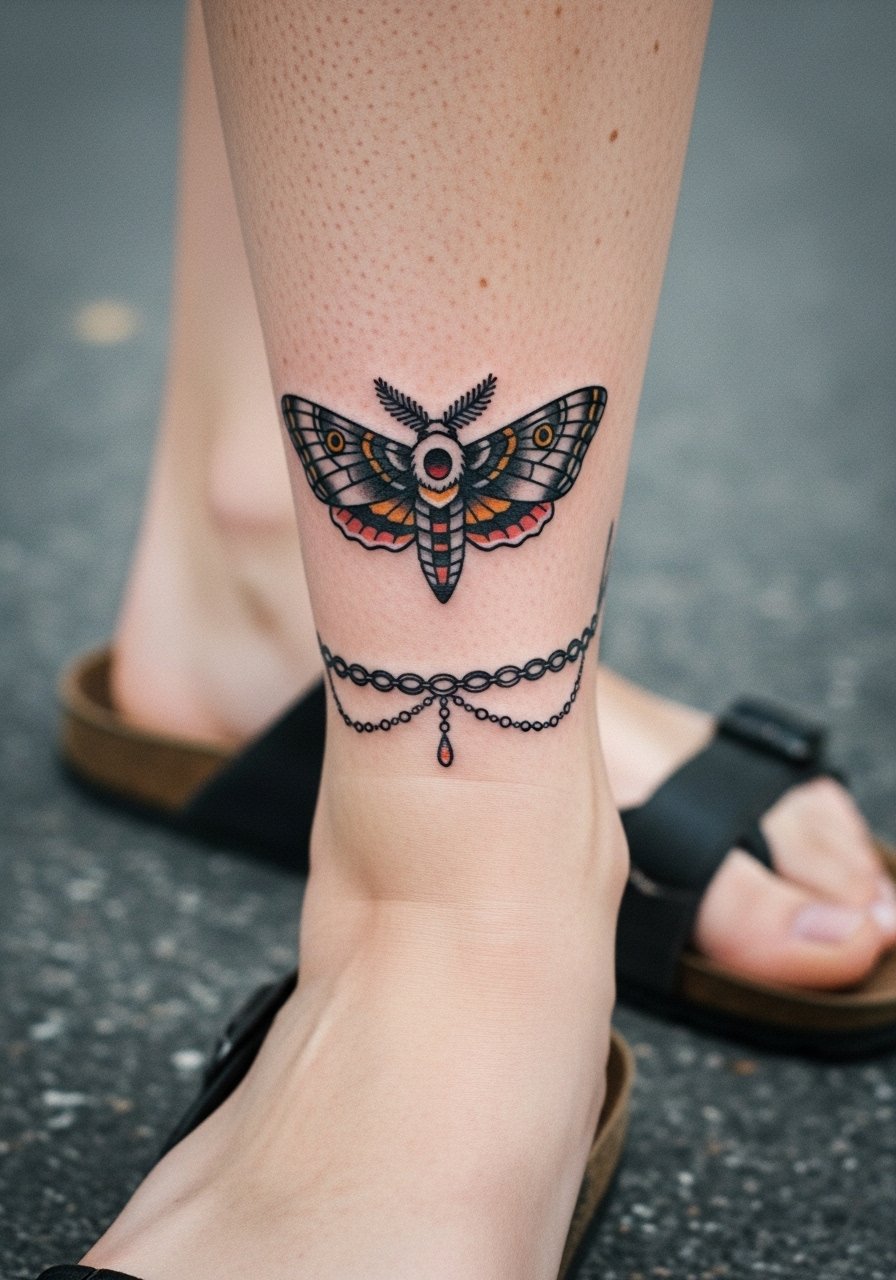
Pairing a moth with a chain link anklet makes the design feel intentional and wearable. Tell the artist you want negative space between links and the moth so the two elements do not fight. The mistake is creating a chain too fine for ankle skin, which can blur into a single line over time. Expect the chain to hold if links are slightly bolder than jewelry scale. The session is short and often done in one sit. For showing it off, pair with delicate anklets or sandals.
Frequently Asked Questions
Q: How long should I wait before wearing ankle boots after getting a traditional moth on the ankle?
A: Give the area at least five to seven days before putting on tight ankle boots. Open footwear is safer in the first week. If you must wear shoes that rub the site, plan to keep them off during any scab phase to avoid pulling ink.
Q: Will a small traditional moth on the ankle need touch-ups sooner than a larger moth?
A: Generally yes. Small, high-detail elements on the ankle often need touch-ups around year two to four, especially if lines were very thin. Ask for slightly heavier outlines during the consultation to extend clarity.
Q: Are there any workplace concerns with ankle tattoos I should consider?
A: Ankle tattoos are usually easy to cover with socks or pants, so they are lower risk for most workplaces. If your job requires strict appearance rules, check dress code details first and plan placement accordingly.
Q: How do I find an artist experienced in traditional moths for ankle placement without naming studios?
A: Use discovery paths like searching local studio directories, following #traditionaltattoo or #mothtattoo hashtags, browsing convention guest lists, and reading community threads on forums and Reddit. Look for healed photos of ankle work in portfolios.
Q: What should I wear to the session for an ankle tattoo to make access easy?
A: Wear pants you can roll up cleanly or a skirt that lifts without removing other garments. A loose pair of linen shorts works well for access and comfort during the session.
