
The tattoos that still read clean after a decade are often the ones that looked ordinary the day they healed. Heavily saturated traditional pieces, smart spacing, and the right placement make longevity more likely than whatever looked hottest on your feed. If you want moths that hold their shape, think about size, line weight, and where your daily life will rub the ink. Below are 17 durable takes on traditional moth work and what to ask for when you book.
1. Traditional American Moth on the Forearm
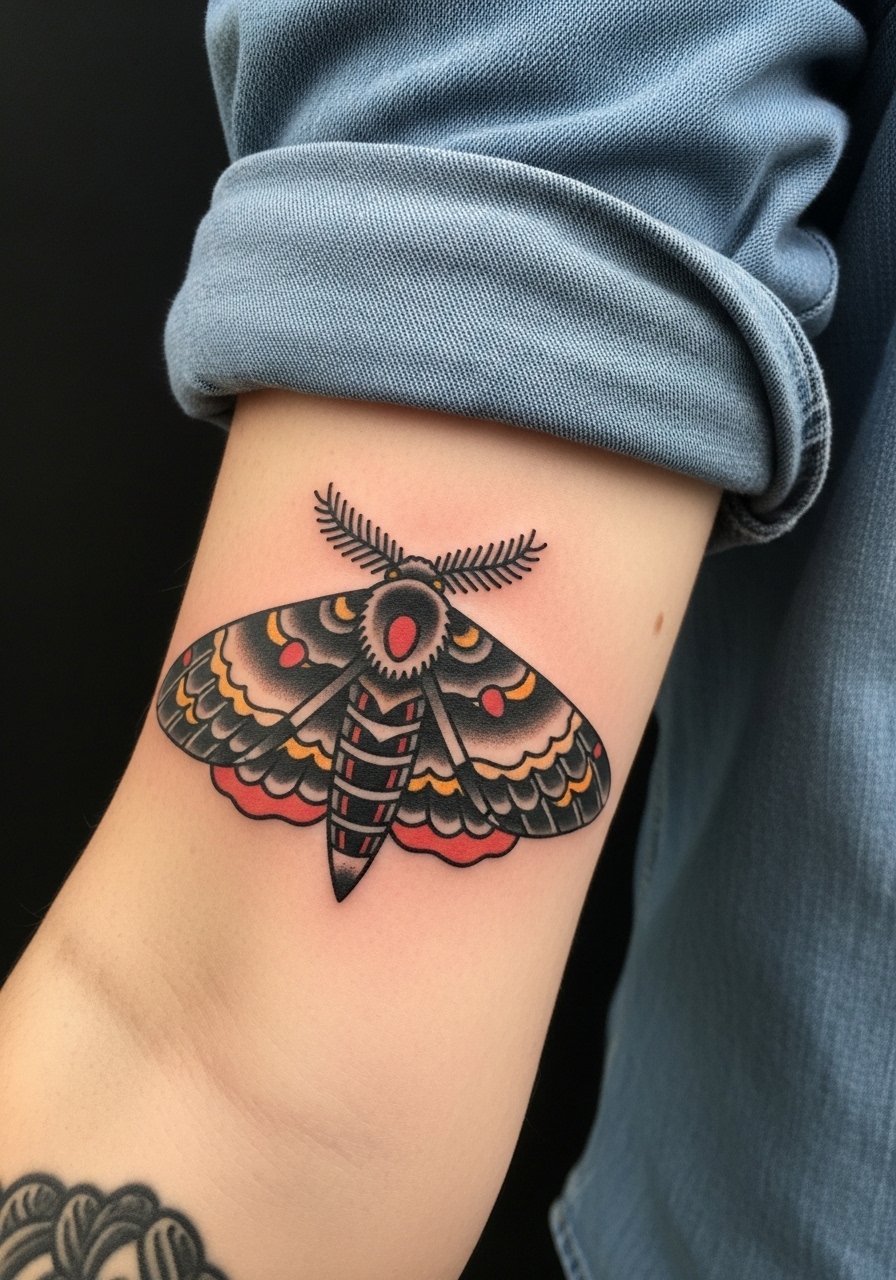
I've seen this setup a dozen times in shop portfolios and the forearm is forgiving for the thick outlines that make traditional moths age well. Ask your artist for a 3-4 inch wingspan and clear, single-pass outlines so the wing edges stay crisp after a few years. Pain on the inner forearm is moderate, session time for color fill and simple shading is usually one appointment. Common mistakes are tiny wings and fussy inner detail that wash out with hand use. For showing it off, rolled sleeves pair well with a chambray work shirt men, and for the session wear a loose short-sleeve tee you can push up easily.
2. Neo-Traditional Luna Moth on the Thigh
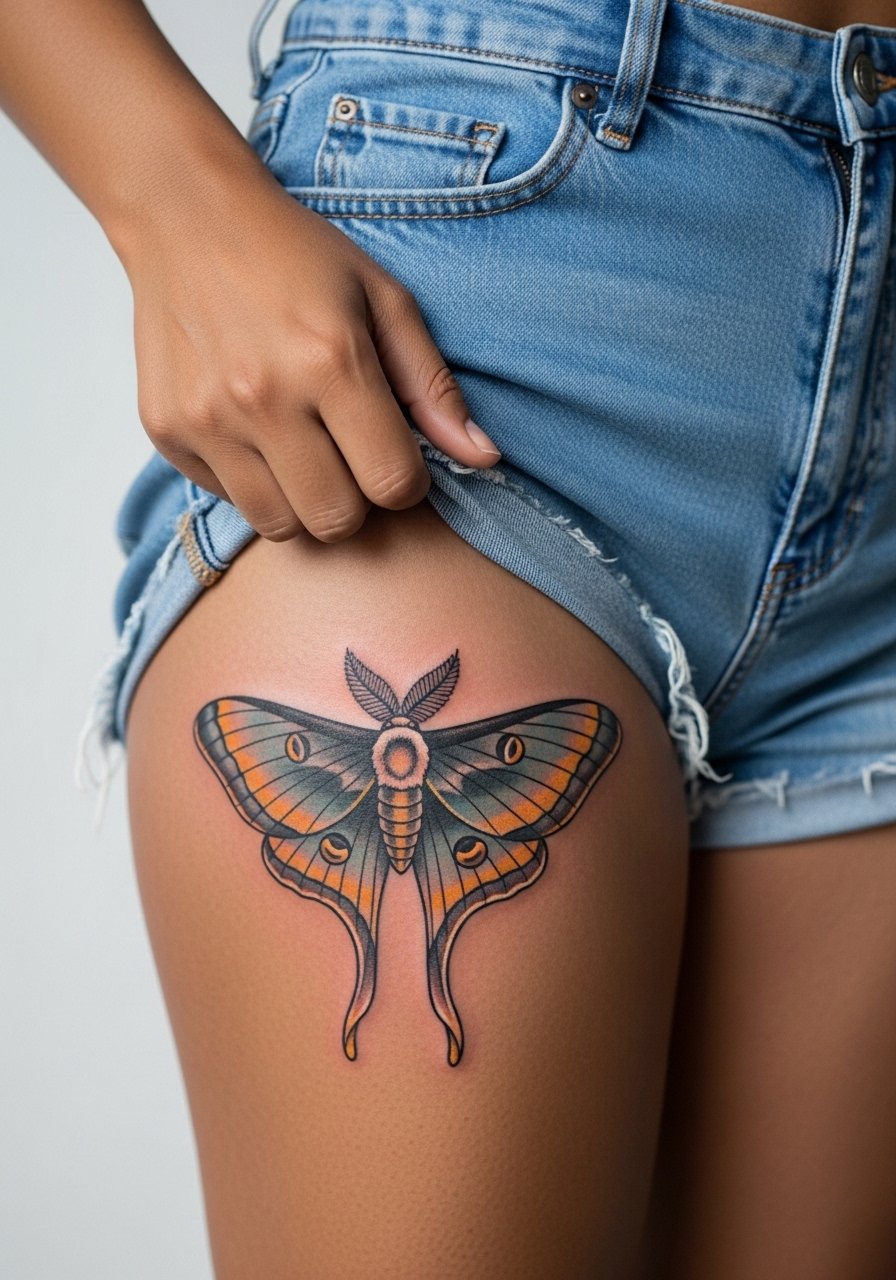
Thigh placements let neo-traditional color and shading breathe without the constant friction smaller spots get. Expect moderate pain and two shorter sessions for color saturation and layered shading. Tell your artist you want gradual whip shading on the wing gradients rather than heavy stippling so the wings read at distance and heal into depth. The risk is choosing a design too tight to the hip curve so the pattern stretches with body changes. For warm-weather showing, pair this with high waisted denim shorts and plan loose joggers for the appointment so the area can rest afterward.
3. Cecropia Moth Outline on the Neck
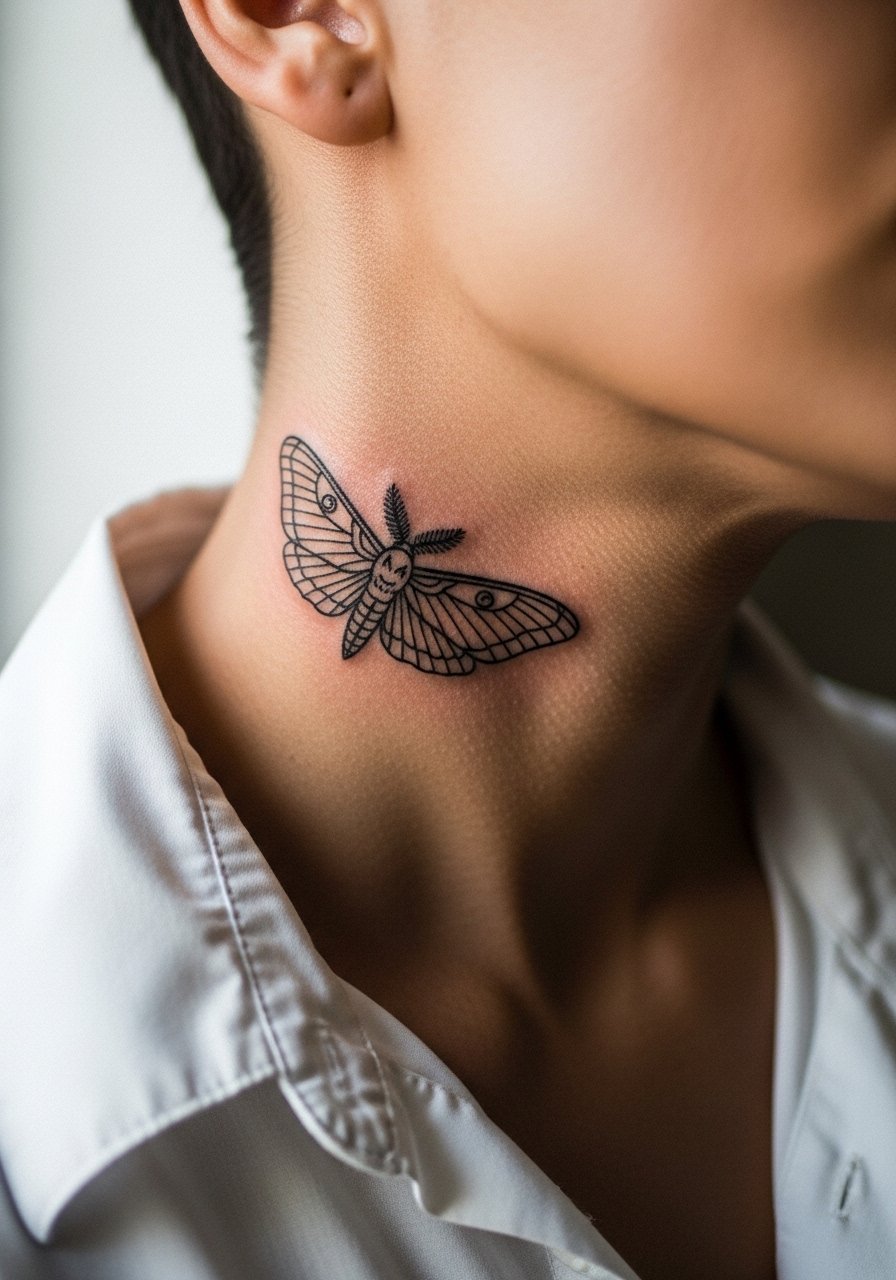
A rare species like the Cecropia translates well to clean outline work on the side neck if you want a distinct, nature-forward design without heavy color. Neck tattoos are visible and may affect job prospects, so think through placement and scale. Ask for slightly thicker contour lines than a typical micro piece so the outline keeps its shape under daily movement. This area can blur faster if done too fine. Session time for a 2-3 inch outline is short, but touch-ups are common around year two. For after-session wear and showing off, an open collar shirt men or a layered chain necklace frames the design without covering it.
4. Death's-Head Hawkmoth, Realistic on the Outer Thigh
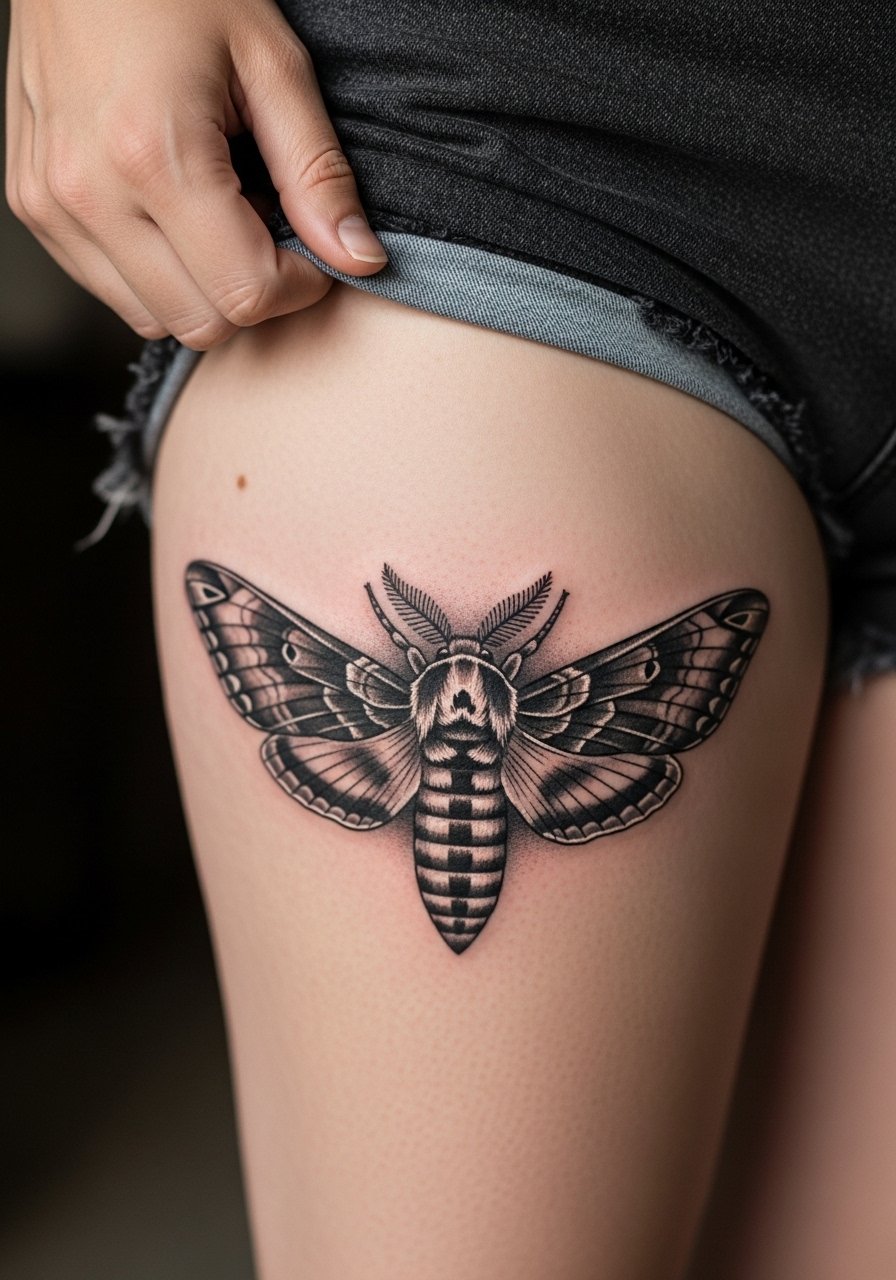
This realism approach needs room and patience. Outer thigh gives space for skull detail in the thorax without crowding, and the thicker dermis there helps with saturation. Pain is lower than ribs, session length can be two to three sittings for layered black and gray. There is a cultural caveat to consider with skull motifs; some people read them as omen-related while others embrace the folklore. Artists also disagree on whether heavy realism on the thigh needs more contrast to avoid looking flat after a few years. During consultation, request distinct midtone separation so the skull stays readable at six months, two years, and five years. Wear loose shorts to the appointment so the artist can access the area cleanly.
5. Traditional Moth with Abstract Humor on the Hand
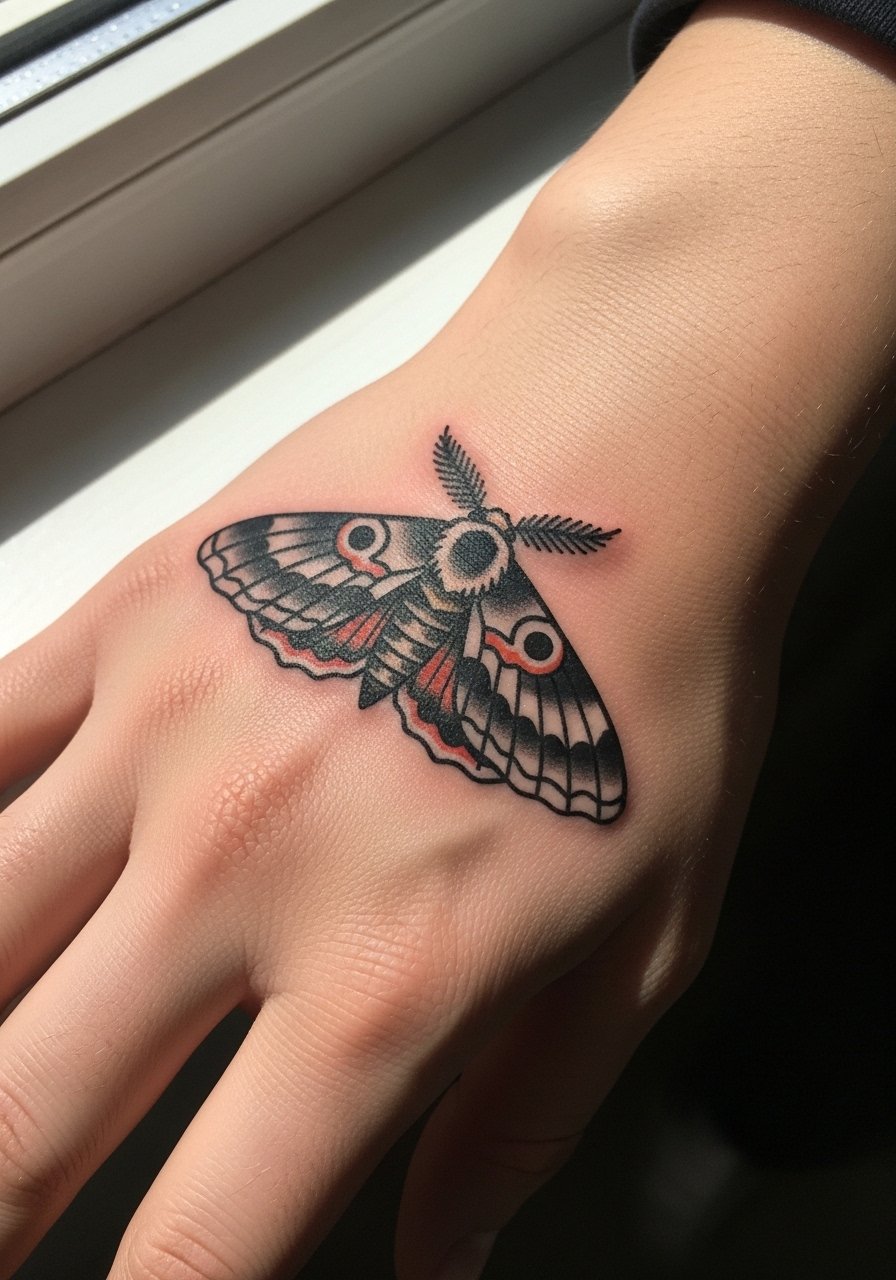
Hand tattoos are visually immediate but demand compromise. The skin there sees constant washing and abrasion. For a humorous twist in an old-school palette, size up to around 2.5–3 inches so the outlines don't blur from daily use. Pain is higher and touch-ups are frequent; expect annual touch-ups for any fine shading. There is also the job-stopper reality in some industries, so choose hand placement only if your work allows visibility. For session prep, keep hands free of rings and wear short sleeves. To frame the piece socially, try fingerless leather gloves and stack your non-tattooed fingers with stacked signet rings when you want to draw attention.
6. Neo-Traditional Moth with Flowers on the Upper Arm
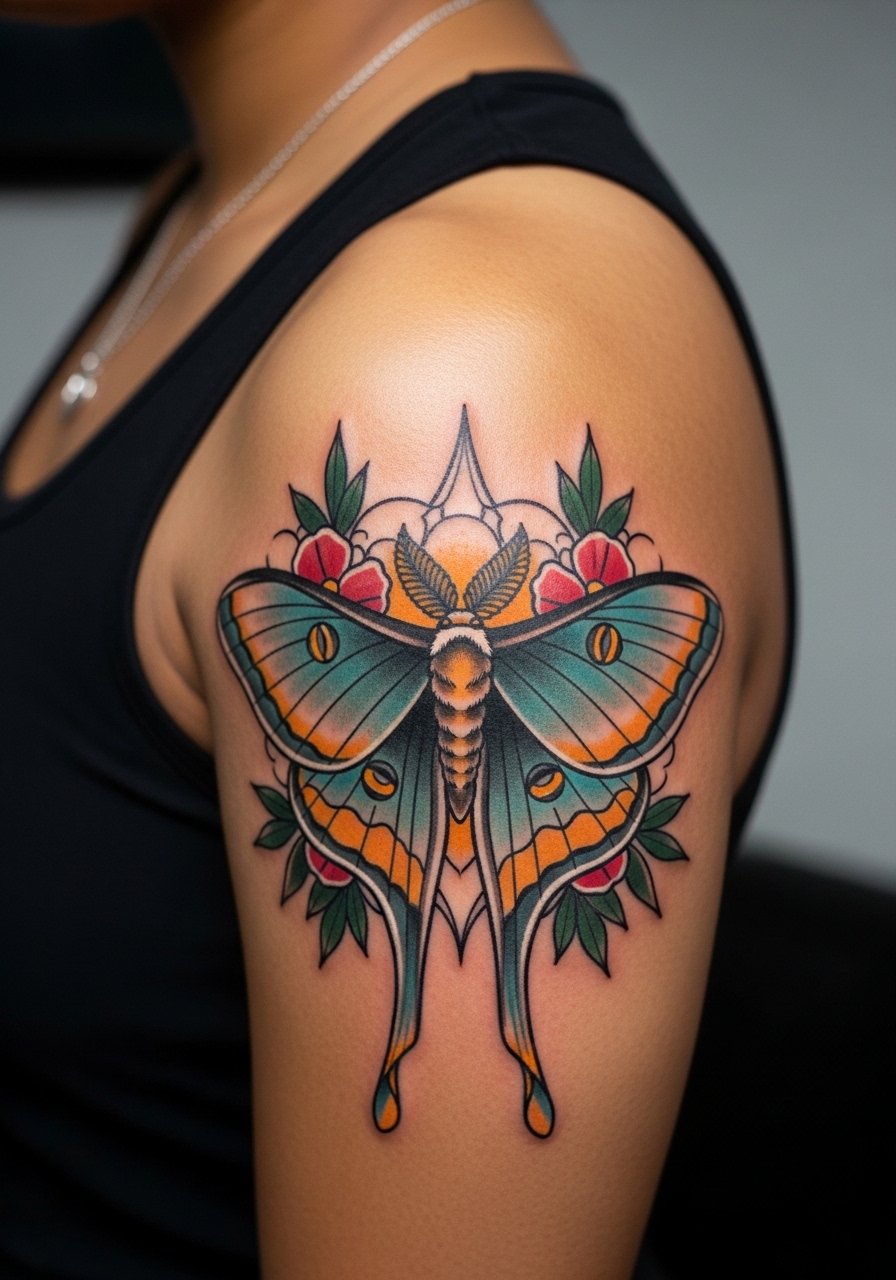
Upper arm placements let neo-traditional color and layered shading pop while staying easy to hide under a sleeve. Pain is moderate and most pieces finish in one to two sessions depending on size. Tell the artist you want saturated wing edges and soft floral fills, and ask them to space petals so the composition still reads if you gain or lose a bit of weight. The big mistake is asking for too many tiny florals that age into blotchy detail. For the session, wear a sleeveless muscle tank or an open button-down so the shoulder is fully accessible and you do not rub the area in the immediate healing window.
Pre-Session Essentials
The wrist, hand, and thigh pieces above each have different prep needs, so a few targeted items smooth the appointment and the first week.
- Stencil transfer paper kit. Lets you preview the line placement on skin before the needle touches the surface, which is handy for the forearm and neck layouts in ideas above.
- Topical numbing cream. Applied per instructions before a hand or thigh session can ease the first hour without changing how the artist works.
- Thin protective film roll. Useful for finger and wrist pieces that face frequent washing and friction in the first 48 to 72 hours.
- Fragrance free gentle body wash. Gentle cleansers reduce irritation around fresh linework, especially for larger thigh and arm pieces.
- Aquaphor healing ointment. A thin layer early in healing helps keep fine linework from drying into tight scabs that pull out pigment.
7. One-Line Minimal Moth on the Wrist
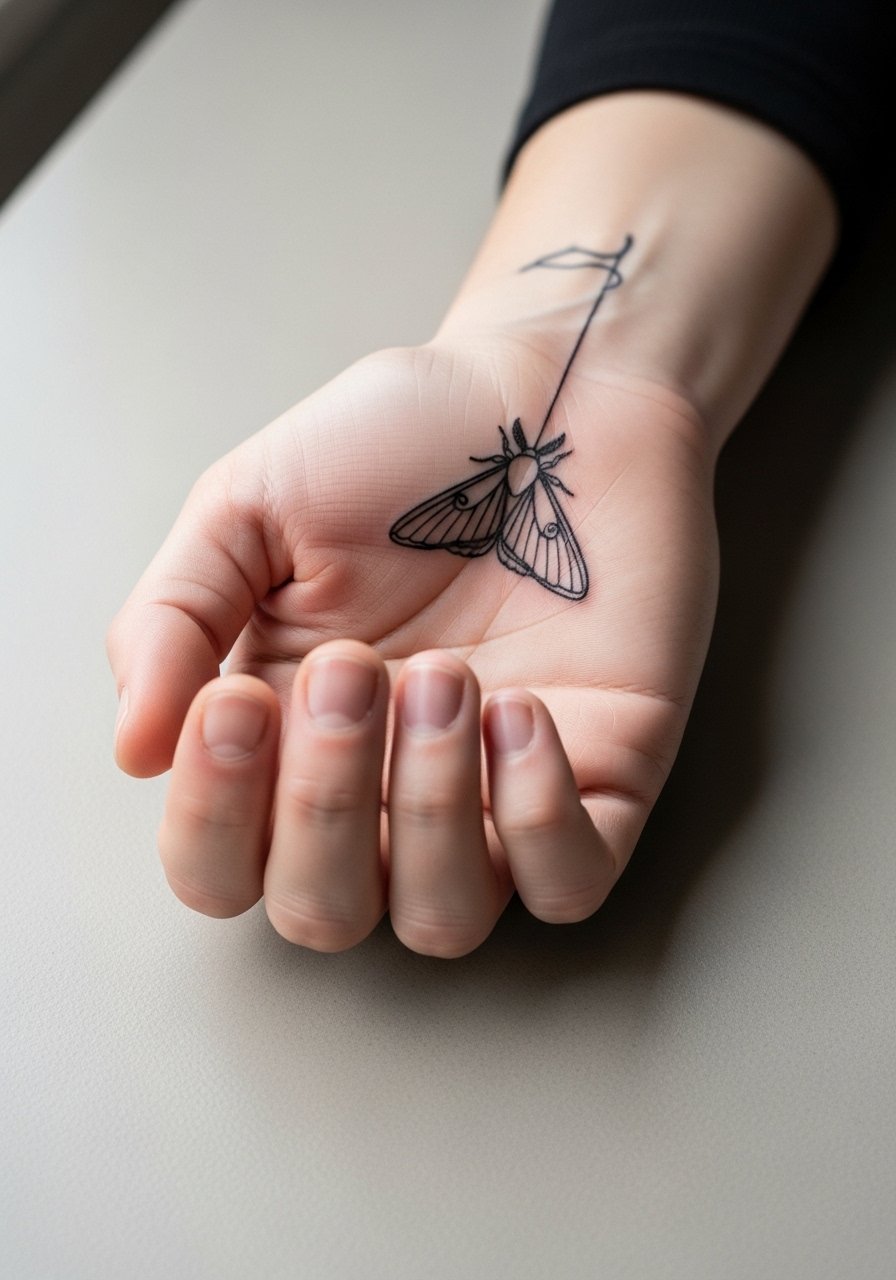
Minimal one-line moths are gorgeous when tiny but they carry specific trade-offs. The wrist moves a lot and sees soap and sunlight, so one-line work that is under 2 inches often loses definition within one to three years. My advice is to enlarge slightly to 2-2.5 inches and ask for slightly heavier single-stroke linework so the motif remains readable. Session time is short and pain is lower than fingers but still noticeable. A common mistake is asking for ultra-fine lines without discussing touch-up plans. For the appointment, wear a loose long-sleeve you can push up easily. After the piece settles, you can accent the look with a minimalist watch or thin bracelets.
8. Blackwork Moth on the Calf
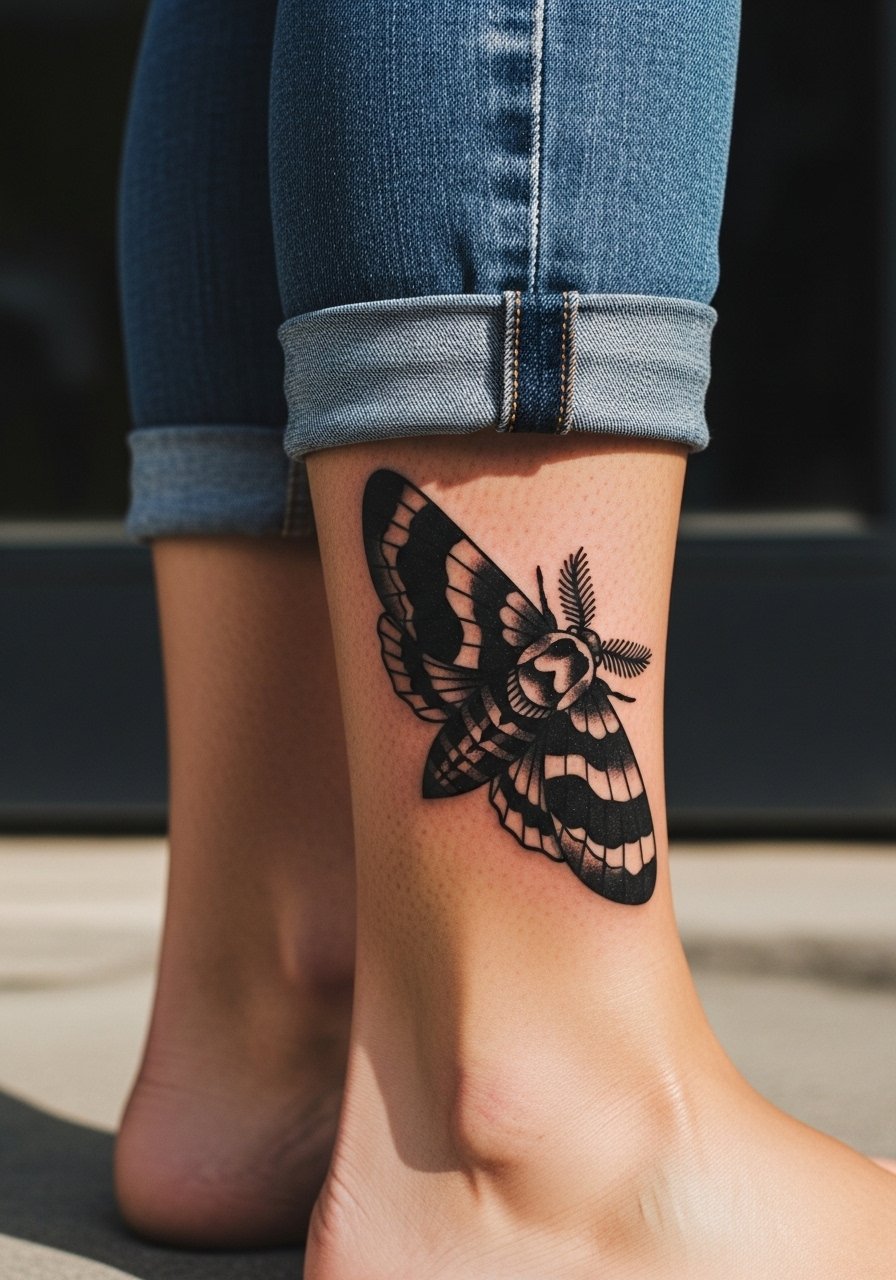
Blackwork moths play to contrast and longevity. Calf skin holds heavy saturation well, and a 4-6 inch moth filled with solid black ages into a silhouette that reads across seasons. Pain is lower on the calf and most sessions finish in one go for this size. The common error is overcomplicating the interior with tiny dot work that can flatten; ask for strong negative space and clear wing geometry. For showing it off year-round, roll your jeans and pair the piece with slim rolled jeans and ankle boots. During the session wear shorts so the leg can be positioned and rested comfortably.
9. Watercolor Moth Across the Collarbone
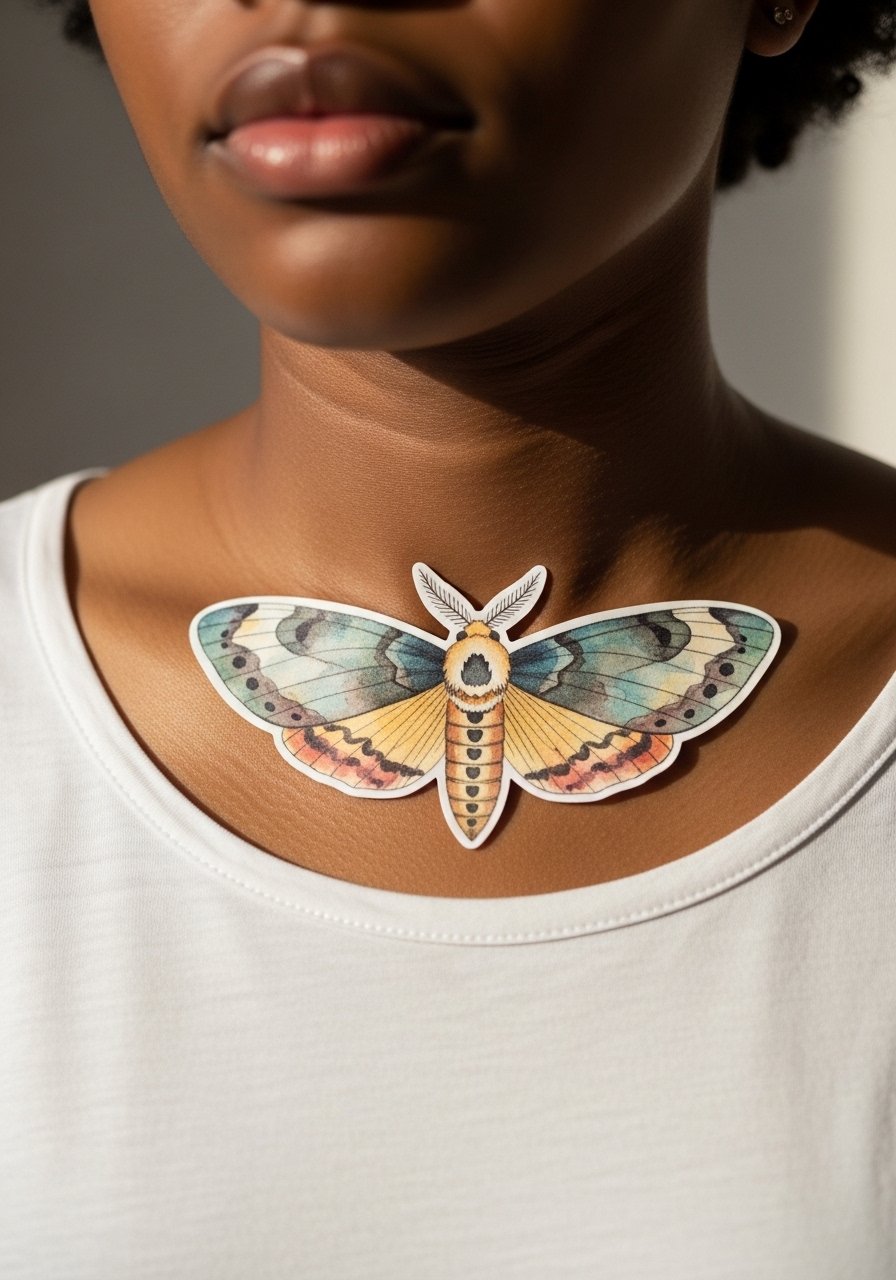
Watercolor effects on the collarbone look painterly and light, but they require a careful eye for placement and saturation. Collarbone skin moves with breathing and clothing, so ask the artist for soft but deliberate color nodes instead of feathered washes that can disappear after healing. Pain is moderate and touch-ups are more likely for watercolors. The main mistake is asking for diffuse color with no anchoring lines. For the session, a wide-neck shirt you can pull aside is perfect. To style this placement, an open collar shirt men or a low wide-neck top frames the moth without covering the work.
10. Geometric Moth on the Inner Bicep
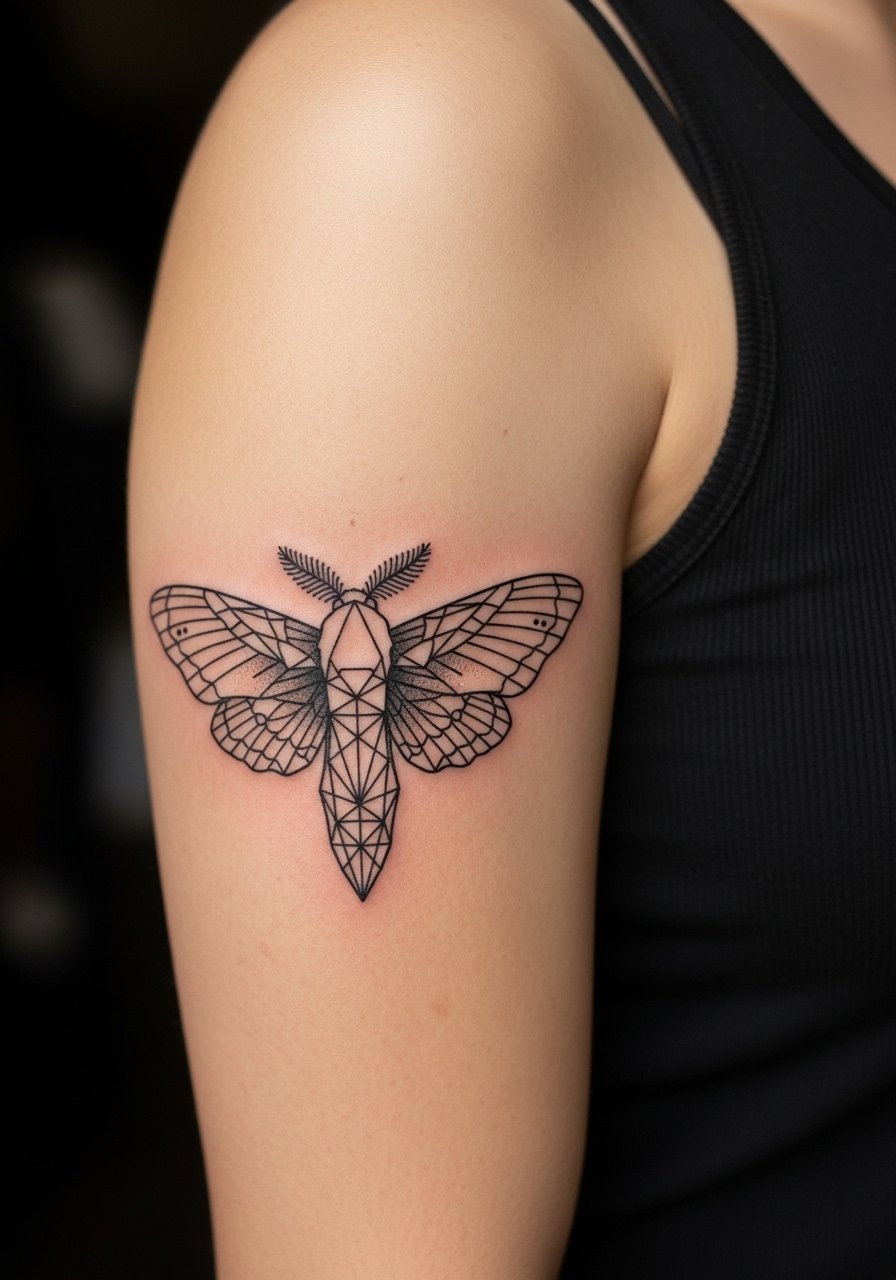
Geometric patterns need breathing room. The inner bicep is a surprisingly forgiving canvas for symmetric fills and repeated shapes, provided you size the piece to at least 4 inches so lines do not merge. Pain here can be higher when the arm folds. Ask for measured spacing and a grid mock-up in the consultation so the artist can show how the geometry sits with muscle contours. A common misstep is squeezing a dense mandala into a palm-sized area. For the session, wear a sleeveless muscle tank or loose tank and raise the arm slightly so the artist can work with steady skin tension.
11. Dotwork Moth on the Ribcage
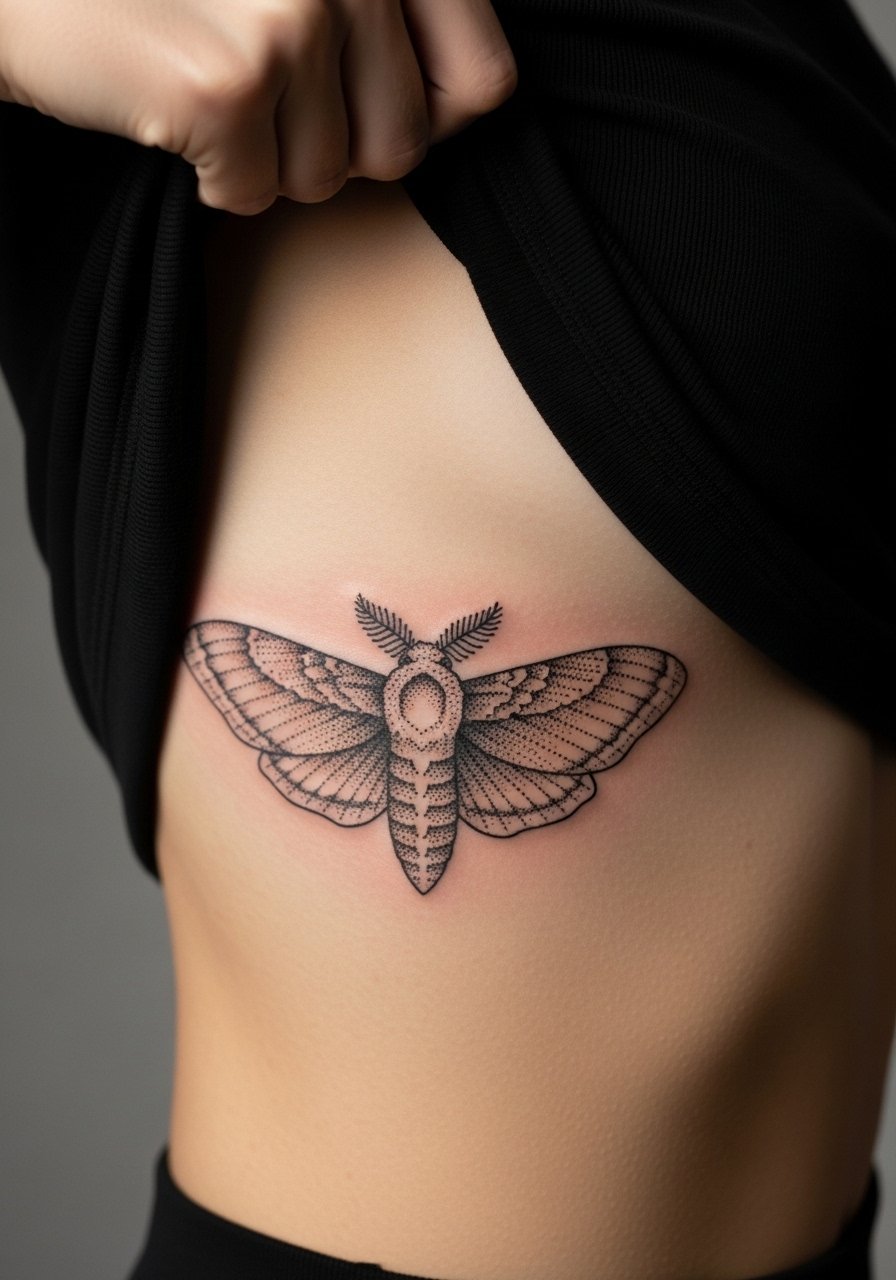
Fair warning, the ribcage rates high on most pain charts. Dotwork there can read beautifully in photos but needs slower sessions and careful depth control from the artist. The two camps debate whether fine work on ribs bleeds over time. One group says movement and thin skin blur dots within a couple of years. The other group argues that with correct depth and spacing the pattern stays intact. Ask where your artist stands and request a mock healed stencil. Expect two sessions and plan on a touch-up timeline if you notice early softening.
12. Small Moth Behind the Ear
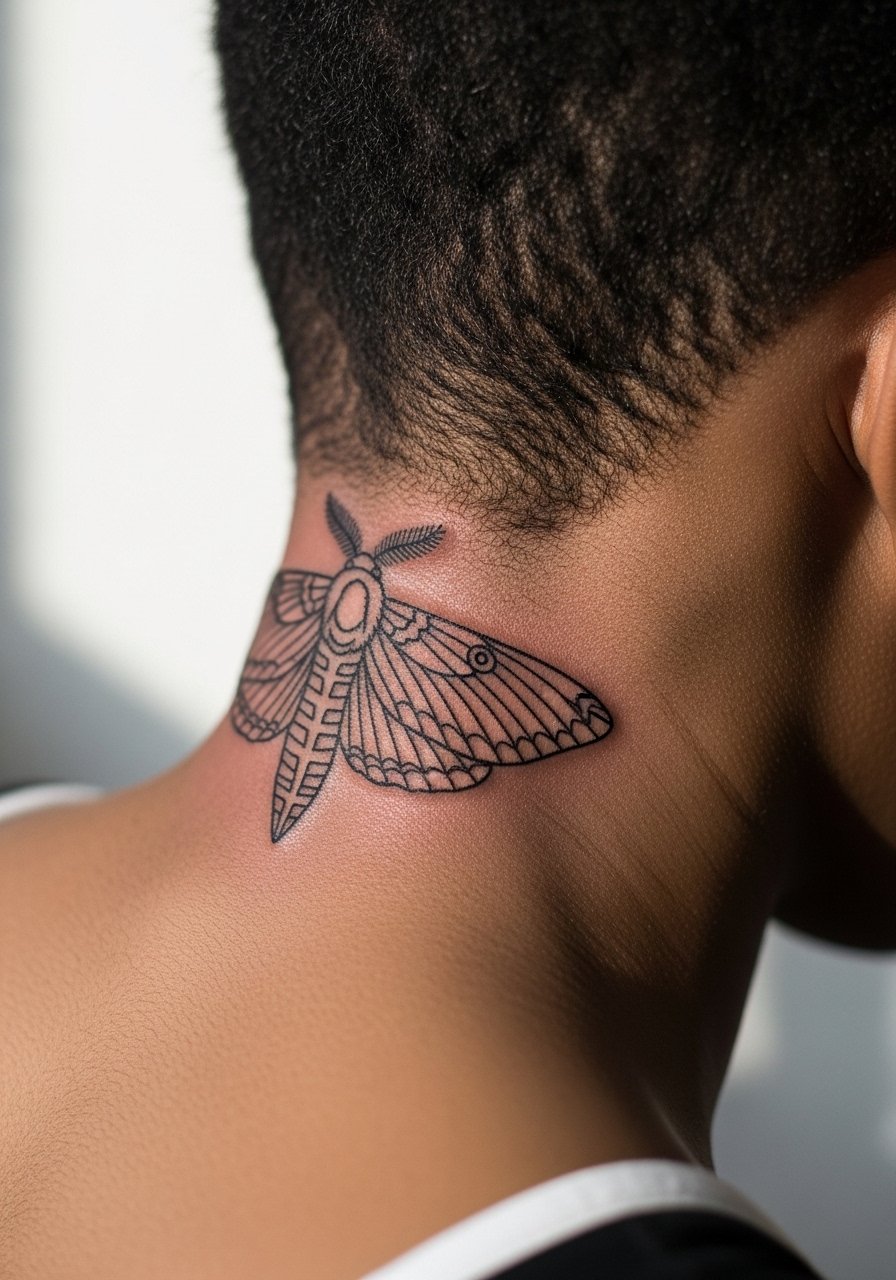
Behind-the-ear moths are discreet and heal quickly, but they need precise placement under hair lines so they are visible when you want them and hidden otherwise. The area tolerates small ink well yet the lines must be strong enough to hold against hair movement. Session time is short and pain is mild. The usual mistake is requesting ultra-fine detail that disappears into hair or blurs with time. For appointment prep, wear hair up and minimal jewelry. This placement pairs with open collars or hair styles that let the design peek out without exposing it constantly.
13. Death's-Head with Moon on the Back
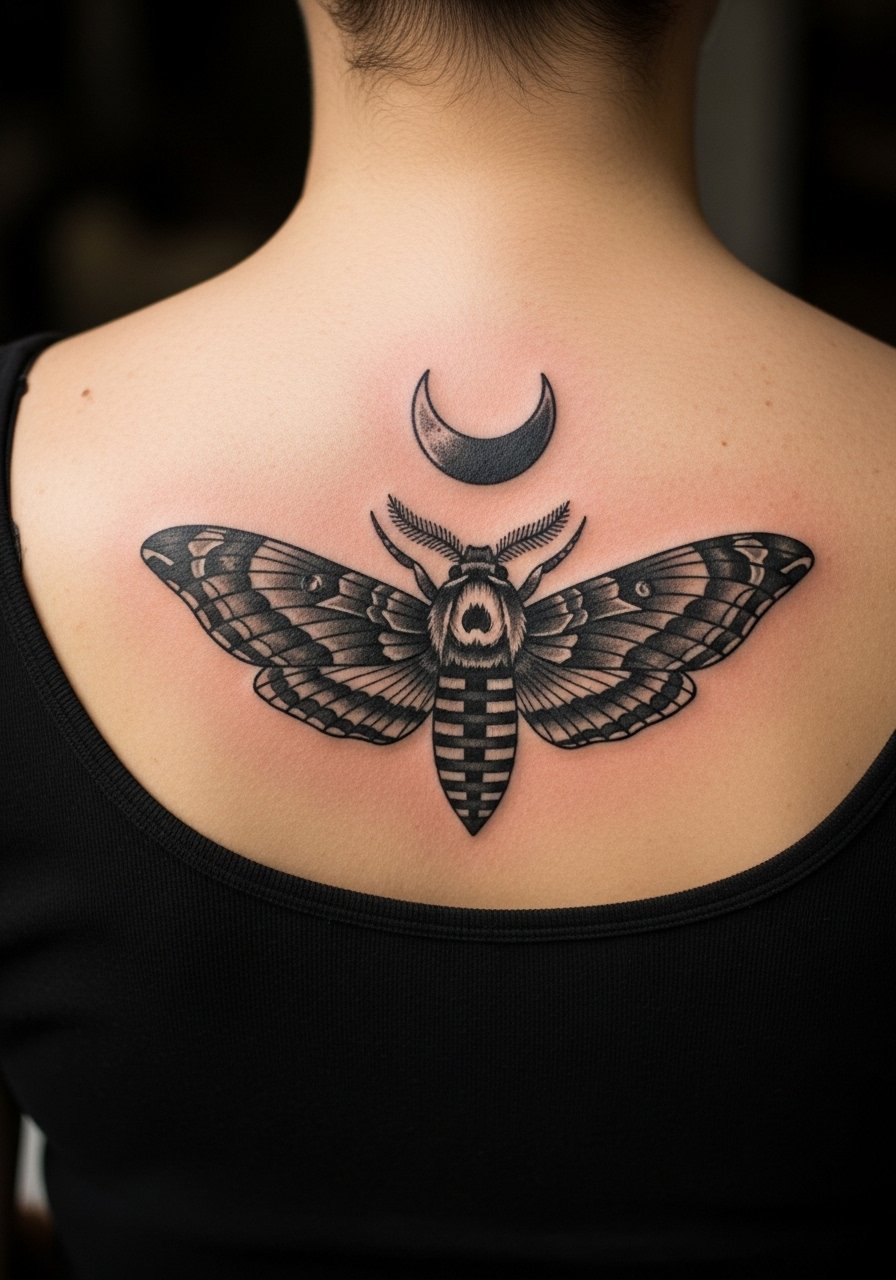
The upper back gives room for narrative pieces pairing moths with celestial motifs. This location is lower on the irritation scale and supports larger scale realism or stylized work. Tell your artist you want strong midtone separation so the skull reads in dim light and the moon holds contrast. A frequent error is cramming too many small elements together which age unpredictably if lines are close. Session length varies by size but plan for multiple passes if you want deep black and layered gray. For the session, a loose button-down you can pull aside keeps the area accessible without fabric rubbing the fresh ink.
14. Geometric Dotwork Moth for the Sternum
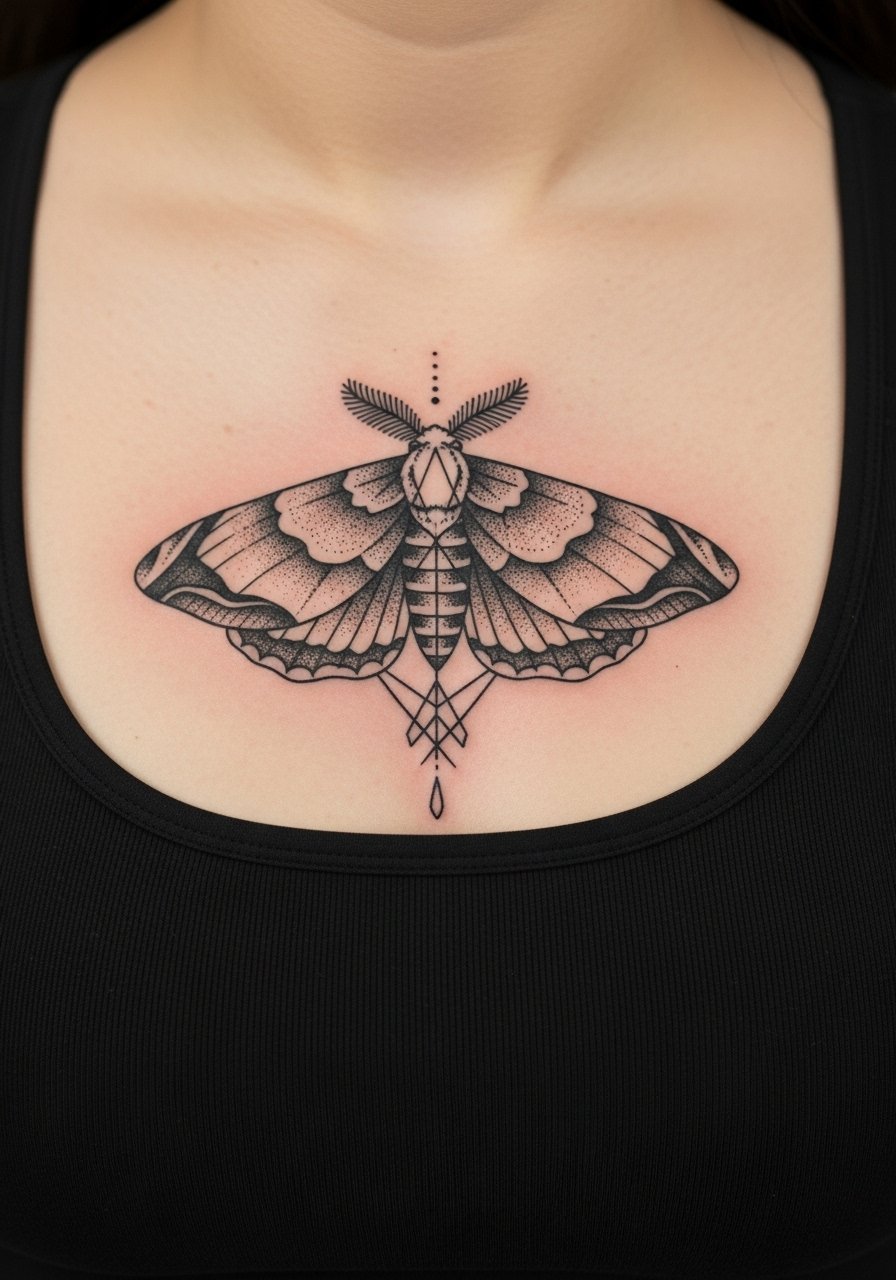
Sternum pieces are dramatic but sensitive. The sternum moves with breathing and requires careful negative space to prevent overcrowding. Pain is higher and sessions are done slowly. The key consultation ask is about spacing and whether the artist thinks the center lines need extra separation to avoid merging. One mistake is dense dot shading without strong anchor lines. Wear a fitted sports bra for the appointment so the artist can work without fabric interference. After healing, the area pairs well with open-back or strapless tops for nights out.
15. Micro-Realism Moth on the Ankle
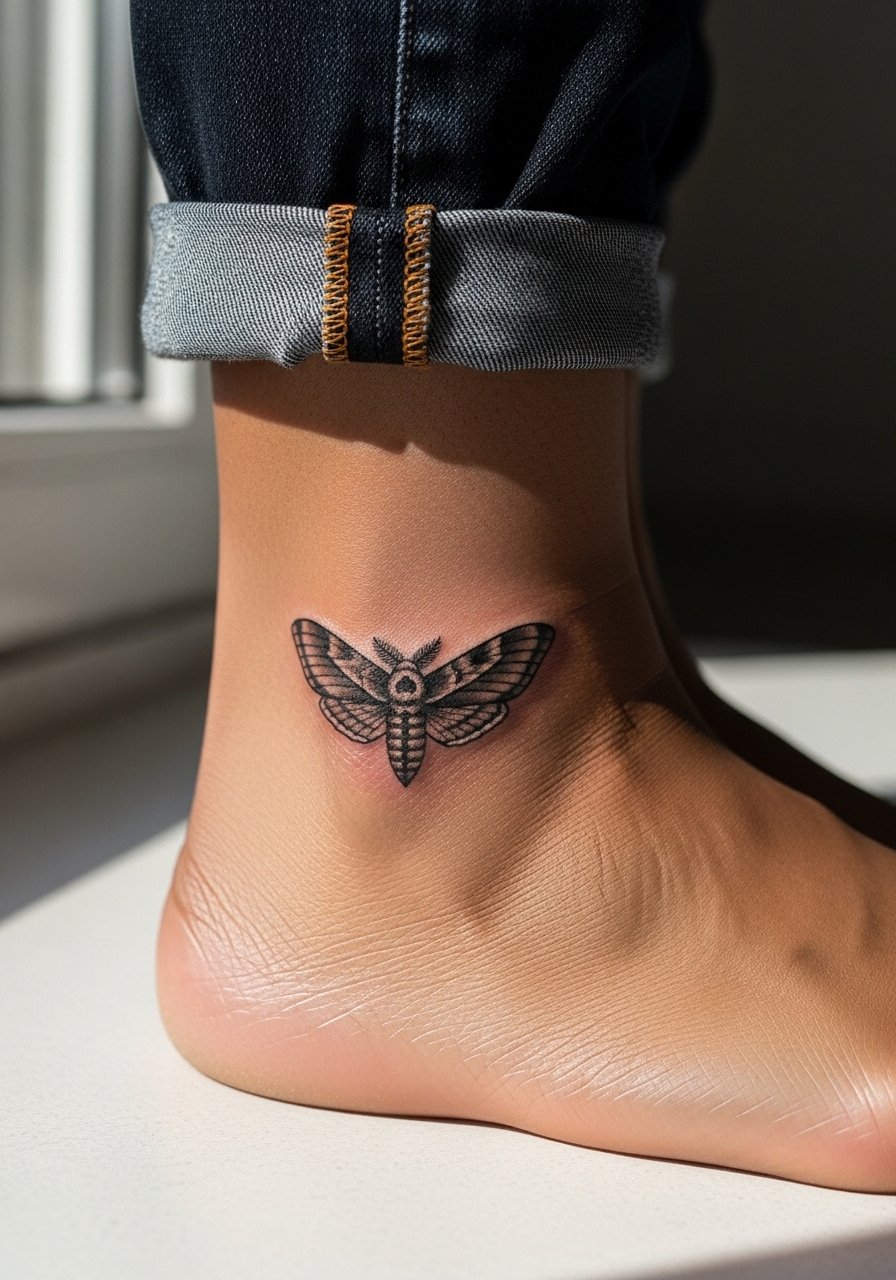
Ankle placements are small canvas zones with a high likelihood of rubbing against shoes and socks. Micro-realism can look great for a few years if you size slightly above a micro and ask for moderate contrast. Expect moderate pain and a short session. The common error is placing a tiny shaded moth too close to the shoe line which leads to early fading. For session wear try cropped straight leg pants you can roll or sandals so the area breathes while it heals.
16. Blackwork Moth Across the Shoulder Blade
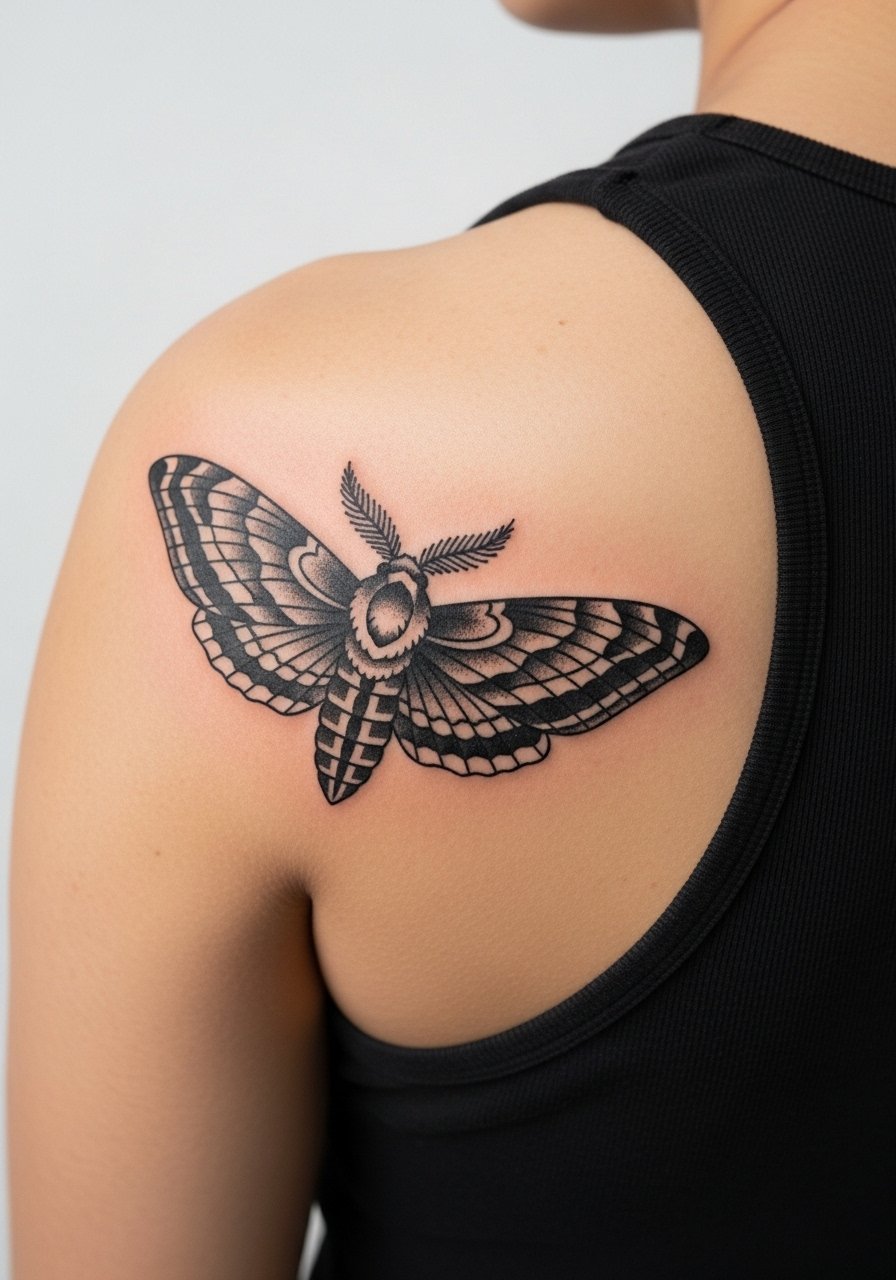
Shoulder blade pieces take advantage of a flat plane that moves little in daily life, which helps blackwork retain bold silhouettes. Pain is moderate and sessions usually finish in one to two sittings. Ask for clean edges and a clear separation between fill and skin to avoid gray bleeding. Avoid over-detailing tiny wing veins that can muddle. A loose tank top on session day and an off-shoulder top for showing the piece later keep skin comfortable and stylish.
17. Cover-Up Moth for Existing Scar or Old Flash
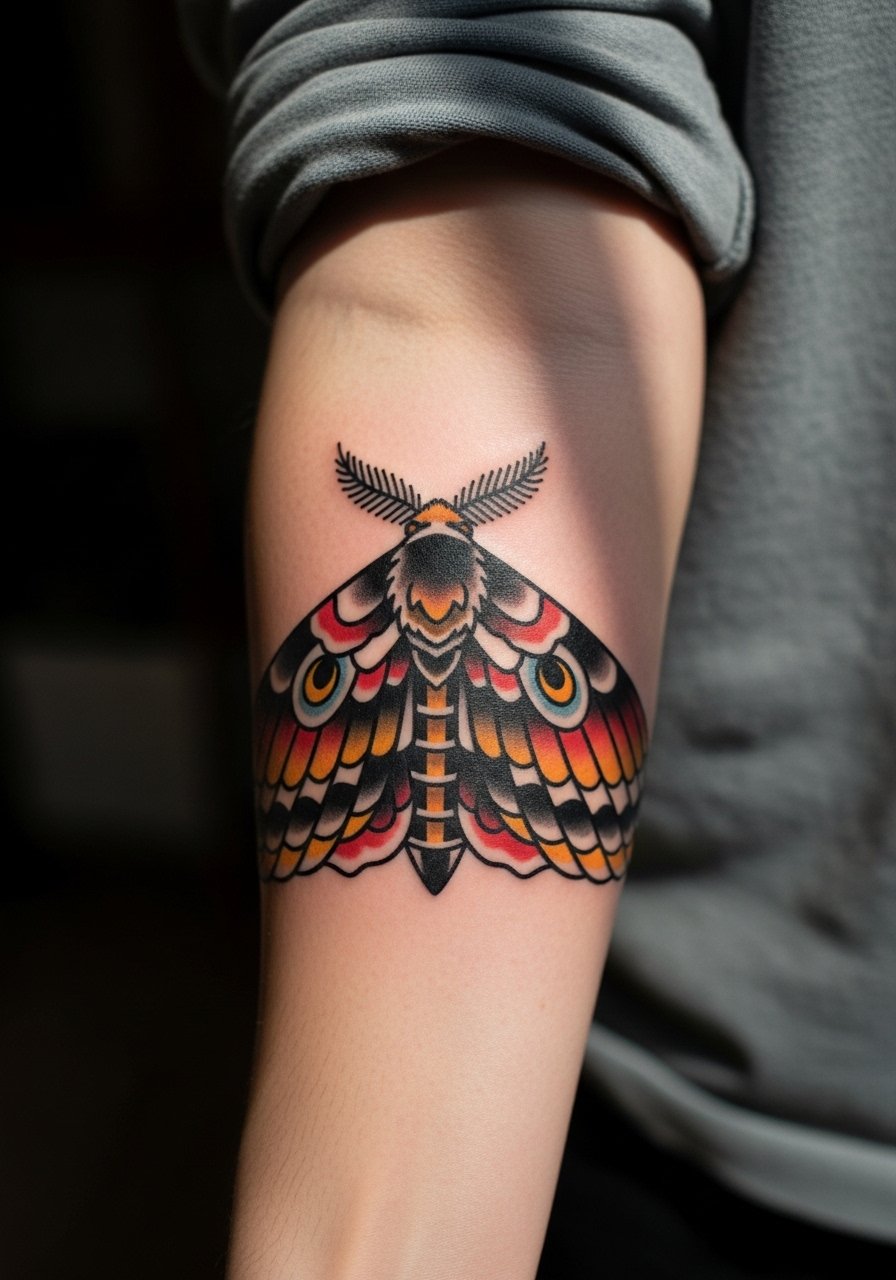
Cover-ups need a candid consultation about how much old pigment to mask and the scar tissue behavior. I've seen modest old pieces get covered effectively with a moth that uses dense wing fills and strategic negative space. The artist may advise heavier saturation and slightly larger scale than you expect. Pain can be uneven over scar tissue and touch-ups are often part of the plan. The mistake is asking for an exact replica of the old design; instead, aim for a composition that integrates the old shapes into new wings. For session comfort, wear a loose short-sleeve or a rolled sleeve button shirt you can slide to expose the area.
Frequently Asked Questions
Q: How long before a fine line moth needs a touch-up on the wrist or hand?
A: It depends on placement and daily wear. In my experience, tiny fine line work on hands and wrists commonly needs a visible touch-up by year two or three, especially if the piece sees a lot of washing or sunlight. Sizing up and asking for slightly heavier single-pass lines can stretch that timeline.
Q: Do watercolor-style moths require different session planning than bold traditional moths?
A: Yes. Watercolor effects often need lighter handwork and sometimes extra sessions for color layering, while bold traditional moths rely on thick outlines and saturation that usually finishes faster. Expect watercolors to need review and possible color top-ups sooner than saturated blackwork.
Q: Is Saniderm or dry healing better for traditional moths?
A: Artists split on this. One camp swears by dry healing for traditional pieces to build scab strength and protect saturated blacks. The other camp prefers second-skin films to lock color and avoid long scab cycles. Ask your artist what they use and why, since their preferred method aligns with how they lay ink.
Q: What should I wear to a thigh moth appointment to stay comfortable and keep the area clean?
A: Loose shorts or high-waisted denim you can pull slightly down are best so the artist can access the outer or inner thigh without fabric dragging. A high waisted denim shorts style is handy for both comfort and modesty during multi-hour sessions.
Q: Are Death's-Head moths considered bad luck in certain cultures?
A: Some people read skull motifs as ominous while others view them as folklore or personal statement. If cultural reading matters to you, choose species and composition thoughtfully and discuss any concerns with the artist before booking.
