
Fine line clocks are everywhere online, but the pieces that still look crisp after two years are rarely the ones that scored the most likes the day they were posted. Fading, unexpected stretching and surprise minimum charges are the three realities people underestimate. Read through these tiny clock tattoo ideas and you will find designs and placement tips that balance what trends want with what actually holds up on skin.
1. Minimalist Clock Face Outline on the Wrist
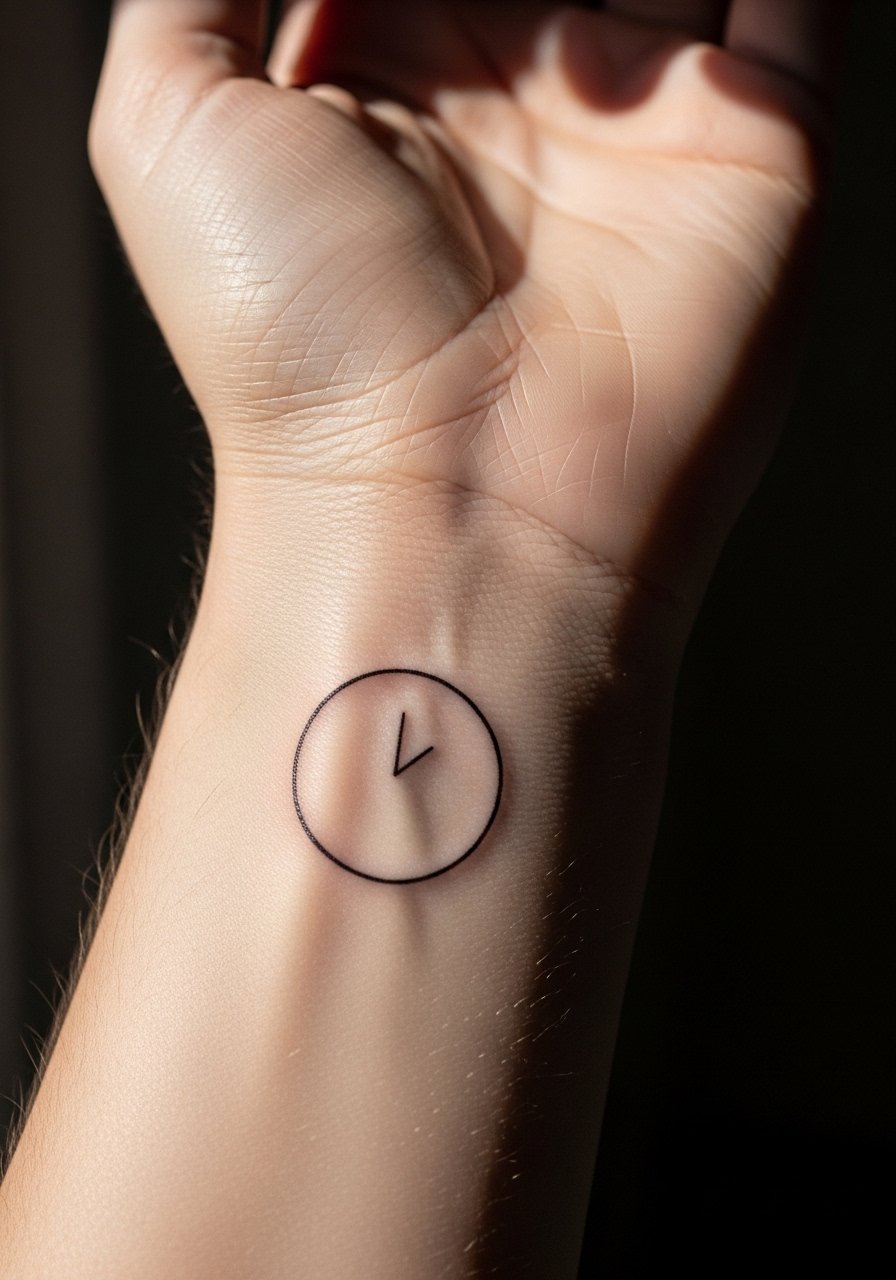
I recommend this for a first tiny clock tattoo if you want low visual weight and fast sessions. Tell your artist you want slightly bolder hair-thin lines rather than single-needle whisper strokes so the face keeps readable after a year. Expect low pain and a 20-40 minute session depending on tiny details. A common mistake is making the numerals too small, which blurs with skin movement. For showing it off, layer a thin gold chain bracelet on the opposite wrist so the negative space reads like intentional styling. Touch-up timeline for this one is usually 12-24 months.
2. Vintage Pocket Watch with Gears on the Outer Forearm
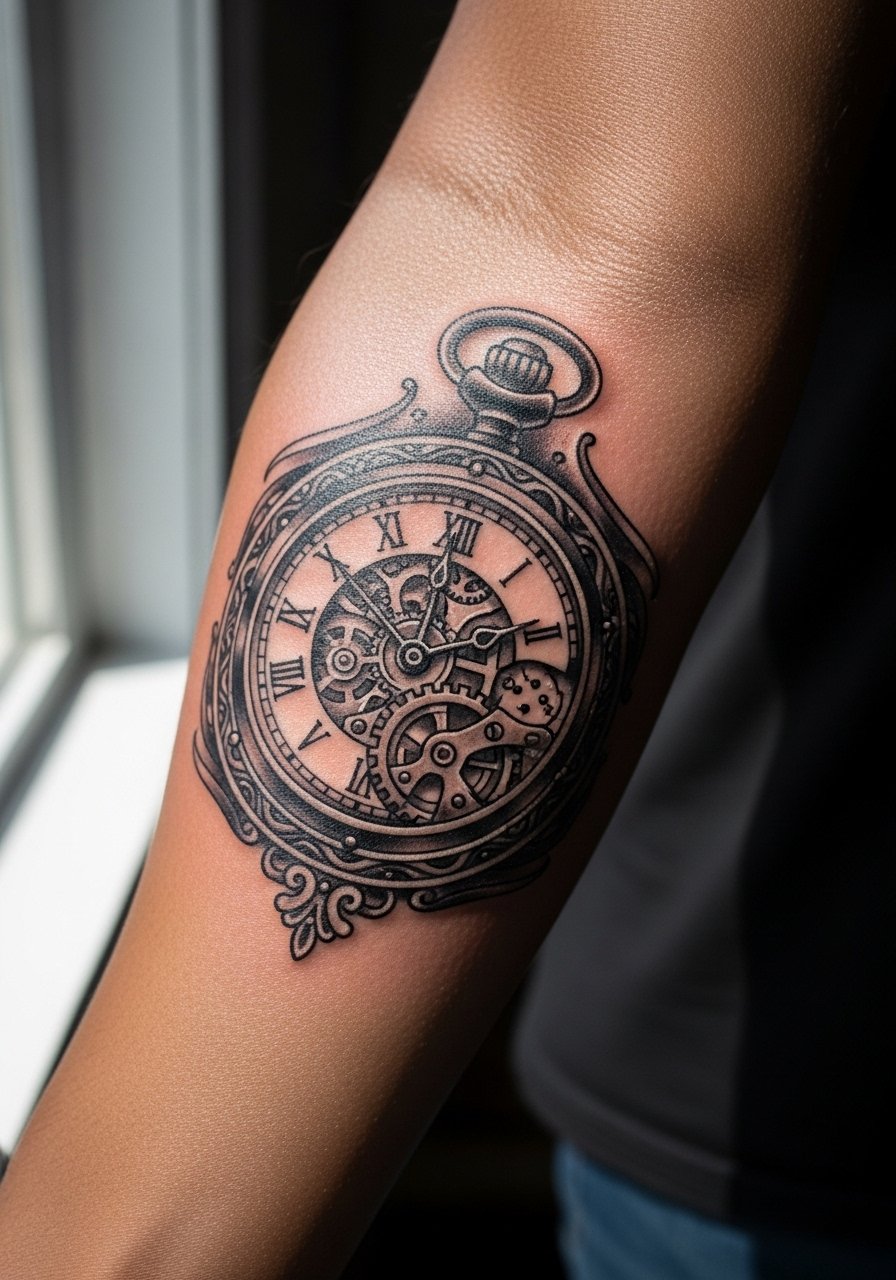
This neo-traditional pocket watch makes a small area look mechanical and nostalgic without becoming a sleeve. Ask for distinct gear separations and contrast between gear teeth and the watch rim to avoid the common trap of "muddy" gray fills. Forearm placement is forgiving for touch-ups, but it will show daylight exposure, so expect color to soften over time. When sitting in the chair, wear a sleeveless linen tank for easy access. Tell your artist you want the gears to read regardless of size by keeping at least three visible gear teeth on the smallest gears.
3. Fine Line Clock with Roman Numerals on the Inner Wrist
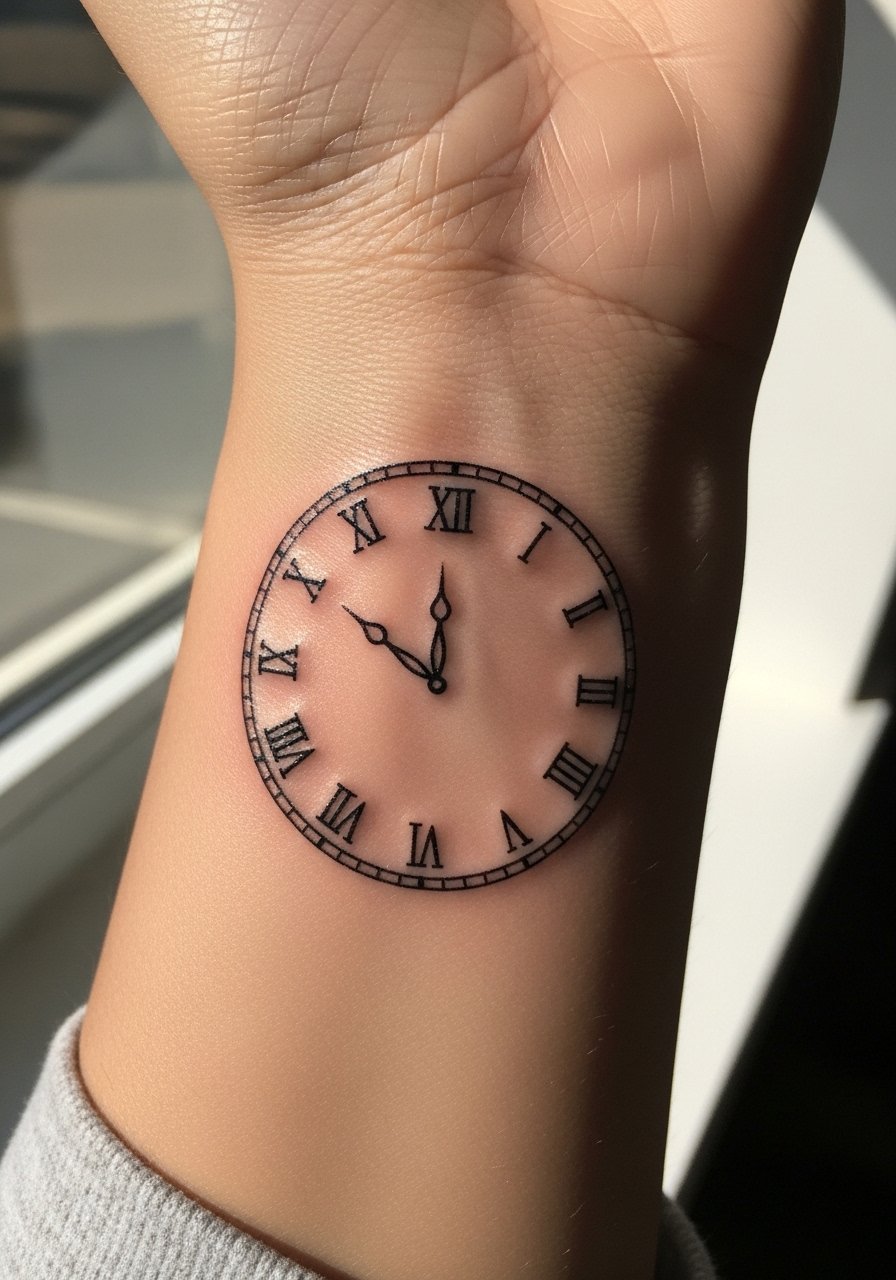
Fine line Roman numerals look elegant on the inner wrist but they are the subject of the longevity debate. One camp says single-needle numerals age beautifully if placed on low-friction skin. The other camp warns they blur quickly and recommends thicker lines. My advice is to ask for a slightly heavier hair-thin line and to plan a touch-up at the 12-18 month mark. Session time is brief but expect sensitivity because the wrist is bony. For show-off styling, rolled sleeves and a linen button down shirt frame this placement nicely.
4. Clock with Cherry Blossoms on the Collarbone
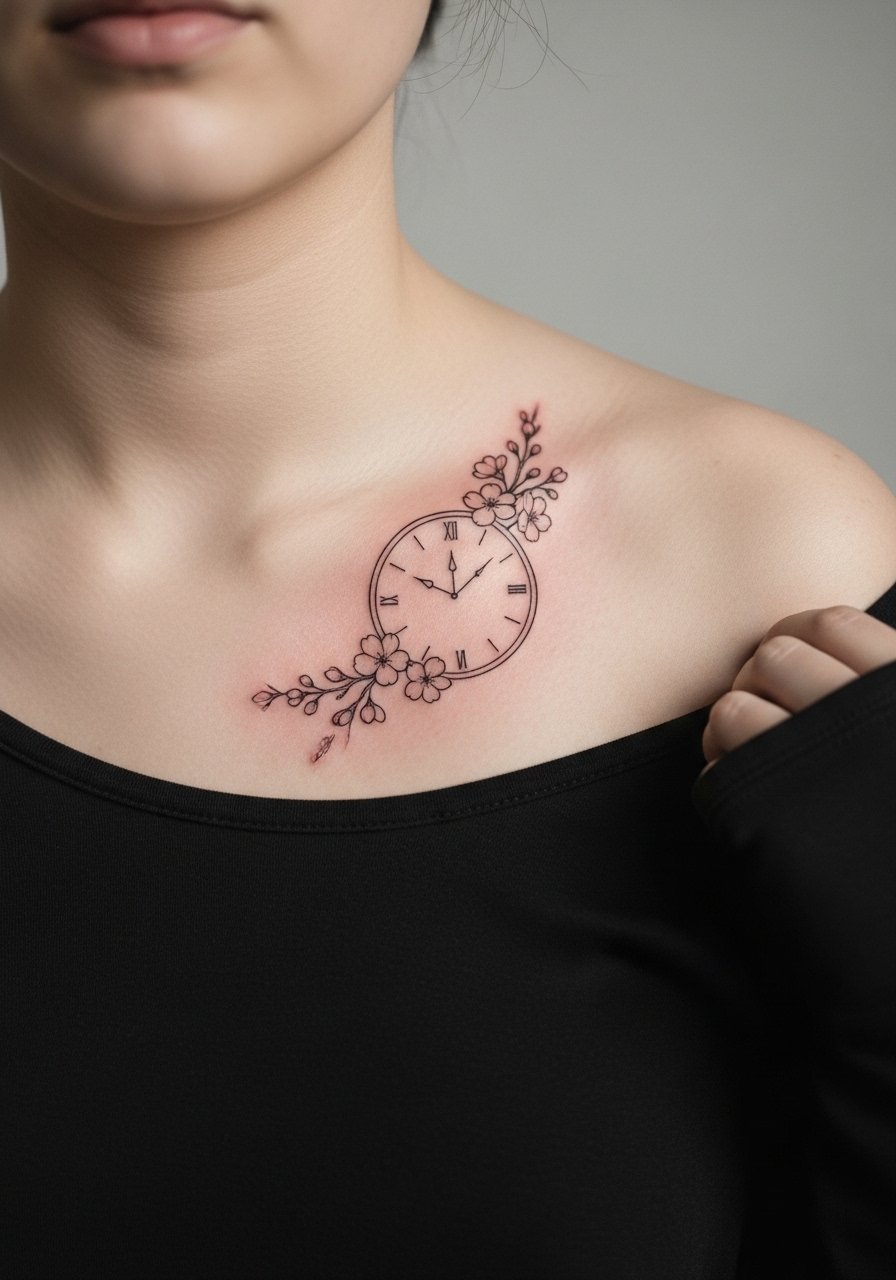
A small clock surrounded by cherry blossoms reads poetic without being saccharine. For collarbone work, the skin sits flat but moves with breathing, so ask for slightly more spacing between petals and numerals than your reference image shows. The common mistake is crowding floral detail into a 1.5-inch area, which softens into a blotch over time. For evenings out, pair this with an off shoulder blouse so the blossoms peek through a neckline. Expect moderate pain and a 45- to 90-minute session depending on shading.
5. Broken Clock Mechanism on the Ribcage
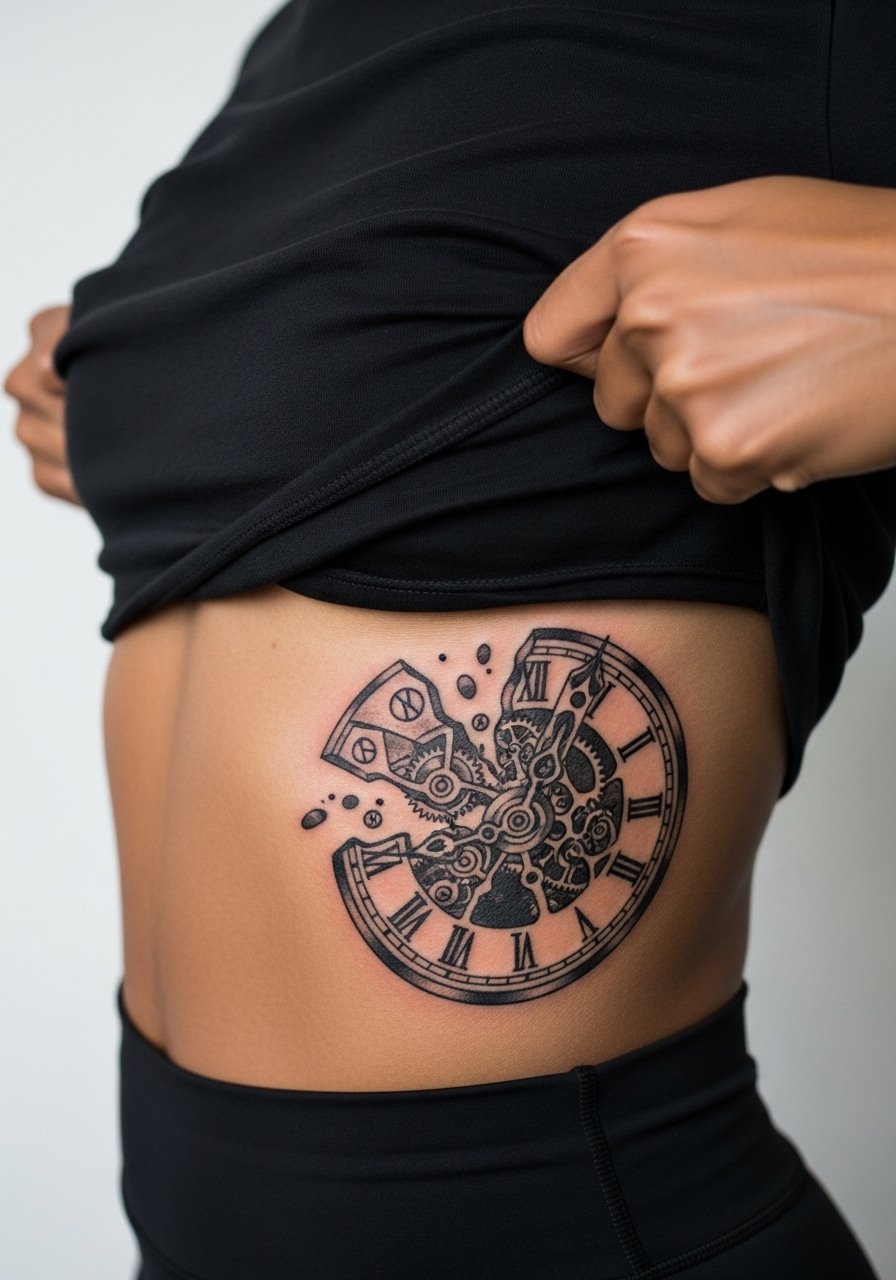
Ribcage pieces are sensitive and dramatic. If you want emotional weight without a large canvas, a broken clock gear cluster works well. Tell your artist you prefer negative space to heavy fill in the smallest gears to reduce blowout risk. Pain is high on the ribs, so plan for breaks and a longer session. The common error is over-detailing in a small area, which leads to merging lines as the skin stretches. Because ribs shift with body changes, consider a slightly larger scale than you first imagine so the composition survives weight fluctuations.
6. Geometric Clock with Infinity Symbol on the Back of the Neck
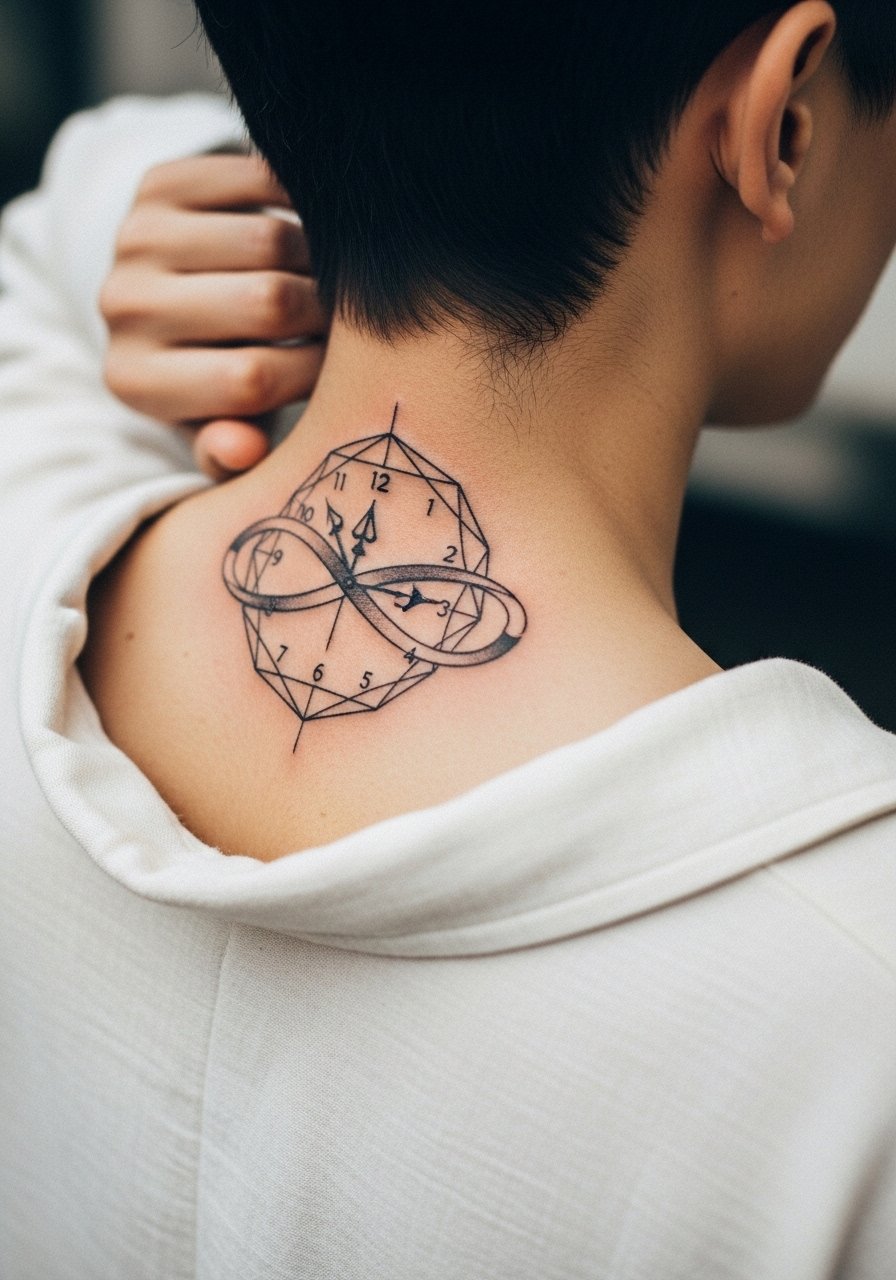
Back of the neck pieces read subtle and modern but require careful spacing. The geometric clock paired with an infinity loop uses negative space to keep the design from crowding. Tell the artist you want clean, even linework with larger gaps between intersecting lines so the geometry does not fill in over time. Neck skin can be prone to blurring from friction with collars, so wear loose collars for the first two weeks after the session. This placement is low to moderate pain and usually completes in a single session.
Studio Day Picks
Those first six pieces include wrists, collarbone and ribs, and each asks for different prep and access from your wardrobe.
-
Stencil transfer paper kit. Helps you preview exact placement on the skin before the needle touches down, which is useful for the inner wrist and collarbone pieces above.
-
Topical numbing cream. Use as directed 30 to 60 minutes before a ribcage session to reduce the sting without affecting linework.
-
Thin protective film roll. Keeps friction-prone zones like the wrist and neck cleaner during the first few days of healing.
-
Fragrance free gentle body wash. Showering with a non-irritating wash helps the cherry blossom and collarbone areas heal without drying or bumping.
-
Aquaphor healing ointment. Thin application for the first few days locks in moisture on fine line work and reduces early scabbing that can pull on thin numerals.
7. Micro-Realism Hourglass Clock on the Inner Bicep
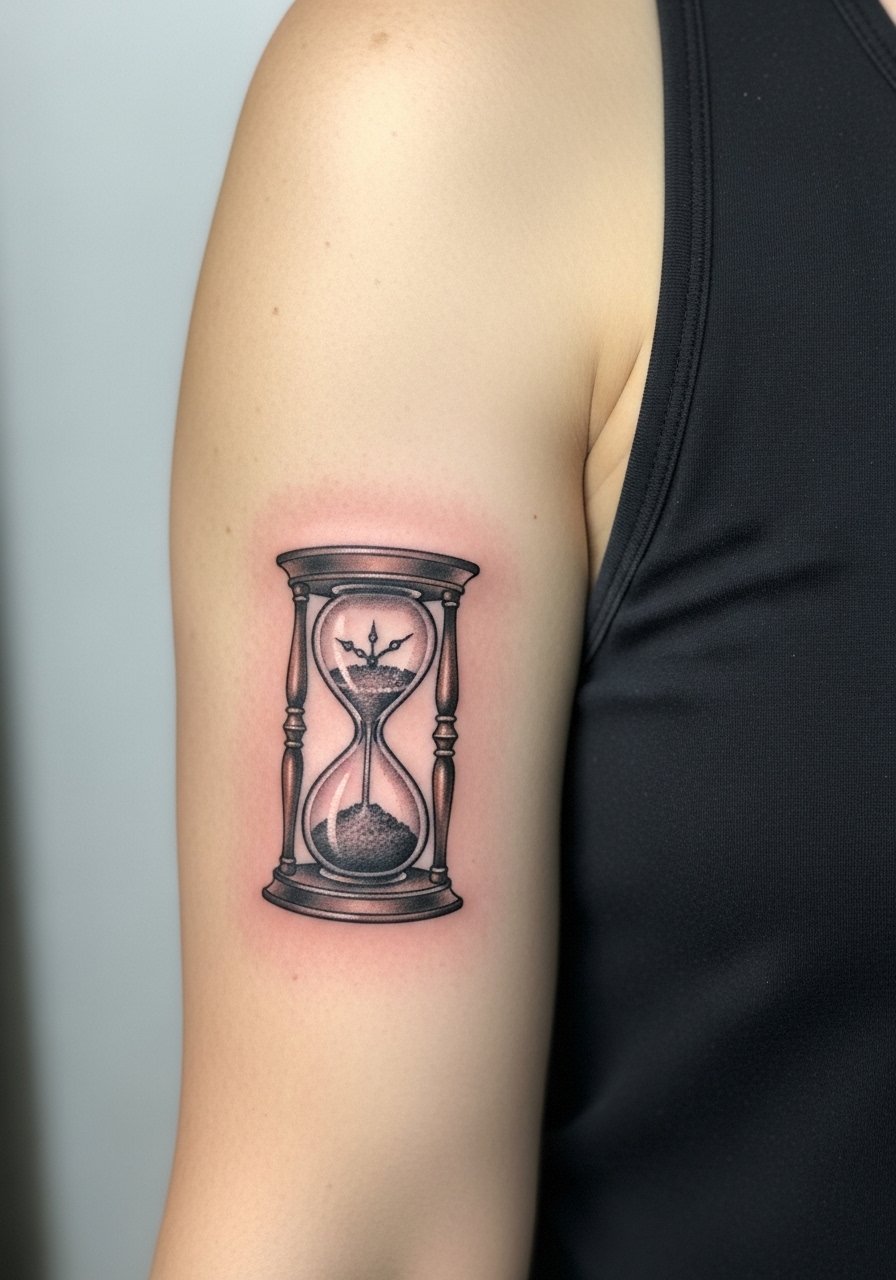
Micro-realism crams texture into a tiny hourglass-shaped clock and looks striking on the inner bicep. The inner arm is lower friction so fine detail holds better than on the wrist. Tell your artist you want deeper contrast between the sand, glass highlights and the clock hands to preserve the illusion at small scale. Session feels moderate with occasional pinchy spots as the artist works small. Expect touch-ups at year two for tiny highlights and fine contrast revival.
8. Ornamental Clock Mandala on the Shoulder Blade
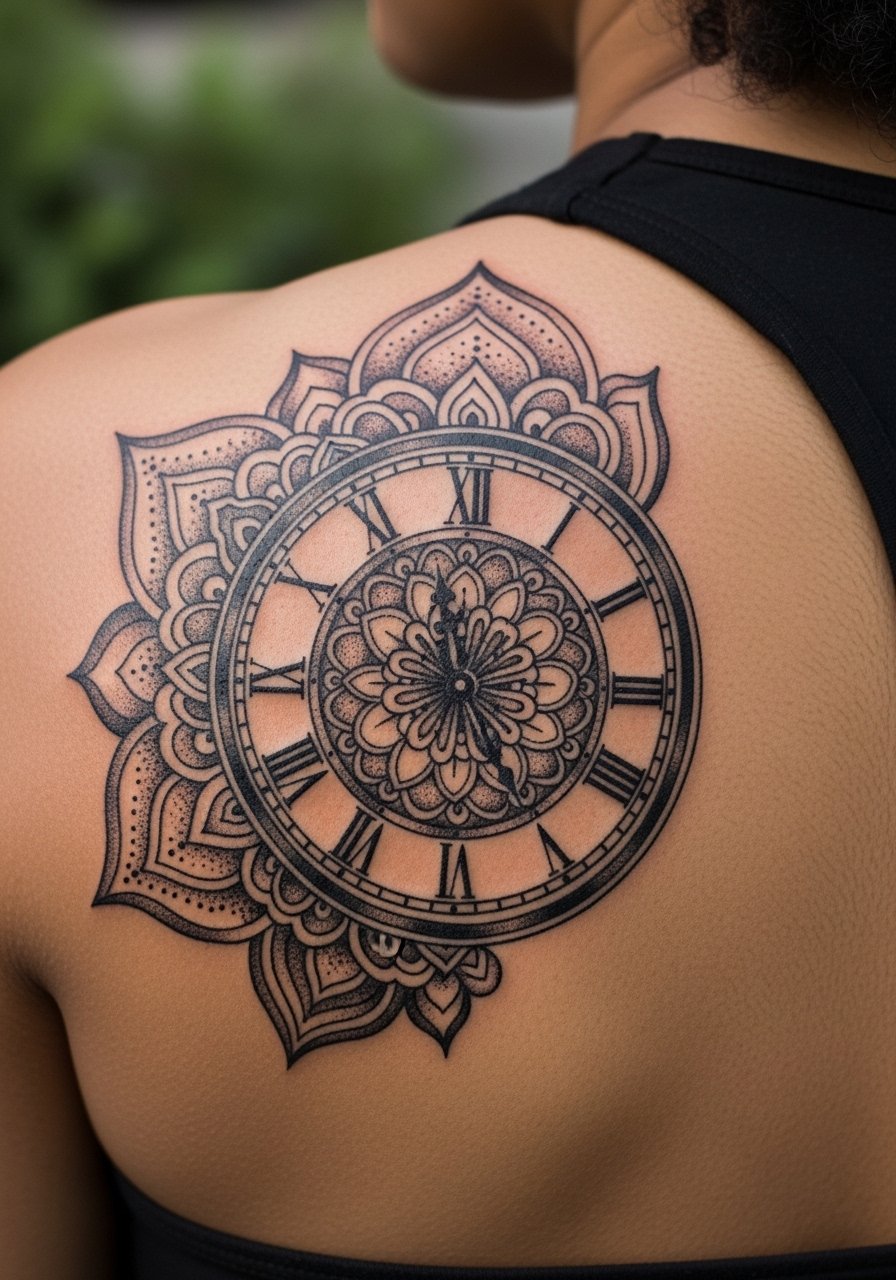
Shoulder blade gives room for radial symmetry and dot work that ages gracefully if spaced correctly. If you want meditative geometry, specify stipple shading instead of solid fill so the piece keeps texture rather than pooling black. The mistake most people make is packing too many petals into a small circle. For the session, wear a loose button down you can slide off easily without rubbing fresh ink. Pain is mild and sessions can run from 60 to 120 minutes.
9. Traditional Clock with Rose on the Outer Forearm
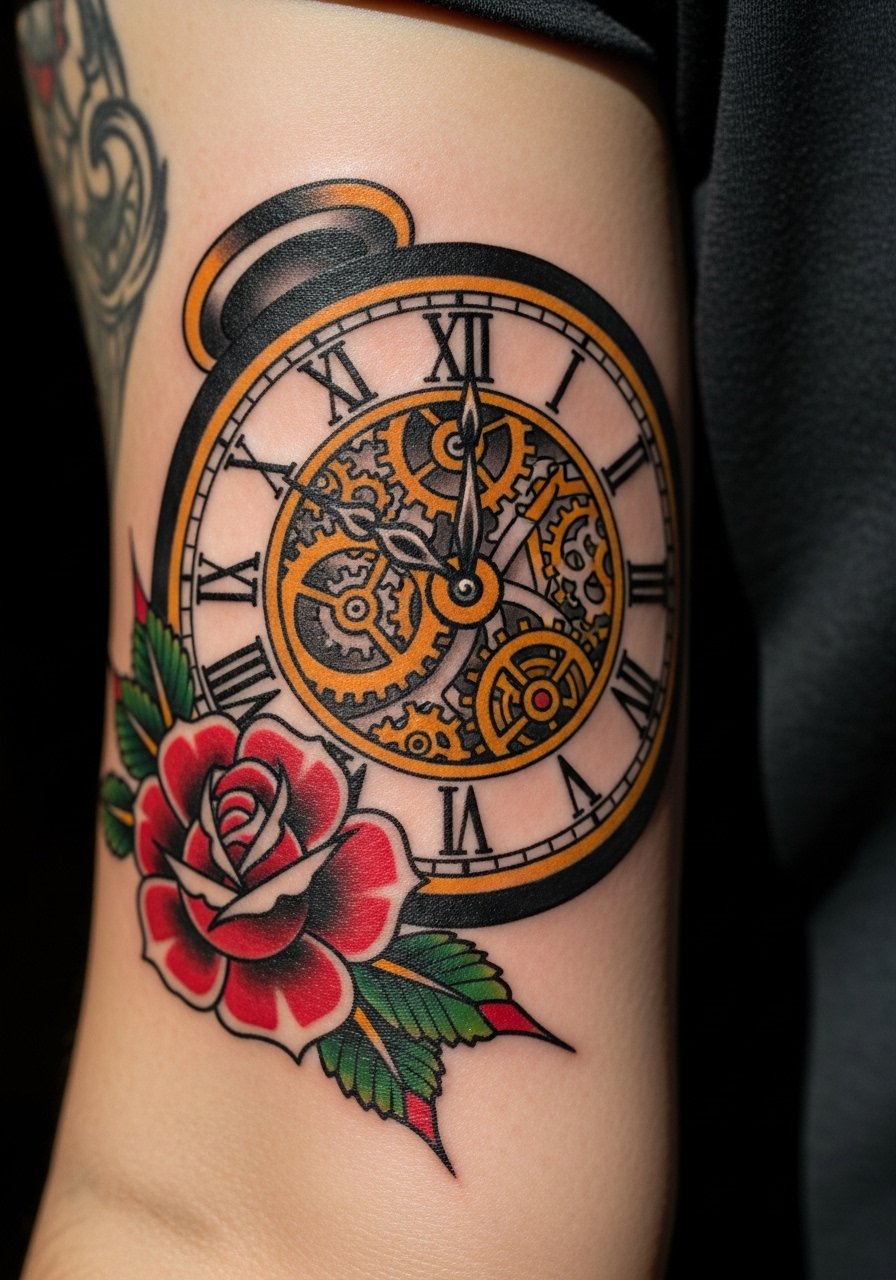
Traditional work is forgiving on small scales because bold outlines and saturated fills age into a strong read. If you want a rose and clock combo, request classic Americana linework and simpler petal shapes for longevity. The common misstep is trying to pack photorealism into a 1.5-inch spot. For everyday styling, pair this with rolled cuff joggers or a short-sleeve tee to show the forearm without sun exposure. Expect a single session of 60 to 90 minutes and good long-term saturation.
10. Watercolor Clock Hands at Midnight on the Ankle
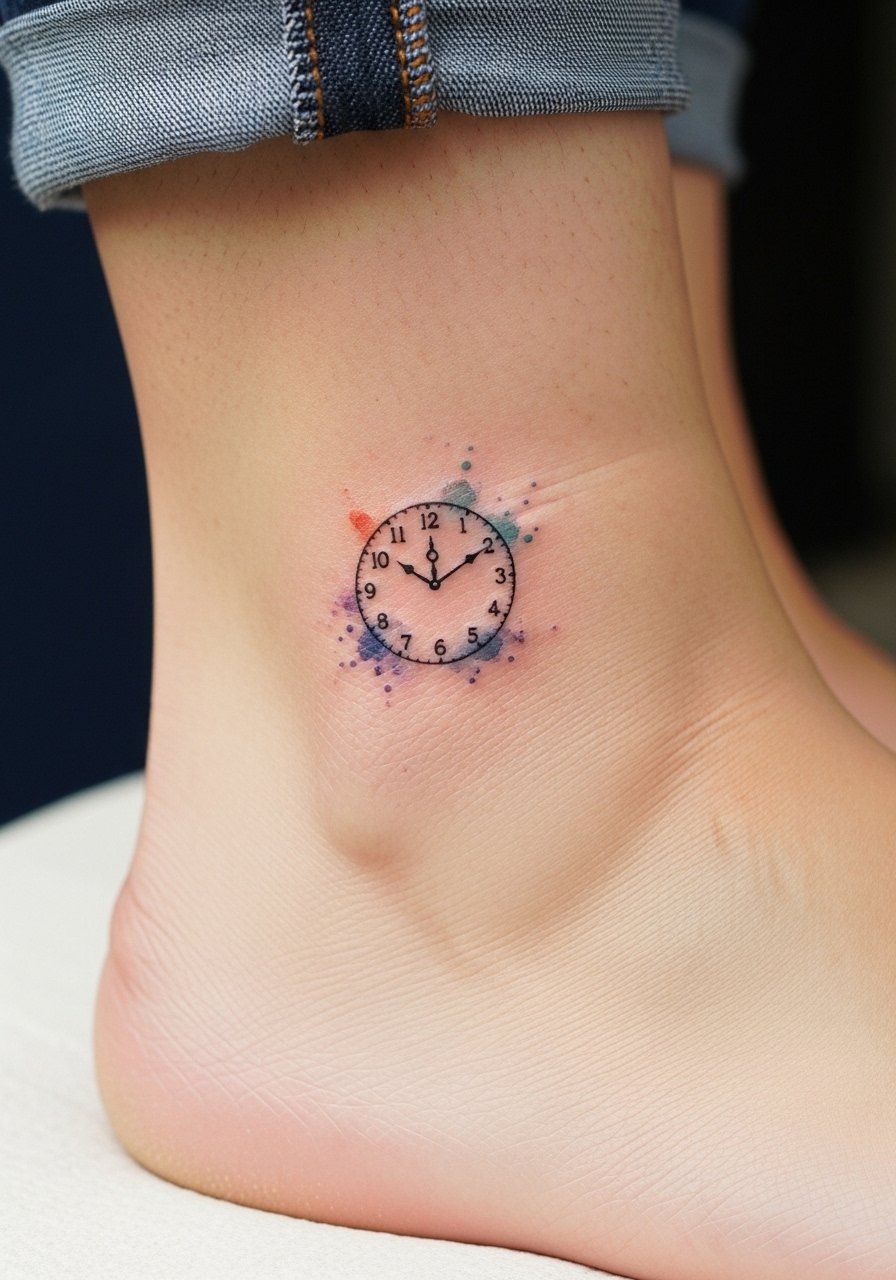
Watercolor effects look painterly when fresh but tend to soften faster than blackwork. If you love color, ask for anchored black hands and a faint color wash rather than full saturated watercolor so the motif keeps definition. Ankle tattoos face friction from shoes, so wear open sandals for the first two weeks and plan a touch-up at year one if colors fade. For summer outfits, strappy sandals or minimal ankle strap sandals show this spot without rubbing the area during healing.
11. Ignorant Style Melting Clock on the Calf
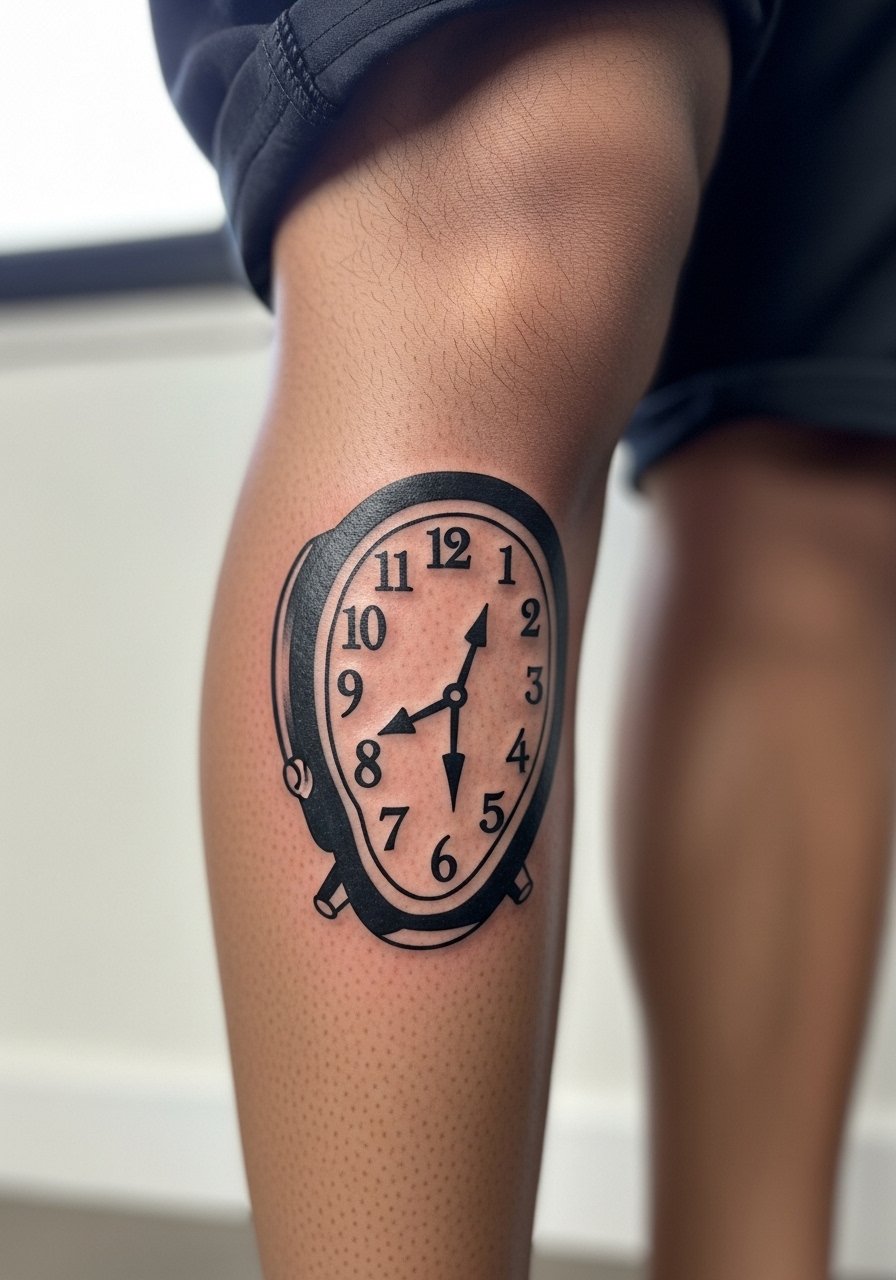
This playful melting clock leans into bold linework and cartoonish distortion. Calf placement handles two-inch pieces well and resists some of the stretch other areas see. Tell your artist you want strong black outlines and minimal fine shading so the melting effect stays readable over time. The session is low to moderate pain and usually completes in one visit. For casual wear, rolled joggers or midi wrap skirts reveal the calf in a way that suits the graphic style.
12. Fine Line Clock with Skull on the Collarbone
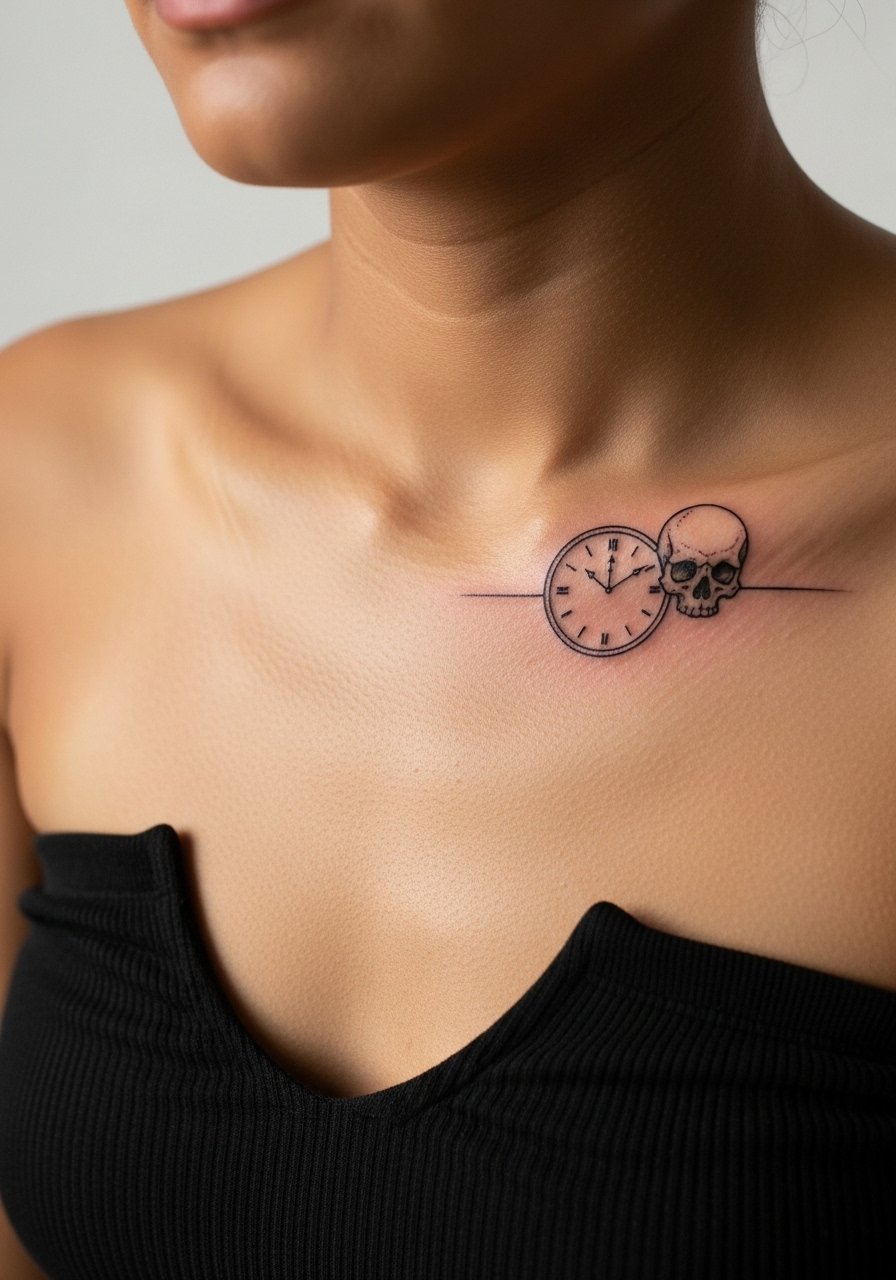
Skull-clock combos read gothic yet minimal on the collarbone. Here the debate about fine line longevity matters. One camp believes collarbone skin shifts make tiny skull detail blur quickly. The opposing view says with correct needle depth and spacing it settles. Ask your artist where they stand and request slightly firmer line weight around the skull contour. Expect moderate pain and a session under 90 minutes. For an evening look, layer a layered delicate necklace just above the piece to frame it.
13. Blackwork Clock Gears Exposed on the Inner Arm
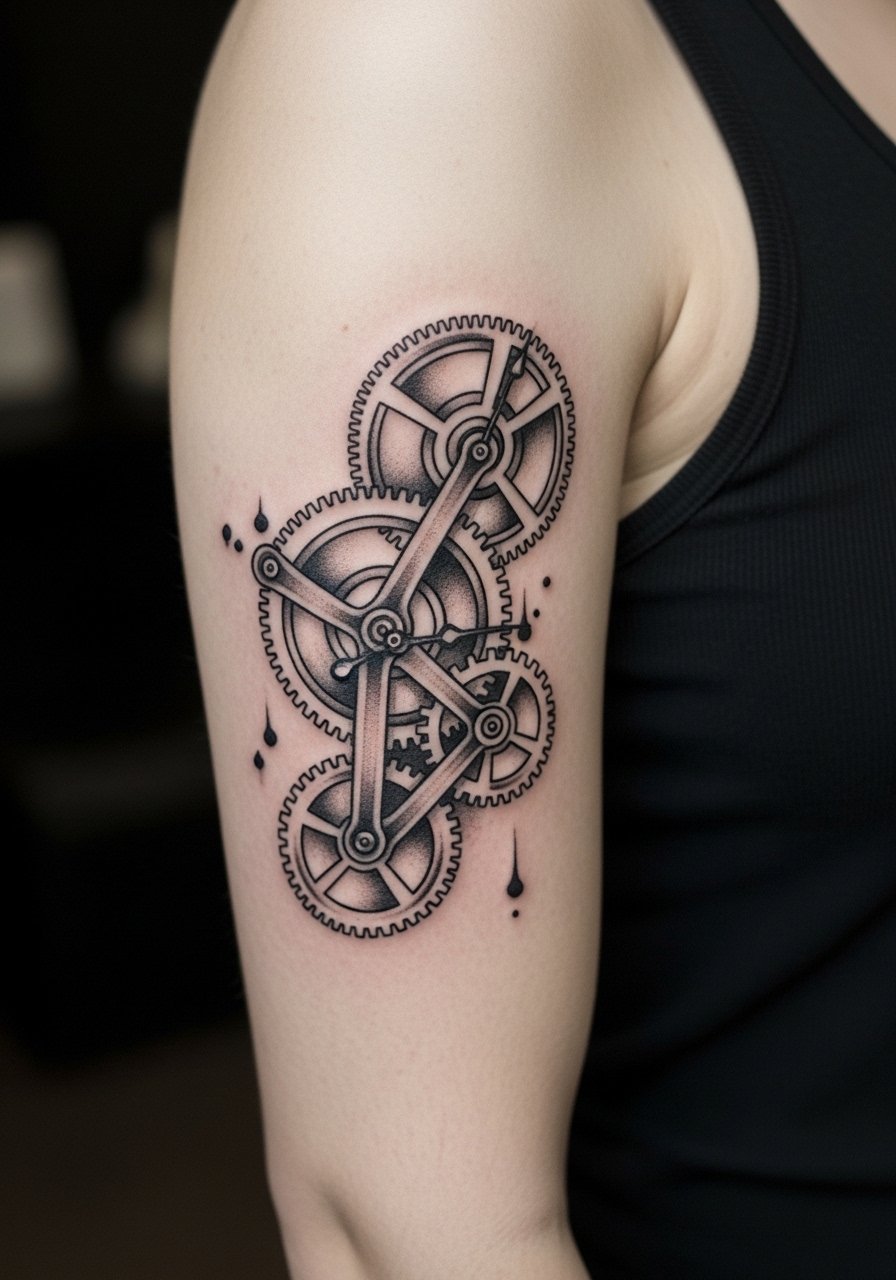
Blackwork gears create strong contrast and negative space play that hold up well in the inner arm. The inner bicep is lower friction than forearms so dense black fills can age without as much softening. Specify which gears you want solid black and which to leave as outlined negative shapes to keep depth. The main mistake is too many tight black blobs, which can merge as blowout. Session time varies with fill area and can take longer if you want saturated blocks.
14. Tiny Pocket Watch Behind the Ear with Daisies
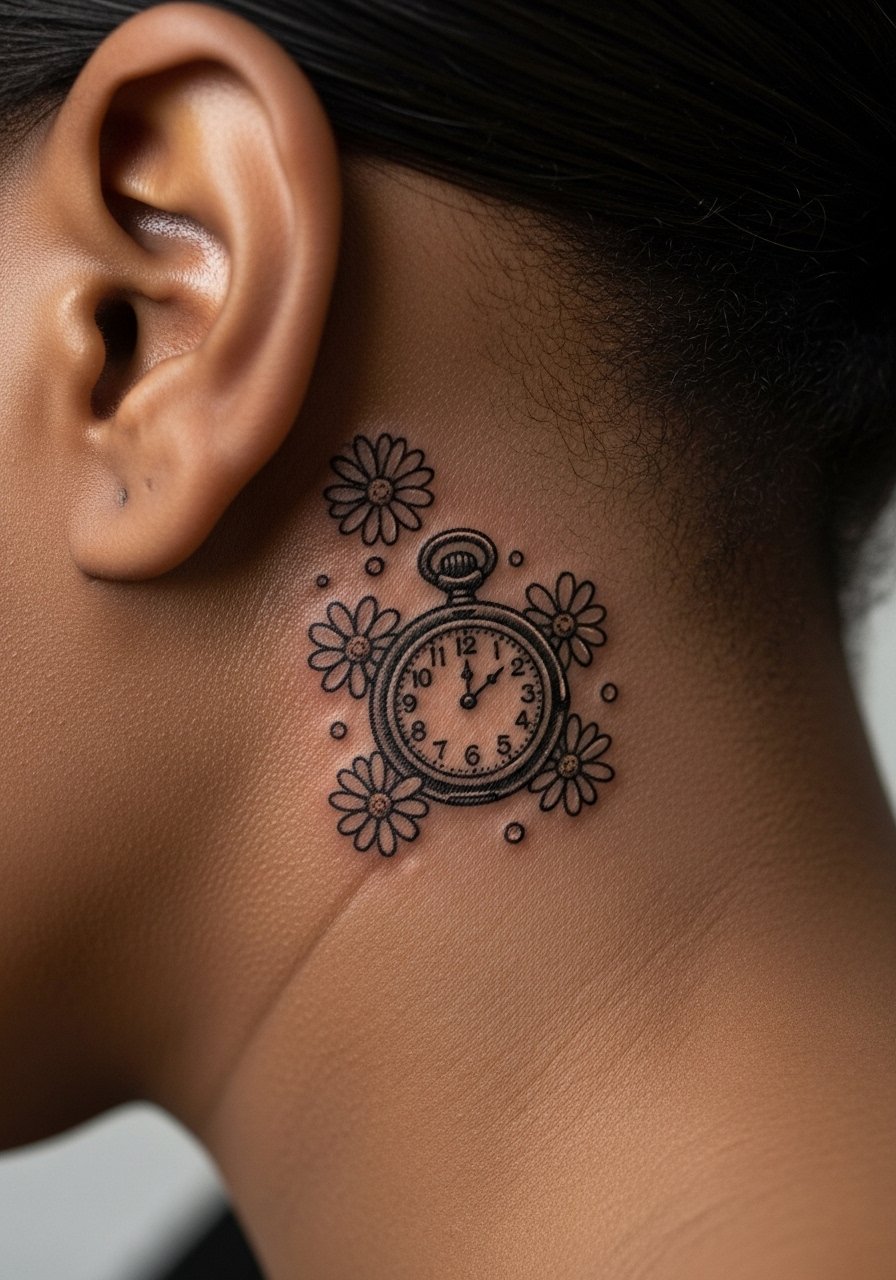
Behind-the-ear tiny clocks are whisper tattoos that peek out from hair. Because this area sits below the hairline on the neck, ask the artist to use single-element composition rather than crowded florals. The skin there is thin and sensitive so expect sharp pinpricks and a quick session. Many artists treat behind-the-ear pieces as specialist work because visibility is subtle and mistakes are noticeable. Keep hair down for the first week to reduce abrasion.
15. Roman Numeral Finger Band Clock
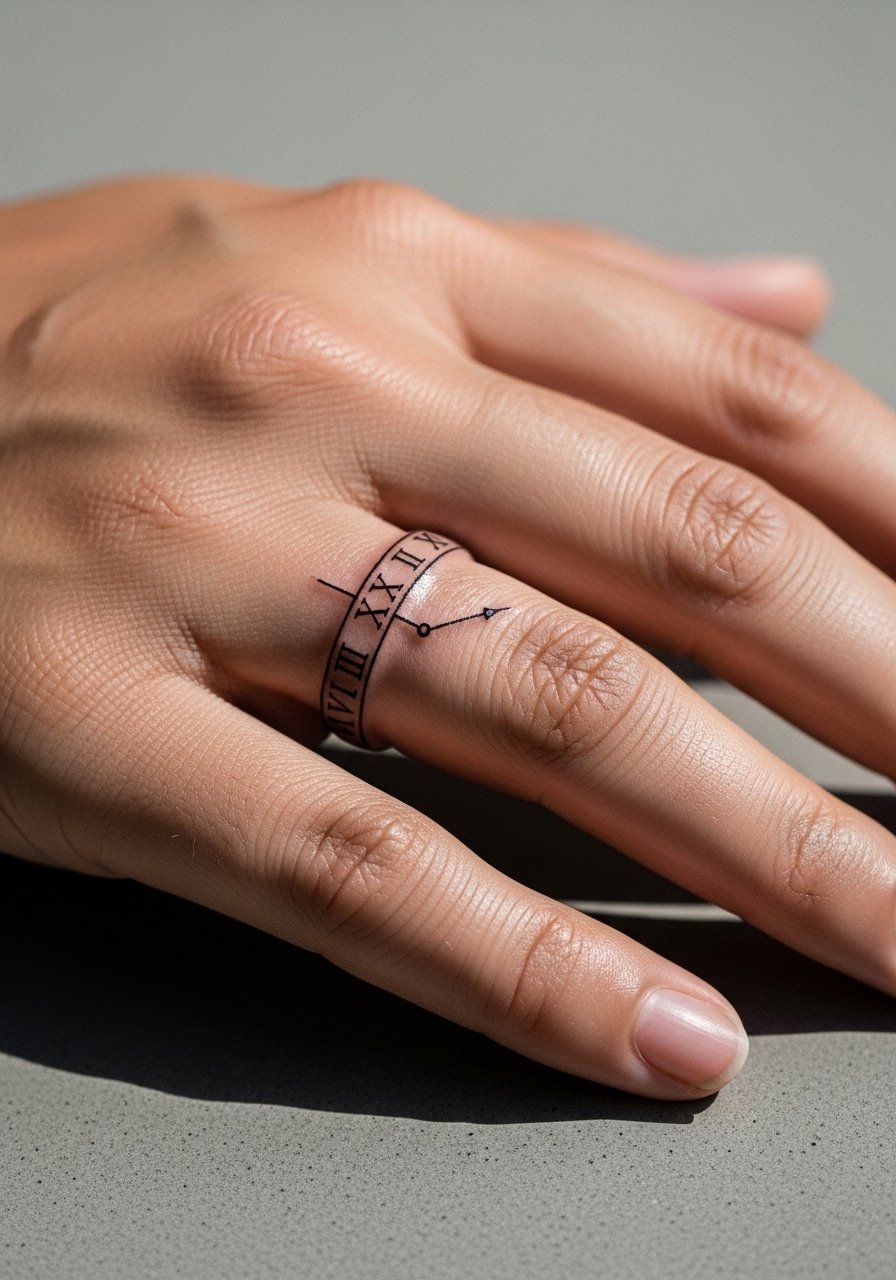
Finger tattoos are tiny and visible, and they carry specific aging challenges. The skin on fingers sheds and moves constantly so thicker line weight and simplified numerals are essential. Tell your artist you accept that finger work often needs touch-ups every 12-18 months. Expect higher initial fading than other placements and avoid overly fine script. For styling, a minimalist wrist stack on the opposite arm keeps attention balanced.
16. Geometric Clock Compass on the Ankle
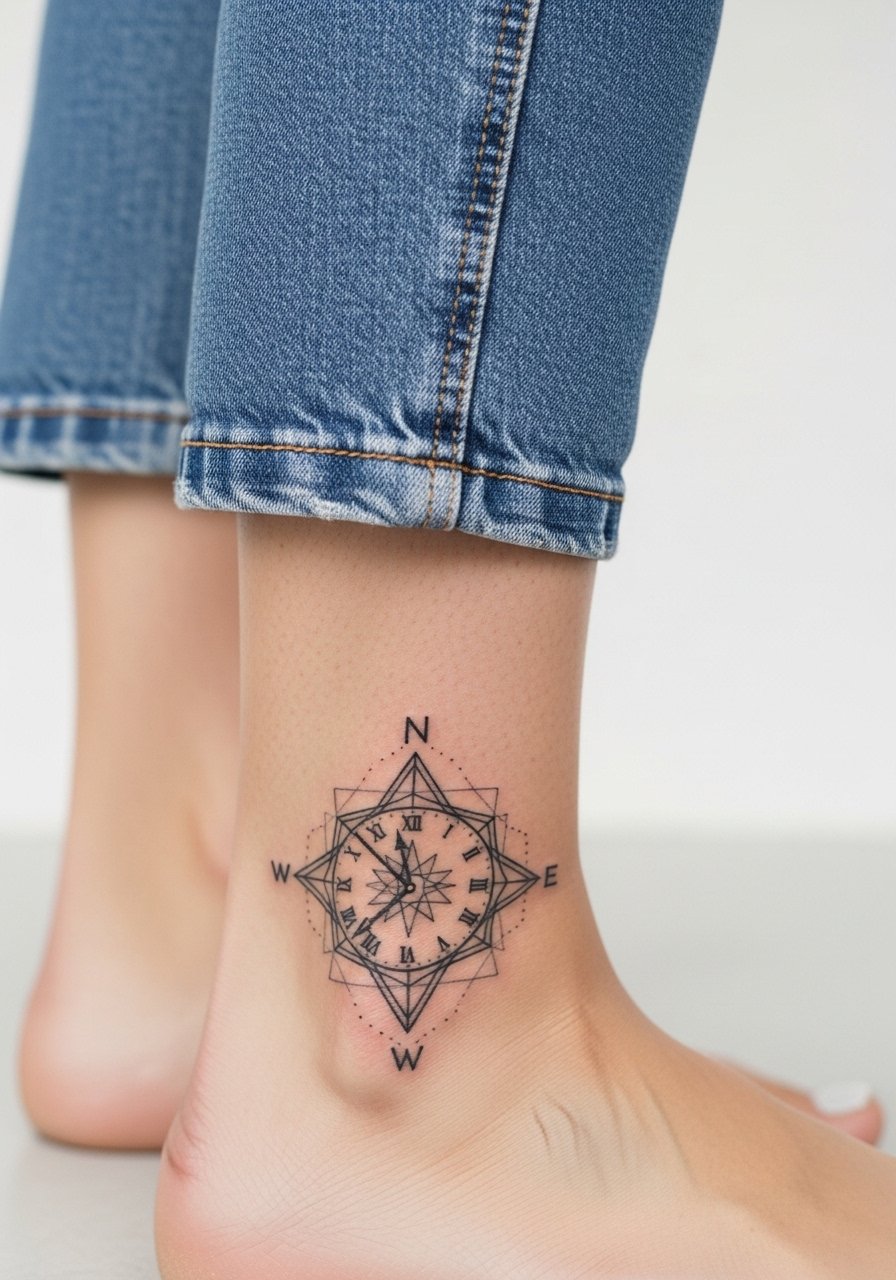
Combining clock and compass geometry makes a tiny directional piece that fits well on the ankle. The mistake people make is compressing complex intersections into a very small space. Ask for simplified cardinal markings and a thicker outer ring to maintain legibility. Ankle sessions are brief but the area gets friction from footwear, so plan sandal-first weeks. For showing it off, pair with cropped straight jeans or strappy sandals.
17. Clock with Moon Phases on the Upper Thigh
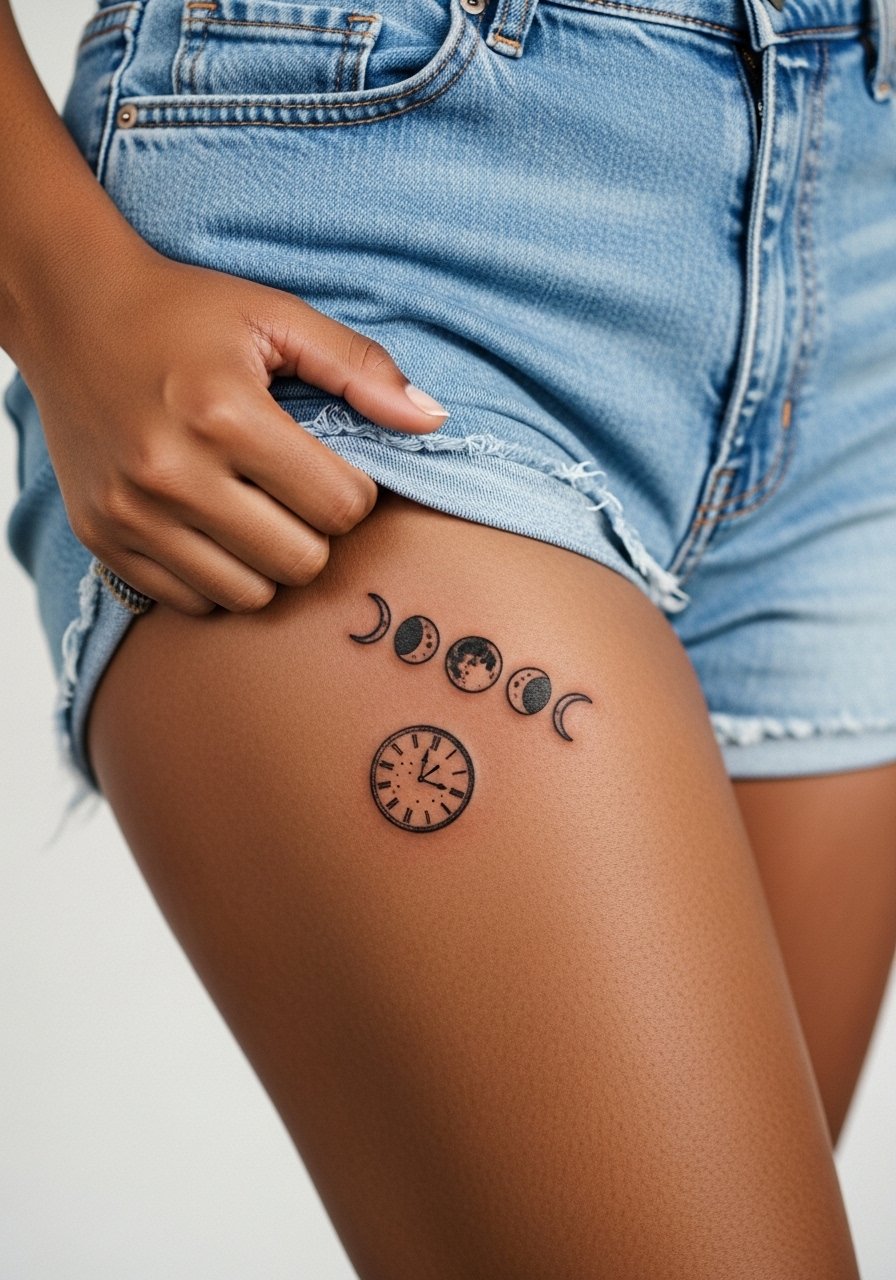
Upper-thigh pieces are private and durable. A clock with moon phases reads like a compact narrative and survives weight shifts better than forearm pieces. Request a slightly larger scale for complex symbols so the moons keep contour clarity. Session wear should be loose shorts or a skirt so you can move easily and the artist can access the area. Pain varies but is often lower than ribs. For those using this area as a cover-up element, the clock can mask old script effectively when placed and shaded correctly.
18. Inverted Clock on the Inner Thigh for Asymmetry
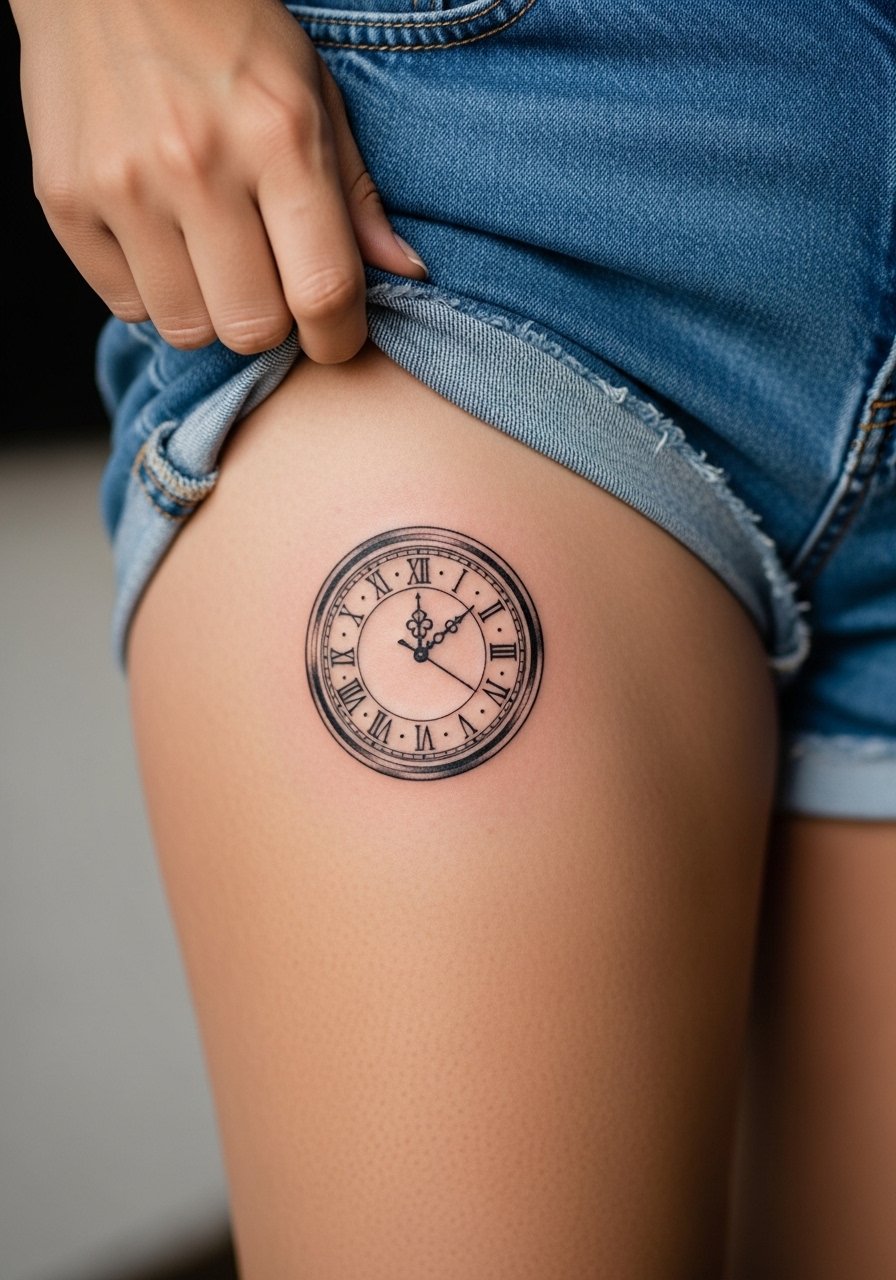
Inverting a clock on the inner thigh creates deliberate asymmetry that reads as modern and a little defiant. Inner thigh heals well if friction is minimized during the first two weeks. The main pitfall is placing very fine numerals too close to the groin where swelling and movement occur. For the session, wear loose shorts or a skirt that shifts easily so the artist has clear access without tugging. This placement is private and often less subject to sun fading.
19. Tiny Clock with Coordinates on the Collarbone
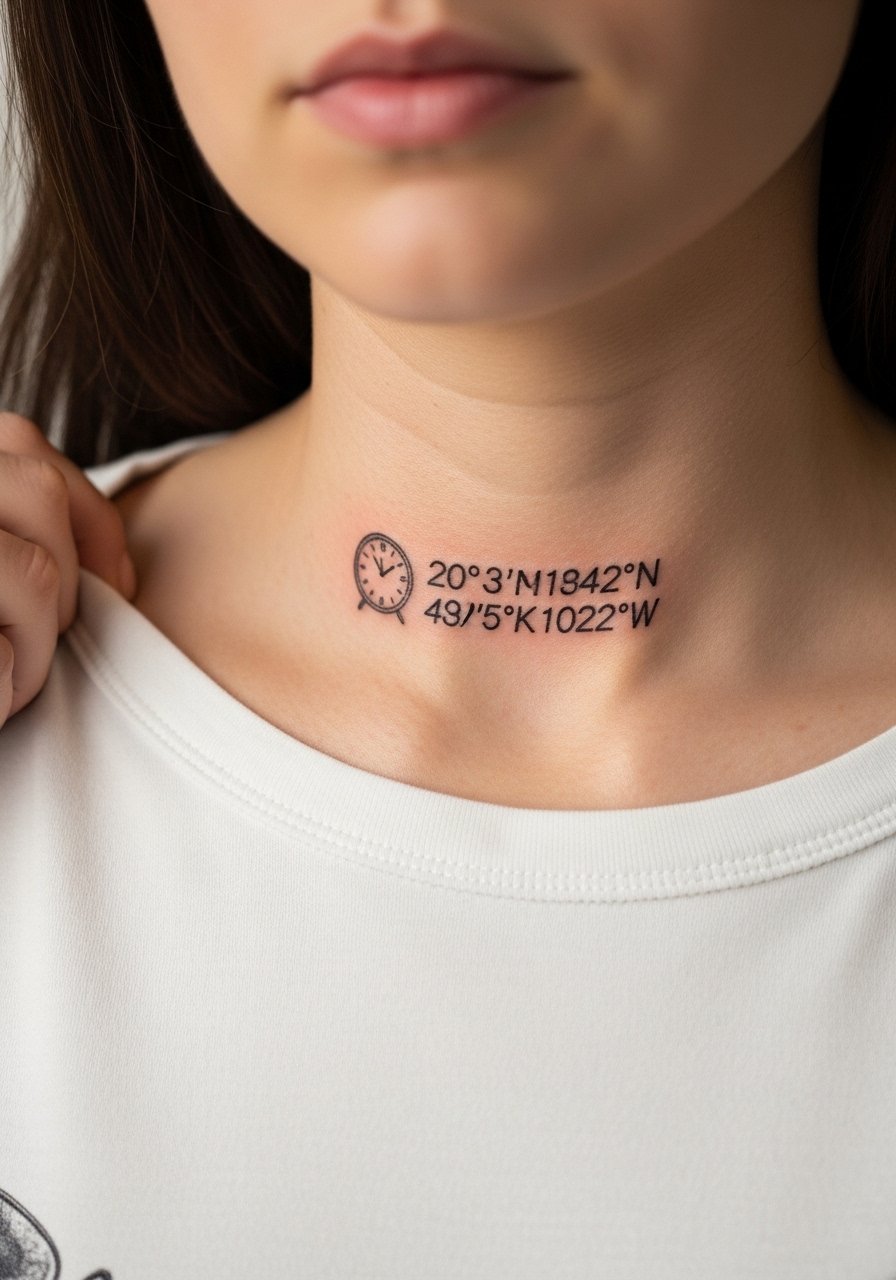
Pairing a tiny clock with coordinates gives a precise geographic tie-in without obvious clichés. Keep the coordinates in a clean monospace or minimalist serif so they remain legible as the skin ages. Collarbone movement can blur very fine scripts, so ask for slightly heavier type than your reference photo. This piece pairs well with a v neck strapless top on nights out. Plan for a 30-60 minute session and a possible touch-up at the one-year mark.
20. Micro Realism Pocket Watch on the Back of the Neck

Back of the neck micro-realism reads subtle when healed, but the fine shading needs deliberate spacing to avoid merging. If you want realism, discuss how much contrast you want against the skin tone so highlights translate. This area can be tricky for touch-ups because hair and clothing rub at the site. Plan for minimal styling that avoids tight collars for the first few weeks.
21. Tiny Clock as Cover-Up for Old Script on the Forearm
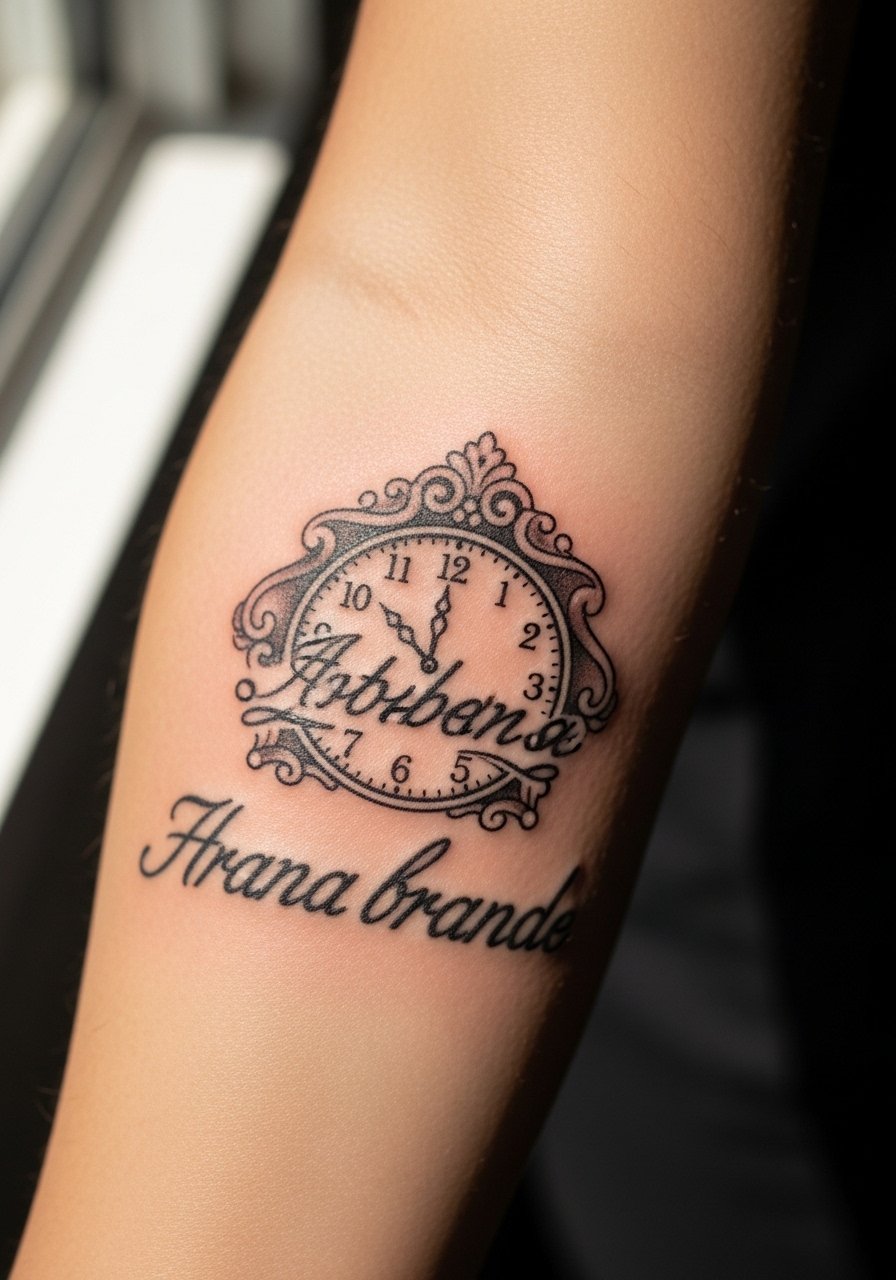
Using a tiny clock to cover old dates or script takes planning. Not every cover-up can be tiny; successful ones rely on smart placement of the clock face and selective blackwork to mask the old ink. In consultation, bring photos of the old tattoo and ask the artist for mockup stencils so you can see how much coverage is realistic. Forearm skin stretches with weight changes, so layout needs to account for future shifts. Expect a longer session or two if hiding darker ink.
Frequently Asked Questions
Q: Will fine line tiny clock tattoos fade faster than bold clocks, and what should I expect for touch-ups?
A: Fine line work tends to soften sooner than bold blackwork, especially on high-friction areas like wrists and fingers. Expect a touch-up in the 12-24 month window for most fine line tiny clocks, and plan on a slightly heavier initial line weight if you want fewer touch-ups.
Q: How much does a tiny clock tattoo usually cost for basic small placements?
A: Small clock tattoos often fall in the $100-$400 range depending on studio minimums and the complexity of shading or color. Walk-ins and guest spots can change that, so ask shops about their minimum for under two-inch work before booking.
Q: What placements avoid distortion if I expect weight fluctuation or muscle gain?
A: Inner arm, inner thigh and upper chest are less prone to visible distortion from moderate weight changes, while forearms and calves can stretch more noticeably. Test designs with temporary transfers and ask your artist to scale up slightly if you expect body changes.
Q: My skin is darker, will a tiny clock show up in photos and everyday life?
A: On medium to dark skin tones, subtle shading can disappear in photos if lines are too faint. Ask for slightly stronger outlines or contrast points in the design so the clock reads in natural light and in pictures.
Q: Should I use Saniderm or dry healing for a tiny wrist clock?
A: Artists are split on this. One group prefers Saniderm for convenience and fewer scabs, while another warns about trapped moisture and prefers dry or short-term ointment methods. Discuss your artist's recommendation and your daily routine before choosing a method.
