
Fine line tigers are all over mood boards, but the tattoos that age with the most character are the ones that start with a plan. Pick a style that suits your daily wardrobe and placement that tolerates touch-ups, and the result reads as deliberate instead of accidental. Below are 27 tiger tattoo ideas for women that balance bite with longevity, with notes on what to ask your artist and how to show each piece off.
1. Micro-Realism Tiger on Inner Forearm
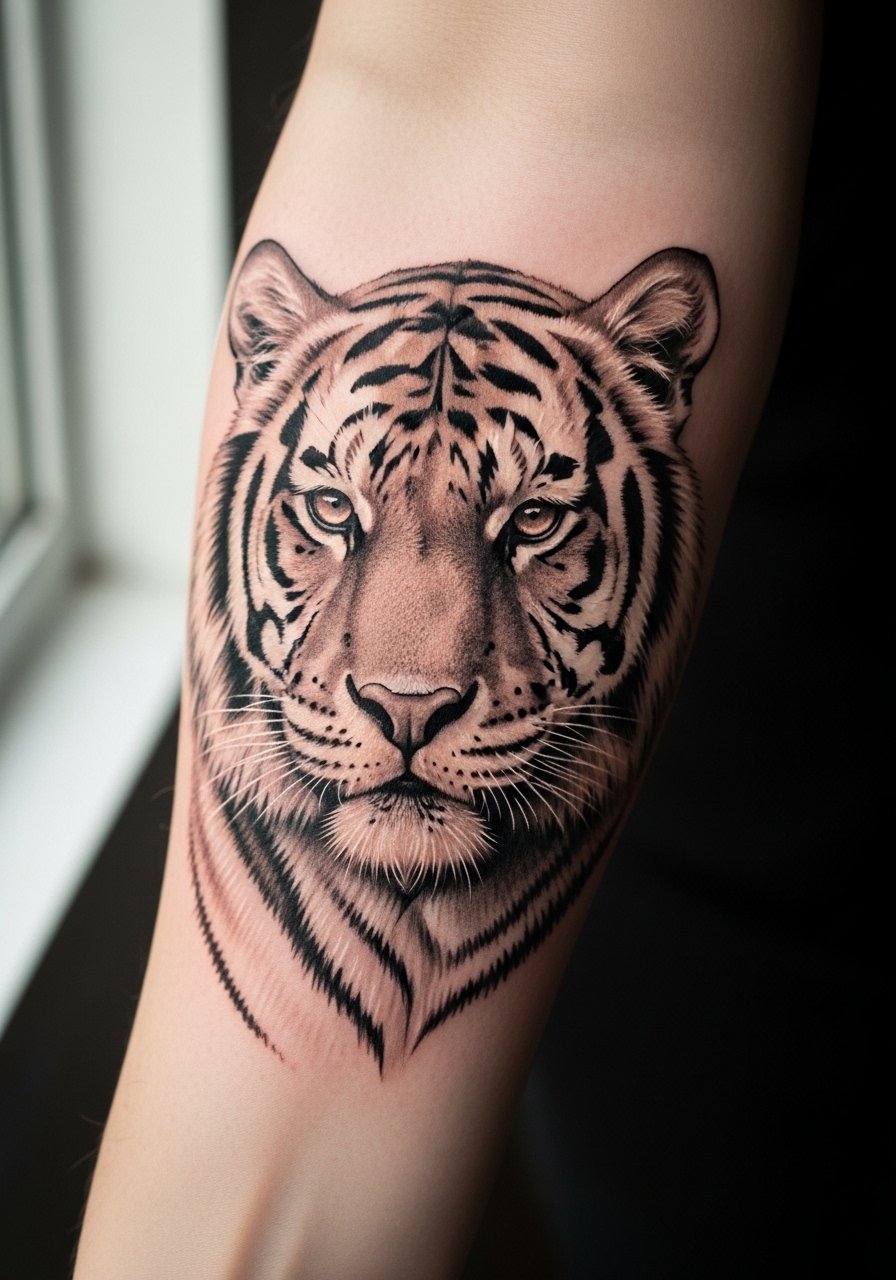
I recommend micro-realism here when you want the tiger to read like a photograph at arm's length. Fair warning, the inner forearm is a medium pain spot and this piece often needs one long session of two to four hours depending on detail. Tell your artist you want slightly bolder linework near the jaw and softer stipple shading in the fur to avoid early blurring. A common mistake is asking for ultra-fine whiskers that vanish after two years. For showing it off, roll up a sleeve and pair with a racerback tank top so the forearm sits front and center.
2. Neo-Traditional Tiger on Upper Arm
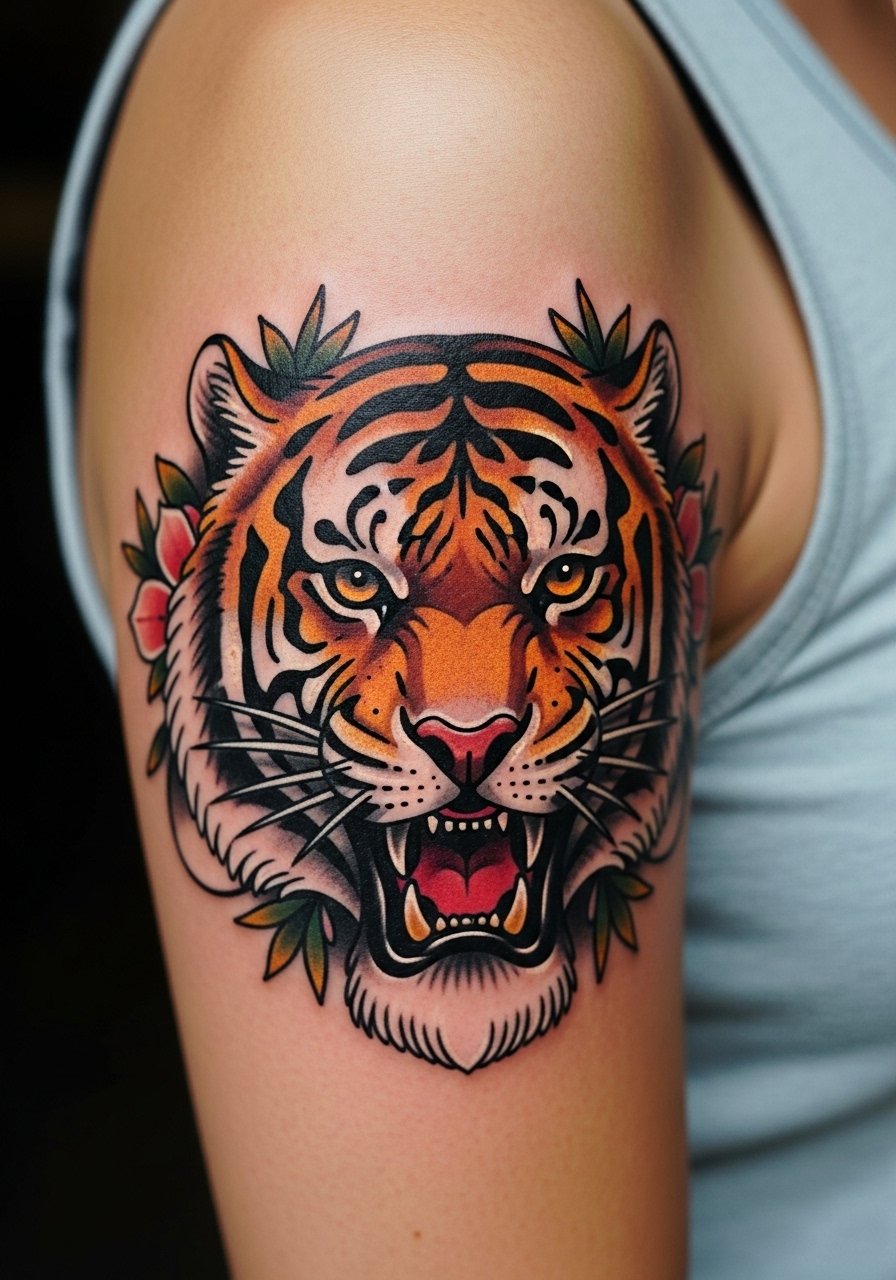
This version uses bold outlines and saturated fills that age into a confident silhouette. Expect a moderate pain level and a session split into two parts if you want color saturation. Ask for crisp linework around eyes and for color packed tightly rather than painted on thinly. The piece holds up because the thicker outlines defend against blowout. A mistake is packing too many micro details into the shoulder where muscle movement softens them over time. Wear a loose button-down shirt on appointment day so the artist can access the deltoid easily.
3. Fine Line Mini Tiger on Wrist
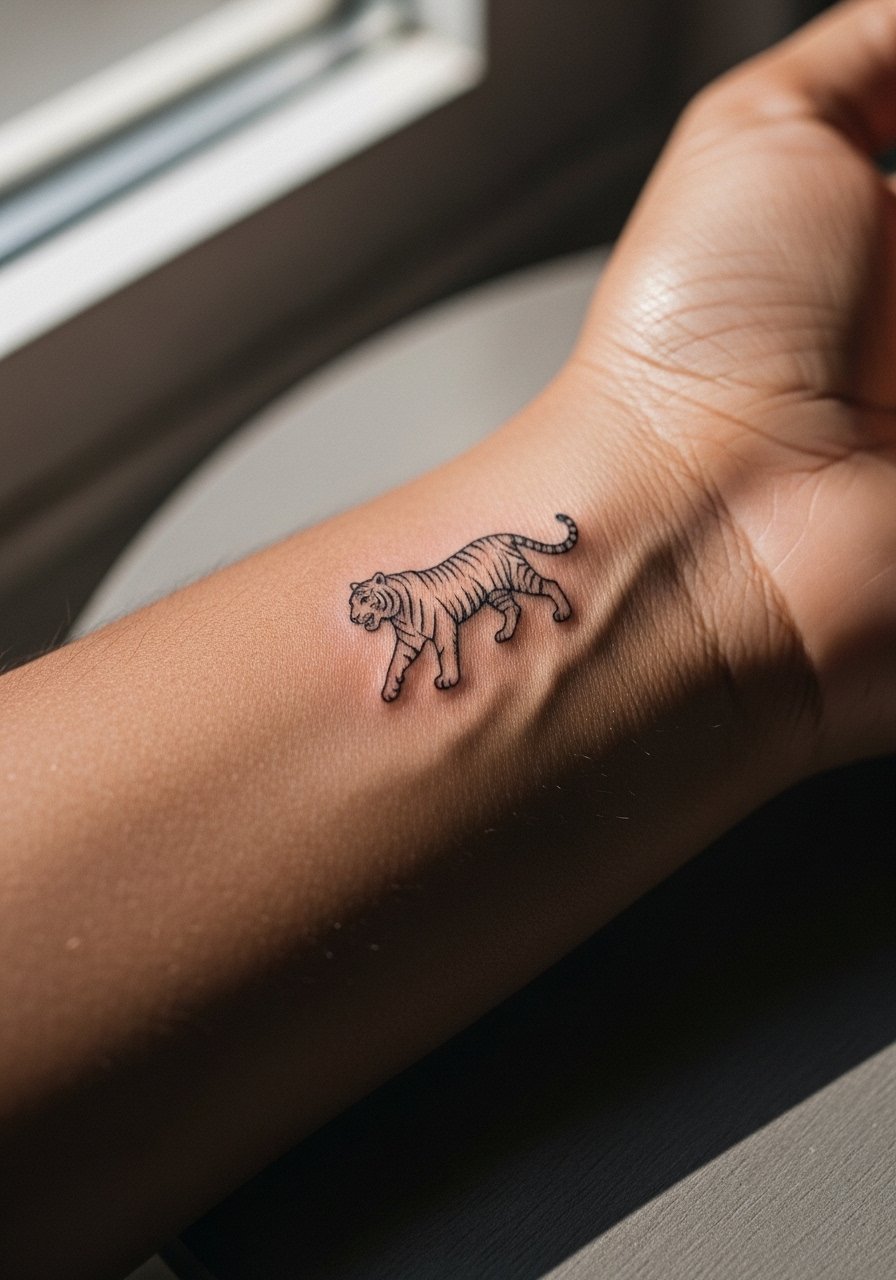
Wrist pieces are delicate and the skin there moves a lot, so expect higher fade risk. Pain is mild to medium and sessions are short, often under an hour. Ask for slightly increased spacing between lines and for dots rather than hair-thin strokes in dense areas to prevent early merging. The common error is asking for ultra-tiny facial detail. For wearing the piece, minimalist bracelets can complement without competing, like a thin chain bracelet that draws the eye to the wrist.
4. Watercolor Tiger Splash on Outer Thigh
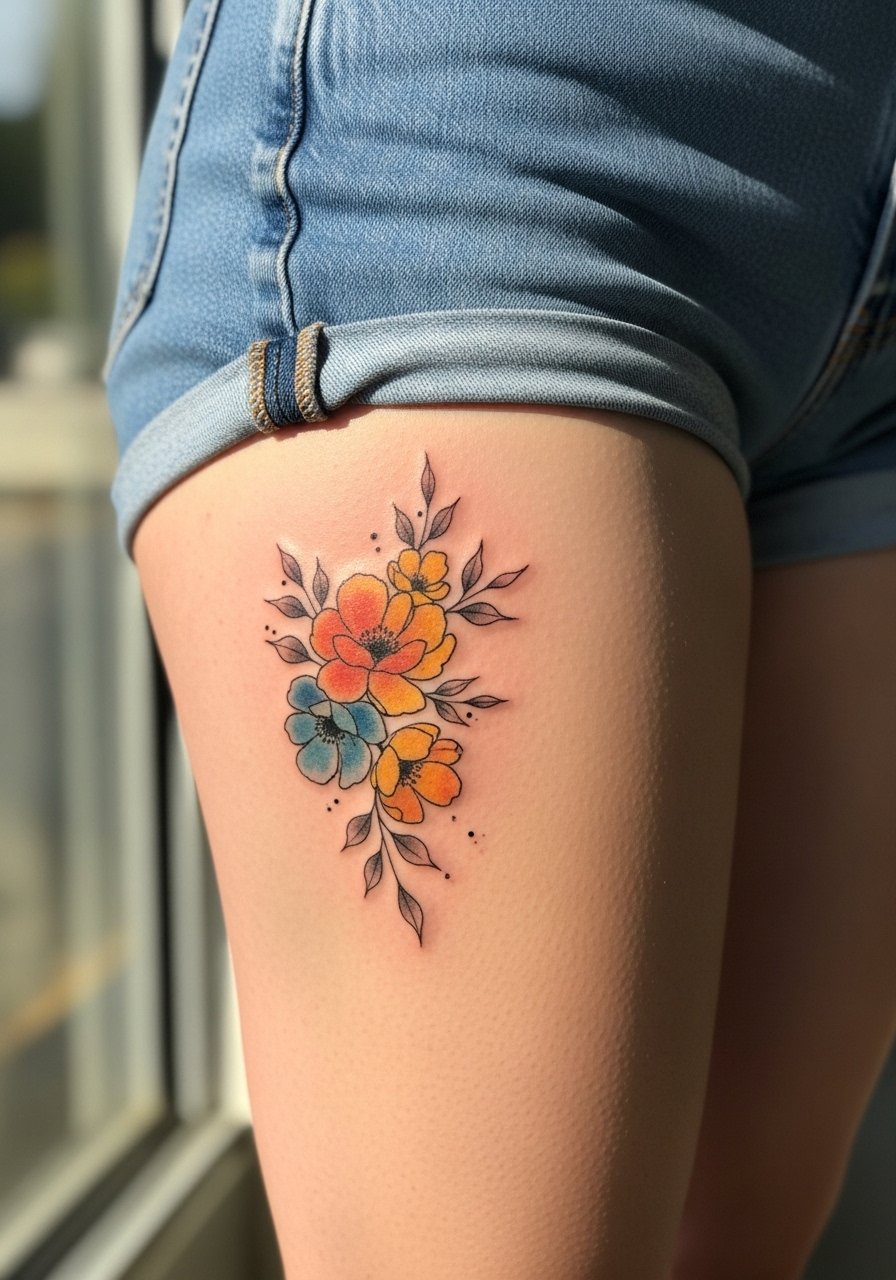
A watercolor tiger reads as motion and works beautifully on the outer thigh where there is room to spread color. Pain is lower on the thigh and sessions can be longer for blending. Tell your artist you want the tiger's contour defined by negative space rather than heavy black outlines so the color reads like paint. Watercolor ages differently than blackwork and can soften into a wash, so expect a touch-up to refresh the color after a few years. For the appointment, wear high-waisted shorts so the artist can roll the fabric without pressure on the area.
5. Blackwork Tiger Mandala on Back of Shoulder
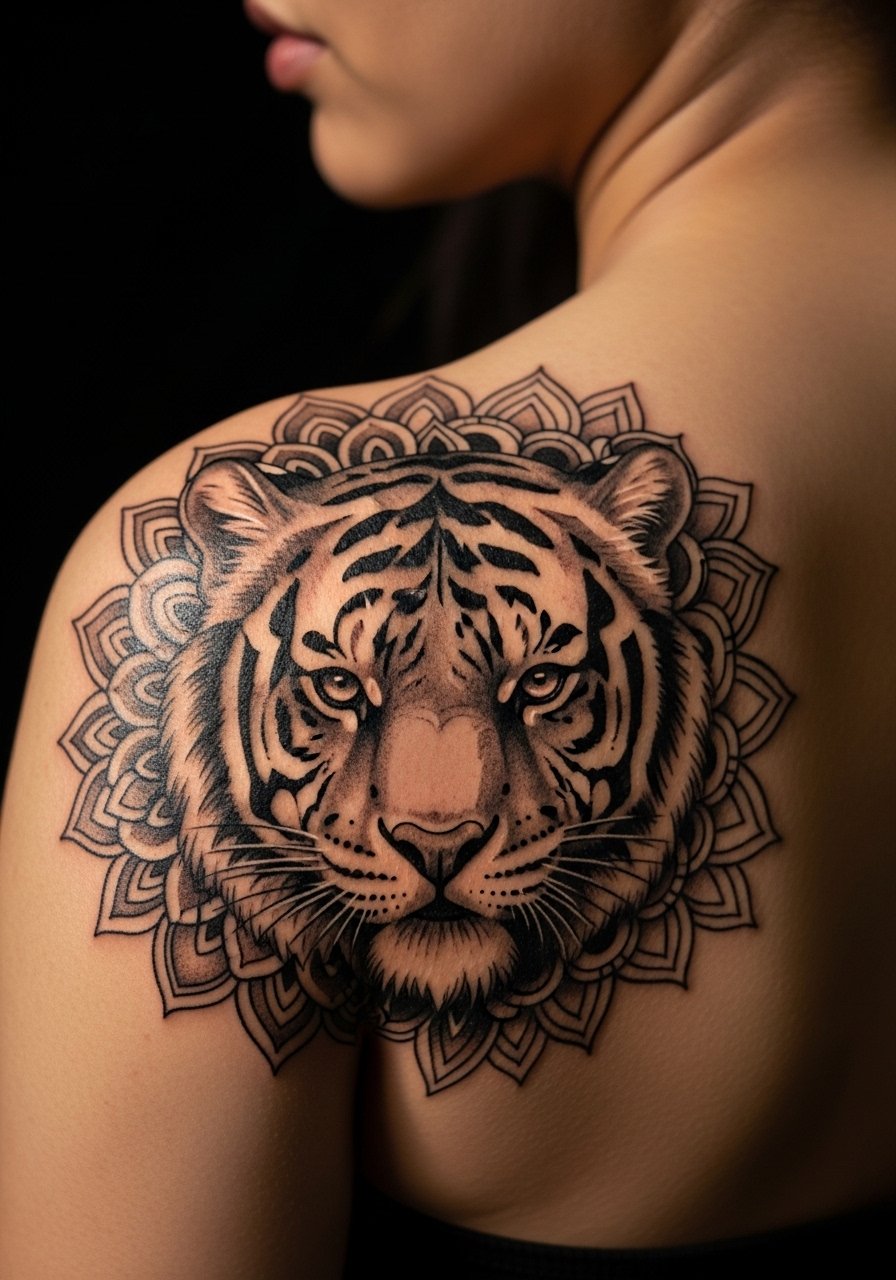
Blackwork is forgiving over time because heavy saturation becomes a clear shape even when lines soften. The back of the shoulder tolerates larger compositions and the pain is moderate. During consultation, request consistent saturation instead of patchy fill to avoid uneven aging. A common mistake is over-detailing the mandala center so it clogs after a few years. Pair this with open-back tops for evenings, like an open-back midi dress that frames the shoulder without covering the design.
6. Geometric Tiger on the Ribcage
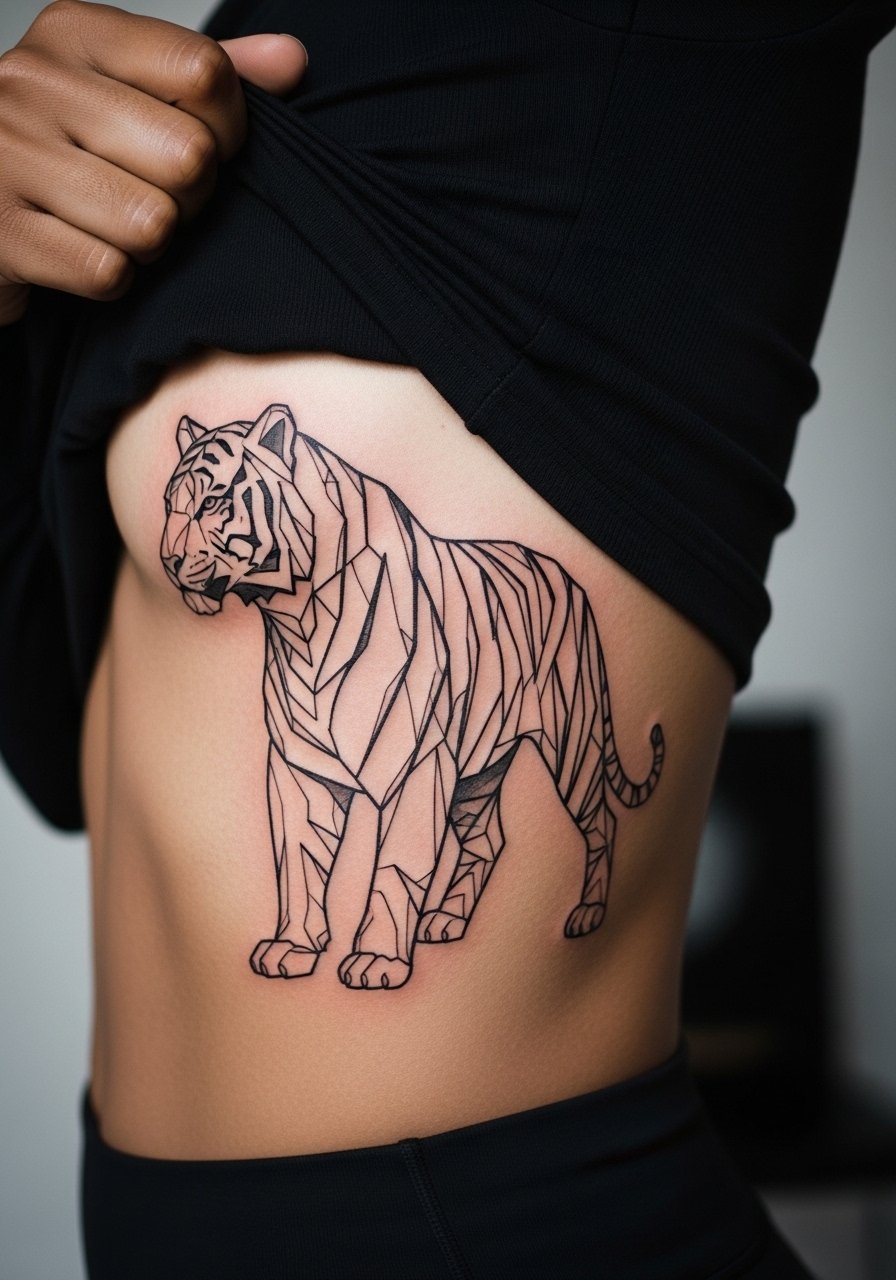
Ribcage pieces look dramatic but the skin stretch there accelerates line merging. Pain is high and sessions might be split across shorter sittings. Artists split into two camps on fine line ribs. One camp says thin work blurs within two years because the skin stretches and breathes. The other camp argues that with proper needle depth and spacing it can settle sharply. Ask your artist where they stand and request extra spacing in dense areas. A typical mistake is asking for a full micro-detail face at a scale too small for ribs. For the session, bring a loose zip-up hoodie you can open easily.
7. Minimalist Tiny Tiger on Ankle
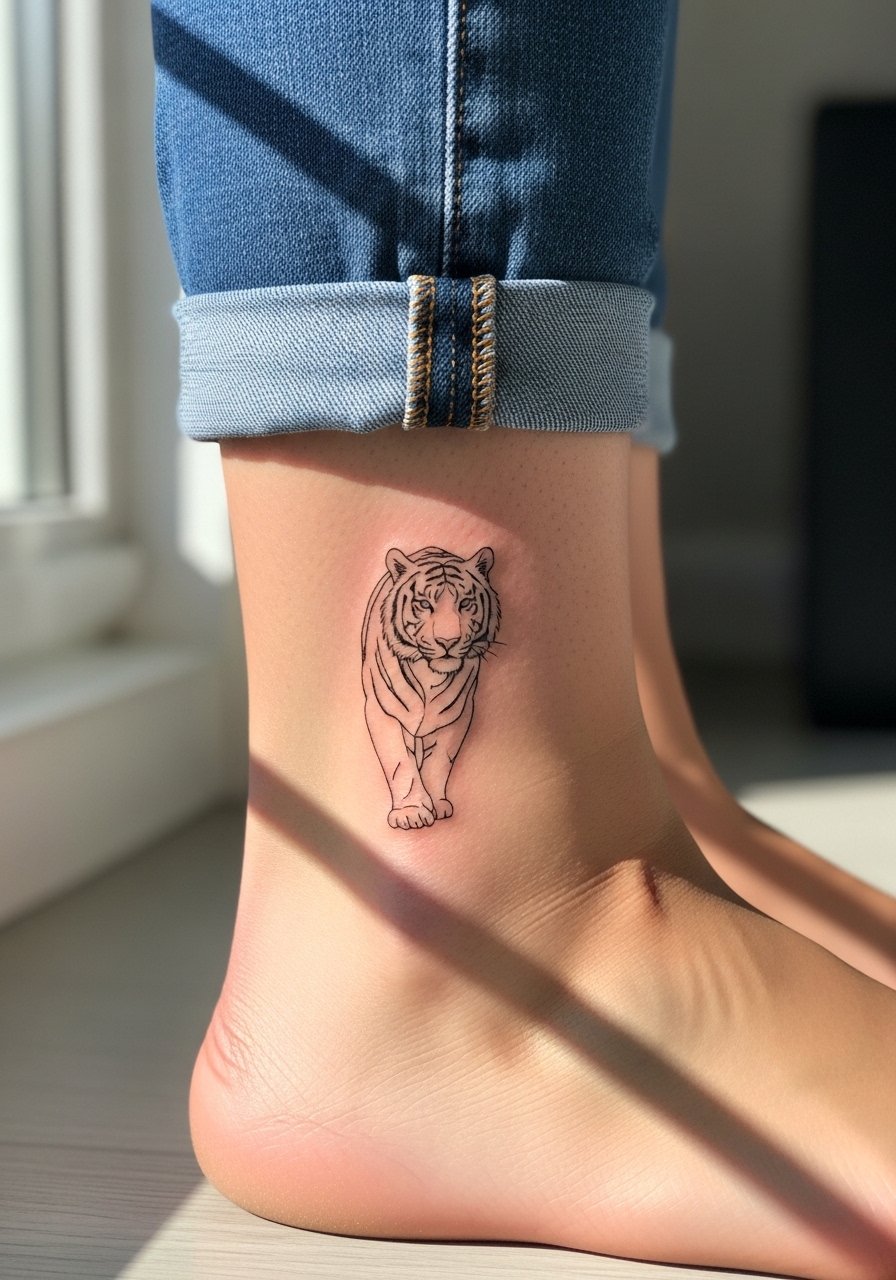
Ankle tattoos are small, portable statements and the pain is variable near bone. Sessions are short. For longevity, ask for a slightly bolder outline than you think you want so the motif keeps its shape as skin shifts. The common mistake is ultra-thin detail that disappears because the ankle gets lots of friction from socks and shoes. Pair this with low-profile footwear and ankle-length dresses, or show it off with rolled jeans and a pair of casual sandals.
8. Traditional Sailor Tiger on Calf
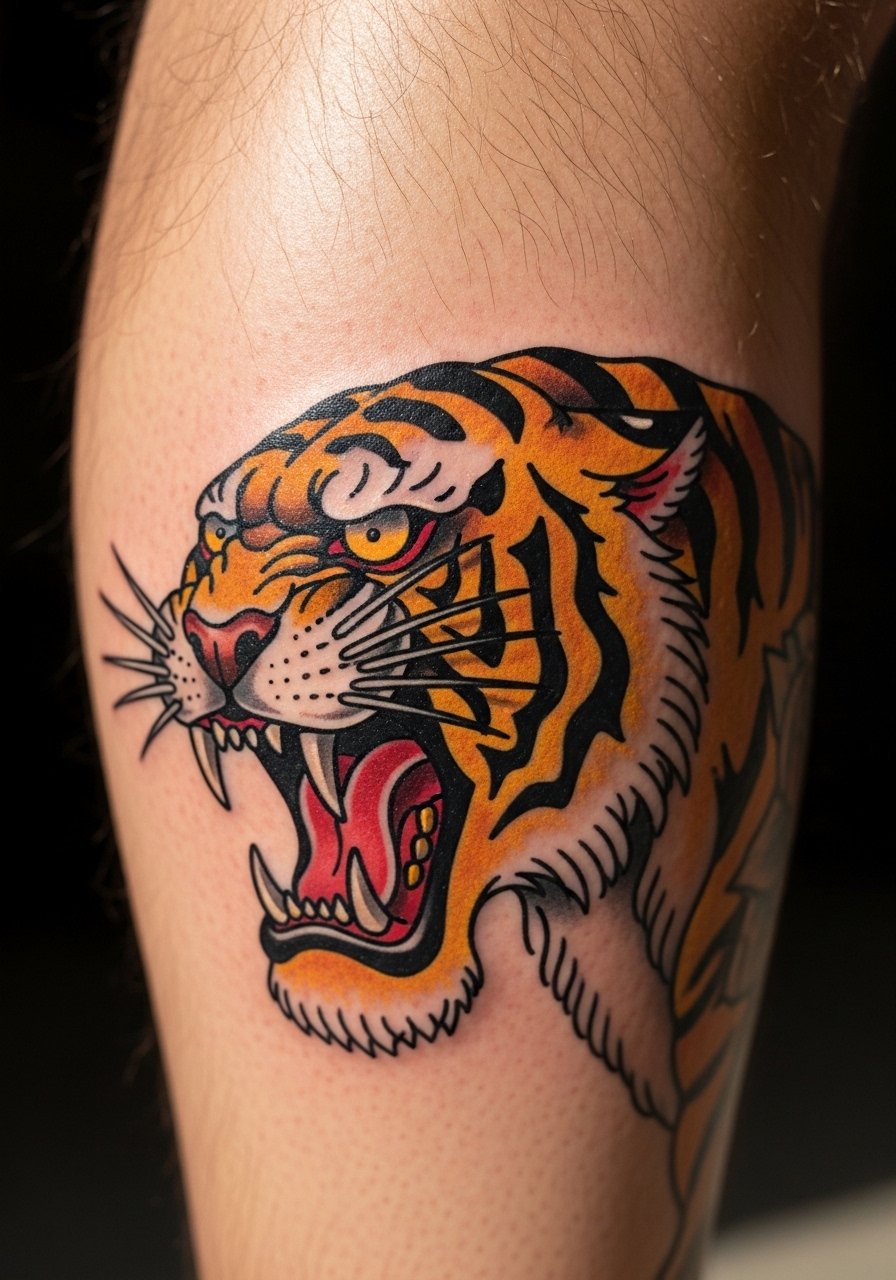
The calf is forgiving and shows well with classic bold fills. Pain is moderate and you can finish a calf patch in a single long session. Ask for color blocked solidly and for outline thickness that reads from a distance. Traditional work ages predictably because outlines hold the image as color softens. A mistake is packing too many tiny secondary elements that clutter the silhouette. For the session wear, loose joggers that you can roll up keep the area clean and accessible.
9. Half-Sleeve Tiger with Florals on Outer Arm
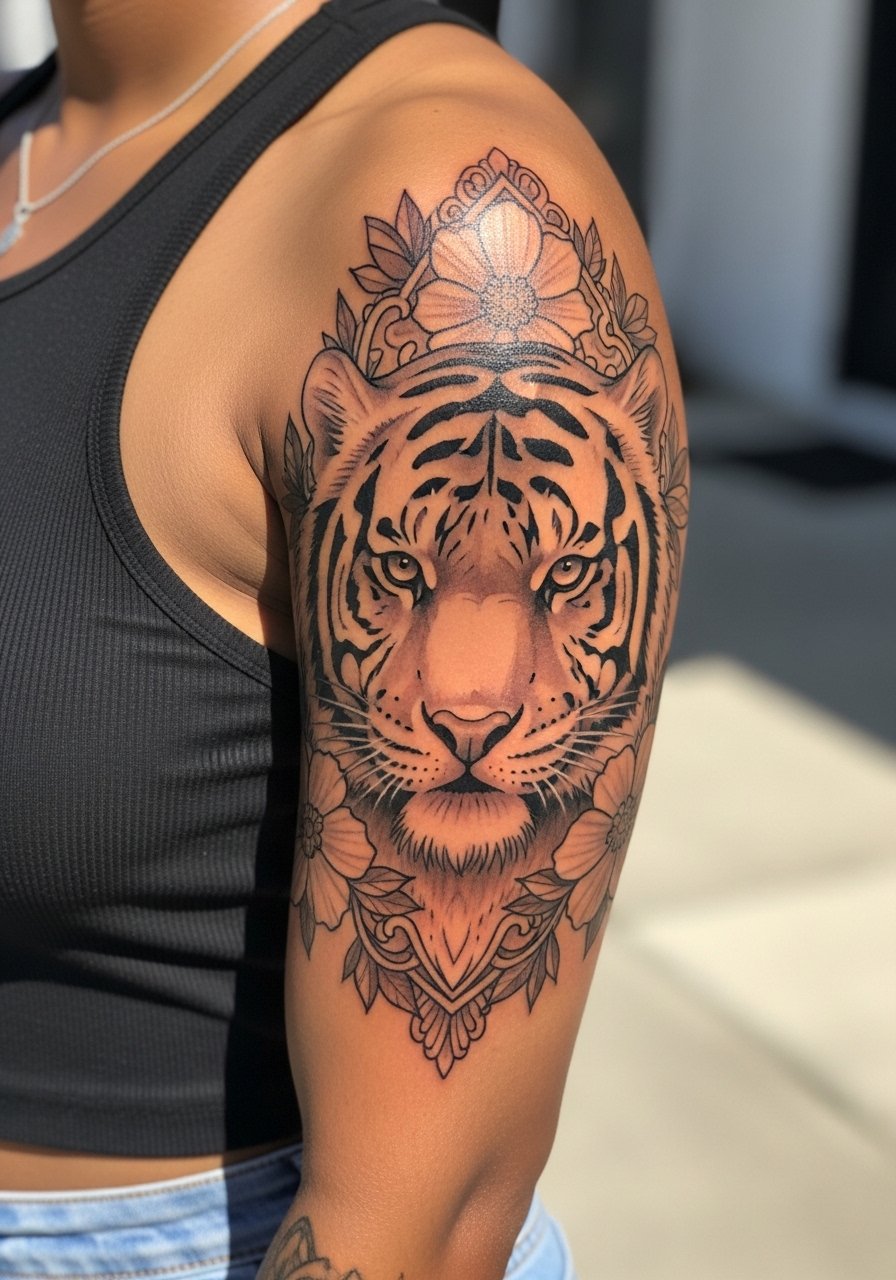
Half-sleeves are a commitment and feel immersive. Pain varies across the arm and expect multiple sessions for saturation and continuity. Tell your artist how the tiger should interact with the florals so negative space reads as breathability rather than clutter. The aging trick is to keep primary edges bold and let filler elements be softer. The mistake is cramming tiny blossoms right up against the tiger's eyes where they can obscure detail later. For daytime outfits, rolled sleeves and a linen button-down shirt frame the half-sleeve without competing.
10. Micro-Realism Tiger Eye on Sternum
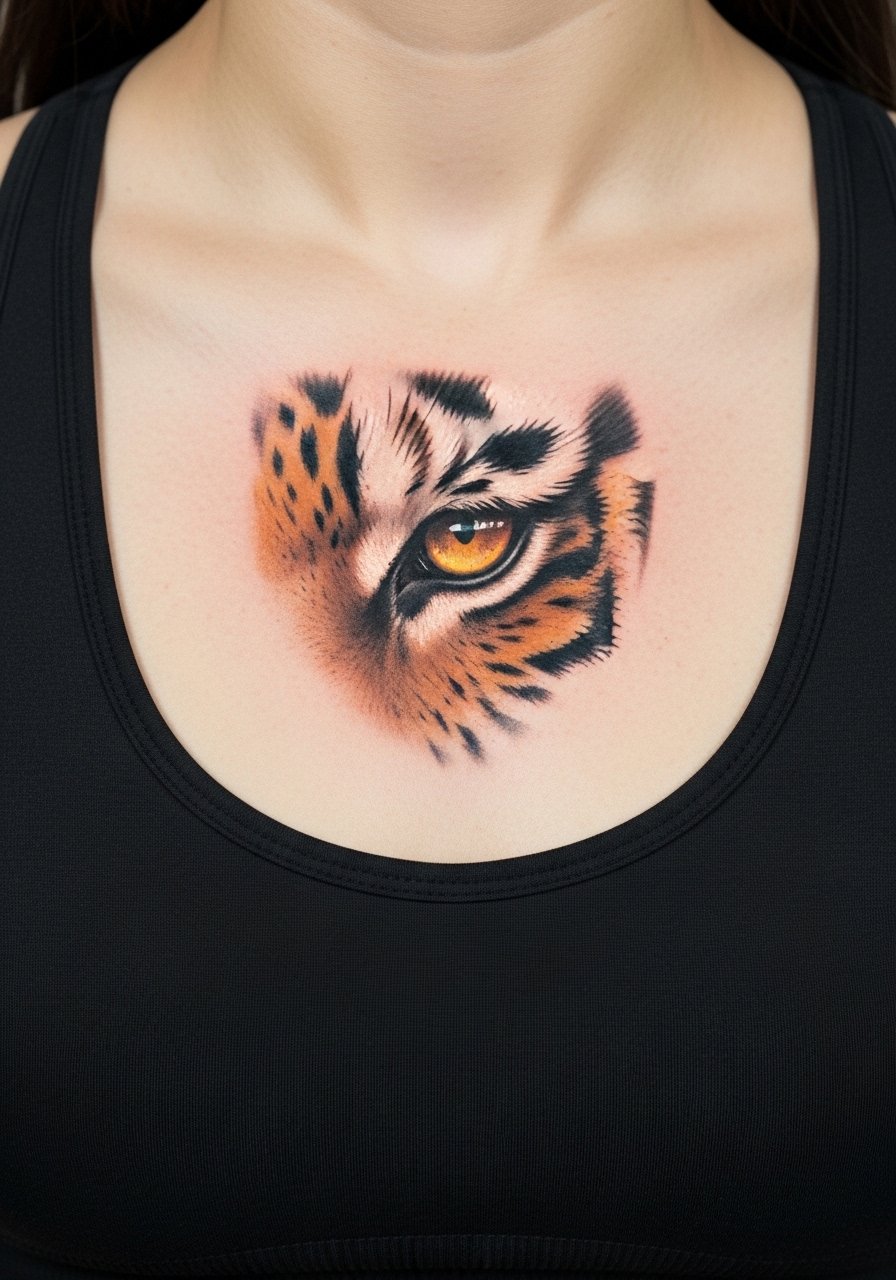
Sternum placements demand precision and a capable hand. Pain is high and sessions are shorter with breaks. Tell the artist you want depth in the iris with stipple work around the lashes rather than heavy black that can flatten. Micro details on sternum can soften faster because of body movement and friction from clothing. The usual mistake is underestimating the sensitivity during the session. Wear a zip or snap front top so you can change without tugging the area.
11. Vintage-Style Tiger Head on Shoulder Blade
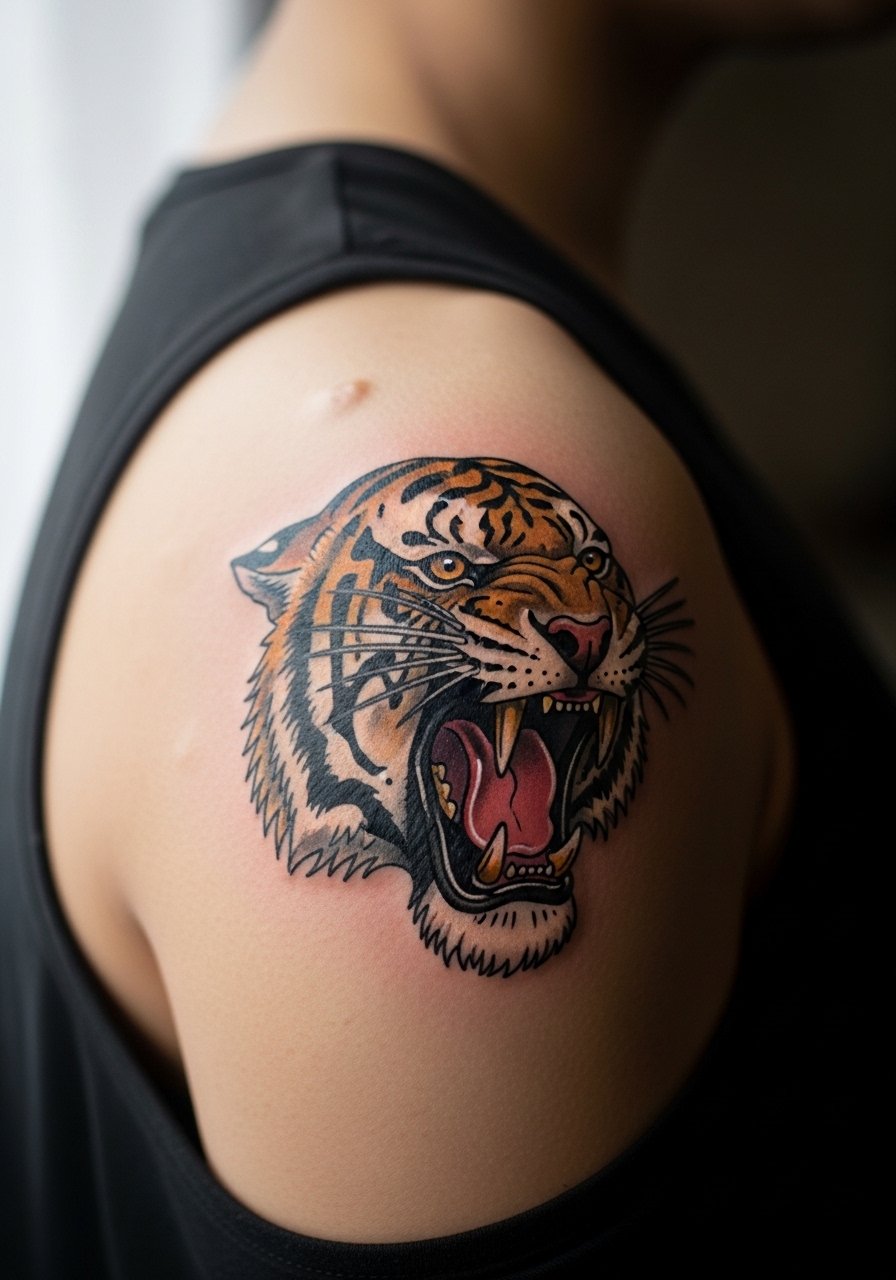
The shoulder blade is a canvas that sits flat during sessions and holds detail well. Pain is moderate and you can book a single two to three hour session for medium detail. Ask for slightly heavier contour lines near the jaw to anchor the face as the fills fade. A mistake is asking for tiny script near the shoulder blade since lettering there can become illegible. Throw on an open-back tank top to show the tattoo without exposing more skin than necessary on the day.
12. Dotwork Tiger on Upper Thigh
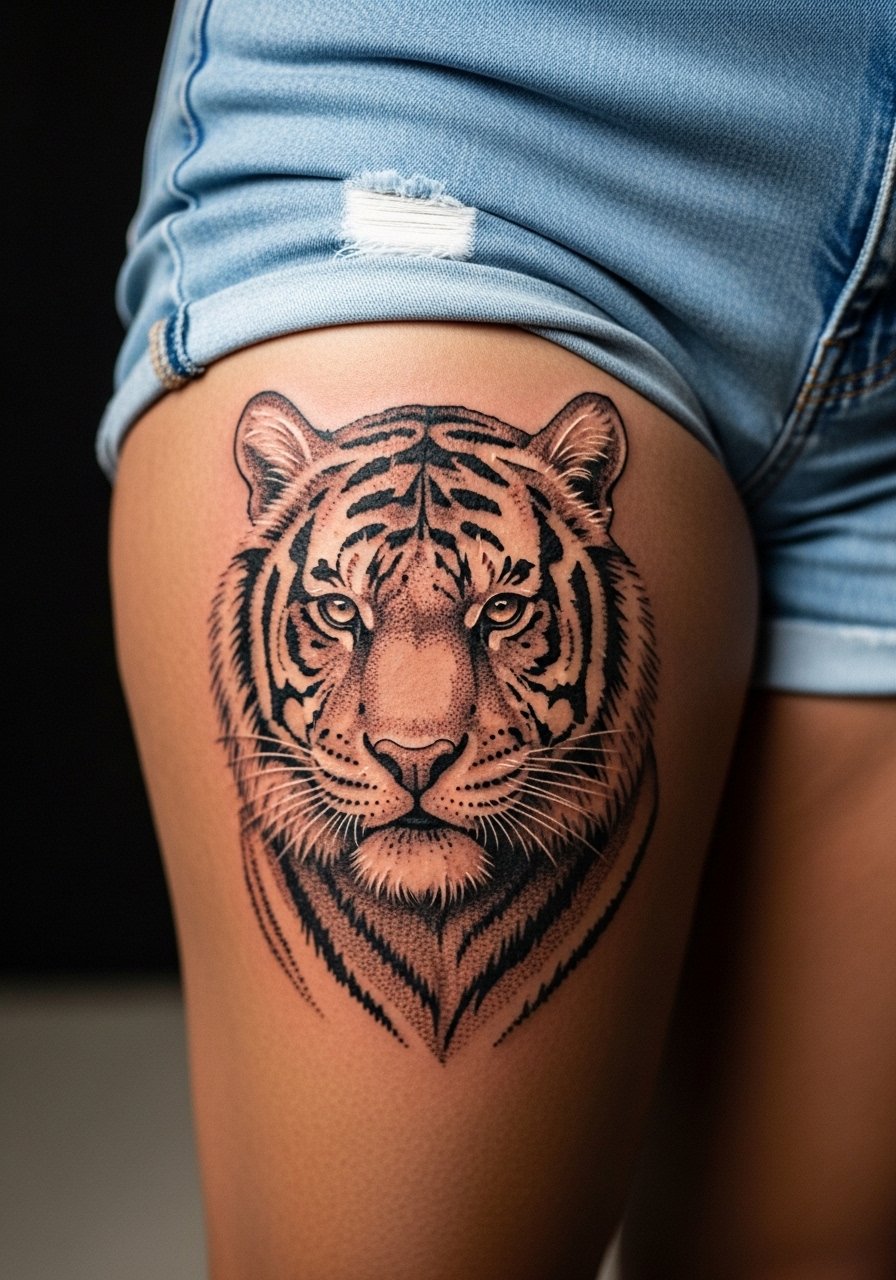
Dotwork creates a textured, timeless feel and the upper thigh provides room for detail. Pain is lower and sessions can be long. Tell the artist you want stipple gradients rather than heavy block shading to avoid a flat look. Dotwork can age gracefully because the dots leave negative space between them as the skin changes. A mistake is wanting extremely tight dot clusters at a small scale which can blur. Wear a looser pair of shorts for the appointment so the artist can shift fabric easily.
13. Portrait Tiger with Moon on Full Back Panel
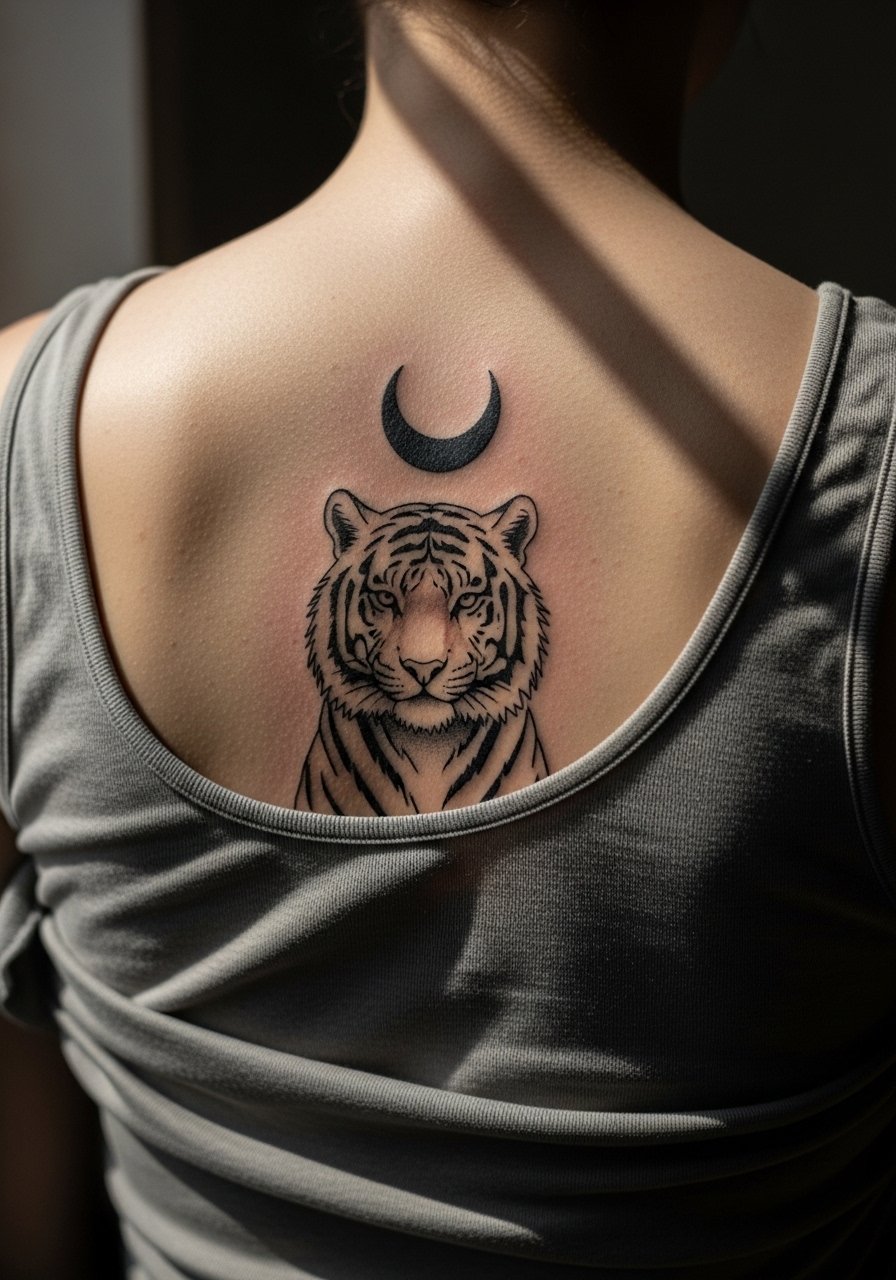
Full back work gives room to narrate a scene and the result can be cinematic. Expect multiple long sessions and medium pain across different zones. During consultation, map how the tiger's gaze will sit with the spine and ask for anchor points that read even when you move. Large compositions hold up because their shapes remain readable when fine detail softens. A common error is trying to squeeze too many secondary motifs into one panel. For showing off, open-back tops or halter dresses frame the upper back without oversharing, and a wide-back dress works well.
14. Single-Line Abstract Tiger on Collarbone
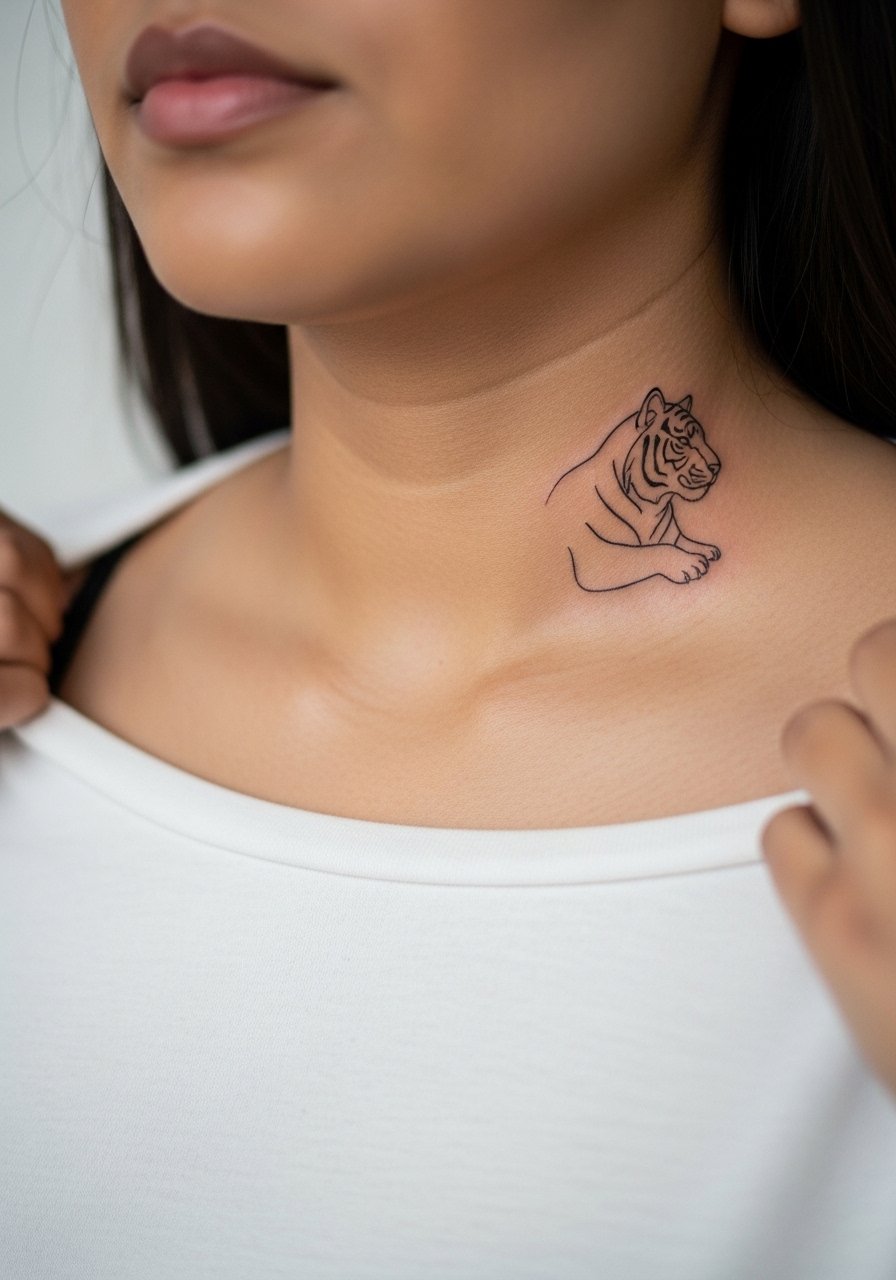
Single-line tattoos read modern and spare but need breathing room. Collarbone skin moves and shifts, so the pain can feel sharp and the artist may break the session into a short appointment. Ask for a slightly thicker continuous stroke so the ribbon of ink keeps its form over time. The common mistake is making the design too long horizontally where clothing rubs it. This pairs with delicate necklaces, and a thin chain pendant necklace sits above it without crowding the area.
15. Neo-Japanese Tiger on Full Thigh
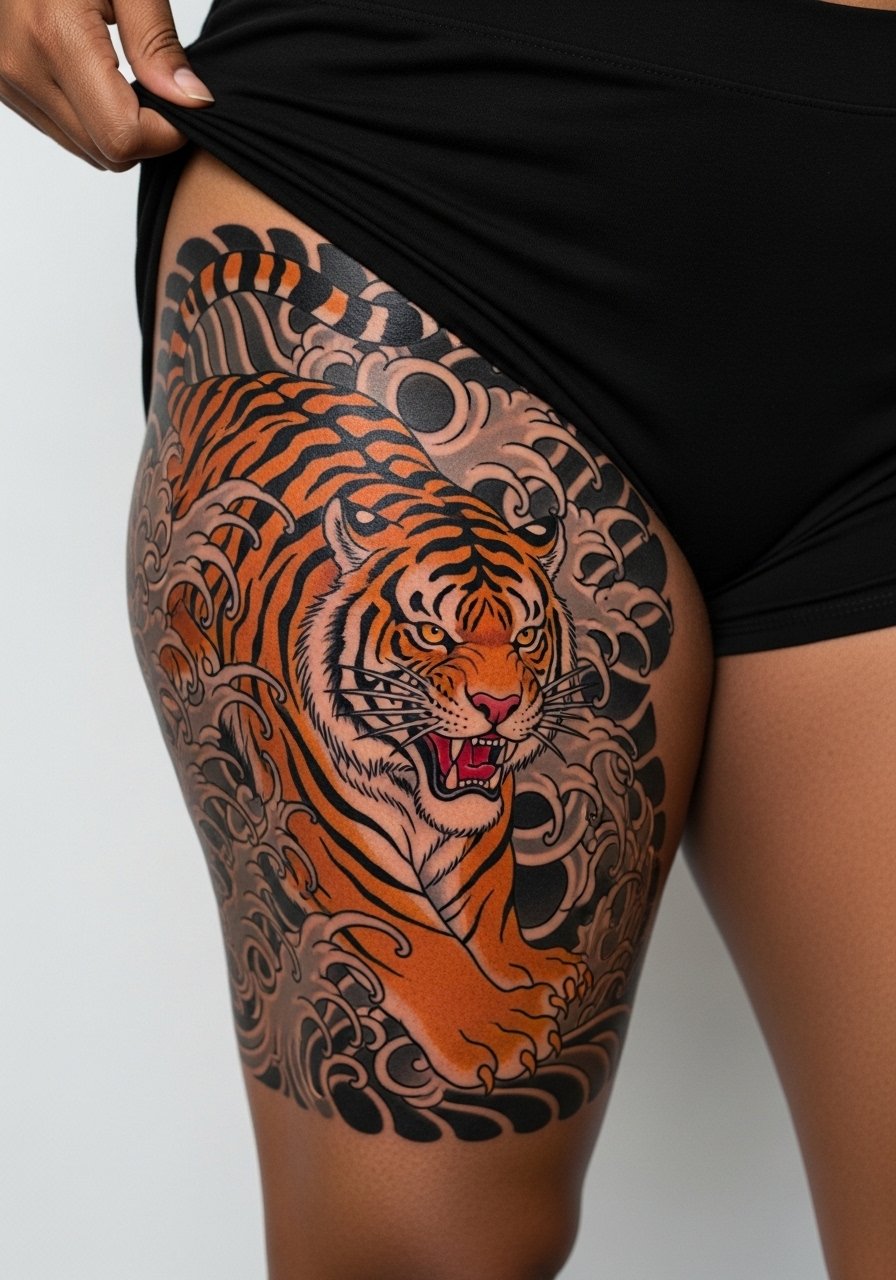
Neo-Japanese motifs use stylized movement and scale that suit the thigh. Expect multi-session work and manageable to high pain depending on inner versus outer thigh placement. Tell the artist about how you want the waves to wrap so the tiger's motion reads while seated. This style preserves bold shapes and withstands time because of strong outlines. A mistake is overloading the panel with micro-patterned backgrounds that compete with the tiger. For sessions, a pair of loose drawstring linen pants makes changing simple.
16. Finger Tiger Bands
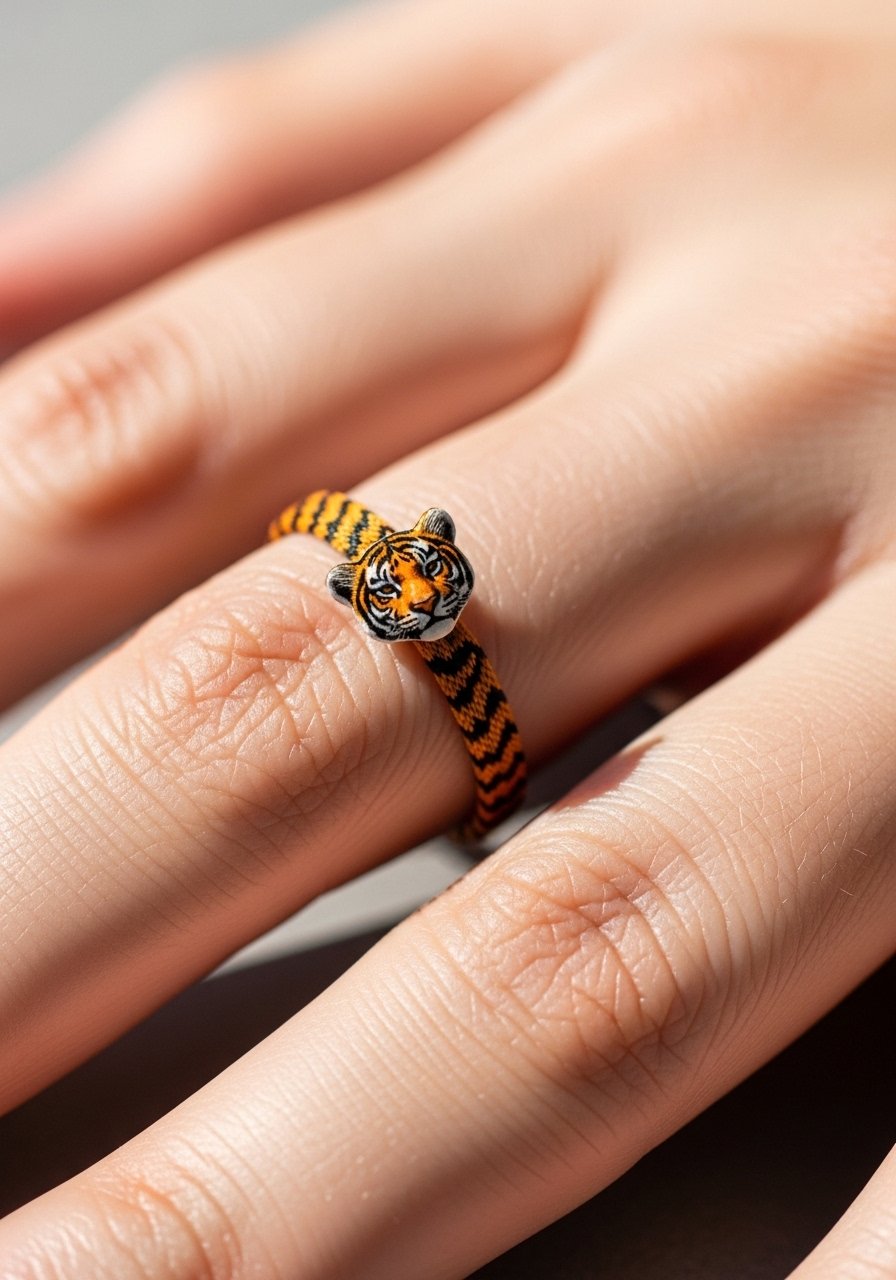
Finger tattoos are visible but they fade faster due to constant washing and friction. Pain is higher near joints and sessions are short. Ask for slightly thicker strokes or a broken-line effect to help the band read longer. Artists debate finger longevity. One practical note is these often need touch-ups by year two or three. A common mistake is expecting a ring-thin line to last unaltered. Keep in mind workplace expectations with finger tattoos and plan placement accordingly.
17. Chest Crest Tiger over Heart
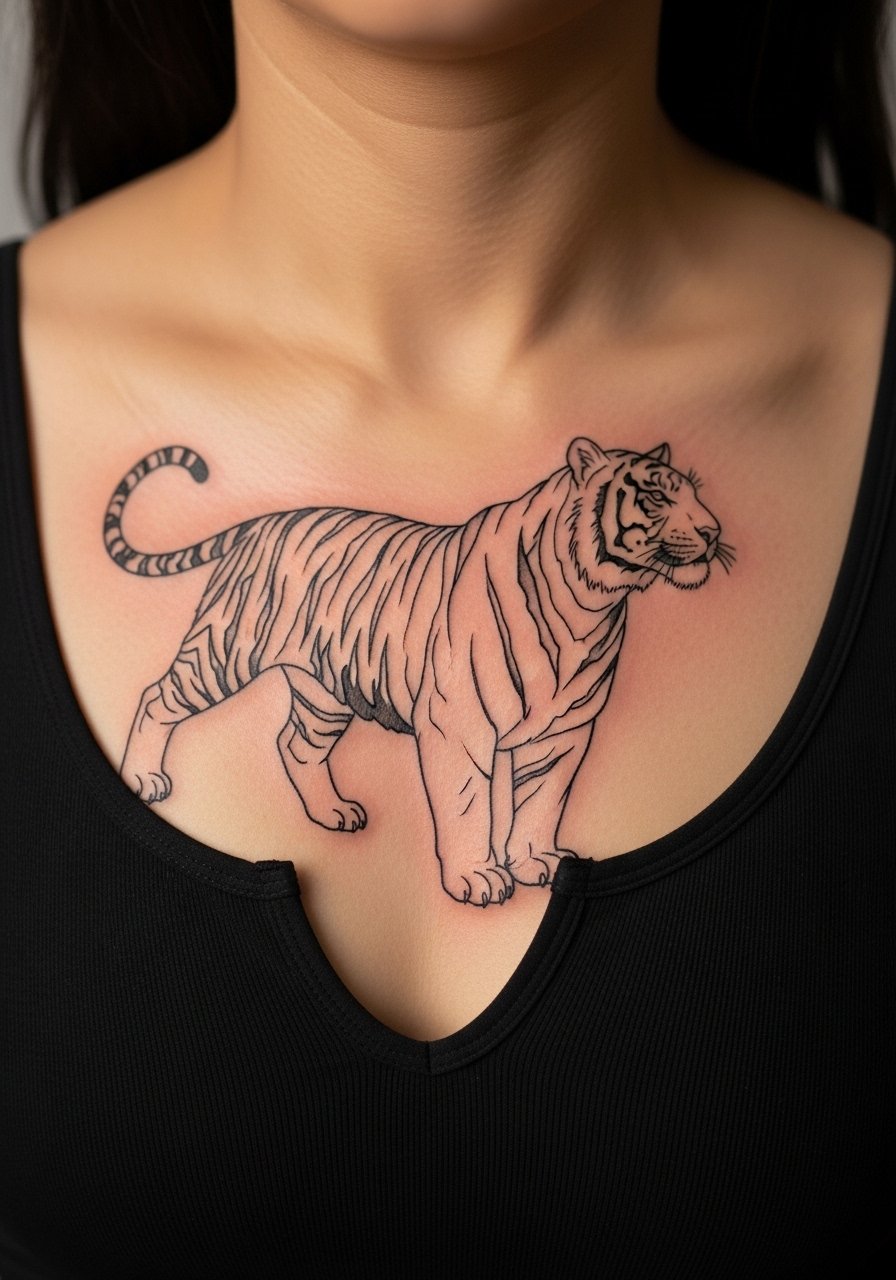
A chest crest reads as intimate and symbolic and the skin there is sturdy enough for medium detail. Pain is significant near bone and sessions may require breaks. Ask your artist to center the face with the sternum so the composition sits right when you breathe. The risk is over-detailing small facial features that can soften from pressure and clothing. For showing, crew neck sweaters or open shirts layer well while occasional openness is highlighted by a thin chain necklace that sits above without covering the design.
18. Inner Bicep Tiny Tiger Portrait
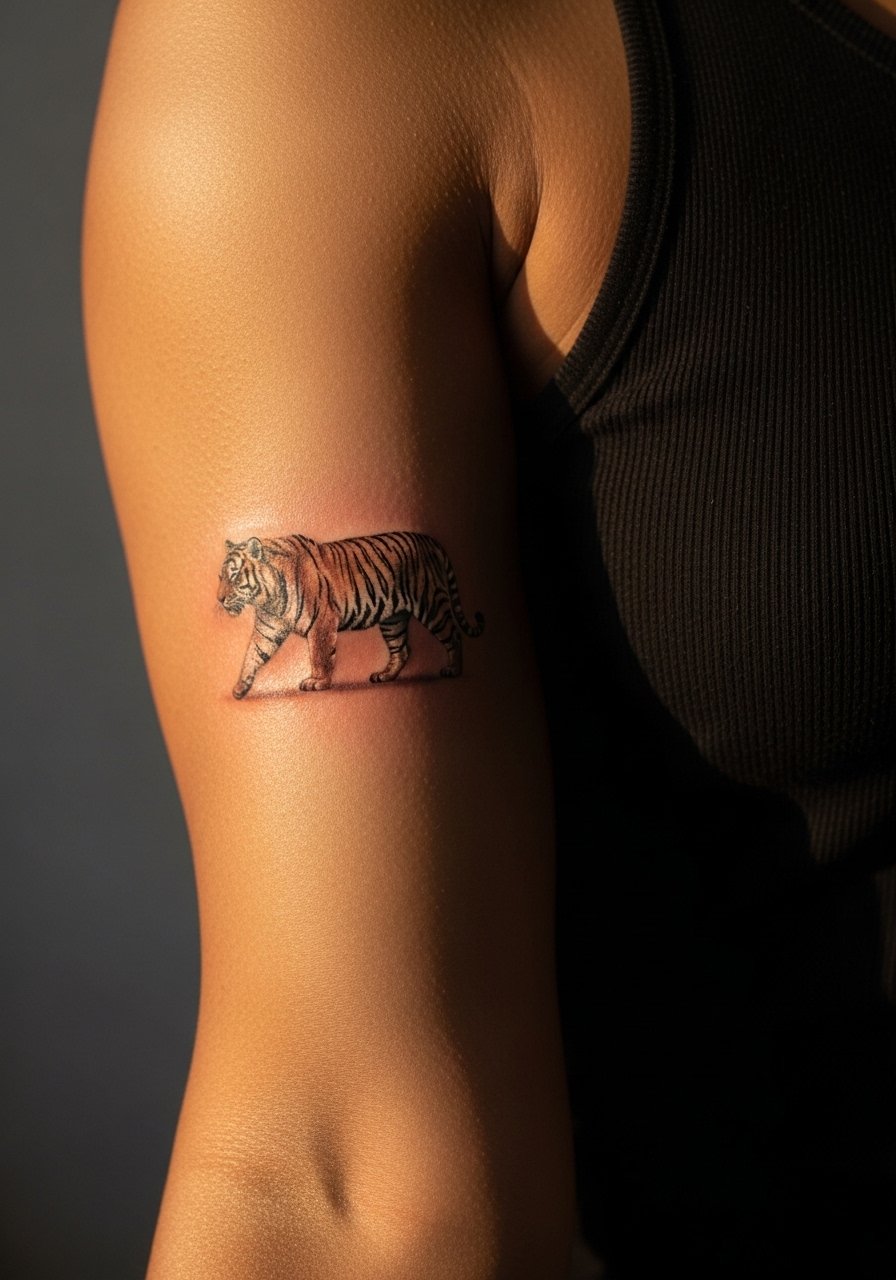
Inner bicep pieces can be private and detailed. Pain is moderate and sessions tend to be short. Tell the artist you want gentler shading rather than heavy black so the portrait breathes. The common mistake is tight facial detail that blurs when the arm rests naturally. If you plan on showing it, a sleeveless top works, but during the session wear a loose tank top you can lift or slide aside comfortably.
19. Ankle Constellation Tiger Wrap
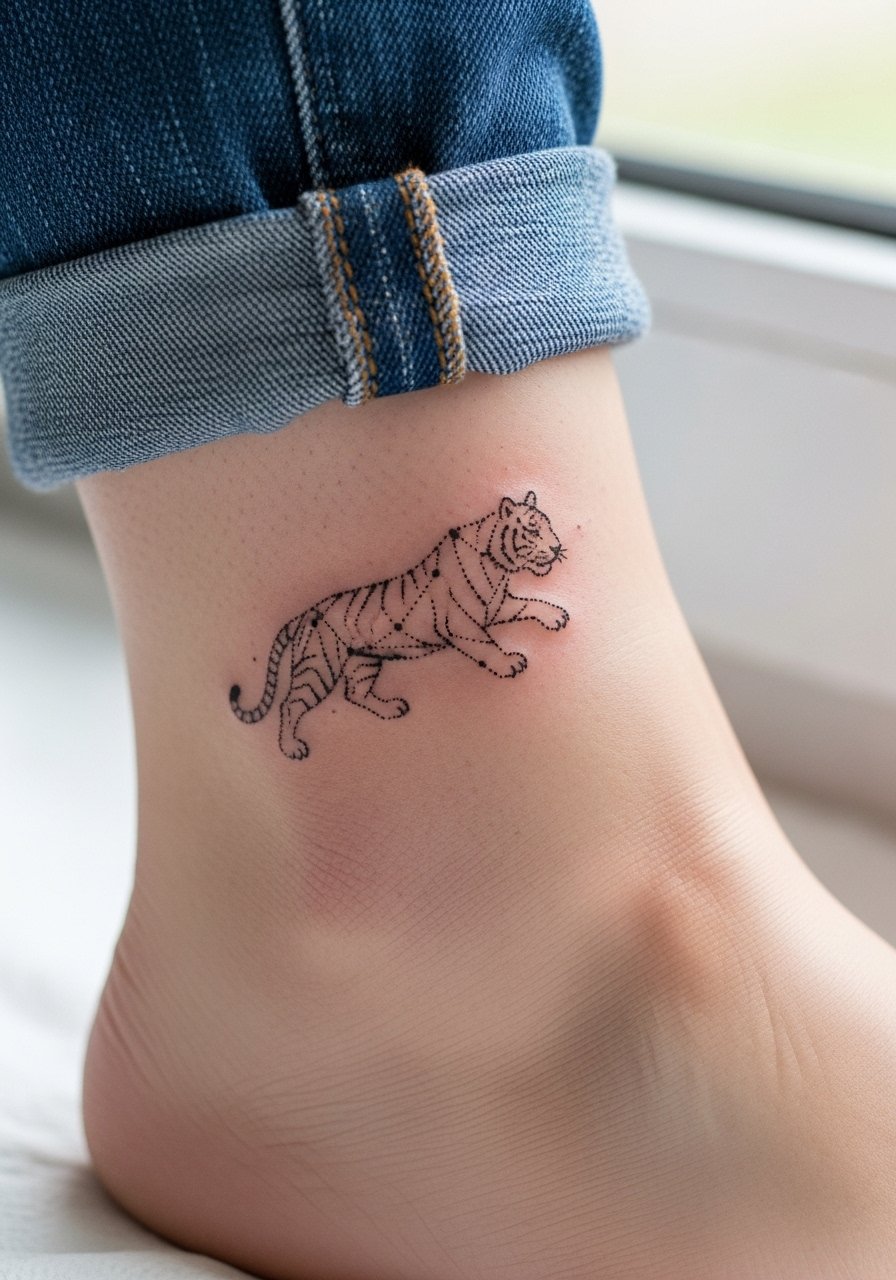
A wrap-around ankle motif uses negative space to imply form and keeps visual interest at shoe level. Pain can spike around the bone and sessions are brief. Ask for a slightly higher contrast between dots and thin lines so the constellation reads as intended. A frequent error is compressing too many stars into a tiny band which becomes busy in months. Pair with cropped trousers or sandals and a pair of casual sandals to show the wrap without distraction.
20. Lower Back Tiger Whisper
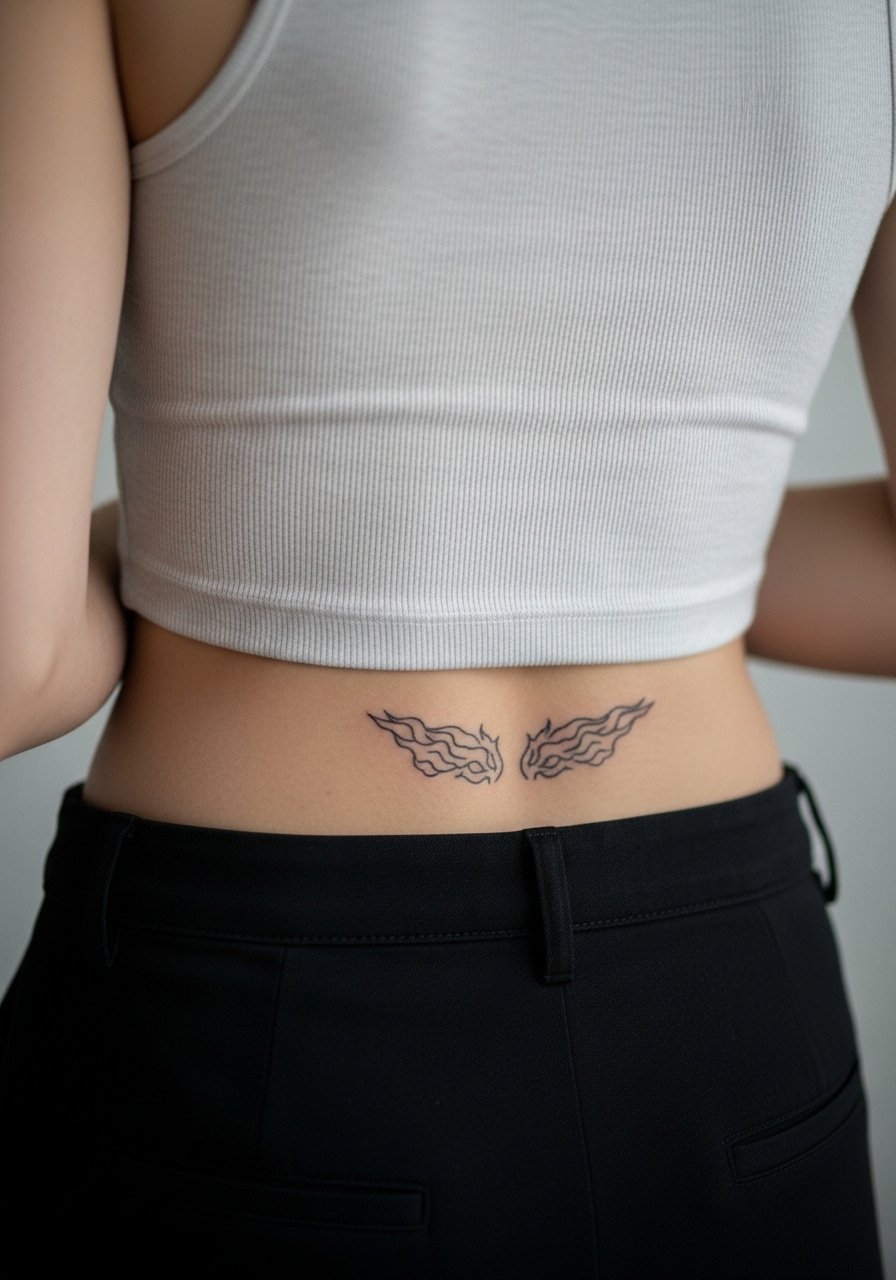
Lower back pieces can be as discreet or bold as you want and the area tolerates larger formats. Pain is moderate and sessions vary by complexity. Request anchor points that read while seated and when standing so the design keeps balance. The common mistake is too much tiny shading near the spine which can mat after a few years. For sessions, wear loose pants that can be adjusted without rubbing the tattooed zone.
21. Calf Black Realism Tiger
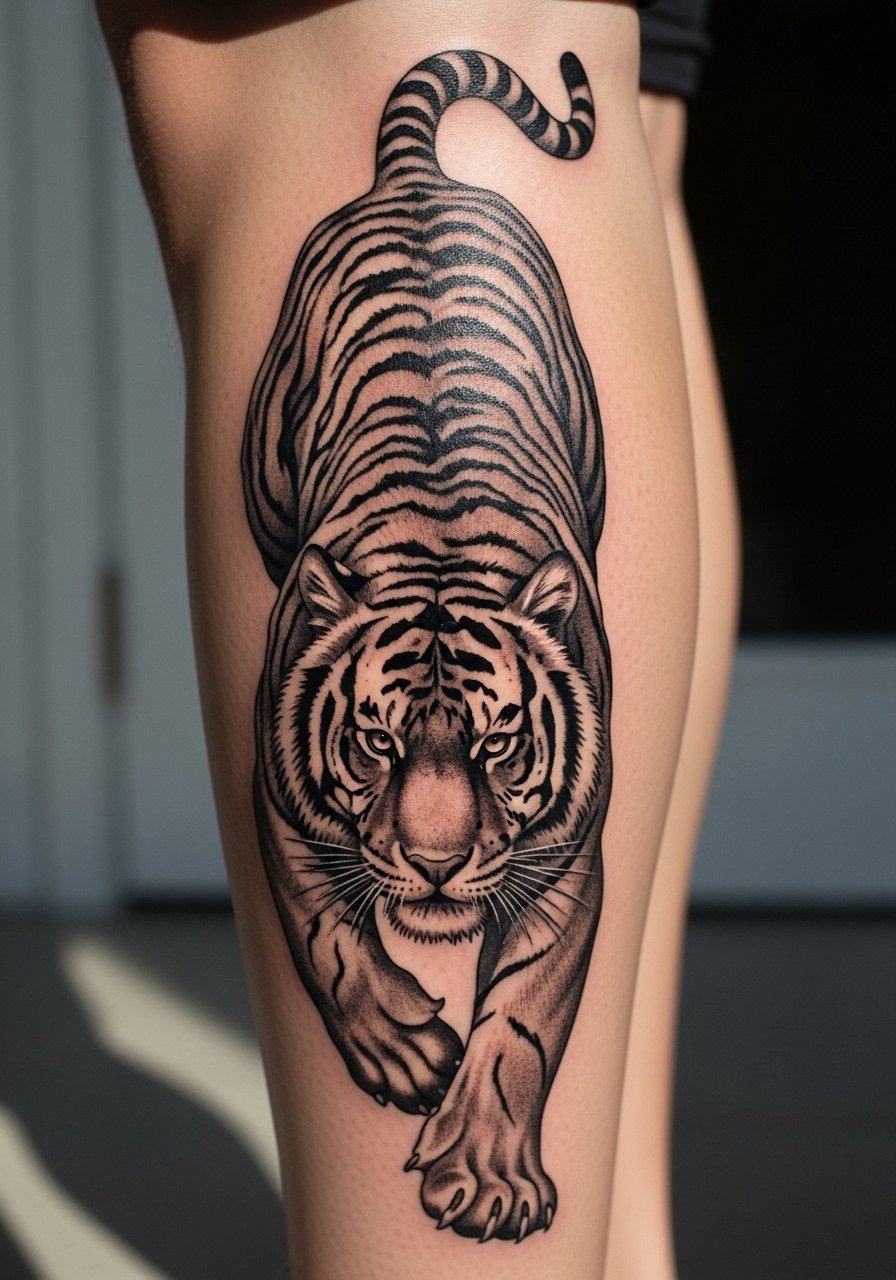
Black realism on the calf reads with presence and survives time because dark values define the image. Pain is moderate and a single long session can cover a fair amount. Ask for layered contrast so eyes and teeth keep their shape as the midtones soften. A mistake is blending midtones into outlines which reduces clarity as the piece ages. For show-off style, boots or cropped pants let the calf read, so consider a pair of ankle boots to complement the look.
22. Behind-the-Ear Tiger Accent
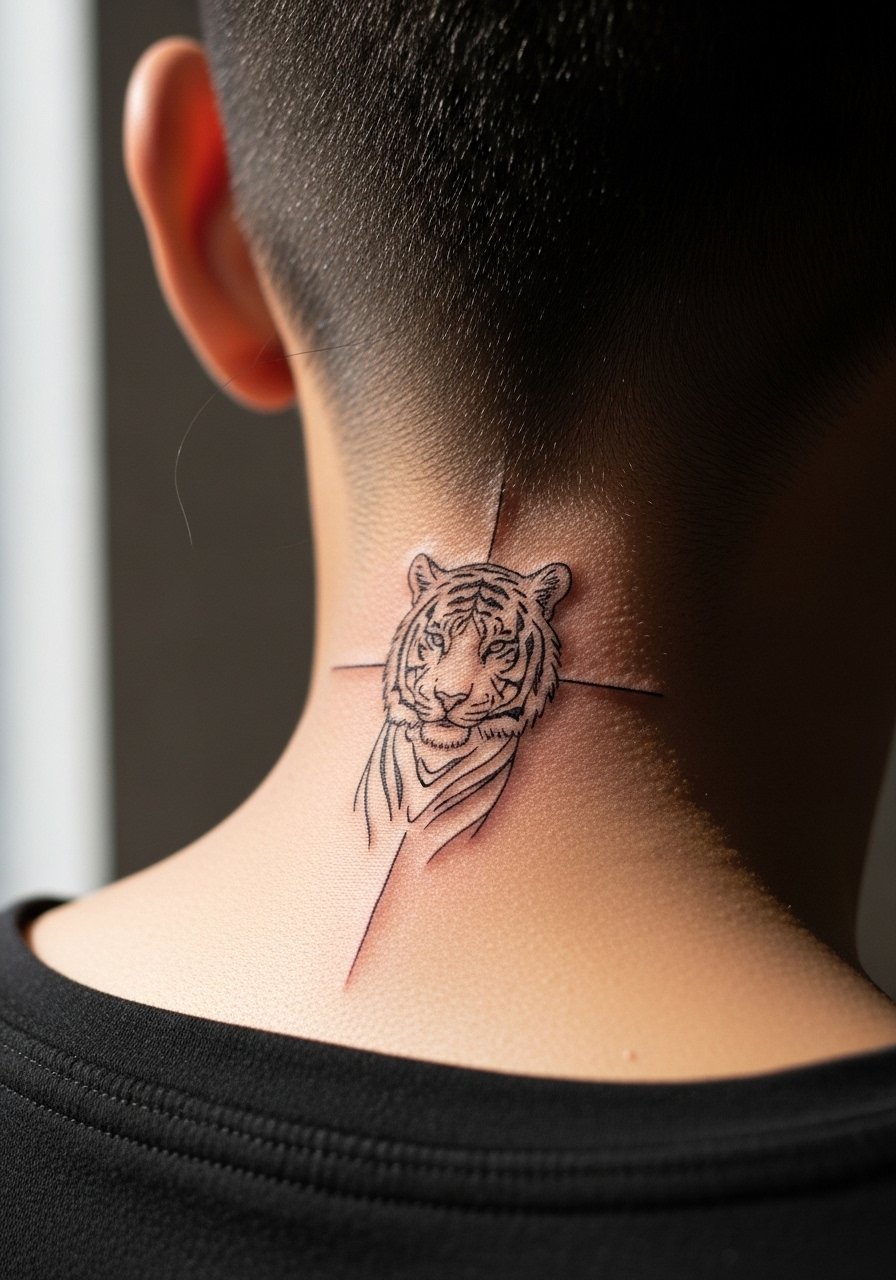
Tiny marks behind the ear are peekaboo placements and they suit modest accents. Pain is low to medium and sessions are very short. When requesting this, say explicitly you want the work on the skin below the hairline so the artist frames it correctly. Keep in mind hair growth and glasses straps can irritate fresh ink. A common mistake is asking for tiny dense detail right at the hairline. For obvious safety, the image should be framed as below the hairline so the artist places it on skin and not on the ear.
23. Back of Hand Tiger Sliver
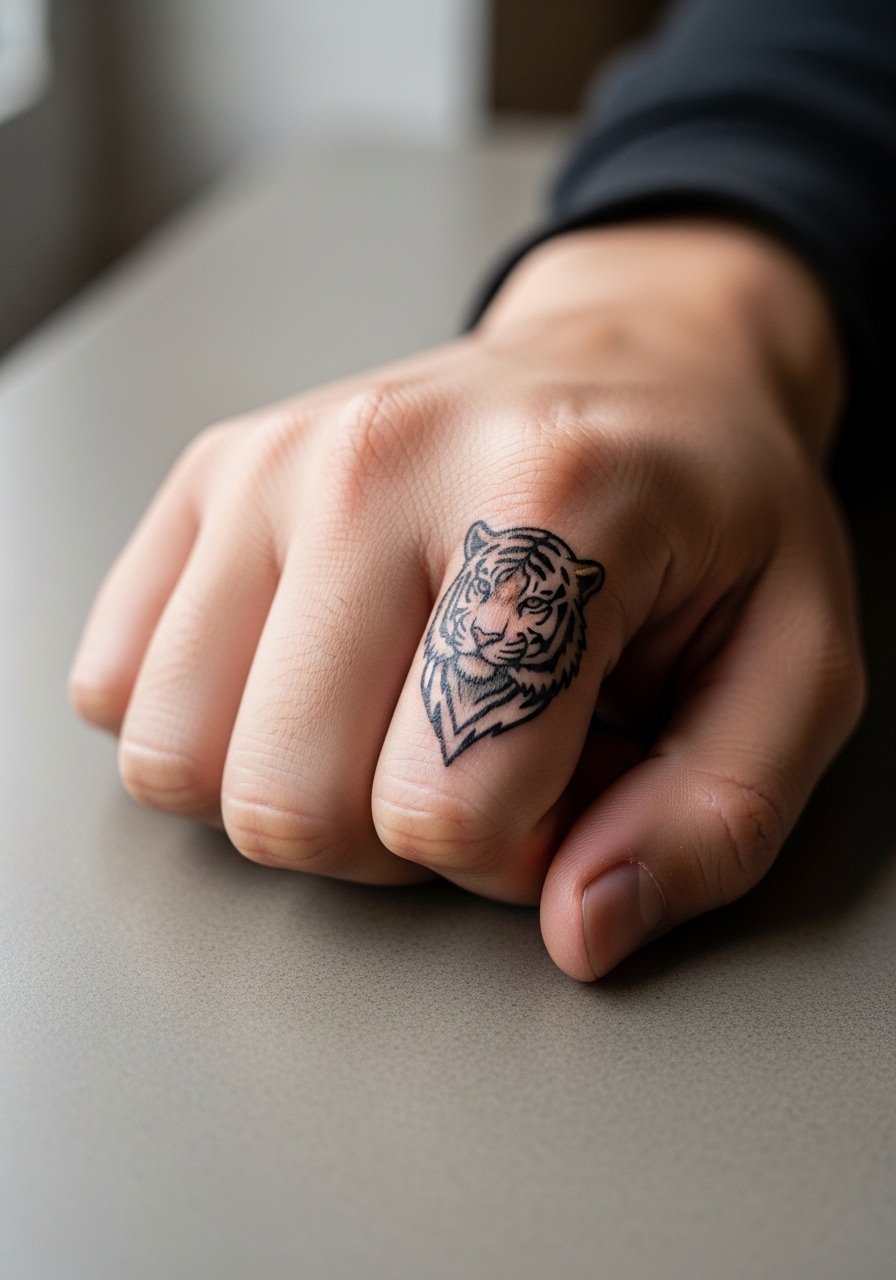
Hand tattoos face two realities. One group of artists favors occlusive dressings and short covered healing; the other favors dry healing and minimal lotions. Name both camps when you research. Hand skin gets a lot of abrasion and touch-ups are common. Pain is high and sessions are short. Ask for thicker contour lines and accept the probability of a touch-up at year one. For showing, keep jewelry minimal and pair with a delicate ring set that accents the back of the hand without covering the design.
24. Throat Side-Neck Tiger Stripe
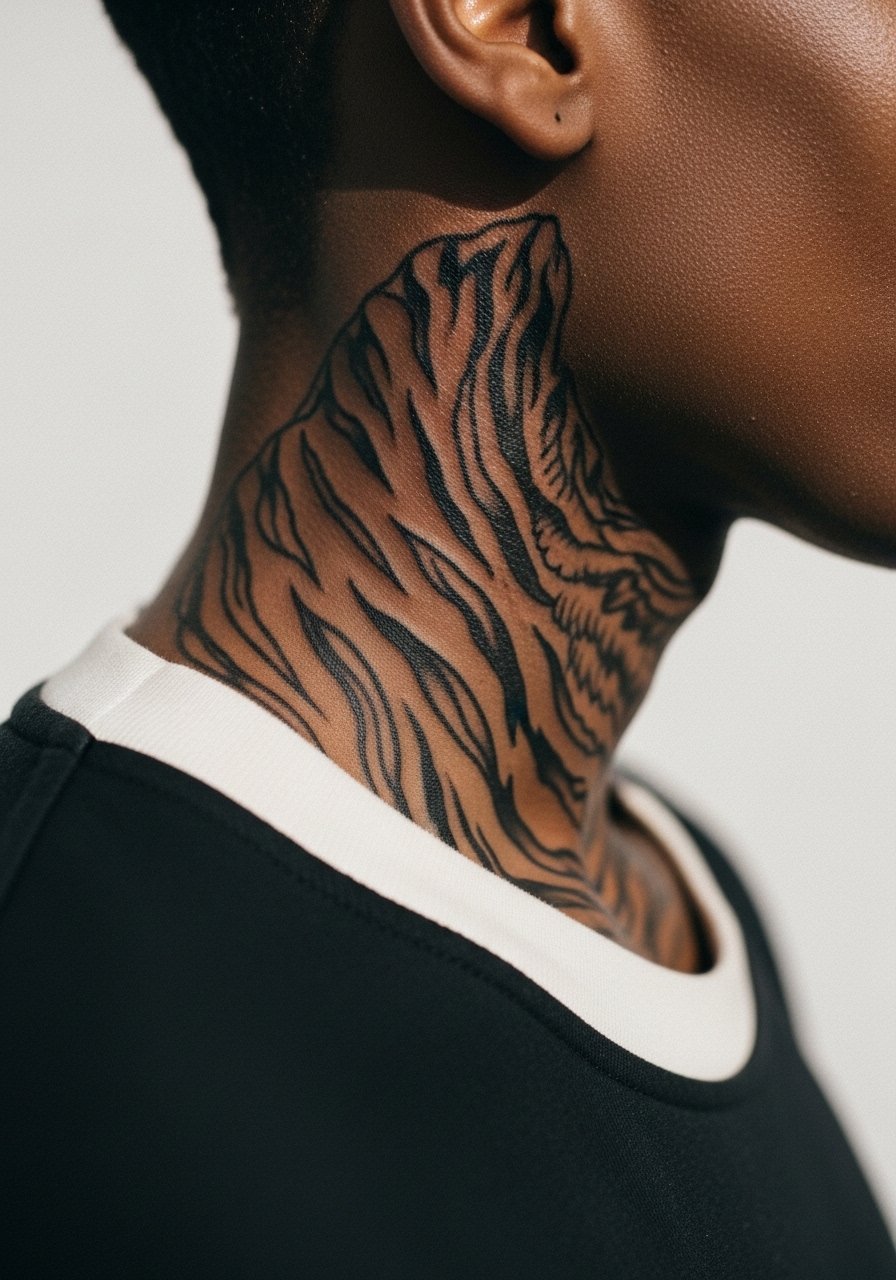
Neck tattoos are bold statements and the skin there is thin so detail should be deliberate. Pain is significant and sessions are brief with clear breaks. Ask for confident strokes and avoid tiny facial detail that can dissolve with movement. This area can affect professional impressions so consider placement and timing. The error to avoid is choosing a scale that competes with natural neck folds. For the appointment try a top with an adjustable collar so you can expose just the area needed.
25. Hip Tiger Bloom
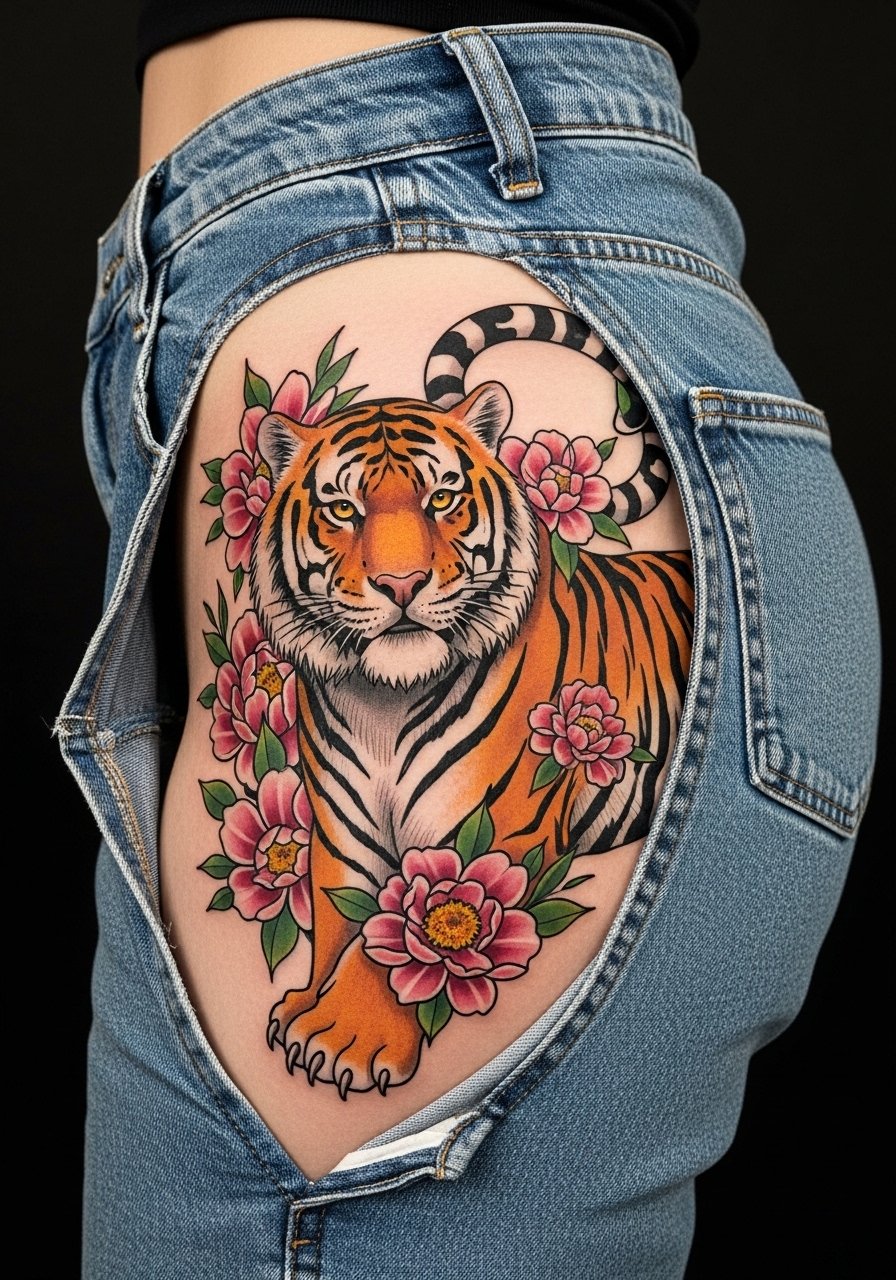
Hips are great for private expansions and hold color well. Pain ranges depending on proximity to the bone and sessions are often medium length. Tell the artist whether you want the tiger partially hidden under clothing for intimacy or fully revealed for display. A mistake is wanting delicate facial detail too close to seams where rubbing shortens clarity. For the session and styling, high-waisted pieces show the tattoo at swim or evening wear, so try a high-waisted swimsuit bottom.
26. Inner Thigh Tiger Vine
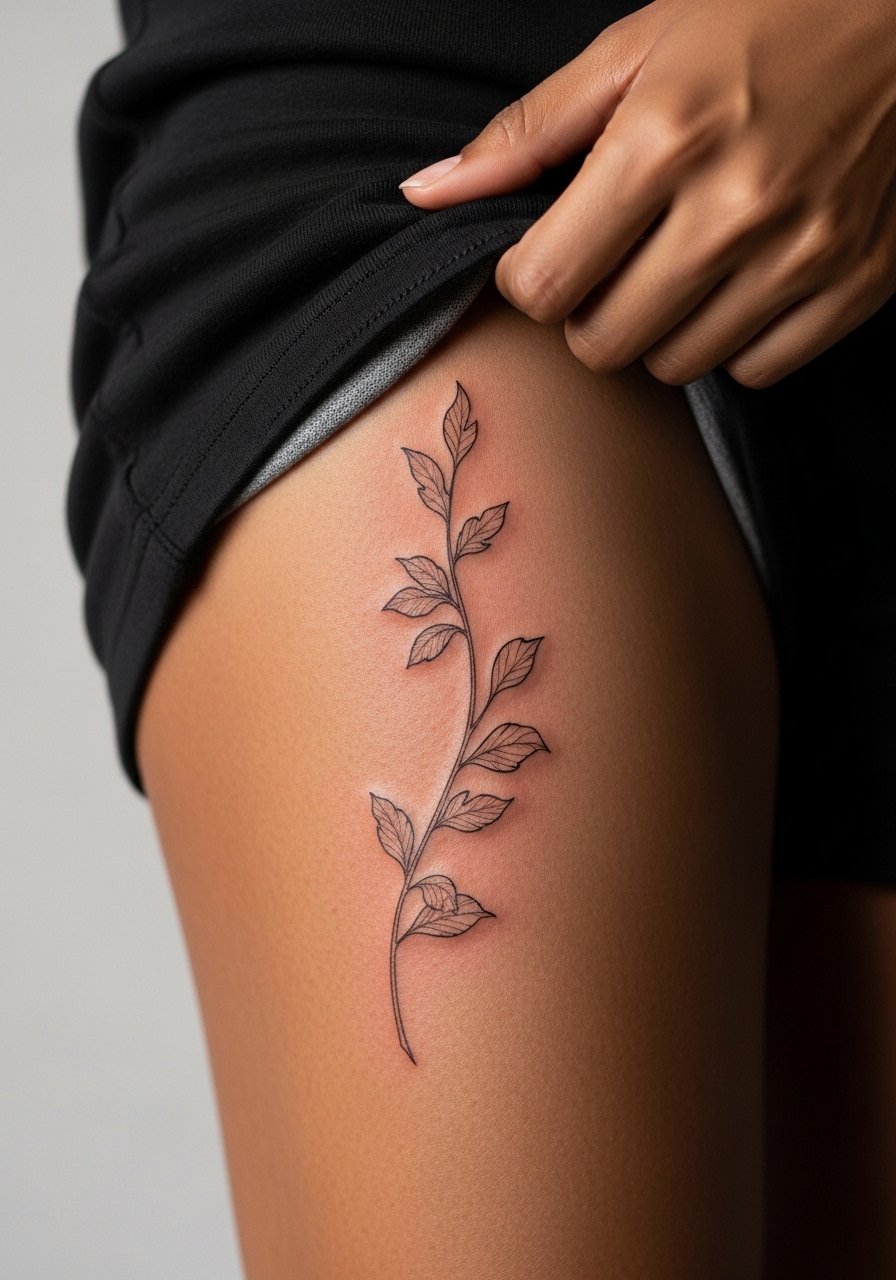
Inner thigh placements are intimate and the skin is softer, so detail needs spacing. Pain can be higher and sessions are private. During consultation ask for slightly more open composition to avoid blowout in tight dot areas. A common error is packing micro-shading into narrow bands where it clogs over time. For the appointment, wear shorts you can move easily so the artist has clean access without pressure.
27. Full-Back Charging Tiger Scene
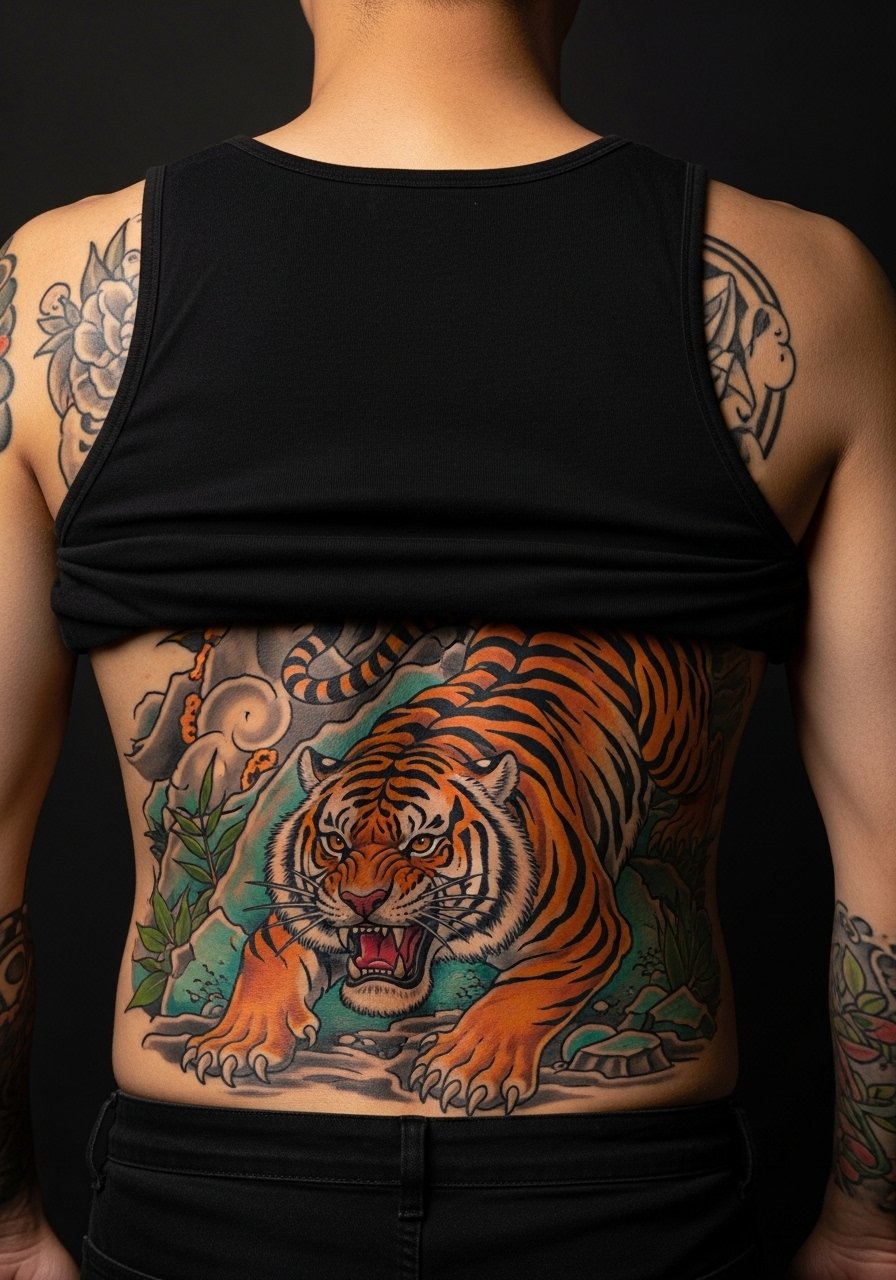
A full-back narrative is the ultimate statement and requires a planning session to map flow across the shoulders and lower back. Expect multiple long sessions and medium to high pain depending on zones. Tell your artist about anchor shapes so the tiger's motion reads whether you are standing or seated. These big pieces age well since primary shapes stay recognizable even as small details soften. The frequent mistake is trying to fit too many tiny elements into the negative space which competes with the main figure. For show-off moments, open-back dresses and halter tops showcase the panel and a wide-back evening dress frames large work without covering it.
Studio Day Picks
The pieces above rely on session prep and small supplies that smooth the appointment and first week for forearm, wrist, ribcage, shoulder, thigh, and back placements.
-
Stencil transfer paper kit. Lets you preview placement and line weight on skin before the needle, especially useful for micro-realism forearm and collarbone pieces.
-
Topical numbing cream. Applied per instructions ahead of time eases discomfort for high-pain zones like ribs and sternum without altering linework when used correctly.
-
Thin protective film roll. Keeps wrist and finger work cleaner during the first days of heavy washing and friction.
-
Fragrance-free gentle body wash. Cleans healing areas like thigh and shoulder without irritating delicate fresh lines.
-
Aquaphor healing ointment. Thin layer application in the first few days helps retain moisture for fine line and micro-realism work while allowing the skin to breathe.
Frequently Asked Questions
Q: Will a fine line tiger on my ribs blur faster than a bold traditional tiger on the arm?
A: It depends on scale and spacing. Fine line on ribs is riskier because the skin stretches more, so ask for extra spacing and slightly bolder anchor lines. Bold traditional pieces on the arm often hold their silhouette longer because thicker outlines protect the image.
Q: How should I dress for a thigh or hip tiger session to stay comfortable and give the artist access?
A: Wear high-waisted shorts or loose drawstring pants you can pull down a little, or a cropped top that exposes just the area. A loose drawstring linen pant is an easy option that keeps fabric off the fresh ink while you change.
Q: Are hand and finger tiger tattoos worth the maintenance?
A: They are worth it if you accept likely touch-ups. Hands endure washing and abrasion so thicker contours and realistic expectations are key. Decide based on how visible you want it to be and how often you will be willing to refresh the work.
Q: Can watercolor-style tiger inks be combined with blackwork and still age well?
A: Yes, combining color washes with black anchors is a smart way to get painterly effects while preserving longevity. Keep the color areas a bit larger and the black outlines confident so the design stays readable as pigments soften.
Q: Where should I look to find an artist who does detailed tiger work without naming anyone directly?
A: Search local shops' portfolios, hashtags for your city plus "microrealism" or "neo-japanese," and check convention lineups. Conversations in community threads and portfolios with multiple healed photos give the clearest idea of how a style heals in real skin.
