
Fine line 11:11 tattoos are everywhere on saved boards and in short-form feeds, but the versions that still look crisp after a few years are not always the ones getting the most double taps. Trend aesthetics and longevity trade-offs diverge often. Read through these small takes on placement, line weight, and wardrobe so you can pick a 11:11 that reads as intended now and at year three.
1. Minimalist 11:11 Numeric Stack on Inner Wrist
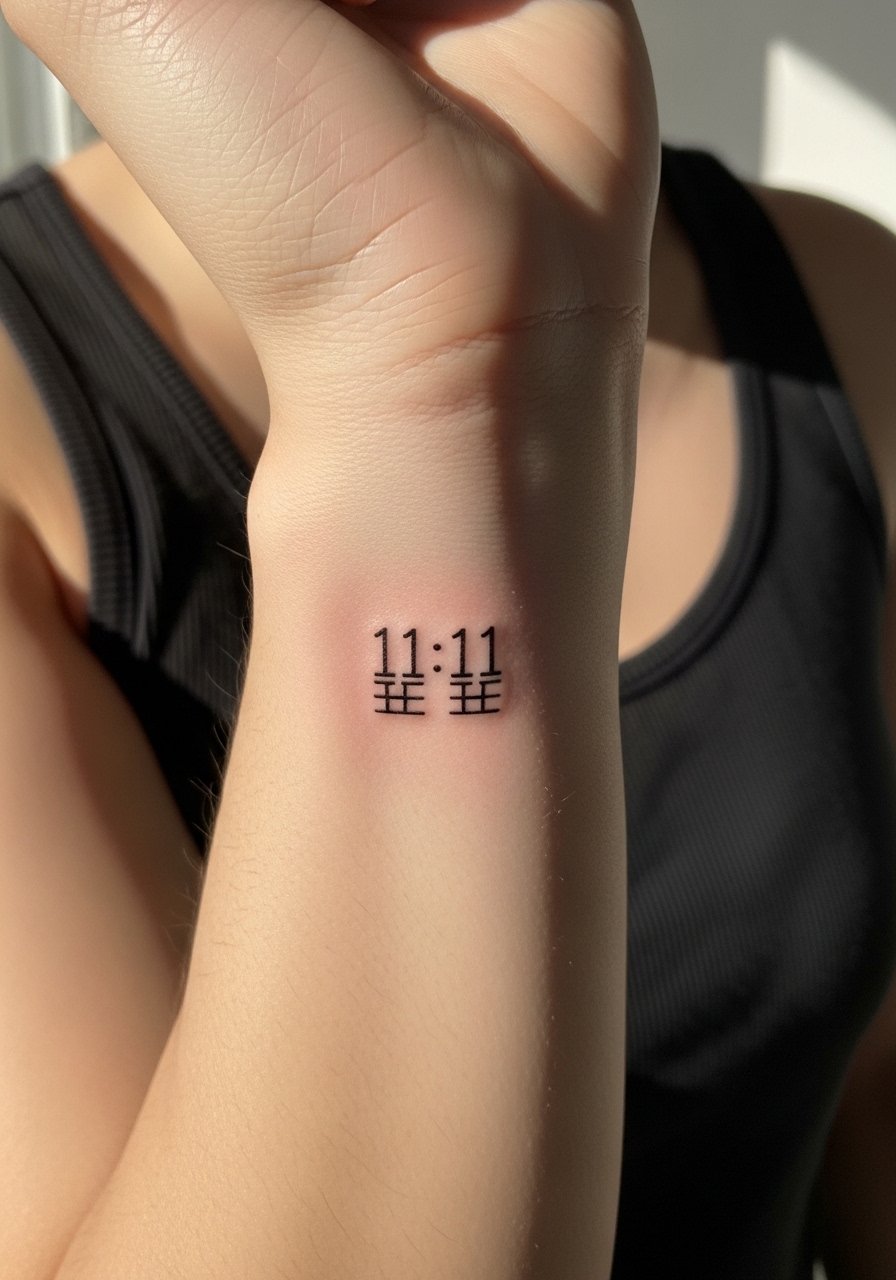
Most people pick the inner wrist for the classic stacked 11:11 because it reads every time you glance at your phone. I've seen fine single-needle stacks fade faster when artists go too thin, so ask for 2 to 3 mm linework and a slightly taller height so the numbers keep shape at year two. Pain is moderate. Session time is short, often under 30 minutes. Common mistake is requesting the exact tiny font from a screenshot without specifying line thickness. For the appointment, leave jewelry off and wear a sleeveless tank so the artist has unobstructed access.
2. Fine Line 11:11 with Clock Hands on the Collarbone
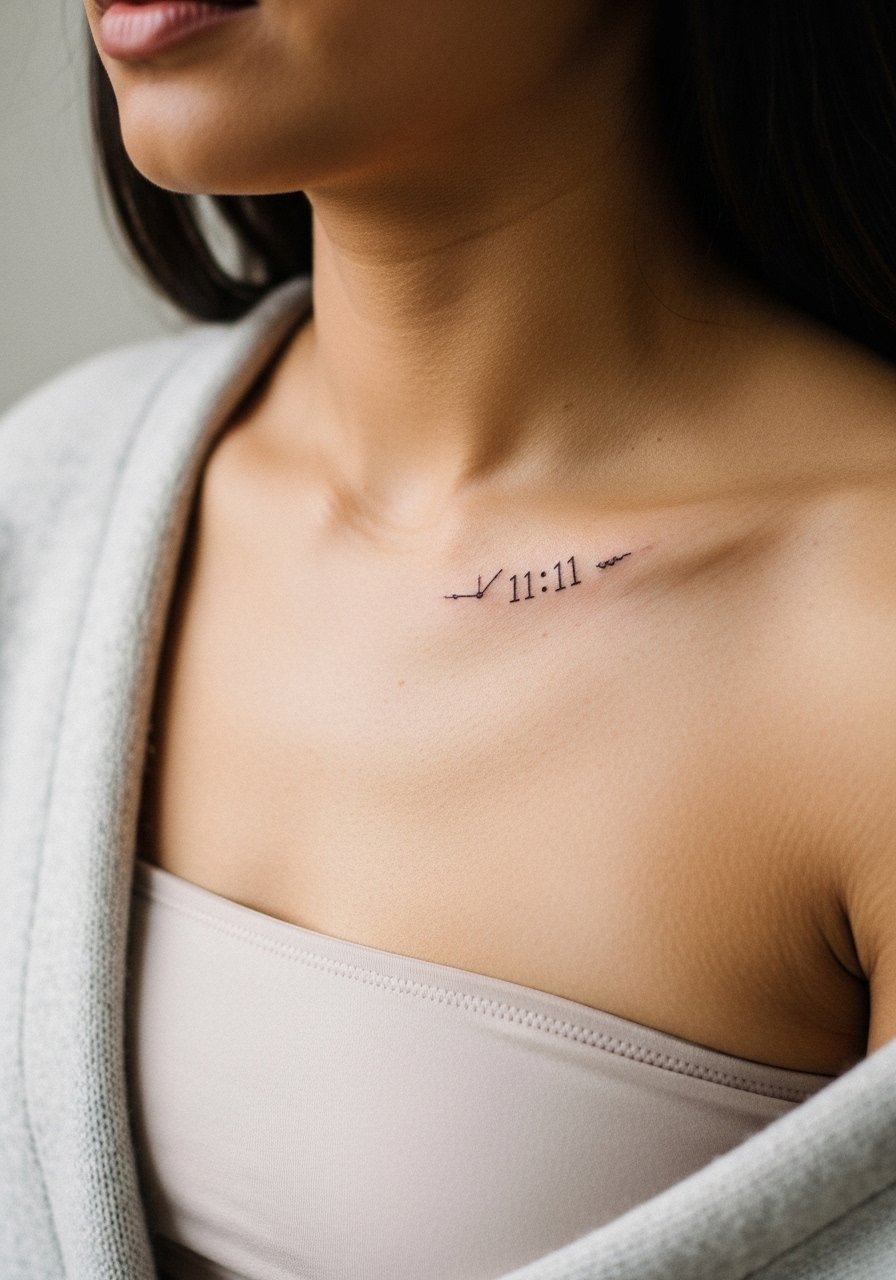
Fine line clock motifs add a manifesting angle without being literal. The collarbone reads larger than it looks on a screen so plan for a 3 to 4 cm width. Expect a 30 to 45 minute session and a bit more sting on the bony ridge. Tell your artist you want thin hands but a slightly bolder numeric stack so the numbers do not blur into the hand ticks. Some artists split on dry healing versus film wrap for this area, so hear both camps out. For show-off outfits, an off shoulder sweater or a dainty choker frames the piece nicely.
3. Dotwork 11:11 Portal Behind the Ear
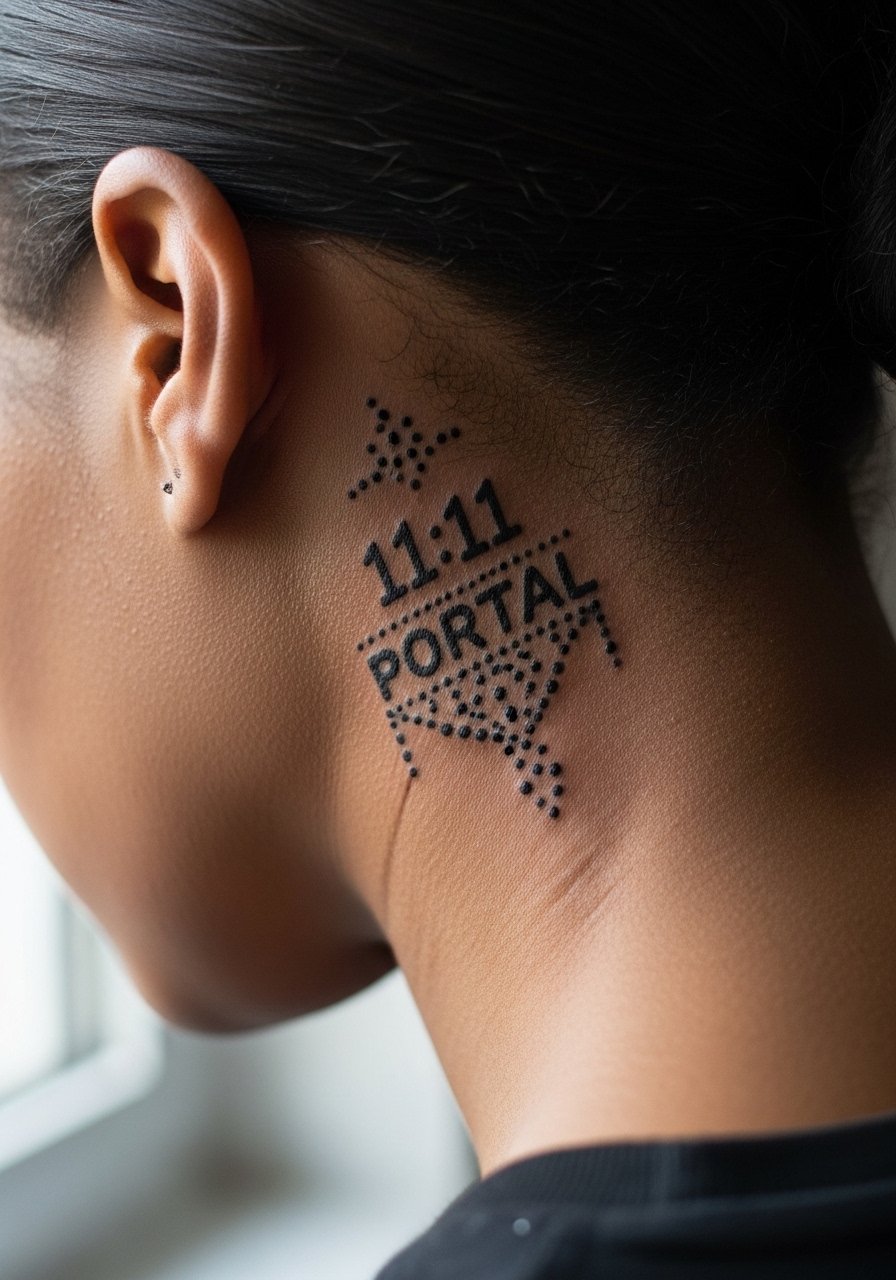
The behind-ear spot is deceptively private and great for dotwork portals because the tiny contrast reads when hair is pinned up. Session time is usually under 20 minutes and pain is low. A common issue is placing the dot clusters too dense for the small area which blurs at two years. Ask for spacing that lets the dots breathe. For showing it off, pair the piece with small gold hoop earrings and a loose low ponytail. For the session wear, pull hair into a bun so the artist can prep the exact spot.
4. Script 11:11 with Subtle Wings on Inner Wrist
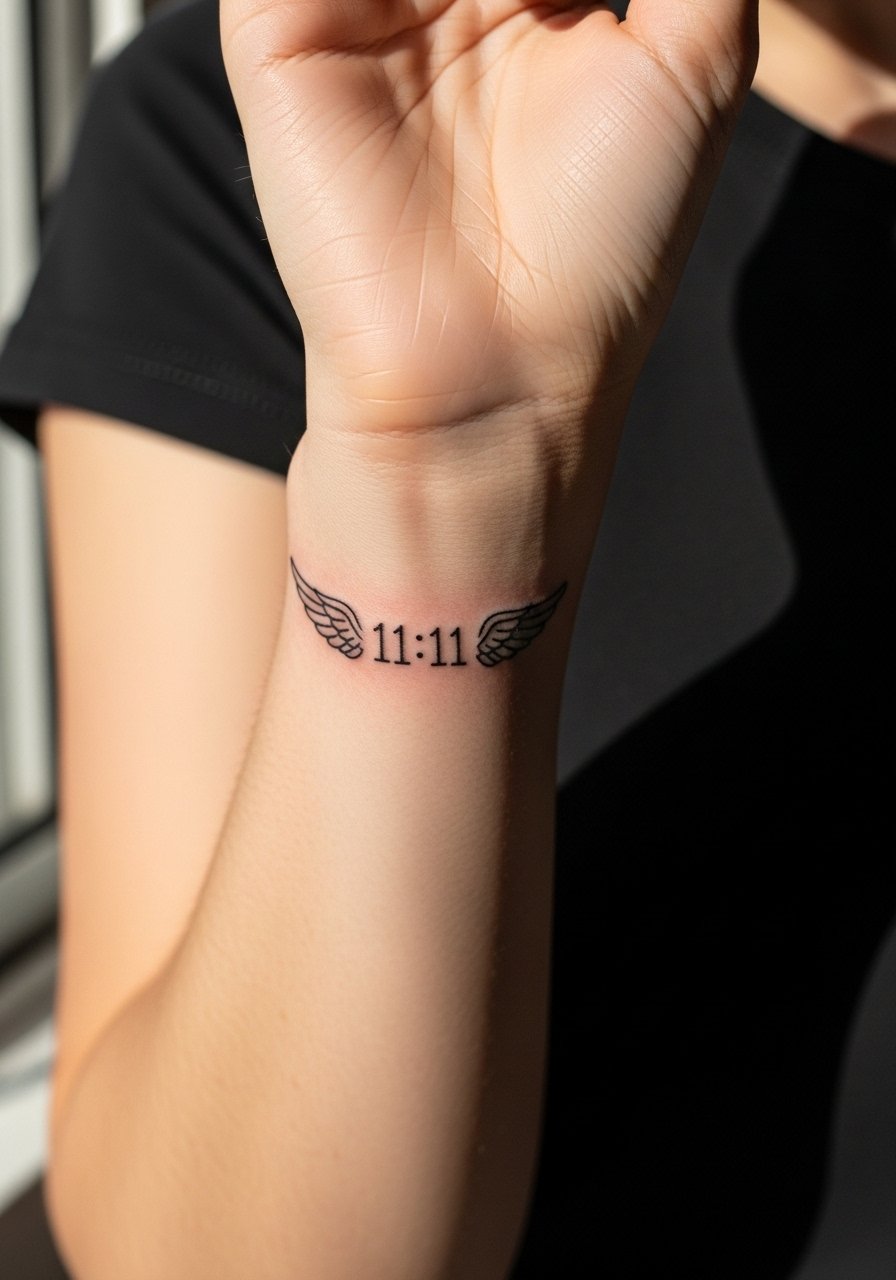
This is a soft, script-forward option that still reads as a numeric motif when done with restrained wings. The inner wrist heals with more friction from clothing and watches, so expect a touch-up window at six to twelve months. A mistake people make is asking for ornate wing filigree that crowds the numbers. During consultation, show a single-needle script sample and ask the artist to center negative space around the numbers. Wear no bracelets during the session and consider a thin silver chain bracelet for showing it off later if you want a subtle frame.
5. Micro 11:11 in Roman Numerals on a Finger
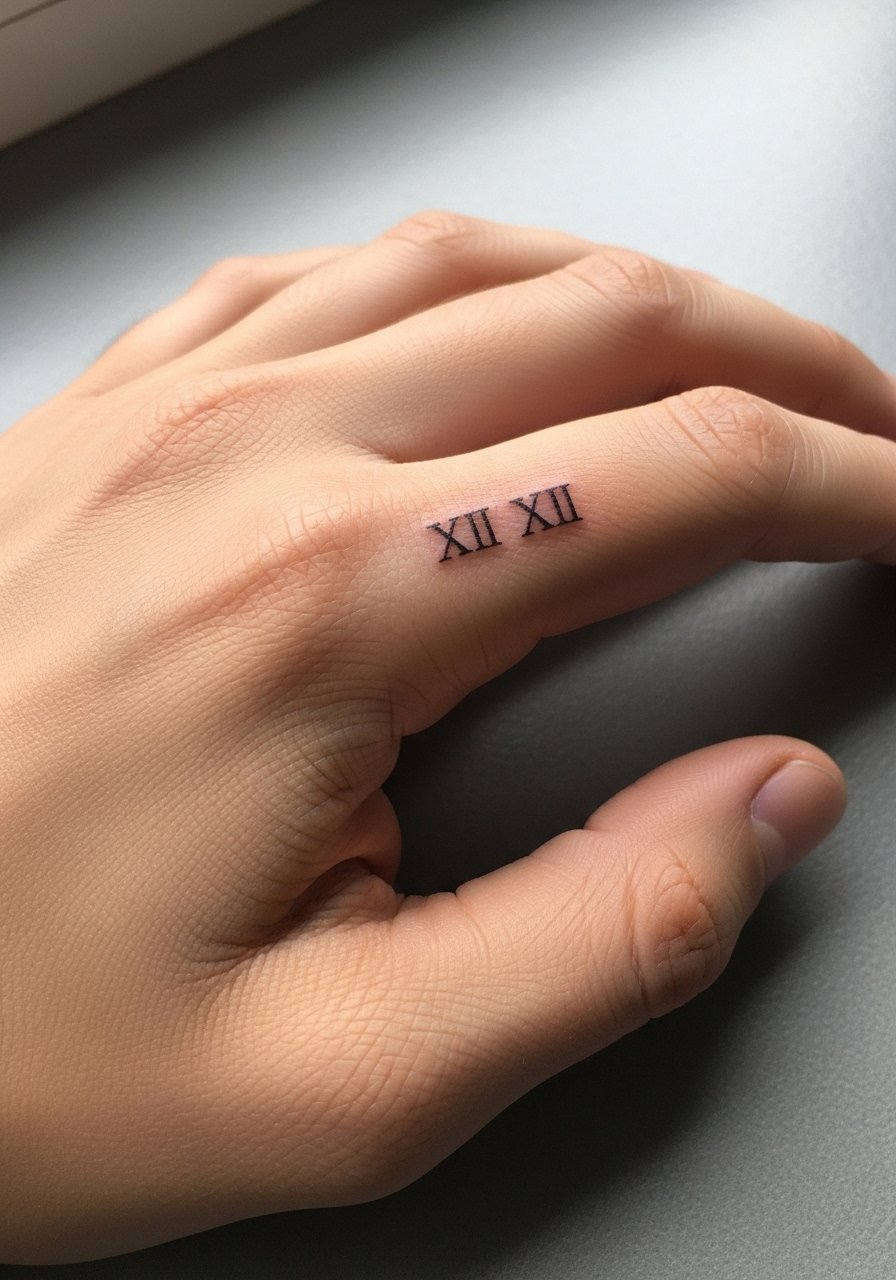
Finger placements read constantly but suffer abrasion and washing that speed fading. Micro Roman numerals are elegant and low-vis in work settings, but plan for yearly touch-ups if you want crisp edges. The session is quick and the pain hits sharp and brief. Tell your artist to use a slightly thicker outline compared with standard micro work to compensate for frequent hand washing. Keep the hand free of rings for the appointment and when you show it off try thin stackable rings on adjacent fingers rather than on the tattooed digit.
6. Blackwork 11:11 Geometric Frame on Forearm
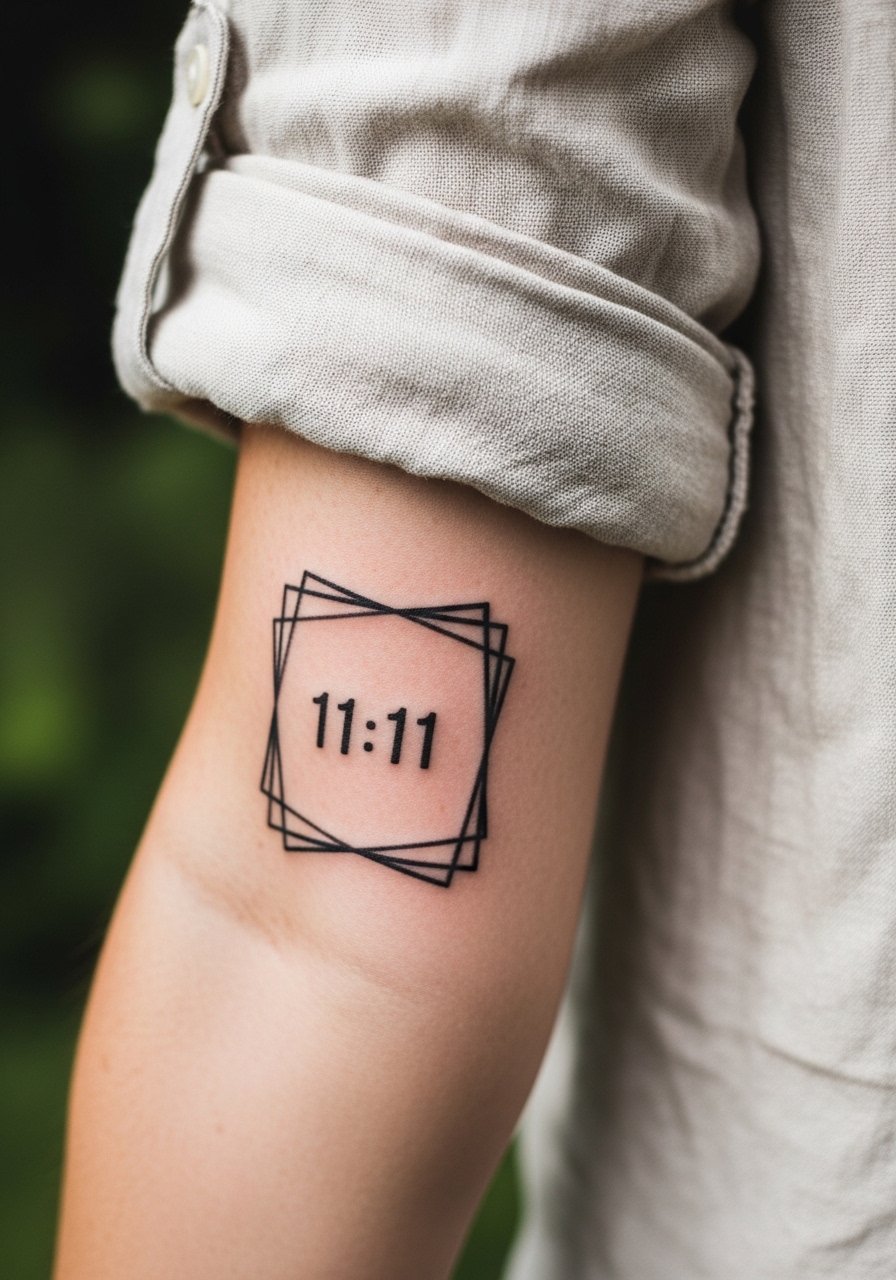
Bold blackwork frames give the numbers contrast and protect readability on lighter skin tones. Forearms see sun and abrasion so this containment tactic helps longevity. Sessions take longer, often an hour or more, because of block shading. A common error is making the frame too small which causes the numbers to fight for space as the piece ages. For the session wear, roll a linen short sleeve shirt so the artist can work with the arm extended without tight fabric. Expect touch-ups at year three depending on sun exposure.
Pre-Session Essentials
The wrist, finger, and forearm pieces above have different prep needs than collarbone or behind-ear work, so a few targeted items make the session smoother and the first week less fussy.
-
Lush Tattoo Balm. A non-greasy balm many people prefer for small wrist and finger pieces because it leaves a matte finish while supporting dry healing.
-
Green Sheep Tattoo Salve. Thinner consistency that works well in humid climates and helps avoid caking on ankle and calf numbers.
-
Indie Bodhi Balm. Favored for minimal shine on micro work, useful for knuckle and finger tattoos that need a breathable finish.
-
UK Formula T Ink Cream. Absorbs quickly which prevents the white cast some people see on darker skin tones during healing.
-
Hustle Butter. A thinner alternative to heavy ointments that many choose for fine line wrist pieces to reduce clogged pores while supporting recovery.
7. Watercolor 11:11 with Celestial Dots on Upper Arm
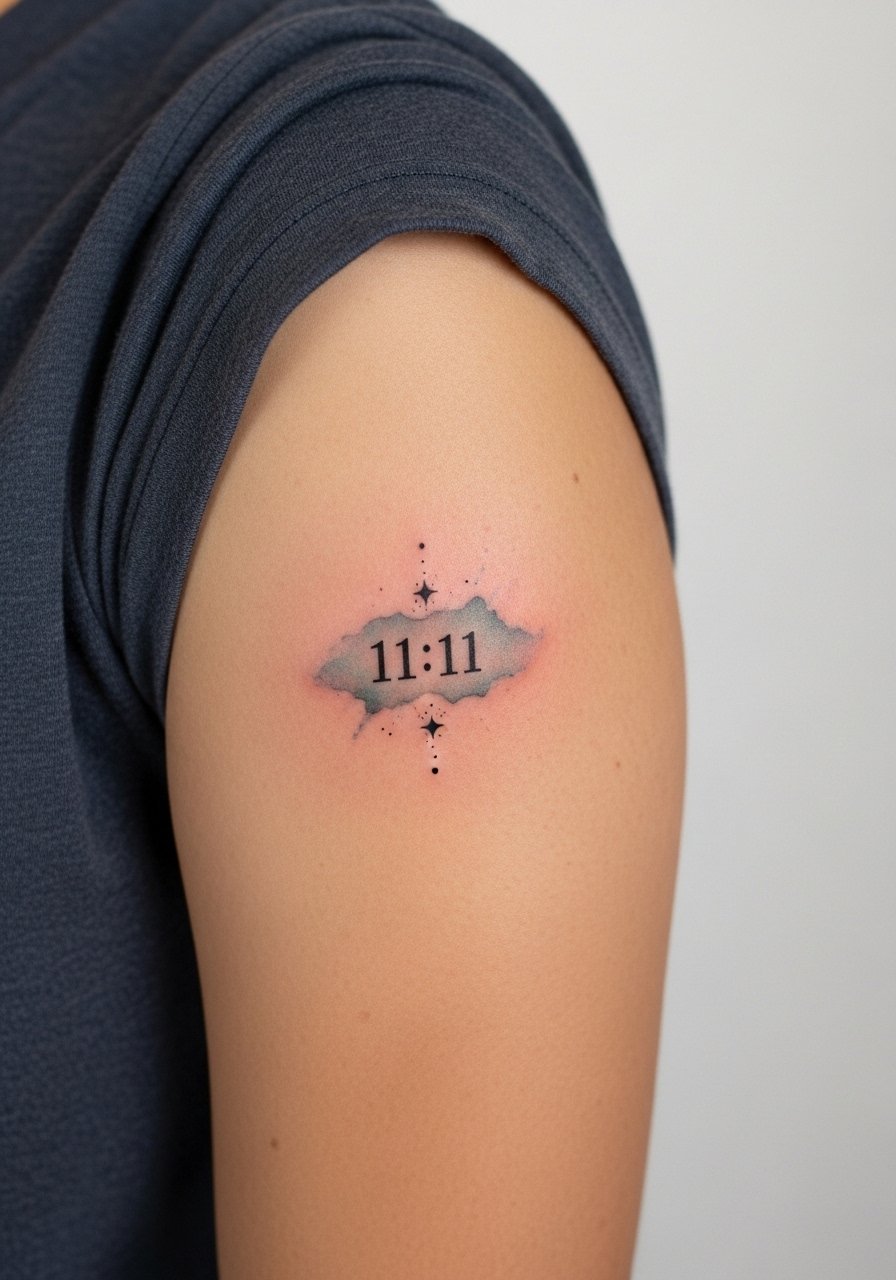
Watercolor effects give a dreamy backdrop to the numbers but they require more saturation and layering to last. The upper arm sees less friction than wrists or hands so color holds better here. Tell the artist you want concentrated pigments around the numbers and soft fadeout beyond a 1 cm border to avoid mottling later. Sessions can run longer because of color passes. A common mistake is under-saturating pigment in the first pass which results in patchy healing. For casual shows, pair the piece with rolled sleeves or a short sleeve tee that keeps the arm on display.
8. Neo-Traditional 11:11 Clock Face on the Calf
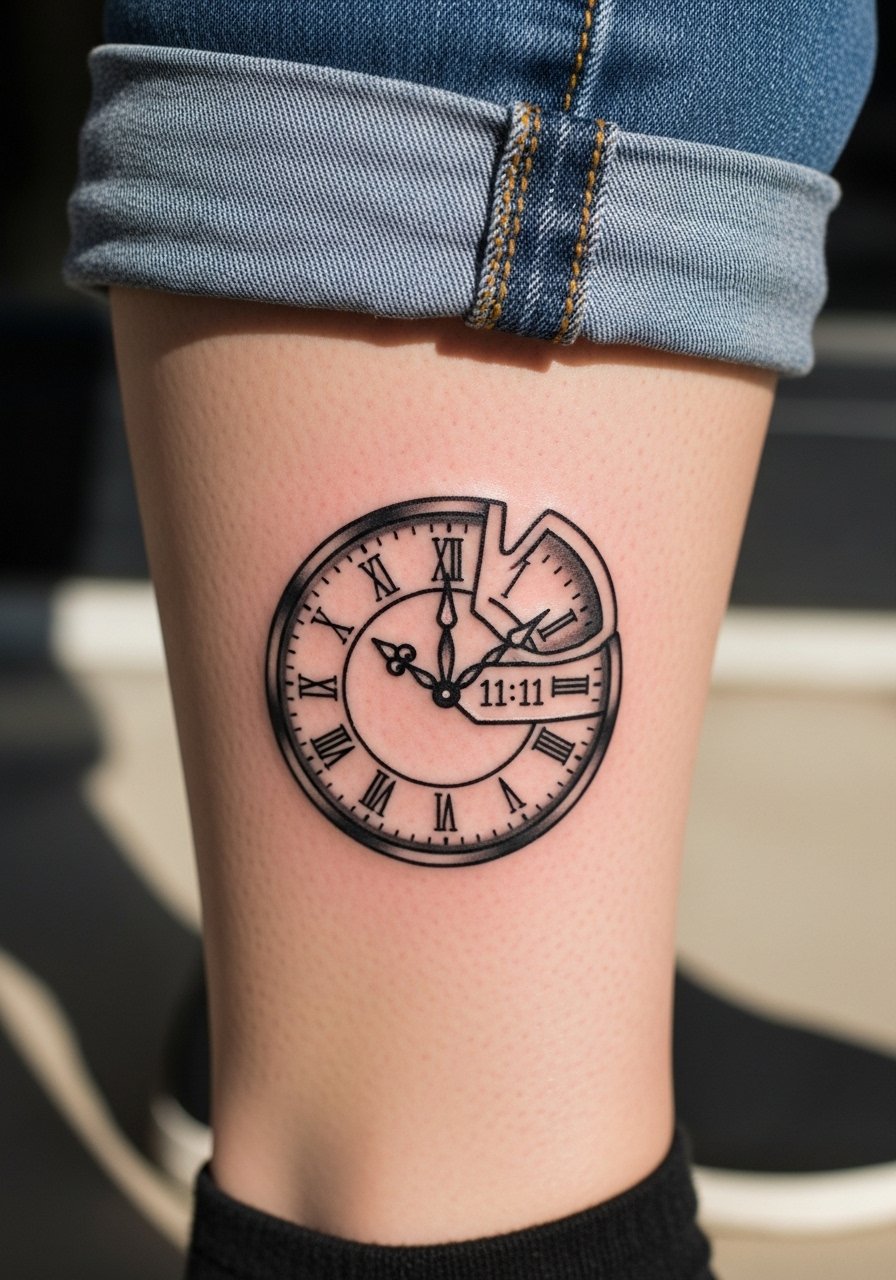
Calf placements are forgiving for slightly larger neo-traditional clock faces that mix outline with shading. Pain is moderate and sessions might take one to two hours. The bigger canvas lets artists space elements so the piece ages into a readable shape. Watch out for overly detailed small gears inside the clock because micro mechanics in a 6 cm diameter can blur after a few years. For session wear, pull on jeans you can roll up or wear shorts to give the artist easy access. A cuffed straight-leg look pairs well when you want to show the tattoo.
9. Ornamental 11:11 Mandala on the Shoulder Blade
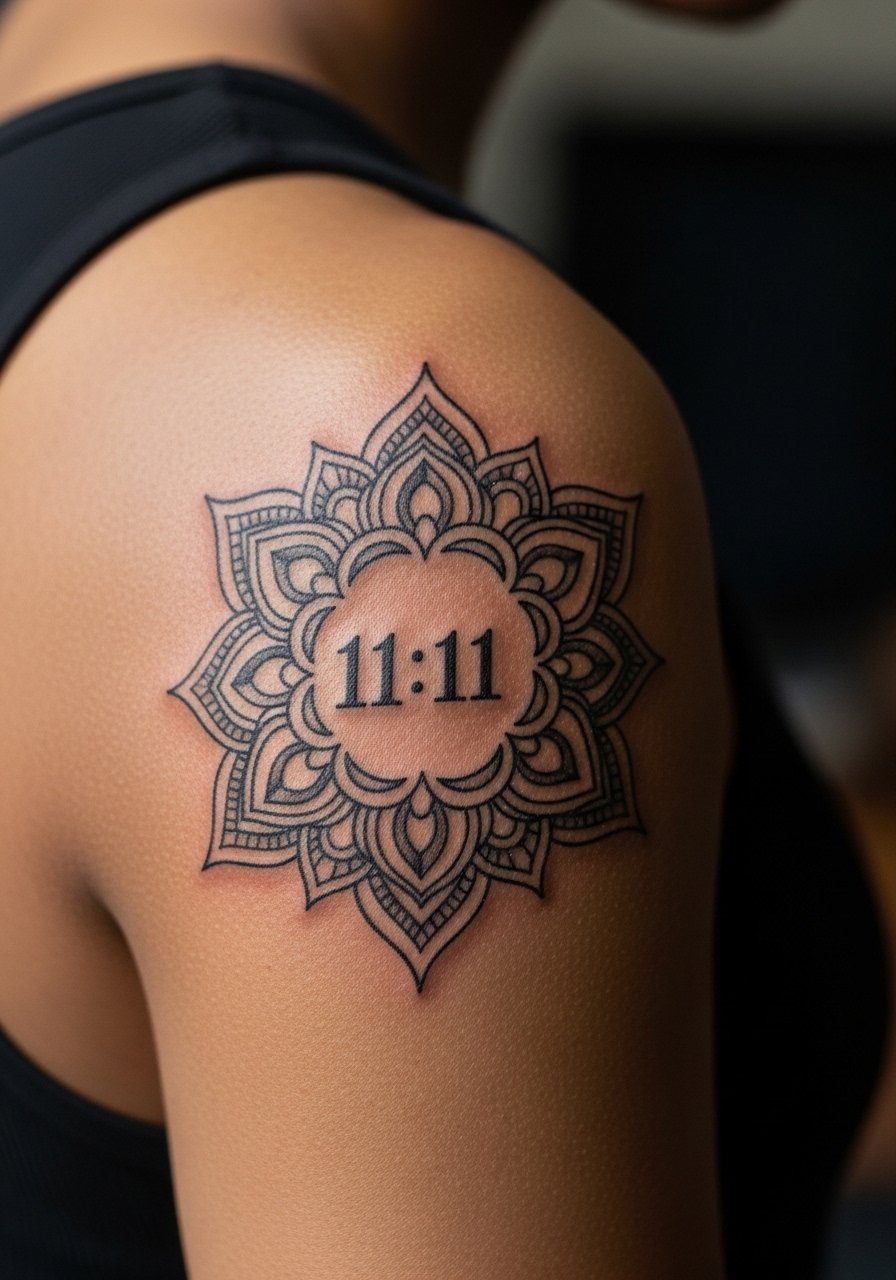
Ornamental mandalas hide the numbers within patterning so the motif reads as texture unless you look closely. Shoulder blades are low-friction and heal well. The design needs breathing room so avoid cramming many concentric rings under 4 cm. A common mistake is asking for ultra-dense mandala work too small for the placement which causes merging in dense zones. Sessions are usually two passes. For show-off looks, an open-back dress or a tank top does the job, and the pattern works with delicate necklaces worn across the opposite shoulder.
10. Ignorant Style 11:11 Doodle on Ankle
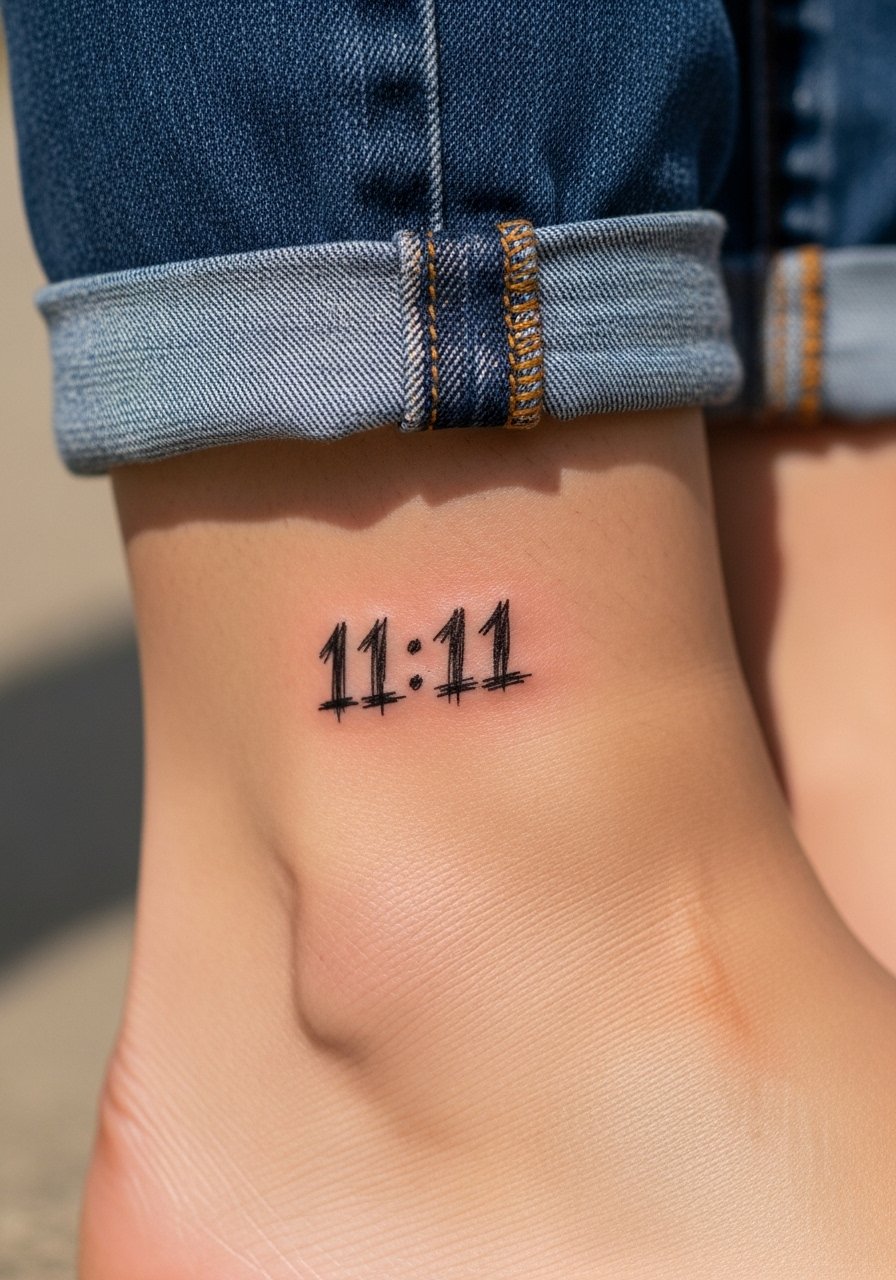
The raw, hand-drawn aesthetic reads like a found memory. Ankles are exposed to boots and socks so expect some abrasion depending on footwear. The session is short and the vibe benefits from slightly ragged line edges rather than textbook straightness. Mistake to avoid is asking the artist to "perfect" the doodle into a mechanical font because that defeats the point. For showing it off, cuff straight-leg jeans or wear sandals, and consider a thin ankle chain to draw attention down toward the art.
11. Fine Line 11:11 with Heart Pulse Line on Inner Bicep
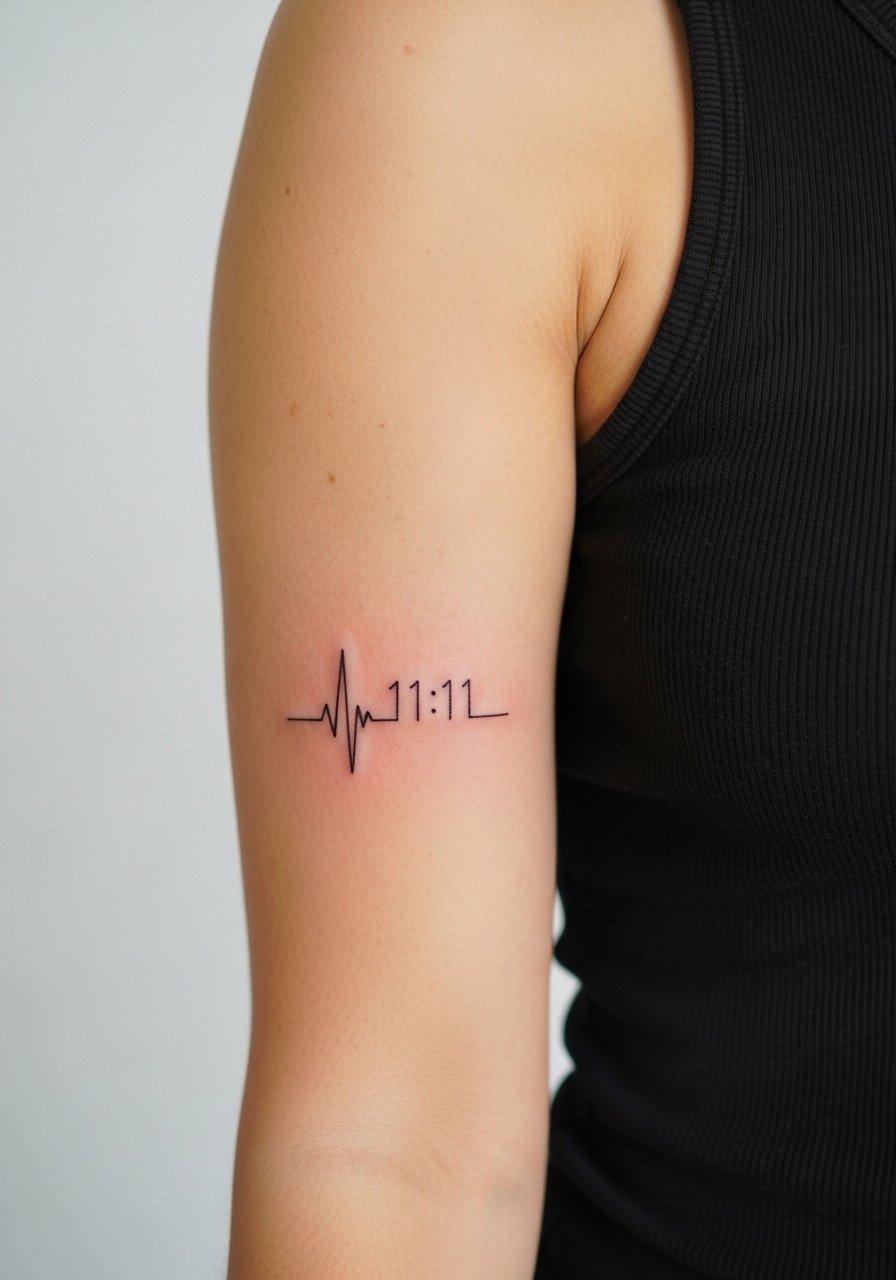
Inner bicep pieces have more softness in the tissue which helps single-needle work settle but increases the chance of minor swelling during healing. Expect moderate pain and a session under 45 minutes. The pulse motif helps readability when numbers are small because horizontal rhythm leads the eye. A common error is making the pulse too busy with extra peaks that compete with the numerals. For the session, wear a tank so the arm can be raised without fabric pulling. A slim leather cuff opposite the tattoo draws attention if you want to style the look.
12. Minimalist 11:11 Negative Space on the Temple

Negative space gives a portal effect by letting skin be part of the motif. Temple placements need careful spacing because the skin there is thinner and near hairlines. Pain sits on the higher end for this spot. Ask your artist to test a stencil live so you can confirm scale. Mistakes include choosing a pattern with too many tiny gaps which fill in during healing. For session wear, an open collar button-down helps artists access the hairline area. The result pairs subtly with a loose button-down shirt when you want to reveal the placement.
13. Micro-Realism 11:11 on Clock Gears at the Ear
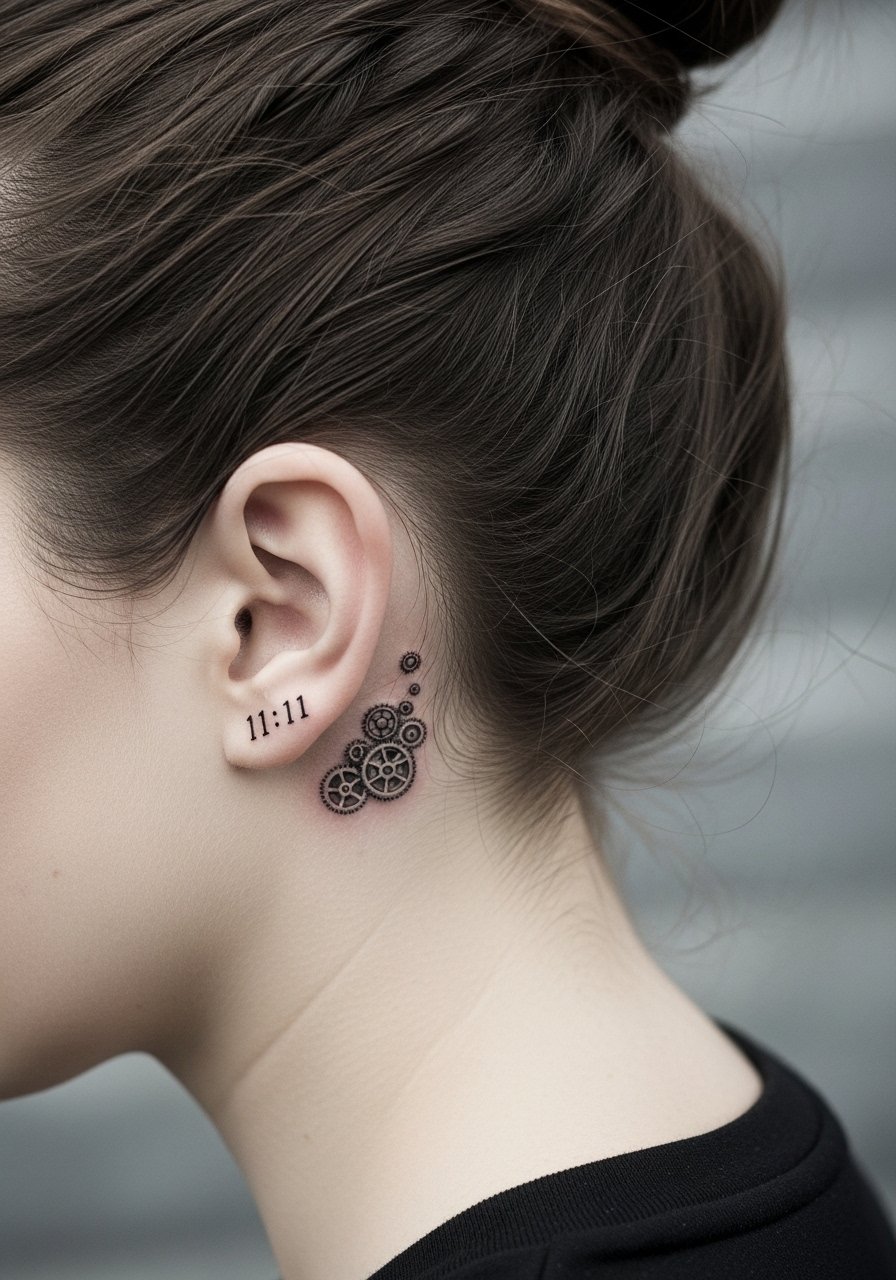
Tiny mechanical motifs can be magical when placed near the ear but demand an artist who specializes in micro-realism. Session time is short but requires concentration. The real risk is asking for more gear detail than the space allows which leads to blurring in months. Ask for slightly larger spacing between gear teeth. For access, tie hair up and wear a button-down you can pull aside. If you plan to photograph this spot, use high-contrast lighting to make the tiny numerals pop.
14. Binary 11:11 as Ones-Only on the Neck
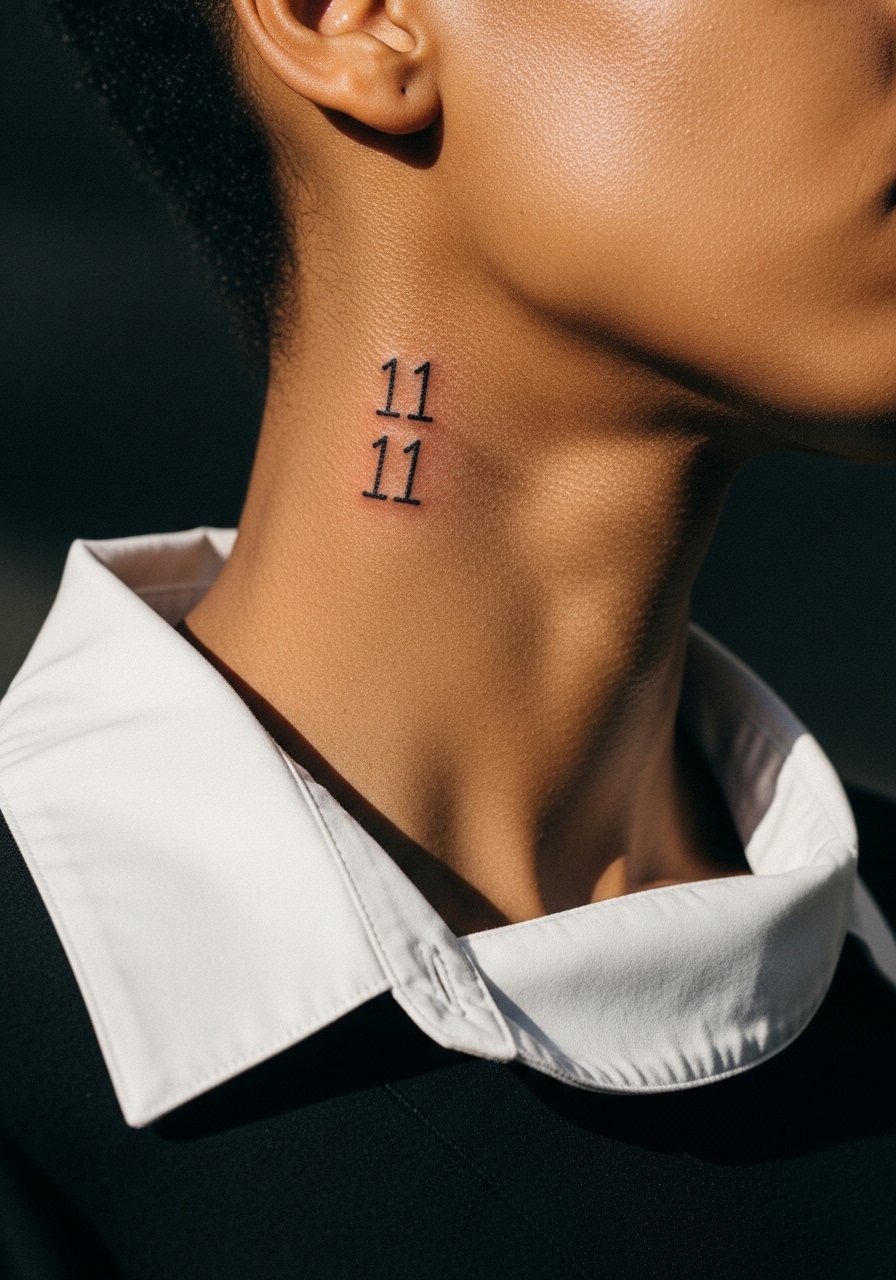
A tech-forward spin replaces colon styling with a vertical cluster of ones to hint at 11:11 without numerals. The neck is visible and can affect workplace considerations, so plan accordingly. Pain is high but the session is brief. The mistake is making the ones too tight which causes merging on thin neck skin. Ask your artist to space the digits by millimeters more than your eye wants. Wear a wide-neck shirt for the session so the artist has clean access and you avoid fabric rubbing the fresh work.
15. UV-Reactive 11:11 Hidden Ink on the Ribcage
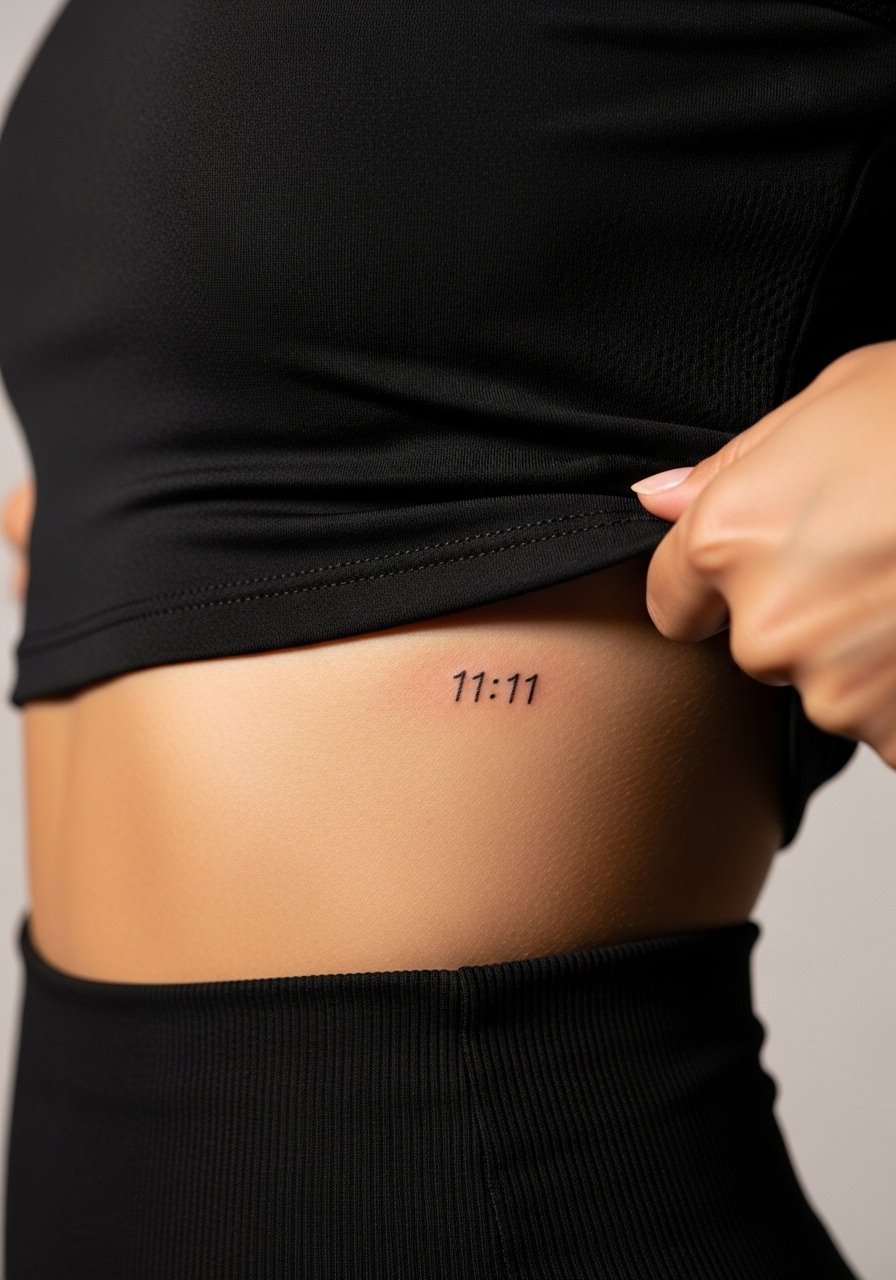
UV-reactive ink offers a night-only reveal that stays subtle by day, which is ideal for private placements like the ribcage. Ribcage work can be painful and requires an experienced hand for even depth. One camp loves the novelty, the other worries about long-term pigment stability. Ask your artist about the specific UV product and patch-test first. For session wear, a cropped top you can lift slightly is easiest. Keep in mind that the ribcage moves with breathing so spacing should be breathable to avoid warping as the skin settles.
16. Pairing 11:11 with Birth Time on an Ankle Clock
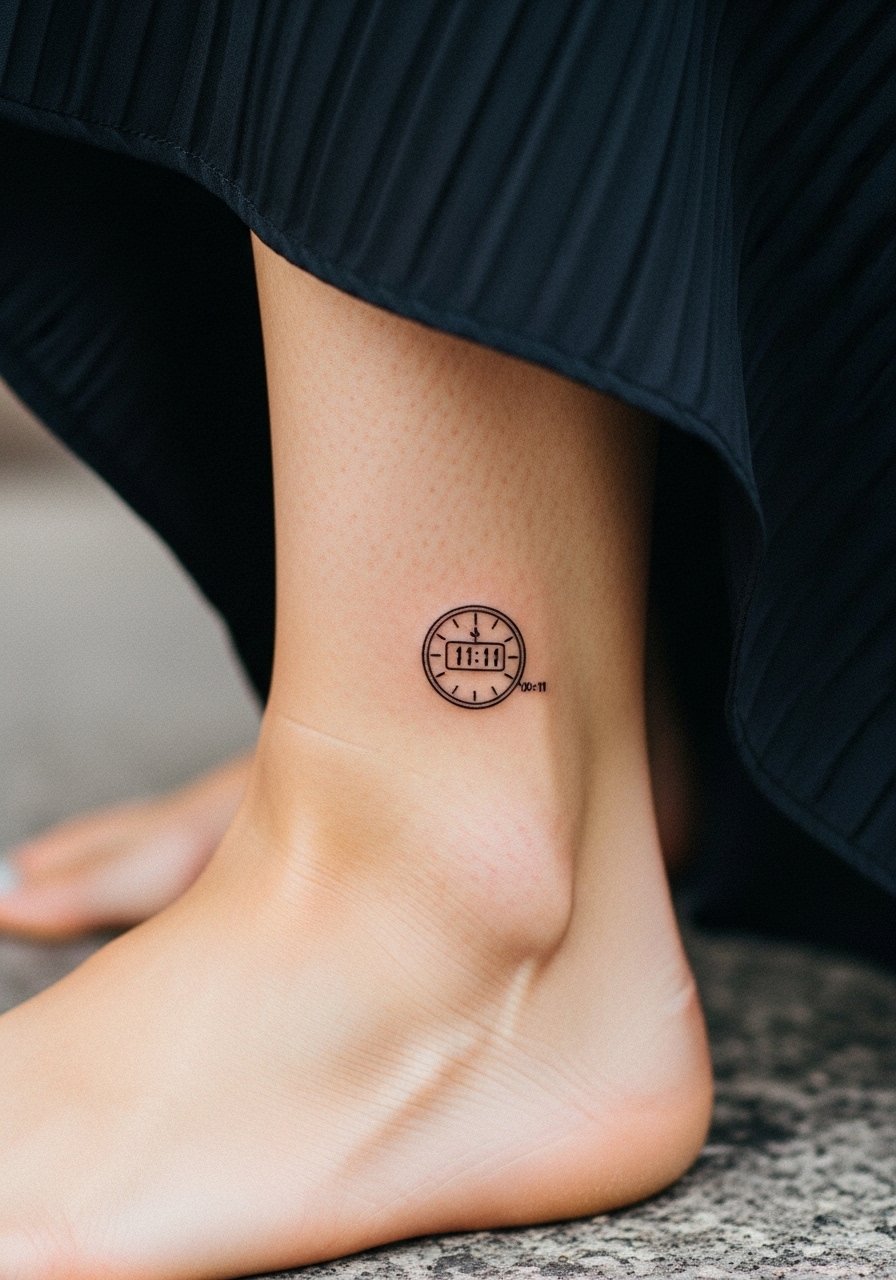
Combining 11:11 with a birth time inside a tiny clock adds personal context without heavy ornamentation. The ankle is forgiving for small clocks because you can keep footwear choices in mind to reduce rubbing. A common error is compressing too many numbers into a tiny bezel which turns into a blob. Ask the artist to prioritize readable numerals and leave outer gear details minimal. For showing the piece, cuff jeans or wear a midi skirt. The ankle clock stands out with sandals or low-profile sneakers.
17. Blackwork 11:11 Band Around the Wrist
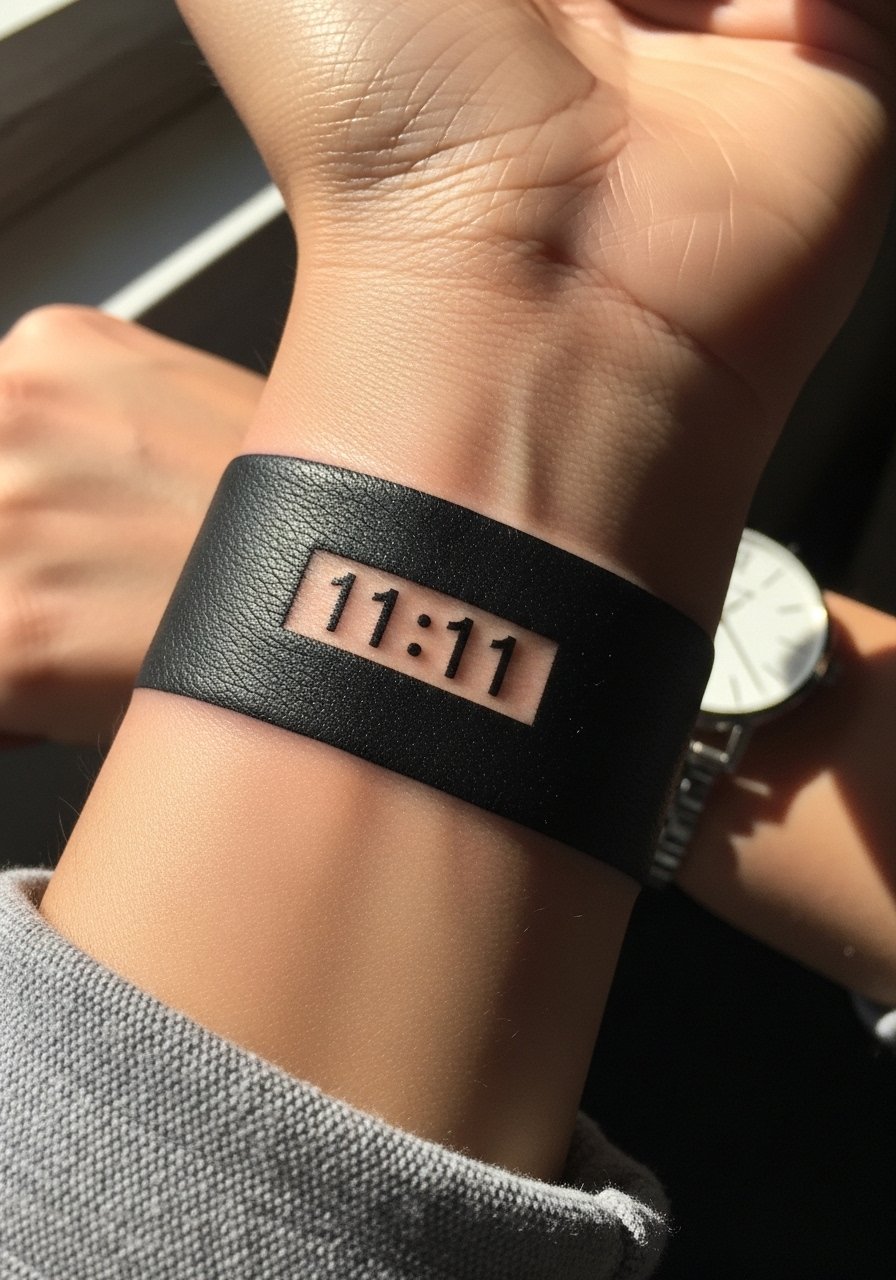
A negative-space numeric inside a black band reads from a distance and ages into a graphic statement that protects the numbers from fading. This requires solid saturation so sessions can be longer. The main mistake is under-packing the black area which leads to patchy healing. Ask for consistent saturation and plan on a follow-up touch-up if any gaps appear. For show-off styling, pair with a thin watch or keep the other wrist bare. Plan wardrobe so the band does not rub against tight sleeves during the first week.
18. Minimal Stack on the Collar of a Shirt (Hidden by Collar)
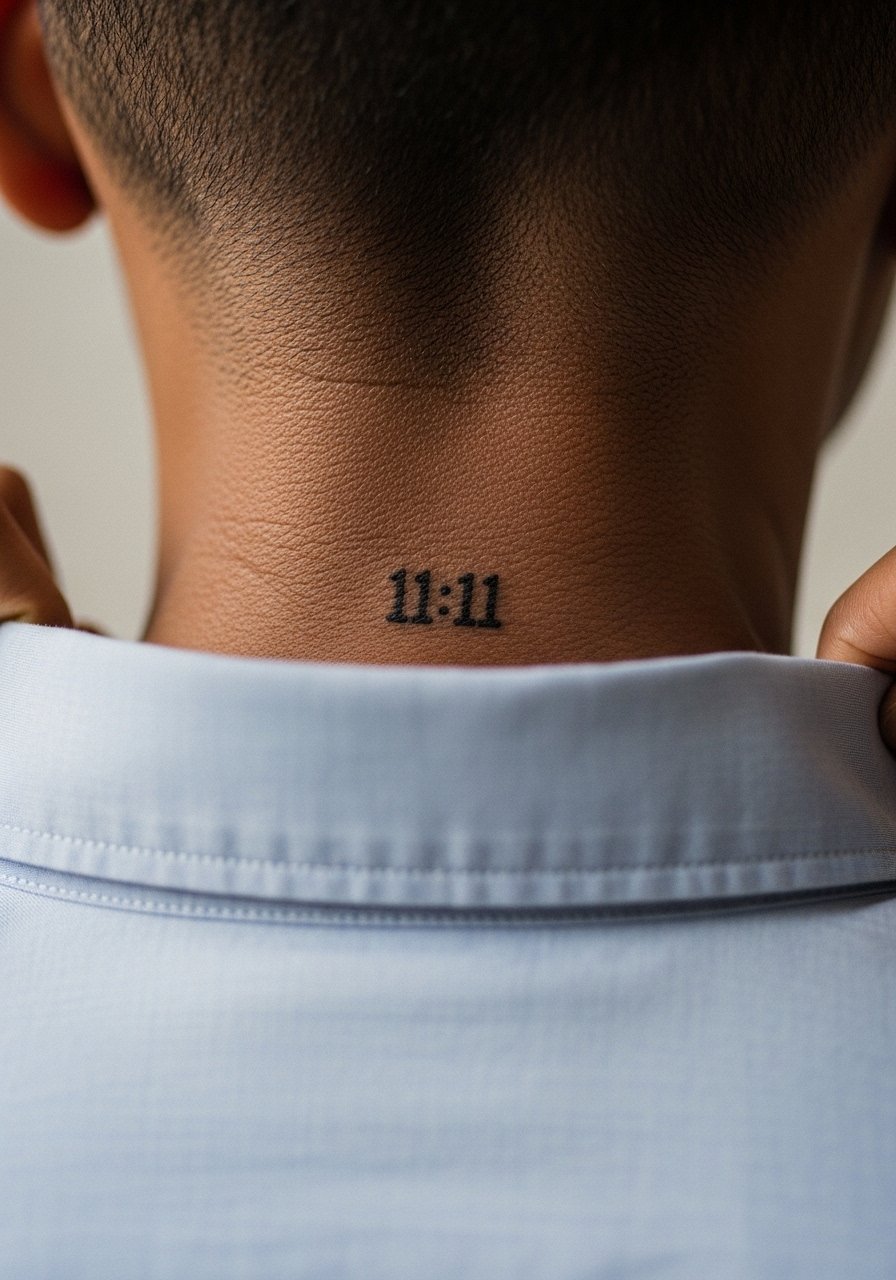
Nape placements let you hide the motif under collars for professional environments. The area can be picky about ink depth so ask for a slightly bolder outline than a delicate single-needle. The session is quick and pain is moderate. Mistakes include going too tiny which makes the piece ghost in photos. For the session, wear a loose button-down you can remove or have the collar pulled aside. This placement pairs well with a simple pendant or a neat collar that leaves the nape exposed occasionally.
19. Micro Geometric 11:11 on the Knuckles
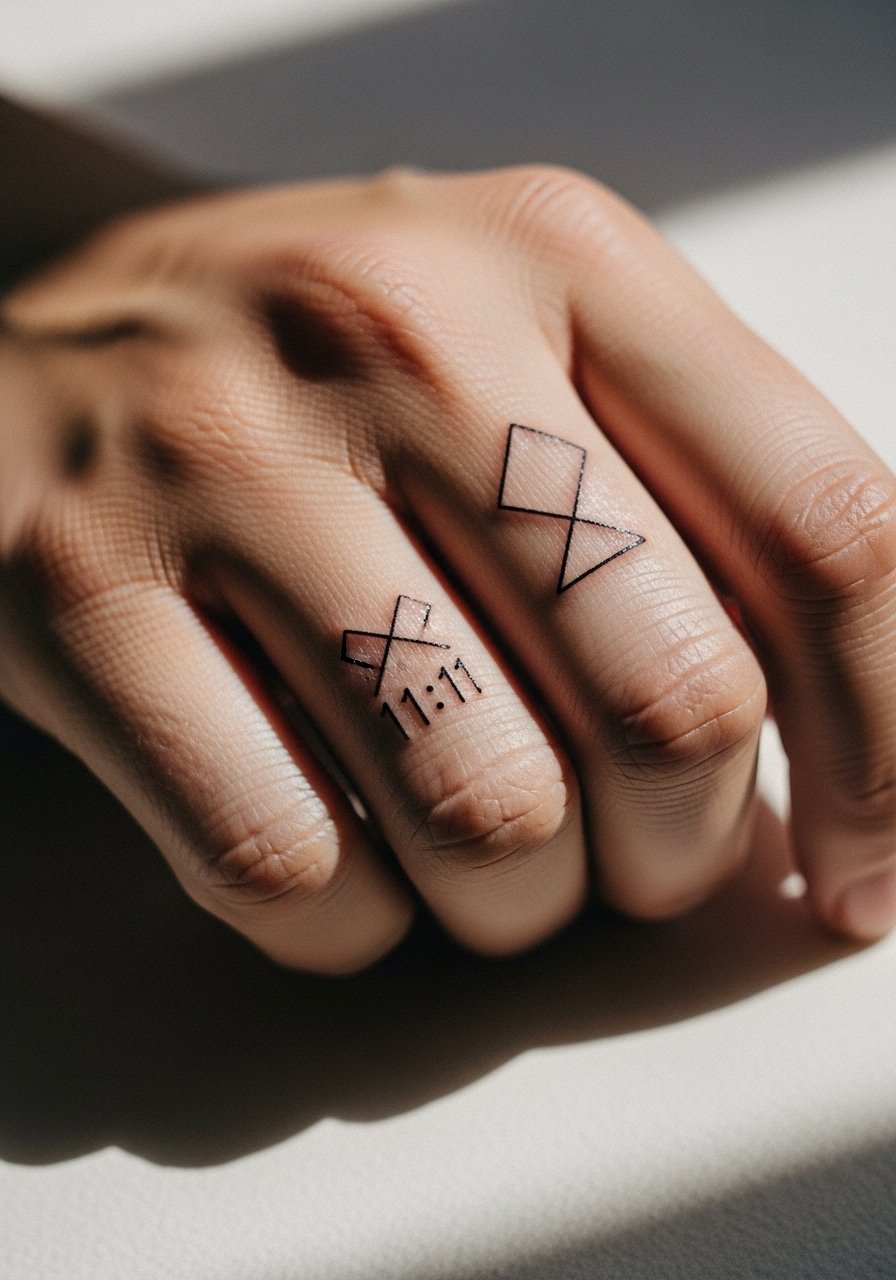
Knuckle work is bold for such a small motif because the area bleeds faster and sees a lot of motion. Expect faster fading and plan for touch-ups. The biggest mistake is placing too much detail in the knuckle skin which leads to melting of edges. Ask the artist to simplify shapes and to reinforce outlines slightly. For showing off, keep rings off the tattooed fingers and use adjacent fingers for stacked rings so the numbers remain visually uninterrupted.
20. Neo-Minimal Sternum 11:11 Under a Sports Bra
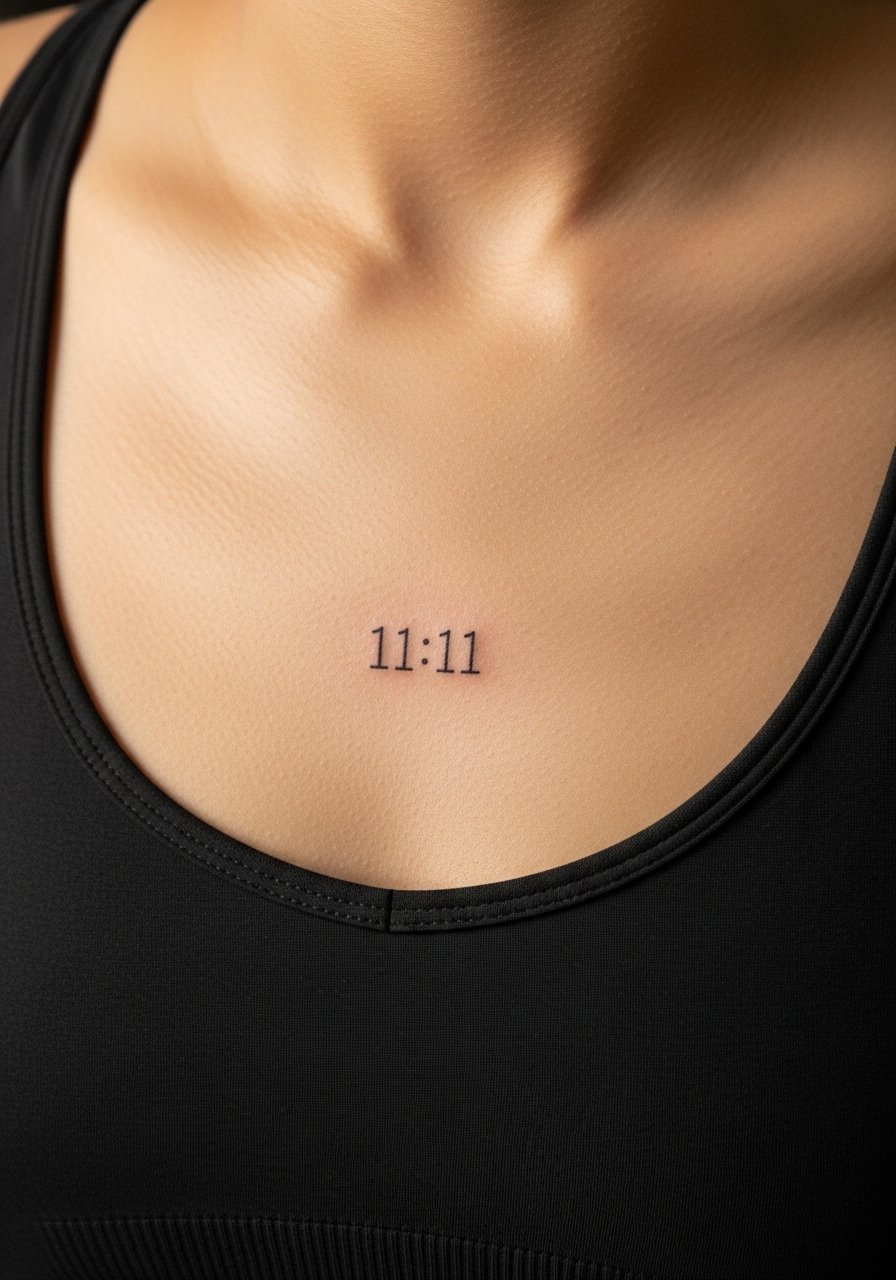
Sternum placements are intimate and best for people who want a hidden cue under clothing. Pain can be higher due to thin tissue. One practical issue is aftercare friction from bras and underwire, so choose session clothing that avoids straps over the area. A common mistake is placing numbers too close to the fabric line which causes rubbing. Wear a fitted sports bra for the session and for early healing. This spot pairs with low-cut tops when you want the piece to peek through.
21. Stipple Shaded 11:11 Mandala on the Spine
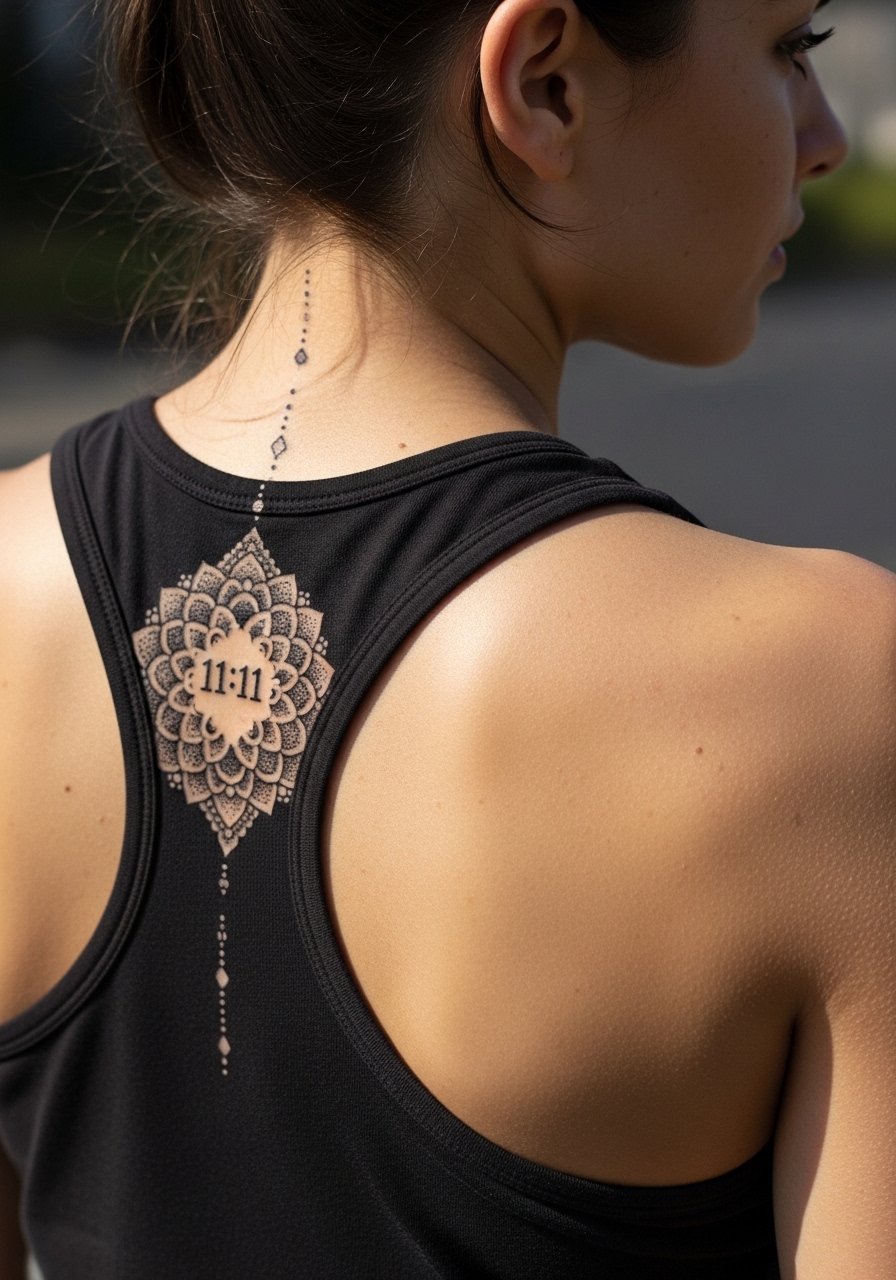
Spinal mandalas let the numbers sit in a vertical rhythm that reads when hair is up. Stipple or dot shading keeps the density airy and ages better than tight filled discs. Sessions can be long and you will feel sustained pressure more than sharp pain. The mistake is adding too many concentric rings that compress as they heal. Ask the artist to maintain open spacing in the dotwork. For showing it off, a racerback tank does the trick and keeps the area accessible for the session.
22. Micro Script 11:11 Behind the Knee

Behind-knee placements are intimate and move a lot, so linework there risks tiny migration over time. Pain is variable and often more uncomfortable than expected because the area flexes. Keep the design simple and avoid thin clustered lettering. A consultation lead works well here, so bring movement references. For the session, wear shorts you can roll up and plan to keep the area dry of heavy rubbing during healing.
23. Chain-Link 11:11 Around the Ankle
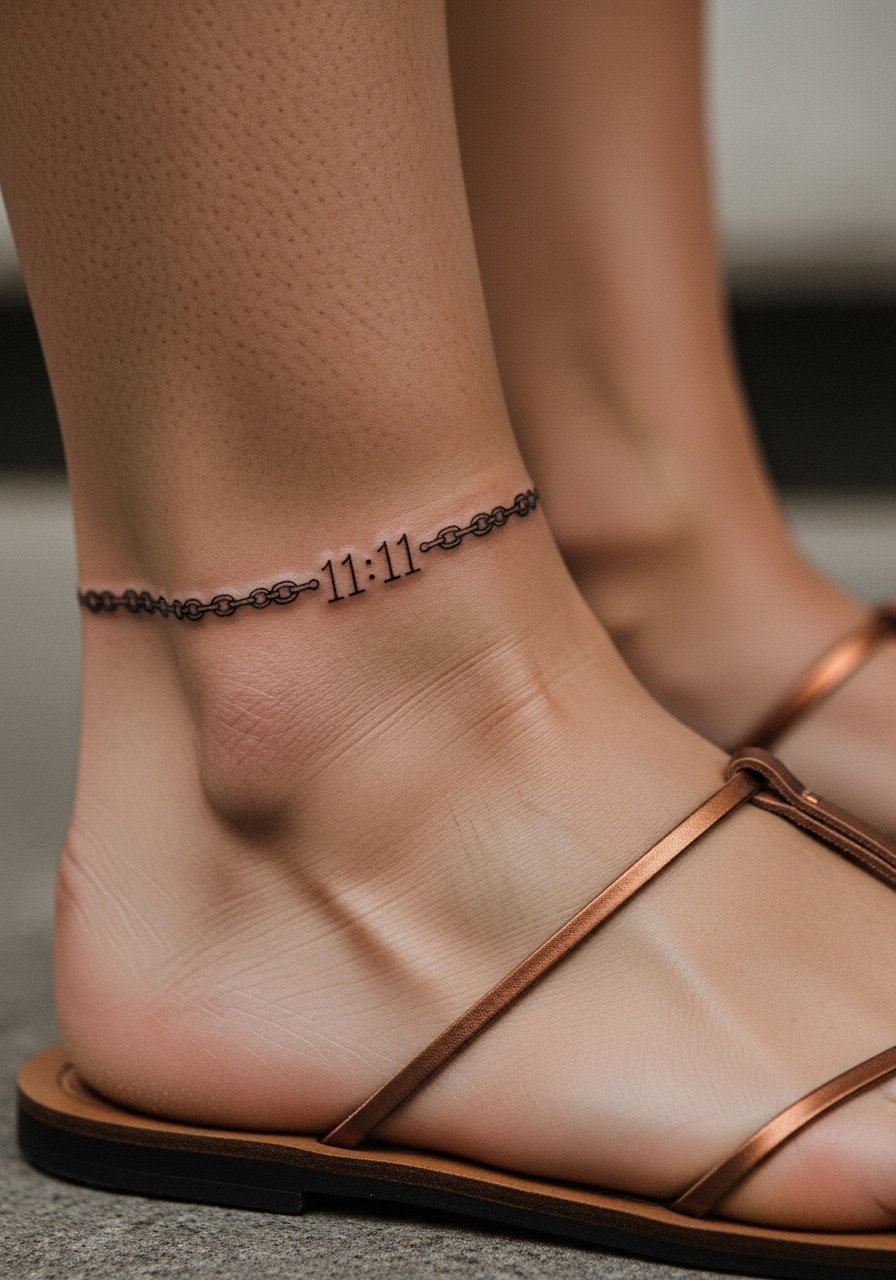
Integrating 11:11 into a chain-link motif gives the numbers a repeating, wearable feel. Ankle chains get scuffed by shoes and socks so choose slightly stronger line weight. Sessions are short. The usual error is making the links too thin which leads to uneven gaps after a year. Ask for slightly larger inner spaces in the links so the pattern remains crisp. For casual styling, pair with sandals or a cuffed pant and an ankle chain if you want extra sparkle.
24. Micro Roman Numeral 11:11 on the Neck Nape
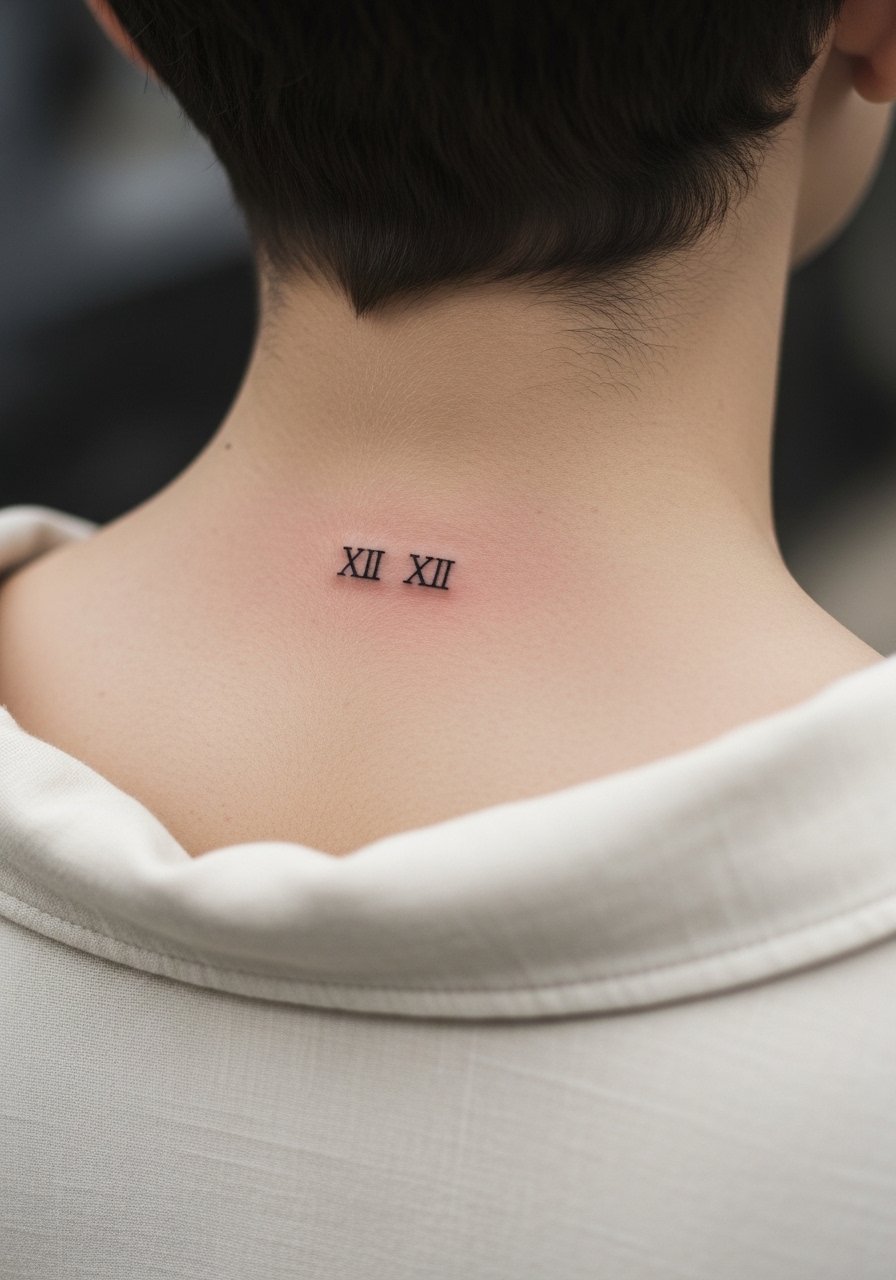
The upper nape is a low-exposure spot unless you wear your hair up. Micro Roman numerals give a cryptic feel. Pain is moderate. The key is to avoid compressing numerals vertically; spacing keeps them legible when photographed. The session is quick and the result pairs well with high collars or loose hair. Wear a wide-neck shirt that can be shifted for the artist. If you photograph the spot, a pulled-up hairstyle makes the tiny numerals visible.
25. Negative Space 11:11 Portal on the Thigh
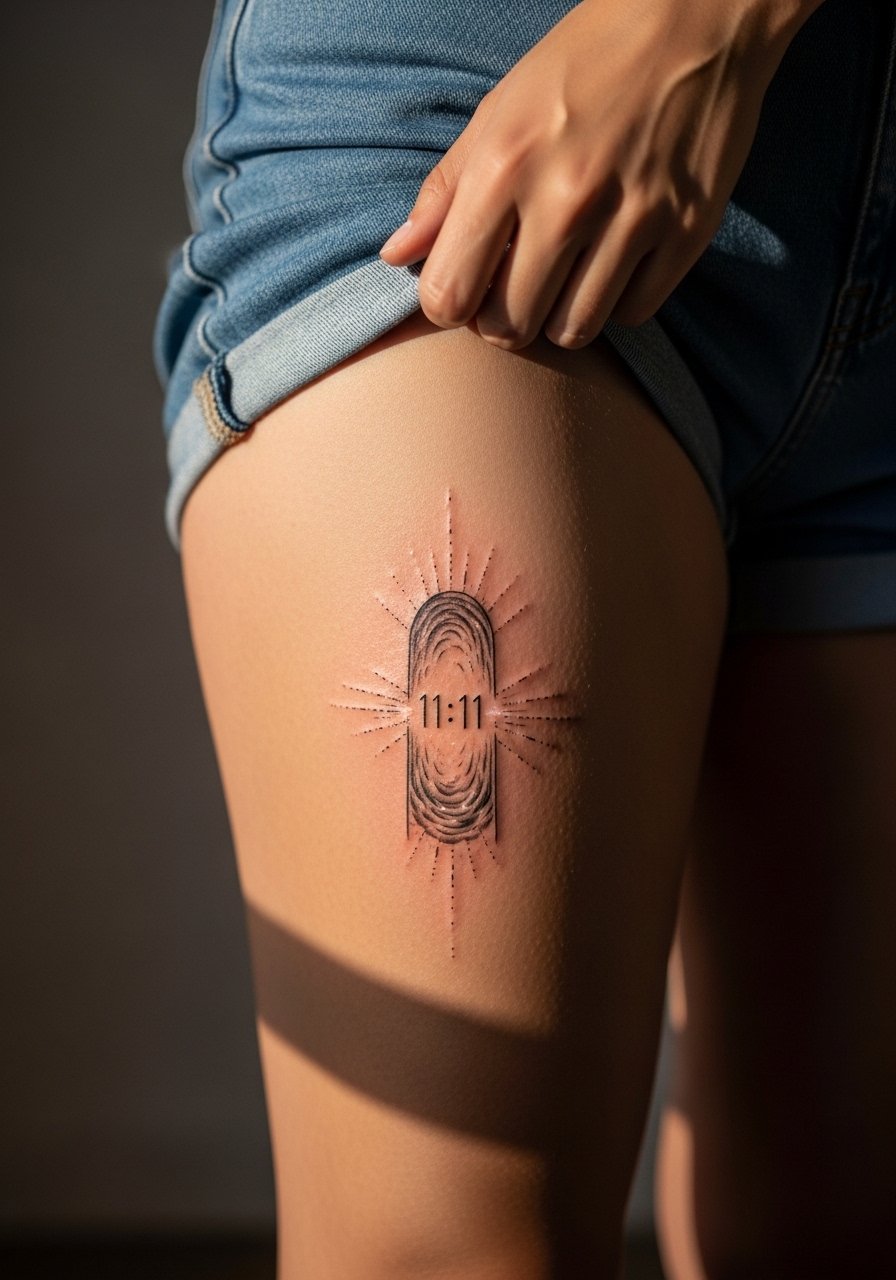
Thigh placements take friction from clothing less than ankles and fingers so negative space pieces age predictably here. Pain is low to moderate depending on padding. Avoid overly tiny negative gaps that will fill in over a few years. Sessions are usually quick and the artist can scale up if you want more separation. For showing it off, high-waisted shorts or a midi skirt give a controlled reveal. This spot also allows for gradual expansion into larger ornamental work without sacrificing the portal concept.
26. Small Clock Face with Birth Coordinates on the Upper Arm
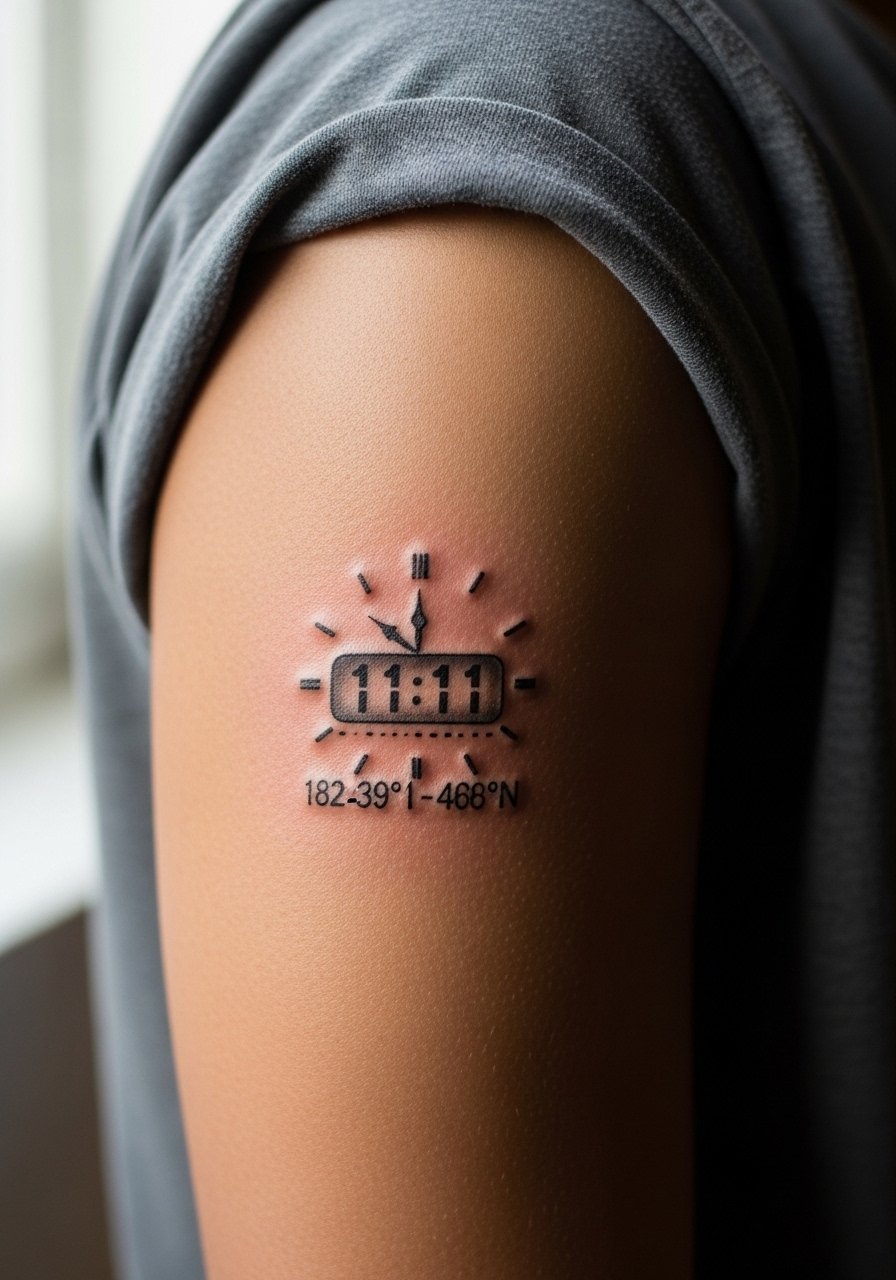
Adding coordinates to a clock face turns the 11:11 motif into a specific moment tied to place. Upper arms weather sun better than inner wrists so details hold longer. Sessions are brief and the area tolerates slight increases in size for readability. The mistake is cramming long coordinate strings under small bezels which blurs; consider simple degrees or truncation. Roll a short sleeve shirt for the session so the artist can work with the arm extended. This combo looks deliberate under linen sleeves on warm days.
27. Fine Line 11:11 on the Ribcage with Subtle Wings
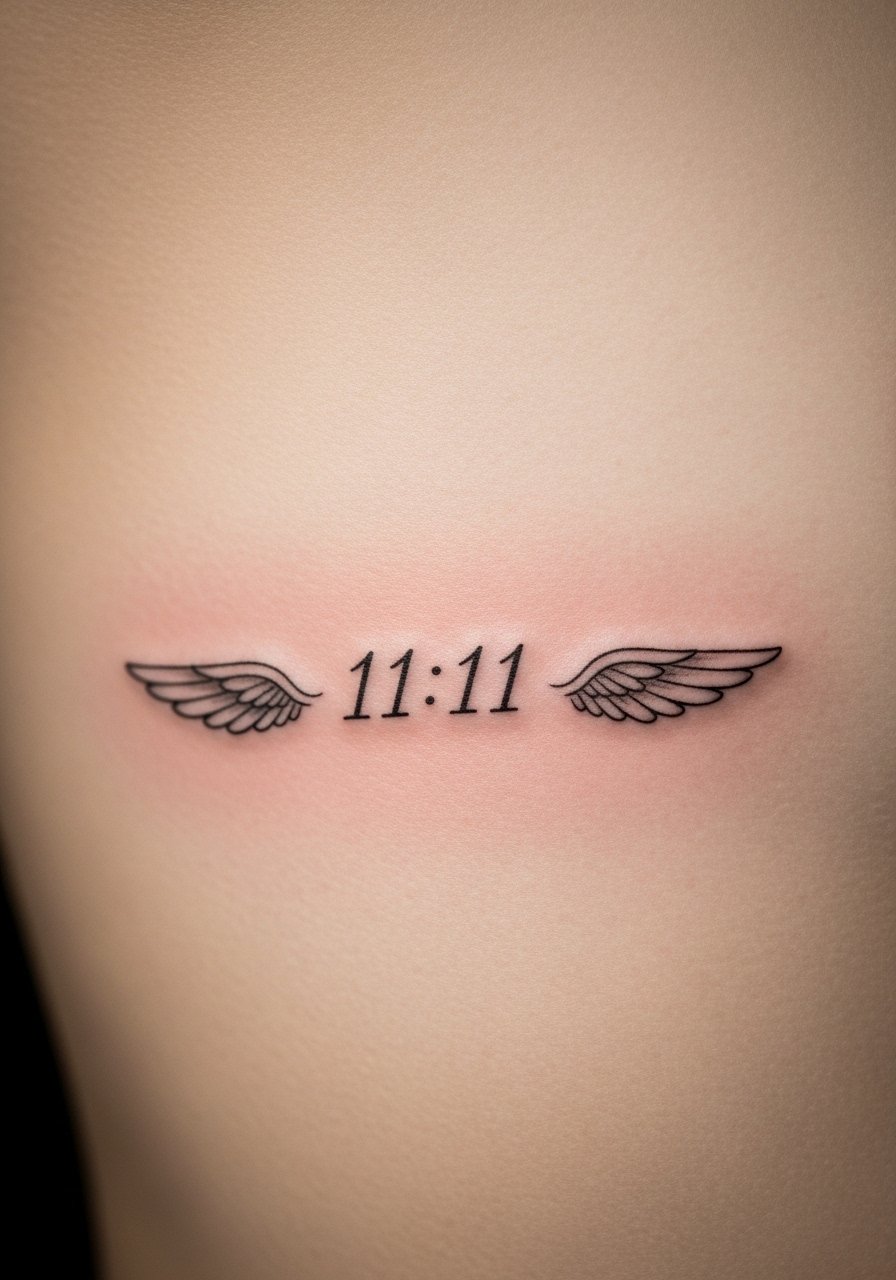
Ribcage motifs read as private cues that peek out with the right clothing. This spot is higher on pain scales and needs careful breath control during the session. Fine line here divides artists into two camps. One camp says the skin stretch will blur delicate single-needle lines within two years. The other camp argues that with proper needle depth and spacing, fine line settles well. Ask your artist which side they are on and request slightly wider spacing or a touch-up plan if they favor single-needle work. For session wear, keep a loose tank or button-down so the area is accessible.
Frequently Asked Questions
Q: Will a fine line 11:11 on my wrist fade faster than a bold one, and what can I do about it?
A: Fine line on the wrist usually fades faster because the area sees frequent sun and motion. Pick a slightly thicker single-needle thickness, plan a touch-up at 6 to 12 months, and commit to sunscreen for the first month of exposure. From what I've seen, placement and consistent sun protection matter more than stylistic trends.
Q: I have dark skin, which 11:11 styles tend to hold up best visually?
A: High-contrast blackwork or a framed geometric piece generally shows up better and lasts visually on darker tones. Dotwork and very thin single-needle pieces can ghost unless the artist uses bolder outlines. Ask for a healed photo of similar skin tones in the artist's portfolio or search tags like #fineline1111 plus your city to find examples.
Q: Saniderm versus dry healing for a small 11:11, which camp should I pick?
A: The debate is active. One camp favors Saniderm and similar films for reduced scabbing and cleaner early weeks. The other camp prefers dry healing for fine line work to avoid over-moisturizing and soft edges. It depends on the artist's technique and your skin type, so ask them which method they use for micro and fine line work and why.
Q: How often should I expect to touch up a micro 11:11 on a finger or knuckle?
A: Fingers and knuckles are high-friction zones and commonly need touch-ups every 1 to 2 years. Expect a quick follow-up session rather than a full redo. Planning for that service keeps the design crisp over time.
Q: What should I wear to a collarbone or upper chest session so the artist has clear access?
A: A strapless bra or a wide-neck shirt you can pull slightly aside works best. For the appointment, consider an off shoulder sweater or a strapless option so the artist can reach the area without fabric obstructing the linework.
Q: Are UV-reactive inks safe and stable for 11:11 pieces?
A: UV inks can be a fun secret reveal but they require a patch test and an experienced artist who knows pigment stability. Some people report faster fading under normal light, so weigh the novelty against potential touch-up needs and ask for product specifics before booking.
Q: Where should I look to find an artist who specializes in tiny numeric work without naming anyone directly?
A: Search hashtags like #1111tattoo and #fineline1111, filter by location, and use booking apps for "small symbol" specialists. Community threads on r/tattoos often share recent healed photos which help you judge line retention for your skin tone.
