
Fine line scripts are everywhere online, but what lasts on the spine is not always what looks best on an iPad. Fine line pieces can ghost under friction, and watercolor washes can disappear faster than you expect. This list of 21 spine quote drawings pairs practical aging notes with clothing tips and session prep so you pick a look that still reads at year three, not just at the mirror.
1. Fine Line Script, Upper Spine Minimal
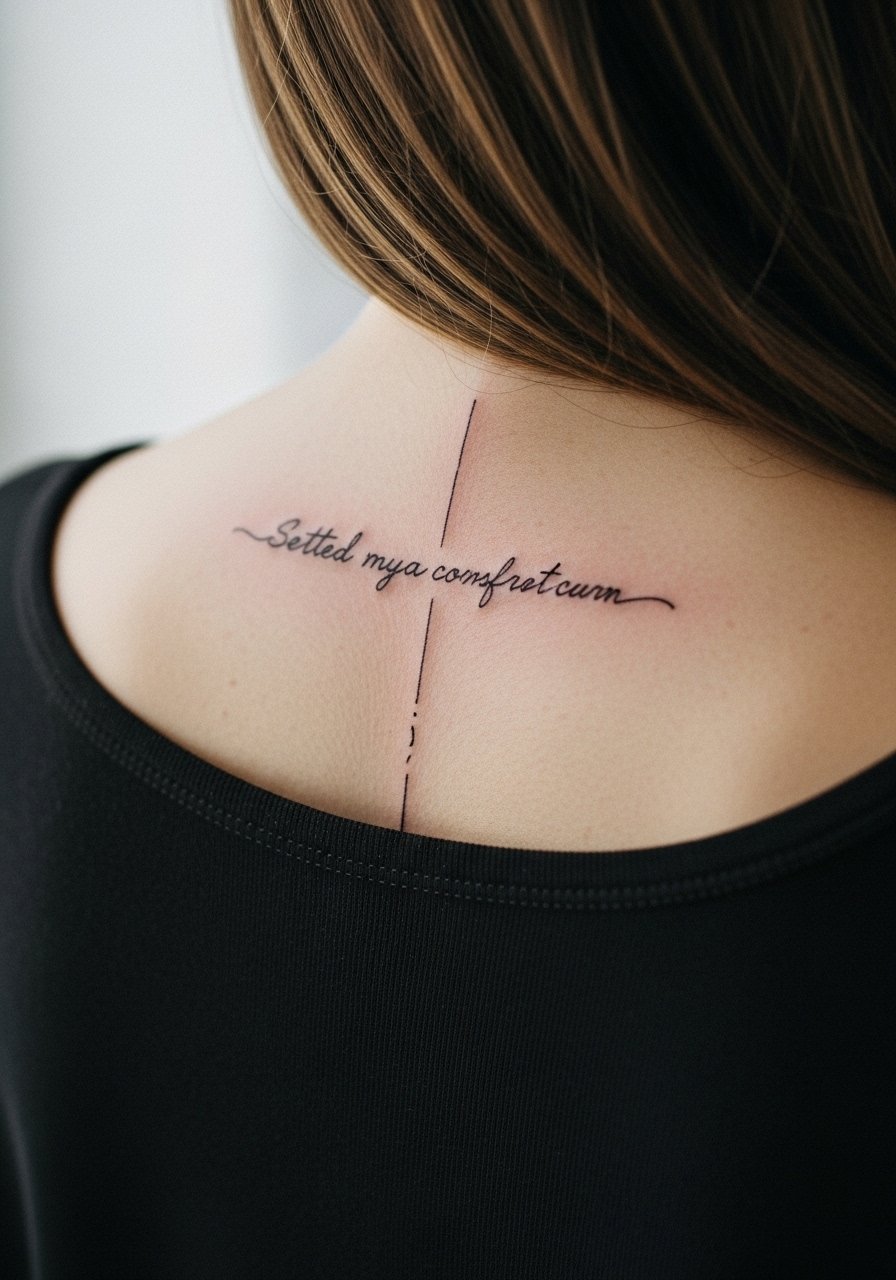
I recommend this when you want a quiet, readable phrase tucked under hair. Tell your artist you want 1.0 to 3.0 needle work with slightly increased spacing between letters so the letters do not merge under clothing rub. Common mistake is asking for micro-tiny script that looks sharp fresh but becomes a ghost after heavy bra straps or backpacks. Expect one session under two hours for a 2-3 inch line and plan a touch-up around year one if you wear tight straps near the area. For the appointment, wear a loose tank top you can lift without contorting the neck.
2. Ornamental Mandala Frame With Center Quote
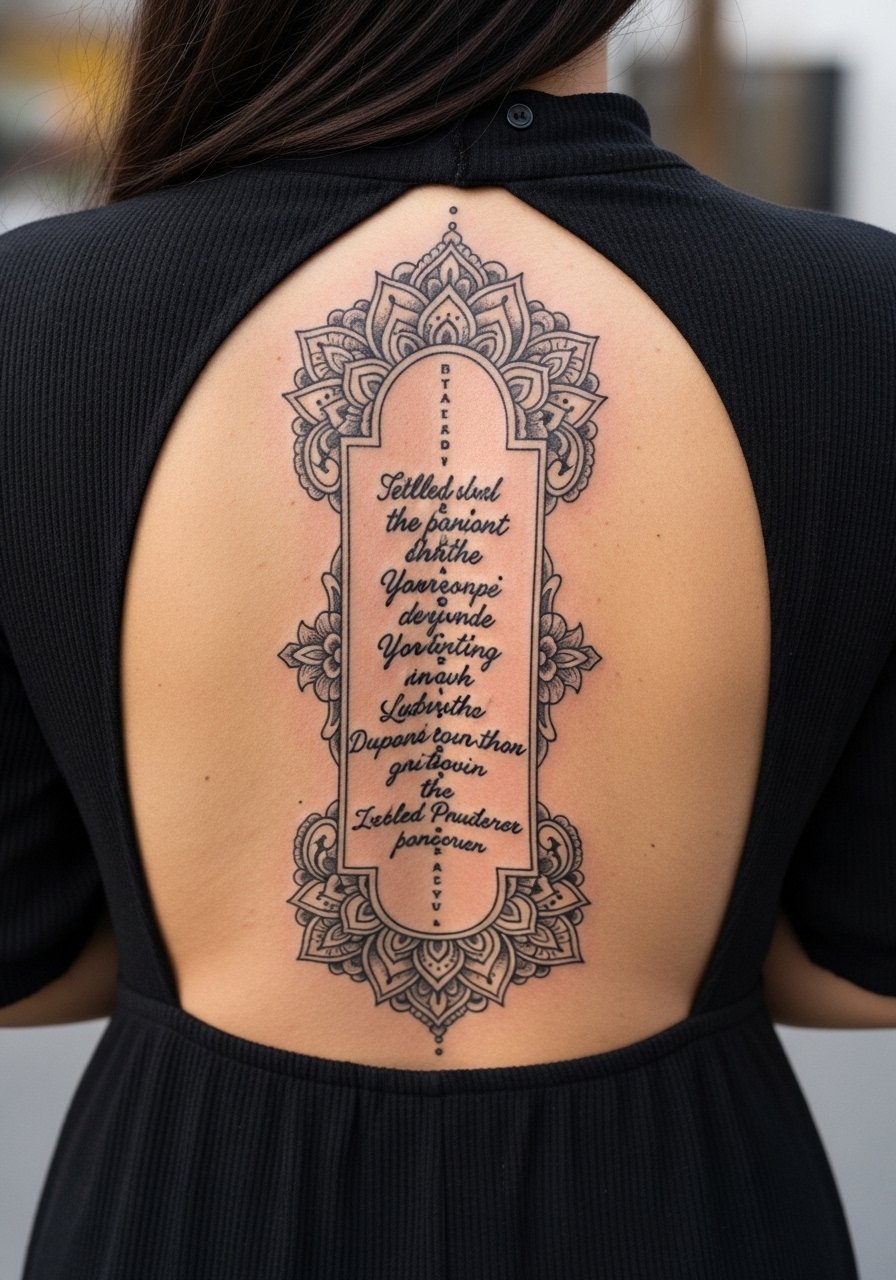
This is the go-to when you want symmetry and scale. In consult ask for wider negative space between mandala petals so the pattern avoids crowded stipple that later blurs. The session usually runs longer, often split into two to three sittings because of shading density. Pain is moderate to high toward the lower spine. A common aging issue is tight mandala lines done too small, causing merging in dense areas by year three. Pair this with backless midi dresses for festival season and bring a front-open robe for the studio to make access simple.
3. Watercolor Quote With Floral Accents, Mid-Spine
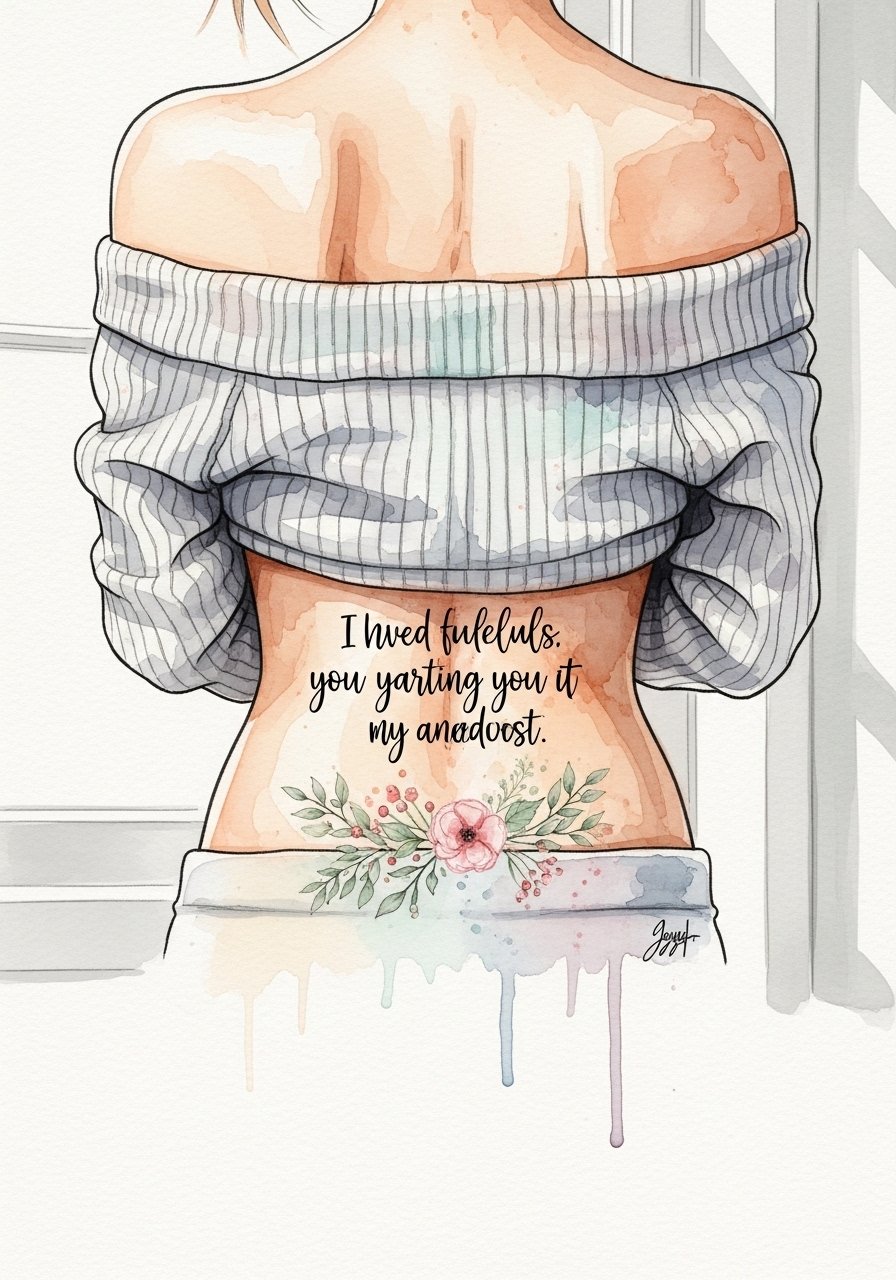
Watercolor gives movement down the spine but loses saturation faster on mobile skin. Ask the artist to lock color with gentle black outlines around flowers so the composition reads as color fades. These pieces often feel less painful in the mid-back but the session can be one to two hours depending on washes. The usual error is asking for full saturation like a canvas painting, which ends up patchy as it heals. For evenings, style with an off shoulder sweater that plays off pastel tones without competing for attention.
4. Blackwork Geometric Enclosure Lower Spine
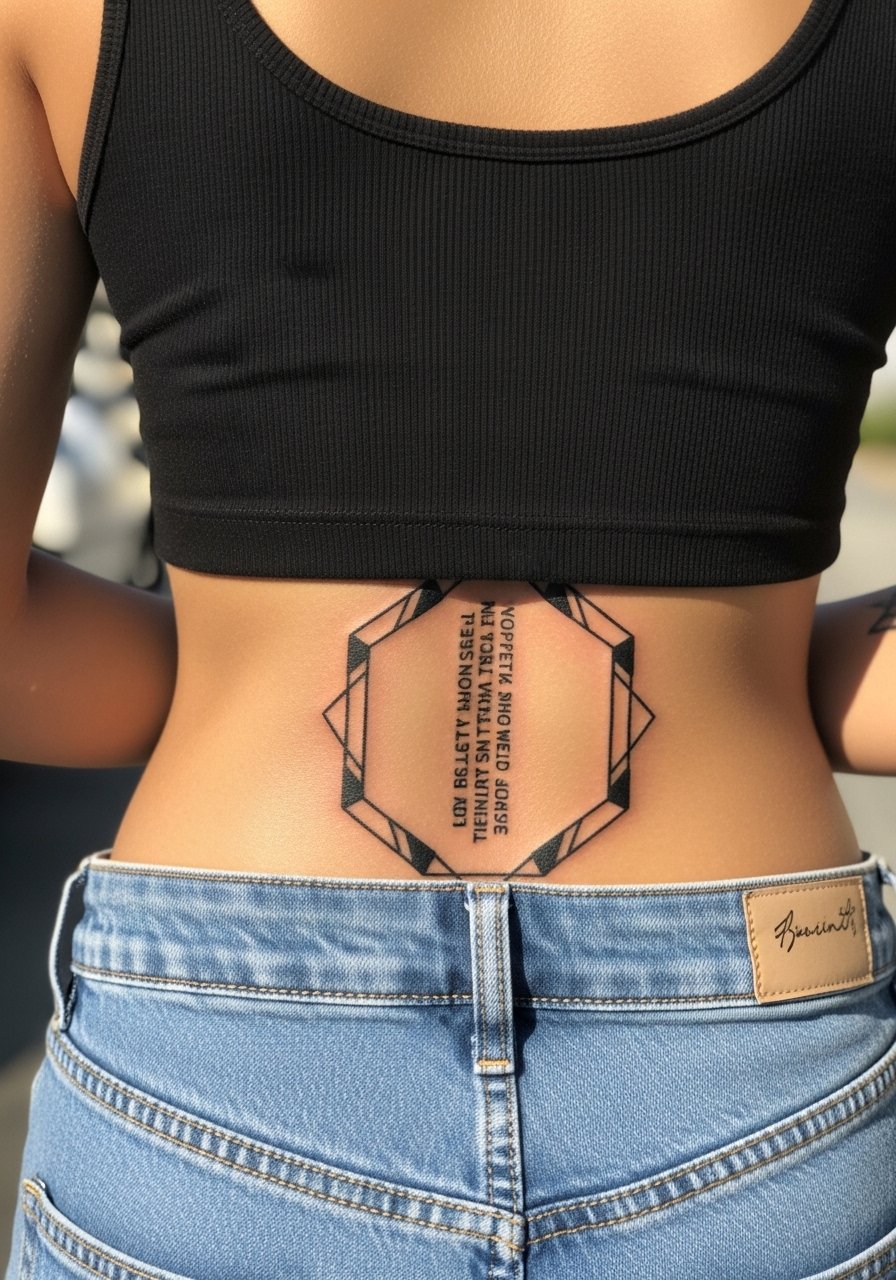
This one survives photos well on darker skin tones because of contrast. Tell the artist you want solid fills with crisp negative space to avoid patchy healing. Lower spine pain can spike for some, so plan a short session or break. A mistake is making the geometry too fine for the area, which risks blowout or early softening. Expect three sessions for complex fills. Show it off with high-waisted low-rise jeans or a waist chain for subtle reveal on nights out.
5. Minimalist Single-Line Quote, Upper Spine Tiny
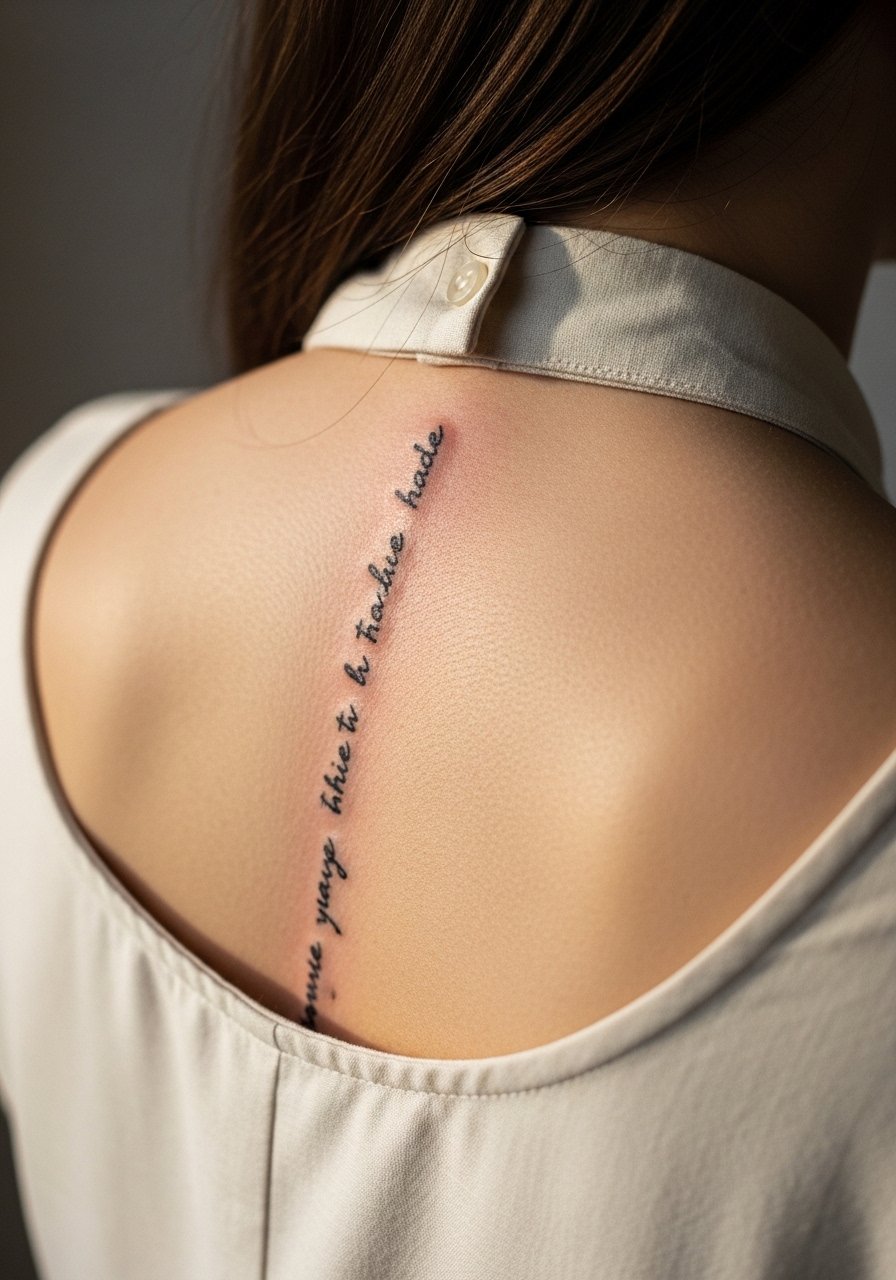
First-timers pick this for low commitment and easy concealment. During consult, request slightly heavier line weight than the absolute finest needle to reduce early fade. The biggest mistake is forcing tiny type into an area that rubs, which leads to softening inside a year. Session time is short, usually under an hour. For the appointment, slip on a halter neck blouse so the artist can access the neck-to-spine transition without tugging.
6. Neo-Traditional Banner Quote, Neck-to-Spine Transition
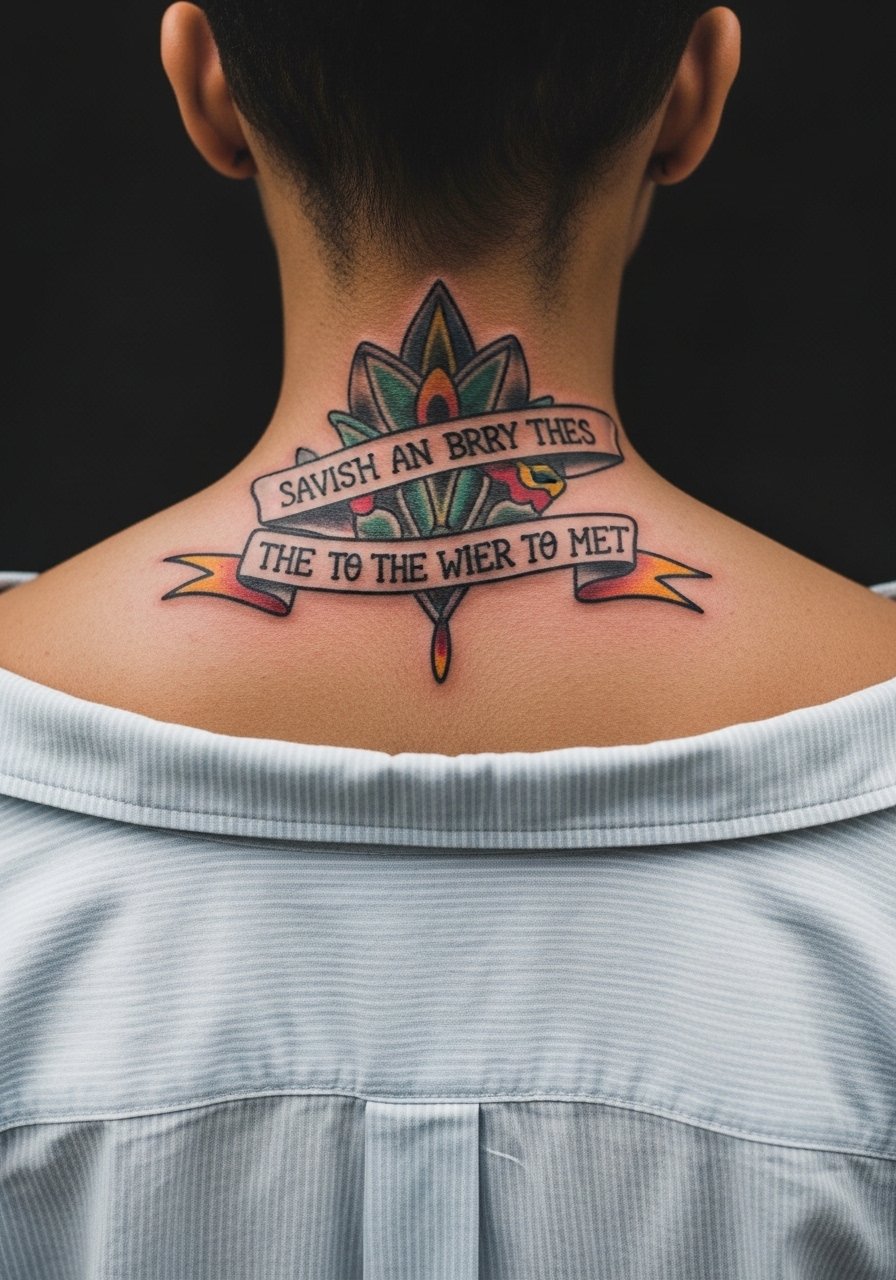
This reads bold while keeping vintage readability. Ask for the banner to sit low enough that it does not catch on bra straps, and request slightly thicker outlines so colors hold. Artists split on numbing creams for neck work. One camp says numbing eases the session and keeps clients still. The other worries it changes skin response. Decide before booking and ask the shop about their stance. Sessions are usually two sittings. Pair with a dainty choker necklace to frame the piece without covering it.
Studio Day Picks
The first six ideas above cover upper spine, mid-spine, and lower back work, which means different prep for each zone. These picks smooth session logistics and early healing for fine line and color pieces.
- Indie Butter Balm. A non-greasy balm that forum users favor for the first week, helpful for mid-spine watercolor pieces that need moisture without shine.
- Green Sheep Aftercare Spray. Breathable spray option for the lower spine where sticky lotions can trap sweat and irritate healing blackwork.
- Australian Tea Tree Salve. Light salve some people use for itching on sacral areas after sessions, useful if you react to heavier ointments.
- Hada Labo hydrating lotion. Hydration without occlusion, handy for keeping mid-back skin supple after a watercolor session.
- Hustle Butter Deluxe. Thin, spreadable balm many artists recommend for early healing on the spine because it avoids heavy clogging while still locking in moisture.
7. Micro-Realism Portrait With Quote, Upper Back
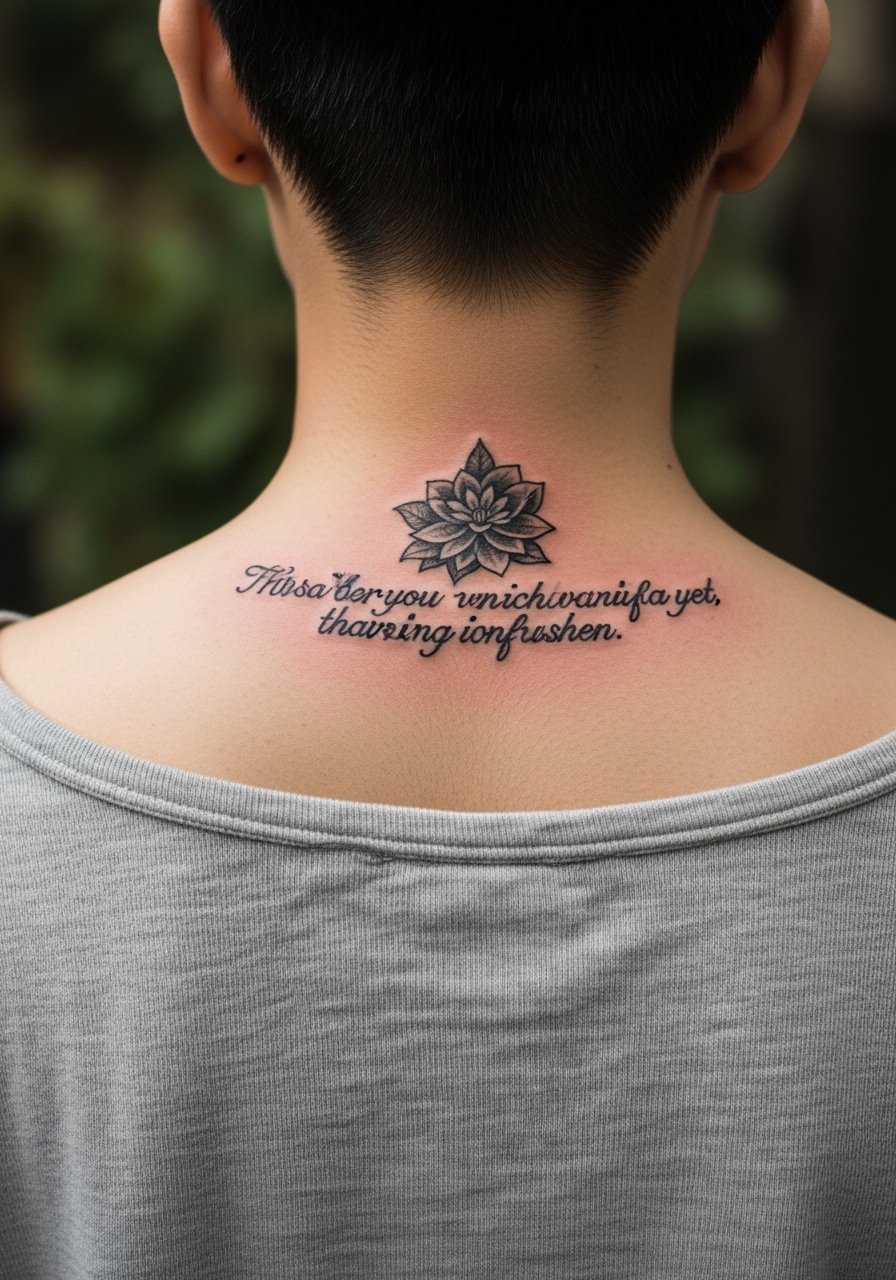
Micro-realism demands depth and time so expect multiple long sittings. Tell the artist you want the portrait scaled to leave breathing room beneath the quote so facial detail does not compete with text. A common error is trying to cram portrait detail into a 2-inch column, which makes both the face and letters lose clarity by year two. This placement can feel tender during long sessions, so bring padding for the table. Healed contrast will soften, so expect touch-ups at year two for crispness. For showing off, a front zip sports bra works well for access and framing.
8. Ignorant Style Jagged Letters, Full Spine Trail

This raw, punk aesthetic ages in its favor because the style leans into imperfection. Ask for slightly irregular baseline spacing so letters do not collapse into one another. The mistake is requesting ultra-fine jagged strokes expecting the same look months later. Sessions are often quick and bold, and pain climbs in the sacral area. If you plan on heavy gym friction, expect more touch-ups. For the session, wear a loose robe so the artist can access the full column without tugging your clothing.
9. Traditional Rose With Embedded Quote, Lower Spine
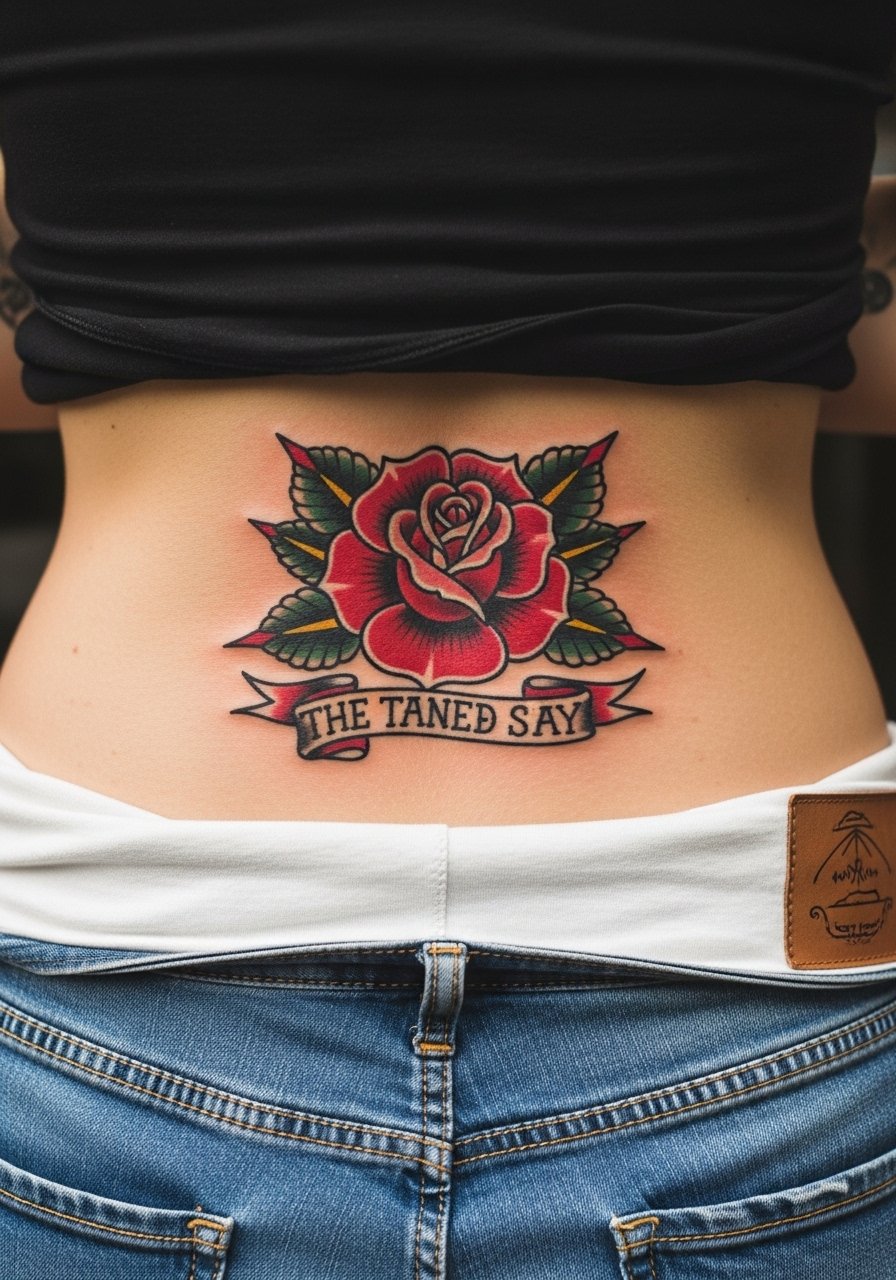
A traditional approach reads across years because of saturated inks and thick outlines. During consult, ask for the banner to sit above the pelvic line to avoid waistband abrasion. Lower spine pain is real for many, so split the session if needed. A common mistake is placing the banner too low where it rubs every day. Colors may require a second pass a year out to restore saturation. For warm-weather reveals, pair this with high-waisted thong bikinis or low-rise jeans for casual flashes.
10. Vertical Elongated Quote, Curve-Following
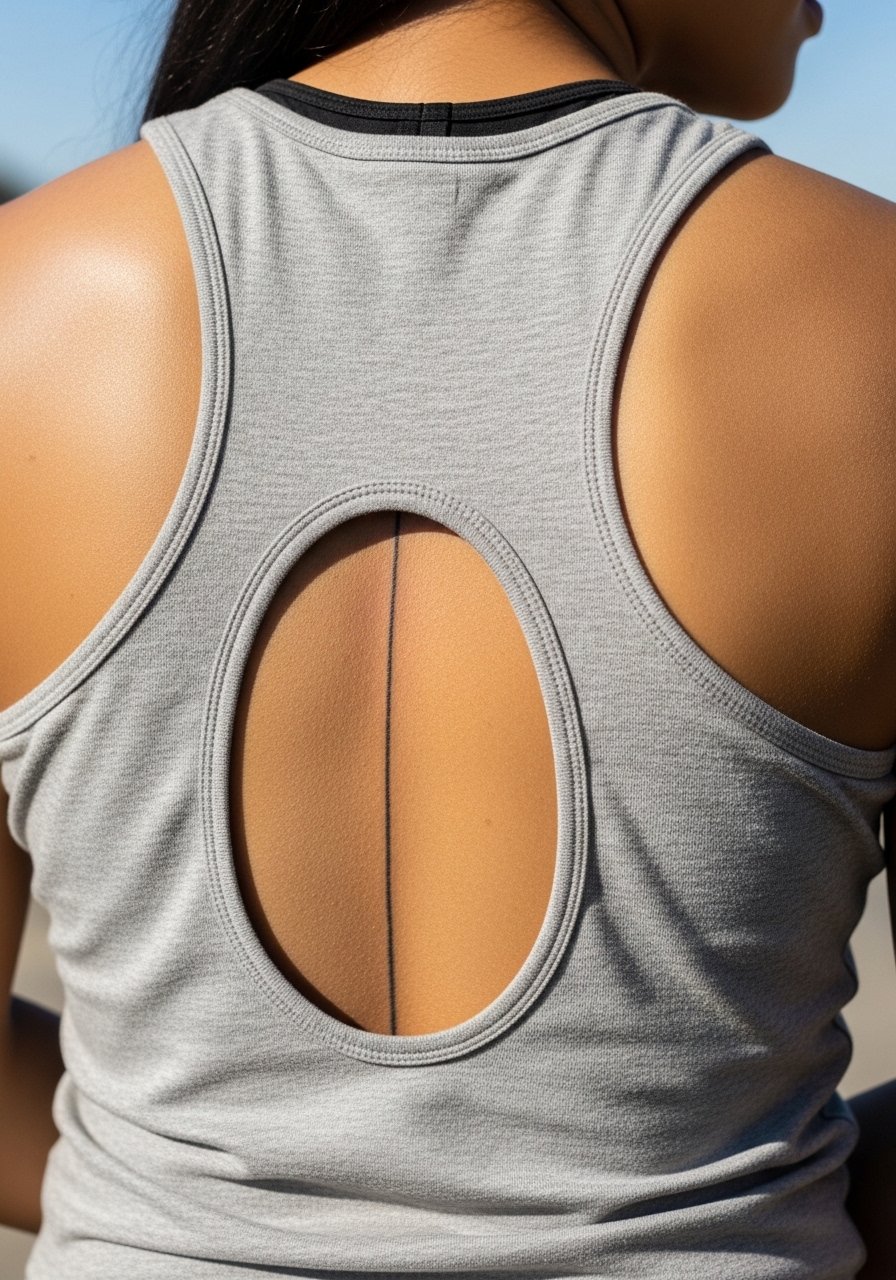
This is one of the under-covered ideas that helps avoid stretch distortion. Tell your artist you want each character stretched slightly vertically to align with spinal curvature. The common aging problem is using standard letter spacing which warps with body changes. Session time varies by length. If you expect weight fluctuations, place the piece mid-spine rather than extreme upper or sacral. For the session, wear a racerback tank so the artist can access the column without fabric interference.
11. Braille-Style Tactile Quote Paired With Script
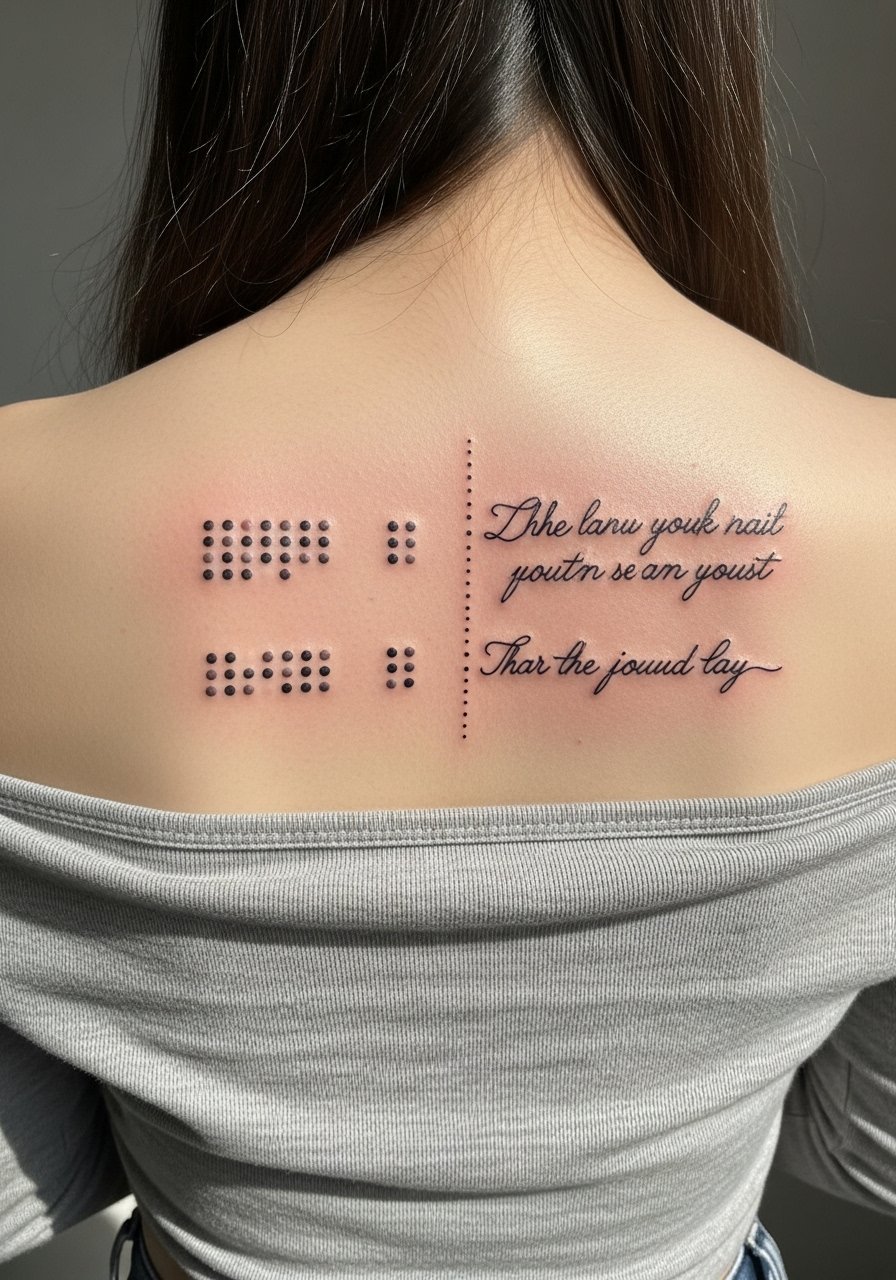
This concept is subtle and layered visually and physically. Ask your artist to space the Braille dots distinctly so they read as texture without merging. A mistake is placing dots too close which creates a blur. Dot work can be less painful but requires patience because each dot is a micro-entry. Expect touch-ups earlier for dot fidelity. Pair it with soft pastels and an off shoulder sweater when showing it off to highlight texture.
12. Multi-Language Stacked Quote, Mid-Spine
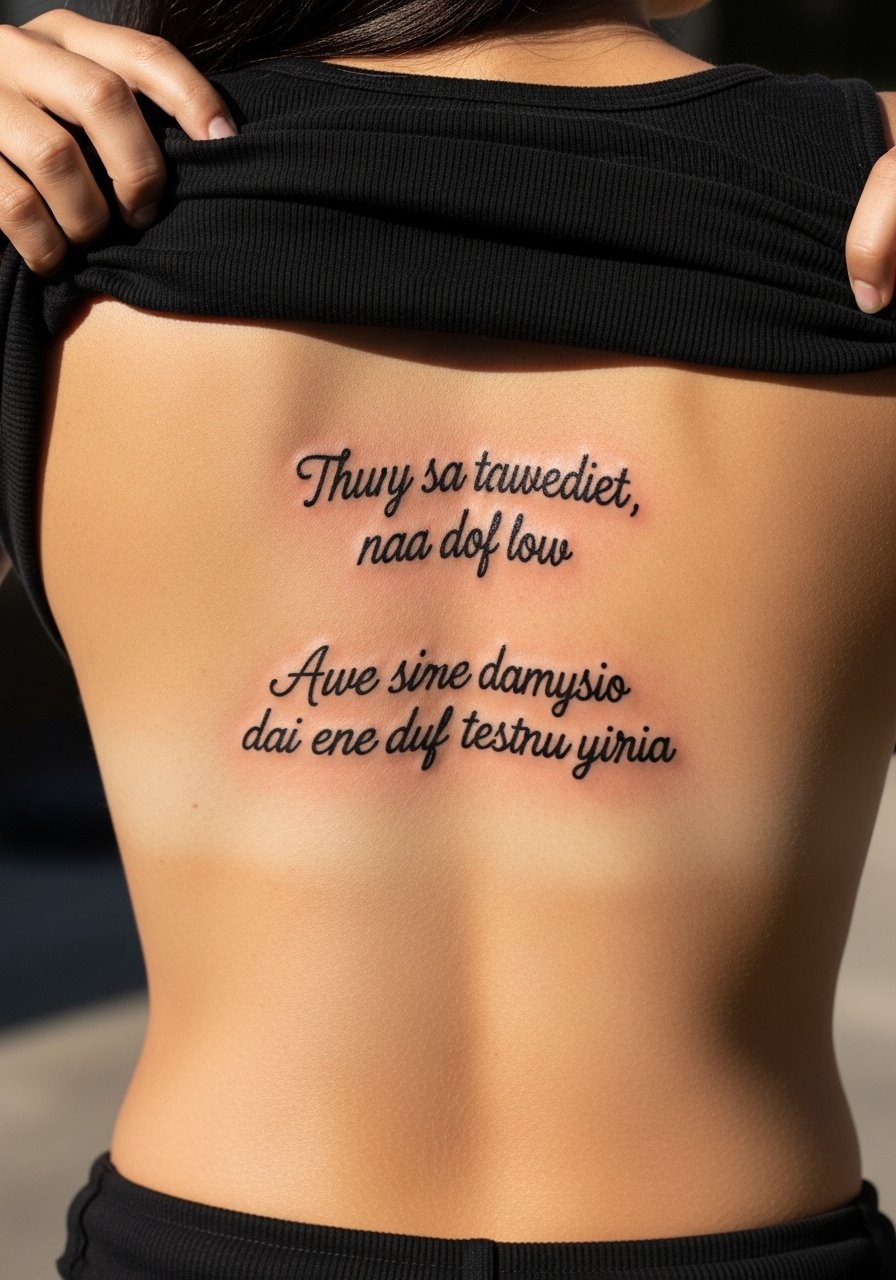
Stacking two languages creates rhythm and visual hierarchy. Be specific to the artist about which language sits above and the desired font sizes so one line does not swallow the other during aging. The common error is keeping both lines identical size which makes the lower text vanish sooner. Session time is moderate. If you have tight clothing habits, place the upper line farther from straps. For wardrobe, a low back tank pairs well for subtle reveals.
13. Geometric Enclosure With Short Quote, Full Spine Accent
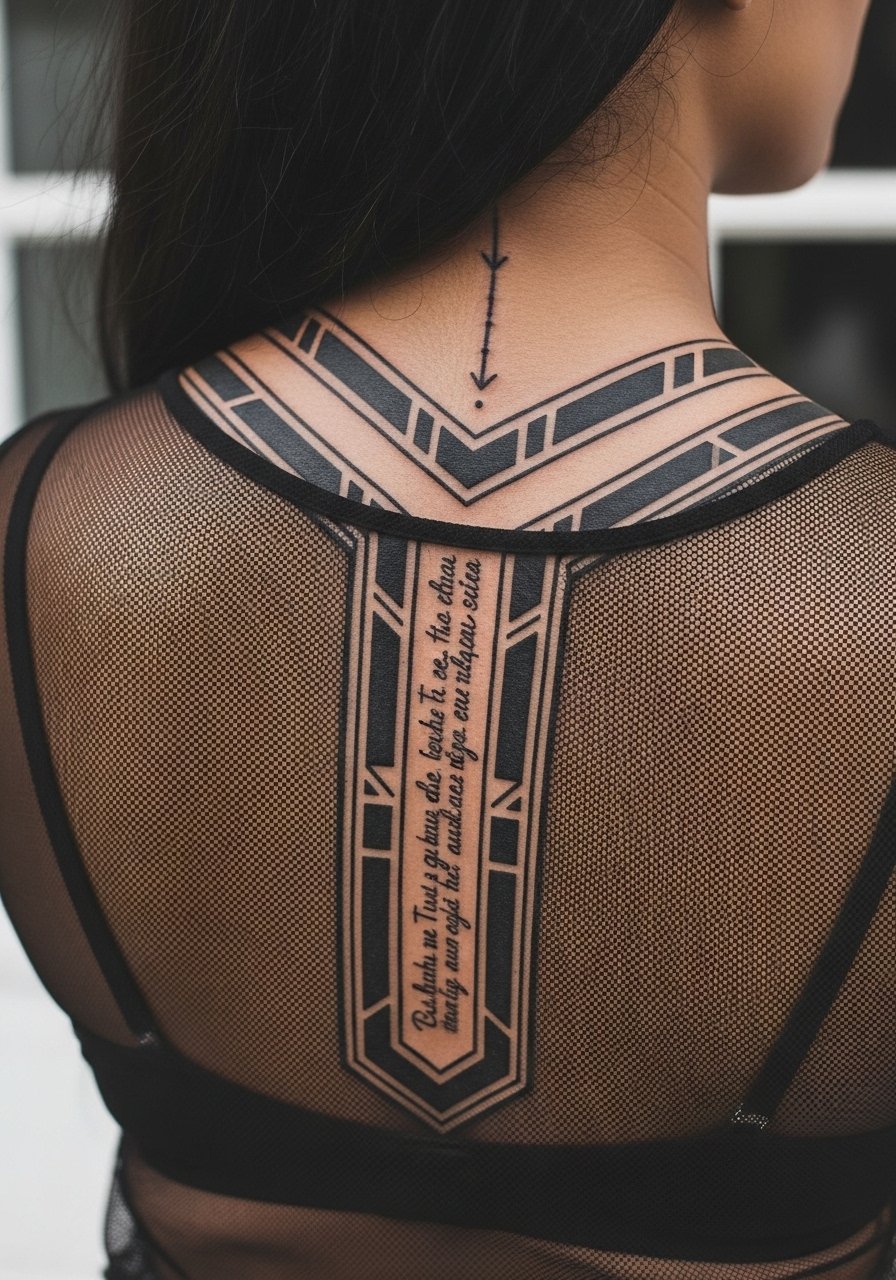
Geometric enclosures need breathing room. Tell the artist you want each band separated by at least 4-6 millimeters to avoid merging as lines soften. A common misstep is compressing too much detail into narrow bands. Sessions are lengthy due to solid fills and require multiple passes. This style is forgiving for photos but bring layered clothing to avoid daily friction. For nights out, try a sheer mesh top that frames the column without overwhelming it.
14. Sacral Hidden Quote, Intimate Lower Spine
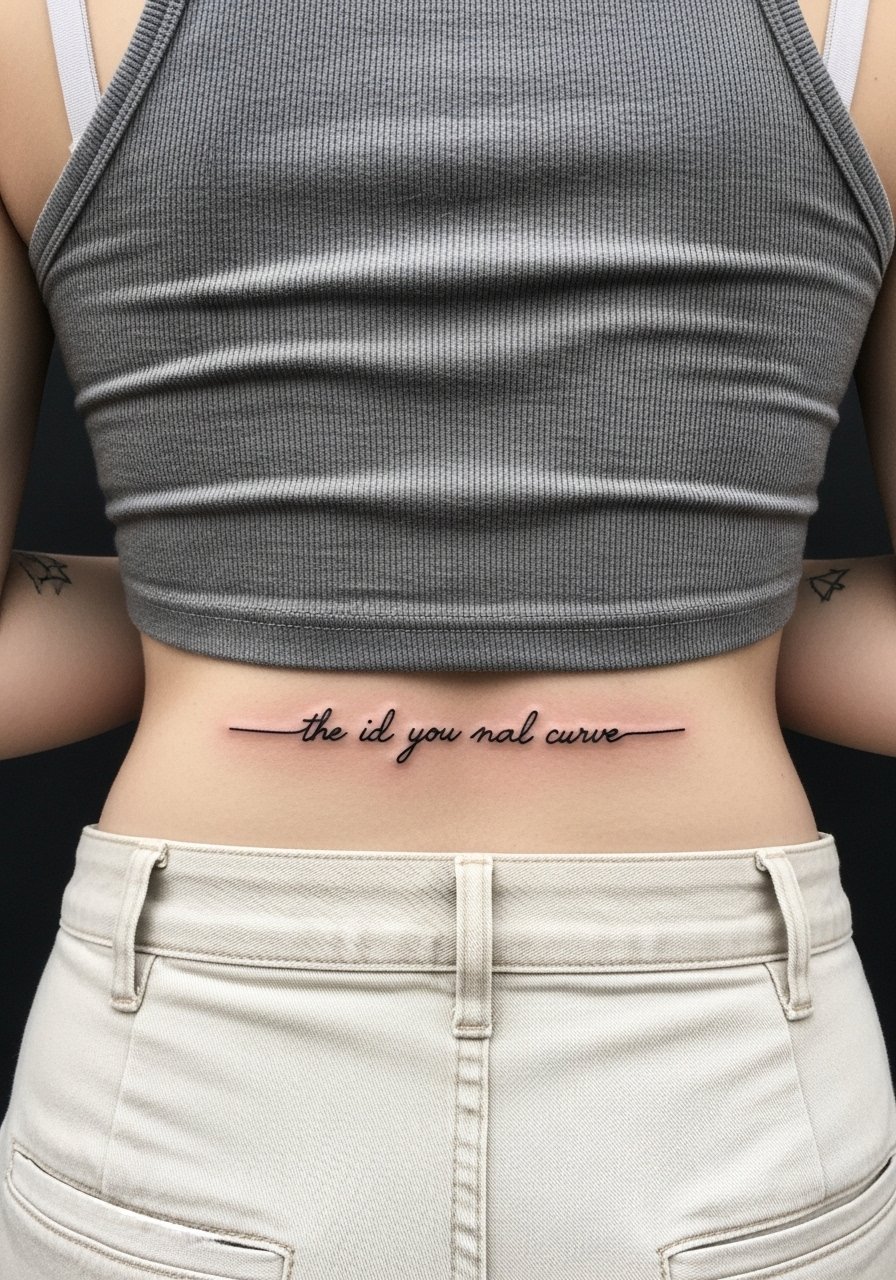
This placement is intimate and easy to hide under clothing. For session access, wear bottoms you can pull slightly low and a tank that lifts without bunching. The biggest mistake is forgetting waistband friction in the first month which causes irritation. Pain can spike toward the sacrum for many people. If you plan a tight waistband lifestyle, consider placing it slightly higher. For summer showing, a low rise jeans pairing is a simple reveal.
15. Upper Back Script With Floral Frame
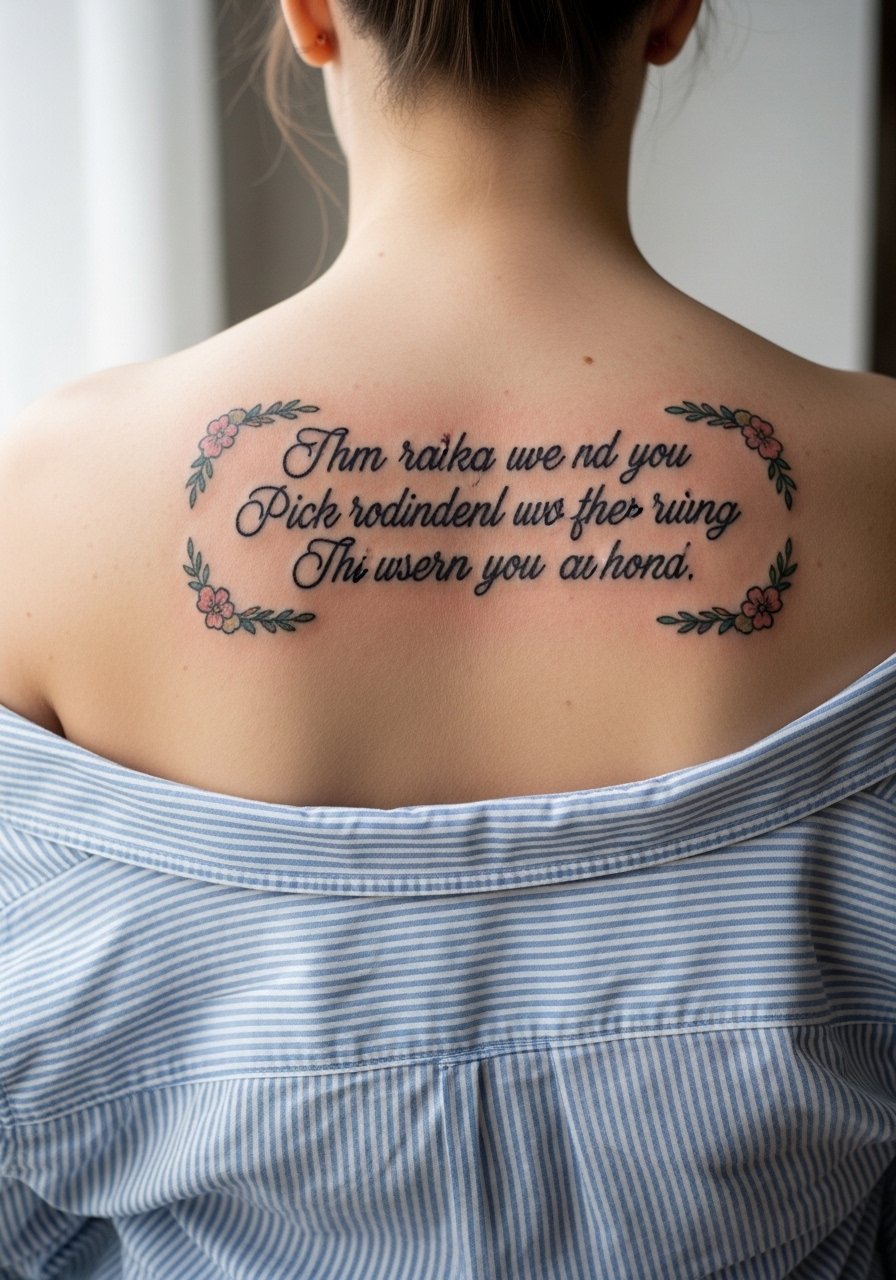
This classic layout reads well with medium line weight. In consult ask for gentle color accents rather than full watercolor fills to avoid fast fading. The common mistake is cramming florals into the type area which blurs composition. Sessions are moderate and the upper back usually tolerates longer sits. For showing off, wear a loose button-down shirt you can slide for photos without stressing the fresh ink.
16. Black Lettering With Dot Work Spine Border
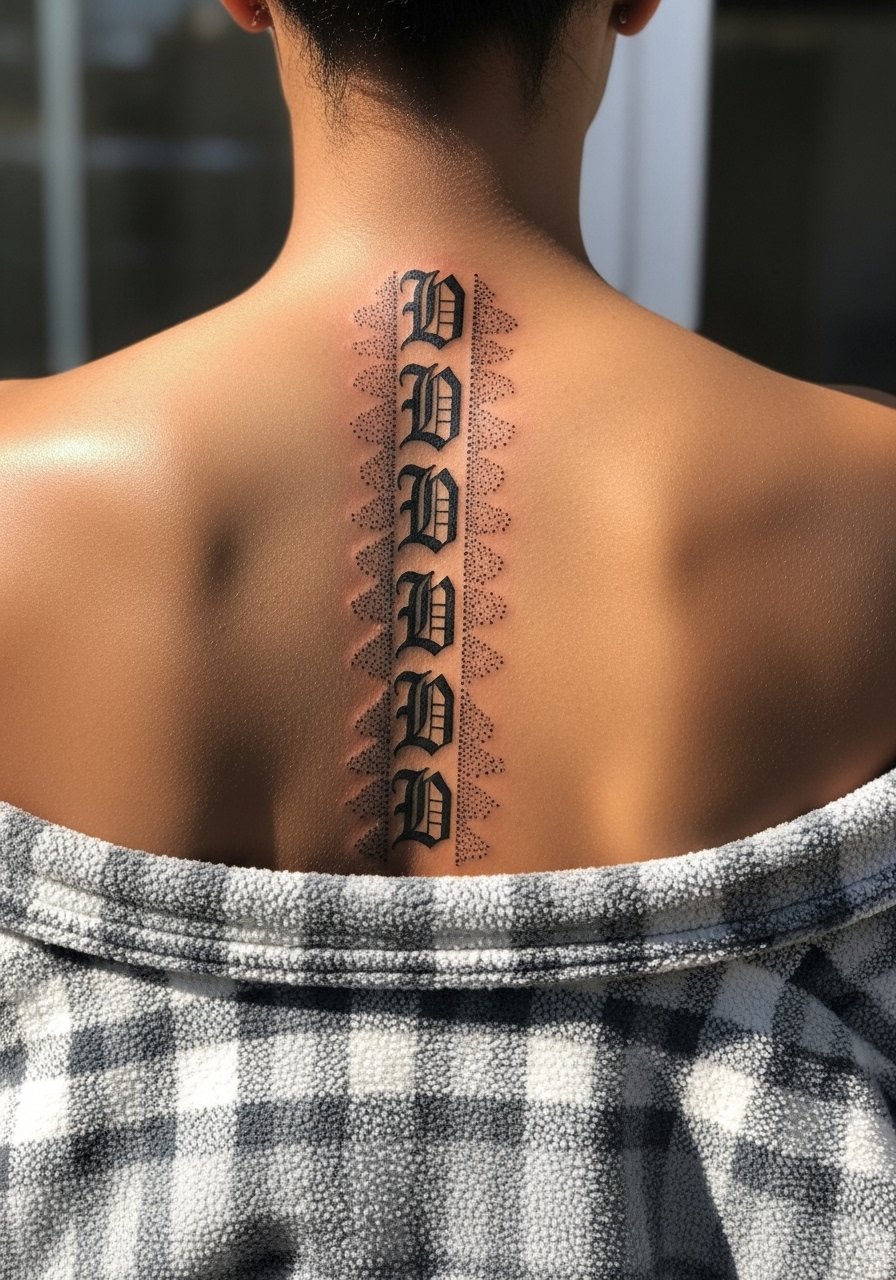
Heavy lettering holds well because saturation compensates for friction. Tell your artist to keep letter counters open so the black does not merge into a block as it ages. The error is using ultra-tight letterforms on an area that sees movement. Expect multiple sessions for dense solid fills. For session comfort, bring a pillow for the face-down position and wear a front-open robe so you can stay warm without fabric rubbing the area.
17. Vertical Coordinates Quote, Minimalist
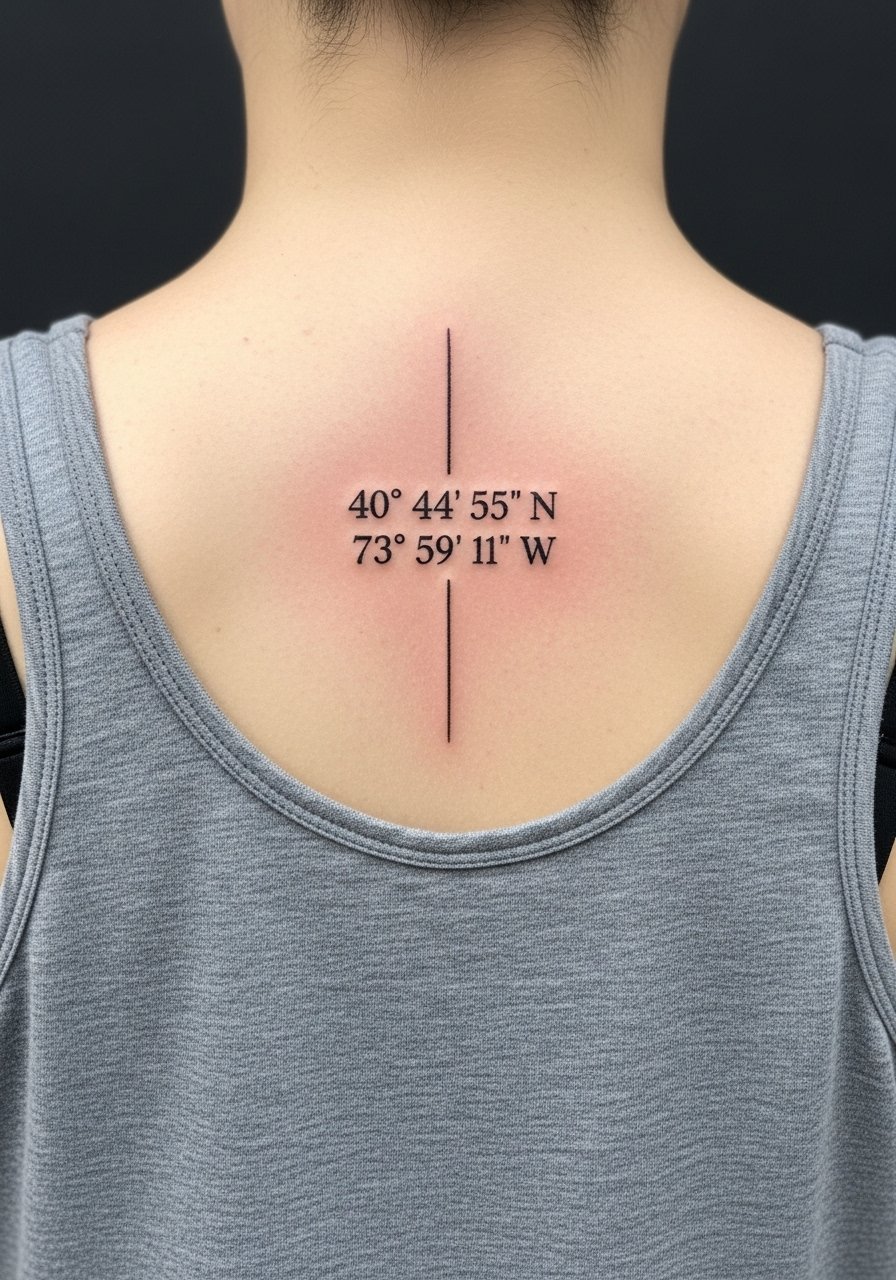
Coordinates read as quiet statements and age predictably if letter spacing is generous. Specify exact text to the artist to avoid layout guesses. The common mistake is shrinking the numbers to fit, which causes blurring. Sessions are short. If you plan frequent sun exposure, consider a slightly thicker line for longer readability. For casual wear, a racerback tank keeps the area visible without covering the mid-spine.
18. Neo-Traditional Compass With Short Quote, Centered
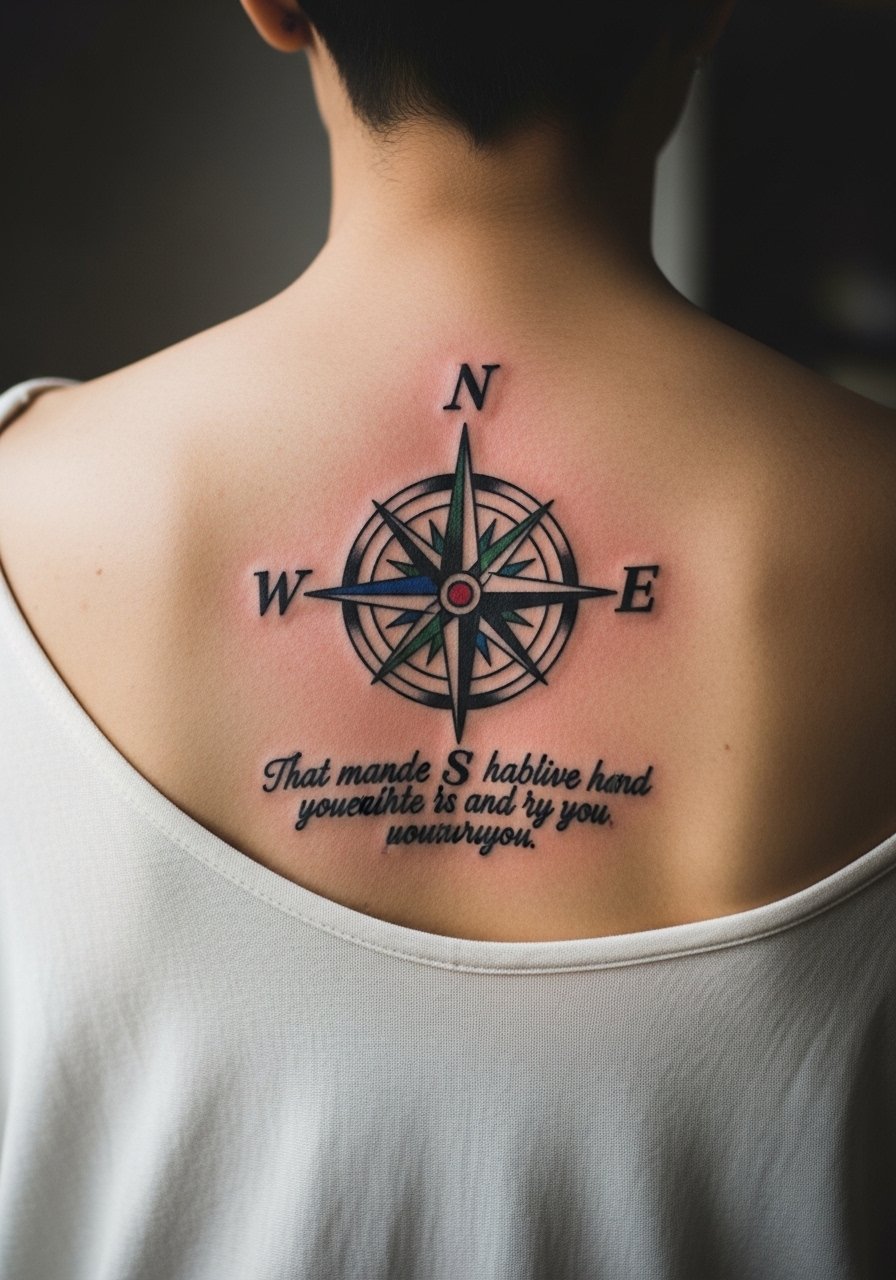
This reads directional and bold. Ask for slightly wider line spacing in the quote so the compass detail does not visually compete. A common mistake is crowding ornaments against the letters which muddies both elements. Sessions can be split for color passes. For showing, pair with a v back dress that highlights the transition cleanly.
19. Script With Subtle Dot Fading, Mid-Lower Blend

A fade-to-dot finish gives motion and softens the bottom of a quote. In the consult, specify where the script should stop and dotwork should begin to avoid accidental overlap. The aging advantage is that dotwork hides minor spread better than continuous lines. Sessions are moderate. If you frequent gyms, expect more friction near the lower part and consider a touch-up at year one. For casual reveals, a crop top bikini set gives a beach-ready look.
20. Tiny Glyphs Stacked, Subtle Column
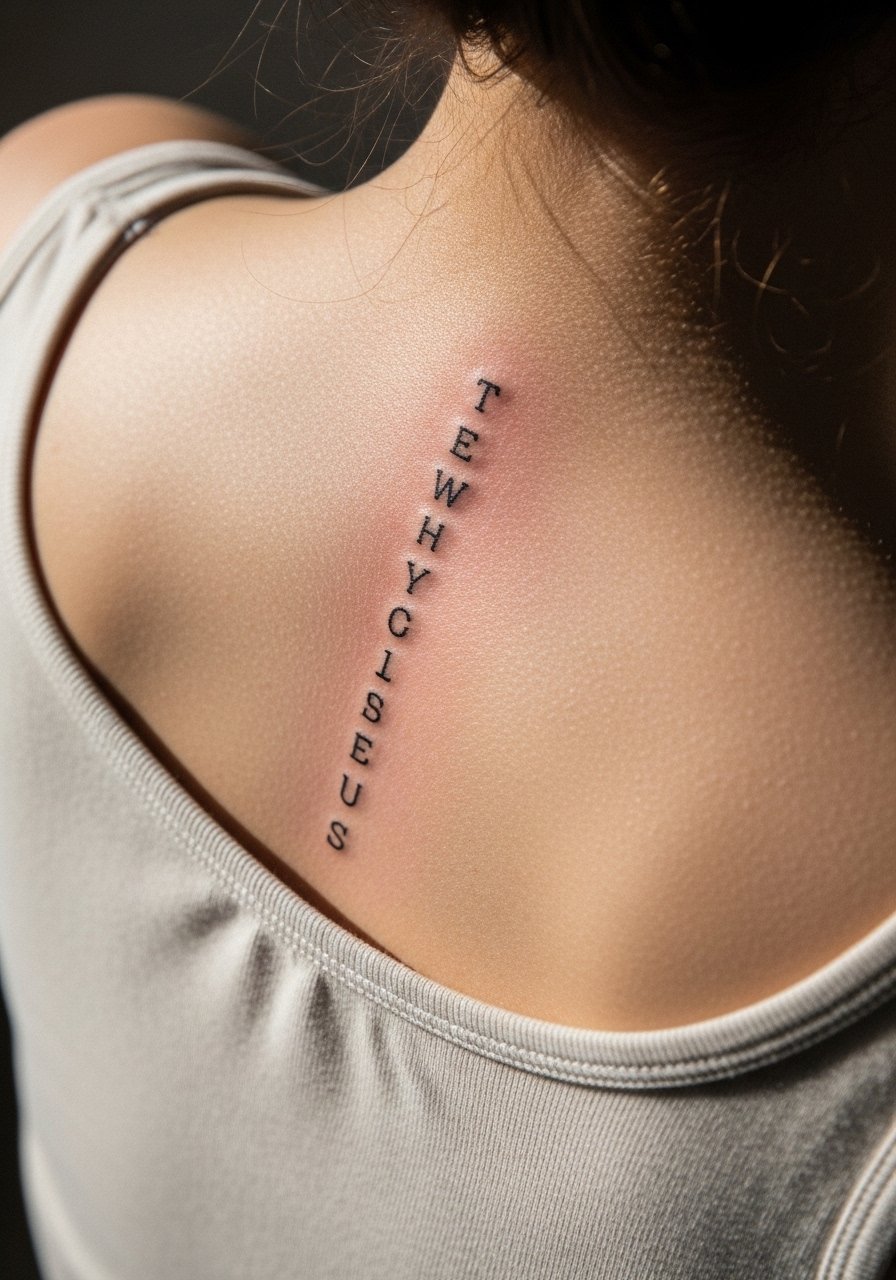
Glyph stacks work well when each element is scaled to avoid letter crowding. Tell the artist you want extra spacing between glyphs for future clarity. The pitfall is making them too small for the spinal mobile skin, which softens quickly. Session time is usually short. If your lifestyle includes frequent tight straps, set the stack slightly higher. For session ease, slip a loose tank top on and bring a neck pillow.
21. Stacked Memorial Quote, Subtle Serif
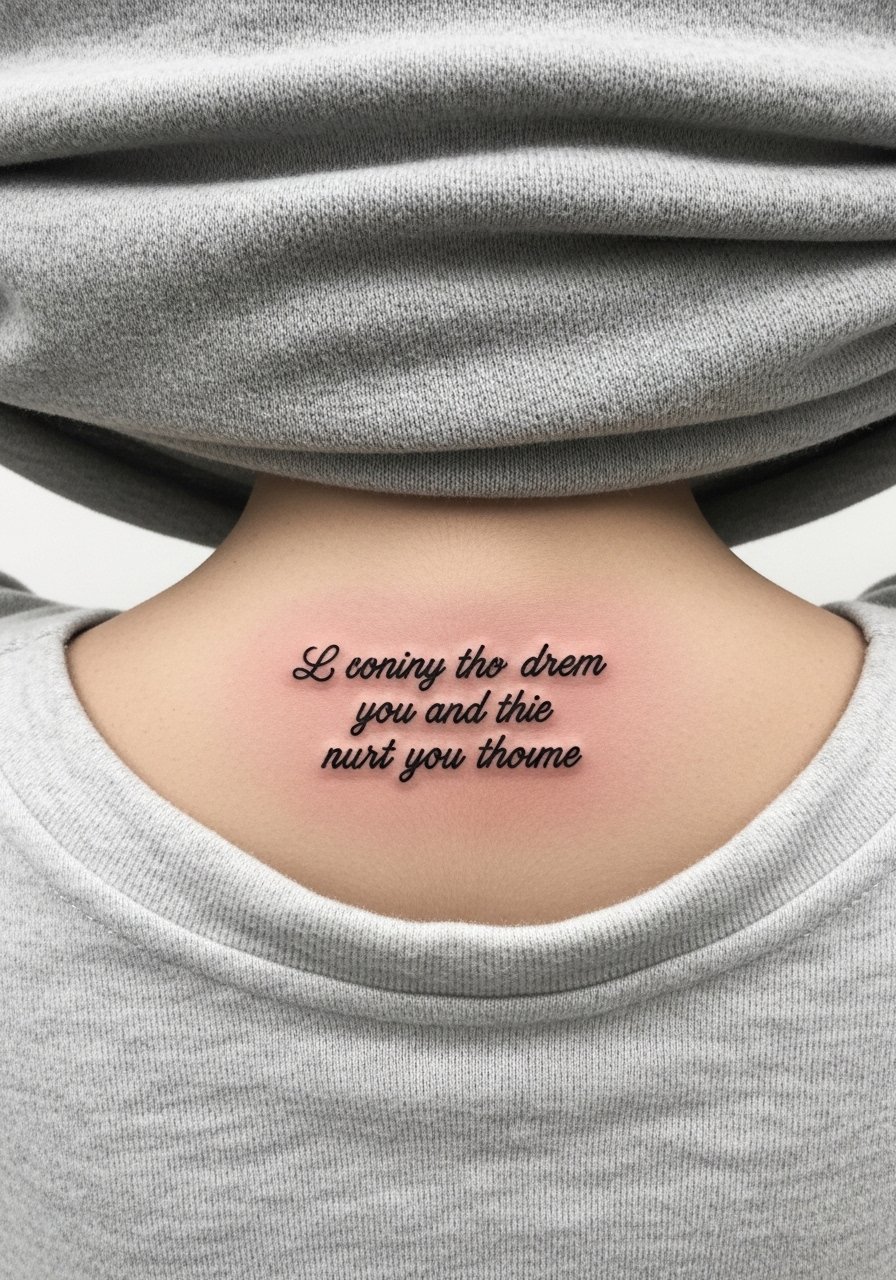
Memorial stacks need clear hierarchy so each line reads independently. During consult, discuss font weight so the bottom line does not disappear with age. The common error is using a fine serif on the bottom line only, which often blurs faster. Expect one moderate session and plan a touch-up around year two for crispness if you have high friction from bags. For photos, a strappy bralette frames the mid-back without competing with the text.
Frequently Asked Questions
Q: How does fine line script on the spine hold up compared with blackwork after two years?
A: From what I have seen, fine line scripts tend to soften faster in high-friction areas like the upper and lower spine, while blackwork benefits from saturation that reads longer. The trade-off is aesthetic. If longevity is a priority, ask for slightly heavier single-needle work or a hairline outline around the script during the consult.
Q: Should I use a protective film or dry healing for a spine quote that sits under a bra strap?
A: Artists and community members split this into two camps. One group favors protective film for curved areas to reduce rubbing and contamination. The other prefers dry healing and warns films can trap sweat. My advice is to ask the shop how they handle spine pieces and follow their recommended first 48 hours, then adjust if you experience excess moisture.
Q: What's the smart session plan for a full ornamental spine frame so it does not blur?
A: Break it into two to three sittings, focusing first on key outlines and negative space. That spacing is what keeps dense mandalas from merging. Book the touches proactively at about six to twelve months to revisit any soft spots before they set in permanently.
Q: Can darker skin tones get watercolor spine quotes that photograph well?
A: Watercolor can look muted on darker skin unless the artist balances it with anchor outlines or high-contrast accents. If you want photos that pop, discuss pairing soft washes with small amounts of saturation or a thin outline so the composition reads in images and in person.
Q: How should I dress to make a spine appointment comfortable and simple for the artist?
A: Wear clothing that gives clear access without full undressing, such as a loose button-down shirt or a front-open robe for full-back pieces, and a racerback tank for mid-spine work. Choose breathable fabrics so you stay comfortable during longer sessions.
