
Fine line trends look flawless in photos, but soft, sunlit pieces live or die on placement and spacing. The tattoos that feel like a warm memory months later are rarely the ones that looked most detailed on day one. Pick a design that breathes with your skin, plan for touch-ups, and think about what you wear to show it off. The first idea below is an inner forearm piece that proves the point.
1. Fine Line Sunbeam on Inner Forearm
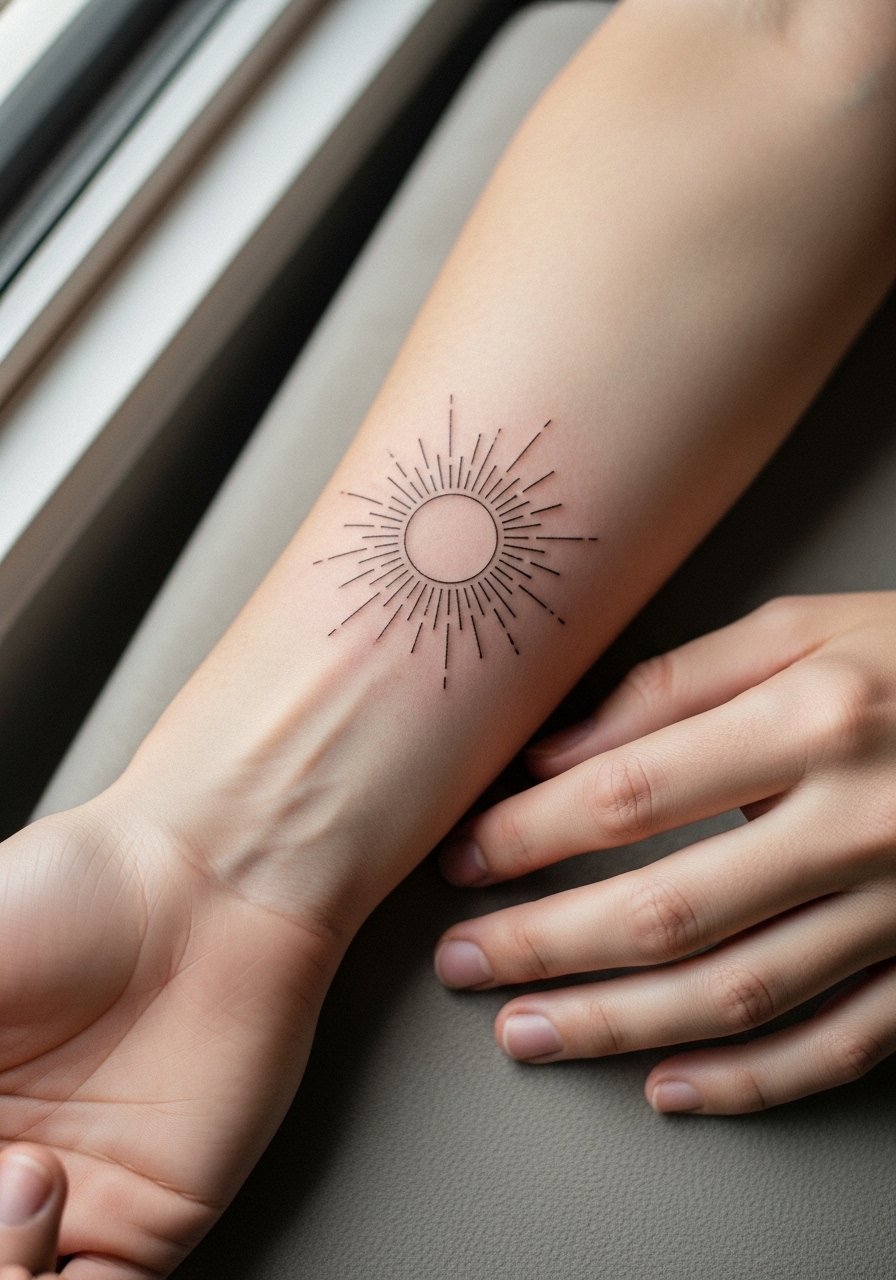
I recommend this for anyone who wants a readable, soft sun motif without heavy color. Fair warning, the inner forearm is a mid-range pain spot but very forgiving for fine line. Tell your artist you want slightly looser spacing between rays so the lines do not merge as the piece heals. A common mistake is asking for ultra-thin rays that sit too close together. For a session expect about 45 to 75 minutes depending on detail. It ages well when the linework has breathing room. For showing it off, roll up sleeves and pair with a loose linen button-down to frame the forearm.
2. Micro-Realism Sunflower by the Wrist
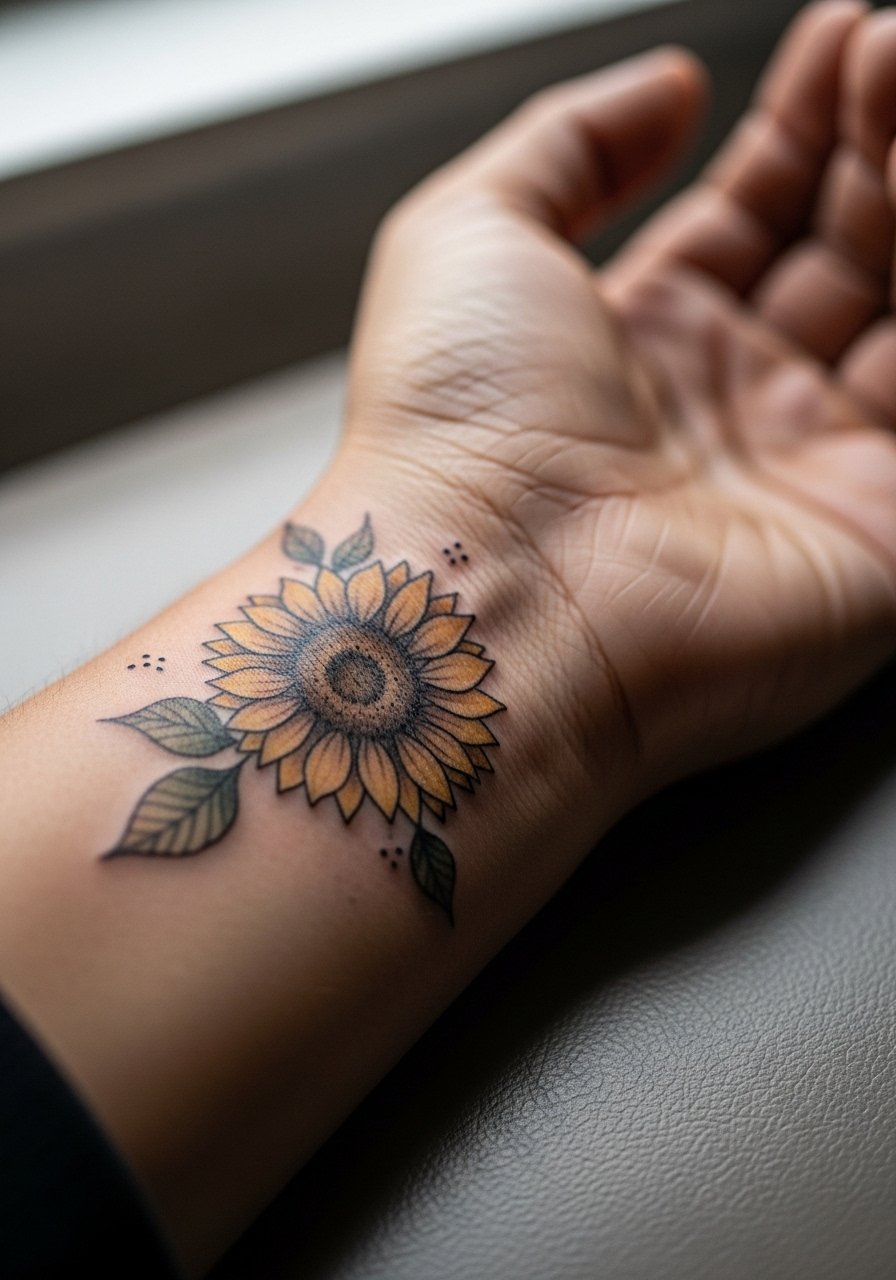
This tiny sunflower reads like a memento rather than a badge. The wrist is sensitive and the session can sting more than the forearm. I suggest a short appointment, usually 30 to 60 minutes, and ask the artist to prioritize bolder center dots rather than ultra-fine petal lines. The common mistake is trying to cram too much shading into a small wrist tattoo, which can cause blurring and early touch-up needs. Expect touch-ups around year two for micro realism on the wrist. For showing it off, a minimalist chain bracelet sits just below the design without crowding the wrist.
3. Watercolor Sunrise on the Ribcage
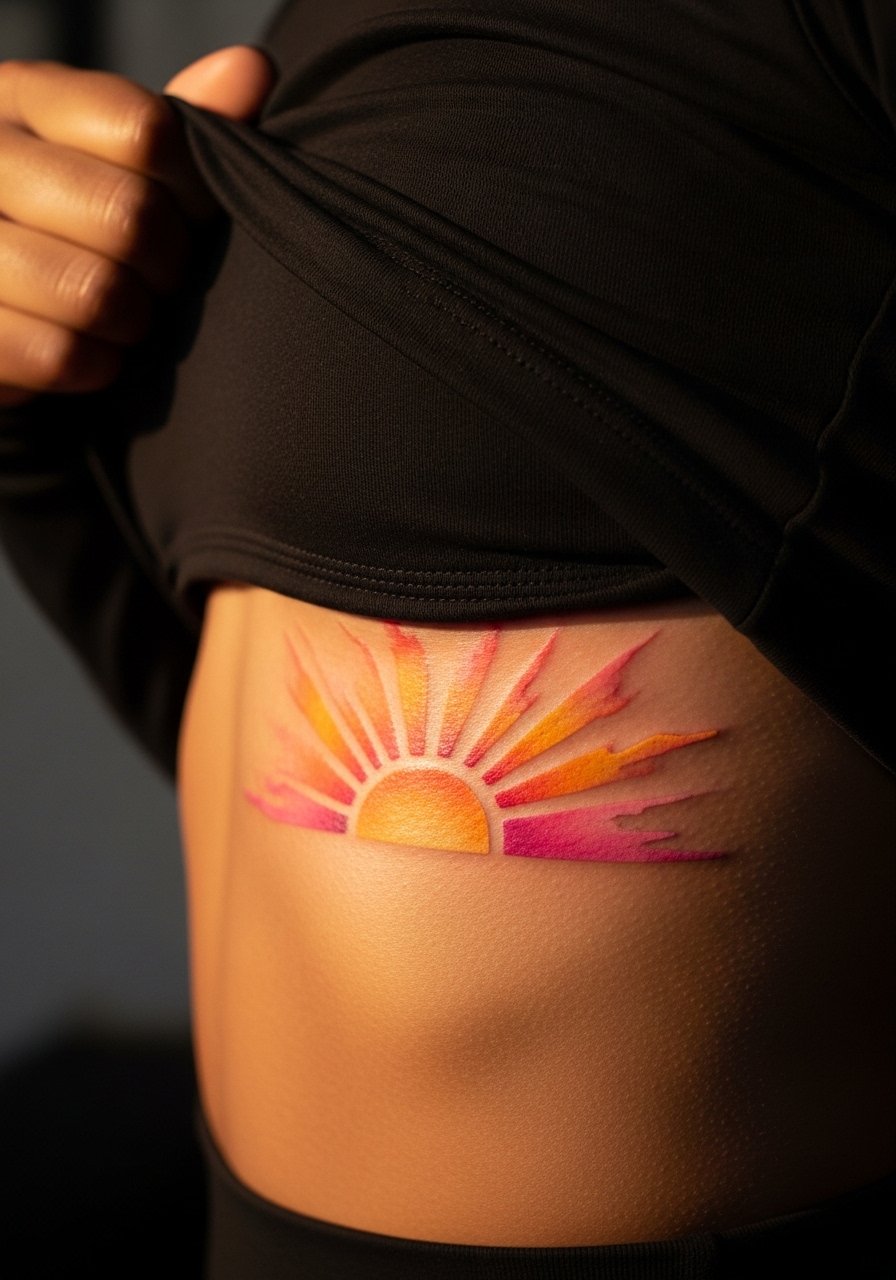
Fair warning about ribs, this placement is a two-part decision. It hurts more than arm work and the skin moves with breathing, which affects line placement. There is a controversy around delicate color on ribs. One camp says watercolor on the ribs fades and spreads quickly because of movement and thin skin. The other camp maintains that with careful saturation and larger washes, watercolor can last with a planned touch-up. Tell your artist you want softer washes with intentional gaps, not dense fills, and expect a longer session, often two or more hours. Wear a cropped tank top you can lift rather than removing clothing.
4. Minimalist Half-Sun Behind the Ear
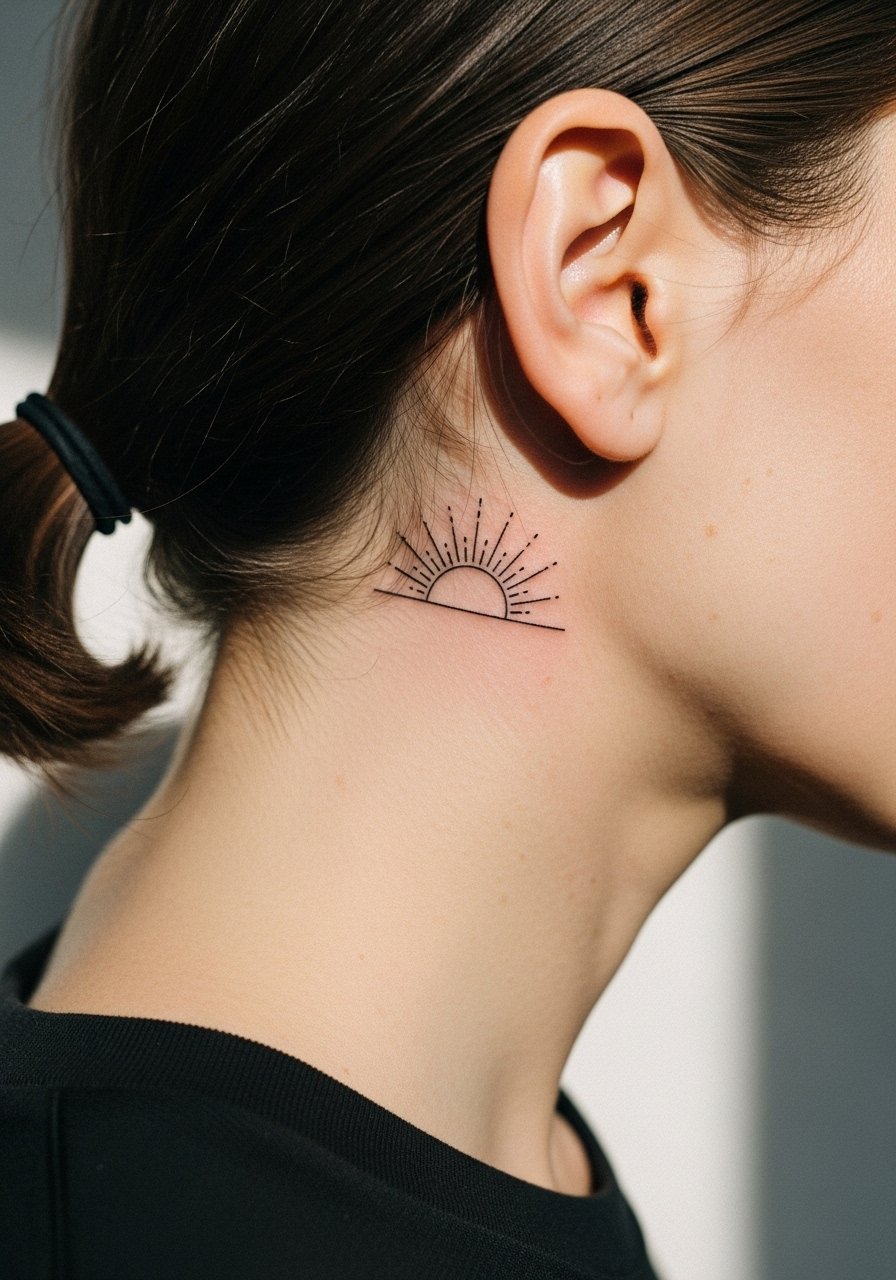
The behind-the-ear spot reads like a quiet secret. Pain is low to moderate and sessions are short, often 20 to 40 minutes. The biggest mistake is asking for too many small rays there. The skin under the hairline can cause lines to blur if they are packed too tightly. For consultation, say you want fewer rays and a clean arc to keep the silhouette intact over time. If you want to hide or reveal the piece easily, plan your hairstyle. For the appointment, a wide-neck shirt that lets the artist access just behind the ear works best.
5. Stipple-Shaded Sun with Moon on Upper Arm
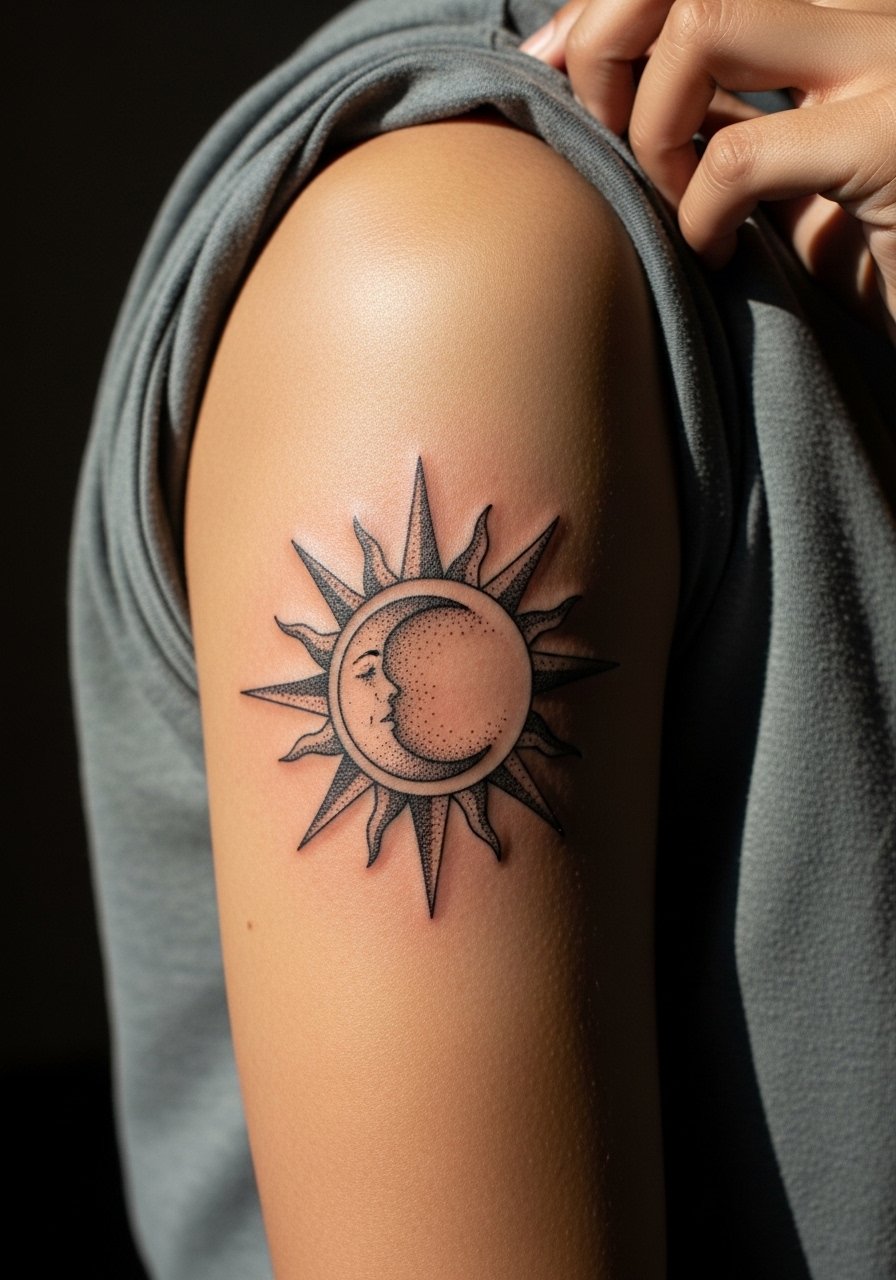
This pairing combines dot work with soft negative space and sits well on the outer arm. Expect a session of 60 to 120 minutes depending on stipple density. The outer arm tolerates denser stipple and it ages predictably as the dots separate slightly over years rather than merge. A frequent error is asking for stipple that is too dense near thin lines. For a cleaner long-term result, ask for a gradient that eases into skin tone. This piece pairs nicely with rolled sleeves and a lightweight short-sleeve linen shirt for casual evenings.
6. Delicate Script with Tiny Sun on Collarbone
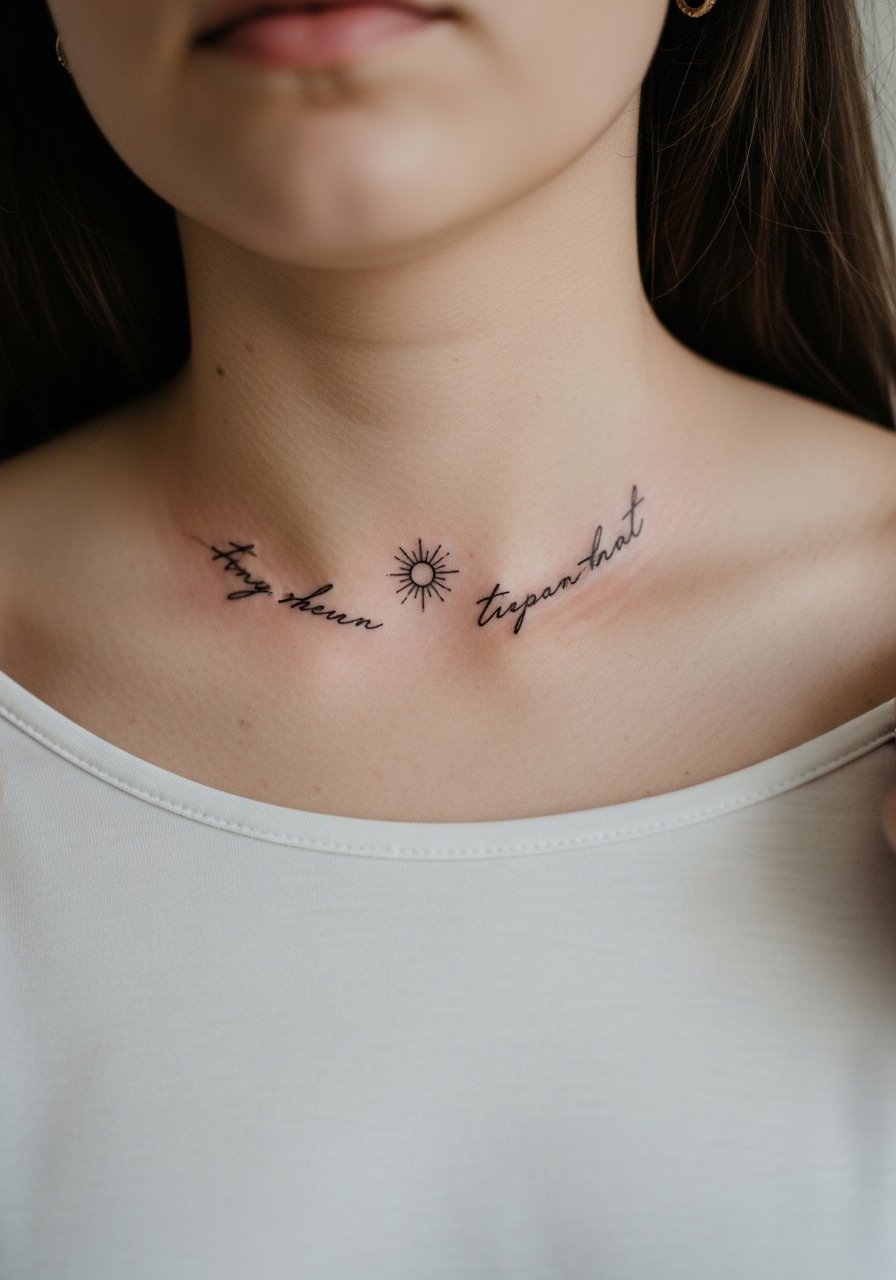
The collarbone is a visible, elegant spot but it can be unforgiving for script and tiny icons. Pain ranges moderate to high because the bone is close to skin. Tell your artist you want slightly thicker downstrokes so the tiny sun does not vanish in a few years. A common mistake is requesting ultra-thin script with micro sun details placed right on the bone. Sessions here are usually under an hour for small pieces. For showing it off, a thin chain pendant necklace sits above the design and keeps attention on the collarbone.
Chair Day Prep
The small, visible pieces above ask for slightly different prep than larger work, and a few things smooth out the session and the first week.
-
Stencil transfer paper kit. Lets you preview exact placement on skin for collarbone and wrist designs before the needle touches down.
-
Topical numbing cream. Applied as directed before a rib or sternum session eases the edge of sensitivity without long-term effects.
-
Thin protective film roll. Useful for wrist and finger pieces where friction is constant during the first days.
-
Fragrance-free gentle body wash. Cleanses healing skin without stripping pigment, important for finely detailed forearm and wrist tattoos.
-
Aquaphor healing ointment. Thin layers in the first days lock in moisture for delicate linework without clogging the skin.
7. Tiny Constellation with Sunrise on Ankle
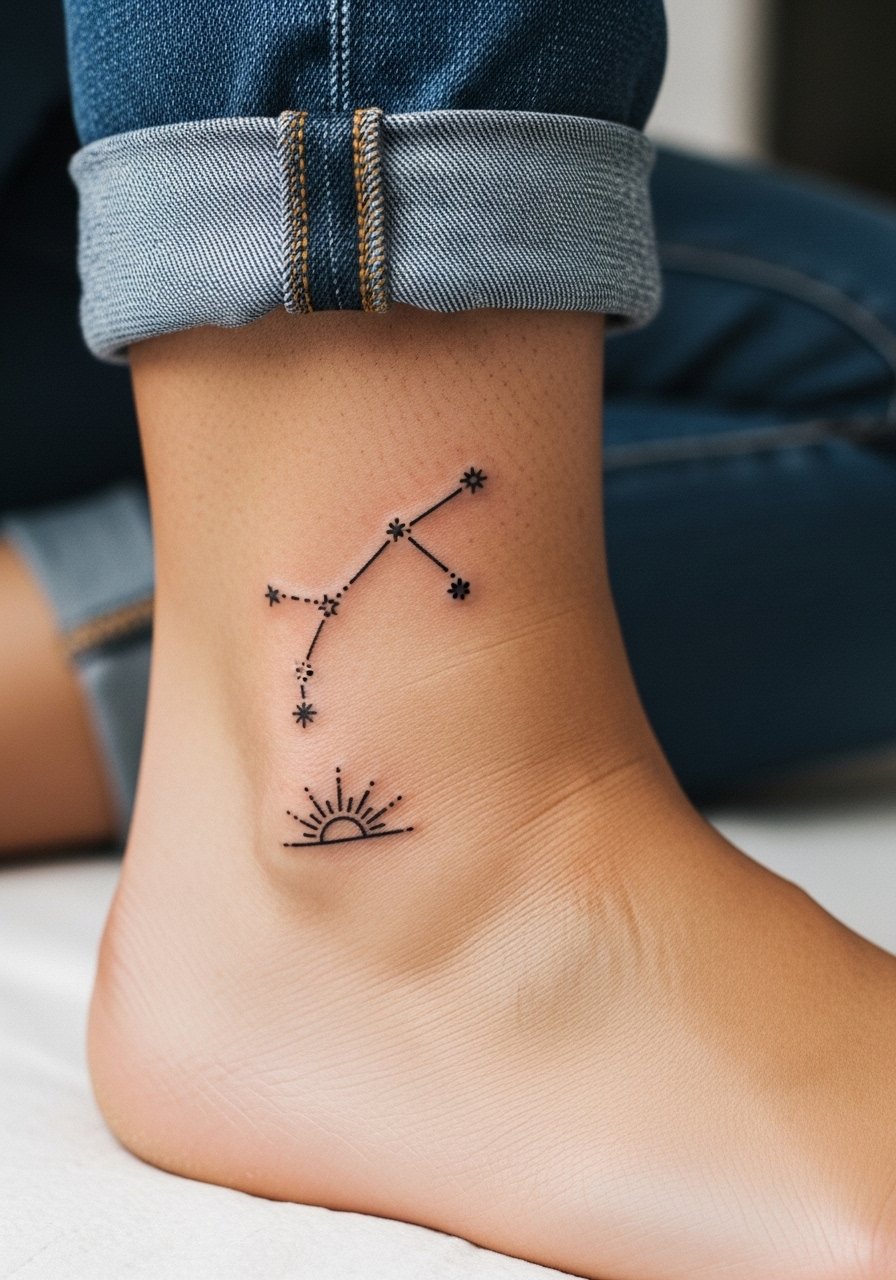
Ankle tattoos face friction from shoes and socks so the first week matters. Pain is usually moderate. Ask for slightly bolder anchor lines so the tiny constellation remains readable after healing. A common mistake is placing dots too close to the edge of the ankle where rubbing occurs. Session time is often under 45 minutes. For showing off, ankle work pairs with cropped pants or sandals. Try a low-profile leather sandal to reveal the design without extra straps across the ink.
8. Pastel Disk Solar on Outer Thigh
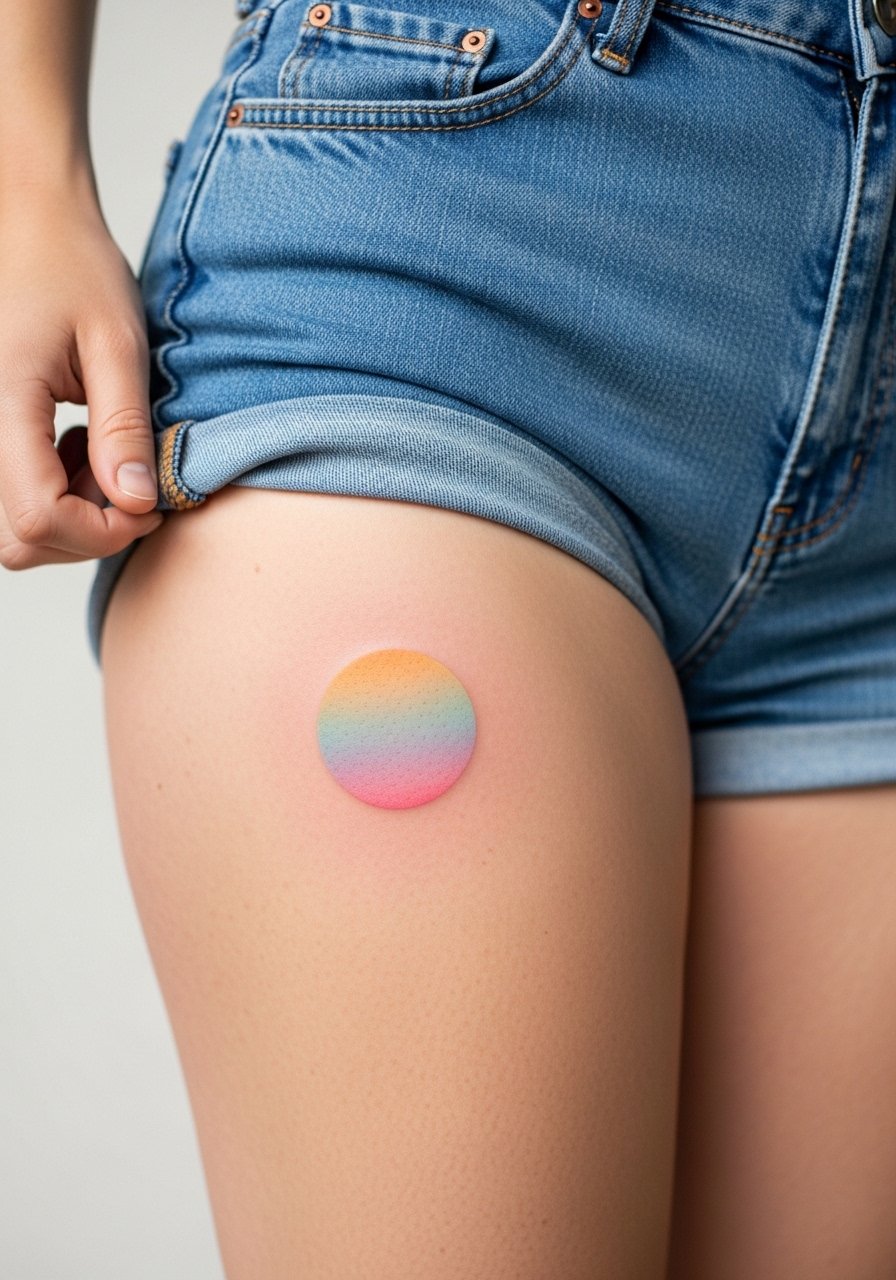
Outer thigh gives you room to play with pastel washes and softer edges. Pain is low to moderate and sessions can run 60 to 120 minutes depending on scale. Tell your artist that you want the color layered in thin passes rather than one dense fill. The mistake people make is asking for saturated pastel in a single pass which can heal patchy. This placement ages well under clothing but gets sun exposure in summers, so plan for periodic refreshes. For session comfort wear high-waisted shorts you can easily adjust without full removal.
9. Minimalist Halo Above Sternum
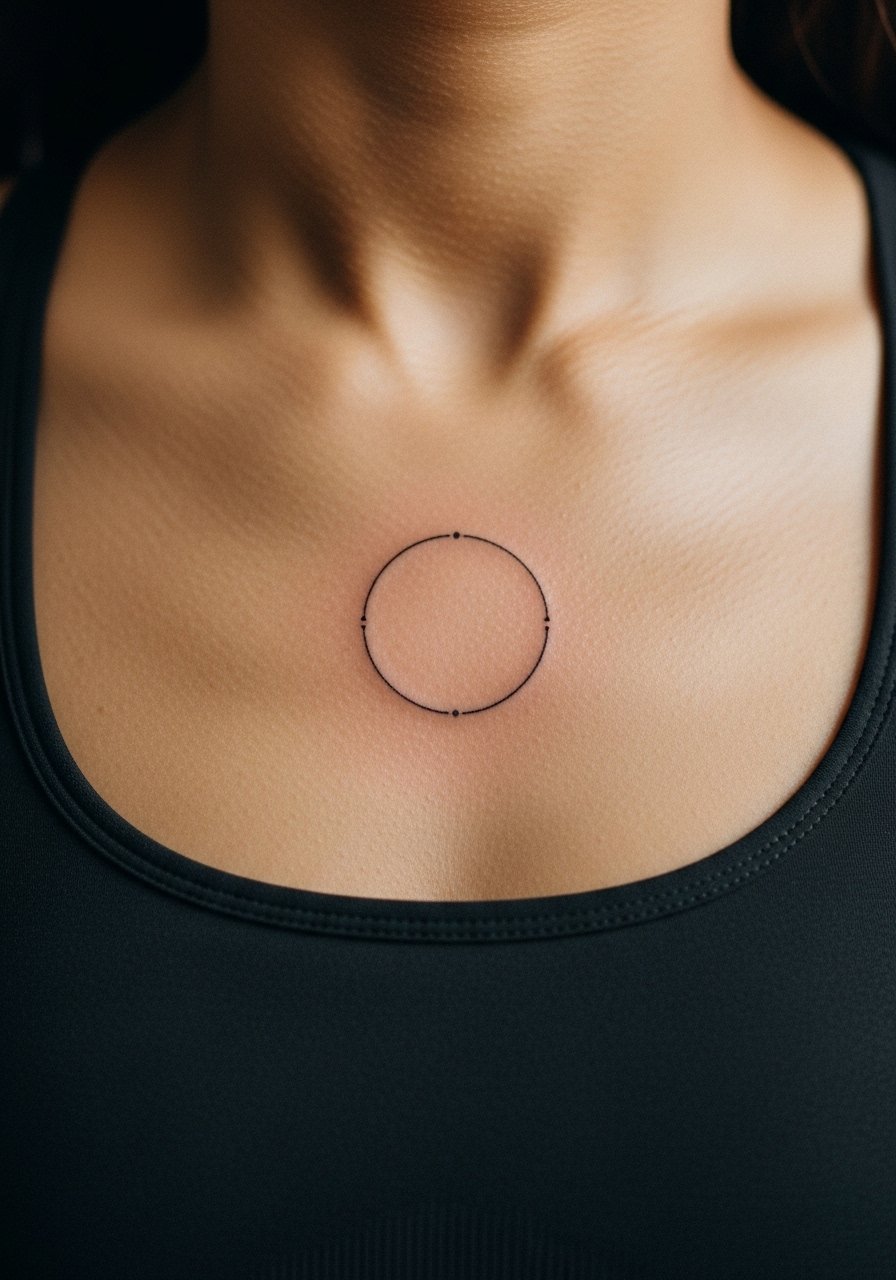
Sternum work is intimate and the skin there is thin and curved. Expect higher sensitivity and a session length of 45 to 90 minutes for small pieces. Artists split on fine line sternum work. One camp warns that the constant flex and body movement can blur ultra-fine lines within a few years. The other camp argues that with careful depth control and slightly thicker line weight, the sternum can hold delicate work. Be explicit in consultation about desired longevity and accept a slightly bolder starting line if you want fewer touch-ups. For the appointment, wear a fitted sports bra you can easily adjust to expose the sternum area.
10. Fine Line Horizon on the Back of Neck
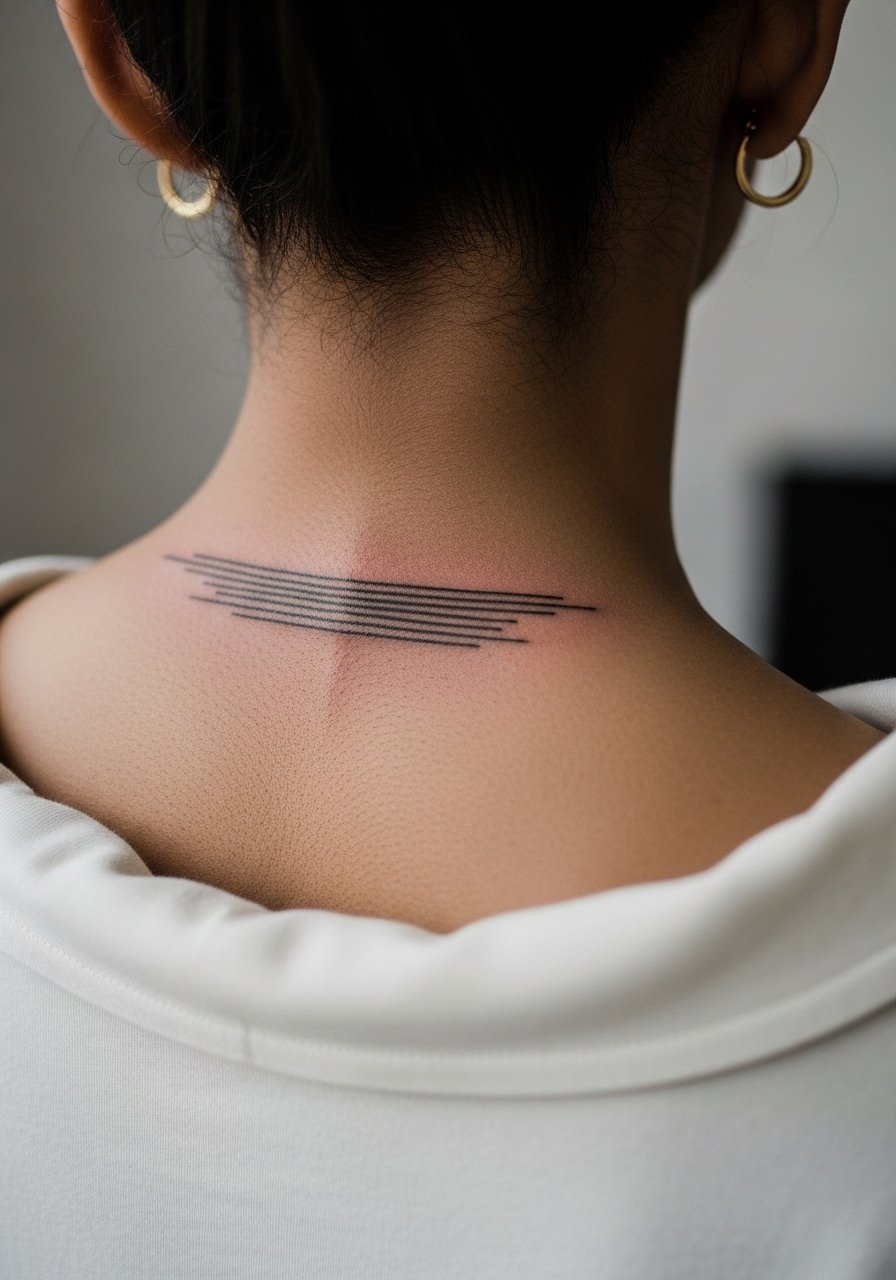
Neck pieces are visible and can affect professional perceptions for some people. The back of the neck is moderately painful and quick to tattoo, often 30 to 60 minutes. The usual mistake is asking for ultra-fine detail too close to hairline and collar friction areas. Ask for clean, slightly thicker horizon lines and plan for occasional touch-ups if you wear collars or necklaces that rub. For session access wear a wide-neck T-shirt so the collar can be moved without removing clothing.
11. Geometric Sun-Mandala on Shoulder Blade
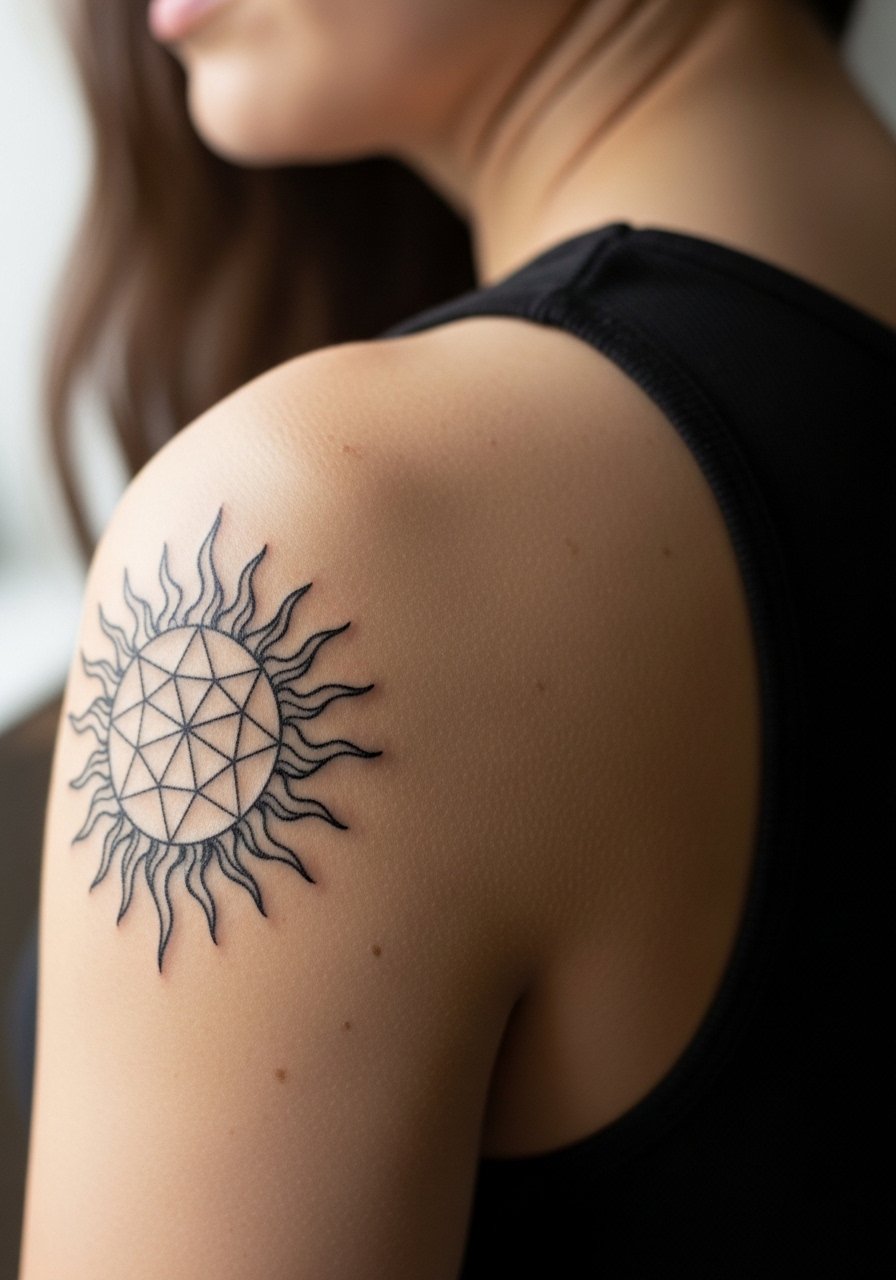
The shoulder blade accepts denser geometry and holds linework well with minimal blowout. Pain is moderate and sessions vary from one to three hours. The mistake most people make here is compressing too much geometry into a tight circle. Ask your artist for negative space to keep the mandala readable at year five and beyond. I like to advise clients that this placement is ideal for showing off with tanks and open-back tops. Pair it with an open-back dress or a simple tank for evenings out.
12. Single-Needle Sunburst on Finger
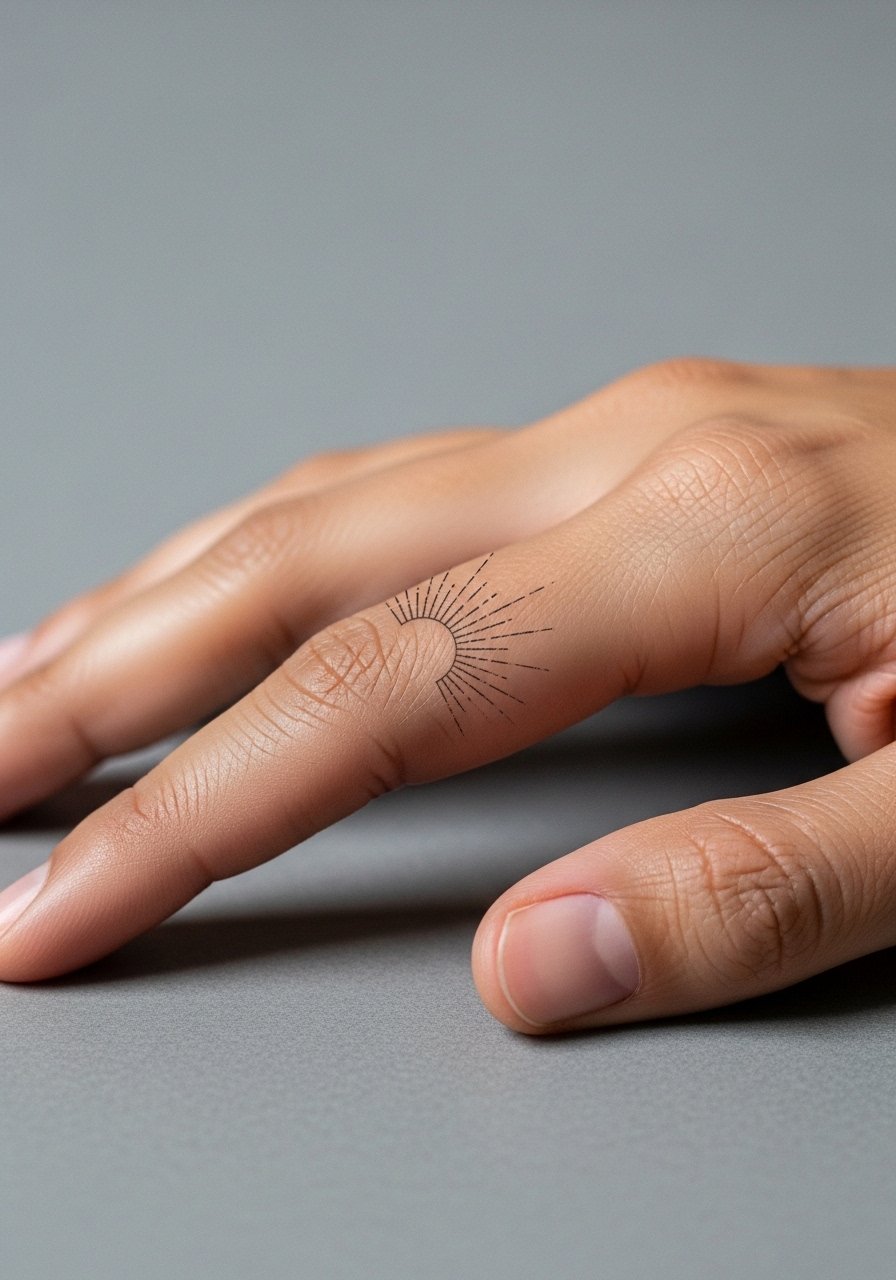
Finger tattoos are polarizing in the community. One camp says single-needle delicate work on fingers fades and often needs yearly touch-ups because of constant washing and thin skin. The opposing camp believes with bolder anchors and slightly thicker strokes, finger pieces can last longer. If you want a single-needle look, accept that touch-ups are part of the plan. Sessions are short but painful and the area heals more slowly because of friction. Avoid tiny clustered dots near joints. For showing the design try a slim stackable ring that complements the finger without rubbing the ink.
13. Watercolor Arm Band Sunset on Outer Bicep
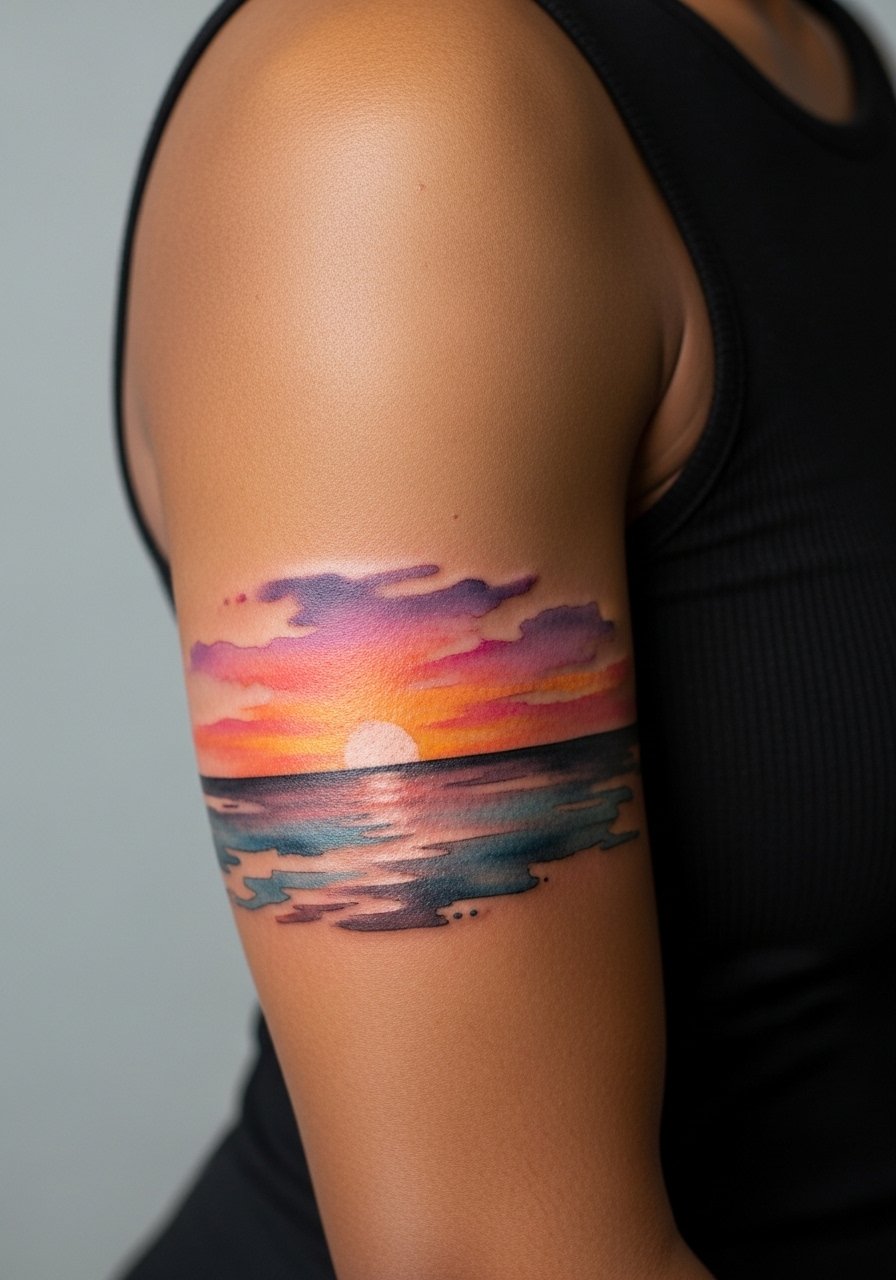
An arm band in soft sunset tones reads like a statement without heavy linework. Outer bicep pain is low and sessions can last 60 to 150 minutes. The main mistake is asking for saturated watercolor in a single pass which can heal unevenly. Ask for layered washes and a gradual blend into negative space. Over time the watercolor will soften and may require color refreshes around year three. This piece looks great with sleeveless tops. For show-offs try a sleeveless linen top that keeps the band visible.
14. Micro Botanical Sun on Inner Bicep
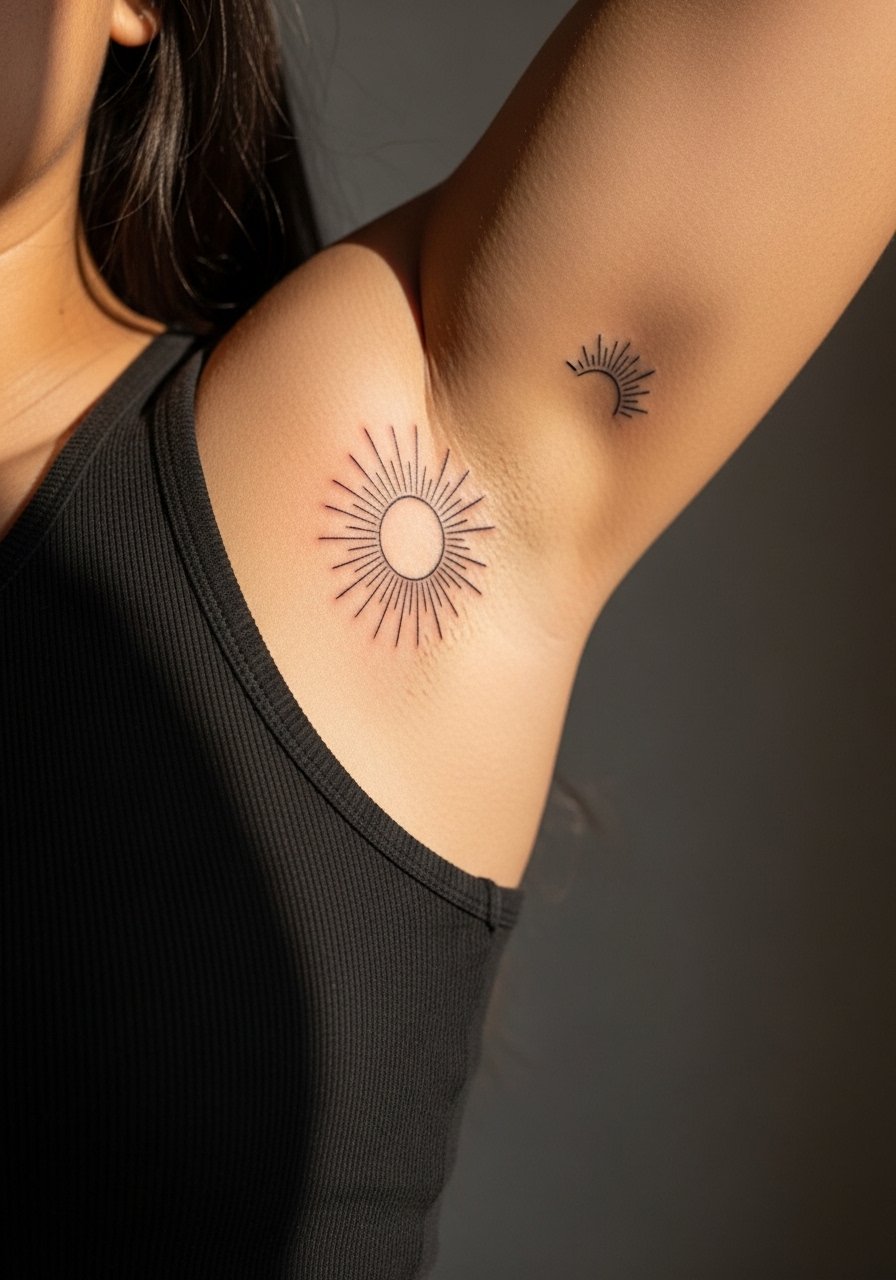
Inner bicep work can be surprisingly sensitive. The skin there flexes and can cause thinner lines to shift during healing. Expect moderate pain and sessions around 45 to 90 minutes for detailed micro botanicals. The frequent error is placing too many tiny elements close together. Ask for slightly more space between leaves and rays so the lines do not converge. Inner bicep pieces age well if the lines start with modest weight. Wear a tank top for the session so the artist can easily access the area.
15. Abstract Brushstroke Sun on Calf
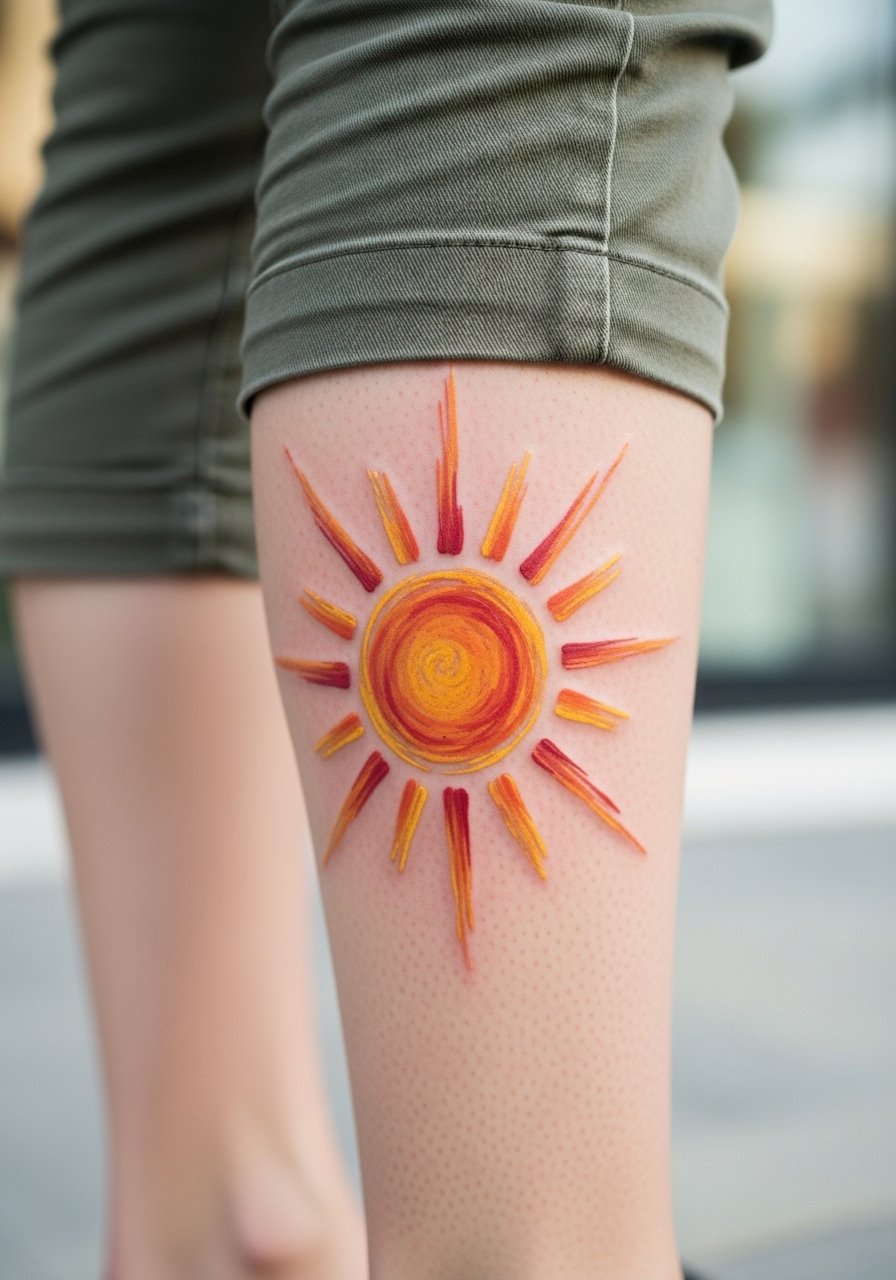
Calf pieces tolerate bold brush-like marks and hold pigment with low blowout risk. Pain is generally low and sessions can range from 45 minutes to two hours. The mistake is treating the calf like a flat canvas for miniature detail that needs magnification. Ask for confident, larger strokes and let the artist suggest scale. A calf sun ages into a soft statement when placed centrally on the muscle. For showing off, cropped trousers or midi skirts work well. Try pairing with cropped trousers that reveal the area without exposing too much skin.
16. Neo-Traditional Sun and Eye on Upper Chest
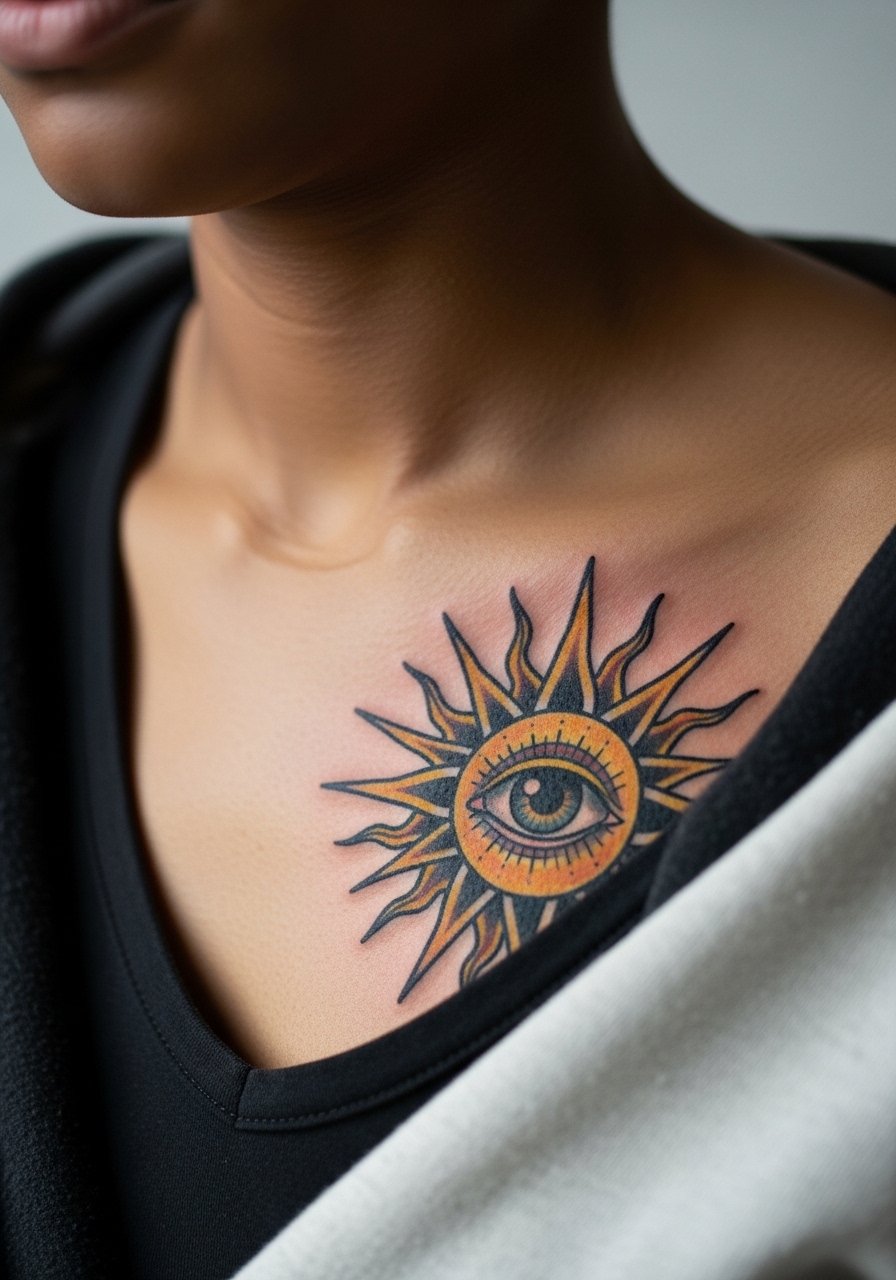
This upper chest piece blends bolder linework with softened color fills and reads well across different body types. Pain is higher near the sternum and the session might stretch to two hours for fine detail. Avoid requesting overly saturated tiny fills over bone. Instead ask for cleaner outlines with layered color that the artist can build slowly. Over time the heavier outlines retain form while color softens. For the session wear a wide-neck shirt to expose the upper chest without removing clothing.
17. Little Sun and Wave on Side Torso
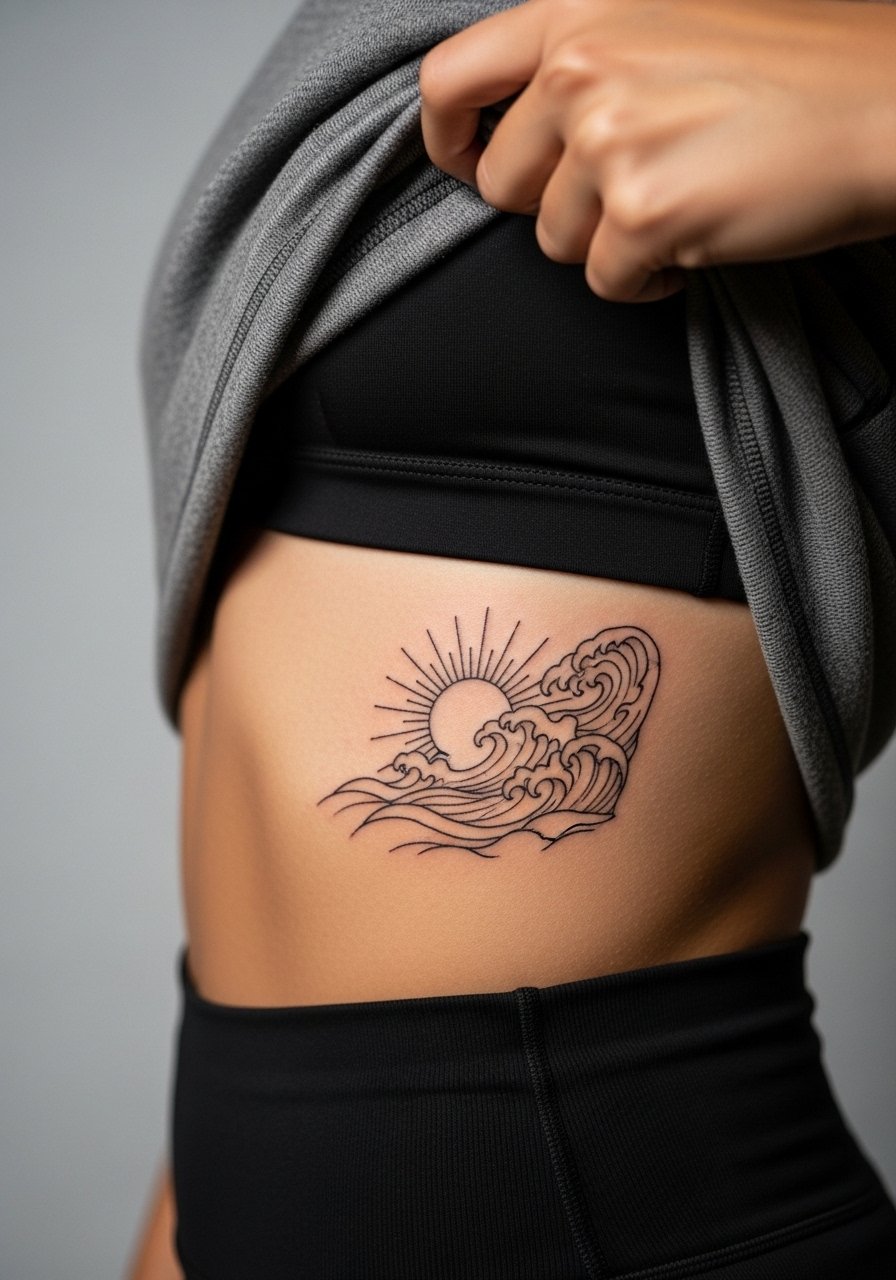
Side torso and rib pieces are expressive but sensitive. Expect a high-pain session depending on depth and placement. The common mistake is asking for detailed waves and tiny suns too close together, which causes merging during healing. Tell your artist you prefer simplified shapes with negative space separating the elements. Sessions can be split into shorter appointments if pain is a concern. For the appointment choose a cropped athletic top that can be lifted without full removal.
18. Crescent Sun Anklet Wrap
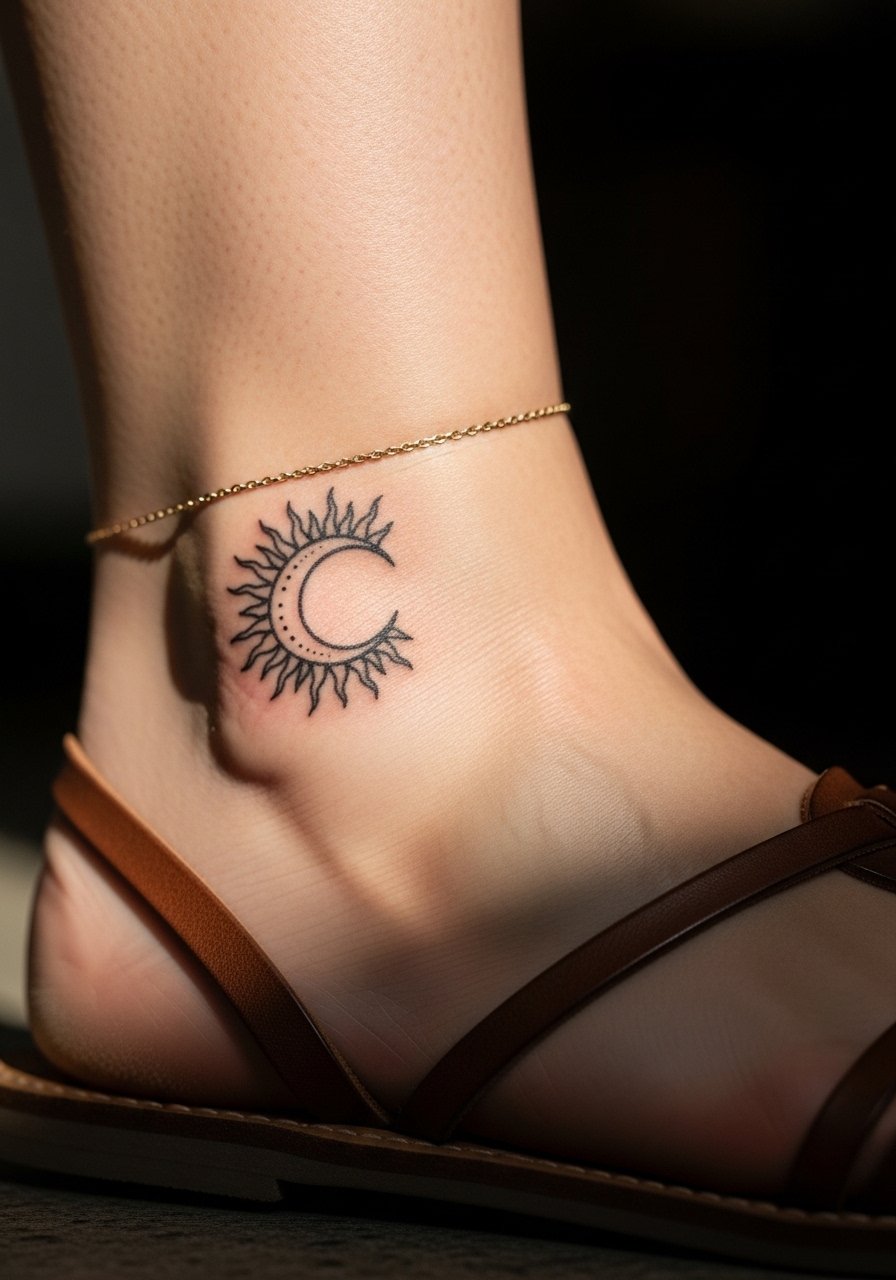
Anklet wraps are playful but face constant contact with footwear. Pain is moderate and sessions are typically short. The usual error is choosing a wrap that extends where shoes rub daily. Ask for a design that sits on the outer ankle rather than under the bone. Expect touch-ups sooner than thigh or arm work. For show-off style pick sandals or rolled pants and consider a pair of leather sandals that avoid straps across the ink.
19. Soft Yellow Splash on Lower Back
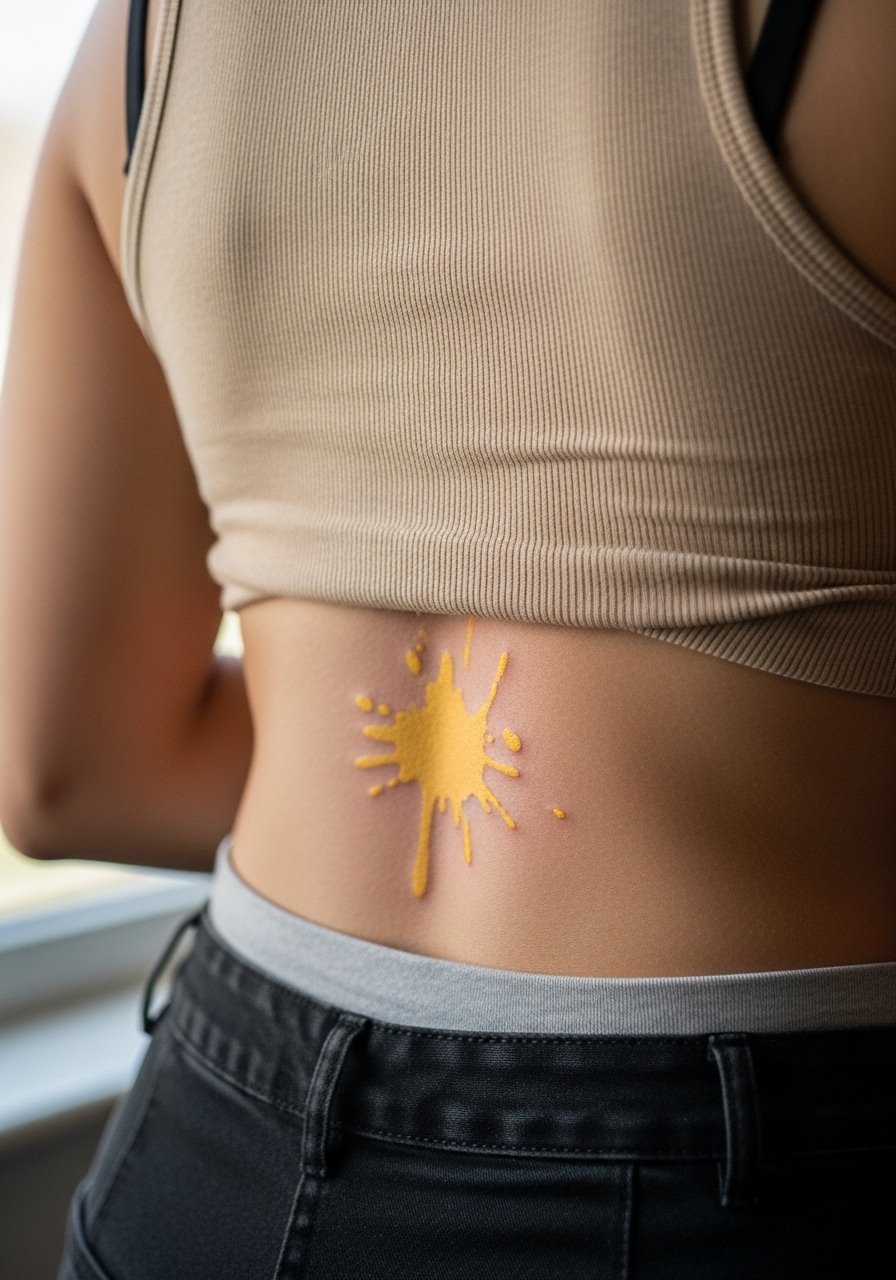
Lower back pieces give a horizontal canvas for soft color. Pain is low to moderate depending on proximity to the spine. The common mistake is using too much saturation that makes the piece read heavy as it heals. Ask for thin layers of color and soft edges that fade into skin tone. This area hides well under clothing and ages slowly with minimal touch-ups if kept out of heavy sun. For the session wear a tank top and high-waisted bottoms that you can shift down slightly.
20. Tiny Solar Glyph on Thumb
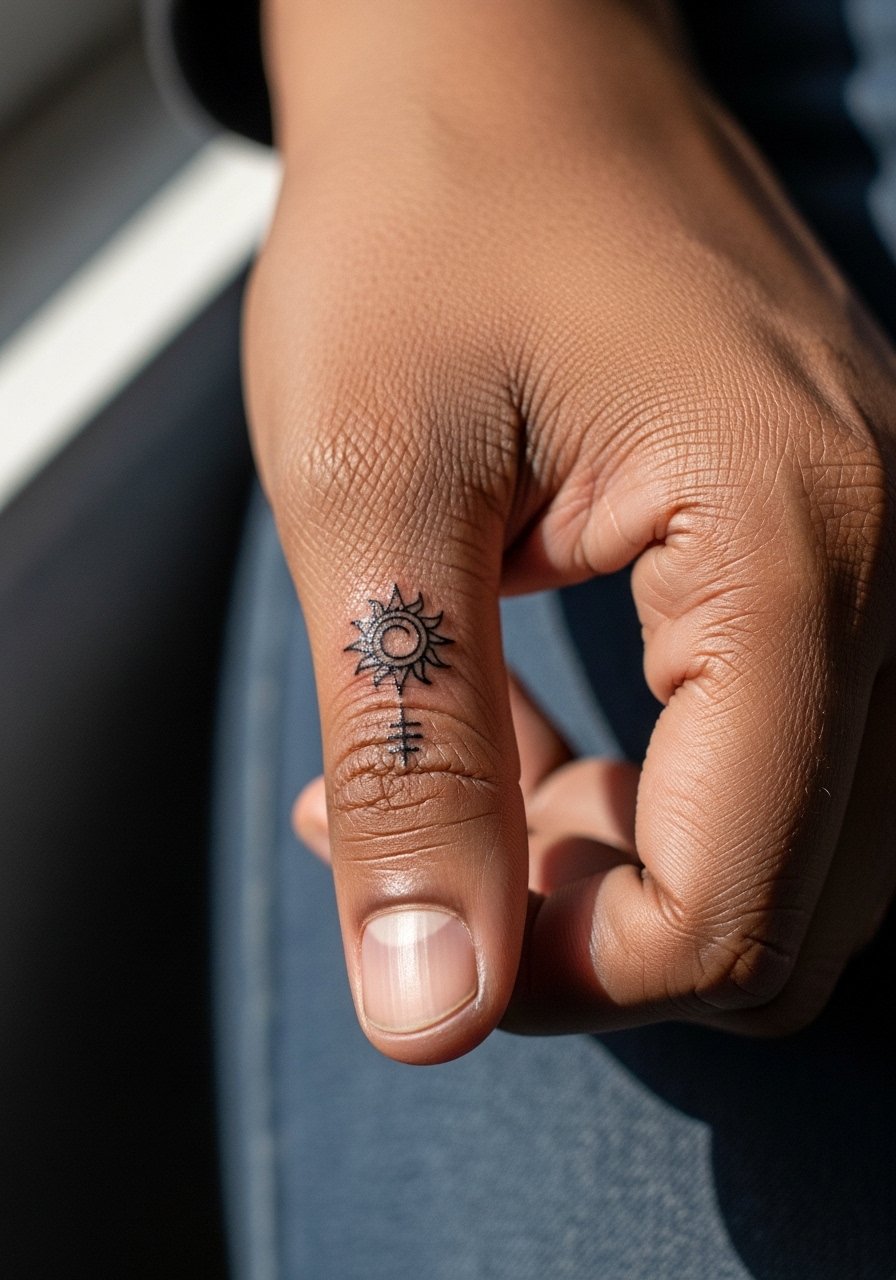
Thumb work is one of the most high-maintenance tiny placements. The skin there wears quickly and frequent touch-ups are normal. Expect a quick but painful session and plan for yearly refreshes if you want the glyph to remain sharp. A common mistake is placing too many thin strokes near the joint. Ask for a slightly bolder starting line and accept the maintenance trade-off. For a minimalist accessory that complements the glyph try a slim leather thumb ring which avoids constant rubbing on the tattoo.
21. Continuous Line Sunrise for a Sleeve Cap
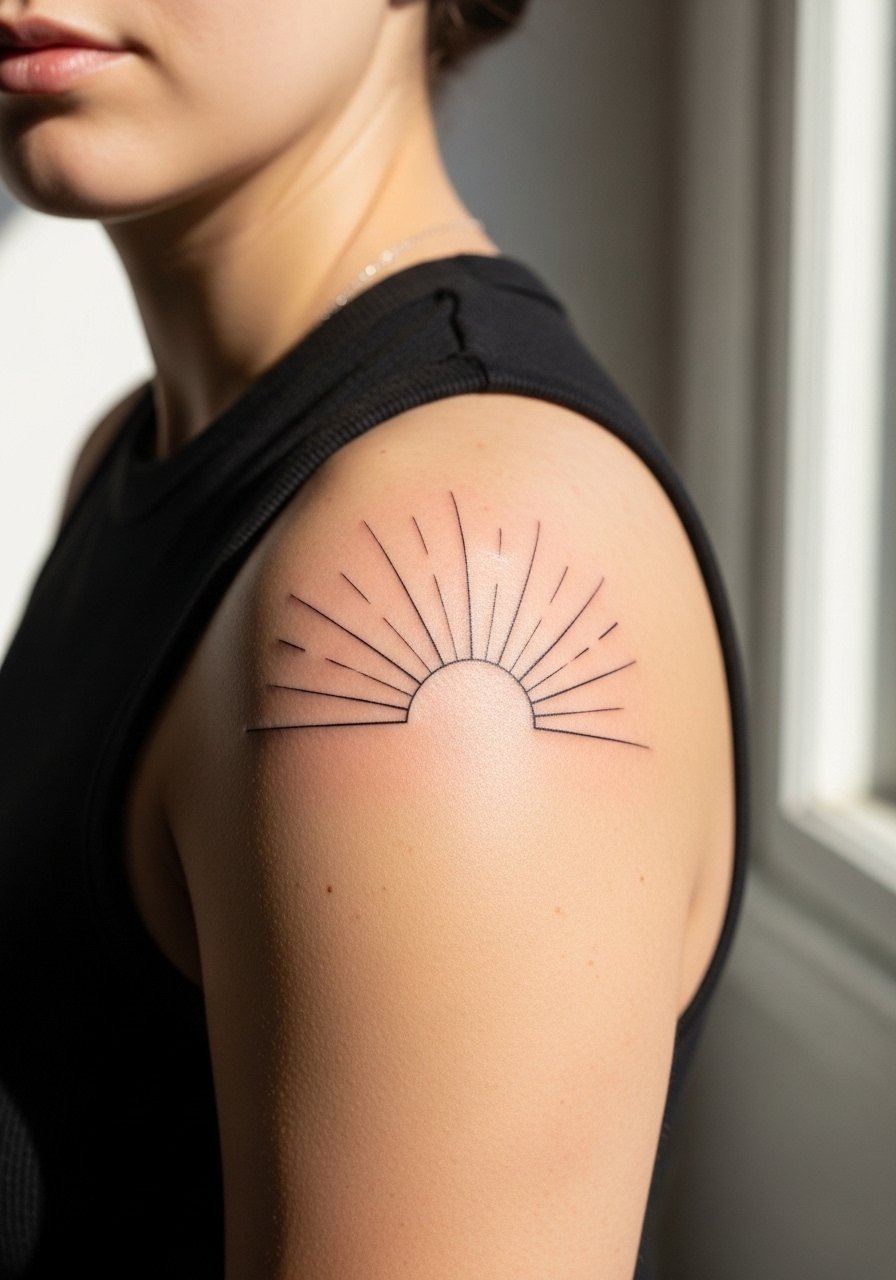
A sleeve cap continuous line sunrise can tie a larger sleeve together while keeping the aesthetic soft. Shoulder cap pain is moderate and sessions can be staged across multiple visits. The mistake is forcing the sunrise into a cramped arc that conflicts with existing pieces. In consultation, bring sleeve references and ask the artist how the curve will flow with muscle movement. Expect touch-ups along the perimeter as the sleeve ages. For showing it off, sleeveless tops and open-shoulder dresses frame the cap. Try pairing with a sleeveless top that keeps the area visible.
Frequently Asked Questions
Q: Will fine line sun motifs blur faster than bolder sun tattoos on the forearm and wrist?
A: From what I have seen, fine line does tend to soften faster, especially on high-motion zones like wrists. The fix is to ask for slightly stronger anchors in key areas and space the rays so they have room to age. Expect a touch-up at year two or three if you want crisp lines long term.
Q: Are watercolor-style sun tattoos more likely to need touch-ups on ribs and sternum?
A: Yes, watercolor work on ribs and sternum often needs refreshes sooner because of skin movement and thinner tissue in those zones. If you want fewer touch-ups, ask your artist for layered washes and some areas of negative space that let the watercolor breathe.
Q: How should I dress for a session that includes collarbone or upper chest work?
A: Wear something that exposes the area without full removal. A wide-neck shirt or a fitted sports bra that can be shifted keeps you comfortable and preserves dignity during the session.
Q: Do finger and thumb tattoos really require yearly touch-ups?
A: They often do because of constant washing and friction. Some people plan for small yearly touch-ups. Others accept natural softening as part of the look. If maintenance is a problem, choose a less exposed placement.
Q: How do I decide between watercolor and stipple shading for a soft sun design?
A: Think about longevity and texture. Stipple shading gives a dot texture that tends to hold shape, while watercolor gives that soft, painterly look but may require refreshes. Ask the artist to show healed examples so you can compare realistic outcomes.
