
Fine line flower tattoos are dominating saved feeds right now, and the pieces that look flawless on screen are not always the ones that hold up. Placement, line weight, and daily friction decide how a small flower tattoo ages more than the original reference photo. Read this collection for realistic small flower tattoo ideas and what to ask your artist so the design still reads well years from now.
1. Tiny Single-Line Rose on the Wrist
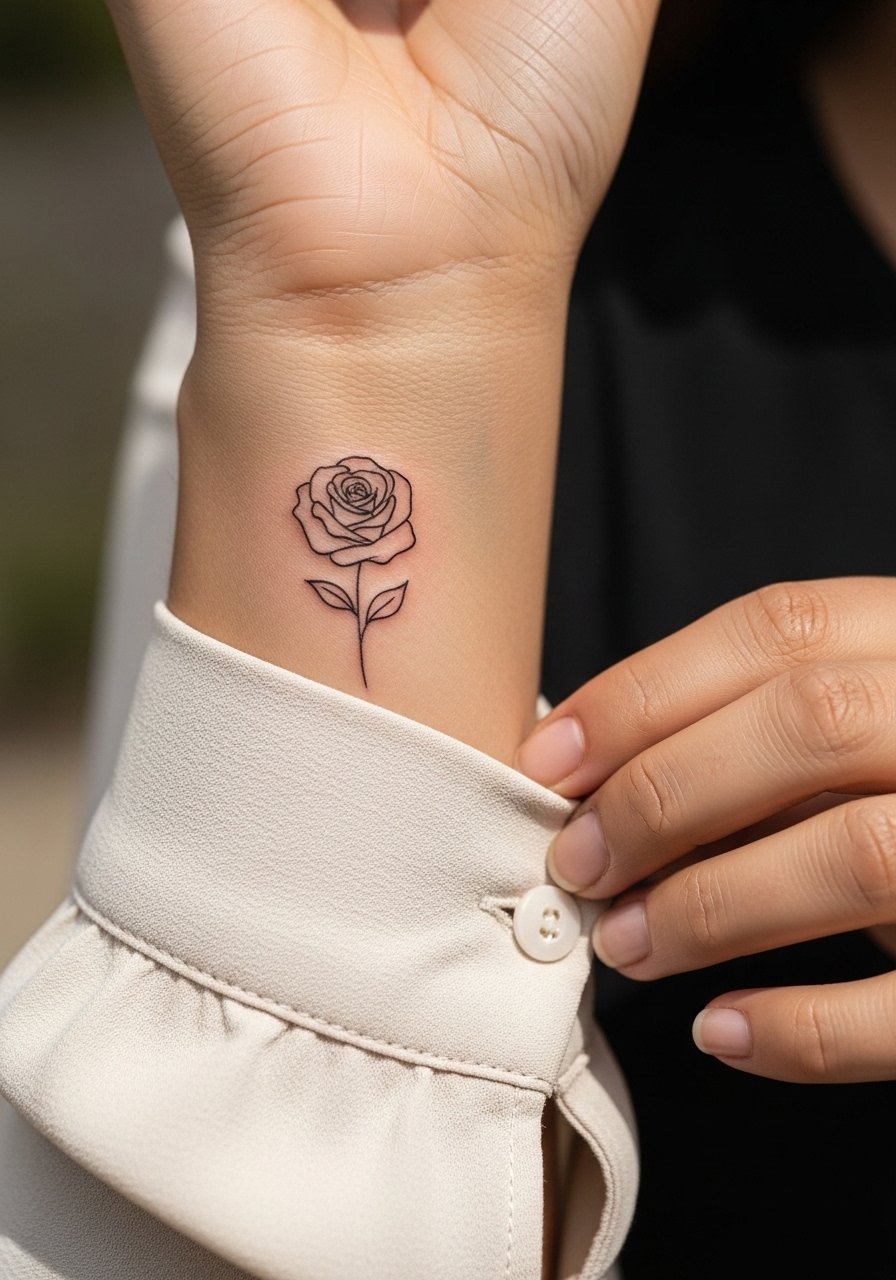
I've seen single-line roses on wrists last longest when the artist slightly increases line weight from the reference. Ask for a 1.5 to 2 cm scale and a firm but not hairline stroke so the lines do not disappear into normal wrist movement. Fair warning, the wrist sees a lot of washing and bracelets rubbing. For longevity, request a touch-up window at year two when booking. For the session wear, a rolled cuff blouse women makes it easy to expose the inner wrist while keeping the rest of the arm covered.
2. Mini Daisy Cluster Behind the Ear
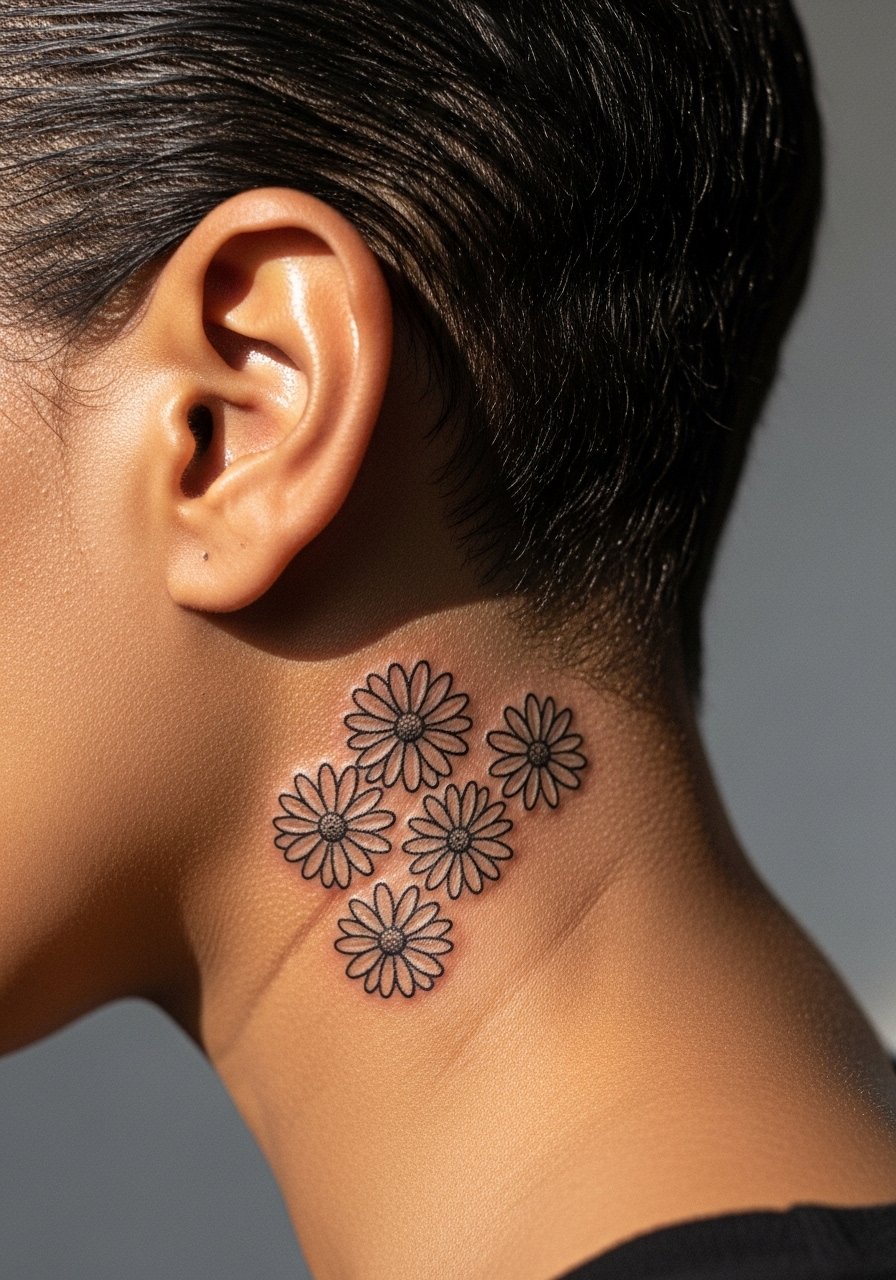
This placement reads like a secret jewelry piece when scaled to about 1.5 to 2 cm. During consultation, specify single-needle outline with the petals slightly separated so they retain shape as the skin changes. Common mistake is packing too many tiny daisies into a 2 cm area, which breeds blurring. Expect low session time and quick healing, but the area needs sunscreen once healed. For showing it off, an updo puts the cluster on display without wearing jewelry that could snag the hair.
3. Lotus Bloom with Dotted Shading on the Collarbone
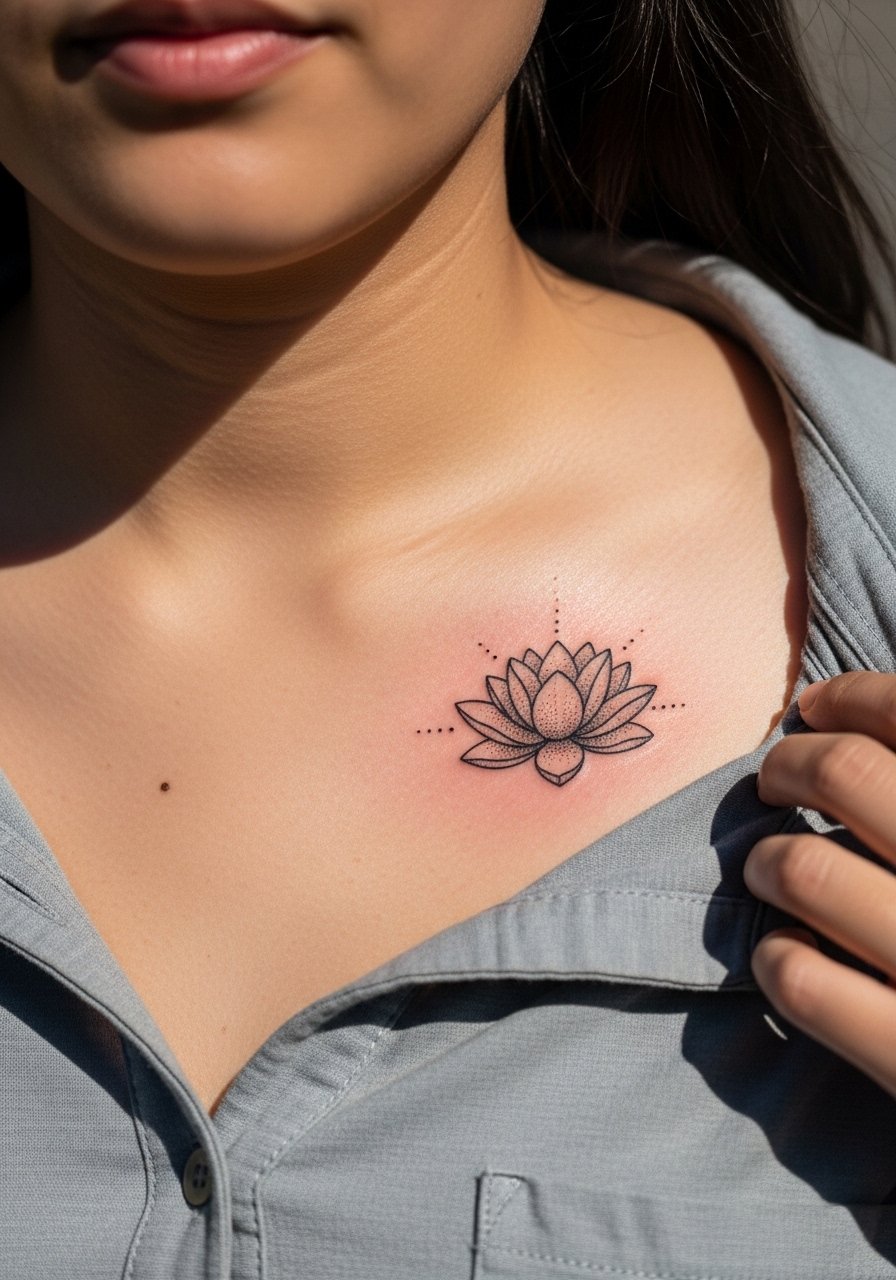
Fine line lotus work on the collarbone benefits from slightly more negative space between petals. Tell your artist you want dotted shading, not a full gray wash, to keep the piece readable at 2 to 3 cm. The collarbone is a smart pick for fine line floral pieces because it avoids constant friction. If you plan to wear chokers, mention offset placement so the necklace does not sit directly over the ink. For session wardrobe, a cream strapless blouse or wide-neck shirt makes access easy without full exposure.
4. Cherry Blossom Branch on the Shoulder Blade
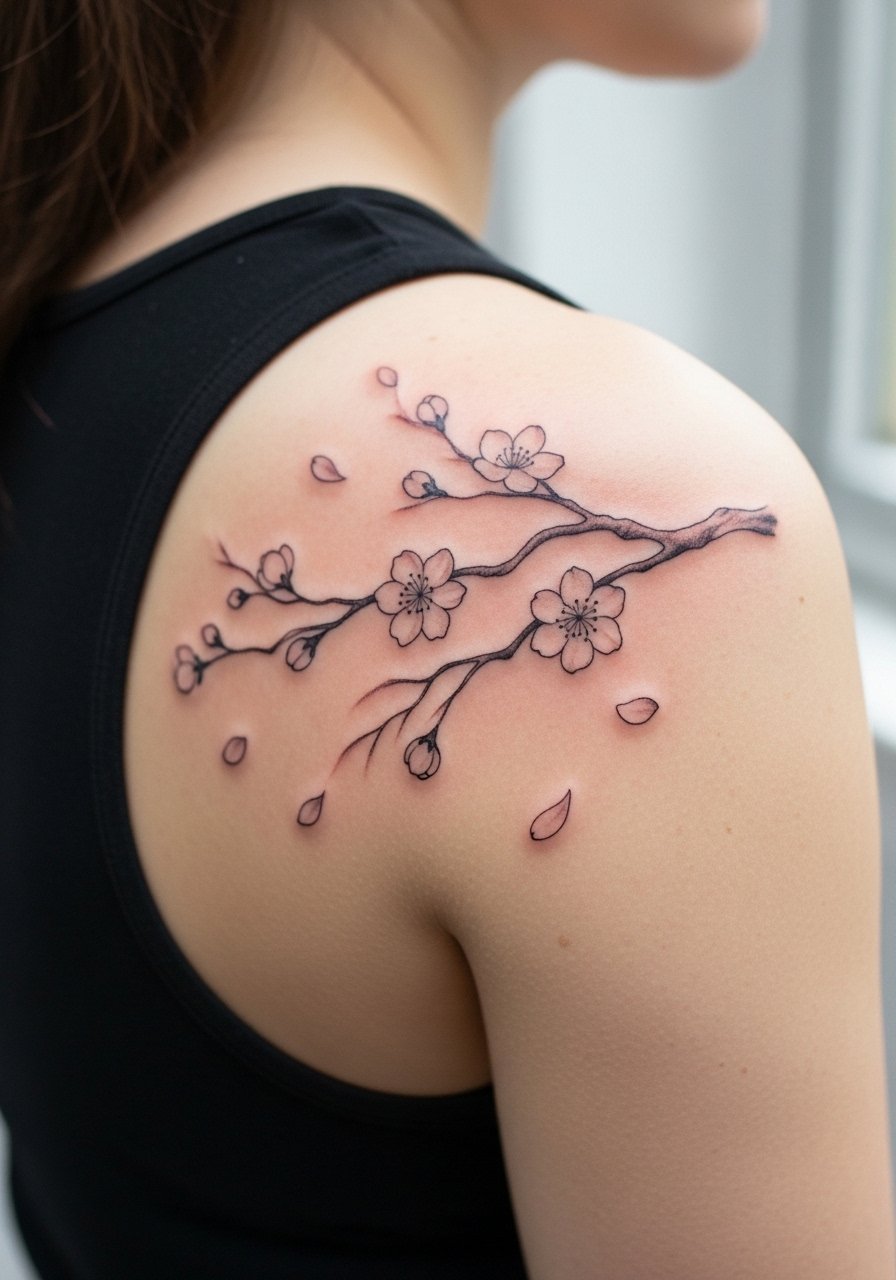
Most cherry blossom branches read best when kept 4 to 5 cm long and flowing with the shoulder blade curve. A common version that ages poorly is a dense cluster with overlapping tiny petals. Ask for airy spacing between blooms and faint petal trails so the branch keeps its form at two and five years healed. Shoulder blade sessions are straightforward. Wear a sleeveless halter tank so the artist can work without fabric shifting. Expect low blowout risk here compared with wrist or hand pieces.
5. Single Stem Poppy Silhouette on the Outer Ankle
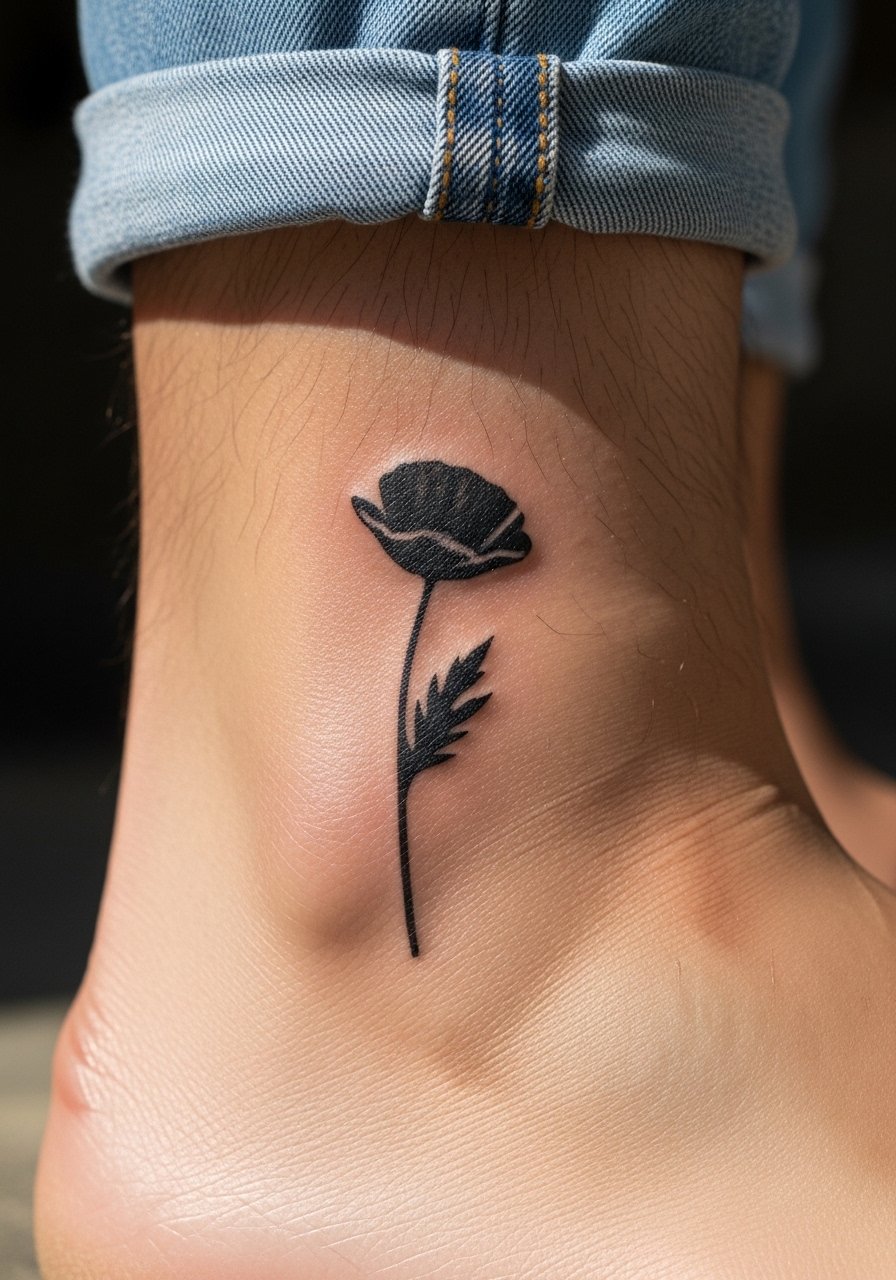
Blackwork silhouettes like a poppy survive photography well because they read when seen from a distance. The trick is to keep the fill clean and avoid feathered shading in such a small area. The ankle faces shoe and sock friction, so wear slip-on shoes on session day and plan for a touch-up at year two if you wear heavy footwear. For evening styling, pair the ankle piece with cuffed ankle jeans or a delicate delicate ankle chain gold to frame the silhouette.
6. Dotted Sunflower Core on the Inner Wrist
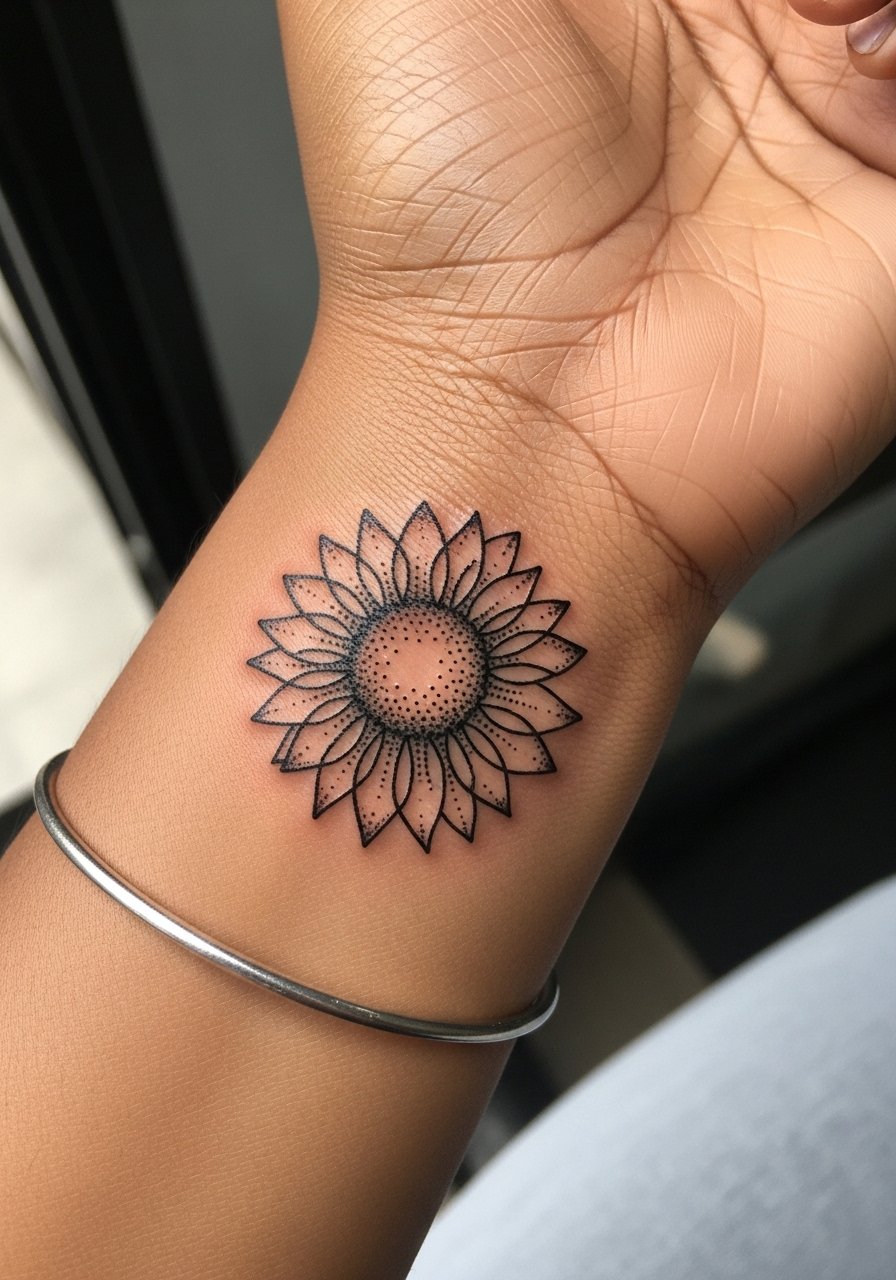
Dotwork sunflower centers create texture without relying on heavy outlines. For the inner wrist, ask for denser dots in the core and thin petal outlines spaced slightly apart. The inner wrist sees soap and friction so expect faster softening of the thinnest strokes. A realistic touch-up timeline is at year two for fine line redefinition. Styling pairs well with thin bracelets; try a thin silver bangle set on the opposite wrist so the flower stands alone.
Pre-Session Essentials
The wrist and ankle pieces above heal differently from collarbone and shoulder blade work, so a few targeted items smooth the session and the first week.
-
Stencil transfer paper kit. Lets you preview how a lineweight and size sit on skin before the needle arrives, especially useful for wrist and collarbone placements.
-
Topical numbing cream. Applied as directed about 45 minutes before can reduce the edge on sensitive rib or ankle sessions without altering the linework.
-
Thin protective film roll. Works for finger and wrist placements that face constant washing, it protects the area during the first 24 to 72 hours.
-
Fragrance-free body wash. Gentle cleansers reduce irritation during the shower phase so the fine line work does not scab excessively.
-
Aquaphor healing ointment. A thin initial layer for the first few days keeps moisture balanced in delicate single-needle pieces without suffocating the skin.
7. Lavender Sprig on the Inner Forearm
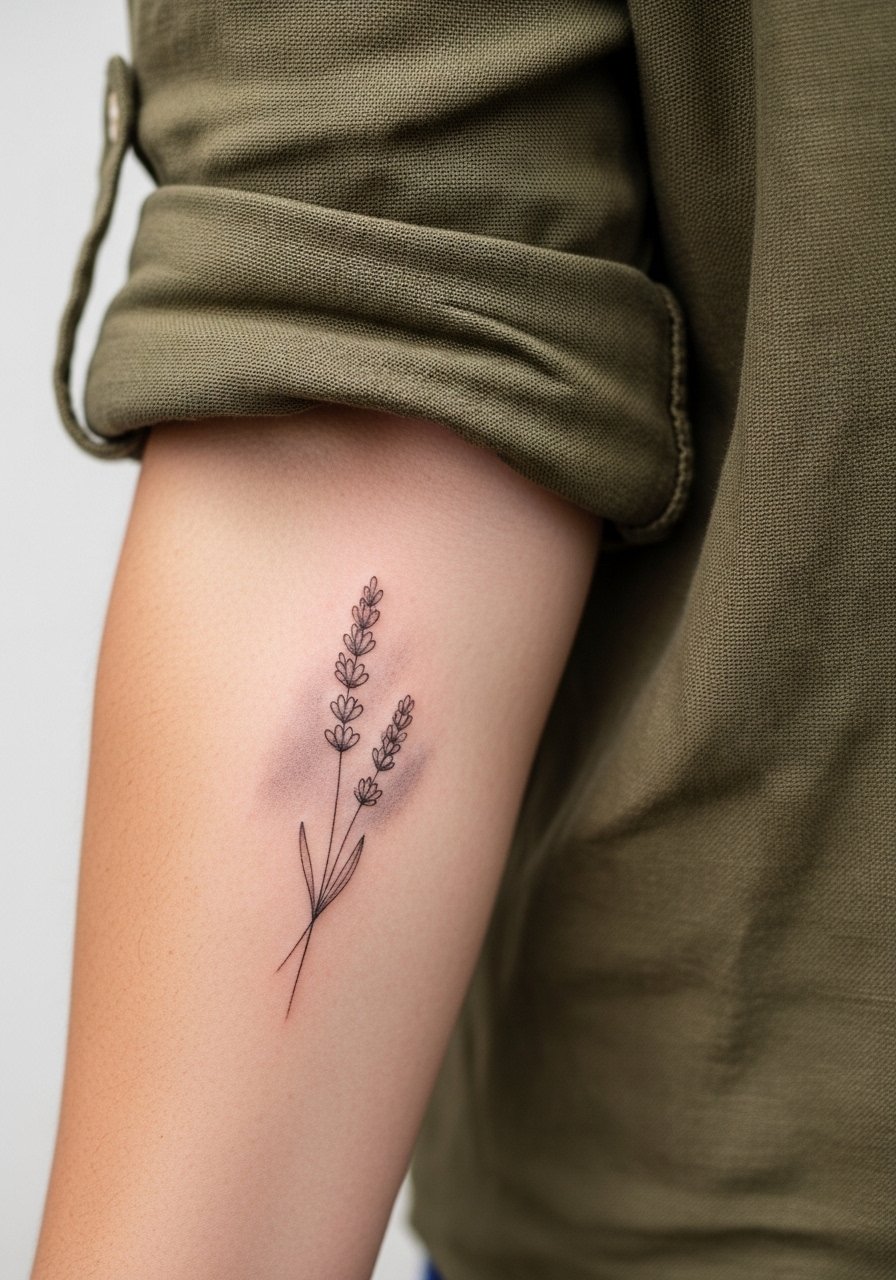
I've noticed lavender sprigs become personal markers, often chosen for calm and routine. The inner forearm is forgiving for a 3 to 4 cm sprig using fine gray wash and stipple shading for the buds. Tell the artist you want slightly thicker main stems and stipple buds so the texture holds at year three. For the session, roll a sleeve up or wear an olive linen button down you can pull aside easily. Expect moderate pain and quick session time.
8. Micro Peony Bud on the Collarbone
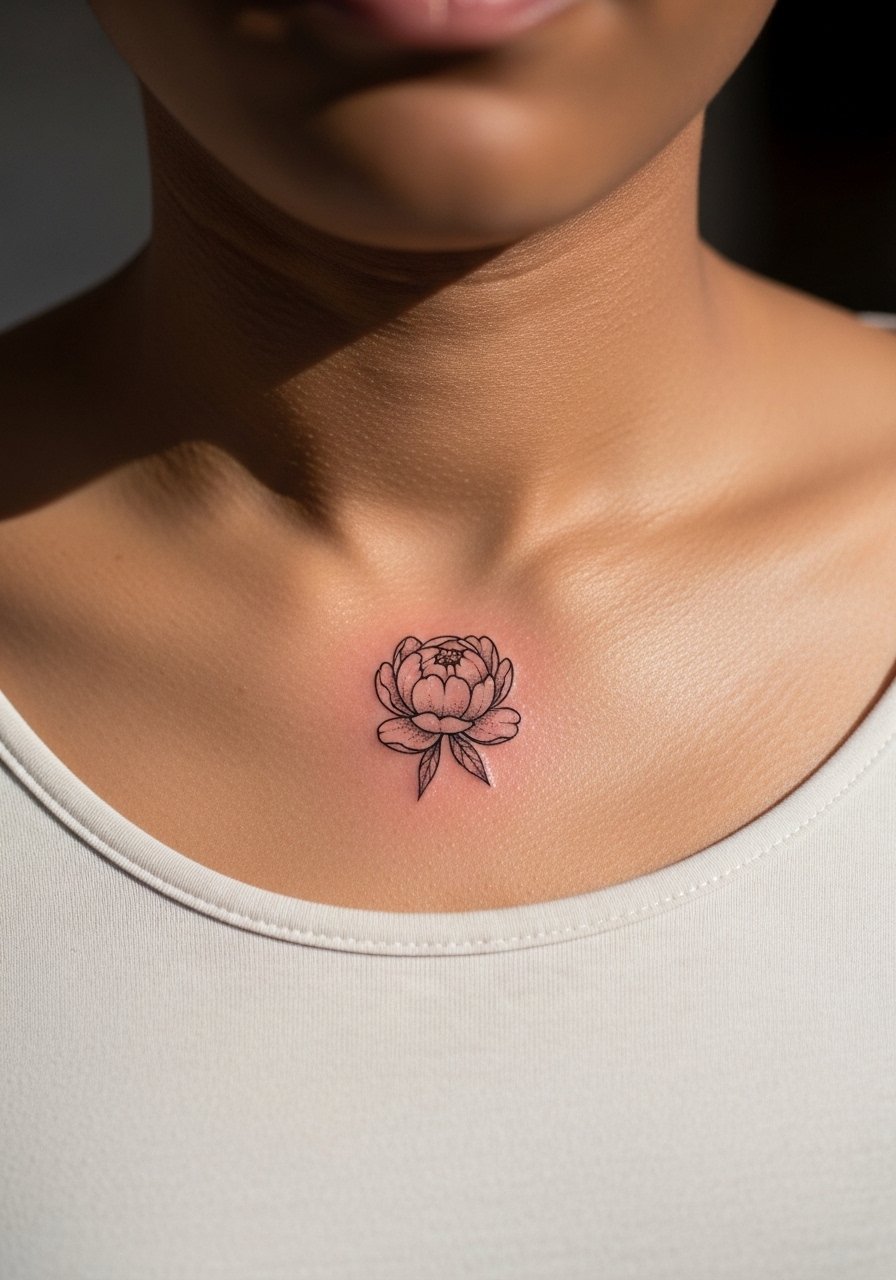
Micro peony buds read luxurious when kept to 2.5 cm and executed with crisp single-needle work. A common mistake is packing too many tiny petal lines into a small bud which leads to early blur. In consultation, ask for subtle negative space between petal tips so the shape survives skin settling. Collarbone placement keeps fine lines safer from constant abrasion. For show-off styling, an off shoulder linen top highlights the bud without exposing more than intended.
9. Outline Violet Cluster on the Back of the Neck
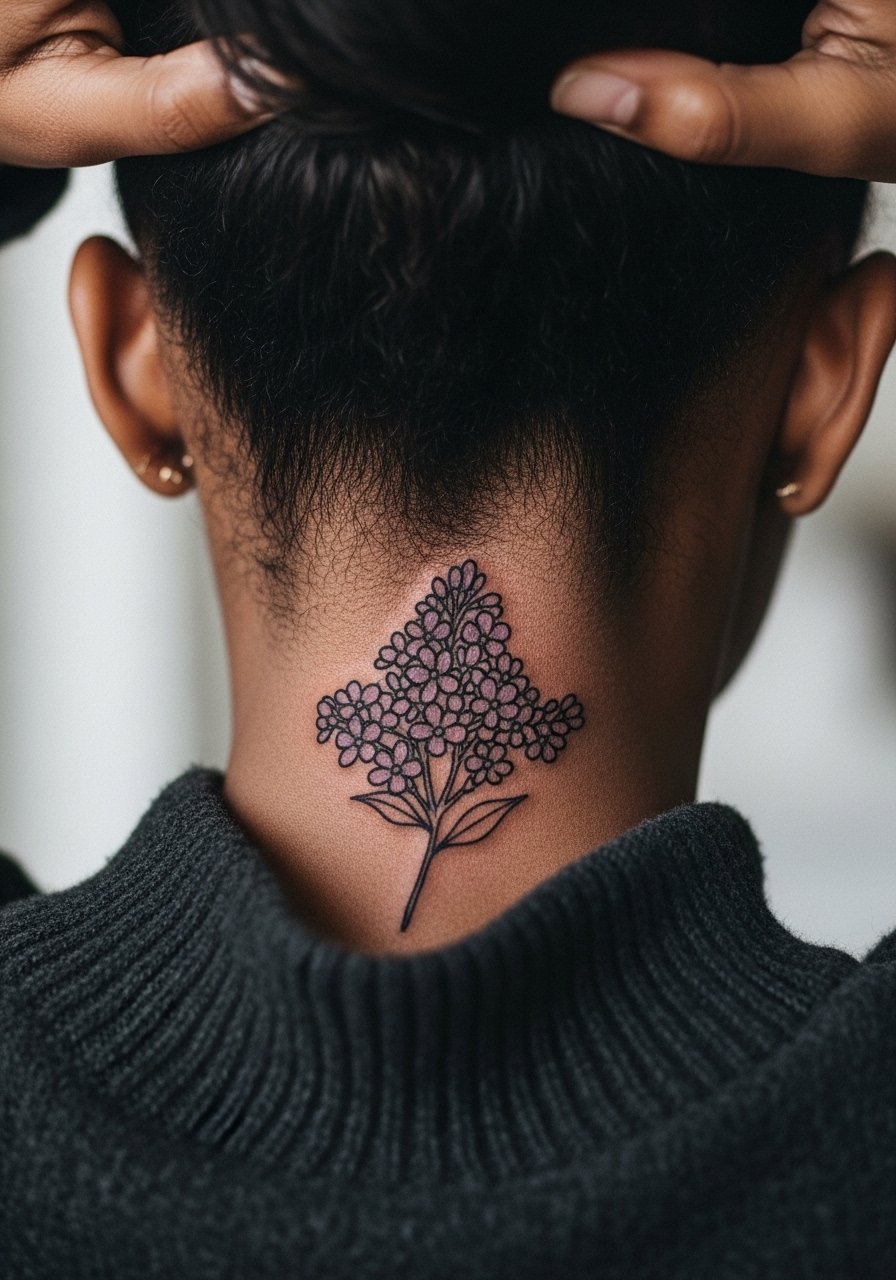
Neck-back outlines at roughly 3 cm are popular for collectors who plan future pieces down the spine. Ask for pure outline with consistent spacing between flowers to prevent lines merging as the skin moves. The back of the neck can hide under hair so think about visibility before booking. Wear your hair up for the session and try a high neck sweater loose for a low-key reveal afterwards. Expect mild discomfort and quick healing compared with ribs.
10. Jasmine Vine Tendril on the Inner Bicep
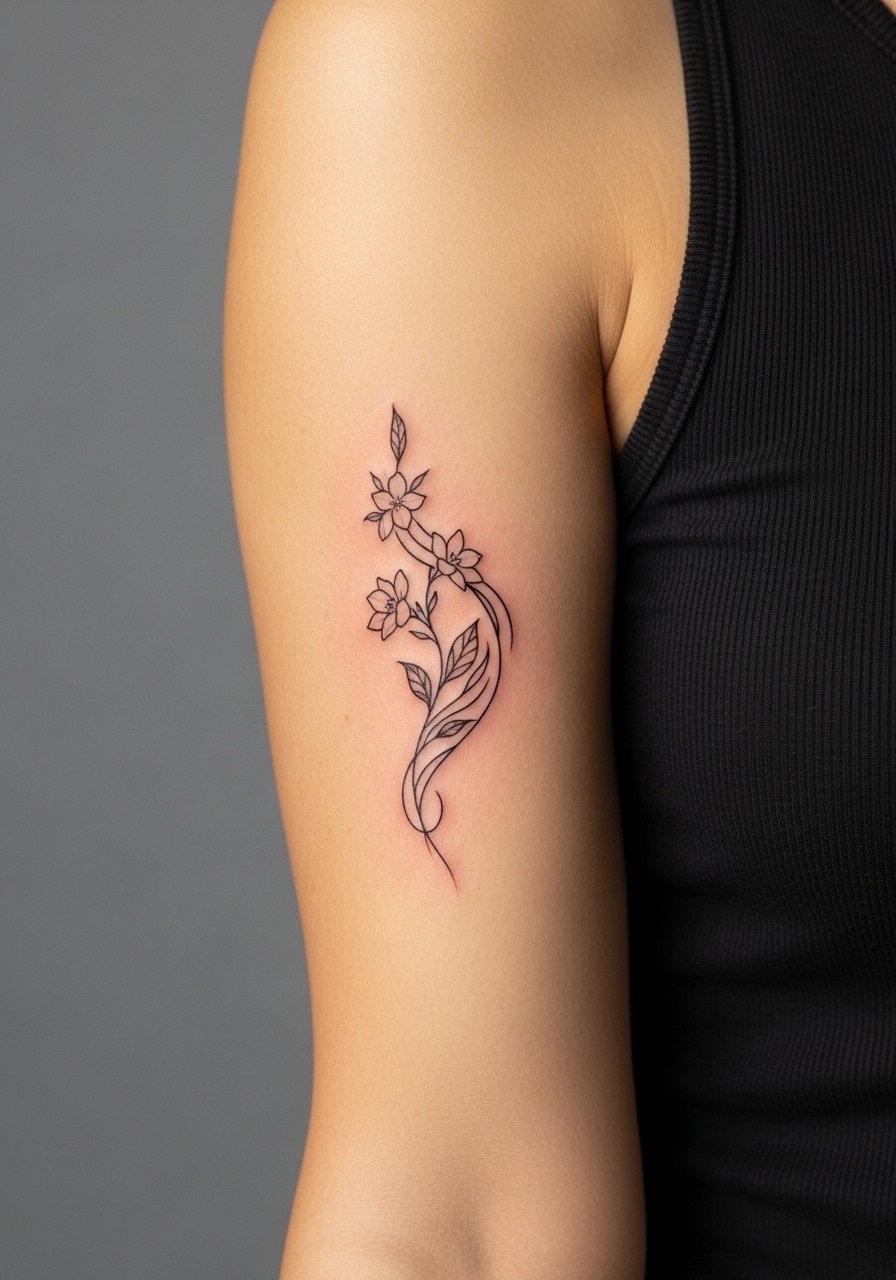
Inner bicep pieces need design flow that complements muscle movement. The vine looks best when drawn to elongate the limb with 3 to 4 cm of vertical space. Artists sometimes under-space leaves which causes compression as the arm flexes. During consultation, ask for longer spacing between motifs and gentle tapering of linework. For session wear, a tank top with the arm raised is ideal. Note that inner bicep skin can be softer so plan for a slightly gentler needle approach.
11. Tiny Forget-Me-Not Bunch on the Ankle
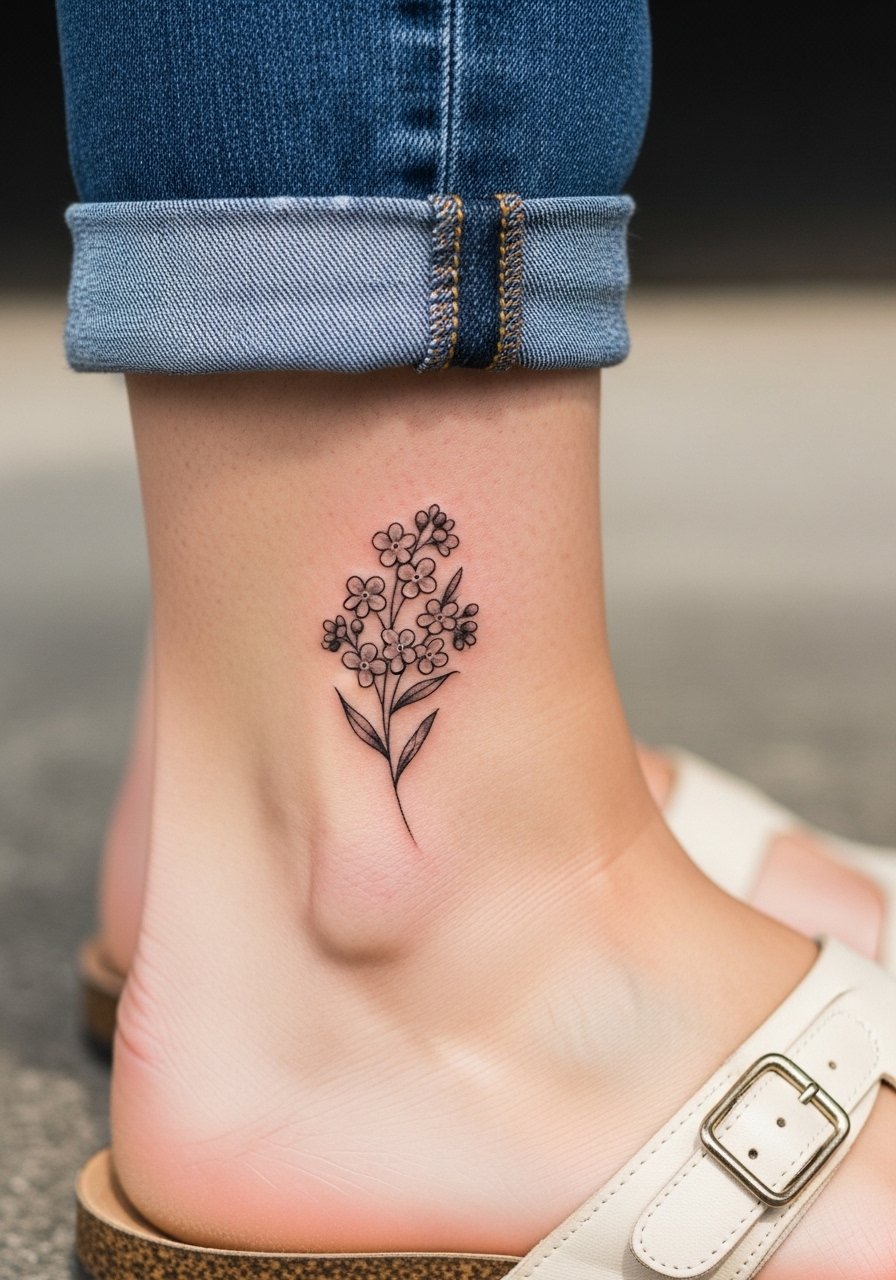
Forget-me-nots are sentimental and work well at 1.5 to 2 cm clusters on the ankle. The key is keeping each bloom spaced enough so the petals do not fuse over time. Ankle skin is exposed to footwear friction, so schedule the session when you can avoid tight socks for a few days. To style, a flowy midi skirt neutral or cuffed jeans draws attention to that small patch without overcrowding it.
12. Single Hibiscus Petal Drop on the Calf
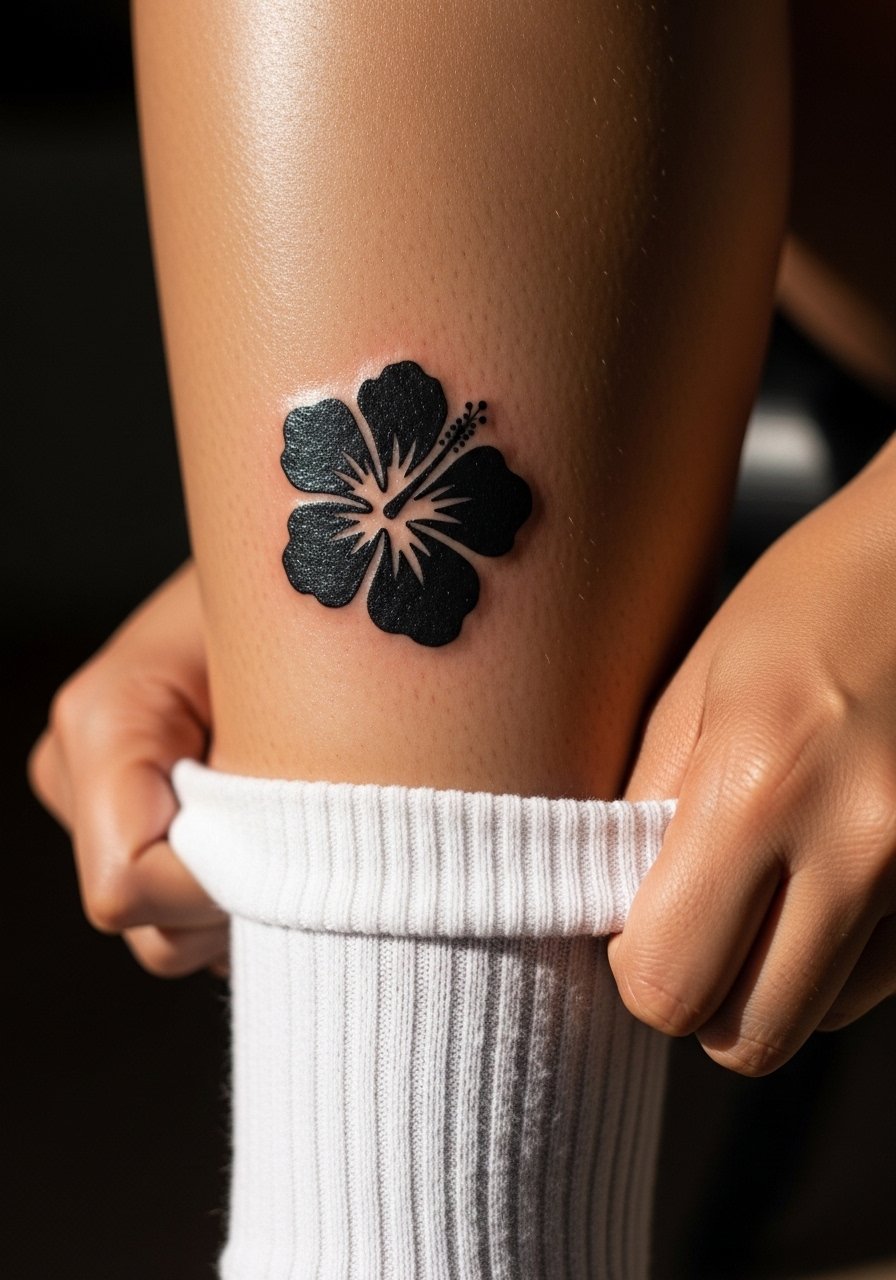
A single hibiscus petal works as a bold little statement at about 2 cm. Solid black fill reduces the chance of early blur compared with ultra-fine shading. If you have darker skin tones, the strong silhouette keeps the shape readable. Calf sessions are low-pain and heal under clothing, so wear loose pants you can slide down easily for the artist. Expect minimal touch-up needs unless you consistently rub the area with tight gear.
13. Micro Anemone on the Side of a Finger
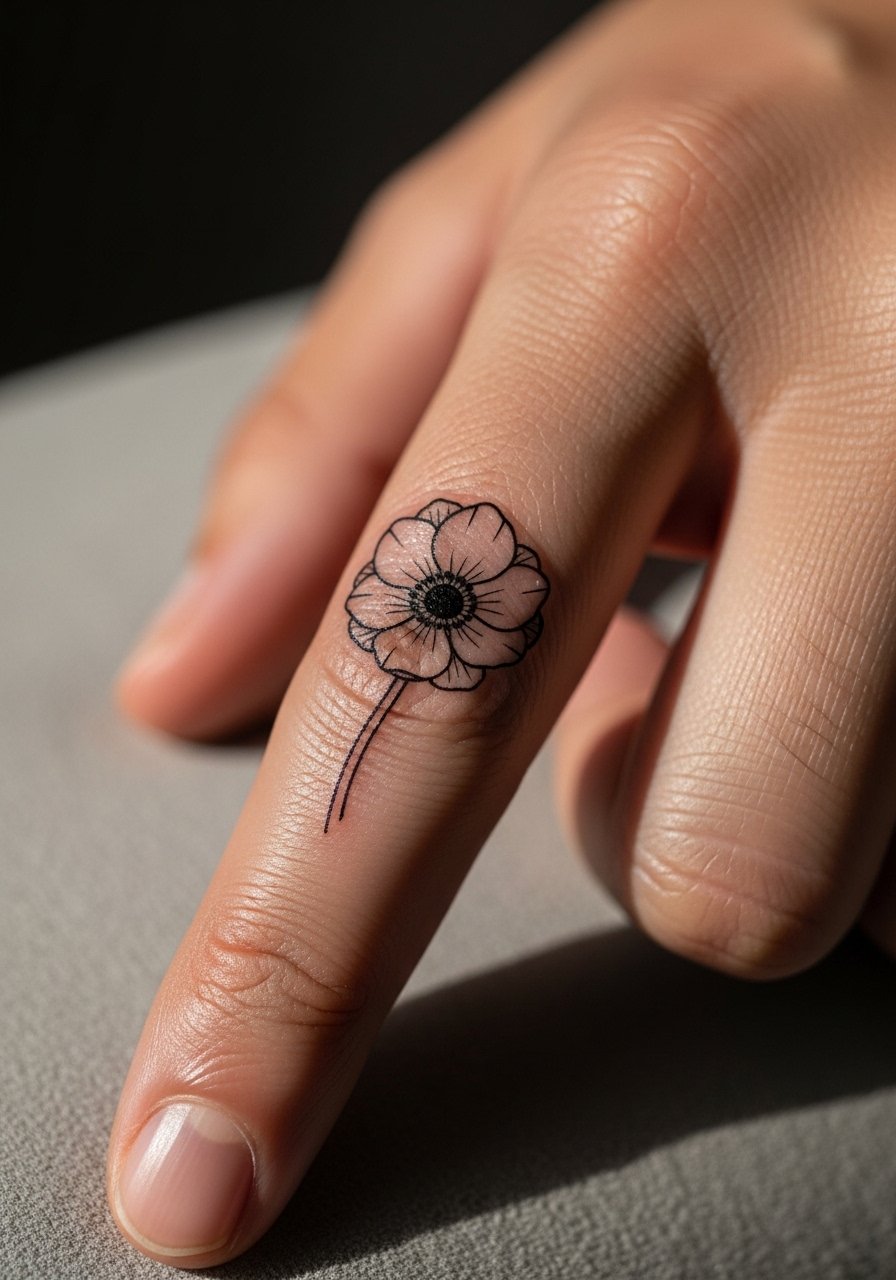
Finger placements deliver instant visibility but they are high friction zones. I recommend keeping micro anemones on the side of the finger rather than the pad, and asking for slightly bolder outline thickness so the shape remains distinct as the skin wears. A common mistake is trusting single-needle hairlines for finger work. Expect faster fading and plan for a touch-up within 12 to 18 months. For session day, wear a loose long-sleeve you can pull back and keep hands moisturized after healing.
14. Looser Vine for Aging Elbow Skin
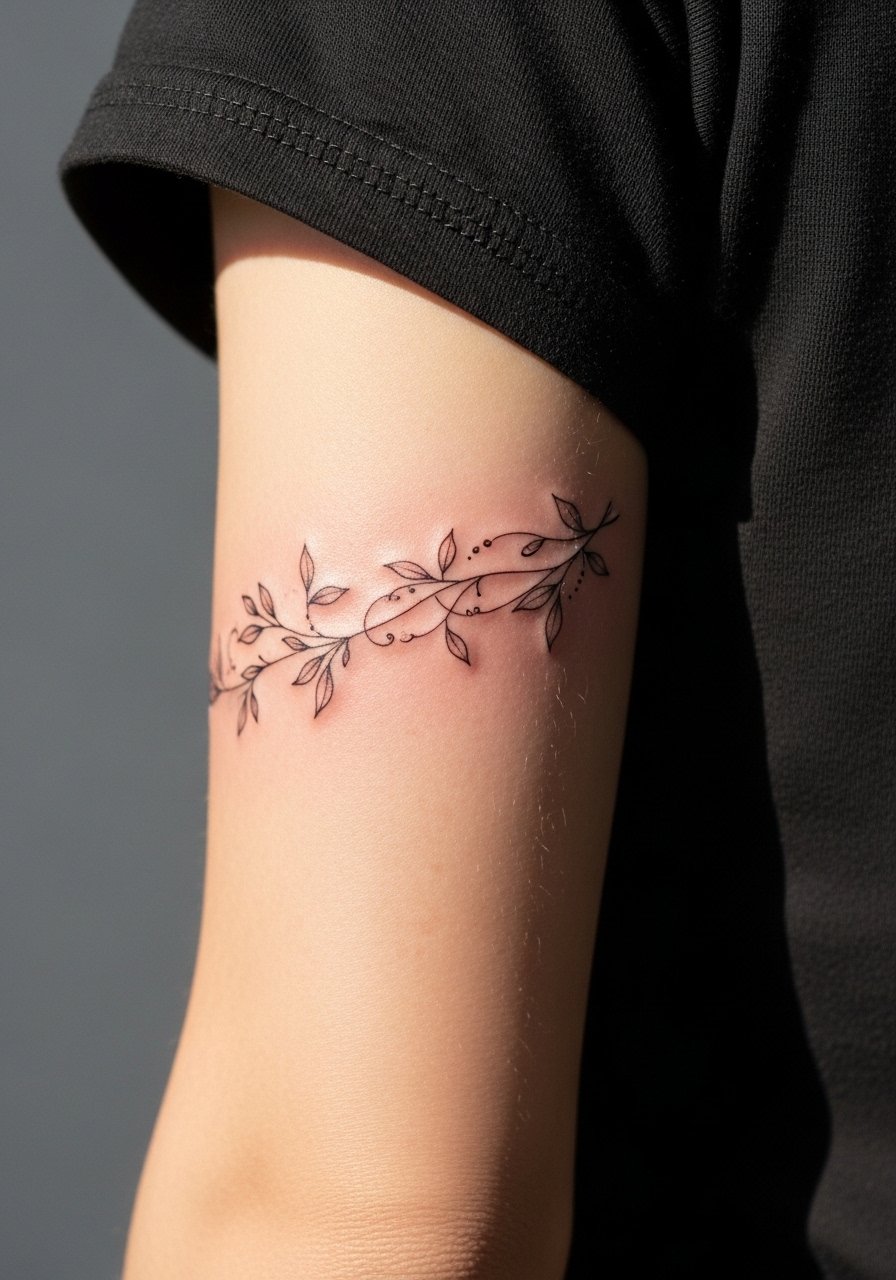
Designs over joints need breathing room. On the elbow area, choose looser vines with larger gaps between leaves so the piece bends with the skin instead of compressing into a blur. Tell your artist you want the motif to follow the joint and to avoid dense detail that could merge. Pain at the elbow is higher, so book for a single quick session and plan for gentle aftercare. This is one of the under-covered approaches that pays off as skin ages.
15. Negative Space Optical Collarbone Piece
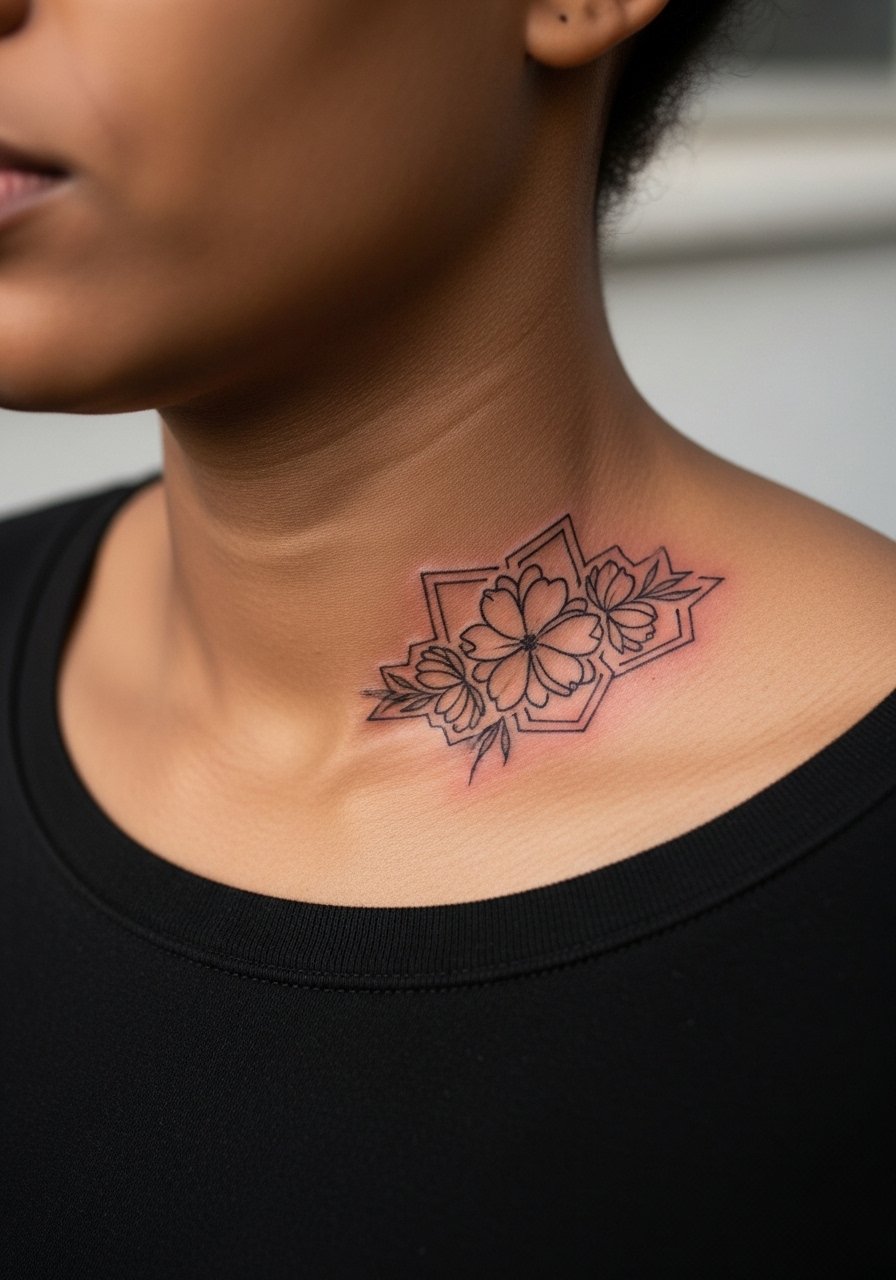
Negative space designs on the collarbone give a modern optical effect without overworking the skin. If you want this aesthetic, ask for the artist to map the negative shapes on skin before inking so placement sits naturally with bone landmarks. A common error is trying to force negative shapes into too-small widths which lifts contrast from the effect. For show-off styling, an open-back midi dress or wide-neck top frames the negative area elegantly.
16. Mini Ranunculus on the Upper Arm
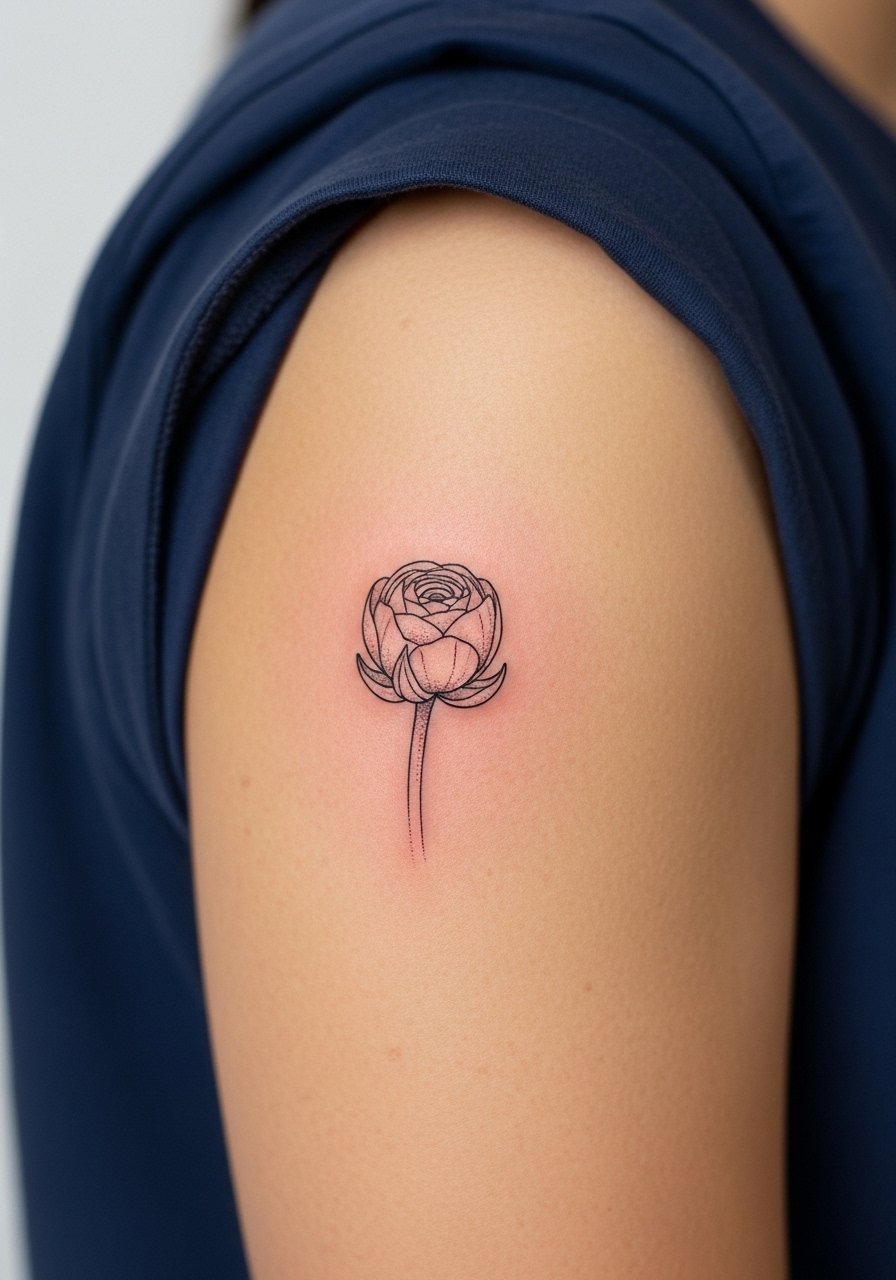
Ranunculus blooms in micro scale are a good fit for the upper arm where there is some canvas to hold detail. Ask for layered petal outlines with negative space between each ring so those rings do not collapse as the skin settles. Upper arm pieces are low on friction and usually need less frequent touch-ups. Wear a loose short-sleeve shirt to your appointment. This placement suits those looking to add to a future sleeve as the ranunculus can be built into a larger composition.
17. Tiny Camellia Behind the Ear
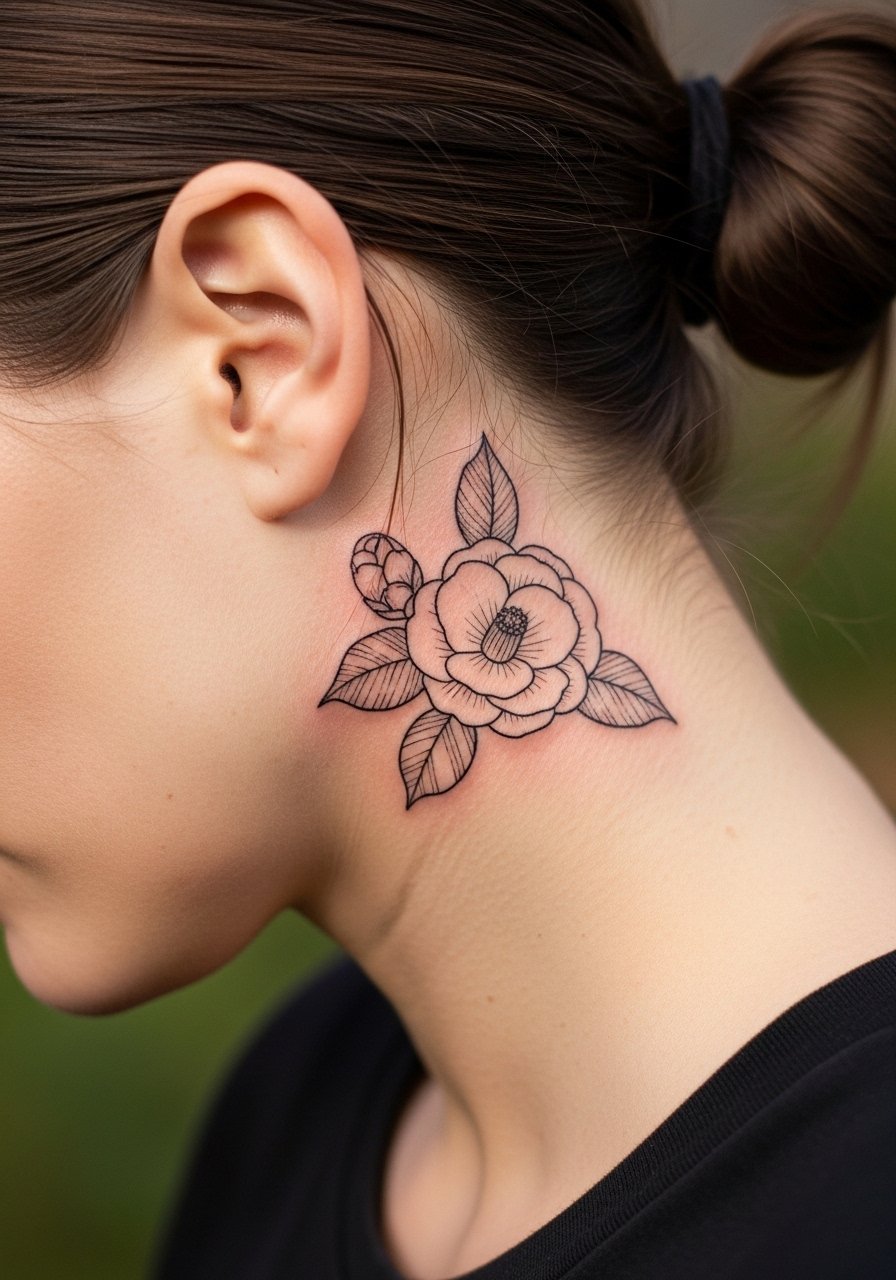
Behind-the-ear placements read like tiny ornaments when sized at 1.5 cm. Because the skin there sits near the hairline, ask your artist to keep the petals open and simple so hair oils and shampooing do not obscure the form. A typical mistake is requesting dense petal detail that blurs with daily hair contact. For the session, have your hair up and bring a hair tie. This is a discreet option that still allows for a quick reveal.
18. Micro Orchid Above the Knee
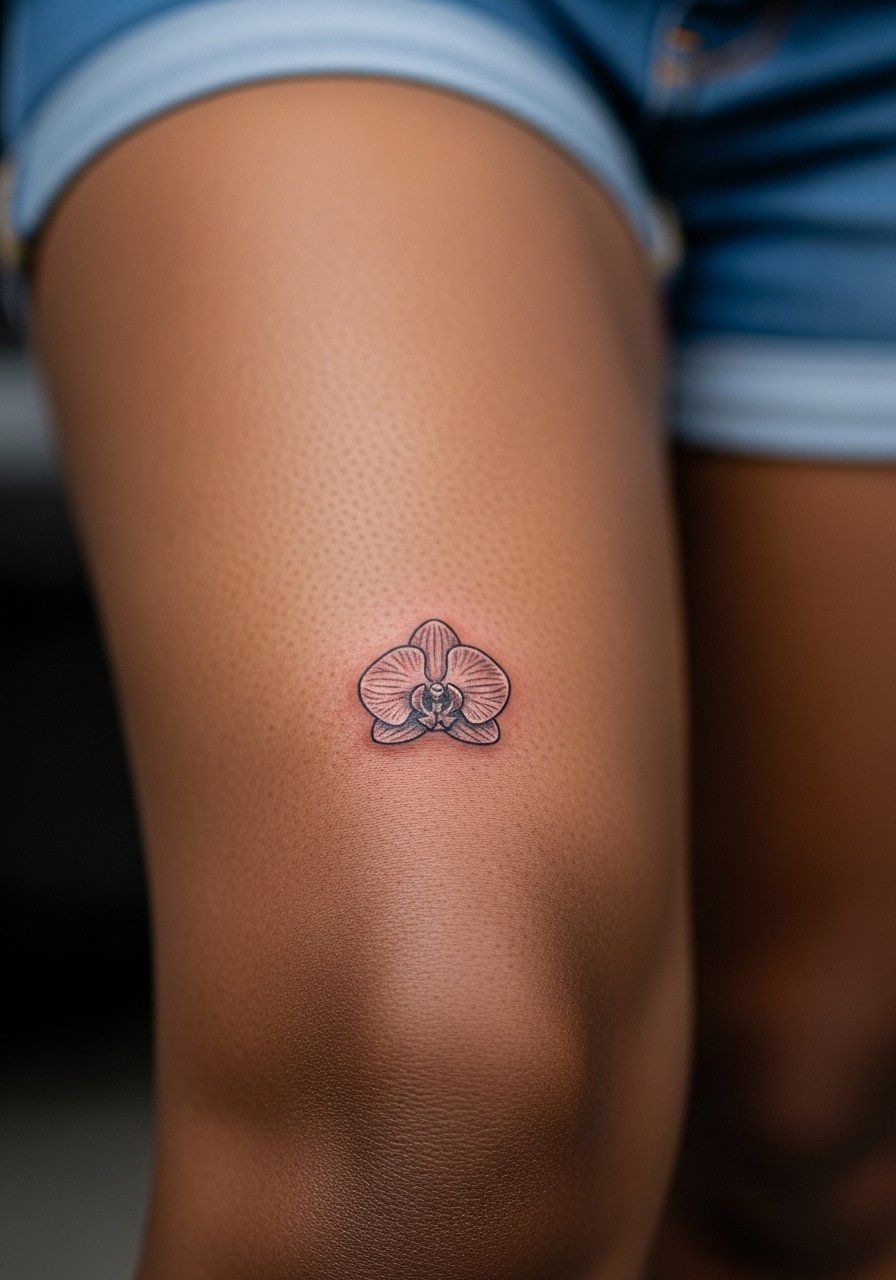
The area above the knee is less prone to constant friction than the inner thigh, and it sits nicely under skirts and shorts. Micro orchids at 2 to 3 cm with clean petal outlines and sparse stipple shading keep their shape. Tell your artist you want the petals slightly open to prevent crowding. For session wear, choose high waist shorts or a skirt so the artist can access the area without fabric pulling. Expect moderate pain and a couple days of stiffness.
19. Micro Sunflower Near the Collar of a Shirt
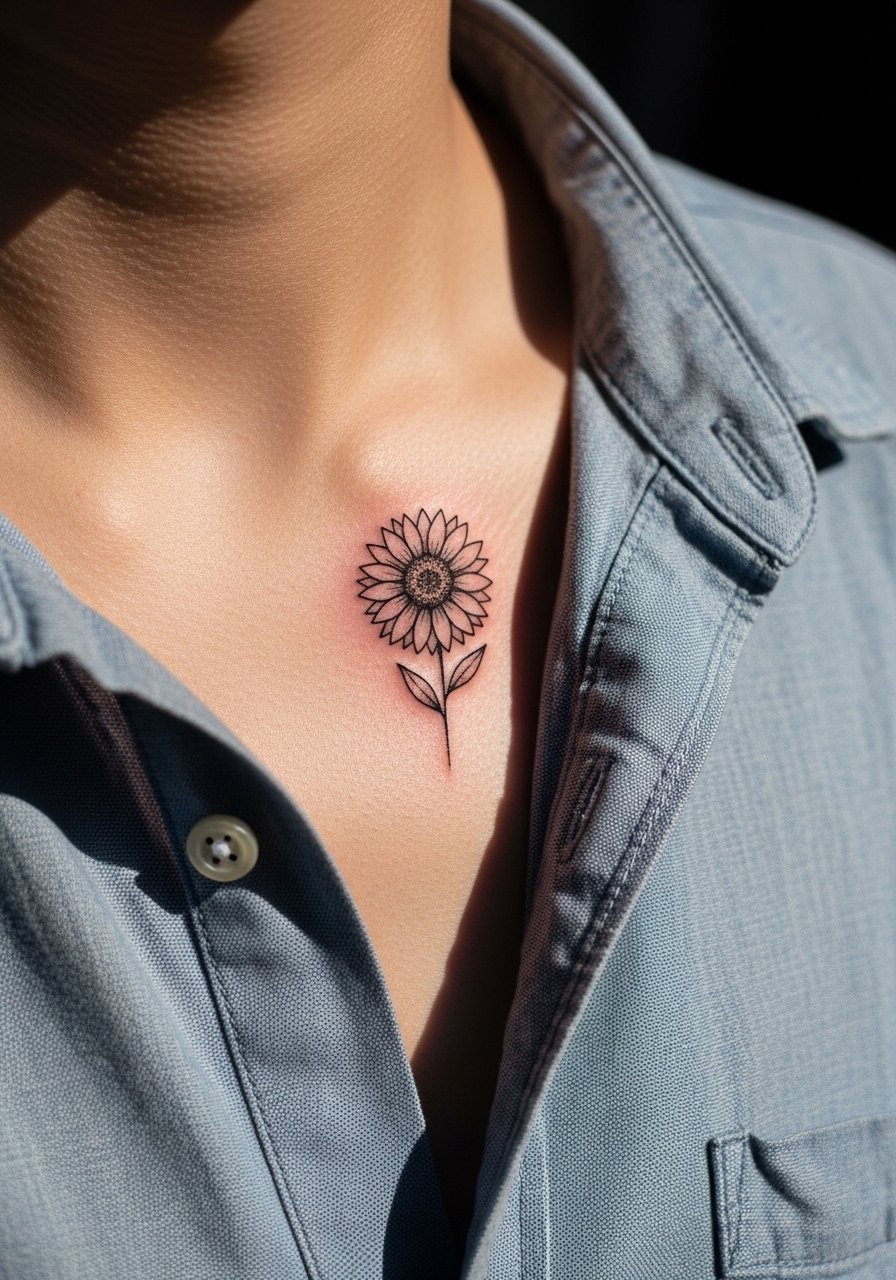
Small sunflowers located near the shirt collar are ideal for those who want a visible floral without a chest-sized commitment. Dotwork centers help maintain texture. During consultation, ask for a lightly elevated outline with dotwork center to keep detail at three years. For the session, wear a button-down you can open slightly so the artist has access while your modesty remains. This placement pairs well with a thin chain necklace that sits above the motif.
20. Pea-Sized Blossom Cluster on the Spine
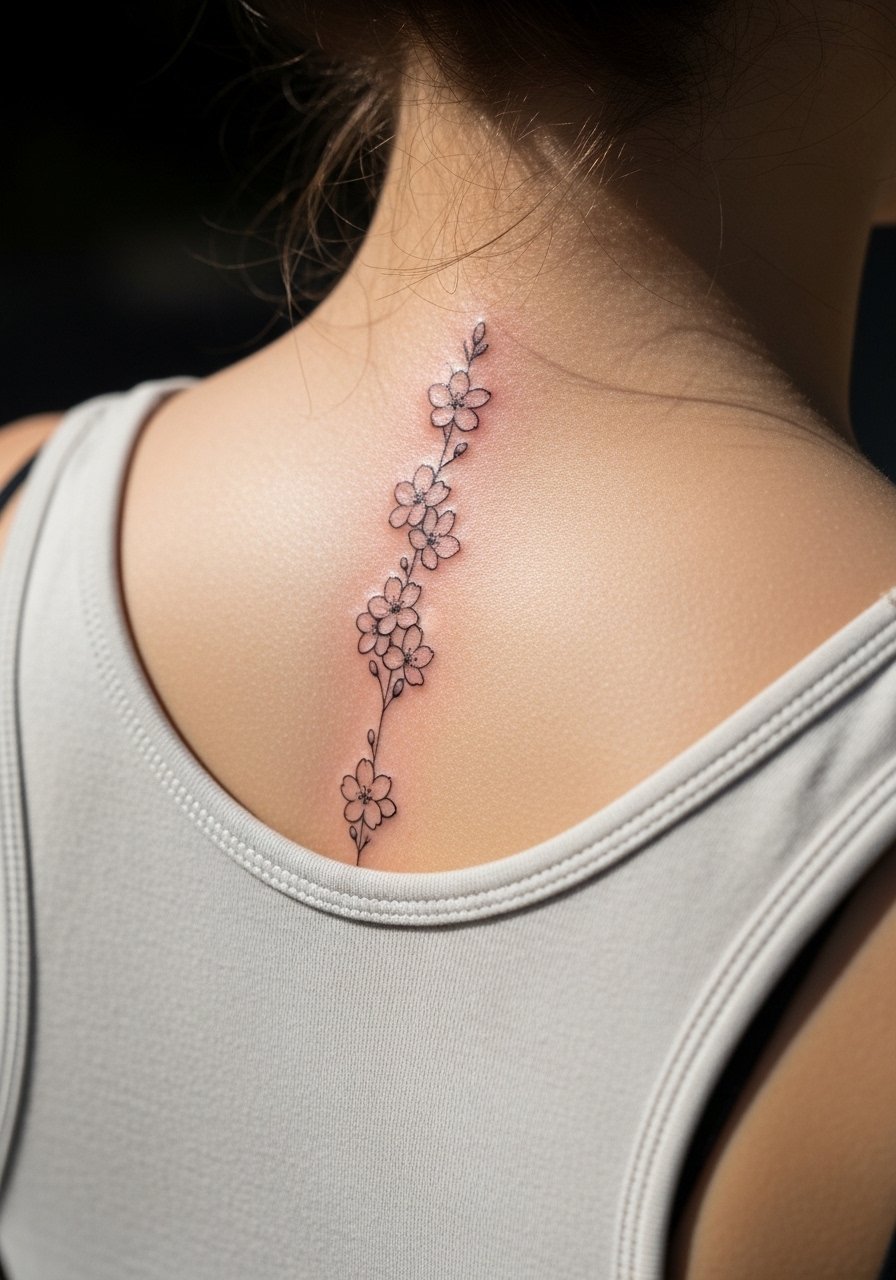
Short spine clusters act like a discreet centerline accent when each bloom is about 1 cm and spaced evenly. The spine skin prefers slightly bolder spacing because movement can bring small lines together. Ask the artist to map spacing over your vertebrae to keep the rhythm consistent. For showing off, a racerback tank or updo highlights the vertical arrangement. Sessions here are efficient and healing is straightforward.
21. Negative Space Optical Petal on the Ribcage
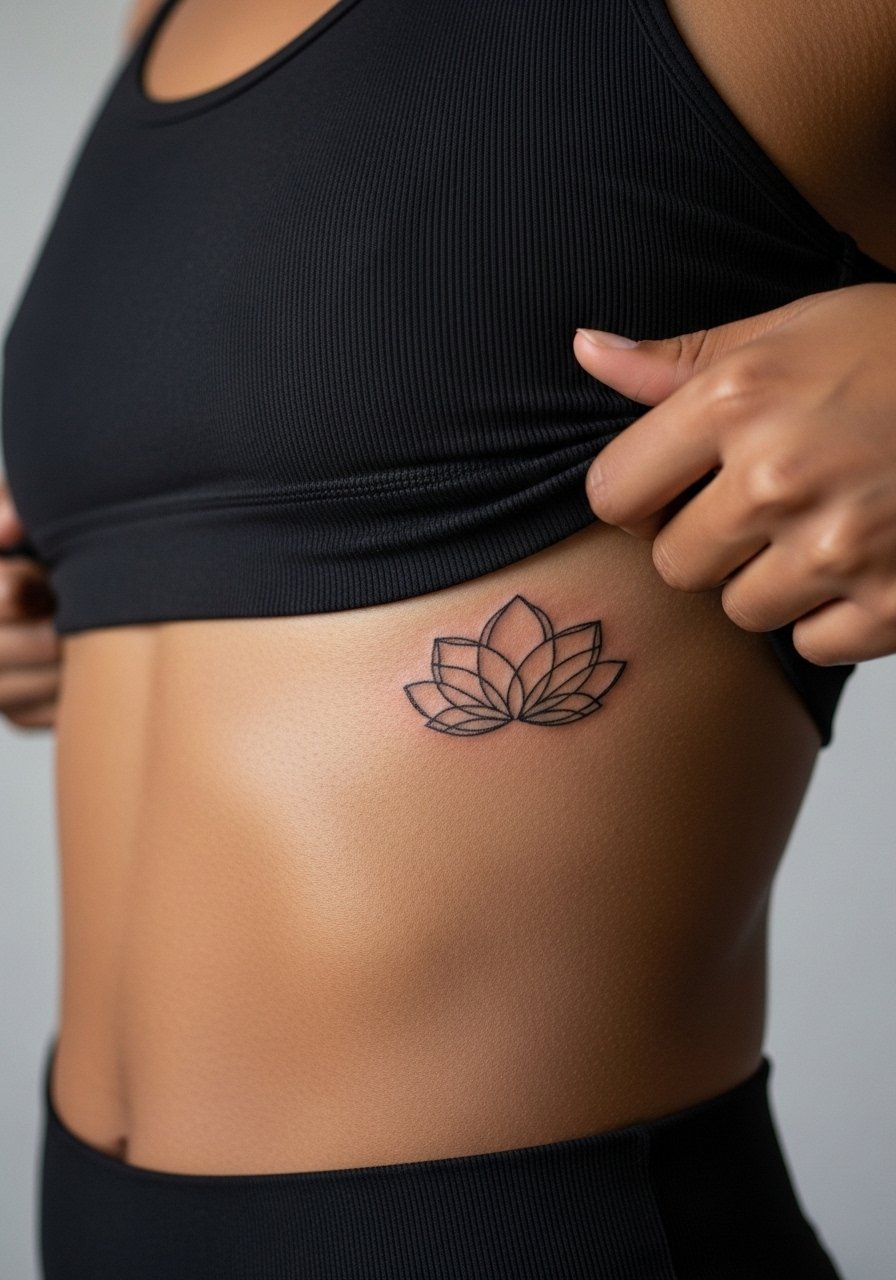
Ribcage placements split artists into camps when it comes to fine line. One group says the skin stretch blurs lines within two years. The other group says with careful depth and spacing fine line settles fine. For this negative space petal, choose intentional gaps and tell your artist you expect a touch-up window at year two. Rib sessions are higher on the pain scale so consider topical numbing and book accordingly. For session wear, a fitted sports bra makes access simple while keeping the rest of your torso covered.
Frequently Asked Questions
Q: How does a small flower tattoo aesthetic age compared with larger floral pieces?
A: Small floral work depends more on line weight and placement than scale alone. A well-spaced 3 cm fine line flower on the collarbone often reads better at five years than a 1 cm ultra-fine piece on the wrist. Expect touch-ups sooner on high-friction zones.
Q: Is fine line flower work a good first small tattoo idea?
A: It can be, if you choose forgiving placements like the collarbone or upper arm and ask the artist for slightly heavier linework. If you want something on the hand or fingers, expect earlier fading and plan for a touch-up.
Q: Do I need to tell the artist about my wardrobe when booking?
A: Yes. Mention what you usually wear when the placement sits under clothing. It helps the artist plan placement so necklaces, straps, and cuffs do not rub the new ink. Bringing a photo of what you wear often saves time.
Q: Are there small flower tattoo meanings I should consider before choosing a bloom?
A: Flowers carry traditional associations but the meaning you attach is personal. If cultural origin matters to you, consider a slight variation rather than a direct replica and ask the artist about respectful design choices.
Q: What are realistic small tattoo aftercare tips for fine line florals?
A: Keep the area gently clean, avoid heavy rubbing or tight fabric over the site, and use a thin protective layer advised by your artist in the first days. For wrist and ankle placements, avoid prolonged soaking while the skin seals. For show days, a loose sleeve or loose button-down shirt helps keep the area accessible without rubbing.
