
Fine line realism and classic black shading can both sell the same eight ball, but they age very differently. The pieces that still look crisp after five years are usually the ones that got spacing, depth, and placement set up honestly at the stencil stage. Below are 21 realistic 8 ball tattoo ideas with notes on longevity, what to tell your artist in consultation, common mistakes to avoid, and practical styling tips that help you show the work off.
1. Tiny Inner Wrist 8 Ball with Micro-Shadow
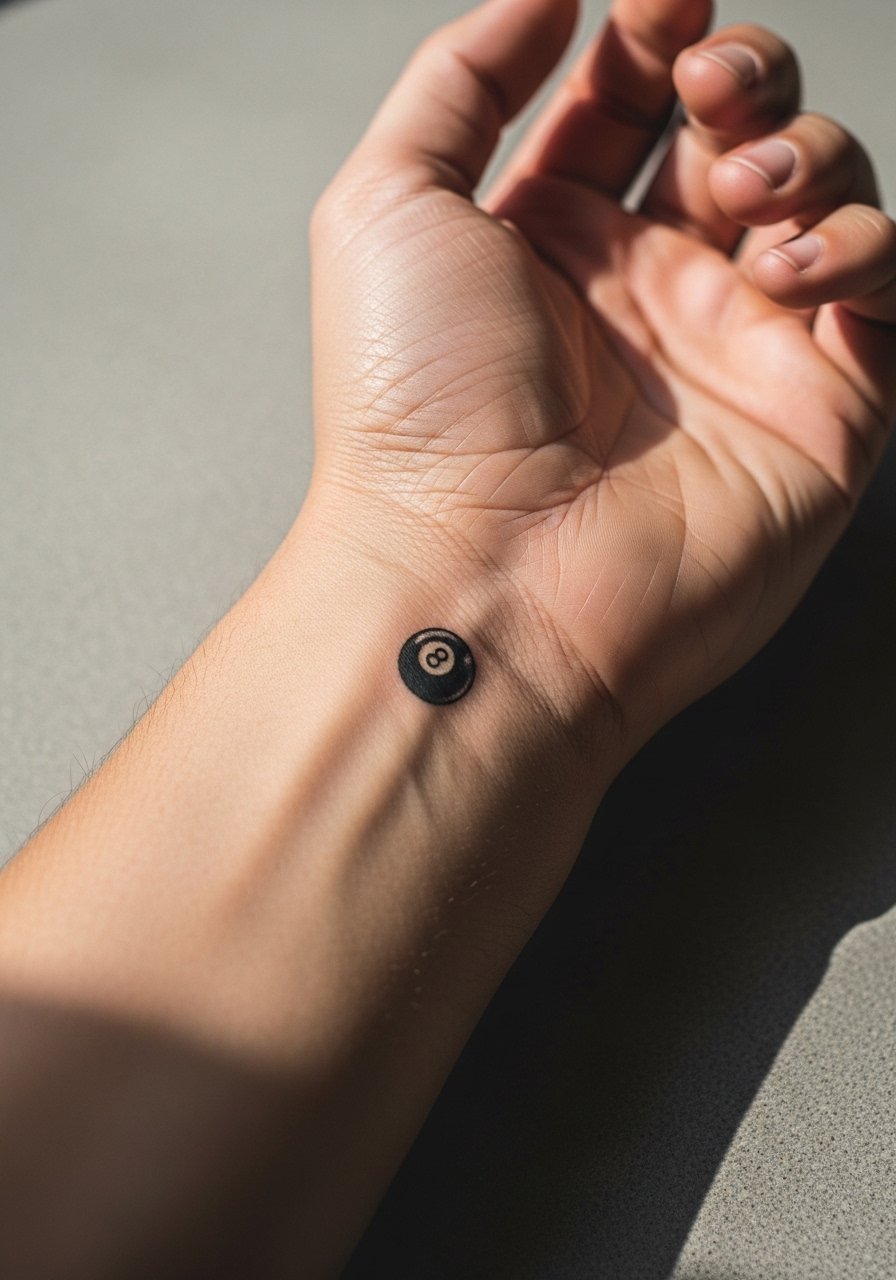
This version keeps the 8 ball small but uses heavier contrast in the shadow to retain legibility. Fair warning, the inner wrist is one of those places where fine detail blends faster because of thin skin and frequent washing. Tell your artist you want stronger separation between the highlight and the dark field, and ask for slightly thicker linework around the perimeter so it does not fuzz at year two. Session pain is low to moderate, and this takes under an hour. For showing it off, roll sleeves or wear a racerback tank top so the wrist reads in casual looks.
2. Photoreal 8 Ball on Outer Forearm
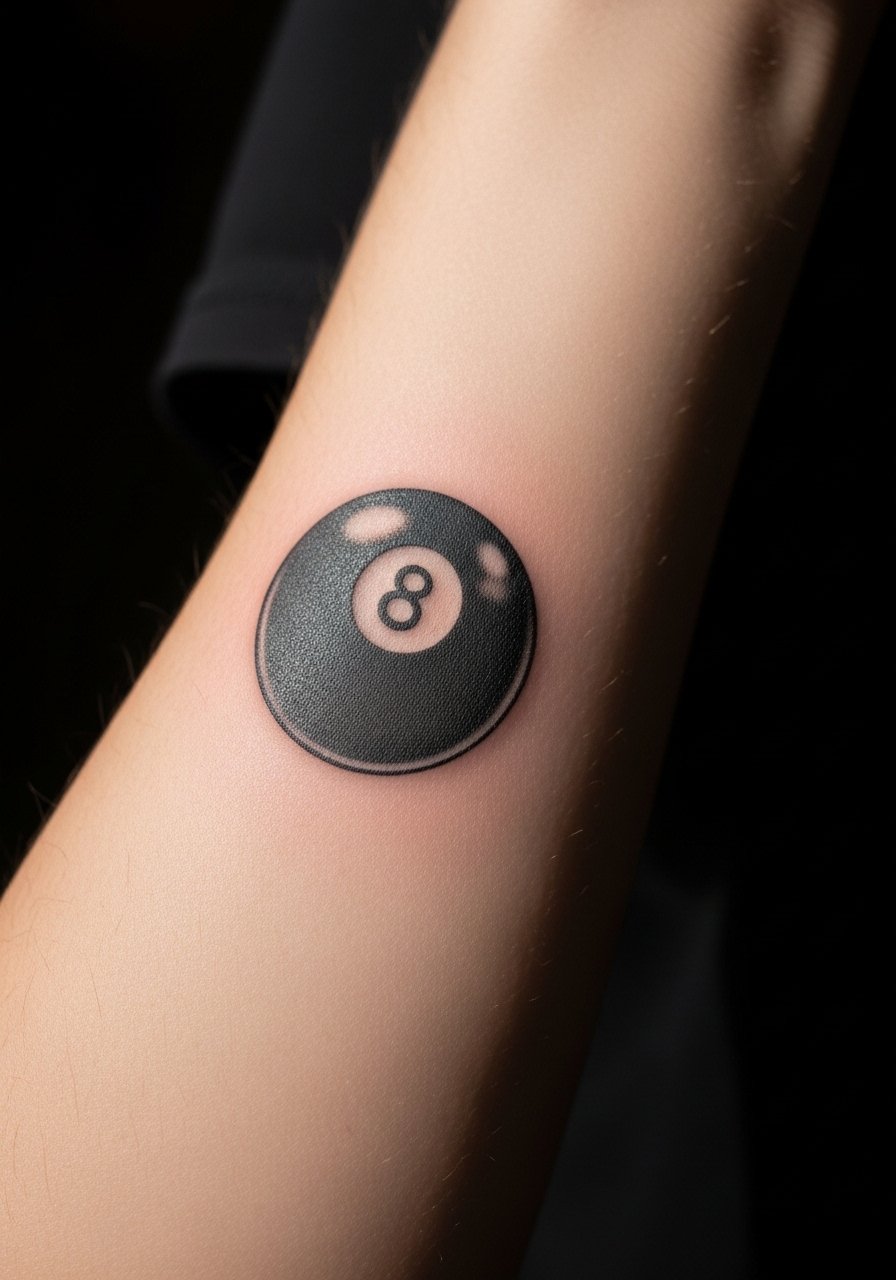
A forearm offers room for a small photoreal eight ball with reflections and a tiny cast shadow. I tell people this is the pick when you want that glossy black surface to read from a distance. The forearm handles saturation well so the black can stay dense without trauma. Common mistake is asking for micro highlights that get lost in the first year. Ask your artist for a clear hierarchy of tones and plan a touch-up at year two if you want deep blacks to stay solid. Wear a loose button-down shirt during the session so you can roll a sleeve without rubbing the fresh work.
3. Cracked 8 Ball with Stipple Shading on the Bicep
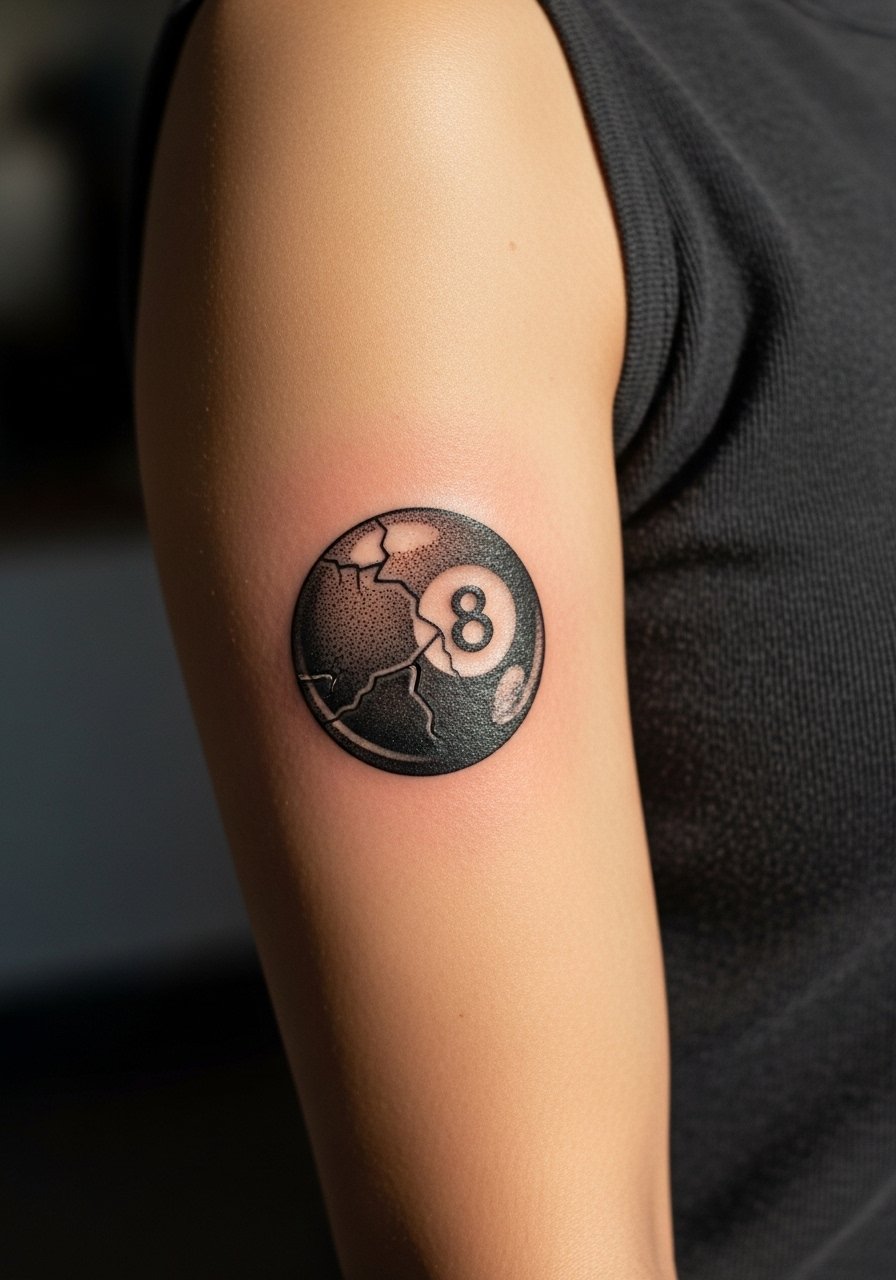
A cracked eight ball gives narrative without extra elements. The stipple shading around the fracture holds up better than densely packed gray wash in that area. The bicep is forgiving on blowout risk, but make sure the artist spaces the stipple so dots do not merge over time. Tell them you want the crack to read like a fracture line with negative space between chips, not a messy gray smear. Session feels like medium pressure and will usually run under two hours. Pair this with a loose drawstring linen pant if the piece sits toward the inner bicep, so the artist can access the area comfortably.
4. Classic Flash 8 Ball with Banner on Upper Chest
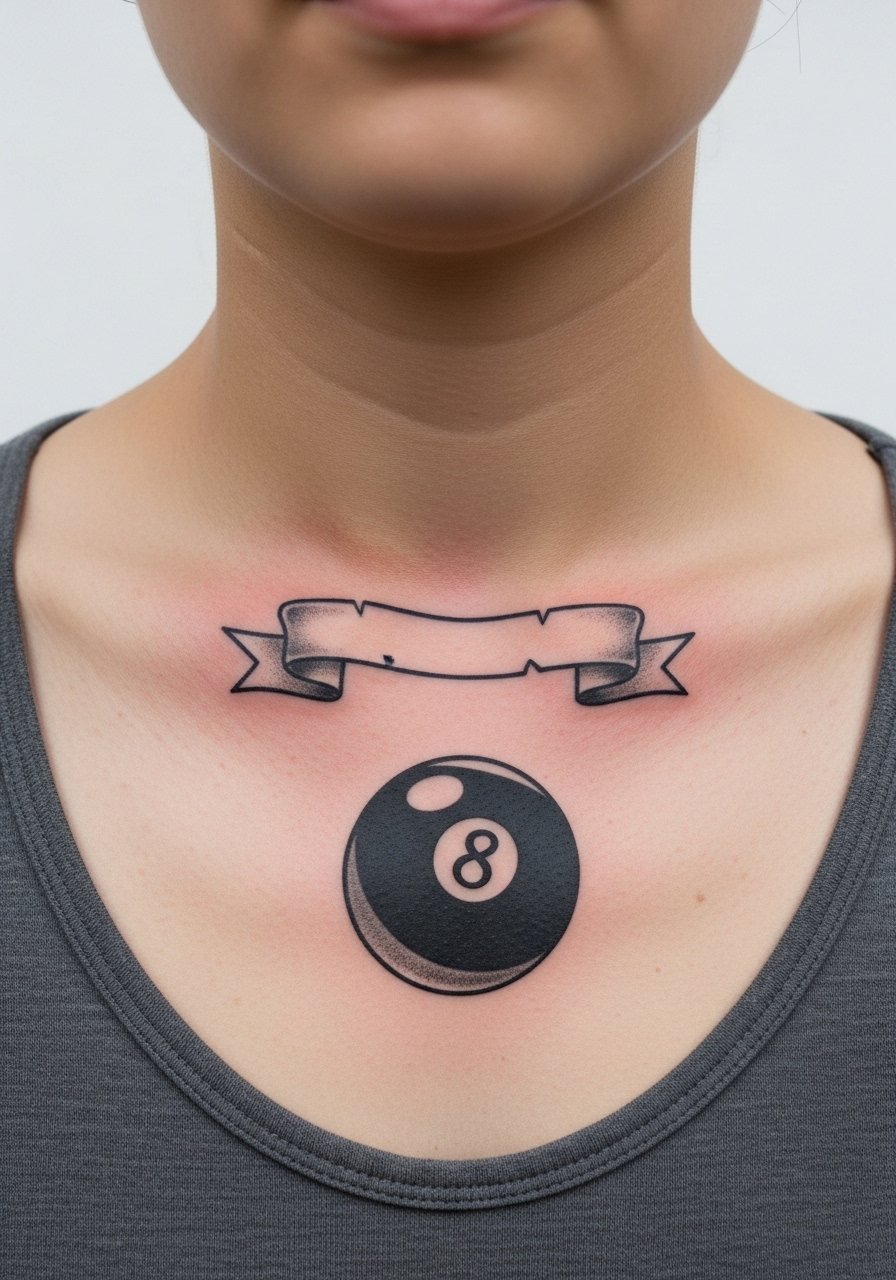
This leans into vintage flash energy while keeping the 8 ball realistic. The chest can hold solid saturation that ages into a nice, legible block. One camp sees the 8 ball as classic Americana with nostalgia value. Another camp criticizes it for glamorizing gambling imagery that can read as cliché. Name both camps in your consult and state whether you want literal vintage or a toned-down nod. Common mistake is making the banner too thin, which can blur into the ball. For session access, wear a wide-neck shirt that can be pulled slightly aside without full exposure.
5. Micro 8 Ball Behind the Ear, Hairline Framing
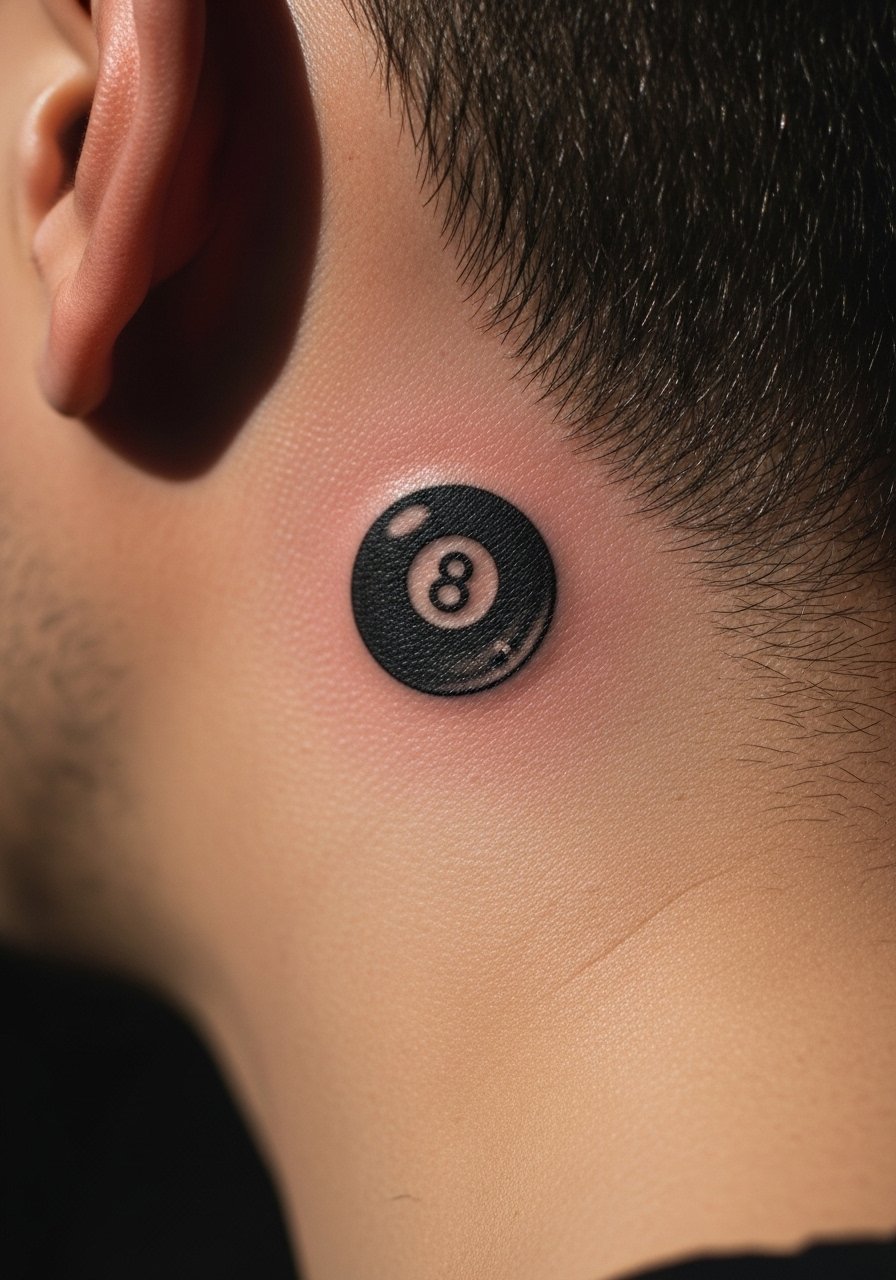
Behind the ear requires precise placement and an artist used to tiny work. The spot ages variably because of hair growth and frequent movement. Ask for a clean, single-needle outline with a bit of interior wash, not a full photoreal fill. The session is short but the needle gets close to bone and cartilage so expect sharp sensations. This placement requires an artist experienced with micro work. For showing it off, a pulled-back hairstyle or a low bun highlights the area without forcing visibility.
6. Three-Dimensional 8 Ball with Cast Shadow on the Ribcage
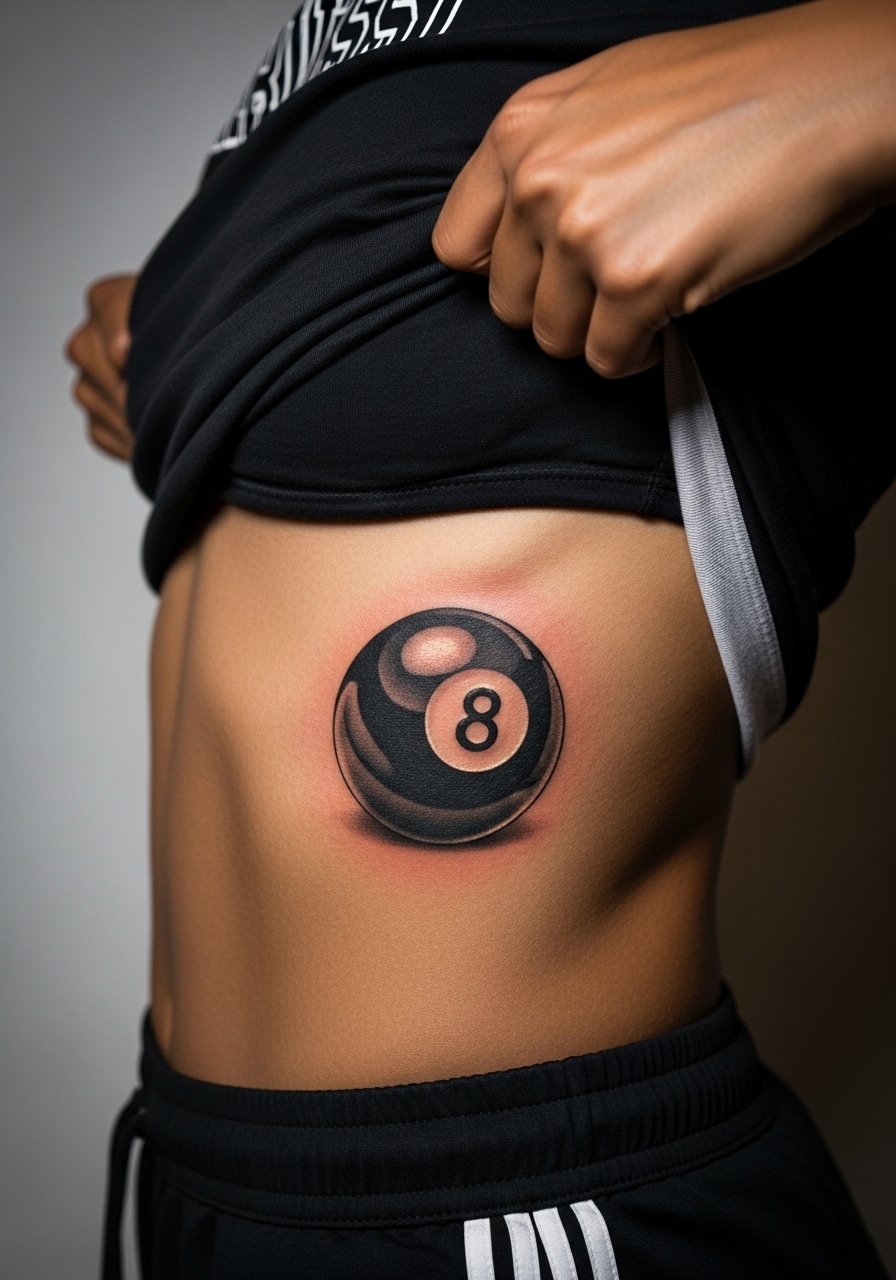
Ribcage sessions are physically demanding and controversial. One camp says fine detail on ribs blurs quickly because the skin stretches. The other camp argues that with correct needle depth and spacing, micro-realism can survive on ribs. I advise people to prepare for pain and plan a longer session so the artist can pace themselves. Ask for a slightly larger scale than you expect so the shading has room to hold. Wear a cropped athletic top on the appointment day so you can expose only the rib area without discomfort.
Before You Book
The rib and chest pieces above need different prep than wrist tattoos, and a few small items smooth out the session and the first week.
-
Stencil transfer paper kit. Lets you preview the linework on skin before committing, especially useful for the small wrist and behind-the-ear placements above.
-
Topical numbing cream. Applied 45 minutes before the session eases rib and sternum sensitivity so you can hold still for fine shading.
-
Thin protective film roll. Keeps ankle and finger tattoos clean during the first few days of heavy washing and friction.
-
Fragrance-free body wash. Cleanses healing areas gently without irritating the tight linework small 8 ball pieces depend on.
-
Aquaphor healing ointment. Thin layer in the first 48 hours keeps moisture in and protects delicate needle channels without suffocating the skin.
7. Pocket 8 Ball on the Thumb, High-Contrast Fill
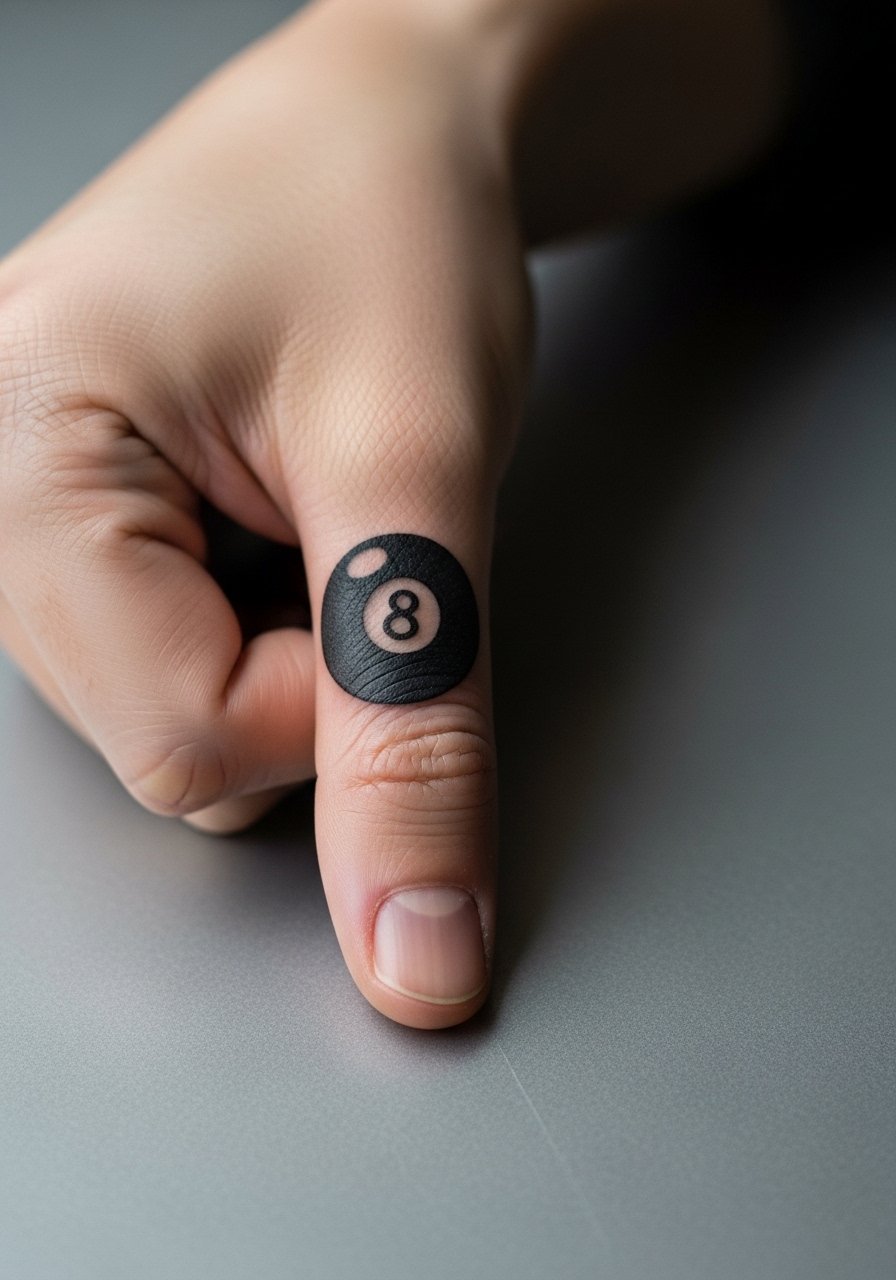
Thumb tattoos are exposed to constant hand use and washing. The fix is to ask for bolder fill and slightly thicker outer border so the core remains legible after year one. The session is short but the area is sensitive. Touch-ups are common at year one and year three. Avoid requesting micro highlights inside the number field unless you accept touch-ups. For showing off, stack a minimalist gold ring or two on adjacent fingers to frame the thumbnail piece without covering it.
8. Shattered Glass 8 Ball on the Calf
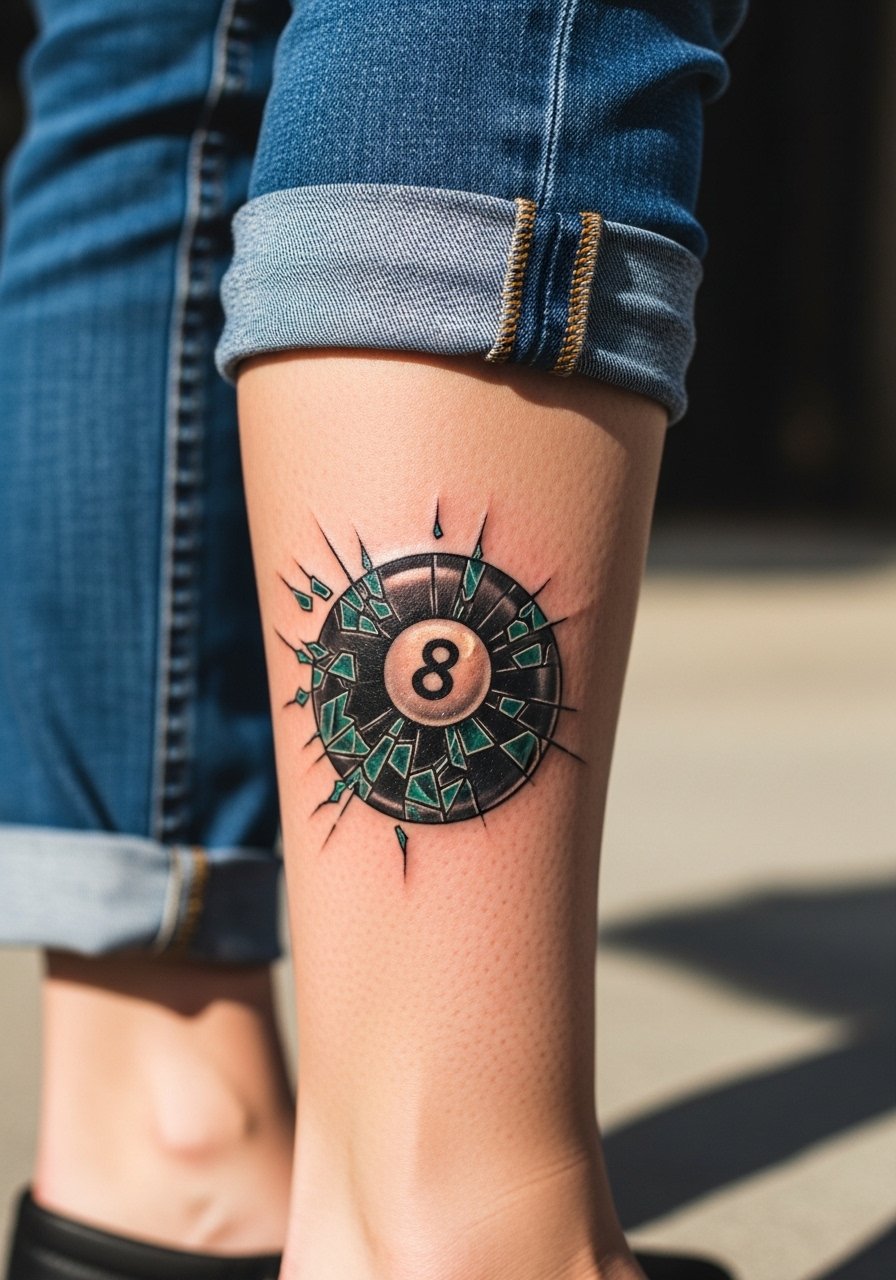
Calf placements are forgiving for texture-heavy designs. The shattered-glass effect lets you use negative space so the piece does not turn into a blob over time. The session feels like medium pressure and can run one to two hours depending on scale. Common mistake is packing too many micro shards into a small area, which merges in year two. Ask your artist to space the shards and to use directional shading so the collision reads as depth instead of noise. Wear jeans you can roll up or loose shorts for the appointment.
9. Minimal Dot-Work 8 Ball on the Ankle
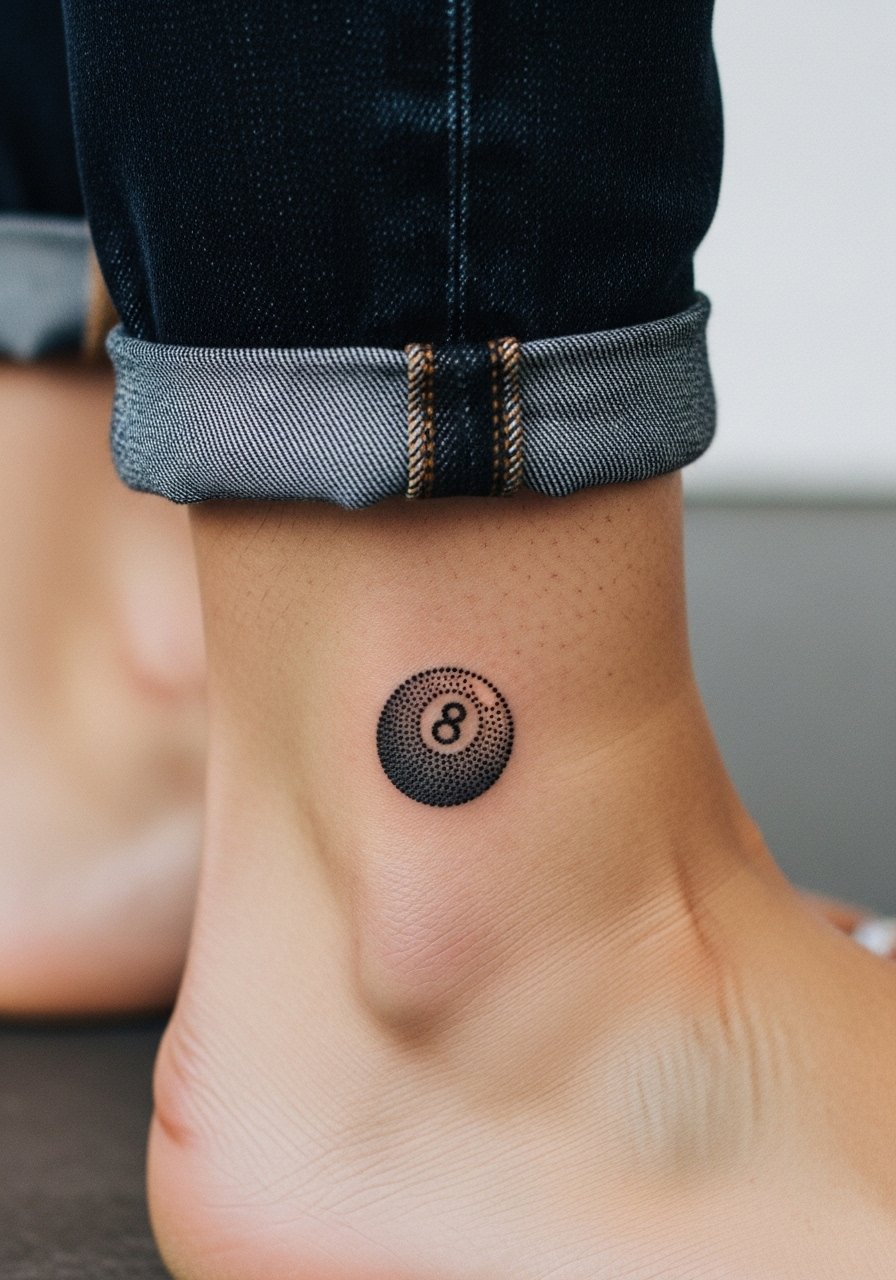
Ankle skin sees a lot of rubbing from socks and shoes. Dot-work reads clean when dots have breathing room. The biggest mistake is asking for too dense a stipple near the edge. Tell the artist you want negative space around the perimeter and a slightly larger base dot for the darkest tones so it holds into year two. Session pain is low to moderate. Show it with sandals or cropped pants and consider a thin anklet to draw attention, try a simple braided anklet.
10. 8 Ball with Rose Wrap on the Shoulder Blade
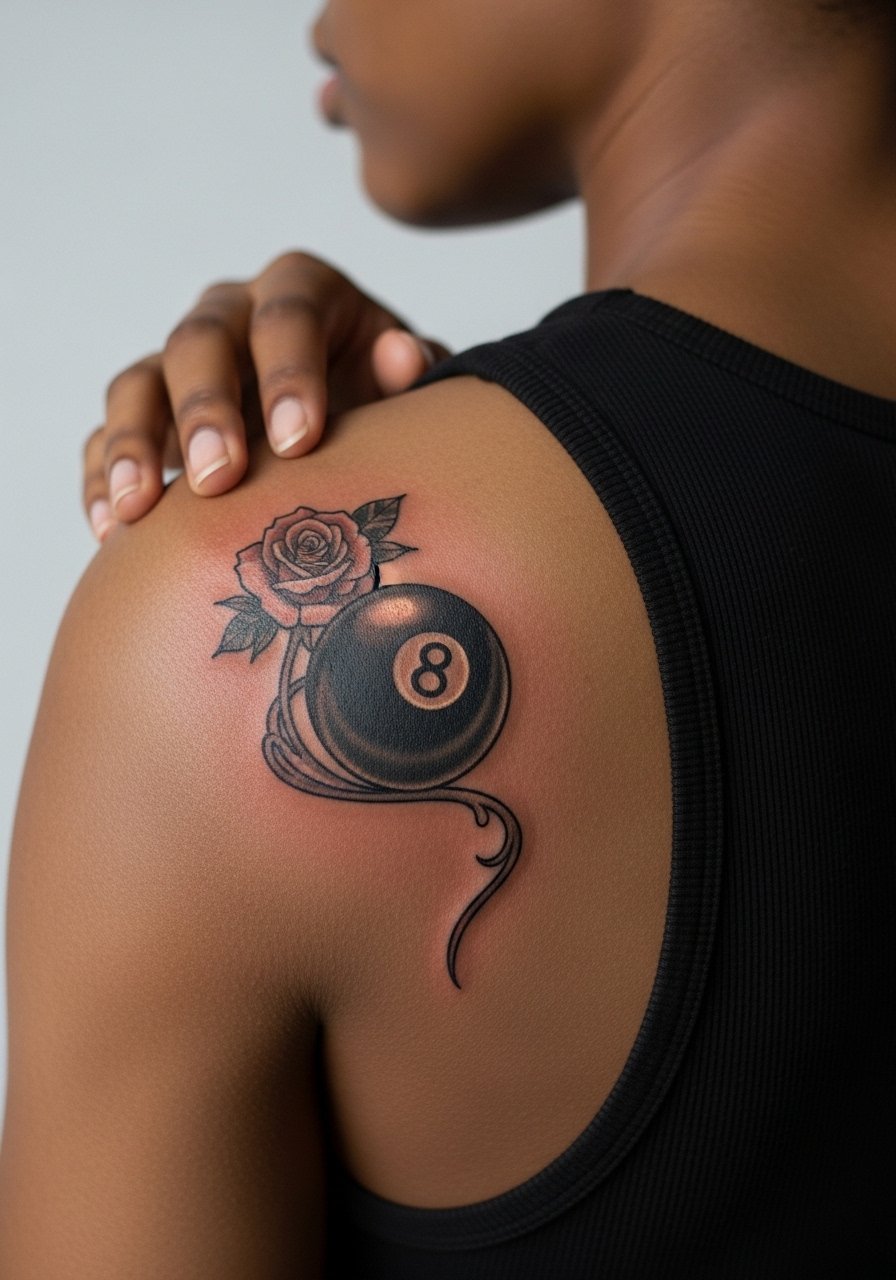
Shoulder blade is a stable surface that tolerates detail and larger pieces well. The rose wrap offers context and helps the eight ball avoid floating as it ages. I recommend asking the artist to anchor the shadow to the shoulder blade curve so the ball reads three-dimensionally when you move. Sessions are comfortable and usually split across two appointments if the rose is large. For the appointment, a loose tank top lets the artist access the area without full removal.
11. Watercolor Halo 8 Ball on Upper Thigh
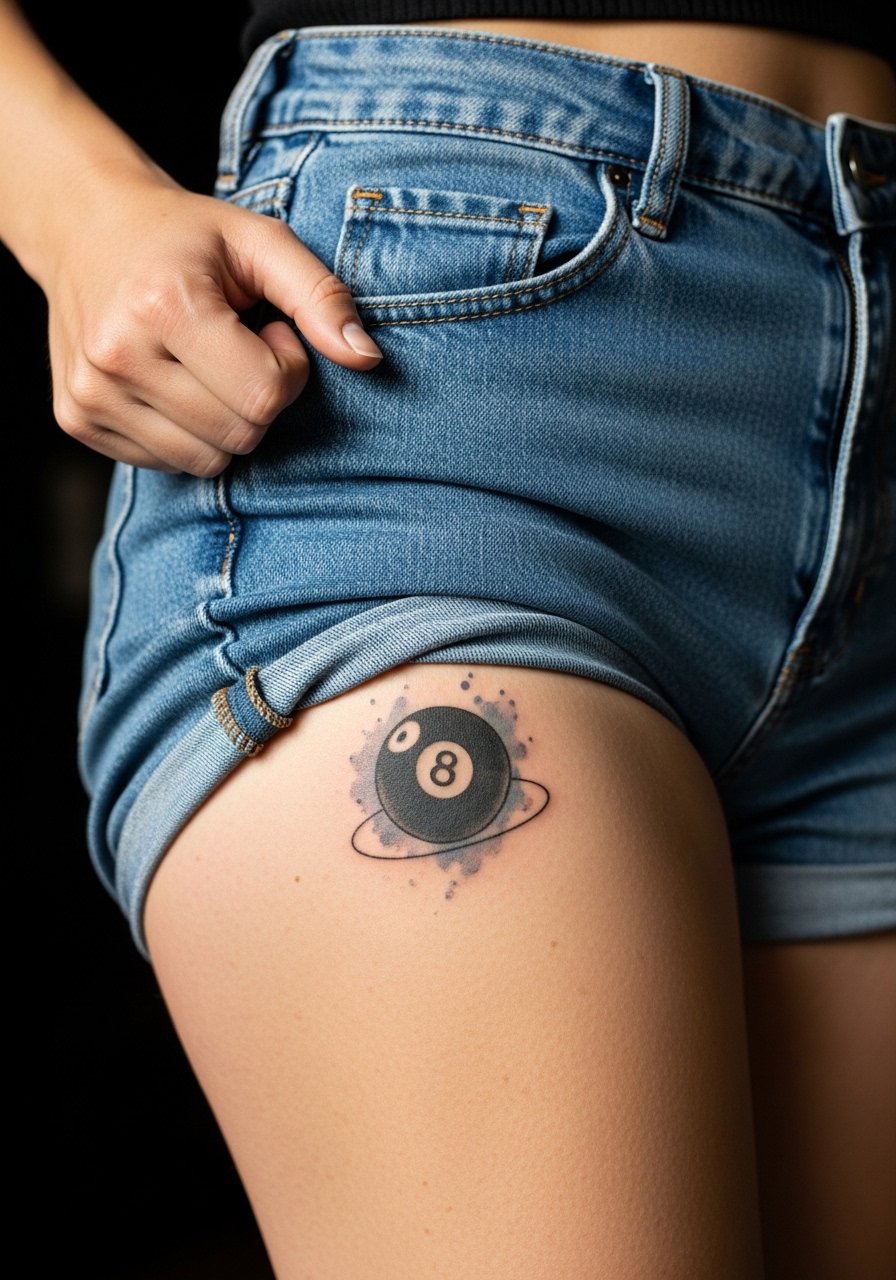
Watercolor around heavy black is an effective contrast play. Thigh skin tends to keep color saturation well, but watercolor edges fade softer over time. A common mistake is asking for dye-saturated watercolor next to tiny linework. Tell your artist you want the watercolor to be an atmospheric field, not detailed painting. Sessions are tolerable and can be broken into two to three hours. For the session wear high-waisted shorts so the artist can reach the outer thigh cleanly.
12. Tiny Stipple 8 Ball on a Finger Side
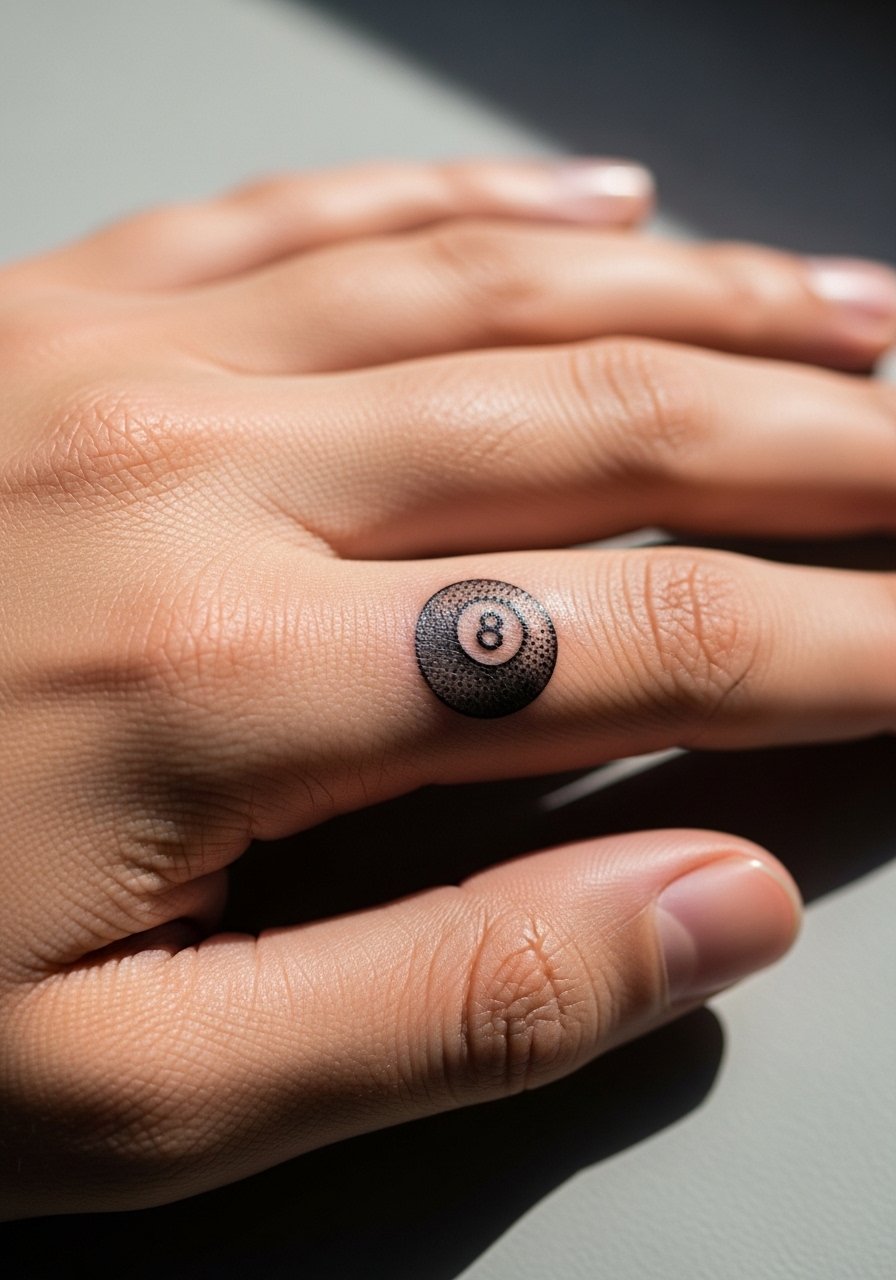
Finger side tattoos take a beating. The reality is they are high maintenance. Stipple shading survives marginally better than solid fill because it leaves skin channels open, but expect touch-ups. The biggest mistake is assuming a precise number will stay crisp without a follow-up. Sessions are short and sharp. If you work in a hands-on job, think about longevity and touch-up willingness. For showing it off, keep rings minimal so the ink gets light exposure instead of constant friction.
13. Eight Ball as a Planet on the Back of the Neck

The back of neck is a visible spot with decent longevity if the design is bold. Turning the ball into a tiny planet with orbiting highlights gives the piece a unique spin. Ask your artist for thicker outer circumference and reduced micro detail to avoid blur. Pain is moderate. For session wear, a wide-neck shirt you can pull down slightly works best so you do not expose more than the tattoo area.
14. Checkerboard 8 Ball Sleeve Accent
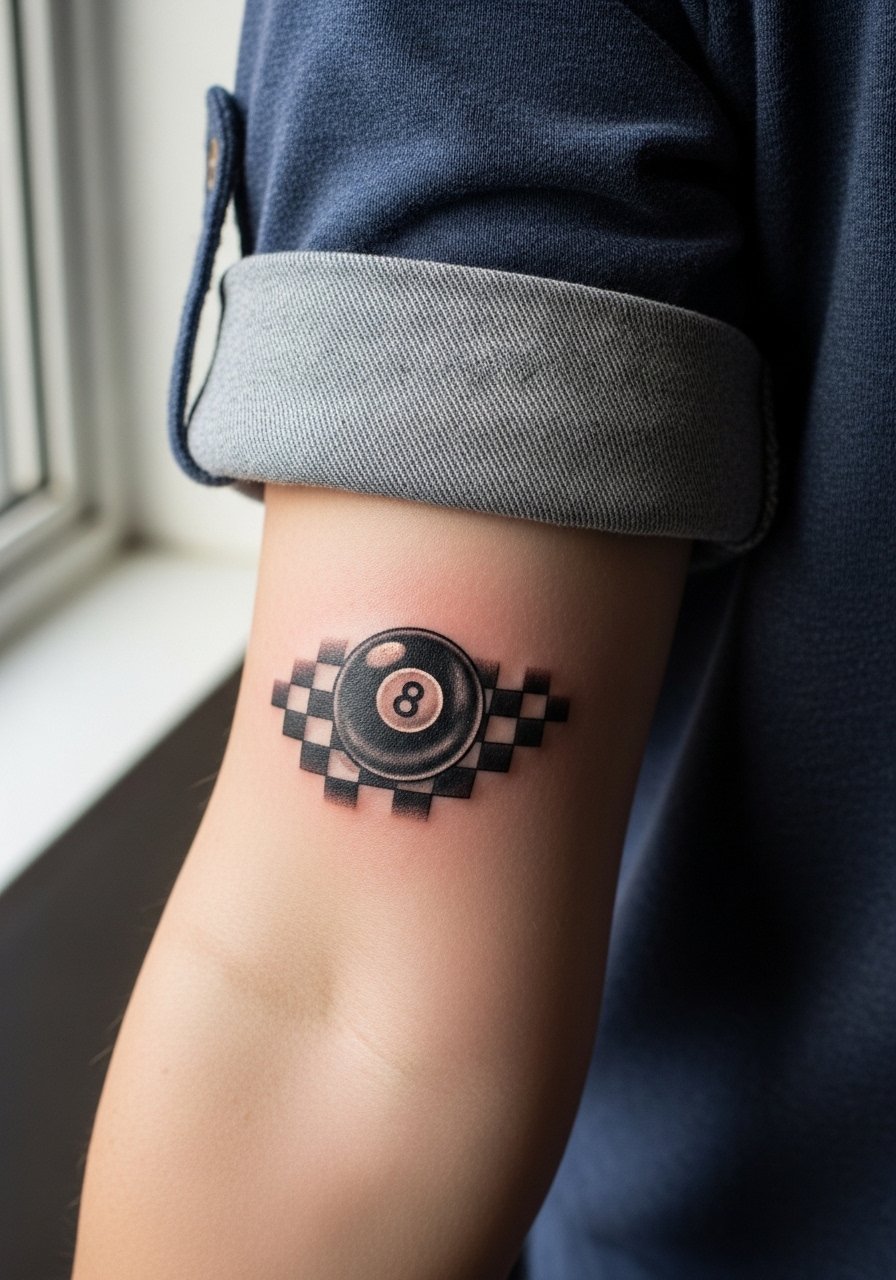
Using checkerboard patterns around the eight ball provides graphic contrast that helps the realistic sphere pop. Sleeve work requires planning so the dark blacks do not all clump together. A common mistake is placing too many high-saturation blacks next to each other, which ages into a muddy patch. During consultation, map the negative spaces and ask for varied textures like stipple or whip shading to break up dense areas. For session comfort, wear a loose button-down so your sleeve can be rolled easily.
15. Shaded 8 Ball with Skull Overlay on the Chest Center
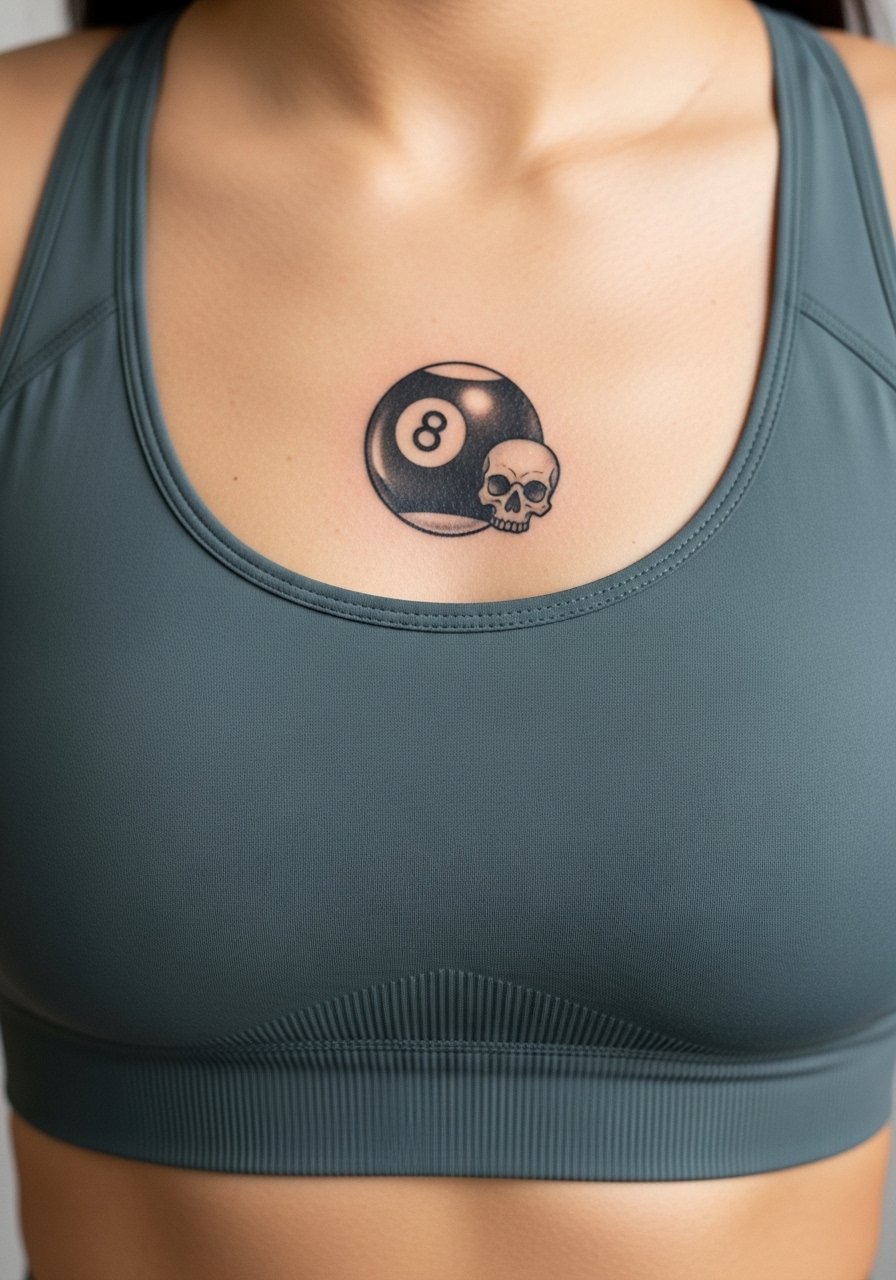
Sternum placements are intimate and require experience. One camp argues that central chest detail blurs with tight skin movement. The other camp points out that with scaled proportions and confident saturation, it holds well. My suggestion is to keep the skull small and let the eight ball remain the visual anchor. Pain can be high near the sternum, and sessions may need breaks. For the appointment wear a fitted sports bra so the artist can access the area without excess exposure.
16. Collage 8 Ball with Dice and Playing Card on the Upper Arm
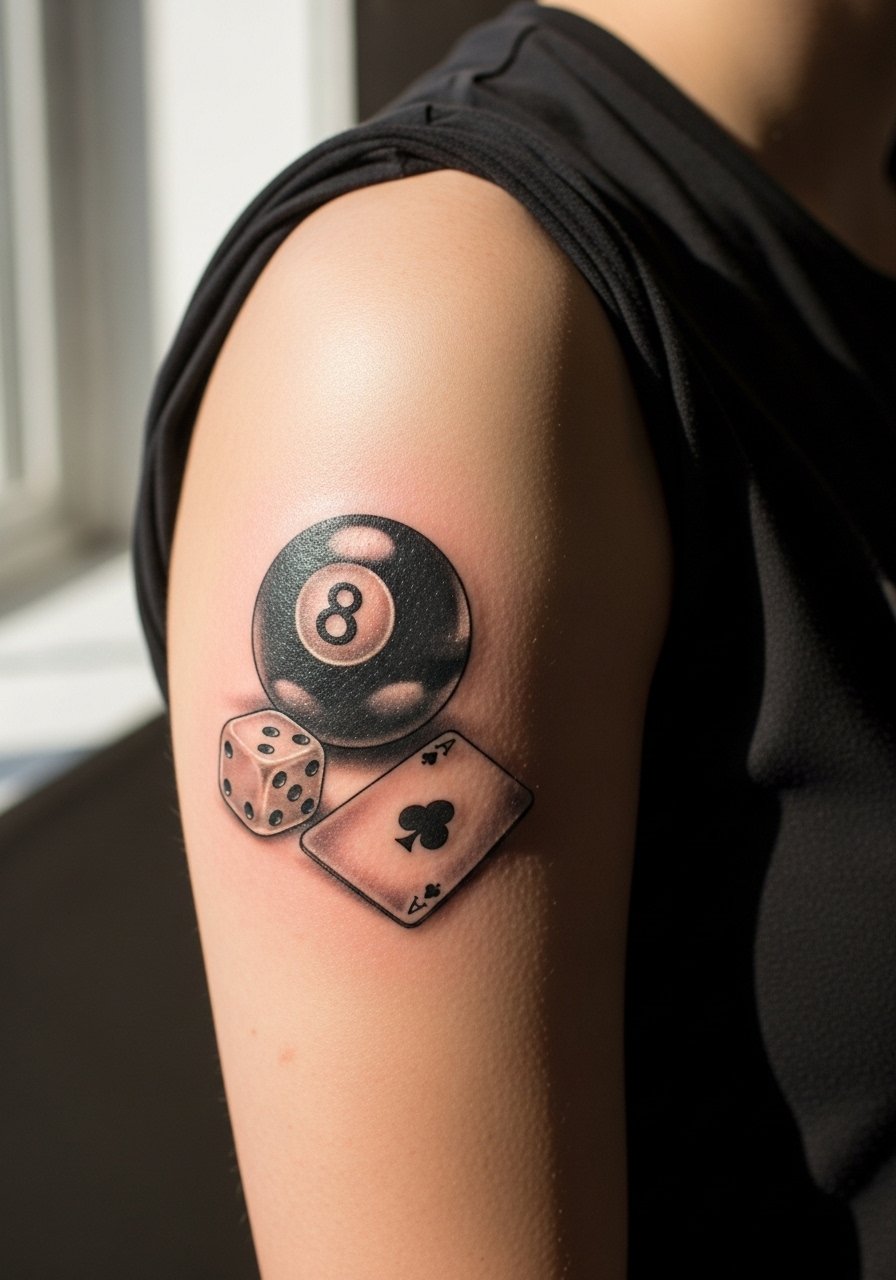
Pairing traditional gambling motifs creates a compact narrative and keeps each element readable when sized correctly. The upper arm tolerates medium detail and holds saturation well. The mistake is clustering three dense elements without breathing room. In consultation, ask for negative space buffers and a focal hierarchy so the eight ball stays primary. Sessions are moderate in pain and often completed in one long appointment. For showing off wear a sleeveless top that frames the upper arm.
17. Micro-Realism 8 Ball on the Side Rib with Script Accent
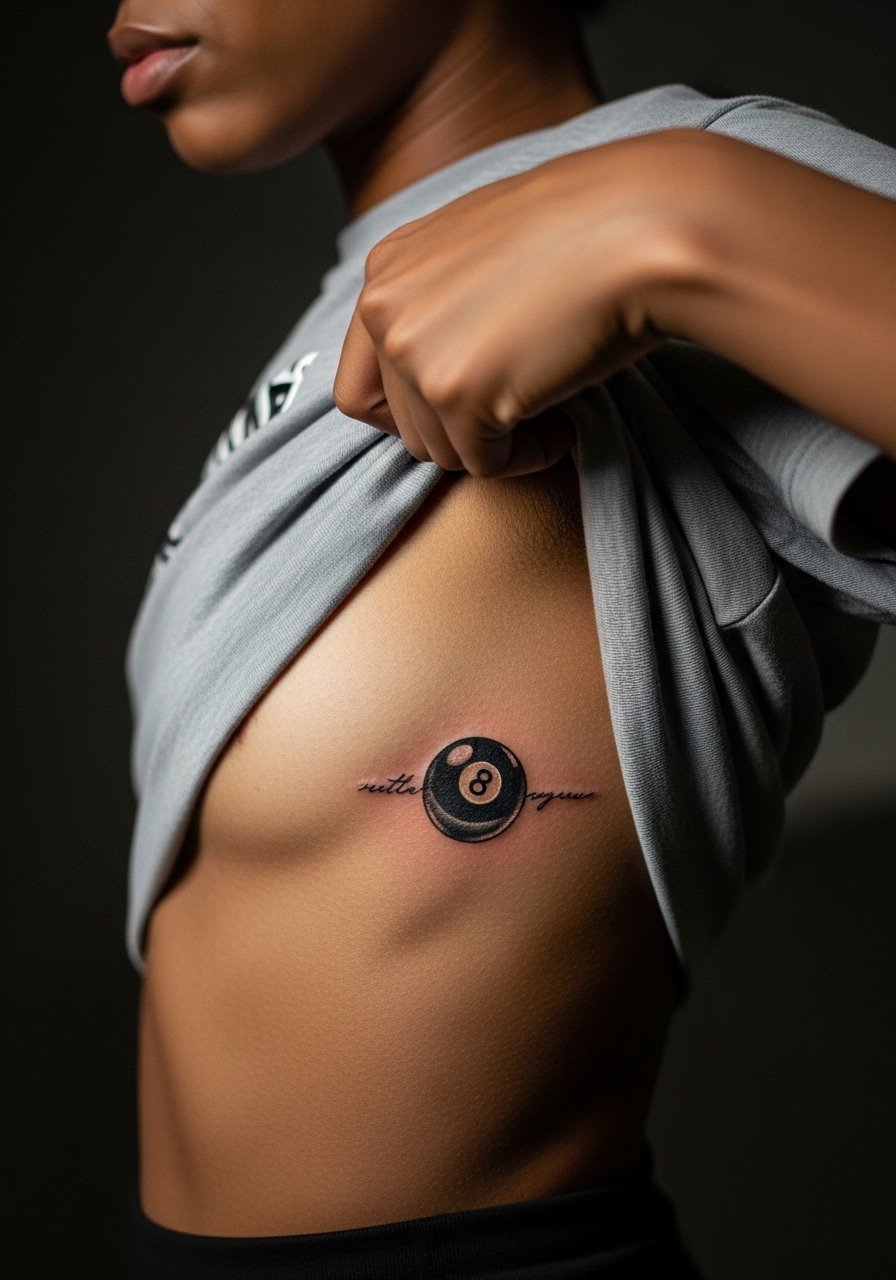
Rib placements with tiny script require spacing between letterforms and the ball. The real mistake is asking for ultra-small script next to micro shading. One camp warns that the combination blurs, while the other says a skilled hand can make it work by increasing size slightly. I recommend scaling both elements up by a few millimeters so they do not compete. The session will be painful for many and may need breaks. For the appointment choose a cropped athletic top for easy access.
18. Comic Pop 8 Ball with Bold Linework on the Thigh
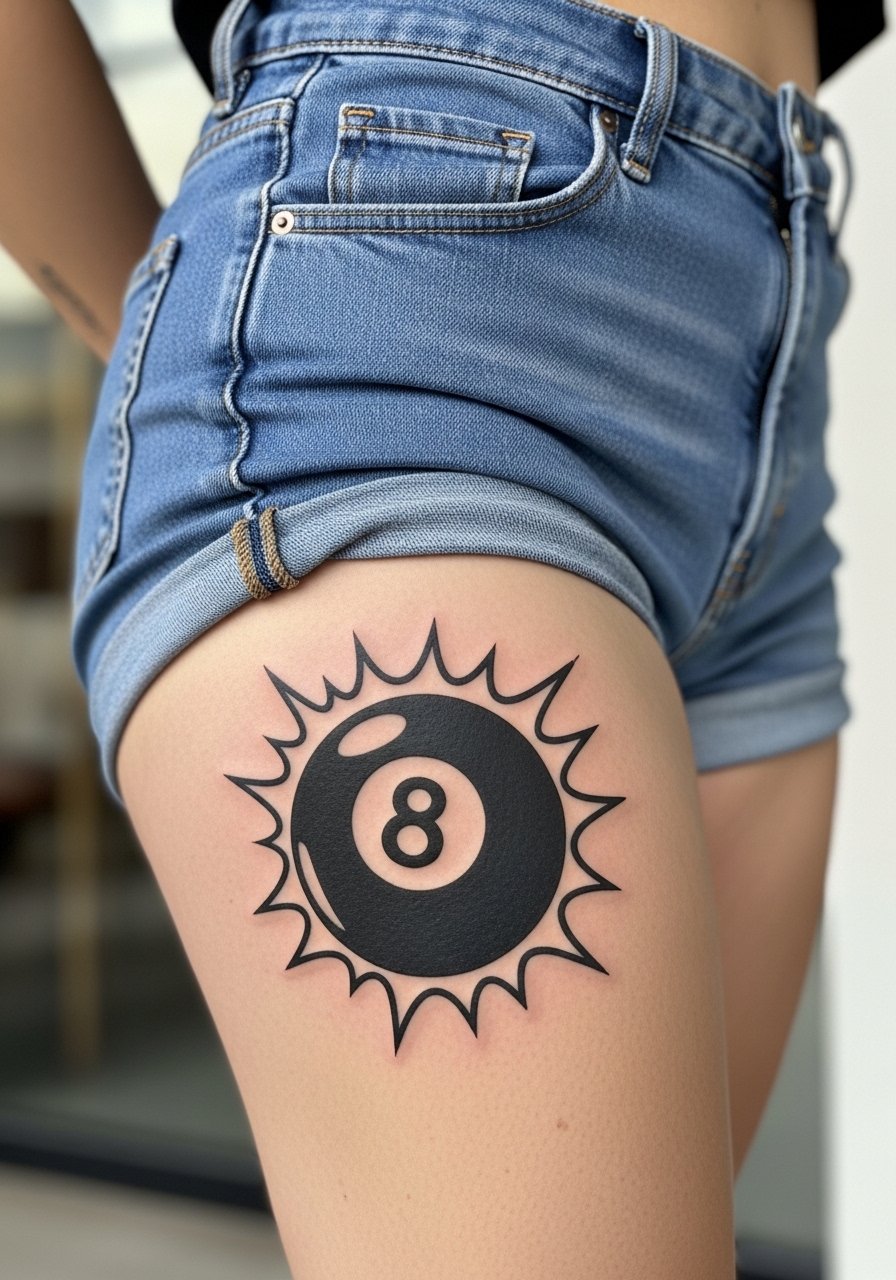
Thighs are forgiving for bold cartoon-realism because the skin holds color well. Heavy outlines age predictably and often look good even after years. The common mistake is adding tiny interior details that the bold line cancels out. If you want longevity, ask for stronger outlines and simpler interior shading. Sessions can be long but tolerable. Wear high-waisted denim you can adjust during the session.
19. Blackwork 8 Ball with Geometric Frame on the Back
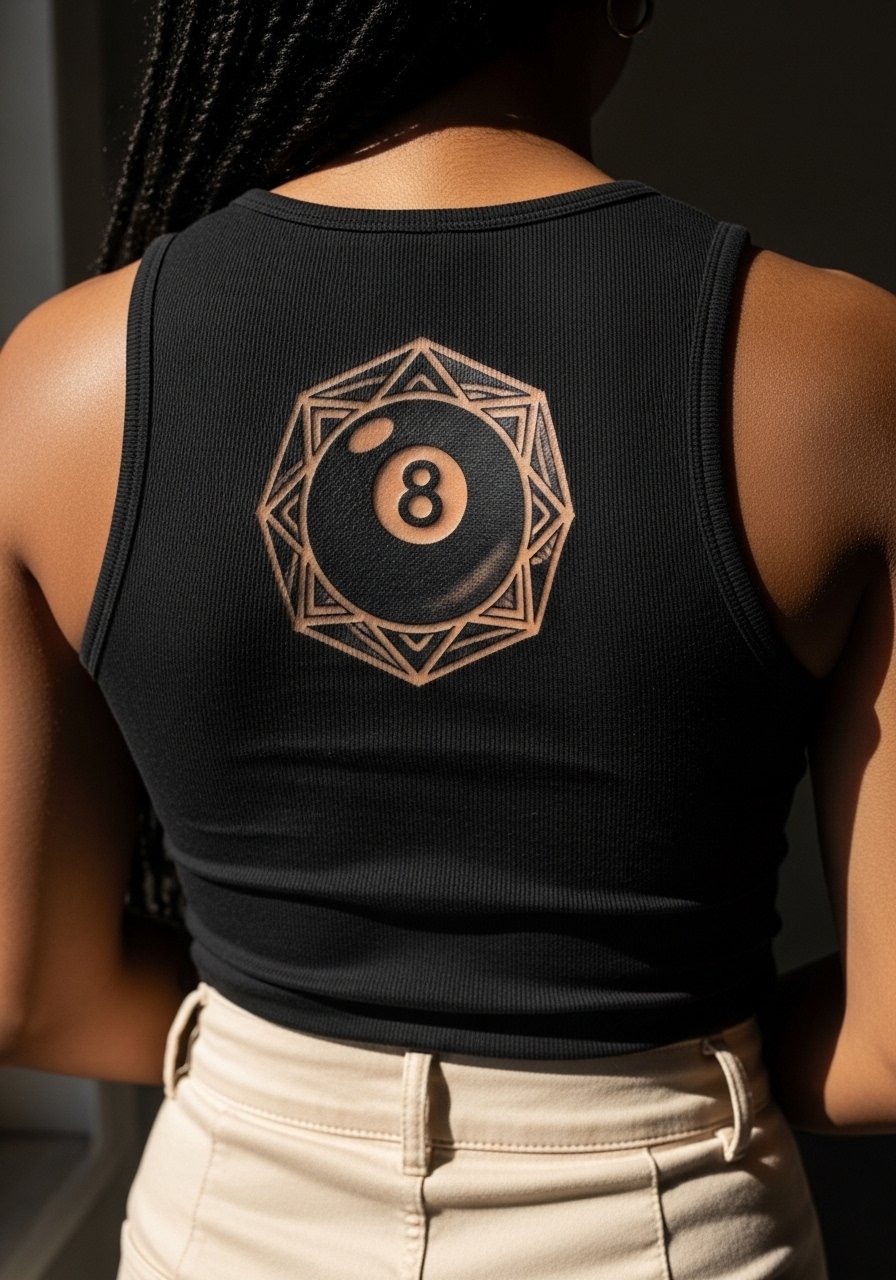
The upper back supports strong blackwork and geometric framing that help the sphere read as a focal point. Blowout risk is low here, but heavy black fields need controlled saturation so they do not spread. Tell your artist to vary needle groupings and to leave crisp negative edges around the eight ball. Sessions are comfortable and often split. For access, bring a tank top you can lift or remove without exposing more skin than necessary.
20. Tiny Floating 8 Ball near the Collarbone
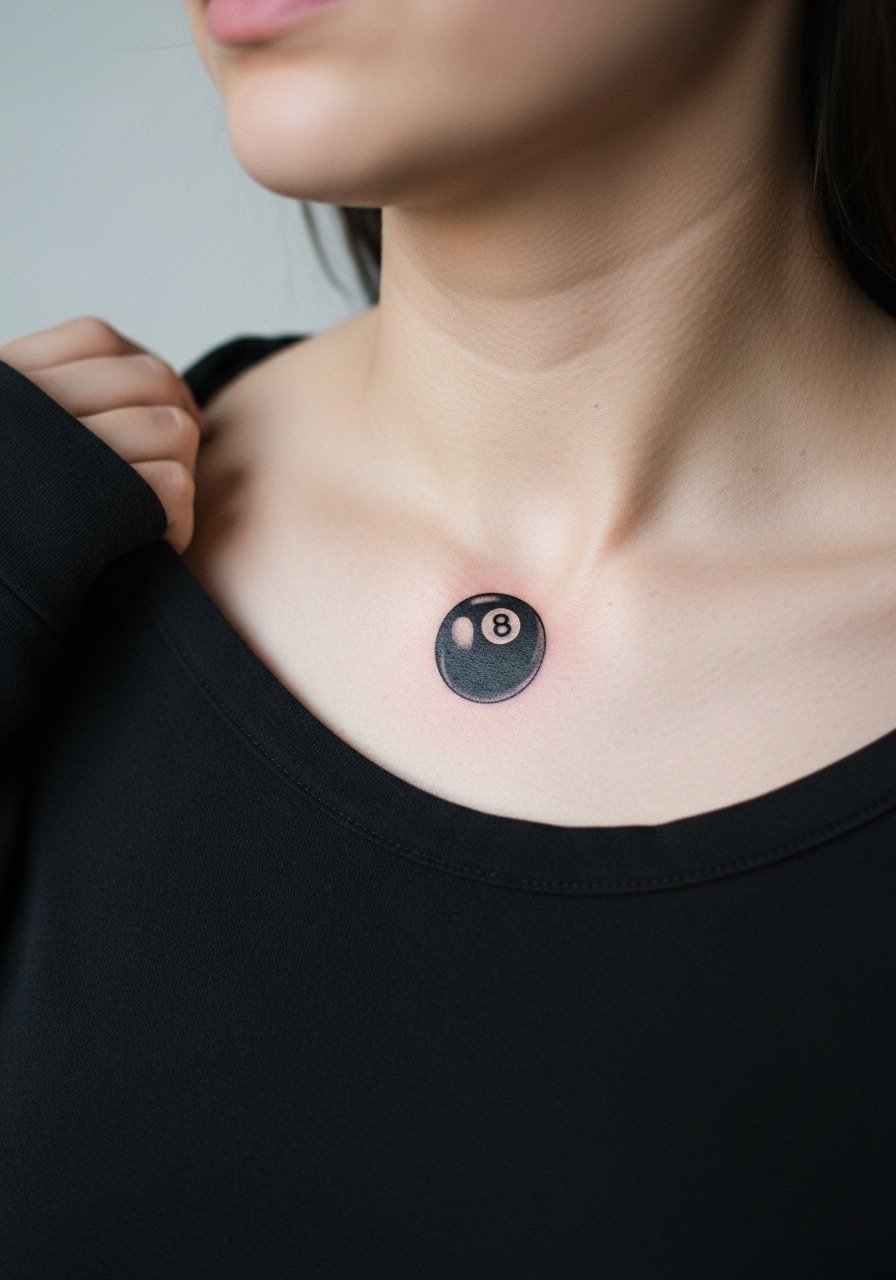
Collarbone placements can be elegant but are prone to fading because clothing friction sits nearby. The trick is to anchor the ball slightly above the bone so movement does not distort the shading. The common mistake is placing the piece too directly on the bone where touch-ups become frequent. Sessions are short and sharp. For the appointment wear a wide-neck shirt so the area is easy to reach and not fully exposed.
21. Sleeve Anchor 8 Ball with Subtle Color Glaze
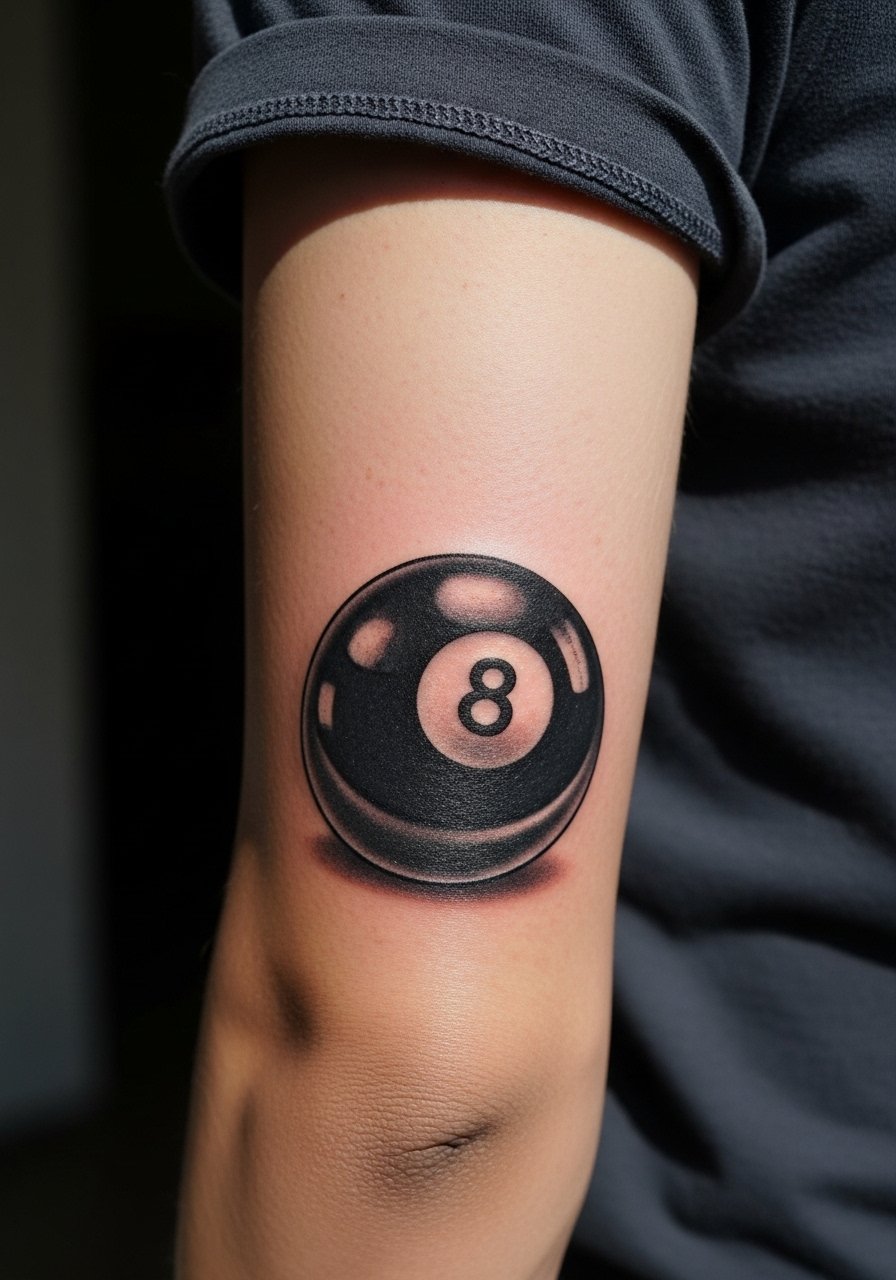
Using an eight ball as an anchor point in a partial sleeve ties different textures together. A subtle color glaze around the ball gives warmth without competing with the black. Mistake to avoid is glazing with colors that overpower the dark center. Ask the artist for muted tones and for glaze to sit outside the darkest zones. Expect touch-ups at year two for saturation refresh. For session comfort, wear a loose button-down shirt you can roll and adjust without pressing on fresh ink.
Frequently Asked Questions
Q: Will a realistic 8 ball tattoo blur faster than bold traditional styles on the wrist or hand?
A: From what I have seen, micro-realistic fills and tight highlights can soften faster on high-motion spots like wrists and hands. Bold traditional work tends to stay legible longer because it relies on thicker outlines and heavier saturation. If you prefer realism in those zones, plan on touch-ups around year one to three.
Q: How should I dress for a ribcage session that includes a detailed 8 ball?
A: Wear a cropped athletic top or a shirt you can lift and replace easily so the artist can access only the rib area. A snug top that stays in place prevents fabric shifting during the session and keeps the rest of your torso covered.
Q: Can an 8 ball tattoo be combined with cultural motifs without crossing a line?
A: You can combine imagery respectfully by acknowledging origin and choosing to adapt rather than copy sacred patterns. If a motif traces to a specific cultural tradition, consider subtle variation and ask the artist about respectful alternatives.
Q: How visible should an 8 ball be under different clothing choices if I want to show it off occasionally?
A: For forearm, wrist, and ankle pieces, rolled sleeves, cropped pants, and sandals show work without full exposure. For collarbone and chest pieces, wide-neck shirts and open-back dresses highlight the area without overexposing skin.
Q: Are touch-ups common for tiny micro 8 balls, and how often should I expect them?
A: Tiny micro pieces often need touch-ups sooner than larger saturated work. From what I have seen, plan on a touch-up at year one, and then assess every two to three years depending on fading and ink spread.
Q: Does black-only realistic work require different aftercare than color pieces?
A: Basic aftercare is similar for both, but black-only realistic tattoos can show scabbing differently because of saturation. Keep the area clean, avoid heavy friction, and follow the guidance from your artist for initial moisture balance.
