
Fine line tattoos are everywhere online right now, and the trend looks gorgeous when fresh. The reality is that a lot of those delicate lion profiles blur faster than people expect, especially on high-friction spots. This list pairs pretty lion tattoo design directions with practical notes on placement, how they age, and what to wear to show them off so you walk into the chair informed and leave with something that still reads well years from now.
1. Neo-Traditional Lion Head on Outer Forearm
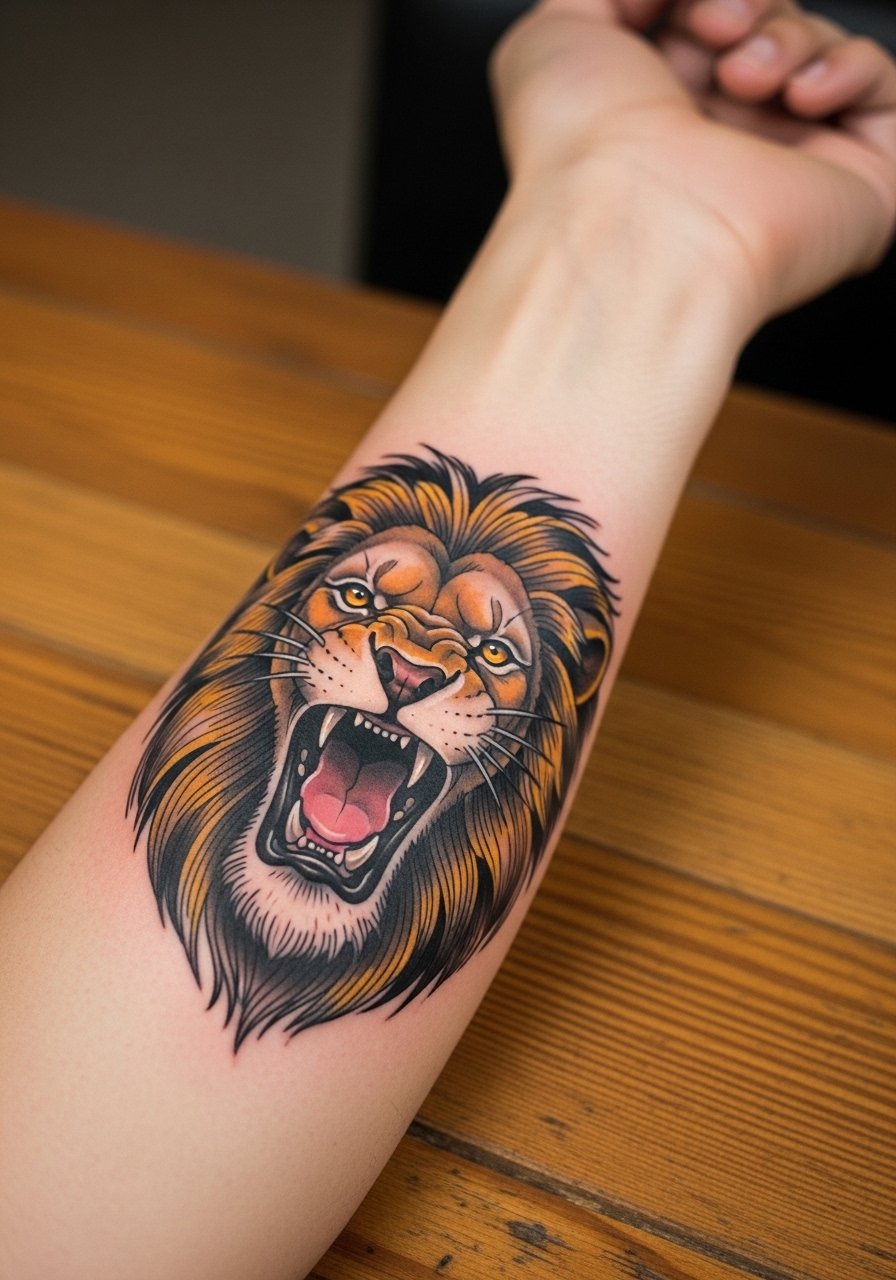
This is the go-to if you want a bold, show-off piece that reads from across a room. The outer forearm takes color and saturation well, so ask for solid black outlines with mid-level saturation so the yellows and rusts hold without muddying. Fair warning about gym culture and friction from long sleeves rubbing during recovery. For the consultation bring a few references showing exact line weight and mane texture so the artist knows you want the neo-traditional boldness, not photoreal shading. Expect moderate pain and a one to two session timeline. Pair with a rolled-sleeve henley shirt and a leather cuff on the opposite arm to complete the look when it’s healed.
2. Fine Line Lion Profile on the Wrist
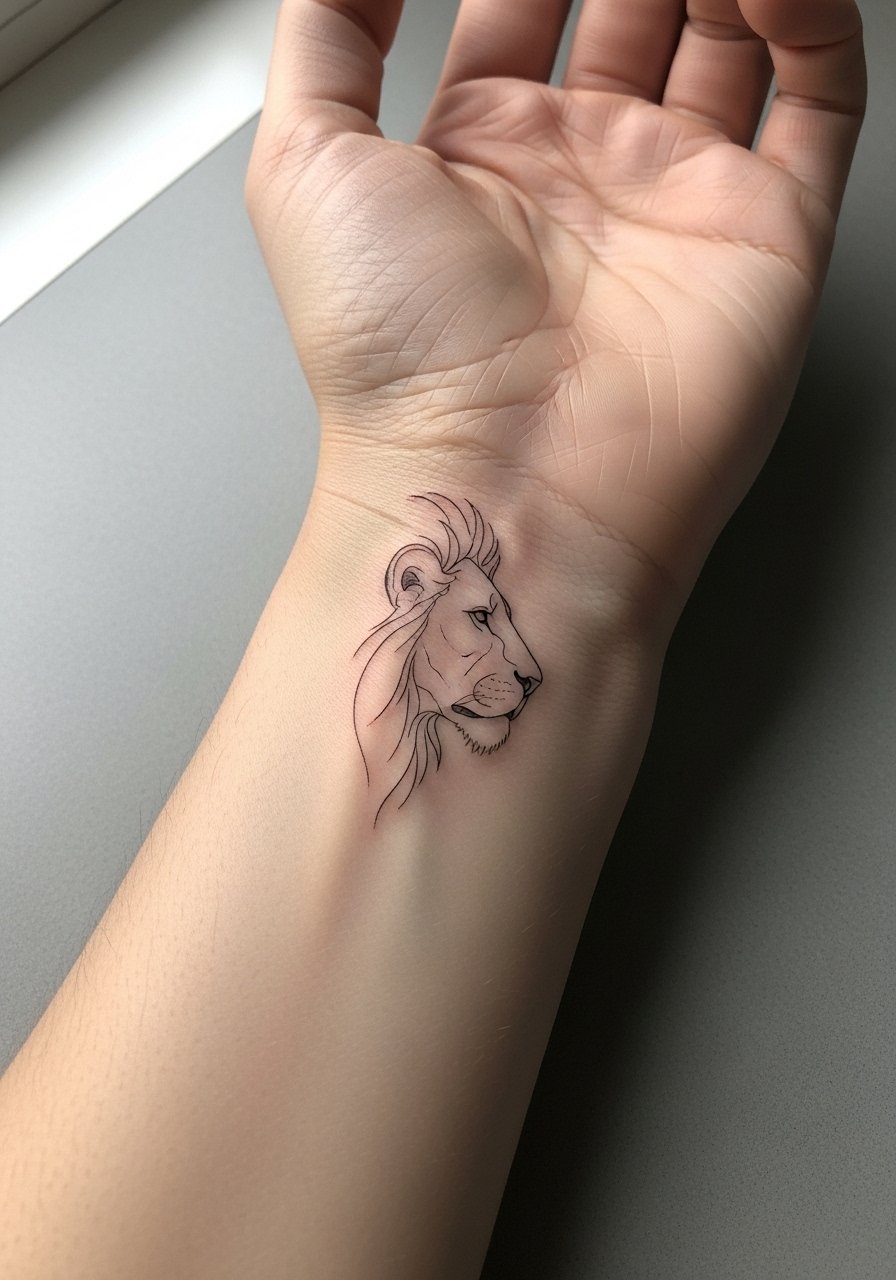
A wrist profile keeps the design discreet while still feeling intentional. The big caveat is fade: fine line work on the wrist faces daily washing and sunlight. Artists split into two camps on this placement. One group warns that wrists blur quickly and recommend bolder line weight. The other says a single-needle fine line can hold if the artist spaces the lines and plans for a touch-up at year two or three. Bring examples that show exact line thickness and be ready to accept a scheduled touch-up. Session time is short and discomfort is low. For showing it off, stack with a thin silver chain bracelet in a different metal tone so the tattoo keeps visual priority.
3. Micro-Realism Lion Mane With Crown on Upper Arm
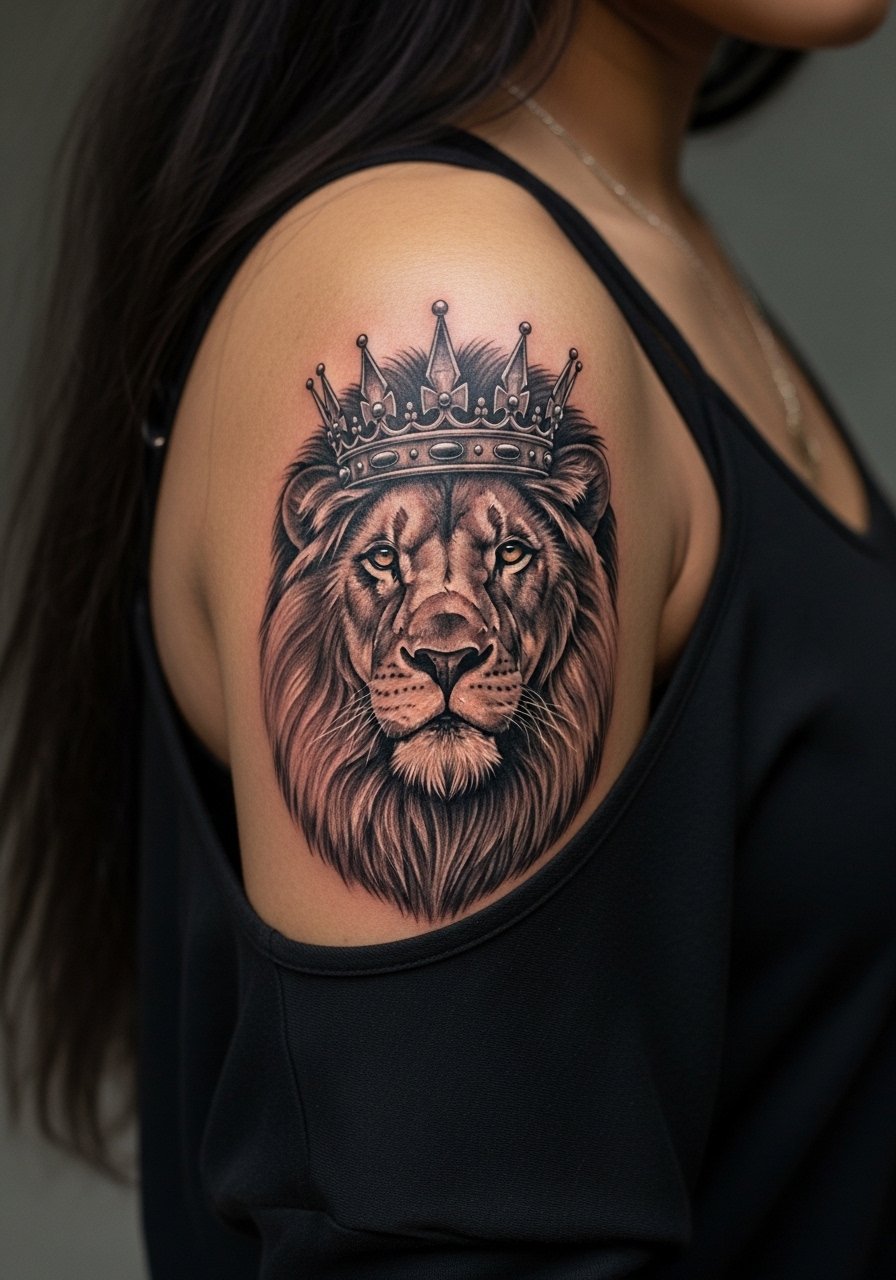
This one is for people who want portrait-level texture without a chest piece. The upper arm gives enough canvas for subtle stipple shading and layered saturation. Expect longer sessions and a multi-visit timeline; numbness options are worth asking about if you think it will run long. The common mistake is asking for the same reference that's a full-face portrait and expecting it to translate to an eight-inch piece without loss. Tell your artist you want strong contrast in the mane and a softer midtone in the face. For warm-weather show-offs pick an off-shoulder blouse so the piece peeks when you lift your arm and keeps the focus on the detailed shading.
4. Tribal Blackwork Lion Outline on the Thigh
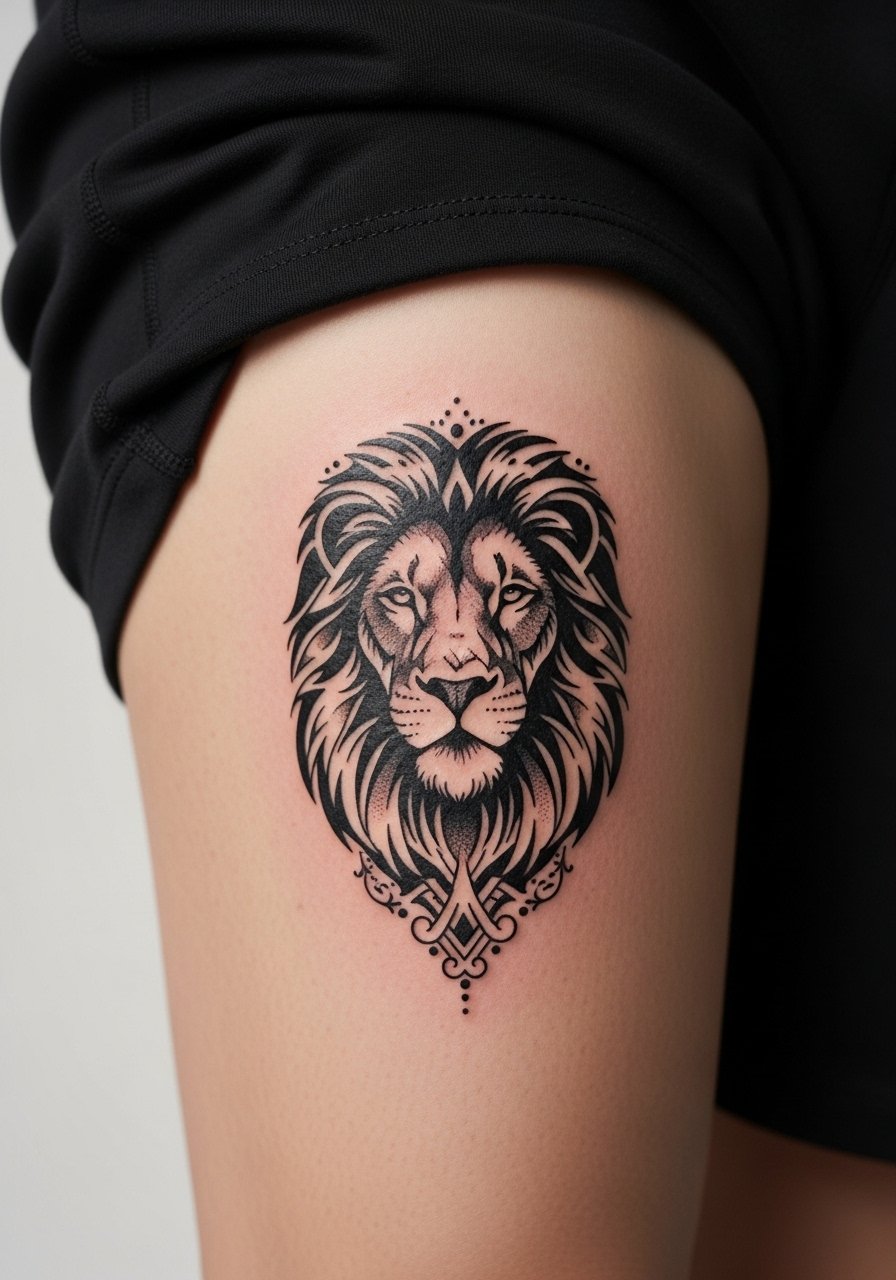
Thigh placements tolerate dense blackwork and geometric fills without the same blowout risk as thin areas. This design ages well because solid black retains contrast, but avoid packing too many tight dots in one spot or the texture will merge over time. The thigh is forgiving for size changes, but if you expect significant body fluctuation skip extremely narrow geometry. The session feels like moderate pressure and can be done in one longer appointment. If this pattern traces cultural motifs, consider small custom tweaks to respect origin and avoid direct replication.
5. Watercolor Lion Face on the Shoulder Blade
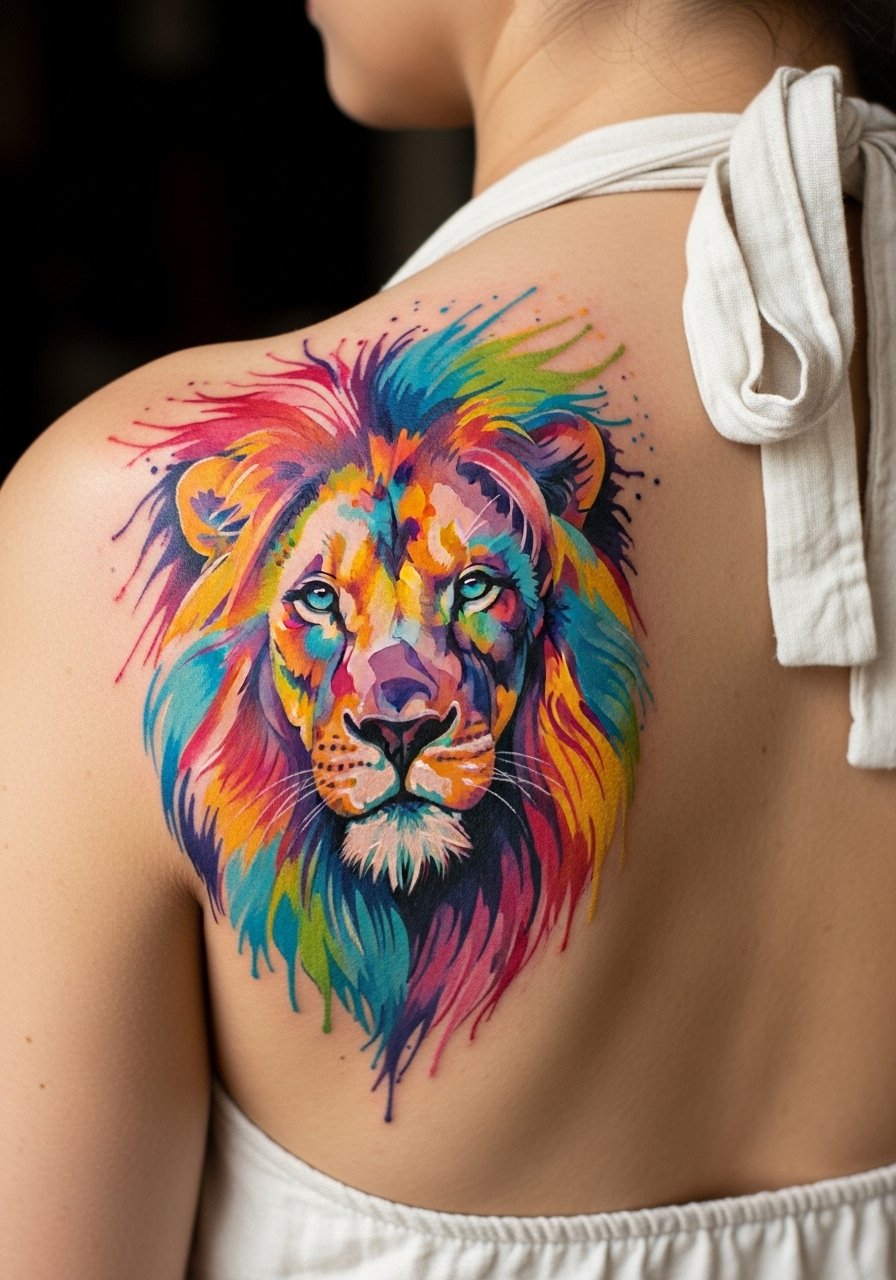
Watercolor is an artistic route that delivers painterly motion in the mane. Color retention is the trade-off. Shoulder blade placements heal well and avoid constant abrasion, so the colors last longer than on hips or ankles. The common mistake is asking for extremely pale washes across dense skin without asking about seasonal sun care. Plan for at least one touch-up session, especially on bright hues. For evenings out, a backless halter top frames the shoulder blade and keeps the watercolor visible without competing jewelry.
6. Minimalist Single-Line Lion Roar on the Collarbone
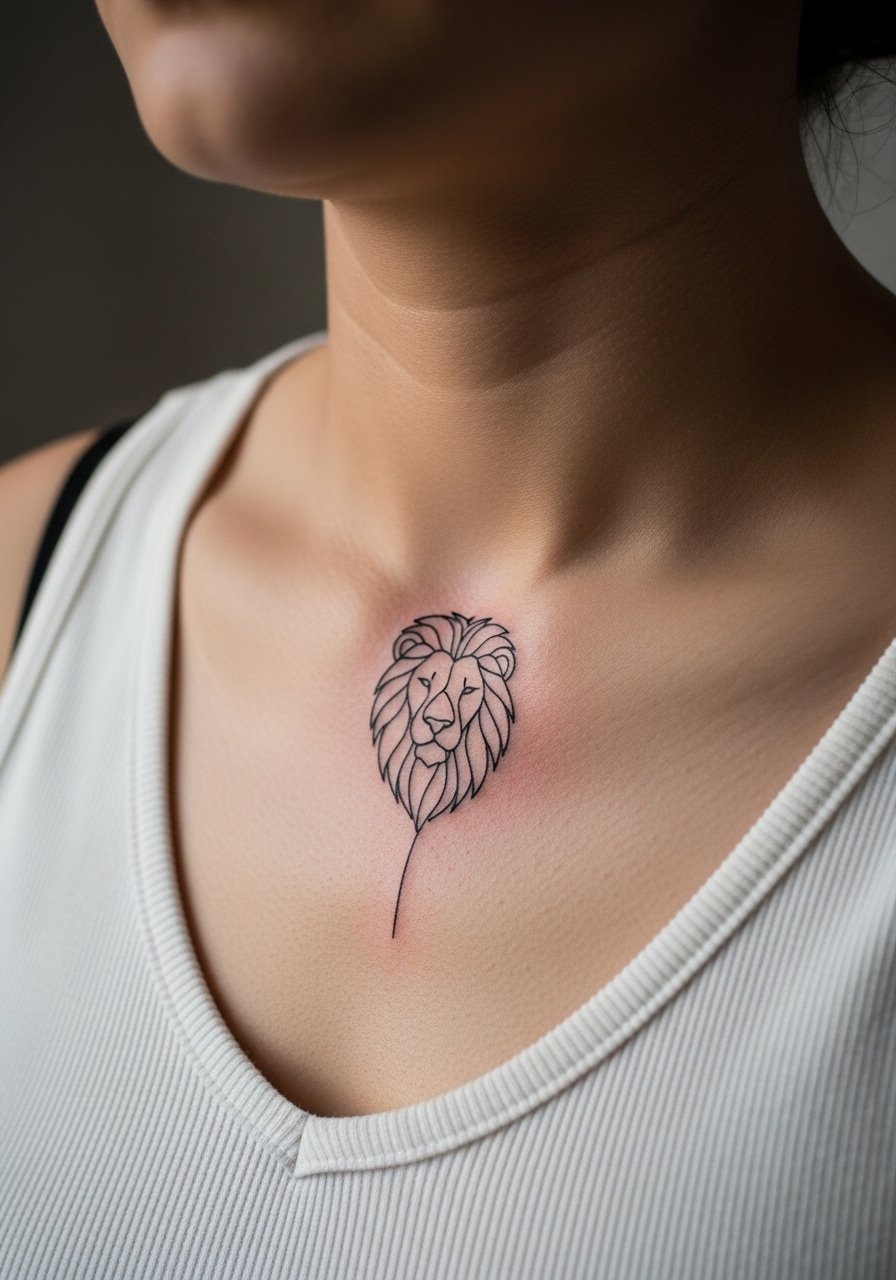
Collarbones are great for delicate single-line pieces because the plane is flat and easy to display. Pain can spike near the bone, so expect a quick sharp sensation. Fine lines here look elegant fresh but can thin out with heavy sun exposure. Ask for slightly bolder single-line weight than what you see on a phone screen so it remains legible at year two. For the appointment wear a v-neck tank you can easily remove or shift, and plan a light necklace that sits above rather than across the design when you want to show it off.
Studio Day Picks
The first six pieces above include wrists, forearms, collarbones, and shoulder blades, so a small kit focused on access and early protection makes a big difference.
-
Ink-Ichiban Balm. Lightweight balm many collectors prefer for breathable moisture on dense blackwork and pieces that need daily hydration during the first week.
-
Australian Tattoo Goo. Fast-absorbing salve that helps larger pieces like shoulder blades and thighs feel less sticky while healing.
-
Green Sheep Tattoo Salve. Gentle option for sensitive skin zones such as the collarbone where irritation can add to soreness.
-
Hada Labo Lotion. Light hydrating lotion people use after day three to keep healed skin supple without greasy residue.
-
Hustle Butter Deluxe. Thin, artist-friendly balm that many prefer over petroleum for humid climates and oily skin types.
7. Blackwork Lion With Mandala Frame on the Upper Back
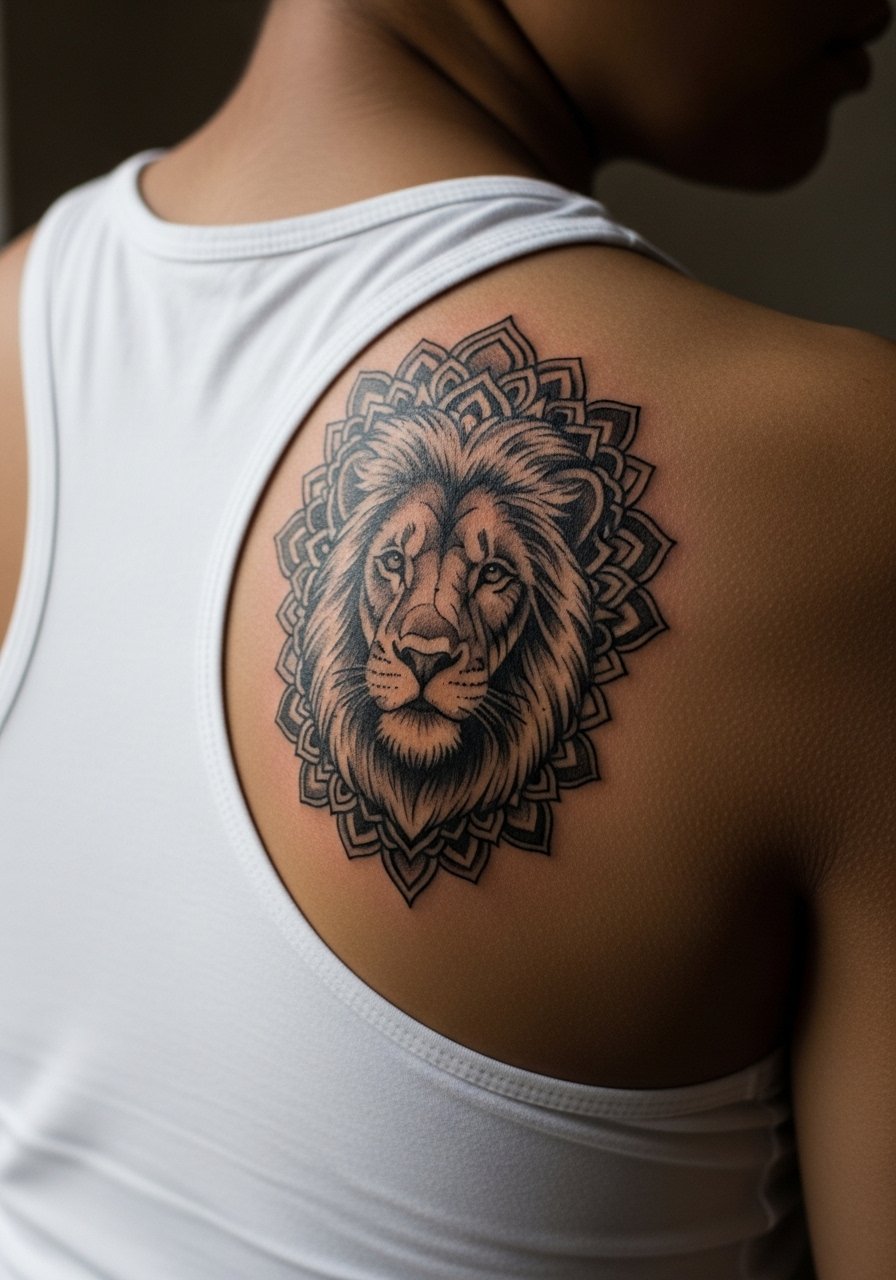
Large mandala frames let the lion sit as a focal point while the surrounding geometry balances the composition. The upper back accepts dense black without much blowout, but the rib-side of the back is trickier, so keep the main mass closer to the shoulder blade. Plan for two to three sessions and expect moderate discomfort when you need to lie face down. If the pattern draws on sacred designs, consider small adaptations so the piece reads as homage rather than a straight copy. For nights out pick a racerback tank or backless top to put the mandala on display.
8. Neo-Traditional Paw Print Sleeve Starter on Outer Forearm
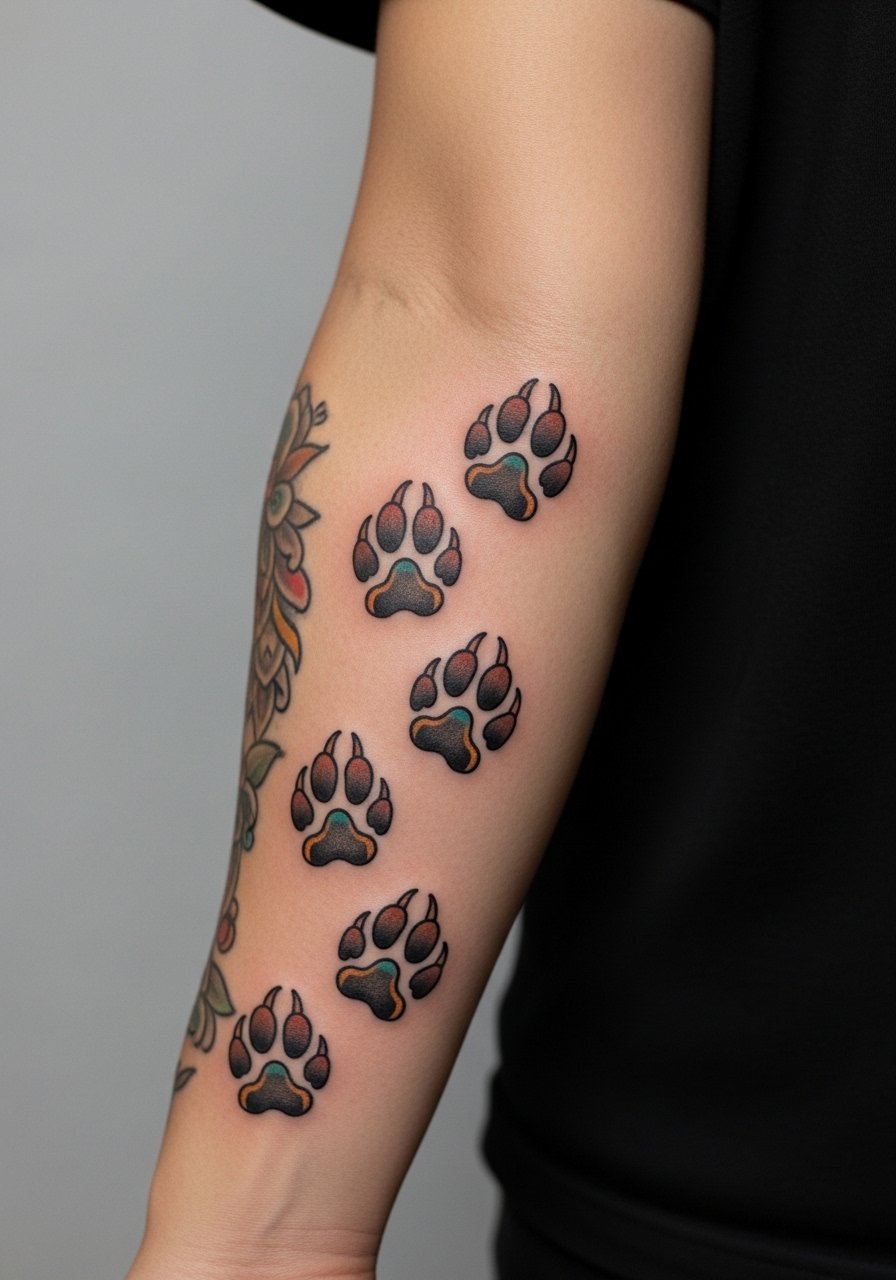
Sleeve starters are modular and forgiving. A paw print motif lets you add scenes or botanical fills later. Outer forearm work ages well because the skin there is thick and less prone to blowout. The session feels manageable as piece segments and most artists will suggest three small blocks rather than one marathon. During the appointment wear a loose fit tank top or a short-sleeve button you can roll up easily. For everyday wear a rolled-sleeve henley keeps the forearm visible without forcing attention.
9. Ignorant Style Cartoon Lion on the Thigh
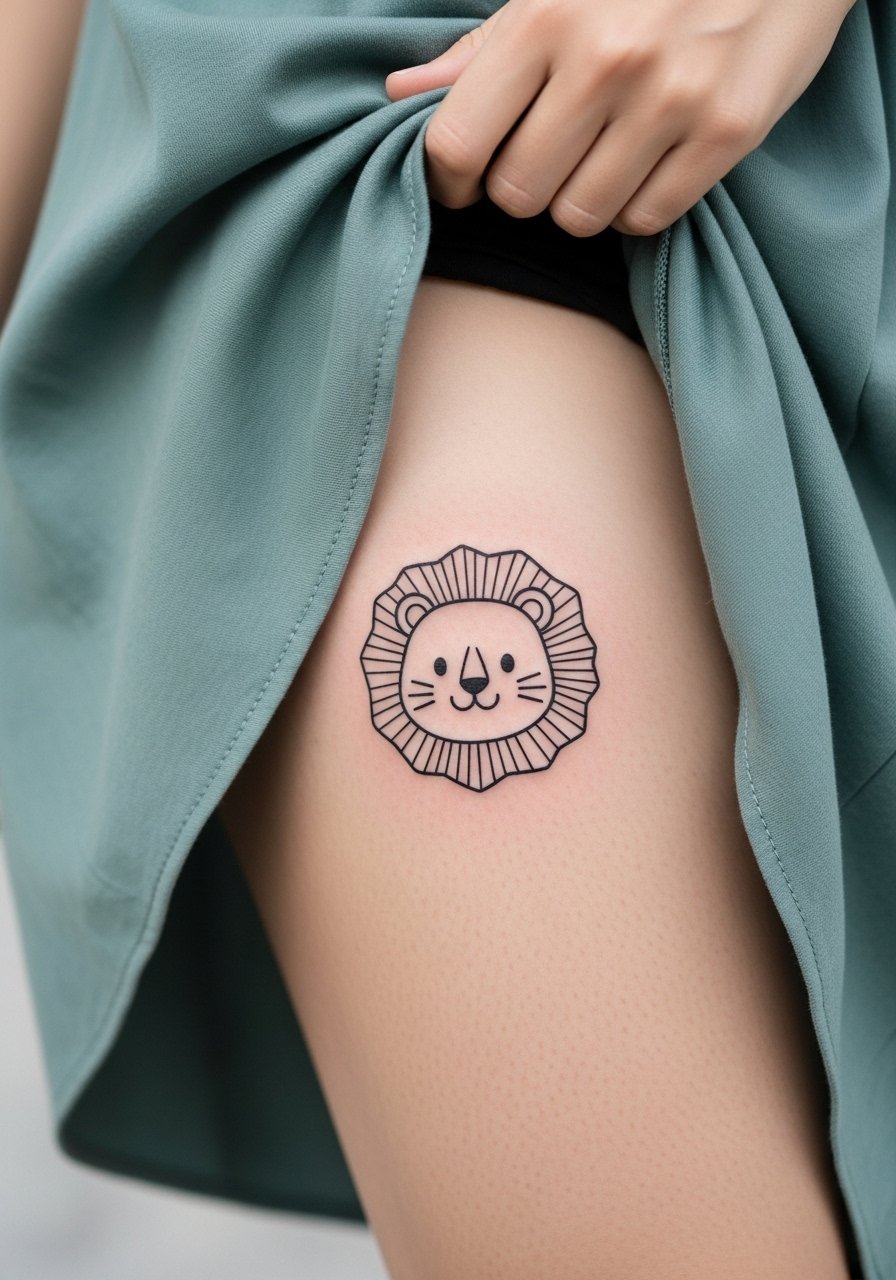
Ignorant style embraces imperfection and bold outlines. Thigh placements are ideal because you can go big and the skin tolerates heavy black without losing clarity. One real mistake is shrinking the design to fit a pocket of skin; ignorant work thrives at a statement size. Sessions are fast and feel like solid pressure. For summer visibility try high-cut shorts or an asymmetrical skirt and consider thigh-high socks for a sudden peek when you want to frame the art.
10. Micro-Realism Lion Eye Close-Up on the Neck
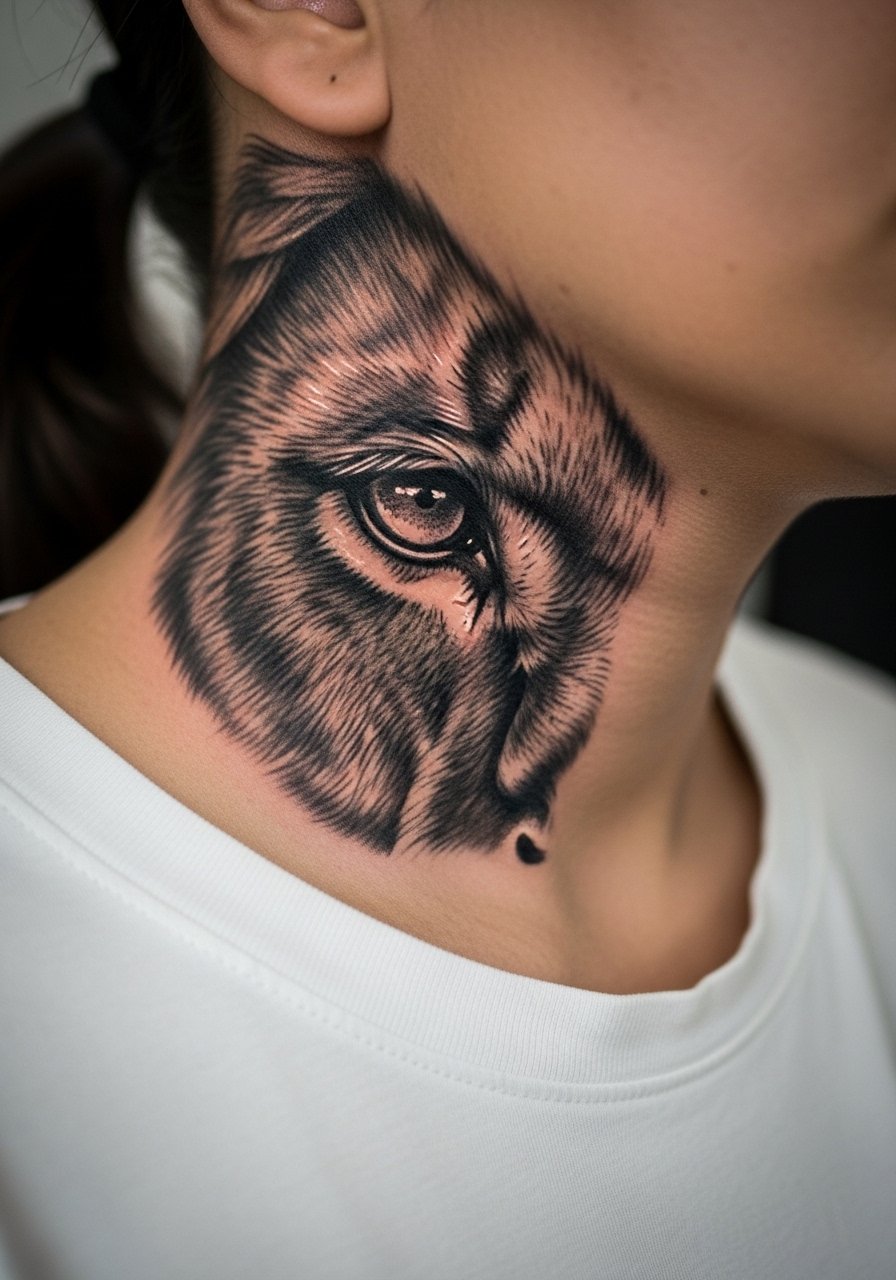
Micro-realism eyes carry intense gaze in a small footprint. Neck placements amplify visibility and social signals, so consider career implications and daily exposure when choosing this spot. Artists warn this area can be more painful and may need shorter sessions to manage swelling. The common aging issue is sun exposure; neck skin gets a lot of UV and detail can soften faster. Plan for a protective routine after the healing window and discuss touch-up thresholds with the artist up front.
11. Small Single-Needle Lion on the Ankle
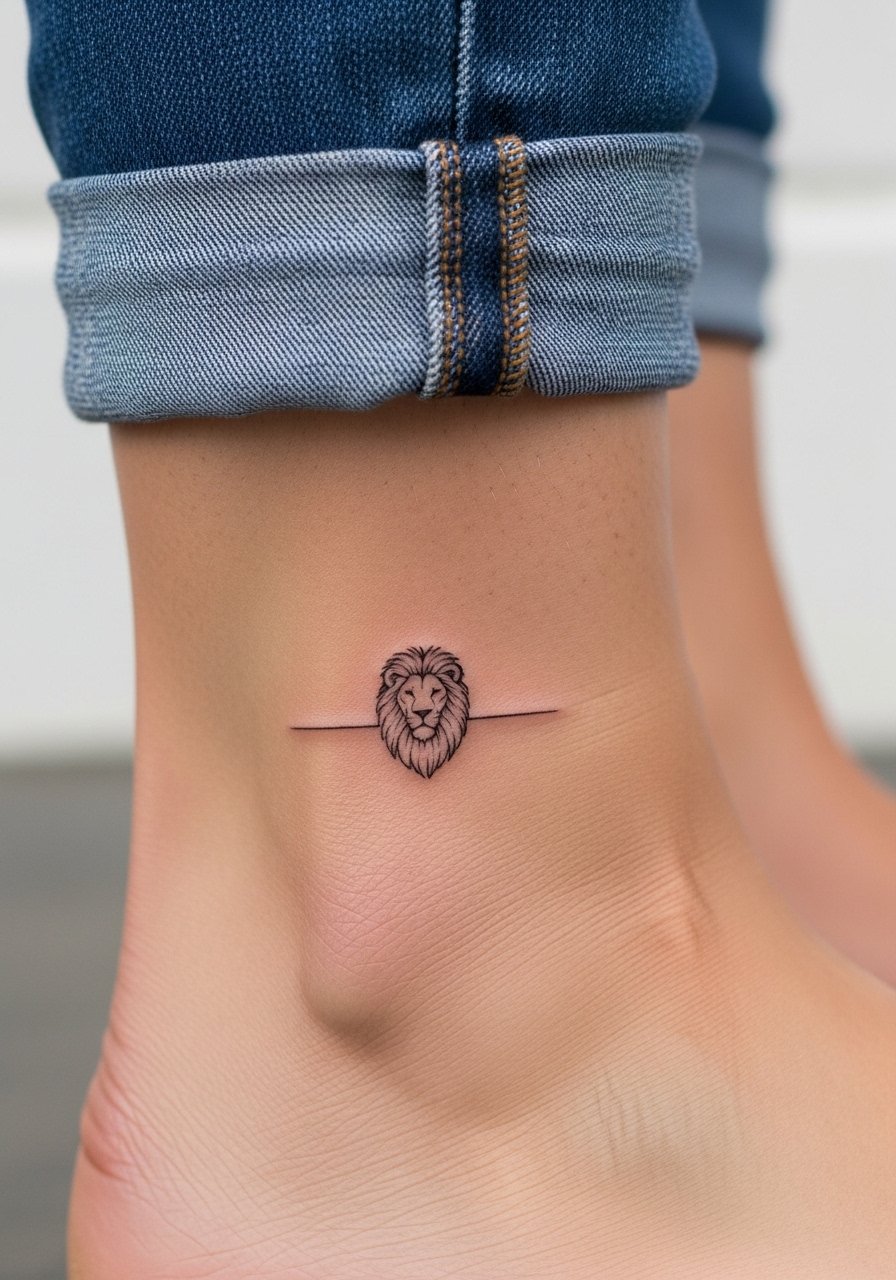
Ankle tattoos get friction from shoes and socks, which is why small single-needle pieces there can need touch-ups sooner than the same design on the forearm. If you want longevity, ask for slightly stronger line weight and avoid ultra-tiny internal detailing. The session is short but the area bruises easily so plan timing if you have events. For session comfort wear jeans you can roll up and a pair of slip-on shoes that avoid pressure on the ankle after the artist bandages the area.
12. Geometric Mane With Negative Space on the Calf
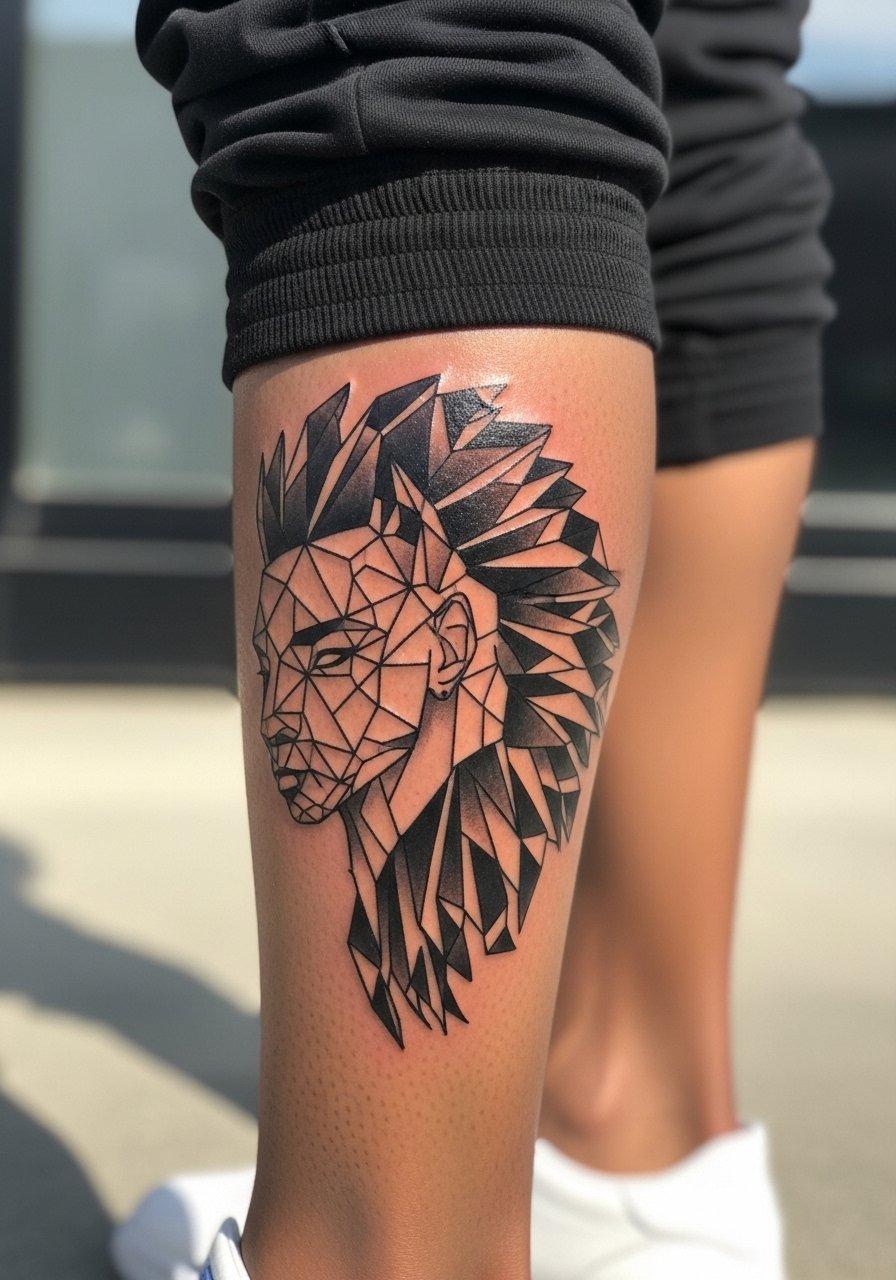
Calves offer a curved surface that highlights negative space illusions. The trick is spacing: dense geometry too small will merge, and too thin lines can ghost on darker skin. Choose broader linework with strategic negative space so the optical effect persists. Sessions are generally comfortable and can be combined with a nearby piece. For casual display, roll up cropped joggers or midi skirts so the design reads without competing footwear.
13. Collarbone Lion Profile With Script Accent
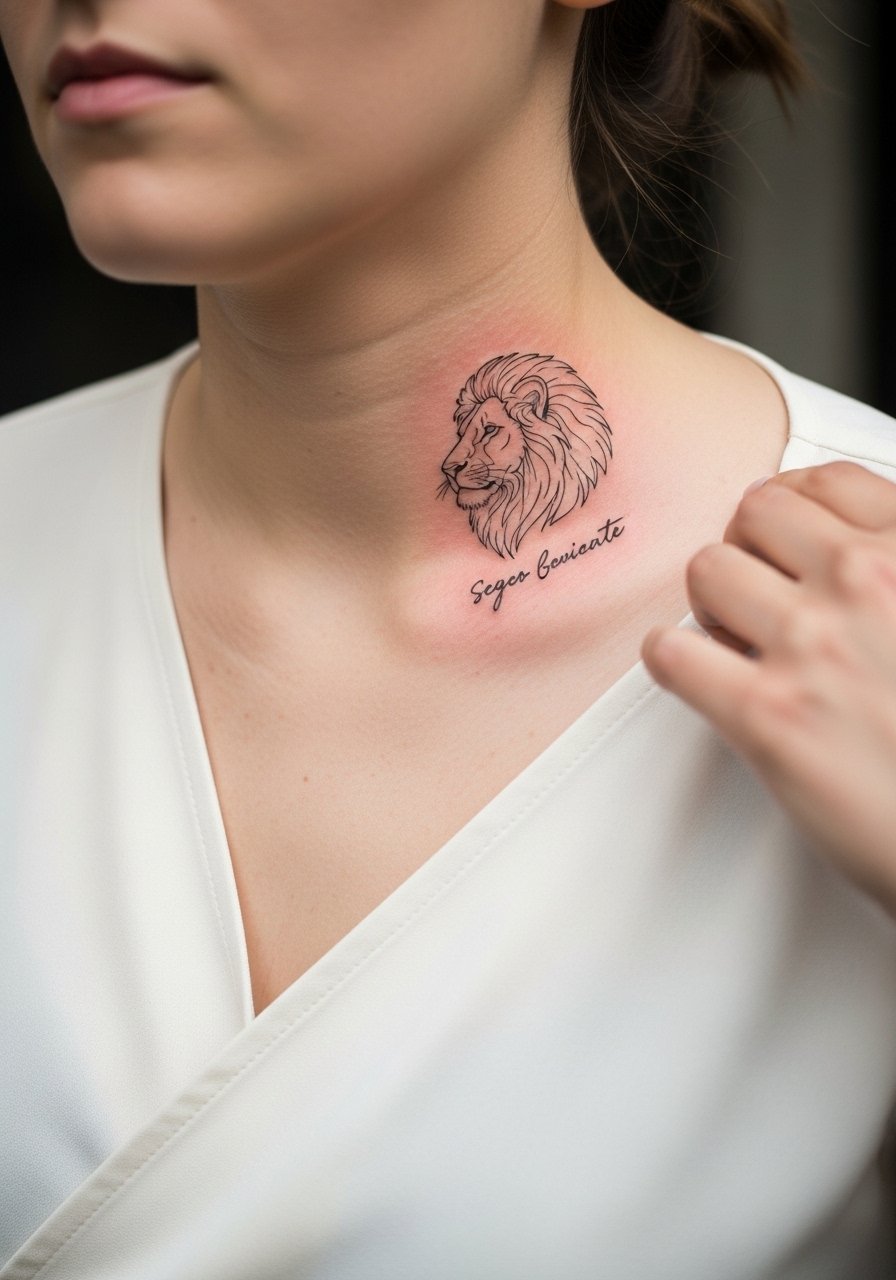
Adding a small script under a collarbone profile personalizes the composition but raises layout risks. Text must be sized to the collarbone curve or it will warp with movement. The collarbone is bony so expect a sharper pain perception. The aging pattern favors slightly thicker single-needle strokes for the main profile and looser spacing in the lettering. For sessions wear a wrap style blouse so the artist can access and you can visualize how necklaces will sit once it is healed.
14. Finger Knuckle Mini Lion for the Roaring Grip
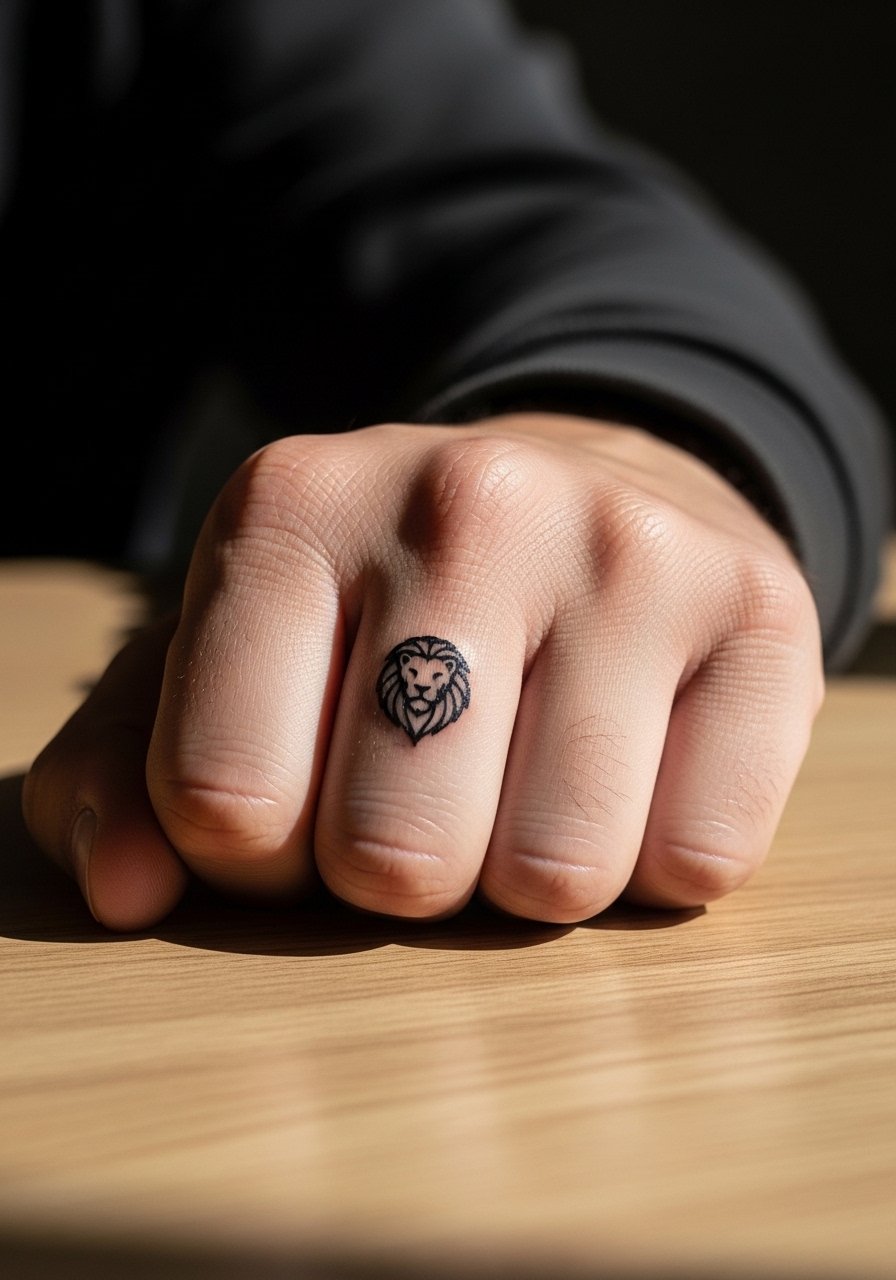
Finger knuckles are under-covered territory for lion work and create a playful effect during handshakes. Real talk, knuckle tattoos face extreme fade and ink migration because of thin skin and constant use. The usual recommendation is to treat these as high-maintenance and budget for touch-ups. Sessions are quick but the pain is sharp. If you need a discreet experiment first, consider stick-on temporary tattoos to mimic placement over a week so you can feel how it looks in daily life.
15. Ribcage Half-Realistic Lion With Dotwork Shadow
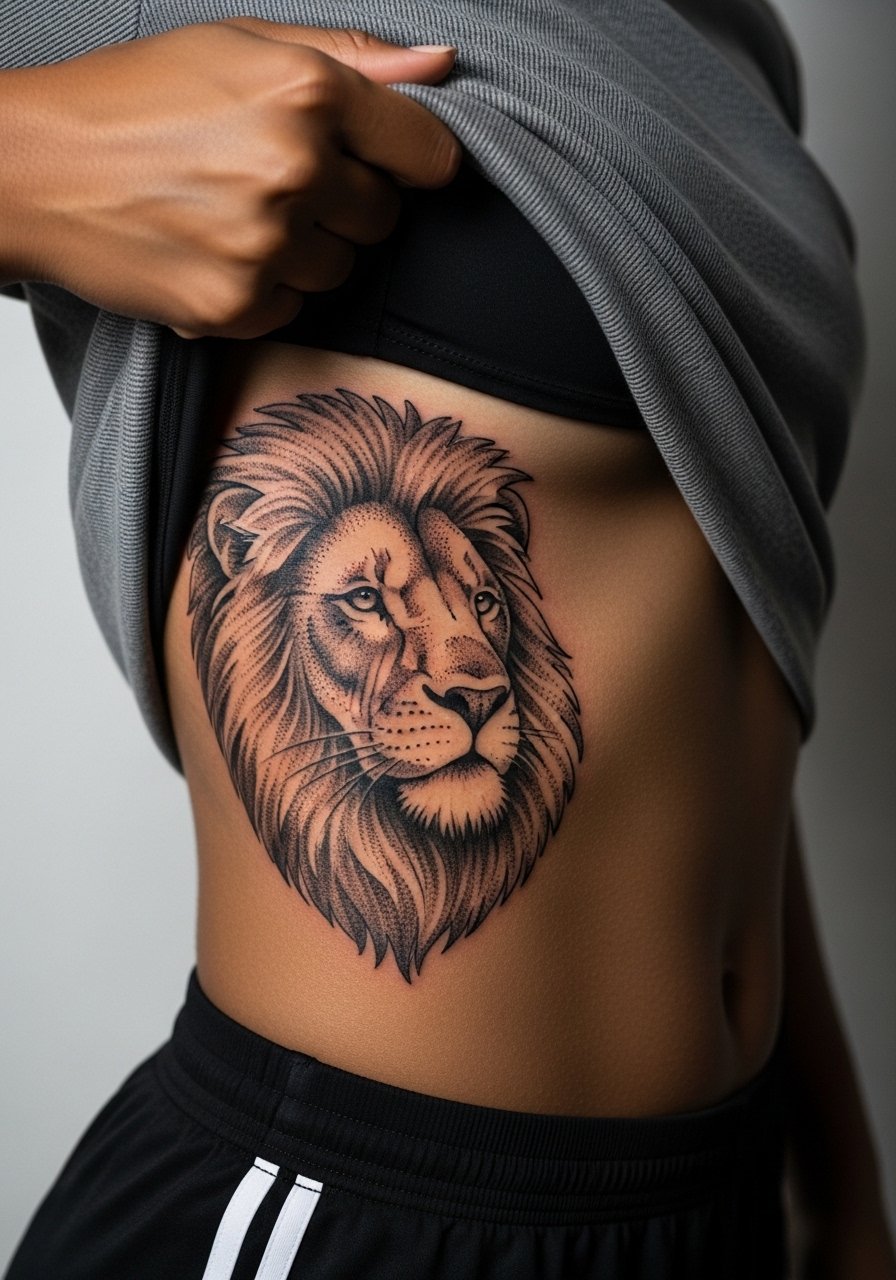
Ribcage sessions are notoriously painful but deliver dramatic results. Artists disagree when it comes to fine-line retention on ribs. One camp warns that frequent torso movement and stretch blur thin lines quickly. The other camp says expert needle depth and spacing can keep detail intact. If you choose ribs, expect longer sessions split into parts, and plan for breaks so you can finish without burning out. For privacy during recovery, pick loose tops and a fitted sports bra if needed to secure bandaging.
16. Back of Neck Micro-Face Lion Symbol
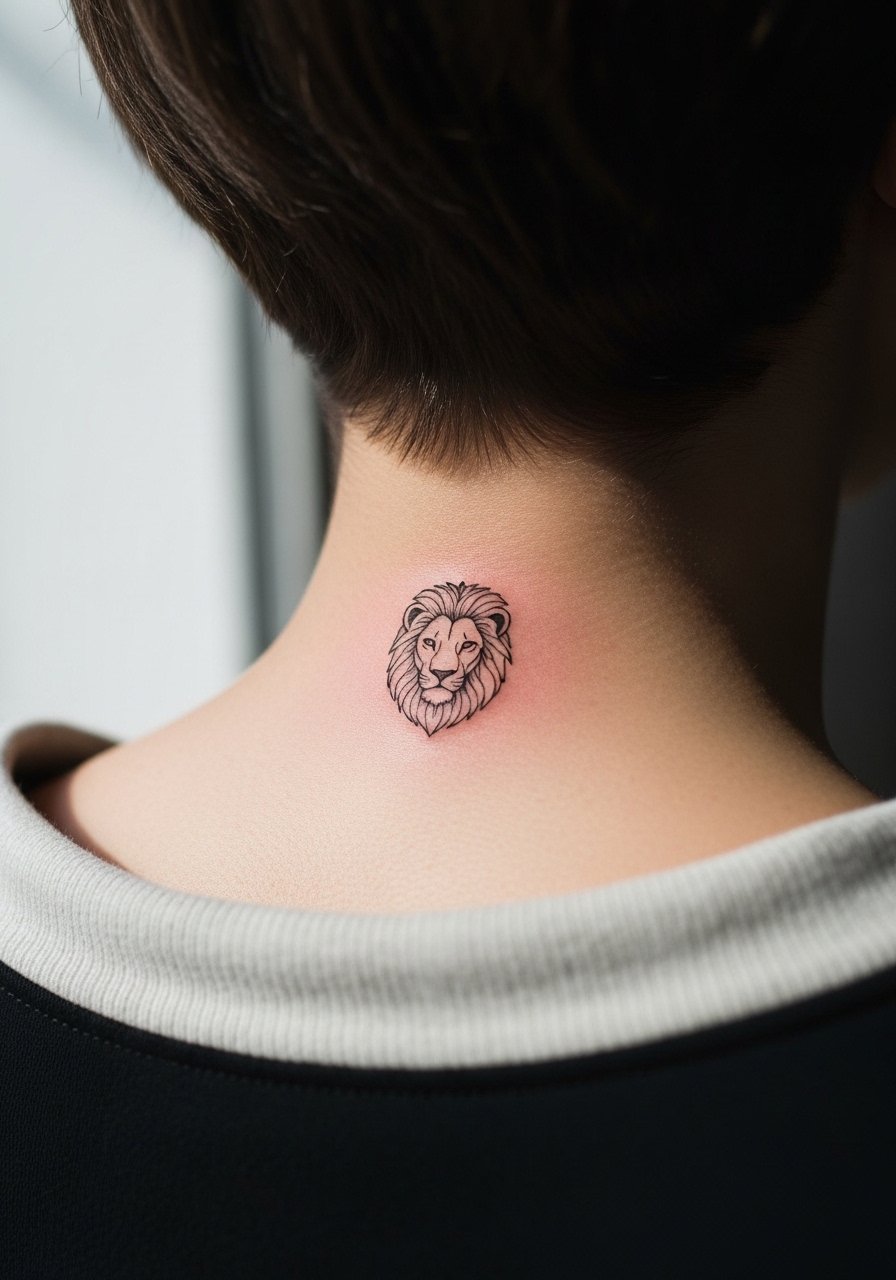
The back of the neck is a subtle placement that hides under hair or shows with updo styles. Pain is moderate and sessions are brief. The risk is that neck skin gets sun and sweat exposure, so delicate lines can soften. If visibility is important, request slightly denser lines and ask the artist about long-term touch-up plans. For appointments wear a shirt you can pull down rather than take off to keep post-session dressing simple.
17. Scar-Cover Lion Texture Play on the Hip
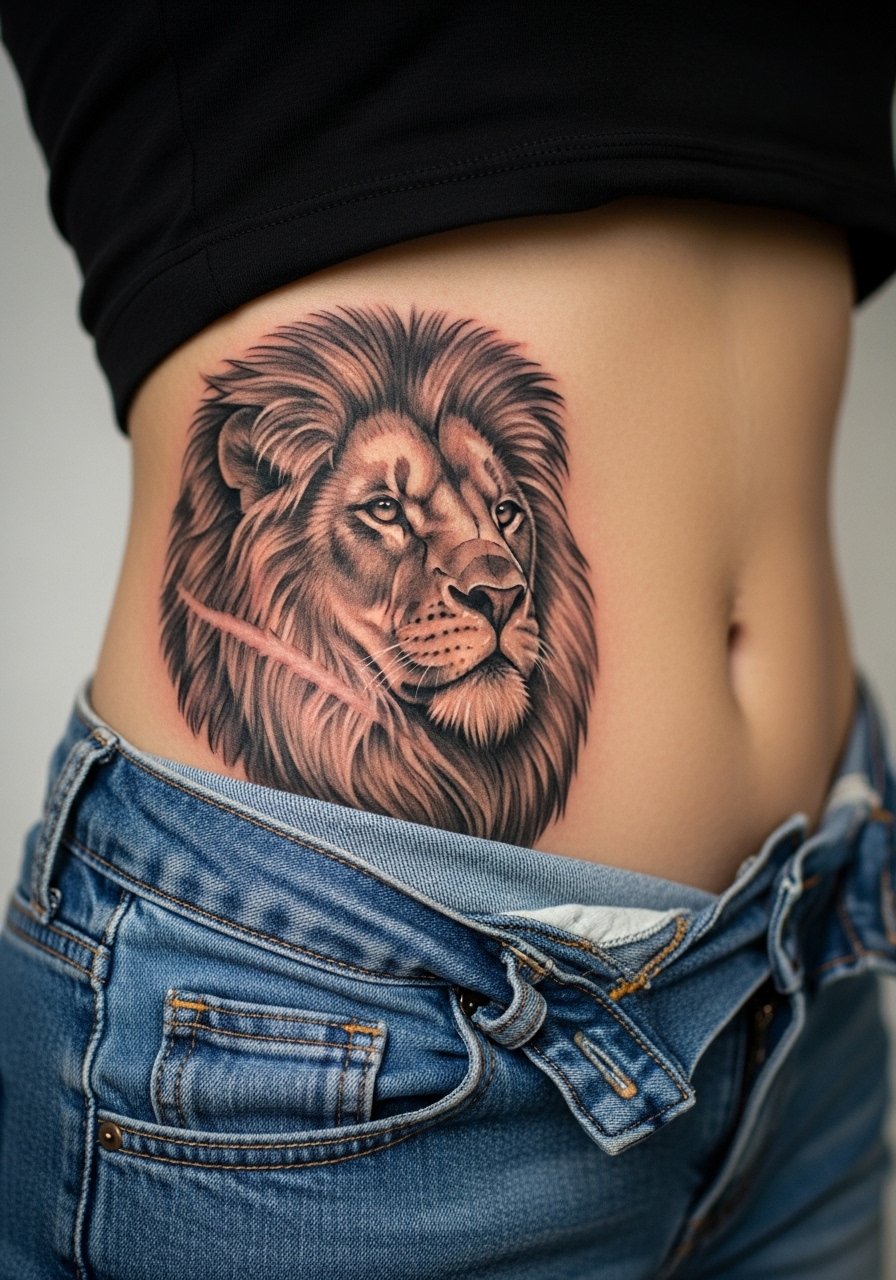
Using a lion mane to mask or incorporate a scar can turn scar texture into artistic texture, but it requires an artist experienced in scar work. Scar tissue takes ink differently and can require test patches to predict saturation. The session can be longer and sometimes needs a gentle approach with fewer passes to avoid irritation. For session access wear high-waisted jeans you can lower slightly and bring loose shorts for comfort after the appointment.
Frequently Asked Questions
Q: Will a fine line lion on my wrist fade faster than a neo-traditional forearm piece?
A: Yes, fine line on wrists tends to need touch-ups sooner because of washing and sunlight. Neo-traditional forearms have thicker linework and more saturation which holds longer. If you love a fine line aesthetic ask your artist for slightly stronger line weight and plan for a touch-up around year two or three.
Q: How do I choose between Saniderm-style film and dry healing for a colorful mane on the shoulder blade?
A: Artists and collectors split into two camps. One camp favors barrier film for active people because it keeps the area clean and reduces scabbing. The other camp prefers dry healing to avoid trapped moisture and maceration. Consider your lifestyle, sweat levels, and the artist’s recommendation, and know that either approach can work if you follow the basic healing signals your artist gives you.
Q: Are ribcage lions worth the pain if I want detailed dotwork shading?
A: If you value the look and accept that ribs are one of the higher pain placements, yes. Expect split sessions and plan breaks. Dotwork can read beautifully on the rib if spaced well, but thin dense work is at higher risk of softening. Talk through scale and spacing with an artist experienced in rib shading.
Q: Can I wear anything to my session that makes shoulder blade work easier for the artist?
A: Wear a loose tank or something easy to pull aside so you don’t need to undress fully. For shoulder blade and upper back pieces, a loose kimono robe or a backless halter top works well for access without exposing more than necessary.
Q: Is a tiny finger or knuckle lion a good first tattoo?
A: It can be, but return visits for touch-ups are more likely. Knuckles see a lot of use and heal differently. Try a temporary design first to live with the placement, and ask your artist about maintenance expectations so you are not surprised later.
