
Fine line praying hands dominate feeds right now, but what holds up on real skin is often the opposite of what looks best in the first 48 hours. Bold blackwork and well-spaced dot work resist sun and sanitizer better. Small wrist outlines can be gorgeous, yet they need planning if you live on hand sanitizer and keyboards. Below are 17 praying hands approaches, how they age, what to ask for, and which wardrobe moves make them sing.
1. Neo‑Traditional Rosary Wrap on the Forearm
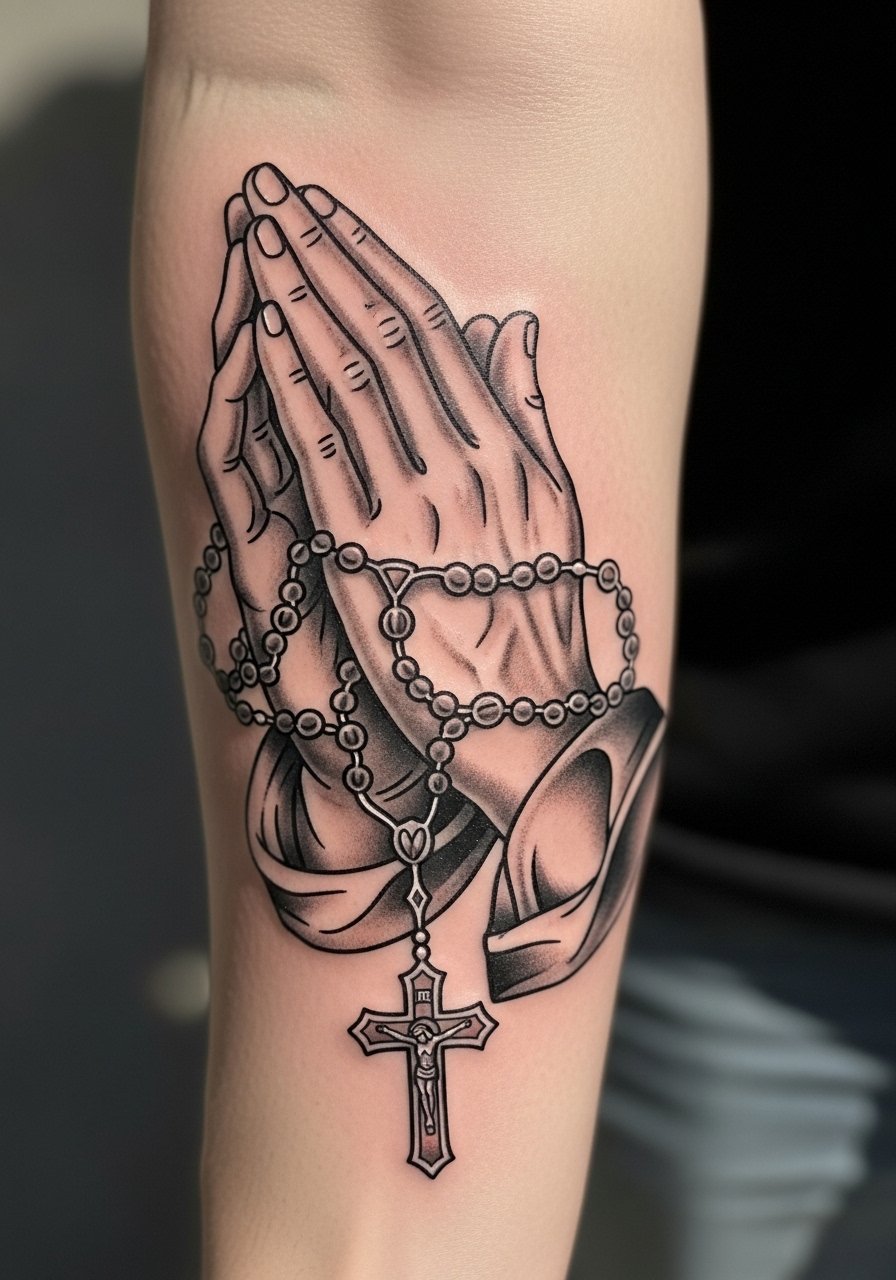
I recommend this when you want the rosary detail to read from across a room. Tell your artist you want heavier contour linework around the beads and thinner internal shading so the rosary color highlights do not wash out. Fair warning: forearms flex and expand with weight changes, so space the beads and avoid tiny script within the loop. Expect one to two sessions and a touch-up at 6 to 12 months for the bead color. For showing it off, roll sleeves back with a rolled sleeve denim shirt and add a leather cuff bracelet on the opposite arm.
2. Minimalist Outline on the Wrist
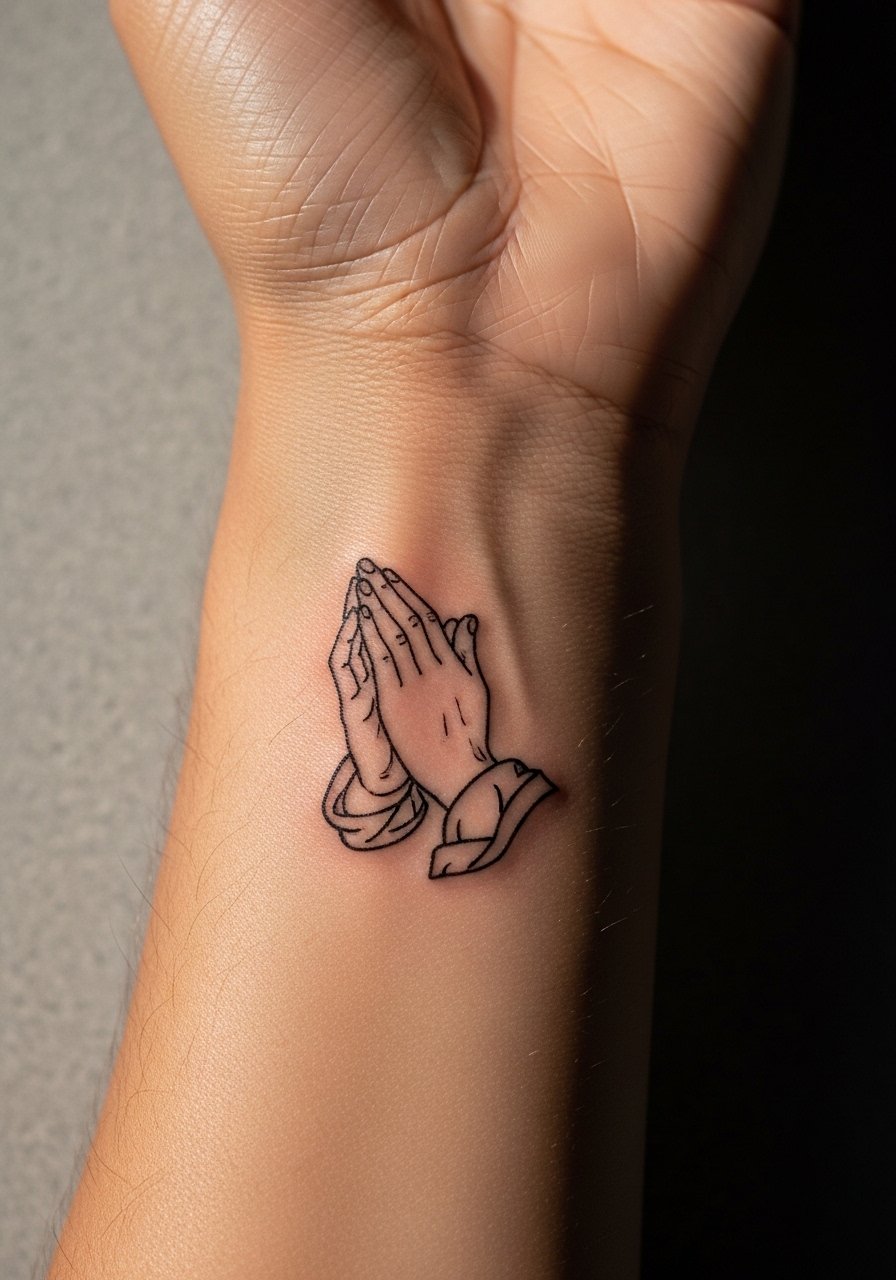
This is perfect for first-timers who want a discrete spiritual mark. Be explicit in consultation that you want a slightly heavier single-needle outline and shallow shading so the piece does not fade into a smudge with frequent hand washing. The wrist sees friction from watches and bracelets, so schedule a 6‑week check for possible touch-up. Pain is moderate because the bone sits close to the skin. Pair the healed piece with stacked bangles and linen tops for contrast, try a thin silver bangle set when you want the wrist to read delicate without crowding the linework.
3. Micro‑Realism Clasped Hands with Light Rays, Upper Arm
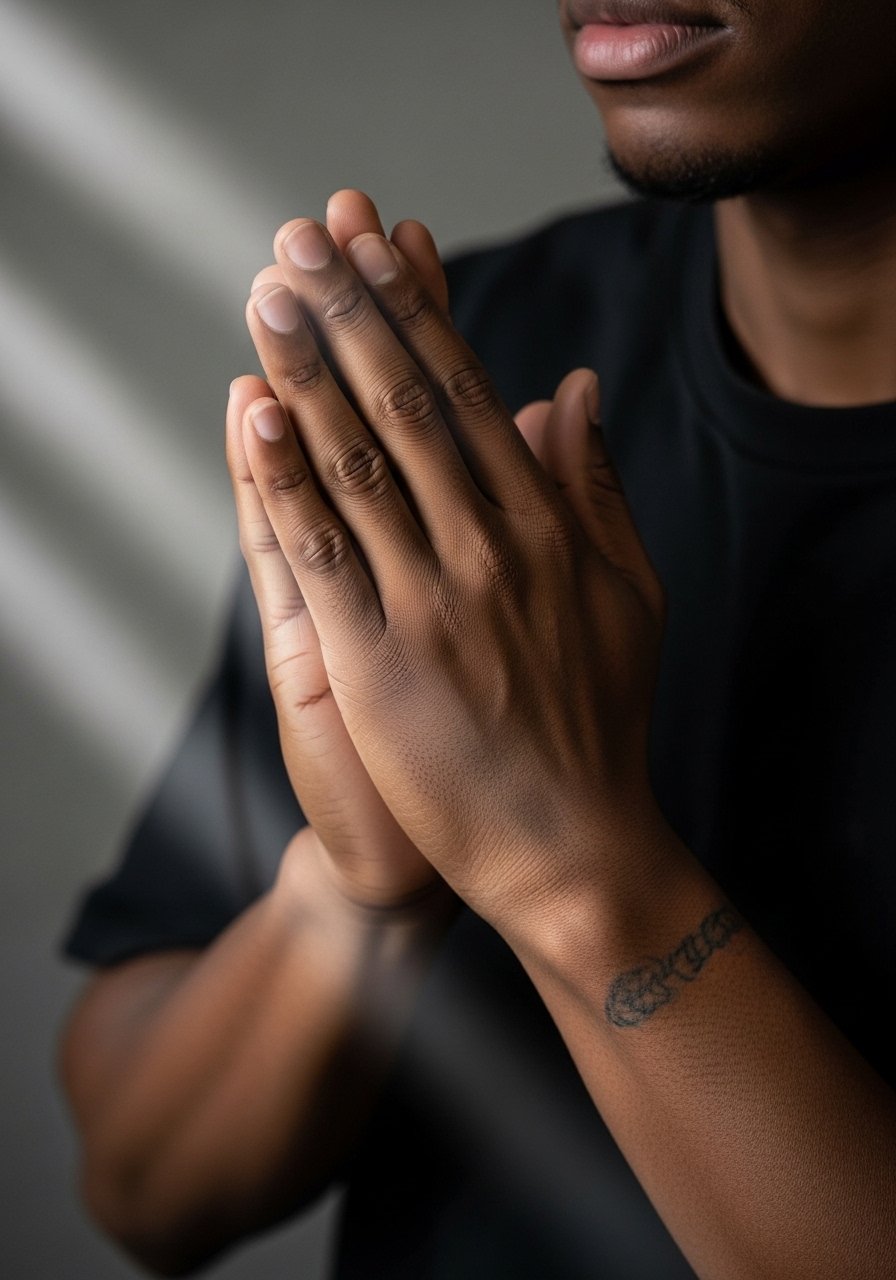
Choose micro-realism when you want the depth of a photograph in ink. Ask for reference photos showing the exact light direction you want and request the artist plan two to four sessions for depth and saturation. The upper arm holds ink well and is forgiving with weight changes, so the realism ages better here than on forearms or hands. Pain is low to moderate and session times can run two to four hours. For casual framing, wear a fitted black tank top so the shading sits against a neutral field and catches attention.
4. Blackwork Hands with Geometric Mandala Overlay, Shoulder
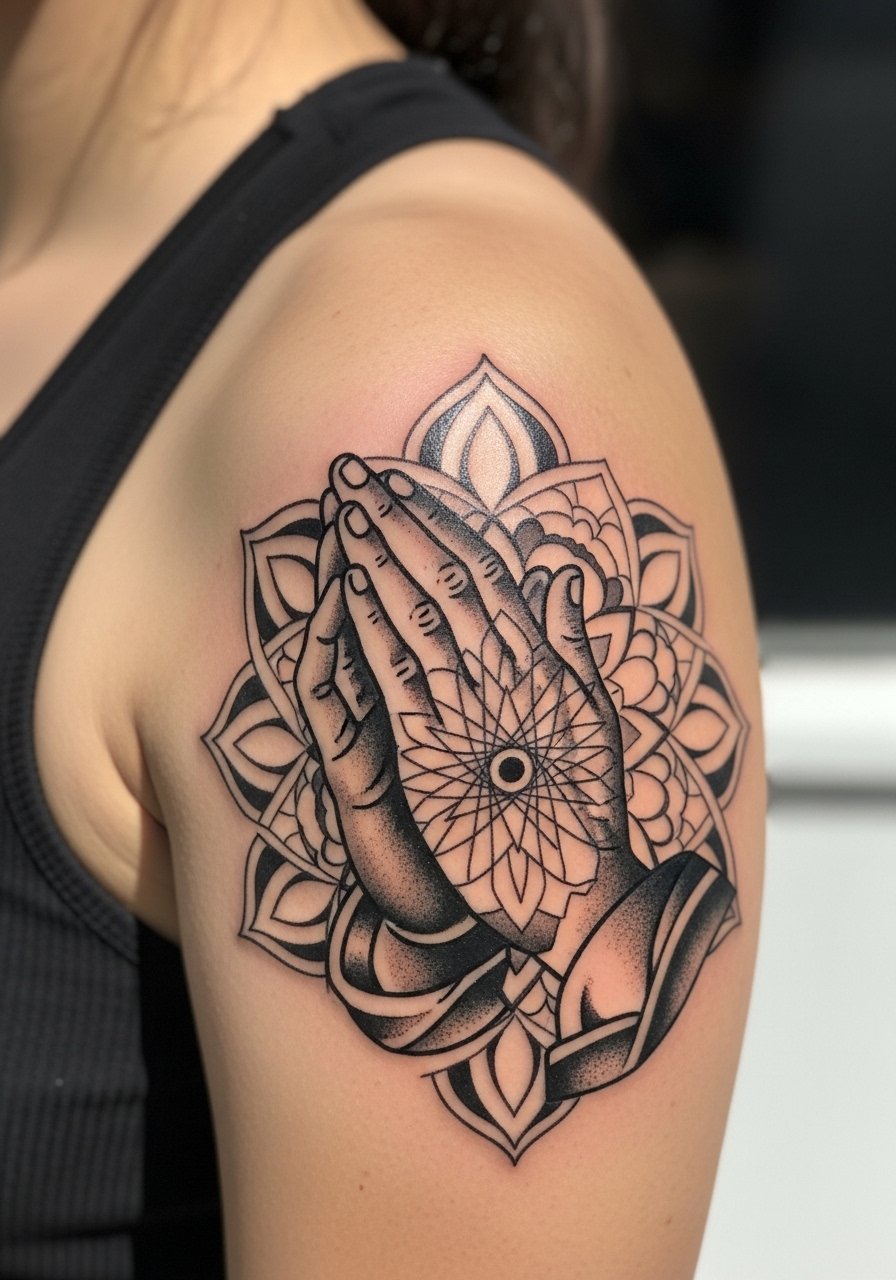
This one thrives on contrast. The solid blackwork in the hands gives a graphic anchor and the mandala adds modern spiritual geometry. Artists split on placement because shoulder curvature changes the mandala perspective, so ask for a stencil preview and a mockup rotated to your natural posture. Expect two sessions for saturation and crisp negative space. Shoulder skin is stable, blowout risk is low, and the piece ages into a strong silhouette. For the session, wear a racerback tank so the artist has full access without exposing unnecessary skin.
5. Watercolor Wash Collarbone Accent
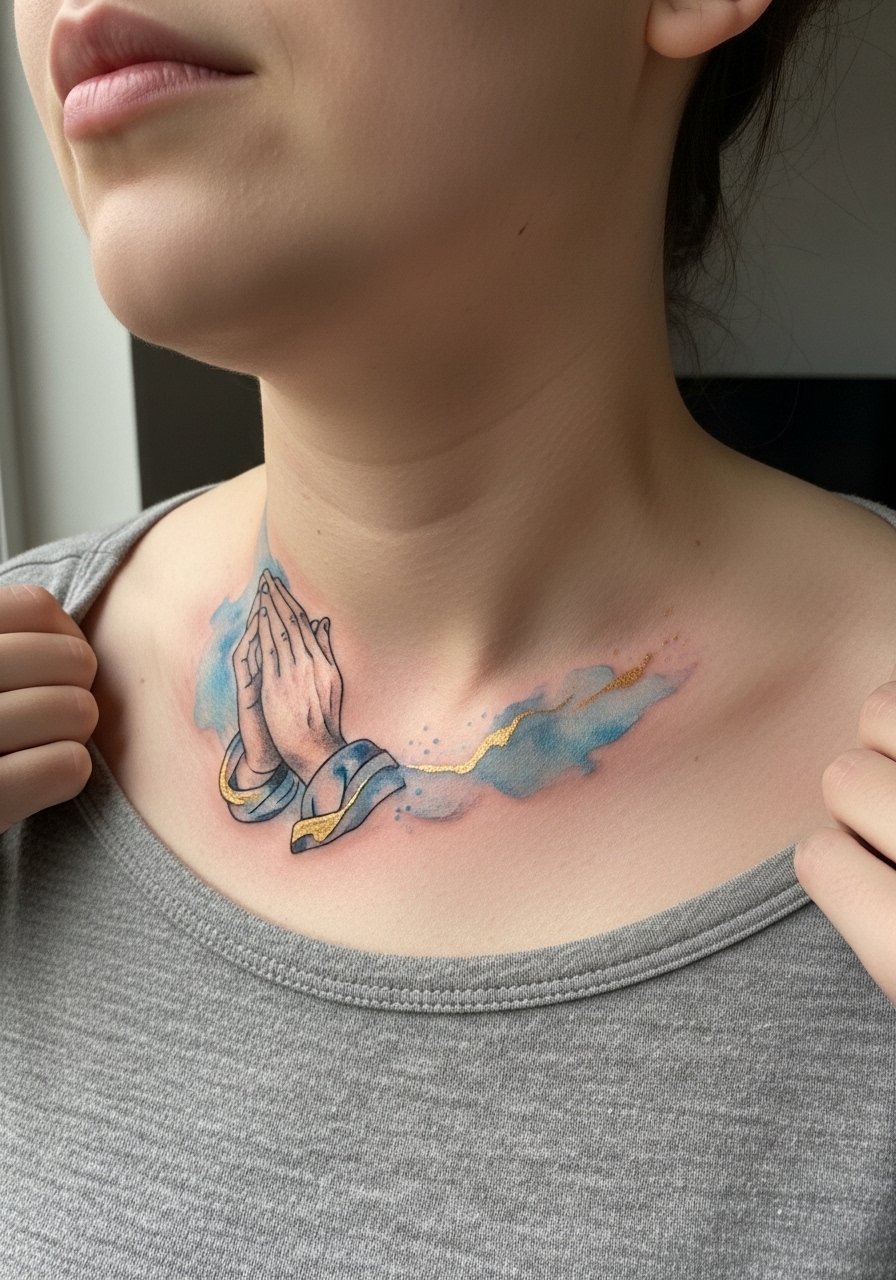
The collarbone spot is great for watercolor because it moves with the clavicle and looks painterly against the bone. Be clear that you want the color as washes over black linework, not saturated block color, so the piece keeps softness as it heals. Collarbone work can sting where bone is thin, but session time is usually one to two hours. Watercolor often fades faster in high-exposure spots, so plan for a color refresh at 18 to 24 months if you want the blue and gold to stay vivid. For evenings or sweaters, the piece pairs beautifully with an off shoulder sweater and a delicate pendant necklace.
6. Traditional Banner and Cross on the Calf
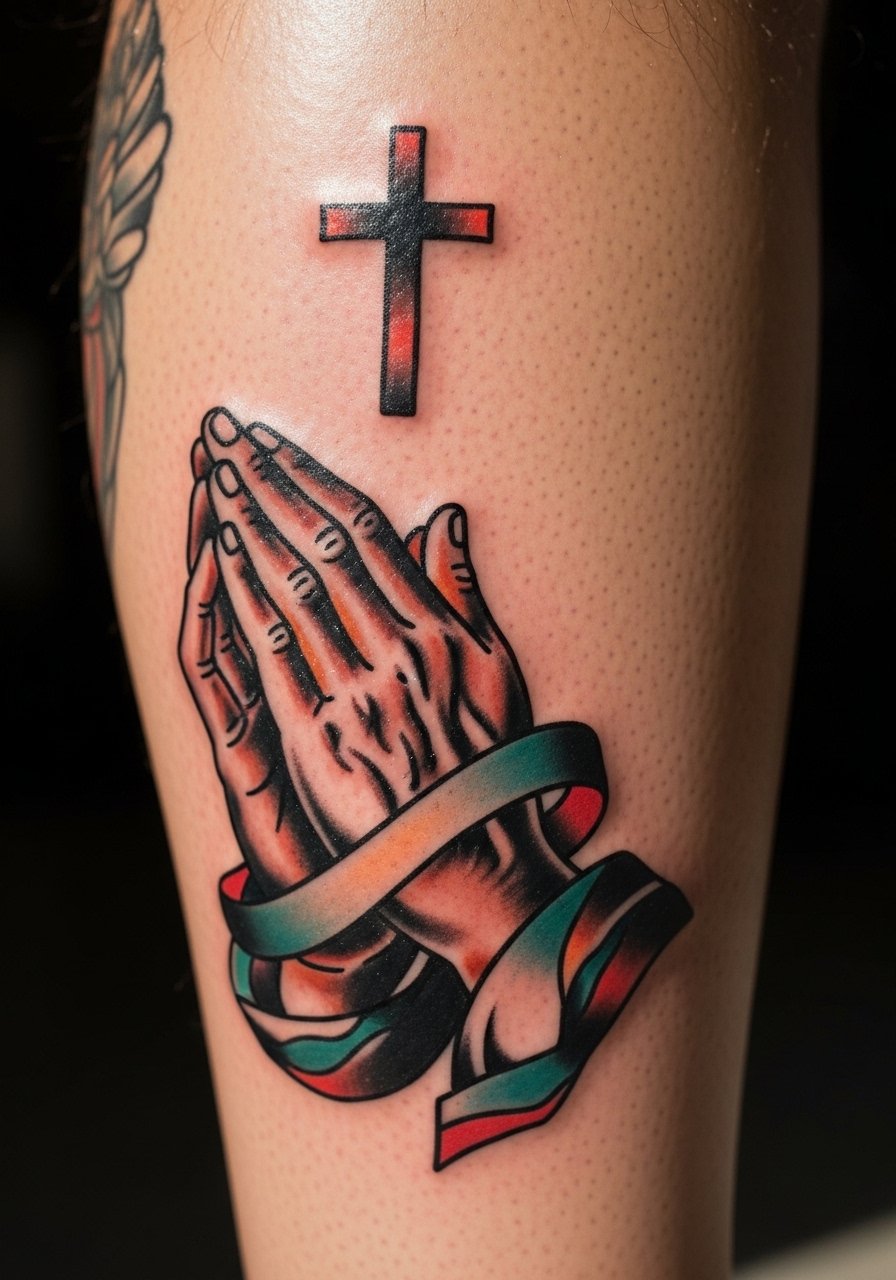
Traditional saturation holds up on the calf because the area is less exposed to sun and friction from daily handwashing. Ask for bold outlines and saturated fills so the banner text remains legible after years. Session time is typically a single long sitting. Calf tattoos photograph well in summer and age into a solid graphic. If you like showing it casually, roll slim joggers and wear boat shoes for an easy summer look. For the appointment, pick loose shorts so the artist can position your leg without pressure.
Studio Day Picks
The forearm, wrist, and collarbone pieces above need different prep than larger blackwork, so these small items smooth the session and the first week.
-
Lush Tattoo Balm. A lighter balm many people prefer for staying non-greasy during humid weeks, helpful if you picked a wrist or collarbone piece above.
-
Hada Labo lotion. Thin, fast-absorbing lotion that works well during the dry healing phase for areas like forearms where heavy creams feel occlusive.
-
InkSafe spray. One user reported less peeling than protective films with ankle and calf sessions, so it is handy for lower leg work.
-
After Inked serum. A light daily serum recommended by some patrons for hand and finger areas because it absorbs quickly and does not leave residue on clothing.
-
Aquaphor healing ointment. Thin initial layer for tight linework on wrist pieces keeps the needle channels hydrated without heavy buildup in the first couple of days.
7. Ornamental Henna‑Inspired Thigh Piece
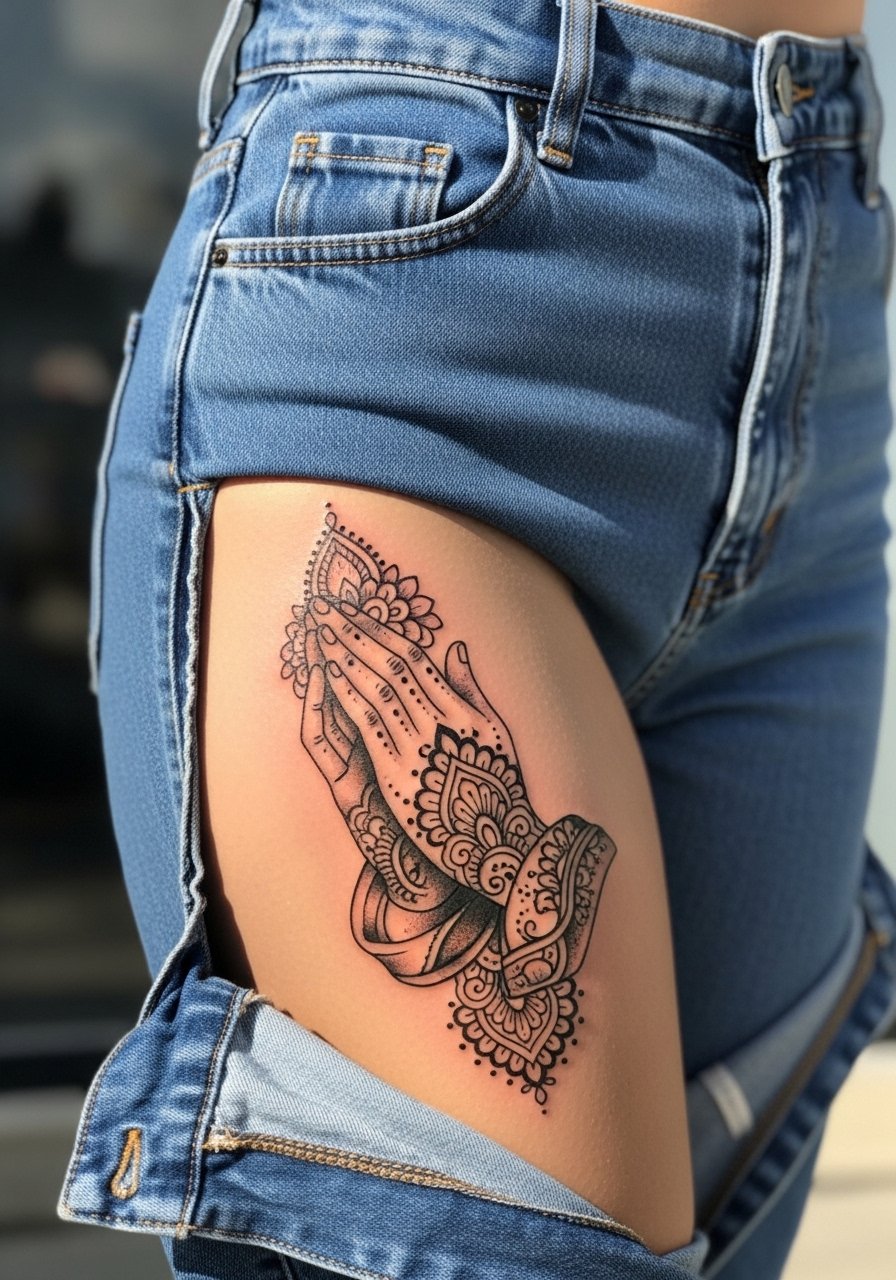
This ornamental take uses fine repeat motifs to create a lace-like frame. Ask the artist to scale the filigree so the negative space breathes, and avoid tiny micro-detail that will blur over time on moving skin. The thigh is forgiving with weight fluctuation, but large pieces usually need two to three sessions for line consistency. Plan touch-ups at 12 to 18 months if you sunbathe often. For showing it off in summer, high-waisted shorts or skirts are a clean match. For the appointment, wear loose athletic shorts that pull down easily so the artist can work without fabric rubbing on fresh ink.
8. Ignorant‑Style Hand‑Drawn Praying Hands, Inner Bicep
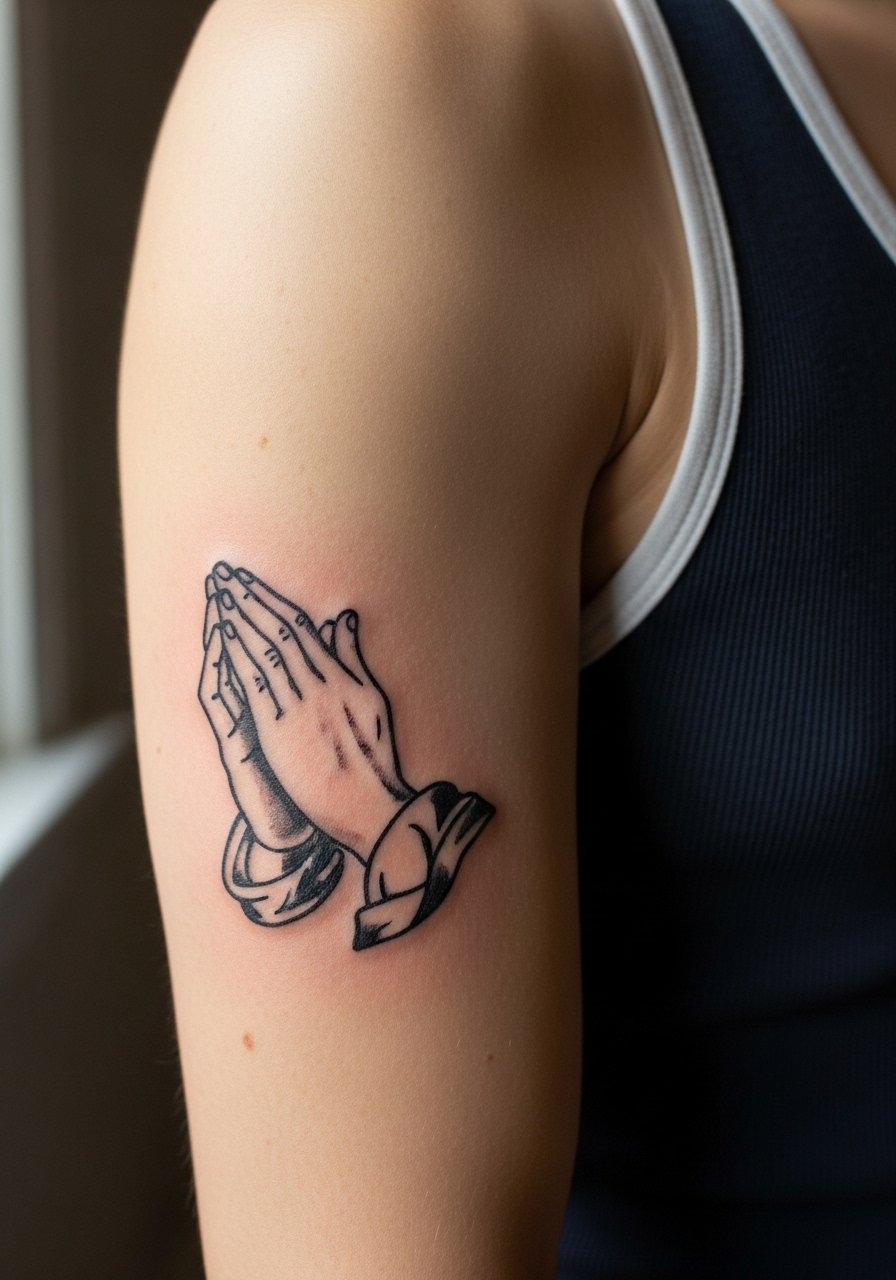
The ignorant aesthetic embraces imperfect strokes and a raw feel. The inner bicep can hold this style nicely but the skin there is softer and more prone to blowout if the artist goes too deep. In consultation, say you want visible texture and sketchy edges and ask the artist to show healed examples on similar skin. Pain on the inner bicep is moderate to high for some people. Note that inner biceps are a more private placement and some artists treat them as specialized work, so confirm stigma or experience during booking.
9. Neo‑Traditional Floral Crown on the Shoulder Blade

A shoulder blade back piece lets you marry portraiture with bold neo-trad blooms. Request spacing that allows the florals to breathe and ask for layered references showing both the hands and crown at different distances. Sessions run multiple hours and usually require two or three visits for saturation and consistent color fades. Shoulder blade pieces weather well and photograph elegantly with open-back clothing. For show-off outfits, pair the healed piece with halter tops or racerback tanks in solid black so the silhouette reads cleanly.
10. Dotwork Sacred Geometry at the Ankle
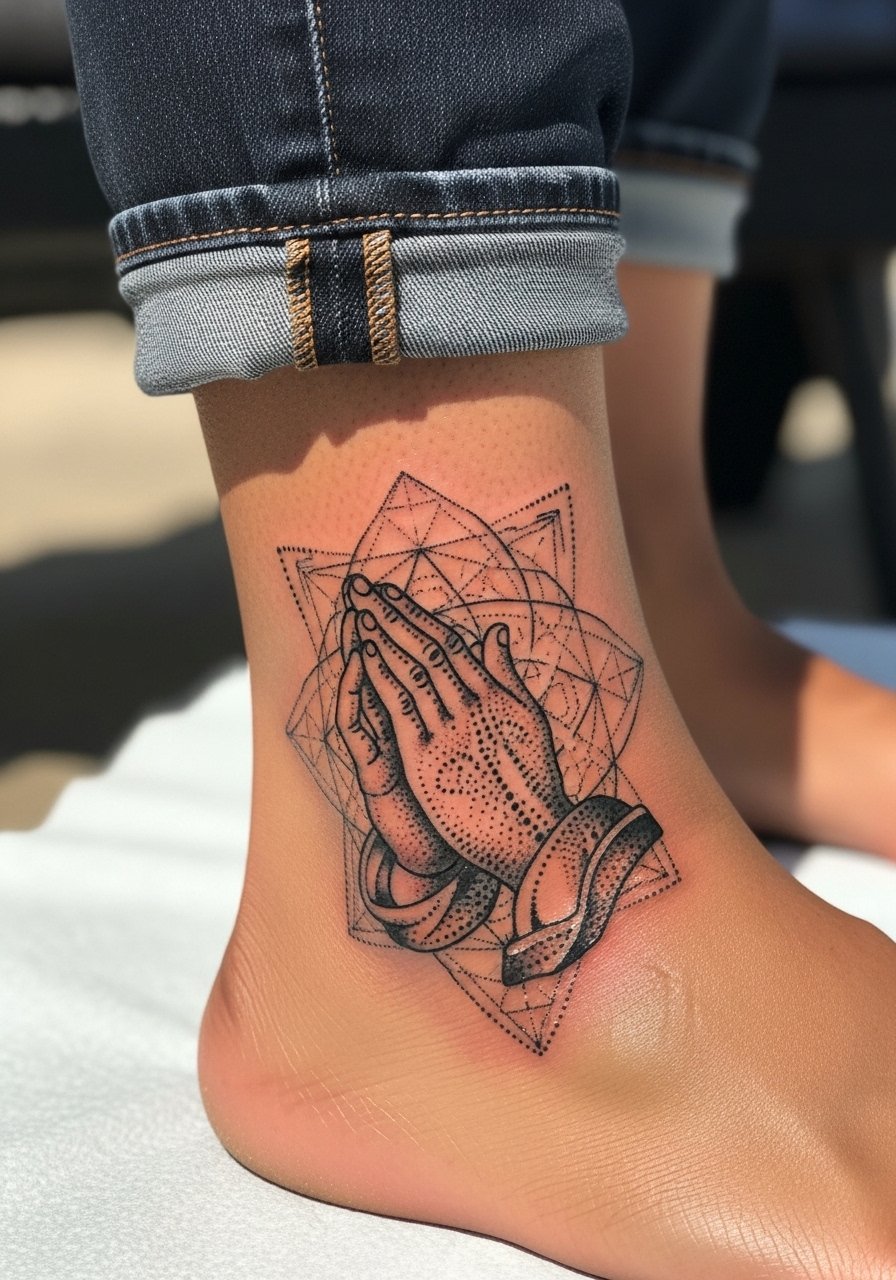
Dotwork is about patience and spacing. For ankle placements, ask for fewer, larger dots in dense areas so the pattern does not merge after a year of movement and shoe friction. The ankle is a high-friction zone when wearing socks and shoes, so plan for touch-ups at 12 to 18 months. Sessions are usually two short passes rather than a single long one. The healed look reads very meditative and holds contrast well on many skin tones.
11. Fine Line Dove Integration on the Finger
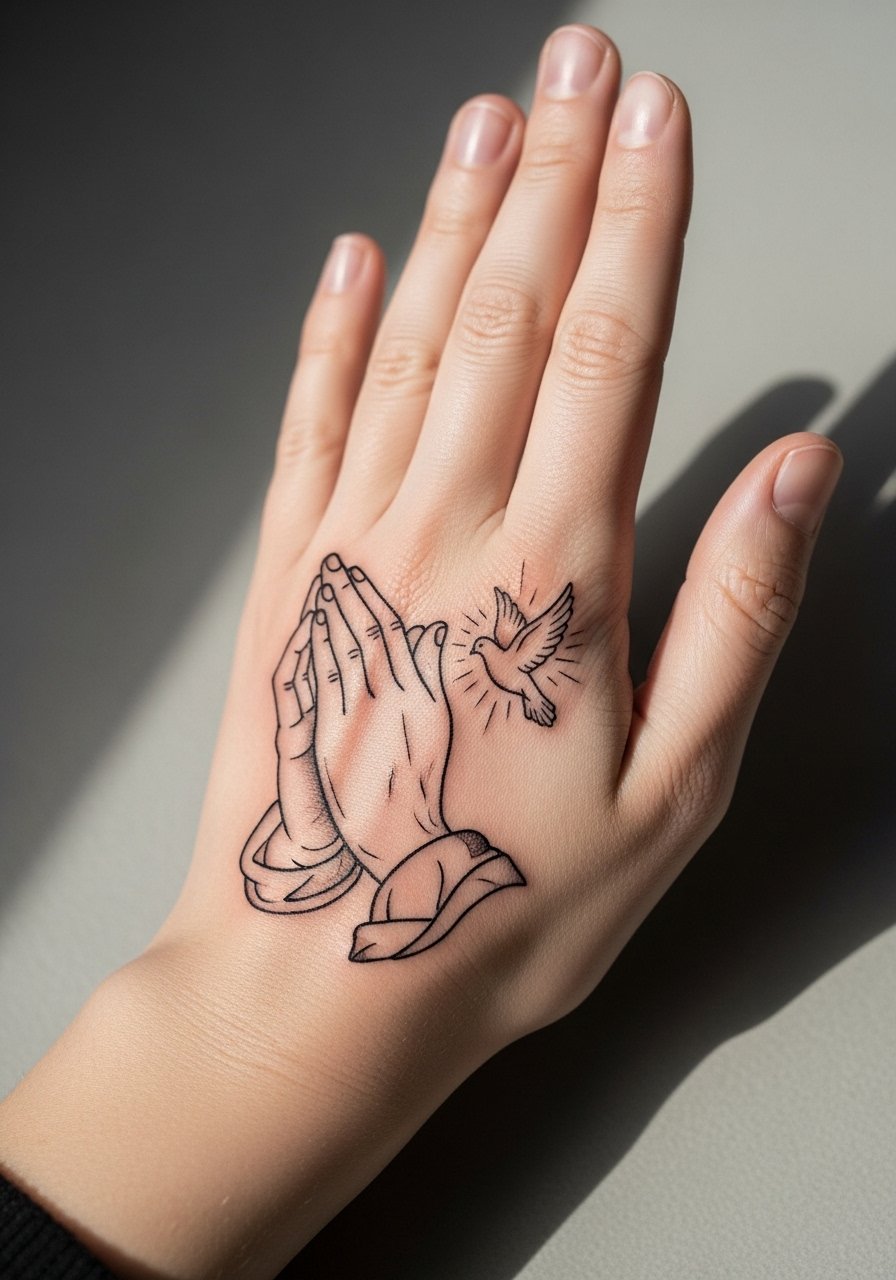
Finger tattoos heal differently from other spots because of constant washing and friction. If you want a dove integrated into a tiny praying hands motif, tell the artist you prefer bolder contour at the outer edges and simplified interior detail. Fine line on fingers often needs an annual touch-up, especially on the knuckle area. Pain is sharp but brief. Many recommend treating finger pieces as low-commitment experiments rather than grand gestures because the skin there renews rapidly.
12. Black and Gray Realism Emerging from Clouds, Chest
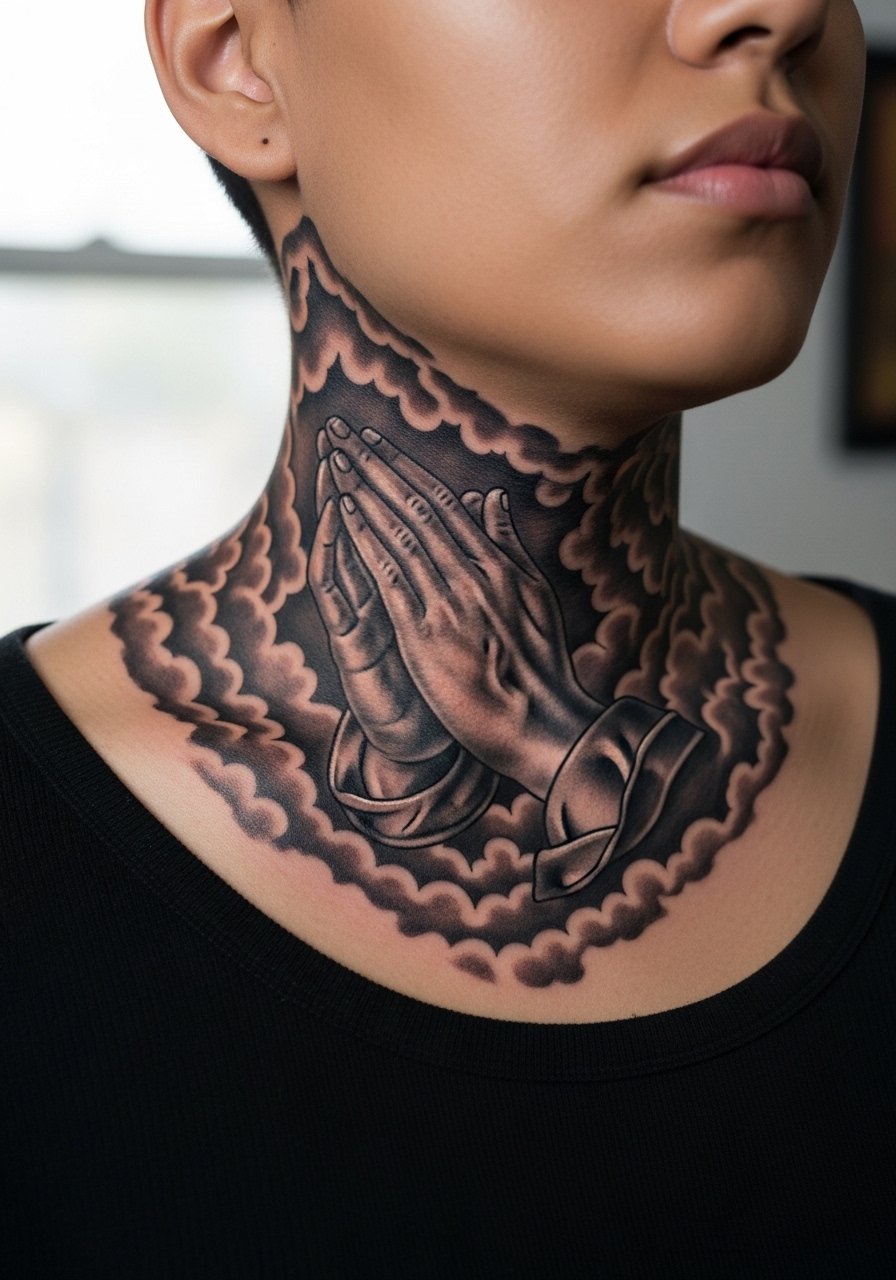
Chest realism gives the composition room to breathe and dramatic light can be rendered with smooth gradients. Tell your artist the cloud edges should retain negative space so the hands read clearly against the skin. Expect multiple long sessions and significant aftercare attention because the chest moves with breathing. For placement considerations, a wide-neck shirt or sports bra works for the session so the artist does not have to work on fully exposed skin.
13. Fingertip Inverted Hands Illusion
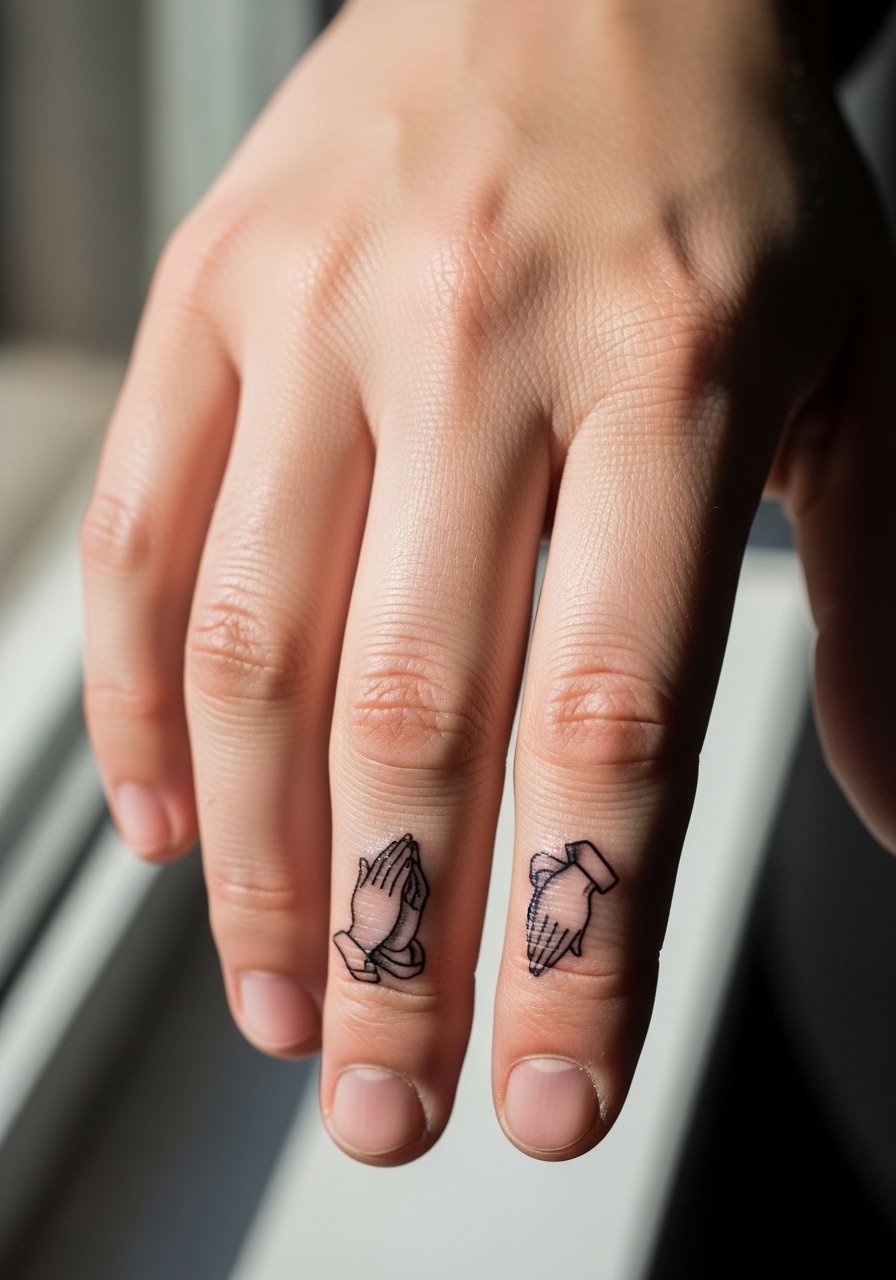
This optical trick uses placement so the hands invert visually when you clasp them. It is technically precise work and not every artist will take it. Ask for a scaled mockup on the actual fingertip to check proportions. Fingertip skin sheds quickly and the design may require a 6‑week touch-up or a redo if lines do not settle. Pain is high due to thin skin. Consider this one a bold micro experiment rather than a lifetime fixture.
14. Hidden Palm‑Underside Reveal
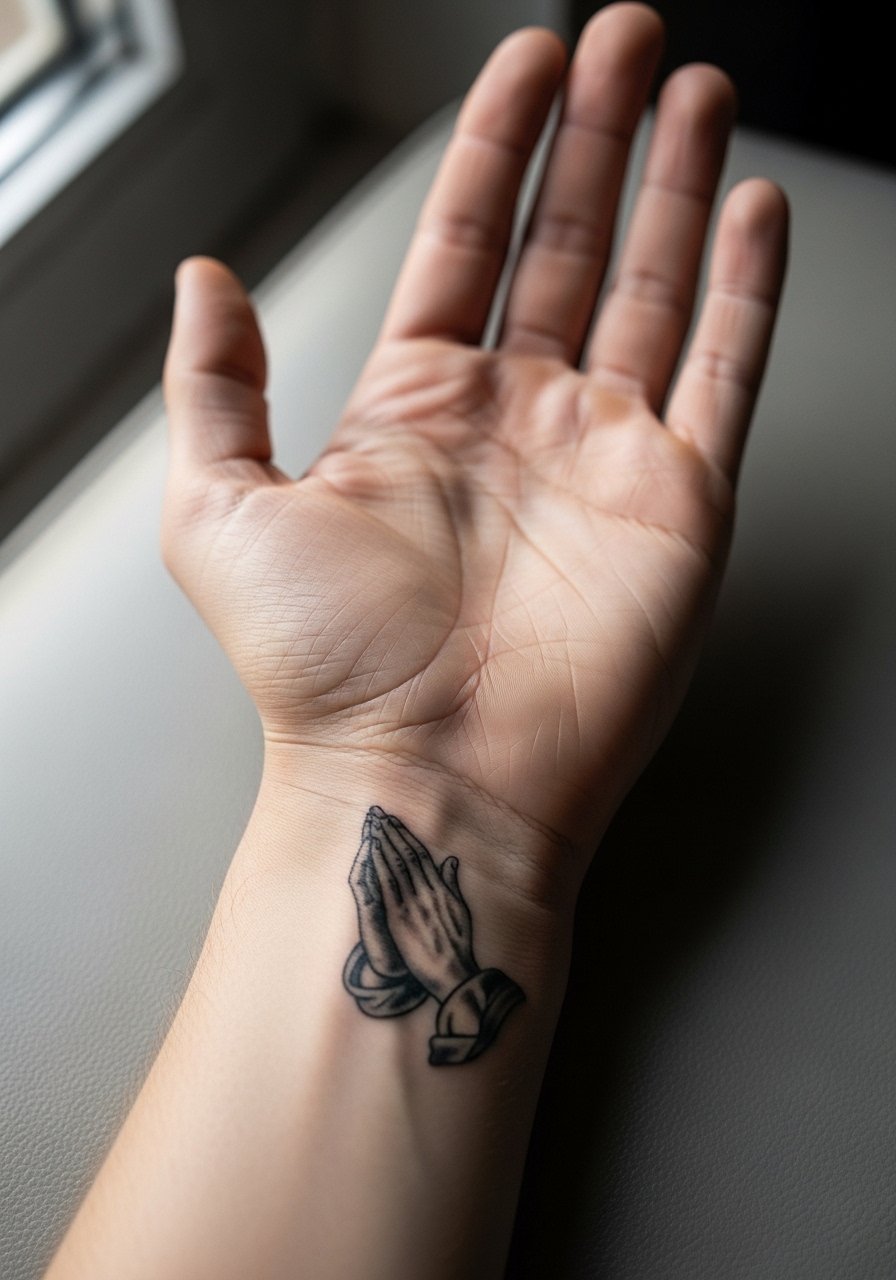
Palm underside work is intimate and short-lived compared with other placements. The palm regenerates fast and many palm tattoos fade into partial scars after months. If you want a hidden prayer that reveals only when you open your hand, plan for frequent touch-ups and a realistic expectation about longevity. Only specialized artists comfortable with palm tissue should take this on, so ask about healed palm photos before booking.
15. Subtle EKG Line Pairing on the Forearm
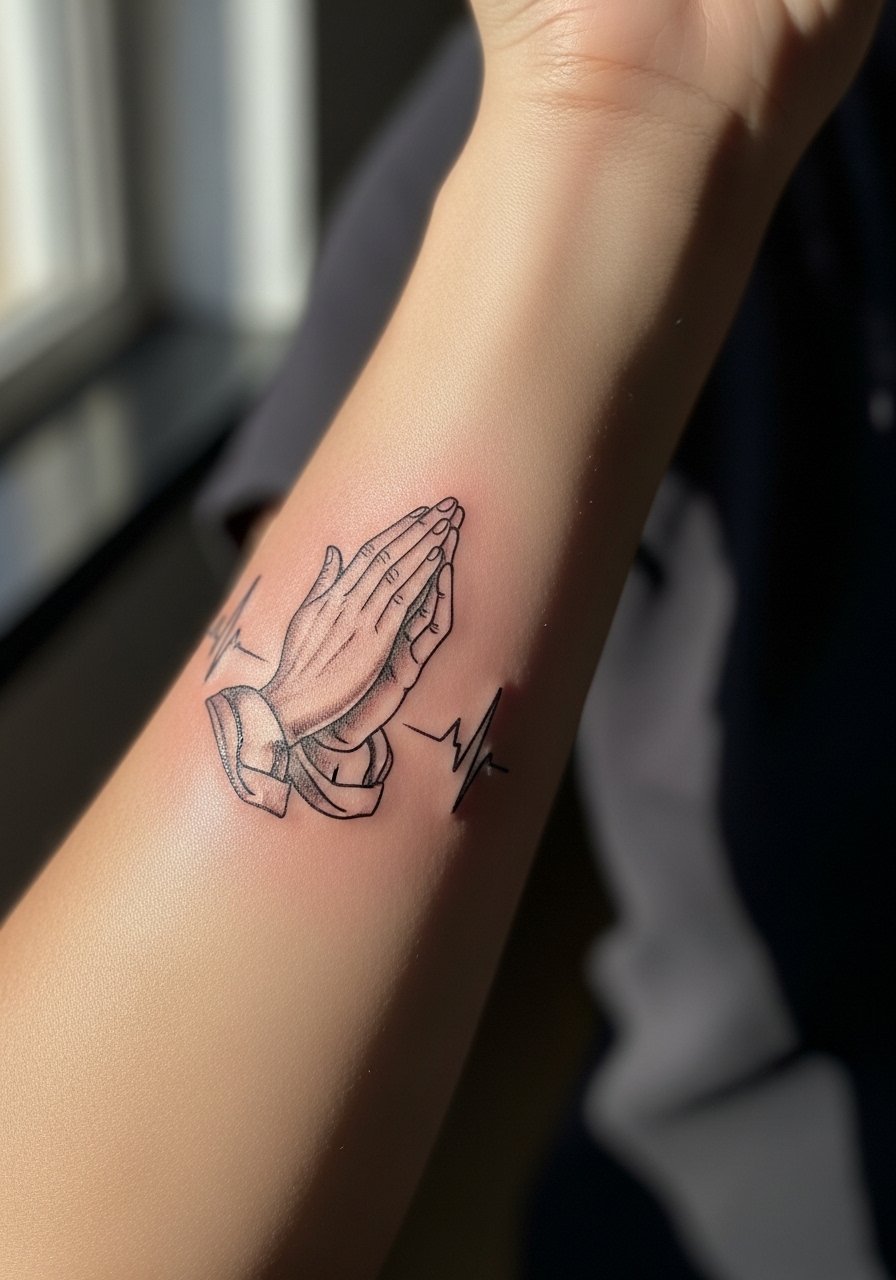
Pairing a tiny EKG heartbeat with praying hands is a concise memorial or survivor motif that reads well on the forearm. Ask for spacing that keeps the EKG minimal so it does not compete with the hand silhouette. Forearm placement is forgiving but exposed, so sun protection matters. Session time is short, often a single appointment under two hours, and touch-ups at one year are common for fine details. For casual wear, rolled sleeves or neutral tees frame the piece, try pairing it with a rolled sleeve denim shirt when you want a subtle reveal.
16. Knuckle and Hand Aging Simulation Note
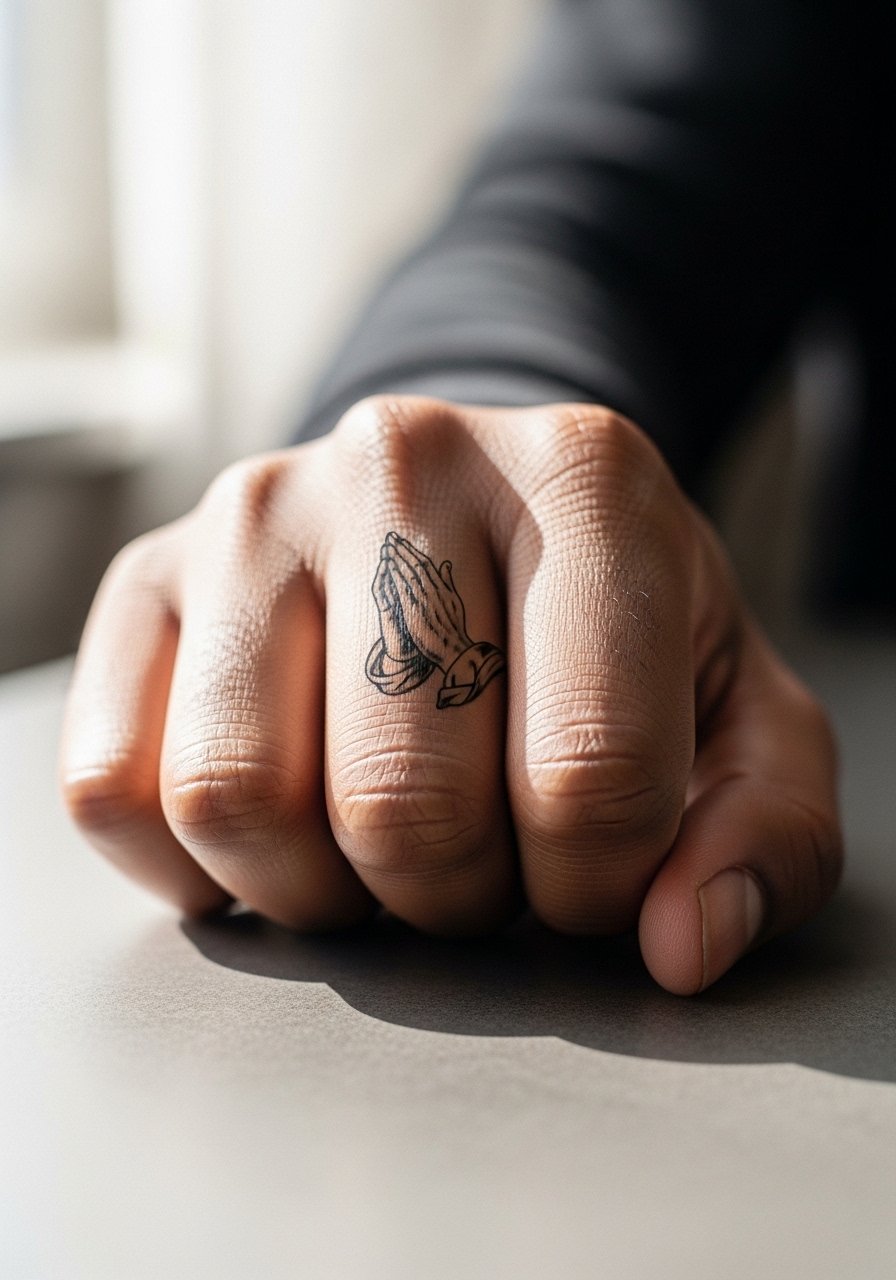
Knuckle and hand placements are honest about the maintenance they demand. Frequent washing and sun exposure accelerate fade and can blur dense shading into muted patches. If you pick knuckles, prioritize bold, simple shapes and accept touch-ups as part of the plan. Also consider career implications because hand visibility remains an issue in some workplaces. Ask the artist about healed knuckle examples on hands similar to yours.
17. Dotwork or Micro‑Realism for Darker Skin, Upper Arm
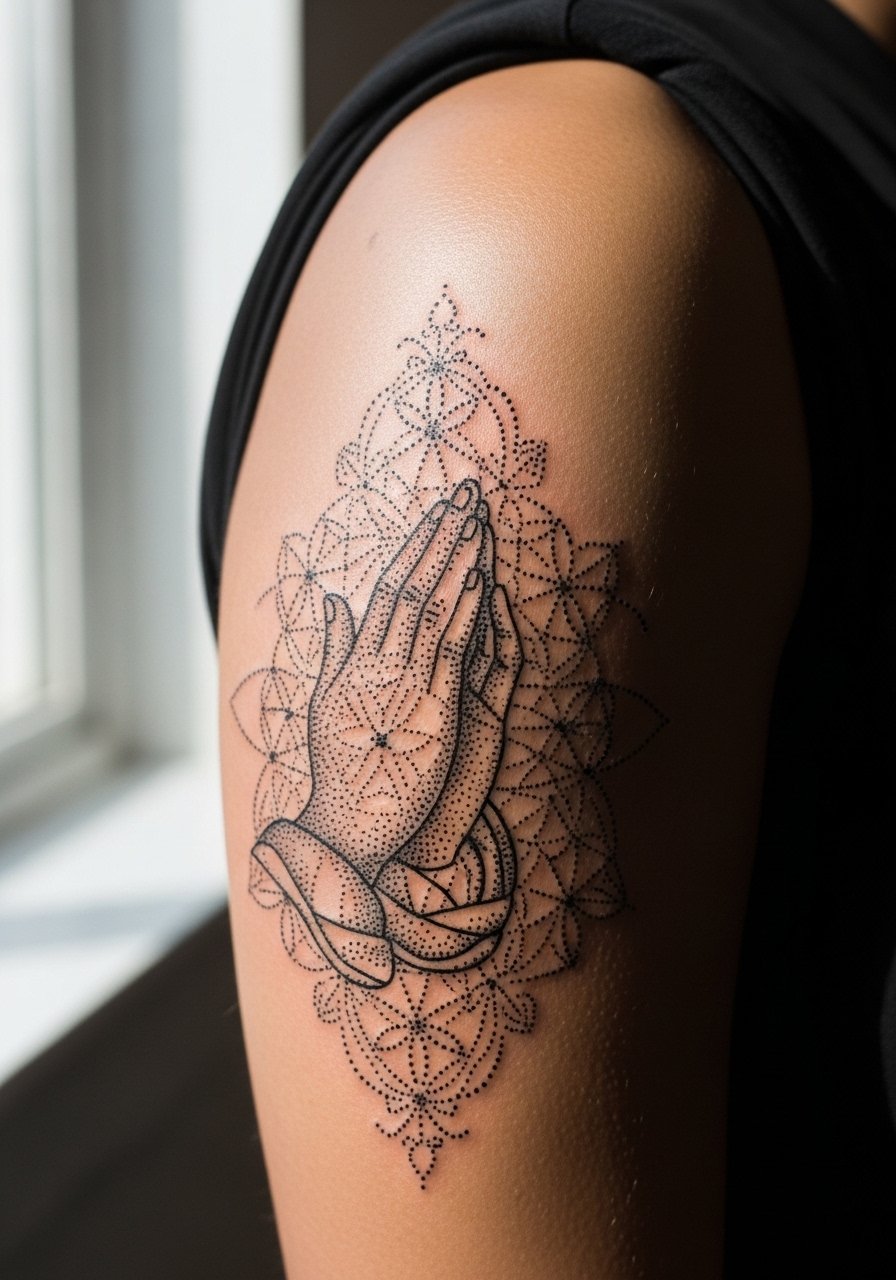
On darker skin tones, contrast is key. I have seen bold blackwork and high-contrast dotwork pop the best. For micro-realism, ask the artist for increased saturation and slightly heavier contour so highlights read against deeper tones. Upper arms tend to hold detail well and are less likely to show early blowout. Expect two sessions for dense dotwork and a 12 to 18 month check for touch-up if you spend time in the sun. For framing, a fitted tank or simple black tee highlights the piece nicely, so consider a fitted black tank top when you want it visible.
Frequently Asked Questions
Q: Will a fine line wrist praying hands tattoo blur faster if I use hand sanitizer a lot?
A: Yes, frequent sanitizer and hand washing accelerate abrasion on the wrist which causes thin lines to soften. Consider asking for slightly heavier contour lines and budget for a touch-up at six to twelve months. Wearing light sunscreen after full healing helps once the skin is no longer breaking.
Q: Which healing method should I pick, Saniderm or dry healing, for a forearm rosary piece?
A: Artists split into two camps. One likes Saniderm because it keeps the area clean and speeds the early healing window. The other prefers dry healing to avoid maceration and too much peeling. The practical move is to ask your booked artist which method they use regularly and follow their step-by-step instructions for that process.
Q: How do I find a reliable artist for a detailed micro‑realism chest piece without getting ghosted before the appointment?
A: Use platforms that show confirmed bookings and cancellation policies and check guest spot calendars. Search local Reels or Tattoodo filters for "micro-realism" plus your city and message artists two weeks before to confirm. A clear deposit policy and a short message thread about your reference images usually reduces no-shows.
Q: Do watercolor collarbone tattoos need different session wear than upper arm realism?
A: Yes. For collarbone work wear a strapless top or a wide-neck shirt you can pull aside so the artist avoids rubbing fabric on the fresh area. For upper arm realism a fitted tank gives full access while keeping the rest of your torso covered.
Q: How should I plan touch-ups for praying hands on high-friction spots like fingers or palms?
A: Expect more frequent touch-ups there. Plan for an initial 6‑week check and a likely refresh at 6 to 12 months. Treat fingertip and palm work as higher maintenance and reserve them for small, meaningful motifs rather than dense realism.
Q: What should I ask an artist about contrast when I have darker skin and want a praying hands design?
A: Ask them to show healed photos on similar skin tones and discuss using bolder contour lines or heavier saturation rather than tiny interior detail. Also request a small temporary ink test or henna to preview contrast if you are unsure how the design will photograph.
