
Fine line owl trends have exploded online and the pieces people gush over at first heal differently than you might expect. The tattoos that age best are often the ones that start with thoughtful placement and intentional line spacing, not the ones that photograph prettiest on day one. Read these concepts with placement and wardrobe in mind and you will pick a design that still looks deliberate after a few years.
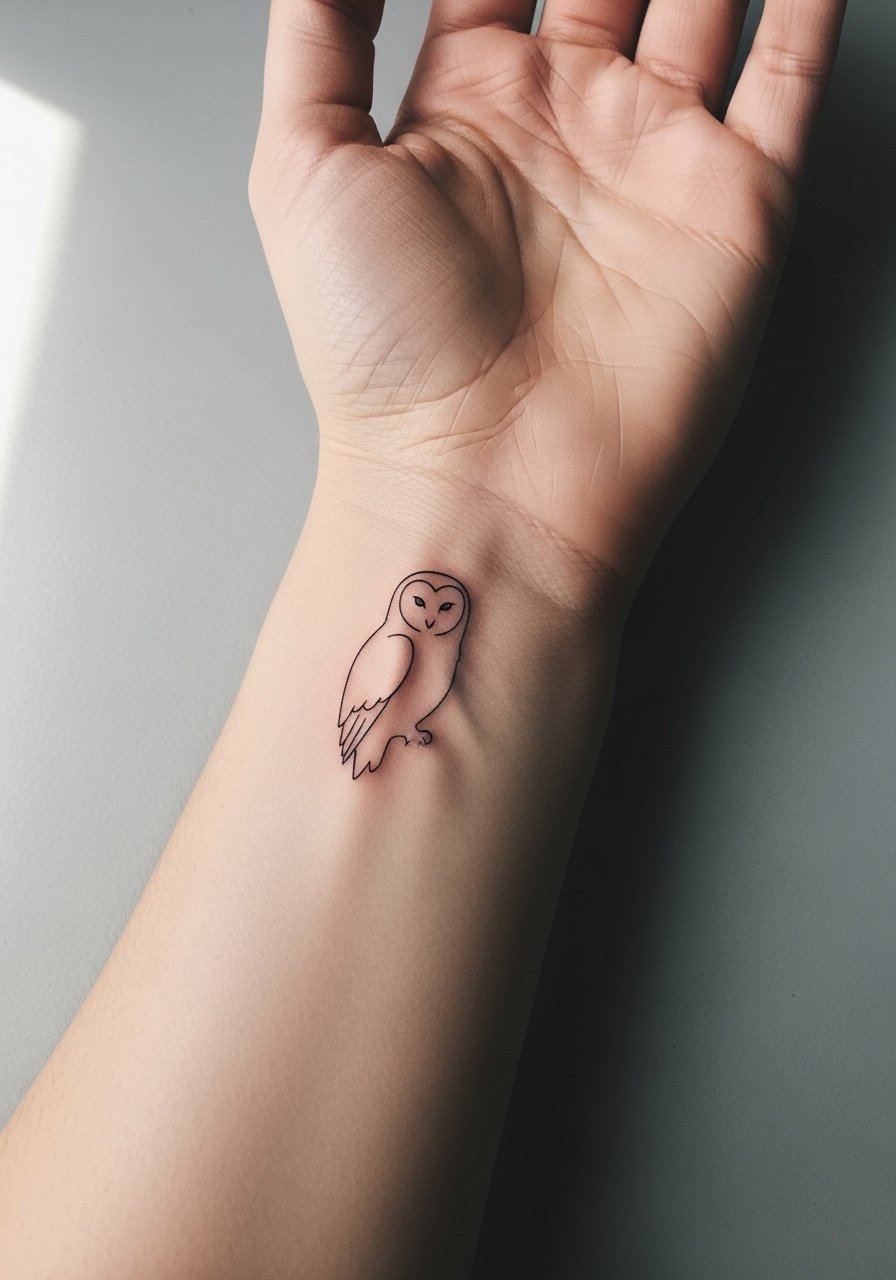
1. Fine Line Minimalist Owl Silhouette on the Wrist
I've seen tiny wrist silhouettes that looked crisp for six months and then blurred into a gray smudge. For a fine line wrist owl ask your artist for slightly heavier single-needle thickness and two millimeters more spacing between the eyes and beak so the lines have room to settle. Expect a short session and low to moderate pain with lots of movement during healing. Blowout risk is real on the wrist if the needle goes too deep. Plan a touch-up within 12 to 18 months rather than assuming it will stay perfect. Pair this with delicate jewelry to highlight rather than compete with the ink, like a thin silver chain bracelet worn on the opposite wrist and a chiffon blouse women you can roll at the cuffs for easy showing during summer.
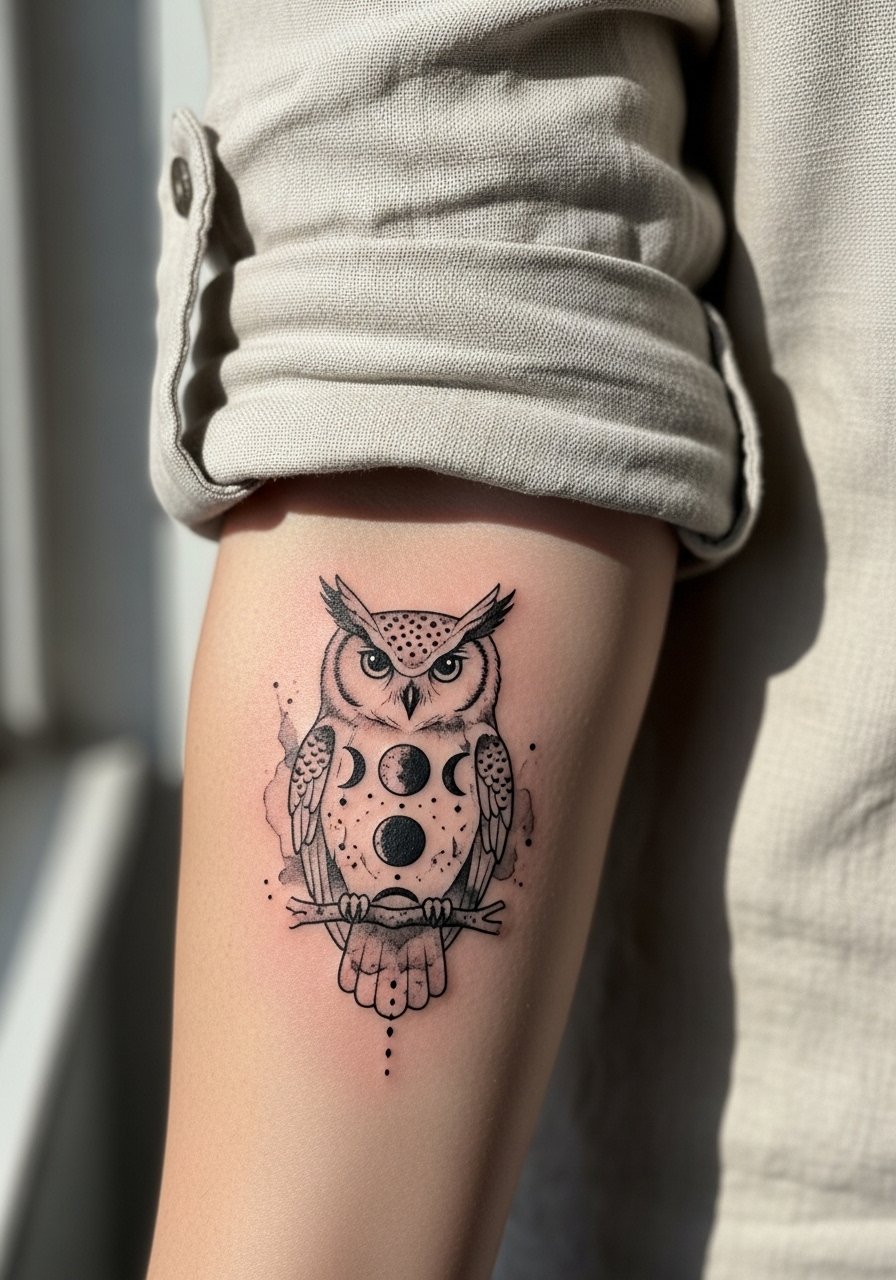
2. Watercolor Owl with Moon Phases on the Inner Forearm
Most watercolor pieces look dreamy fresh and then fade unevenly without strong black accents. For inner-forearm moon owls request saturated anchors at structural points like wing joints so the watercolor fills have something to hold onto while they heal. The inner forearm is forgiving for color retention compared with high-sun areas, but expect two sessions if you want layered blends. During consultation bring palette swatches and say you want the blues and purples to read at six months, not vanish into a bruise. Wear a linen button down women you can roll to the elbow for the session and consider an sage green rolled sleeve shirt for photos after healing.
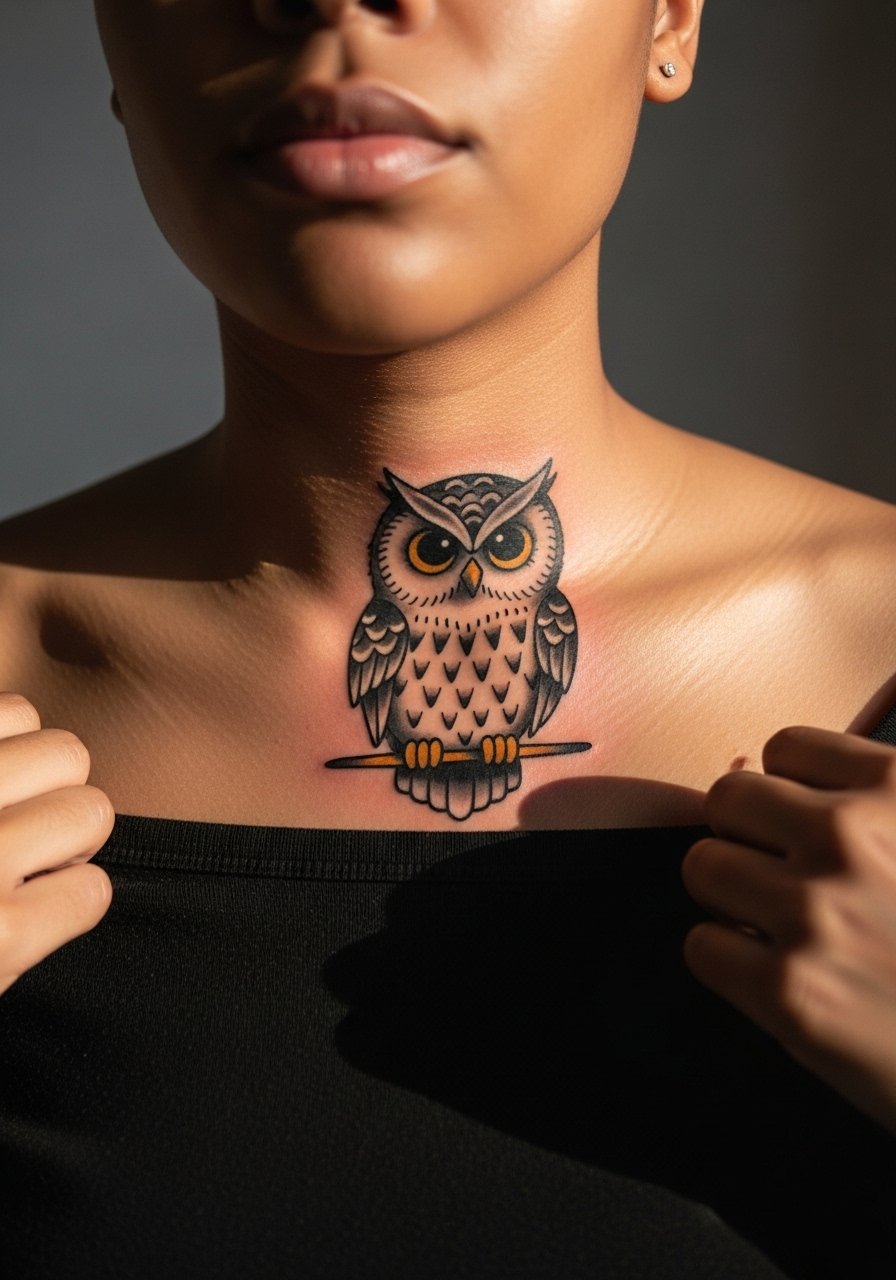
3. Neo-Traditional Cute Owl Perched on the Collarbone
This perch reads like jewelry in summer. Collarbone inks are visible and flattering in off-shoulder silhouettes, but the placement will be touched more by clothing and sunscreen than a forearm piece. Ask the artist for bold outlines around the perch and softer internal shading so the motif keeps its shape even as colors soften. Sessions are short to moderate and pain sits in the low to medium range. If you want a seasonal show-off look, pair with a strapless midi dress or an off shoulder blouse that frames the bird. Sensitive note, collarbone work heals differently when repeatedly rubbed by bra straps, so plan clothing with that in mind.
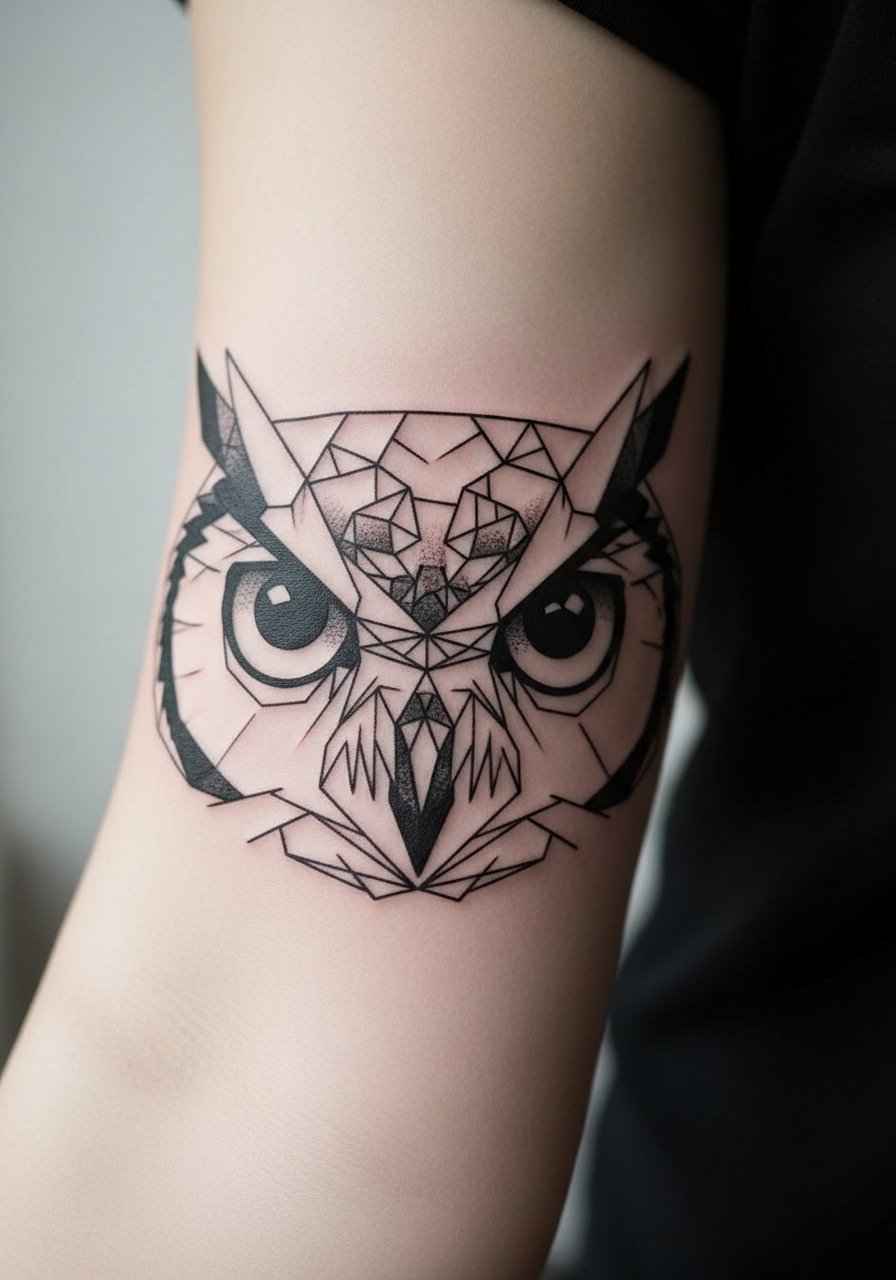
4. Blackwork Geometric Owl Eyes on the Outer Forearm
There is a real visual punch when solid black geometric eyes sit on the outer forearm. The saturation ages well if the artist packs the black evenly and avoids thin, repetitive tiny lines that bleed over time. This placement is low on the pain chart and easy to shield from sun, which helps retention. Darker skin tones can benefit from larger, bolder shapes to preserve negative space in photos. For a casual everyday look frame the piece with a cropped black jacket or a fitted tank top women so the high-contrast eye patterns read from a distance.
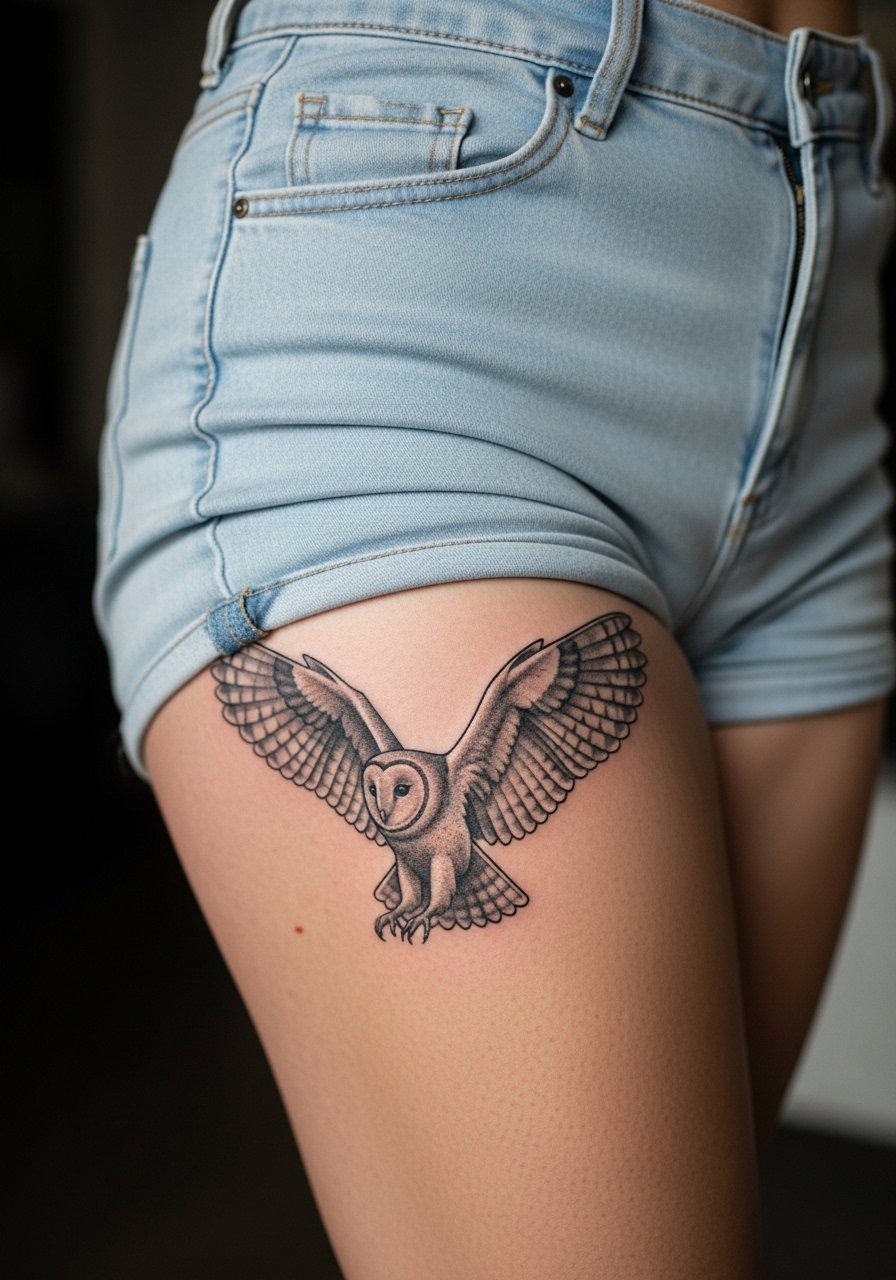
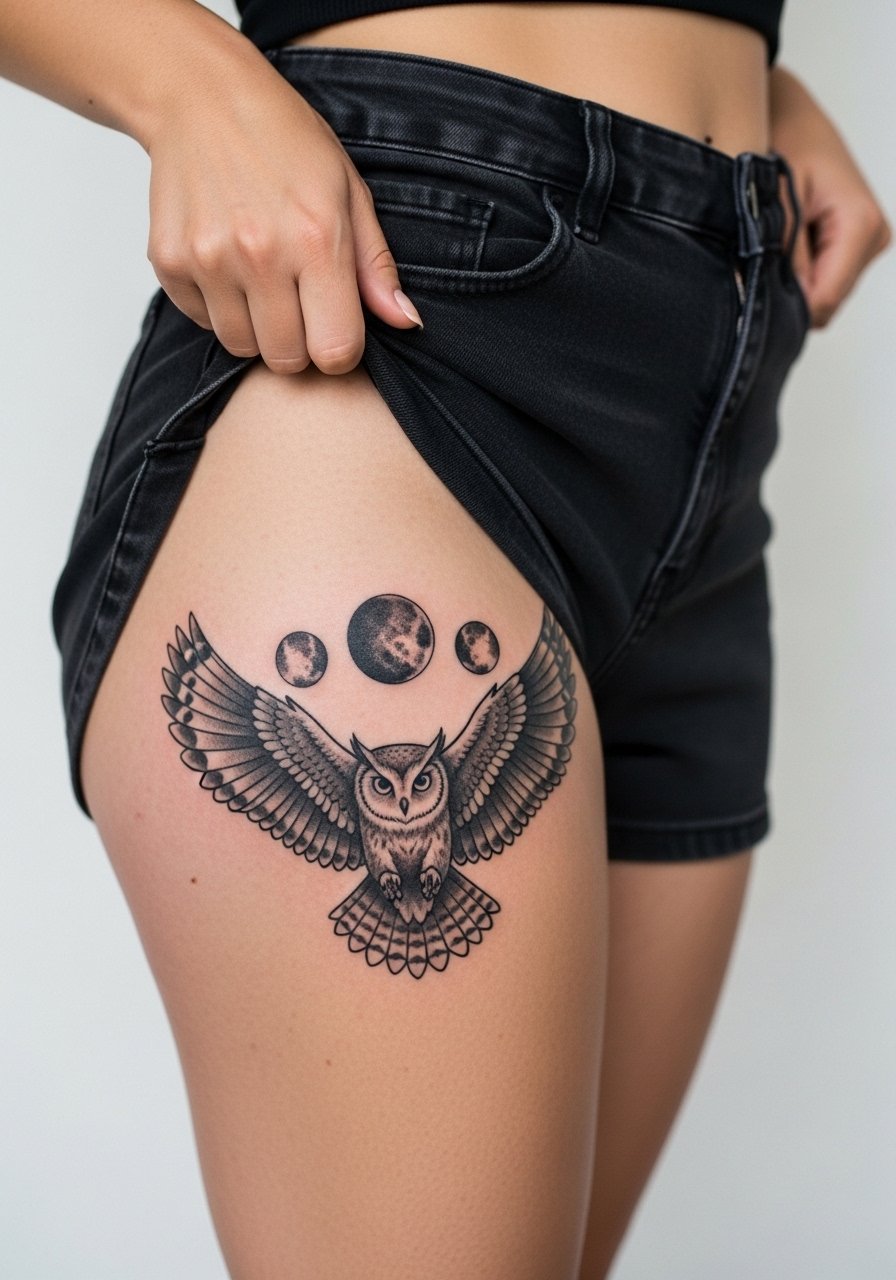
5. Micro-Realism Barn Owl in Flight on the Thigh
The thigh handles detail and movement better than most areas, which is why micro-realism flyers live there. Expect two sessions for feather texture and subtle shading, and plan for padding during the session so you stay comfortable. This placement is forgiving for future body changes compared with the forearm, but large shifts in weight can still alter feather flow. A common mistake is crowding too many tiny feathers in a small space. Tell the artist you want readable texture at three inches and they will scale accordingly. Style this with high waist denim shorts or a side slit maxi skirt for summer reveals.
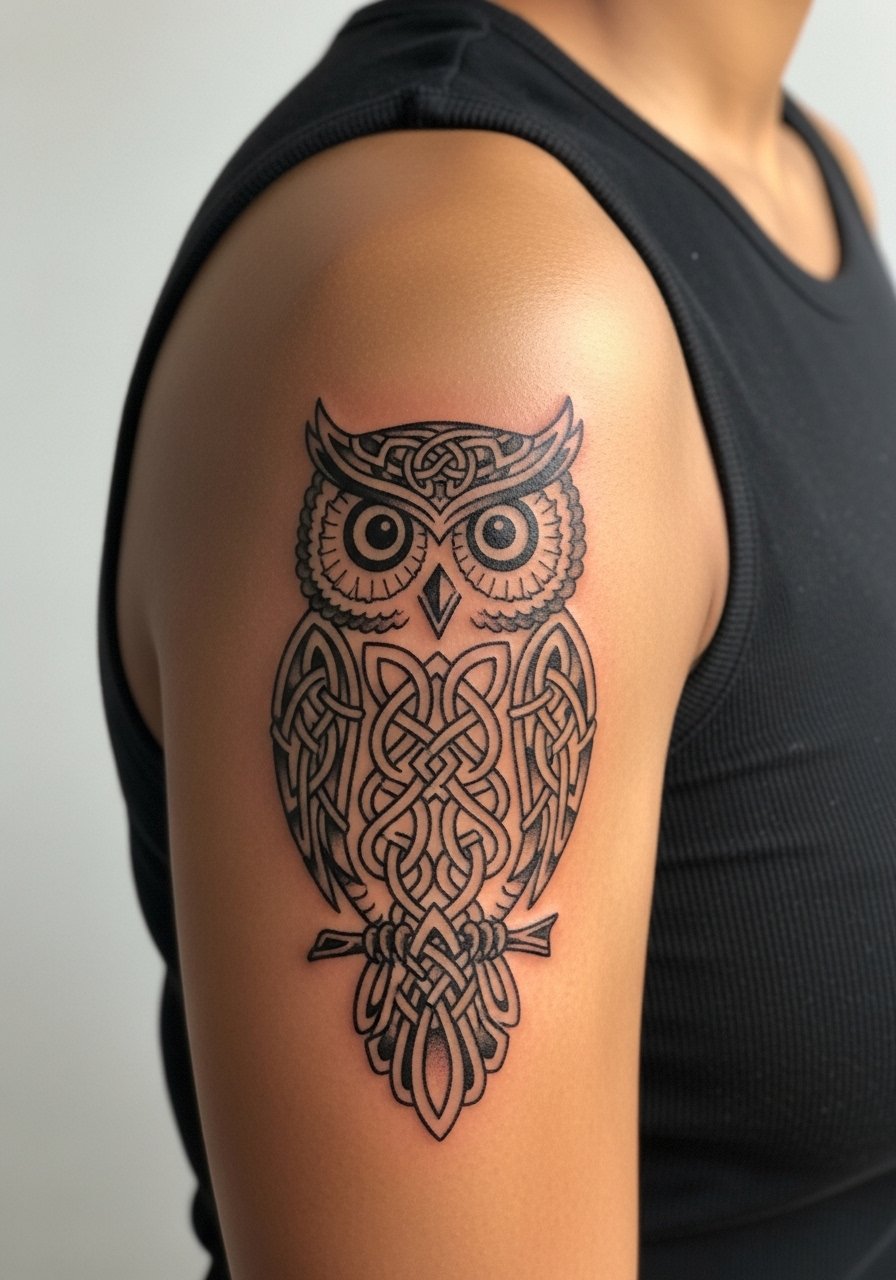
6. Ornamental Celtic Knot Owl on the Upper Arm
When you want pattern work that reads like jewelry on the bicep, ornamental knotwork makes the owl feel like a talisman rather than a literal bird. Upper arm pieces handle dense linework well but require careful spacing to avoid line crowding over time. In consultation request scaled knots that echo the arm's curve and ask for clear negative-space borders so the pattern does not merge after a few years. This design traces Celtic decorative tradition, so many people choose subtle variations rather than direct cultural replicas. The session is moderate in length and pain is low to medium depending on placement.
Studio Day Picks
The wrist, forearm and thigh pieces above each demand different prep and first-week choices, so a short kit that covers saturation, humidity, and light friction helps those early days.
- Indie thin tattoo lotion. Thinner balms soak in fast and reduce pore-clogging, which is useful for watercolor and fine line pieces that need breathability during the first week.
- Breathable tattoo balm. A lighter balm works better in dry climates and on delicate inner-arm color blends that can gray if over-occluded.
- Rice bran aftercare oil. Oils like this are noted for helping fine line retention without the heavy residue that thick ointments leave behind.
- Humidity dome patches. Helpful for winter heals or for finger and ankle pieces that face extra drying and friction from clothing.
- Aquaphor healing ointment. A thin application for the first 48 hours can protect fresh lines on wrists and collarbones from excessive scabbing during sleep.
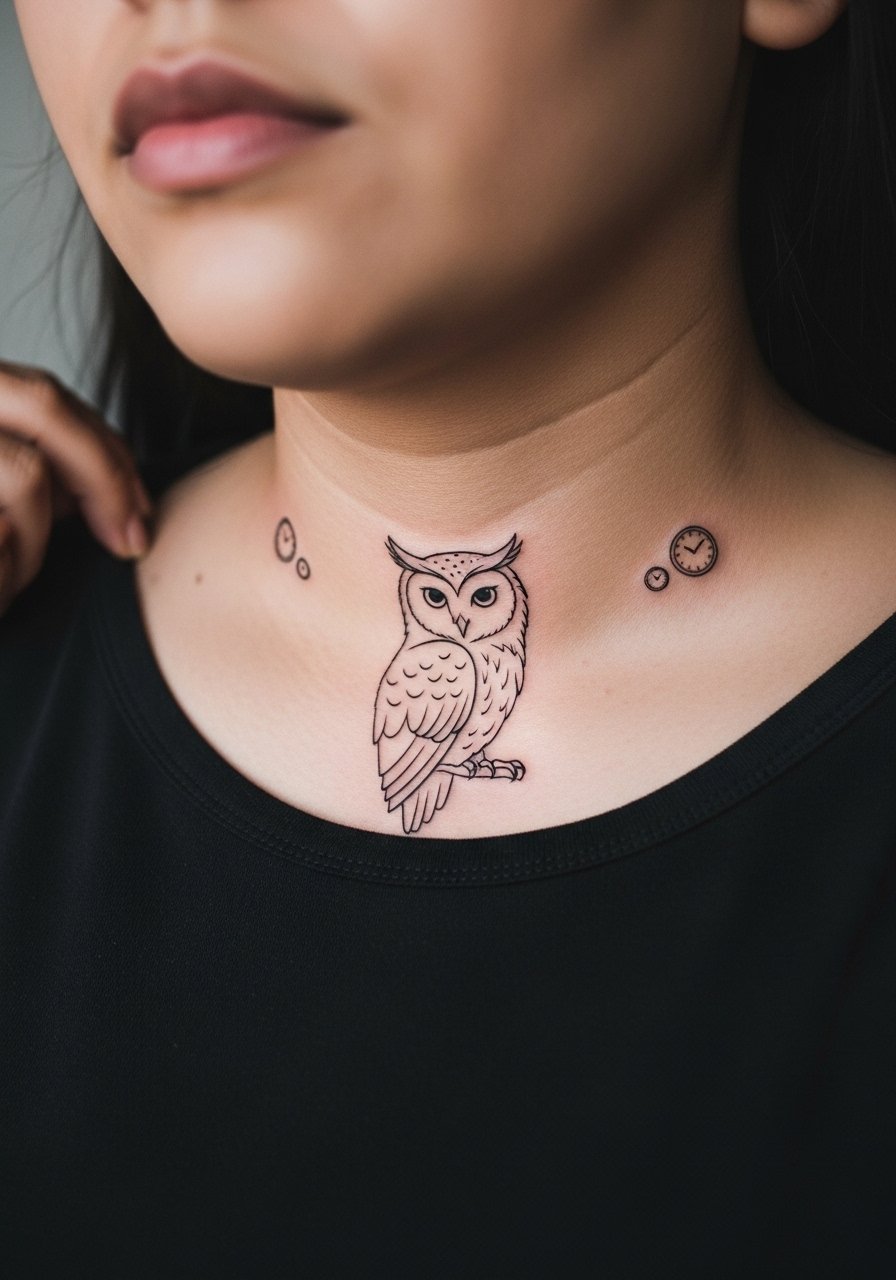
7. Minimalist Owl with Clock Elements on the Collarbone
Fair warning, timepieces on the collarbone need clear hierarchy so the small clock face does not swallow the owl silhouette. The collarbone gives great visibility for milestone inks and avoids the flexing problems of forearms. Tell the artist you want the clock readable at arm's length and to keep the clock's numbers bold enough to survive touch-ups. Sessions are short and pain falls in a moderate range. A common mistake is cramming tiny numerals into a small tattoo. If you plan to show it off, choose strap-friendly tops the day after your session so fabrics do not rub the scab line.
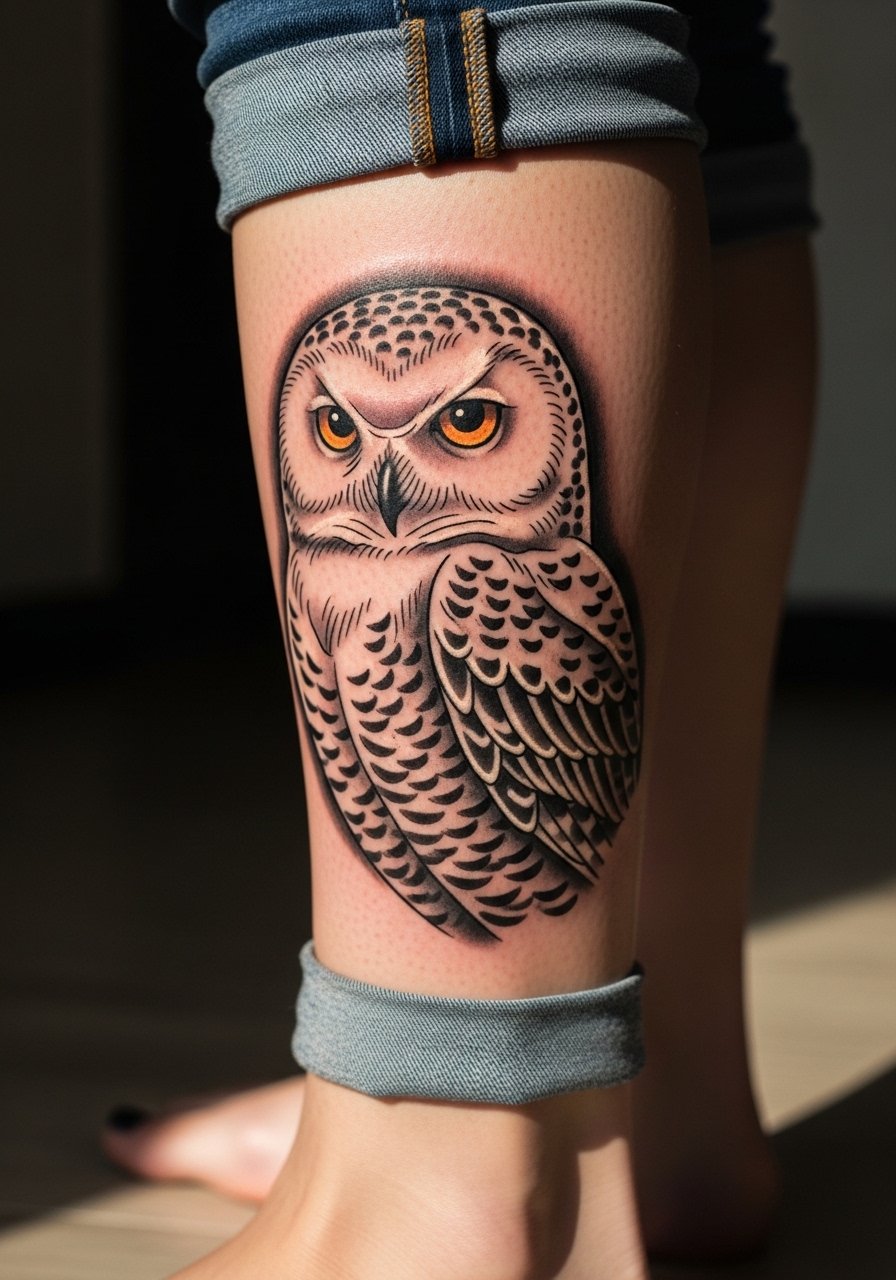
8. Neo-Traditional Snowy Owl Portrait on the Calf
The calf is an underrated canvas for neo-traditional portraits because it buffers sun and friction. Expect two sessions for layered shading and white-ink highlights that give the snowy look dimension. Pain is low to medium and healing is straightforward with fewer movement-related scabs than ribs or hands. Ask for white highlights to be used sparingly so they still read on darker clothing. For seasonal visibility roll jeans or try a rolled ankle jeans women silhouette to frame the portrait without covering it.
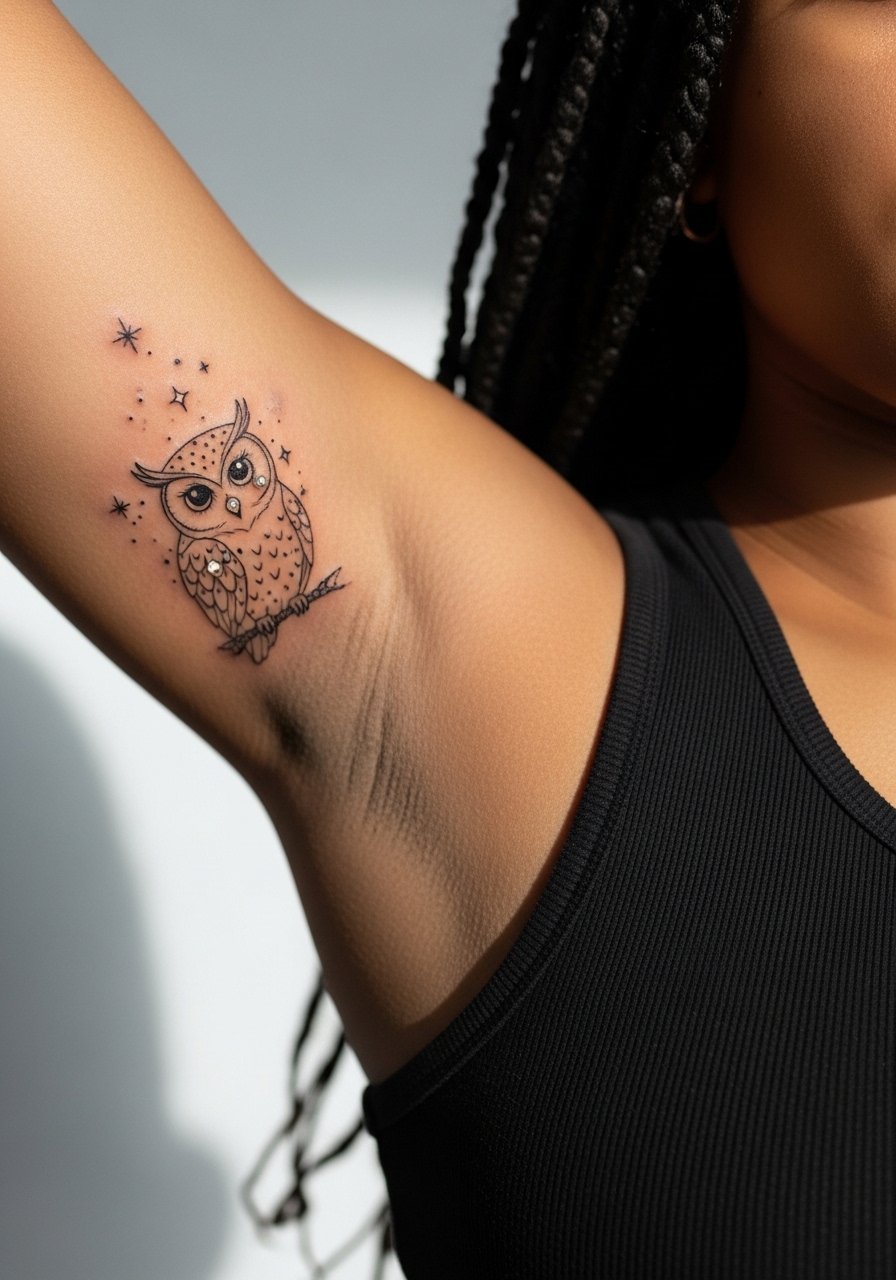
9. Fine Line Owl with Stars and Jewels on the Inner Bicep
Most inner-bicep tattoos heal well if you allow for a slightly bolder single-needle thickness. This spot feels private until you raise your arm, which makes it a great place for celestial accents that you reveal selectively. Expect moderate pain when the arm is lifted and a one to two hour session depending on detail. A mistake is asking for ultra-fine star dots without giving them breathing room; those dots can blur with sweat or friction. For the appointment wear a tank so the artist can access the area easily and be prepared for a brief touch-up after healing if the stars soften.
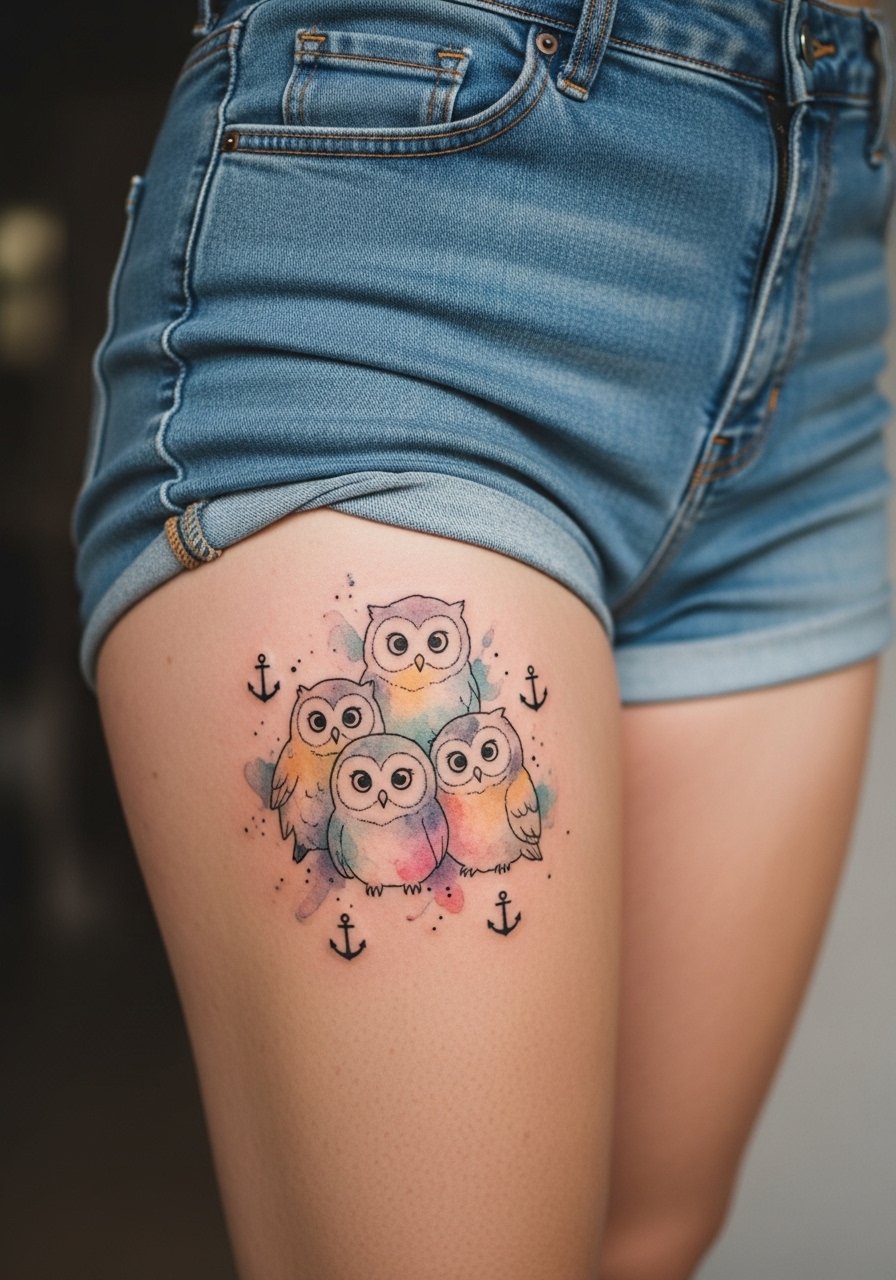
10. Watercolor Baby Owl Cluster on the Back or Thigh
Clustered baby owls are a thoughtful family option because you can size each figure to match family members and arrange spacing for future additions. Back pieces scale without visible distortion from weight changes, though thighs work well for seasonal shows. Watercolor clusters need strong anchors at wing tips or beaks to keep color from bleeding during healing. Sessions are usually two sittings for layered blends. If you plan to show the work on warm days go for high waist denim shorts or a side slit maxi skirt that keeps the composition visible without crowding the design.
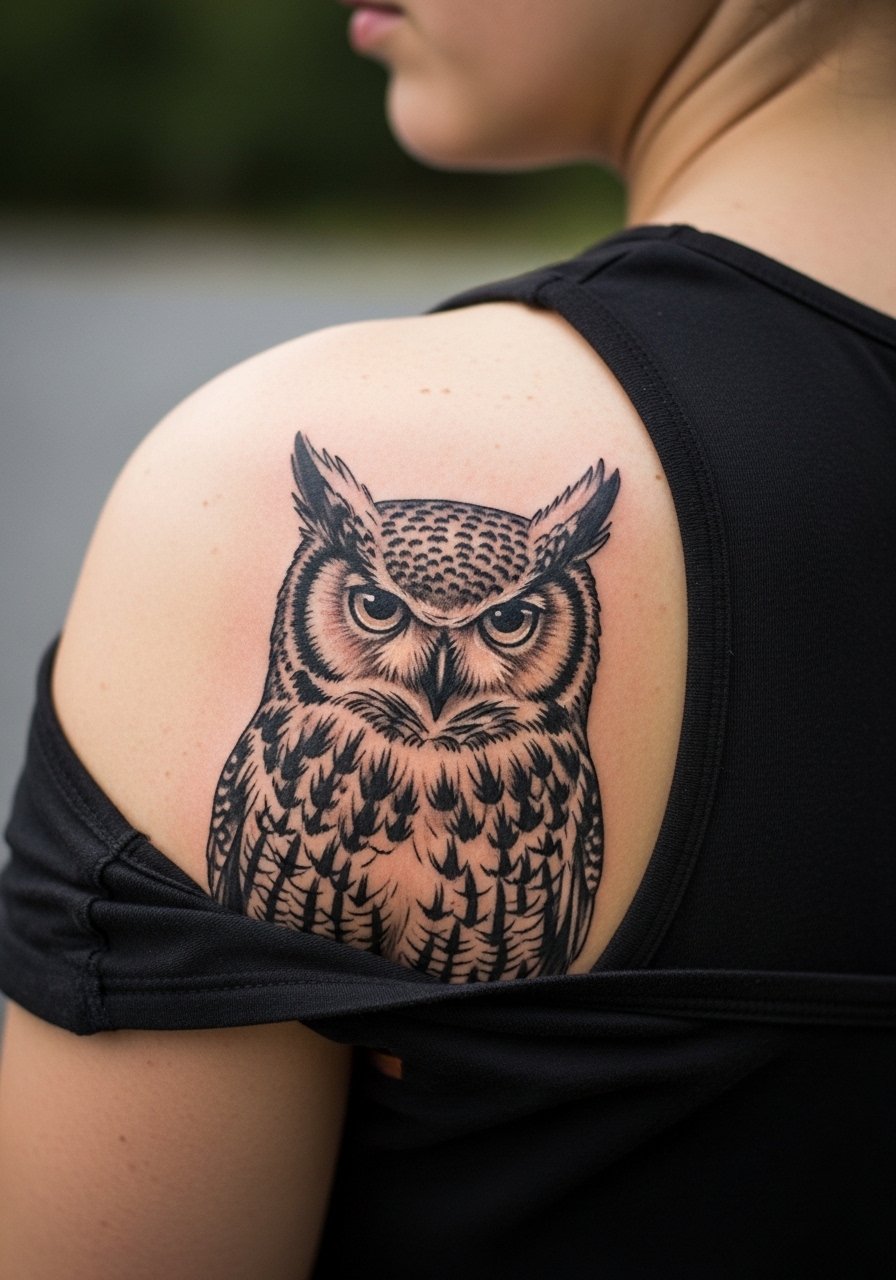
11. Black and Gray Realistic Horned Owl on the Shoulder Blade
Shoulder blades offer a broad surface for realistic portraits that need room for feather gradation. Expect longer sessions and a strong emphasis on stipple shading and soft gradients to create the heart-shaped facial disc. Pain spikes when the artist crosses bone but overall healing is straightforward if you avoid tight straps. A common error is requesting too much tiny detail in a small surface area. Show it off with rolled or cropped tops, or a midi skirt flowy and tank combo so the shoulder sits exposed for photos without compromising comfort.
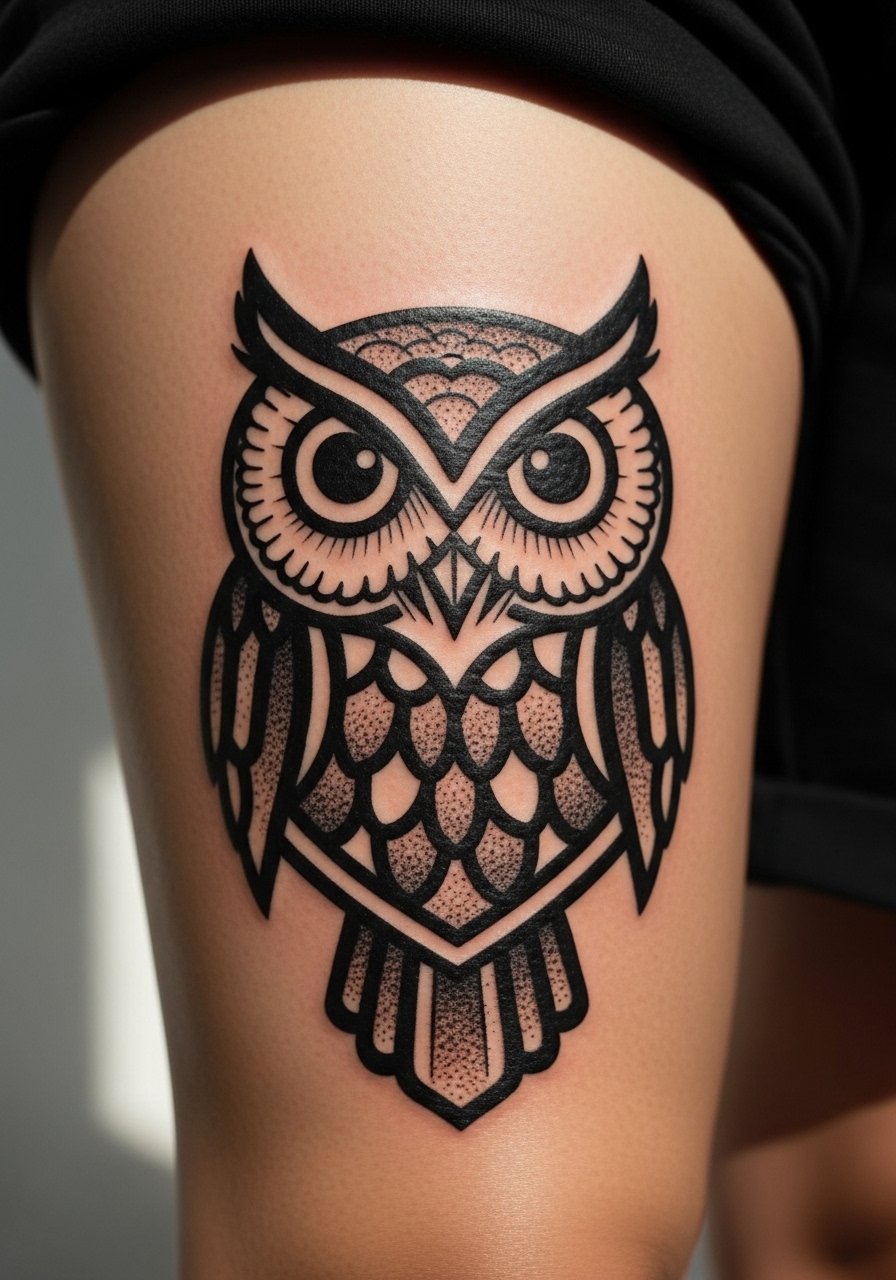
12. Ignorant Style Abstract Owl Mandala on the Thigh
If you want texture that resists obvious fading, ignorant style work with thick black marks and high-contrast shapes can be very durable. The thigh handles the weight of large black areas and the single-session approach often used for these pieces keeps the cost predictable. The common mistake is shrinking the mandala too small, which makes thick elements fuse over time. Ask your artist to space thick sections with negative gaps and to test a one-session mock-up area if possible. No styling link here because this design is typically worn under clothing and revealed intentionally.
13. Micro-Realism Owl Eyes on the Collarbone
Micro-realism collarbone eyes carry a surprising amount of personality in a small footprint. The trick is to scale pupils and catchlight so the eyes remain readable as skin moves and the piece ages. Expect at least two short sittings and ask about touch-up timelines since collarbone area sees sunscreen and clothing friction. Pain is moderate because the bone sits close to the surface. For outfits that let the piece be a focal point, consider a strapless midi dress that keeps the neckline clean and draws the eye to the small portraits.
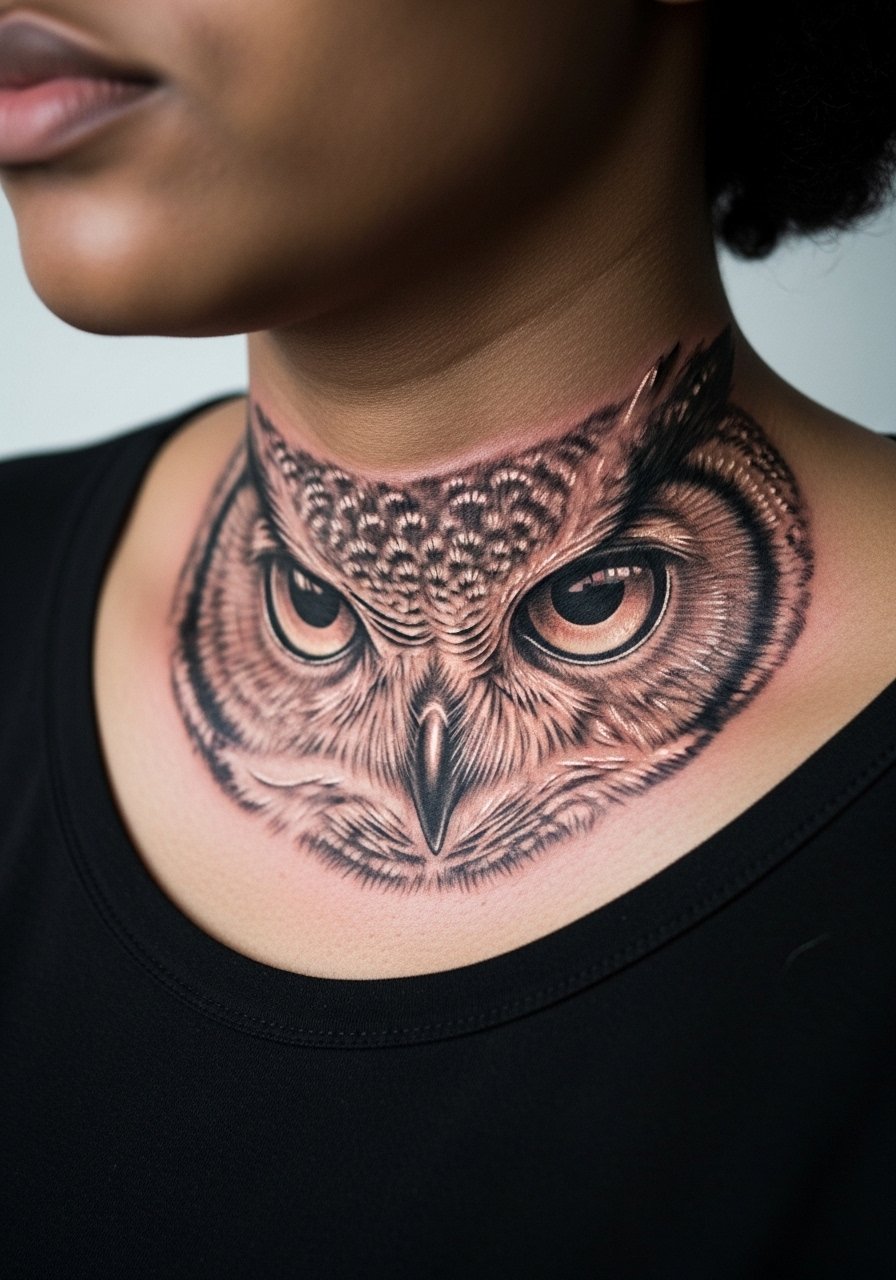
14. Finger Webbing Owl for Ultra-Discreet Placement
Finger webbing is a surprising spot for a discreet owl nod and it heals fast because the area sees frequent movement, which can be both a pro and a con. The skin there is thin so artists often recommend bolder little shapes rather than ultra-fine single-needle detail. Session time is short but expect touch-ups sooner because the area endures heavy friction. Note that finger webbing tattoos can blur faster, so plan smaller motifs that look intentional even as they soften. For the appointment keep jewelry minimal and consider a thin silver chain bracelet on the opposite wrist so attention balances without crowding the hand.
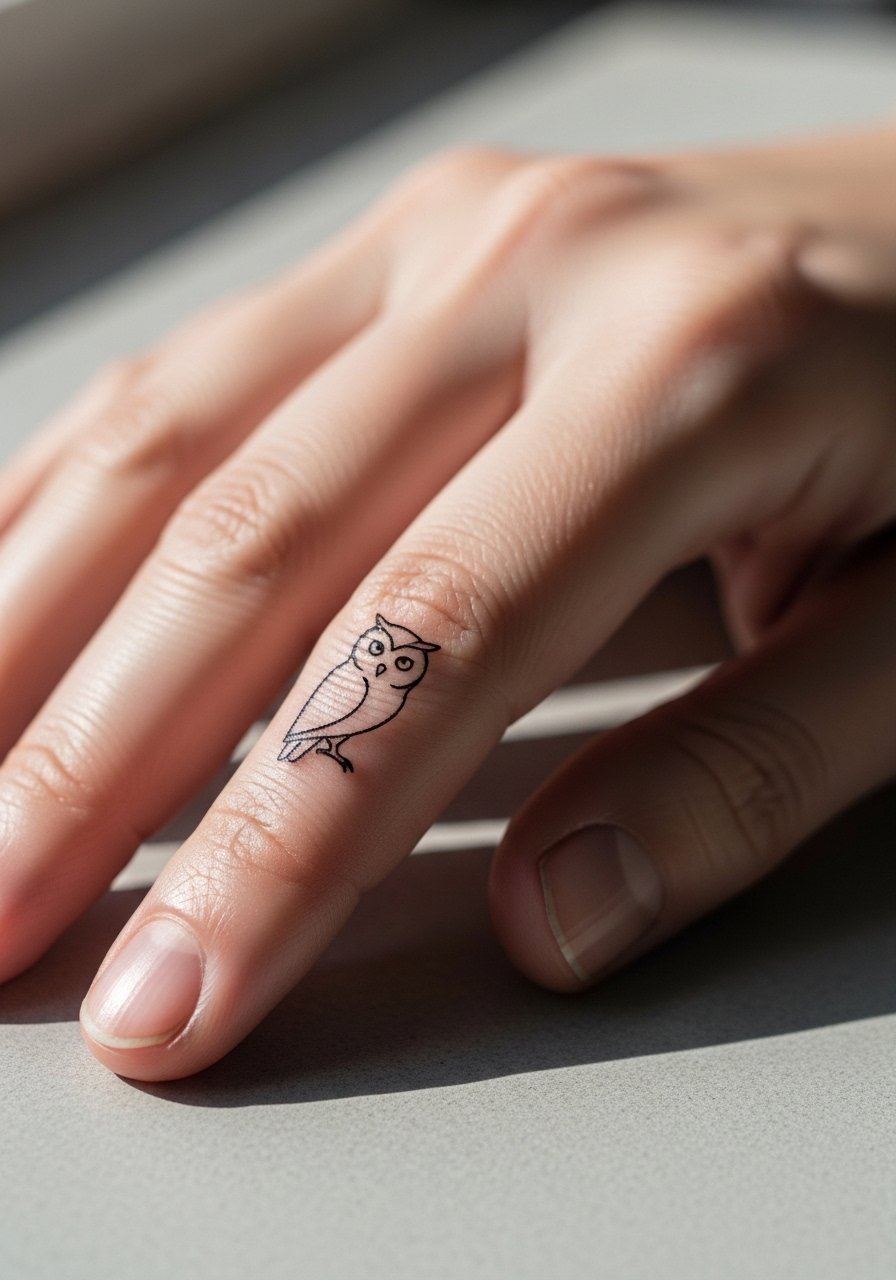
15. Ankle Owl with Embedded Birthstones in the Talons
Embedding small birthstone elements as colored dots in talons is a low-key way to personalize a design. The ankle is exposed enough for summer shows but also faces shoe friction that can scab edges if not protected. Request that the colored dots are surrounded by a thin black ring so they stay readable after healing. Sessions are short and pain is low to moderate. For showing the piece off roll jeans or try sandals with a minimalist strap so the ankle stays visible without abrasive rub.
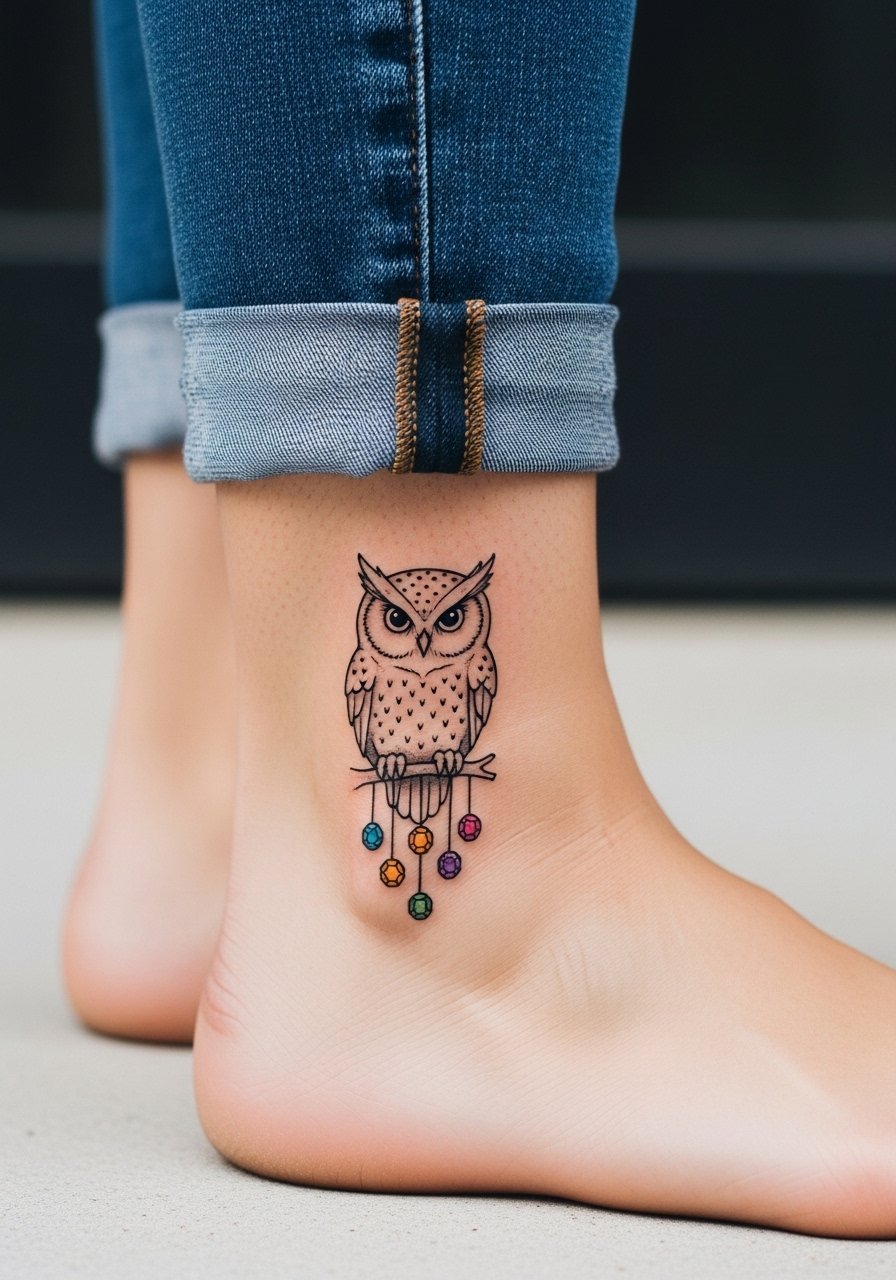
16. Silhouette Owl Paired with a Phase-Matching Menstrual Tracker on the Sternum
Placing a small silhouette owl above a cycle-tracker motif on the sternum can become a private marker of transitions. Sternum work needs a fitted sports bra or bandeau for pre- and post-session modesty and to minimize movement during tattooing. Sessions are moderate in length and pain ranges higher because of proximity to bone. Artists split on whether to use very fine lines on the sternum. One group warns the area shifts with weight and posture and that fine lines can blur; the other group says careful depth control keeps lines stable. Ask where your artist stands before booking and plan a touch-up window if you choose ultra-fine ticks.
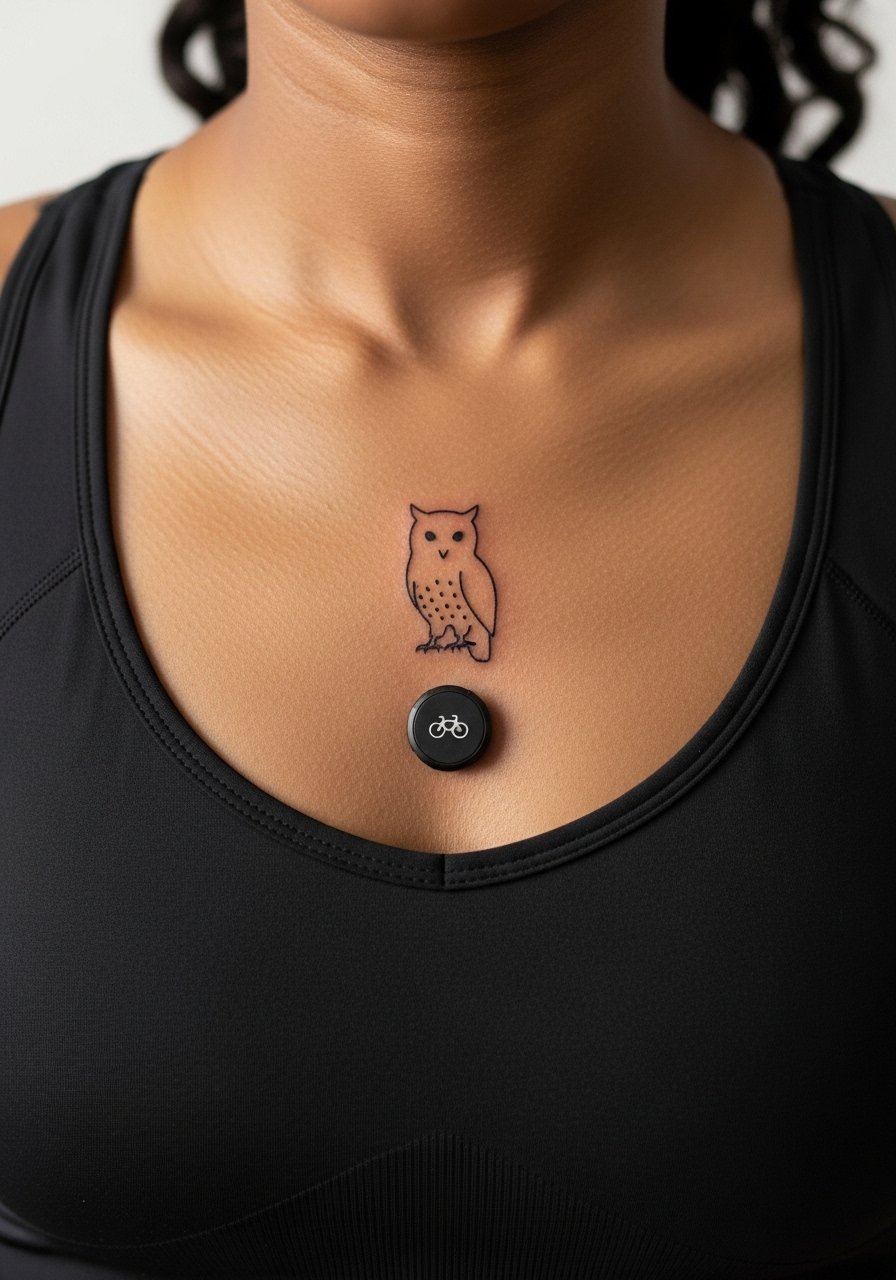
17. Layered Flight Composition with Moons on the Thigh and Hip
This is a bigger, slightly theatrical option that combines flight motion with lunar crescents to create a seasonal sleeve for the leg. The thigh and hip let the artist use larger compositions and mixed techniques like stipple shading and whip shading to suggest motion. Expect multiple sessions and plan outfits for the session like loose shorts that you can pull up without pressure. When the piece is healed it pairs well with high slits or cropped swimwear for deliberate reveals. Try a side slit maxi skirt to frame the flow of the moons and wings.
Frequently Asked Questions
Q: Do fine line owl wrists really need touch-ups more often than blackwork forearms?
A: From what I have seen, yes. Fine line work on wrists tends to lose crispness faster because the skin flexes and sees constant contact. Blackwork forearms usually hold saturation longer. Plan for a potential touch-up at 12 to 18 months with fine lines and ask your artist about their touch-up policy during the consult.
Q: How should I dress for a collarbone or sternum appointment to make the session easier?
A: Wear a wide-neck shirt or a fitted sports bra depending on the area so the artist can access only the tattoo zone. For collarbone sessions a loose V-neck or a shirt you can pull aside works best. For sternum a fitted sports bra keeps modesty and gives clean access. Bring clothing that does not press on fresh scabs afterward.
Q: I have darker skin. Which owl styles photograph best for me?
A: Bold blackwork and neo-traditional pieces with clear negative space often photograph strongly on darker tones because the contrast stays readable. Micro-realism can also sing if the artist adjusts saturation and avoids tiny, delicate dots that may not show. Ask to see healed examples on similar skin tones during your consult.
Q: Is Saniderm or dry healing better for owl tattoos, especially watercolors?
A: Artists and communities split on this. One camp favors protective film for a few days to reduce weeping and friction. The other camp prefers short-term air exposure and lighter balms to avoid trapping moisture. Consider your lifestyle, climate, and the artist’s preference. If you live somewhere dry, breathable film or humidity patches can help watercolor blends settle.
Q: Can I incorporate birthstones or small colored dots into a tiny owl without losing clarity?
A: Yes if the dots are framed with a thin black ring and given a bit of negative space. Tiny unframed color spots can swell into indistinct marks during healing. Tell your artist you want readable color at six months and they will size the accents accordingly.
Q: Where should I look to find an artist who specializes in a specific owl style?
A: Try searching platform tags like #finelineowl, #watercolorowl, or #blackworkowl on social platforms and check local guest-spot calendars on apps that list tattoo guests. I have found that searching city plus style, then looking for healed photos and diverse skin tones, gives a better sense of how the work will age.
