
Neo-traditional pieces on the spine read differently from day-one photos than they do healed and five years later. What looks delicate fresh can turn muddy if the linework is too fine, and what looks heavy can settle into a powerful vertical signature. Expect sessions split across appointments, plan clothing for both access and reveal, and read the notes below before you pick a stencil. The first idea starts with a floral cascade that follows your vertebrae.
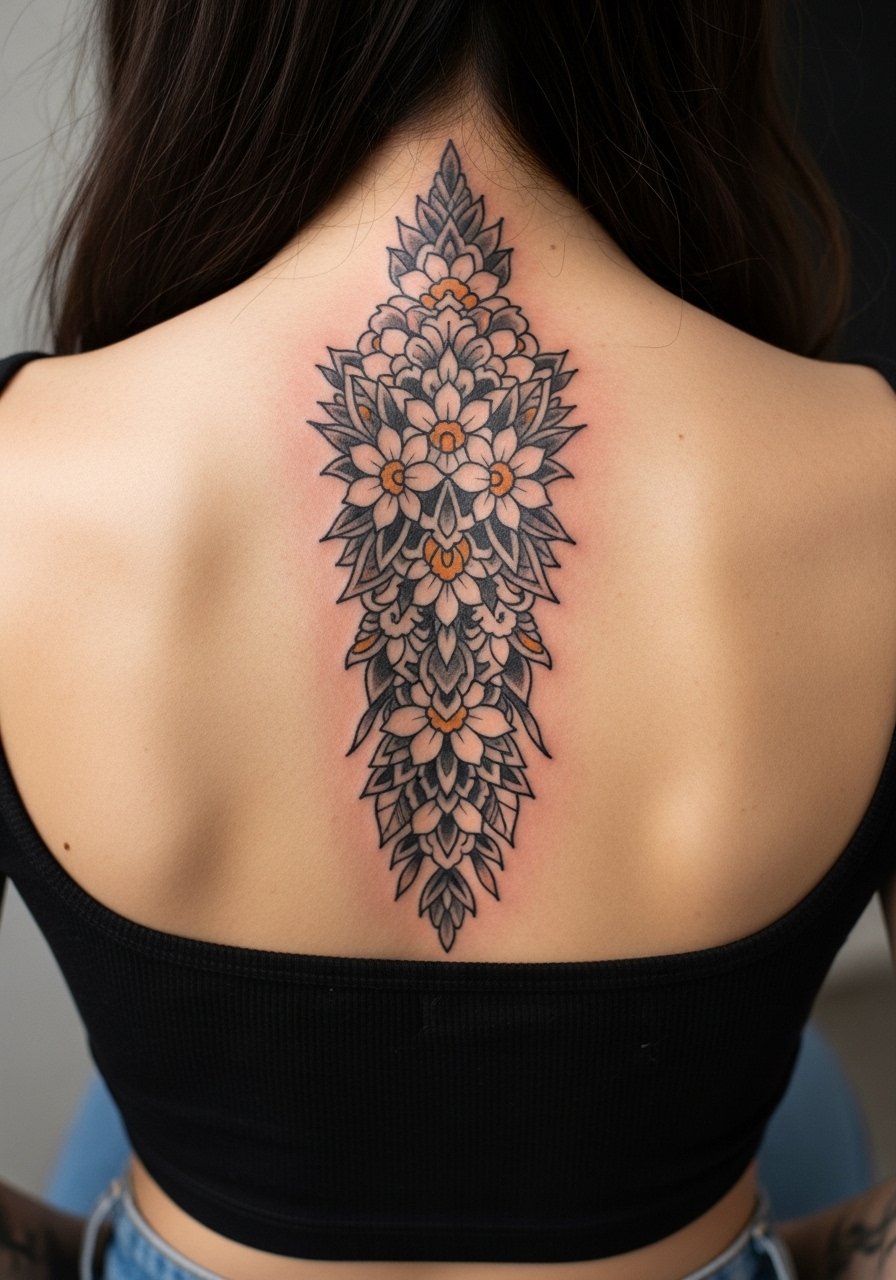
1. Neo-traditional floral spine cascade
A full-spine floral cascade works with the vertebrae rather than fighting them. I recommend asking the artist to map stems to the spine so petals sit between the vertebrae and outlines hug the bone where needed. Pain is higher over the vertebrae, so expect three shorter sessions rather than one marathon. A common mistake is packing tiny petals into tight spaces. Those details blur over time. For showing it off, pair with a low back crop top women on warm nights to let the vertical flow read. Touch-ups on the outlines usually come at year three for heavy motion areas.
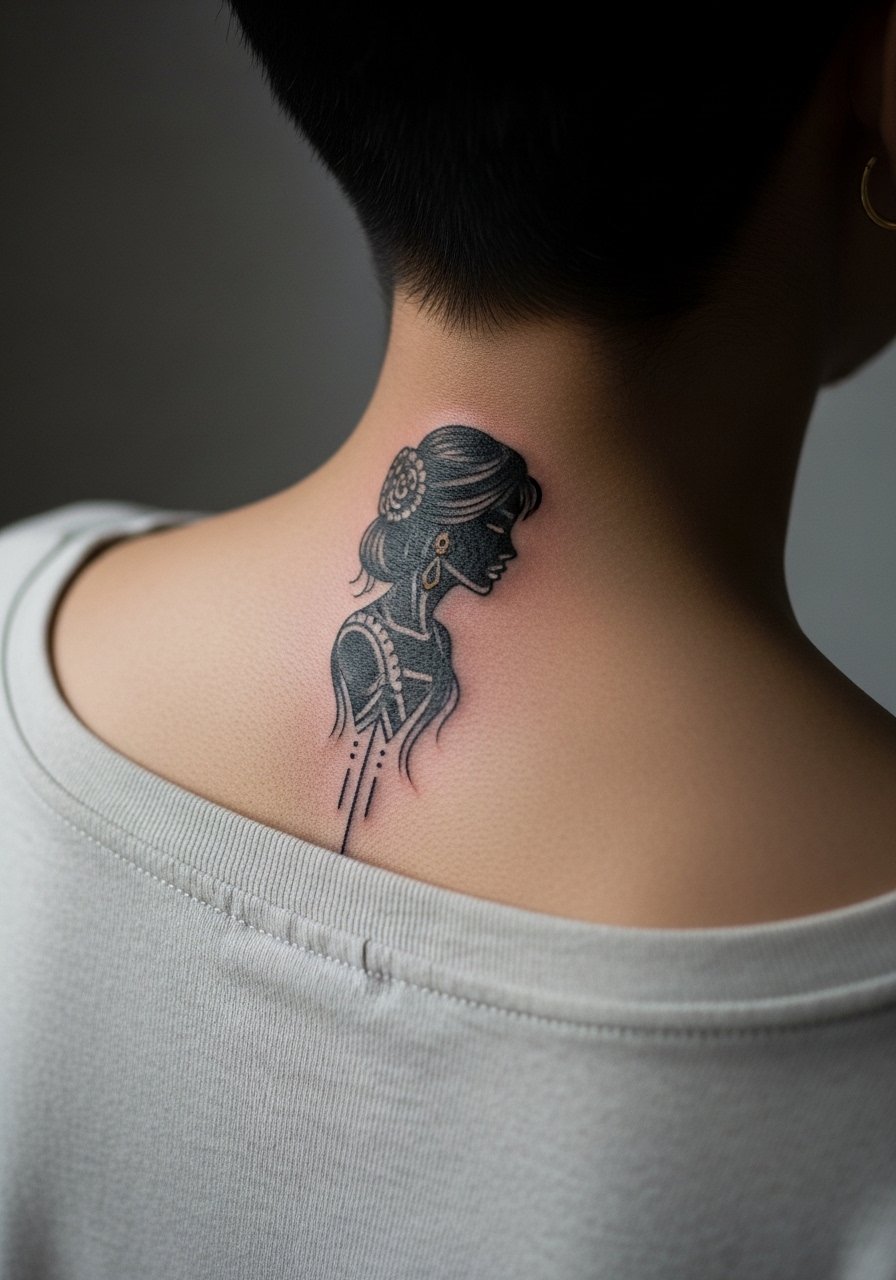
2. Siren silhouette on the upper spine
A siren silhouette elongates the upper spine and reads like a pendant across the nape. When you consult, bring images showing the exact tilt and negative space you want so the silhouette does not read squat on the real body. Expect two sessions and concentrated linework near the neck that can sting more than lower back areas. Avoid asking for ultra-fine contour lines up top. Those fade faster from neck movement. For outfits, an off shoulder blouse in a solid tone frames the piece and keeps attention on the silhouette. Ask your artist how they handle touch-ups around the nape because that area sees constant sun and friction.
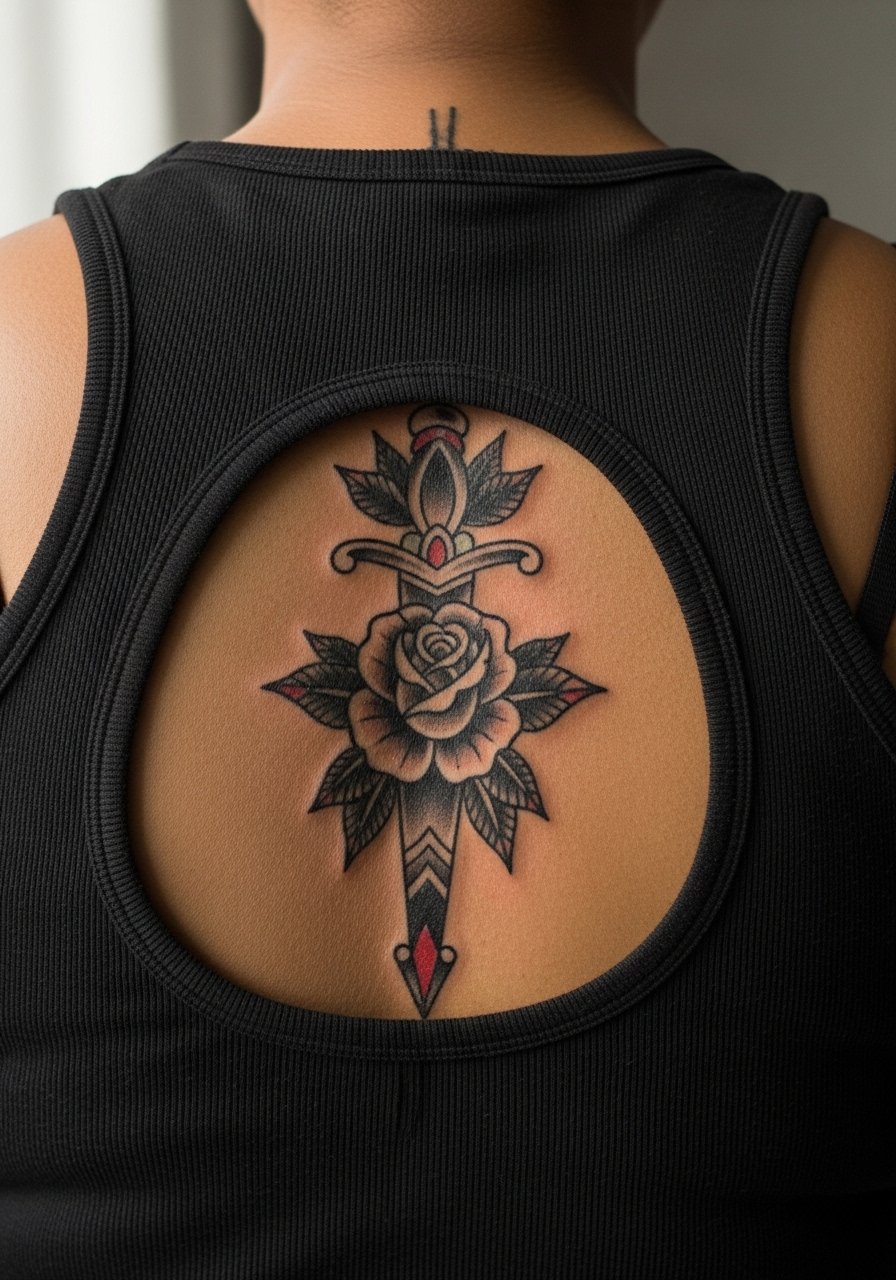
3. Rose and dagger vertical stack down the spine
This is a classic vertical stack that balances soft petals with harder metal shapes for contrast. Tell your artist you want heavier contour on the dagger and a softer saturation on the rose fills so the two elements age differently but remain legible. Pain maps higher near the top of the stack where the bone is pronounced. The typical mistake is too many tiny leaves. Those vanish by year two. Plan for three sessions and a touch-up after the first healed year to rebalance saturation. Visually this works best centered on the spine to keep symmetry over time.
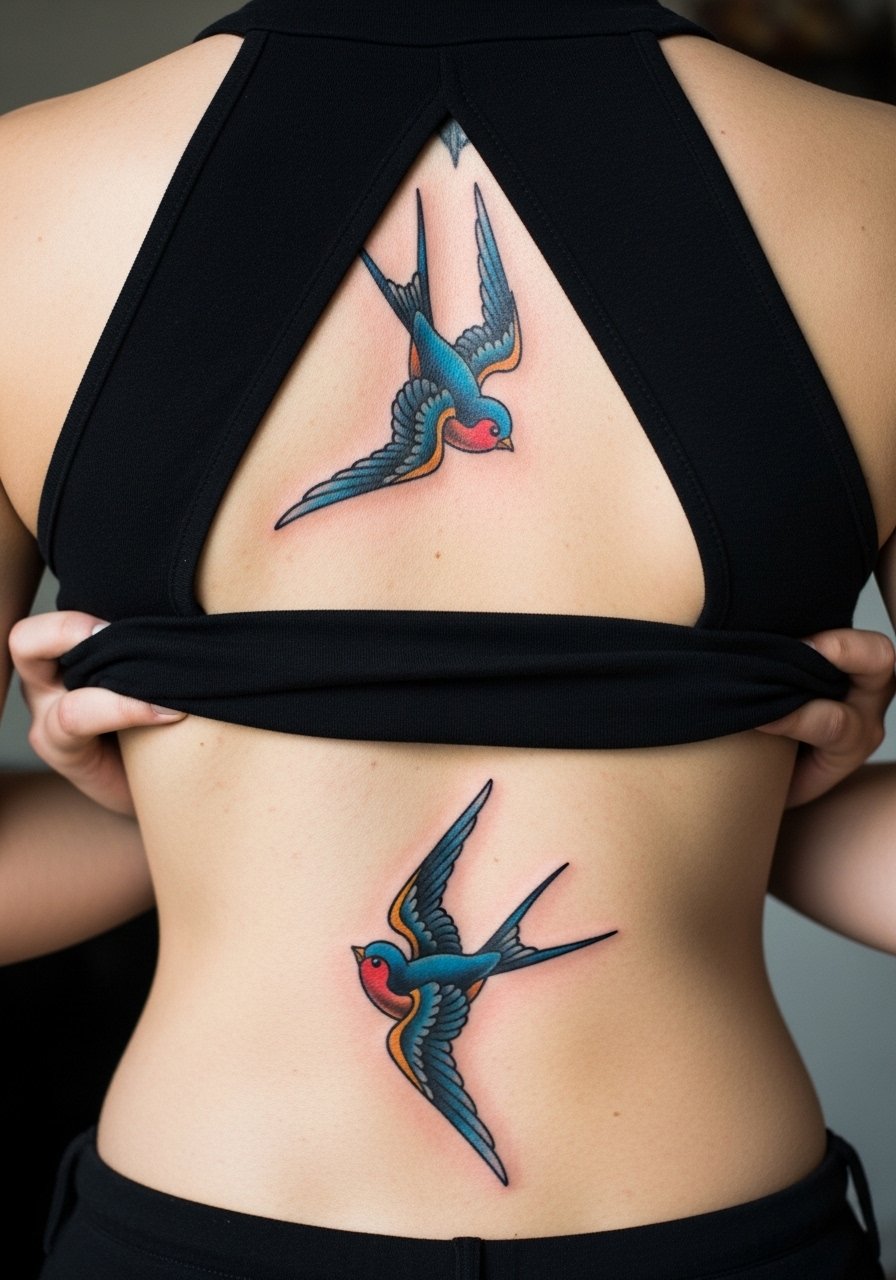
4. Swallows in flight that follow spinal motion
A string of neo-traditional swallow birds gives a sense of motion when placed along the mid-spine. Ask the artist to space the birds so wing tips align with natural back movement while keeping stronger outlines on the body to retain shape. This placement feels more bearable than pure vertebrae work, but the shoulder-blade area can be a seven for pain during shading. A common mistake is making the birds too small. Tiny wing details collapse after a year. For occasions when you want the design visible, slip into a backless halter top so the flight reads from top to bottom. Expect 1 to 2 sessions and a possible color boost at year two.
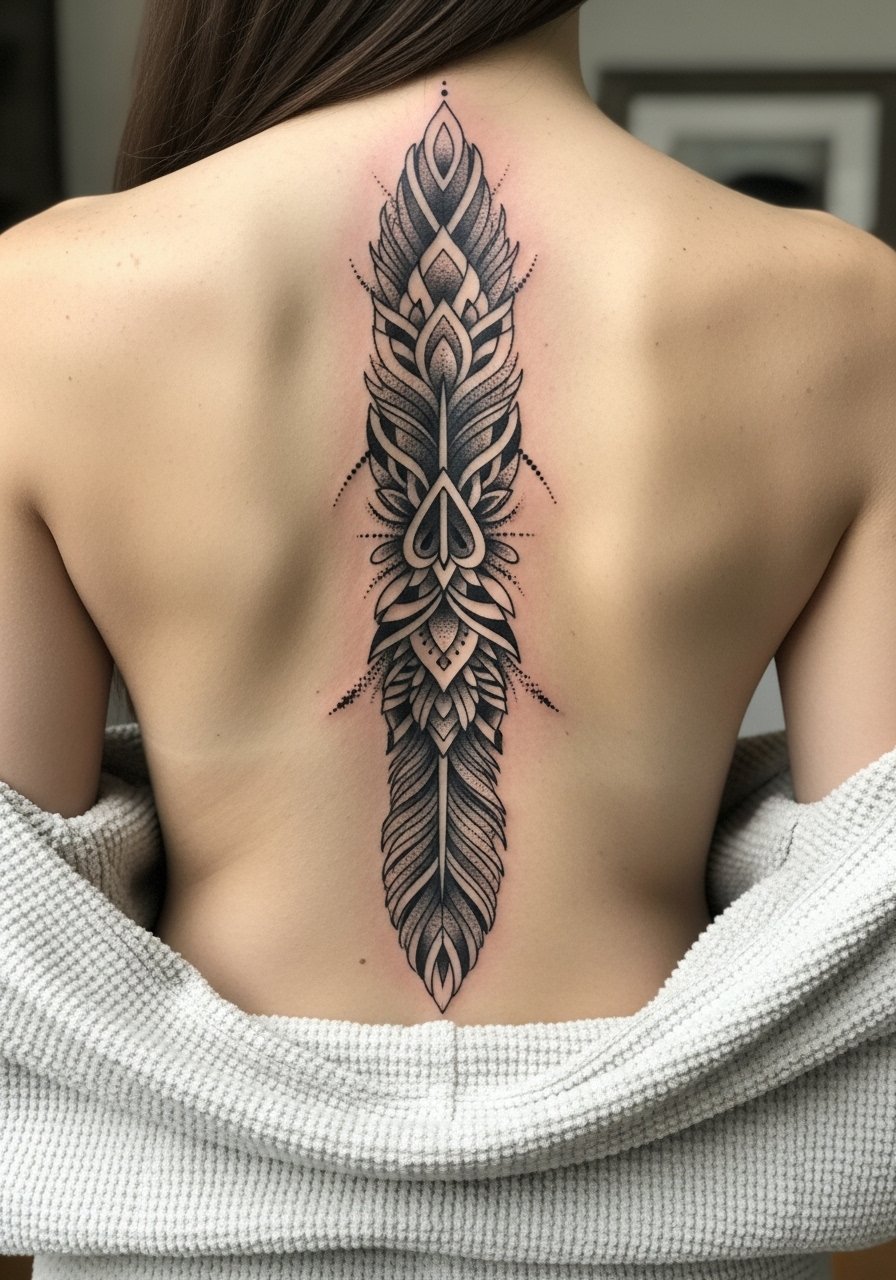
5. Mandala with geometric feathers framing the vertebrae
A mandala stacked along the spine gives symmetry and an ornamental silhouette that frames the vertebrae. Tell your artist you want negative space between rings so stipple shading settles rather than fills in. The risk is packing concentric detail too tightly which leads to merging lines at year three. This design benefits from three sessions if you want crisp dot work and color accents. For showing this off, pair it with a body chain harness gold layered over a backless piece for symmetry. Mention any career considerations that require subtlety because a mandala can be scaled down or done in black and gray for office-friendly visibility.
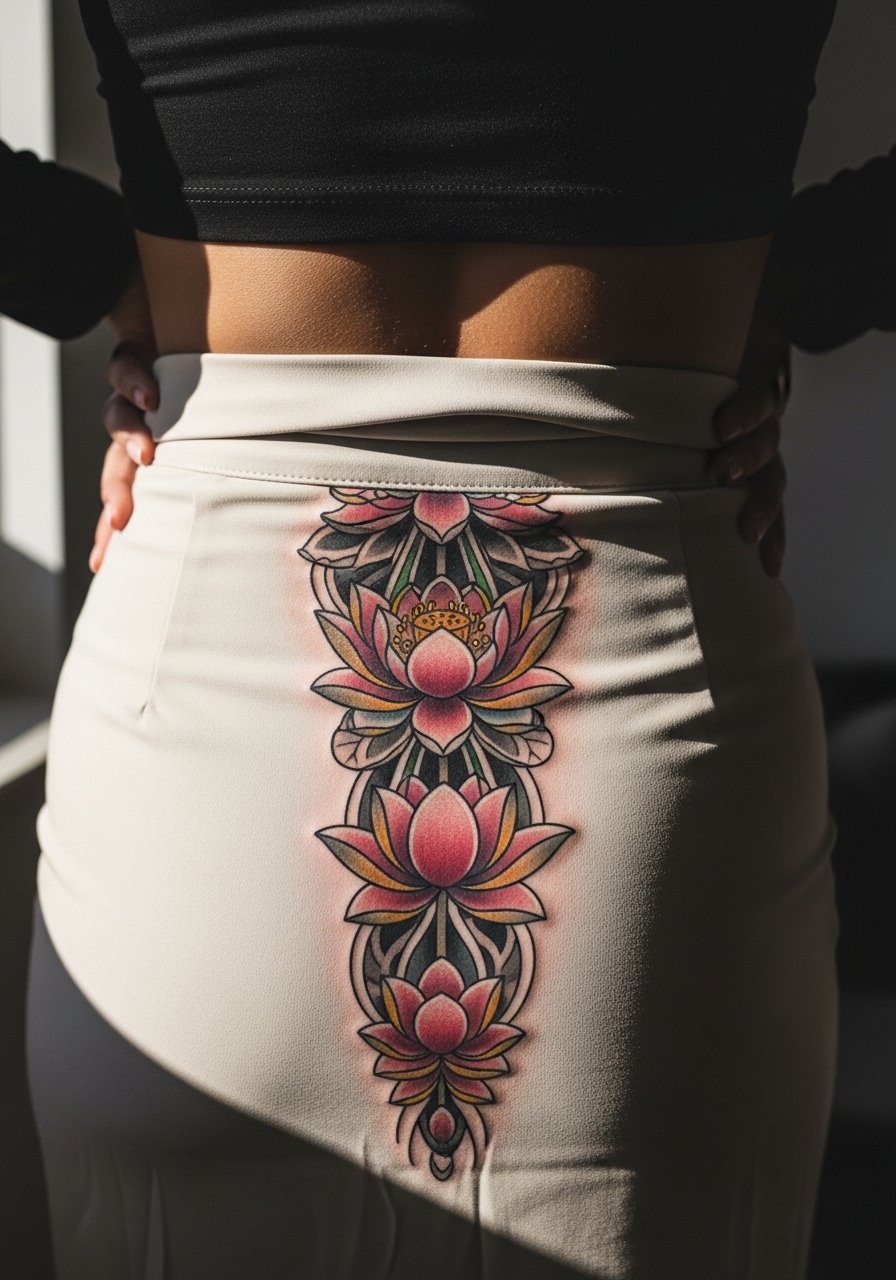
6. Lotus bloom cascade at the lower spine
The lotus cascade sits beautifully on the lower spine when scaled to follow the hips. Ask for denser saturation at the base so the lower stretch-prone zone keeps shape during weight changes. Pain at the lower spine can spike where the bone meets soft tissue, so plan two shorter sessions. A common mistake is going too pastel on the petals. On darker skin tones those colors may not pop; ask for contrast in shading instead. Show-off pairing includes high waist skirt cutout styles and low-rise swim bottoms at the beach. Expect a touch-up window around year three for saturation refresh.
Studio Day Picks
The upper and lower spine pieces above require different prep and a few session items that smooth the experience.
-
Stencil transfer paper kit. Lets you preview placement on your actual skin which is especially useful for the full-spine floral and mandala layouts above.
-
Topical numbing cream. Applied per the product instructions it can reduce the sharpness of vertebrae sessions for the first pass.
-
Thin protective film roll. Useful for keeping lower-spine and shoulder-blade work clean during the first days when clothing rub is a problem.
-
Fragrance free gentle body wash. Cleanses healing areas without stripping color or irritating stipple and dot work used in mandalas.
-
Aquaphor healing ointment. A thin layer for the initial days helps protect high-friction areas like under straps while you follow your artist's specific aftercare approach.
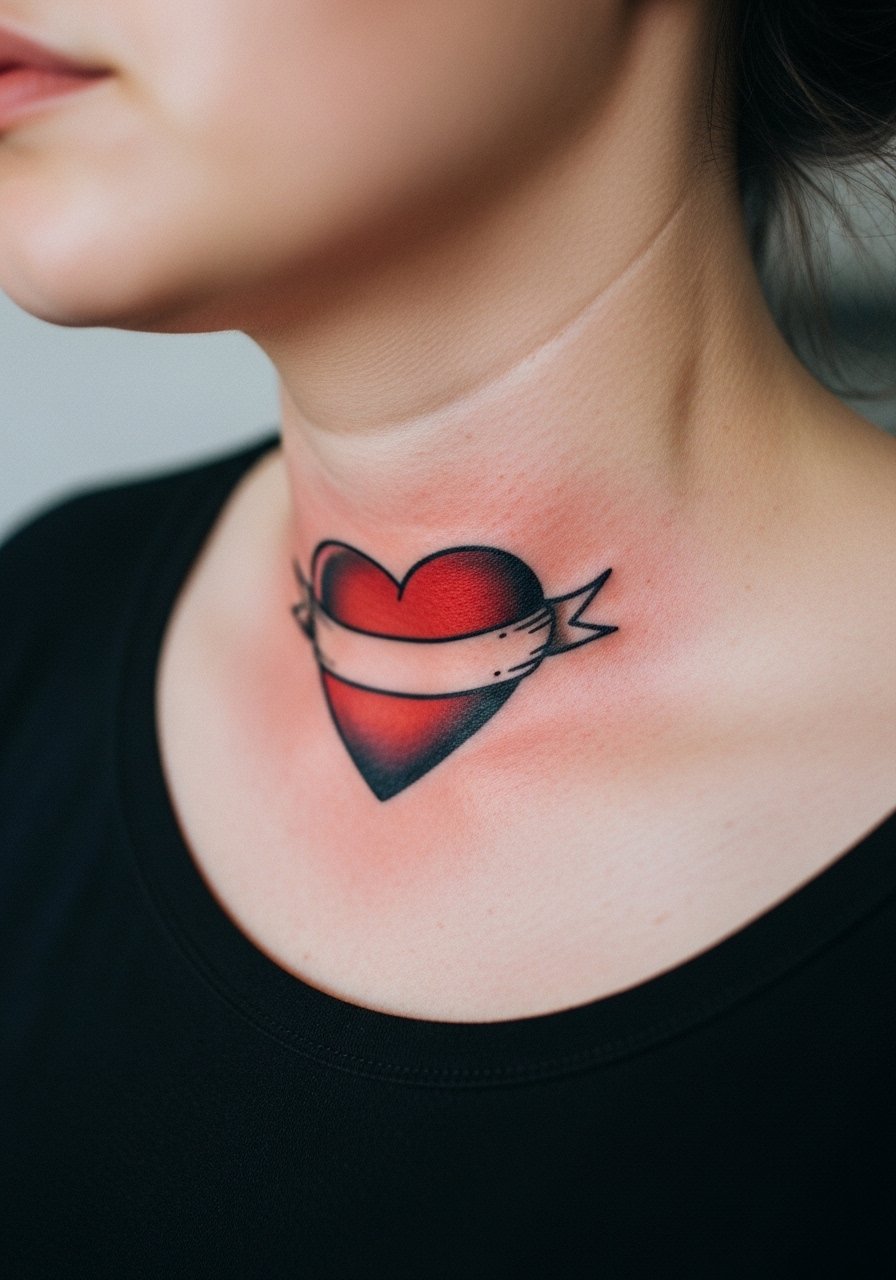
7. Heart with banner on the upper spine, vintage neo-traditional
A small heart and banner stacked on the upper spine reads like a personal crest. The consultation note here is to decide whether you want thicker black outlines or a softer gray contour for longevity. Fine line banners fade quicker on the neck area, so name both durability and style during the consult. Pain is moderate and sessions are short. This idea ties into the numbing debate artists argue about. One camp supports numbing for comfort on the bone, saying it improves client tolerance. The other camp calls the ritual of feeling the work part of the experience. Decide where you stand and mention it before booking. For a night out try an off shoulder blouse that lets the little crest peek.
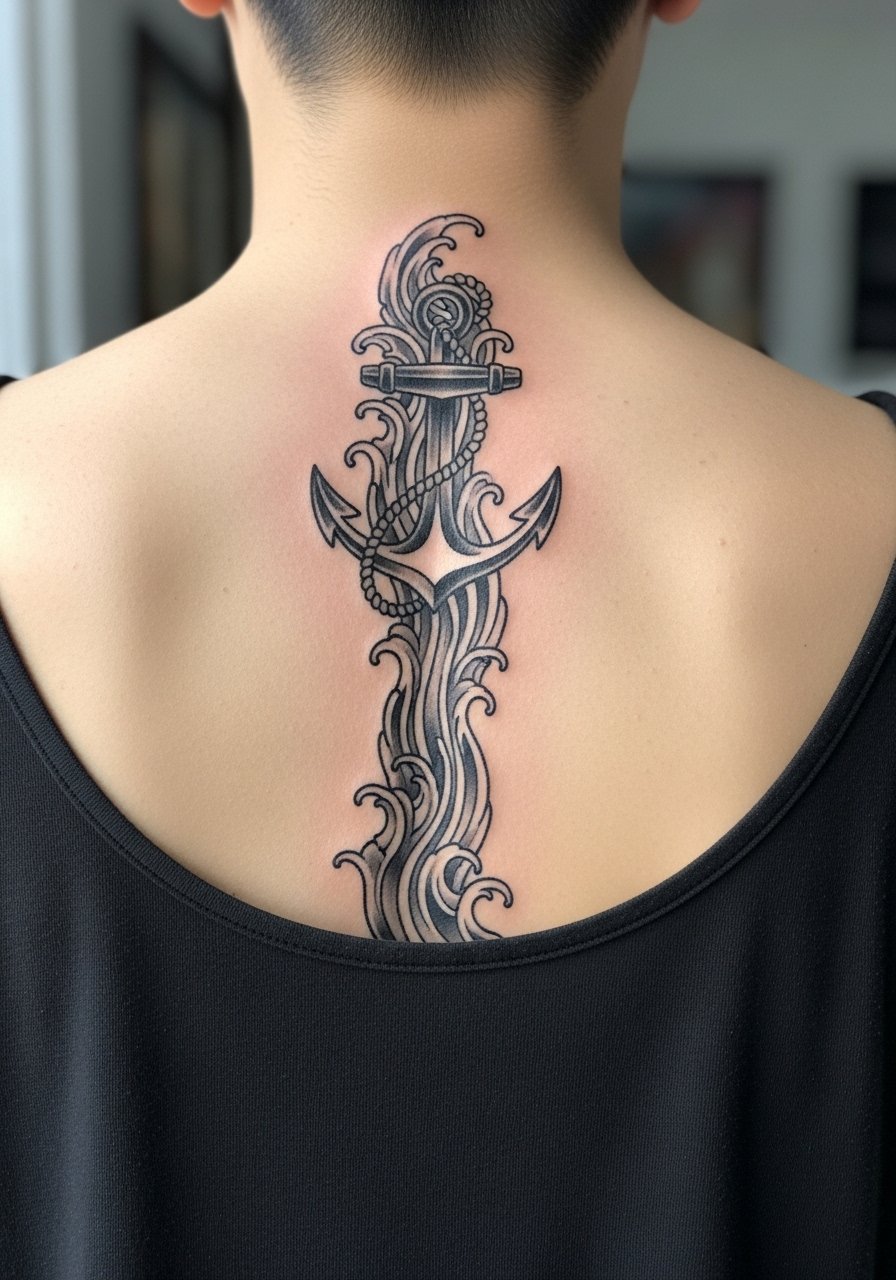
8. Anchor and waves vertical anchor for full-spine stability symbolism
An anchor with flowing wave elements down the spine gives a strong vertical narrative. Ask your artist to use heavier saturation inside the anchor and more illustrative, looser shading for the waves to preserve motion. This design covers a lot of real estate so plan two to three sessions. The lower spine portion moves with hips and core, so expect subtle stretching over time and ask the artist to place denser elements mid-spine to avoid distortion. For appointment wear, choose a loose tank top so the artist has access while you remain comfortable. Aging tends to keep the anchor shape well because of heavier fills, but small wave details may need refresh at year three.
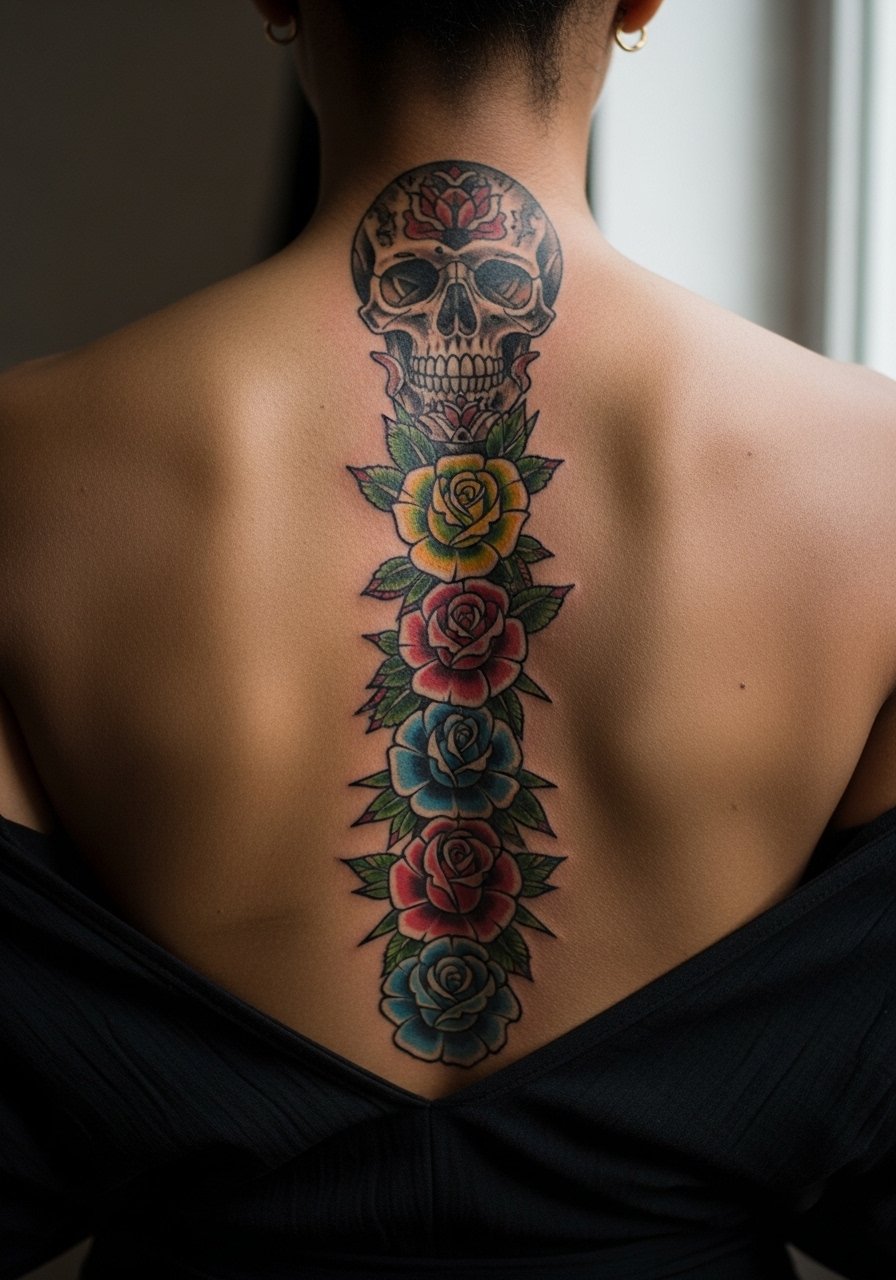
9. Skull and roses stacked rhythmically down the spine
A skull with roses alternates dark negatives with saturated color and reads as moody and feminine. Tell your artist if you want the skull to be the visual weight or if the roses should anchor the palette. The biggest mistake is over-detailing the skull's teeth and tiny shadows; these areas tend to blur on moving skin. Expect longer sessions for clean blackwork and vibrant roses. For nights when you want contrast, a lace corset belt over a back-revealing top frames the vertical stack for a deliberate look. Be aware of the touch-up timeline, often two sessions in year two to rebalance darks against new healed flesh.
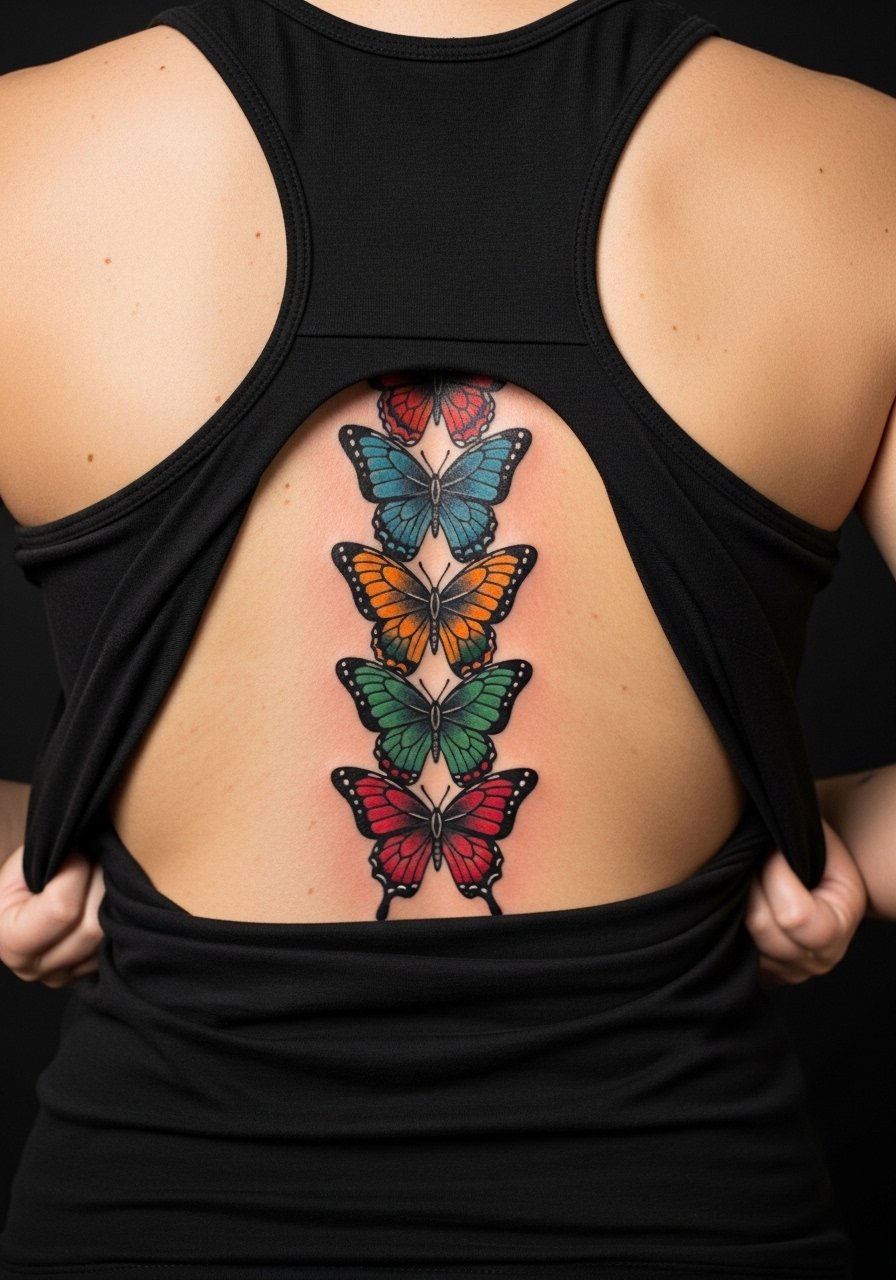
10. Butterfly metamorphosis along the vertebrae
A vertical stack of butterflies suggests transformation as they ascend the spine. Ask for graduated wing sizes so the piece breathes and does not look uniform from a distance. The usual error is making each butterfly identical. Motion reads better with staggered sizes and slightly different wing angles. Pain is similar to floral work when placed mid-spine. For session comfort wear loose tops that can be shifted without irritating the fresh lines. Expect two sessions and a color boost at two to three years to keep wings vibrant on lighter skin tones.
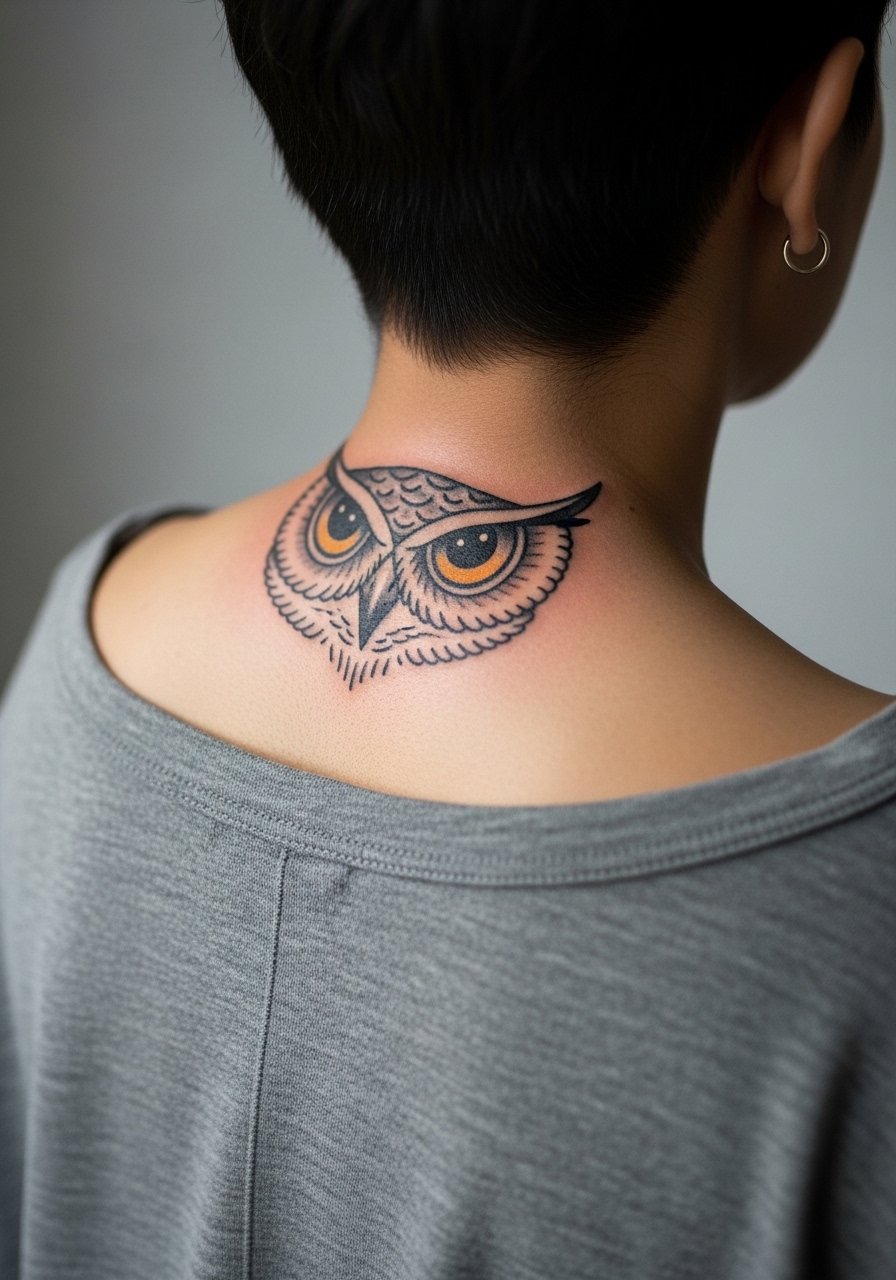
11. Owl eyes peering along the upper vertebrae
Owl eyes placed on the upper spine create a hypnotic, symmetrical center. When you sit for the consult, bring reference photos showing the exact pupil size and surrounding feather work so the symmetry reads straight on. The top of the spine and the nape can be sensitive, so expect short bursts of shading. A frequent mistake is making the eyes too small so they lose impact once healed. Pair this with a long pendant necklace gold worn just below the nape to draw the eye downward without crowding the tattoo. Touch-ups often involve re-darkening the irises after initial healing.
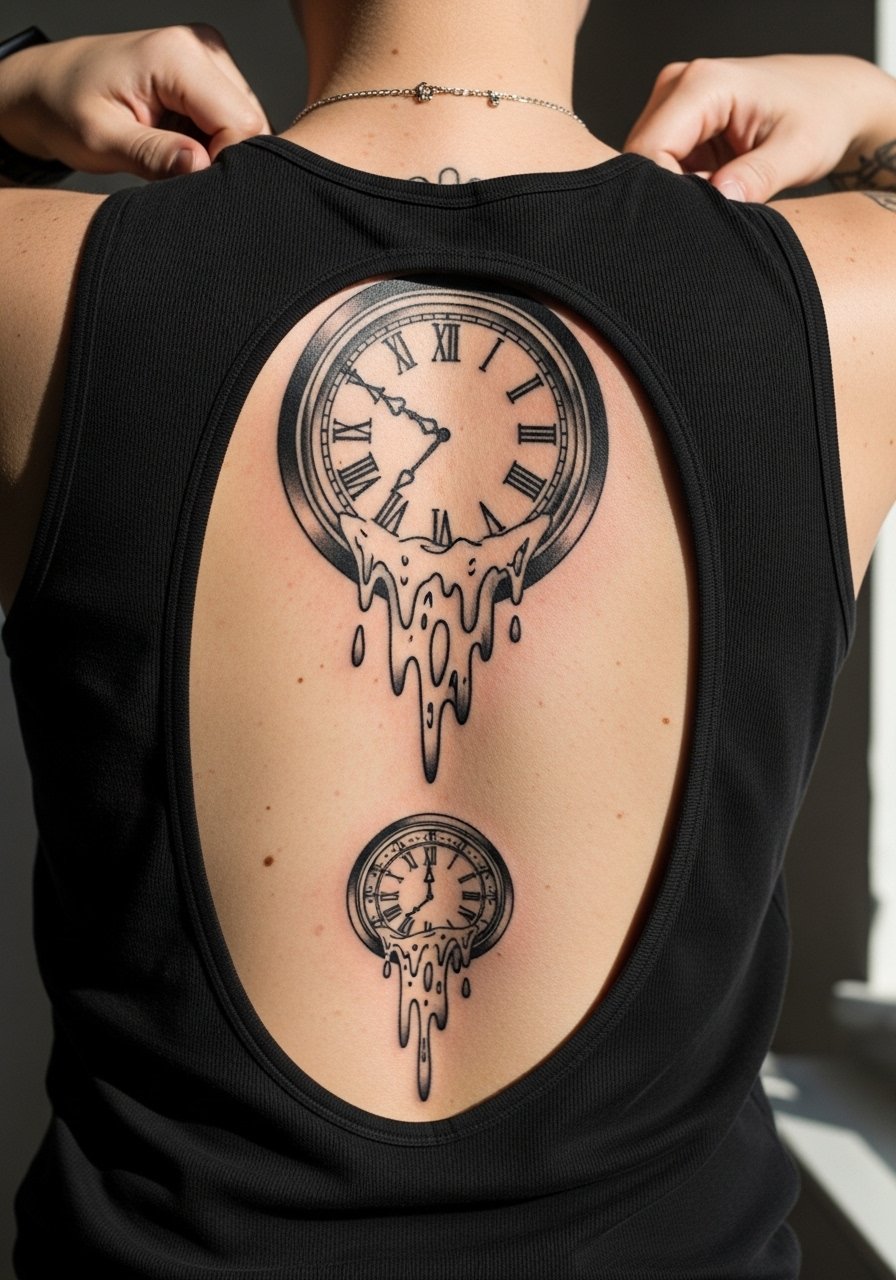
12. Surreal clock with melting elements hugging the spine
A clock with melting components wraps the spine in an illustrative flow that reads both ornamental and narrative. Tell your artist which parts you want to read as foreground and which are background so the melting elements do not swamp the clock face. The spine can exaggerate perspective, so consider warped perspective intentionally so it looks balanced on curved skin. Expect three sessions if you want warm color transitions. The typical mistake is placing too many tiny numbers and gears; they smudge faster than broader shapes. This piece often benefits from mid-spine placement where the silhouette is most consistent.
13. Black and gray neo-traditional for subtle office visibility
A black and gray stack along the spine trades color flash for longevity and workplace discretion. Ask for contrast zones in the shading so the piece keeps depth without saturated color. This is a good choice if you expect career changes or need lower visibility healed. Pain is comparable to colored work and session counts depend on size. A common mistake is using too much mid-tone gray which can flatten the design over time. For subtle evenings out, pair with a backless halter top in cream to show the piece without bright colors competing. Expect a touch-up schedule around years three to five to preserve depth.
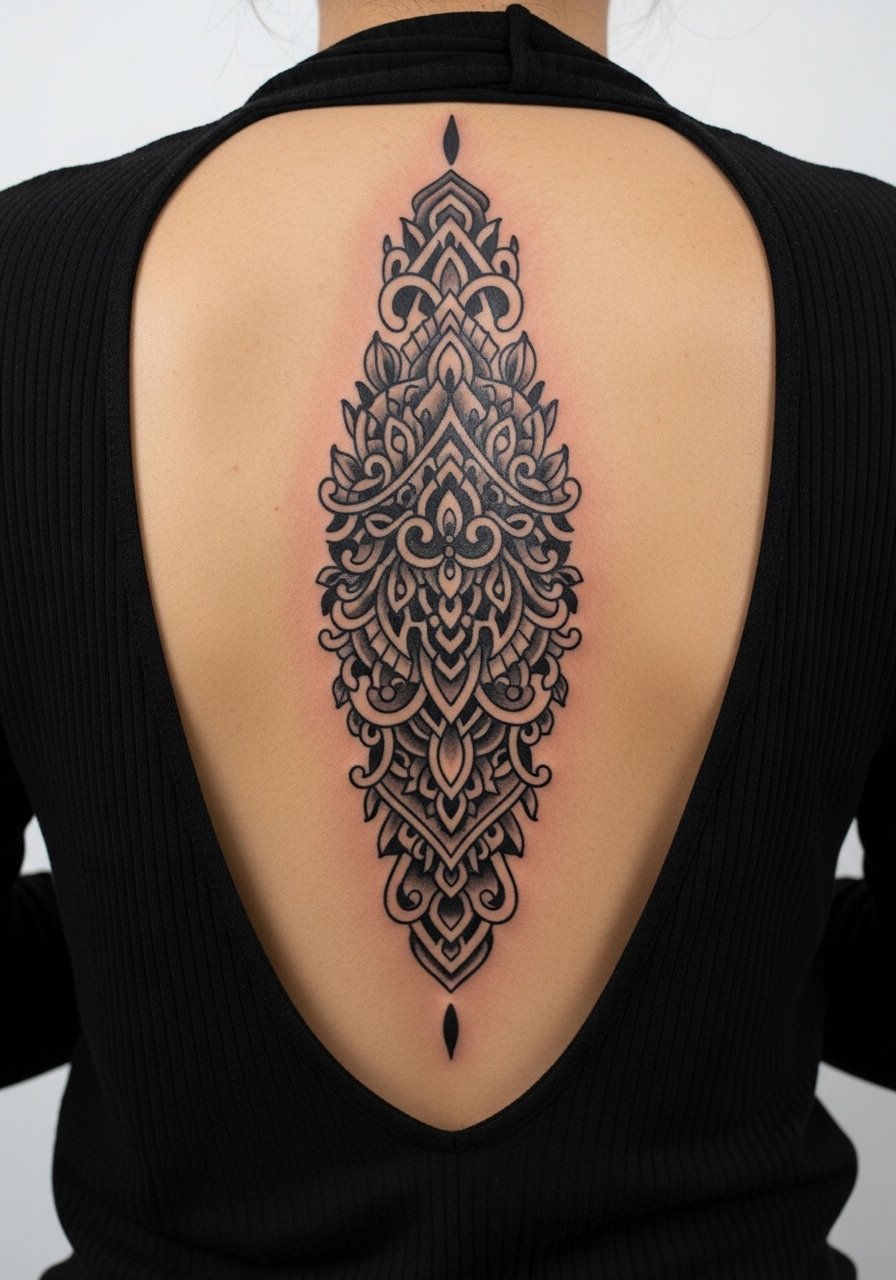
14. Geometric spine stack that uses warped perspective
A geometric stack that intentionally warps to the spine curvature reads three-dimensional. Tell the artist you want illustrative warping mapped to your actual vertebrae so the effect does not look bent when you stand. This under-covered approach gives depth and is a smart choice if you like structure over florals. Pain varies with how much shading sits directly on bone. The error is applying flat geometry without accounting for how the back rounds. For sessions, plan a consultation with grid references so the stencil matches your anatomy. Healed, these designs age well if spacing is generous.
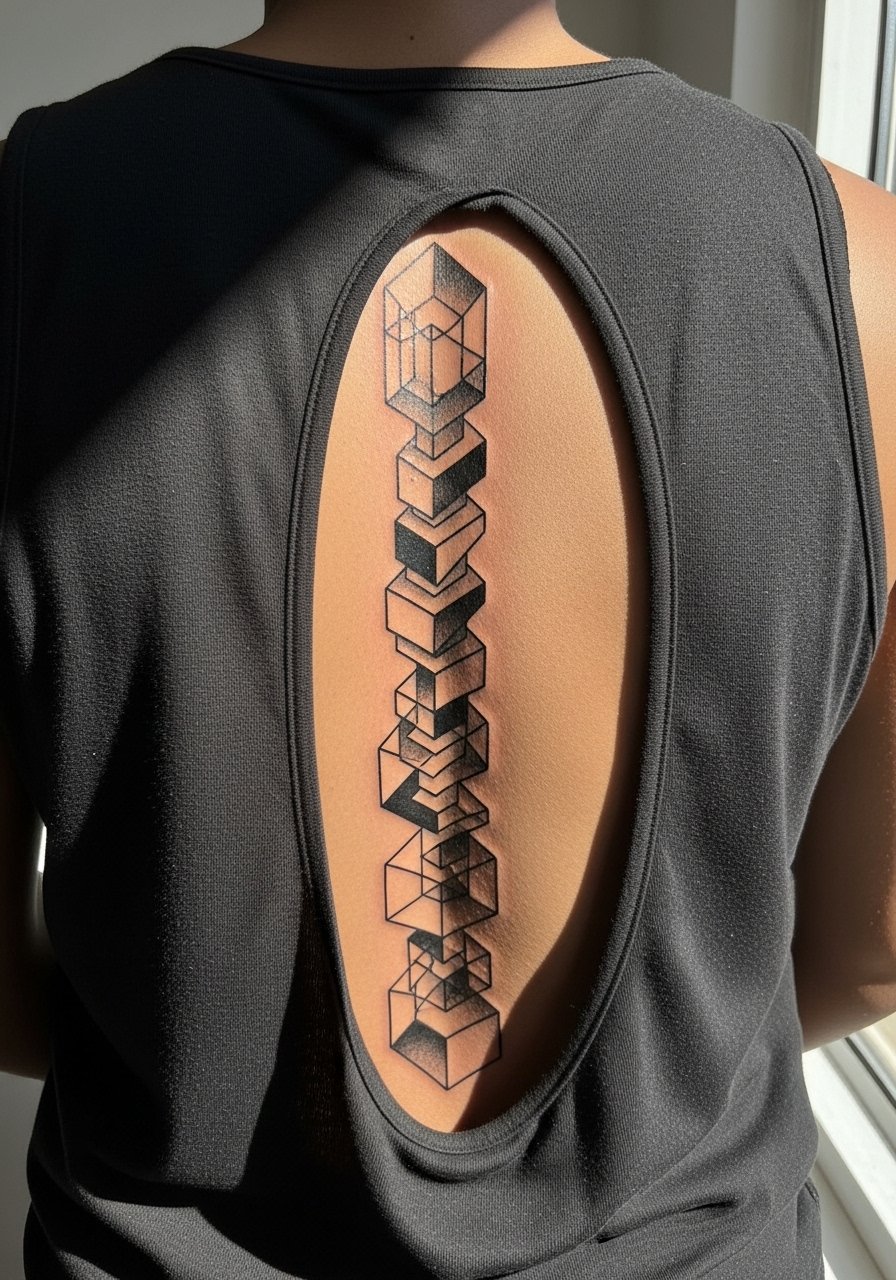
15. Script and coordinates threaded through floral elements
Script down the spine layered with small neo-traditional florals creates a personal anchor. When you include lettering, state the exact text at consultation and confirm type size and kerning so letters stay legible after settling. Text must be larger than a typical fine-line script if placed over moving skin. The most common mistake is asking for very small script which becomes illegible by year two. For session wear choose a strapless bralette or wide-neck top to give the artist clear access without straps rubbing the area. Expect one to two sessions depending on text length and floral fill.
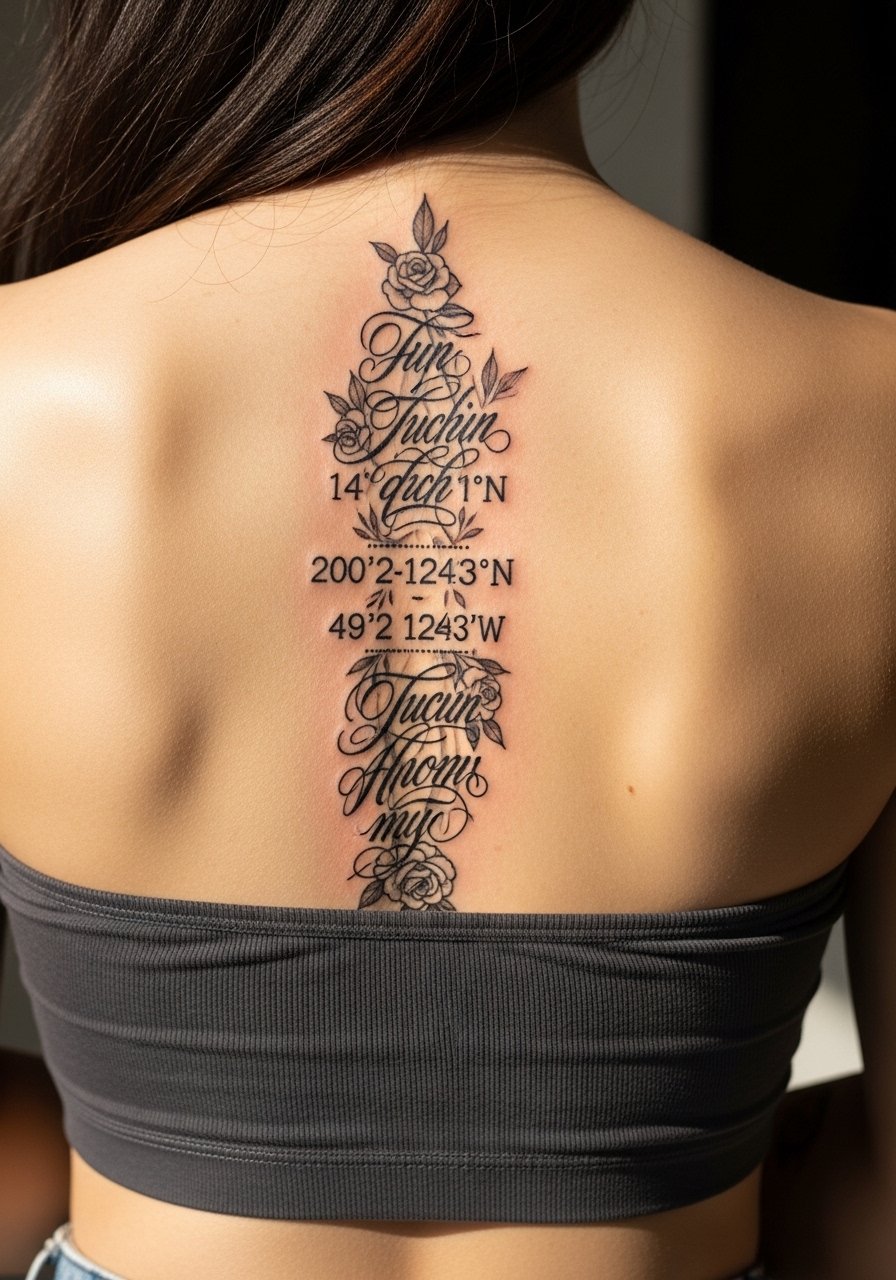
16. Minimalist blackwork column with stipple shading
If you prefer subtlety, a column of blackwork shapes and stipple shading along the spine reads refined without bright colors. Request wider spacing between stipple areas so dots do not merge over time. This placement is forgiving for blackwork because heavy contrast survives movement better than pale pastels. Pain is concentrated where the bone rises. One session can often deliver a clean result, but ask about touch-ups for stipple density at year two. This style also plays well under layers so it is discreet when you need it to be.
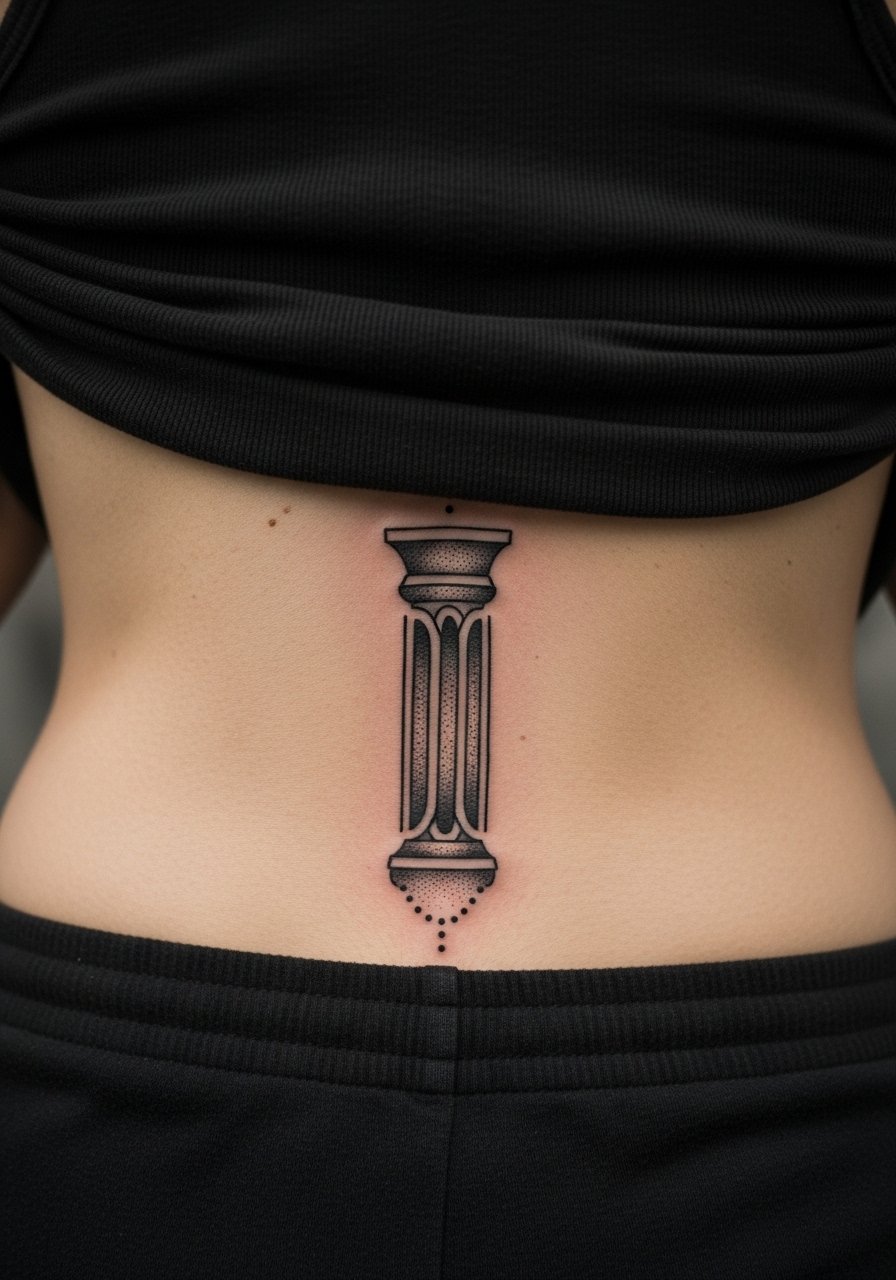
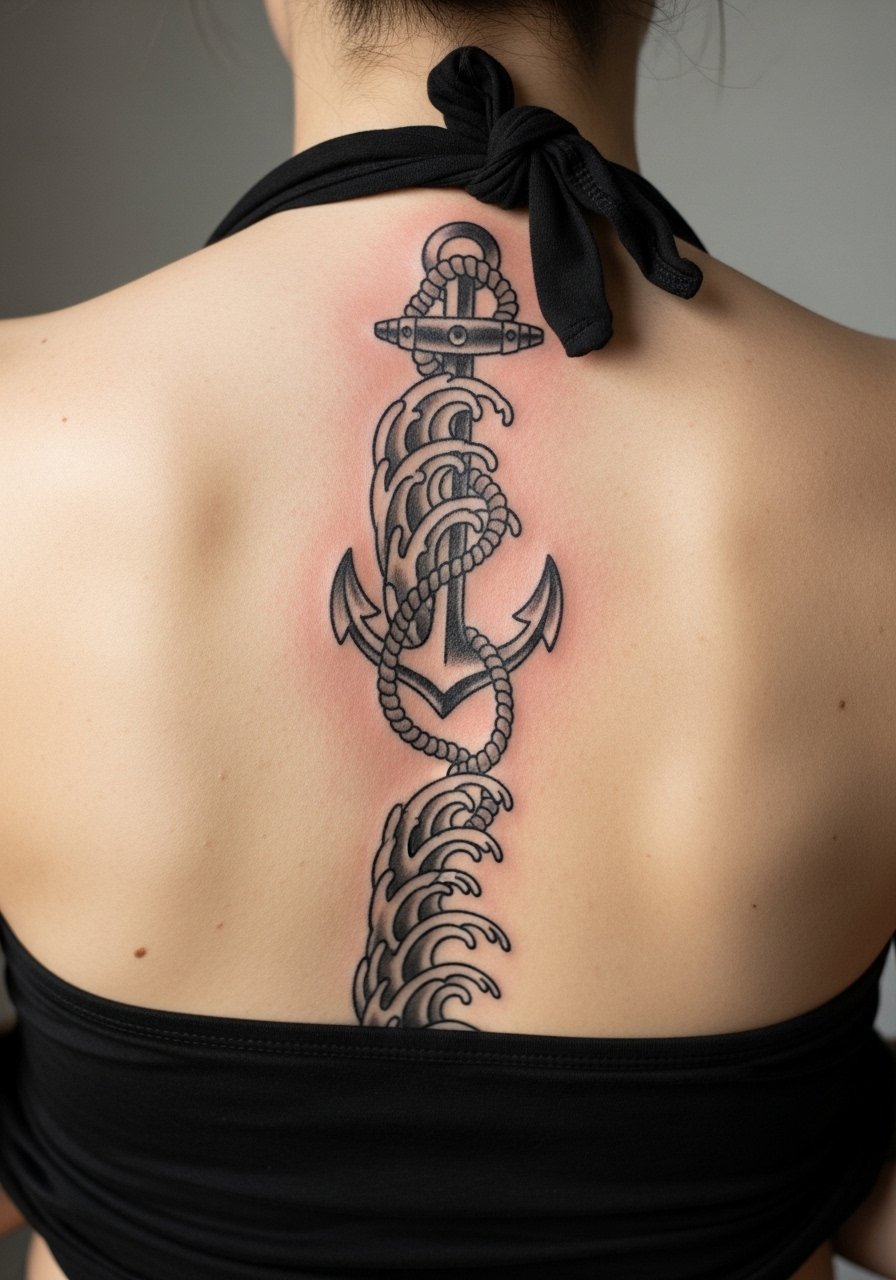
17. Nautical vertical with rope and waves for a linear anchor
A rope-and-waves vertical motif makes for a decorative spine piece with movement and texture. Tell your artist if you want the rope to be the visual anchor or the waves to dominate motion. Session time depends on how much stippling and saturation you want. Avoid tiny rope twists that will soften; larger twist segments hold shape better. For show-off outfits try a low back crop top women or a halter that keeps the back open while framing the piece. Expect touch-ups on mid-spine shading after two to three years.
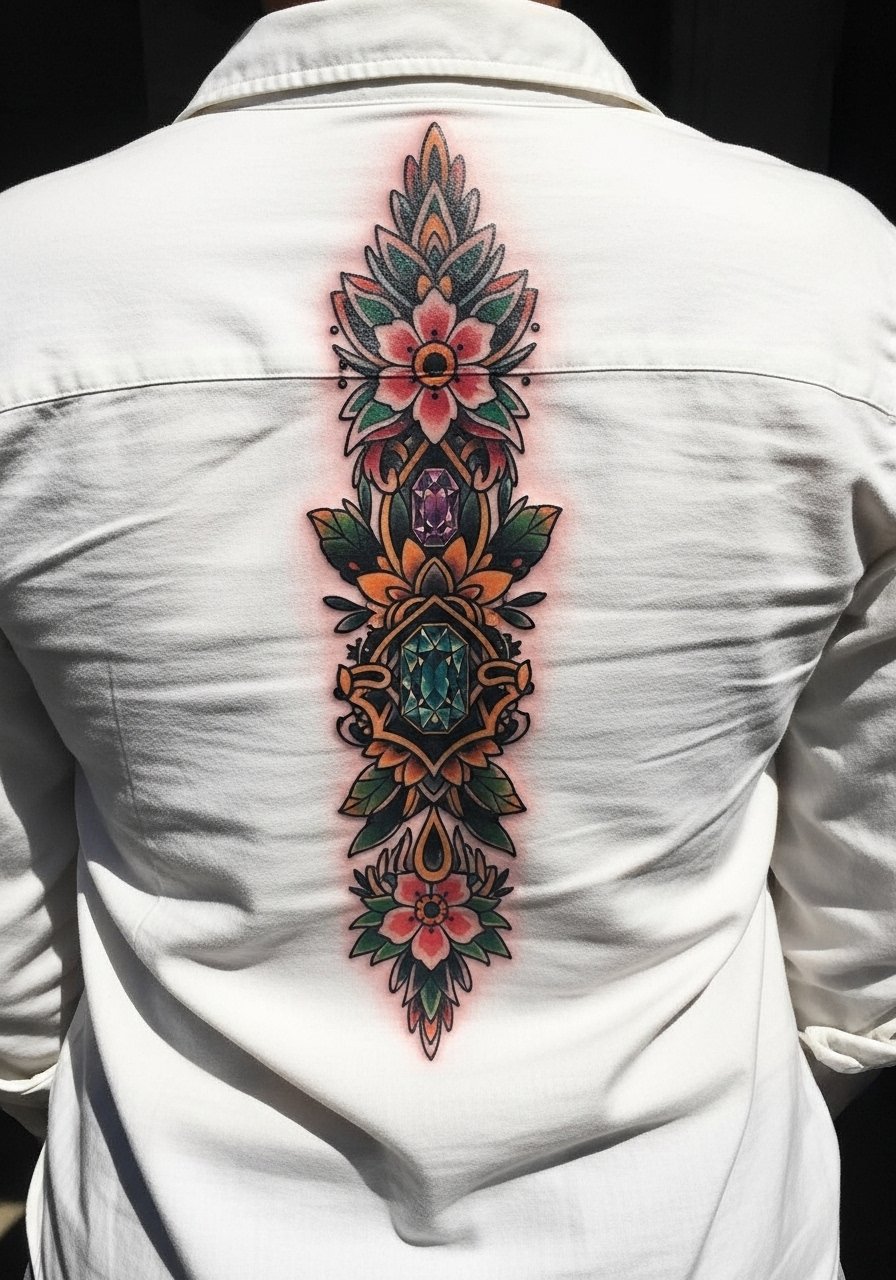
18. Floral and gemstone vertical column for heirloom feel
Combining flowers with jewel-like stones gives a neo-traditional spine piece a family heirloom quality. Tell your artist which stones you want and whether they should read reflective or matte. The jewelwork needs heavier contrast so the facets remain readable as the skin ages. The biggest mistake is tiny facet work that disappears by year three. Pain mirrors floral cascades when placed near the vertebrae. For session comfort wear a loose button-down you can pull aside so the artist has full access. Plan for two to three sessions and a color refresh in later years if you want the gems to stay bright.
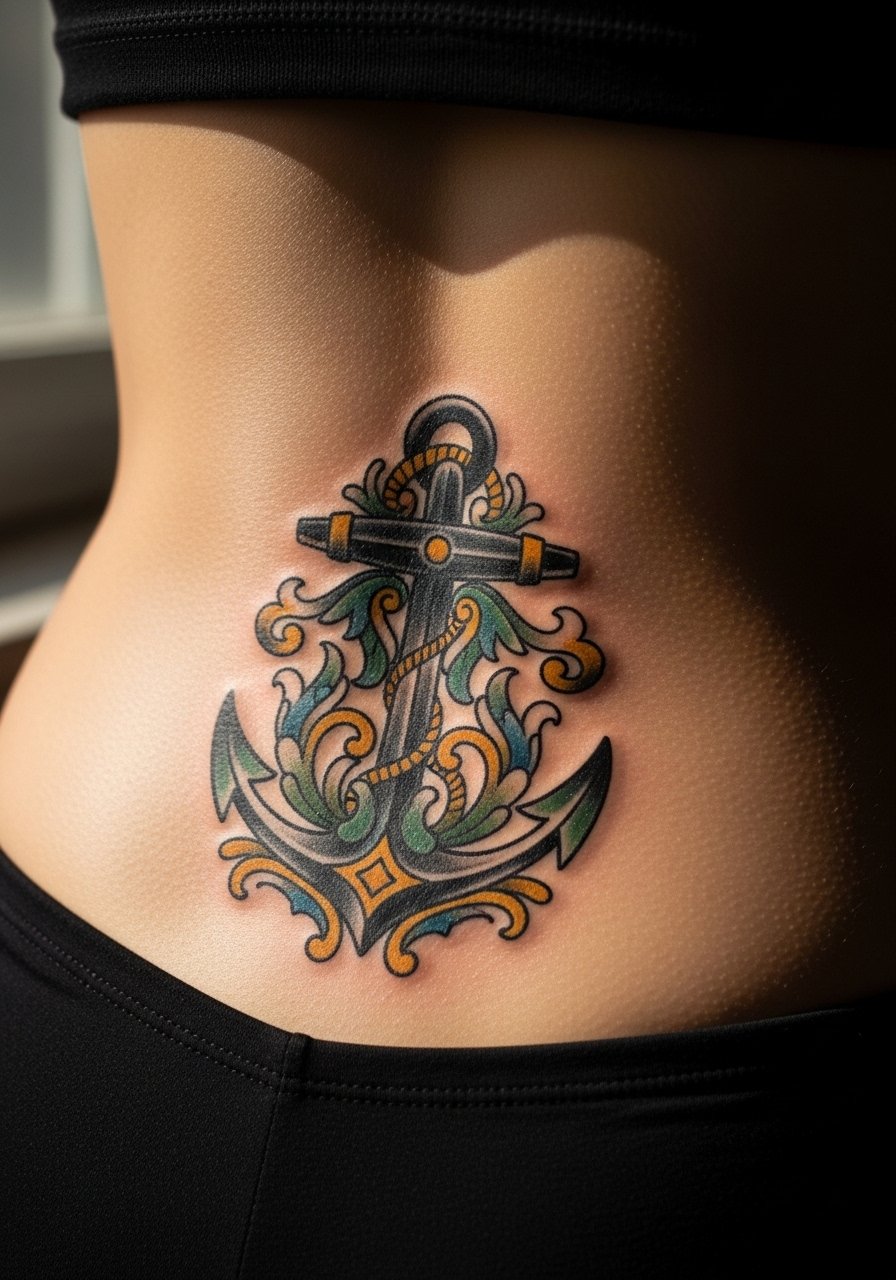
19. Lower-spine anchor that pairs with swim and festival looks
A compact lower-spine anchor with decorative neo-traditional flourishes reads well with summer wear. Ask the artist to keep heavy saturation low and denser elements central so hip movement does not distort the motif. The common error is placing delicate detail right at the waistband. That bites when clothing rubs. For the beach choose a thong bikini bottom or high-cut swimwear to let the piece show without excessive rubbing. Sessions are short but healing can be annoyed by waistbands, so plan wardrobe accordingly.
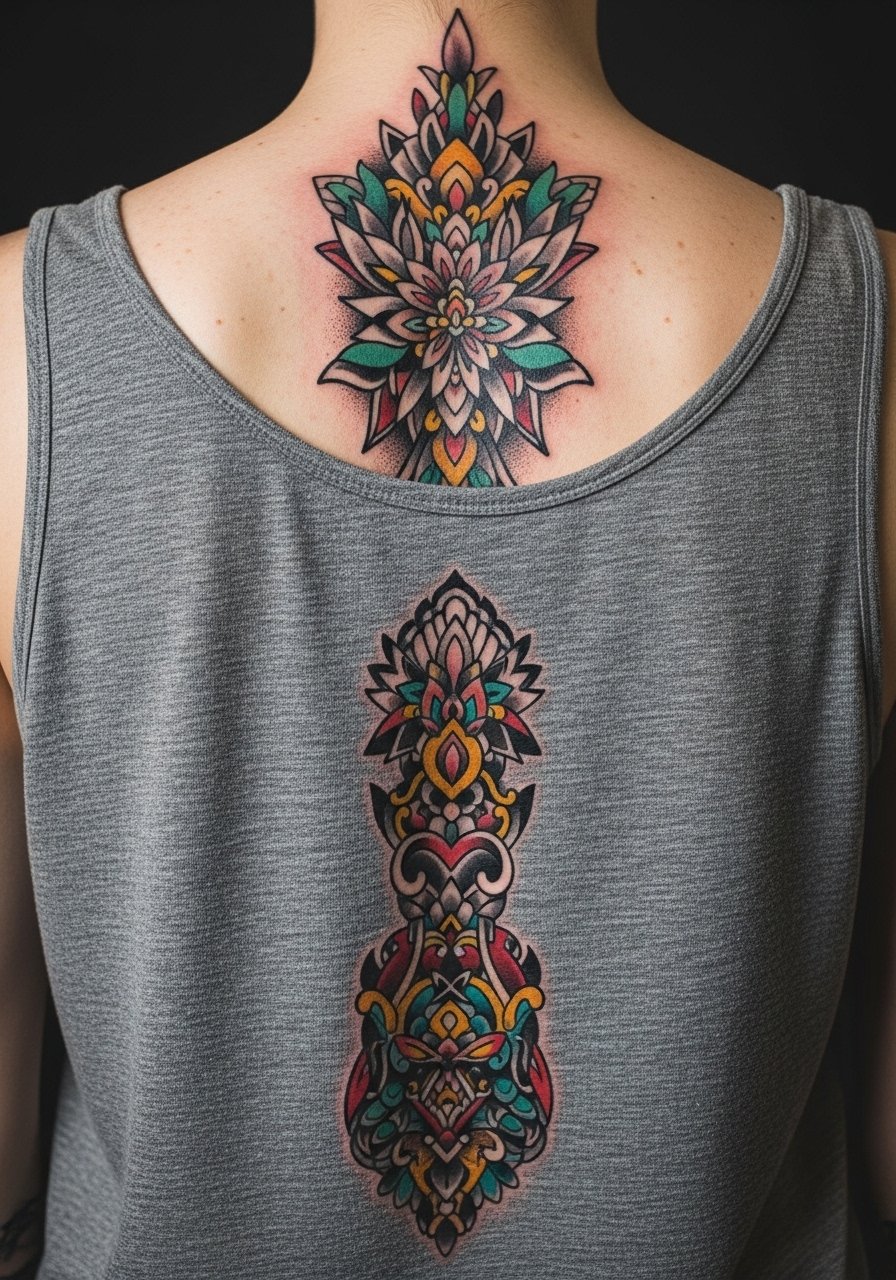
20. Mixed-media stack combining dot work, stipple, and saturated color
A mixed-media vertical stack lets you combine neo-traditional color with stipple transitions for a layered look along the spine. When you consult, specify which zones are color and which are texture only so the artist knows where to saturate. The risk is over-committing to small stippled areas that merge. Pain and session time vary by the amount of saturation. A good rule is to reserve saturated fills for focal pieces and use stipple for connectors. For session wear, a loose tank or button-up gives the artist access while you stay comfortable. Expect a touch-up for color zones at year two to three.
21. Personal-symbol vertical stack for storytelling across the spine
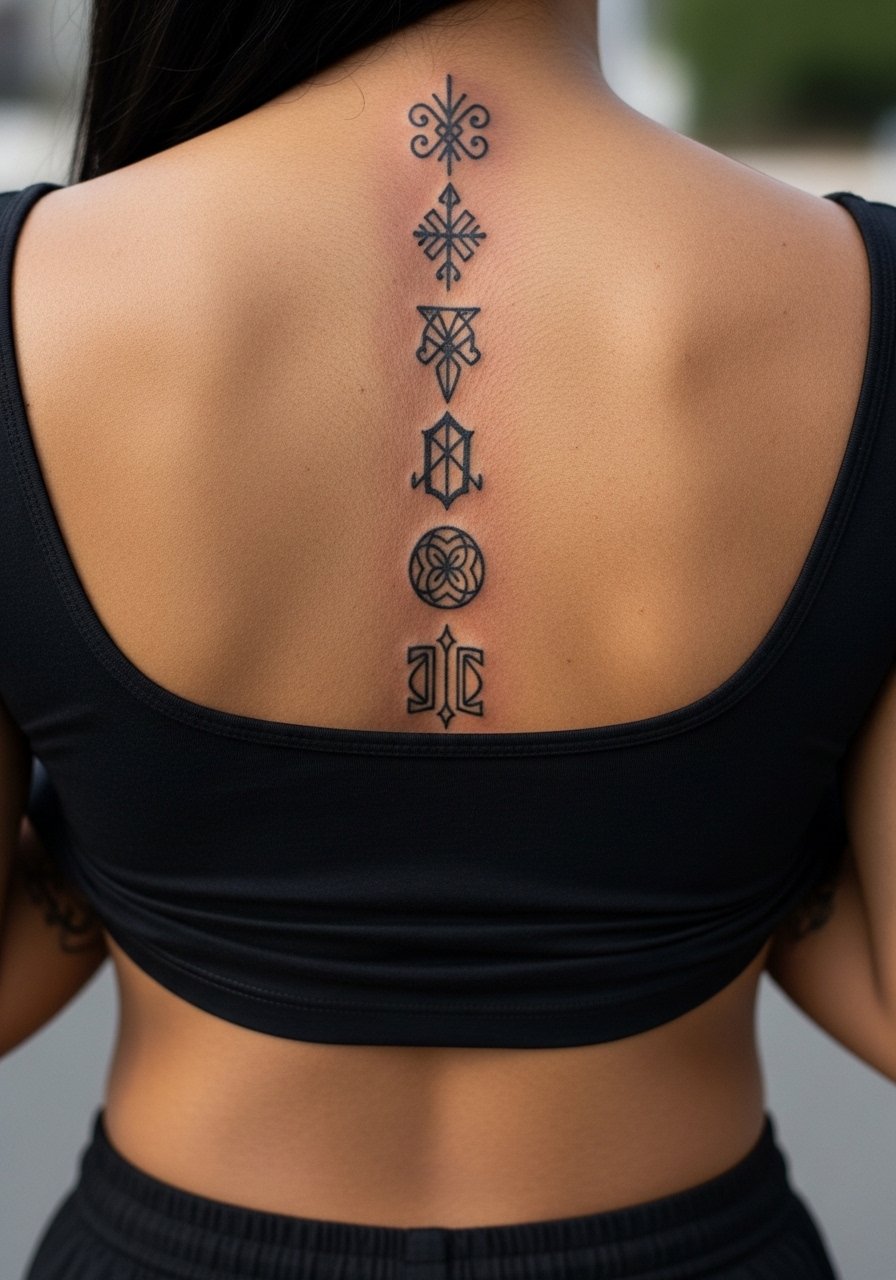
A custom stack made of symbols that mark life events works perfectly on the spine because it reads like a timeline. For this one bring a clear list of symbols and the order you want them. Ask the artist to size each symbol relative to the vertebrae for better balance. Common mistakes include cramming too many small icons into a short stretch. Pain varies depending on which vertebrae elements land on. For revealing outfits pair with a low back crop top women or an open-back dress. Expect periodic small touch-ups for the smallest icons by year three as they can soften faster than larger elements.
Frequently Asked Questions
Q: How painful are full-spine neo-traditional tattoos compared with small upper-spine pieces?
A: Pain on the spine varies by zone. The upper and lower vertebrae tend to be sharper because the needle hits closer to bone. Small upper-spine pieces feel intense in short bursts, while full-spine sessions are usually split into shorter appointments to manage discomfort. Numbing cream can help some people but not everyone wants it, and artists differ in how they use it.
Q: Will color neo-traditional pieces still look good on darker skin tones?
A: Color can read beautifully on darker skin if the artist uses higher contrast, deeper saturation, and stronger outlines. Ask to see healed photos on similar skin tones during consultation so you know how palettes translate. Black and gray neo-traditional is a solid alternative if you want depth without bright color contrast.
Q: How do I avoid bra friction during the healing of a lower-spine piece?
A: Wear soft bralettes or sports bras and choose tops without tight bands for the first two weeks. For lower-spine work, swap tight waistbands for loose drawstring pants while the area scabs and settles. Follow your artist's specific aftercare approach and check how dress choices affect rubbing before leaving the shop.
Q: Do fine lines work on the spine or should I pick neo-traditional heavy outlines?
A: Fine lines can work in select zones but neo-traditional heavier outlines hold better over time on the spine. Movement and close proximity to bone make ultra-fine linework prone to blurring. If you love delicate detail, ask the artist to increase spacing and use slightly stronger line weight where the skin moves most.
Q: How many sessions should I expect for a full-spine neo-traditional piece?
A: Plan for two to four sessions depending on size, color, and shading. Full saturation and layered shading typically need more time. Ask about breaking sessions into shorter blocks if you are nervous about pain or time in the chair.
