
Fine line tattoos are everywhere on mood boards right now, and the gap between what looks good on a screen and what lasts on skin is surprisingly wide. I've seen fresh, intricate staffs and tiny notes that needed touch-ups within two years because they sat on the sunniest part of the arm or were drawn too close to flex points. Read on for 21 forearm ideas that balance aesthetics with how they actually heal and age.
1. Sheet Music Wrap That Follows the Curve
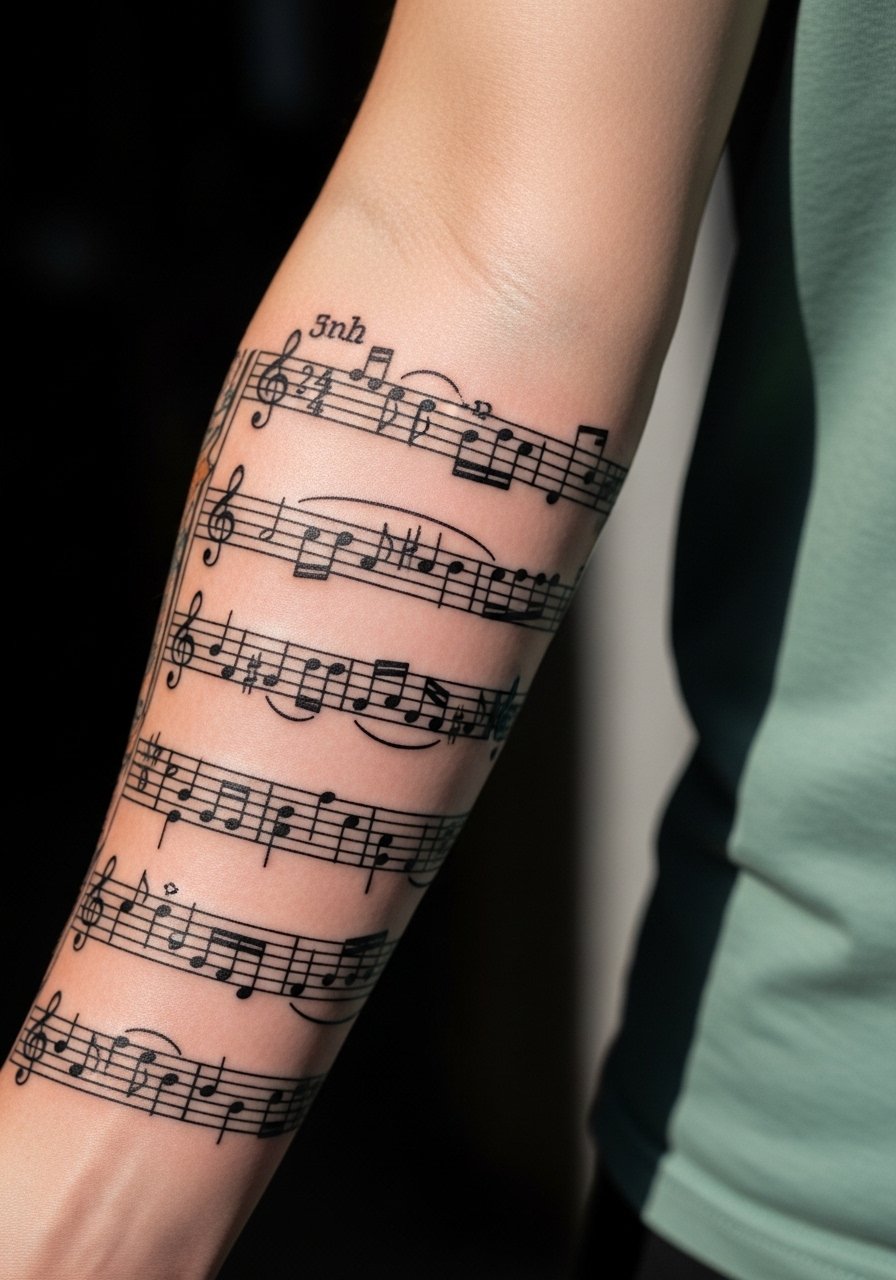
I recommend the wrap when you want a readable nod to a favorite piece without a bulky block of ink. Tell your artist to space the staffs slightly wider than a printed score so the lines do not merge when you flex. Common mistakes are packing notes too tight and using ultra-fine linework on the outer arm where sun and motion soften detail. Expect one to two sessions, moderate discomfort on the outer forearm, and a likely touch-up around year three if you keep the area in sunlight. For showing it off, roll the sleeve of a chambray shirt to frame the flow while keeping the focus on the linear motion.
2. Small Music Note Cluster on the Inner Forearm
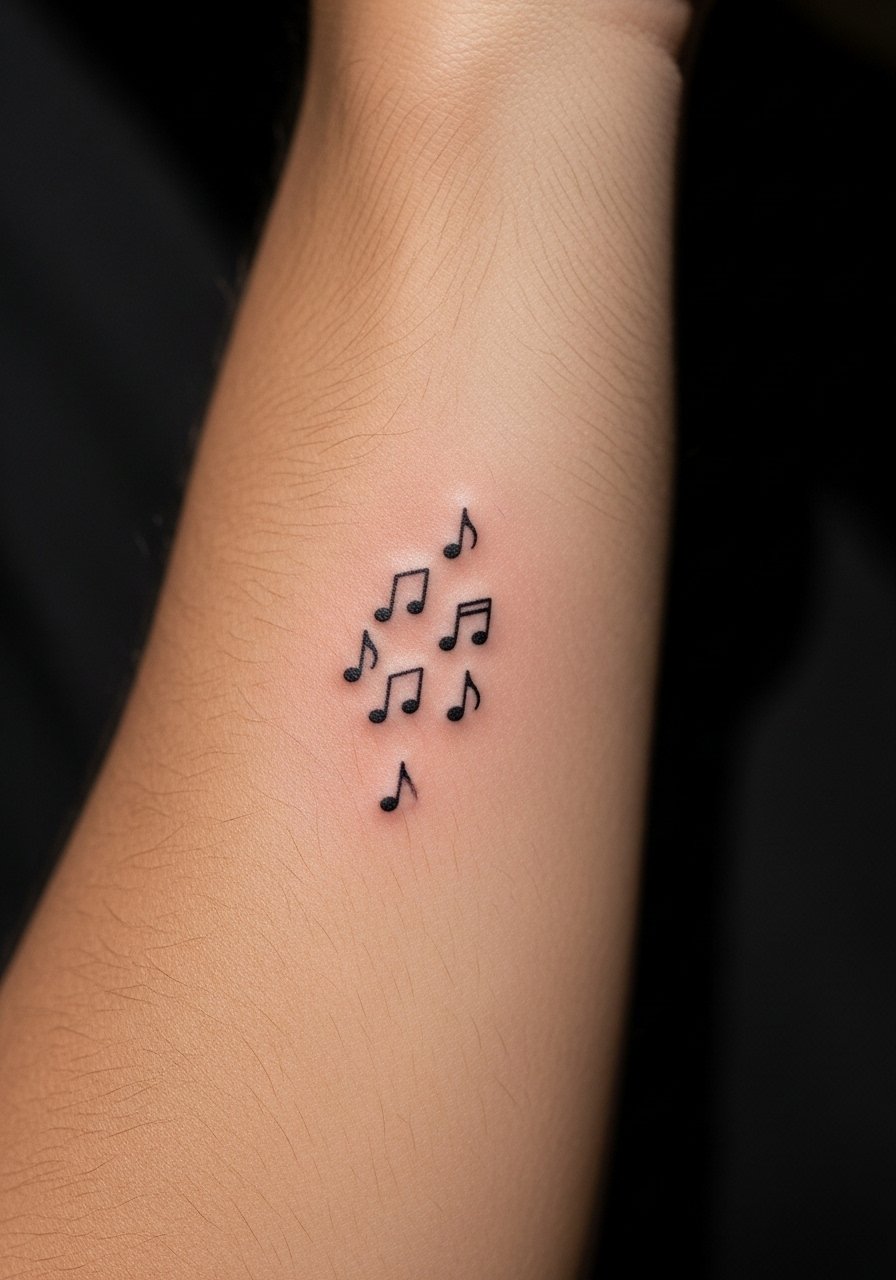
This is a low-commitment first tattoo that reads well on a quiet area. Fair warning, the inner forearm is softer but can be more sensitive near the wrist. Ask your artist for slightly bolder dot weight than a single needle so the notes remain legible after a year of hand washing and sunlight exposure. A common aging issue is fading where the wrist meets the hand, so expect touch-up potential at year two. For the appointment wear a fitted henley shirt you can push to the elbow so the artist has a dry flat surface to work on.
3. Lyric Script Band in Fine Line Around the Forearm
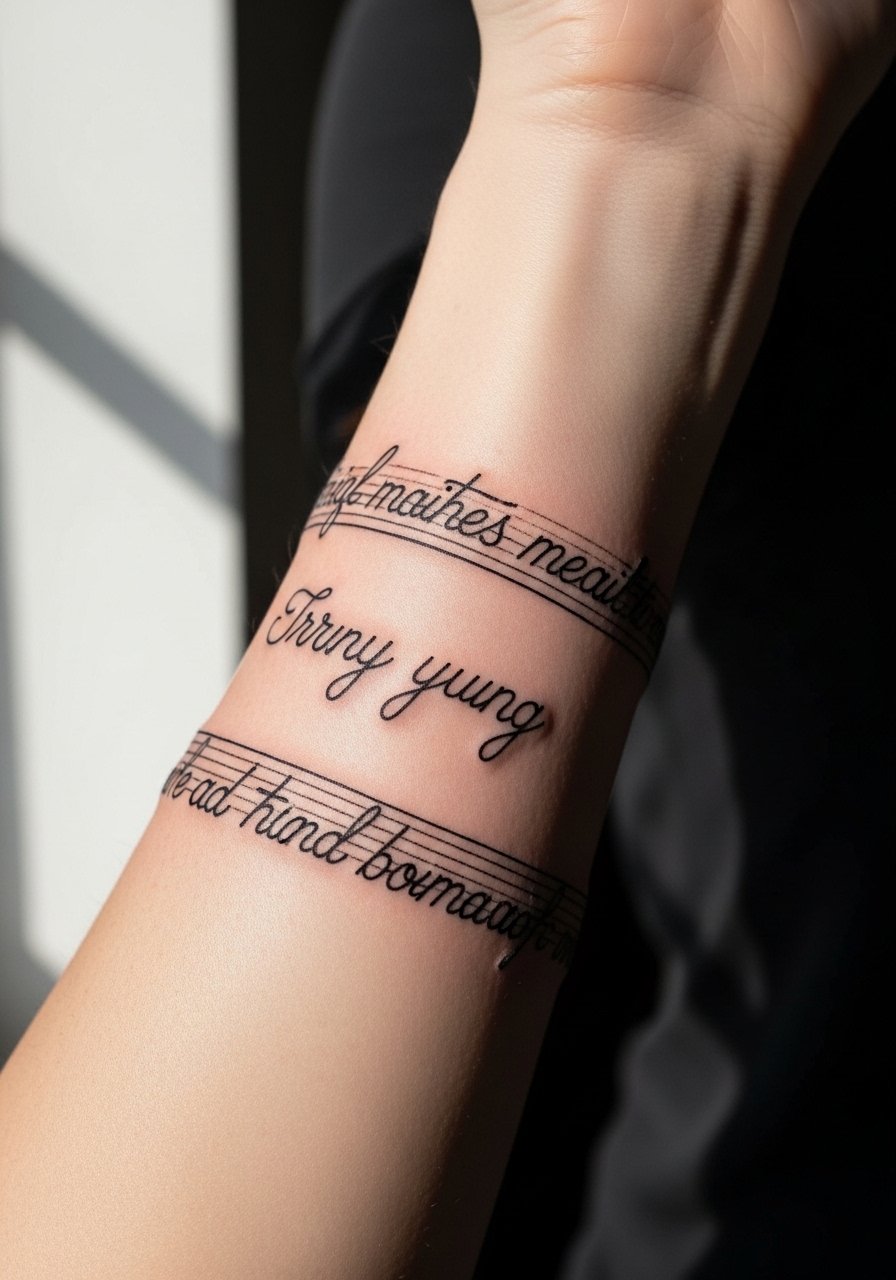
Lyric bands look intimate and readable when scaled to the arm. The biggest mistake is running long sentences in tiny script. During consultation, bring the exact wording and font size mock-up so the artist can test spacing on skin. Fine line scripts live beautifully for the first year, and then the smallest strokes may soften. Some people in the fine line camp accept gentle fading as part of the aesthetic. For evening wear or casual shows pair the band with a slim fit polo shirt that keeps the cuff just above the ink, which frames the script without covering it.
4. Guitar Silhouette in Blackwork on Upper Forearm
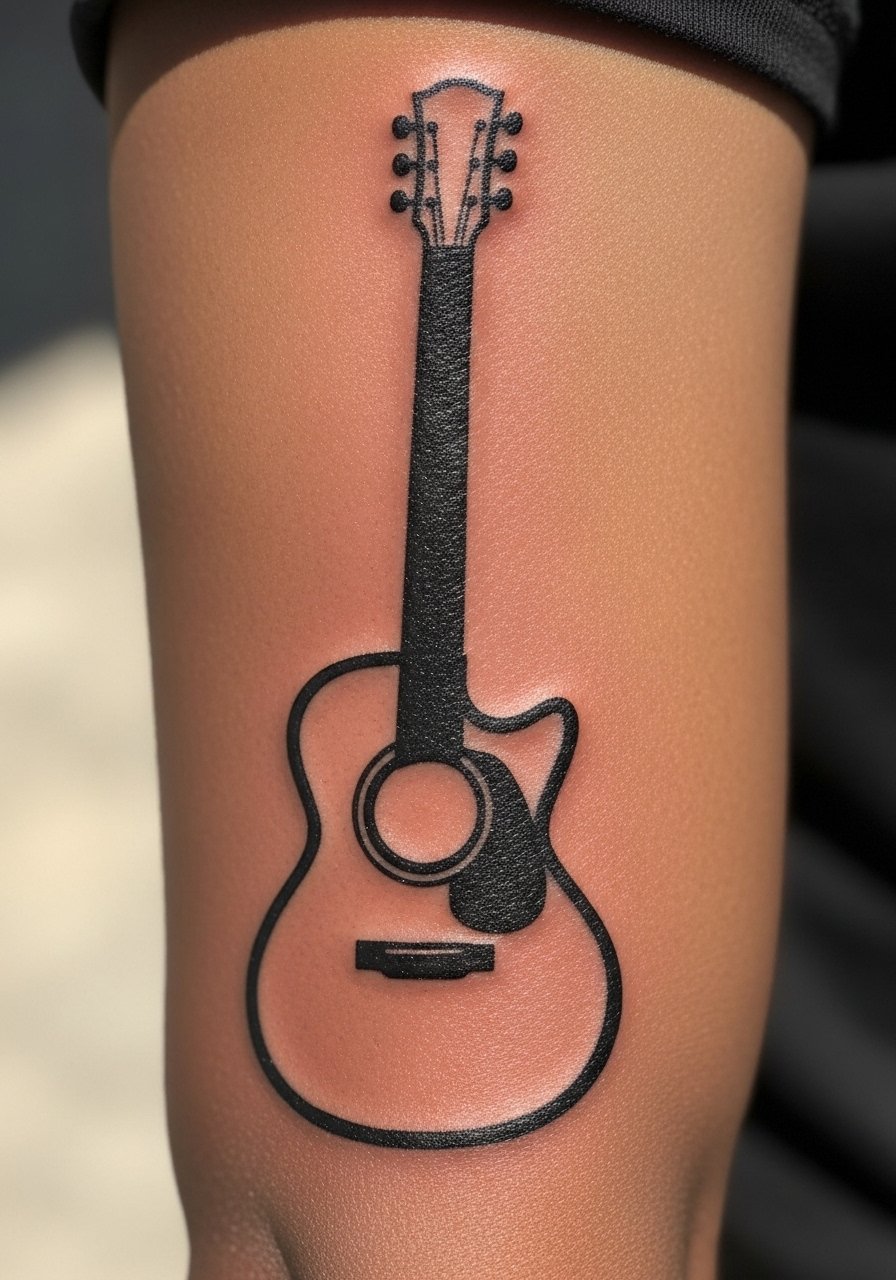
There is a visual presence to a solid guitar silhouette that holds up better than fragile filigree. If you play an instrument, ask the artist to match the scale to your actual forearm length so the proportions feel intentional. The upper forearm tolerates saturation well, so expect deeper pigment and slower sessions with more time on the chair. A common error is adding too much interior detail that ages into noise, so keep the inside minimal for longevity. For a show-off look, layer with a vintage band tee and roll the sleeves short so the silhouette reads against dark fabric.
5. Vinyl Record with Needle Drop in Micro-Realism
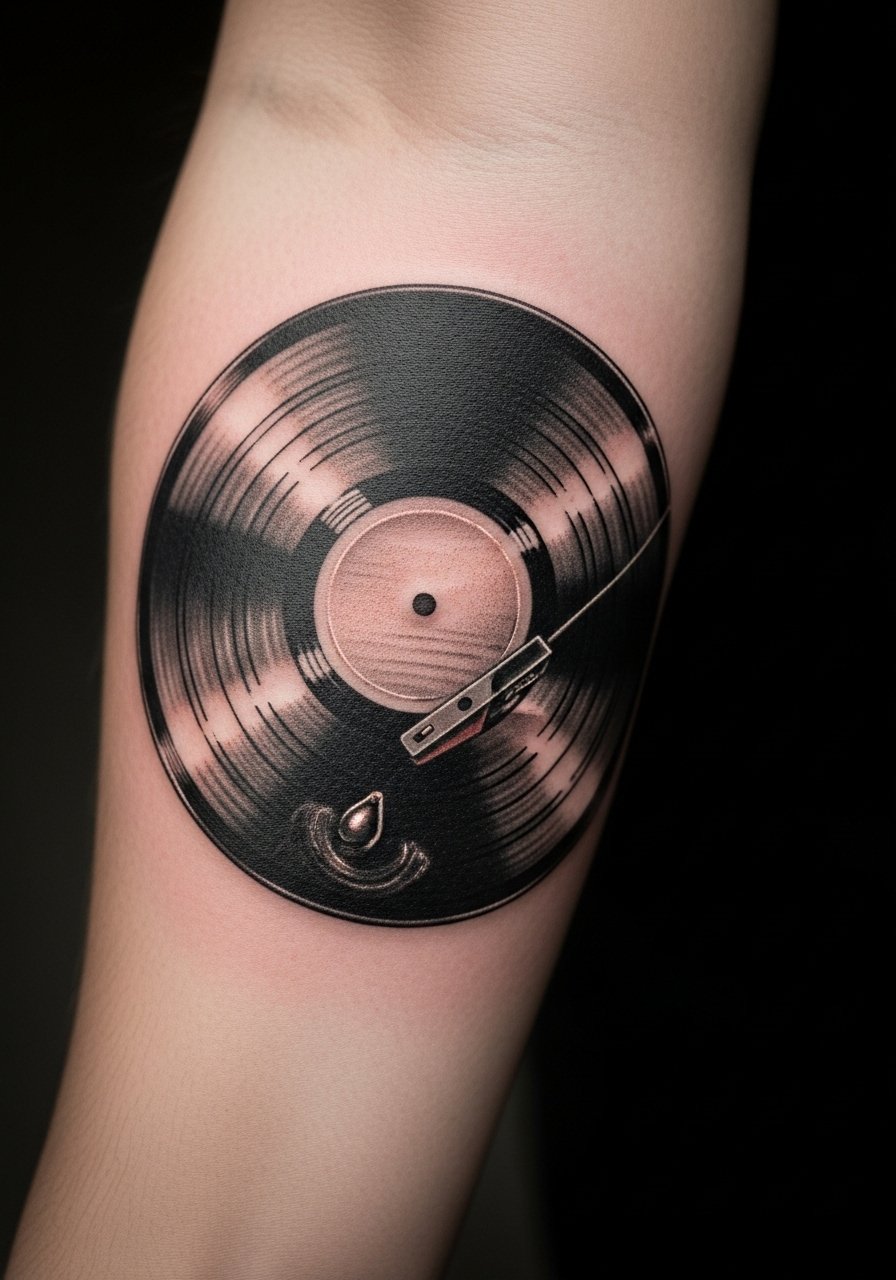
This design reads like a small scene and is perfect when a specific album matters. Micro-realism requires careful placement on a flatter section of the inner forearm so circular details do not warp with flexing. Tell your artist you want slightly higher contrast between grooves and label area to preserve readability after a year. The downside is that tiny tonal shading can soften, so budget a potential color or grayscale touch-up at year two. For session comfort, a sleeveless muscle tank keeps the arm exposed without excess fabric shifting.
6. Treble Clef Ornamental Mandala Blend
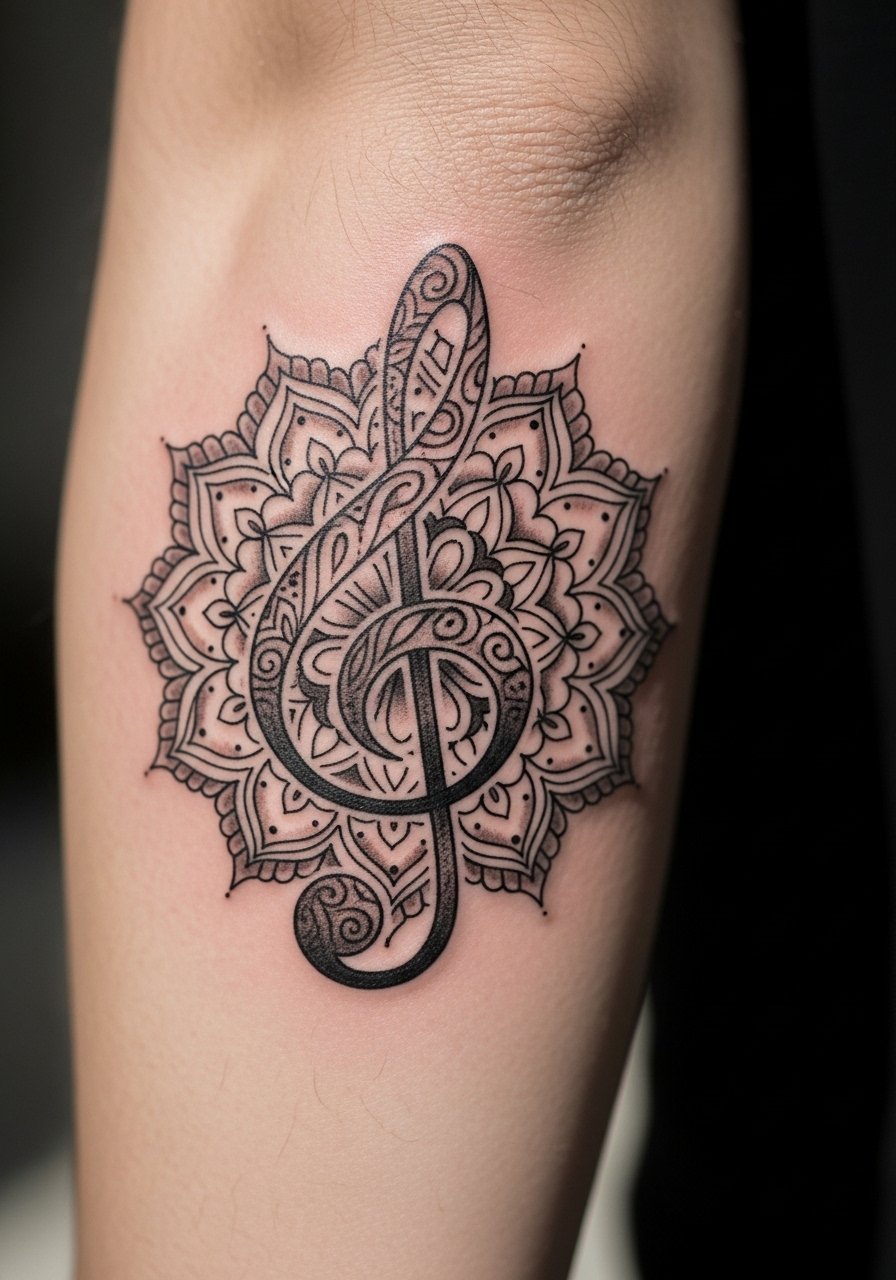
This hybrid combines symbol and geometry to fill the forearm without feeling dense. Artists split on ornamentation scale. One group avoids tight mandala details on thin skin, saying lines blur in time. The other group adapts spacing and uses stipple shading to keep definition. Ask which approach your artist prefers before booking. Expect two sessions, moderate discomfort on the outer forearm, and better longevity if the mandala has breathing room between elements. For styling, a short sleeve button shirt with sleeves rolled presents the piece cleanly when you want to show it off.
Studio Day Picks
The outer and inner forearm designs above have different healing needs, so a small kit for the session and first week smooths both the appointment and early recovery.
- Stencil transfer paper kit. Lets you preview placement and scale on skin before the needle touches, which is especially useful for wrap and script work from the first six ideas.
- Topical numbing cream. Applied as instructed before longer sessions reduces wrist and inner forearm sensitivity when you need it for detailed micro-realism.
- Thin protective film roll. Shields fresh forearm lines from friction with sleeves and backpacks during the first few days.
- Fragrance-free body wash. Gentle cleansing helps prevent irritation on fine line and micro-realism pieces while the scab phase resolves.
- Aquaphor healing ointment. A thin layer for the first couple of days keeps pigment from drying out on tighter linework without trapping excessive moisture.
7. Headphone Outline Neo-Traditional on Lower Forearm
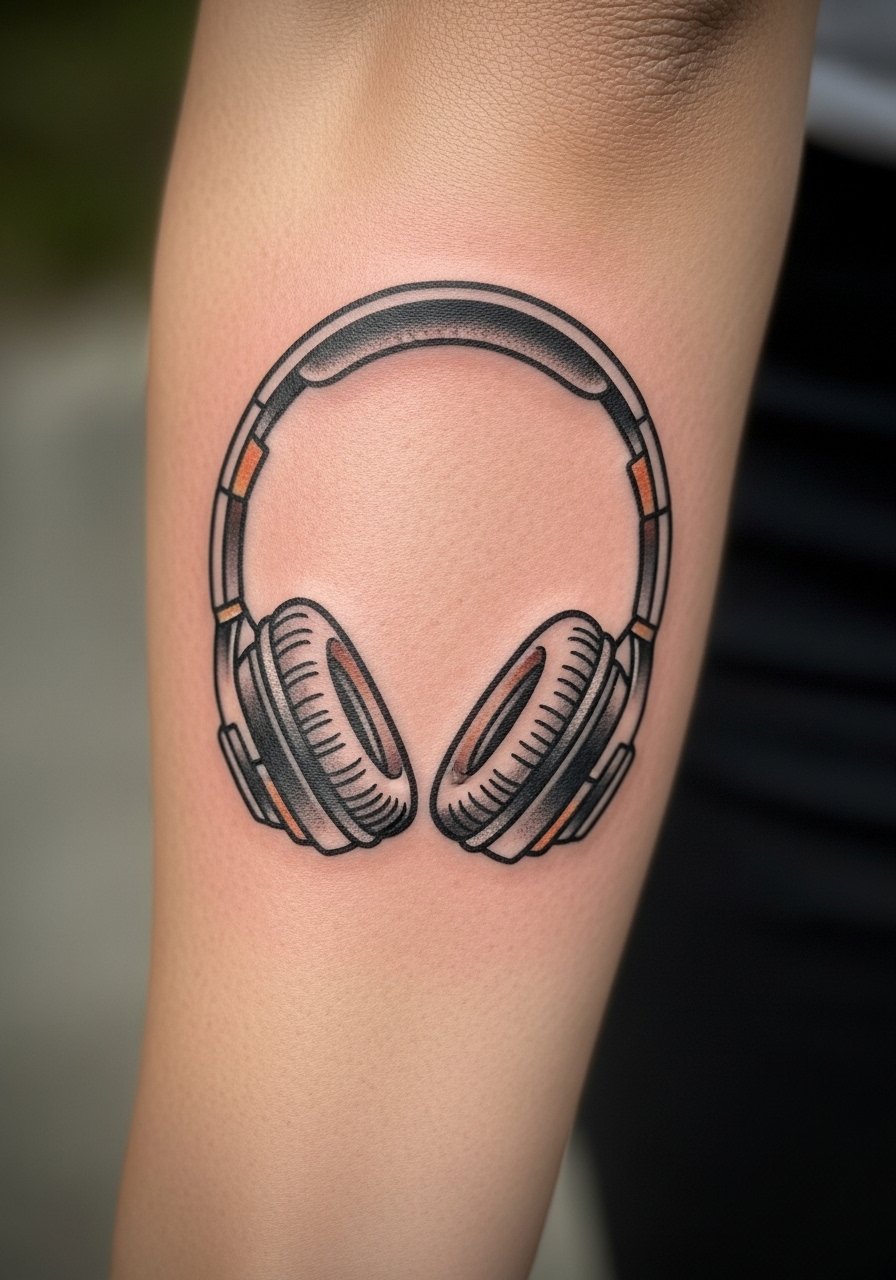
This one reads modern and plays with negative space. The lower forearm sees a lot of movement and contact with surfaces while typing and carrying, so ask for slightly thicker outlines and selective color pops rather than full saturation. The session feels medium intensity because shading sits over tendinous areas. If you want to avoid early touch-ups, plan for conservative color fills and stronger outlines. For a casual display pair the piece with a loose button down shirt you can roll or push up so the headphone sits against fabric that contrasts the color accents.
8. Drum Set in Ignorant Style on Outer Forearm
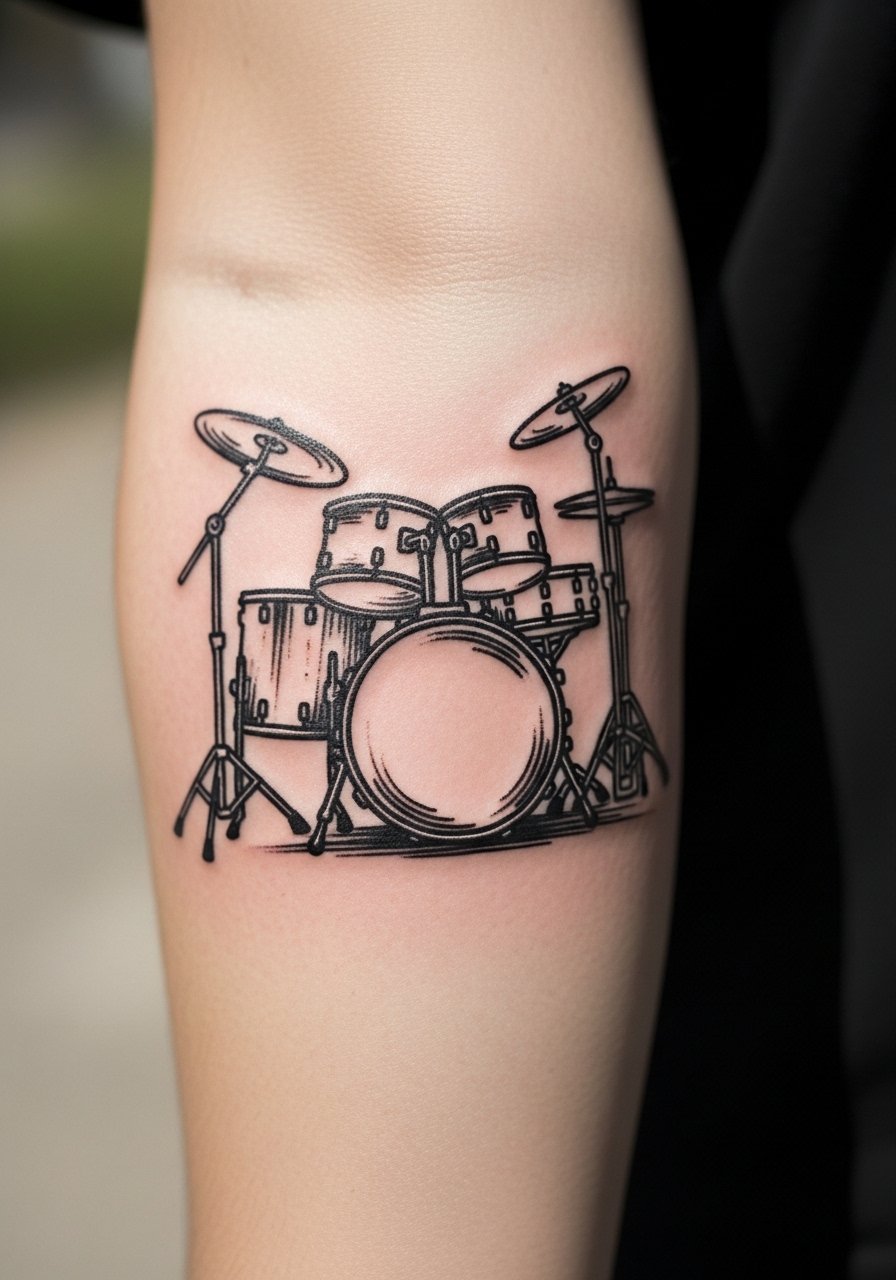
This raw approach embraces imperfect marks as part of the aesthetic. Expect a longer session because the thick strokes require heavy saturation and deliberate layering. The most common mistake is shrinking the drums too small, which turns the aggressive texture into an indistinct blot over time. Aging tends to favor this style because strong black lines remain readable even as edges soften. If you lift weights or use the forearm heavily, mention this to your artist so they avoid tiny interior detail that will blur. A chunky watch on the opposite arm complements the heavy lineweight and balances the visual weight.
9. Piano Keys Wrap in Watercolor Along the Forearm
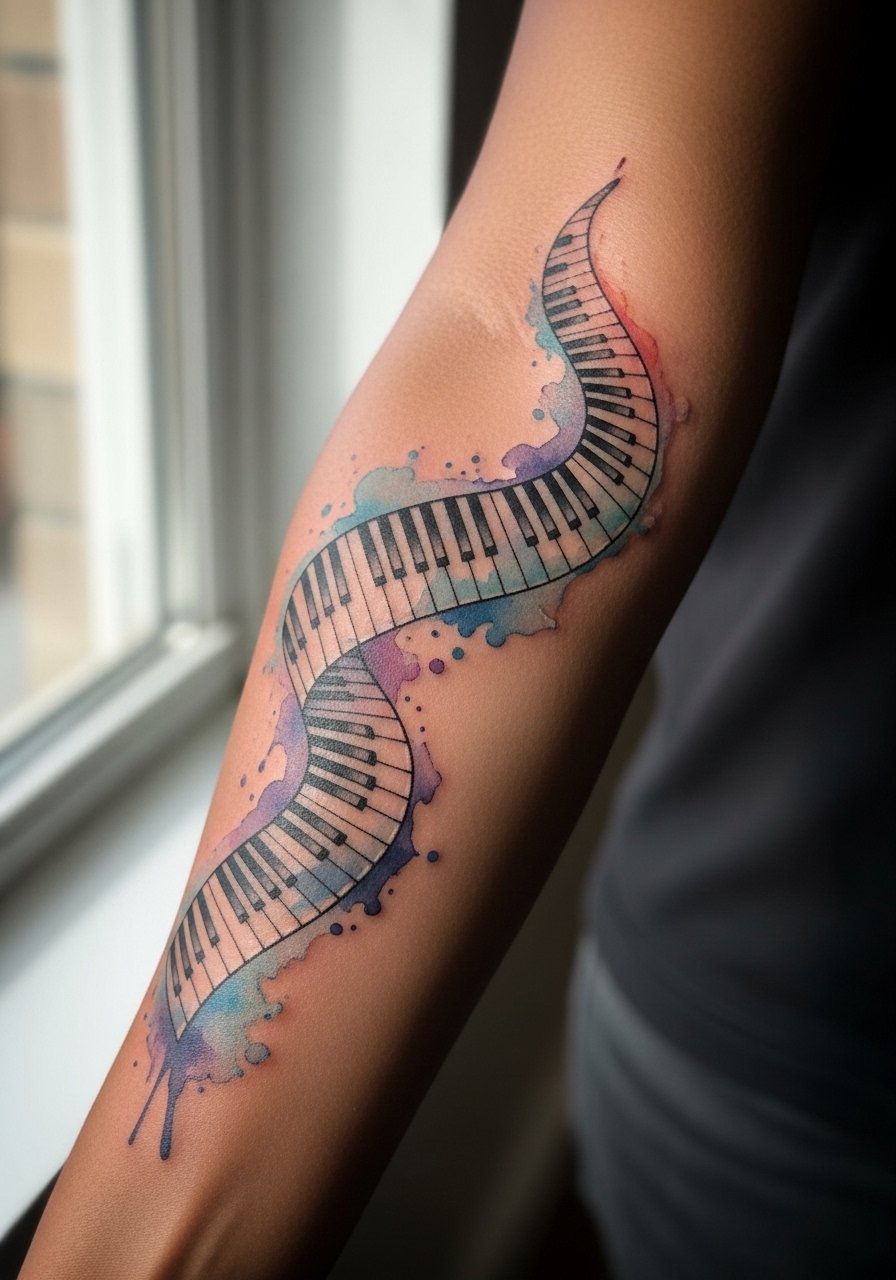
Watercolor washes are gorgeous while fresh and can fade faster on sun-exposed forearms. The trick is to anchor the keys with a thin black edge so the design keeps structure as the color softens. During consult ask for pigment-packed anchors and lighter washes between them. Expect two sessions and a touch-up sooner than solid blackwork. For outfits that let the colors breathe, half-roll a linen shirt flowy so the wash reads against plain fabric without pattern clash.
10. Cassette Tape Realism on the Inner Forearm
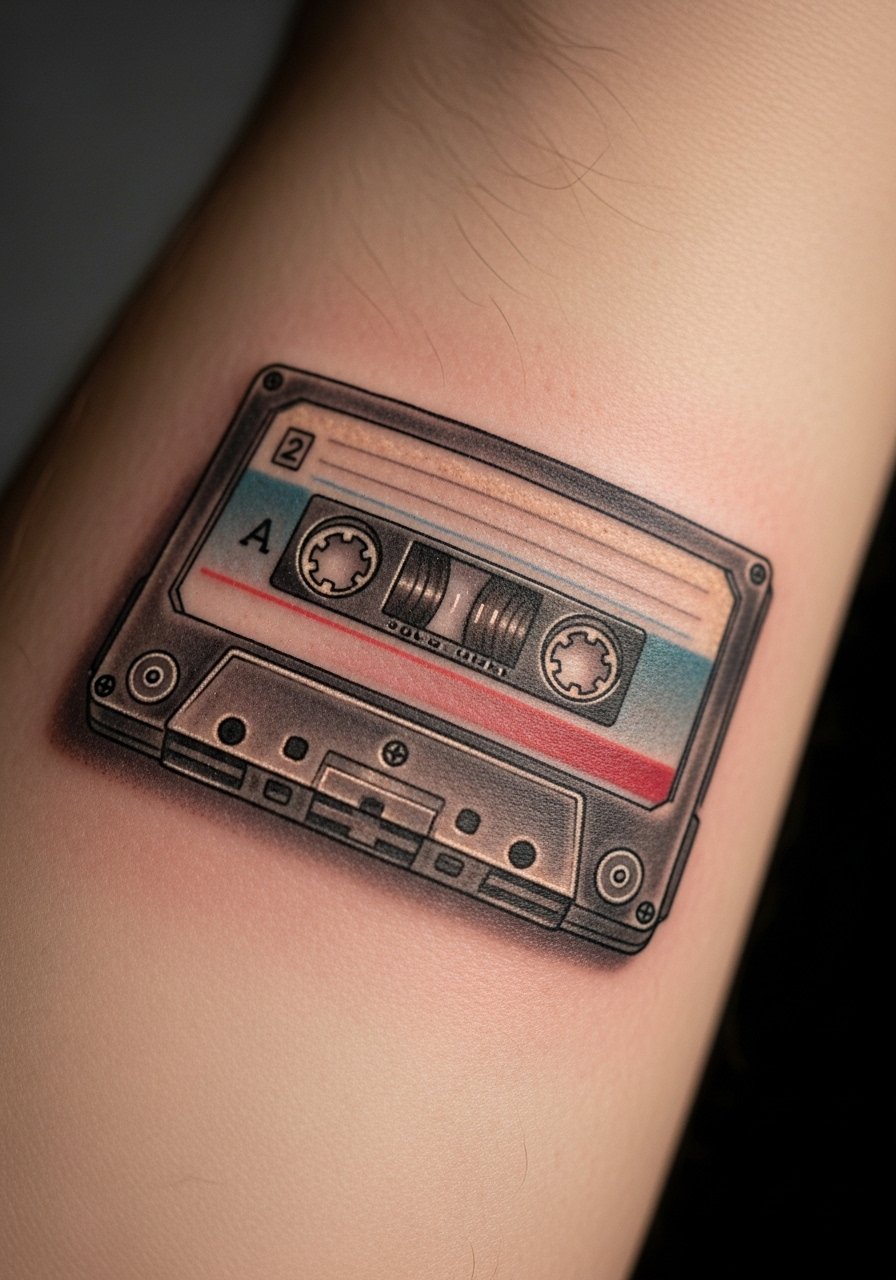
Retro pieces like a cassette tape tell a specific era story without being loud. Realism requires a flat canvas, so the inner forearm is ideal. A common mistake is squeezing too many label details into a small rectangle, which turns into blur after frequent washing. Ask your artist to simplify the label area to bold contrasting shapes for longer readability. The session is moderate and precise. For the appointment wear something sleeveless or with sleeves you can roll easily so the artist can maintain a steady surface.
11. Microphone in Bold Traditional Style
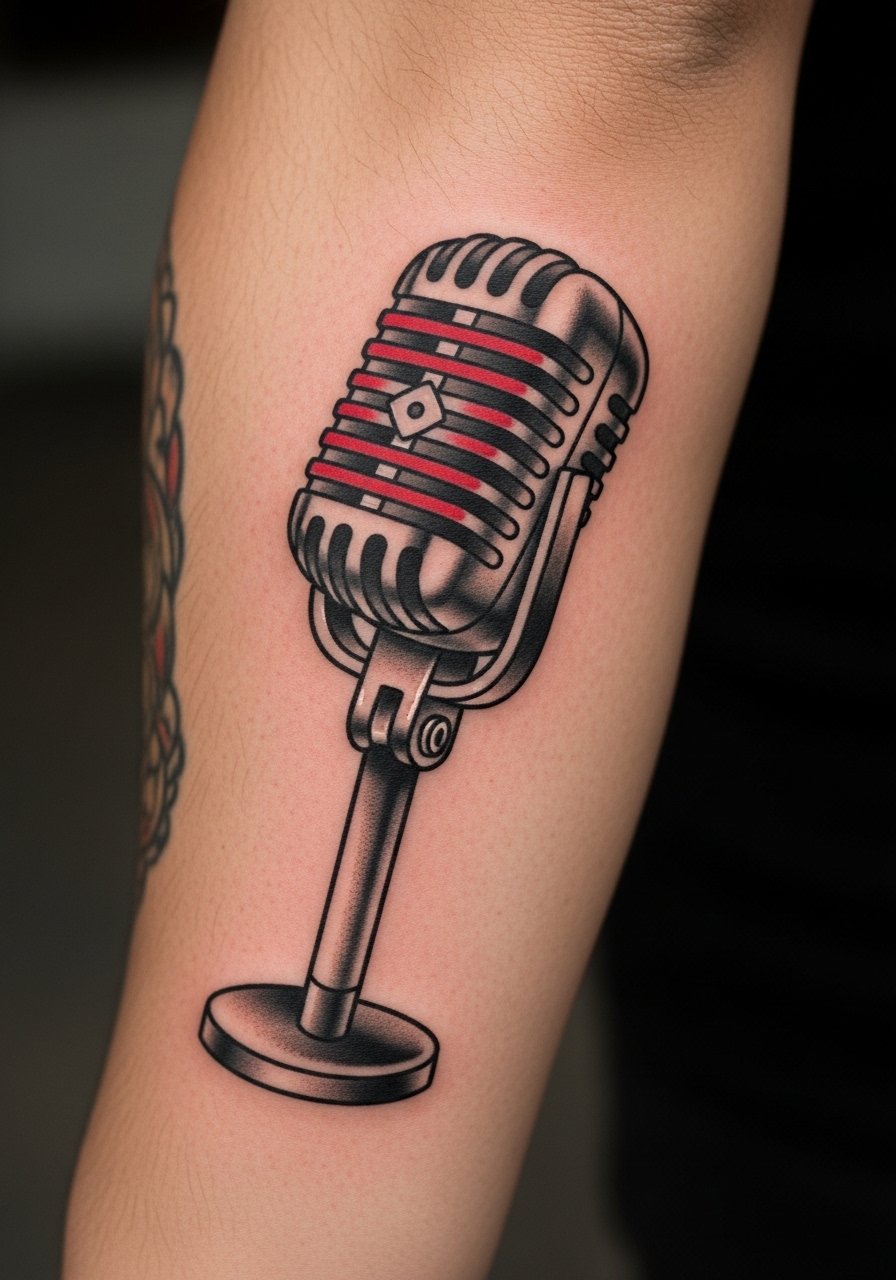
Classic microphone tattoos benefit from strong outlines and limited color fills that survive stage lights and time. If you perform onstage, tell the artist the mic will be seen from a distance so bump up the contrast and saturation for visibility. The biggest error is using thin curls or filigree around the grill which eats into the clear graphic. Expect a single to two sessions and durable saturation. Pair it with a chunky leather watch for an older rock look that balances the bold lines.
12. Equalizer Bars Transitioning Wrist to Forearm
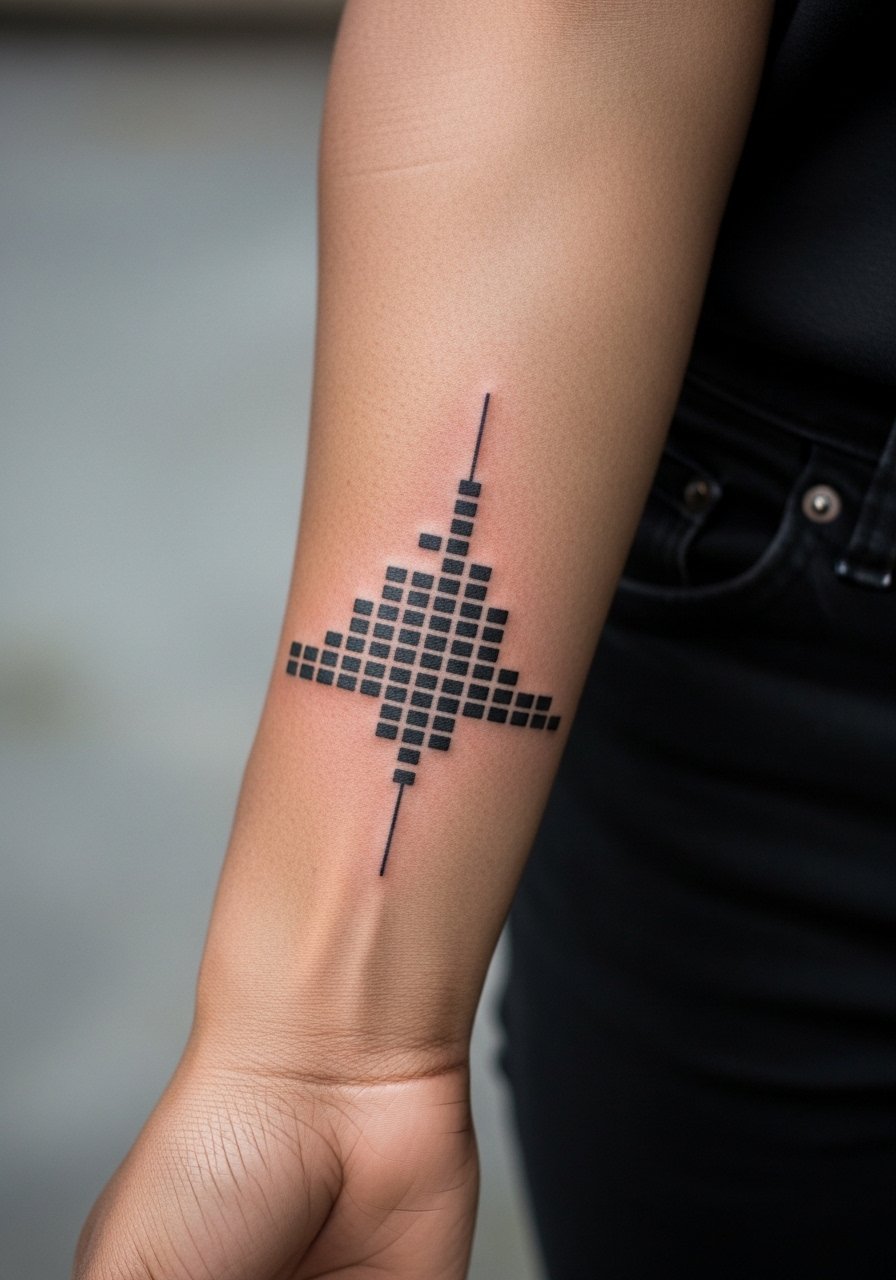
This dynamic design works with motion, elongating when you lift your arm. For longevity avoid excessively thin bars near the wrist since wrist flex softens edges. A smart consultation note is to stagger bar heights and give each bar a pixel or two of spacing. One in three people I see who start with equalizer lines ask for a slight darkening touch-up at year two. It is a single-session piece in most cases and great for representing electronic music or rhythmic motion.
13. Staff with Notes as a Sleeve Starter
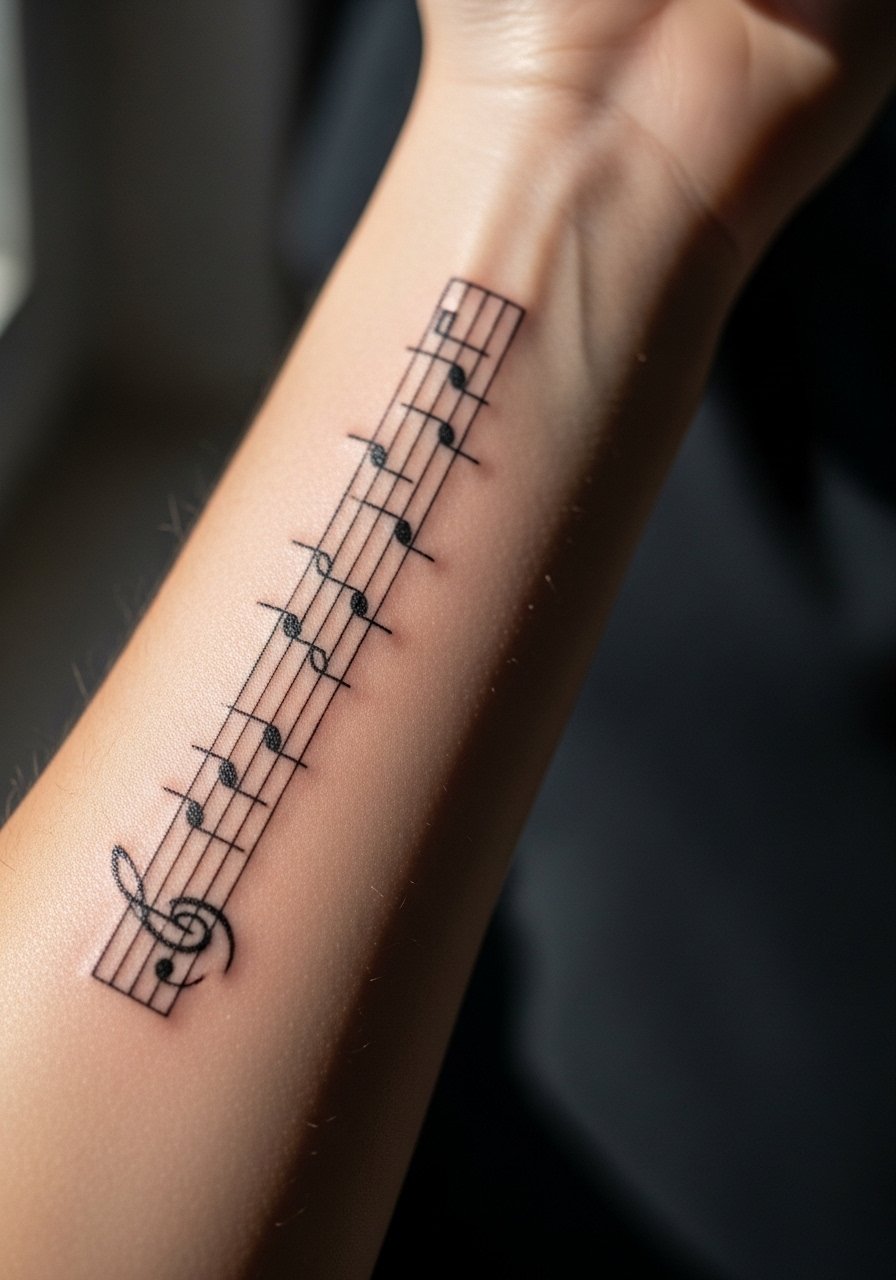
This idea works if you plan to expand into a sleeve over time. I advise spacing the staff wider than sheet music so future elements have room to be added without crowding. Ask your artist to map future negative space during the first session so additions integrate cleanly. Fine line here takes care on placement because elbow creases and wrist flex can distort continuous lines. Expect multiple sessions and plan touch-ups as the sleeve develops. For casual days a thin beaded bracelet on the opposite wrist offers a subtle visual echo.
14. Equalizer Bars with Vein-Pulsing Realism
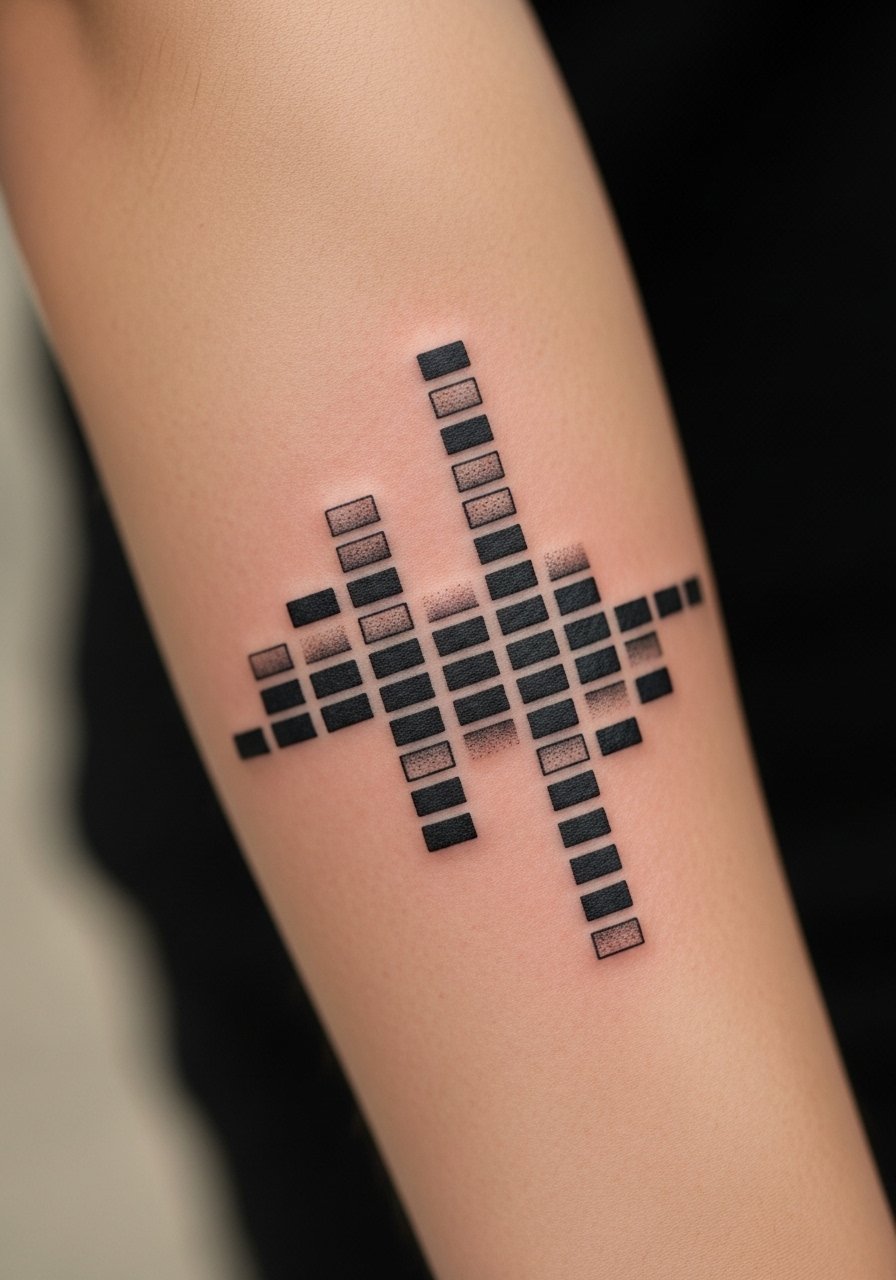
This is one of the under-covered ideas where the bars intentionally follow vascular lines for a living-motion effect. It requires a precise stencil placement to avoid blowout where veins sit close to skin. The risk is that strong movement and thin skin near veins may blur fine edges. Discuss vein placement with the artist and test the stencil in different arm positions. If you want a lively piece that seems to move, expect a slightly longer appointment as the artist adjusts placement in real time.
15. Instrument Scaled to Forearm Length
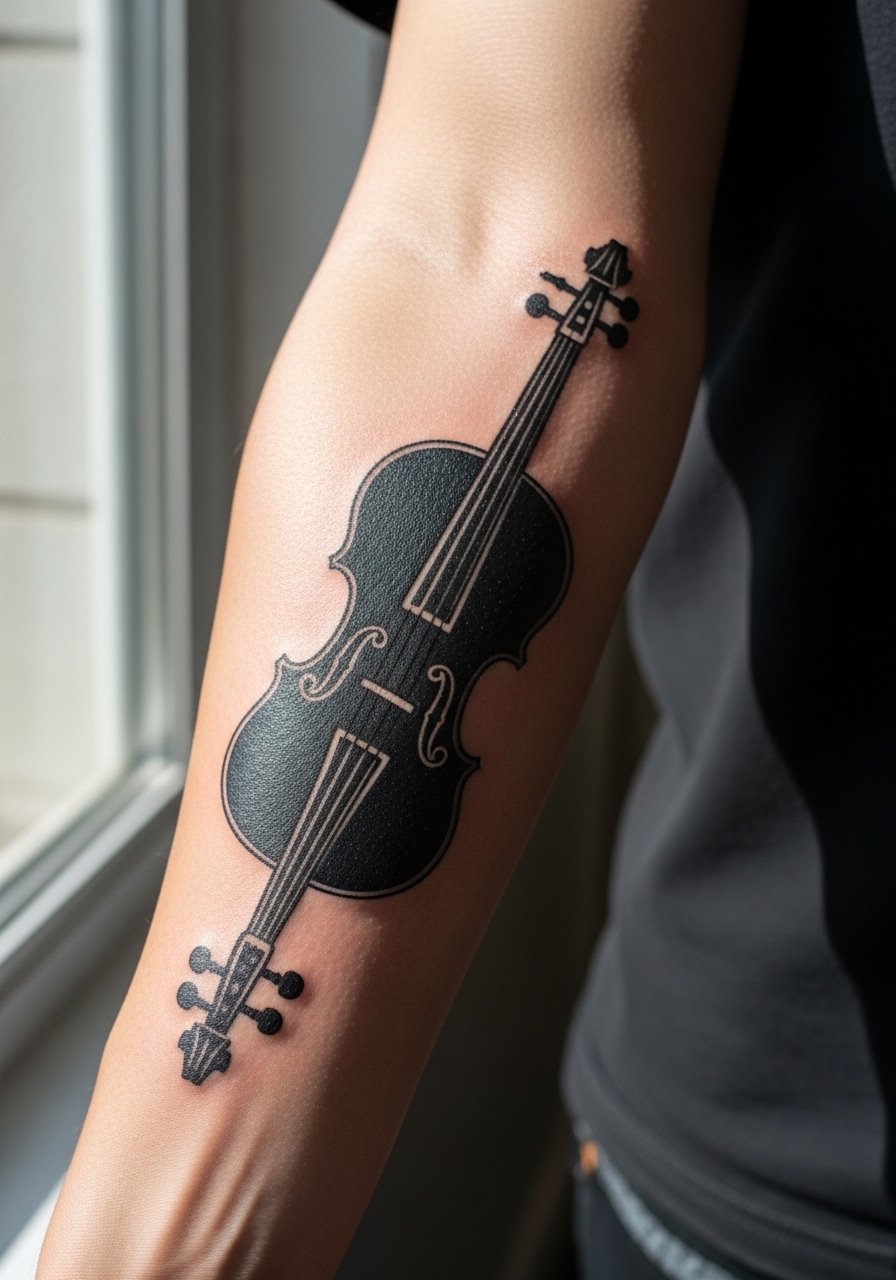
Scaling instruments to the forearm makes them feel like they belong to the body rather than being pasted on. A common mistake is shrinking instruments to fit templates from inspiration boards. Bring a photo of your forearm and request true-to-scale mock-ups so the artist can adjust proportions for your arm length. This piece often takes two sessions when small shading and tonal anchoring are added. For the session wear a short sleeve button shirt you can move without rubbing the area.
16. Minimalist Rest or Pause Symbol Near the Wrist
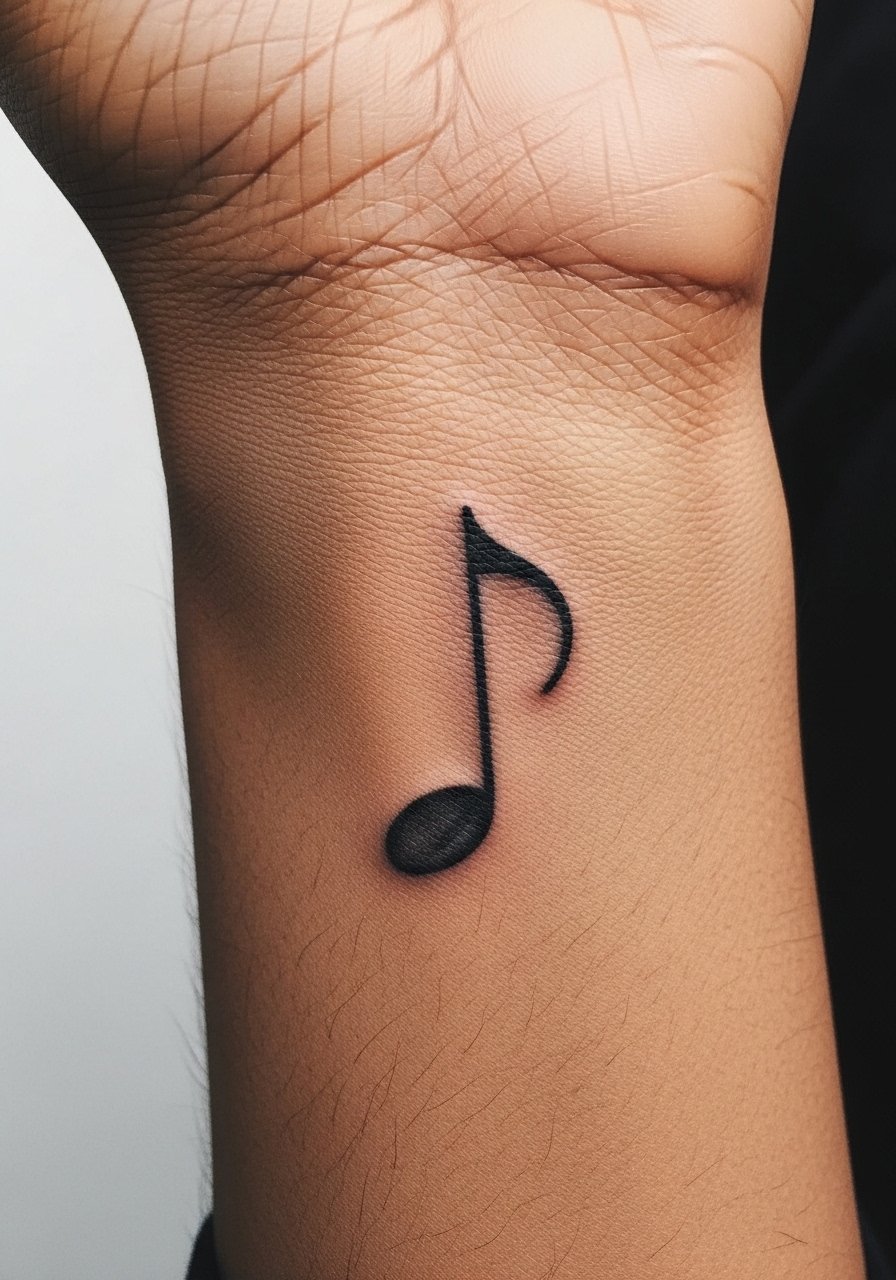
A tiny rest symbol is subtle and meaningful for someone who wants restraint. The error is keeping lines too hairline thin on darker skin where visibility drops after a few months. Ask for slightly increased line weight and test a small patch if you are unsure. The wrist is a high-friction zone, so expect a possible touch-up by year two depending on hand washing and sun exposure. The session time is short and discomfort minimal, but keep in mind frequent hand motion affects healing.
17. Waveform Tattoo of a Favorite Song Fragment
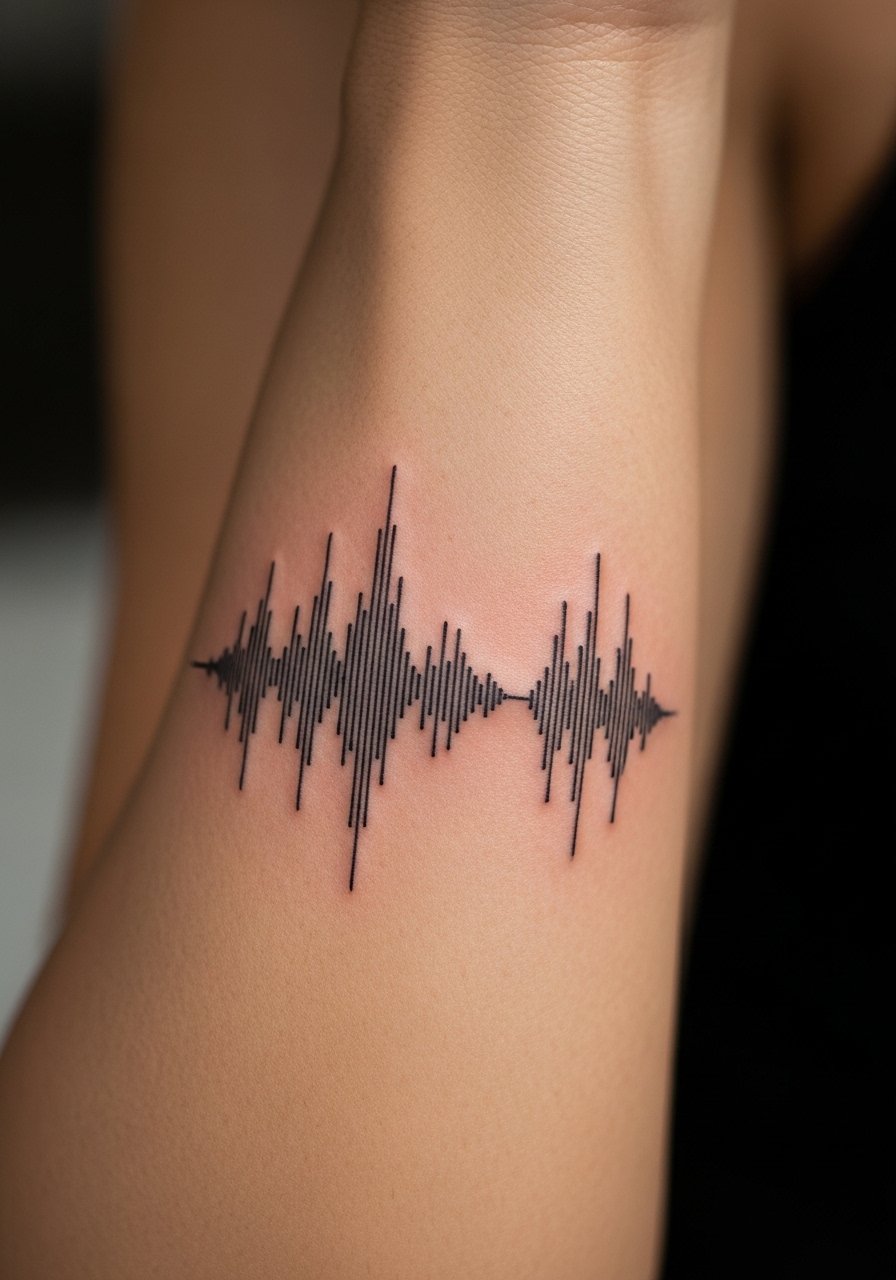
Waveforms are modern and personal while remaining abstract to onlookers. For clarity bring the exact audio file and ask the artist to simplify complex spikes that would become noise at small scales. A common mistake is converting a long waveform into a tiny line which loses its character. The outer forearm is forgiving with this design and the piece ages well when given bold enough stroke weight. For showing it off, a loose button down shirt rolled at the cuff displays the waveform without competing patterns.
18. Conductor Baton with Motion Lines
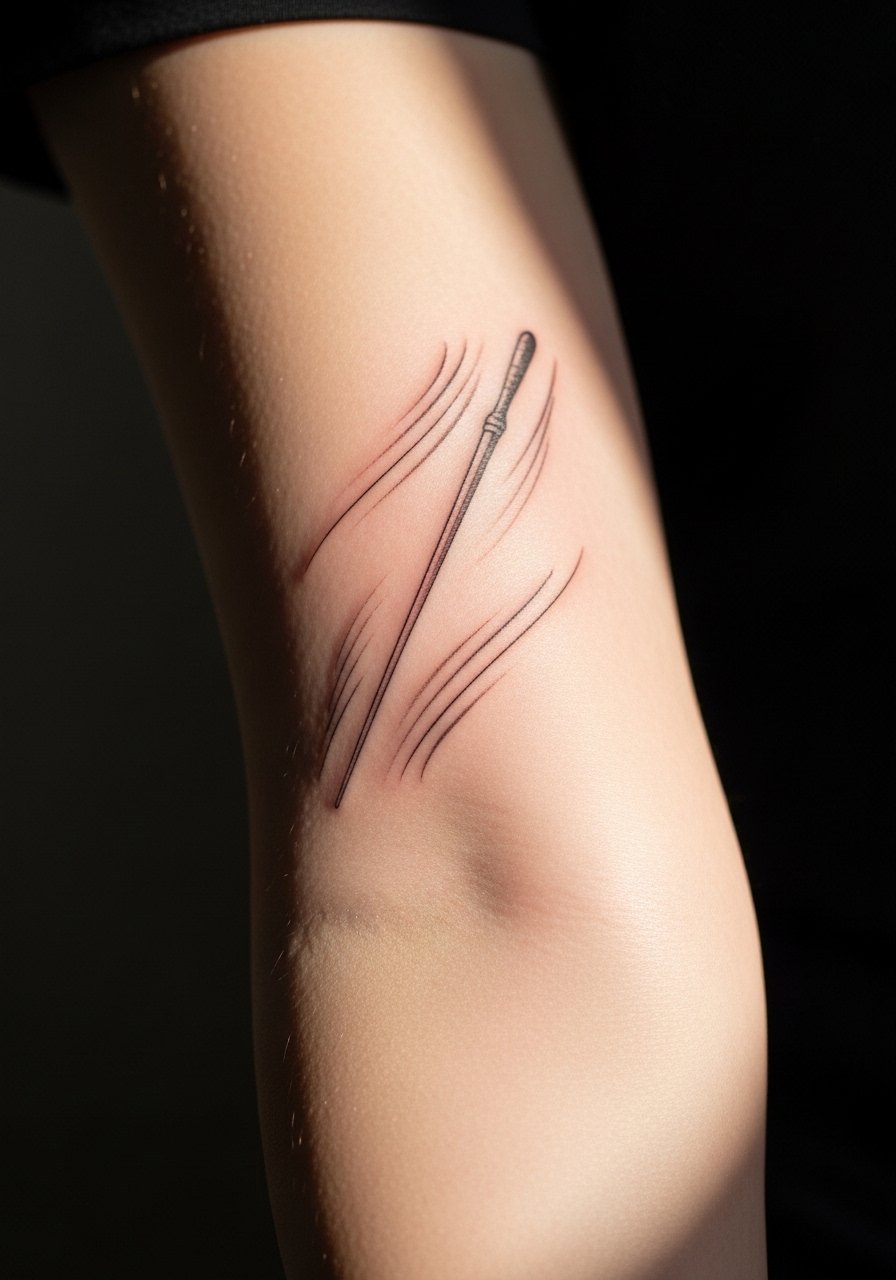
This is a targeted piece for conductors or those who love orchestral work. The motion lines add direction and help the baton read even if the piece is small. Ask for a slightly thicker baton shaft than you think you need to prevent line collapse after two years. The forearm tolerates the motion detail well, but tiny cross hatching will blend as skin ages. The session is short and the pain low on the fleshy part of the arm. A simple pendant or slim bracelet on the opposite side can keep visual balance.
19. Earbud Cord Forming a Heart or Note
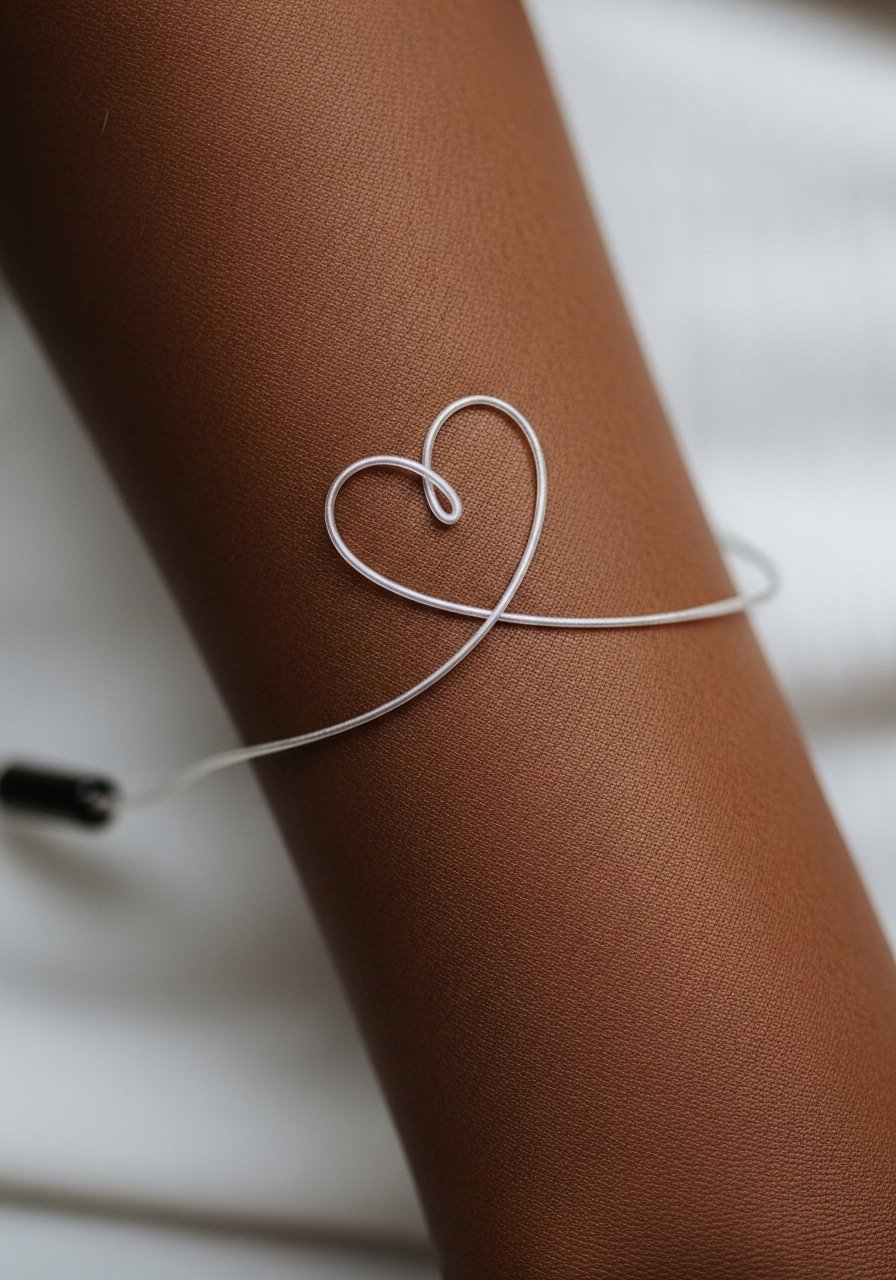
This everyday-concept tattoo reads like a casual memory and works best where cords naturally fall. The common mistake is using too many twists and kinks which become indistinct. During consultation ask for a clean loop and a slightly heavier main cord line so the shape keeps clarity after repeated washing. The wrist area is friction-prone so expect potential early softening. For session day wear a cuffless short sleeve shirt so the artist can access the entire cord path without catching fabric.
20. Dotwork Staff for Darker Skin Tones
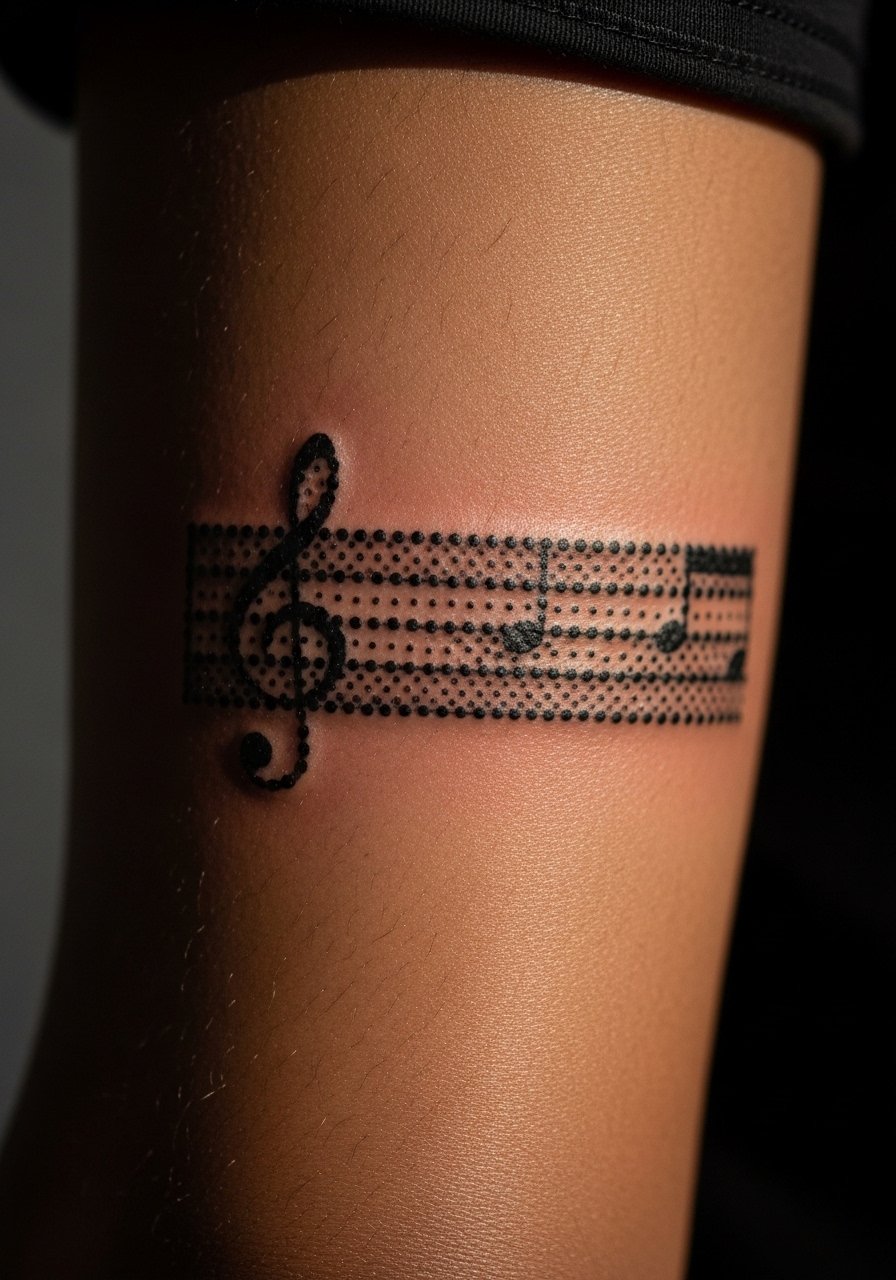
To address visibility concerns on darker skin, dotwork fills offer density without relying on single ultrafine lines that vanish. The technique trades single-line detail for defined shape through stippling. One mistake is overpacking dots into too small a space which can read as a patch. Ask the artist to test a small healed sample or start with a slightly larger scale for clarity. A dotwork staff can age gracefully if the spacing and saturation are planned for the skin tone.
21. Looping Treble Clef with Floral Accents
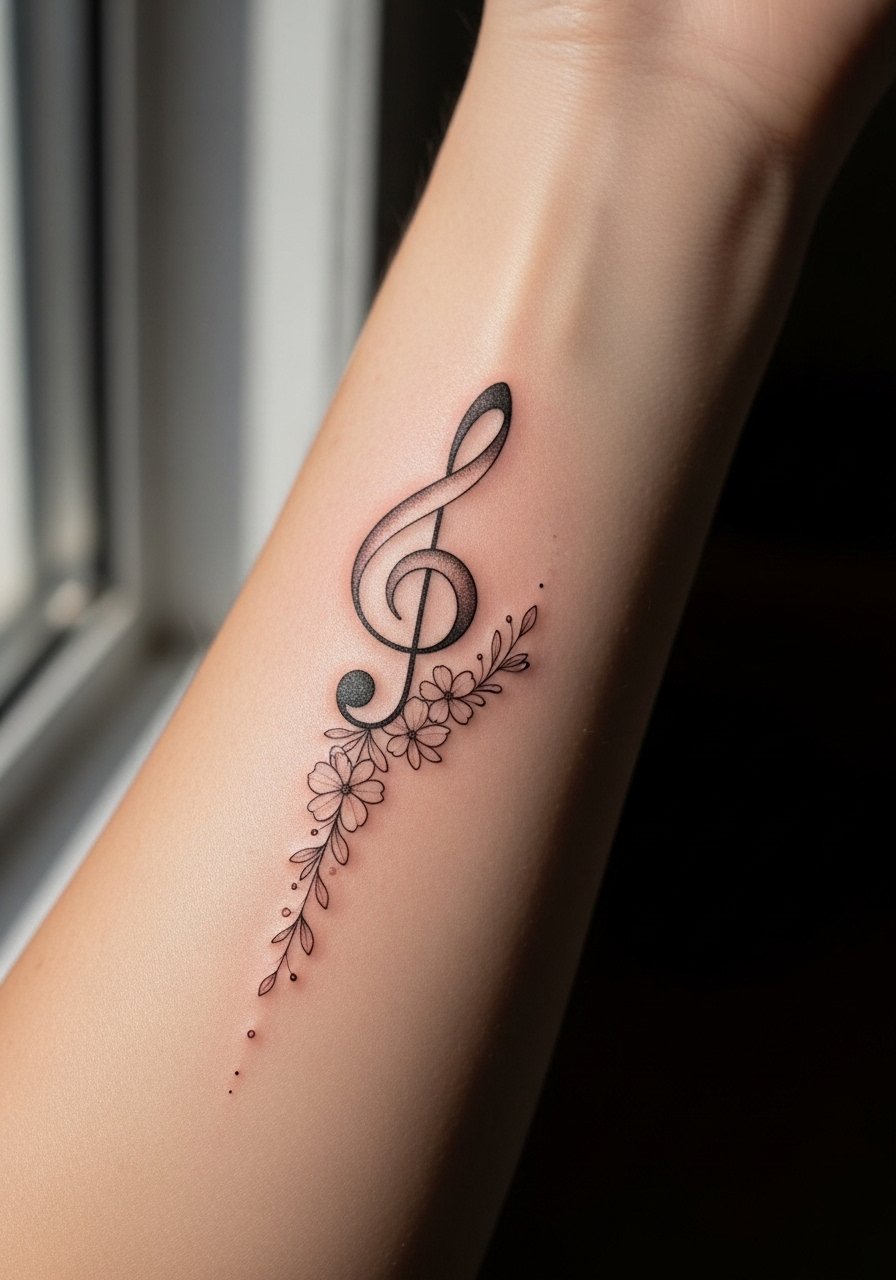
This blends symbol and ornament and is forgiving when the floral elements share spacing. The consultation note to give is to keep flower details open and avoid tiny petals that will merge. The outer forearm holds linework well when the clef has breathing room. Expect moderate session time and potential touch-up for the petals after a couple of years as some edges soften. For show-off styling, roll a half roll sleeve shirt so the flowers peek from the cuff without being crowded.
Frequently Asked Questions
Q: Will fine line music tattoos blur faster on the forearm than bold blackwork?
A: Fine line work generally softens sooner on sun-exposed and high-motion areas like the forearm. There are two camps. One says fine line ages gracefully into a delicate look. The other prefers bolder lines for longevity. The practical answer is to pick line weight with your artist based on your skin type and daily sun exposure.
Q: How do I prevent notes and tiny script from fading if I play gigs outdoors all summer?
A: Protecting forearm ink is mostly about consistent sun protection and clothing choices. Use a broad-spectrum SPF on healed tattoos when exposed and plan show outfits with sleeves when possible. During sessions wear clothing that the artist can adjust without rubbing the tattoo so the initial healing phase avoids excess friction.
Q: If I have darker skin, which music styles hold up best on the forearm?
A: Techniques that emphasize slightly bolder outlines or dotwork stippling retain clarity on darker tones. Tiny straight single-needle strokes can disappear on some skin types, so ask for a test patch or a slightly heavier line weight during consultation.
Q: Should I use numbing cream for a multi-hour micro-realism session on the forearm?
A: Numbing creams have supporters and critics. One camp uses them for long sessions to manage pain. The other cautions they can change skin response and need correct timing. Talk to your artist about their preference and follow directions carefully if you choose to use a topical numbing product.
Q: What should I wear to a forearm tattoo appointment so the artist has good access?
A: Loose or sleeveless tops are the easiest. For outer forearm wraps consider a short sleeve button shirt you can roll up. For inner forearm pieces choose a fitted top you can push to the elbow without bunching.
