
Fine line roses are everywhere online, but what holds up after the first year is a different story. Minimalist traditional roses that use clear linework and controlled saturation age more gracefully than ultra-fine micro detail, and placement matters more than most people realize. Read the first idea to see a reliable forearm option that photographs well fresh and still reads clean at year three.
1. Fine Line Single Stem on Inner Forearm
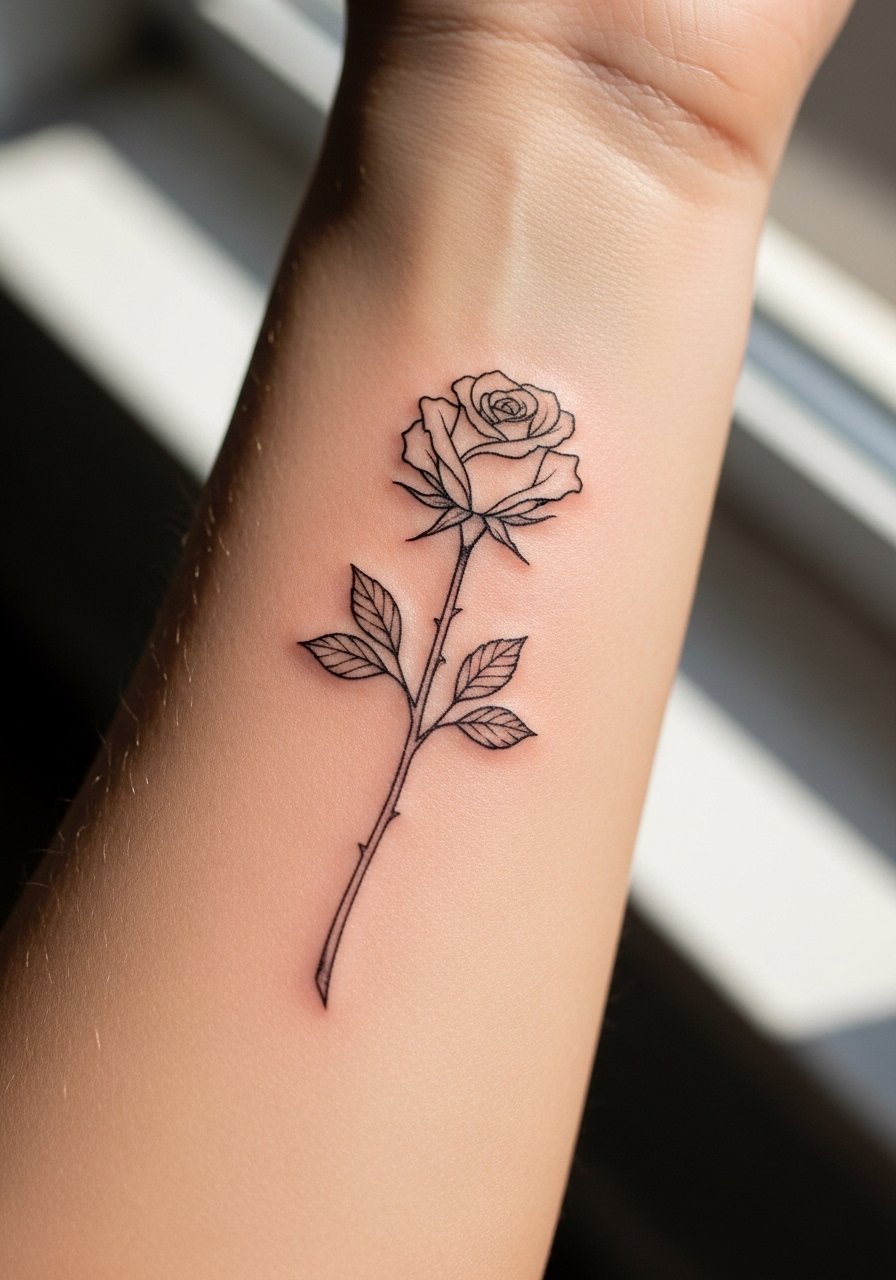
I see this one more than any other on consultation boards. The single stem uses delicate linework with a tiny bud and minimal shading, and it reads like jewelry when the forearm moves. Tell your artist you want slightly thicker contour lines than a true micro piece so the stem does not blur into a blur over time. Fair warning, the inner forearm is a moderate pain and needs light touch-ups by year three for the thinnest lines. During the session wear a rolled linen shirt you can pull up without tugging the area so the artist has clear access. Common mistakes are asking for ultra-thin hairline contours that end up patchy once healed.
2. Micro Traditional Bud on the Wrist

Fair warning: wrist skin sees constant movement and washing, so tiny line detail will fade faster than on the arm. This micro traditional bud uses a bolder outline around the petals with light saturation inside to hold contrast. Expect a quick 30 to 45 minute session and a touch-up at the year mark for the smallest pieces. A common mistake is placing the design too close to the radial bone where blowout risk increases. Ask your artist about slightly increasing negative space around dense areas so stipple shading has room to breathe.
3. Tiny Stipple Rose on the Ankle
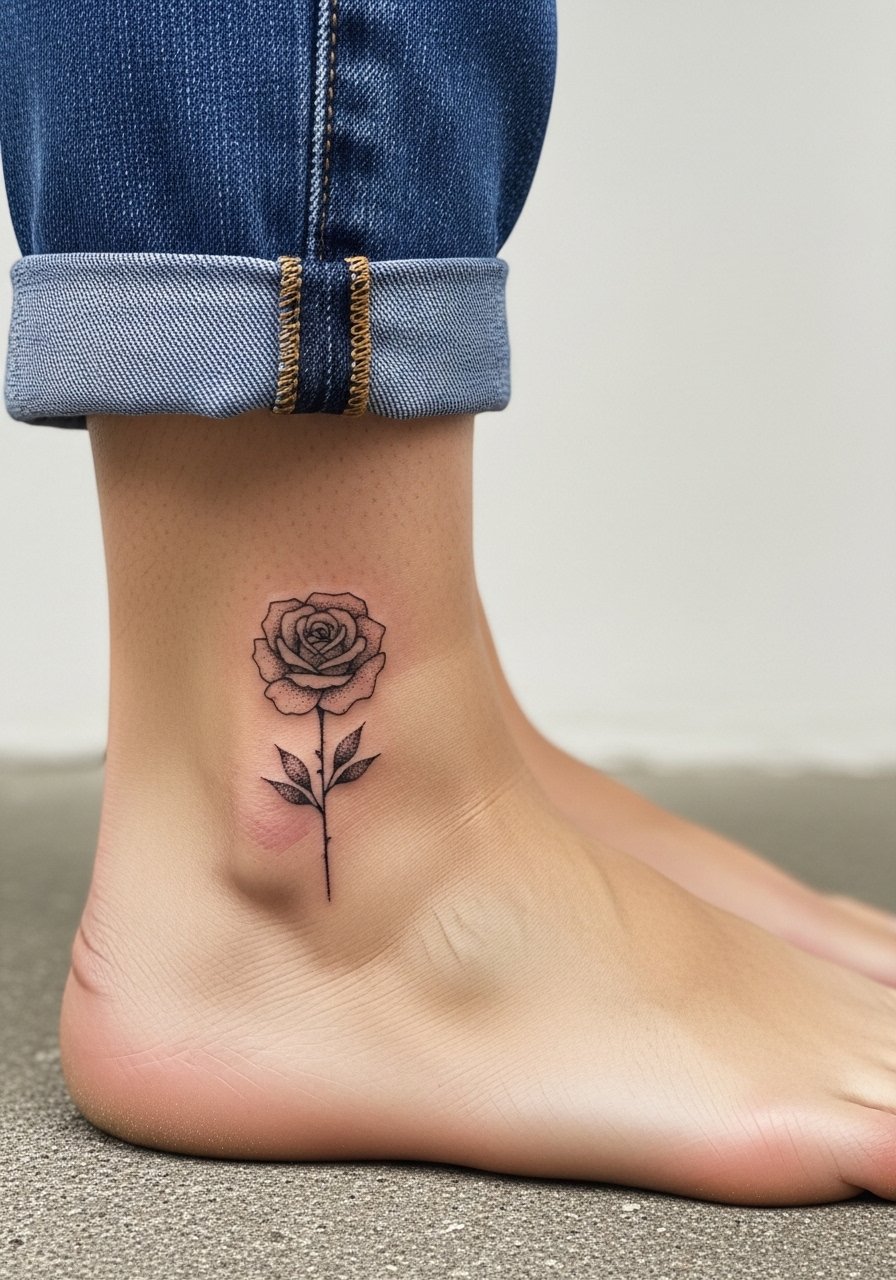
When you sit down with your artist for an ankle piece, show reference photos that emphasize stipple shading instead of packed grey. The ankle takes friction from shoes and socks, so tiny dots preserve texture longer than small solid fills. Session time is usually under an hour but expect tenderness while walking for a couple of days. For showing off, pair the tattoo with strappy sandals and rolled jeans so the area breathes and avoids rubbing during the healing window. A frequent mistake is asking for a fully saturated center that will scab and lose detail.
4. Minimal Saturated Rose on the Upper Arm

There is something about bold contour and careful saturation that reads from across a room. This small upper arm rose leans traditional in its outline but keeps the interior minimal so color holds. The upper arm is forgiving, with lower blowout risk and strong longevity for saturated work. Most sessions take under 90 minutes and pain is low. The common error is packing too many petals into a small space. If you want the design to age with character, ask for slightly thicker contouring and modest color saturation.
5. Collarbone Mini Rose That Frames the Neck
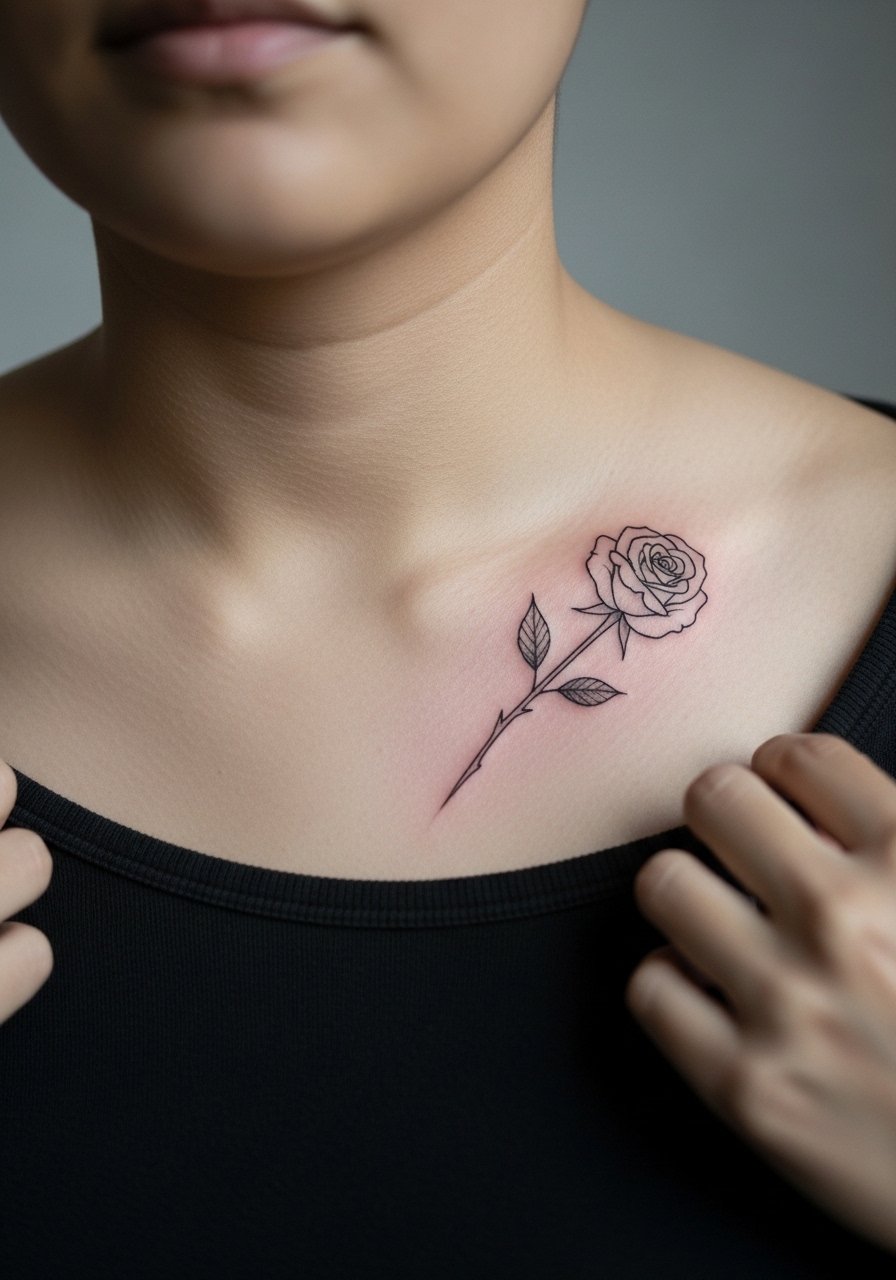
This placement looks deliberate when paired with the right wardrobe. For the session wear a loose wide-neck shirt you can pull aside without shifting the stencil. The collarbone skin moves with shoulders so request slightly bolder linework at the start to prevent early-feathering. Pain can spike when the needle crosses bone, but most people find the brief sting worth the result. A mistake I see is asking for a tiny silhouette placed directly on the highest point of the bone where touch-ups become a near certainty.
6. Ribcage Single-Line Rose
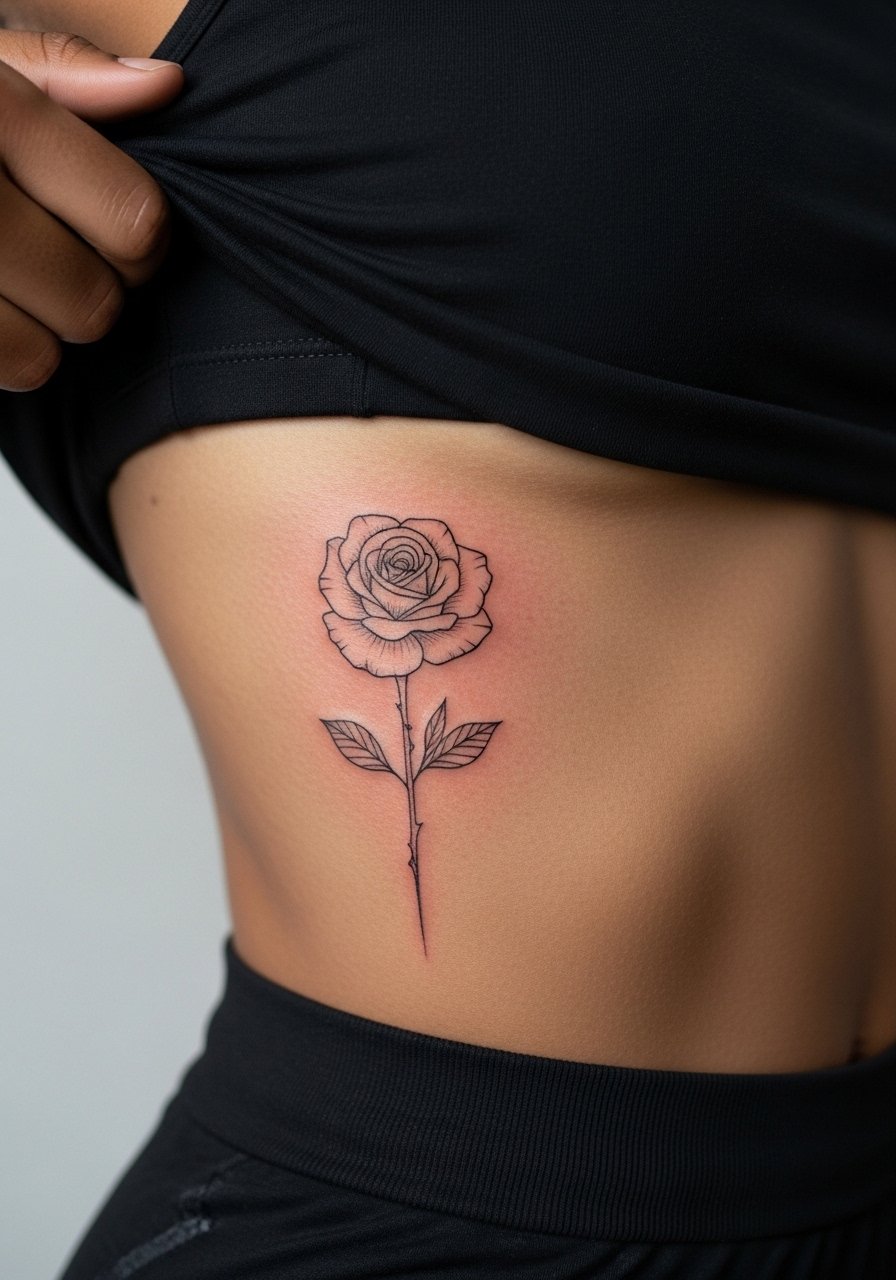
Artists split on fine line on the ribs. One camp argues the skin stretch and constant movement make hairline work blur within two years. The other camp says that with proper needle depth and spacing, fine line can settle beautifully on ribs. The reality is it depends on technique and your skin. If you choose this spot, expect a longer session and honest talk about spacing. The pain is high on the ribs and touch-ups are common, so plan recovery time and avoid tight clothing that rubs the area.
Studio Day Picks
The small, visible pieces above like wrist, forearm, and ankle need different prep than chest and rib work, so these are items that smooth the appointment and the first week.
-
Stencil transfer paper kit. Lets you and your artist preview placement on the skin, especially useful for the inner forearm and wrist pieces above.
-
Topical numbing cream. Applied per directions it can ease the edge for sensitive areas like ribs without changing how the ink takes.
-
Thin protective film roll. Keeps finger and wrist pieces cleaner during the first week when hand washing and friction are constant.
-
Fragrance-free gentle body wash. Cleans healing work without stripping delicate linework on ankle and forearm tattoos.
-
Aquaphor healing ointment. Thin layers for the immediate days after the session help maintain moisture for fine line and stipple details.
7. Tiny Rose on the Side of a Finger

The biggest mistake with finger placements is underestimating the wear the area sees. Fingers endure constant washing and friction, so expect faster fade and a higher chance of touch-up. There is also a debate in the community about hand and finger ink. One group says these spots rarely keep crisp detail and require yearly touch-ups. The other group points to artists who extend linework into the hand to improve longevity and call it a technical solution. If you want a finger rose, plan for periodic touch-ups and consider placement on the side where rubbing is less frequent. For showing it off, stacked dainty bracelets work well and do not crowd the finger area so the tattoo remains a subtle point of attention. Stacked dainty bracelets
8. Minimal Blackwork Rose on the Calf

There is a visual impact to simple blackwork on larger muscles. The calf offers room for slightly larger petals and controlled saturation so the design keeps contrast long term. Sessions run from 45 to 90 minutes depending on size and the pain is medium. Most people report brisk soreness when walking for a day or two. The common error is overcomplicating the center with heavy stippling that ages into blotches. Ask for clean fields of negative space and moderate saturation to avoid that.
9. Micro-Realism Tiny Rose Behind the Ear
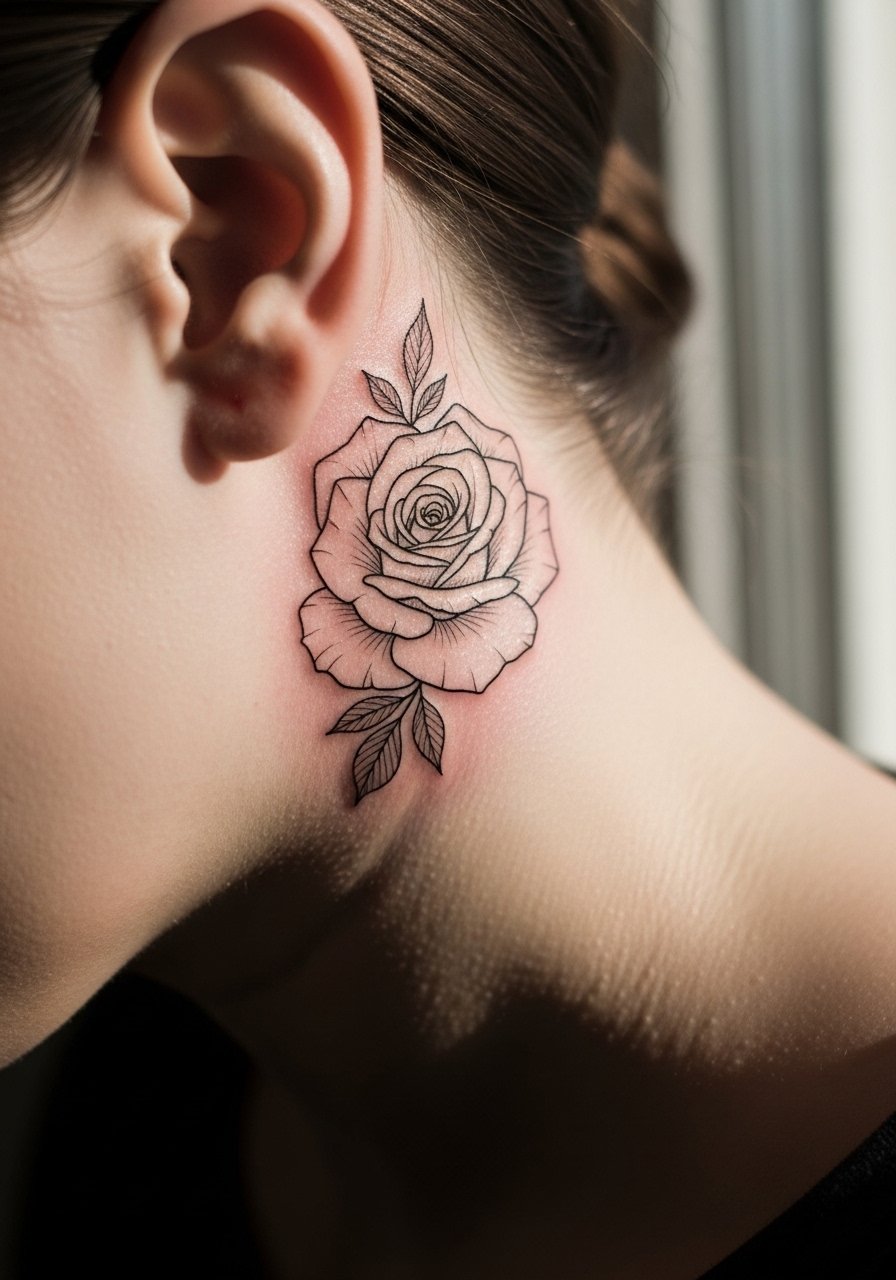
I've seen tucked micro-realism behind the ear read like a secret accent when the hair is pinned up. Behind-ear pieces need a hair-up plan for showing and for healing. The area is small so session time is short but the skin is thin, so touch-ups are more common than on the arm. For showing off, use a low bun with a hair claw clip so the tattoo peeks through without tugging at the hairline. The key consultation point is needle depth and negative space so tiny tonal shifts do not merge once healed.
10. Sternum Tiny Rose That Sits Just Above the Fabric Line
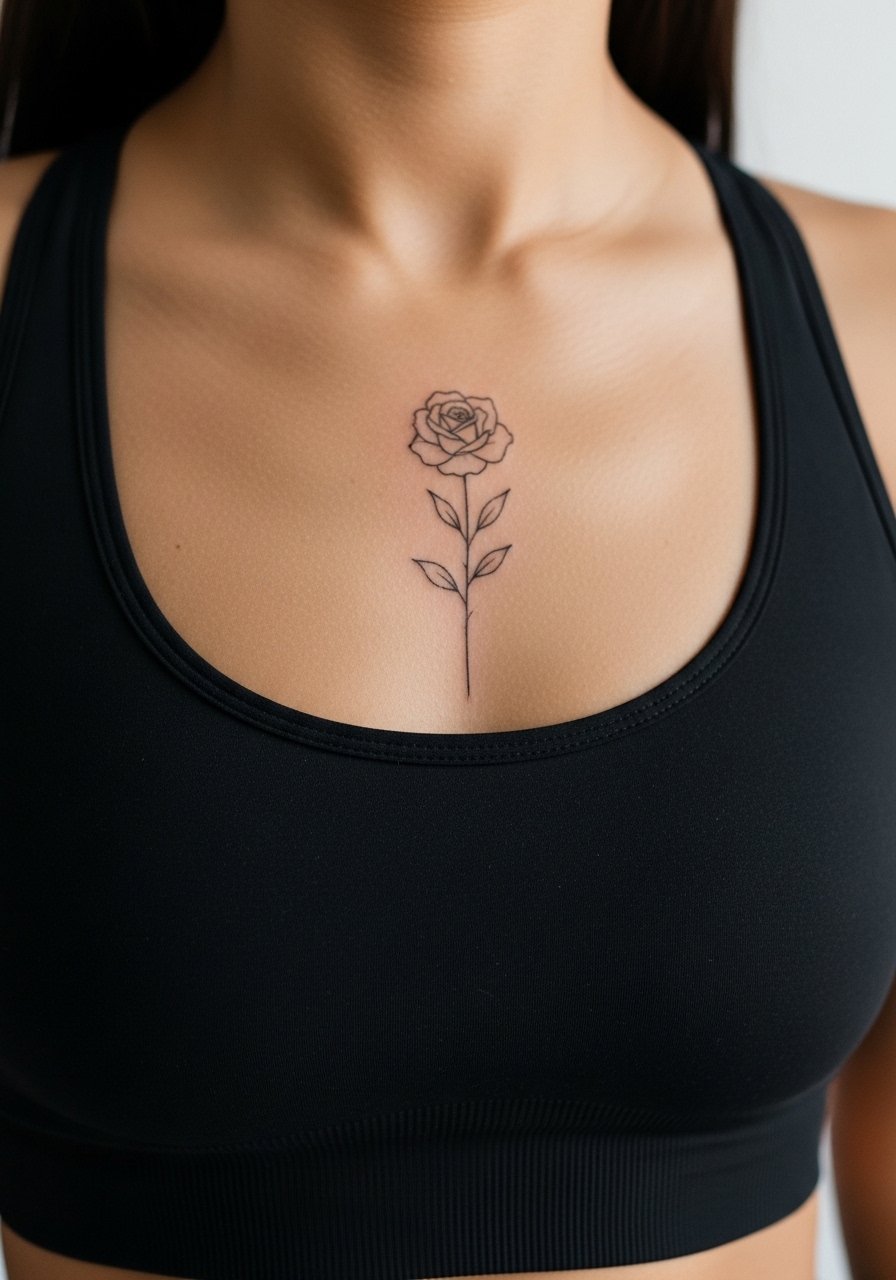
Sternum pieces look intimate and deliberate, and they age depending on weight fluctuation and sun exposure. Expect higher sensitivity and a longer session if you include subtle stipple shading. A common mistake is crowding the area with dense shading that will accentuate scabbing. For longevity, ask your artist to favor linework and modest shading. Touch-ups at year two are not uncommon, especially if the area experiences friction from clothes or jewelry during healing.
11. Tiny Ankle Rose with Chain Accent
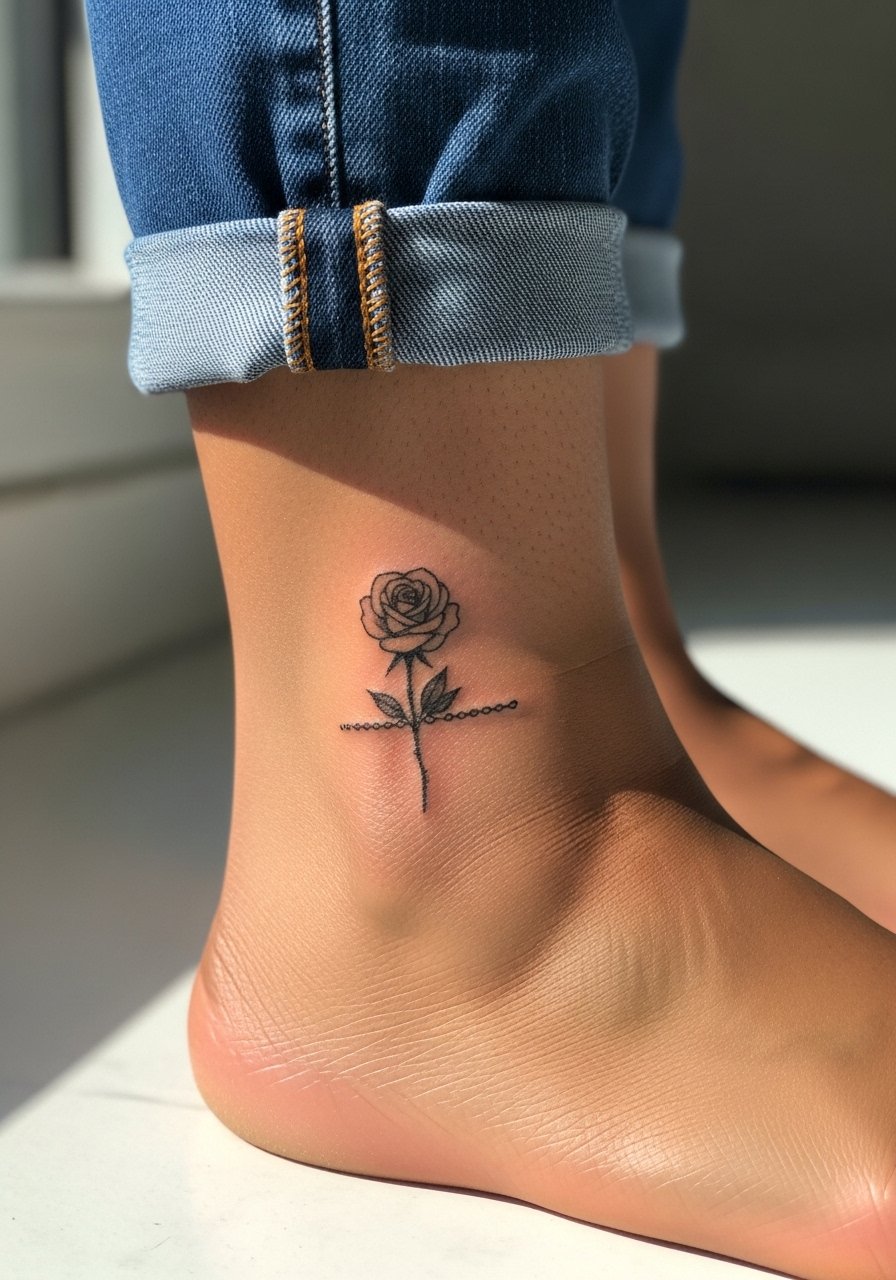
This design combines a small rose with a chain accent that wraps slightly around the ankle. Lower leg skin tolerates saturation well but sees a lot of rubbing from socks and shoes. During the session wear loose drawstring pants so the artist can roll the leg without pressure. For showing off, strappy sandals highlight the piece and avoid excess friction while healing. A frequent misstep is asking for too much chain detail in a tiny area which blurs quickly. Keep the chain simple and spaced.
(For the session: wear a loose drawstring linen pant you can pull up without squeezing the calf.)
12. Small Rose on the Shoulder Blade

There's a reason shoulder blades are a go-to for subtle tattoo placement. The area moves with the shoulder yet sits under clothing often, so sun exposure is lower and saturation keeps well. Sessions are comfortable for most and last around an hour for small pieces. The usual mistake is compressing too many petal lines into a compact square. Ask for a layout that follows the curve of the shoulder blade so the rose reads naturally when you move.
13. Inner Bicep Delicate Rose

When you sit with your artist for an inner bicep piece, mention that the skin there can be soft and prone to blowout if the linework is too tight. Bring images that show the exact line weight you want and note that slight contour thickness helps detail last. Pain is higher than the outer arm and sessions can be interrupted for breaks. For session wear, a loose tank top makes access easier and keeps the area from being pinched. Expect touch-ups possibly at year two depending on how the skin healed and how often the arm rubs against clothing.
(For the session wear a tank top you can lift without shifting the stencil.)
14. Tiny Rose at the Nape of the Neck
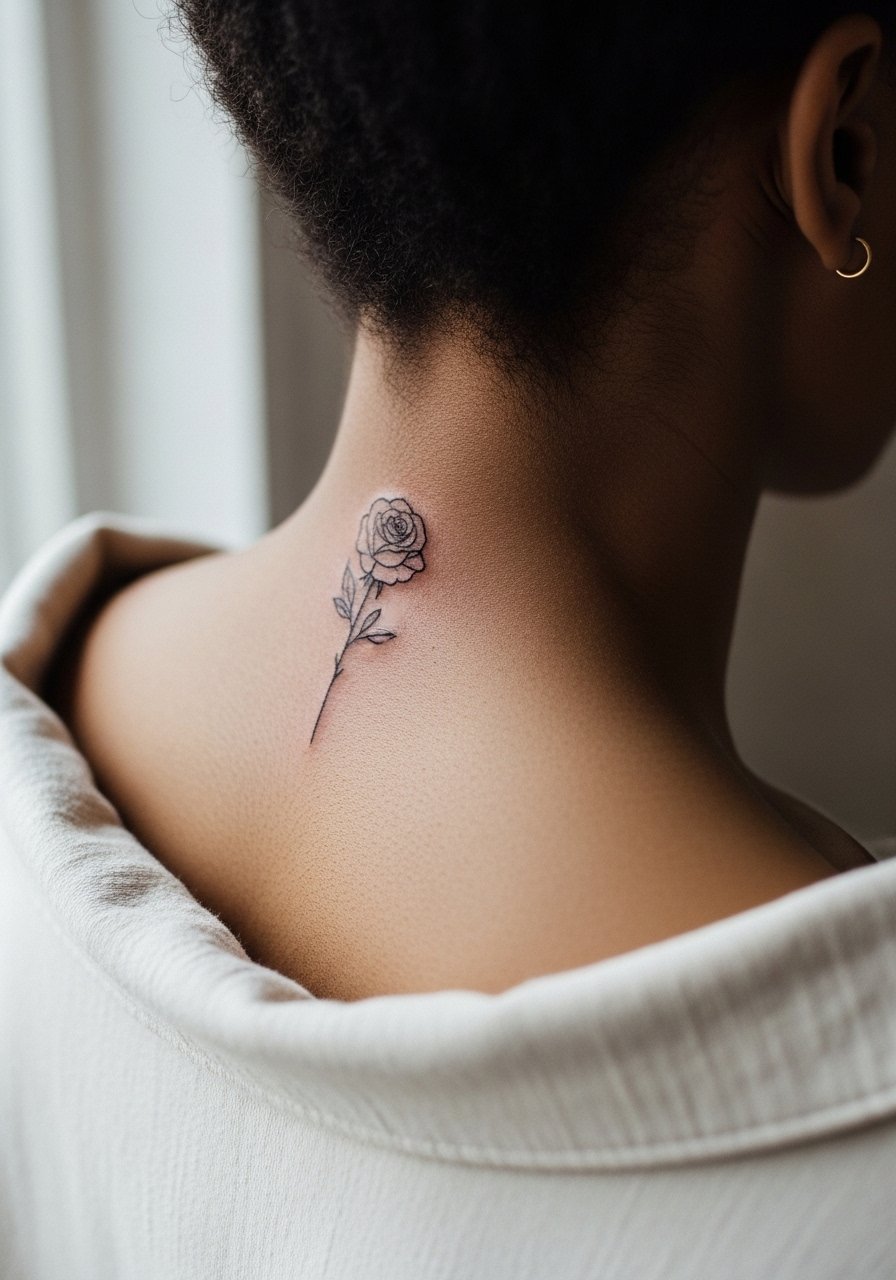
I've noticed nape tattoos read as a deliberate style choice when kept small and centered. The nape tolerates fine lines but has variable aging depending on sun exposure and hairline friction. Sessions are short and the pain level is moderate. Common mistakes include placing the design too low where clothing collars constantly rub. If you work in a conservative office consider how visible this will be with typical hairstyles.
15. Spine Stem Rose That Runs Down the Upper Spine
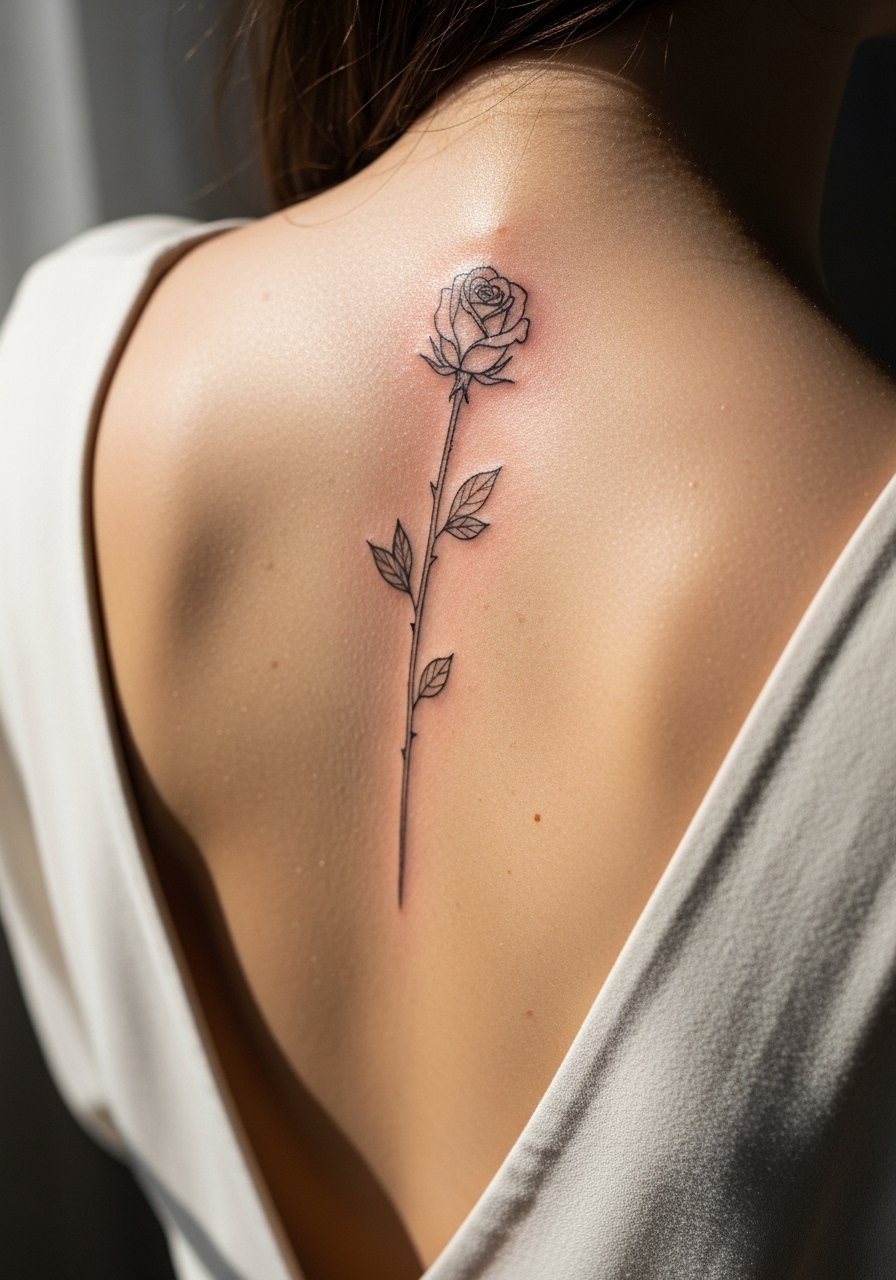
There is a graceful movement to vertical designs along the spine. This piece uses a single stem and a few clean petals so the linework follows the vertebral column. Pain spikes near the bone but the long shape photographs beautifully. For showing off pair it with an open-back midi dress or halter so the tattoo becomes the focal point. A common error is compressing too many small details into the vertical space which leads to muddied shading after healing.
16. Thigh Minimal Rose Cluster

The thigh gives room for slightly larger minimalist clusters without sacrificing negative space, which helps the work age well. Sessions are longer for multiple small roses but pain is usually manageable. This placement works with both bold contour and soft stipple depending on your aesthetic. The common mistake is taking a sleeve-like density and shrinking it to fit the thigh which creates an overcrowded look. Discuss spacing and long-term silhouette with your artist.
17. Upper Arm Accent Rose for a Minimal Sleeve
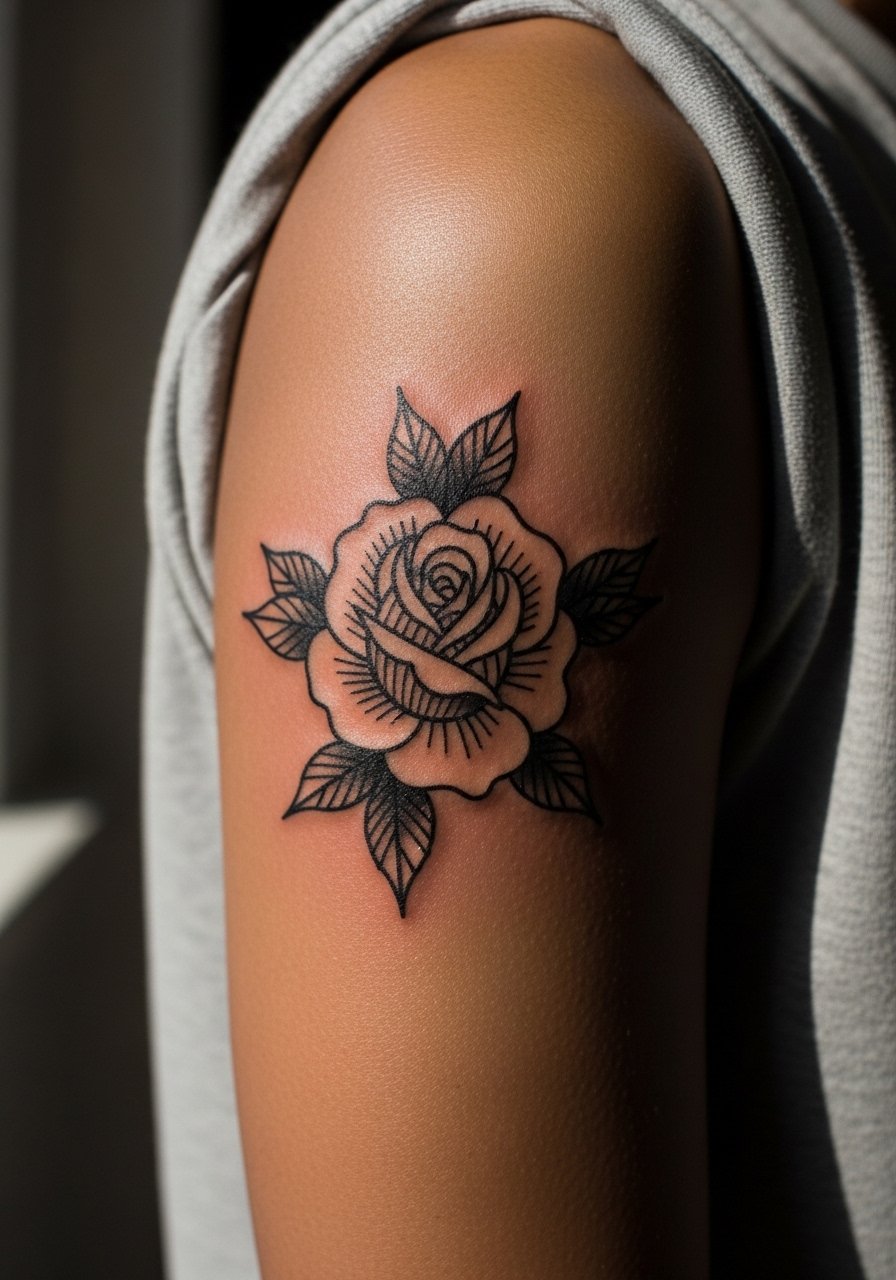
When your plan is a minimal accent that may become part of a sleeve later, tell your artist you want modular placement and consistent lineweight. In consultation ask for clear spacing guidelines so future pieces have room. This session is comfortable and usually under two hours, and it's a great place for a first small commitment. For casual showing pair with a loose button-down shirt with rolled sleeves so the artwork sits naturally at the arm bend. Trust your artist on spacing but ask specific questions about how they plan to scale the piece later.
Frequently Asked Questions
Q: Will a fine line rose on the forearm blur into a smudge over time?
A: It depends on line weight and placement. Fine line that has slightly thicker contour and moderate negative space tends to hold better than hairline-only work. Expect touch-ups around year two or three for the most delicate pieces.
Q: Are ribcage roses worth it despite the higher pain and touch-up risk?
A: Many people choose ribs for the way designs curve with the torso. One camp warns ribs blur quickly, the other points to careful spacing and depth as the solution. If you pick ribs, allow recovery time and expect a possible touch-up.
Q: How should I dress for a collarbone or sternum session to keep the stencil undisturbed?
A: Wear a loose wide-neck top for collarbone work and a fitted sports bra or bandeau for sternum so the artist can expose only the tattoo zone. For showing off afterward, open-neck or strap styles frame the area without rubbing. Wide-neck top ideas
Q: Do hand and finger roses affect job prospects or wear differently?
A: Hand tattoos remain more visible and subject to workplace policies in some fields and fade faster because of washing and friction. If career fit matters, consider a less exposed placement or accept regular touch-ups.
Q: How long before I can swim or use heavy lotions after a small ankle or wrist rose?
A: Avoid soaking for at least two weeks and steer clear of heavy lotions on the fresh area until the initial scabbing finishes. Keep the zone clean and avoid tight socks or jewelry that rubs until the skin is fully healed.
