
Fine line shoulder blade tattoos look effortless until you see them at year three and wonder why the stems blurred together. Trends push ever-finer lines, but longevity on the shoulder blade depends more on spacing, placement, and how the piece moves with your shoulder blade than on how Instagram-perfect it looks fresh. Below are 21 clean minimalist shoulder blade ideas with practical notes on aging, consultation wording, and wardrobe pairings to help you pick what will still read as intended years from now.
1. Single-Sprig Botanical
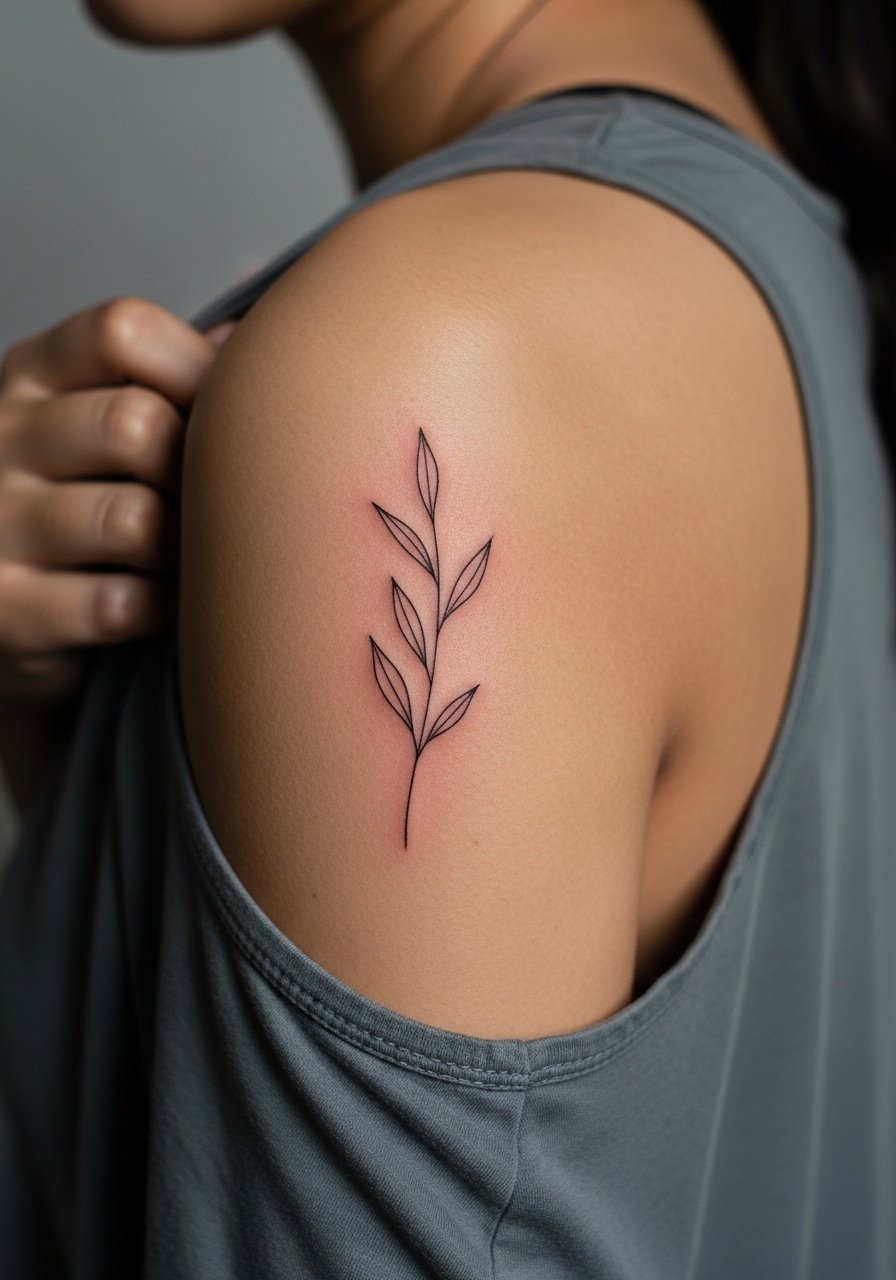
A single botanical sprig is a classic minimalist choice that reads delicate without looking fussy. Tell your artist you want one continuous thin stem with tiny spaced leaves and ask for slightly heavier spacing between leaves so the stem has room to age. Common mistake is packing too many tiny leaves close together, which causes the shapes to merge after a few years. For showing it off wear an open-back midi dress or a racerback tank so the shoulder blade sits in view. Expect a one-session piece that is low pain and usually needs a touch-up only if you want crisp edges later.
2. Tiny Crescent Moon
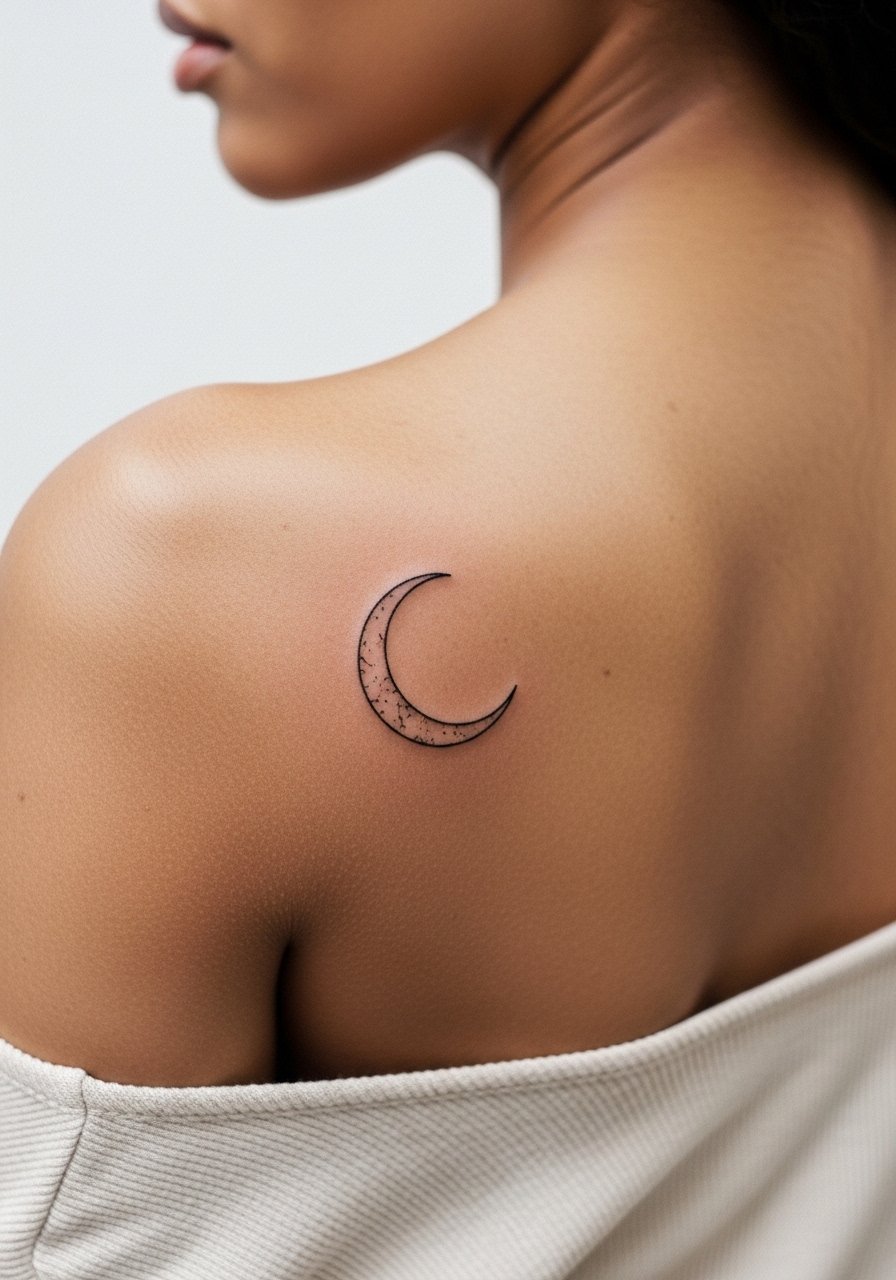
A tiny crescent is subtle and age-friendly when sized correctly. Ask for a slightly thicker outline than you think you need so the curve holds after natural fading. People often request the thinnest possible line and then return for touch-ups because the curve softens. This placement experiences low friction from clothing, so healing is straightforward. Pair with a satin camisole on nights out to let the crescent peek through an open-back cut. The session usually takes 15 to 30 minutes.
3. Single Feather, Flowing With Muscle
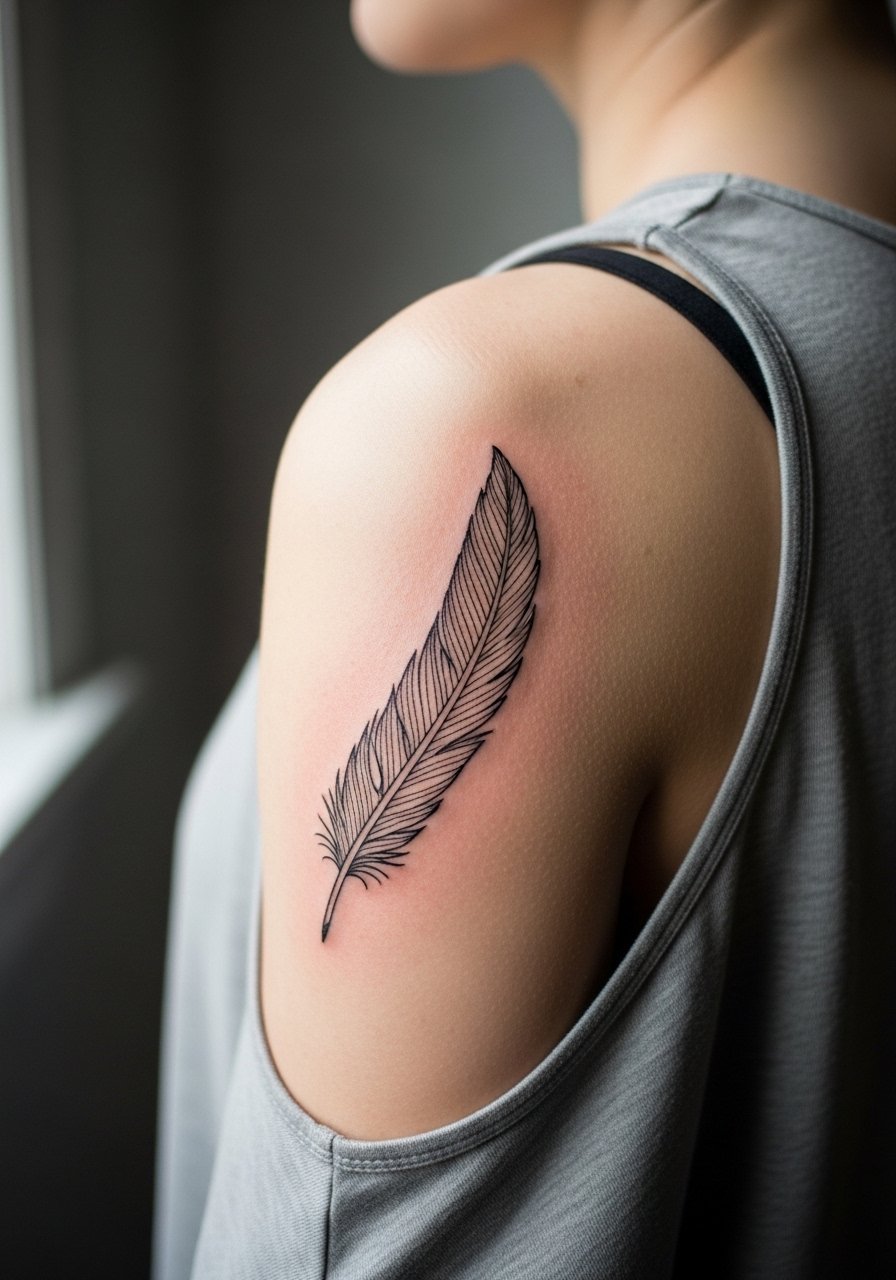
A feather works well on the shoulder blade because the design can follow the bone and muscle movement. In consultation, say you want the quill to sit along the scapula so the feather appears to "lift" when you raise your arm. Common error is placing the feather flat across the back which lets sections of linework sit over softer tissue and blur sooner. Expect low to moderate pain and a single short session. Wear a loose button-down shirt to the appointment so the artist can access the area cleanly.
4. Micro Mandala Off-Center
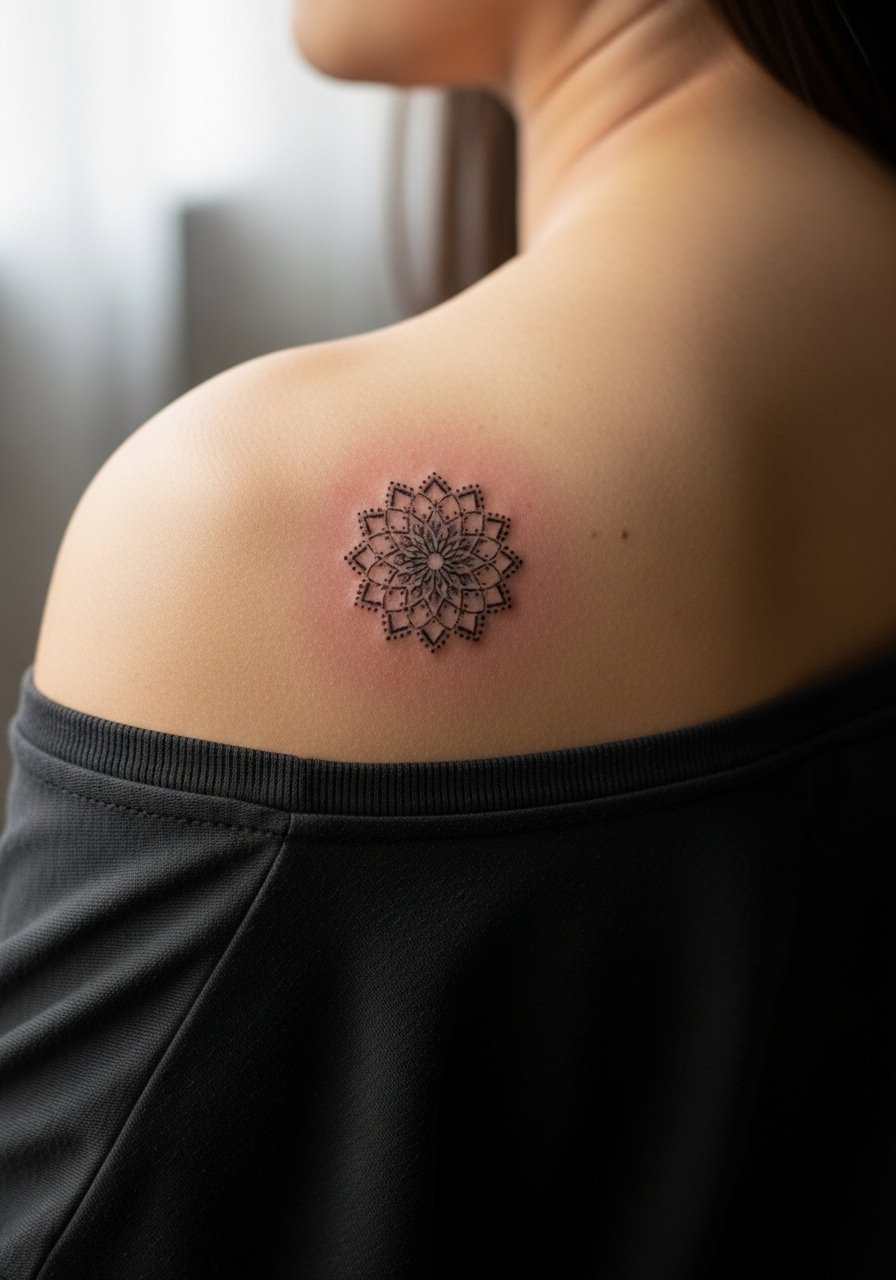
Mandala patterns trace to Buddhist design traditions, so some people opt for simplified geometry rather than direct replicas out of respect. For longevity ask for more negative space between dense dots and request dot work that reads open rather than packed. Artists disagree on how dense micro mandalas should be on curved areas. One camp favors tighter detail for visual impact. The other camp says spacing prevents merging. Name both views to your artist and ask which they prefer for a shoulder blade placement. Pair this with an open-back blouse to show the symmetry.
5. Tiny Bird Silhouette in Flight
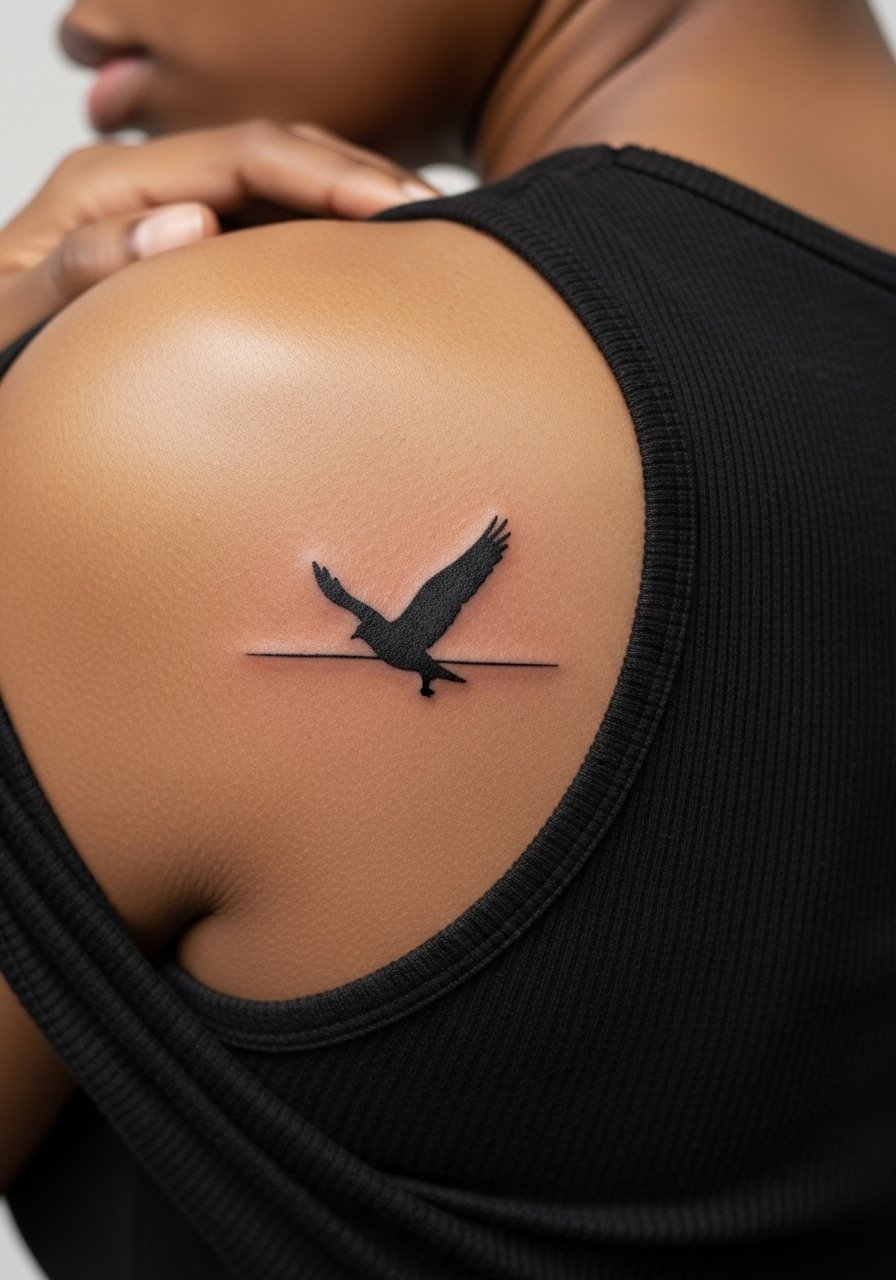
A small bird silhouette reads bold while staying minimalist. Ask for solid simple shapes instead of tiny feather details so the silhouette holds over time. Mistake to avoid is over-detailing wings with very thin strokes that soften into patches later. The piece heals predictably because it sits on relatively taut skin. Show it off with a halter top or backless dress. Sessions are quick and usually involve minimal touch-up needs.
6. Geometric Triangle Cluster
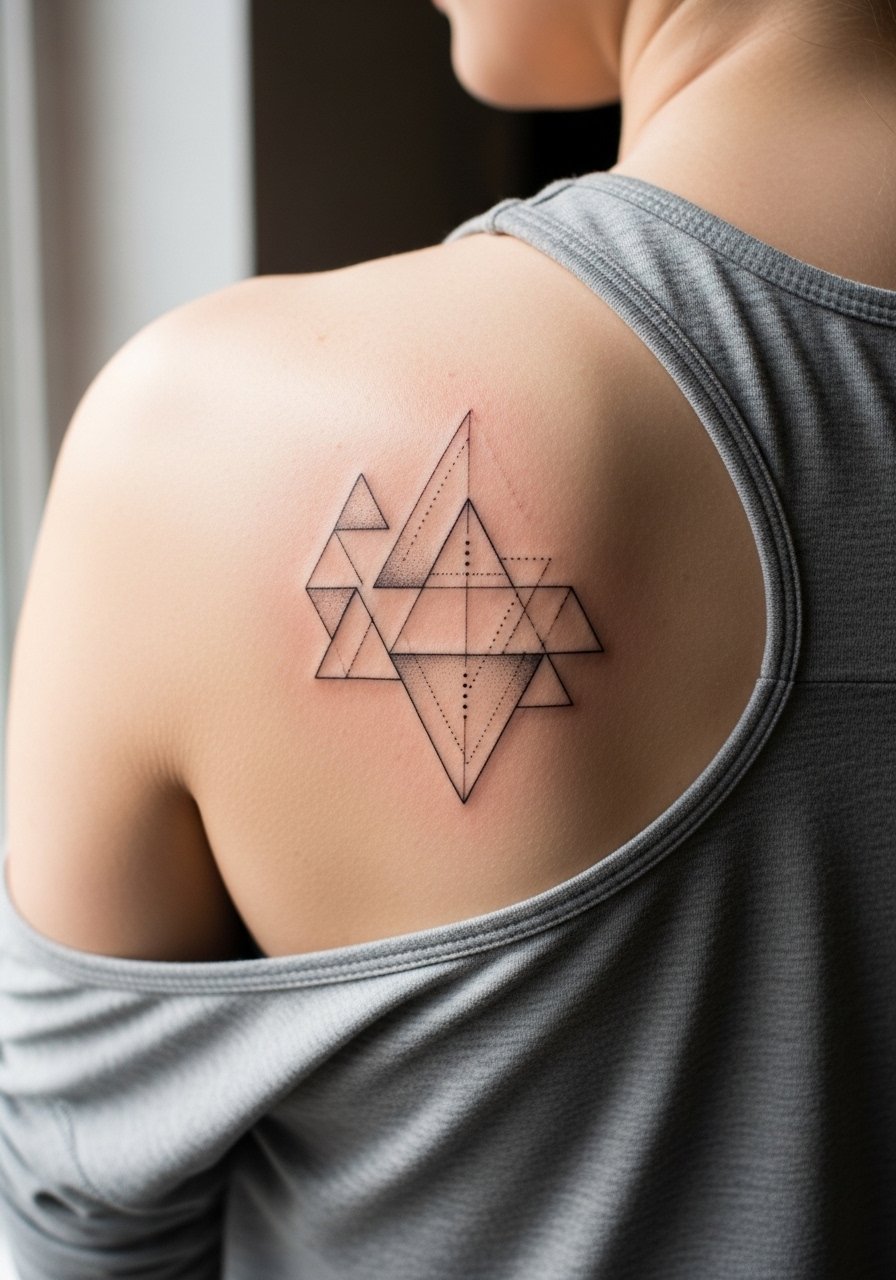
Geometric clusters look crisp when the artist spaces the shapes and varies line weight slightly. The common error is making triangles too small and tightly packed, which leads to merging as the ink settles. In consultation say you want negative space between shapes and ask for slightly staggered placement so movement does not force lines against each other. For session comfort wear a loose tank top you can pull aside. This is typically a single session that may need a touch-up at year two depending on skin type.
Pre-Session Essentials
The shoulder blade pieces above vary between quick one-needle sessions and slightly longer dot-work appointments, and a few small items smooth both the chair time and the first week of healing.
-
Disposable stencil transfer sheets. Useful for trying placement on your skin before the artist inks anything, which helps with shoulder blade centering.
-
Medical-grade topical numbing cream. Applied as directed before the session it can ease sensitivity for people nervous about the back area.
-
Thin breathable protective film roll. Helps protect the shoulder blade piece from friction under straps during the first 48 hours.
-
Fragrance-free gentle body wash. Cleans the area during showers without irritating fine line work that depends on clear channels.
-
Aquaphor healing ointment. A thin layer in the first days locks moisture in and eases scabbing on delicate lines without clogging.
7. Constellation Line with Tiny Stars
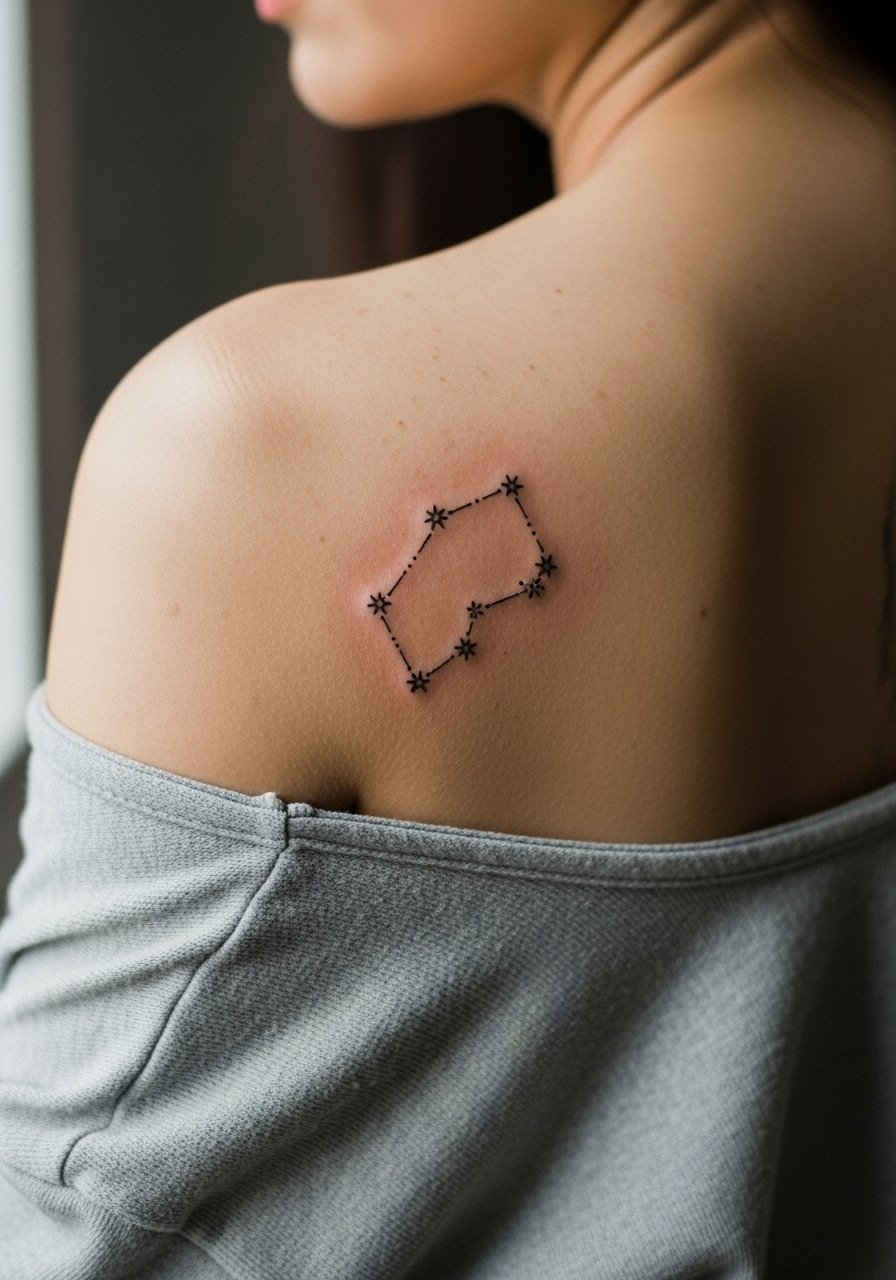
A constellation that follows the scapula curve looks like a small narrative on the back. Ask your artist to space the tiny star dots at least a few millimeters apart so the dots remain distinct as the ink spreads slightly. The biggest mistake is requesting stars so close they merge into one blob after healing. For evenings out pair the piece with an open-back midi dress. Expect a short session and touch-ups only if you want ultra-crisp star points later.
8. Single-Line Face Silhouette
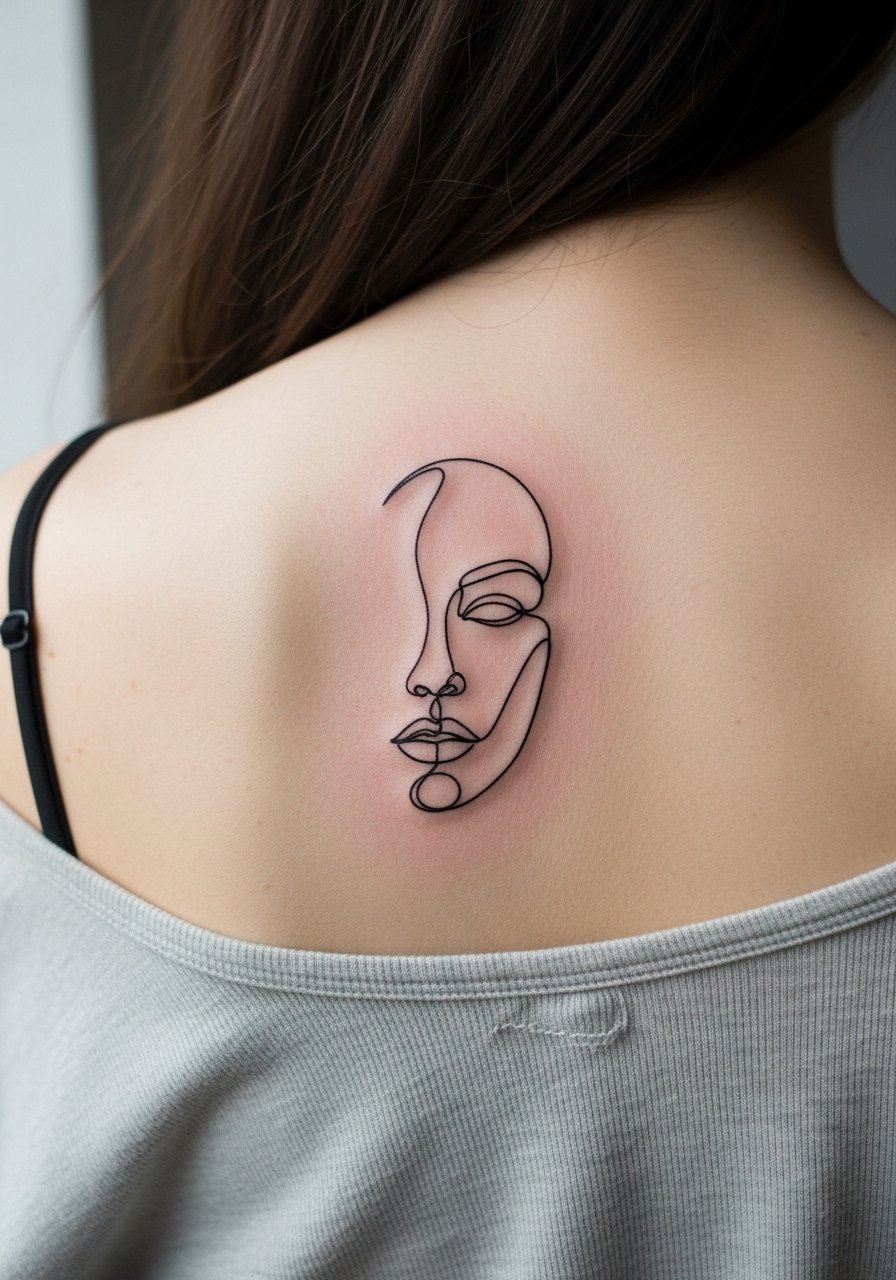
One-line face silhouettes rely on confident, continuous linework. Tell the artist you want one uninterrupted motion and that where the line crosses softer tissue you want slightly bolder weight so it does not vanish with time. A common error is asking for a hair-thin continuous line which can break up as the skin settles. This design pairs well with a loose linen shirt with a low back for casual showing. The session is smooth but demands an artist experienced in consistent linework.
9. Minimal Wave Motif
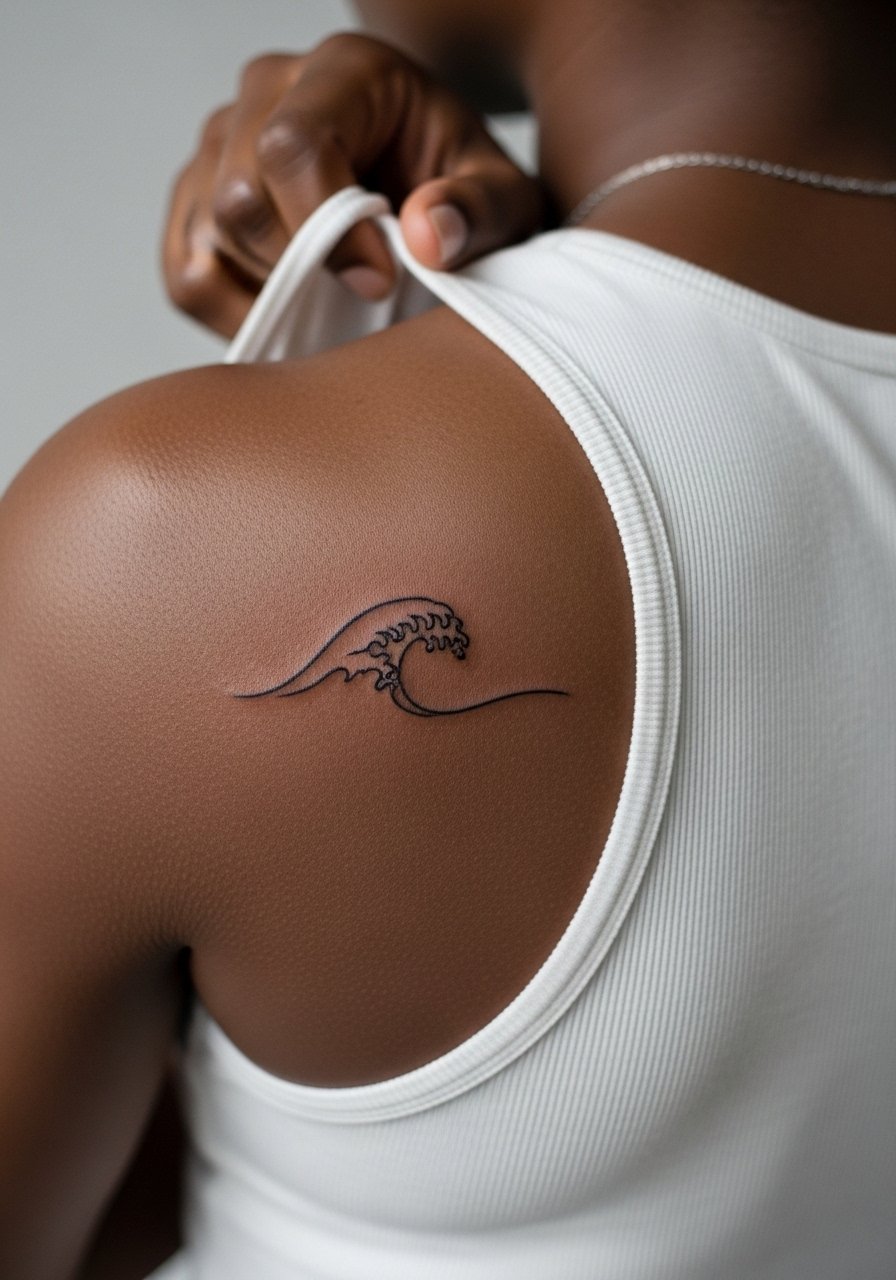
A single wave is graphic and ages predictably because it is a simple curve. Request medium line weight so the crest remains visible after the first year. Mistake to avoid is multiple thin overlapping wave lines that blur into one another. For beach days show it off with a bandeau top or a swimsuit with a low back. It usually takes under an hour.
10. Micro Mountain Range
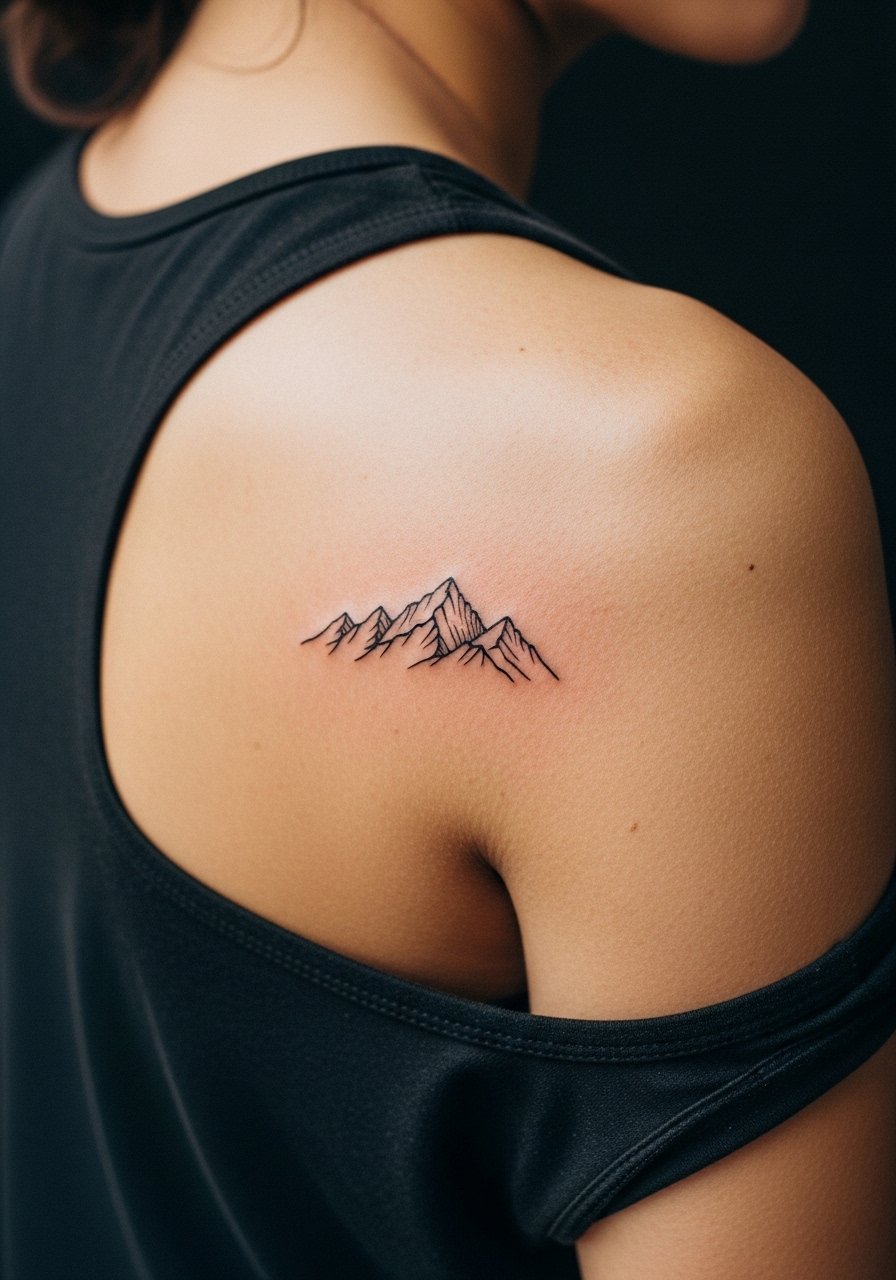
Tiny mountain silhouettes are graphic and easy to maintain. During consultation ask for negative space between peaks and specify that you want solid silhouettes rather than tiny internal lines. People sometimes ask for tiny hatch shading which can merge over time. Pair this with a cropped hoodie or open-back sweater so the peaks can peek out. Expect a short one-needle session and low touch-up needs.
11. Minimalist Arrow Along the Blade
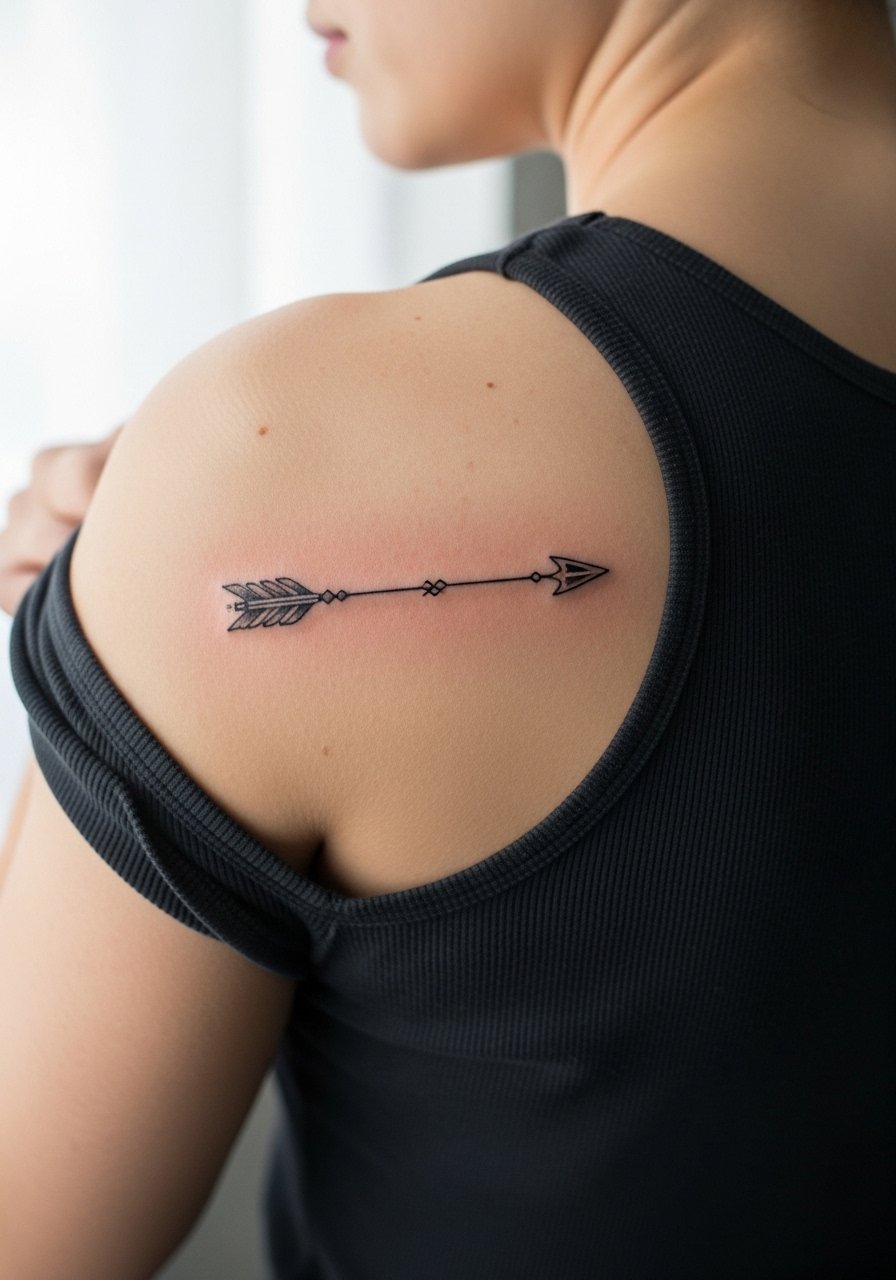
An arrow placed along the scapula reads directional and sleek. Tell your artist you want a slightly thicker shaft and simplified arrowhead for longevity. The common mistake is tiny chevrons that lose definition as ink spreads. This placement heals well and has low blowout risk compared with high-motion areas. For sessions wear a loose button-down shirt you can pull aside. Touch-ups are rare unless you want razor-sharp edges restored.
12. Negative Space Crescent and Dots
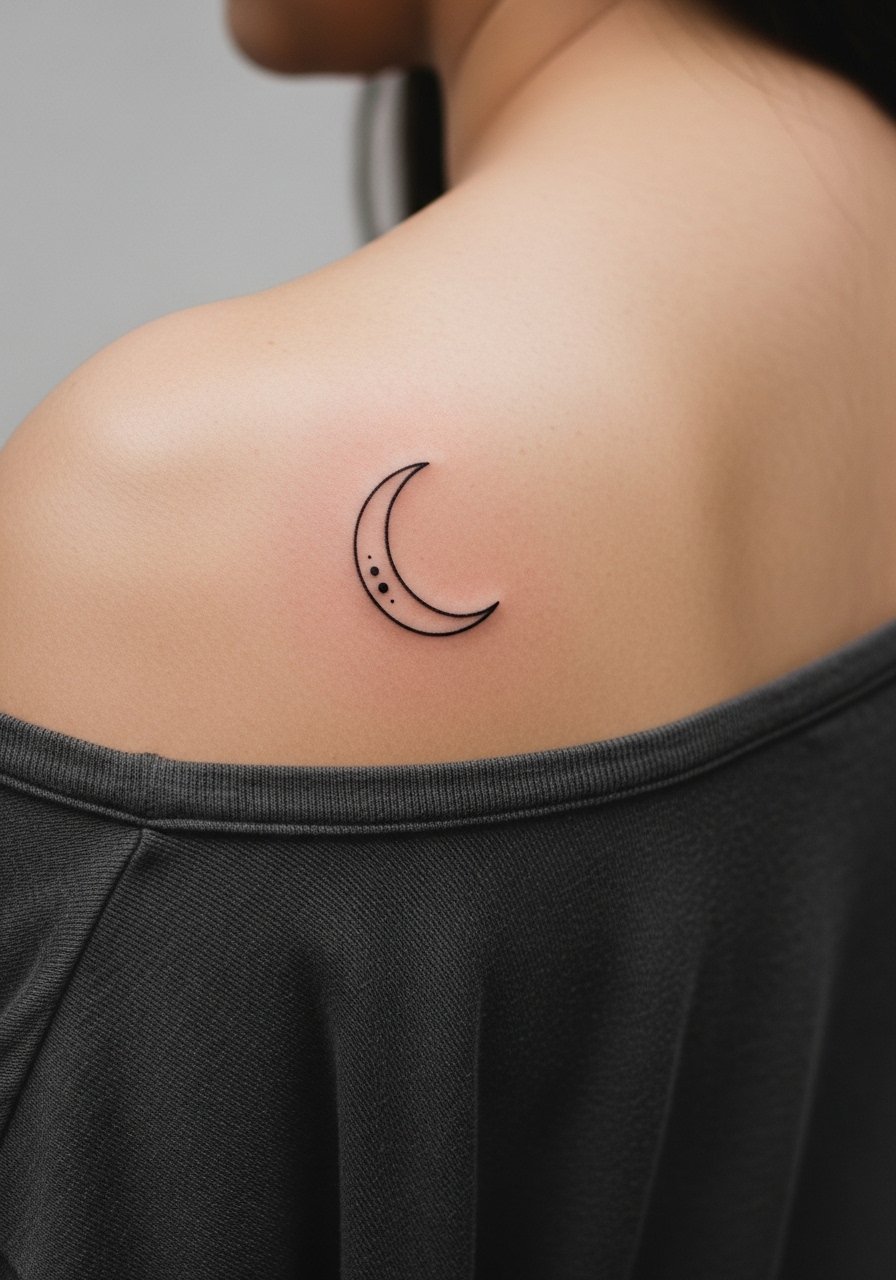
Negative space designs use surrounding ink to create shape. For the shoulder blade ask for clean margins and spacing so the negative area stays crisp as the surrounding ink softens. The mistake is too-small negative areas that vanish. This style pairs with a scoop-neck top for easy displays. Sessions are short and healing tends to be even.
13. Tiny Script Word Along the Curve
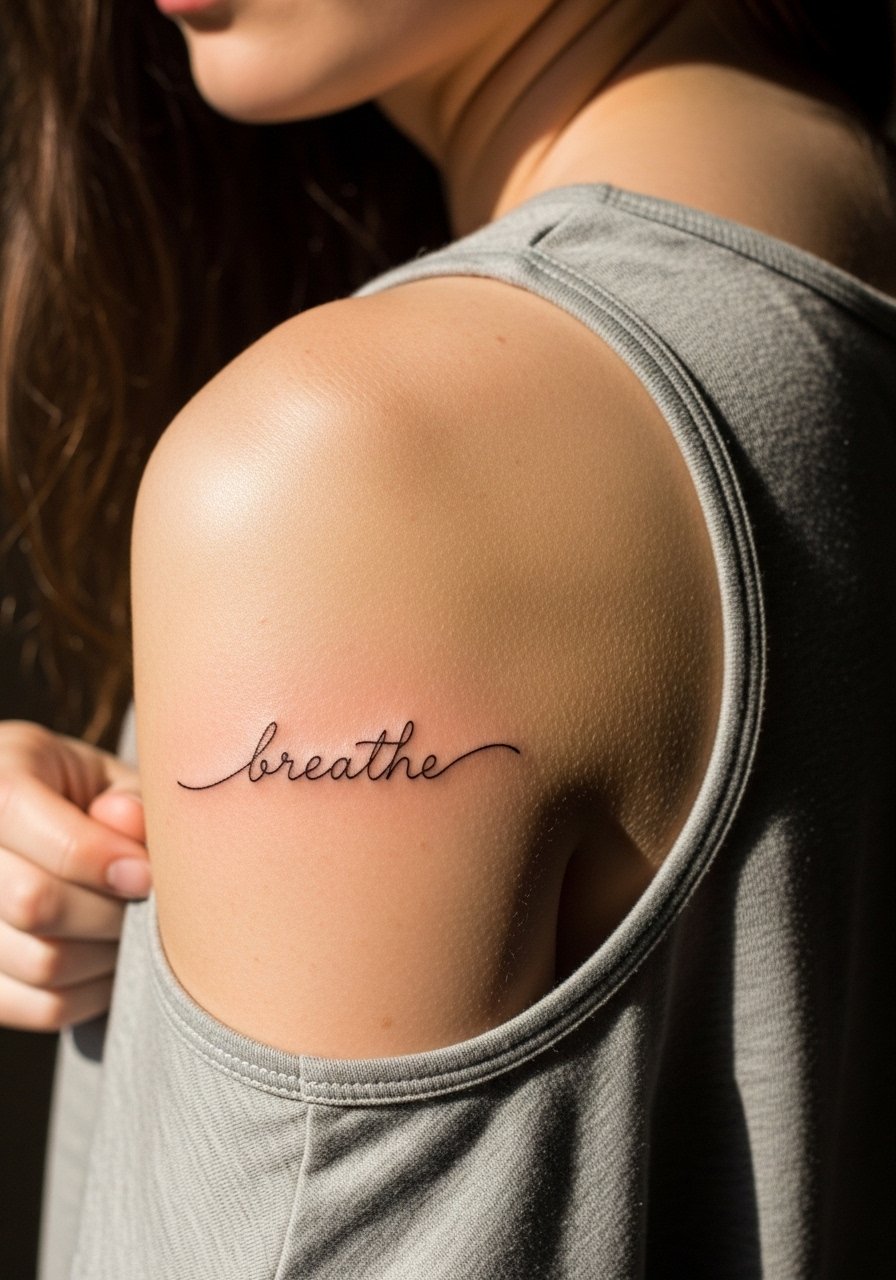
Text on the shoulder blade must follow the bone curve for a clean read. Specify font size and ask the artist to stencil the exact spacing so letters do not sit on softer folds. Small, tight script is the common mistake because letters can blur into one another. For showing off pair with an open-back blouse or a strapless dress with a low back. Expect moderate session time depending on length.
14. Tiny Palm Leaf Chain
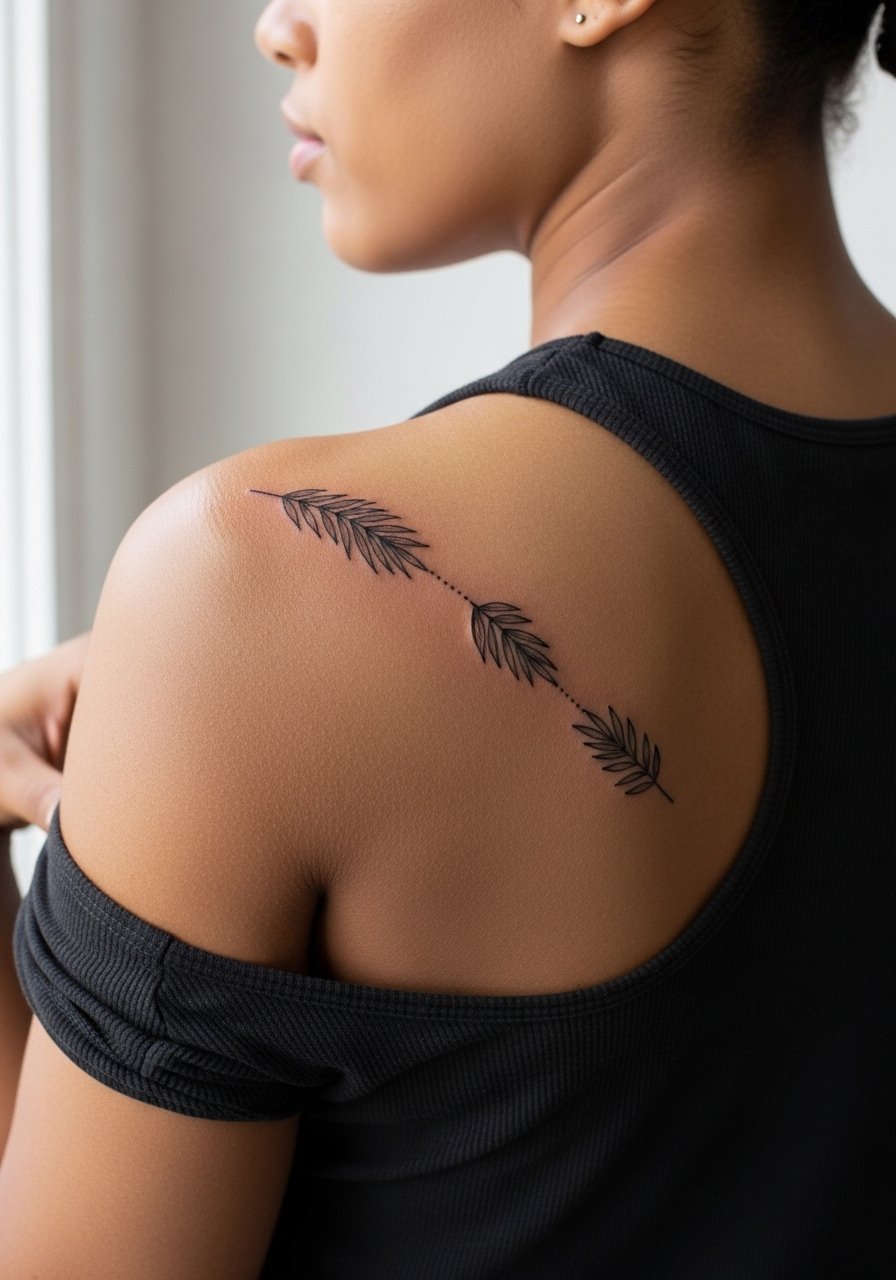
A repeating palm leaf motif makes for an elegant minimalist band across the shoulder blade. Ask for deliberate spacing between leaves so the chain reads airy over time. The mistake is requesting too many tiny leaf veins which fill in. It shows well with a strapless summer dress or with a racerback top while still being easy to conceal. Healing is steady because the area is not overly oily.
15. Abstract Line Swell
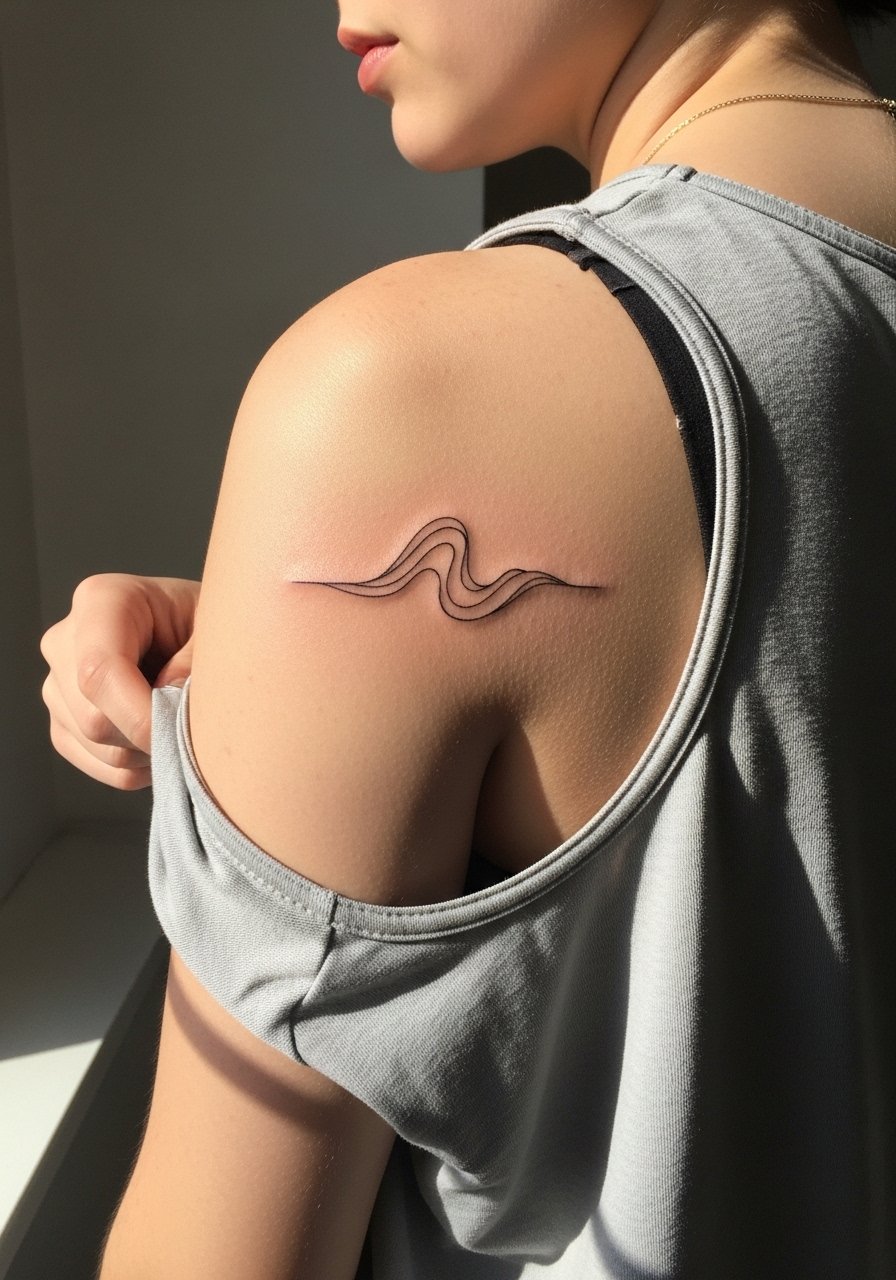
Abstract single-stroke swells rely on confident contouring. Tell the artist you want varied line weight with more room between overlapping curves. The common error is crowding curves close together which invites merging as the ink settles. This pairs subtly with an asymmetric top that hints at the lines. Sessions are typically short and the design ages well if spaced properly.
16. Tiny Solar Symbol
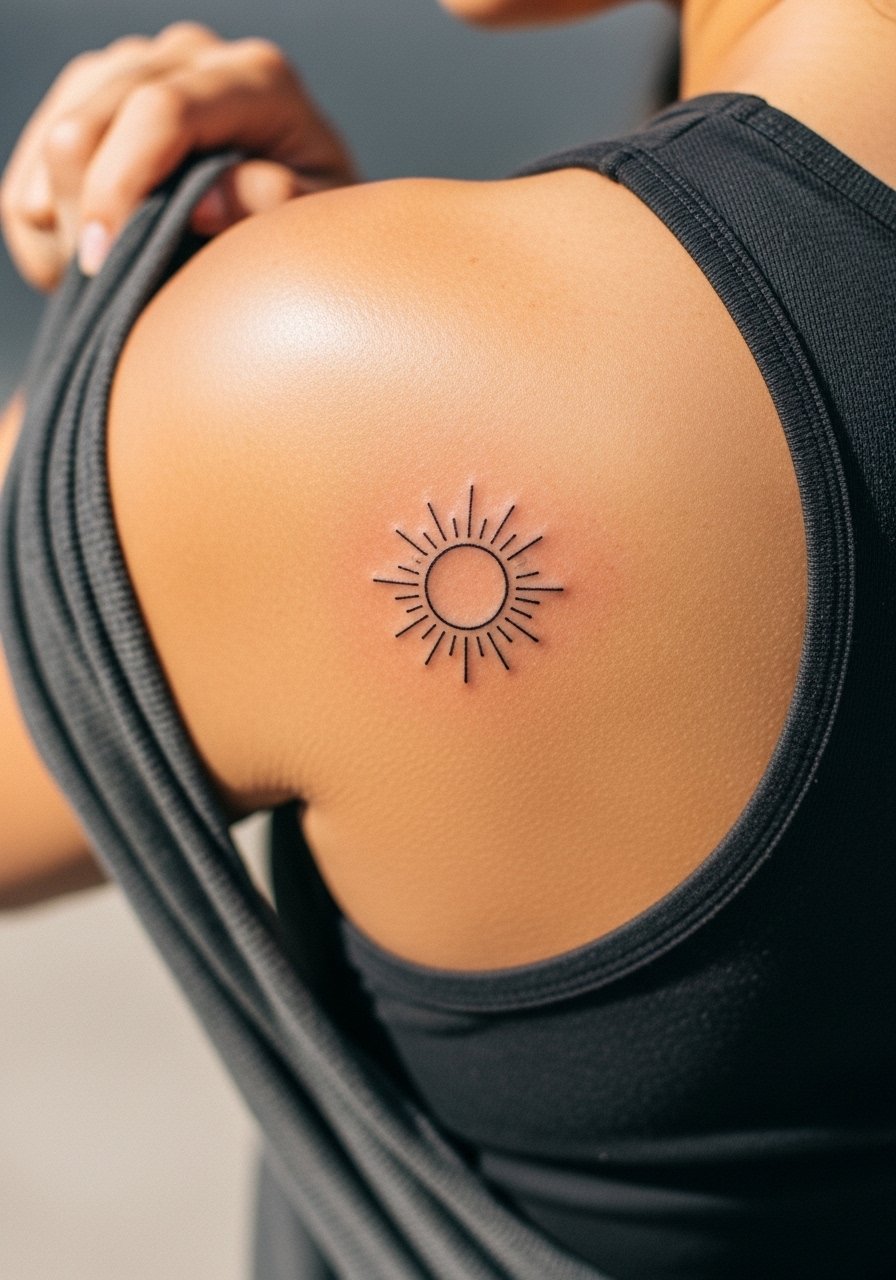
A compact solar motif reads clean when rays are short and evenly spaced. Ask for stubby rays rather than long spikes so the rays do not blur into streaks. The mistake is elongated ray details that look messy after a couple of years. Pair the piece with a scoop-back top for evenings. Expect a quick session and minimal touch-ups.
17. Micro-Realism Leaf
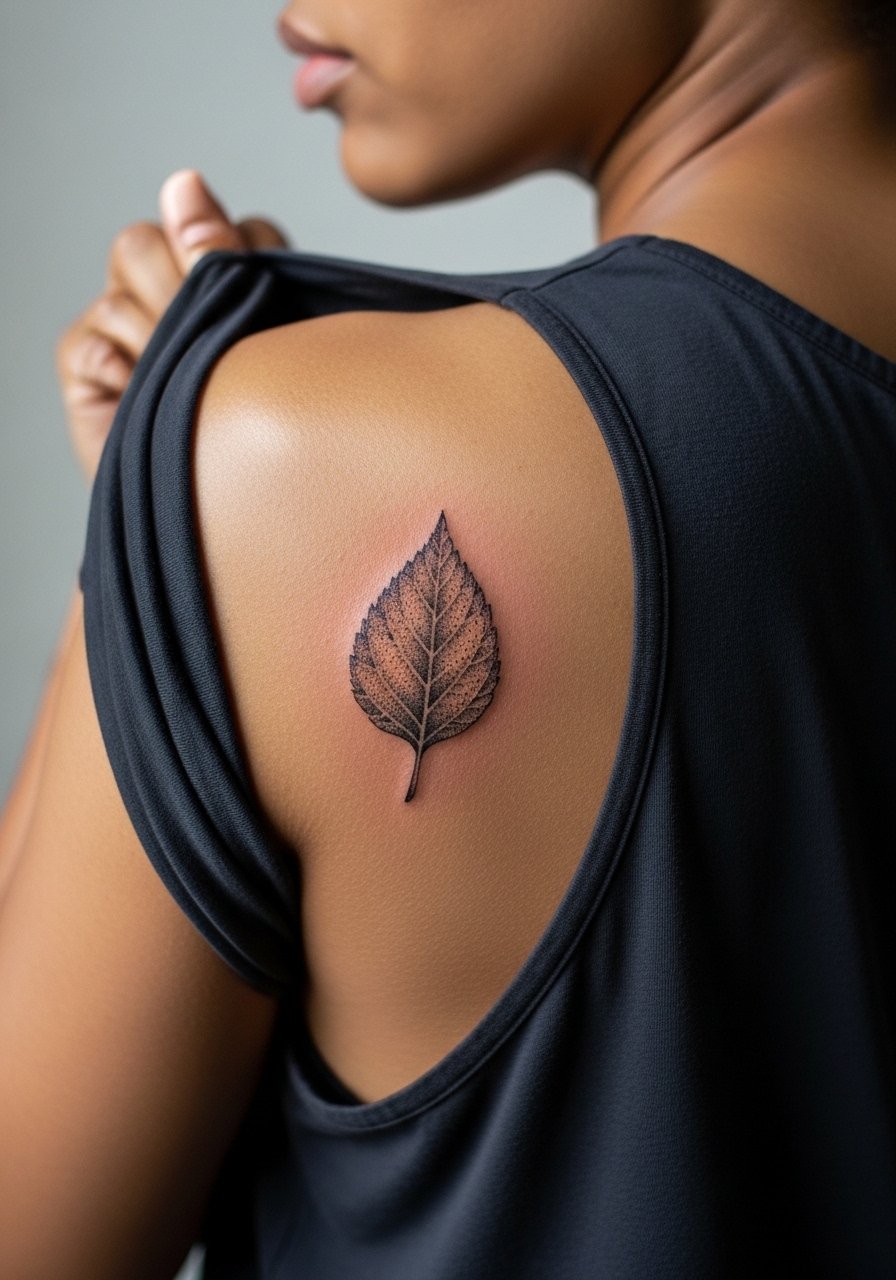
Micro-realism on the shoulder blade can hold if the shading uses stipple rather than dense gradients. Ask your artist for stipple shading and clear leaf edge so the shape remains distinct. The controversy here is whether micro shading fares well on body curves. One camp worries stipple merges on areas that move. The other camp believes careful dot work lasts if spaced right. Discuss the technique and expected touch-up timeline. For nights out use a satin camisole to frame the detail.
18. Tiny Anchor Outline
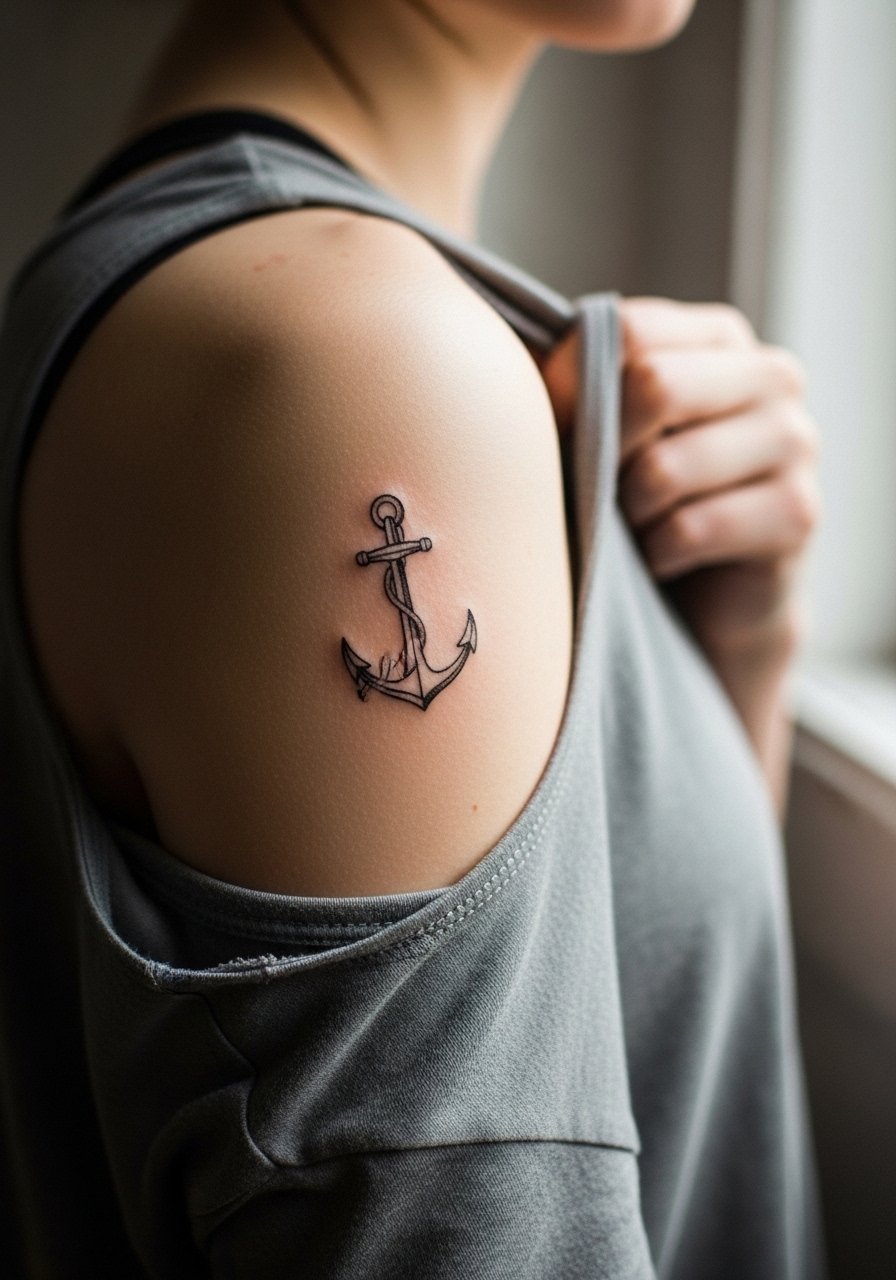
A tiny anchor reads bold while staying minimalist with a simple outline. For longevity request a modest outline thickness so the hollow areas do not fill in. The common mistake is ultra-thin anchors that soften quickly. This plays well with a crop-top and high-waisted jeans combo for casual shows. The session is brief and predictable.
19. Minimal Chain of Dots
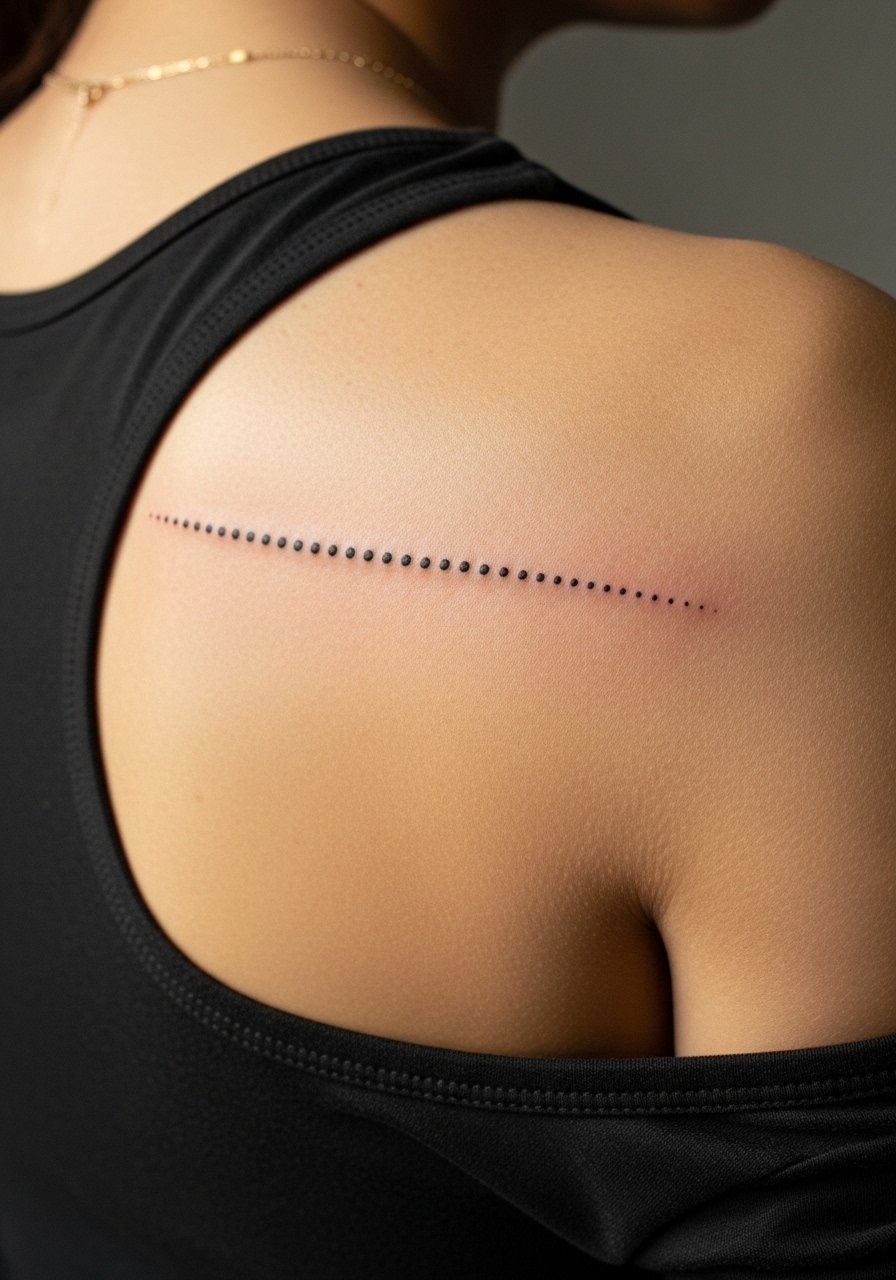
A dotted chain creates a minimalist rhythm across the scapula. Ask for slightly larger single dots than you imagine because micro-dots can become indistinct. The mistake is requesting tiny pinprick dots that lose contrast. Pair the piece with open-back dresses for maximum effect. Sessions are fast and touch-ups depend on how bold you want the dots kept over time.
20. Tiny Paw Silhouette
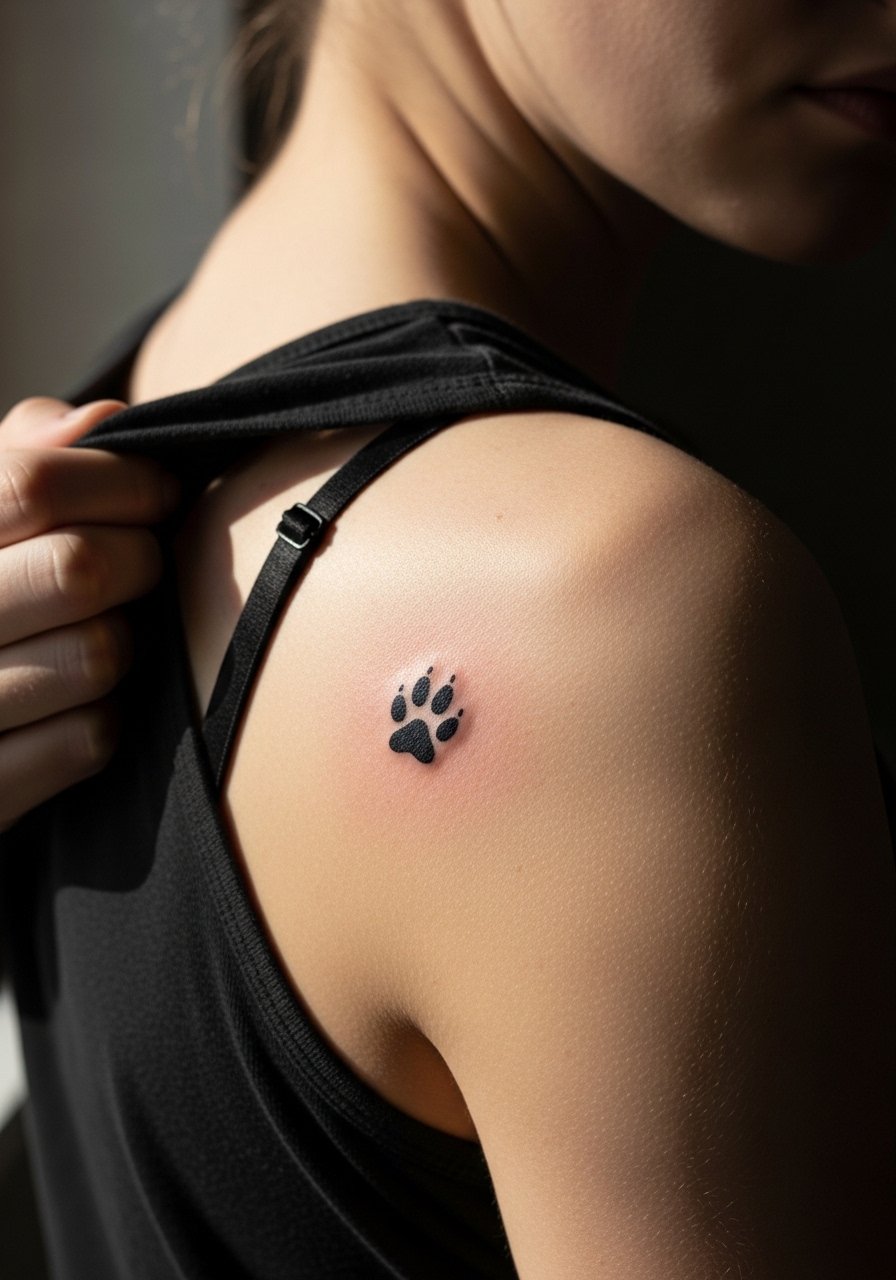
A small paw silhouette is a heartfelt minimalist option. Tell the artist you want a slightly smoothed edge silhouette rather than tiny toe detail. Over-detailing the toes is the typical mistake because those micro-elements flatten with healing. For casual display wear a racerback tank. The session is brief and keeps well.
21. Thin Parallel Bars
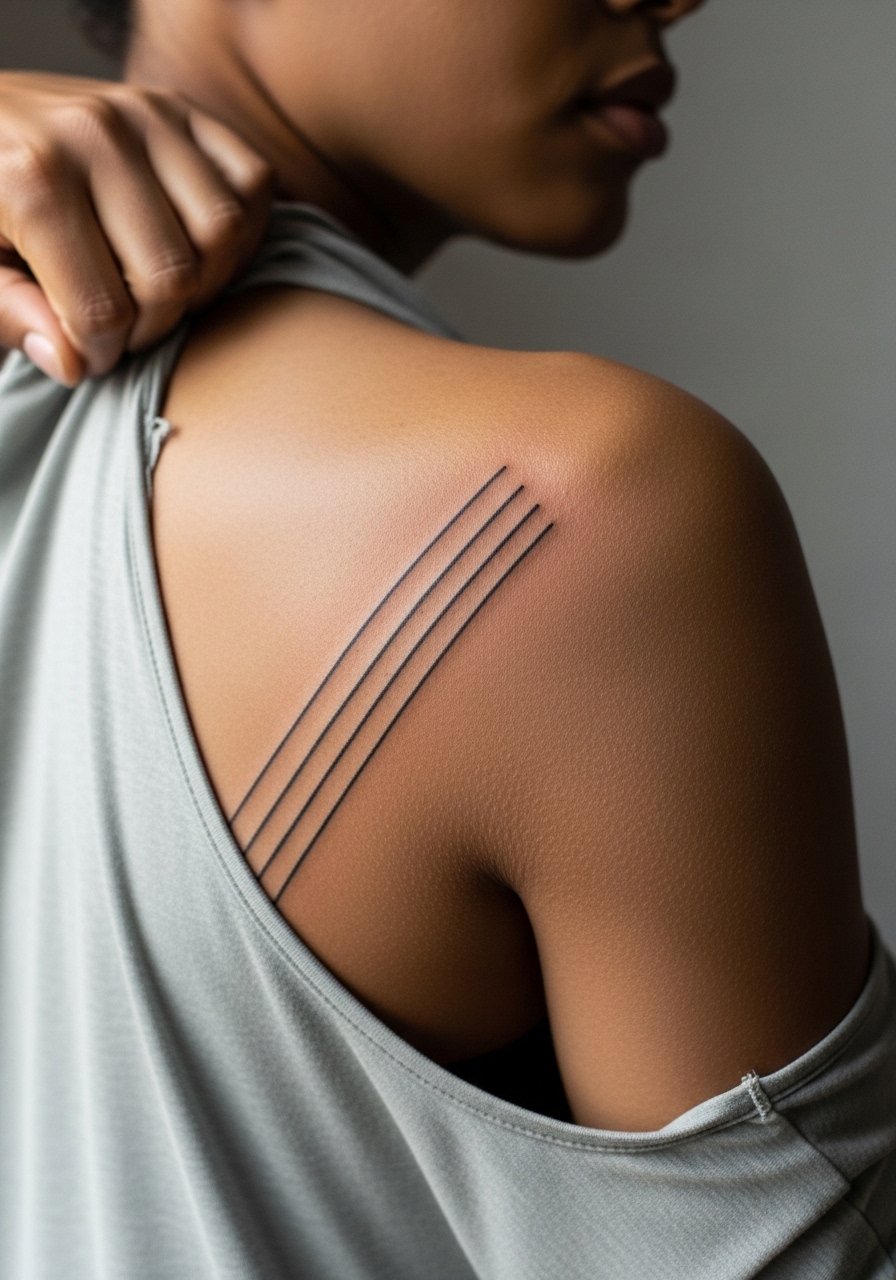
Thin parallel bars read modern and minimal when spacing is deliberate. Request measured gaps between bars and ask the artist to stencil exact spacing to avoid optical merging later. The common error is bars too close together which blend into a block over time. Pair this with an off-shoulder top to frame the geometry. Sessions are short and healing is straightforward.
Frequently Asked Questions
Q: Will fine line shoulder blade tattoos blur faster than bolder work?
A: Fine line can soften more quickly because thinner channels leave less room for settling. In my experience the key is spacing and slight line weight. If you want lines that keep definition, ask for modest line thickness and more negative space. Expect possible touch-ups around year two to three.
Q: How should I describe placement to the artist so the design sits well with my shoulder movement?
A: Say you want the piece to "follow the scapula curve" or to sit "on the bone edge" rather than centered on soft tissue. Bring photos of your own shoulder in neutral and raised positions. That way the stencil shows how the design moves with you.
Q: Are there wardrobe tips to make a shoulder blade tattoo look intentional on days I want to show it?
A: Yes. Open-back dresses, racerback tops, and wide-neck shirts frame the shoulder blade without competing. For a casual look try a racerback tank or a loose button-down worn open at the back. For showier moments choose open-back styles.
Q: Do shoulder blade designs need special healing care compared with forearm pieces?
A: The shoulder blade usually sits under straps and seat belts, so protect it from constant friction in the first week. Keep straps loose, sleep on your front or side if comfortable, and follow the aftercare plan your artist recommends. Small touch-ups are common if friction disturbed scabbing.
Q: Can I get a large mandala on the shoulder blade without it blurring?
A: Large mandalas can age well if the design uses more spacing in dense areas and dot work rather than packed lines. Be mindful of the dense center. Discuss with your artist the two camps on density and ask them to show healed examples for similar placements.
Q: How do I find artists who specialize in clean fine line shoulder blade work?
A: Use local shop directories, hashtag searches on social platforms, and recent convention guest lists. Reddit threads and tattoo studio portfolios give practical examples of healed work. Look for portfolios showing healed photos on similar skin tones and placements.
