
Fine line paw tattoos dominate saved boards, and the tiny stencils that score the most likes often need touch-ups far sooner than people expect. Placement and ink choice decide whether a mini paw reads crisp in a year or ghosts out. I pulled together 17 mini dog paw tattoo ideas that balance what looks great now with what holds up, starting with a clean fine line wrist option that many first-timers ask for.
1. Mini Fine Line Paw Outline on the Wrist
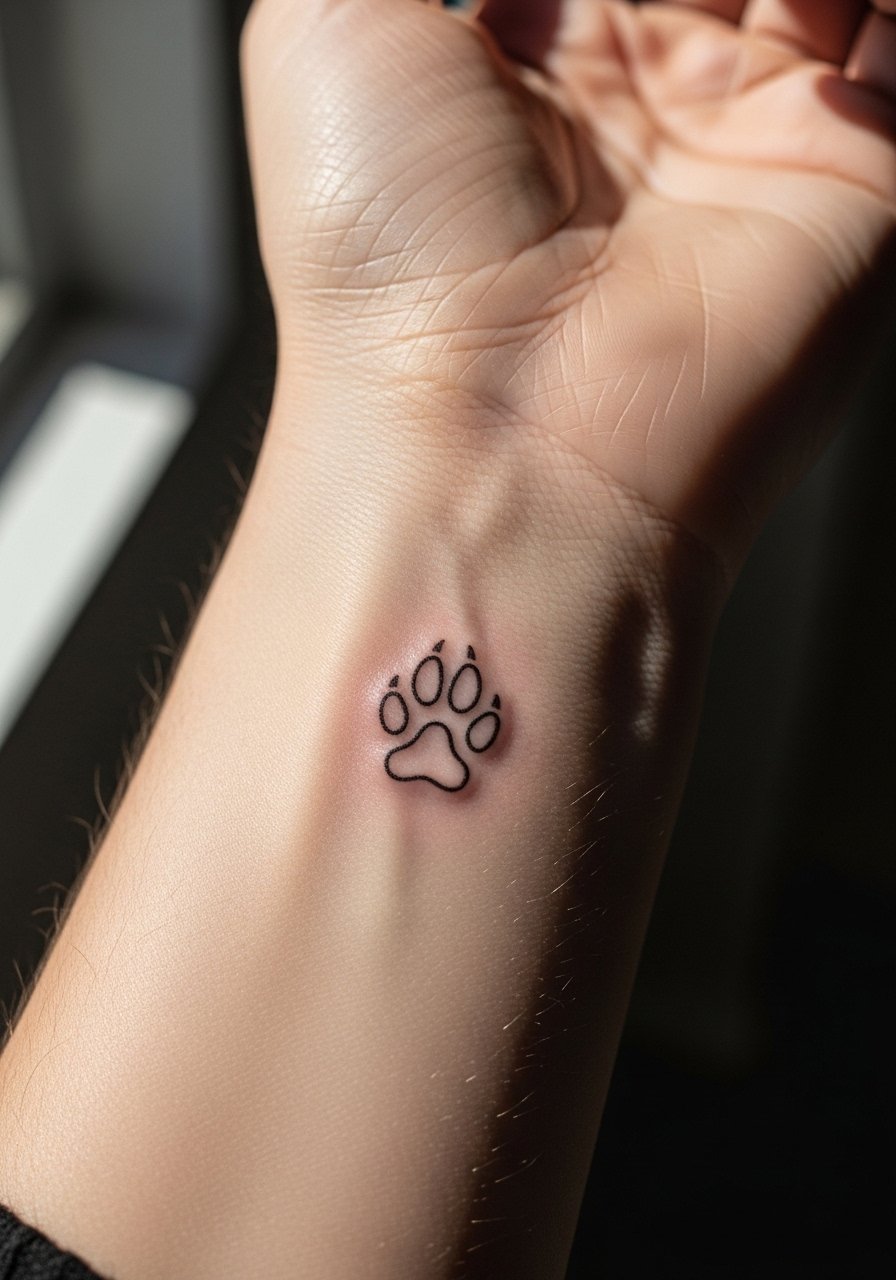
I've seen this exact tiny paw on wrists in five shops across Brooklyn and it reads as a low-commitment piece in the chair. Fine line fans praise the delicate look, and bold-line advocates point out that thin single-needle work fades faster. Both camps have valid points. Tell your artist you want a slightly stronger line weight than the absolute thinnest single-needle, and ask for a free touch-up at six months. Expect a 20 to 40 minute session and mild wrist soreness. For showing it off, pair with a thin chain bracelet on the opposite wrist, and wear a sleeveless tank to the appointment so the artist has clear access.
2. Blackwork Geometric Paw on the Inner Forearm
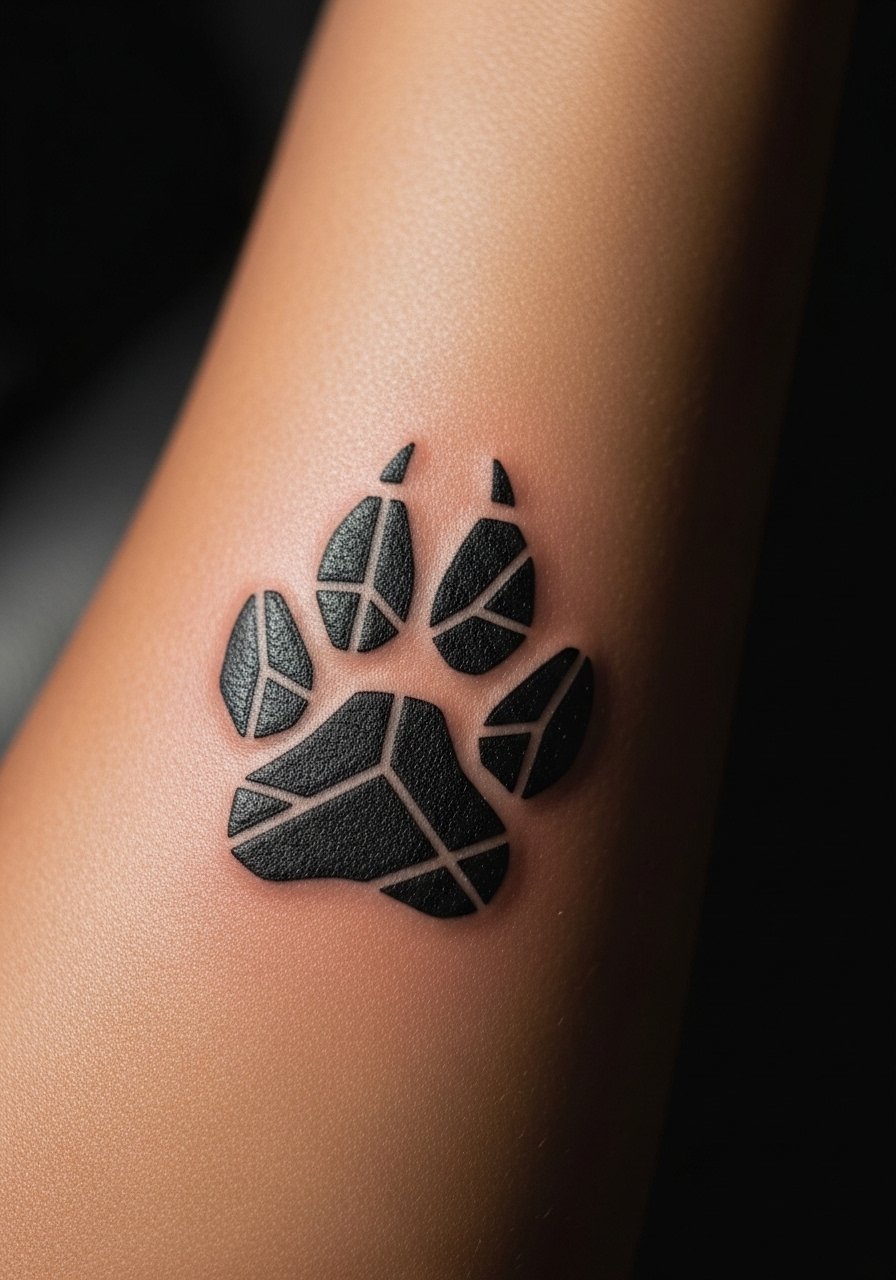
This blackwork take holds up better on hands and forearms where friction and sun take a toll. When you consult, show the artist a bold reference so they know you want solid saturation and room between shapes. The session is quick for a 3 cm piece but expects a bit more sting than a wrist. Blowout risk drops when lines have breathing room, so avoid dense micro-geometry crammed into a tiny square. Style it with a rolled short sleeve chambray shirt for a clean, casual look, and ask the shop how they handle touch-ups in the first year.
3. Watercolor Splash Paw on the Shoulder
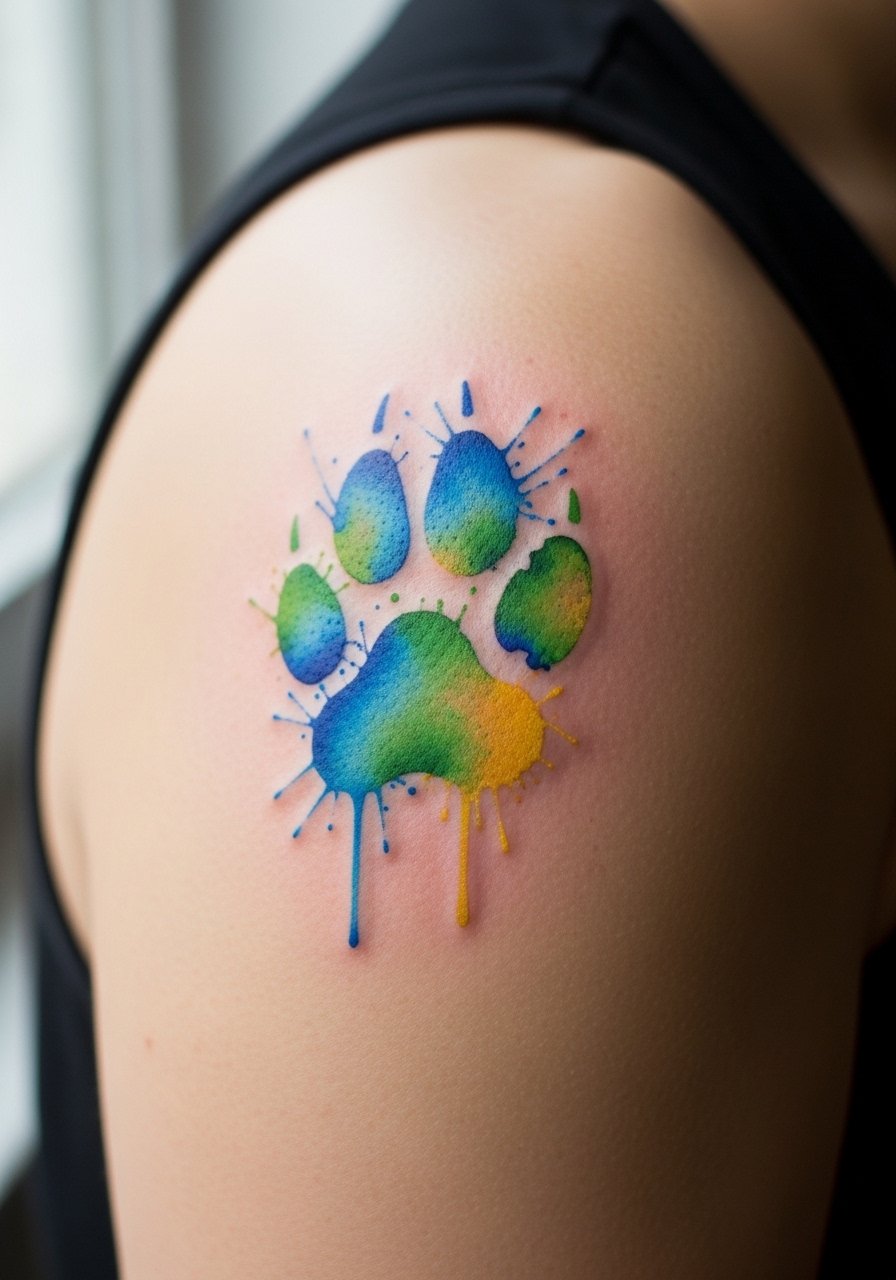
Watercolor gives a playful wash of color but the technique needs space to age. I recommend the shoulder for a splash style because the skin there tolerates color better than wrists. Ask your artist for crisp black anchors beneath the color so the paw still reads as it settles. The session runs longer than a tiny outline and may need a second pass to boost saturation. For the appointment, pick a racerback tank so the artist can work without tugging at straps. Expect softer edges after a year, and plan a touch-up if color looks muddy.
4. Minimalist Single Paw Pad Dotwork on a Finger
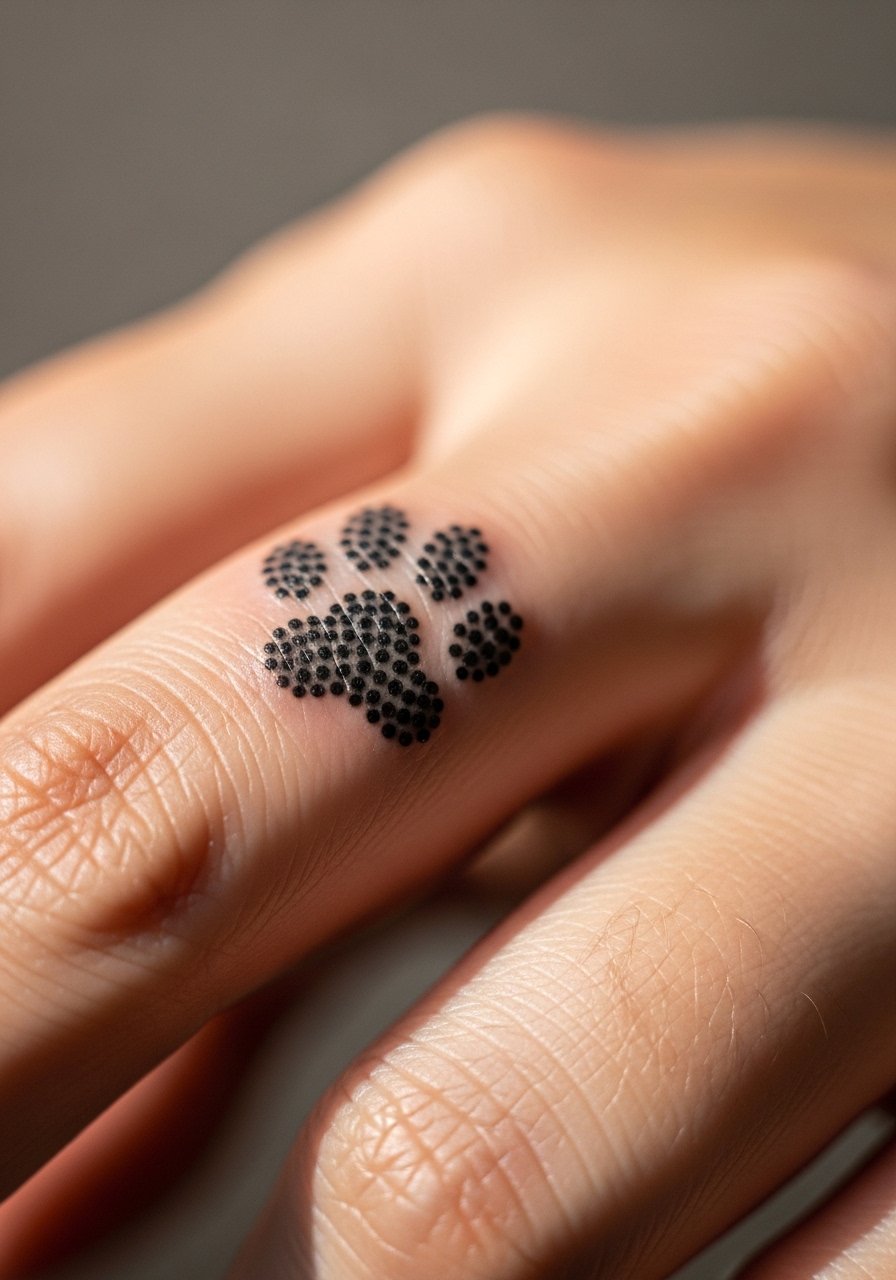
Finger placements heal faster but fade faster too, especially with dotwork. The biggest mistake is sizing it too small. Ask for slightly larger dots so the negative spaces can survive daily hand use. The session is very quick but plan for yearly check-ins because fingertips and sides of fingers experience constant washing and friction. For styling, keep hands simple and pair the tattoo with a matte signet ring on the opposite hand. During the session, remove all rings and wear short sleeves so the artist has unobstructed access.
5. Neo-Traditional Cartoon Paw with Bones on the Calf
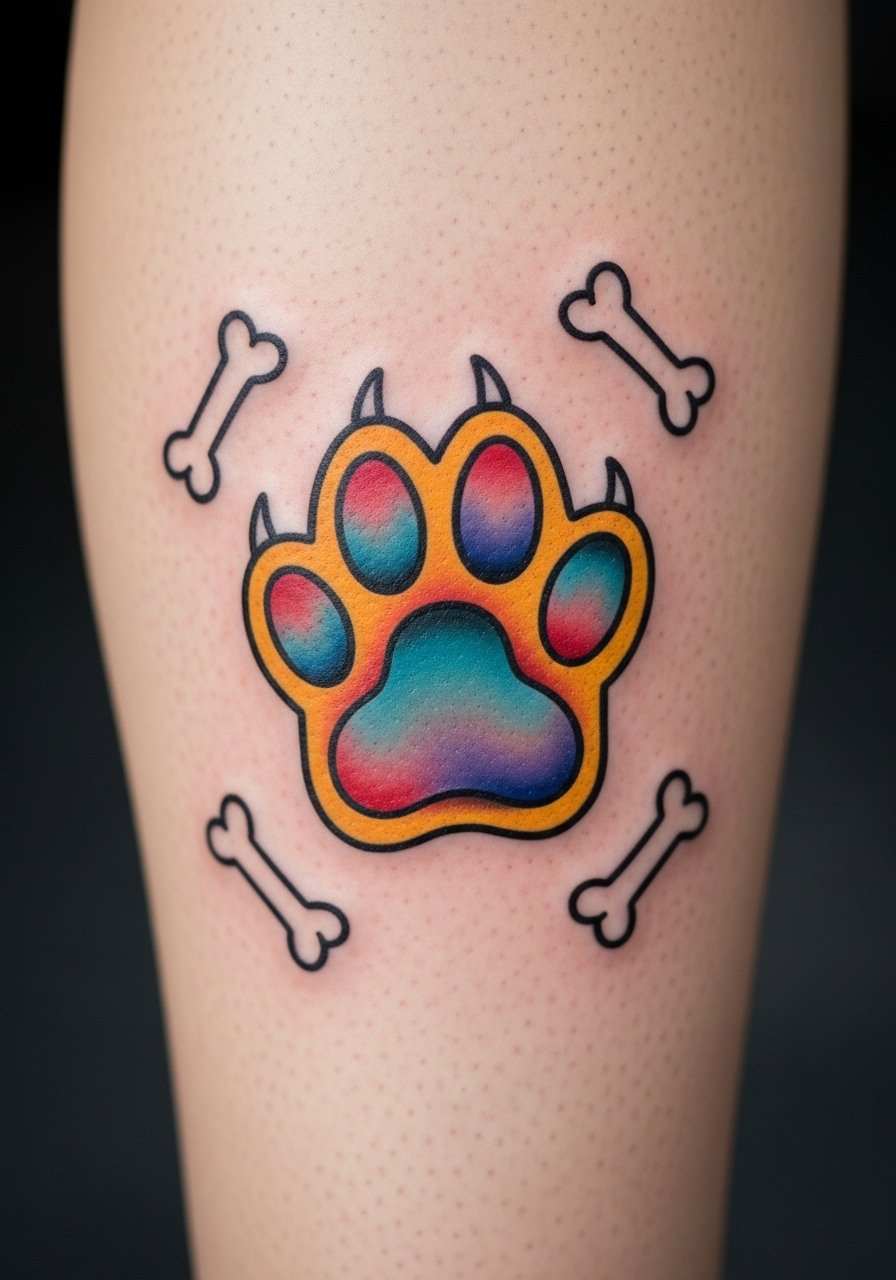
Neo-traditional color and bold outlines age into a vivid, readable piece on thicker skin like the calf. Bring a clear cartoon reference and agree on color saturation so the paw does not muddy as it heals. Calf sessions can be comfortable since you can recline, and the larger canvas lets the artist play with scale. Avoid tiny color fills that sit too close to heavy lines. Pair this with a high low hem dress for summer reveals. Expect one session for a 5 cm piece and a touch-up if color needs boosting after a few months.
6. Micro-Realism Paw with Scar Texture on the Inner Bicep
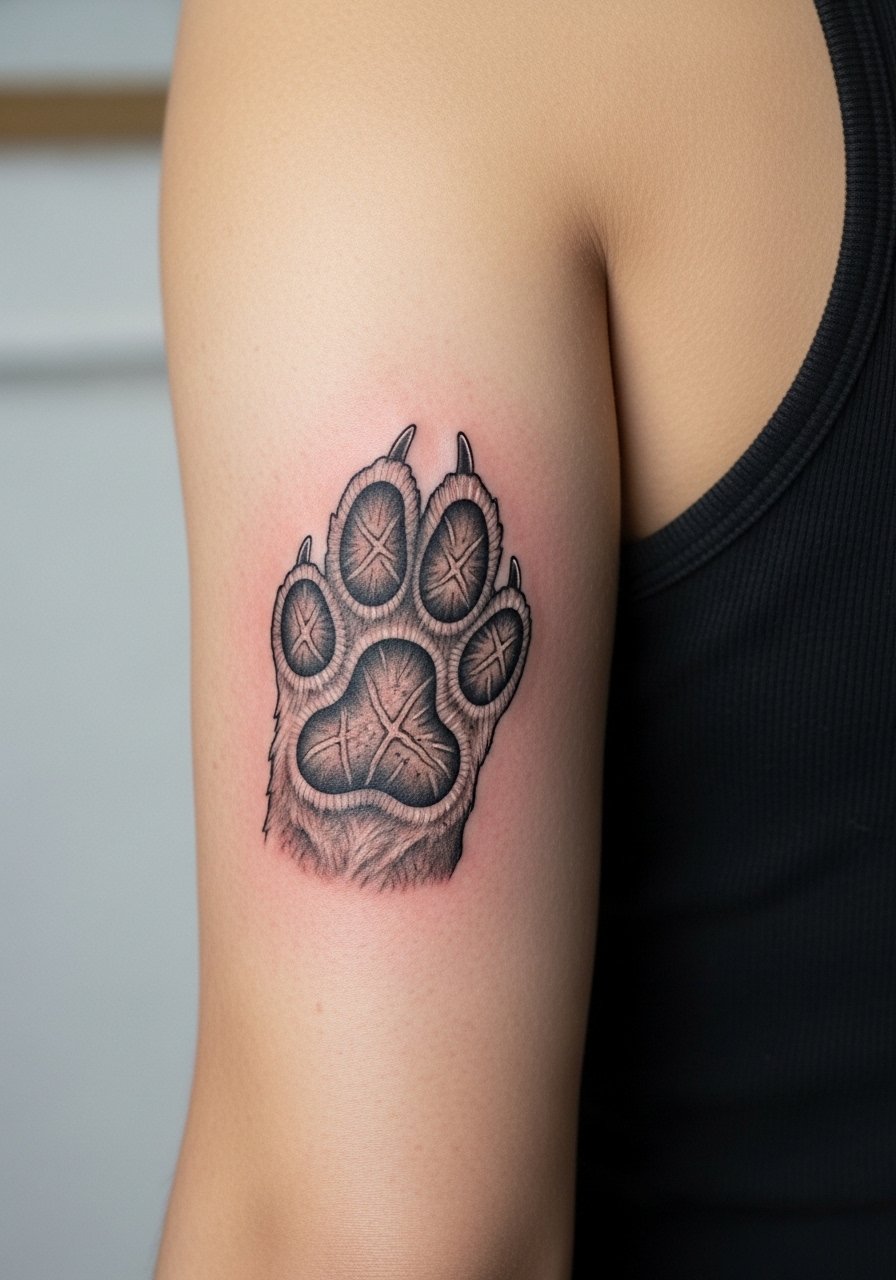
Micro-realism works best where skin is smooth and steady, so the inner bicep is a good call. Expect more time in the chair because shading for realistic texture is detail heavy. One common mistake is asking for hyper-detail at 1 cm. Scale this to at least 2 cm so stipple shading reads as texture rather than noise. If you are considering skin-safe adhesives for healing, be aware there is a split in opinions on Saniderm versus dry healing. One camp argues Saniderm speeds a clean heal and reduces picking. The other camp worries that leaving a film too long can trap moisture and cause maceration. Ask your artist which approach they use and why, then follow their timed removal plan.
Studio Day Picks
The tiny wrist, finger, and inner forearm pieces above behave very differently from shoulder and calf work, so a few specific items smooth the session and the first week.
-
Cali Certified Organic Balm. A lighter, scent-free option some people prefer for sensitive skin while fine line work settles, especially on the inner wrist and behind the ear.
-
Ink-Illustrated Butter. Breathable balm artists mention for delicate linework that needs moisture without clogging tight channels.
-
Australian Bush Relief Balm. Helps manage itch in humid spots like the calf and thigh without steroid ingredients.
-
Hada Labo Lotion. An ultra-light hydrating lotion that can be useful on darker skin tones where heavy balms create unwanted shine.
-
Hustle Butter Deluxe. A common go-to for smoothing the first few days on larger color pieces and for preventing scab cracking on saturated work.
7. Ornamental Mandala-Framed Paw on the Collarbone
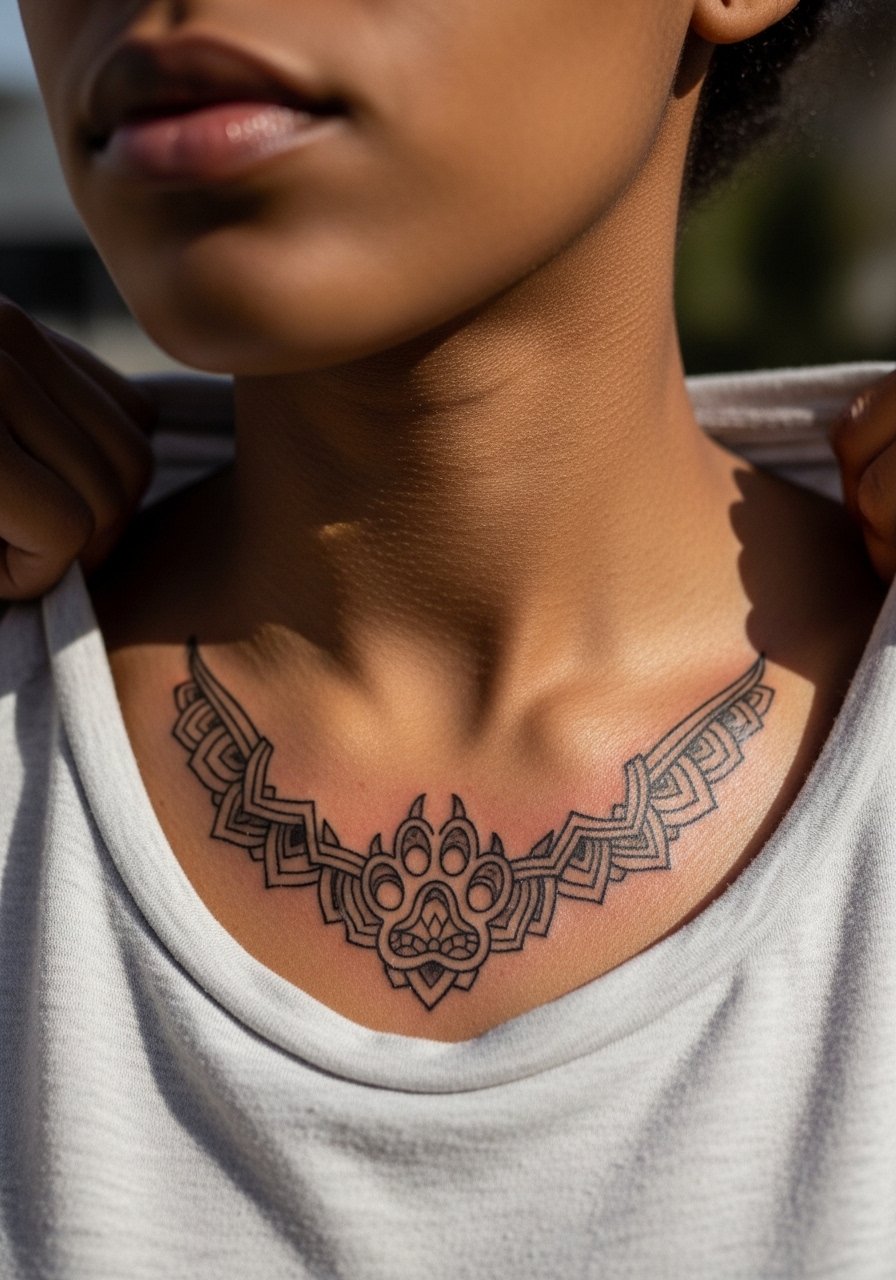
A mandala frame gives the paw spiritual geometry without leaning on obvious symbolism. The collarbone is beginner-friendly on the pain chart but watch for movement when you reach. Ask for slightly thicker outer lines so the mandala still reads after a year. One common mistake is over-detailing the mandala too small near bone. For showing off, an off shoulder blouse sits perfectly to frame the lines without rubbing the area. Expect a single session and plan a six-month check to see if any touch-up is needed along the edges.
8. Ignorant-Style Thick-Line Paw Stack on the Thigh
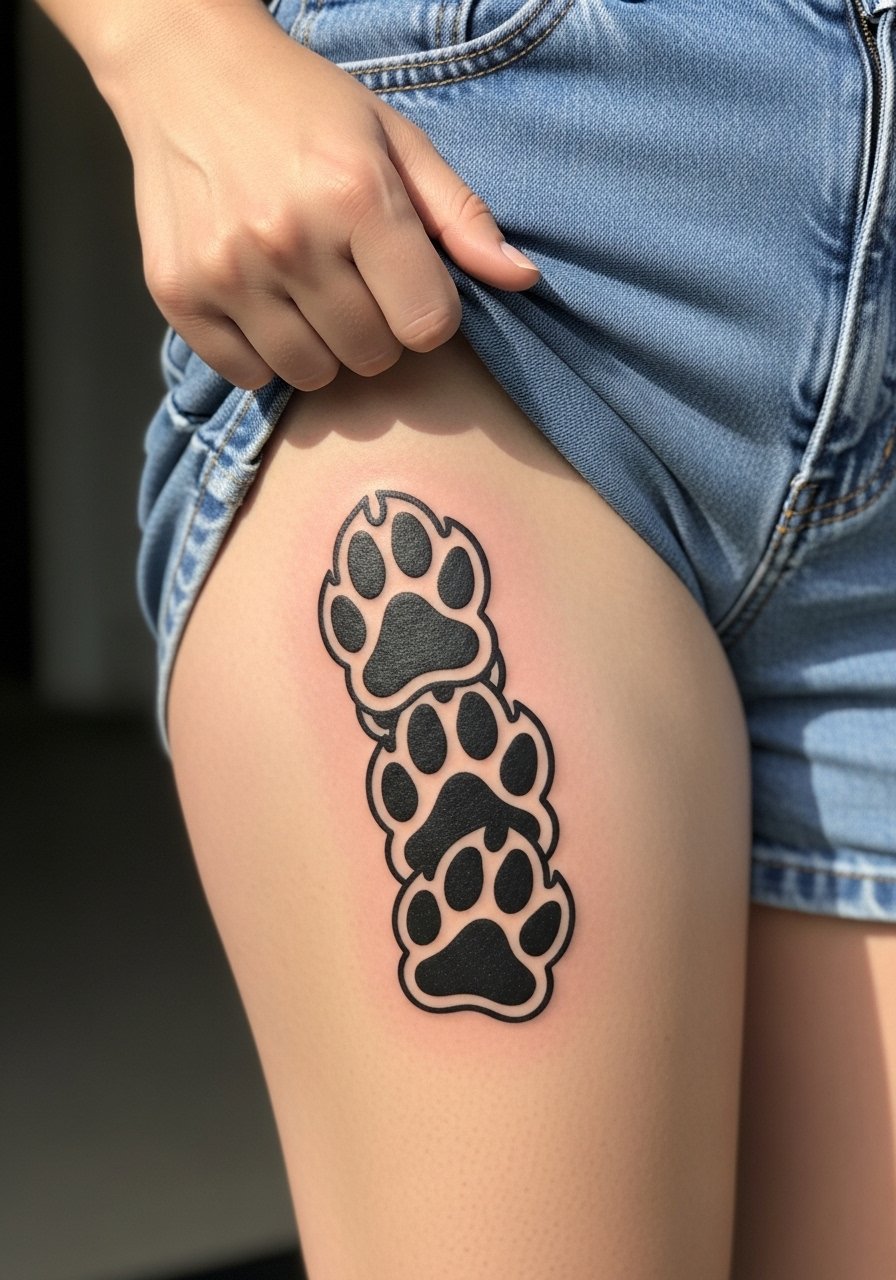
The ignorant style celebrates imperfect, hand-sketched energy and it plays beautifully on the thigh where scale can be larger. Thigh skin can shift after weight changes and pregnancy, so consider a stack that tells a timeline rather than a single tiny print. The session feels easy because the area is cushioned, and bold lines are forgiving during healing. One mistake is cramming too many stacked paws into a narrow band. Leave breathing room so the stack ages without merging. For privacy, thigh work is low-visibility but it ages into a confident block of black.
9. Fine Line Paw with Heartbeat on the Ribcage
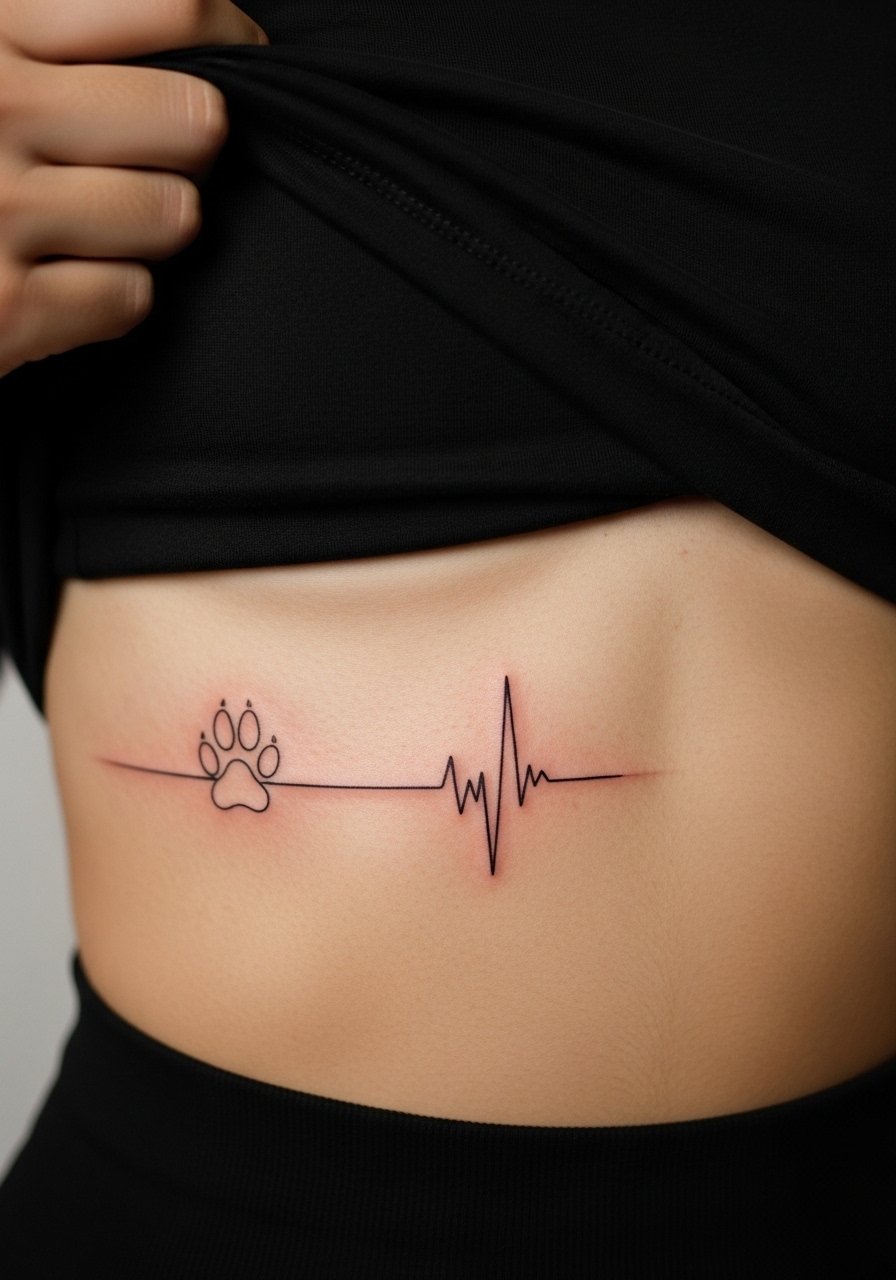
Ribcage pieces read intimate and memorial when paired with a heartbeat motif. Artists split on whether fine line holds up on ribs. One camp says the skin stretch and movement blur thin lines within two years. The other camp says with correct needle depth and spacing, fine line settles just fine. Ask where your chosen artist stands on that debate and whether they recommend slightly bolder line weight. Pain is higher on ribs, so expect a more intense session. Wear a strapless top to the appointment so the artist can access the area without tugging straps.
10. Black and Gray Paw with Negative Space Claws on the Ankle
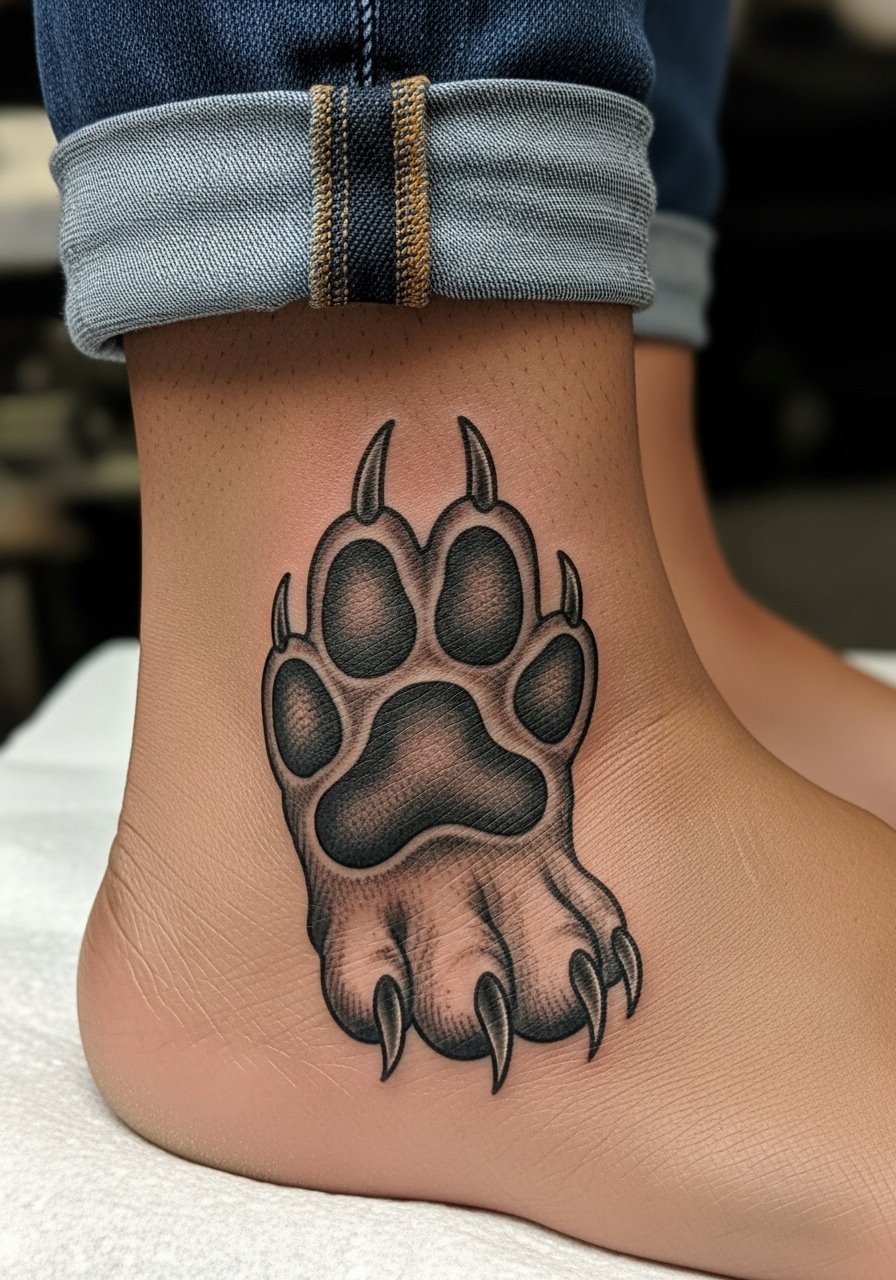
Ankle tattoos face sweat and friction, especially in summer. Negative space claws give contrast that pops on darker skin tones and reduces the need for color. Request high-contrast shading and avoid very thin hairlines near the edge that can fade first. The ankle session is brief but can sting more due to thin skin. For wearability, pair the healed piece with strappy flat sandals and cropped jeans to show it off. Plan for a touch-up if the edges soften after heavy walking seasons.
11. Traditional American Paw Print Trail on the Outer Forearm
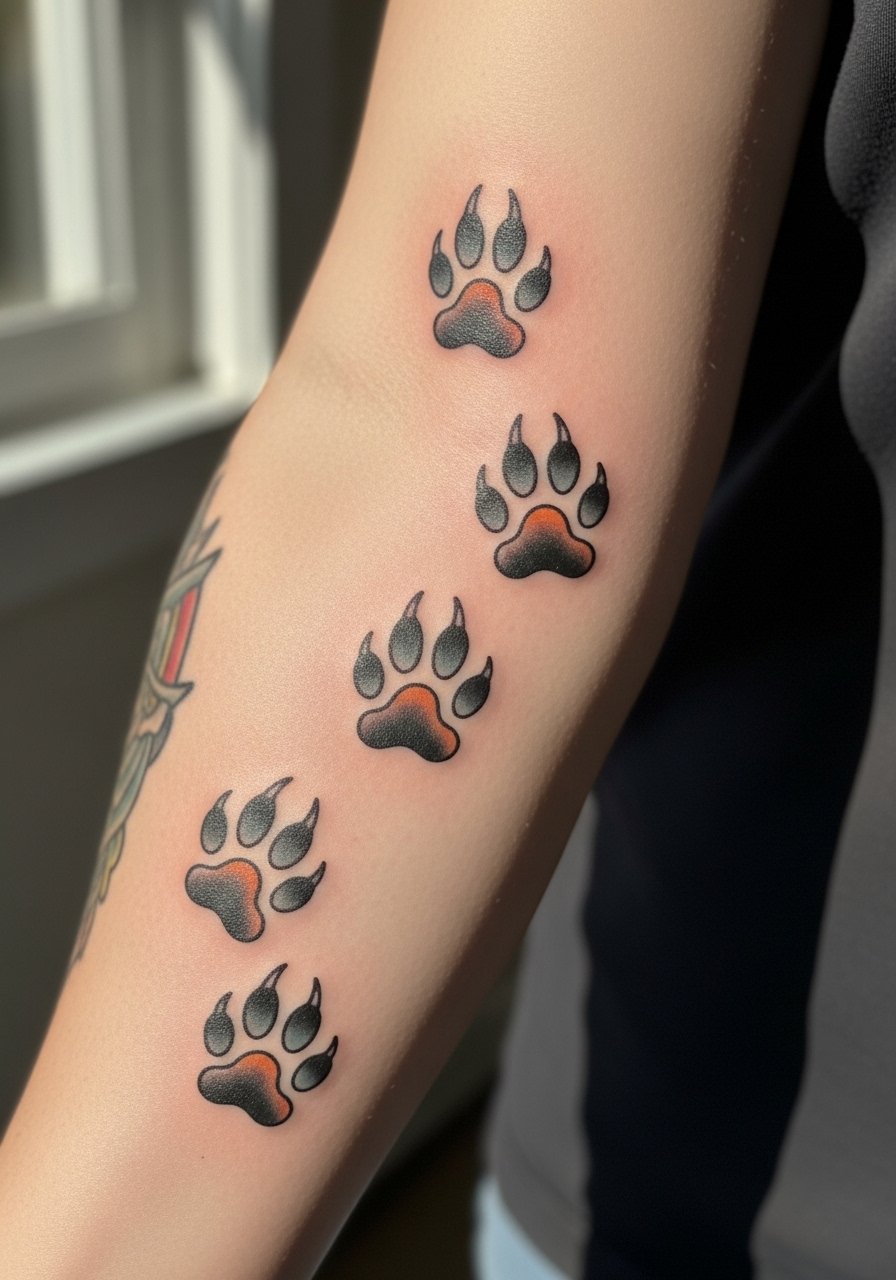
A trail of prints gives movement and classic flash energy that reads well across time. The outer forearm is forgiving and visible, and traditional saturation tends to age into solid shape. Avoid tiny color fills next to heavy black outlines because the fills can dull while the black stays saturated. Mention to your artist you want room between each print so the trail does not merge after a few years. Pair with a leather wrap bracelet on the opposite wrist for a balanced look. Expect one session for a 4 cm trail.
12. Dotwork Paw Constellation Map at the Back of the Neck
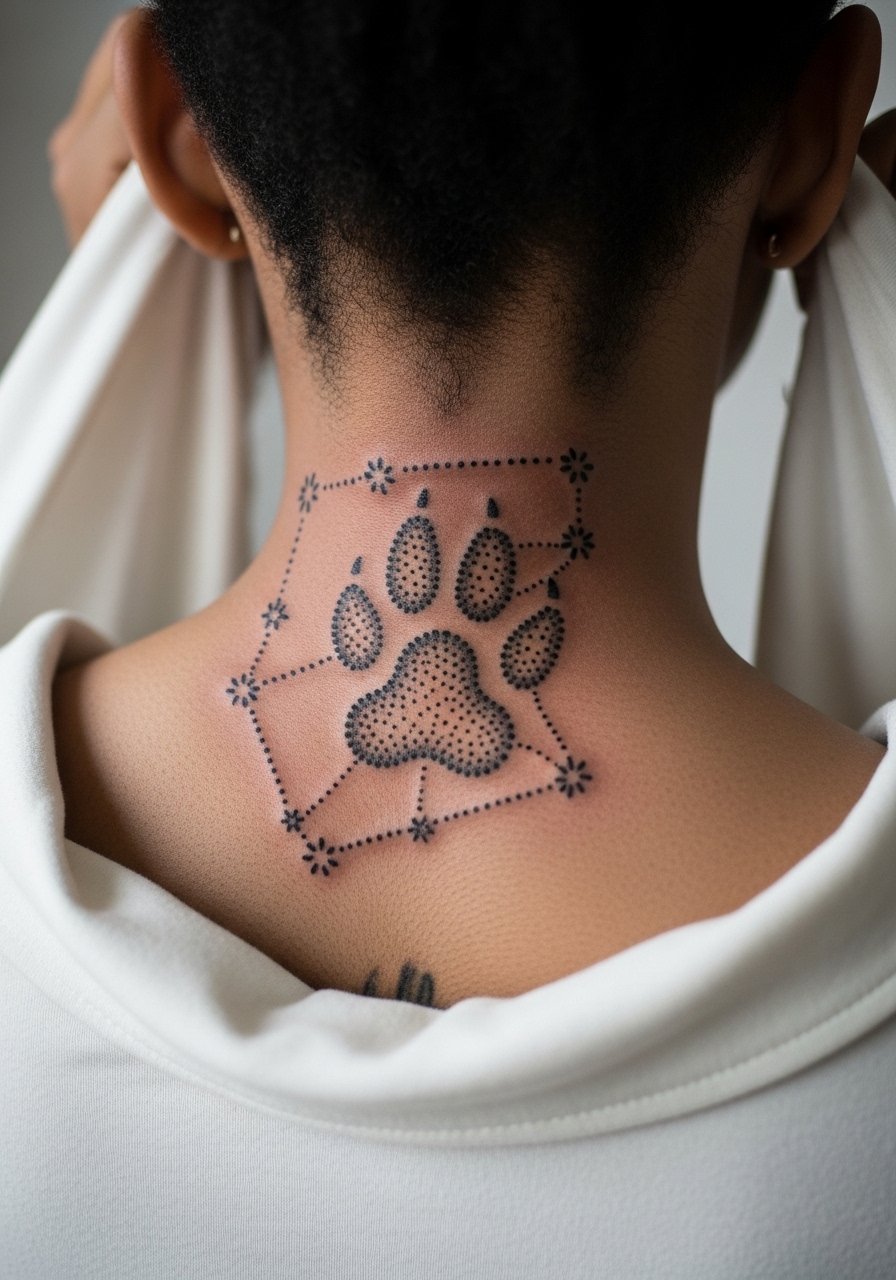
Combining dotwork paws with star charts creates an intimate personalization that reads as art rather than a literal print. The back of the neck needs careful spacing because dots can visually merge over time if placed too close. Ask for reference points and a slightly larger scale than you think. For the session, wear a wide-neck shirt you can shift, and plan for a quick touch-up window at six to twelve months. If you work in a conservative setting, remember neck tattoos are more visible, so factor that into placement height and size.
13. Inverted Negative Space Paw for Dark Skin
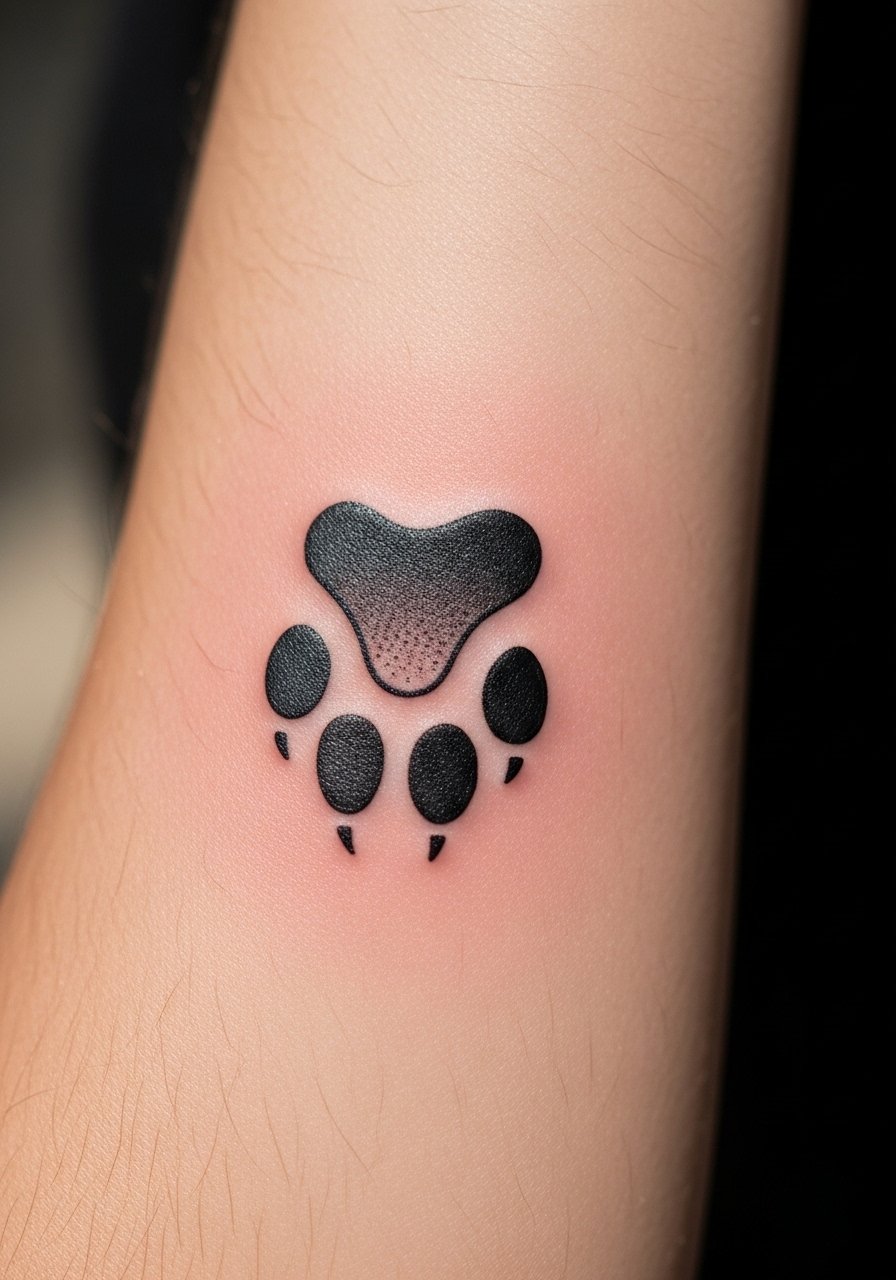
Inverting the paw so the skin tone creates the paw shape gives dramatic contrast on darker skin tones. One under-covered approach is to plan negative space placement deliberately and test the scale with a henna patch first. The common mistake is copying white-skin examples without adjusting line weight or negative space. Talk through mockups with the artist and ask them to show how the negative space will age at six months. This approach is best for people wanting bold visibility without color and it typically needs one session and a possible touch-up to keep edges crisp.
14. Paw Stacks as Timeline Markers on the Wrist
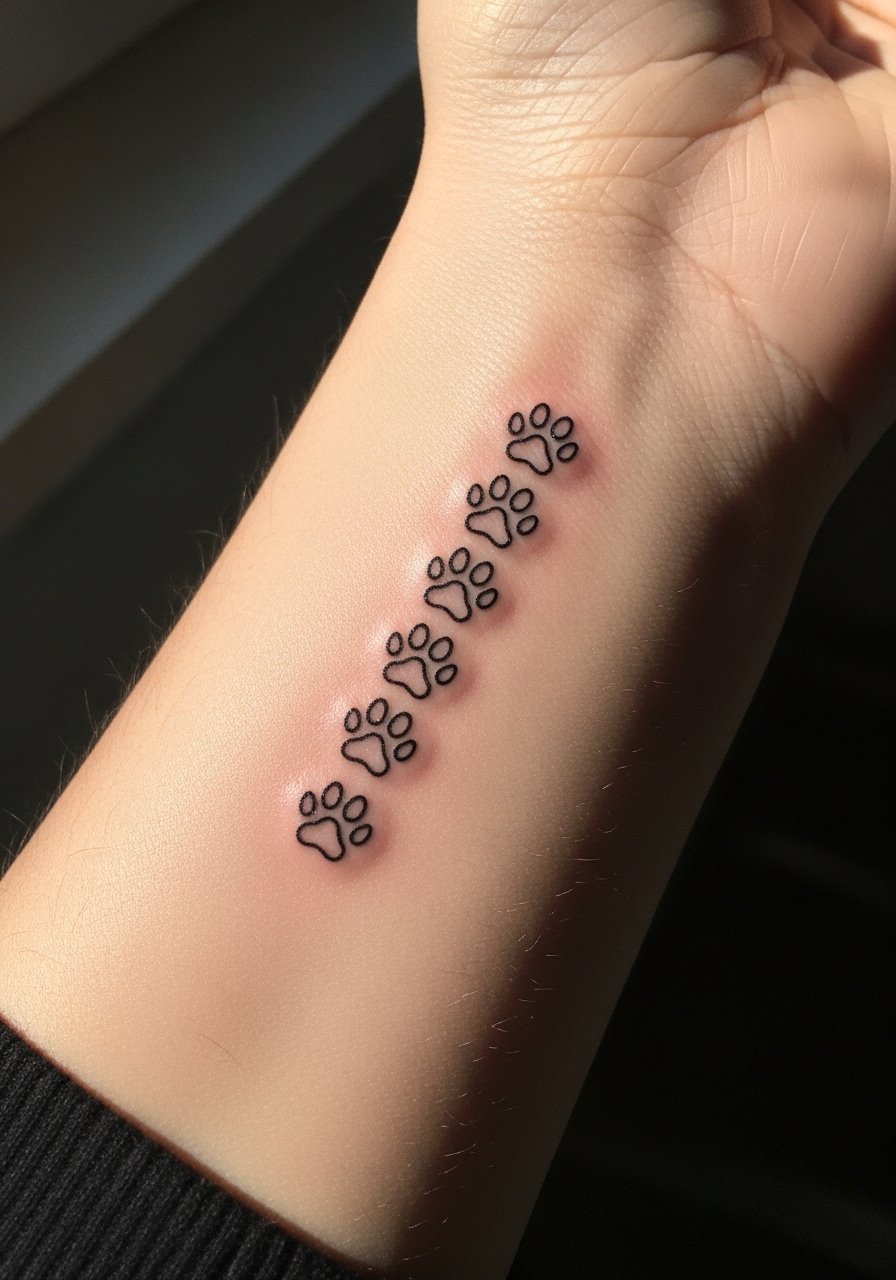
Using stacked paws as markers for pet ages or milestones turns small prints into a readable timeline. The wrist is visible and practical, but beware crowding. I advise spacing each paw slightly and varying line weight to give each mark a lifespan. When you consult, say explicitly that the stack should scale with future additions so the artist leaves room. For showing it off, a dainty bracelet stack frames the lineup without overwhelming it. Expect brief sessions per paw and plan for years when some marks may need refreshing.
15. Behind-Ear Single Paw Pad for Headphone Concealment
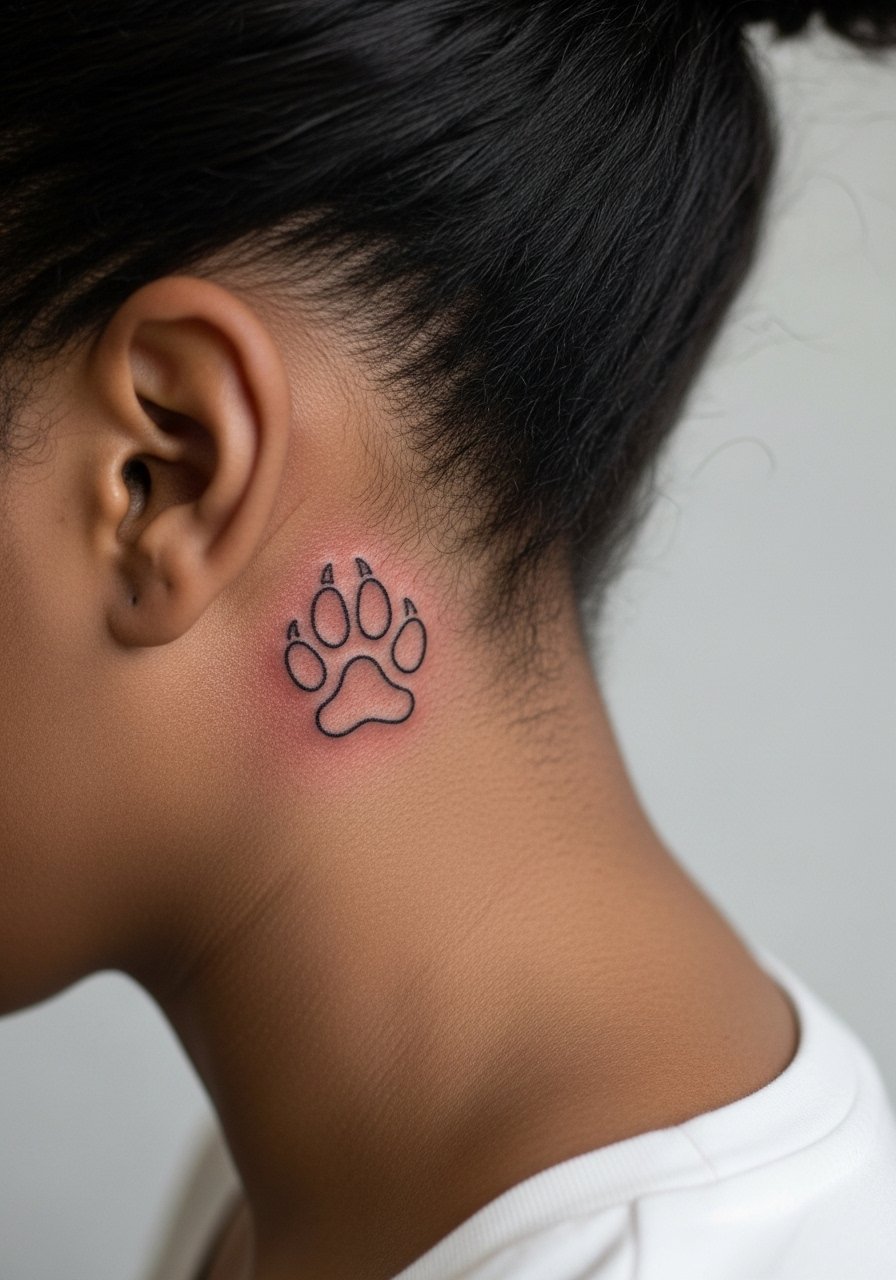
A behind-ear paw is discreet and perfect for people who wear over-ear headphones. Place the design on the skin just behind the ear and below the hairline so it hides under hair when you want it to. The session is quick and low on pain, but artists recommend doing a patch test for placement because the area is small and curves. For the appointment, wear your hair up and bring a high ponytail holder so the artist can see the canvas. Expect a tiny touch-up if the edge softens after a year.
16. Paw with Embedded Micro Pet Portrait Initials on the Ankle
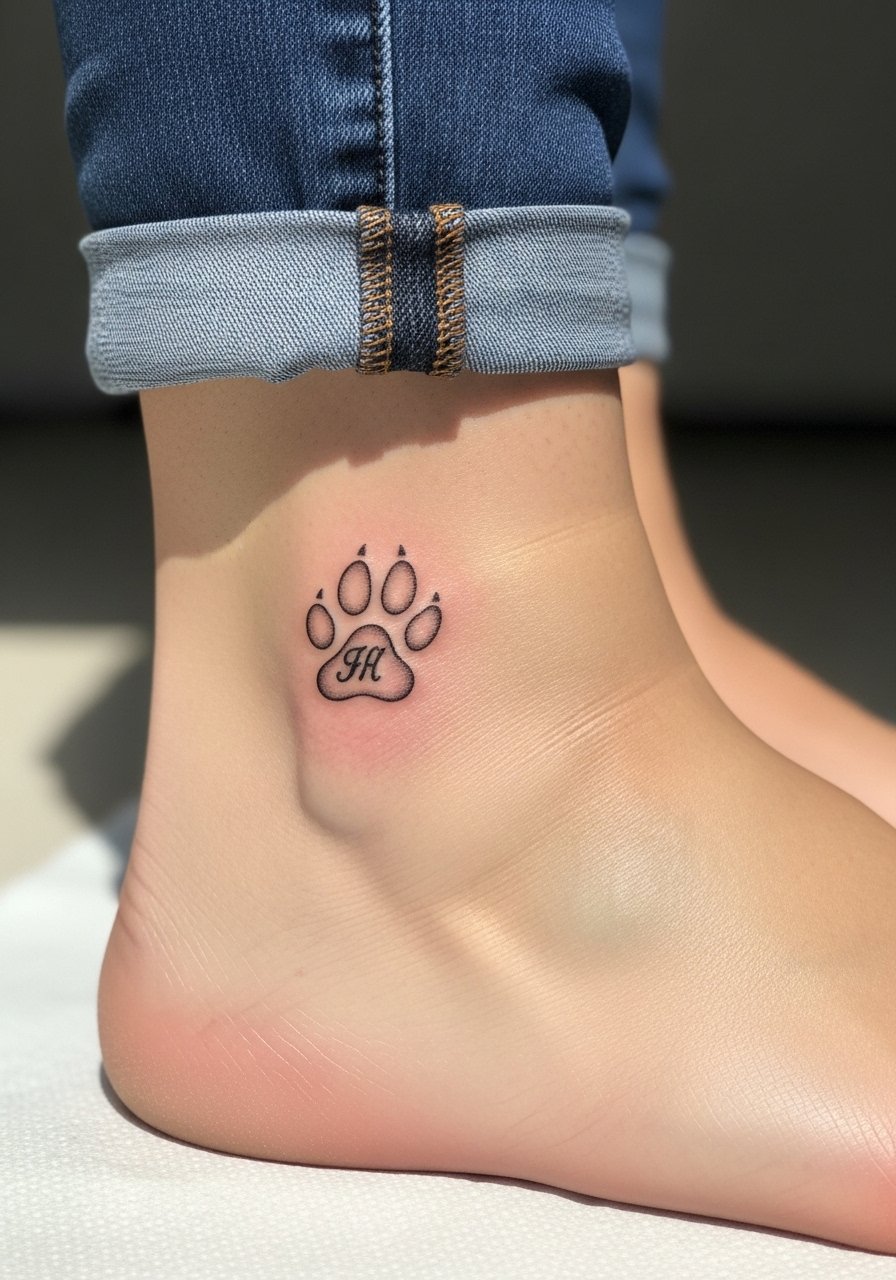
Embedding initials or a micro portrait into the pad personalizes a small paw without adding obvious detail. The ankle gives visibility but also experiences rubbing from shoes. Ask the artist to place initials so they do not sit right where shoes make constant contact. Keep lettering to a single character or two and choose a slightly bolder line to survive the first year. This is a fast session with the potential need for touch-up if the piece is too close to footwear friction. For show, consider a slim anklet on the opposite leg to balance attention.
17. Calf Paw Trail Mimicking a Walk Route
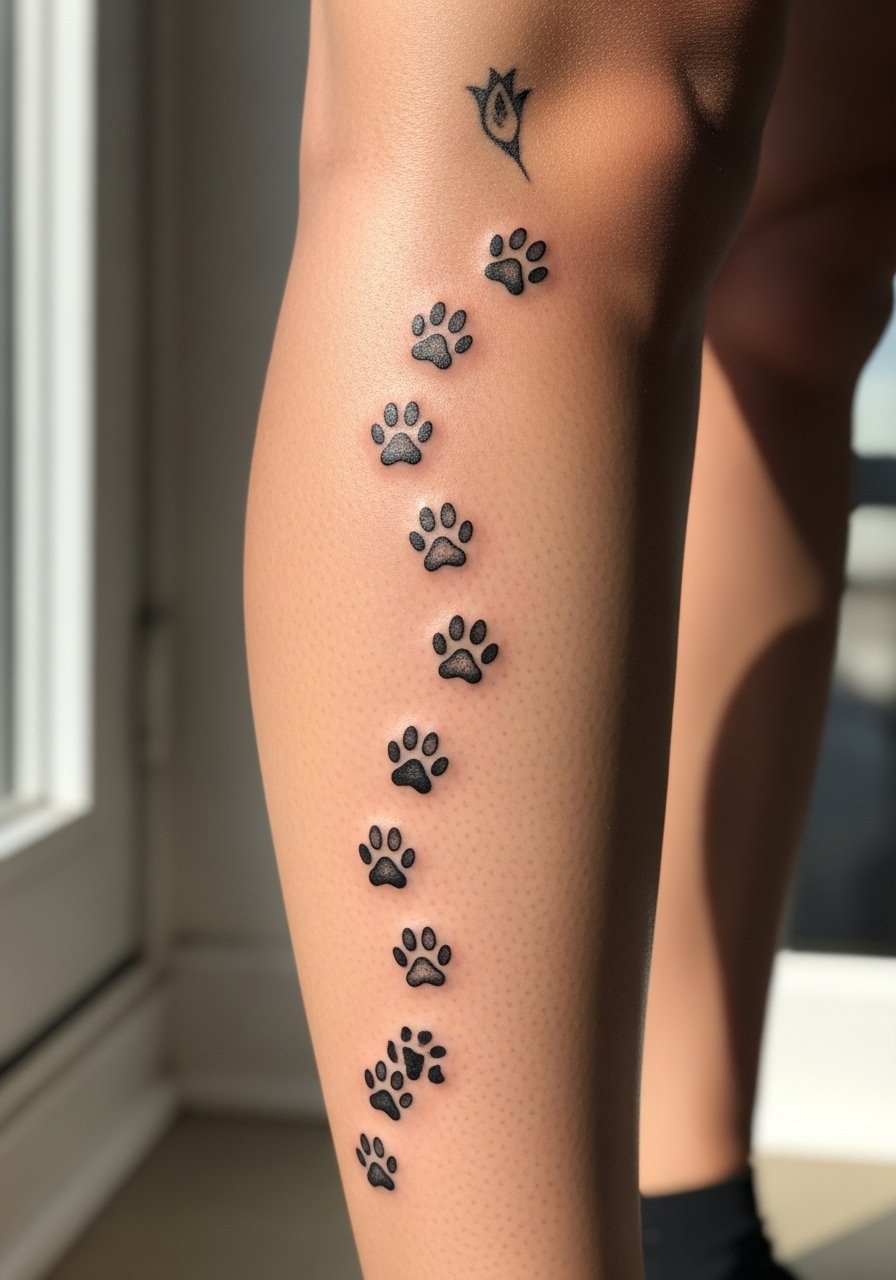
Mapping a real walk route into a calf trail is a playful and original way to mark a favorite trail or daily loop. Calf skin accepts detail and color well and the scale allows the trail to breathe. When you book, bring a rough map or screenshot so the artist can translate curves into readable prints. The session is comfortable since you can sit and relax. Avoid cramming too many tiny prints into a narrow band because they will merge. A single session will do for a short trail, with touch-ups possible if you add more prints later.
Frequently Asked Questions
Q: Will a fine line mini paw on my wrist need touch-ups sooner than a bold outline?
A: From what I've seen, fine line work typically needs attention sooner because the single-needle channels are shallower and subject to friction. Expect a touch-up at six to twelve months for the finest work, and plan a touch-up policy with your artist before booking.
Q: Are ankle and finger paw tattoos more likely to fade from summer activity?
A: Yes, those spots face extra sweat and rubbing that accelerates fading. If you choose ankle or finger placement, ask for slightly bolder line weight and plan for yearly check-ins. Wearing breathable sandals and avoiding tight socks during the first two weeks helps the healing window.
Q: For dark skin, is blackwork or fine line better for a mini paw?
A: Bold blackwork usually offers the most visibility on darker tones because it preserves contrast. Fine line can disappear unless the artist adjusts spacing and line weight. Try a henna patch or ask for a blackwork mockup to preview the look.
Q: How should I dress for a ribcage or collarbone paw session?
A: Wear a strapless top or a wide-neck shirt you can pull aside so the artist has clear access without tugging. For collarbone reveals later, lightweight off-shoulder tops layer well over healed delicate linework.
Q: Can I get a tiny paw at a tattoo convention or should I book a guest spot?
A: Conventions are good for walk-ins but you might sacrifice detailed planning. A guest spot or scheduled appointment gives artists time to mock up negative space and scale, which matters a lot for minis. If you go to a con, arrive with clear references and realistic expectations for touch-ups.
