
Fine line work behind the ear is one of those details that reads private and deliberate at once. The area hides well under short hair, but the shape of the skull and the thin skin change how ink settles. Pick a design that follows the ear contour and you get a peekaboo reveal that still looks tidy at year three. Start with a few options that match your hairline and wardrobe, then bring clear notes to the consult.
1. Mandala Contour, Ear-Following Ornament
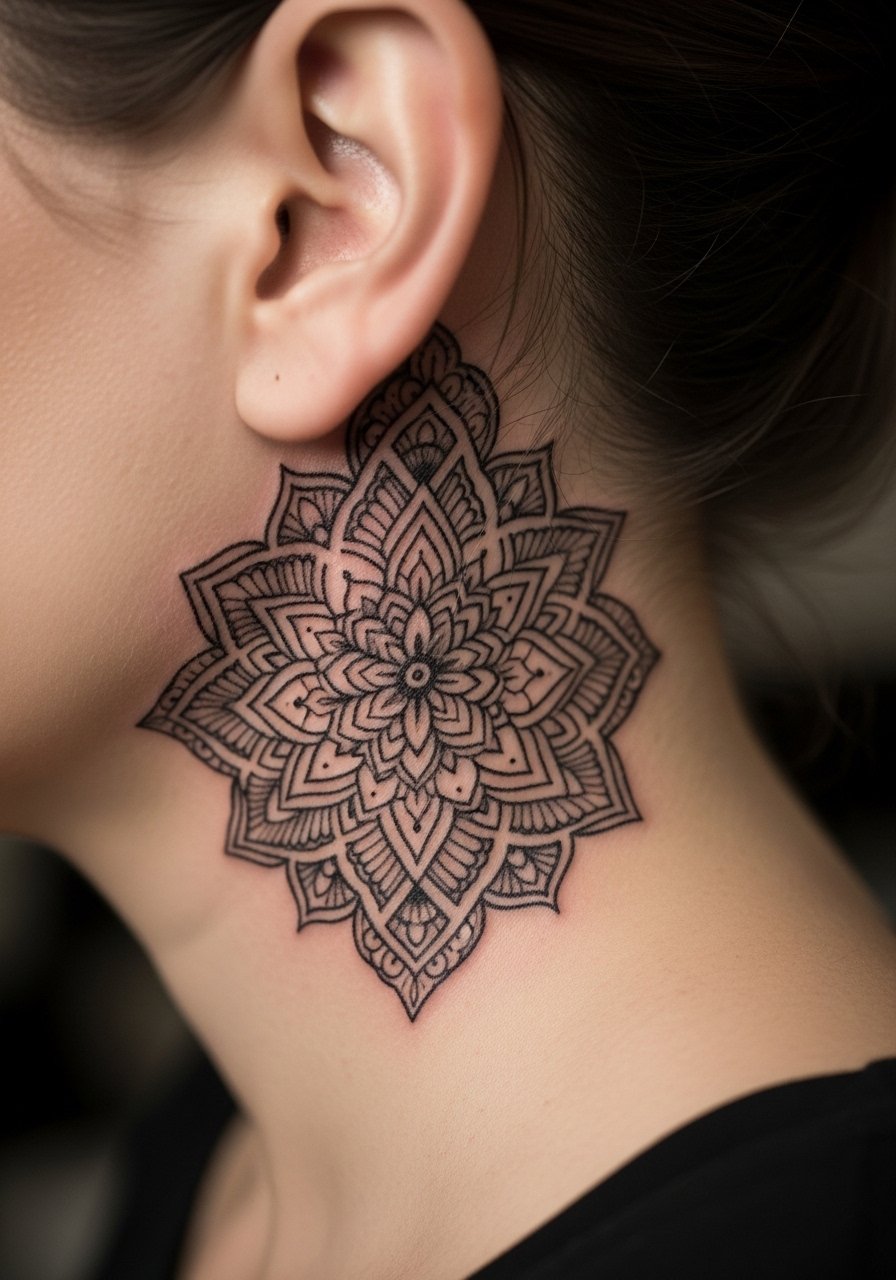
A micro mandala that mirrors the ear curve is the classic pick if you want a design that peeks from short hair without shouting. Tell your artist you want the pattern to read as a half-moon when viewed from the front, and ask for slightly heavier outer linework so the central detail has room to breathe. Pain is low to moderate because the skin is thin and the session runs short. A common mistake is packing too much tiny detail into a one-inch area. For the session wear, pull your hair into a low clip and bring a loose crewneck sweatshirt so the artist can access the neck without tug.
2. Micro Arrow Pointing Upward
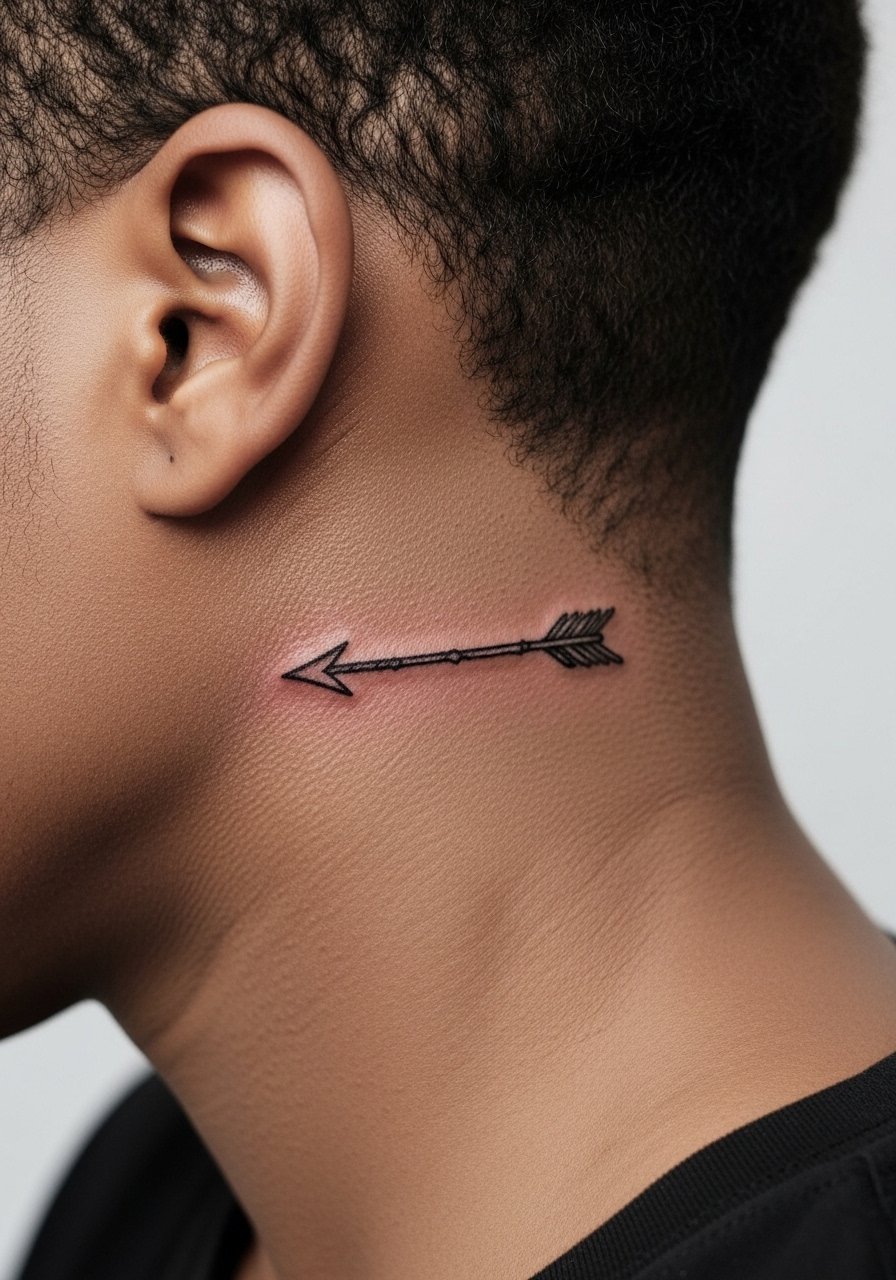
The upward arrow reads like private motivation and works well for first-timers. Tell the artist you want a single continuous line with a tiny barbed tip, not a filled arrowhead, because solid fills on that tiny scale are prone to aging into blobs. Expect low pain and a 20 to 30 minute session. The common mistake is asking for the arrow smaller than half an inch. For showing it off, a tight textured crop or buzz cut reveals the tiny angle. Pair it with a textured crop hair product to keep the hairline tidy for reveal shots.
3. Tiny Star Cluster, Fine Line Celestial
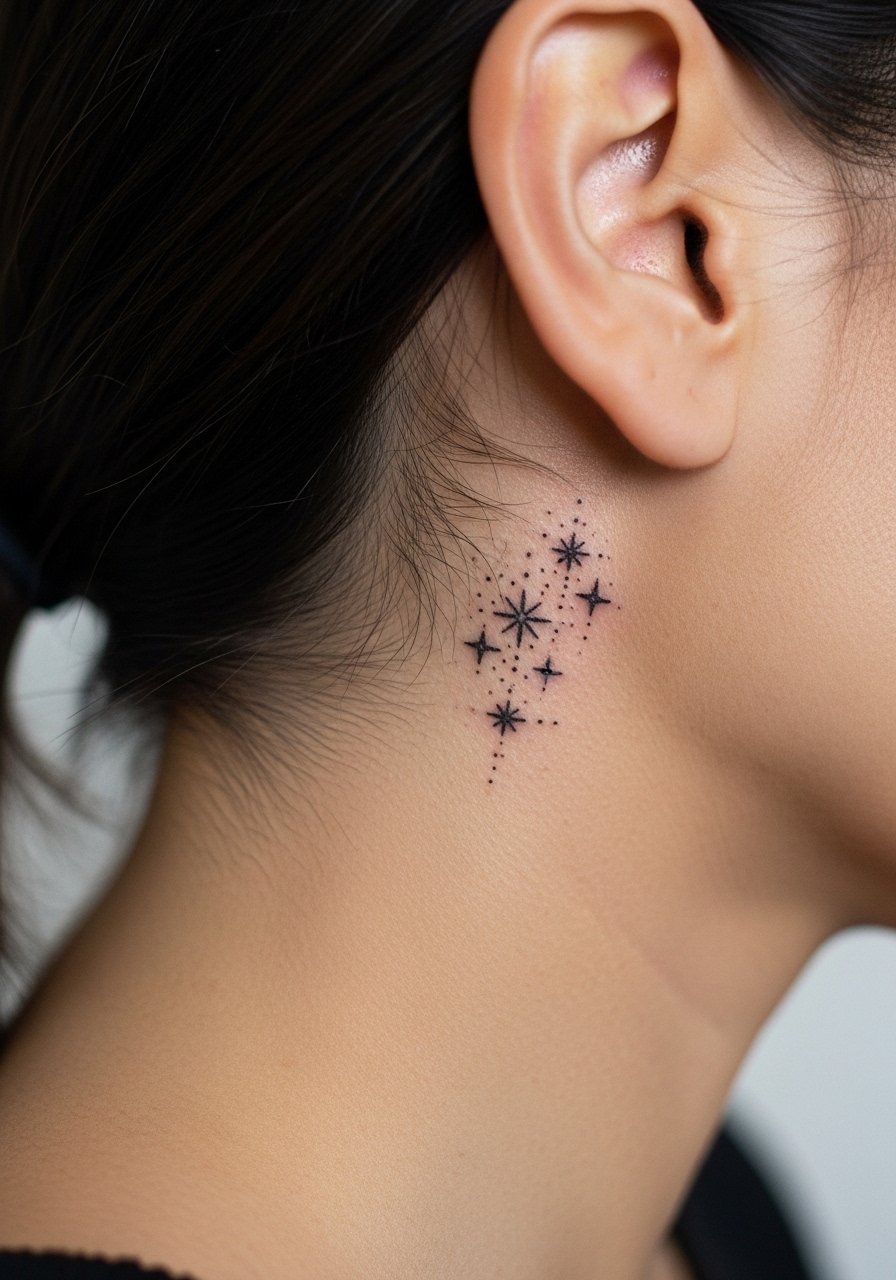
Tiny stars look fresh and they scale well with the ear shape. Ask for one slightly larger central star with two or three pinprick companions so the cluster reads at a distance. Aging is usually gentle for simple dots but expect some softening by year three. A mistake is requesting dense shading inside each star; the micro format needs open negative space. For casual show-off pairing, a clean fade and a minimalist silver stud earring keep the cosmic vibe balanced.
4. Micro Flower Outline, Daisy or Rosebud
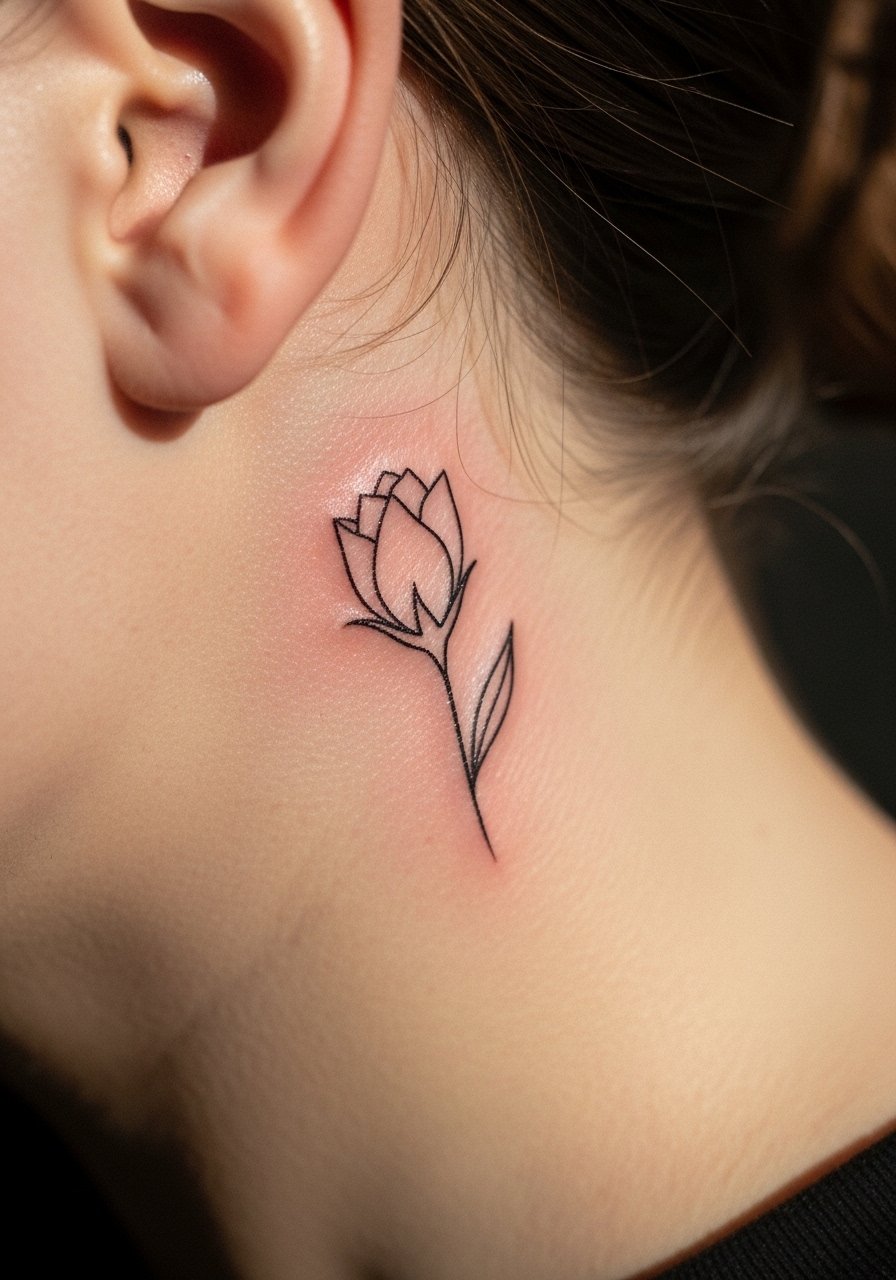
A tiny daisy or rosebud gives a botanical accent that ages more predictably than micro color work. Specify single-line outlines and ask the artist to avoid heavy stippling in the center. Pain is low and a single short session usually suffices. The aging failure mode is adding faint gray washes that spread into the petals. For session comfort, wear a wide neck t-shirt so the artist can reach the site without you tugging at layers.
5. Single-Line Triangle or Wave Geometry
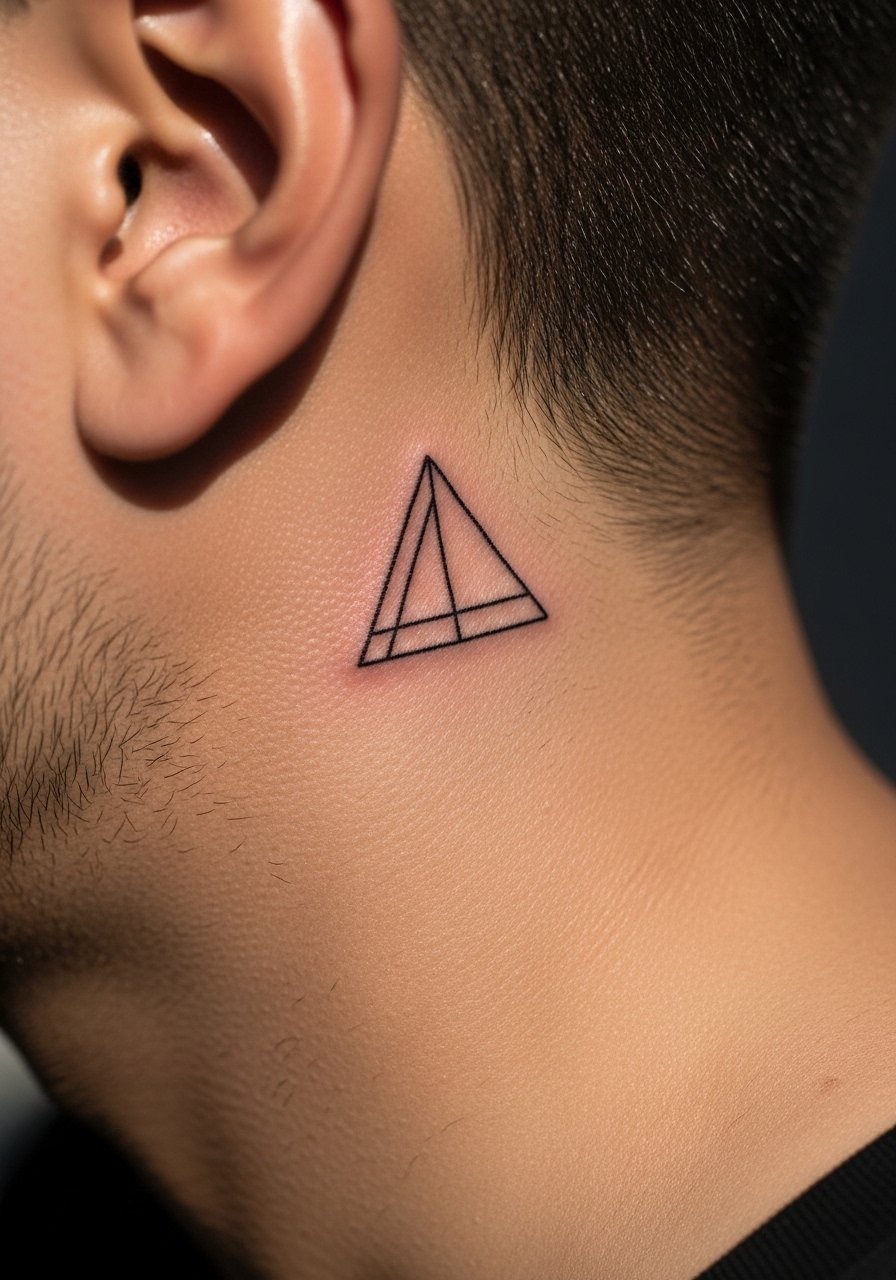
Geometry behind the ear reads modern and professional because it can be nearly hidden. Ask for single-line work with consistent lineweight and avoid tight, parallel lines that can merge as the skin ages. Pain is mild and the session is brief. The common mistake is shrinking the shape too small to retain crisp corners. This piece looks sharp paired with a textured crop and a slim silhouette. For both in-chair ease and afterward framing, try a slim fit polo shirt you can roll slightly to reveal the neck.
6. Interlocking Initials, Fine Line Script
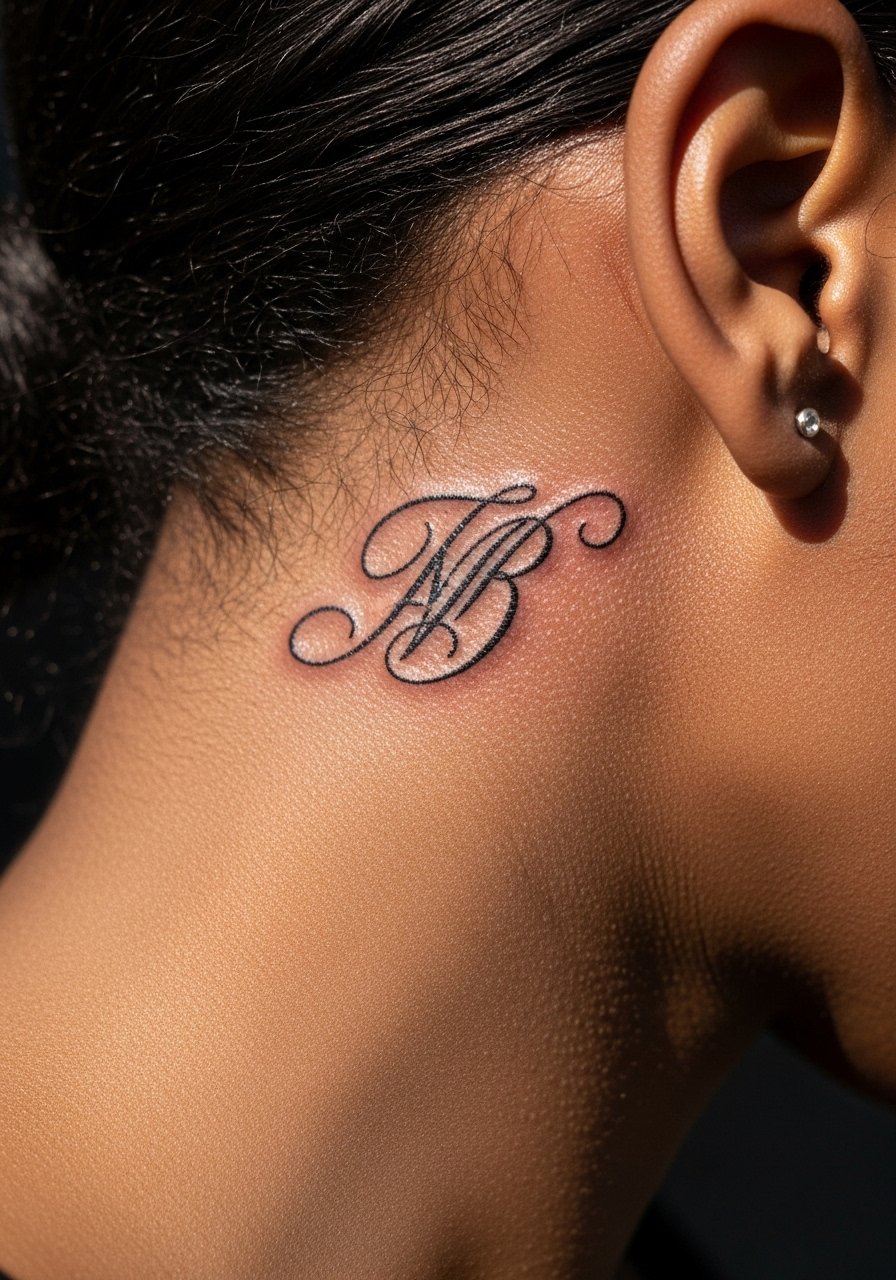
Interlocking initials feel private and sentimental in this spot. During consult, bring clear reference for the script style and ask the artist to scale letters at roughly three to four millimeters height for legibility after healing. Expect a 30 to 45 minute session and low pain. A common mistake is asking for overly ornate flourishes that blur quickly. For showing it off on a night out, a high-neck tee in black or navy frames the lower neck while the initials peek above. Try a high neck black tee men to emulate that effect.
Studio Day Picks
These first six designs demand tidy linework and easy access to the lower hairline, so a few session pieces save time and reduce rubbing during the first week.
-
Stencil transfer paper kit. Lets you preview placement on the skin before the needle touches it, which is especially helpful for the mandala and script options above.
-
Topical numbing cream. Applied per instructions it can blunt the edge of sensitivity for very tiny behind-ear pieces without affecting the artist's linework.
-
Thin protective film roll. A small protective film helps keep micro pieces near the hairline clean during the first few days of showers and pillow rubbing.
-
Fragrance-free gentle body wash. Use a mild cleanser on the area after the initial covering comes off so the fine line work does not get irritated.
-
Aquaphor healing ointment. A thin layer for the first 48 to 72 hours helps keep micro linework from crusting excessively and supports neat early healing.
7. Tiny Crescent Moon, Micro-Realism Sliver
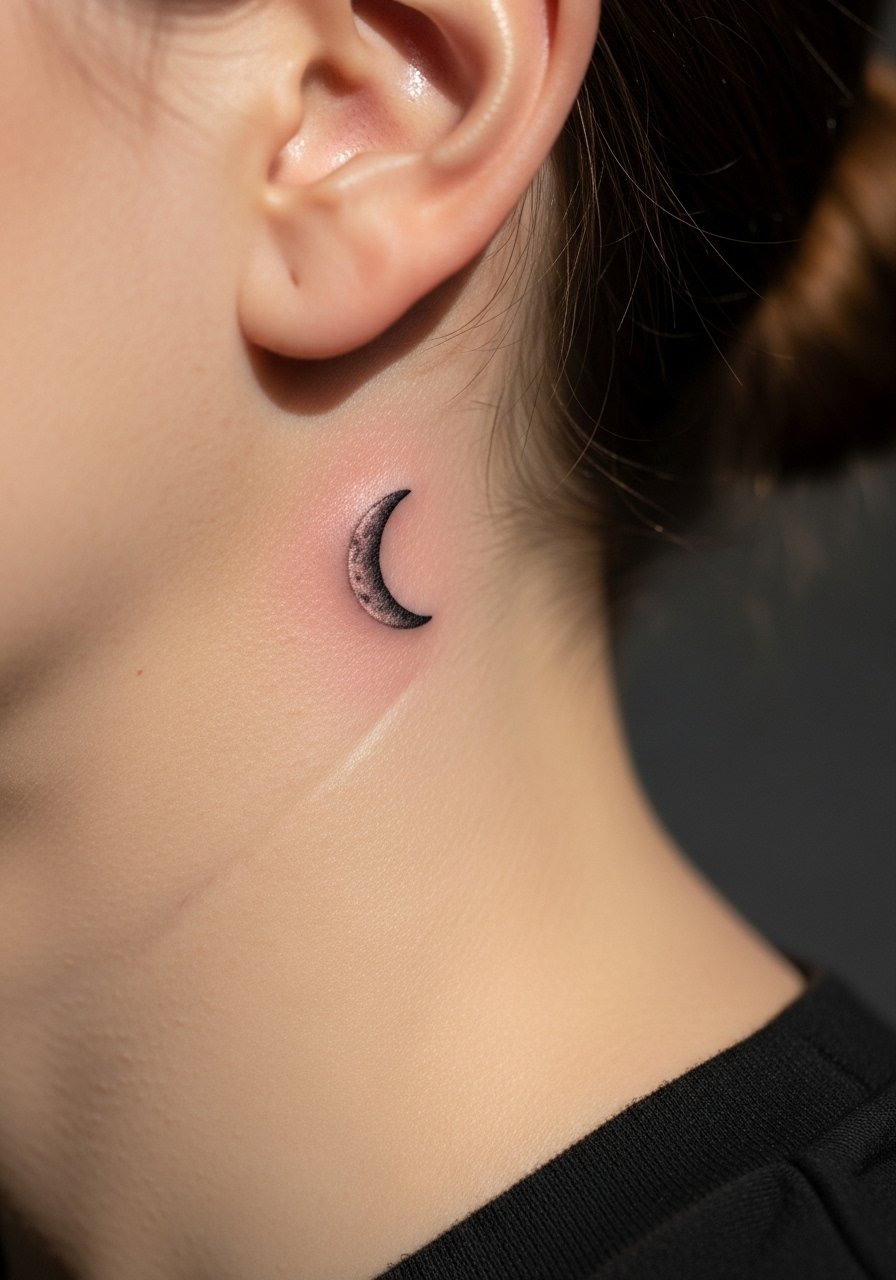
A delicate moon sliver reads dreamlike without being fussy. Ask for soft gray wash inside a thin black outline rather than heavy black fill so the sliver keeps definition as it ages. The session is short and sensitivity low. A common mistake is asking for ultra-tiny stippling to create realism, which can fill in over time. For showing it off, a clean fade or short back-and-sides haircut keeps the tiny crescent visible. Pair the look with an open collar linen shirt men if you want casual contrast.
8. Delicate Leaf Trio, Flowing with the Ear
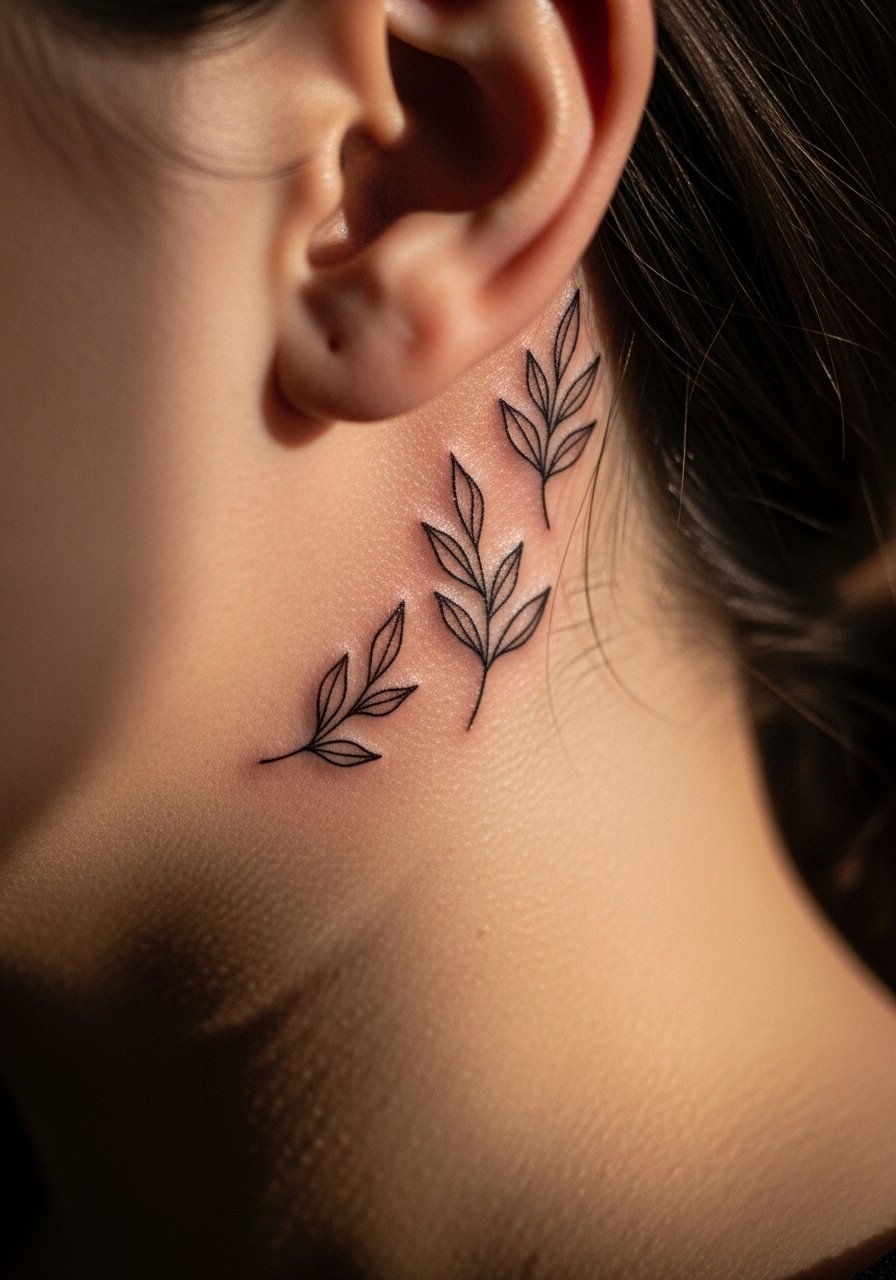
A trio of leaves flows naturally with the ear shape and is forgiving for placement. Tell the artist you want each leaf spaced about three to five millimeters apart to avoid merging later. Expect low pain and a quick session. A mistake is stacking leaves too tightly against the bone where blowout is likelier. For session comfort, wear a wide neck t-shirt so the artist has unobstructed reach.
9. Micro Music Note Cluster
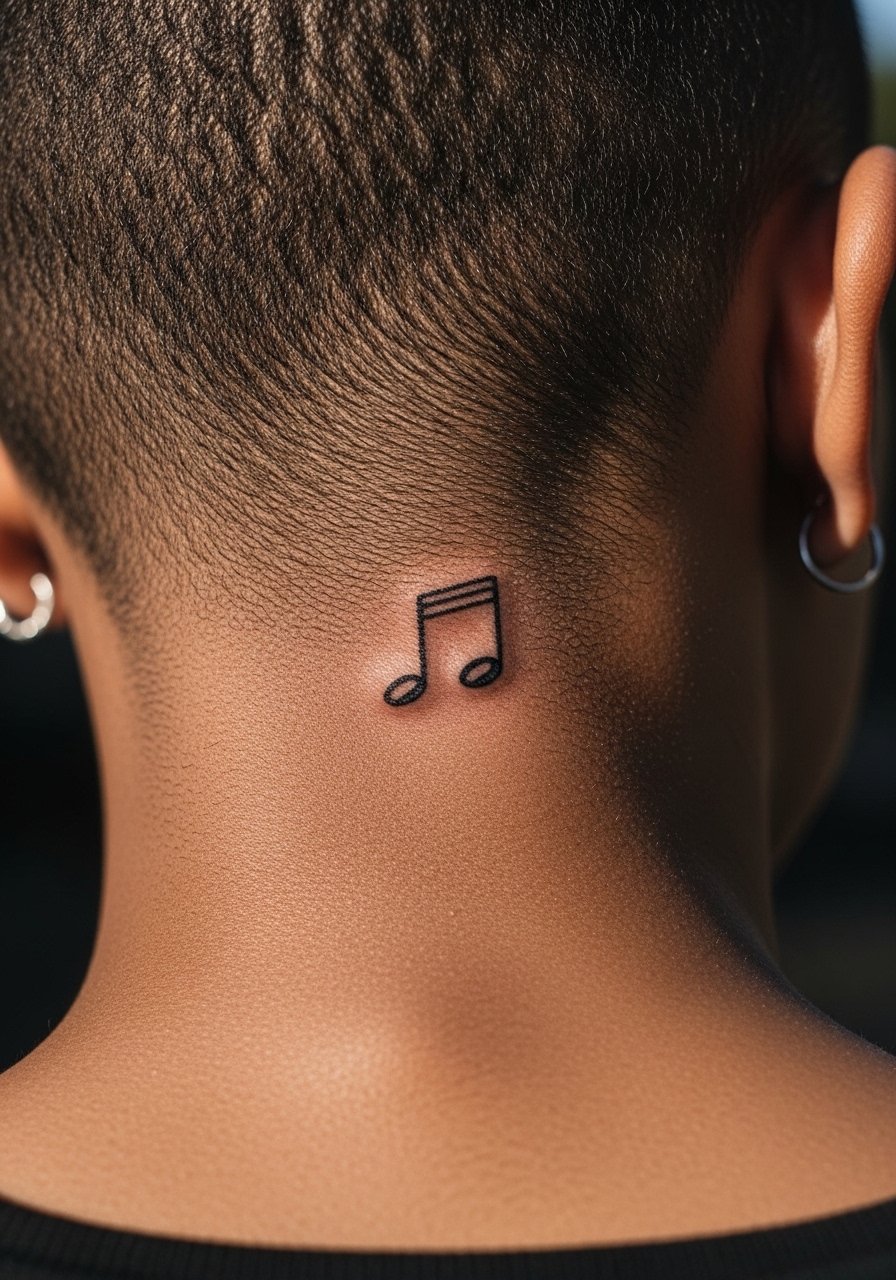
A small music note cluster is perfect for musicians who want a private nod to sound. Ask for slightly thicker stems and open noteheads to preserve shape as the ink settles. Pain is low and sessions are minutes long. The typical mistake is asking for filled-in blackheads at this scale; open shapes last longer. This looks great with a clean fade and a minimalist stud. Consider a minimalist silver stud earring to keep the side profile balanced.
10. Single Music Wave, Abstract Hairline Mimic
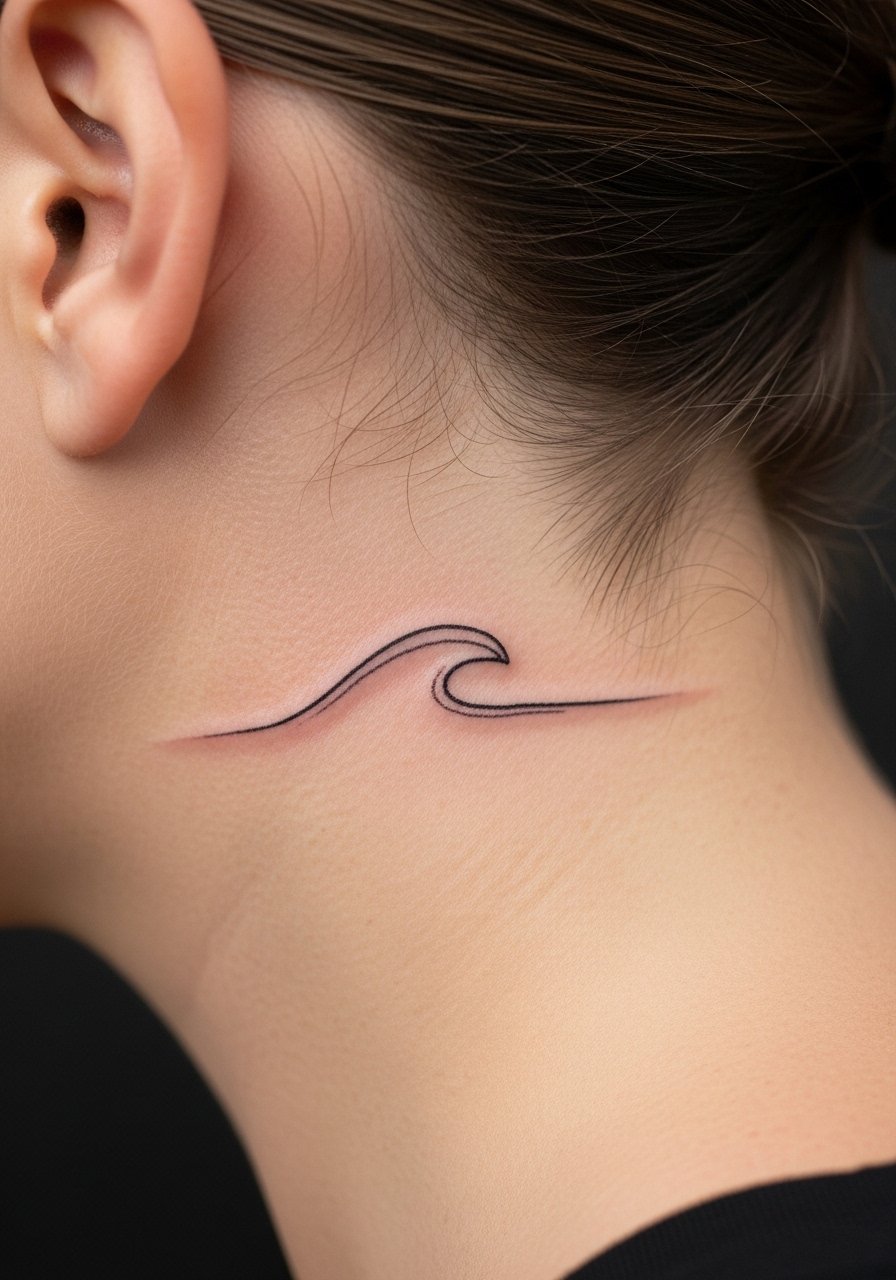
An abstract wave that tracks the hairline doubles as discreet art and camouflage. During consult, show photos of your hairline and request the curve to mirror it so the design tucks in naturally. Aging is forgiving because the piece relies on negative space as much as linework. The session is brief with low discomfort. Avoid overly tight parallel lines that can merge. For the session, bring a loose crewneck sweatshirt to slide off without touching the area.
11. Micro Compass Needle, Tiny Directional Icon
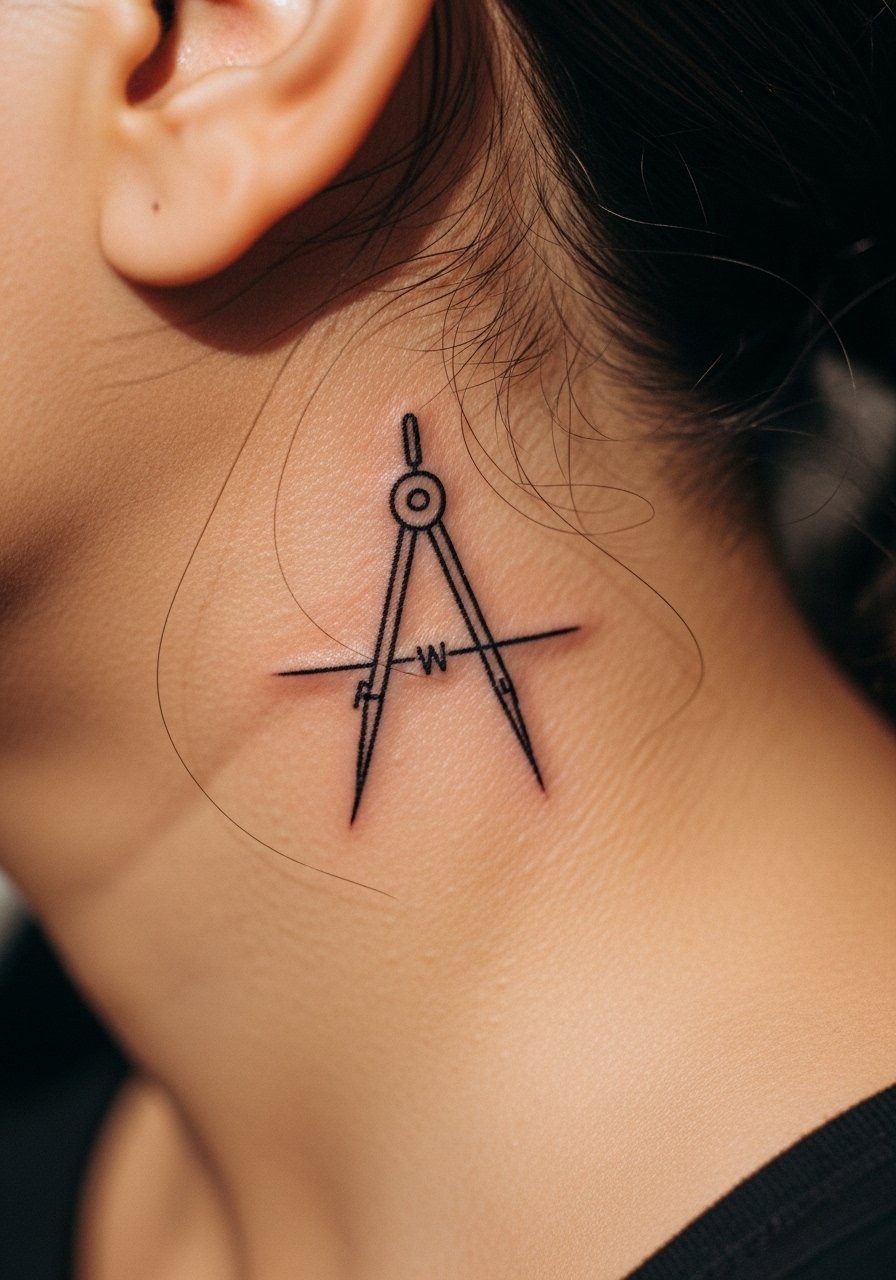
A micro compass needle reads like discreet travel ink. Tell the artist you want a single-pointed needle rather than a full compass rose to reduce busy detail. Expect low pain and a short session. A common error is wanting tiny serif lettering around the needle which becomes illegible. For a refined look, pair with a clean button-up or polo when you want the hint visible. Try a slim fit polo shirt that frames the neckline without competing.
12. Fine Line Versus Bold Take, Mini Debate Tattoo
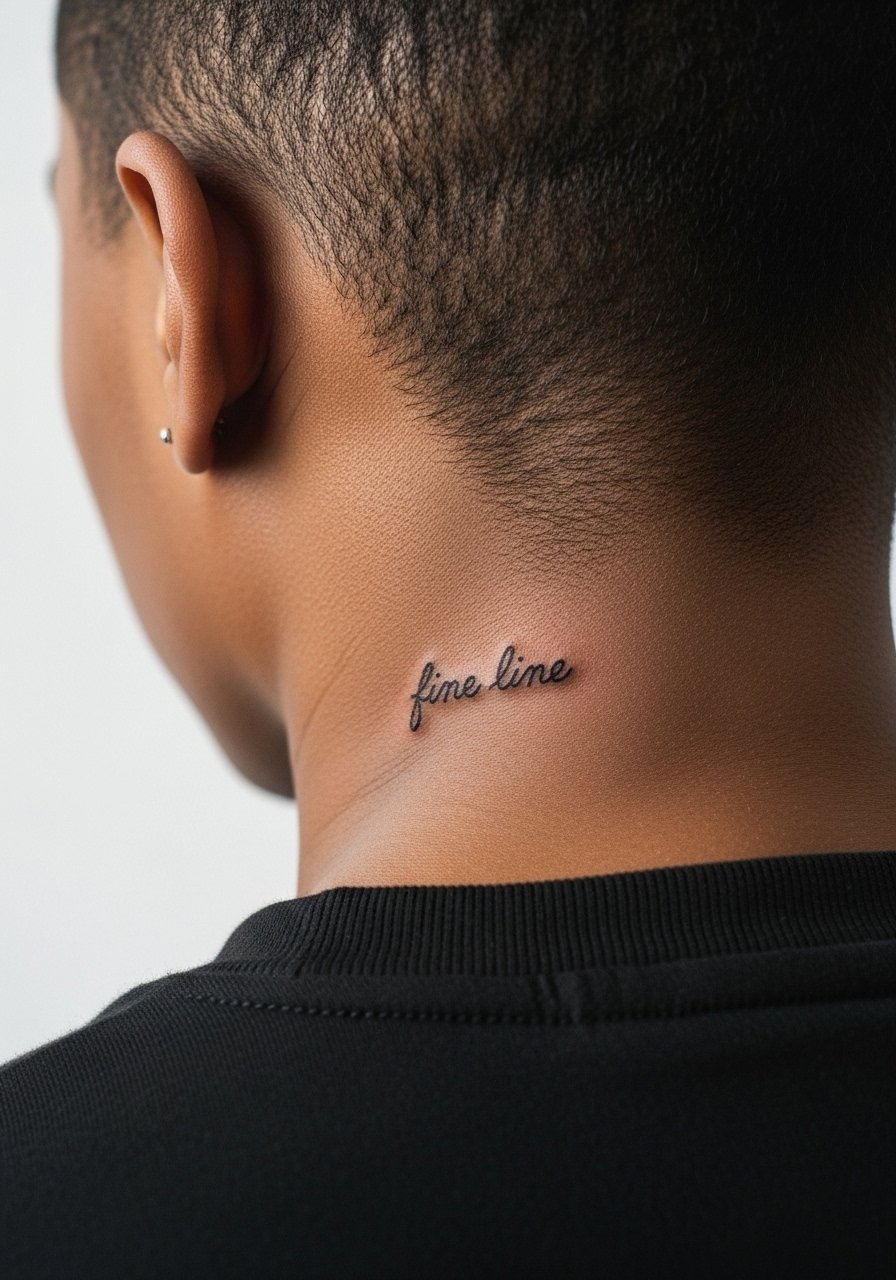
This is the spot to be explicit about the split opinion on fine line work. One camp says fine line is worth the look because it reads refined and discreet. The other camp argues that thin lines blur faster and need touch-ups sooner. Both are valid. If you favor fine line, ask the artist about their touch-up policy and request slightly bolder outer anchor points so the text or motif holds at year three. Sessions are quick but expect a possible touch-up at year two or three depending on skin.
13. Tiny Rune Mark, Heritage Glyphs
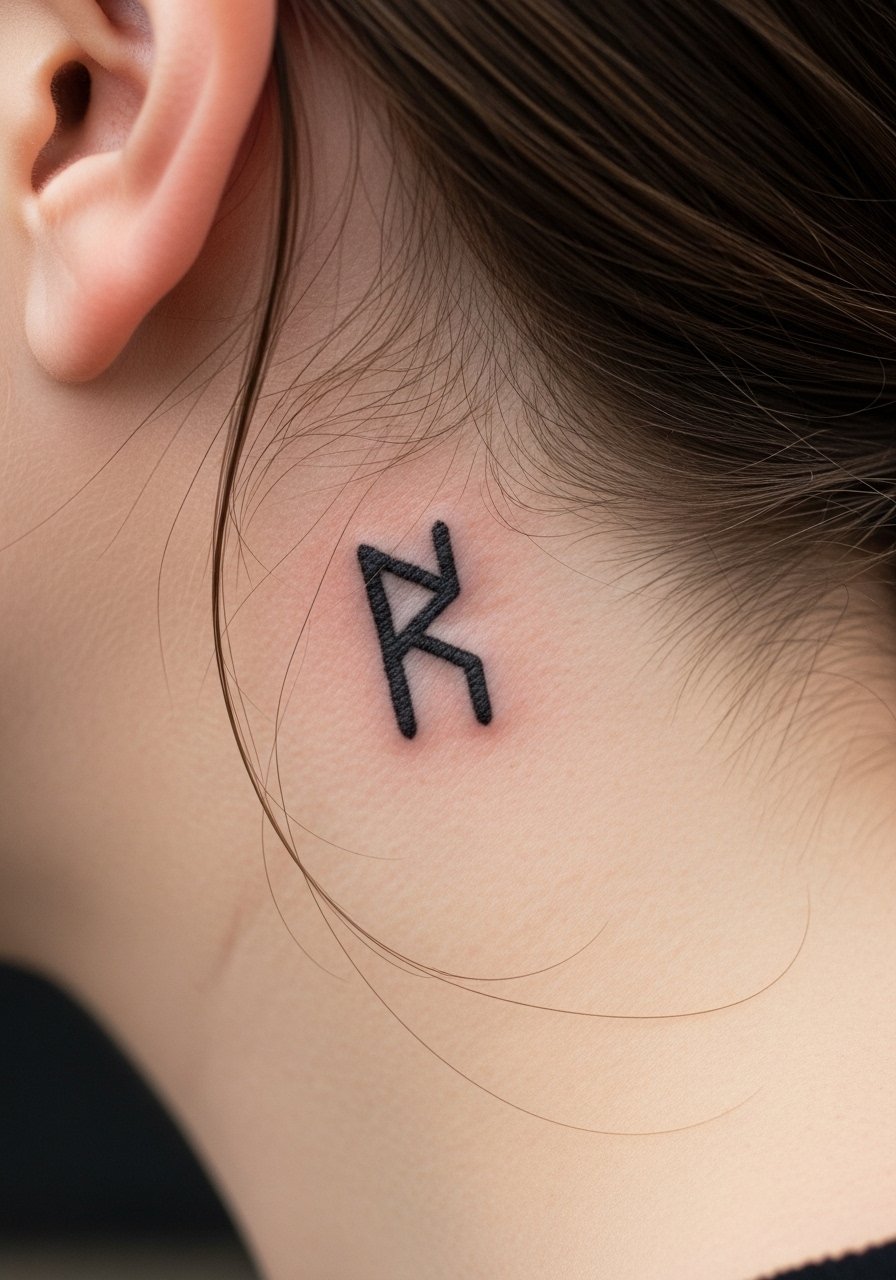
Runes and glyphs give a heritage nod without large commitment. Be mindful of cultural context and consider slight custom variation rather than a verbatim symbol if it ties to a specific tradition. Ask the artist to carve the glyph with clear negative space around it to avoid bleeding. Pain is low and the session is quick. A common mistake is requesting overly filled blackwork on this tiny scale. For showing off, a short back-and-sides haircut keeps the glyph visible without being loud.
14. Micro Portrait Silhouette, Minimal Face Outline
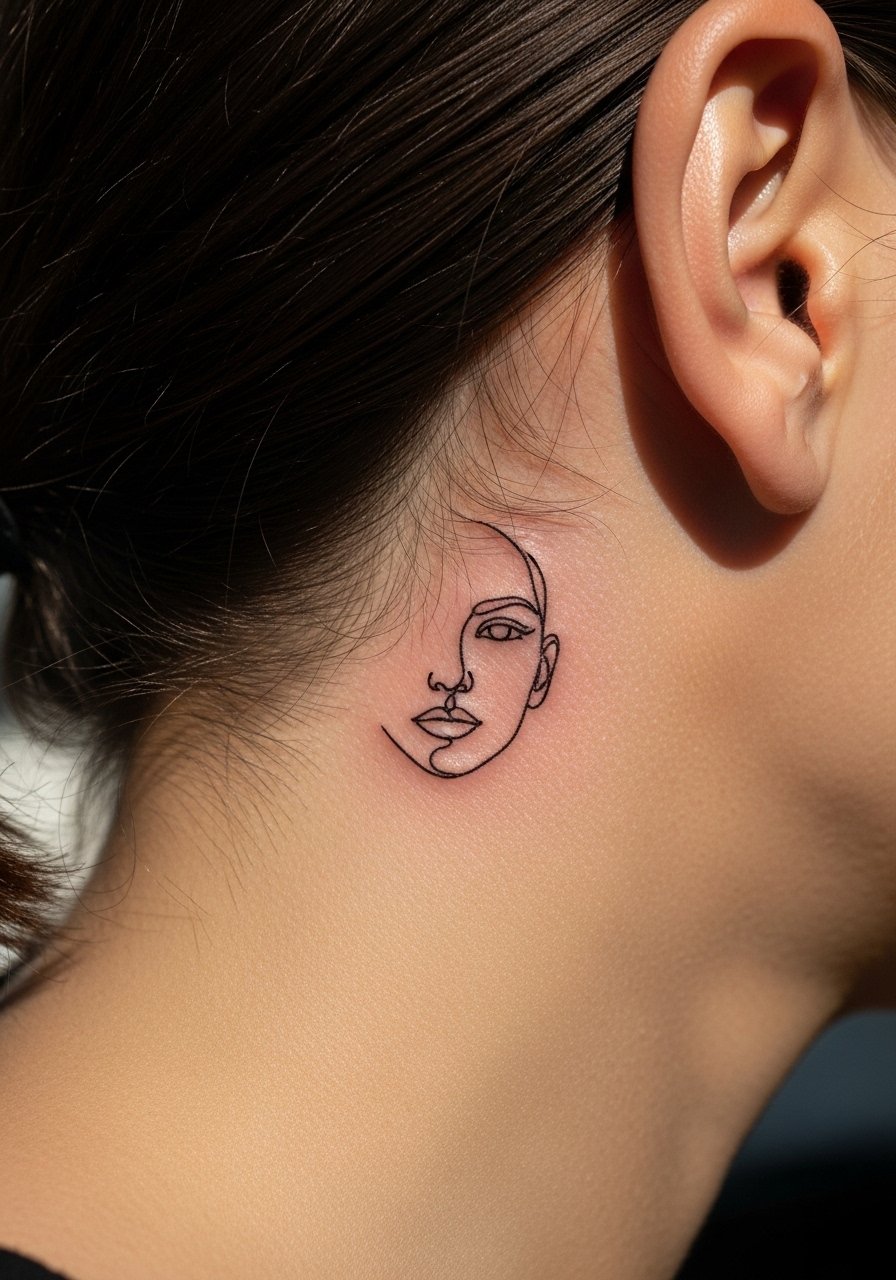
A simplified portrait silhouette can be a quiet memorial or tribute. Keep the silhouette to a single continuous line and avoid internal facial detail to prevent blurring. This is a short session with moderate care at home. A real mistake is asking for a micro photoreal portrait in less than an inch. For session wear, a wide neck t-shirt allows the artist to work without obstruction.
15. Tiny Mountain Range, Minimal Landscape
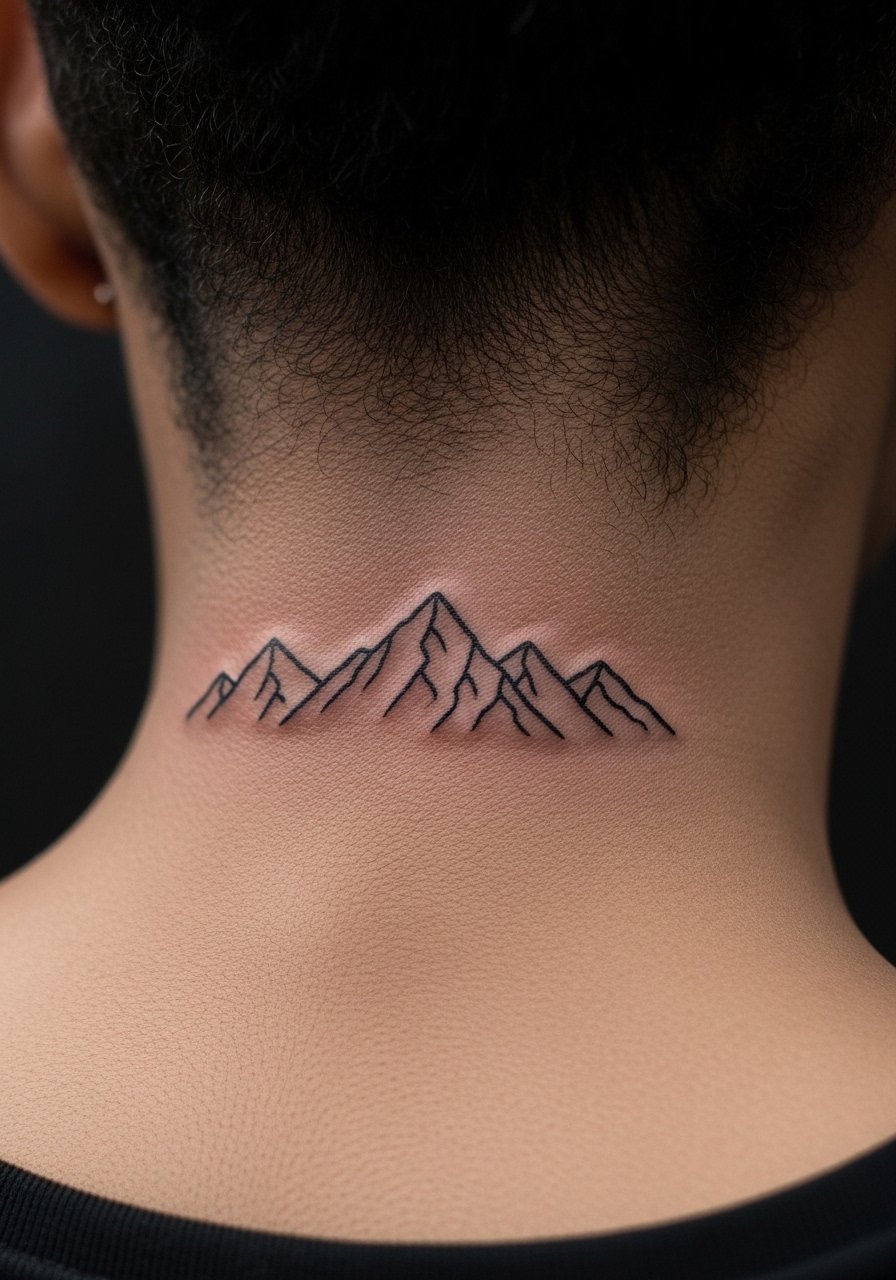
A tiny mountain silhouette reads crisp and scales well. Ask for simple peaks with negative space valleys so the piece does not depend on micro shading. Pain is low and a touch-up at year three is realistic for thin ridgelines. Avoid asking for heavy gray washes at this size. For casual reveal, pair it with a textured crop and a textured crop hair product.
16. Minimalist Wave, Nautical Single-Line
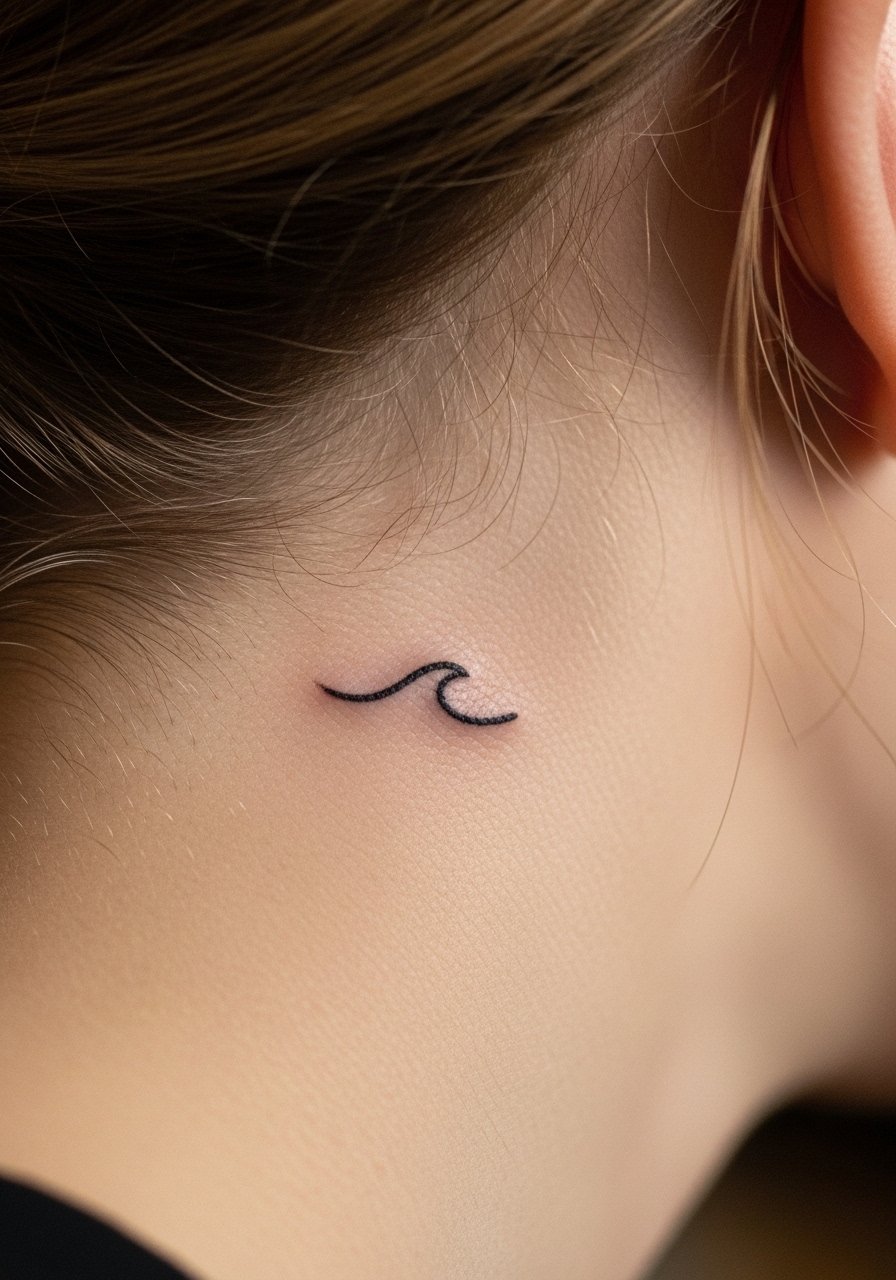
A micro wave suits anyone who wants ocean shorthand. Request a single continuous stroke that does not loop back into itself. The session is minutes long and pain is minimal. The frequent mistake is asking for micro dot shading under the crest which can blur. If you want to show it off on warm days, roll up a sleeve and wear an open collar linen shirt men to keep attention on your profile.
17. Tiny Heartbeat Line, Compact Pulse
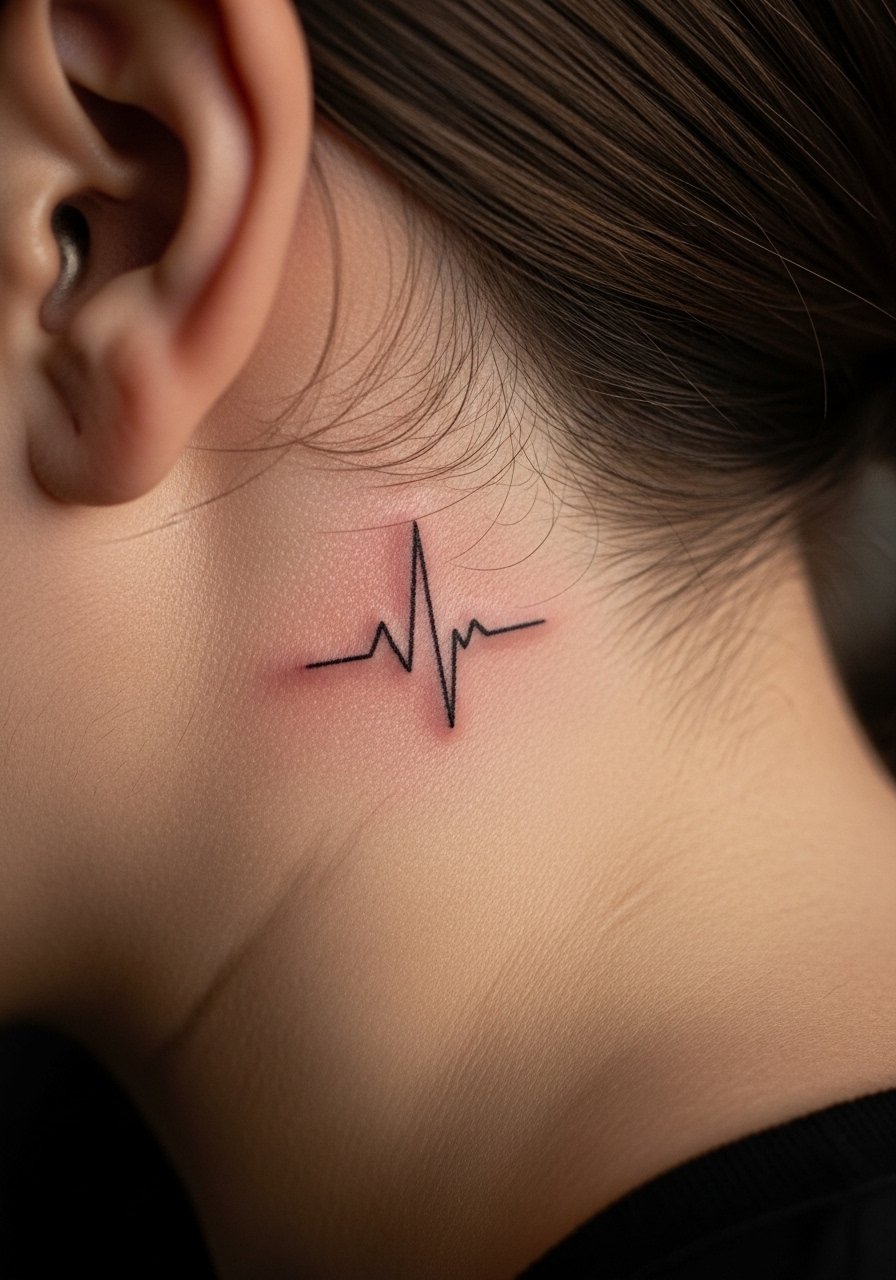
A miniature ECG pulse is a miniature vow without text. Ask the artist to keep peaks modest and to avoid compressed zigzags which can vanish with time. Expect a short session and low pain. The usual error is cramming too many peaks into a small space. For showing off, a neat crop and a minimalist silver stud earring help balance the line.
18. Tiny Key Outline, Hidden Lock and Key
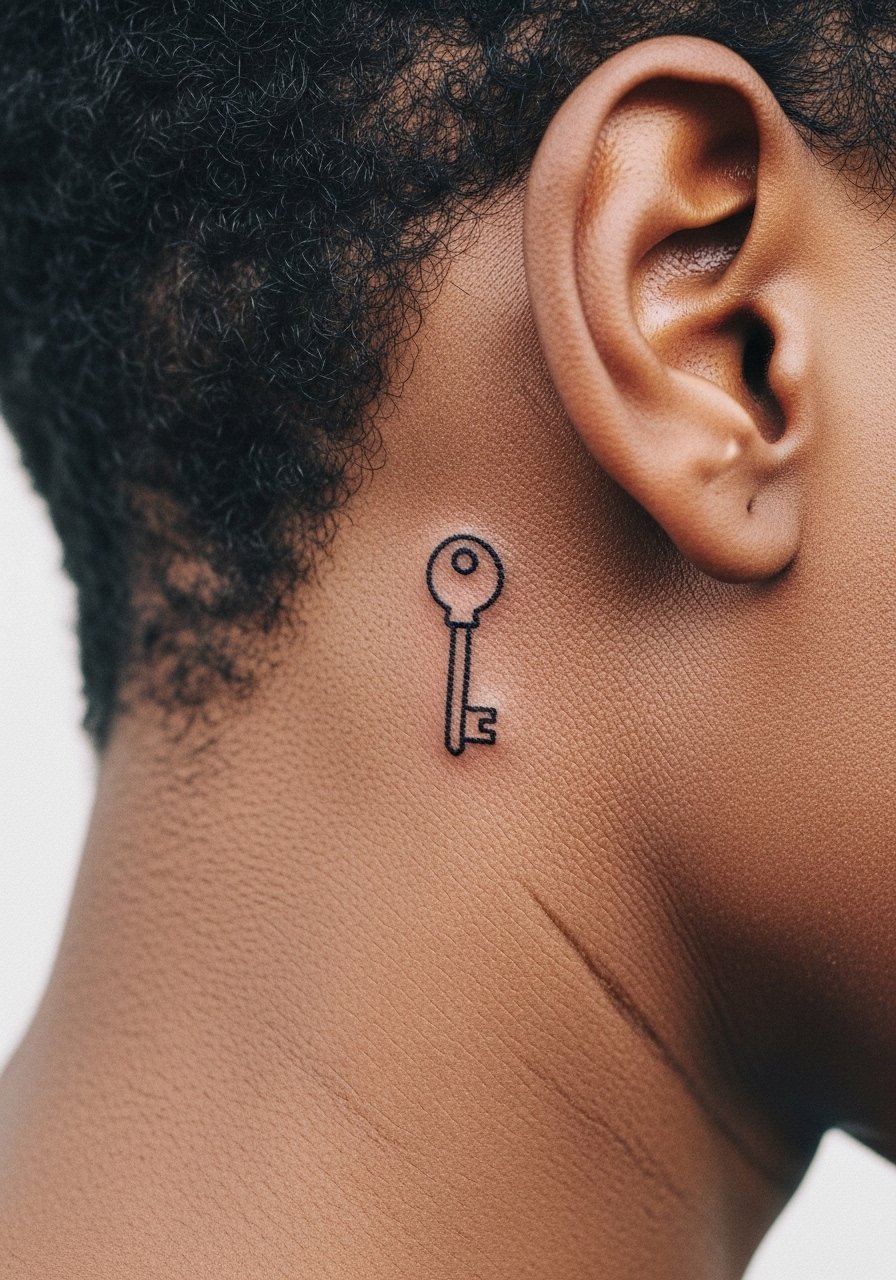
A micro key hints at guarded meanings while staying discreet. Request a clean outline with an open tooth pattern so the silhouette holds as it heals. Pain is low and a brief session will do. A common mistake is wanting micro filigree inside the bow of the key which disappears into blur. For session ease, wear a wide neck t-shirt so you do not tug clothing over the zone.
19. Tiny Dagger, Minimal Edge
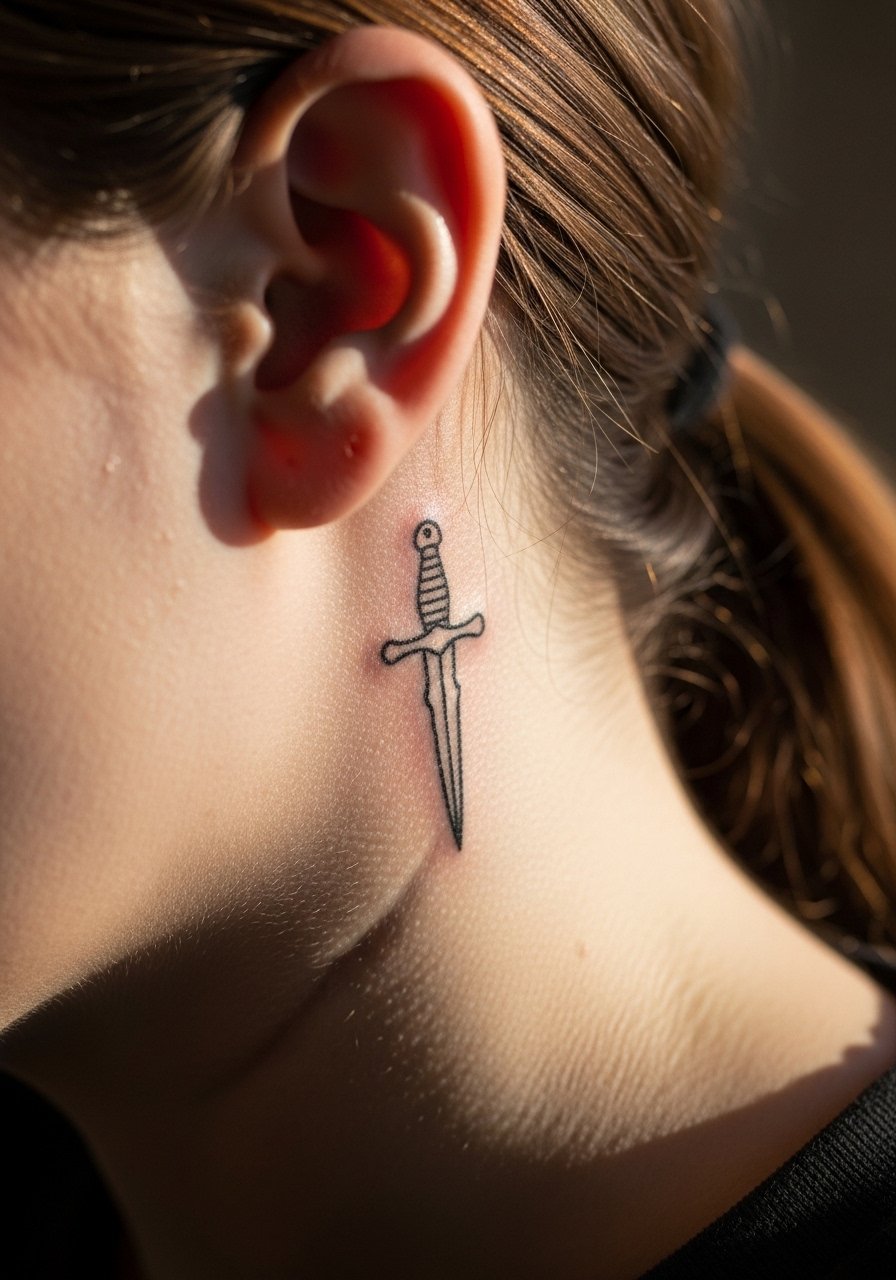
A minimal dagger reads sharper than its size suggests. Ask for a clean blade line with simplified hilt geometry to avoid tiny fills that can spread. The session is quick and discomfort is mild. A mistake is requesting a fully shaded dagger at this scale. For the right look pair with short hair and a slim fit polo shirt so the piece becomes a refined accent.
20. Micro Paw Print, Tiny Token
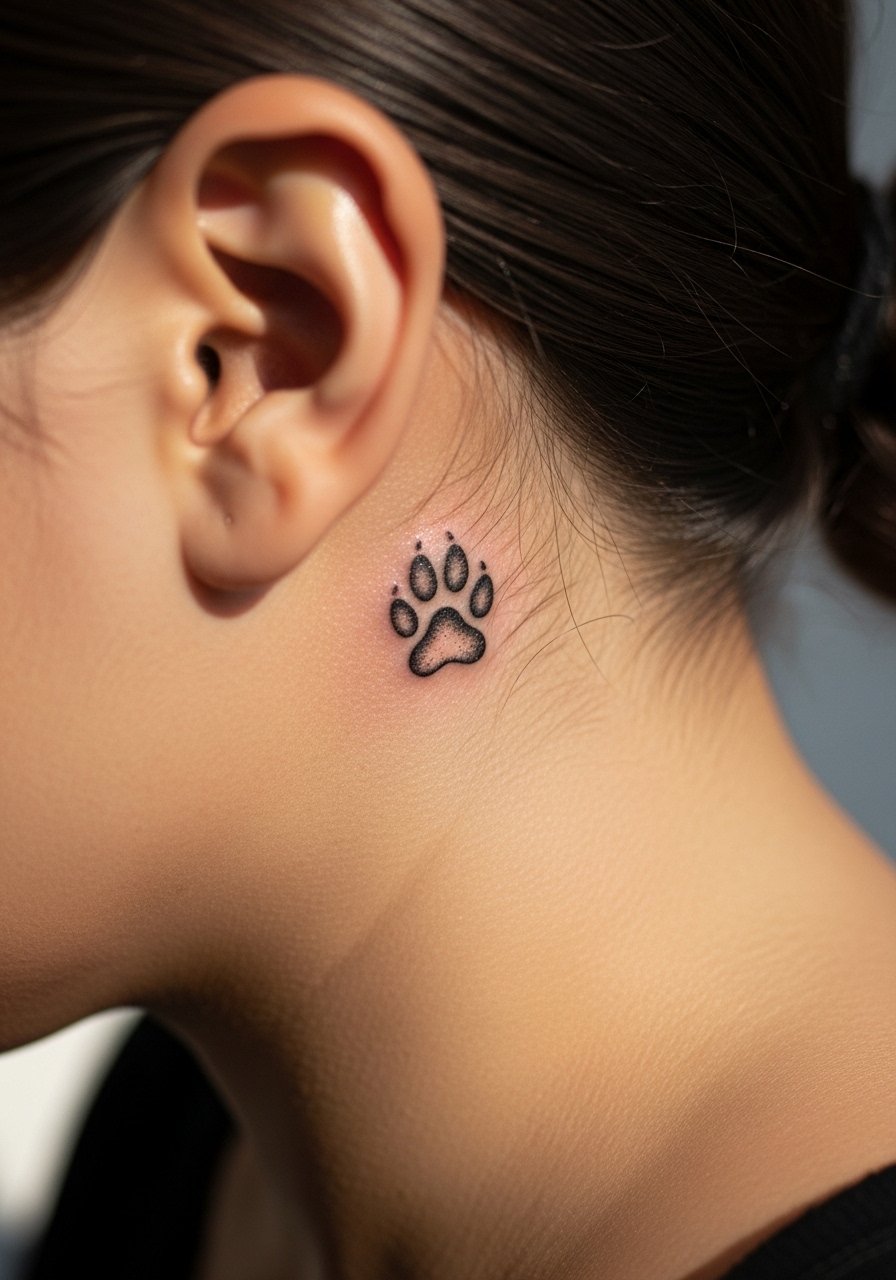
A paw print is a clear tribute that fits well behind the ear. Keep pads slightly open and simple so the dots do not merge with time. Expect a very short session and low pain. The common mistake is cramming in realistic toe detail that fades. For session prep, wear a loose crewneck sweatshirt so the artist has clean access.
21. Tiny Pin-Dot Constellation
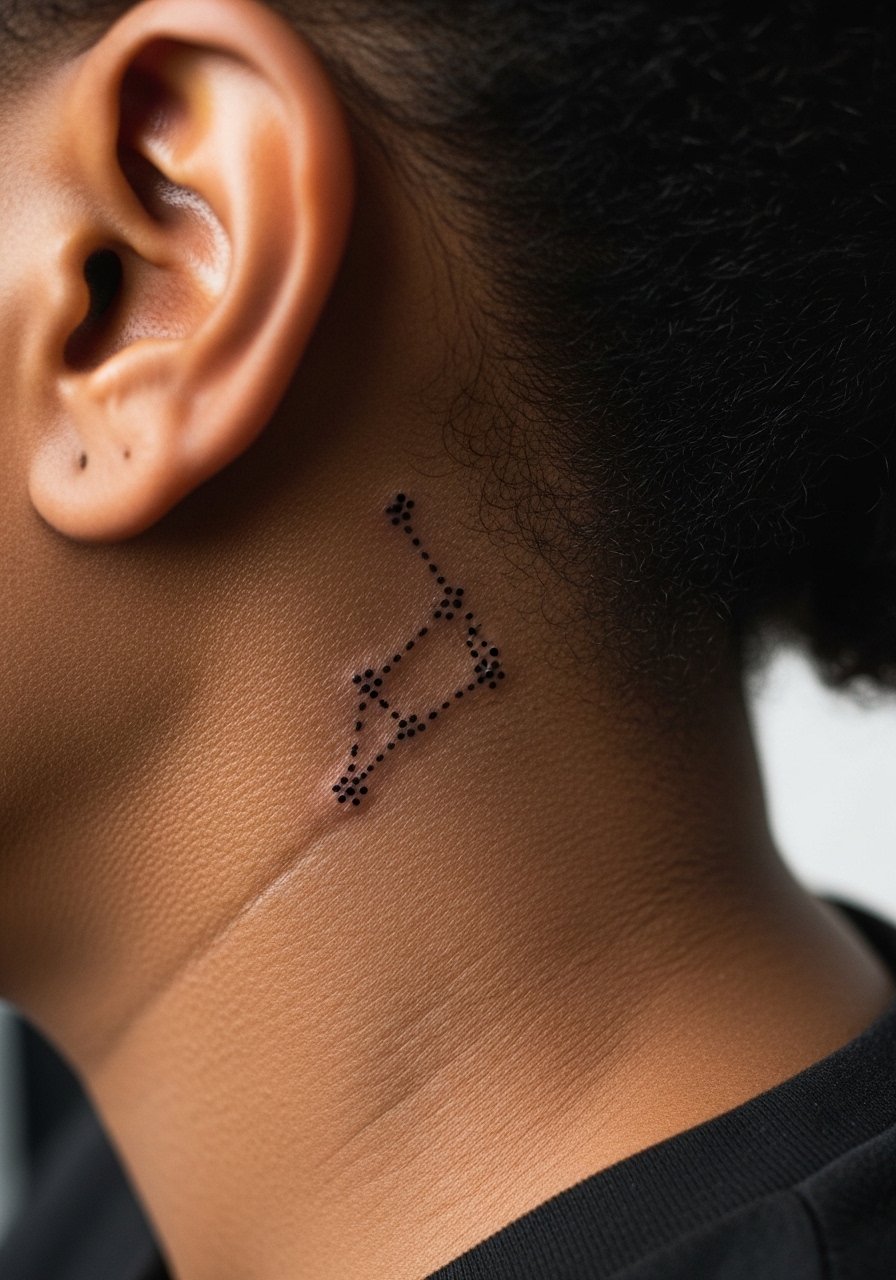
A constellation of pin dots reads delicate and scales nicely. Ask for slightly varied dot sizes to keep depth without dense clusters. The piece is low pain and a quick in-and-out session. Avoid dense micro dot clouds which can blend. For a neat reveal, a clean fade and a minimalist silver stud earring make sense.
22. Tiny Eye Glyph, Watchful Minimalism
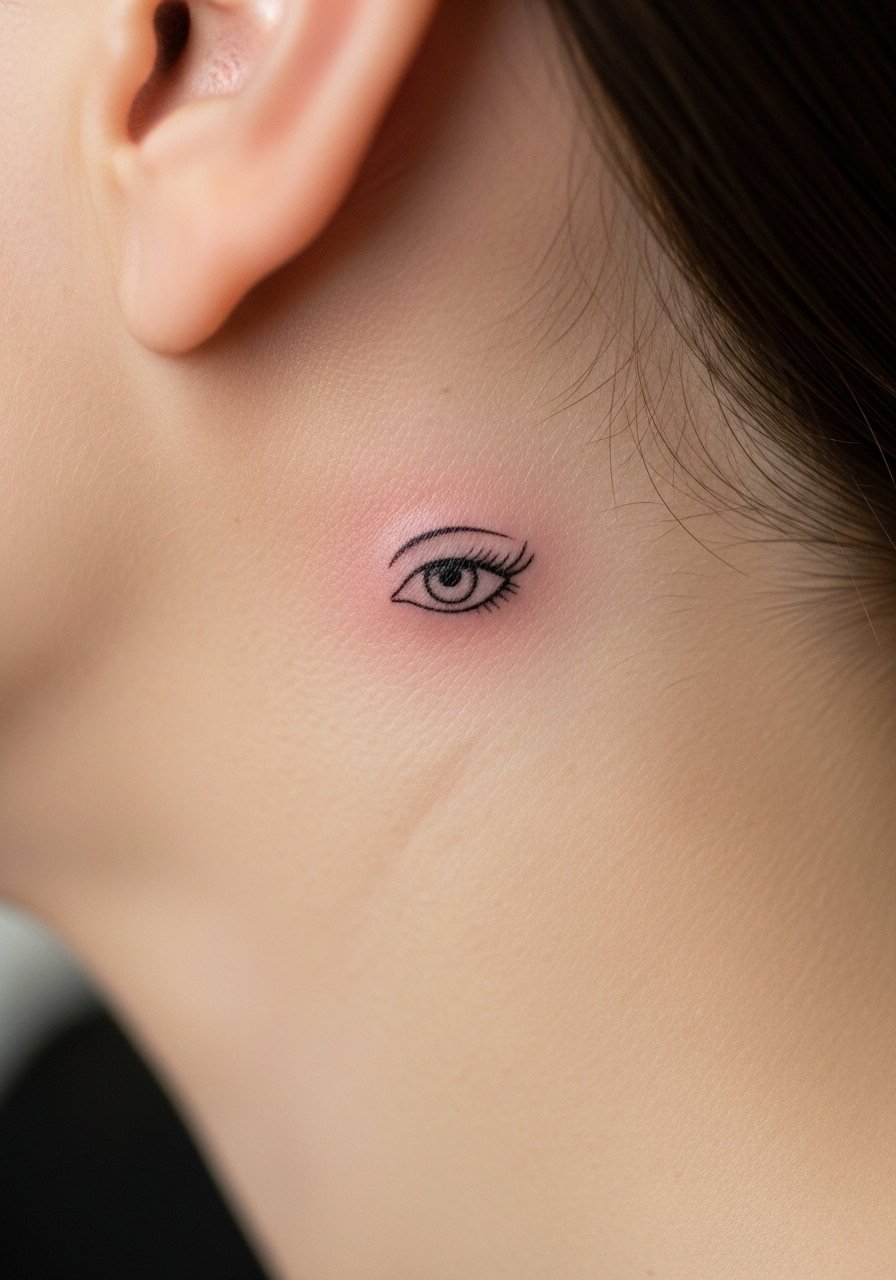
A minimal eye feels like a talisman that is still small enough to hide. Ask the artist to avoid inner shading and to keep the pupil as an open dot so the form ages clearly. The session is brief and comfort is good. The mistake is adding micro lashes which crowd the area. For showing off, a textured crop and neat neckline work best.
23. Micro Barcode or Coordinates
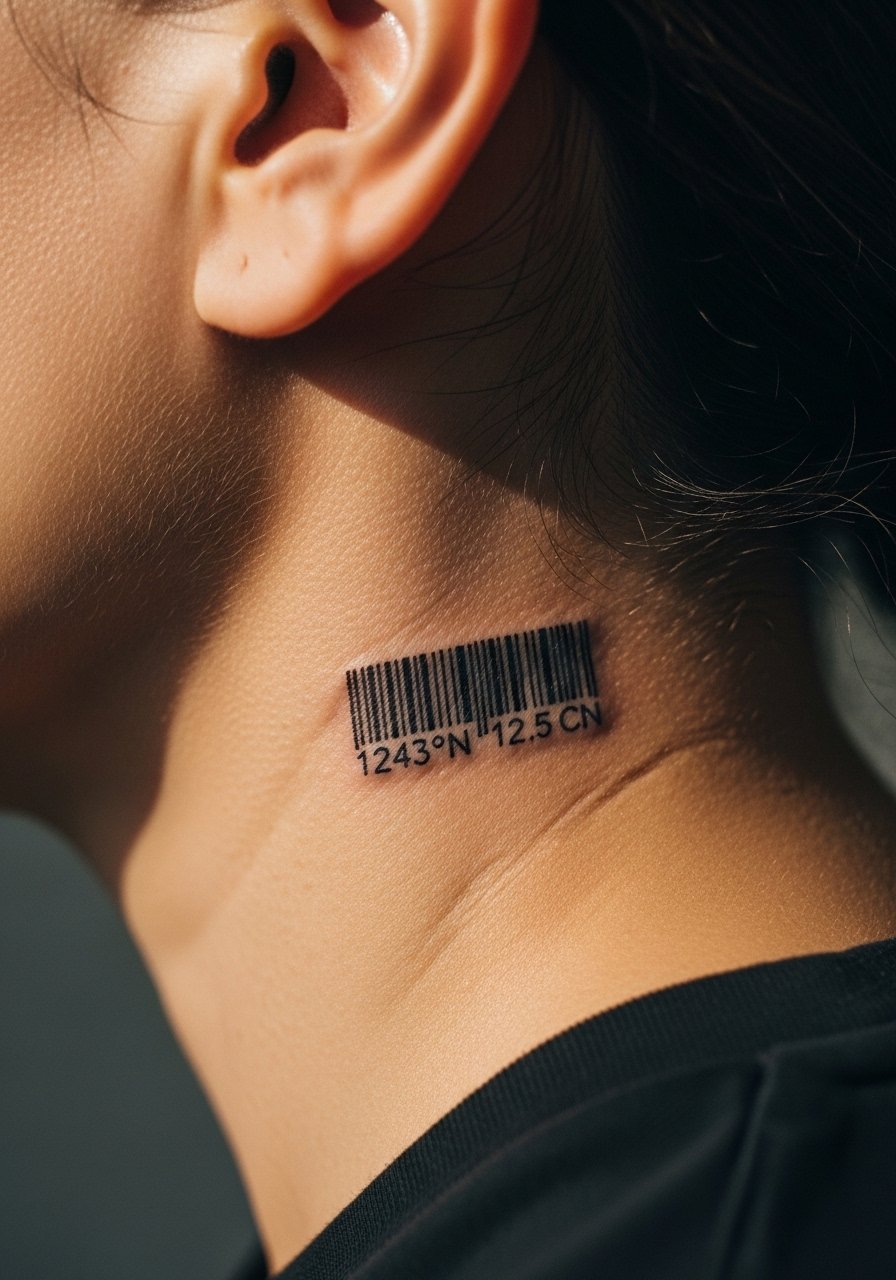
Barcodes or coordinate lines read modern and private. For coordinates, provide exact text so the artist crafts legible marks. Keep the barcode lines modest and spaced to reduce merging. This is a short session with tiny discomfort. A frequent error is compressing too many thin bars into a small space. For session wear, choose a wide neck t-shirt to avoid fabric rubbing.
24. Small Anchor, Micro Nautical Mark
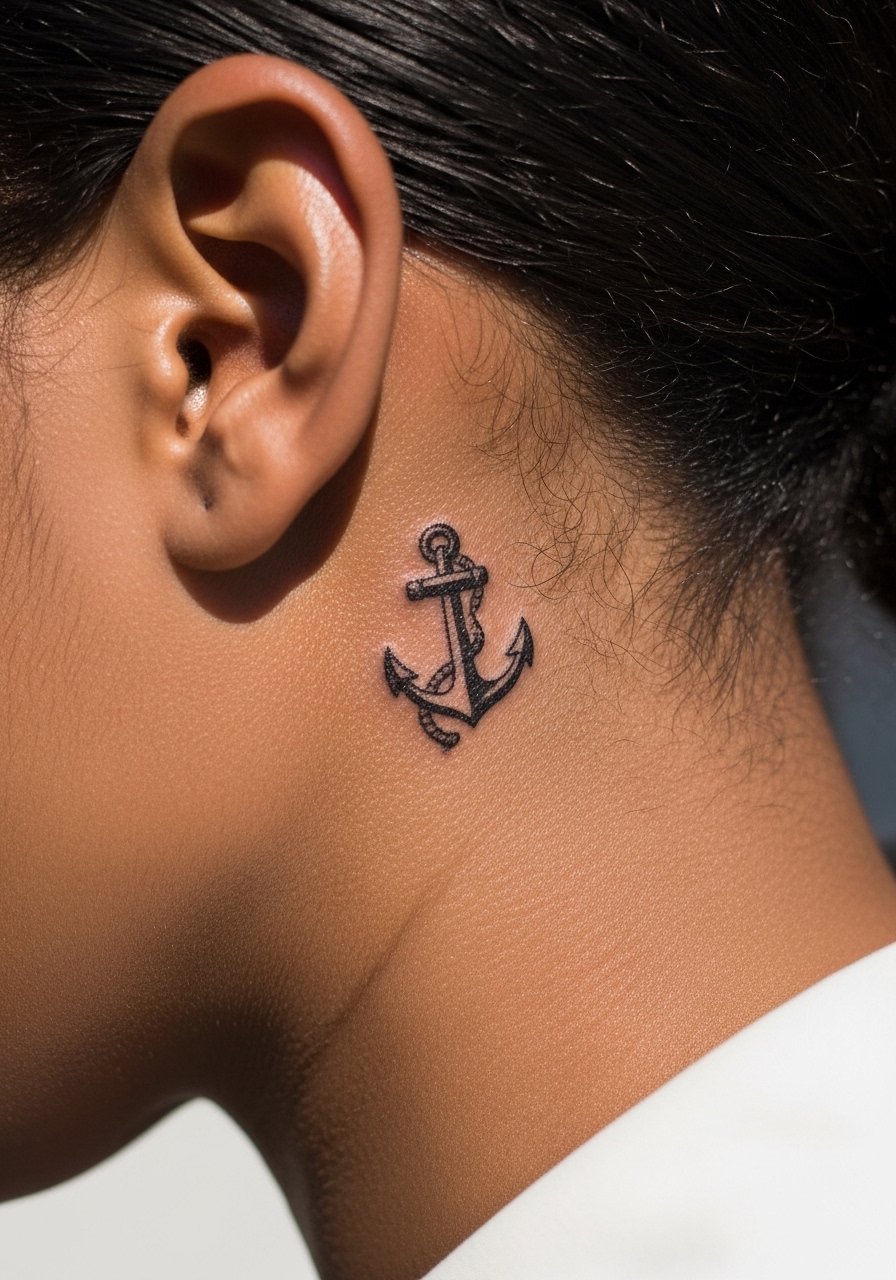
A micro anchor reads classic without being loud. Ask for simplified shank and flukes and avoid internal shading. The session takes minutes and causes low pain. The common mistake is requesting heavy black fill which can blur at this scale. For coastal style, pair with a cropped cut and an open collar linen shirt men.
25. Micro Lightning Bolt, Compact Energy
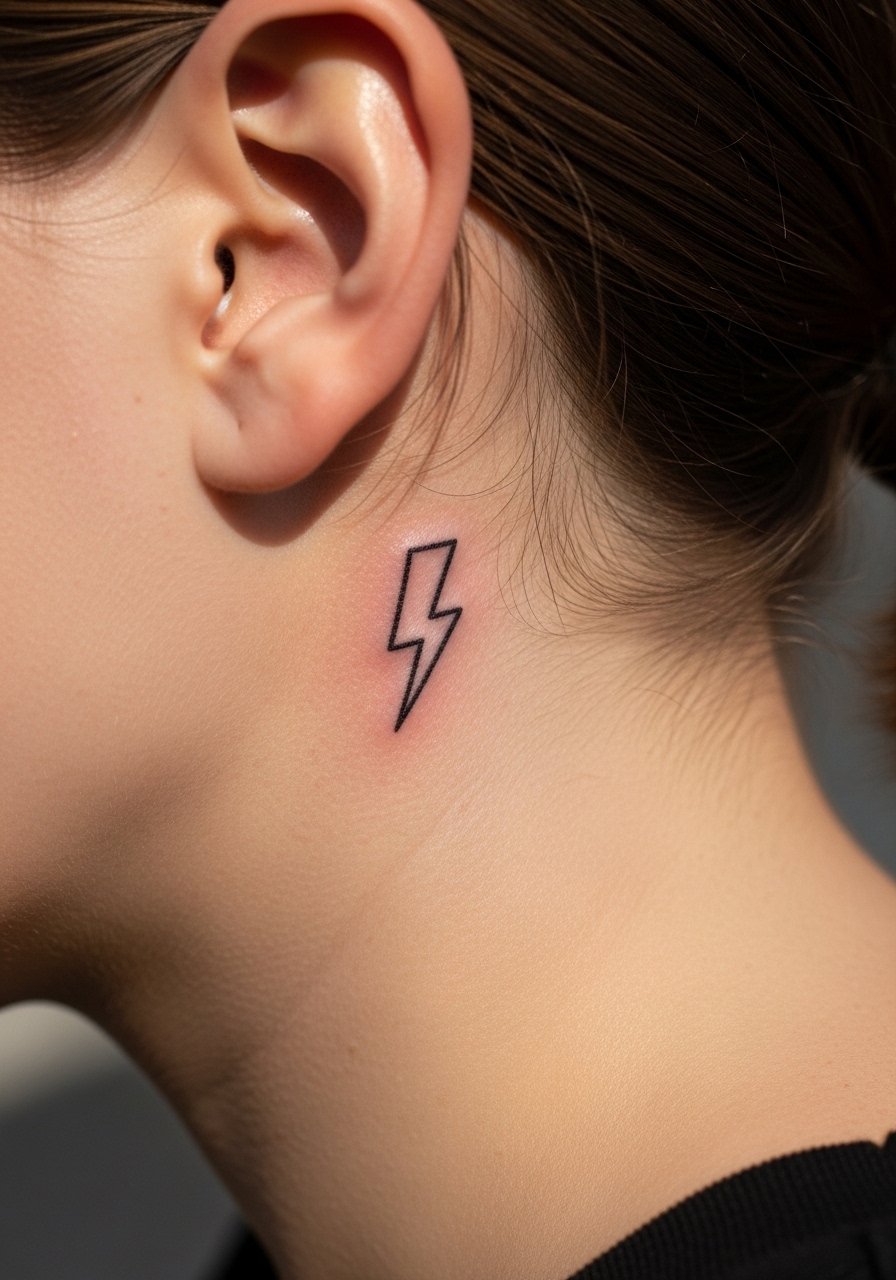
A lightning bolt is distinctive and minimal. Request a single clean stroke with a small hook rather than zigzag repeats. Expect a quick session and low pain. The mistake is overcomplicating the bolt with shading that will soften. For styling, short hair and a textured crop hair product keep the profile sharp.
26. Tiny Semicolon, Micro Pause
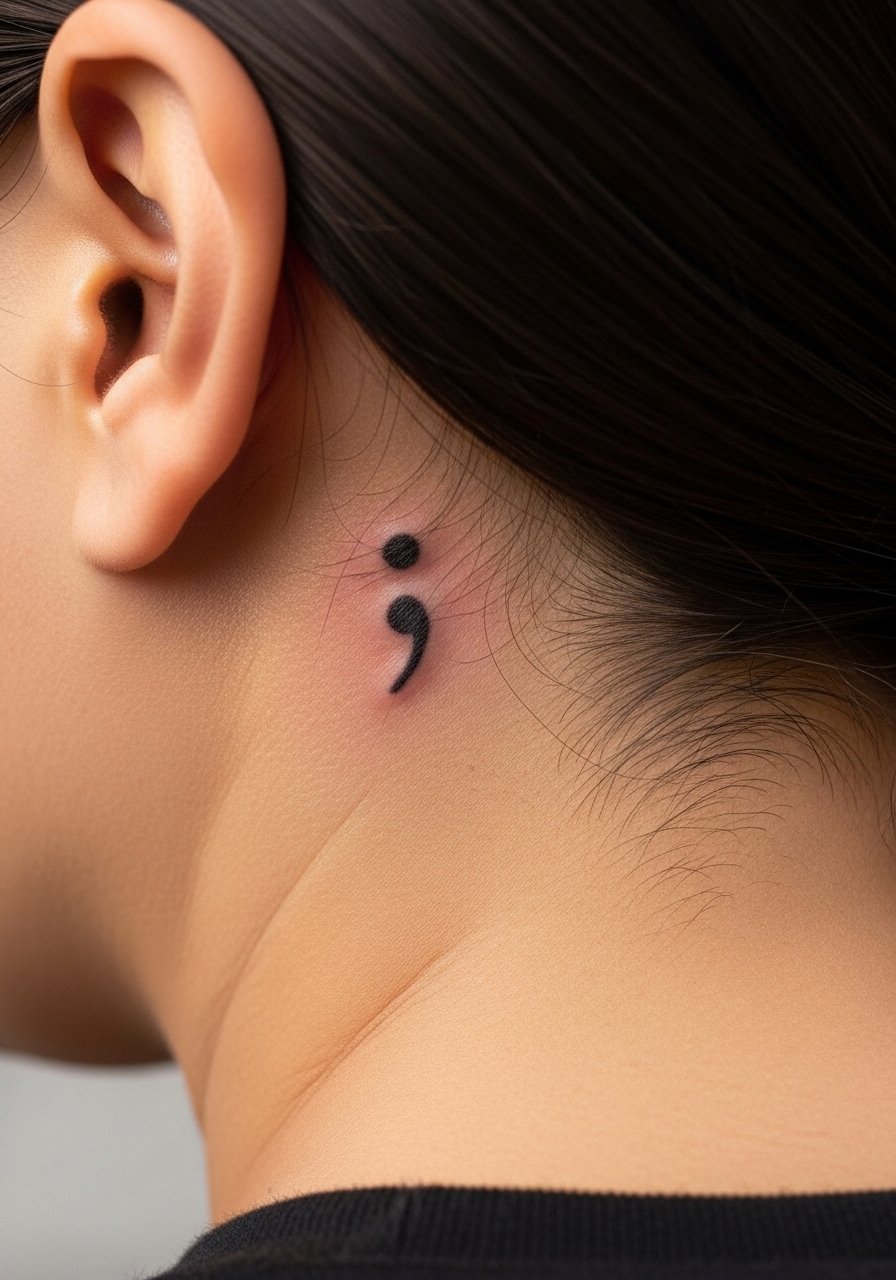
The semicolon is simple and discreet in this spot. Ask the artist to scale the dot and comma so both elements remain distinct after healing. The session is minutes long and pain is low. A mistake is making the dot too large relative to the comma element. For session ease, wear a wide neck t-shirt.
27. Micro Single Dot, Minimal Anchor Point
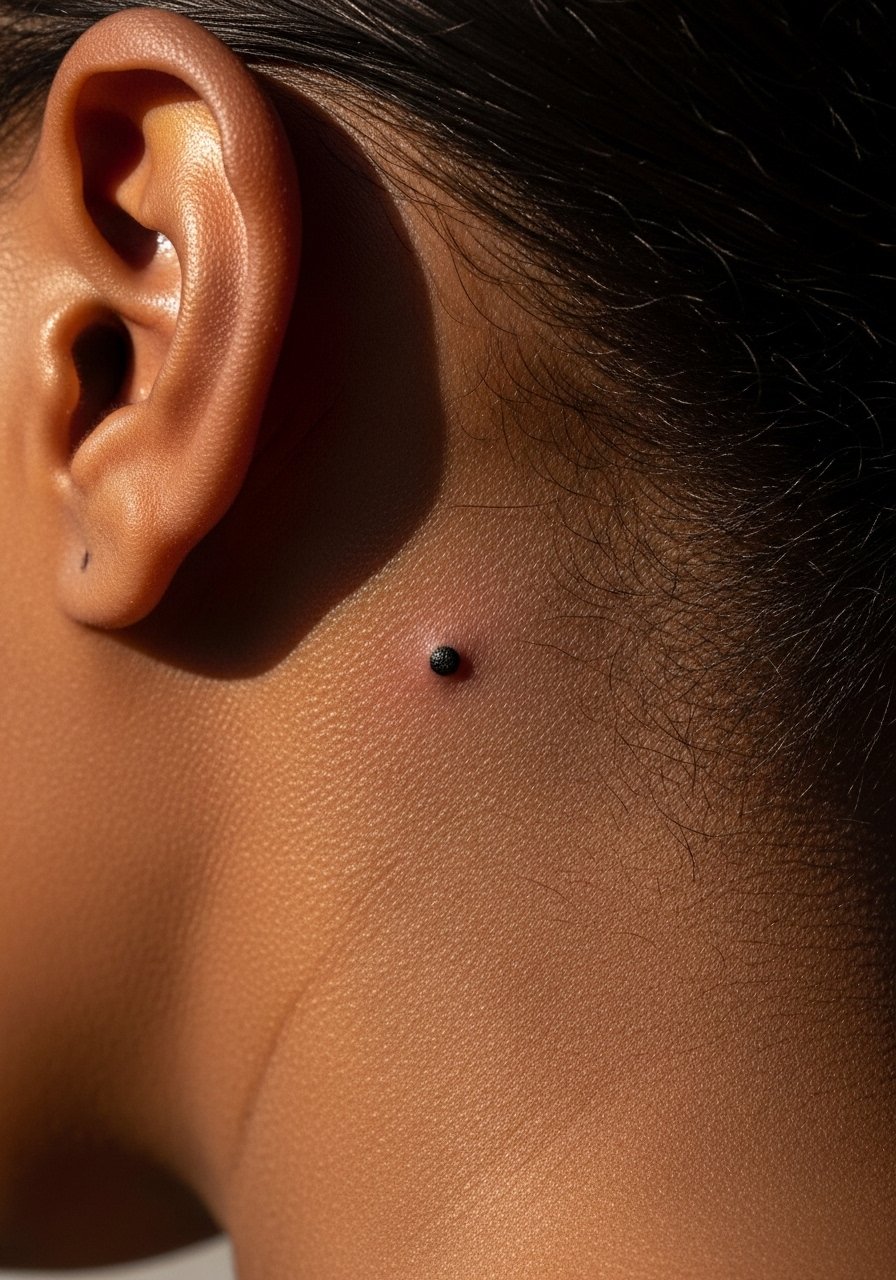
The single dot is the ultimate low-commitment statement that can anchor other work later. Ask for a crisp single poke and avoid any filler around it. Pain and session time are minimal. The main issue to avoid is asking for a cluster of dots that can blur into a patch. If you go this route, treat it as the simplest option in a collection and plan any additions with proper spacing.
Frequently Asked Questions
Q: Will fine line pieces behind the ear need touch-ups sooner than bolder micro work?
A: It depends on line weight and skin type. Fine line work often needs a touch-up by year two or three if the original lines were extremely thin. If you prefer durability, ask the artist to reinforce anchor points and leave slightly more spacing so touch-ups are less frequent.
Q: How much does hair length affect visibility and healing for behind-ear ink?
A: Shorter cuts or tied-back styles reveal the work immediately, which is great for show-off pieces. Longer hair protects the area from sun but can trap sweat and hair product. For the session, pull hair back in a low clip and wear a loose crewneck sweatshirt so the artist can access the neck without fuss.
Q: Are there professional concerns for having visible ink behind the ear?
A: Some workplaces still have conservative policies about visible side-neck or behind-ear ink. If career perception matters to you, choose designs that tuck directly under the hairline or select placements that hide when you put hair down.
Q: What should I ask my artist at consult to ensure a clean micro behind-ear result?
A: Ask about their experience with micro linework on thin neck skin and to show healed photos at one and three years. Ask whether they recommend a touch-up and how they space detail to avoid blowout. Ask to preview the stencil on your skin before starting.
Q: Is there a simple way to find style matches for these behind-ear ideas?
A: Use placement hashtags and directories to match portfolios, such as searching #BehindEarTattoo and #FineLineTattoo on social platforms, the Tattoodo app for curated examples, or a local "micro tattoo studio" Google search to find artists familiar with tiny placements.
