
The tattoos that still read clean at year ten are usually the ones that leaned into bold linework and careful spacing from the start. Hyper-detailed mandalas can look incredible fresh but often need touch-ups sooner than you expect. Pick placement, line weight, and spacing with longevity in mind and the rest of the choices fall into place. Below are 17 solid mandala directions for guys that balance visual punch with real-world aging, styling, and session notes.
1. Bold Geometric Mandala Forearm Sleeve
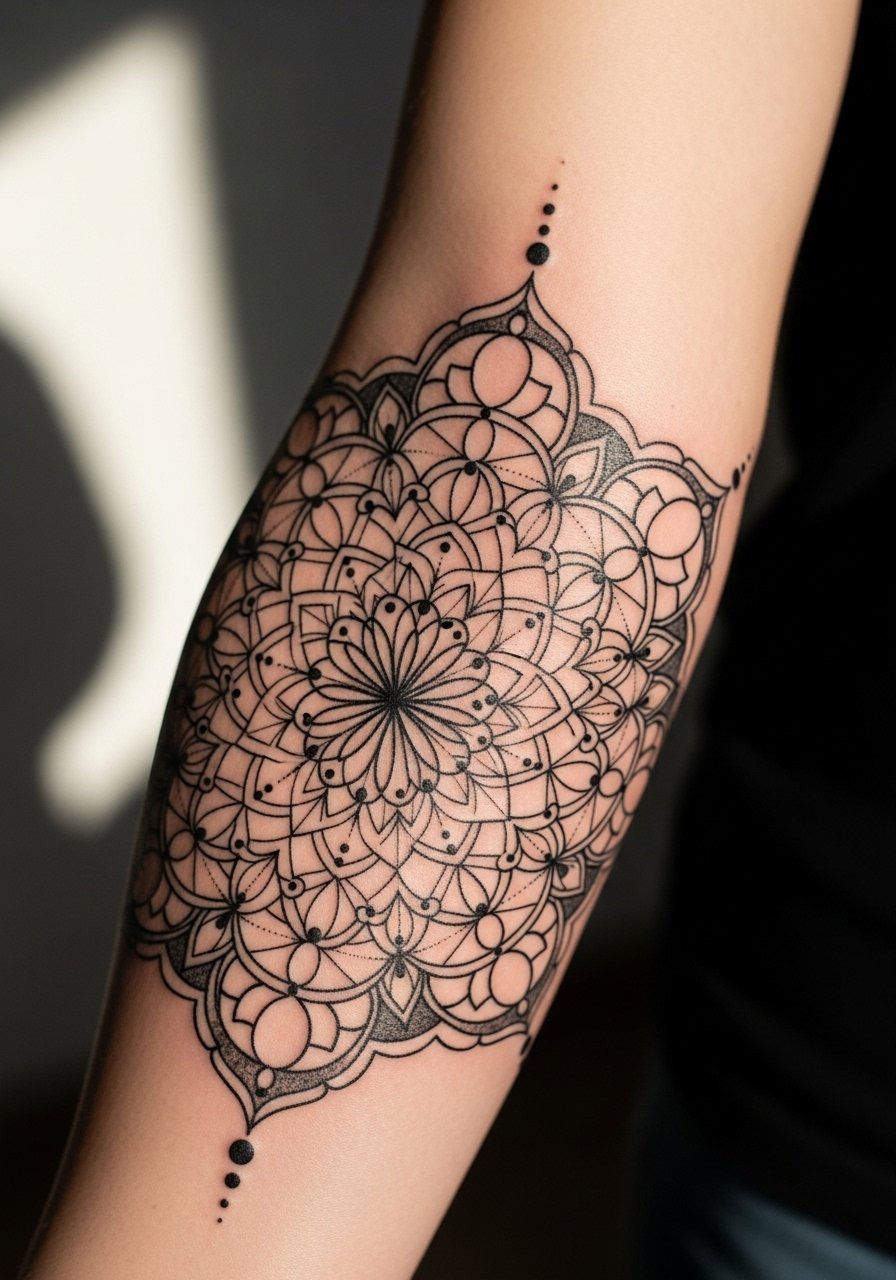
This forearm sleeve is where bold blackwork earns its reputation. I recommend asking for wider spacing between concentric elements so the dense areas do not merge after a few years. Tell your artist you want strong outlines and layered dot work for texture rather than tiny filigree. Common mistake is asking for too-small detail in a 4-inch circle. At six months the contrast looks sharp, at two years the thicker outlines still read clean, and at five years the dot textures mature into grain without turning into blobs. Pain is low to moderate and sessions run 2 to 4 hours. For showing this off, roll sleeves and pair the piece with a mens henley shirt black so the arm reads continuous with your torso.
2. Masculine Mandala with Thick Lines Chest Piece
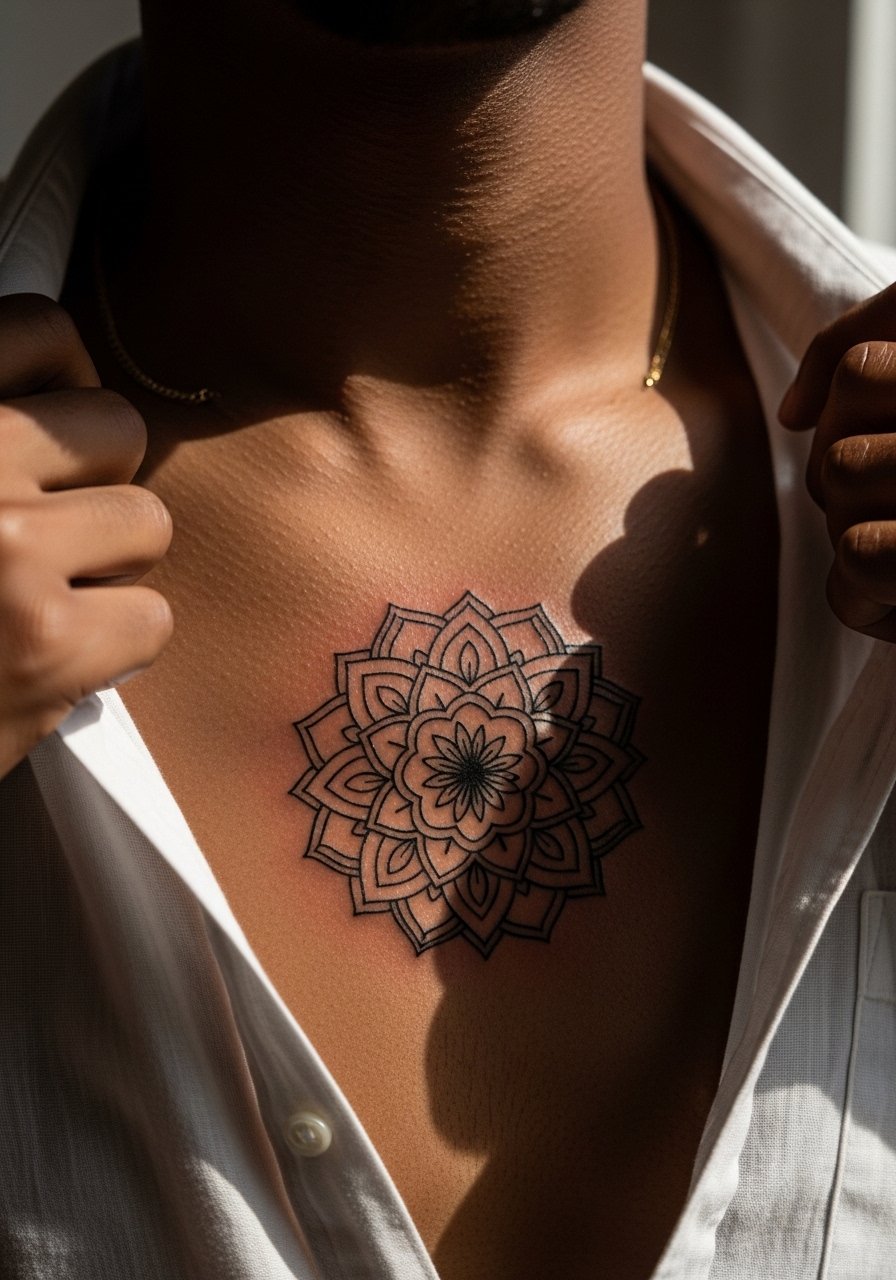
A chest mandala with robust outlines sits clean over pectoral contours and holds up under gym life. In consultation, specify deep black saturation and clear negative space around the main core so the design does not blend with pec shadowing. The tricky part is chest skin moves a lot during workouts so expect two to three sessions to build saturation. Pain on the chest is moderate to high depending on placement near the sternum. A common aging problem is over-shading the center, which turns muddy on darker tones. For sessions, wear an open button down shirt white so the artist can access the area without you taking your shirt off. This design pairs well with deep V-neck tees for gym reveal.
3. Neo-Traditional Mandala Thigh Design
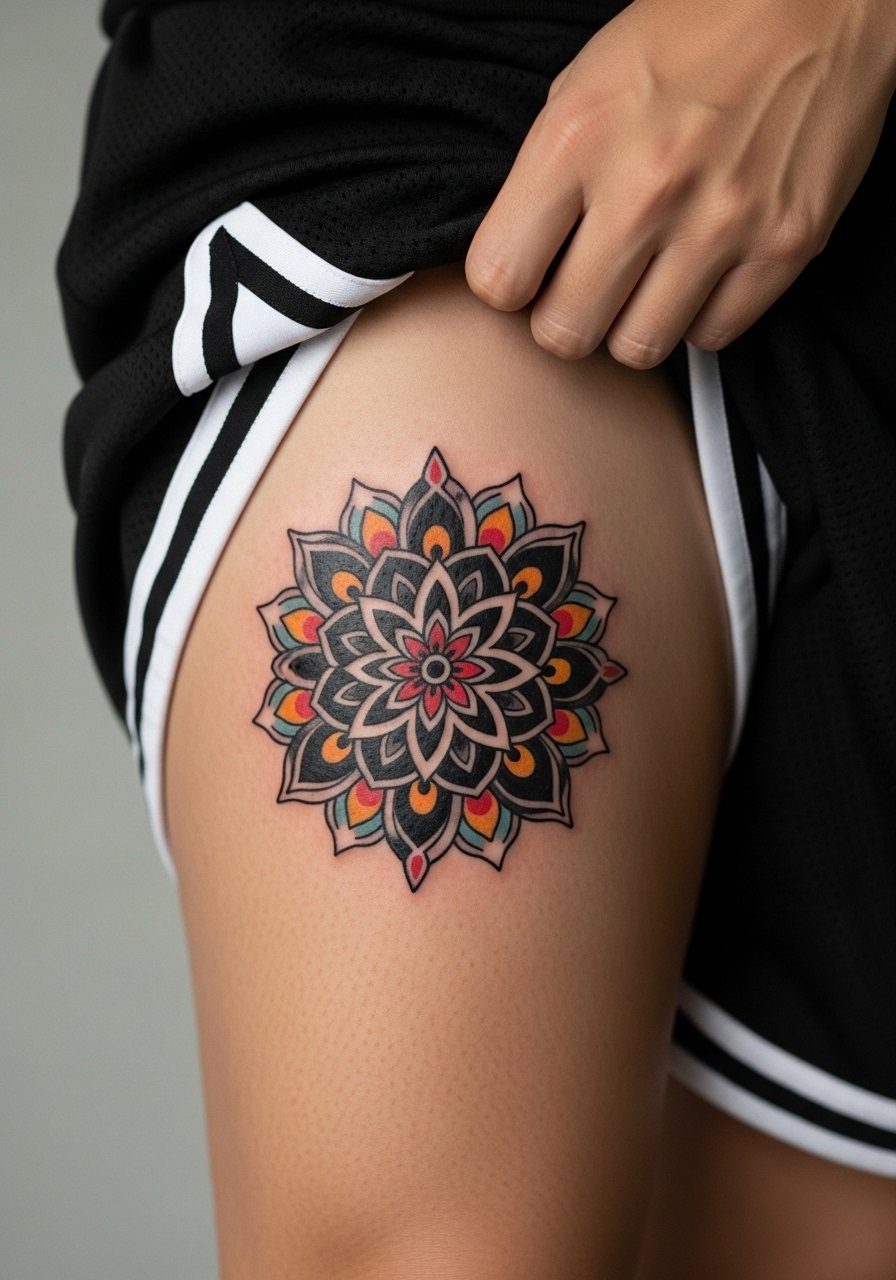
The outer thigh is ideal if you want color pops in a mandala without exposing them daily. Ask for color placement that sits on top of black anchors so saturation reads longer outdoors. A frequent mistake is placing a dense circle too close to the hip where weight fluctuation can warp it. At six months the color will be vivid, at two years it softens a bit, and at five years the black network keeps the shape intact. Sessions are comfortable but expect moderate pain on inner edges near bone. For the appointment, bring mens gym shorts olive that you can pull up easily. If you bulk later, ask the artist to make the main circle slightly oval-proof by stretching elements along muscle fibers.
4. Symmetrical Mandala Back Panel
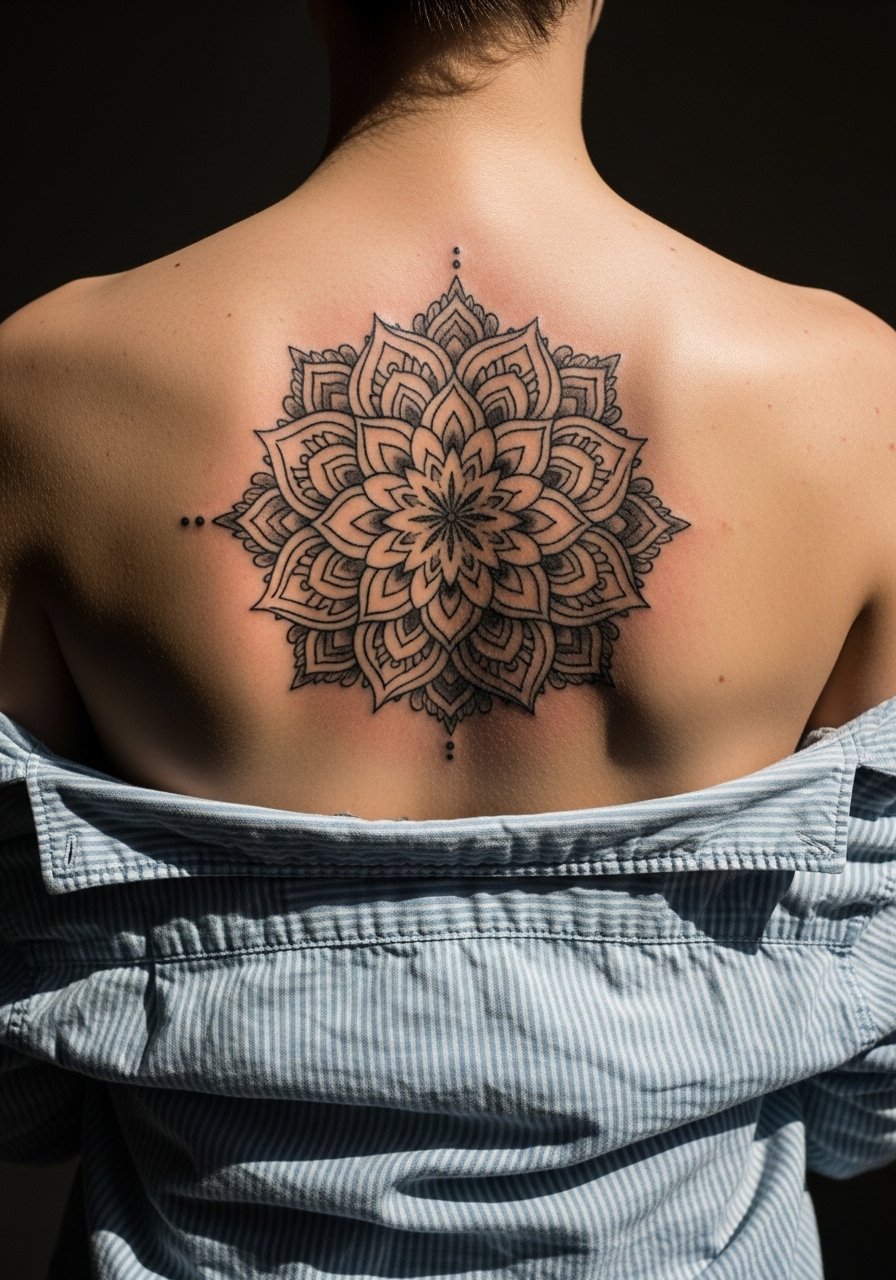
A back panel gives scale and symmetry room to breathe. For longevity ask for thicker outer rings and graduated shading that reduces detail toward the edges. The worst versions are overly detailed edges that disappear under shoulder blades where skin rubs. Expect multi-session work over several appointments. Pain is moderate because you are lying face down for hours. For visibility, this reads well with half-zip pullovers or backless tanks at the gym. During booking, confirm the number of sessions and deposit policy to avoid cancellations. If you want healed-versus-fresh mockups, photographers in local conventions often share portfolio shots that show aging over years.
5. Dotwork Mandala Shoulder Cap
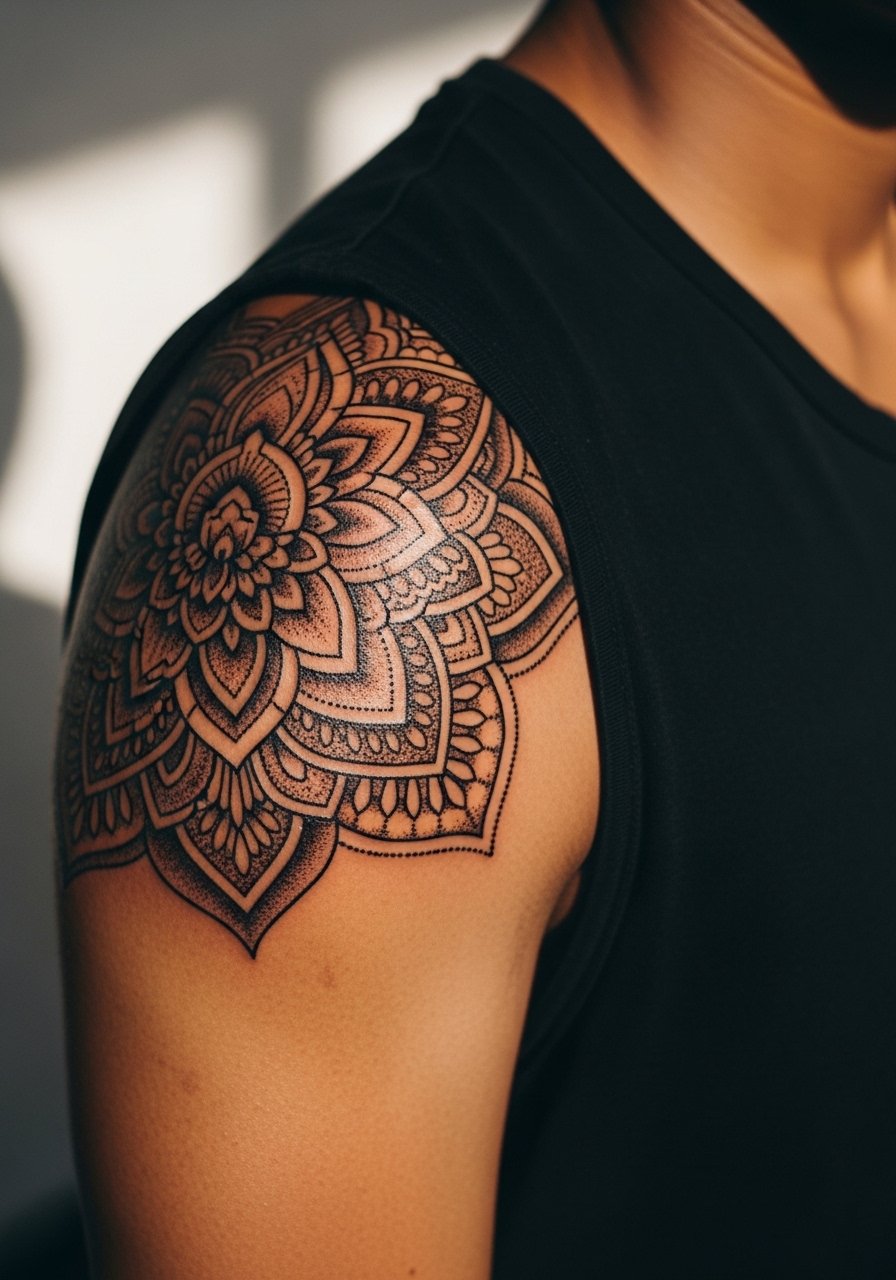
Dotwork shoulder caps age into texture rather than blur when done with correct dot spacing. Tell your artist you want layered stippling and to stagger dot clusters to avoid dense patches. A typical mistake is packing too many tiny dots into one ring which creates a shaded blob later. At six months stipple reads crisp, at two years it gains depth, and at five years the texture complements muscle definition. This placement can be painful when needles hit the deltoid edge. For showing off, pair it with a muscle tee earth tone and a beaded armband on the opposite side for balance.
6. Heavy Outline Mandala Bicep Band
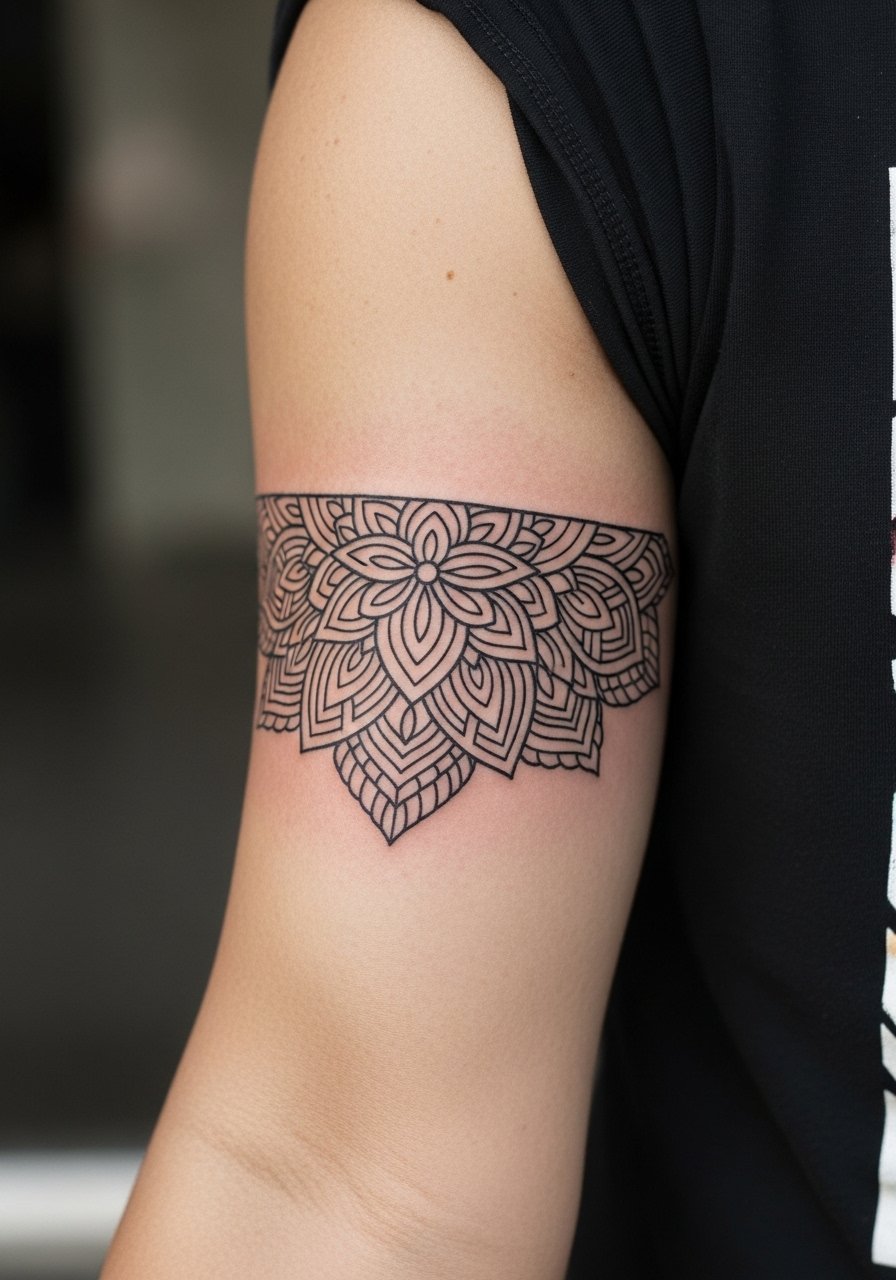
The bicep band is a classic that resists blowout when the artist uses bold linework and avoids super-fine interior detail. When you consult, ask for at least 3 mm line weight on the main outlines and patterned negative space inside. A common mistake is asking for lace-like detail in a 4 cm band. Expect a single long session or two shorter ones for full wrap consistency. The placement is low on blowout risk compared to inner arm or wrist. It looks sharp at six months and holds shape through several years with occasional touch-ups. For session comfort wear a loose short sleeve tee so the artist can adjust arm position easily.
Studio Day Picks
The forearm, chest, and shoulder pieces above demand different prep and a few key products smooth the first week and help dense blackwork settle.
-
Tattoo Goo ointment. A drier alternative that many people find keeps heavy black shading from feeling greasy while still moisturizing during the initial days after a session.
-
Green tea balm tattoo. Helps reduce inflammation for dotwork and stipple areas without the stickiness some petrolatum products leave behind.
-
CeraVe healing ointment. A thin layer during dry winter months prevents cracking around detailed mandala sections without clogging pores.
-
Manuka honey salve. For thigh or sternum work this can speed scab maturation, especially where dressings rub.
-
Hustle Butter Deluxe. Thinner than typical petrolatum, it helps heavy blackwork sit without the surface sheen that attracts lint during the first week.
7. Layered Mandala Calf Wrap
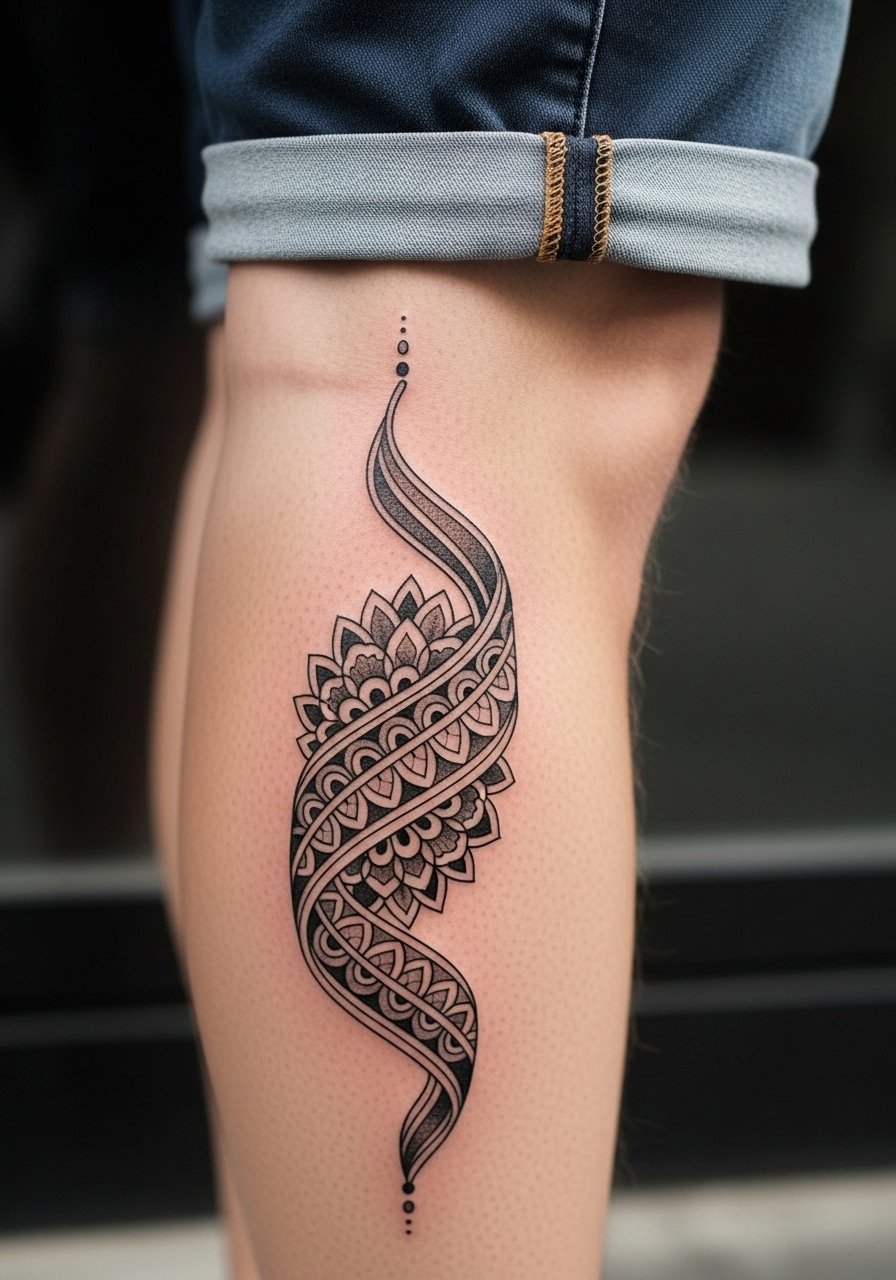
Calf wraps move with your stride and are forgiving if you plan for seasonal visibility. Ask the artist to elongate central elements so the mandala reads vertically when standing. A common mistake is making the circle too round which stretches into an oval with muscle gain. Six months in the lines look tight, at two years the wrap flexes well with motion, and at five years touch-ups retain the outer silhouette. Sessions are medium length and pain is moderate. For summer show-offs pair the piece with mens chino shorts cuffed. During healing avoid sweaty long runs for two weeks to limit irritation.
8. Abstract Mandala Sternum Focal
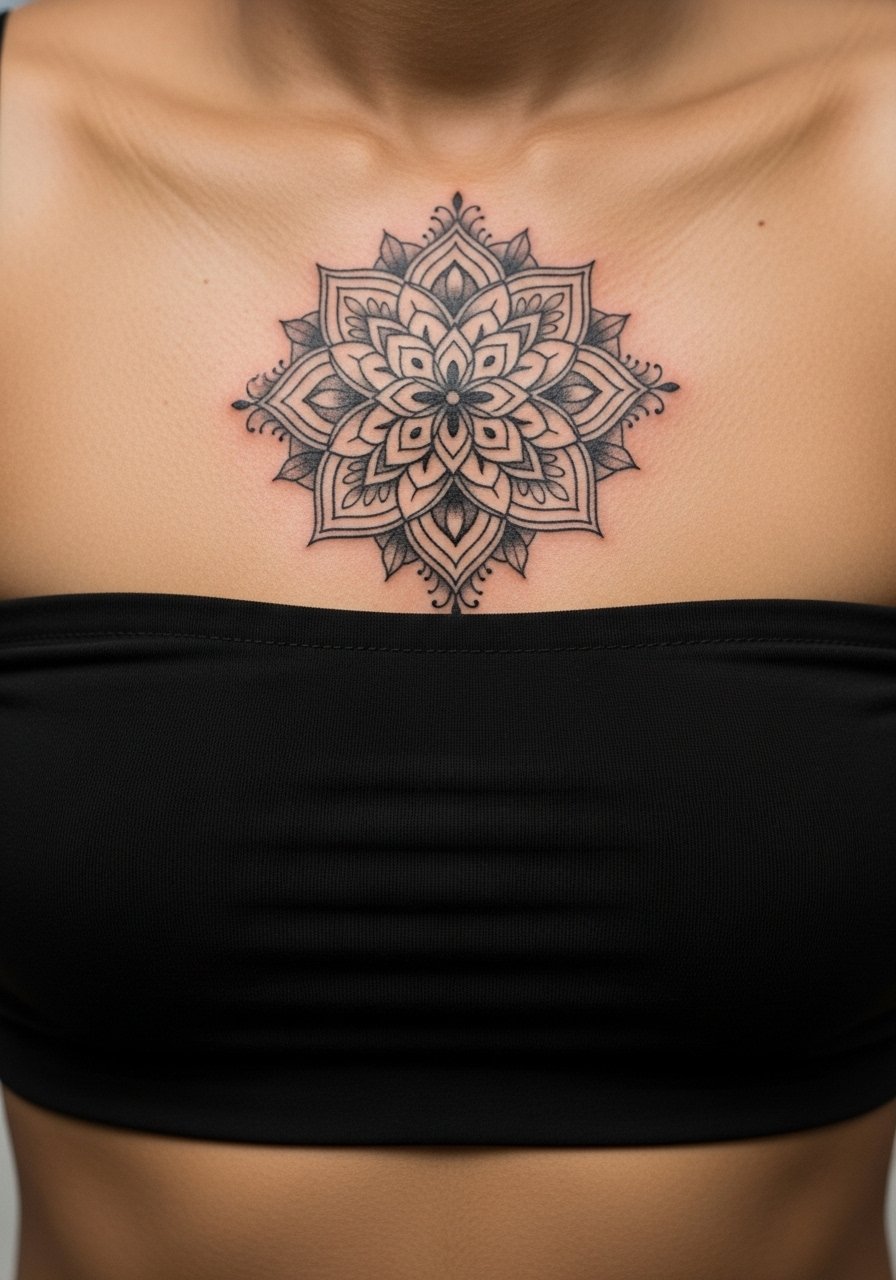
Sternum pieces feel intimate and demand heavy black anchors to read over skin movement. Tell your artist you want the main focal point slightly above the midline so collarbones do not distort the center when you flex. The controversy around sternum fine line versus bold is clear. One camp warns that thin lines on sternum blur quickly. The other says precise depth can keep fine detail. For this placement, I lean toward thicker outlines because the area moves and rubs against clothing. Expect moderate pain and two sessions for full saturation. For session wear bring a strapless top or zip hoodie you can lower without exposing more than the tattoo zone.
9. Floral-Infused Mandala Forearm
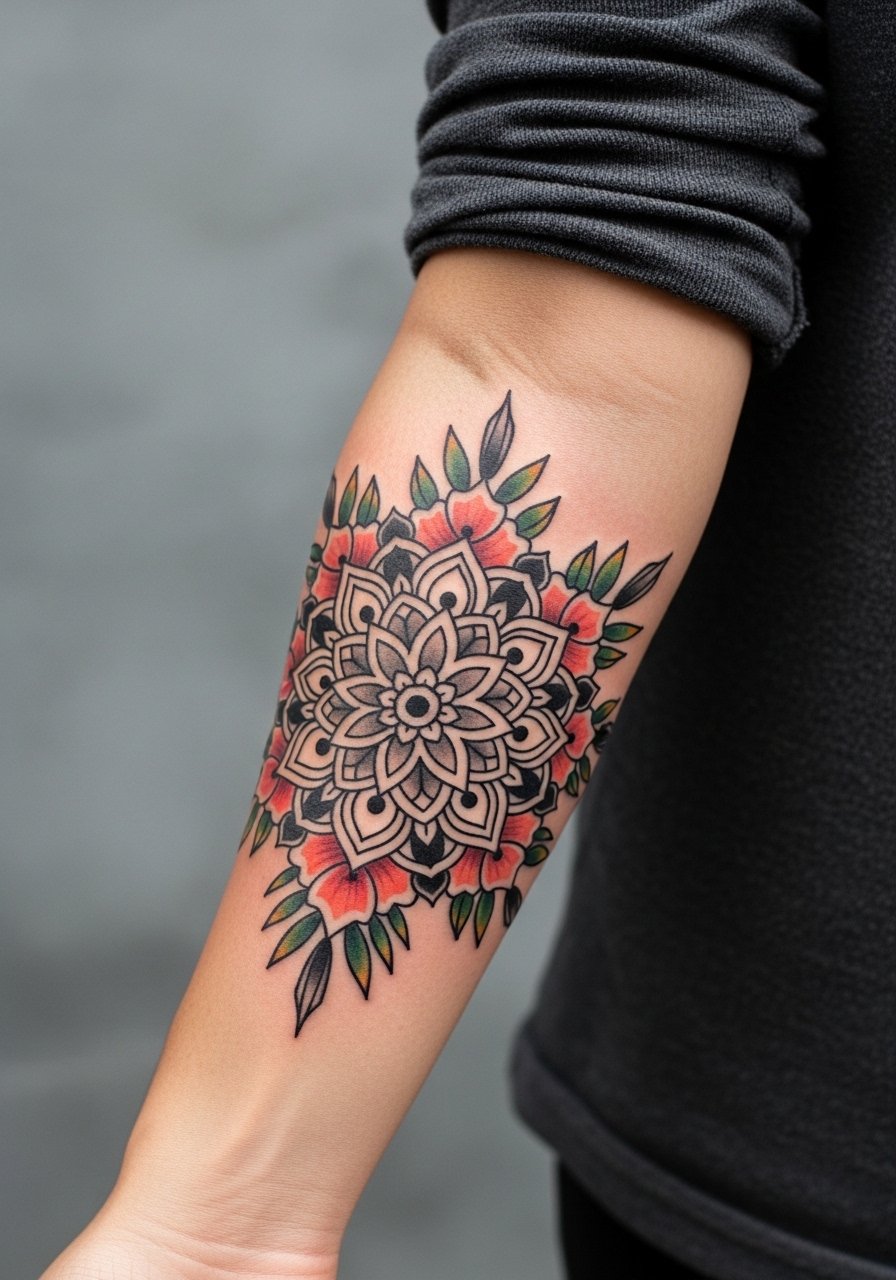
Combining petals with geometric mandala cores gives a masculine twist that still ages well if color is used sparingly. Ask for color accents only on outer petals and leave the core in black. A frequent mistake is saturating the core and the color bleeds into the negative space. At six months color pops, at two years it softens and at five years the black framework keeps the petal shapes readable. Inner forearm pain is low to moderate and sessions usually run 2 to 3 hours. For showing this design wear a fitted athletic tank gray or roll sleeves to frame the piece.
10. Tribal Mandala Neck Piece
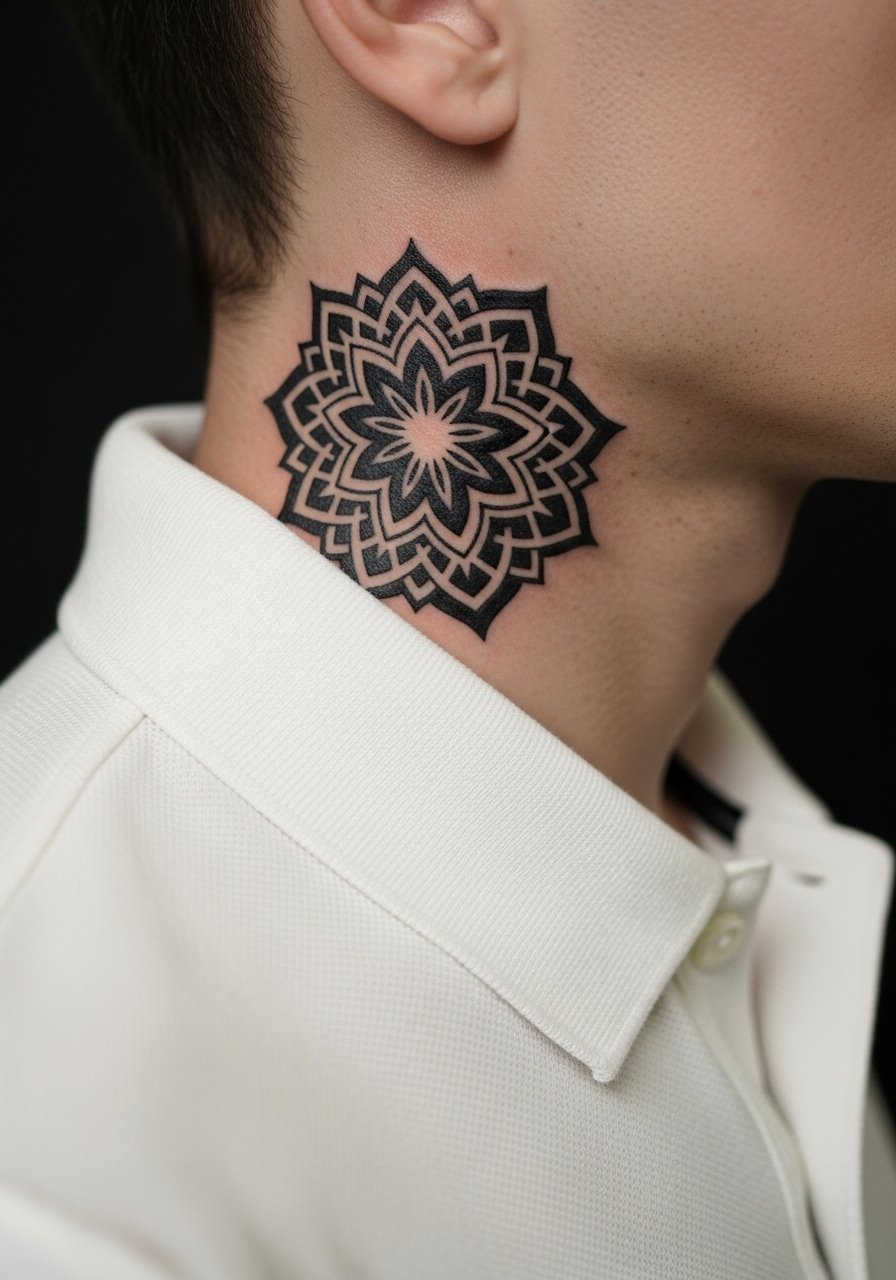
Neck pieces carry visibility and commitment considerations. For a side-neck mandala request a vertical composition that follows the sternocleidomastoid muscle so it reads natural when you turn your head. Keep the design compact to avoid constant sun exposure. Pain is high and healing can be fussy because of movement and shaving. Also weigh career considerations before booking. Session wear should be an open-collar shirt you can pull aside rather than taking clothing off. For styling, a popped mens pop collar polo frames the piece without hiding it.
11. Multi-Layer Mandala Spine Column
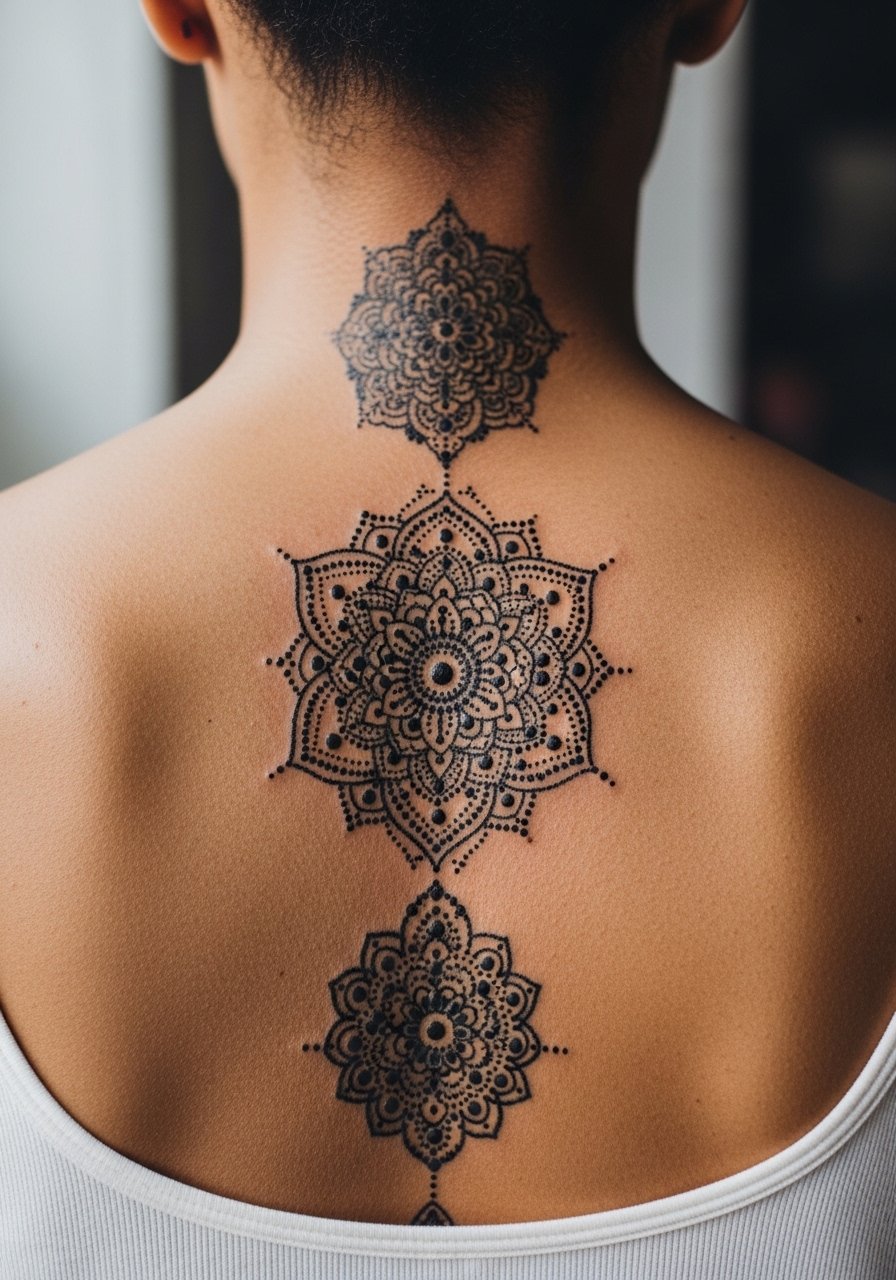
Spine columns are dramatic and require careful layering so the vertical flow does not collapse. Tell your artist to stagger rings and vary dot density to prevent a single dark streak. One common error is compressing too many rings into one small segment. At six months the column reads clear, at two years the vertical rhythm stays intact, but anticipate a touch-up window at year three for dotwork density. Pain is high along the spine. For session day wear a front-open button shirt or a tank you can remove without bending excessively. If you're active in weightlifting, mention that to the artist so they can account for muscle flex.
12. Shield Mandala Pecs
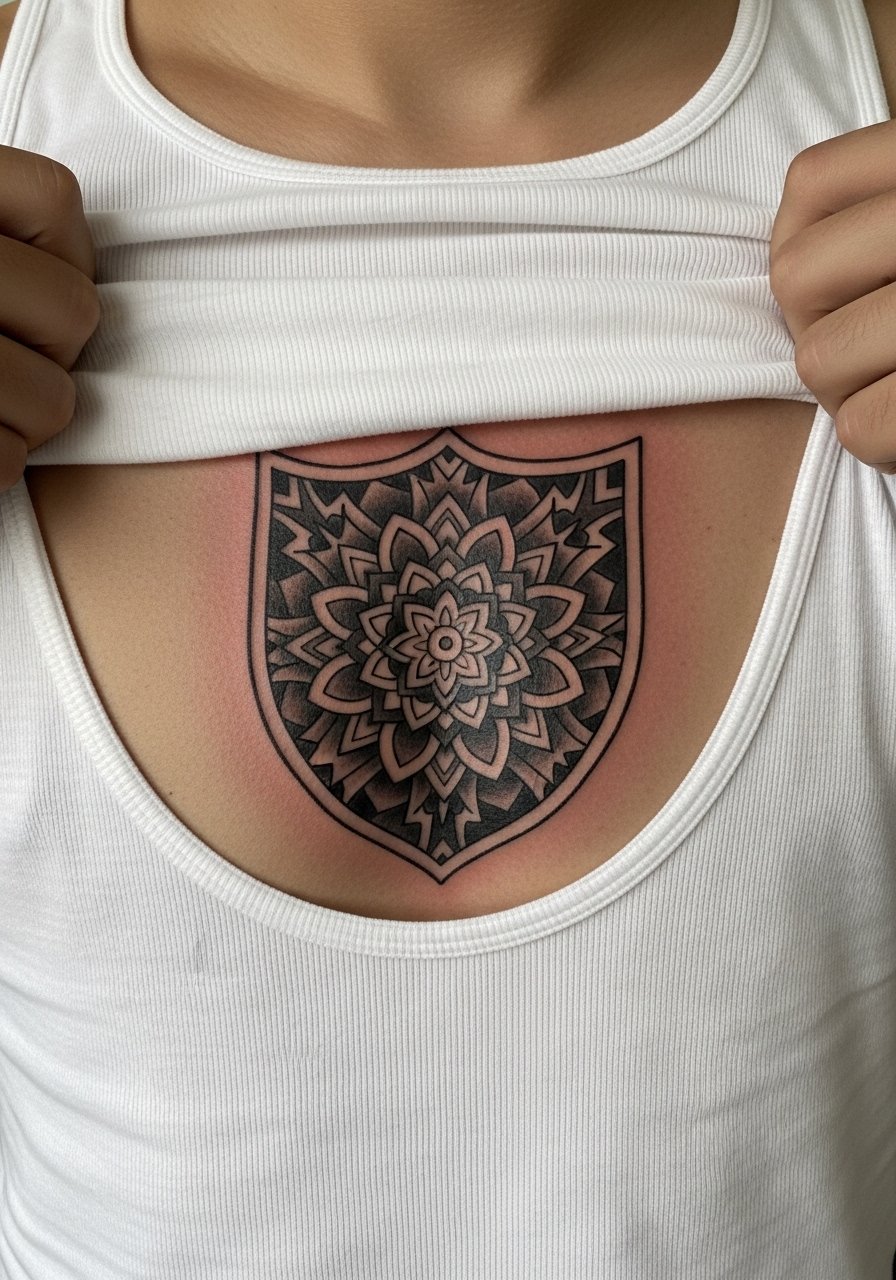
Pectoral shield mandalas read strong with bold outline and controlled gray wash. Specify a shield border that follows muscle curves so the design flexes with chest movement. A mistake is a symmetrical shield that ignores the pec shape and looks lopsided when you flex. Sessions run moderate to long depending on shading. Expect more touch-up need if you sunbathe often because the pec area catches UV. For showing this piece pair it with a mens v neck tee black or open button-down to let the shield sit in frame.
13. Mini Mandala Wrist Accent
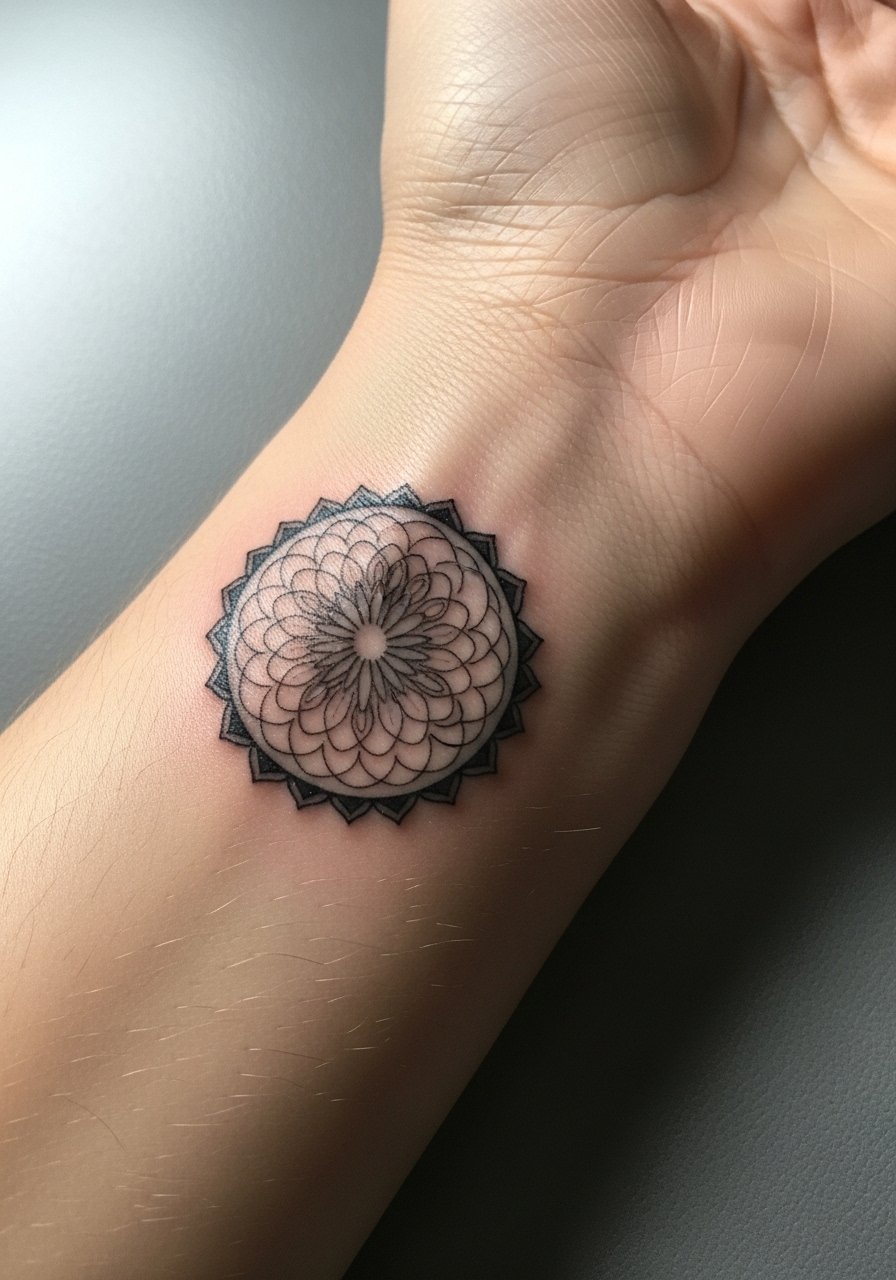
Wrist mandalas look tidy when kept compact and bold enough to survive friction. Ask for a clear outer ring and avoid tiny interior filigree. A rookie mistake is a too-tiny mandala with micro detail that blurs within two years. At six months it looks delicate, at two years thicker outlines still read, and at five years the tiny interior may need a touch-up. Pain is low. Expect to be careful with watches and bracelets during the first month. For show-off pairing consider a minimalist watch or a leather cuff on the opposite arm. For the session wear a loose short sleeve tee so the artist can rotate your wrist freely.
14. Mandala Behind the Shoulder Blade
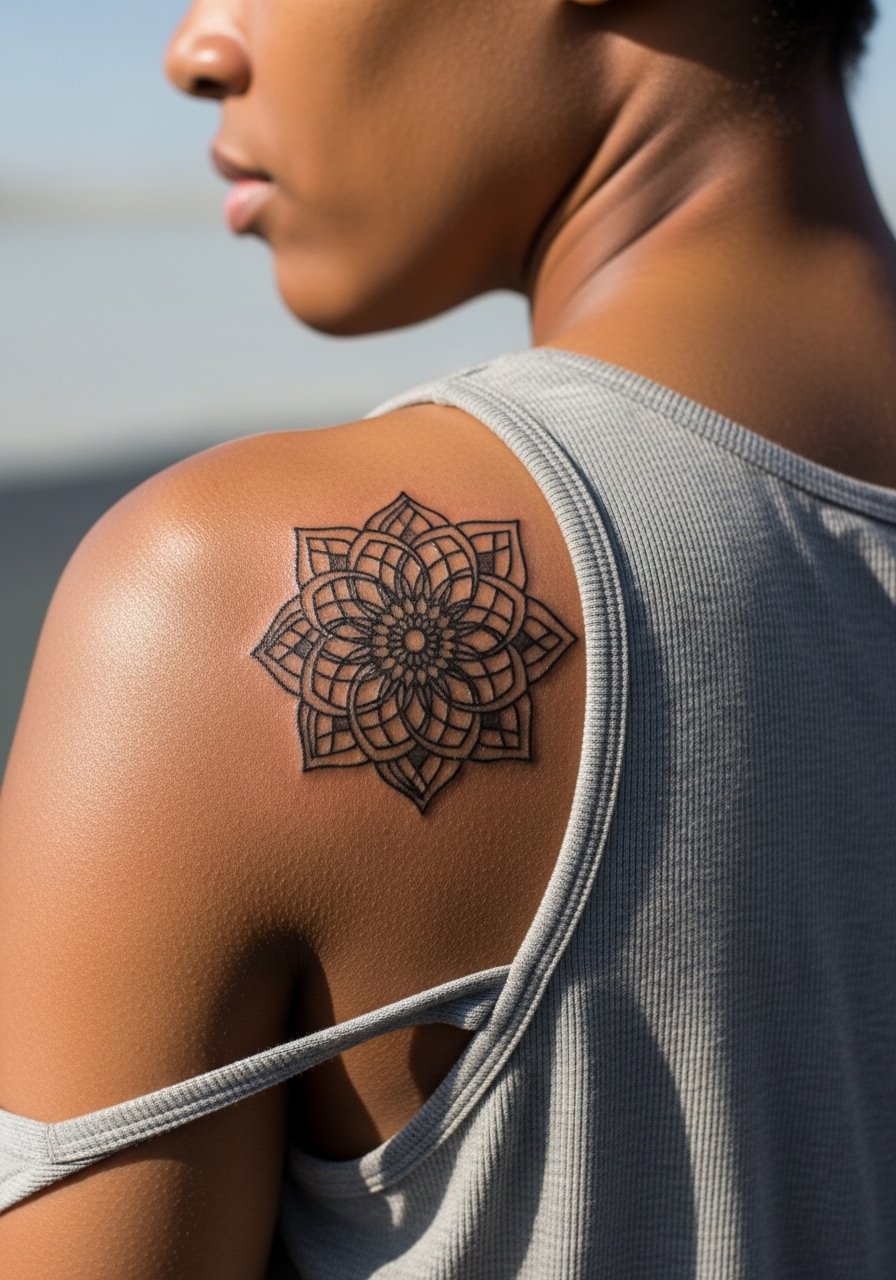
Placement just behind the shoulder blade reads like a secret panel that peeks with tank tops. Ask for the design to sit slightly lower so shoulder motion does not blur the lower rings. A common error is too much thin detail near the bone which can settle unevenly. Expect medium pain while lying on the side and two sessions if you want heavy shading. For session wear bring a front-open button shirt you can remove without twisting. If you train shoulders, mention fiber direction so the artist adapts the composition.
15. Mandala Collarbone Accent
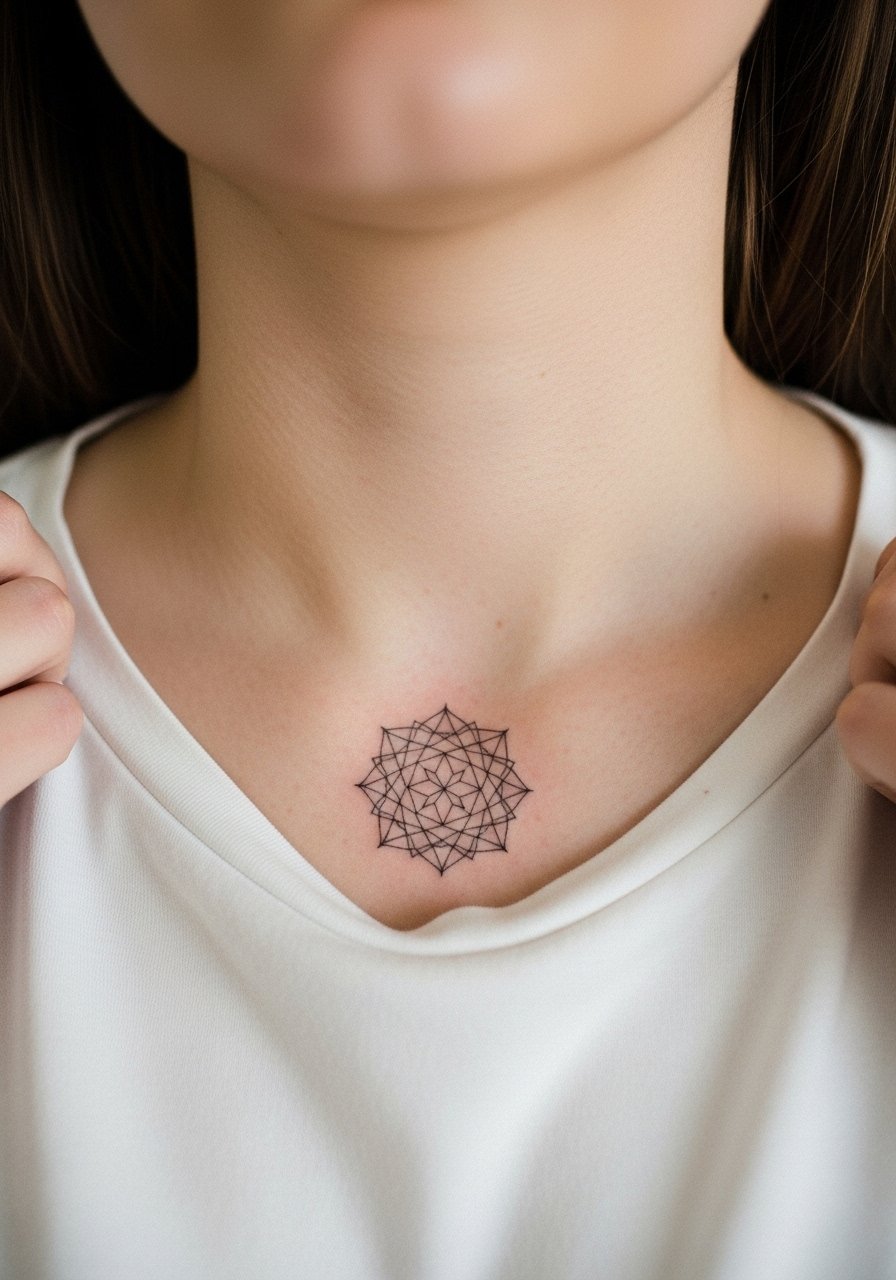
Collarbone placement requires crisp outer lines to stay readable because bone alters skin tension. Tell your artist to anchor the piece with a bold top ring and lighter interior detail. A common mistake is pushing too much tiny shading onto the clavicle which can look patchy when healed. Pain is moderate. For show-off looks try a muscle tank undershirt or open-collar shirt. This spot shows well with necklaces that sit above the mandala rather than over it.
16. Mandala Inner Bicep Mini
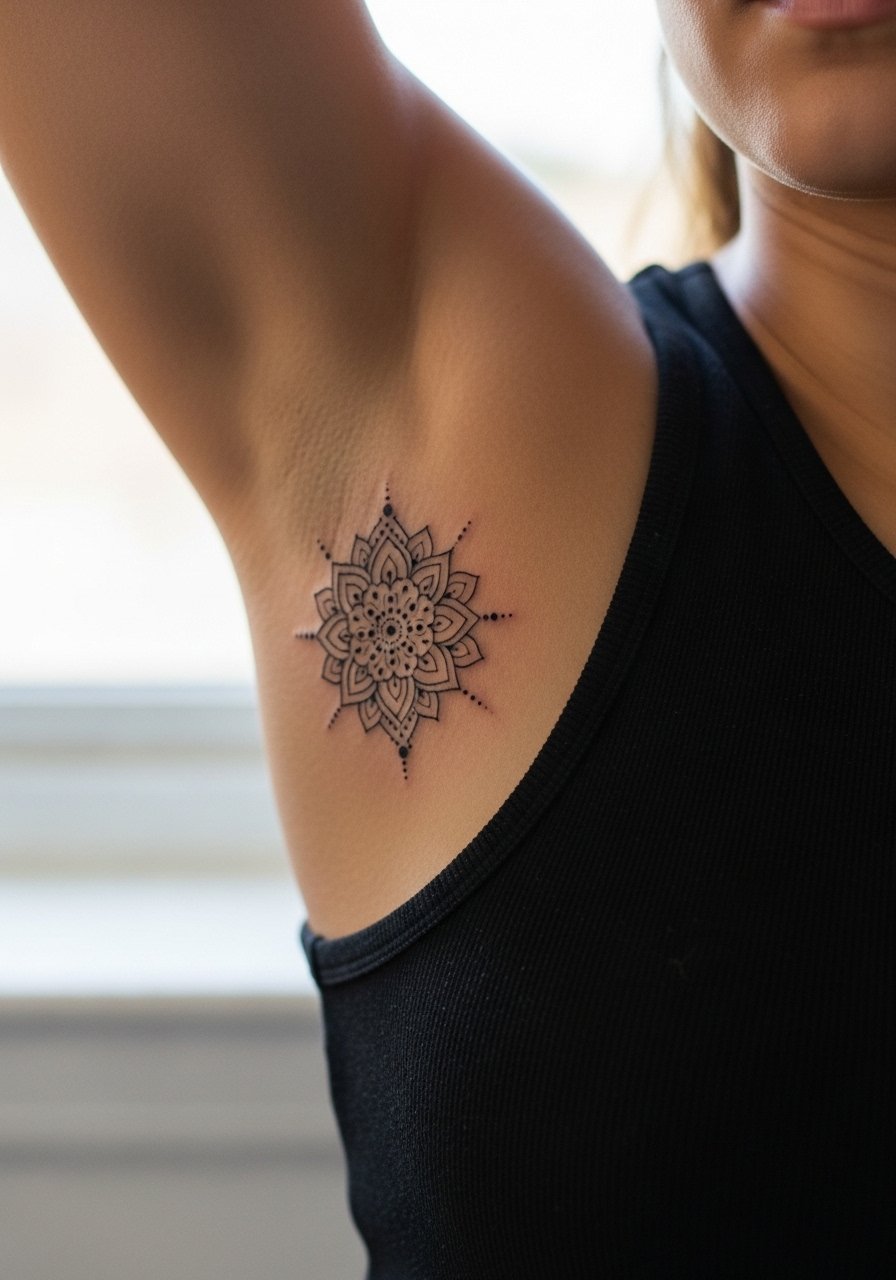
Inner bicep pieces age differently because the area sees more movement and softer skin. Ask for slightly heavier outlines and spaced dotwork to prevent blurring. Many people request ultra-fine detail there and then regret it two years later. Expect higher pain when needles approach the underarm crease. Sessions are short but intense. For the appointment, wear a loose tank top so the artist can access the area without pulling fabric tight. If career visibility matters, note that the inner bicep hides well when your arms rest.
17. Mandala Ankle Ring
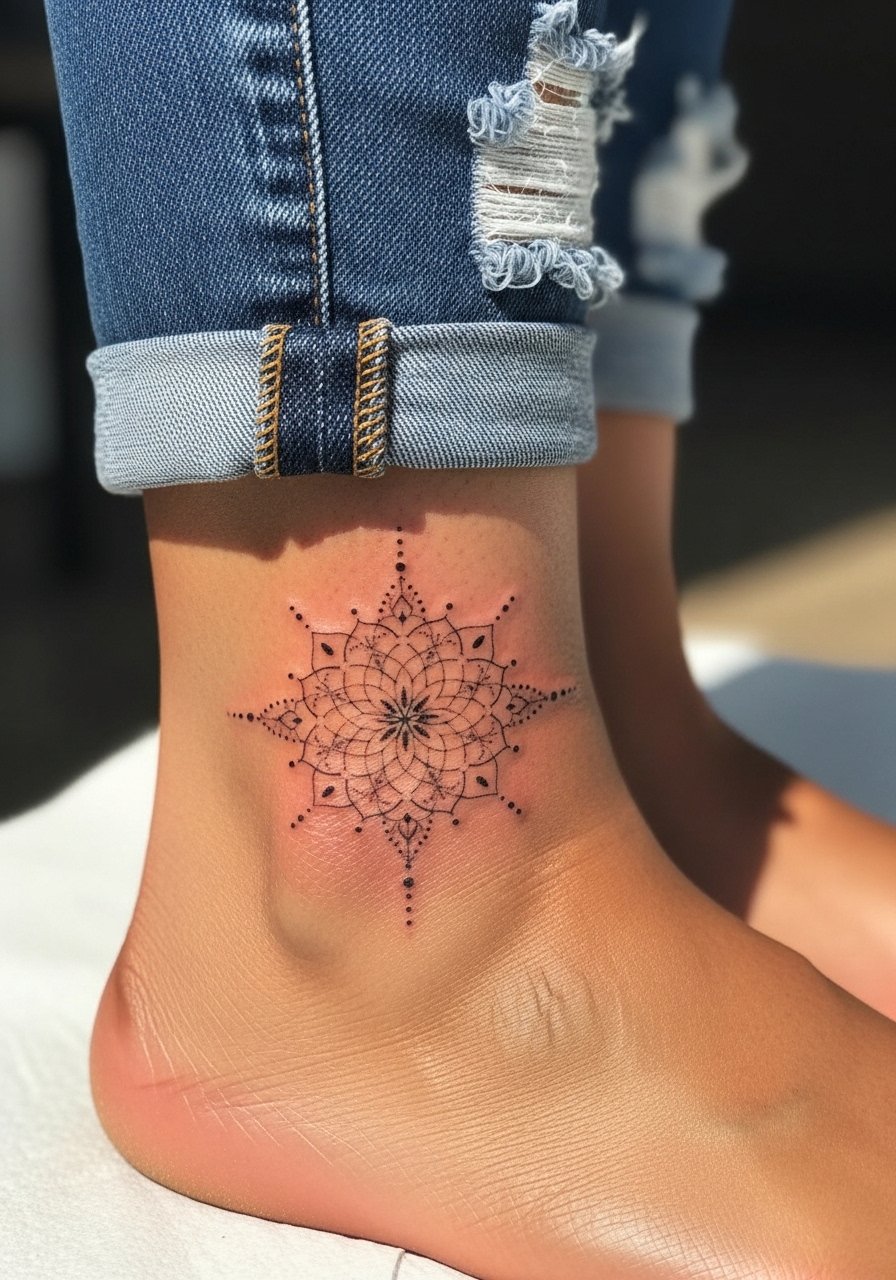
Ankle mandala rings need simplified motifs to withstand daily friction and movement. Request a bolder outer band and avoid tiny interior elements that rubbing shoes will erase. At six months the band looks clean, at two years expect softening where socks hit, and at five years a touch-up may be needed. Pain ranges from low to moderate. For showing this off, cuffed pants or canvas boat shoes men canvas keep the piece visible while minimizing abrasion. Keep in mind summer runs and hiking can accelerate wear.
Frequently Asked Questions
Q: Will fine line mandalas blur faster than bold blackwork on forearms?
A: Fine line tends to soften sooner because the lines have less margin for spreading. On forearms a balanced approach uses bolder outer rings with finer internal detail. Expect touch-ups earlier with pure fine line and less frequent work when lines are thicker.
Q: How should I plan sessions for a full back mandala panel?
A: Break the panel into logical zones across multiple appointments. Start with the main circle and outer rings then add shading in later sessions so saturation builds without overworking the skin. Confirm deposit and reschedule policies to avoid cancellations.
Q: Does dotwork need different aftercare than heavy blackwork?
A: Dotwork can feel drier and may need slightly more frequent light moisturizing during the first month. The aftercare products suggested above address this, but avoid overloading with thick ointments that trap moisture against tiny needle channels.
Q: How do mandalas behave on darker skin tones, and what should I ask my artist?
A: On darker tones, higher contrast and thicker outlines keep the design readable. Ask to see healed photos of similar skin tones in the artist portfolio and request bolder anchors rather than ultra-fine filigree.
Q: Is a thigh mandala a good choice if I plan to bulk or cut later?
A: Thigh pieces can stretch with large muscle or fat changes. If you anticipate major size shifts, opt for calf or forearm placements, or ask the artist to design with the muscle grain in mind so the piece flexes more naturally.
Q: What should I wear to a chest mandala session to keep the area accessible?
A: A button-front shirt you can open or a loose tank top works best. For travel and comfort, bring a muscle tank undershirt you can put back on without rubbing the fresh ink.
