
Fine line trends and viral reels make lioness tattoos look irresistible, but the pieces that still read sharp after a few years are rarely the flashiest ones. I've seen wrist outlines blur, thigh portraits survive weight shifts, and forearm cubs age differently depending on line weight and placement. Below are 27 real-world lioness tattoo ideas with what holds up, what to ask at consult, and how to dress for the reveal.
1. Fine line lioness face with floral wrap on the thigh
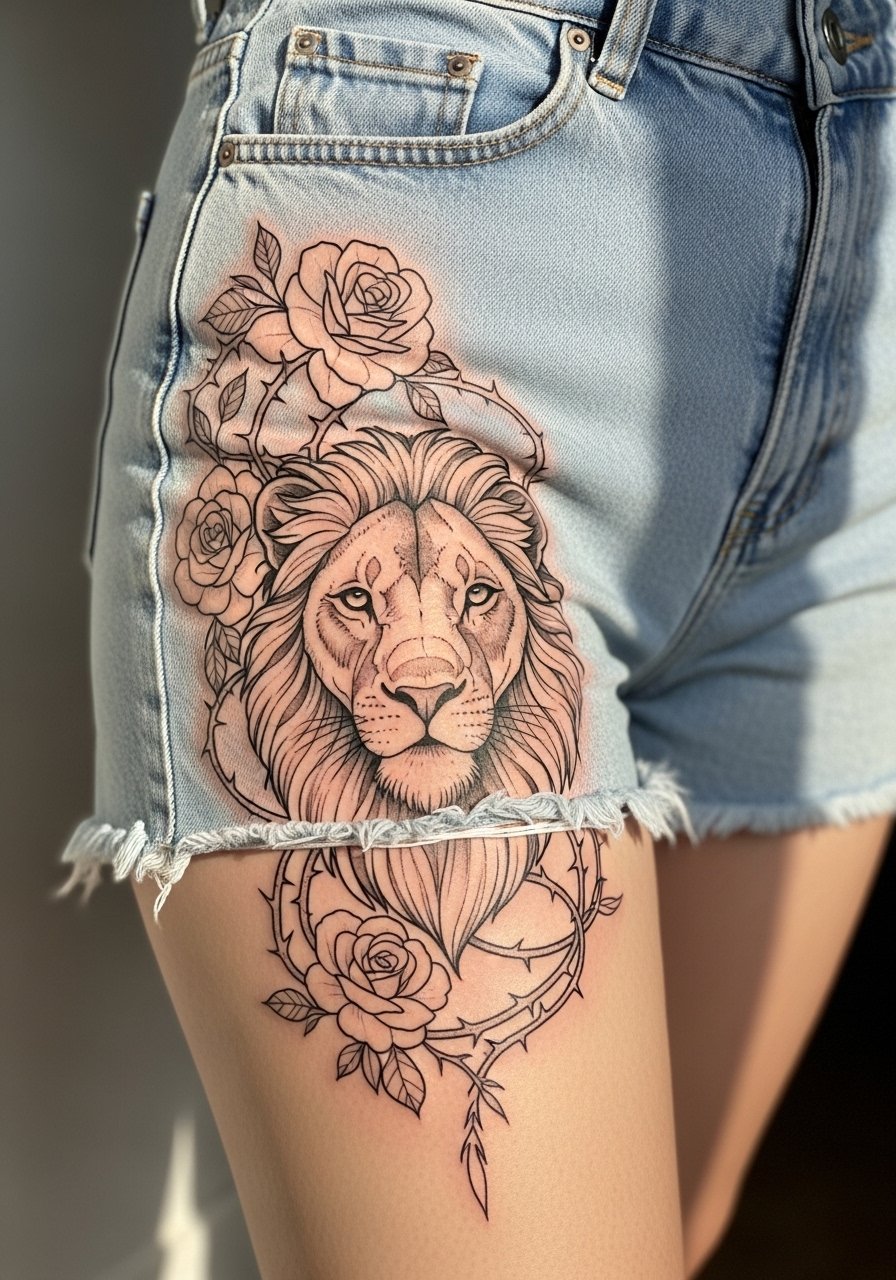
I've seen this combo on three different clients and the outer thigh holds the detail better than inner placements. Tell your artist you want slightly heavier outline around the eyes and very light petal shading so the facial linework stays readable if your body changes. Fair warning, fine line on the thigh still needs touch-ups at year three if you spend lots of time in sun. For the session wear a loose jogger pant so you can roll it up without pressure and keep the area comfortable during healing.
2. Lioness portrait with peony collar on the forearm
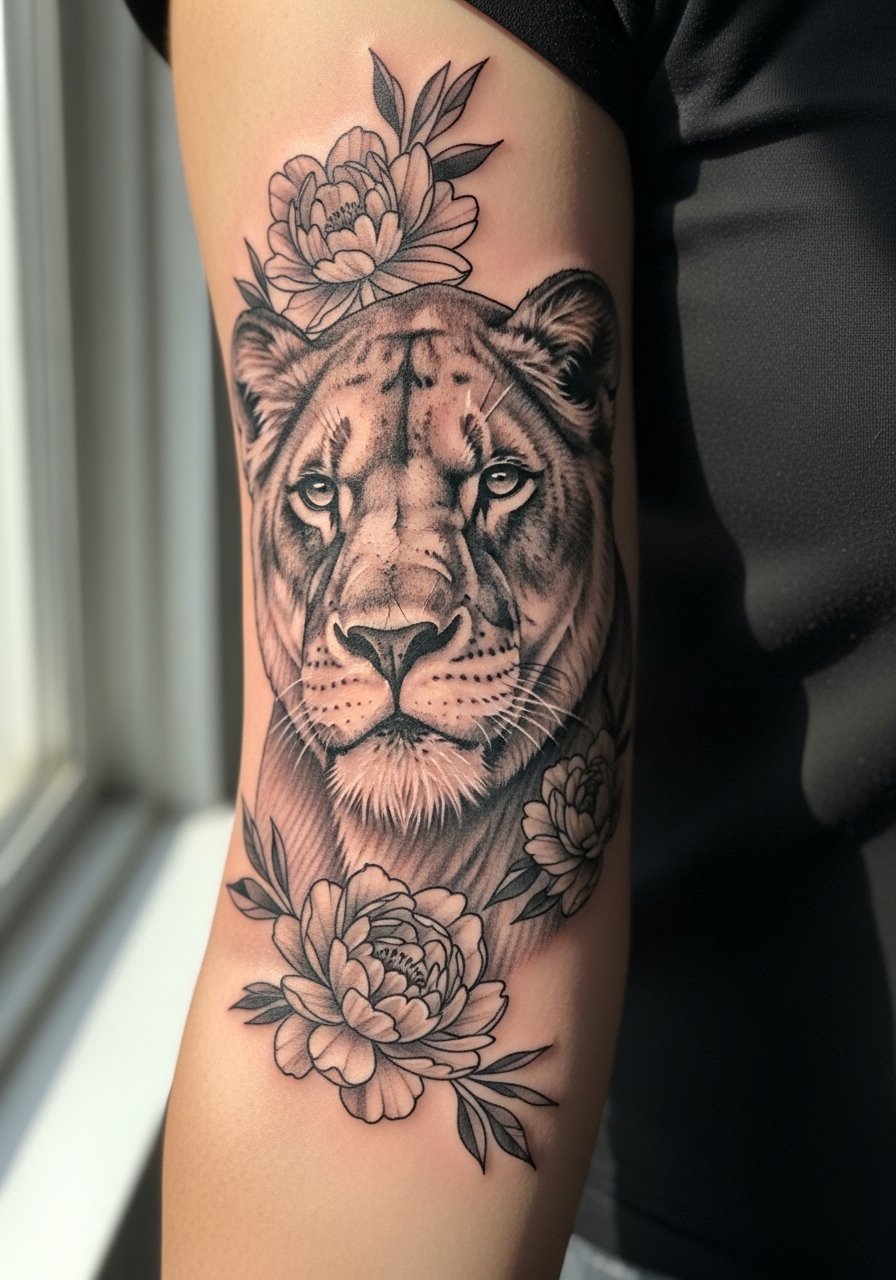
I've noticed forearm portraits read well in photos and in person when the face has crisp linework and soft stipple shading in the mane. Ask your artist to keep the peonies slightly more graphic than the portrait so the two elements do not compete as the piece heals. The forearm has moderate sun exposure, so expect subtle softening at two years and a realistic touch-up window around year three. For showing this off, rolled-sleeve button-ups in chambray frame the length of the piece nicely, try a rolled sleeve chambray shirt.
3. Minimalist single-line lioness silhouette behind the ear
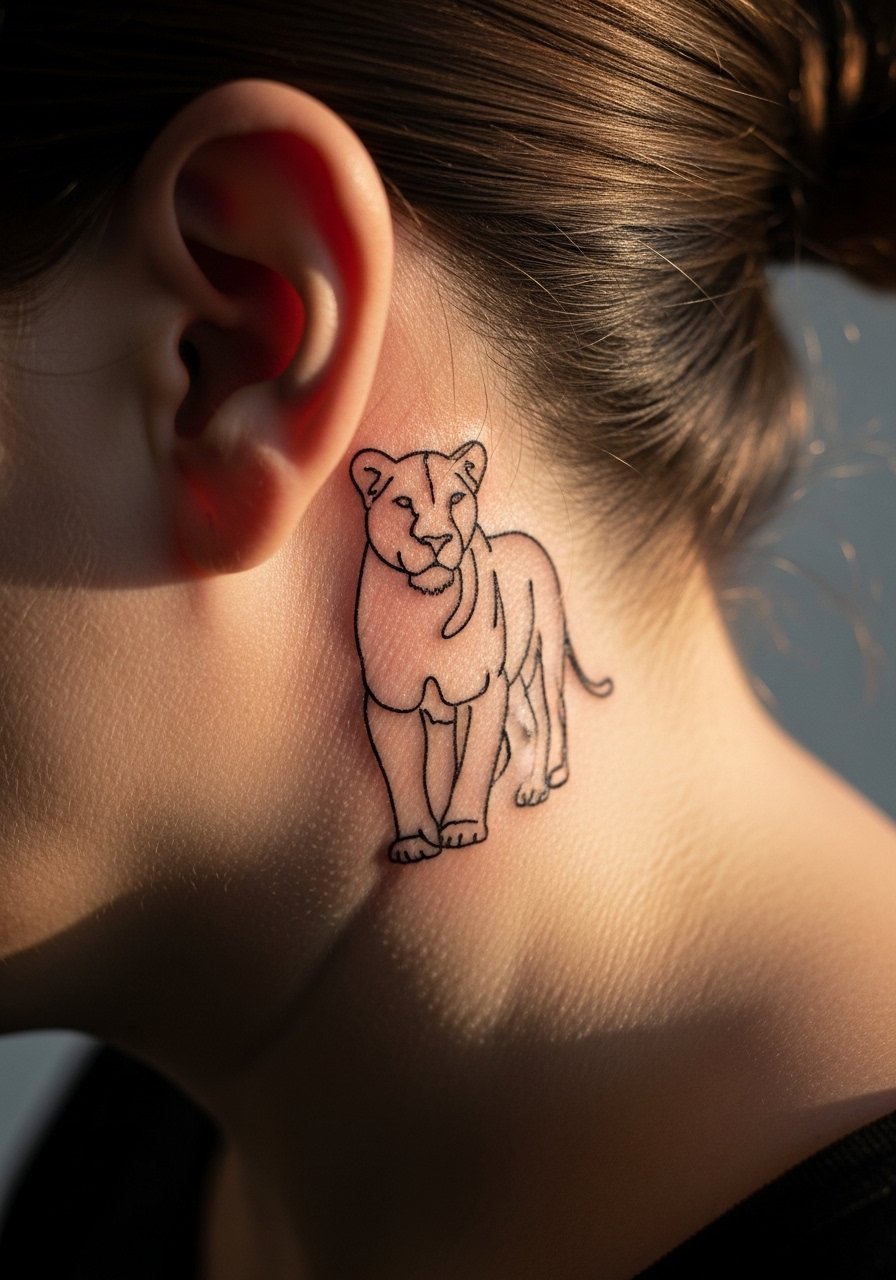
For first-timers who want subtlety, this small single-line silhouette is quick and low-commitment. The behind-ear area needs precise depth because the skin is thin, so ask for slightly bolder start and stop points to avoid the line fading into the hairline. Healing can be fussy if your hairline rubs the area, so plan gentle shampooing for the first week. This spot is best kept discreet, so there is no styling link here for showing it off, but during the session wear hair tied up and a loose top for easy access.
4. Micro-realism lioness with cub on the inner bicep, flex-reveal placement
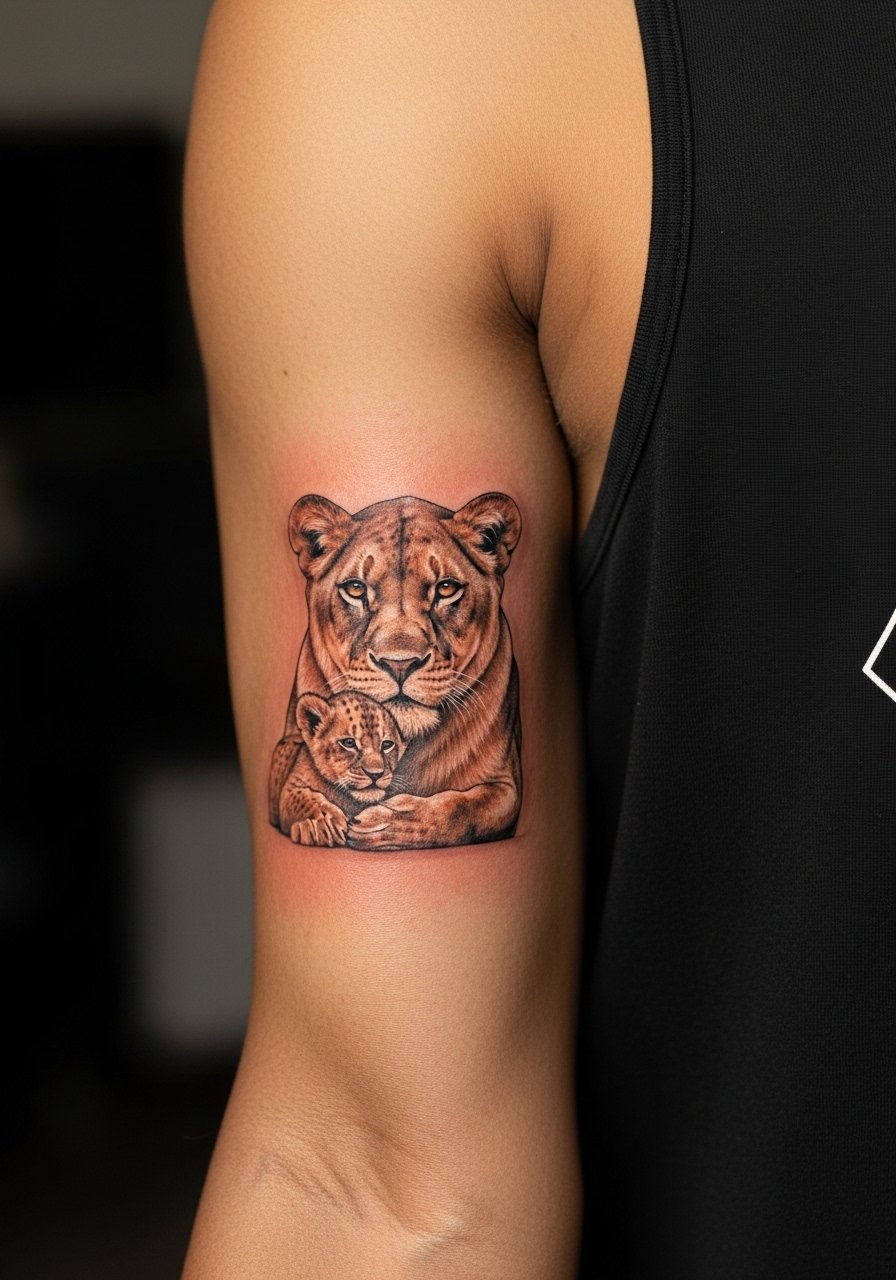
The inner bicep is a smart place for the "hidden motherhood" reveal when you flex. Micro-realism here looks intimate and personal. The biggest mistake is asking for ultra-fine distant detail without acknowledging the skin's movement. Tell your artist you want the cub's eyes and the mother's muzzle slightly simplified to keep them readable as the arm moves. Pain is moderate and the session may break into two shorter sittings if the artist prefers. For showing the piece, a sleeveless muscle tank lets you flex and reveal on command.
5. Tribal lioness blackwork with African pattern mane on the shoulder
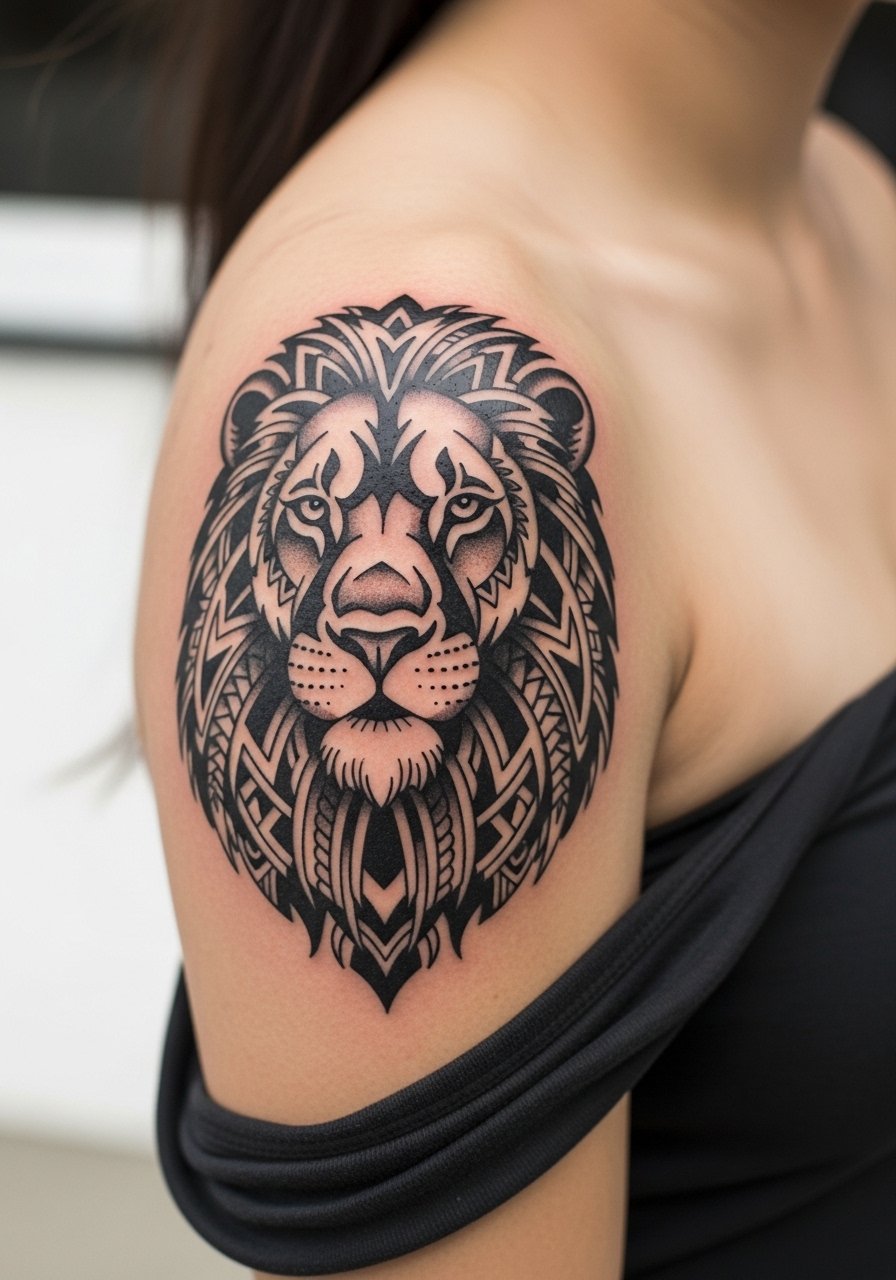
Tribal patterns read as bold, graphic shapes and age well if the black saturation is consistent. The common error is over-detailing the negative spaces which fade into a muddle after heavy wear. Ask your artist to prioritize clean negative space and solid fills, and to show you a stencil on your shoulder movement before starting. Shoulder sessions are friendly for longer appointments so you can complete bold fills in one go. Pair this with an off shoulder crop top when you want the tattoo visible.
6. Neo-traditional collarbone lioness with colorful mane accents
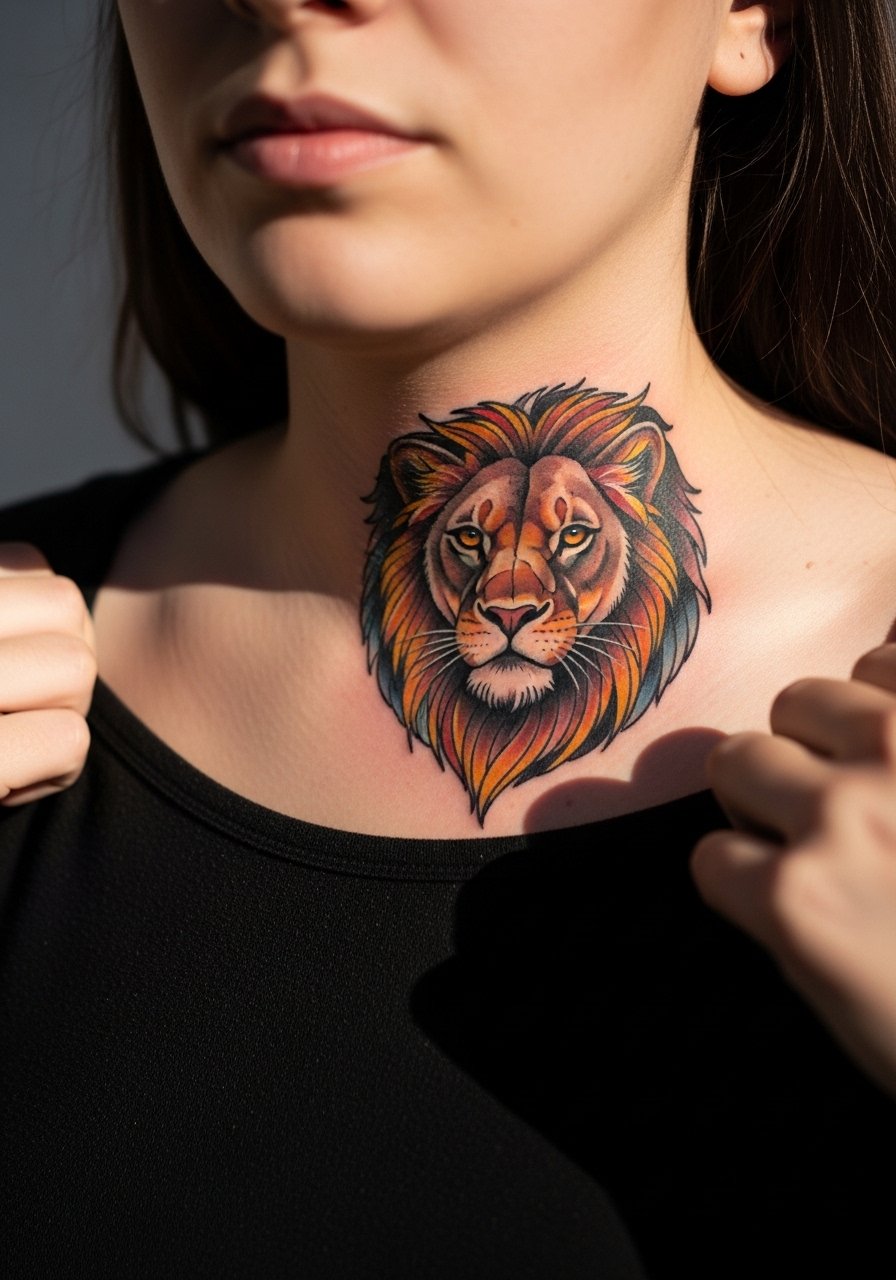
There is real visual impact when neo-traditional color sits against the collarbone. The collarbone is unforgiving on placement, so the stencil must be precise. Artists split on color longevity, but the consensus in shops I've spent time in is that bold saturation and good sun protection extend vibrancy. Expect a 2-3 session job for layering color. For evening looks, a v neck sundress highlights the piece while keeping it framed by fabric.
Studio Day Picks
Those first six placements include both high-friction areas and show-off spots, so a few targeted items smooth out the session and the first week.
-
Badger Tattoo Balm. A lighter ointment than heavy petroleum products, recommended for humid climates and thin fine line pieces that need moisture without pore-clogging.
-
InkSafe Healing Spray. A no-touch mist that is handy for ribs and inner thigh work where you want minimal handling during the first few cleans.
-
Tahitian Noni Aftercare Gel. Natural anti-inflammatory for itch control on larger sessions like thigh portraits and shoulder fills without heavy greasiness.
-
Revert Dermaceuticals Lotion. Lightweight peptide lotion for fine line preservation on delicate forearm or collarbone tattoos during the later healing window.
-
Aquaphor Healing Ointment. Thin first-aid layer that many people use in initial days after a fine line wrist or finger session to lock in moisture.
7. Geometric lioness silhouette on the outer ankle for summer sandal flex
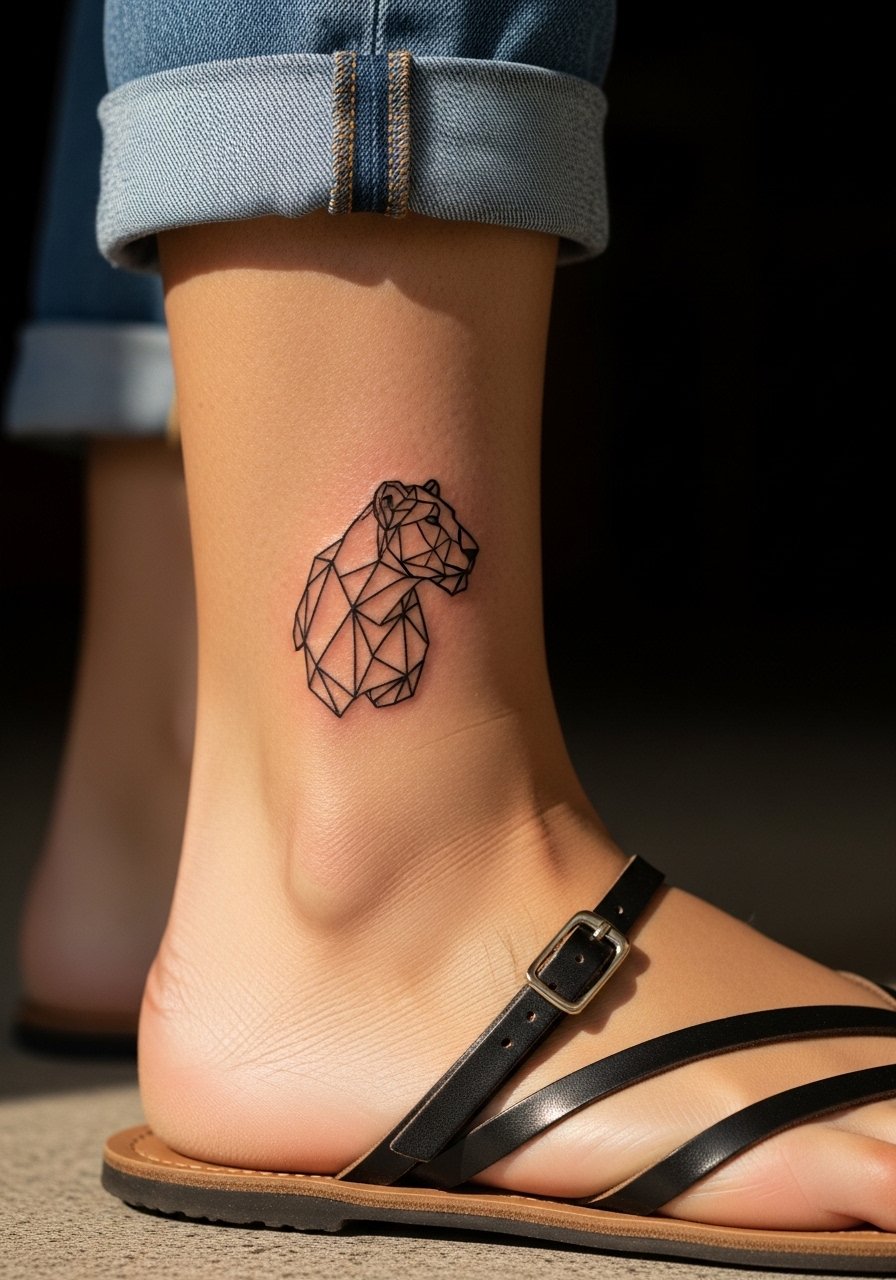
The outer ankle is ideal for summer visibility and pairs well with geometric simplification. The biggest mistake is going too tiny with dense geometry. Give the shapes room to breathe and ask for slightly thicker outer lines so the silhouette remains crisp after months of socks and sandals. The ankle can be sensitive, but most clients handle a short session well. For off-duty styling, try rolling bootcut jeans or a bootcut jeans women look that exposes the art when desired.
8. Minimalist lioness silhouette behind the finger web for ring permanence
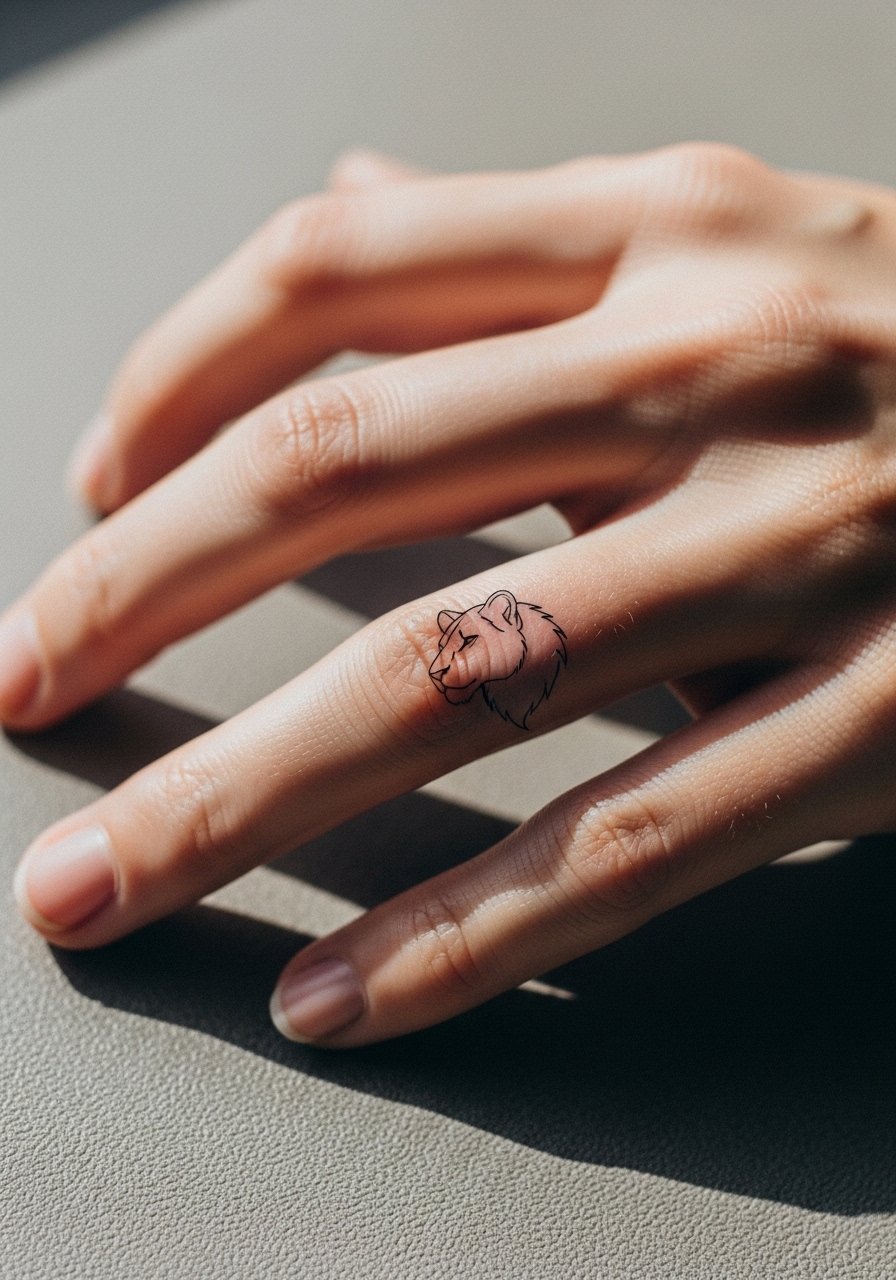
Finger web tattoos are a trending micro spot that reads like a permanent ring. Expect fast fading from constant washing and friction, so ask for bolder line anchors and plan a touch-up schedule. The error is trusting fine single strokes in this area. Pain is low to moderate but the piece will likely need yearly touch-ups. There is no show-off clothing link for this placement, but session-wise, go ring-free during the appointment so the artist has clear access.
9. Realistic lioness profile on the collarbone with grayscale shading
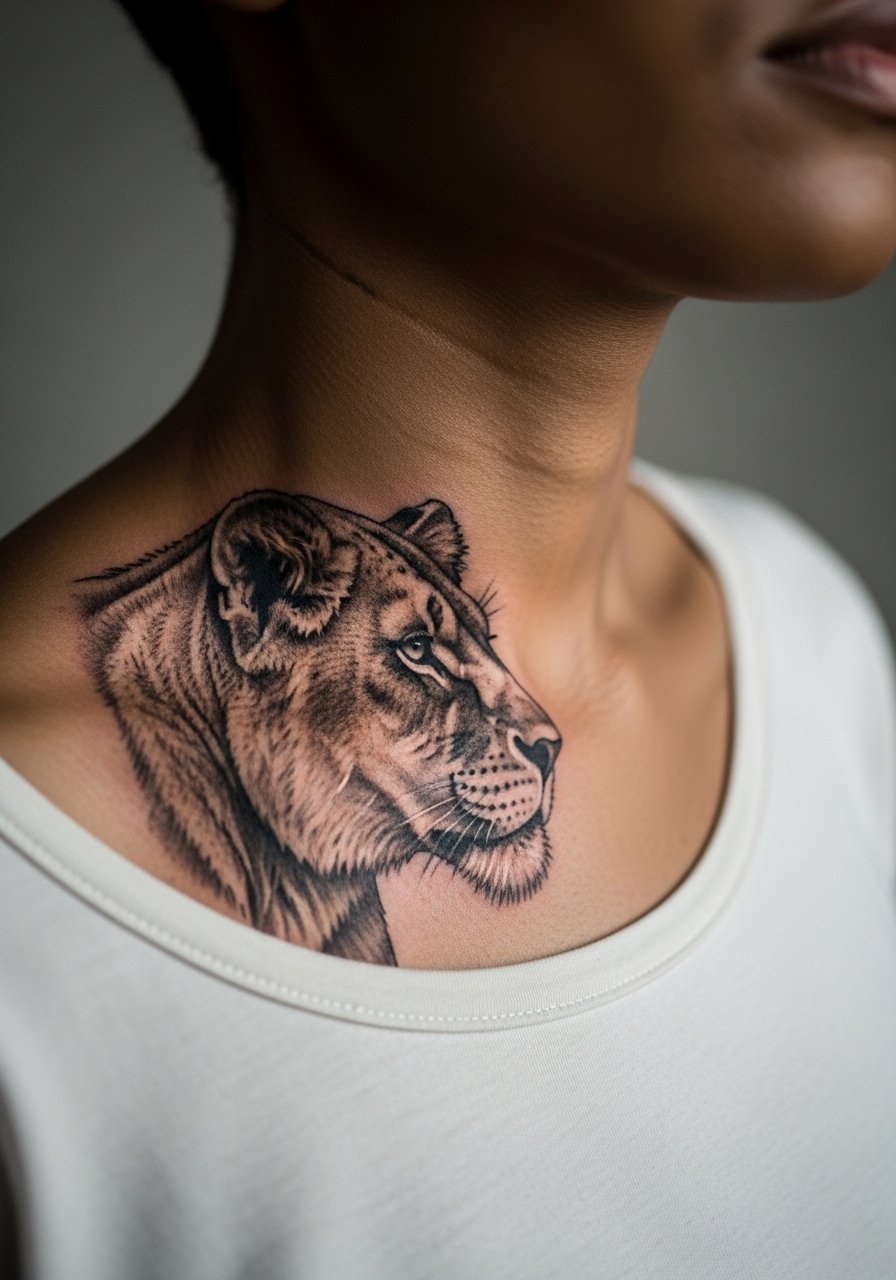
A collarbone profile reads cinematic when the shading respects bone contours. The main mistake is trying to compress too much shaded detail into a narrow collarbone space. Ask for a focal eye and reduced dense shading near the bone to prevent blowout. Collarbone sessions can be sharp over the bone and may be broken into shorter passes. Pair with a structured necklace gold that frames the piece without covering it.
10. Lioness mandala fusion on the back, centered with symmetry
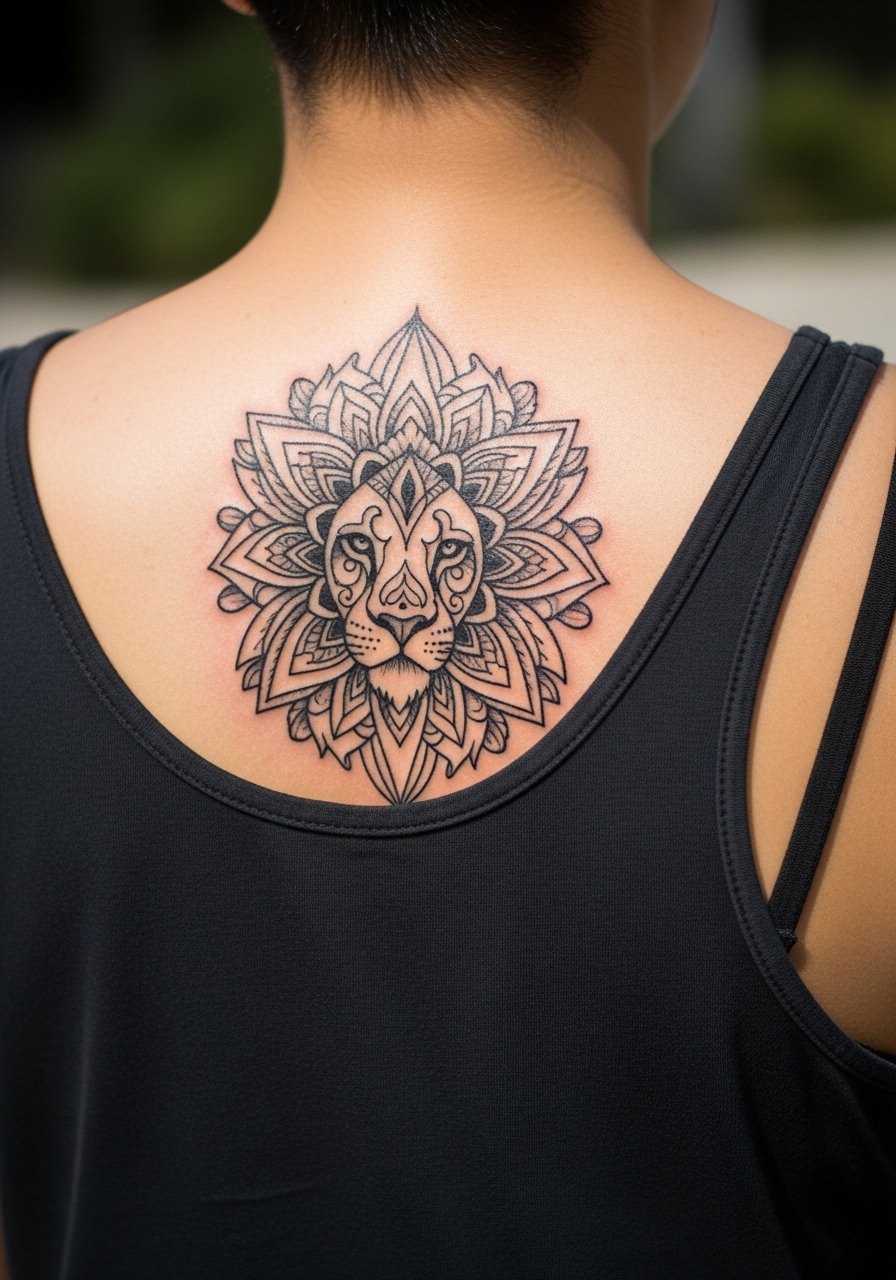
Mandala fusion balances animal portraiture with symmetrical patterning. The real issue is symmetry at scale. Small off-center stencils become obvious with movement. Request a mirrored stencil check before ink and ask for slightly increased spacing in dense mandala zones so lines do not merge after a year. Back placement allows larger scale and longer sessions. For session day, wear a loose button-up you can pull aside.
11. Lioness with Polynesian pattern panels on the outer thigh
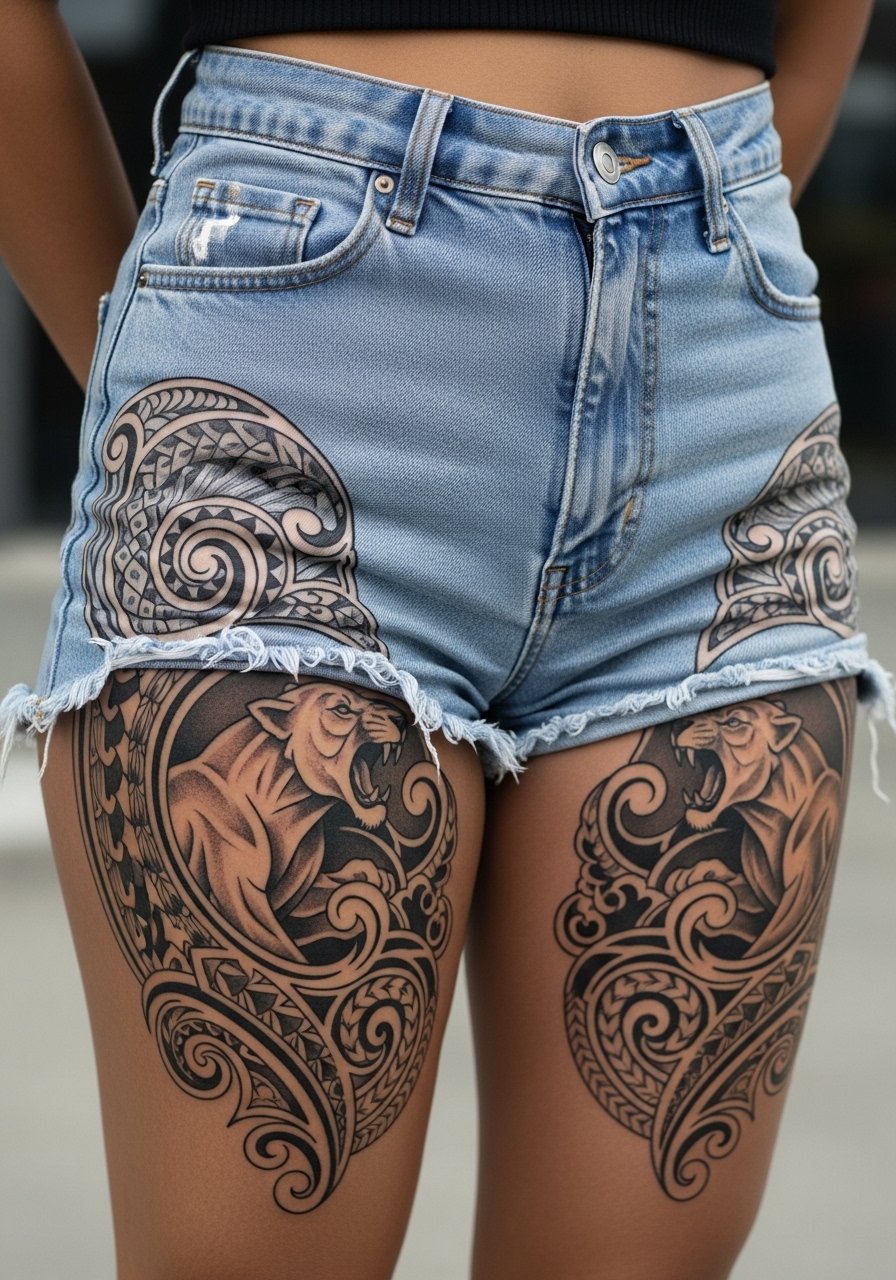
Polynesian hybrids can tell personal stories when approached respectfully. Mention your cultural reference and ask for adaptations rather than exact replicas if you are not from the originating culture. The outer thigh offers stability for bold black fills and geometric repeats, and tends to age well with modest body changes. For showing this off, a high waisted shorts women pairs well with the placement.
12. Watercolor lioness mane flowing onto the upper thigh
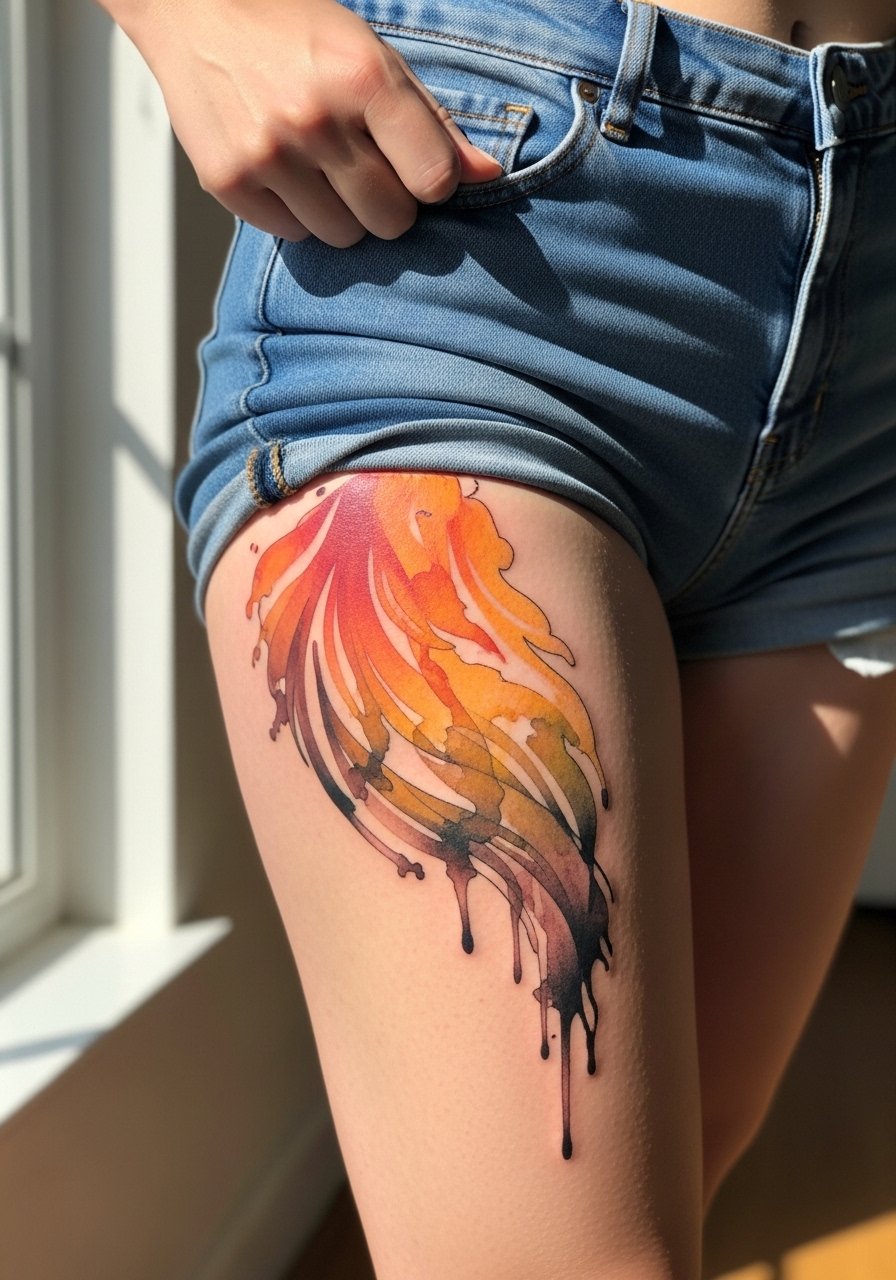
Watercolor color can be beautiful but requires maintenance. People often regret watercolor on high-sun areas because colors fade faster. If you want the painterly mane, ask for stronger black anchors in the outline and to plan for a color top-up at year two. Thighs tolerate larger washes, and sessions usually run 2-3 hours per pass. For showing it off, pair with a thigh high slit skirt.
13. Blackwork lioness mask across the sternum, framed under a bandeau
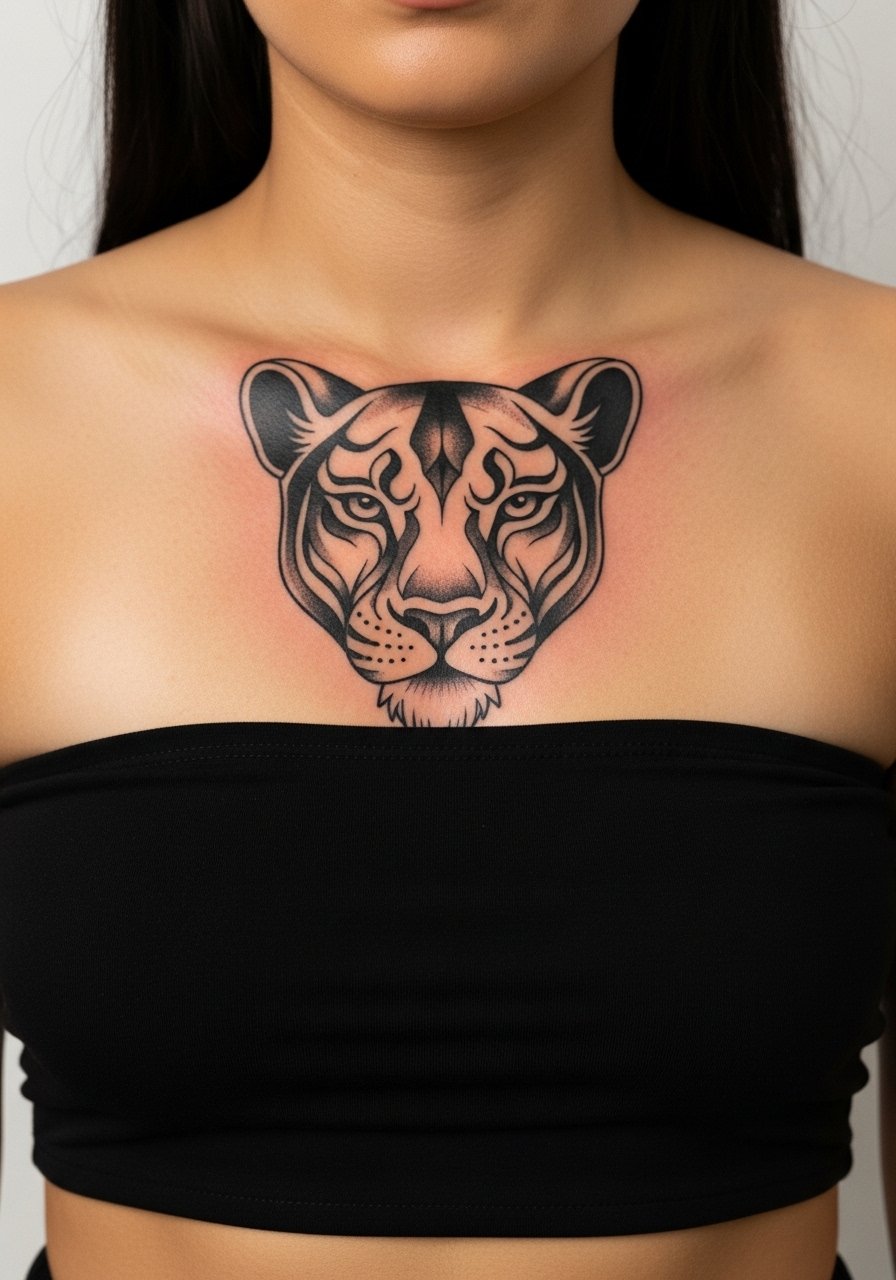
Sternum pieces sit under fabric and require an artist who understands chest movement. There is a debate in communities about using Saniderm versus dry healing for this area. One camp favors protective film for reduced scabbing and easier cleaning. The other camp argues dry healing locks in saturation better for dense blackwork. Ask your artist which method they prefer for sternum blackwork and follow their plan. Wear a fitted sports bra for the session so the artist can access the area cleanly.
14. Micro lioness cub on the ribcage, intimate motherhood tribute
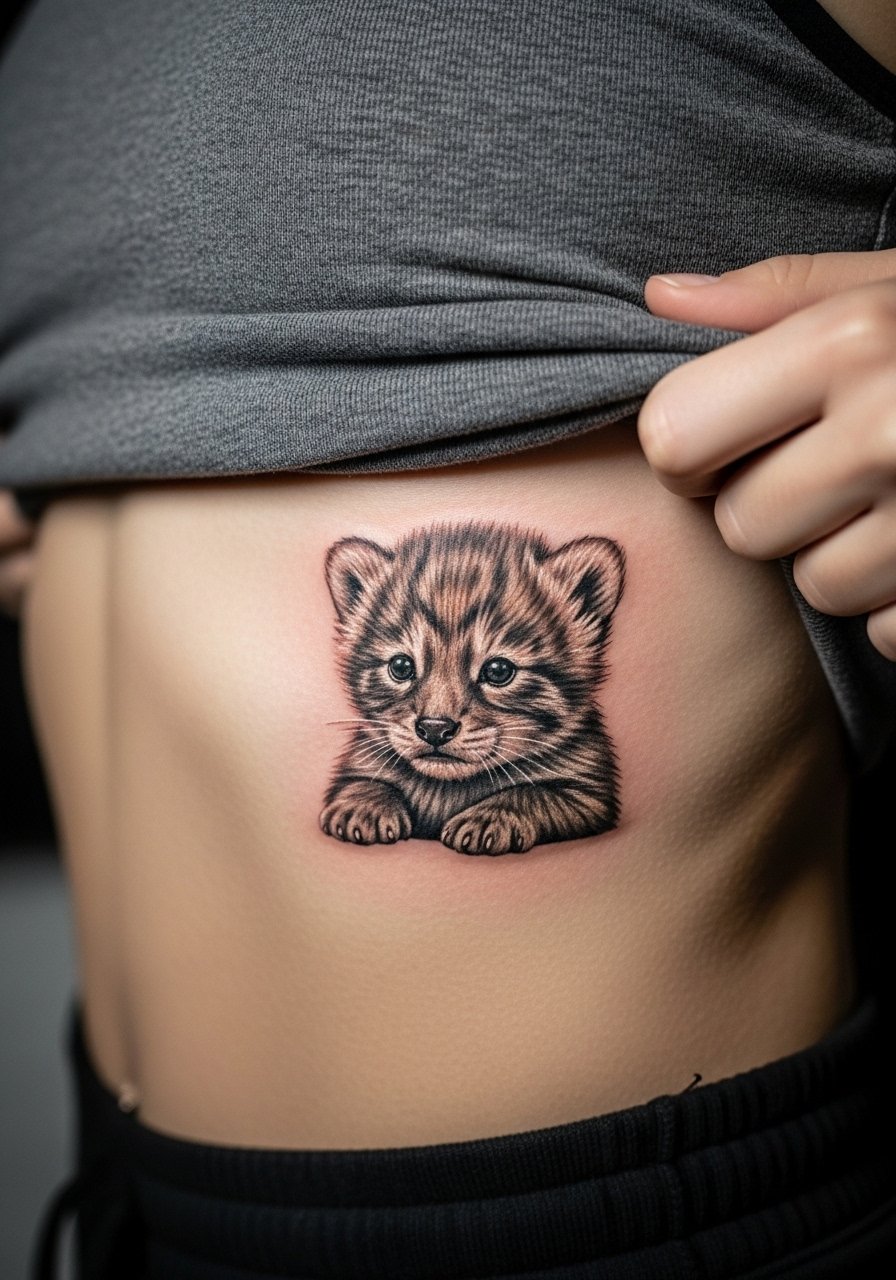
Ribcage micro-realism reads intimate and requires patience. The rib area is a higher pain zone and the skin moves with breath, so sessions often pause between passes. The usual mistake is expecting perfect micro detail in one short pass. If you are a parent planning a cub tribute, consider placing it on the outer rib for less stretch with weight shifts. For the session, wear a loose sports bra that you can adjust for access.
15. Geometric lioness with dot work on the calf
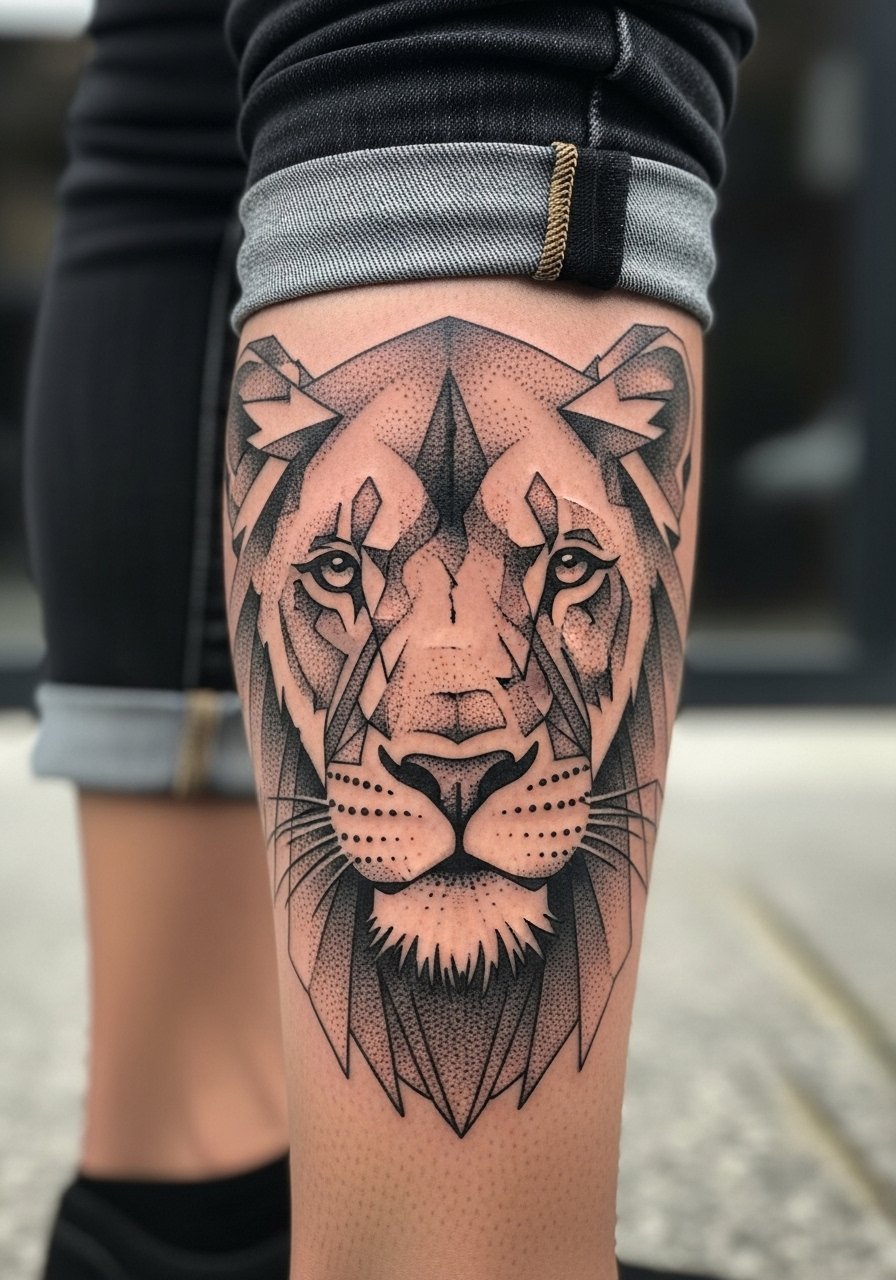
Calf work is forgiving and shows dot work beautifully from a distance. The common error is compressing too many tiny dots into a small area, which later blurs. Ask for graduated dot density and slightly larger anchor dots where the design needs to stay readable. Calf sessions are moderate pain and often finished in one long sitting. For casual reveals, try a midi skirt slit that lets the calf peek through.
16. Single-line continuous lioness form along the clavicle curve
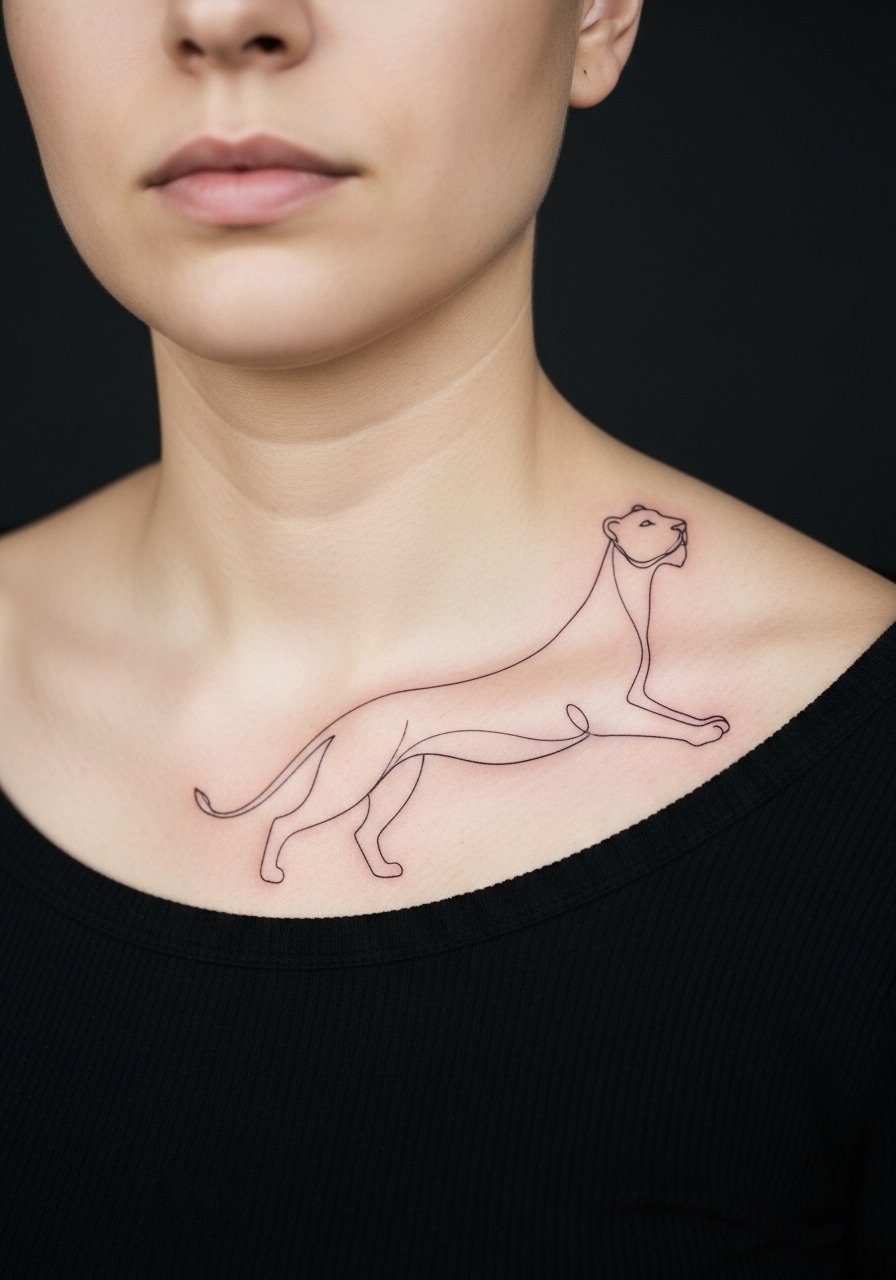
Continuous single-line pieces across the clavicle require controlled depth and a steady hand. Thin single strokes can fade into bone without enough starting density. Request slightly variable line weight so the piece reads at different angles. Expect a short session and a possible touch-up at one year. For showing, V-neck tops in cream or deep tones frame the line well, try a v neck sundress.
17. Lioness with crescent moon phases for a growth timeline on the forearm
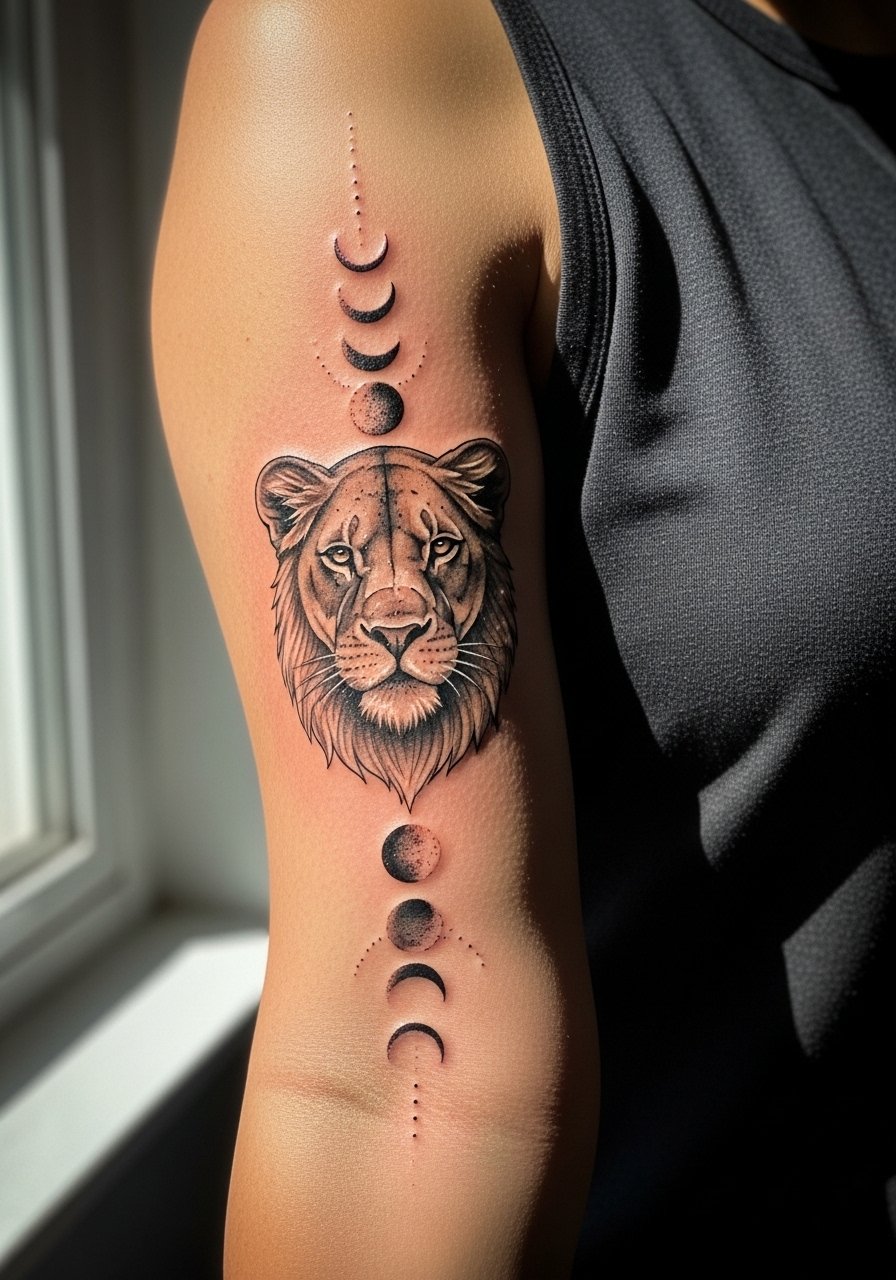
Pairing a lioness with moon phases creates a visual timeline of personal change. For forearm placement, the key is spacing so the crescents do not merge as the arm flexes. Tell your artist you want negative space between each phase equal to the crescent width, and avoid ultra-fine crescents that blur quickly. Forearm pieces are easy to show off with rolled sleeves and a leather cuff. Try a leather cuff bracelet on the opposite wrist for balance.
18. Polynesian ornamental mane wrapping the outer calf for cultural fusion
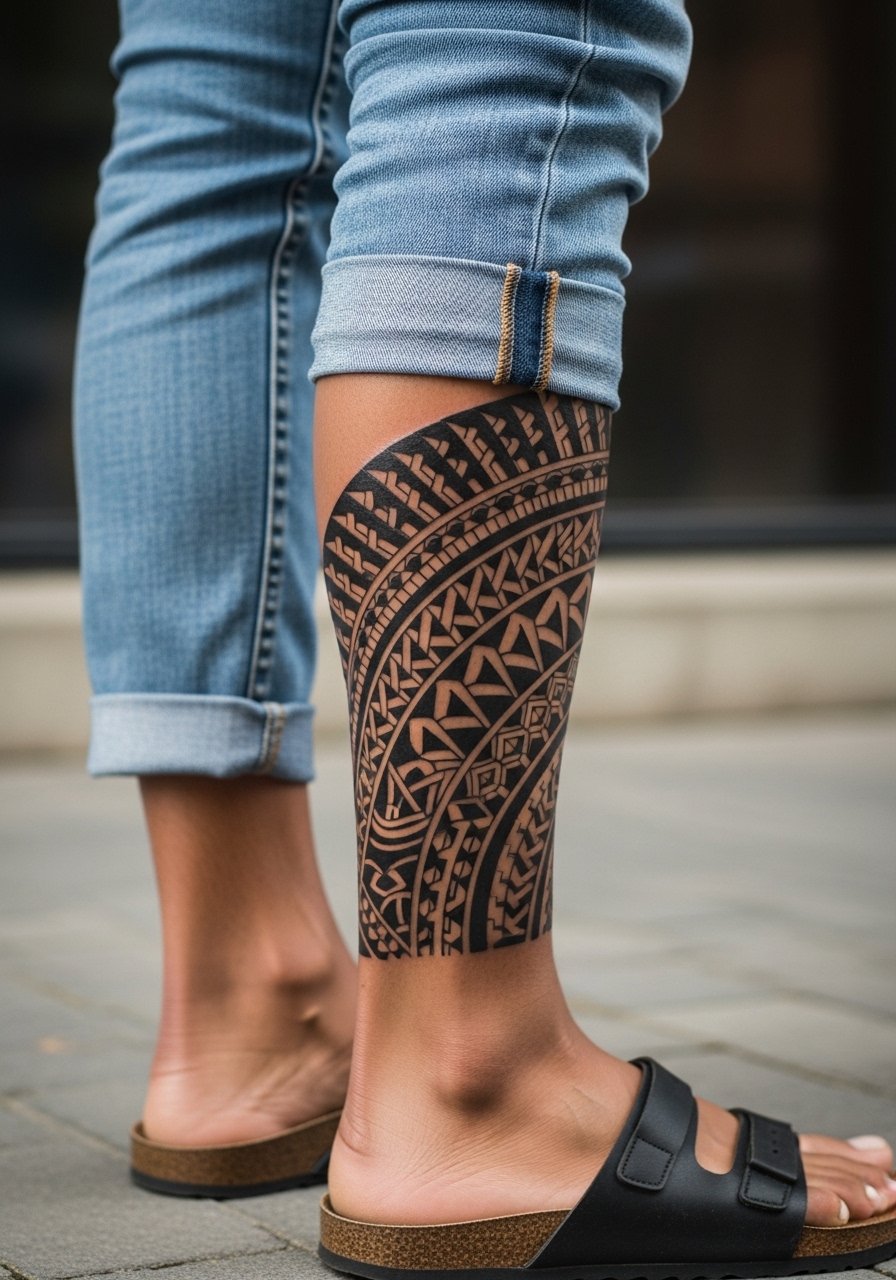
When borrowing motifs with cultural roots, ask for context and a respectful adaptation. The outer calf allows repeated pattern runs that age well and tolerate sun exposure. A frequent mistake is using copied motifs without consulting what they mean, so ask the artist to adapt and explain pattern placement. This sort of blackwork is high-contrast and will photograph without filters, making a sandal season reveal simple.
19. Tiny lioness silhouette on the finger side for discreet placement
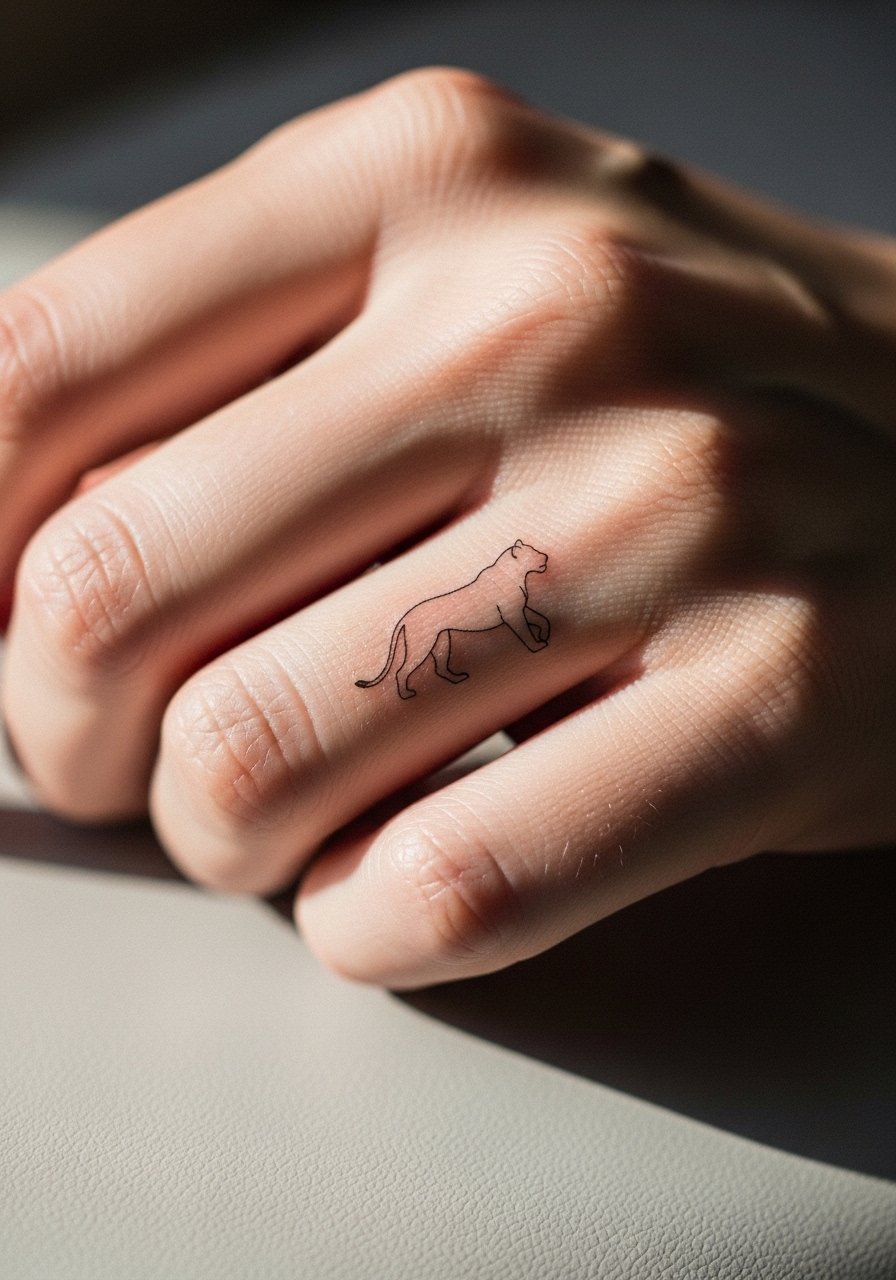
Finger-side placements are intimate but very high-friction and prone to fading. The realistic expectation is some annual touch-up. Ask for bolder anchor points and avoid too many interior details. Hands and fingers require slow, precise work to reduce blowout. No styling link here since rings and daily hand use can interfere, but for the session keep your hands clean and jewelry-free.
20. Lioness mandala on the inner bicep, hidden geometry
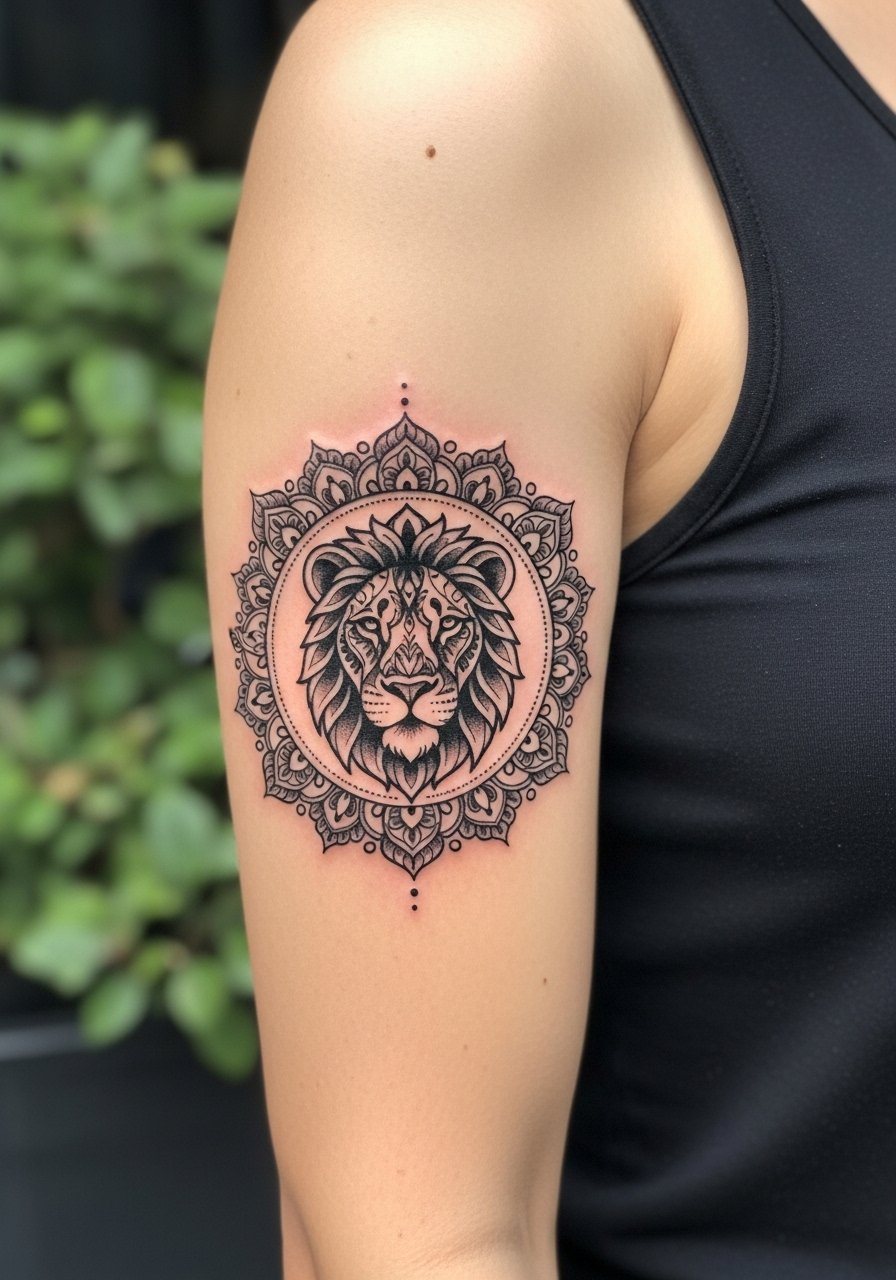
Inner bicep placements are sweet for private yet powerful pieces that reveal with movement. The trap is overpacking the mandala with tight lines that blur with sweat and friction. Ask for larger negative spaces in the mandala and slightly thicker outer rings. Pain is moderate and sessions are comfortable seated positions. For showing, layered necklaces help direct attention to the flexed inner arm when you want it seen.
21. Ring-style lioness outline on the finger web for symbolic permanence
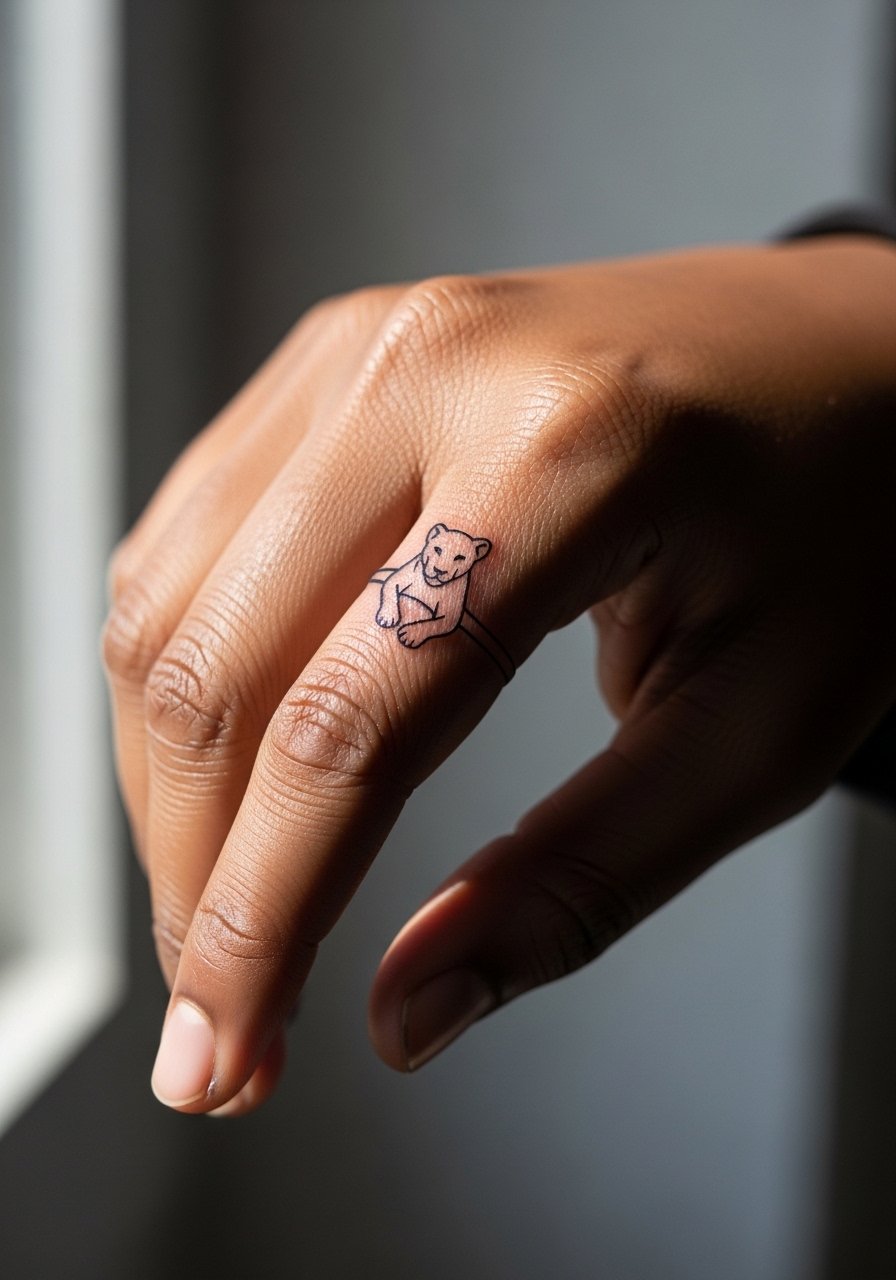
A ring tattoo on the finger web can feel symbolic and private. Expect rapid softening from hand washing and movement and plan on touch-ups. The common mistake is over-relying on extremely fine hairlines. Ask for nodal anchors and slightly bolder transitions so the ring keeps its silhouette. No apparel link here because daily hand use is the reveal.
22. Stylized lioness in dot work halo behind the ear area
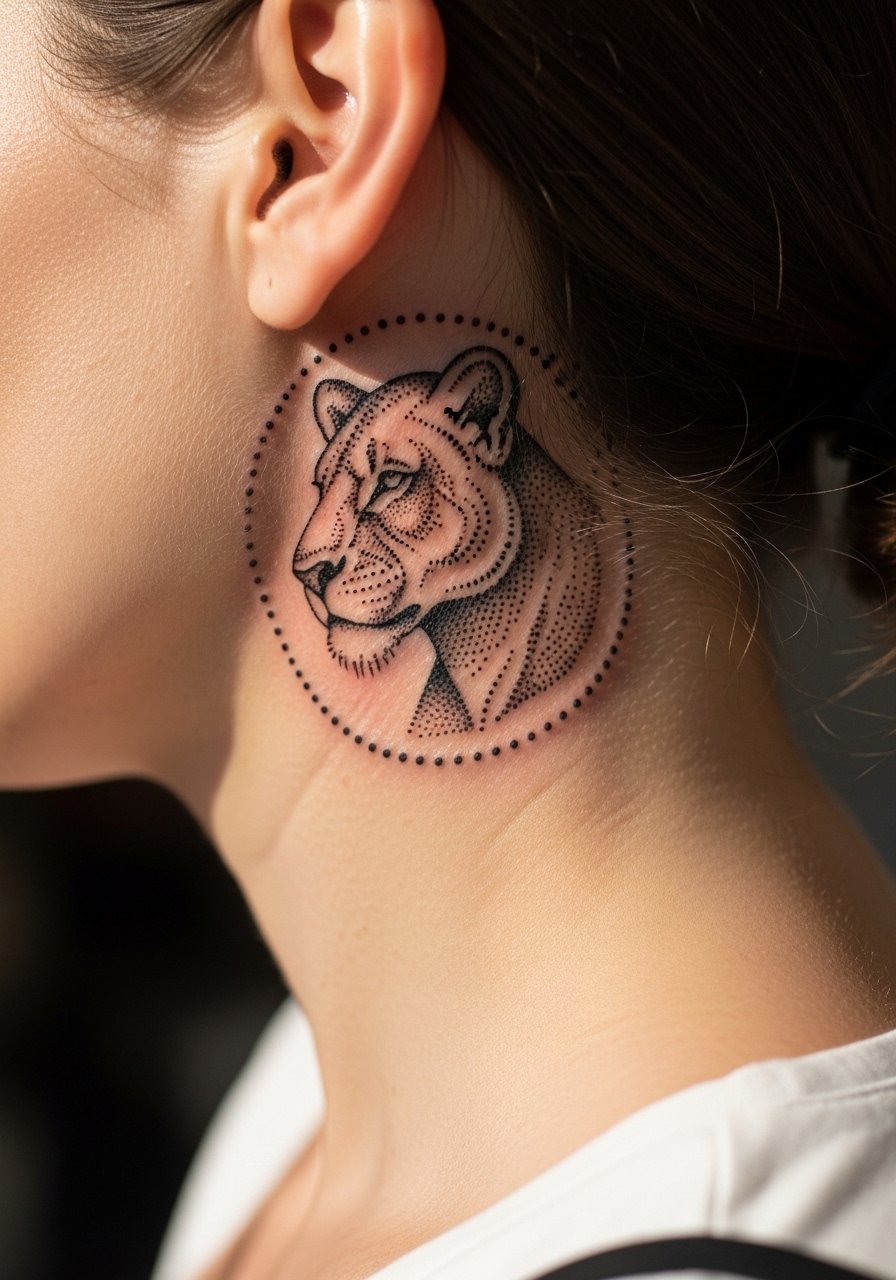
Behind-ear placements look delicate but can be impacted by hair and shampooing. The dot work halo is a clever way to create texture without dense lines that fade. Mention to your artist that hair must be clipped or tied for clear stencil transfer. Healing can be sensitive because of hair friction. Keep your shampoo gentle for the first week and tie hair back during sleep.
23. Lioness half-mask across the cheekbone for editorial placement
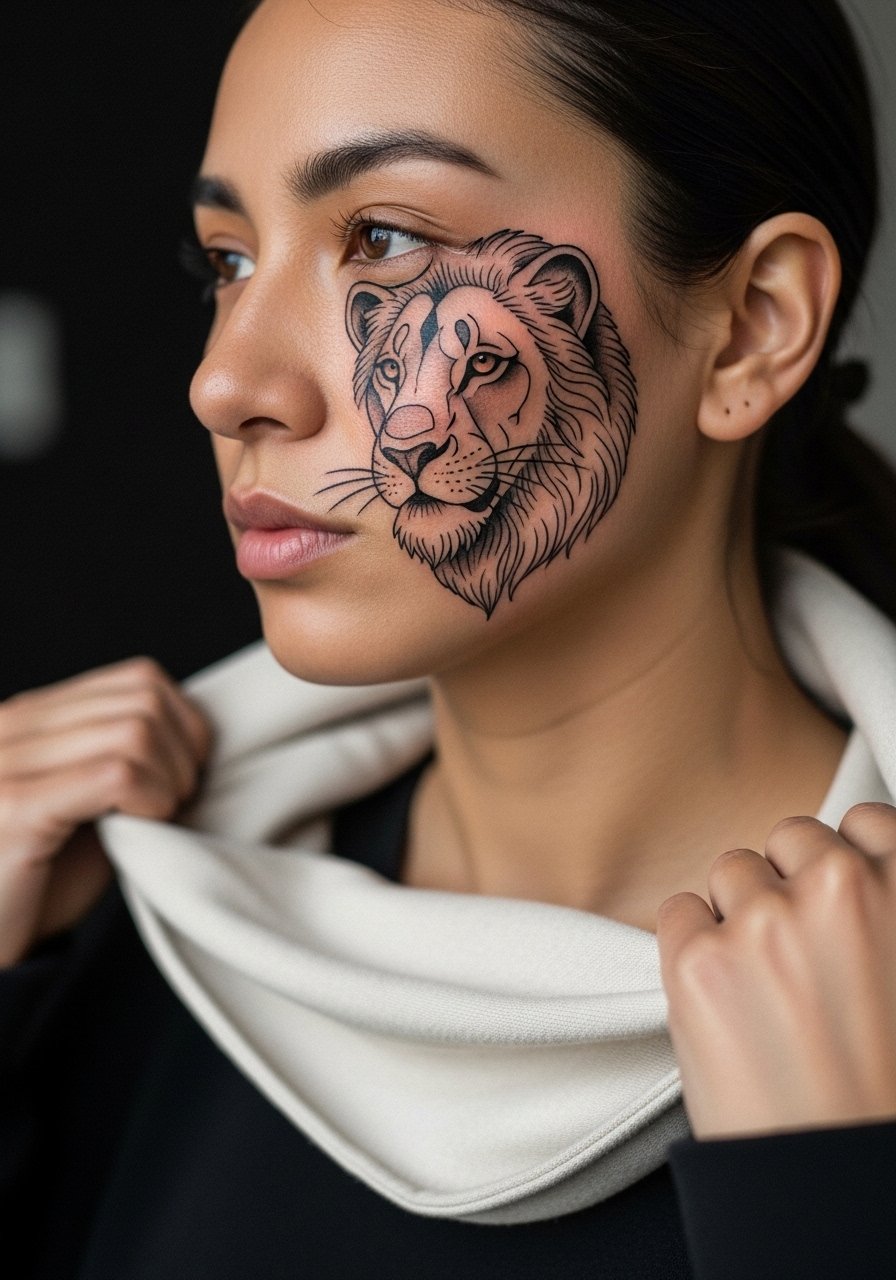
Face and cheek tattoos require careful career consideration and an artist with experience in facial skin. The risk is higher for social or work contexts. If you plan this, get a small test flash and ask the artist for healed photos on similar skin tones. Sessions are often done in short passes and require strict aftercare. There is no clothing link for showing this, but plan wardrobe that frames your face.
24. Lioness with geometric crown on the upper arm
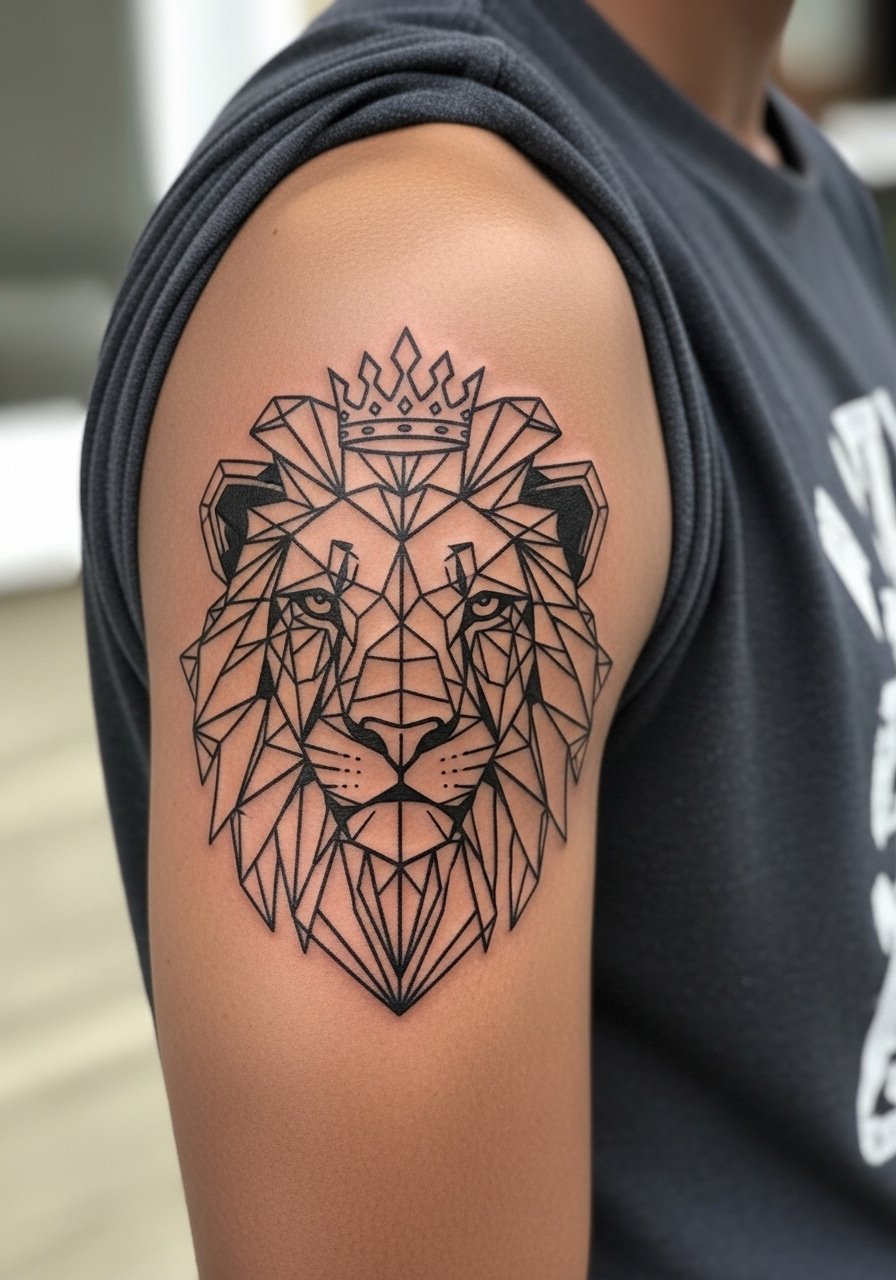
Upper arm placements are classics for longevity. Geometric crowns look authoritative and tend to age well because muscle area is stable. The common error is too-small geometry. Ask for breathing room between shapes and slightly heavier outer lines. Sessions are comfortable long sittings and usually complete in a single appointment. For show-off outfits, a short sleeve linen shirt rolled once frames the piece.
25. Minimal lioness silhouette on the nape of the neck
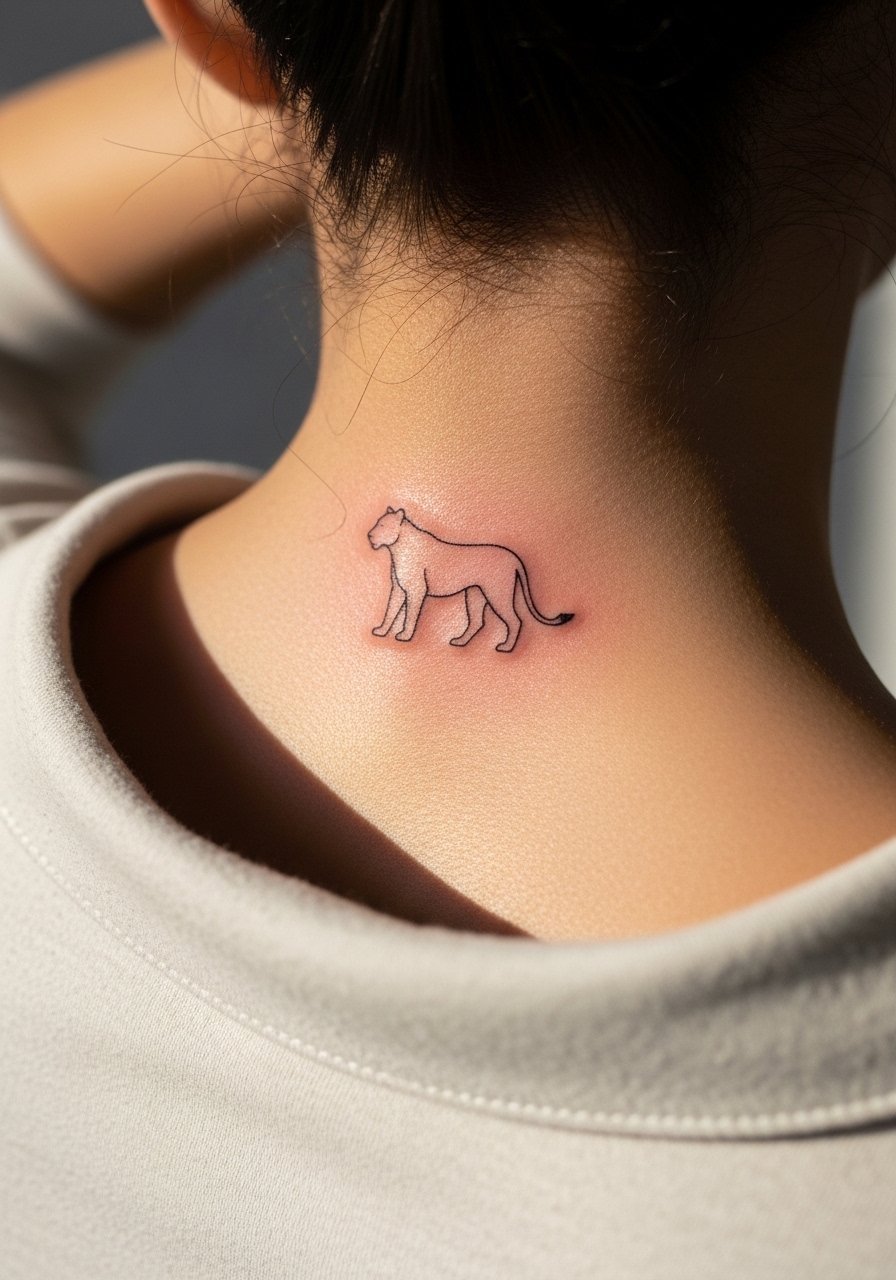
Nape placements are subtle and easy to hide with hair. The key is stencil placement along the hairline so the design does not get lost under regrowth. Pain is low but the area sees constant friction from collars and hair, so plan simple anchor lines. For session wear, a wide-neck top that the artist can gently pull aside works best.
26. Lioness half-sleeve with floral and geometric panels on the forearm
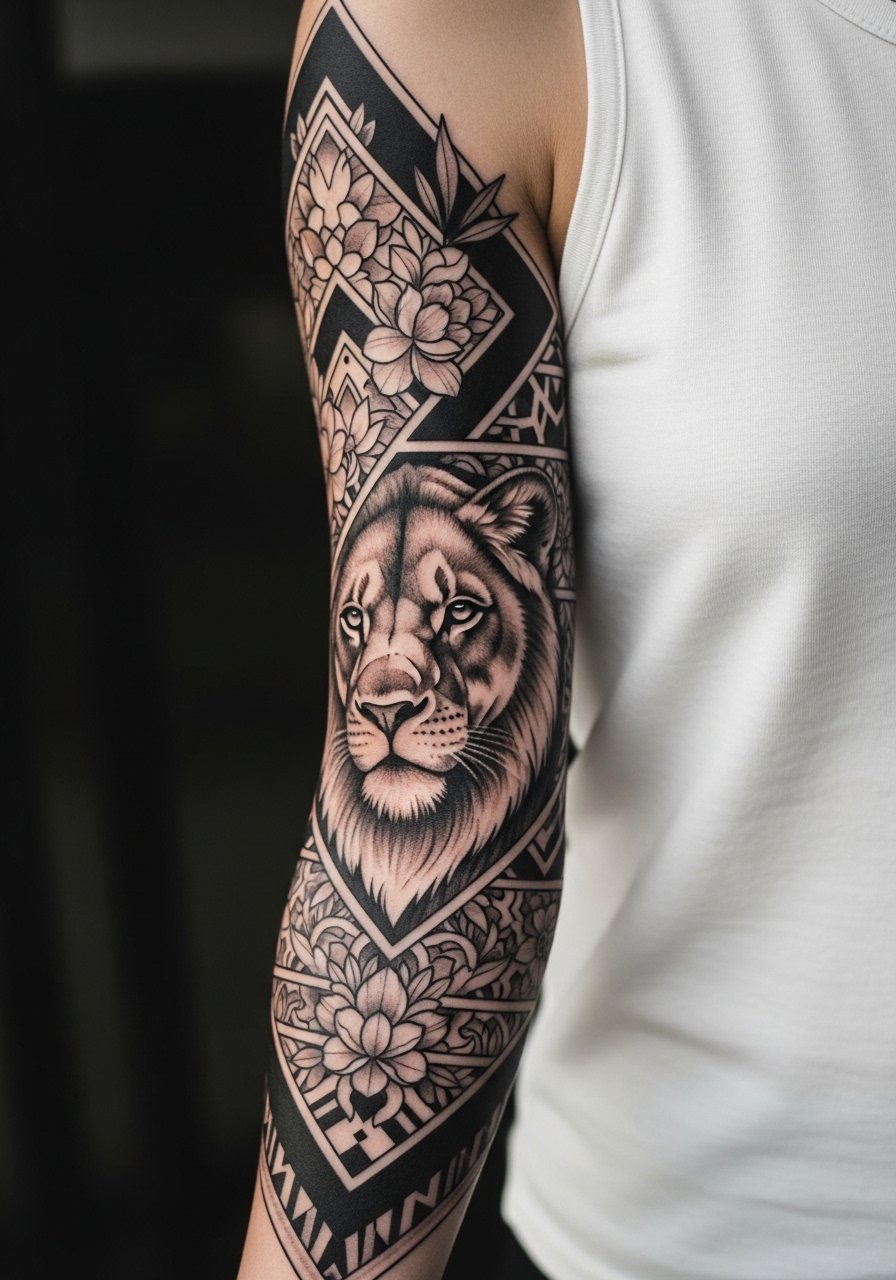
Half-sleeves let you combine realism, florals, and geometry into a cohesive narrative. The main mistake is mixing too many texture types without unified line weights. Ask your artist to harmonize linework across panels and to map touch-up timing for the fine line bits. Expect multiple sessions and a plan for sun protection between sittings. For styling, rolled linen shirts or a sleeveless work shirt women present the sleeve cleanly.
27. Outer ankle lioness with seasonal sandal-focused reveal
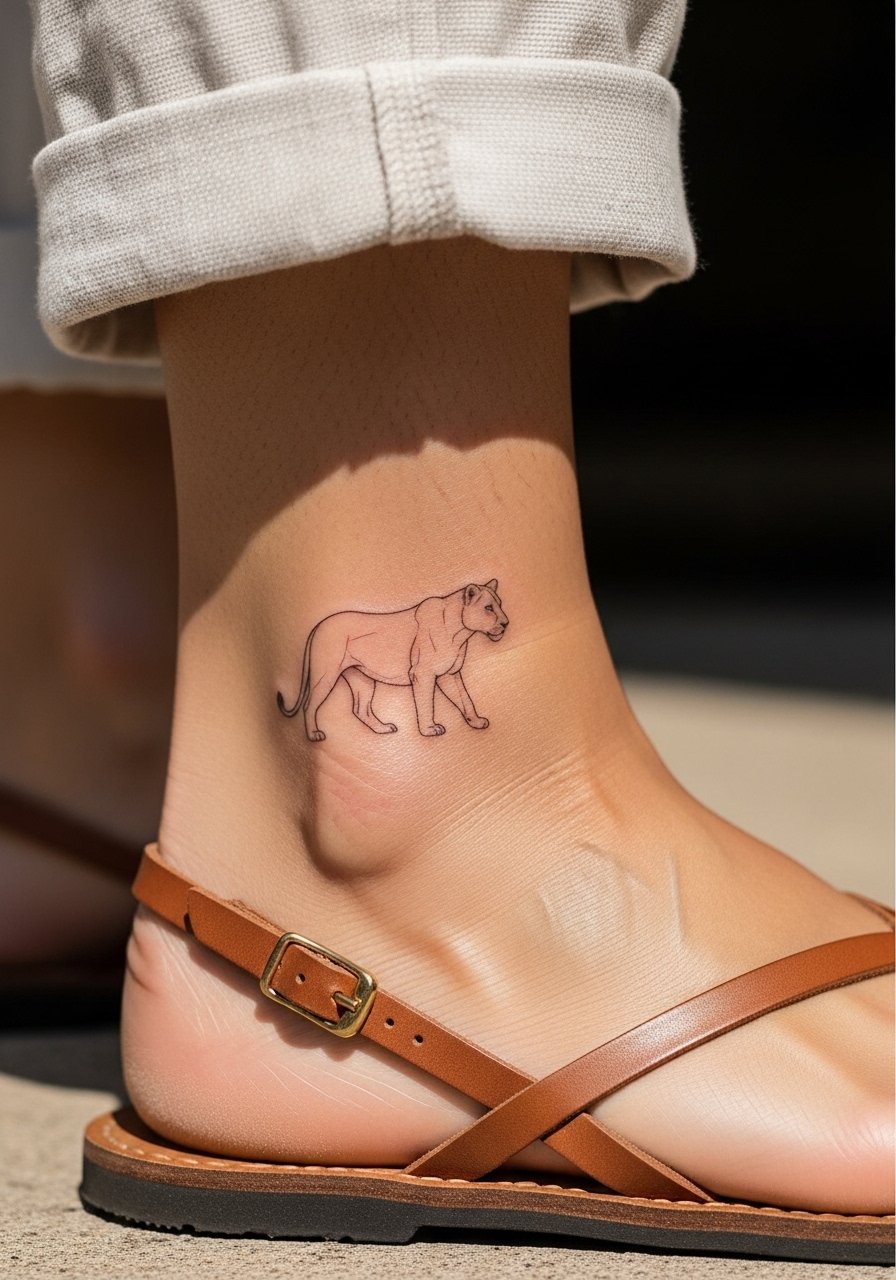
Outer ankle is an under-covered seasonal spot that works well with sandals. The outer ankle is less abrasive than the top of the foot, but still high-friction. Avoid ultra-fine anchor points and request slightly bolder outer contour so the piece survives a season of walking and open shoes. For warm-weather showing, a pair of simple sandals or a sandals summer women style makes the reveal effortless.
Frequently Asked Questions
Q: Will a fine line lioness on my wrist blur faster than a bold one?
A: Fine line on the wrist often softens sooner because the area gets constant movement and washing. Some artists favor bolder anchors for wrists to extend readability. If you love fine line, plan for a touch-up around year two to three and protect the area from daily sun.
Q: How should I prepare clothing-wise for a ribcage or sternum lioness session?
A: Wear a loose sports bra or a button-up shirt you can lift slightly so the artist has clean access without full exposure. Comfortable layering helps you stay warm during longer ribcage passes.
Q: Does dark skin change what style I should pick for a lioness tattoo?
A: On darker skin tones, bold blackwork and solid fills often show up better in photos and in person. High-contrast line weights and simplified highlights keep facial features readable. Talk to artists who post healed work on similar tones.
Q: If I want a lioness with a cub that doubles as a motherhood tribute, where holds up best long term?
A: Outer bicep and thigh hold detail well and tolerate body changes. Ribcage is intimate but can stretch with weight shifts. Ask your artist about scaling the cub relative to the mother's face for longevity.
Q: When artists argue about Saniderm versus dry healing for dense blackwork, which camp should I listen to?
A: Both camps are valid. One group uses protective film to reduce scabbing and infection risk. The other prefers dry healing to encourage natural scabbing and deeper ink saturation. Ask your artist which method they use and why, then follow their aftercare plan for the best settled result.
Q: Can I pair a collarbone lioness with jewelry without hiding the tattoo?
A: Yes. Pick a structured pendant or a thin chain that frames the collarbone without overlapping the main design. A thin chain pendant necklace sits above many collarbone pieces and keeps focus on the artwork.
