
Fine line phoenixes, bold color blocks, full Irezumi wraps and delicate single-feather pieces all live on the thigh for a reason. The thigh hides redness during healing, takes saturation well, and lets artists run big compositions without crowding. Expect stinging on the inner face, plan for touch-ups as color settles, and think about how the piece reads in shorts or swimwear. Below are thigh-focused phoenix ideas that account for pain, longevity, and what to wear to show them off.
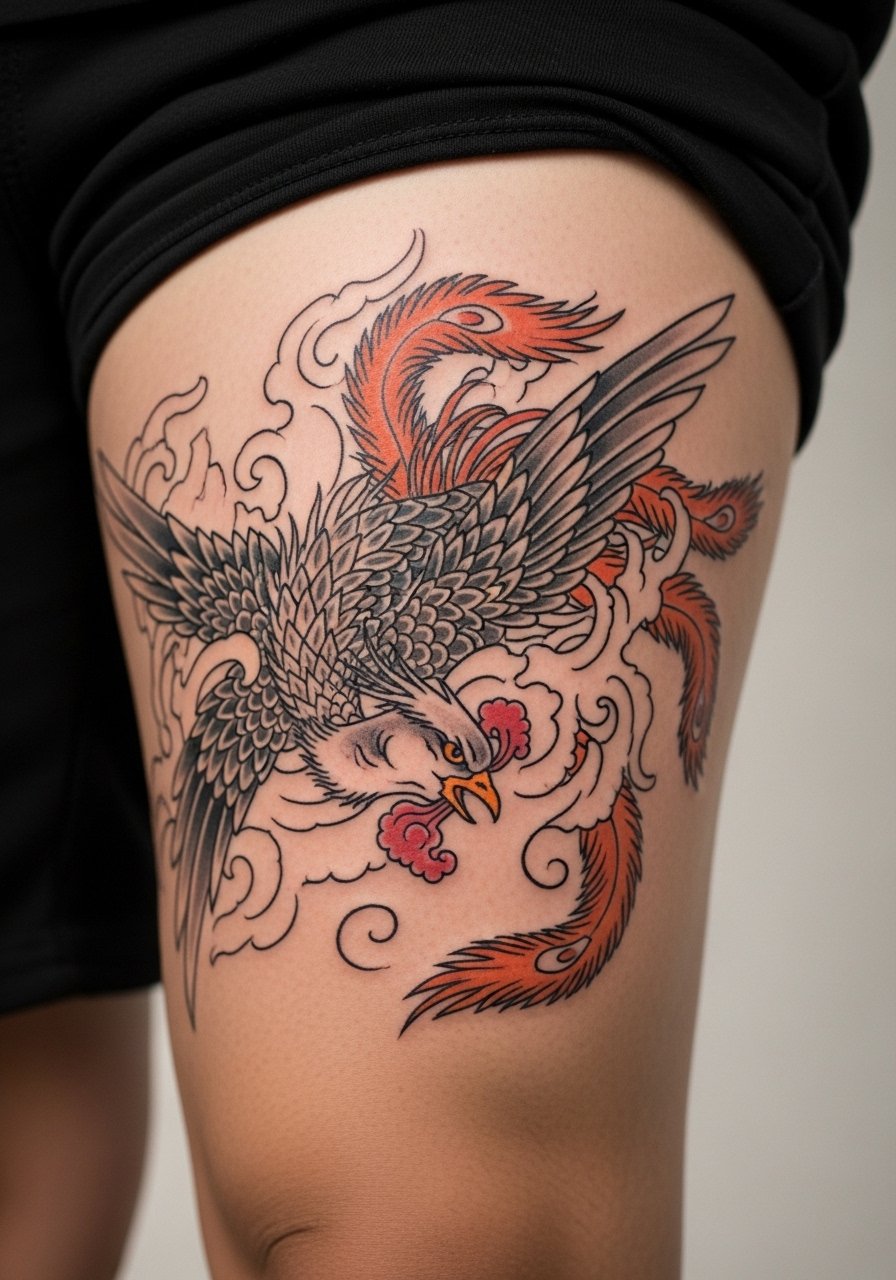
1. Traditional Irezumi Phoenix Spanning Upper Thigh
This is the classic full-thigh phoenix with bold outlines, dense saturation, and traditional cloud and wave fillers. I recommend this when you want a composition that still reads from a distance, because heavy linework and saturated color age into a coherent image rather than softening into muddied detail. Tell your artist you want thick contour lines around the beak and wing tips, and ask for slightly larger spacing between feather details so the pattern breathes at year three and five. Expect moderate pain on the outer thigh, longer sessions that can be split across two days, and a likely touch-up window around year two for color refresh. Pair it with high-waisted denim shorts to show the top curve without riding the garment into the ink.
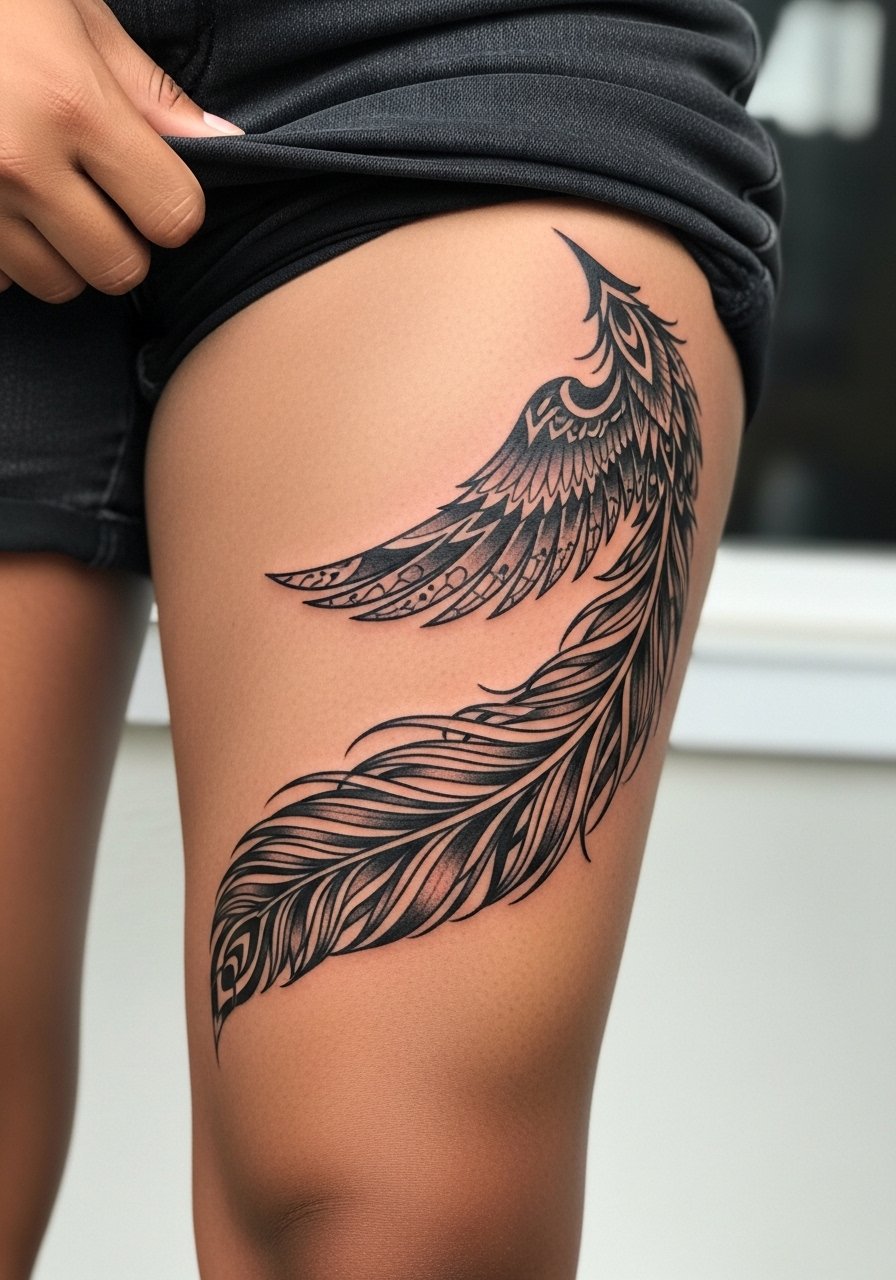
2. Blackwork Phoenix Ribbed Feather Wrap on Inner Thigh
This design uses bold blackwork and negative space to create feather texture that wraps toward the groin. It is a good choice if you want longevity, because solid black holds far better than thin colored strokes. The inner thigh is more tender, so expect higher pain and shorter sessions between breaks. During consultation, ask your artist for stipple shading inside the feathers rather than micro lines to reduce long-term blur. For the appointment wear, pull on a pair of loose boxer-style shorts so the artist can access the area without exposing more skin than necessary. Note the inner thigh is intimate; choose an artist experienced with that placement.
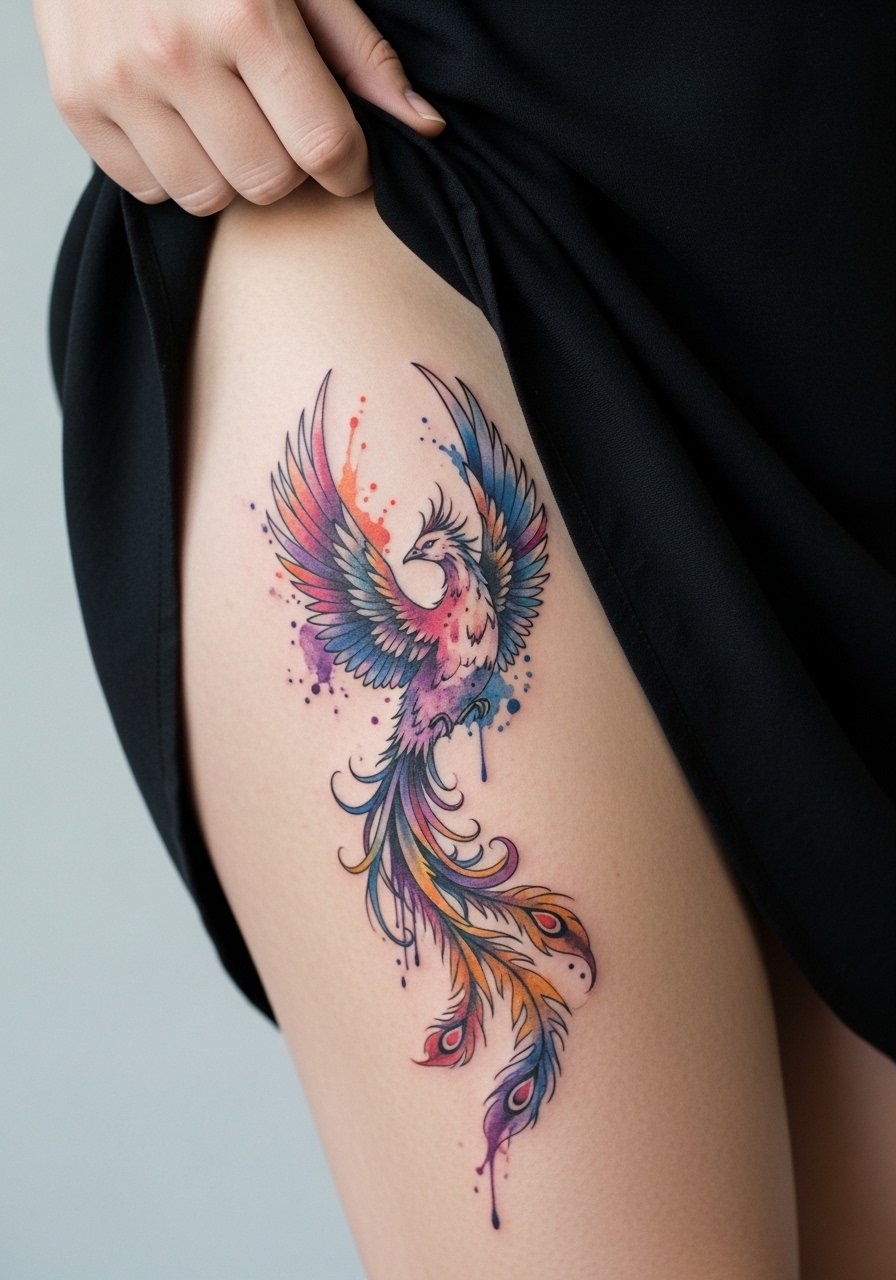
3. Watercolor Phoenix Splash Along Lateral Thigh
A watercolor approach puts color gradients and airy washes across the lateral thigh for a painterly phoenix that still keeps some outline structure. This suits people who want a softer look but understand watercolor fades faster. Most artists fall into two camps on this: one side avoids watercolor for longevity concerns, the other adapts the technique with anchored linework to make it last. Name that you want anchored linework around the beak and tail so the washes can be refreshed without changing the design. Expect lower pain than inner thigh, and plan on touch-ups earlier than for blackwork. Show it off with a flowy wrap skirt that reveals panels when you walk.
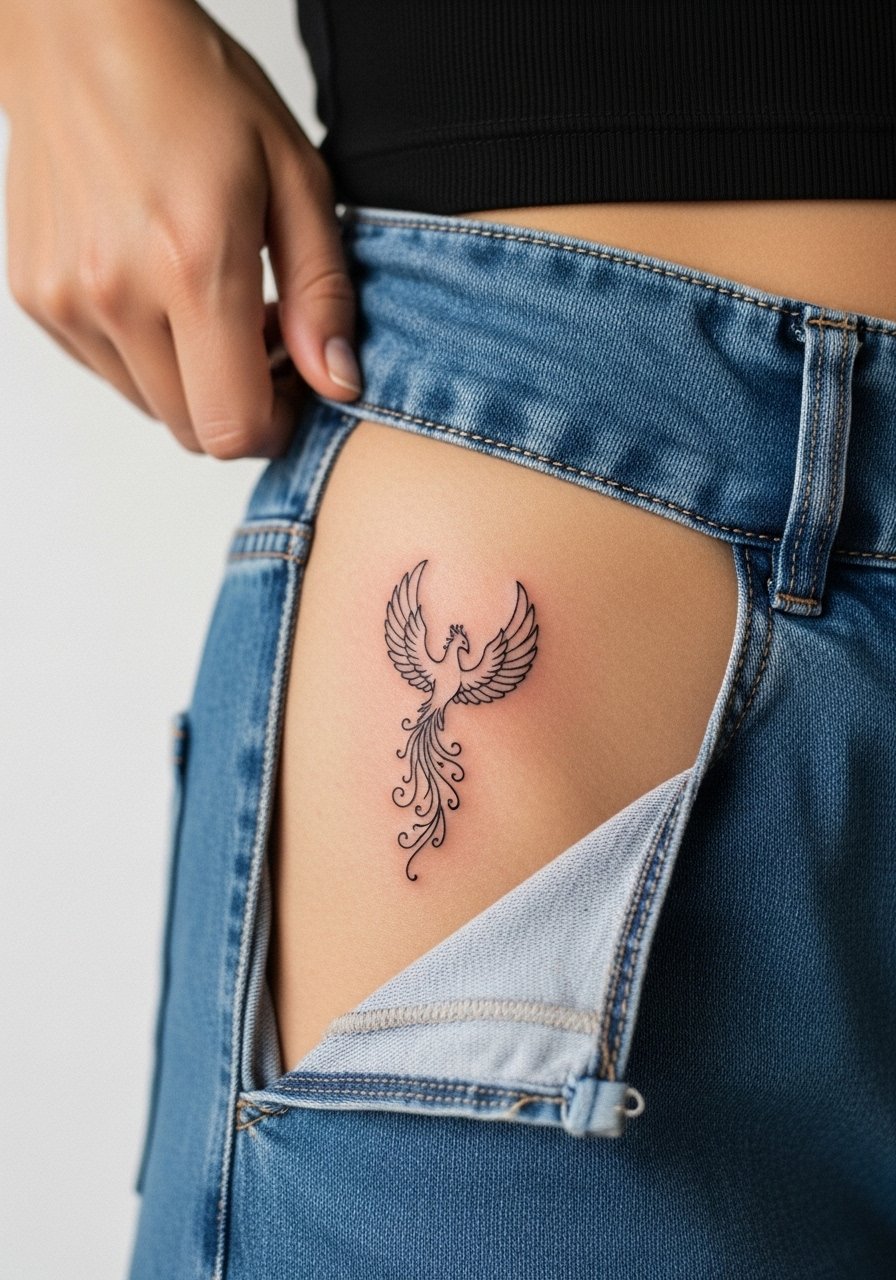
4. Small Minimalist Phoenix Near Hip Bone
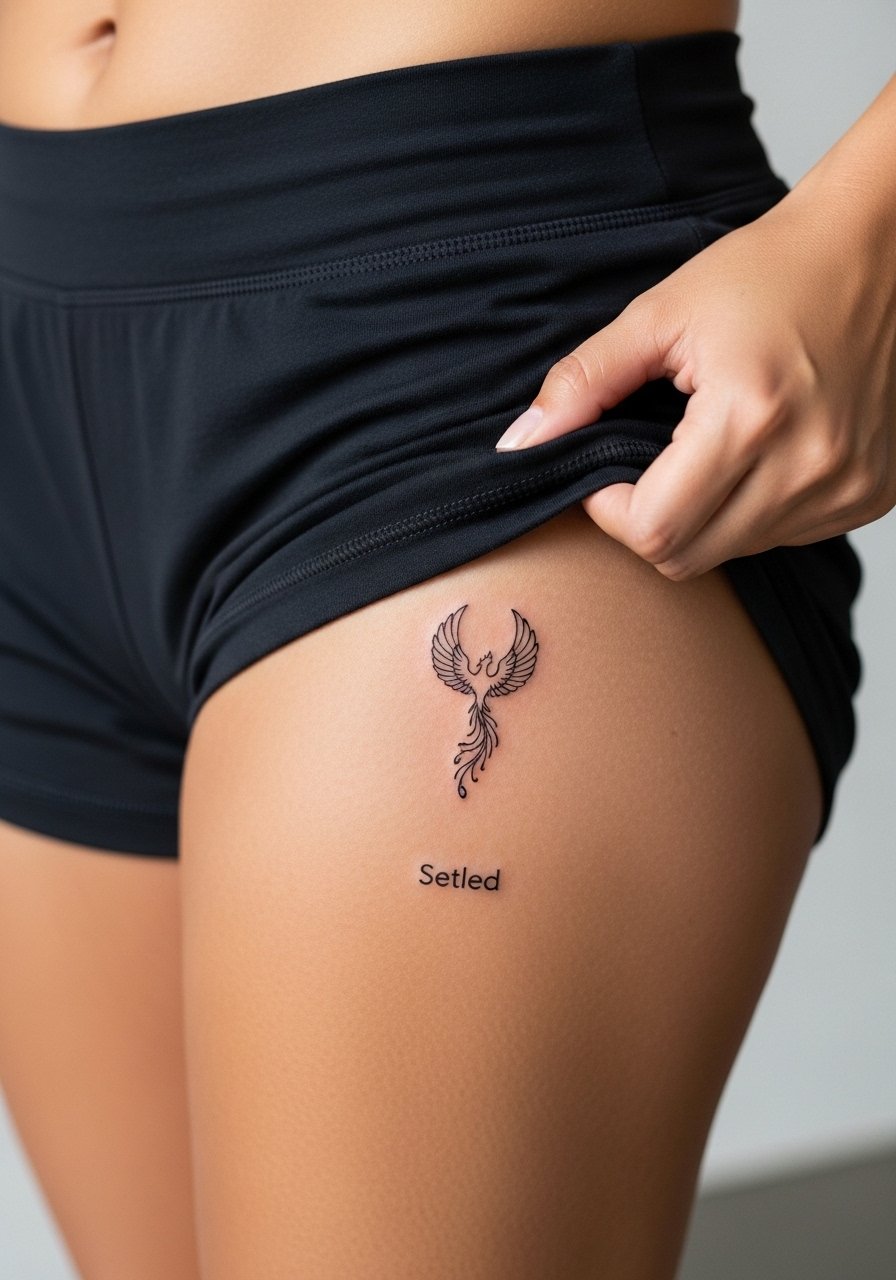
A compact phoenix sitting by the hip bone works if you want a nod to symbolism without committing to a full sleeve. The hip can be a tricky spot because fabric friction from waistbands affects early healing. For the session, wear high-waisted underwear or bikini bottoms you can pull down slightly so only the tattoo zone is exposed. Tell your artist to keep linework clean and avoid micro scripts inside the feathers. Expect moderate pain when the needle grazes the bone, and know that small, dense detail may need touch-ups faster than larger shapes.
5. Phoenix Feather Cascade Along Inner Thigh Edge
This elongated feather cascade sits on the inner thigh edge, reading like a ribbon when you walk. The design favors vertical flow and looks great with negative space between barbs. The biggest mistake with inner-thigh cascades is packing too many tiny barbs; they merge over time. Ask for wider spacing and stipple shading transition to keep the feather readable at year three. Pain is higher here and sessions may need more frequent breaks. For showing the piece, a high-cut swimsuit bottom frames the line without covering it.
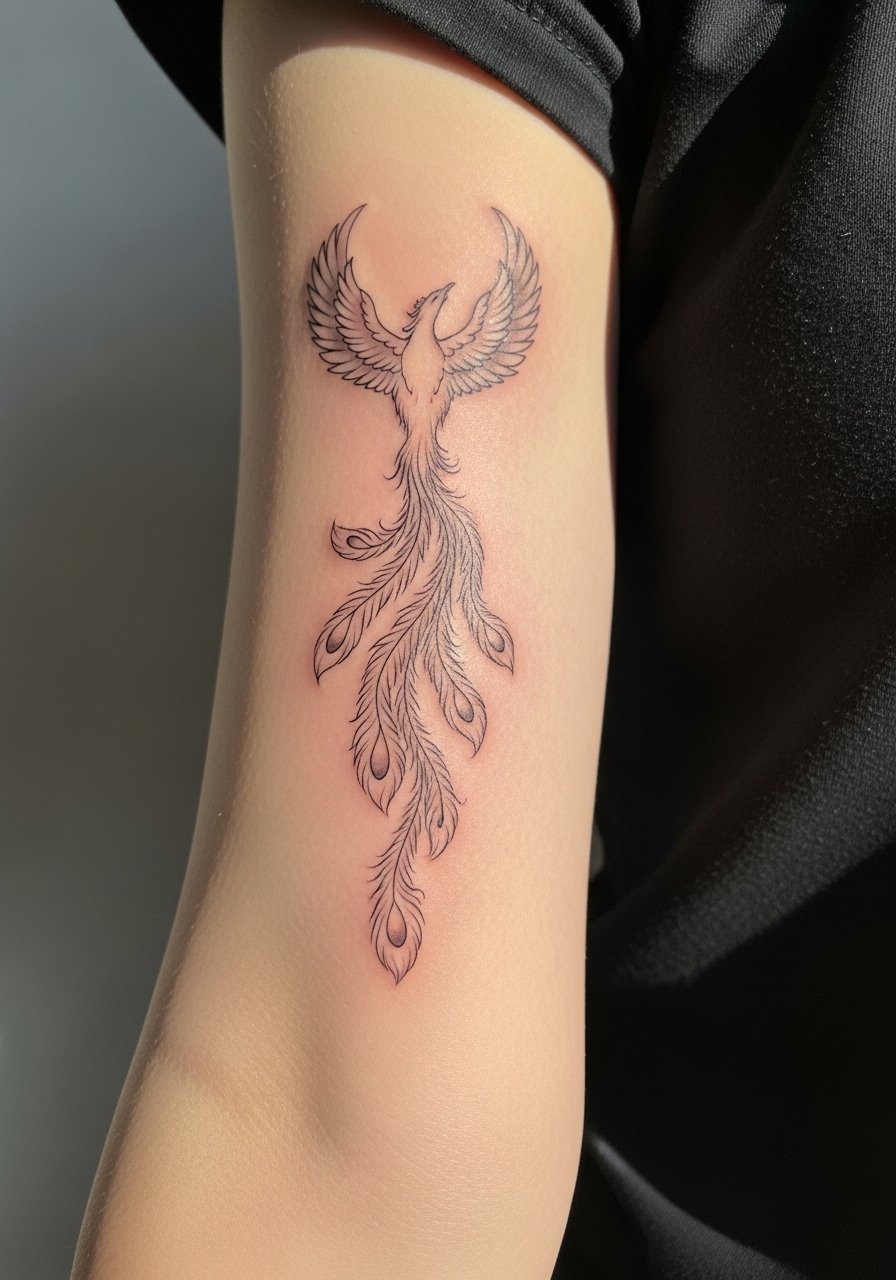
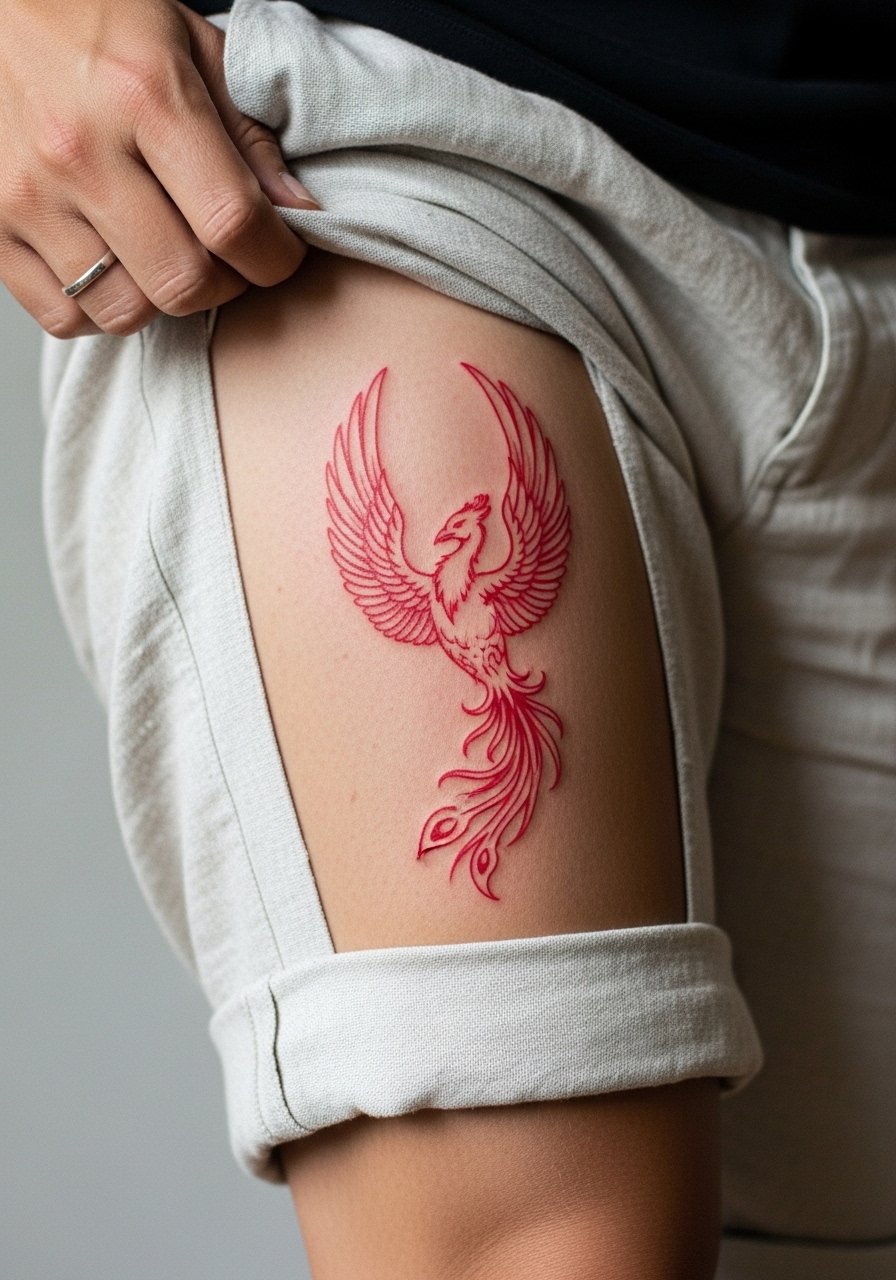
6. Single-Color Red Phoenix Accent on Upper Thigh
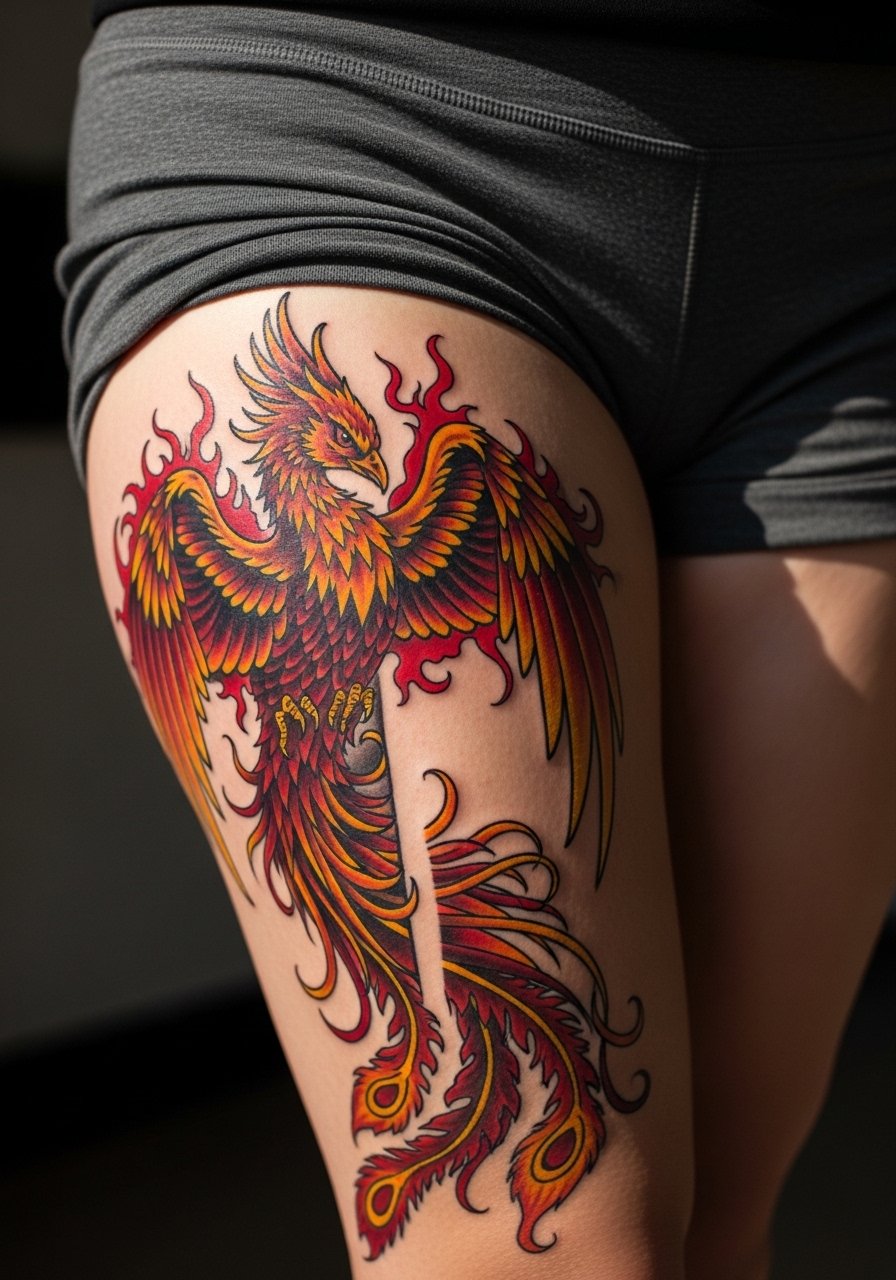
Focusing an intense single-color, like a saturated red, gives a bold statement without complicating the composition. Single-color pieces can surprise people by retaining punch longer than muted multi-color blends. The malfunction I see most is asking for red at tiny scale; that tends to fade into a stain. Keep the saturated areas generous and ask for a slightly denser packing on the wing edges to preserve contrast. The upper thigh tolerates long sessions better so you can get larger blocks of work in one sitting. Wear a loose drawstring linen pant to the appointment so the artist can roll the leg up comfortably and you do not irritate the area afterwards.
Pack Smart
Those six thigh treatments above range from small accents to dense traditional panels, and a few practical items smooth both the session and the first week of healing.
-
Stencil transfer paper kit. Lets you preview the scale on skin, especially helpful for the large Irezumi panels and hip pieces in ideas above.
-
Thin protective film roll. Keeps high-friction zones on the inner thigh and hip protected during the first week of movement.
-
Fragrance-free gentle body wash. Cleanses healing ink without stripping saturated red or black areas mentioned earlier.
-
Topical numbing cream. Useful for long upper-thigh sessions so you can sit through extended work without excessive discomfort.
-
Aquaphor healing ointment. A thin layer the first few days keeps surface moisture steady for fine line details and saturated fills without clogging.
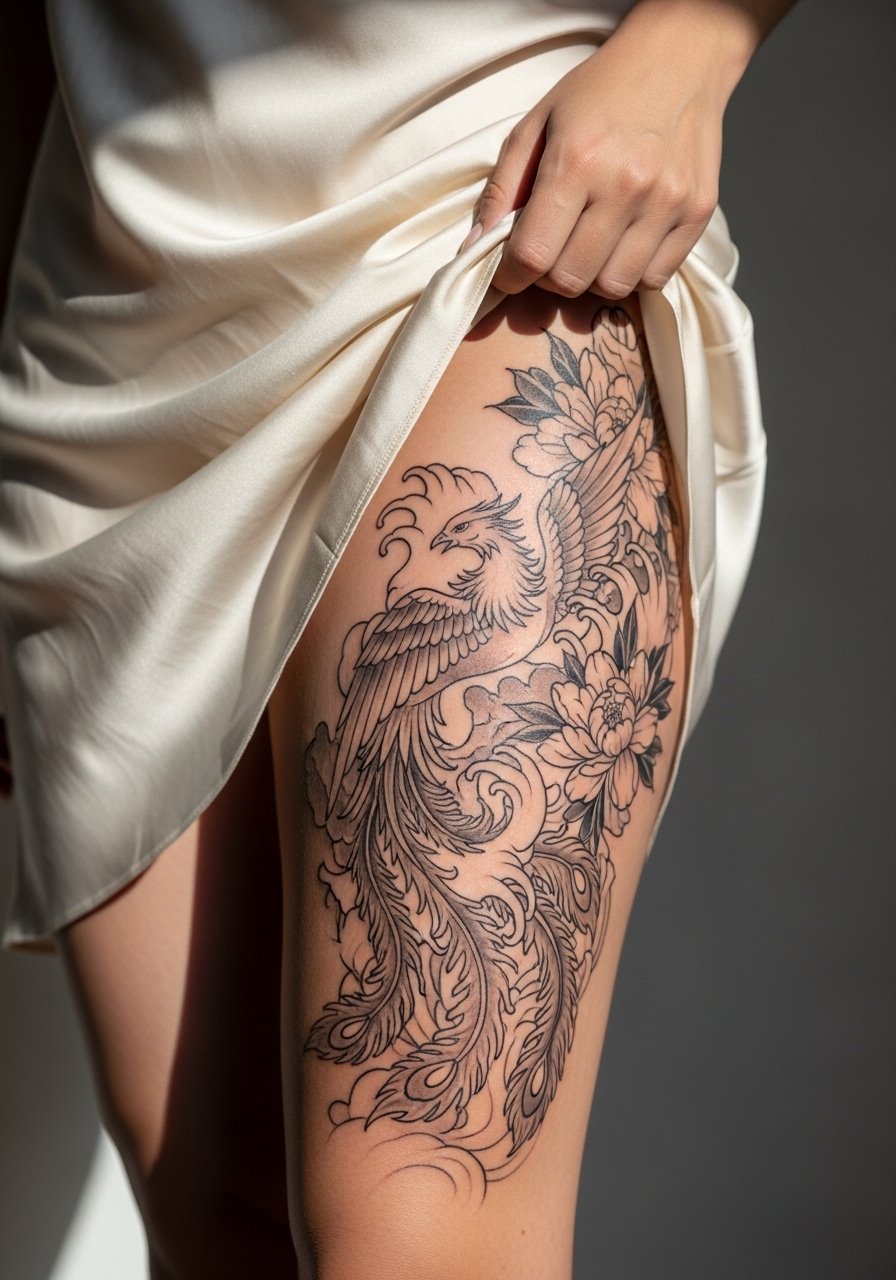
7. Half-Thigh Sleeve with Rising Phoenix and Floral Fill
A half-thigh sleeve lets the phoenix rise into flowers, waves, or peonies for classic Japanese storytelling. I recommend this when you want narrative movement rather than an isolated emblem. During consultation, bring reference shots that show how you want negative space to breathe between the bird and the florals so the imagery does not muddy as it heals. This placement handles saturation well, and blowout risk is low compared with the inner thigh, but expect multi-session booking. For show-off outfits, a mid-thigh slip dress shows the panel when you walk without compressing the design.
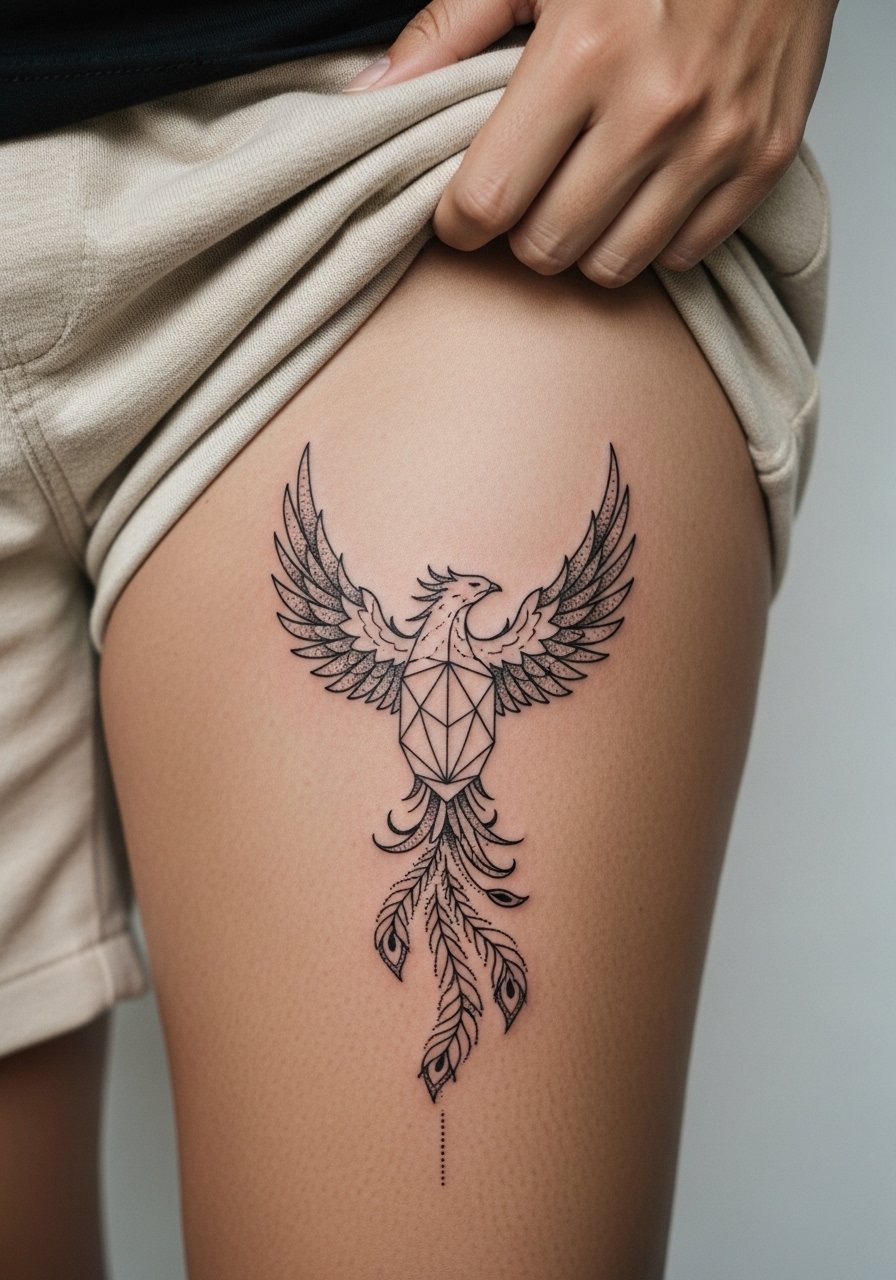
8. Geometric Phoenix with Dot Work Tail on Upper Inner Thigh
Combining geometric shapes with a dot work tail gives a modern edge to a classical subject. The contrast between hard geometry and soft dot shading keeps the eye moving and helps the design age predictably. The inner thigh demands careful spacing for dots; densely packed dot work can blur into shaded blocks. Ask for slightly coarser stipple for the first session and finer layers only where the skin tolerates it. Pain and sensitivity are higher here, so split into shorter sittings. Wear loose cotton shorts to the appointment for comfort and access.
9. Micro-Realism Phoenix Eye Detail on Thigh Panel
A micro-realism eye or claw placed as a focal point within a thigh panel anchors the larger composition. If you want a piece that rewards close inspection, go for a focal micro-realism element set inside bolder surrounding shapes. The common mistake is scaling micro-realism too large for the surrounding composition; keep the realistic focal point compact and framed by bolder lines to protect the detail. Healed at six months the eye will be crisp if the surrounding saturation protects contrast. Session time varies, but expect careful, slow work. For showing the detail, a slit midi skirt lets light hit the panel and reveals the focal point when you move.
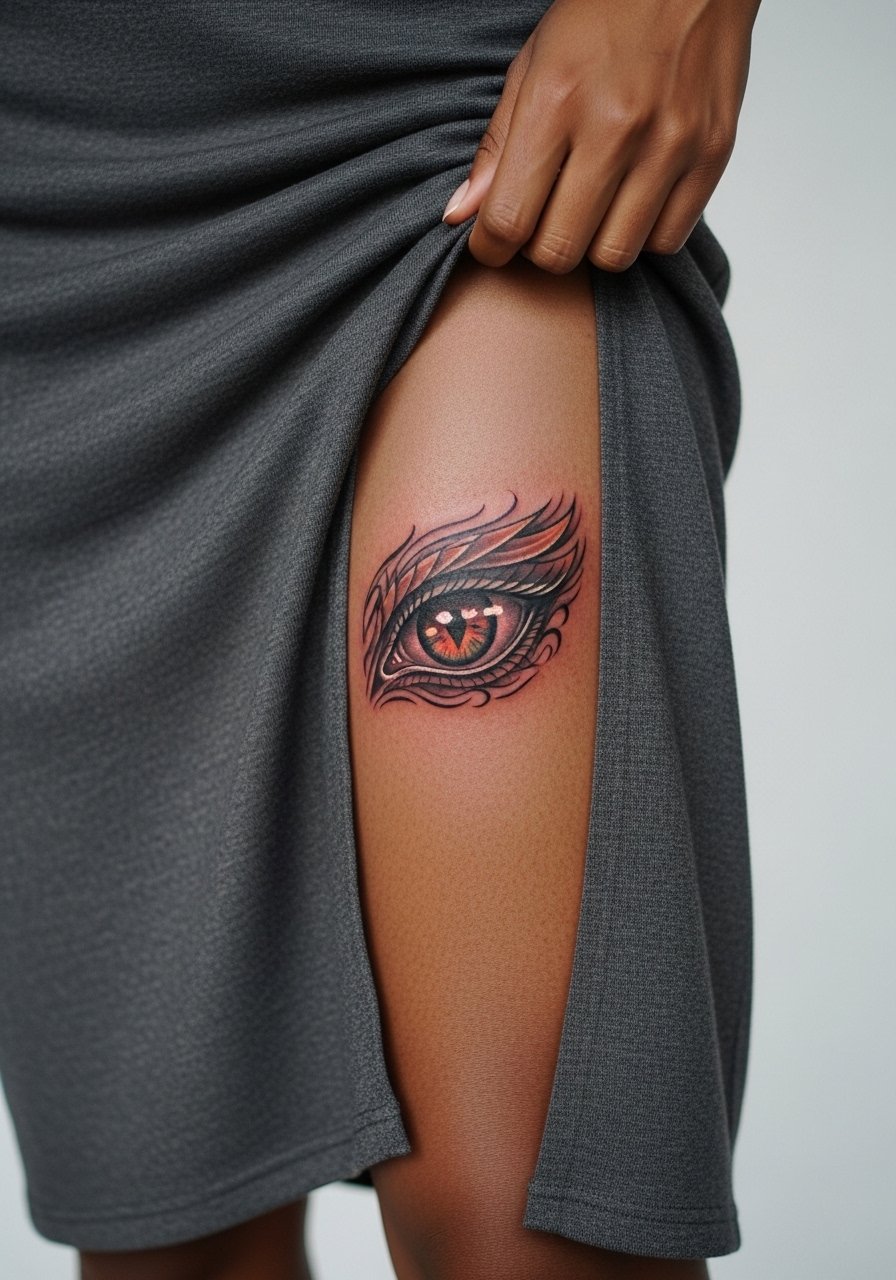
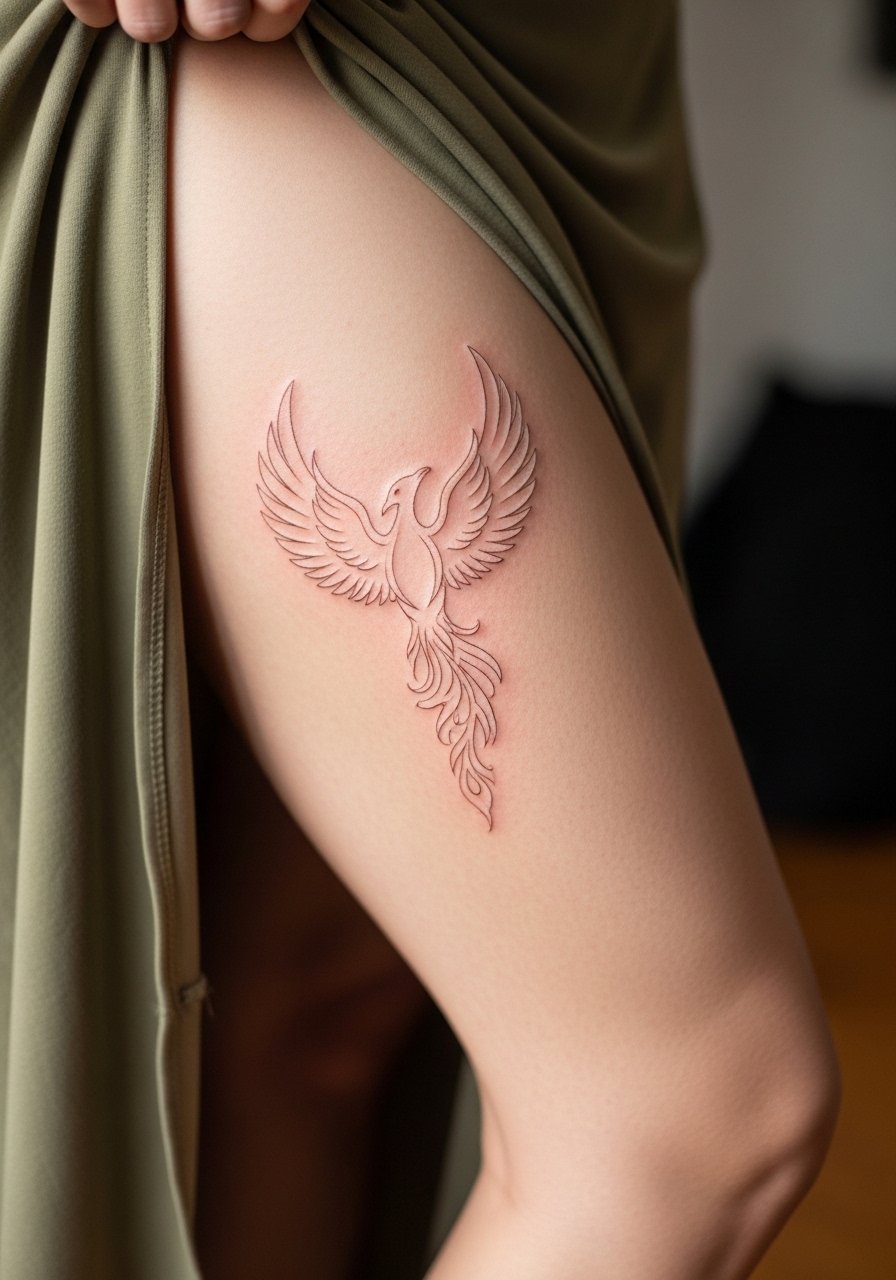
10. Negative-Space Phoenix Outline That Follows Thigh Contour
This idea leans on negative space so the skin forms part of the phoenix silhouette. It reads minimal while still being bold in movement. The advantage is less pigment in the skin, which can mean easier long-term maintenance. The mistake I see is carving too many fine gaps; keep negative shapes larger so they remain distinct after settling. Ask your artist to mock up the stencil while you stand so the curve lines follow your natural thigh contour. Pain is moderate. For outfits, a high-slit maxi skirt reveals the curve when you walk.
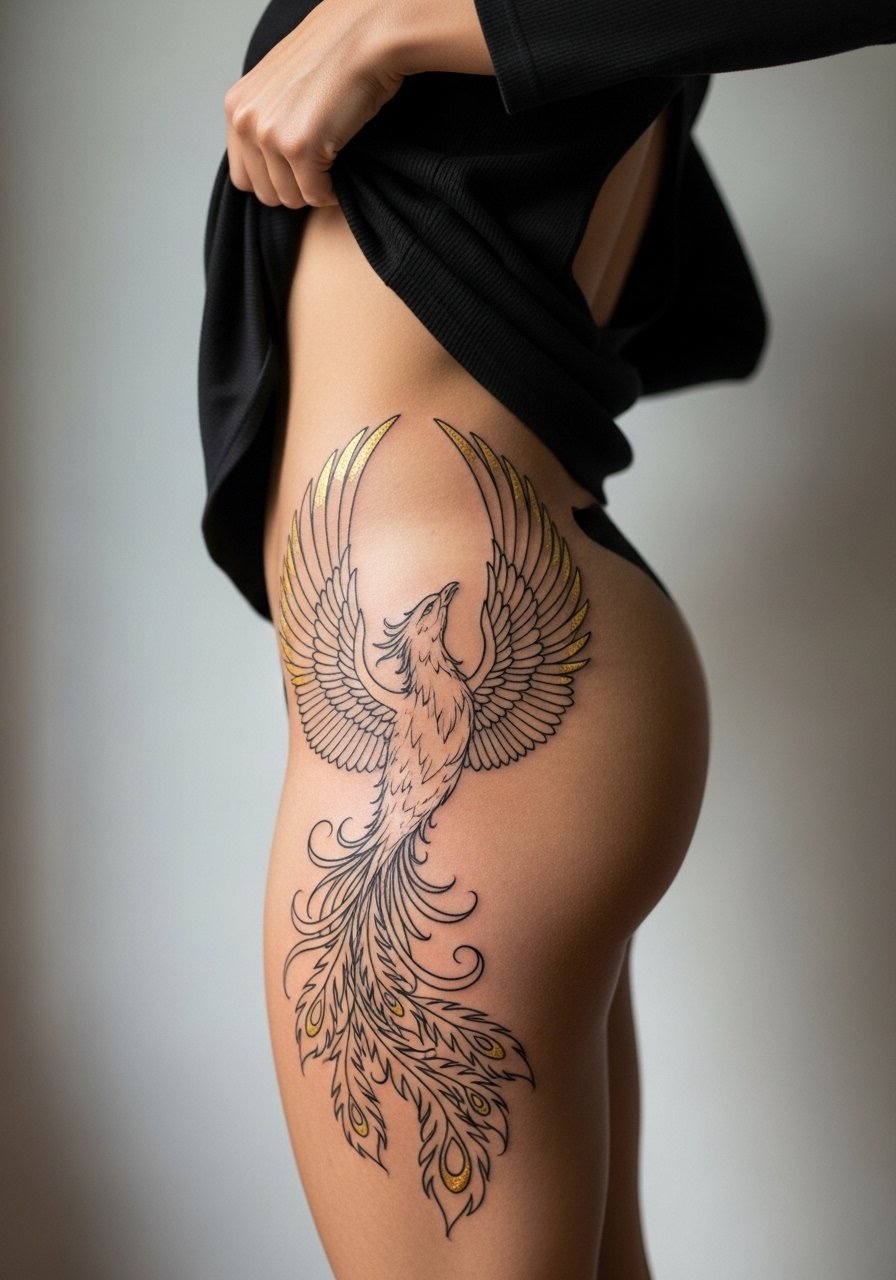
11. Thigh-to-Hip Flowing Phoenix With Subtle Gold Highlights
Adding metallic gold ink sparingly on wing edges creates movement without overwhelming the composition. Gold holds differently on different skin tones, so discuss visibility expectations with your artist. One camp likes metallics for pop, the other warns they fade unevenly and require targeted touch-ups. Ask your artist about placement and test a small spec before committing to wide use. Sessions are slightly longer because metallics can need lighter passes. Pair the finished piece with open-back tops that let the hip-to-thigh transition peek when you sit.
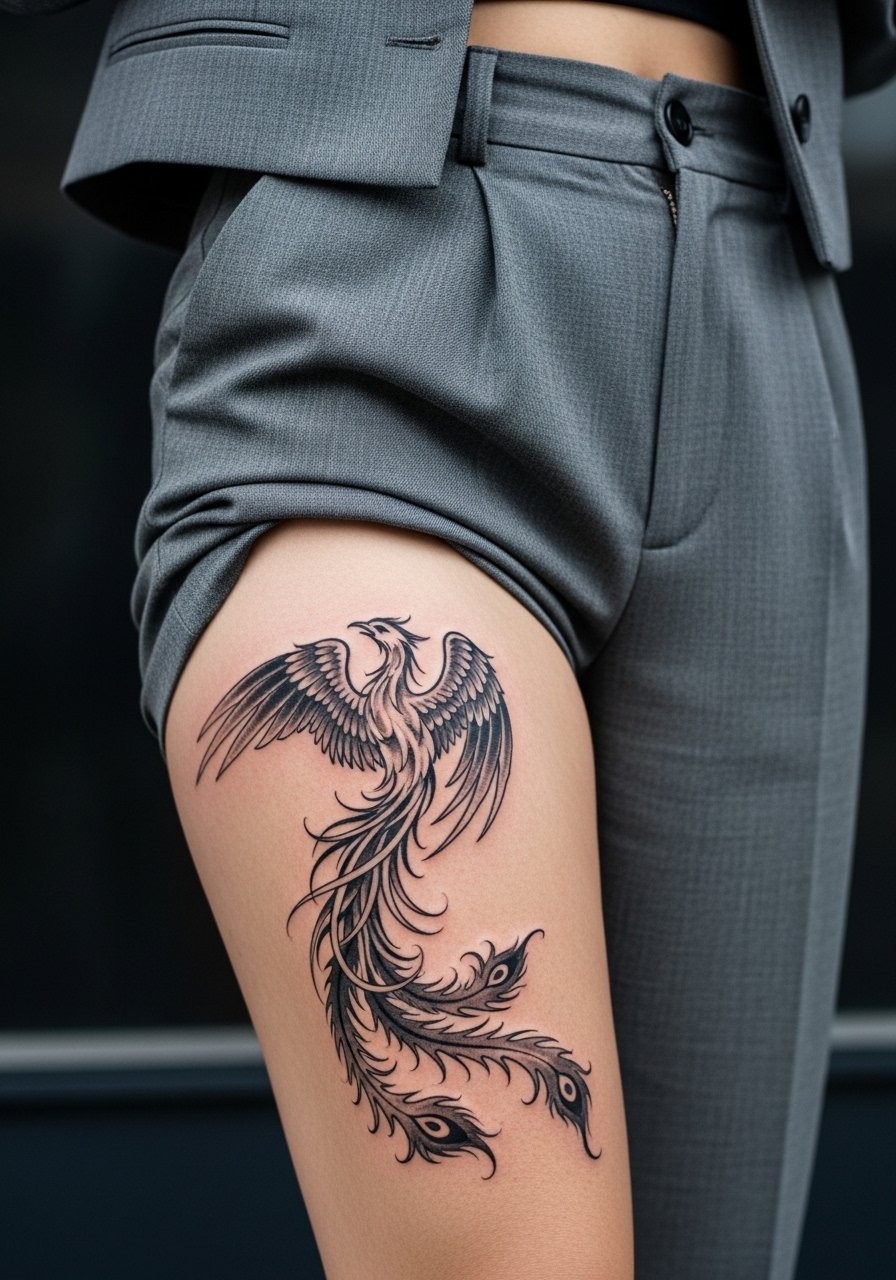
12. Abstract Phoenix Composed of Brushstroke Blackwork
This version uses broad brushstroke marks to suggest feathers and motion, leaning into abstract graphic language. It suits someone who wants the symbolism of the phoenix without literal depiction. The advantage is that broad strokes age into their own patterns and avoid the micro-blur of tiny details. Mistakes happen when artists try to micro-detail a brushstroke effect; let the strokes stay generous. Sessions can be brisk and satisfying. For styling, a cropped blazer with high-waist trousers frames the thigh when sitting and keeps the focus on the blackwork panel.
13. Miniature Phoenix Accent Near Thigh Crease
Tiny accents placed near the thigh crease make a discreet but meaningful mark, especially for first-timers who want symbolism without a large commitment. The main consideration is friction from clothing during healing; tight waistbands can scuff the area. Ask for a slightly bolder outline than your eye initially wants and expect a touch-up sooner than for larger work. For session comfort, wear stretchy, low-rise shorts so the artist can access the crease without fabric rubbing the fresh ink. This placement reads intimate, so consider how often you will want to show it.
14. Full Thigh Irezumi Phoenix with Cloud and Wave Background
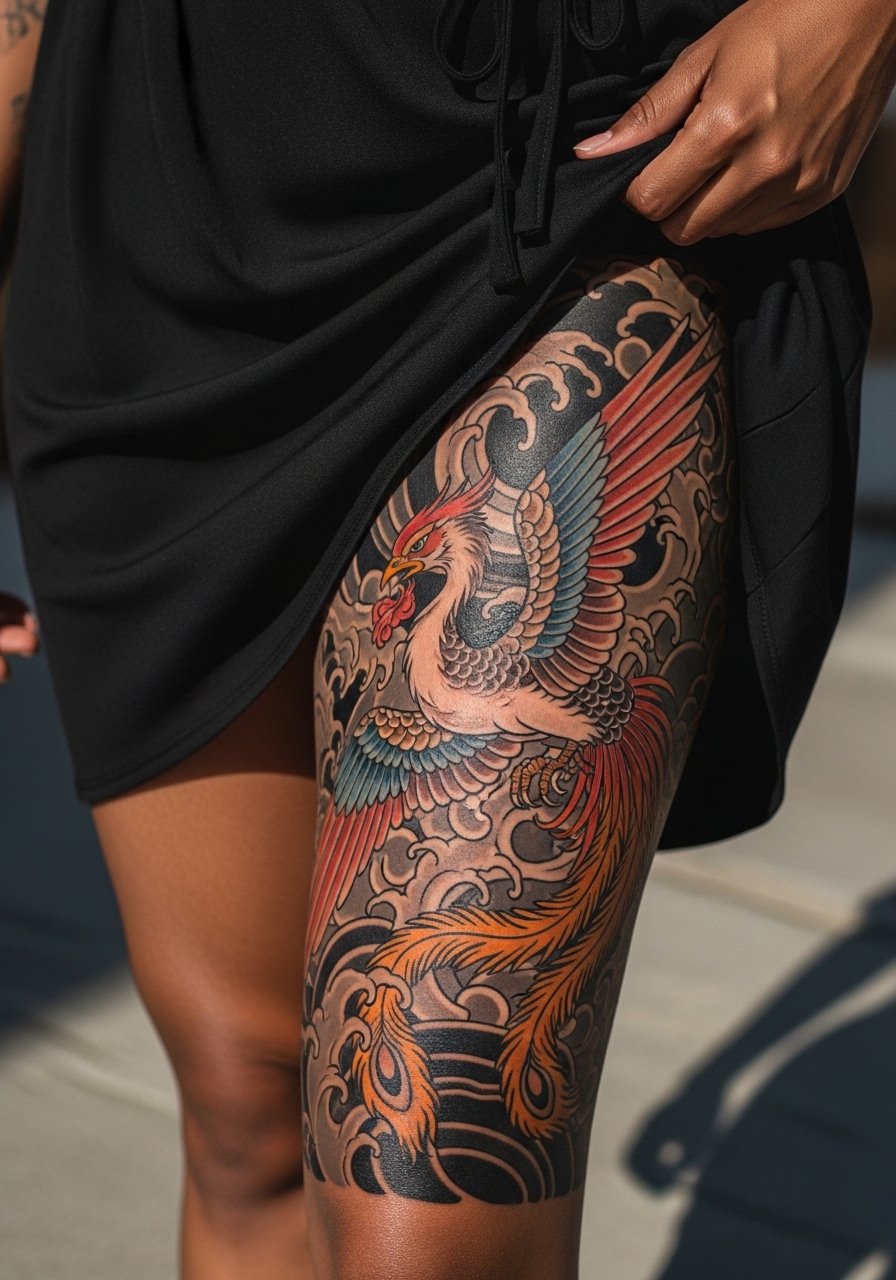
A full-thigh Irezumi panel places the phoenix in a traditional narrative field of clouds, waves, and florals for a cohesive story. This is the version that raises the most cultural origin conversation. One camp argues that non-Japanese clients can respectfully wear Irezumi motifs if they study the symbolism and avoid sacred iconography. The other camp sees any replication outside the culture as appropriation. Both perspectives matter. If you choose this route, discuss symbolism with the artist and consider slight personalization rather than exact replicas. Expect long multi-day sessions and plan for touch-ups to maintain saturated fills. For show-off looks, a short wrap dress exposes the panel edge without compressing it.
15. Linear Script and Phoenix Feather Combo Along Outer Thigh
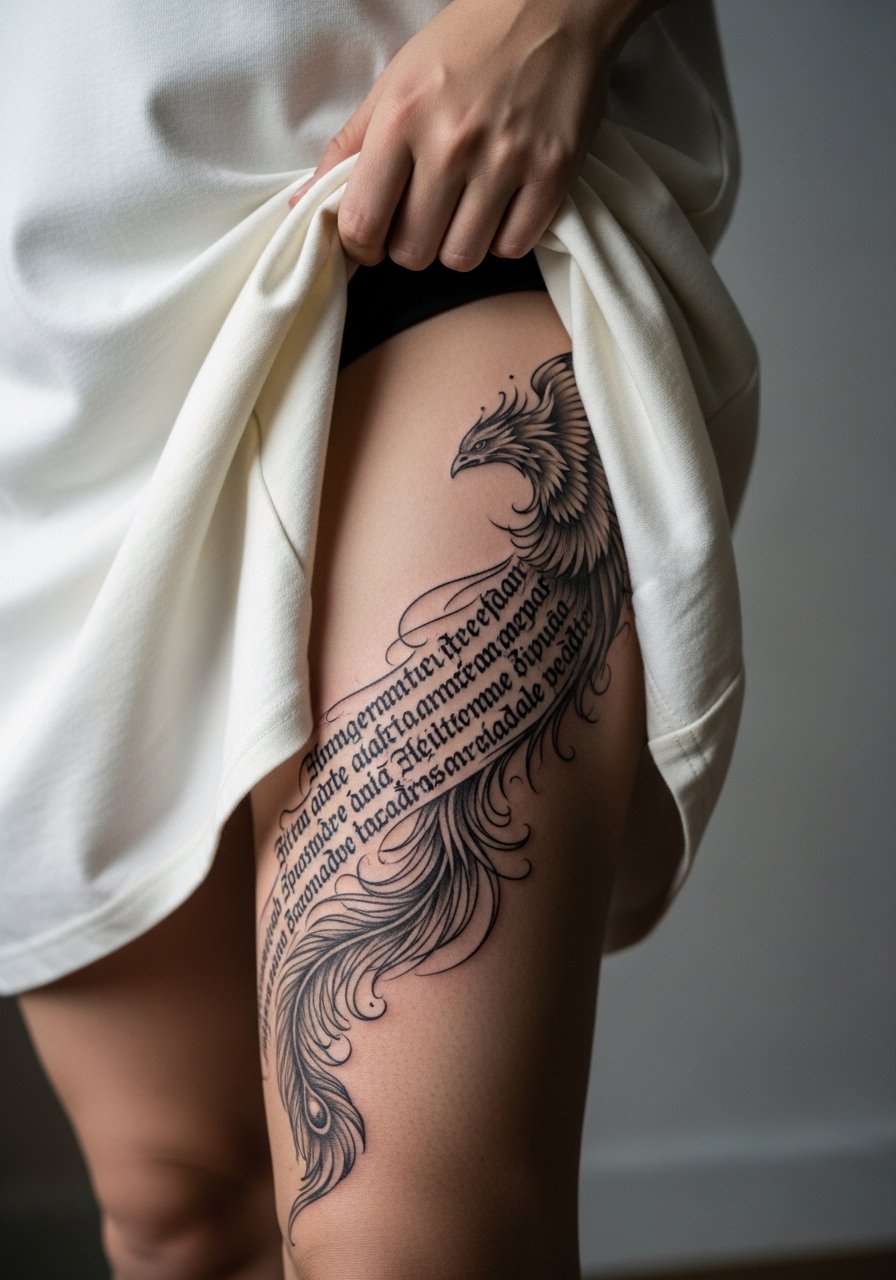
Pairing a small script line with a feathered phoenix tail gives a personal anchor to the symbolism. When including text, specify the exact wording and font during the stencil phase because lettering affects composition and age differently than the bird. The common error is tiny script that fades into illegibility; keep letters larger and paired with negative space. For post-session wear, a loose cotton tunic prevents rubbing and frames the thigh when seated. Be clear with your artist about how the text should sit in the curve of your leg.
16. Split-Design Phoenix: Thigh Front and Back Mirror
A split-design maps the phoenix so the head occupies the front thigh and the tail flows onto the back, creating motion when you turn. This is great for people who want drama while keeping the ability to conceal with clothing. The big risk is misalignment between sessions; ask for careful stencil placement and numbered reference photos to ensure the two sides match. Sessions will be scheduled across multiple days. For showing alignment, wear mid-rise leggings you can roll down slightly during the appointment and when revealing the final piece.
17. Stylized Phoenix Crest Sitting on Upper Inner Thigh
A compact crest placed high and inward keeps the phoenix close to the body and reads like a private emblem. It is ideal for people who want a personal symbol without a lot of surface area. The inner upper thigh is more sensitive and slows healing, so expect higher pain and possible swelling. The most common mistake is micro detailing in a small crest; ask for simplified shapes with bold contour and subtle internal texture. For the session, a wrap skirt or shorts you can shift easily helps with access and modesty. This placement benefits from an artist experienced with intimate-area work.

Frequently Asked Questions
Q: How much pain should I expect for a full-thigh Irezumi phoenix compared with a small hip accent?
A: Expect the full-thigh Irezumi to be less sharp in pain overall because large fleshy areas tolerate longer sessions, while the hip accent near bone will sting more on contact. The inner thigh and crease areas register higher on most people, and those spots often need more breaks. Plan sessions around comfort, and bring a supportive cushion for long sittings.
Q: Will bold blackwork keep a phoenix looking clearer longer than watercolor or metallic inks?
A: Yes, solid black typically keeps better than delicate watercolor or metallics, which can fade unevenly. If you want pops like metallic gold, use them sparingly and accept earlier touch-ups. Anchored black outlines combined with selective color washes often offer the best of both worlds.
Q: Does cultural origin matter for a phoenix Irezumi motif, and how should I approach it?
A: It does matter to many people. One view says wearing Irezumi respectfully is okay with research and personalization. The other view warns against replication without cultural context. A practical path is to discuss symbolism with your artist, make small personal changes, and show that you have considered origin and meaning before booking.
Q: How quickly will a detailed feather tail blur if I choose dot work or stippling on the inner thigh?
A: Dot work on more mobile, moist areas tends to soften faster than on firmer outer thighs. Coarser stippling tends to hold better than ultra-fine dots. Discuss spacing and test patches if possible, because healing and movement determine how quickly detail merges.
Q: What should I wear to the appointment for a half-thigh phoenix session so the artist has access and I stay comfortable?
A: Wear loose, easily adjustable clothes like a drawstring linen pant or shorts you can pull down slightly. Comfortable, breathable fabrics reduce friction after the session and make it simple for the artist to work without excess exposure.
