
Fine line portraits and bold mythic emblems keep showing up on saved boards, but they do not age the same. The portraits that look razor-sharp on day one often need touch-ups by year three if placed on high-motion skin. These 17 Greek god references balance immediate impact with real-world longevity, with quick notes on placement, what to ask your artist, and how to dress for the session so the stencil sits right.
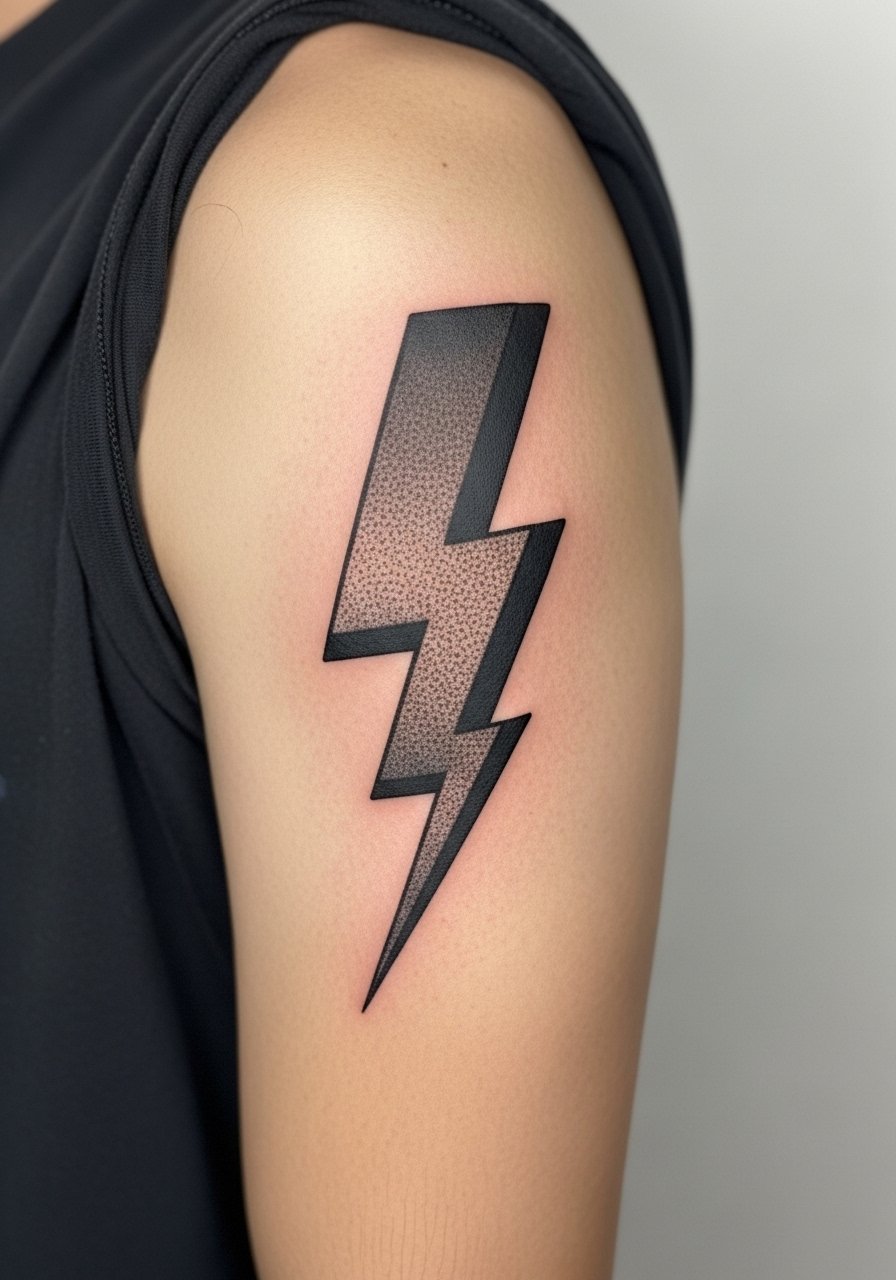
1. Zeus Lightning Bolt, Upper Arm
A bold lightning bolt is a classic shorthand for Zeus that reads from across a room and holds up over time when done with heavy linework and solid saturation. For an upper arm placement, tell your artist you want clean, slightly tapered linework with a small area of saturated black to anchor the shape so it ages like traditional work. Fair warning, the outer arm is a lower pain zone, but expect a two-hour session if you want thick, solid fills. Common mistake is asking for micro detail inside the bolt; that detail blurs into a single tone after a few years. For showing it off, roll up sleeves and pair it with a loose button-down shirt so the arm reads clean and the silhouette stands out.
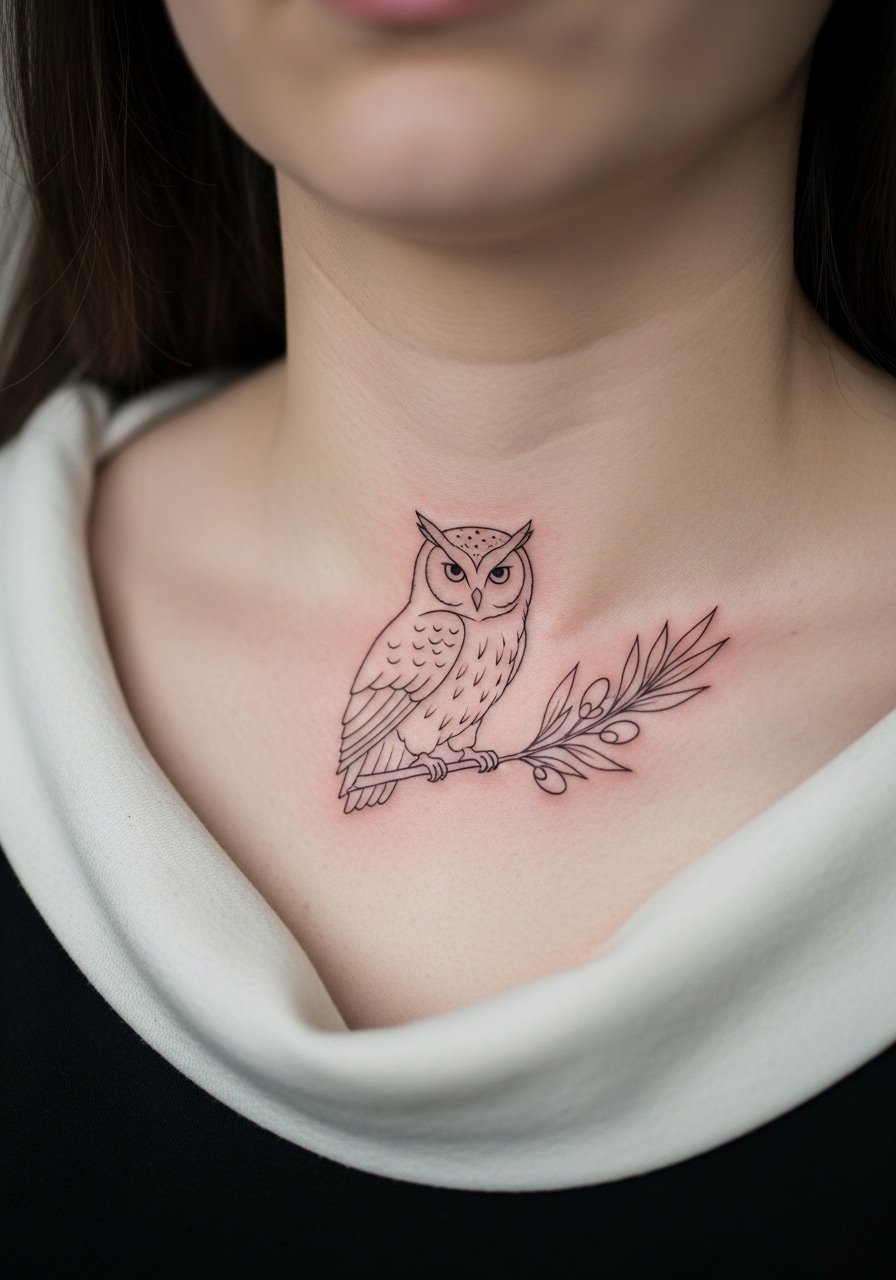
2. Athena Owl and Olive Branch, Collarbone
A delicate owl with a curved olive branch works well across the collarbone when the linework is midweight rather than whisper-thin. During consultation ask for slightly heavier contour lines around the eyes and branch so the owl keeps its character as the skin moves. The collarbone can feel like a four out of ten on pain scales. Expect a single focused session under two hours for a compact piece. People often request tiny eyes with micro shading and then see the eyes merge within a few years. Pair this placement with a thin chain pendant necklace that sits above the owl without crowding the composition.
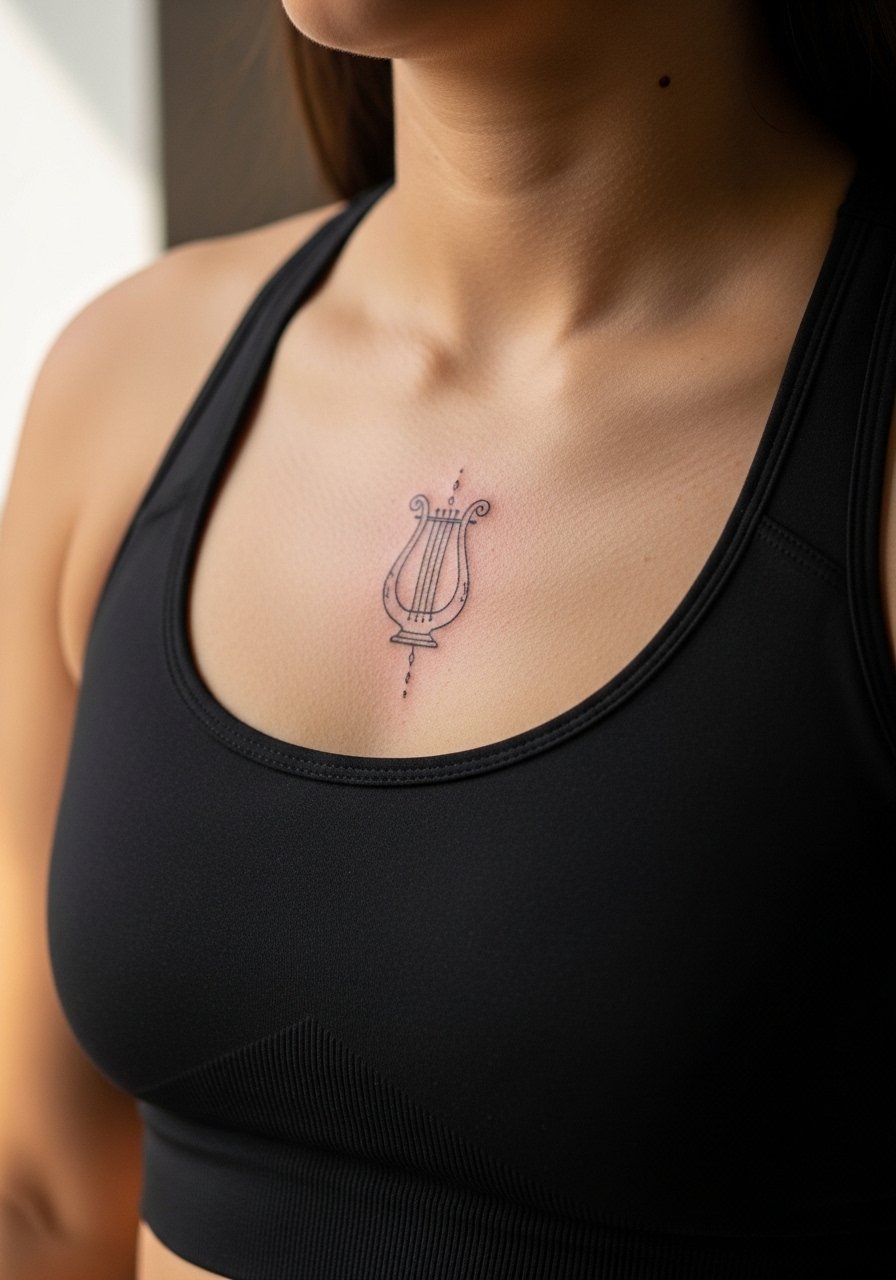
3. Apollo Lyre, Center Chest
A small lyre centered on the sternum reads like an emblem for Apollo and suits a quiet, symbolic tattoo approach. For this spot ask your artist to keep the lyre roughly two to three inches across so string spacing survives movement and short sleeves. Sternum work splits artists into two camps. One camp warns that fine line on sternum moves too much and blurs quickly. The other camp says with controlled depth and slightly larger spacing it settles fine. Ask your artist where they sit on that debate before booking. Session feel is more intense near the bones, and you should plan for a single session with breaks. For the appointment, wear a fitted sports bra that the artist can shift, so the stencil lines sit straight.
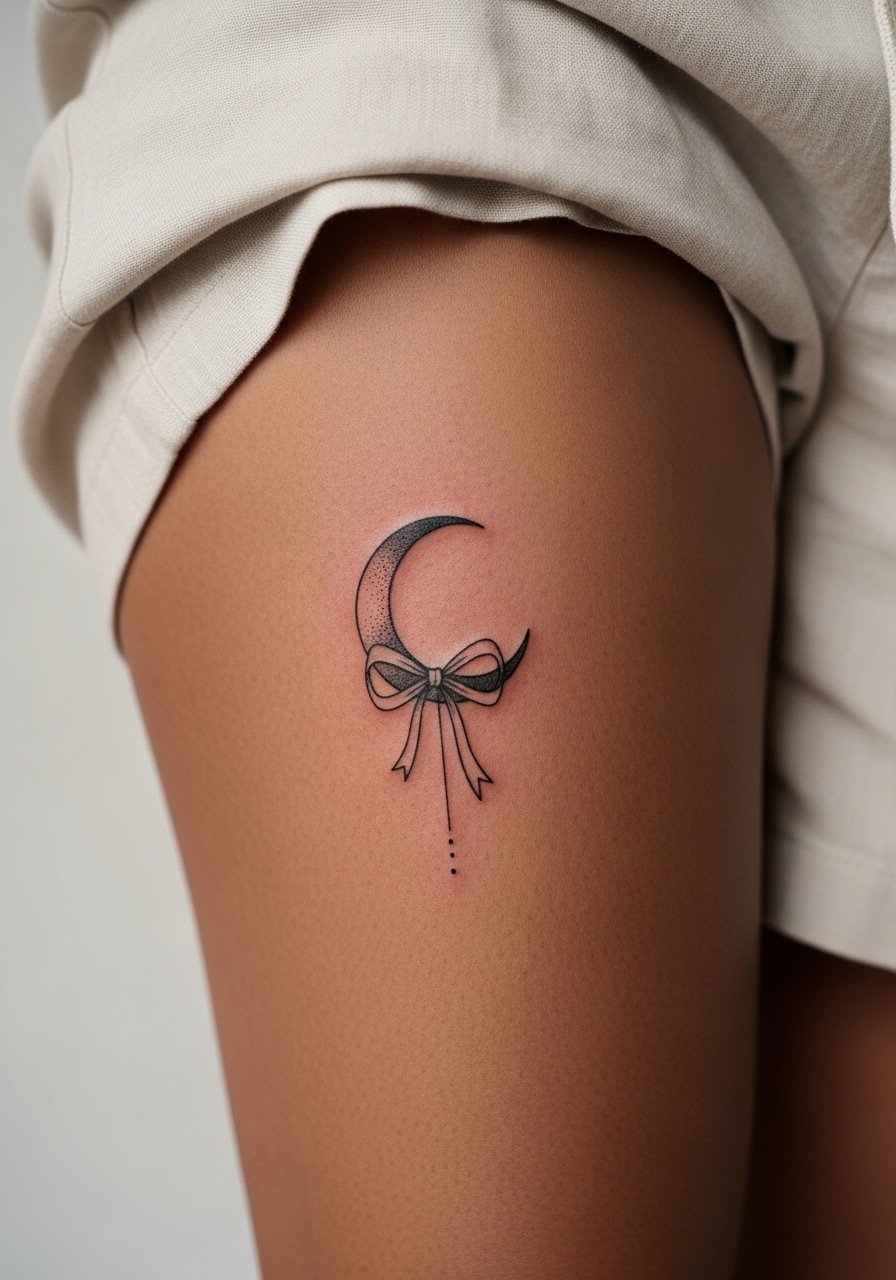
4. Artemis Bow and Crescent, Outer Thigh
A bow and crescent for Artemis works beautifully as an outer thigh piece because the skin there holds saturation and lets slightly denser linework age well. Tell your artist you want gentle tapering on the bow limbs and stipple shading on the crescent for texture that softens gracefully over time. Outer thigh sessions are lower on pain and often feel like long, steady buzzing during a single long sitting. A common mistake is placing the design too close to the groin where friction and clothing rub accelerate fading. For the session wear loose drawstring linen pants so the artist can roll the leg without pressure and you leave comfortable.
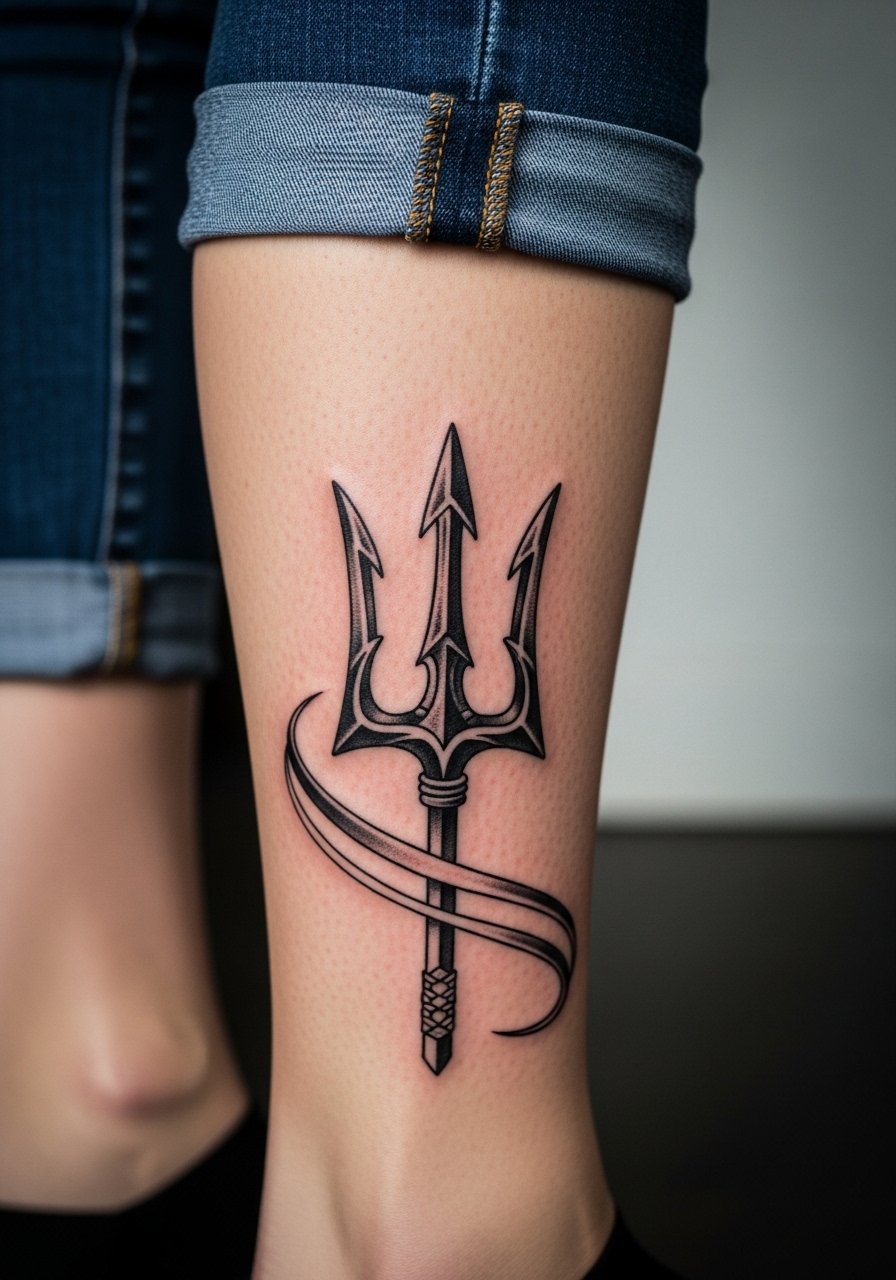
5. Poseidon Trident, Calf Wrap
A vertical trident on the calf reads well while you walk and ages predictably if the trident uses a mix of bold stems and narrower internal detail. Ask for a thicker outer stem and lighter interior lines so the silhouette stays recognizable as the ink migrates. Calf pieces are often one to two hours depending on size and have moderate pain. A frequent misstep is over-detailing the tines too close together which can blur. Pair with rolled-up jeans or a loose button-down over shorts to show the trident in warm months.
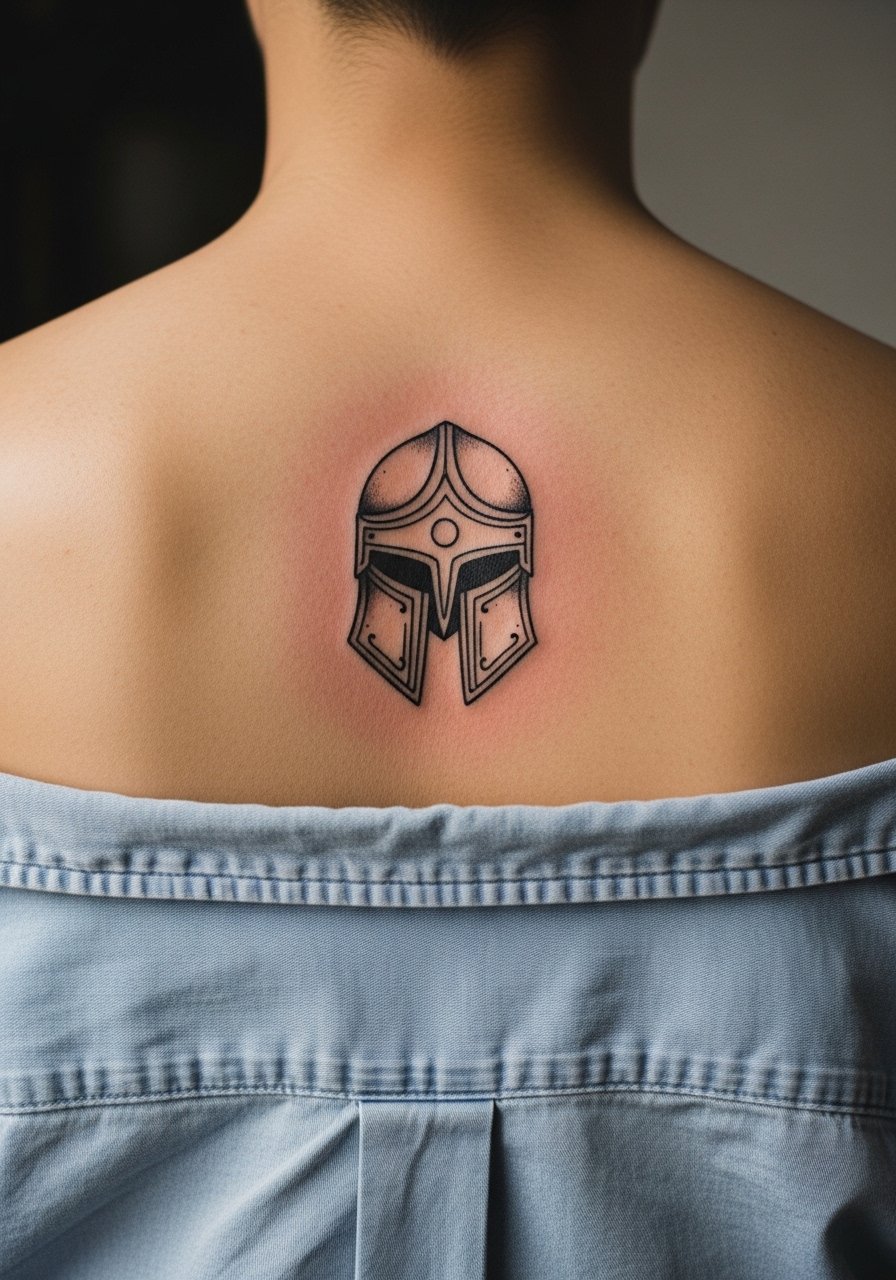
6. Hades Helm, Upper Back
A stylized helm for Hades makes a strong upper-back statement when centered between the shoulder blades with crisp linework and a hint of stipple shading for depth. For this placement bring photos showing scale because a helm that is too small loses form once healed. Upper back sessions can be briefer but expect some sore muscle twinge the next day. The biggest mistake is asking for tiny fine details at the helm crest that vanish into saturation in two years. For showing it off, a button-down shirt worn backwards or open-back top frames the helm while keeping the area covered when you need it.
Studio Day Picks
The chest, thigh, and calf pieces above ask for different prep than wrist and collarbone work, and a few specific items make the session and the first week smoother.
-
Stencil transfer paper kit. Lets you preview line placement on curved areas like the sternum and thigh so you can adjust scale before the needle touches skin.
-
Topical numbing cream. Applied as directed about 45 minutes before helps take the edge off for upper back and sternum sessions without changing how the ink sits.
-
Thin protective film roll. Useful for calf and thigh pieces where clothing rub can cause scabbing to catch during the first 48 hours.
-
Fragrance-free gentle body wash. Cleans the area after light scabbing without stripping oils that keep fine line work intact.
-
Aquaphor healing ointment. Thin application for the initial days locks in moisture for areas like the collarbone where linework depends on crisp edges.
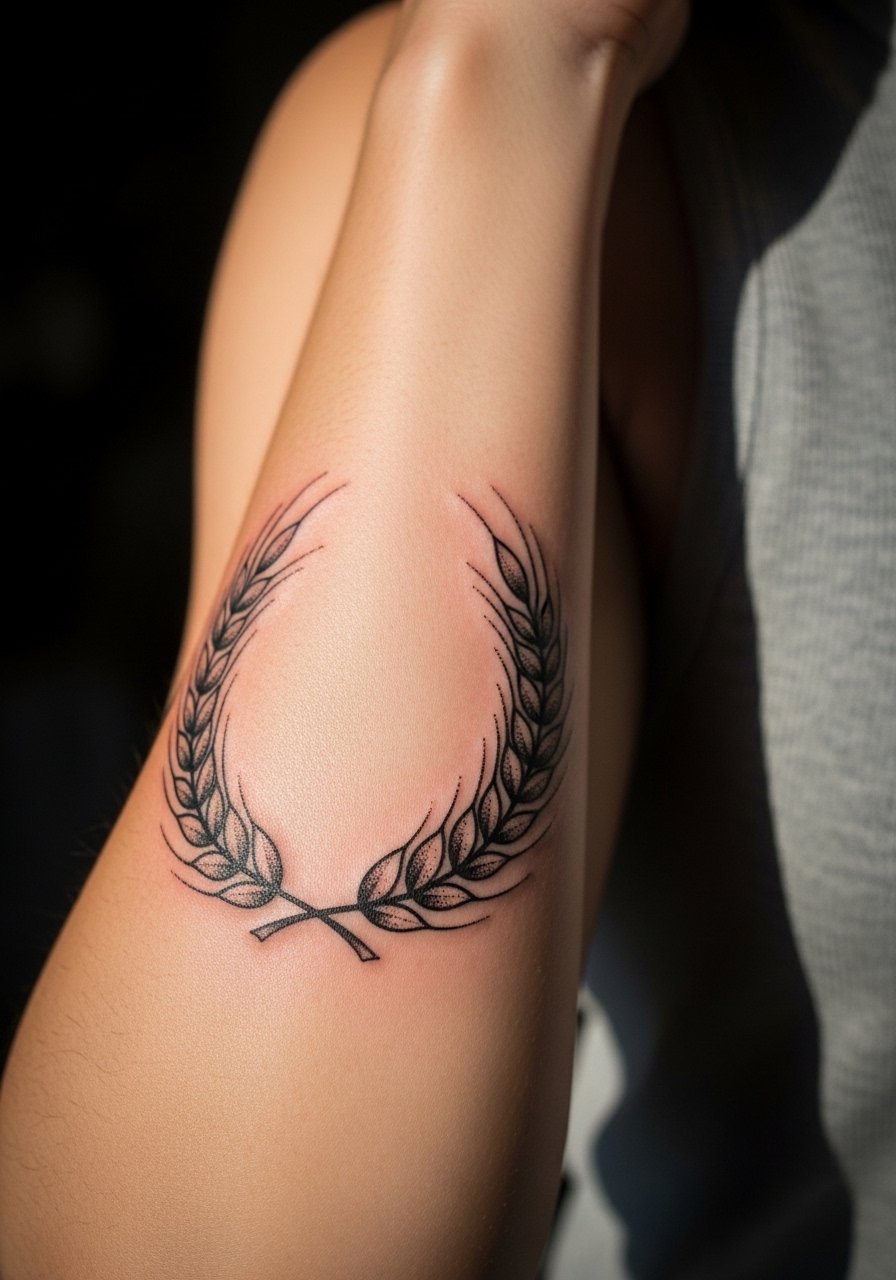
7. Demeter Grain Wreath, Forearm
A grain wreath for Demeter suits the forearm because the flat surface keeps linework readable and allows for subtle stipple shading within the grains. During consultation ask for midweight outside lines and soft dot work inside so the wreath retains texture at 1 year and 5 years. Forearm placement is moderate pain and often done in a single hour-long session if compact. A common error is requesting ultra-fine stems that disappear into the skin over time. For showing it off, roll sleeves and pair the wreath with a racerback tank or cuffed linen sleeves that keep attention on the mid-forearm.
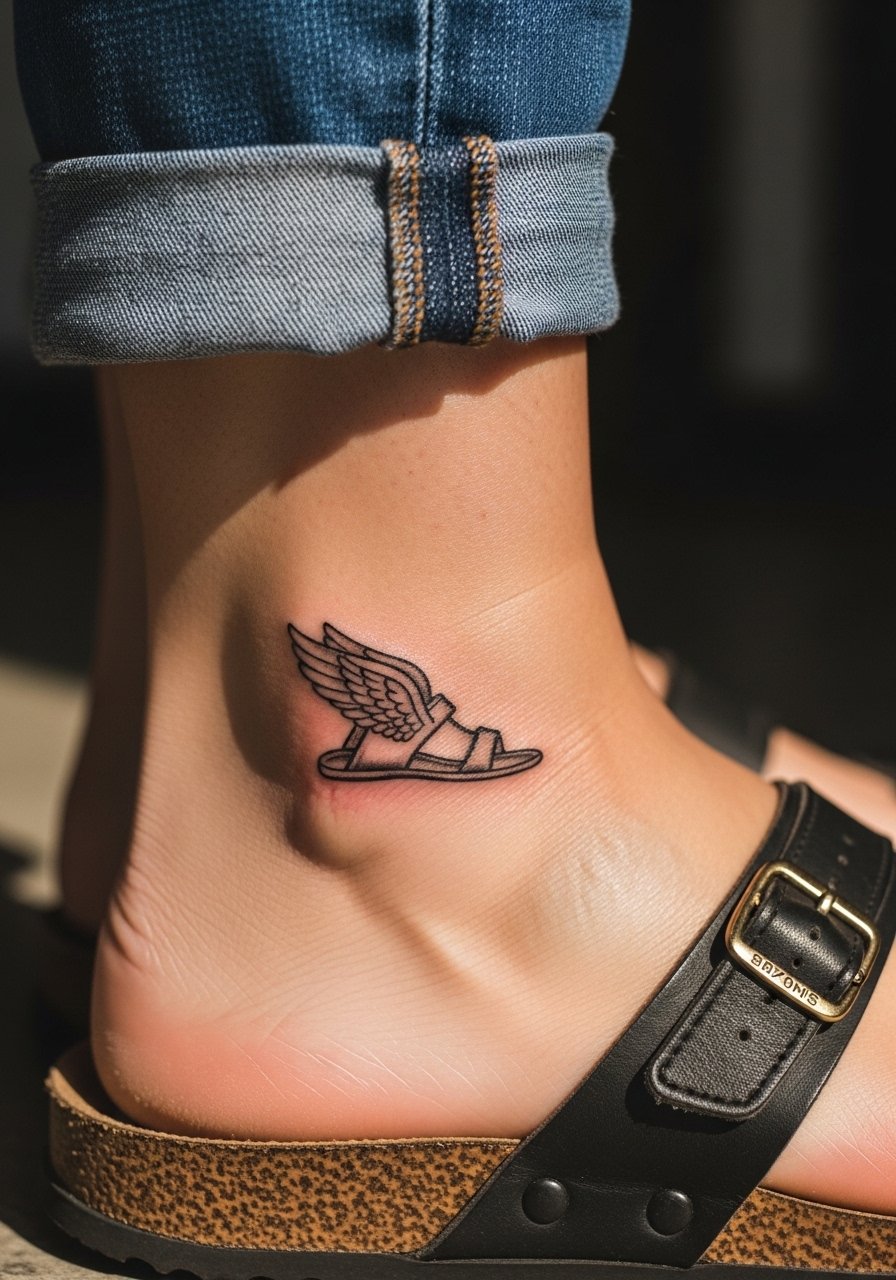
8. Hermes Winged Sandal, Ankle
A tiny winged sandal for Hermes is ideal on the outside ankle or just above the Achilles, but avoid placing it directly over bony ridges where lines can drag. Ask for simple contour lines and a tiny area of saturation at the sandal base to anchor the wings. Ankle tattoos can sting more because of nerve endings and thin skin. Expect a short session and quick aftercare but plan for a touch-up in two to three years if you are active. For the session wear jeans you can roll up and a pair of sandals or slides so the artist has unobstructed access and you leave without rubbing the area.
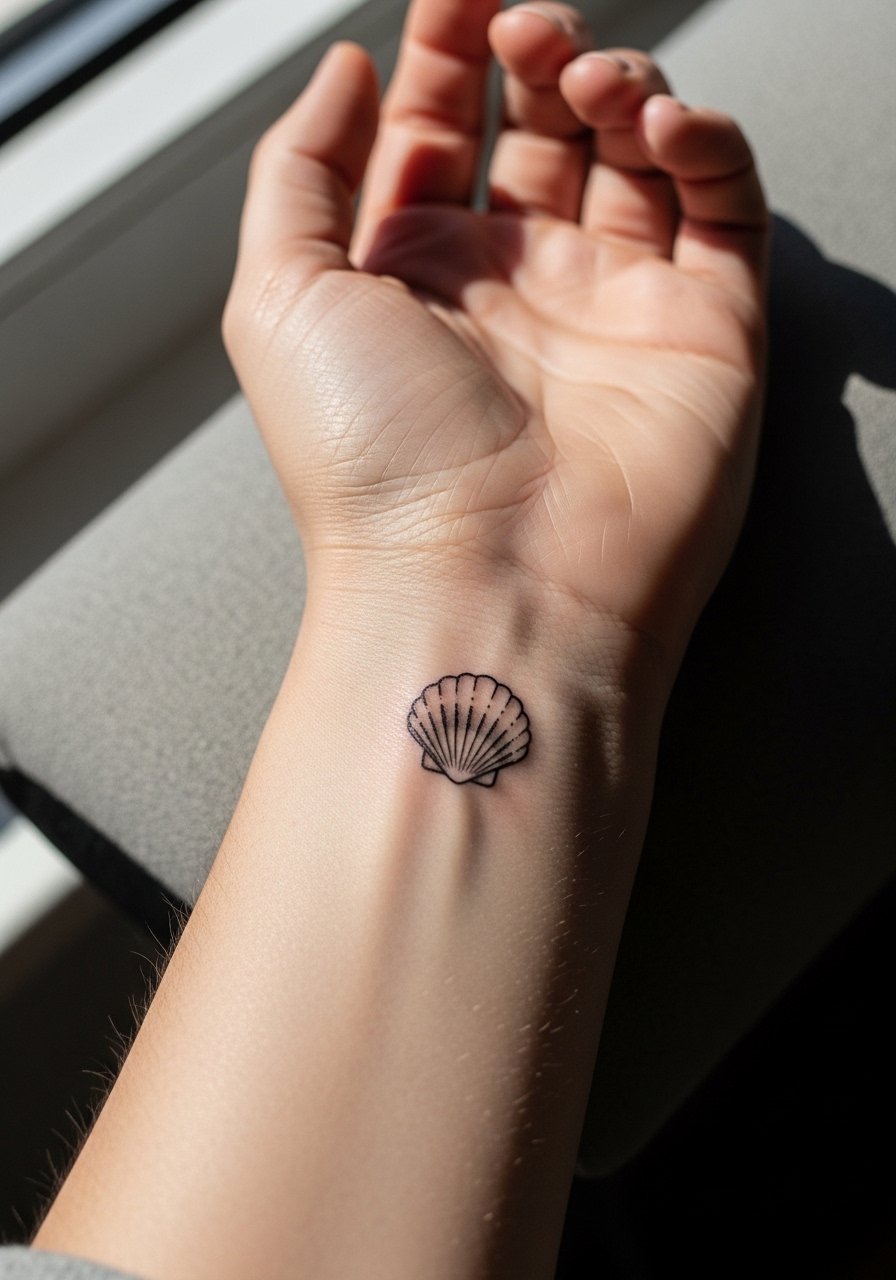
9. Aphrodite Seashell, Wrist Band
A small seashell or shell band across the inner wrist suits Aphrodite and works best when the shell silhouette is bold rather than intricate. Tell the artist you prefer solid contours with slight negative space so the shell keeps its shape as the wrist moves and the skin flexes. The inner wrist can be sensitive, so sessions feel sharper than the forearm and may require a short break. The frequent mistake is asking for filigree inside the shell that blurs from washing and friction. Pair the design with stacked bracelets or a minimalist watch to frame the wrist without covering the shell.
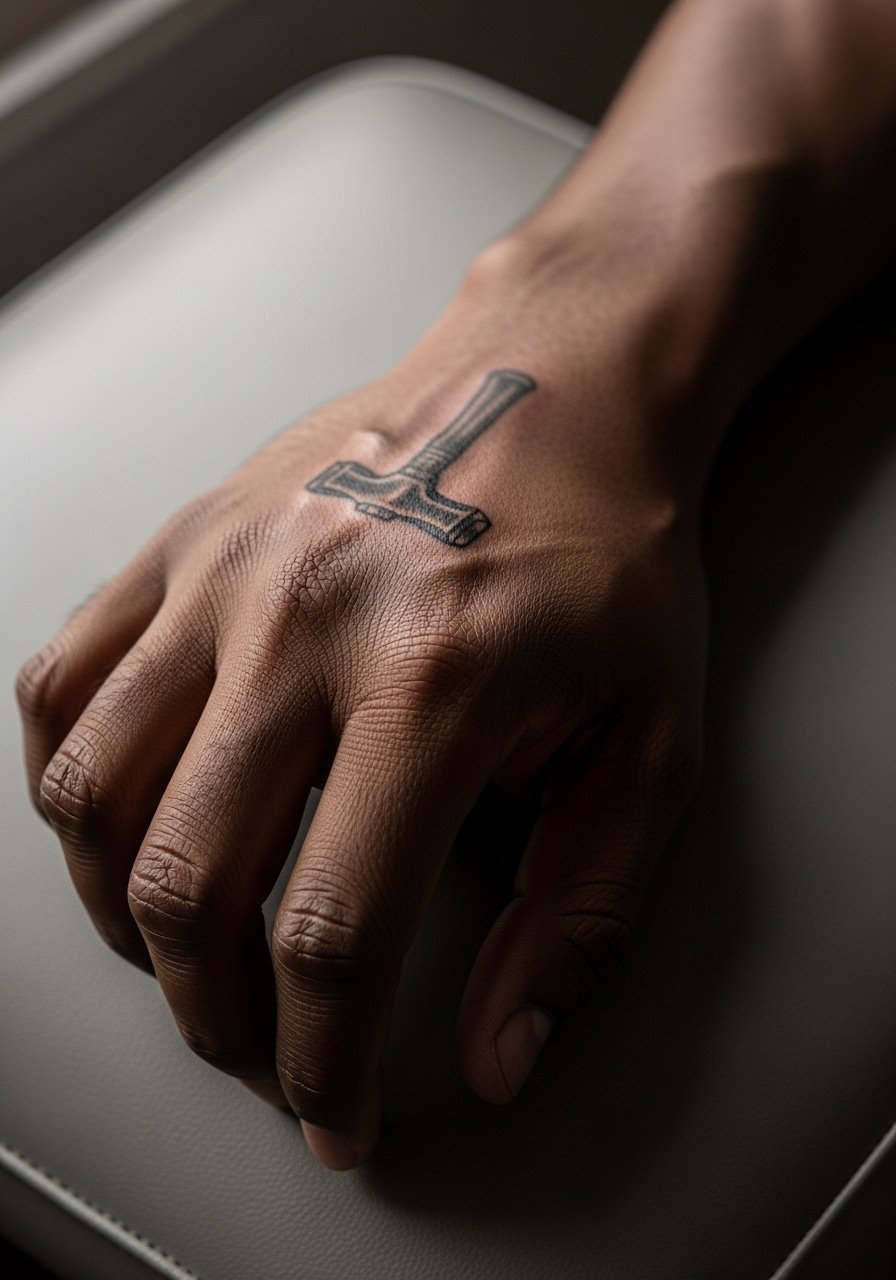
10. Hephaestus Hammer, Knuckle or Hand
A tiny hammer for Hephaestus on the hand or knuckle is bold but the location ages quickly because of washing and abrasion. Artists split on hand tattoos. One camp says hands are a fast path to migration and early fading because of constant friction. The other camp argues that with heavy, shallow saturation and acceptance of periodic touch-ups you can keep a crisp design. If you go for it, request heavy contour lines and accept touch-up timelines around year two. Hand work stings and often requires multiple short passes. Hand tattoos still affect hiring in some industries so consider placement before booking.
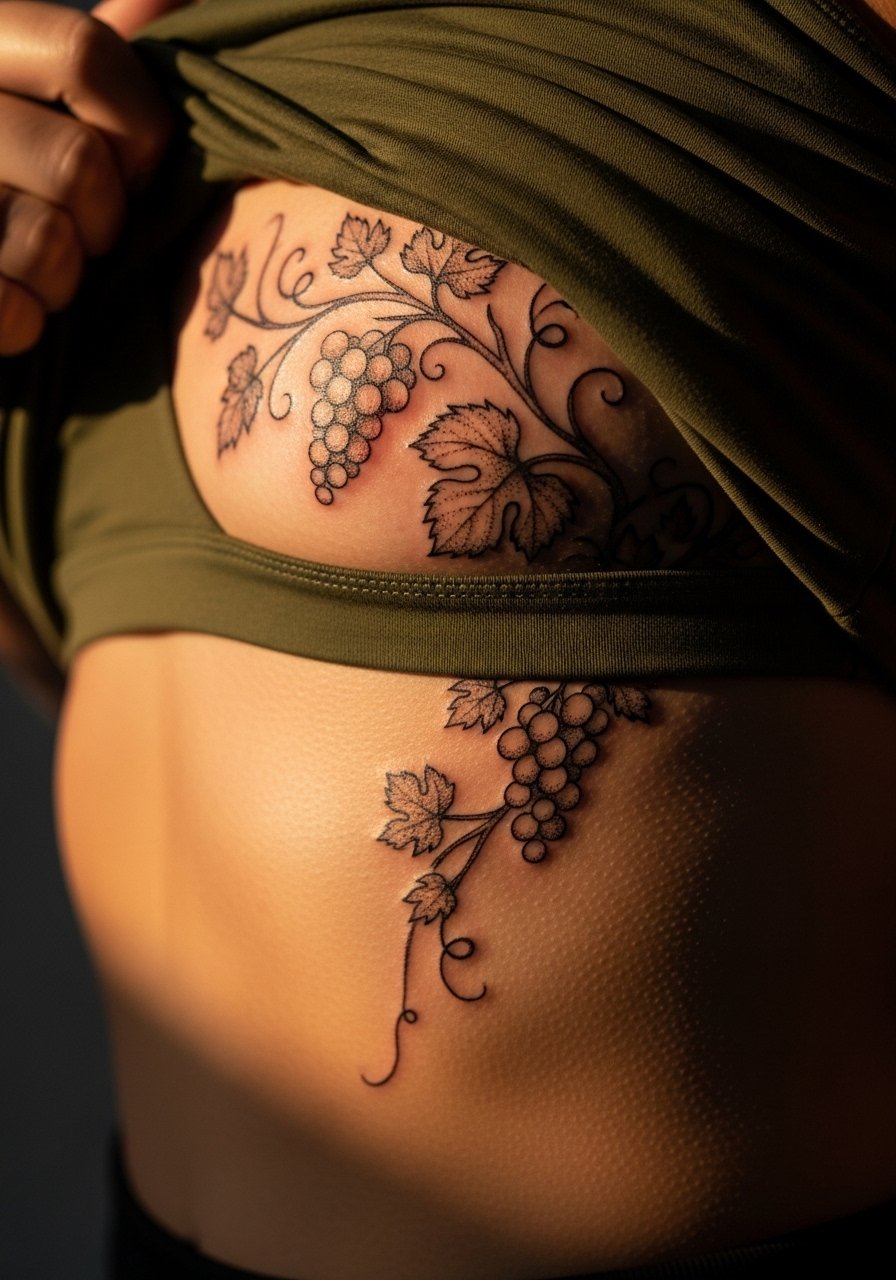
11. Dionysus Grapevine, Ribcage
A flowing grapevine for Dionysus suits the ribcage because the vertical stretch lets the vine breathe and the leaves use stipple shading to age gracefully. For this area ask your artist to scale the vine with open spacing and to avoid tiny veins in the leaves that collapse into dark smudges over time. Ribcage tattoos can be one of the more painful sessions because of the proximity to bone and breathing motion, expect breaks and plan for a longer single session. Artists disagree about fine line on ribs. One group warns the skin there shifts too much and blurs fine detail quickly. The other group insists that proper spacing and depth let fine lines settle fine. Decide after you hear which side your artist favors. For the appointment, wear a cropped top you can lift to expose only the side torso.
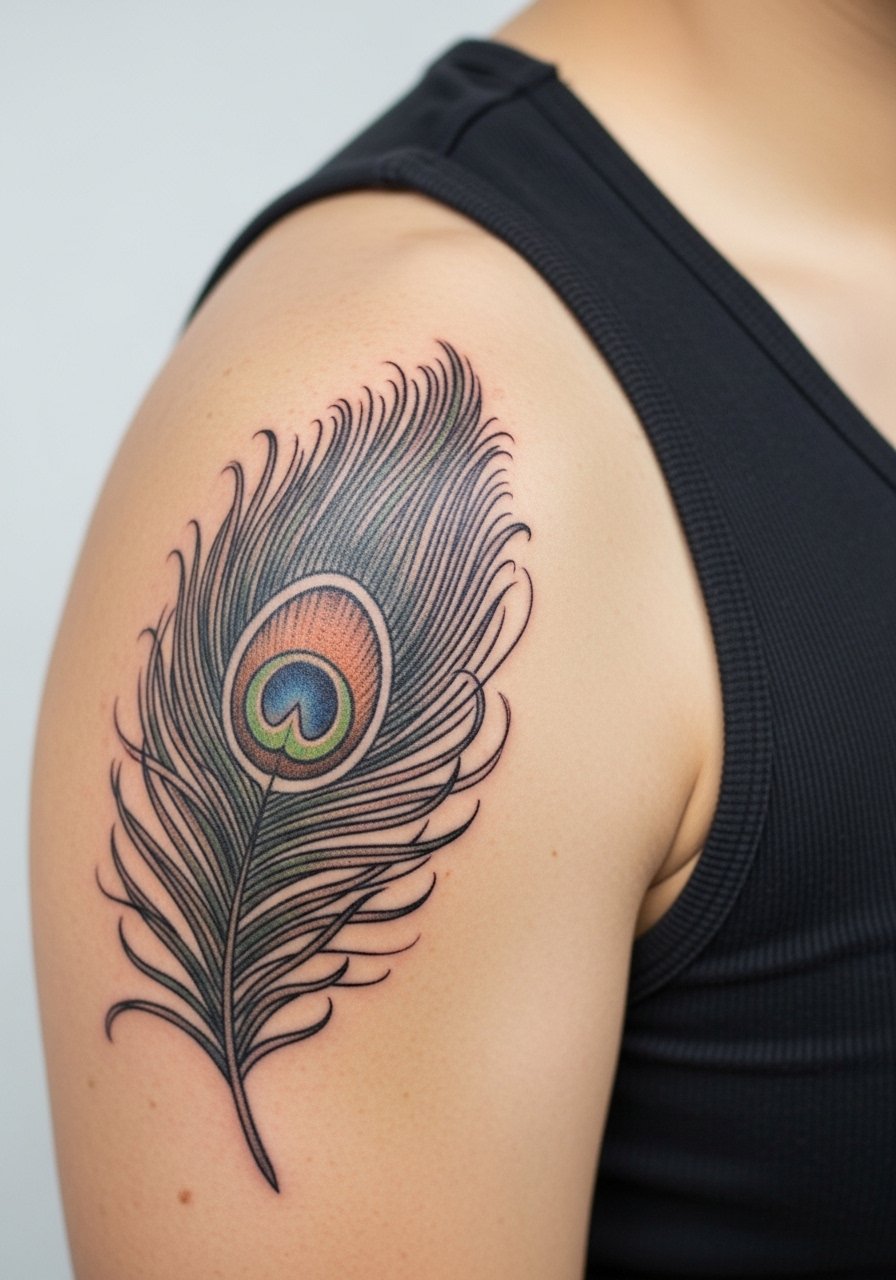
12. Hera Peacock Feather, Shoulder Cap
A single peacock feather for Hera on the shoulder cap looks dynamic and takes advantage of curved anatomy to show motion in the quill. Request a feather with a slightly thicker rachis and soft stippling in the eye so the detail reads at six months and beyond. Shoulder caps are moderate pain and usually done in a one to two hour session depending on size. Common mistakes include overloading the feather eye with micro dots that congeal. For the session wear a loose tank top so the artist can lift the strap and you leave without fabric rubbing the fresh ink.
13. Helios Sunburst, Upper Back Near Nape
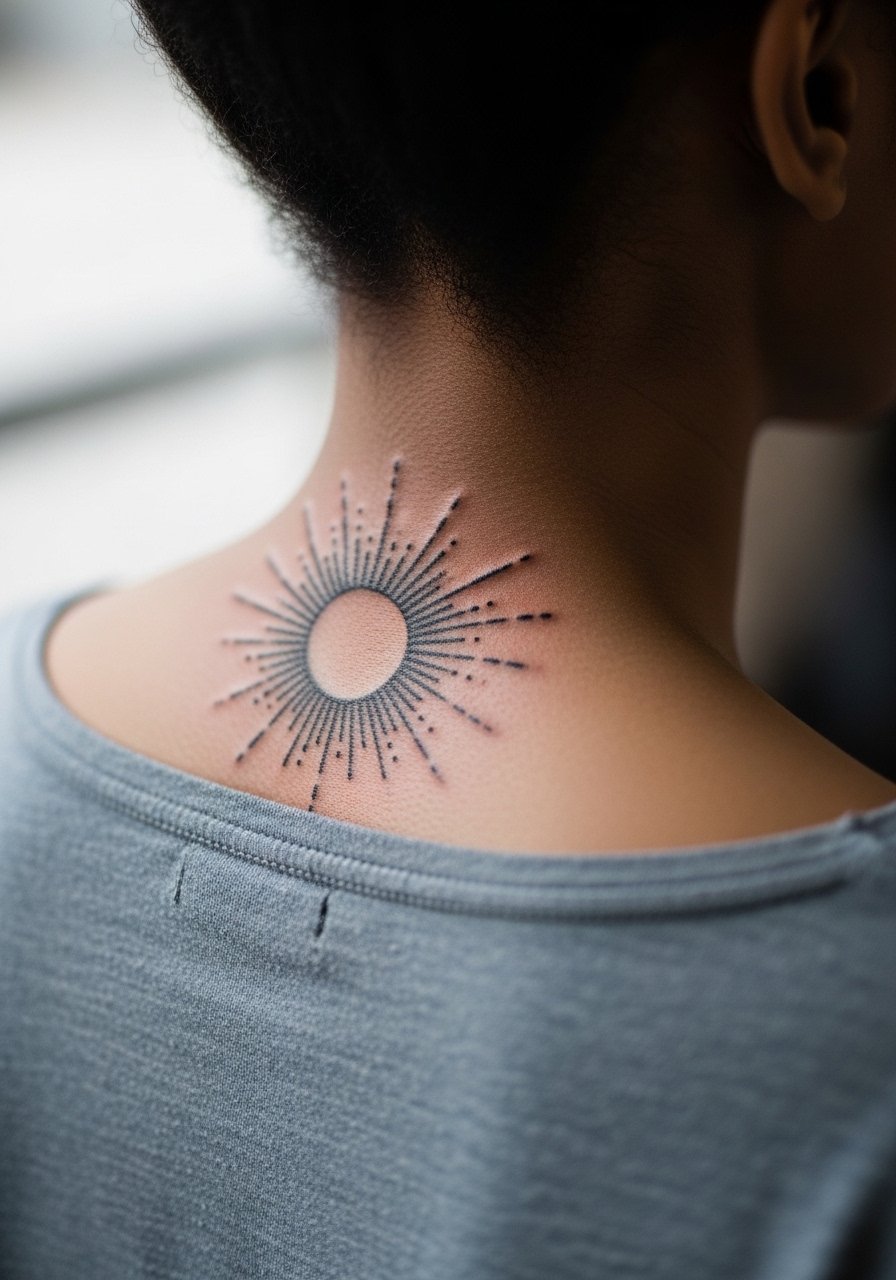
A radiant sunburst for Helios placed high on the upper back near the nape works best with alternating thick and thin rays to avoid a dense central blotch. Ask for wider spacing between rays and gentle stipple in the core so it keeps structure when the skin stretches. Upper-nape work can be slightly tender, and you might prefer short breaks. The error is asking for ultra-fine rays that run together over time. For the session, wear a wide-neck shirt you can pull aside and consider a lightweight open-back top for evenings when you want to show the piece.
14. Eros Arrow, Finger Side
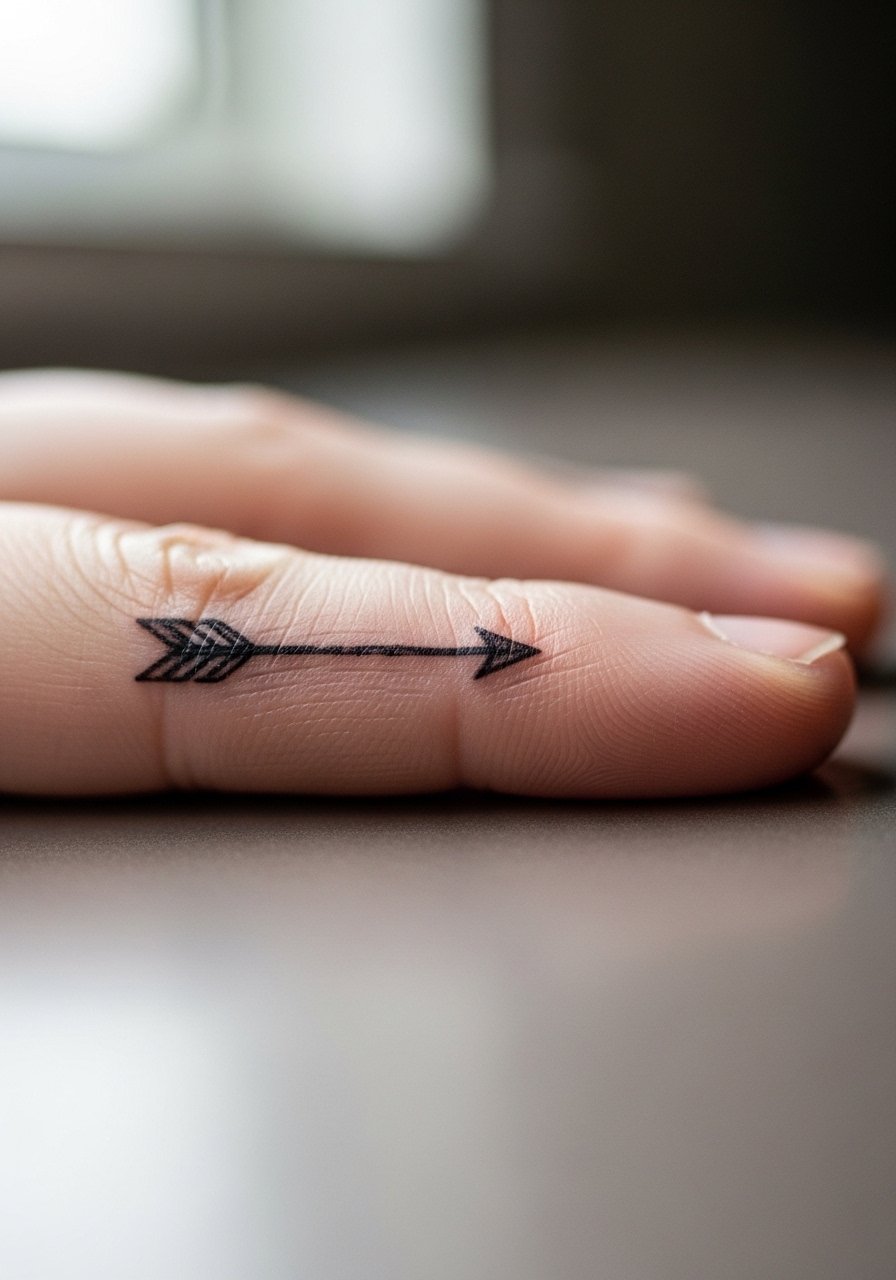
A tiny arrow for Eros on the finger side is subtle and intimate but very prone to fading and blowout. Keep the arrow simple with a solid shaft and minimal feathering to maximize longevity. Finger skin moves and receives constant washing so expect a touch-up around year one or two. A common mistake is squeezing too much detail into the tiny canvas which turns into a dark smudge. For showing it off, short sleeves and a single delicate ring keep attention on the finger without rubbing. Consider a slim band ring that complements the arrow.
15. Nemesis Scales, Side Neck
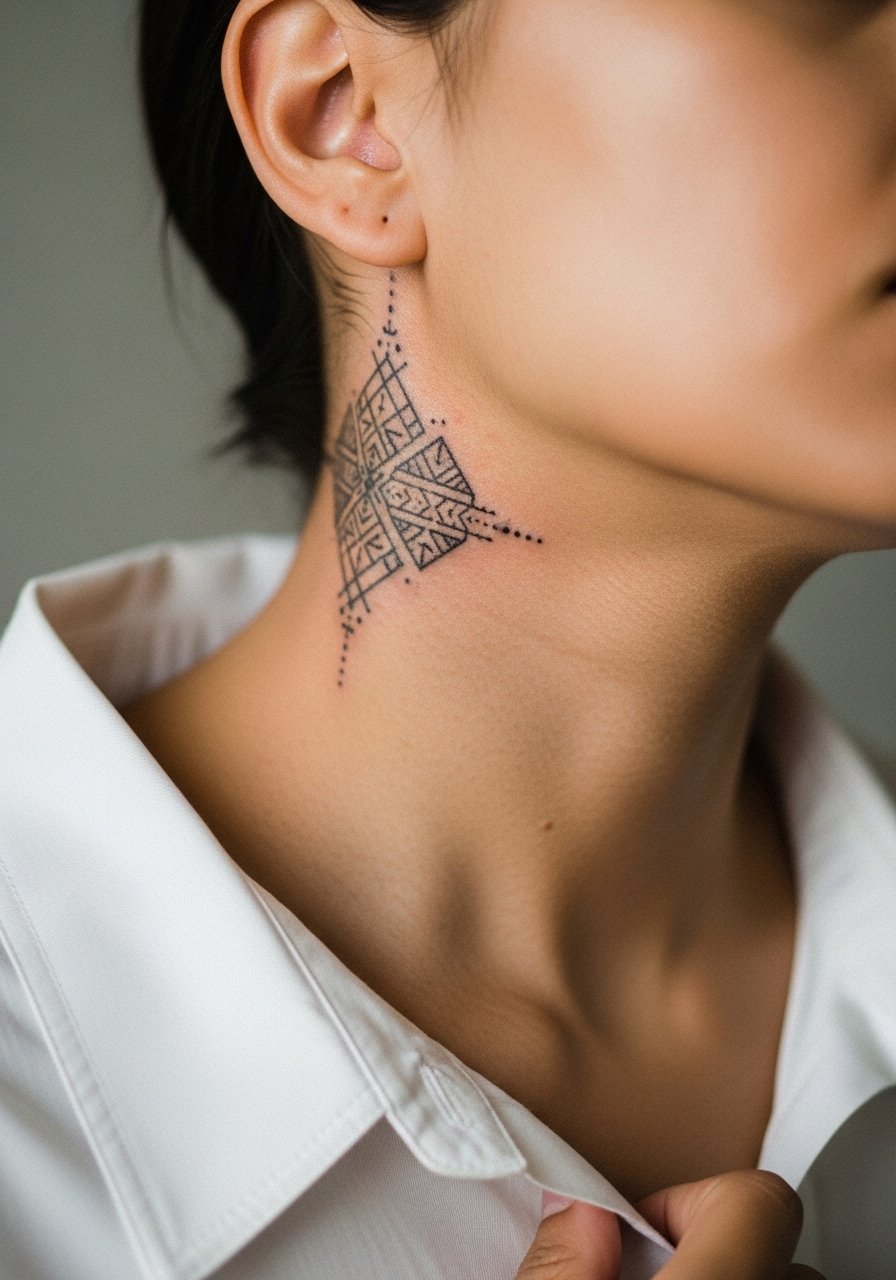
A set of small scales for Nemesis on the side of the neck makes a bold statement that demands careful placement and conversation about career considerations. For this spot specify a small, slightly raised scale pattern with midweight contour so the pattern keeps definition as the neck moves. Neck tattoos sit between moderate and higher pain because the skin is thin. The common mistake is requesting dense shading close to the hairline that can look muddy. For the session wear a wide-neck shirt that you can pull slightly to one side so only the neck area is exposed.
16. Nike Winglet, Top of Foot
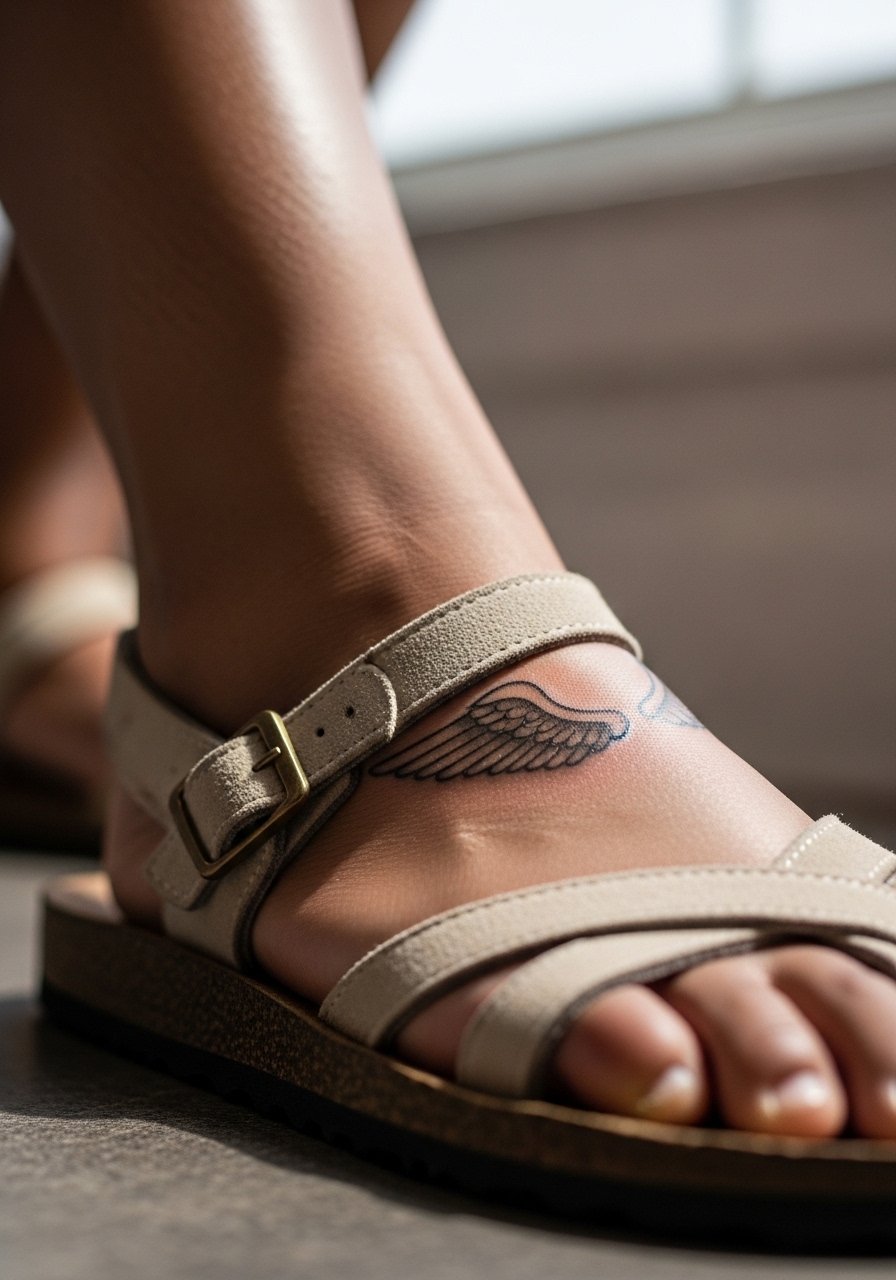
A tiny winglet for Nike on the top of the foot reads well when you accept that this is a high-touch zone that will need periodic touch-ups. Ask for a solid outer contour and light negative-space lines inside so the shape keeps its identity as the skin flattens with walking. Foot tattoos sting because of thin skin and often require multiple short appointments if you want extra saturation. Avoid placing it where shoe straps will constantly rub the design. For showing the piece, sandals or low-profile flats work best during healing and afterward.
17. Persephone Pomegranate, Hip
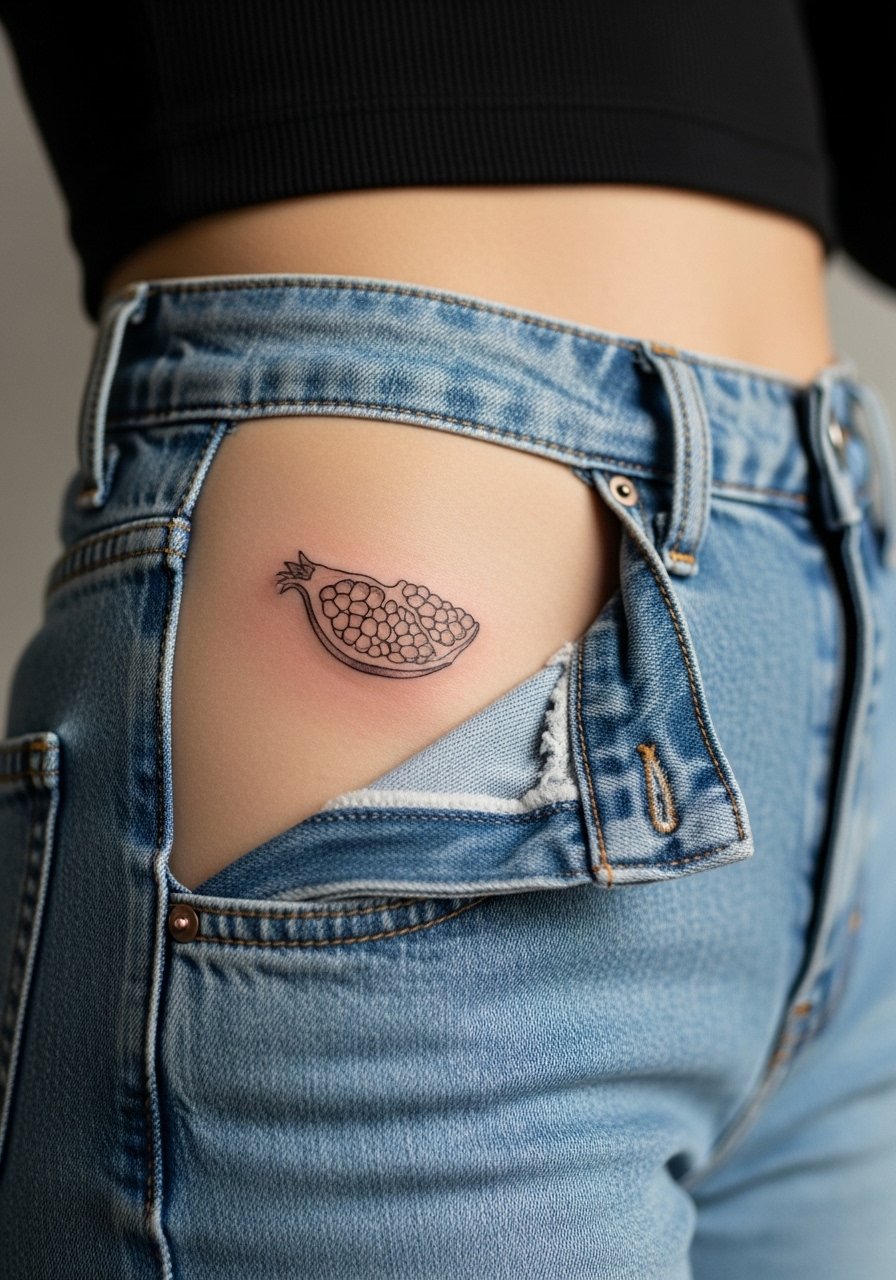
A pomegranate fragment for Persephone on the hip reads like a private emblem and works well with midweight linework and subtle dot shading to suggest seeds. For this intimate spot tell your artist you want the composition oriented toward garments so it peeks naturally when wearing high-waisted bottoms. Hip sessions can be one of the more forgiving placements for shading and saturation but expect some soreness when moving. The mistake is squeezing in tiny seed details that blur under high friction from waistbands. For the appointment wear high-waisted jeans or a swimsuit bottom you can shift slightly to expose only the hip area.
Frequently Asked Questions
Q: Will fine line portraits of gods like Athena hold up on the collarbone long term?
A: Fine line can work on the collarbone if you scale up the line weight a touch and add slight spacing between key features. The collarbone moves less than ribs and hands, so a midweight contour with minimal interior micro detail often keeps shape at year three. Ask your artist to show healed examples on similar skin tones.
Q: How quickly do ribcage pieces like a Dionysus grapevine need touch-ups?
A: Ribcage pieces often need touch-ups sooner than forearm work because the skin stretches with breathing and weight changes. I suggest budgeting for a check at year two, and expect the timing to depend on your daily friction and sun exposure. Choosing open spacing and stipple shading can delay the first touch-up.
Q: Are hand and finger designs for gods like Hephaestus and Eros advisable if I want longevity?
A: Hand and finger tattoos are doable but they age fastest because of frequent washing and friction. One side says avoid them if you want low maintenance. The other side says get them if you accept periodic touch-ups and heavier initial saturation. If you proceed, plan for a touch-up around year one or two.
Q: What should I wear to a sternum or chest session for an Apollo lyre?
A: Wear a fitted sports bra or a wide-neck top that the artist can shift so only the tattoo area is exposed. That keeps the rest of you covered while giving clean access to the center chest for straight stencil placement. Comfortable layers also help during longer sessions.
Q: Do mythic symbols need color to read as the god they reference?
A: Not necessarily. A single element like a trident or lyre reads as Poseidon or Apollo in strong black linework. Color can add mood and help separate elements but also increases touch-up needs. If you want color, ask for restrained palettes with solid saturation rather than fine watercolor washes.
