
Fine line and geometric trends look immaculate on feeds, but what keeps a piece readable five years from now is spacing, placement, and realistic expectations. I write this from time spent in shops and from watching portfolios age. Below are 21 geometric ideas for women that balance fresh visuals with how they actually heal and live on skin. Each entry includes what to ask your artist, how it changes with placement, and wardrobe tips to show it off.
1. Tiny Triangle Stack on Inner Forearm
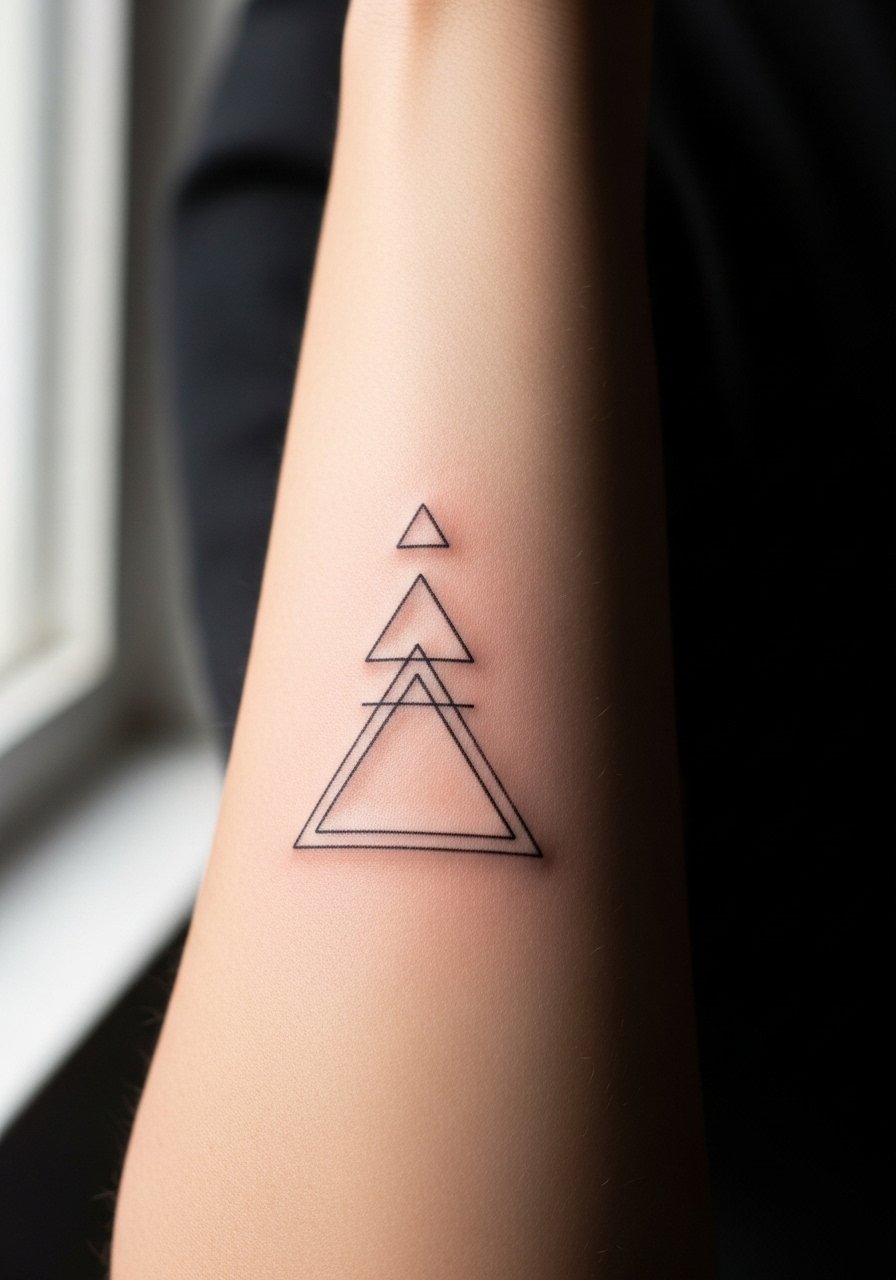
I often recommend stacked triangles when someone wants geometry that reads like jewelry. Ask the artist for consistent negative space between triangles and slightly heavier linework than the thinnest needle to avoid early merging. Pain on the inner forearm is mild and sessions are short, usually under an hour. The mistake is going too tiny so the shapes lose definition after a year. At six months lines feel crisp, at two years the thinnest lines may need a touch-up. For showing it off, roll up sleeves and wear a racerback tank to keep the forearm visible during warm months.
2. Geometric Mandala Near the Collarbone
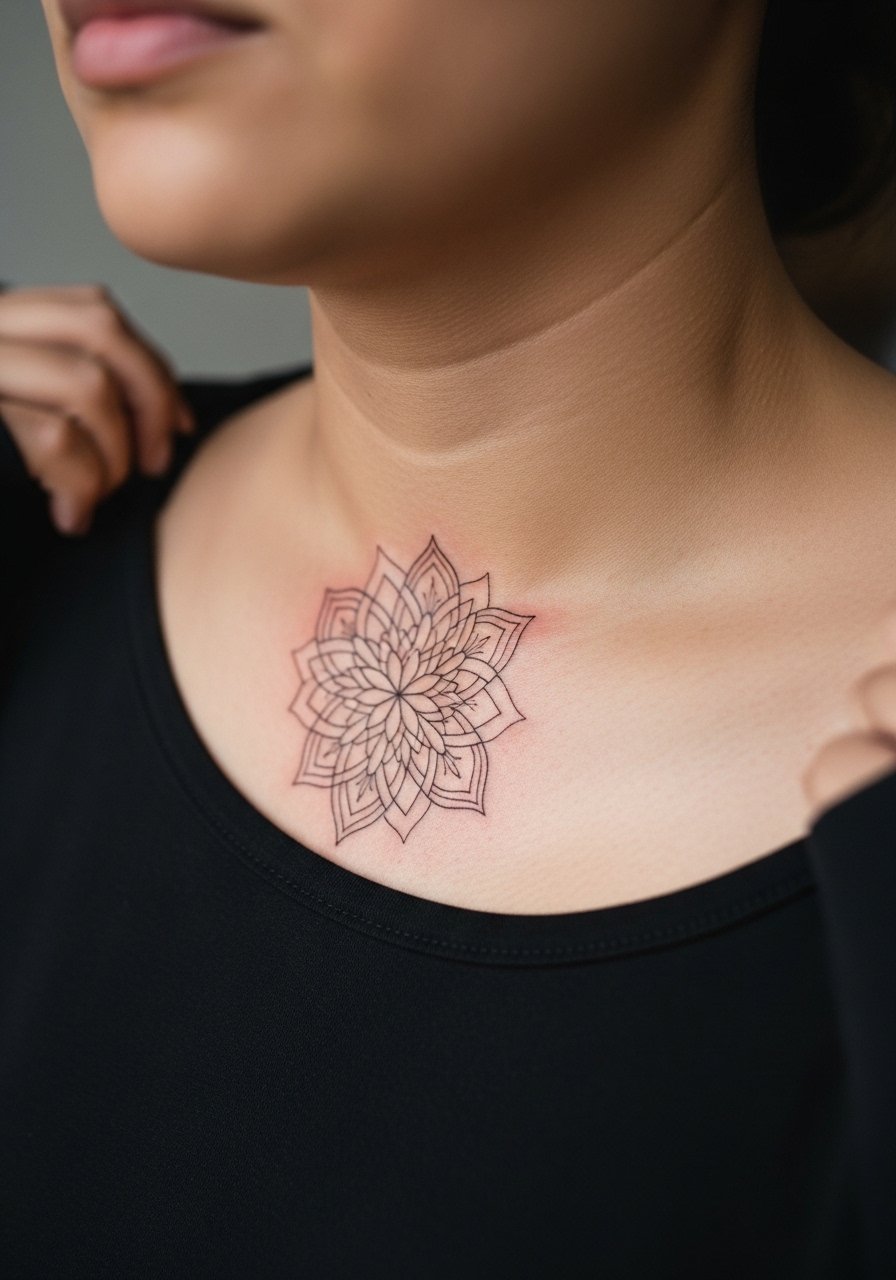
This placement reads like a pendant, so symmetry and spacing matter more than tiny detail. In consultation, ask for a central focal point with calibrated negative space so the dense areas do not merge over time. Collarbone skin moves with posture, so expect more fading at high-motion edges. Sessions are moderate length. A common mistake is packing a mandala with tiny stipple shading too close together. For outfit pairing, an open-neck blouse frames the artwork without covering it.
3. Chevron Bands on the Ankle
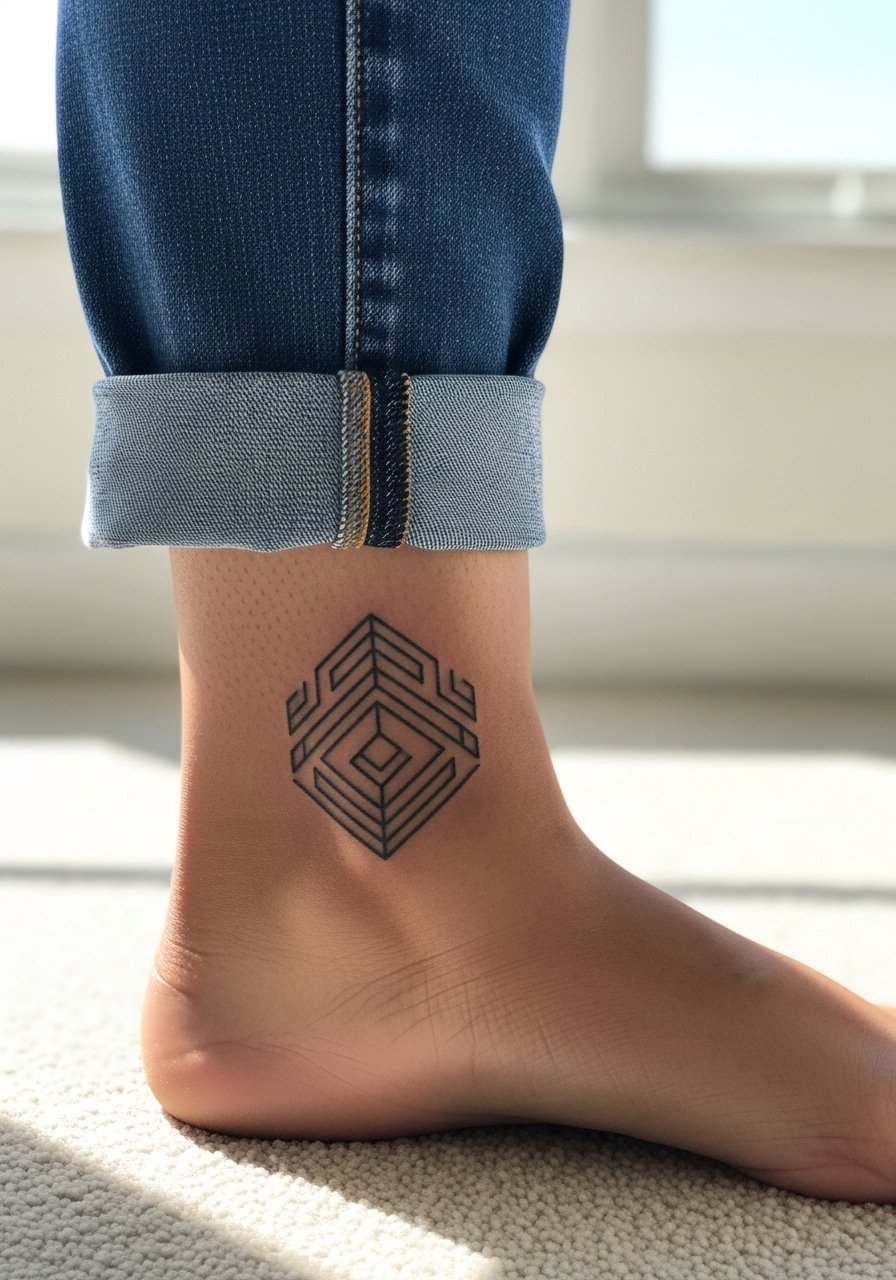
Ankle chevrons are great for someone who wants visible geometry without large commitment. The ankle sees a lot of friction from shoes and socks, so I tell clients to expect touch-ups earlier than on the forearm. Pain is sharp but sessions are short. The usual mistake is placing bands too low where shoe rubbing accelerates fading. For the session, wear pants you can roll up easily, and to show it off pair with strappy sandals that keep the ankle visible.
4. Geometric Linework Fox on Outer Thigh
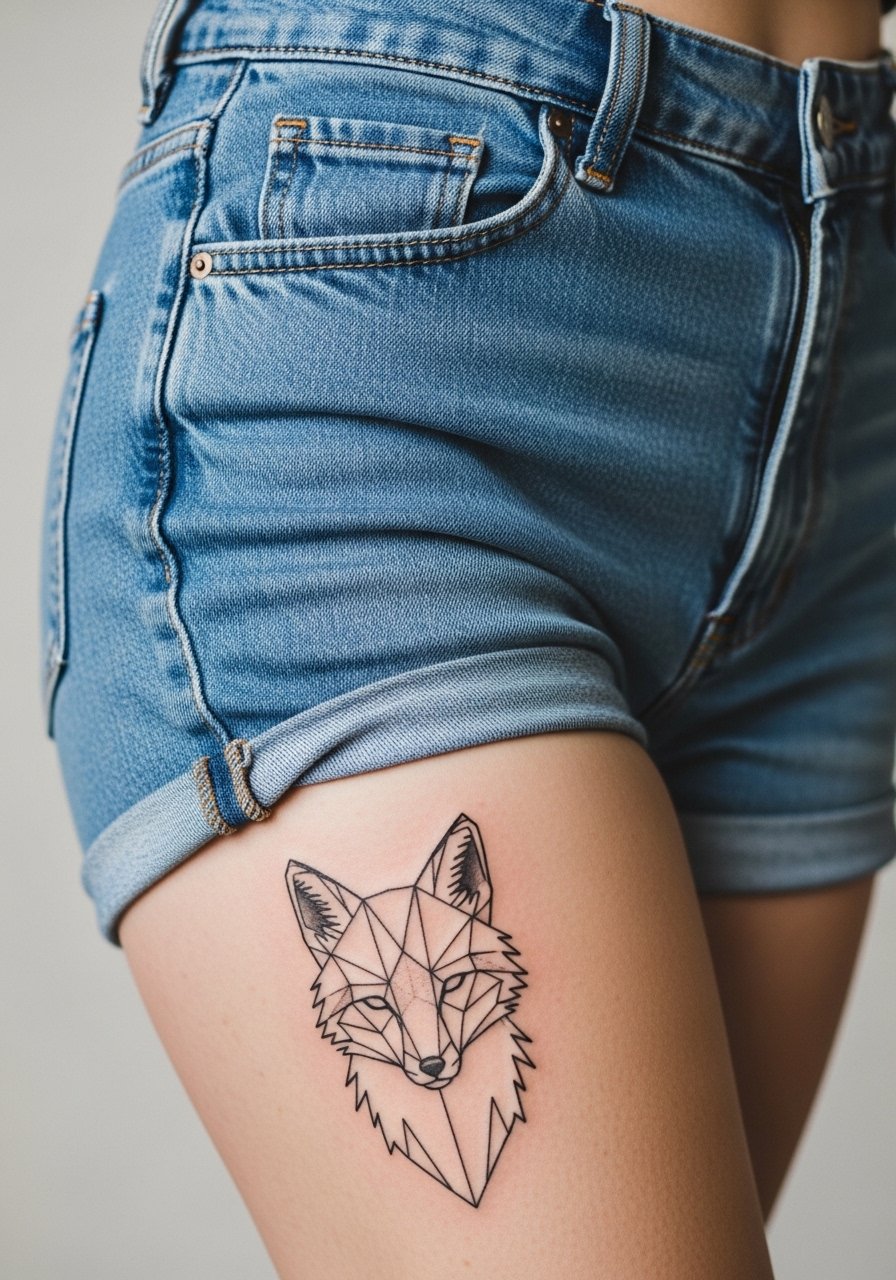
Outer thigh is forgiving for detail and holds linework well over time, which makes it a good spot for a geometric animal. Tell your artist you want solid negative space and mid-weight lines so the fox silhouette keeps its edge. Session time depends on size, but many of these fit into a two-hour block. A frequent error is too many tiny segments inside the animal, which blur earlier than broad planes. For session comfort, wear loose shorts and bring a high-waisted denim skirt you can shift during the appointment.
5. Minimalist Hexagon Cluster Behind the Ear
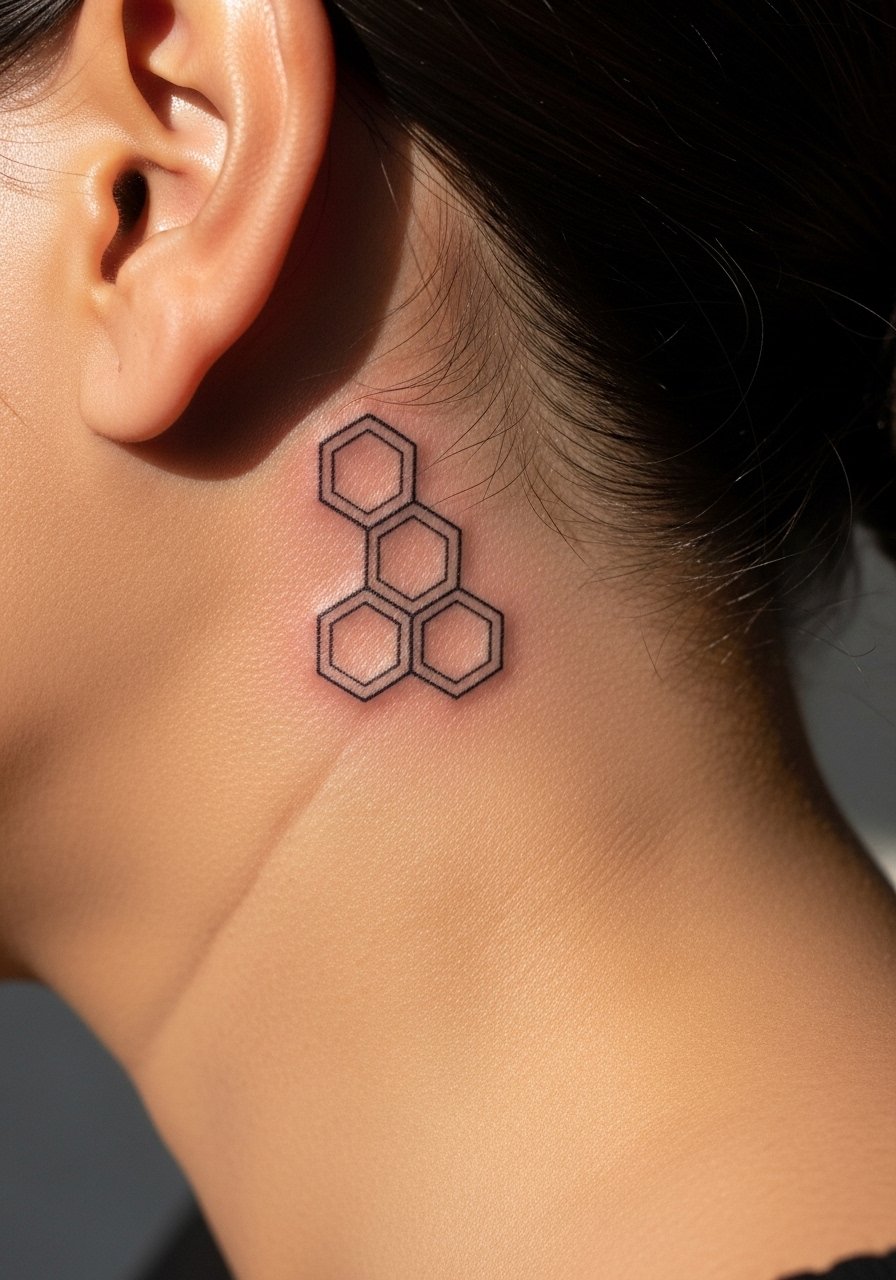
Behind-the-ear pieces read tiny and intimate. The skin there is thin so the artist must use conservative line weight. I advise clients to pick one or two hexagons rather than a dense cluster. Expect a shorter session and faster fading because of hair oils and contact. The common mistake is treating the area like the forearm; it needs bigger lines relative to its size. Because of the location, book an artist experienced with small placements by checking local convention lists and portfolio directories.
6. Dotwork Crescent Moon on Wrist
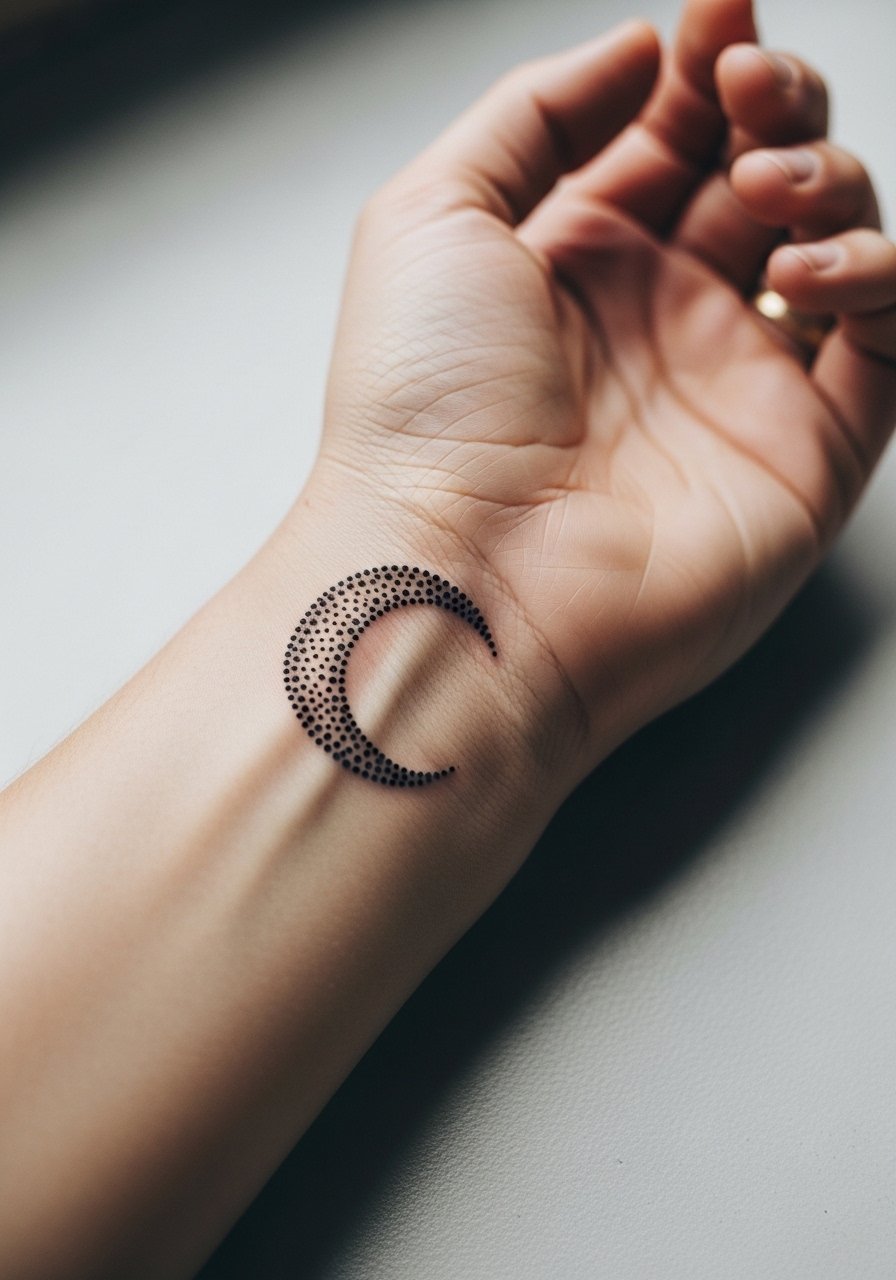
Wrist dotwork looks delicate but suffers from daily washing and bracelets. Tell your artist you want denser dots at the crescent's edge with clear spacing toward the center. Pain is light to moderate and sessions are short. Most clients see crisp dots at six months, and softening by year two in high-friction spots. A mistake is asking for near-microscopic dots that blend together. Pair this with a thin chain bracelet when you want the wrist to read like a curated accessory.
Pack Smart
The wrist and small hand pieces above heal differently from larger work, so a few focused items smooth out the session and the first week.
-
Stencil transfer paper kit. Lets you preview line placement on the forearm and wrist before committing, which helps avoid repositioning mid-session.
-
Topical numbing cream. Applied about 45 minutes before the appointment it eases the sharp sensation on ankles and wrists.
-
Breathable protective film roll. Useful for finger and wrist pieces where daily washing and friction are unavoidable.
-
Fragrance-free gentle body wash. Cleans healing areas without irritation for delicate linework on the forearm and chest.
-
Aquaphor healing ointment. Thin layers in the first days lock in moisture for fine detail without clogging the needle channels.
7. Geometric Compass on the Shoulder Blade
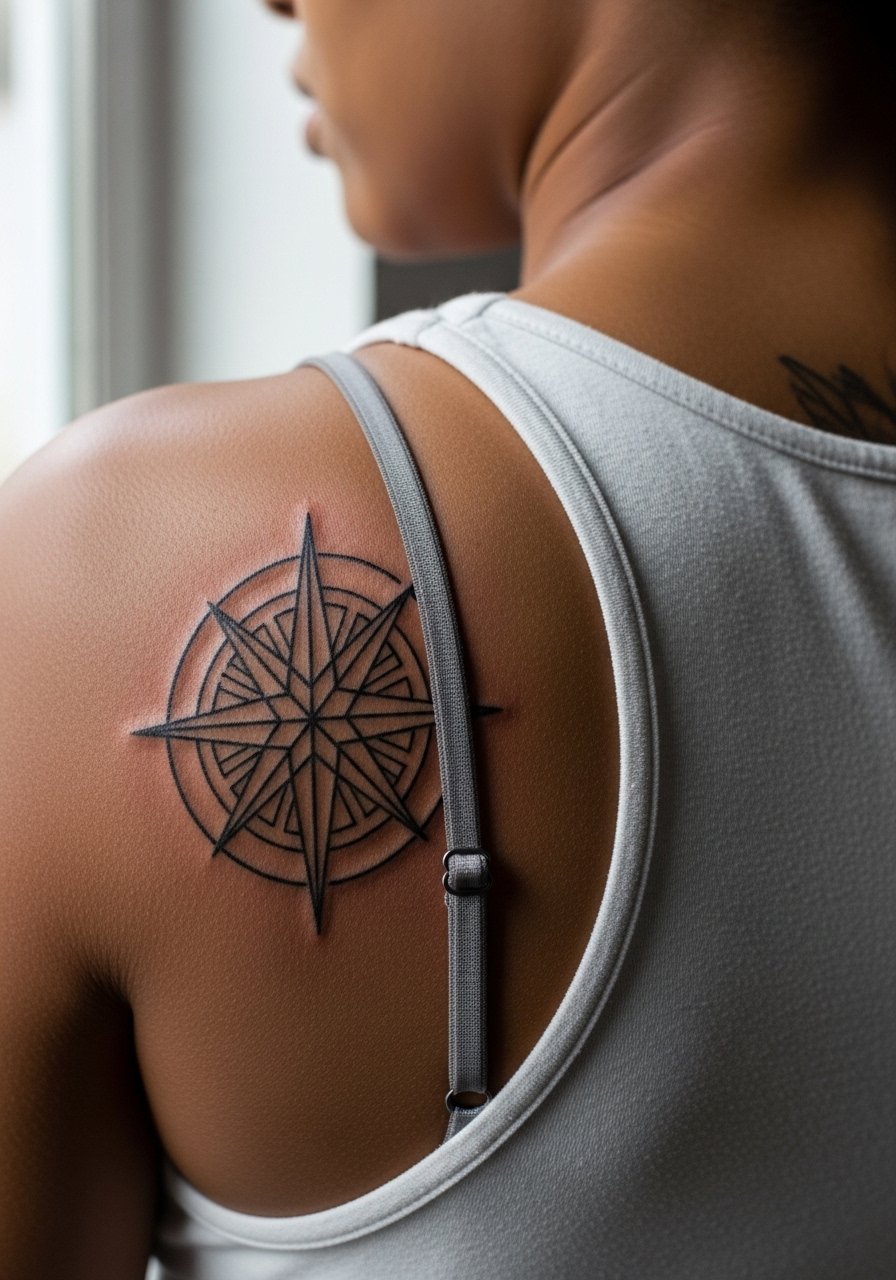
The shoulder blade takes larger designs well and the skin is stable, which makes it ideal for a crisp geometric compass. Ask for a clear center pivot point and slightly bolder outer rings so the compass keeps contrast over time. Sessions are mid-length and comfortable for most clients. A common mistake is filling too many tiny directional markings that merge. For wardrobe, an open-back dress showcases the piece on warm days without covering it.
8. Fine Line Mandala Sternum Piece
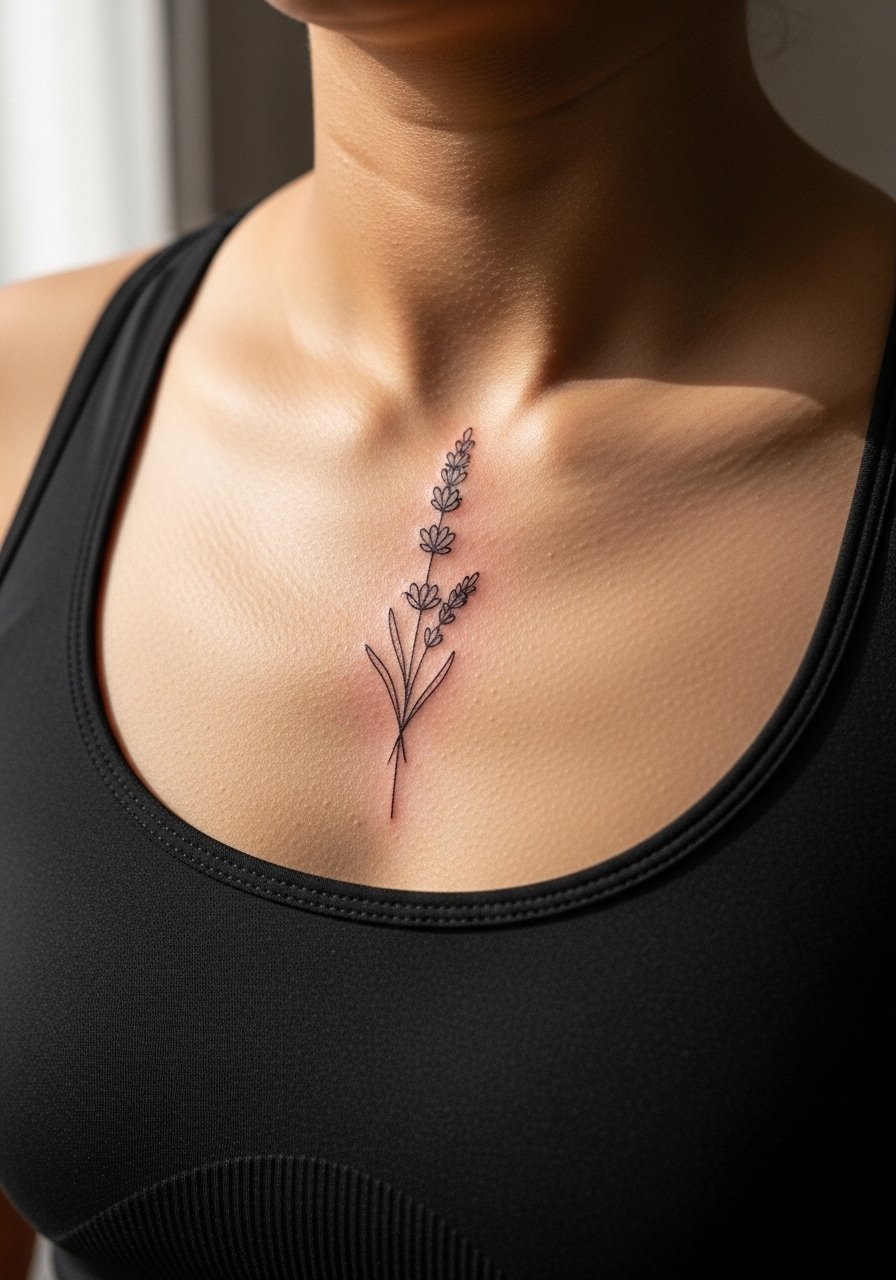
Sternum mandalas are visually impactful and demand precise spacing. Artists split on this placement. One camp argues the sternum's thin, moving skin blurs fine line work within two years. The other camp says with correct needle depth and spacing it settles well. Ask your artist which side they fall on and request mockups printed on the chest before booking. Pain here runs higher than an arm, and sessions may need breaks. For session wear, bring a strapless or zip-up top to expose the area without discomfort.
9. Stacked Geometric Rings on the Finger
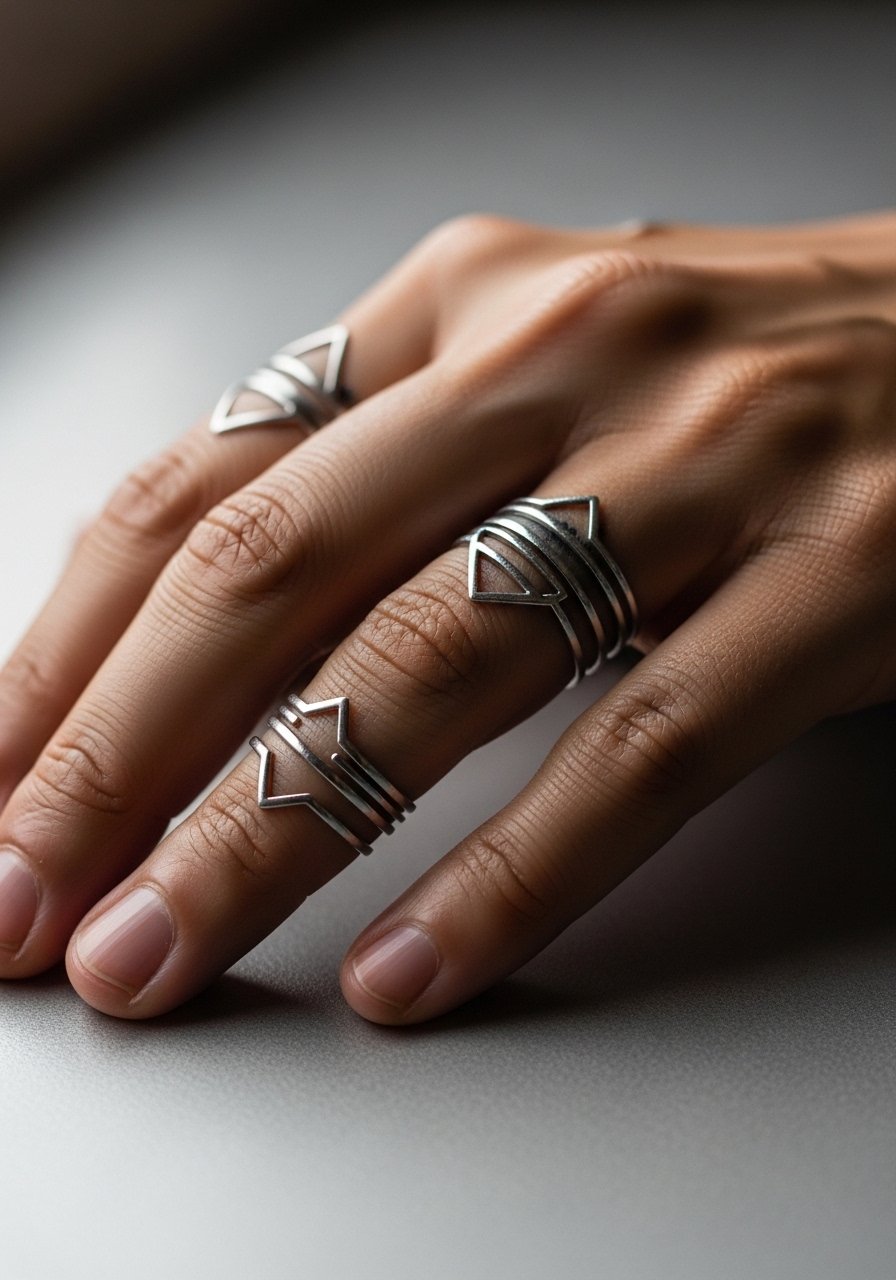
Finger bands read like jewelry but face rapid wear from hand use. I tell clients to expect touch-ups within a year if they type or wash frequently. Keep designs simple and avoid tiny inner textures that fade into blur. The common mistake is asking for multiple narrow bands right next to each other. For showing and hiding, wear a minimalist midi ring set that complements the ink without overcrowding the visual field.
10. Geometric Mountain Range on the Outer Wrist
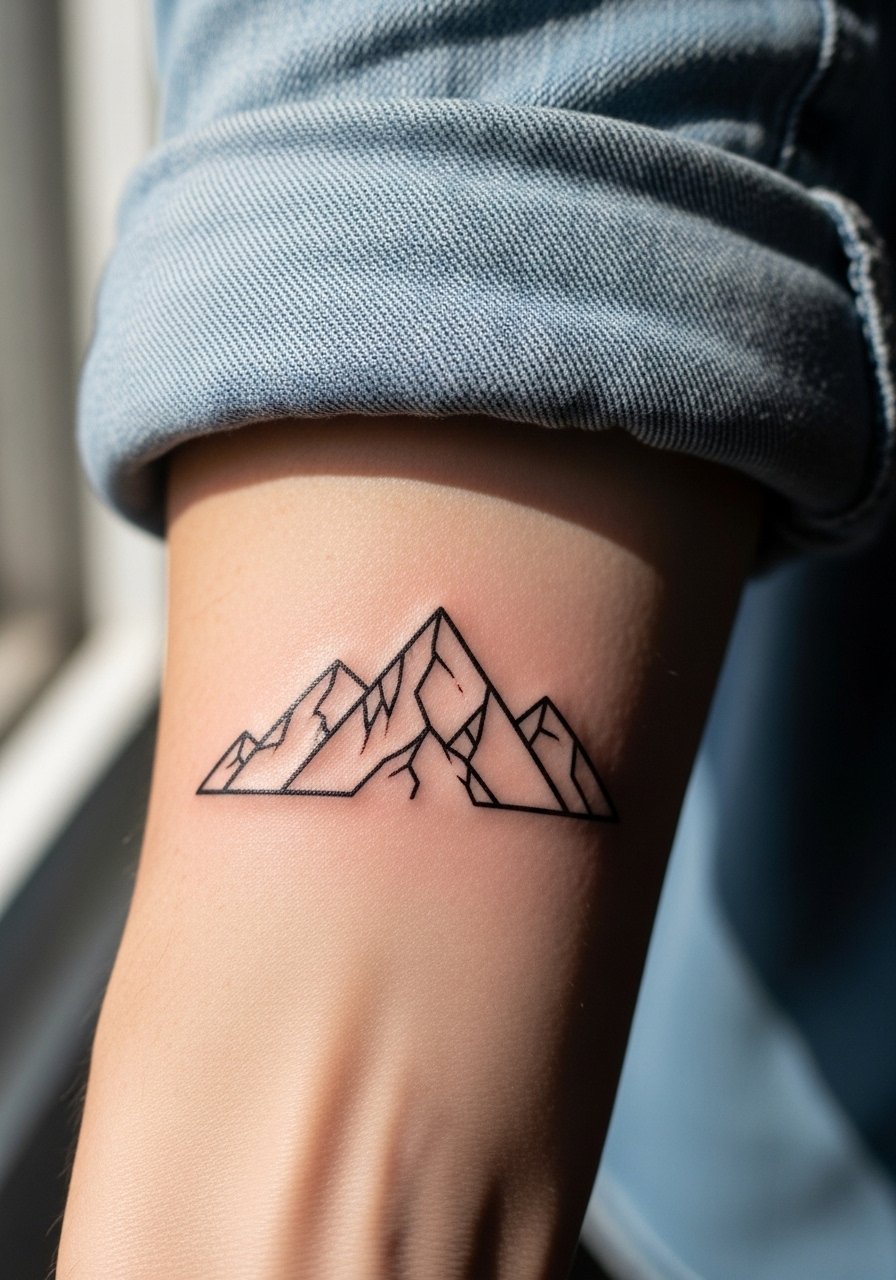
Outer wrist pieces show well and age better than inner wrist work because of reduced friction. When discussing the design, request slightly stronger outer contours and simple negative spaces for slopes. Sessions are short and healing is straightforward. A frequent mistake is packing too many tiny peaks which blur into a single mass. This placement pairs well with a leather wrap bracelet when you want a layered look.
11. Honeycomb Shoulder Cap
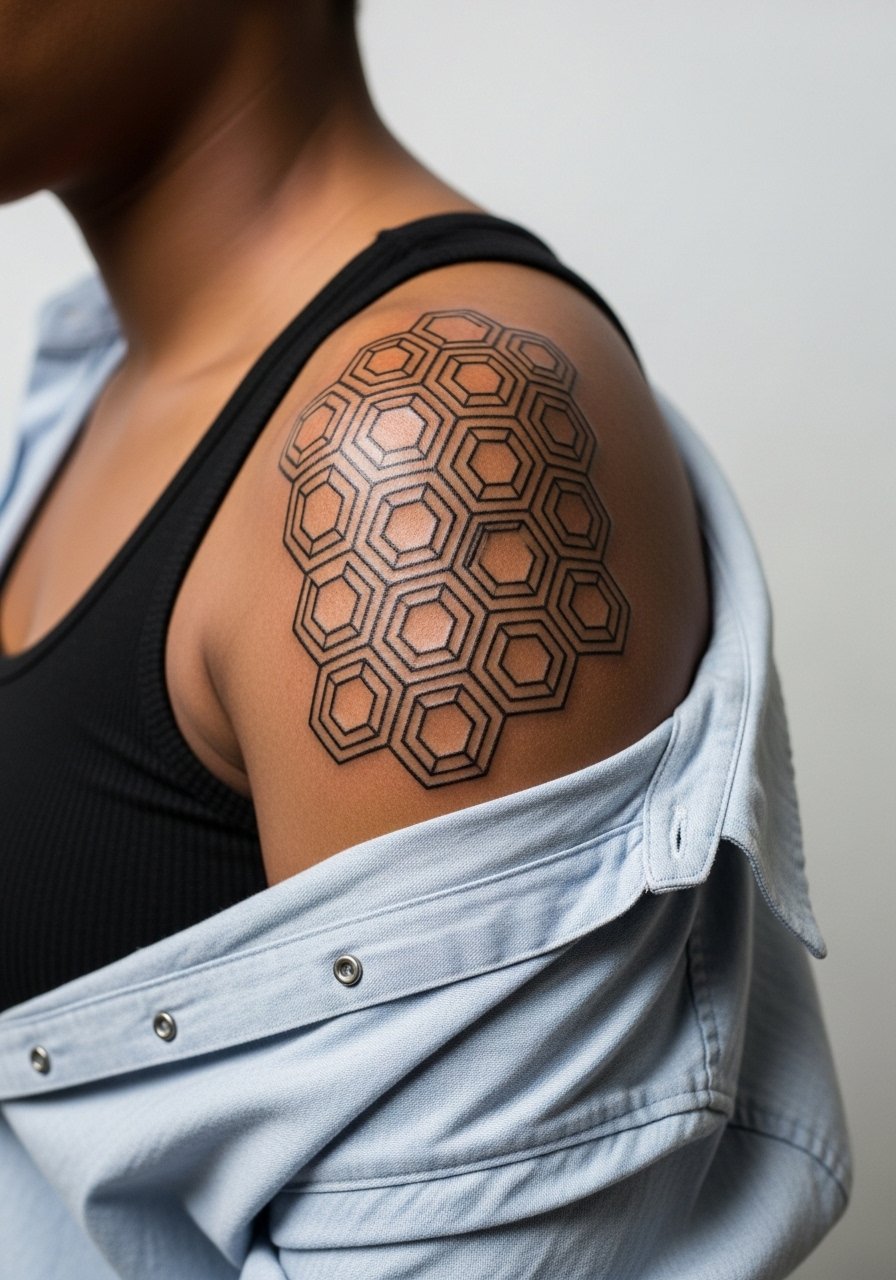
The shoulder cap tolerates slightly denser geometry, so honeycomb grids can be bold without losing clarity. Tell the artist which cells you want solid and which to leave open so the pattern breathes. Sessions vary by size but are generally under three hours. People often ask for tiny cells edge-to-edge which age into a blurred block. For sessions, wear a loose button-down shirt so the artist has easy access and you stay comfortable.
12. Compass Rose on the Calf
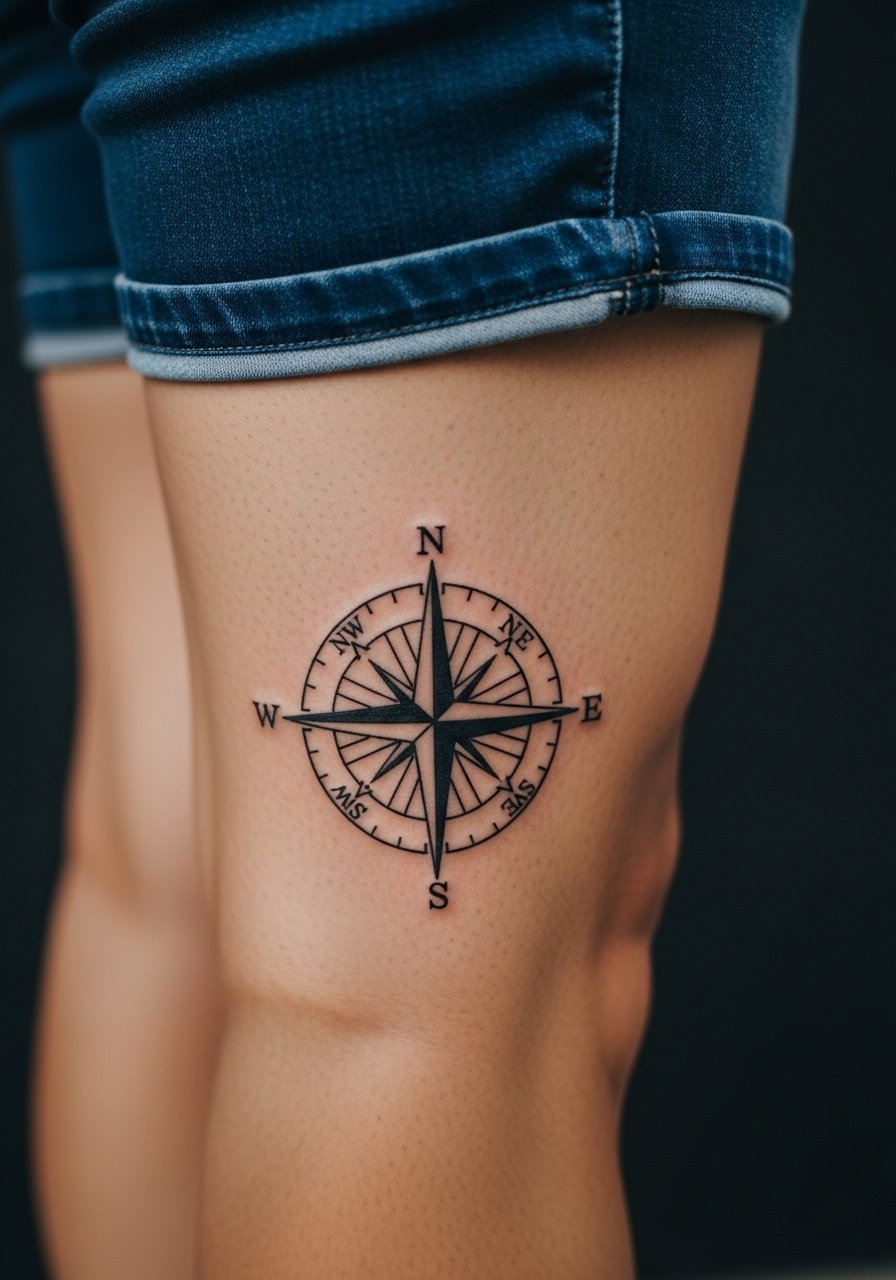
Calf placements let directional designs keep scale and detail, and they tend to show crisp linework over years. Ask for a slightly raised central dot and clear spacing on cardinal points. Sessions are comfortable while seated and often under two hours for compact pieces. A mistake is cramming script or small coordinates into the outer ring; they rarely remain legible. For summer shows, wear casual slide sandals that keep attention on the calf.
13. Geometric Phoenix Wing on Upper Arm
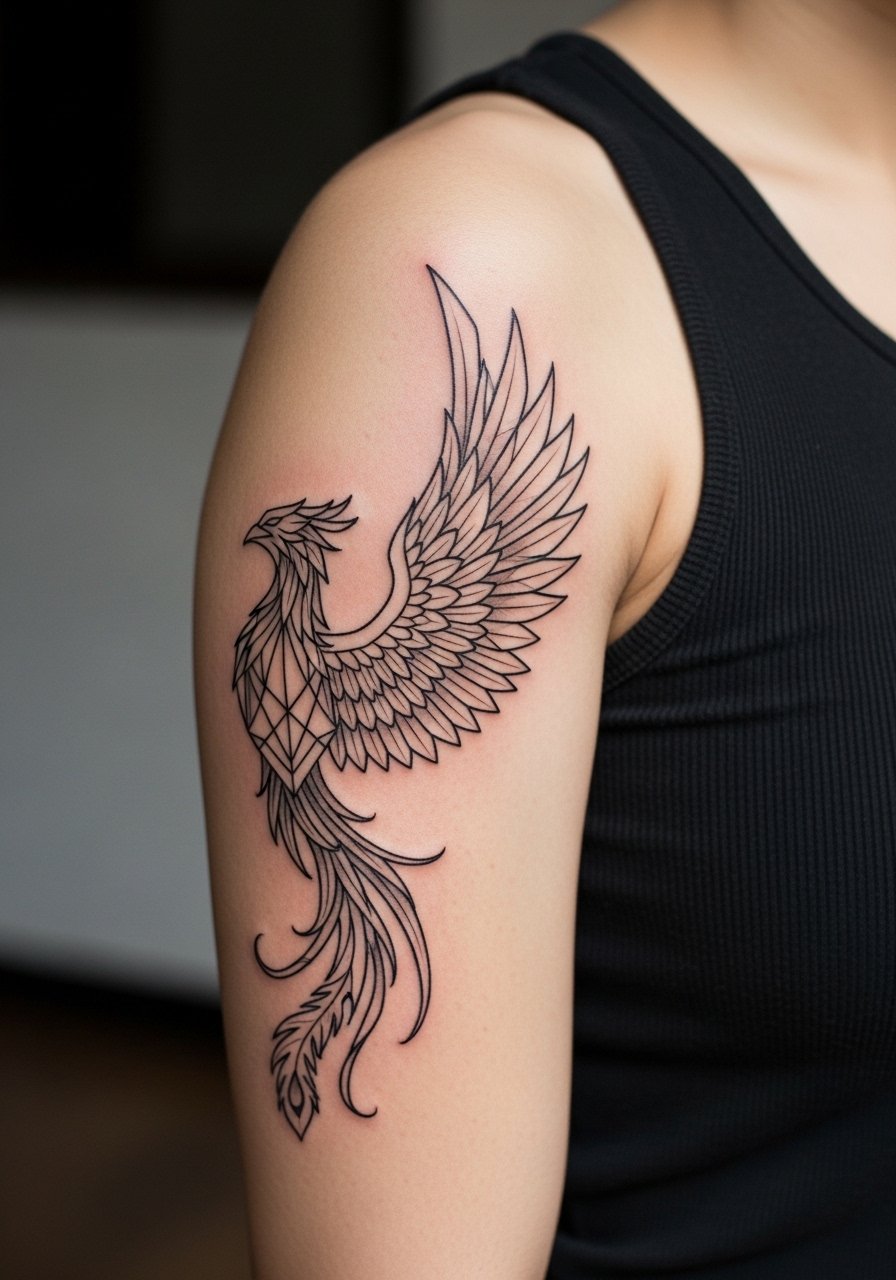
Upper arm pieces can balance ornate geometry with breathing room, which is why I suggest a wing built from overlapping polygons with negative space between feathers. Tell the artist to keep outer feathers bolder and inner segments softer to age predictably. Sessions may be longer for wrap designs. The error I see is over-detailing inner segments so they merge with muscle movement. Pair this with a loose tank top during the session to allow access without fuss.
14. Symmetric Geometric Chest Line across the Cleavage
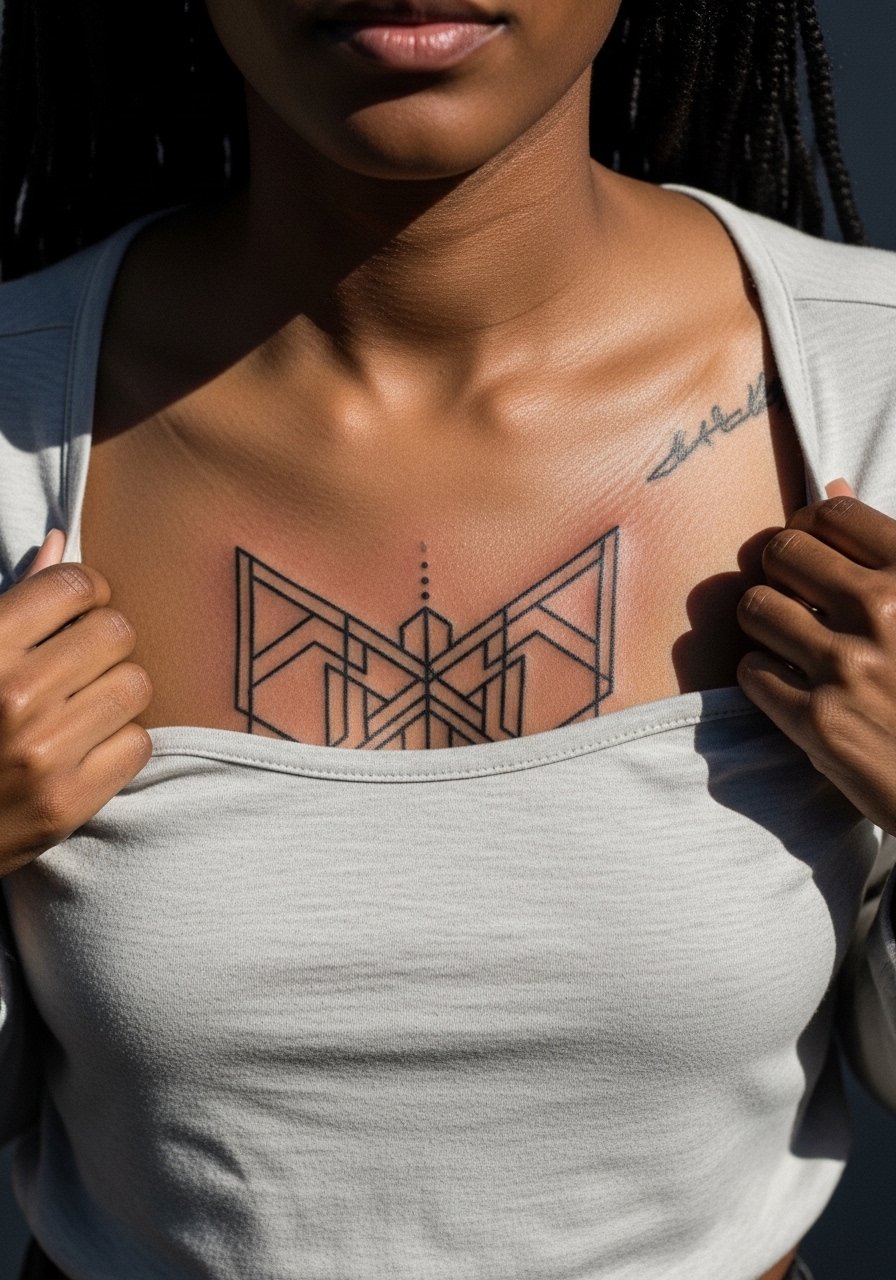
Chest lines rely on symmetry and breath with chest motion. For this, ask for mirrored reference stencils to check alignment while standing and reclining. Pain varies and sessions may require pauses. The common mistake is centering to a photo rather than to your own midline, which throws balance off in daily clothes. Because the area sees movement, expect softening at edges over years. When showing it off, a wide-neck shirt keeps the design visible without being revealing.
15. Geometric Iris Over the Clavicle
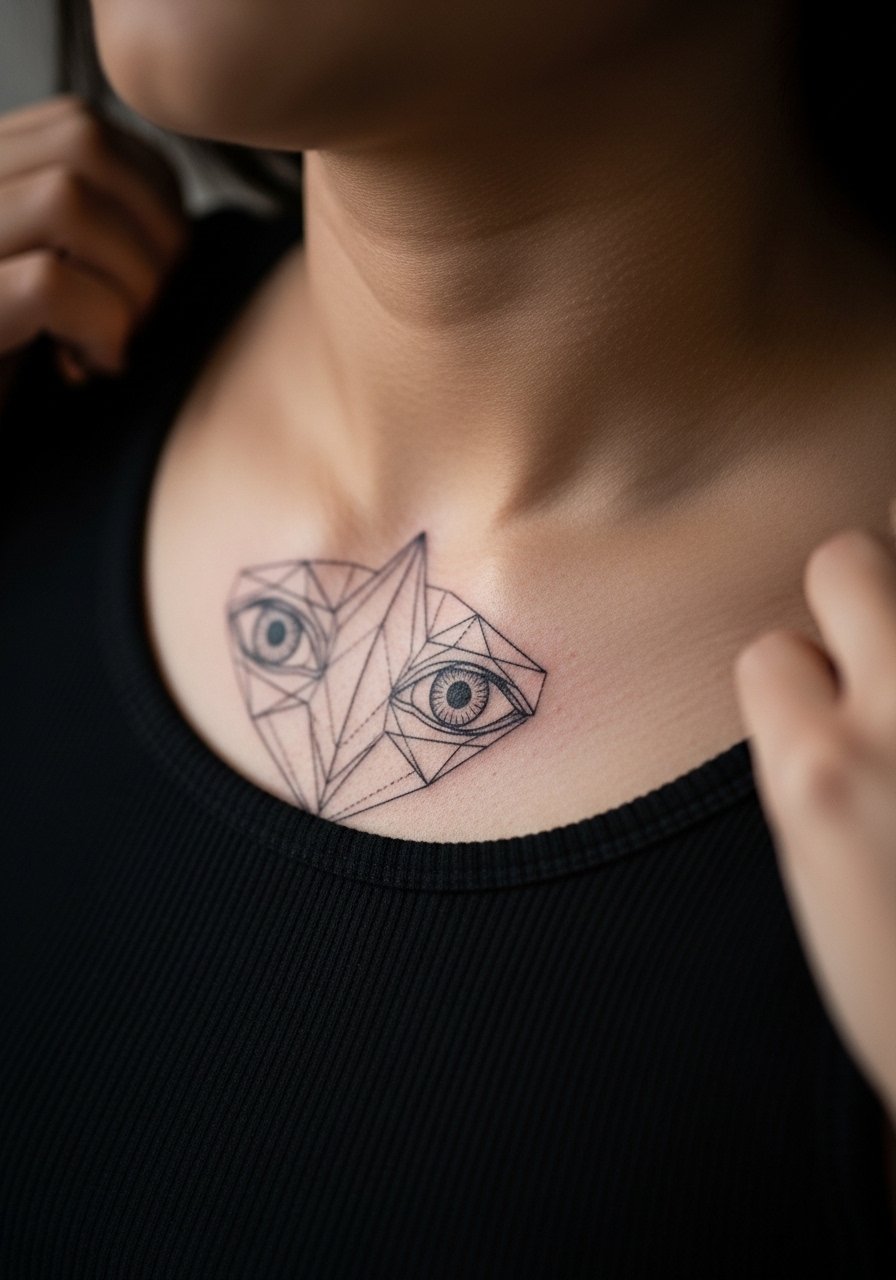
An iris-inspired geometric piece near the clavicle acts like a focal accent. Ask for spacing that leaves a clear center and bold outer ring to keep contrast. Skin movement with breathing affects the thin top skin, so plan for a slight softening at the edges after a few years. Mistakes include overloading the pupil with minute textures that flatten into a dark spot. Pair with a thin chain pendant necklace that sits above the work without crowding it.
16. Spiral Dotwork Spine Accent
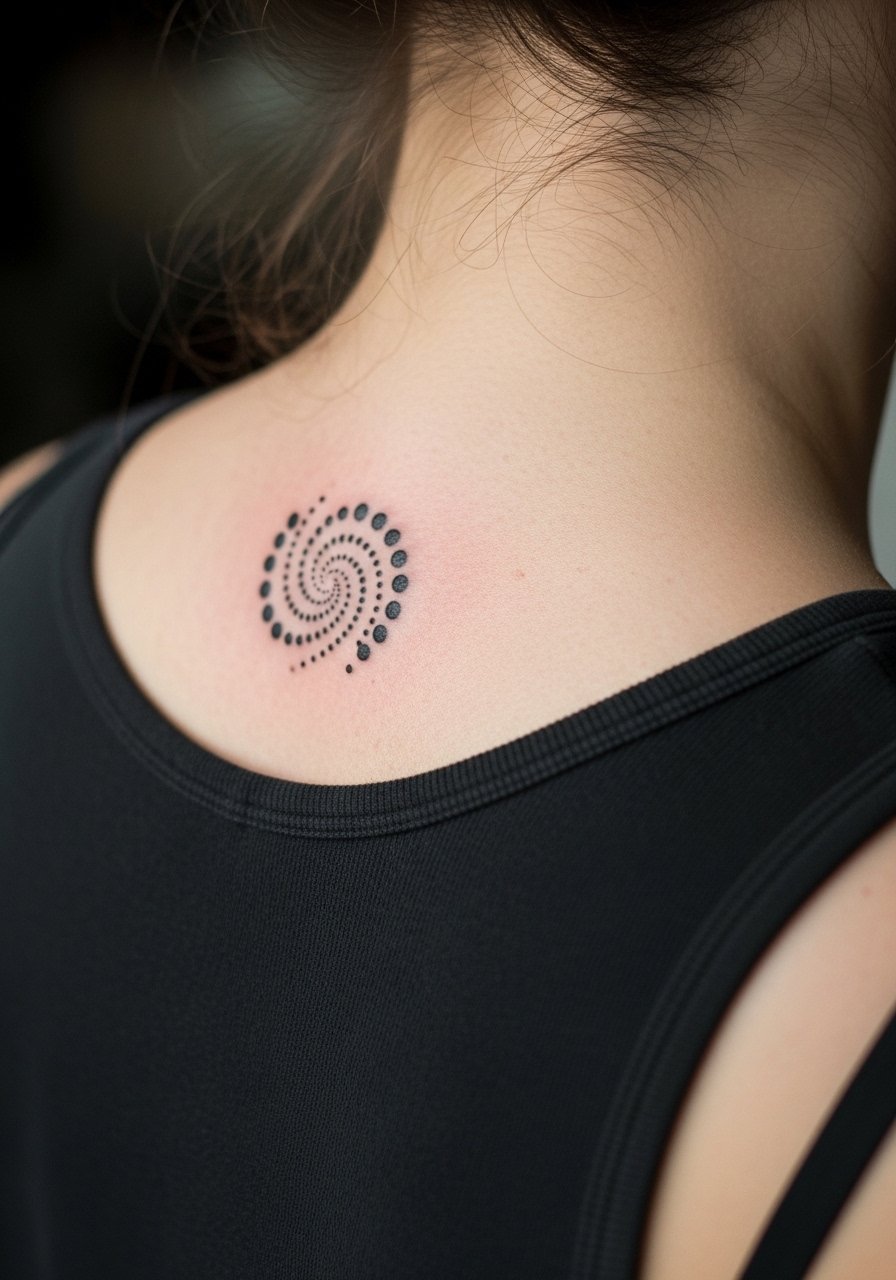
Spine accents are striking and require an artist comfortable with symmetry on asymmetrical posture. I advise a balance of dot density that reduces toward the edges to prevent a solid gray look over time. Pain is higher along the spine and sessions should account for breaks. A common error is compressing dots into the midline where movement makes them merge. For showing the piece, an open-back top creates a clean frame.
17. Geometric Sunburst on the Ribcage
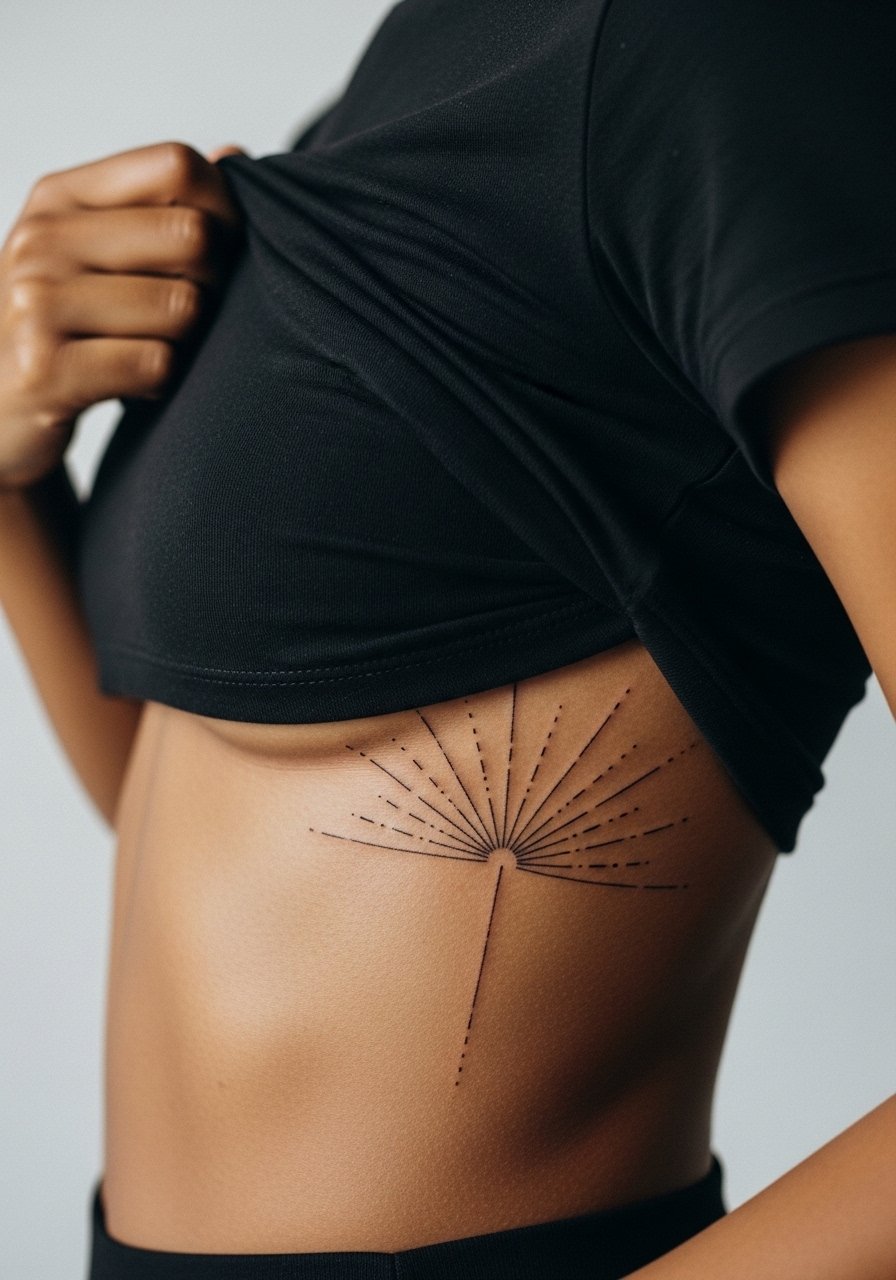
Ribcage placements spark debate among artists. One camp warns that fine line on ribs blurs within a couple of years because the skin stretches with breathing. The other camp insists that with correct needle depth, spacing, and staged shading the design settles fine. I recommend asking your artist which approach they favor and requesting a slightly bolder outer shell for the sunburst to preserve contrast. Pain here ranks high and sessions often require breaks. For the appointment, wear a cropped top you can lift easily.
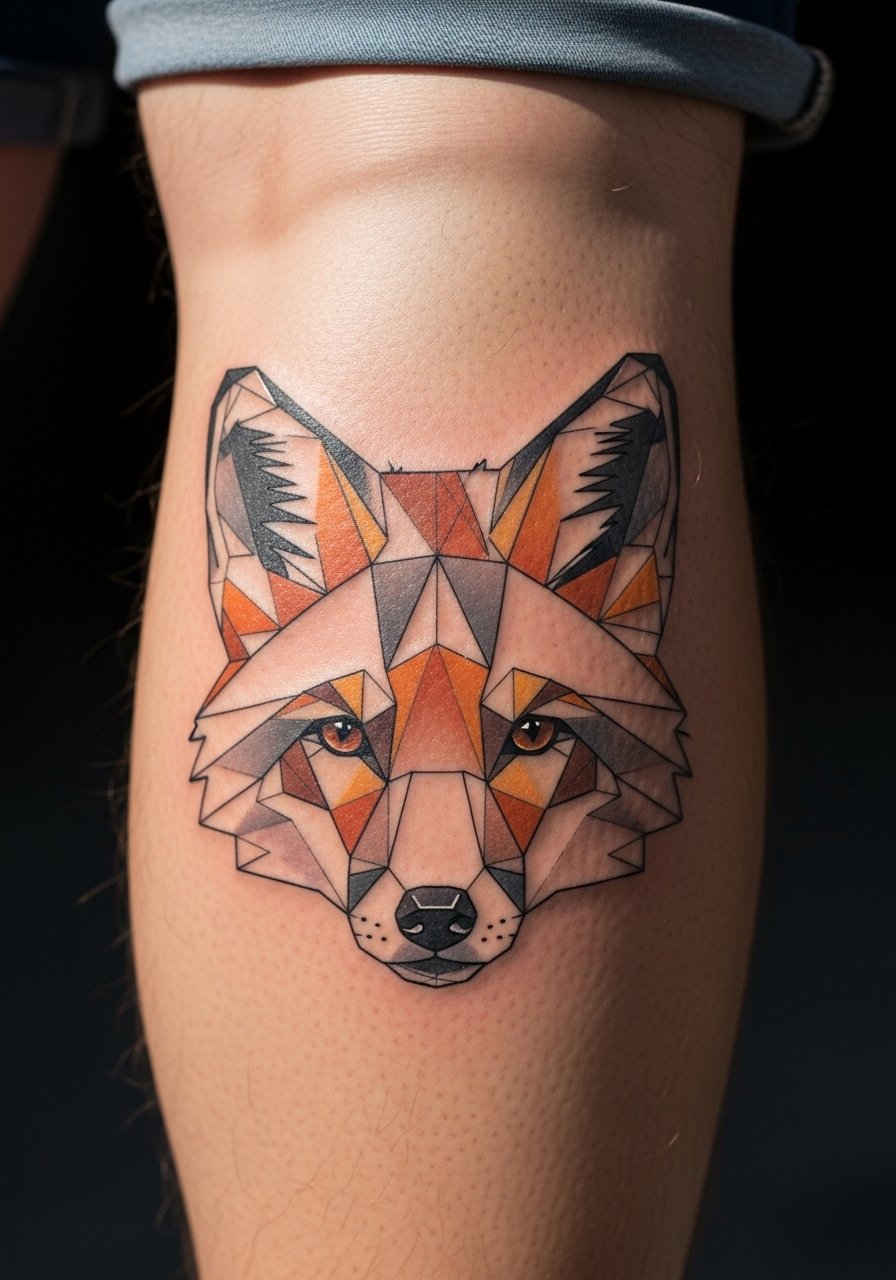
18. Polygonal Fox Face on the Calf
A polygonal animal face benefits from the calf's stable canvas and reduced friction. Tell your artist to treat main planes with crisp borders and avoid tiny internal facets that will soften. Sessions are moderate. A typical mistake is asking for an ultra-detailed inner texture that reads like noise after healing. For an everyday look, pair with mid-calf boots to balance the tattoo's vertical composition.
19. Geometric Constellation Along the Side Wrist
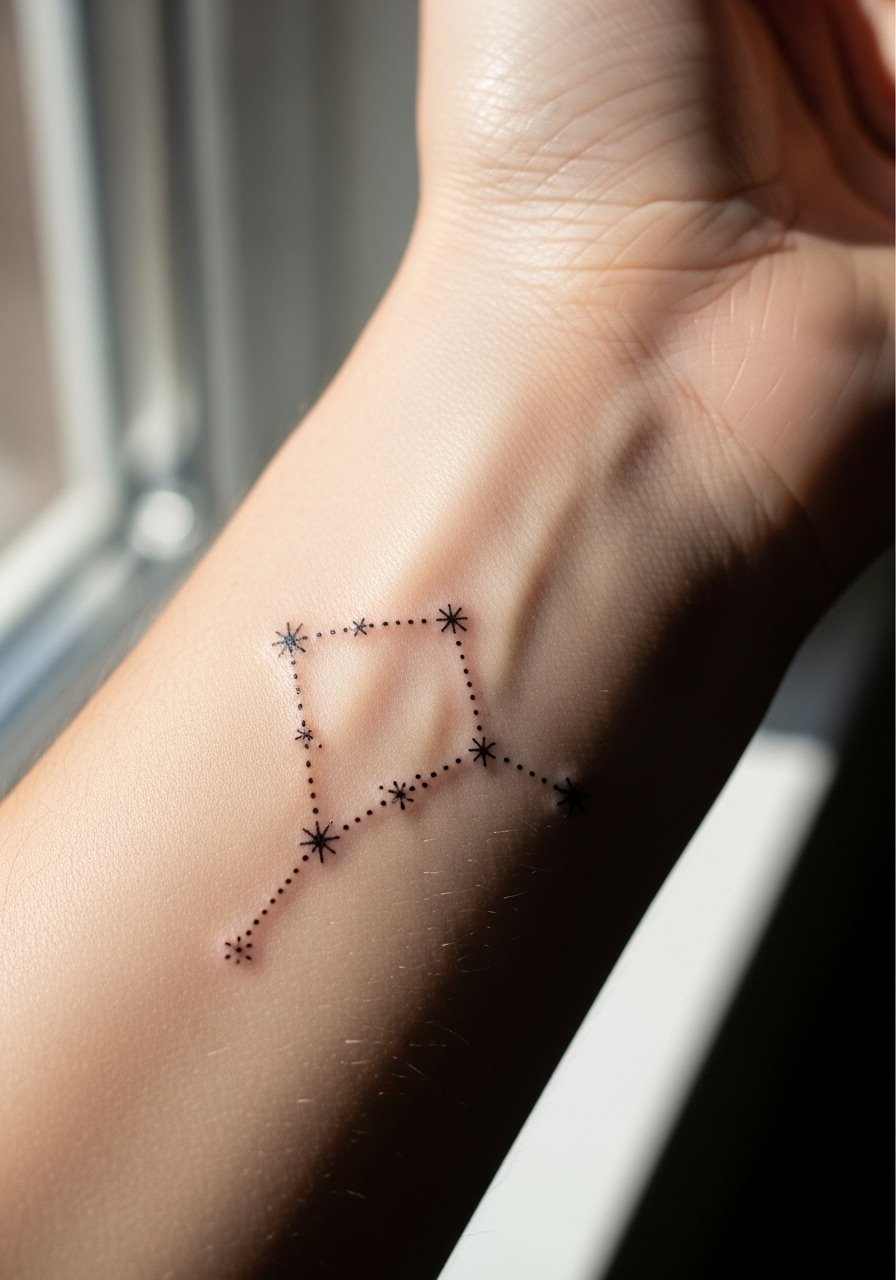
Side-wrist constellations are delicate and visible. I suggest spacing star dots at varying sizes so they remain distinct through washing and friction. Pain is manageable and the session is short. A common mistake is placing stars too close together. For wearing during the session and beyond, a simple slip-on watch avoids constant rubbing from straps.
20. Geometric Wave Band on the Thigh
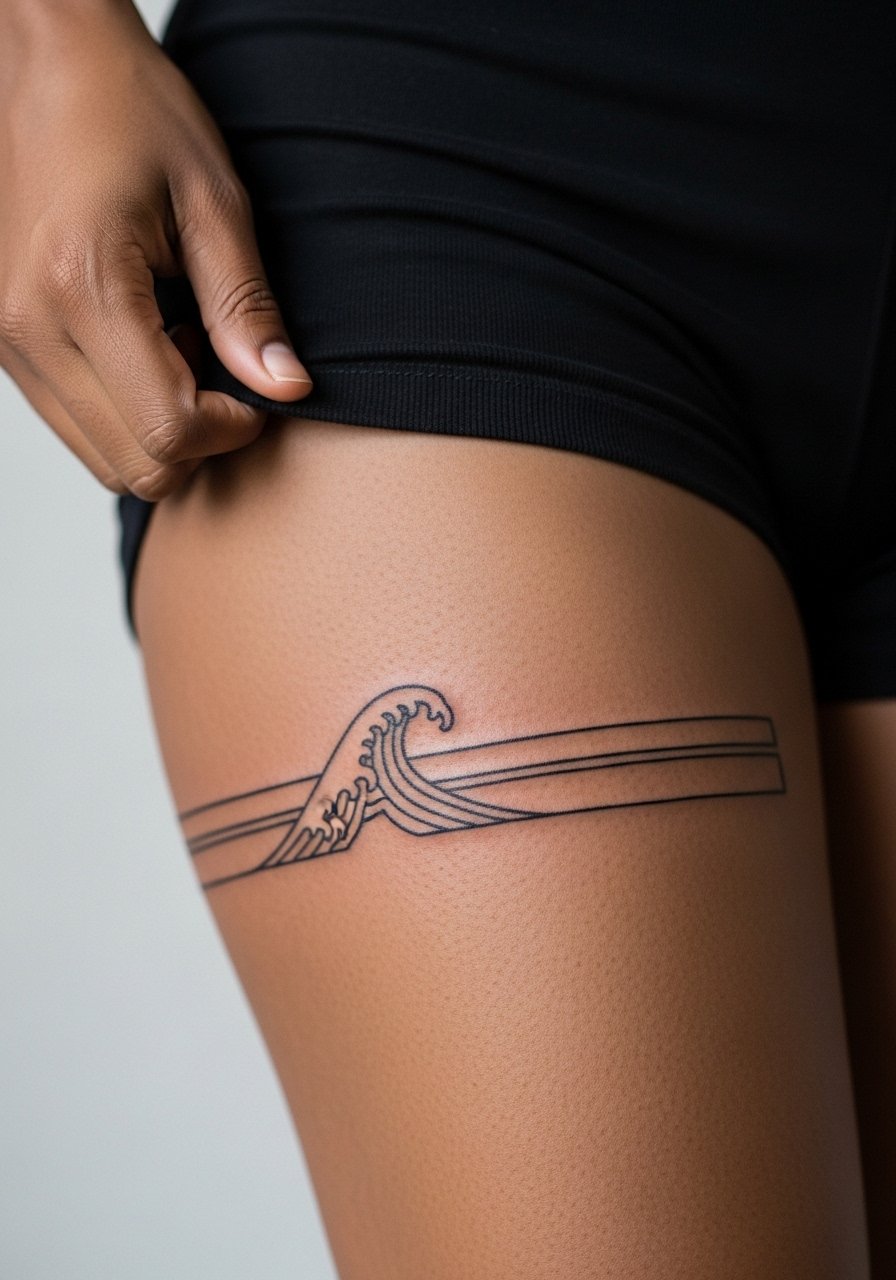
Thigh bands tolerate detail and hold saturation well, which makes them ideal for tightly repeating geometric waves. Ask for balanced negative space so the pattern does not compress visually when sitting. Sessions can run longer but are generally comfortable. A mistake is placing the band where pants seams will press directly into fresh ink. For the appointment, wear a wrap skirt so the artist can access the area without discomfort.
21. Minimalist Geometric Ear Cuff Tattoo
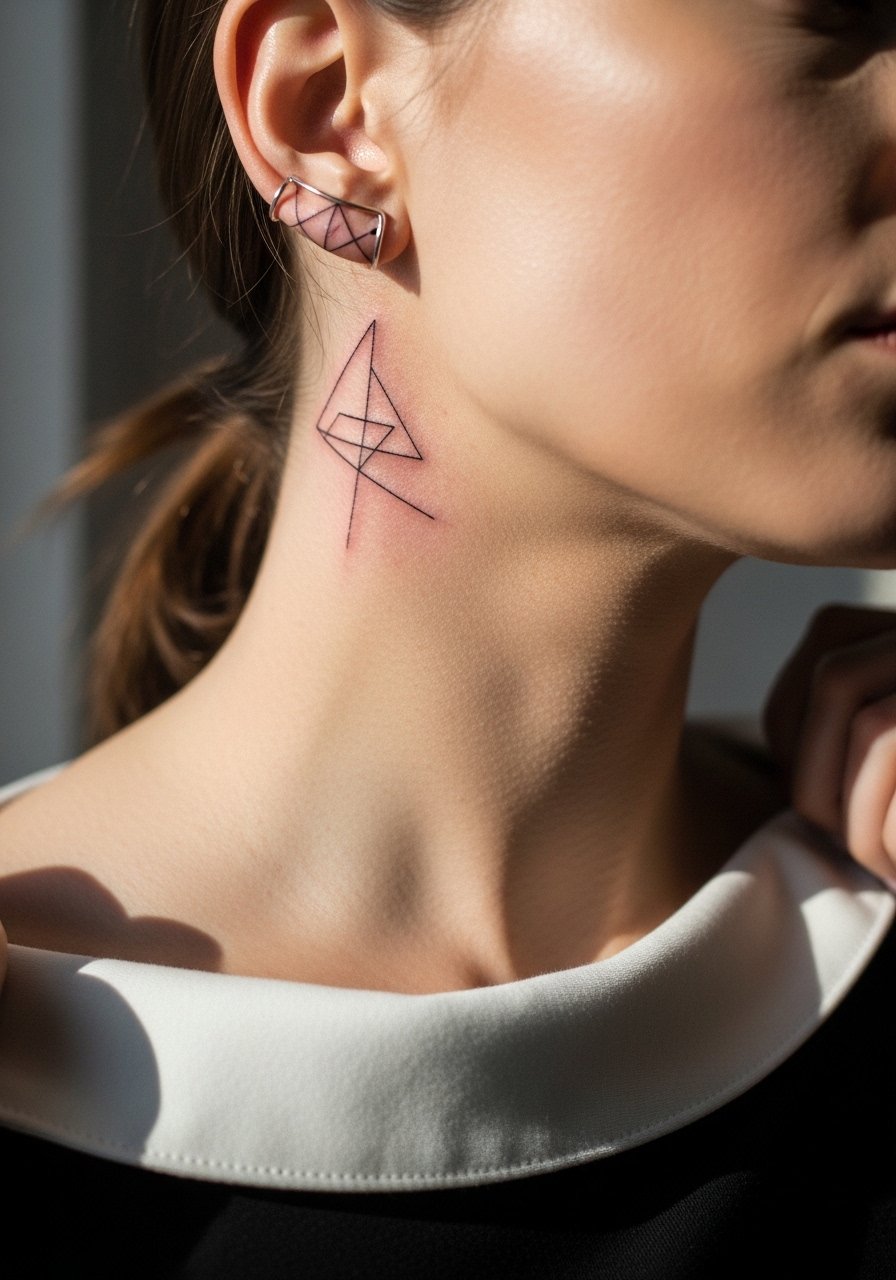
Ear cuff tattoos that hug the side neck give the illusion of jewelry and are subtle. Because the area is sensitive, ask for conservative linework and a preview stencil placed while you are seated. Expect a short session and light to moderate pain. A usual error is asking for continuous micro-patterns that blur with movement. When revealing it, try a wide-neck shirt that lets the piece peek out without full exposure.
Frequently Asked Questions
Q: Will fine line geometric work on the ribs last, or will it blur quickly?
A: It depends on the artist technique and the amount of negative space. Some artists avoid ultra-fine detail on ribs because breathing and stretch can soften lines. Ask which approach your artist favors and request a proof stencil on your torso before booking.
Q: How should I dress for a chest or sternum geometric session?
A: Wear a fitted sports bra or a wide-neck top you can pull slightly aside so the artist has access while you stay covered. Loose layers are good for comfort during breaks and for keeping the area clean afterward.
Q: Do hexagon grids need touch-ups more often than single-line pieces?
A: Yes, dense grids have a higher chance of softening at cell edges. I recommend slightly bolder outer lines and scheduling a light touch-up within two to three years if you want the crisp honeycomb effect to last.
Q: Are geometric mandalas culturally sensitive to get?
A: Some mandala patterns trace back to Buddhist and South Asian artistic traditions. If you want a mandala, consider a design that nods to the aesthetic rather than a direct replication, and discuss cultural respect with your artist.
Q: How do I find an artist who ages geometric work well?
A: Look in local portfolio directories, search for artists by relevant hashtags, and check convention lineups to see who consistently posts healed photos of geometric work. Ask for healed shots from similar placements during consultation.
