
Fine line dragonfly tattoos are everywhere on saved boards, but what holds up over years and what becomes a soft blur are two very different things. Lively wing veins, careful spacing between legs and body, and placement that respects movement are what make a dragonfly design read as crisp after five years. The ideas below focus on versions that keep their life, with notes on aging, consult language, and real outfit choices to show them off.
1. Fine Line Dragonfly on Inner Forearm
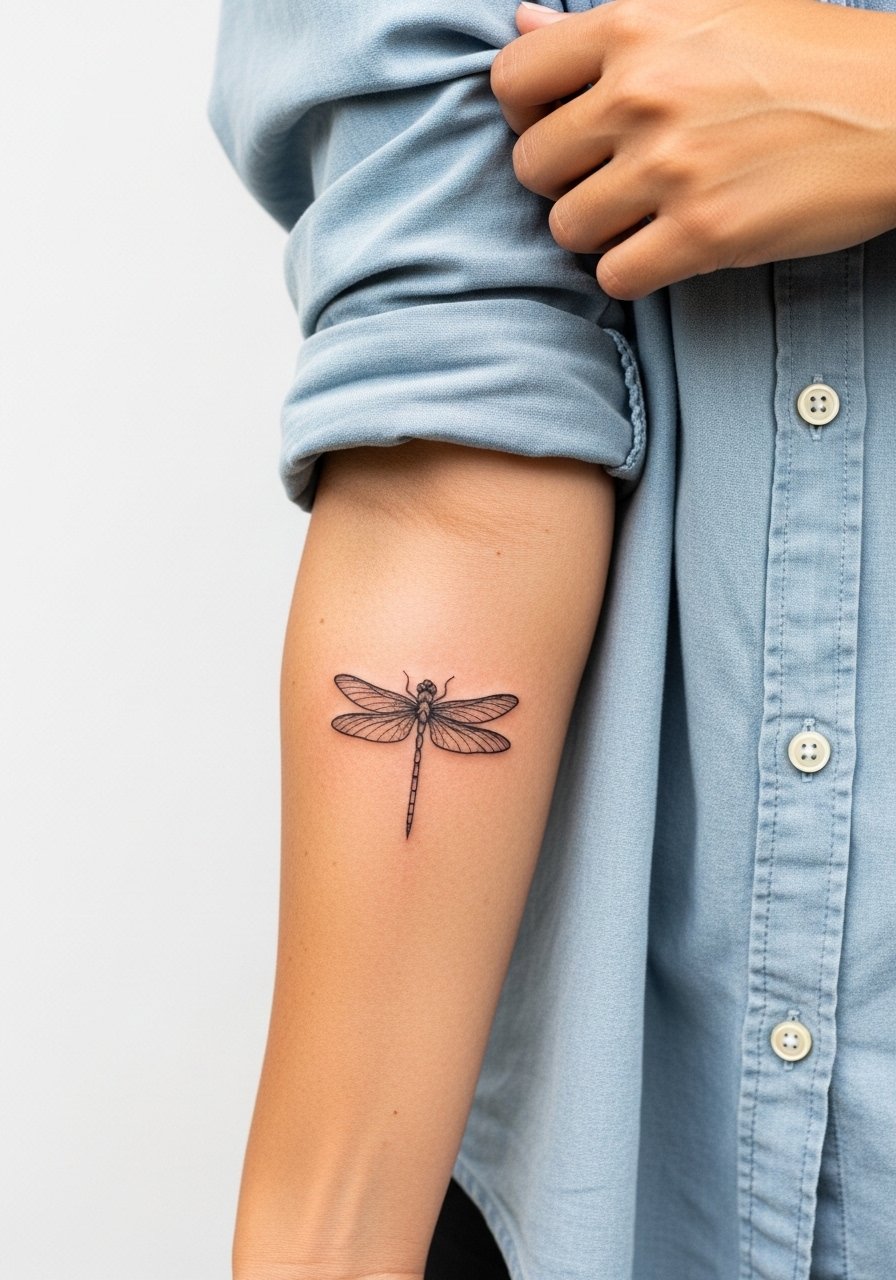
I pick this placement for first-time clients who want visibility without constant sun exposure. Tell your artist you want slightly increased line weight on the thorax so the central lines do not merge with time. Fair warning, the inner forearm sees friction from watches and sleeves, so expect a touch-up around year three if you keep the lines hairline thin. Pain is mild. For the session wear, bring a loose button-down shirt that you can slide or pull aside. The consultation note to bring is a reference showing wing vein spacing and negative space around legs.
2. Minimalist Outline on the Wrist
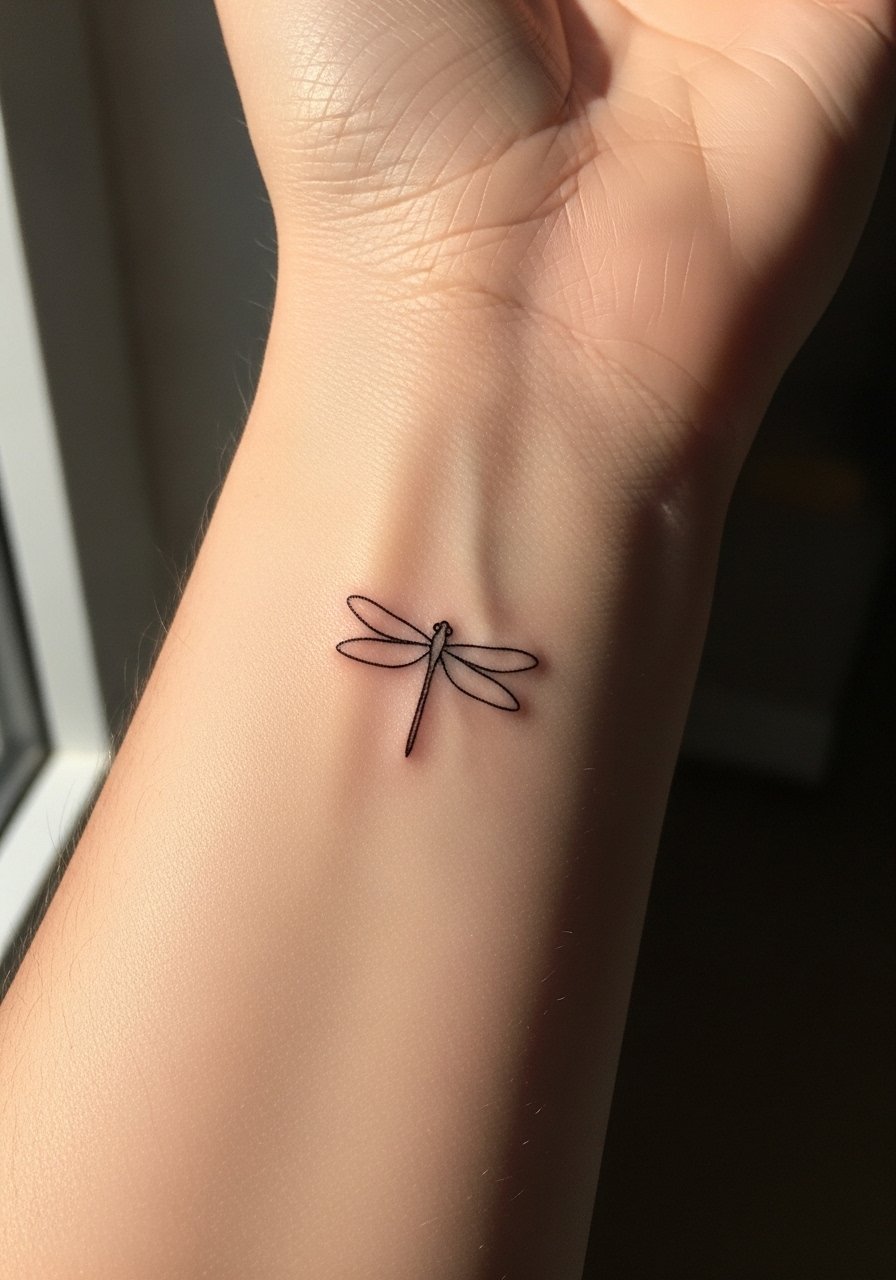
Wrist placements read delicate and need breathing room. I suggest a slightly elongated abdomen to keep the silhouette legible when the skin creases. Common mistake is asking for ultra-tiny wings that merge after a year. Expect more fading on the wrist because of hand washing and sun exposure, and plan for a light touch-up at year two or three. Pain is low to moderate. For showing it off, pair with a thin chain bracelet that sits beside the tattoo without covering it.
3. Dot Work Dragonfly on the Ankle
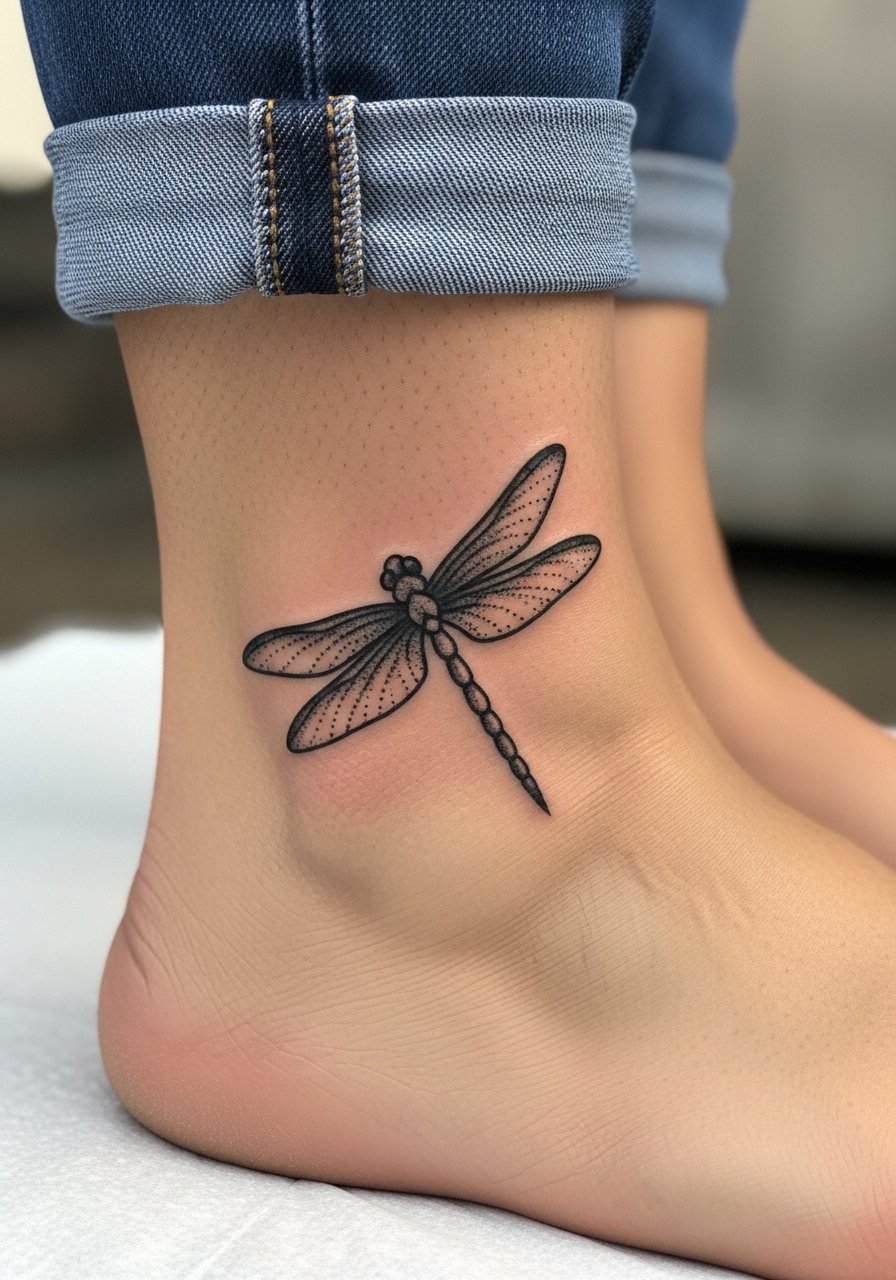
Dot work makes wings feel airy while keeping contrast that ages well. The ankle endures shoe friction and occasional swelling, so tell your artist to keep the abdomen compact and avoid dense shaded fills near the shoe line. A common aging pattern is dot clustering softening into a wash if the artist packs too many dots close together. Sessions are short and the pain is medium because of thin skin over bone. For the session, wear jeans you can roll up or sandals so the artist can access the area easily.
4. Watercolor Dragonfly Across the Shoulder Blade
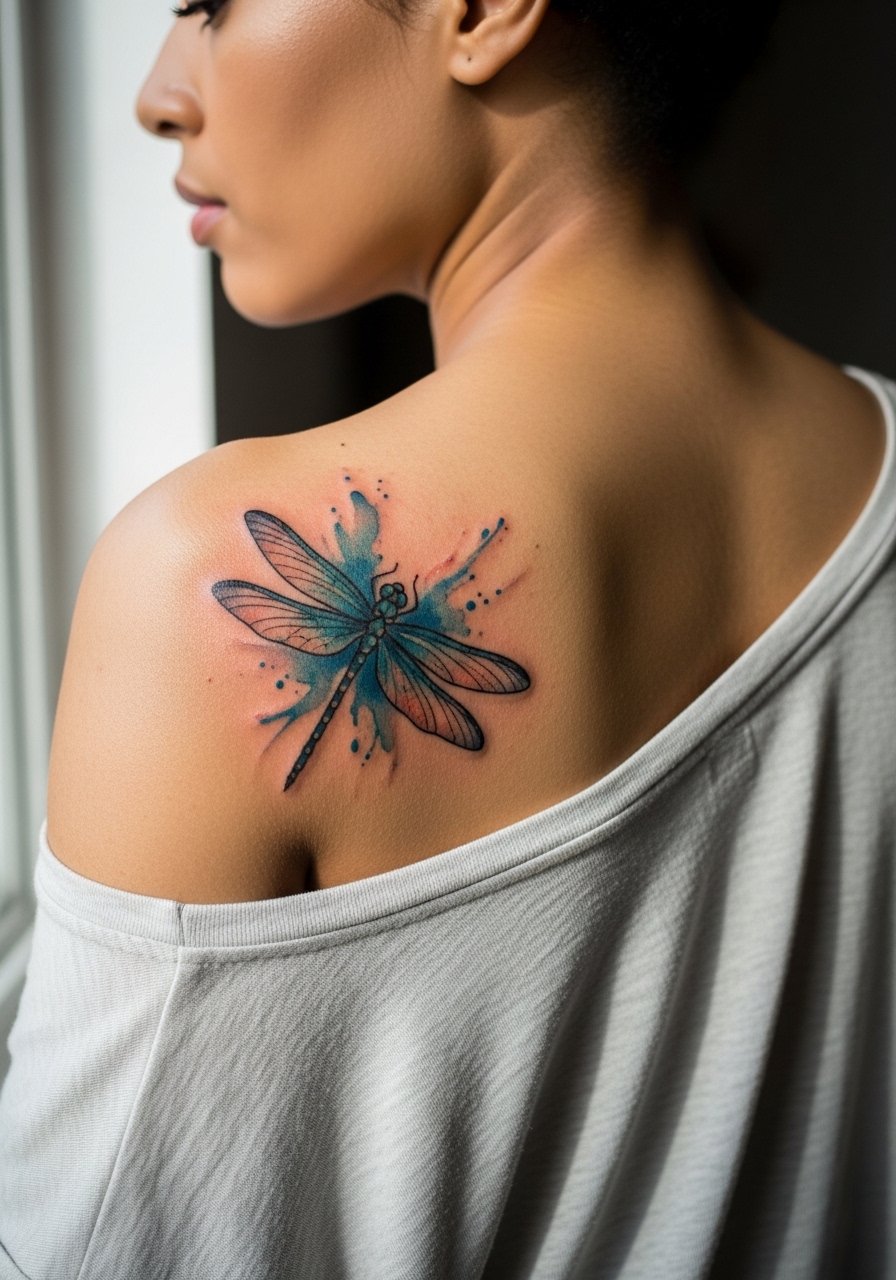
Watercolor effects on the shoulder blade can be gorgeous but they fade faster than saturated fills. Ask for color anchors in the wing intersections so the piece keeps structure as the pigments lose vibrancy. One camp says watercolor should be avoided on larger mobile areas, the other camp says with wise placement and saturation it lasts. Name both views in your consultation and ask how the artist balances washes with anchors. Session feels moderate and you will need more sun protection. For showing it off, an open-back midi dress frames the wing without exposing too much skin.
5. Blackwork Stylized Dragonfly on the Calf
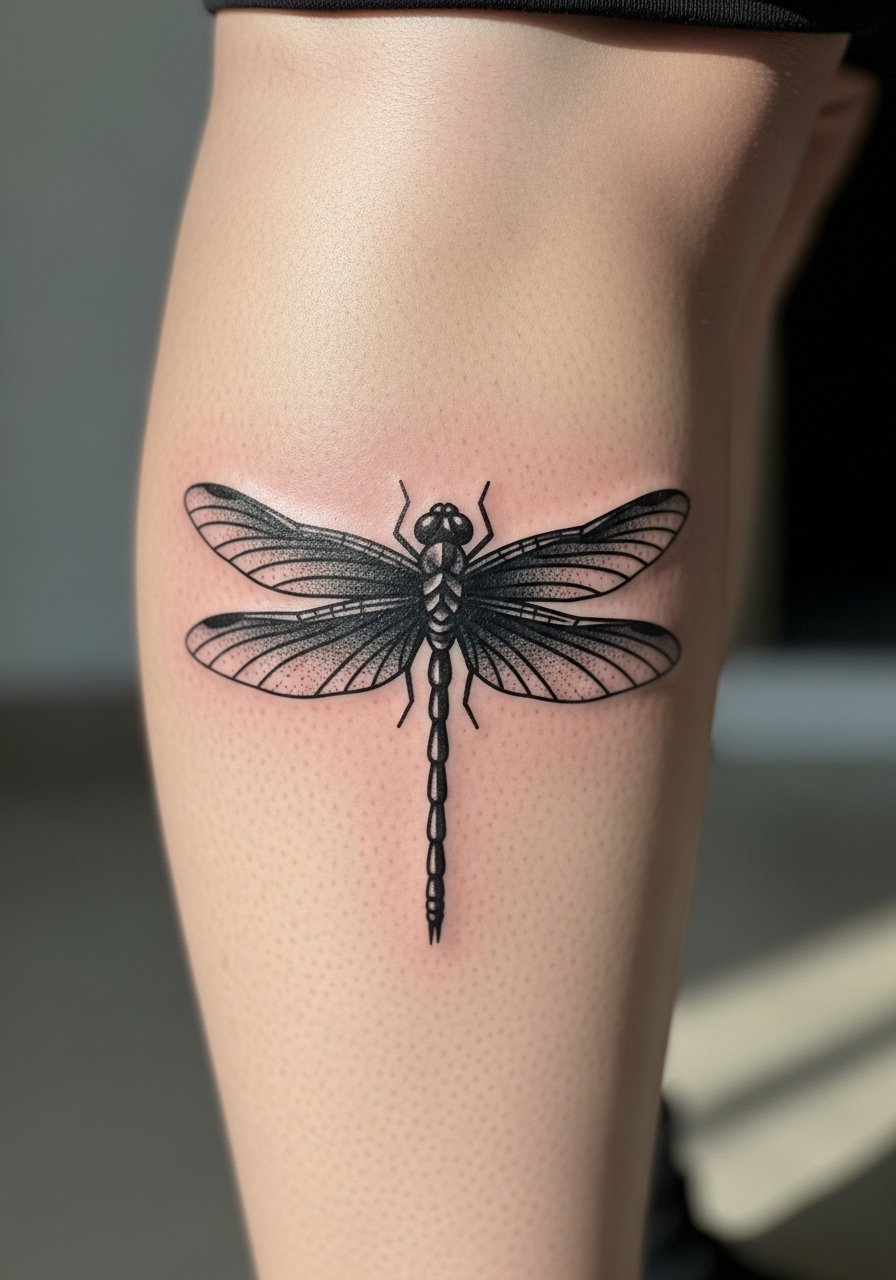
Blackwork thrives on the calf because the skin there accepts saturation and the area gets less daily abrasion than hands. Recommend bold negative space inside the wings to preserve form when the ink settles. A mistake is making the wings too intricate for the scale, which looks muddy after a few years. Sessions take longer but touch-ups are rarer than fine line pieces. Pain is moderate. For casual show-off, rolled shorts pair well with the design.
6. Micro-Realism Dragonfly Over the Collarbone
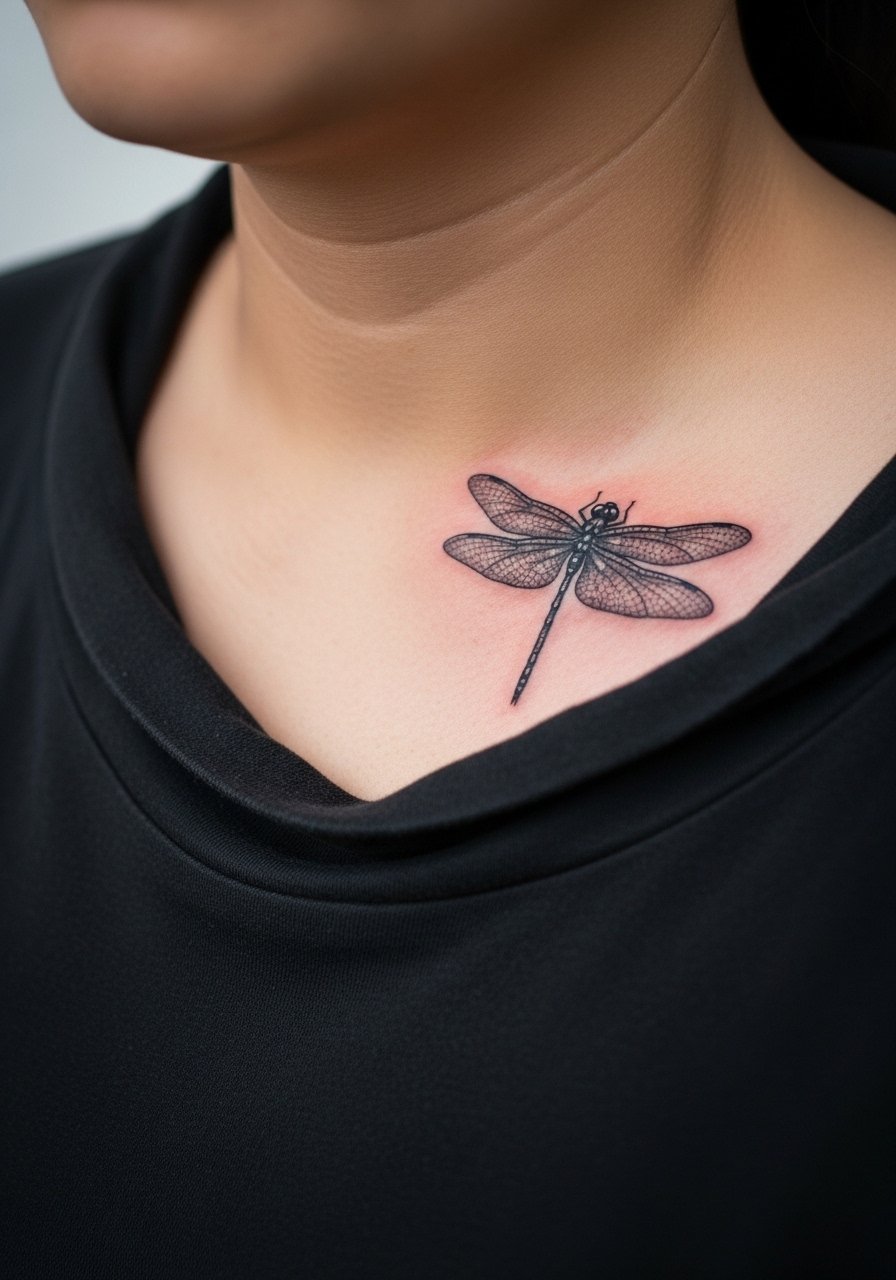
Micro-realism on the collarbone can be striking but the area moves with the chest and shoulders, which affects line stability. Ask for slightly increased contrast in the thorax and wing joints to maintain definition. Most artists split on how fine to go near bony areas. Call out that you want crisp wing veins that don't rely on ultra-fine single lines. Pain here ranges moderate to high. For evenings out try an open-neck blouse that shows the piece without competing jewelry.
Studio Day Picks
The wrist and collarbone pieces above need different prep than the calf and shoulder work. A few small items smooth the session and the first week.
-
Stencil transfer paper kit. Lets you preview line placement on skin before committing, especially useful for the wrist and collarbone layouts above.
-
Topical numbing cream. Applied as directed before the session eases sensitivity for thin skin over bone without blurring outlines.
-
Thin protective film roll. Useful for ankle and wrist pieces to reduce friction from socks and sleeves during the first days.
-
Fragrance-free body wash. Cleans healing areas gently so stipple shading and fine lines are not irritated.
-
Aquaphor healing ointment. Thin layers during the first few days lock moisture for fine line work without clogging the needle channels.
7. Geometric Dragonfly Over the Sternum
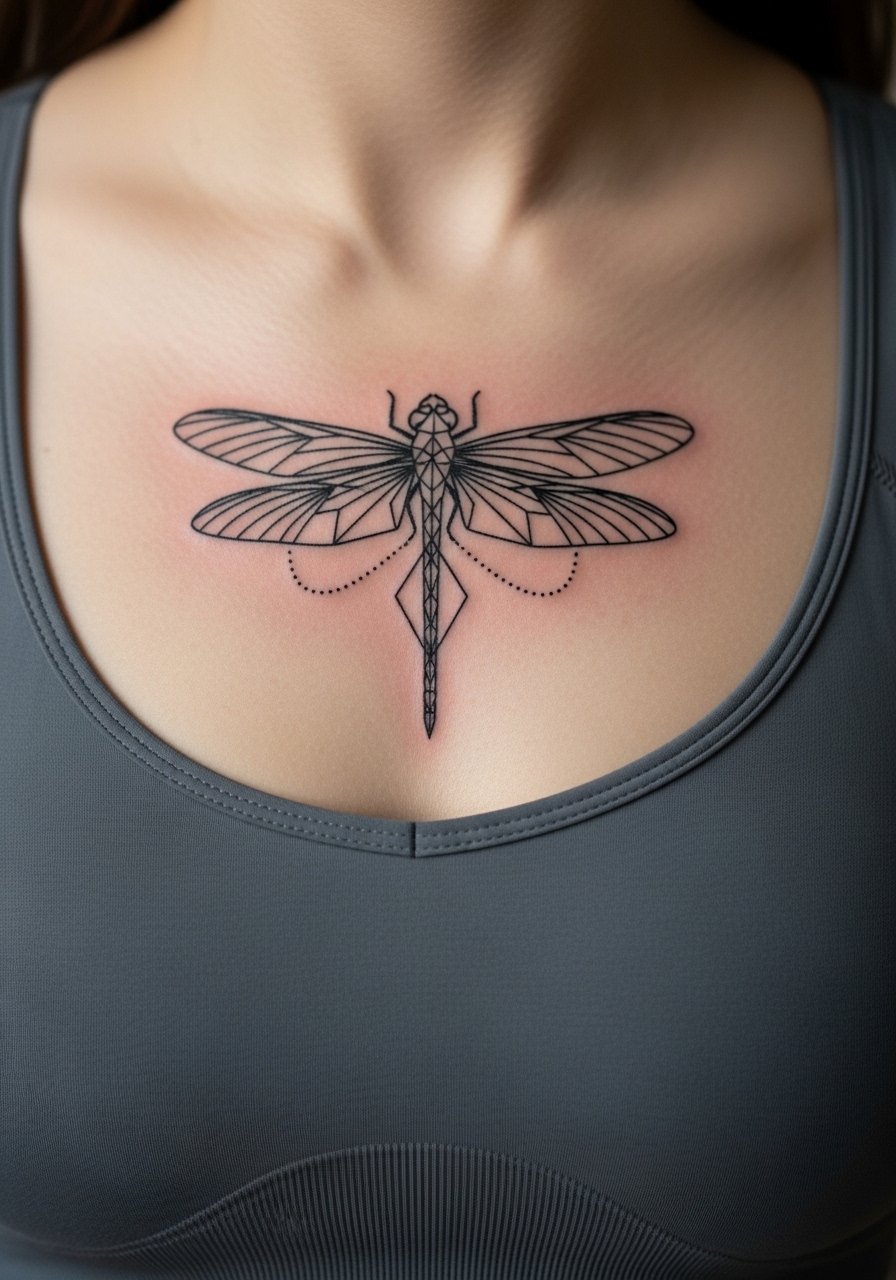
Sternum pieces look dramatic but the chest expands with breathing and movement, which can alter line behavior. One camp says fine geometric work here blurs too fast, another insists proper depth and spacing keep geometry crisp. Say both things in your consult and ask how the artist spaces lines for movement. Pain is high and sessions may be split. For session wear choose a strapless or zip-up piece to make access easy. Expect touch-ups at year three or when you change body composition.
8. Single-Line Continuous Dragonfly on the Finger
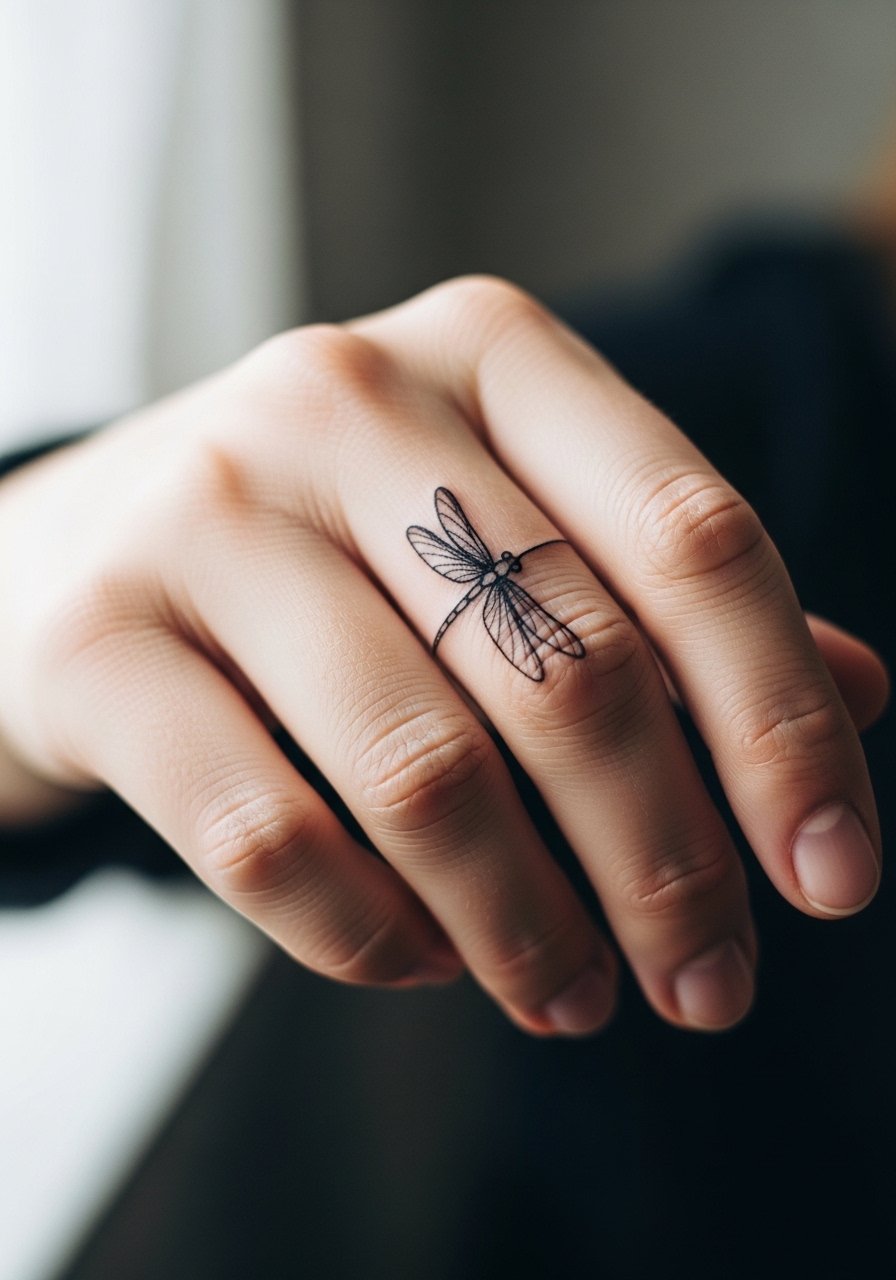
Finger tattoos face heavy friction and frequent washing, so single-line designs must be bolder than they look on screen. The frequent error is asking for ultra-thin continuous lines that fade into patchy gray. Tell your artist you prefer a slightly thicker line and accept that a yearly touch-up is common. Pain is sharp but brief. For showing it off, minimalist dainty rings work well with the tattoo. Try a delicate midi ring set that complements without covering.
9. Illustrative Dragonfly on the Thigh
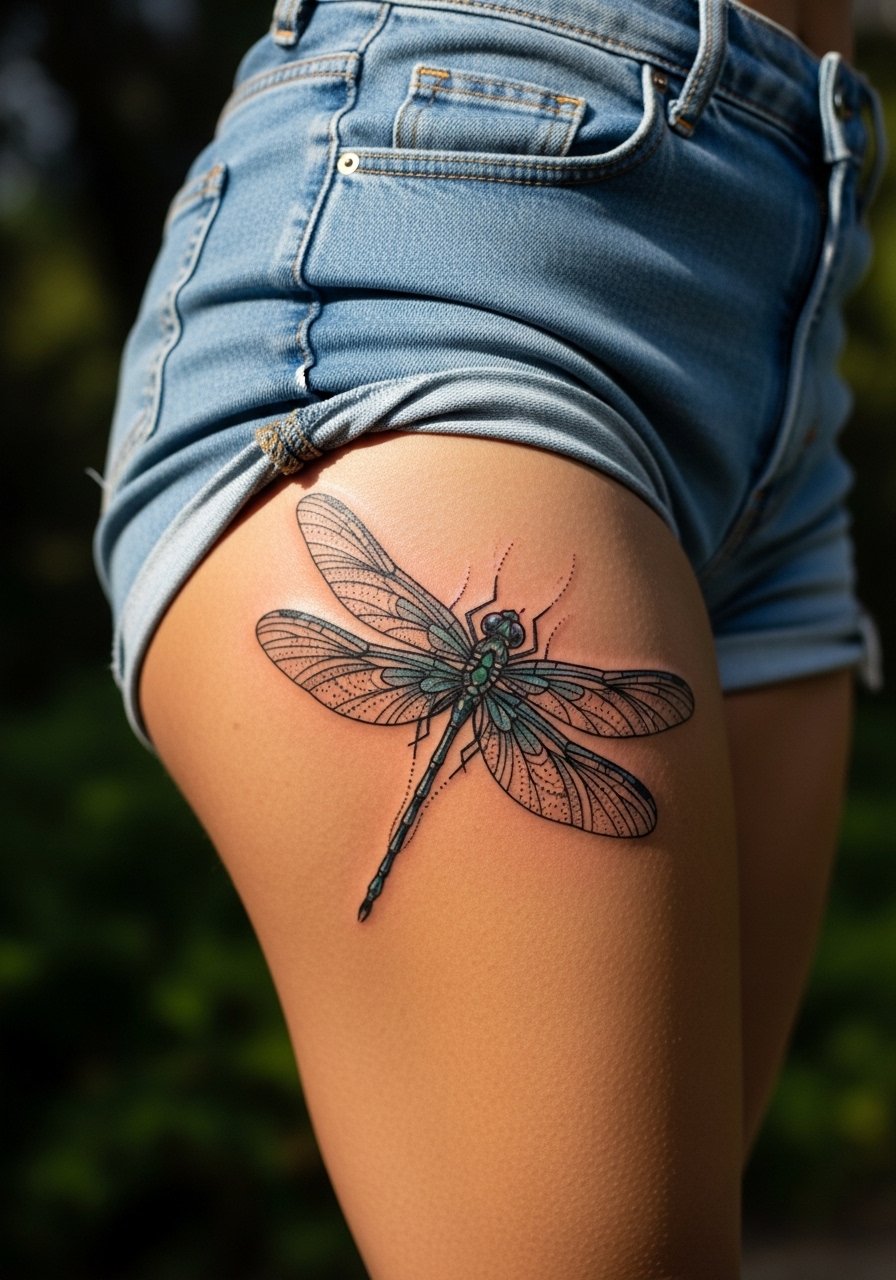
Thigh tattoos age well thanks to lower sun exposure and thicker skin. I recommend a more detailed abdomen and wing overlap since the area holds detail longer. A common mistake is underestimating the session time; larger illustratives need multiple hours or visits. Pain is moderate and tolerable. For the session, wear loose shorts or a skirt to avoid pressure on the area. A high-waisted short makes the session easier and keeps the band from resting on the fresh work.
10. Tiny Dragonfly Behind the Ear, Below Hairline
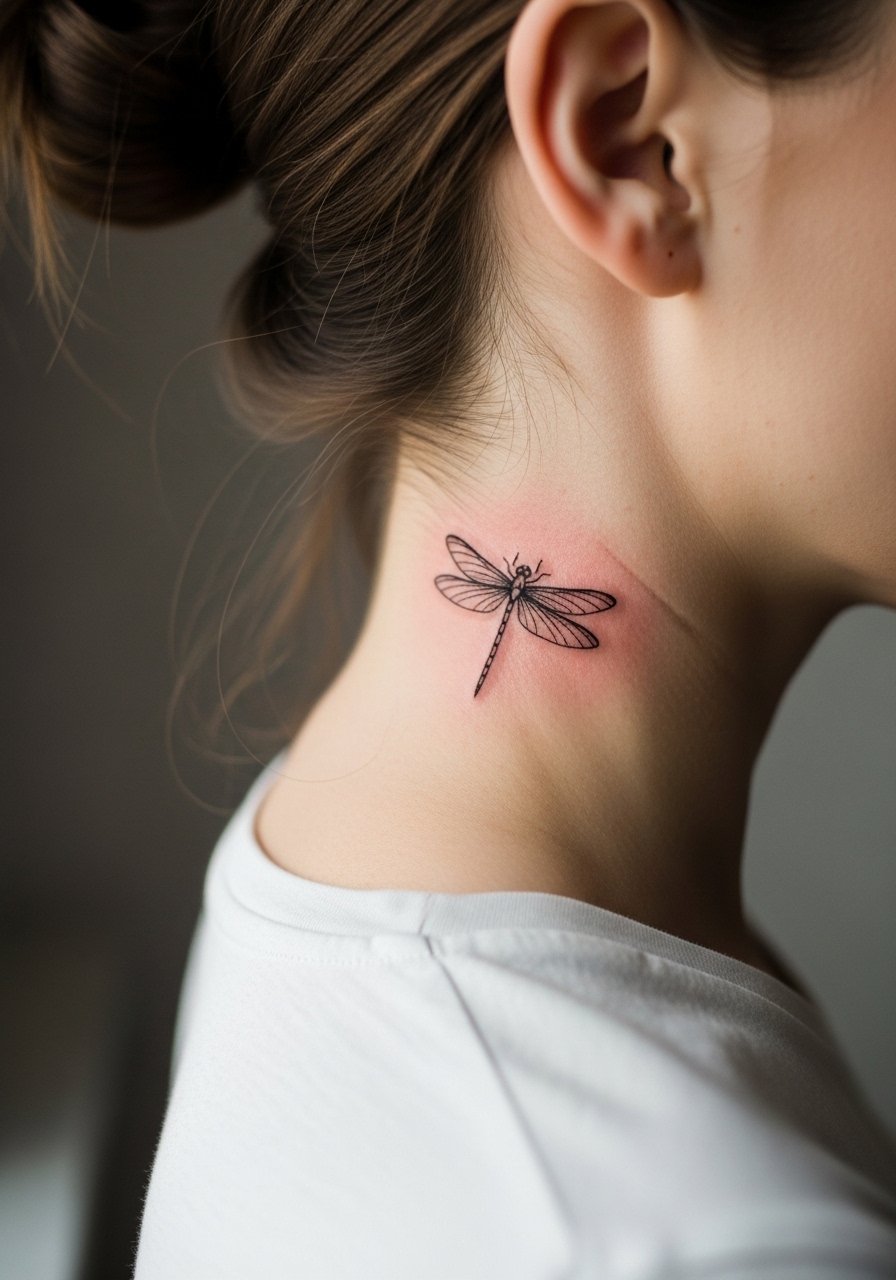
Behind-the-ear placements are subtle and intimate. The risk is blowout if the needle sits too deep in that thin skin. Ask your artist for conservative depth and a tiny but bold thorax so the silhouette remains clear. Pain is low to moderate but the area is sensitive. For session comfort, wear a wide-neck shirt so the artist can access the spot without shifting clothing. Note that the area is easy to hide with hair for professional contexts.
11. Negative-Space Dragonfly on the Ribcage
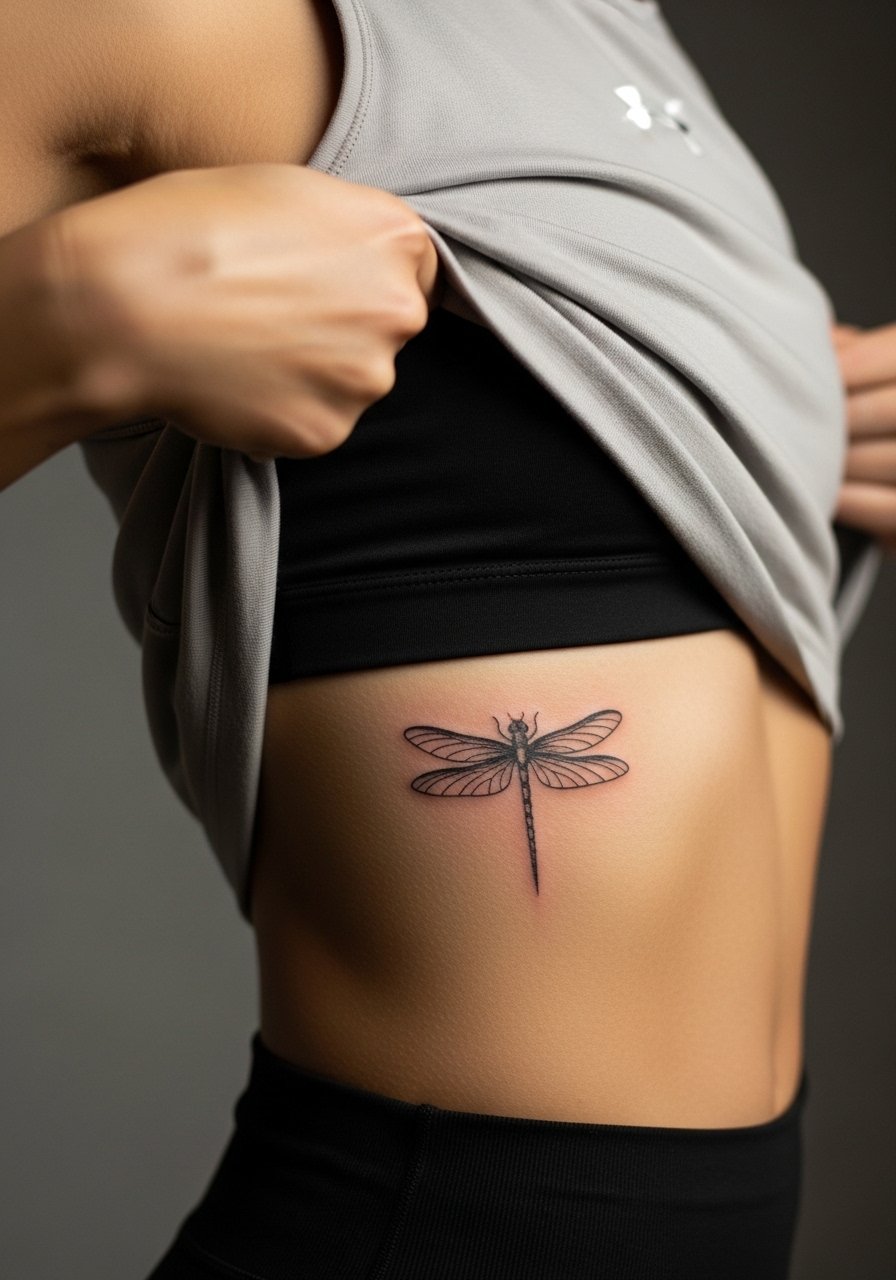
Ribcage placement moves with breathing and can be unforgiving for fine line work. The common aging issue is lines merging when artists go too tiny. Expect higher pain and a longer healing window. Artists split on very fine work here. One side worries about skin stretch; the other says proper technique and spacing keep lines clean. Ask directly where your artist stands and how many sessions they recommend for spacing and touch-ups. For session wear bring a cropped top that gives clean access.
12. Ornamental Dragonfly on the Back of the Hand
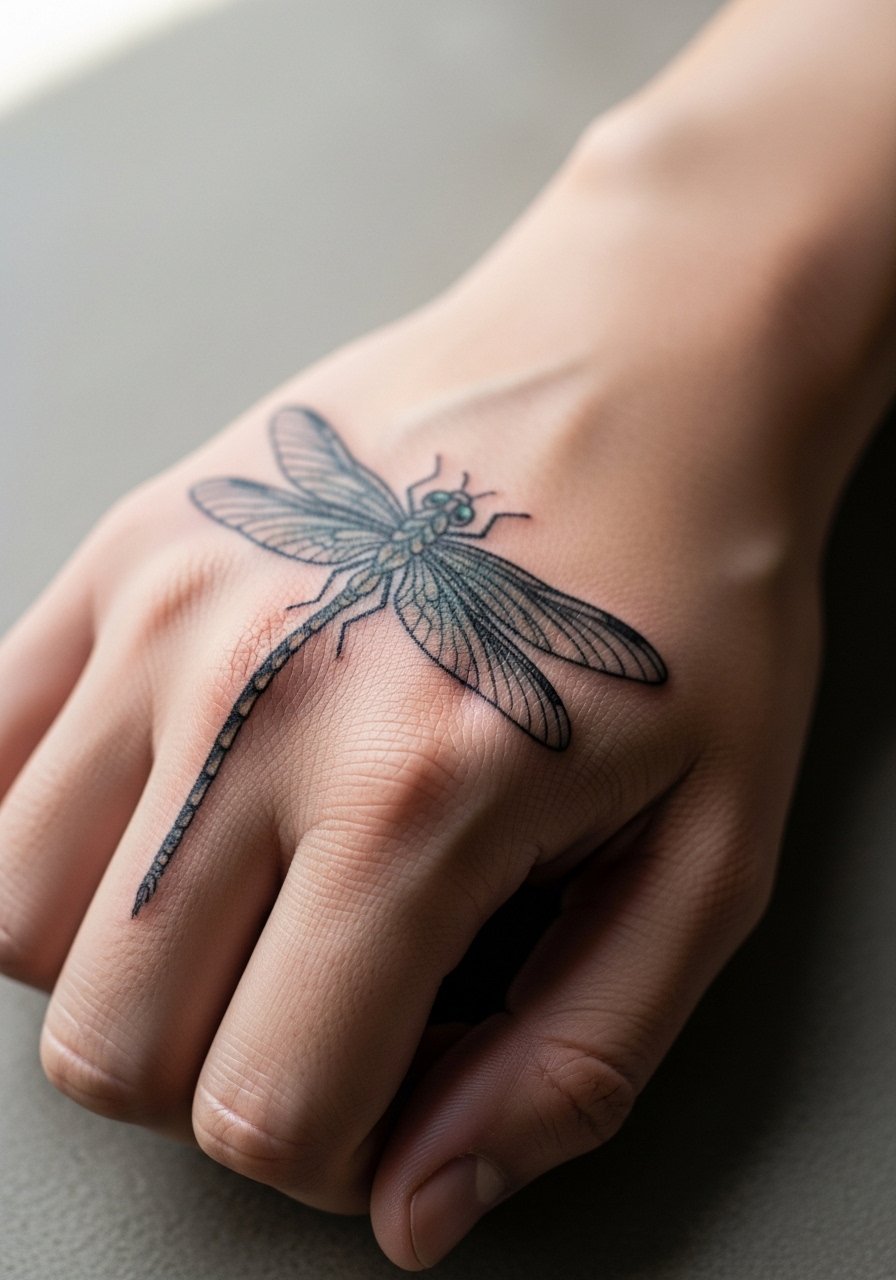
Hand tattoos are visible and subject to heavy wear. For ornamental pieces, prioritize bolder linework for central elements and lighter dot work in fillers. A frequent mistake is packing tiny ornamental details that dissolve into noise within a year. Plan on touch-ups at year one and again at year three. Pain is moderate and healing requires careful protection from daily chores. Pair with a simple leather bracelet when showing the piece to balance the hand without covering the center.
13. Scripted Dragonfly Name on the Collarbone
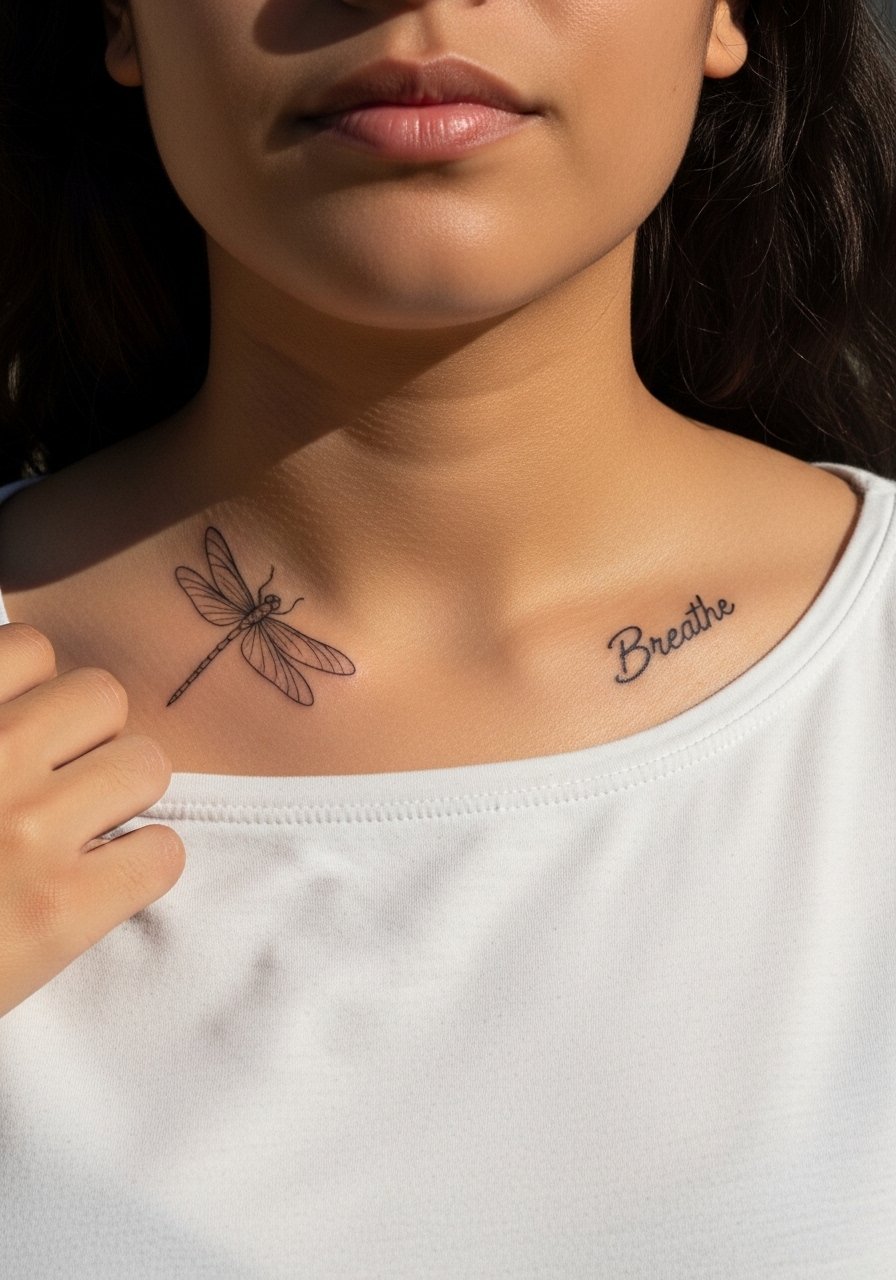
When a dragonfly pairs with script along the collarbone, spacing is crucial because the skin tenses with movement. Ask for the script font at a legible size and request the dragonfly sit slightly off the clavicle to avoid rubbing from bra straps. The usual error is choosing a script that looks crisp on paper but blurs on curved skin. Pain ranges moderate. For showing it off, a thin chain pendant necklace sits above the script without competing.
14. Symmetrical Pair on the Shoulder Caps
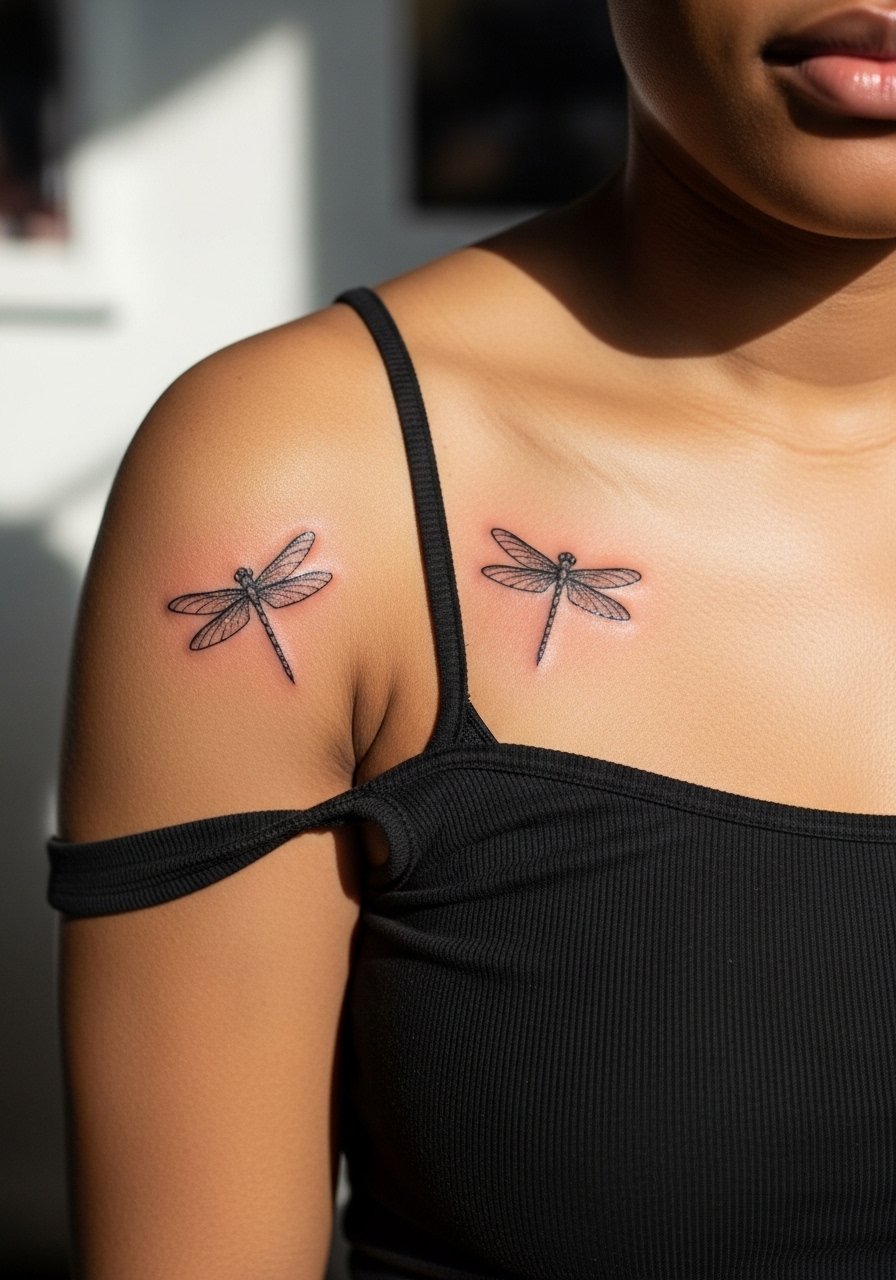
Symmetrical pairs work because shoulders are stable and get moderate sun. Tell your artist you want mirror-imaged stencils tested in position before any linework. Common mistakes include uneven placement that only shows after the piece heals. Pain is lower than ribcage but higher than outer arm. For session ease, wear a loose tank top so straps do not press on the fresh ink. Expect minimal touch-ups if placement and symmetry were checked thoroughly.
15. Stylized Linework Along the Spine
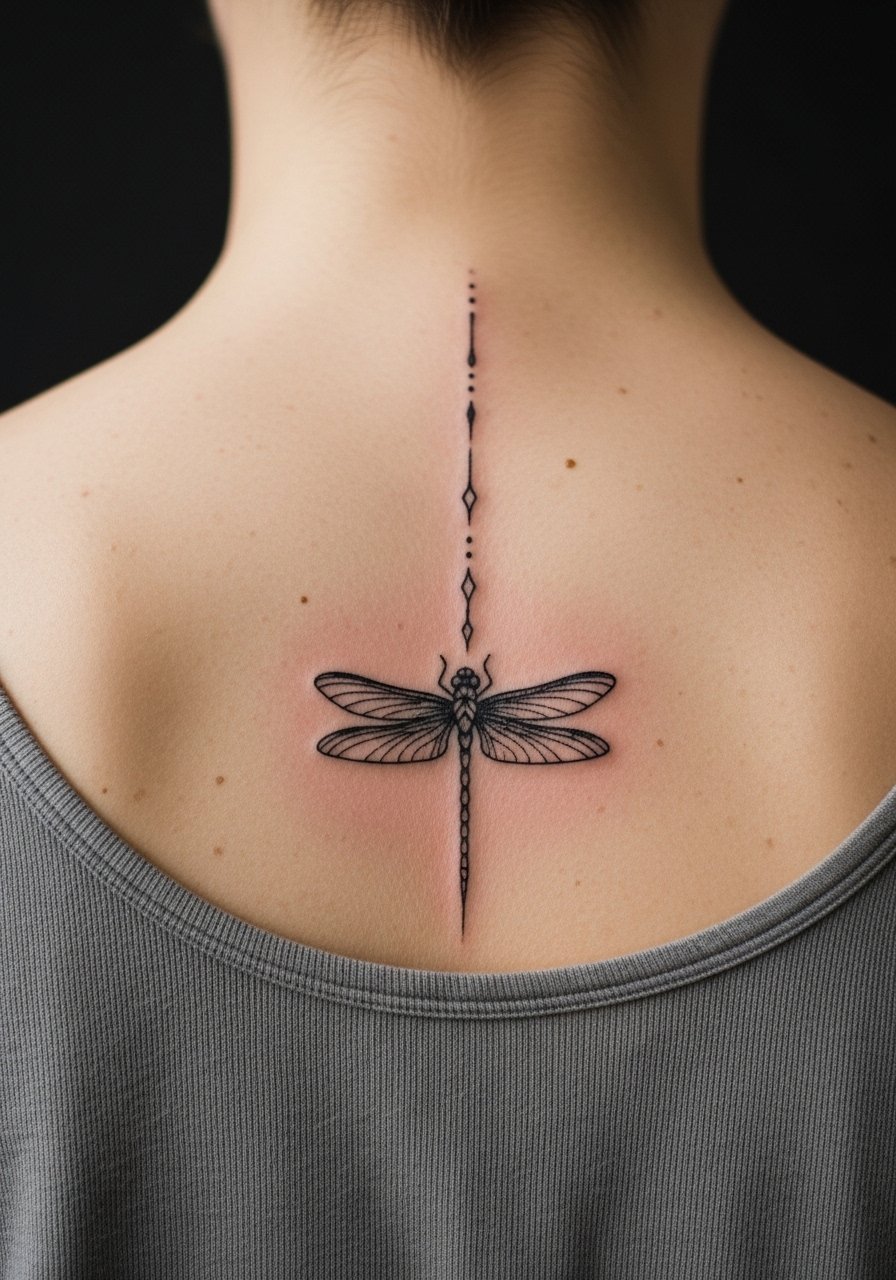
Spine work reads elegant but takes precision because the skin moves with posture. I advise a slightly open wing pattern so the design has breathing room between dense elements. A common aging issue is central linework losing contrast if the wings crowd the spine. Pain is higher and sessions may be split into two. Show your artist photos of the design in an upright stance so the stencil placement matches how you hold yourself.
16. Tiny Geometric Dragonfly on the Ankle Side
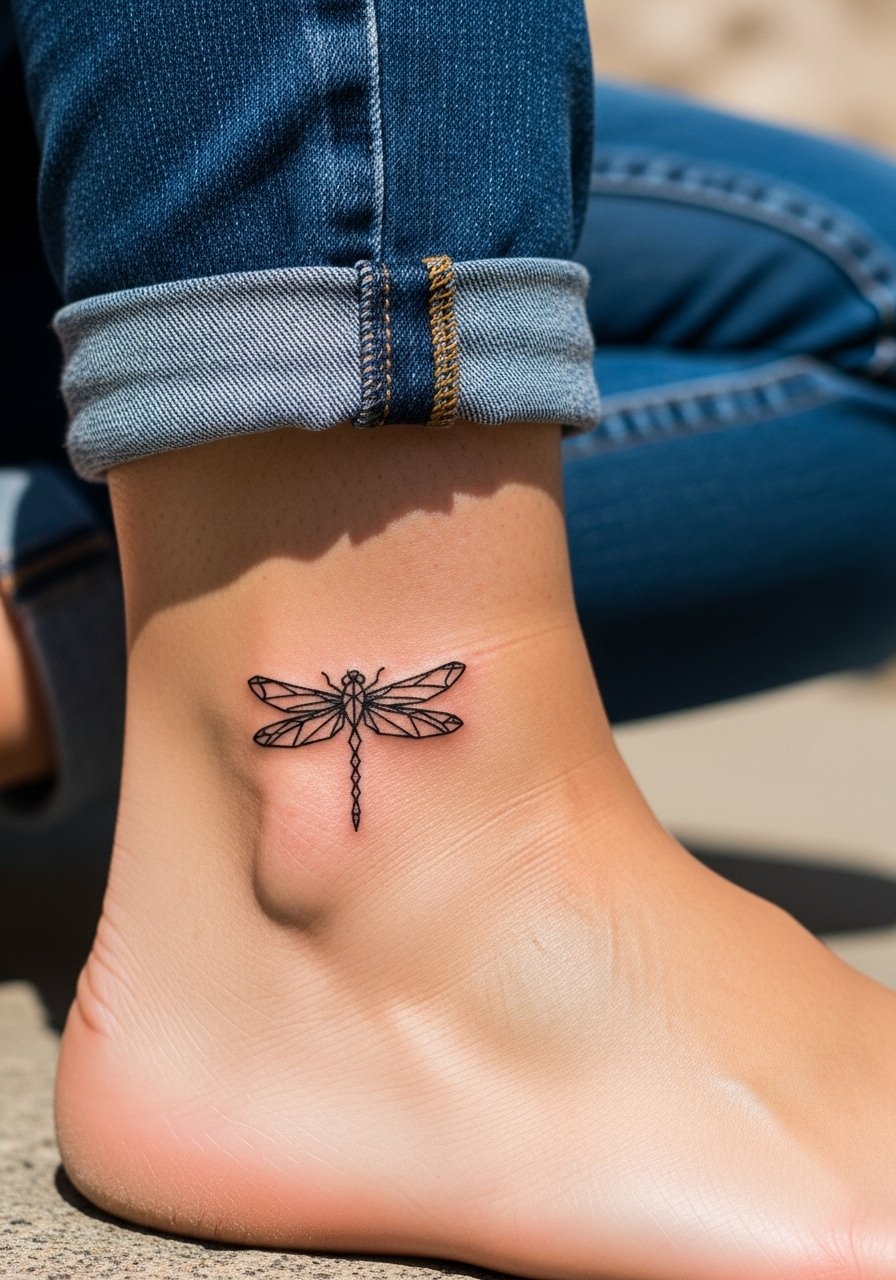
Small geometric forms at the ankle need safe spacing to avoid merging with time. Ask your artist to slightly thicken intersection points so the core geometry stays legible. The ankle sees foot movement and shoe friction so expect a touch-up at year two. Pain is sharp over bone but quick. For after-session mobility and comfort wear low-profile sneakers or sandals to avoid rubbing the fresh area.
17. Floral Framed Dragonfly on the Upper Arm
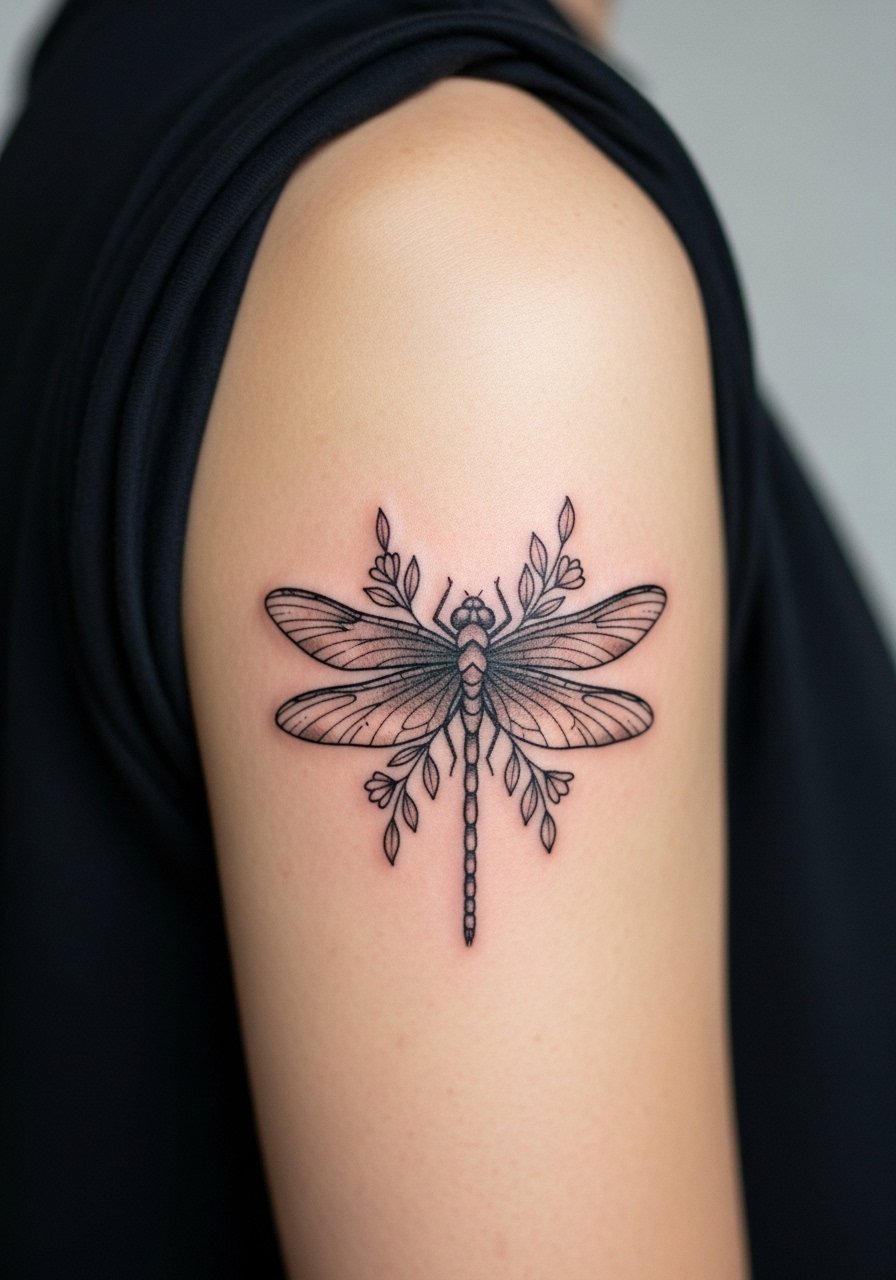
Framing a dragonfly with florals gives the design more surface area so you can retain detail without shrinking elements. In consultation ask for negative space around wings so they do not read crowded in five years. Upper arm skin tolerates saturation well and touch-ups are infrequent. The session feels moderate. When showing it off, rolled sleeves or a sleeveless linen top make the piece read clearly.
18. Abstract Brushstroke Dragonfly Over the Hip
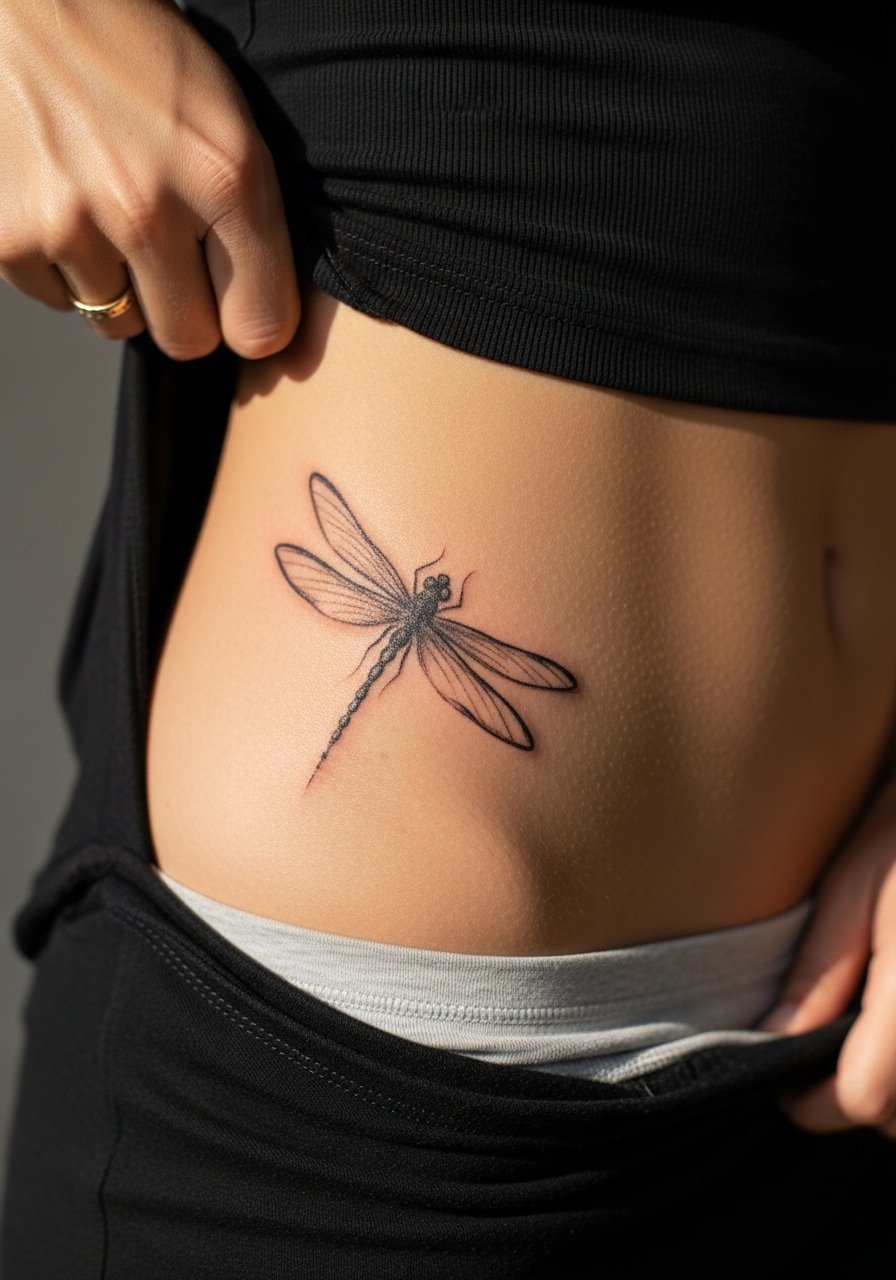
Hip placements are private and hold color well. For brushstroke styles, ask for mapped saturation points so the abstract marks do not fade unevenly. A mistake is asking for ultra-thin streaks that disappear under clothing pressure. Pain is moderate and sessions are comfortable if you wear loose bottoms. For the appointment, choose high-waisted bottoms that you can adjust without discomfort.
19. Bold Traditional Dragonfly on the Bicep
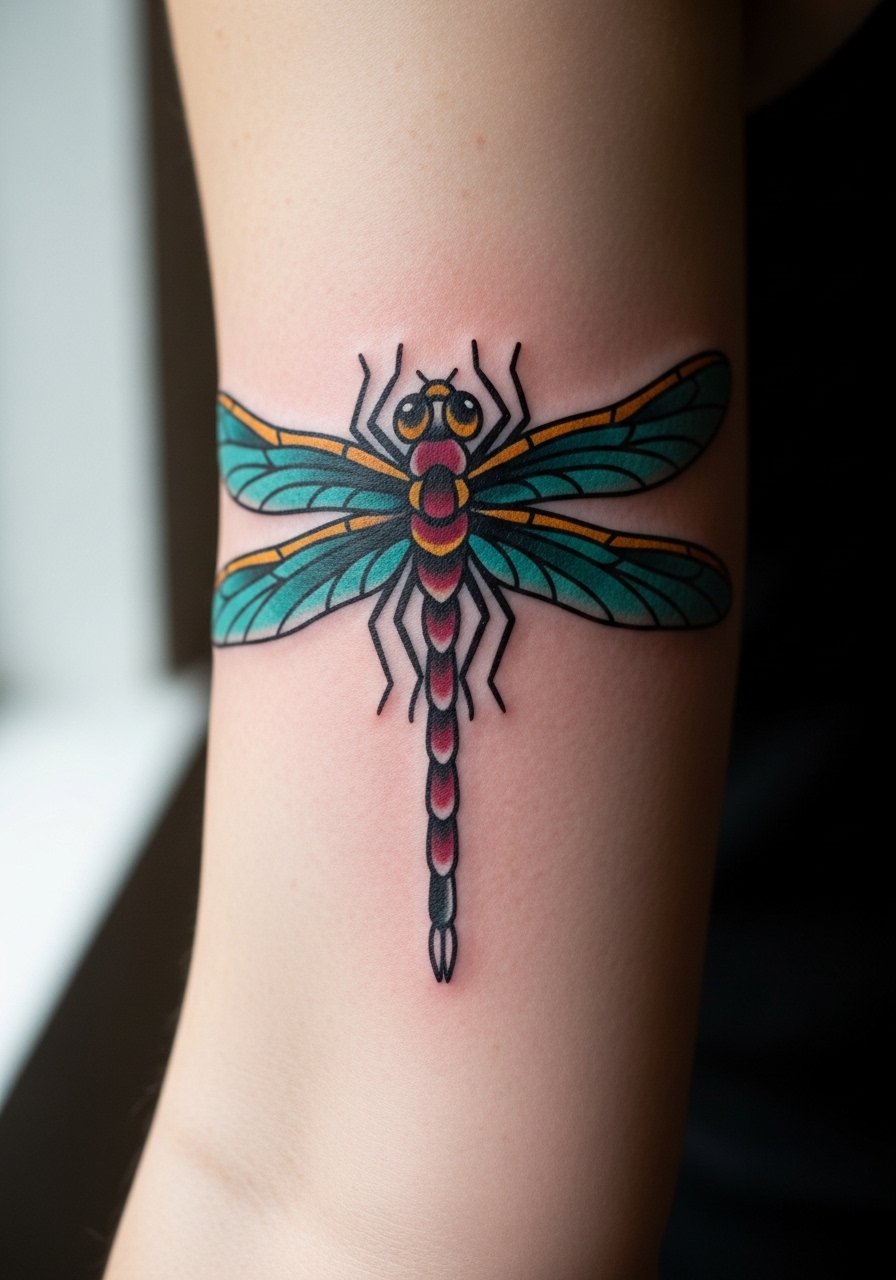
Traditional styles with heavy outlines and saturation age predictably and well on the bicep. Ask for bold wing borders and flat color fills so the silhouette keeps reading as the piece heals. The common mistake is mimicking traditional color gradients that do not hold the same way as solid fills. Sessions are medium length and touch-ups are uncommon. Pain is low to moderate. For a casual look, roll up a sleeve or wear a short-sleeve henley to frame the bicep.
20. Tiny Back of Neck Dragonfly Script Accent
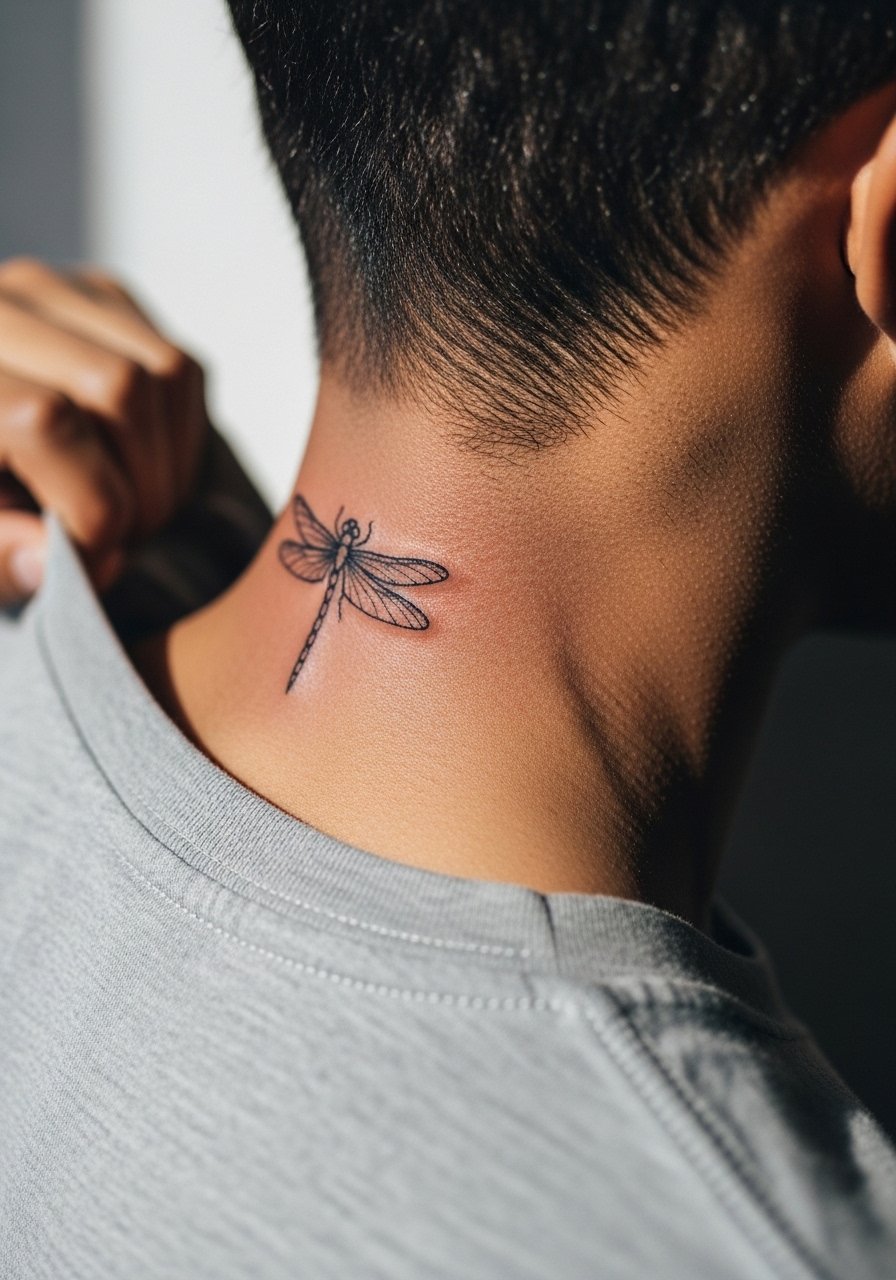
Nape tattoos are easy to hide with hair but sensitive when exposed. Ask for a compact thorax and short wing spans to avoid lines stretching with neck motion. A common error is requesting very fine, single-hair lines in this high-motion spot. Pain is moderate. For showing the piece, a wide-neck tee pulled to one side works well and keeps the area comfortable during healing.
21. Stylized Negative-Space Dragonfly Sleeve Accent
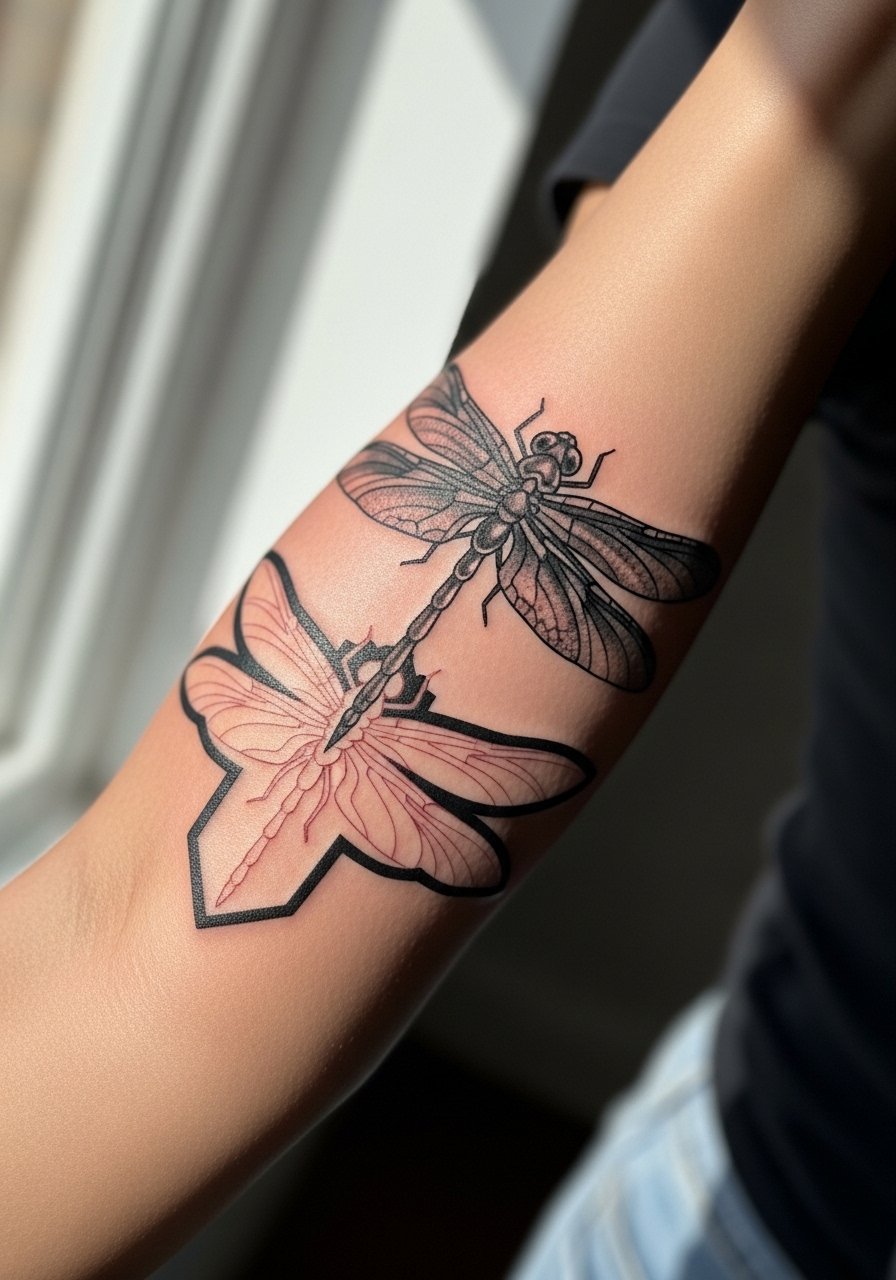
When a dragonfly becomes part of a sleeve, negative space helps the insect remain distinct among other elements. Ask for intentional gaps around wings and the abdomen so each section has room to age. A mistake is filling every inch which softens the insect's shape over time. Sessions will be multiple and pain varies by pass. For sleeves, rolled cuffs or short sleeves show the motif without compressing fresh ink.
22. Subtle White Ink Highlights on Wing Tips
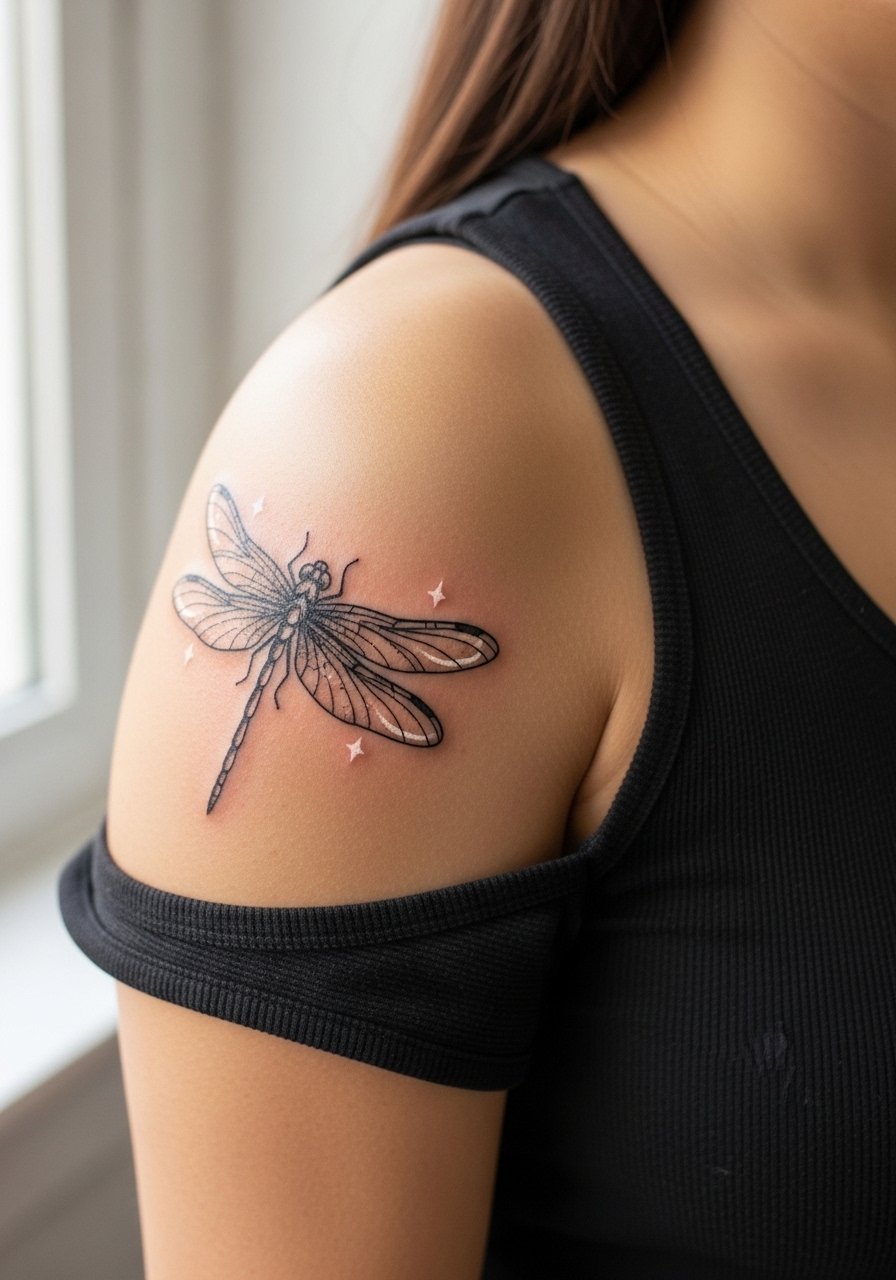
White ink can add pop to wings but it is unpredictable across skin tones. Some artists use it sparingly to avoid premature fading. Ask how the artist layers white over color and whether they recommend touch-ups. A common complaint is white turning chalky or disappearing on certain skin tones. Pain is moderate. When showing the shimmer use an open-back top that exposes the shoulder without rubbing the area.
23. Etched Line Dragonfly on the Rib Flank
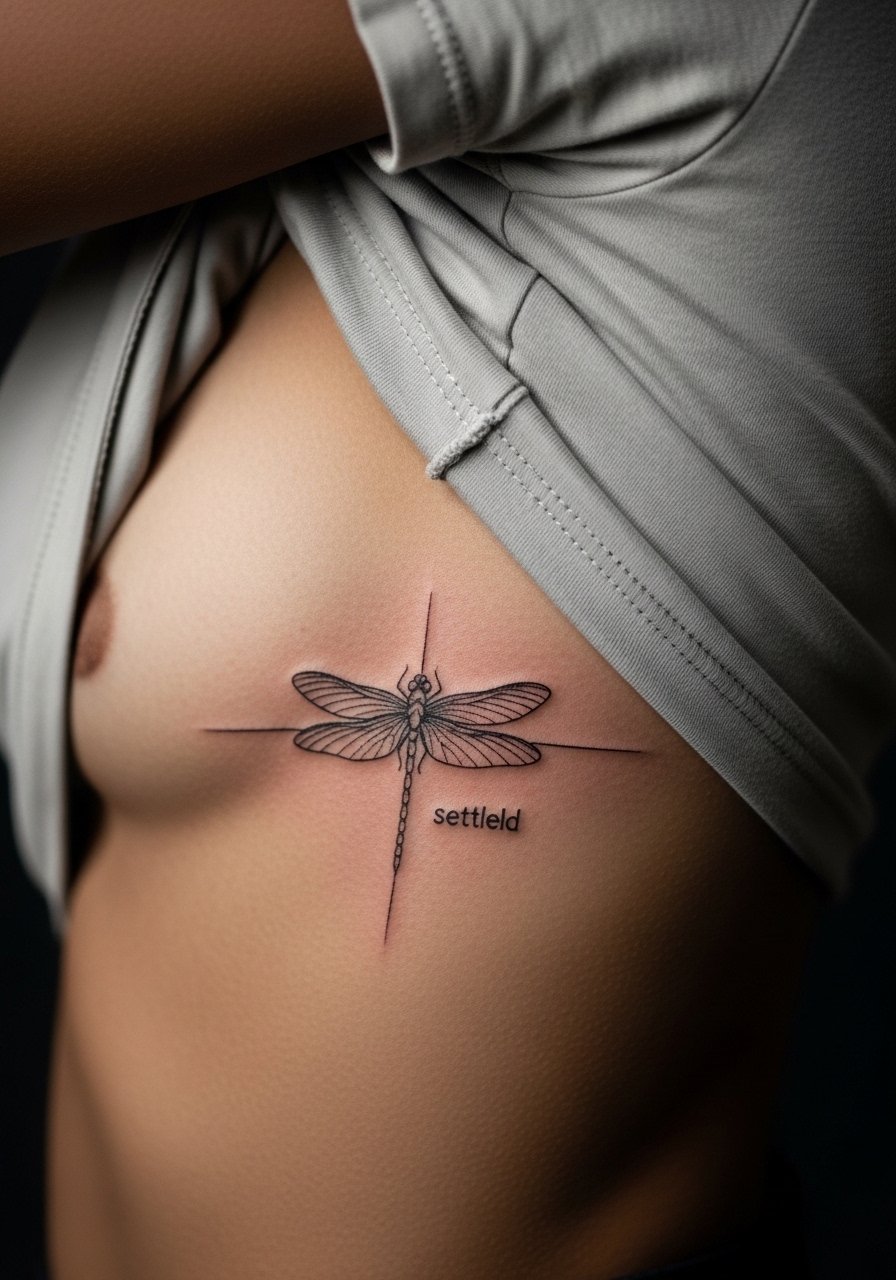
Side rib placements need spacing and stable line weight. The skin flexes with breathing and motion, which can cause lines to soften if they are too thin. Tell your artist you want a middle-range line weight for longevity. Expect high pain and possibly split sessions. Ask for touch-up follow-up plans during the consult. For recovery wear loose waistbands to avoid friction.
24. Botanical Dragonfly Ankle Band
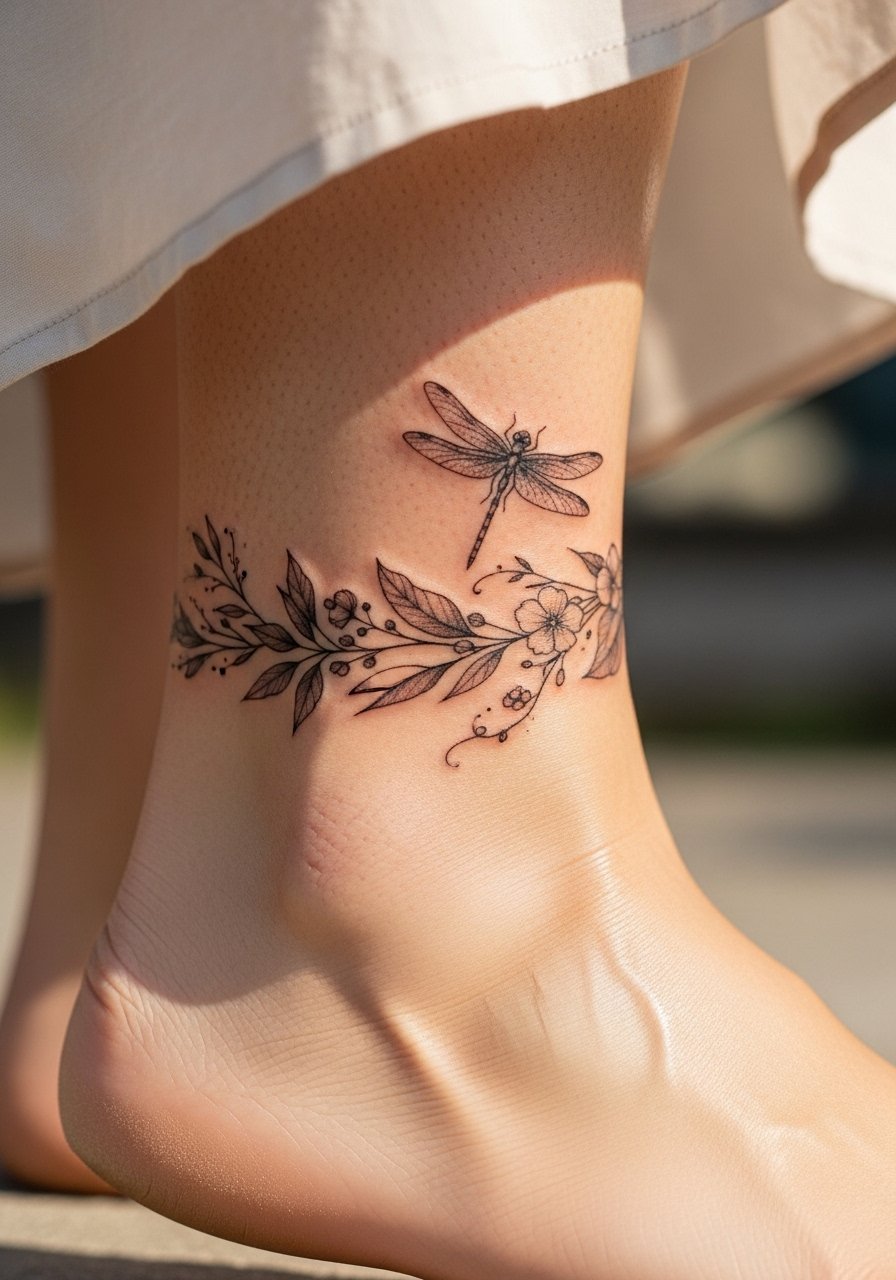
Ankle bands combine decorative elements with the dragonfly as an anchor. Make sure the band has spacing so the insect remains a focal point and not swallowed by florals. Shoe friction and socks cause faster fading so expect touch-ups at two years. Pain is brief but sharp over bone. For showing the design, a flared skirt or sandals highlights the ankle without rubbing the band.
25. Thumbnail-Sized Dragonfly on the Toe
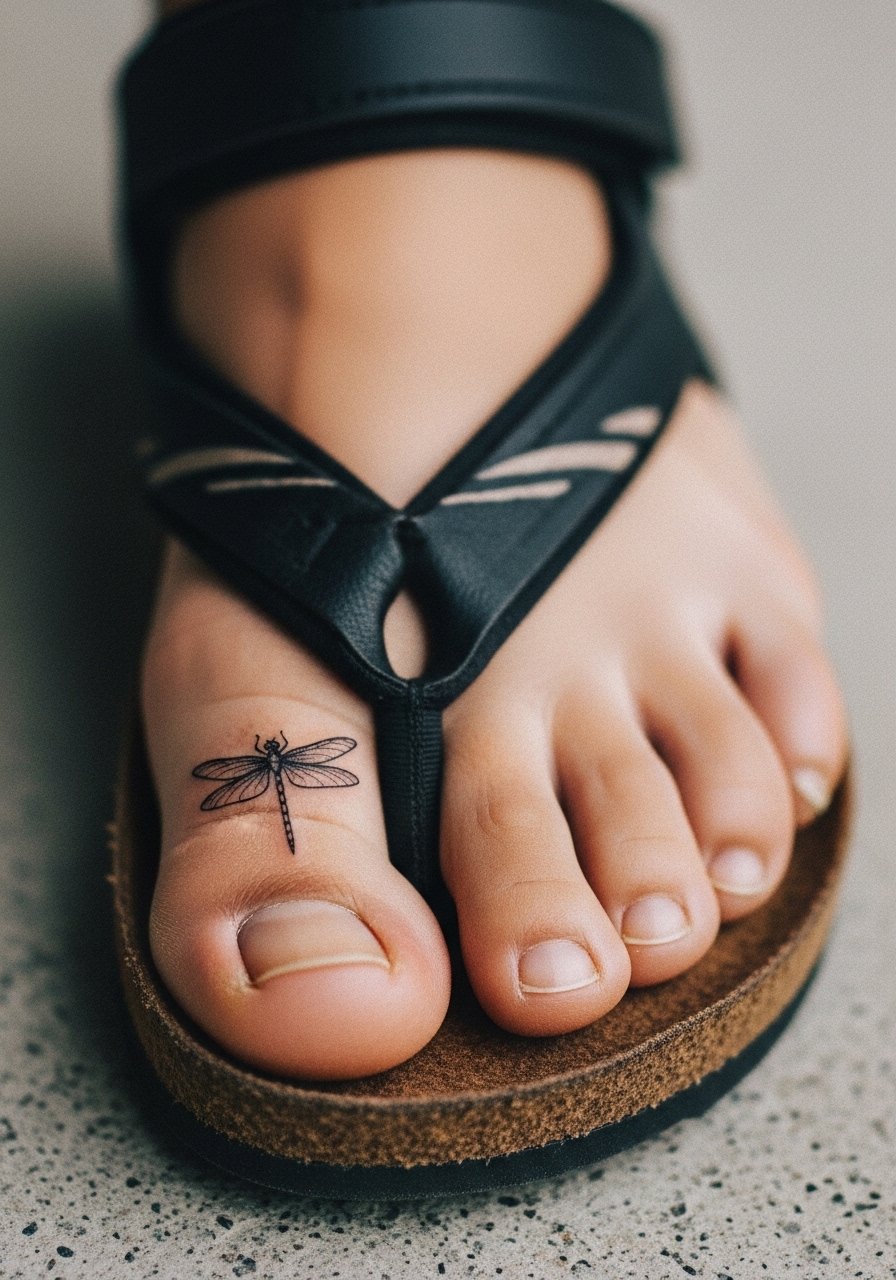
Toe tattoos take a beating from shoes and moisture. If you want a tiny toe dragonfly accept that heavy touch-ups are the norm. Ask for bold contouring rather than hairline detail. Pain is sharp and healing is finicky. For the appointment wear open-toe shoes to avoid pressure on the fresh area.
26. Celestial Dragonfly Over the Sternum Edge
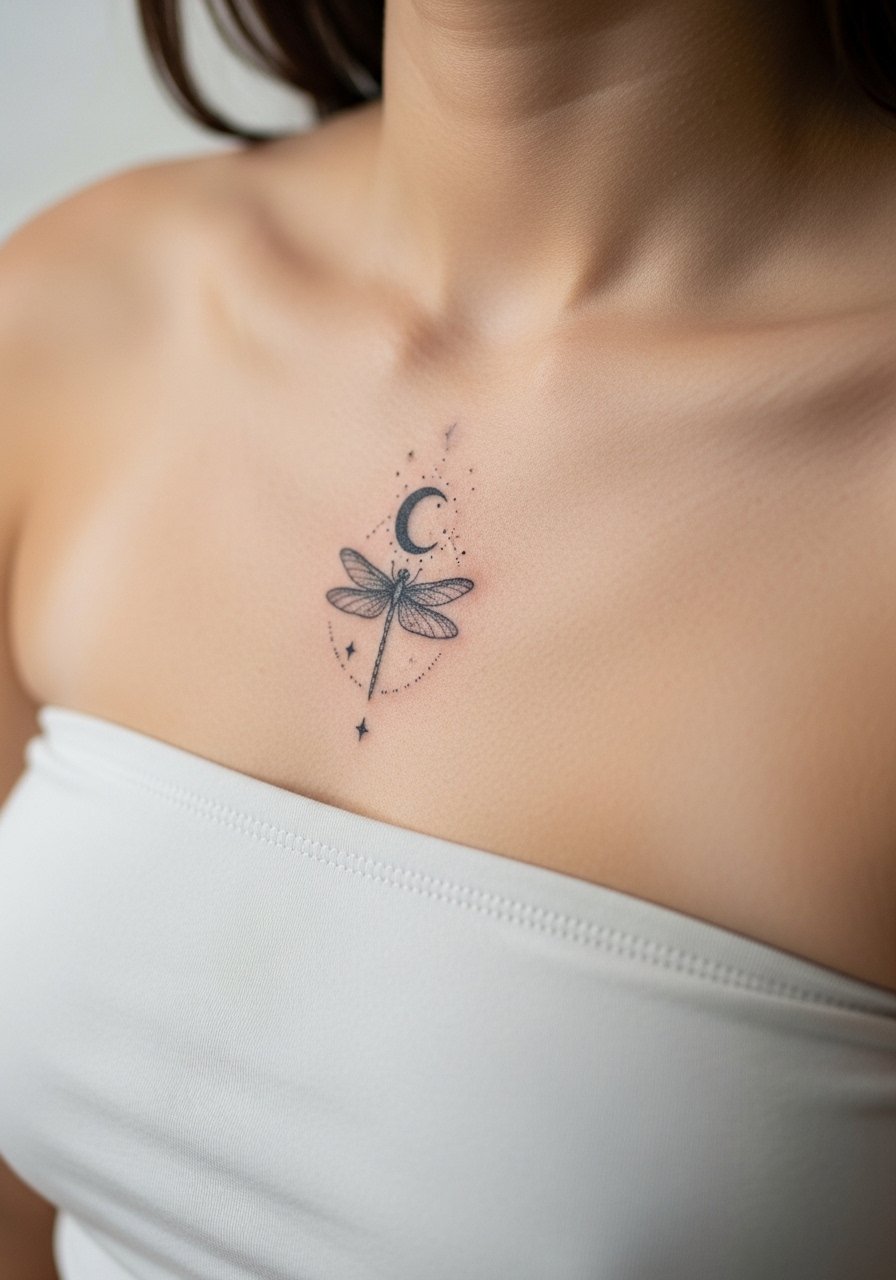
Pieces near the sternum edge combine motion and compression from clothing. Ask for strategic spacing so the wings avoid rubbing against tight tops. One camp argues delicate celestial touches do not survive frequent wardrobe contact, the other camp uses slight repositioning toward the rib to help longevity. Name both approaches with your artist and agree on a placement that balances visibility and wear. Pain is high. For the session pick a bandeau top you can easily adjust.
27. Large Backpiece Dragonfly With Wing Spread
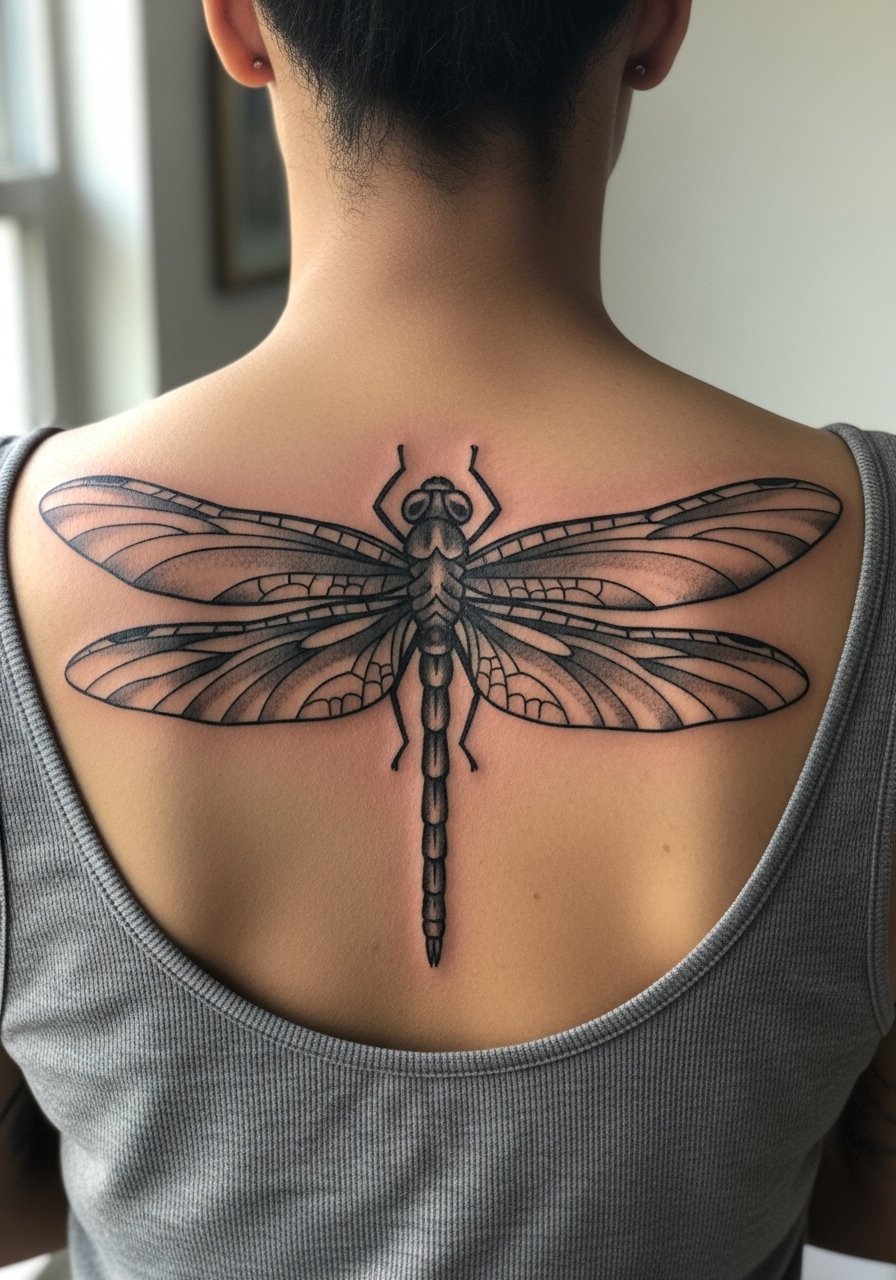
A full back dragonfly gives room for breath and large-scale wing detail that will hold for years. Decide during the consult whether you want negative space veins or filled veins for long-term contrast. The most common mistake is cramming too many micro details into the wings. Sessions are long and will likely be staged over multiple visits. Pain is variable. For recovery use loose backs or button-downs to avoid fabric rubbing while healing.
Frequently Asked Questions
Q: Will fine line dragonfly wings blur if I choose a small design on my wrist or ribs?
A: It depends on placement and the amount of negative space. Fine line on wrists tends to blur faster because of hand washing and sleeve friction. On ribs the skin movement plays a role. Ask for slightly increased line weight at joints and for spacing between veins so the wings keep structure.
Q: How often should I expect touch-ups for finger, toe, or ankle dragonfly tattoos?
A: High-friction zones like fingers and toes usually need the earliest refresh, often within one to two years. Ankles vary but expect a light touch-up at year two if you wear closed shoes often. Plan budgets and follow-up time into your consultation.
Q: Is white ink a good idea for wing highlights on darker skin tones?
A: White ink is unpredictable. Some artists layer it sparingly to avoid a chalky look, others skip it. Ask the artist to show healed examples on similar skin tones and to explain their plan for longevity.
Q: Can a watercolor dragonfly be placed on the shoulder blade without losing its wash effect over time?
A: Watercolor ages faster than saturated fills but the shoulder blade is forgiving. Request pigment anchors or slightly deeper saturation in key points to keep the wash readable as it fades. Expect periodic refreshes for color vibrancy.
Q: What should I wear to the studio for a sternum or rib dragonfly session?
A: Choose garments that reveal only the tattoo zone. For sternum and rib work a fitted sports bra or bandeau is ideal. A sports bra that you can pull up or down without full undressing keeps you comfortable and gives the artist clear access.
Q: Are there career considerations for visible placements like hands and neck?
A: Yes. Some industries remain conservative about visible tattoos. If your job prospects matter discuss placement and the option to hide work with hair or clothing. A small neck or hand piece may be easy to cover while you build a portfolio and then show selectively.
