
Fine line dotwork is everywhere online, and it looks flawless in studio photos. The reality is different when you live with the ink for years. Small dot clusters that read clean on the first week can soften fast on wrists and hands, while properly spaced mandalas on the forearm often keep their personality a decade in. Below are 17 minimalist dotwork ideas for men, with what ages well and what to ask for in consults.
1. Dotwork Mandala on Outer Forearm
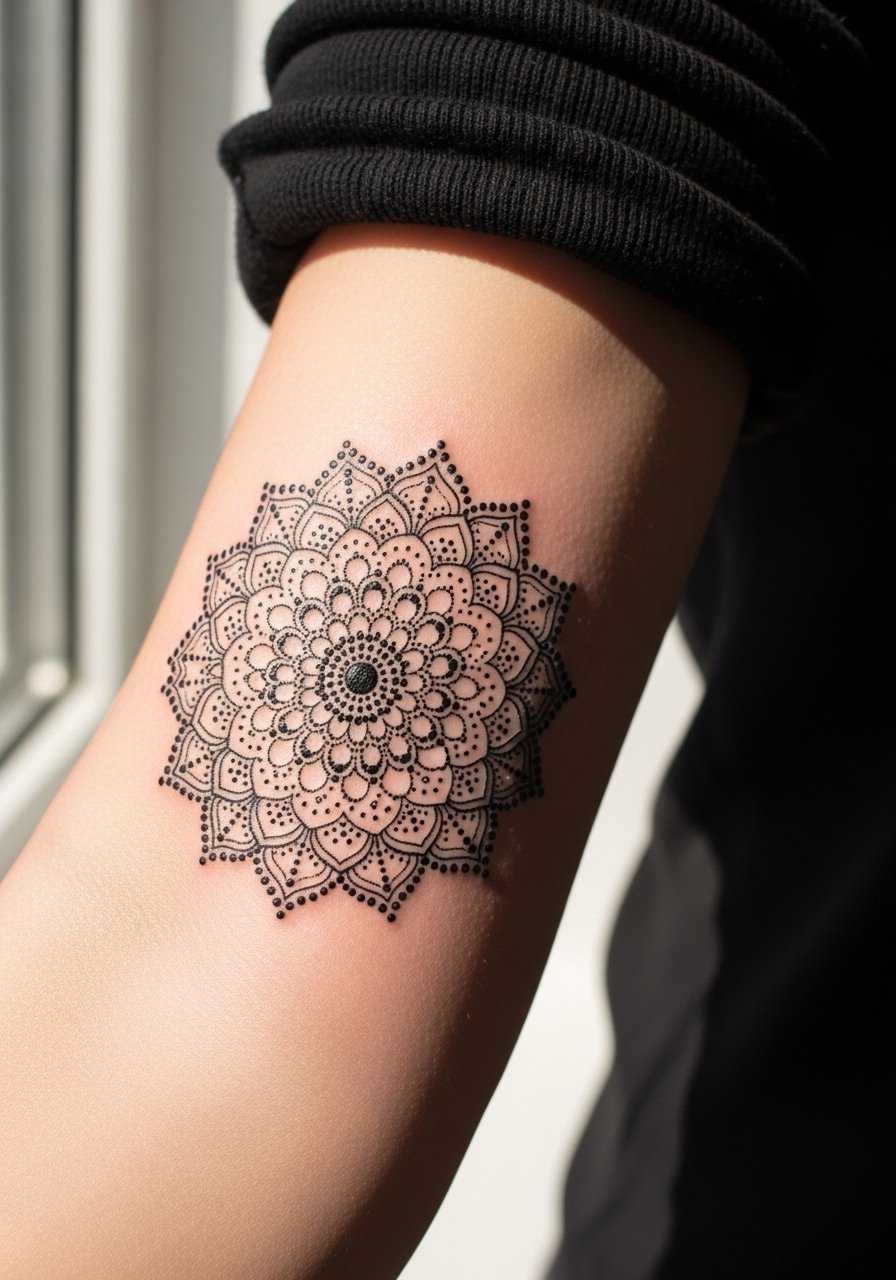
I recommend this when you want a graphic centerpiece that expands later into a sleeve. Tell your artist you want wider spacing between dense zones and slightly larger dots at the center so the pattern keeps clarity at year two and year five. Expect a two to three hour session on a 2.5 to 4 inch piece and moderate pain. A common mistake is shrinking the mandala too small, which causes the dot gradients to merge over time. For showing it off, pair with a rolled cuff chambray shirt and a slim leather cuff on the opposite wrist to frame the work.
2. Minimalist Mountain Scene on Inner Bicep
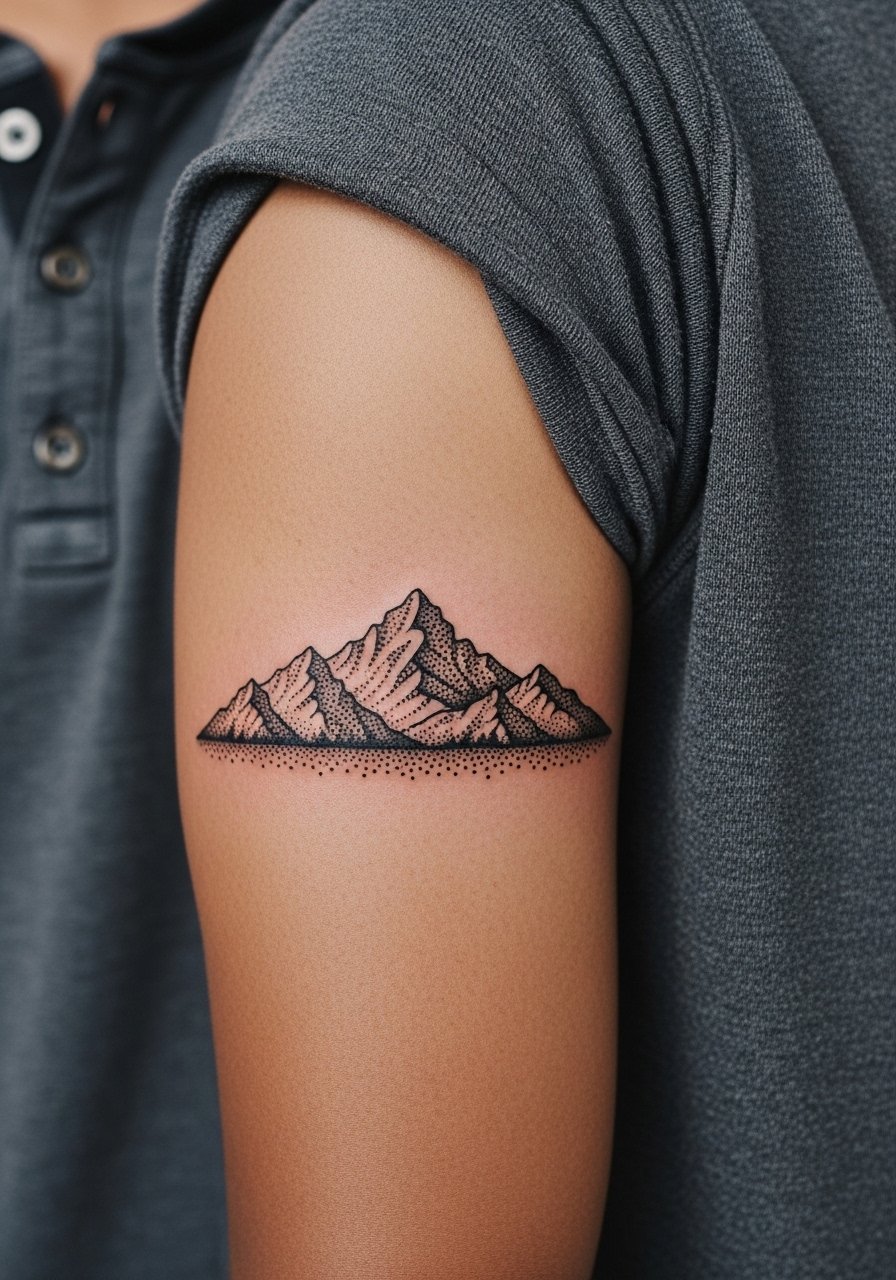
This is a beginner-friendly option that reads like a badge of weekend adventure. Tell the artist you want stipple shading instead of thin lines so the peaks hold on warmer or darker skin. Inner bicep sessions are quick, usually one hour, but expect sharper discomfort when they pack dots close. The aging story is usually good because the bicep is lower-friction than wrists. For the session wear bring a charcoal henley men you can roll without lifting tight fabric.
3. Three-Dot Ellipsis on Inner Wrist
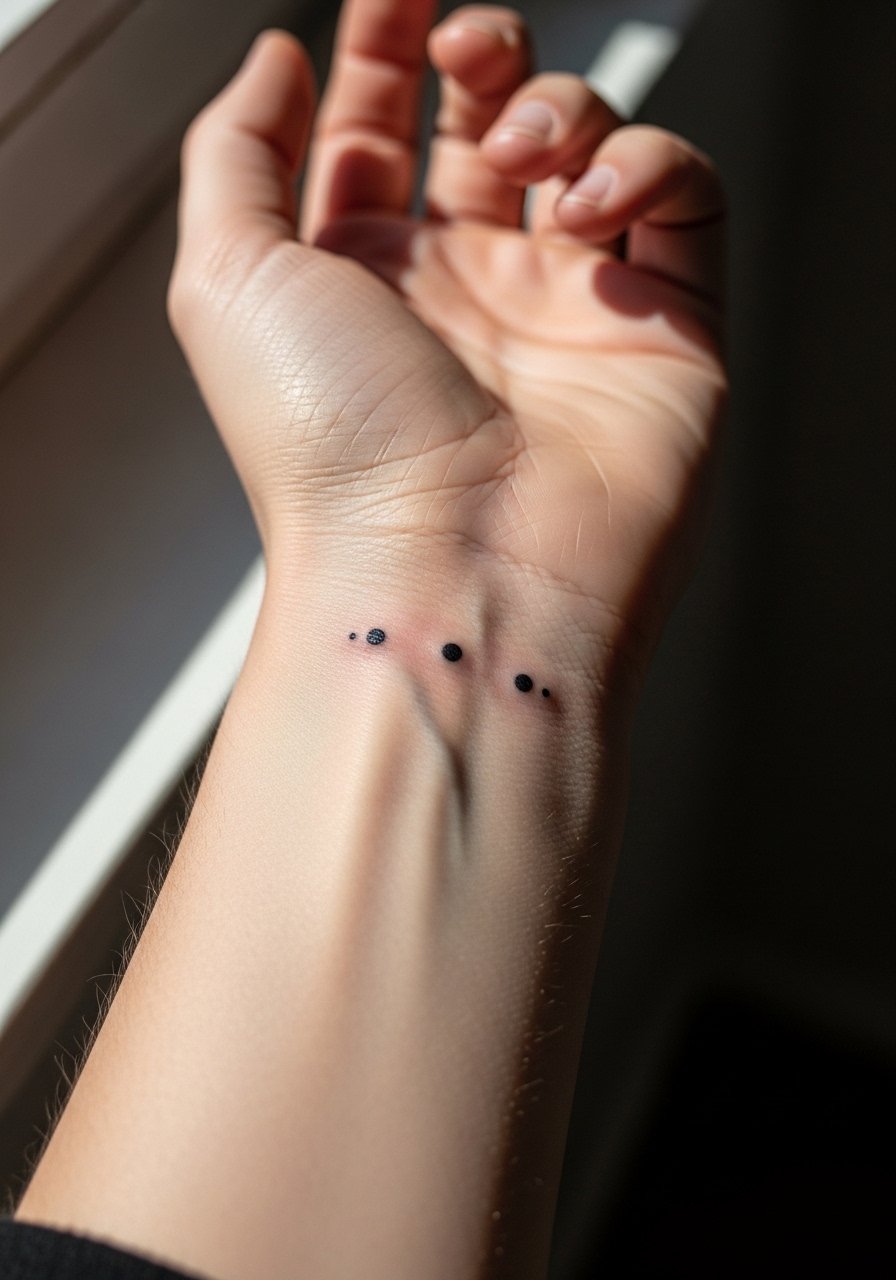
Wrist dots are the purest minimalist move, but they are also the place most people report early fading. I tell clients to ask for deeper initial dot saturation so touch-ups are less painful later. Pain is low to moderate and the session is under 30 minutes. Expect visible softening around six to eighteen months if your job involves heavy wrist motion. To avoid crowding the area, wear a thin leather watch strap on the opposite wrist when showing it off. Artists and forums split on whether fine dots on wrists need routine touch-ups. One side says wrists fade fast from friction. The other says solid dot density and spacing prevent problems. Ask the artist which camp they follow before booking.
4. Geometric Triangle on Upper Chest
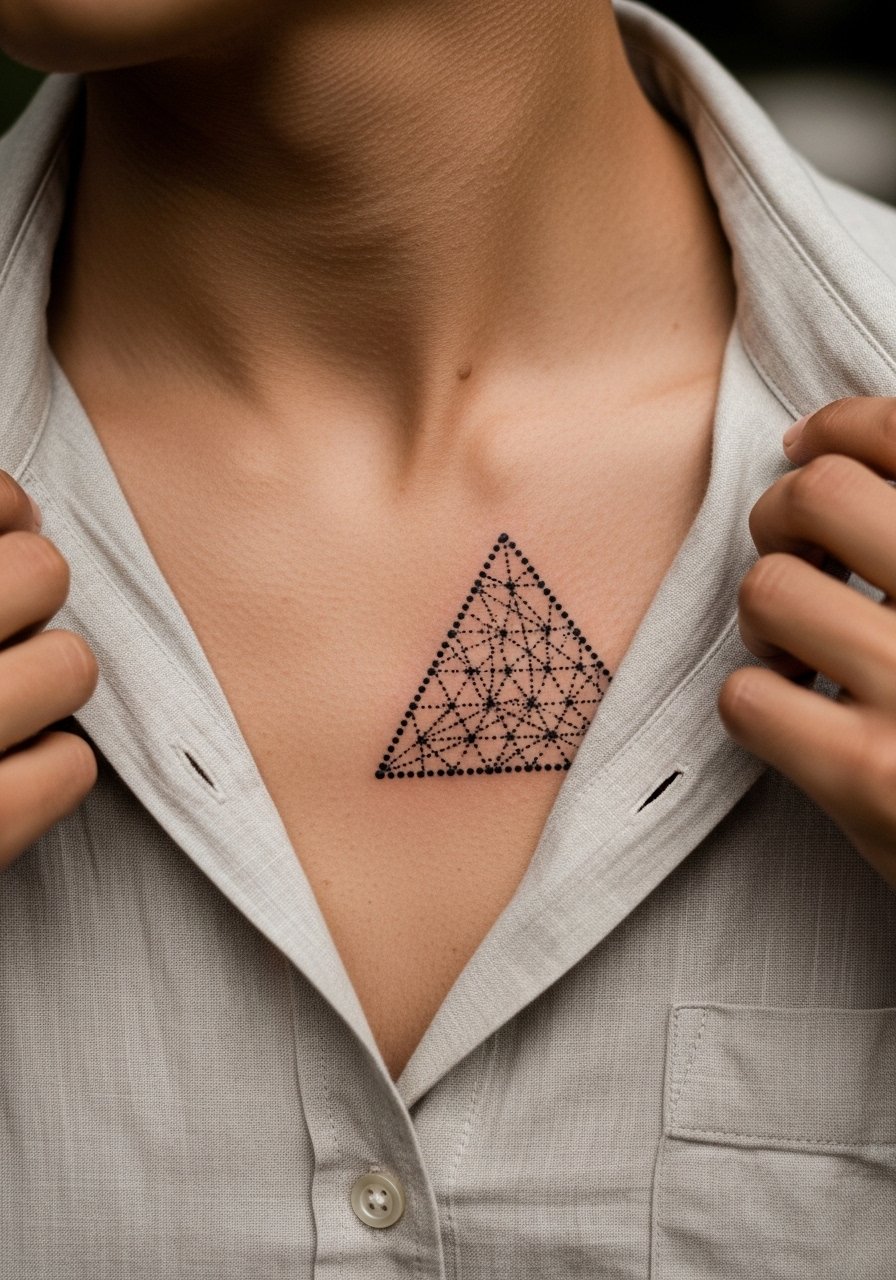
This placement gives a bold but wearable chest mark that scales into larger chest pieces later. Tell the artist to use a heavier dot grain at the base and lighter stipple toward the apex so the triangle reads three dimensional at arm's length. Sessions usually split into two short sittings if you want crisp gradients. Beware making it too small near the collarbone because sun exposure accelerates loss of contrast. For evenings out this pairs cleanly with a linen button shirt men left unbuttoned to show just the top edge.
5. Star Constellation on Shoulder Cap
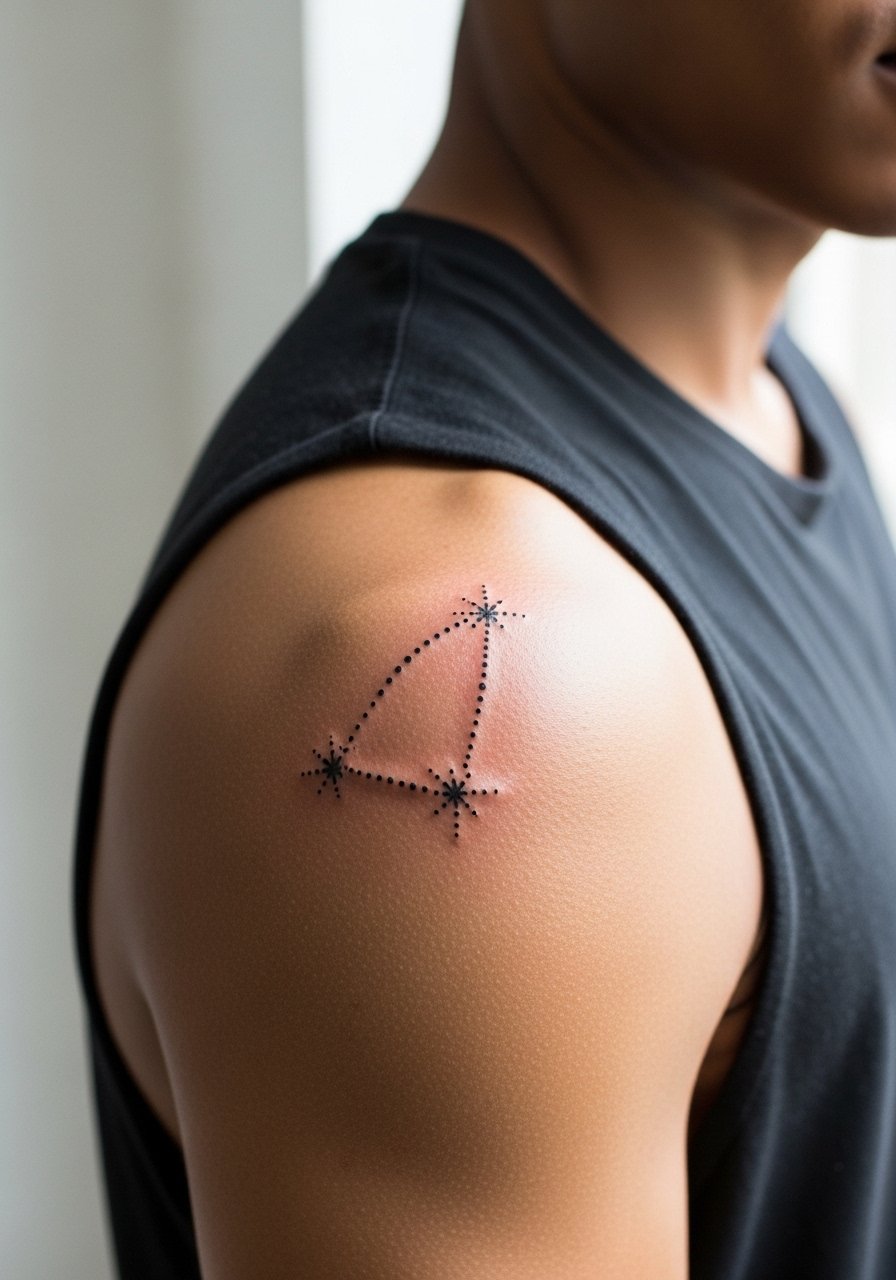
Shoulder caps are low maintenance and ideal for celestial motifs that breathe. Ask for variable dot sizes to map star brightness and request a slight scatter of negative space to prevent the cluster from looking like a blur in two years. Sessions are usually one sitting under an hour. Pain is mild and healing is straightforward unless you nap on that side. Show it off with a sleeveless muscle tee so the cluster sits naturally with your silhouette.
6. Animal Silhouette with Dot Shading on Outer Thigh
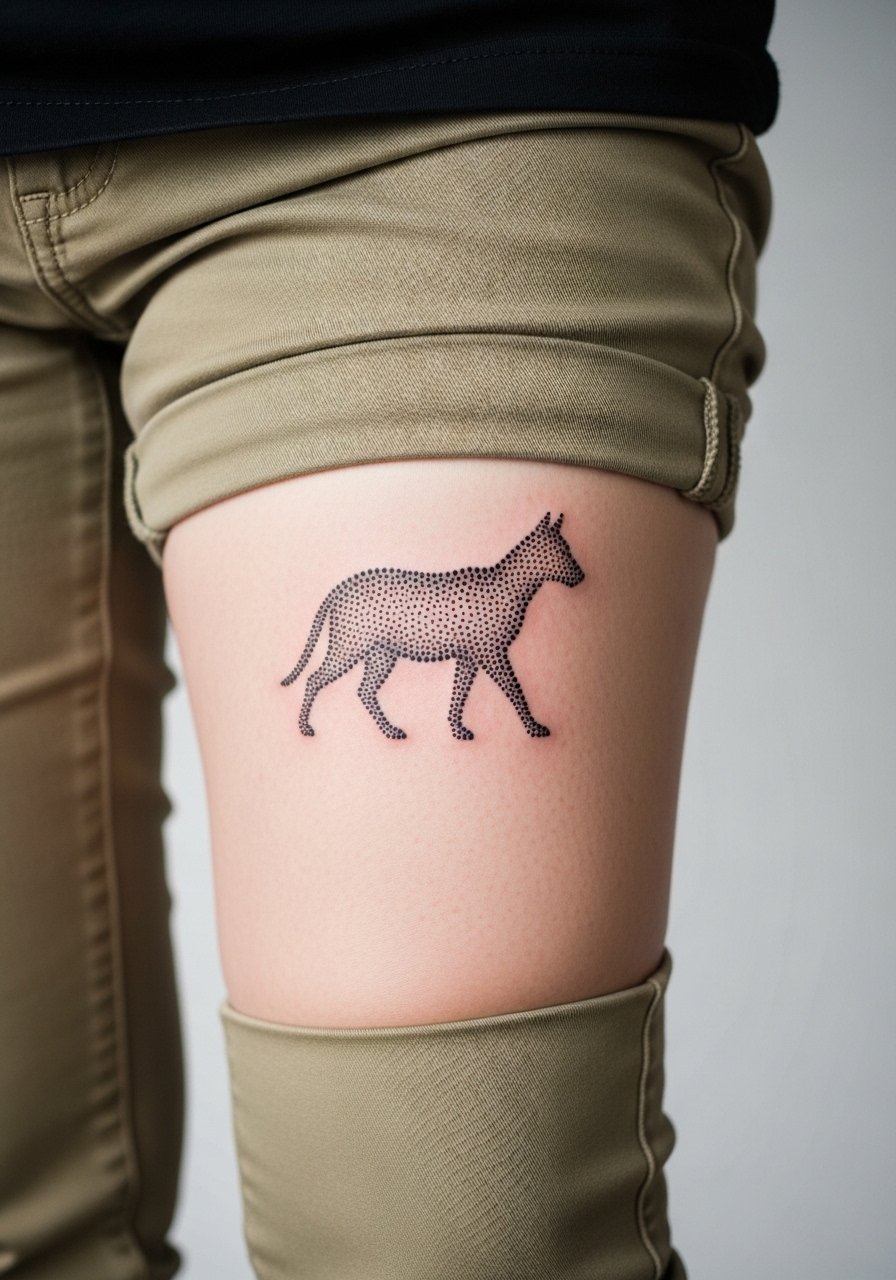
Thigh pieces let you go larger and keep shading that reads from a distance. For this silhouette, ask for negative space highlights within the dot shading to create a floating effect. Outer thigh sessions are longer, often split over two to three sittings, and pain is moderate. Weight fluctuation can stretch the piece, so mention any recent bulk cycles. To show it off in casual settings, roll a pair of slim khaki chinos or wear neutral athletic shorts. If you plan to bulk or cut, pick chest or collarbone instead for less distortion over time.
7. Fine Dotwork Flower on Sternum
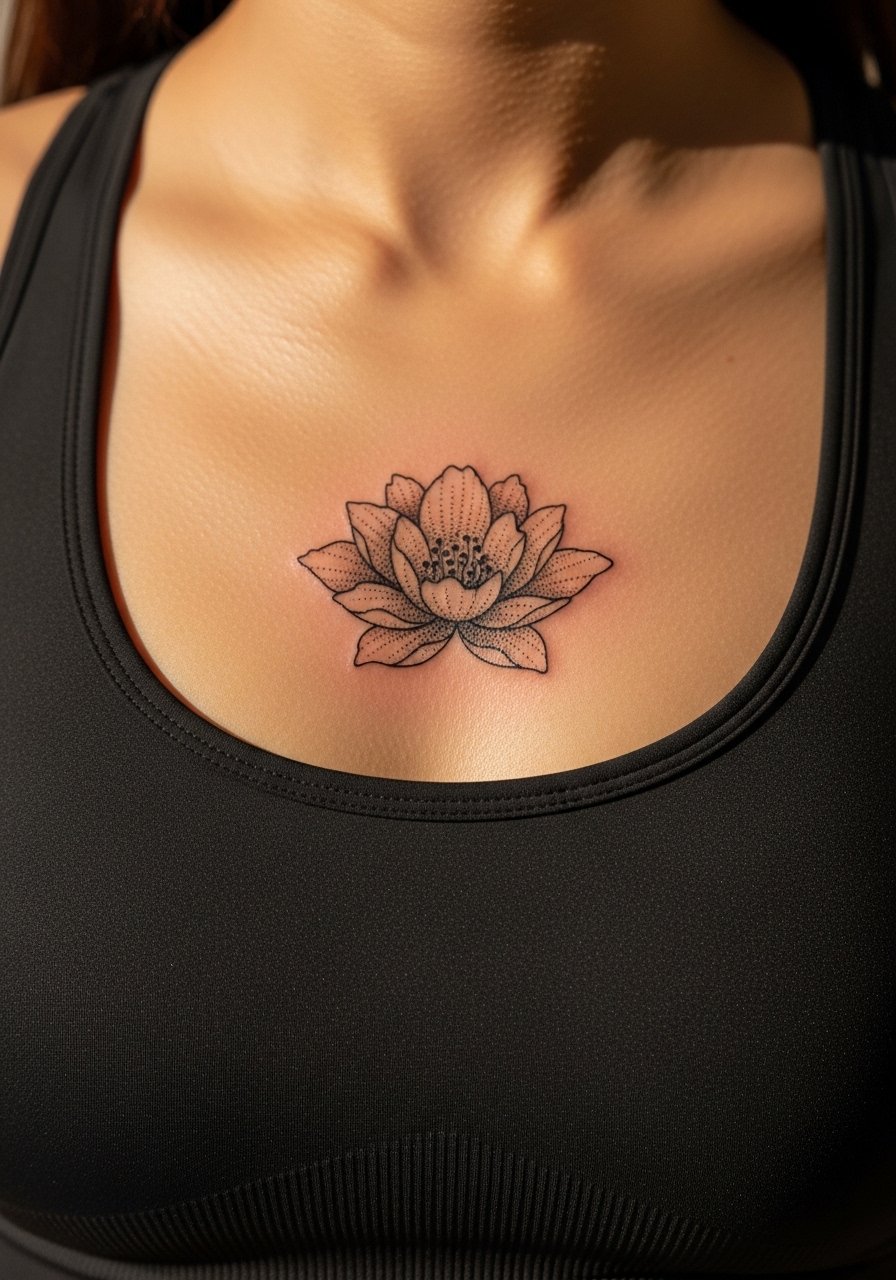
Sternum work reads intimate and personal. Expect higher pain and two sessions for a three-inch bloom because the area bruises more easily. The big mistake is asking for overly dense tiny dots across the breastbone. That creates patchy scabbing and uneven heal. Plan for careful drying the first three days, then light moisturize. This placement requires an artist comfortable with chest anatomy and sensitive aftercare. For professional considerations, note this is not a piece you will show off daily.
8. Abstract Dotwork Pattern on Calf
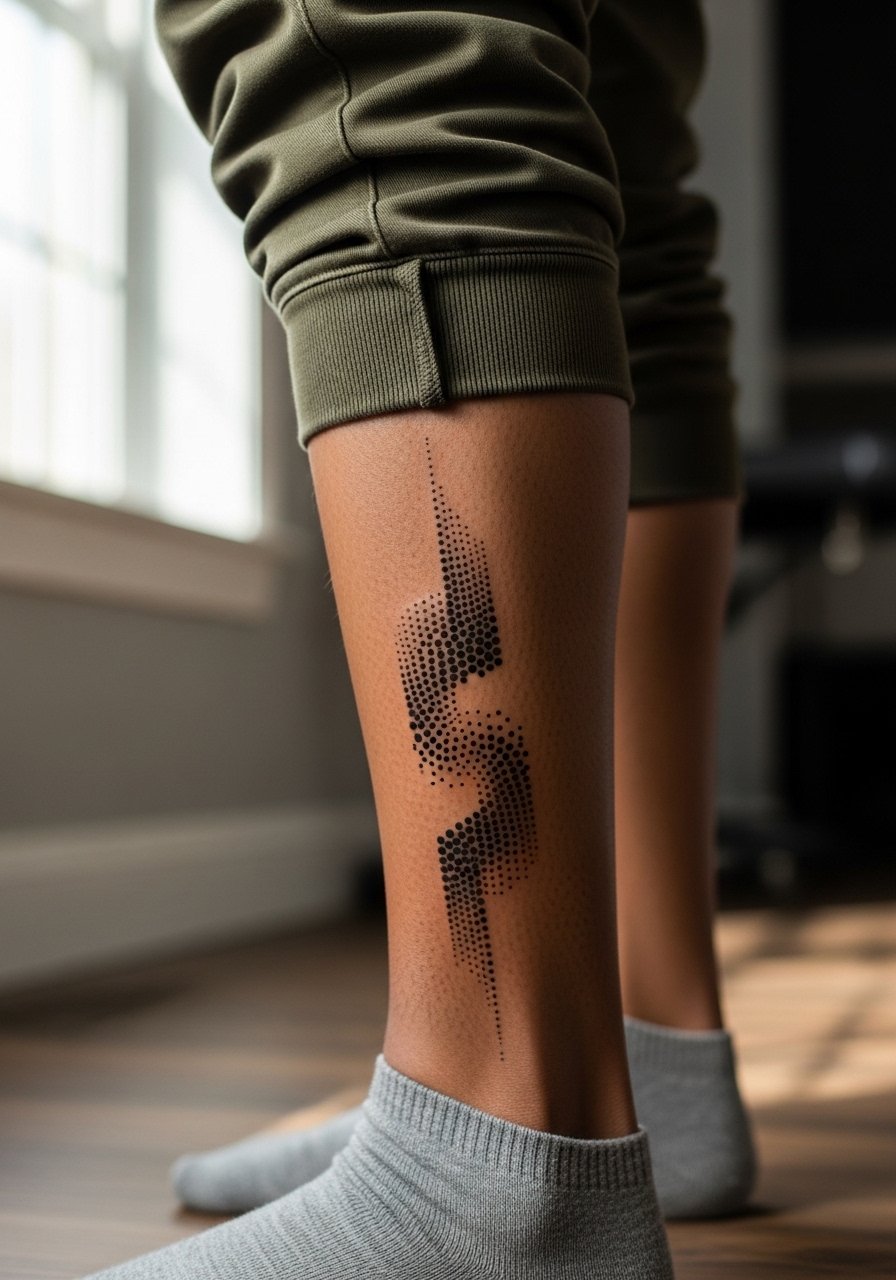
Calf pieces are increasingly popular with gym-goers because they are visible in shorts and stable under muscle shifts. Ask the artist to align the vertical flow with your muscle grain so the optical depth reads when you move. Sessions are two to three hours depending on size and are generally well tolerated. For summer visibility match with olive joggers men rolled to mid-calf or high ankle socks for contrast. If you plan regular leg workouts, tell the artist so they can place denser dots away from high-friction zones.
9. Minimalist Wave on Inner Forearm
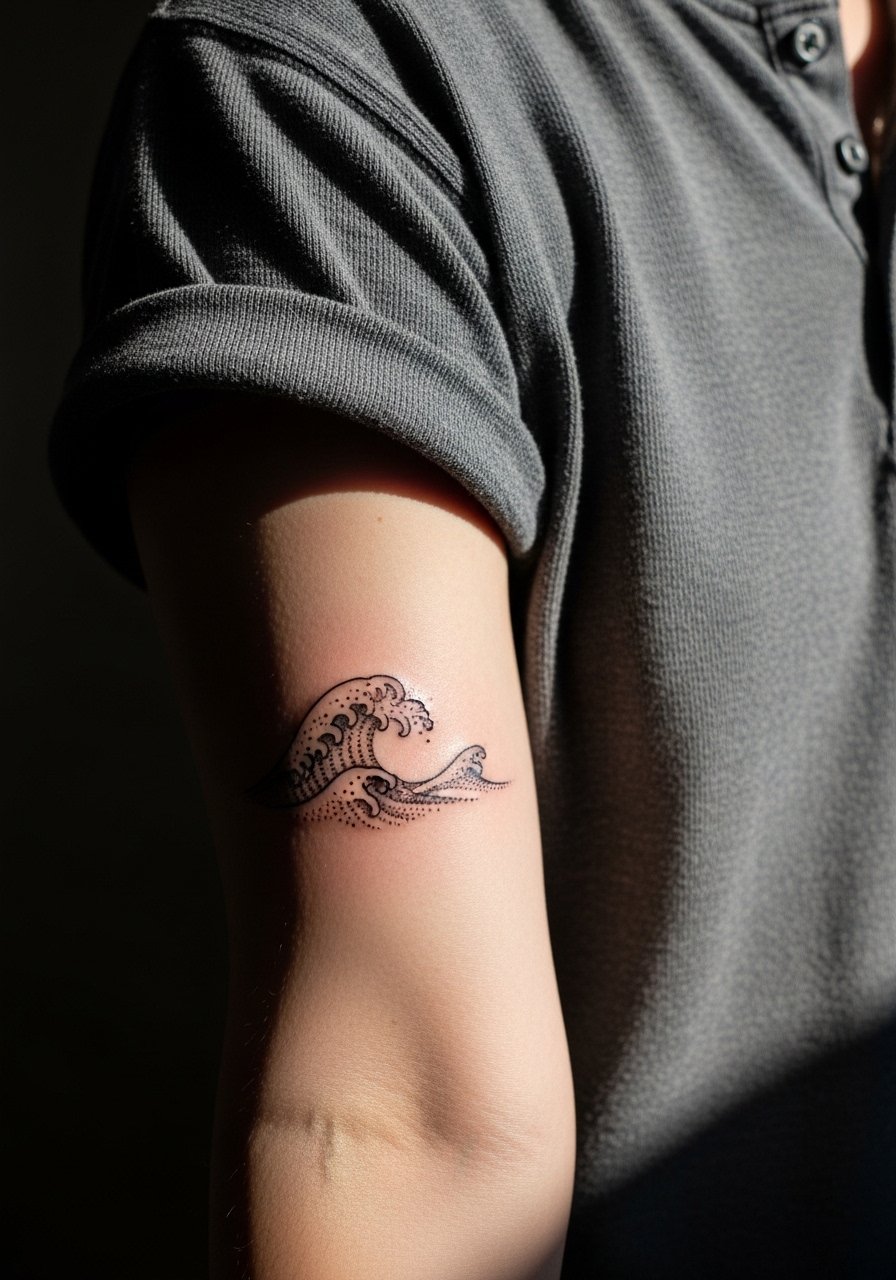
Inner forearm waves look motion-ready and make a strong small sleeve starter. Ask for a tapered dot gradient from crest to trough so the motion reads at arm's length and across jackets. Sessions are usually one sitting around an hour and pain is moderate. A common error is over-detailing the troughs, which can blend into a gray patch after heavy sun exposure. During appointments wear a loose short-sleeve henley for easy access and comfort.
10. Sacred Geometry on Side Neck
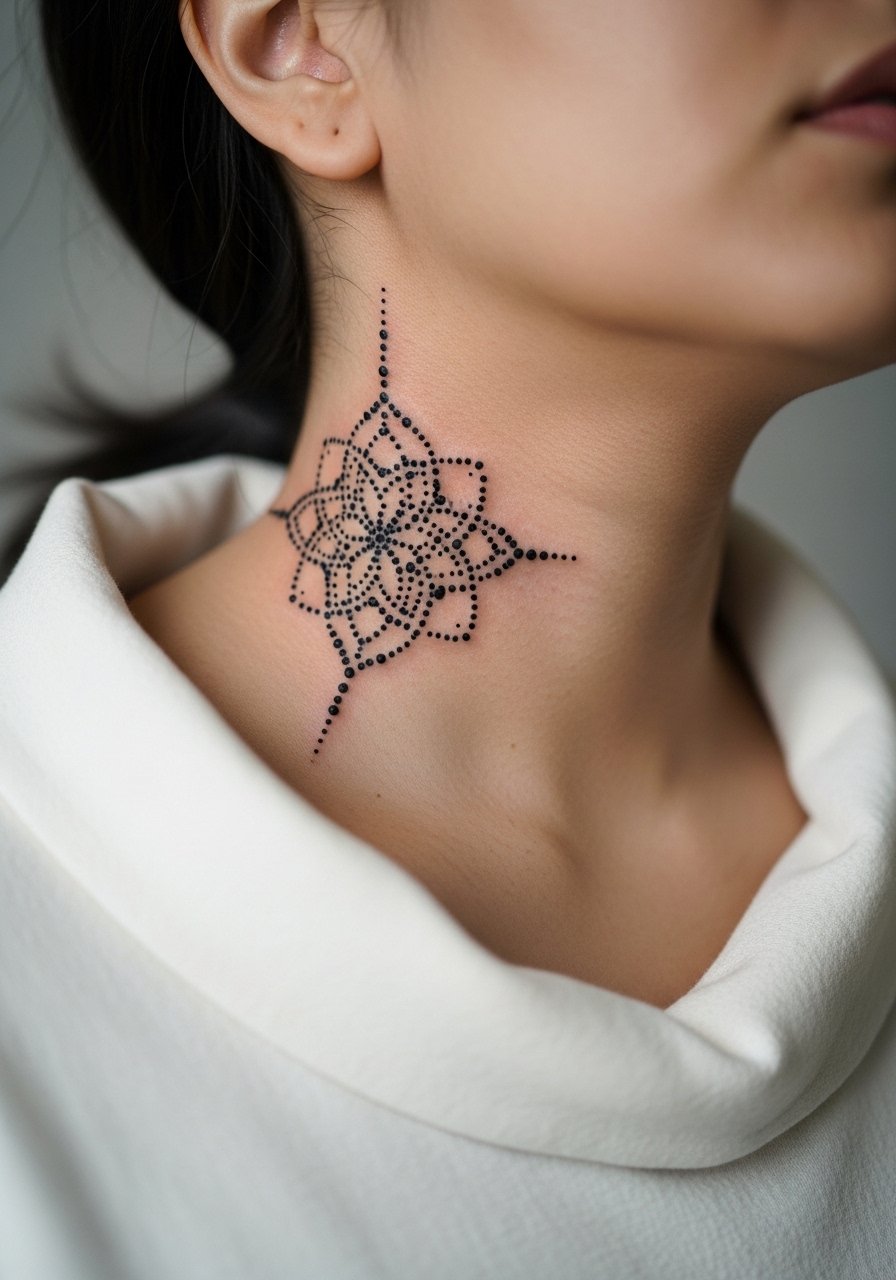
Neck placements are high impact and demand careful placement because sun and shaving age the ink faster. Ask for compact geometry with slightly larger dot points so the pattern keeps its edges on darker or medium skin. Sessions are short but the healing needs sun protection long term. This piece pairs well with a black henley men or crewneck henley pulled down slightly to show the side geometry. Note that employers sometimes notice visible neck tattoos, so think through career impacts before committing.
11. Small Hourglass on Ribcage
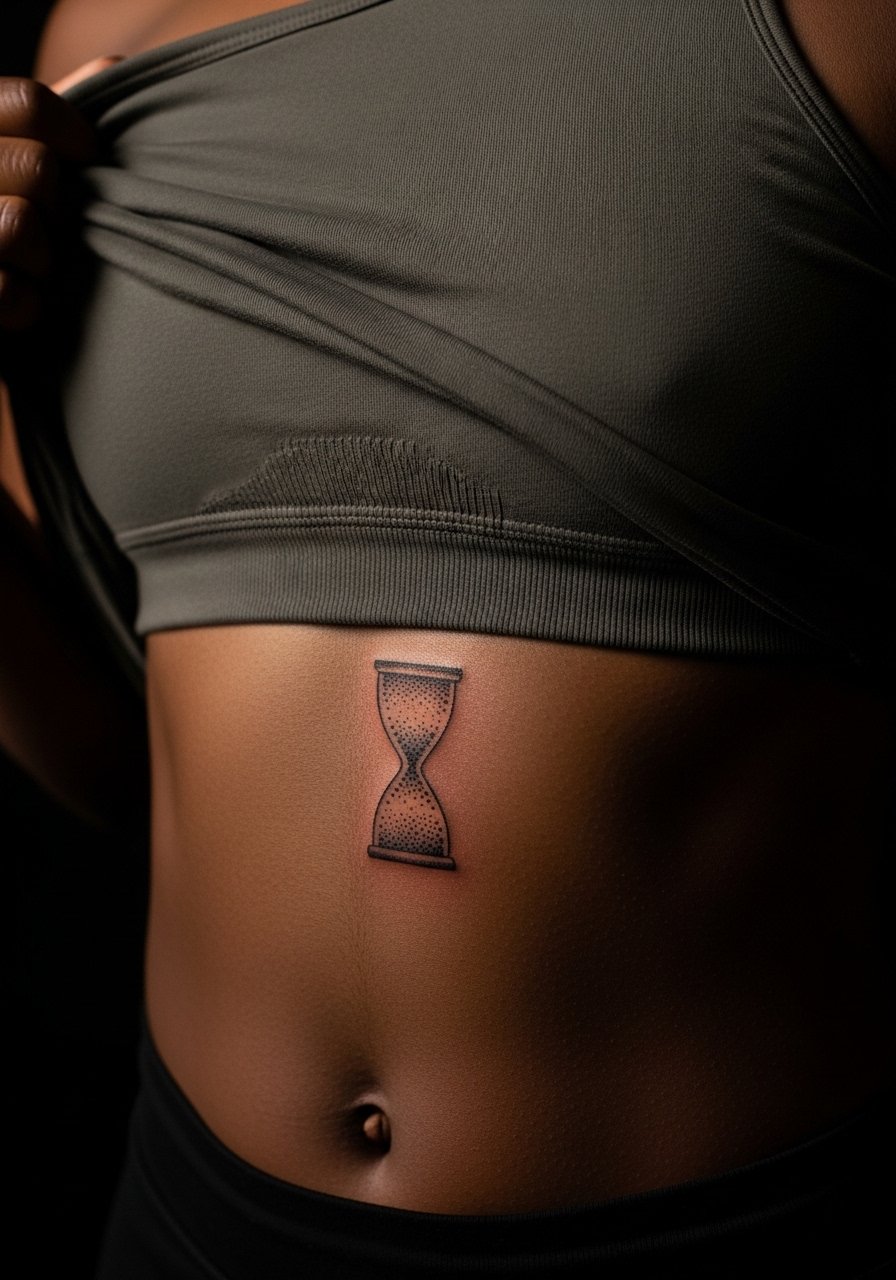
Ribcage hourglasses are poetic but among the more painful placements. Expect a two session plan for a three-inch piece and sharp precision pokes during work. There is active debate about fine line on ribs. One camp says skin stretching and movement blur the smallest dots by year two. The other camp argues that with proper depth and spacing, fine dot shading can last well. If you prefer the conservative route, ask for slightly larger dot spacing or plan a touch-up at year two. For session wear bring a loose tank so you can lie comfortably without fabric pulling.
12. Compass Starter on Upper Back
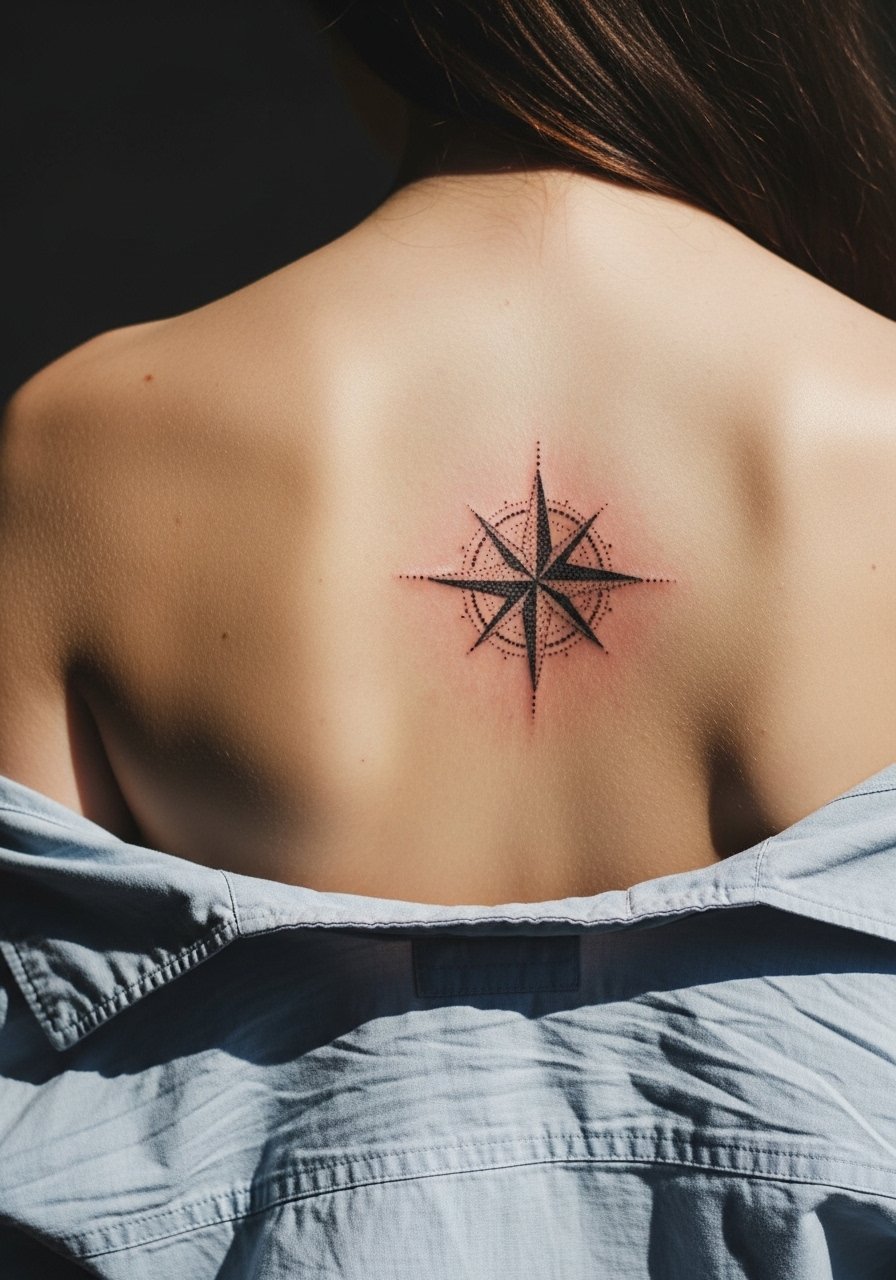
Upper back starts are perfect for expanding into larger back pieces later. Tell the artist you want a bold outer ring of dots to hold contrast and a softer inner stipple for subtle interior shading. Sessions tend to be longer and may require sitting differently for the artist, so plan for a two hour minimum. The back heals predictably well, but avoid heavy lifting the first week. For the session wear a loose button-down you can slide off without pulling over your head.
13. Arrow on Collarbone Line
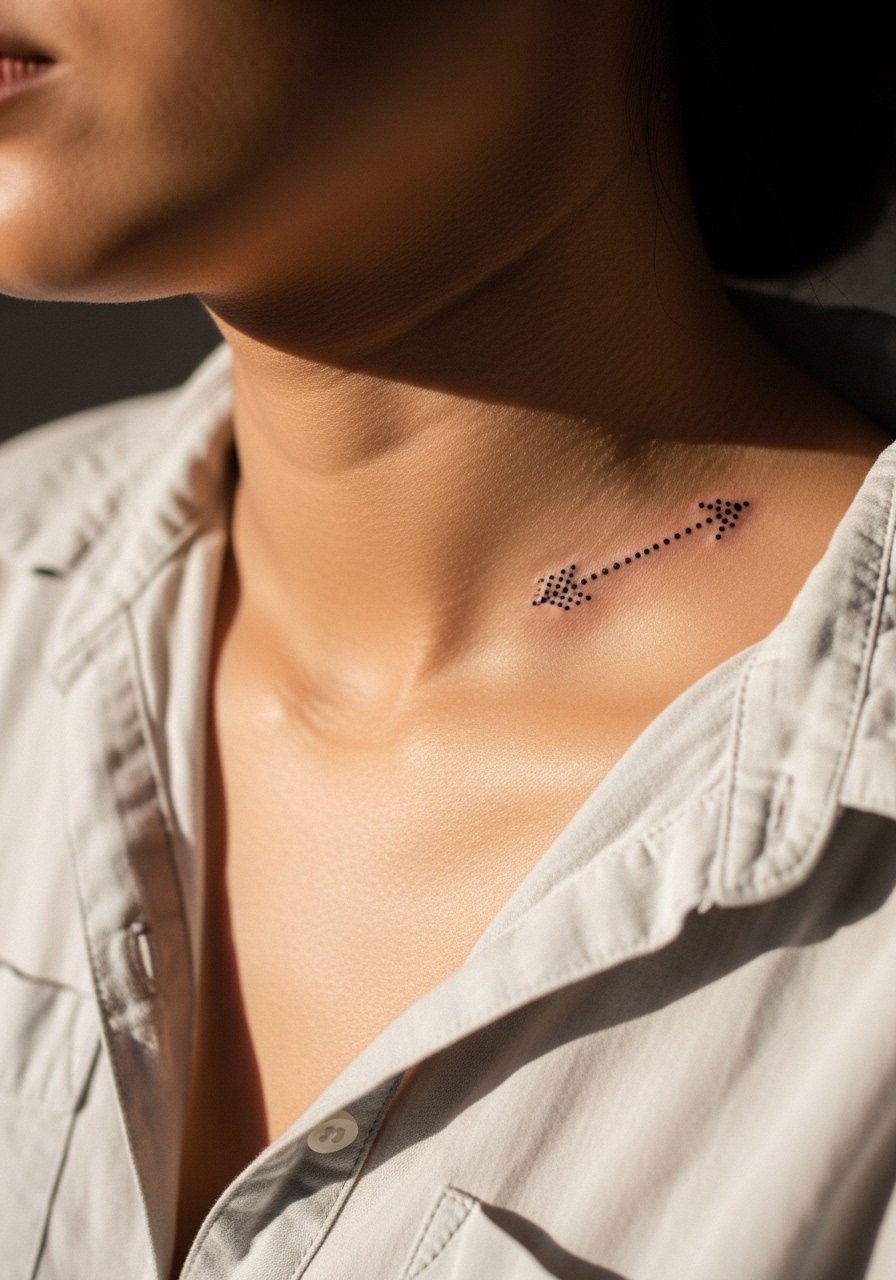
Collarbone arrows are a compact directional piece that ages well if given breathing room. Ask for a slight negative space gap at the feather end so it does not pool into one shaded block after sun exposure. Sessions are short, often under 30 minutes, and discomfort is sharp but brief. For show-off styling an unbuttoned linen button shirt men or a loose open vest keeps attention on the line without overexposure. If you want this as part of a chest expansion, talk about scale in the consult.
14. Knuckle-Adjacent Dot Gradient That Mimics Engraving
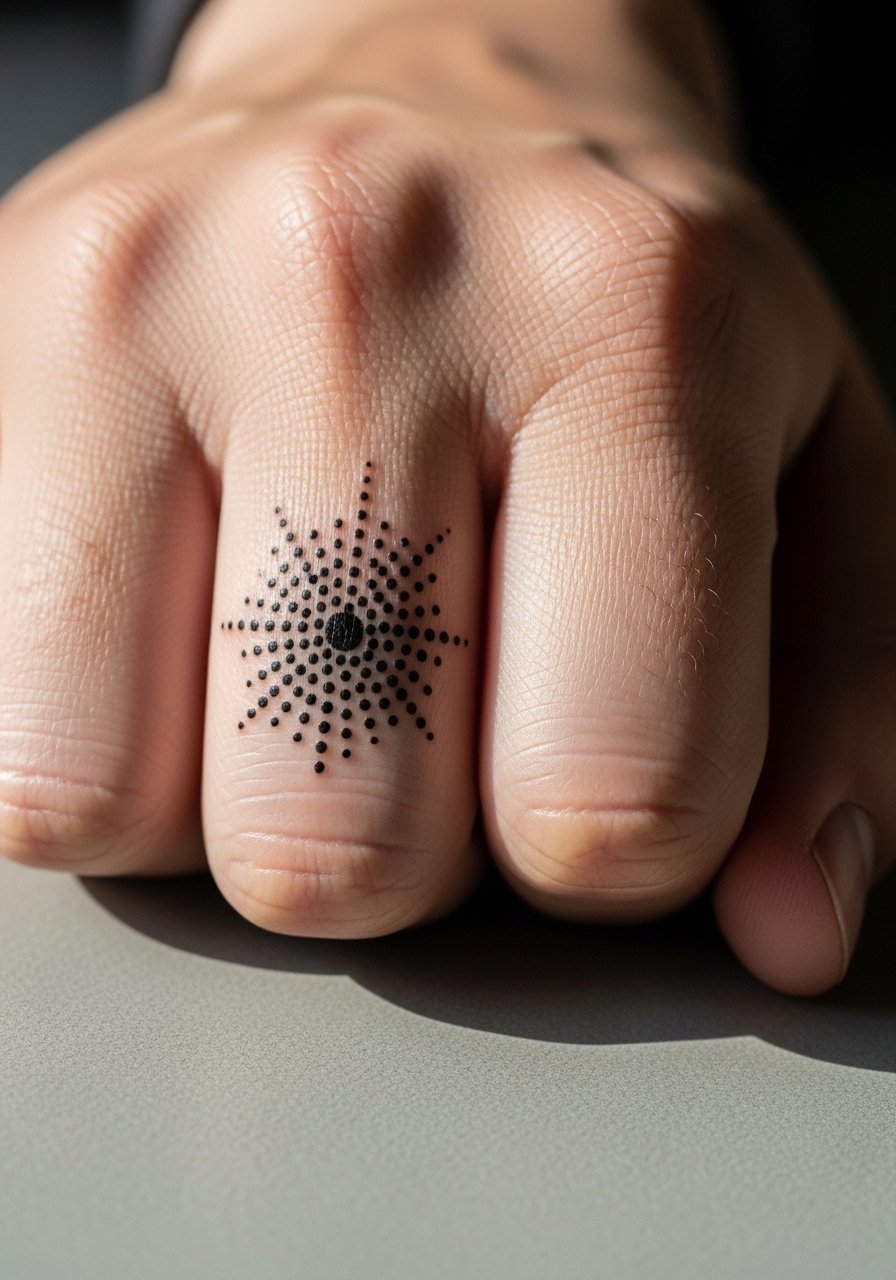
This idea leans into a tactile, engraved look without tattooing the knuckles themselves. I recommend denser dot patches near the knuckle base fading into sparse stipple so the optical engraving survives everyday washing and abrasion. Sessions are short but expect higher sensitivity on the hand area. The unique risk is early blur from constant contact and soap exposure. For a practical tweak, avoid placing the heaviest dots on the exact knuckle ridges and ask about protective first-week care that reduces friction.
15. Negative Space Animal Silhouette on Outer Thigh
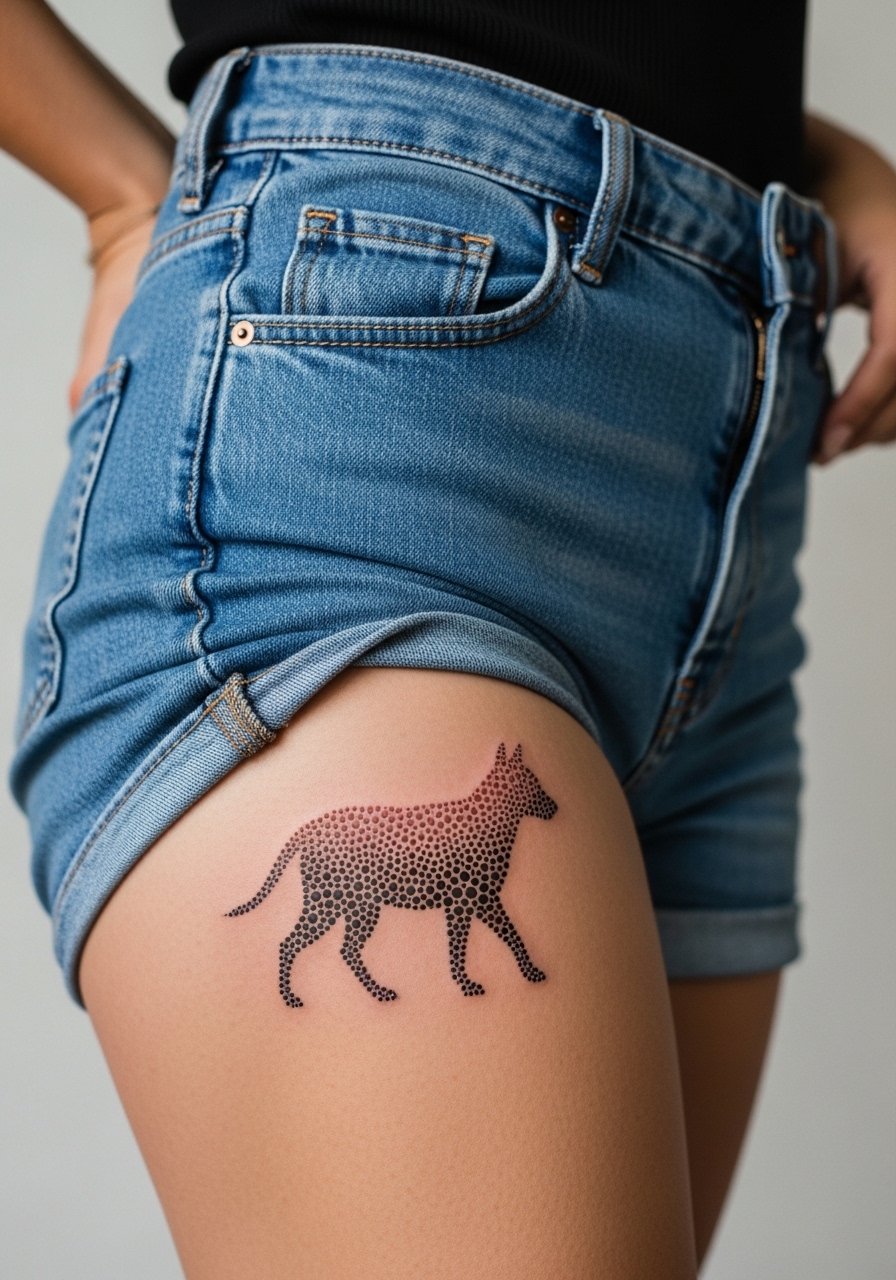
This is a fresher take on animal motifs where the outline is created by surrounding dots rather than ink fill. It reads lighter on the skin and is less likely to look heavy if you gain a little mass. Tell the artist to keep the negative silhouette clean and to test the stencil in different light so it sits correctly on muscle curves. Sessions are multi-hour but comfortable since the outer thigh tolerates long sittings. Pair with neutral athletic shorts during recovery so seams do not rub the area.
16. Scaled Ribcage Mandala That Expands with Breath
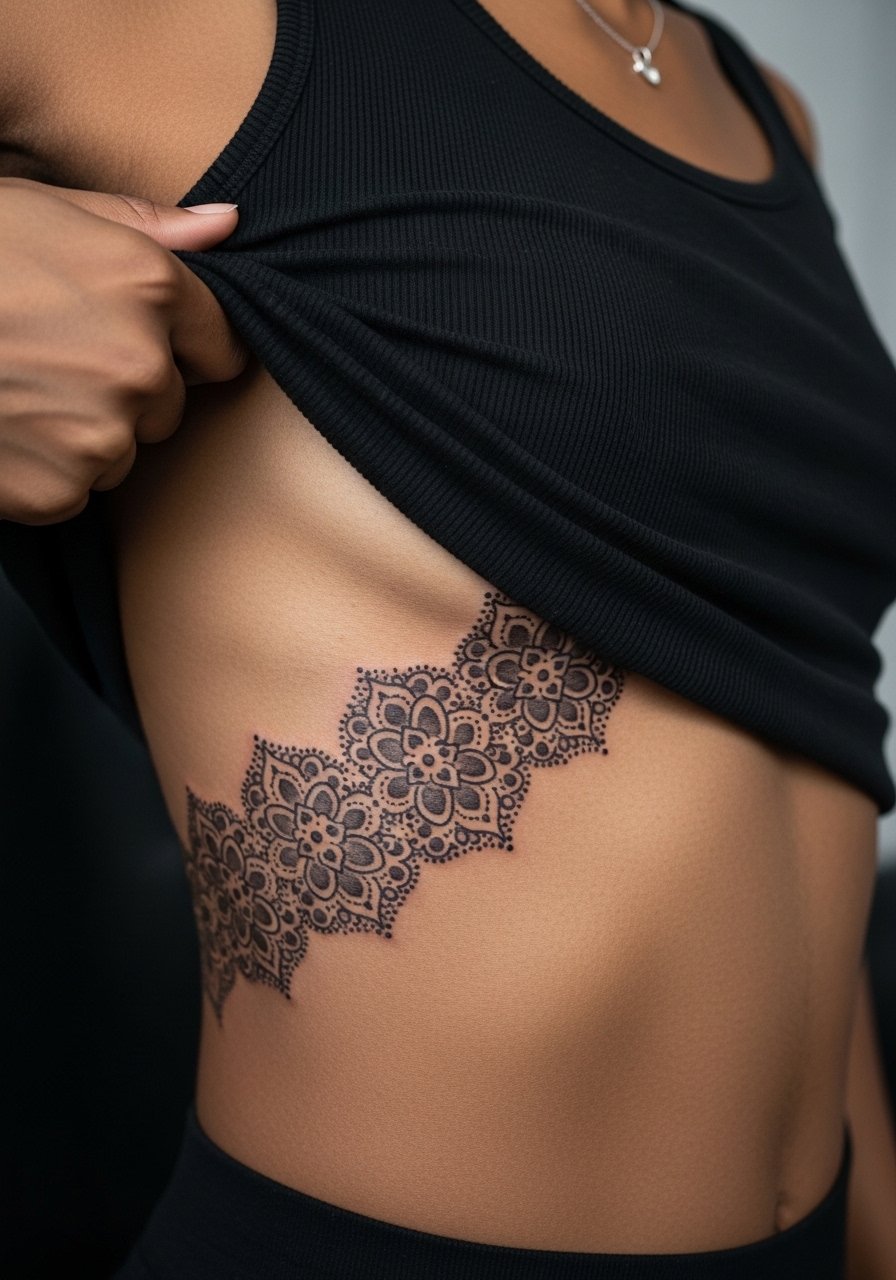
This is a variation that uses body motion to animate the mandala. Ask your artist to map the design while you breathe so key radial points land on stable skin. Expect multi-session work and sharper pain during deeper stretches. The main mistake is compressing the radial elements too tightly which causes merging during healing. If you want the breath effect, budget for touch-up at year two and pick a shop used to multi-session rib work.
17. Tiny Constellation Near the Ankle
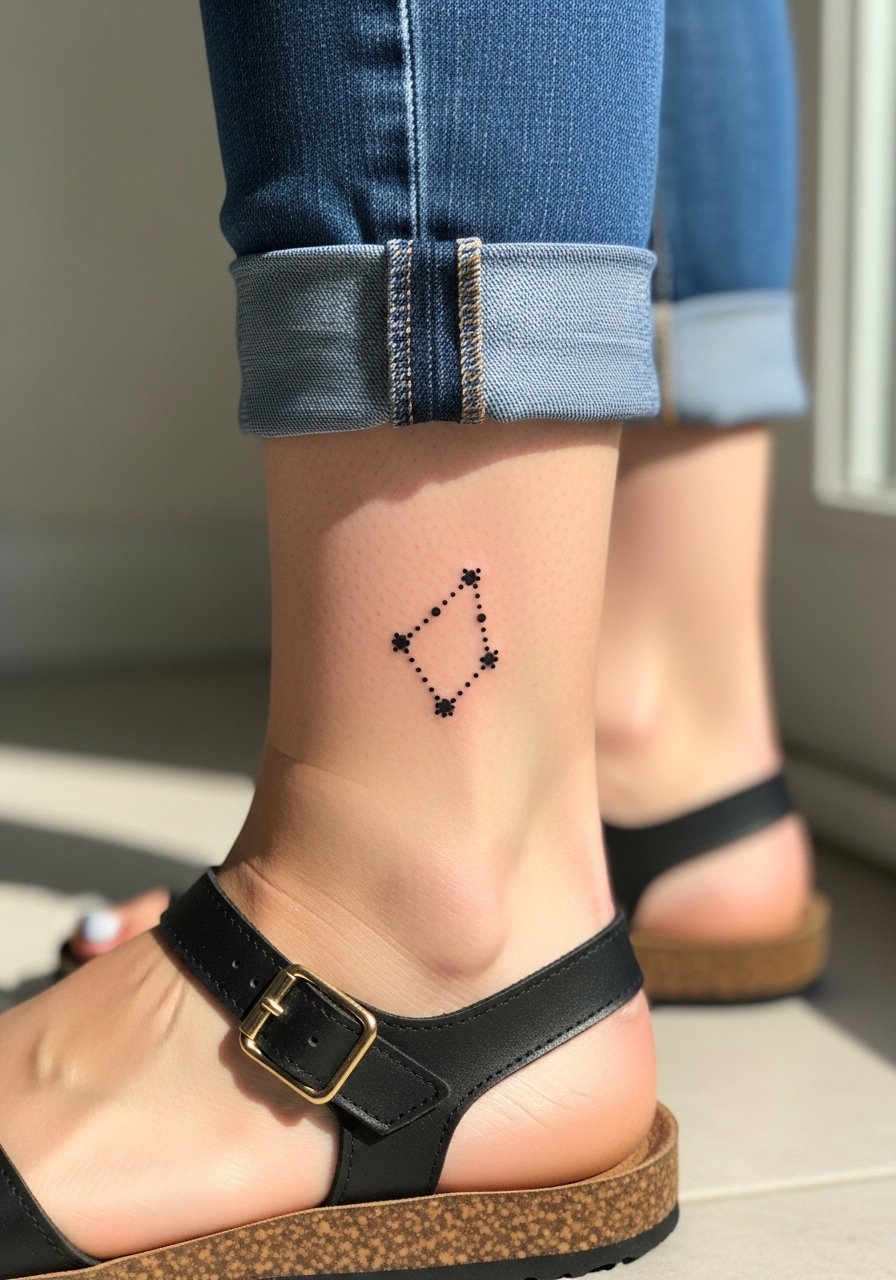
Ankle constellations are subtle and visible with shorts or sandals. Ask for dots that vary slightly in size to read as stars and for a light negative space arc to avoid a single gray patch when healed. Pain on the ankle is variable and can be sharp along bone, but sessions are brief. To protect this area during early healing avoid tight socks and wear sandals or rolled pants so the seam does not irritate the tattoo.
Studio Day Picks
Those first six ideas include forearm, wrist, chest, shoulder, bicep and thigh work. A few items make the session and first week easier and protect fine dotwork where friction and sweat cause the most problems.
- CeraVe Healing Ointment. A thinner alternative to thick greases that many find helpful on oily skin types after forearm and chest work.
- Tattoo Goo Breathable Balm. Lightweight balm that forum users report avoids dot clumping on humid heals for shoulder and calf pieces.
- Green Sheep Aftercare. A lanolin-free option some people choose for sensitive sternum and ribcage areas to reduce irritation.
- BV Balm travel tin. Anti-itch support for multi-session thigh or back work when healing stretches between appointments.
- Hustle Butter travel size. A familiar thicker option for the chair day and immediate aftercare when you need a reliable barrier for the first 48 hours.
Frequently Asked Questions
Q: How long before a small dotwork wrist or finger piece needs a touch-up?
A: It depends on placement and daily friction. Wrist pieces often show softening by year one to two. Expect a realistic touch-up window around year one if you work with your hands a lot, and budget for a small session to restore dot saturation.
Q: Will dotwork mandalas look different on darker skin tones after a year?
A: From what I've seen, the key is initial dot density and contrast. On medium to dark tones ask for slightly larger dot points and strong outer rings. Artists experienced with denser saturation will advise subtle tweaks during the consult to keep the mandala crisp.
Q: Should I use Saniderm or dry heal for ribcage dotwork?
A: Artists and clients are split on this. One camp likes Saniderm for a sealed, clean first 48 hours. The other says breathable dry heals avoid trapped moisture in dense dotwork. If you know you sweat or have oily skin, mention that to your artist and pick a method they use regularly.
Q: What should I wear to the session for a calf or thigh piece?
A: Wear loose athletic shorts or pants you can roll up easily. For calf work choose shorts that clear the lower leg without tight elastic. For thigh pieces bring loose board shorts so you can lie comfortably and the artist has full access.
Q: Do geometric chest pieces require more sessions than they appear to?
A: Larger gradients on the chest often take two sittings if you want crisp dotwork and depth. The skin on the upper chest can be sensitive and sweat-prone, so plan shorter sessions with small breaks rather than one marathon sit.
Q: How can I preview how a dotwork design will age before booking?
A: Ask the shop for healed photos of similar placements and skin tones. Use the discovery pathways like community threads and tagged studio portfolios to find examples. During consult hold the stencil under normal light to see scale and ask about touch-up timelines the artist typically recommends.
