
Fine dotwork gladiolus and poppy pieces look incredible fresh, but they depend on spacing, placement, and skin type to last. Fading, blowout where dots merge, and placement pain are the three things I hear about most in consultations. These designs are about patient composition more than needle tricks, and the first section walks through a straightforward inner-forearm option that shows how dot spacing makes that difference.
1. Delicate Gladiolus on Inner Forearm
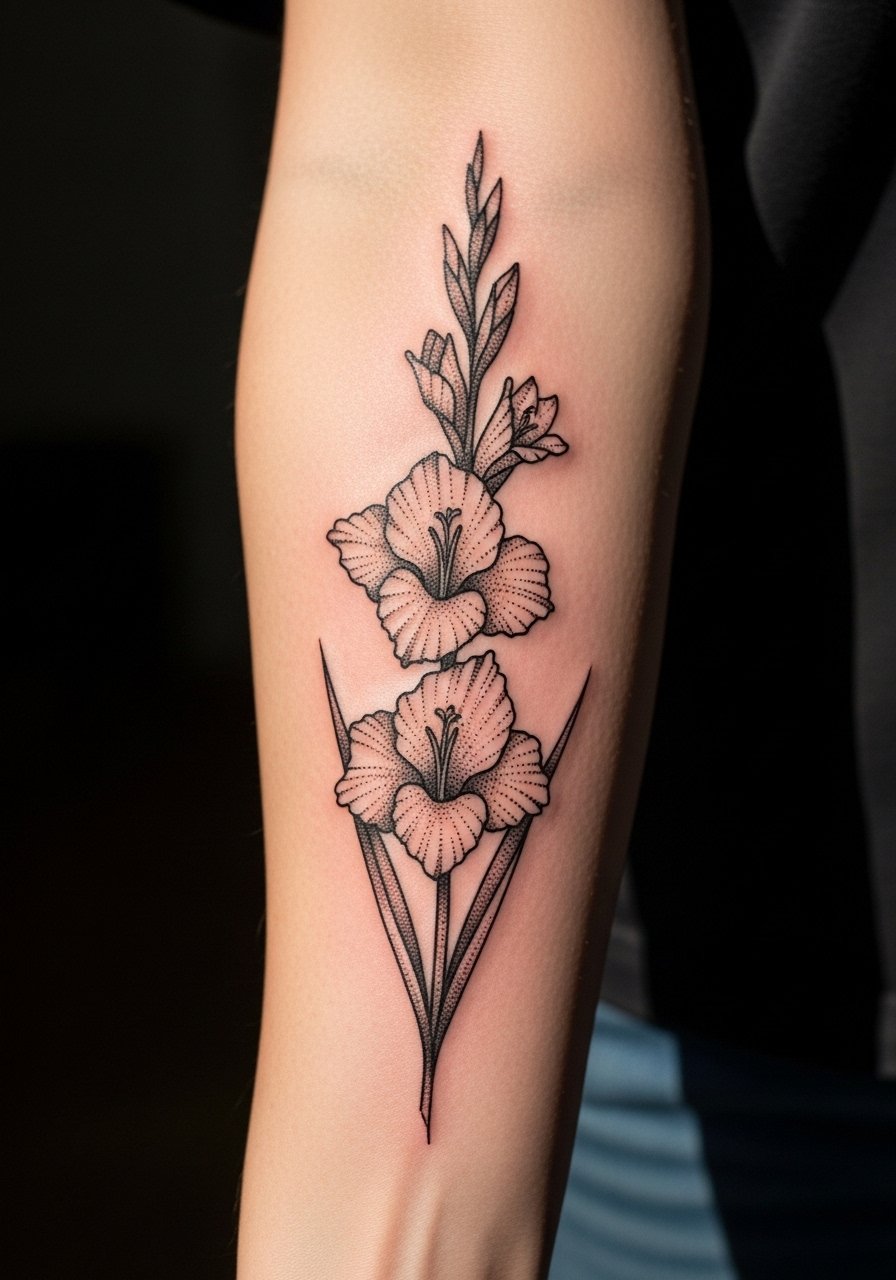
I have seen this placement age well when the artist spaces dots for breathing room. The inner forearm is a forgiving canvas with low blowout risk, so it is a great place for a tall gladiolus rendered in stipple shading. Tell your artist to use slightly larger dots near stems and finer stippling for petal texture so the pattern keeps reading at years two and five. Expect mild pain, about a 4 out of 10, and a single two-hour session for a mid-sized piece. Common mistakes include asking for microscopic detail that merges after the first year. For showing it off, roll sleeves and pair the piece with a thin chain pendant necklace that sits just above the bloom.
2. Micro Dot Poppy Behind the Ear, Neck Framed
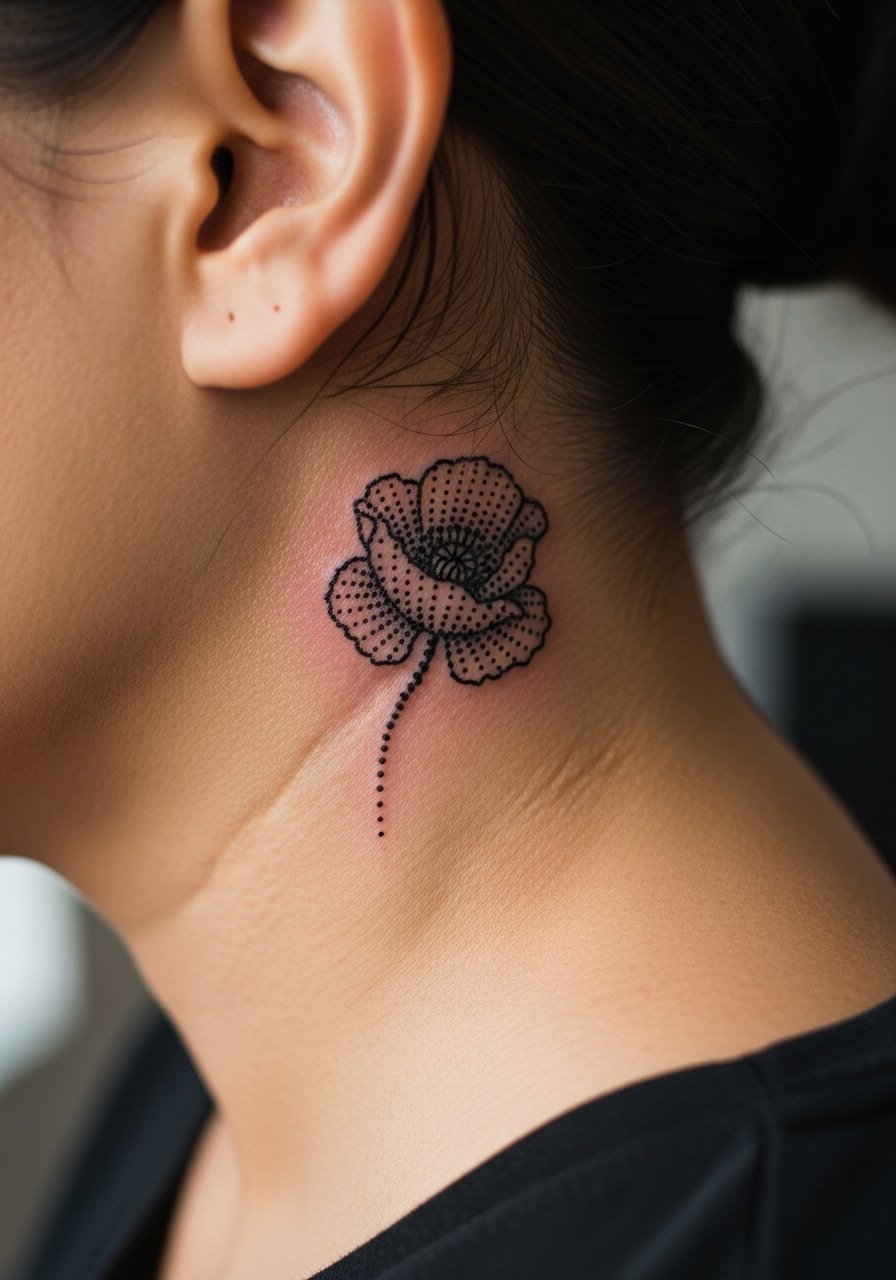
Fair warning, tattoos around the ear need precise stencil placement because even small shifts look obvious. This micro dot poppy uses negative space and tiny stipple clusters to suggest petals rather than outline them. Session time is short, often under 30 minutes, but the area is sensitive so pain feels sharper than the forearm. Tell the artist to test the stencil placement in the chair and step back frequently. A common aging issue is overworking the spot to force detail, which can lead to blur and loss of petal definition. If your wardrobe shows the neck, wear a wide-neck shirt to display the work without competing jewelry.
3. Stipple Gladiolus Band on Outer Bicep
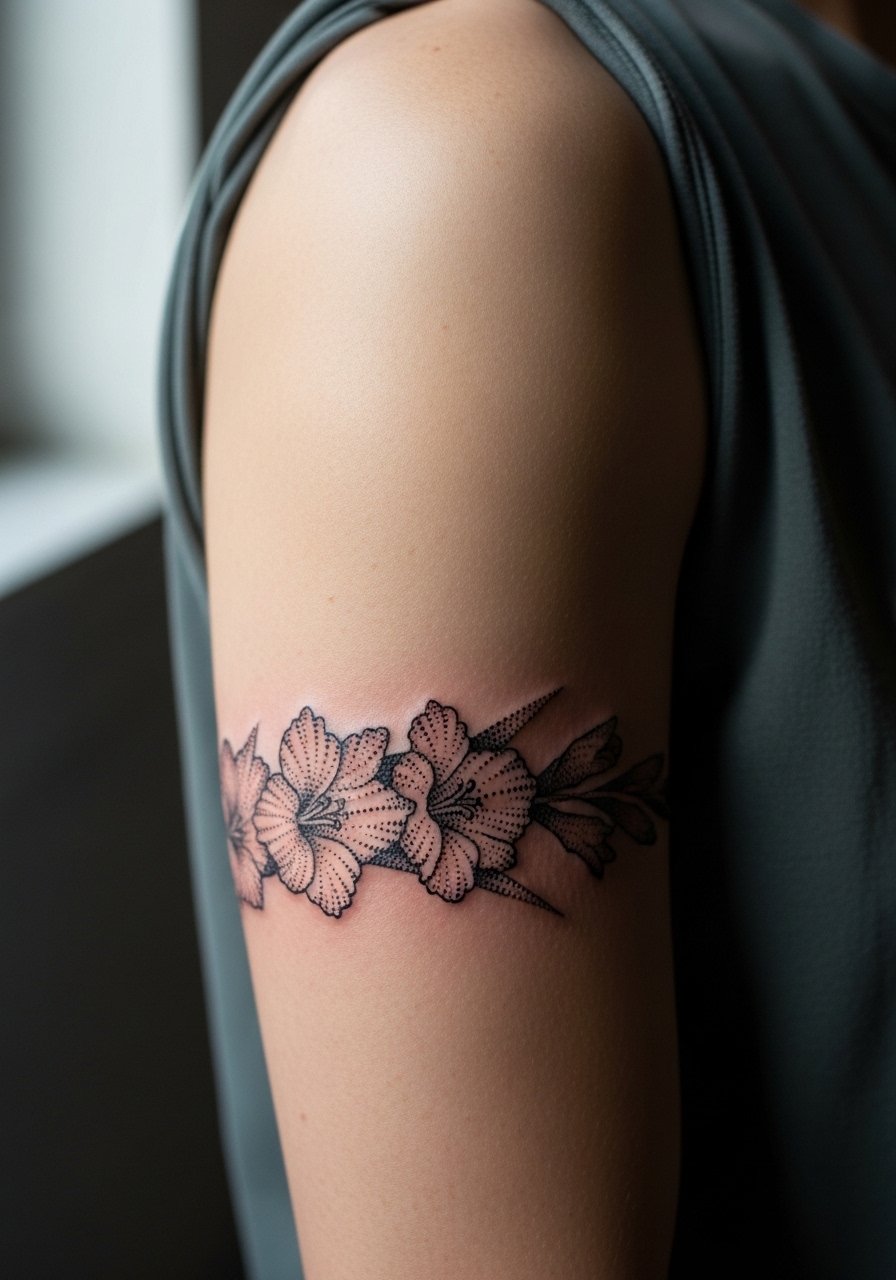
The outer bicep is ideal for a banded gladiolus where dotwork follows muscle curvature. Most people like this when they want a visible piece that still tucks under sleeves for formal settings. The session feels steady, with a mild to moderate discomfort around the tendon zones near the armpit. Ask for the band to sit where the arm flexes naturally so the flowers do not distort with movement. In six months the stipple will soften, and at two years expect some diffusion if dots were placed too tightly. A common mistake is tightening the band too small. For the session, a loose button-down shirt you can pull aside gives the artist clean access without stretching skin.
4. Single Poppy on Side Ribcage, Fine Dotwork
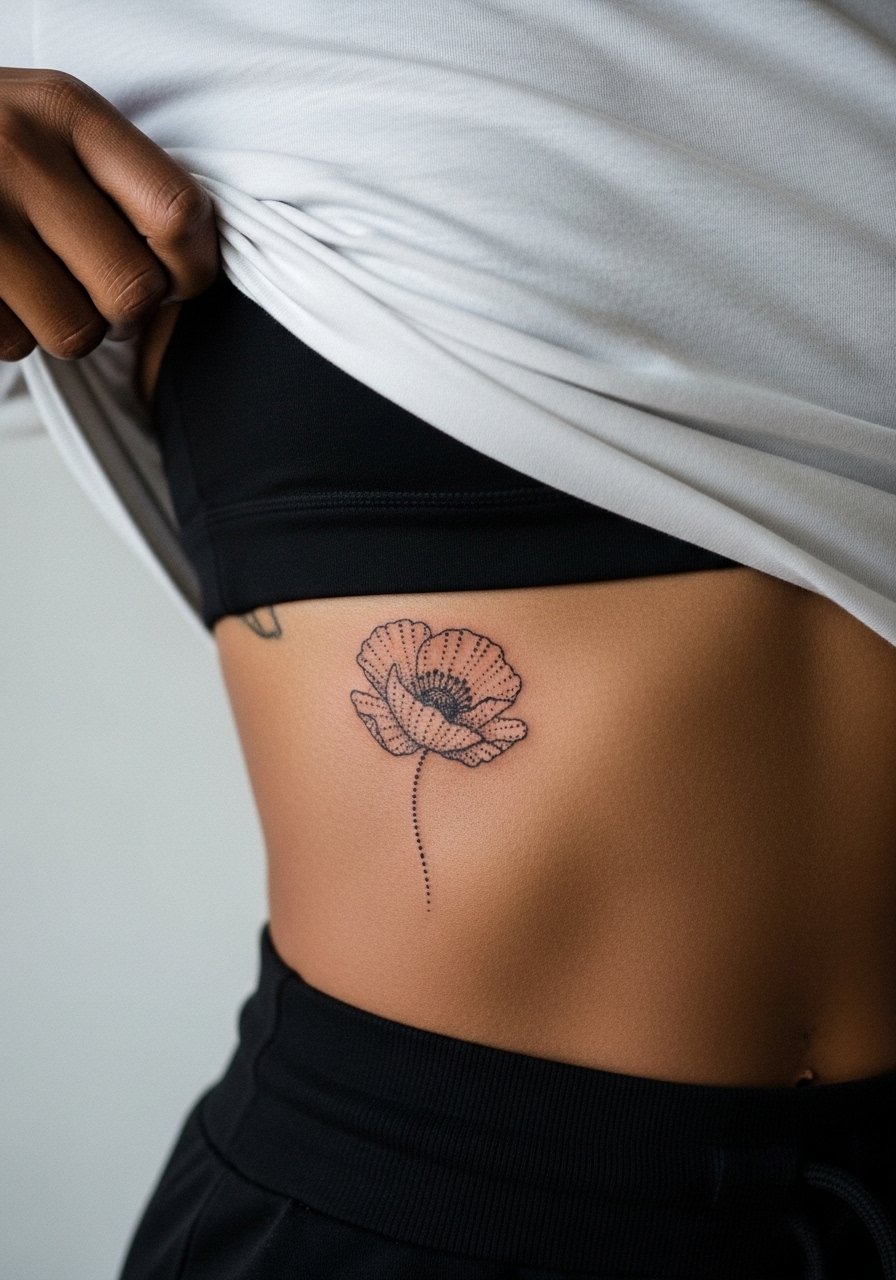
Fair warning, ribs are a high pain zone and they test both client stamina and artist control. That makes this placement a conversation starter about depth and spacing. Artists split on fine line on ribs. One camp says thin work blurs quickly because the skin stretches and heals unpredictably. The other camp argues that with careful depth and slightly larger dots the design settles fine. Ask your artist which camp they work in and why. Expect a longer session broken into short passes. The biggest mistake is insisting on pin-point detail. For modest show-off looks, this works under a bandeau or fitted sports bra so you can reveal the piece without exposing more than intended.
5. Minimalist Gladiolus Ankle Wrap in Dotwork
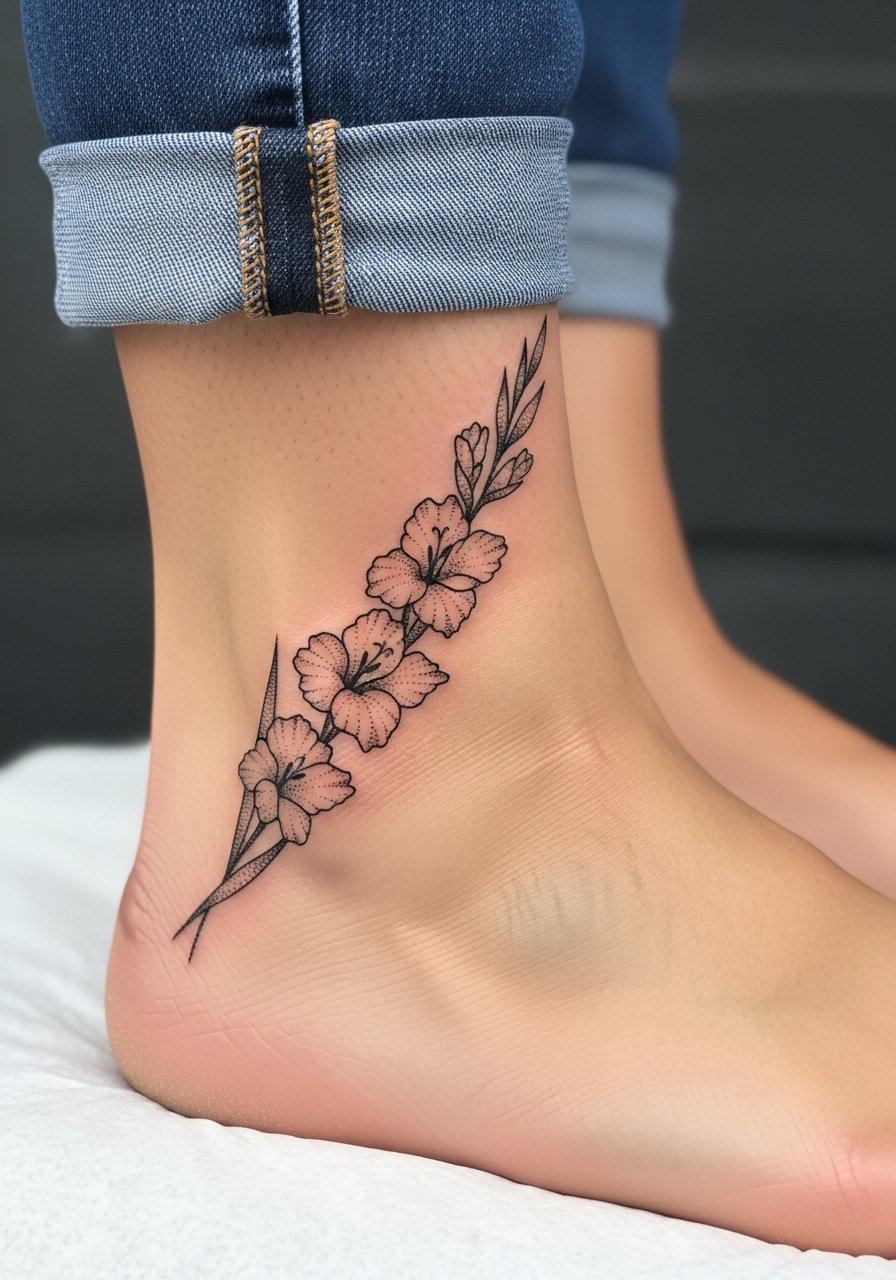
The ankle is small and takes dotwork well if you keep the composition narrow. Pain at the ankle is higher because of less padding, so expect sensitivity especially near bone. A common mistake is going too wide for the canvas which forces dense dots to overlap. Tell the artist you want a slim wrap that reads from multiple angles. Healing can be tricky because of shoe friction, so plan for lighter footwear for the first week. For showing it off, platform sandals or rolled jeans frame the wrap nicely and a minimalist ankle bracelet complements the negative space.
6. Geometric Poppy Mandala on Upper Thigh
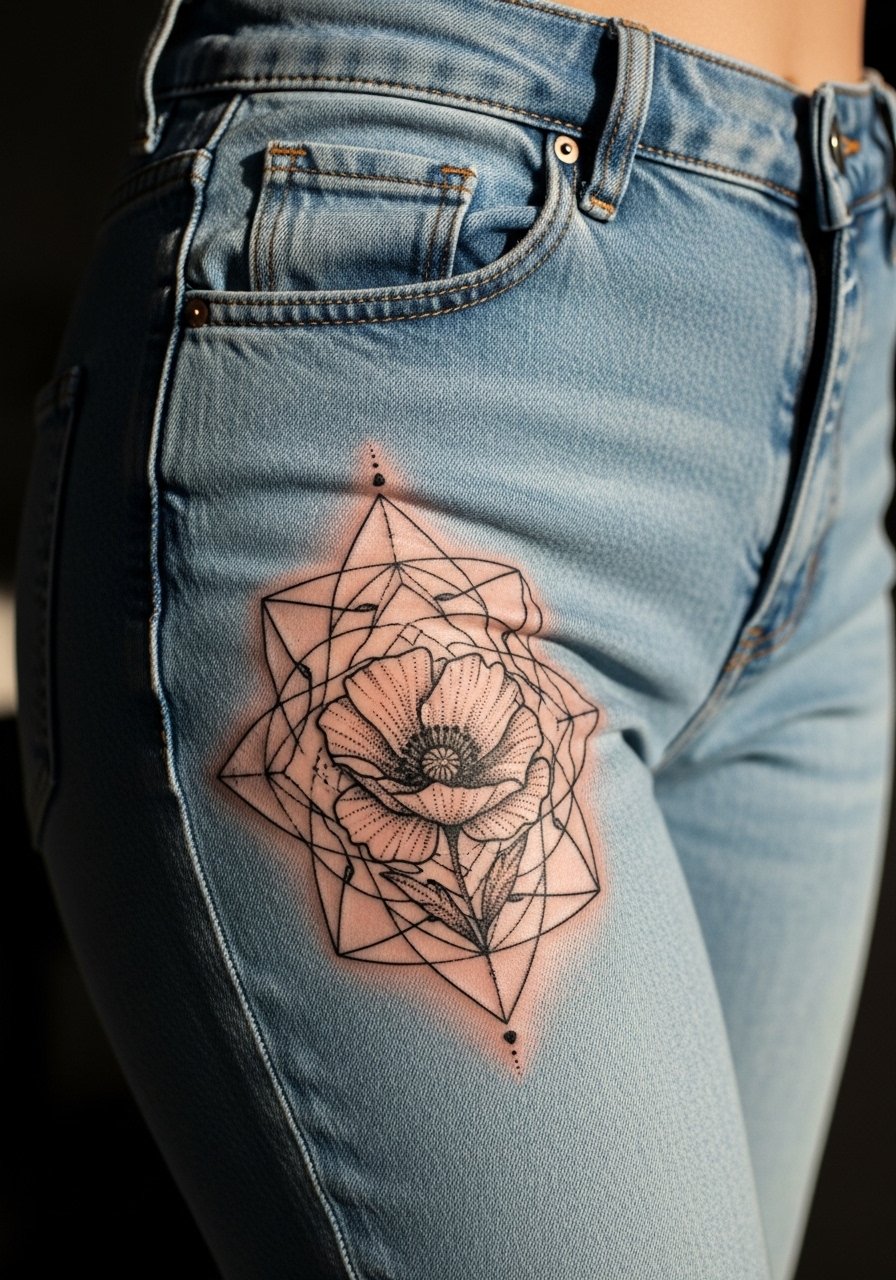
Upper-thigh work is popular for people who want a large canvas that stays private. This design combines geometric anchors with poppy petals in stipple shading to keep detail readable over time. The session feels like medium pain thanks to muscle tension rather than bone. Expect a multi-hour slot, often split across two appointments for larger mandalas. One real mistake is asking for too-fine concentric rings near the fold; they tend to blur. For the session, wear high-waisted shorts you can shift so the artist can work without compressing the area.
Pre-Session Essentials
The sternum and thigh pieces above need different prep from forearm work, and a few targeted supplies smooth the session and the first week.
-
Stencil transfer paper kit. Lets you preview the linework on skin before committing, which helps for narrow bands and mandalas.
-
Topical numbing cream. Applied as directed before a rib or sternum session eases the initial needle sting without drastically changing how the ink settles.
-
Thin protective film roll. Useful for ankle and finger placements that face friction from shoes and daily washing.
-
Fragrance free gentle body wash. Cleanses healing areas gently, which matters for fine dotwork that relies on delicate channels.
-
Aquaphor healing ointment. A thin layer helps lock in moisture during the first days without smothering stippled texture.
7. Microchain Poppy Across the Collarbone
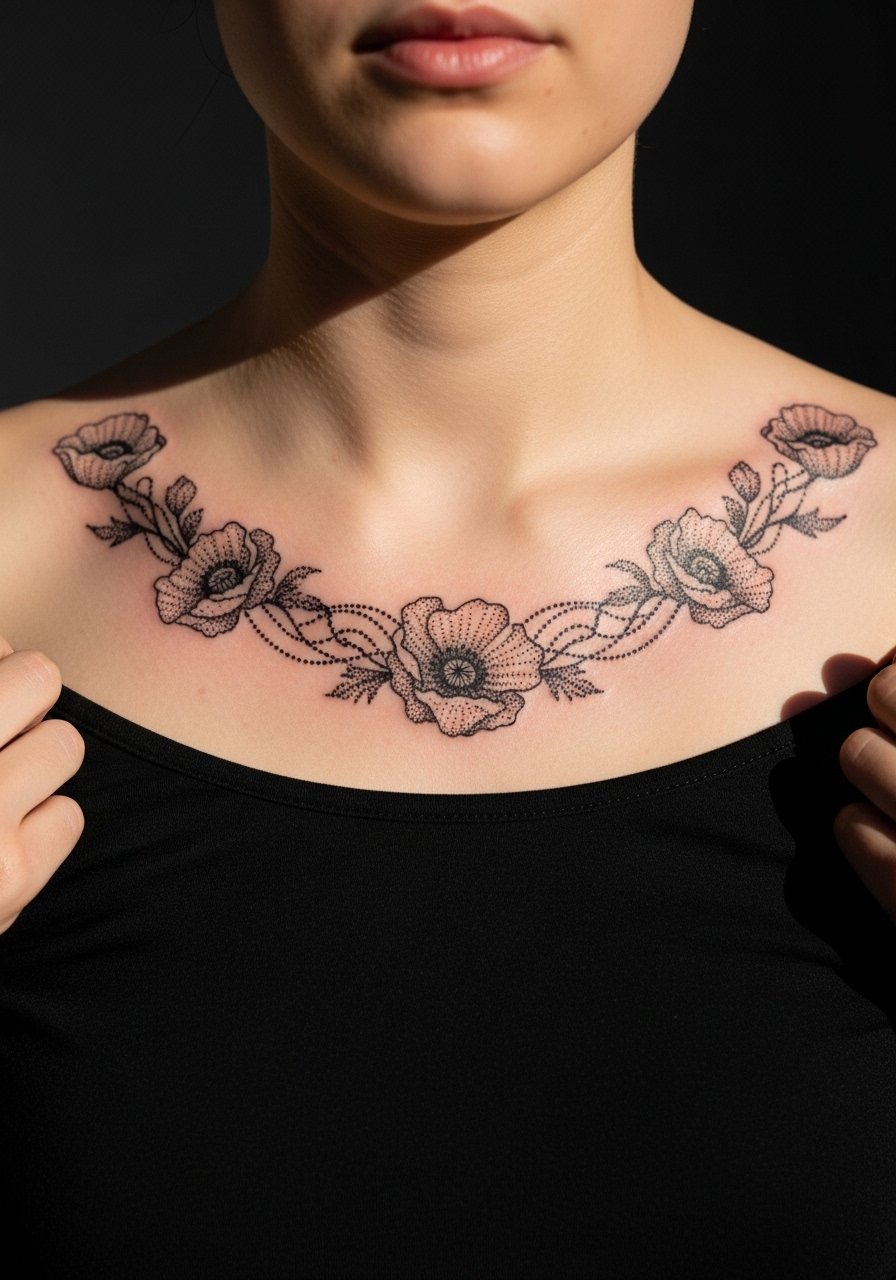
This horizontal placement reads like jewelry when done in dotwork, and the collarbone highlights the negative space between blooms. Pain is moderate because of proximity to bone, and sessions are usually under two hours. Tell the artist you want a light touch near the bone and slightly heavier stippling in the petals so the contrast lasts. Common aging issues include losing openness if dots are packed too densely. For nights out try an open-back midi dress that shows the collarbone without competing with neckline accessories.
8. Blackwork Gladiolus Sleeve Accent

There is something satisfying about heavier black dot clusters that anchor a sleeve and let lighter stipple float around them. Choose this if you want contrast and longevity. The session can run multiple hours depending on saturation, and pain varies with proximity to tendon areas. A common mistake is mixing too many techniques without a unifying rhythm, which makes the sleeve read fragmented at six months. Tell your artist to map negative spaces intentionally. For casual display, roll a cuff or pair the piece with a minimalist watch so the blackwork feels like part of a curated look.
9. Tiny Poppy Finger Accent in Dotwork
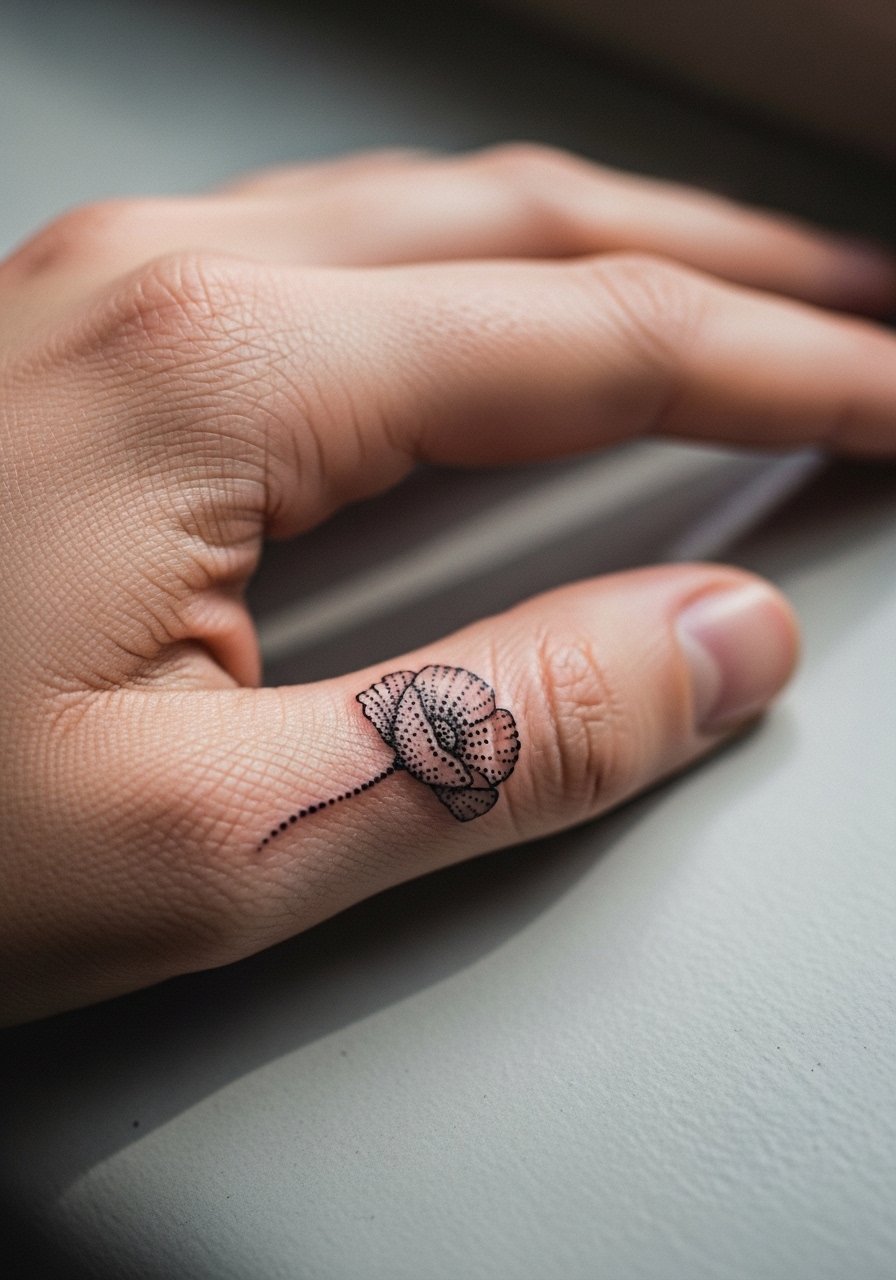
Finger tattoos face constant friction and frequent washing which makes dotwork here a gamble. The session is quick but touch-up timelines are sooner than most placements. Expect a touch-up at year one or two for tiny dotwork. A common mistake is requesting extreme micro detail; keep motifs simple and bold enough that dots do not disappear into skin texture. If a discreet accent is the goal, place it on the finger side rather than pad. Hand tattoos still affect some hiring situations, so think about career visibility before committing.
10. Vertical Gladiolus Along the Spine
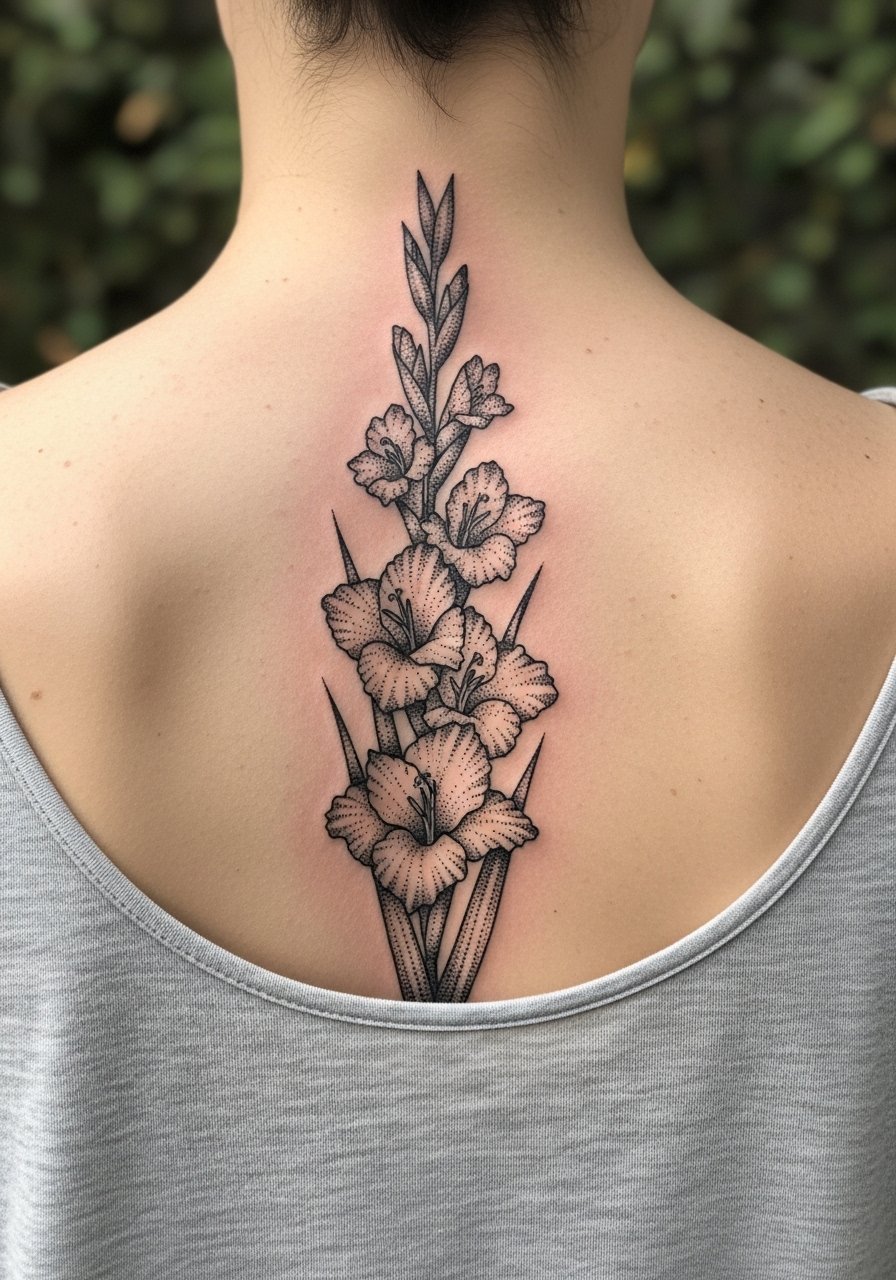
Spine work in dotwork looks elegant because the column of blooms follows natural anatomy. Pain varies a lot along the spine and can be sharp over the vertebrae. Sessions are often staged to manage discomfort. Tell the artist where you want the top and bottom anchors so the piece reads when you move. A mistake is clipping the design too narrow which loses visual strength at a distance. Pair it with open-back dresses or a strappy tank to reveal the line without full exposure.
11. Circular Poppy Rosette on the Knee Cap
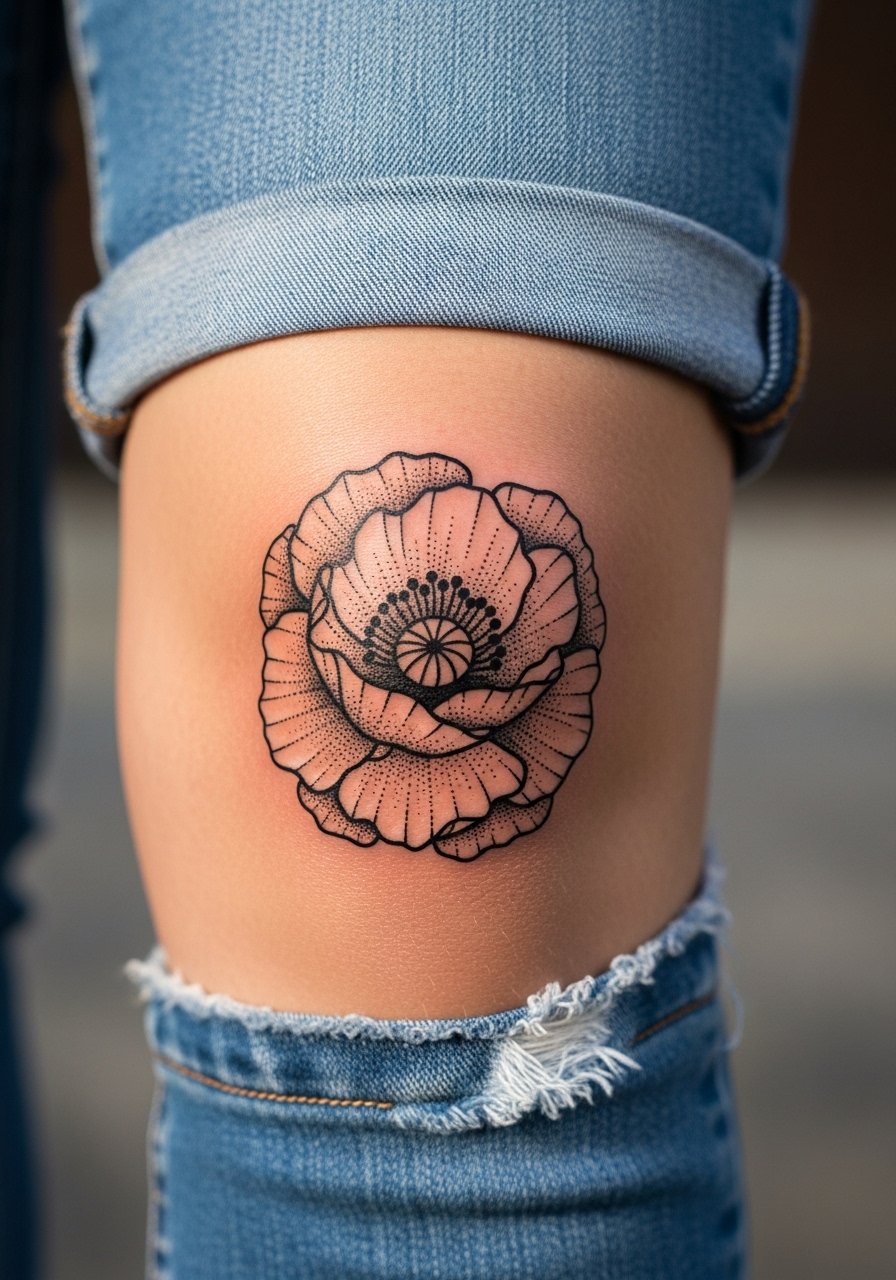
Knee tattoos shift with movement so plan the composition for flexion and extension. The kneecap area can be more painful and may require short breaks. For stipple rosettes, ask the artist to test placement while you bend and straighten the leg. The long-term risk is migration of dots into dense patches if too much detail is forced. A practical mistake is expecting the piece to look identical when standing and sitting. During healing wear loose pants and consider sandals or low-rise sneakers.
12. Mini Gladiolus on the Wrist Band
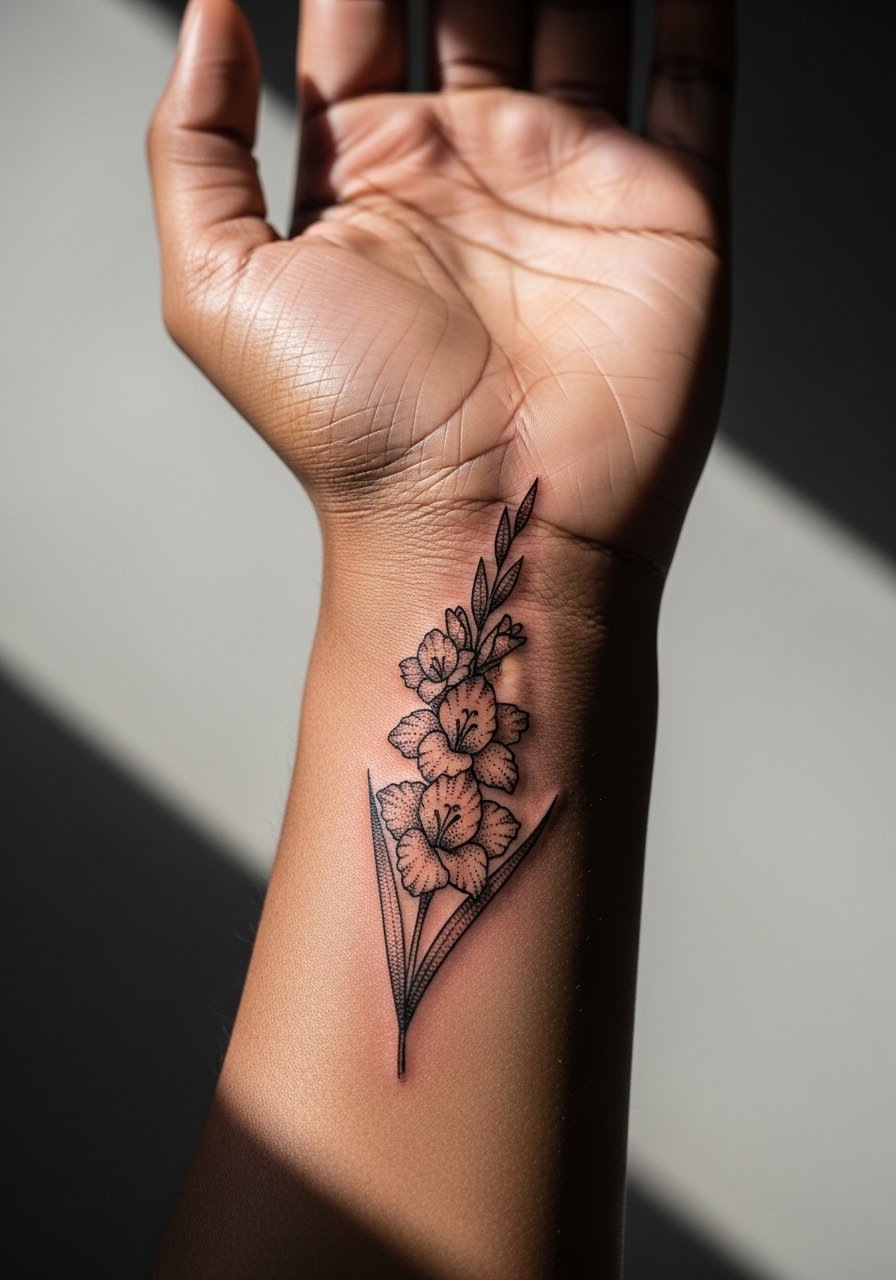
The wrist is a high-visibility area where dotwork can read like a bracelet. Pain is moderate and sessions are short. The main aging concern is exposure to sunlight, so plan for sunscreen on healed work long term. A common error is designing too narrow which forces tight dot clusters that blur. For the session wear a racerback tank or any short sleeve so the artist can access the wrist without tugging at fabric.
13. Poppy Seed Pod Cluster on the Shoulder Blade
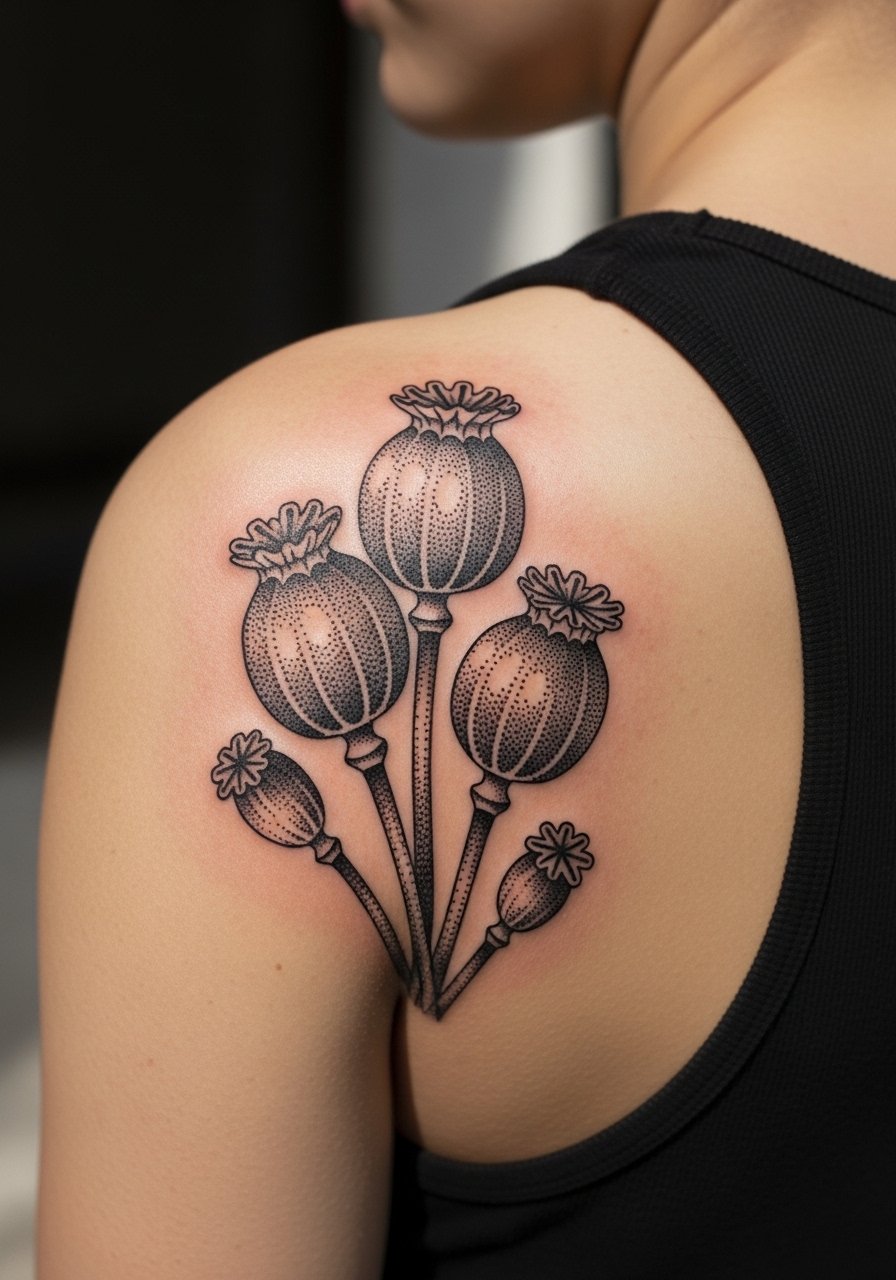
Shoulder blade placements hold dotwork well because the skin there is stable and sees less friction. Sessions feel moderate and you can usually complete a medium cluster in one sitting. A mistake is compressing the composition into a tiny spot; give seed pods room to read cleanly at arm movement. If you plan to show it, a camisole or tank frames the pods. Shoulder blade work also adapts well into larger back pieces later if you want to expand.
14. Sternum Gladiolus Stipple Panel
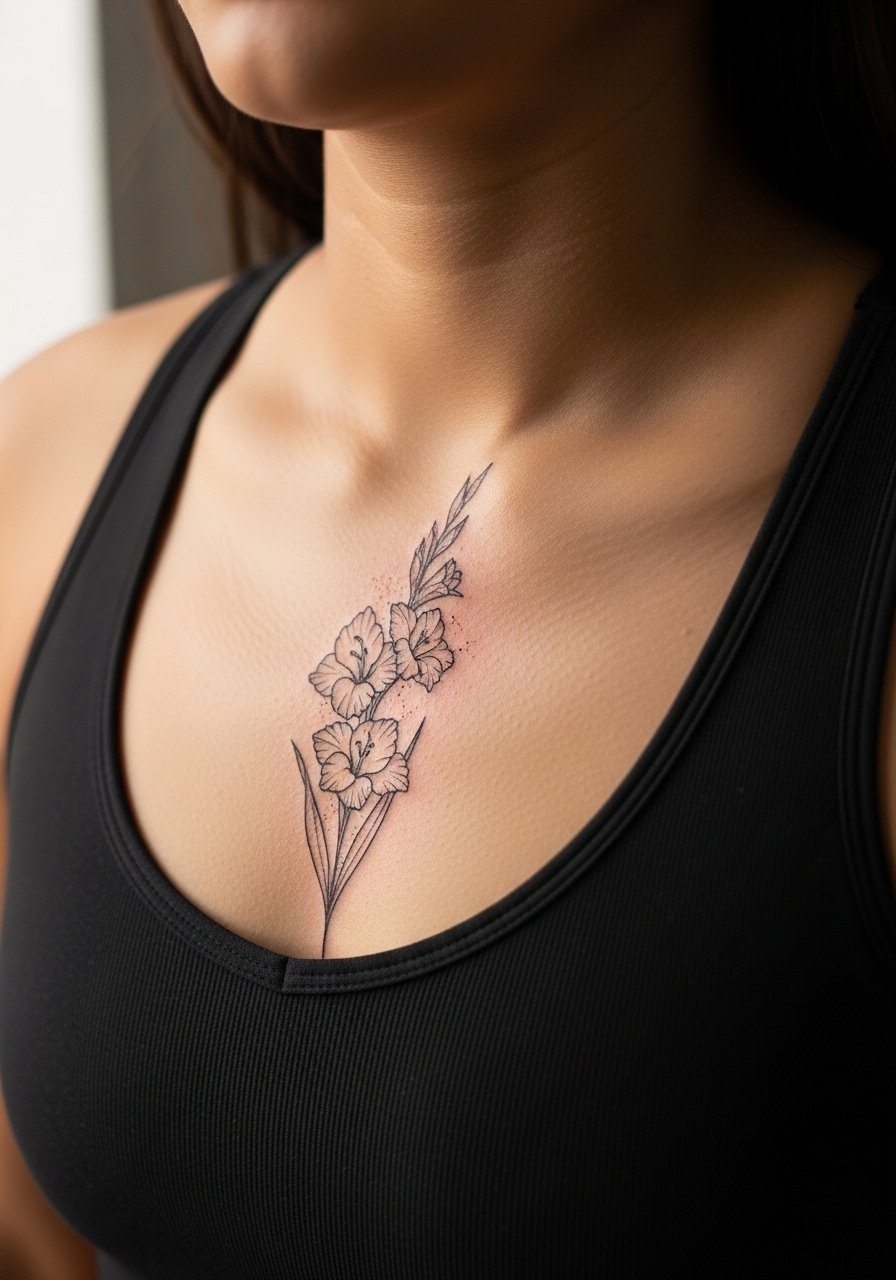
Sternum placements are intimate and they demand an artist experienced with the area. Artists are split on extremely fine work here. One group says thin dots vanish as the sternum skin shifts with breathing and posture. The other group believes measured depth and slightly bolder dot clusters make pieces hold. Ask your artist which approach they use and why. Expect a high sensitivity and a session that may include short rests. For modest reveal, a fitted sports bra or a bandeau top lets you show the tattoo without exposing the torso.
15. Micro Gladiolus on the Collar of the Foot
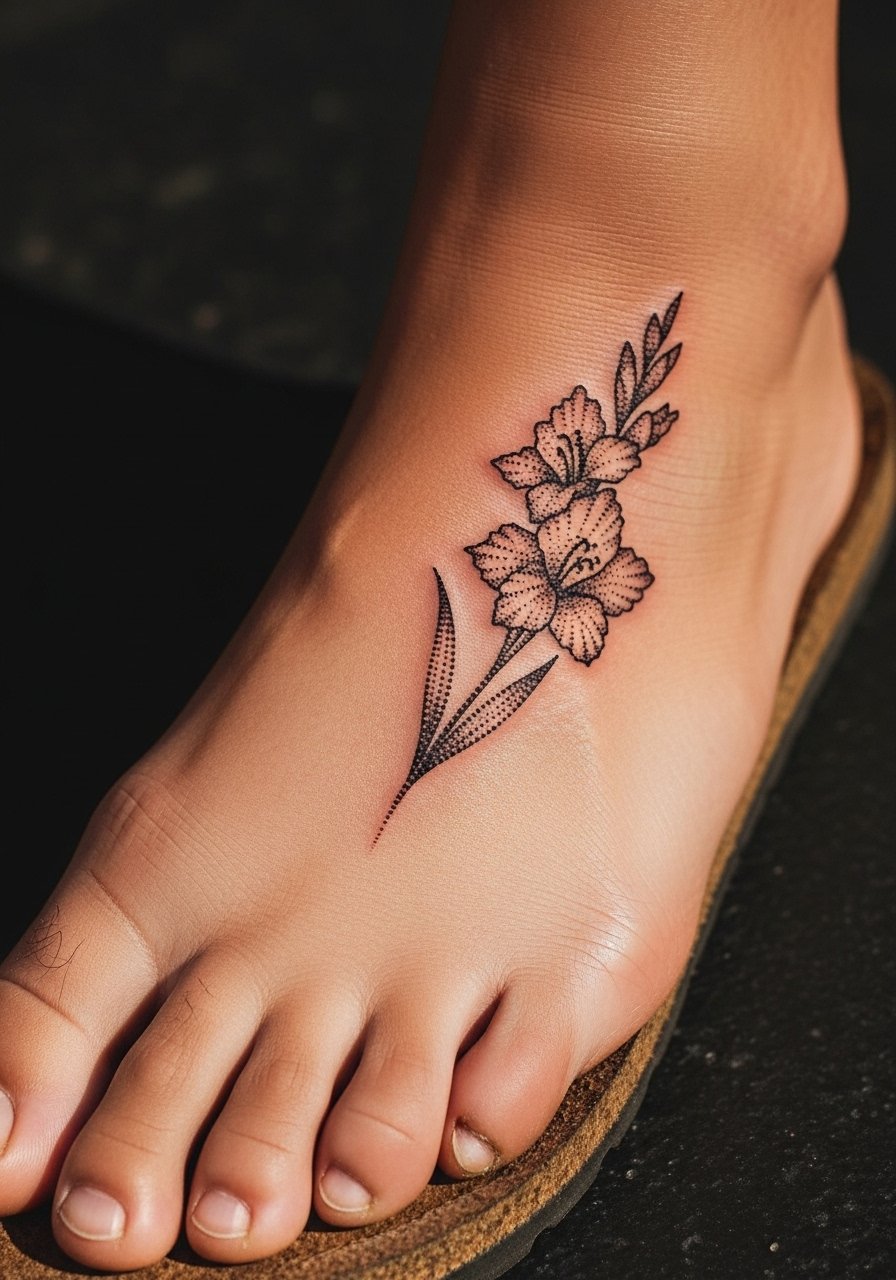
Foot tattoos have higher risk of fading and distortion due to shoe friction and frequent bending. The pain is sharp around the bone. Keep designs compact and slightly bolder than you might choose elsewhere. A common mistake is choosing too much negative detail which disappears under pressure points. Plan for a touch-up after healing. For footwear that displays the piece, pick low straps or simple sandals that avoid rubbing the tattoo.
16. Dotwork Poppy Wrist Cuff
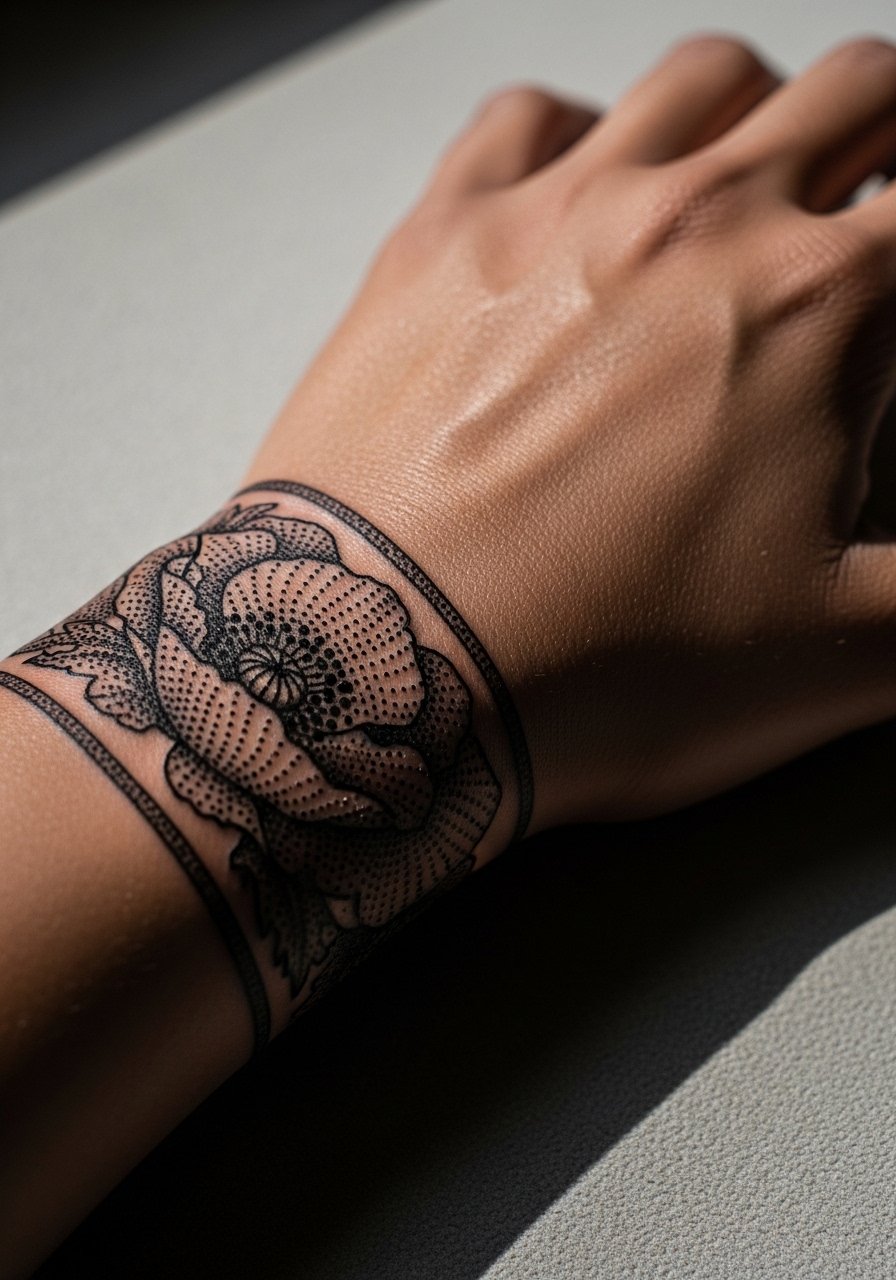
Wrist cuffs read like jewelry and they age with daily exposure and movement. This placement is prone to faster fading if packed with tiny dots. Ask for slightly larger stipple clusters and a clear negative-space margin so the cuff keeps its shape. The session is quick, but you should expect a touch-up at year one. Avoid tight bracelets for the first month of healing. For styling, a minimalist watch paired with the cuff keeps the look cohesive without covering the dots.
17. Inner Bicep Gladiolus Stipple
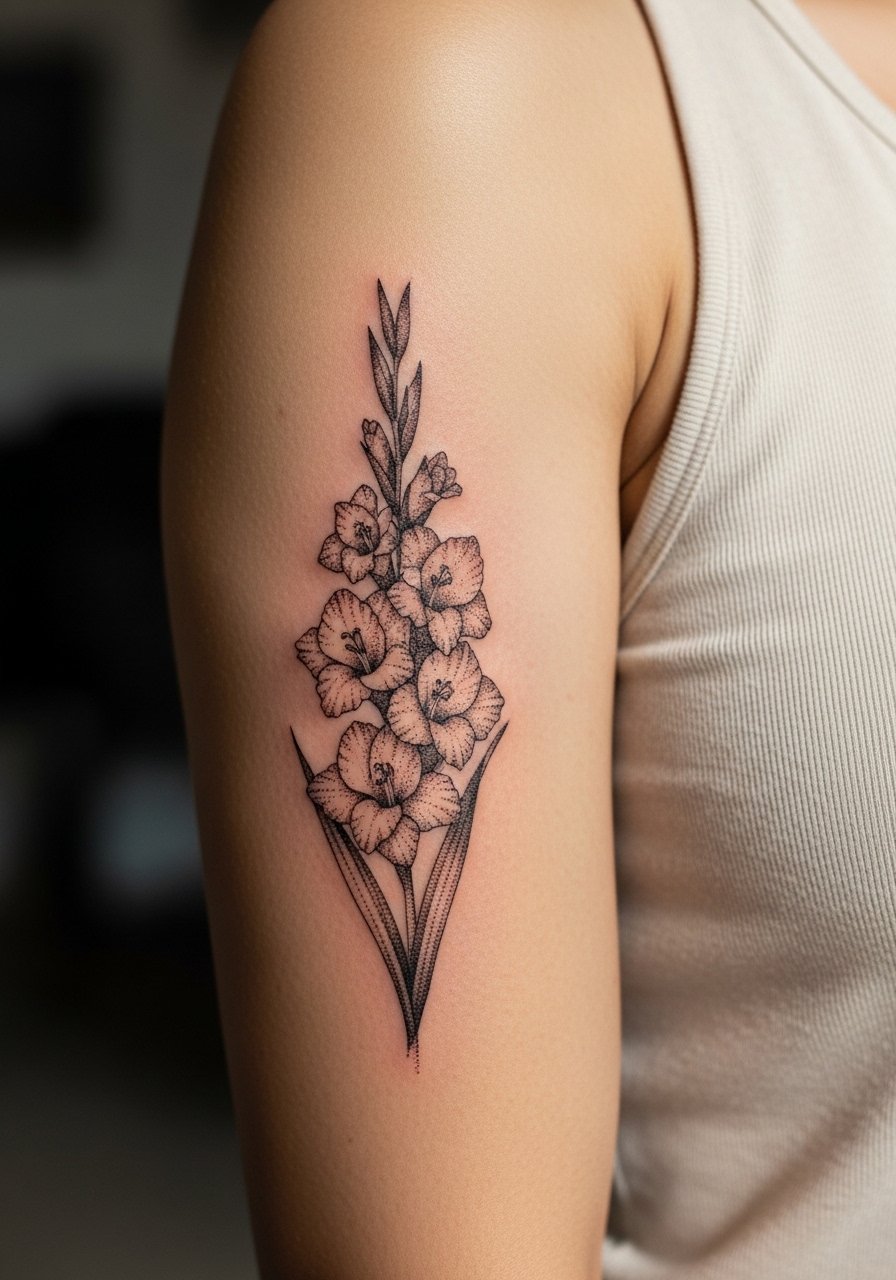
The inner bicep gives a private pocket for detailed stippling, but it also has thin skin and more movement which affects healing. Pain can be higher near the underside of the arm. Tell the artist to avoid extremely tight dot clusters and to plan for a single touch-up. Many people overlook how arm hair and sweat affect early healing, which can matter for dense stippling. For the session wear a loose tank top you can lift without stretching.
18. Small Poppy on the Back of the Neck
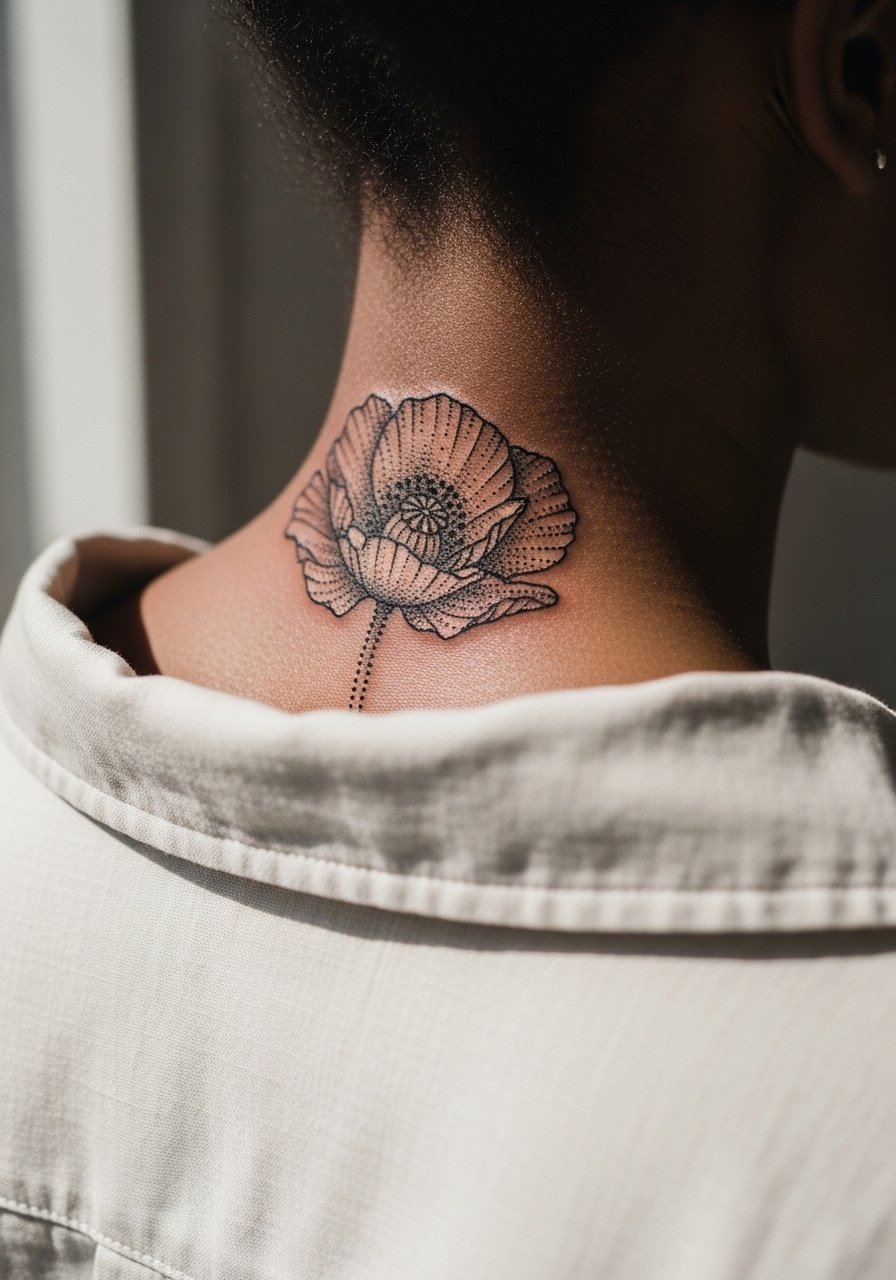
Neck placements are visible and sensitive, so choose this only if you are comfortable with exposure. Healing is quick but touch-ups are sometimes needed because shirts and collars can rub the area. The main mistake is expecting the same longevity as forearm work. Ask the artist how they handle needle depth on neck skin. For discreet display use loose collars or a wide-neck shirt that frames the piece without constant friction.
19. Calf Gladiolus Panel in Stipple
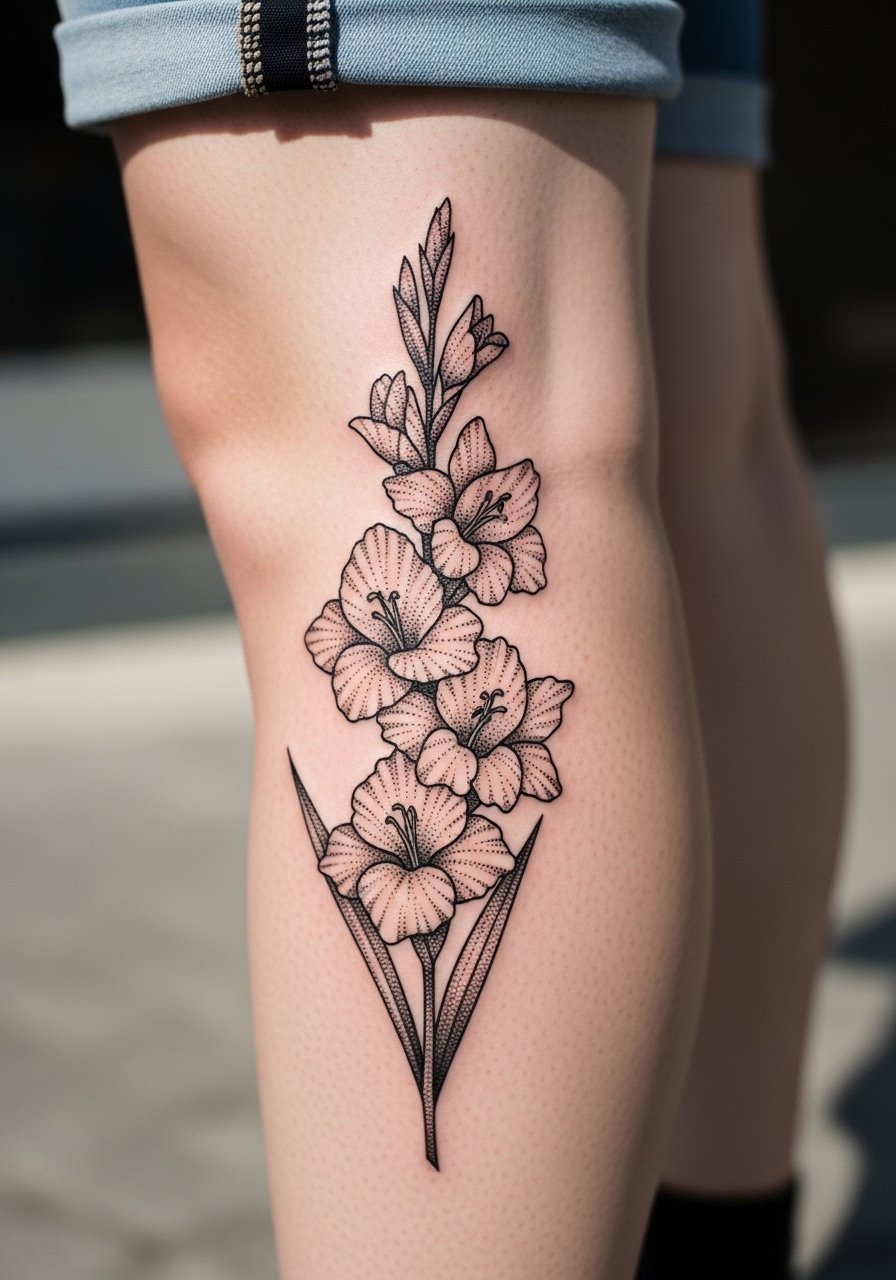
Calf tattoos are durable because of stable skin and lower friction, so dotwork maintains clarity longer here. Sessions are comfortable and often completed in a single two-hour slot for medium panels. Avoid placing too much fine detail near the Achilles side where movement and rubbing can cause blur. A common mistake is forcing a large piece into a tight vertical column. For weekends and show-off moments, wear loose drawstring linen pants you can roll up without tugging the skin.
20. Pocket Poppy on the Hip
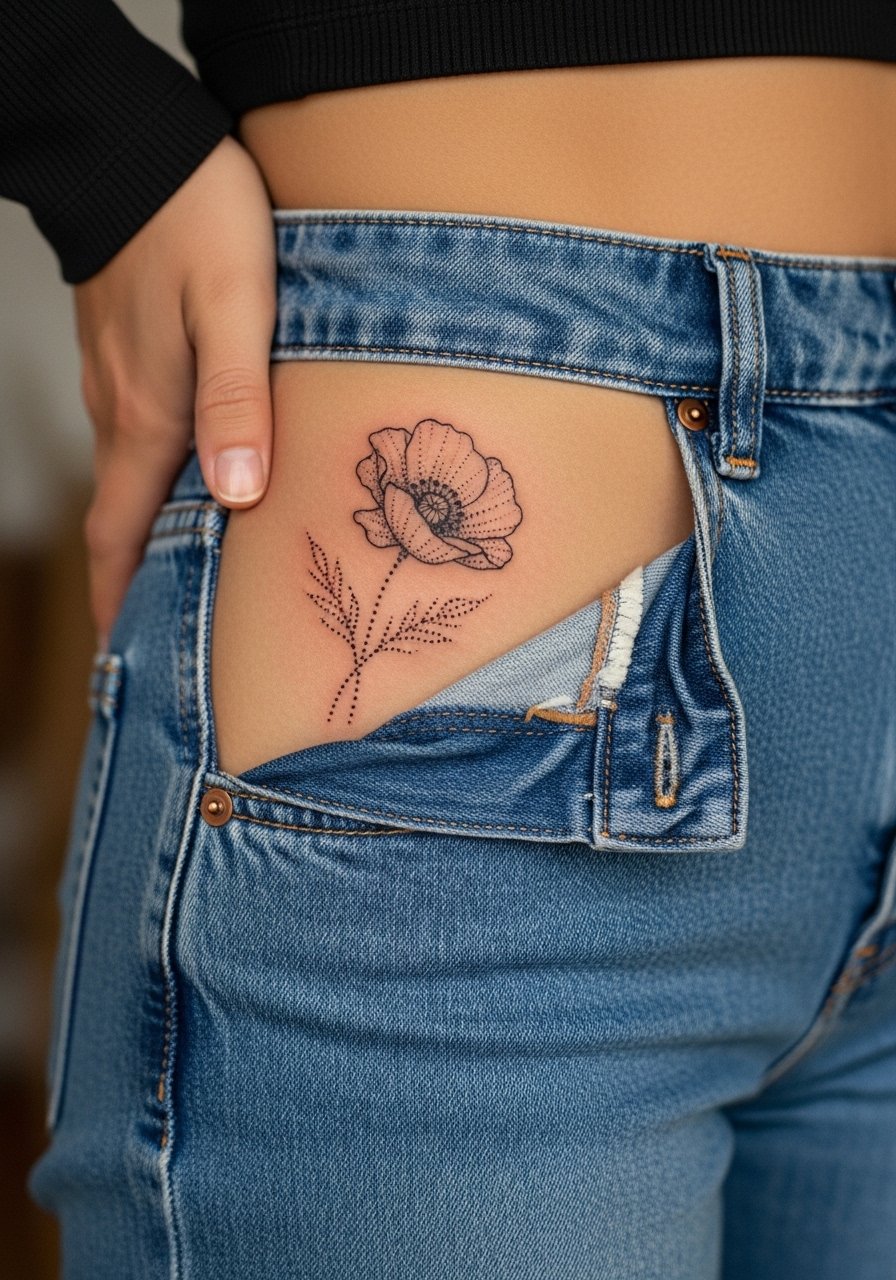
Hip tattoos sit in a spot that moves with clothing and activity so healing needs attention. Pain varies but often feels like a deep pressure. A common error is placing the design too low where waistbands rub. Ask your artist to place the pocket poppy slightly higher and to plan negative space so the bloom keeps character after months of movement. For the session wear high-waisted shorts that you can shift so the artist has clean access without compression.
21. Matchstick Poppy on the Ribcage Edge
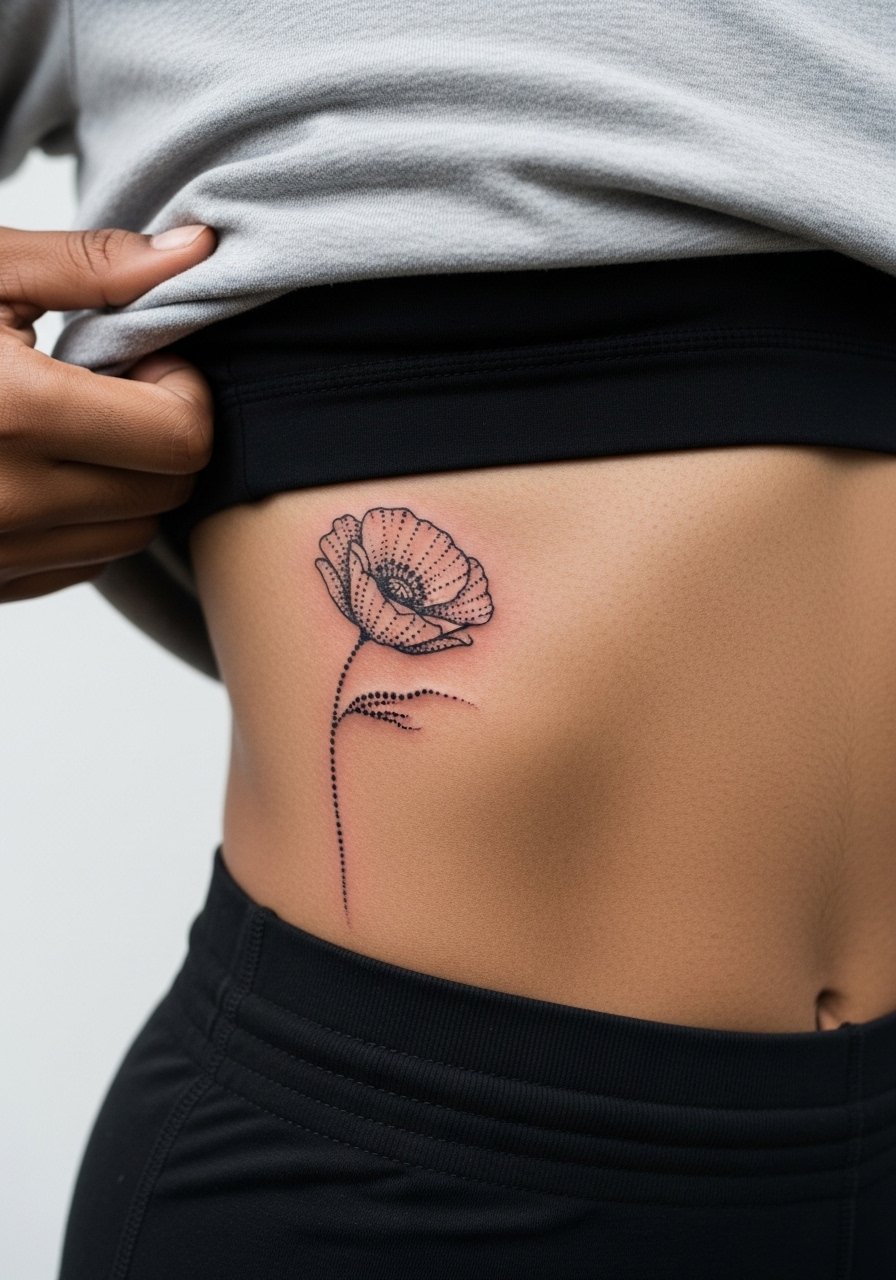
Fair warning, this spot is borderline for longevity with very fine dot lines. The rib edge flexes and breathes which tests dot cohesion over time. Artists divide on whether micro dot lines last here. One camp points to lines softening within two years. The other says careful needle depth, slightly heavier dots, and spacing keep the design legible. If you go for it, expect a longer initial session and plan on a touch-up at year two. Wear a cropped athletic top to the appointment so the artist can access the area without exposing more than needed.
Frequently Asked Questions
Q: How long do dotwork gladiolus and poppy tattoos typically hold detail on forearms and calves?
A: From what I have seen, forearms and calves keep dotwork detail longer because the skin is stable and they avoid constant friction. Expect the most visible softening around year two to five depending on sun exposure and how tight the original dots were. Plan for a touch-up in the first two years if you notice significant merging.
Q: Are rib and sternum dotwork pieces riskier for fading and blowout?
A: Yes, ribs and sternum are riskier because the skin stretches with breath and posture. Artists split into two camps. One says fine dots blur faster there. The other says slightly bolder dots and careful depth make the pieces hold. Ask your artist which approach they use and why before booking.
Q: What should I wear to the session for a sternum, rib, or thigh piece?
A: For sternum and ribs wear something like a fitted sports bra or a cropped top that you can lift. For thigh work bring loose shorts so the artist can roll the leg without pinching. Comfort and easy access beat fashion for the chair.
Q: Will finger and ankle dotwork need more touch-ups than a shoulder blade piece?
A: In my experience, yes. Fingers and ankles face constant friction and water which speeds fading, so plan for touch-ups sooner. Shoulder blade work is usually more durable and often stays readable for longer before a refresh.
Q: How do I choose an artist for detailed stipple work if I want longevity?
A: Look for portfolios showing healed photos in similar placements, and mention you want healed examples of dotwork on similar skin tones. Ask about their touch-up policy and how they manage depth and spacing. If they cannot explain their approach to dot spacing and touch-ups clearly, consider a different artist.
