
Fine line dog paw trends flood feeds, yet what stays crisp after two years is not always what scores the most likes on day one. Small linework looks gorgeous fresh and then softens unless the stencil had room and the artist set depth for longevity. Read through these 21 dog paw tattoo drawings for styles that age better, what to ask at consult, and simple wardrobe moves that actually help the healed look.
1. Minimalist single dog paw pad on the wrist
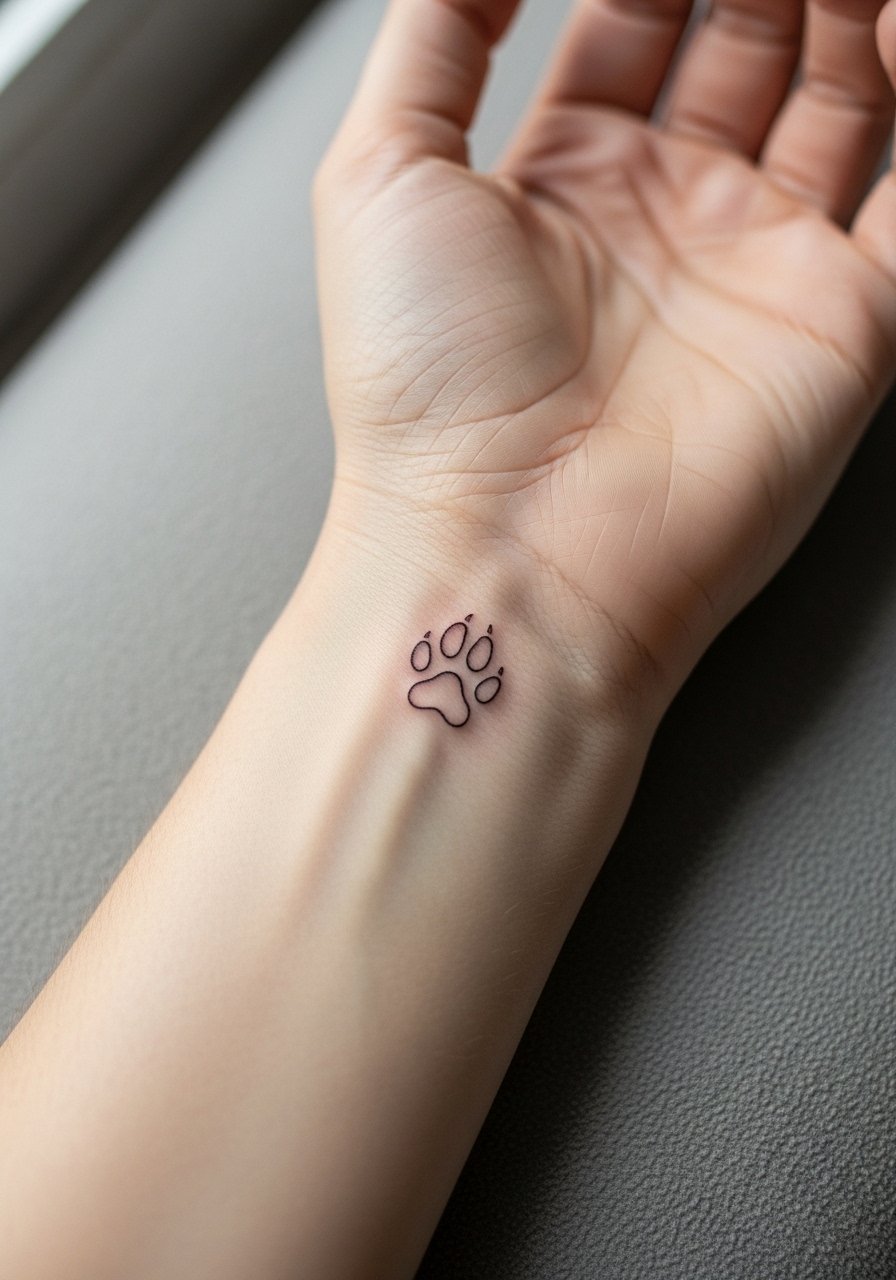
This is the classic first-tattoo choice for pet people who want something low commitment and wearable every day. I recommend asking for a slightly heavier line weight than the thinnest flash so the tiny pads keep their shape past year two. The wrist is easy to show off, and it is also exposed to sun and washing so plan a touch-up at the 12 to 24 month mark. For the appointment wear a sleeveless tank or a loose tee and keep bracelets off the area. Pair the finished piece with a thin silver chain bracelet on the opposite wrist to keep attention balanced.
2. Micro-realism dog paw pad with heart outline on the forearm
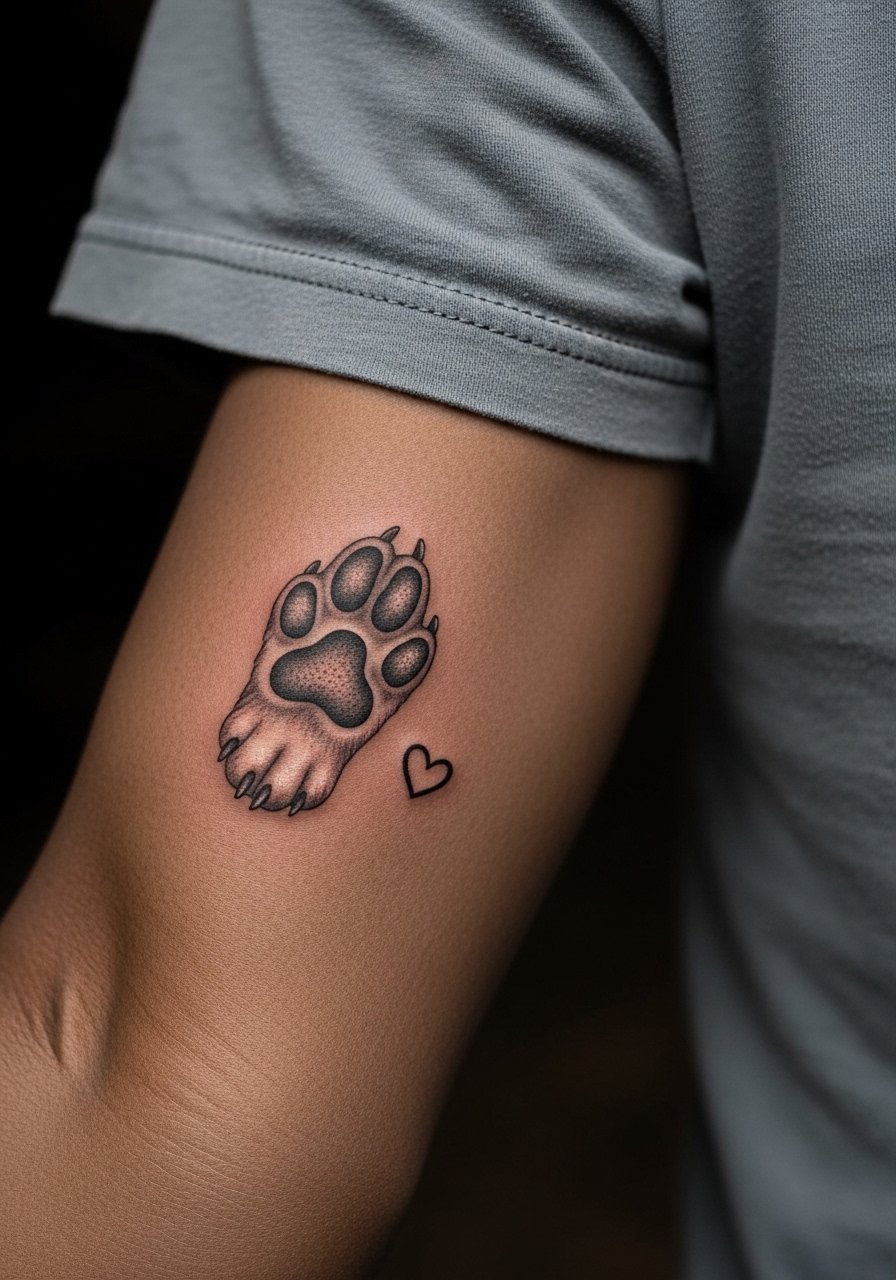
If you want a tiny memorial that reads like a keepsake, micro-realism with a faint heart outline gives emotional detail without turning the piece into a full portrait. Tell your artist you want crisp stipple shading and a soft edge so the heart reads, even if the skin softens with time. This placement holds saturation better than the wrist, but forearm work still needs sun protection. A common mistake is asking for too small a heart that disappears after healing. For showing it off wear a chambray shirt with rolled sleeves to frame the forearm and keep attention on the shaded detail.
3. Watercolor paw pad splash on the shoulder
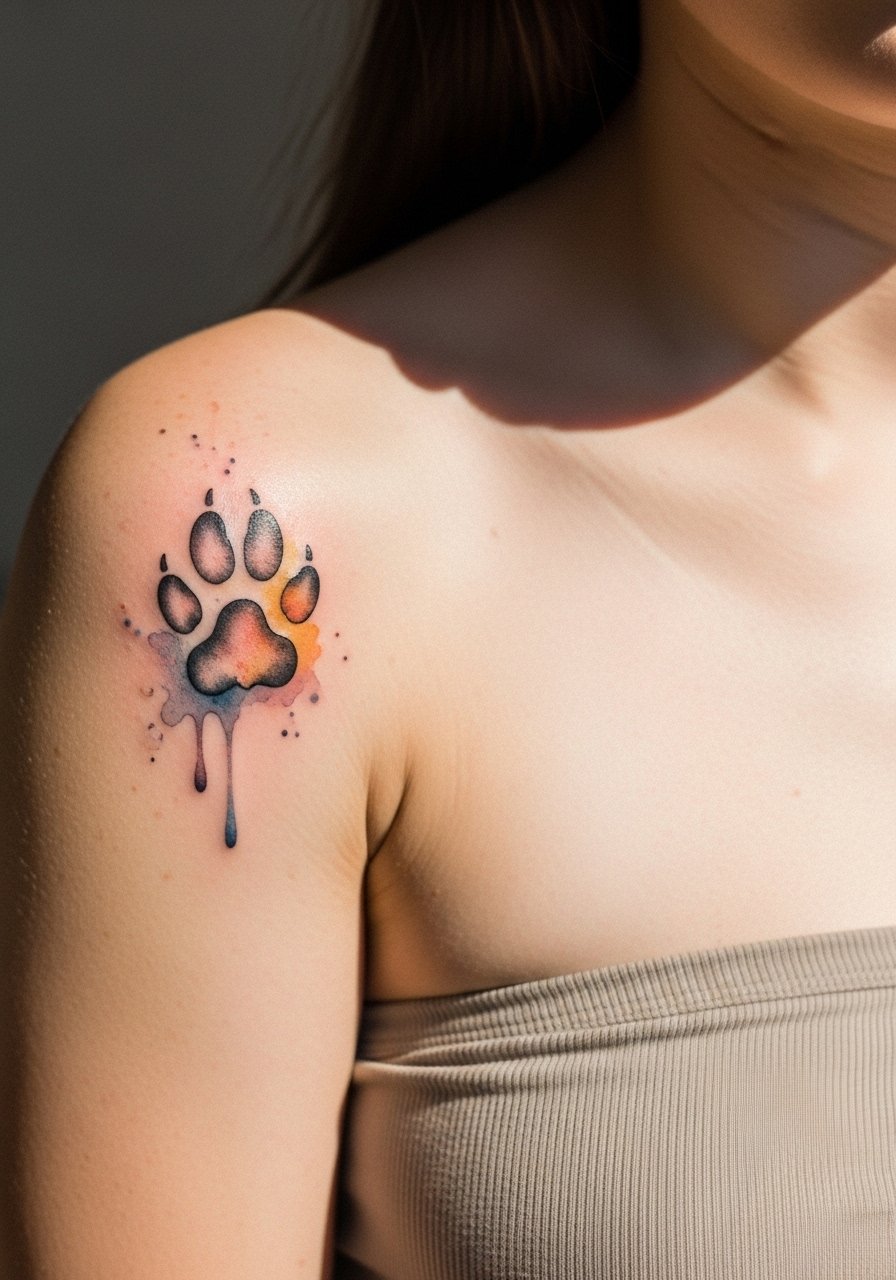
Watercolor splashes are playful and painterly, but they migrate visually faster than solid black. If you want color, ask for stronger outlines or a hybrid approach where the pad has defined linework and the splash is loose color outside of it. Shoulders take color well because they see less daily friction, yet warm climates and sunscreen matter for longevity. The biggest regret I see is choosing extremely subtle pastels that muddy in the first month. For outfits pick an off-shoulder blouse for evenings so the color pops with minimal competition from jewelry.
4. Fine line paw pad trail across the inner forearm
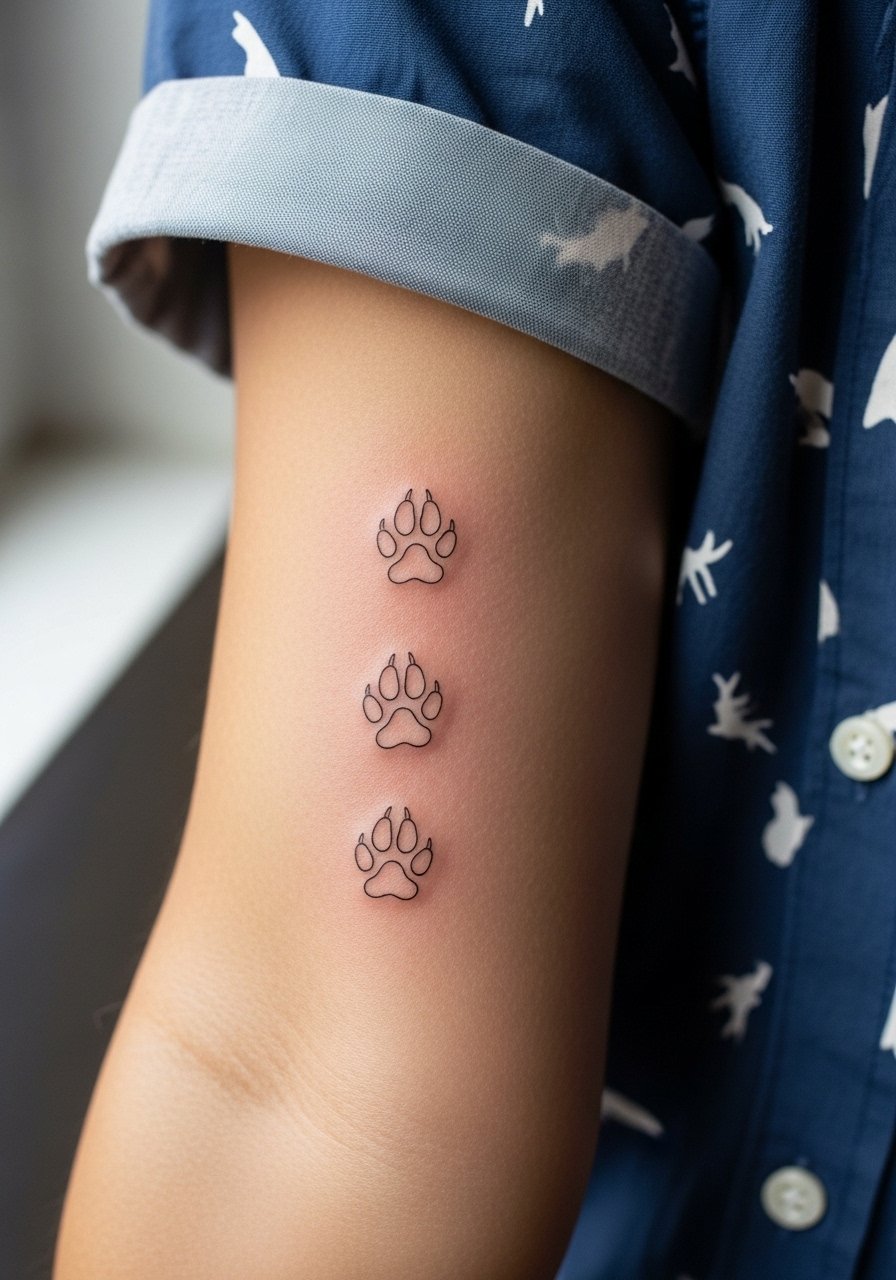
A linear trail tells a small story without needing a large canvas. Inner forearm placement keeps lines readable for years if the trail has breathing room between pads. During consultation specify 2 to 3 millimeter line weight and ask for slight spacing so dots and stippling do not merge as they heal. Pain is low and session time is short, which makes this one a popular beginner pick. Don't ask for the trail to be compressed into a tiny inch unless you want the prints to merge after a year. For a casual reveal, roll your sleeves and add a leather cord bracelet on the opposite wrist to frame the sequence.
5. Neo-traditional paw pad with bones on the outer forearm
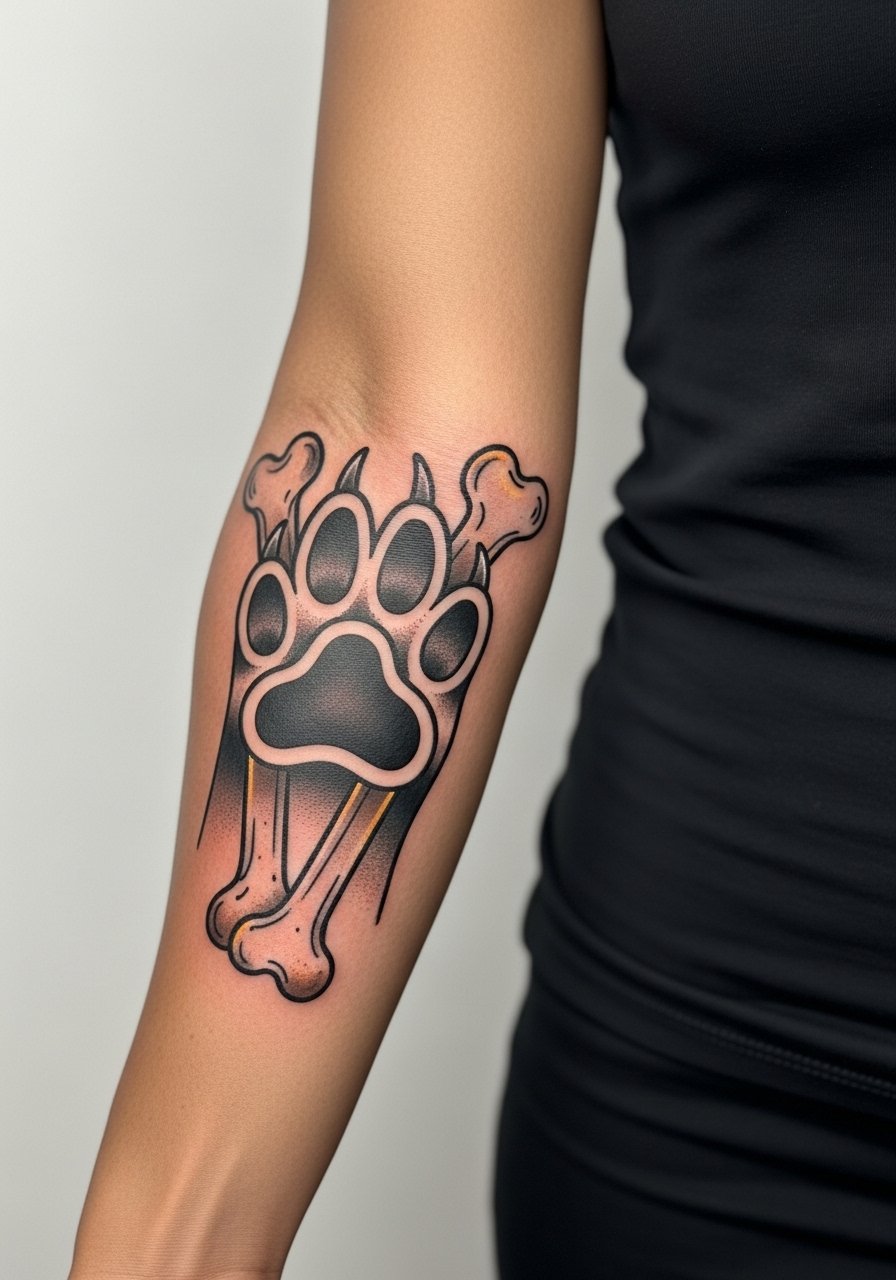
Bold lines and saturated fills are the secret to tattoos that still read clearly after years. Neo-traditional elements like thick outlines and flat color prevent early softening. The outer forearm is forgiving for saturation, so ask your artist to keep the outline weight consistent and the color blocks simple. A common mistake is cramming too much tiny detail into large color fields. The session feels straightforward and healing is predictable. Pair this with a fitted black tee or a wide leather cuff bracelet opposite the piece to make the colors pop.
6. Blackwork geometric paw overlay on the collarbone
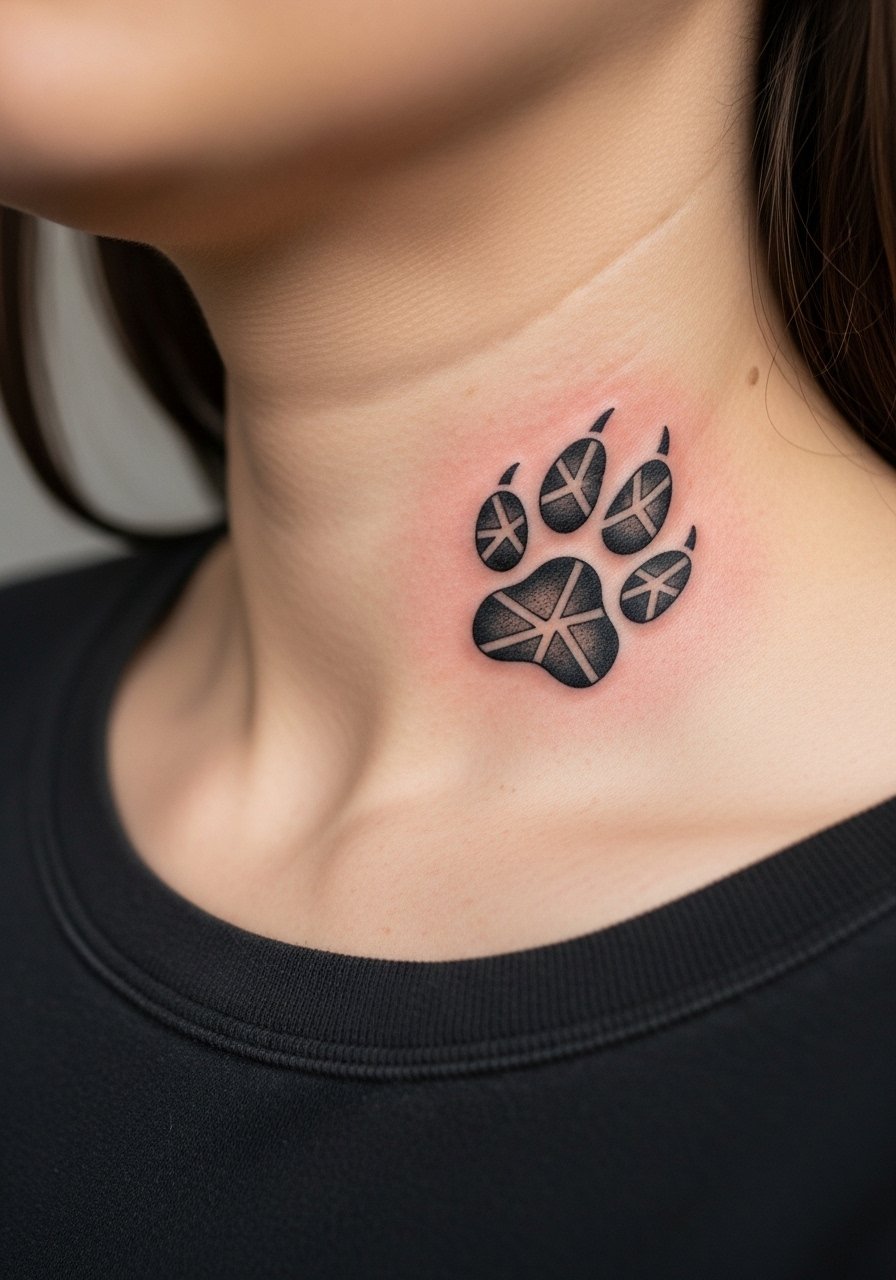
Blackwork reads strongly on collarbone placements when the shapes are sized to the contours of the bone. This placement can be showy but also sensitive during the session. Ask for a single-session proof so the geometry sits right with your collar structure. Artists split on pencil-thin geometry for collarbones, so ask where they stand on spacing and saturation. For showing the piece, a v-neck wrap top frames the collarbone without competing with the strong black shapes.
Studio Day Picks
The first six pieces above include wrists, forearms, shoulder, and collarbone, so a small kit tailored to fine line and saturation work keeps a session smooth and the first week less fussy.
- Bad Tattoo aftercare goo. Thin, non-greasy formula helps small wrist and forearm pieces avoid pilling during the first week of healing.
- Ink-Ich banisher. Targeted itch relief without numbing agents is useful for ankle or foot pieces that rub from shoes.
- Lush tattoo balm. Breathable balm that works well in humid summers for shoulder and thigh work.
- Tea tree salve sticks. Portable and antibacterial for forearm and calf areas that get frequent exposure.
- Aquaphor healing ointment. Thin first layer for the initial days helps protect fine line edges on the wrist without heavy clogging.
7. Ornamental paw pad mandala on the upper thigh
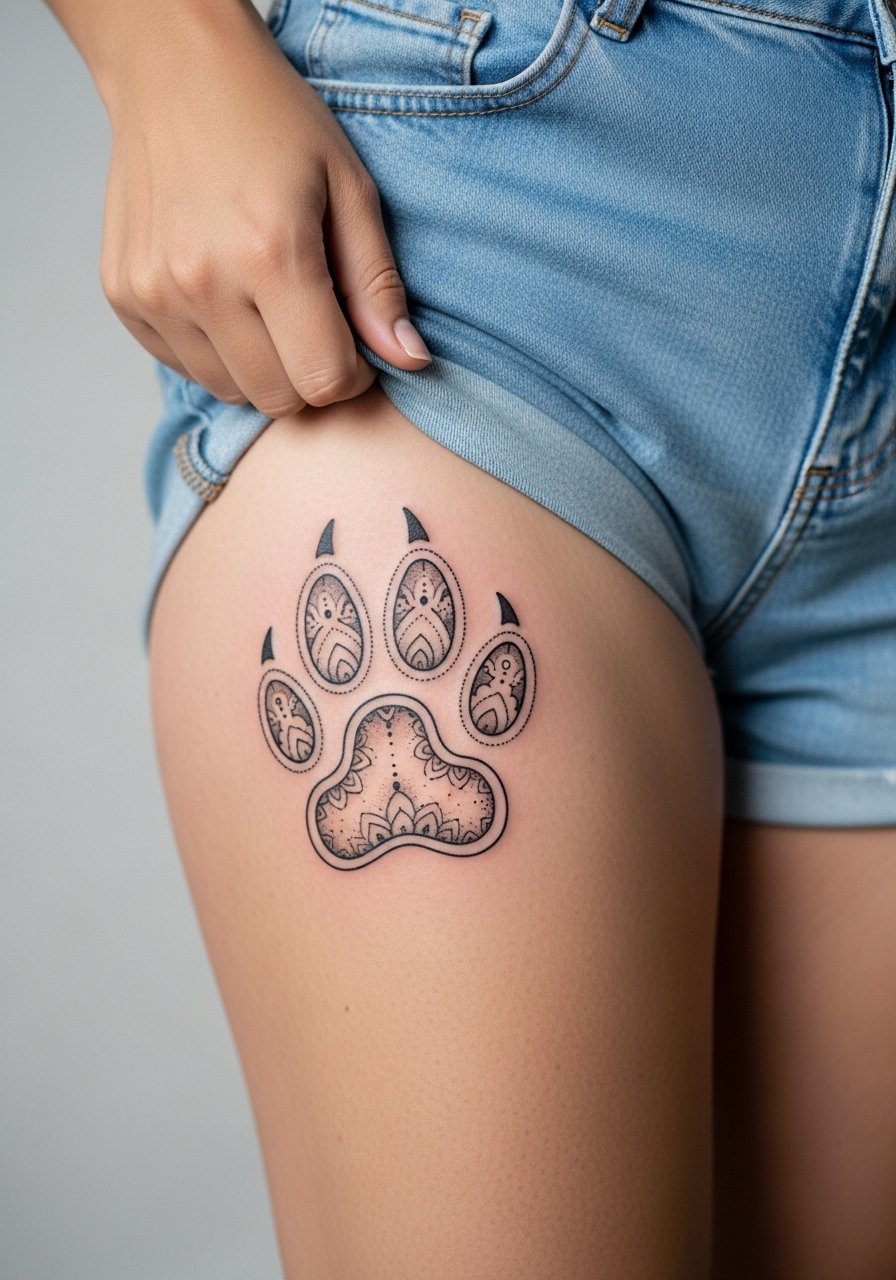
Mandala-inspired paw designs add symmetry and a meditative quality to a pet motif. The outer thigh is forgiving for detail and takes stipple shading nicely. Tell your artist you want clear negative space so the dots do not fill in over time. Avoid compressing too many tiny petals into a small diameter because dense dot work can blur with skin movement. Thigh placement changes as weight fluctuates, so check how the design sits on your body in different positions. For summer reveals pick high-waisted shorts or a slit maxi skirt that lets the mandala peek without overexposing the area.
8. Ignorant style cartoon paw stack on the calf
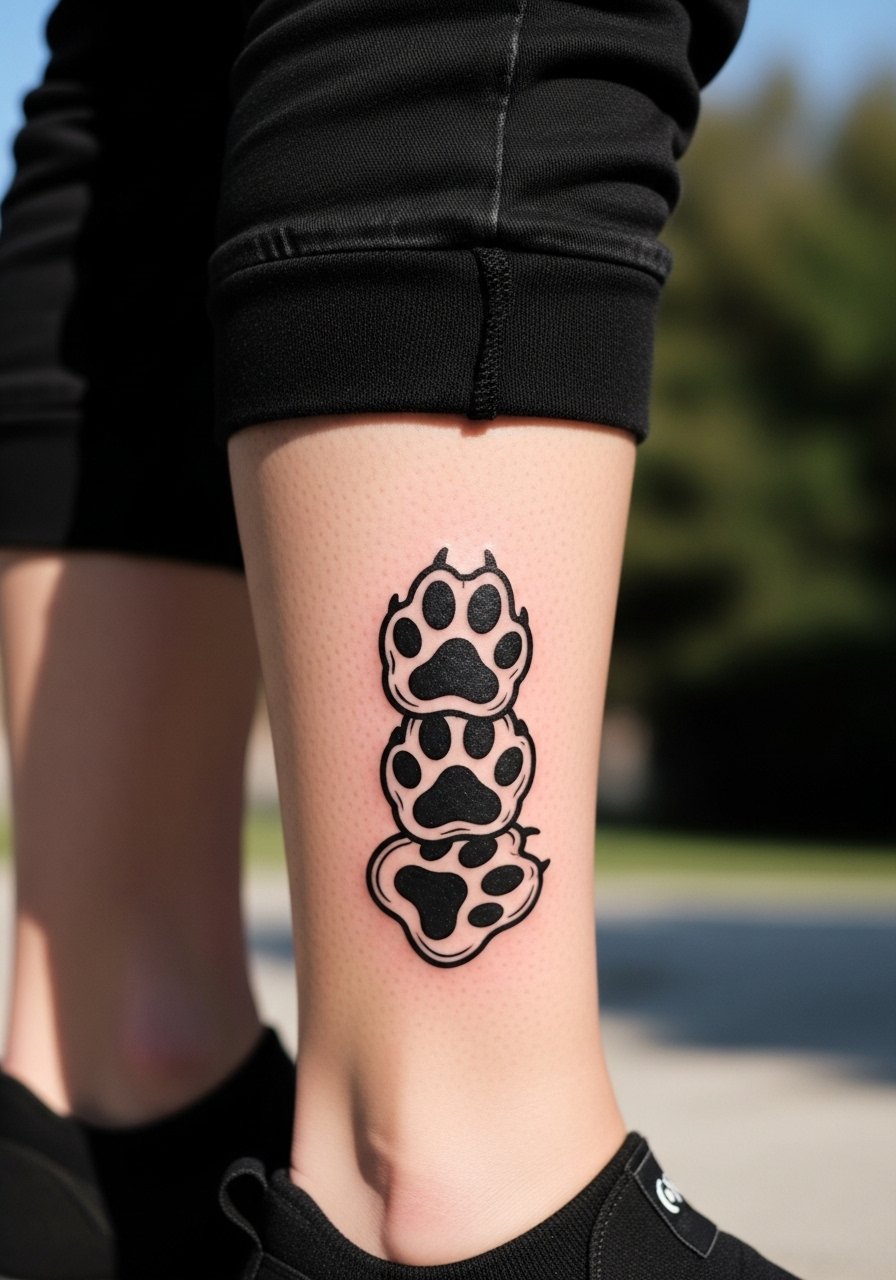
Cartoon stacks embrace bold strokes and playful shapes that age with character. The calf tolerates thicker lines and solid fills, so outline strength is less of a longevity worry. The main mistake is asking for too many tiny internal details inside each pad. Keep the icons chunky so the silhouette holds up. The session is comfortable and healing is straightforward. Show it off with shorts and boat shoes or a casual rolled pant look. A small rolled jogger pant works well for casual reveals while keeping the calf easy to access during the appointment.
9. Traditional anchor-wrapped dog paw pad on the shoulder
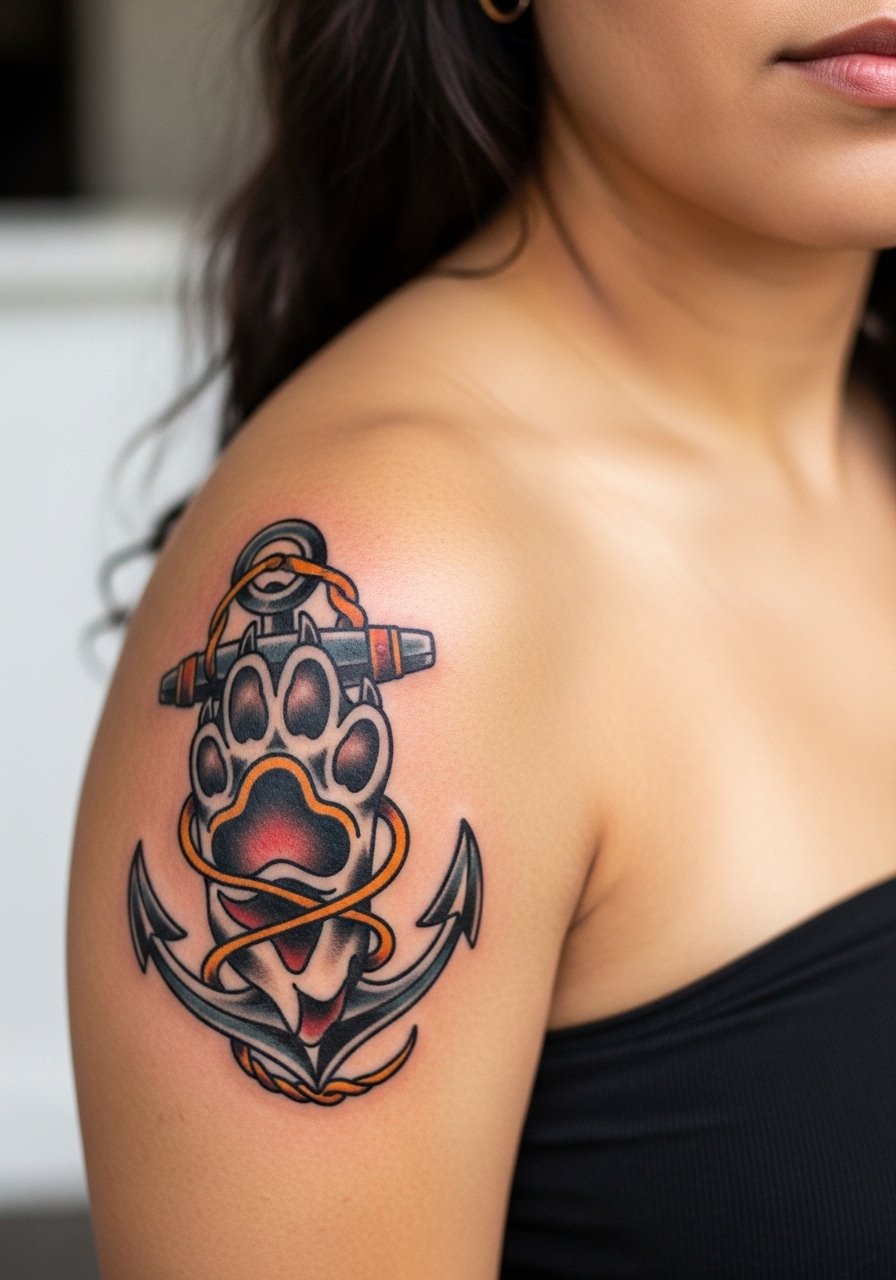
Traditional motifs with heavy black outlines and flat color are engineered to age cleanly. Anchors and banners pair naturally with a paw pad motif for a vintage feel. If you want this to last, keep the color blocks simple and avoid tiny script in the banner. The shoulder is a lower-friction spot which helps color retention. For session wear bring a strapless tank or a button-down you can pull aside. In daily styling, an off-shoulder blouse frames the piece and keeps the vintage lines visible.
10. Dotwork paw pad constellation on the ribcage
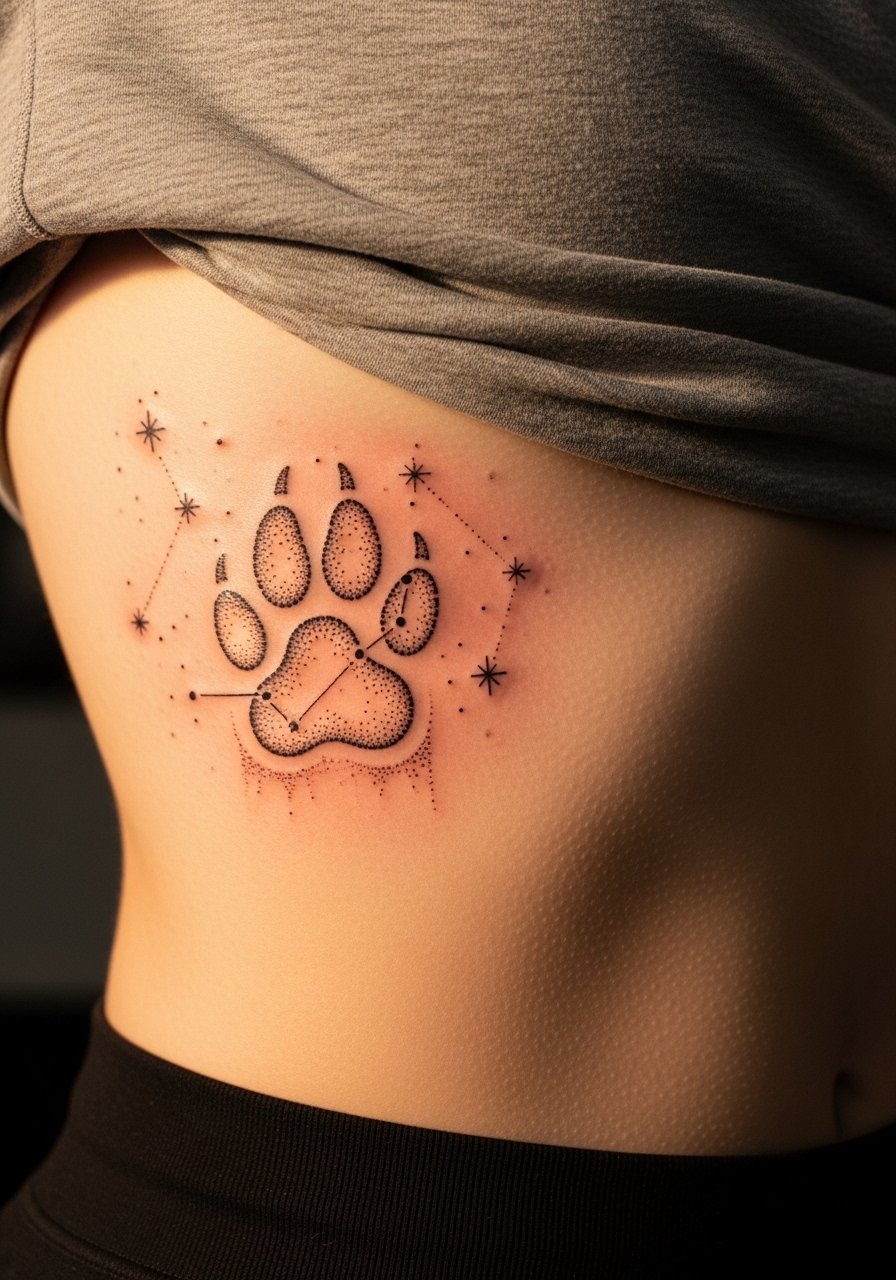
Ribcage placements are beautiful but sensitive during both the session and healing. Dotwork looks ethereal here but dense dots packed too tightly can merge as the skin stretches. When you ask for a constellation version, specify spacing in the dots and request a patch test if you have stretch-prone skin. Pain scores are higher, and sessions may need breaks. One controversy to name is fine line or dotwork on ribs. One camp says the skin shifts and blurs lines quickly. The other camp says with proper spacing and depth it can remain crisp. Ask your artist which side they are on before booking.
11. Fine line paw pad with name script behind the ear
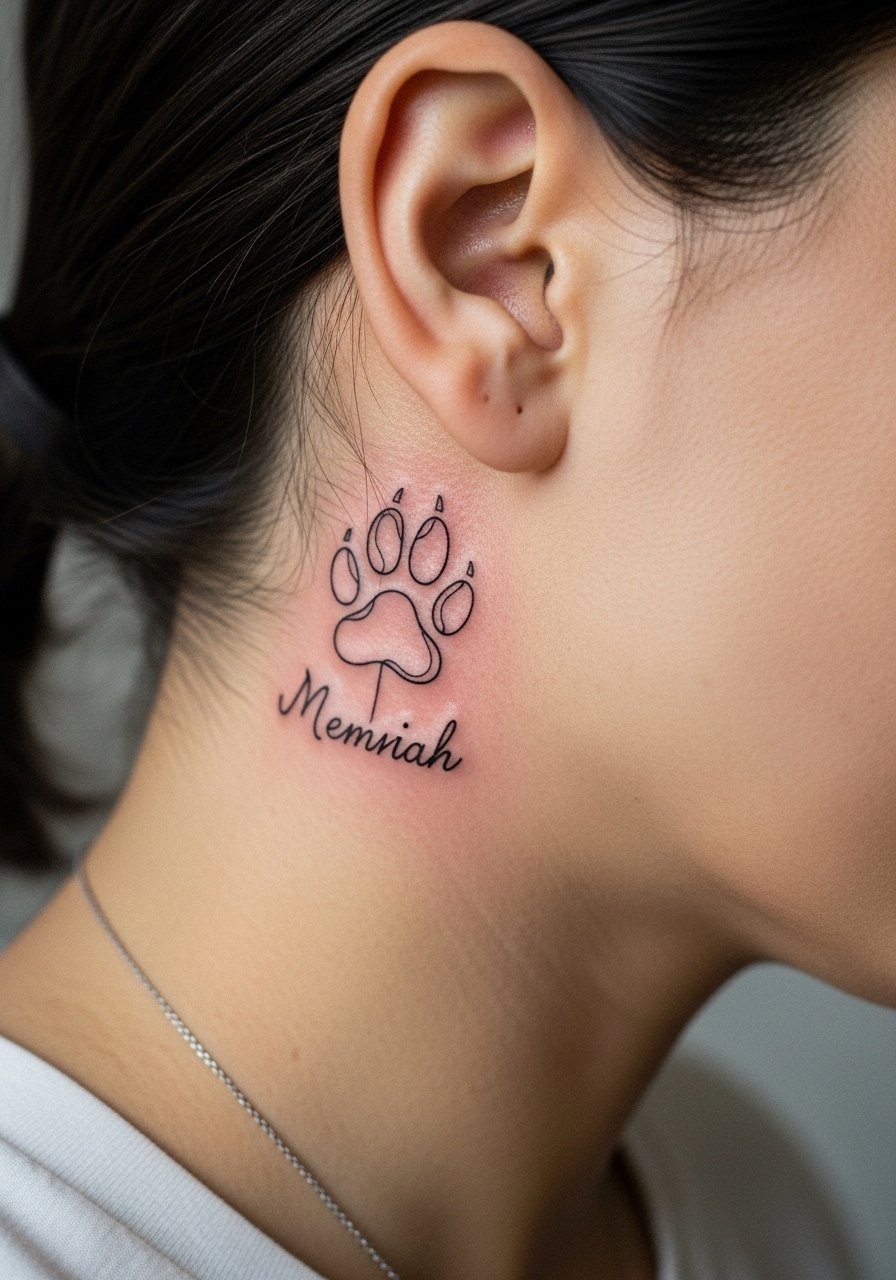
Behind the ear is a clever hide-when-you-want spot that stays private under hair and shows up when you tuck it back. Fine line here reads delicate but needs a slightly bolder gauge than the faintest needle to keep the script legible after healing. The session is short but sensitivity varies. If you pick script include the exact lettering and ask for a stencil check because tiny letters can blur. For a subtle reveal, let hair cover the area and pair looks with a thin chain pendant necklace that draws eyes upward without exposing the ear piece all the time.
12. Black and gray photoreal paw pad on the upper arm
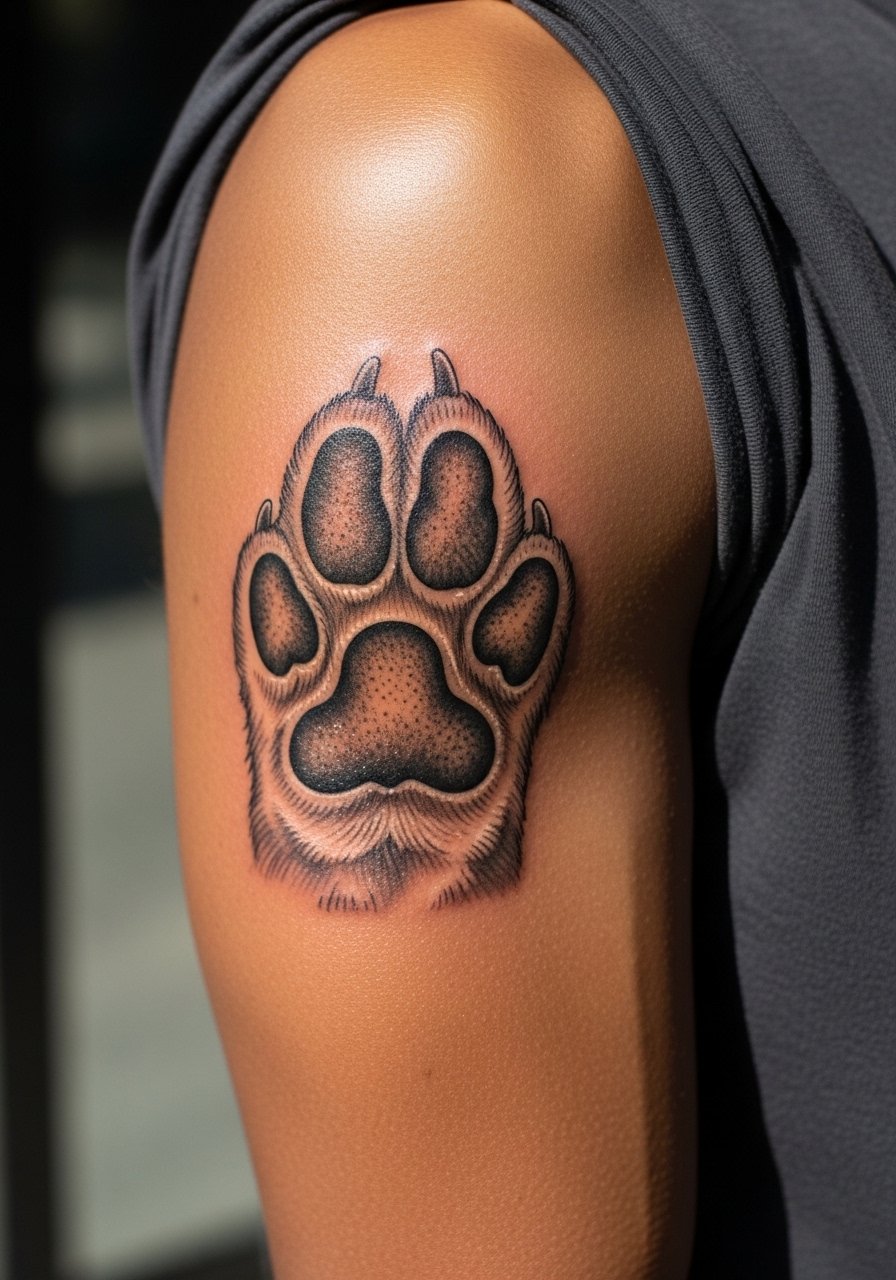
Photoreal paw pads are the most literal way to memorialize a pet. They need a skilled hand and sometimes multiple sessions to build smooth gradients. The upper arm accepts shading well and is less likely to distort with small weight shifts. A common mistake is insisting on a hyper-small size for a photoreal piece. If the reference is tiny, the realism will be lost when healed. Expect a longer session and a possible touch-up to refine gradients. For career-sensitive roles consider placement choices since detailed realism attracts attention.
13. Negative space paw pad outline on the calf
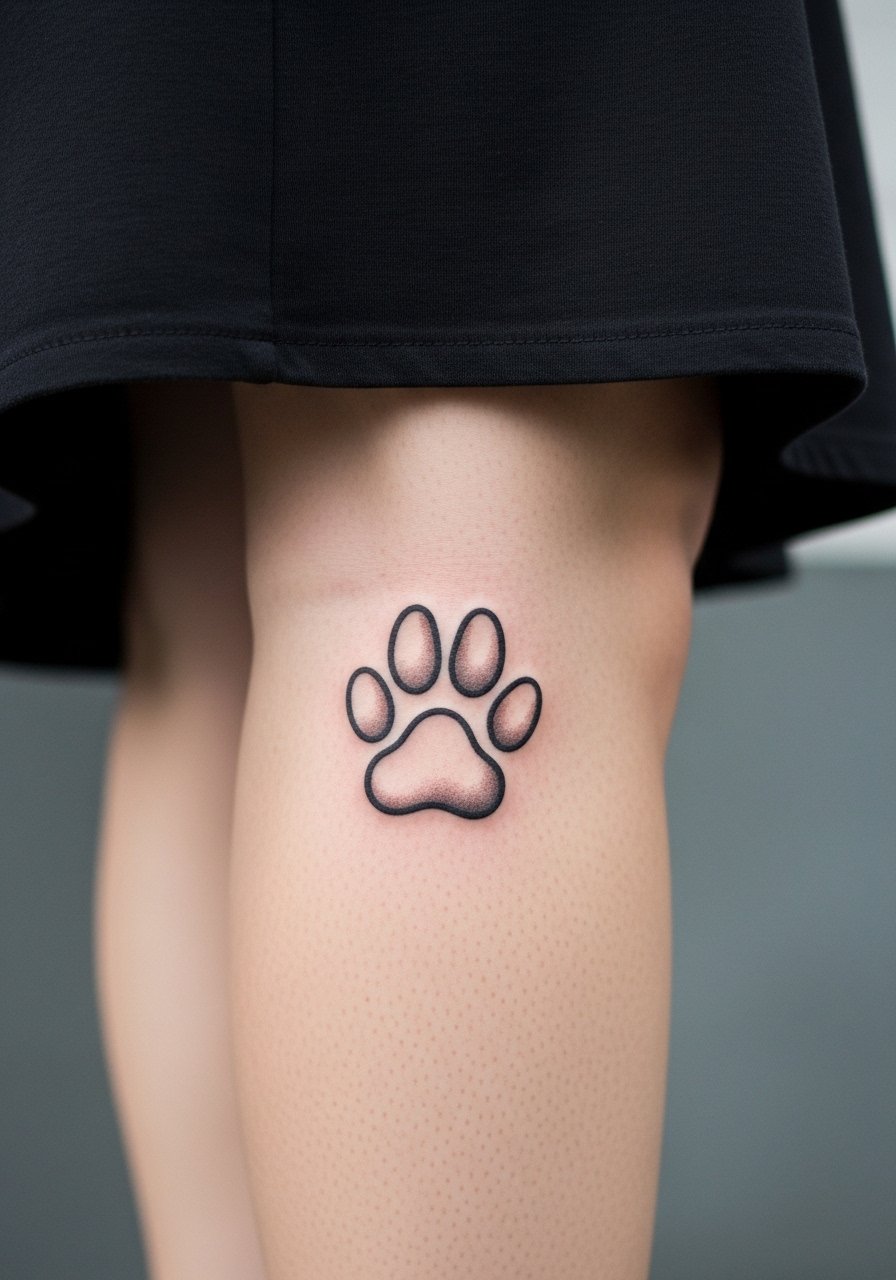
Negative space designs rely on the surrounding black or color to read the motif. On the calf this approach creates a high-contrast optical effect that stays readable because the open pads are spared from needle trauma. Tell your artist you want clean surround saturation and crisp gap edges. The risk is uneven saturation around the pads which can make the negative shape look fuzzy. For showing the piece off pick midi skirts or espadrilles in warm months. A pair of espadrille flats keeps focus on the calf without being overstyled.
14. UV reactive paw pad with moon phases on the shoulder blade
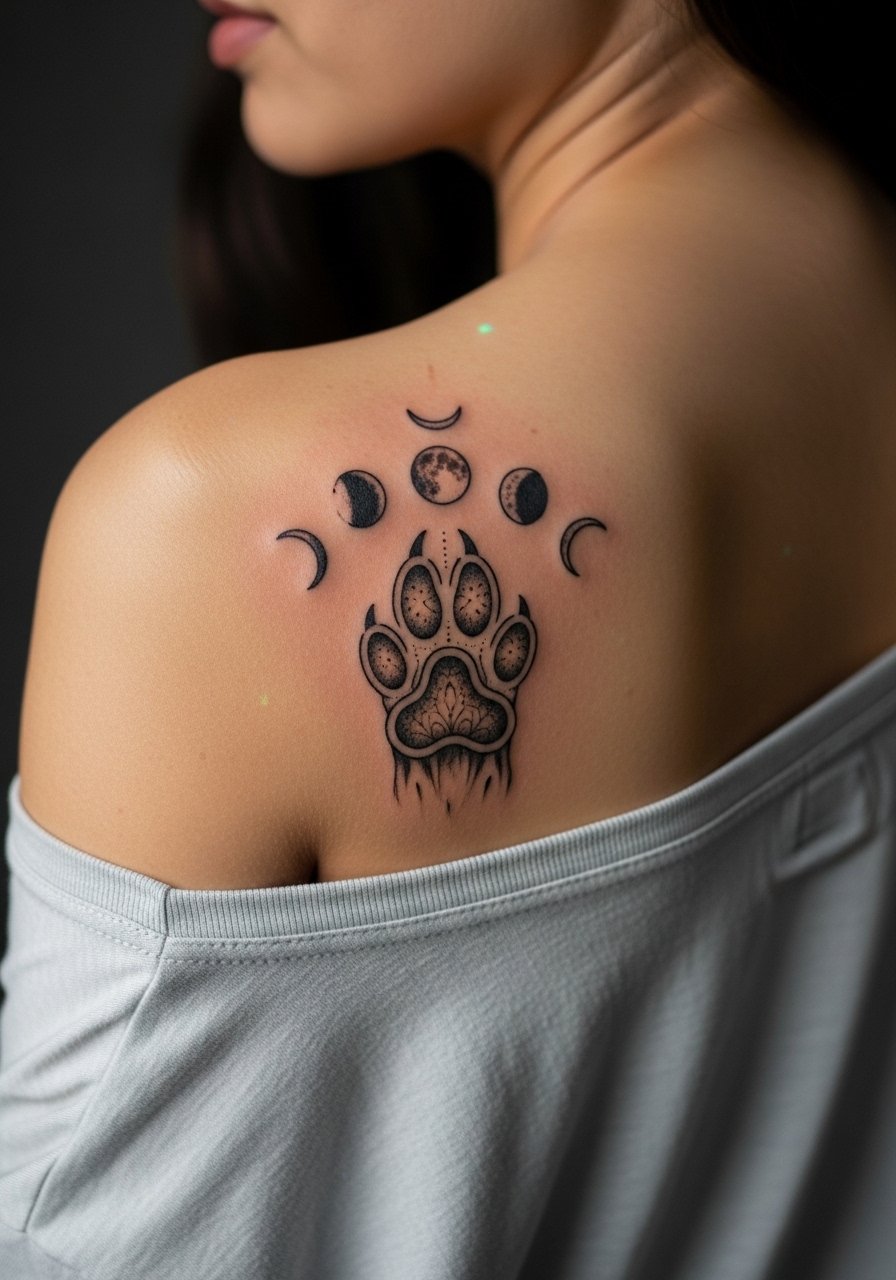
UV inks are niche and fun for people who want a hidden glow effect. They are best used as accents rather than the main blackwork because UV pigments can age differently and sometimes fade faster under normal light. If you want moon phases, place them as small highlights around the pad so normal wear does not erase the shape. Ask your artist about UV safety and test a small patch if you have reactive skin. For low-key shows the shoulder blade hides under shirts while still offering a hint for night events.
15. Paw pad symmetry set on both ankles
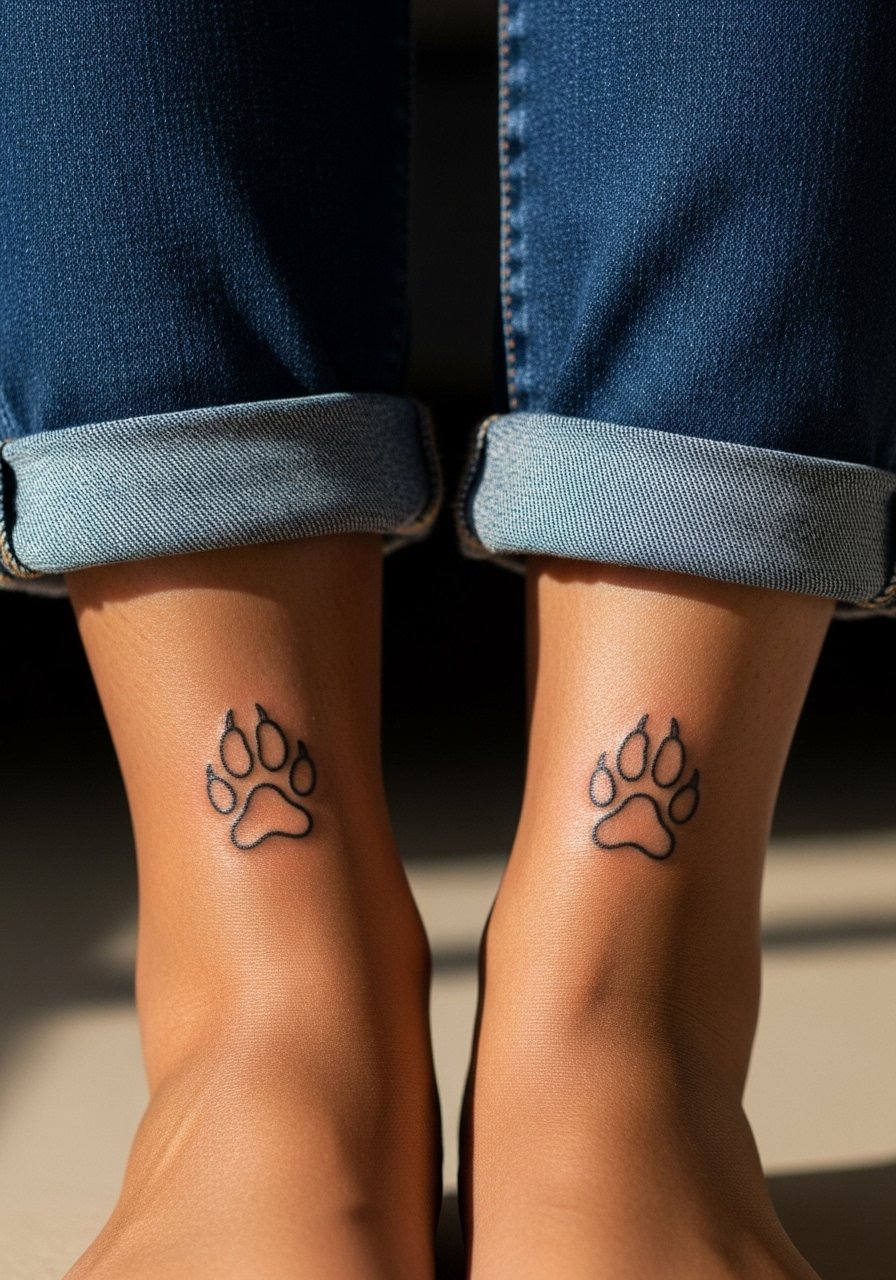
Matching ankle motifs give a balanced aesthetic and work well when you want pairs rather than a single marker. Ankles face friction from socks and shoes which can affect healing. Request your artist place the pads slightly higher on the ankle to avoid constant rubbing and plan a two-week wardrobe adjustment with open shoes. The common regret is placing them where shoes constantly chafe. For summer showing pull on cuffed jeans or a midi skirt and sandals so both ankles get attention.
16. Paw pad traced from an actual ink pad, custom impression on the wrist
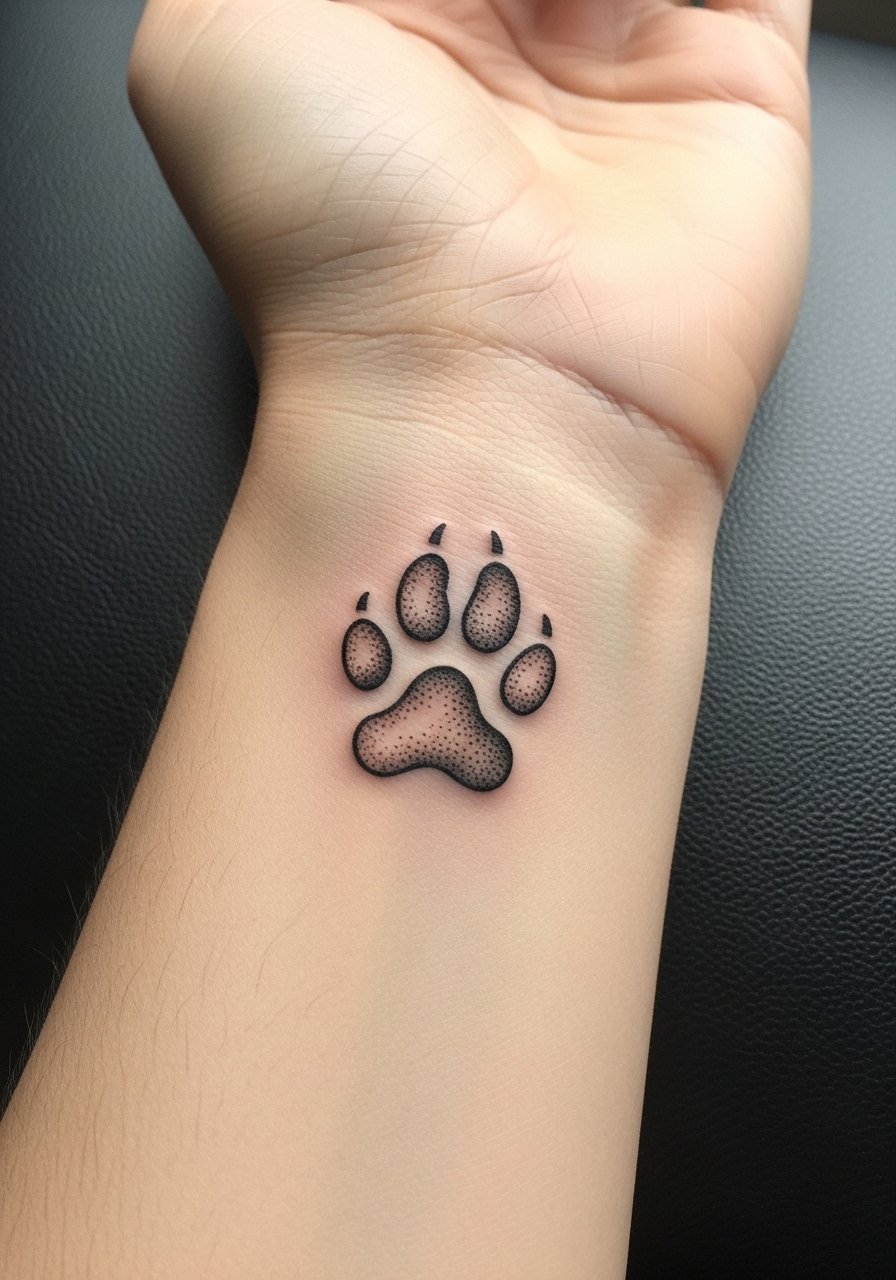
Using your pet's real ink pad impression makes a tattoo uniquely personal. Bring a clear stamped impression and ask your artist to convert it into a clean stencil that preserves distinguishing pads. A common mistake is giving a smudged print. If the stamp is faint the artist will need to redraw it and you may lose realism. Wrist placement is visible and sentimental. For the appointment leave bracelets at home and wear a sleeveless tank so the artist can access the wrist easily.
17. Aging-simulation paw pad on the hand with wrinkle detail
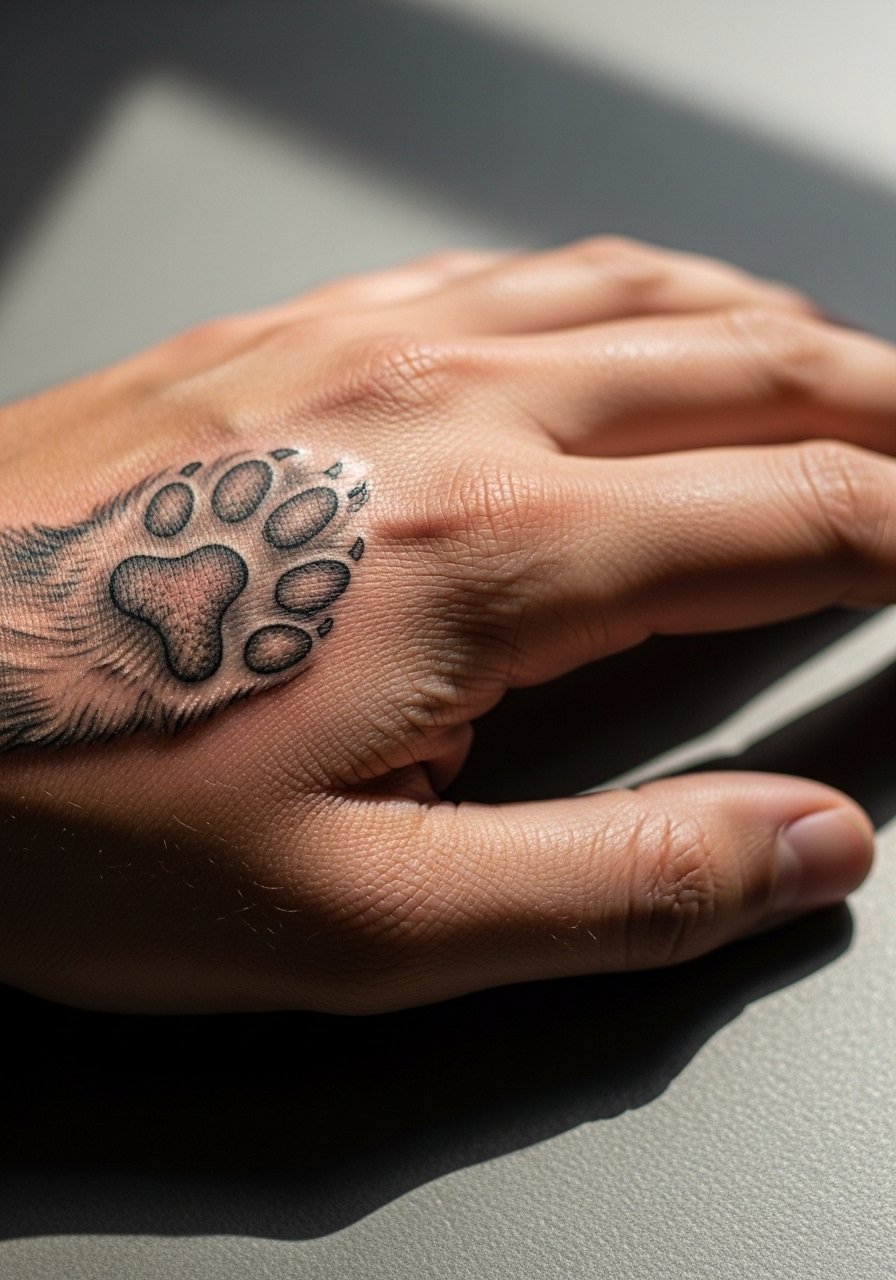
Integrating subtle aging lines into a paw design mimics real pad texture and can read as very tactile. Hand placements are high visibility and high touch. They also tend to fade faster. If you want texture, request shallow stippling rather than heavy continuous shading so touch-ups are easier. One professional consideration is that hand tattoos remain a visibility factor in some industries. For session wear keep the hand accessible and expect touch-ups sooner than arm work.
18. Constellation hybrid with zodiac glyph and paw pad on the ankle
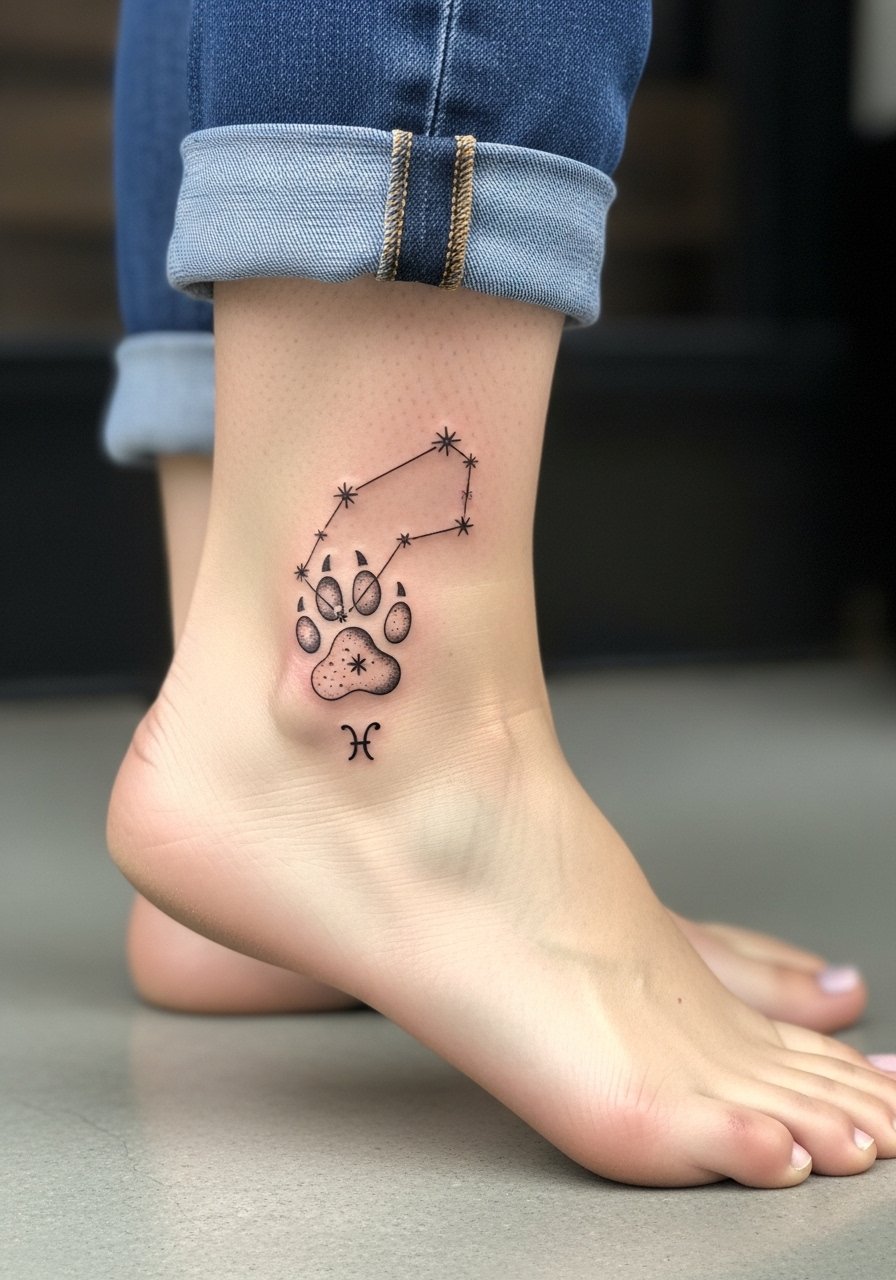
Combining a tiny zodiac glyph with a constellation-style paw is a niche trend that reads personal and clever. Ankles show fine detail well if you allow enough spacing. Ask for slightly bolder star points so the constellation does not blur into a single smudge after constant walking and sock friction. The zodiac glyph text must be provided exactly so the final stencil matches your intent. For shows pick cuffed jeans or sandals so the glyph and constellation appear casually.
19. Micro paw stack behind the ear for a hidden cluster
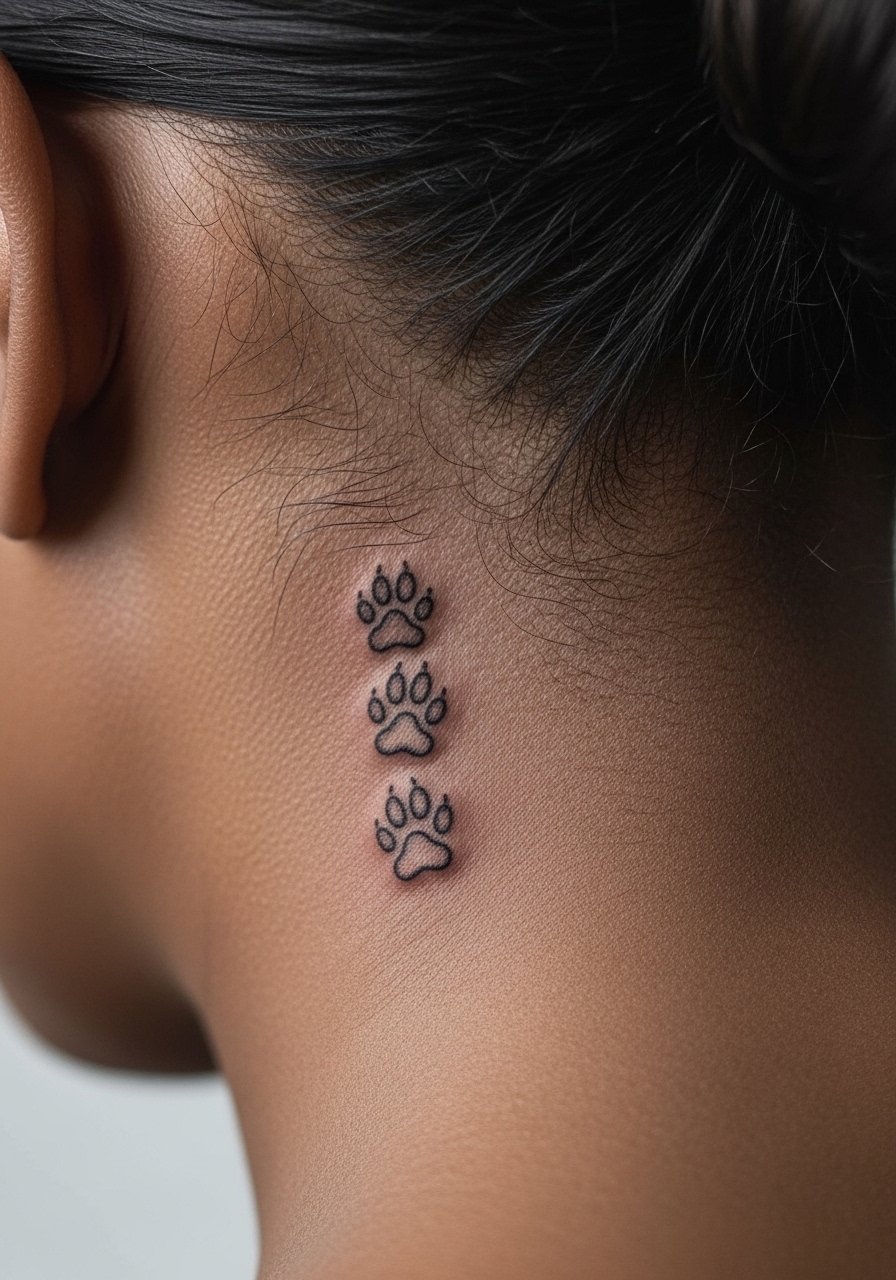
The behind-the-ear spot is discreet and playful. Micro stacks here hide under hair and reveal when you tuck or pull your hair up. The skin in that zone is thin so lines need a dependable depth and slightly heavier gauge than the faintest needles. Bring clear reference and request a stencil check below the hairline. This placement is great for privacy. For styling, keep hair up with a low bun or a thin chain pendant that pairs well with an exposed earlobe.
20. Blackwork paw pad with geometric shield on the sternum
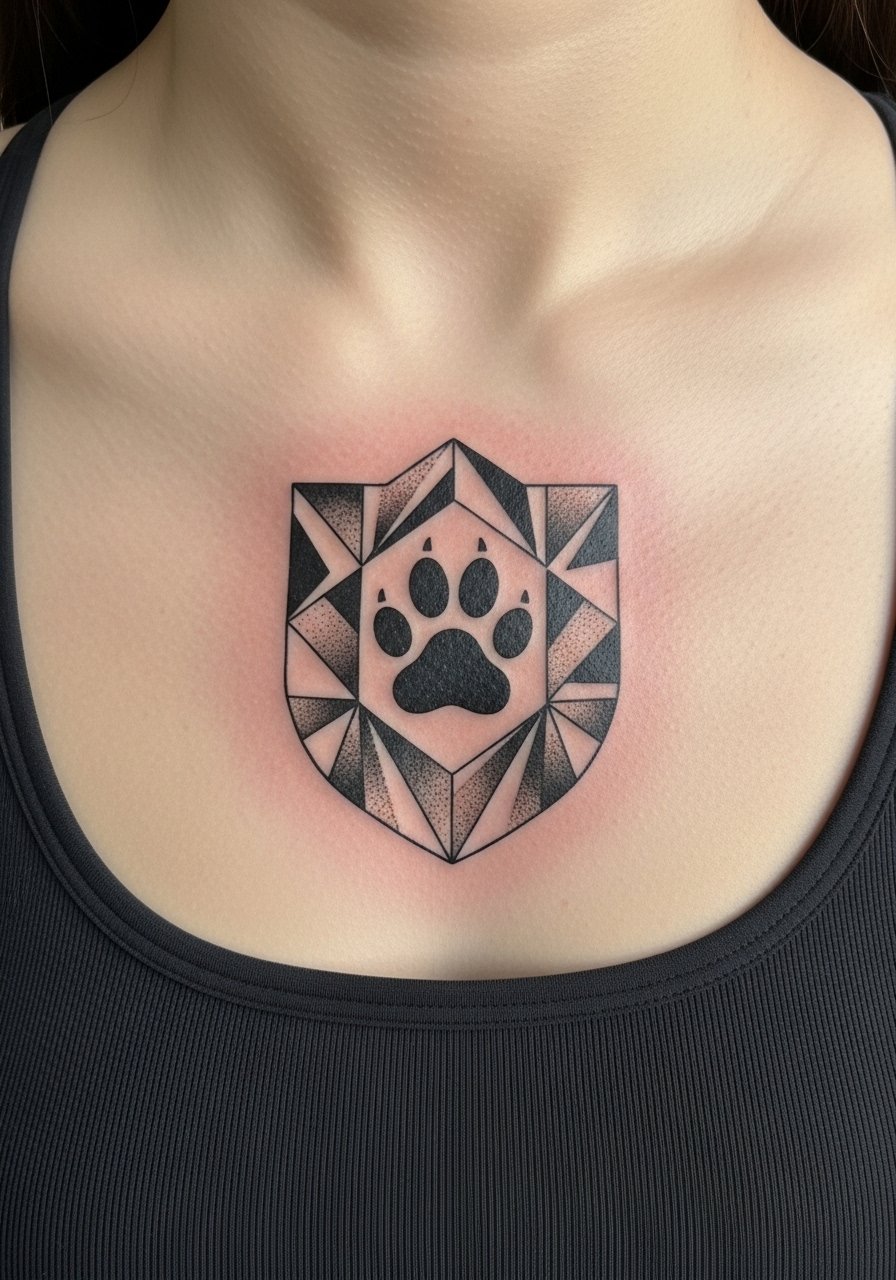
Sternum geometry makes a bold central statement and can anchor chest pieces. Because the sternum area moves with breathing, linear geometry needs room to avoid looking warped when the body shifts. One professional tip is to plan the design in a size that gives each shape space to breathe. Sternum sessions are sensitive and sometimes split across appointments. For wardrobe choose a fitted sports bra or a low-cut top for confident reveals.
21. Small black and gray realism paw pad as an upper arm capsule
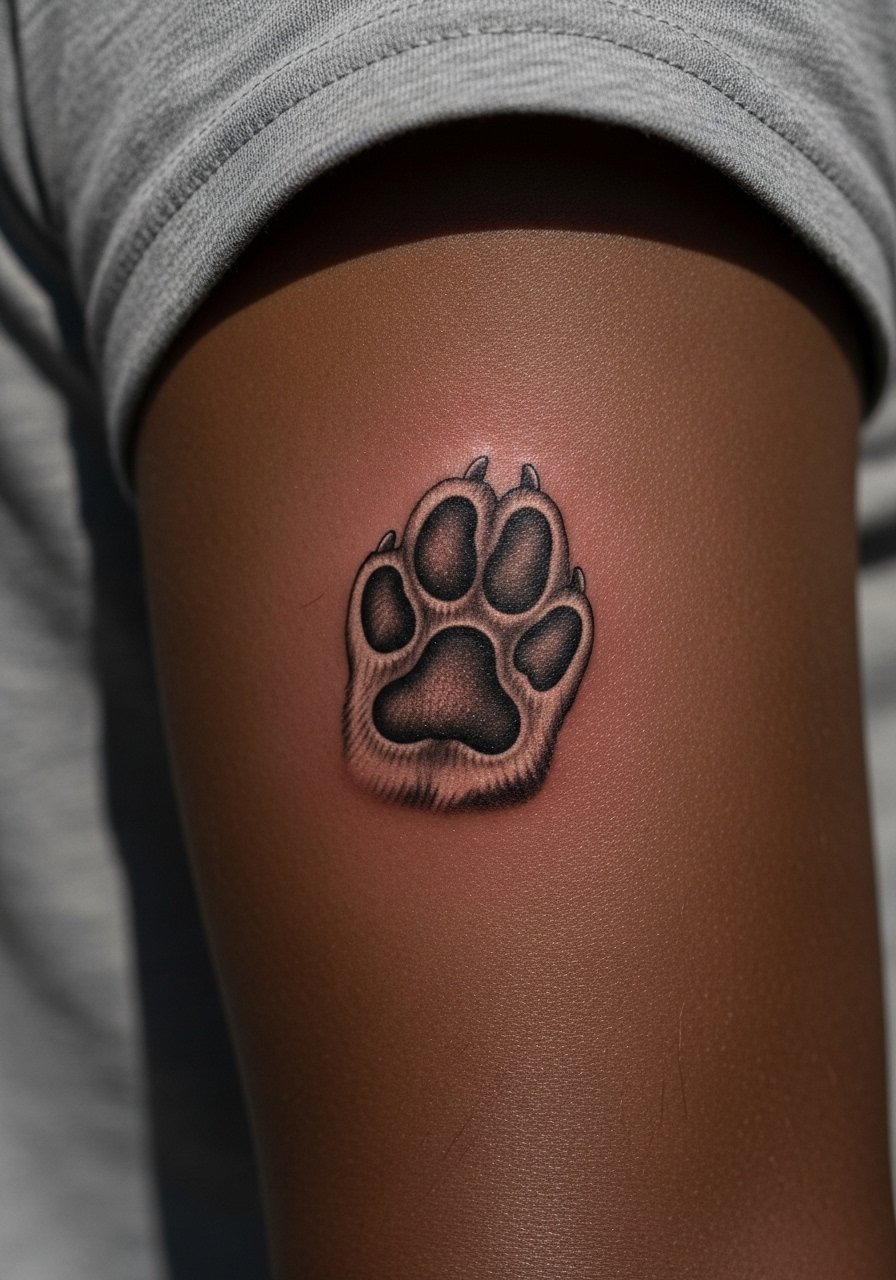
A compact realistic capsule works for people who want a single, focused memorial without a full sleeve. Upper outer arm placement ages well and is a common spot for photo-level detail because the skin is stable. Ask for photo references and request the artist plan highlights that read on darker tones. The common error is asking for too much micro detail in a size that cannot carry it over time. When you want subtle daily display, pair the piece with high-waisted shorts or a simple tee.
Frequently Asked Questions
Q: Will fine line dog paw pad tattoos on the wrist blur faster than on the forearm?
A: In my experience fine line on wrists ages faster because of constant movement and wash cycles. Forearms and outer arms hold linework longer. If you want a wrist piece, ask for slightly heavier line weight and schedule a touch-up at 12 to 24 months.
Q: Should I pick watercolor or dotwork for color longevity on a shoulder paw pad?
A: Dotwork tends to hold up better than soft watercolor because the pigment is applied in concentrated points rather than feathered washes. If you love the watercolor look ask your artist for a hybrid where the pad has defined edges and the color splash is secondary.
Q: How do I turn my dog’s actual stamped paw into a tattoo without losing detail?
A: Bring a crisp stamp on white paper and request the artist redraw it into a clean stencil that preserves pad spacing. Blurred prints become blurred tattoos. If the print is faint, the artist can trace and refine lines for better longevity.
Q: I heard people argue about Saniderm versus dry healing. Which camp should I choose for a fresh paw pad?
A: Artists split here. One camp prefers Saniderm for less scabbing and easier life during the first week. The other camp argues dry healing gives better final saturation. My suggestion is to ask your artist what they use normally and follow their protocol so the technique and materials align.
Q: Will an ankle paw pad survive friction from shoes and socks?
A: Ankles heal fine but friction matters. Place the pad slightly higher on the ankle to avoid constant rubbing and give the first two weeks to heal with open shoes. For showing it off later, cuffed jeans or a cuffed ankle jean keep the design visible while protecting it during daily life.
Q: How often should I tip and do tattoo artists expect a percentage?
A: Tipping practices vary. Many in the US lean toward 15 to 25 percent as a service norm but some clients treat it like an art purchase and tip less. If you are unsure ask the shop about their policy or tip what feels fair to you.
Q: Are hand and sternum paw pad tattoos safe for job-sensitive roles?
A: Hand pieces are highly visible and can affect hiring in conservative workplaces. Sternum is private and less likely to be an issue unless you wear revealing tops for interviews. If career impact matters, choose placements that can be easily covered during professional settings.
