
Fine line phoenixes dominate pins and short-form reels right now, and the reality is they ask for more planning than most people expect. Placement, line weight, and a clear palette choice decide whether a delicate hou-ou keeps its shape or softens into a wash. Read through these 27 takes on the Japanese phoenix so you can pick a version that looks beautiful fresh and still reads well after years of sun and movement.
1. Delicate Irezumi Phoenix with Cherry Blossoms on the Forearm
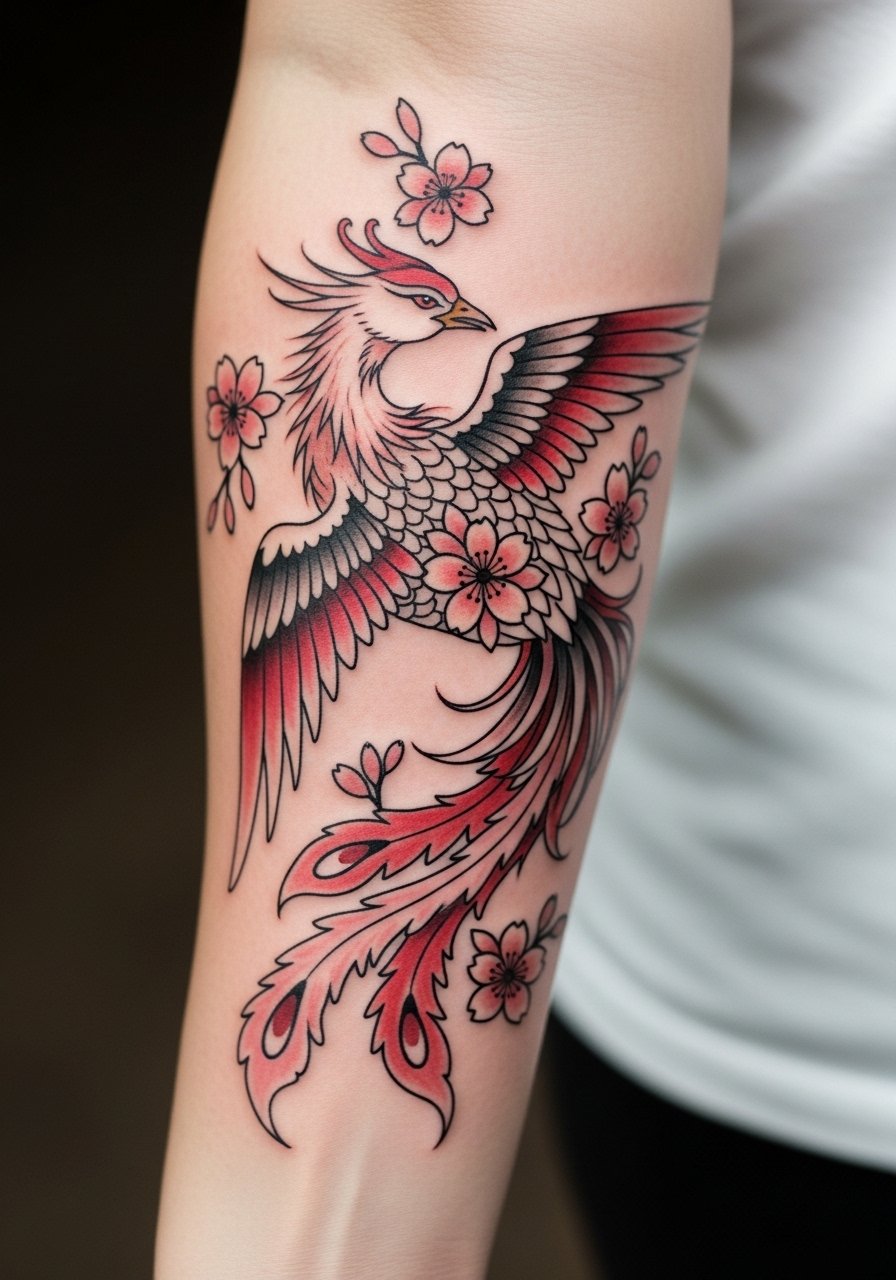
I've seen this forearm pairing hold up when artists respect Irezumi flow. Tell your artist you want slightly heavier outlines around the main feathers and softer stipple shading inside the petals so the flowers do not blur into the flame areas. The biggest mistake is compressing too many small blooms into a narrow 4-6 inch band, which leads to muddiness at year two. For the session wear bring a loose short-sleeve button-up you can roll so the artist has full access. Expect a two-session approach and a touch-up in the first 12–24 months.
2. Fine Line Hou-ou on the Collarbone
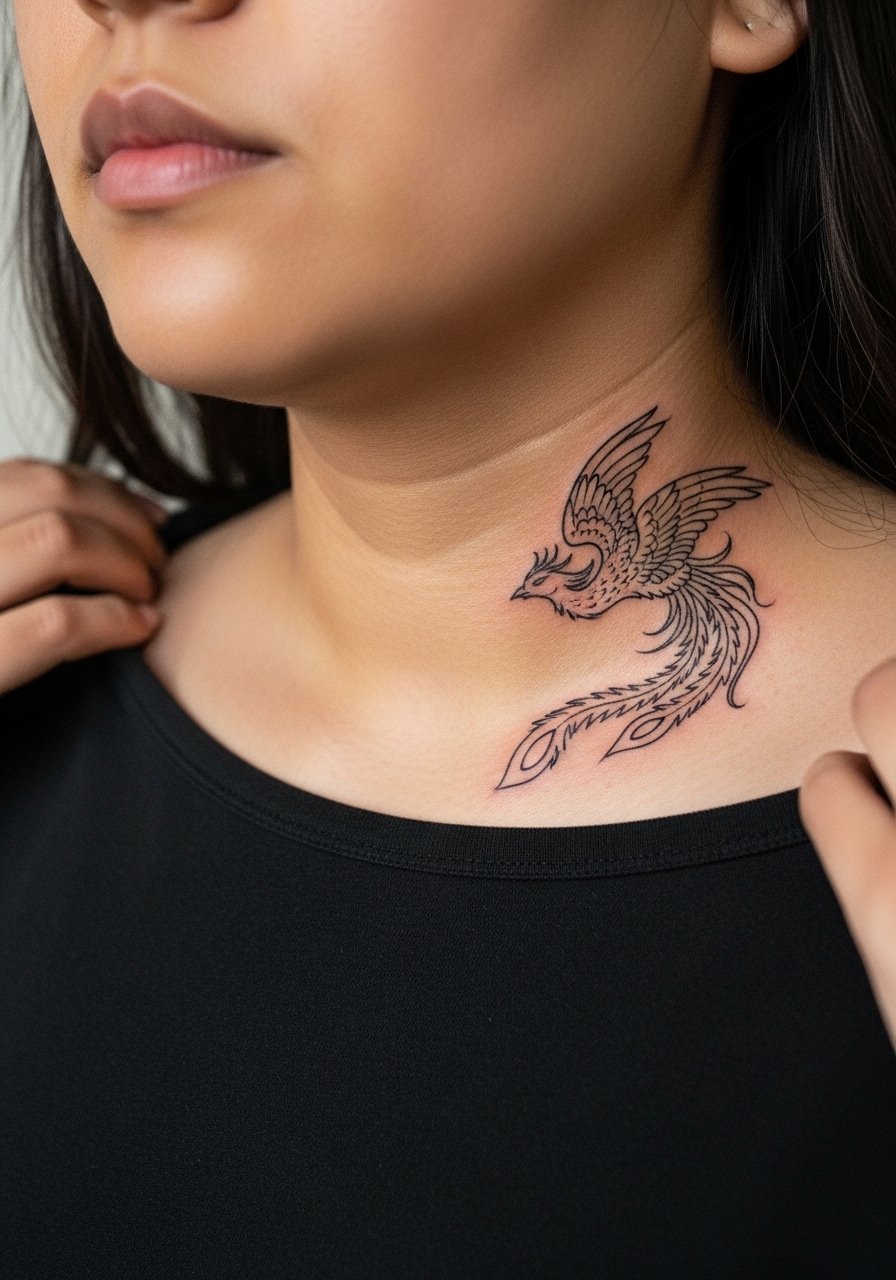
When it comes to collarbone placement, the controversy over fine line vs bold lines shows up loud. One camp says fine line fades faster on moving skin and needs touch-ups sooner. The other camp argues that with proper needle depth and spacing, fine line settles neatly and keeps its personality. During consultation ask your artist which camp they work from and request larger negative space around dense feather details. For showing it off, a strapless crop top or a delicate choker necklace frames the area without covering the lines. Pain is usually a 4 to 6, session time about an hour.
3. Watercolor Phoenix Wings on the Upper Arm
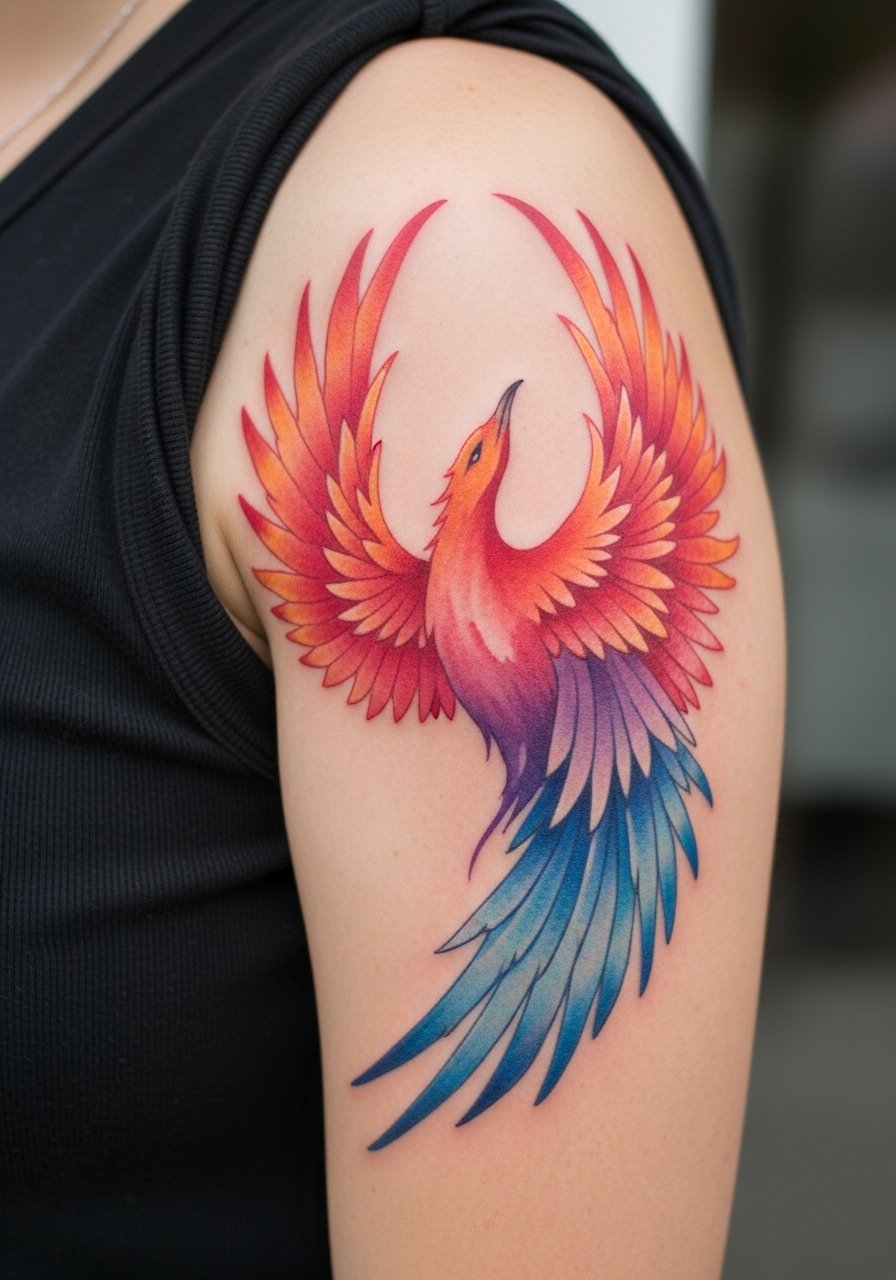
Most watercolor phoenixes look ethereal fresh and can soften quickly if the color sits too shallow. I recommend stronger anchoring linework at wing tips and gradual saturation that fades outward so the piece keeps shape as pigment settles. A common mistake is asking for fully blurred edges with no defined contour, which ages into a bruise-like cast on high-motion areas. For session comfort and post-session visibility try an off shoulder linen top that offers access without rubbing the fresh ink. Expect two sessions for a 6–8 inch spread and a touch-up window at year two.
4. Black and Gray Fenghuang on the Thigh
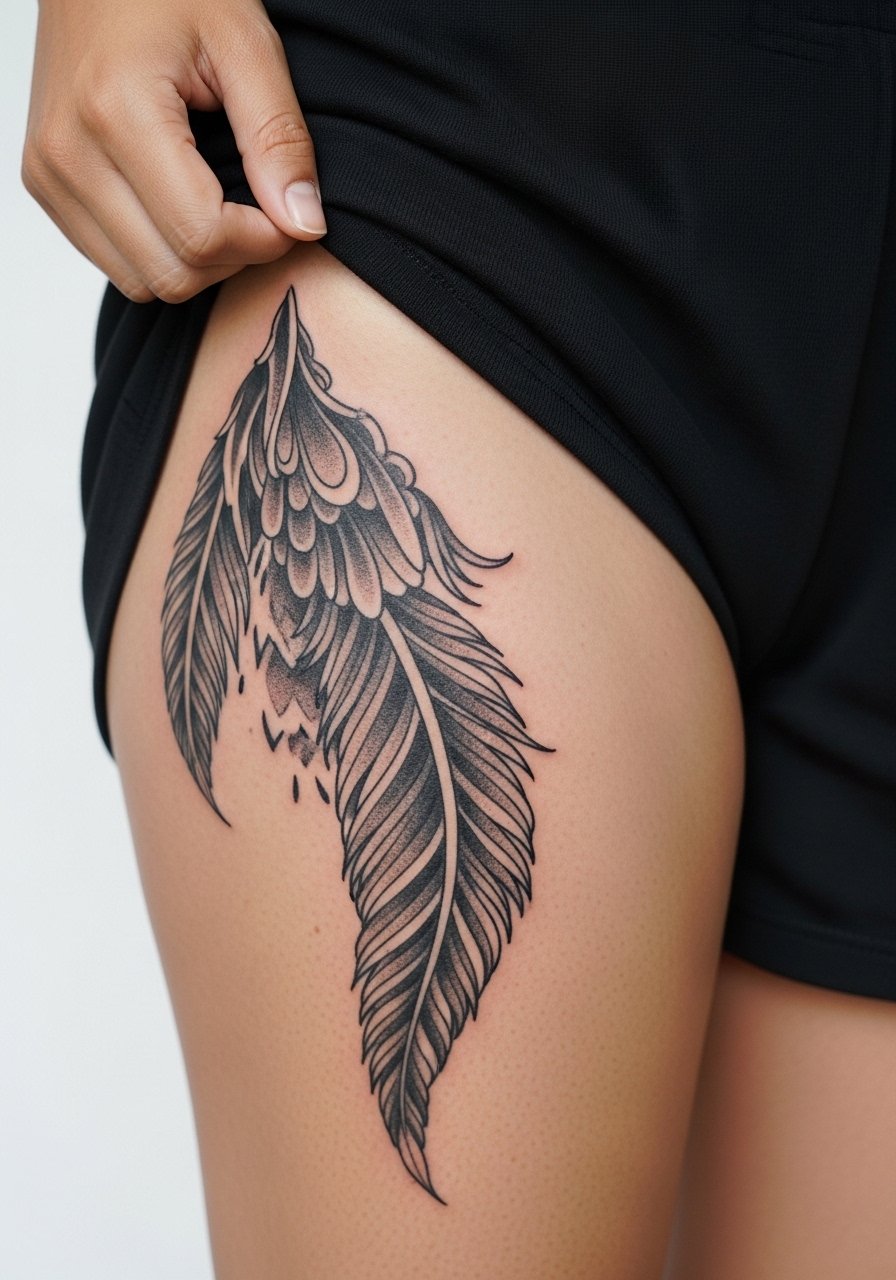
Fair warning, thigh pieces sit in a friction zone with clothes and movement. The advantage of black and gray here is that shading masks natural softening over time better than fragile color work. Tell your artist to build depth with stipple and whip shading rather than tiny parallel lines that can blur. For showing-off editorial looks, a high-slit skirt or a thigh garter can frame the feathers without rubbing the fresh surface. Sessions are usually three hours for medium-detail placements and expect a touch-up after weight or shape changes.
5. Pastel Flame Hou-ou with Lotus at the Ankle
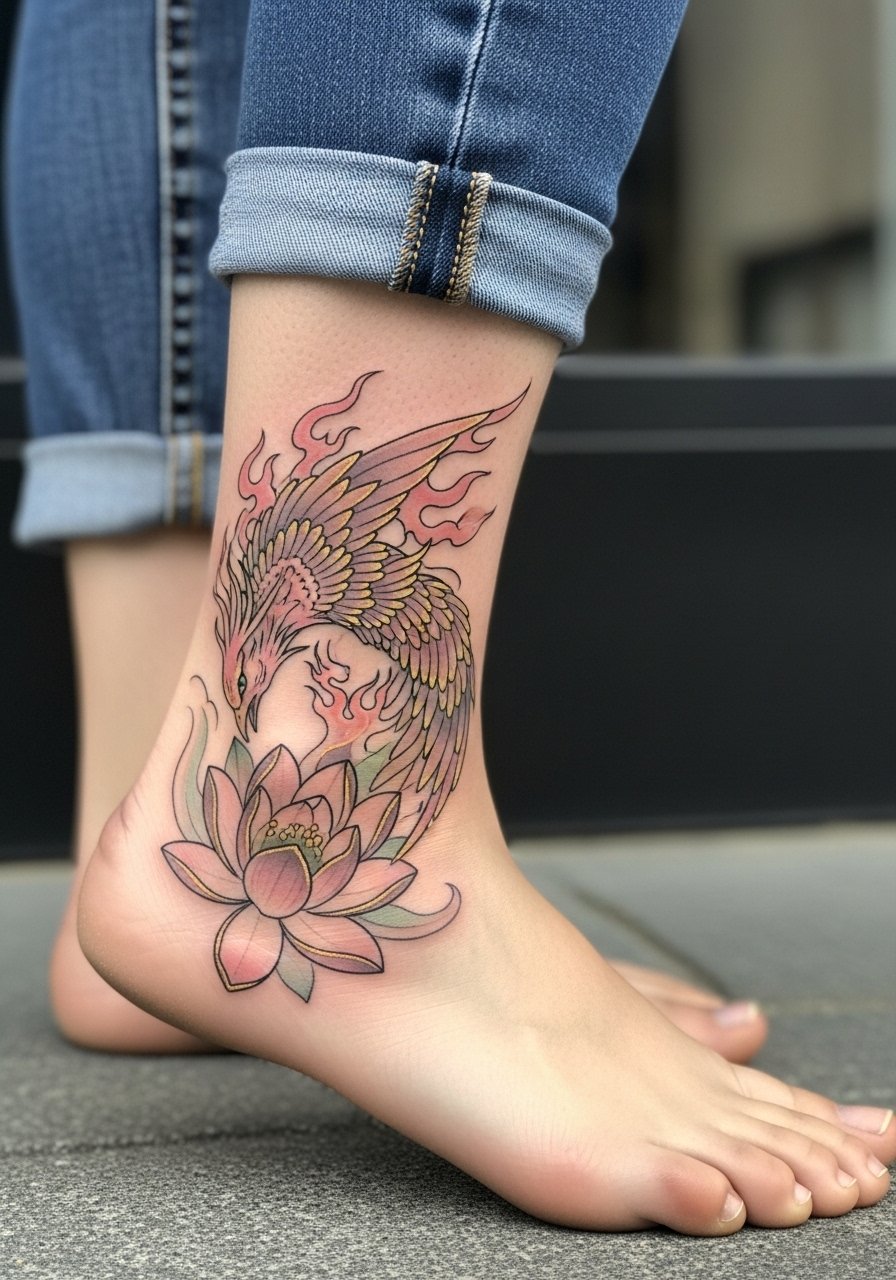
Ankle tattoos face daily abrasion from socks and shoes, so pastel palettes need careful placement to avoid early fading. Ask your artist to keep color saturation slightly stronger and to place larger haloed outlines so small detail survives hand washing and footwear. For showing it off pair the design with ankle strap heels or cropped jeans. Session time is short for a 4 inch piece, but expect more frequent touch-ups than arm work because of the friction.
6. Ornamental Phoenix Tail Wrap Sleeve
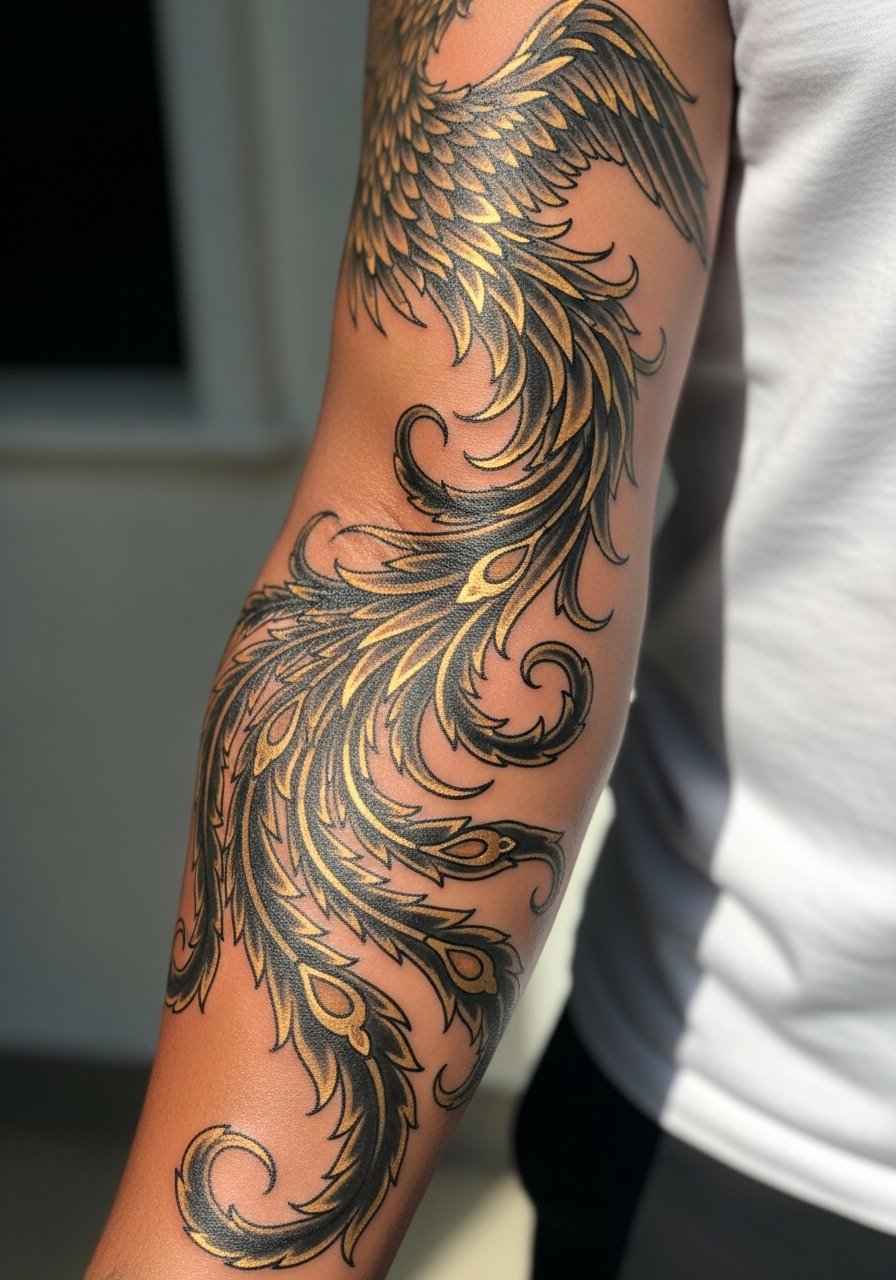
There is a body-following logic to ornamental tail wraps that can make a full sleeve feel cohesive. The common error is forcing a symmetrical wrap instead of letting the tail trace natural muscle lines. During the consult ask the artist to map the flow along your arm while you stand and move so the design breathes with motion. Large-scale Irezumi-influenced sleeves typically require multiple sessions over months and a maintenance plan if you gain or lose significant mass. For booking, search local portfolios via hashtags like #IrezumiPhoenix or directory listings to find the right specialist.
Studio Day Picks
The forearm, ankle, and collarbone pieces above each have different session needs, so these five items help with access, comfort, and early healing without fuss.
- Stencil transfer paper tattoo kit. Lets you test placement and line scale on the skin before the needle touches, handy for collarbone and forearm comps.
- Topical numbing cream. Apply 30–45 minutes pre-session for sensitive zones like the ankle and inner arm to make the chair time manageable.
- Thin protective film roll. Perfect for small, friction-prone zones so sock and shoe contact does not rub healing ink.
- Fragrance free gentle body wash. Use during the first week to cleanse without stripping delicate pigments in pastel or watercolor work.
- Aquaphor healing ointment. Thin layers help lock moisture early on fine line and pastel pieces without suffocating the pores.
7. Micro-Realism Phoenix Head Behind the Ear
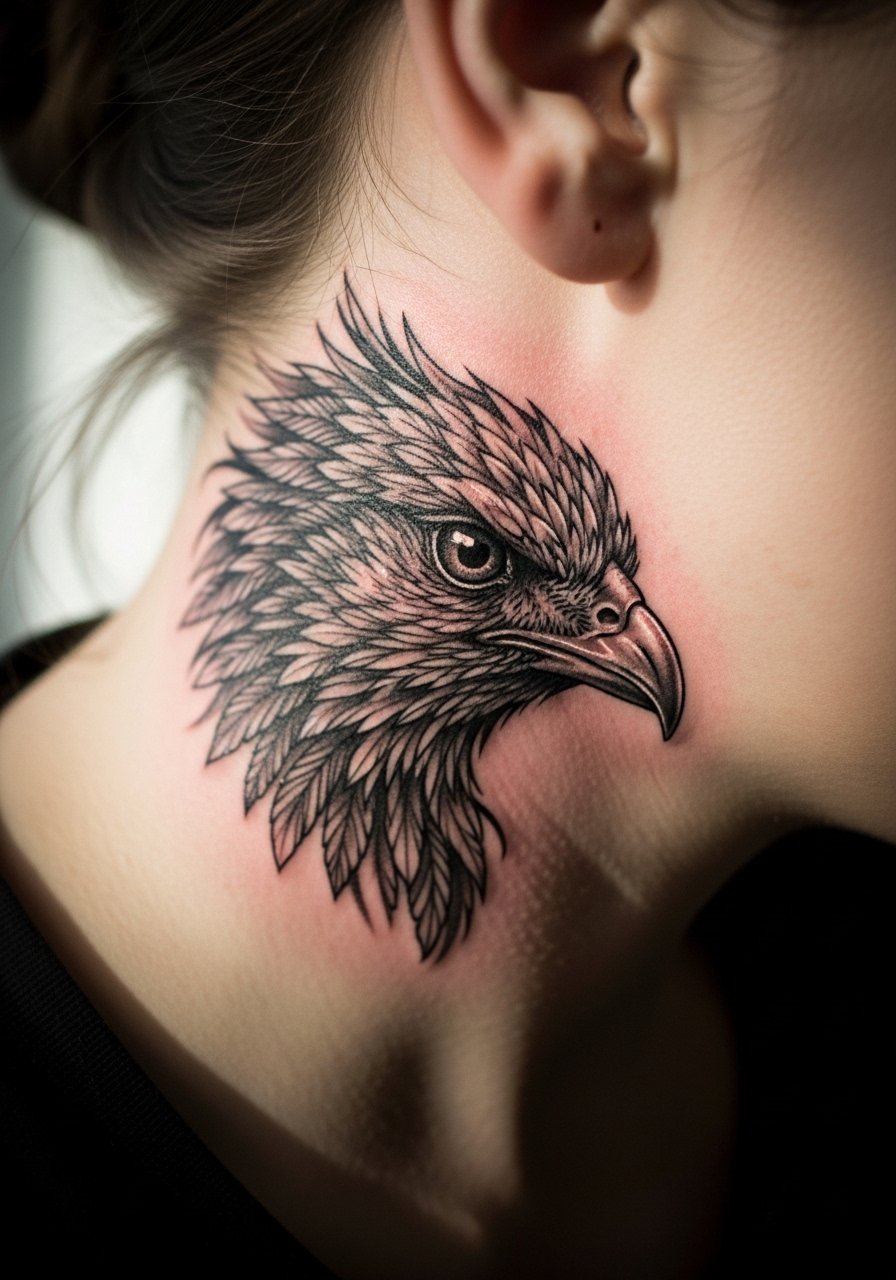
Personal observation: tiny micro-realism looks surprisingly striking behind the ear when the artist uses clean single-needle linework. Because the spot is discreet, tell your artist you want simplified feather details to avoid tiny dots that blur. The session is short but sensitive, and you should expect a higher chance of touch-up because the skin there is thin. For session wear, let hair fall naturally or loosely tie it so the artist can access the area. Hand this artist a clear photo of the exact line weight you want.
8. Floral Fusion Phoenix Ascending on the Shoulder Blade
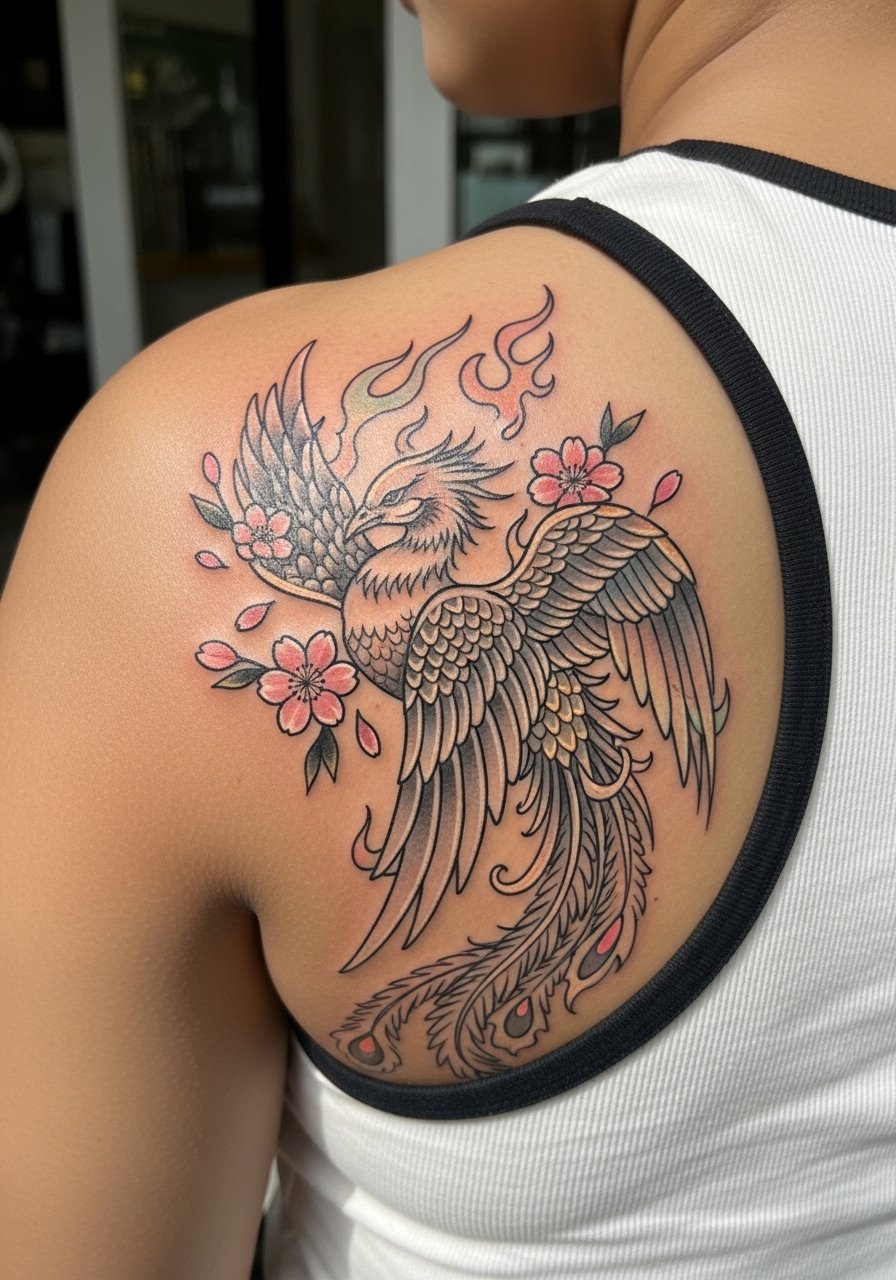
I've seen floral fusion soften aggressive fire motifs into something more wearable for everyday looks. Ask for larger petal masses and pastel gradients so the combined elements do not fight for contrast. A common mistake is packing too many small blooms into the shoulder blade where motion can blur detail. For showing it off, an off-shoulder linen top or layered pendants keeps attention on the composition. Shoulder blade sessions are usually two medium-length sittings and age predictably well with sunscreen.
9. Ignorant Style Simplified Hou-ou on the Outer Forearm
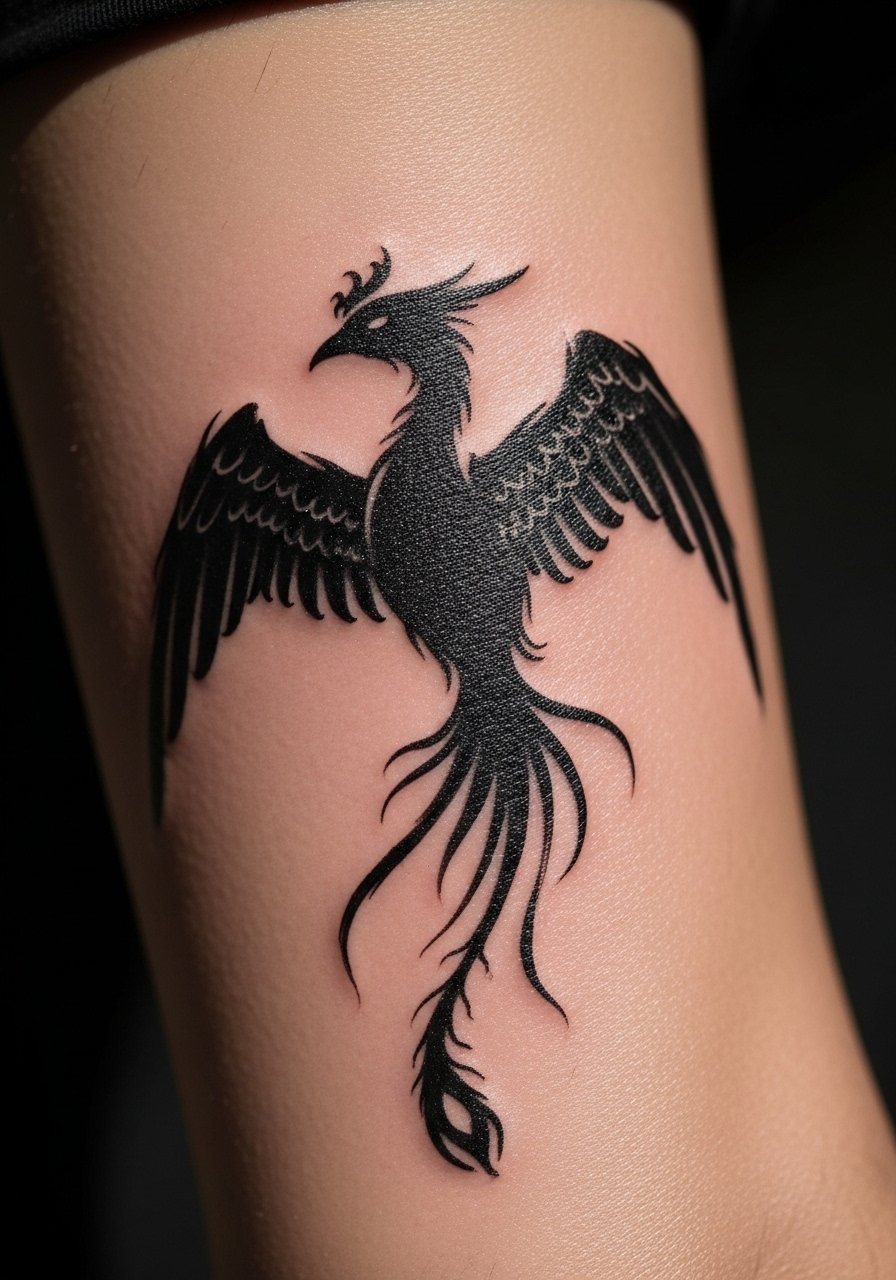
The ignorant style is about raw mark-making rather than polish. When people ask for it, the real risk is requesting tiny, delicate strokes that contradict the rough aesthetic. Say you want bold, imperfect strokes and a few intentional gaps so the piece reads like a modern woodblock. For session wear bring a loose short-sleeve button-up that lets the artist work without fabric pressure. This approach often needs just one or two sessions and ages into a graphic statement.
10. Gold-Toned Phoenix with Open Wings on the Upper Back
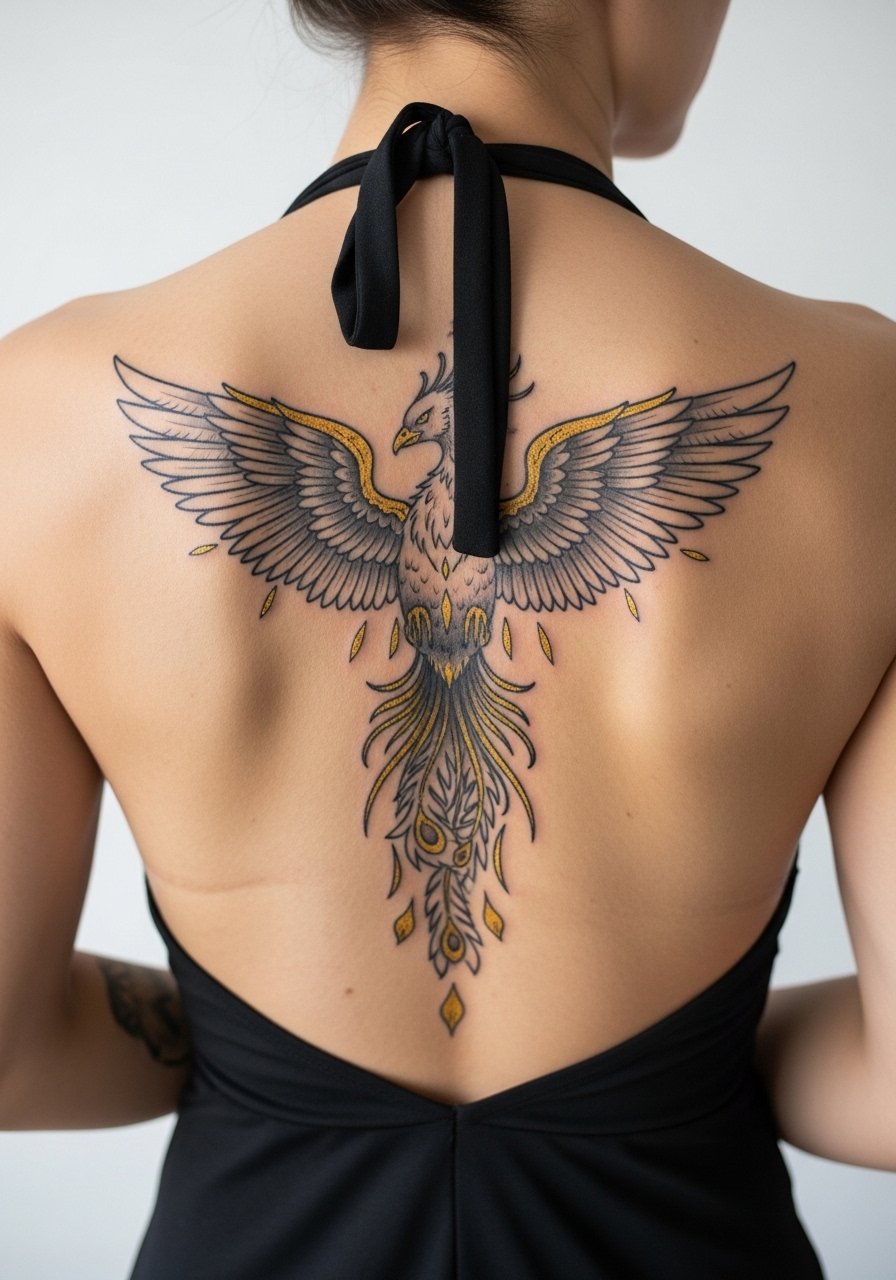
There's a trade-off with metallic or gold-toned inks. One camp prefers them for luminous ceremony-style pieces, while another cautions that metallics can fade in a unique way under UV exposure. Ask the artist what pigment brands they trust and request that metallics be used as highlights rather than full fills so the composition still reads if those tones soften. For evening wear, a low-back halter dress shows the wings without rubbing. Expect this size to take multiple sessions with a follow-up touch-up year one.
11. Negative Space Ascending Phoenix on the Ribcage
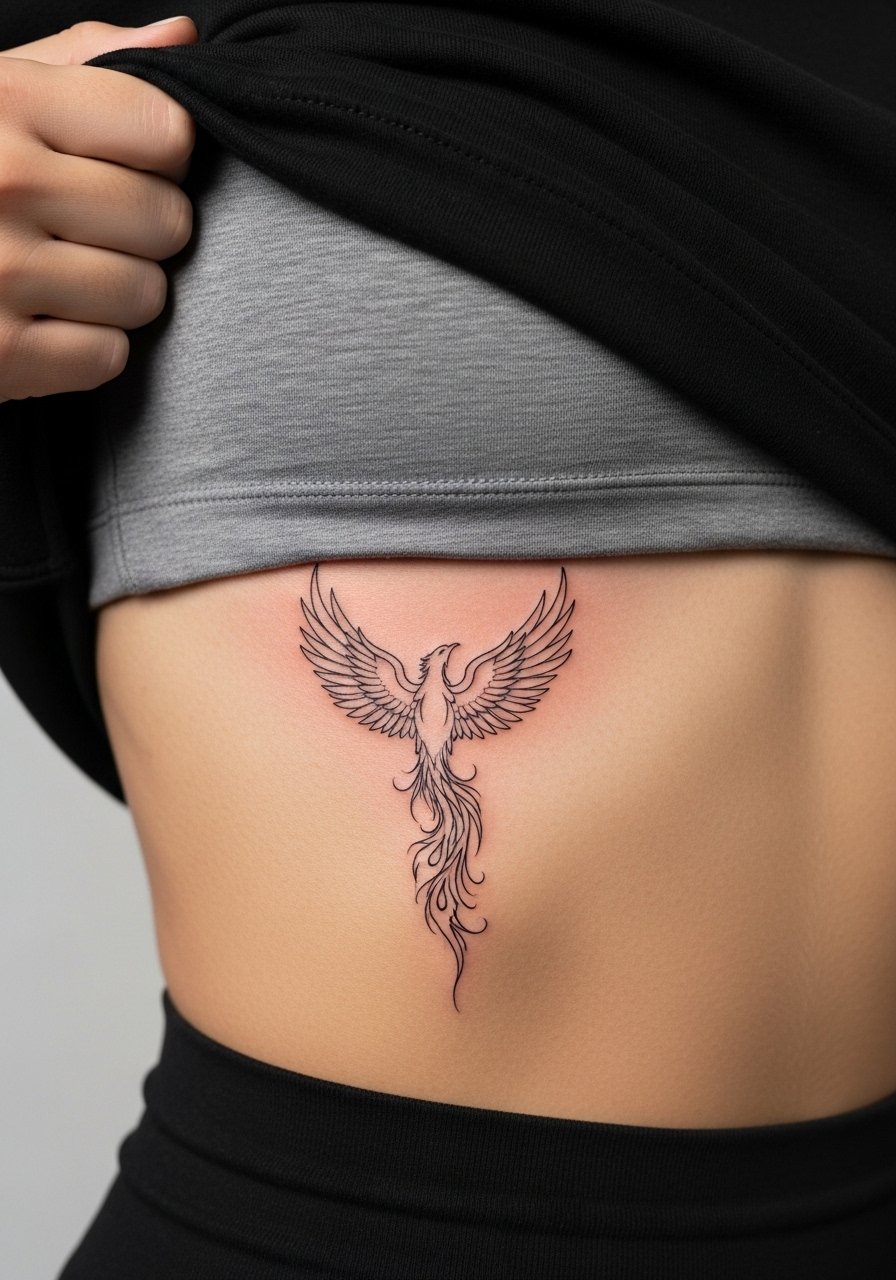
Fair warning: ribs are a high-pain zone and a challenging canvas for fine detail. Artists split on whether fine line holds on the ribs. One camp says skin stretch and motion cause lines to merge within a couple of years. The other camp insists that correct depth and larger spacing keep fine line readable for longer. If you want negative space work, ask the artist to test spacing with a temporary stencil and to plan for a touch-up. For the session wear a sports bra or wide-neck top you can adjust without full exposure.
12. Cool Fire Lavender-Blue Phoenix on the Calf
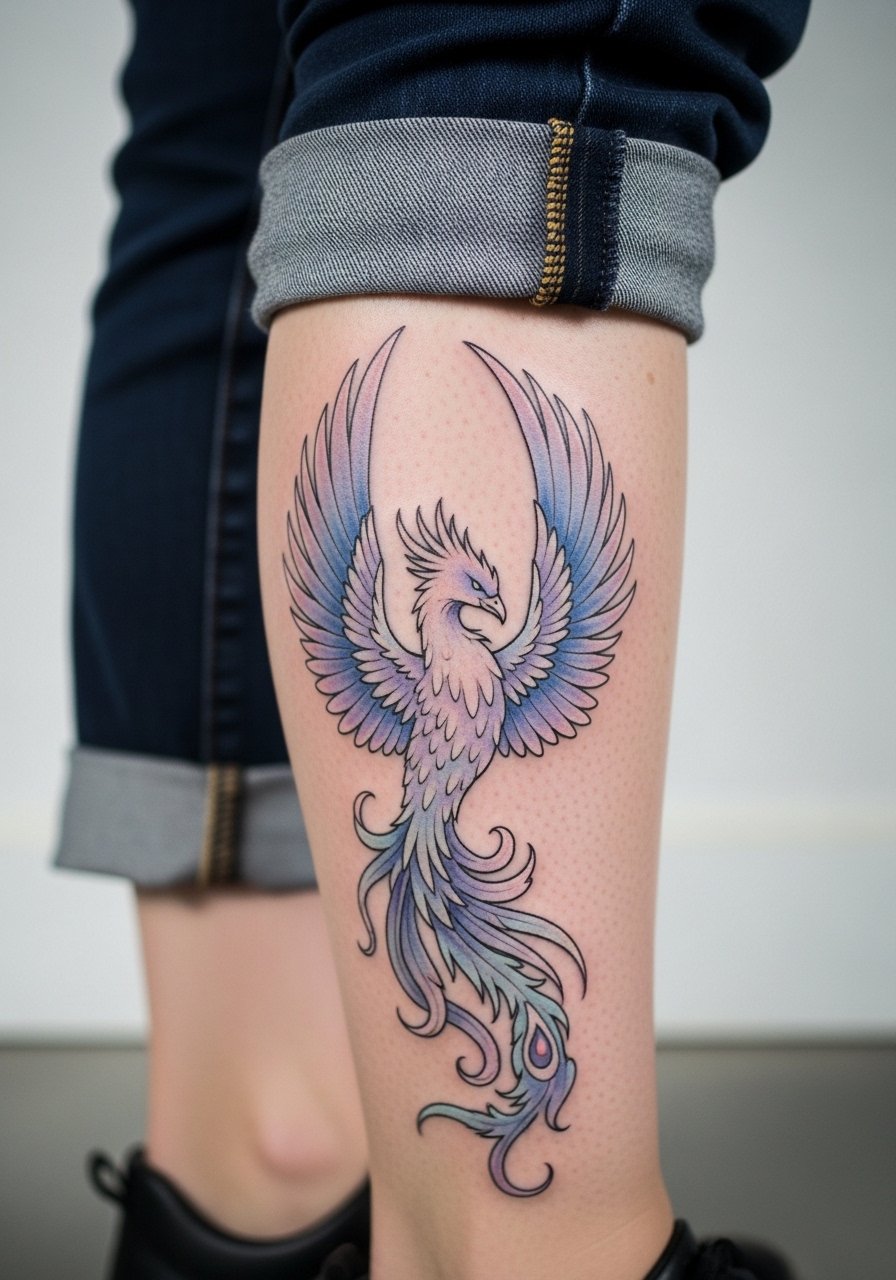
This cool-palette concept feels modern and spiritual, and it answers a gap most galleries do not show. The trick is to ask for crisp feather edges and slightly denser pigment in the base so the blues and lavenders do not fade into an indistinct haze. Calf placements tolerate color well but still face motion. Wear loose drawstring shorts for the session so the artist can roll up the pant leg without pressure. Expect one to two sessions and a touch-up at year two if you prefer vivid tone retention.
13. Minimalist Line Phoenix on the Inner Wrist
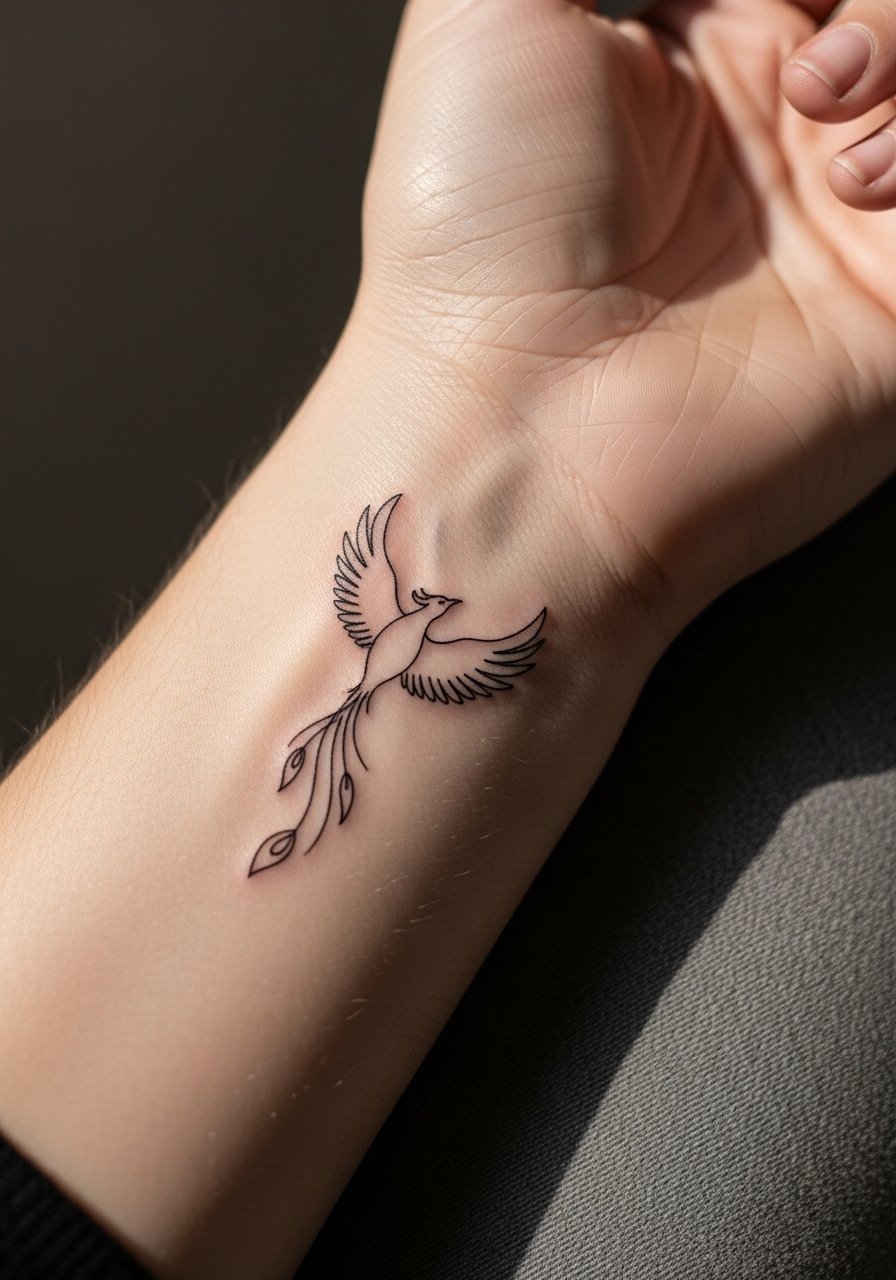
The wrist is unforgiving for micro detail. Most fine line wrist pieces need slightly thicker single-line weights than people ask for if they want them to remain crisp after daily washing. A common mistake is tiny feather dots that disappear into skin texture within 18 months. For accessorizing pair this design with a thin matte gold cuff bracelet on the opposite wrist to balance attention. Expect a one-hour session and touch-ups sooner than forearm placements.
14. Stipple-Shaded Phoenix Thigh Motif
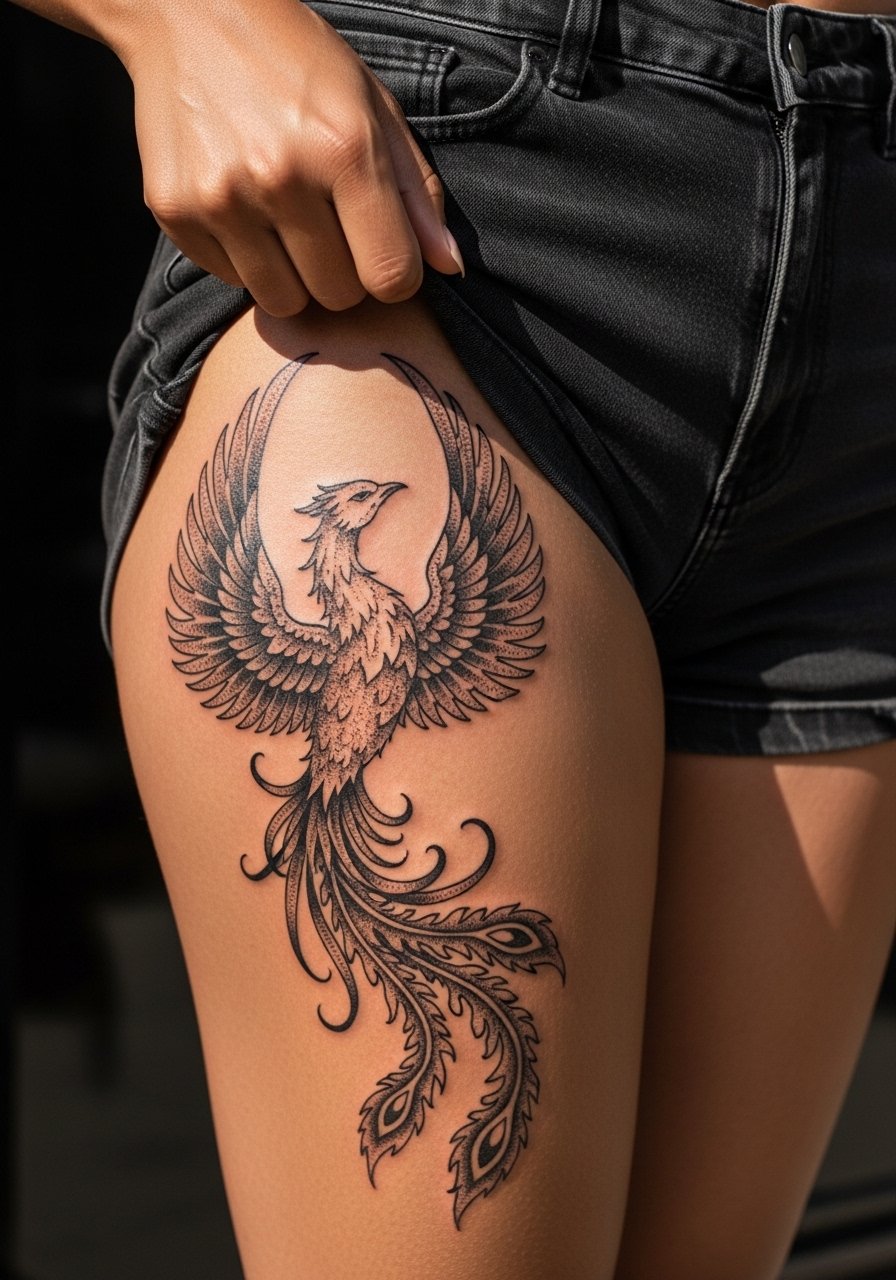
Stipple shading gives depth without heavy lines, which is excellent for thigh art because it tolerates some softening and still reads. Tell your artist to vary dot density for feather contour rather than relying on thin parallel lines. The session may feel long because the dot work takes time, but the healed result is a textured piece that masks subtle blowout. Wear drawstring shorts for the appointment to ease access and comfort.
15. Small Phoenix with Tree of Life at the Sternum
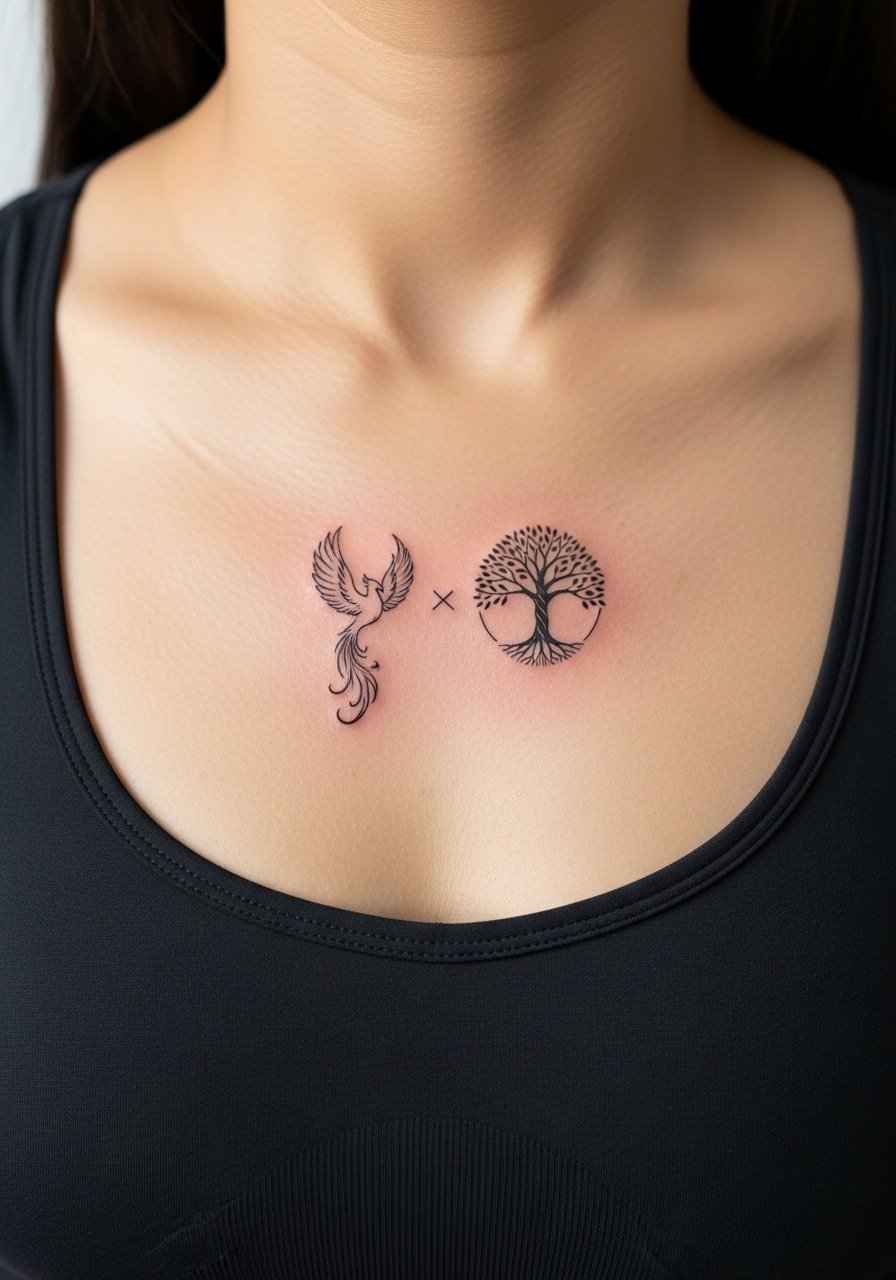
Sternum work reads differently than collarbone pieces because the skin sits between ribs and chest motion. Keep this design small and centered so the tree and phoenix have breathing room. A common mistake is over-detailing the tree trunk in a tiny area, which becomes illegible. For the session wear a fitted sports bra so the artist can access the area without full exposure. Pain is higher, and a single detailed session may take several hours.
16. Tail-Wrap Mid-Thigh Ornamental Band
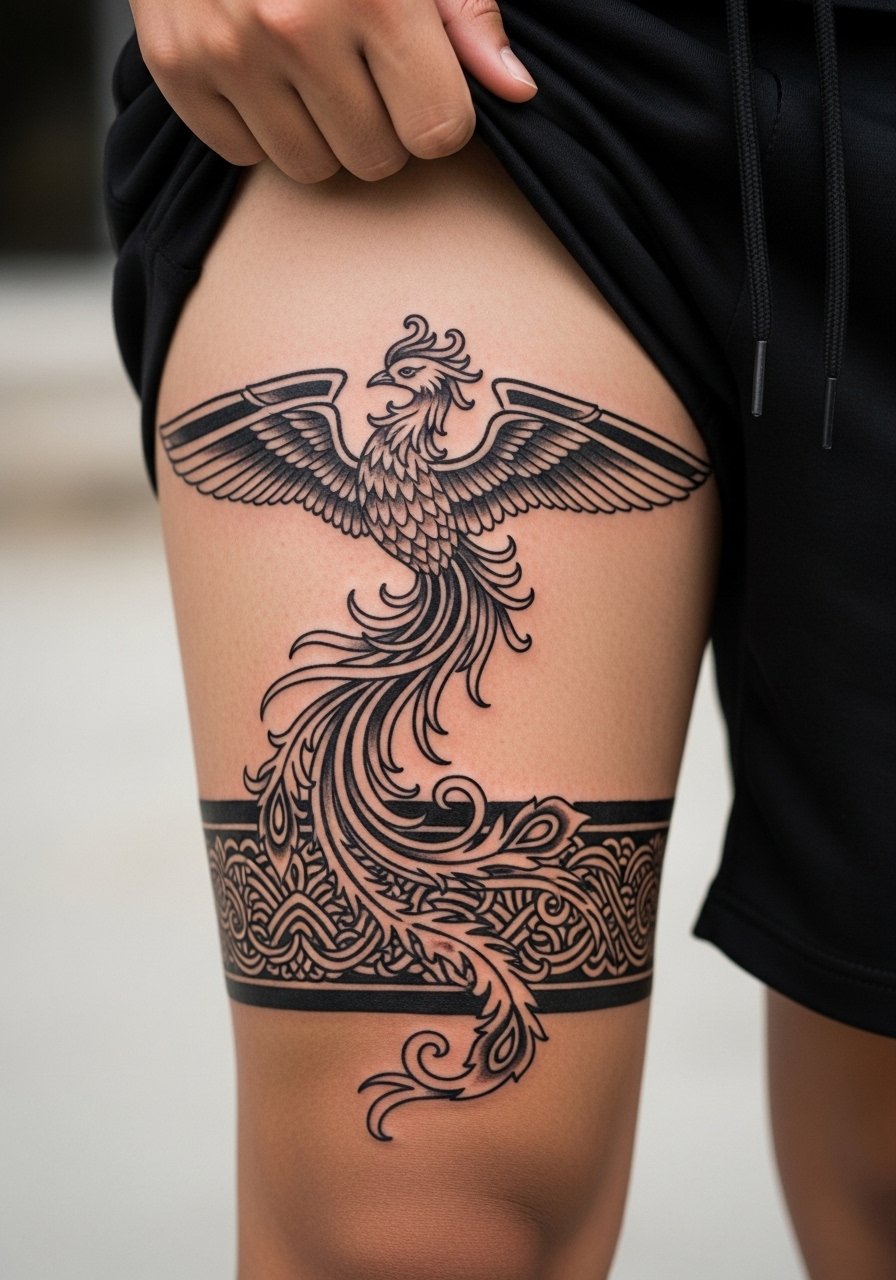
Ornamental bands work well on the thigh if the wrap follows natural muscle curves rather than forcing symmetry. Ask for open negative space on the inward curve so the band does not read too dense. The session is comfortable when seated and usually done in one to two sittings. Because thigh bands face friction from garments, avoid raw edges and consider slightly higher placement to reduce shoe and pant rubbing. A high-slit skirt pairs well for show-off moments.
17. Micro-Realism Phoenix Eye on the Finger
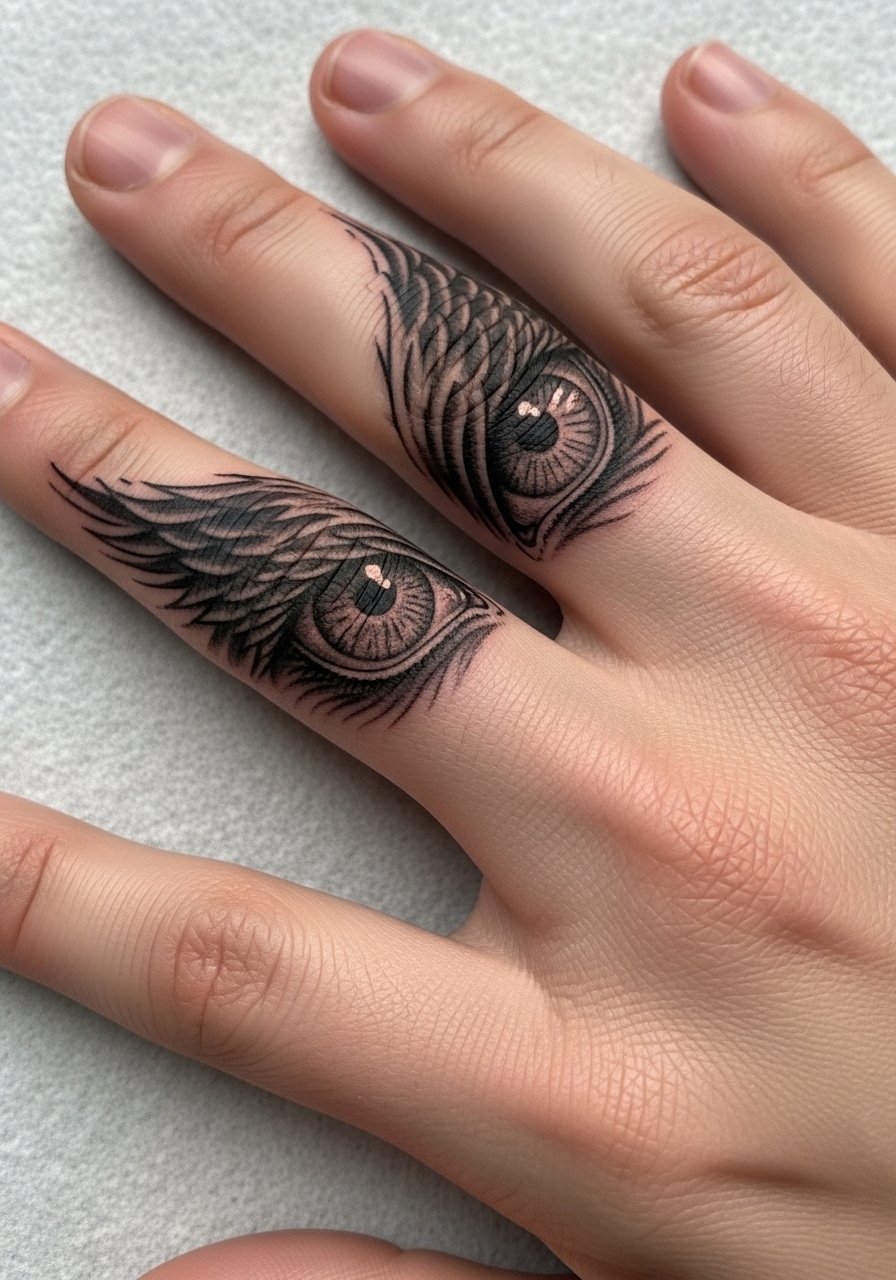
Finger tattoos are high-maintenance. Micro-realism in this zone often needs touch-ups at year one because skin turnover and frequent washing wear pigment faster. For a durable result ask for slightly bolder contrast and expect the pigment to look softer after healing. The session is short but fiddly. Consider placement on the side of the finger rather than the pad to extend lifespan. Keep expectations realistic and budget time for touch-ups.
18. Pastel Floral Anklet Phoenix
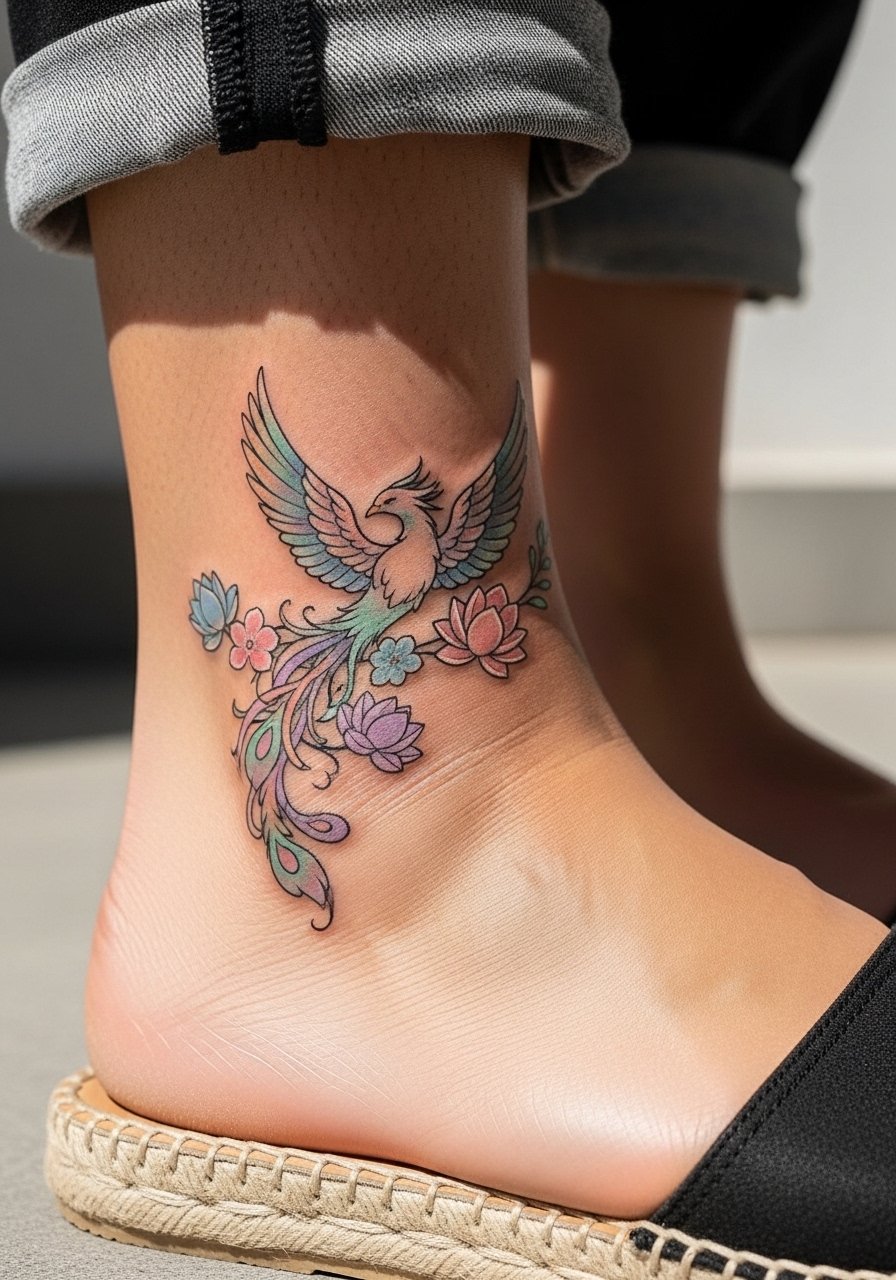
An ankle anklet reads like jewelry when done with the right scale. For pastel hues, ask for slightly higher saturation that the artist will soften toward the edges so the overall band keeps shape. Shoes and socks create friction, so protective film in the first week helps. For footwear that frames the area, try espadrille sandals or cropped jeans. Expect a brief session but potentially more frequent color refreshes than upper-arm work.
19. Geometric Feather Phoenix on the Upper Arm
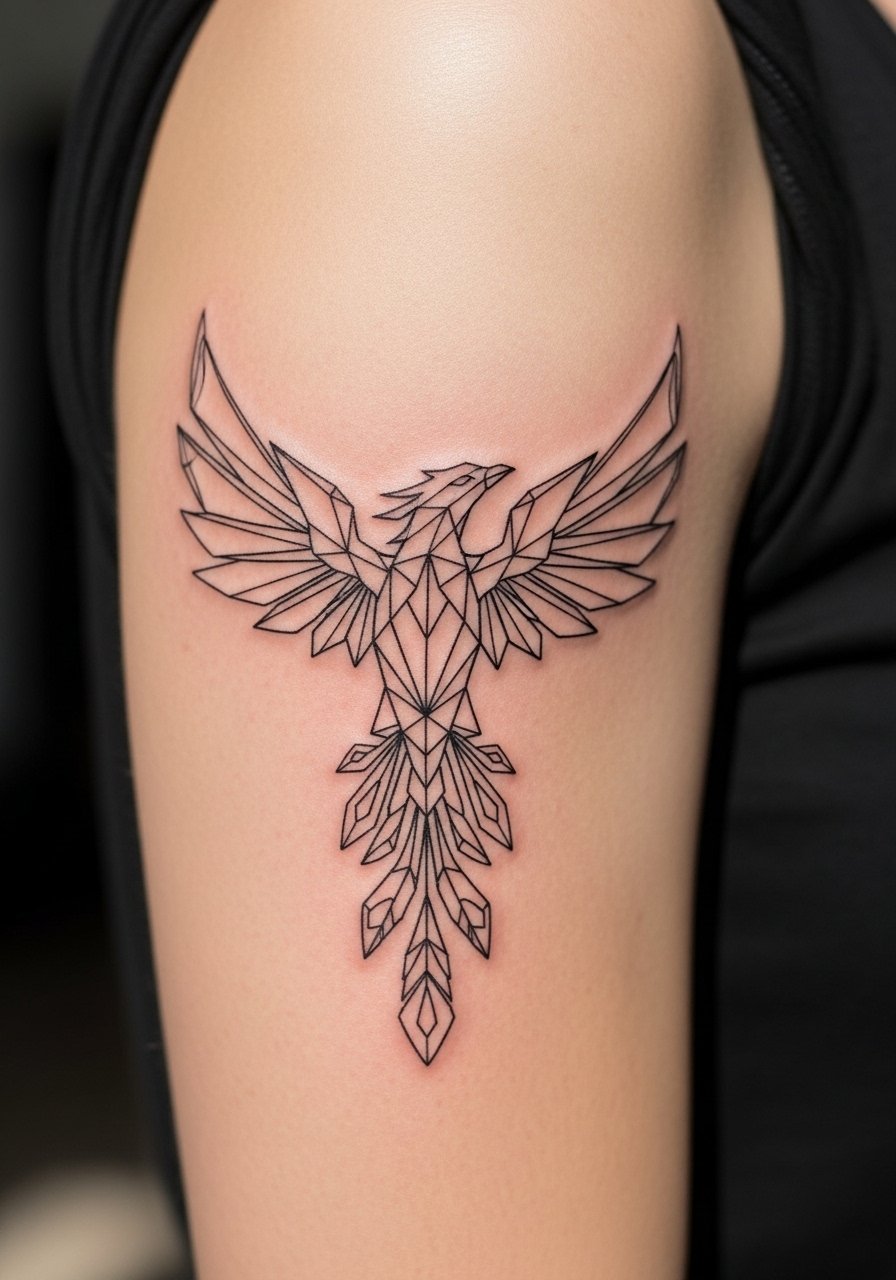
There is a visual punch when geometric elements meet feather textures. The main consultation point is scale. Too-small geometry collapses into a gray mass over time. Ask your artist to keep critical shapes open and to vary line weight for readability. Upper arm placements tolerate denser work better than wrists. For session comfort wear an off-shoulder linen top you can move aside easily. Expect one or two sessions depending on size.
20. Simplified Blackwork Phoenix on the Lower Back
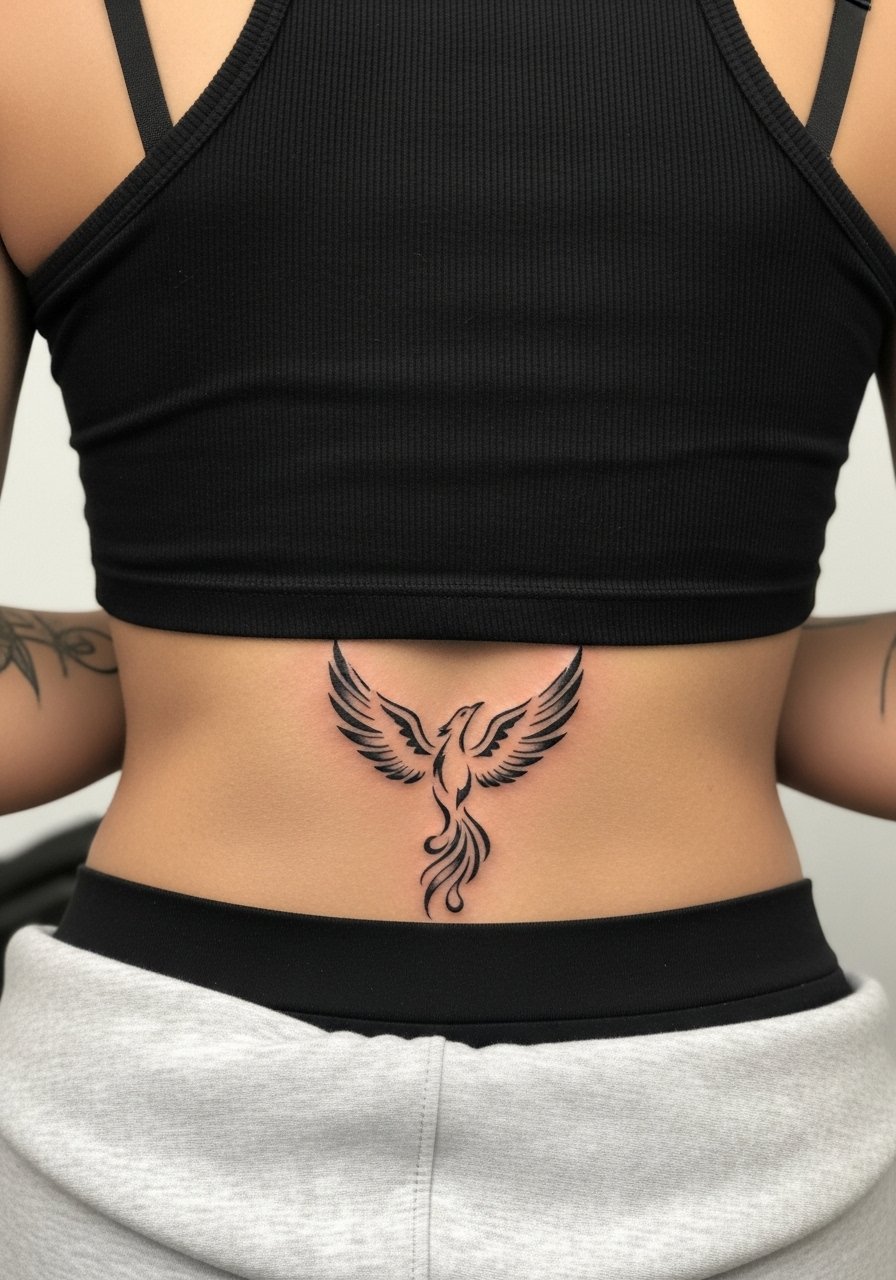
Lower back work is forgiving for bold blackwork because contrast survives sun and friction. The frequent mistake is tiny internal detail that the area cannot support over years. If you plan to show this off with low-rise styles pick a composition that carries across the small of the back rather than a tight central motif. The session is usually longer but tolerable. For showing it off, a low-back halter dress frames the design without rubbing.
21. Ash Elements Phoenix with Broken Mirror Accent on the Shoulder
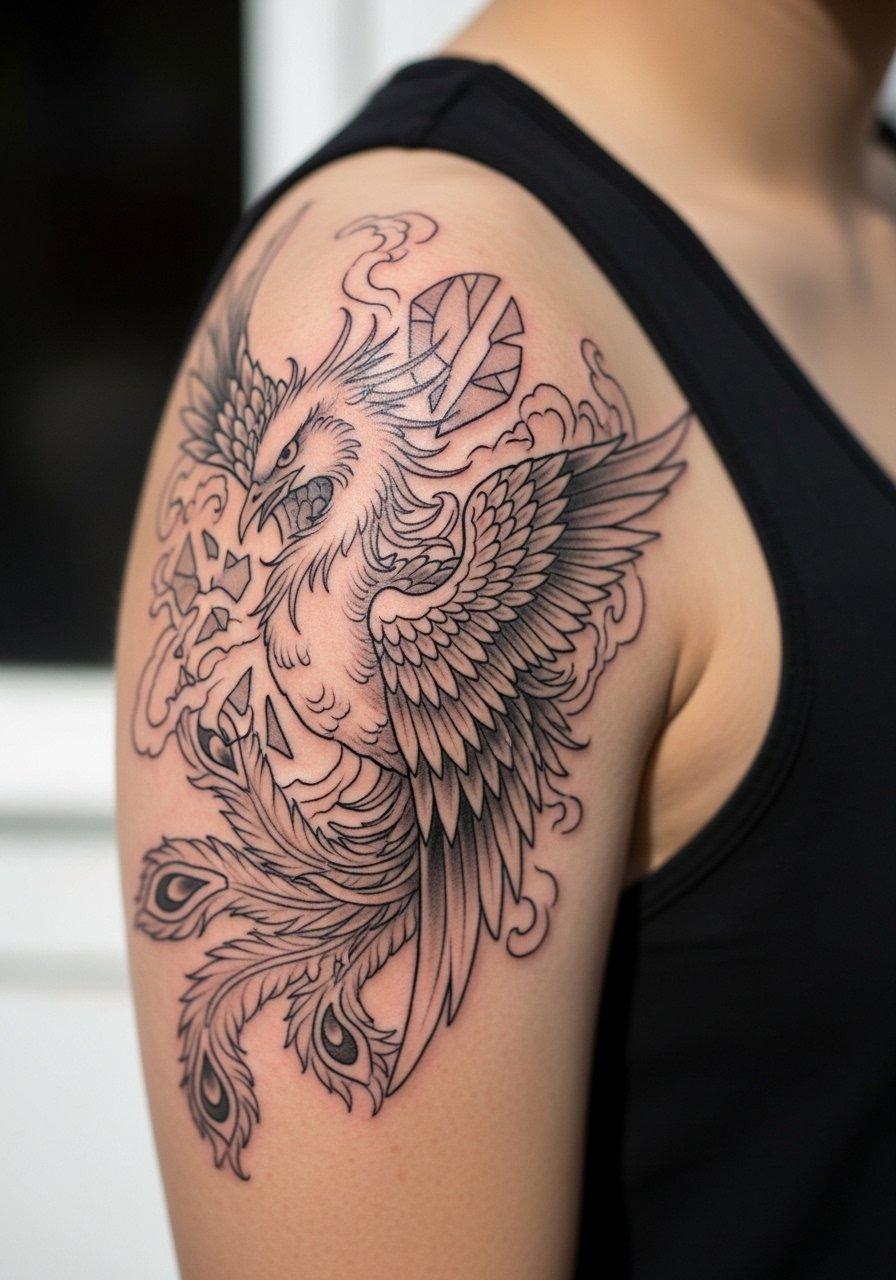
Using ash or broken mirror motifs introduces personal symbolism that is rare in standard galleries. Be explicit with the artist about size and placement of the mirror fragments so they do not create small, murky spots that age poorly. This design pairs naturally with soft pastels or muted gray shading depending on your palette choice. Sessions are medium-length and discussion in the consult about the intended symbolism will guide composition choices and placement.
22. Cool-Palette Phoenix with Halo on the Upper Chest
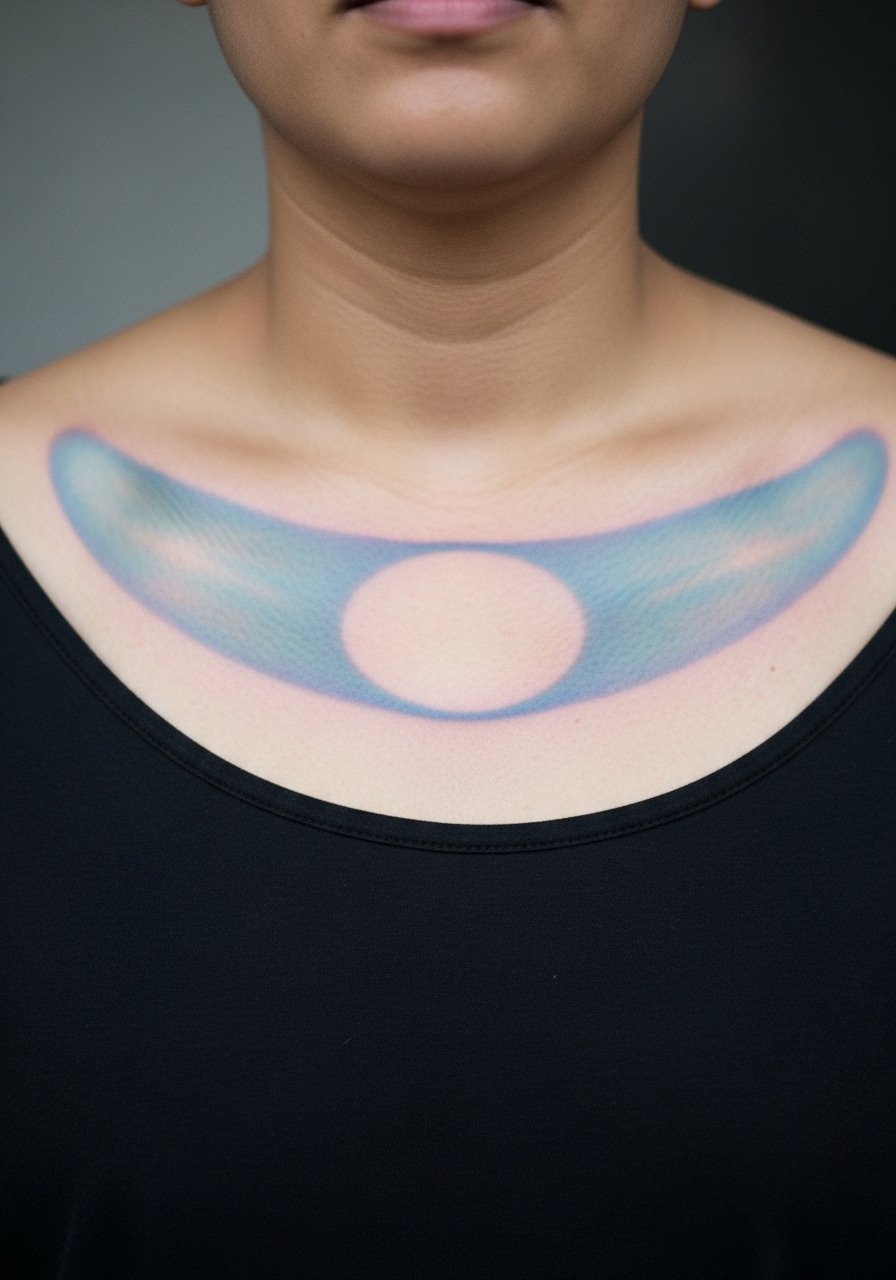
Chest placements need special planning for symmetry and breathing room. Cool palettes can look fresh longer when artists place slightly denser pigment at the line edges. If you want the halo effect, request that the artist anchor the halo with subtle stipple shading rather than a full color wash to avoid early fading. For session wear a wide-neck shirt pulled aside so access is simple. Expect higher pain and longer sittings.
23. Phoenix and Koi Fusion on a Full Back Panel
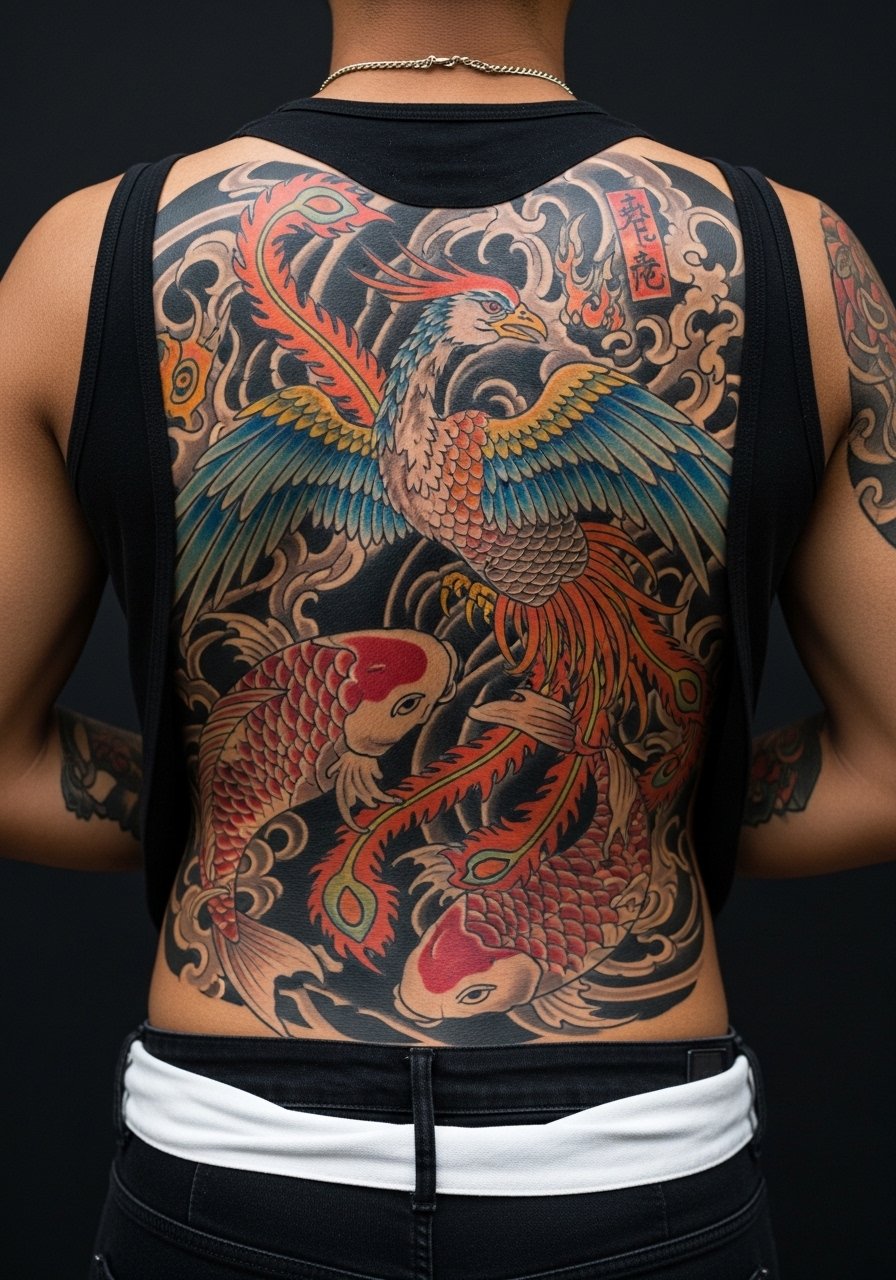
Full back panels are storytelling canvases, and the fusion of koi and phoenix offers a narrative arc from water to flame. The main pitfall is overcrowding details early on. Plan the layout in an initial mapping session so each element has its own negative space. Expect multiple long sessions and a maintenance plan if you plan to expand into sleeves. Use discovery pathways like directory searches and targeted hashtags to find artists who specialize in large Irezumi pieces.
24. Fine Line Hou-ou on the Side Neck
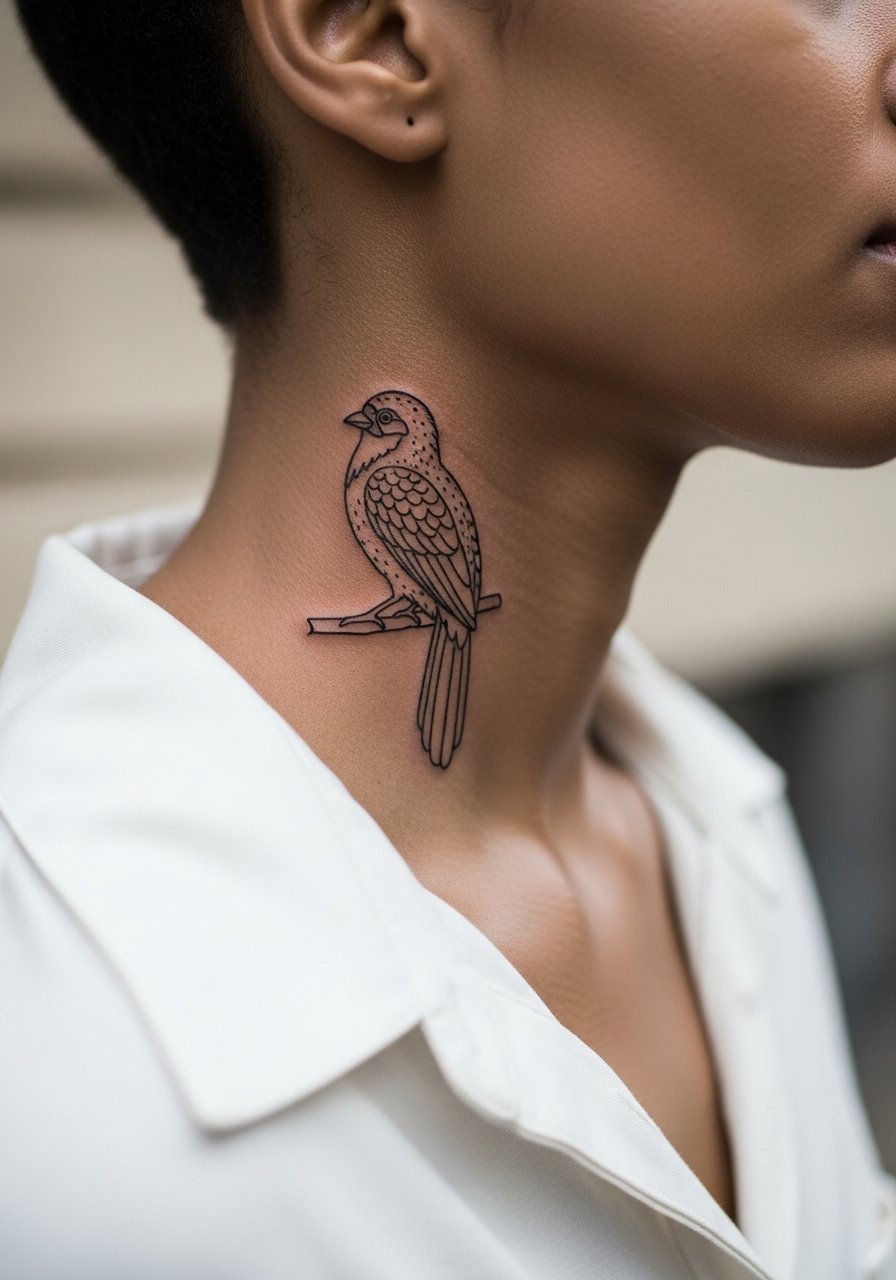
Neck placements read bold even when the work is delicate. If you prefer subtlety, ask for larger spacing between feather quills and slightly stronger anchor lines so aging preserves the silhouette. Consider career implications and placement visibility before committing. For session comfort wear a wide-neck shirt you can shift without exposing other areas. Expect higher touch-up likelihood because neck skin is active and frequently exposed to sun.
25. Single-Feather Minimalist Phoenix on the Inner Bicep
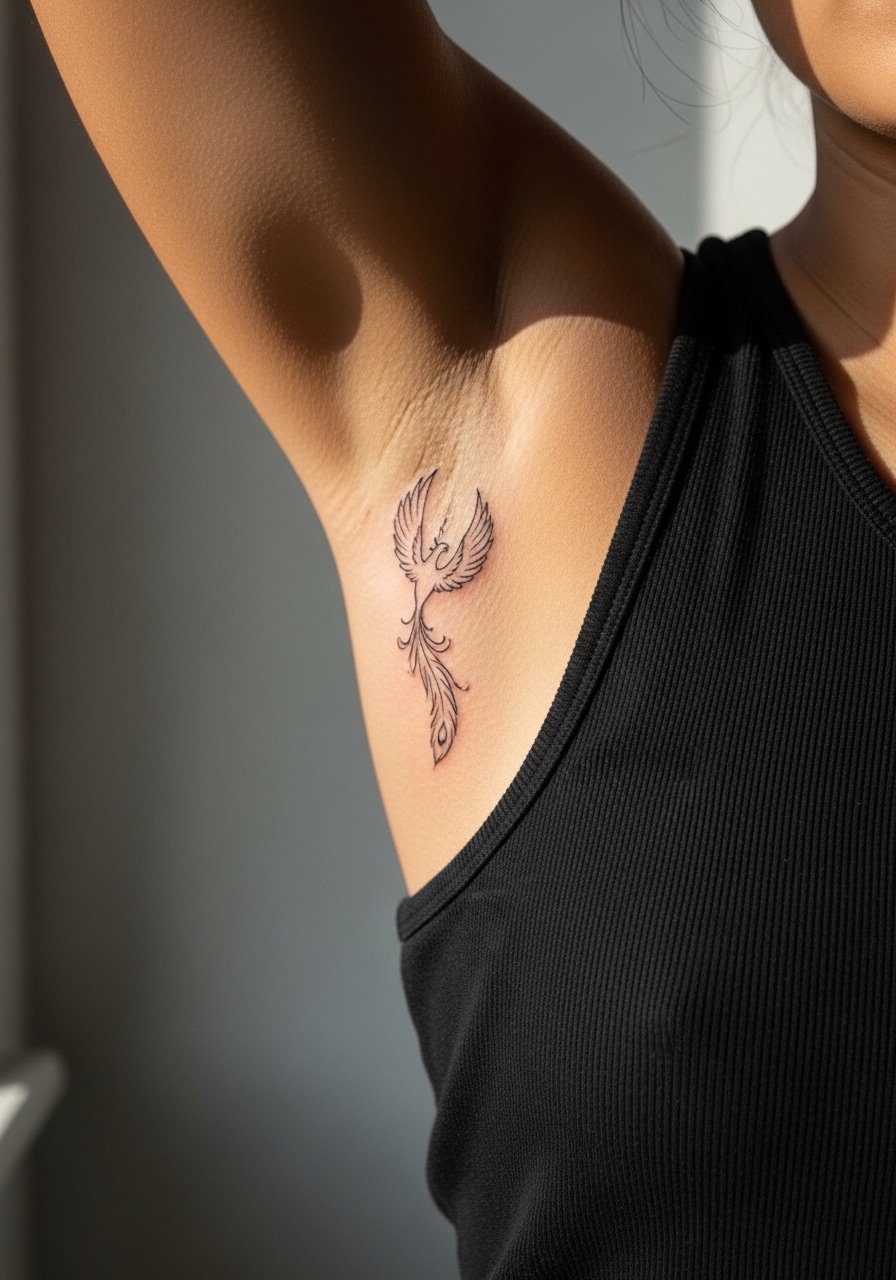
Inner bicep placements can be surprisingly private and long-lasting if designed with negative space. A common mistake is over-detailing a tiny feather where the area cannot hold detail. Request a simple silhouette with a slightly bolder spine line and subtle stipple shading inside if you want depth. For the session wear a tank top to give the artist easy access. Pain is moderate and healing usually goes smoothly when kept clean.
26. Hip Crescent Tail Accent near the Upper Thigh
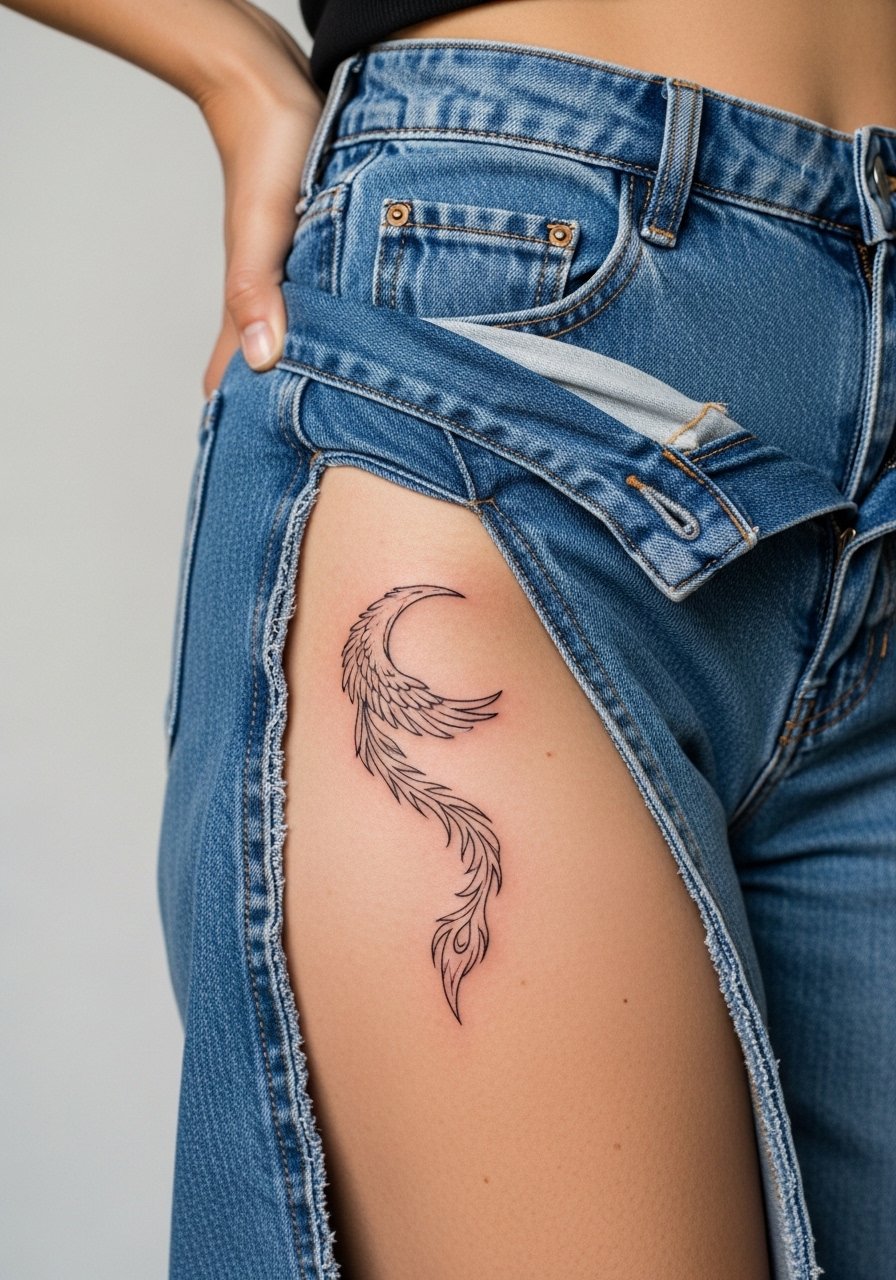
Hip accents work when they follow the body curve and avoid tiny internal filigree. Because the area can stretch with movement and clothing, larger motifs with open negative space last better. Request a test stencil for movement to see how the tail sits when you walk. For the appointment wear high-waisted denim or swim bottoms so the artist can reveal just the intended area. Sessions are short and healing time is standard.
27. Large Irezumi-Influenced Phoenix Across Back and Shoulder
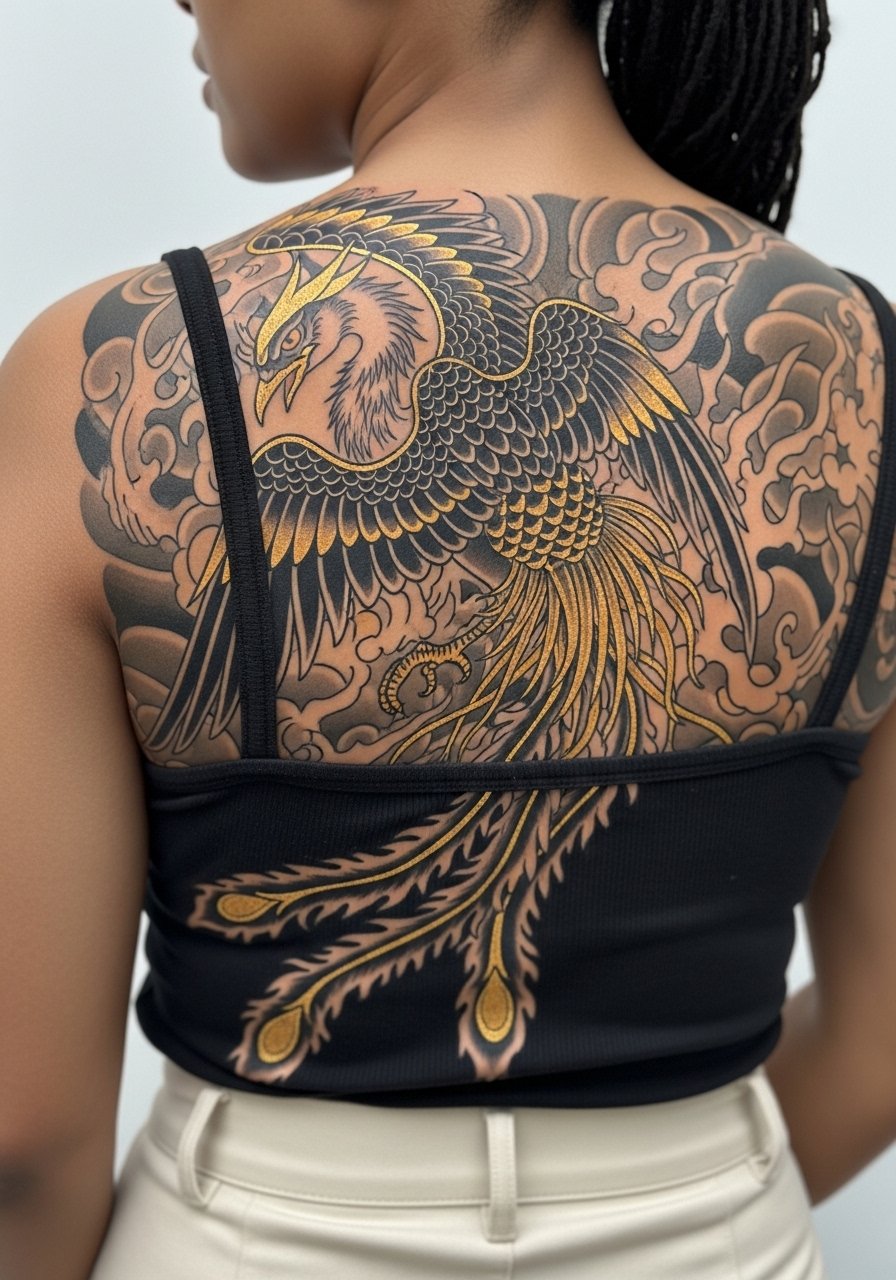
For a full back and shoulder composition plan for longevity. The most common mistake is trying to cram too many tiny elements into the shoulder blade transition. Ask the artist to stage the piece in sections and to lay out the flow so each feather becomes a strong visual unit. Large Irezumi pieces need multiple sessions, weight-change planning, and sun protection to preserve saturation. Use discovery pathways like local directory searches and event listings to find studios skilled in body-scale flow.
Frequently Asked Questions
Q: How much does a delicate Japanese phoenix tattoo usually take in sessions for a medium-sized forearm piece?
A: It depends on detail and color, but a medium forearm phoenix with modest color typically takes one to two sessions of two to three hours each. If you add soft watercolor blends or floral elements plan for a second session to layer saturation and refine linework.
Q: Will watercolor-style phoenixes need different aftercare than black and gray pieces?
A: The basics are the same, but watercolor and pastel pigments can show early fading from excess sun or abrasive clothing. Keep the area covered and use sunscreen once healed, and accept that these palettes often need color refreshes sooner than dense blackwork.
Q: Are fine line hou-ou tattoos a bad idea for wrists or ribs because of fading?
A: Artists split on this. Fine line on wrists and ribs tends to need touch-ups sooner because of motion and skin texture. If you want the look, ask for slightly stronger line weight and more spacing to improve longevity. Expect a realistic touch-up window of one to three years depending on exposure and care.
Q: How should I dress for a studio session for a shoulder or upper back phoenix?
A: Bring easy-access tops like a sleeveless button-down or a low-back tank so the artist can position you comfortably. Loose, non-restrictive clothing helps with long sessions and avoids rubbing the fresh area afterward.
Q: What should I ask an artist during consultation to avoid a phoenix that blurs over time?
A: Ask how they handle line weight, spacing, and pigment placement for your chosen placement. Request to see healed photos on similar skin tones and ask whether they plan for a touch-up timeline. That specificity will tell you whether their approach matches your longevity expectations.
