
Fine line cats are everywhere online, but trendier pieces do not always age the way their photos promise. On the collarbone the skin is thin and the bone sits close to the needle, so choices you make now determine how the ink looks at year one and year five. Read these 17 collarbone cat ideas with notes on aging, what to ask at consults, and small wardrobe moves that help the placement sing.
1. Fine line cat silhouette with curled whiskers along the collarbone
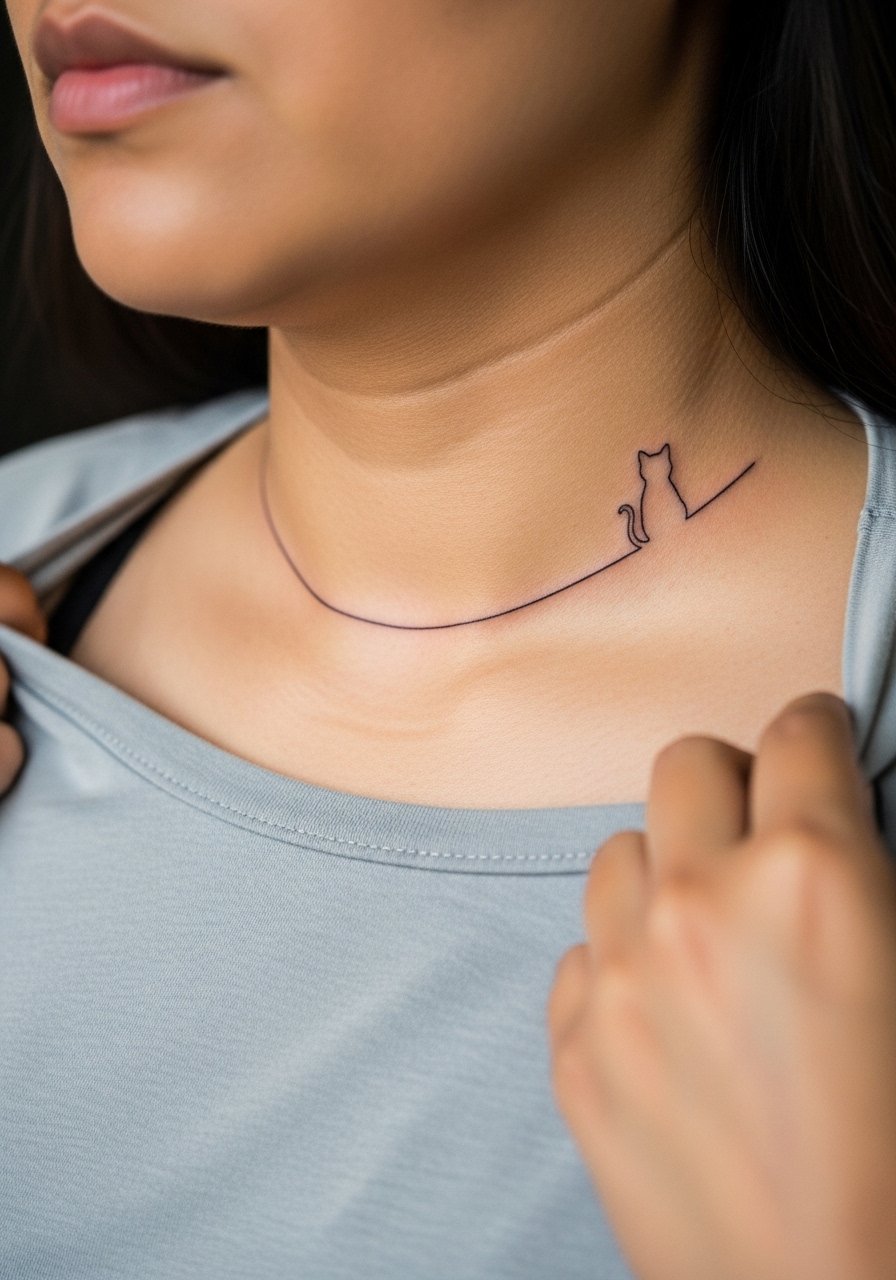
Most people pick this when they want a low-commitment piece that peeks from a V-neck. The session is short and pokes more than it burns because the needle hits close to bone, so expect a thirty to forty five minute appointment. Tell your artist you want a single needle, consistent lineweight, and whiskers that follow the bone curve so the silhouette does not look stretched when you move. The biggest mistake is asking for ultra-thin lines without allowance for aging, which often leads to early softening and touch-ups at year two or three. For showing it off, pair the design with an off shoulder blouse and a thin gold choker that sits just above the stencil. Expect one touch-up around the six to nine month mark for fine line work.
2. Watercolor cat portrait draping across the collarbone
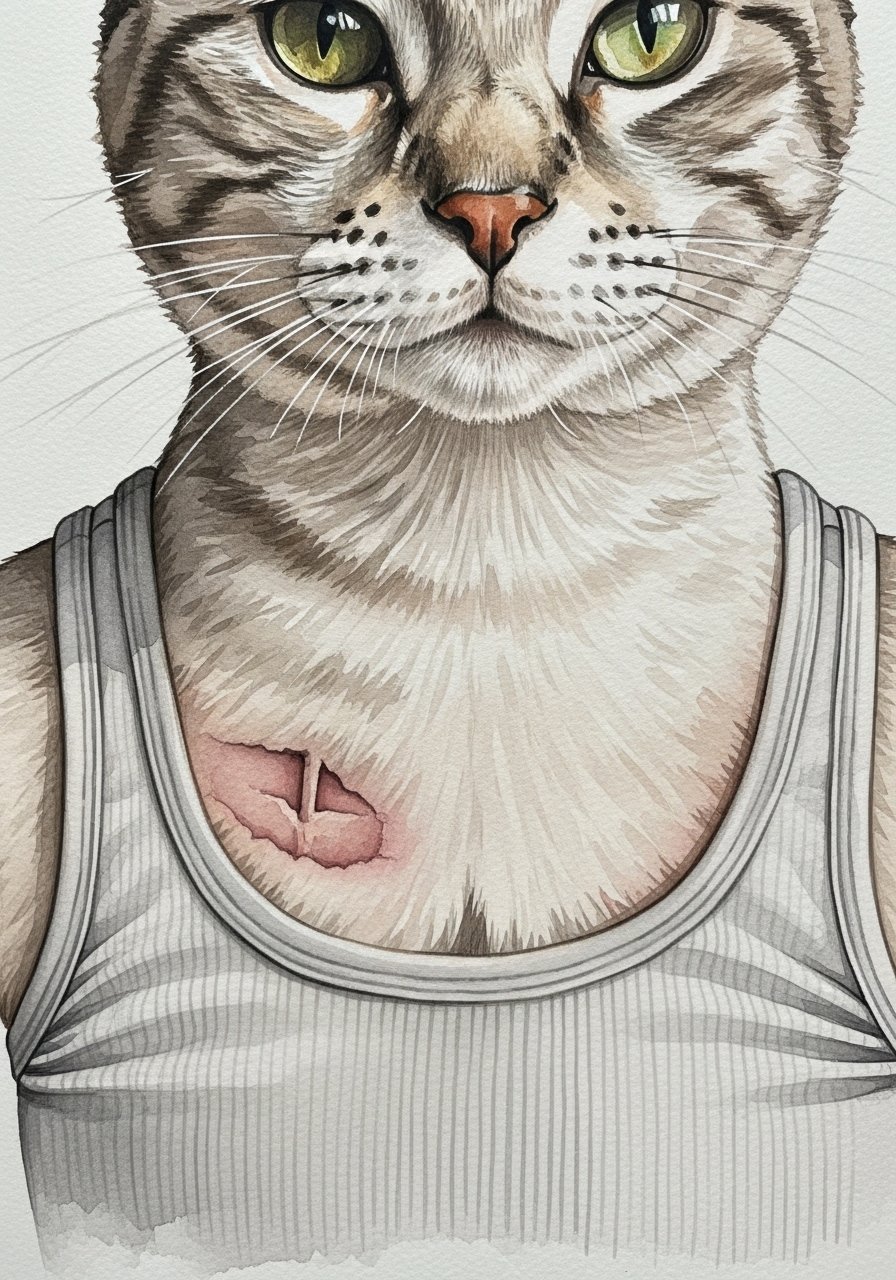
Visual impact wins here, but color on bony areas tends to fade faster than black. If you want the painterly blues and purples to hold, ask your artist for slightly denser saturation near the bone and a black anchor line where the design meets the collarbone to resist early feathering. Sessions usually run longer, often two sittings, and the area feels ticklish with occasional sharp spots near the bone. A common version that ages poorly is a fully washed watercolor with no outlining, which can blur into a bruise look. For evening outfits pick a v neck sundress that frames the art without exposing too much fresh skin after a session. Plan on more frequent touch-ups if you spend time in strong sun.
3. Neo-traditional cat with a floral crown wrapping the collarbone
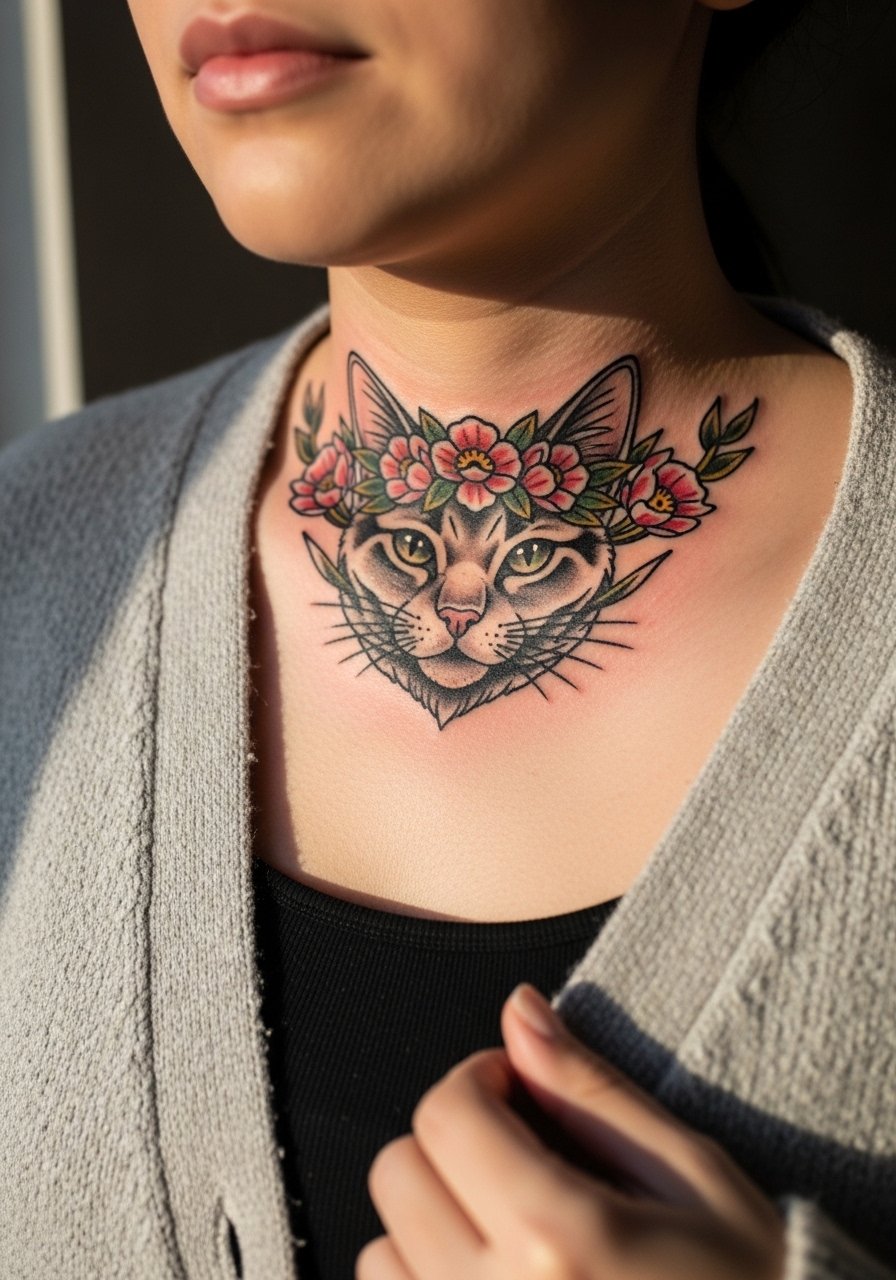
This style uses bold outlines and saturated color so it holds up better on bone than whisper-thin linework. If you like vintage tattoo language but want it cute, request thicker linework around the anatomy points and medium saturation in petals so the florals do not melt into the cat's face as it heals. The session feels like steady low-to-moderate buzzing with occasional twinges when the needle crosses the ridge. The mistake I see is shrinking neo-traditional compositions too small for the collarbone, which turns crisp petals into muddy patches after a few years. When dressing it up try a wrap top in red and medium hoop earrings to pull focus upward and balance the piece. Touch-ups are usually only needed at two to three years for saturation boosts.
4. Blackwork geometric cat head centered on the collarbone ridge
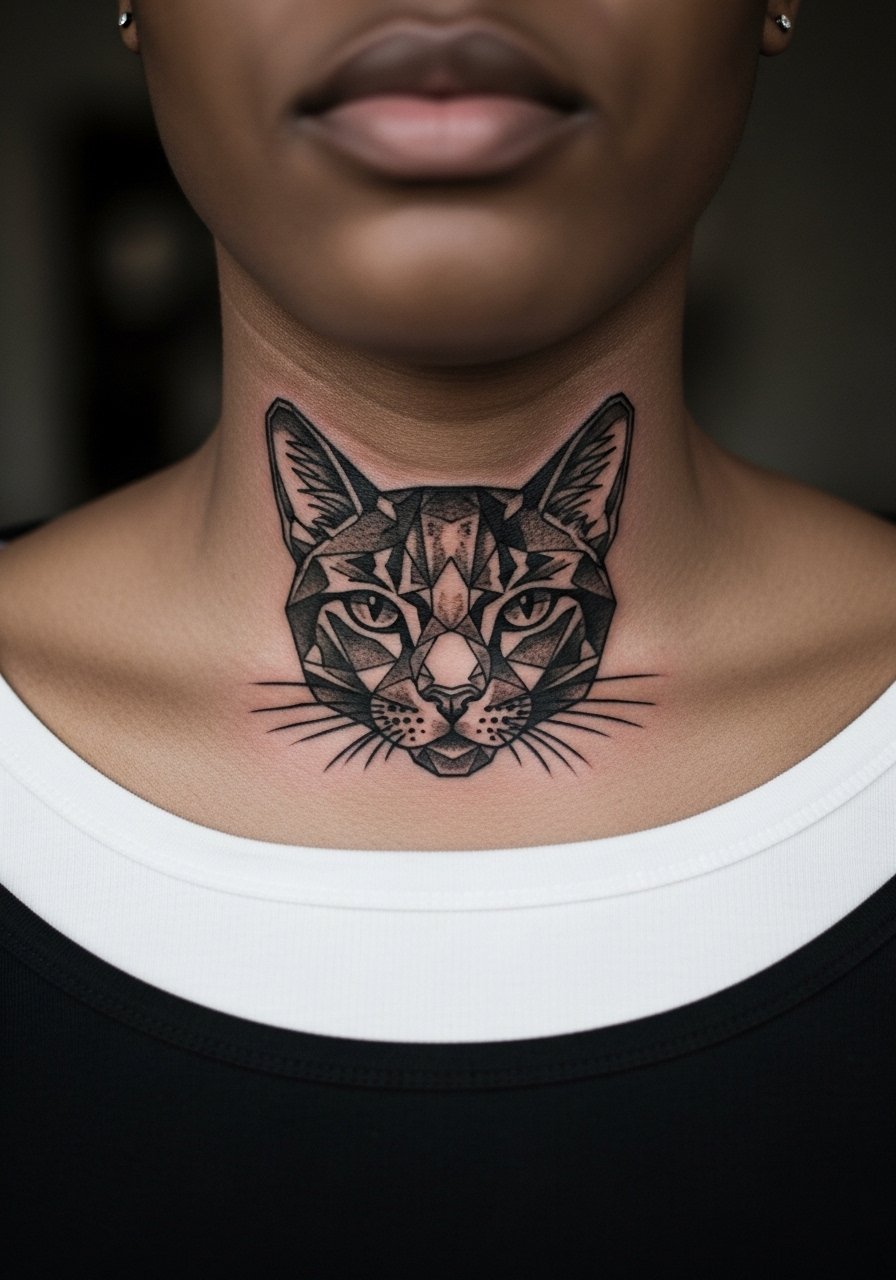
If you want high contrast that highlights your bone structure, this is the pick. Expect one to two hour sessions depending on fill area. The larger black planes age predictably and usually better than tiny lines on bone. Tell your artist you want clear negative spaces and safe breathing room between shapes so stippling does not turn into blocky fill over time. One real mistake is compressing too many geometric facets into a small canvas; the shapes need room to retain definition. For a modern, clean look wear high neck crop tops for outings and a strapless bra during the session to avoid strap friction. Blackwork usually needs fewer early touch-ups, but check edges after six months.
5. Micro-realism sleeping cat curled along the inner collarbone curve
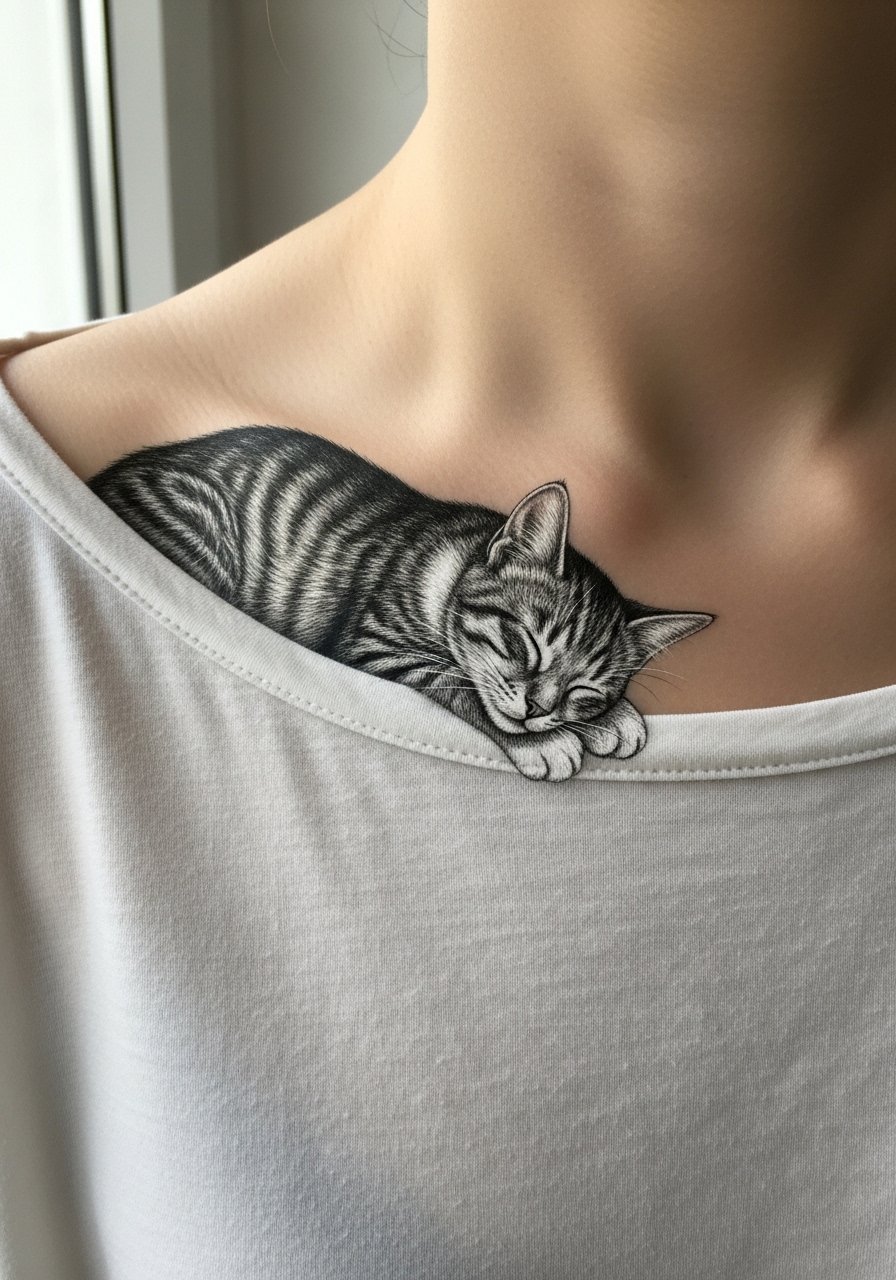
Micro-realism reads as a small portrait, and people choose it to memorialize a pet without a full chest piece. The setup is delicate because stipple and tiny strokes on thin skin demand precise depth. Sessions are often split so the artist can focus on hair texture and eyes. A common error is asking for hyper-real fur at under two inches; the texture vanishes and becomes gray blur. Tell your artist you want solid contrast points to anchor the portrait and expect a six month touch-up to restore any softened hair detail. For a quiet reveal pair the piece with a boatneck sweater in a neutral that keeps the collarbone visible without full exposure. The pain is sharp where the bone peaks and duller along the curve.
6. Minimalist cat paw print trio arching over the collarbone dip
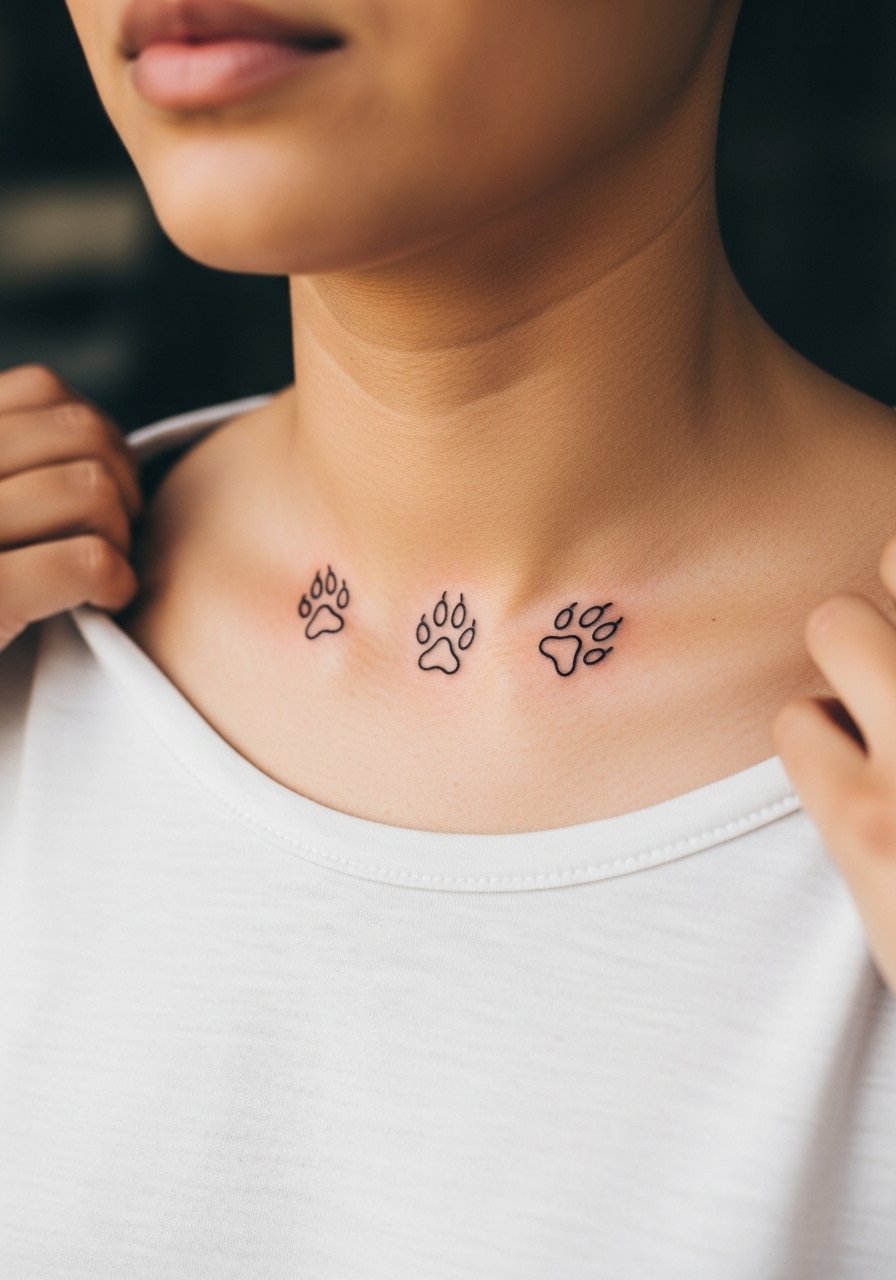
This discreet trio is a go-to for first-timers who want symbolism without much session time. It works well at one to two inches and usually finishes in under thirty minutes. The biggest risk is asking for dots so tiny they migrate into indistinct smudges, especially on oily skin. Ask for slightly larger pads and crisp spacing so the prints keep their shape at six months and beyond. For session day wear a halter top in olive so the artist can access the area without rubbing straps afterward. Expect touch-ups as early as a year on fine minimalist dots, particularly if you sunbathe frequently.
Studio Day Picks
Those first six collarbone ideas range from single-line silhouettes to saturated neo-traditional spans, and a few common prep items make the session and the first week more comfortable.
- Stencil transfer paper kit. Lets you and the artist preview the exact placement on your collarbone curve before the first needle, which reduces repositioning and skin trauma.
- Topical numbing cream. Applied according to instructions it can take the edge off the sharp bony spots on the collarbone for short sessions.
- Thin protective film roll. Useful for covering small collarbone pieces that sit under straps, it reduces friction during the first few days.
- Fragrance-free gentle body wash. Cleans the area without stripping pigment or irritating delicate linework.
- Aquaphor healing ointment. A thin layer in the earliest phase keeps the tattoo moist and protects fine line edges while scabs form.
7. Ornamental cat with mandala tail wrapping both collarbones
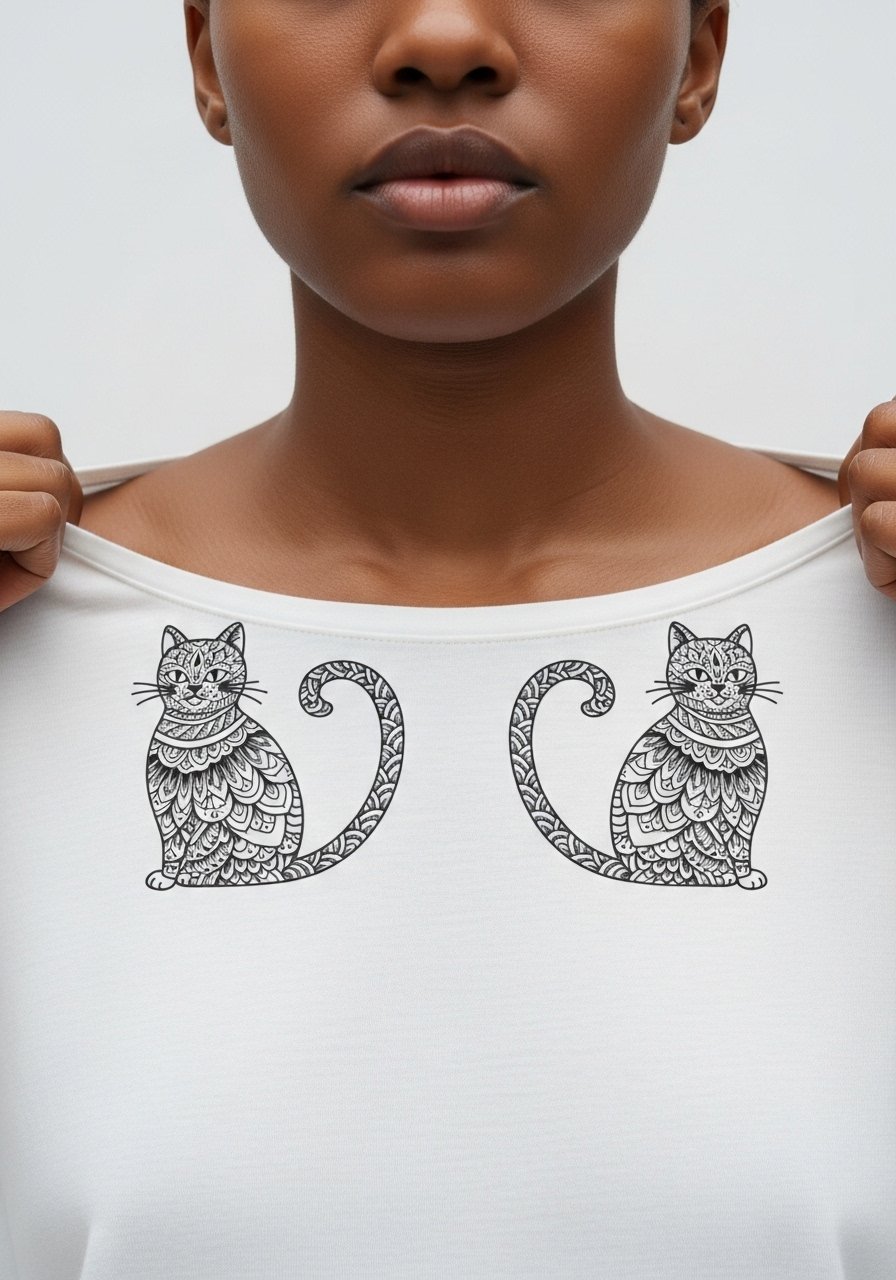
Symmetry and ornamentation read as an elegant collar frame, but mandalas need breathing room on bony areas to avoid line merging. I recommend scaling the mandala elements so each petal has visible negative space and asking your artist for dot work spacing rather than dense lines. The session can be two to three hours if you want bilateral balance and even stippling. A frequent mistake is mirroring a large mandala into too tight a layout, which invites early softening. For outfit pairing, go for an open cardigan and simple necklaces so the piece remains the focal point. Expect touch-ups for thin dot work after a year depending on your skin type.
8. Traditional American sailor cat perched on the outer collarbone edge
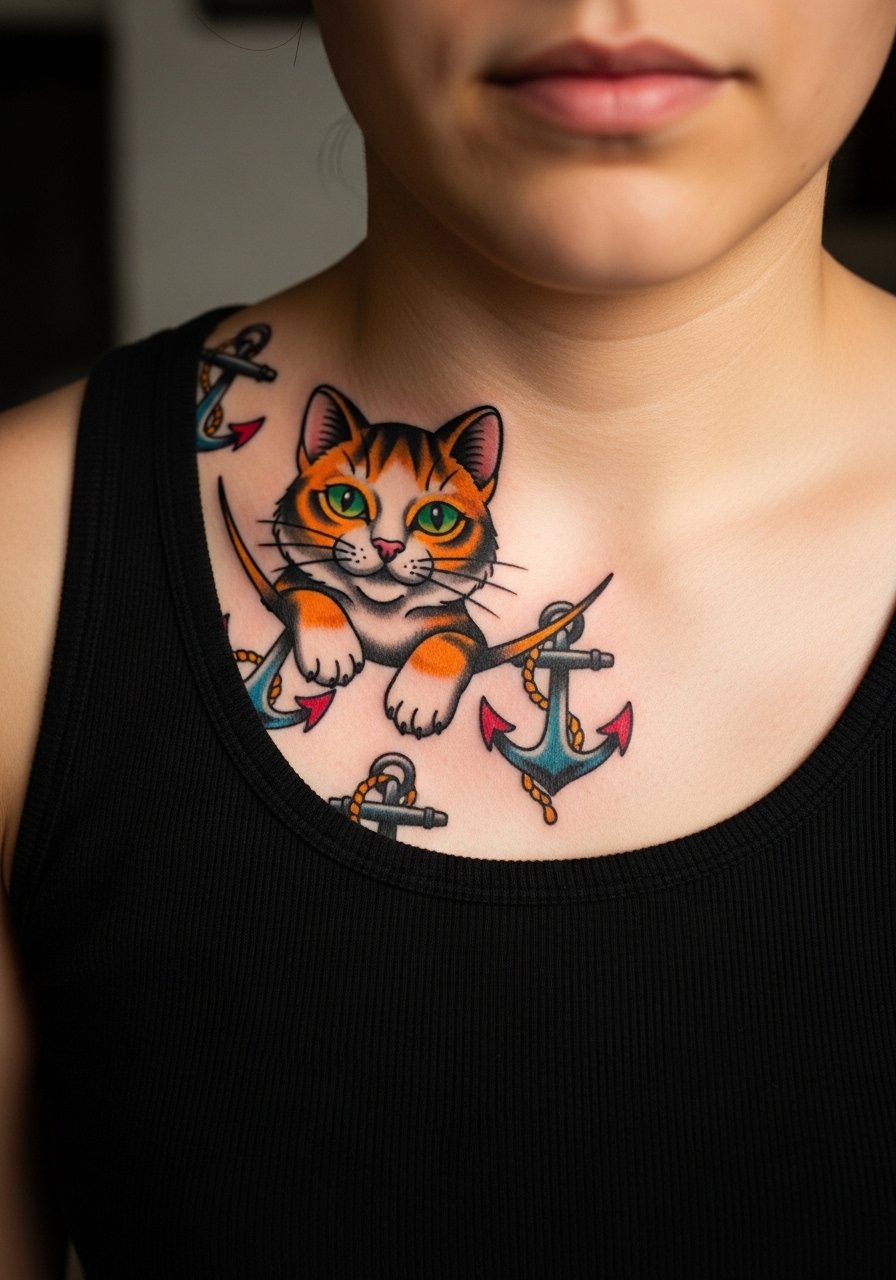
This channel borrows classic sailor lines, so stronger outlines are built in to age well. The pain is moderate on the outer edge and sessions often end in one to two sittings. Tell your artist you want saturated color fields and a solid black outline to prevent the anchor or cat silhouette from softening. The real mistake is shrinking traditional motifs to a size that defeats their graphic language. For a retro vibe wear a wrap top in bold red to mirror the palette while keeping the area accessible for touch-ups. Traditional pieces usually show predictable fading patterns and can look great for many years with minimal boosts.
9. Ignorant-style chunky abstract cat face on the collarbone
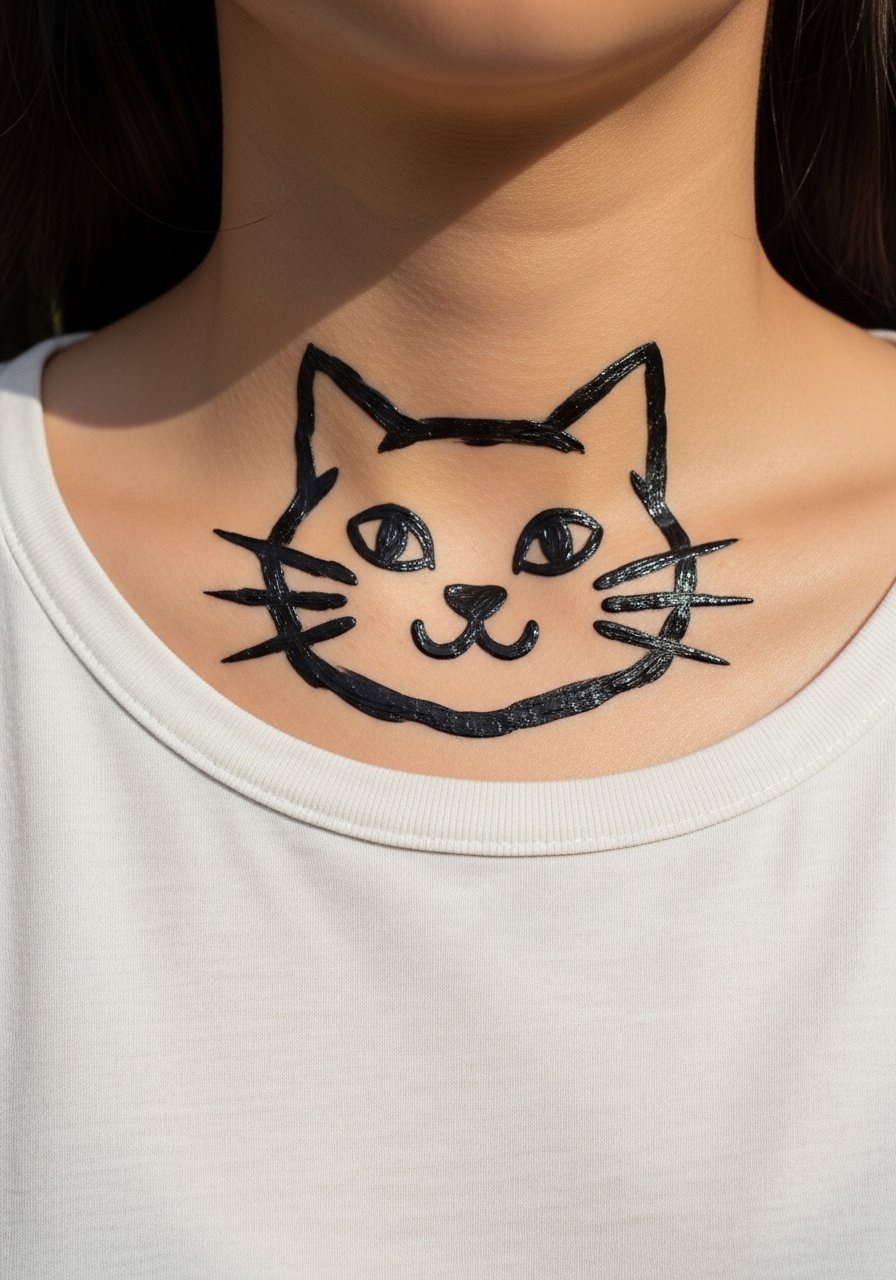
Ignorant style embraces imperfect, chunky marks, which actually helps longevity on thin skin because lineweight is generous. Sessions are quick and feel bolder than fine line work. When you consult, bring bold reference art and tell the artist you want intentional unevenness rather than shaky execution. A common misstep is asking for accidental-looking marks without an experienced hand, which can end up sloppy rather than artful. For casual outfits try a loose button-down shirt you can pull aside during the session and then roll up for everyday wear. Touch-ups are rarely urgent with this style thanks to its forgiving aesthetic.
10. Fine line cat playing with a yarn ball across the collarbone
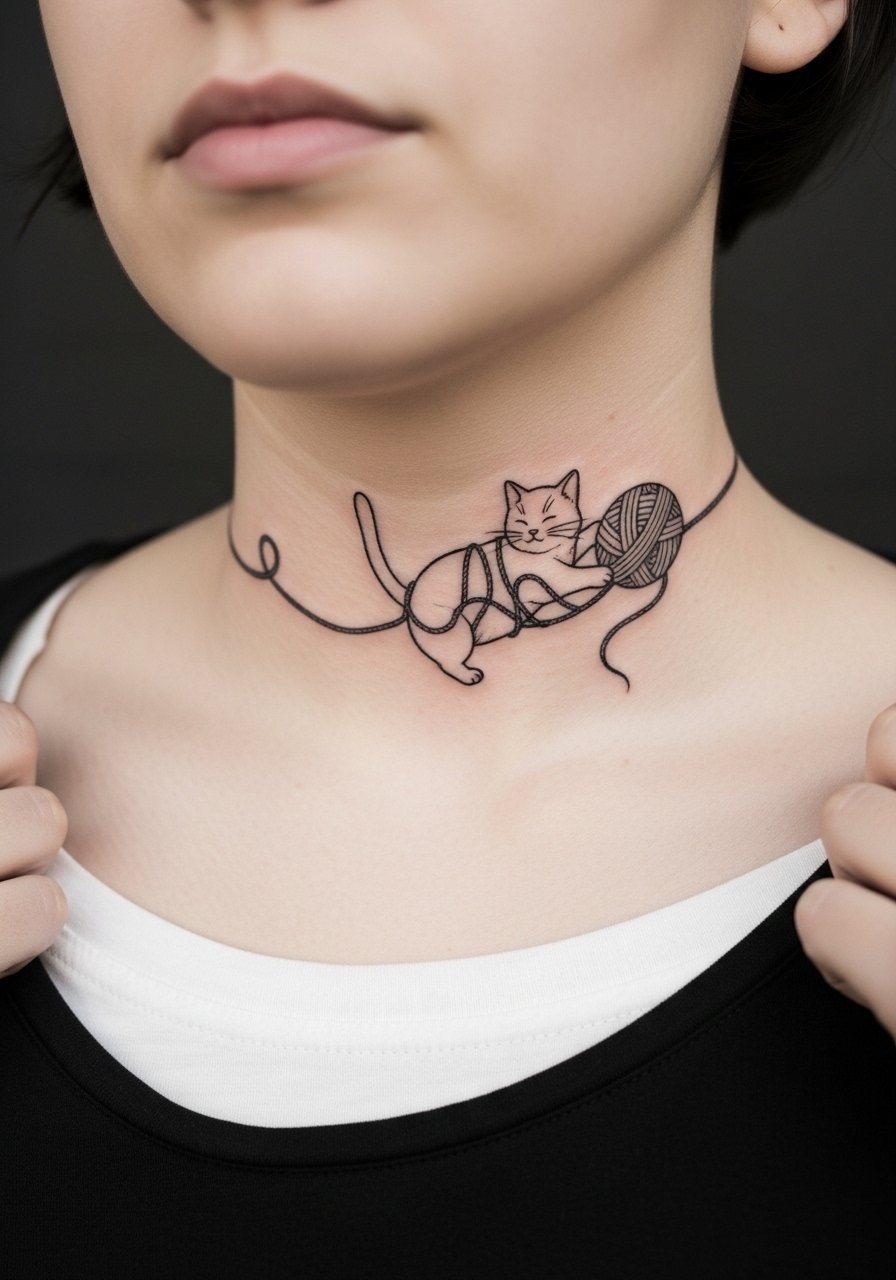
This playful story piece works when you want movement that naturally follows the bone. Ask the artist to let the yarn loop sweep with the collarbone dip so it reads like it is sitting on the bone instead of floating above it. The session is typically an hour and the area is sensitive where the needle crosses the ridge. Many people ask for extremely thin yarn lines that later blur, so request slightly bolder thread lines with open spacing. For show-off outfits pick an off shoulder blouse in cream linen that keeps the curve visible without overexposing the fresh ink. Expect a touch-up within a year for delicate single-line elements.
11. Black and gray realism kawaii cat eye at the collarbone peak
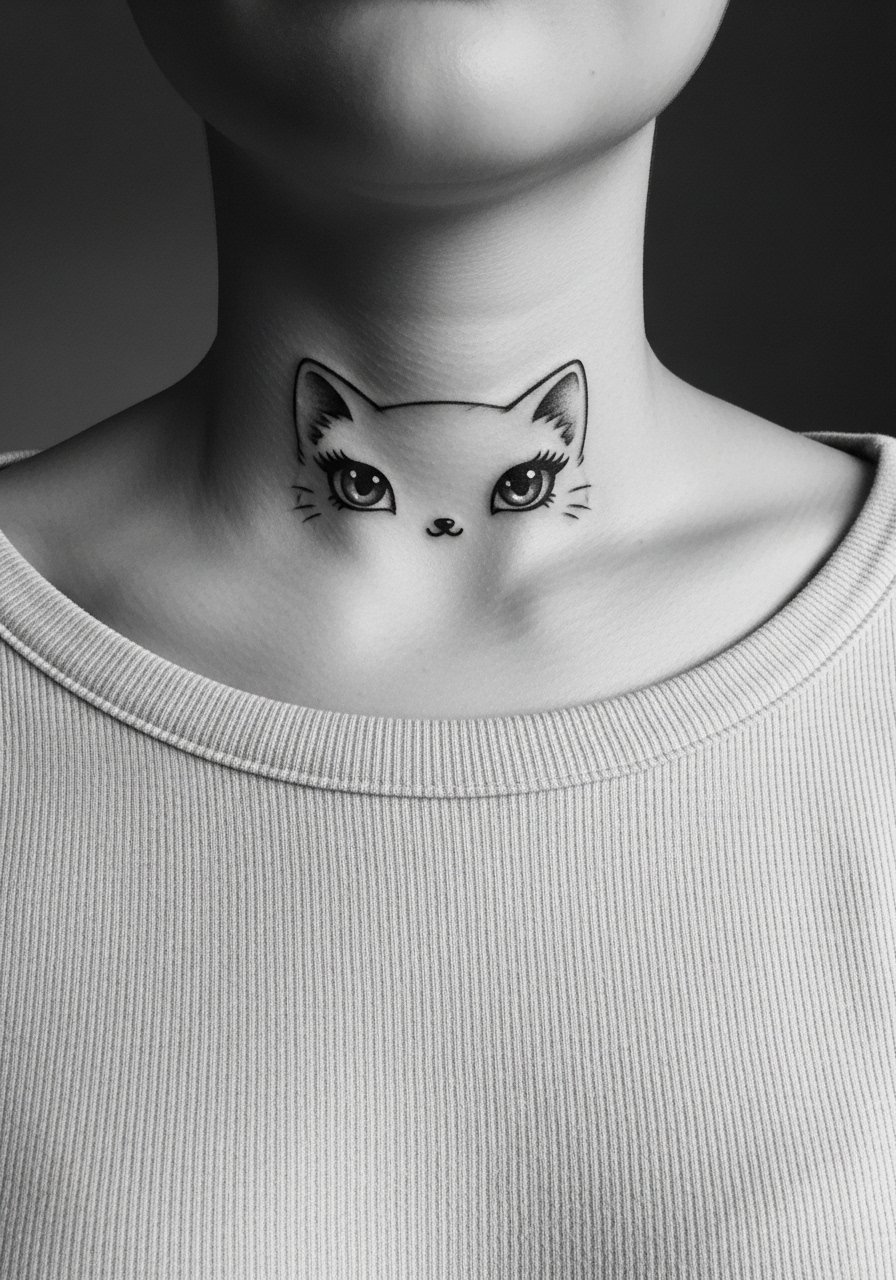
A single photoreal eye can be striking and protective in symbolism, but realism relies on contrast anchors on bony skin. Ask for crisp darker points such as the pupil and lash line that will hold as surrounding values soften. The session involves detailed shading and can take one to two hours with the artist working carefully over the bone. The mistake is squeezing too much micro detail into a very small area. Pair this with minimalist jewelry like a delicate chain necklace that rests just above the eye without competing. Plan on reviewing the healed photo at six months to decide if a small touch-up is needed.
12. Dotwork cat skeleton outline following the collarbone contour
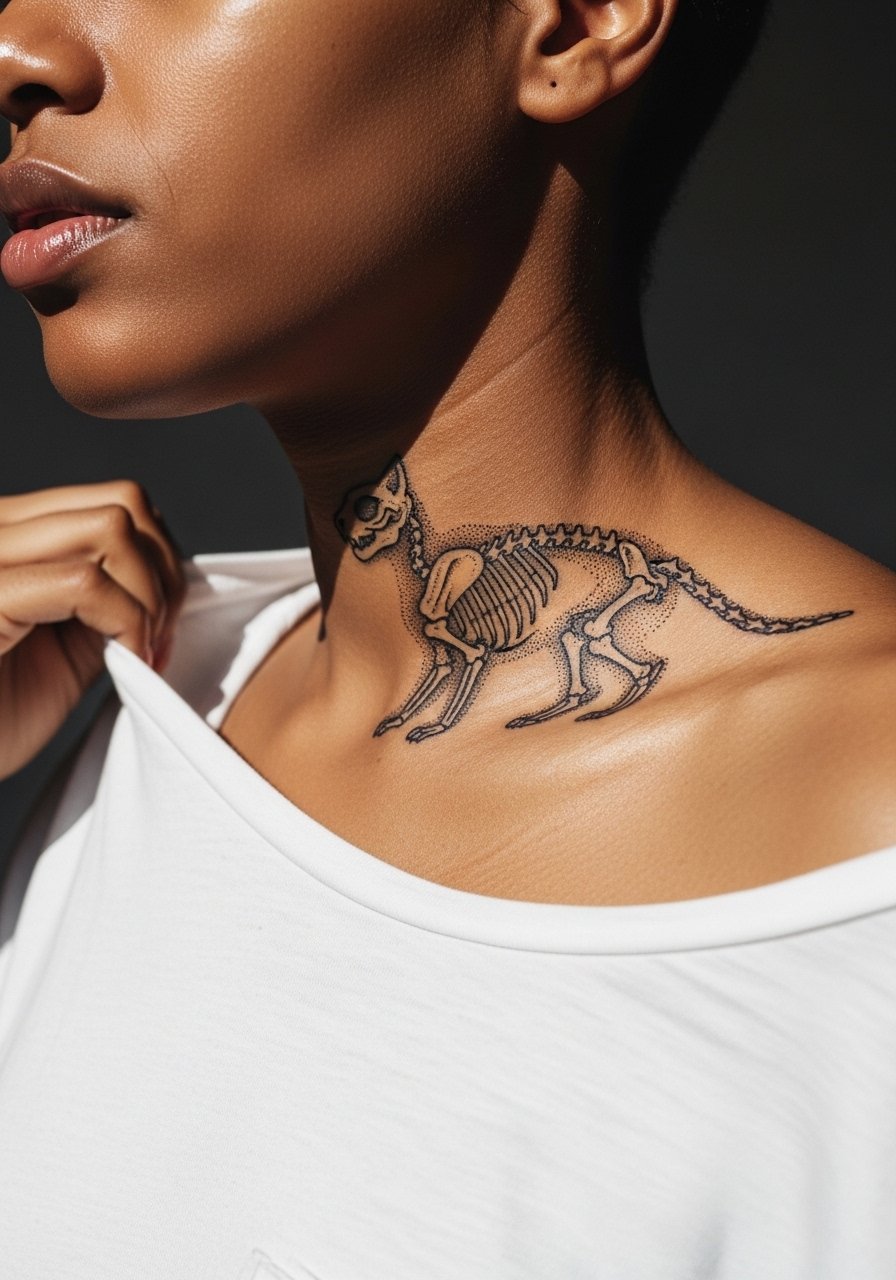
Dotwork reads graphic and textured, and on collarbone it can emphasize the bone shape elegantly. I recommend spacing the dots to match the curve so the skeleton line does not read as a solid when healed. Sessions for four inch designs often take two sittings and the sensation is a persistent buzzing with sharper pinches at the peaks. A bad version compresses dots into a near-solid line, which loses the stipple advantage. If you like gothic touches keep neckline choices simple so the piece remains visible without rubbing. Dotwork can be forgiving, but check for clumping at six months and book touch-ups as needed.
13. Snake-like cat tail that wraps the actual collarbone ridge for a 3D effect
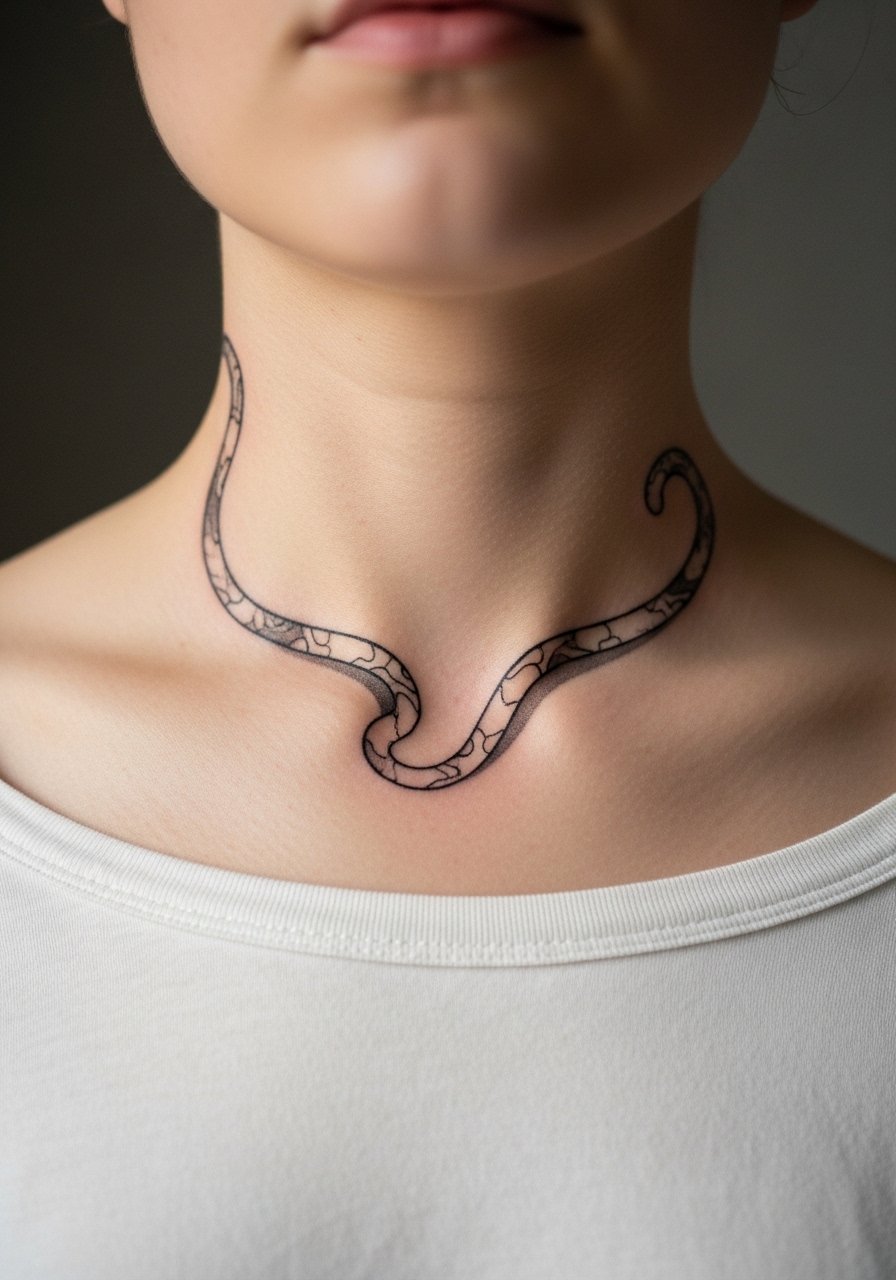
This under-covered idea uses the bone as a structural element. Tell your artist you want the tail to follow the exact ridge photo you brought so it reads three dimensional and not just decorative. The session needs careful mapping and may include a brief stencil rehearsal on skin. The main mistake is letting the tail cross the bone at awkward angles, which makes the curve look off when you move. For outfits try a thin chain pendant necklace that sits above the wrap without catching on the ink. Expect a touch-up around the one year mark if shading settles unevenly.
14. Geometric cat with sharp angles echoing the collarbone edge
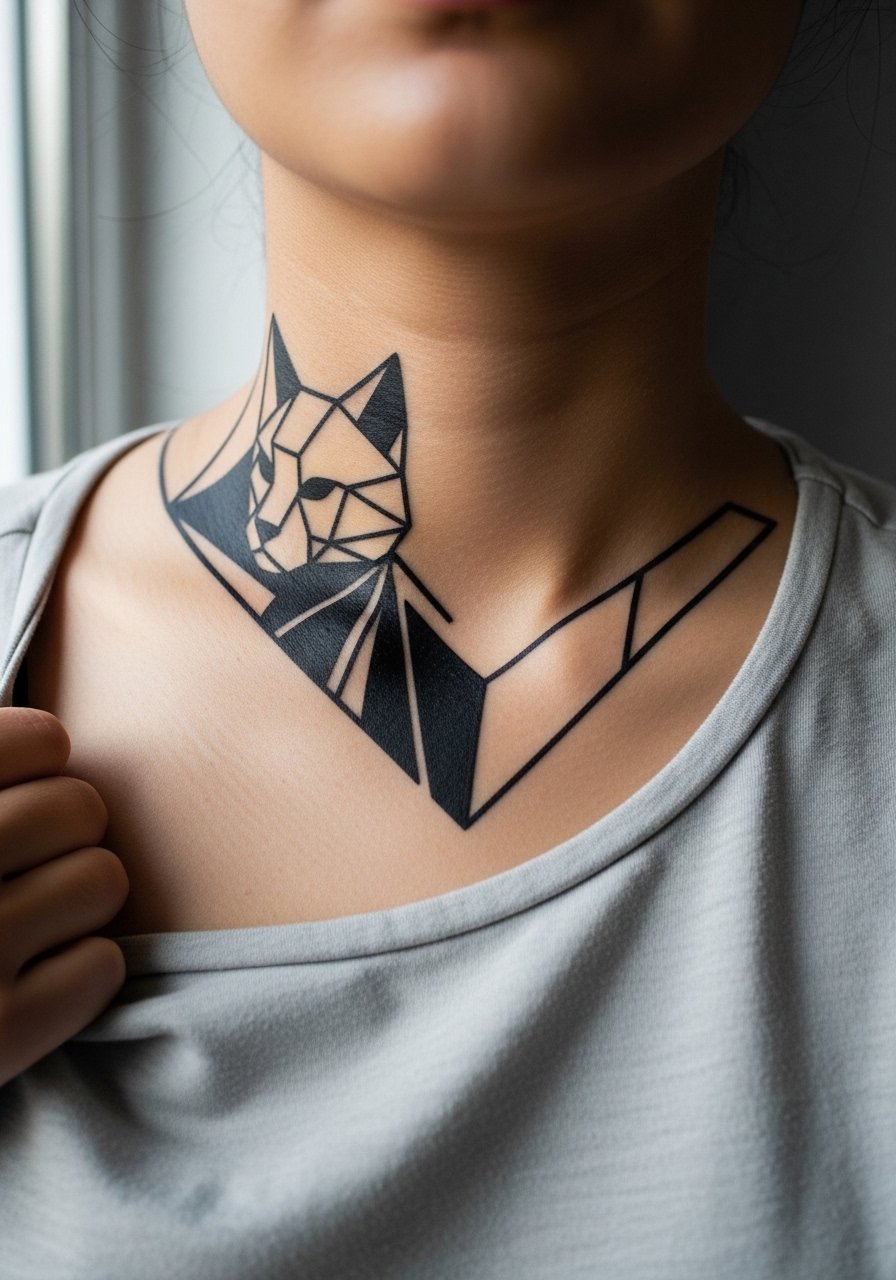
Geometric pieces can complement the bone if the artist aligns key axes with your anatomy. When you consult, ask for mockups that overlay the geometry on photos of your collarbone so you can verify flow. The session is moderate in length and the main pain is where shapes cross the ridge. A common error is mirroring the reference without sizing for movement, which causes shapes to become irregular when you tense or rotate. For a modern outfit go with high neck crop tops in solid color to contrast the angles. Well-spaced geometry ages cleanly compared to overly intricate tessellations.
15. Cartoon Pascal-style chameleon-cat for playful Disney nostalgia
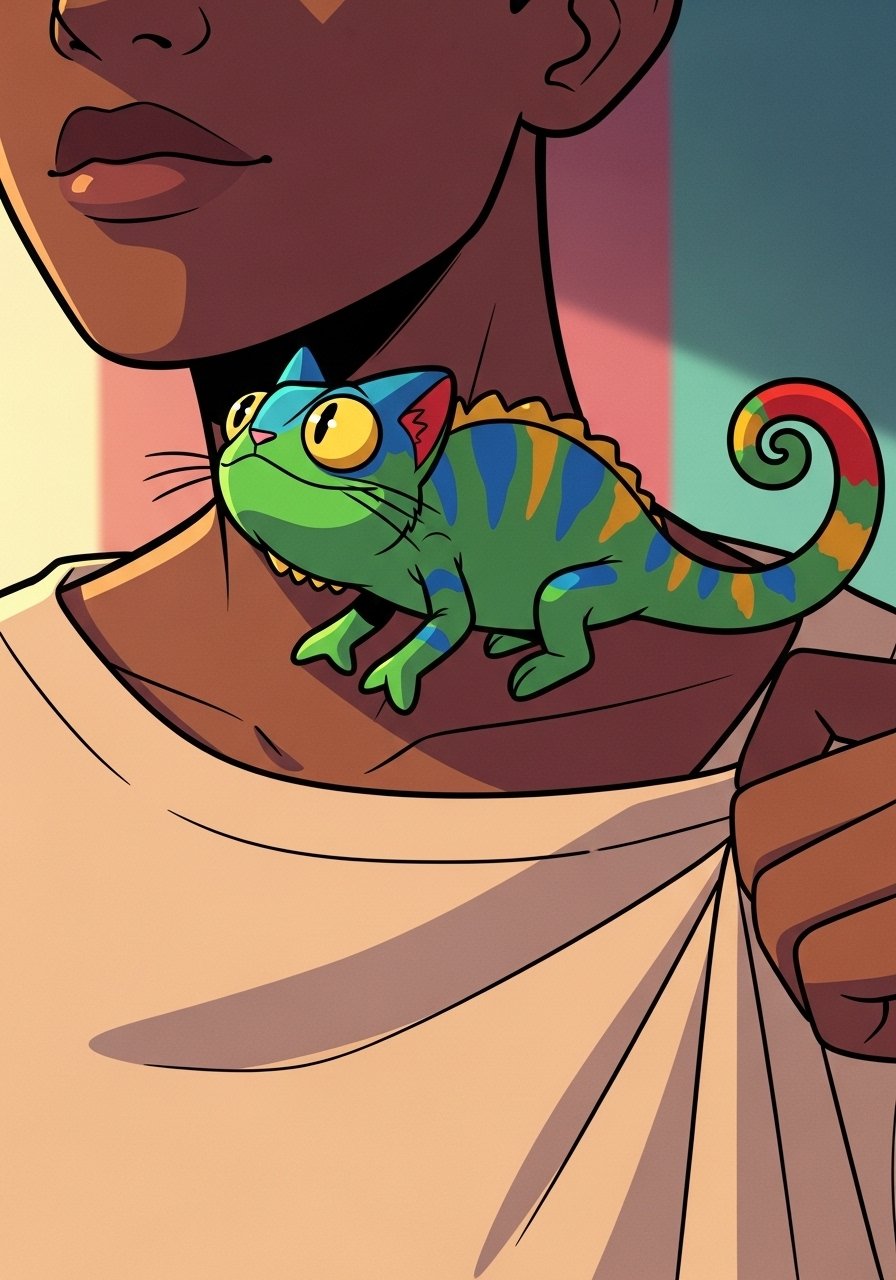
Nostalgic cartoon cats are trending and they read as friendly on the collarbone. Ask your artist for bold outlines and flat color to maintain the character look over time on bony skin. The session is usually short and feels brisk, with sharper sensations at the bone. The mistake is requesting washed color or tiny facial details that fade into gray. For a playful reveal pick a pastel silk scarf or a scoop neck that shows the character without overexposing healing skin. Plan for a color refresh at two to three years if you wear lots of sun or saltwater.
16. Micro-kawaii cat clusters dotted along the collarbone dip
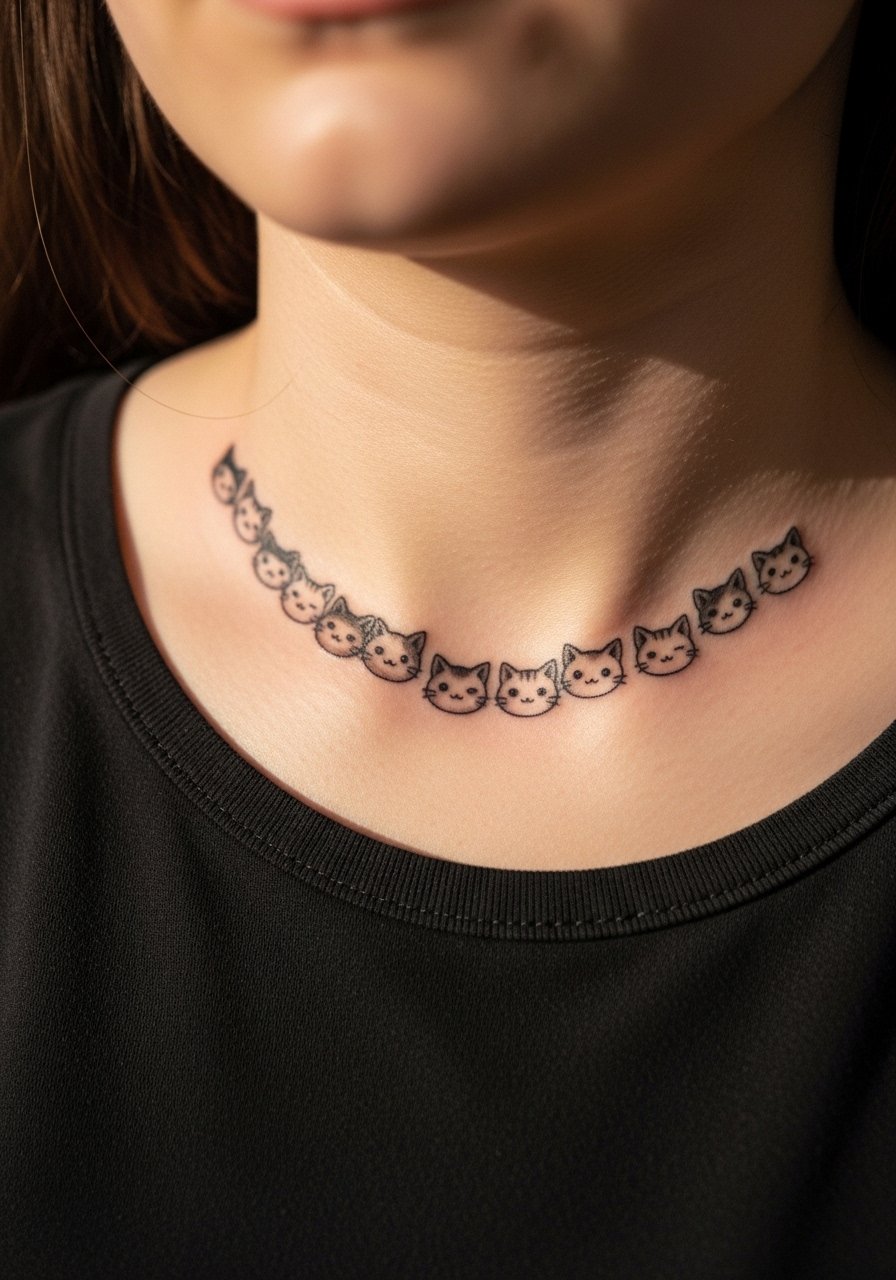
Small clusters read charming but are high maintenance on thin skin because tiny detail can merge. Ask your artist to space the faces and give each a small anchor point of darker ink. Sessions are short, often split across quick passes to avoid overworking the skin. The common error is packing micro elements too tightly, which blurs the composition at year two. For subtle display choose a loose tank top for session day so the artist has access without straps rubbing afterward. Expect touch-ups sooner than larger designs.
17. Blackwork cat silhouette with negative-space stars hugging the collarbone
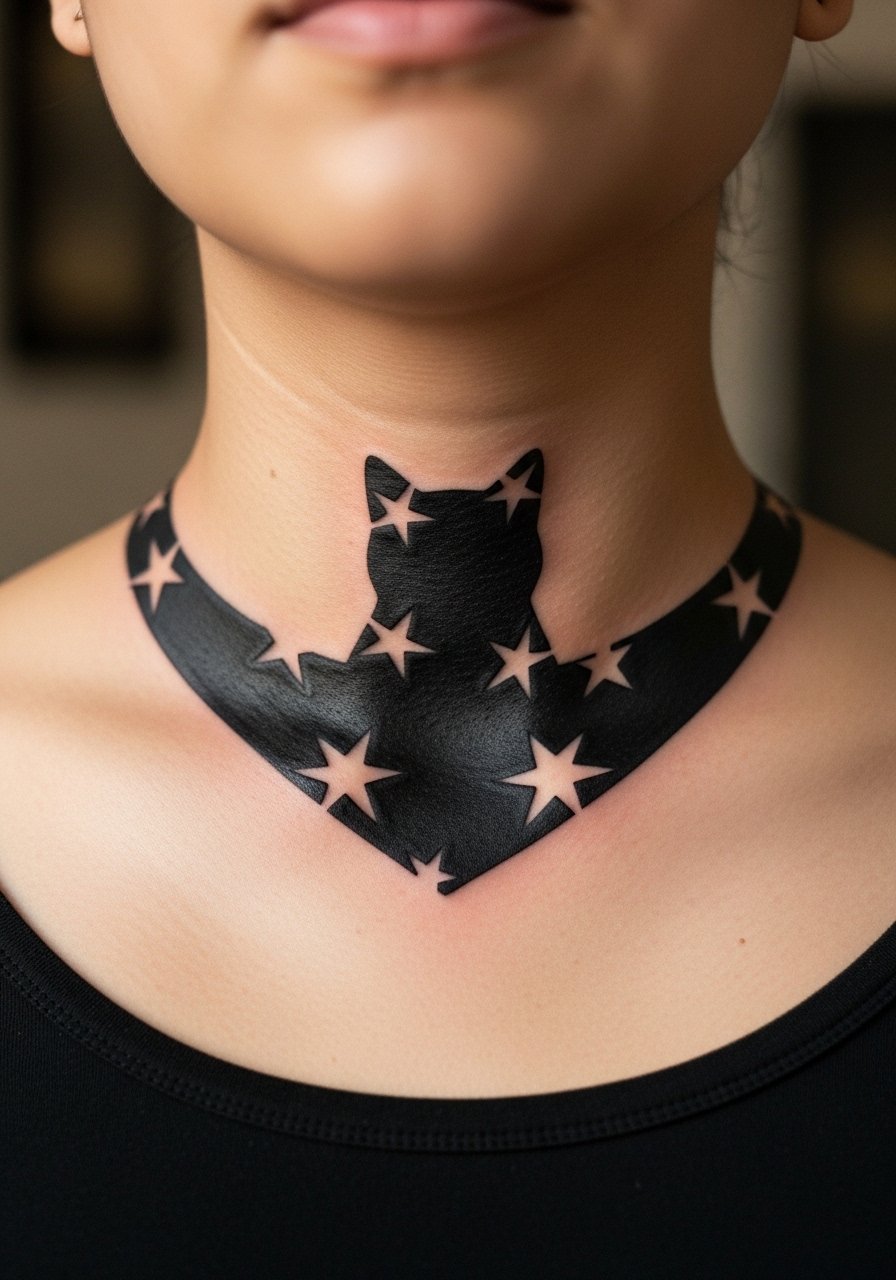
This is a strong, graphic finish for the list and it performs well because solid black ages predictably on bone. Tell your artist you want sharp star cutouts and a matte black fill that does not rely on subtle gradients near the ridge. Session time is moderate and feels more intense where large fill meets bone. The mistake is asking for textured fills at too small a scale, which turns into noise over time. For styling, high contrast looks great with a black silk off shoulder top or a simple choker. Solid black silhouettes typically need fewer touch-ups than delicate linework.
Frequently Asked Questions
Q: Will a fine line cat on the collarbone fade faster than a blackwork piece?
A: In my experience fine line work tends to soften sooner because the skin over the bone moves and oilier skin can cause early spreading. Blackwork and bolder outlines usually keep their character longer. If longevity is your priority choose slightly stronger lineweight and expect a touch-up around year two to three for fine line pieces.
Q: How should I dress on session day for a collarbone tattoo to avoid rubbing aftercare?
A: Wear a loose, front-open or wide-neck garment you can pull aside without tugging the fresh tattoo. A strapless sports bra or a loose button-down shirt works well so straps do not rub the area in the first week. Clean, breathable fabrics reduce irritation.
Q: Artists disagree about Saniderm vs dry healing for collarbone tattoos. What should I pick?
A: Both camps make points. One group prefers protective film because it keeps the area moist and shields it from bra straps. The other group favors minimal covering to avoid trapped moisture and ink loss on bony areas. Ask your artist what they have seen work with their technique and your skin type, and follow a consistent routine you can maintain.
Q: Are watercolor collarbone cats a bad idea if I want the color to last?
A: Watercolor on the collarbone can be beautiful but it requires denser placement and sometimes a dark anchor line to resist early fading. If you spend time outdoors or have naturally oily skin you will likely need more frequent color boosts. Talk with the artist about saturation strategy and realistic touch-up timelines.
Q: How do I find artists who handle collarbone cats well without naming anyone?
A: Search hashtags like #collarbonetattoo and #finelinecat on social platforms, filter for your city in apps that list portfolios, and post a brief request in tattoo community forums mentioning your city. Look for healed photos that show work on bony prominences and ask questions about their touch-up policy during consultation.
Q: Will dark skin make a small collarbone cat blend in under certain lighting?
A: On medium to dark skin tones subtle lines can read softer in low light. If contrast matters to you request bolder outlines or small white-ink highlights to lift key edges. Seeing healed examples from the artist on similar skin tones helps set realistic expectations.
