
Bold trends and hard truths sit next to each other in black bird designs right now. Fine line silhouettes look dreamy on a saved board but often soften on medium or dark skin within months. Guest artists cancel more than they used to and small wrist pieces cost more than folks expect. These sketches collect dainty black bird ideas that consider placement, aging, and what to tell your artist before the needle ever touches skin.
1. Fine Line Single Blackbird on the Wrist
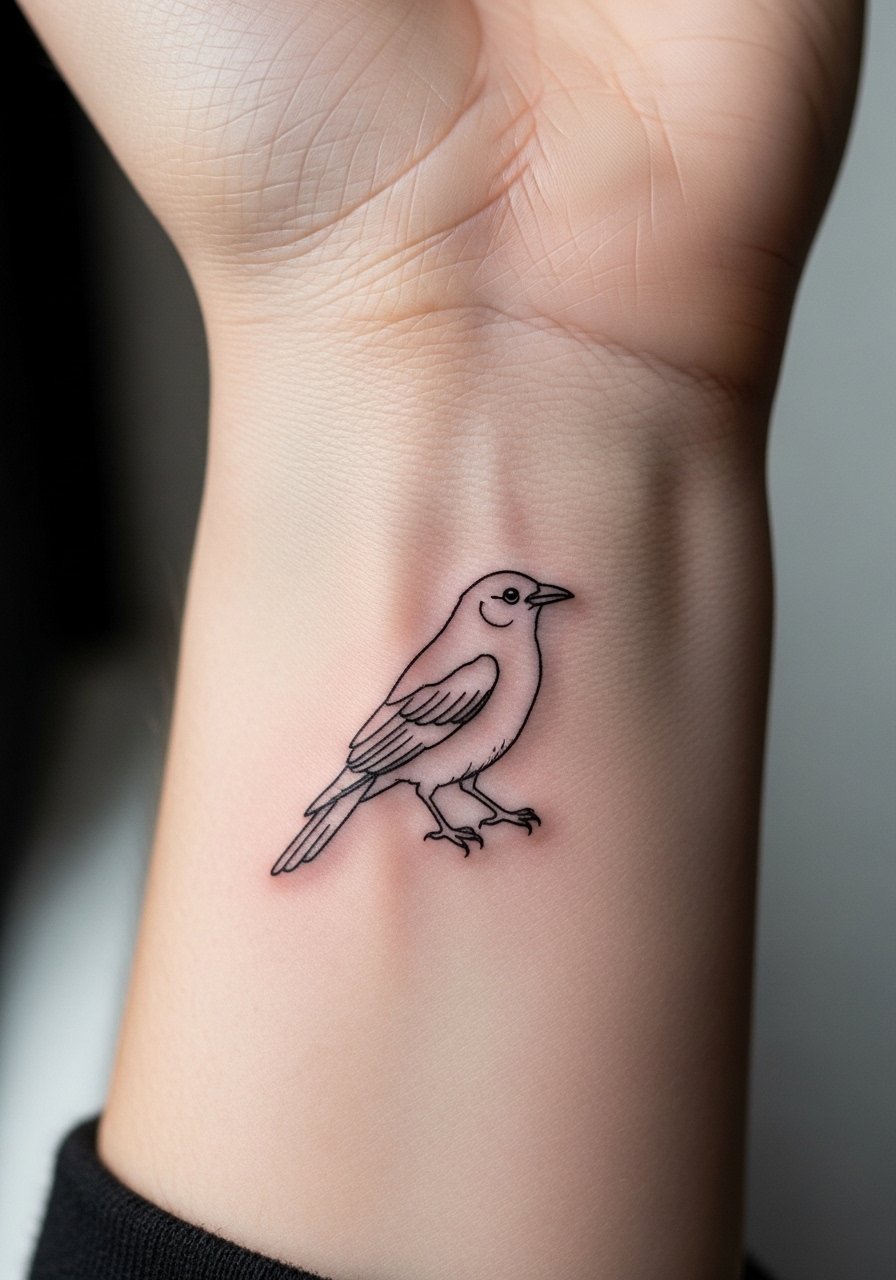
I've seen this tiny wrist bird last or blur depending on two things: line weight and placement. Ask for a confident single-needle outline with a single slightly thicker anchor line so the wing detail does not sink into a smudge. Pain is low, session time is short, and touch-up at year one is common for fine line wrists. For showing it off, pair with thin leather cord bracelets on the opposite wrist. Wear a sleeveless linen shirt to the appointment so the artist has clean access.
2. Minimalist Feathered Wing on the Ribcage
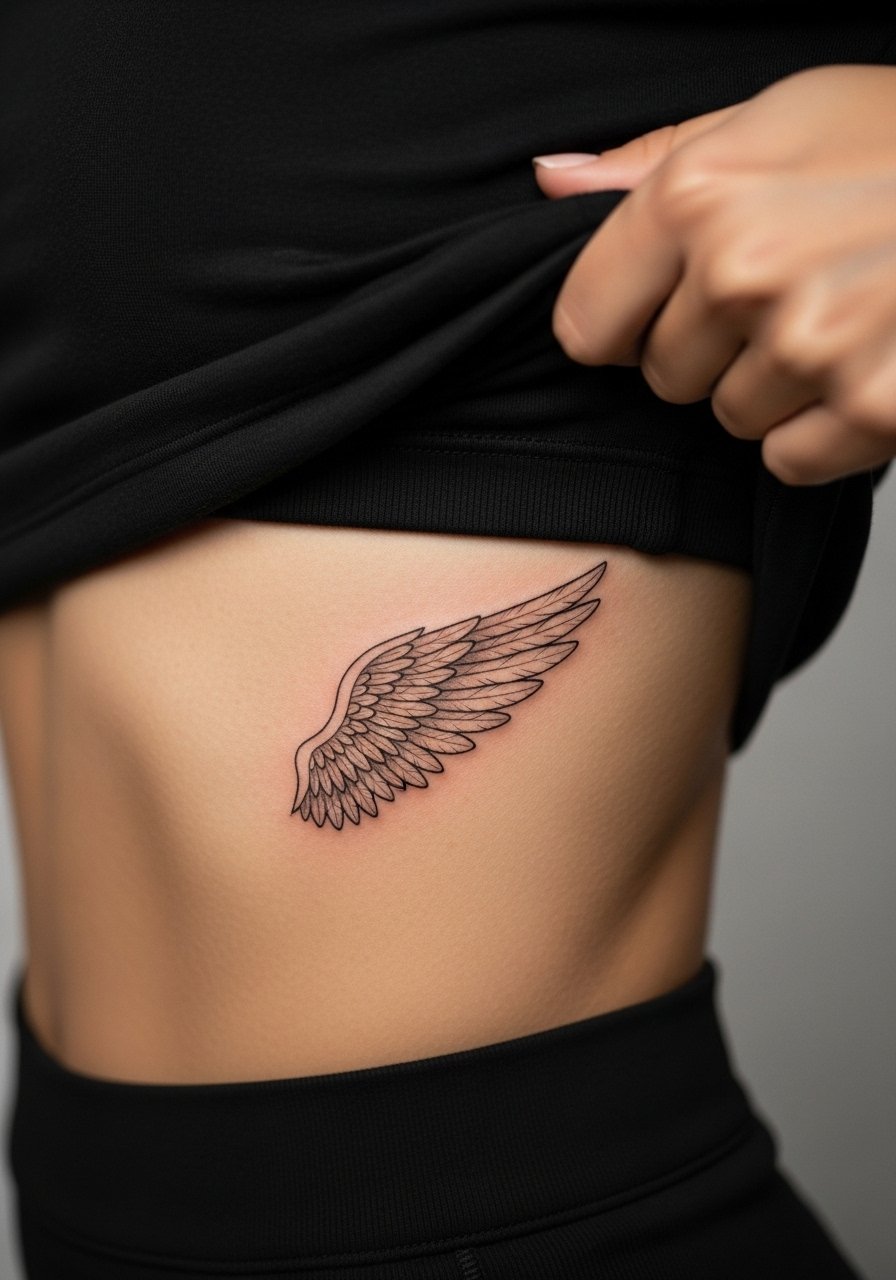
Fair warning, the ribcage is a higher pain area for many people and the skin there can shift with weight changes. This wing motif works best slightly larger than you think so the feather barbs have breathing room and do not merge over time. Ask your artist to space the feathers and avoid the ultra-fine cross-hatching that tends to mush. Expect a one-session visit and a likely touch-up around year two if you want crisp feather edges. If career visibility is a concern, remember this placement stays mostly covered.
3. Neo-Traditional Blackbird Perched with Moon Phases on the Forearm
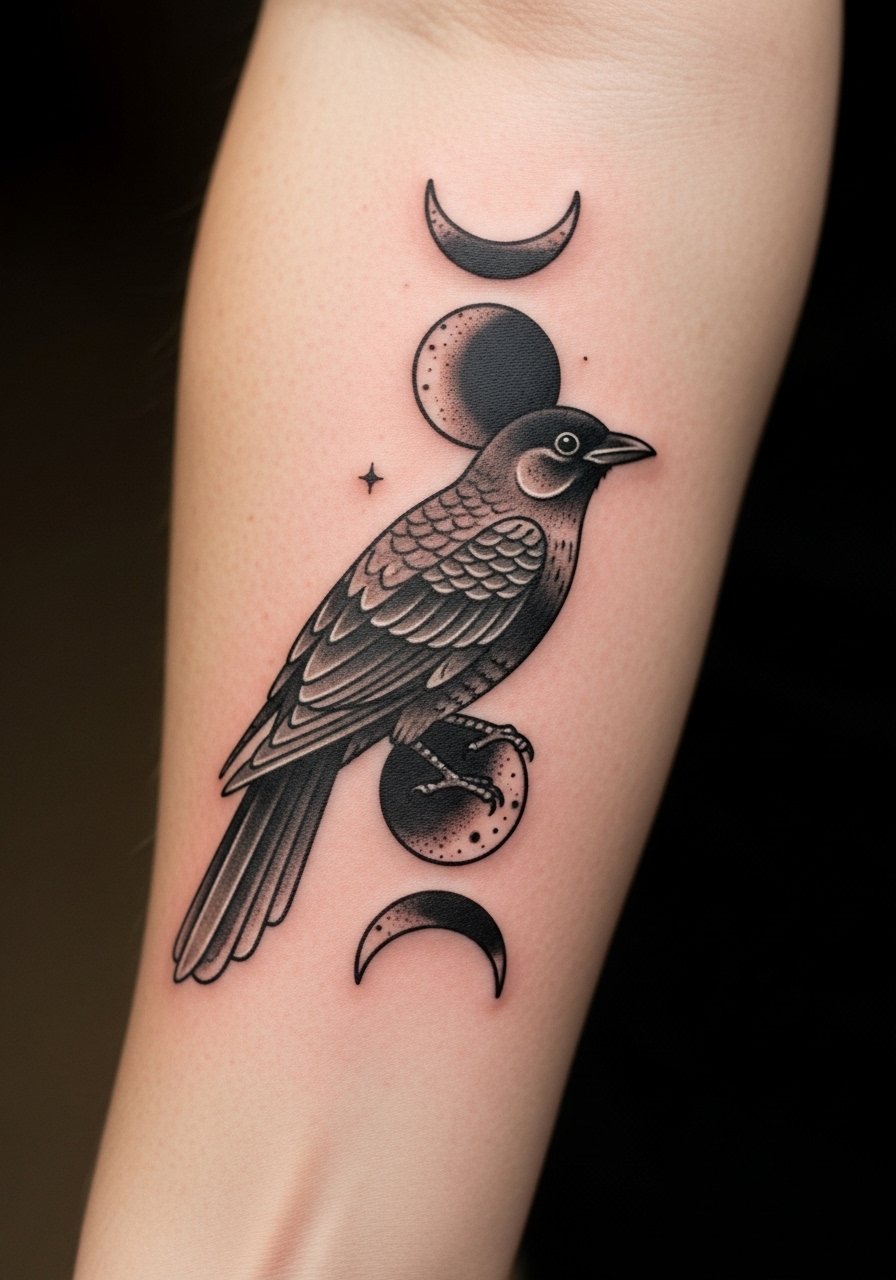
I notice neo-traditional pieces age well when artists prioritize saturation over tiny feather detail. For a forearm perch, ask for bold outer linework mixed with soft stipple shading in the feathers so the moons remain legible at year three. The forearm is a moderate pain zone and usually takes one to two sessions depending on size. For showing this off, roll a cuff on a rolled cuff chambray shirt and wear a slim gold chain on the opposite arm to balance the look. Avoid asking for ultra-detailed micro feathers that belong on a larger canvas.
4. Micro-Realism Soaring Silhouette on the Collarbone
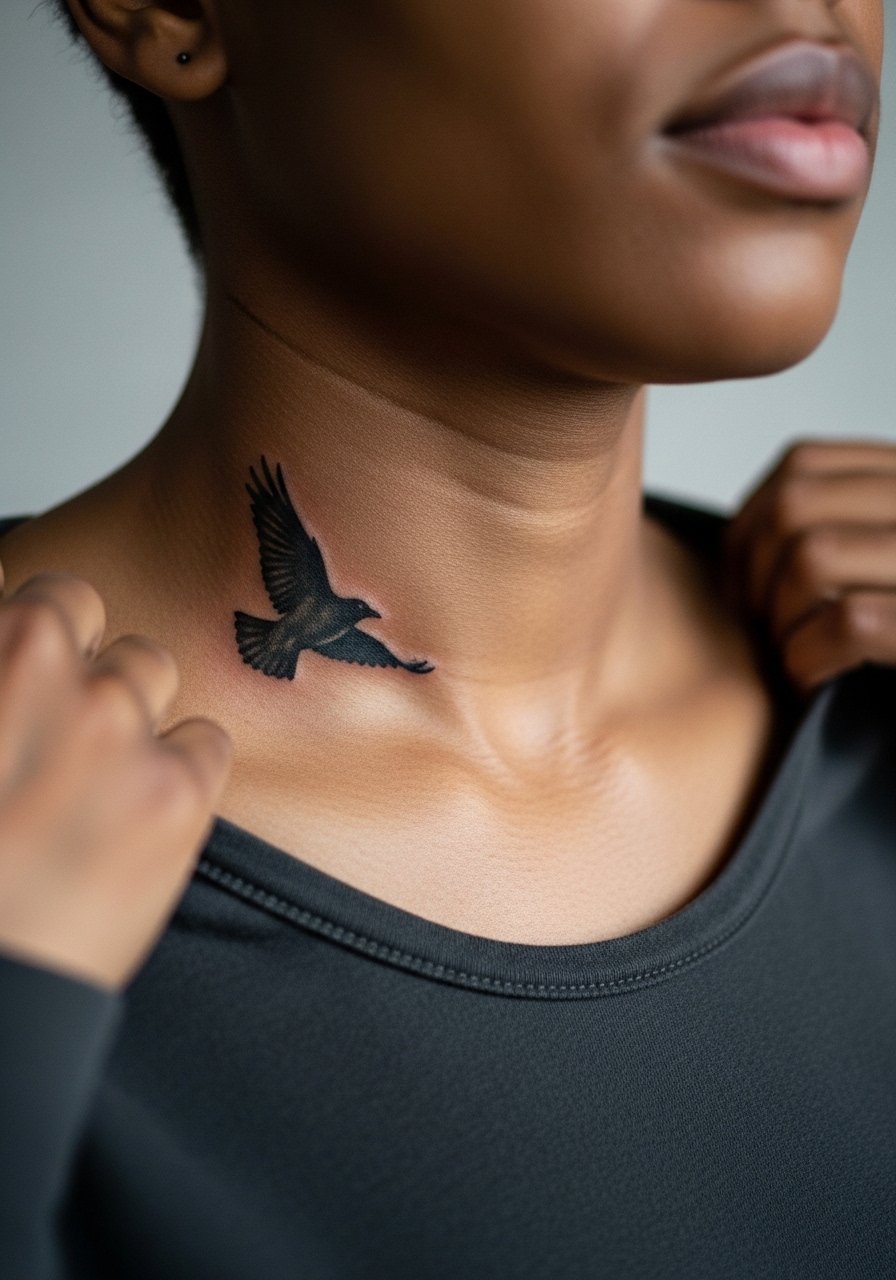
The collarbone reads dramatic and delicate at once. Realism silhouettes need crisp contrast so request deep saturation in the body and softer stipple for feather edges. Expect two short sessions for mid-sized work and bring a strapless or wide-neck top so the artist can access the area without pressure. Numbing cream debate comes up for collarbone pieces. Some clients swear by it for comfort. Other artists prefer no numbing so they can read movement. Ask where your artist stands before you book. For evenings out, pair this with an off shoulder blouse to frame the linework.
5. Blackwork Geometric Bird with Exploding Feathers on the Thigh
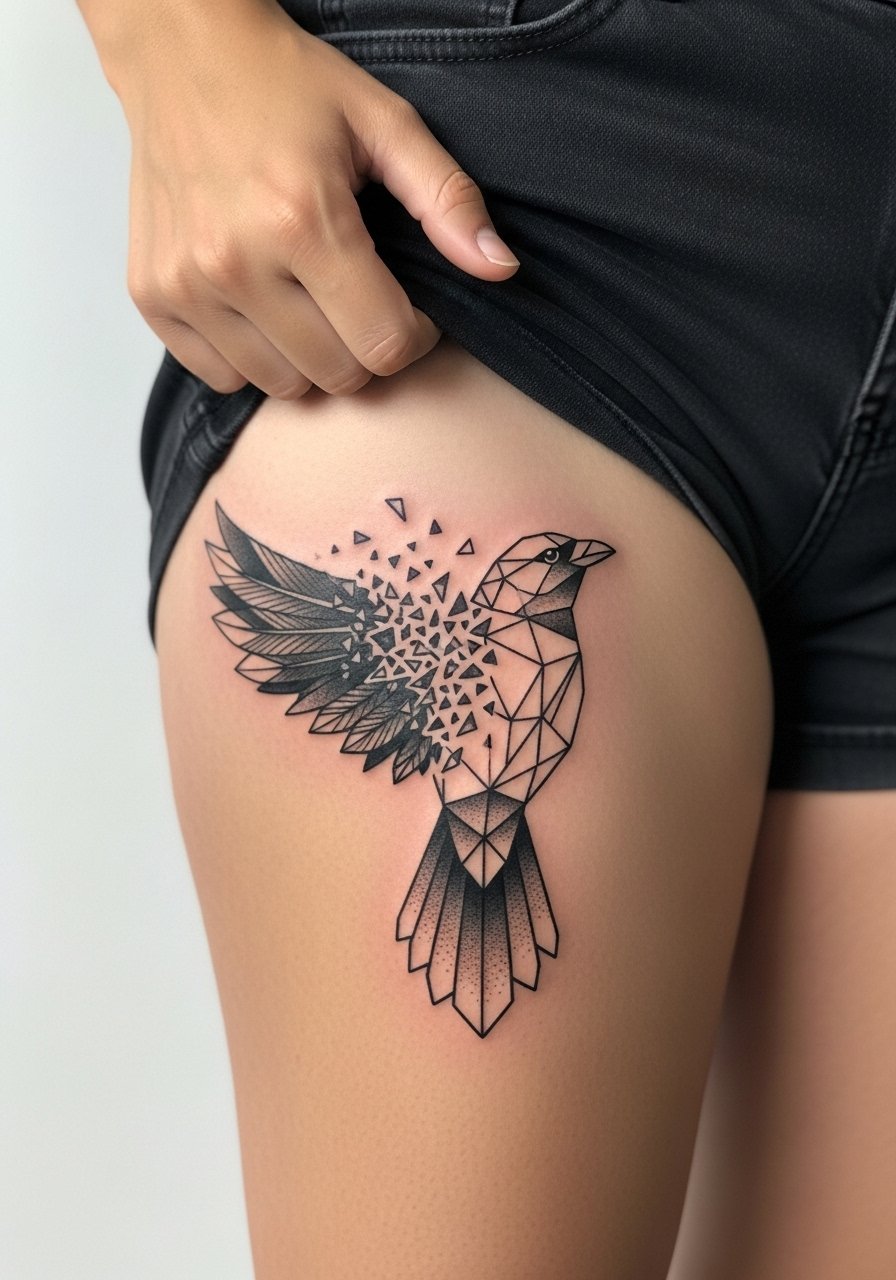
Thigh work gives room for bold geometry that holds up on darker tones. The trick is to ask for larger negative spaces inside the pattern so dense areas do not blob when healed. Pain is usually lower on the outer thigh and sessions can run one to two hours. This design pairs well with high-waisted shorts or slit skirts when you want to show it off. For the session wear, choose loose shorts so you can roll them without pressure on the healed ink. Expect excellent longevity compared with fine line alternatives.
6. Watercolor-Accented Blackbird in Flight on the Shoulder Blade
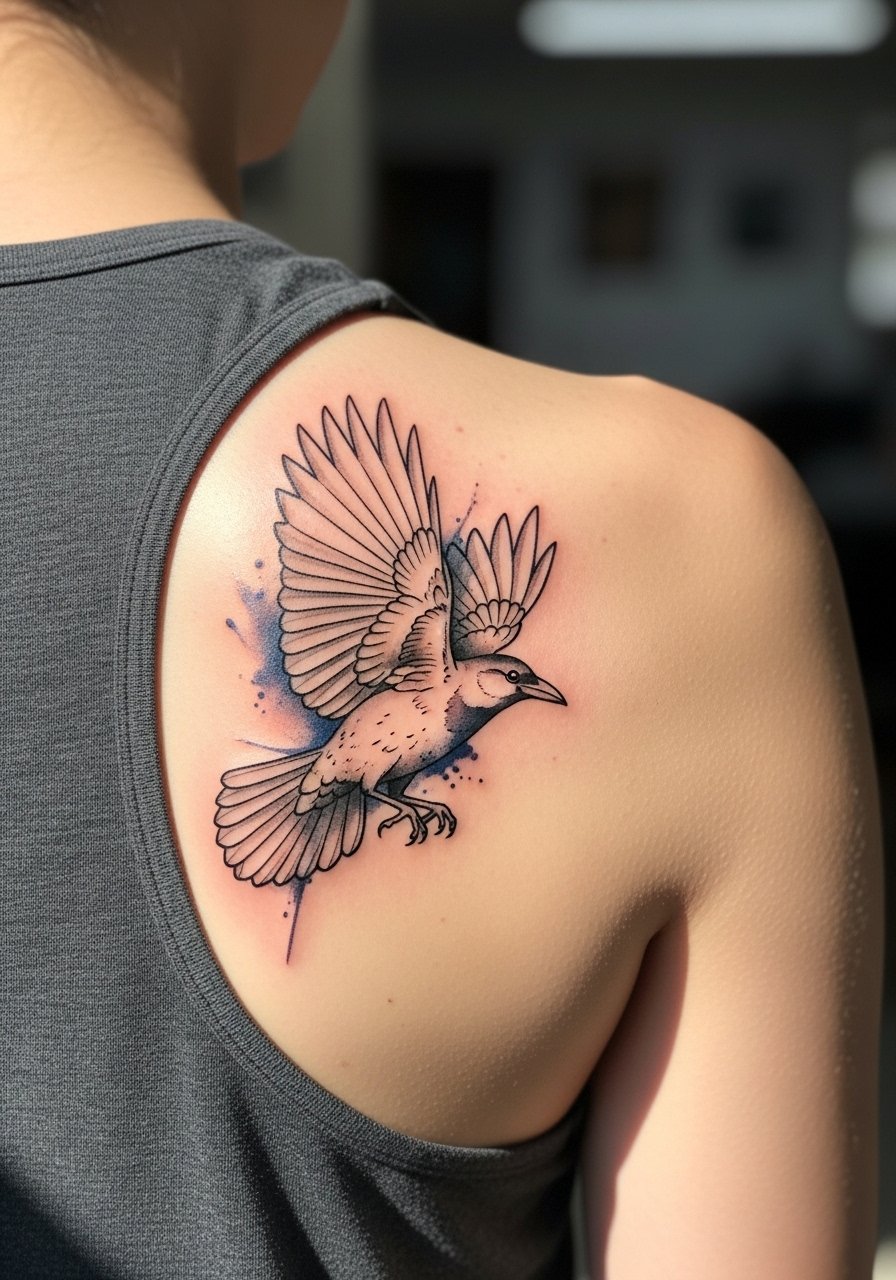
Most watercolor blackbirds age softer than bold blackwork. If you want painterly washes, ask your artist to use black line anchors with restrained blue-black washes that sit behind the silhouette. Shoulders tolerate medium pain and are great for two short sessions. For the appointment, wear a racerback tank so the artist can rotate your shoulder easily. Keep in mind that washes fade faster than saturated black, so plan touch-ups if you want the color to remain vivid.
7. Traditional Blackbird with Subtle Floral Accents on the Outer Forearm
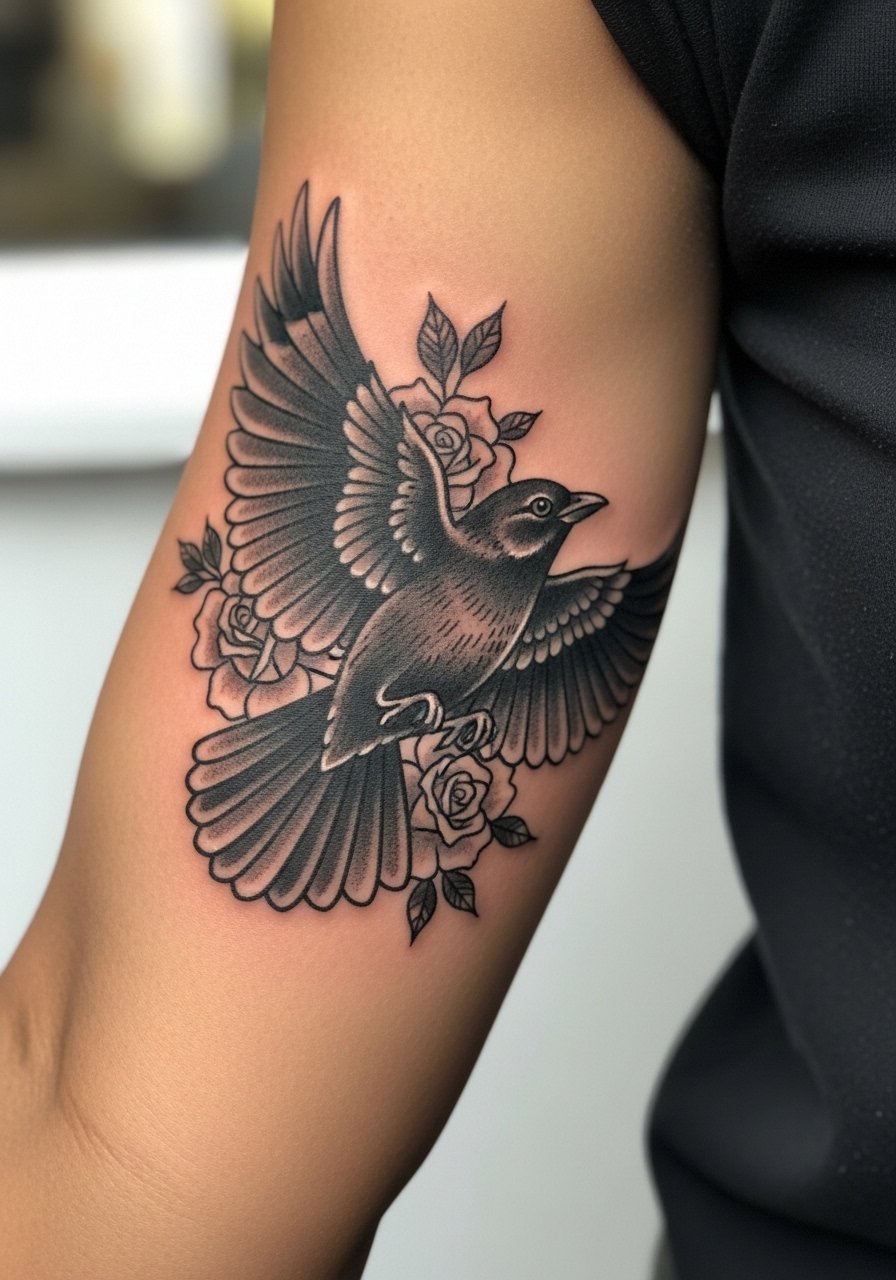
The traditional approach relies on confident linework and saturation. I recommend asking for slightly heavier linework on the outer edge of the bird so the silhouette reads even as smaller petal detail softens. The outer forearm is forgiving and usually a one to two hour session. For showing this off, roll sleeves and lean into an open-cuff look with a loose fit tank top that keeps attention on the forearm. Avoid asking for micro-petal detail inside the bird if you want longevity.
8. Bold Silhouette Blackbird with Fiery Sun Background on the Chest
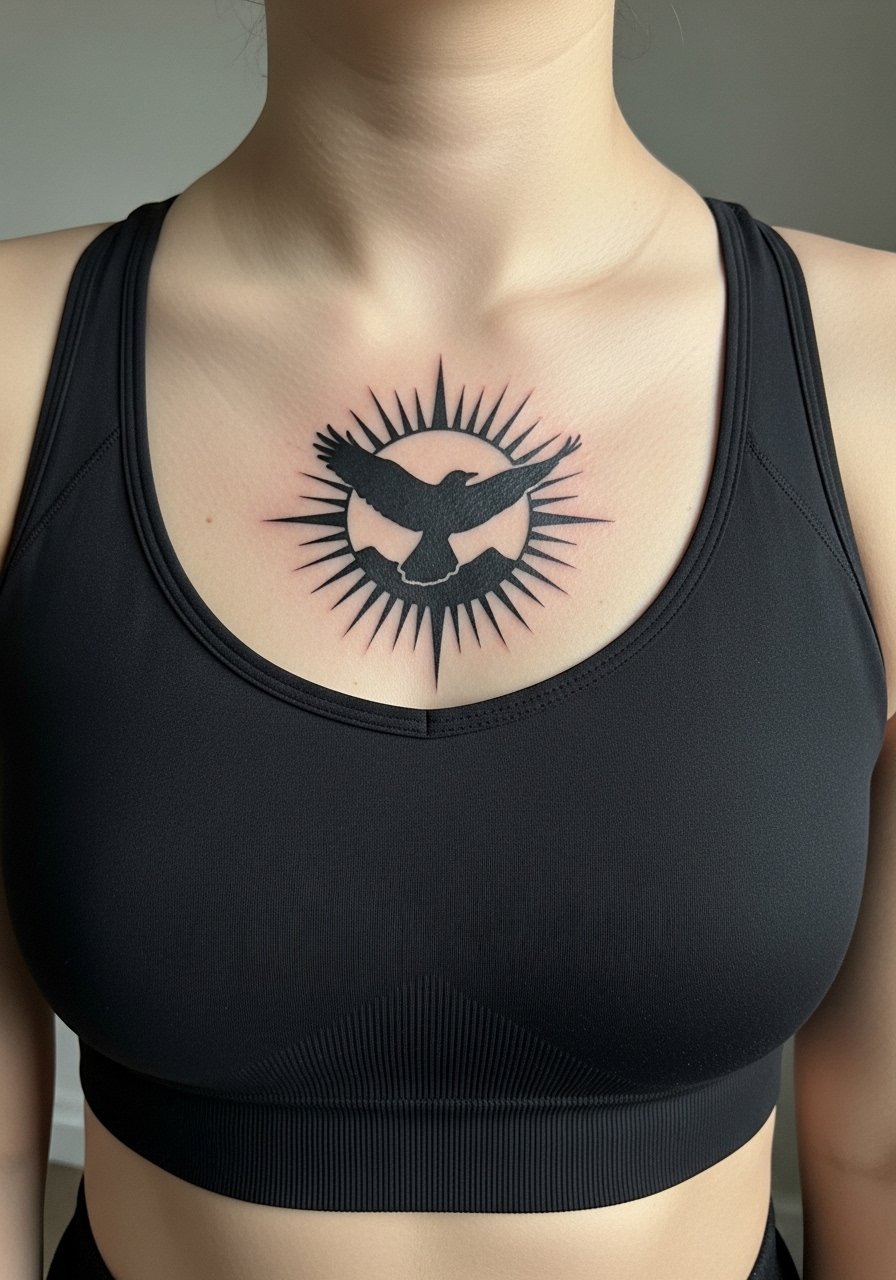
Chest pieces read big even when medium in size. The sternum area adds sensitivity and session pacing matters. For a sun-backed silhouette, request strong outer contrast and reserved inner hatch shading to avoid muddying the sun rays over time. Expect two sessions and a longer initial aftercare window. If you plan to wear strapless or open-collar tops, this placement shines with a long pendant necklace to draw the eye down. Discuss breathing and sitting breaks with your artist so the session stays manageable.
9. Minimal Wing Motif for the Rib or Neck Transition
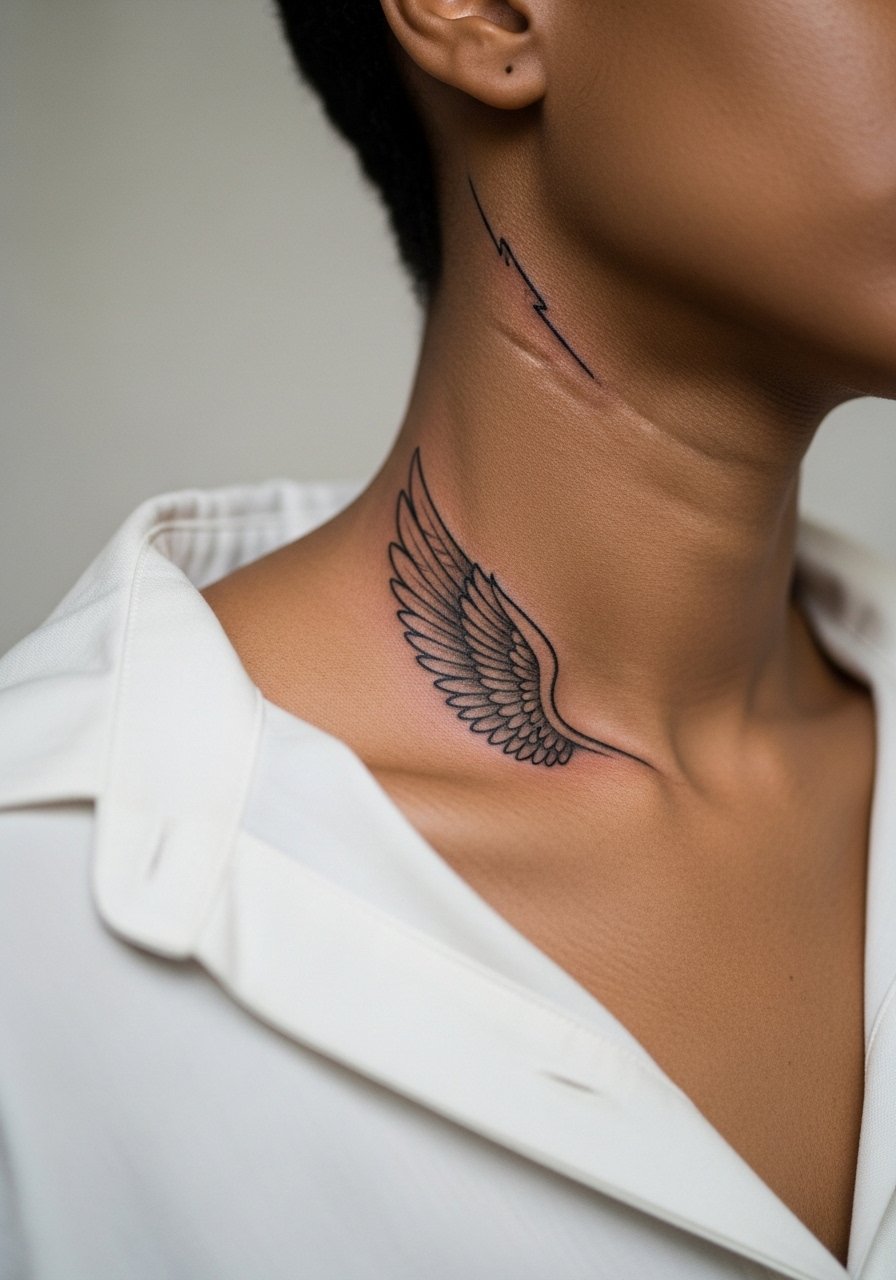
Artists split on fine line work near the neck and ribs. One camp argues the skin there stretches and lines blur quicker. The other camp says carefully spaced single-needle work can settle fine. My take is to give lines room and request a slightly bolder anchor stroke where the wing starts. Pain varies but the rib edge and lower neck are more sensitive. Keep session time short and plan for a touch-up at year two if you want crisp edges. If exposure matters, wide-neck tops show the placement without overexposure.
10. Ornamental Mandala Fusion with a Blackbird at the Center on the Upper Back
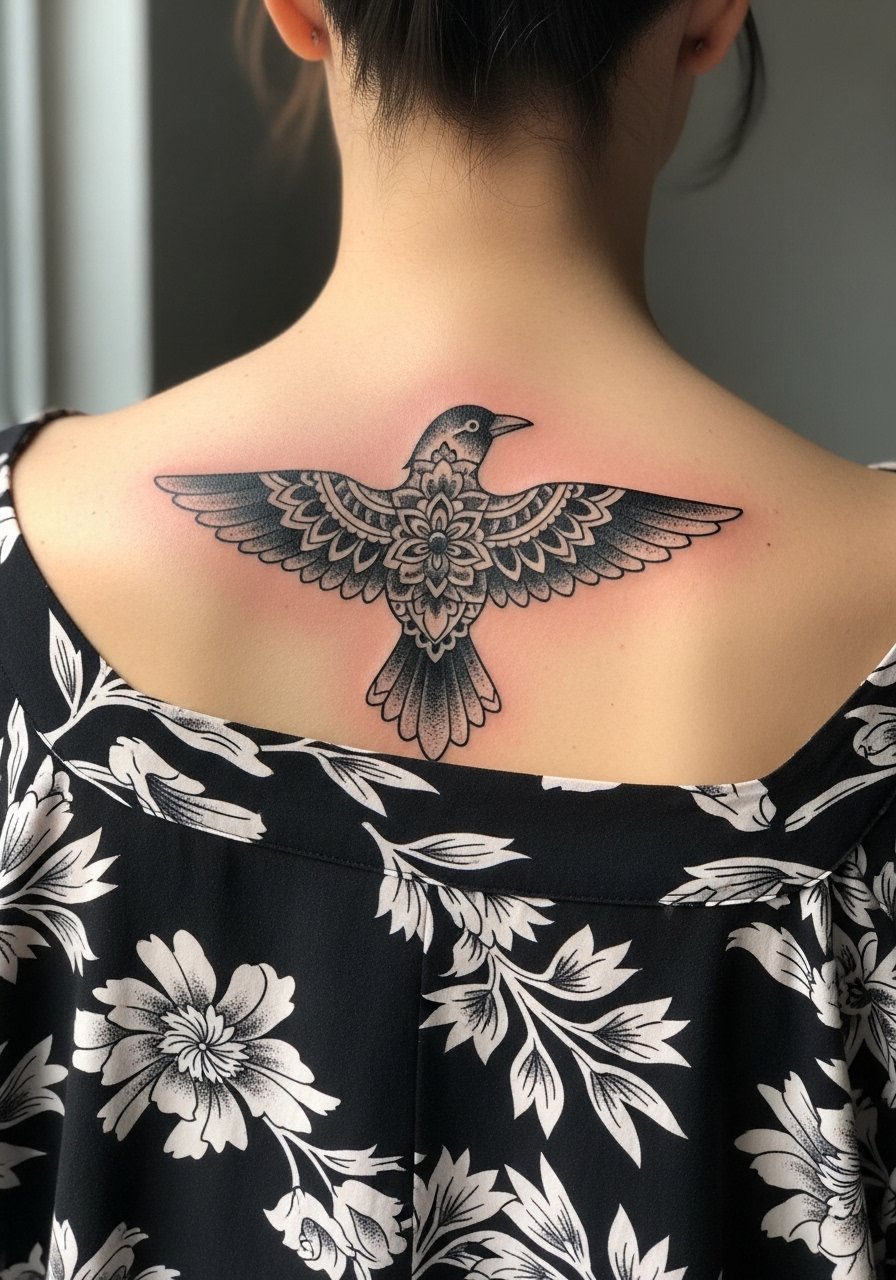
Large ornamental pieces reward spacing and contrast to avoid a heavy block of black. For a mandala fusion, ask for alternating stipple and negative space rings so the pattern breathes when healed. Upper back work is prone to low friction but may need multiple sessions. If you plan to show it, backless tops or halters work well. Be mindful that this piece is a long-term commitment and will need several sessions spread over months. Consider session pacing to manage pain and swelling.
11. Ignorant Style Blocky Blackbird on the Calf
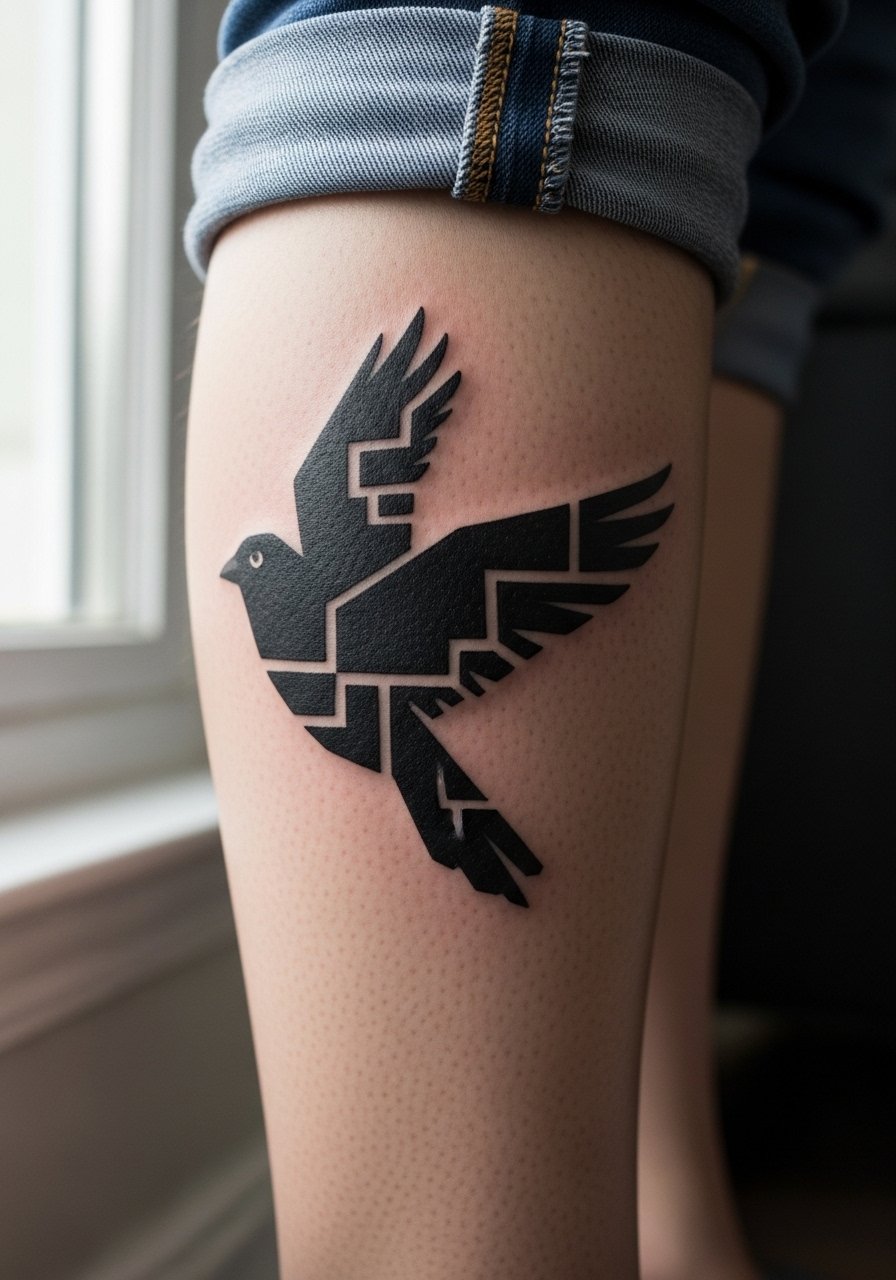
Chunky ignorant style pieces are forgiving for aging because they rely on bold shapes rather than thin detail. The calf accepts solid fills and the pain is moderate. Keep the blocks large enough so edges do not soften into each other over time. For summer show-off, wear slim ankle pants or shorts that stop above the boot line. Session time is usually one to two hours and touch-ups are rare if saturation is strong from the start.
12. Script-Integrated Blackbird Along the Inner Bicep
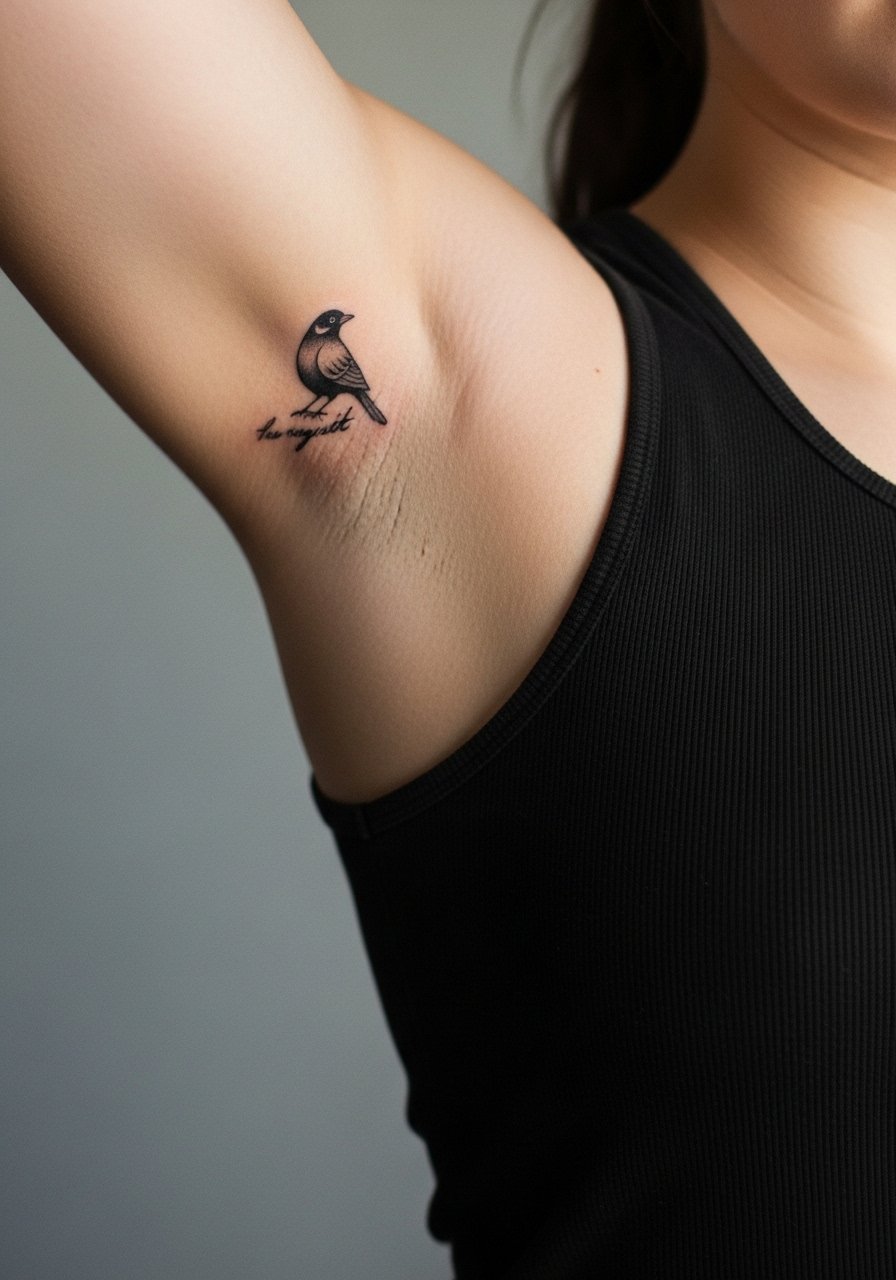
When pairing script with a bird, keep the lettering scale matched to the bird so one element does not overpower the other. Inner bicep work feels more sensitive because the skin is softer. Ask for clean, slightly open lettering and bold primary lines on the bird so the composition stays readable after healing. Session time typically fits a single appointment. Avoid ultra-fine script in tight curves. If you plan to dress up the area, thin chain pendants sit just above collarbone pieces but for biceps a fitted short sleeve frames the work nicely.
13. Micro-Realism Single Blackbird Eye on a Finger
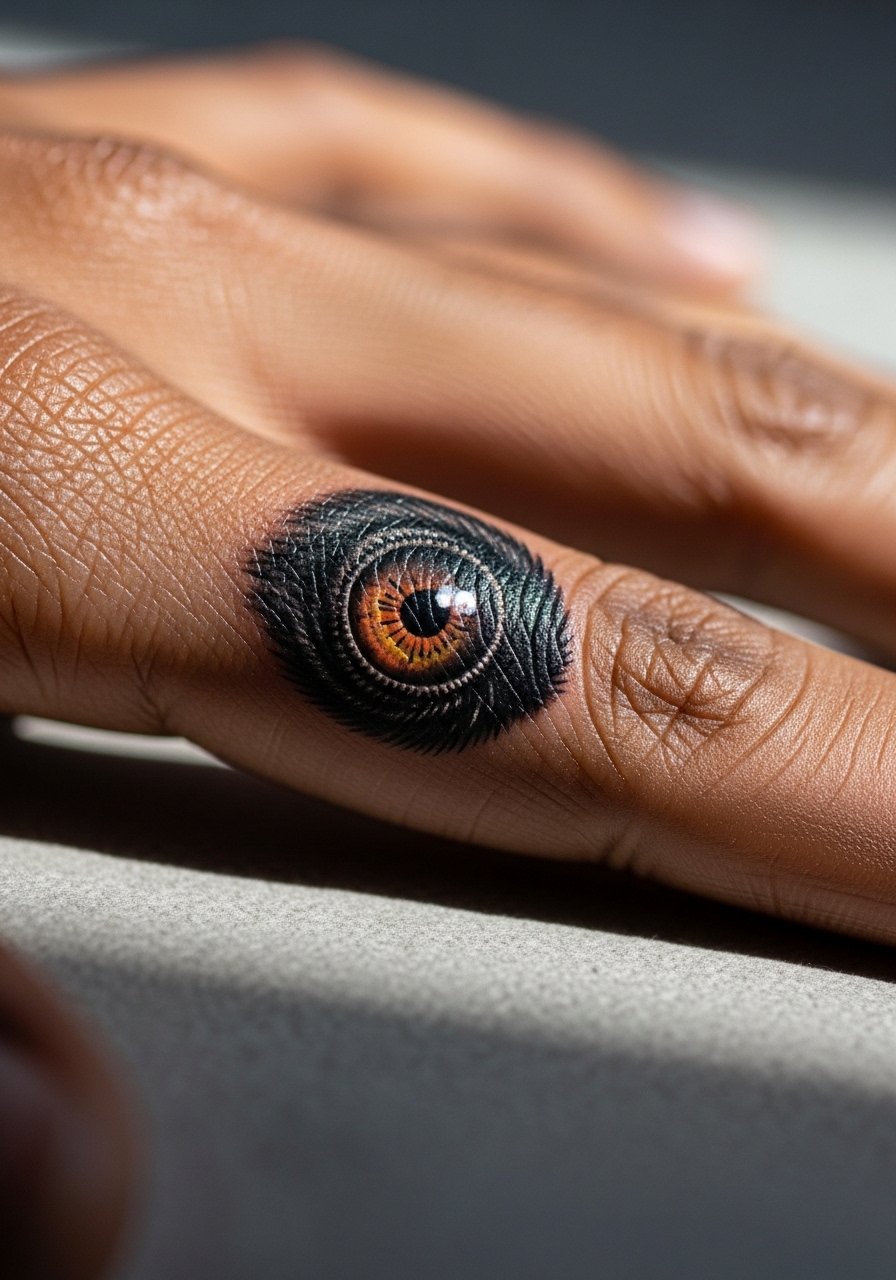
Finger tattoos live a harsh life because of constant washing and friction. A micro-realism eye can be striking but needs a bolder contrast than a typical fine line finger piece. Expect touch-ups more often than on other placements and plan for the possibility of the design softening within 12 to 24 months. Keep the appointment short and be ready for aftercare that accounts for frequent hand use. If longevity matters, consider moving this tiny detail to the wrist or side of the hand where touch-ups are easier.
14. Abstract Negative Space Blackbird for Curved Calf Surfaces
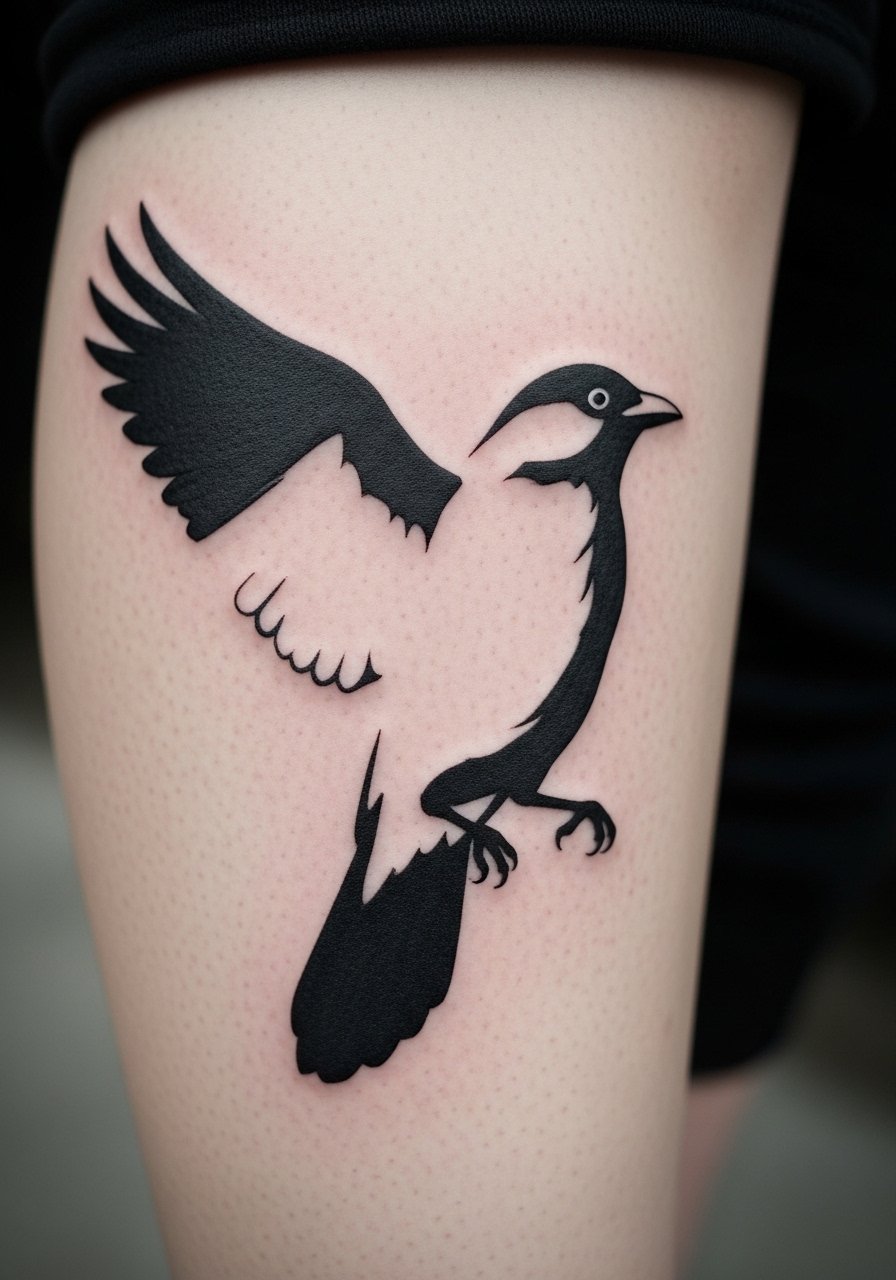
Negative space plays well on calves because the curve can make optical illusions read differently as you move. For this look, tell your artist you want strategic breathing room between solid fills so the gaps remain crisp after healing. Calf skin tolerates solid blackwork and usually requires one session. Watch for too-tight line clusters that can merge. For showing, slim ankle pants or rolled shorts provide the right peek without overpowering the silhouette.
15. Fine Line Single Feather Detail on the Ankle
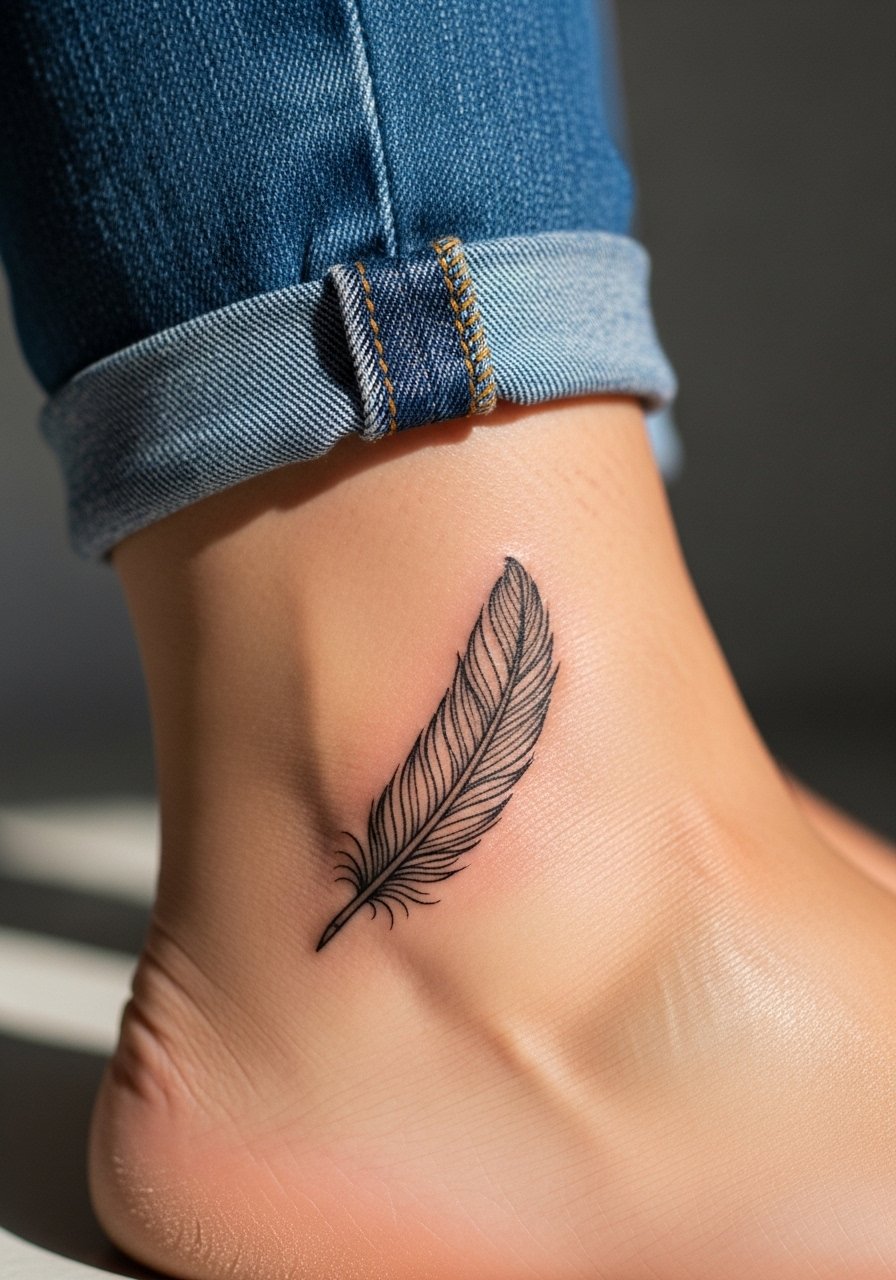
Ankle placements face abrasion from shoes and socks which accelerates fading. Keep the feather slightly larger than you want and request a sturdier outer contour so the shaft holds. Pain is lower here but healing needs friction management for the first two weeks. For the session wear, roll your pants up or bring shorts. For showing it off, slim ankle pants or sandals work nicely. Plan for a potential touch-up around year one.
16. UV-Reactive Accents Hidden Within a Blackwork Bird on the Thigh
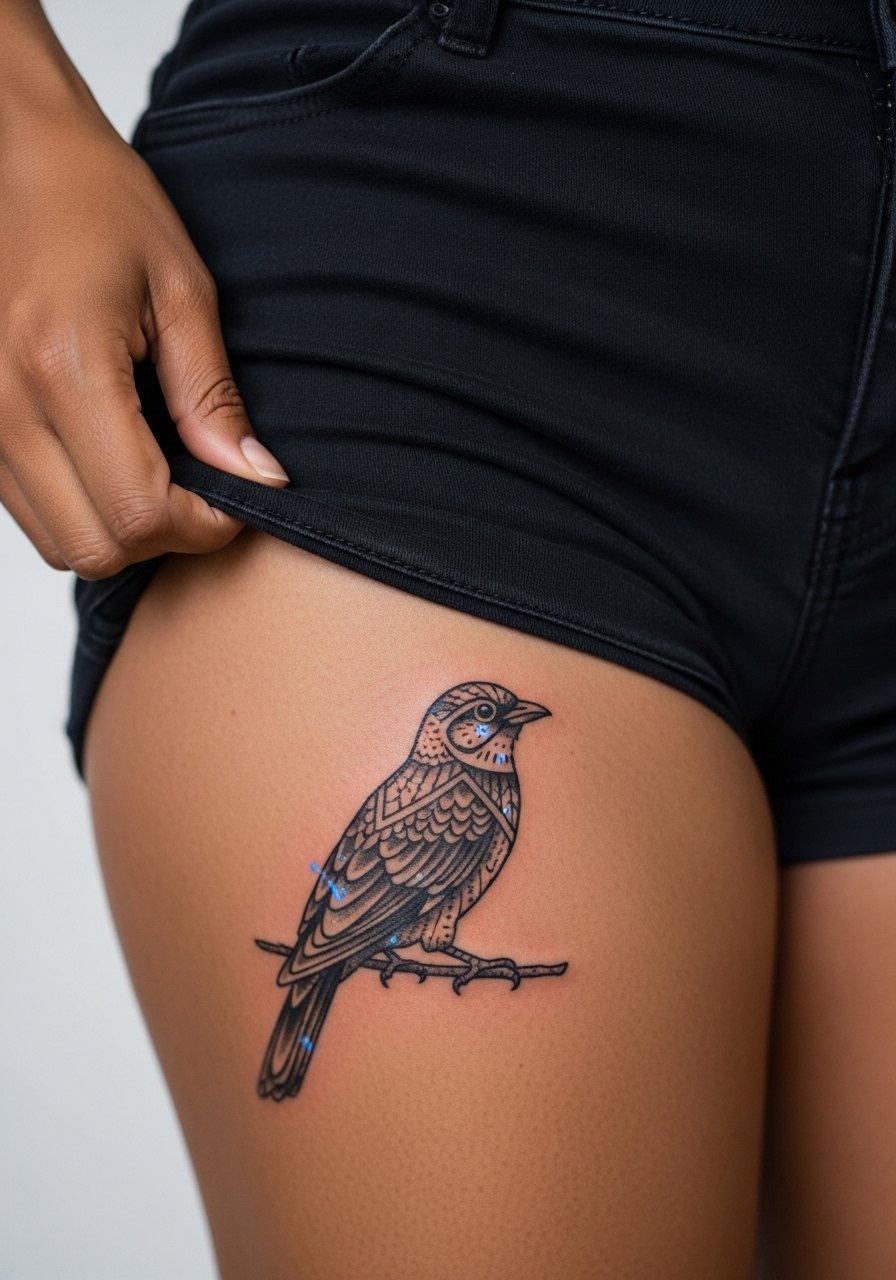
UV-reactive ink is a novelty and it changes how you plan the piece. If you want glow-under-blacklight elements, ask for the UV to sit behind solid black blocks so the contrast reads in normal light but reveals under UV. Thigh placements handle this well since they are easy to hide. Session time can stretch if layering is involved. Keep in mind UV inks are less tested for longevity and some artists avoid them. If you want to show it seasonally, pair the look with high-waisted shorts.
17. Small Silhouette Blackbird Behind the Ear, Below the Hairline
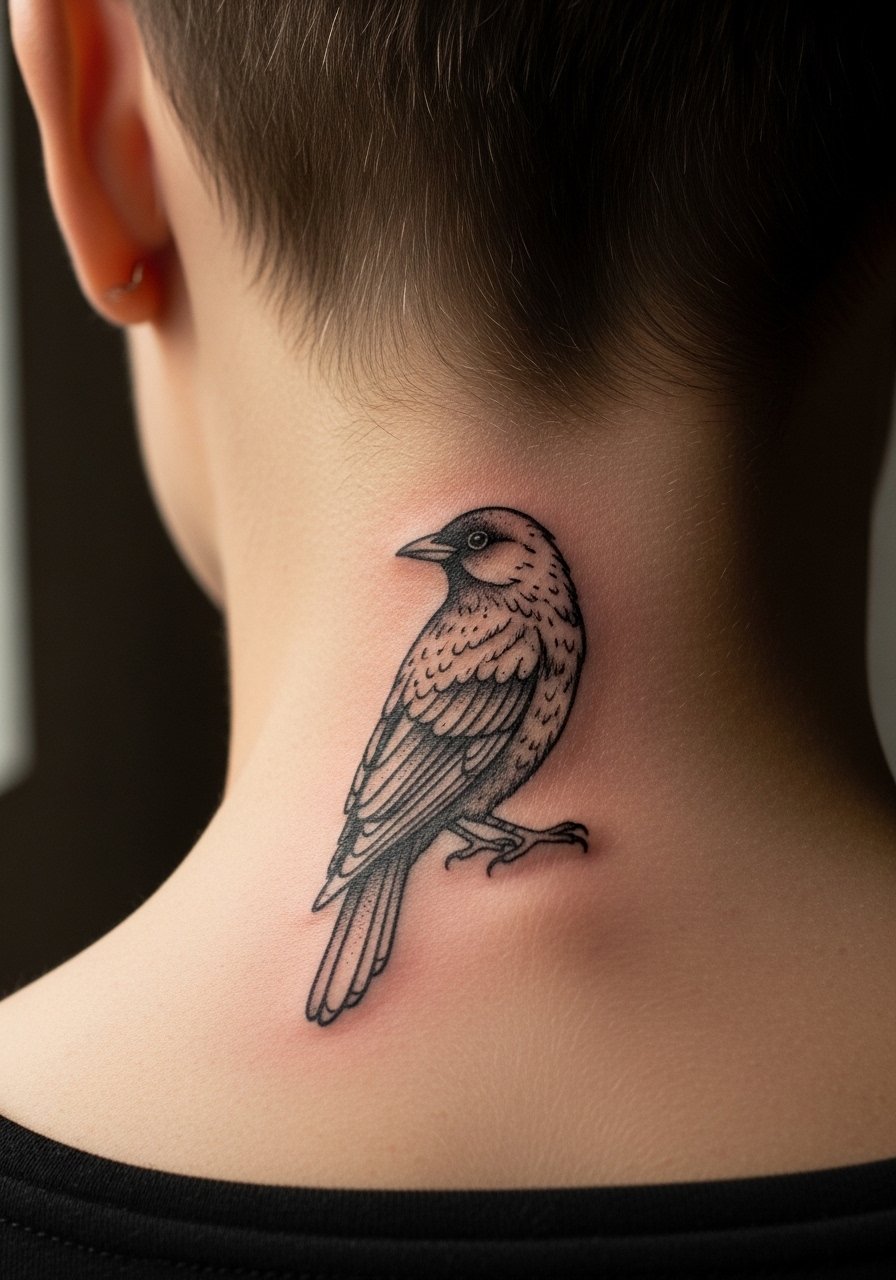
Behind-the-ear placements read intimate and require precise framing with hair and clothing in mind. This area needs the tattoo to sit just below the hairline on the neck so the image is visible without exposing the ear itself. Pain is moderate and session time is brief. Because of the location, ask for a clean silhouette rather than tiny feather detail that can wash out. Hair will partially cover the area for most styles so factor that into your showing-off plans.
Studio Day Picks
The wrist, forearm, and collarbone pieces above need different prep than larger back or thigh work, so a few targeted items smooth the session and early healing.
-
Lush Tattoo Balm. A breathable oat-base balm many use for the first week on delicate fine line work, good when winter skin is dry.
-
InkSafe Non-Shiny Balm. A matte-finish option that helps blackwork stay less reflective on dark skin tones while still hydrating.
-
Hada Labo Moisturizing Lotion. Lightweight hydration for sensitive areas like inner biceps and ribs, so the skin does not crack during winter heals.
-
RevitaLotion Skin Hydrator. Good for longer sessions on thigh or calf where the skin can dry out between appointments.
-
Hustle Butter Deluxe. A commonly used ointment that absorbs quickly and helps the first few days feel less slick, handy for forearm and shoulder pieces.
Frequently Asked Questions
Q: Do fine line blackbird wrist tattoos really fade fast, and what helps them last?
A: Fine line wrists do tend to soften faster because of constant hand use and sun exposure. Ask for a slightly heavier anchor line, avoid ultra-fine cross-hatching, and plan a touch-up around year one to maintain crisp feather edges. Keep the wrist protected from daily sun when possible.
Q: If an artist cancels a guest spot, how should I protect my deposit and timeline for a blackbird design?
A: Confirm the artist's availability 48 hours before your slot and ask whether deposits transfer or refund if a guest cancels. Use booking platforms that show guest calendars and get a clear reschedule policy up front. Have a local backup artist who accepts small custom work if time matters.
Q: What is the best blackbird style for darker skin so the design reads in photos?
A: High-contrast blackwork with solid fills or slightly heavier outlines reads best on darker tones. Designs that rely on dense negative space or strong saturation keep shapes visible. If you want subtle shading, ask for layered stipple at wider spacing so the texture stays legible in photos.
Q: How often do blackbird tattoos need touch-ups by style and placement?
A: Touch-up timelines vary. Fine line wrists and fingers often need work within one to two years. Collarbone and chest pieces may hold three to five years before a refresh. Heavy blackwork on thighs and calves can go much longer without intervention. Your artist will recommend a realistic schedule based on line weight and saturation.
Q: Should I wear anything special to my appointment for a collarbone or shoulder bird?
A: Wear something that gives clear access without binding the area. For collarbone and shoulder pieces, choose a strapless bralette or a racerback tank that you can pull aside easily. Comfortable clothing that you can sit in for one to two hours makes the session smoother.
Q: Are watercolor blackbird designs a bad idea if I want longevity?
A: Watercolor washes fade faster than solid blackwork, especially on sun-exposed placements. If you want a painterly feel but longer life, ask for black anchors with restrained color washes behind them. Expect more frequent color touch-ups than you would with pure blackwork.
Q: Do tattoo conventions or guest spots help if I want a specific blackwork specialist?
A: Conventions and guest calendars are good ways to find traveling blackwork artists. Use event apps and city searches, then confirm the artist's guest dates and deposit rules in writing. Bring precise reference sketches so you can secure a consistent result when time with a guest artist is limited.
