
Fine line trends and glossy Instagram uploads make black and red look effortless, but the real shop talk is messier. Red can lose saturation faster than black, some designs read muddy on darker skin, and small flash pieces now often cost more than they used to. These 21 black and red tattoo ideas focus on placements, what to ask your artist, and simple wardrobe choices that help the ink age well.
1. Bold Black Outline Red Rose on Forearm
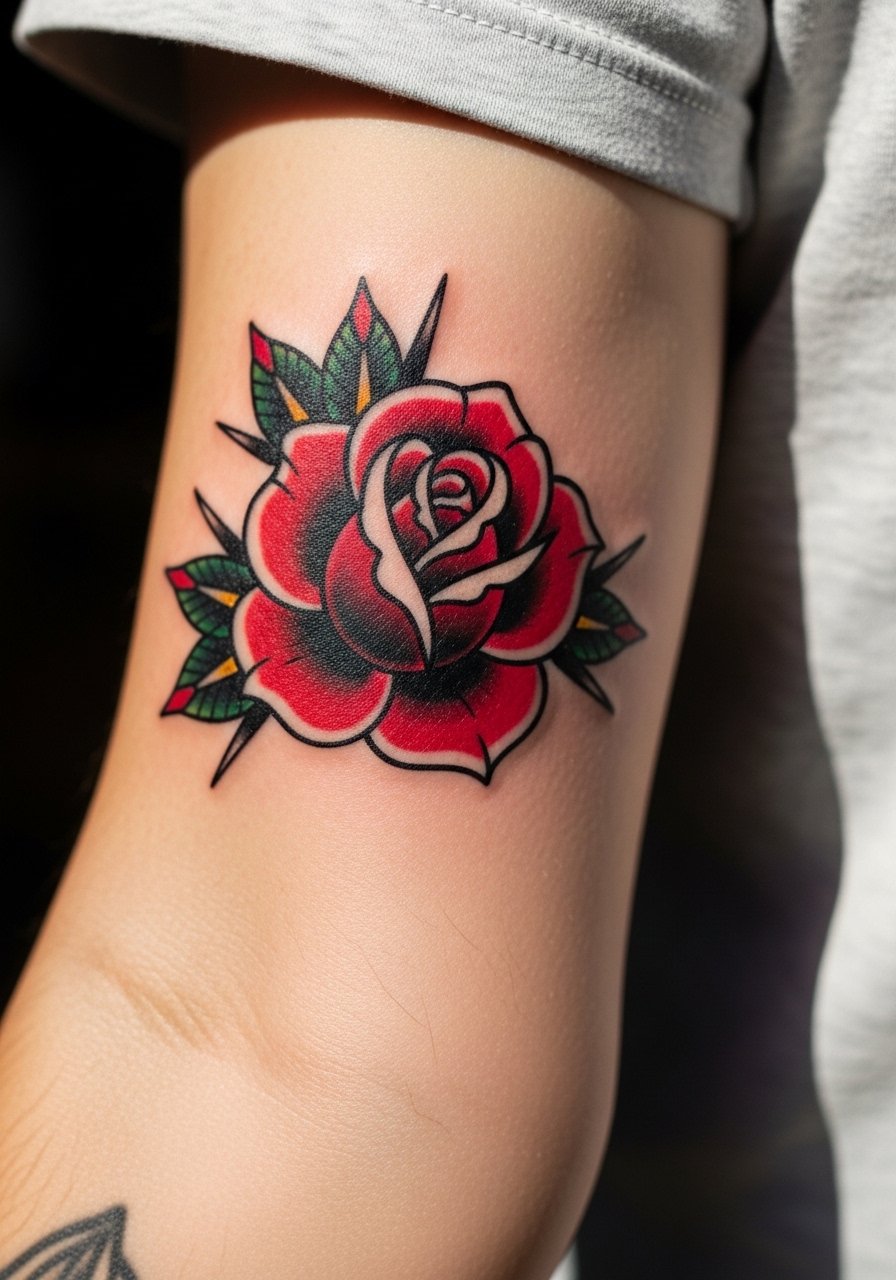
I recommend this when you want a design that reads from a distance and holds up over time. Tell your artist you want thick exterior linework and saturated red fill with minimal internal fine shading. The common mistake is tiny petals and fine inner details that blur into a red blob at year three. Expect moderate forearm pain and a session under two hours for a 3-5 inch piece. For showing it off, roll up a rolled sleeve henley in black or charcoal and add a leather cuff bracelet opposite the tattoo. Touch-ups for the red usually help at 6-12 months.
2. Red Dragon with Black Shading Sleeve
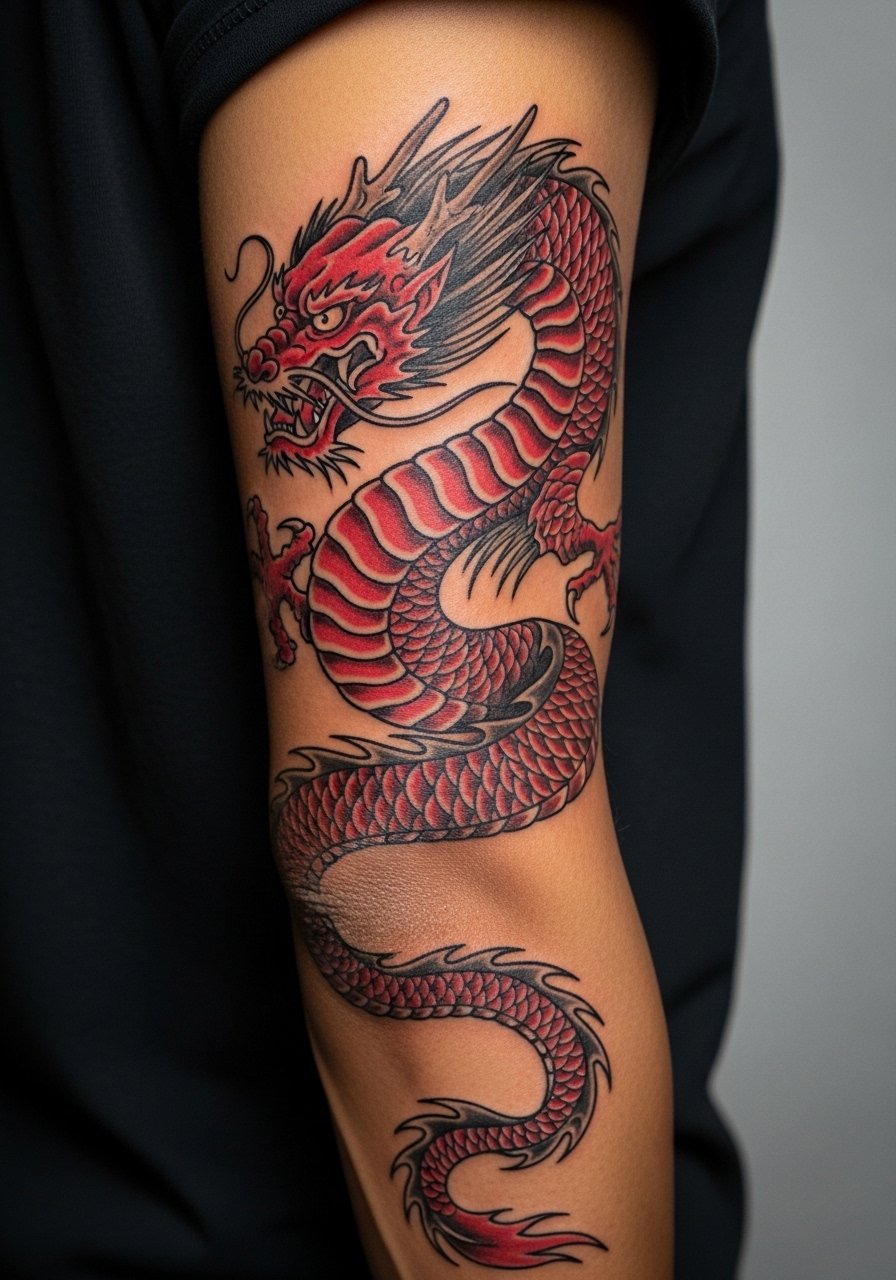
There is a reason dragons keep coming back. Go neo-traditional for a creature that looks vivid without needing full color realism. In consultation, point out scale highlights where you want red saturation versus black shading. Mistakes often start with too many tiny scales, which wash out during healing. This is a multi-session commitment, expect a longer booking window and heavier saturation sessions. For session day, wear a sleeveless muscle tank so the artist can work the shoulder and upper arm without fabric drag. Ask about touch-up plans for the red accents before you book.
3. Black and Red Wolf Head on Shoulder
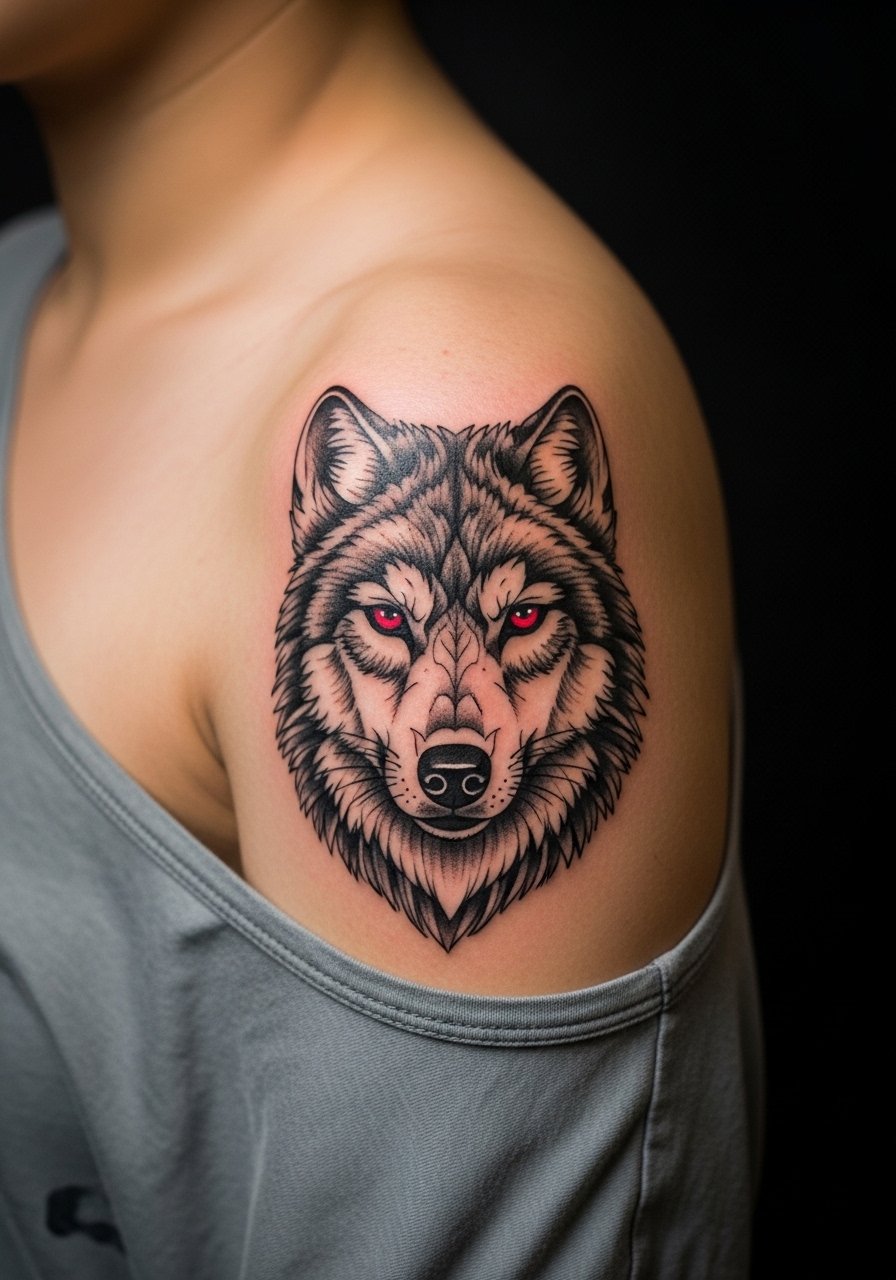
I've seen a lot of collectors pick the shoulder for animal motifs because the cap holds heavy black fill without blowout. Request solid black fills with a tiny area of saturated red for the eye or tongue. The pitfall is thin linework within the muzzle that can fragment into patchy gray when healed. Shoulder pain is low to moderate and sessions are usually short. For showing the piece, an off shoulder tee keeps attention on the cap while letting the contrast pop. If your job needs conservative coverage, consider placement toward the back of the shoulder.
4. Minimalist Red Heart, Black Outline, Inner Wrist
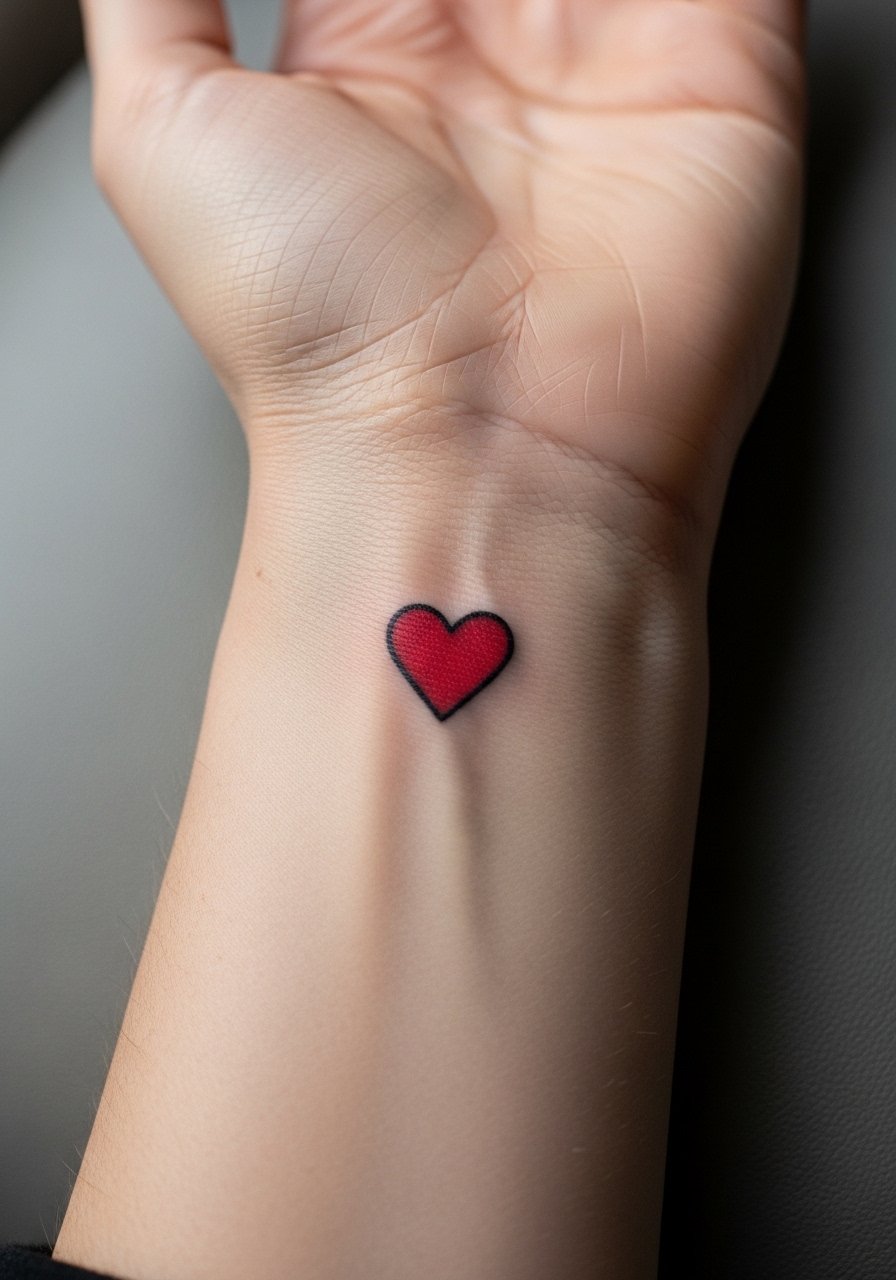
Fair warning, the wrist is a friction zone and small fine-line work can fade faster. For a clean minimalist heart, ask for a slightly thicker outline than your reference so the black holds and the red fills cleanly. The common error is hairline outlines that disappear or link into a red smudge after frequent washing. Expect sharper sensitivity during the session because the wrist has less soft tissue. Wear no jewelry for the appointment and plan for a thin chain opposite the tattoo when showing it off, like a thin silver chain bracelet. Touch-ups at 6-12 months are normal with red ink here.
5. Black Geometric Shapes with Red Accents on Thigh
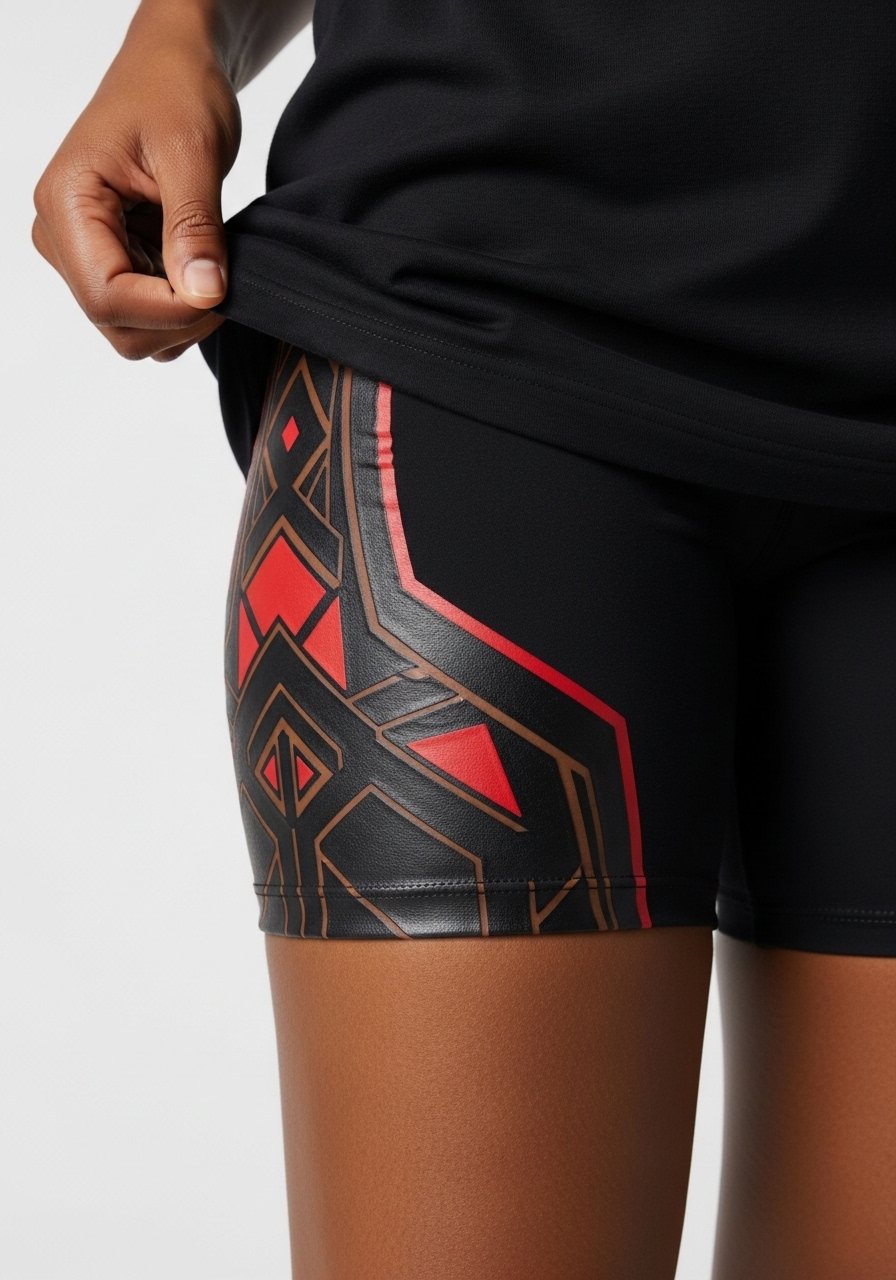
The thigh is forgiving for dense geometry if you give the artist space to scale linework. The biggest mistake is compressing intricate geometry into too small a footprint. Ask for negative space between elements and red highlights on larger nodes, not thin accent lines. Expect lower pain and two shorter sessions for a 5-7 inch composition. For showing it off, high-waisted shorts in olive or black do the trick. Pair the tattoo with high waist shorts men or a skirt with fishnet tights for edge. Weight changes can affect thigh pieces over time, so account for possible stretching.
6. Neo-Traditional Red Rose with Black Thorns Sleeve
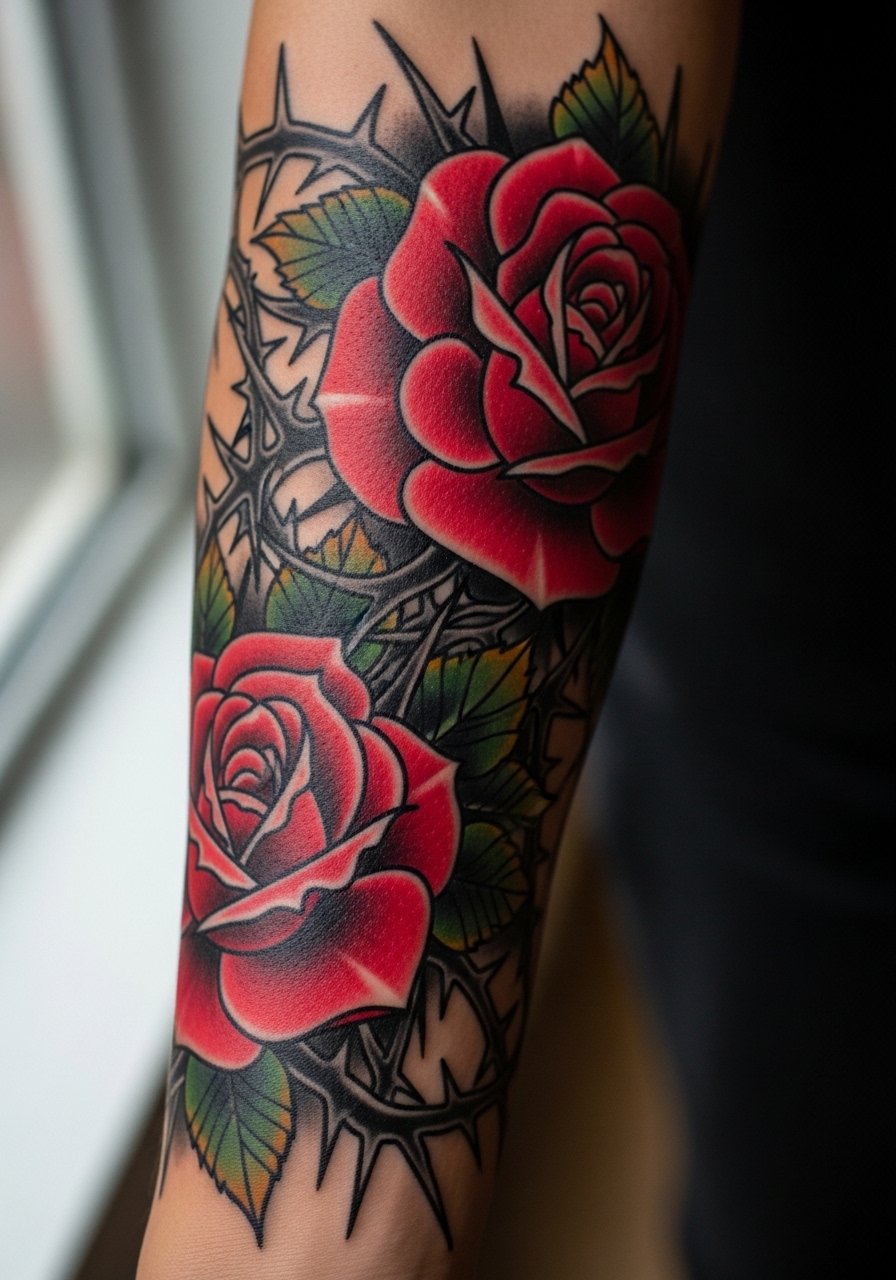
Most collectors who go sleeve choose this when they want an old-school vibe but with modern color control. Say you want the thorns to frame the blooms rather than compete with them. A common age-related issue is overworking small leaves in the sleeve that become a graywash. Sessions are longer, expect multiple appointments. For session comfort, bring a loose button-down so you can pull the sleeve aside. When wearing it out, a loose fit button shirt rolled at the cuff frames the forearm without hiding the work. Touch-ups on the reds at year one help restore saturation.
Studio Day Picks
The wrist and forearm pieces above heal differently from larger work, so a few small items smooth out the session and the first week.
-
Stencil transfer paper kit. Lets you preview linework placement on skin before the needle hits, which is helpful for wrist and ankle designs that read differently in real life.
-
Topical numbing cream. Used before wrist and inner thigh sessions it can take the edge off sensitivity for short, focused appointments.
-
Thin protective film roll. Keeps small hand and finger pieces cleaner during the first week when friction from washing is unavoidable.
-
Fragrance-free body wash. Gentle cleansing for healing areas without stripping moisture from newly saturated red pigments.
-
Aquaphor healing ointment. A thin layer during the initial days helps keep fine line areas from scabbing hard and losing pigment.
7. Blackwork Skull with Red Eyes on Chest
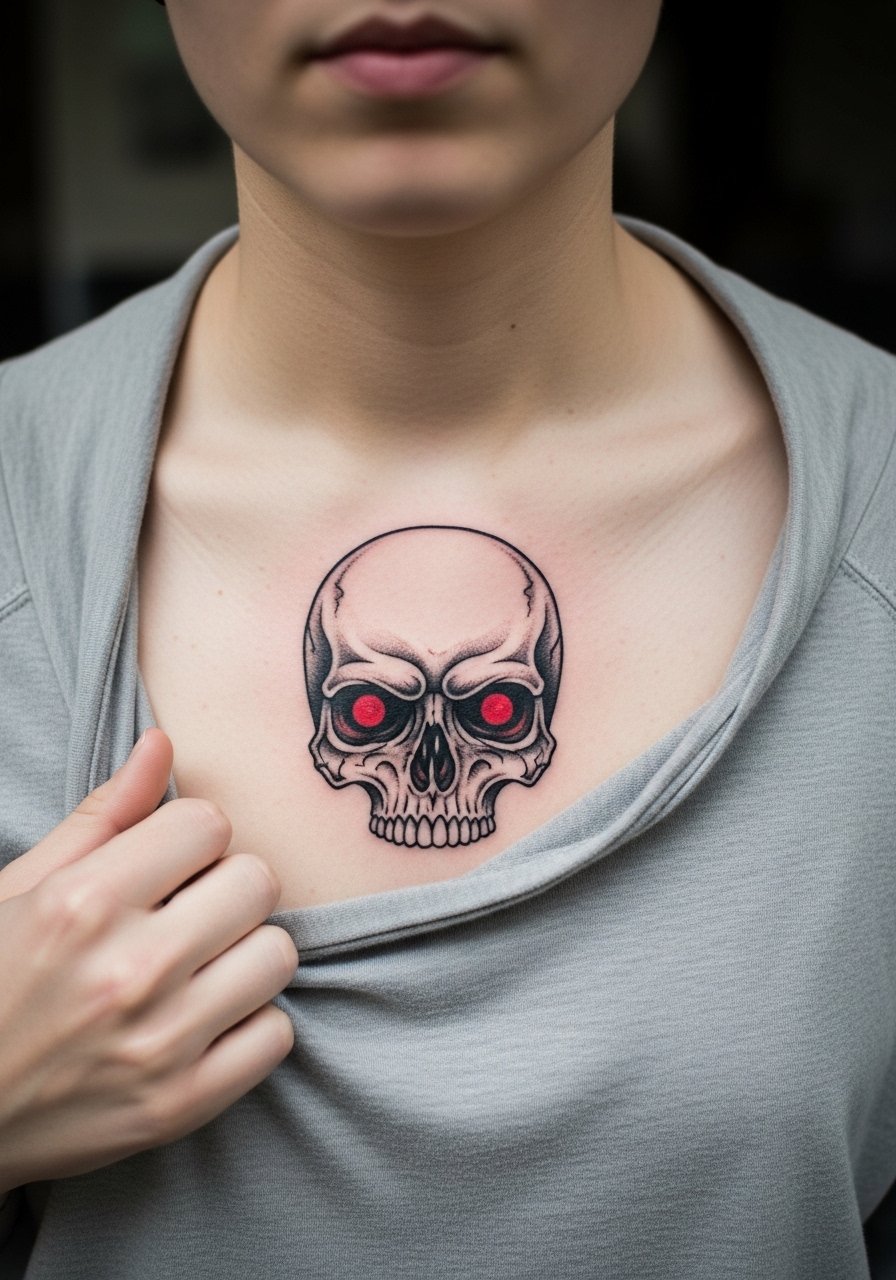
Chest pieces show well with dense blackwork and a pop of red for eyes or background glow. Warning, the sternum area can be more painful and needs careful session planning. Tell your artist you want the skull to sit high on the chest with the red as a halo rather than as small internal dots. A common mistake is too many small red specks that fade unevenly. For show, a deep v neck shirt or unbuttoned shirt frames the top of the chest. Expect a two-session area if the black saturation is heavy. Career considerations vary by industry so keep that in mind.
8. Watercolor Red Splash with Black Butterfly on Calf
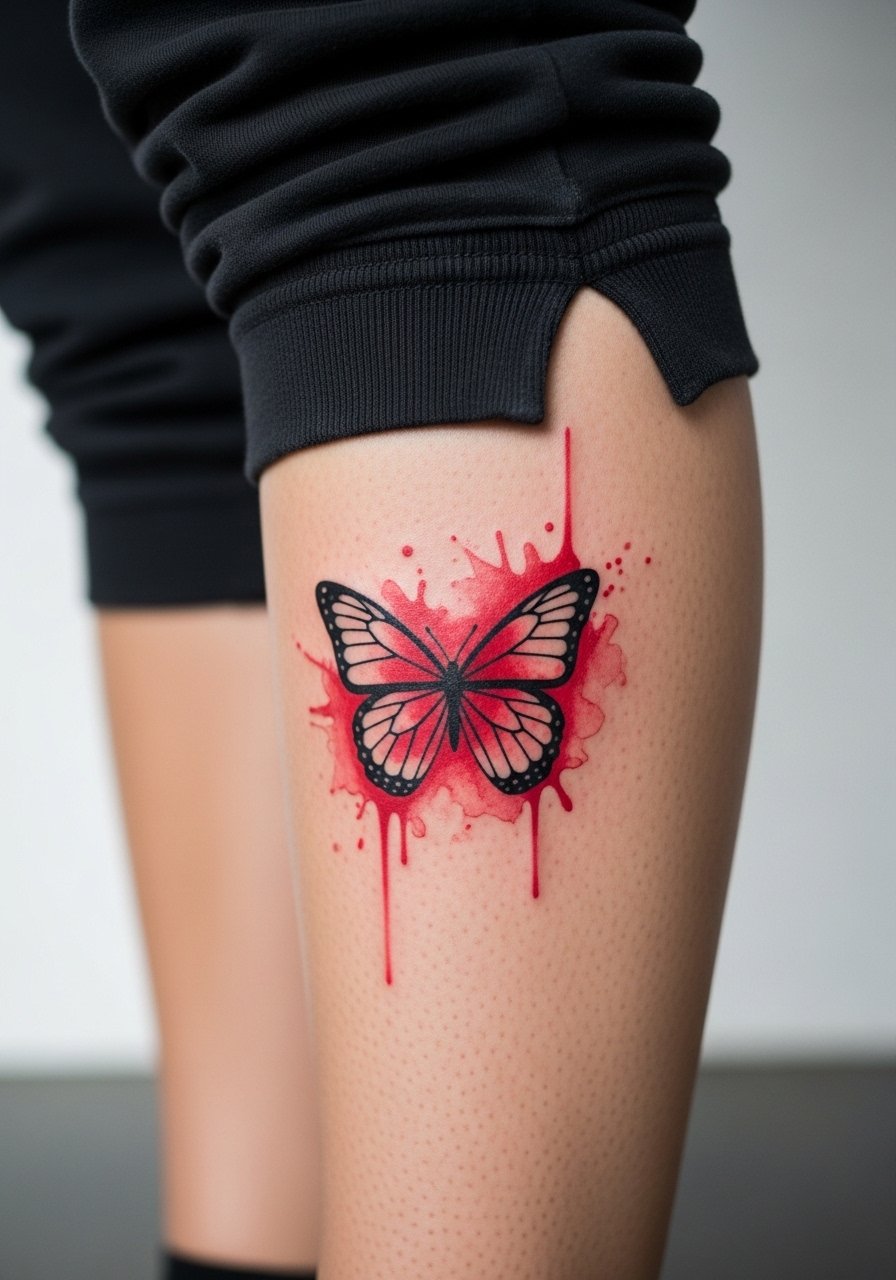
Watercolor motifs in black and red can give movement without needing full color realism. The trick here is to anchor the watercolor with crisp black linework so the red wash reads intentional when healed. The mistake is letting the wash spread too thin, which leaves a bruise-like faded patch. Calf sessions are low pain and usually one to two short sittings. For showing off, cropped joggers or rolled jeans highlight the calf. Use a cropped joggers women style for casual display. Expect softer edges at six months that can be sharpened in a touch-up.
9. Ignorant Style Red Arrow with Black Lines on Inner Forearm
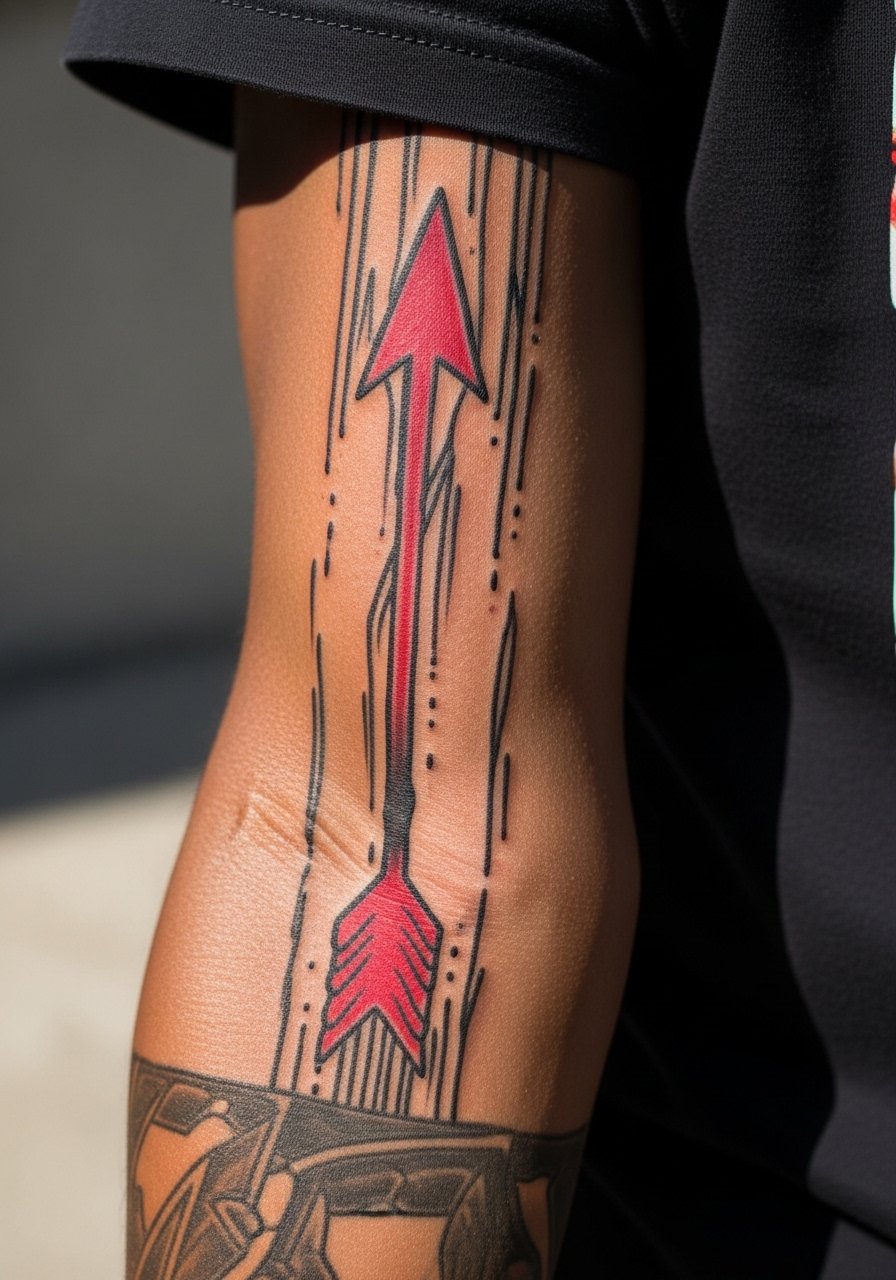
This playful street-art vibe is forgiving because it embraces rough linework. When you ask for it, specify that you want intentional unevenness and visible texture, not accidental shaky lines. A common error is asking for "naive" but expecting photo-quality edges. The forearm placement makes touch-ups easy if the red fades. For session wear, a loose short-sleeve tee works. Show it off with rolled sleeves and a leather cuff bracelet for contrast. The session is short and tends to heal cleanly if the artist keeps the saturation dense.
10. Red Mandala with Black Outline on Upper Back
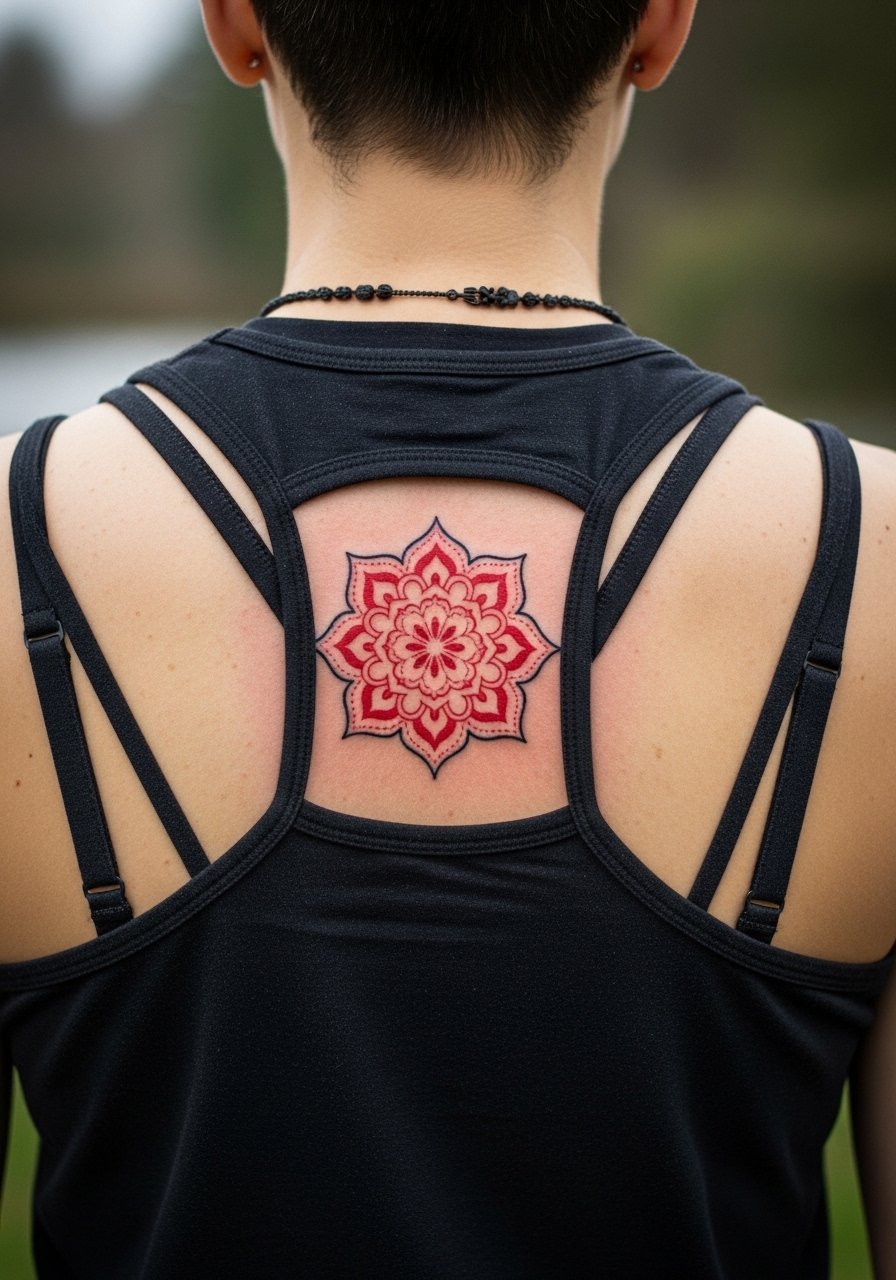
Mandala symmetry benefits from scale and breathing room. The main mistake is shrinking a dense mandala too small, which causes inner lines to merge into a gray block. Ask your artist to design with deliberate gaps and strong outer borders. Back work takes multiple sessions and is lower on the pain chart for most people. For showing it off, a backless tank top or low-back dress frames the mandala without competing. Expect the red centers to soften with time and plan a refresh at year two if you want them crisp.
11. Micro-Realism Red Rose with Black Petals on Side Neck
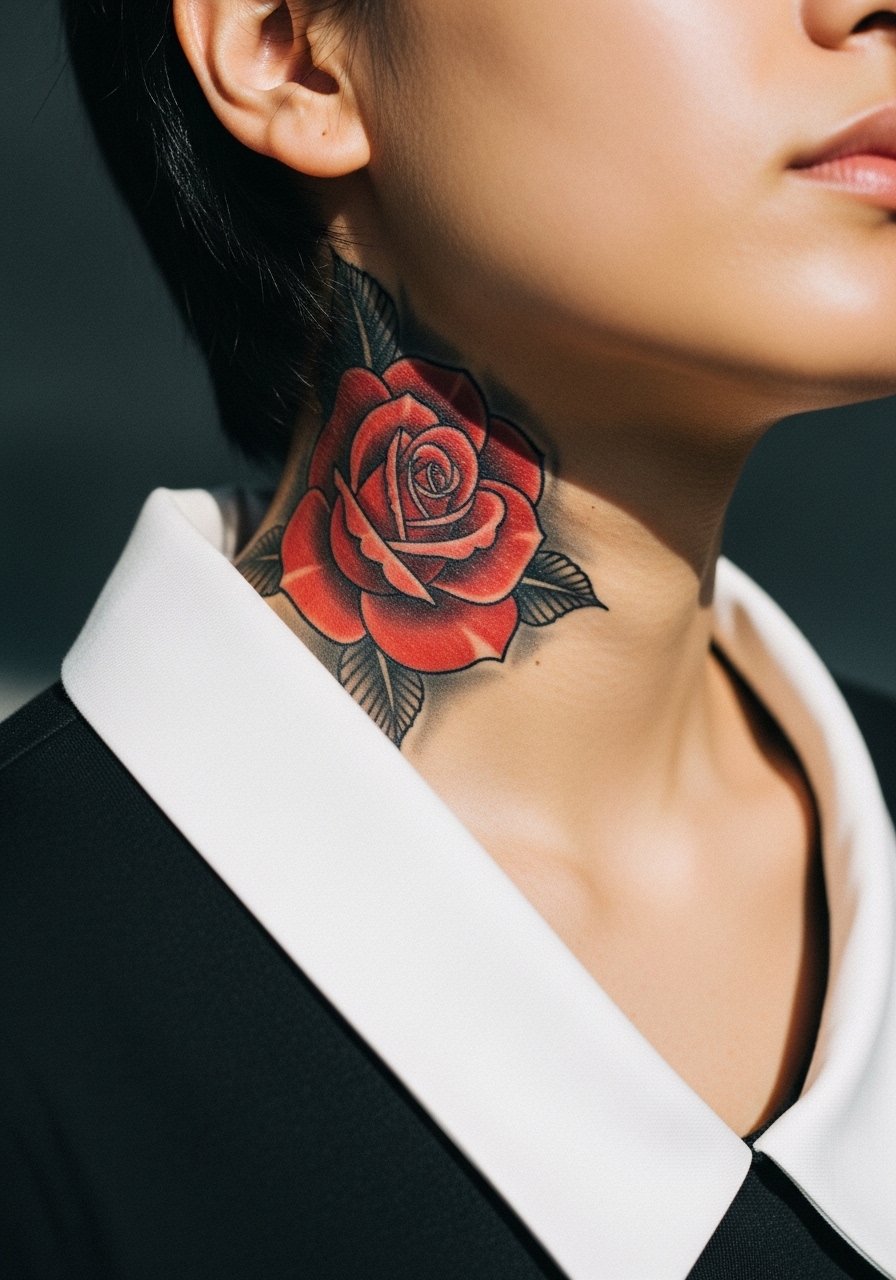
Neck micro-realism reads intimate and demands a steady hand. Artists split on fine work here. One camp says the thin skin and movement blur detail within two years. The other camp argues that with correct needle depth and spacing, small realism can settle well. Ask your artist where they stand and request slightly bolder micro-edges for longevity. Neck sessions hurt more than limbs and healing needs extra care. For wearing, a thin choker necklace sits above the piece without crowding it. Consider visibility effects in professional settings.
12. Traditional Red Dice with Black Outline on Back of Hand
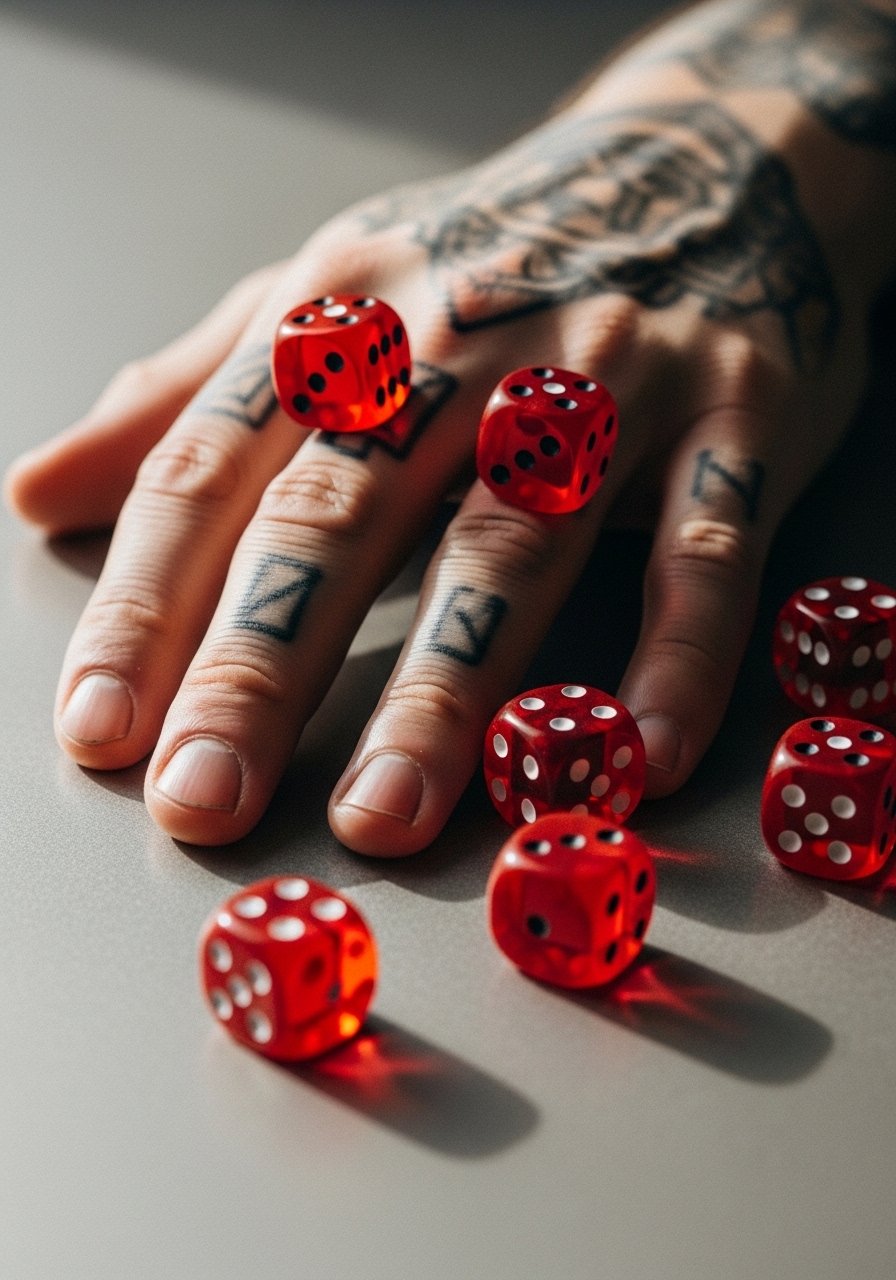
Hand tattoos are exposed and prone to faster fade and touch-ups. If you want dice or small bold flash, ask for thick outlines and solid fill because fine interior details will not survive heavy use. The common mistake is trying to cram shading into a two-inch area. Expect higher pain and a quicker need for touch-up due to washing and friction. When showing it off, bare hands or fingerless gloves work best. Bring this up with your artist so you both align on practical expectations.
13. Black and Red Alice in Wonderland Rabbit on Ankle
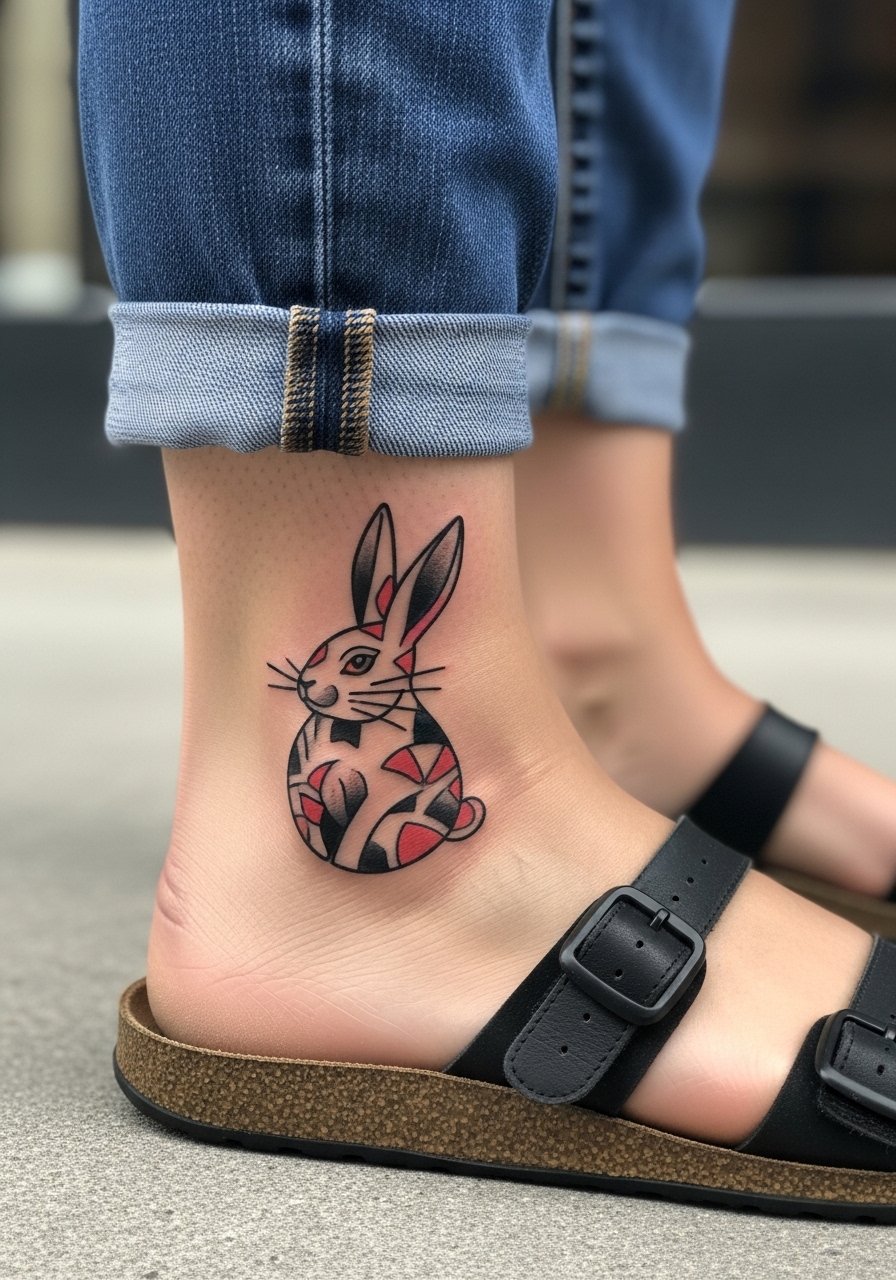
Whimsical literary pieces fit nicely on the ankle because the canvas is small and visible. Request bold outlines for the rabbit silhouette and a red vest or pocket watch for color focus. The ankle sees a lot of abrasion from shoes and socks, so the mistake is placing too much fine interior detail. Sessions are short but expect localized sensitivity. For showing it off, try sandals or cropped pants. A no show socks approach helps the ankle breathe and heal cleanly.
14. Micro Geometric Chain on Collarbone
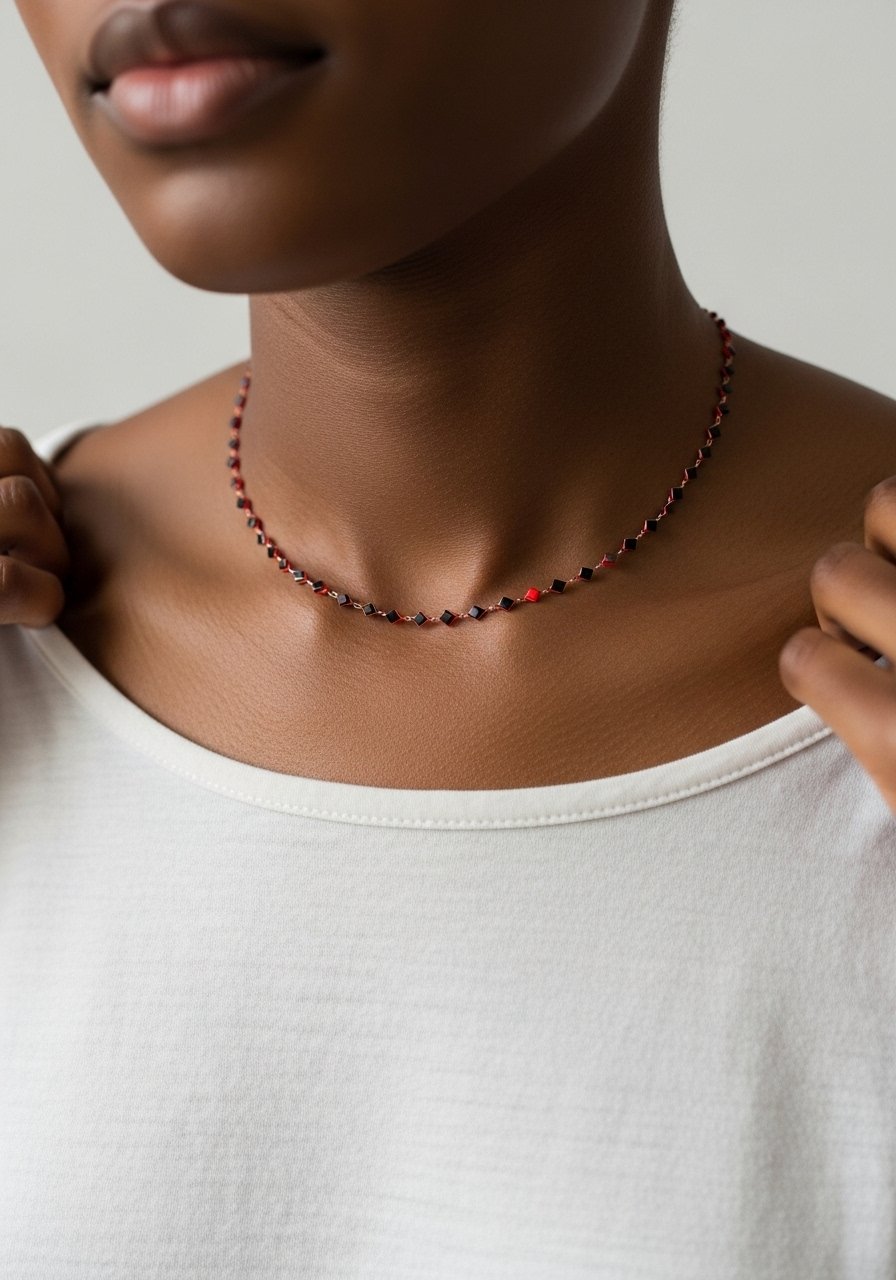
Collarbone lines need to consider movement and clothing friction. I advise slightly more spacing than the reference so the chain does not merge when healed. The regret I see is overly dense micro-patterns that soften into a gray linear blur. Collarbone sessions are moderately painful and usually short. For session day wear a v neck tee or open collar shirt. For evenings, chokers sit just above the chain and keep the collarbone visible without rubbing the ink.
15. Blackwork Ribcage Floral with Red Petal Accents
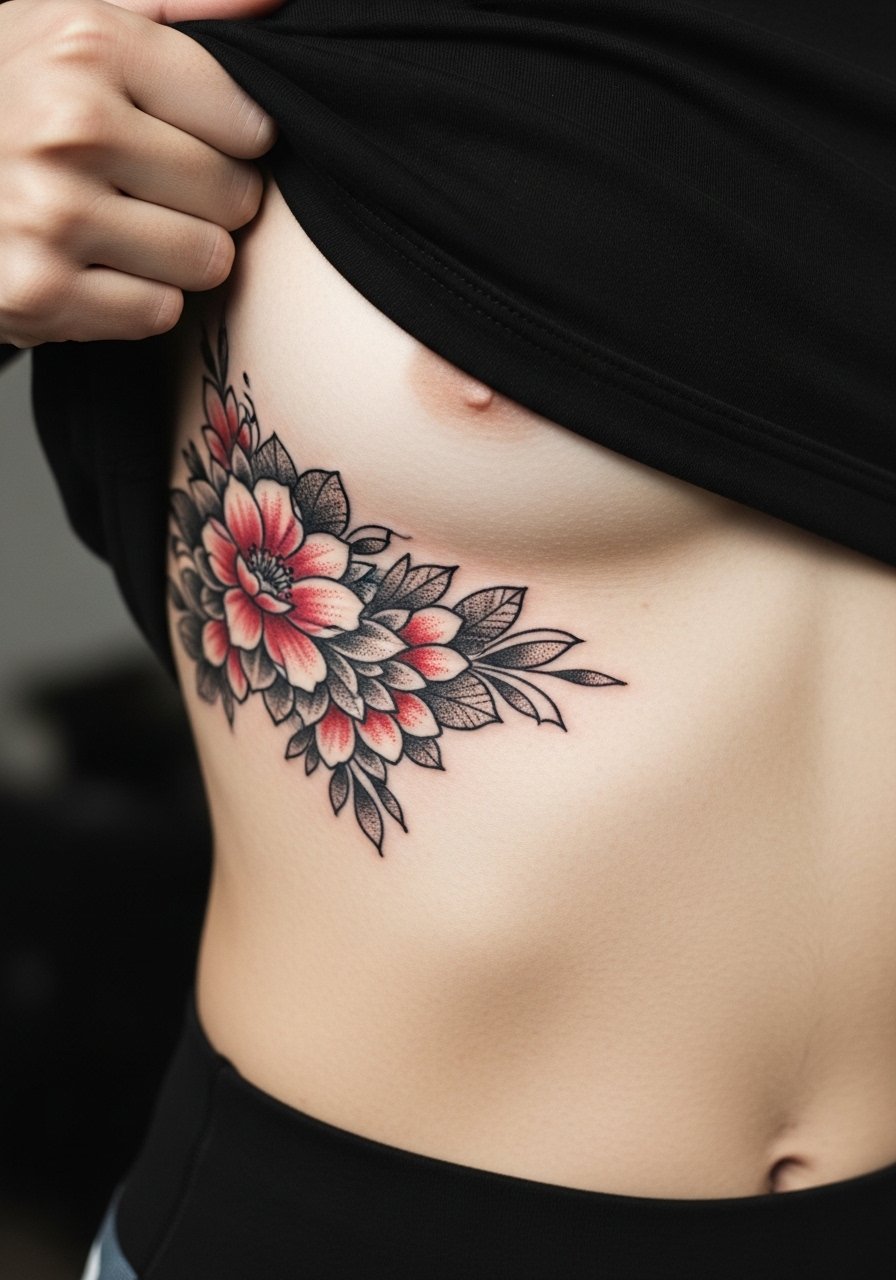
The ribcage is contentious for fine line. Artists divide into two camps. One says ribs and side torsos stretch and blur lines within a few years. The other says careful depth and spacing can make even delicate work last. If you pick floral here, ask for slightly bolder stems and red accents placed on larger petals. Sessions are painful and require steady breathing strategies. For the appointment, wear a cropped top you can lift easily. If you plan weight changes, expect some distortion over time.
16. Watercolor Red Splash Black Butterfly on Outer Calf
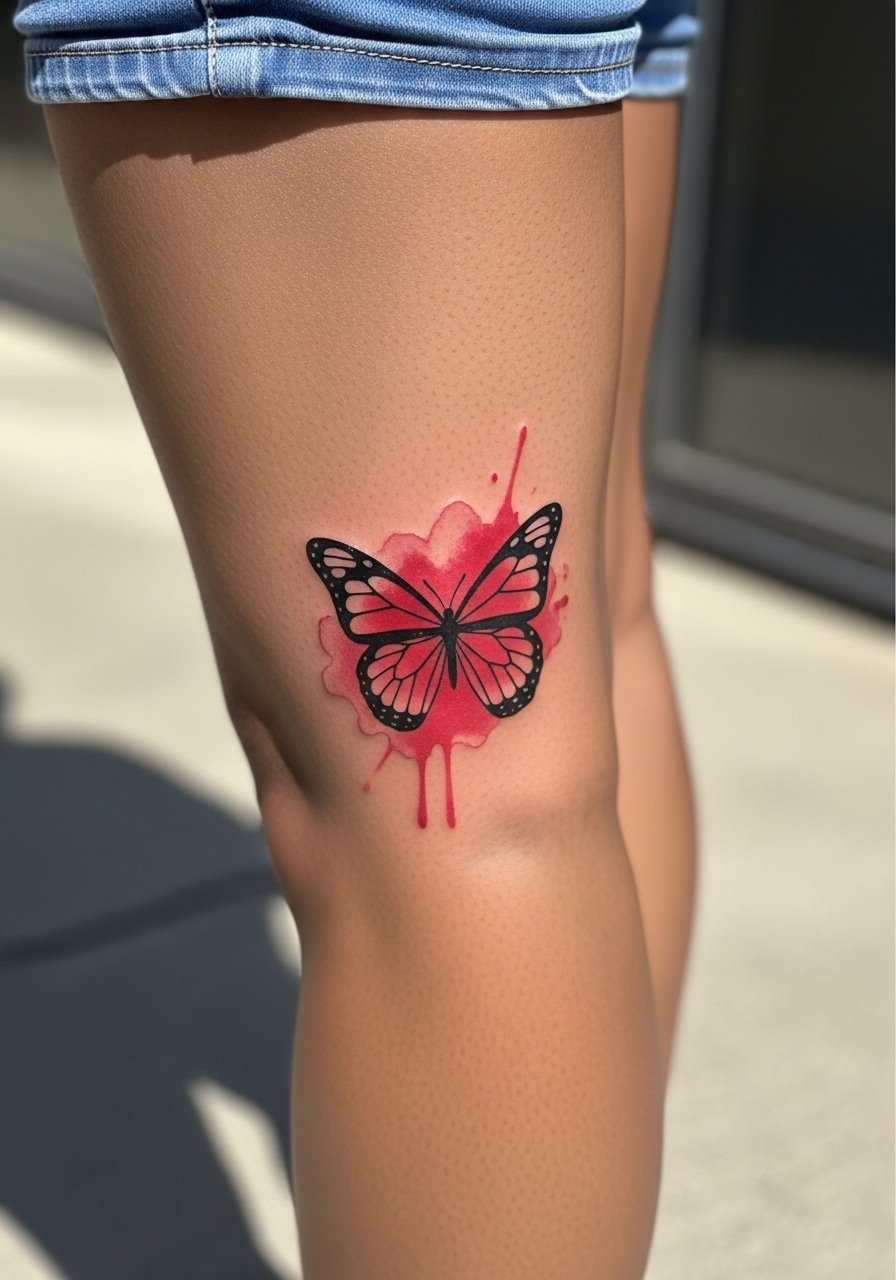
This variation focuses the red as a background wash with firm black linework to protect the overall silhouette. The error I see is flush watercolor with no anchor lines, which becomes a faded bruise. Calf work heals predictably and is low pain. For showing it, rolled jeans or rolled cuff jeans reveal the area neatly. Plan for touch-ups to refresh the red wash after a couple of years if you want vivid contrast.
17. Fine Line Script with Red Accent on Inner Bicep
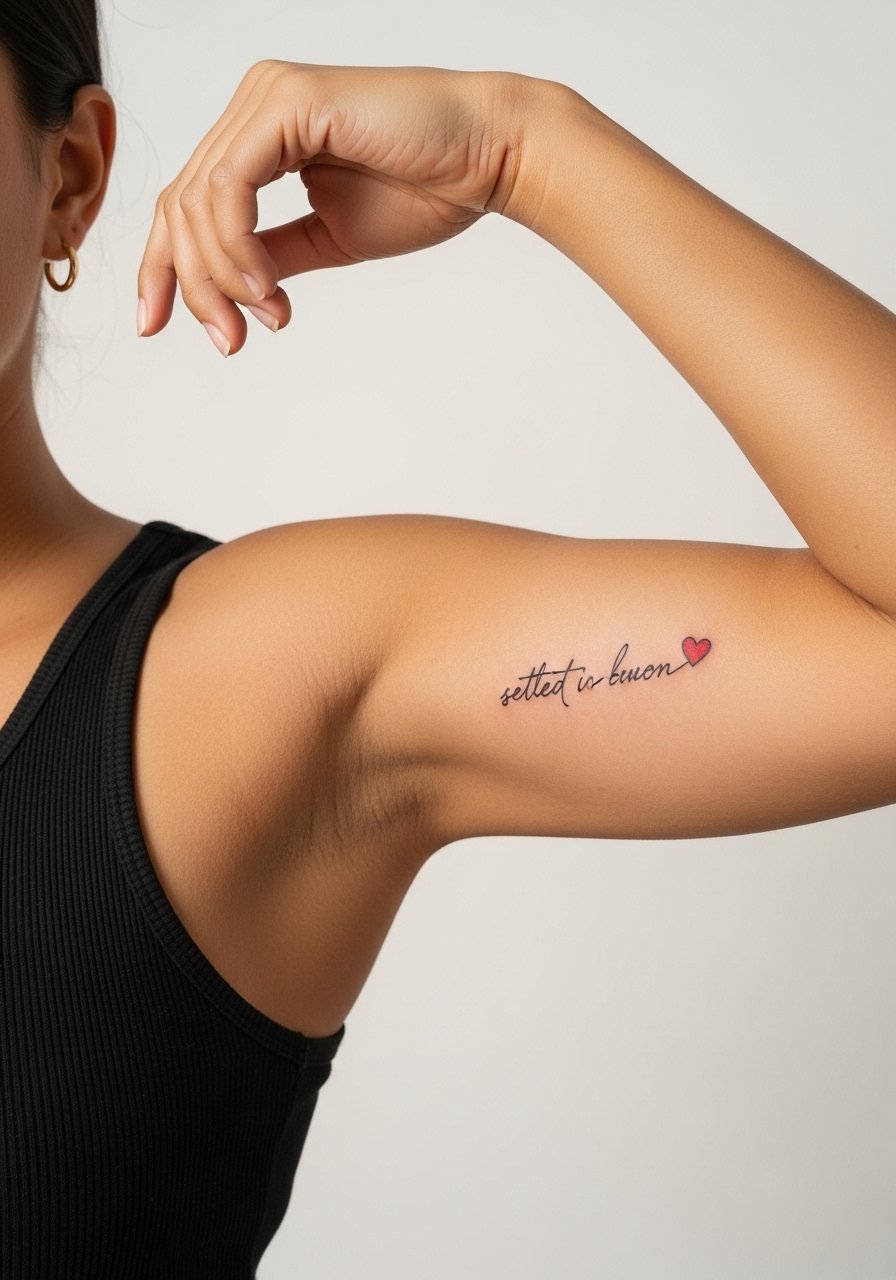
Inner bicep skin stretches and sees moderate friction. For script here, request slightly stronger lineweight and place the red accent on a single letter or symbol rather than as a continuous fill. A common mistake is tiny cursive that becomes unreadable after healing. Sessions feel more sensitive because of skin thickness. For the session, wear a tank top you can lift so the artist has clean access. Keep in mind visibility and professional boundaries if the script sits high on the arm.
18. Geometric Thigh Band with Red Inlays
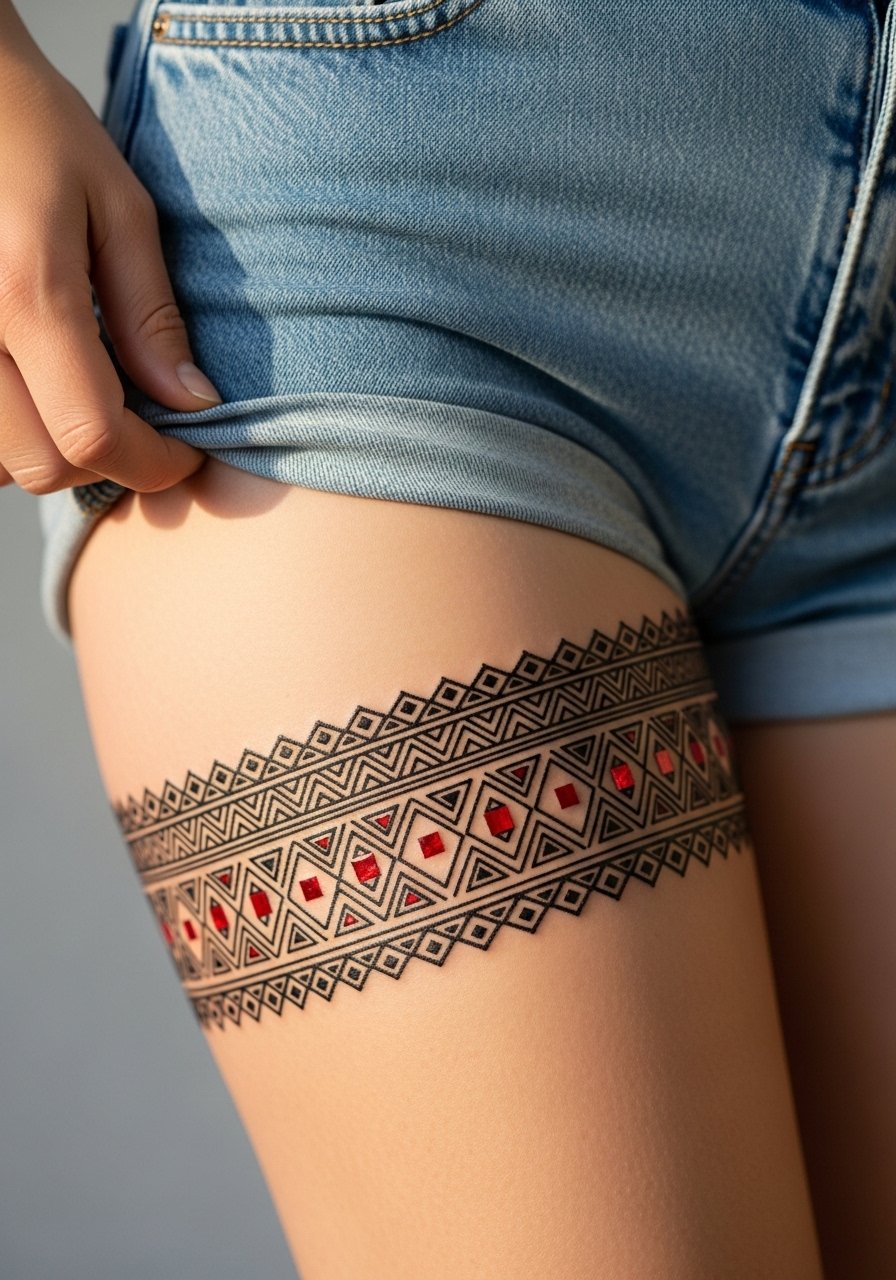
Thigh bands age well when scaled properly. The biggest issue is compressing intricate patterns into too narrow a band. Ask the artist to increase the band height by a third from your reference to protect negative space. Pain is generally low and sessions are comfortable. For showing off, high-waisted shorts or a skirt lifts the line into view. Consider how weight fluctuations might slightly alter symmetry and discuss touch-up plans.
19. Blackwork Botanical Lower Back Accent
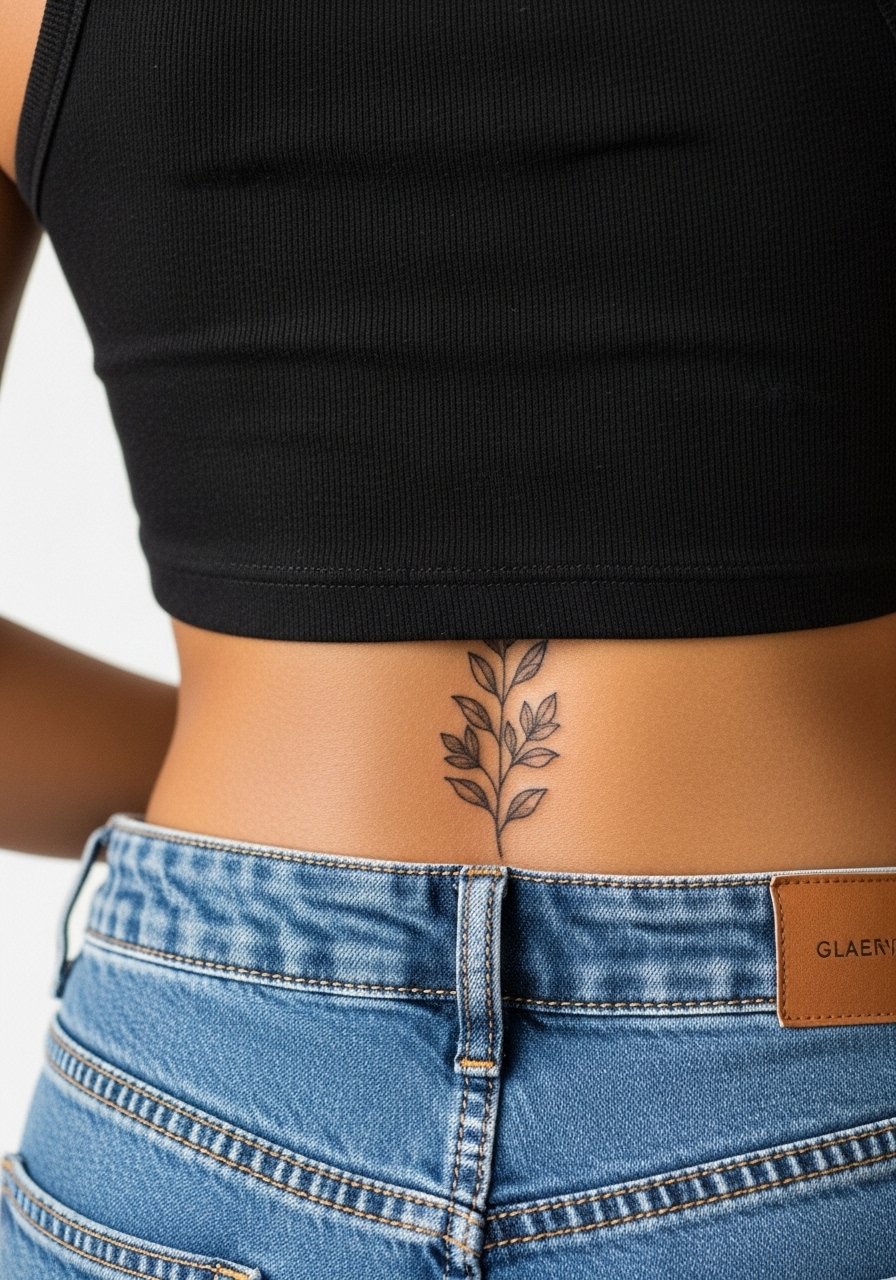
Lower back pieces can be elegant if designed with curvature in mind. The error I often see is central placement that fights the spine or hip bones. Request a design that sits with body contours and uses red sparingly for focal petals. For the appointment wear a tank top with pants you can lower slightly to reveal only the tattoo zone. Healing is straightforward but avoid tight waistbands during the first two weeks. Consider how often your wardrobe will rub that area and plan clothing accordingly.
20. Minimalist Matchstick Flame on Finger
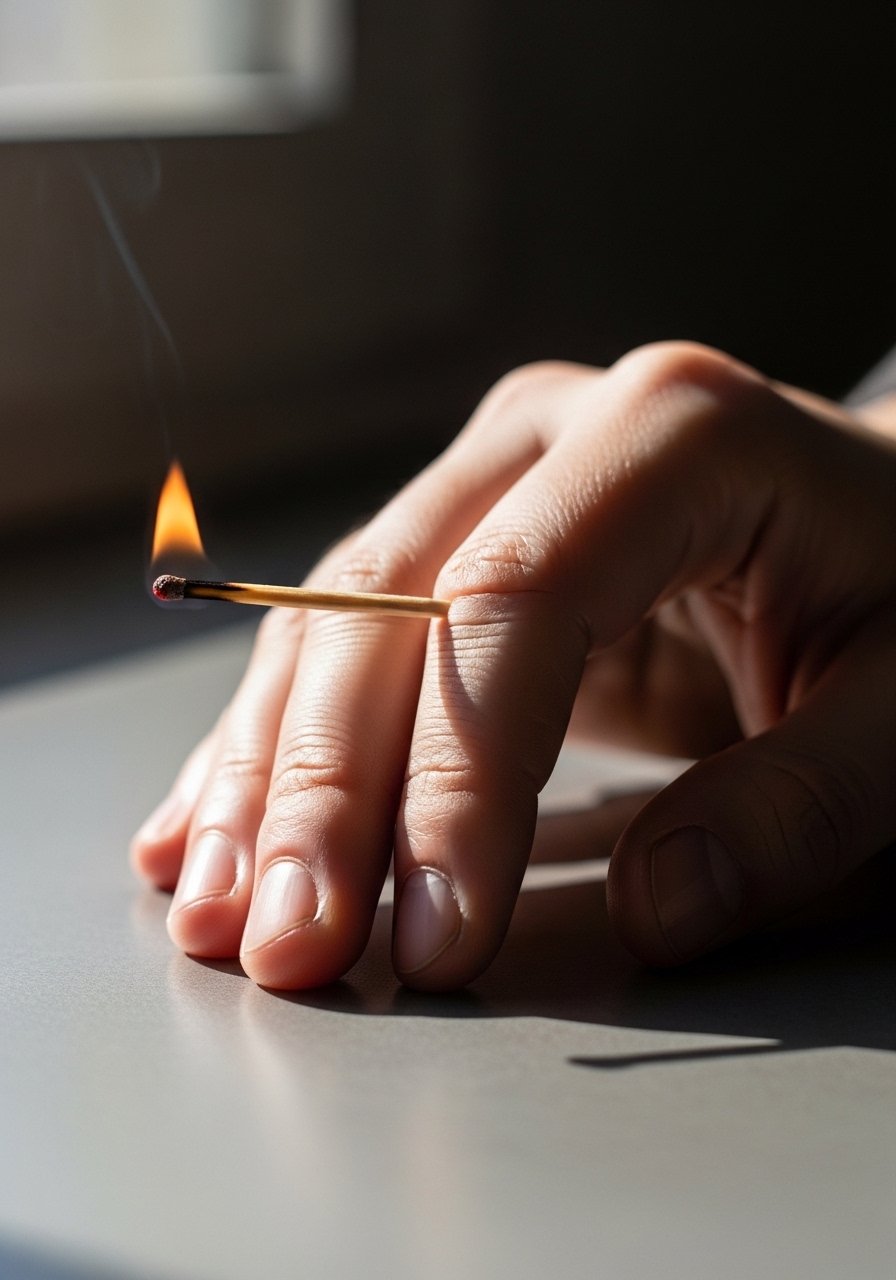
Finger work is high maintenance but visually immediate. Ask for thick outline contrast and keep red fills minimal. The common mistake is trying to pack shading into a one-centimeter area. Expect frequent touch-ups and a faster fade due to hand washing and movement. For the session, go bare-handed and skip rings. If you want to frame the finger piece, stack thin rings on the opposite hand rather than the tattooed finger for less friction.
21. Black Outline Script Wrapped Around Wrist with Red Dot Accents
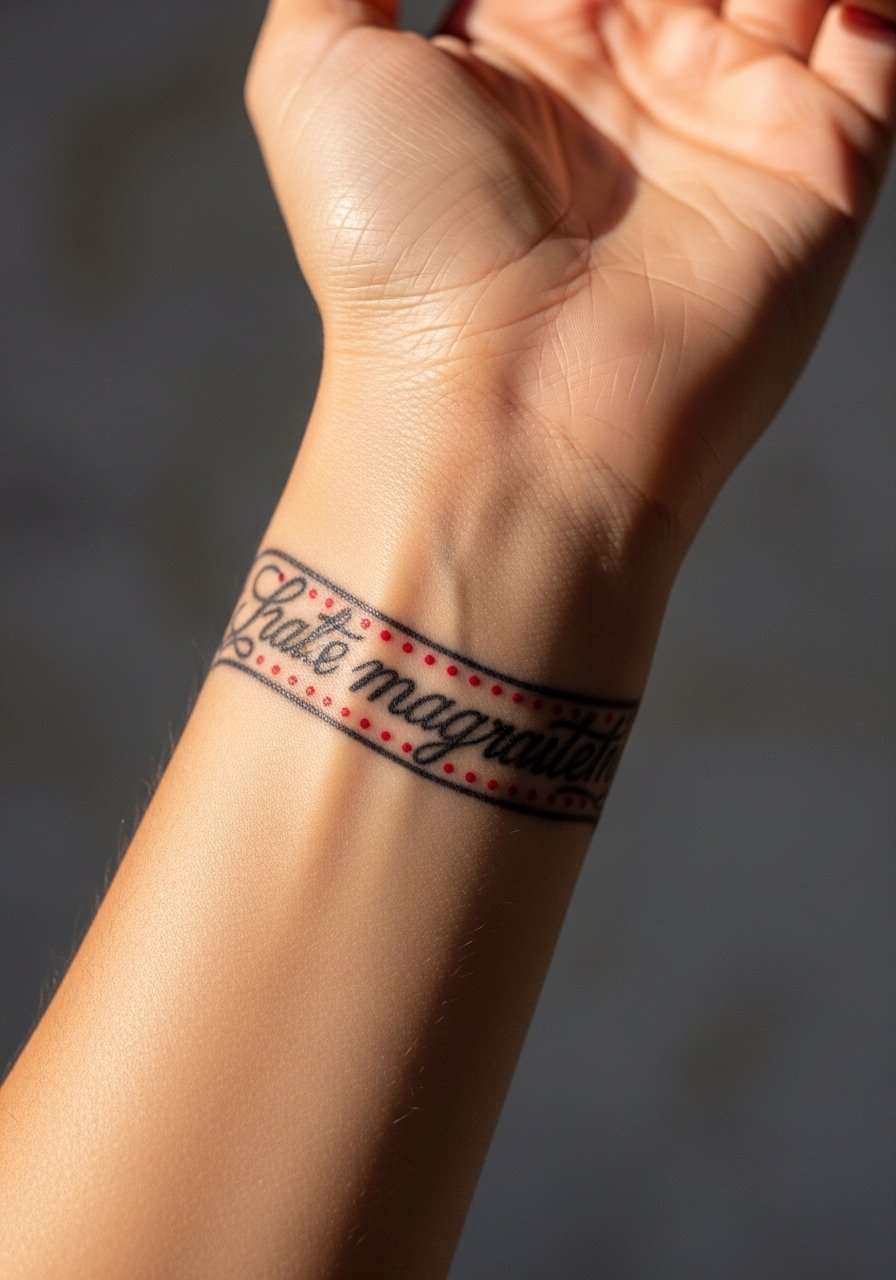
A wrist band script can be elegant if spaced well. The usual mistake is cursive that becomes illegible when reduced to a band. Ask for open lettering and place red dots as separators rather than fills. The wrist heals faster than the hand but still faces daily friction. For showing it off, use a minimalist chain stack on the opposite wrist to balance attention without rubbing the tattoo. Expect a touch-up in the first year for red brightness.
Frequently Asked Questions
Q: Will red ink fade faster than black on darker skin tones?
A: Red can lose saturation faster because it relies on lighter contrast, and that shows more on medium and darker skin. I suggest asking for stronger black outlines and larger red fields rather than tiny red dots. Many artists use contrast to prevent a muddy look and schedule a touch-up at 6-12 months.
Q: Are fine line black and red pieces a bad idea for a full sleeve?
A: Fine line across a full sleeve risks losing definition where the lines run together. One option is to mix fine elements with heavier black anchors so the composition has places that age well. Discuss spacing and negative space in your consultation and plan for touch-ups in dense zones.
Q: How should I dress for a shoulder or upper arm session?
A: Wear a sleeveless muscle tank or an open button-down that you can pull aside. Loose, breathable fabrics make long sessions more comfortable and prevent fabric drag across fresh ink.
Q: Do hand and finger tattoos really need touch-ups that often?
A: They usually do because hands see constant movement and washing. Expect at least one touch-up earlier than limb work. Thicker lines and conservative use of red can extend intervals between sessions.
Q: How do I find an artist who specializes in black and red work without naming anyone?
A: Use discovery pathways like #BlackAndRedTattoo and #RedInkTattoo on Instagram, search TikTok for "black red tattoo inspo" with location filters, and check r/tattoos for peer recommendations. Look through portfolios for healed photos that match your intended placement and ask about experience with red pigments during consultation.
