
Fine line praying hands are having a quiet moment in studio conversations, but the pieces people actually keep are the ones planned with longevity in mind. Black and grey saturations, smart spacing, and placement choices matter more than the prettiest flash on a screen. Read the variations below and you will have concrete talking points for your consultation and a clear idea of how each option ages.
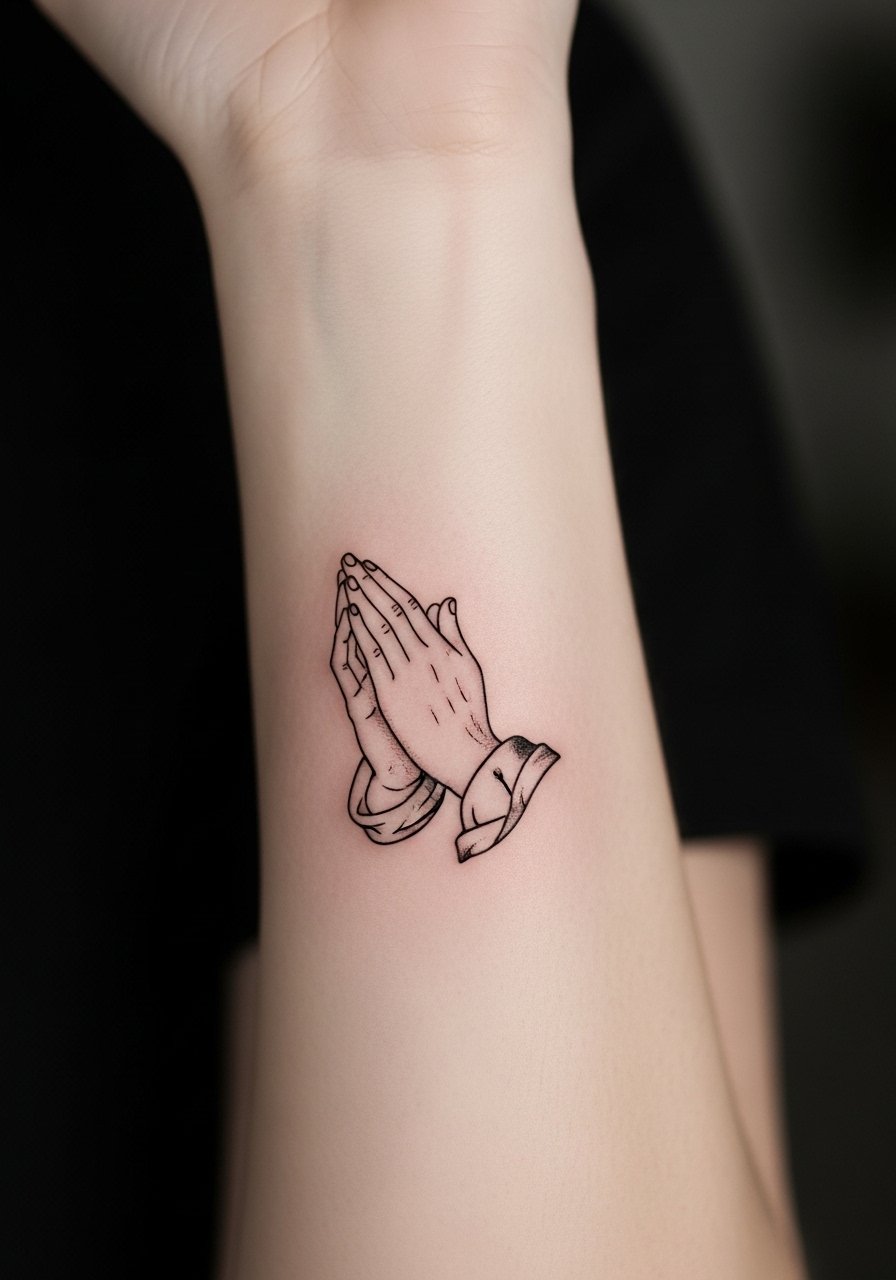
1. Minimal Fine-Line Praying Hands on Inner Forearm
I've seen this neat, minimal version sit on forearms for years and still read clearly after touch-ups. Ask your artist to keep linework slightly bolder than the lightest Instagram references so the contours do not merge with time. Fair warning about sensation: the inner forearm is one of the more forgiving placements, a 3 out of 10 on most pain scales, and sessions usually clock under an hour. Common mistake is requesting hairline detail at a tiny scale. If you want to show it off, roll up a linen sleeve and pair the piece with a rolled+linen+shirt that frames the linework without competing. Expect a touch-up around year three for very fine elements.
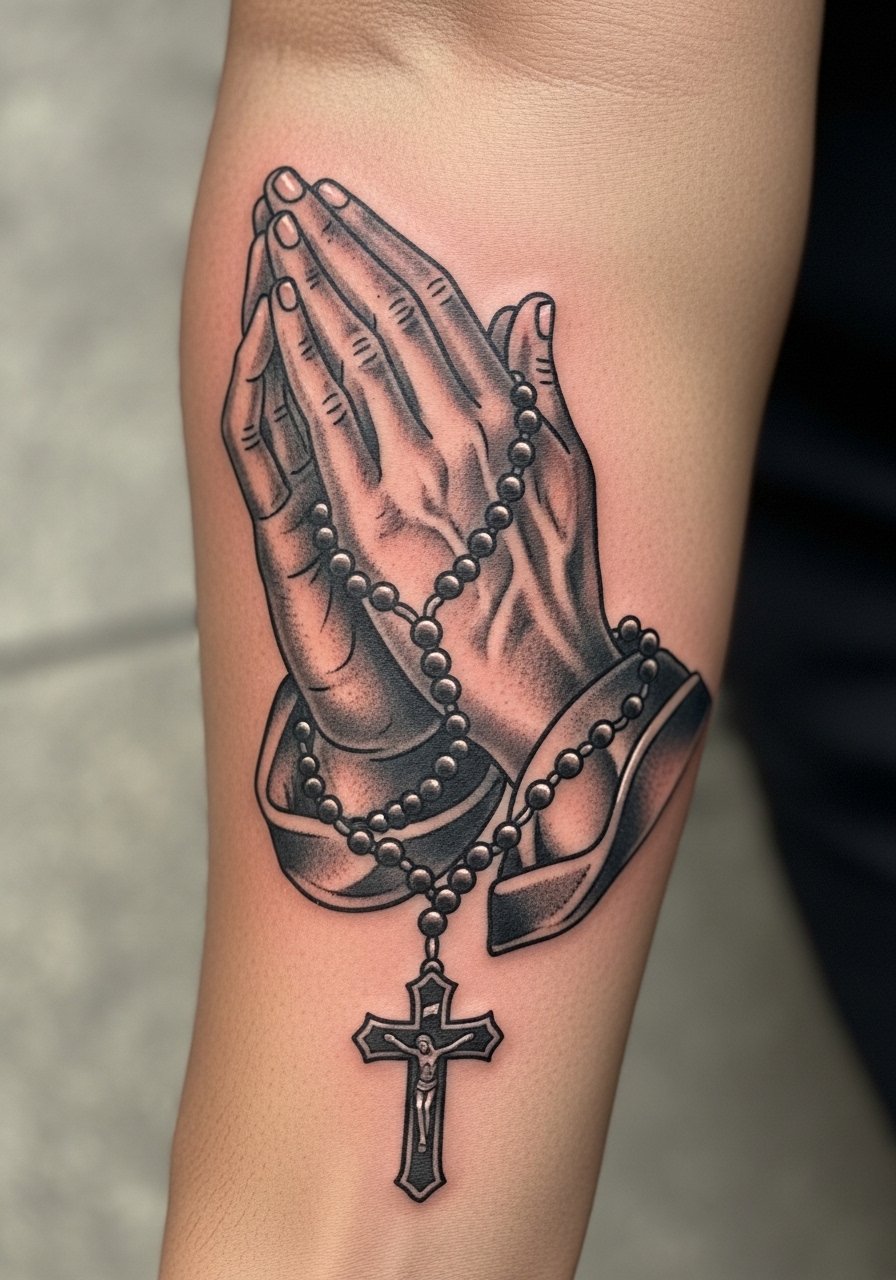
2. Classic Blackwork Praying Hands with Rosary on Outer Forearm
There is a reason blackwork holds up. Saturation and bold linework age into a clear silhouette. For an outer forearm piece, ask for solid saturation in the rosary beads and a slightly thicker outline around the hands. The outer forearm tolerates heavier work without blowout risk, and session time sits around one to two hours depending on size. A common error is over-detailing the beads at small scale which can blur fast. This placement pairs well with a minimalist watch or stacked bracelets. Try a minimalist+gold+watch to keep attention on the art. Expect healed contrast to soften slightly by year two.
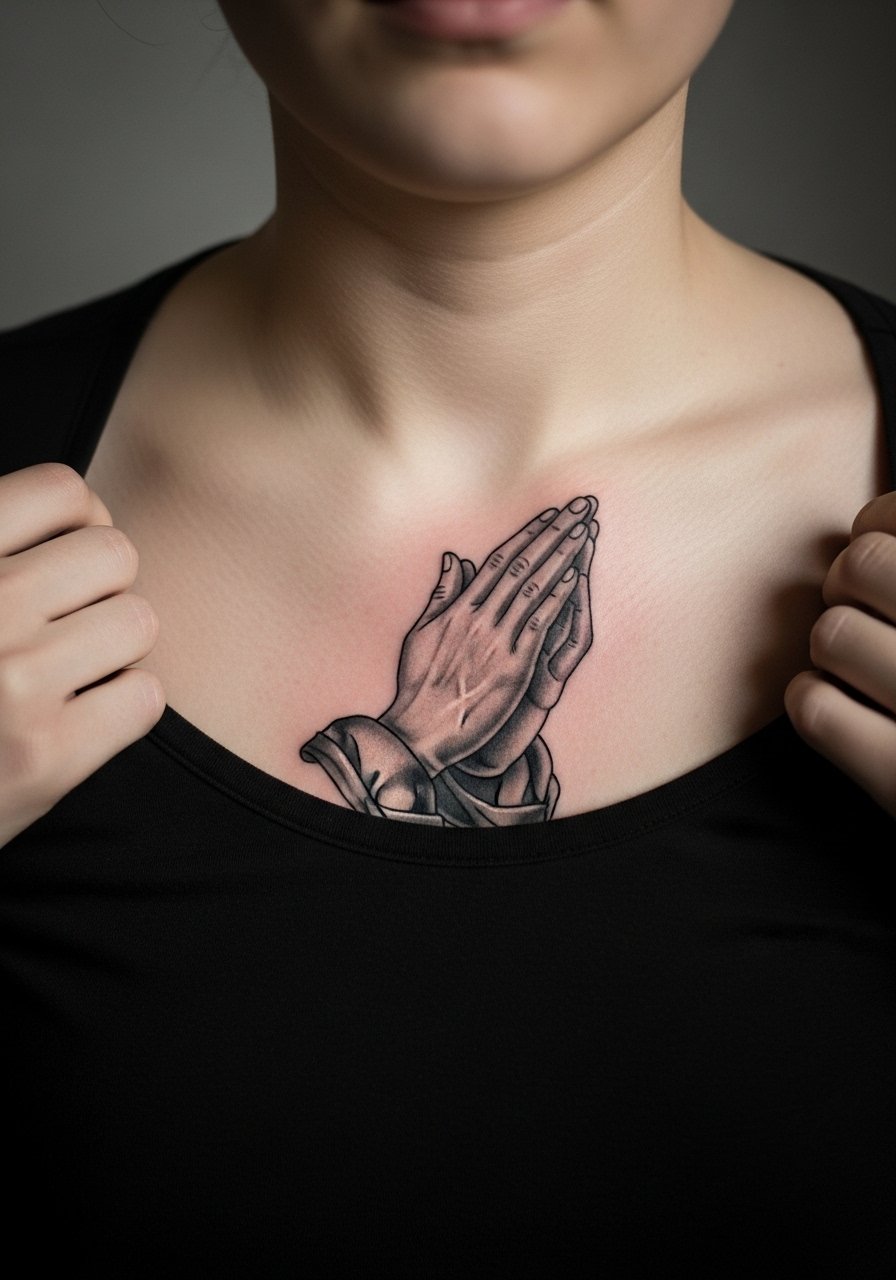
3. Micro-Realism Praying Hands on Upper Chest
A micro-realism approach reads like a small portrait sitting above the heart. For safety, wear a wide-neck shirt pulled slightly aside so only the upper chest is visible during photography and reference checks. The sternum and chest flesh move differently from arm skin, so tell your artist you want slightly more spacing between shaded planes to prevent muddying as it heals. Sessions can range one to three hours. This style shows best with open necklines, so an open-back+midi+dress is great for evenings when you want the piece visible. Because chest skin can stretch with body changes, plan for a light touch-up after two years.
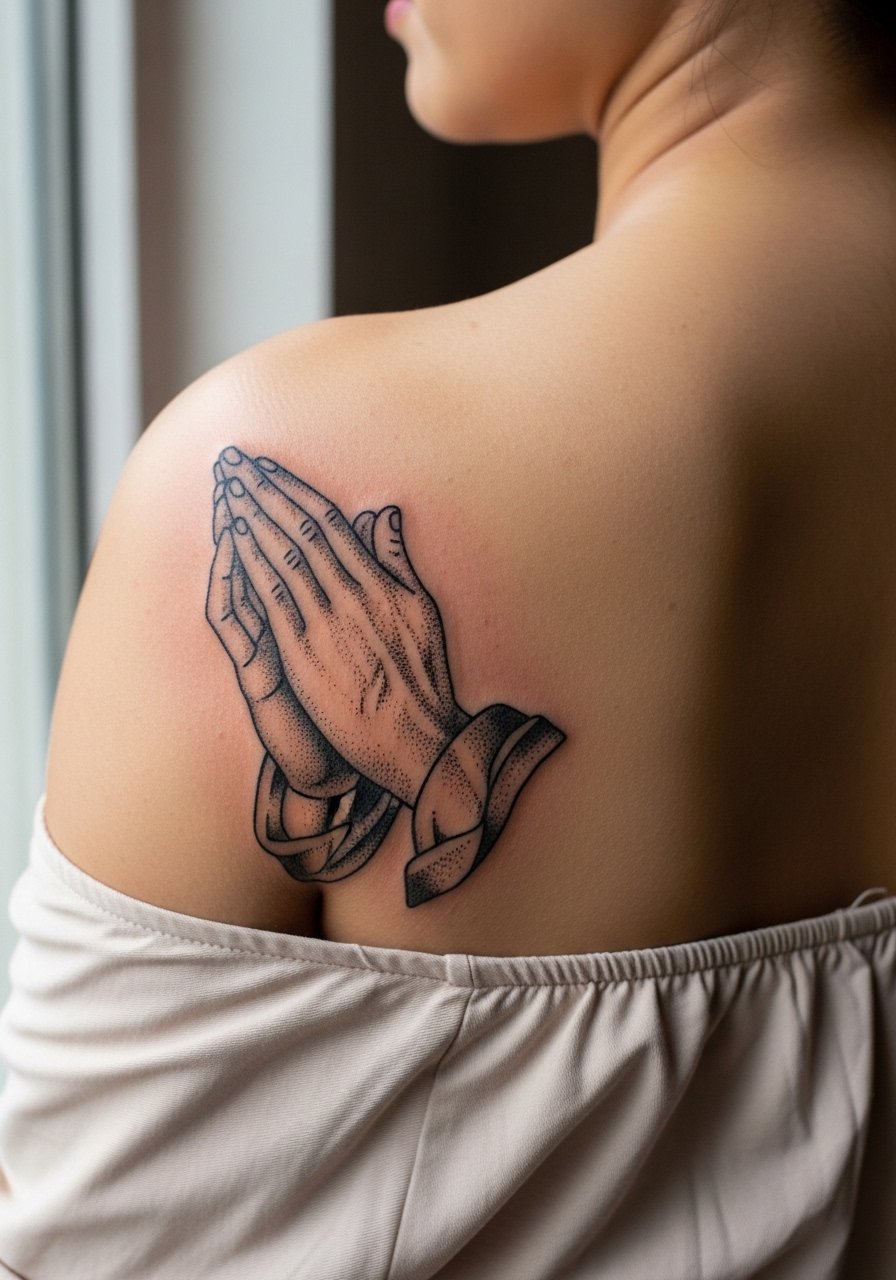
4. Praying Hands Framed by Stipple Shading on Shoulder Blade
There is a calm about stipple shading behind the hands that keeps texture readable without heavy black blocks. Shoulder blades age well because the skin there sees less daily abrasion. When you consult, ask for stippling in the mid-tones and avoid full solid fills next to fragile linework. Sessions usually run one to two hours and pain levels are moderate. For show-off outfits, an open-back+blouse or racerback top frames the piece. A common mistake is placing too much dense shading close to thin fingers, which can soften the finger separation over time.
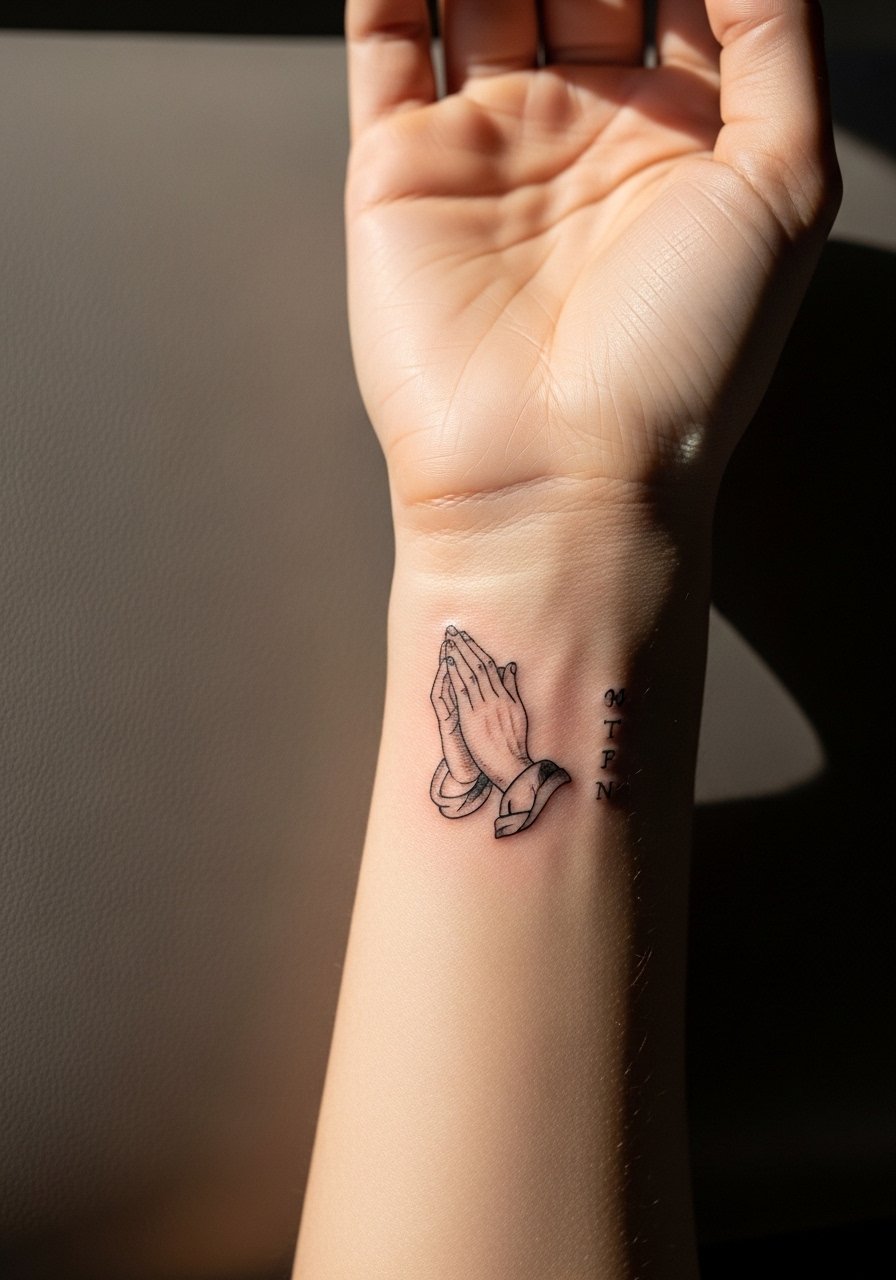
5. Small Praying Hands on the Wrist, Micro Script Tag
Wrist pieces are intimate and visible. The biggest technical issue is scale. Tiny scripture or micro details next to the hands can blur within a couple of years. If you want text, tell the artist the exact phrase and request slightly larger letterforms than you think you need. Expect a wrist session to be short but sharp in sensation. For wearing during the session, bring a loose+button+down+shirt+mens you can slide the sleeve up. A helpful tip is to plan for thin stacking bracelets that do not sit on the fresh ink until it heals. Touch-ups are common on wrist work because of washing and friction.
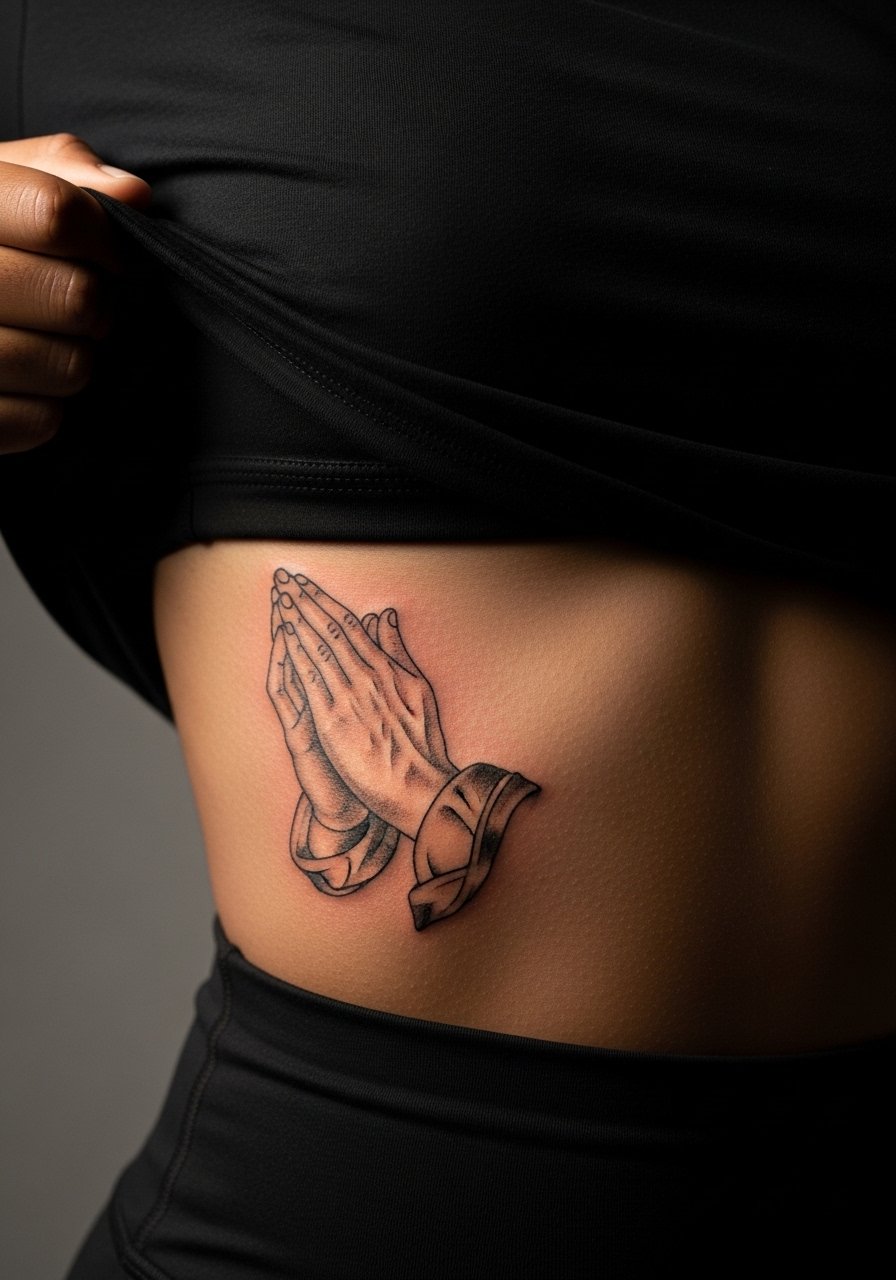
6. Fine-Line Ribcage Praying Hands with Floral Border
Fine line on the ribcage splits artists into two camps. One group argues the skin stretch and movement blur thin work within two years. The other group says with controlled depth and spacing, fine line settles fine on ribs. Name both camps and ask your artist which approach they prefer before booking. Ribcage sessions are on the higher end of pain, often a 7 out of 10, and can take two to four hours with breaks. For the session, wear a cropped athletic top you can lift slightly to expose only the rib area. A common mistake is asking for photograph-level detail at tiny scale. Expect to need a touch-up at year two with fine-line rib work.
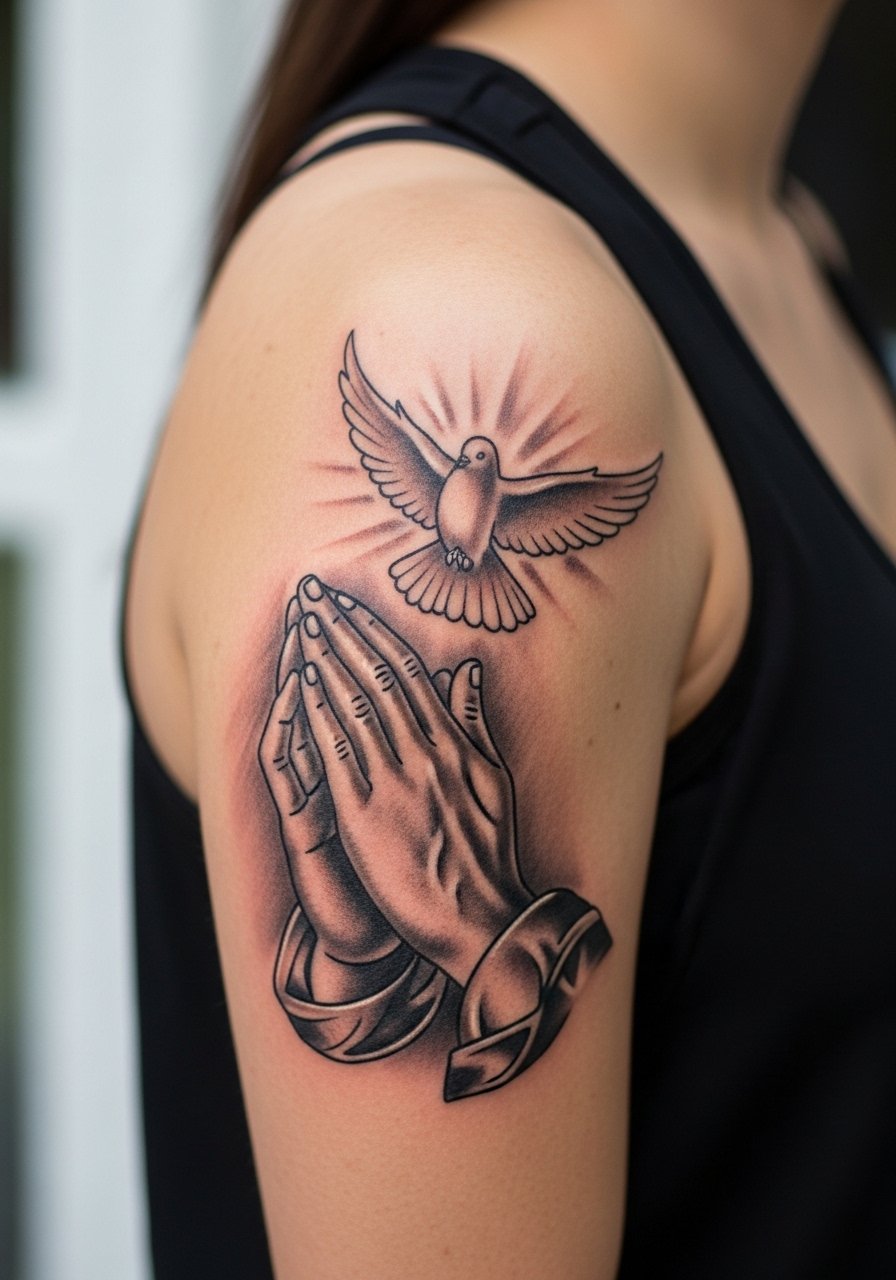
7. Praying Hands Integrating a Dove on the Upper Arm
This composition adds a soft symbol without overcrowding the hands. Upper arm skin is forgiving, so you can use slightly denser shading around the dove for contrast. Tell your artist to keep the hands as the focal point and place the dove so negative space breathes. Sessions usually last one to two hours and pain is mild. For showing this off in warm months, roll short sleeves or opt for a racerback+tank+top. A typical mistake is letting the bird compete with the hands by matching line weight; keep the bird softer to let the hands read clearly over time.
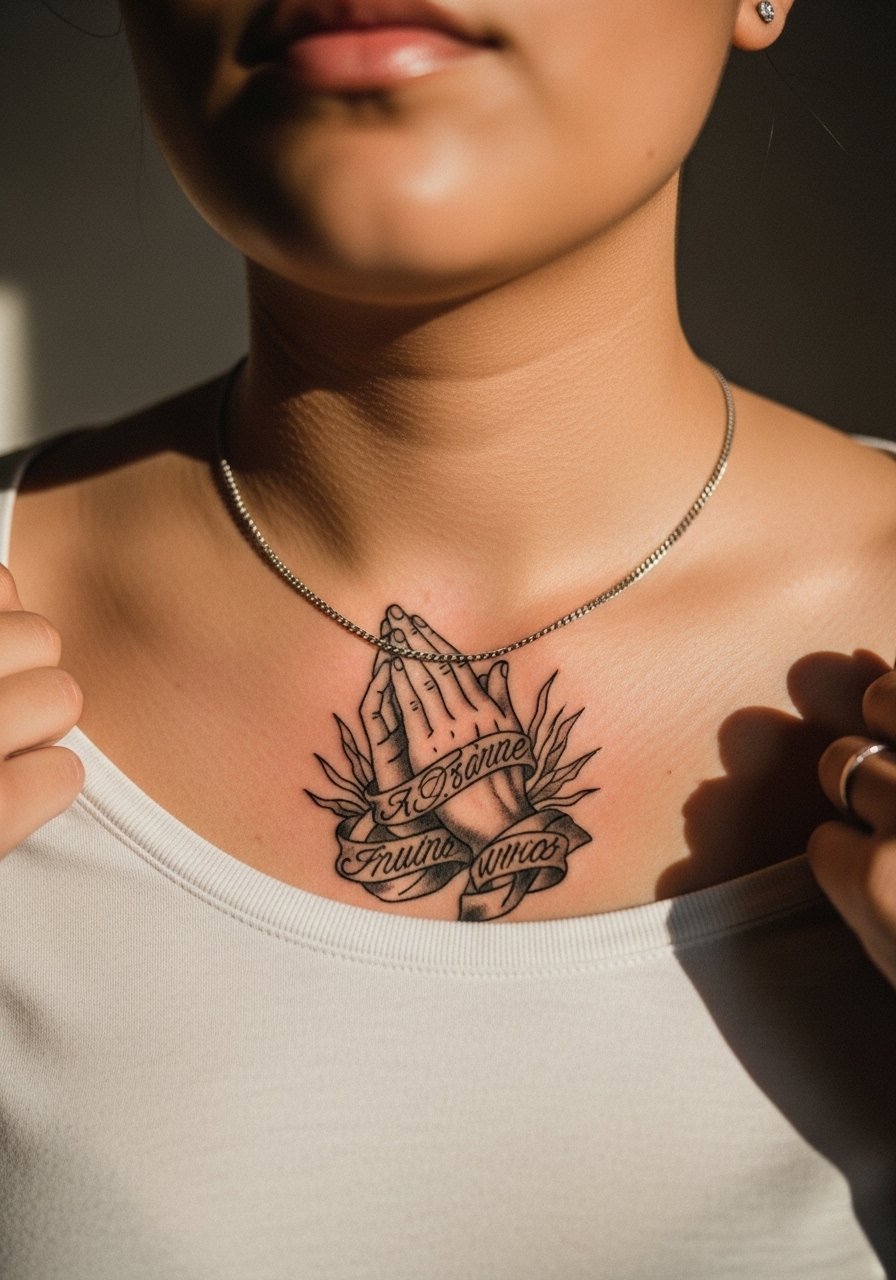
8. Scripted Banner and Praying Hands on the Collarbone
A banner with a short phrase can ground a collarbone praying hands piece. Collarbone work shows quickly in jewelry styles and layering. When you consult, bring the exact short phrase and request clear spacing between banner edges and the fingers below. Sessions are modest in time and the area can be twingey but not extreme. For evenings out, a thin+chain+pendant+necklace sits above the script without competing. Common aging issue is banner edges softening from shoulder movement, so ask for clean terminal dots at the ends of letters to hold shape.
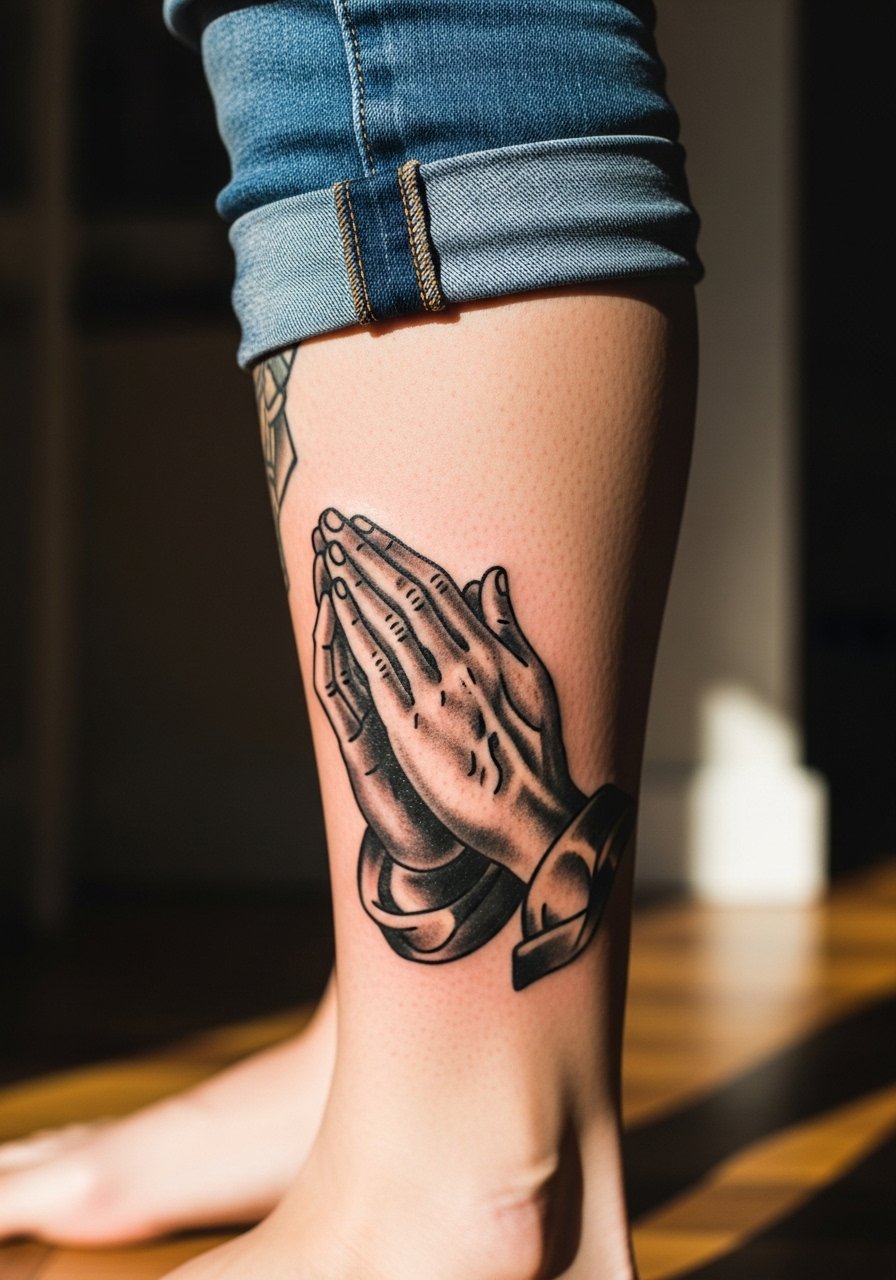
9. Chunky Traditional-Style Praying Hands on the Calf
Traditional line weight and saturated greys make calf pieces bold and durable. The calf tolerates saturation well and is low risk for blowout. If you want a design that reads from a distance, ask for cleaner separations between fingers and the surrounding shading. Sessions can run one to two hours. For showing it off casually, pair with sandals+ankle+strap and rolled pant cuffs. A frequent error is squeezing too many small elements into a calf composition which can muddy under thick shading.
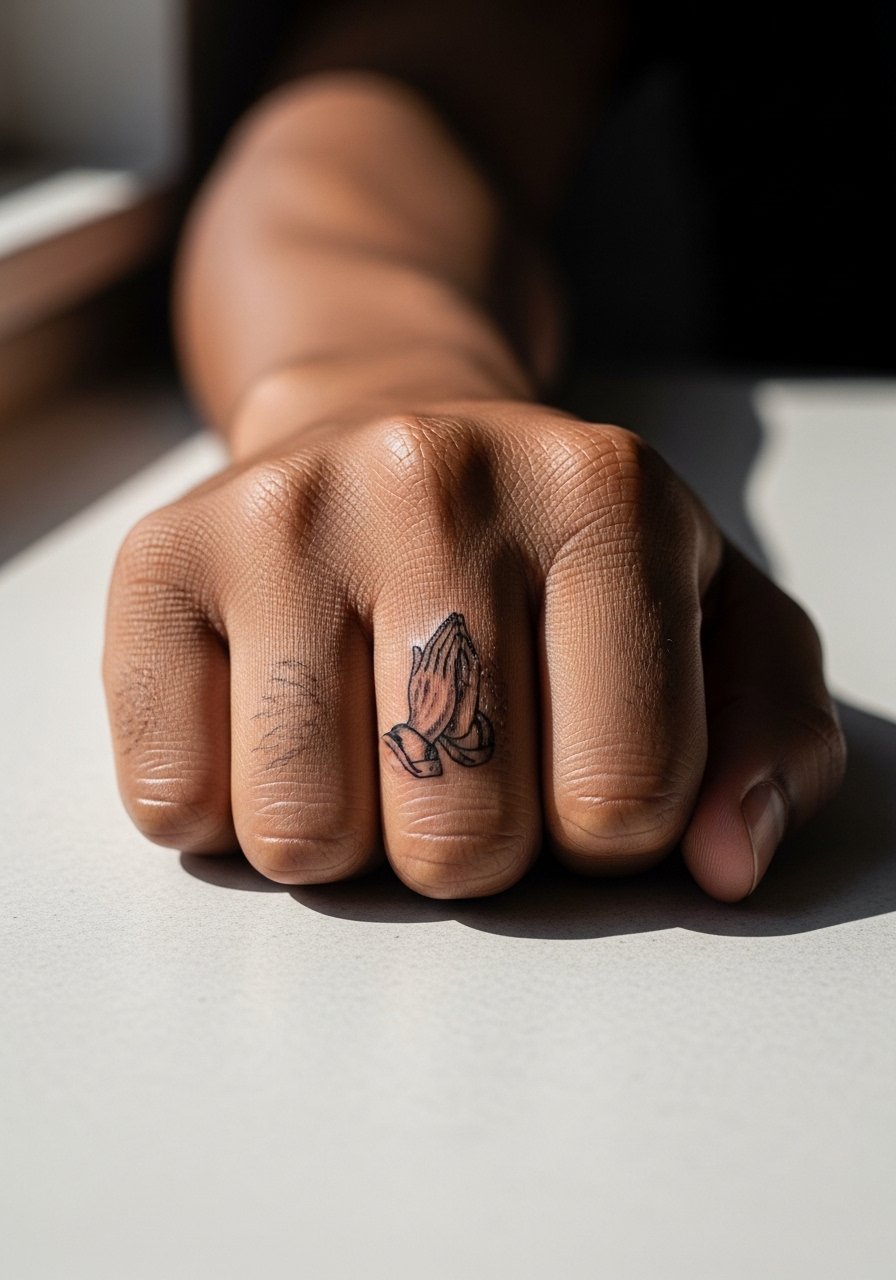
10. Tiny Finger Praying Hands Between Knuckles
Finger tattoos read differently because of skin turnover and friction. Artists split on longevity here. One camp accepts frequent fading and plans touch-ups. The other cautions against detailed work on fingers and suggests bold simplified shapes instead. If you insist on fingers, go bold and accept touch-ups at year one or two. Session time is short but unpleasant for many due to bone proximity. Note employment considerations as hand and finger tattoos still affect some hiring decisions. For subtlety, choose a finger-friendly ring style and avoid designs with micro shading.
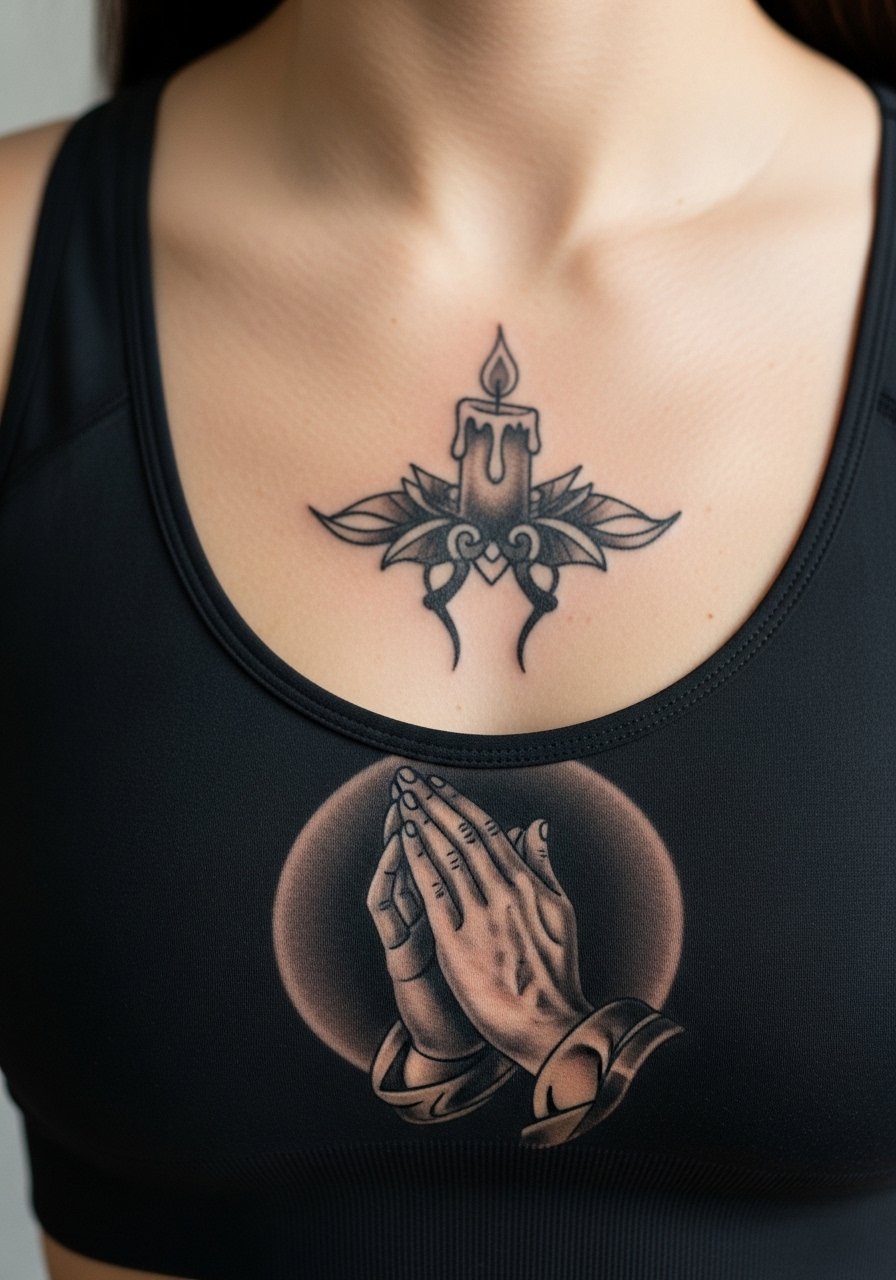
11. Praying Hands with Candle and Smoke on the Sternum
Sternum placements require a fitted sports bra or bandeau during photos and healing shots. The sternum accepts shaded compositions beautifully but the skin's curvature can shift fine details. Tell your artist to use broader shading planes around the candle and to avoid overly tight stippling across the center. Sessions can be two to three hours and pain is higher than arm work. For the session, wear a bandeau+top so the artist and you can access the area while staying covered. Keep in mind that chest movement from deep breathing affects initial settling.
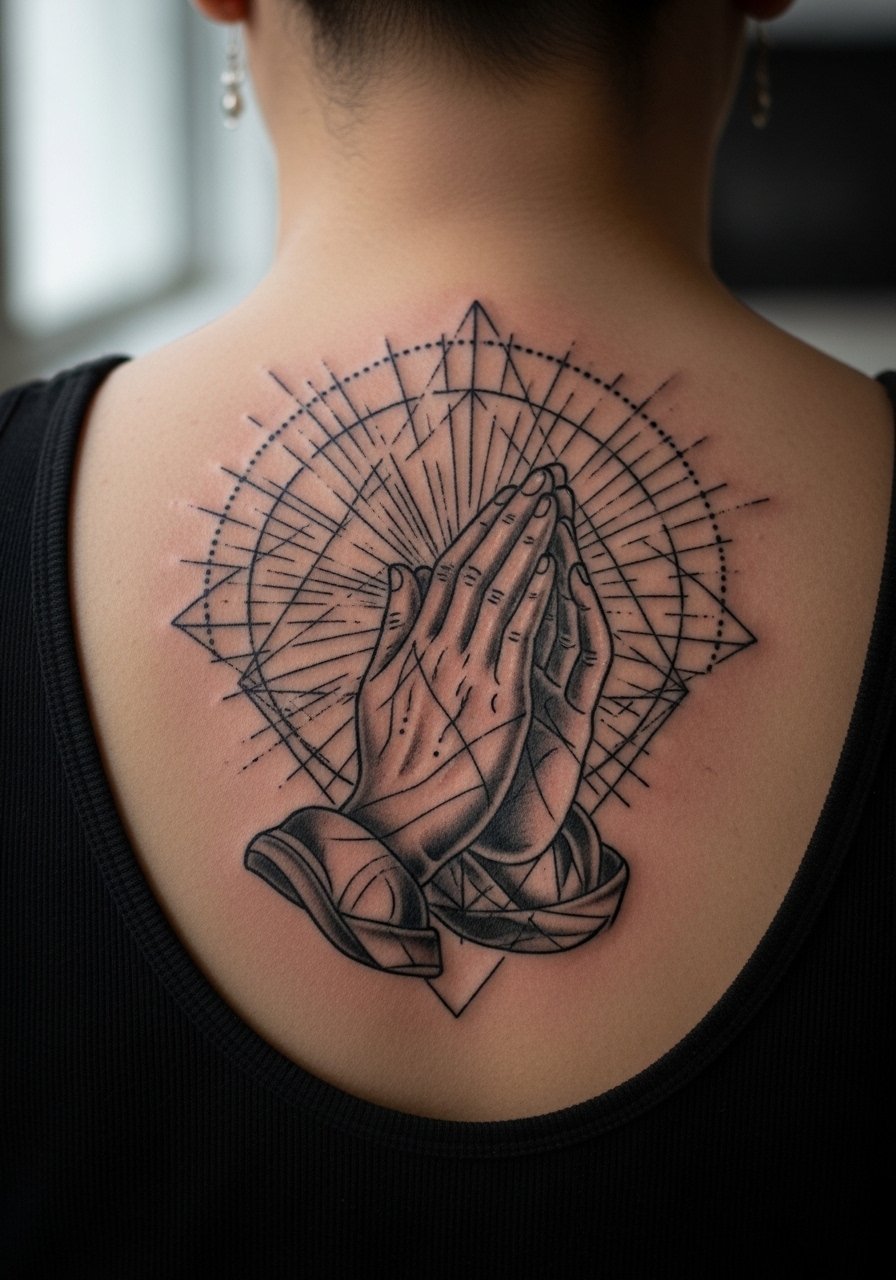
12. Geometric Halo Background with Praying Hands on Upper Back
A geometric halo gives a modern frame and helps keep negative space around the hands. Upper back work benefits from lower friction and usually retains crisp detail longer. Ask for a geometric grid with open cell spacing so the halo does not overwhelm the fingers. Sessions run one to three hours depending on scale. For clothing on the day, a button-down worn backwards or a loose tank gives access. This placement pairs well with open-back dresses or tops. A mistake is dense geometric fills next to delicate fingers which can create visual clutter as pieces age.
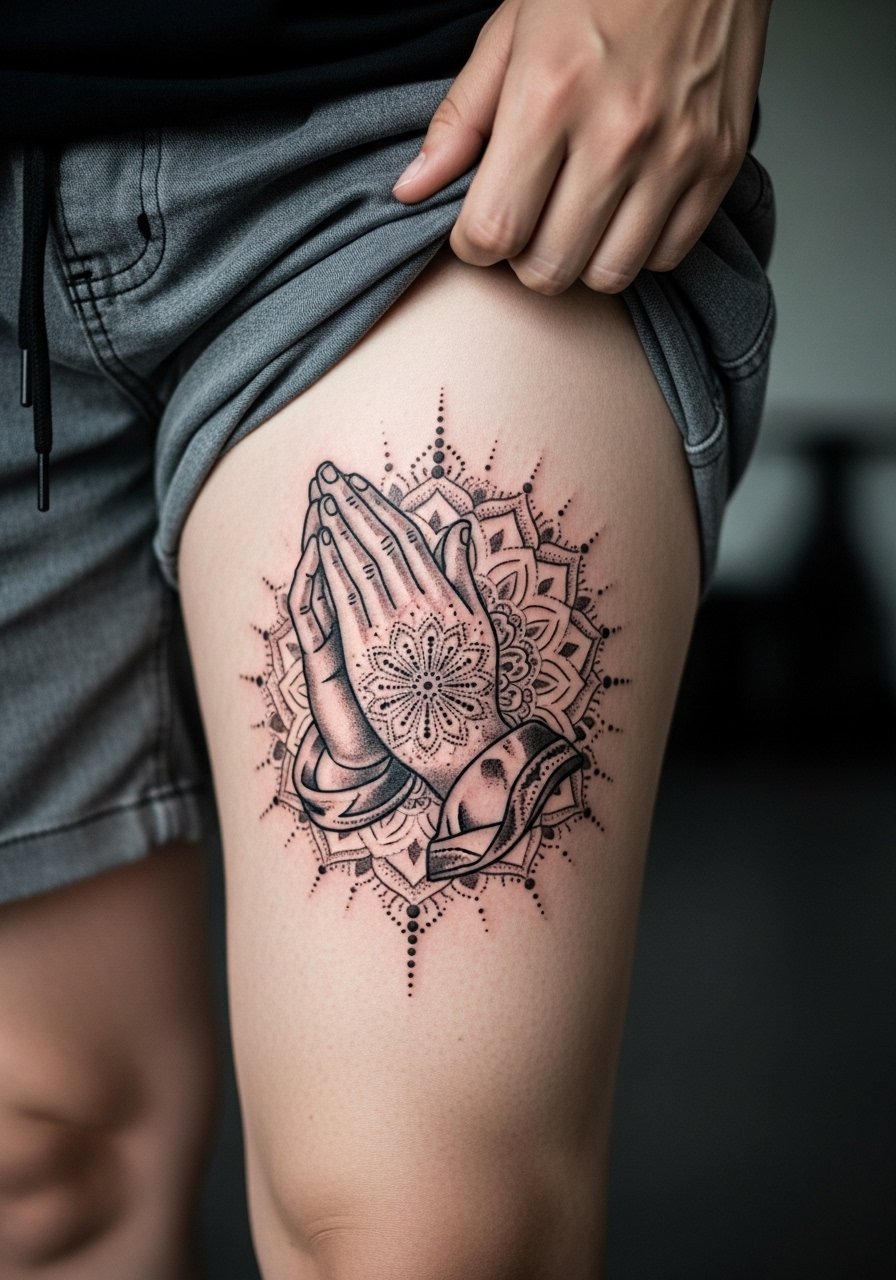
13. Praying Hands Overlaid with Subtle Dot Work Mandala on Thigh
Thigh placements allow larger compositions that breathe. Dot work mandalas around the hands give texture without heavy fills. For this design, request spacing between dot clusters and finger edges so the hands stay legible as the mandala ages. Sessions can be longer, two to four hours, and pain varies across the thigh. Wear loose shorts or a loose+drawstring+linen+pants you can slide for access. One common error is packing the mandala too dense near delicate finger lines, which creates a blurred look after a year or two.
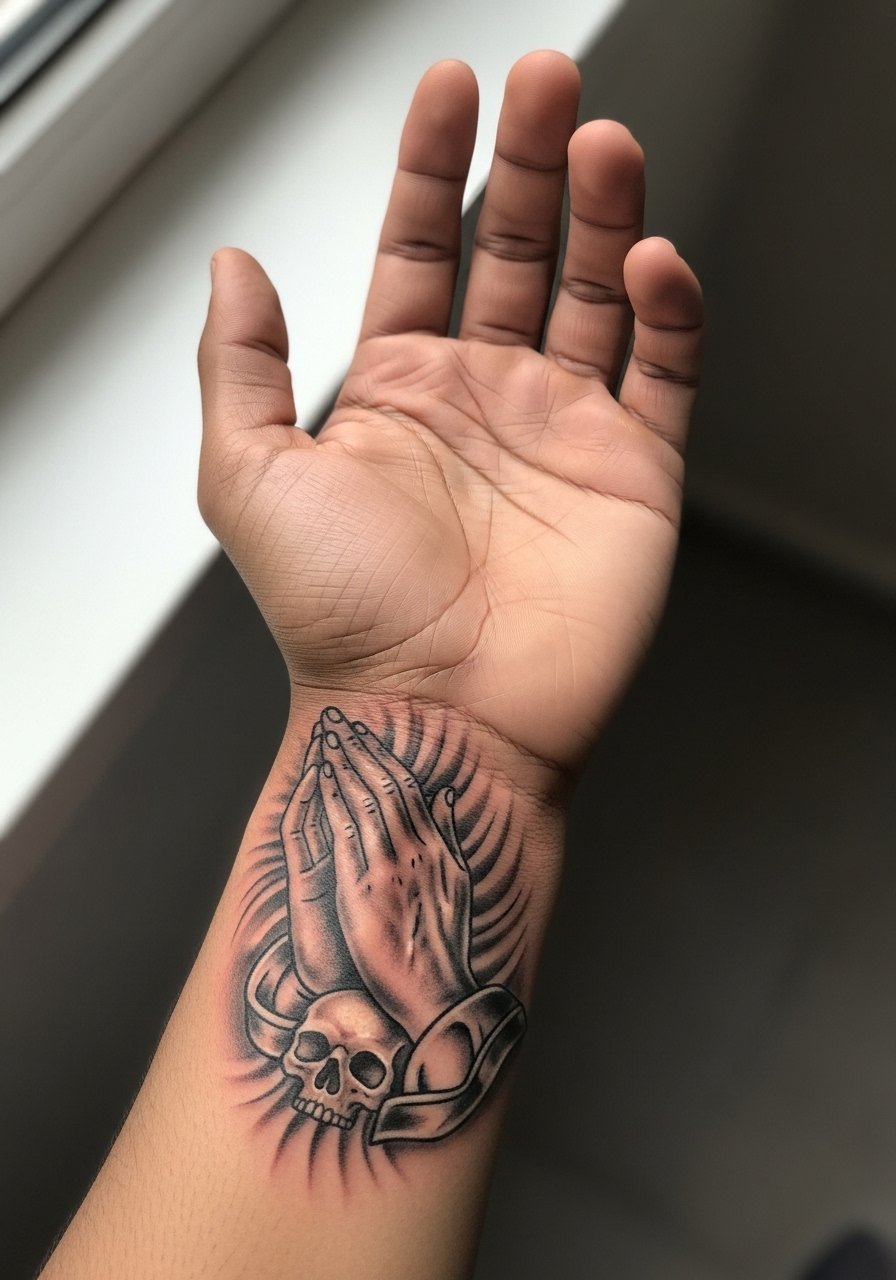
14. Praying Hands with Skull Accent on the Hand or Wrist Wrap
Combining a skull accent can shift the piece into a more gothic palette while still staying black and grey. Hand and wrist wraps are highly visible and subject to frequent washing and friction. Expect touch-ups sooner here than on the arm. When you consult, decide whether the skull should be high contrast or low contrast next to the hands. For showing the wrap, a crop+tee or short sleeves work well. Keep in mind that hand and wrist work is more exposed to sunlight and will fade if left unprotected.
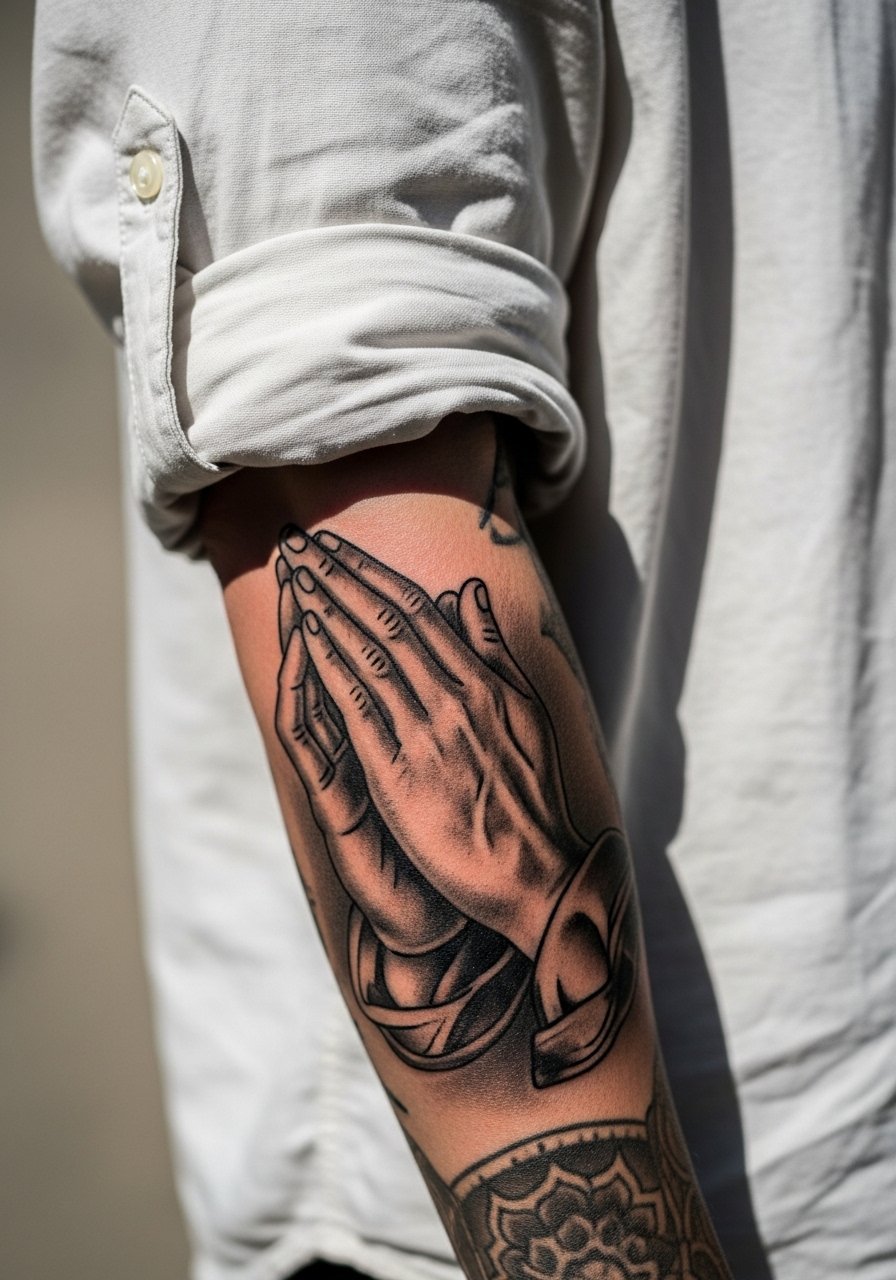
15. Black and Grey Praying Hands Forming Part of a Sleeve
When integrated into a sleeve, praying hands can act as a calm focal point amid busier motifs. For sleeves, pacing and negative space matter. Ask your artist to map how the hands will interact with adjacent pieces before inking so the silhouette remains readable at arm distance. Sessions for sleeve segments vary widely. For the session, wear a loose+button+down+shirt+mens you can roll or slide to expose the area. A common mistake is crowding the hands with too many competing elements, which reduces clarity as the piece ages.
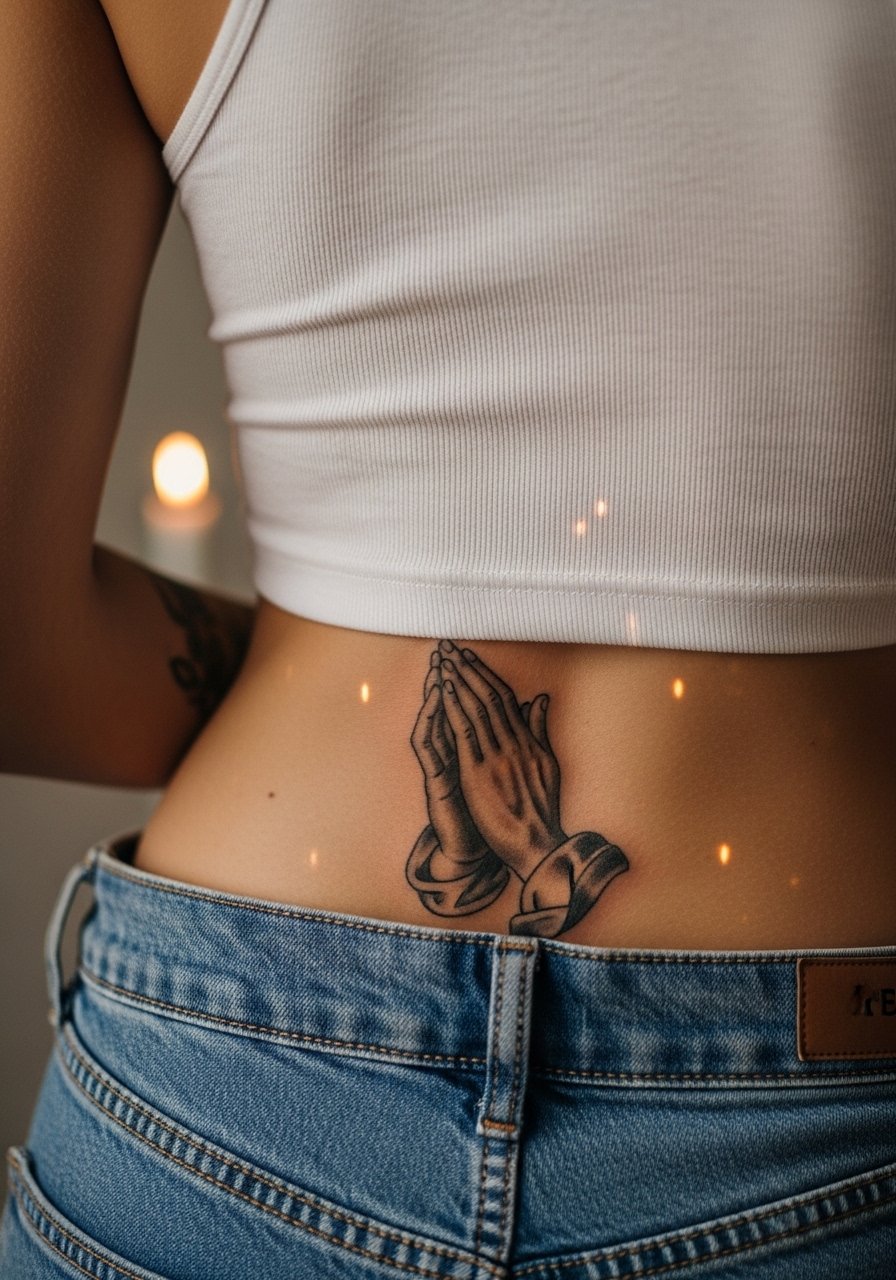
16. Praying Hands with Candlelight Reflections on Lower Back
Lower back pieces sit low on the mobility and abrasion scale, which helps saturation persist. For safety and modesty, have the subject wear a tank top with high-waisted pants pulled slightly low to reveal only the lower back area. Tell your artist you want broader contrast for the candle reflections so they do not disappear into the surrounding shading. Sessions are moderate and healing benefits from clothing that does not rub the area. A frequent oversight is tight jeans right after inking which can irritate the tattoo during the first week.
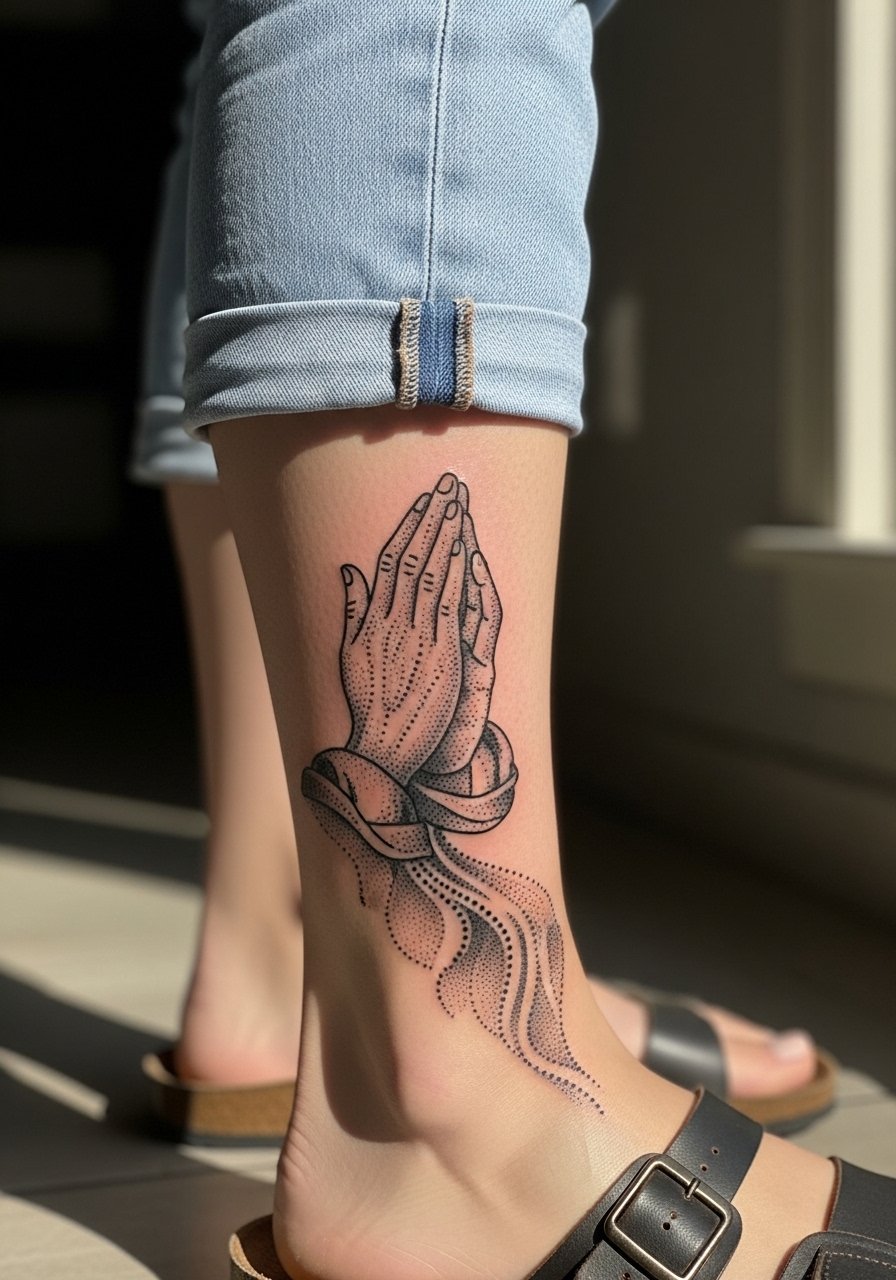
17. Praying Hands in Dot Work Sleeve Accent on the Calf to Ankle
A vertical dot work accent with hands flowing toward the ankle reads well and works with footwear. Calf-to-ankle flows need spacing so dots do not merge during settling. Ask for a graduated dot density that eases into open space near the ankle. Sessions tend to be broken into shorter sittings to manage circulation. For seasonal showing, sandals or low boots pair nicely with this placement. Try ankle+strap+sandals to frame the lower portion without covering it. Expect dot work to require touch-ups if it sits too close to high-friction zones.
Session Day Picks
The first six pieces above include wrists, forearms, chest, shoulder, and ribs. Prep and a couple of small tools smooth the session and the first week of healing.
-
Stencil transfer paper kit. Lets you preview line placement on skin before the needle starts, helpful for precise forearm and collarbone positioning.
-
Tattoo numbing cream. Apply as directed if you are nervous about rib or sternum sessions, it can ease the first hour without affecting shading.
-
Thin protective film roll. Useful for wrist and finger pieces to reduce friction during the initial healing window.
-
Fragrance free gentle body wash. Cleanses healing areas such as the chest and back without irritating delicate linework.
-
Aquaphor healing ointment. A thin layer can help the first few days of healing for small fine-line and blackwork pieces without clogging.
Frequently Asked Questions
Q: How long will a black and grey fine-line praying hands tattoo stay crisp on the inner forearm?
A: From what I have seen, inner forearm fine-line pieces often look sharp for two to three years before subtle softening. Proper spacing, slightly bolder initial lineweight, and sun protection extend crispness. Expect a touch-up around year three depending on your skin and sun exposure.
Q: Will praying hands on the ribcage blur faster than on the arm?
A: The ribcage moves more and has thinner skin, so fine detail can blur sooner than on the arm. Artists split into two camps. One avoids delicate fine-line there. The other will accept the placement if they can use slightly heavier lines and plan for a touch-up. Ask the artist which approach they take.
Q: Are hand and finger praying hands acceptable in professional settings?
A: Hand and finger tattoos remain the most visible and can affect hiring in some industries. If that is a concern, consider placement on the wrist or inner forearm instead. If you proceed, keep the design simplified and be ready for more frequent touch-ups.
Q: How should I dress for a sternum or chest session the day I get a praying hands tattoo?
A: Wear a bandeau+top or a wide-neck shirt you can shift so only the tattoo area is exposed. That keeps you covered and gives the artist clean access. Loose fabrics reduce irritation during the first 48 hours.
Q: What aging differences should I expect between blackwork and dot work praying hands?
A: Blackwork holds silhouette and contrast longer because of saturation. Dot work is delicate and can soften more notably as dots merge over time in high-friction areas. For dot work, ask for graduated spacing and plan on touch-ups if the piece sits near clothing seams or the ankle.
Q: How do I find a tattooer who understands praying hands compositions without naming specific artists?
A: Use local directories and shop websites to find portfolios. Search hashtags that match the technique you want and look for healed work photos rather than fresh images. Tap into community threads and convention guest lists to find artists experienced in micro-realism, stipple shading, or blackwork.
