
Fine line neck pieces are everywhere online, but what looks crisp in a filtered photo does not always age well where the skin flexes and hair rubs. I have seen minimalist nape designs that blurred inside two years and bold black motifs that still read clean at year ten. This list focuses on bold, edgy back neck tattoo ideas that actually hold up, with notes on what to ask your artist, how they heal, and how to style them so the placement works with your life.
1. Minimal Crescent Moon Centered at the Nape
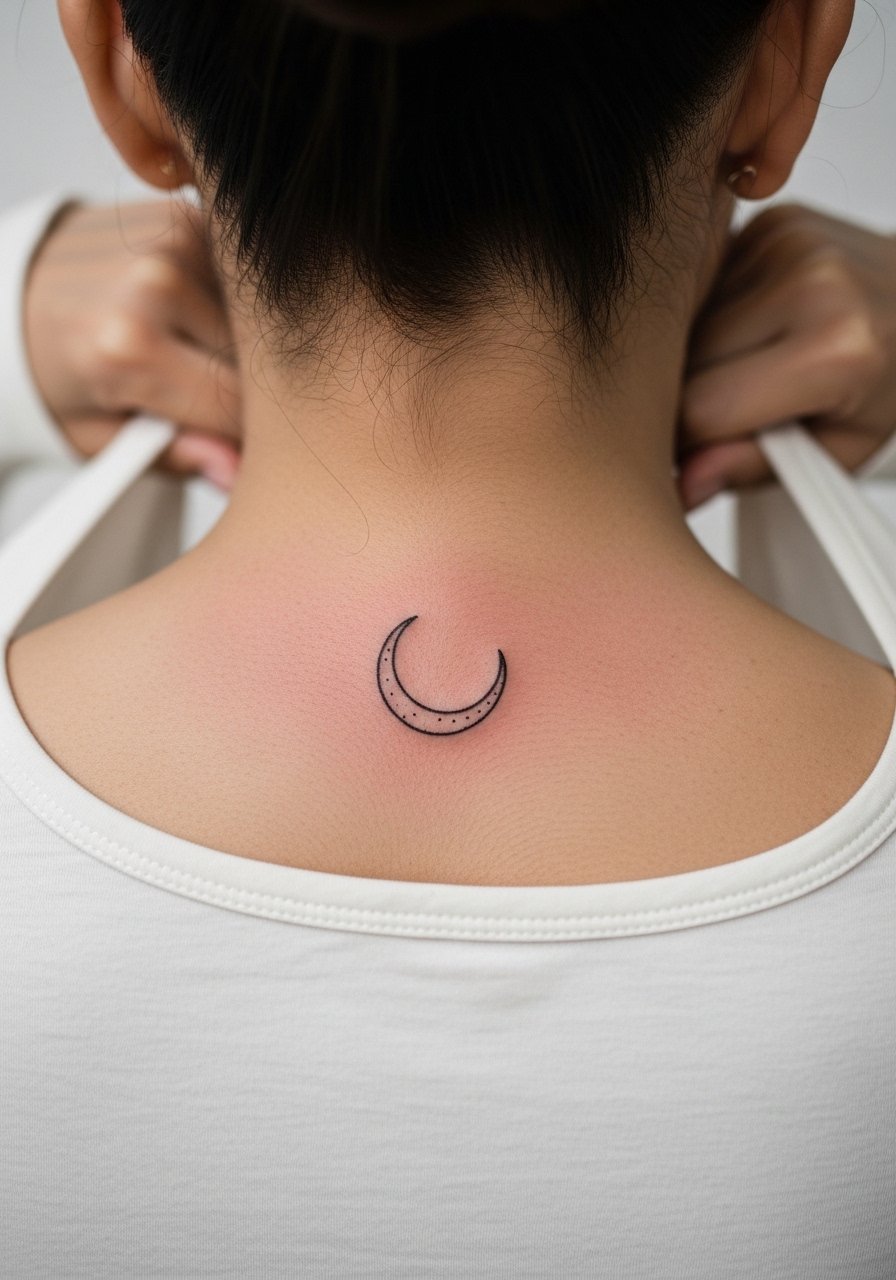
A tiny crescent at the center nape reads delicate but deliberate. Consult with your artist about line weight and single needle work, because too thin and it will fade into a ghost at year two. The common mistake is asking for the thinnest possible stroke to mimic a photo, then regretting the lack of contrast when hair rubs the site. Expect a short session under an hour and a mild 3 out of 10 on most pain scales. For showing it off, high ponytails or a silk scrunchie set work well with the exposed nape. If you want longevity, ask for slightly stronger line weight and a subtle inner shading to keep the crescent readable as it heals.
2. Micro-Realism Luna Moth with Antennae Spread
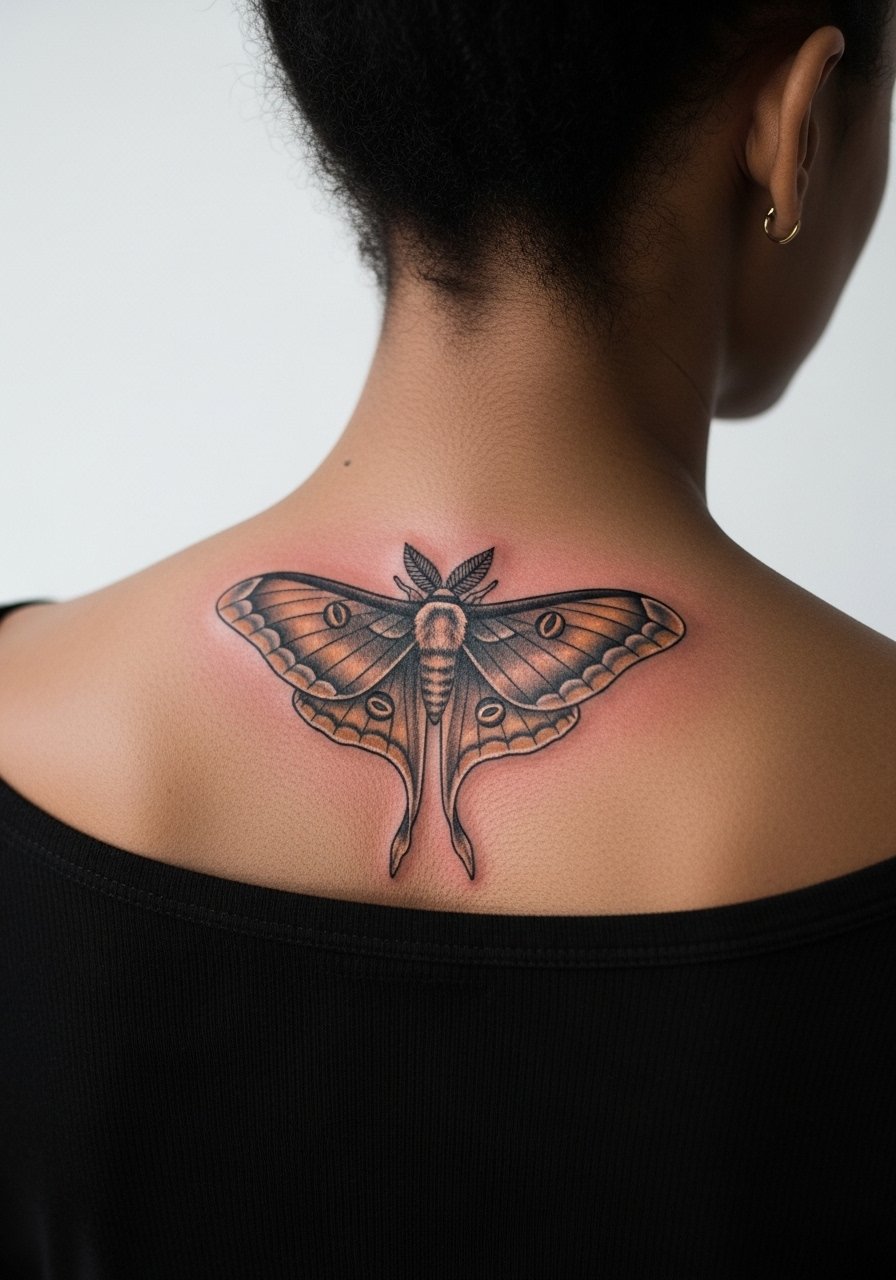
This moth design uses small shading planes and stipple work to create depth without heavy saturation. Tell your artist you want stipple shading and crisp antennae, not dense gray wash. The session runs longer than a simple symbol, often one to two hours depending on detail, and pain is a moderate 4 out of 10. Blowout risk is present if lines are placed too shallow, so confirm the artist's experience with micro-realism on thin skin. Pair this with a sleek high bun for photos and try a claw clip hair accessory to expose the nape while keeping hair controlled. Moths age nicely when the stippling is given room to breathe, so avoid cramming tiny veins into the wings.
3. Bold Japanese Motif Peeking Over the Collar
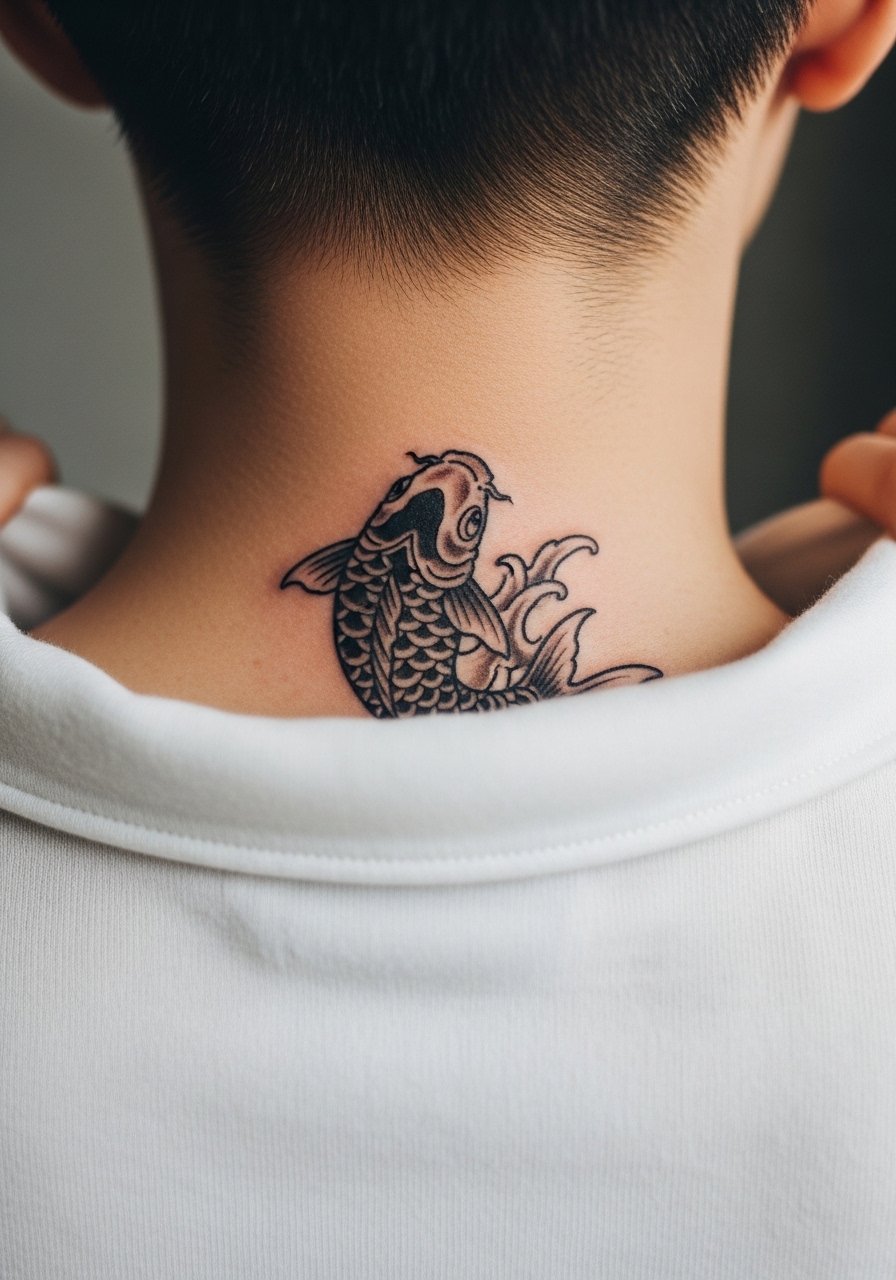
A compact Irezumi element at the nape makes a bold statement without committing to a full back piece. Artists split on cultural replication, so acknowledge the motif origin and ask for a respectful, informed design rather than a direct cultural copy. This style needs heavier saturation and confident linework, which means longer sessions and an artist experienced in traditional fills. Expect deeper shading and a higher contrast look that stands up to hair friction. For evening outfits, a simple open-back midi dress highlights the piece. If you choose this route, discuss meaning and lineage with your artist so the motif is used thoughtfully.
4. Dot-Work Mandala Half-Ring at the Nape
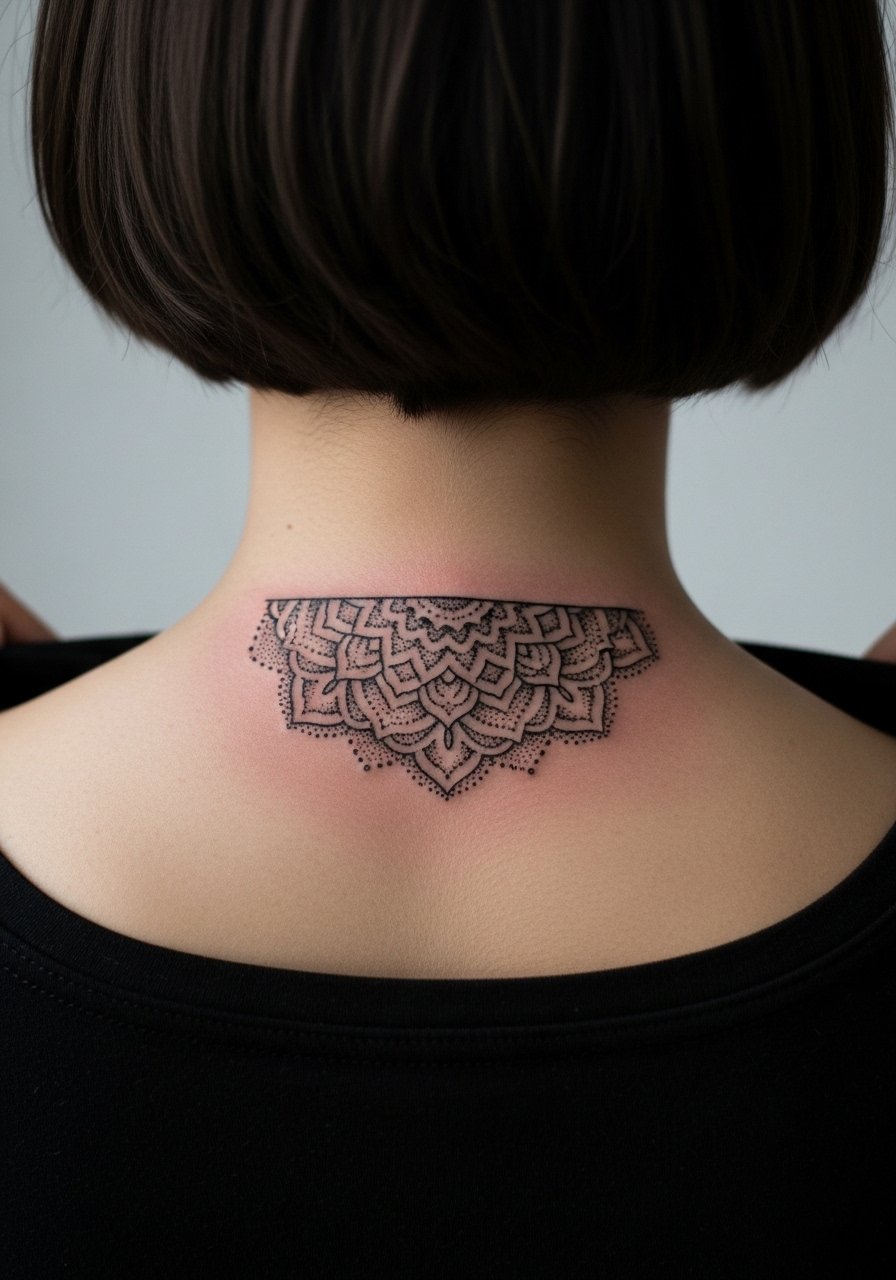
A half-mandala carved along the nape curve gives ornamental impact while staying compact. Tell your artist you want negative space between dots so the pattern keeps definition as it heals. The risk is packing detail too tightly which leads to muddiness by year three. This piece is patience-heavy in the chair, often multiple shorter sessions for crisp stippling. For daytime wear try a racerback tank top to show the curve without overexposing the rest of the back. If you work in a conservative office, this design stays hidden with hair down and reveals only in updos.
5. Centered Barbed Wire Band That Sits Low on the Nape

Barbed wire at the lower nape feels raw and graphic. The common error is requesting ultra-thin barbs that disappear; ask for defined spacing and slightly bolder knot points so the motif holds. Pain is low to moderate and the session is short if kept minimal. This placement can read as provocative in certain workplaces, so consider visibility when booking. For session comfort wear a loose button-down shirt that you can pull aside easily. The piece ages well when linework is clean and knots are slightly filled to resist early fading.
6. Tiny Script Word Along the Hairline
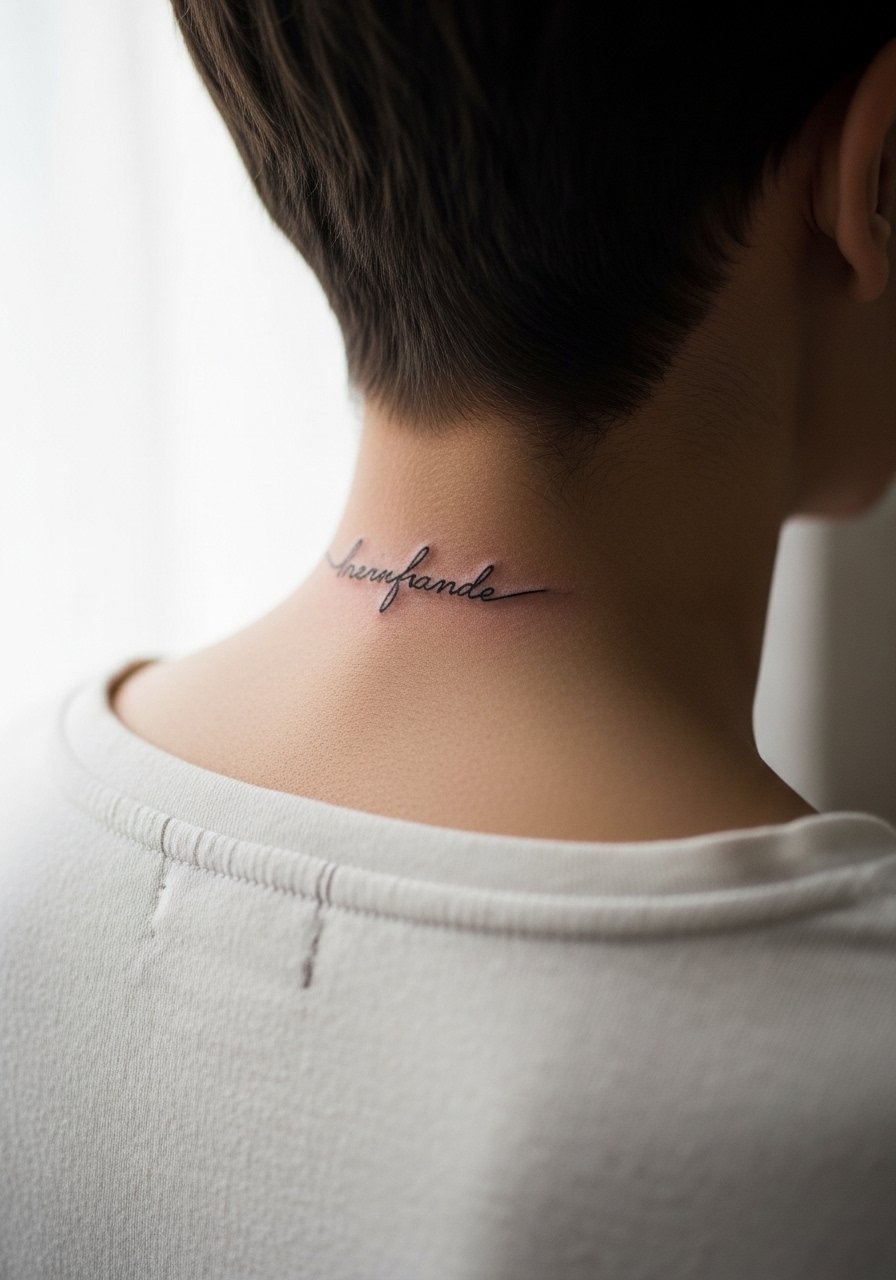
A short script tucked under the hairline reads intimate and deliberate. Choose a font with openness between letters so the spacing survives hair friction. The main mistake is picking tight cursive that blurs into a smear. This one is quick in the chair and rates a 3 out of 10 on pain. For reveal, a half-up hairdo or a neat top knot works with a high ponytail hair tie. If the word has cultural or religious meaning, mention that to the artist so they can adjust styling rather than copy a script from an unrelated context.
Studio Day Picks
The subtle placements above can be sensitive to rubbing and daily wear, so a few practical items smooth the session and the first week.
-
Stencil transfer paper kit. Lets you preview placement on the nape while wearing different collars, which is useful for centered or hairline work.
-
Topical numbing cream. Applied according to instructions it eases discomfort for longer micro-realism or traditional sessions without changing the artist's lines.
-
Thin protective film roll. Useful for short-term protection when the nape rubs against shirts in the first 48 hours.
-
Fragrance-free gentle body wash. Keeps the area clean without irritating delicate linework.
-
Aquaphor healing ointment. A thin layer for the initial days helps retain moisture on fine line and stipple pieces while avoiding clogged channels.
7. Vertical Spine-Lined Micro Crosses
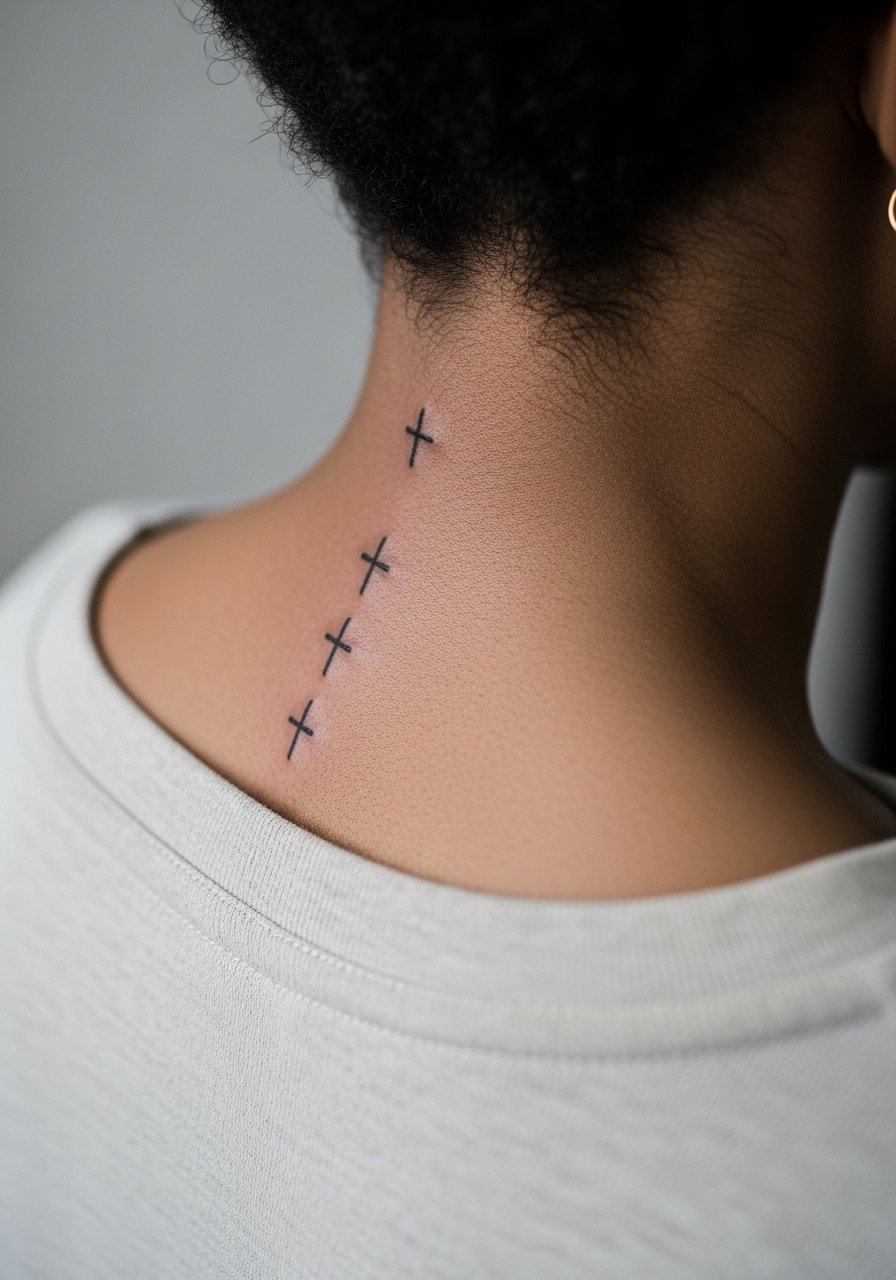
A vertical column of micro crosses plays with symmetry and the natural spine line. Tell your artist you want consistent spacing and slightly stronger terminations to avoid dot loss. The error is tiny, uneven spacing that reads sloppy after healing. Session time is minimal but position requires stillness. For showing it off try a sleek bun or a thin chain pendant necklace that sits above the top cross so the column draws the eye. If you plan tattoos down the back, confirm proportions now so future pieces can align cleanly.
8. Ornamental Thorn Necklace That Wraps Slightly
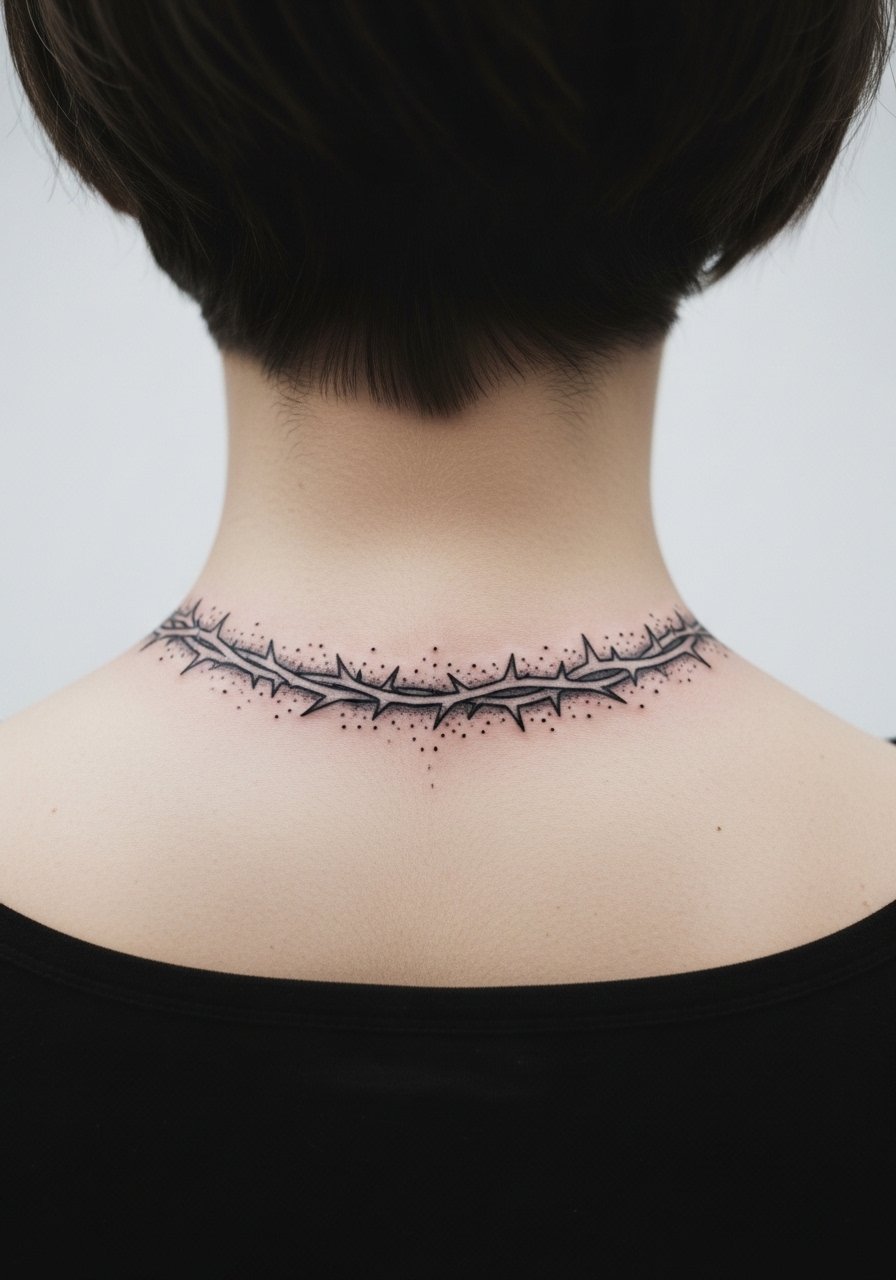
This piece frames the nape like a choker without jewelry. Ask for spacing between thorns and a soft shadow to keep the motif readable as it moves. A common mistake is overly dense thorns that merge during healing. Sessions vary by size but are typically one to two hours. For outfits, an open-back midi dress or scoop-neck tee highlights the necklace aesthetic. If you have thin hair that naturally falls to the neck, expect more friction during healing and plan to keep hair secured.
9. Tiny Geometric Arrow Cluster Facing Down
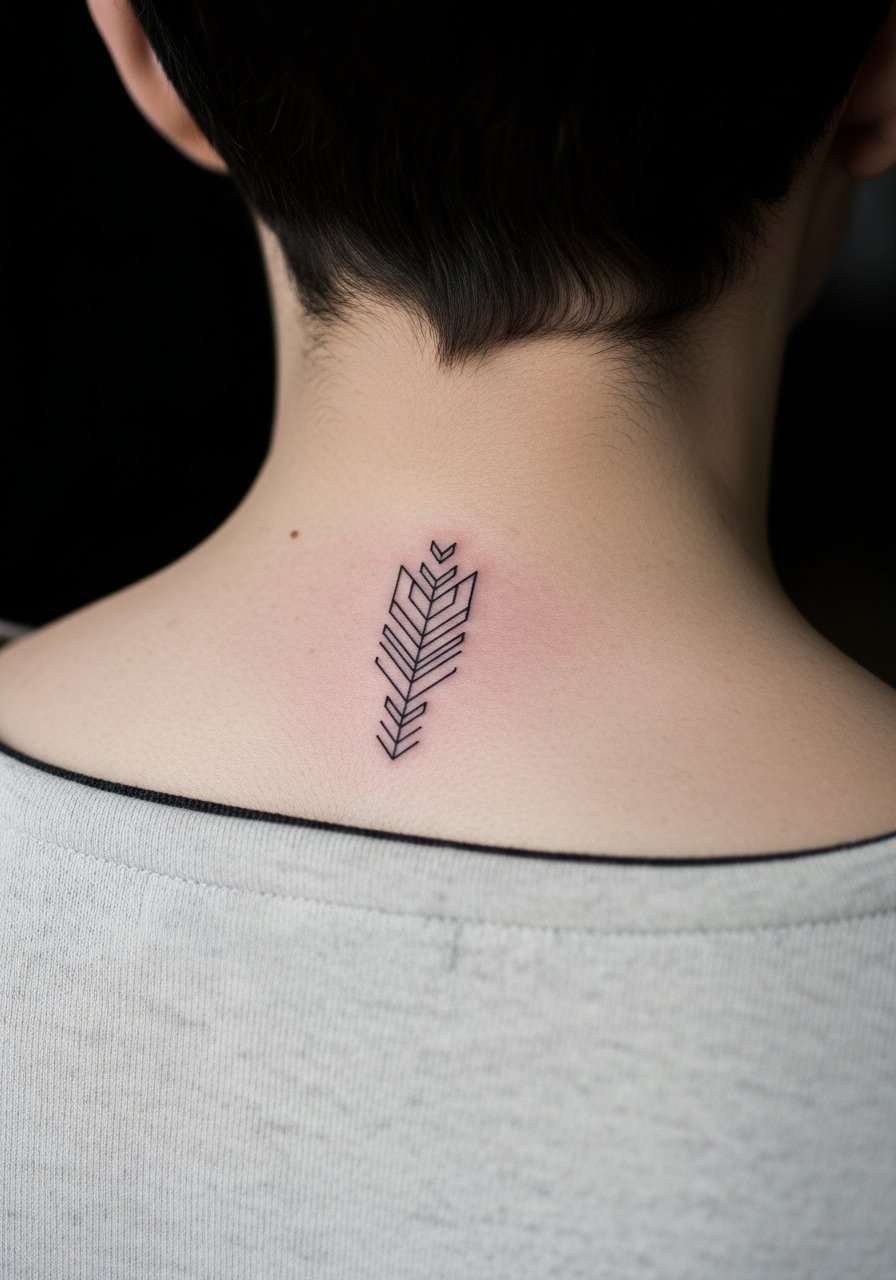
A compact arrow cluster uses clean linework to read modern and sharp. The biggest mistake is scaling the arrows too small, which causes line merging. Tell your artist to keep spacing generous between arrow shafts. This one is a short session and low on pain, making it a good first-time pick. Pair with a racerback tank top to show the point direction and complement casual outfits. If you plan to expand upward into hairline pieces, sketch that intent into the consultation so compositions can be planned.
10. Tiny Skull with Botanical Accents
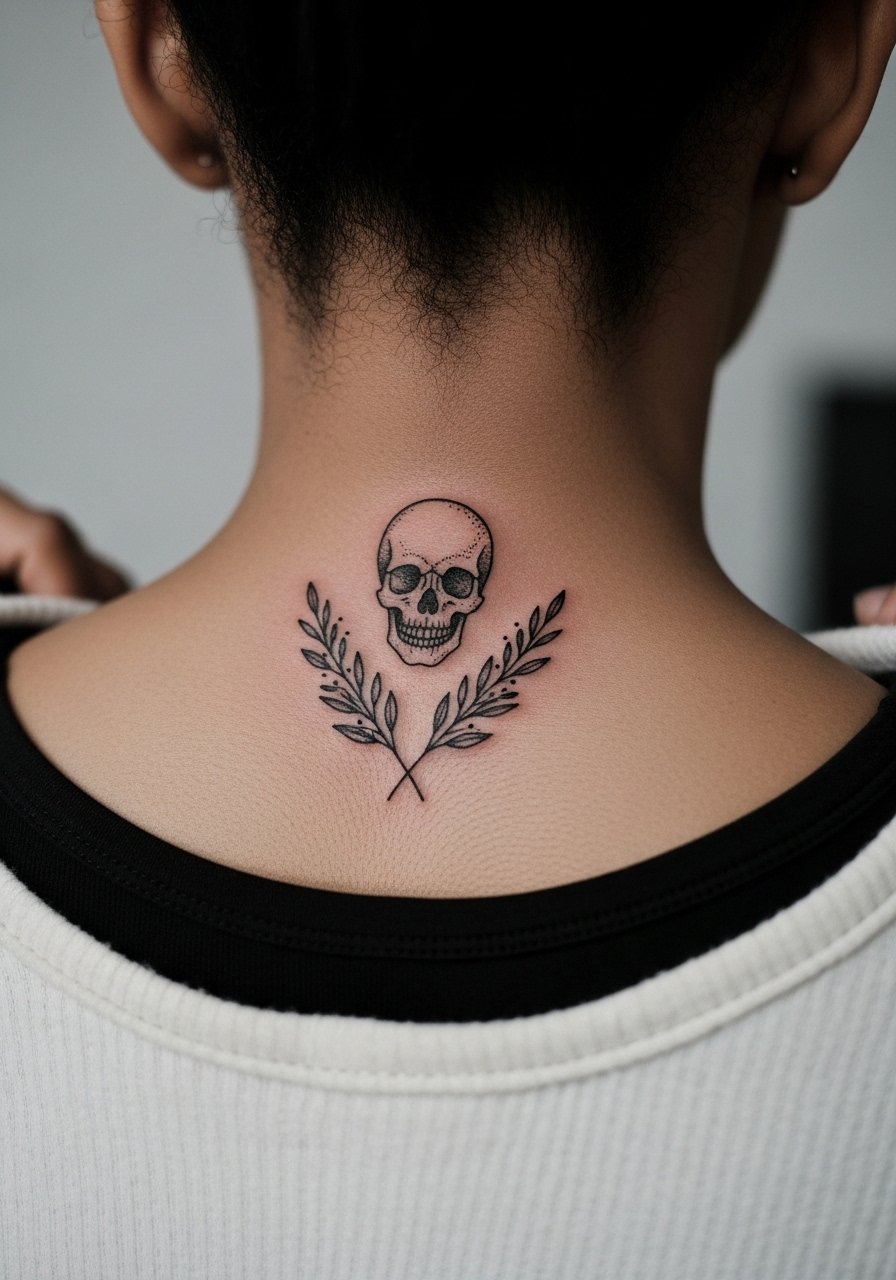
A small skull softened by leaves balances gothic and romantic notes. Ask for open negative space around the eye sockets so the skull does not fill into a smudge over time. Artists will often recommend discreet shading rather than full black fills for longevity. Session time is moderate depending on detail, and expect spot tenderness where shading is denser. For evenings, a sleeveless vintage shirt keeps the look intentional. If the skull references a cultural symbol, check respectful usage with the artist so the design stays thoughtful.
11. Split Sun and Moon Pair at the Hairline
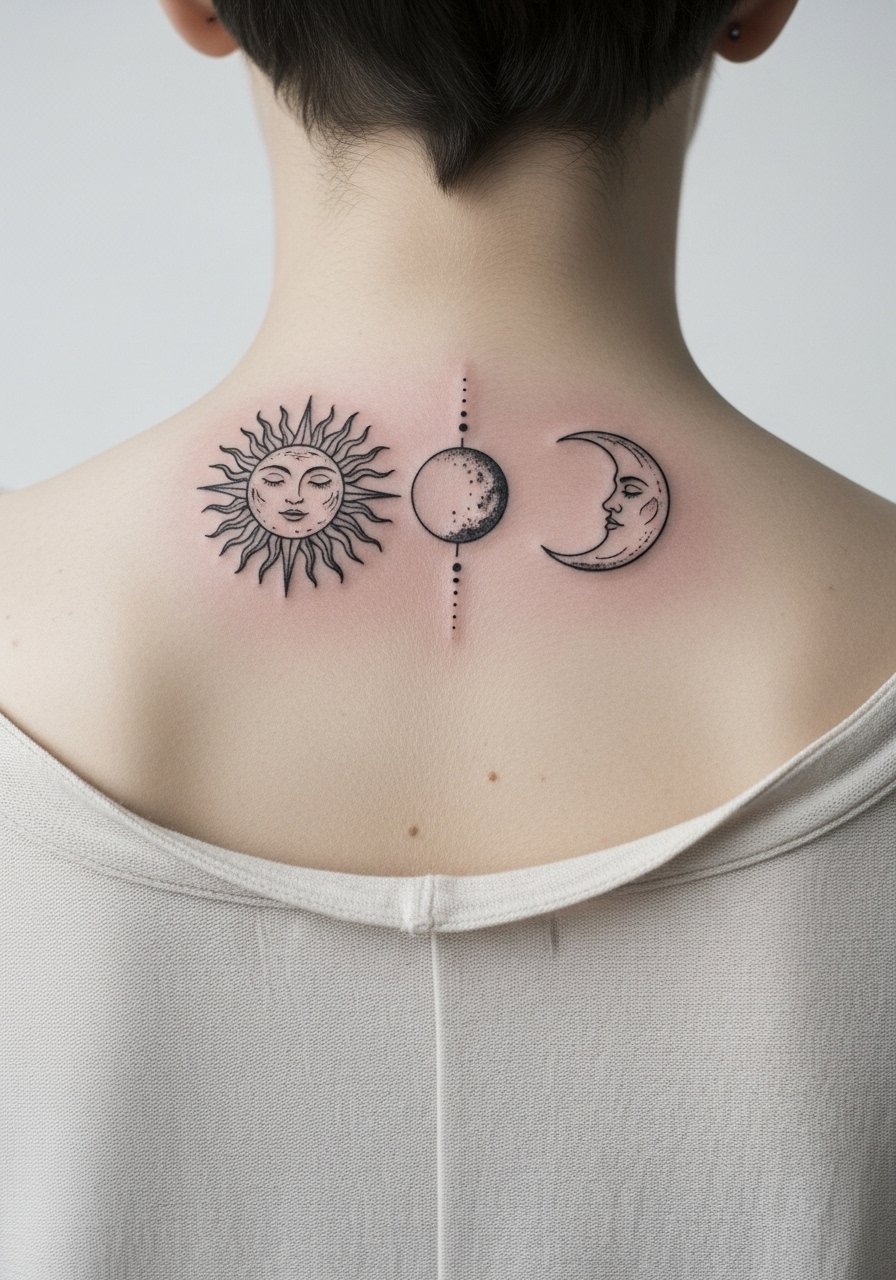
This mirrored pair balances contrast in a small footprint. The error people make is requesting identical density for both motifs which flattens the visual contrast. Ask the artist to give the sun slightly stronger rays and the moon gentler dots. Sessions are short and pain is low. For showing it off, a high half-up with a silk scrunchie set reveals both symbols while keeping hair textured. If you want to keep one side private, place one motif slightly lower so hair naturally covers it when down.
12. Stacked Roman Numerals Hidden in the Hairline
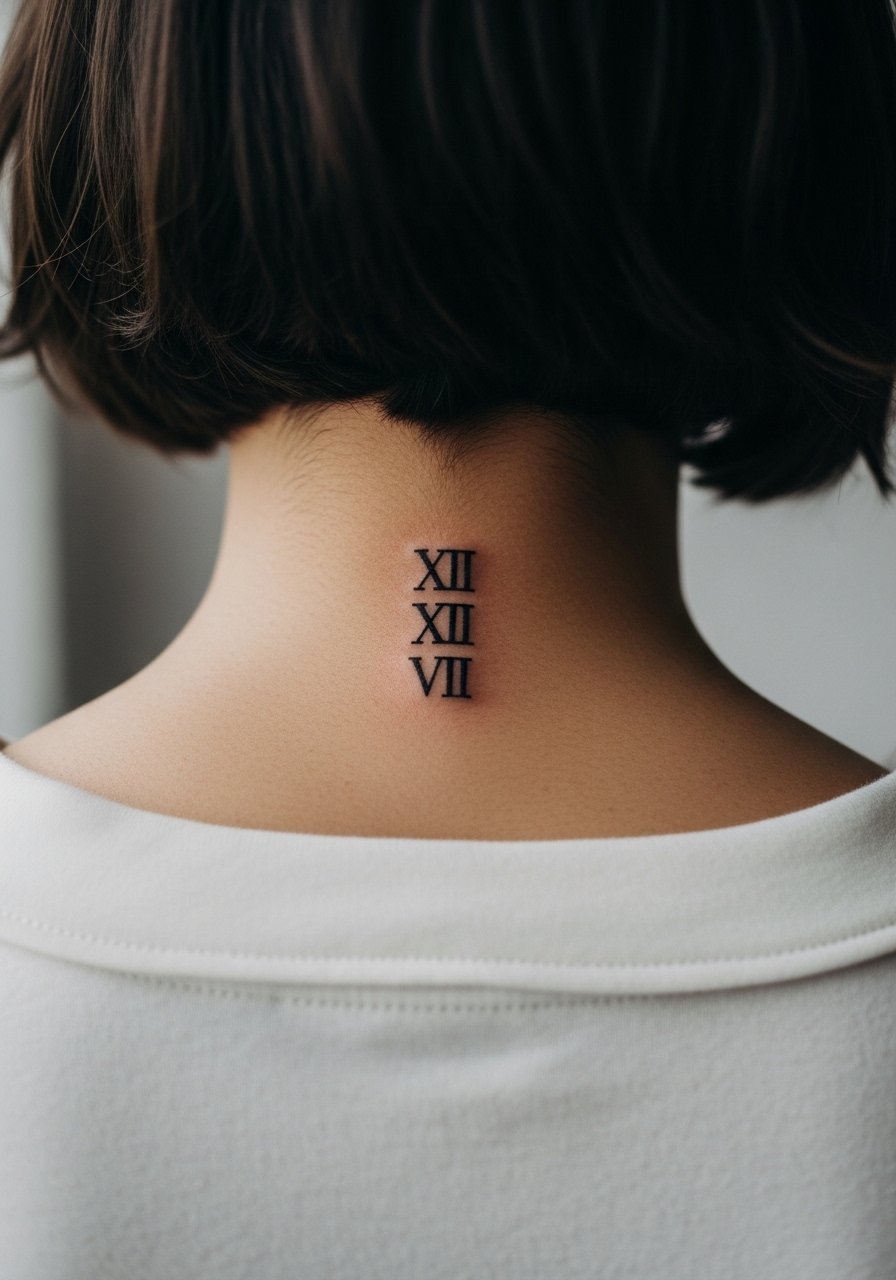
Roman numerals read crisp when spaced and weighted correctly. The common pitfall is tight lettering that blurs with movement and washing. Ask for open counters in the numerals and modest stroke width. This piece is quick in the chair and best kept to short strings of digits for readability. For appointment ease wear your hair in a clip and bring a high ponytail hair tie so the artist has clear access. If the numerals mark an important date, verify the correct order on a paper stencil before the needle touches skin.
13. Single-Line Minimal Wave That Mirrors the Hairline
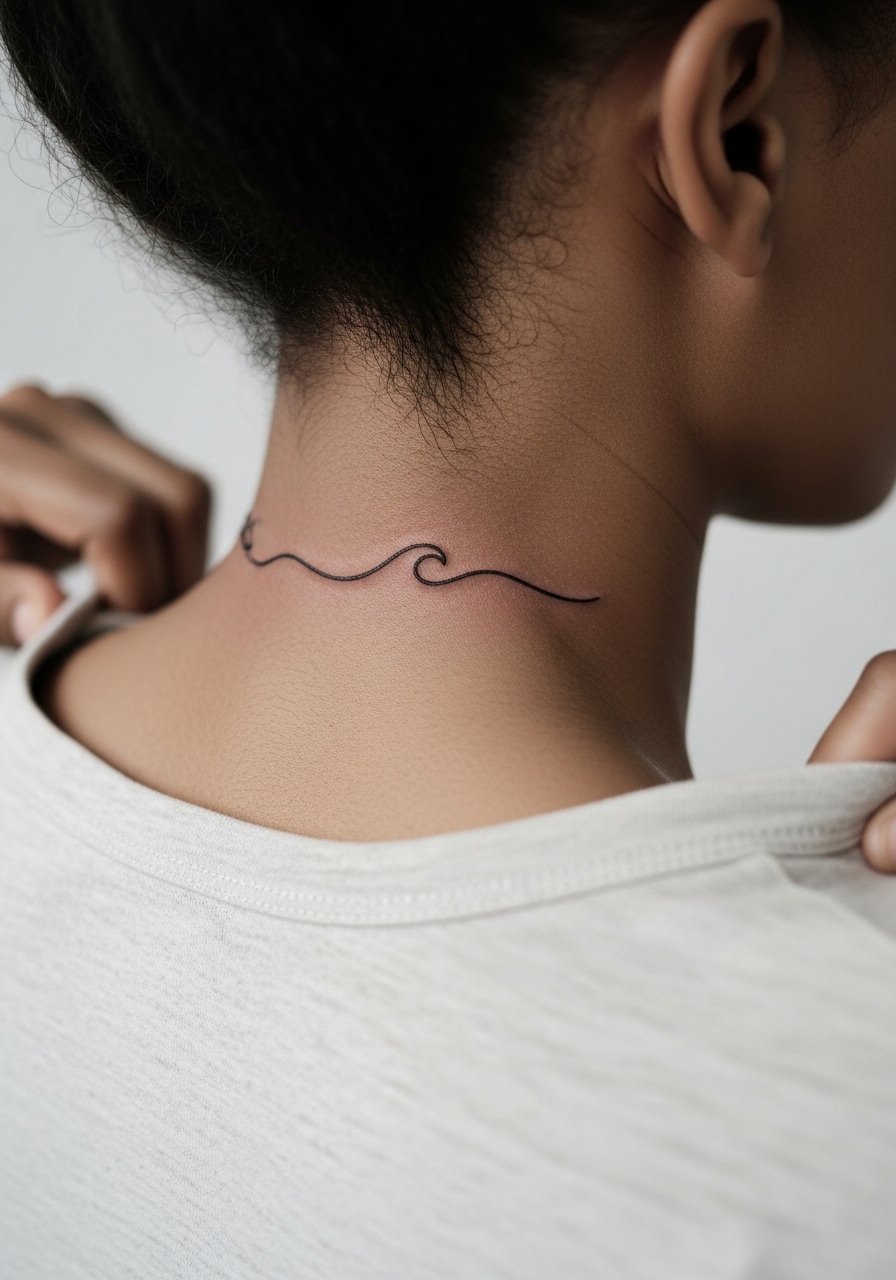
A simple continuous wave plays nicely with neck curves. The mistake is asking for an ultra-thin single pass and then wondering why it fades. Instead request a slightly more confident line weight so the shape endures. The session is brief and the pain mild. This piece looks modern with short hair or a neat bun, and works with a minimalist sleeveless shirt for casual reveal. If you plan expansion, leave breathing room at each end so future elements can connect without crowding.
14. Micro Animal Silhouette, Think Wolf Head
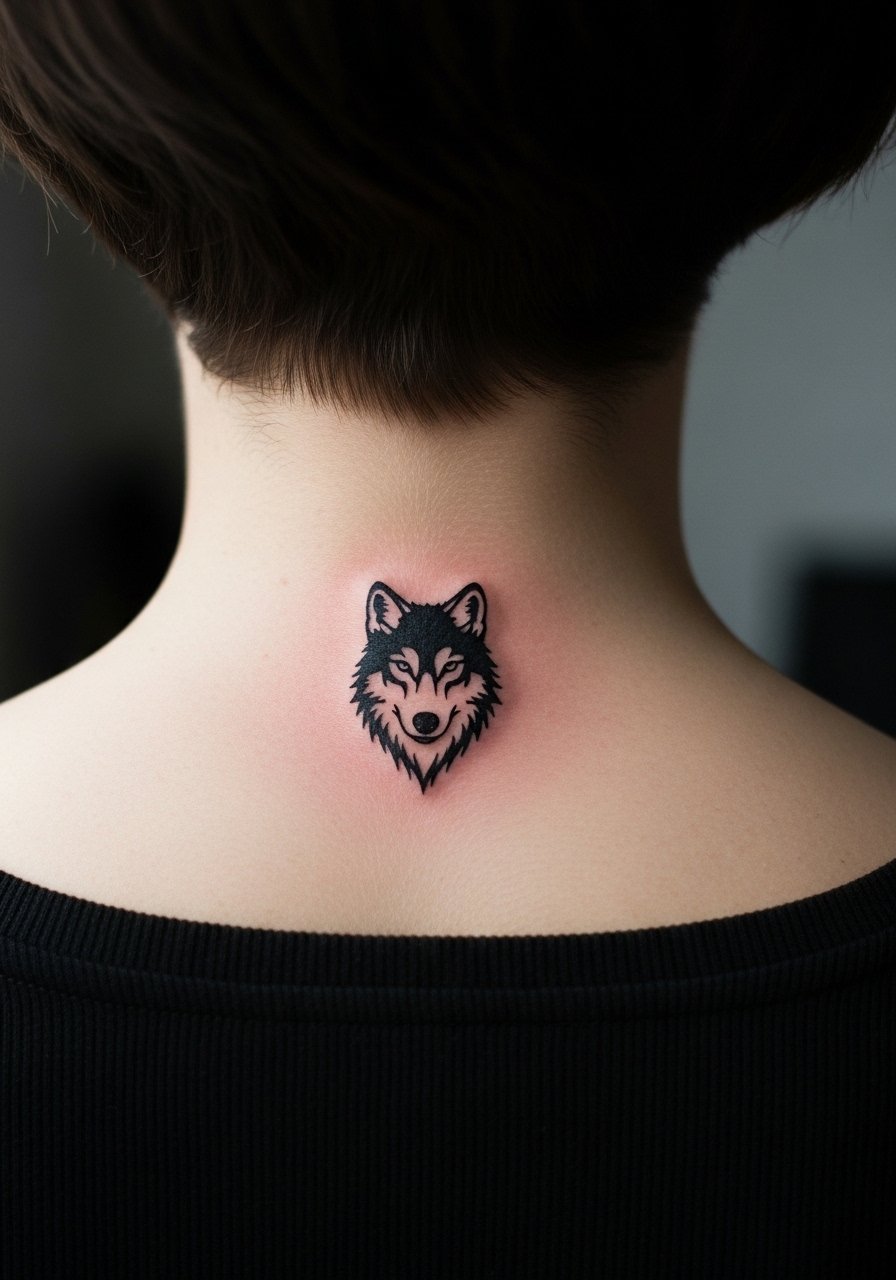
A small silhouette conveys mood without detail work that can blur. The main mistake is asking for tiny interior detail inside a silhouette which becomes indistinct. Keep the silhouette clean and solid, and the piece will age well. Session time is short and pain is low. For styling try a thin chain pendant necklace worn slightly higher so the wolf remains the focal point. If you want more realism later, plan a staged upgrade versus packing fine detail into a tiny initial piece.
15. Radial Sunburst with Open Center

A sunburst with an open center keeps the graphic quality while avoiding dense fills that can fade unevenly. The common error is compressing rays too closely which leads to merging. Ask the artist for measured spacing and a soft stipple wash if you want depth. This sits well with both cropped jackets and casual tees, and a loose button-down shirt worn open frames the piece without hiding it. Expect a one-hour session and a moderate tenderness where stippling is applied.
16. Thin Chain Link Tattoo That Wraps Lightly
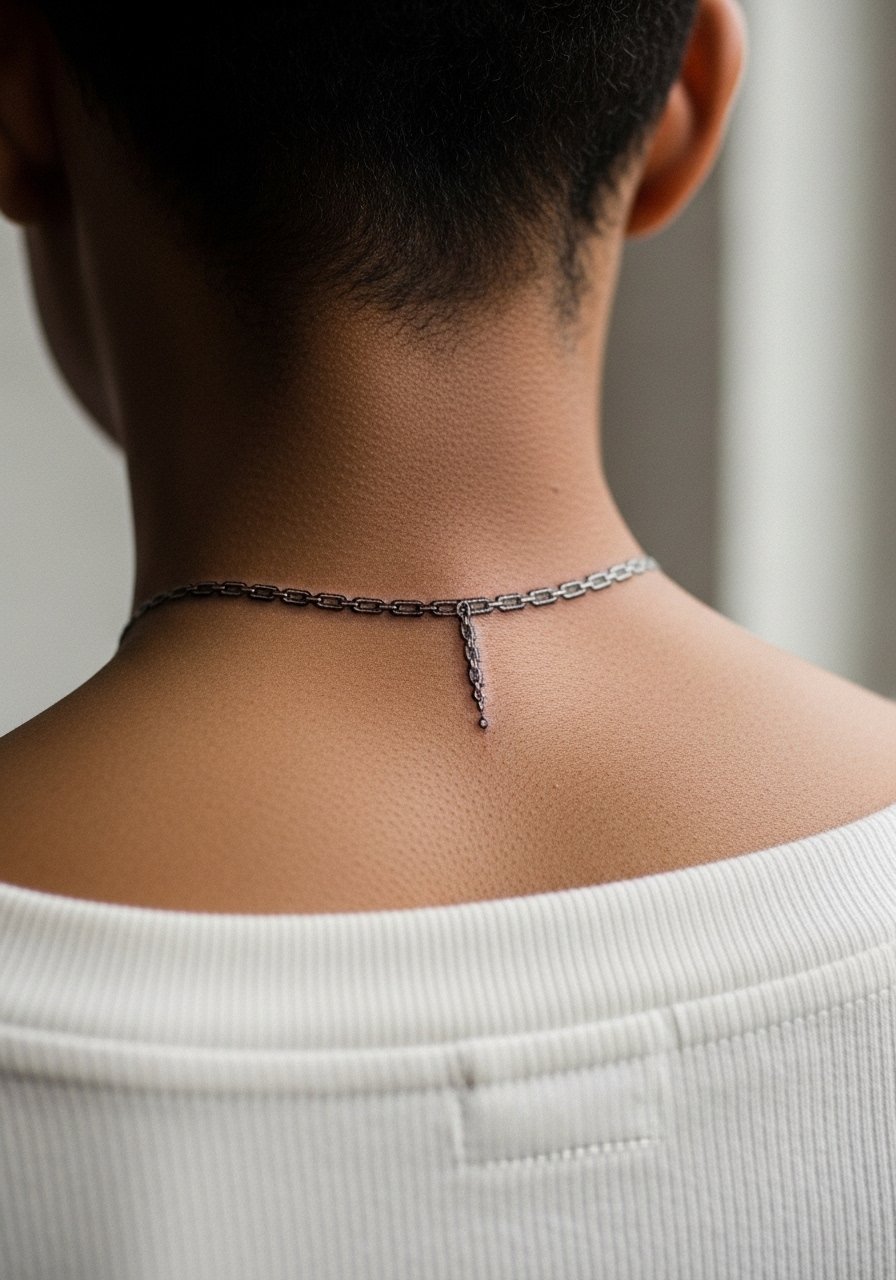
A chain tattoo plays with the jewelry illusion. The error is making links too small which leads to visual collapse over time. Ask for bold but delicate knots so each link reads independently. Sessions are typically short and pain is low. For a no-jewelry look try pairing it with a thin chain pendant necklace worn higher, or let the ink stand alone under a high collar. If your workplace frowns on visible neck ink, position the chain lower so hair covers it when needed.
17. Barcode or Coordinate Strip, Narrow and Vertical
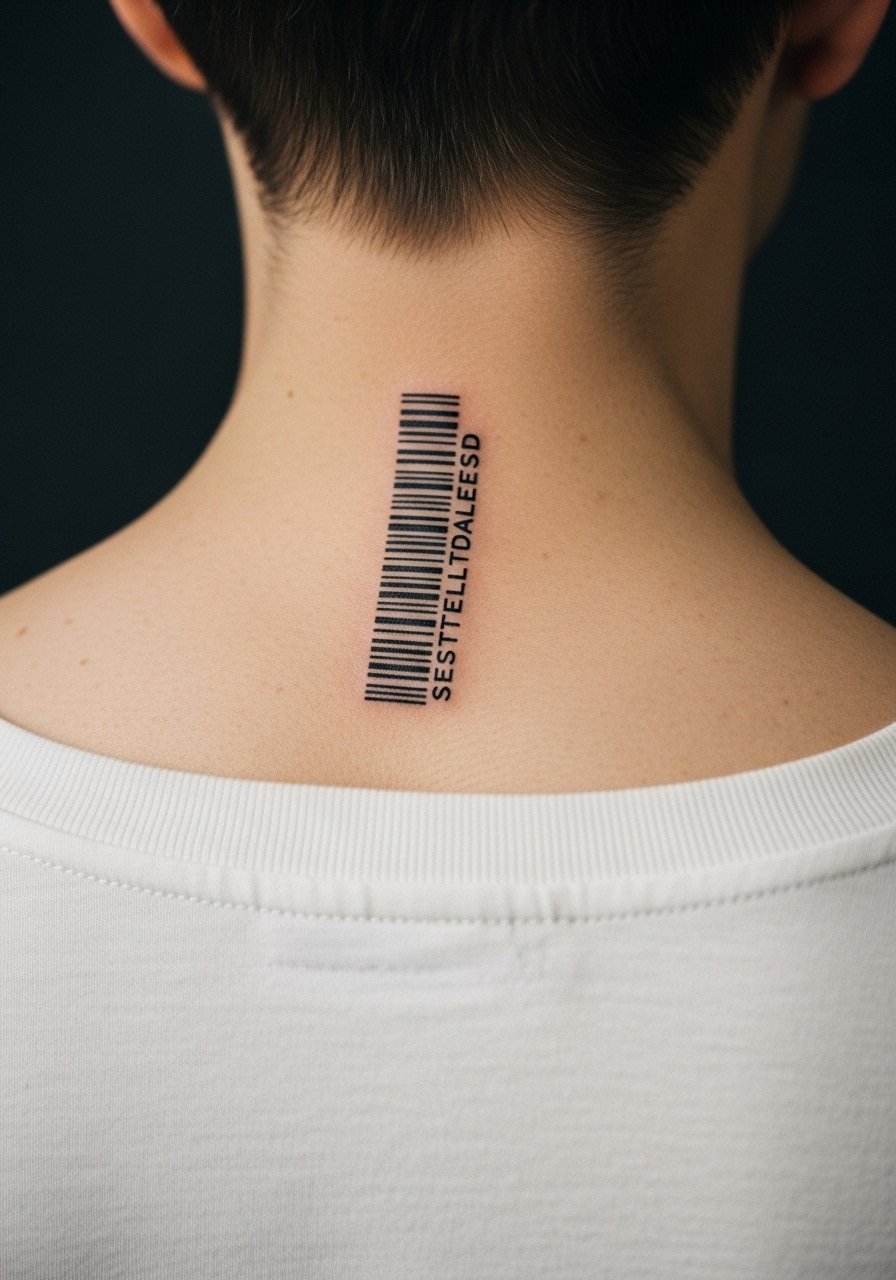
A barcode or coordinate strip reads modern and private. The main drawback is precision. Ask for equal spacing and crisp terminations because any wobble shows immediately. This design can look sharp for years with clean linework. Session time is short but artists may adjust needles to achieve a uniform black. For an urban look pair this with a loose button-down shirt worn open. If you plan to later add a logo or text, leave margins so additions do not crowd the strip.
18. Small Hannya Mask Peeking Upward
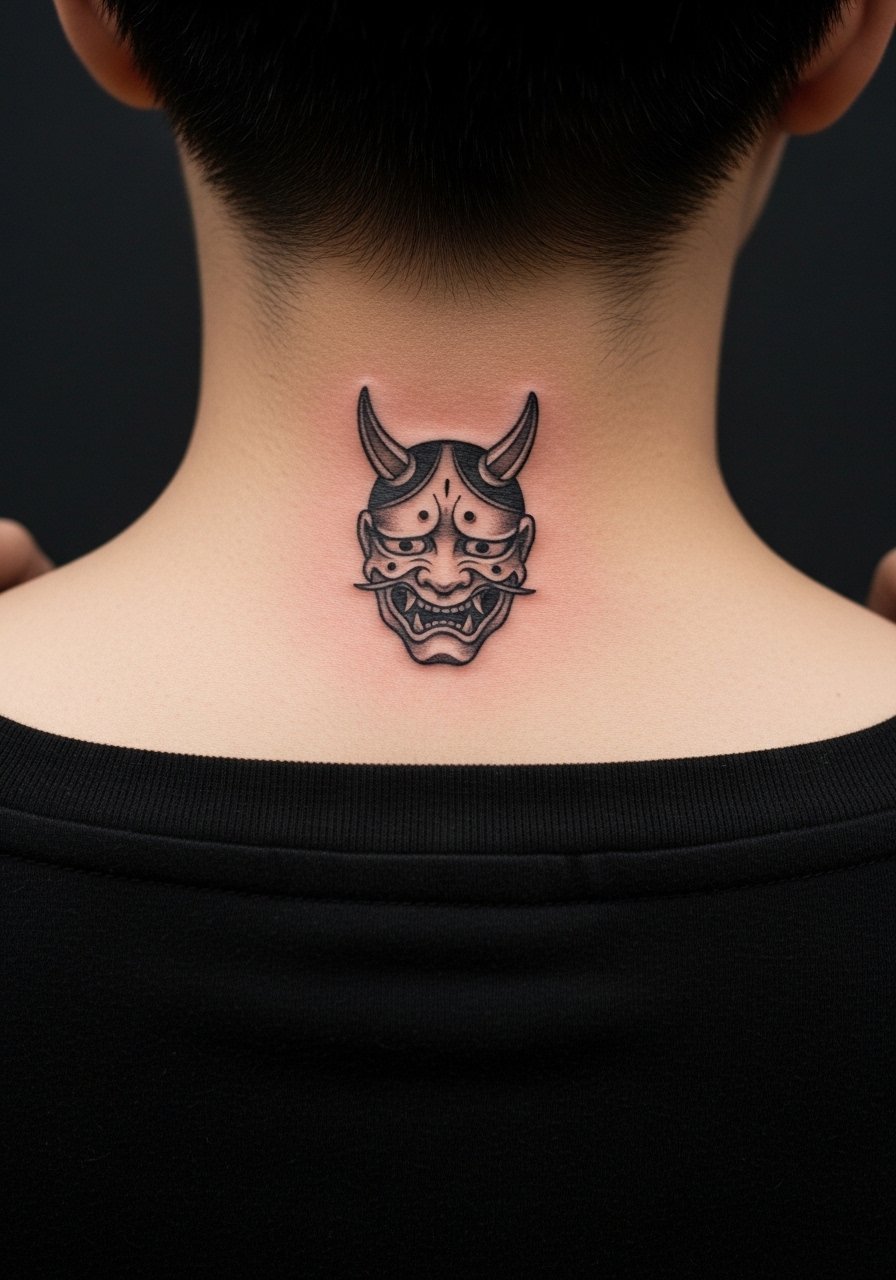
A compact Hannya nods to Japanese imagery and demands respectful handling. Mention origins to the artist and ask for a stylized interpretation rather than a direct cultural copy. This piece needs confident linework and careful shading, so choose an artist who works with similar motifs. Sessions are moderate in length and pain varies by shading. For styling try a structured blazer with the collar slightly open to frame the motif. If you decide on this concept, discuss symbolism and placement during consultation so the design reads intentional rather than decorative.
19. Tiny Anchor with Rope Detail
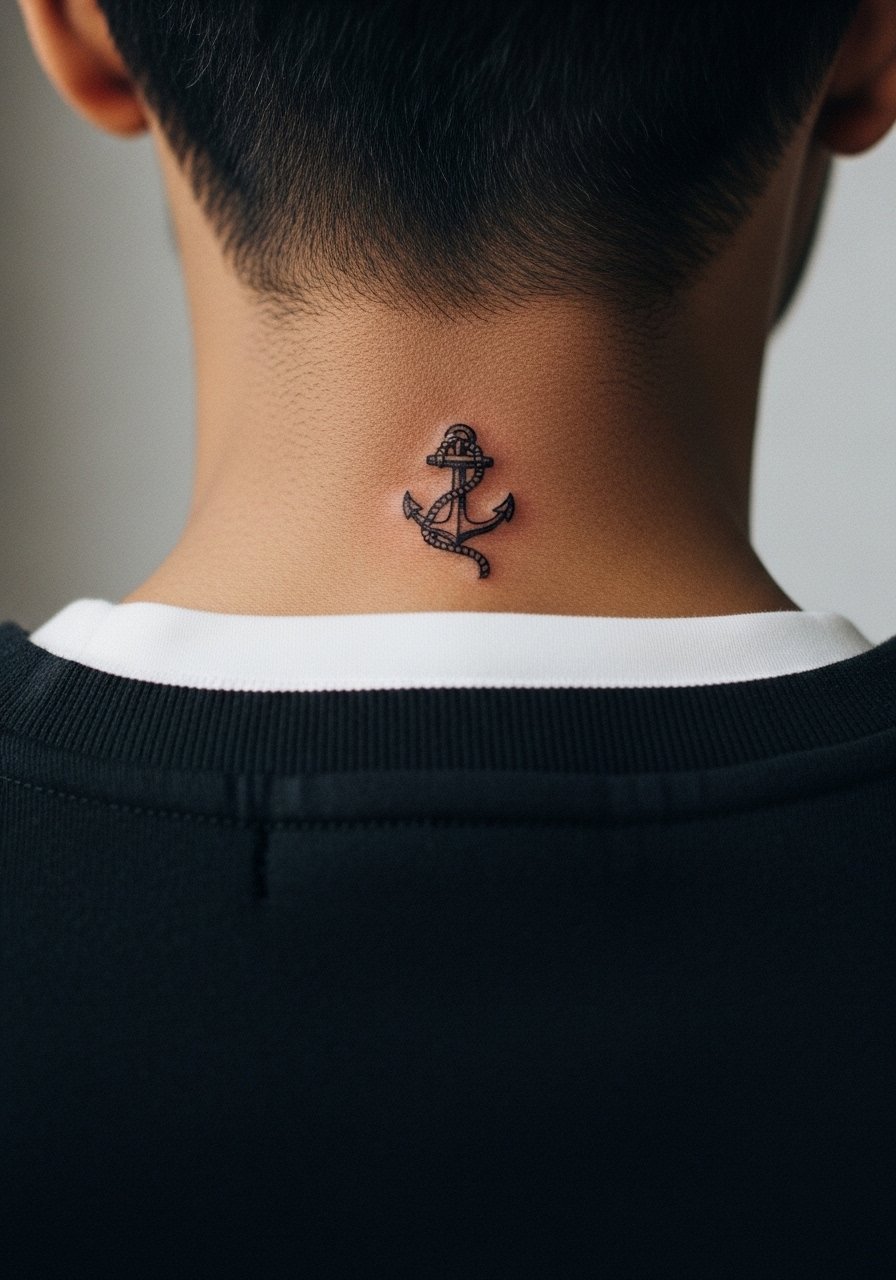
A nautical anchor reads classic in a small space. The typical mistake is over-detailing the rope, which becomes indistinct after healing. Ask the artist for clean rope loops rather than dense texture. This is a quick session and low on pain. For casual looks pair it with a racerback tank top to keep the motif visible without overexposing the upper back. If you plan a sleeve or larger theme, coordinate scale now so visual weight matches future pieces.
20. Single Fine Line Lightning Bolt Centered Low
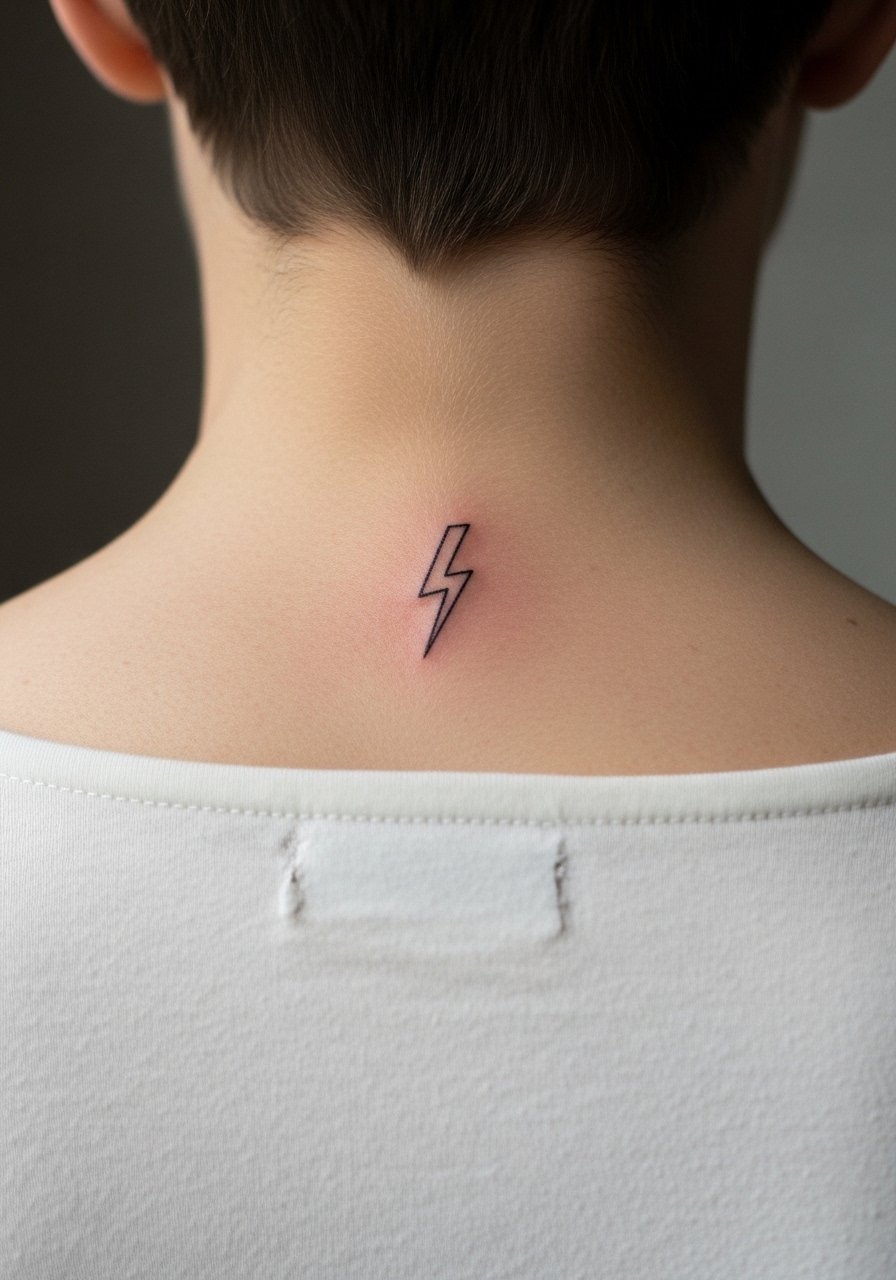
A lightning bolt reads immediate and energetic. The error is choosing a bolt too thin for the placement which leads to loss of crisp edges. Request a steady single-needle pass with a modest line width. This is a short, low-pain procedure. For a sporty reveal, wear a high ponytail hair tie and a racerback top. If you foresee frequent hats or helmets rubbing the nape, position the bolt slightly higher to avoid constant friction.
21. Small Sigil or Abstract Mark That Reads Like Jewelry
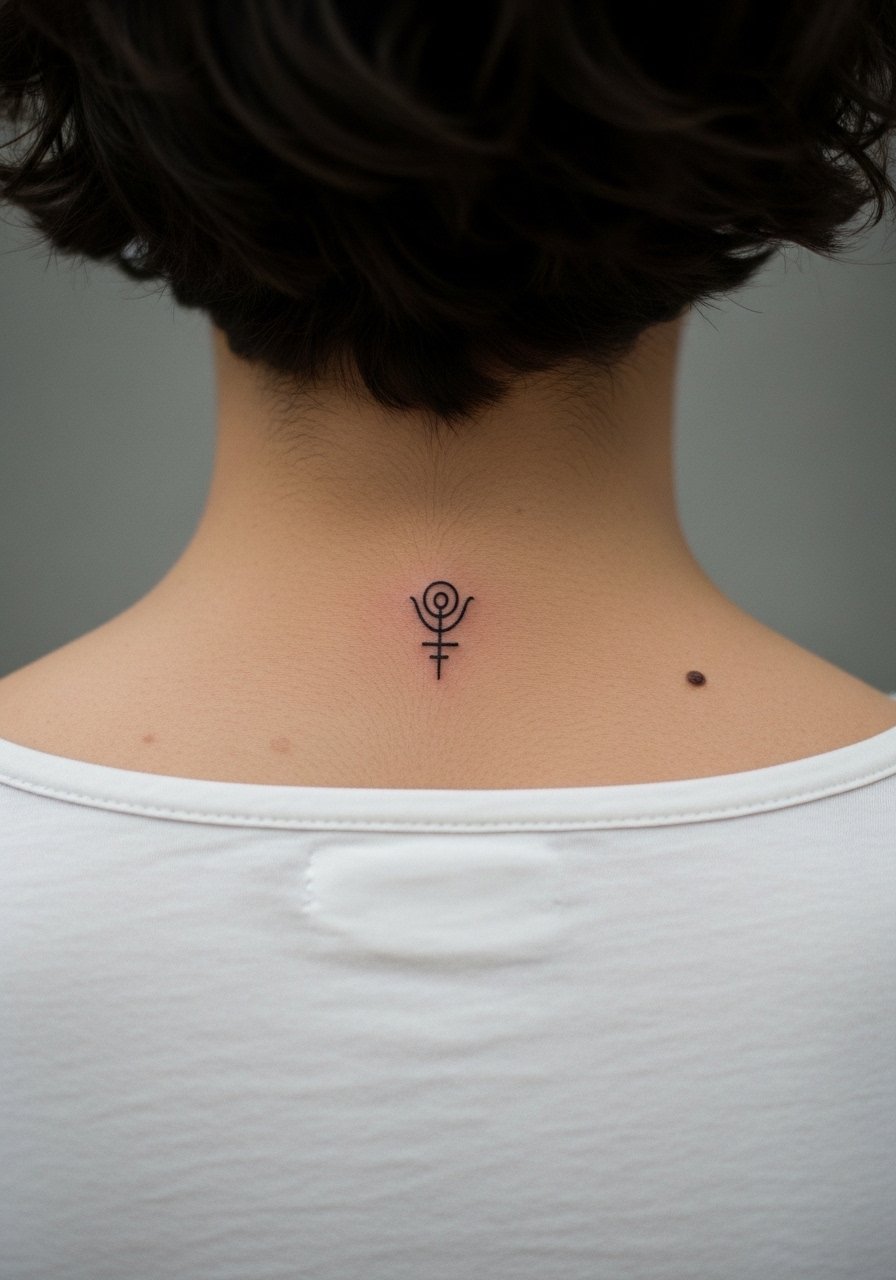
A custom sigil can act as a personal emblem that sits subtly at the nape. The mistake is overcomplicating the mark in the first session. Ask for a simplified version that can be elaborated upon later. Sessions are brief and the pain mild. This piece pairs well with a delicate pendant worn just above the mark, like a thin chain pendant necklace so the tattoo reads as a permanent accent. If you intend the sigil to carry private meaning, sketch how it looks at different sizes before settling on one.
Frequently Asked Questions
Q: How much will a small back-of-neck tattoo like these cost?
A: Prices vary widely based on studio location and artist experience, but small nape pieces often fall in entry-level session ranges. Expect the final quote after consultation where the artist can size the piece and estimate session time. Focus on portfolio examples for similar placement rather than price alone.
Q: Will a fine line nape tattoo blur faster than a bold black one?
A: Fine line can soften earlier because the lines rely on narrow strokes, and the nape experiences friction from hair and collars. Bold blackwork usually holds contrast longer. If you prefer fine line, ask for slightly heavier line weight and spaced designs to reduce early merging.
Q: How should I dress for a back-of-neck tattoo session?
A: Wear a loose button-down shirt or a wide-neck top you can pull aside so the artist has clear access. Bring hair ties or clips to keep hair off the area. Comfortable neck positioning reduces movement during the session.
Q: Are there career risks to visible nape tattoos?
A: Opinions split. One camp says nape tattoos are subtle because hair covers them often, and that makes them workplace-friendly. The other camp points out that updos or short hair can expose the ink in professional settings. Consider your industry and how often you will need to conceal the placement before booking.
Q: When should I consider a touch-up for nape pieces?
A: Many nape tattoos settle differently than arm work. Expect a possible touch-up around year two to three for fine line pieces, and longer for bold work. Touch-up timing depends on your skin, sun exposure, and how often the area rubs against clothing. Ask your artist what they typically recommend for similar placements.
