
The stencil comes off and the artist leans back to check the linework in the shop light. That small pause is where a stingray idea either reads like a calm, deliberate choice or like a design that will need fixing later. Pick the approach that matches your lifestyle, the skin you have, and how often you actually want to show it. Below are 17 calm, aesthetic stingray tattoo ideas with practical notes on aging, placement, consultation tips, and how to wear them while they heal and after.
1. Minimalist Stingray Outline on the Wrist
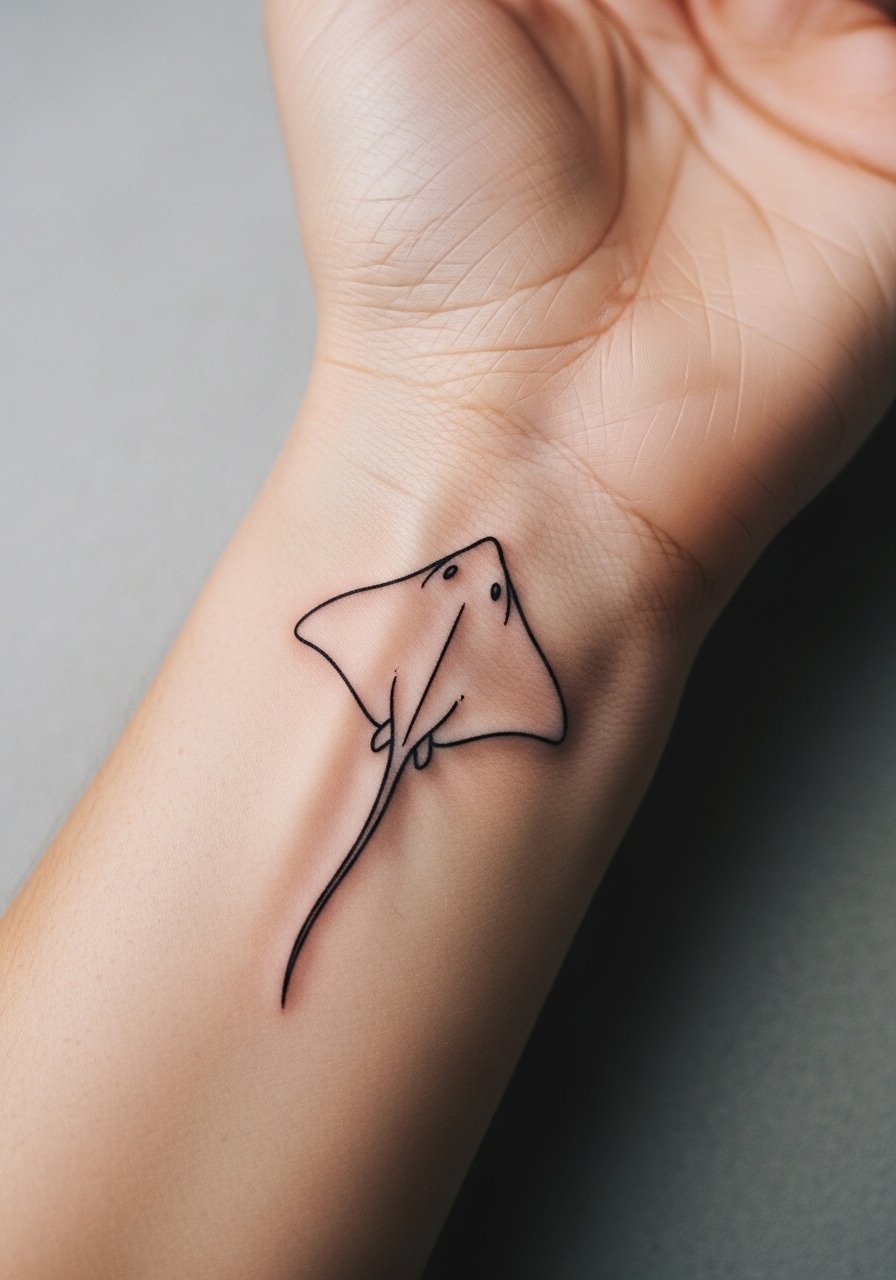
I recommend this one when you want a deliberate, small piece that reads quiet on daily wear. The inner wrist is a low-friction spot but moves a lot, so expect touch-up around year two to three for very thin linework. Tell your artist you want one continuous line with a tiny amount of needle depth to avoid blowout, and ask them to leave a little spacing in the curve so the tail does not merge over time. For the session wear, roll up a short sleeve button up men so the arm lies flat without fabric bunching. Pain is lower here, session time is short, and the biggest mistake is asking for lines too thin for the area.
2. Fine Line Stingray Silhouette at the Collarbone
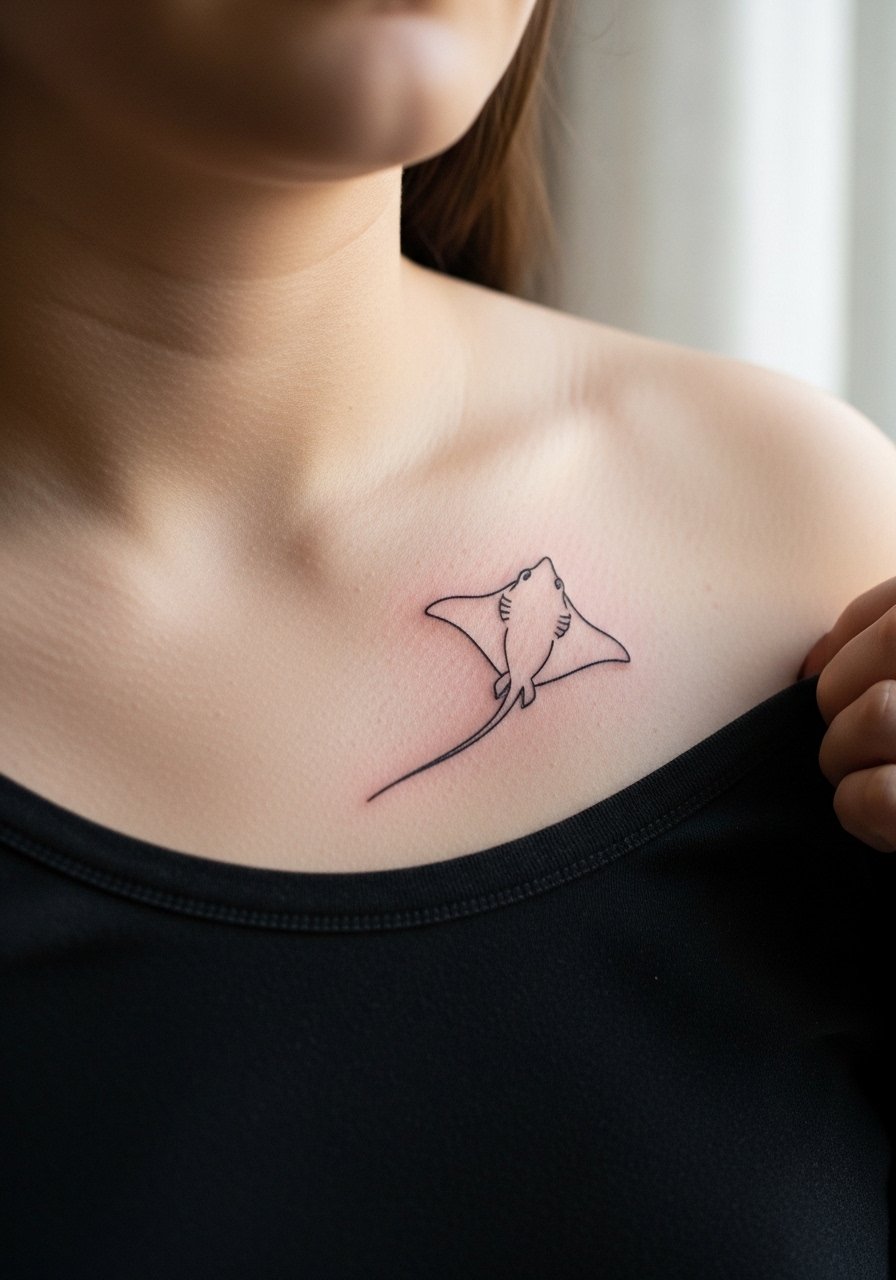
The collarbone makes a delicate canvas for a silhouette that reads like a small emblem. Expect a single-session sit of under an hour. Because the collarbone area shifts with posture, ask for slightly stronger line weight than you might pick on paper. The controversy about fine line aging applies here too. One camp warns fine line blurs fast on mobile skin. The opposing camp says a disciplined artist with proper depth and spacing can make fine line last. Ask the artist where they stand, and plan a possible touch-up in year three if you love the ultra-delicate look. Pair it with a v neck tee women to frame it without crowding the neckline.
3. Dotwork Stingray Mandala on the Shoulder Blade
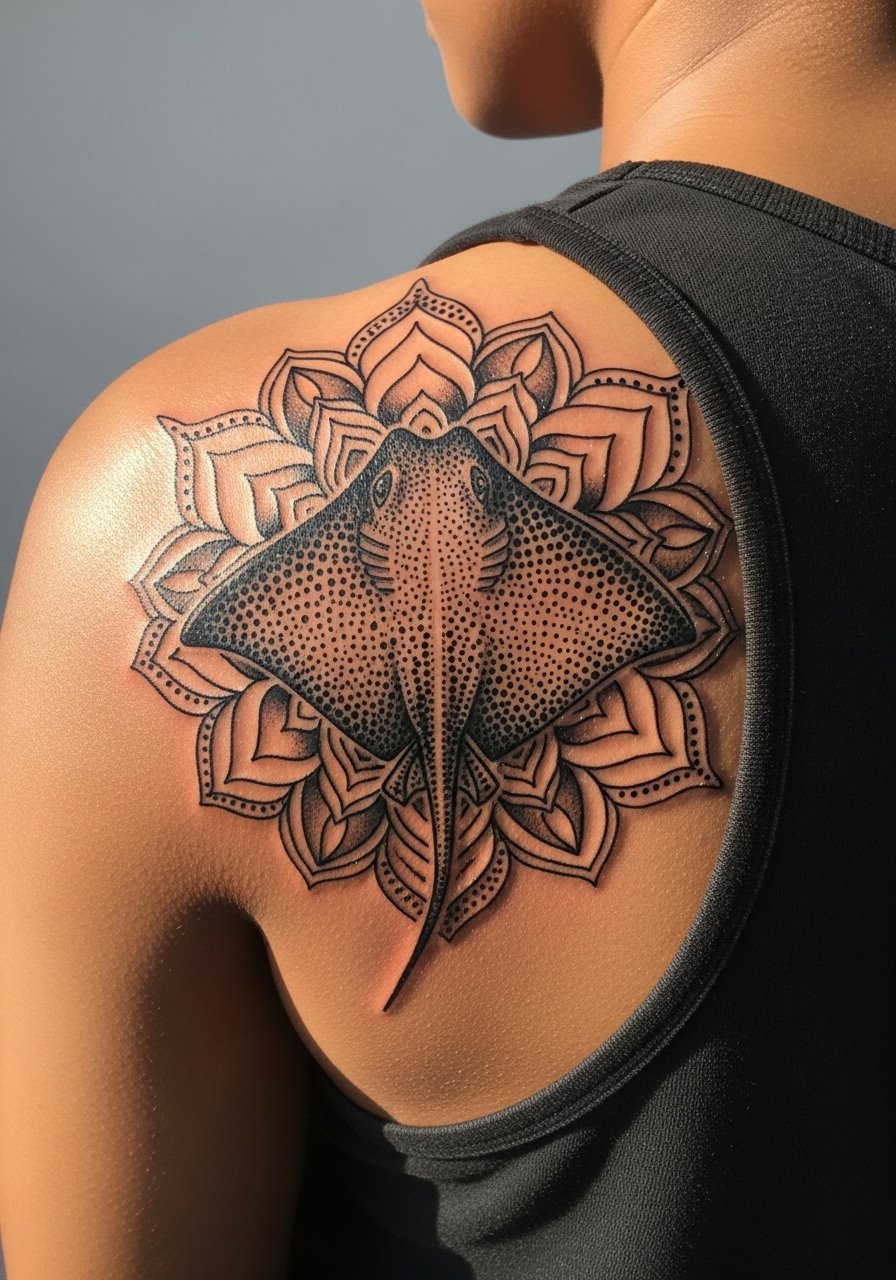
Dot work thrives on the shoulder blade because the skin there holds stipple shading well compared with tighter places. For a mandala-stingray hybrid, ask for larger dot spacing near the center so dense areas do not merge by year five. Tell your artist you want stipple shading and steady dot size rather than overly dense packing. Pain is moderate and sessions usually split into two if you want crisp symmetry. For showing it off, an off shoulder top women highlights the symmetry without competing with the pattern. Watch for the common mistake of shrinking a mandala down too small; mandalas need room to breathe.
4. Watercolor Stingray Splash on the Inner Bicep
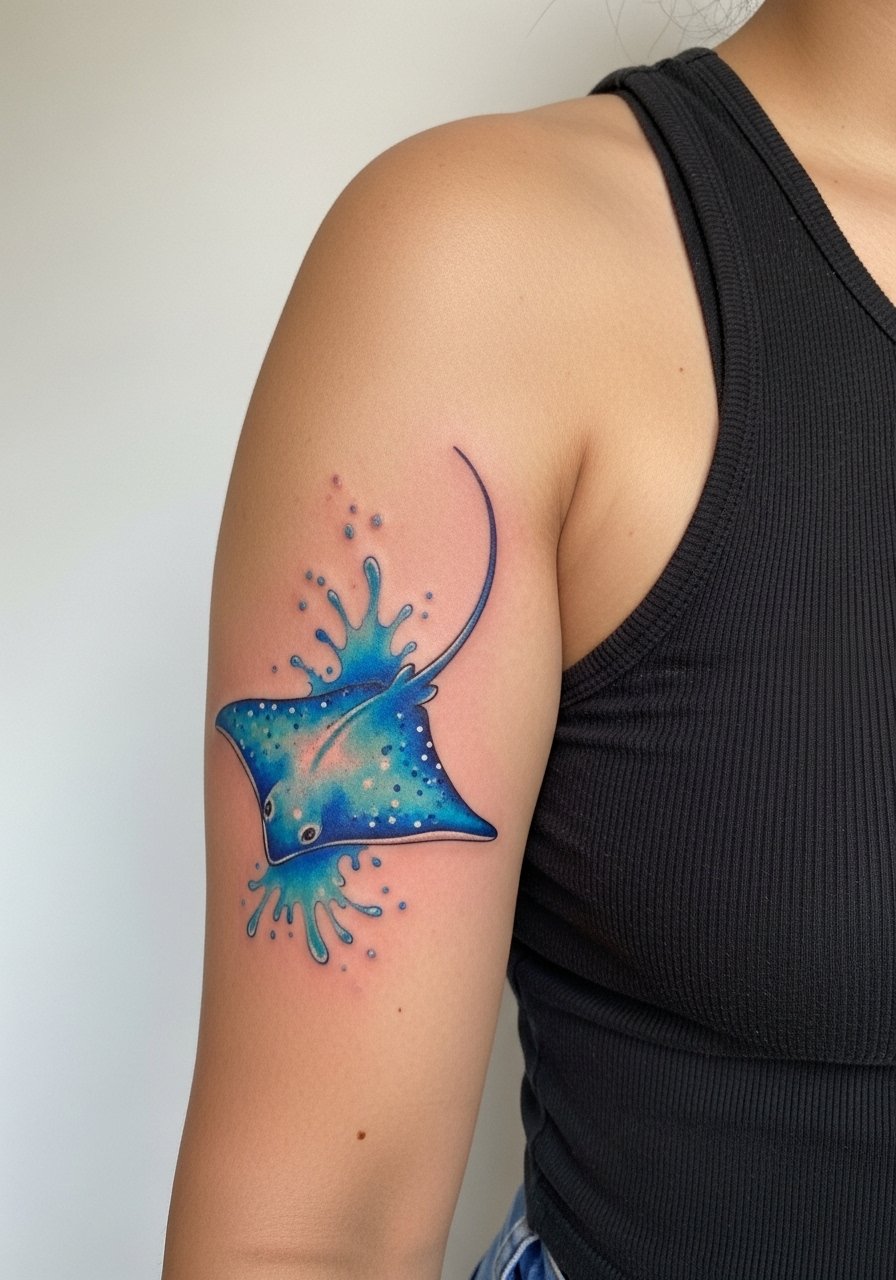
Watercolor effects on the inner bicep read soft and fluid when done with controlled saturation. Expect some fading in bright washes by year two, so plan color layering or a scheduled color refresh if you want long-term vibrancy. During consultation, request more black or darker anchor points at the ray's edges so the composition keeps shape as pigments soften. Session pain is moderate because of the inner bicep sensitivity, and the typical mistake is asking for too little contrast in the original design. For the appointment, wear a sleeveless tank men so the artist can position the arm without fabric rubbing.
5. Polynesian Tribal Stingray on the Upper Arm
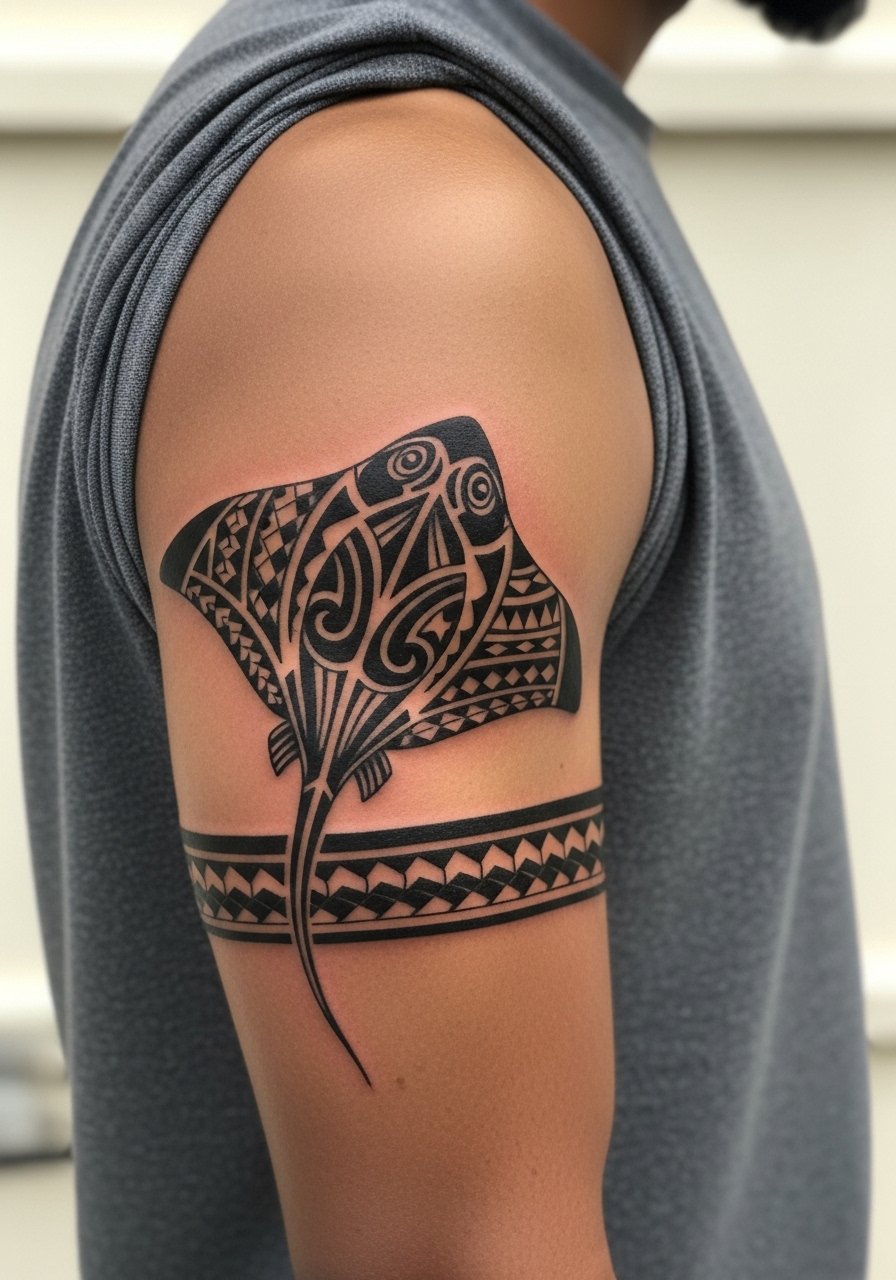
Polynesian patterns work well on the upper arm because the area gives scale for bold motifs and allows the tail to wrap naturally. Cultural origin sensitivity matters with this style. Note the design's roots in Pacific traditions and consider slight personalization over direct replication. Expect several sessions for large saturation, and expect heavier pain than smaller pieces. A frequent mistake is compressing intricate motifs into too small a band. For show-off pairing, a rolled cuff on a rolled cuff chambray shirt frames the bold pattern cleanly.
6. 3D Realistic Stingray Gliding on the Forearm
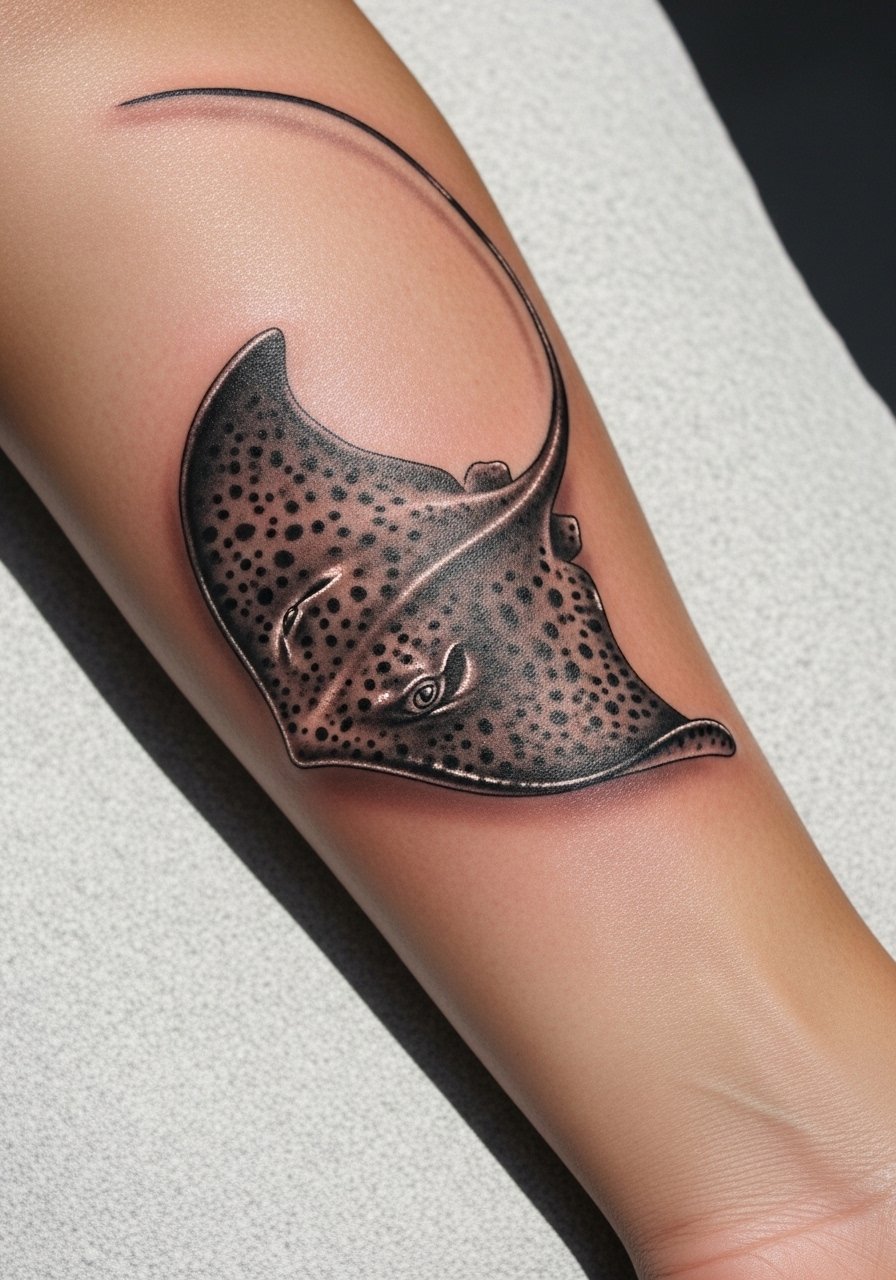
A forearm 3D stingray gives a sense of motion without being showy. Expect two to three sessions for shading depth and subtle highlights. Tell your artist you want layered gray washes and a softer contrast edge so it reads lifted from the skin. Aging is better here than on high-friction spots, but note that overly tight detail near the tail can soften by year five and need a touch-up. For session wear, a short sleeve button up men or a loose tee works so the arm can be extended flat. The common mistake is asking for extreme micro-detail in a piece meant to be seen at arm's length.
Studio Day Picks
Those small arm, shoulder, and bicep pieces above all react to session prep in similar ways, and a few targeted items make the appointment easier and the first week smoother.
- Stencil transfer paper kit. Lets you preview line placement directly on skin before the needle hits, useful for the wrist and collarbone pieces listed above.
- Topical numbing cream. Applied per directions about 30 to 45 minutes before can ease inner bicep or rib sensitivity without changing linework if your artist approves.
- Thin protective film roll. Helpful for ankle and hand locations that face daily friction in the first week.
- Fragrance free gentle body wash. Cleanses healing areas without irritating the fine line or dotwork that many of these ideas use.
- Aquaphor healing ointment. Thin layers for the first few days lock in moisture for delicate linework without suffocating the surface.
7. Ornamental Stingray Frame Around the Ankle
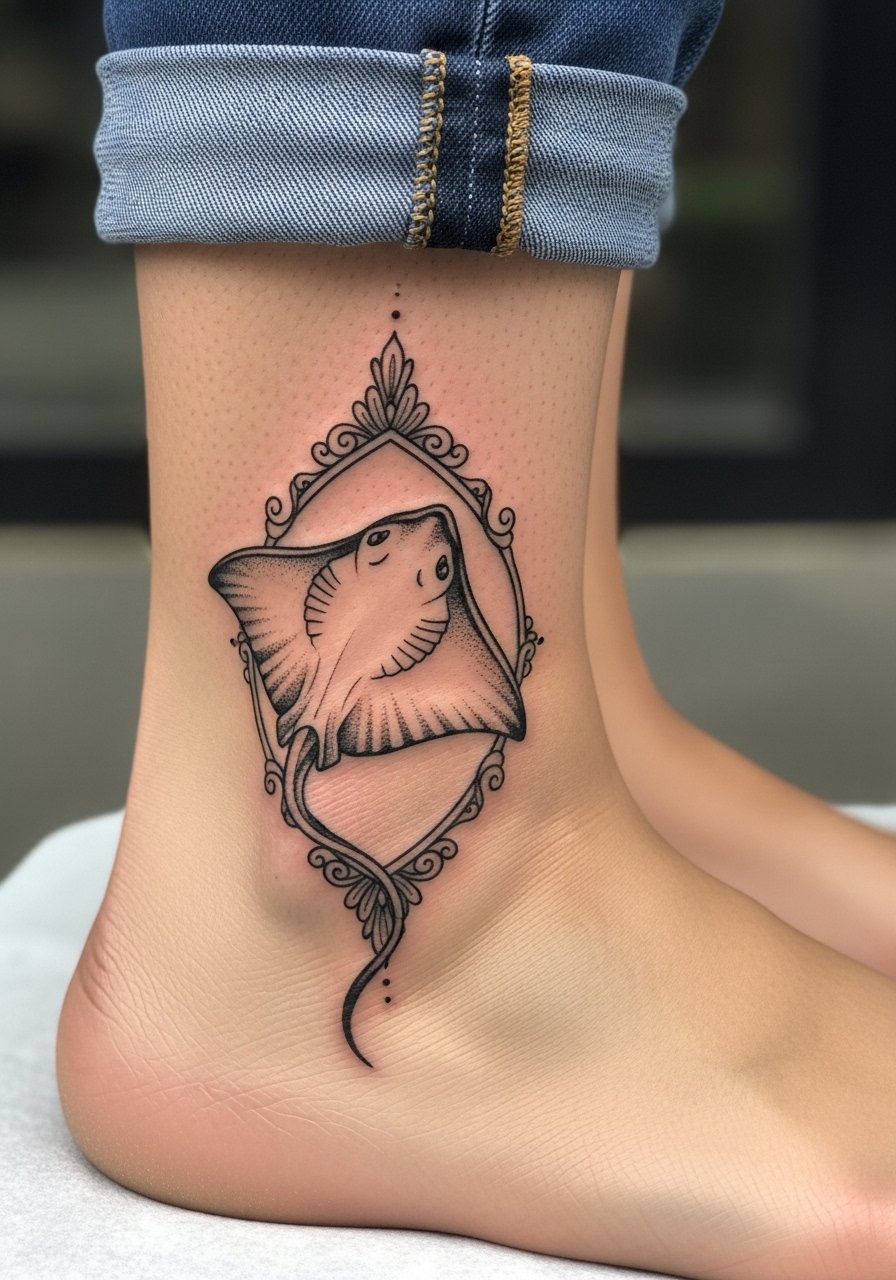
An ankle wrap reads jewelry-like and suits ornamental framing. Ankle skin gets lots of rubbing from shoes and socks, so plan on a small touch-up in the first year for any thin filigree. During your consult, ask for slightly bolder outer lines and a delicate interior pattern so the frame remains legible. For showing it off in summer, a pair of cuffed straight-leg jeans or cropped linen pants looks natural, and a thin ankle chain can echo the frame. Link the look with cuffed ankle jeans when styling outfits. The session is short, but expect tenderness while shoes compress the area.
8. Neo-Traditional Stingray with Ocean Waves on the Thigh
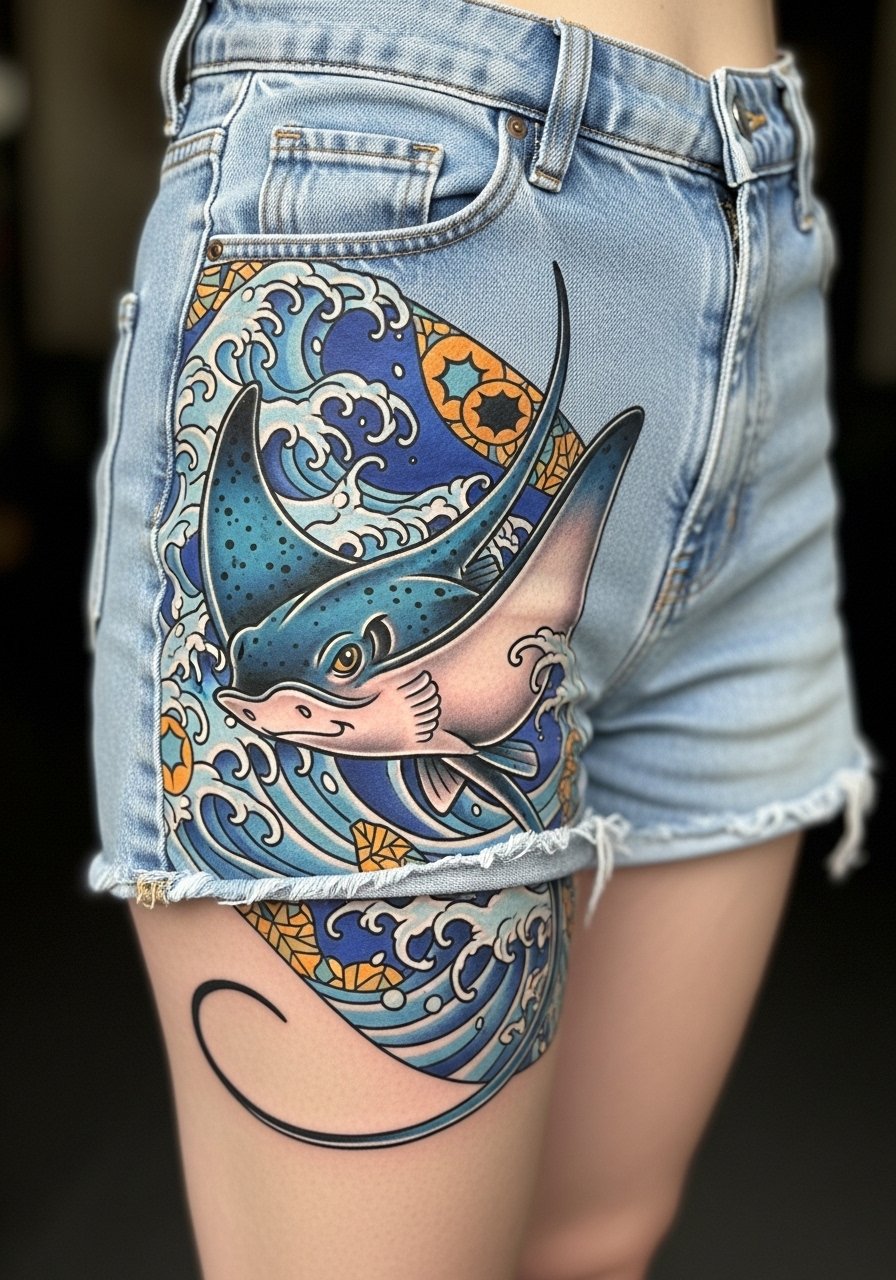
The thigh gives scale for retro color blocks and playful wave motifs. Expect two to four sessions depending on saturation and size. Tell the artist you want strong outlines with color fills that have room to age, because watercolor washes can blur if packed too tightly. A common mistake is scaling the motif too small for the thigh, which defeats the neo-traditional boldness. For outfits, pair with high waisted denim shorts or slit maxi skirts to show the placement without cutting the composition. Pain is moderate and healing is easy with limited friction.
9. Blackwork Stingray Geometric on the Ribcage
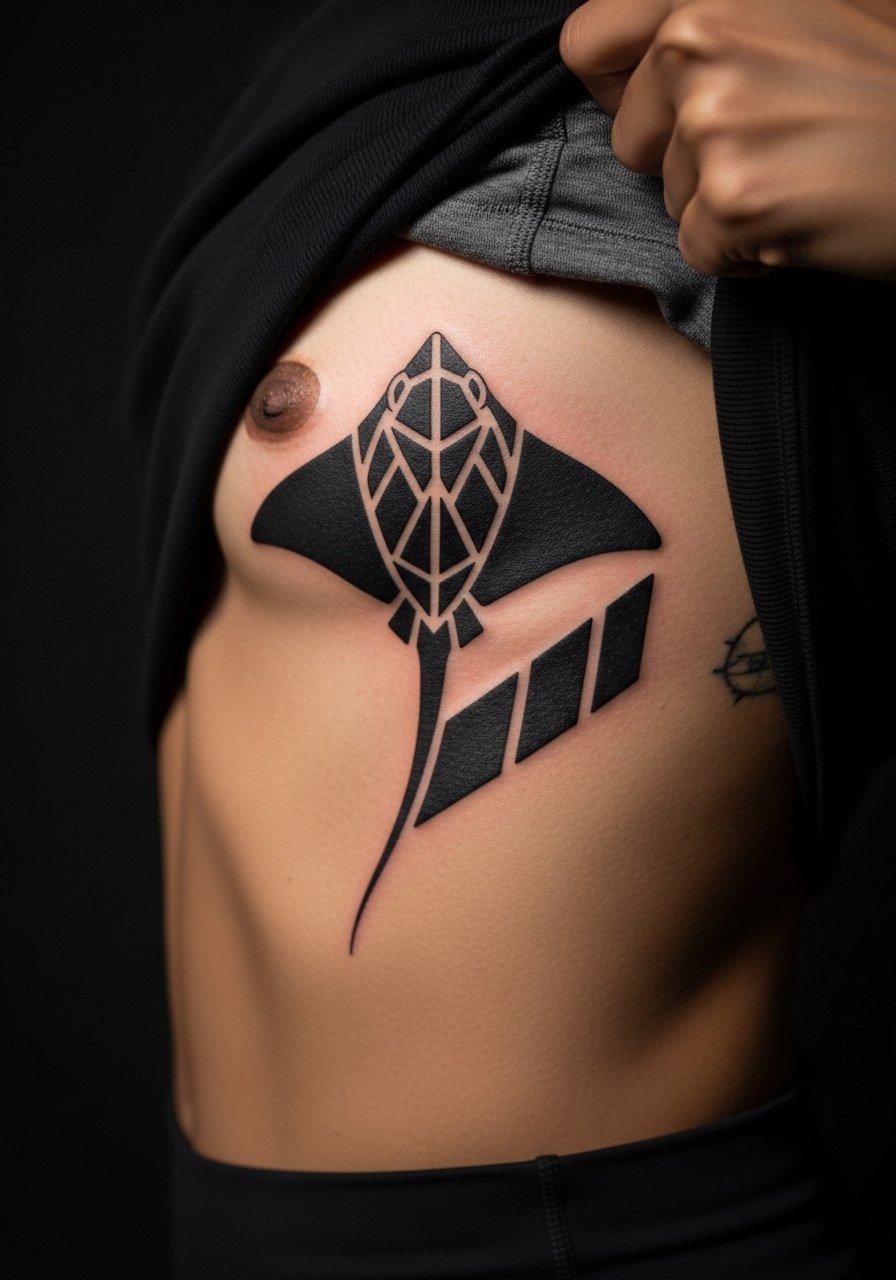
Ribcage blackwork reads dramatic but the area is high on the pain scale. Expect multiple sessions and longer appointment blocks for saturated fills. There is a debate about fine line on ribs and how it ages. One camp says the stretch and movement cause lines to merge. The other camp says with correct depth and spacing, lines settle fine. For this blackwork option, heavier fill and bold shapes naturally outperform ultra-thin lines on ribs. Ask your artist about their approach to spacing and whether they recommend larger geometry to avoid future merging. Because of the pain, plan for breaks, and prepare with deep breathing and comfortable clothing that lifts to expose only the side torso.
10. Ornamental Frame Colliding with a Small Tail on the Ankle Wrap
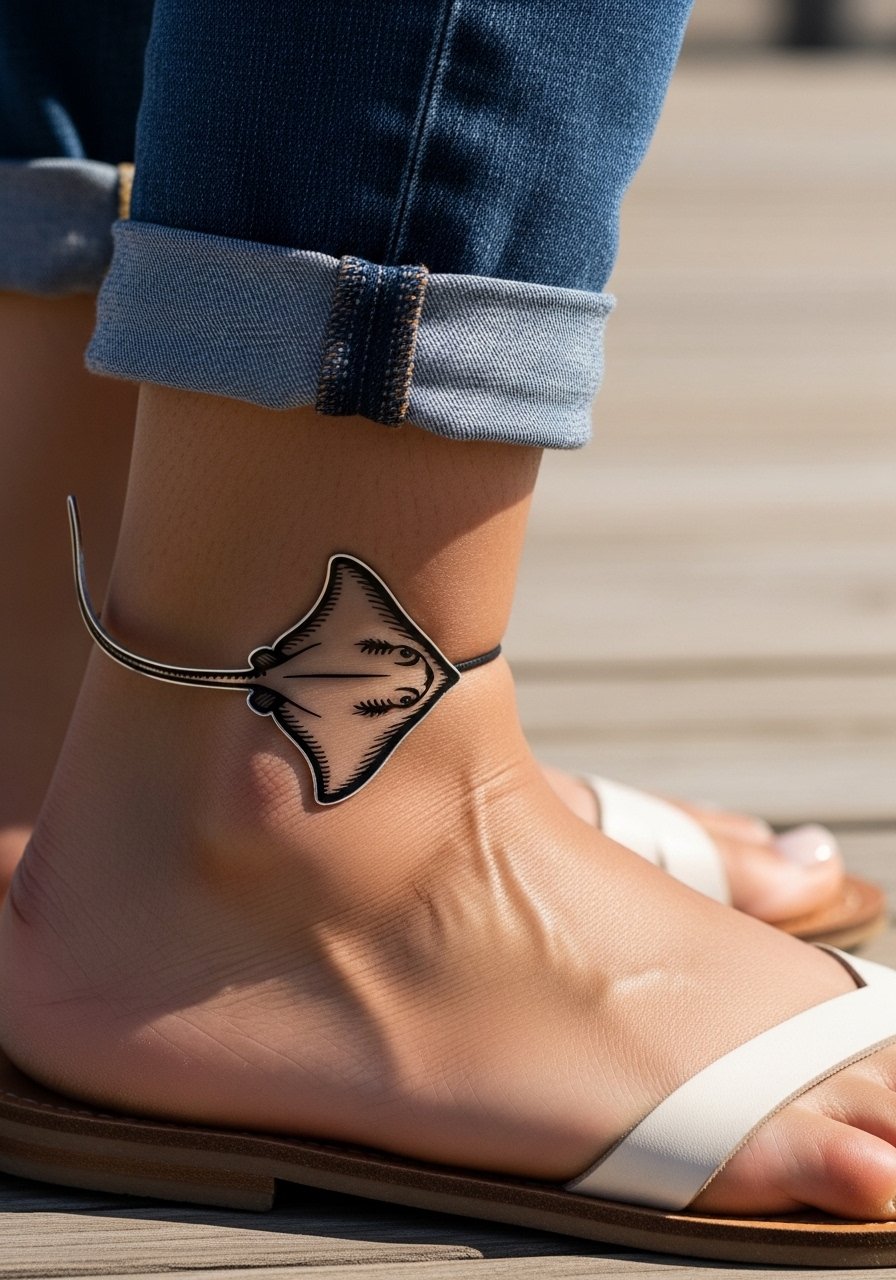
This variation uses ornamental framing but emphasizes the tail as a design cue for hidden defense. The ankle sees daily abrasion, so ask for outer edges slightly thicker than inner filigree. A common aging issue is outer rim wear from constant shoe contact. For the appointment, loose joggers or shorts make access simple and comfortable. For styling after healing, a thin gold ankle chain complements the wrap without competing with the pattern. Expect touch-up in year one if the design sits low on the bone where rubbing is worst.
11. Fine Line Stingray Silhouette on the Back of the Hand
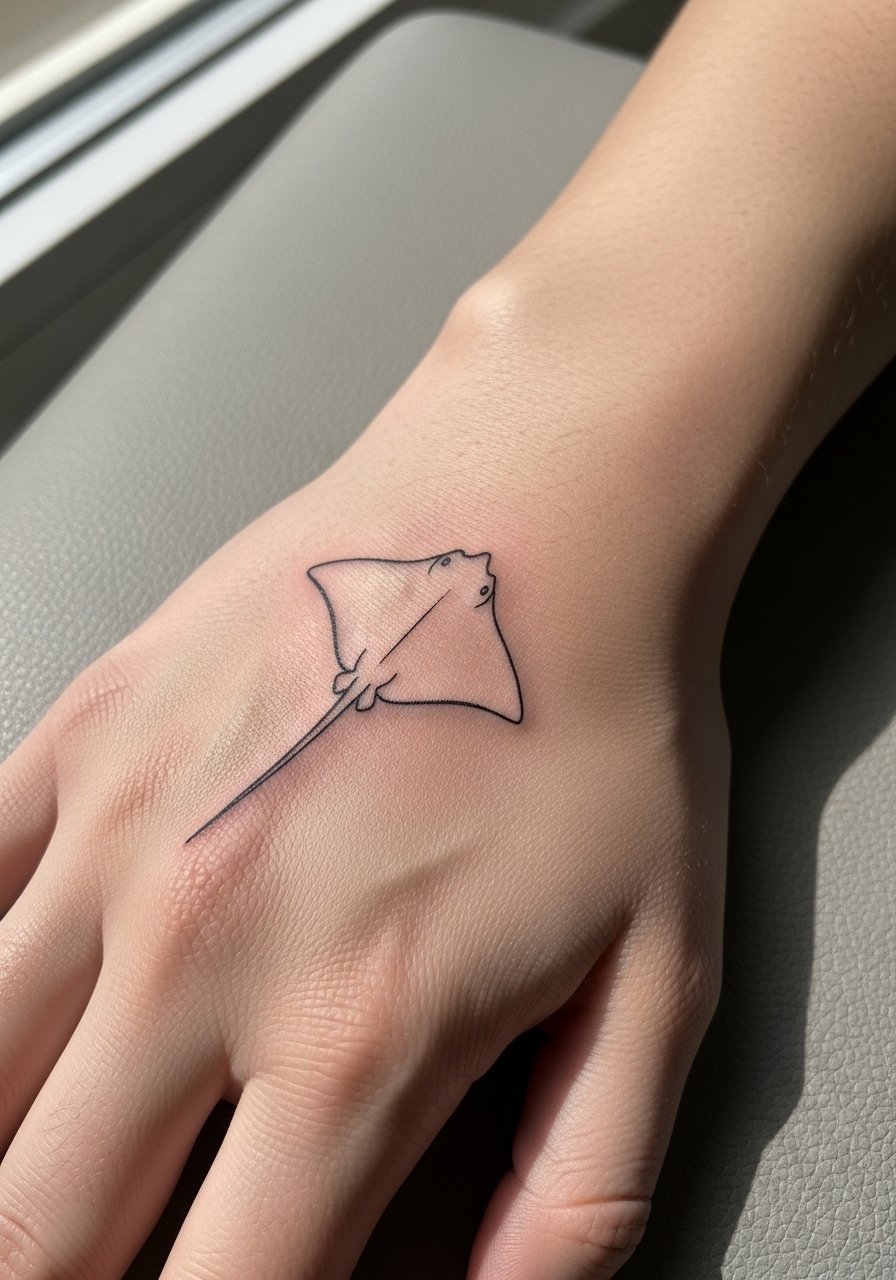
Hand tattoos are visible and fast to show personality, but thin work on hands fades and blurs faster because of frequent washing and friction. If you opt for a back-of-hand silhouette, ask for slightly heavier linework and expect a touch-up within two years. The session feels sharp because the bone is shallow under the skin, and aftercare requires extra care with handwashing. The biggest mistake is requesting needle-thin lines on the hand and assuming they will stay crisp. Style-wise, keep jewelry minimal so the piece reads clearly.
12. Micro-Realism Stingray Near the Calf Muscle
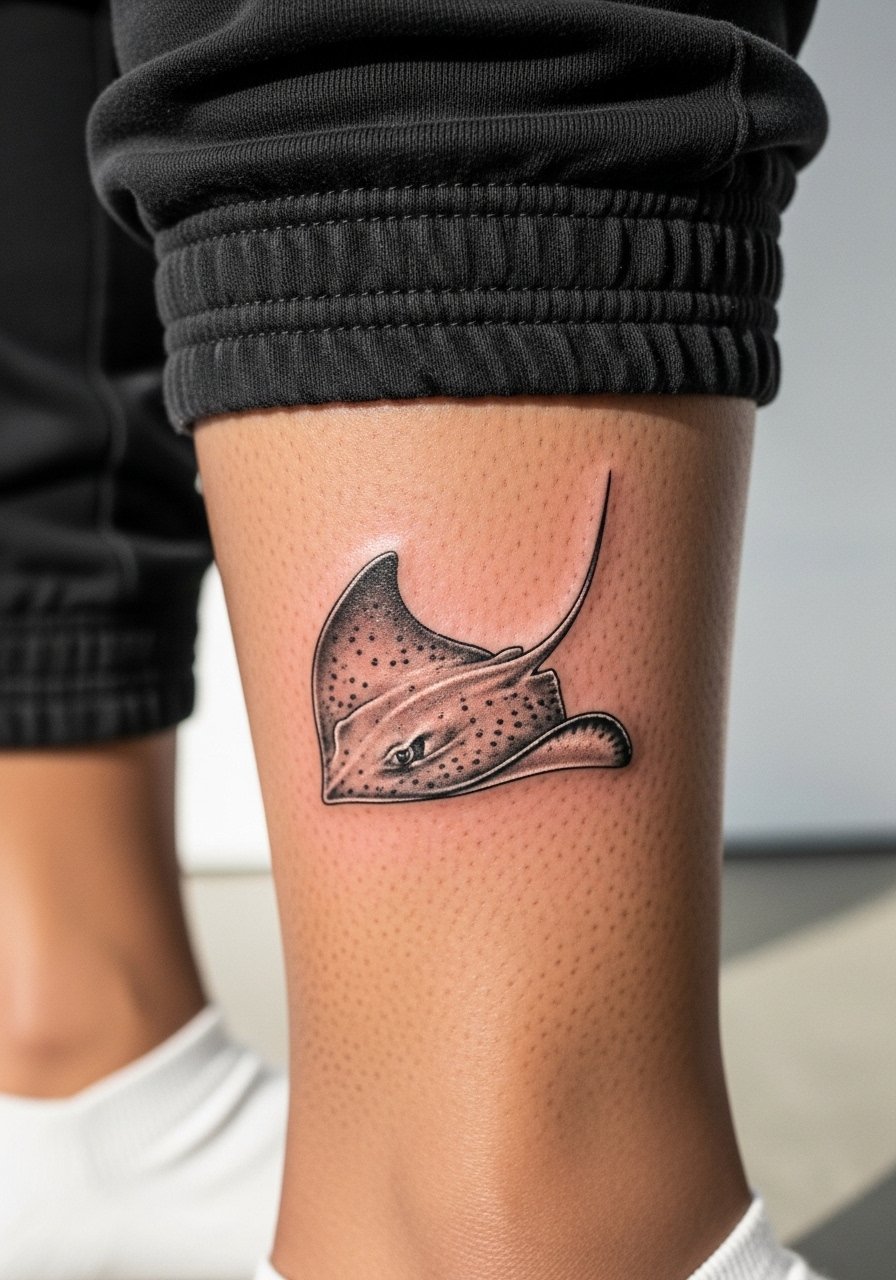
Calf micro-realism benefits from flesh that moves less than the forearm, so detailed shading holds up well here. Two sessions are common for crisp gradients and soft edge work. Tell your artist you want slightly softer contrasts near edges so the piece does not read too stark as your skin ages. The session is moderately uncomfortable but manageable because of muscle padding. Pair with rolled joggers or midi skirts in neutral tones for casual showing, and use rolled joggers men for easy reveals. A real mistake is clipping reference photos that are too dense; micro-realism needs breathing room.
13. Stingray Tail Emphasis on the Side Rib
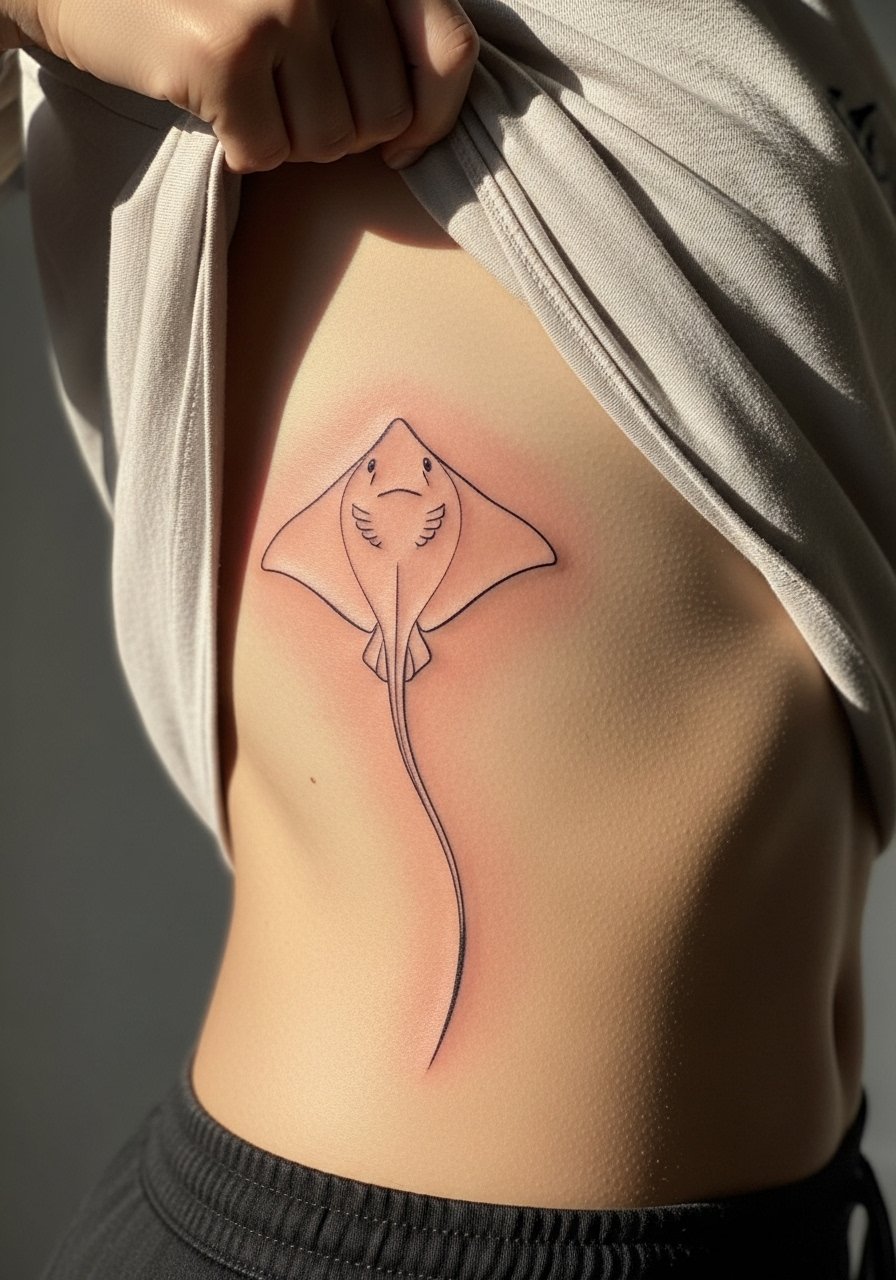
Focusing the design on the tail gives a symbolic note about defense without crowding the body. Side rib placements are sensitive and have higher pain, and they flex with breath. The fine line tail variant splits artists into two camps about longevity. One camp warns that tiny tails blur due to stretching. The other camp says with careful spacing and depth control, the work can keep its shape. If you want a lasting tail, ask for a slightly bolder contour and plan a touch-up after the initial healing season. Wear a strapless bra or a zip hoodie to make the session access comfortable.
14. Ornamental Frame with Dotwork Accent on the Shoulder
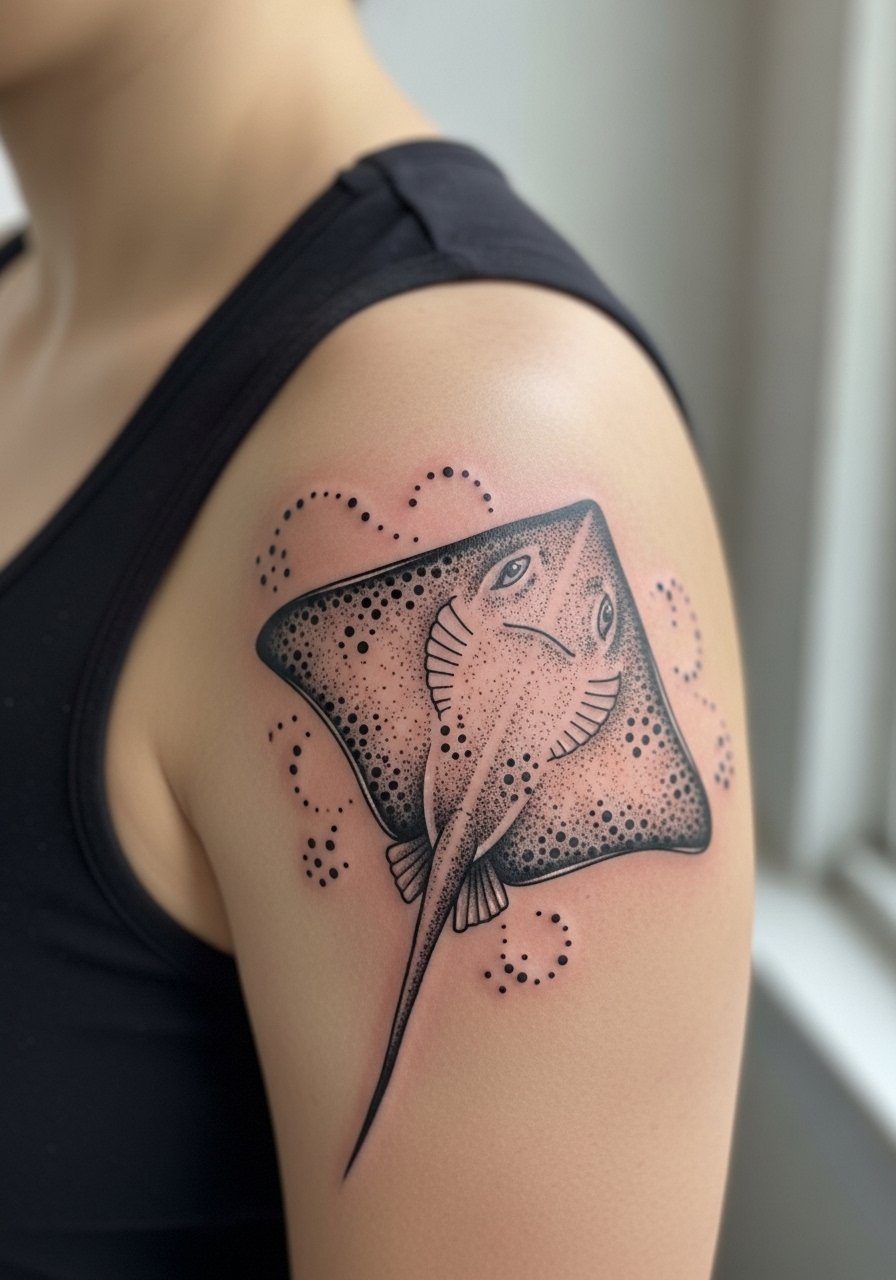
This hybrid mixes ornament and dot work where stipple shines because shoulder skin does not fold tightly. Sessions often split into two for symmetry and stipple consistency. During consultation, ask for dot-size variation to keep larger fields airy and not congested. The common mistake is packing too many tiny dots into a small space which ages into a muddy patch. For show-off pairing, layered necklaces or a layered gold necklace draw the eye upward and complement the shoulder placement.
15. Watercolor Stingray Over the Sternum
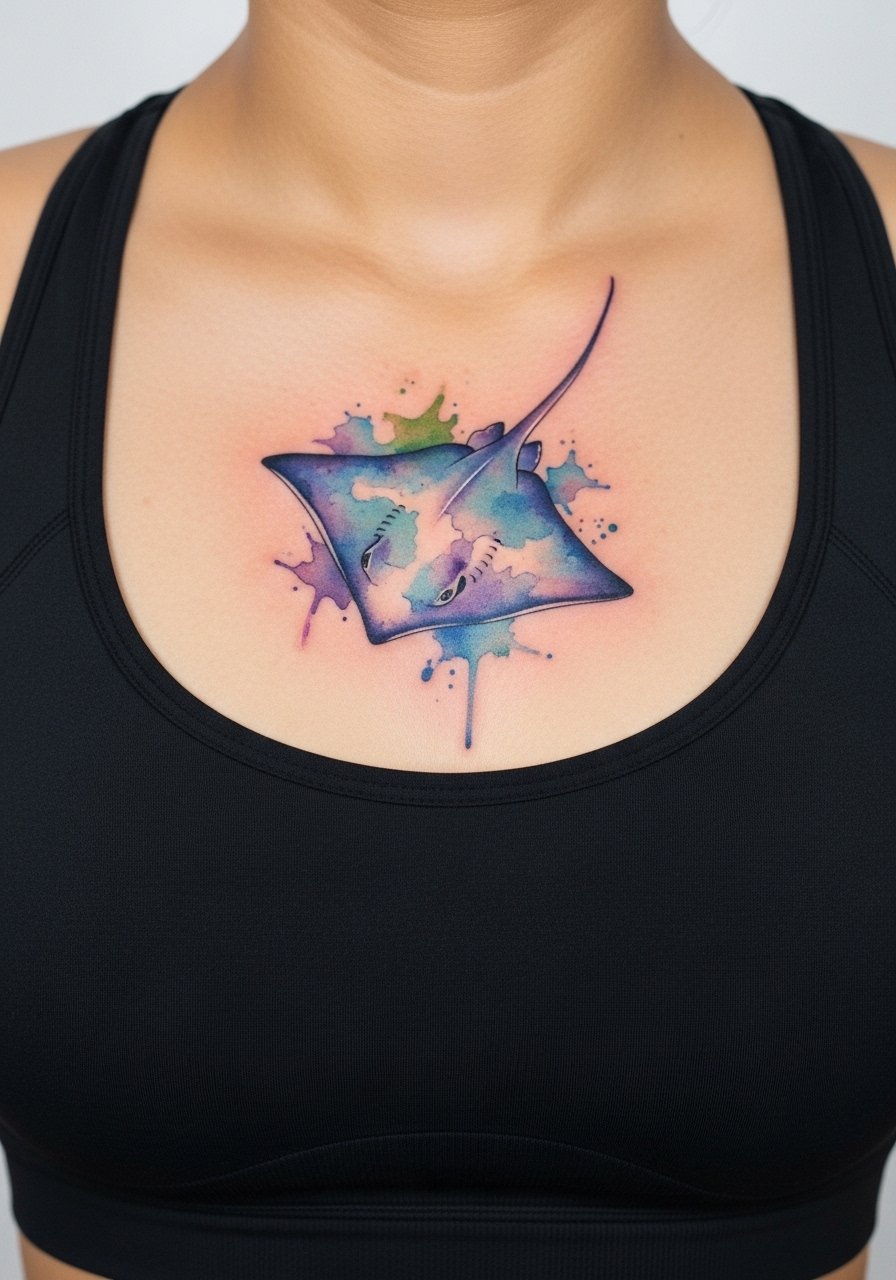
Sternum watercolor reads soft and centered but the area moves and breathes, which affects pigment longevity. If you want watercolor here, ask for darker anchor points along the edges to preserve shape as washes fade. Pain is higher and sessions may include breaks. The main mistake is assuming bright washes will stay vivid; plan a color refresh if you want saturation over time. For session wear, a fitted sports bra or bandeau makes access simple. This placement benefits from mindful aftercare and sunscreen down the line.
16. Small Stingray Silhouette Behind the Ear and Neck Junction
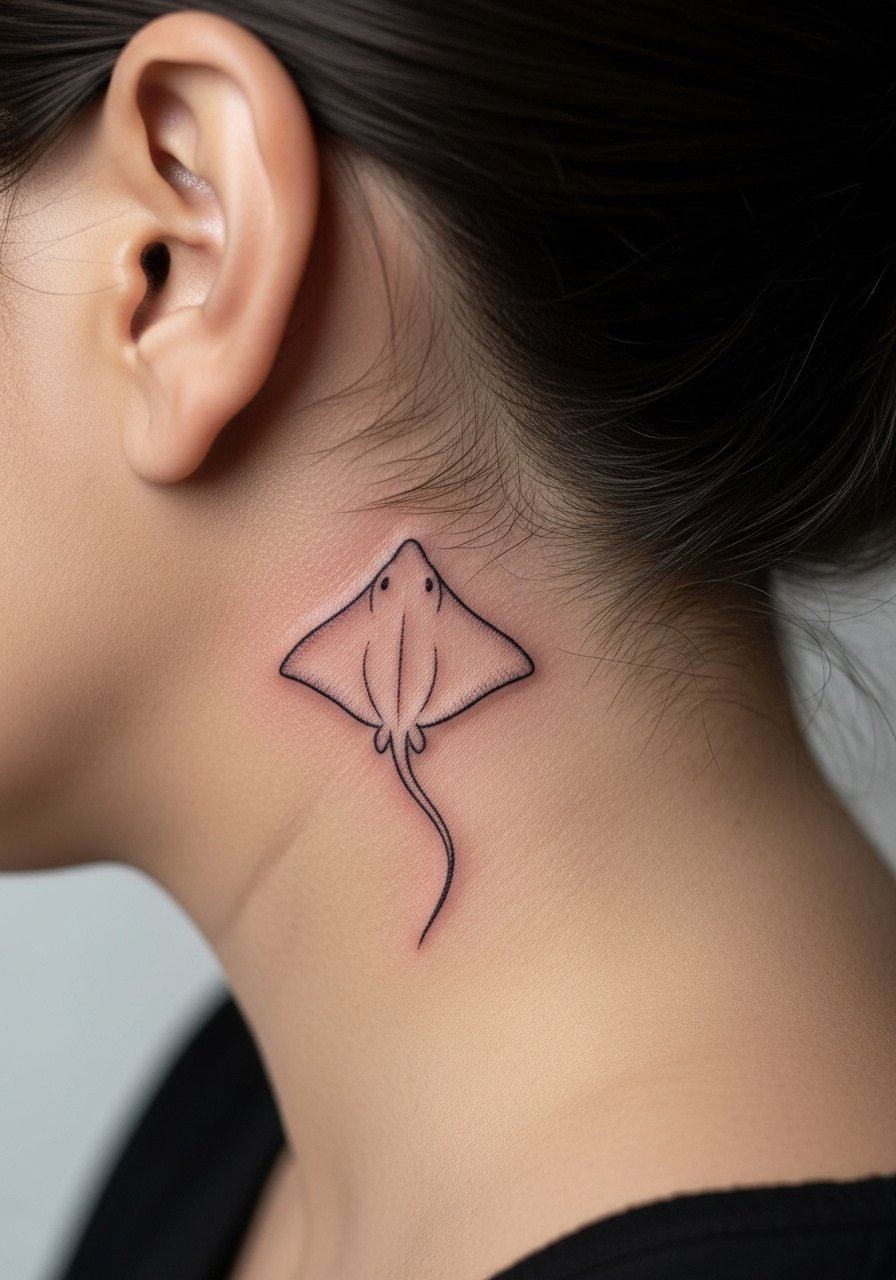
Behind the ear requires precise framing because it sits below the hairline on thin skin. Use a clothing descriptor like hair tucked back so the image is respectful and focused. The session is quick but the area is exposed to shampoo and scarves, so plan for extra care while it heals. Ask for tiny but confident line weight to avoid early blurring. A frequent mistake is trying to cram a complex pattern into this tiny zone. This placement can feel intimate and quiet when worn, and it ages differently than sleeve pieces.
17. Gender-Neutral Stingray Sleeve Accent at the Upper Arm
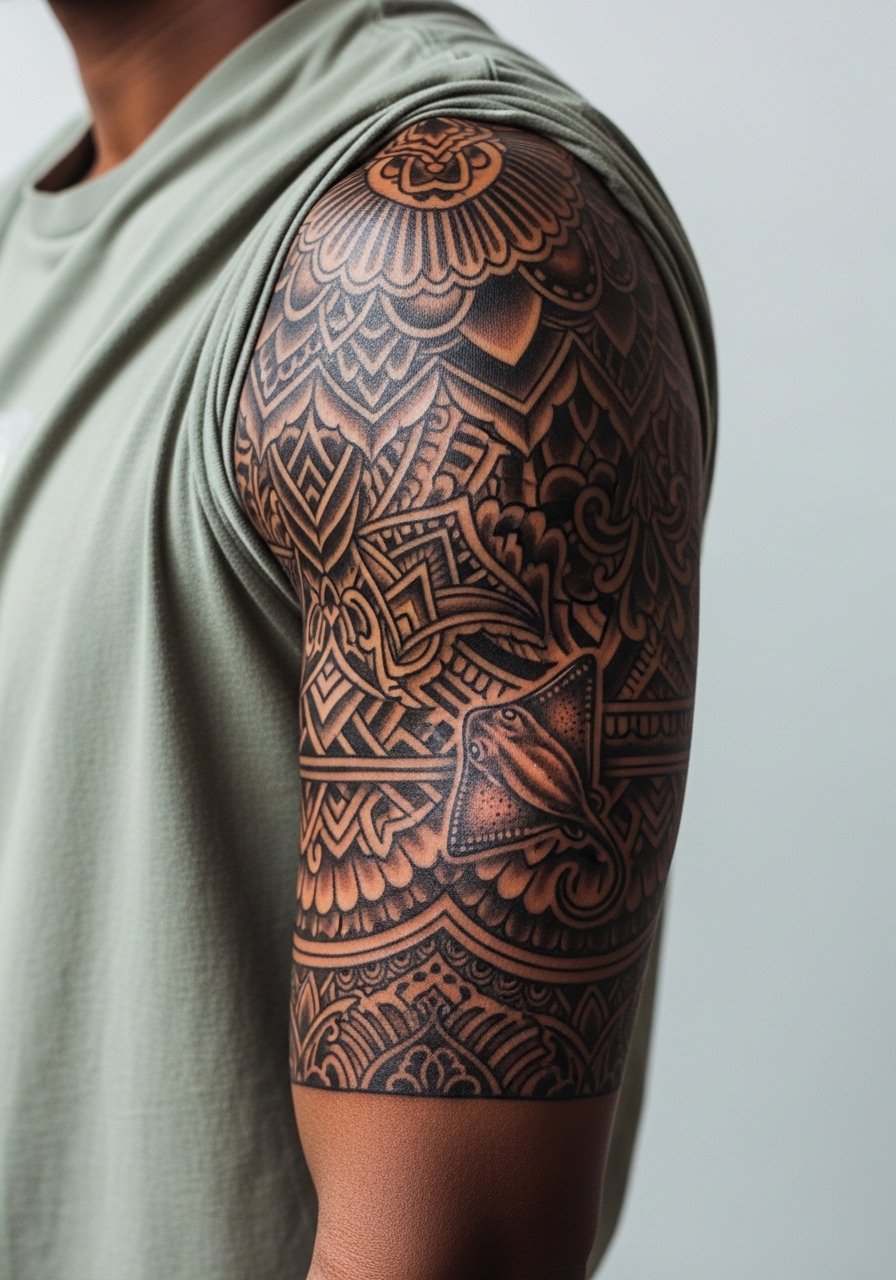
An upper arm accent that can sit inside a larger sleeve reads modern and gender-neutral. This approach gives you room to expand later, and it fits people who want a calm focal point without a full commitment. For consultation, discuss how the stingray will integrate into future work and ask the artist to leave breathing room around the design. Session time varies based on how much fill you pick. A common error is over-detailing a small accent and then wanting to scale it up later; plan for future continuity now. Pair with a loose button down shirt during the session so the artist can set the arm comfortably.
Frequently Asked Questions
Q: How do fine line and bold line camps differ when choosing a stingray design?
A: Artists split into two camps. One camp favors bold line and saturation for longevity because heavy work tends to age into clear shapes. The other camp supports fine line for its delicate look and will do it if the placement and spacing suit the skin. Ask where the artist stands and request spacing or slightly stronger contouring if you worry about future blurring.
Q: Will a watercolor stingray on the sternum fade faster than on the thigh?
A: Yes, generally the sternum moves and is exposed to more friction from clothing and active wear, which accelerates fade. Thigh skin is more stable and holds washes longer. If you prefer sternum color, plan a possible color refresh in a couple of years and anchor the design with some darker edge work.
Q: What should I tell my artist to avoid blowout on a small wrist stingray?
A: Request slightly more depth in the linework and ask the artist to avoid a single ultra-fine pass that sits too superficially. Good consultation language is to say you want a continuous outline with modest spacing and no ultra-tight packing of dots near curves. That reduces the chance of ink spreading under the skin.
Q: Are there styling choices that help show off an ankle wrap stingray during summer?
A: Yes, cuffed straight-leg jeans or cropped linen pants pair naturally with an ankle wrap. Try cuffed ankle jeans to reveal the tattoo without overexposing the area. Thin sandals or an ankle chain work well once healed.
Q: For a 3D forearm stingray, how often might I expect a touch-up?
A: Micro-realism and 3D shading on the forearm usually hold well for several years. Expect a potential touch-up around year three to five if you notice highlight loss or softening. Longevity depends on sun exposure, your skin type, and how saturated the original shading was.
