
Fine line praying hands rule the feed, and they look gorgeous fresh. The problem is they do not all age the same. I've seen wrist pieces fade in months, forearm realism blur after weight changes, and consultations get rescheduled until a guest artist fits you in. This list balances what looks spiritual now with what actually holds up, plus what to say in the chair so the lines keep reading years from now.
1. Realistic Praying Hands with Rosary on Forearm
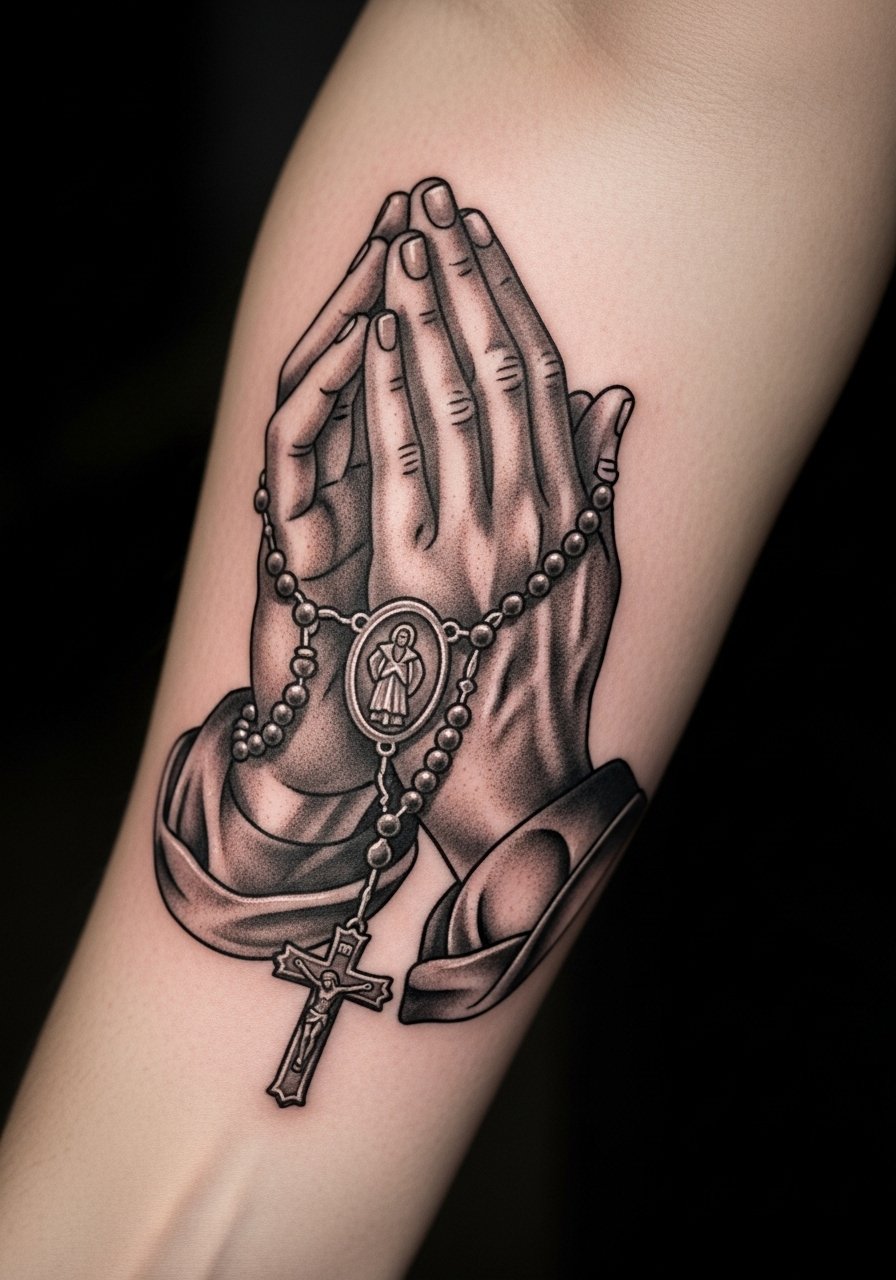
I've seen this one hold up best when artists keep the shading slightly looser around the knuckles so it does not fill in as it heals. Tell your artist you want contrast between the palms and the rosary beads and to stop short of full saturation in tiny creases. Forearm pain is moderate and most of this fits into a single two to four hour session. Common mistake is asking for hyper-detail at too small a scale, which blurs into a gray patch at year two. For showing it off, rolled sleeves pair well with a button down chambray shirt so the piece sits between cuff and elbow.
2. Minimalist Outline Praying Hands on Wrist
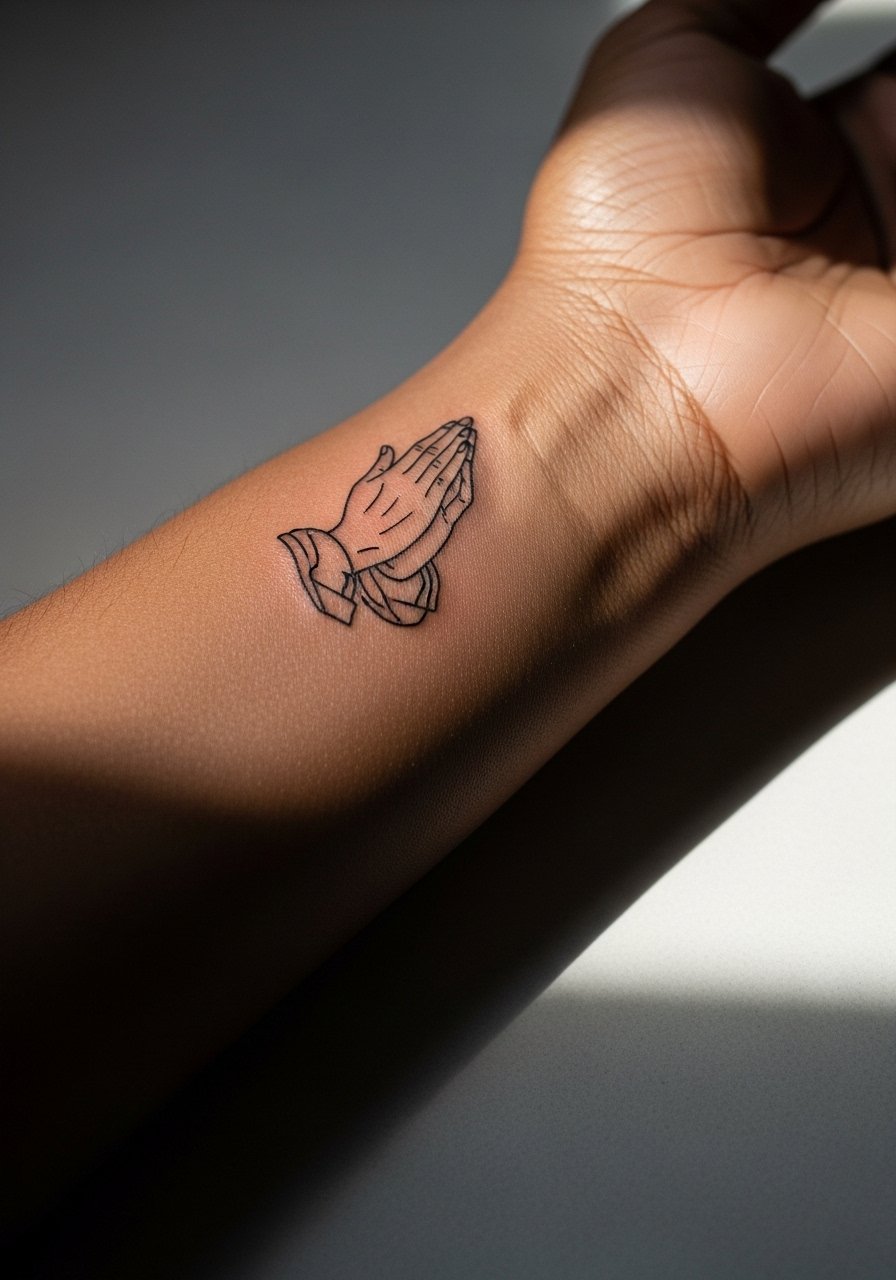
Fair warning: wrists rub cuffs and watches constantly, which speeds fading. I recommend a slightly bolder single-needle weight than the thinnest outline and plan a touch-up at six to twelve months. Tell the artist you want clean, steady linework and to avoid tiny internal detail that will ghost. Session time is short, often under an hour, and pain is on the lower side but it stings more because the area is thin. Pair this with a thin chain on the opposite wrist for balance and wear a dainty chain bracelet stack when showing it off.
3. Neo-Traditional Praying Hands with Cross on Upper Arm
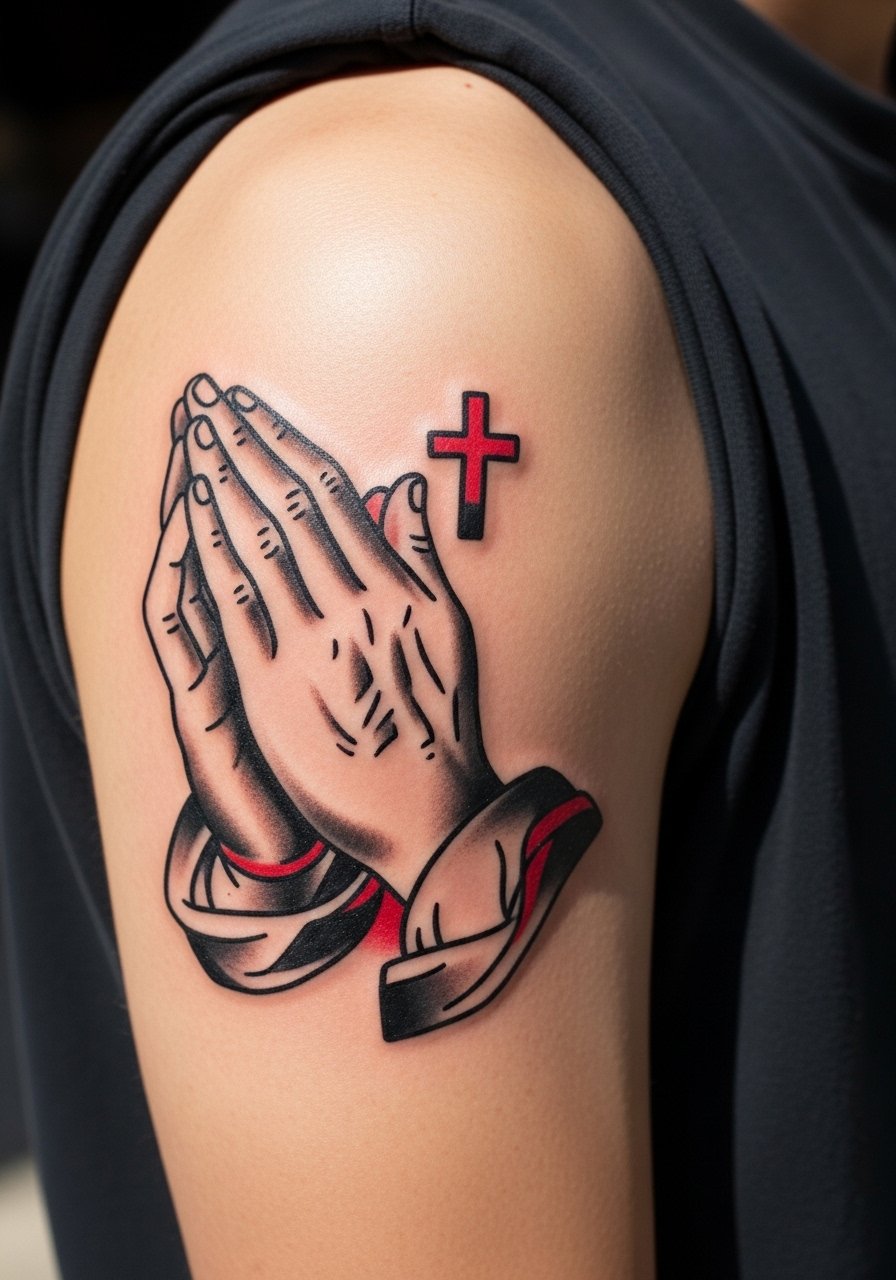
Visual impact matters here. Bold outlines and saturated color age into a confident silhouette, which is why many people pick neo-traditional for memorial pieces. Upper arm sessions take longer but spread well across two sittings if you want more color. A common mistake is crowding the cross with too many small color fills; the better route is simple color blocks and strong linework. For session wear choose a fitted tank top so the artist has clear access and you stay comfortable during longer sittings.
4. Dotwork Praying Hands Framed by a Mandala on Shoulder
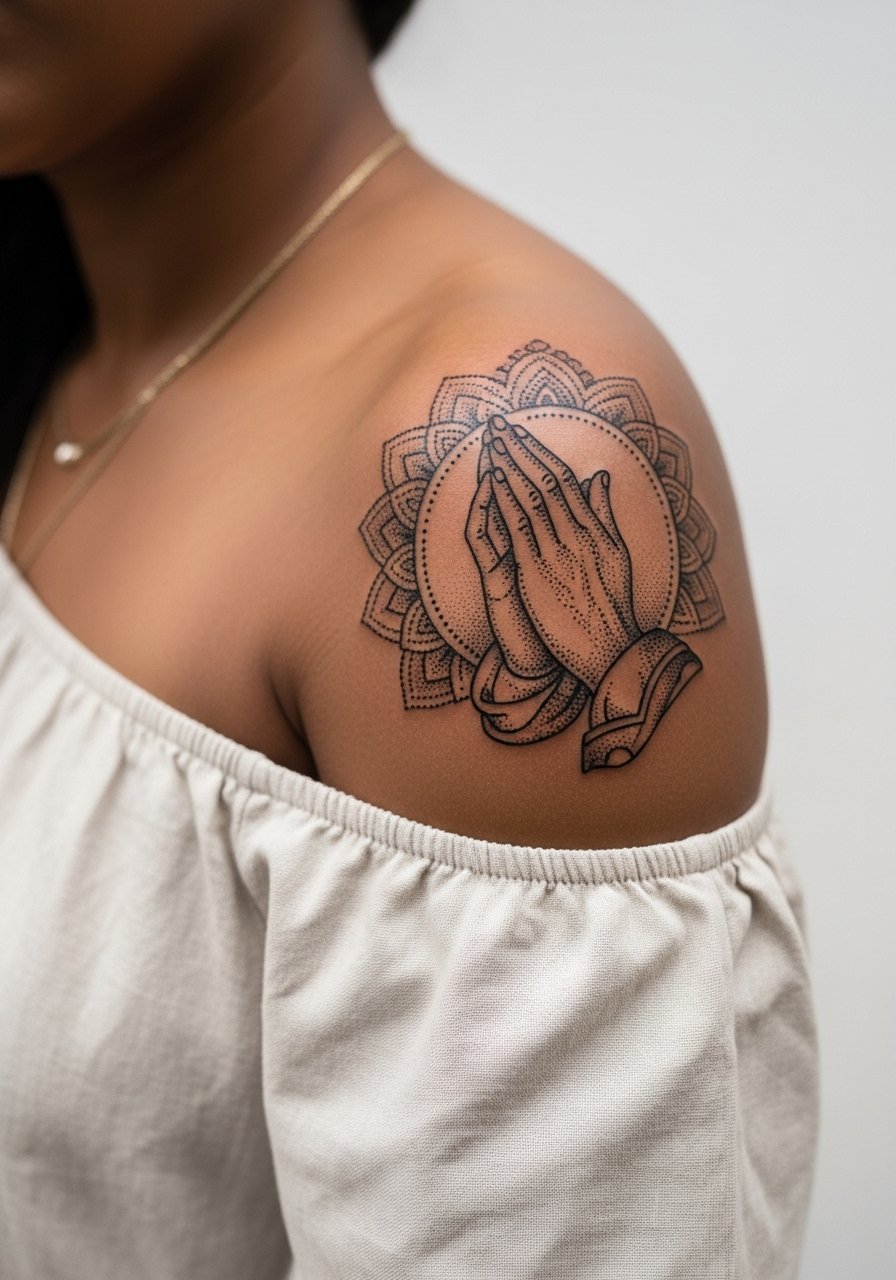
Aging-wise this one is forgiving because dotwork uses spacing to avoid merging, but small dots packed too tightly still risk muddiness. When you consult, ask for measured spacing in the mandala and to see healed dotwork photos from the artist. Shoulder sessions are multi-pass and the pain is mild to moderate. This is a great sleeve-starter because the frame scales easily. For evenings wear an off shoulder linen blouse to let the pattern peek while keeping the rest covered.
5. Watercolor Praying Hands with Dove on Inner Bicep
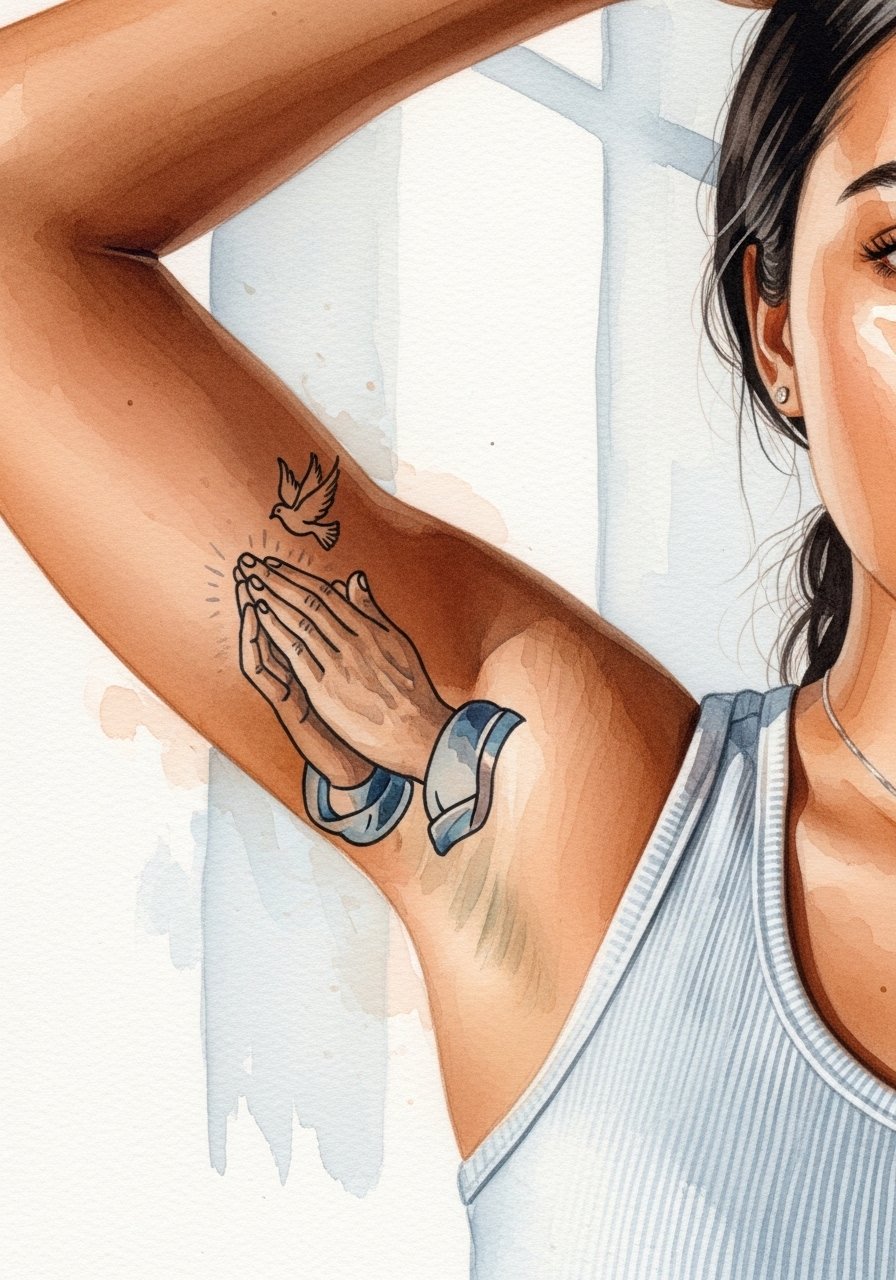
Aging reality: watercolor fades faster in high-friction zones. Inner bicep is protected most days, which helps the soft palette last longer. The big mistake is pushing saturation like a traditional fill; watercolor needs lighter passes and a plan for color refresh. Sessions take longer and may require three sittings for gentle layering. Wear a loose tank top for the appointment and bring a sleeve you can roll up easily. If you want to show it off, a racerback tank keeps attention on the arm without competing.
6. Blackwork Praying Hands Silhouette on Calf
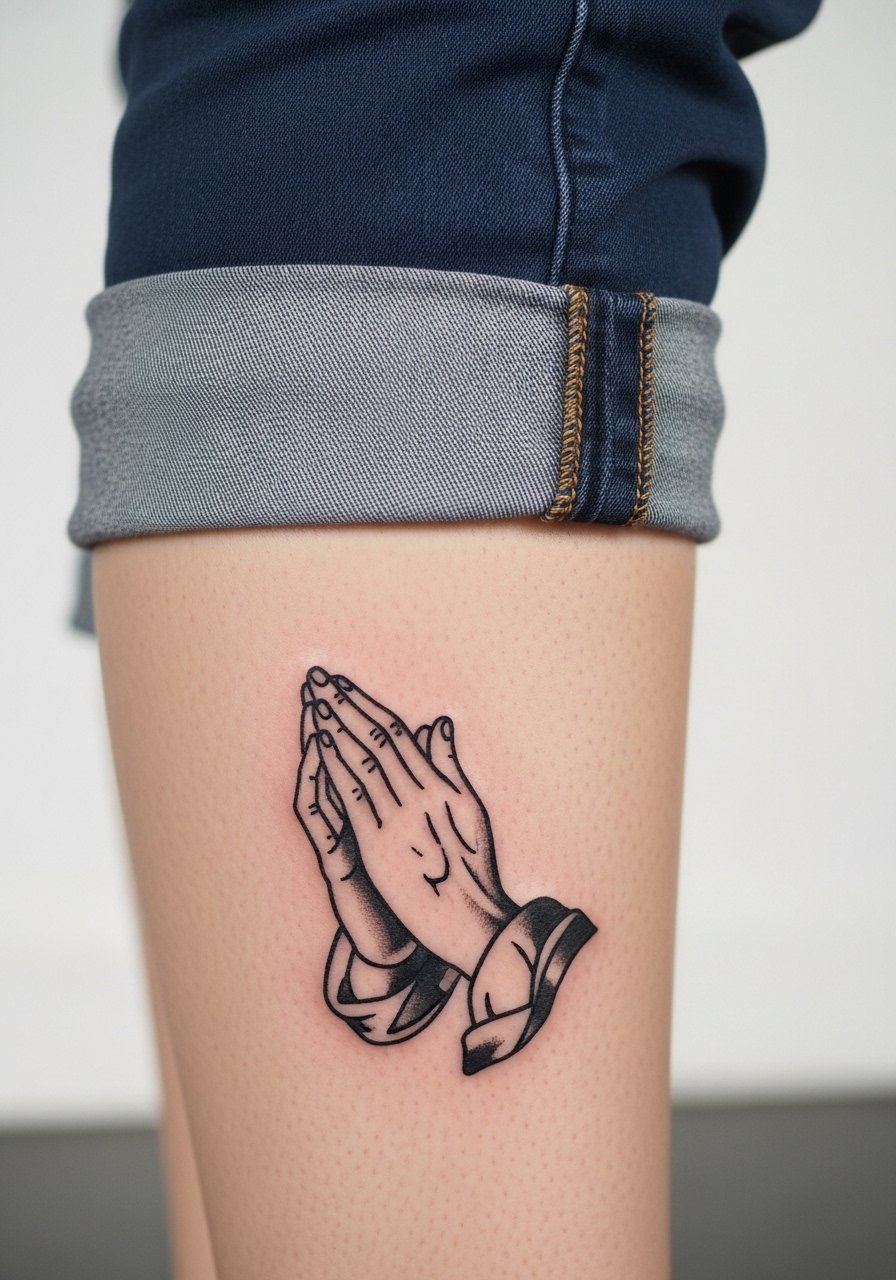
Consultation lead: this design succeeds when the silhouette is bold and the negative space reads across movement. Calf placement handles solid fills well and often heals cleaner than thinner limbs. A single session usually does it and pain is low to moderate. Watch out for a sloppy edge at the bottom of the silhouette, which happens when artists rush the fill. For casual show-off pair with rolled slim chinos or canvas boat shoes. Try a pair of rolled slim chinos for summer visibility.
Pack Smart
The first six ideas above include high-wear zones like the wrist and calf and a few protected spots like the inner bicep. Pack items for the session and the first healing week so your appointment and recovery are smoother.
-
Tattoo Goo aftercare tub. A non-greasy balm some people prefer over heavy ointments for fine line wrist pieces during week two onward.
-
Indie tattoo balm. Gentle and breathable, good for wrist and inner bicep work where stickiness causes irritation.
-
Australian tea tree salve. Light anti-itch properties make it useful for forearm and calf sessions when skin gets dry.
-
CeraVe moisturizing lotion unscented. Affordable non-greasy lotion for later-stage moisturizing after initial healing.
-
Hustle Butter Deluxe. Thinner texture than heavy ointments, preferred by many for color retention during humid-season sessions.
7. Micro-Realism Praying Hands on Collarbone
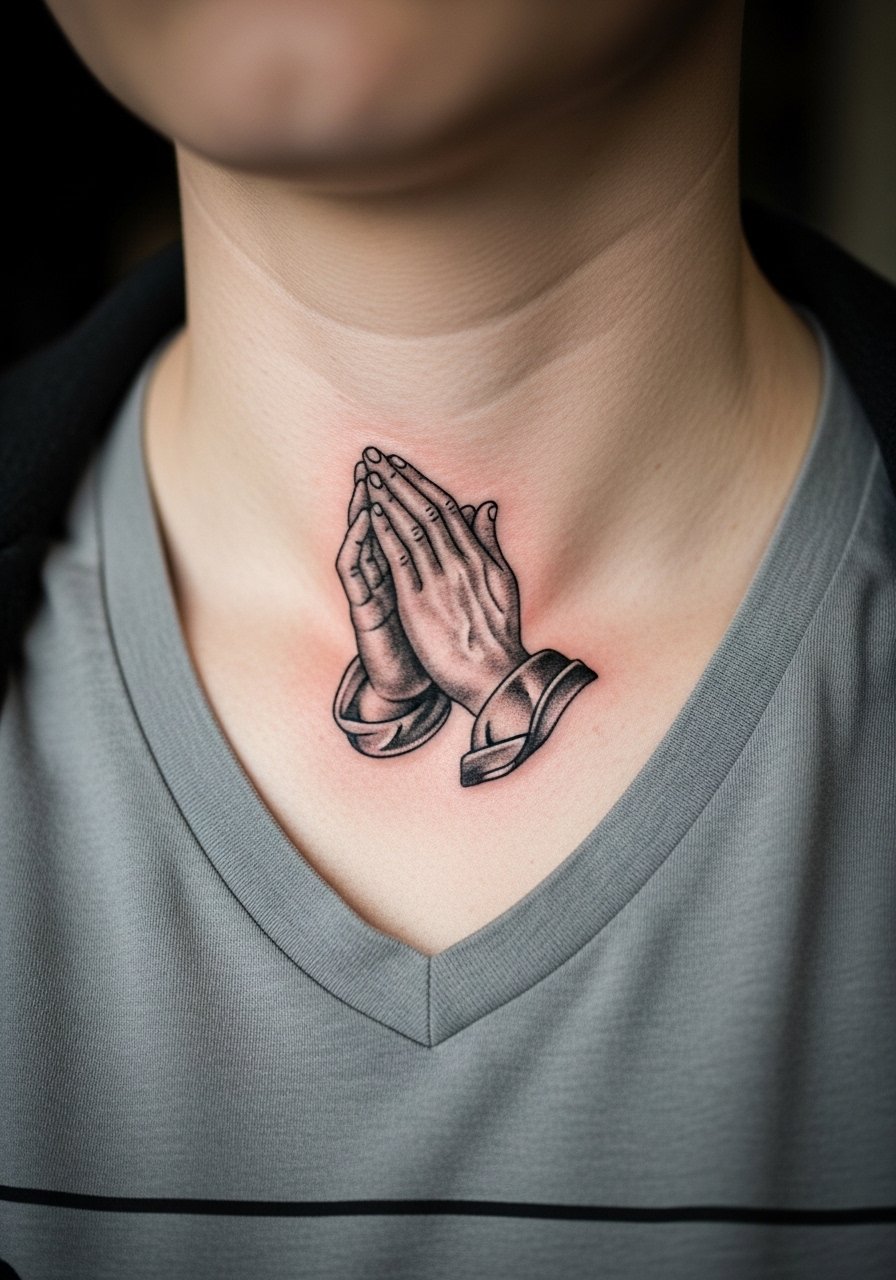
Consultation lead: micro-realism wants a larger-than-expected scale for clarity. On the collarbone, plan for two sessions to let the artist layer fine shading without swelling the area. Pain can be higher because of proximity to bone. Photographic detail translates differently across skin tones, so ask to preview how the piece photographs if that matters to you. Pair this with lightweight V-neck tees to frame the piece and avoid busy prints that drown the fine shading. A v neck tee women keeps the area visible without exposure.
8. Ignorant Style Praying Hands with Flame on Thigh
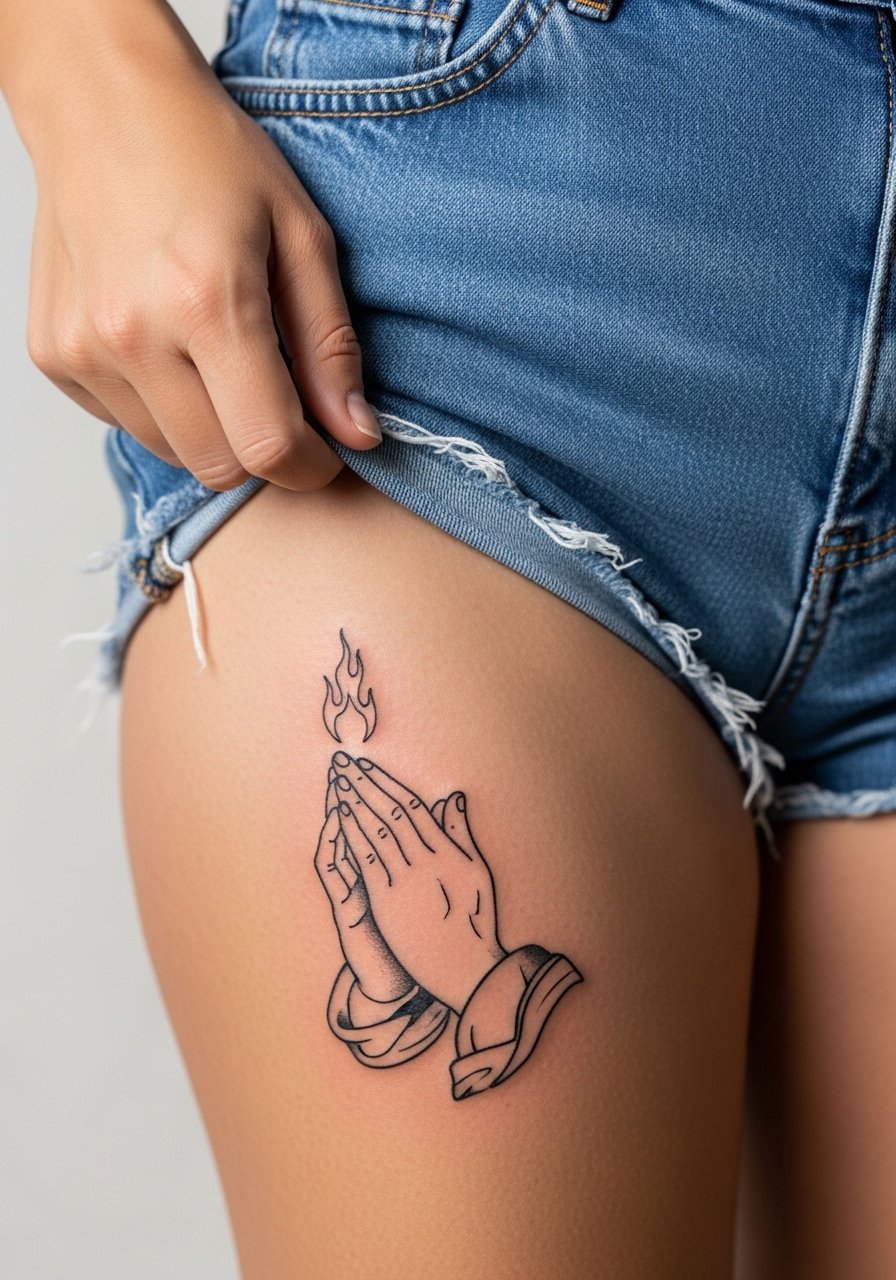
Mistake lead: putting too much micro detail into ignorant style kills its charm. The point is bold, almost naive linework with a graphic flame. Thigh sessions are forgiving if you plan one long sitting and wear loose shorts. Inner thigh or outer thigh choices change intimacy levels; inverted designs on the inner thigh make the tattoo more private. For session wear pull on high waisted denim shorts so the artist can access the area without discomfort.
9. Fine Line Praying Hands with Stars on Ribcage
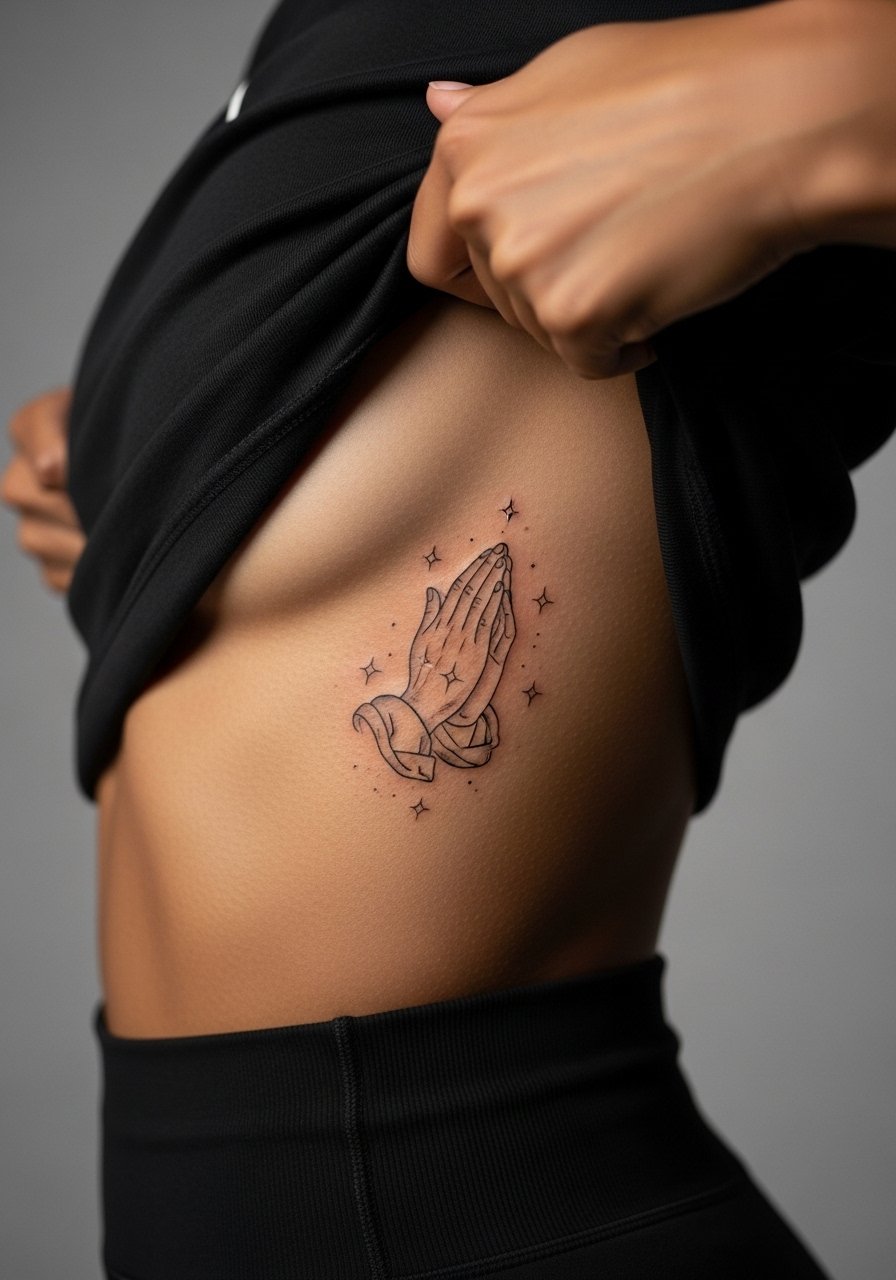
Aging lead: ribs move with breathing and body shifts, which is why artists are split on fine line there. One camp says the skin stretches and blurs lines within two years. The other camp argues that with precise depth and spacing, fine line settles fine. Ask your artist which camp they fall into and to show healed rib photos. Pain is high on the ribs and sessions may be split. Stars help spacing and give the composition room to breathe so the whole piece survives longer.
10. Traditional Praying Hands with Banner on Outer Forearm
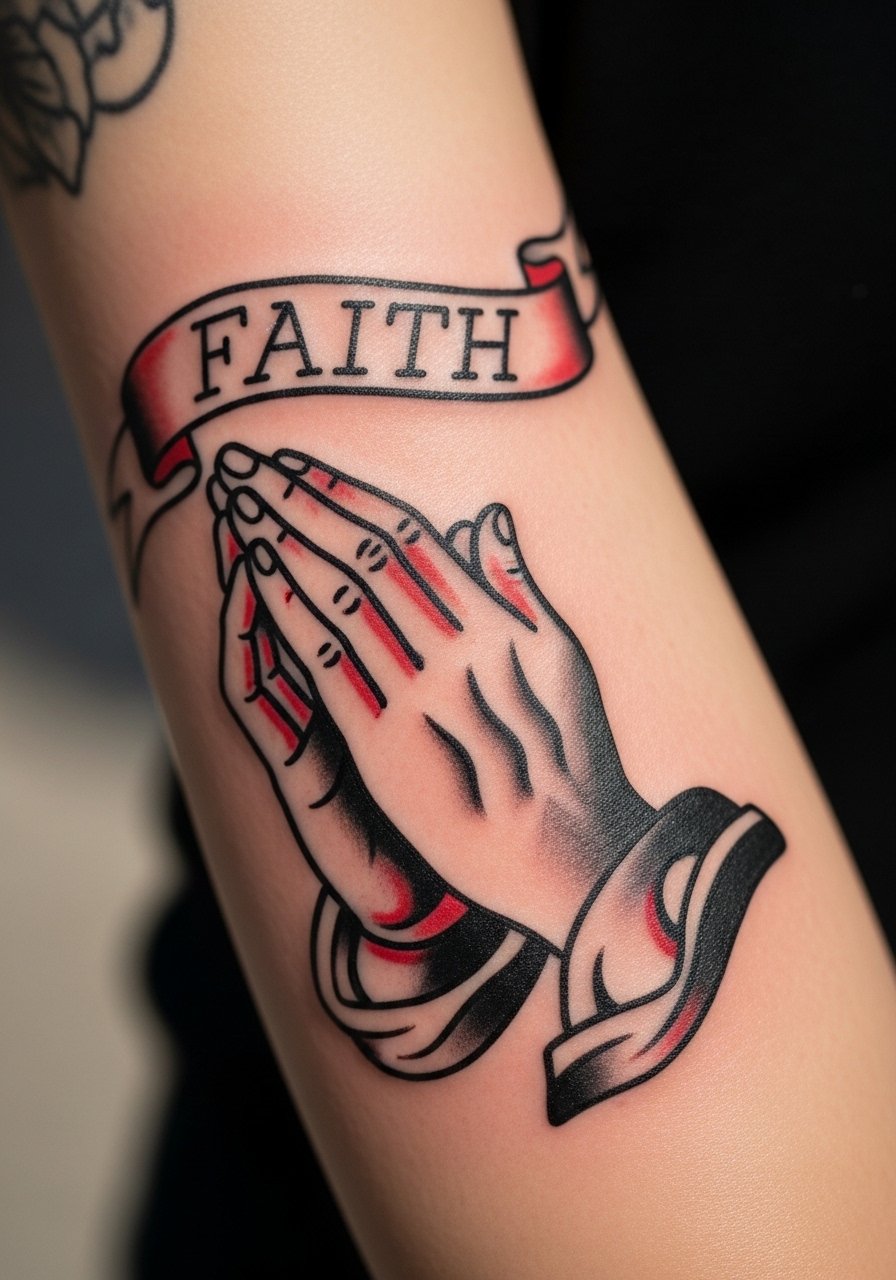
Mistake lead: squeezing script too small inside banners makes it unreadable after healing. Traditional styles live on saturated color and bold lines, so ask for a slightly thicker banner and readable lettering. Forearm placement shows well and endures if the linework is confident. Sessions usually cover outline and color in two passes. For a casual look, roll sleeves and wear a slim leather cuff on the opposite arm. Try a slim leather cuff bracelet to balance the arm visually.
11. Ornamental Praying Hands with Geometric Frame on Back
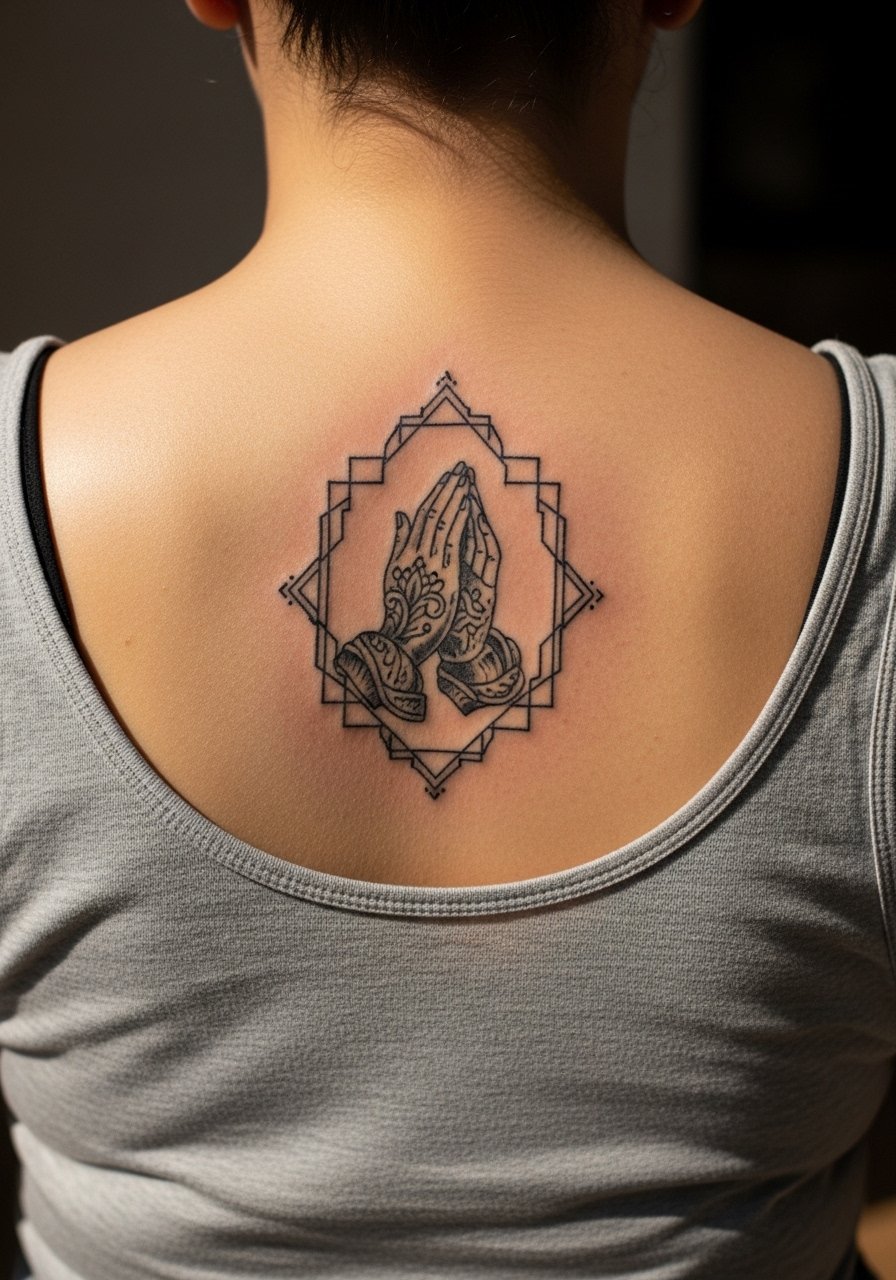
Personal observation lead: back pieces let ornamental work breathe and scale without crowding. This design benefits from measured symmetry so it reads from distance. Expect multiple sessions for crisp linework and even stipple shading. The common error is forcing too many motifs into the frame. For the session wear a loose button-down shirt you can pull aside or a tank top. A light cardigan layered over an off-the-shoulder look also lets you reveal the piece on cooler days.
12. Linework Praying Hands with Light Rays on Ankle
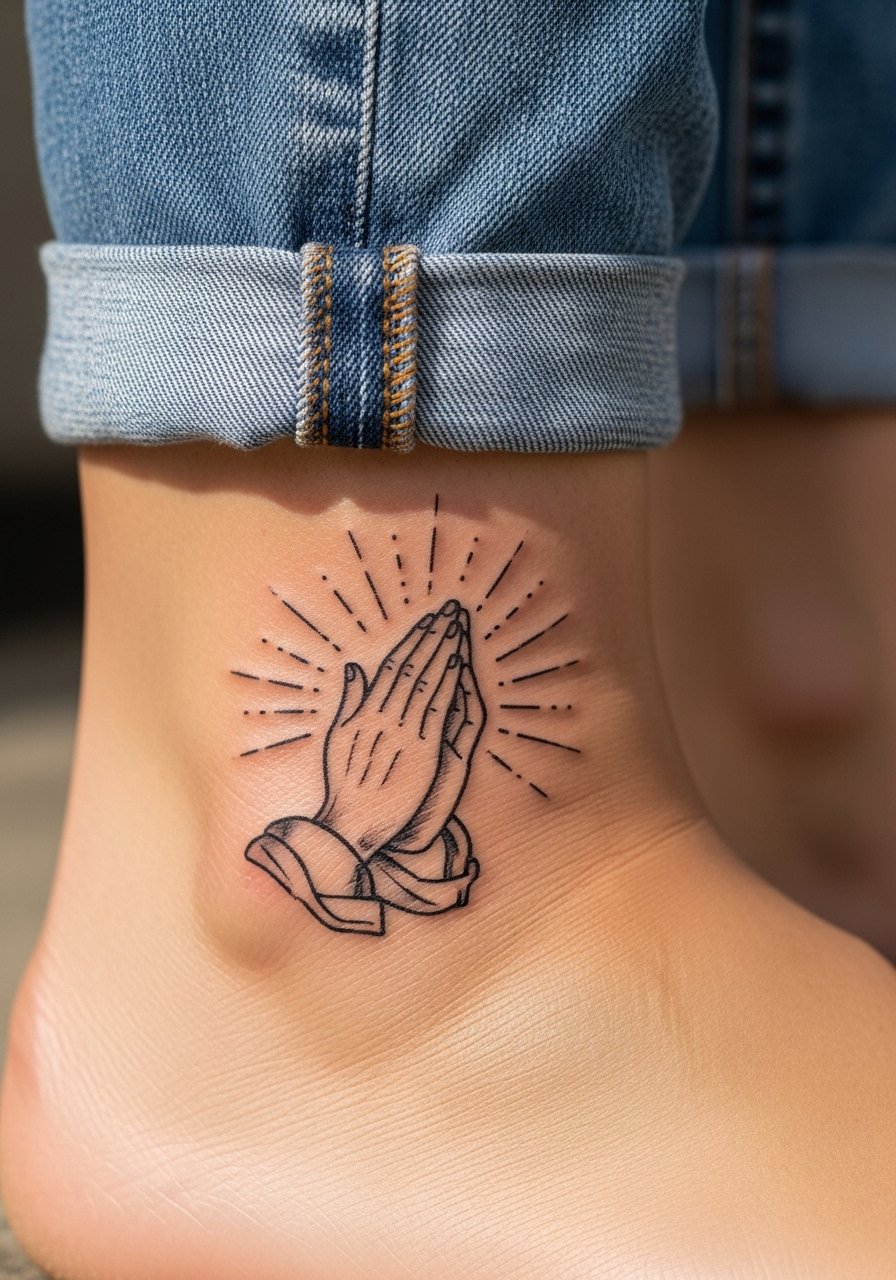
Pain warning lead: ankle tattoos are sharp for many because of bone proximity, but this clean linework reads well and heals predictably if scaled correctly. Keep the rays simple and avoid tiny cross-hatching that will blur. Sessions are short and healing is straightforward if you avoid friction from shoes. Show it off in summer with jeans rolled up or sandals. A link to boat shoes canvas or rolled jeans helps frame the ankle without crowding the design.
13. Small Praying Hands Micro Tattoo on Finger
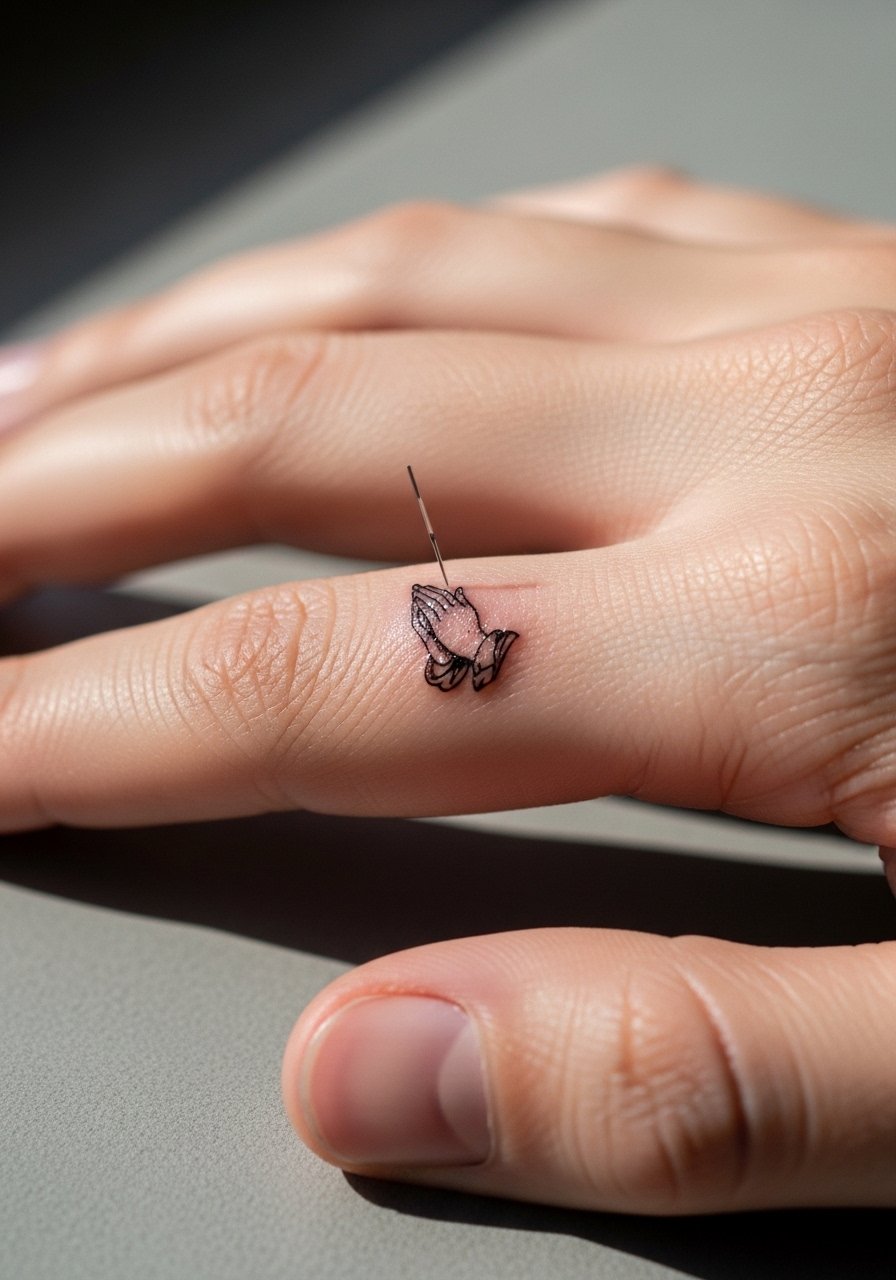
Mistake lead: fingers are high-friction and micro work often needs touch-ups. If you want longevity, scale slightly bigger than the thinnest reference and accept a likely touch-up at year one. The session is quick but healing involves frequent washing and exposure. If this placement matters for work, consider an alternative like the side forearm. For showing off, minimal rings or a thin band on the opposite hand keep the focus without adding friction during healing.
14. Praying Hands Paired with a Heartbeat Line for Sobriety on Wrist
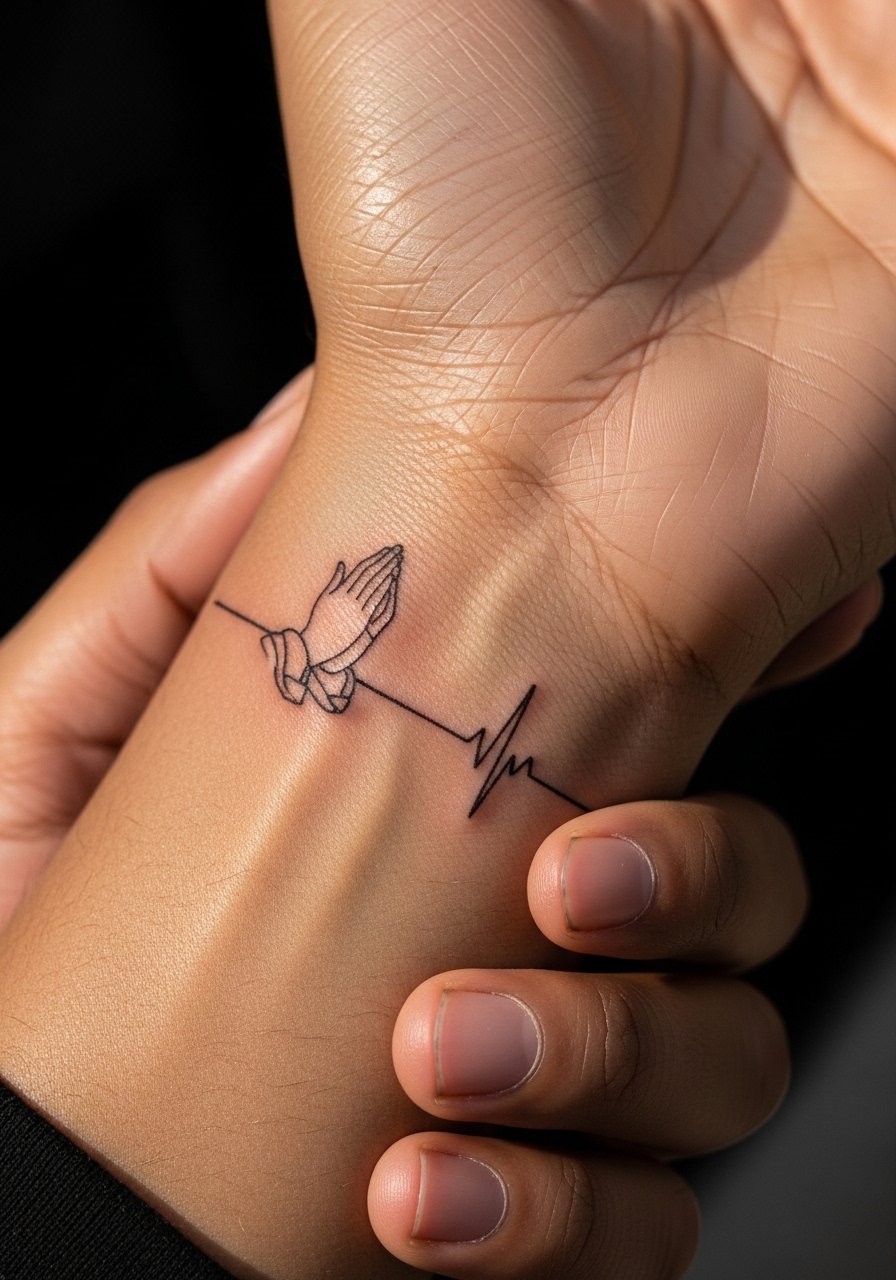
Consultation lead: this pairing is powerful for milestone tattoos and scales best as a wrist or inner forearm piece. Because wrists fade faster, plan for a bolder single-needle weight and schedule a touch-up. The heartbeat line should be simple and not too close to the hands to avoid merging. Session time is short but the symbolism is crisp when spacing is respected. Wear cuffed slim jeans when showing it off and layer a thin silver chain bracelet on the opposite wrist to balance the look.
15. Dark Skin High-Contrast Praying Hands with White Ink Highlights on Calf
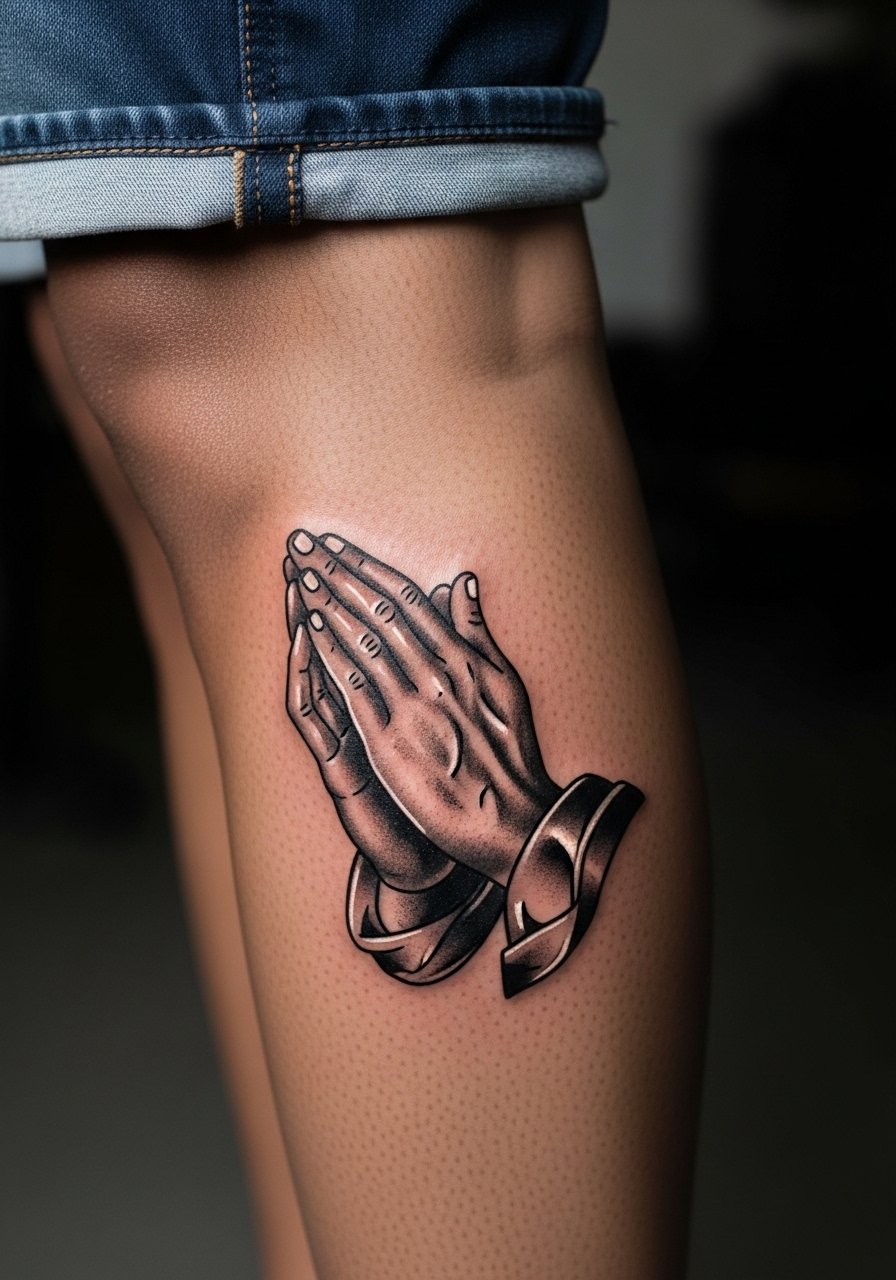
Personal observation lead: on darker skin tones, high-contrast blackwork with discreet white highlights can create depth without muddiness. Ask the artist to test contrast with a healed sample patch or mockup photo. Calf placement takes fills well and endures through activity. White ink can migrate or thin over time, so request conservative use and discuss a possible highlight touch-up at year two. For seasonal showing off, rolled shorts or canvas shoes work well.
16. Praying Hands as a Patchwork Sleeve Starter on Upper Forearm
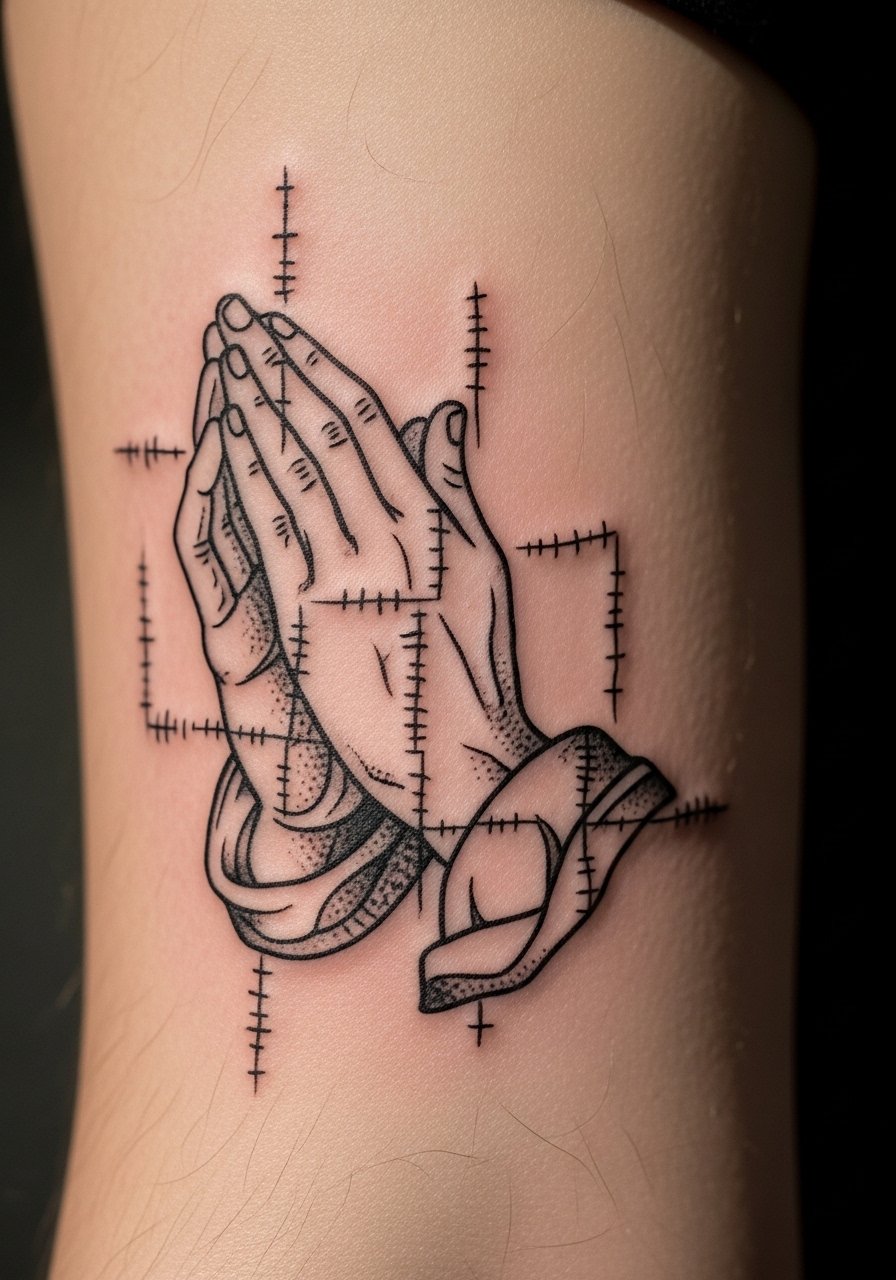
Styling lead: if you plan a sleeve, build negative space and consider how future pieces will sit around the hands. Ask for clear margins and a flexible frame so later artists can connect elements. Forearm sessions are comfortable and often take one longer appointment. A common mistake is demanding a finished sleeve look from the first session. Show it off with rolled sleeves and a button down chambray shirt that highlights the upper forearm without covering the art.
17. Inverted Praying Hands on Inner Thigh for Private Meditation
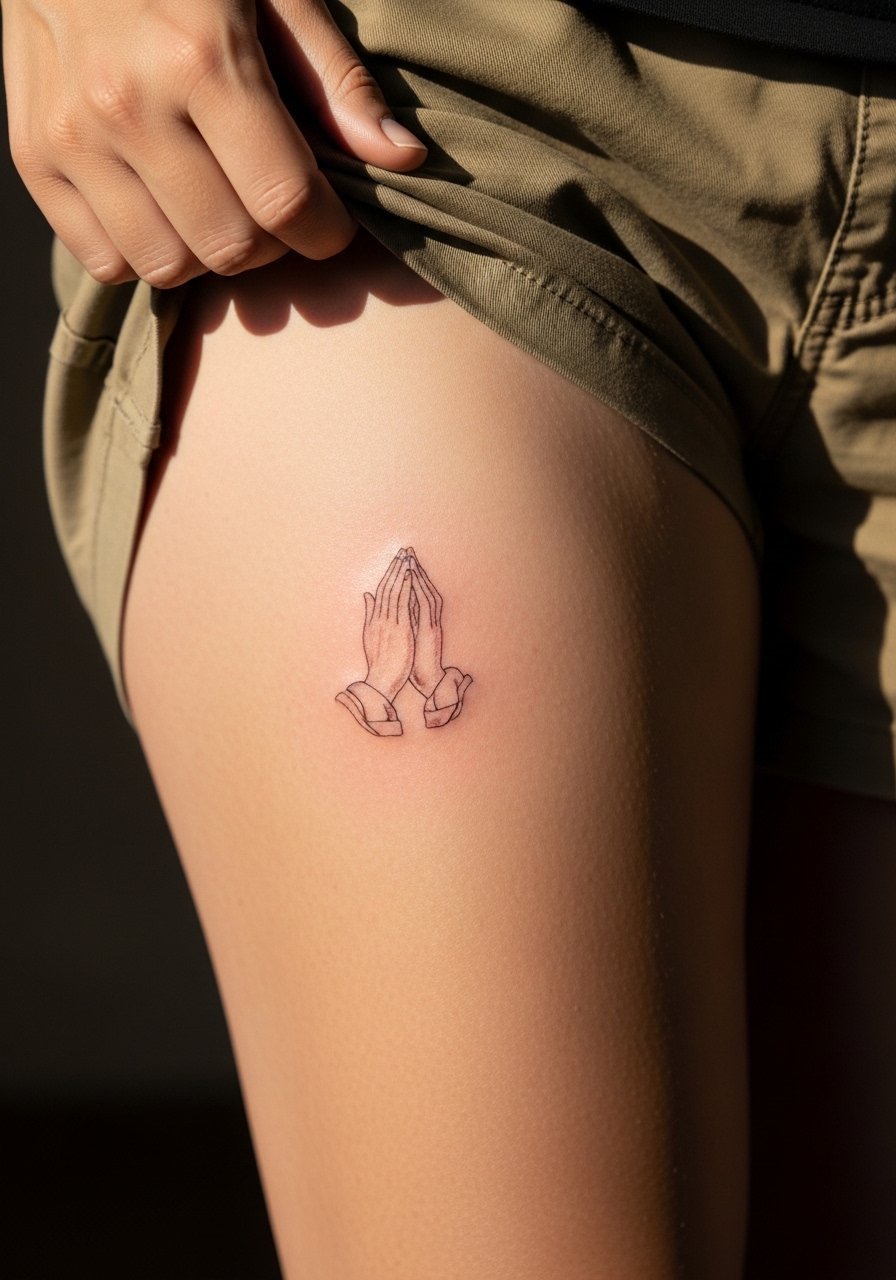
Unique idea lead: inverted placements like this read as a private reminder not meant for daily display. Inner thigh sessions require careful positioning and often a single long sitting. Pain varies with proximity to nerve bundles. The main mistake is choosing very fine single-needle detail on a spot that moves a lot; scale up slightly and expect a touch-up. For the session wear loose athletic shorts to avoid pressure and leave room for the artist to work comfortably.
18. Praying Hands with Rosary Draped into a Sleeve Flow on Outer Bicep
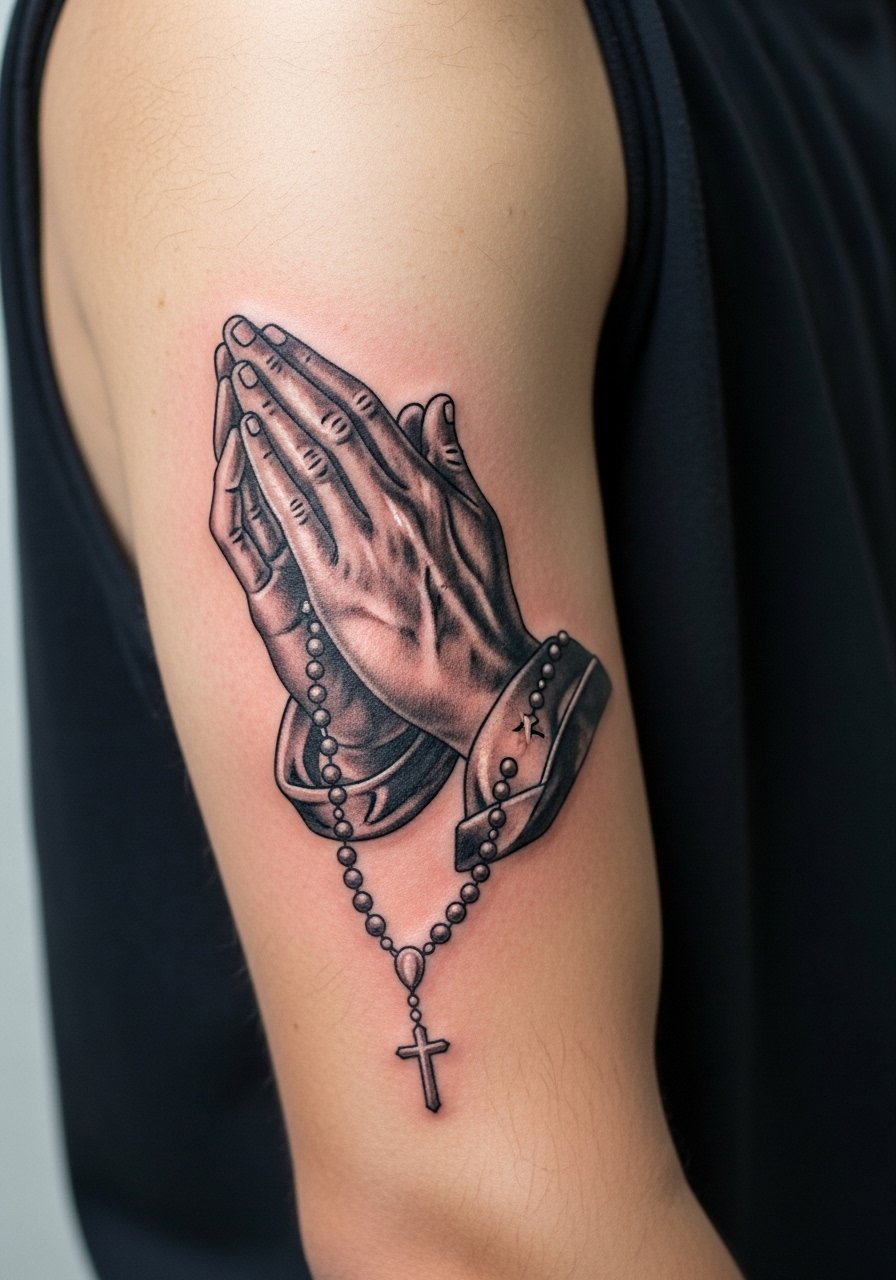
Consultation lead: when you want a rosary to connect into future sleeve elements, request bead spacing that allows overlap without crowding. Outer bicep is forgiving for shading and aging. Sessions can be split into outline and shading passes for comfort. Avoid asking for ultra-fine bead loops that will disappear over time. For session wear, an open button-down or sleeveless top keeps the area accessible and comfortable.
19. Praying Hands with Floral Accent on Sternum
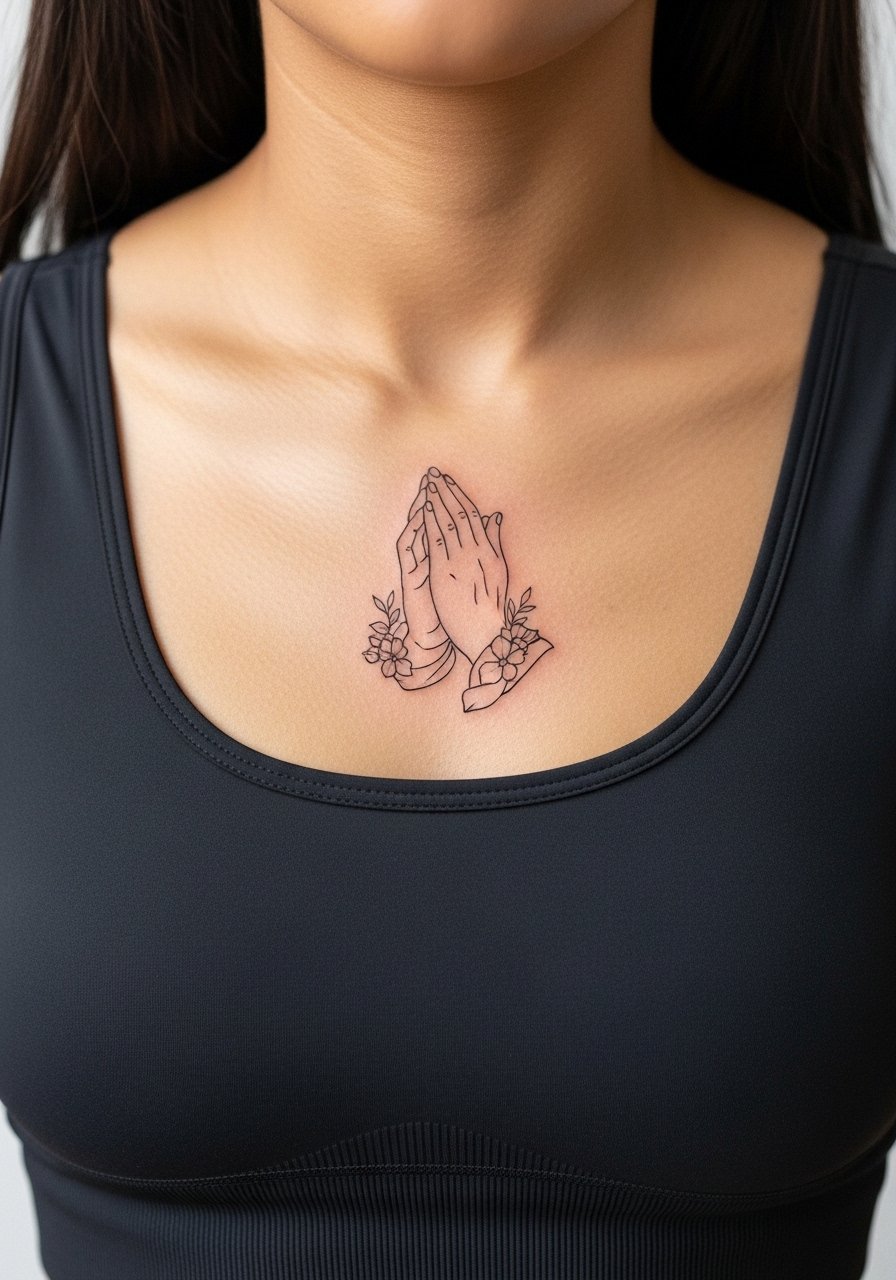
Aging lead: sternum work needs careful depth control to avoid spreading across breathing movements. The controversy about numbing cream shows up here. One camp says topical numbing eases first-timers' anxiety. The other worries it swells the area and alters line placement. Discuss numbing and artist technique during your consult. Wear a fitted sports bra for the session so the artist has access while you stay supported.
20. Linework Praying Hands for Ankle Bracelet Composition
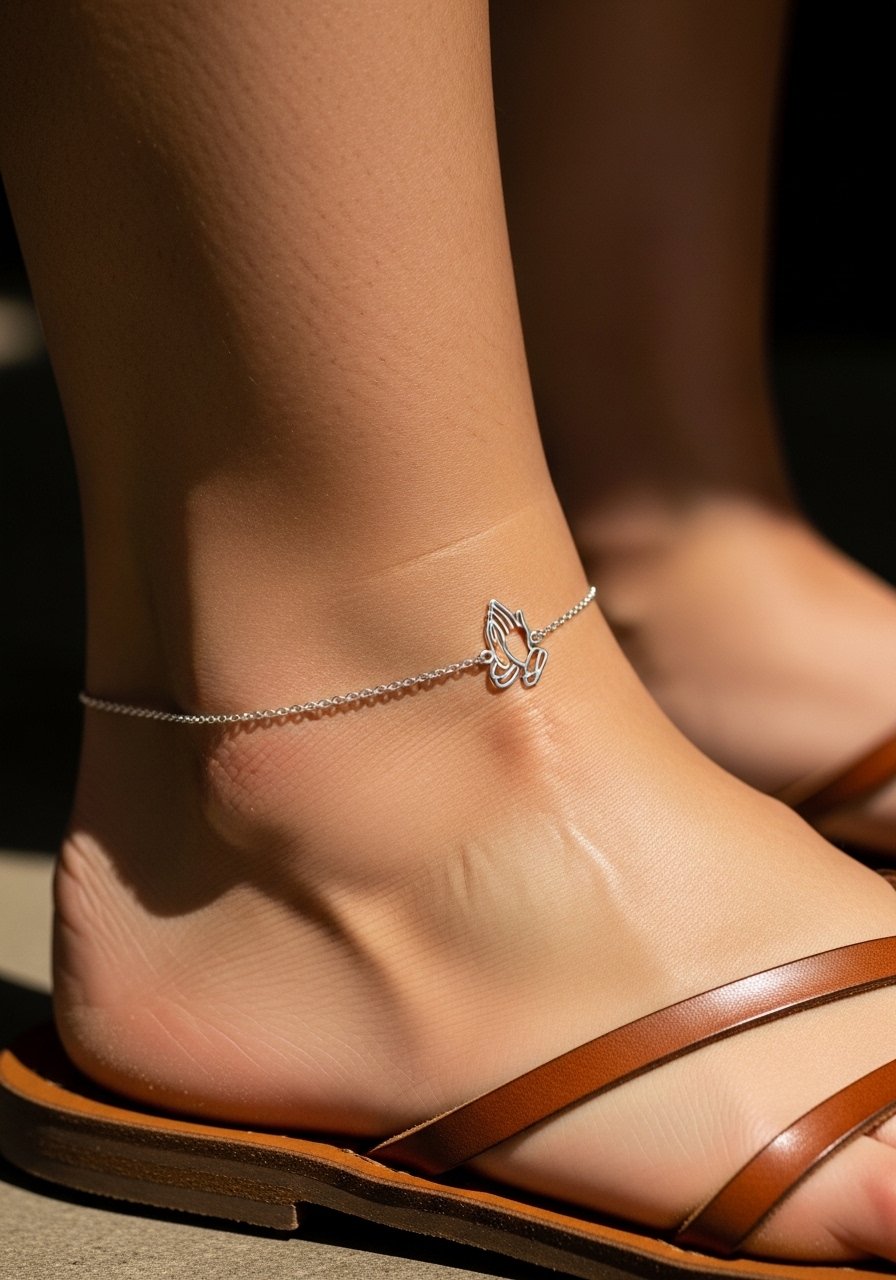
Visual impact lead: small anklet-style compositions read well when kept simple. Fine rays or chain links should have deliberate spacing to avoid merging with movement and footwear. Ankle pain is modest but healing requires avoiding tight socks. For showing off, wear sandals or rolled trousers and consider a boat shoes canvas or low-profile sandal to keep friction low during early healing.
21. Dotwork Haloed Praying Hands at Nape of Neck
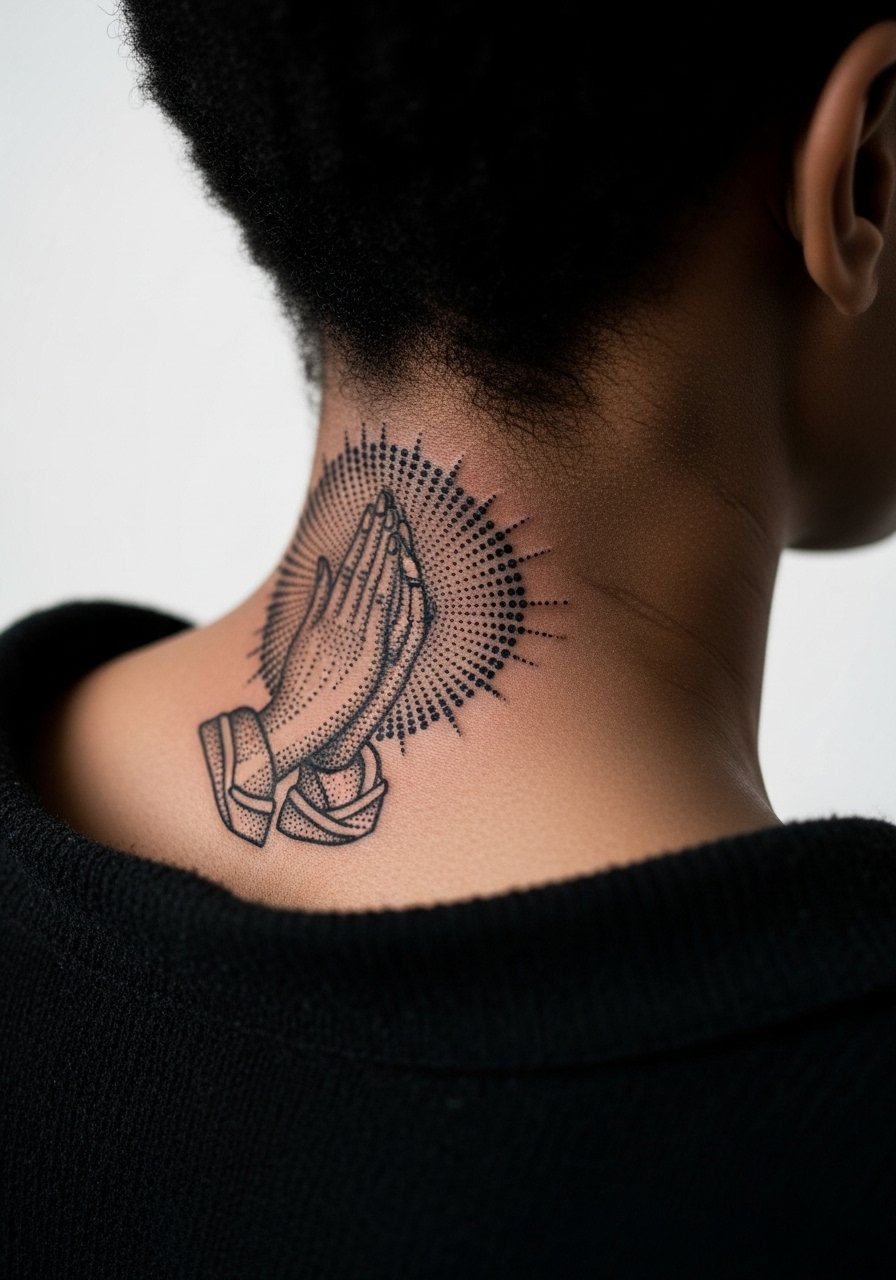
Consultation lead: nape pieces require concise framing so they do not get lost under hair. Artists may suggest a softer halo and larger dot spacing to prevent merging. Pain is moderate and sessions are short. If your job and style demand discretion, ask about placement slightly lower or higher to manage visibility. For session prep wear a wide-neck shirt you can shift without full exposure.
22. Blackwork Silhouette with Script on Thigh
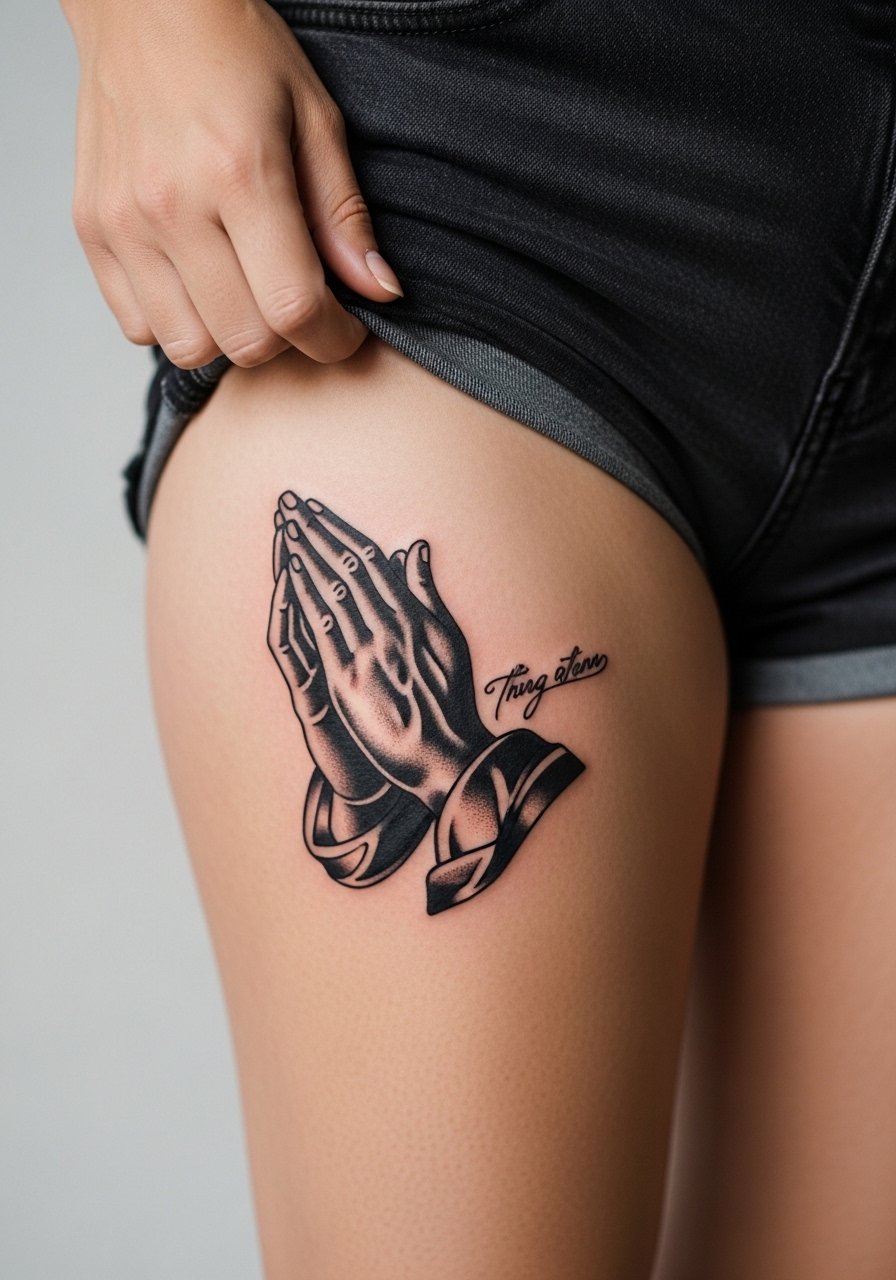
Mistake lead: script squeezed into a silhouette rarely reads well. If you want both elements, plan separate areas or a clear border between them. Thigh tolerates heavy blackwork and ages predictably through activity. Sessions are often single sittings. For showing, high-waisted shorts create a subtle peek without constant exposure.
23. Stippling Praying Hands with Light Rays on Upper Back
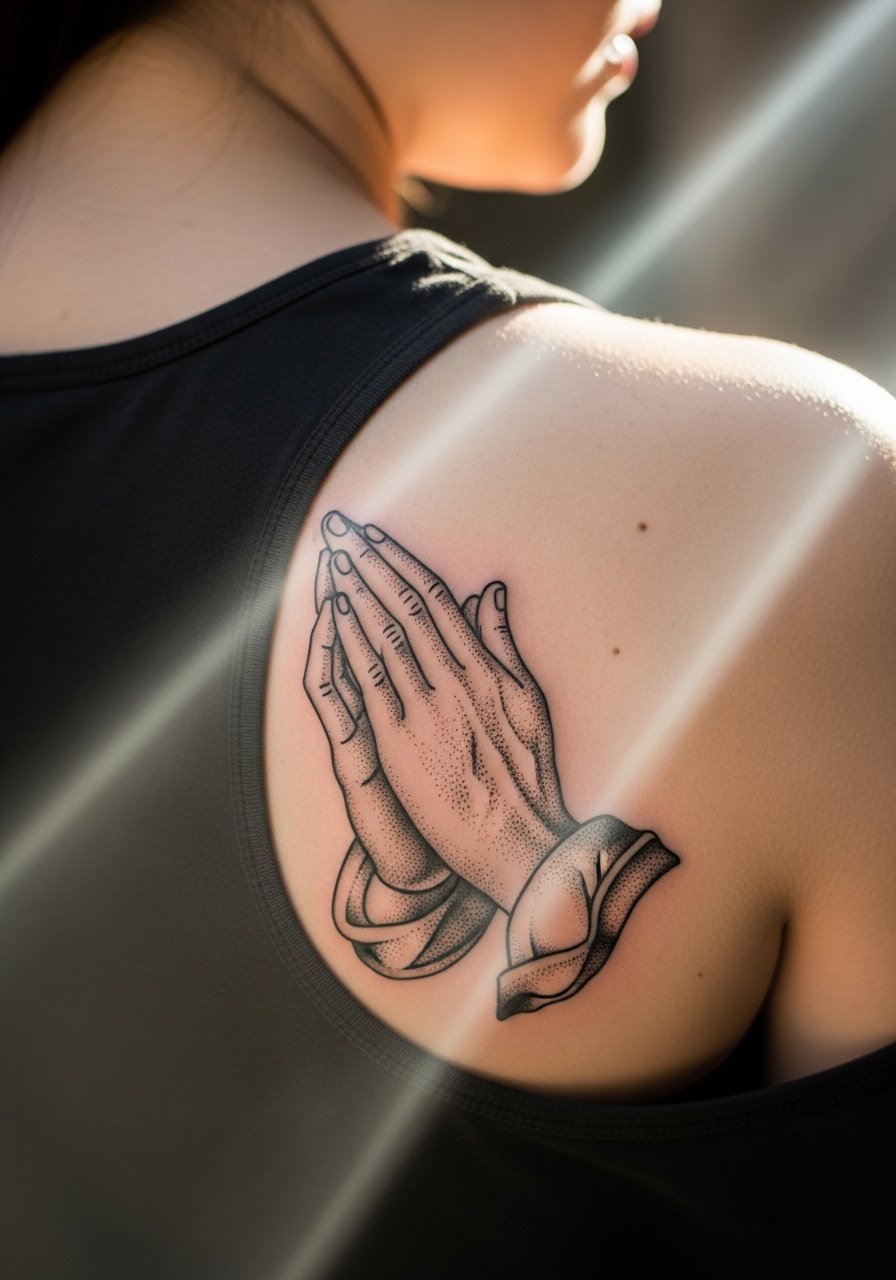
Aging lead: stipple shading can hold for years if dots are spaced and not overpacked. Upper back work benefits from good distance and symmetry. Expect multiple sessions to build depth without abrasion. The common mistake is too-dense stippling that blurs into solid gray. For session wear a loose button-down you can pull aside or a tank top that the artist can access easily.
24. Micro-Realism Pairing with Portrait Elements on Collarbone Side
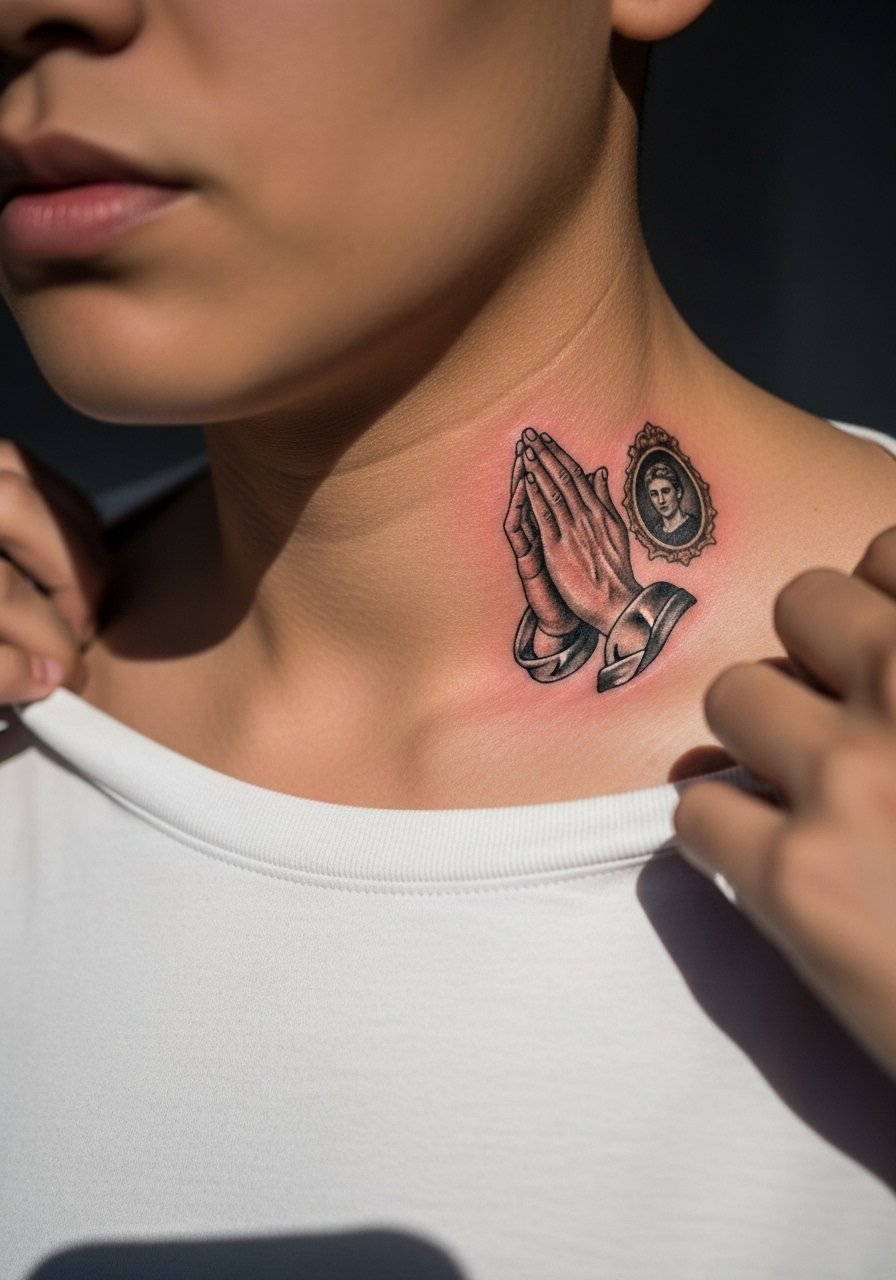
Consultation lead: adding portrait detail increases complexity and time. On collarbone you want the portrait slightly larger than your initial idea so the subtle features hold. Pain is higher and expect two sessions. Bring reference photos that show the lighting you prefer and ask to see healed micro-realism examples. For showing off, a strapless or wide-neck top frames both elements elegantly. Consider a strapless top neutral for occasions.
25. Praying Hands as a Sleeve Connector with Geometric Lines on Forearm
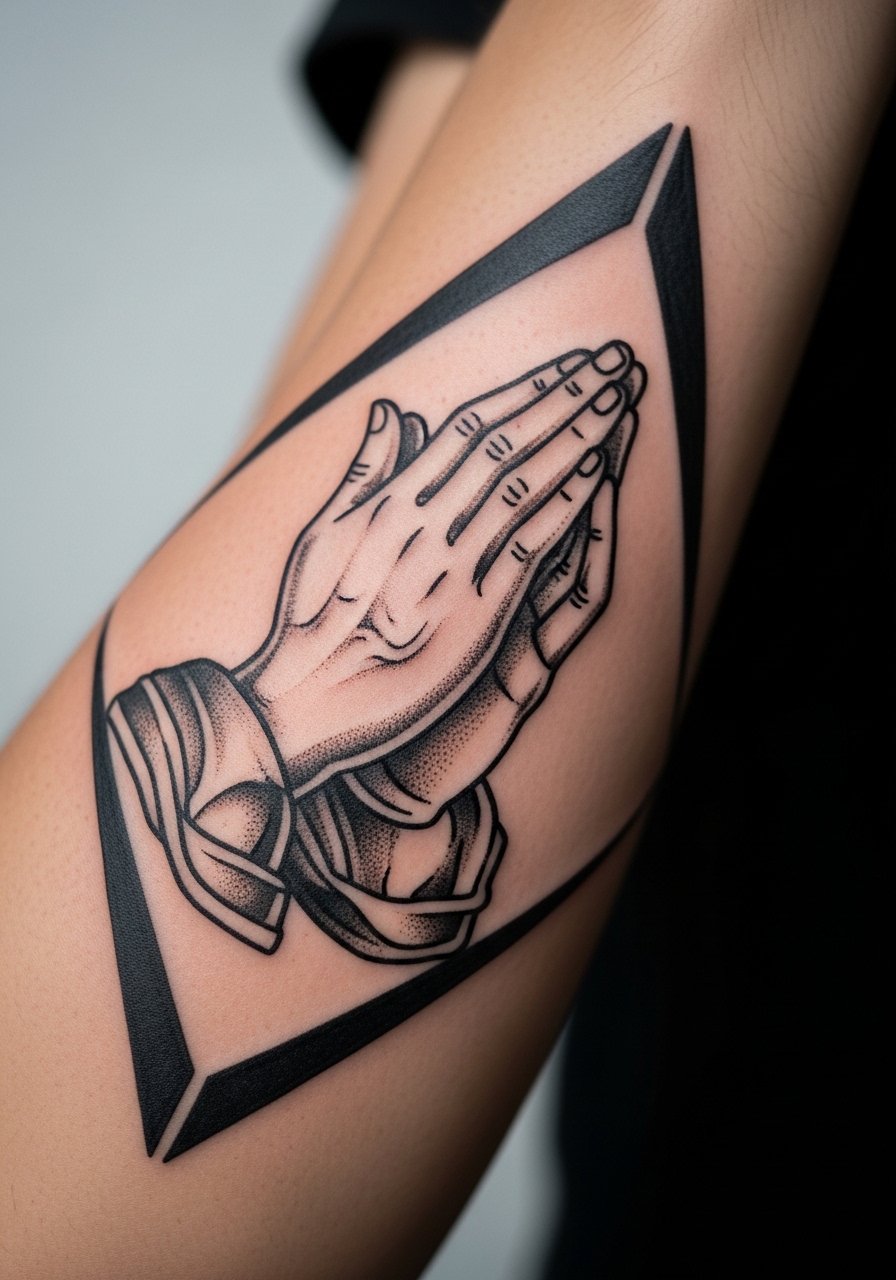
Mistake lead: a connector piece that is too tight around existing work makes future additions awkward. When planning sleeve flow, ask the artist for flexible negative space and bold anchor points. Forearm location is ideal for visual continuity and tolerates touch-ups well. Sessions vary by how much linking you want. For session comfort wear a loose long-sleeve button-up you can roll without compressing the area.
26. Praying Hands with Dove and Sun Rays on Inner Bicep
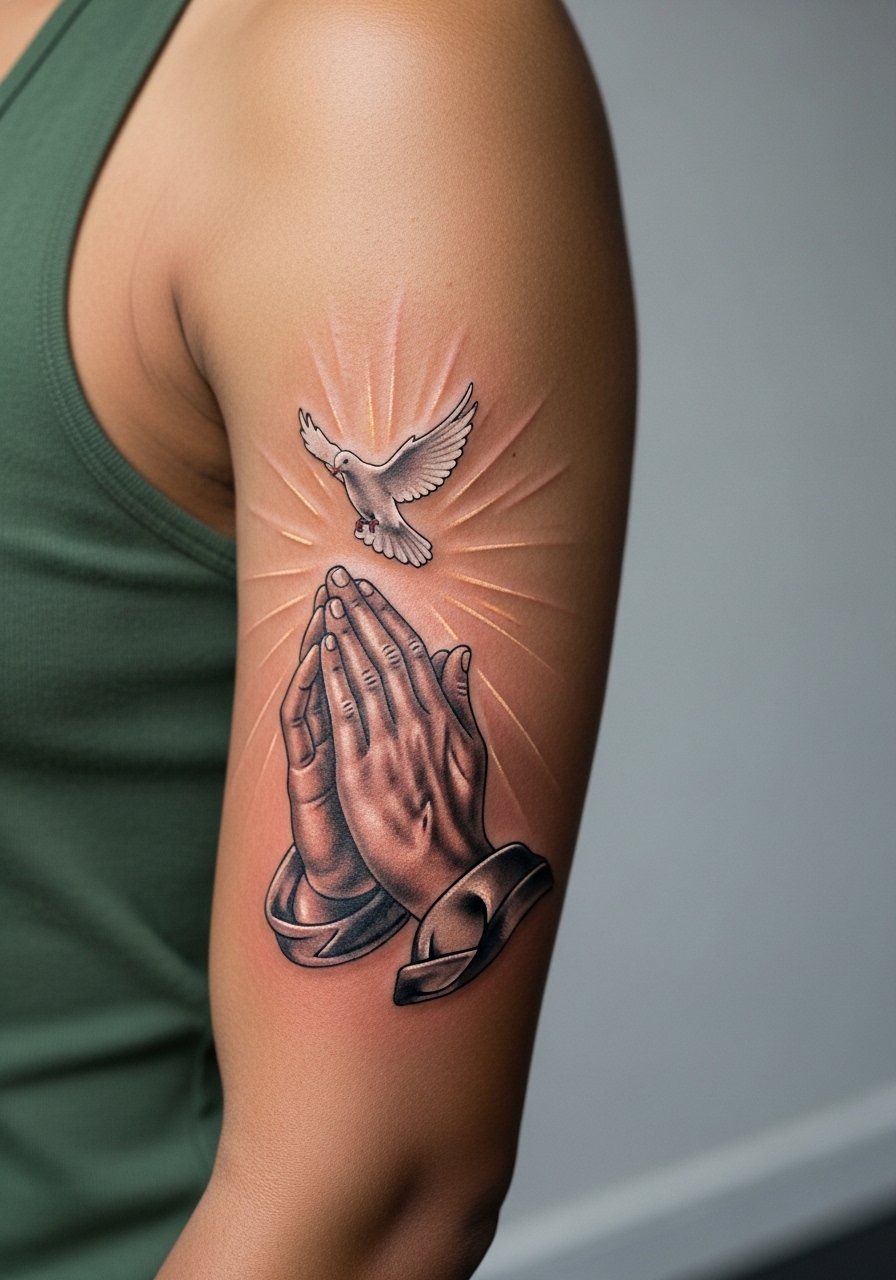
Visual impact lead: inner bicep keeps delicate imagery private and protected, which helps watercolor and subtle shading survive longer. Sessions often need careful layering to avoid swelling. Common mistake is adding too much color in one pass. For appointment wear a loose tank top so the artist can access the area without tugging at fabric. If the design includes text, specify exact wording during the consult so the artist lays it out cleanly.
27. Praying Hands with Geometric Frame as a Back-of-Arm Accent
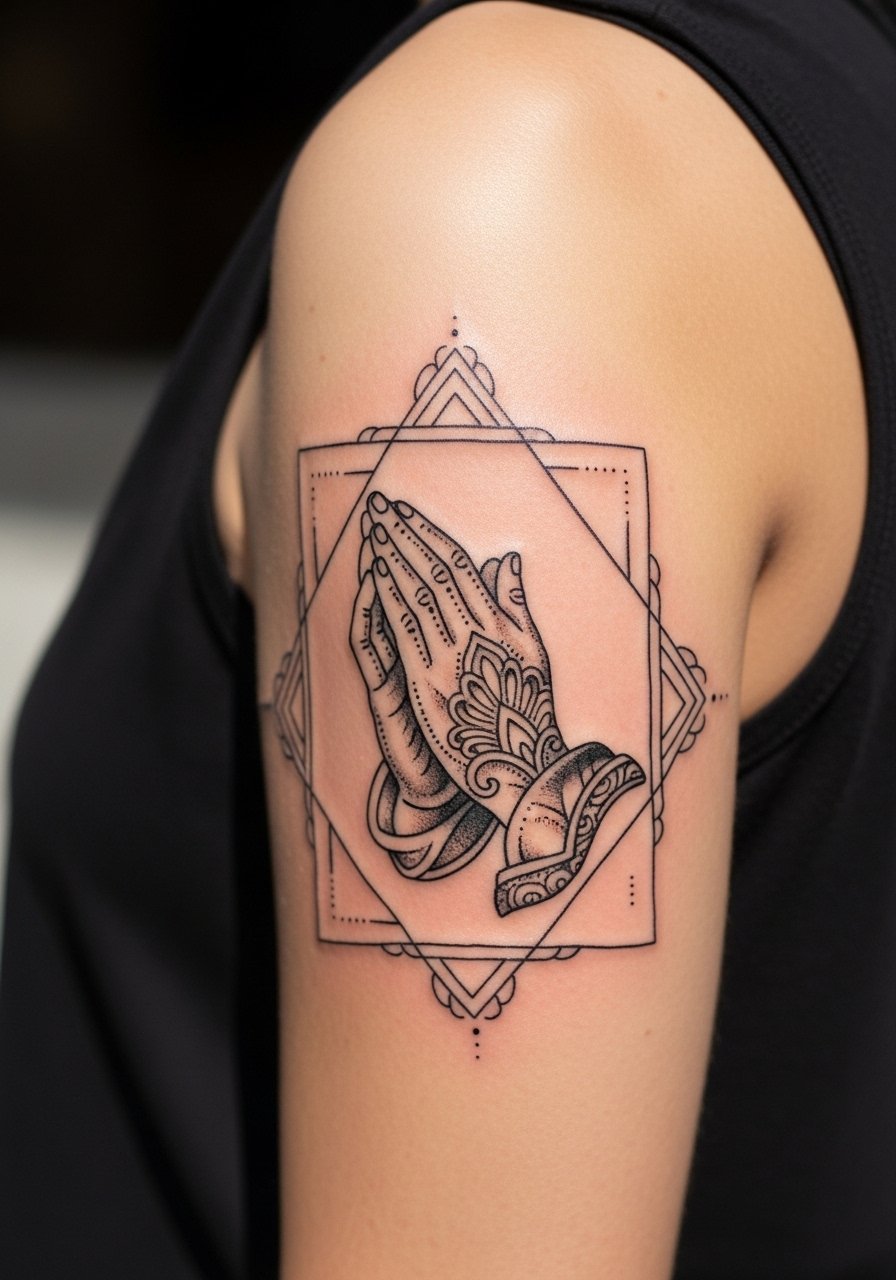
Consultation lead: back-of-arm placements catch sun and movement differently than outer forearm. Ask the artist to plan a frame that compensates for muscle flex so the composition does not warp noticeably with motion. Pain is moderate and sessions are usually single visits. The mistake is pushing tiny interior details into a narrow vertical panel. For session wear a sleeveless top or open button-down for easy access and minimal rubbing afterward.
Frequently Asked Questions
Q: How do I pick between fine line and blackwork if I want a wrist or forearm praying hands tattoo?
A: It depends on how often the area sees friction and how long you want the piece to read without touch-ups. Fine line delivers a delicate look but often needs touch-ups sooner on wrists. Blackwork or slightly bolder single-needle weights survive rubbing and washing better. If you are unsure, ask to see healed photos from the artist for the exact placement you want.
Q: Artists keep canceling my consults, is there a better way to lock in a guest spot?
A: From what I have seen, booking through apps with cancellation policies and aiming for guest spots months ahead helps. Use hashtag searches like the ones on Instagram or check Tattoodo and Booksy for guest calendars. If an artist is regularly rescheduling, pick someone with a stable booking system or ask to be put on a waitlist for a firm slot.
Q: Should I worry about stretch or weight fluctuation for forearm realism praying hands?
A: Yes, forearm realism can distort if your body changes significantly. If you expect weight shifts, consider upper arm placement or a slightly more graphic approach that tolerates change. During consultation, mention any planned body changes so the artist can advise on sizing and placement.
Q: Does Saniderm or dry healing work better for these styles and placements?
A: The community splits on this. One camp says transparent film keeps the site clean and speeds the early window. The other camp worries it can trap moisture if not applied perfectly. My recommendation is to discuss the artist's standard and follow their process closely. If you prefer film, make sure the shop demonstrates correct application.
Q: How often should I expect touch-ups for fine line wrist or finger praying hands?
A: Plan for at least one touch-up within the first year for fingers or wrists, and then monitor year to year. Fine line tends to fade faster in high-friction spots. If you want fewer touch-ups, scale up the line weight slightly and choose a protected placement.
