
Fine line wings are everywhere on mood boards right now, but what really lasts on the back is not always what looks best in the mirror that first week. The truth is that placement and line weight matter more than a trending filter, and your choices now affect how the piece reads at year two and year five. Below are 21 back-focused angel wing concepts that balance immediate impact with realistic aging, session prep, and wardrobe choices.
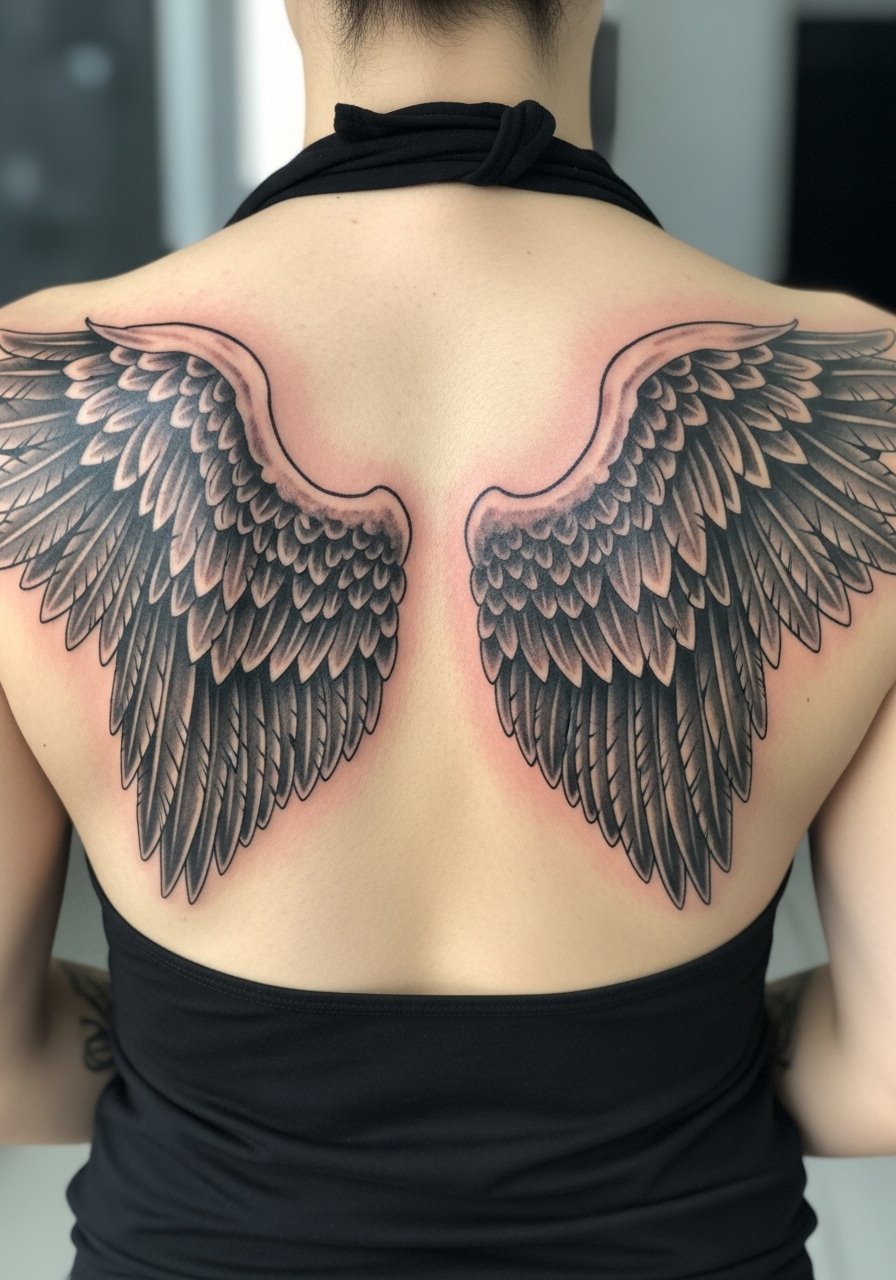
1. Large Realistic Angel Wings Spanning Full Back
A full-back micro-realism wing spread is the go-big option for people who want guardian imagery as a statement. I recommend this when you want texture and feather detail that reads at a distance, not just up close. Tell your artist you want heavier saturation in the lower feather clusters so the mid-back holds contrast after a year. Expect multiple long sessions and a solid touch-up plan at year one. For the session wear a loose button-down you can slide off cleanly, and for showing this off pick a backless halter top women that keeps the shoulders and upper shading visible without crowding the silhouette.
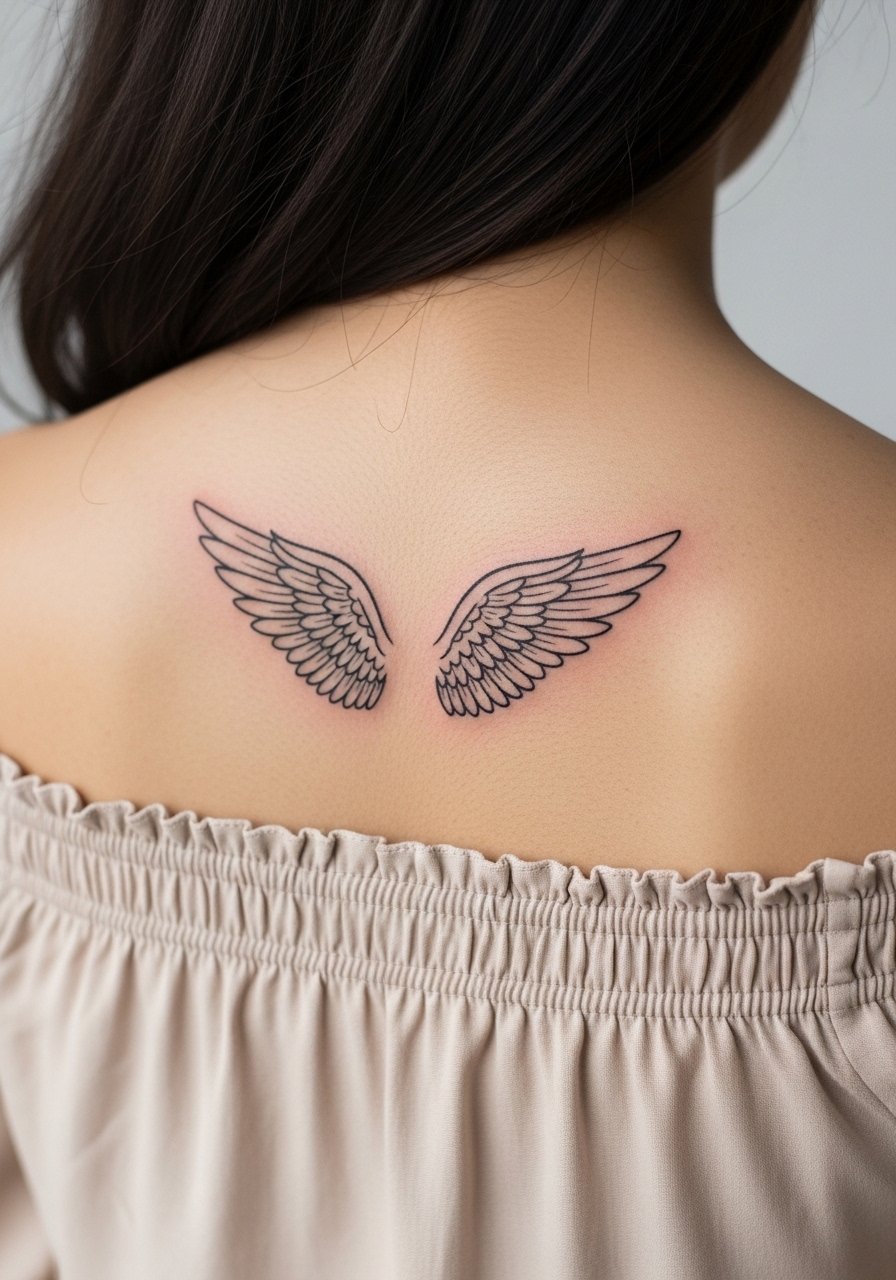
2. Minimalist Outline Wings Centered on the Upper Back
Fair warning, fine line outlines on the upper back demand discipline in spacing and depth. The minimalist look reads delicate at first but can disappear on darker or oilier skin if the lines are too hairline thin. During consultation ask for a tiny increase in line weight and slightly more spacing between feather strokes to prevent merging. Session-wise it is quick and tolerable, one or two short sittings. For evening wear try an off shoulder blouse that frames the shoulder blades without covering the stencil area.
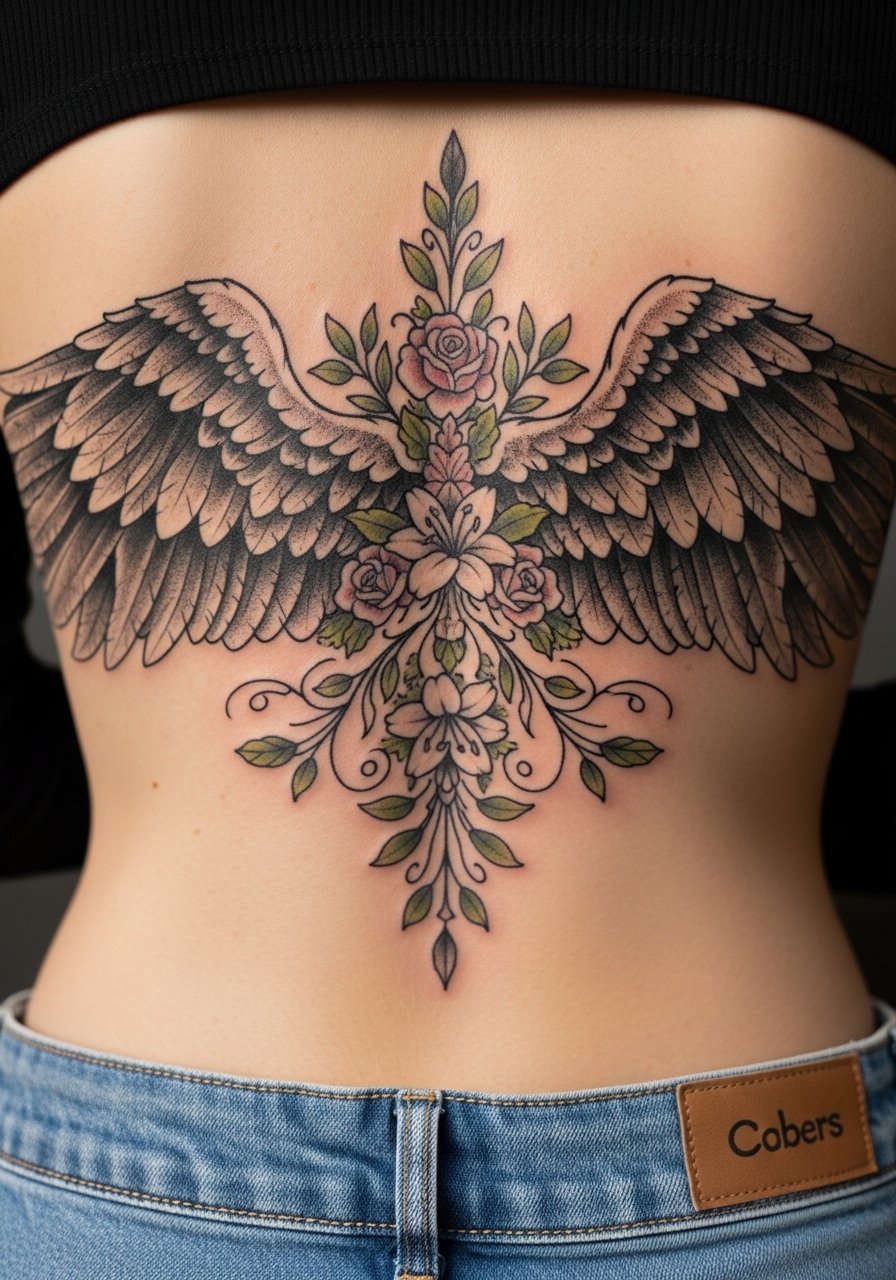
3. Ornamental Wings with Floral Accents Across the Mid-Back
This ornamental approach blends blackwork wings with floral motifs along the lower feather edges. I like this when you want a layered narrative, such as memorial flourishes or botanical symbolism integrated into wing anatomy. Ask for stipple shading around the blooms and restrained color accents that sit low so the wings read black and gray from a distance. Lower to mid-back placement means think ahead about waistlines and stretching. For nights out pair with a high waist crop top and low-rise jeans so the floral border peeks above the beltline.
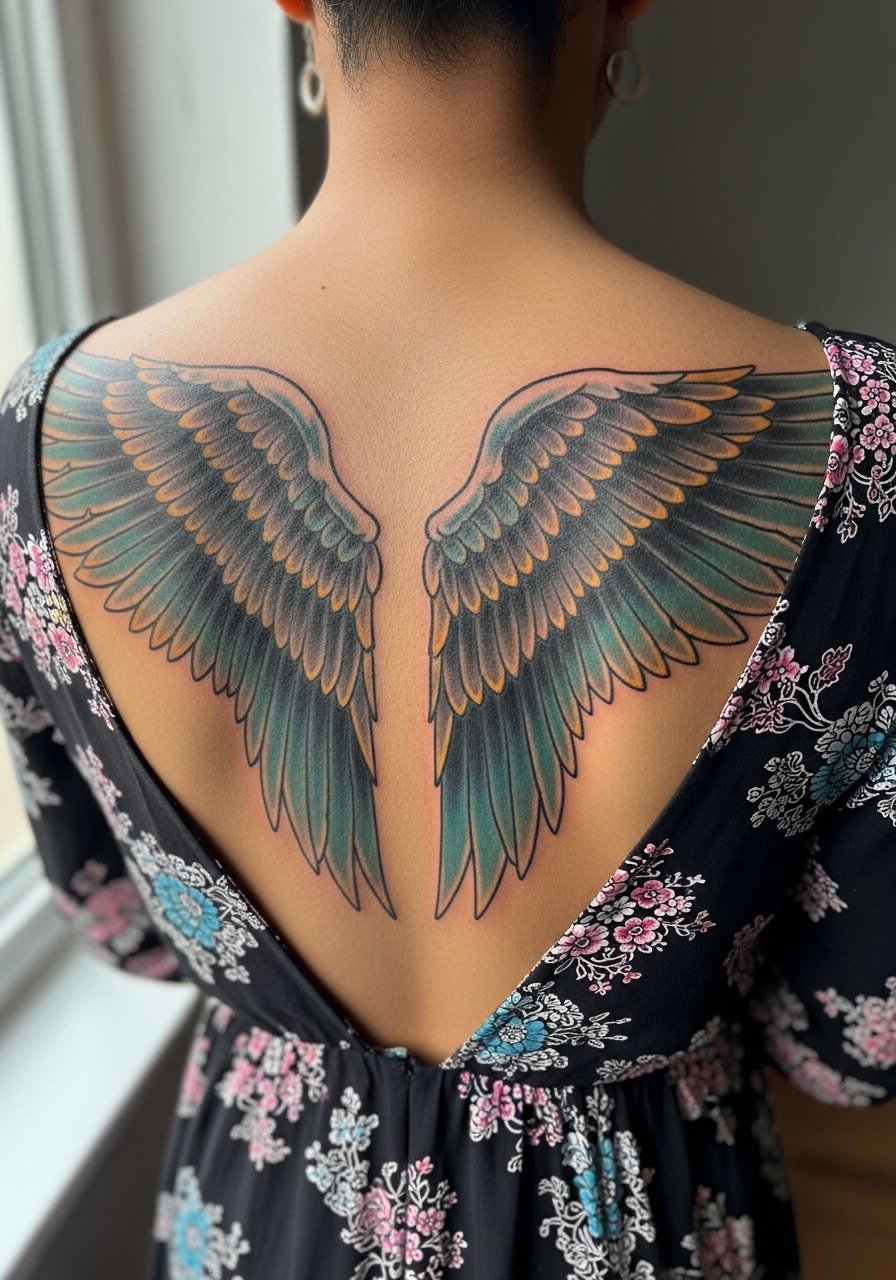
4. Neo-Traditional Wings in Flight Pose Along the Back
There is a lot to gain from the neo-traditional palette if you want bold outlines and saturated color that still photographs well. This version places wings from shoulders down toward the waist in a dynamic flight pose. Tell your artist you want flat color fills and thick outlines so the piece keeps contrast under gym lights. Expect medium to long sessions with bright pigment touch-ups down the road. For evening looks, an open back dress keeps the color range visible without pattern interference.
5. Blackwork Geometric Wings on the Shoulder Blades
Collectors who want modern edge pick blackwork geometrics that sit compactly on each shoulder blade. The optical effects depend on crisp negative space and solid fills. When you book, bring examples that show confident solid blacks rather than textured fills so the shapes stay bold at two years. Pain is low to moderate and sessions are short. Pair with a delicate chain necklace or wear an off-shoulder top to frame the shoulder blades without overlapping the geometry.
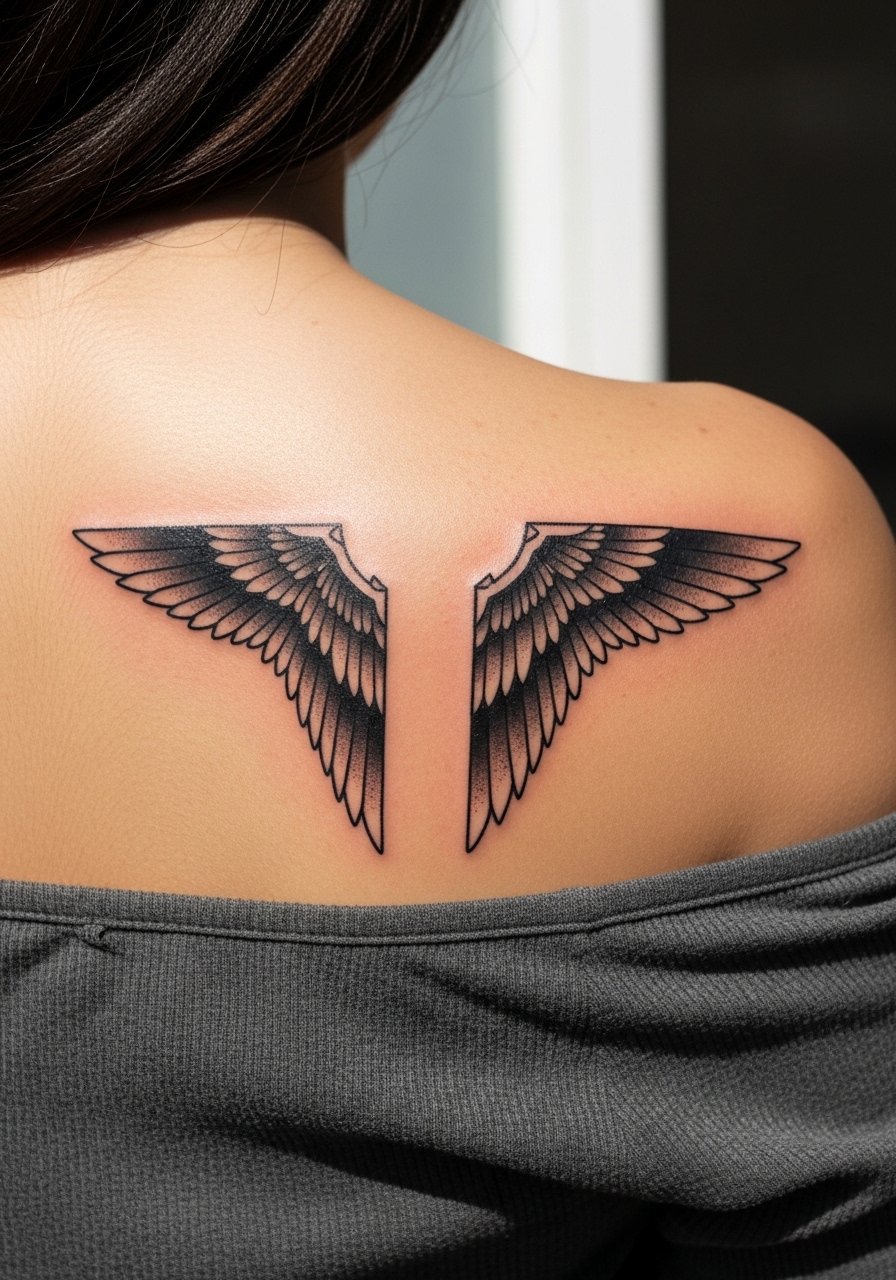
6. Watercolor Wings with Soft Gradient Across the Mid-Back
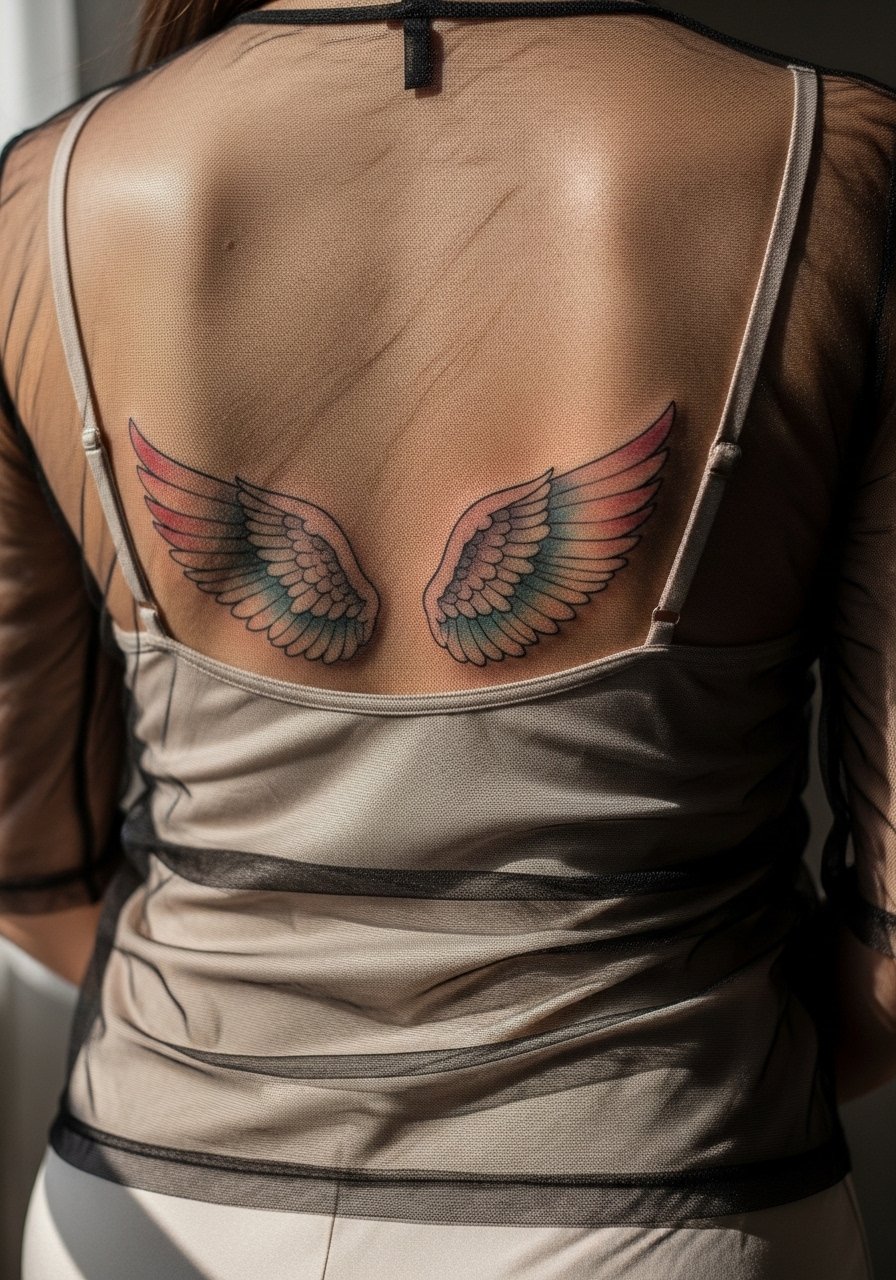
Watercolor wings give a painterly, atmospheric look but they have trade-offs on larger back canvases. The color fades faster where sweat and friction are frequent, so ask your artist for a darker anchor line in the feather base to protect definition. Expect longer sit times and a color refresh at two to three years. For wardrobe that highlights the soft gradients try a sheer mesh top over a neutral slip so the hues catch the light without direct sun exposure.
Heal Smart
The full-back pieces and the upper-back outlines above ask for different prep and first-week supplies, so these five items smooth sessions and the early healing window.
-
Tattoo Goo Indie Balm. A thinner balm option that many folks prefer during overnight healing on the back because it breathes more than thick ointments.
-
H2Ocean Tattoo Aftercare Spray. Useful for mid-back and shoulder-blade work when reaching the area for creams is awkward, because a spritz keeps it clean without heavy contact.
-
Tea Tree Salve for Skin. A small tub helps with itch control on large blackwork wings where scratching could damage linework.
-
Nipple Butter Balm. A gentle, low-shine option some people repurpose at night on edges that rub against clothing, particularly helpful with lower-back pieces.
-
Second Skin Tattoo Bandage. For the early hours after a long full-back session it seals without shifting, which is handy for sweat-prone areas and multi-hour sittings.
7. Traditional Bold Wings with Scrollwork on the Full Back
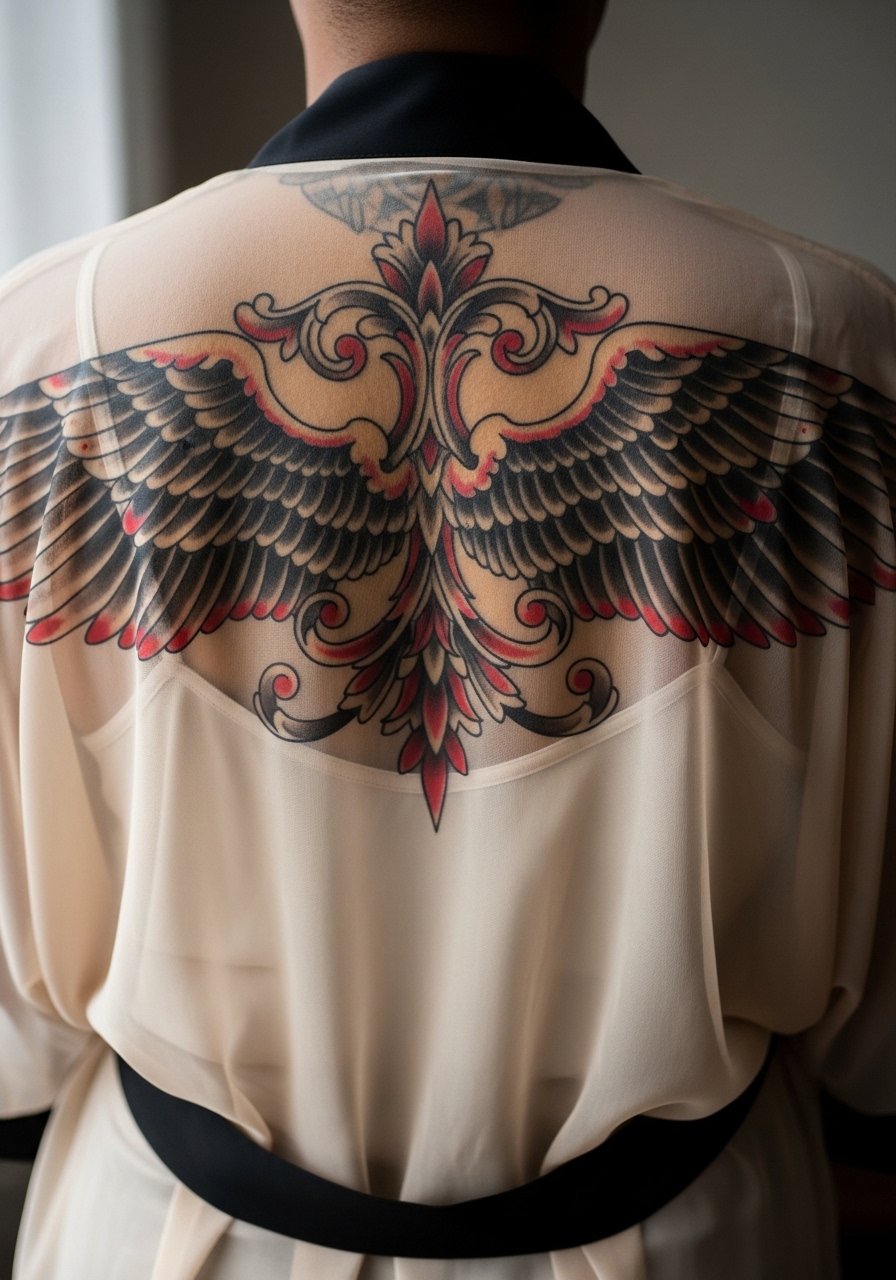
If you want a vintage tattoo energy, classic black outlines with red accents and scrollwork age into a readable backpiece. The trick is to keep the scrollwork slightly open so dense ornament does not compress over time. Tell the artist to avoid ultra-tight script gaps inside scrolls or the letters will blur at year three. Expect several long sessions and a steady hydration routine during weeks two to four. For showing off pair the silhouette with a sheer kimono jacket layered over a neutral slip so the outlines remain the focal point.
8. Fine Line Haloed Wings at the Nape
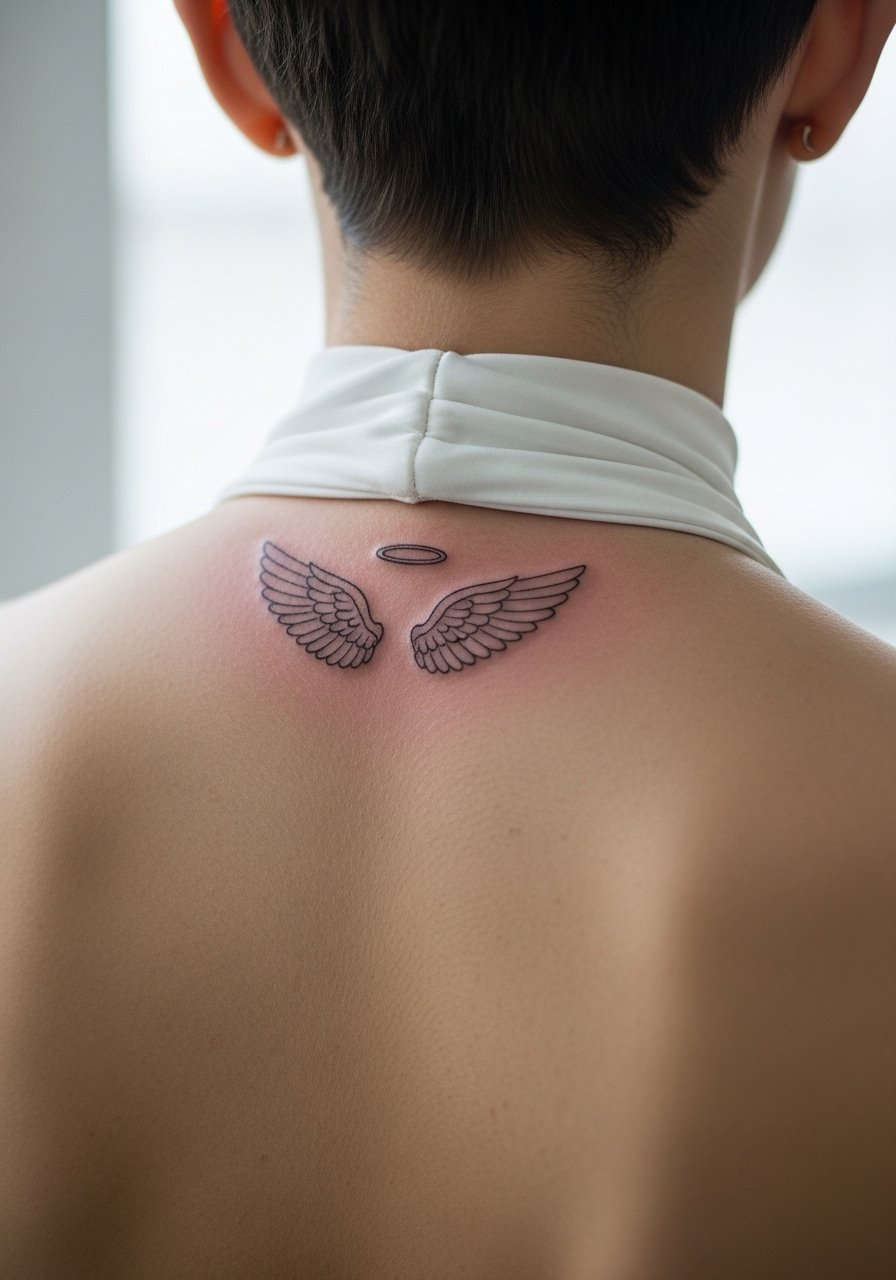
Fine line wings with a small halo near the nape read intimate and subtle, but on darker skin and oily neck areas they can soften quickly. The debate about fine line longevity shows two camps. One camp argues that single-needle work needs touch-ups sooner, while the other says proper depth and spacing make it last. Ask where the artist sits on that before booking. Session is brief and tolerable. For visibility try a high neck halter or an updo so the nape is framed.
9. Ignorant Style Abstract Wings on the Lower Back
Ignorant style gives hand-drawn personality with thick uneven strokes and playful energy. Lower back sits can look raw and immediate, but be mindful of the waistline and how garments will press across the design. A common mistake is going too symmetrical when the charm of ignorant is asymmetry. Ask for intentional unevenness in the transfer. For styling pick a low rise jeans women look and layer a gold body chain if you want the lower-back peek to read as deliberate.
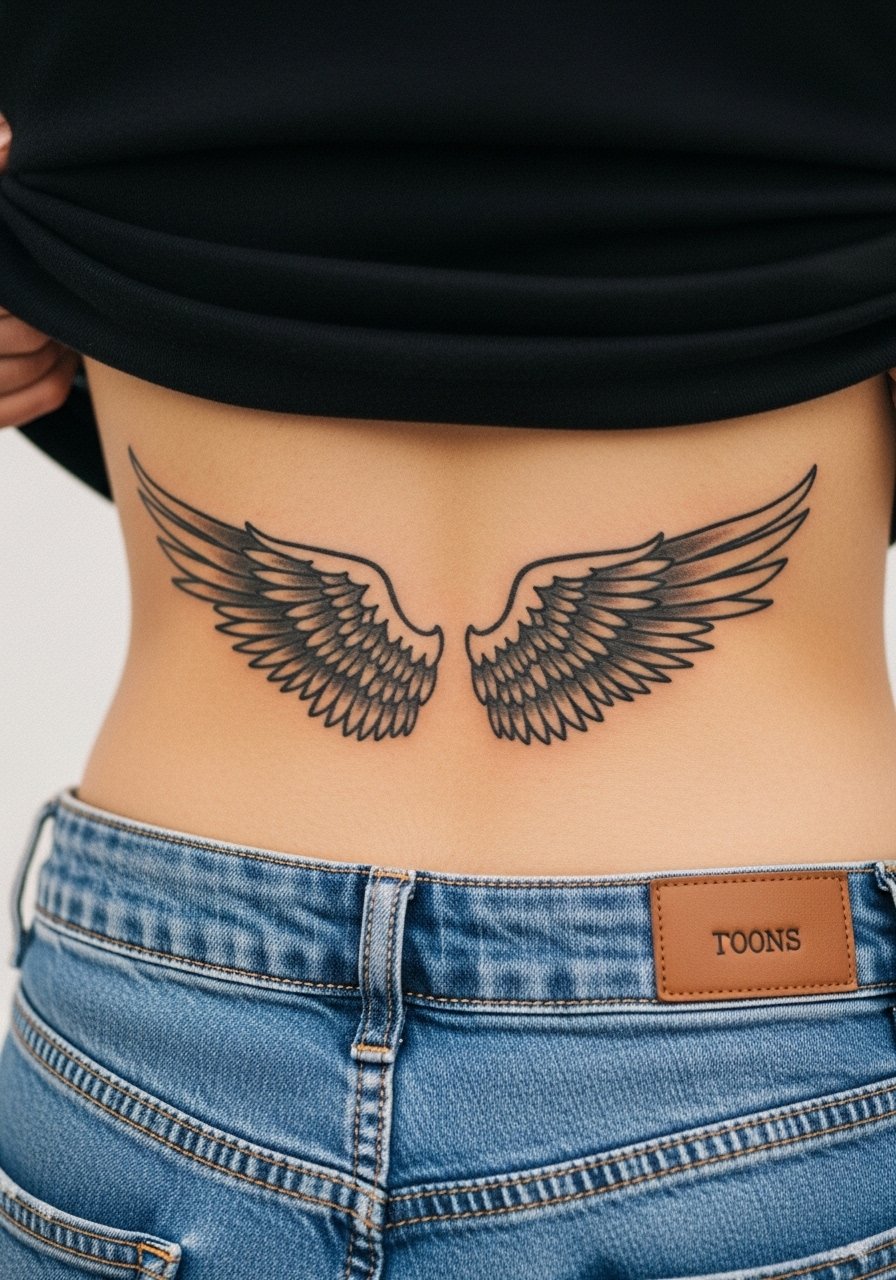
10. Micro-Realism Single Wing on One Shoulder Blade
This asymmetrical micro-realism wing is a strong choice when you want a guardian symbol without committing to a full back. It holds detail well because the surface is smaller and easier to protect, and touch-ups are usually minor. During consultation request full tonal range in the shadowed feather tips so the wing reads three-dimensional after healing. Session time is moderate with careful shading. Pair it with a one shoulder top that showcases the single wing without straps covering it.
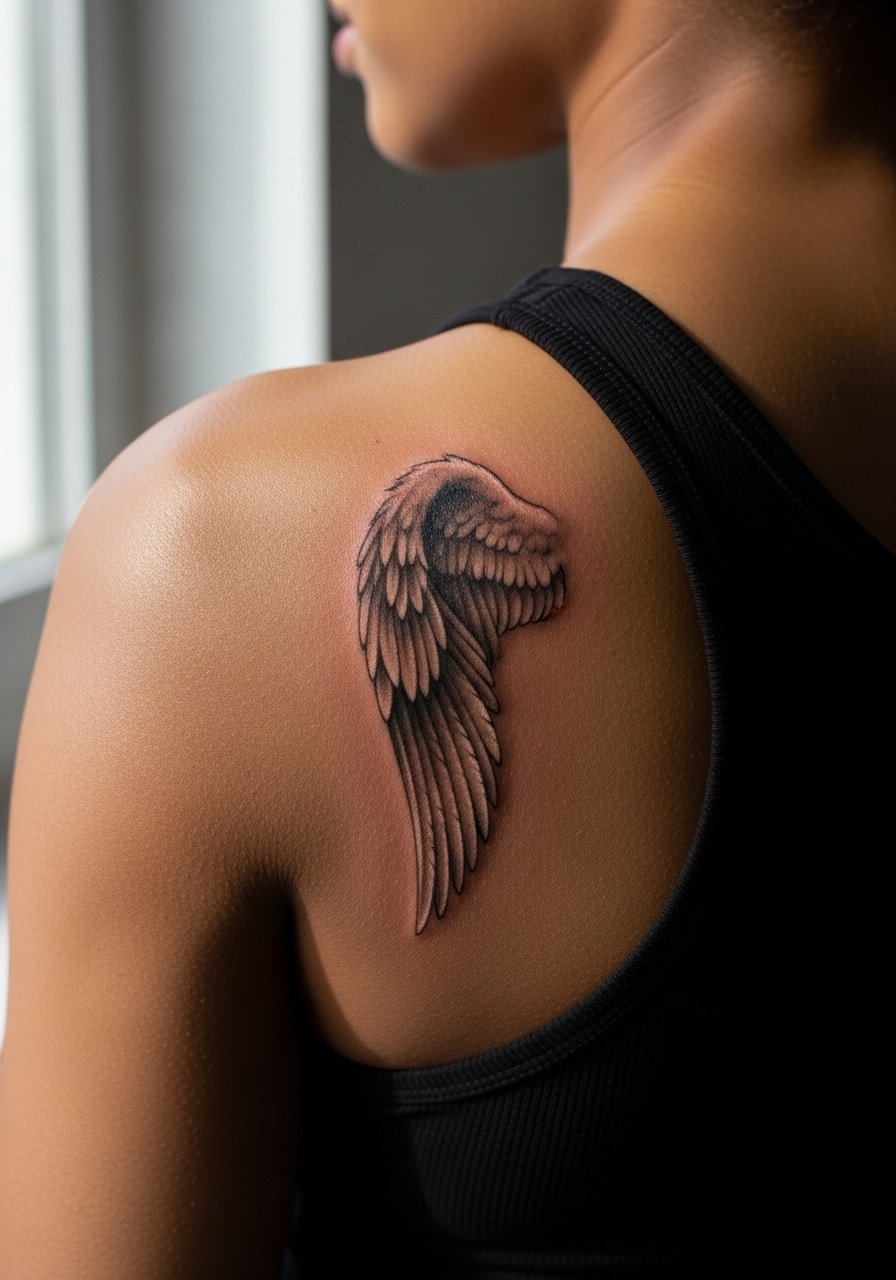
11. Asymmetrical Fallen-Wing Narrative on Upper Back
An intentional single, tattered wing across the upper back tells a "fallen angel" story with emotional weight. It reads differently than a mirrored pair because it invites viewers to follow the spine with their eye. During consult explain which feathers you want distressed so the artist can place thicker shading where you want permanence. Watch for blowout risk near the scapula curve on very thin skin. For session day wear a loose short sleeve shirt you can slide aside to keep the area sterile.
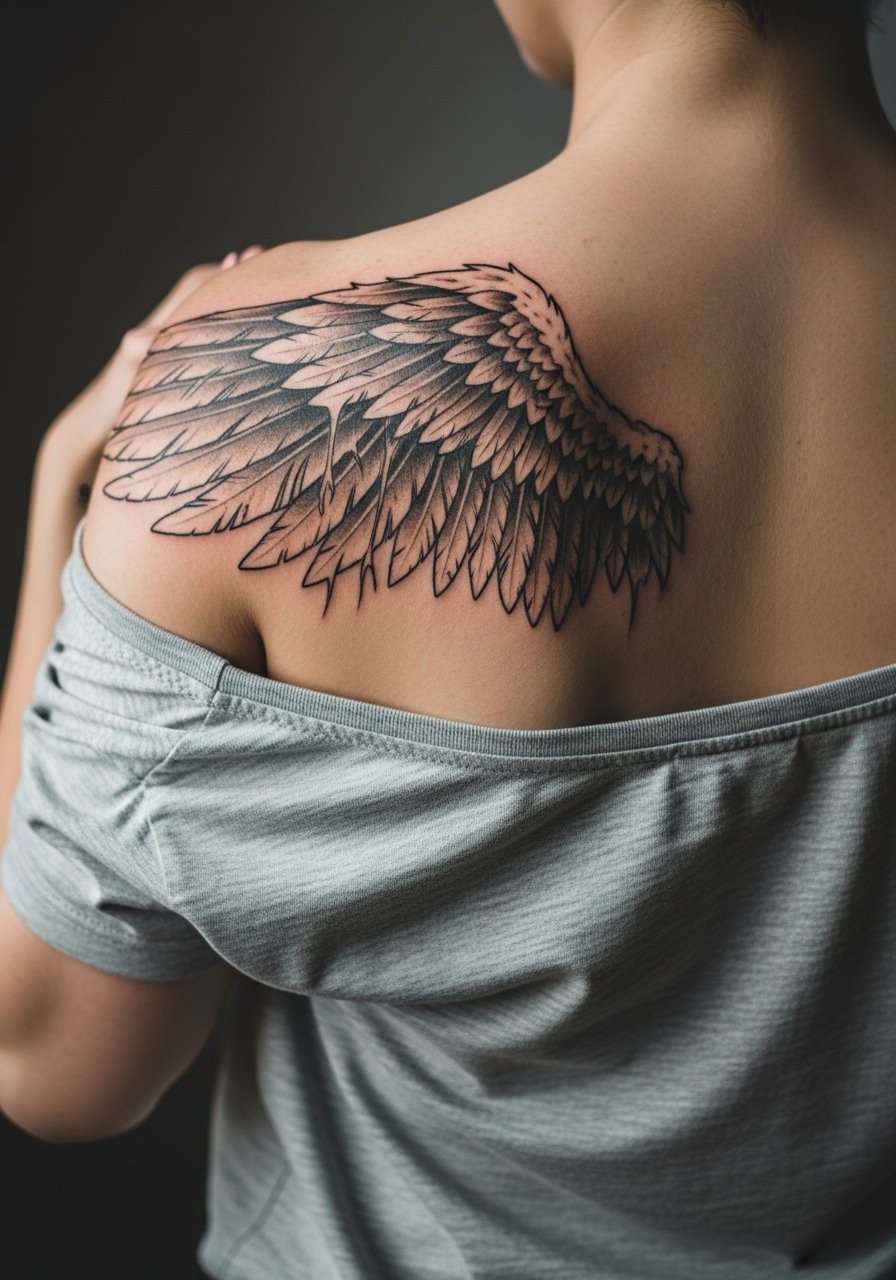
12. Wings Integrated with Spine Script for a Hidden Guardian Effect
Pairing wings with a vertical spine script creates a discreet guardian motif that reads both as art and as message. When planning this, test font size directly on the spine so the letters remain legible as the skin shifts. The common mistake is text that is too small or too ornate. Book at least one mockup session so the artist can confirm spacing. For evenings consider an open back dress that frames the central line without patterns crowding it.
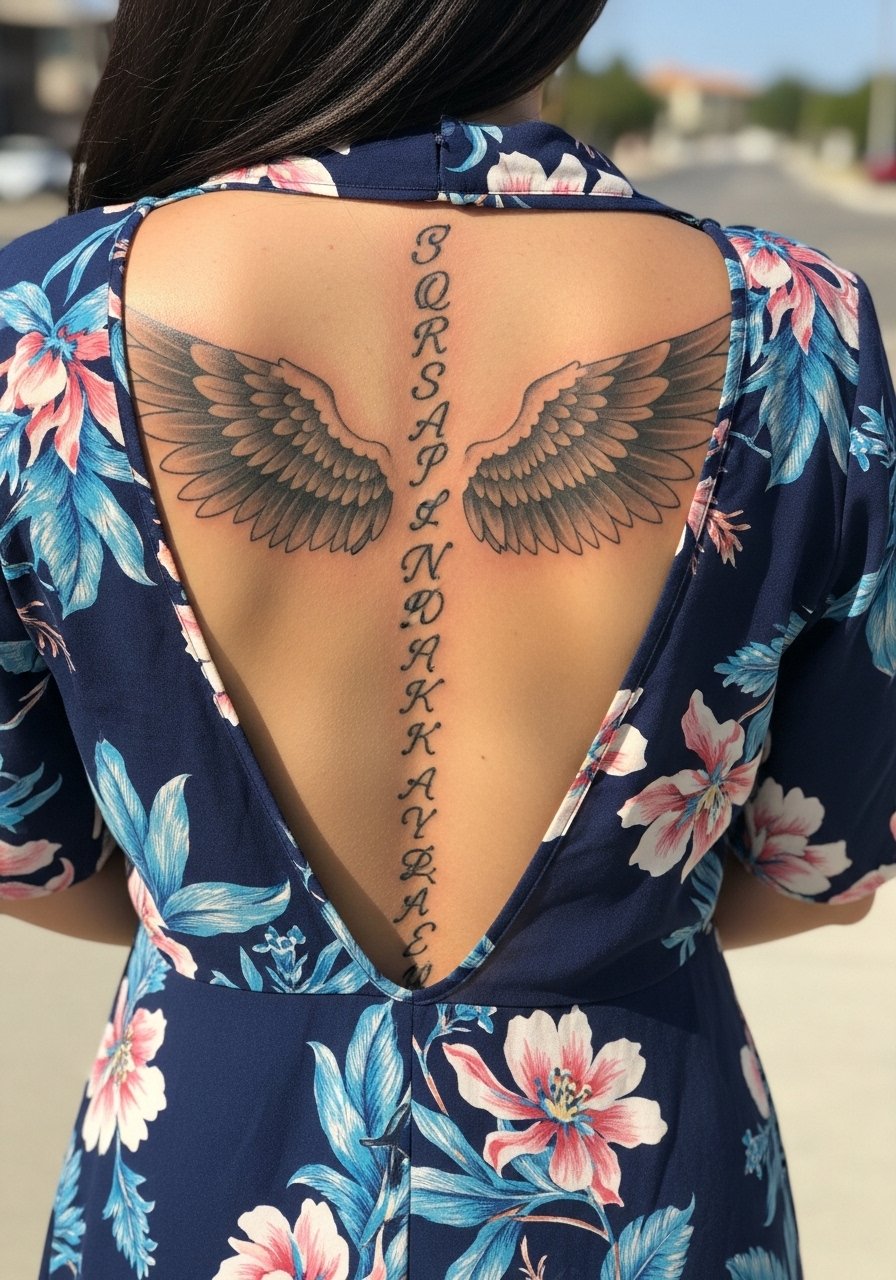
13. UV-Reactive Wings for Nightlife Flair
UV-reactive inks create a low-light glow that is striking at clubs and events. They are rare and not every studio offers them, and there is a longevity trade-off to discuss with your artist. The safety conversation is important because UV pigments behave differently under sun exposure and might need more frequent refreshes. If you plan to show the glow, ask about healed photos under blacklight before you commit. For session wear keep it simple so the artist can test small patches under a UV lamp.
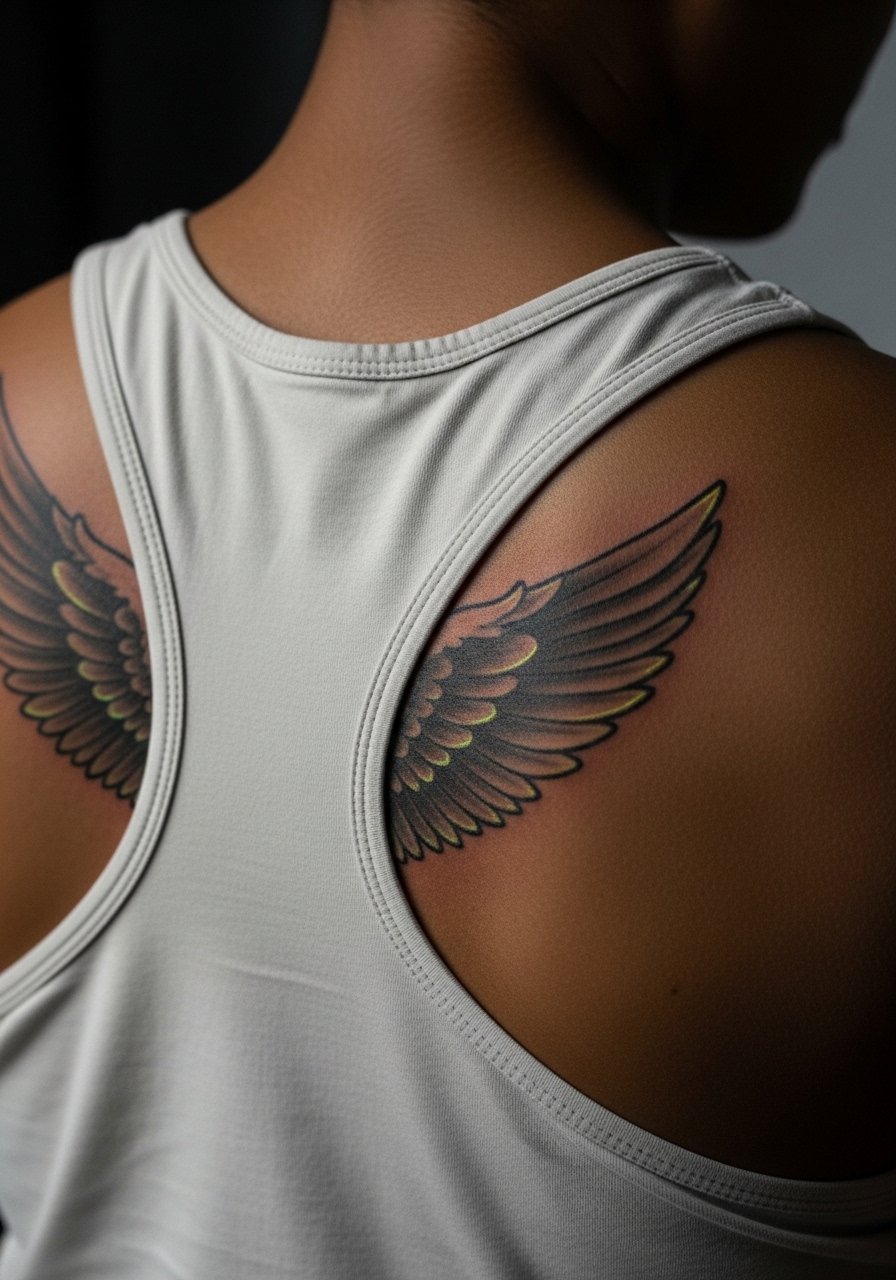
14. Geometric Wing Panels Fanning Along the Spine
Stacked geometric panels that mimic feather structure along the spine read architectural and modern. The main consultation line is about spacing. Geometric work needs breathing room so lines do not merge over time. Tell the artist to leave micro-gaps within dense patterns and to favor stipple shading over packed blacks in tight zones. This placement is moderate on pain and looks elegant with an open back dress or a front open robe for sessions that require easy dressing.
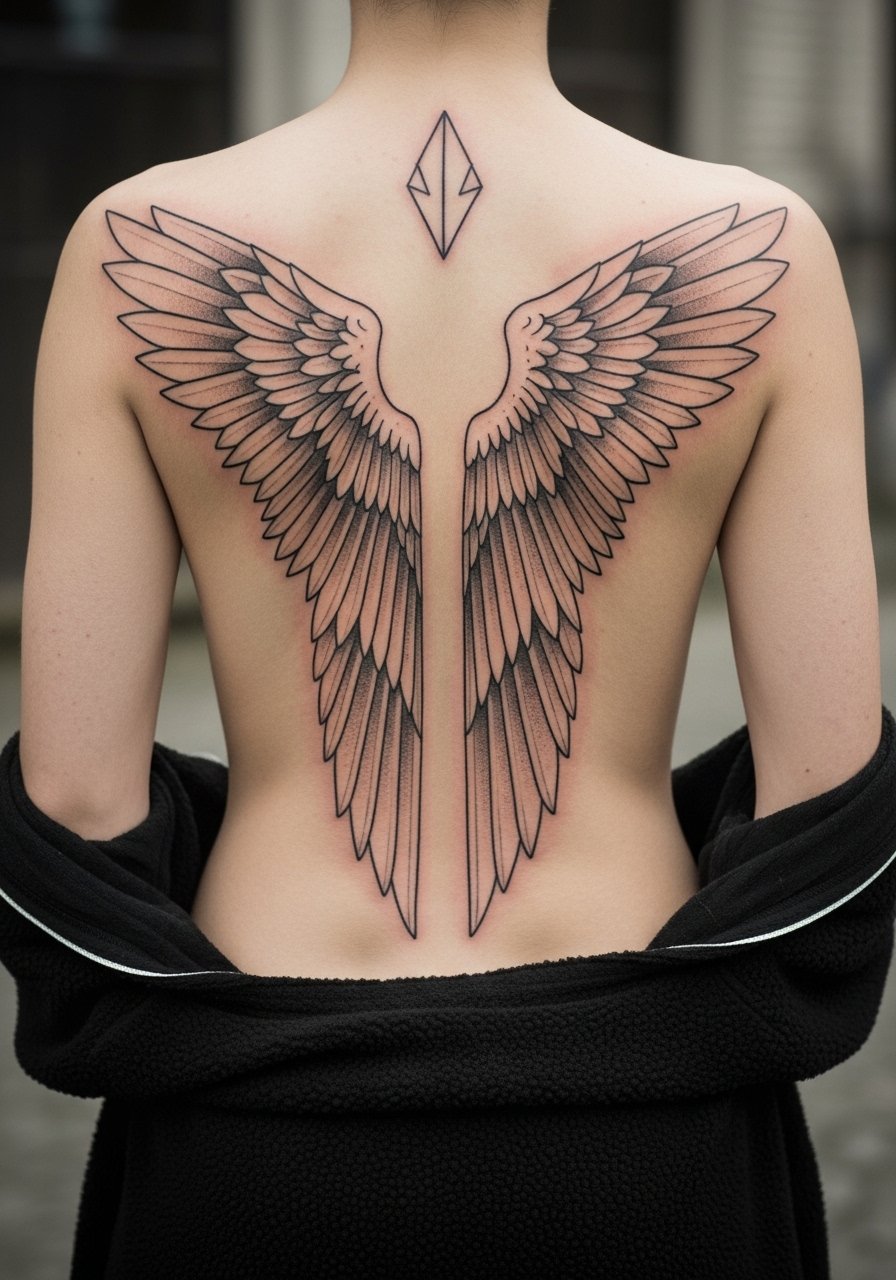
15. Lower-Back Ornamental Blackwork with Lace Motifs
An ornate lace-inspired blackwork wing that dips toward the lower back looks intentional when placed above the waistline. The aging issue to watch is stretch from weight fluctuation, so place the lowest elements higher than the beltline. Ask for a clear top boundary in the stencil so the piece does not creep downward visually. Session wear should be elastic-free pants you can pull slightly low, and for nights out a gold body chain belt accents the lower curve.
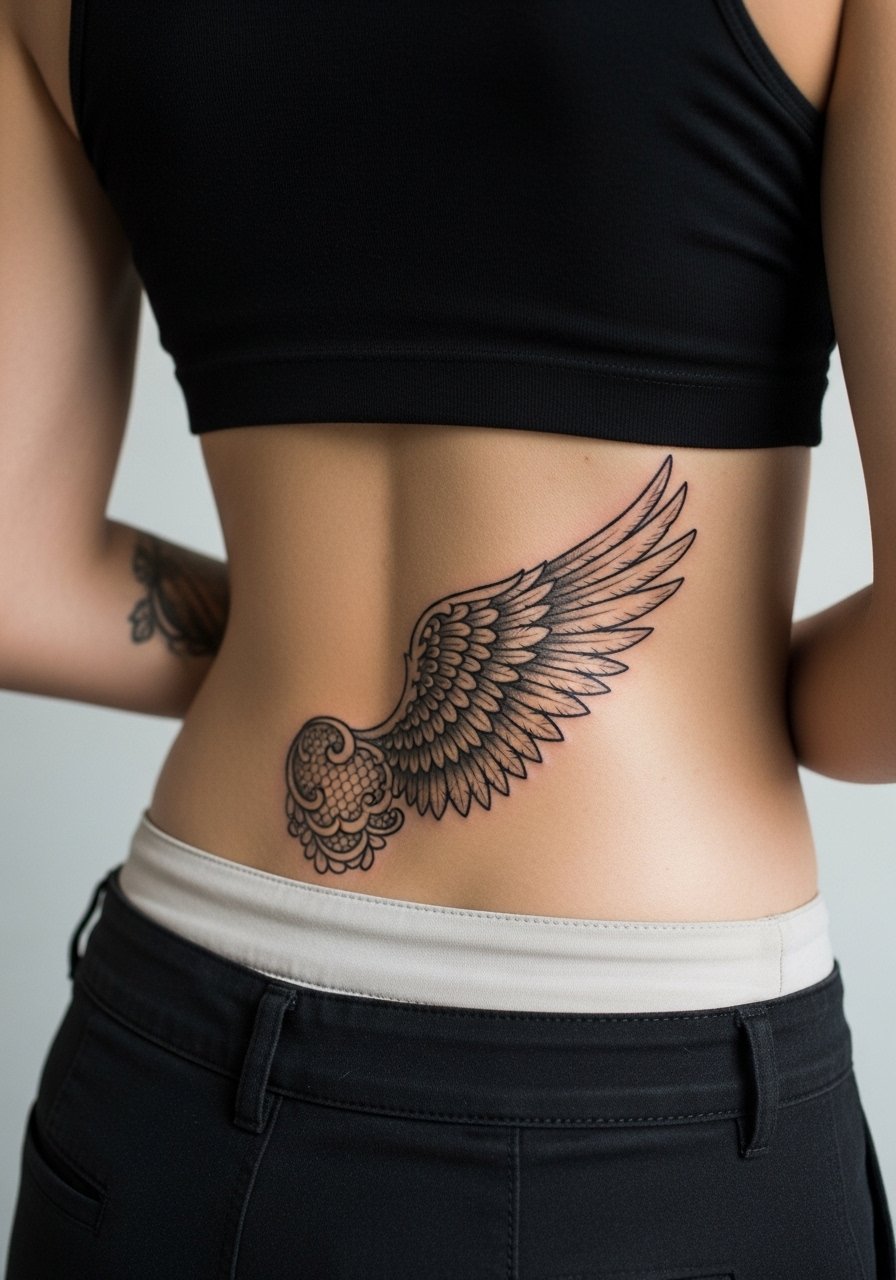
16. Single Feather Wing That Trails from Mid-Back to Side Torso
A trailing single-feather composition that curves from the mid-back toward the side torso reads graceful and holds up because of negative space. The visual impact comes from tapering saturation and feather barbs that thin gradually. A common mistake is making the feather too narrow at the tip, which can vanish with time. For sessions wear a cropped top you can lift or a front-open robe for quick access.
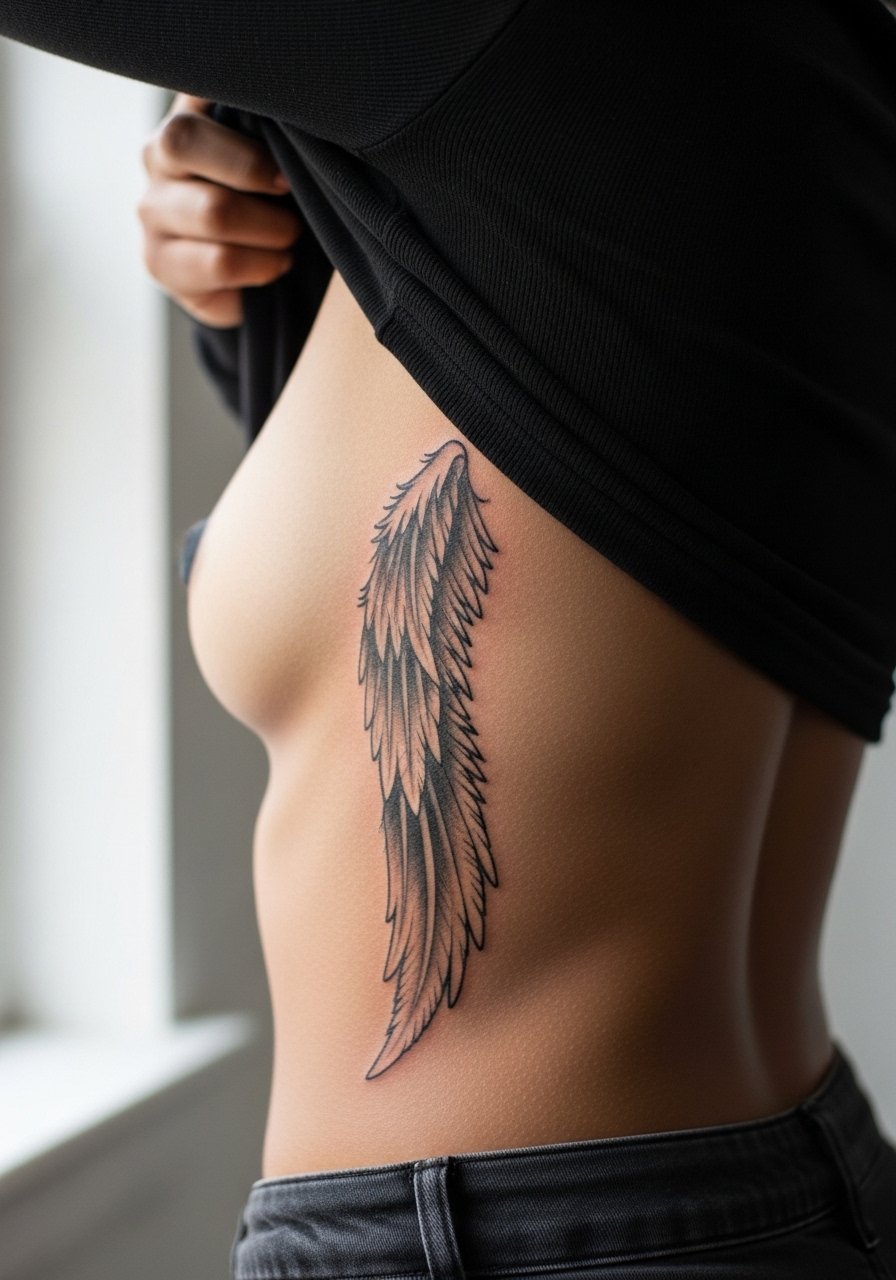
17. Bold Black Feather Wings with Subtle Spine Highlight
If your back sees a lot of photo angles, bold black feather wings with a thin spine highlight maintain depth in photos and real life. I favor a subtle central highlight to separate halves and prevent flattening in pictures. The session is heavier on saturation but ages into strong definition if healed properly. During booking ask about dry healing versus protective film for the first 72 hours because the debate splits artists into two camps. One camp prefers protective film for sweat zones, and the other swears by a dry method for realism. Choose the approach you are comfortable with and confirm the studio’s protocol.
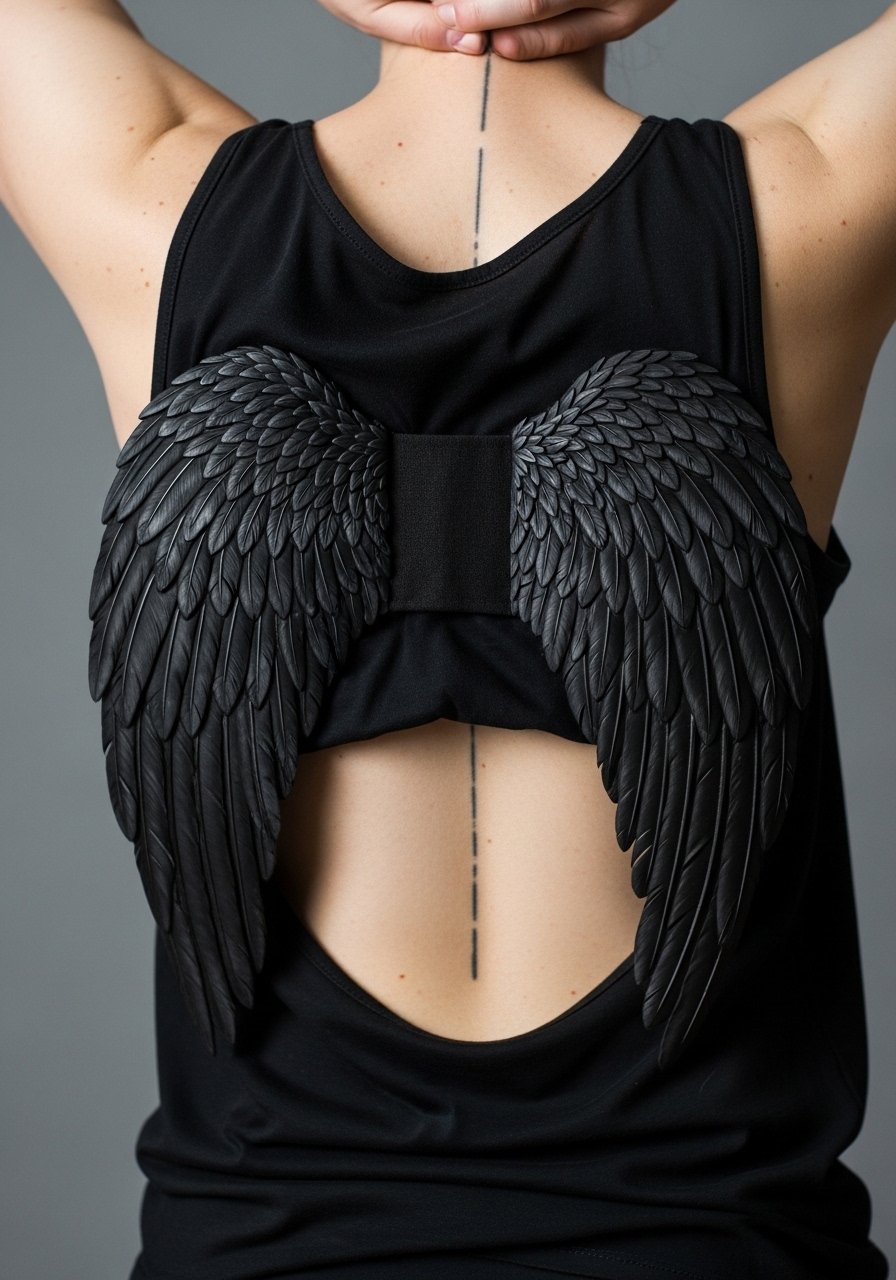
18. Tiny Mirrored Wings Just Below the Shoulder Blades
Small mirrored wings are a beginner-friendly option that still feels intentional when centered just below the shoulder blades. They work if you want future expansion because they act like anchors for larger builds. The usual mistake is making them too small for the area. I recommend slightly larger dimensions than you think and a clear plan for expansion. For session comfort wear a strapless bralette or a loose tank and plan on a touch-up within two years if you have oily skin.
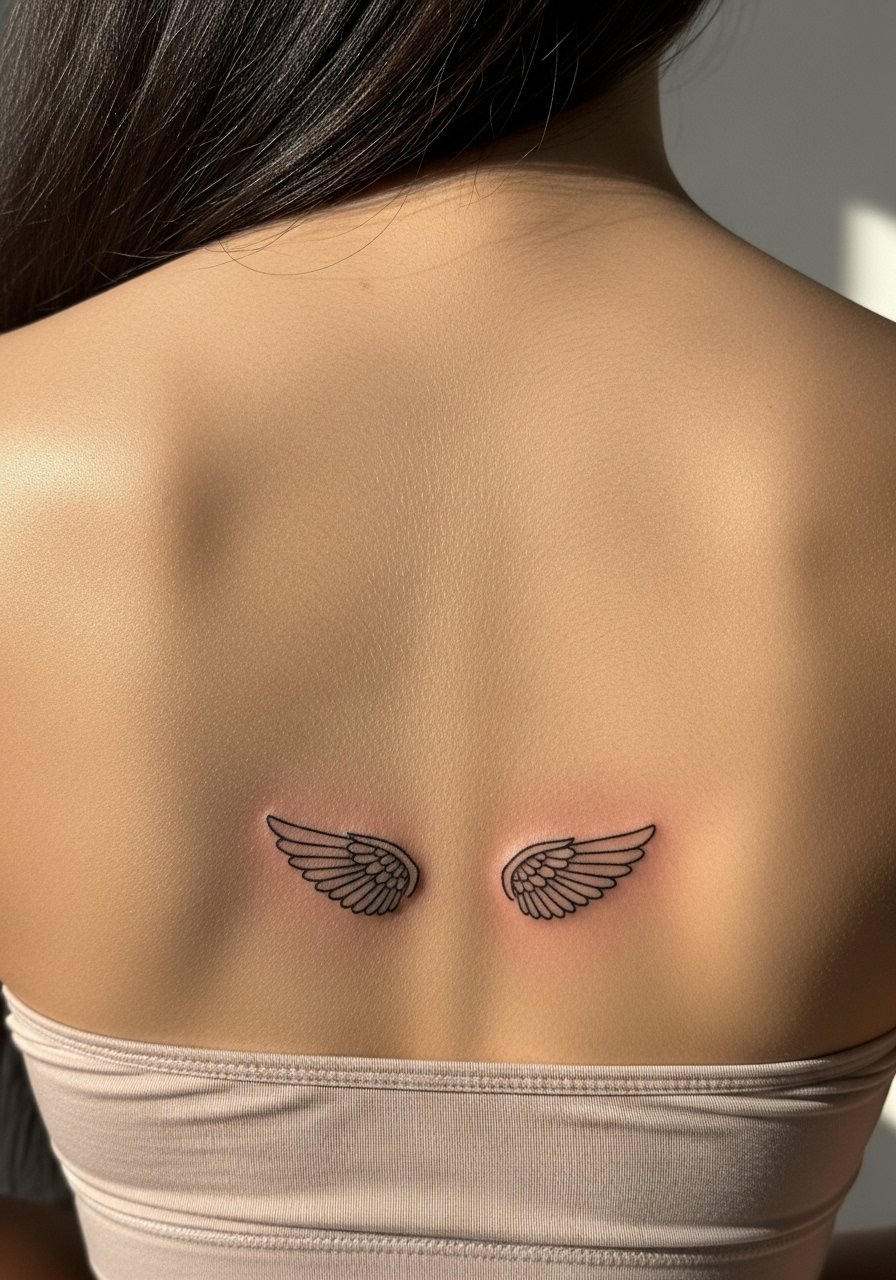
19. Feathered Wings with Negative Space Highlights for Darker Tones
For darker skin tones bold negative space highlights can create contrast without relying on color. Ask the artist to use larger separated shapes in the highlight areas so the contrast survives at two and five years. The session will focus on blocking and negative cuts rather than thin hairline strokes. A common error is over-detailing the highlights, which then vanish. For showing off, clean-lined backs pair well with a backless halter top women that lets the negative space read clearly.
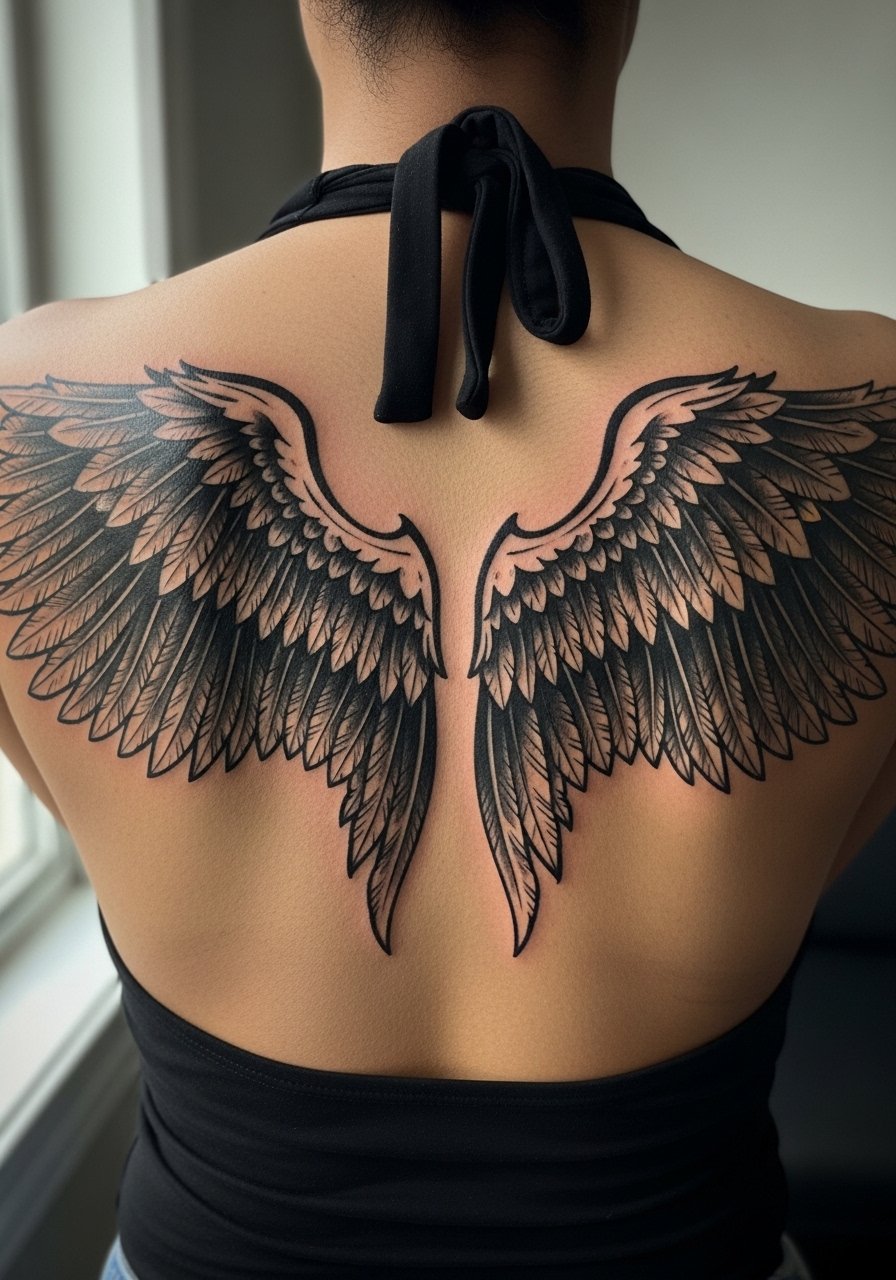
20. Ignorant-Trimmed Wings for a Raw, Hand-Drawn Finish
This hybrid keeps bold ignorant strokes around a more detailed wing core so you get raw edges with anchored realism. It is an under-covered idea that reads like handcrafted graffiti but with structure. Tell your artist you want the central feather anatomy intact and the edges intentionally ragged. Expect moderate pain and an honest session where the artist will switch tools between detailed and bold passes. Pair it with casual session wear such as a loose tank top that allows access without strap interference.
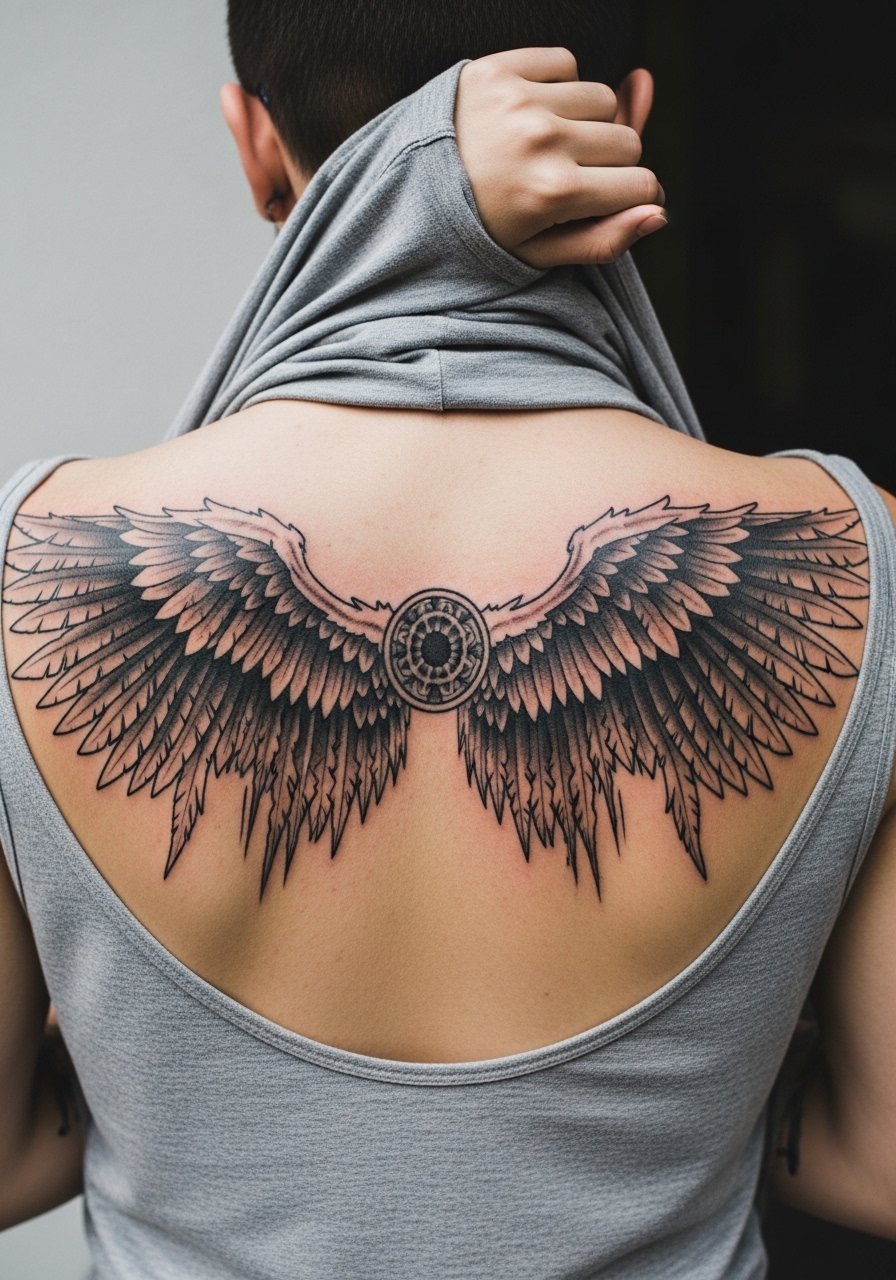
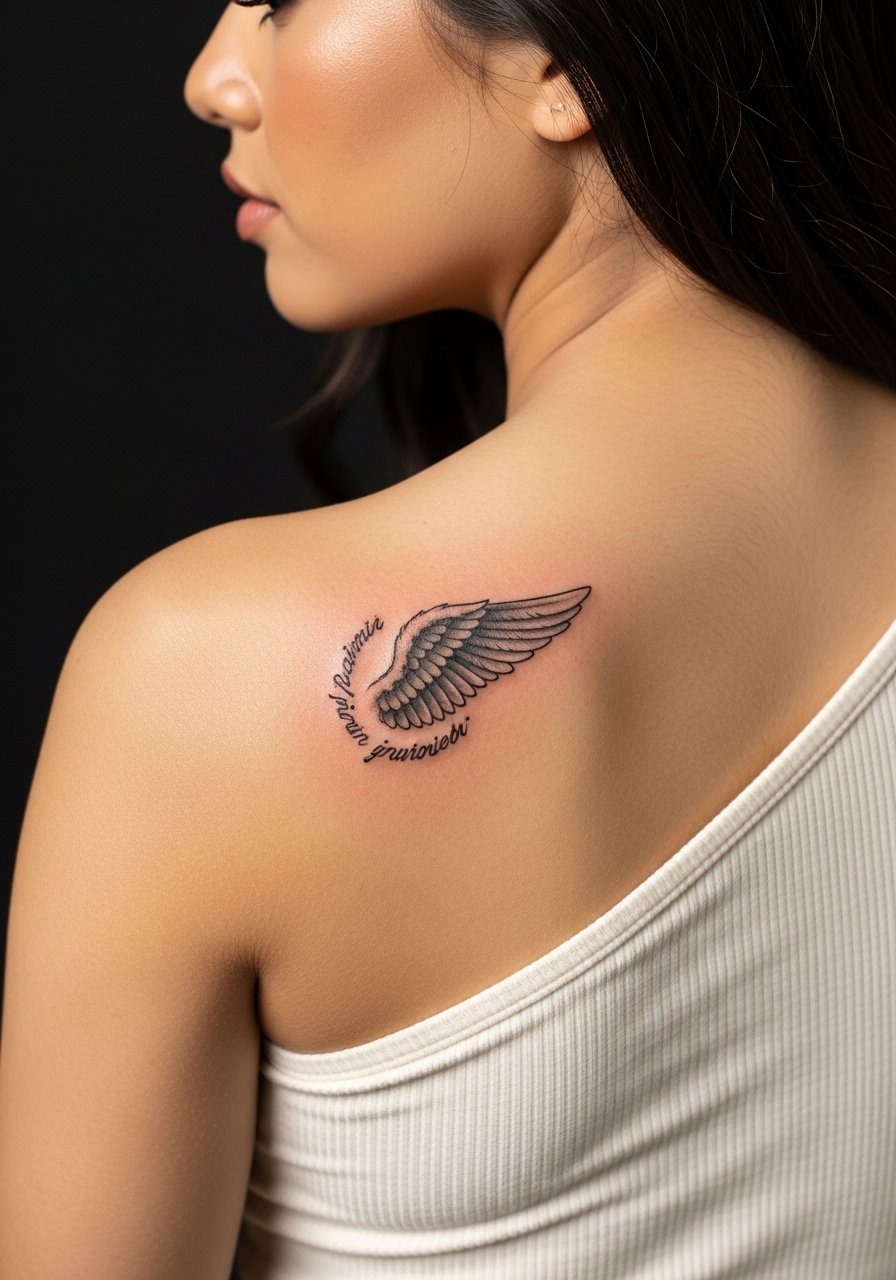
21. Micro-Realism Winglet with Script Edge on the Upper Back
A micro-real winglet bordered by a short script phrase near the shoulder blade feels private but visible. This idea fills the niche for memorial pieces that hide under clothing often yet show in chosen outfits. Test the script size on skin paper at the exact body angle because letters will stretch along the shoulder blade. The common mistake is ornate lettering too small for the area. For show-off wear a one shoulder top so the script sits above the neckline and the winglet reads clearly.
Frequently Asked Questions
Q: Will fine line wings on the upper back really blur faster than bolder wings?
A: It depends on your skin type and placement. Fine line work can soften sooner because the back has areas of movement and variable oiliness. If longevity is a priority ask for slightly heavier line weight and spacing during the consult so the design keeps definition at year two and beyond.
Q: How should I plan sessions for a full-back realistic wing to avoid fatigue and scheduling hassles?
A: Break the full back into clear zones and schedule predictable multi-hour sittings rather than one marathon. Bring a loose button-down to the studio for quick changes and confirm cancellation policies ahead of time so artist reschedules do not cascade into months of delay.
Q: Which healing approach is better for large back pieces, protective film or dry healing?
A: The community is split. One camp prefers protective film for sweat-prone areas and shorter early cleaning time. The other camp favors dry healing for realism to avoid trapped moisture. Ask the studio what they use for full-back realism and follow their post-session protocol consistently.
Q: I have dark skin. Which wing styles read best and age well on me?
A: Bold blackwork wings and negative space detailing tend to hold contrast best on darker tones. Fine single-needle details can vanish faster, so ask an artist experienced with diverse skin for portfolio examples and plan for touch-ups rather than assuming one session is final.
Q: What should I wear to the studio for a mid-back or lower-back wing session to keep the area accessible and clean?
A: Choose elastic-free bottoms that can be shifted slightly and a top you can pull up or a front-open robe for easy access. A front open robe or a loose button-down works well so padding or film can be applied without fabric rubbing the fresh ink.
