
The stencil sat on her collarbone while she checked the neckline of a wide-neck shirt. The first pass over bone felt sharper than expected, and she already planned how to hide the fresh ink at the office. Old faded marks peeked through where the new work needed more coverage. Keep pieces under three inches when possible, plan for at least 50 percent overlap on old ink, and the first idea shows a collarbone-friendly coverup that reads clean fast.
1. Floral Mandala Coverup on Collarbone
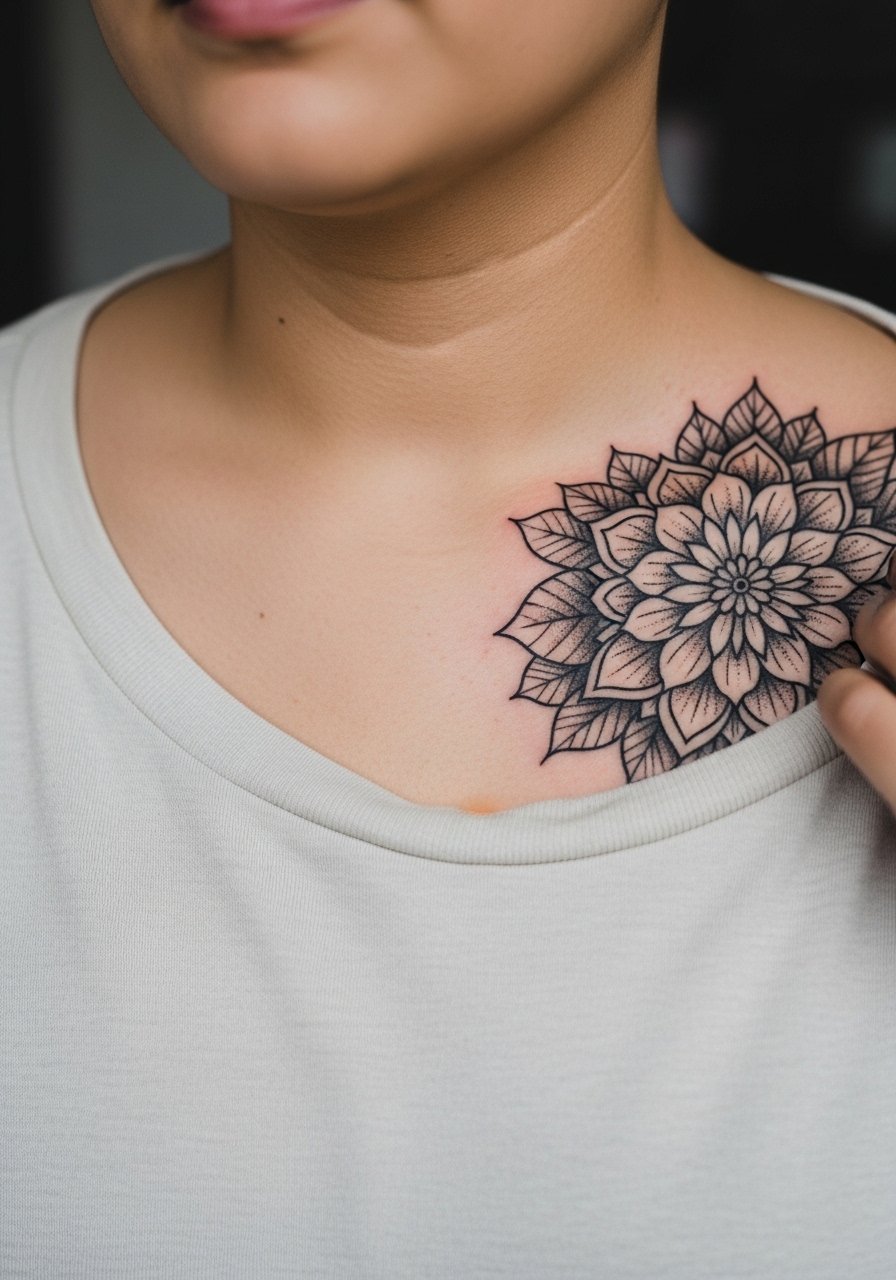
A mandala built from petals and dot work is excellent for reworking old script or blurred outlines because the dense pattern distracts and absorbs previous ink. Tell your artist you want at least 50 percent overlap over the old piece and request stipple shading instead of heavy saturation where the bone is thin. Expect a 60 to 90-minute session for a 3-inch piece and one touch-up in year one if any old ink ghosts through. For showing it off, pair this with an off shoulder blouse women that frames the mandala without covering the curve.
2. Fine Line Butterfly Wings Arching Collarbone
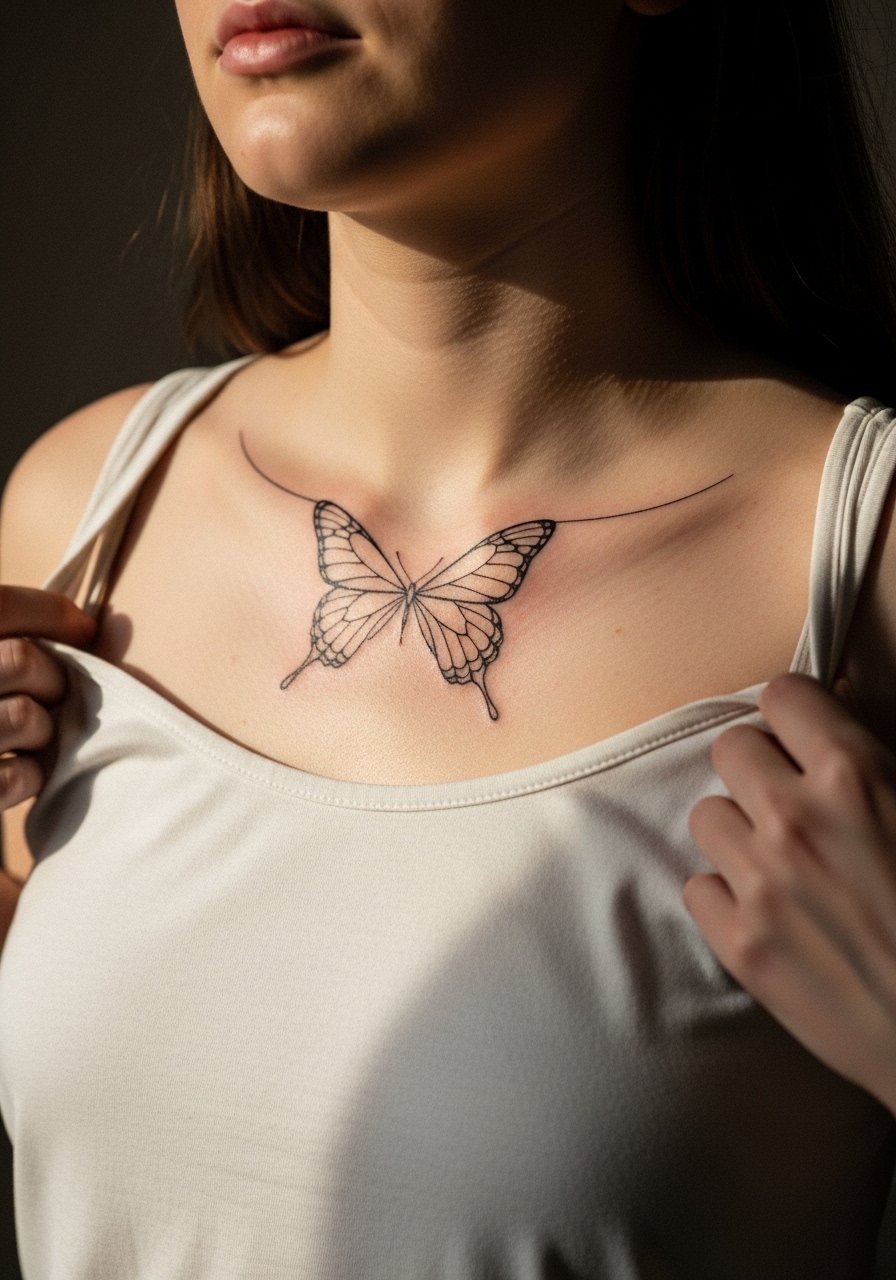
Fine single-needle wings are a go-to for masking small dots and faded stars. Artists split on this approach. One camp warns that fine line over bone blurs faster and needs touch-ups by year two. The other camp says careful depth and spacing lets fine line settle nicely. When you consult, ask where the artist stands and to demonstrate healed examples. Session time is usually under an hour for a three-inch span and the pain is sharper than soft flesh because the collarbone sits close to bone. Wear a loose v neck tank for the appointment so the artist has clear access.
3. Neo-Traditional Rose Cluster Over Collarbone Script
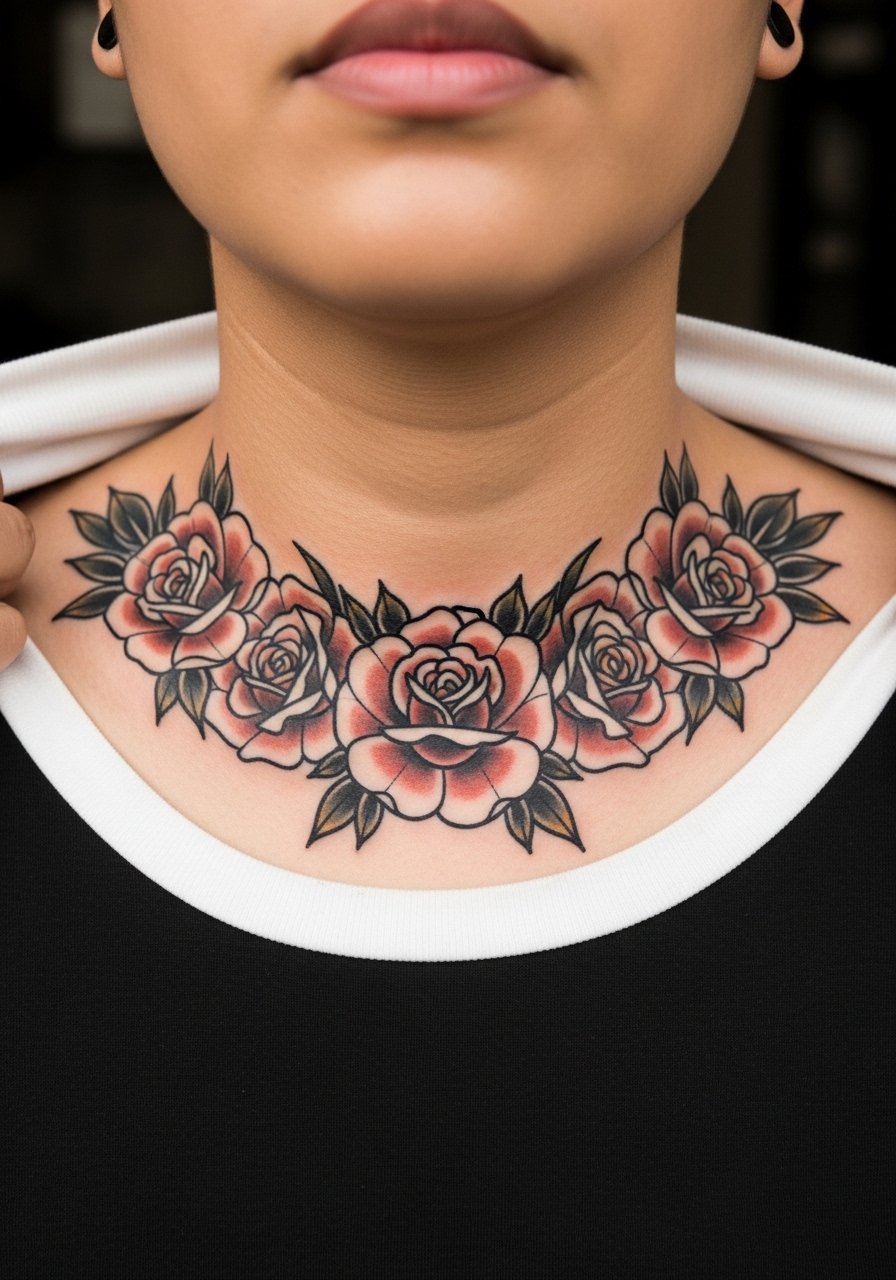
A cluster of neo-traditional roses hides dated script with bold petals and selective color. Ask for darker base linework where the old letters run, and ask your artist to incorporate the existing strokes as shadowed veins if possible. This design usually takes two sessions and feels tougher near the bone because artists need to saturate pigment to cover legs of old ink. Common mistakes are going too small or using pastel fills that fade into the old lines. For evenings out, a strapless top women keeps the focus on the clavicle sweep and complements the color work.
4. Minimalist Crescent Moon and Stars Draping Collarbone
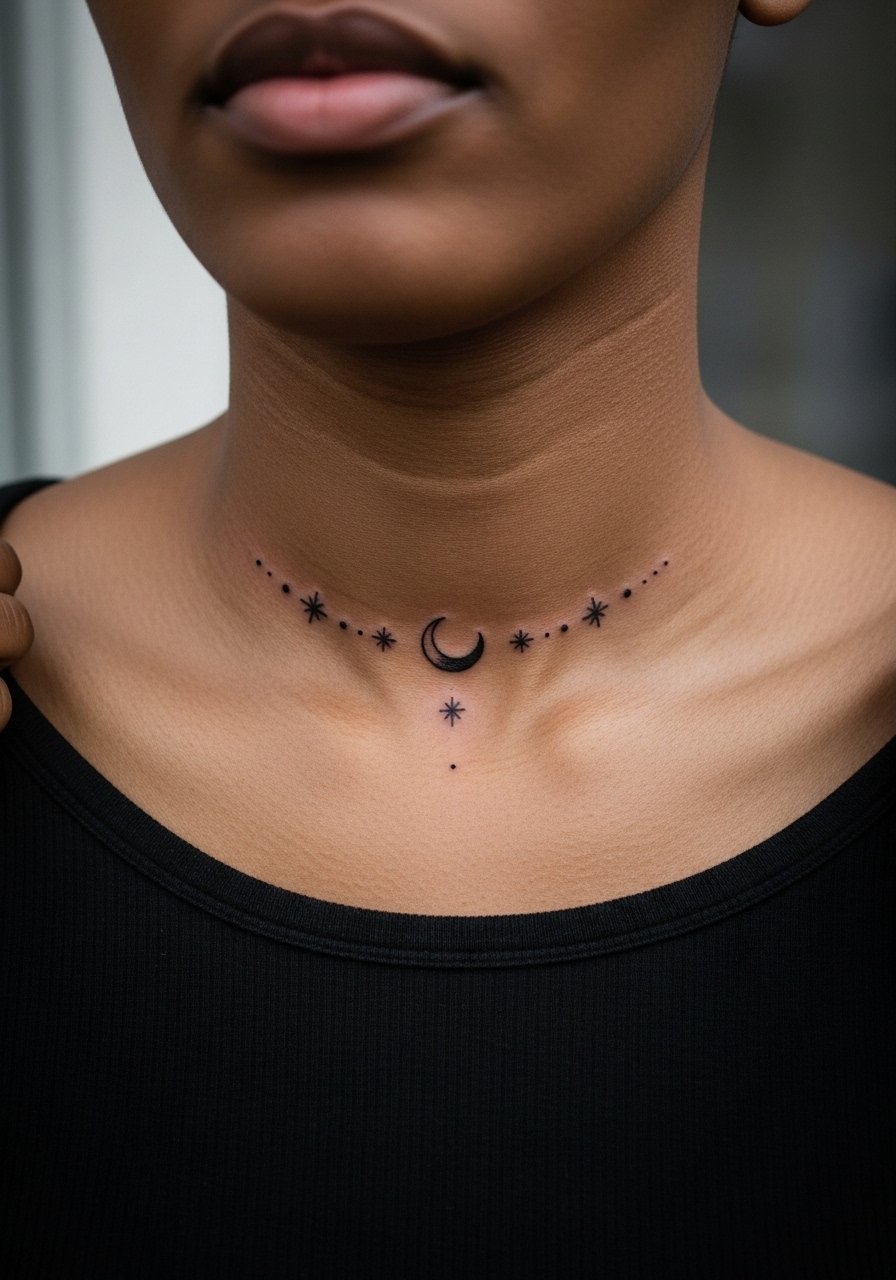
This compact arrangement excels at covering tiny dots or thin script because negative space creates clean separation rather than heavy cover. Tell the artist to keep the main moon at least two to three inches across so the stars do not crowd the linework. The pain is manageable for most, but expect sharper twinges directly over bone. Aging looks like softening by year three in sun-exposed cases, so plan for a light touch-up if you want crisp tiny stars long term. For the session, a loose button-down shirt you can pull aside gives the artist good access without irritating healing skin.
5. Watercolor Floral Spray Blending Collarbone Edge
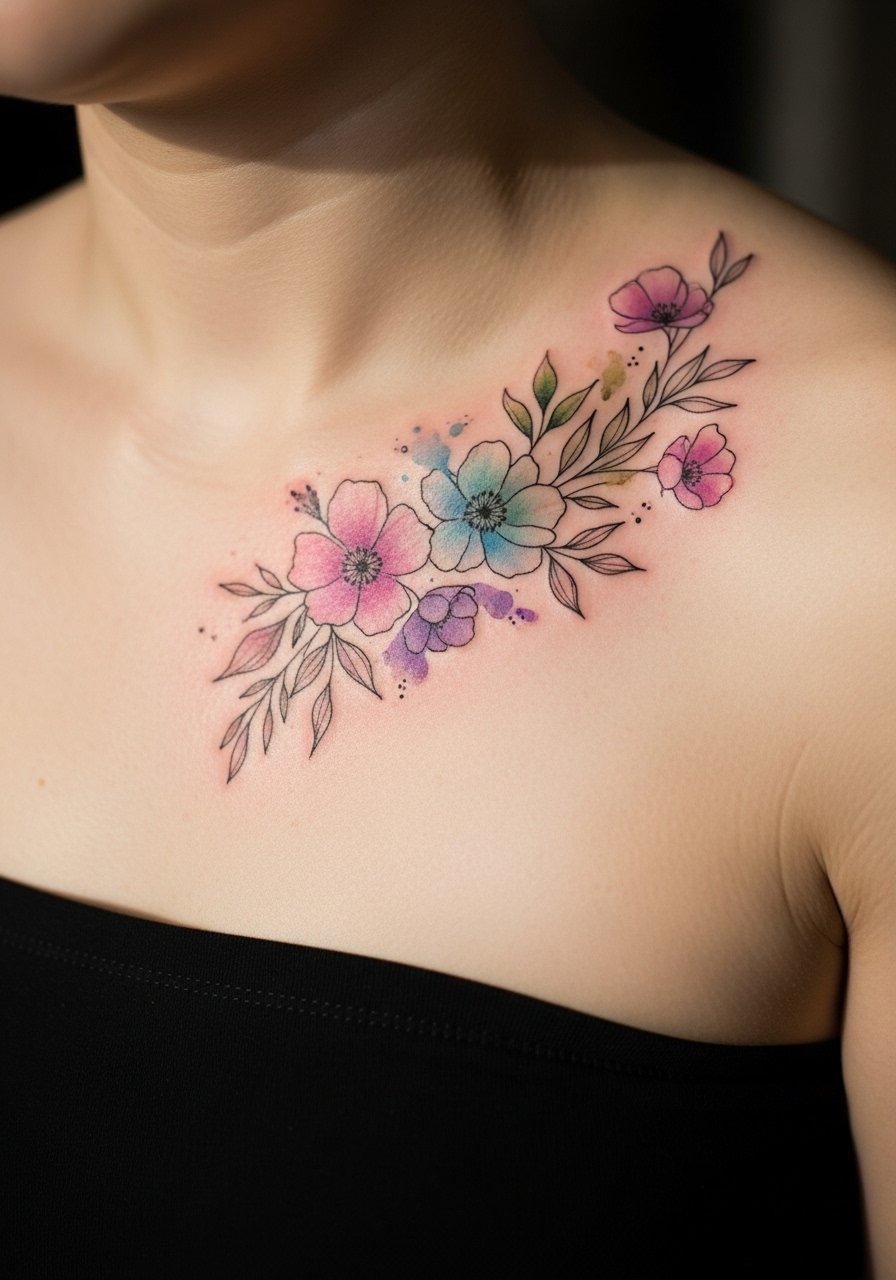
Watercolor sprays are ideal for softening harsh old outlines because the diffuse color draws attention away from specific shapes. Request that the artist use darker anchor points near the old lines so the faded ink does not show through translucent washes. These pieces typically need two sessions and a careful color plan to avoid blotchy healing on thin skin. A common mistake is over-saturating pastels next to darker old ink. Wear a strapless top women for the photo moments, and choose session clothes that do not rub the shoulder during healing.
6. Blackwork Geometric Frame Around Collarbone Tattoo
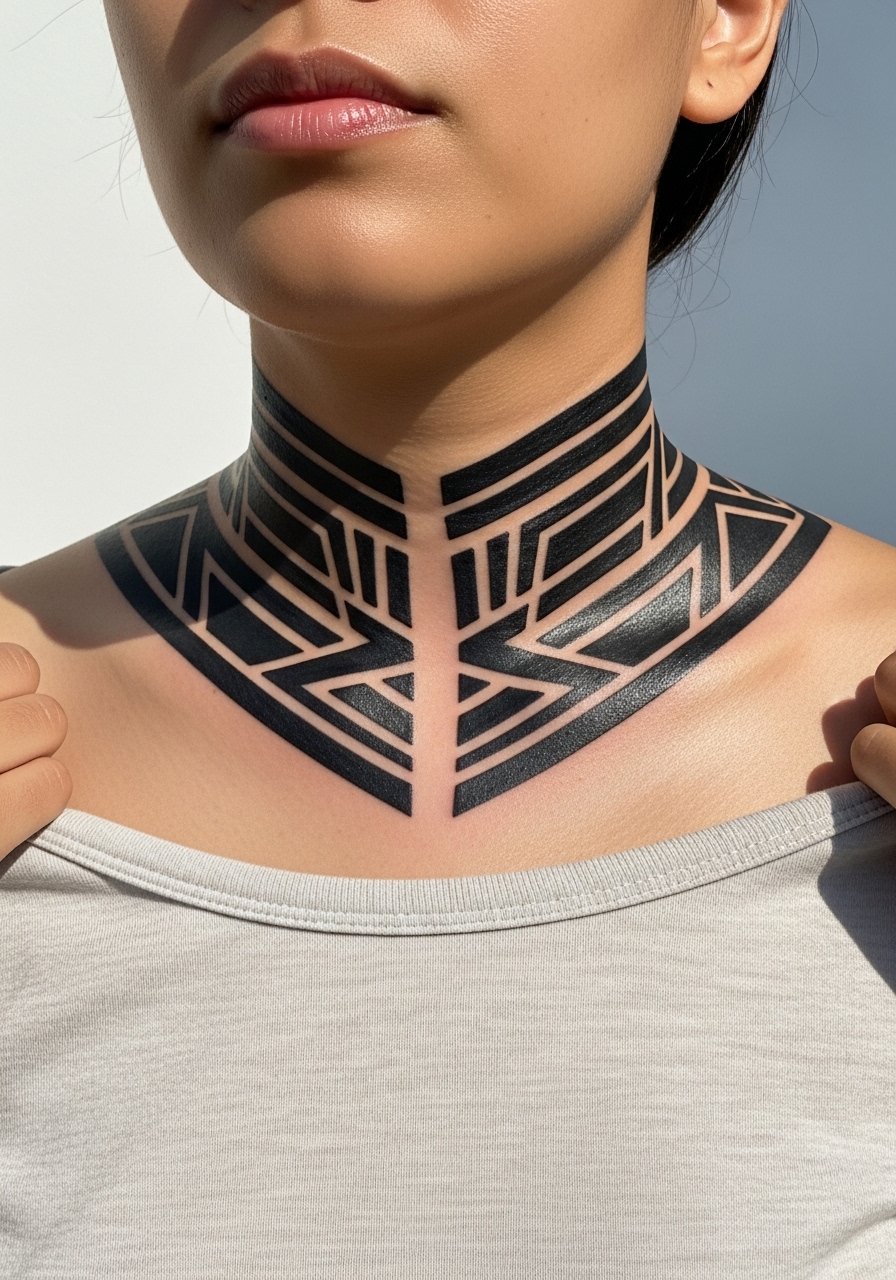
Solid black frames can box in larger coverups and prevent old ink from bleeding past a redesigned outline. Tell your artist you want the frame slightly larger than the old tattoo by about 20 percent to ensure full coverage. Bold blackwork tends to last longest on bone because saturation is high, though the session feels more intense as the artist packs pigment near the clavicle. Watch for blowout risk if the lines are too thin against bone. For showing it off, a sweetheart neckline blouse centers the collarbone and highlights the geometric symmetry.
Studio Day Picks
The first six ideas above include a mix of small fine-line fixes and denser blackwork spans, so a few practical items smooth the session and the first week of healing.
-
Stencil transfer paper kit. Lets you preview placement on skin so you can see how a mandala or rose cluster follows the bone before the needle starts.
-
Topical numbing cream. Using this 45 minutes before helps with the sharp collarbone twinge, but discuss application with your artist because some avoid it for saturation reasons.
-
Thin protective film roll. Keeps a fresh collarbone piece protected from shirt friction overnight when you cannot avoid contact.
-
Fragrance free gentle body wash. Cleans the area without extra irritation while fine line and dotwork settle.
-
Aquaphor healing ointment. A thin layer for the first two to three days helps keep pigment from drying into scabs on delicate bone-adjacent skin.
7. Micro-Realism Feather Arch on Collarbone
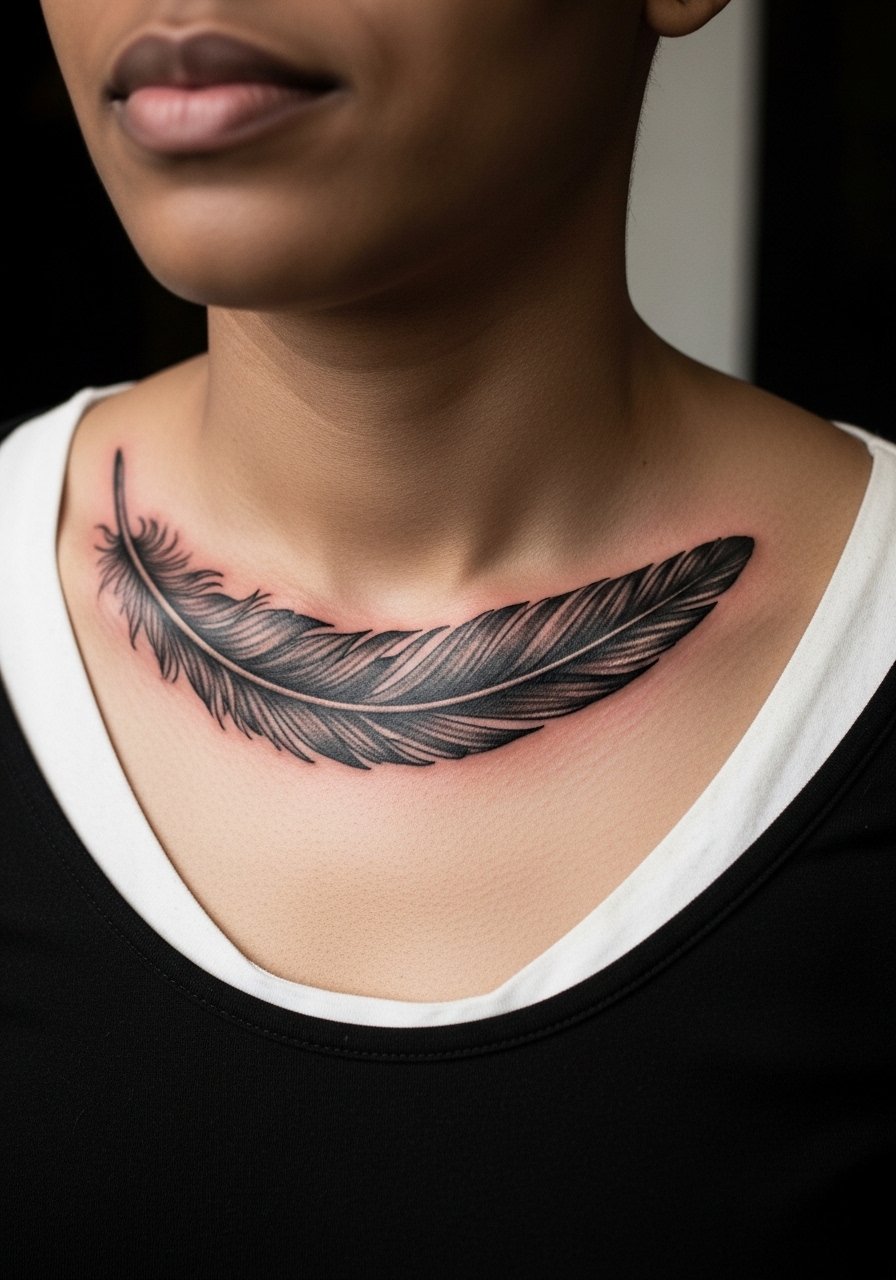
A feather done in micro-realism redirects attention from faded script by layering textured shading and tiny barbs. Ask for softer transitions rather than heavy black fills so the old ink becomes part of the shadow work. One to two sessions handle a four-inch feather and expect a touch-up in year one if the old ink was very dark. Pain peaks at the central dip but settles quickly. A common mistake is asking for over-detailing in too small a space which later blurs. Pair it with an open front cardigan pulled low for showing the arc without covering the clavicle line.
8. Ignorant Style Vine Overgrowth on Collarbone
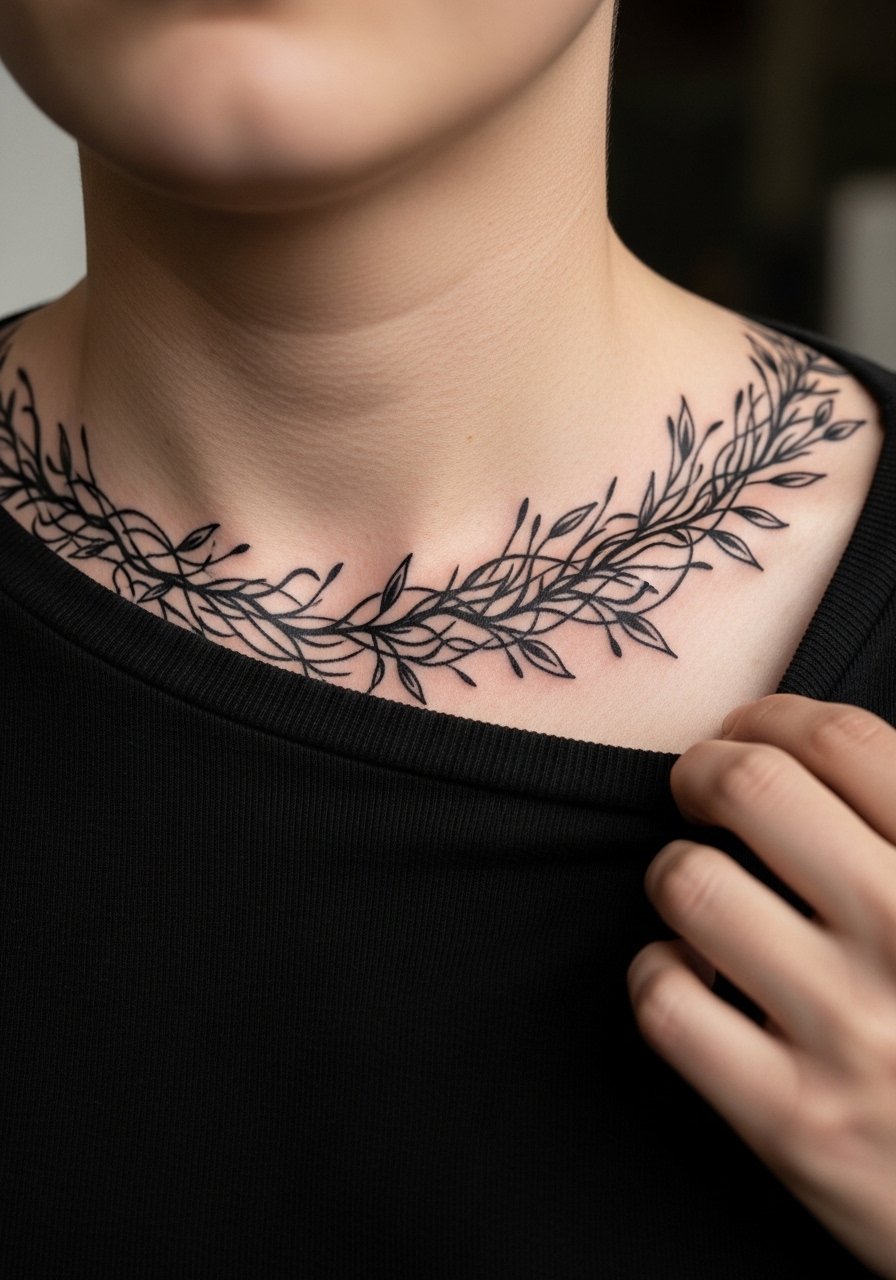
Ignorant style covers messy old work with bold, carefree strokes and irregular fills that read intentional. Tell the artist you want chaotic coverage, not rushed linework, because careful placement keeps the vine from looking accidental. Sessions are quick and the pain is moderate because the work uses broader movements. The risk is that a too-small composition reads childish once healed; ask for scale that follows the bone. For a casual look, a boatneck shirt women in vintage stripes frames the overgrowth without competing with the organic lines.
9. Ornamental Dotwork Mandala Centering Collarbone
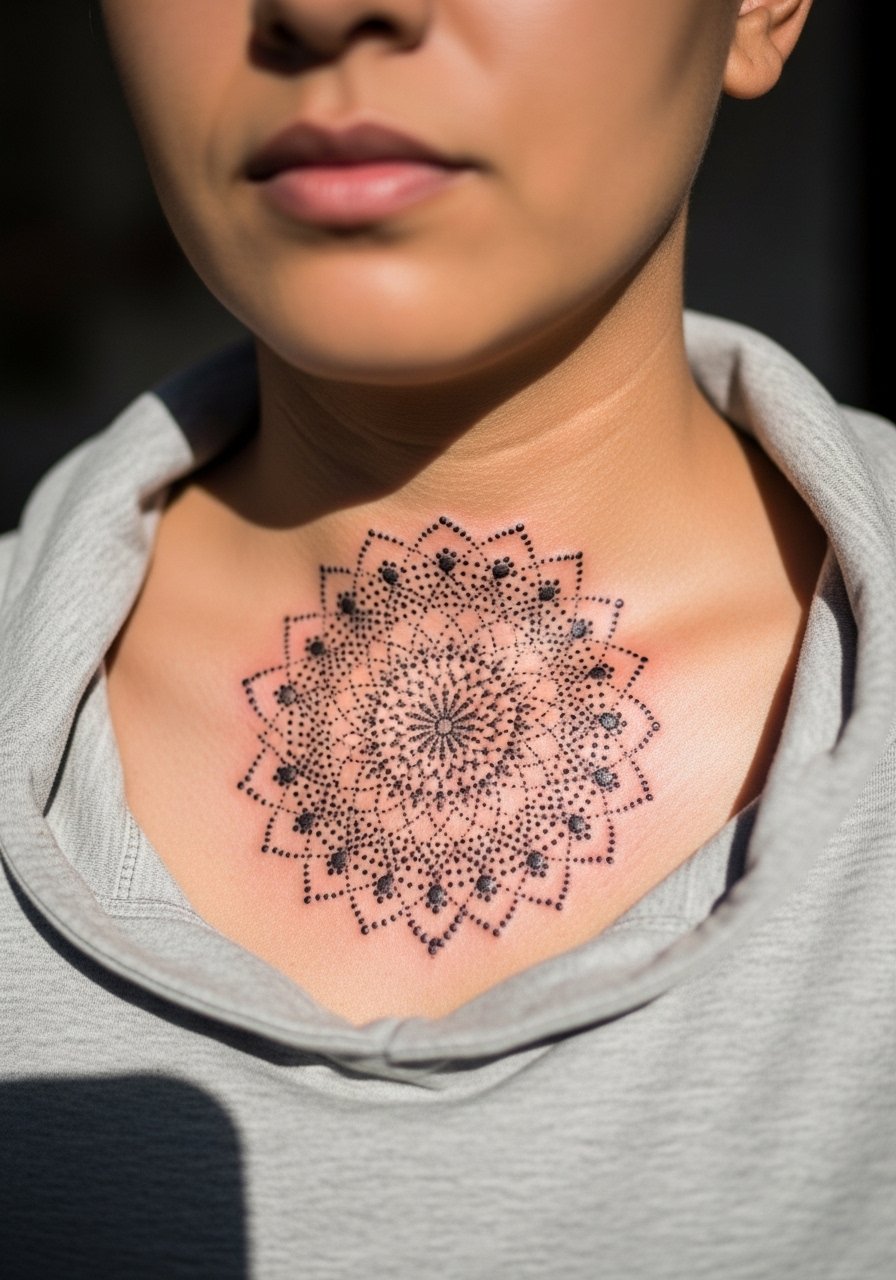
Dense dotwork distracts from underlying tattoos with hypnotic texture that reads as a new surface. Require the artist to map the symmetry on your bone for even balance and to leave breathing space between dense rings so the dots do not merge. Dotwork takes patience and multiple sessions for larger pieces. A common mistake is compressing too many dots into a small diameter which leads to blurring at year two. For symmetry in photos, pair this with delicate drop earrings and a cream lace top that mirrors the mandala's filigree.
10. Traditional Anchor with Waves Covering Collarbone Linework
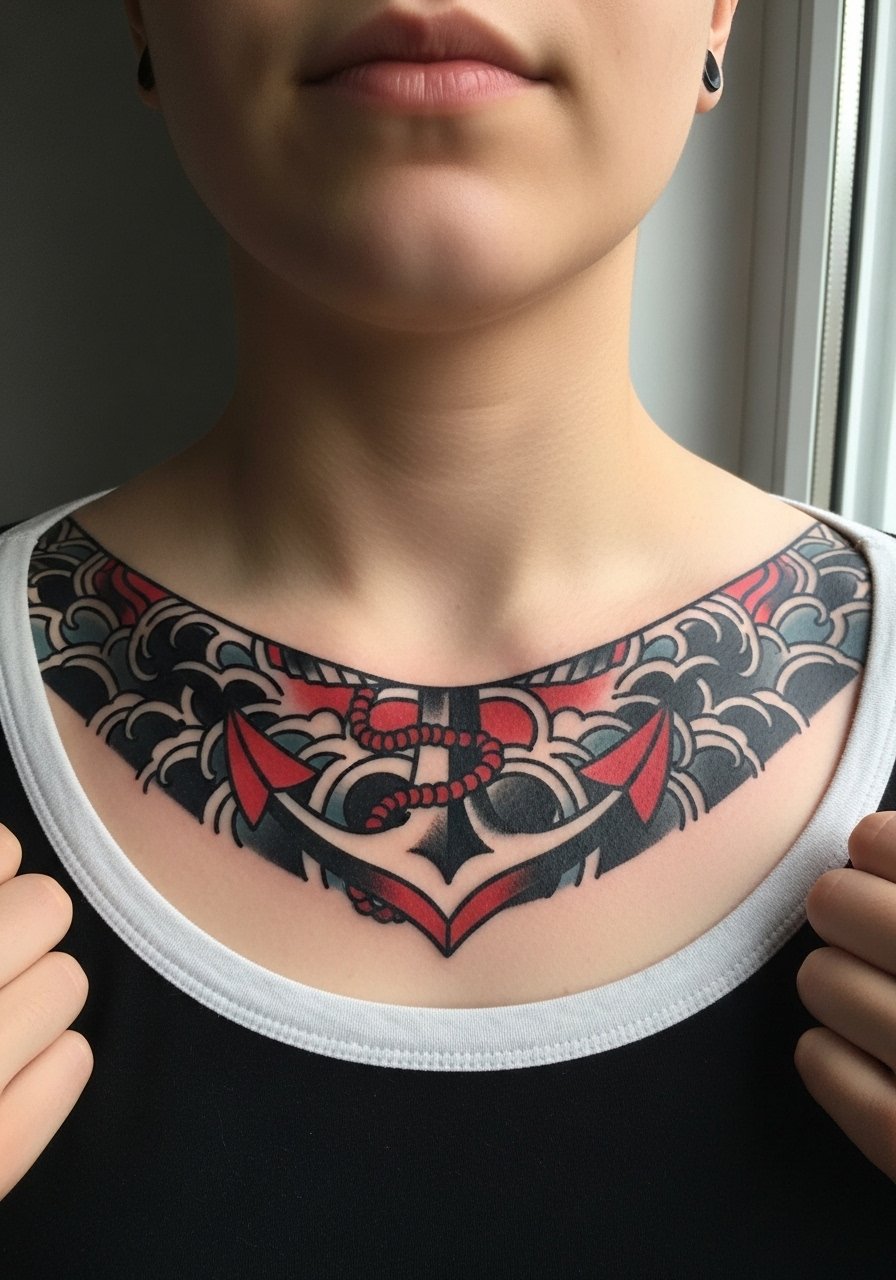
Bold traditional anchors hide old linework with thick outlines and solid fills that age predictably. Ask for heavier outlines over the old ink and plan for two sessions if you want color washed into black bases. The collarbone keeps saturation readable longer because the artist packs pigment deeply. The session can feel punchier near bone but heals into strong contrast. Avoid requesting tiny traditional icons because they lose their impact. Show it off with a vintage stripe top or a leather cuff on the opposite arm for balance.
11. Fine Line Hummingbird in Flight Over Collarbone Stars
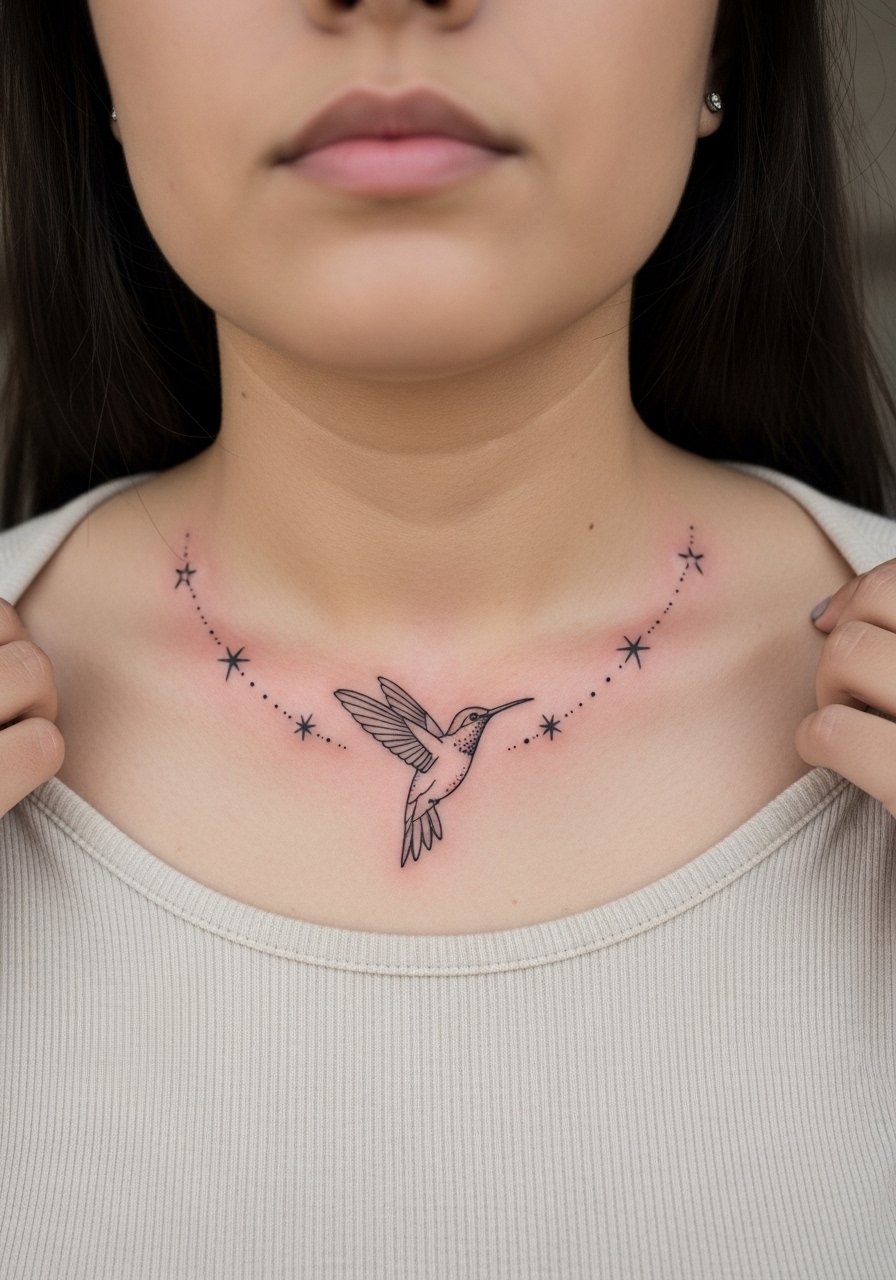
A hummingbird creates motion that distracts from small clusters of faded stars or dots. Request slightly heavier key lines where the old ink sits and keep the wings open so motion reads even as detail softens. Expect around 45 minutes for a three-inch piece and plan for touch-up in two to three years if you live in sun-heavy climates. A common error is over-detailing feathers in a tiny space which becomes muddled as lines settle. Pair the finished piece with a thin gold choker necklace that sits opposite the bird for visual balance.
12. Black and Gray Realism Lace Drape on Collarbone
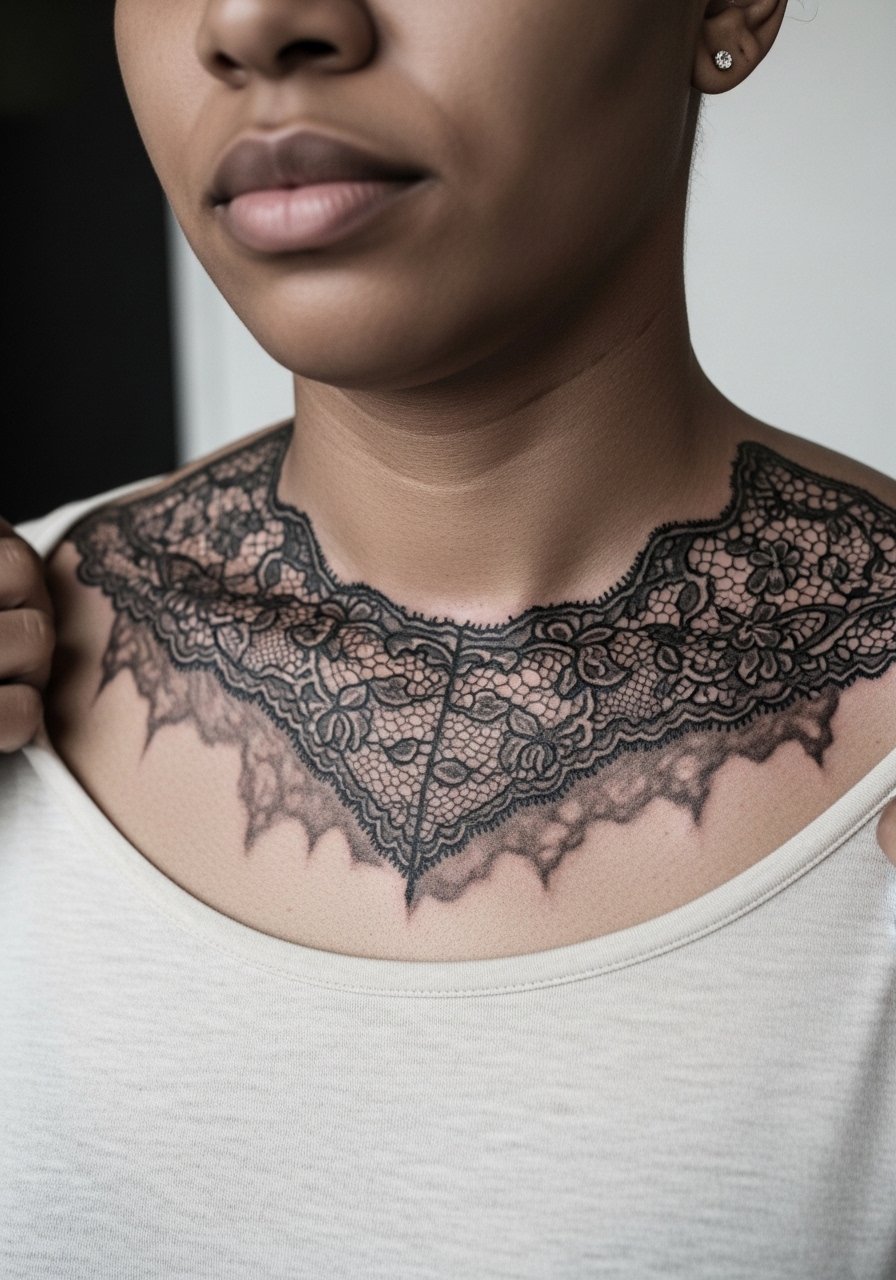
A lace drape masks script with sheer shadows that mimic fabric, giving the appearance of overlay rather than cover. Tell the artist you want soft gradients and no heavy solid black where old letters appear, so the lace illusion blends rather than competes. These pieces often need three sessions and precise shading to avoid muddying on thin skin. The common mistake is pushing contrast too hard which defeats the sheer look. For events, a sweetheart neckline blouse frames the lace and echoes the garment-like effect.
13. Blackwork Half-Moon Frame with Negative Space
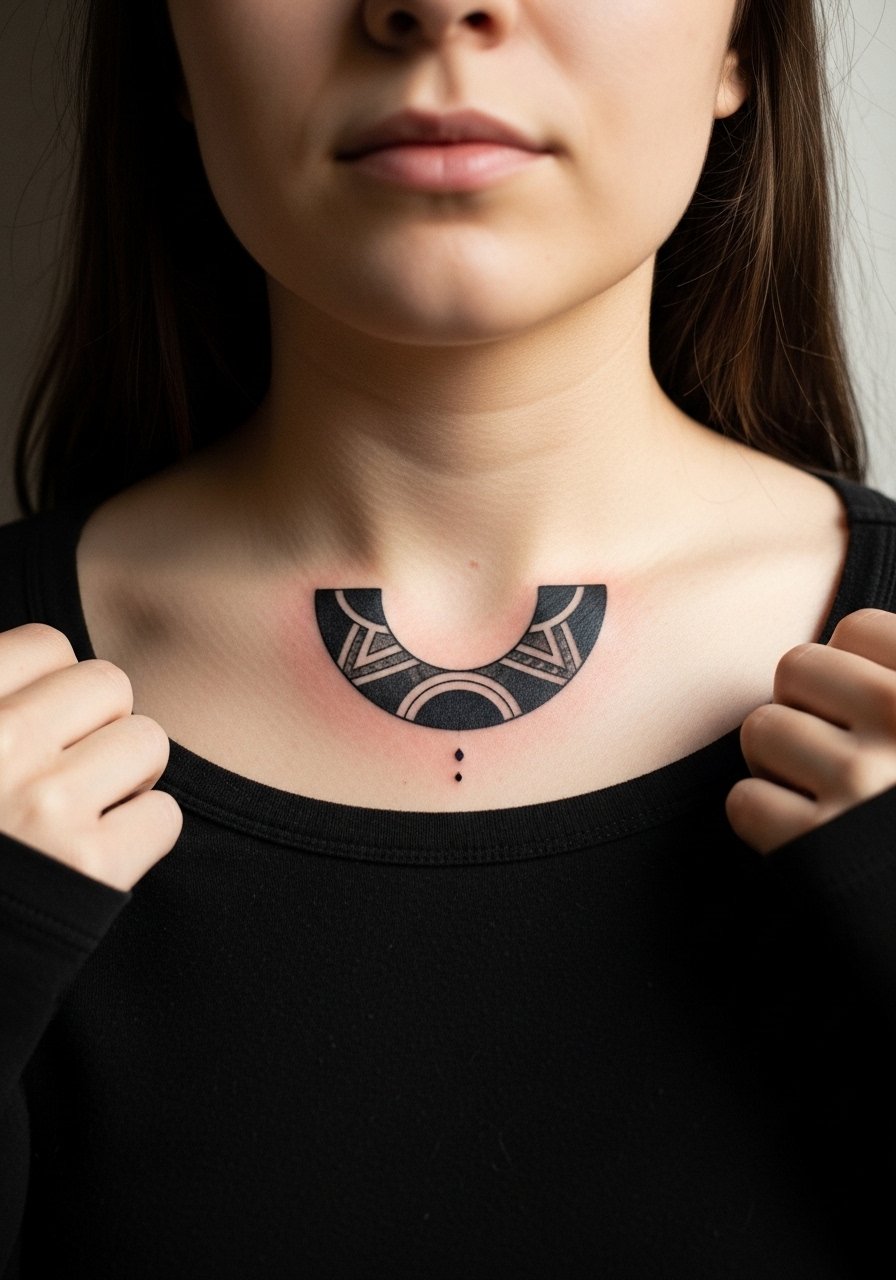
A half-moon blackwork frame boxes older tattoos while using negative space to keep the center light. Ask for a slightly larger radius than the original tattoo and request that shading gradients stop short of the skin fold to prevent scabbing. Bold saturation lasts long, but expect a slightly rough session near the bone because the artist will pack pigment. The mistake is shrinking the frame; when it is too tight the old ink shows around the edges. Pair with an open-back midi dress for evening wear that reveals the moon shape without overexposure.
14. Asymmetrical Floral Drape That Follows the Bone
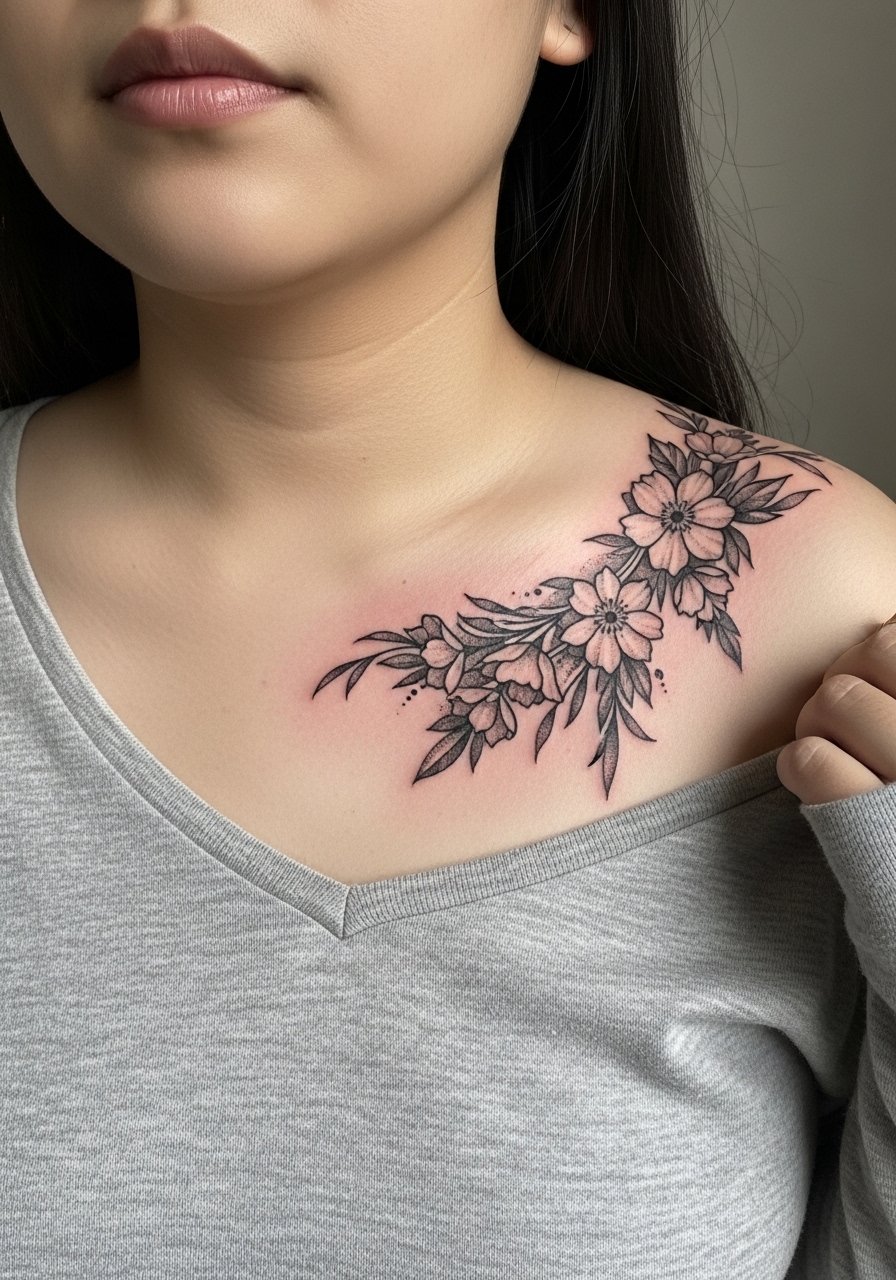
An asymmetrical drape respects clavicle asymmetry and reads more natural than perfectly mirrored designs. Ask for a custom layout mapped to your bone so the petals flow with your anatomy. This design handles odd-shaped old ink well because the blossoms can be placed to obscure problem areas. Expect a one to two session timeline and a touch-up at year two for edge refinement. A common misstep is forcing symmetry where the bone does not support it. Wear a loose sleeveless blouse or statement earrings to draw the eye upward.
15. Hybrid Fine Line Over Blackwork for Textured Coverups
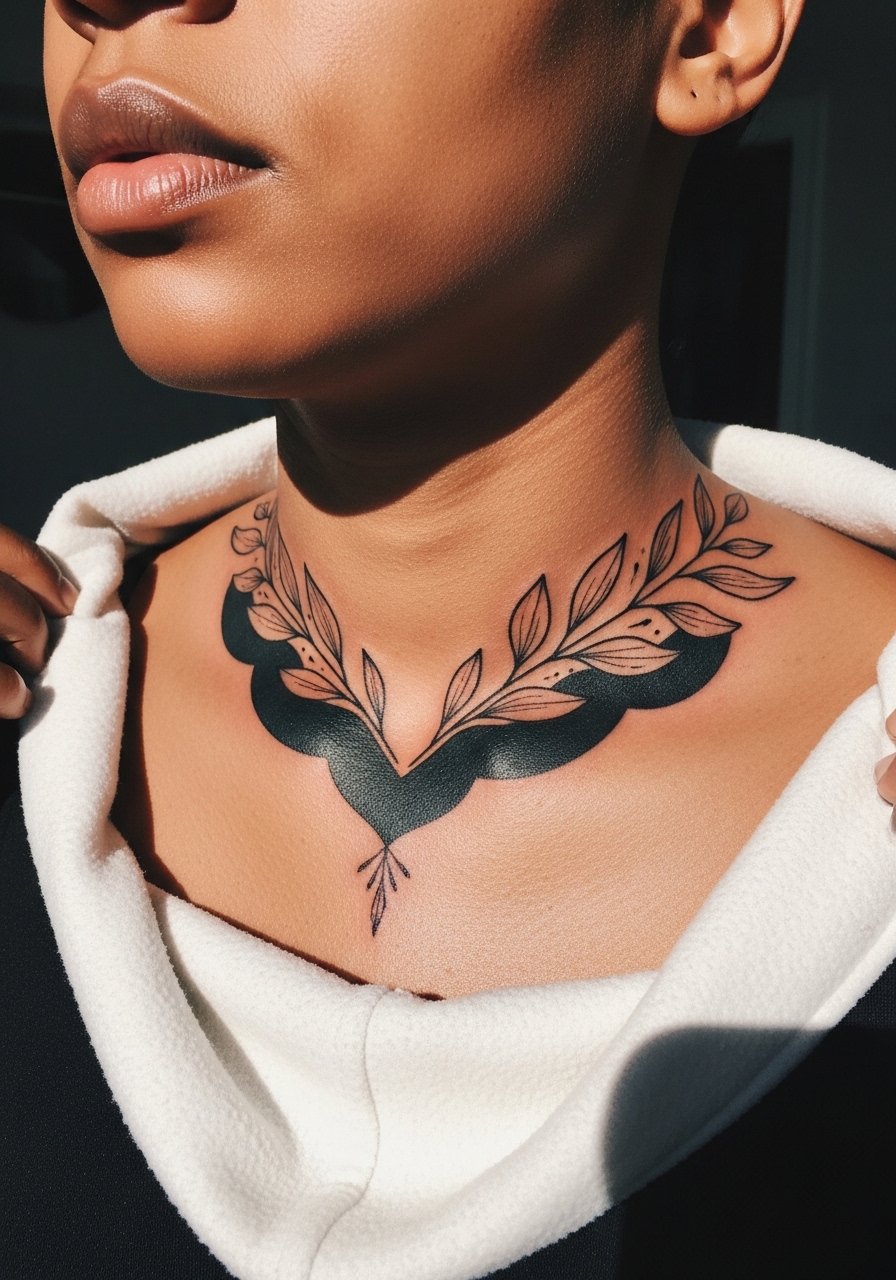
Layering fine line elements over a black base gives texture while hiding darker old ink. Tell your artist you want the black base to be the anchor and the fine line to sit on top with lighter touch. This approach ages well because the black provides longevity and the fine line adds visual air. Sessions can be split across two days so the skin can settle between passes. Common mistake is making the fine line too delicate against a heavy base which reduces legibility. For photos and daily wear, a thin chain pendant necklace sits just above the layers without crowding them.
16. Negative-Space Shadow Collarbone Coverup
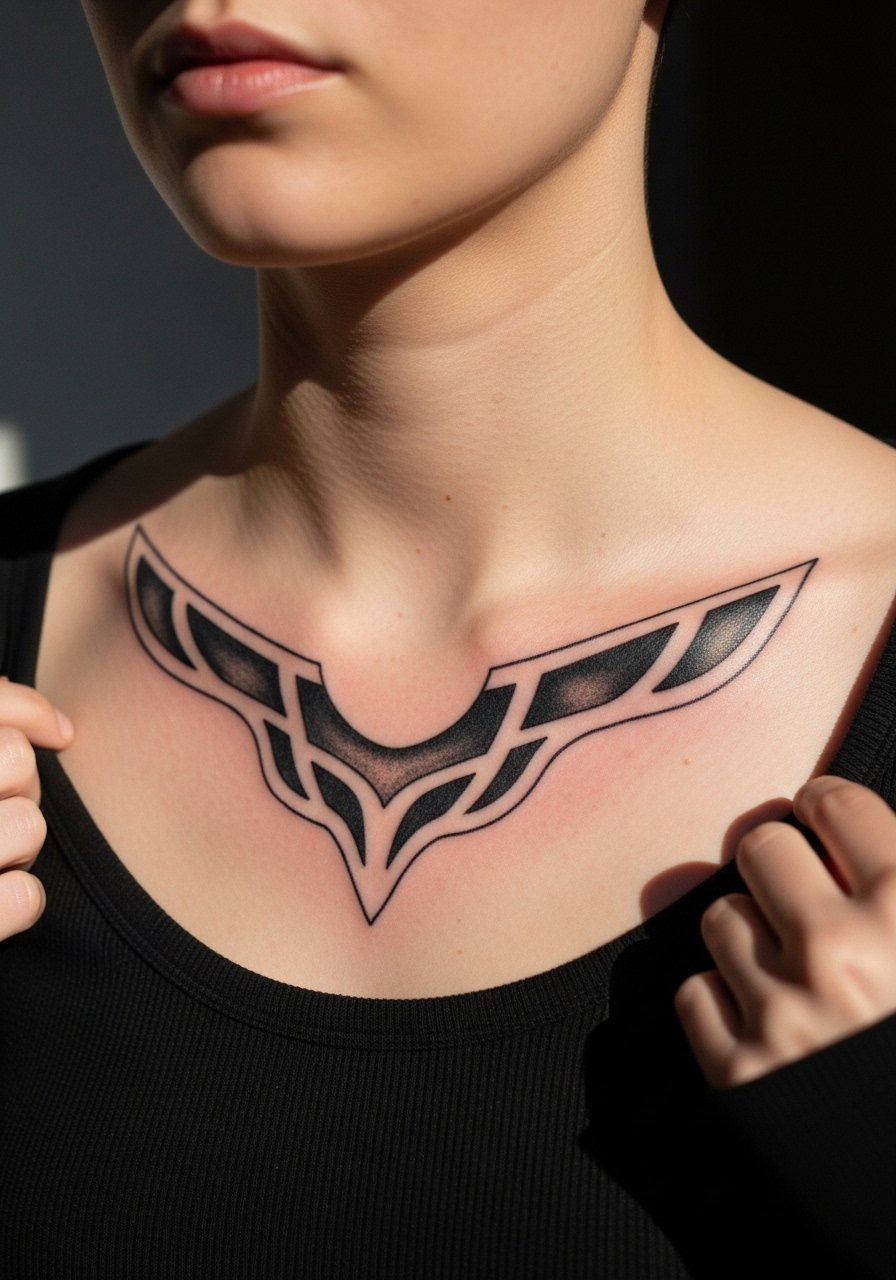
Using negative space to fold the old tattoo into a shadow element can turn the previous ink into part of the composition rather than something to hide. Ask the artist to map where the existing strokes can become intentional voids. This style feels less heavy than full blackwork and usually takes one to two sessions. The trade-off is that negative-space pieces need good contrast to read long term, so expect a touch-up in year two if sun exposure is high. A common error is losing too much contrast. For showing it off, choose a halter neck top that pulls attention to the carved shapes.
17. Ornamental Filigree That Blends Old Ink Into Lace
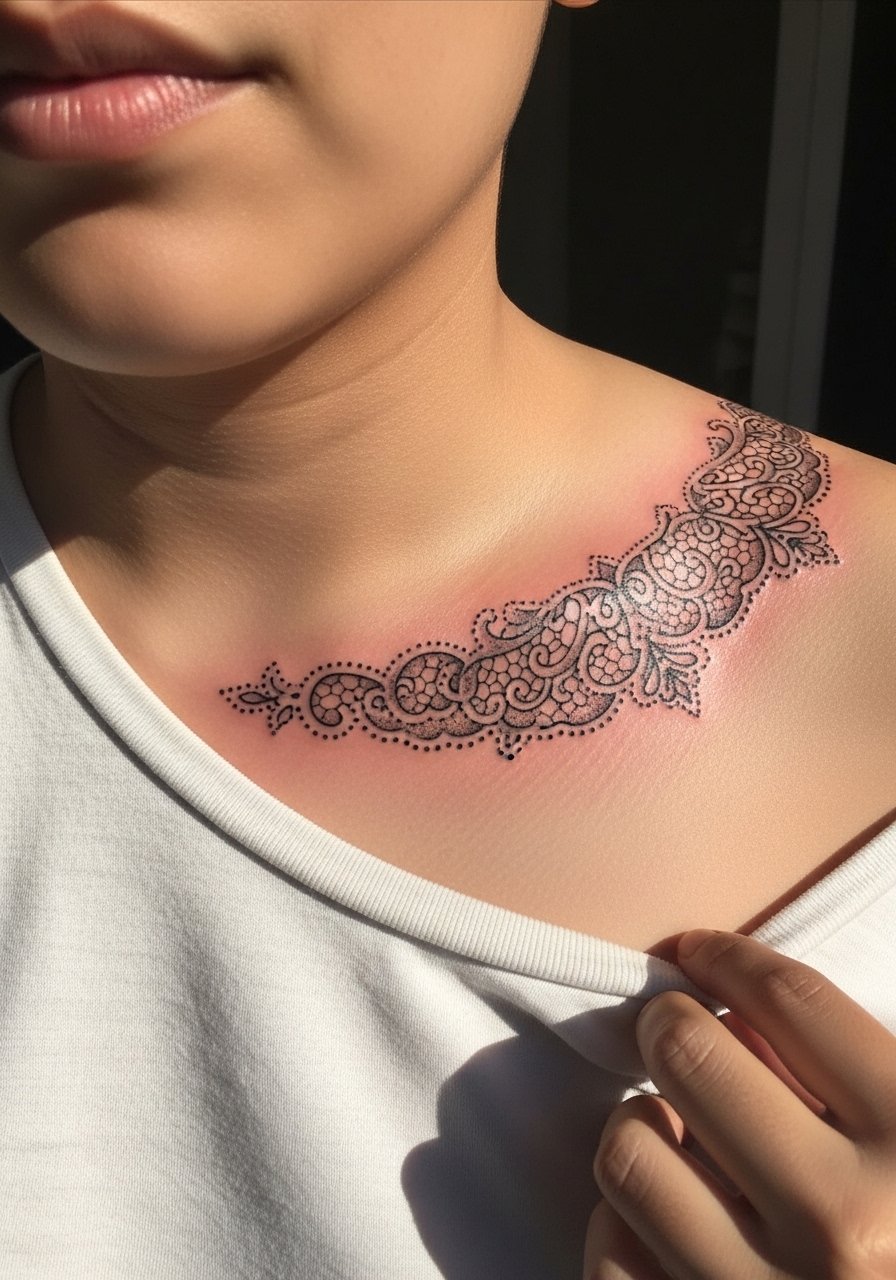
Filigree pieces weave old lines into ornate patterns so the original marks read as texture rather than flaws. In consultation, request a proof layout that shows how each old stroke will be integrated. These pieces work best slightly larger than the original, so do not insist on tiny scale. Session time varies with complexity and may need two visits for crisp stippling. Watch out for over-detailing in a small area which softens over time. For an elegant reveal, a cream lace top pairs with the filigree and echoes the tattoo's motifs.
Frequently Asked Questions
Q: How painful is a collarbone coverup compared with soft flesh areas like the thigh or bicep?
A: Collarbone pain tends to be sharper because the skin is thin and sits directly over bone. Expect brief spikes when the needle crosses the edge of the bone and calmer moments elsewhere. Plan shorter sessions under three inches if you want to minimize chair time and consider topical numbing cream after discussing it with your artist.
Q: Will old tattoos show through if I pick a watercolor or pastel coverup?
A: Pastels and watercolor washes are more translucent, so dense or dark underlying ink can ghost through. The safer approach is to ask for darker anchor points near the old ink or choose a hybrid that uses darker bases with color blends. Your artist can map overlap so the new art obscures the old by at least 50 percent.
Q: Should I use Saniderm or dry heal a collarbone tattoo?
A: Artists split on this. One camp prefers protective film like Saniderm because it keeps the area clean and reduces mess. The other favors dry healing so the skin breathes and scabs form naturally. Both approaches work when done correctly. Decide with your artist based on the ink density and whether your clothes will rub the area during the first week.
Q: How soon can I wear regular necklaces or crewneck sweaters after a collarbone coverup?
A: Avoid tight necklaces and snug crewnecks for at least seven days while the area forms a protective barrier. Light jewelry that sits above the new ink is fine after day four if healing looks normal. For session-day comfort, a loose v neck tank makes access easy and reduces friction afterward.
Q: How do I find healed collarbone coverup examples from real people rather than fresh photos?
A: Search community tags and apps for healed work using phrases like #CollarboneCoverup or the term "collarbone coverup" on TikTok and Pinterest boards. Look for photographers' before-and-after posts and ask artists for a healed portfolio rather than fresh sessions. Also check threads on general tattoo forums for healed timelines and touch-up notes.
