
Fine line tattoos dominate feeds right now, and the same designs that look miraculous fresh can be the ones asking for touch-ups later on. The trick with praying mantis work is choosing scale, line weight, and placement that match how your body moves and how you want to show it off. Below are 17 edgy mantis ideas that balance what trends look like today with what actually holds up over time.
1. Geometric Black Ink Mantis on Forearm
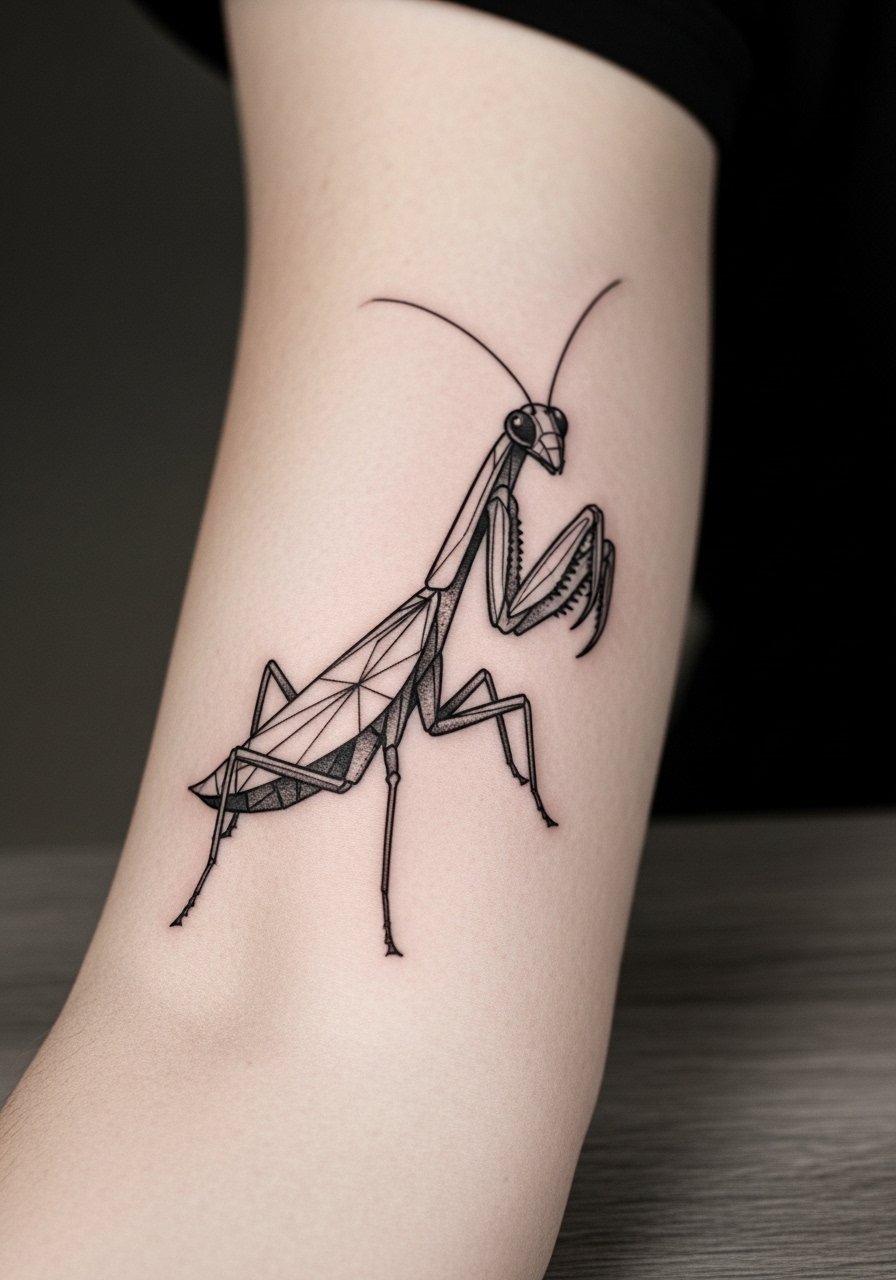
I've seen geometric mantises keep their clarity longer when the shapes have breathing room. Tell your artist you want one to three millimeter negative gaps between converging lines so the triangles do not merge later. The common mistake is going too small, which leads to linework that blurs into a block by year three. This placement takes one session and feels like medium tension while the artist works along long straight runs. For showing it off, roll up a sleeve and pair the piece with a rolled cuff chambray shirt to frame the forearm without competing with the blackwork.
2. Colorful Cartoon Praying Mantis on Upper Arm
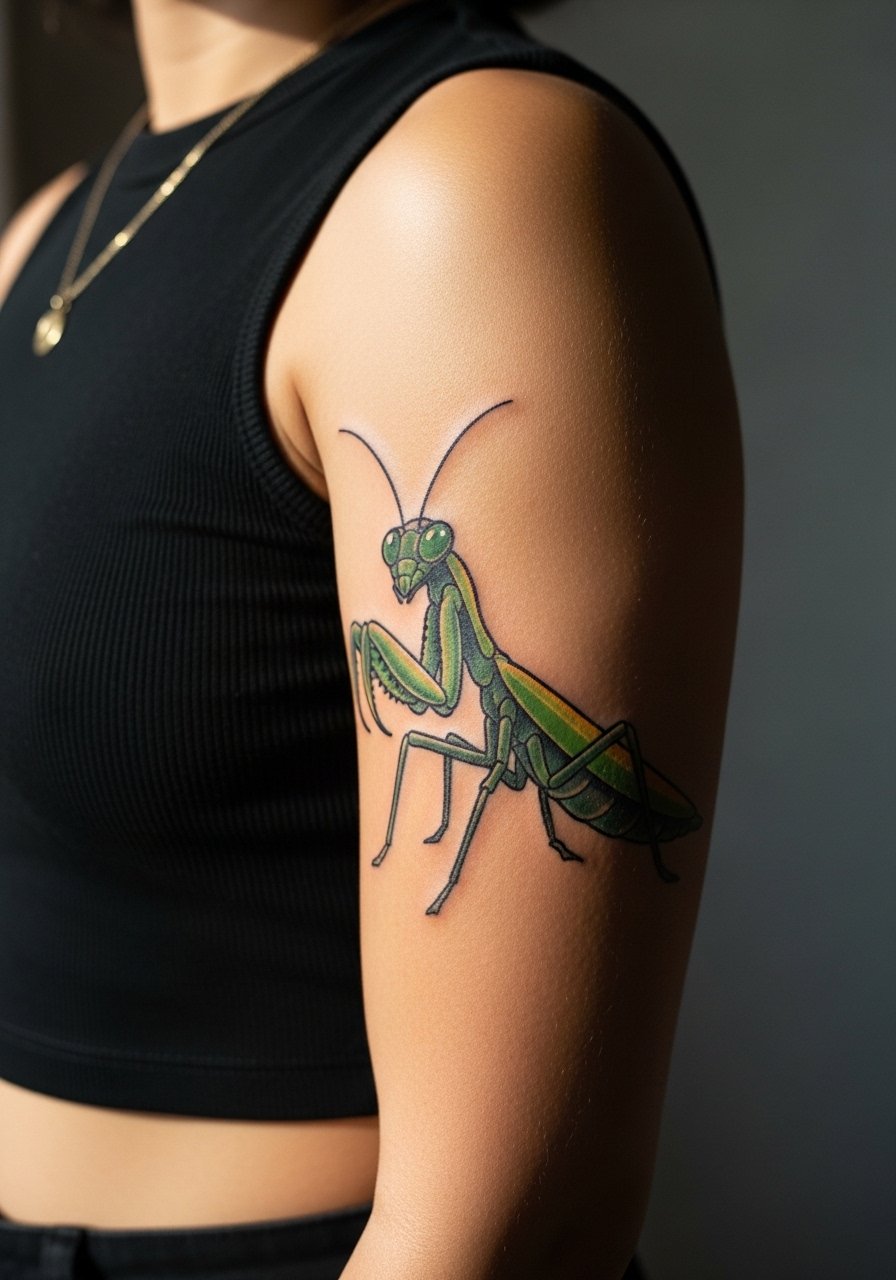
This upbeat style is forgiving for first-timers who want a mantis that reads friendly instead of creepy. Ask for saturated greens with a hint of teal and simplified antenna shapes so the color fields age evenly. A pitfall is tiny color dots inside limbs, which can granulate and look speckled after a year. The session is comfortable for most people, and the upper arm location moves little during daily life. When you want to show it off, reach for a sleeveless crop top women that keeps attention on the color without clashing.
3. Fine Line Praying Mantis Outline on the Wrist
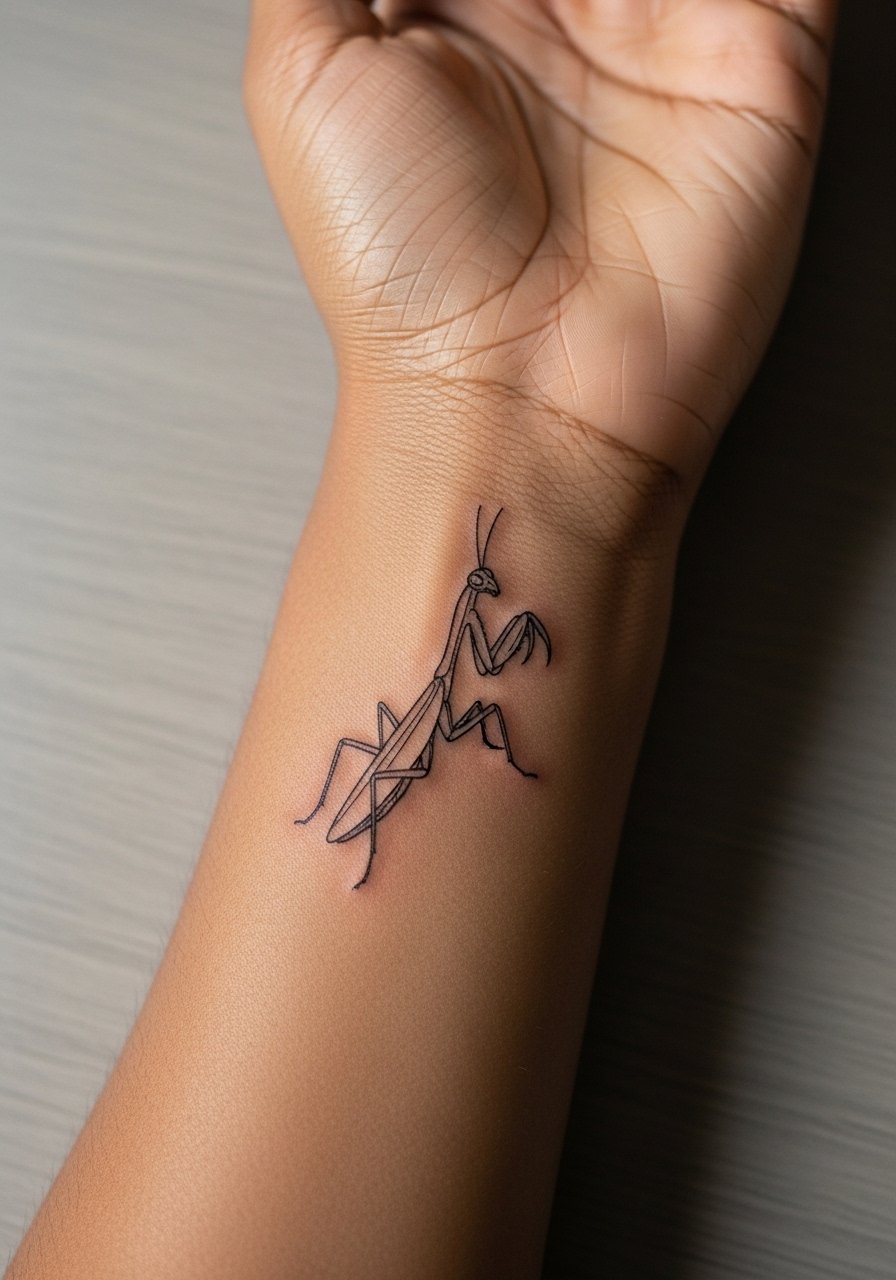
Fair warning, the wrist is a high-motion zone and fine line work there provokes a familiar debate. One camp accepts touch-ups as part of the aesthetic and values elegant, delicate linework. The other camp argues bold lines last longer and require fewer visits. Ask the artist where they land in that debate and whether they will thicken anchor lines to increase longevity. A common mistake is asking for single-needle hairlines across flexing areas, which often fade into faint hairlines by year two. For a daily look, pair the wrist piece with a thin silver bangle set on the opposite wrist so the tattoo reads as subtle and intentional.
4. Tribal Praying Mantis on Upper Arm
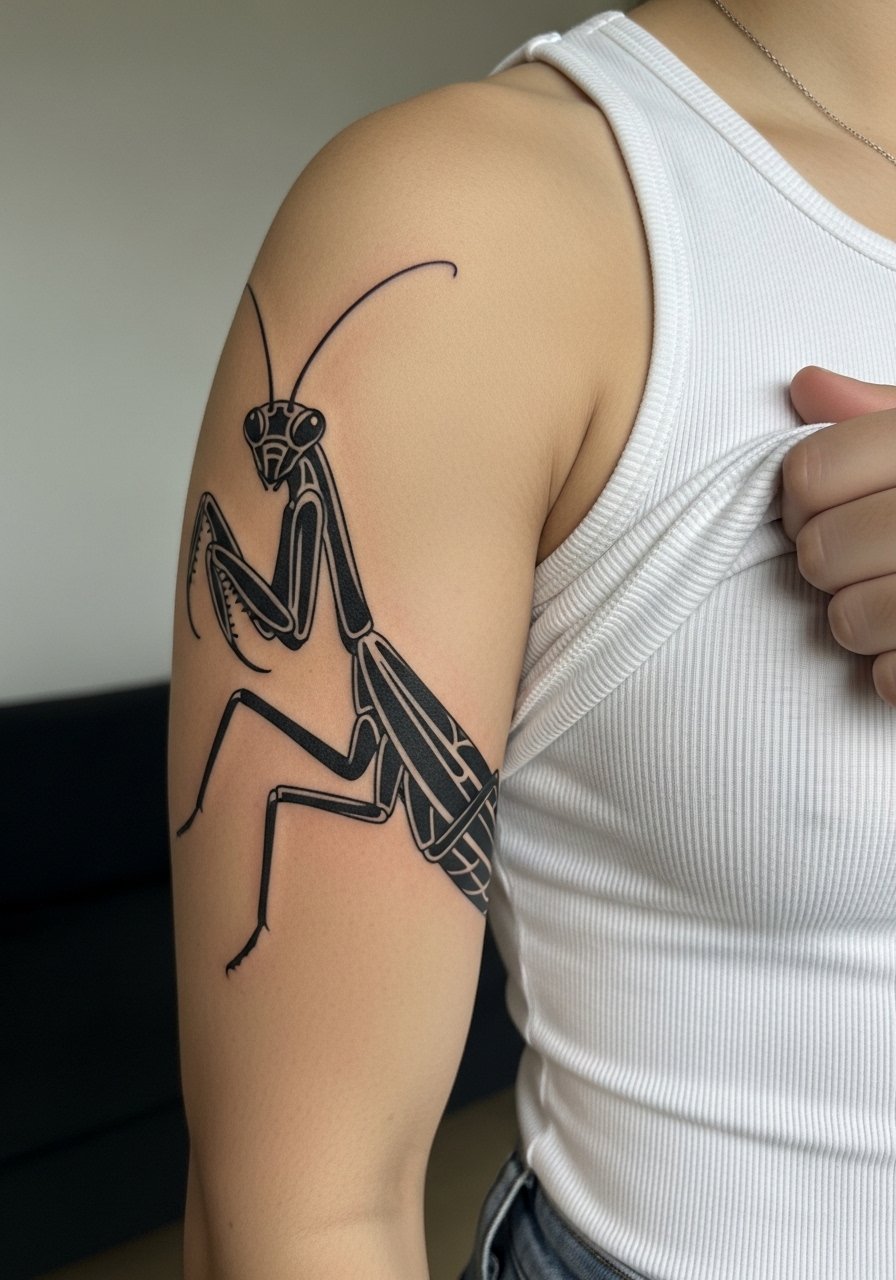
Tribal blackwork is a good pick if you want contrast that endures. Tell your artist you want solid fills and consistent saturation rather than hairline shading in blocky elements. The mistake is over-detailing tribal panels which then look muddy after a few years. This style sits well in 1-2 short sessions and gives a low-risk touch-up timeline. Be mindful of cultural roots if you borrow specific motifs, and consider variations instead of exact replicas to show respect.
5. Realistic Praying Mantis on the Forearm
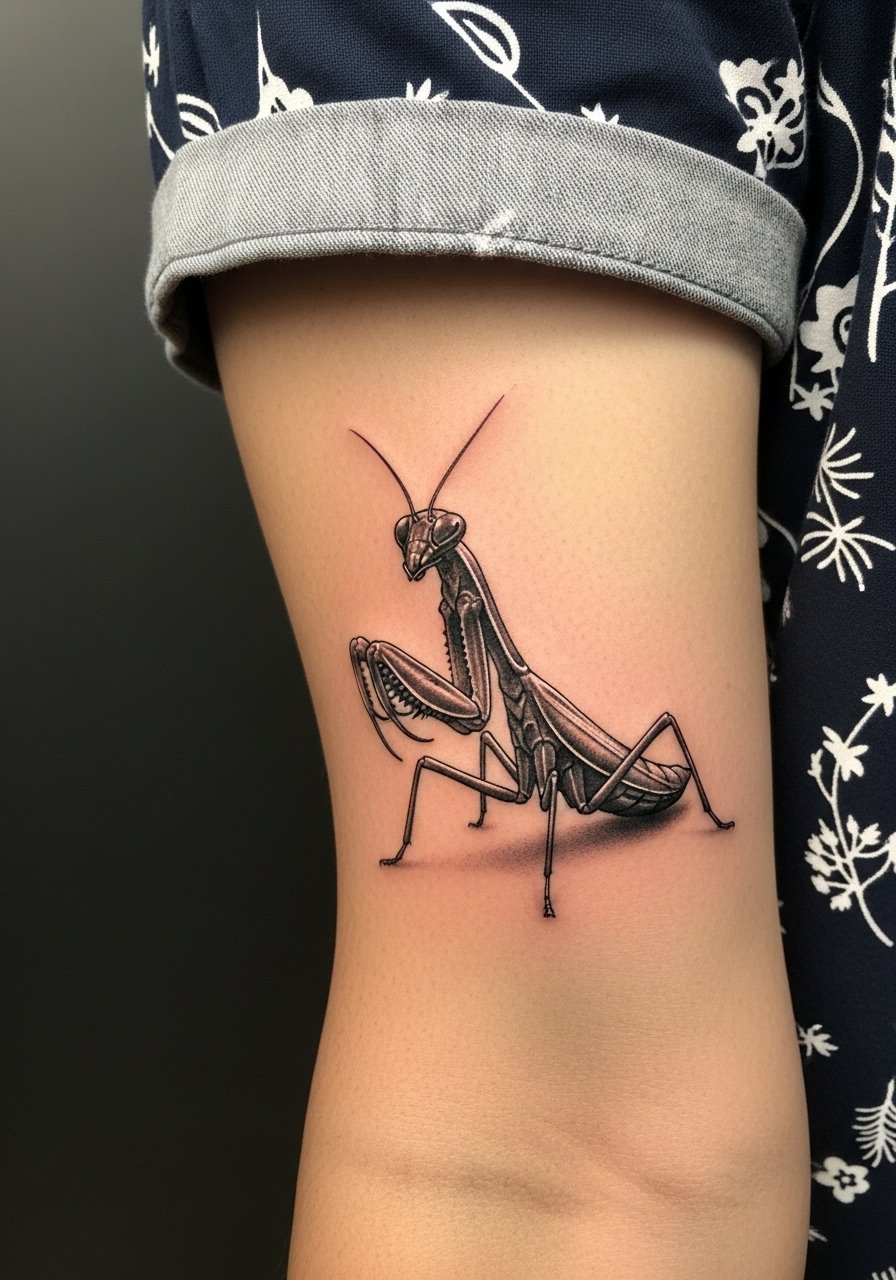
Most realism that reads clean at year five started with bold enough contrast to survive fading. Ask your artist to prioritize crisp contrast in the compound eyes and the joints, and request a small panel of reference angles so scale is consistent. The downside is long sessions, and numbing is sometimes requested for multi-hour forearm realism work. Watch for over-blended midtones that flatten into a gray smudge later. For the appointment wear, bring a short sleeve button down so the artist has easy access without the sleeve bunching.
6. Watercolor Praying Mantis on the Thigh
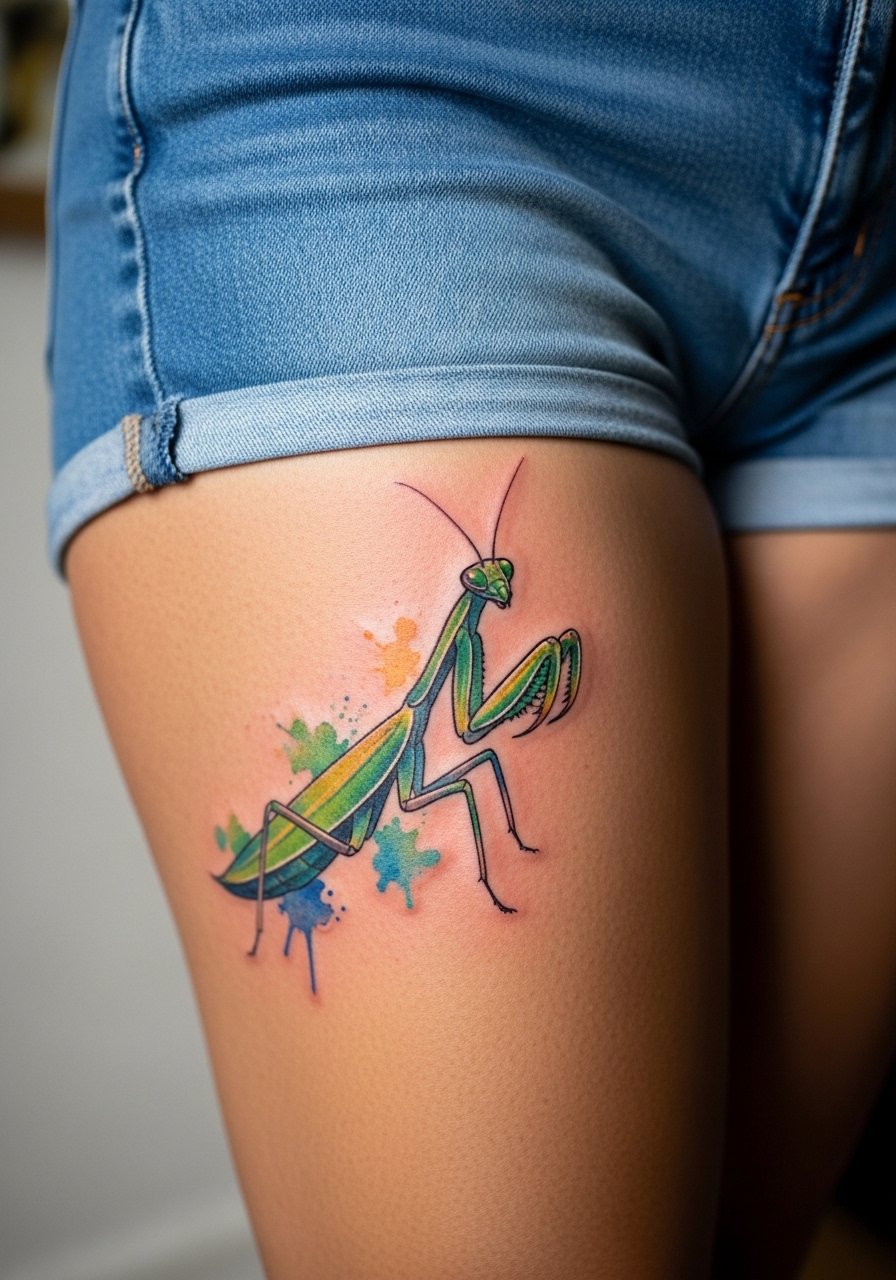
Watercolor mantises read like painterly patches and need space on curved skin to avoid pooling. I recommend sizing the wash slightly larger than the linework so colors fade gracefully at the edges. A common mistake is placing tight, small watercolor on a highly curved thigh fold, which causes uneven healing. Sessions are gentle because large muscle areas tolerate longer sittings, but expect touch-ups on vibrancy at year two. For summer reveal outfits, match the piece with high waisted khaki shorts that keep the color zone visible.
Pre-Session Essentials
Those upper-arm, wrist, and thigh pieces above have different prep needs, so a small kit smooths the session and early healing.
-
Stencil transfer paper kit. Lets you preview how the mantis linework sits on the skin, which is especially useful for forearm and collarbone placements from the ideas above.
-
Topical numbing cream. Applied per directions before longer forearm or thigh sessions it takes the edge off without changing how the shading settles.
-
Thin protective film roll. Keeps wrist and ankle pieces cleaner during the first week of friction from washing and clothing.
-
Fragrance free gentle body wash. Cleans healing skin without irritating fine line work that small wrist mantises depend on.
-
Aquaphor healing ointment. Thin layers in the first days help lock in moisture for delicate linework, especially for pieces on forearms and wrists.
7. Stylized Poised Mantis Forearm Piece (Neo-Traditional)
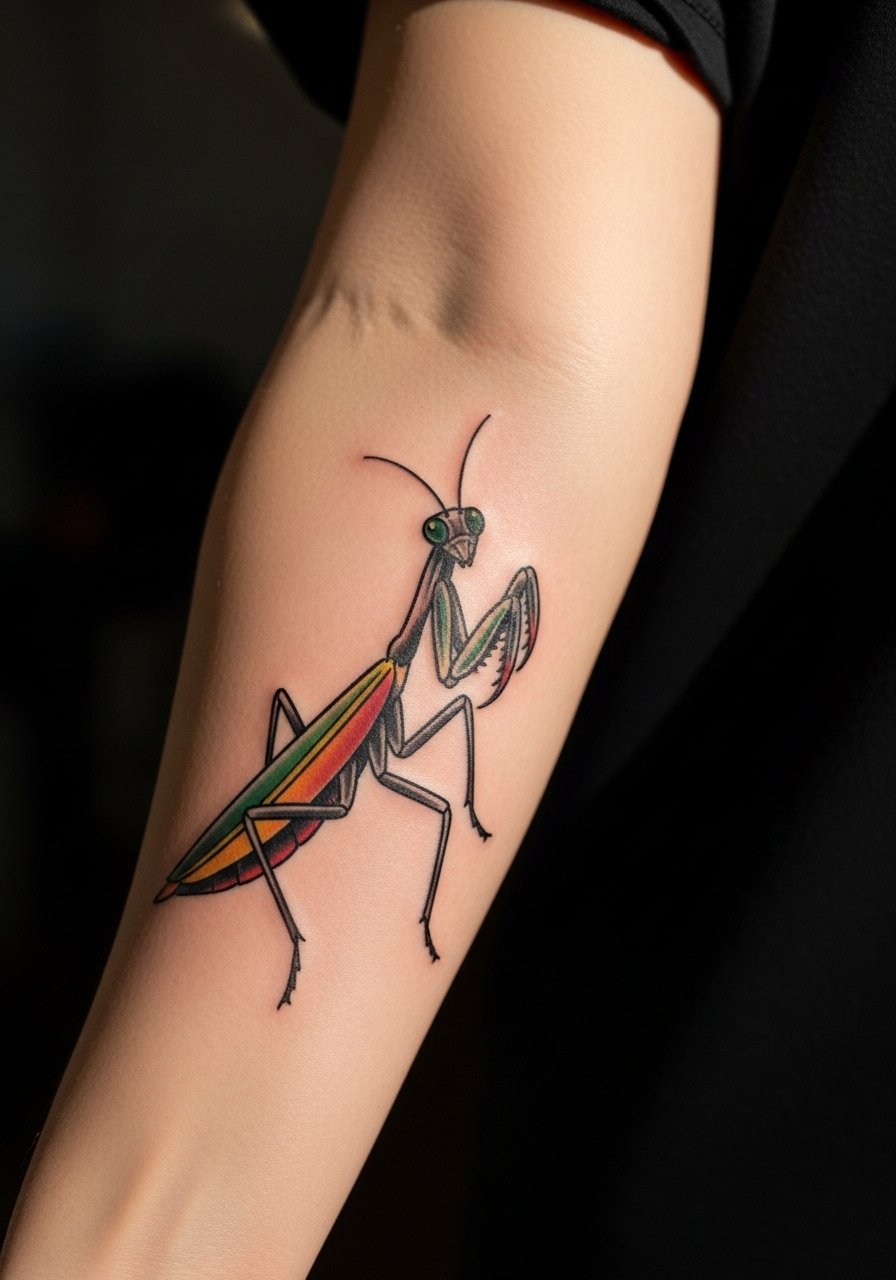
I like neo-traditional mantises when you want bold character plus color accents that age well. Tell the artist to anchor the limbs with solid outlines and to save color accents for isolated spots so saturation does not bleed together. A common error is packing too many small color spots in one limb, which blurs into a mottled field later. This placement can require two sessions for shading and color. When you want a subtle balance, add a thin leather cuff bracelet on the opposite arm to keep the focus on the forearm canvas without crowding the wrist.
8. Minimalist Black Silhouette on the Ankle
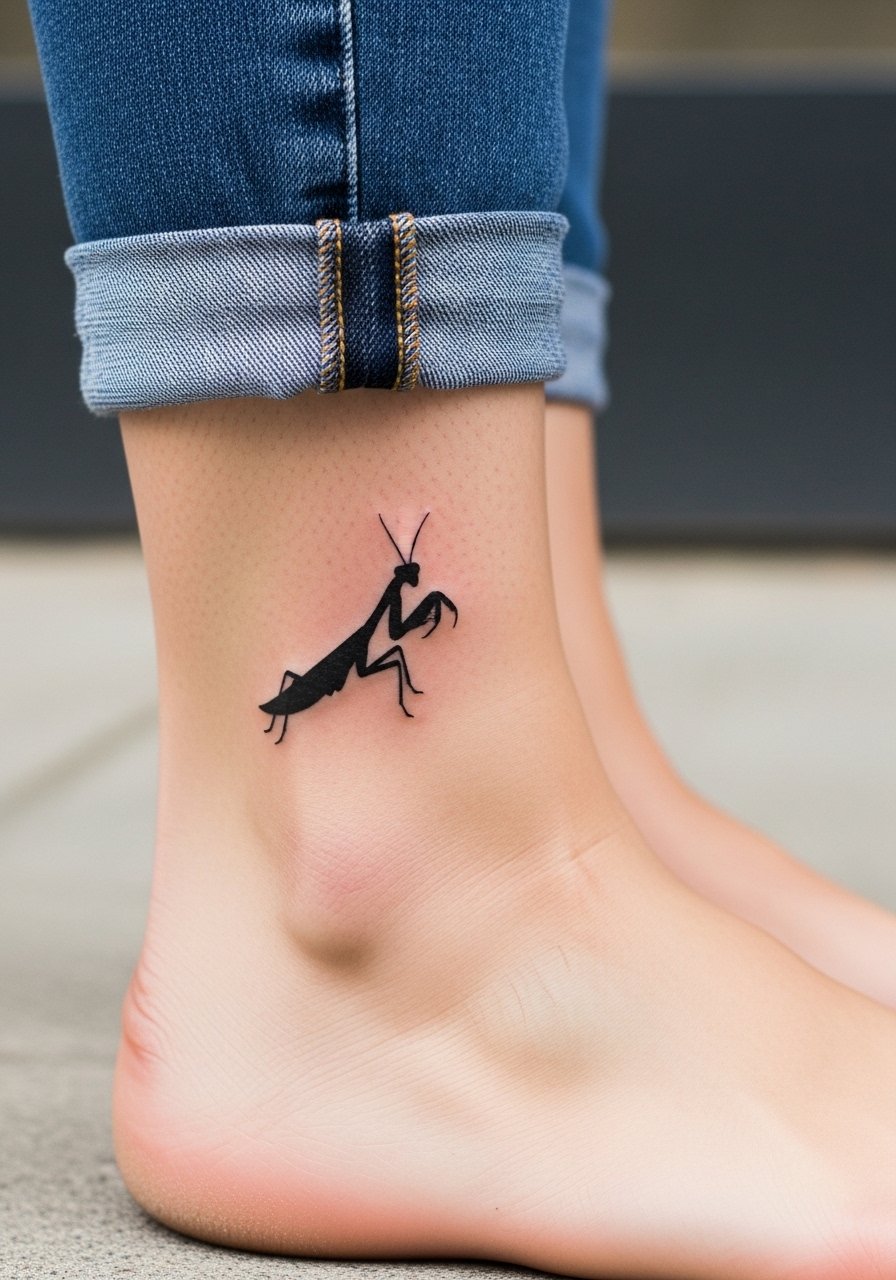
Ankle silhouettes work because the solid black fill resists fading from friction and sun. Ask for a slightly thicker outline than you think you need so the silhouette keeps its form after seasonal wear. The common mistake is making the silhouette too tiny, which then loses presence next season. Sessions are quick and low pain for many people. Wear cropped jeans or ankle strap sandals to let the negative space read cleanly during reveal moments.
9. Geometric Mantis Near the Collarbone
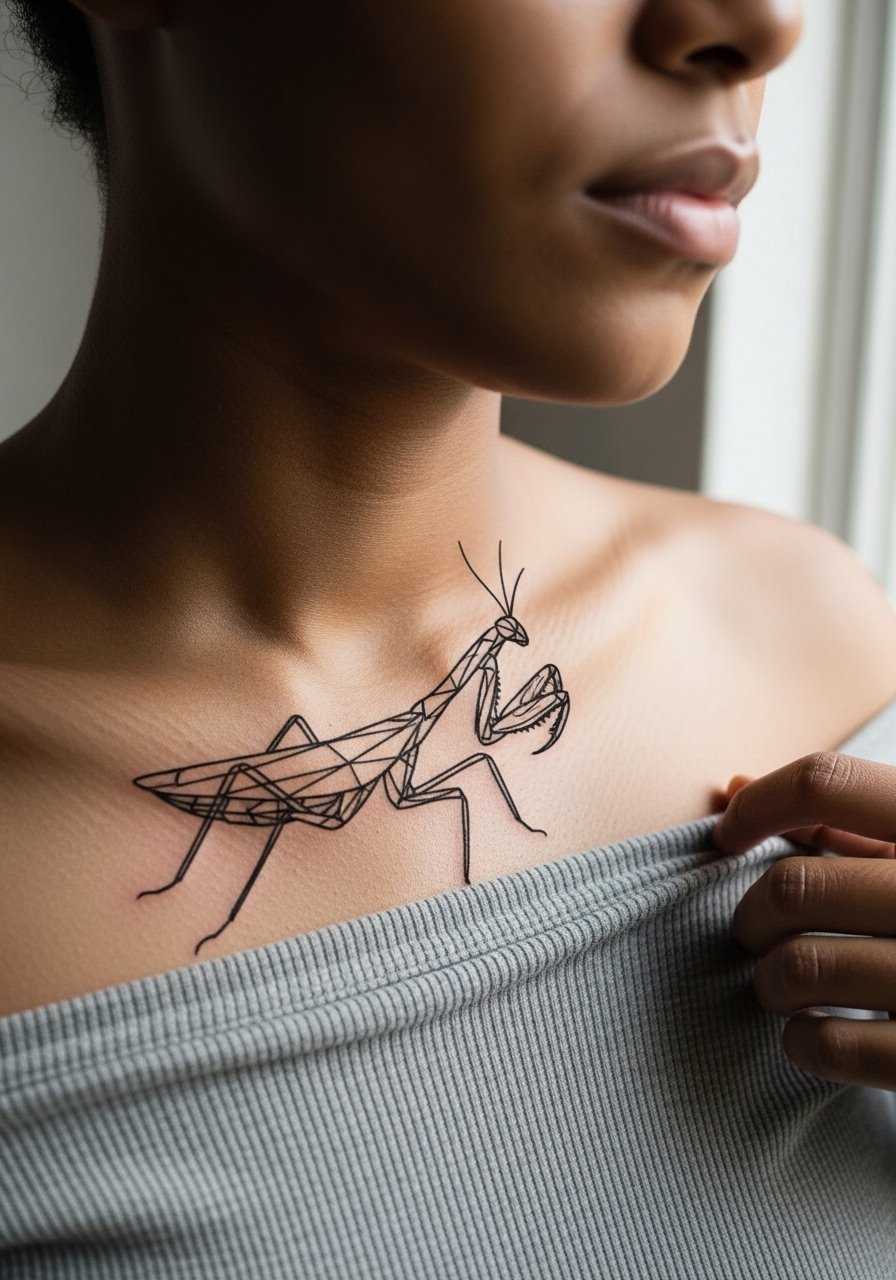
Collarbone placements demand precise spacing so the lines do not sink into natural skin folds. In consultation ask for slightly more open geometry and avoid ultra-fine parallel runs across bone. The mistake I see is packing dense geometry too close to the bone, which reads blurred after a year. Expect moderate pain when the needle crosses bone, and plan a short session that prioritizes crisp linework. For showing it off, an off shoulder top black frames the geometry while keeping attention on the collarbone.
10. Micro-Realism Inner Bicep Mantis
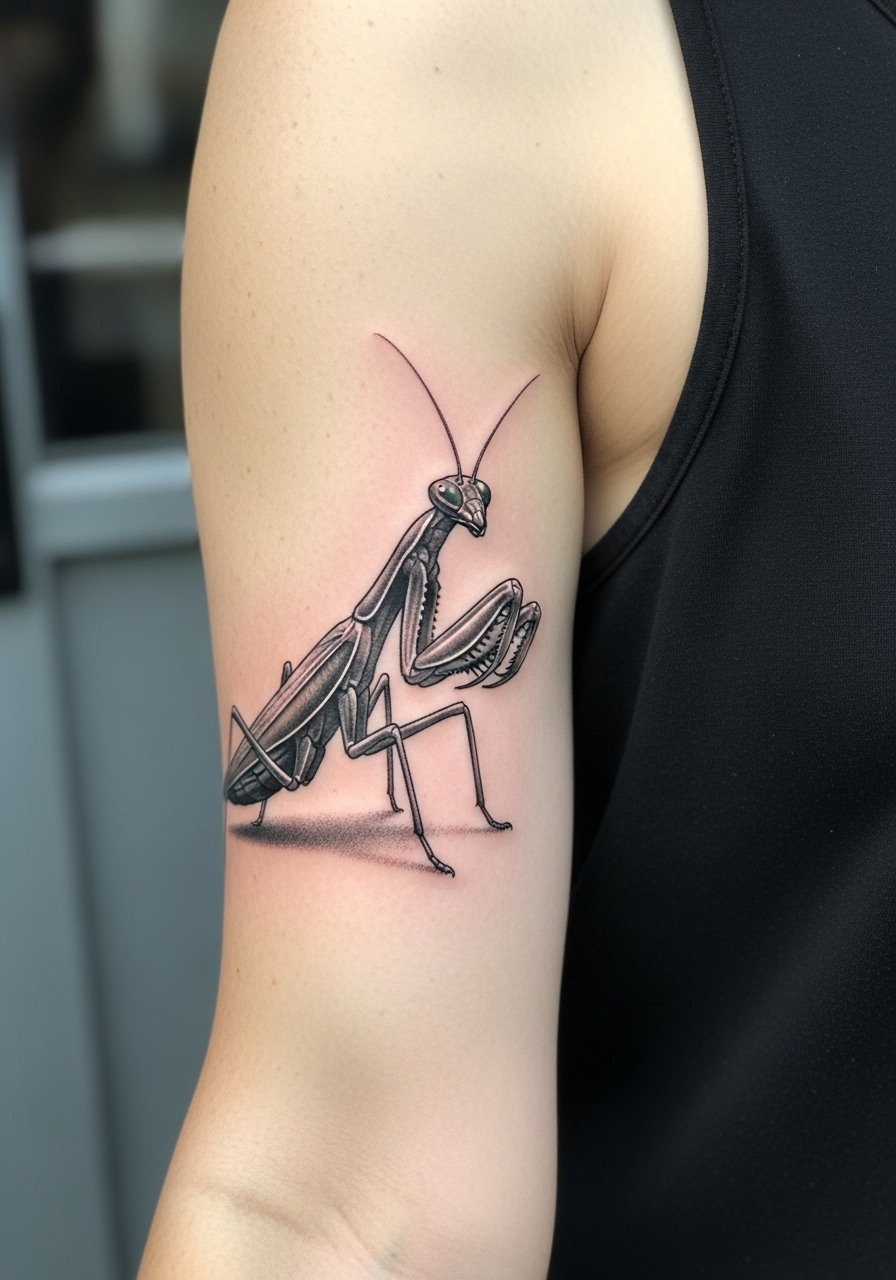
Inner bicep skin is softer and sometimes tricky for single-needle realism. I recommend stipple shading for depth rather than long sweeping tones that can wick into the tissue. Tell the artist you want a reference close-up of the mantis posture so antennae and leg joints retain anatomical clarity. The session is sensitive because the arm must be positioned to keep the canvas steady. Hand this design to someone experienced with inner-arm realism and ask about touch-up timelines before booking.
11. Mantid Negative Space in Blackwork Sleeve Filler
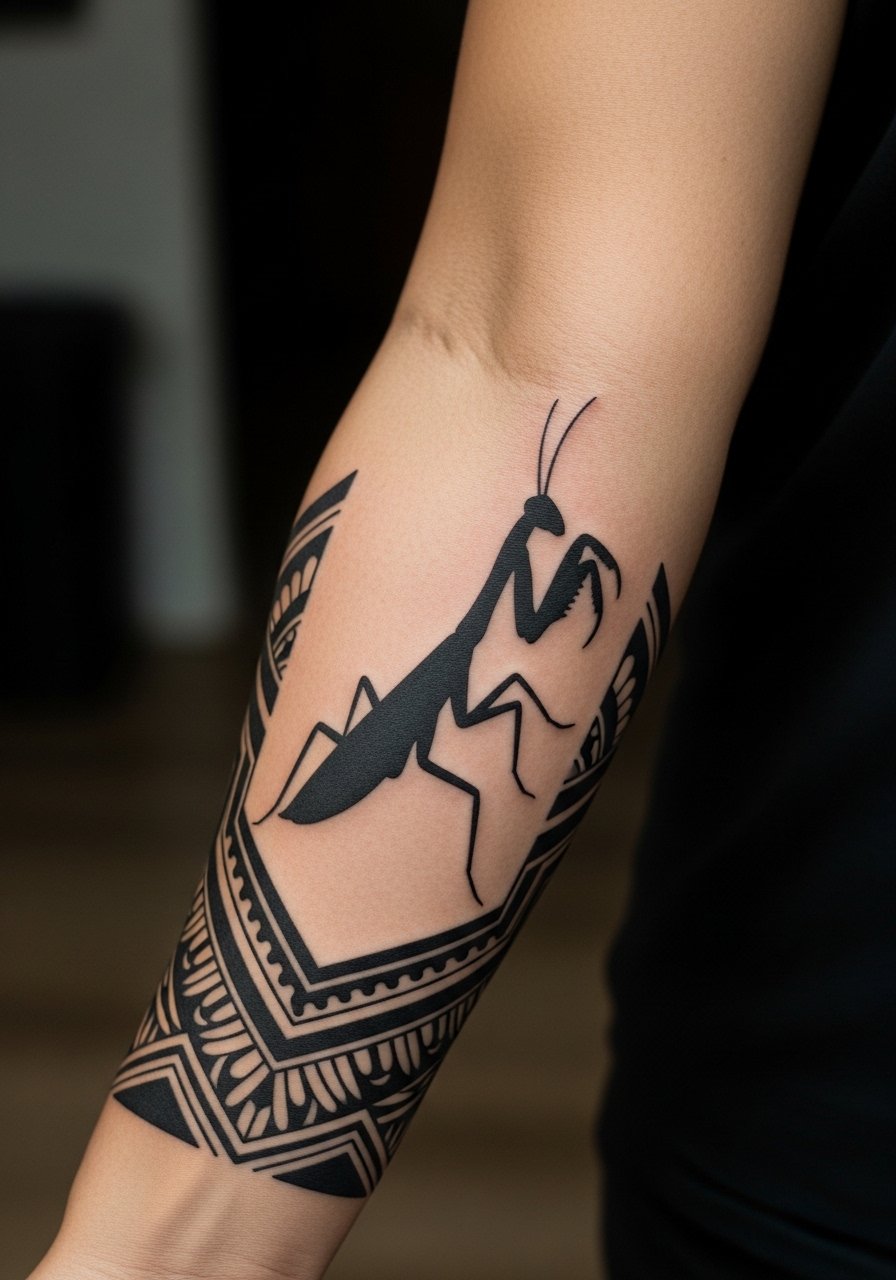
Negative space mantis shapes read strikingly in a sleeve because the dark filler gives the insect instant presence. Ask for clean margins around the silhouette so shrinkage does not eat into the mantis form. A typical error is making the negative shape too thin against a heavy black background, which reduces legibility after a few years. Sleeve filler heals predictably if the artist maintains saturation, though touch-ups are not unusual for large blackwork. This technique pairs well with dot work and stipple shading around the silhouette for texture contrast.
12. Cartoon Mantis with Oversized Eyes on Upper Arm
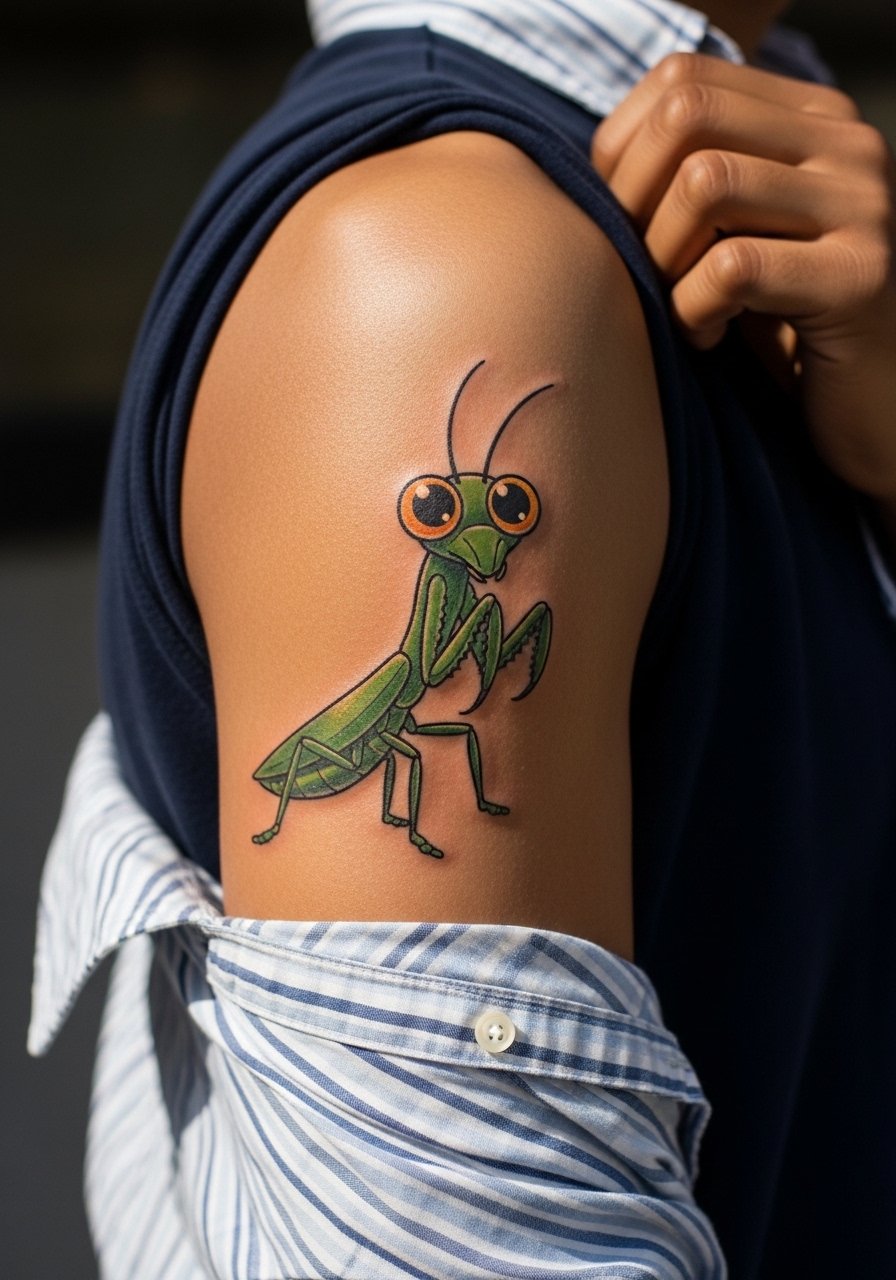
This playful take softens the predator image and often feels less risky for first tattoos. Ask for simplified pupils and clean color blocks so the oversized eyes continue to read instead of smudging into color noise. The mistake is over-detailing pupils and tiny lashes that age into grey specks. Sessions on the upper arm are comfortable and allow the artist to step back to check composition. For the appointment, a loose button down shirt makes it easy to expose the upper arm without wrestling clothing.
13. Geometric Mantis Fused with Abstract Mandala on the Back Shoulder
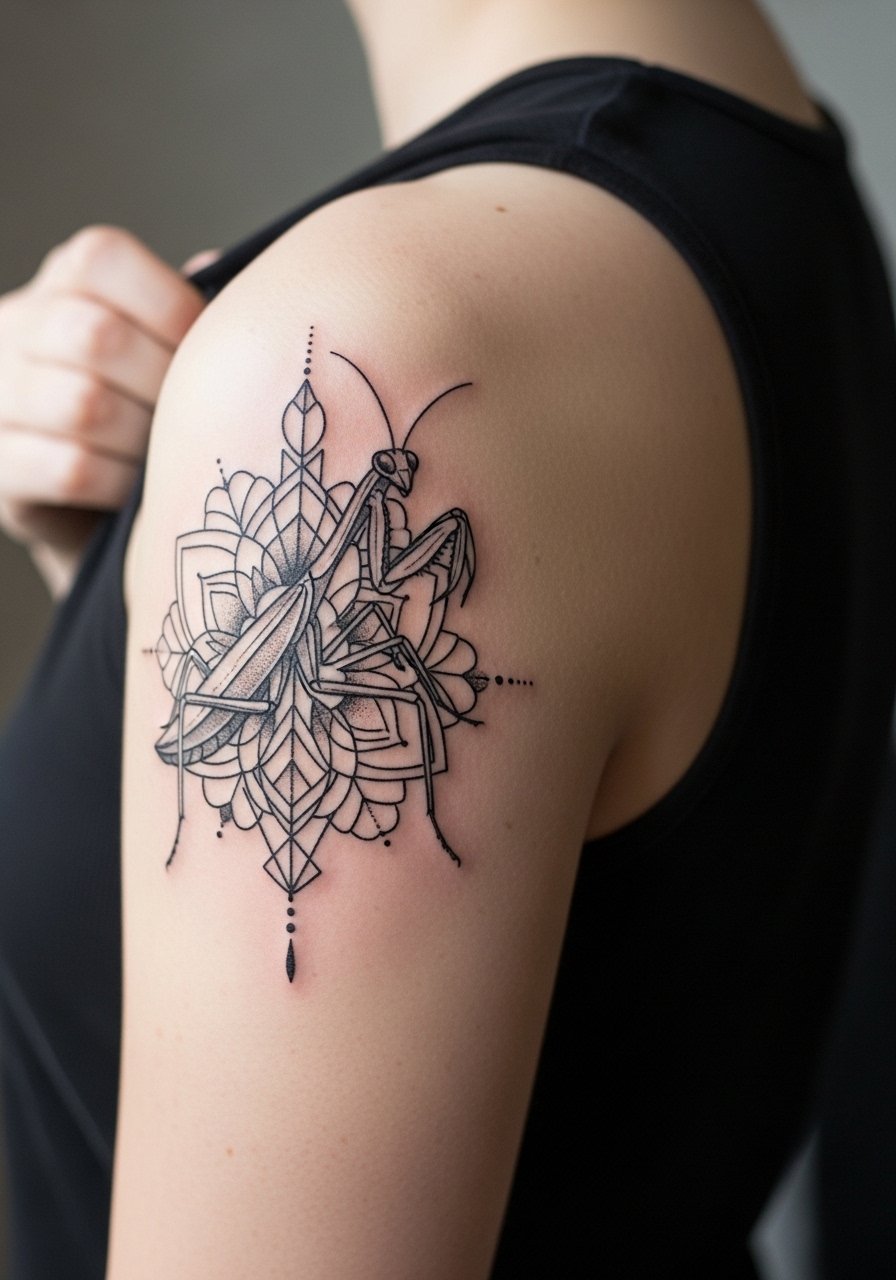
This fusion gives the mantis a meditative frame while keeping lines open for longevity. Ask the artist to scale mandala elements so the mantis silhouette remains the focal point and does not vanish into pattern. A common error is pushing too many concentric rings into tight space, which compresses with time. Shoulder area takes color and blackwork well and offers a forgiving canvas for touch-ups if needed. If you want to find portfolio examples, search hashtags and local studio location tags rather than asking for one artist by name.
14. Watercolor Accent Mantis on the Shoulder Blade
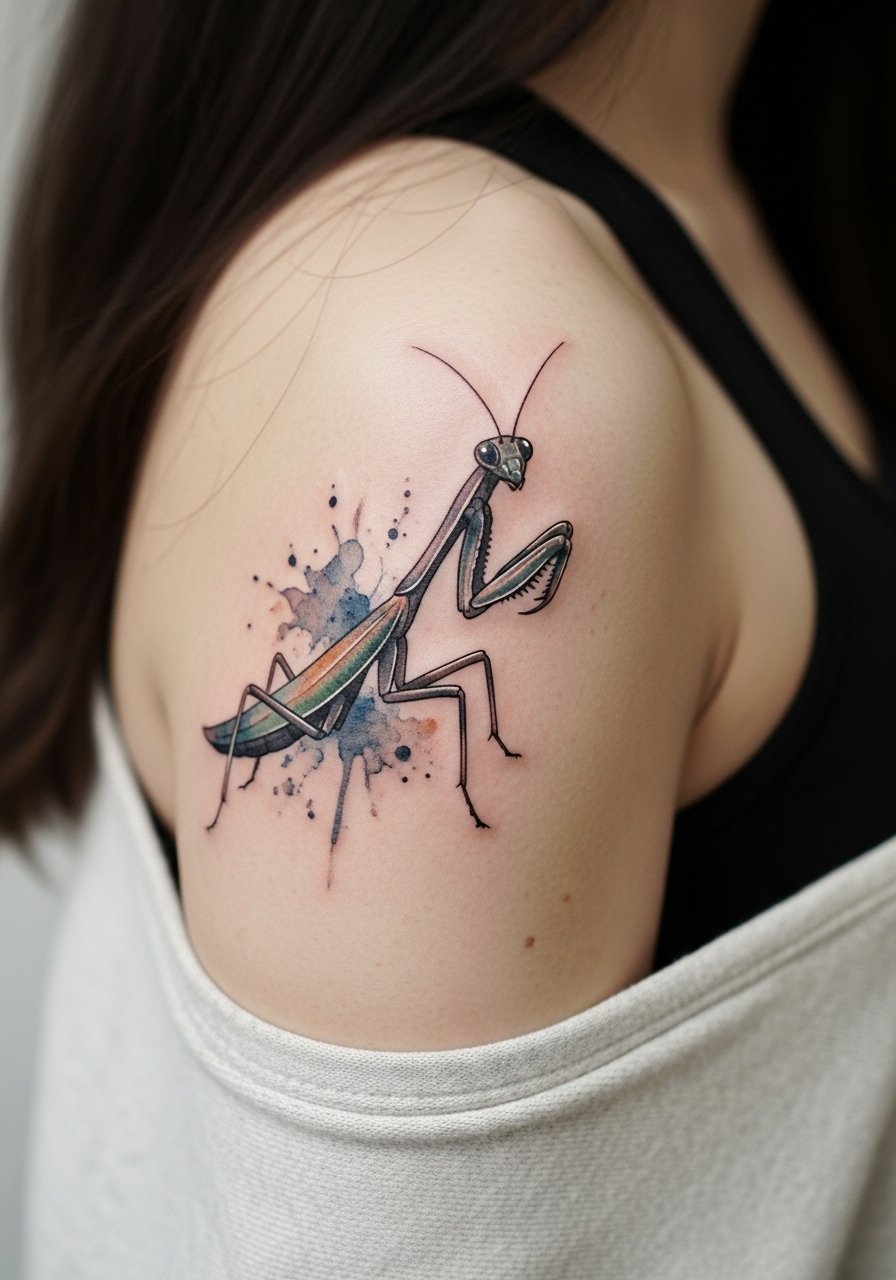
Watercolor on the shoulder blade benefits from a slightly larger negative margin so the wash reads airy rather than smeared. Tell your artist you want diluted edges that fade out cleanly instead of aggressive feathering. The mistake is tight, heavily stippled watering that can granulate on movement points. Sessions are comfortable because the shoulder blade is stable and allows the artist to work uninterrupted. For wardrobe, wide-neck tops that reveal the blade work best when you want to show this piece.
15. Tribal Mantis Calf Filler
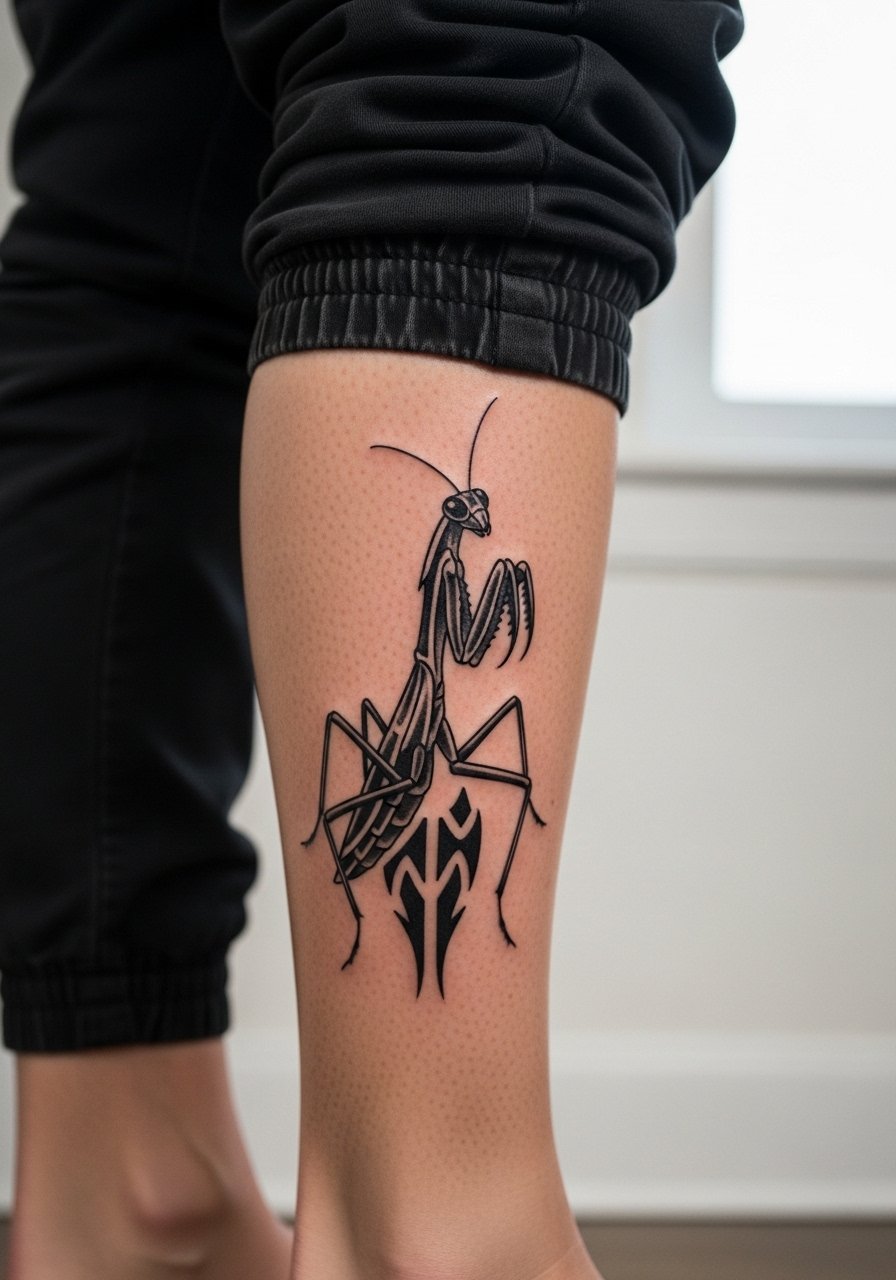
Calf placements are lower-friction than ankles and are a good choice for bold tribal mantises that need solid fills to last. Ask for consistent fill density and crisp negative edges so the repeated motion of walking does not blur the pattern. The common misstep is adding micro-detail in dark blocks which vanishes into texture as the skin moves. Sessions are easy for most people and touch-ups tend to be minimal if saturation is solid from the start.
16. Tiny Finger Mantis Accent
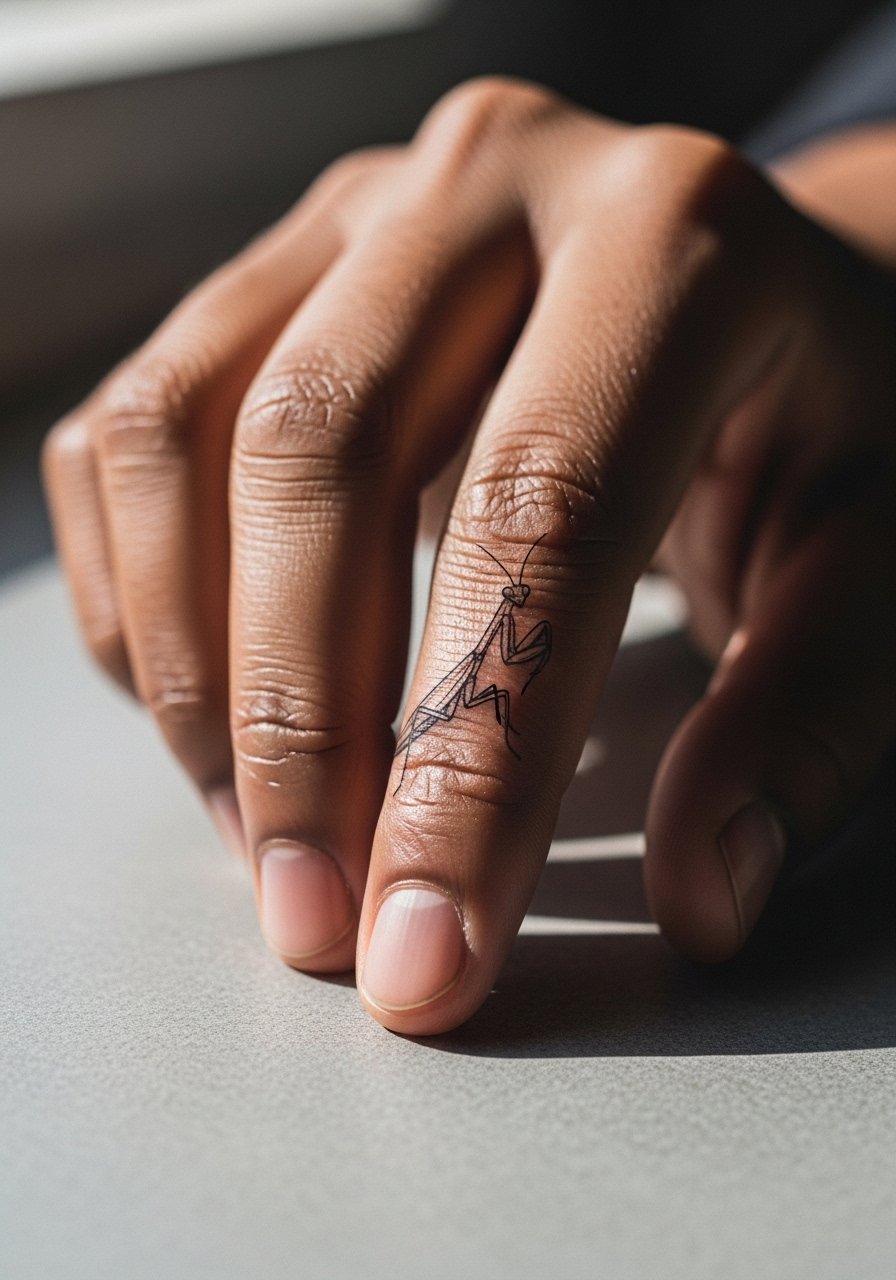
Finger tattoos are high-maintenance and still affect hiring in some industries, so think about visibility before committing. For a mantis, favor a silhouette or small single-needle outline rather than tiny cross-hatching which fades quickly. The pain is sharp and brief, and expect touch-ups within one to two years for most finger lines. If you work with your hands a lot, discuss thicker anchor lines with the artist to reduce early fading.
17. Fine Line Poised Mantis on Inner Forearm
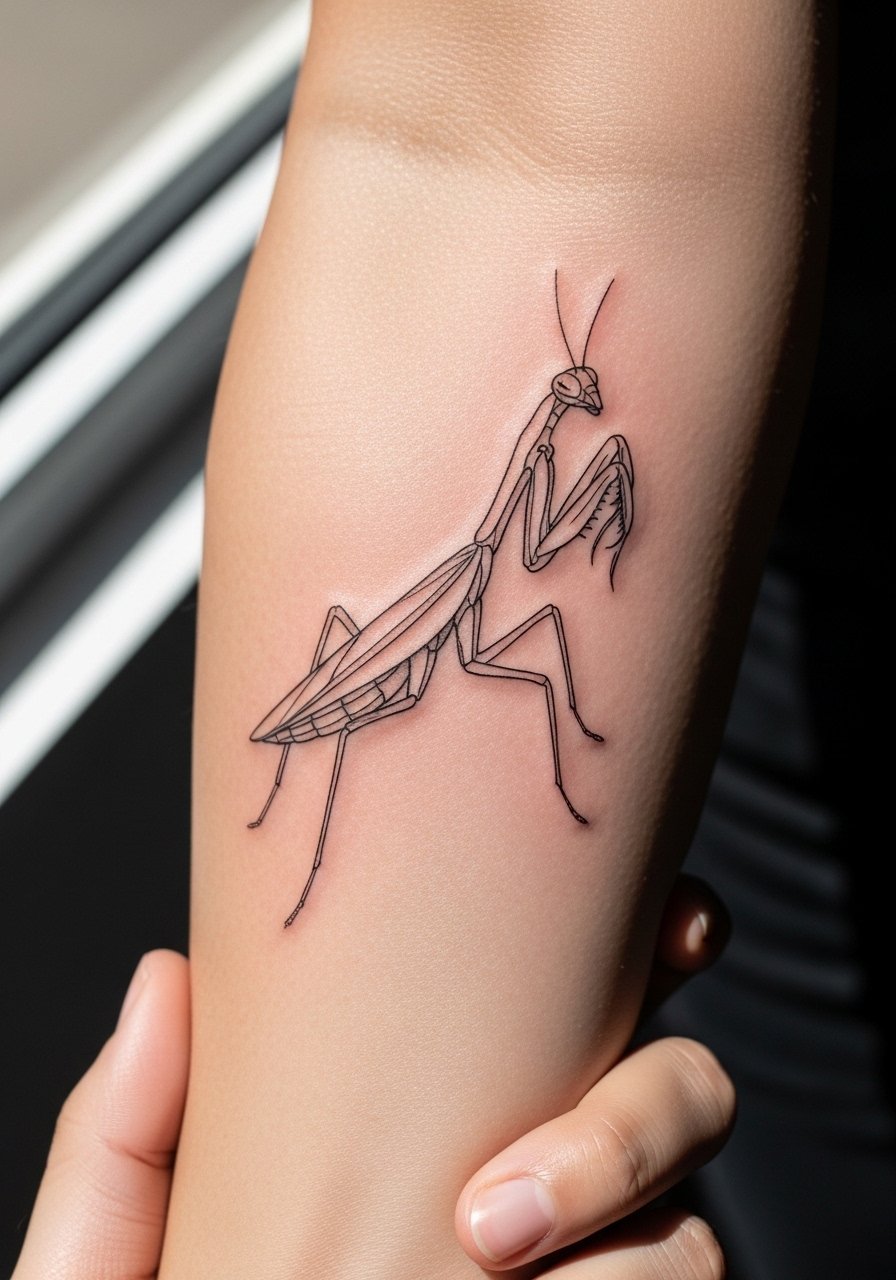
Inner forearm is a showcase area that often ages gracefully if you match line weight to movement. In consultation say you want slightly heavier primary legs and lighter secondary antennae so the silhouette keeps reading as the ink settles. A common mistake is requesting uniformly hairline strokes across a long, high-visibility area, which invites uneven fading. The session feels steady and tolerable for most people. For appointment ease, a short sleeve button down gives the artist clear access while keeping you comfortable.
Frequently Asked Questions
Q: Will a fine line praying mantis on my wrist blur faster than a black silhouette?
A: From what I've seen, fine line on high-motion wrist areas does blur sooner than solid silhouettes. If longevity matters, ask your artist to thicken key anchor lines or pick a silhouette design instead. Expect possible touch-ups around year two for single-needle wrist pieces.
Q: Do watercolor-style mantises need different aftercare than blackwork?
A: The core aftercare is the same, but watercolor relies on even early moisture control to keep colors from drying into patchy tones. Use the thin protective film in the first week and follow your artist's reapplication guidance. The pre-session picks above help prevent scabbing that pulls color.
Q: How should I ask an artist about the fine line versus bold line debate?
A: Name both camps in the conversation. One position accepts delicate single-needle work and plans for touch-ups. The other recommends bolder outlines for longevity and fewer visits. Ask which approach the artist prefers, and request a portfolio example showing year-one and year-three healed results.
Q: Which placements show watercolor mantises best for summer outfits?
A: Thigh and upper arm let washes breathe and are easy to show with high-waisted shorts or sleeveless tops. For upper-arm watercolor, a sleeveless crop top women pairs nicely because the neutral torso keeps attention on the color.
Q: Is a realistic mantis worth traveling for, or can I find a good shop locally?
A: Realism benefits from someone who has a steady portfolio in micro-realism. Use platform filters and location hashtags to find guest spots or artists who travel. If you do travel, bring clear reference angles and plan for at least one touch-up session.
Q: How often do mandis in sleeve fillers require touch-ups compared with single pieces?
A: Sleeve filler is large blackwork and often holds saturation longer, but sleeves also see more cumulative sun exposure. Expect touch-ups less frequently than delicate single-line pieces, but plan a revisit at year three to refresh heavy black fields if exposure is high.
