
The red dragon trend looks gorgeous on feeds right now, but the reality can sting. Reds fade into pink faster than people expect, artists sometimes ghost after a deposit, and thigh pieces can warp with weight change. If you want designs that still read as red years from now, this guide prioritizes placement choices, linework that holds, and what to say at consults so the dragon ages well.
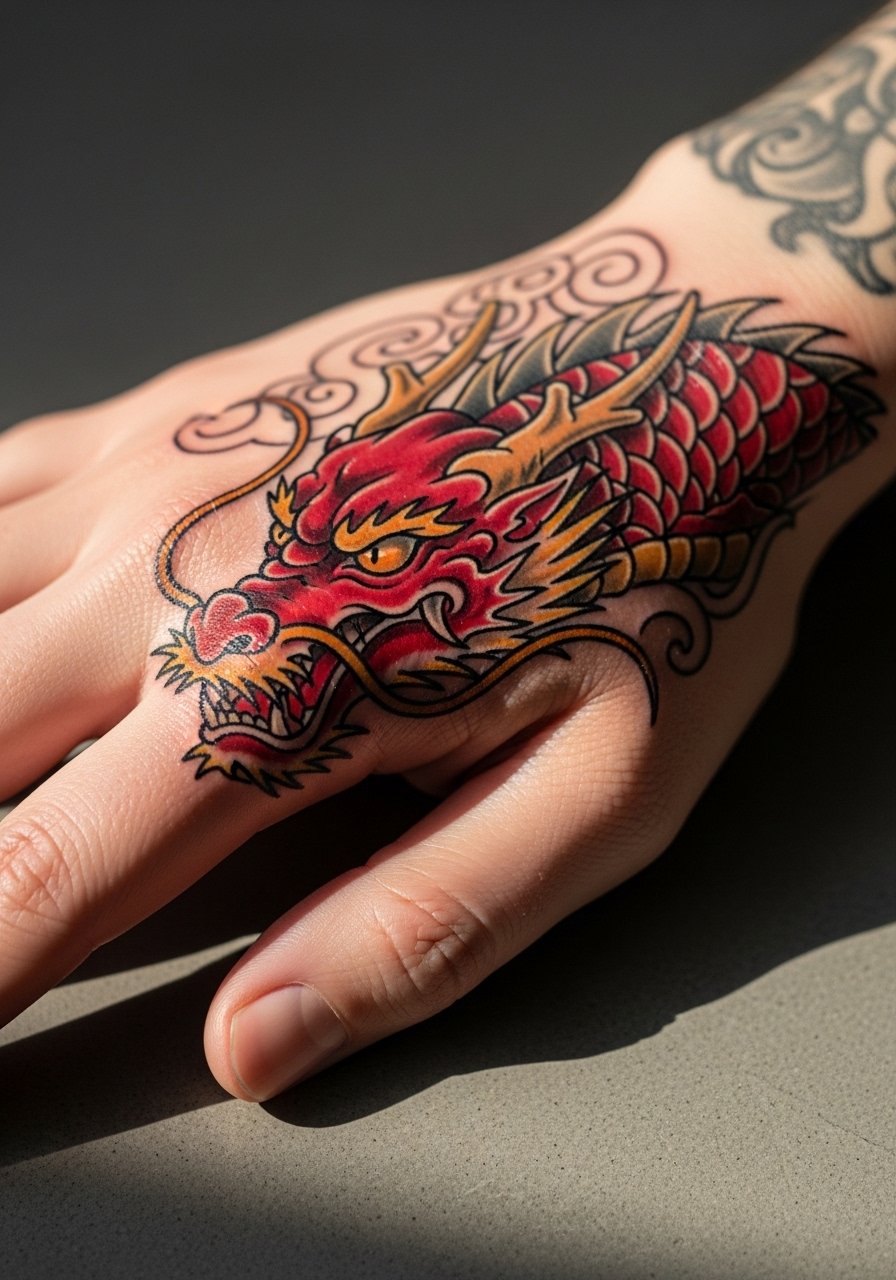
1. Red Dragon Head on Hand
Pain warning, hand work hurts more than forearms, and visibility is constant so healing habits matter. For a small dragon head on the hand choose thick linework with a black base and crimson fills to keep the red readable as it fades. Tell your artist you want strong outlines and short sessions so saturation can be layered without overworking the dermis. Expect touch-up around year one for reds and plan for daily sunscreen once healed. For showing it off, pair the piece with fingerless leather gloves or stacked signet rings for contrast during colder months.
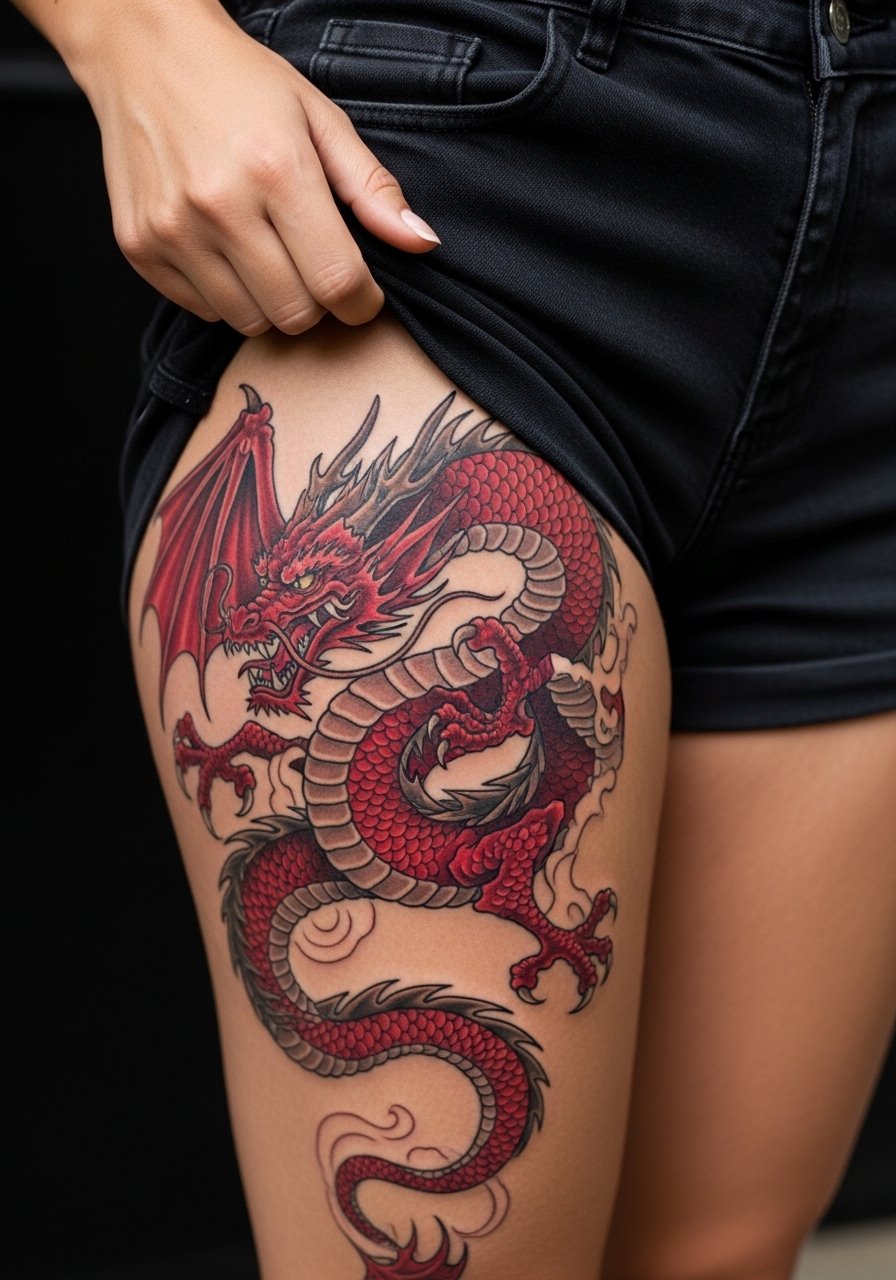
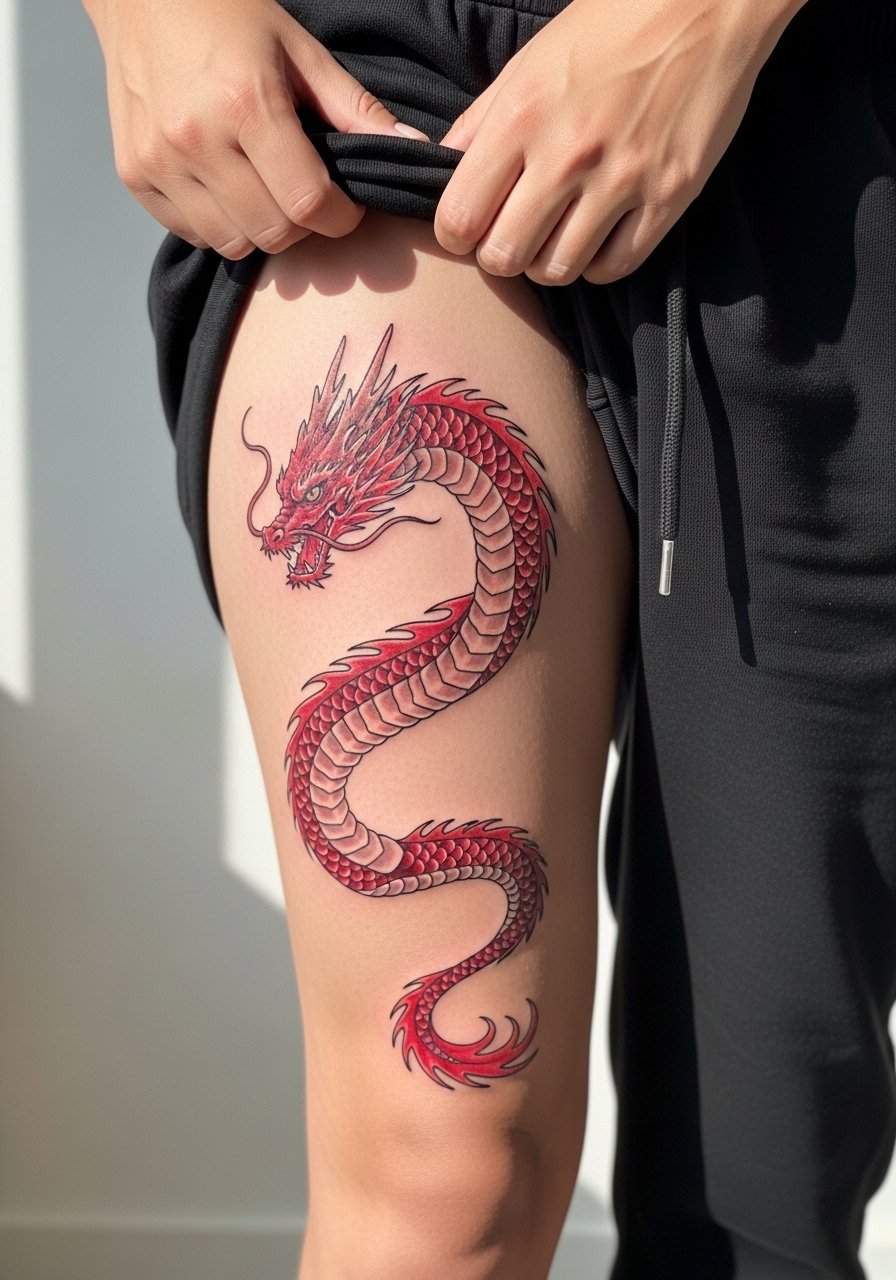
2. Vibrant Red Dragon Thigh Piece
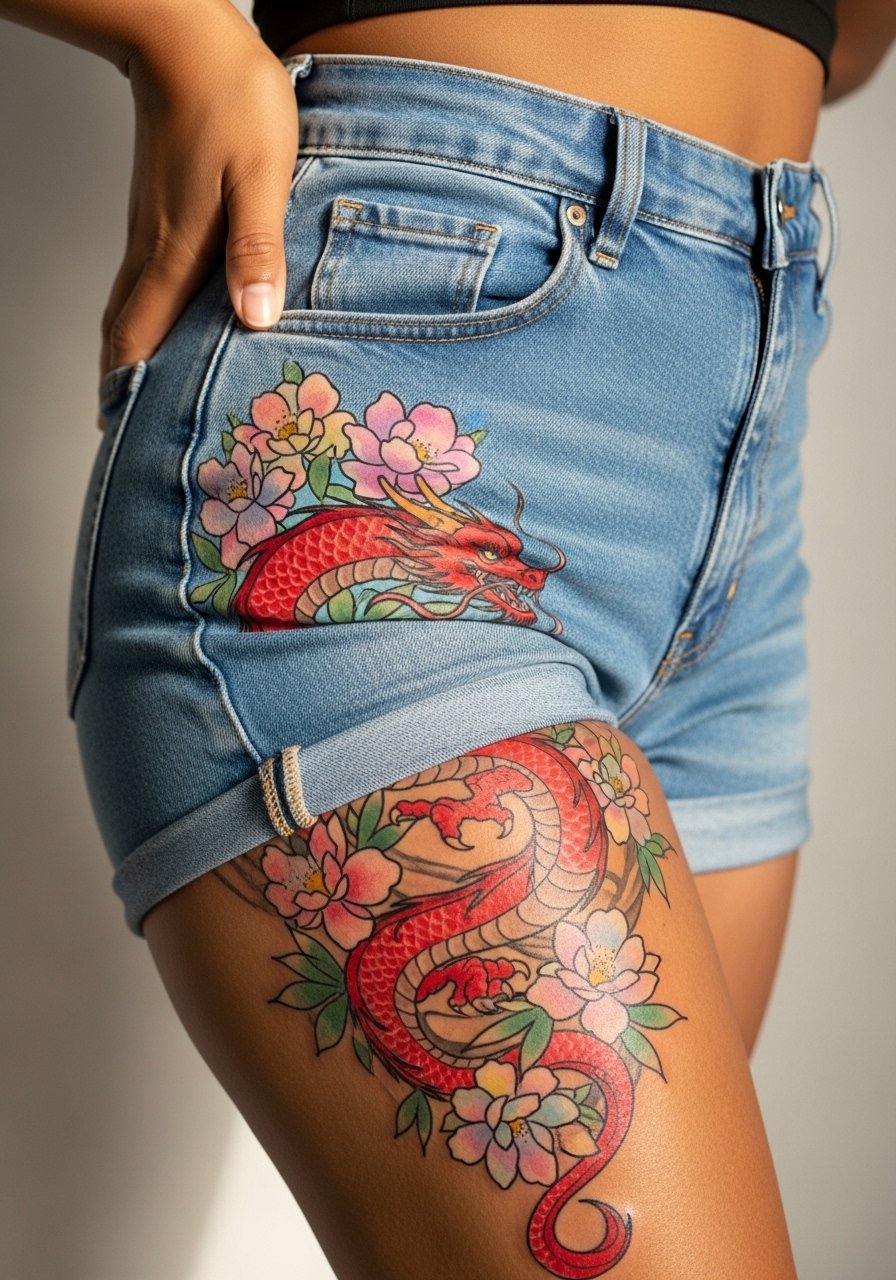
The thigh is forgiving for size and detail but it stretches with weight change, so plan the composition vertically to follow skin shift. I recommend realism-style scales with saturated scarlet and darker crimson shadows layered over grayscale contrast to slow the visual fade. During consult, ask for elastic linework that reads elongated when standing and relaxed when sitting. Session wear should be loose, so bring high waisted denim shorts or joggers your artist can roll aside without pressure. Expect two to three sessions for a medium-large thigh piece and a touch-up window at 6 to 12 months.
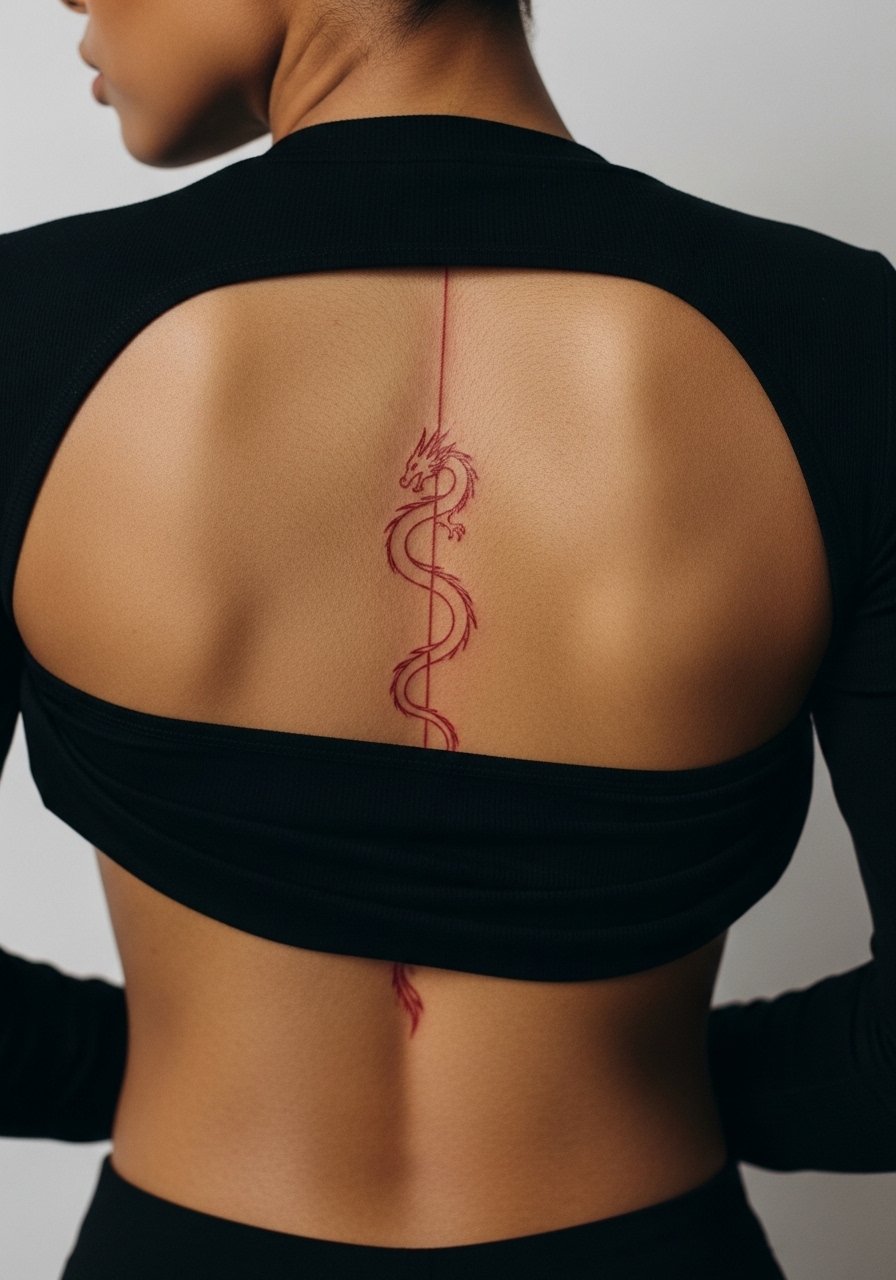
3. Simple Red Dragon Spine Tattoo
Most people pick spine pieces for flow, not flash. Fine single-line red dragons look elegant on the spinal column but the fine-line camp and the bold-line camp disagree on longevity. One group warns that dense fine work on the spine blurs within a couple of years. The other group says proper needle depth and spacing let single-line designs hold. When booking, bring references that show exactly how thick you want the linework and ask the artist about touch-up timelines. For show-off outfits, a backless crop top highlights the vertical flow without crowding the piece.
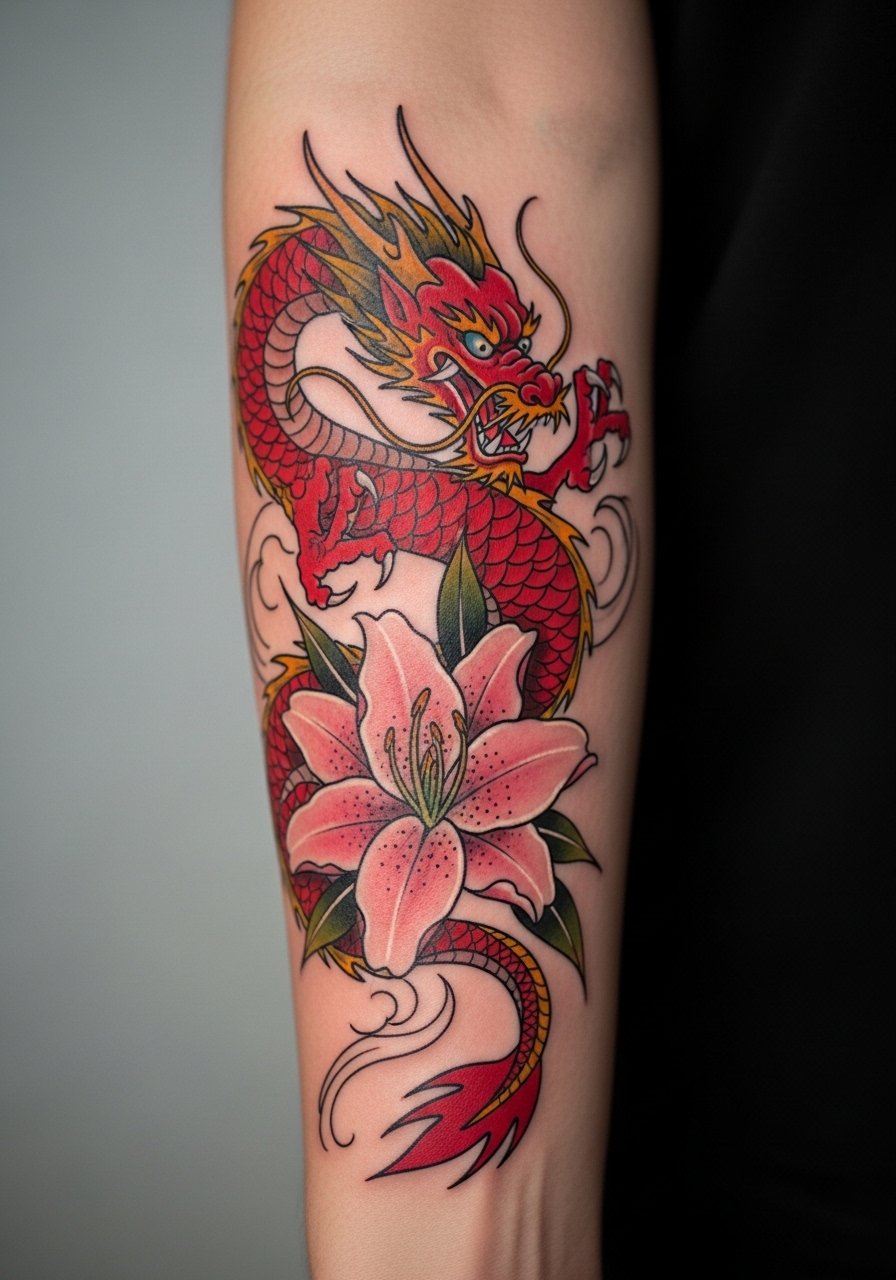
4. Red Dragon Entwined with Lily on Forearm
I've seen forearm florals hold well when artists balance saturated red with softer pinks for the lily petals. Ask for neo-traditional linework and stipple shading so the flower reads separately from the dragon scales as the red softens. Watch out for the common mistake of tiny petal details that blur after healing. For session comfort and afterward styling, wear a short-sleeve tee and pair the finished piece with a rolled sleeve and a leather cuff bracelet to frame the outer forearm without overwhelming it. Expect two sessions and a touch-up at around a year.
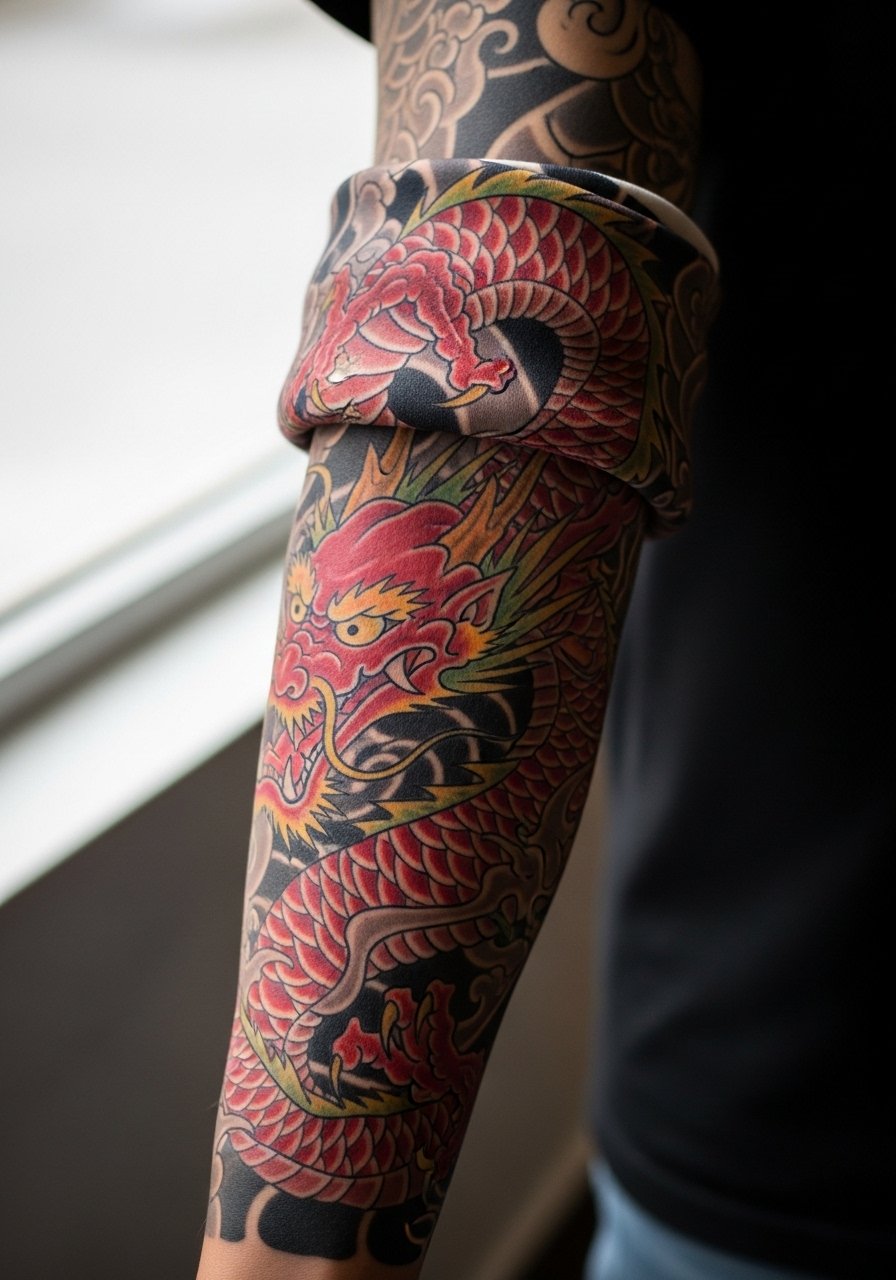
5. Red Chinese Dragon Full Sleeve for Women
This is a big commitment and a long chair rhythm. Traditional irezumi-style red dragons need bold black outlines and layered saturation to maintain scarlet depth on different skin tones. Be explicit during consult about cultural elements and where you want Chinese luck motifs integrated so the piece honors origin without direct replication. A full arm sleeve runs multiple sessions across months and you may need to book a guest spot in summer for better healing in climate-controlled settings. For session wear bring loose button-downs you can roll up or pull aside during work.
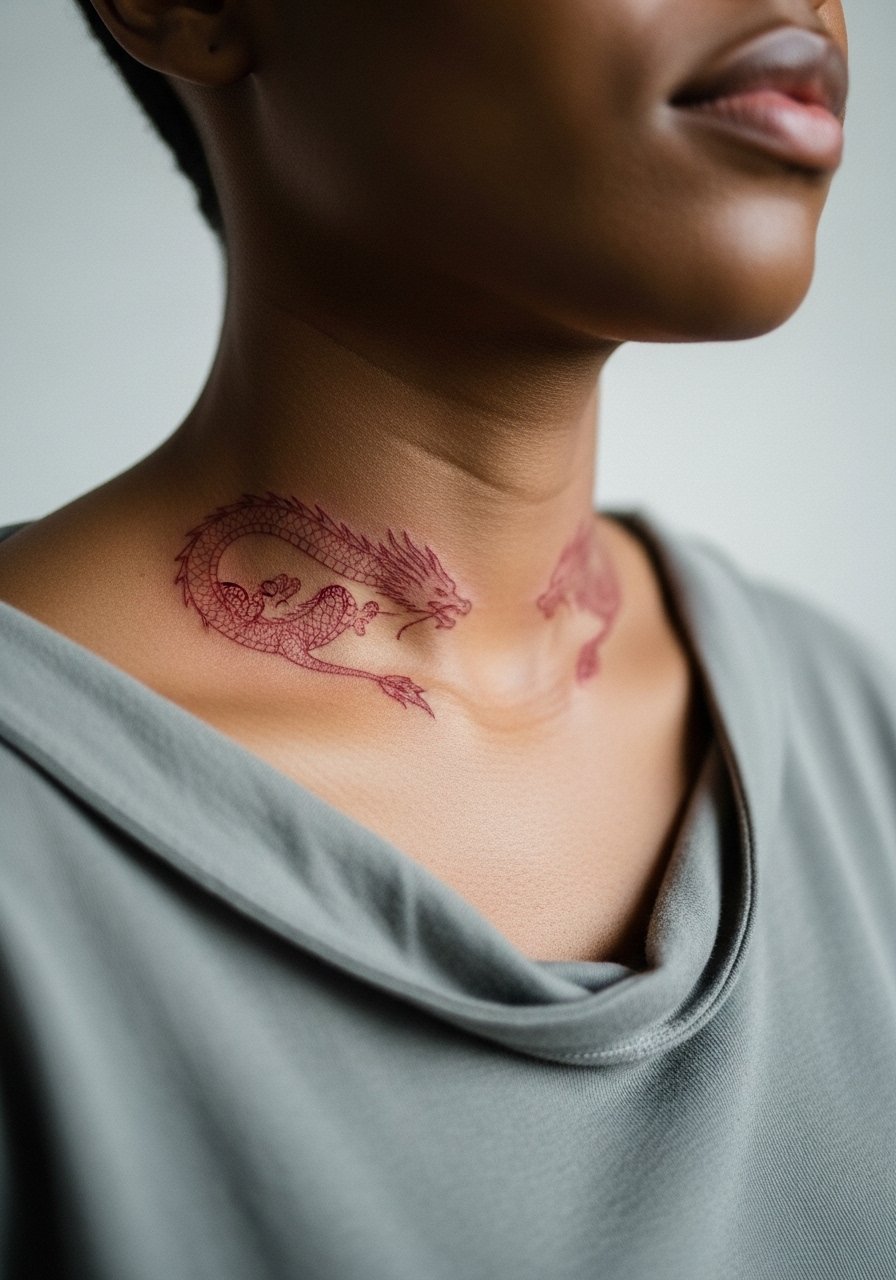
6. Minimalist Clavicle Red Dragon
Fair warning, the clavicle shows every tiny line, and thin red lines can disappear sooner than expected. I favor a slightly heavier single-line that still reads minimalist but gives the ink a fighting chance. During consult, ask the artist to plan spacing so the linework breathes around bone highlights. For showing it off, reach for an off shoulder sweater or a strapless midi dress so the collarbone stays visible without tugging at the skin. One session is common, with a likely touch-up at six to twelve months for reds.
Studio Day Picks
The hand, clavicle, and forearm pieces above heal differently from large sleeves, so a few targeted products smooth the session and the first week.
-
Tea tree balm, small tin. Many people favor a tea tree balm for anti-itch without heavy greasiness on smaller red pieces, especially on feet and hands.
-
Japanese aftercare salve. Works well in humid climates and helps lock color for large surface areas like backs and thighs.
-
Australian eucalyptus lotion. A cooling, non-greasy option that eases soreness after longer chair days for thigh or sleeve sessions.
-
Korean red ginseng ointment. Travelers and guest-spot artists mention this for improving red retention during multi-day sessions.
-
Hustle Butter. A thinner alternative to heavier ointments that many people use after the initial swelling phase to reduce clogging on bright reds.
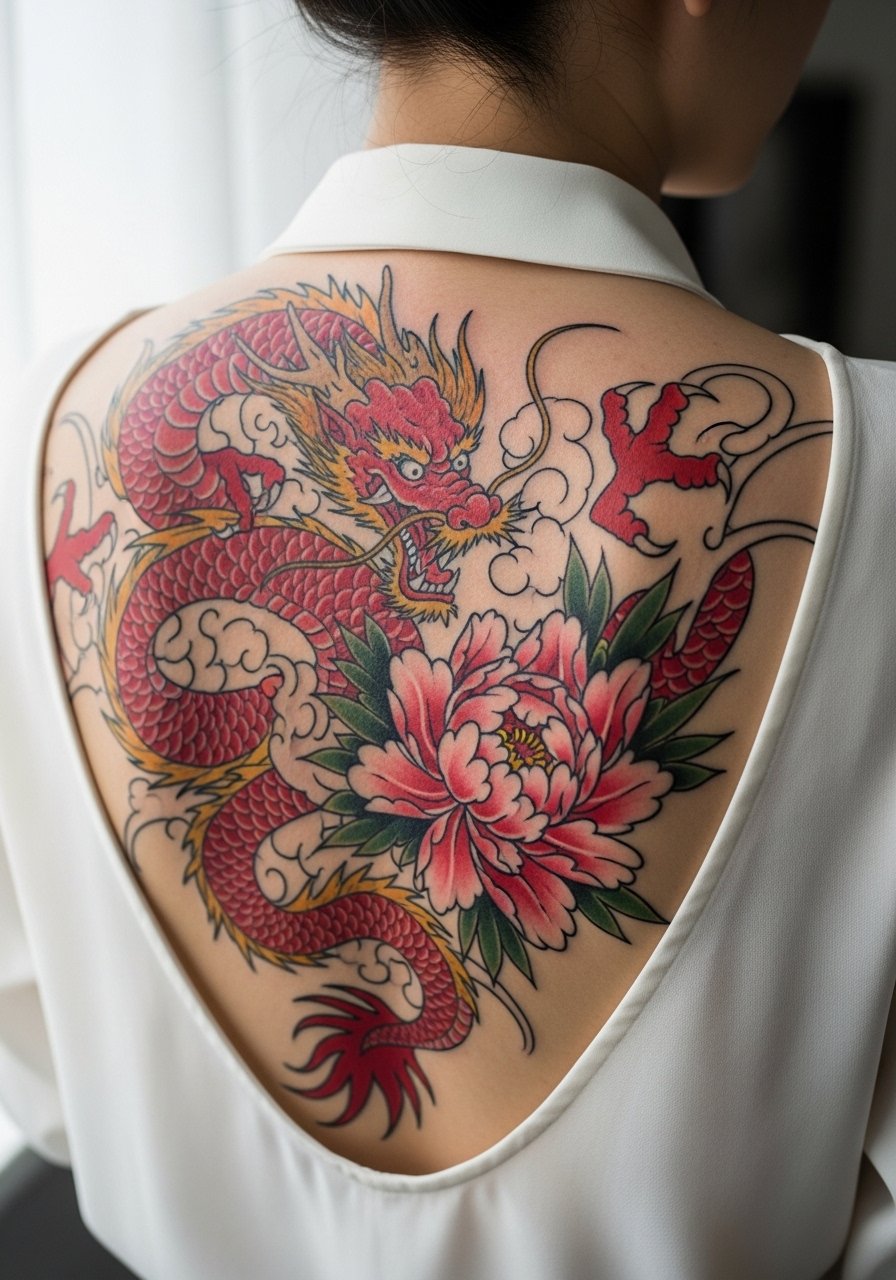
7. Peony-Paired Red Dragon on Upper Back
Large back pieces let artists play with scale and peony motifs that keep reds vibrant longer because the contrast zones are bigger. When you want Eastern motifs, request neo-traditional saturation with layered grayscale underpainting to give depth without relying on red alone. Back work is perfect for summer guest spots since AC helps healing. For show-off looks, an open back blouse frames the upper back while keeping the composition visible and balanced. Expect three to five sessions and plan touch-ups after the first year.
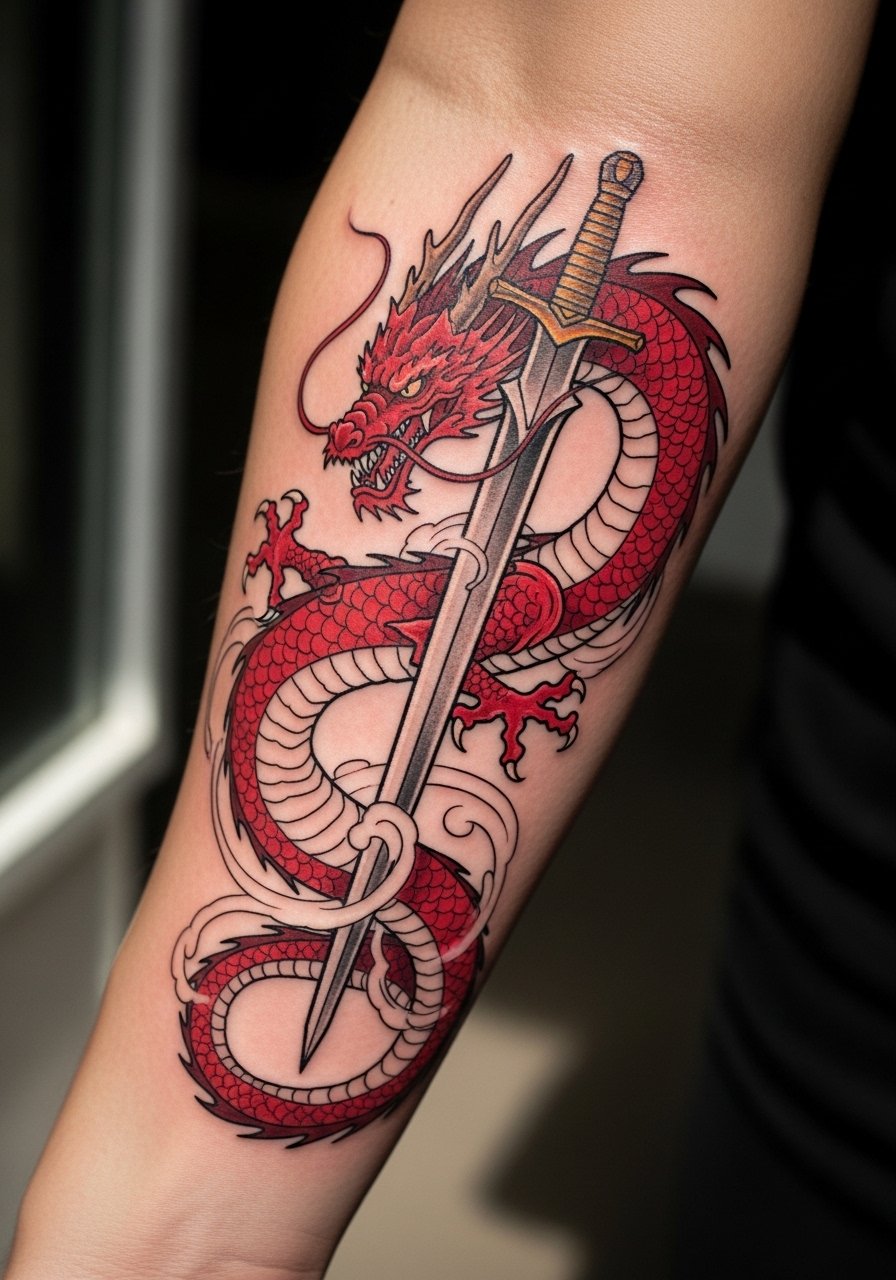
8. Sword-Piercing Red Dragon on Forearm
Narrative forearms age predictably if the composition uses heavy outlines where motion causes friction. The sword pierce motif reads best with black metallic shading and crimson accents rather than full watercolor fills that fade quickly. Tell your artist that you want thicker linework around the sword and stipple shading on the dragon scales to avoid patchy color loss. For casual display, roll a sleeve or choose an oxford button up shirt with sleeves you can push up to show the forearm scene without overwhelming it. Two sessions usually cover linework and color.
9. Feminine Red Dragon with Flowers on Leg
Watercolor blends soft florals with dragon curves for a feminine take but reds in watercolor can wash out faster. If you love that look, ask your artist to anchor the watercolor with small areas of solid crimson and thin black outlines so the composition keeps definition. Session wear should be shorts or a slip so the calf or thigh can be propped. For styling, pair the healed piece with distressed jean shorts or cropped athletic pants to show just enough of the muraled leg. Expect two to three sessions and a likely touch-up in the second year.
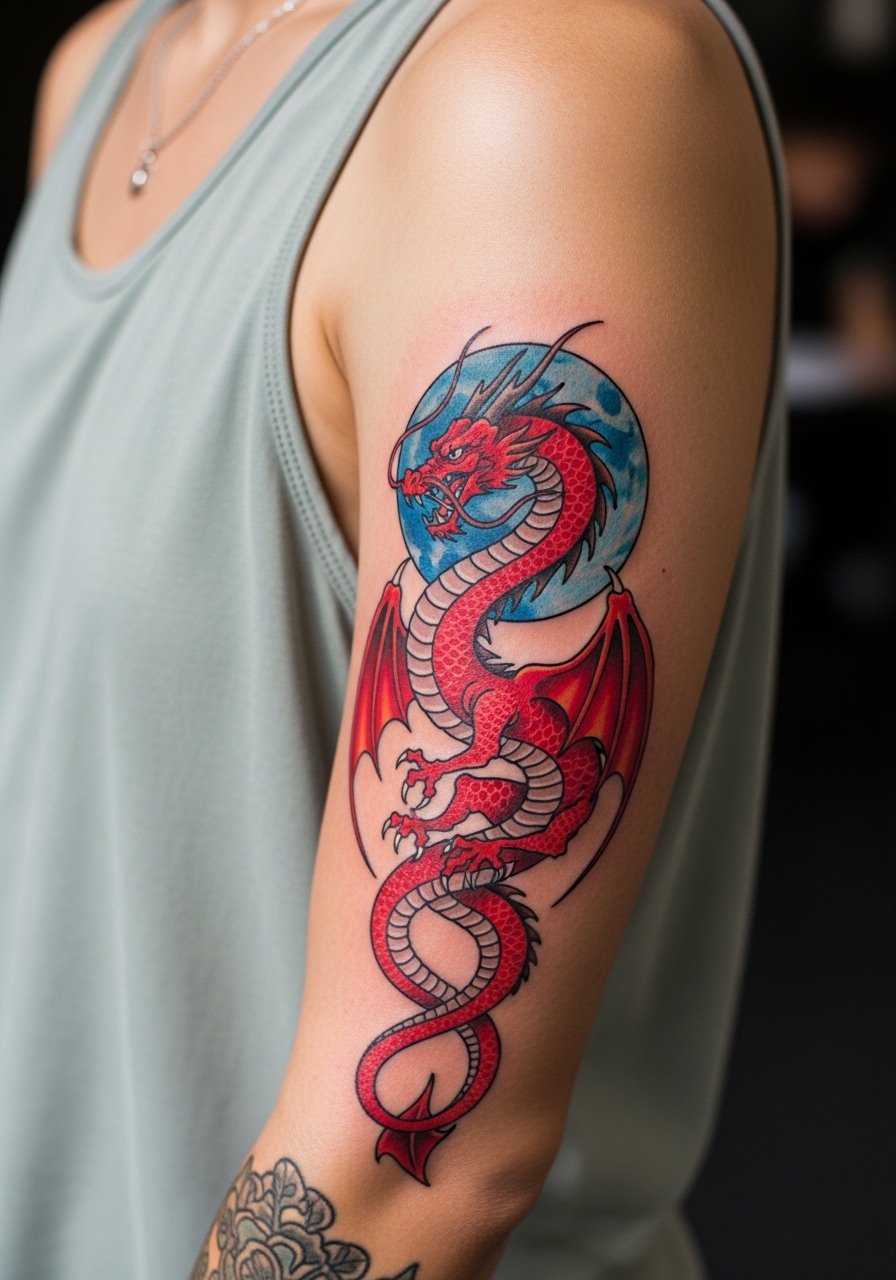
10. Ascending Red Dragon Under the Moon on Inner Arm or Ribcage
A vertical layout reads beautifully in motion but placement choice changes everything. Inner arm pieces are visible and suffer regular friction, while ribcage work is private and painful. If you opt for the ribcage, plan for longer sessions and expect a higher pain score. Many artists will refuse single-needle fine line here because of stretch, so ask about spacing and needle depth. For this placement consider illustrative shading and a blue moon accent to frame the crimson. Wear a front-button dress or a loose tank to the session so the artist can position you comfortably.
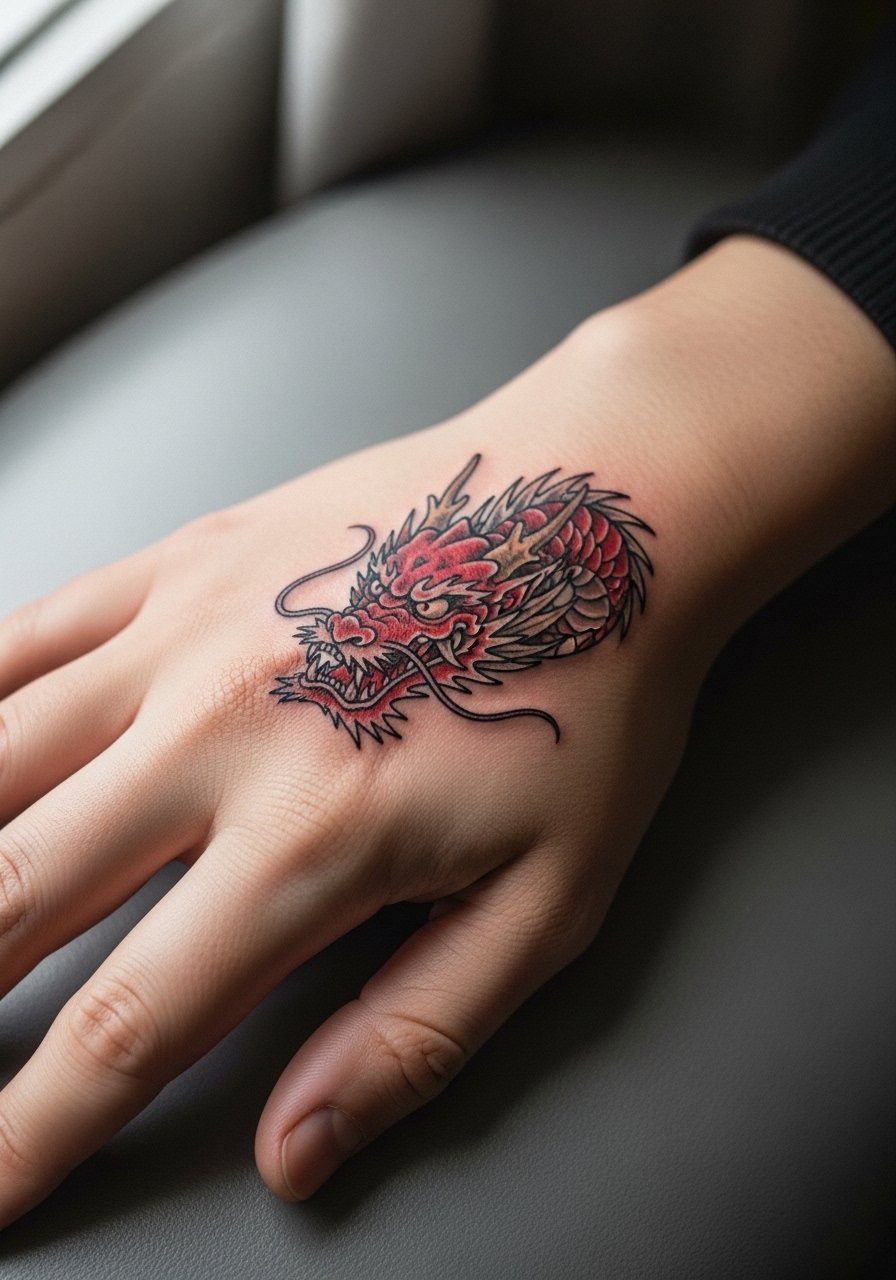
11. Hand-Placed Mini Dragon Head for Daily Visibility
Hand pieces age fast, so this version is small and concentrated to one side of the knuckle rather than sprawling across the palm. If you want daily visibility without a full hand commitment, ask for neo-traditional head detail with heavy black outlines and micro-saturation in crimson. I have seen small hand pieces that held well when artists layered pigment in short sessions and avoided tiny filigree. For work days and style, a black fitted tee keeps focus on the hand without competing with bright colors. Expect one to two short sessions and quick touch-ups.
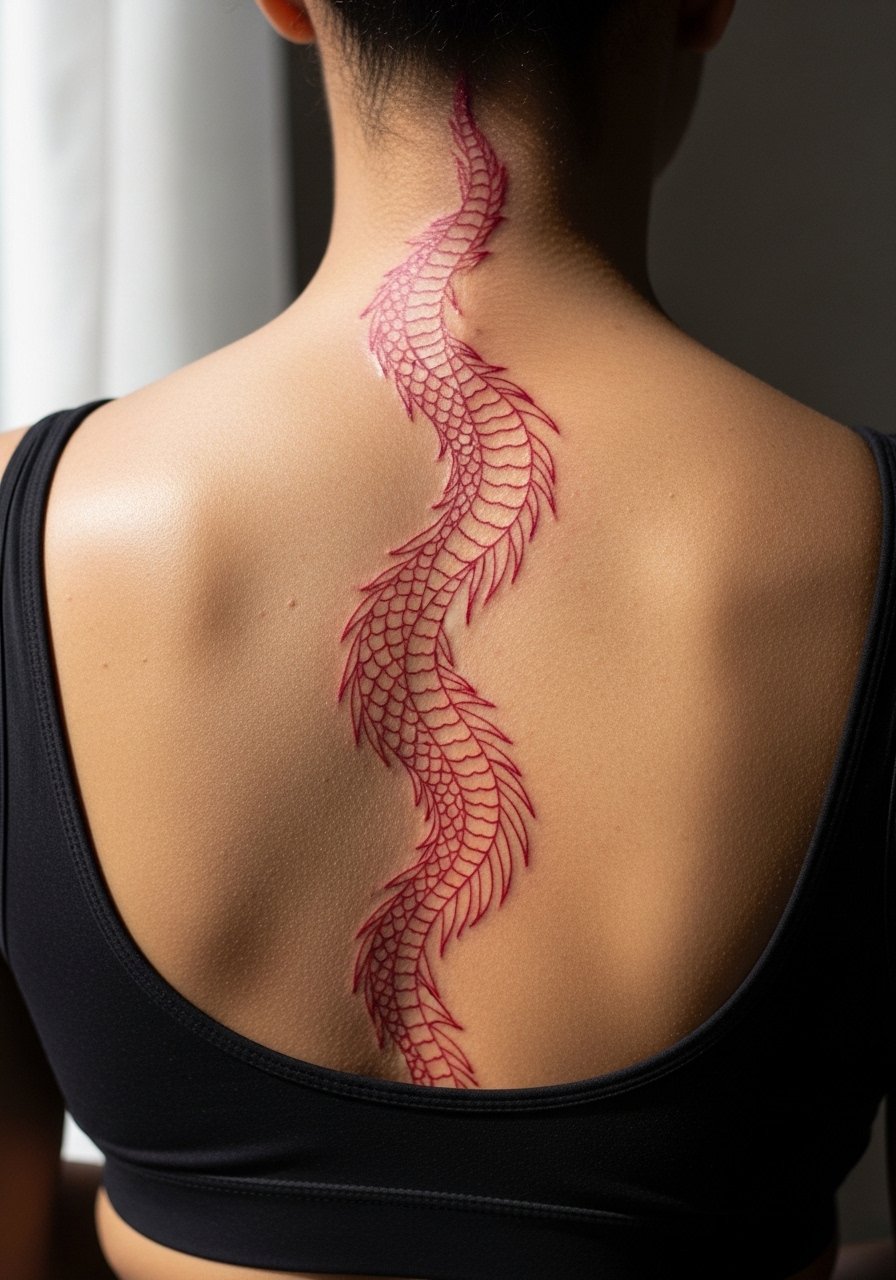
12. Spine Red Dragon for Yoga and Movement Flow
This is a design that benefits from anatomical awareness. When you want a dragon that moves with your twist and stretch, ask for elongated scales and a central spine alignment so the piece keeps balance through weight shifts. The common mistake is packing detail too tightly which causes compression when you bend. Expect a linework-first session then color layering later. For sourcing an artist, search hashtags like #NeoTradDragon and regional threads on Reddit for guest spot leads instead of relying on a single portfolio. Consider this placement a mindful piece that complements practice rather than competes with it.
13. Thigh Design Built for Weight Fluctuation
Not every thigh tattoo looks the same after body changes. For people worried about stretch, request an elongated dragon with scalable repeat patterning so the motif reads correctly whether your thigh is tense or relaxed. Ask the artist to map the design while you stand and while you sit so you can preview distortions. I have seen before and after examples where elastic linework kept the composition legible. Session wear should be loose joggers or athletic shorts and you should expect two to three sessions for larger realism pieces with touch-ups as needed.
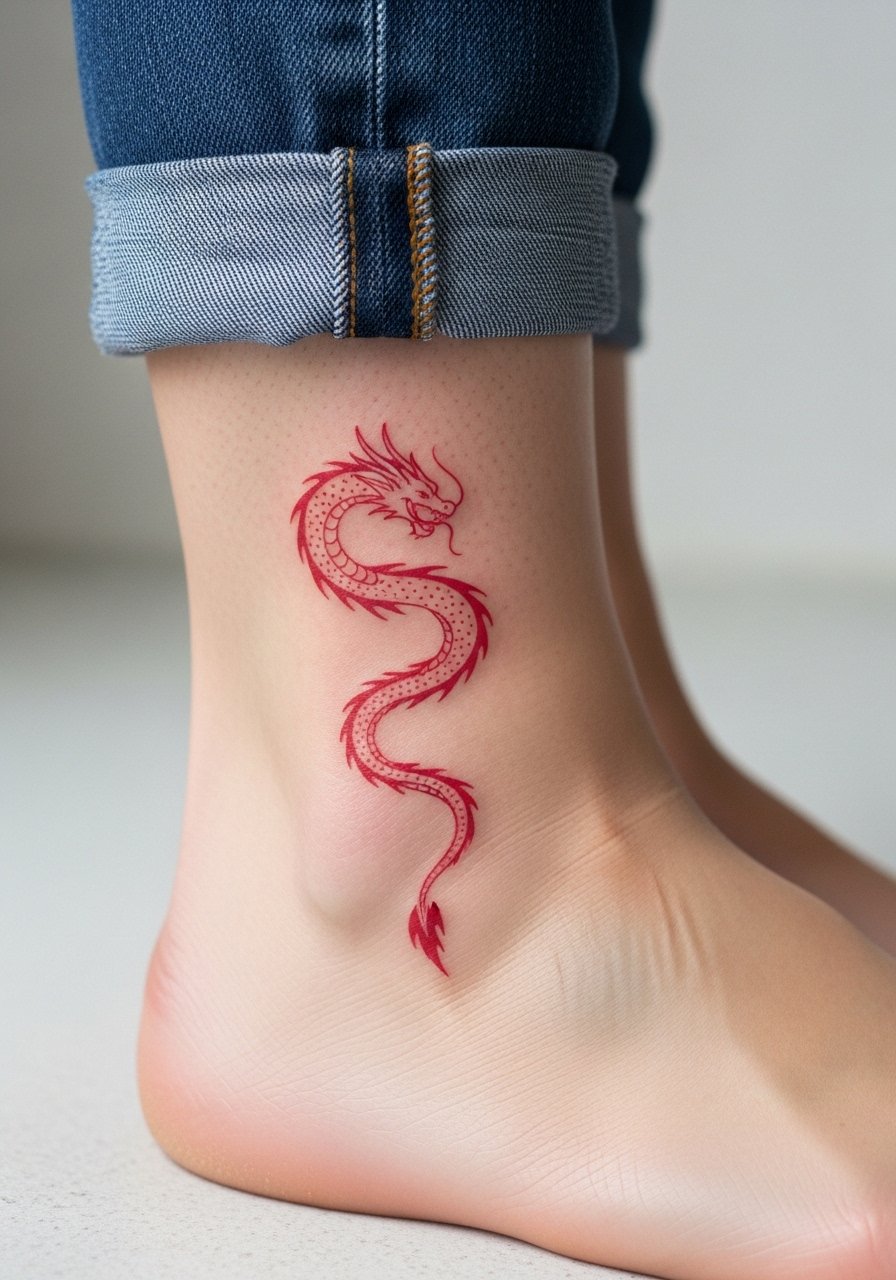
14. Tiny Red Dragon Ankle Accent
Ankle tattoos take constant friction from socks and shoes so small reds need bold outlines and compact saturation. The best small dragon ankles use crisp linework and a darker base layer under the scarlet to delay pinking. For the session, wear ankle cut jeans or shorts to give the artist clear access. Healing here is quick but be mindful of rubbing from footwear during the first two weeks. Expect a single session and a likely touch-up at year one.
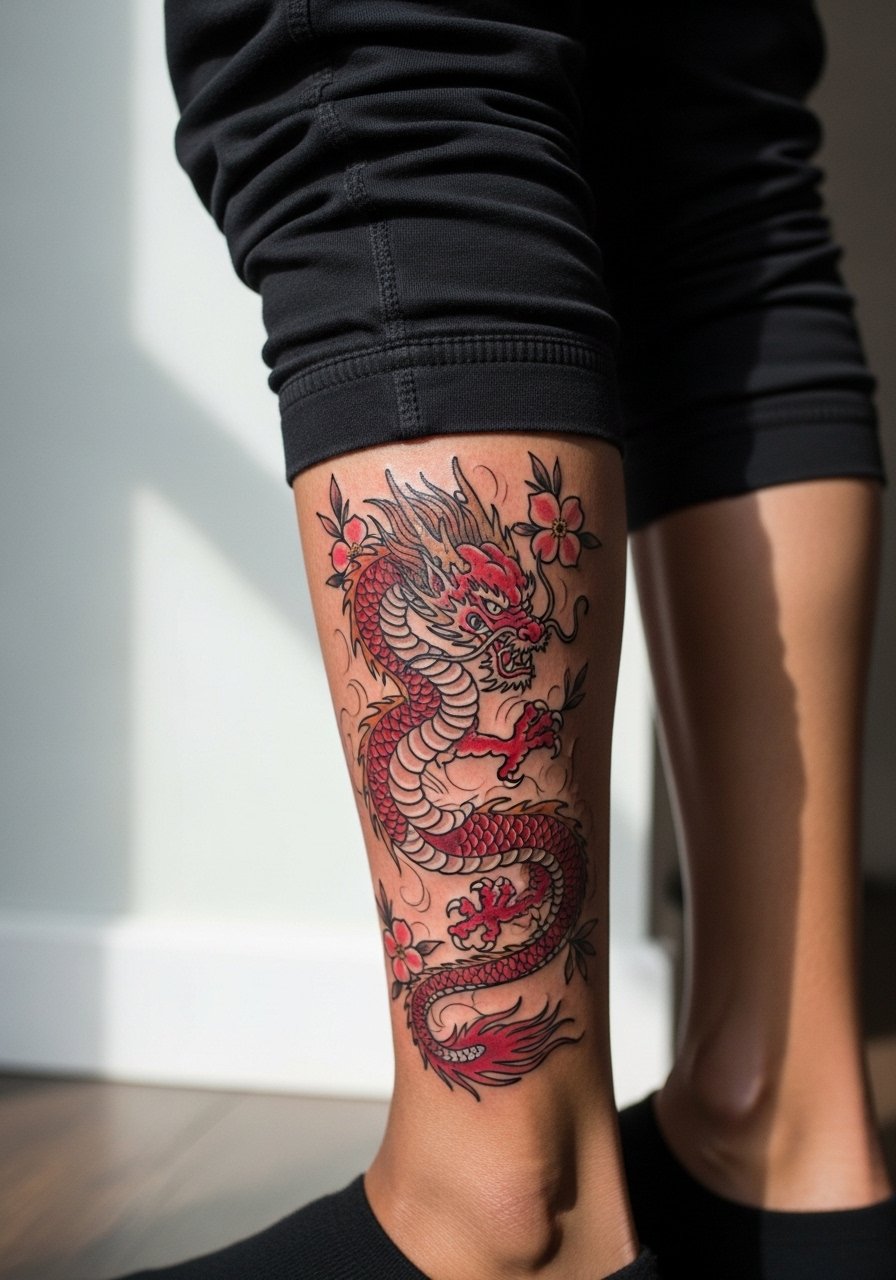
15. Calf Red Dragon with Floral Accents
Calf placements are a solid choice for visibility with less distortion from sitting. Floral accents work well because the dragon can wrap the muscle and the blooms give negative space for readability. For this aesthetic choose a neo-traditional palette with layered crimson and scarlet and ask for stipple shading to preserve texture as the piece heals. Pair the tattoo with cropped joggers or ankle boots to tease the design during cooler months. Two sessions is typical for medium-sized calf pieces.
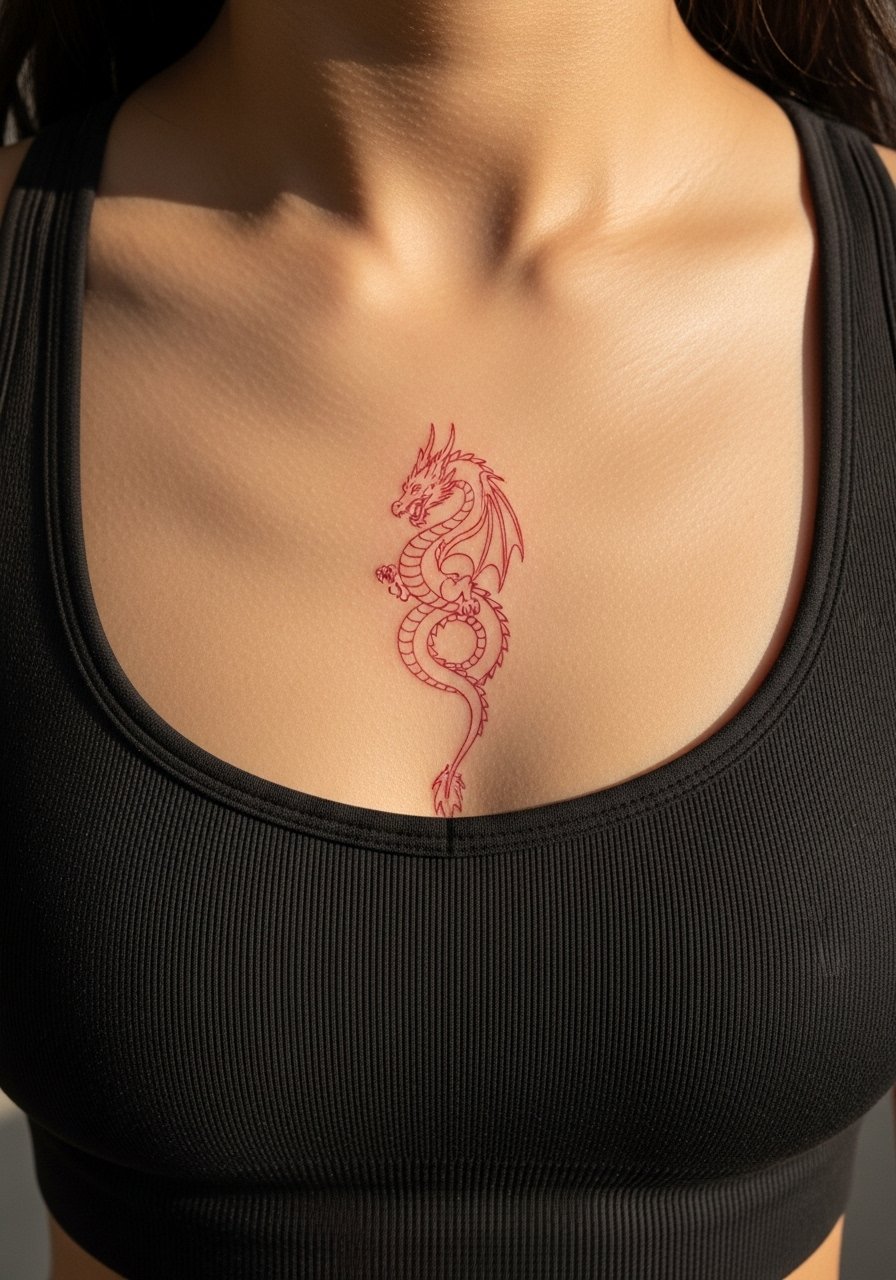
16. Sternum Red Dragon Accent
Sternum work is intimate and high-pain but very rewarding visually when done with a fitted plan. Request a fitted sports-bra placement preview so you can see how the dragon sits above or below fabric lines. Many artists recommend broader outlines here to resist blowout from movement. Because this is a sensitive area, expect longer recovery and a higher pain rating. For the session wear a fitted sports bra to keep exposure minimal. This placement sometimes carries cultural elements, so mention origin sensitivity if the design uses Eastern motifs.
17. Half-Sleeve Dragon from Shoulder to Chest
A shoulder-to-chest half-sleeve reads well when the dragon uses the shoulder as a launch point. I suggest bold black anchors with crimson fills in the body so the piece keeps contrast where shirts hit. During consult, bring multiple poses so the artist can map how clothing will sit over the piece. For showing off, a loose button-down shirt you can slip off one shoulder frames the flow and keeps attention on the upper torso. Expect three to four sessions with staged touch-ups.
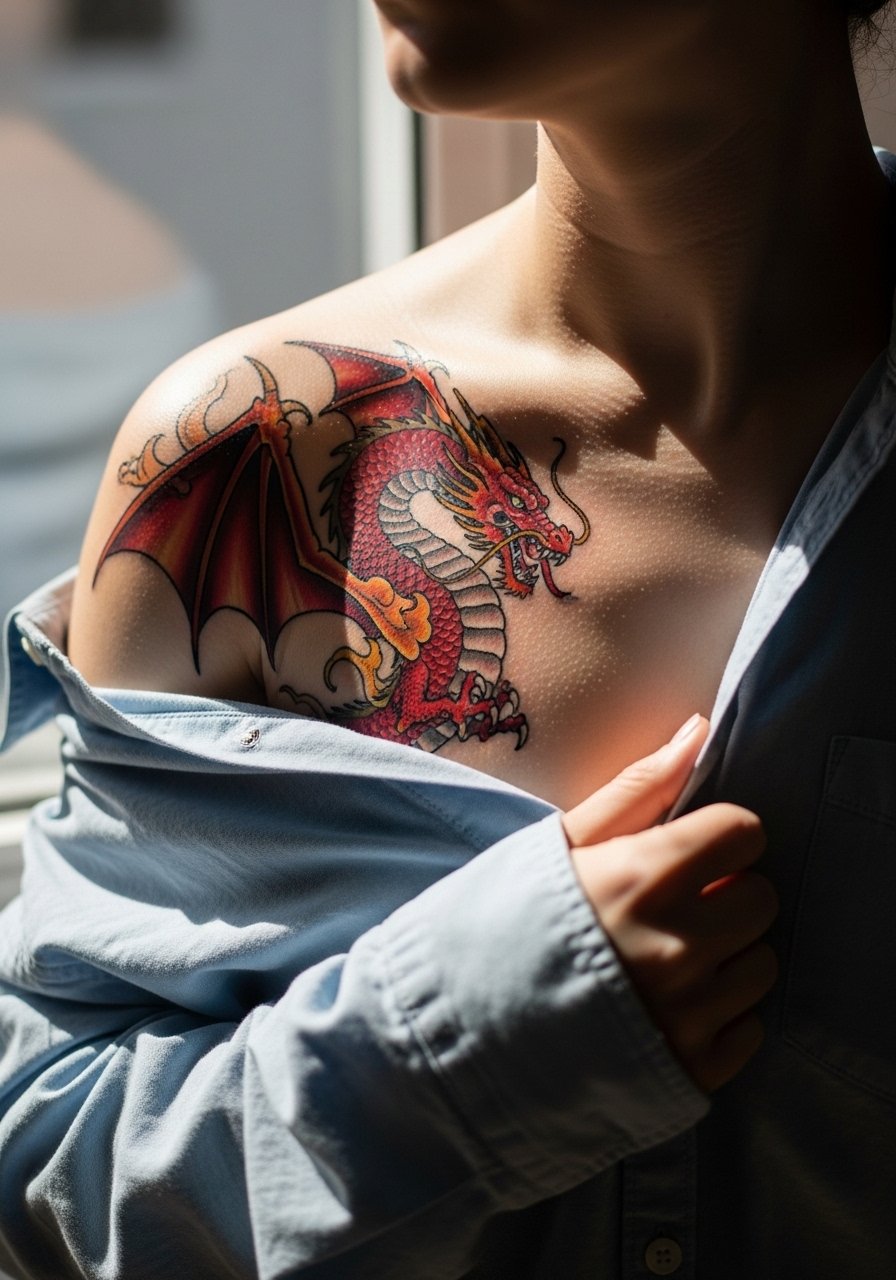
18. Inner Wrist Minimal Red Dragon Curve
Inner wrist placements rub against watches and bracelets so thin red lines are at risk. If you want a delicate curve, ask for slightly heavier single-line work and a dark micro-outline to preserve shape. The common mistake is placing too much tiny detail in a small area. For session wear bring a sleeve you can roll up and for show-off styling a thin chain pendant necklace sits above the wrist without crowding the dragon. One short session is typical and expect touch-ups in the first year.

19. Red Dragon Cover-Up Using Black and Gray Base
Cover-ups that reuse red benefit from a black and gray base with red accents to mask faded pigment and reshape the motif. If you are concealing older pinked red, ask for contrast blocks and reworked scales rather than a single flat overlay. The session process often involves heavier shading first, then color layering later. A common error is expecting a one-session miracle for complex cover-ups. Plan for staged appointments and a realistic touch-up timeline. When selecting an artist, search convention pages and #DragonGuestSpot threads for people experienced in layered work.
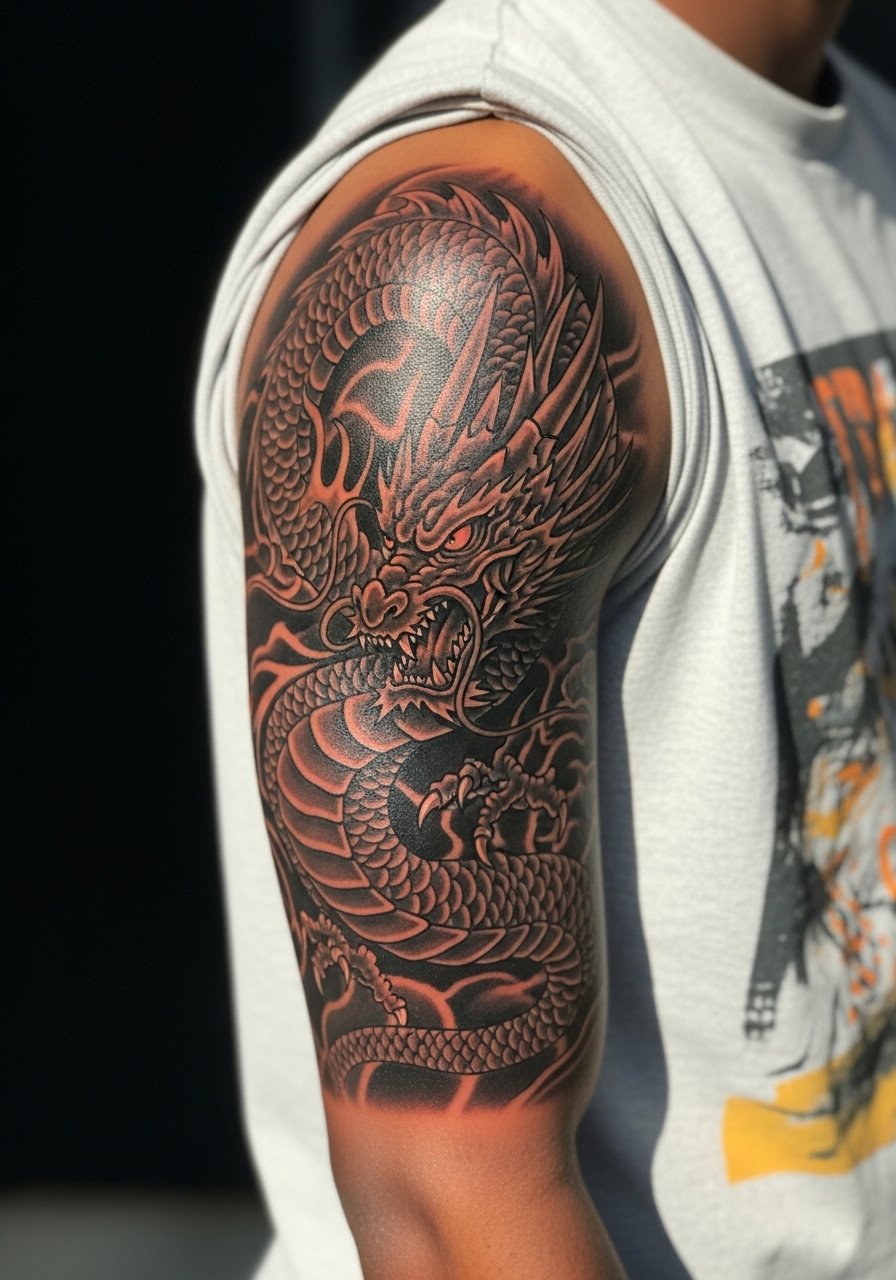
20. Watercolor Red Dragon Thigh with Longevity Adjustments
Watercolor reds photograph beautifully but can wash out faster, especially on mid tones. If you want that painterly feel, combine watercolor washes with defined crimson anchors and thin black contours to hold form. There is a controversy about watercolor longevity versus bold linework. One camp says watercolor is impossible to maintain in red hues long term. The other camp points to strategic black anchors and touch-ups to preserve the look. Be specific with your artist about how much solid contrast you want. For warm-weather showing, a solid black bikini top or high-waist bottom frames the mural without competing colors.
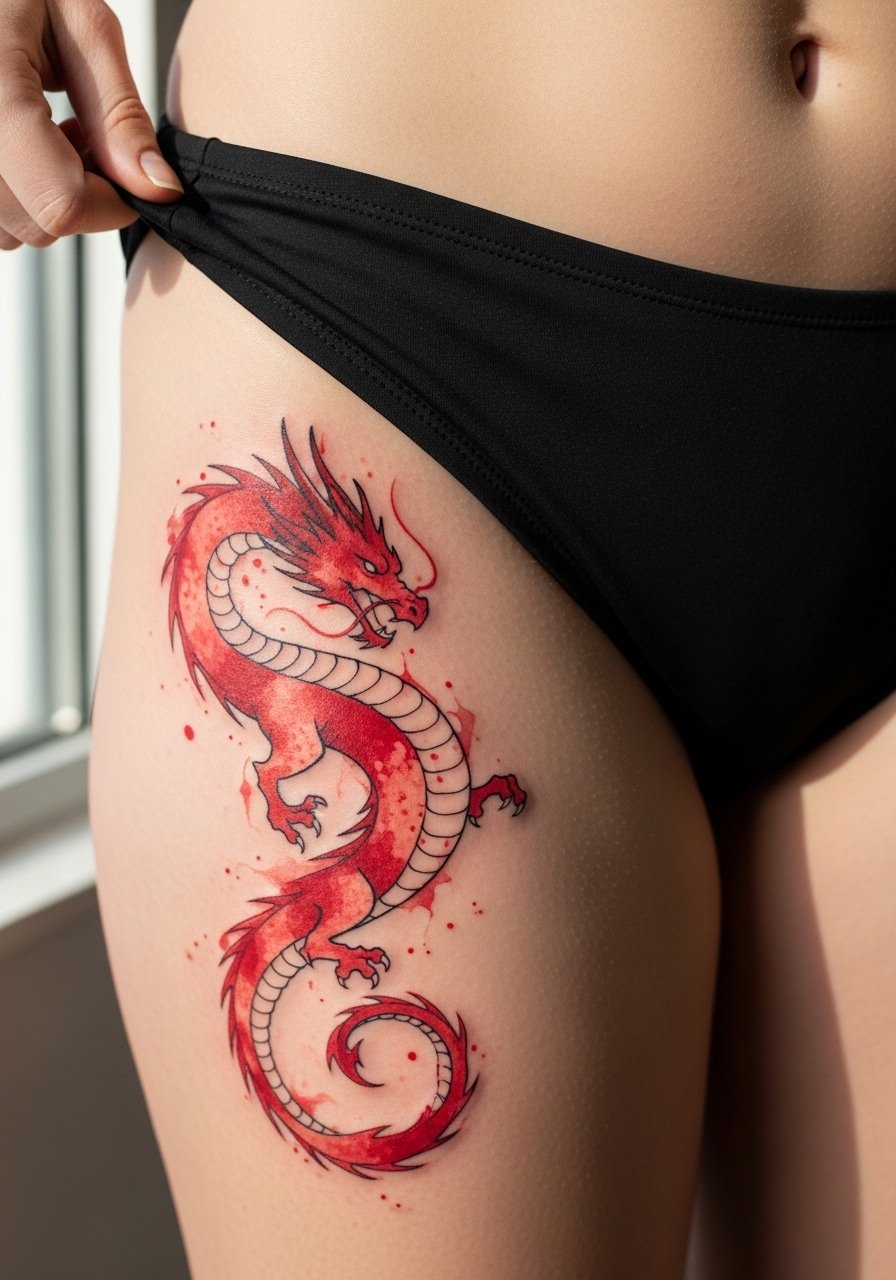
21. Small Red Dragon Behind the Ear for Subtle Impact
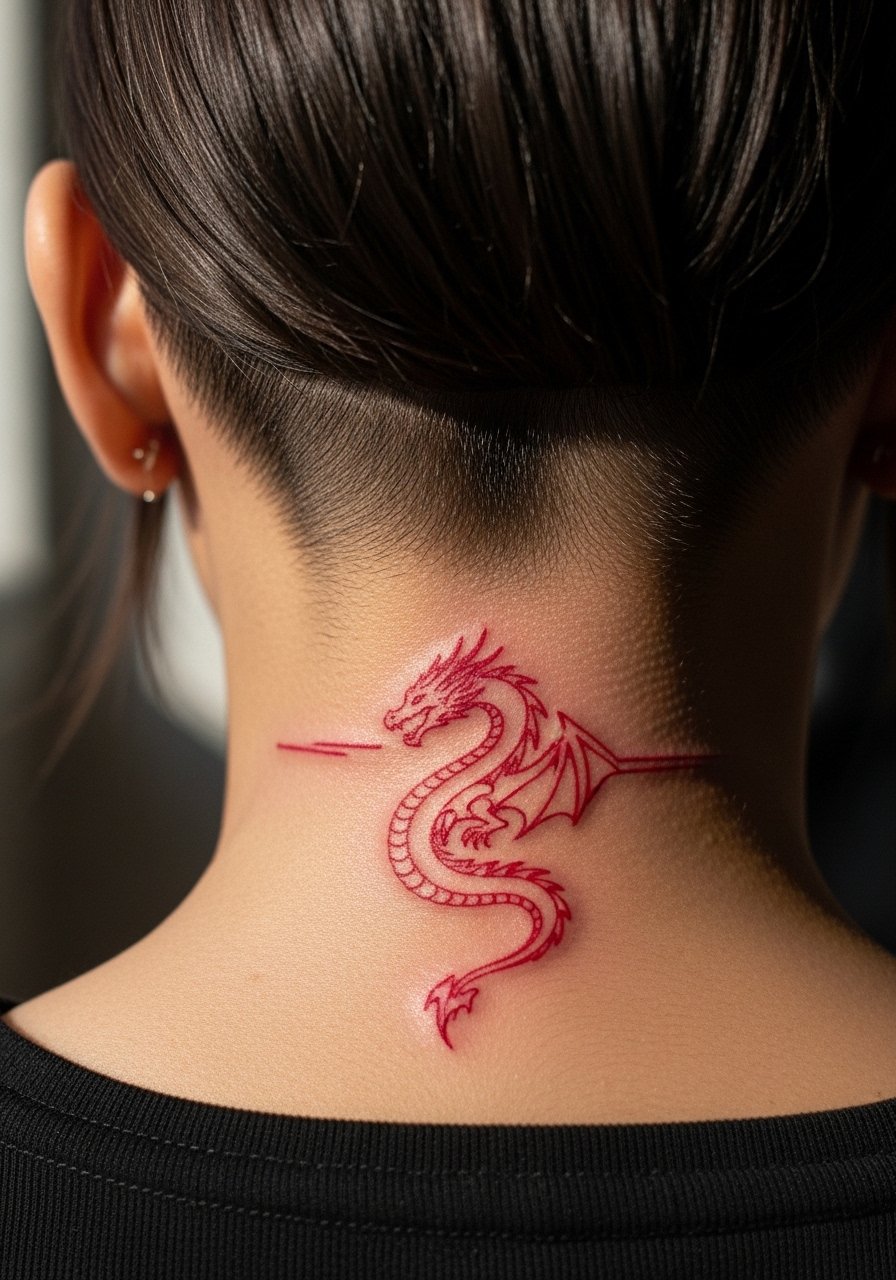
Behind-the-ear placements need careful wording in the consult because the skin there is thin and the area is close to the hairline. Describe it as on the skin behind the ear below the hairline on the neck so the artist frames the piece correctly. Tiny red motifs work as accents and photograph warmly when paired with a short neckline or pulled hair. This placement is discreet and often chosen for a private symbol. Keep in mind some workplaces still restrict visible ink. For session prep wear a hairstyle that keeps the area exposed and be ready for a sharp pain point.
Frequently Asked Questions
Q: Why does red ink fade faster than other colors and what can I do about it?
A: Red pigments tend to break down quicker under UV exposure and in shallow placements. From what I have seen, using a black and gray base with red accents helps the red read longer. Commit to strict sun protection during the first year and expect a touch-up window around six to twelve months.
Q: How do I stop an artist from ghosting after I pay a deposit for a multi-session red sleeve?
A: Insist on a written deposit policy and use booking platforms that keep communication logs. Many people book via apps that timestamp appointments or ask for a short contract that covers rescheduling. If you are traveling for a guest spot, confirm refund rules and arrival windows ahead of time.
Q: Will a thigh dragon distort with weight gain and can design choices reduce that risk?
A: Thighs stretch predictably, so elongated compositions and repeat patterns tend to handle fluctuation better than tightly packed scenes. Ask the artist to sketch the design while you stand and sit so you can see how the lines move. Elastic linework and vertical flow are your friends here.
Q: Is Saniderm better than dry healing for red tattoos?
A: Artists are split on this. One camp likes Saniderm because it reduces mess and protects against infection in the first 48 to 72 hours. The other camp prefers dry healing so scabs form and fall naturally. My advice is to ask the artist where they stand and follow their proven routine for color pieces, since both camps get good results when the method matches the artist's technique.
Q: How much should I expect to budget for a red dragon piece by size?
A: Pricing varies by shop and region but here are rough ranges. Small pieces often land around 100-400 for a one-session design. Medium thigh or forearm work commonly falls in the 400-1,000 range. Large back or sleeve projects frequently start around 1,500 and go up from there. Always compare quotes from at least three shops before committing.
Q: Can I make a watercolor red dragon photograph better on darker skin tones?
A: Yes, photographers and clients often boost contrast by adding strong black anchors and slightly deeper crimson tones so the red reads in photos. In practice, ask your artist for higher-contrast edges and consider outfit choices like solid neutrals that let the ink stand out. A solid black bikini top or simple neutral tops help in images without altering the tattoo itself.
Q: How soon will I need a touch-up on a fine-line red dragon?
A: Fine-line reds are the most likely to need a touch-up within one to three years depending on placement and sun exposure. If the design sits where friction is constant, expect earlier touch-ups. Plan touch-ups into your budget and timeline so the piece keeps its intended look.
