
Fine line pieces are the trend everyone saves to their boards right now, yet what looks flawless fresh often needs planning to last. I see two traps most people fall into: choosing ultra-thin lines for high-friction spots, picking watercolor for a sun-exposed shoulder without a plan, or underestimating ribcage pain. Read on for 21 July flower ideas that balance how they look now with how they heal.
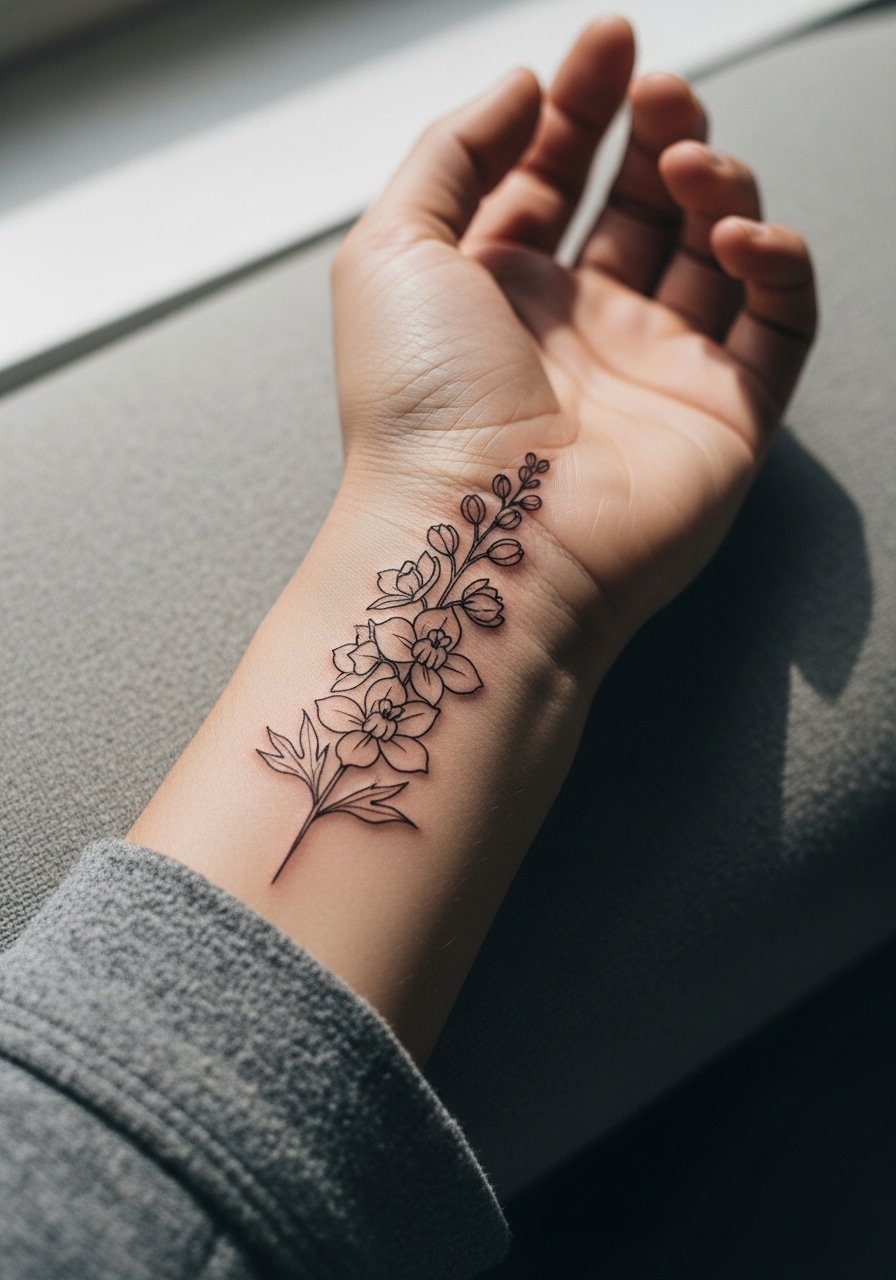
1. Fine line larkspur outline on the wrist
I've seen this one on wrists for years and the main complaint is early fading. Ask your artist to slightly thicken the primary stem while keeping the outer details airy so the silhouette stays readable at year three. Pain on the wrist leans higher because of nearby bone, expect a short sharp sting and a 30 to 45 minute session. A common mistake is requesting single-needle micro lines on a spot that rubs against watches and sleeves. For showing it off, stack a thin gold chain bracelet on the opposite wrist and wear sheer blouse cuffs to keep attention on the forearm.
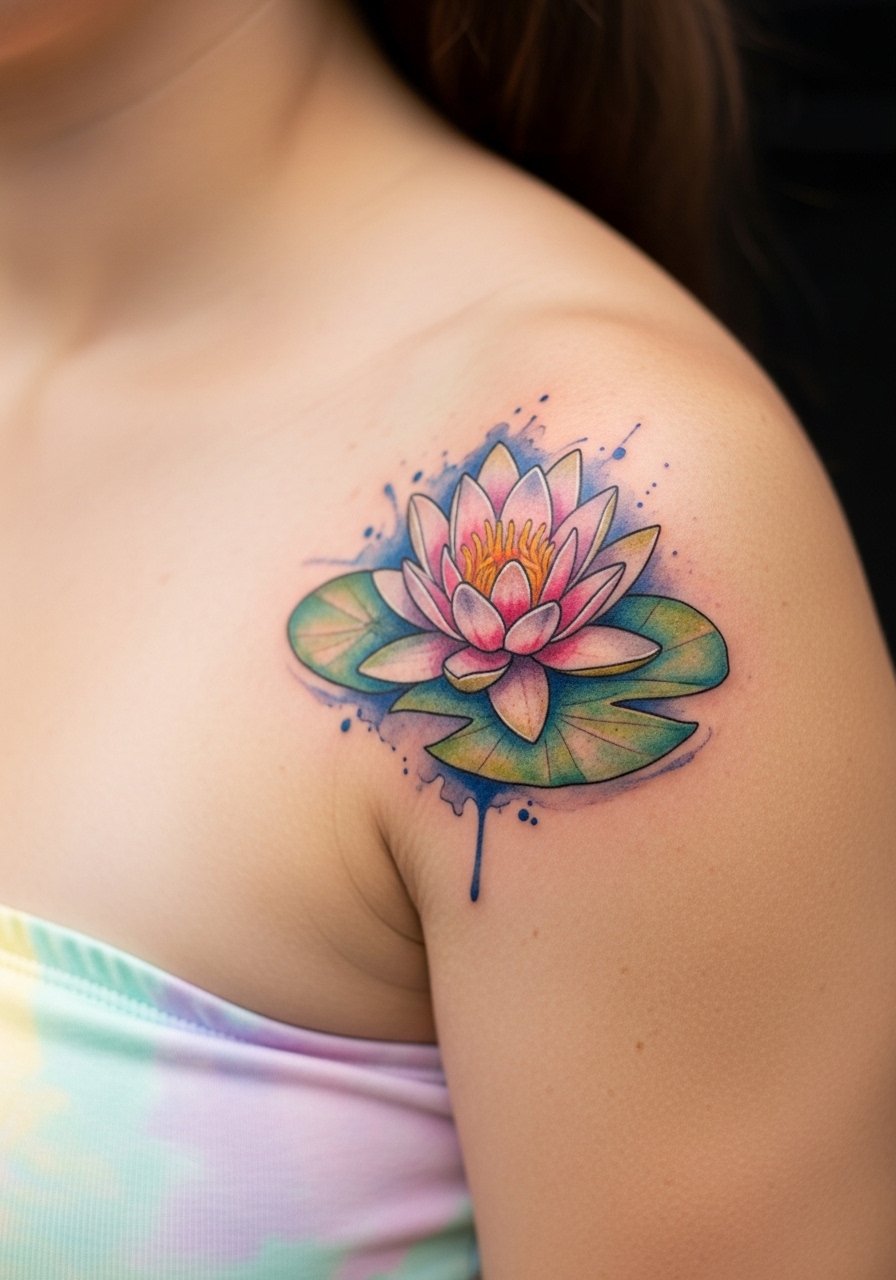
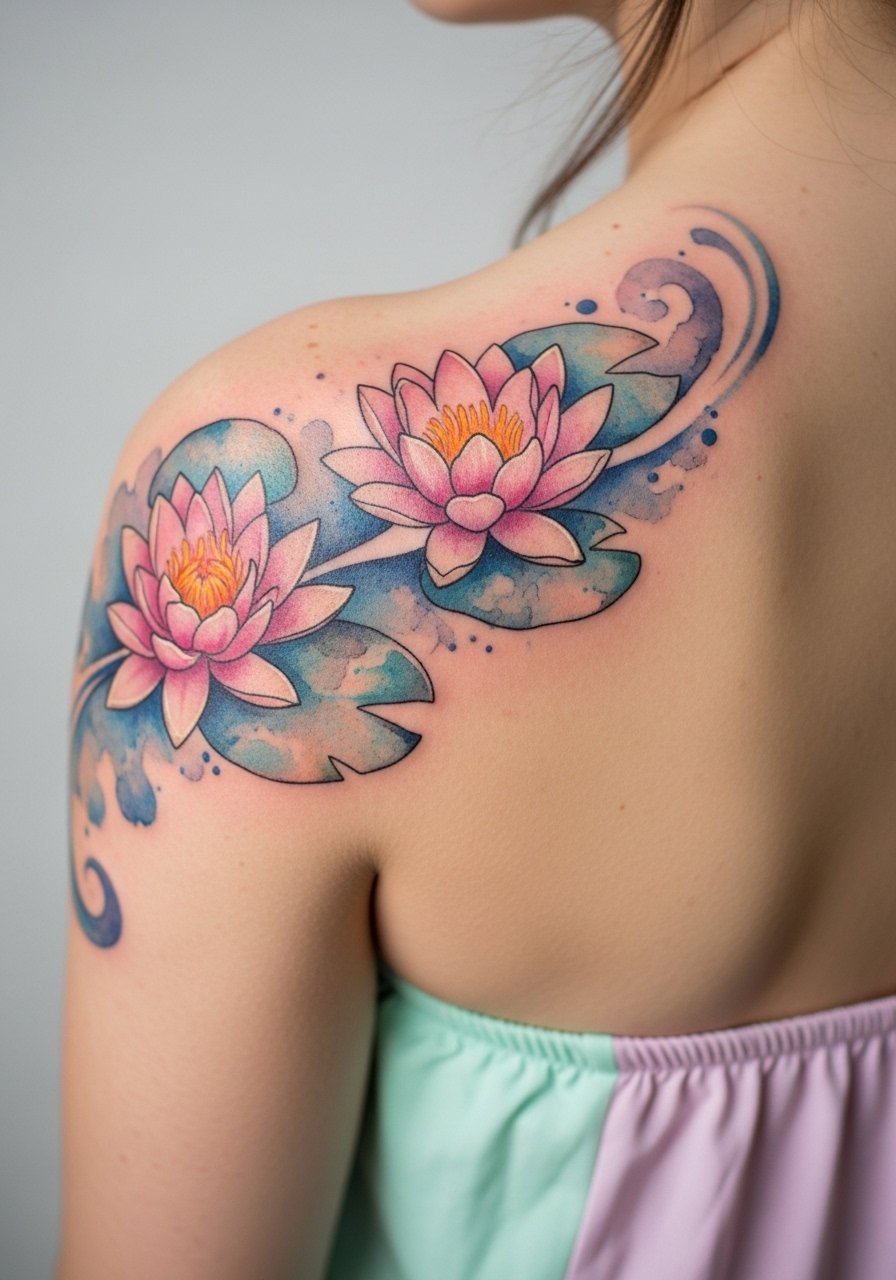
2. Water lily watercolor bloom on the shoulder
Most watercolor pieces ask for sun protection planning because shoulder skin takes UV directly. If you want soft color that ages well, request slightly stronger saturation in the core petals and a matte finish rather than heavily blended edges. The session takes about one to two hours and the shoulder is forgiving on pain. During your appointment wear a strapless tank or loose button-down so the artist has clear access. The main long-term failure is color loss from sun exposure, not technique, so plan touch-ups if you love pastels.
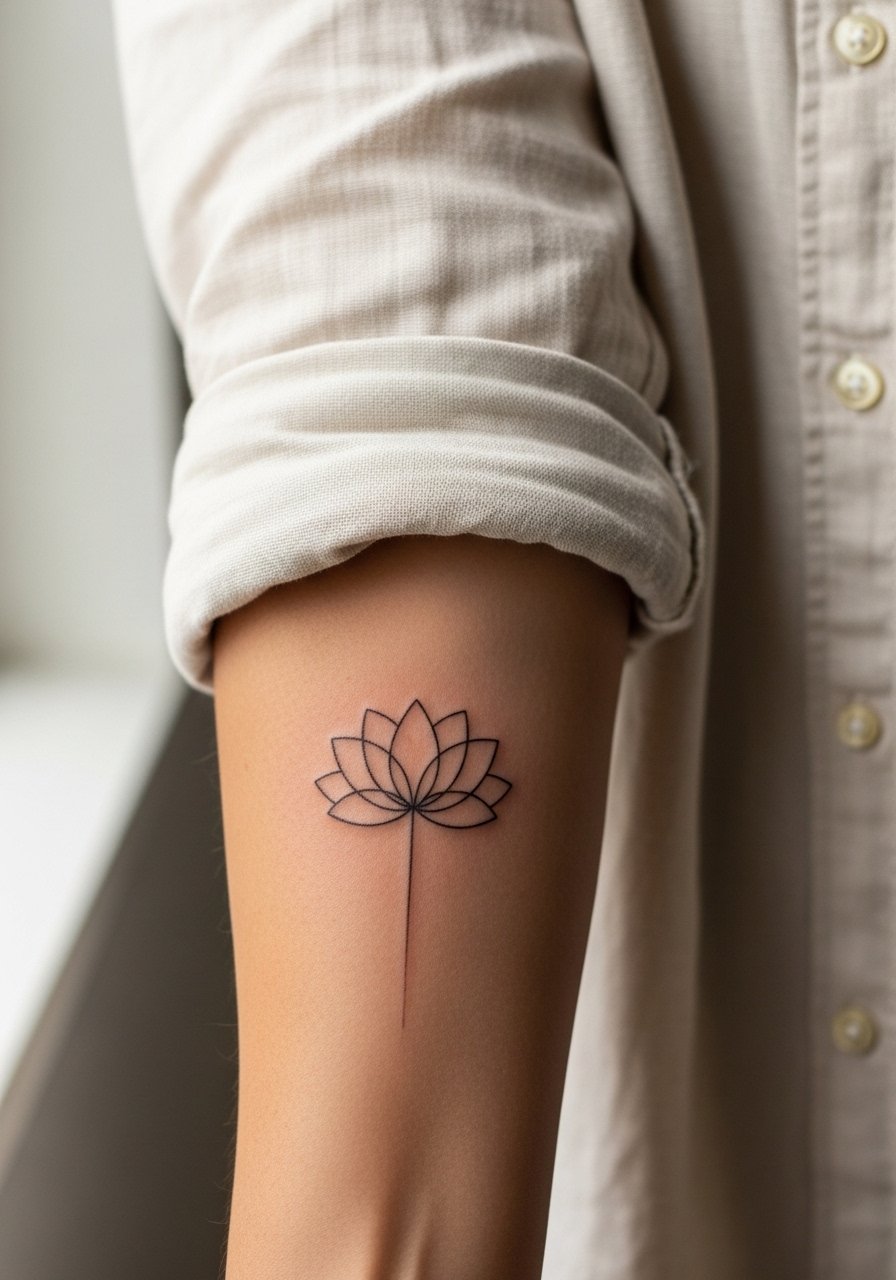
3. Minimalist lotus single line on the inner forearm
Fair warning, the inner forearm is one of the easiest places to preview how a piece will age. A single-line lotus reads clean at six months but can soften by year two if lines are too close. Ask for a reference showing the exact line weight and tell your artist you prefer a slightly bolder single pass where the stem anchors the design. Session time is short, usually under an hour, and pain is mild. For the session wear a linen button down shirt you can roll to the elbow so access is effortless and the fabric does not drag over the fresh linework.
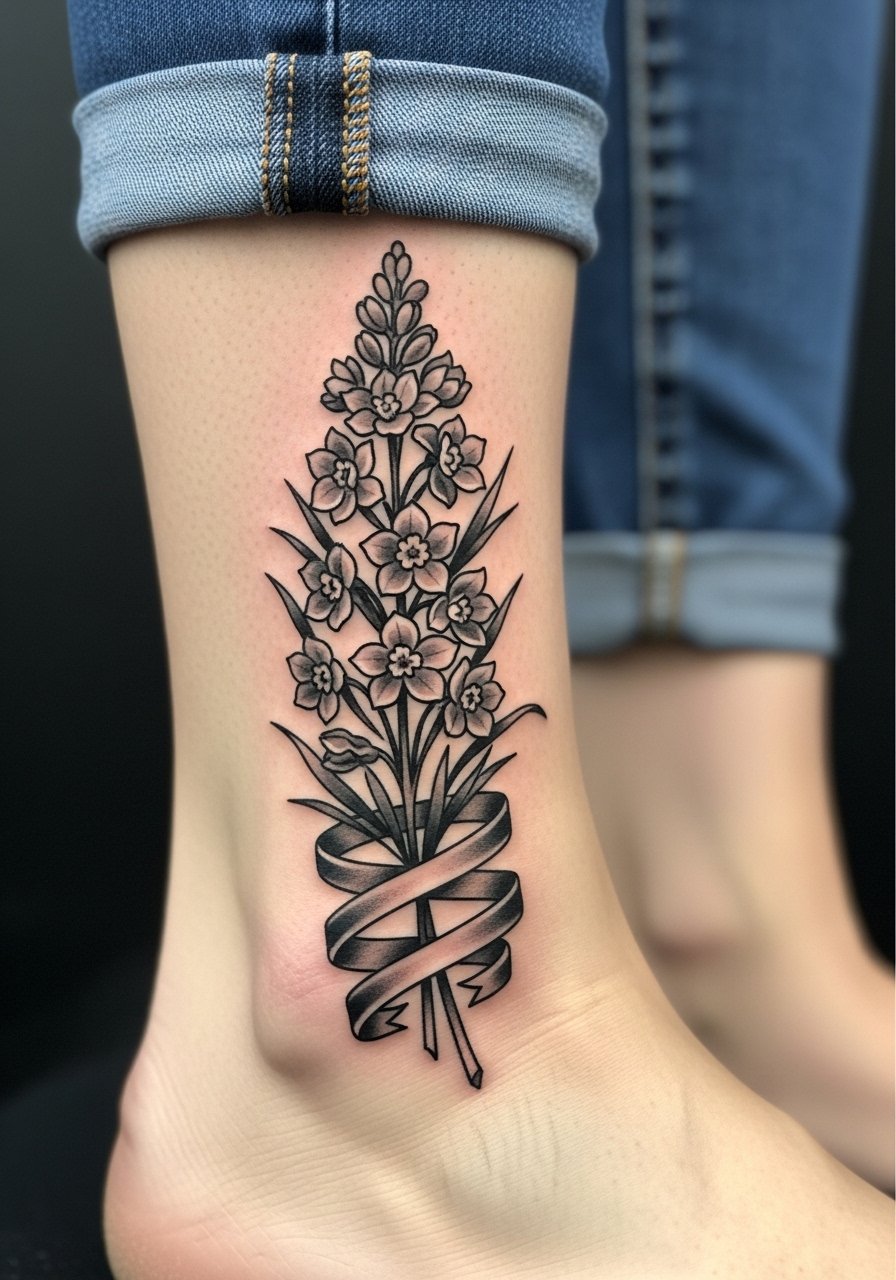
4. Neo-traditional larkspur bouquet with ribbon on the ankle
Ankle pieces get excellent summer visibility but live in a friction zone from socks and shoes. Neo-traditional saturation helps the larkspur read from a distance and holds up better than faint outlines. Expect two shorter sessions for color layering and some tenderness from the thin skin near the bone. A common mistake is placing the bouquet too low where shoe straps rub it raw. For showing it off, cuff wide-leg linen pants and pair with strappy sandals so the ankle is framed without obstruction.
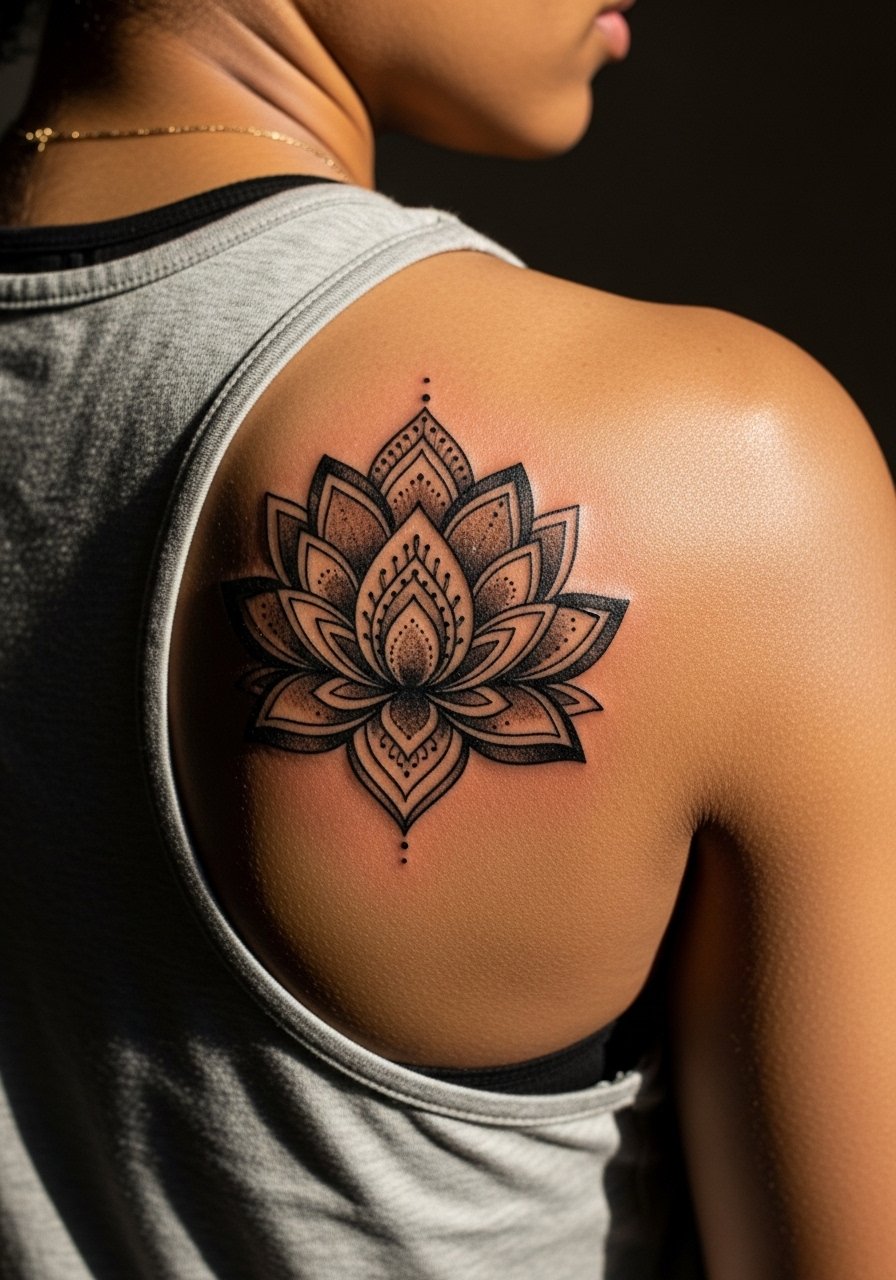
5. Blackwork lotus mandala on the upper back
Upper back pieces are great for bold blackwork because the canvas is wide and heals predictably. This mandala-lotus combo uses heavy saturation and dot work to build contrast that still photographs on darker tones. Expect two to three sessions and moderate discomfort when working near the spine. A mistake is cramming too many tiny dots into dense areas, which leads to muddiness as it settles. For the session bring a button-down you can wear backwards or a loose tank for easy access. If you plan a larger back piece later, use this as a central anchor for future extension.
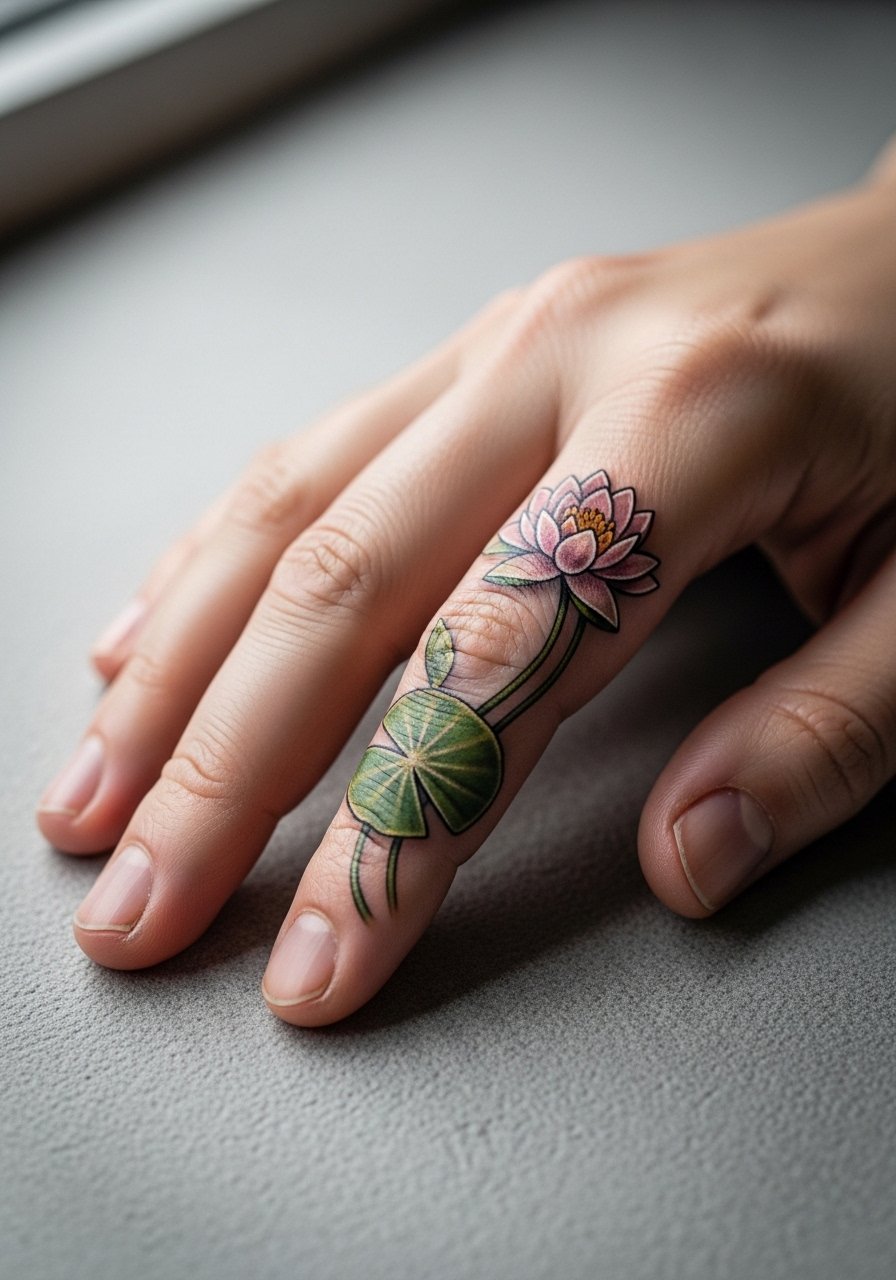
6. Micro-realism water lily on the finger
Finger tattoos are tiny and unforgiving, yet micro-realism can look crisp when placed with intention. The main blowout risk is from the thin skin and constant hand use. Expect a 30 to 60 minute session and a likely touch-up window at six to twelve months. Tell your artist you want scope for a touch-up in the original consult and ask them to avoid too much stipple in the deepest shadows. For day-of wear no rings and keep your hand clean during healing. To style it, pair the finger piece with a thin chain pendant necklace and simple nails so the tiny lily reads in photos.
Pre-Session Essentials
The wrist and finger pieces above heal differently from larger work, so a few small items smooth out the session and the first week.
- Tea tree balm tattoo aftercare. Lightweight, non-greasy balms with tea tree are popular for fine line wrist pieces because they reduce stickiness without clogging the needle channels.
- Australian aftercare spray. An alcohol-free spray that dries quickly is handy for shoulder watercolor work during humid summers.
- Japanese rice bran ointment. Gentle and soothing for sensitive rib or sternum areas where thicker balms can feel heavy.
- Hustle Butter Deluxe. Thinner alternative to heavier ointments that many artists prefer for initial days on fine work and floral outlines.
- Fragrance-free gentle body wash. Use during showers to cleanse without irritating new color or fine line edges.
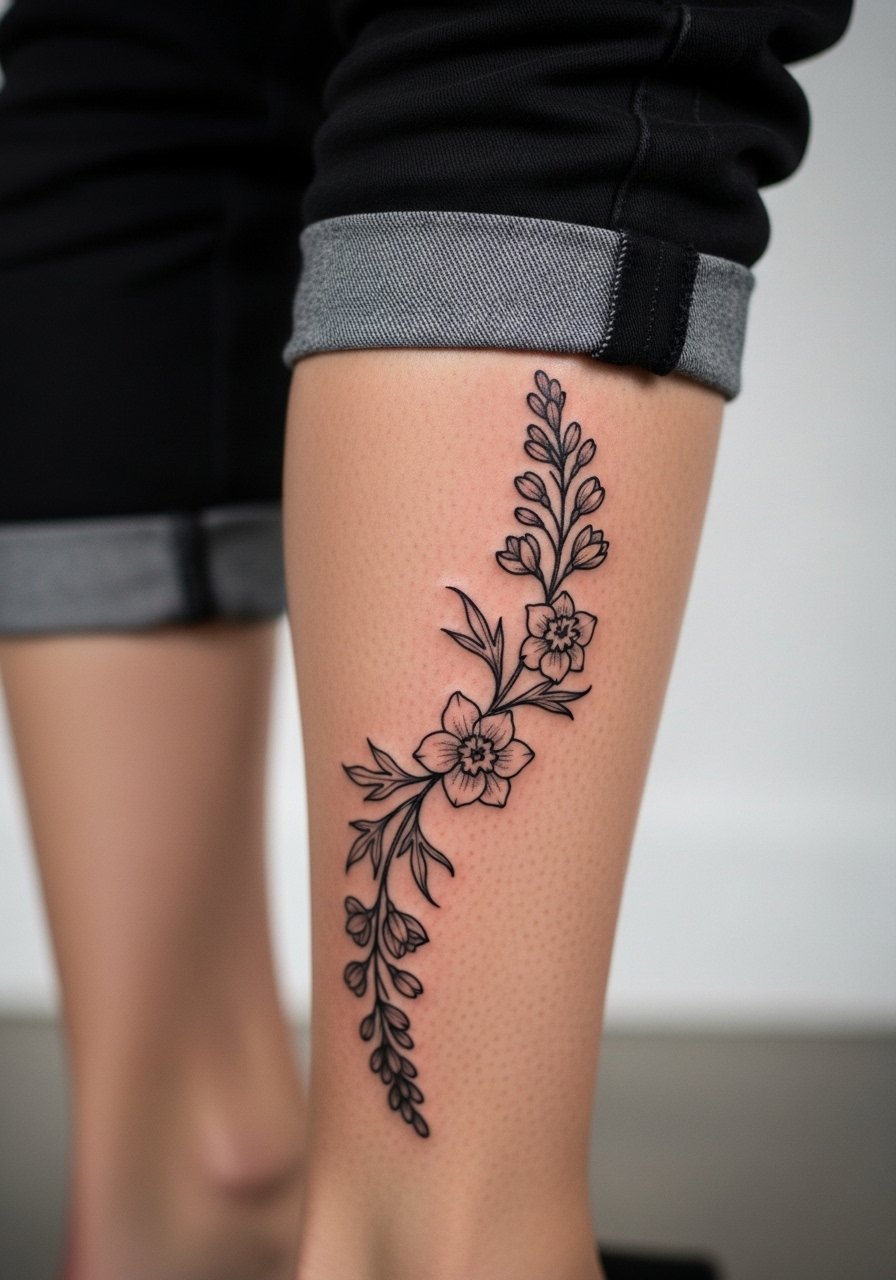
7. Ornamental larkspur vine wrapping the calf
A calf wrap lets the larkspur flow with the leg and elongates the silhouette. Calf skin handles linework and small color accents well and the area tolerates longer sessions. The main mistake is tight repetition of stems that look busy from a distance. For durability choose clear linework with minimal dot shading rather than heavy watercolor fades. During your session wear cropped joggers or shorts so the artist can roll the leg up without pressure. Healed at two years, a well-spaced vine keeps its clarity even as the skin changes.
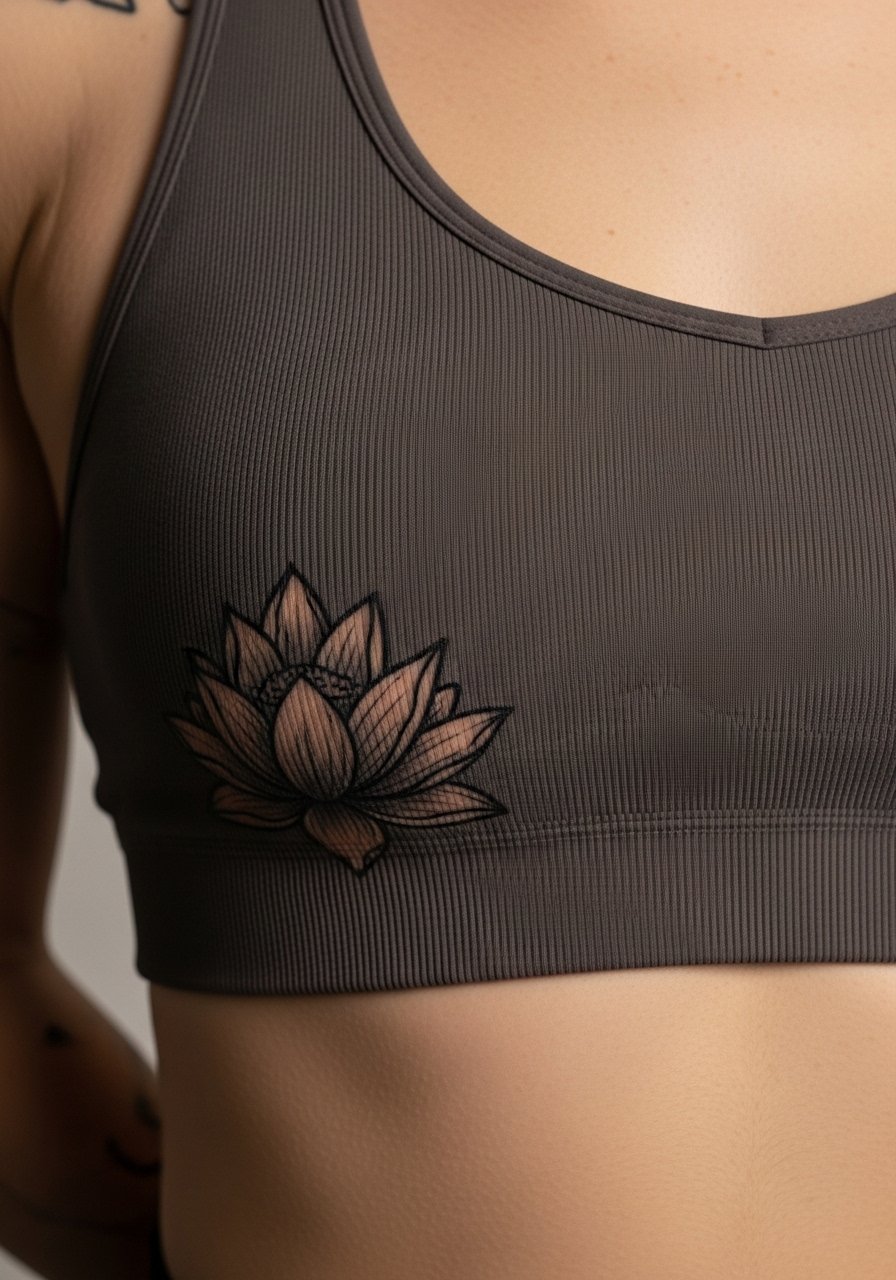
8. Ignorant style lotus chunk on the ribcage
Fair warning, the ribcage is a higher pain tier but the result hides well under clothing. Ignorant style favors bold, chunky black lines and simplified forms that age into a striking chest piece if you decide to expand. Artists disagree on fine line here. One camp says thin lines blur quickly because the skin stretches, the other camp says proper needle depth and spacing make fine line viable. Ask the artist where they stand before booking. For the session wear a fitted sports bra or a cropped top you can lift only enough to show the area. The rib finish often needs a touch-up at year two if you want crisp edges.
9. Traditional larkspur sprig on the collarbone
Collarbones take classic linework well when scaled to the anatomical curve. The main error is making a design too vertical which conflicts with the collarbone natural line. A three-quarter inch width with stronger outlines retains shape through touch-ups. Pain is noticeable near bone so numbing discussions are reasonable. Session time is usually under an hour. For showing it off pair with a v-neck silk blouse or subtle choker that frames the sprig without covering it. Over five years the bolder outline keeps the larkspur readable even if color softens.
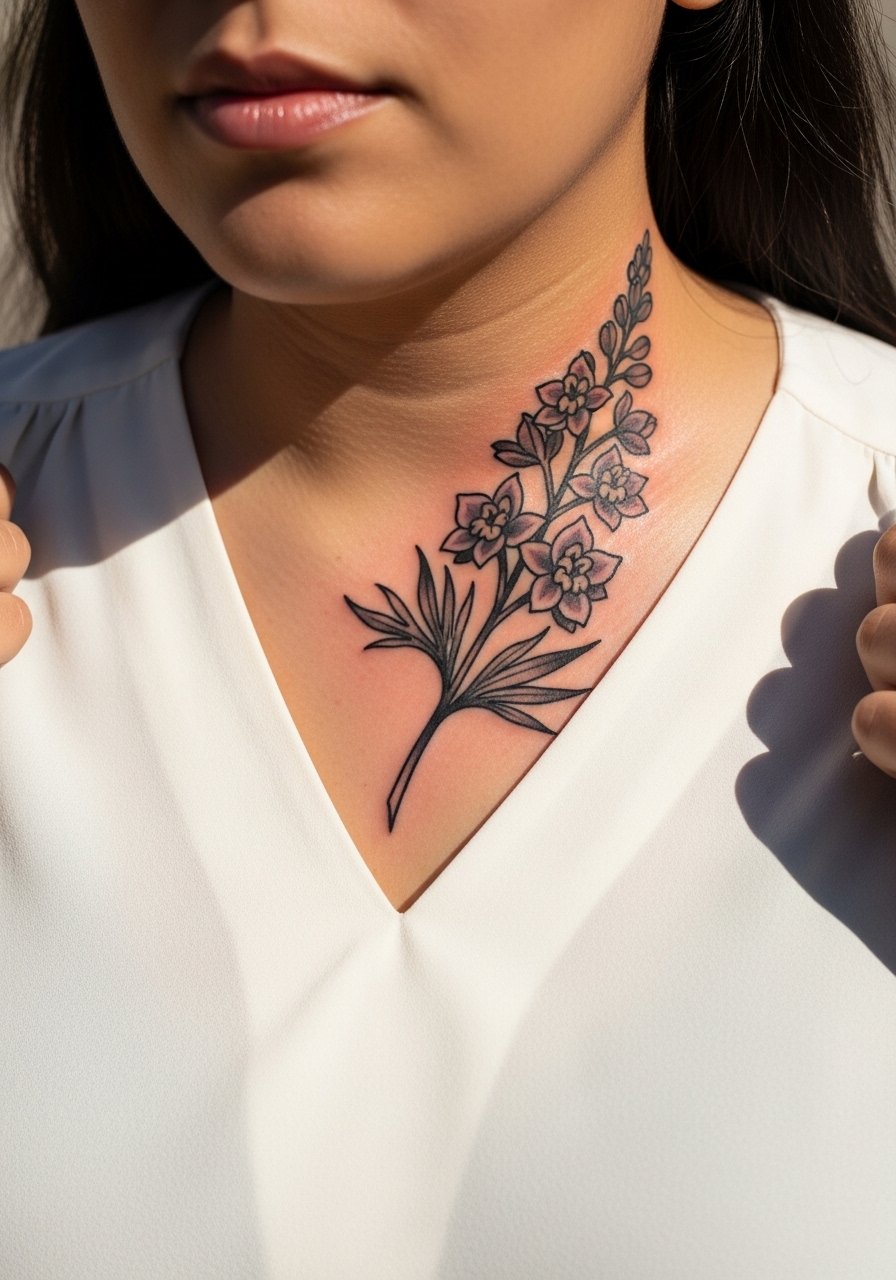
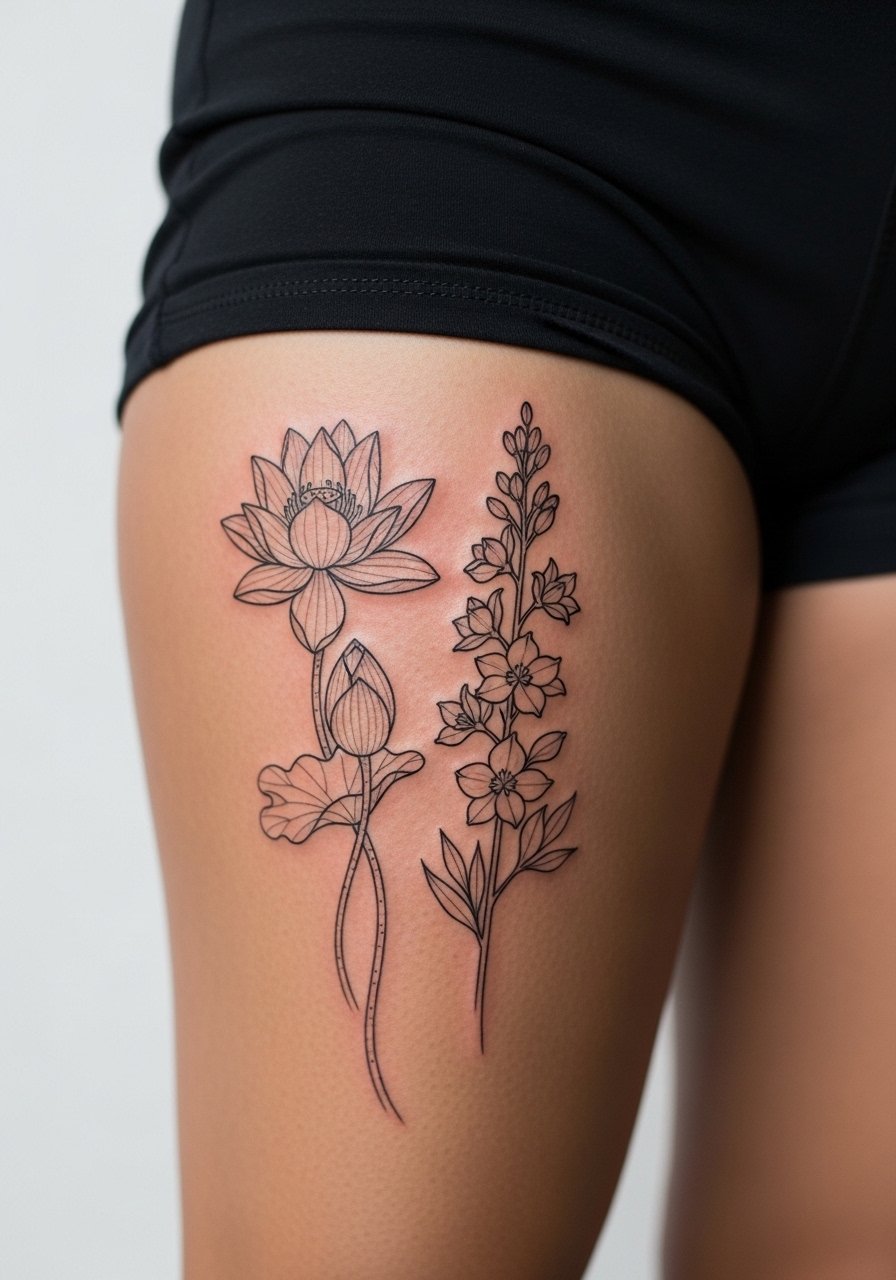
10. Fine line water lily and larkspur duo on the outer thigh
Thighs are forgiving for mid-size compositions and they handle fine detail with less rubbing. This duo combines a water lily and larkspur for layered meanings and future patchwork options. The session spans two shorter sittings and pain is moderate. A common mistake is placing the duo where waistband friction occurs, choose slightly higher on the outer thigh. For the session wear high waisted shorts so the artist has clean access and you can avoid fabric rubbing while it heals. Healed at year two, the pair remains a good anchor for larger leg work.
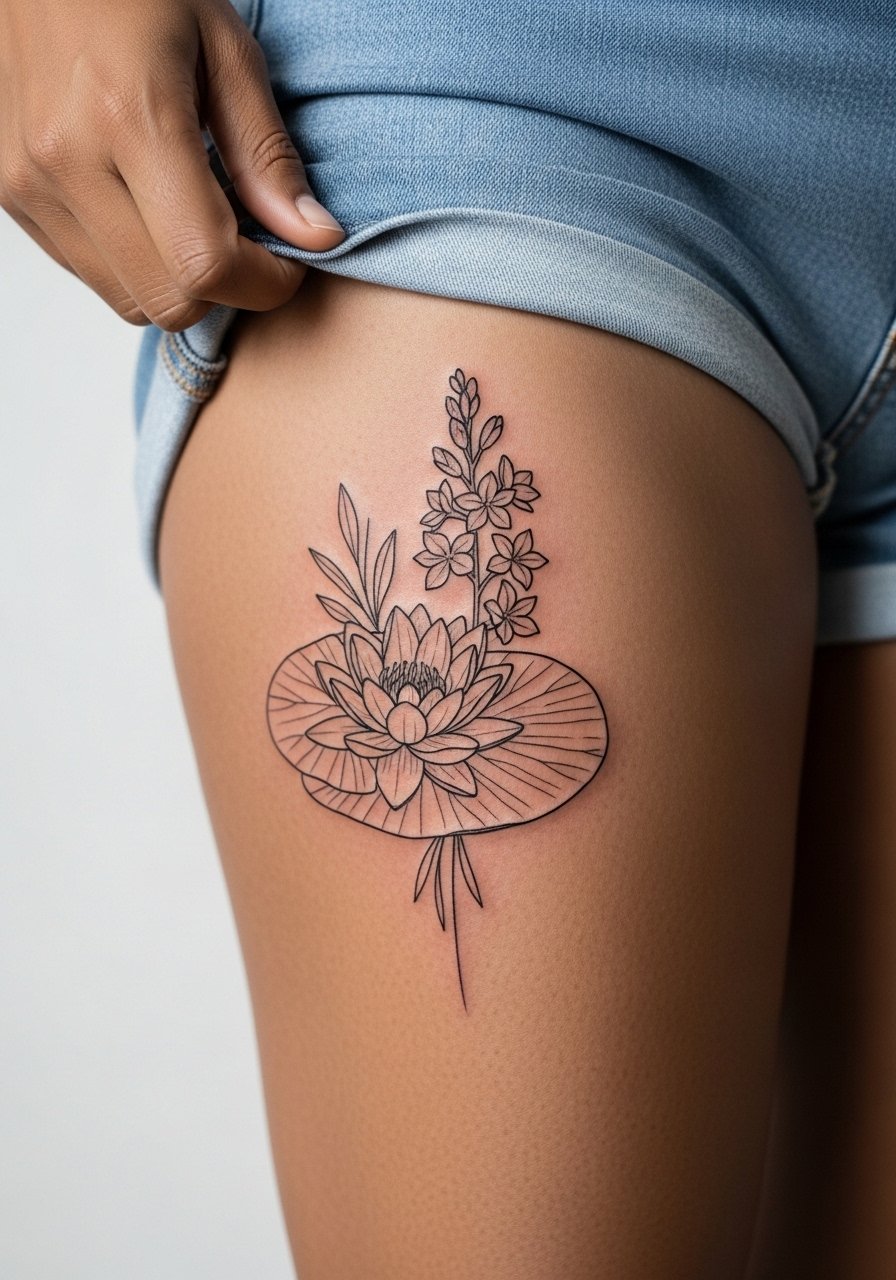
11. Patchwork larkspur elements for outer arm sleeves
Collectors often use patchwork florals to test a style before committing to a full sleeve. This approach spaces stems and leaves as separate flashes so each can breathe and age without merging. The common mistake is clustering identical tiny stems with similar spacing, which can create visual mud when the skin shifts. Expect three or more sessions for a cohesive arm patch. For session wear choose short sleeves you can roll, and for showing off pair the arm with a minimalist leather cuff on the opposite arm. This technique gives flexibility and makes touch-up planning predictable.
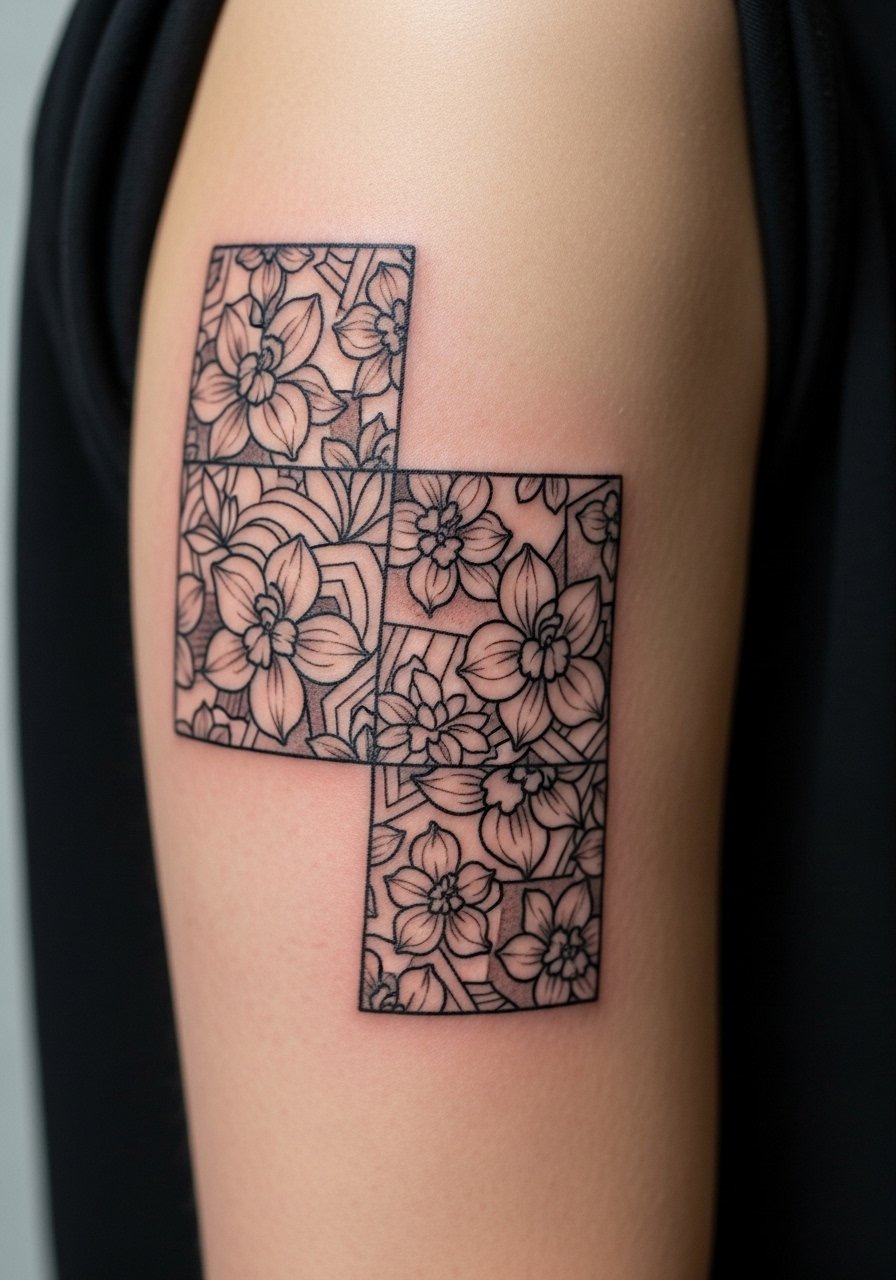
12. Larkspur paired with zodiac motifs for July signs
Pairing a larkspur sprig with a small zodiac glyph offers a personal anchor without full portraiture. For Leos and Cancers choose placement that reads during summer, like the inner forearm or collarbone, and ask for a glyph scaled to match the floral line weight. Keep the glyph bold so it stays visible on darker skin, which sometimes loses faint lines in photography. Session time is short and a common mistake is putting the glyph too close to the petals where lines can merge. For showing it off, wear a subtle choker necklace that sits above collarbone pieces.
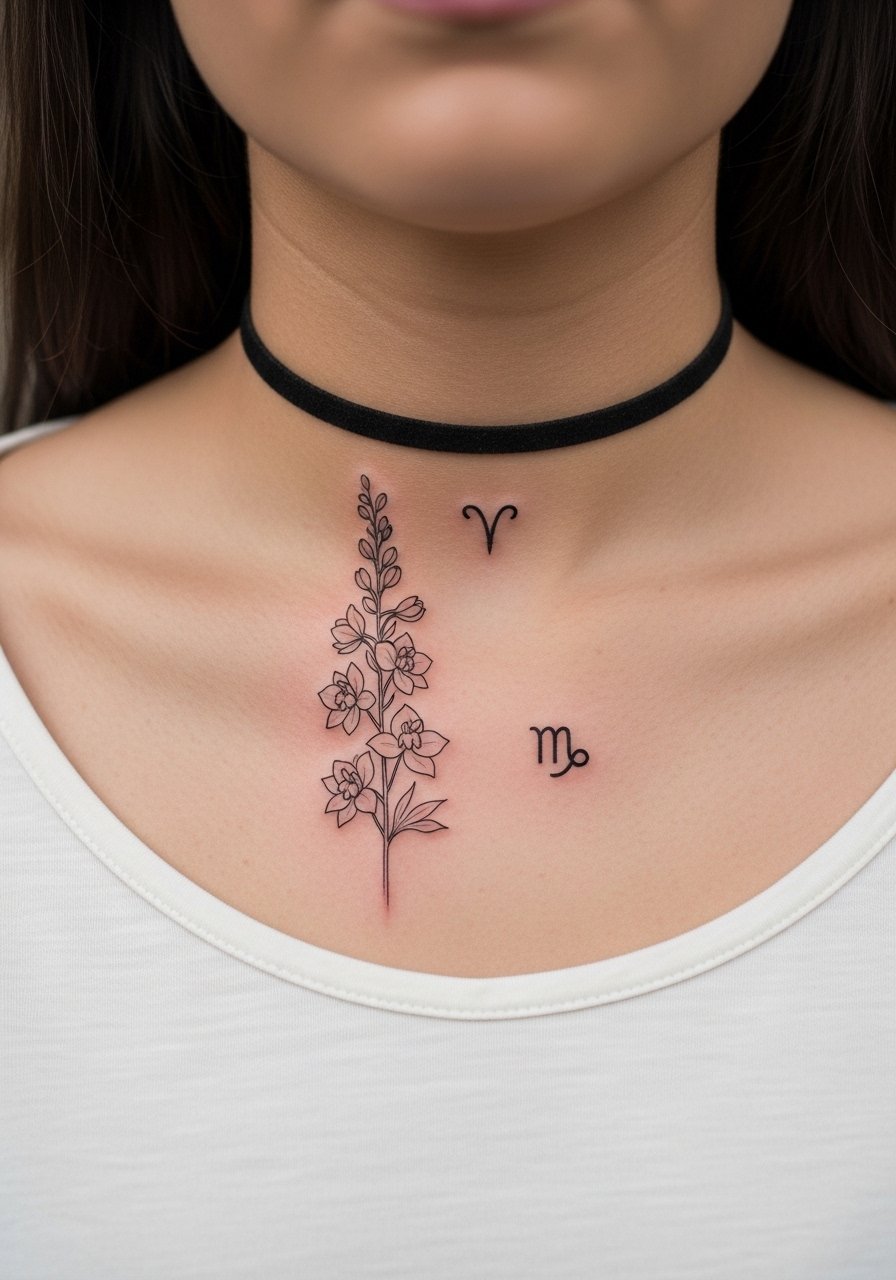
13. Water lily negative space treatment for darker skin
Negative space can give water lilies strong contrast on medium to dark skin tones where pale pastels may vanish. Request the artist build around bold black petals and leave strategic skin gaps to form the lily silhouettes. This approach ages well because contrast is structural rather than color-dependent. Sessions are typically one to two hours depending on scale and the main mistake is making the negative areas too thin which creates optical fuzziness later. For the session wear a pastel strapless top or a button-down you can shift aside. This technique helps the lily read clearly in photos without heavy pigment.
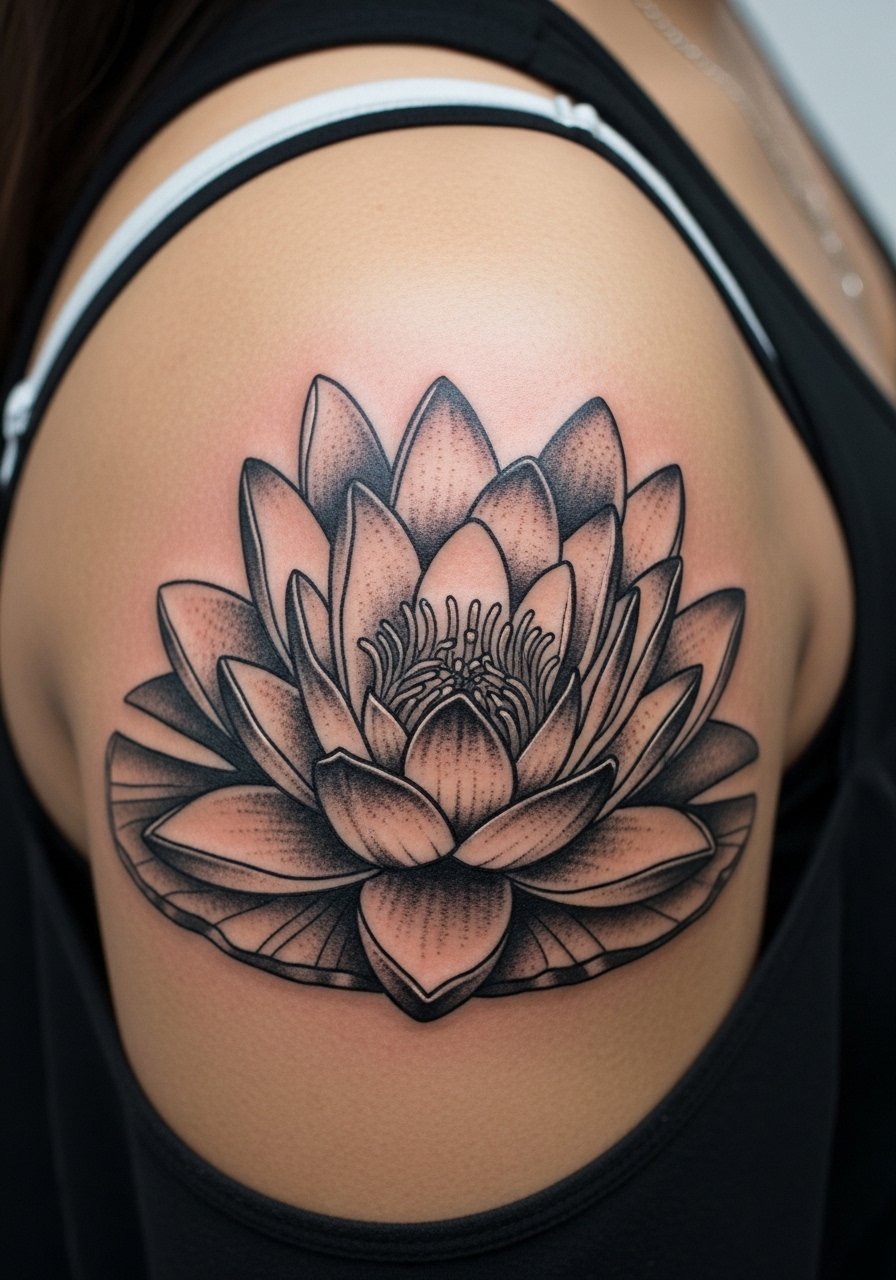
14. Lotus as a spine filler for future sleeve work
A vertical lotus spine piece makes an excellent structural anchor for later sleeves or back panels. Expect moderate pain near the spine and plan for two sessions if you want detailed stipple shading. The common mistake is starting too small in the center which limits future expansion. Tell your artist you want clear spacing between lotus layers so the work can expand left or right later. For showing it off choose open-back dresses or halter tops when healed, and bring a loose button-down shirt for the session you can pull aside. Over five years, the central spine anchor keeps cohesion if future work follows its rhythm.
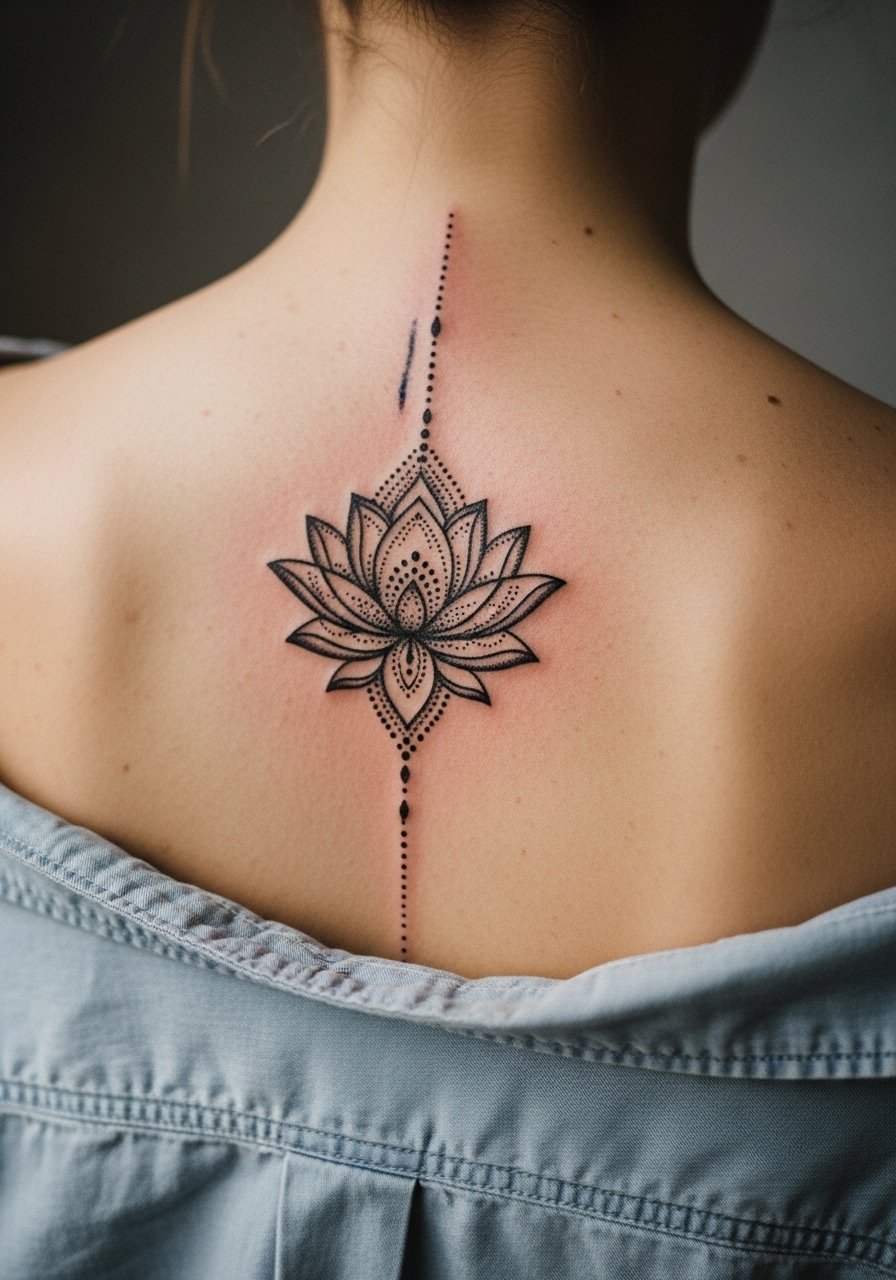
15. Micro lotus cluster on the fingers for summer visibility
Tiny lots on adjacent fingers are trending for summer because they peek out with short nails and open palms. The pain is modest but touch-ups are common by year one because fingers take heavy abrasion. Ask your artist to use slightly stronger outlines at the root so the cluster reads when photographed. For the session remove rings and trim nails, and for showing it off keep nails neutral or short. A thin gold chain bracelet on the opposite wrist complements small finger work without competing for attention.
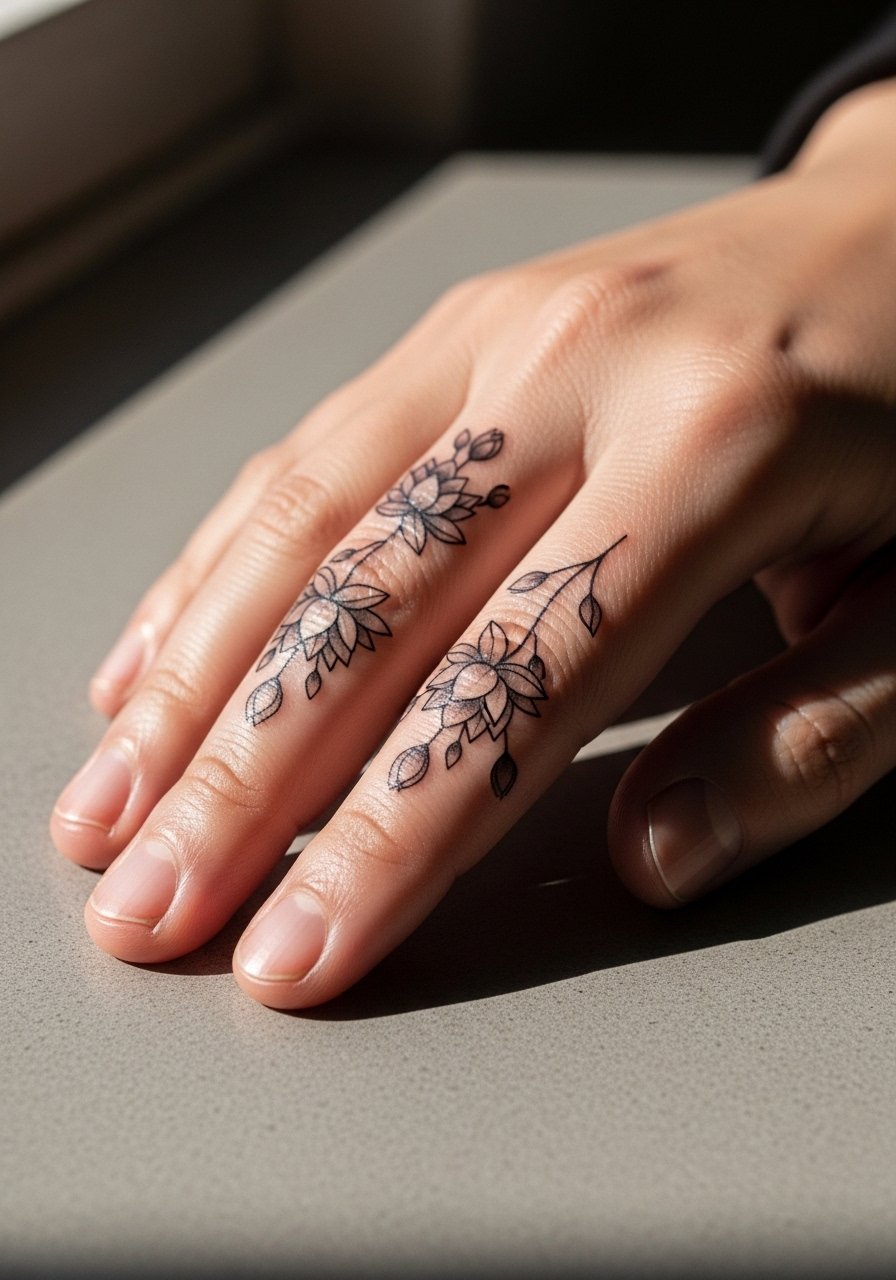
16. Geometric-framed larkspur for clean negative spacing
Adding a geometric frame around a larkspur stem gives the piece breathing room and protects it from bleeding into surrounding skin. The key is letting the frame have enough thickness to survive softening over years. Artists on Pinterest have pushed this trend, and it is trending on boards for good reason. The session is usually under ninety minutes. Common mistakes include making the frame too fragile or placing cross-hatching too close to the stem. For a wardrobe pairing, a rolled-up linen shirt in neutral tones helps the framed larkspur read clearly, try a rolled cuff blouse when showing it off.
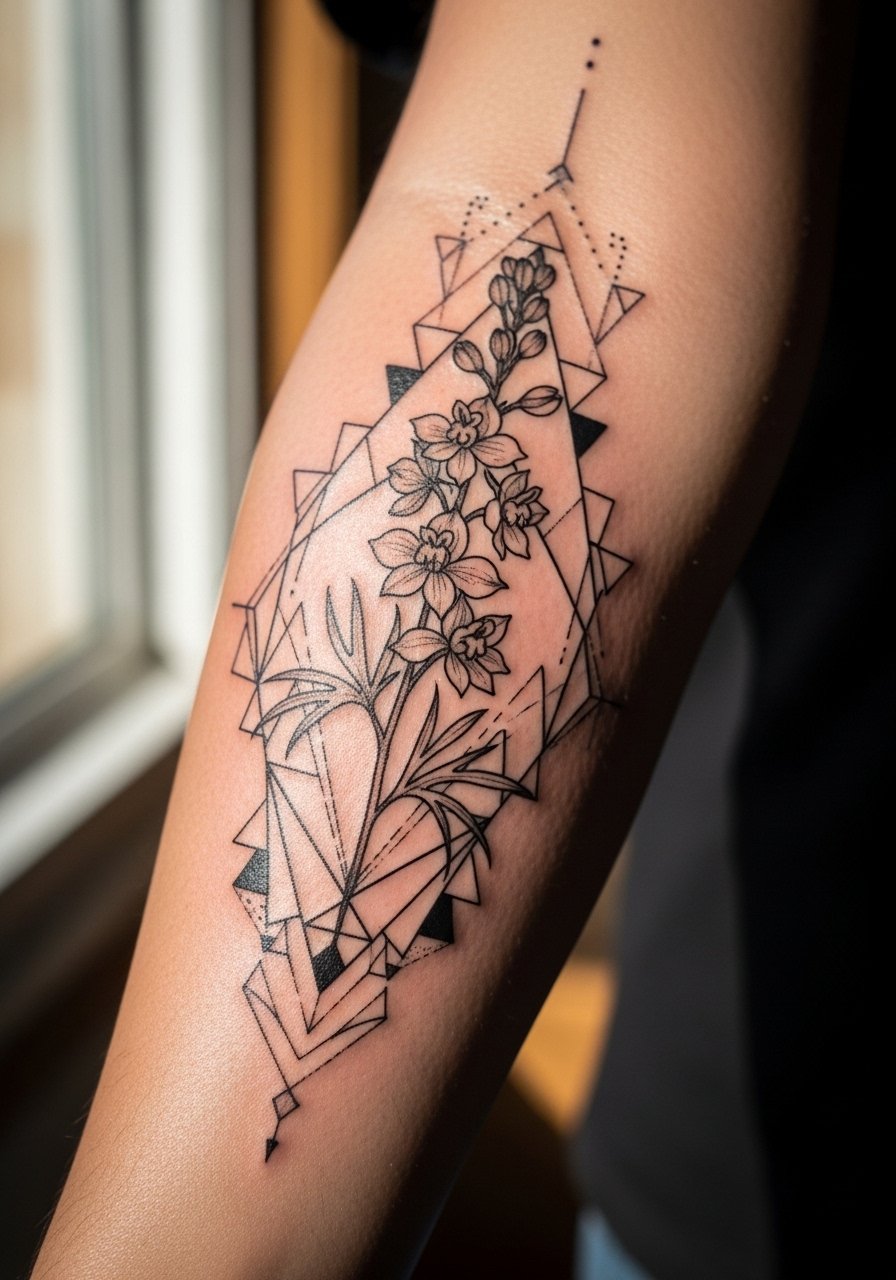
17. Watercolor shoulder-to-scapula wash for soft drama
A shoulder sweep that blends a water lily into a soft scapula wash gives movement without screaming color. The challenge in July months is sun exposure during healing that accelerates fading. Ask for slightly deeper saturation at the core and gentle feathered edges so touch-ups are easier. Session time is one to two hours and the area is mild for pain. For the appointment wear a pastel strapless top or a loose button-down so the artist has full access to shoulder and upper back. This placement photographs beautifully when layered with off-shoulder tops.
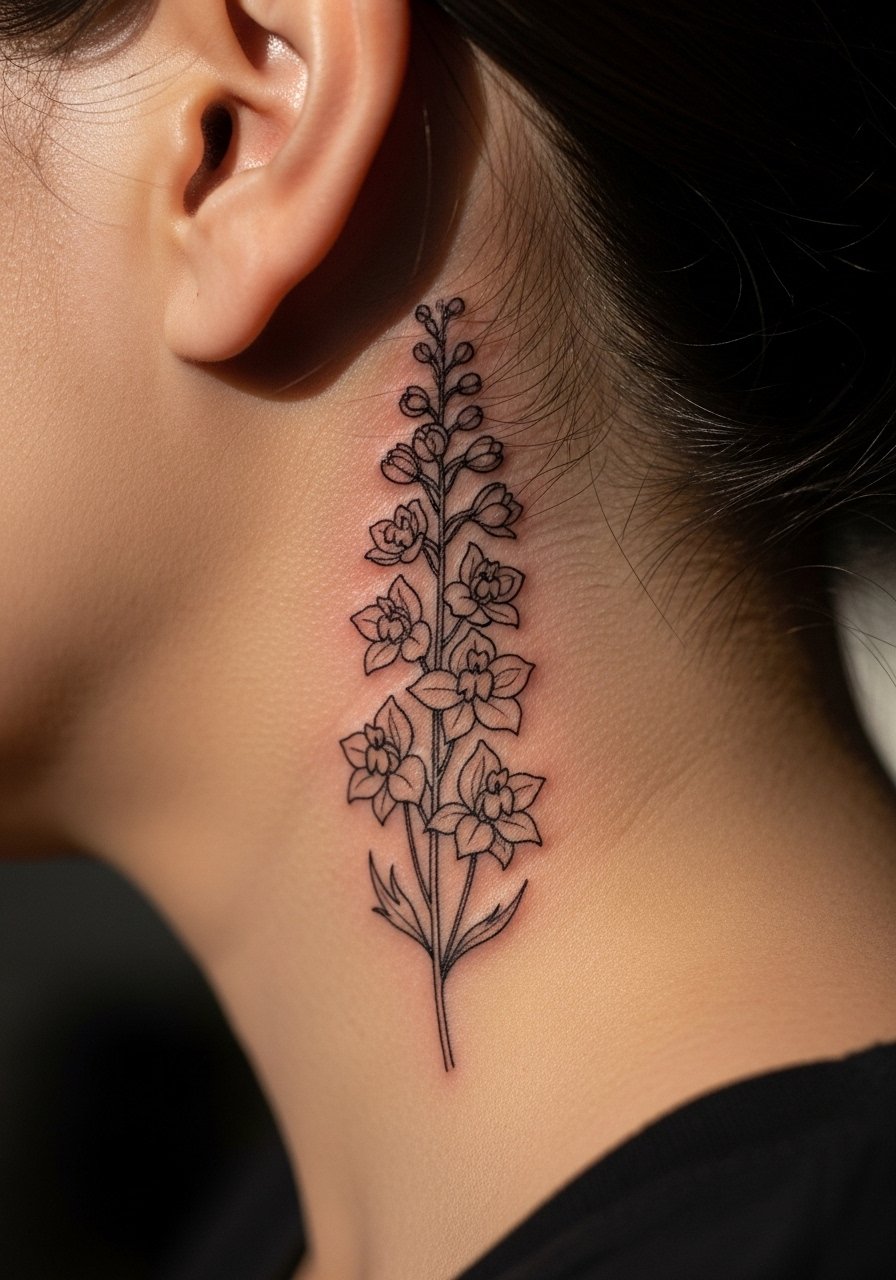
18. Tiny larkspur behind the ear with neck framing
Behind-the-ear placements require careful framing and a conservative scale because of hair coverage and job considerations. The area heals quickly but the skin is thin so stick to bold single stems rather than many tiny leaves. For safety describe it as "on the skin just behind the ear, below the hairline on the neck" when you bring references. The session is short and the pain is low. Wear hair up for the appointment. If you want to show it off, pair with a delicate ear cuff rather than large earrings so the tattoo remains visible.
19. Thigh birth-flower duo for future patchwork expansion
Thigh compositions are forgiving and allow for layered pieces that read at a distance. Combining lotus or water lily with larkspur gives you both vertical and horizontal movement for later sleeve-like work. Avoid placing the duo directly against waistband seams to prevent friction during healing. Sessions are two shorter sittings and the area tolerates longer durations. For session wear loose shorts or a skirt and bring a high waisted short option so the artist can access the outer thigh without fabric pressure. Over time the thigh pair becomes a solid base for larger leg panels.
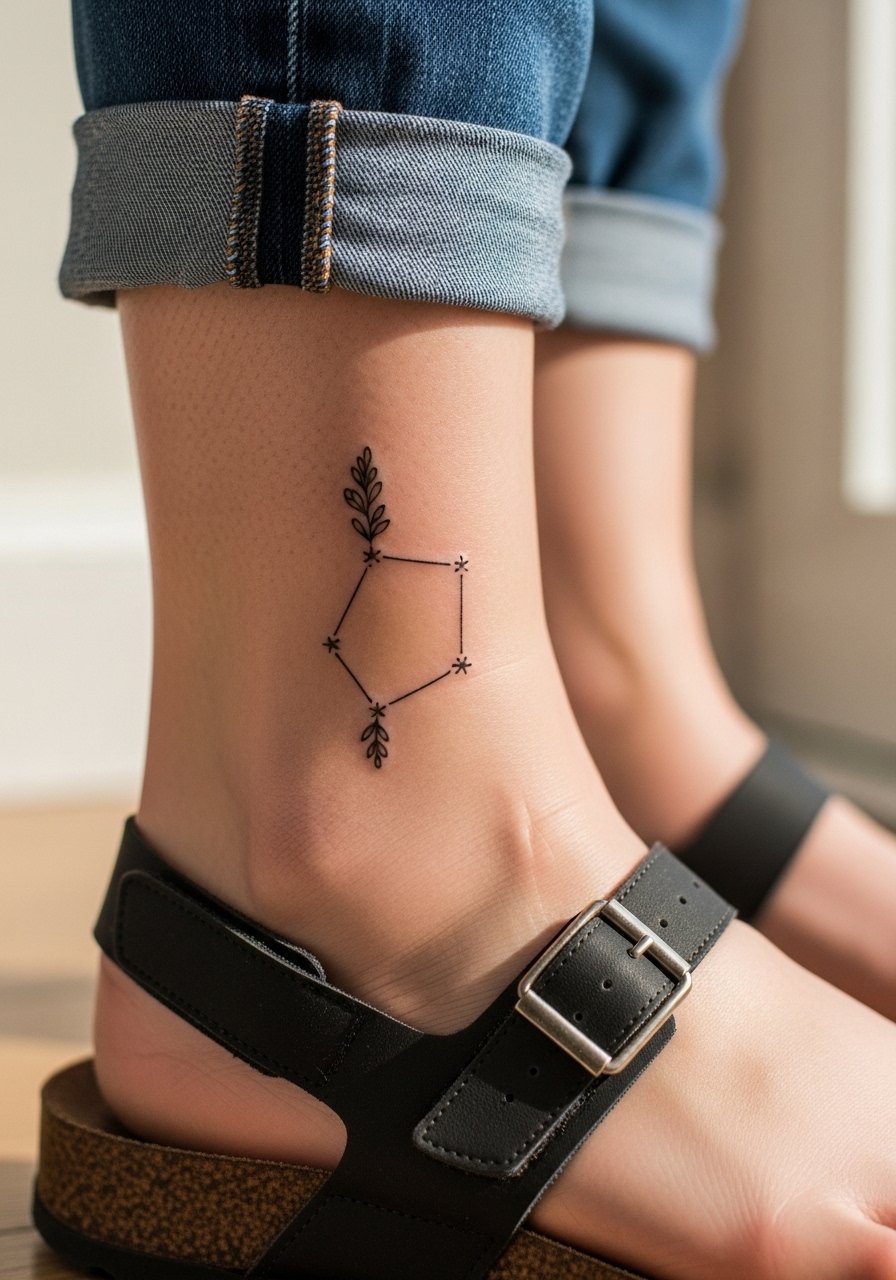
20. Ankle constellation with tiny larkspur accents
Combining a small constellation with larkspur nodes makes for a discreet piece that still carries July references. The ankle is a friction zone so bold dots and slightly thicker anchor lines work better than translucent washes. Sessions are short and pain is variable near bone. A common mistake is bunching stars too close to stems which creates visual clutter. For showing it off pair with strappy sandals and cuffed pants, try a strappy ankle sandal when dressing for summer. Healed, the constellation keeps its shape if the anchor lines are slightly bolder.
21. Collarbone bouquet with negative space highlights
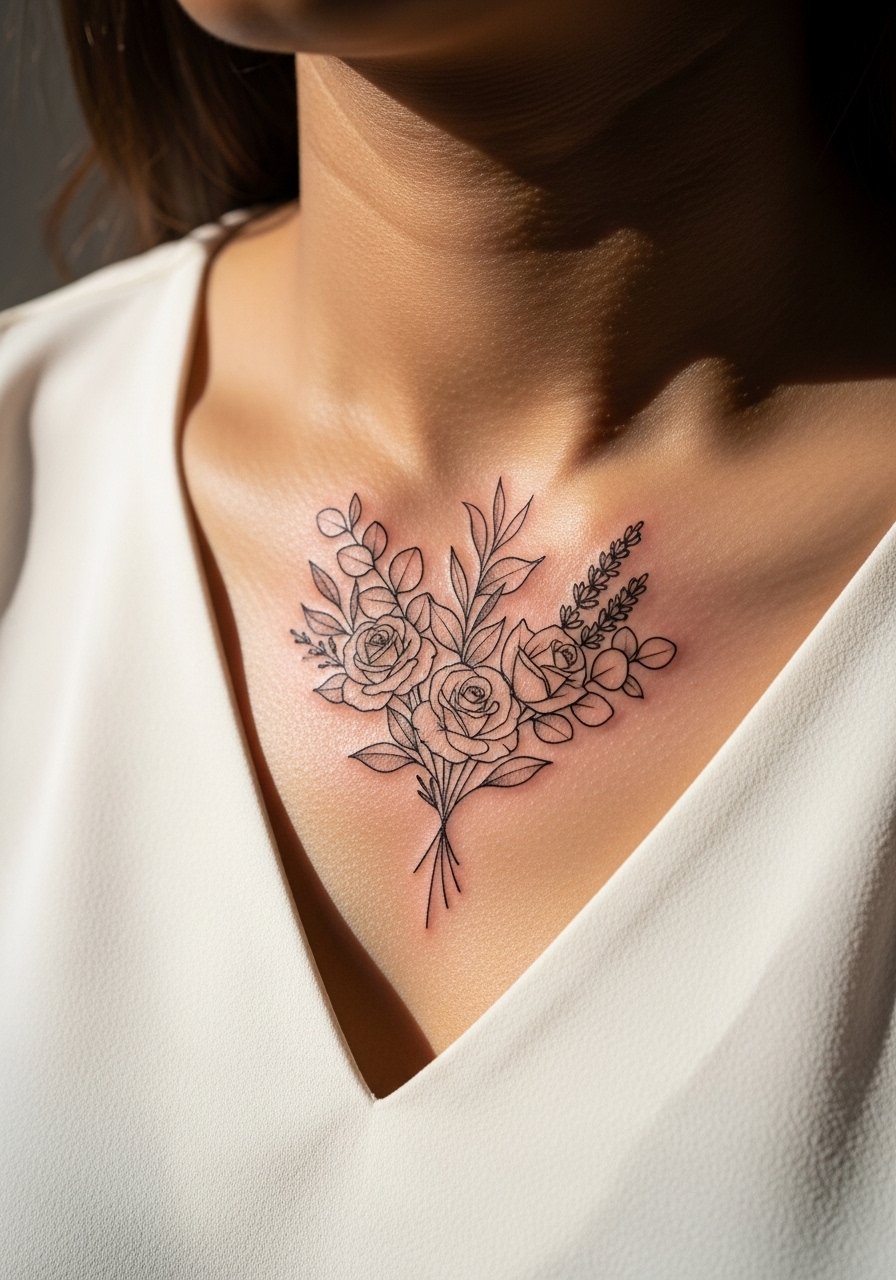
A short bouquet across the collarbone that uses negative space instead of heavy shading maintains clarity even on medium tones. Ask for open skin gaps inside larger petals to preserve contrast as color fades. The collarbone feels sharp during the session but heals cleanly with proper aftercare. Avoid placing blooms directly on the highest point of the bone where touch-ups are hard. For showing it off, a subtle choker necklace or an ivory v-neck top frames the work without covering lines. Over several years, spaces inside the blooms keep the bouquet readable without frequent color refresh.
Frequently Asked Questions
Q: Do fine line larkspur tattoos really fade faster than bolder work?
A: From what I have seen, fine line tends to soften sooner, especially in high-motion or high-friction spots like wrists and fingers. One camp of artists recommends slightly thicker primary strokes for longevity. The other camp says meticulous single-needle technique can hold if placement and aftercare are ideal. Ask your artist which approach they use and plan for a touch-up at year two to three.
Q: Which July flower treatments show best on darker skin tones?
A: For medium to dark skin, bold outlines and negative space treatments often read best. Water lily negative space and blackwork lotuses create structure that does not rely on pale pastels. When you search portfolios use hashtags like #FineLineFloral and check images showing the style on similar skin tones.
Q: Is Saniderm better than dry healing for small floral pieces like wrists or fingers?
A: Artists and communities are split. One group praises Saniderm for protecting those tiny channels and reducing scab handling. Another group worries that trapped moisture can cause issues. The honest answer is that it depends on your daily routine and the artist's protocol. If you choose film, follow the artist's timing exactly and keep the area clean.
Q: How should I dress to sit for a ribcage lotus or upper back mandala?
A: For ribcage work bring a fitted sports bra or a cropped top that reveals only the area. For upper back blackwork wear a button-down backwards or a loose tank so the artist can work without fabric pulling. A loose button down shirt is an easy session staple if you need a quick change.
Q: How often do finger micro-realism pieces need touch-ups?
A: Finger jobs usually need touch-ups sooner than other placements, often around the six to twelve month mark, and again as needed after year two. Expect the artist to build a small touch-up clause into the consult for this reason.
Q: What are good discovery paths for finding artists who handle July flowers well?
A: Search hashtags like #FineLineFloral and #LarkspurTattoo on Instagram, explore TikTok location searches for guest spots, use the Tattoodo app to filter by style, and check community threads on r/tattoos for peer recs. Guest spots and apprenticeships can also offer lower rates if scheduling works for you.
