
Fine line between-breast tattoos are everywhere on feeds right now, and beauty is not the same as longevity. I have noticed that placement pain, how a design photographs across skin tones, and prep for a sternum session are the three things most people skip before booking. Read through these concepts and you will get realistic advice on aging, session feel, and what to tell your artist so the piece lives well on your body.
1. Delicate Botanical Sternum Sprig
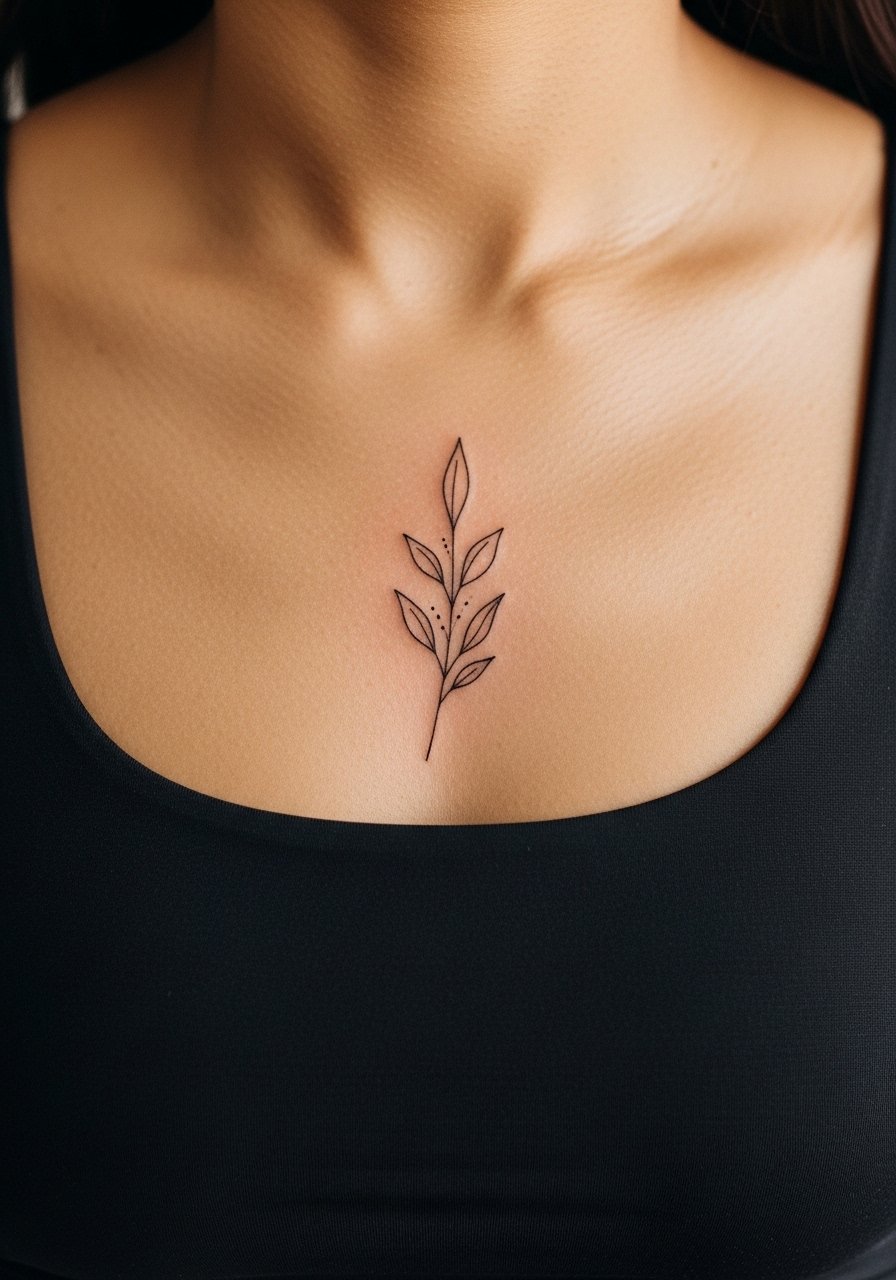
I recommend a single-stem sprig for anyone who wants a soft focal point without heavy saturation. Tell your artist to keep spacing between leaves and to use slightly heavier linework around the silhouette so the piece keeps shape as it softens over time. Expect the sternum to rate higher on pain because of bone proximity, and plan a short session of about one to two hours for this scale. A common mistake is asking for extremely thin single-needle leaves across the whole stem which can blur into a faint line at year two. For showing the work off, a deep v neck bodysuit frames the sternum without competing with the linework.
2. Tiny Upside-Down Rose Between Breasts
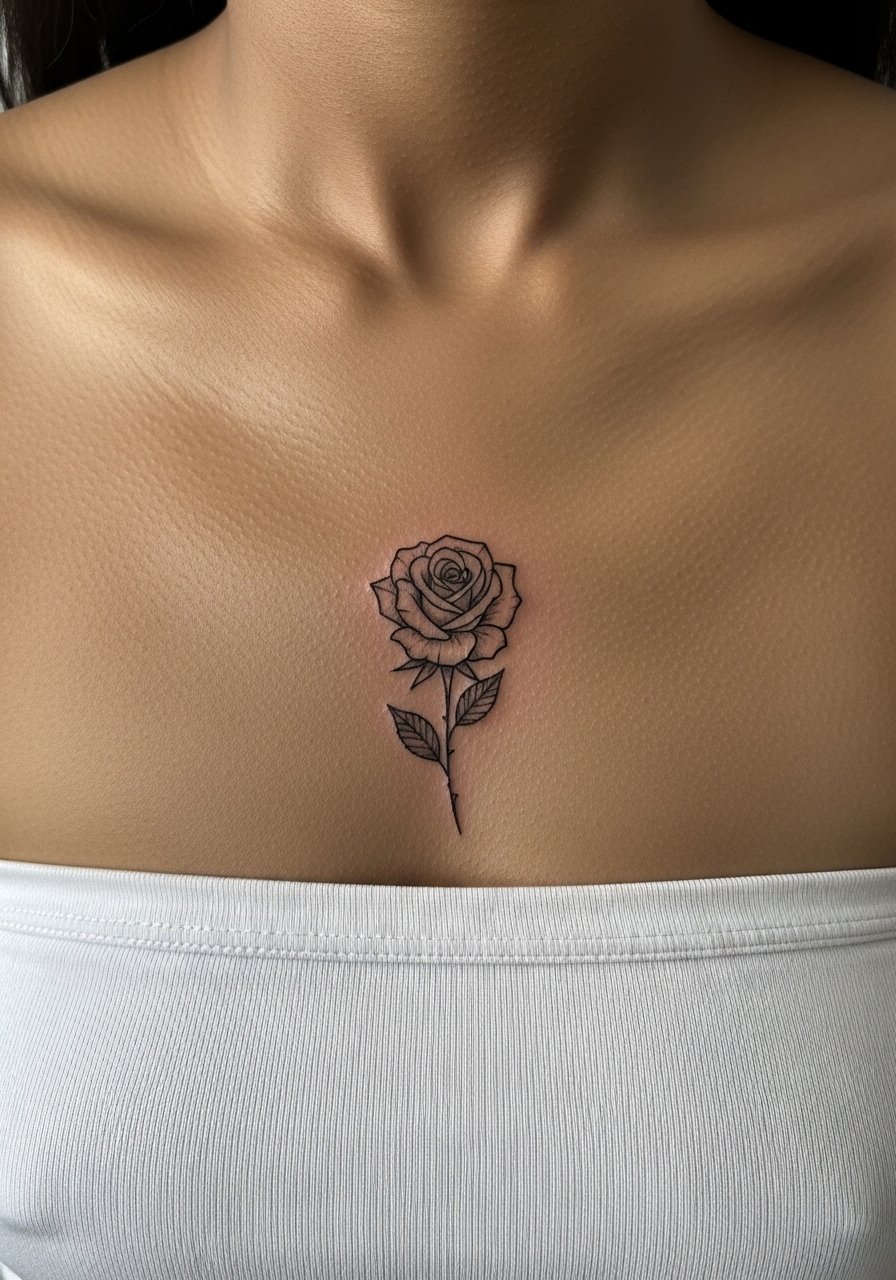
Upside-down orientation gives a familiar motif a fresh perspective and reads subtle under clothing. In consultation mention orientation explicitly and ask for bolder petal outlines so the tiny details keep definition as the skin moves. Blowout risk is moderate here because the central sternum sits close to bone, so ask the artist about needle depth and touch-up expectations. Session time is short, often under 90 minutes, which helps with pain management. Wear a plunging neckline dress when you want to reveal without overexposing the area. Sensitive-placement note, chest tattoos require an experienced hand and a studio comfortable with sternum work.
3. Fine Line Crescent with Dotwork Trail
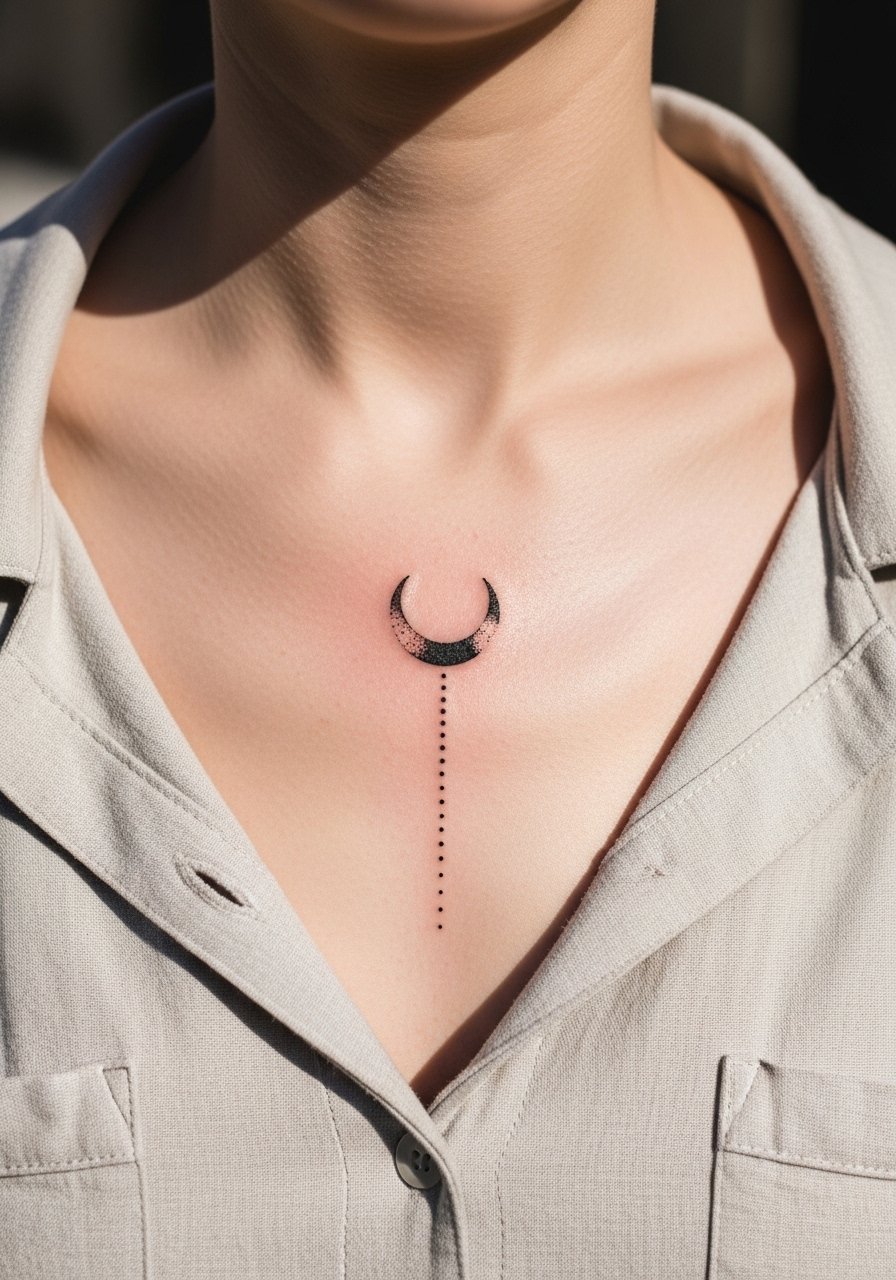
This idea pairs well with negative space and breathes with the chest motion. Ask your artist to space the dots progressively wider toward the edges so the pattern reads longer as it ages. A common aging issue is clustering dots too close which can merge into a soft gray smudge by year three. Pain is tolerable for most, but the middle sternum is more sensitive than the upper chest. For the session wear a loose button-down shirt you can slide aside without stretching skin. If you worry about healing on darker tones, discuss higher contrast linework so the dots remain visible.
4. Symmetrical Celestial Pair with Tiny Stars
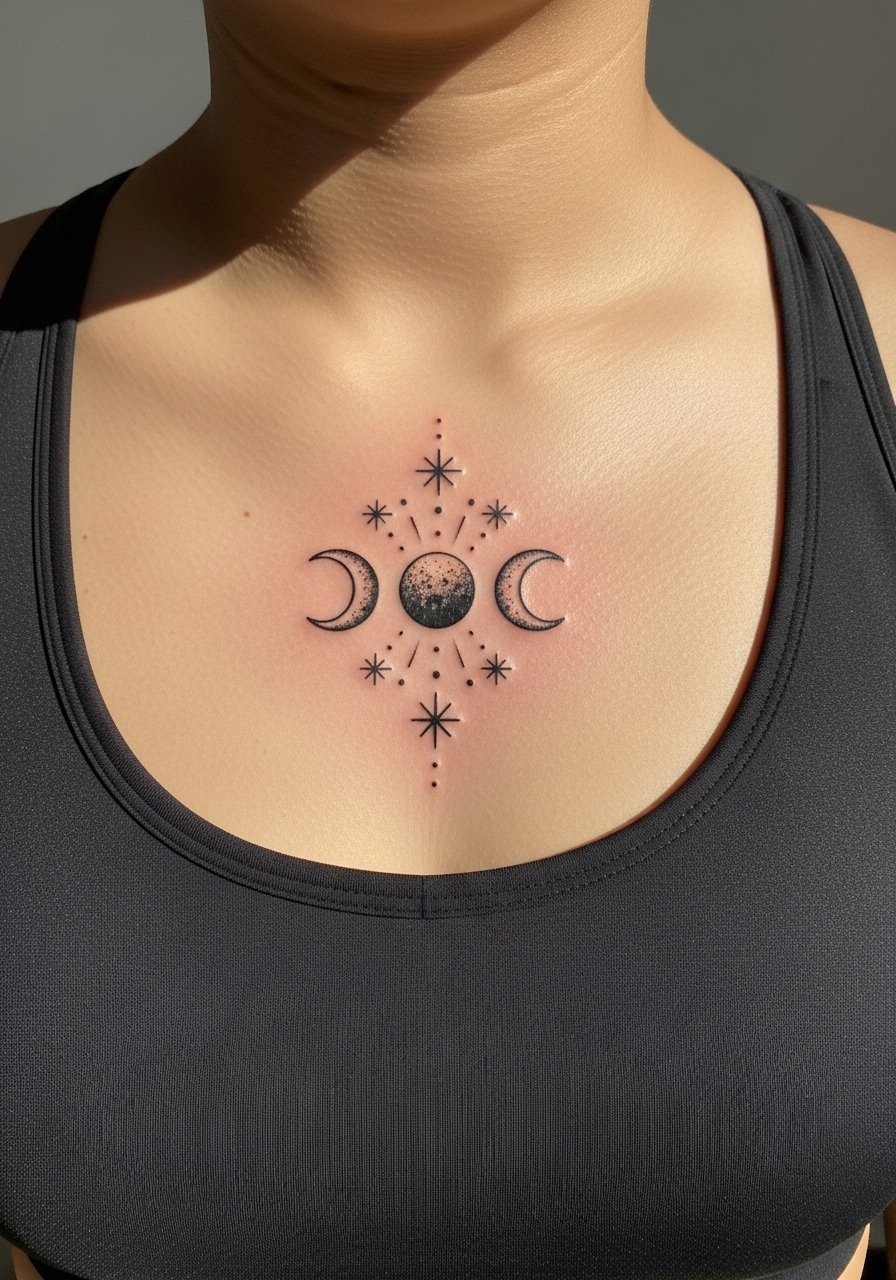
Symmetry plays nicely on the sternum because the bones give a natural centerline to anchor the design. When you book, bring reference showing spacing relative to the sternum notch so the moons sit balanced with your collarbone. Artists disagree about perfect symmetry on a curved canvas. One camp says strict mirrored elements age poorly when the body shifts. The other camp says subtle asymmetry that follows the rib curve looks more organic. Ask where your artist falls on that divide before committing. For evenings out try an open-back midi dress to let the moons peek without full exposure.
5. Watercolor Petal Wash Sheathing the Sternum

Watercolor effects can feel dreamy and soft in this placement but they demand careful saturation choices. The risk is that color fades faster on chest skin when exposed to sun and friction. Tell your artist you want stronger black anchors or fine line outlines paired with the wash so the composition retains its shape as pigments fade. Session time for color work is longer, often two to three hours, so plan breaks. For showing the piece without wearing swimwear, a scoop neck top keeps attention on the color field.
6. Minimal Script Over the Sternum
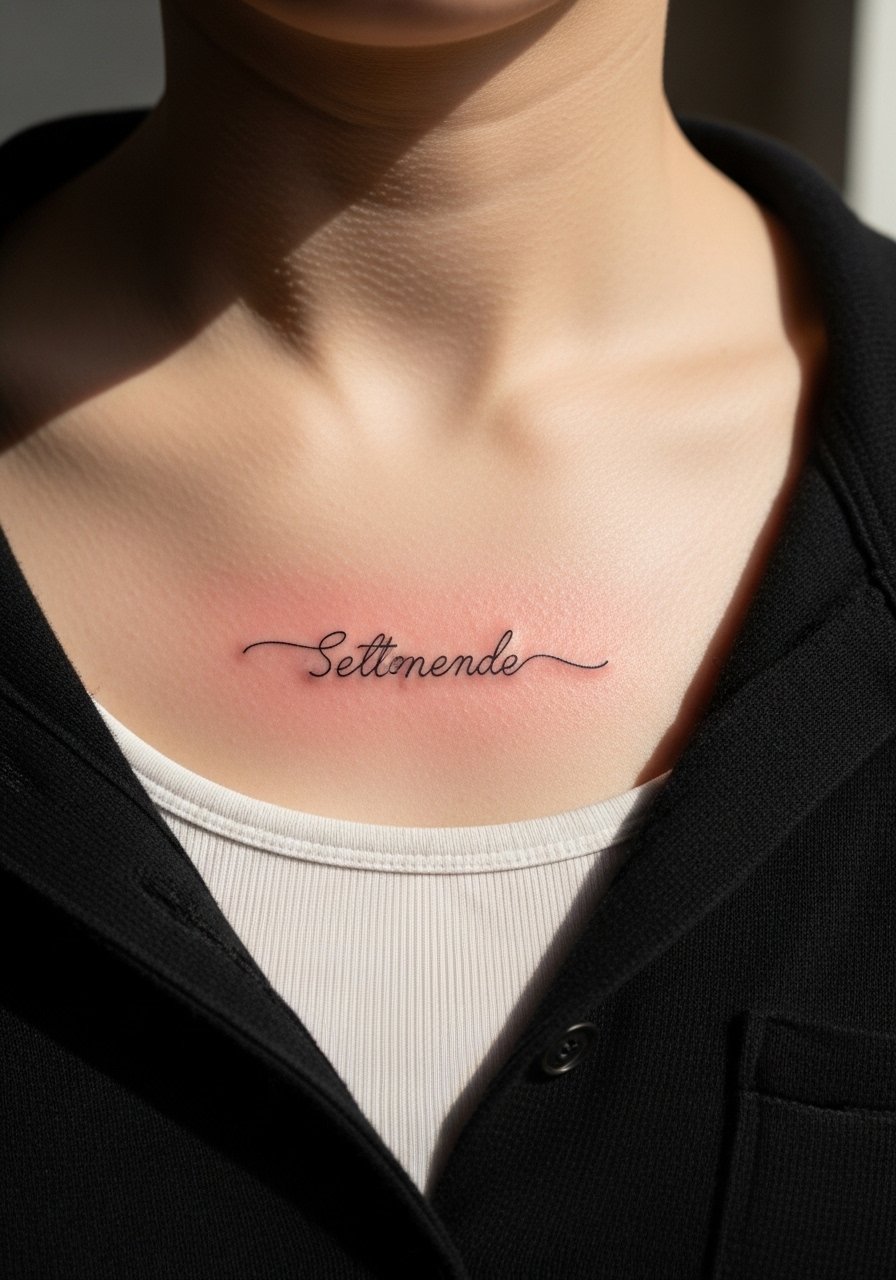
Single-word scripts can be very intimate and they read clearly when placed just above the sternum. Ask your artist to write the word at life size on tracing paper and hold it on your chest so you can confirm spacing. Fine script on the sternum divides artists into two camps when it comes to longevity. One group warns that ultra-fine lines blur on chest skin within a couple of years. The other group says careful depth and slightly thicker downstrokes will preserve the script. If you want to hide it during healing wear a plunging neckline bodysuit you can adjust easily without rubbing the area.
Studio Day Picks
The first six chest concepts ask for different prep compared with forearm or ankle work, so these items smooth the session and the initial healing window.
-
Stencil transfer paper kit. Lets you preview the exact script spacing and botanical curves on the sternum before the needle touches skin which is crucial for centered designs.
-
Topical numbing cream. Applied as directed before a sternum session can reduce the edge of sensitivity without interfering with linework.
-
Thin protective film roll. Useful for temporarily shielding a new sternum piece from clothing friction during the first day.
-
Fragrance-free body wash. Cleanses the chest area gently during showers without stripping pigment or irritating healing skin.
-
Aquaphor healing ointment. A thin layer in the first couple of days helps maintain moisture for fine line pieces until the scab stage forms.
7. Asymmetrical Leaf Wrap Along the Breast Curve
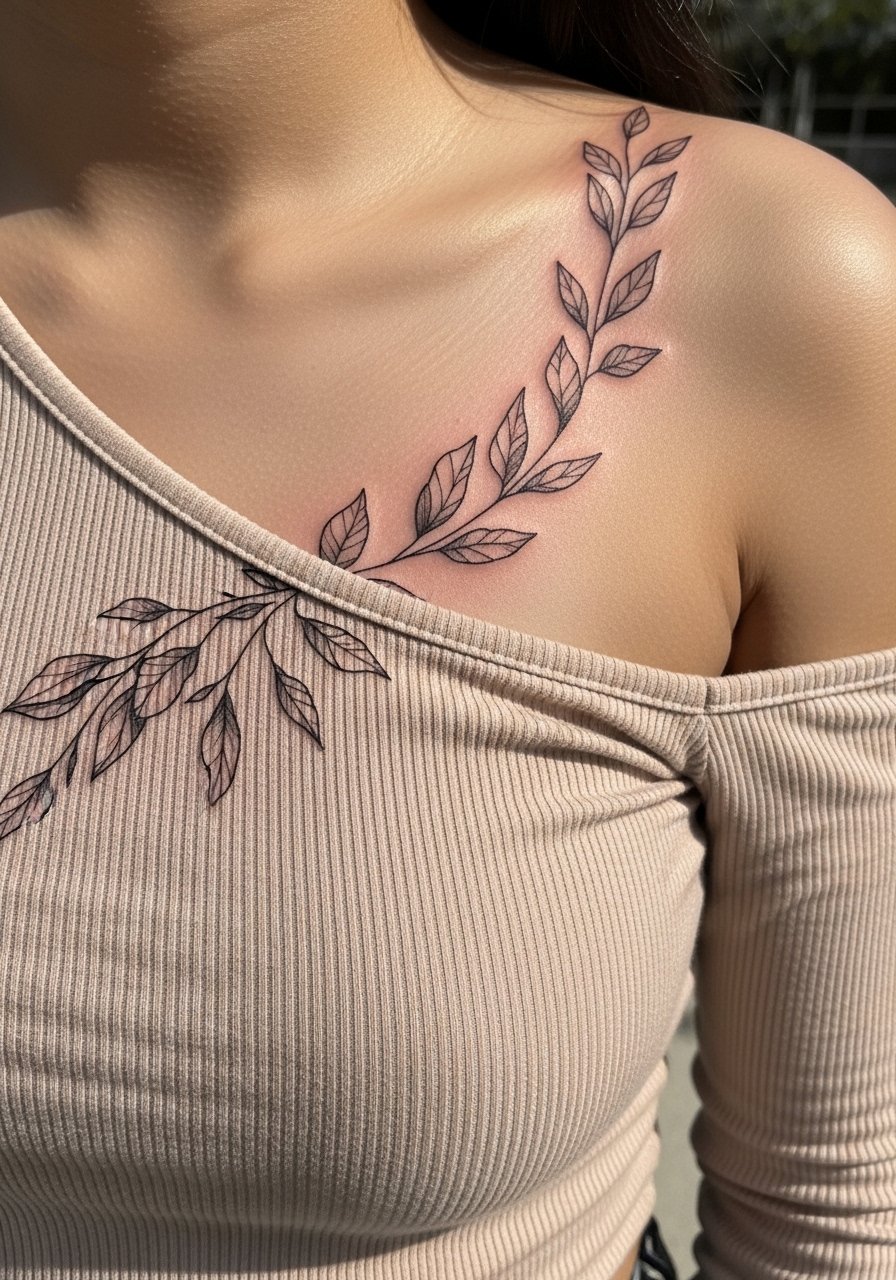
Asymmetry can make a between-breast tattoo feel custom to your body instead of forced to the center. During consultation, ask the artist to map the vine against your breast contour and mark the start and end points while you stand. This prevents a design that shifts awkwardly when you move. Expect slightly longer session time than a centered micro piece because of layout work. The common mistake is forcing a centered composition when a wrap would flatter the curve more. To show one side selectively wear an off shoulder top that reveals the wrapped edge without overexposing.
8. Tiny Sunflower Cluster Just Below the Sternum
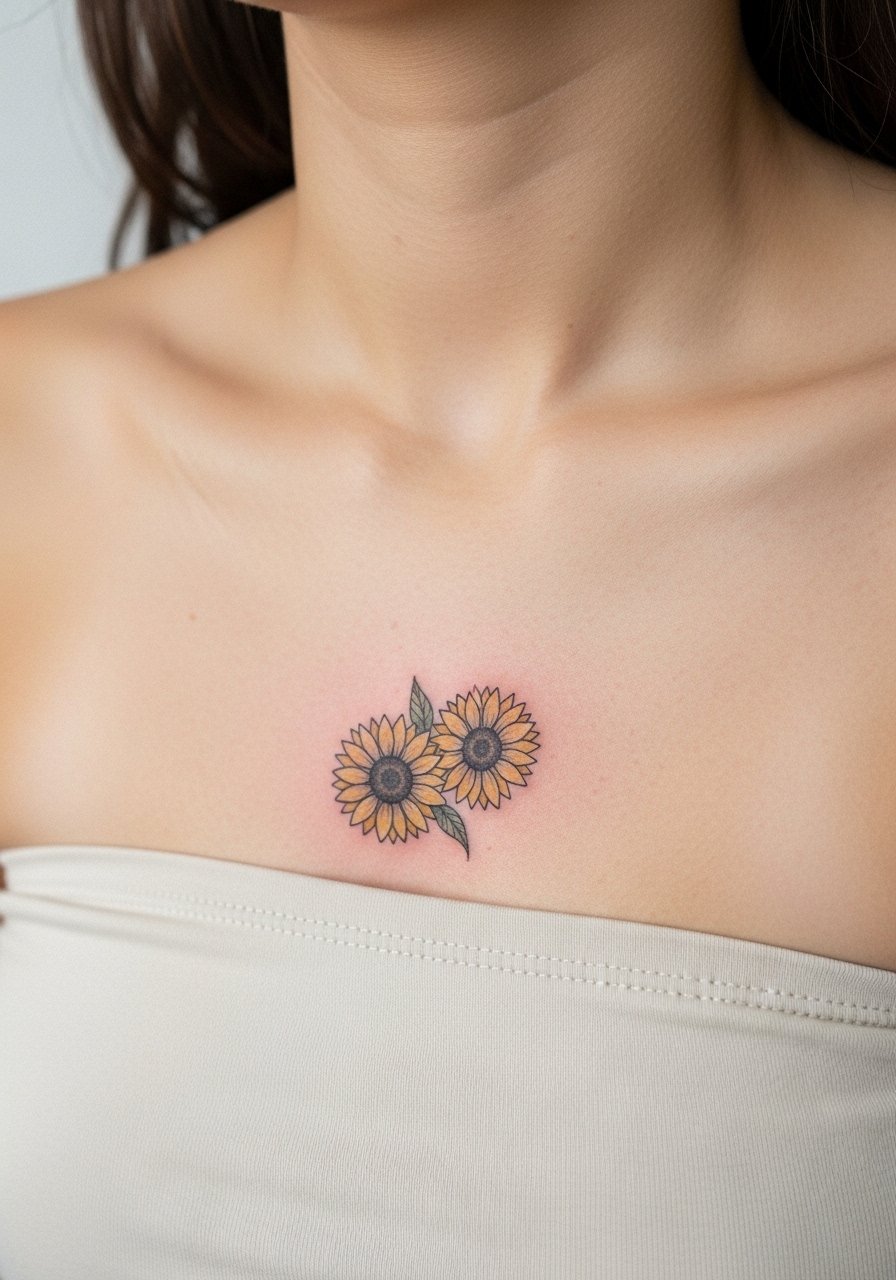
Sunflowers read bright in small clusters because of their bold centers. Ask for a compact center with slightly heavier black saturation so the flower keeps definition as color fades. The under-sternum position gets more friction from waistbands and bras, so plan clothing choices during healing. Sessions are moderate in length, often around 90 to 120 minutes for a two-flower layout. A frequent mistake is crowding too many petals into a tiny space which loses flower shape after a year. For pool days and casual wear, a high waisted bikini bottom sits below the piece and keeps it visible without strain.
9. Medusa-Inspired Illustrative Medallion

An illustrative Medusa motif can read powerful when done as a contained medallion that respects chest curvature. Be explicit in consultation about hair flow and node placement so serpents sit naturally with the sternum. Keep expectations realistic for shading longevity since thin gray washes can fade faster on the chest. This design feels heavier and may require a longer session or two appointments for saturation and fine detail. Sensitive cultural note, some imagery has roots and symbolism you may want to adapt rather than replicate. For a bold reveal try a structured crew neck tee worn slightly open.
10. Geometric Diamond Cluster Over the Sternum
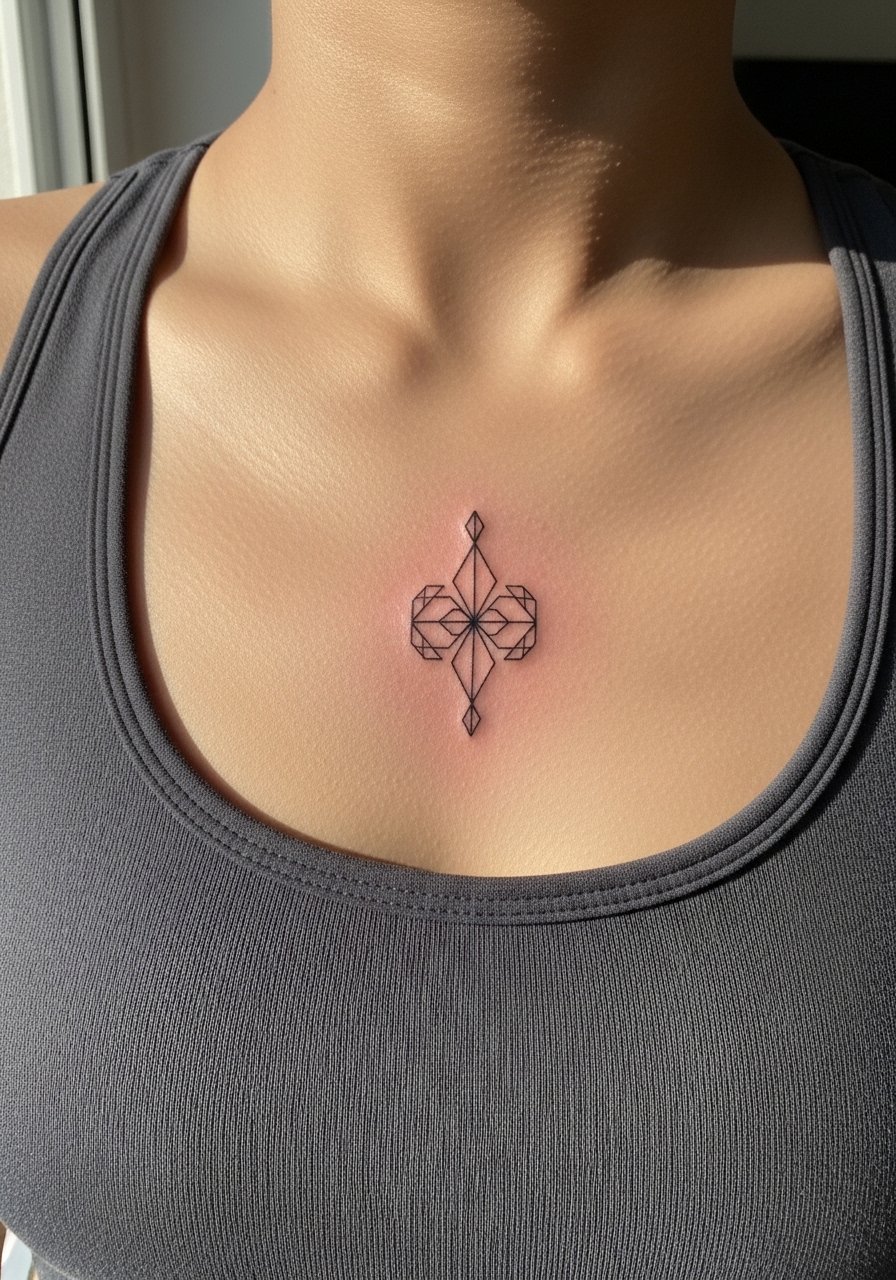
Geometric pieces demand deliberate spacing so lines do not merge over time. Tell your artist to use wider negative space between dense shapes and to favor slightly thicker primary lines. People often go too small with mandala-style geometry which later fills in and looks muddled. On sternum skin, linework needs room to breathe. Pain is moderate and the session may be under two hours for a compact cluster. For nights out a delicate long pendant necklace can frame the geometry without touching it.
11. Micro-Realism Daisy Chain Low on the Sternum

Micro-realism in this spot reads intimate and small contrasts hold up best when there are a few anchor points of darker ink. Ask for tiny dark centers with light petal shading so the daisies read as flowers and not pale shapes over time. The main mistake is asking for ultra-blended petal shading across many flowers which fades into a gray blur. Keep expectations for touch-ups in mind, often at year two or three for micro-realism chest work. For casual wear a crop top women makes the daisies visible without full exposure.
12. Stipple-Shaded Crescent Cradle
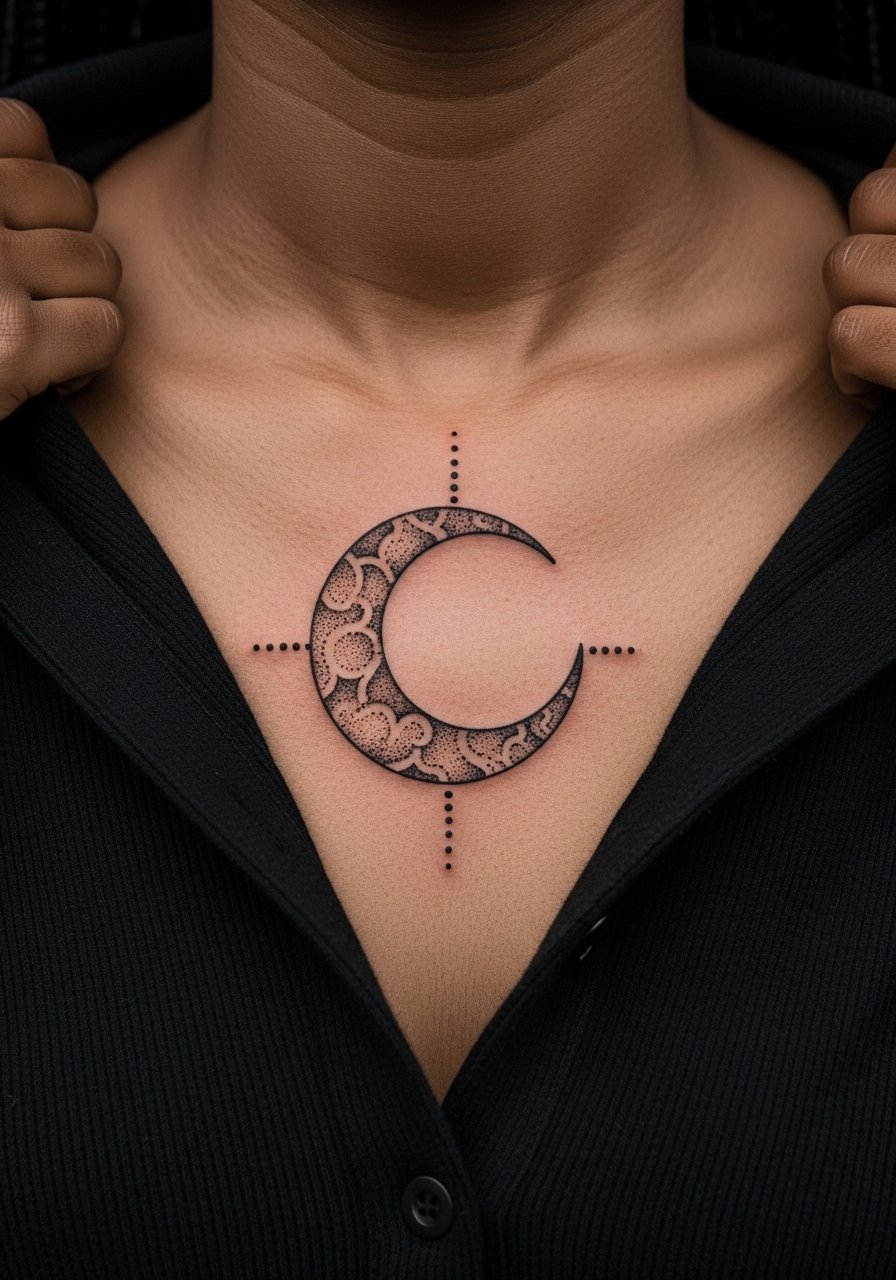
Stipple or dot shading gives a soft, textured look that ages by losing some contrast rather than turning into solid blur. Request denser stippling near anchor lines and a feathered fade outward so the piece keeps three-dimensionality. The stipple technique takes longer because of pacing, expect a two-hour session for mid-scale cradles. A mistake I see is asking for even stipple across a curve which flattens the form. To show texture without heavy color try pairing with a scoop neck top that keeps the area framed.
13. Small Moth with Paired Stars
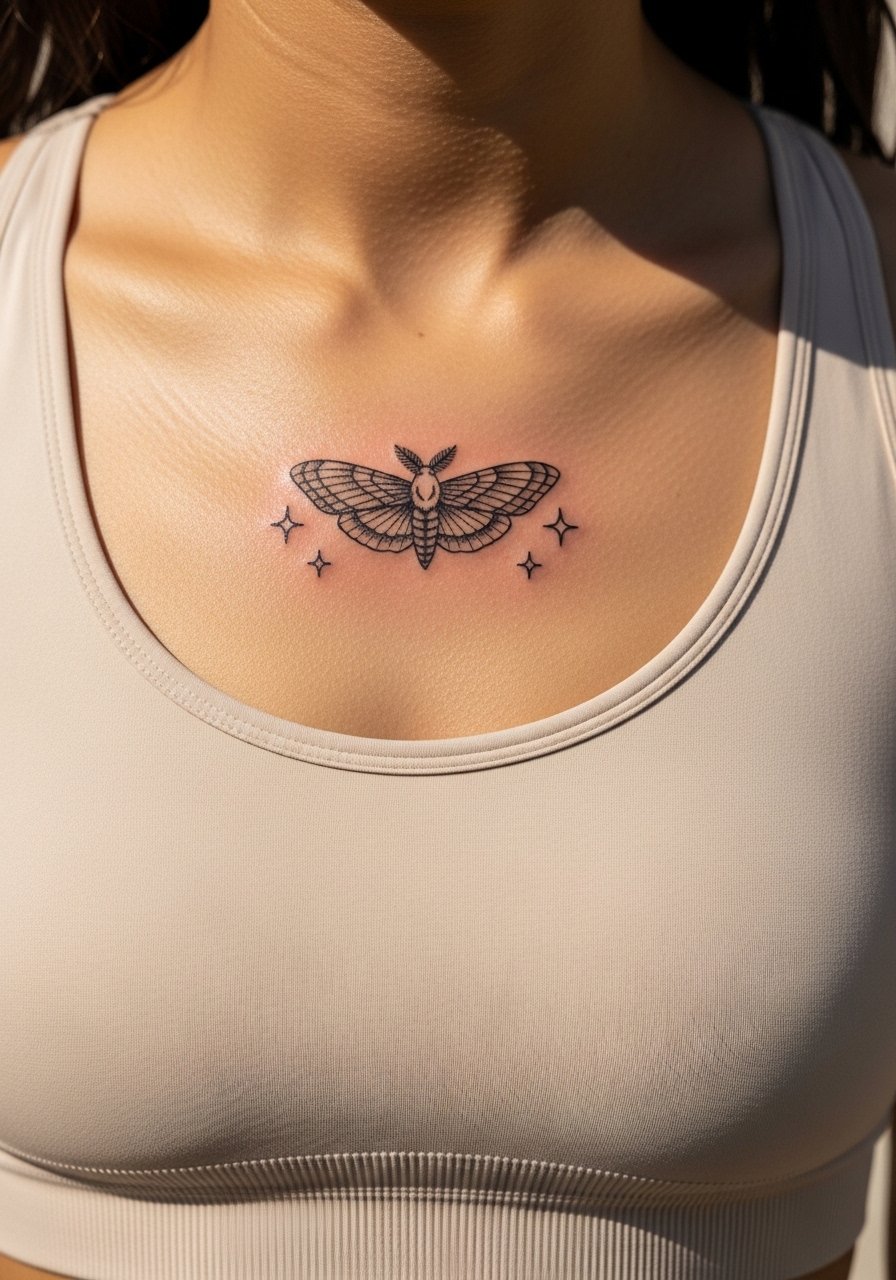
A moth motif reads like a soft guardian when scaled modestly for the chest. Tell your artist to focus on clear wing contours and a darker thorax so the shape remains readable after seasons of wear. Common mistake is overworking wing texture which becomes muddy as the skin moves. Pain is similar to other sternum placements and shorter sessions help manage it. For a refined wardrobe pairing try a thin chain pendant necklace that sits above the moth without crowding the design.
14. Ornamental Pearl Chain Arc
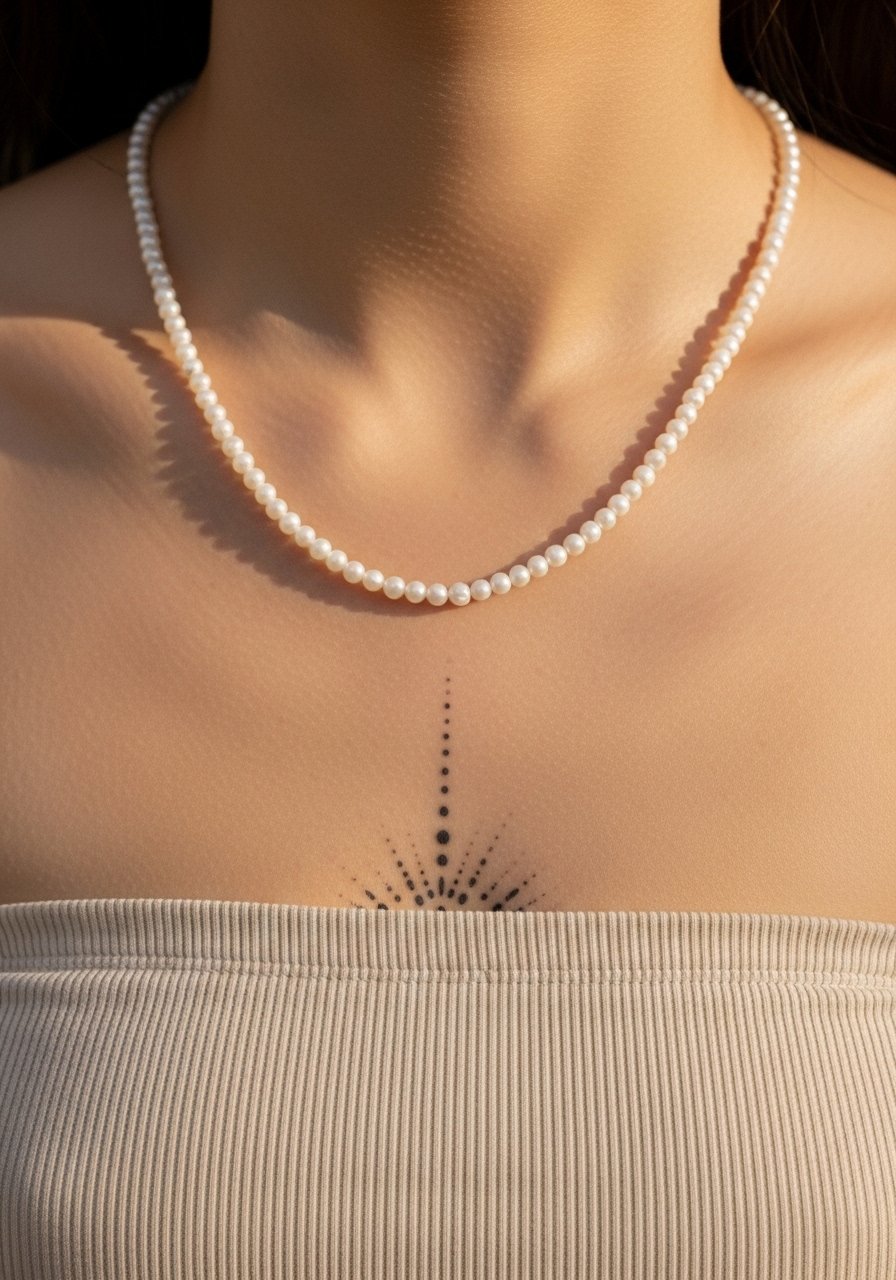
Pearl chain tattoos mimic jewelry and are flattering for the sternum because they follow natural anatomy. Mention whether you want spaced beads or a continuous arc and have the artist mark the arc while standing to check symmetry. Be aware that tiny beads can blur if too close together. The safe choice is slightly larger bead spacing and a touch-up plan. Session time is moderate and usually under two hours for simple arcs. For styling, a delicate long pendant necklace can layer above the arc without competing.
15. Single Line Wave Crossing the Sternum
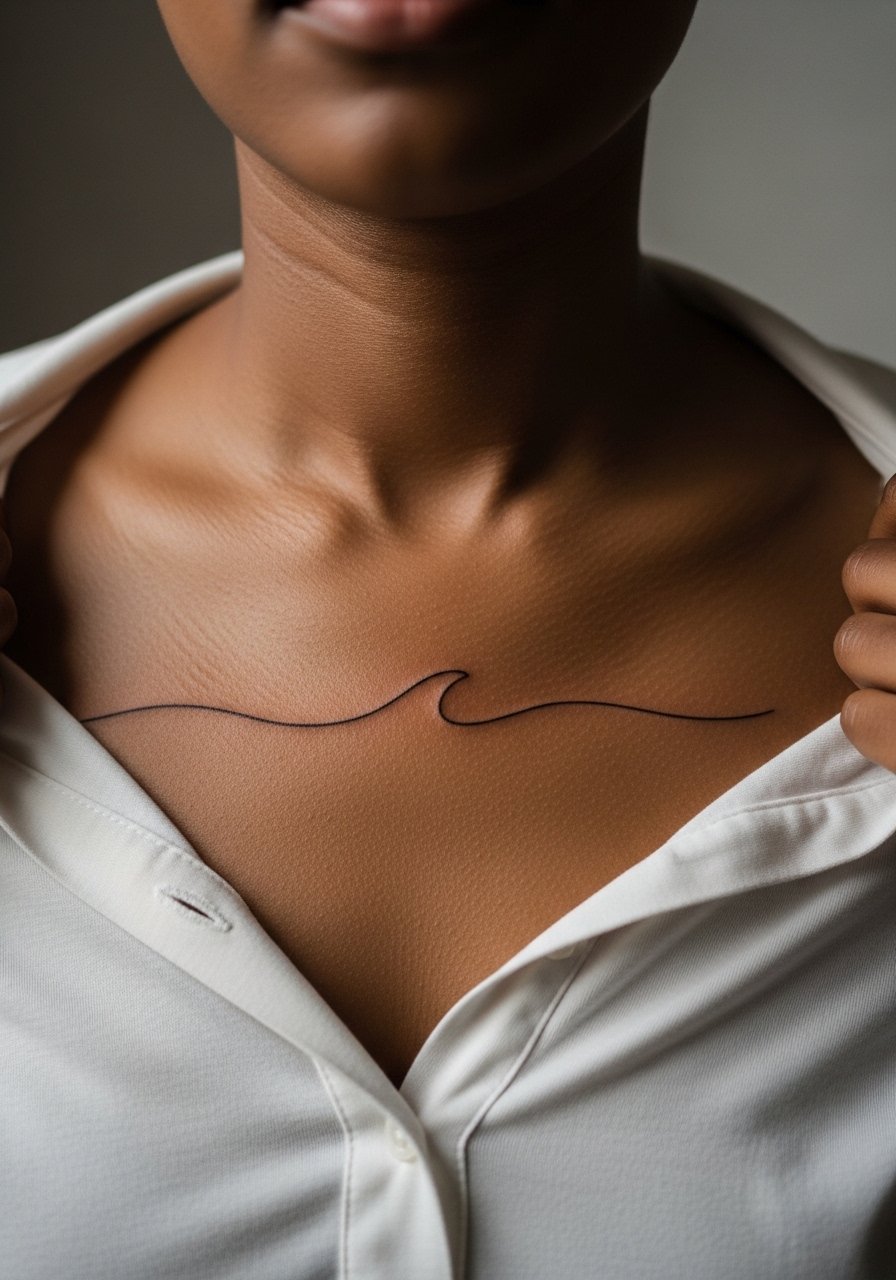
A one-line wave is subtle and modern but it needs confident single-stroke execution. Clarify with your artist that you want one continuous pass without overlapping retraced sections that create heavier patches. The main aging issue is inconsistent pressure that makes parts of the line thicker and others faint; discuss hand consistency in the consult. Single-line pieces are short sessions and good for first-timers who want a minimal commitment. Pair with a scoop neck top to show the wave without full chest exposure.
16. Tiny Constellation Mapped to Your Heart
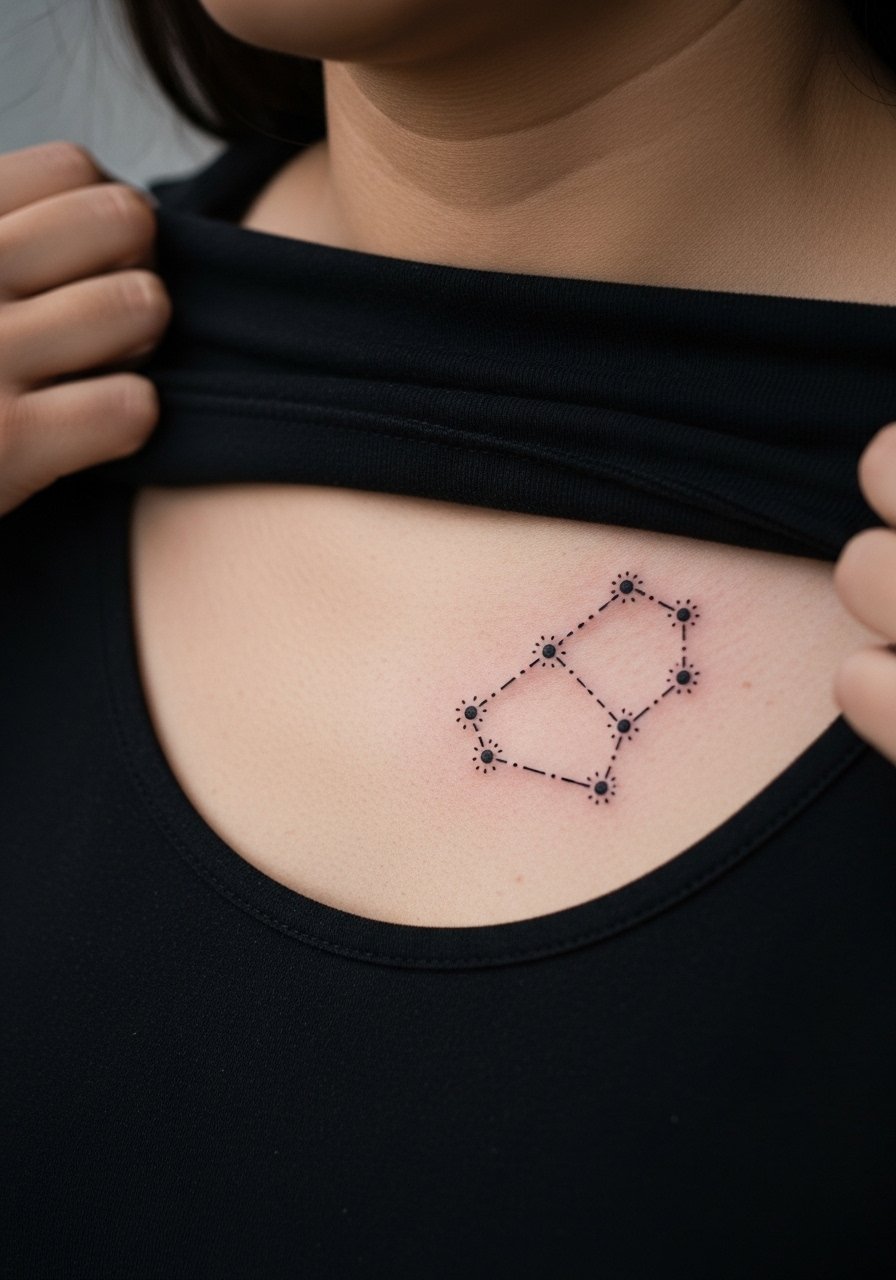
Constellations are precise by nature so request that your artist map the star positions with a washable marker on your skin before inking. For longevity, ask for slightly larger star dots and a thin connecting line with intentional gaps so the pattern does not fuse into a single shape. A frequent mistake is too-close stars in a tiny area which may look like a freckle cluster later. Session time is usually under 90 minutes. To reveal selectively, try a racerback tank you can adjust for coverage.
17. Small Anchor or Nautical Mark Low on the Sternum
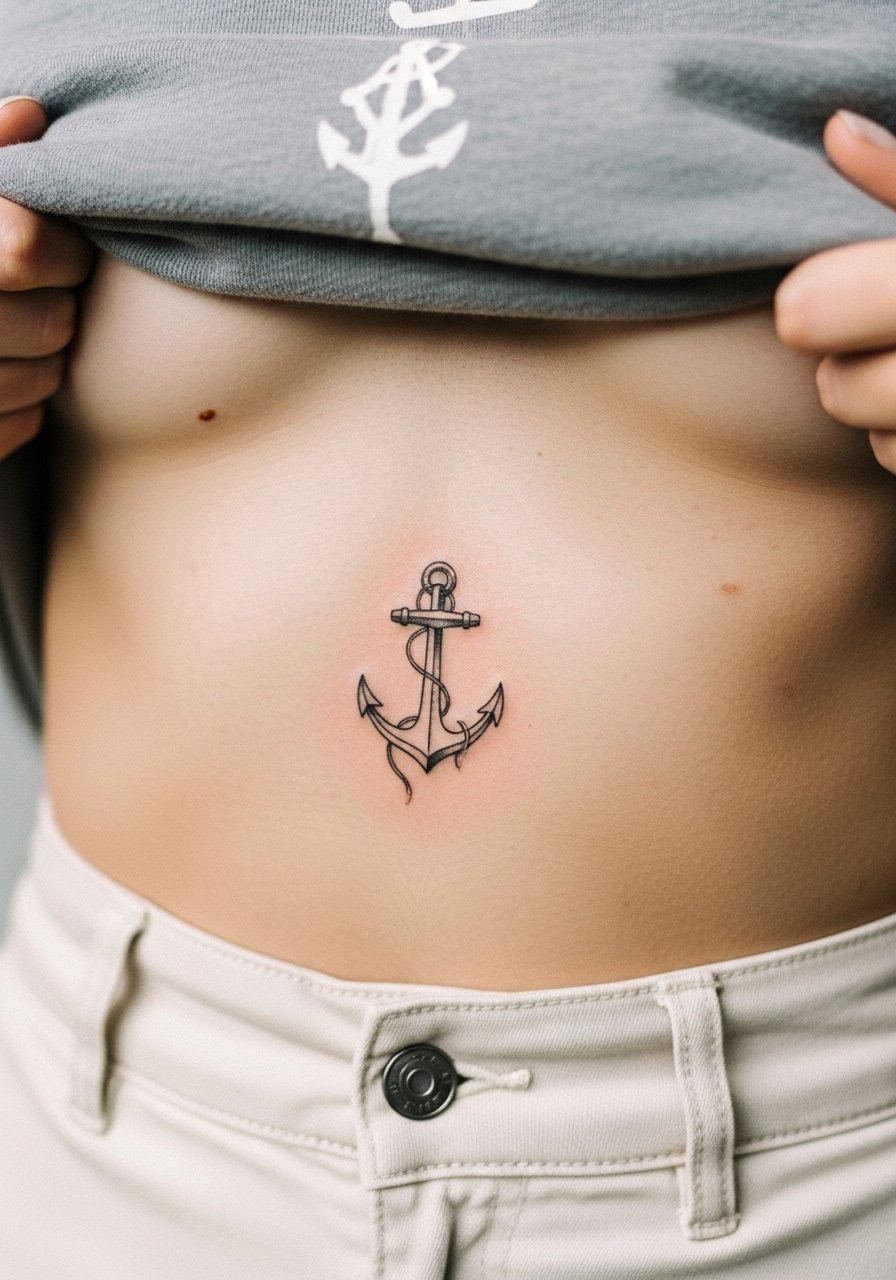
Nautical symbols work when kept spare and centered. Ask for bold anchor lines and minimal shading so the motif reads clearly against chest movement. The common error is overstating fine shading which disappears faster than the outline. Expect a short session and a likely touch-up request around year two depending on sun exposure. For casual beachwear a high waisted bikini bottom shows the piece without pulling at the skin.
Frequently Asked Questions
Q: How much will a between-breast fine line piece typically hurt and how should I prepare?
A: The sternum area rates higher on common pain charts because the bone sits close to the surface. Prepare by booking shorter sessions and using breathing techniques during the work. Many people apply a topical numbing product per studio guidance and wear a loose button-down so the artist can access the area without fabric friction.
Q: Does fine line age differently on darker skin tones for sternum tattoos?
A: Fine line can be more prone to softening on darker tones if the contrast is low. Ask for slightly heavier outlines or black anchors in the design so the piece retains shape. Bring healed photos of similar work in varying tones during your consult to set realistic expectations.
Q: Can I get a watercolor sternum tattoo if I want long-lasting color?
A: You can, but watercolor needs stronger black or line anchors to survive time and sun. Expect slower fading and plan for touch-ups earlier than blackwork. If you want to minimize fading, schedule sessions outside of peak sun months and consider clothing choices to protect the area while it settles.
Q: Is there a debate about Saniderm versus dry healing for chest work?
A: Yes, artists fall into two camps on this. One camp prefers protective film like Saniderm to shield the area and shorten direct irritation during the first days. The other camp favors dry healing with light moisturizing to avoid trapped moisture under film. Ask your artist which method they use and why, then follow the studio-specific protocol.
Q: What should I wear to my appointment for a sternum tattoo session?
A: Choose clothing that gives full access while keeping you comfortable, like a loose button-down shirt or a fitted bandeau you can remove and put back without rubbing the area. Avoid underwire or tight garments on the day of the session to reduce post-session soreness and pressure.
