
Fine line birth year tattoos look effortless on a feed, but they demand a few practical choices if you want them to still read crisp years from a distance in five years. From what I've seen in five shops across Brooklyn, placement and spacing matter more than the exact font. Below are 27 ideas that treat a year as a design element, not just numbers, with what to ask your artist, how they age, and how to show them off without overpowering the ink.
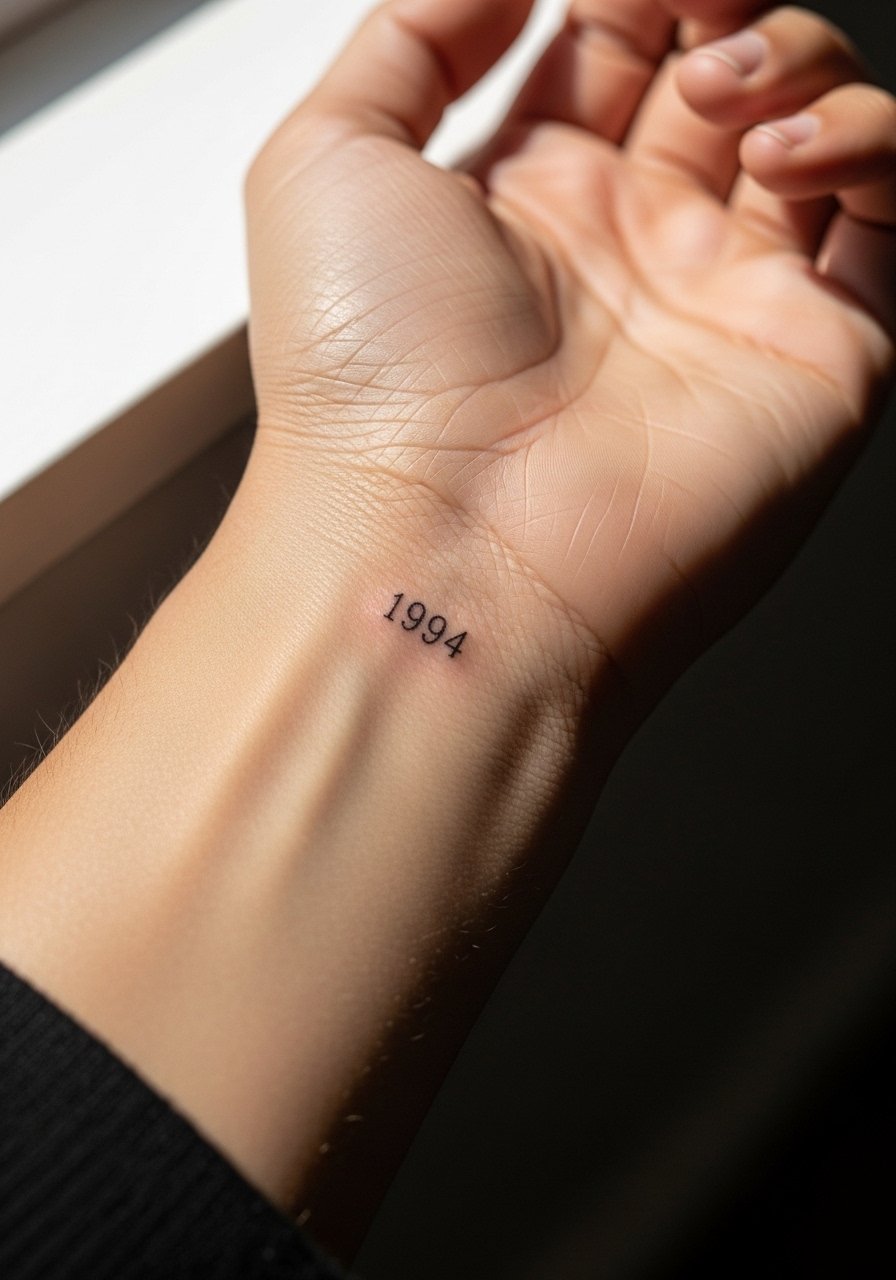
1. Tiny Numerals on the Inner Wrist
A petite line of numerals on the inner wrist reads like a private note. Ask for one-point thinner linework than you think you need and for more spacing between digits so each number keeps its contour as the skin moves. Fair warning, the wrist sees a lot of sun and washing, so expect softened edges at year three and a likely touch-up by year five. The session is short and low on pain, usually under an hour. For the appointment, wear a loose button-down shirt you can roll or pull aside without tugging.
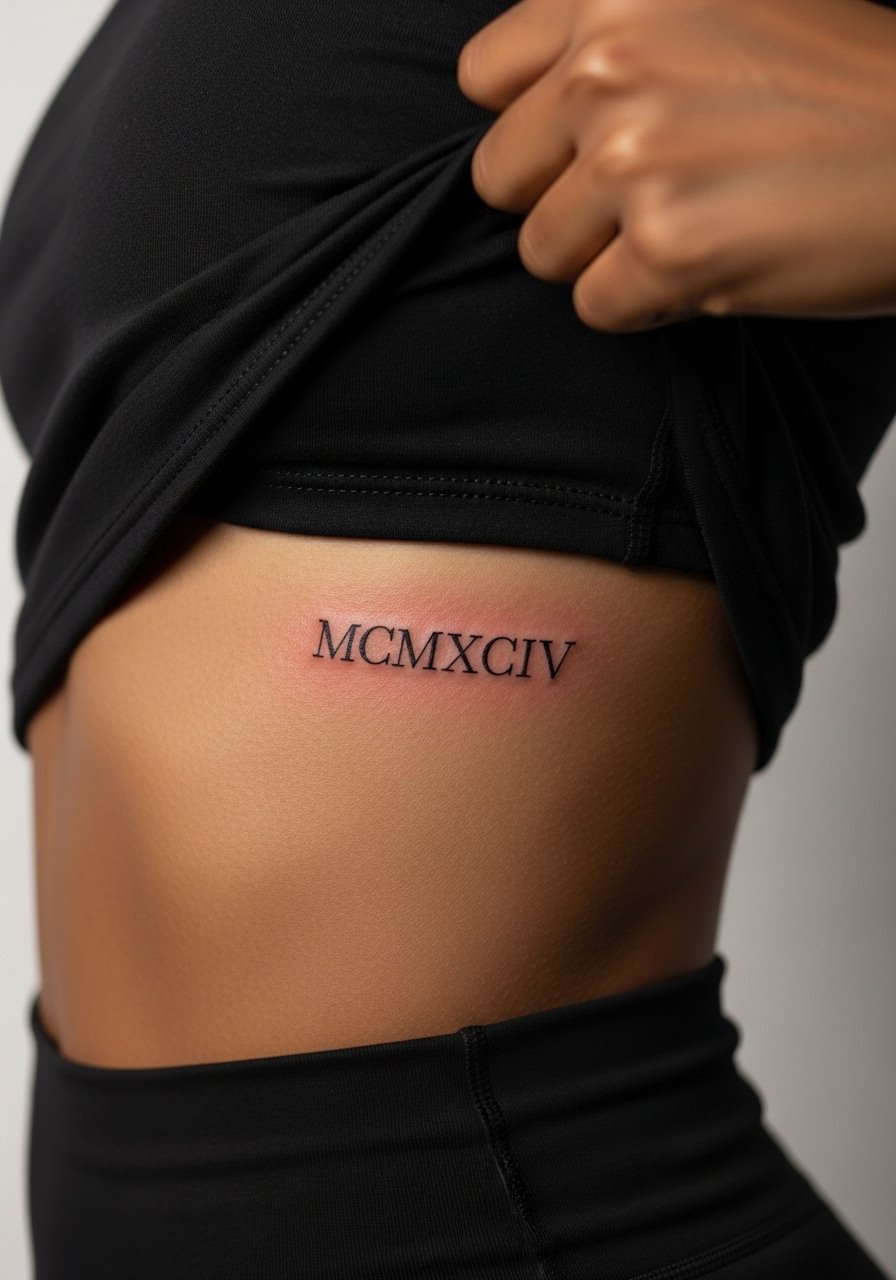
2. Roman Numerals Along the Side Ribcage
Roman numerals on the ribcage read elegant and private when scaled tall and thin. Ribcage work divides artists into two camps. One camp argues that the skin there stretches and lines blur within two years. The other camp says correct needle depth and spacing make fine line settle fine on ribs. Ask where your artist stands and for slightly heavier spacing between numerals. Expect a longer session and strong pain, but the result hides under clothing and ages differently than wrist ink. Wear a cropped top you can lift for the session.
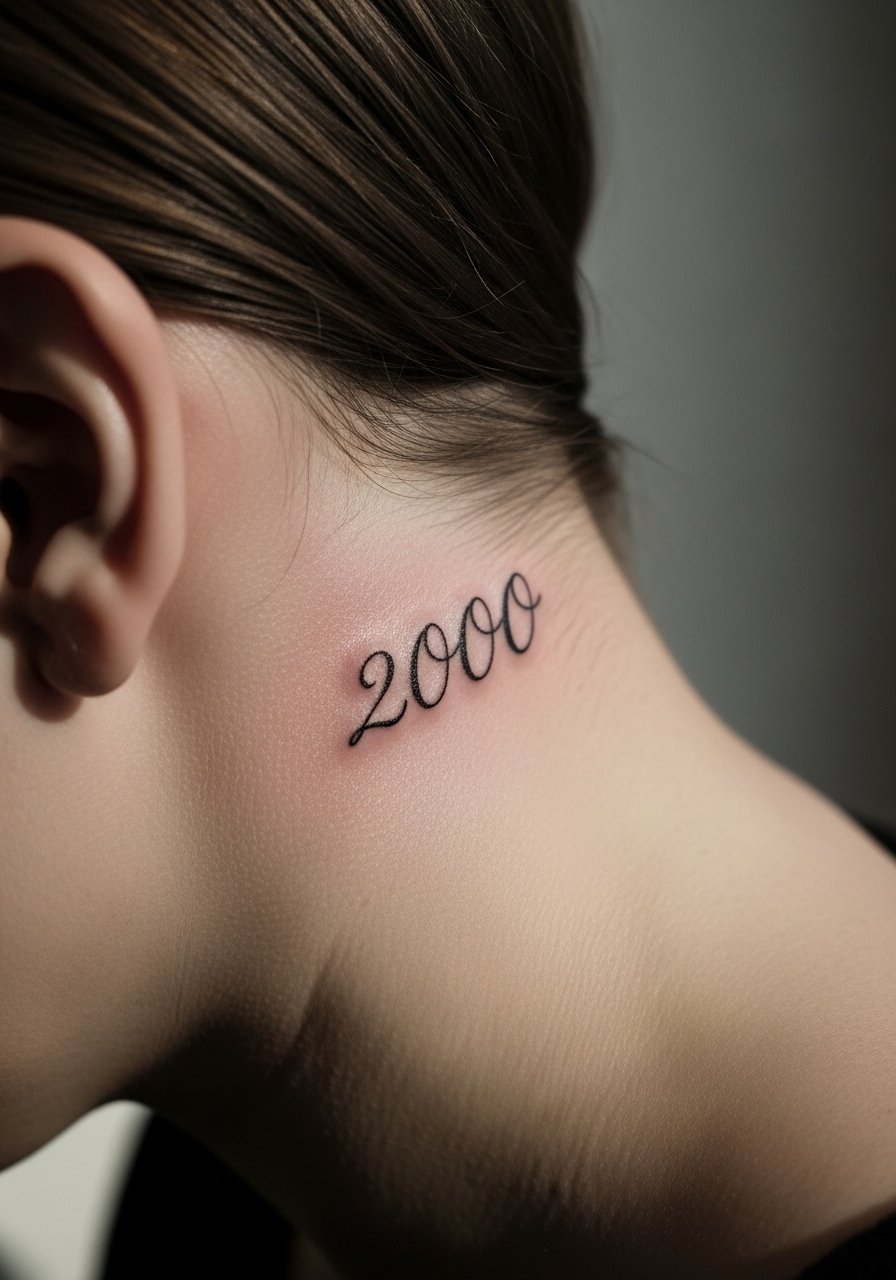
3. Minimalist Script Year Behind the Ear
A tiny script year tucked behind the ear reads intimate without shouting. Specify the exact year text to the artist and ask for a single-needle script that avoids heavy loops. Behind-the-ear work is delicate to photograph and can blur faster because of hair and skin texture. For appointment comfort, schedule in a time when you can wear your hair up. If you plan to show it off, a thin chain pendant necklace and a pulled-back bun make the area intentional rather than accidental.
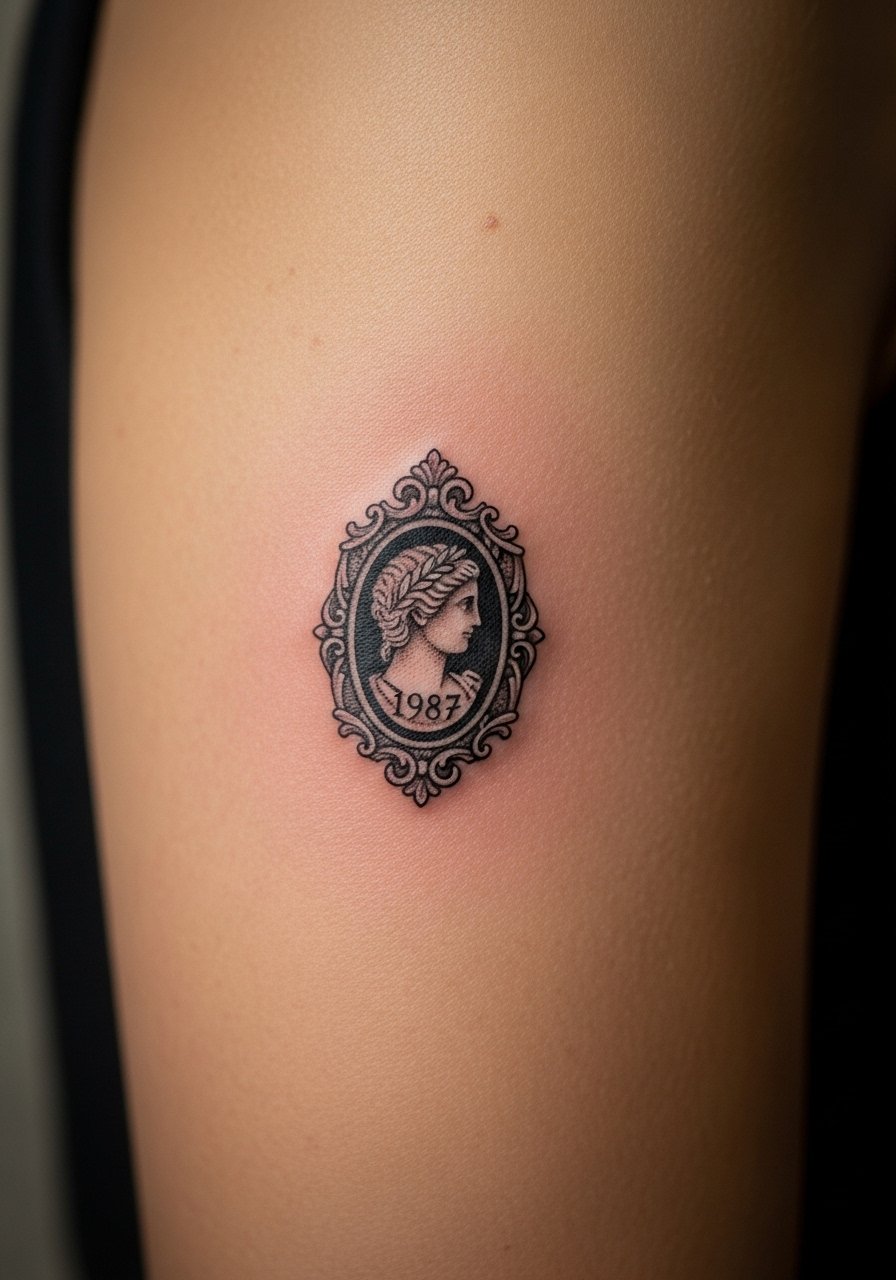
4. Micro-Realism Year Within a Tiny Portrait
Embed a birth year in micro-realism, like a small silhouette or cameo with the numerals woven into the base. This approach needs clear artist direction. Bring reference images showing scale and the exact numerals you want. Micro-realism ages faster when ink is too dense, so ask for light stipple shading around the numbers instead of solid fill. Session time can run longer because of detail. For showing it off, an open-neck blouse keeps attention on the tiny portrait without competing.
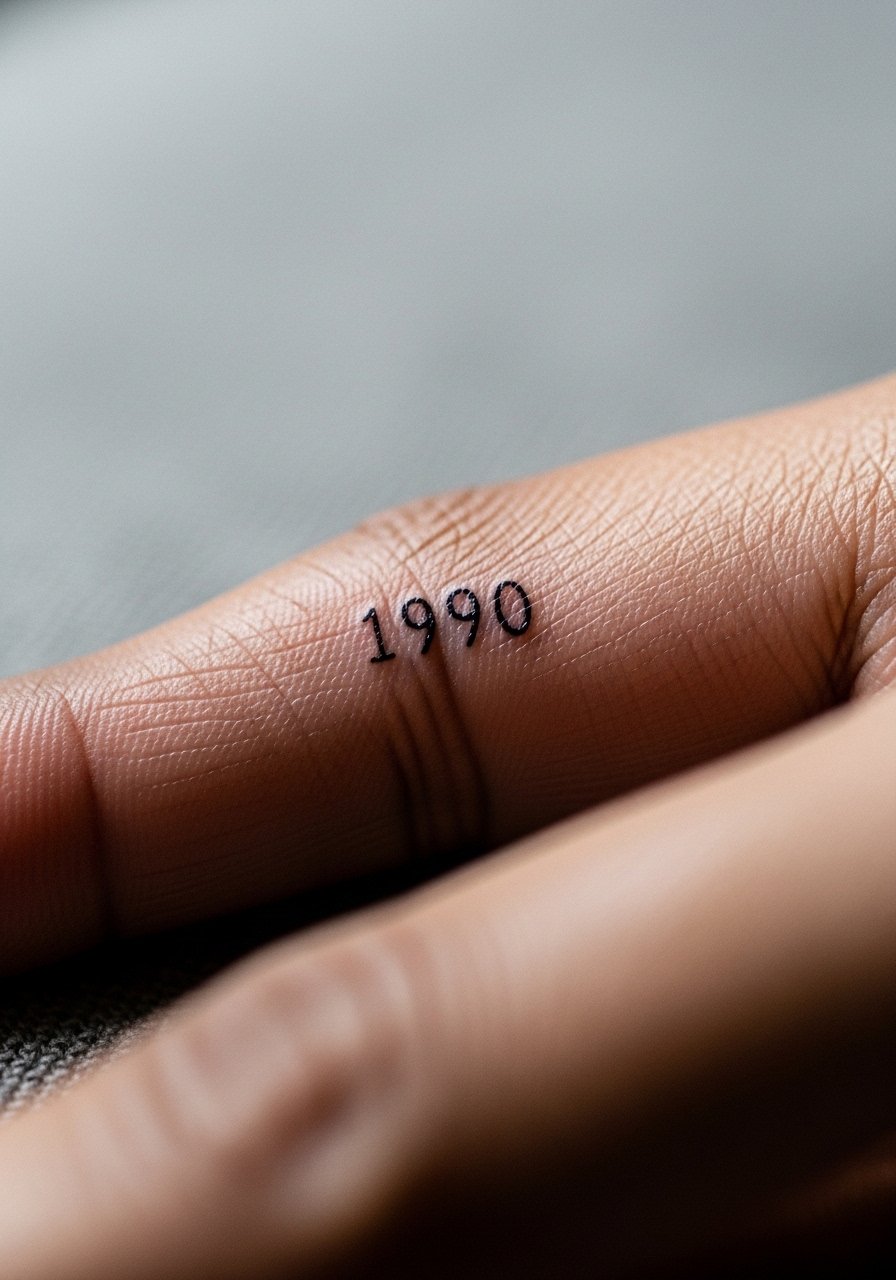
5. Single-Needle Year Along the Side of a Finger
Numbering along the finger looks delicate and discreet. Fingers are controversial for fine line because constant washing and thin skin make blurring and premature fading likely. The two camps are clear: one warns of rapid touch-ups, the other says very shallow linework can last if you accept softening. If you choose this, ask for slightly bolder lines than typical fine line and prepare for yearly touch-ups. Wear minimal jewelry during the session and avoid heavy hand creams for the first week. Pack a thin protective film roll to guard the area in high-friction tasks.
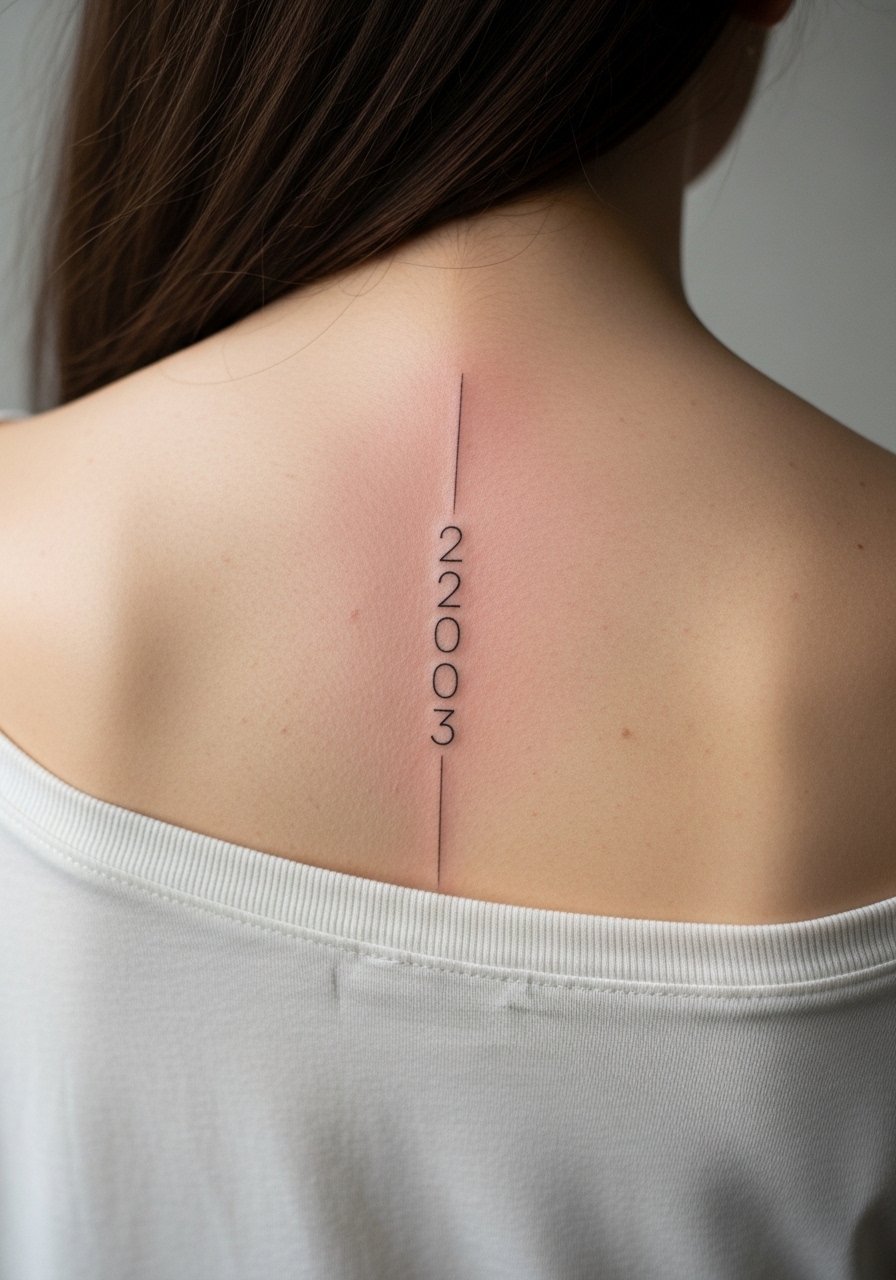
6. Linear Year Down the Spine
A vertical placement of numerals down the spine reads like a centerline. This placement works best with slightly increased spacing and steady lineweight to avoid merging in dense skin folds. The session can be mid-length and feels like a steady, repetitive motion. For showing it off, an open-back midi dress frames the run of numerals and keeps focus on the fine line work. Consider the future if you plan back tattoos around it, since new work nearby can affect aging.
Studio Day Picks
The small placements above call for lightweight prep and protection, so a few specific items smooth the session and the first week for the wrist, finger, and spine pieces.
-
Breathable tattoo protective film. A lightweight film helps reduce friction on finger and wrist tattoos during daily tasks without trapping too much moisture.
-
Fragrance-free cleansing foam. Gentle foam cleans the area without stripping the thin channels that fine line ink relies on.
-
Thin flexible bandage strips. Useful for protecting tape-prone zones like the wrist during the first few days of healing.
-
Topical numbing wipes. Handy for short, sharp placements such as the finger or behind the ear when sensitivity spikes.
-
Aquaphor healing ointment. A thin layer in the first 48 hours helps maintain moisture for tight linework without clogging channels.
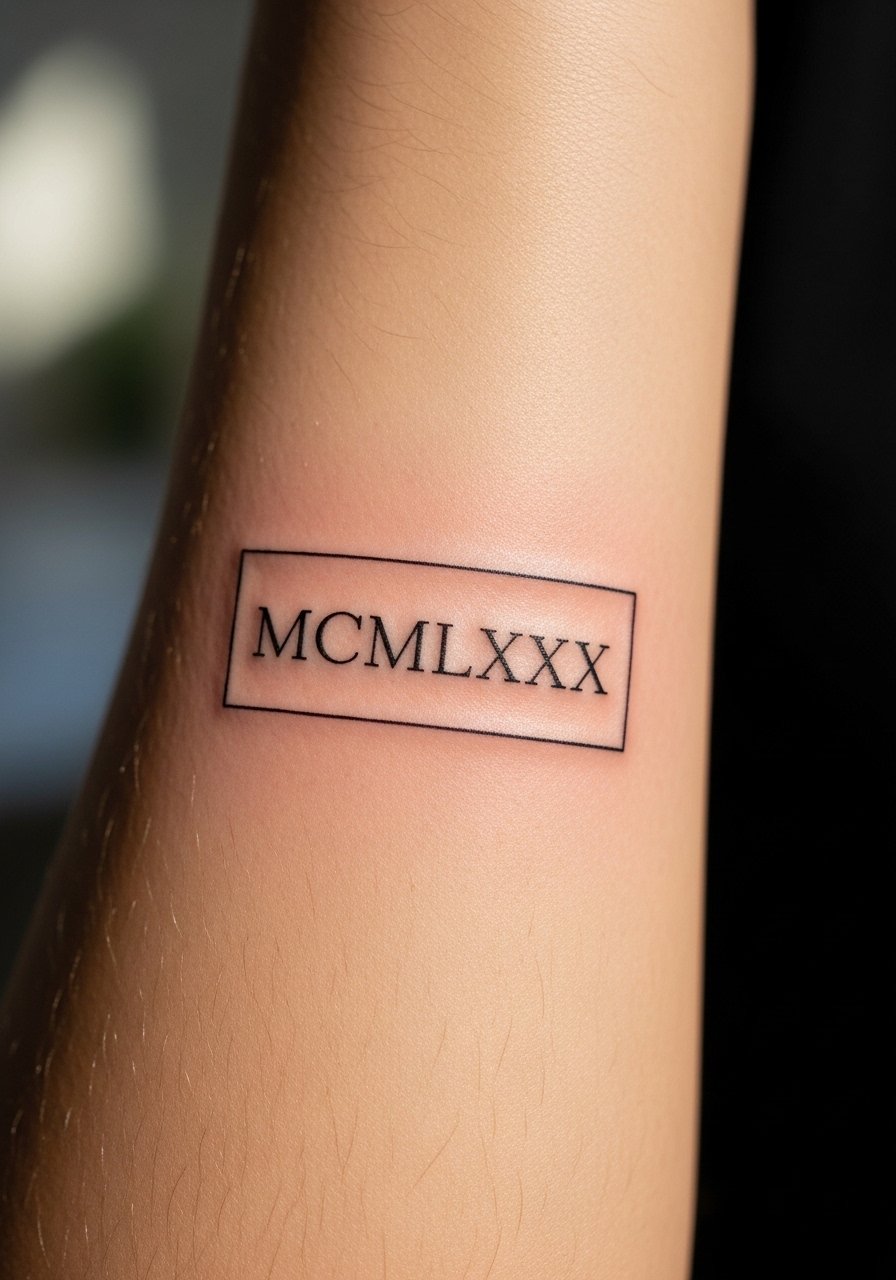
7. Negative Space Roman Numerals on the Forearm
Use negative space where the year is left uninked inside a thin boxed outline to create a subtle reverse effect. Ask for a test of the exact width the artist plans to leave unfilled so the negative numerals do not collapse over time. Forearm placement is friendlier for longevity, but dense outlines around empty space can trap pigment edges and show softening at two to three years. For showing it off casually, a rolled sleeve and a minimalist watch draw the eye without covering the piece.
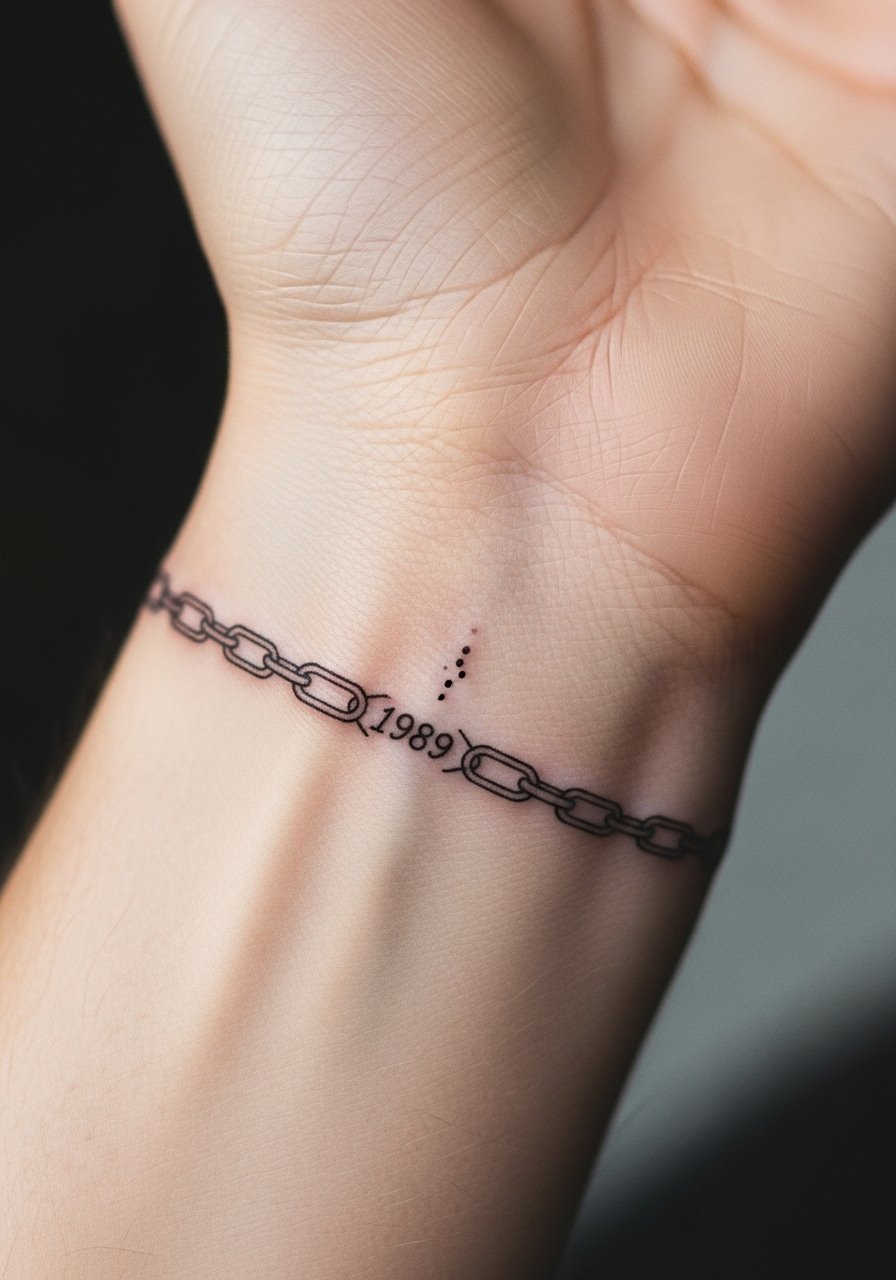
8. Tiny Birth Year as Part of a Single-Needle Chain Tattoo
Integrate the year into a delicate chain bracelet tattoo circling the wrist. The advantage is the chain disguises touch-up lines and distributes wear. Tell the artist which link you want the numerals to sit in and for the numerals to be slightly raised, not recessed. Chains age predictably because they rest on flat skin areas. Expect about an hour for placement. For the appointment, wear a loose sleeve you can roll comfortably.
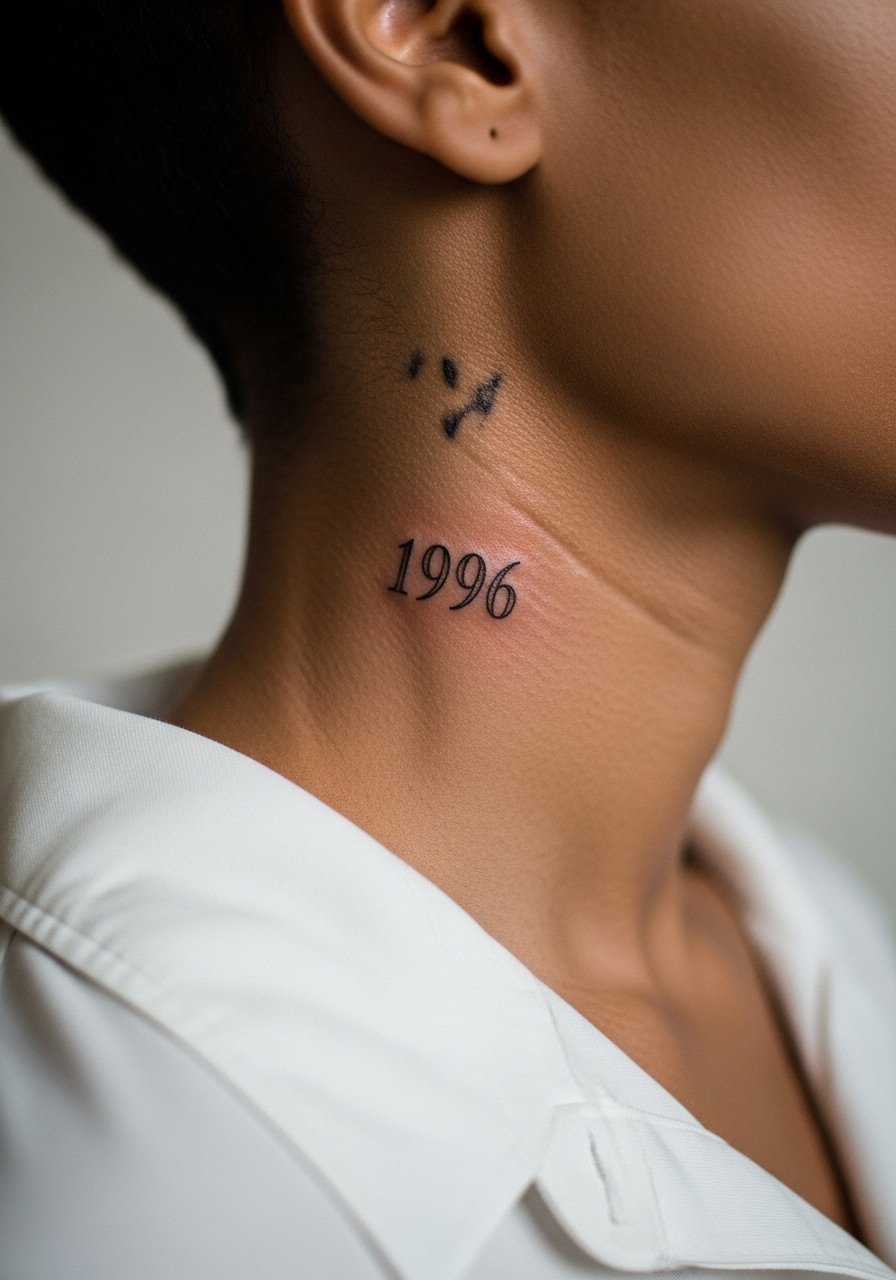
9. Year in Minimal Serif on the Side of the Neck
A slim serif number on the side neck reads editorial and sits between visible and private. Neck work requires a confident artist due to thin skin and movement. One camp says fine line here fades quickly; the other camp believes strategic depth and slight bolding keeps numerals legible. If you choose this, ask for a sample stencil and a heavier lineweight than you would for a wrist. For showing off, a wide-neck shirt with the collar pulled slightly gives a polished frame.
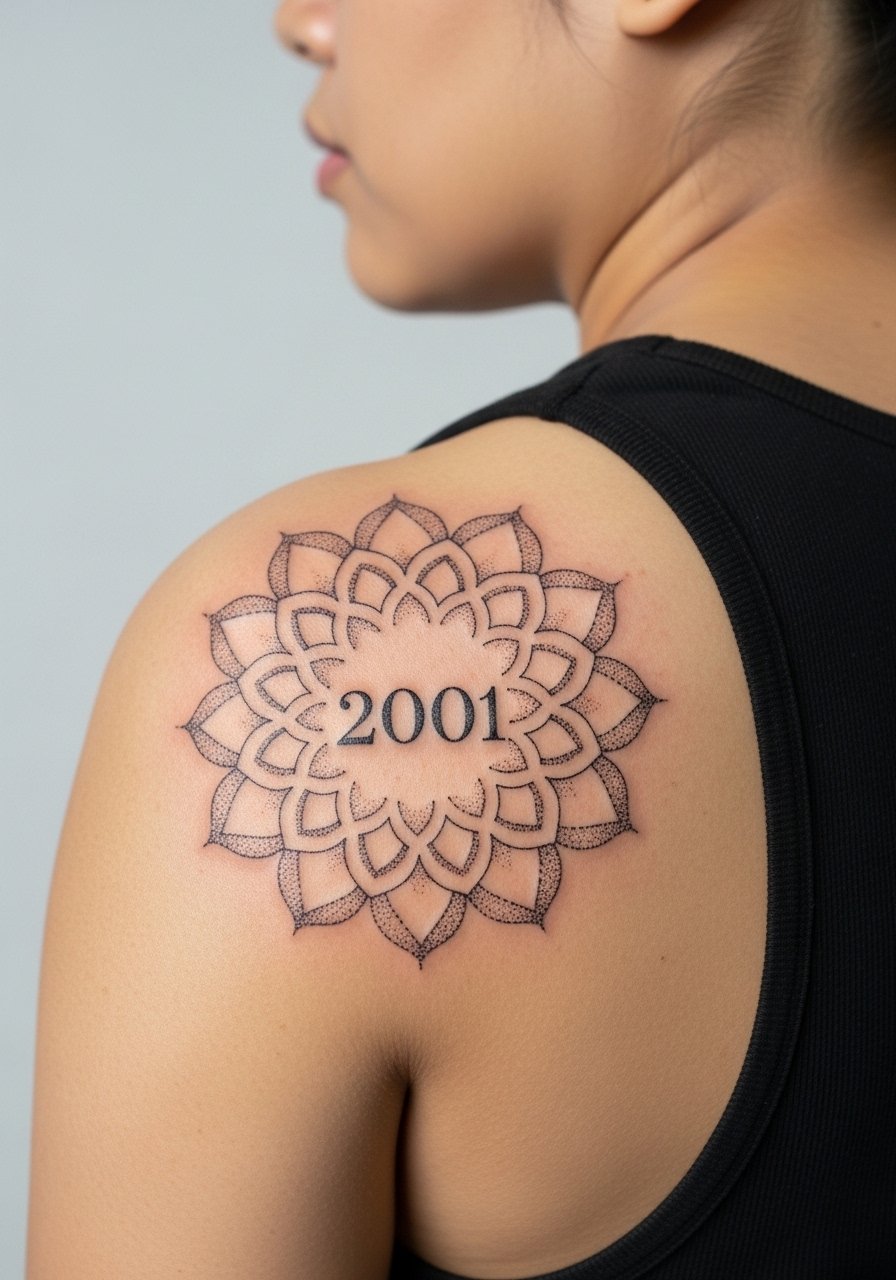
10. Micro-Geom Year Encased in a Tiny Mandala
Place a four-digit year at the center of a little stippled mandala. Opt for dot work around the numerals rather than dense black fill to reduce blowout risk. Tell your artist you want the center numbers to have an open buffer of three to four millimeters from heavy shading. This keeps the year readable as the stippling settles. The session can be detail heavy and may take longer. For evenings out, pair with a racerback tank so the piece sits on display without necklines getting in the way.
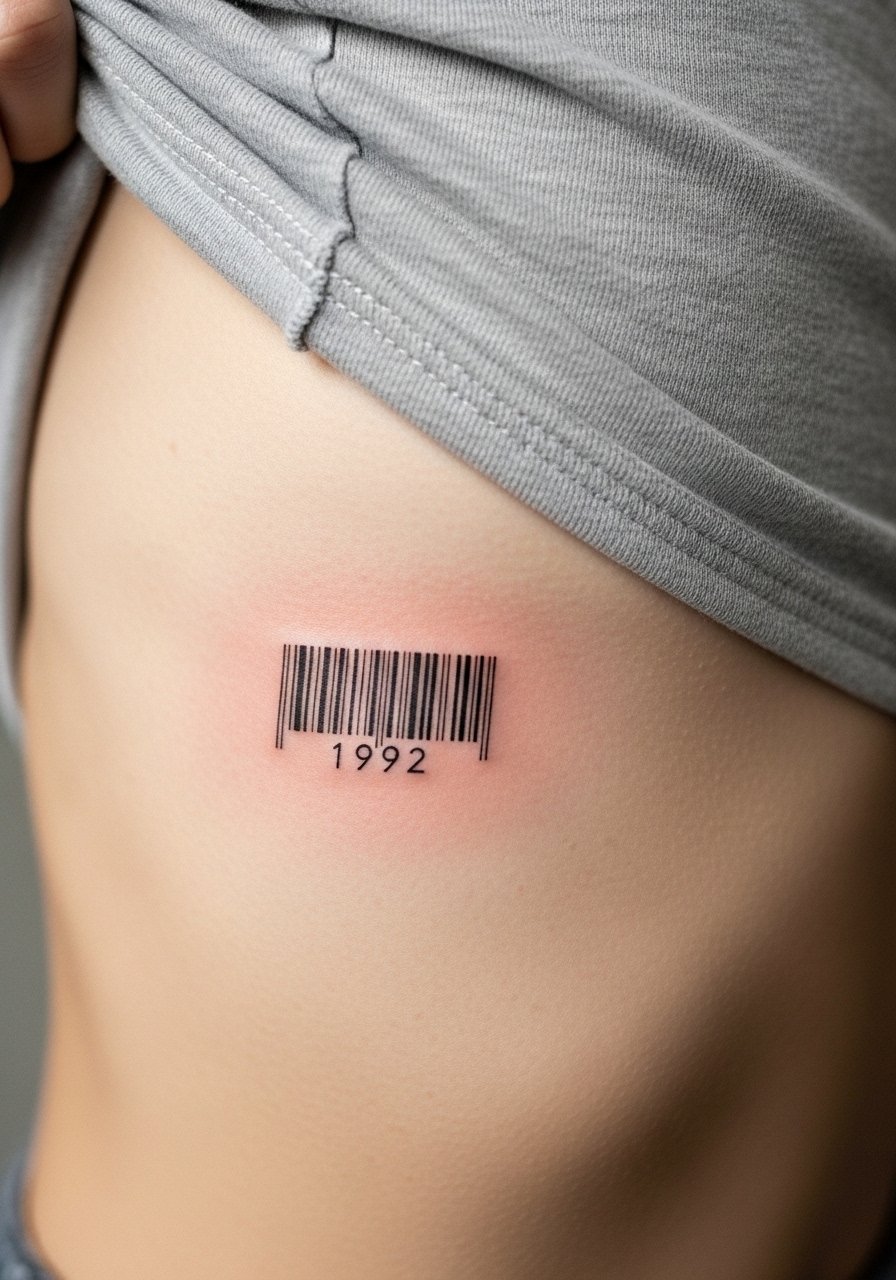
11. Tiny Barcode Year on the Side of the Rib
A barcode-style set of vertical ticks with the year integrated at the base reads modern and coded. Because the ribs flex, spacing must be generous and barcode lines should not be razor thin. Ask for mockups of how it looks when you twist. Expect considerable pain and a session of moderate length. This placement benefits from a loose drawstring linen pant during the session for comfort when shifting positions.
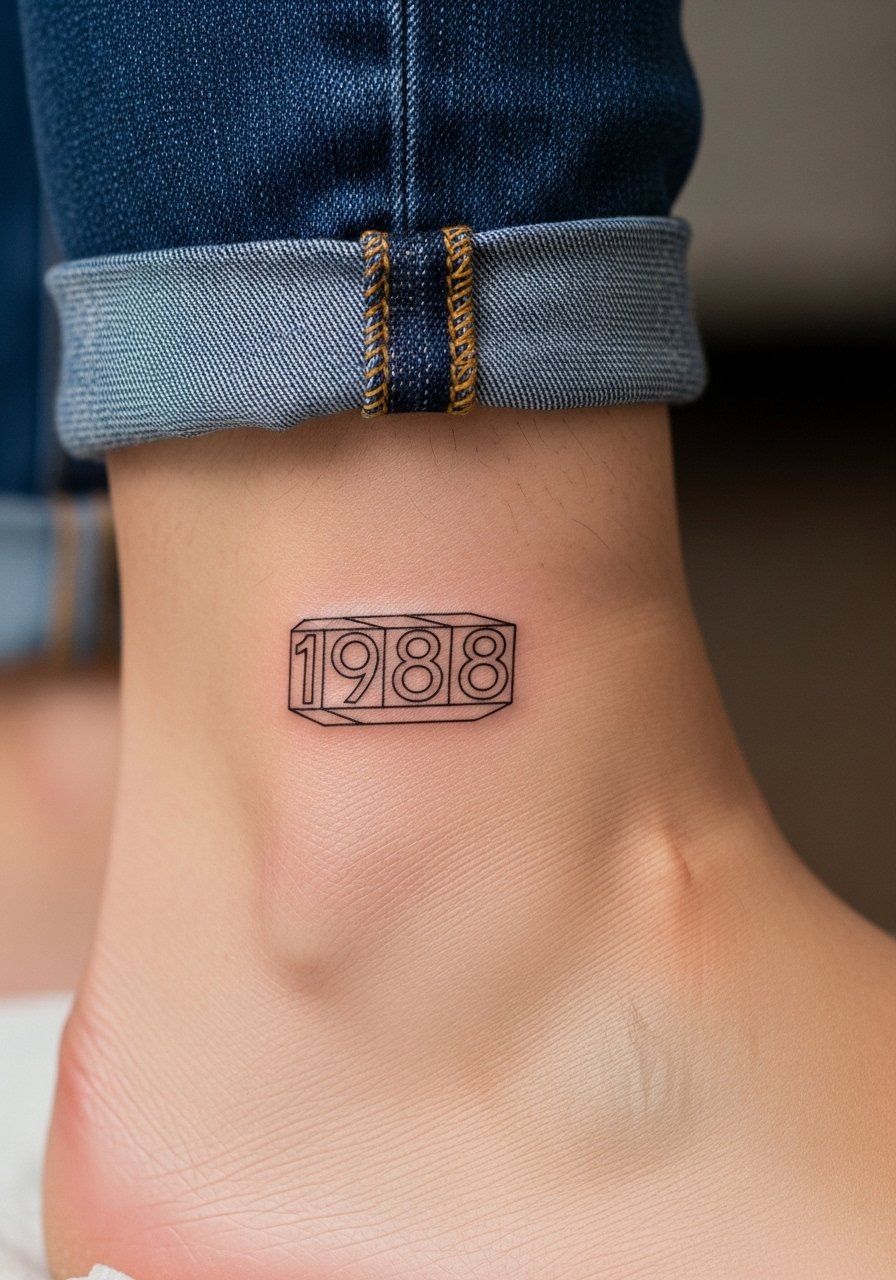
12. Small Block Numerals on the Ankle
Block numerals around the ankle feel like a delicate anklet. Ankle skin rubs against socks and shoes, so keep linework balanced and avoid tiny counter details. One mistake is making the numbers too narrow. Ask for a slightly wider digit with clear counters and plan for a touch-up if you wear boots frequently. For showing it off in summer, roll jeans or wear strappy sandals that expose the ankle cleanly.
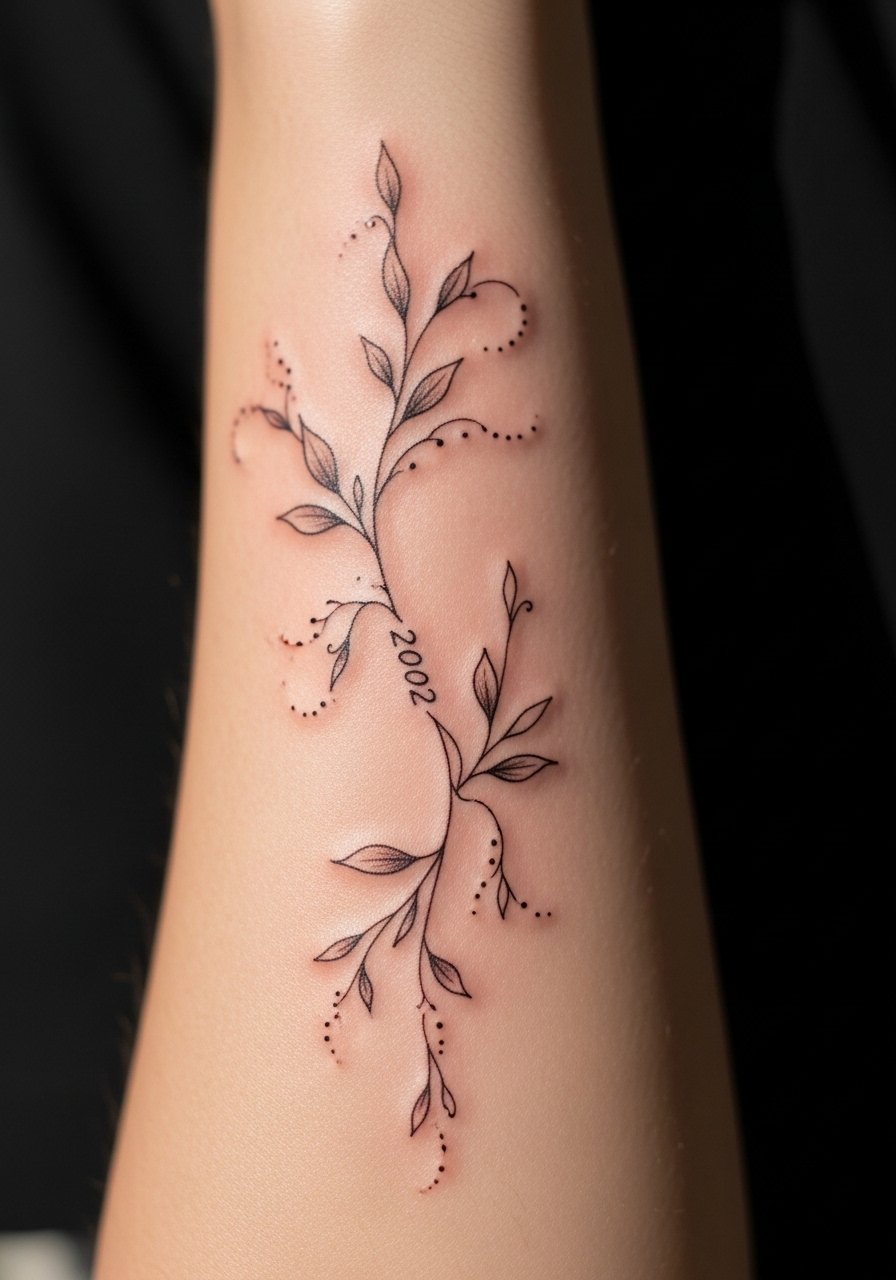
13. Year Hidden in a Small Botanical Stem on the Forearm
Weave the numerals into the spine of a thin branch so the year reads if you look closely. This trick hides the digits in negative space and gives more protection from quick fading because the design spans a larger area. Ask the artist to avoid heavy saturation around each number to prevent loss of definition. Forearm placement is forgiving and usually a mid-length session. Pair with rolled-up linen shirts in cream or olive and a minimalist bracelet to highlight the piece.
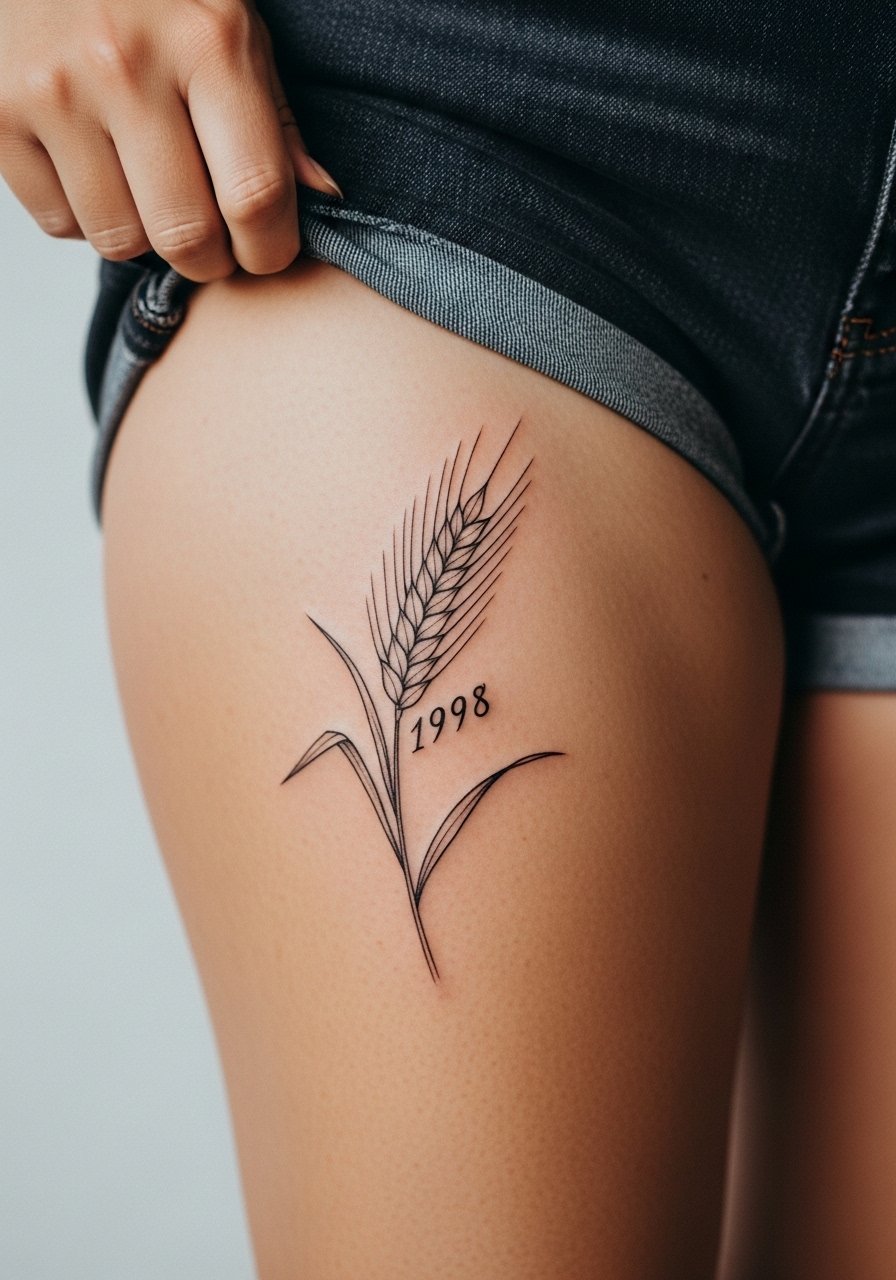
14. Subtle Year Hidden Behind a Tiny Ear of Grain on the Thigh
A delicate ear of grain can hide numerals along its stem for a private nod. Inner thigh placements demand clothing descriptors during imaging and session prep. Ask for a thin but slightly bolder line near the numbers so they do not fade faster than the botanical shapes. This area can be sensitive, and the artist may suggest two short sessions. For the appointment, wear shorts you can shift slightly to expose just the inner thigh zone.
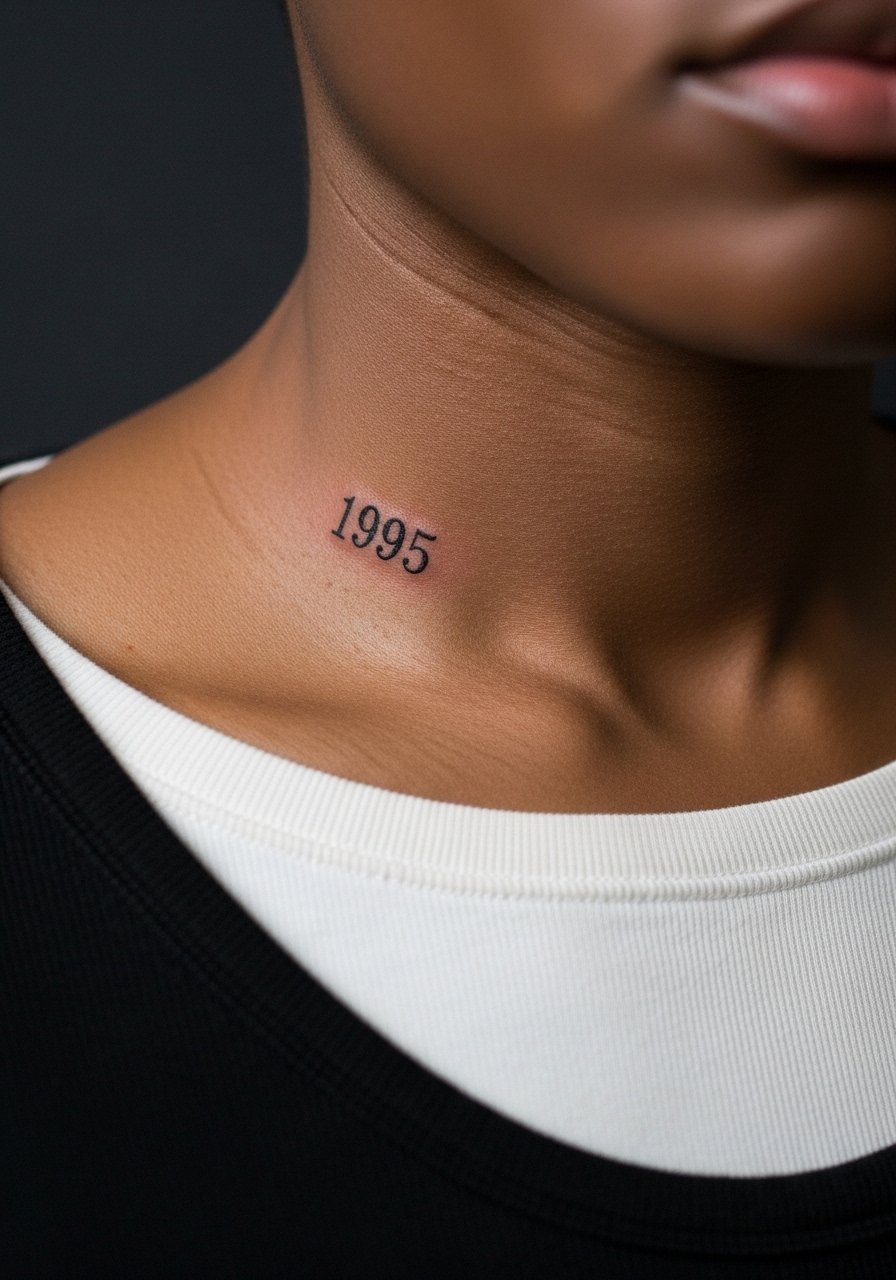
15. Tiny Numerals Along the Collarbone in Serif
Numbers spaced along the collarbone sit in a flattering horizontal line. The collarbone moves a lot with posture, so request slightly heavier spacing and crisp serif terminals to keep digits distinct. This placement looks sharp for years if you avoid heavy sun exposure and use sunscreen. Session time is short and the pain is moderate. For evening wear, an open-back midi dress frames the collarbone cleanly.
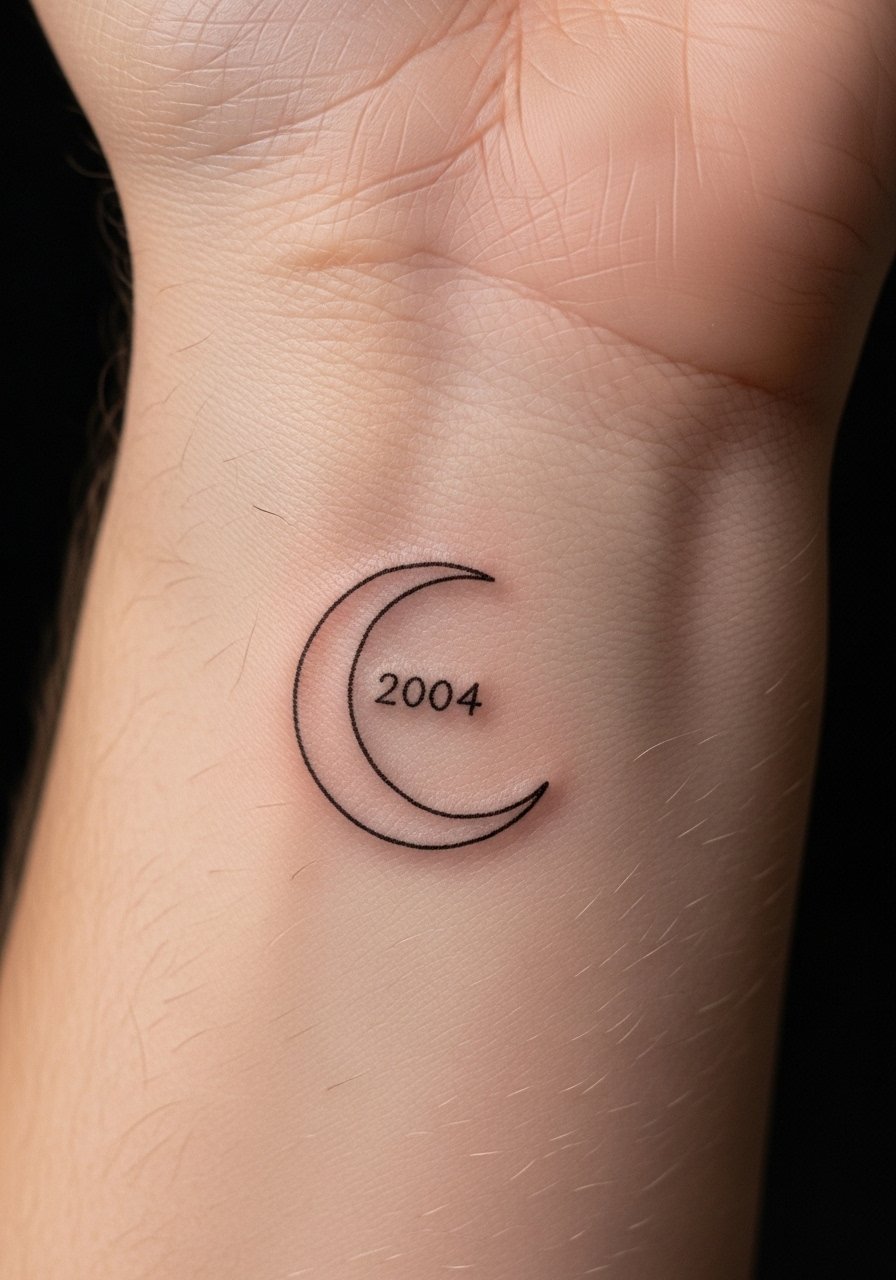
16. Tiny Numerals Encased in a Crescent Moon on the Wrist
Place the year inside the curve of a small crescent moon for a symbolic feel. Tell the artist you want the numerals to float slightly above the moon edge so they do not merge with the crescent fill. Lunar motifs around the wrist age similar to simple numerals but gain visual interest so touch-ups feel natural. The session is brief. For the appointment, a loose button-down shirt keeps the wrist accessible.
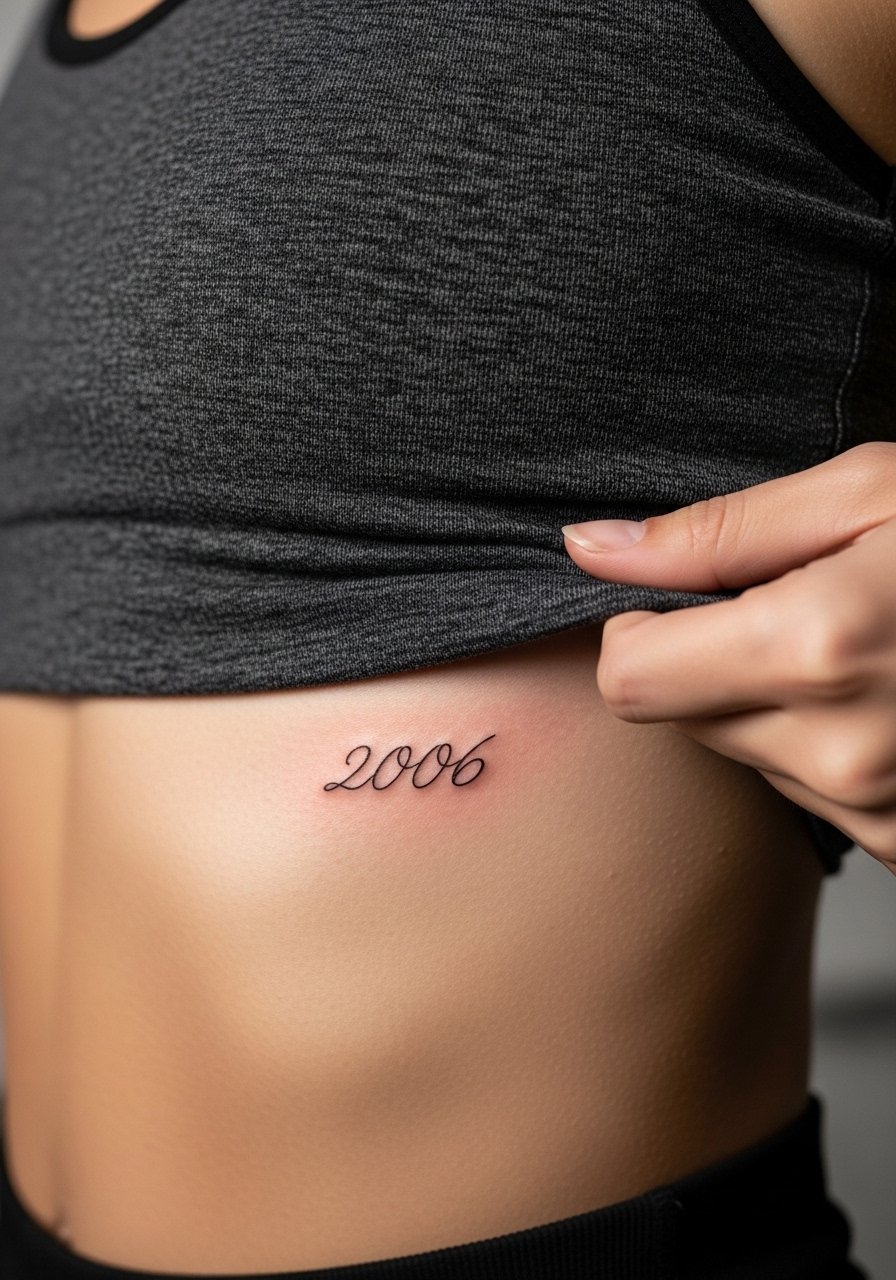
17. Micro Script Year Along the Side Rib in Cursive
A flowing script year on the side torso reads intimate and is a classic choice. Ribcage script is where controversy pops up again. One group of artists recommends bolder script with breathing room between letters to avoid blurring. The other group says very light, precise strokes look nicer but might need earlier touch-ups. Bring clear script references and request a test stencil. For the session, wear a cropped top you can lift and consider a sports bra for modesty during the sitting.
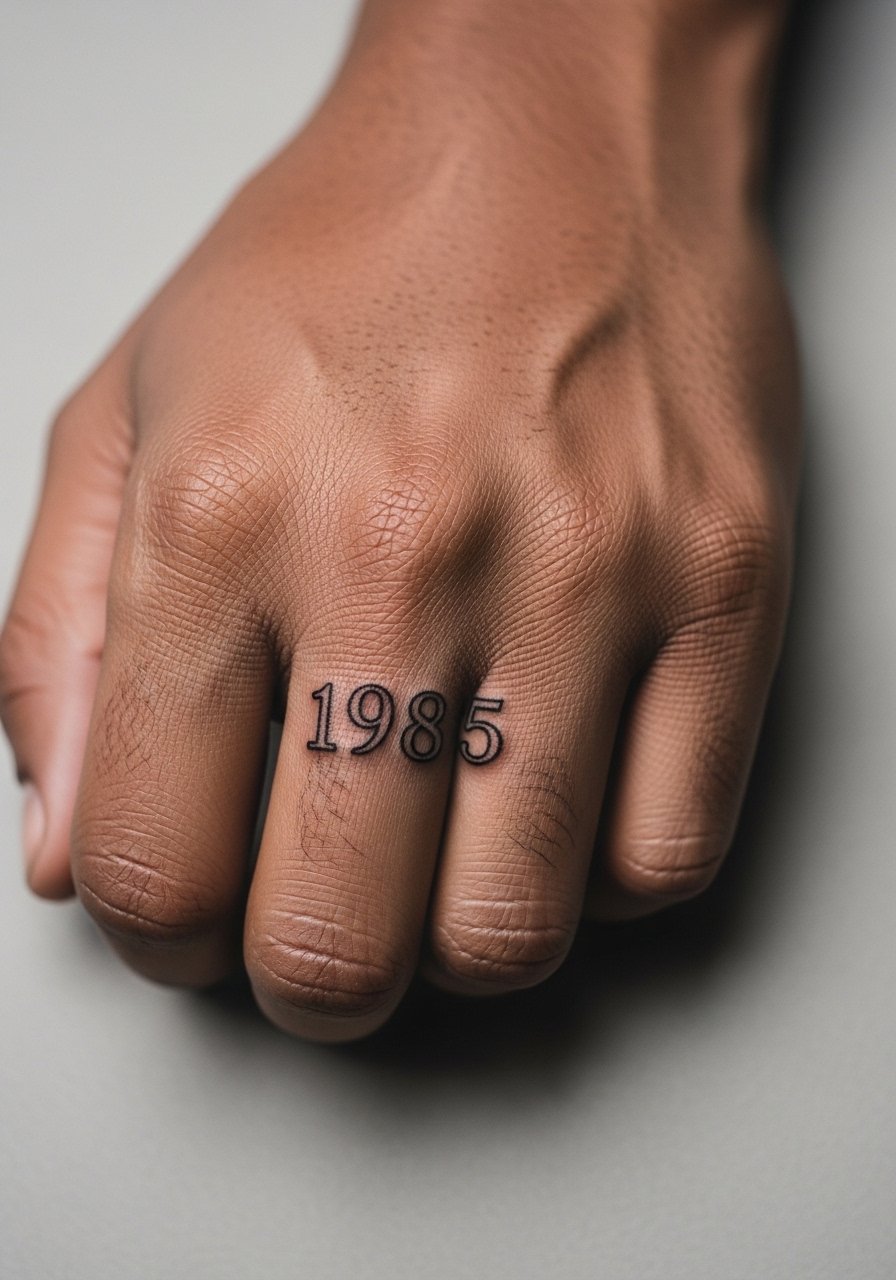
18. Minimal Monospaced Digits on the Back of the Hand
Monospaced block digits on the back of the hand are bold for their scale but still minimal when lineweight is restrained. Hand tattoos wear fast from sun and frequent washing. Expect that the digits will soften and likely need a touch-up in two years. If you want longevity, ask for slightly increased depth and accept the plan for a maintenance touch. For showing it off thoughtfully, pair with a simple ring set that keeps attention balanced.
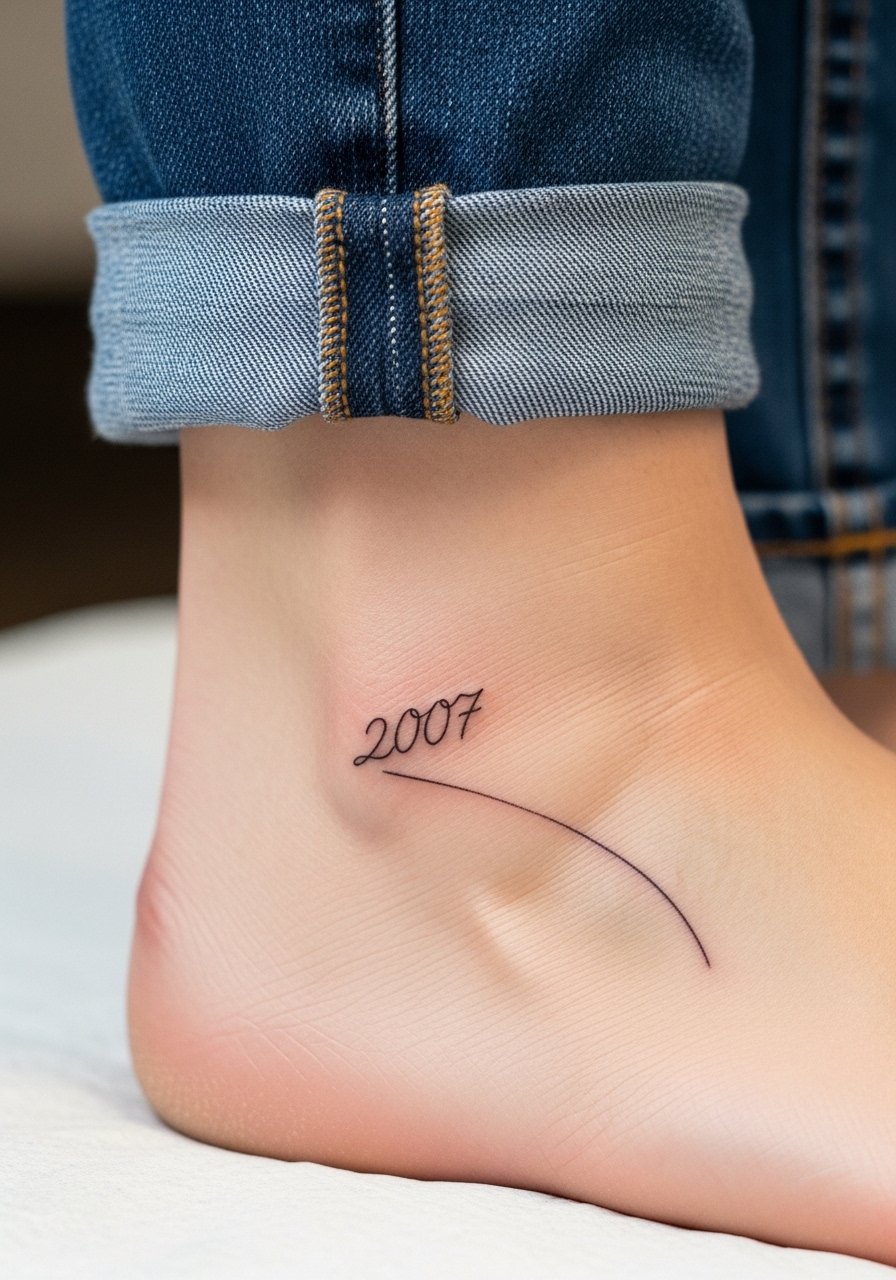
19. Script Year Curving Around the Ankle Bone
Curve the numerals to follow the ankle bone contour for an organic look. Curved numbers need consistent spacing and walking-proof placement. One mistake is forcing too many decorative swashes into narrow digits which leads to merging. Ask for a clean curvature with minimal ornament. The session is quick and pain is tolerable. For summer wear, a pair of strappy sandals shows the placement without crowding.
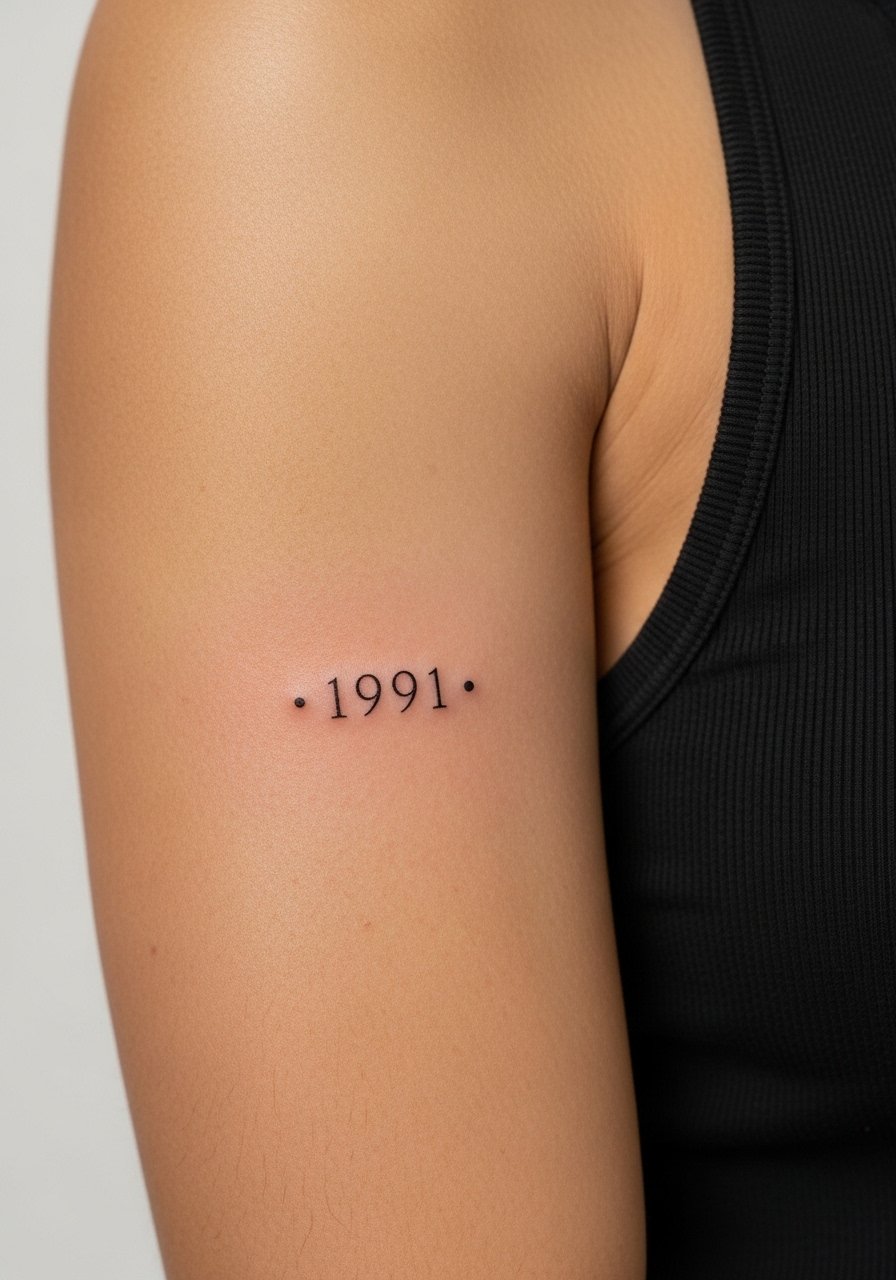
20. Tiny Year Framed by Two Dots on the Inner Arm
A minimalist set of numerals flanked by single dots looks like a compact stamp. Inner arm skin is forgiving and keeps the digits crisp when given breathing room. Ask for a sample of dot size because large dots can overpower tiny numerals over time. Session length is short and pain is low. For casual outfits, roll sleeves or wear a short-sleeve linen shirt to frame the piece.
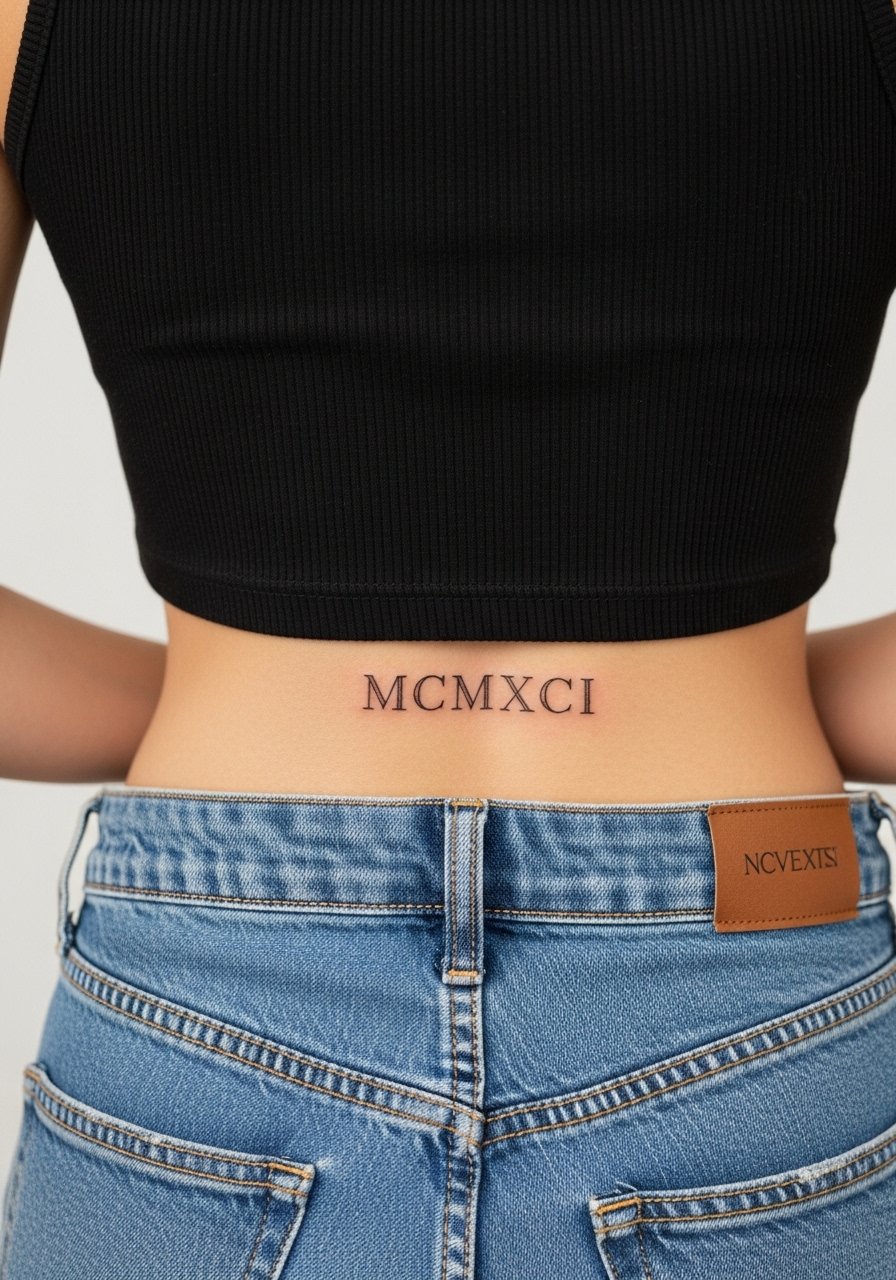
21. Micro Roman Numerals Tattooed Low on the Back
A tiny Roman numeral cluster low on the back is private and flat, so lines hold well when the area is protected from sun. For this placement ask the artist to stagger the numerals slightly so they do not sit on a single horizontal skin fold. Sessions are brief. For post-session comfort and modesty, wear a tank top with high-waisted jeans pulled slightly low that exposes only the tattooed patch when needed.
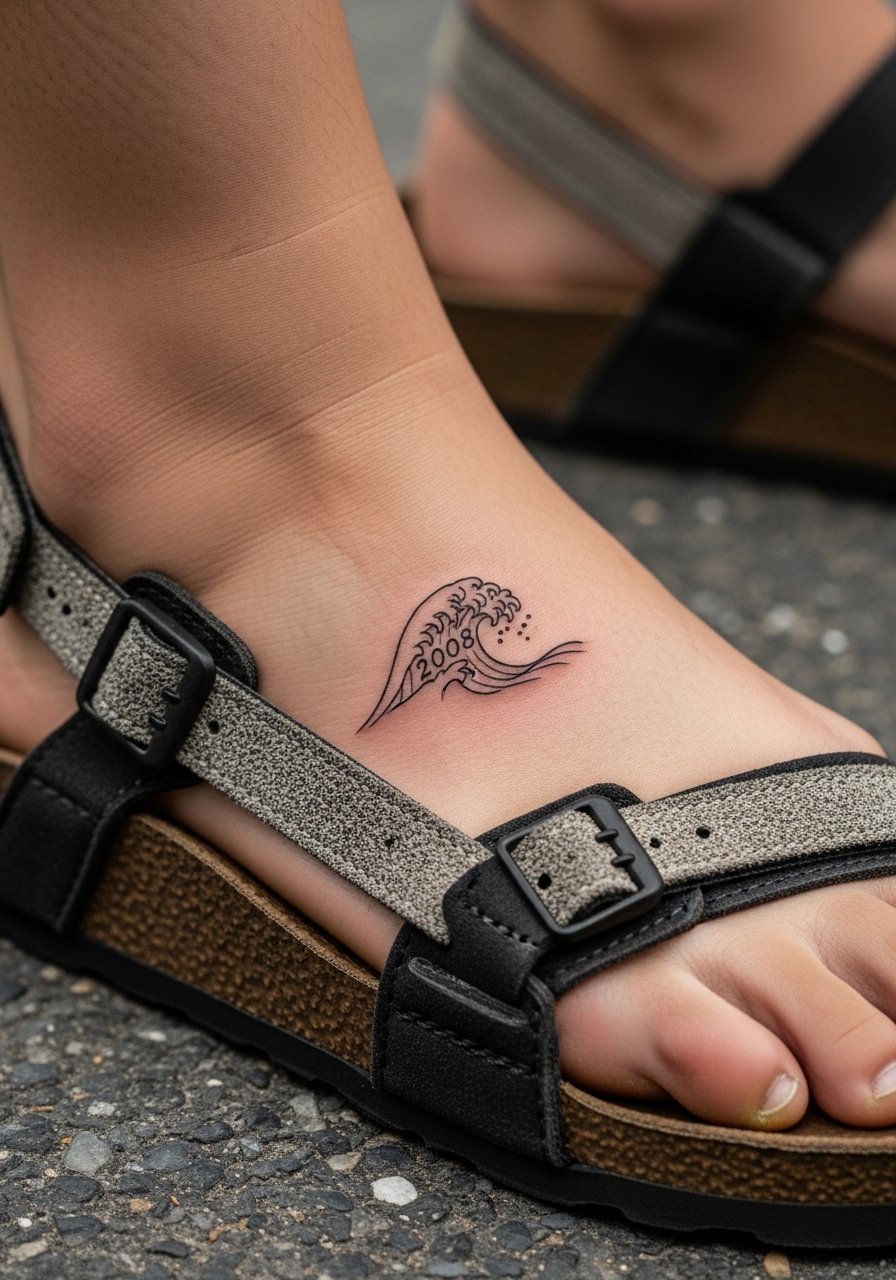
22. Hidden Year in a Tiny Wave on the Foot
Tuck the year into the crest of a small wave motif above the foot for a seasonal secret. Foot tattoos face friction and footwear abrasion, so make numbers slightly bolder and avoid micro serifs. Expect faster fading and a possible touch-up after walking-heavy months. For the session, wear sandals or shoes that are easy to remove so the artist can work without the area being pre-compressed. A pair of simple sandals eases the transition.
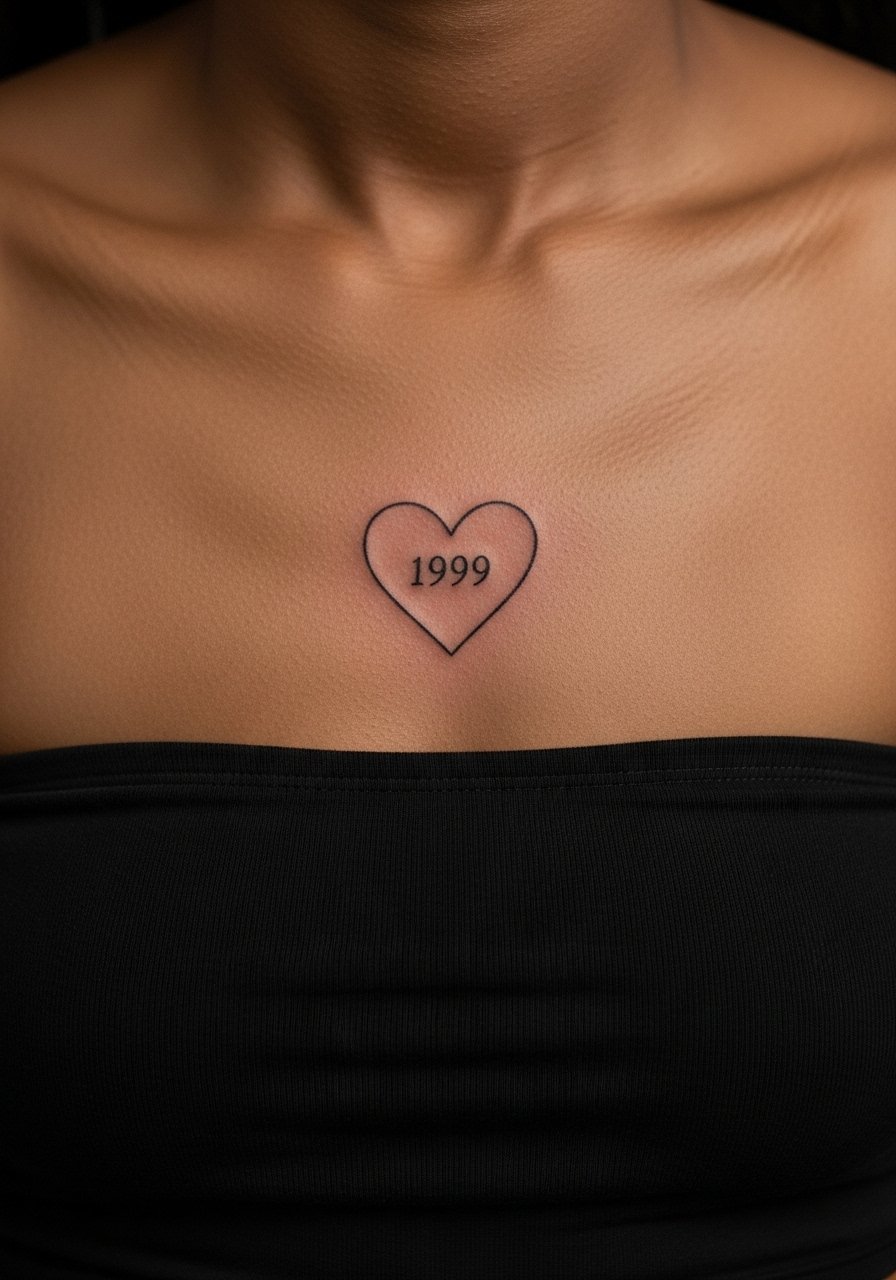
23. Year in a Tiny Heart on the Sternum
A small heart with the year inside the upper sternum reads intimate and centered. Sternum prompts must show clothing; wear a fitted sports bra or bandeau for framing and safe imaging. Artists vary on how fine they go near cartilage, so ask for slight bolding inside the heart cavity. Expect a tender session. For clothing, a bandeau top will let the piece peek through without full exposure.
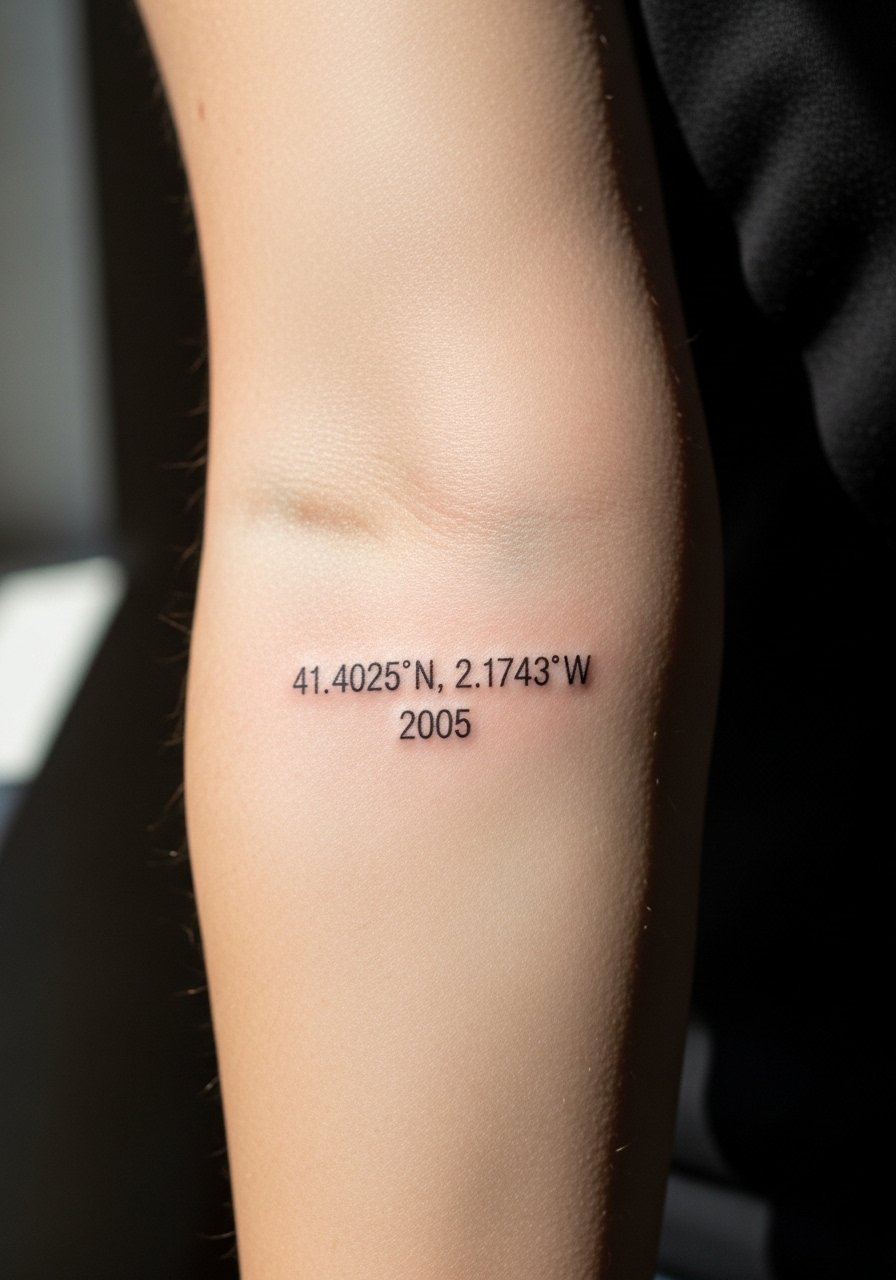
24. Tiny Coordinates with Birth Year Beneath on the Forearm
Pair the numerals with coordinates for a layered personal statement. Ask your artist to separate the two elements vertically by a few millimeters so each reads clearly at a glance. Forearm placement keeps both elements readable with minimal touch-up needs if spacing is respected. For the session, a loose button-down shirt works well and helps with stencil placement.
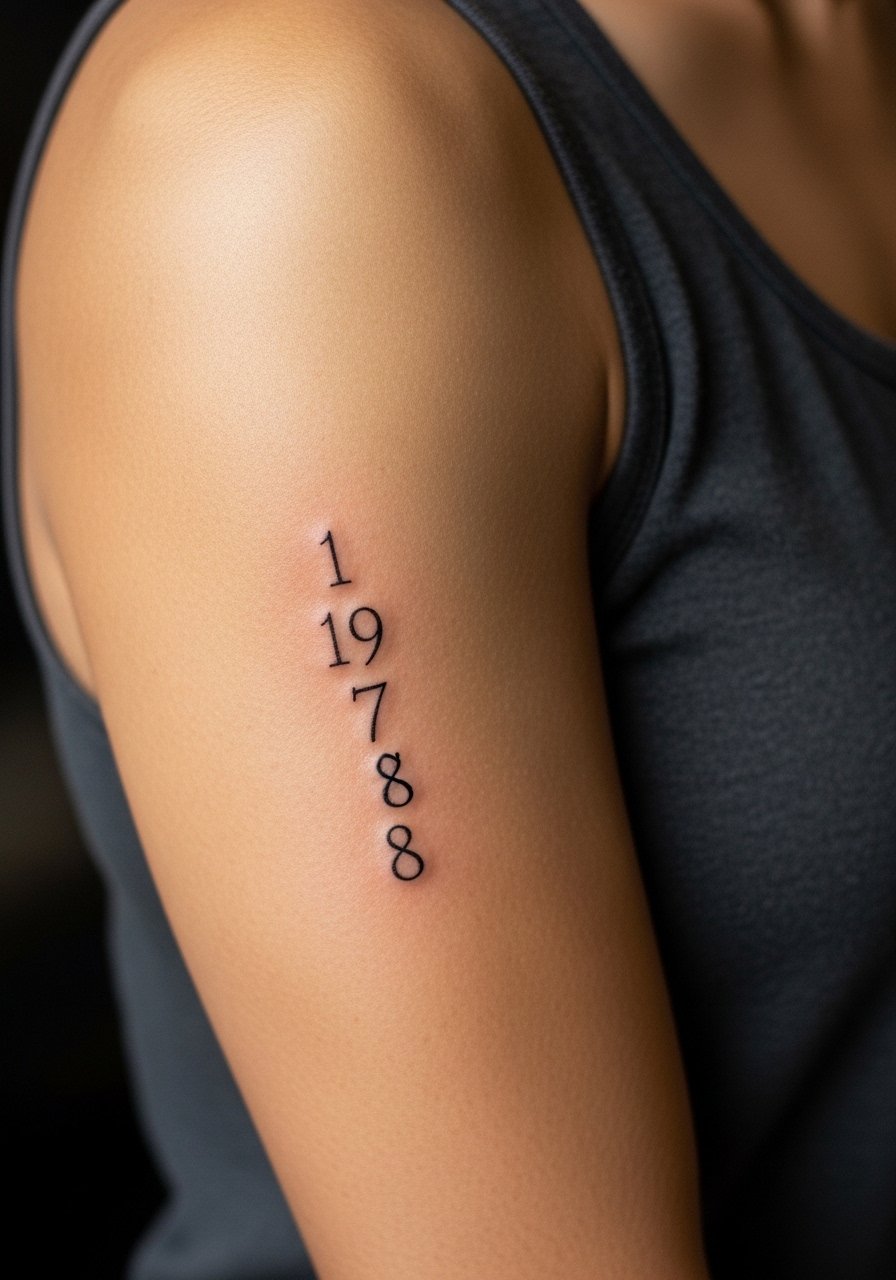
25. Minimal Vertical Stack of Digits on the Biceps
Stack the four digits vertically on the biceps for a modern column. The biceps provide thicker skin and better longevity for fine line digits, but heavy lifting can affect edges during healing. Request a balanced width across numerals and ask that the artist keep lines slightly off the belly of the muscle to avoid distortion when flexing. For the appointment, wear a tank top you can roll comfortably so the artist has clean access.
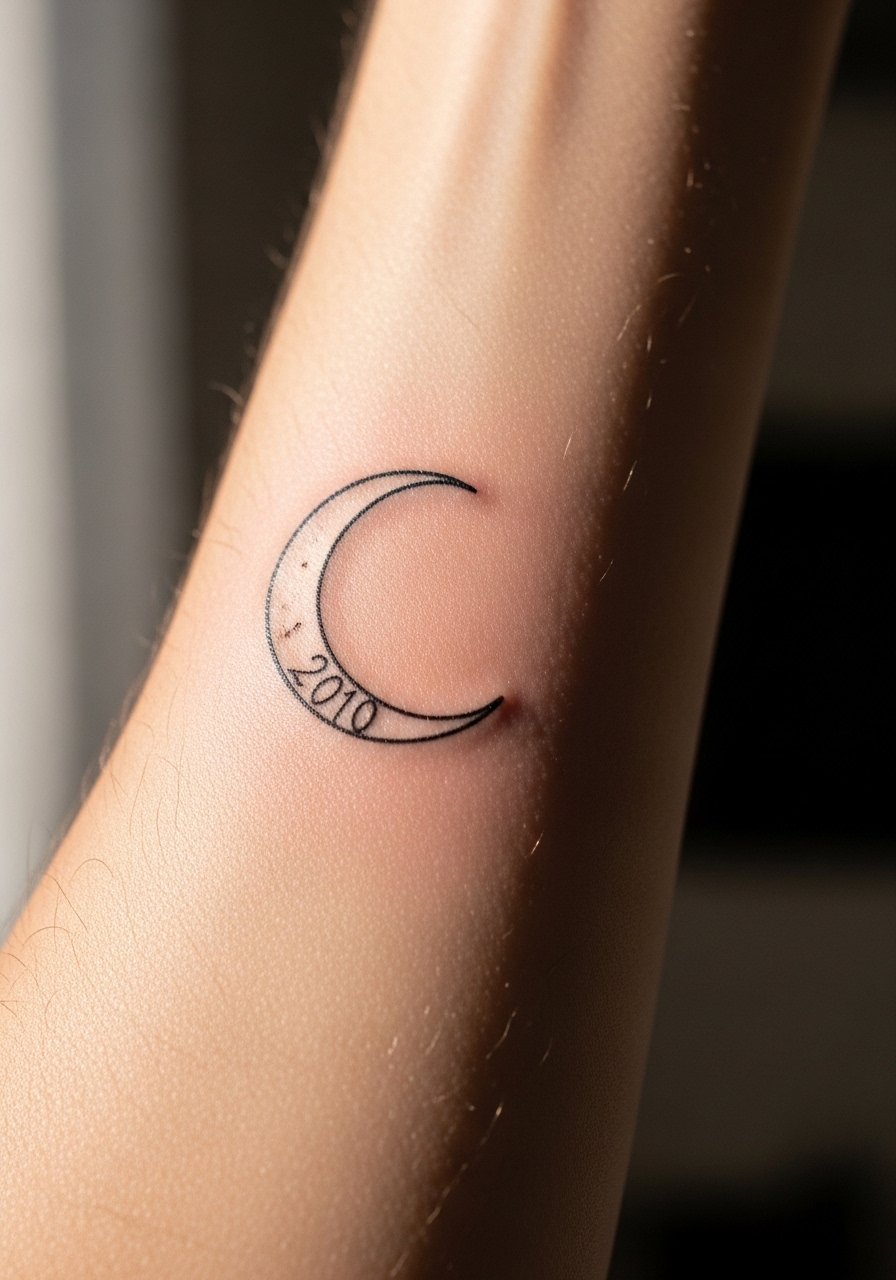
26. Tiny Year Incorporated into a Minimal Crescent Sleeve on the Forearm
Wrap a narrow crescent arc around the forearm and tuck the numerals into the inner curve. The crescent gives context so the year looks like part of a motif rather than isolated digits. Ask for the numerals to be offset from heavy shading to avoid color bleed. Forearm placement keeps the piece low maintenance. Pair with rolled sleeves and a minimalist watch to keep the area styled without covering it.
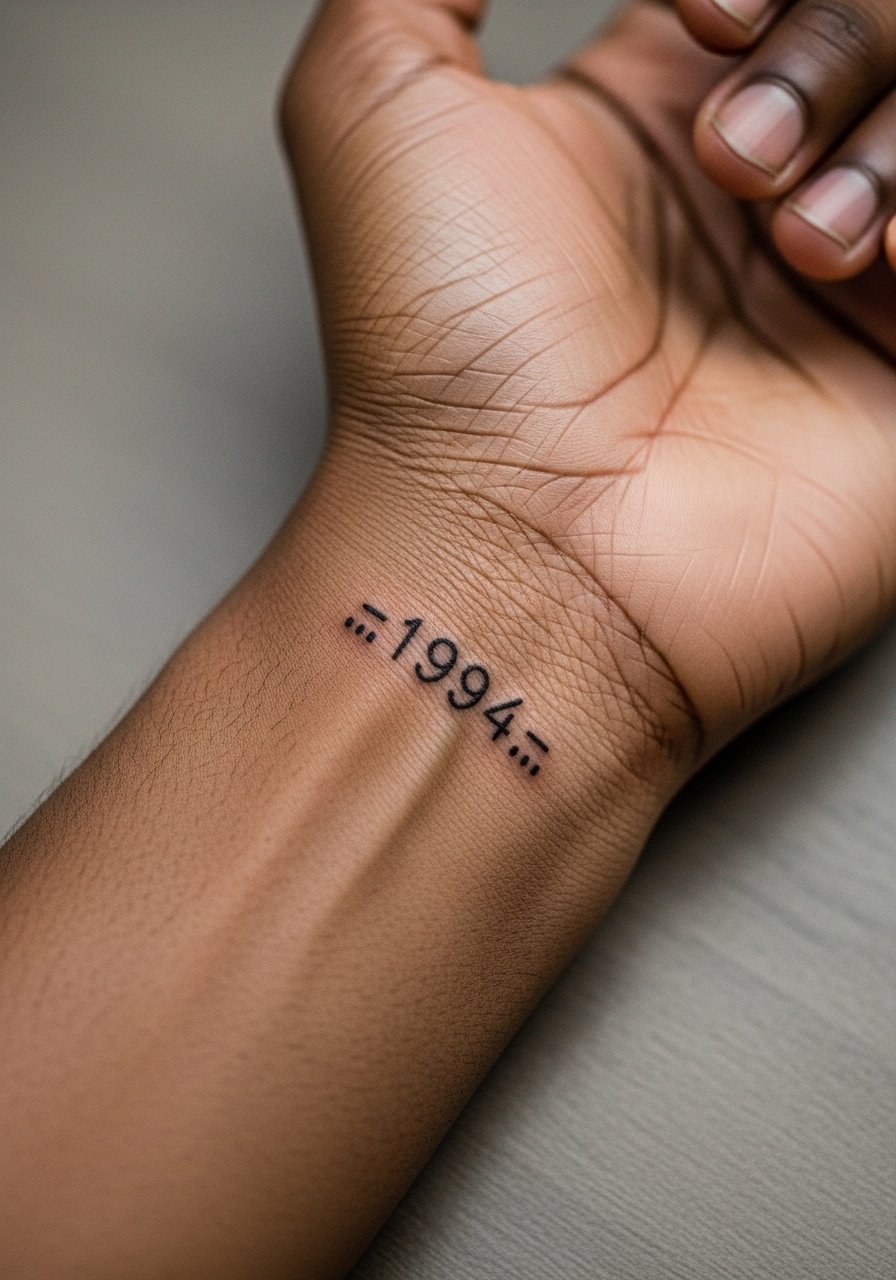
27. Tiny Numerals as Morse Dots on the Wrist
Translate the birth year into Morse dot and dash equivalents for an abstract numeric nod. This approach disperses risk because multiple tiny marks age differently than contiguous digits. Ask for dot size tests because tiny dots can close up if they are too small. The wrist session is short and feels like a steady tick. For session comfort, wear a loose button-down shirt you can move aside without pulling on the skin.
Frequently Asked Questions
Q: Will fine line birth year tattoos blur more quickly on fingers and hands than on the forearm?
A: Yes, from what I've gathered fingers and hands take more friction and UV exposure so they tend to soften faster than forearms. If you want longevity, plan for easier touch-ups and ask your artist to use slightly bolder single-needle strokes that accept a future top-up.
Q: How do Roman numerals hold up compared with Arabic numerals on the ribcage?
A: Roman numerals can look cleaner when spaced properly, but ribs are a high-movement area so either numeral style needs extra spacing and slightly heavier lineweight. Ask your artist to preview how the stencil looks when you twist so you can see how the numerals sit on your skin.
Q: What should I wear to a session for a sternum or rib tattoo?
A: For sternum or rib work wear a fitted sports bra or a cropped top you can lift so only the tattoo zone is exposed. That keeps the rest of your chest covered and gives the artist clean access while preserving modesty.
Q: Can I combine my birth year with another symbol without losing clarity?
A: Yes, but be careful. Small symbols that crowd numerals make the numbers read less clearly as the piece heals. Keep at least three to four millimeters of negative space around each digit and ask for lighter stipple shading rather than solid fills to protect the numerals.
Q: Any styling tips for showing off a collarbone year tattoo at events?
A: A wide-neck or open-back dress naturally frames collarbone numerals. For casual days, a rolled sleeve or a simple pendant sits above the line and keeps the eye on your collarbone rather than competing with the piece.
