
Bold blackwork reads like a statement without shouting. It holds up because saturation and confident linework age into a crisp silhouette, not a soft blur. If you want an owl that reads strong from across a room and still looks deliberate after five years, think about spacing, negative space, and placement before you pick a reference. The first idea starts with a low-risk placement that proves the point.
1. Minimalist Blackwork Owl on Inner Forearm
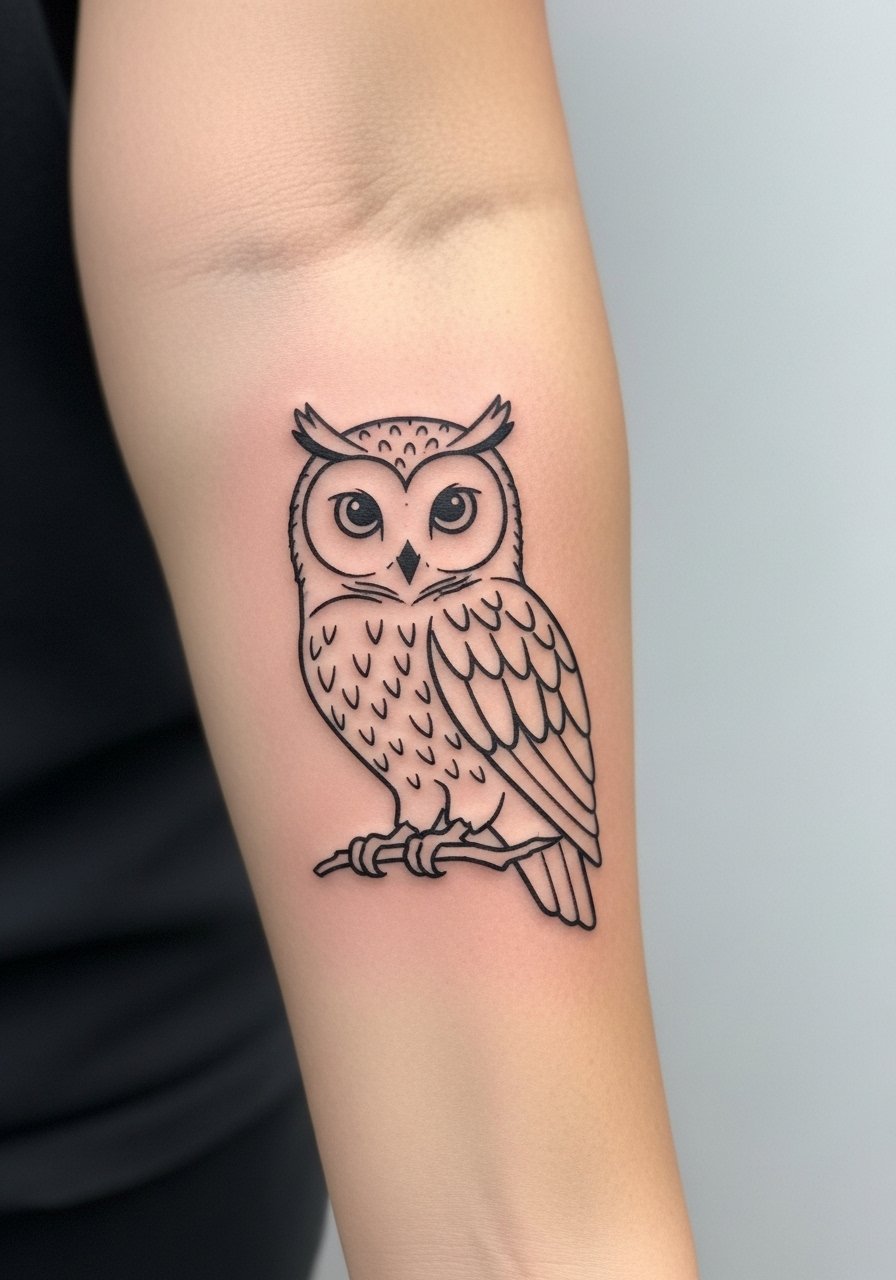
I recommend this when you want a bold silhouette without a multi-session commitment. Tell your artist you want a single-session saturated fill with a medium-thick outline so the form keeps its shape as it heals. Expect mild sting and a one to two hour session depending on size. A common mistake is asking for ultra-fine details inside a small owl, which blurs sooner than the outline. For showing it off, pair the forearm with a rolled-sleeve linen shirt that frames the piece and keeps attention on the linework.
2. Geometric Blackwork Owl Across the Sternum
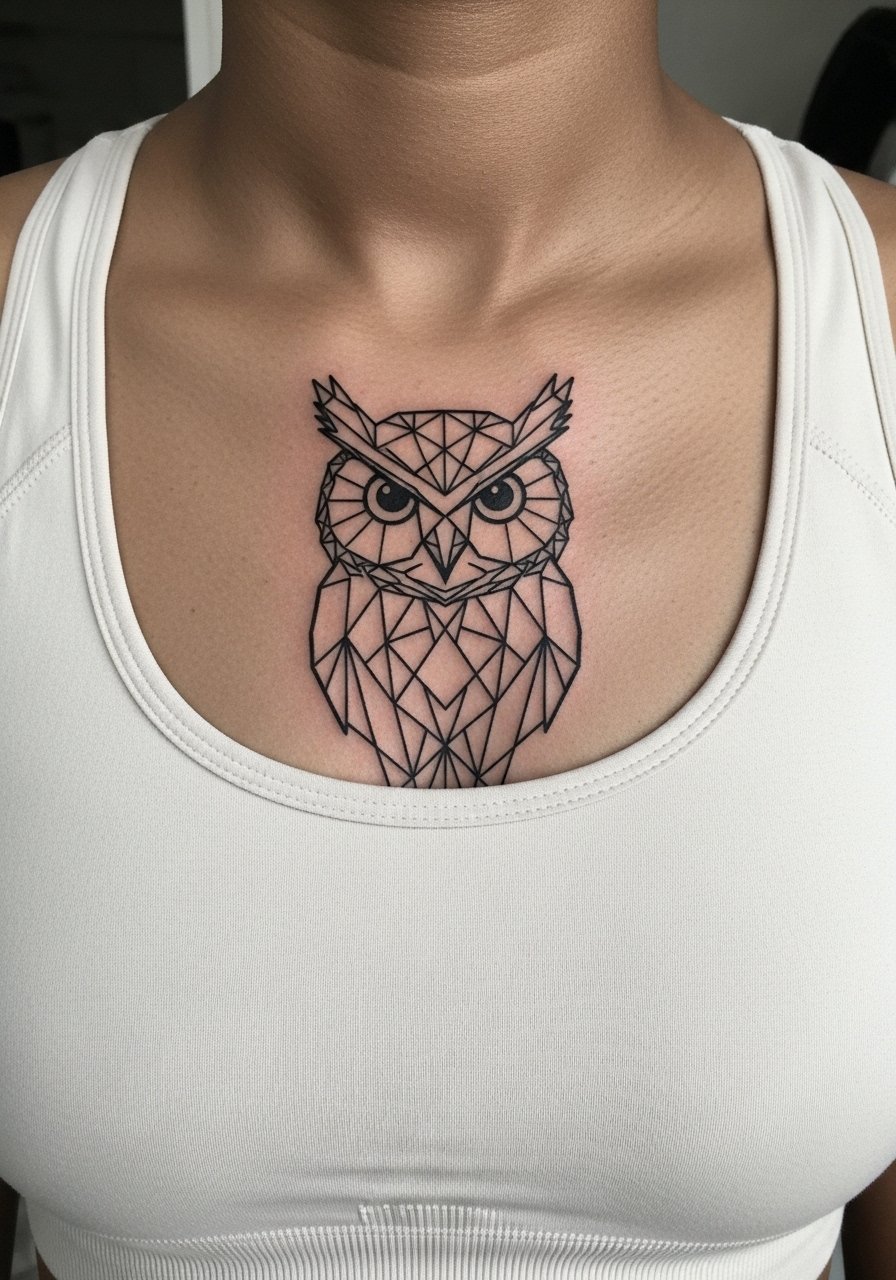
Sternum pieces demand a confident stencil placement and a steady hand. Pain on the sternum is higher than on the arm, so expect a longer, stop-and-start session. The most common failure is packing too many thin internal shapes into tight sternum space. Ask for bolder internal shapes instead and plan for a touch-up at year two, especially if you sleep on your front often. Because of the placement, wear a supportive sports bra to the appointment. Respect the design’s visual weight and mention you want negative space around the owl to keep it breathing.
3. Single-Line Silhouette Owl on the Ankle
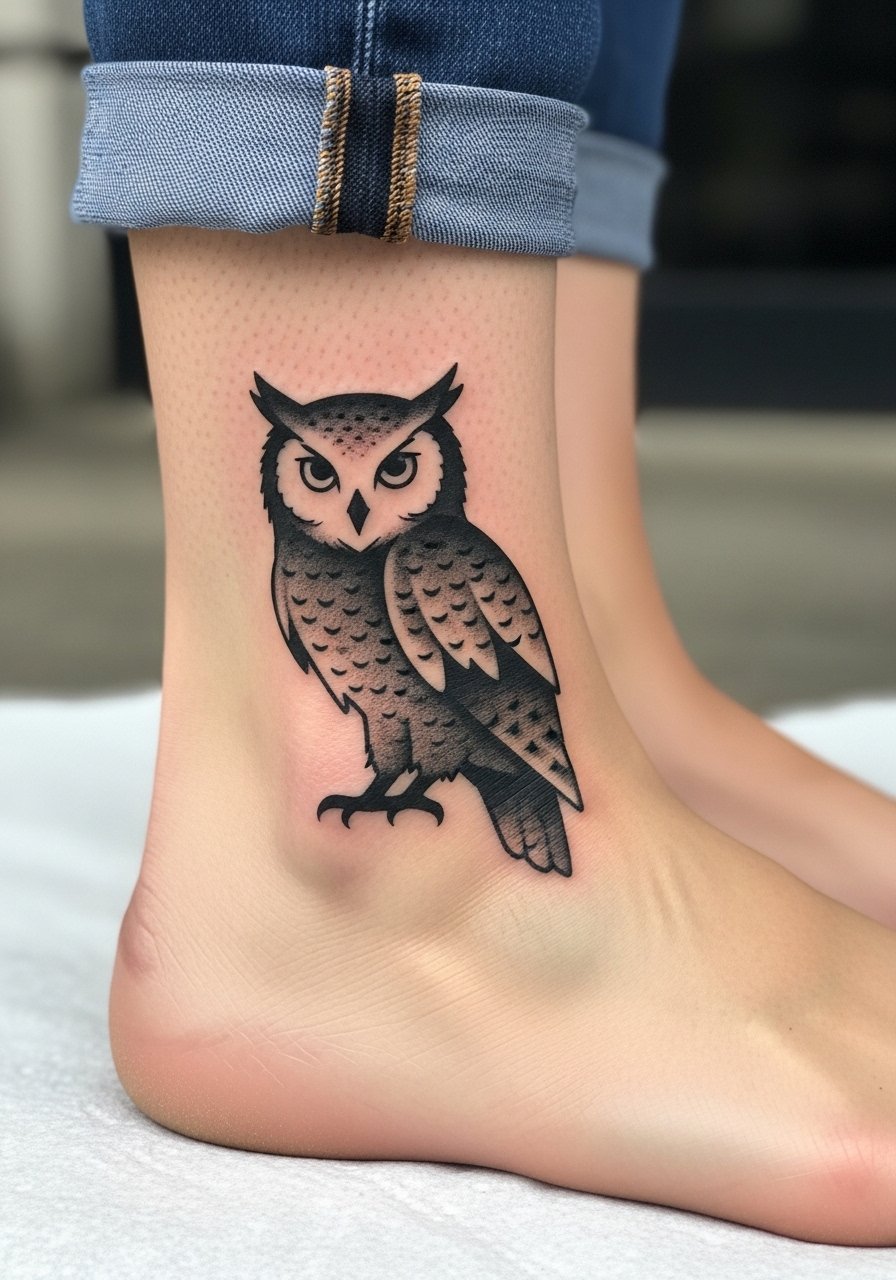
Ankle owls use heavy fill to resist the extra friction from socks and shoes. The session usually runs under an hour but the ankle sits in a high-friction zone so you should expect accelerated fading without proper care. Tell your artist you want saturated black across the silhouette rather than internal detail. A common mistake is going too small for a filled silhouette. For nights out, show it with rolled-up jeans or ankle straps that keep the ankle visible without rubbing the healing area. Touch-ups are often needed around year two if you wear a lot of boots.
4. Half-Sleeve Blackwork Owl with Stipple Shading
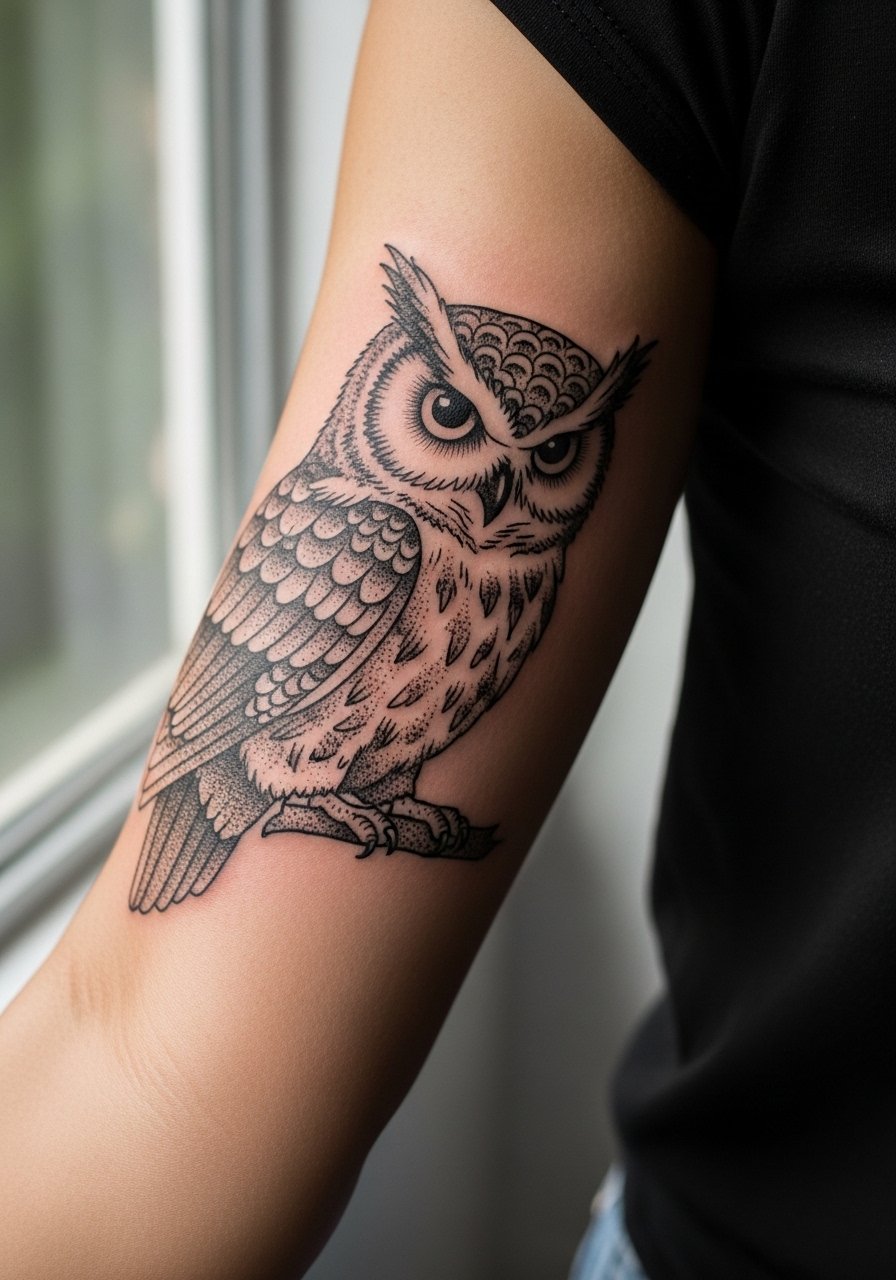
This is a great pick if you want an owl that transitions into a sleeve later. Explain during consultation that you want stipple shading around the eyes and wings to preserve texture without small lines that merge. The session time varies by coverage, typically three to five hours across one or two sittings. Expect a solid first-week scab pattern with heavy black areas that lighten slightly by month six. A mistake is asking for ultra-dense dot work too tightly packed. For wardrobe, a sleeveless denim vest shows off the sleeve while keeping the shoulder comfortable during healing.
5. Geometric Chest Owl with Negative Space
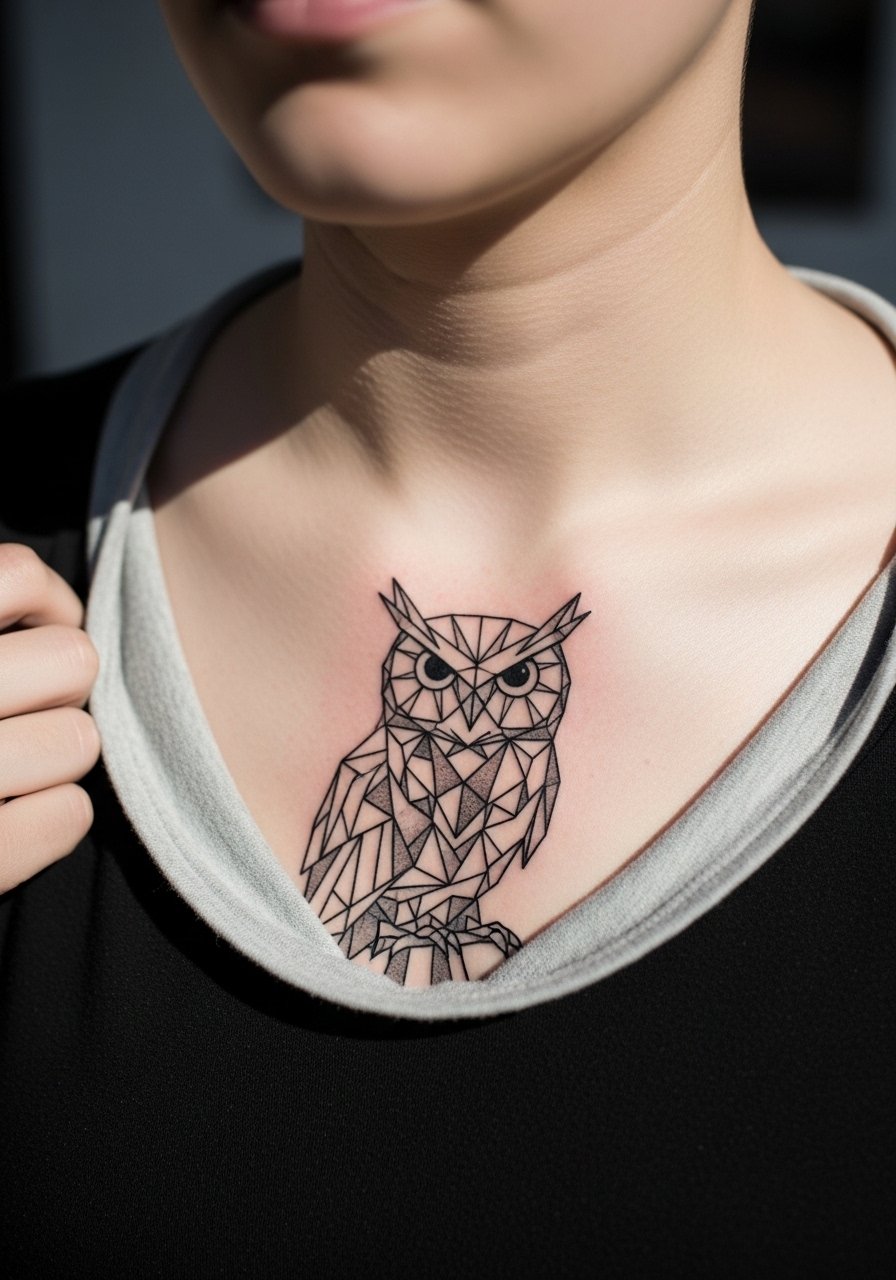
Upper chest pieces need clear discussion about how the piece sits with clothing. Ask for conscious negative space between the beak and wings so the owl holds up under natural body movement. Pain ranges moderate to high and session time is often two to three hours. A frequent error is trying to cram symmetrical geometry into an asymmetrical collarbone area. For evenings out, a wide-neck blouse frames the geometric lines and keeps attention on the owl’s silhouette.
6. Thigh Panel Owl with Bold Fill
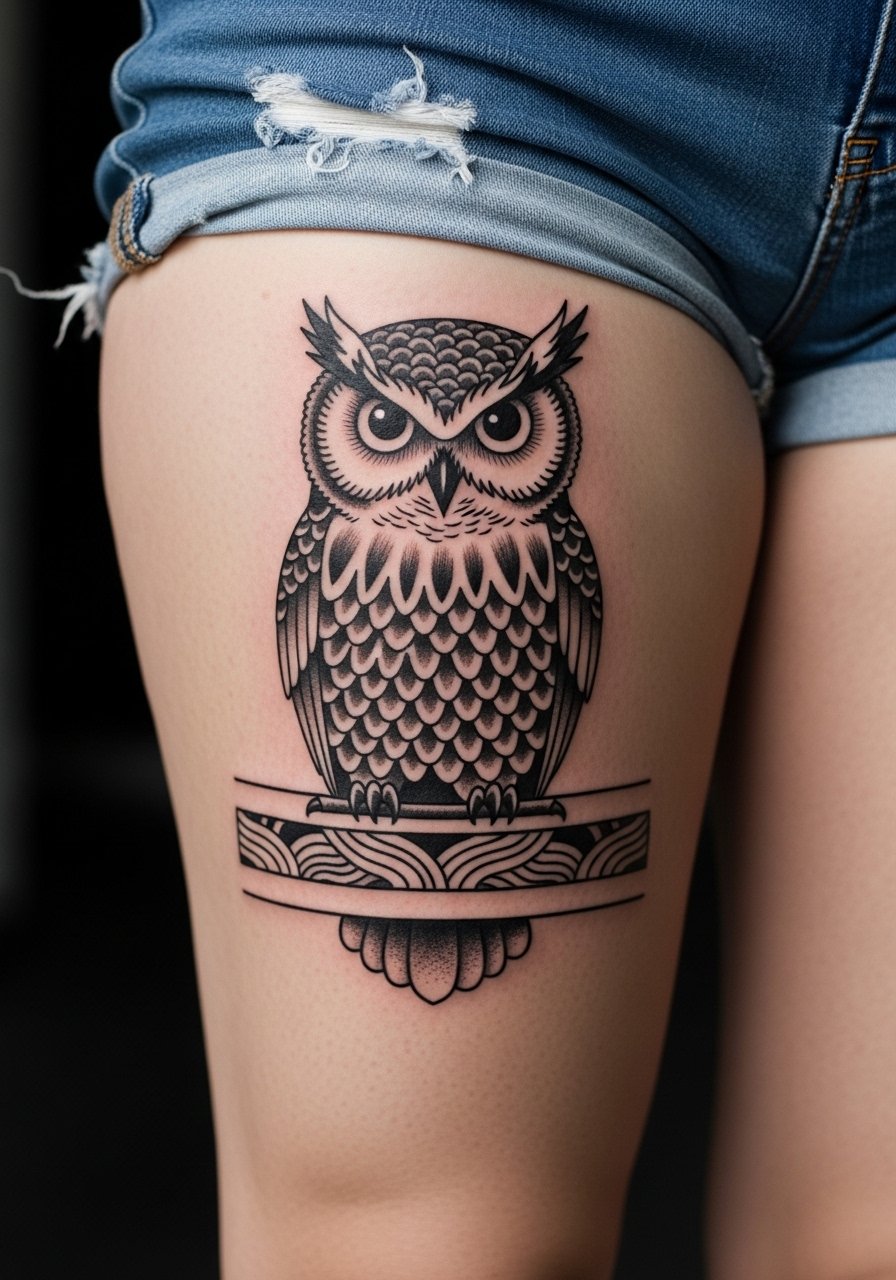
Upper thigh is forgiving for scale and bold fill. It feels less painful than ribs but more than the outer arm during big sessions. Tell your artist you prefer dense black fills and a clear boundary for touch-up years later. The main mistake is underestimating how clothing rubs the area during the first week. For the appointment, wear high-waisted shorts so the artist can expose only the area they need. Thigh pieces often survive five years with minimal touch-up if sun exposure is limited.
Studio Day Picks
The chest, thigh, and forearm pieces above each have different prep needs, so these items smooth the session and the first week.
-
Sterile stencil transfer sheets. Helpful for previewing exact placement on curved areas like the chest and thigh so you can adjust before needles start.
-
Topical numbing cream stick. Easy to apply to sternum or rib areas when you need extra help getting through the deeper black fills.
-
Thin protective film rolls for tattoos. Great for ankle and hand placements that see a lot of daily rubbing during the first 48 hours.
-
Fragrance free gentle body wash. Cleans without stripping the fresh ink, useful for forearm and chest pieces that need careful rinsing.
-
Aquaphor healing ointment. Thin layer in the first two days locks in moisture for finely shaded blackwork without suffocating the needle channels.
7. Collarbone Owl with Bold Outline
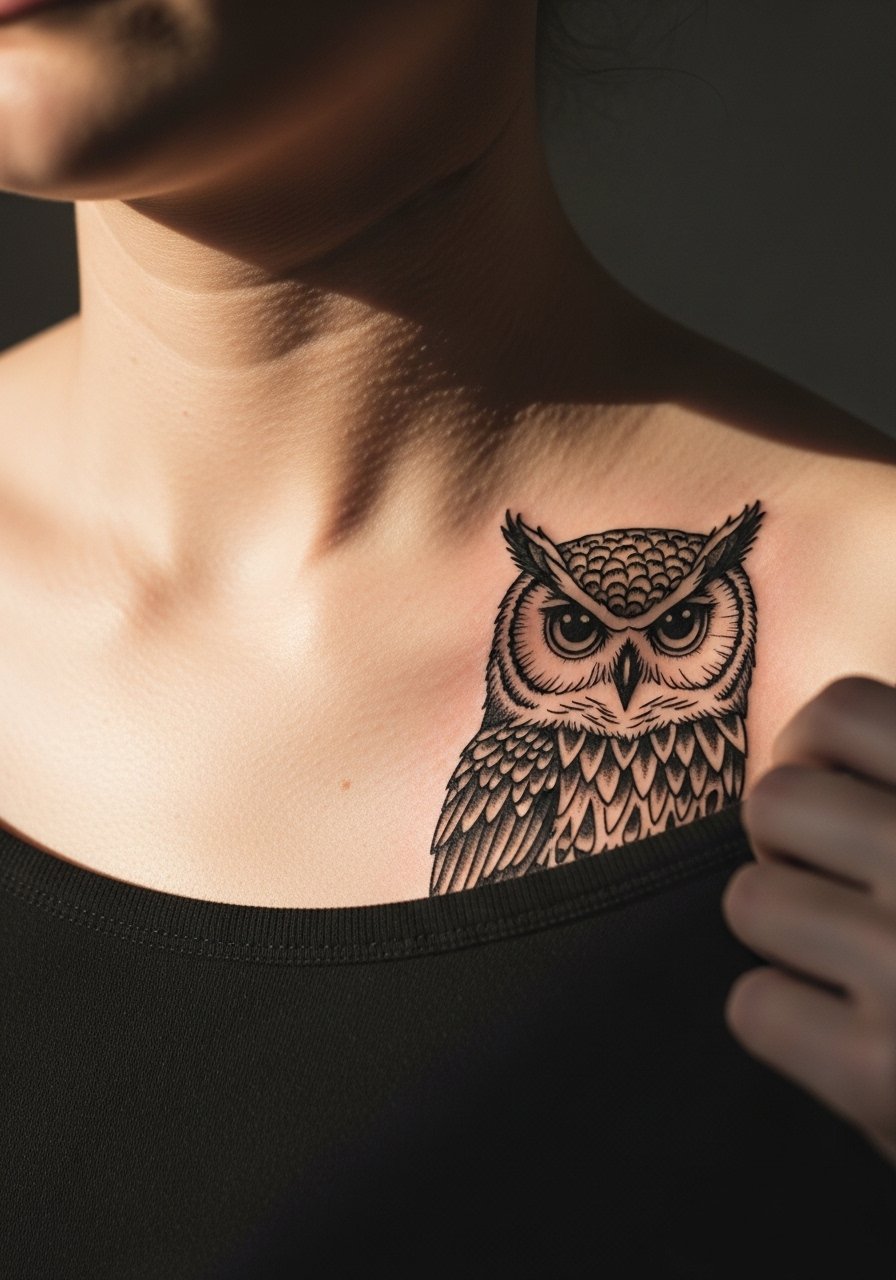
Collarbone tattoos show quickly in jewelry and outfits so think about negative space that sits comfortably under necklaces. Pain can spike near the bone but sessions are usually under two hours. Ask for a thicker outline and sparse internal texture. A common error is asking for tight dot shading too close to the bone, which can blur over time. Pair with a thin chain pendant necklace that sits above the owl so both elements breathe visually.
8. Back-of-Shoulder Owl in Solid Black
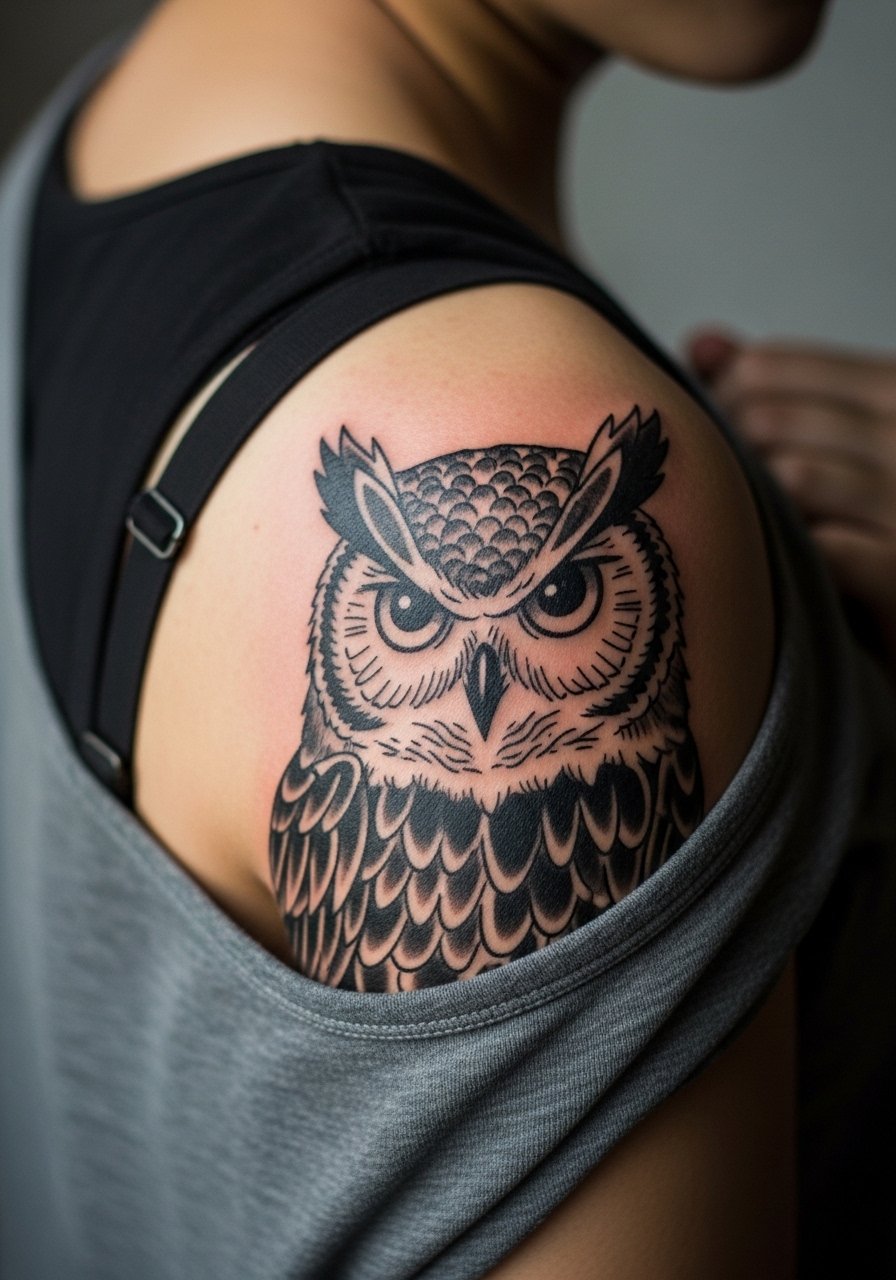
The back-of-shoulder placement takes armor-style fills well. Sessions are comfortable and short, usually under two hours. A mistake is centering the owl too close to the spine or shoulder blade edge, which skews the composition when you move. During the consult, request a composition that sits on muscle mass for consistent healing. For shows or warm-weather wear, a strappy tank top keeps the tattoo visible without exposing more than the area needed.
9. Finger-tip Tiny Owl Silhouette
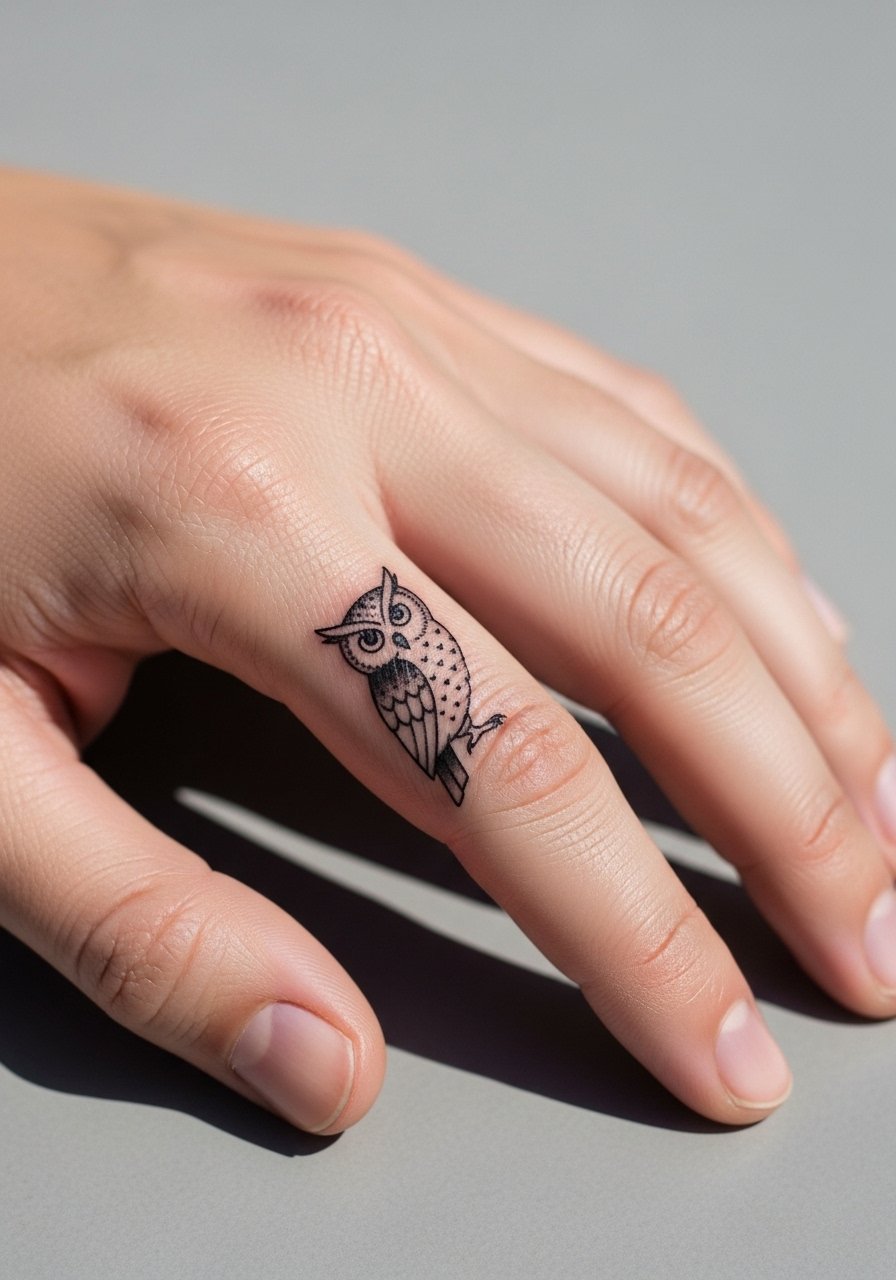
Finger tattoos are a commitment because constant washing and friction speed fading. Tell your artist you accept a touch-up timeline around year one for small filled silhouettes. The typical error is expecting long-term crispness from micro details on fingers. Pain is sharp but brief and session time is short. Keep in mind hand tattoos still affect hiring in some industries, so consider career implications before committing. For styling, wear a minimalist ring set that frames the small owl without covering it.
10. Full-Back Blackwork Owl with Negative Space Wings
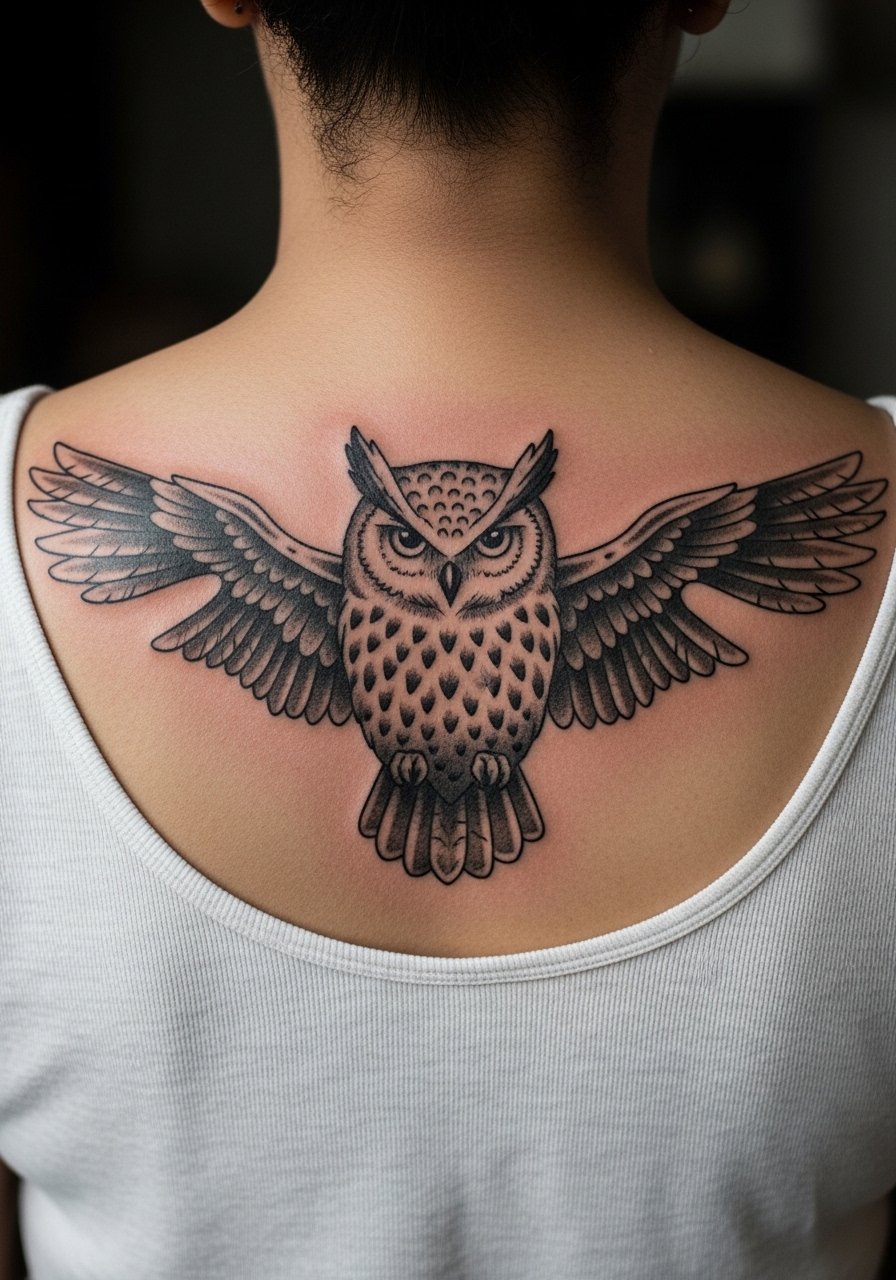
Full-back work allows expansive negative space and strong silhouette. It is the least prone to blowout because there is room between elements. Sessions are long and scheduled across multiple days. A frequent mistake is over-detailing the wing interiors too tightly, which ages into visually busy zones. Mention during consultation that you want the wings to breathe with solid black panels and open channels. For the appointment, a button-down shirt you can pull aside makes prep and breaks easier.
11. Ribcage Owl with Whip Shading
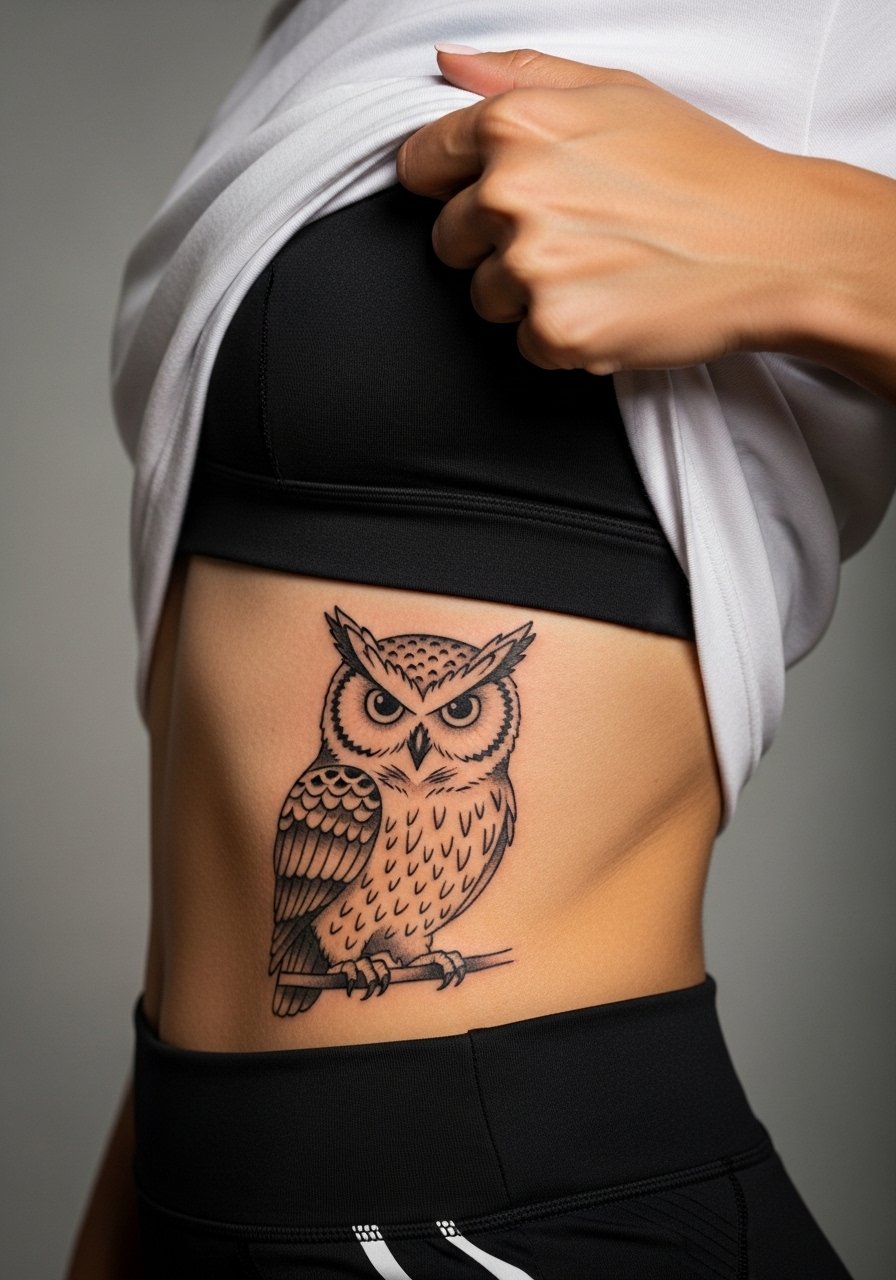
Rib tattoos are famously painful and the fine line versus blackwork debate comes up here. One camp says fine line blurs quickly on the ribs. The other camp argues that with correct needle depth and spacing, lines stay crisp. My recommendation is bold blackwork with whip shading to keep texture without risking merged lines. Sessions often require steady breaks and last longer. A common mistake is choosing ultra-detailed facial expressions on the owl in a narrow rib zone. Plan for at least one touch-up because the area moves with breathing and clothing.
12. Upper Thigh Owl with Filigree Frame
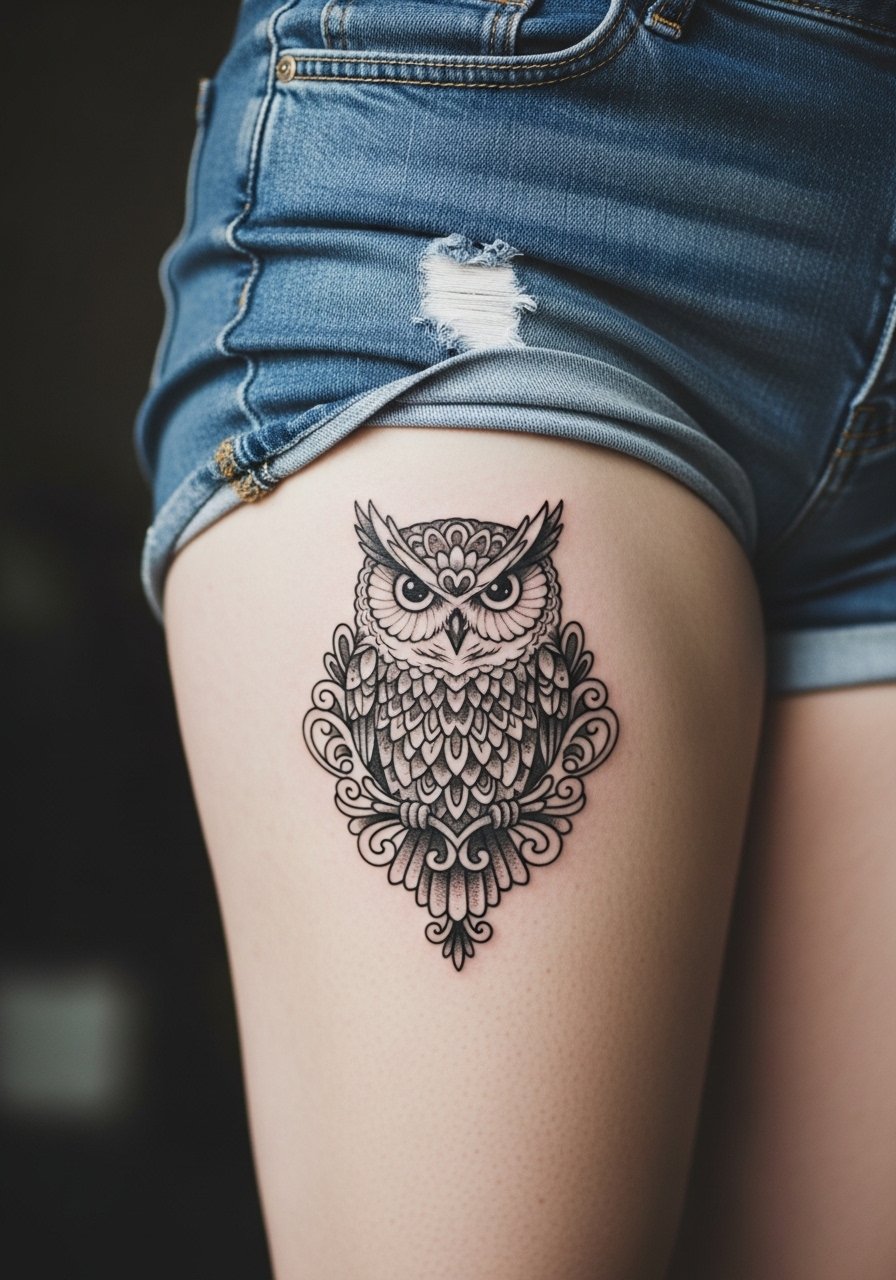
Thigh placements let you add ornamental frames without crowding the owl. Tell your artist you want the filigree to sit a half-inch away from the main silhouette so both elements age independently. The session feels moderate and you can usually tolerate longer sits there than on the chest. A mistake is squeezing filigree too close for a symmetric look. For showing it off, try a high-slit skirt or cropped shorts that reveal the panel without constant fabric rub.
13. Small Collar Owl Peeking Over the Clavicle
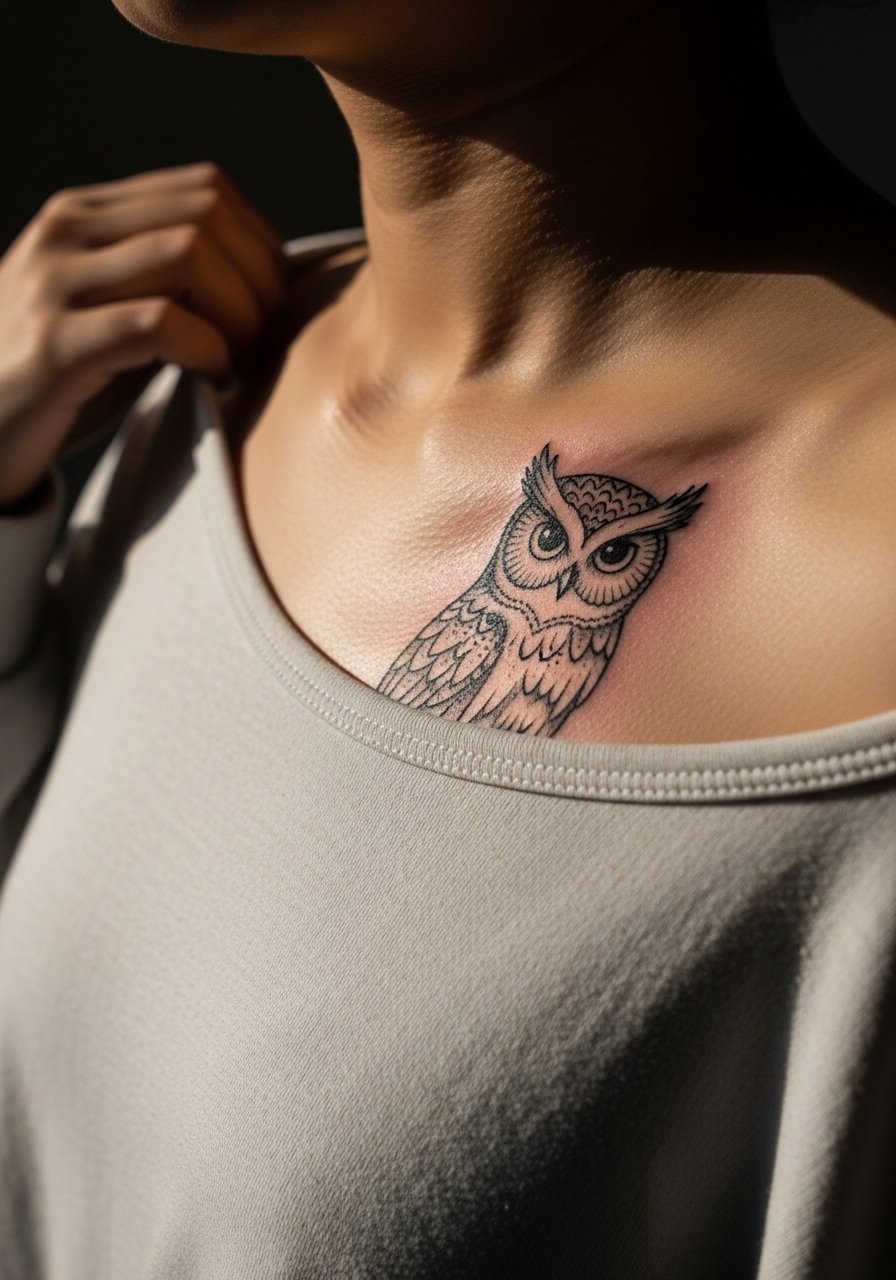
Small collarbone pieces depend on clear borders to withstand daily movement. Describe to your artist that you want the owl to read as a silhouette even at arm’s length. Pain spikes near bone but sessions are brief. A frequent oversight is choosing internal cross-hatching that eats into the silhouette. For jewelry pairings, a delicate bar necklace sits above the owl and keeps the placement elegant without crowding.
14. Sleeve Panel Owl with Bold Contrast
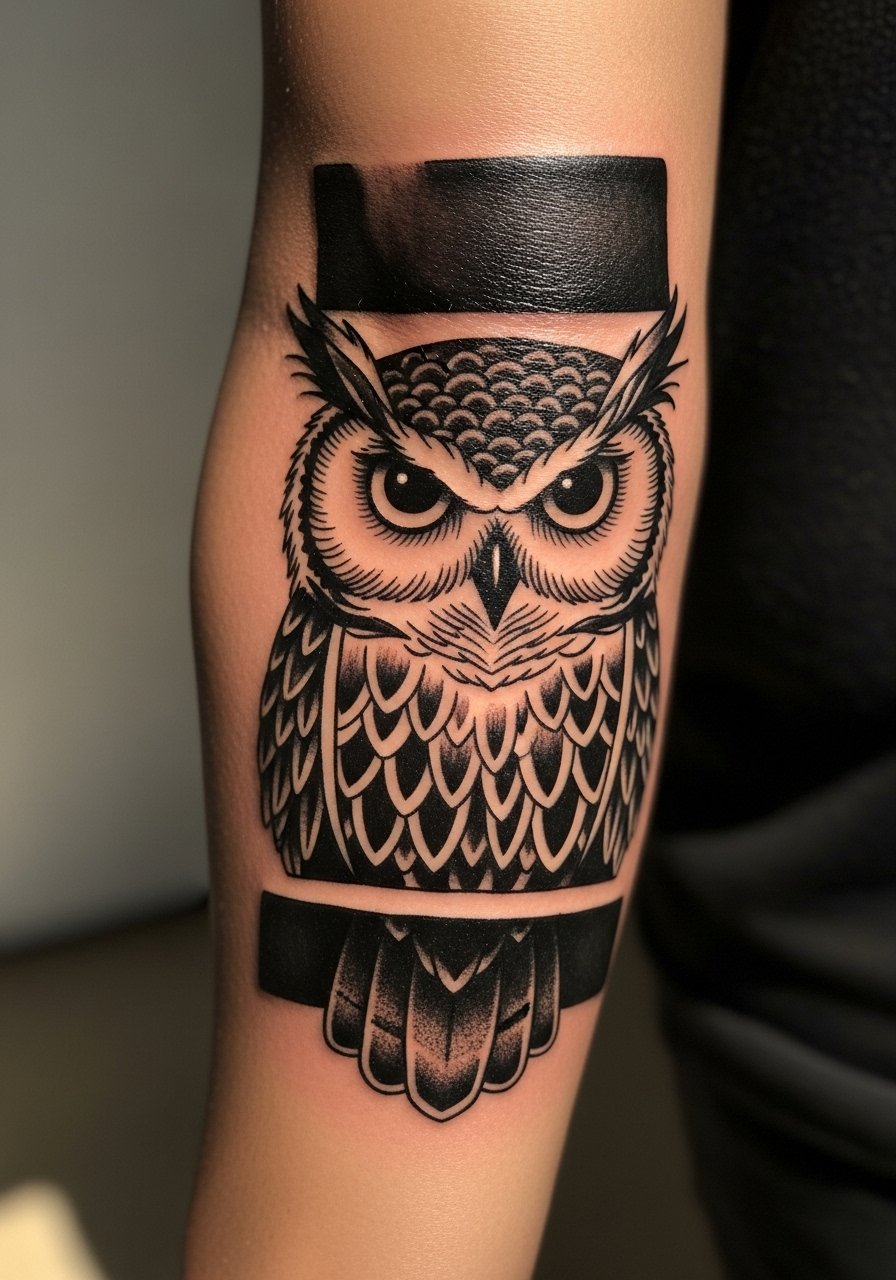
If you plan a sleeve, treat the owl panel as an anchor and ask for heavy contrast around it so smaller elements do not get lost later. Session time is variable, often split across several appointments. Common mistakes include mismatched line weights between panels. Stress during consult that the owl should have a thicker outline than surrounding filler. For casual wear, a long-sleeve tee with rolled cuffs shows the owl’s edge when you want subtle reveal.
15. Neck-Gentle Blackwork Owl Beside the Nape
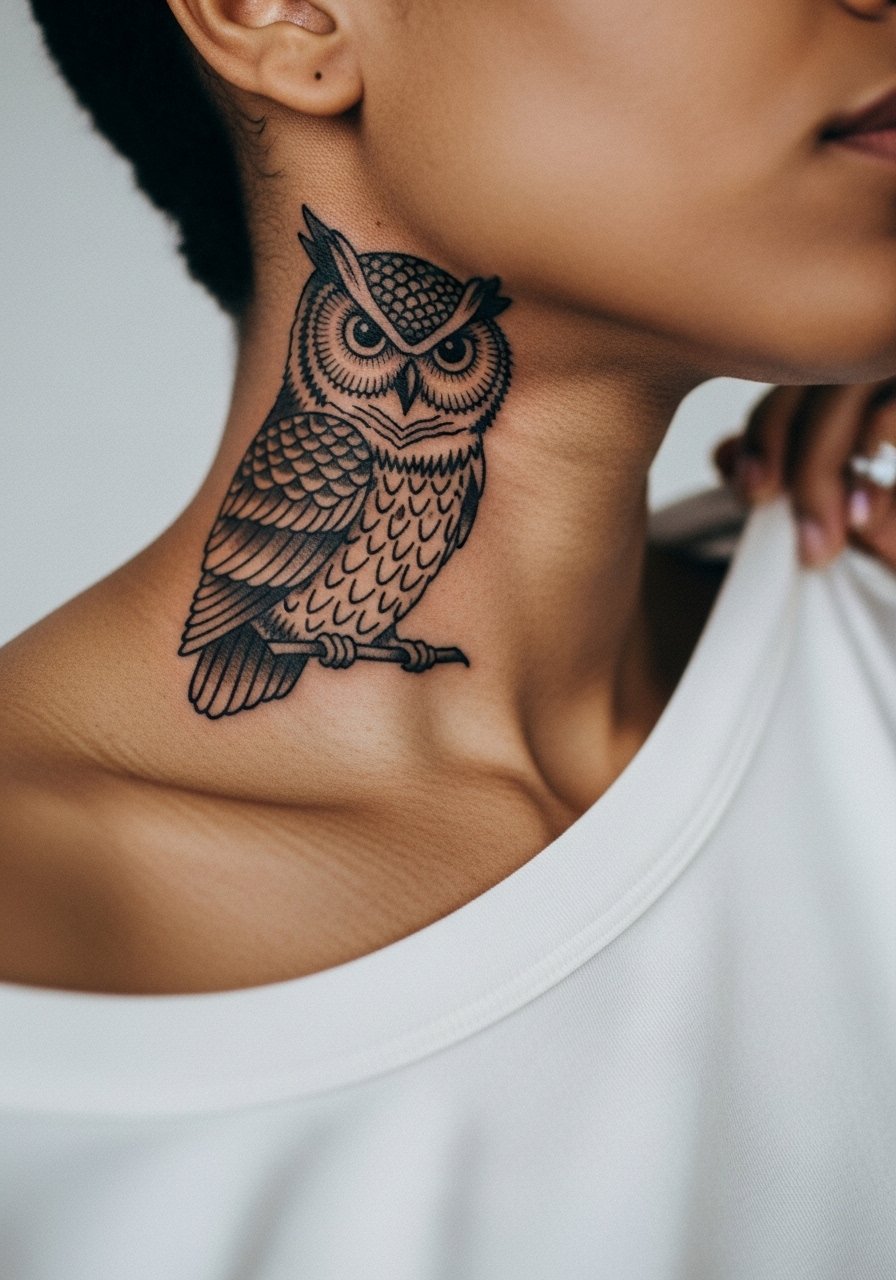
Neck pieces need conversations about visibility and career implications. The skin there is thin and ink sits differently, so ask for slightly bolder work than you might on an arm. There are two camps about neck tattoo size. One says small is safest for long-term clarity. The other insists bolder is better. Both points matter. Session pain is higher and healing requires careful sun avoidance. For styling, a collar sweater you can pull aside helps with studio access and keeps the area warm in transit.
16. Calf Owl with Stipple and Bold Outline
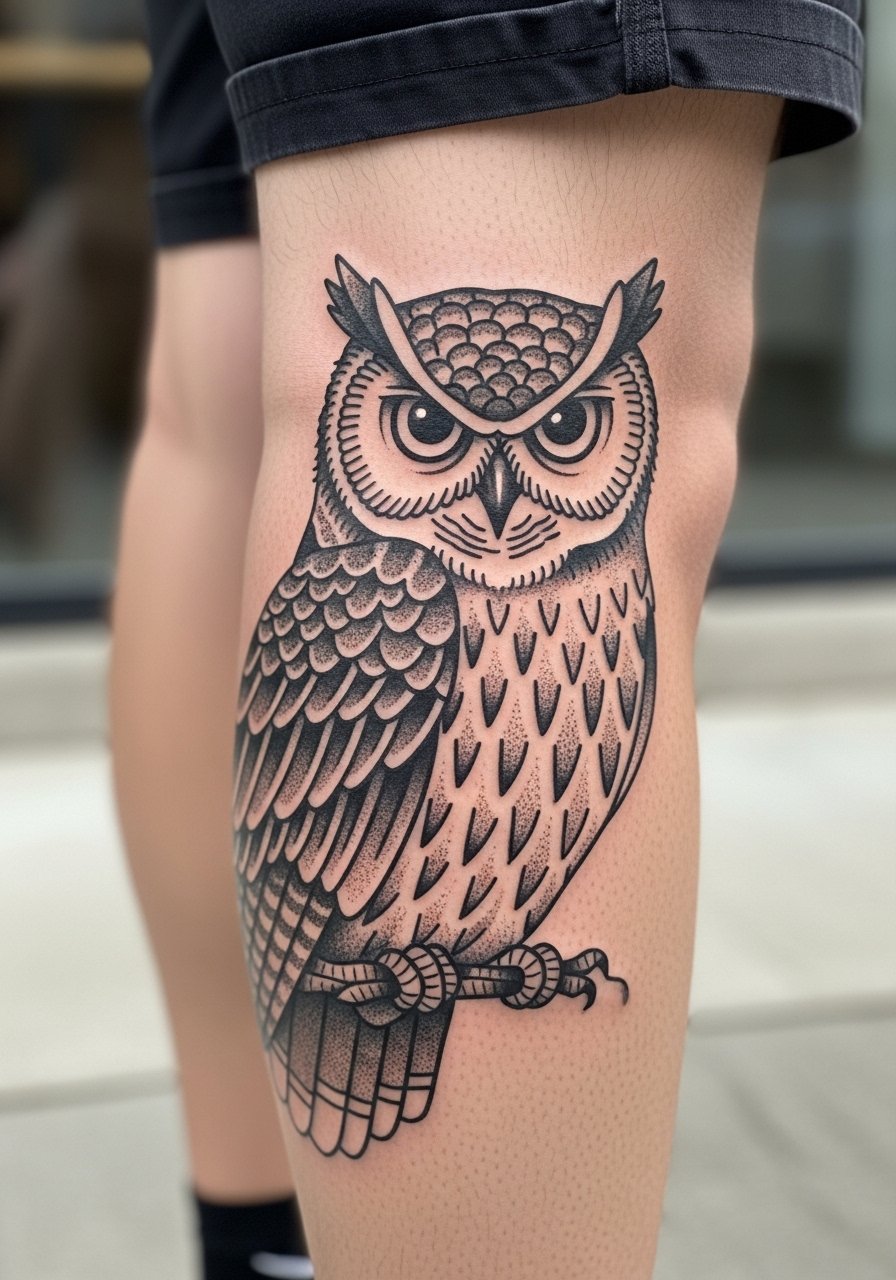
Calf pieces live well in saturated black and take sun exposure differently than upper arm work. Tell your artist you want stipple near the belly of the owl and solid black along the wings to keep balance. The session is low to moderate pain and usually under three hours. A common error is placing the owl too low on the calf where friction from shoes is higher. For display, pair with casual shorts that roll up without pressing into the healing ink.
17. Micro-Realism Blackwork Owl Behind the Ear, Hairline Placement
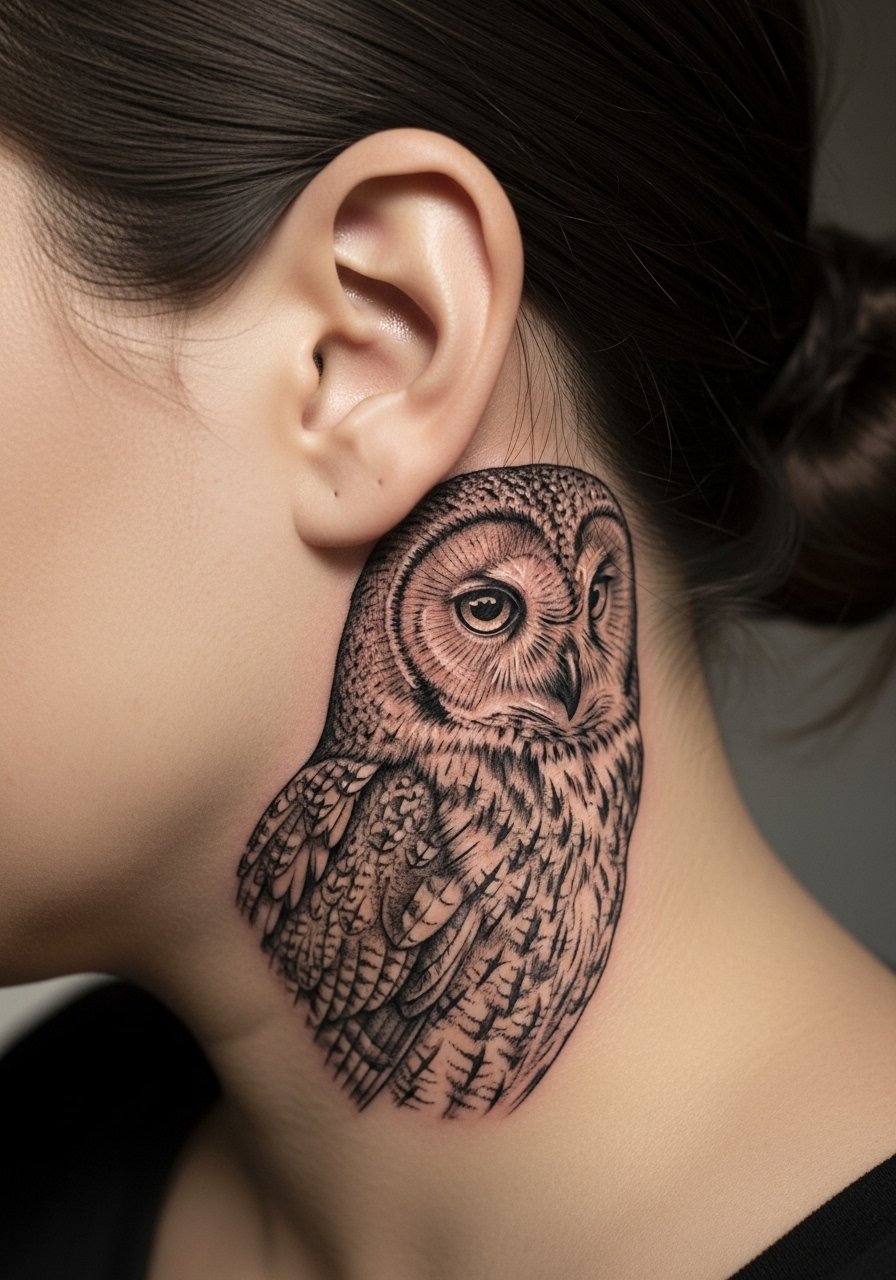
Behind-the-ear placements need precise framing and a small, compact design. Keep in mind that fine line work here competes with movement and hair growth. Ask for a bolder outline around the micro details so the owl remains legible after healing. Sessions are short but the area is sensitive and touch-ups are common. Also note the visibility is subtle and easy to hide with hair. For discovery, checking niche portfolios on local shop directories and owl-specific hashtag threads helps find artists comfortable with tight zones.
Frequently Asked Questions
Q: Will a blackwork owl fade faster on the forearm than on the thigh?
A: From what I've seen, forearms get more direct sun and friction so they tend to lighten faster than thighs. The difference is not drastic if you keep sunscreen on healed ink and limit abrasive clothing. Expect the forearm to need touch-up sooner if you regularly wear sleeves that rub the area.
Q: Are blackwork owls safe for small placements like fingers and behind the ear?
A: They are possible but accept trade-offs. Fingers and behind-the-ear spots suffer from constant movement and washing, so micro details blur sooner. Choose bold silhouettes over tiny internal lines and plan for a likely touch-up within a year.
Q: How do I discuss negative space and sizing for a sternum or ribcage owl during consultation?
A: Be explicit about negative space around the owl and ask the artist to draw the stencil then step back before inking. If the studio will test placement with photos, review those with clothes on and check how the piece sits when you move. Saying you want a one-inch buffer around key features helps avoid overcrowding.
Q: What should I wear to an appointment for a chest, collarbone, or sternum piece?
A: Wear something that gives the artist access without fully exposing you, like a wide-neck shirt or a sports bra for sternum work. Comfort in transit and during long sessions matters more than style for the appointment.
Q: Do blackwork owls require different touch-up timelines than fine line owls?
A: Generally, heavy-saturated blackwork holds longer than fine line pieces because saturation maintains contrast. That said, touch-up timelines depend on placement and lifestyle. High-friction areas often need reinforcement around year two regardless of style.
